Category Archives: Uncategorized

Yoga Hosers

Yoga Hosers

yogahosers

Yesterday, I had the chance to catch a pre-release tour screening of the latest film by Kevin Smith: Yoga Hosers. This horror-comedy (or comedy-horror) is a quasi-sequel to Tusk, and focuses on a handful of characters from that movie on a new adventure involving a Canadian Nazi conspiracy. Because this movie hasn’t hit theaters yet, I’m going to preface this review with a SPOILER WARNING.

Yoga Hosers was written, directed, and edited by Kevin Smith, a once-revered Sundance darling and Miramax loyalist who is now known for his sprawling podcast network, oversized hockey jerseys, and nerdy ramblings. However, he has never stayed away from movies for long, in spite of often claiming to be done with the medium. Yoga Hosers is the second in his planned “True North” trilogy: a series of movies set in Canada that was kicked off by Tusk, and will conclude with Moose Jaws at an undisclosed future time.

Smith’s cinematographer for the movie was James Laxton, who previously worked for him on Tusk, and has worked on an assortment of other films like Bad Milo and Nightcrawler.

The music for Yoga Hosers was provided by Christopher Drake, who has primarily worked on DC animated movies and video games like Injustice: Gods Among Us, Batman: Under The Red Hood, Justice League: Doom, and Batman: Arkham Origins.

The special effects and creature work for Yoga Hosers were overseen by Robert Kurtzman, who has had a long career working on films like Tusk, It Follows, The Faculty, John Dies At The End, the From Dusk Til Dawn trilogy, Vampires, In The Mouth of Madness, The People Under The Stairs, 976-EVIL, DeepStar Six, Army of Darkness, Tremors, and From Beyond, among many others. He even directed a handful of movies, like Wishmaster.

Yoga Hosers stars Johnny Depp (Donnie Brasco, Black Mass, The Lone Ranger, Sweeney Todd, Charlie and the Chocolate Factory, A Nightmare On Elm Street), his daughter Lily-Rose Melody Depp, Kevin Smith’s daughter Harley Quinn Smith, Kevin Smith’s podcast co-host Ralph Garman (Red State, Ted), Haley Joel Osment (Entourage, The 6th Sense), Tony Hale (Veep, Arrested Development), Justin Long (Drag Me To Hell, Accepted), Kevin Smith’s wife, Jennifer Schwalbach Smith (Red State, Jersey Girl), and Kevin Smith himself.

Initial reviews for Yoga Hosers are pretty negative. As of June 13th, 2016, Yoga Hosers has an IMDb user score of 4.9/10 with 499 votes tallied, and a Rotten Tomatoes critic score of 25%, with 20 critic reviews in.

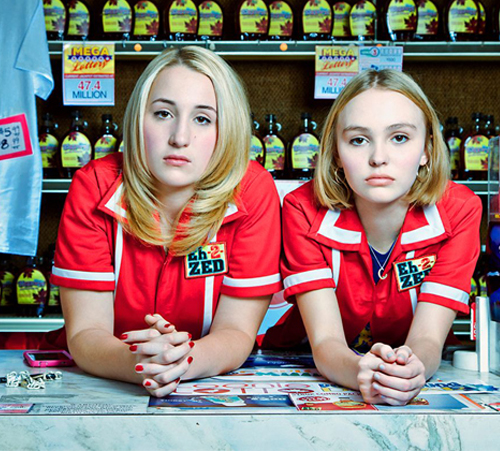
The idea for Yoga Hosers was born on the set of Tusk, when Harley Quinn Smith and Lily-Rose Melody Depp were thrown in as minor characters in a convenience store scene on a whim by Kevin Smith. The result, according to Smith and Johnny Depp, was a surprisingly natural performance from both girls, and an impressive chemistry. Upon completion of the film, Smith claims that Johnny Depp expressed interest in reprising his character in the future, all of which planted the seeds for Smith to write a screenplay around the three minor Tusk characters.

The design and tone of Yoga Hosers was intended to imitate the sorts of movies that would run on late night cable during Smith’s childhood. In particular, Kevin Smith has cited Re-Animator, From Beyond, and Puppetmaster as the sort of movies that inspired Yoga Hosers. However, instead of making a movie purely in that vein, he wanted to center the story on teenage girls, once he realized that that demographic wasn’t able to enjoy those same movies he could, due to a lack of representation.

Yoga Hosers, unfortunately, doesn’t quite succeed in its aims. While there is some humor that would probably resonate with young women (primarily centered on texting and contemporary technology), most of the humor in movie is referential. For instance, the biggest laughs I recall from my screening were from cameos by people like Stan Lee and Kevin Conroy, or from direct references to other Kevin Smith works (primarily podcast in-jokes and one blatant Clerks reference). Worse than that, however, is the sheer quantity of tired non-jokes in the screenplay: exaggerated Canadian accents and cultural jokes are milked endlessly, awkward banter with Johnny Depp doesn’t play,  celebrity impersonations are almost as prominent as they were in Master of Disguise, and the villainous “Bratzi” minions are a collective high pitched, shouting annoyance.

While there is nothing necessarily wrong with any of this (it is all a matter of preference, I guess), I have trouble believing that any of these elements would really appeal to tween girls, as Kevin Smith apparently intended. All of these things seem far more geared to appeal to middle-aged (and stoned) Kevin Smith fans than anyone else.

yogahosers2The thing that seems almost beyond belief to me is the fact that Johnny Depp gives the worst performance in a movie with two non-actor leads. Honestly, the Depp and Smith offspring do have good chemistry, and are generally ok with the load they were given. Depp, on the other hand, is just as jarring and unfunny as he was in his first turn with the character in Tusk. Apparently, his fascination with the character stems from, predictably enough, an obsession with facial prosthesis. Much like Eddie Murphy, Depp seems to have fallen into a trap in which he needs to be behind some sort of mask to give a performance. Even in Black Mass, in which he is quite good, he is transformed with makeup into another person. The manhunter Guy Lapointe is, as Smith tells it, a way for Johnny Depp to wear a prosthetic dick on his face (that was, apparently, VERY intentional), and use a fake accent that has annoyed the people closest to him for years. Now, Depp has a platform to annoy the movie-going public with it as well, or at least whoever actually shows up for Yoga Hosers.

The effects work in Yoga Hosers honestly perplexed me. I’m not sure if the green screen work was intentionally bad as a sort of homage, or if it was just shoddy. To Kurtzman’s credit, the sausage monsters are unsettling, but the use of CGI gore (well, saurkraut) looks absolutely unforgivably awful. The thing that stood out most, though, was the centerpiece of the film: a Nazi-crafted Golem built out of human remains and bratwurst in the shape of a hockey goalie. Looking past the obvious insensitivity of including a Nazi-built Jewish folkloric figure, the monster looks implausibly fake. Again, this might have been homage, but I couldn’t get past how clearly rubbery the texture looked. Compared to his work on Tusk (or any number of other films), the “Goalie Golem” just looked bad.

yogahosers3What really annoys me most about Yoga Hosers is that the parts are so much better than the product. Johnny Depp is a capable actor, Robert Kurtzman is a wizard, Kevin Smith is a decent director (and far better writer), and the stated motivations behind this movie are fantastic. I am a huge fan of the same kinds of movies that drove Smith to make Hosers, and I am also in agreement that women and girls need more representation in popular fiction. Yoga Hosers, in theory, is a movie that needs to me. That is why I feel so disappointed that it isn’t actually that movie.

Lastly, there is a big problem underneath this movie that seeps out in some not-so-subtle ways. Kevin Smith has a long-standing chip on his shoulder with the very concept of film criticism. For as easy-going, likable, inspiring, and positive-natured as the man usually is, Smith has nothing but contempt for those how would dare to point out flaws with a Kevin Smith movie. From what I can tell, this dates back a long way, at least to Jersey Girl, but really went into meltdown after Cop Out. In Yoga Hosers, he goes so far as to give the villain a distinct motivation: a desire to execute all art critics, which sets up a number of tired critic jokes. This reminded me a lot of the 1998 Godzilla, in which Roland Emmerich included a character based on Roger Ebert in order to mock him. The result, as you might expect, is that Emmerich looked like a petty jackass. Now, Kevin Smith has sunk roughly to the same level, which is regrettable to say.
yogahosers5
The thing is, I generally like Kevin Smith as a personality and nerd pundit. The screening of Yoga Hosers I went to took nearly 5 hours, but the movie itself was only a fraction of that time. Kevin Smith knows how to talk and endear himself to fans: he is honest and candid in a way that should doom him in the confidential land of Hollywood, but the admiration he has endeared has kept him afloat for years. Just the experience of listening to him talk has brought people out to theaters across the country, and his audience online likely dwarfs even that. As a public figure, Smith makes people laugh, and inspires lots of people to create. Honestly, that seems to be his true passion at this point. Unfortunately, his movies just aren’t as compelling as he is. There is a reason his tours are more Q+A than movies now: on a deeper level, people really want to hear him and experience him, not watch his movies.
yogahosers4All in all, I’ve been pulling for Smith to resurrect his film career. I really liked Red State, and thought that Tusk had some good highlights. Yoga Hosers, though, is a huge fall. It is everything negative that I feared it might be from the time it was announced. That said, I’m optimistic about Kevin Smith focusing on television: I think it might just suit him better at this point. As for Yoga Hosers, this is really only watchable for Kevin Smith fans, and even then, it is a toss-up. My advice is to skip this one.
yogahosers1

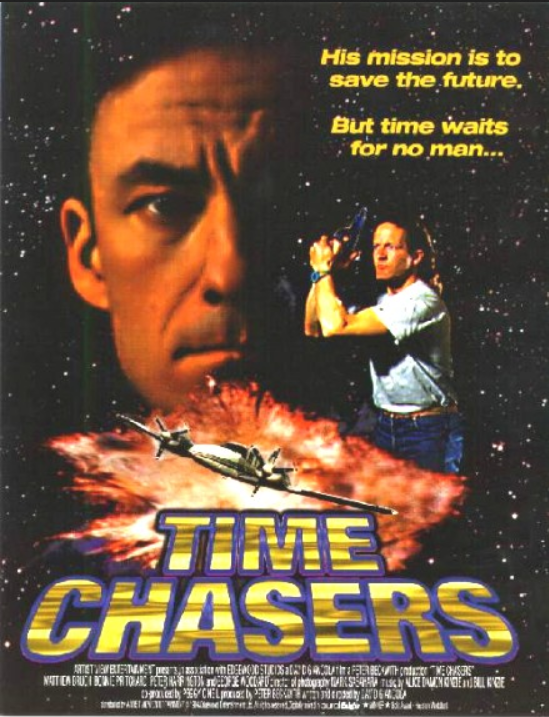
Interview with David Giancola of Time Chasers

The following is a rough transcription of an interview I had with David Giancola, who directed the IMDb Bottom 100 feature Time Chasers. Many thanks to Rifftrax for setting this up. Be sure to check out the Live Riffrax of Time Chasers, to be simulcast in theaters on May 5. Likewise, many thanks to David for his time.

GM: Hello David! I have a few questions about Time Chasers here for you.

DG: Shoot!

GM: I first saw Time Chasers a few years ago when I went through the entire IMDb Bottom 100. What is it like to have a movie in those depths? That is some illustrious company to keep.

DG : You’re a glutton for punishment, huh? Well, being on that list is kind of like being in prison: once you are in it, it is on your record, and it isn’t going away. If I remember right, we got as high (low?) as #6 in the ranking. I actually really wanted to get it to #1, but you just can’t be worse than Manos. That movie barely even has sound! In any case, I look at it fondly now, and can laugh about it. I made that movie when I was 19, and I didn’t really know what I was doing. I can look back on that now with perspective. Also, the audience attention from the riffs has been mostly positive, and the MST3k fans are generally pretty great.

timechasersGM: Speaking of MST3k, what has it been like to be on the receiving end of the riffs? How does it feel to be chosen for the Rifftrax Live show?

DG: Really, the riffing is what brought eyes on the movie. I have seen plenty of movies over the years that are worse, but they have mostly been forgotten. I feel like, really, I was lucky. I have also been lucky to still be in the business. Being forgotten is the worst thing that can happen. For Time Chasers, it released on 12 screens in 1993, and now it’ll be on 700. That’s huge! I was excited that Time Chasers was chosen, but it only dawned on me how big this would be when I saw the trailer. I’m also thrilled that they are bringing me and much of the cast to the show. Most of those people don’t work in movies, so we haven’t been together in 25 years. They’re farmers, school teachers, etc. I had to talk one of the cast members into coming, because he was worried he couldn’t find someone to milk his cows! Luckily, he did find someone, and he’ll be there.

GM: Something that really stands out about Time Chasers is how big the vision is behind it. It doesn’t look or feel like a YouTube movie, because there are some big aspirations in there.

DG: I always wanted to do big visions, particularly when I was young. However, I did write the screenplay keeping in mind what sort of resources would be available to us, like the warehouse and the airport. Unfortunately, money was always an issue with that vision. And, when you don’t have the resources to fulfill a vision, it winds up looking cheesy. Really, I was naiive enough for that vision and enthusiasm. I always knew I wanted to do time travel, but had to figure out a way to make it happen with what was available.

GM: Speaking of the airport, one of the things that really makes Time Chasers stand apart from most movies like it are those plane stunts. It all looks incredibly difficult and dangerous.

DG: A lot of that was the benefit of the time period. Back then, we were able to film at that airport, which would just be impossible today. We were, astoundingly, given the run of that airport, and a lot of local pilots were enthusiastic about helping us out with the footage and the stunts, and even loaned us the planes. Those shots of planes flying parallel to each other are incredibly difficult and dangerous, and were only possible thanks to those pilots. My father was also an amateur pilot at the time, and flew the plane that picked up the point of view footage going into the cliff. I was shooting, and remember telling him to “fly closer!” to the cliff-face. That’s definitely a benefit of youth, and I certainly wouldn’t do that today. There are so many ways those stunts could have gone wrong. I remember always expecting the local police to shut us down during the bigger stunts. They definitely drove by a few times, making a point to slow down, but never stopped us. Somehow.

GM: So, how did those Revolutionary War sequences work? Were those just local reenactors?

DG: Yeah, those were legitimate reenactors. There are two big reenactments in Vermont every year. For most of those shots, we just filmed one of them in action, before we even started shooting the rest of the movie, and that came together with the magic of editing. For the shots where the actors are in the foreground, we did that later. We had all of our permissions in order, but the General on site (a plumber by day) was far from cooperative and definitely didn’t want us there. He would yell at the crew and stop the battle in the middle of shooting, trying to throw a wrench into things. Worse yet, he was speaking in period dialect the whole time. It was a nightmare.

GM:  I read on IMDb that there was a big delay between the filming and the release of Time Chasers. Was that due to trouble finding a distributor?

DG: Part of it was trying to find a distributor, but most of that time was due to post-production and editing, which was a much more time-consuming and expensive process back then (thanks to the physical film). Frankly, we were out of money, and it took a while to afford the finishing touches on the film. Once we did wrap up and find a distributor, that’s when the title was changed from Tangents to Time Chasers. I always liked the original title, but apparently it doesn’t translate well. That’s business, though. Nowadays, they’ll change movie titles just to have an alphabetical advantage, because movies that start with numbers or “A” show up first in search listings.

GM: Always have to capitalize on that alphabetical advantage, huh? That’s an odd side affect of the rise of streaming services. So, you are still in the movie business today?

DG: I run Edgewood Studios, so I have done some producing on Hallmark movies, and I’ve directed a few more movies over the years. Most notable among them is probably Illegal Aliens, that I did with Anna Nicole Smith and Chyna. In the years since, they’ve both died of overdoses, so that production might just have been cursed. I made a documentary about the experience of making that movie a few years ago. Much like Time Chasers, it got a title change from Craptastic! to Addicted to Fame (thanks to the alphabetical logic I mentioned earlier). Right now, I have a movie coming out in July called Mail Order Monster, which is about a young bullied boy who finds an advertisement in an old comic book that promises the delivery of a monster. To his shock, it actually comes. Because I have done these movies with my own company, I’ve had a lot of creative control, which I’ve really enjoyed.

GM: Thanks for your time! This was all very interesting information. I’ll look forward to seeing Time Chasers on the screen!

DG: This was a blast! Thanks!


Green Lantern

Green Lantern

greenlantern1

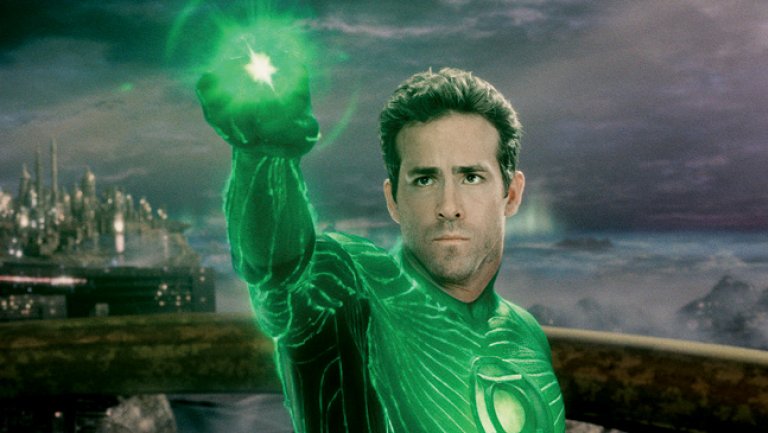
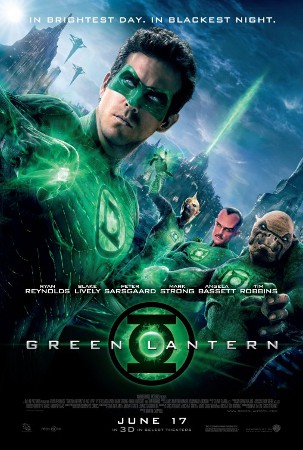
Given the recent success of the Ryan Reynolds-led Deadpool film, as well as the true kickoff of the DC cinematic universe with Batman v Superman: Dawn of Justice, I have decided that it is high time to take a look at one of the most loathed comic book movies of the modern era: Green Lantern.

Green Lantern was directed by Martin Campbell, whose credits include both of the Antonio Banderas Zorro adaptations, as well as two notable James Bond films (Casino Royale and GoldenEye).

The screenplay for Green Lantern went through a number of iterations over the years, but the final writing credits were given to Michael Goldenberg (Contact), Marc Guggenheim (Percy Jackson: Sea of Monsters, Arrow), Michael Green (Heroes, Smallville), and Greg Berlanti (Arrow, The Flash, Supergirl). Interestingly, Greg Berlanti officially signed on to direct Green Lantern as well, but stepped down to instead direct This Is Where I Leave You, and left directing duties to Campbell.

Green Lantern was edited by Stuart Baird, a proficient and long-tenured cutter whose credits include , Tommy, The Omen, Superman, Lethal Weapon, Die Hard 2, and Skyfall, among many others.

The cinematographer for the movie was Dion Beebe, a well-regarded director of photography who is best known for movies like Collateral, Memoirs of a Geisha, Chicago, and Edge of Tomorrow.

The score for Green Lantern was provided by James Newton Howard, an 8-time Academy Award nominee who has worked on films such as Nightcrawler, Michael Clayton, The Dark Knight, Lady In The Water, The Hunger Games, Falling Down, The Sixth Sense, Collateral, Waterworld, King Ralph, and Flatliners, among many others.

The cast of Green Lantern is led by Ryan Reynolds and Blake Lively, who would later get married in 2012. The accessory cast is rounded out by such notables as Geoffrey Rush (The King’s Speech), Michael Clarke Duncan (Daredevil), Mark Strong (Kingsman: The Secret Service), Tim Robbins (Jacob’s Ladder), Angela Bassett (Malcolm X), and Peter Sarsgaard (Black Mass).

greenlantern2The critical response to Green Lantern was overwhelmingly negative. It currently holds an IMDb user rating of 5.6/10, alongside Rotten Tomatoes scores of 26% from critics and 45% from audiences. Commercially, the movie was ultimately profitable, but failed to come anywhere near its expectations. In total, it raked in just under $220 million on a lofty budget of $200 million.

There was a long history of trying to get a Green Lantern movie made prior to the culmination of this 2011 product. Kevin Smith was apparently approached to write a treatment in the late 1990s, and one of the film’s producers (and DC’s Chief Creative Officer) Geoff Johns was working on pitching the idea to studios as early as 2000.

Given the high profile of the film, the central roles went through a significant casting process. Some other actors considered for the lead included Sam Worthington, Bradley Cooper, Chris Pine, and Jared Leto. Many fans passionately campaigned on behalf of cult favorite star Nathan Fillion, who endeared himself to Green Lantern loyalists through a number of voice acting gigs as Hal Jordan. Likewise, the role of Sinestro could have easily gone to any one of Hugo Weaving, Jackie Earle Haley, or Geoffrey Rush, the last of whom stuck with the project in a tertiary role after Mark Strong was ultimately cast.

greenlantern3Zack Snyder was apparently approached at some point to direct the film, but decided to hold to his commitment on Watchmen instead. Of course, he would eventually become entwined with DC and Warner Brothers to create Man of Steel and Batman v Superman: Dawn of Justice.

In the IMDb trivia section for Green Lantern, there is a quote attributed to an anonymous insider, which indicates that the film faced significant interference from Warner Bros:

“[Green Lantern] is not Martin Campbell’s cut of the film, but the studio’s. I live in New Orleans where it was shot, I read the shooting script, all of which was painstakingly filmed with intense research, and all of that was left on the cutting room floor…character development sacrificed for CG, scenes made irrelevant by removing their setup. The movie in the theater starts with an explanation of mythos that is made redundant by the more natural, scripted questions from Hal when he gets the ring. Ten minutes of childhood Hal, Carol, and Hector that sets up Hal’s first ring construct is reduced to an awkwardly placed flashback in the middle of another scene. The training with the ring is almost completely excised except for one minor scene. Most appallingly, the ending completely deletes the fact that Kilowog, Sinestro, and Toma-Re arrive at the end and help Hal defeat Parallax. Not to mention Parallax was supposed to be a 3rd act reveal after we spend the film worried about Hammond going evil, not the main villain for the entire film. I sincerely hope we get a director’s cut or at least all the deleted scenes on the video release”.

Martin Campbell is apparently in agreement with the above statements, and has publicly stated his displeasure with the studio’s editing of the film. However, there has never been an official director’s cut of the movie released.

While most of the filming for Green Lantern was done in New Orleans, most of the exteriors and identifiable landmarks are taken from San Diego. The DC comics setting for the events is the fictional Coast City, which is located on the west coast of the United States.

This film was originally supposed to kick-off a Justice League series of films. Some early iterations of the script even included a Clark Kent cameo, which hints at a future film. However, after the negative reaction to the movie, this idea was delayed until 2013, when Man of Steel was designated to start the DC cinematic universe.

According to director Martin Campbell, Parallax’s design in the movie was inspired by the 9/11 terrorist attacks:

“The images of those massive dust clouds coming down the streets from the collapsing World Trade Center are directly associated with terror”

The line “I’ve seen you naked! You think I wouldn’t recognize you because you covered your cheekbones!” was an ad-lib by Blake Lively, and is one of only a few widely-remembered aspects of the film.

Reportedly, Ryan Reynolds and director  Martin Campbell clashed repeatedly on set. Campbell has stated in interviews that his first and only choice for the lead was Bradley Cooper, and Reynolds was cast behind his back. This lead to an uncomfortable experience on set for Reynolds, who’s performance was harshly critiqued by Campbell. Reynolds stated in a Variety interview that the failure of this film was a huge relief, and that he “dreaded doing it again.”

Personally, my issues with Green Lantern are numerous, even as someone not invested in the source material. I managed to avoid it when it first hit theaters, and just saw it for the first time prior to writing this review, so a lot of my thoughts on it are still pretty fresh.

The first notable issue with the movie is the character of Hal Jordan, who is written as an unlikable ego-case. If not for Reynolds having an undeniable natural charm, he would be an insufferable character to get behind. To boot, he doesn’t really improve as a result of the events of the movie, and is basically the same person at the conclusion that he is at the outset of the story.

In relation to this, the human aspect of the plot is really hard to care about. Partially, this is due to a bloated cast and a general lack of chemistry between the performers. However, the way the film is written and cut doesn’t emphasize the characters themselves, instead focusing on action, which makes it hard to get invested in anyone.

In spite of it all, there are some decent performances to be found in Green Lantern, primarily from Strong and Sarsgaard. However, both men receive very little screen time to develop, and don’t get the necessary room to create compelling villains. Played out well, the obsessive nature of Sarsgaard’s character might have worked out, but his infatuations and eccentricities are mostly glossed over by the film.

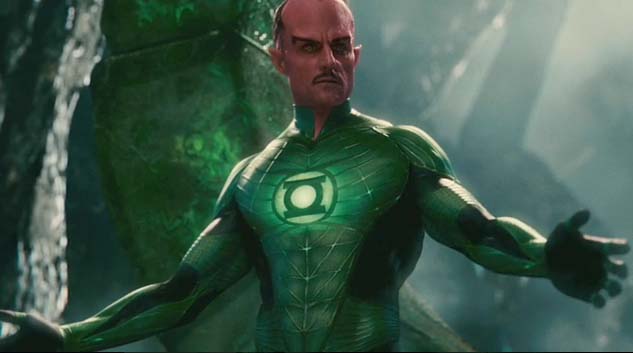
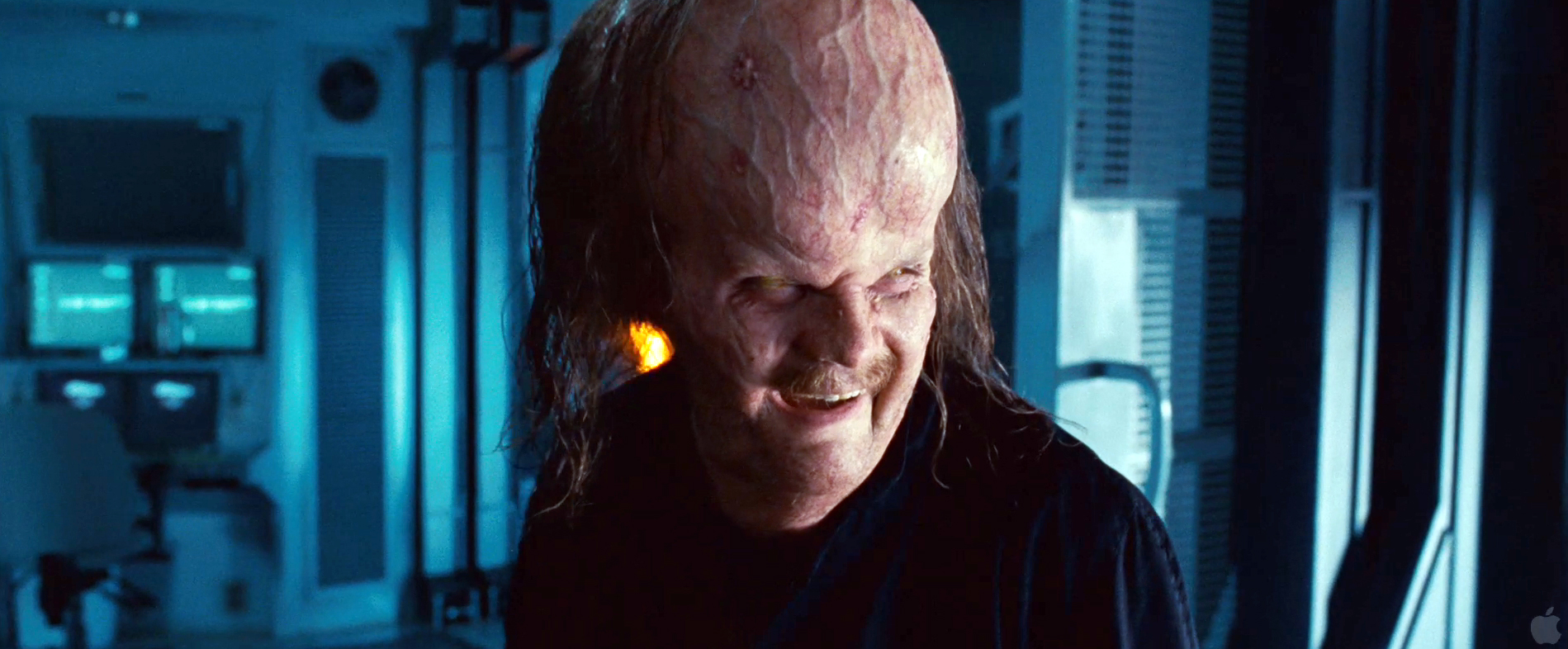
Perhaps the most criticized aspect of the film is the extensive use of computer generated enhancements. Not only do countless alien creatures appear in fully CGI forms, but the Green Lantern suit itself has no practical elements, and all of the effects of the ring are digitally rendered. Worse than all of that, however, are the CGI modifications made to Strong and Sarsgaard, which are cartoonishly ridiculous. Despite being mostly accurate to the source material, Sinestro still looks like a pink elf-demon when depicted in live action.

I think the filmmakers was just a wee bit overconfident in the abilities of CGI on the whole, and placed a burden upon it that the technology could really handle. This also contributed to the movie’s budget rising significantly, which surely irked Warner Brothers, and contributed to their less-than-generous editing treatment for the film.

The plot itself for Green Lantern isn’t terribly interesting: primarily, it only serves as an origin story, and provides a brief setup for a follow up. While it is necessary to introduce the characters and concepts in some way, origin stories for superheroes are always a bit formulaic, and audiences have started to fatigue on them quite a bit. I think this, as much as anything, contributed to the movie’s critical failure: the story was just too familiar.

The positives of Green Lantern are few and far between, but they aren’t totally nonexistent. However, the movie is boring above all else, and is very difficult to honestly recommend to anyone. Unless someone has a curiosity about the film or is a die hard fan of the character, there isn’t much to recommend here. It is, however, quite a compelling paragon of how not to make a modern superhero movie.

2015 Recap

Admittedly, I spend most of my movie-watching time checking out old bad movies and cult films. However, I do try to carve out some time each year to watch current features. Now that we are at the conclusion of awards season, I thought I’d share some thoughts on a non-exhaustive handful of notables that I managed to catch.

Features

Cop Car

Jon Watts popped onto a lot of radars this year when he was attached to the upcoming Marvel/Sony cooperative Spider-Man reboot. Prior to this news, I was only familiar with his work on the hilarious ensemble fan film tribute Our RoboCop Remake, which I have probably watched a few too many times. Cop Car, which he directed and co-wrote, is equal parts tense thriller and dark comedy, which isn’t the easiest line to ride. Kevin Bacon is a blast, and sports a memorably sleazy mustache for the film. The bulk of the dramatic onus is on the two child actor leads, who are both surprisingly serviceable. Their characters are unbelievable and got on my nerves pretty quickly, but once the pressure was on, their annoying minutiae drained away. The concept here was brilliant, the execution wasn’t too bad either. I came at it expecting something like The Hitcher, but found that this was surprisingly pretty humorous.  It is a unique little movie that deserves attention.

Ex Machina

I haven’t heard a bad word about this movie. It is imaginative, timely, well-designed, well-acted, well-shot, and absolutely should have been in consideration for best picture.  That said, it isn’t flawless –the last act felt like it deflated a bit to me–but it is more than worth the time to check out. I expect a lot of good things in the future from writer/director Alex Garland, as well as from Oscar Isaac and Alicia Vikander.

Bone Tomahawk

This is a movie that I didn’t hear very much about, but that I really enjoyed. While The Hateful Eight was the neo-western getting all of the attention with its throwback presentation and all-star cast, Bone Tomahawk sports its own team of notable character actors, and an original twist on the genre all its own. Kurt Russell  is of course great in it, but I thought the supporting players gave the movie its color: Patrick Wilson, Matthew Fox, Lili Simmons, David Arquette, and most of all Richard Jenkins absolutely nail their roles, and give the world of Bone Tomahawk a lot of vitality. The costuming and makeup work is also stellar, not just in regards to the western aesthetic, but in the creation of an unsettling quasi-human cannibal tribe at act as the film’s looming antagonists. If you are a fan of westerns, Kurt Russell, or just interesting independent movies in general, Bone Tomahawk is something that you don’t want to let slip by.

Beasts Of No Nation

This is a visceral, compelling movie that takes a chronological look at the development of a young boy into a child soldier, and then back again. Idris Elba might be the biggest reason why this movie got the attention it did, but it is fantastic beyond just his memorable performance in it. It is a heavy watch for sure, but I felt that the time seeing it was well spent. As far as the Academy Awards go, I think this film had its odds hurt by being both Black and in the Netflix camp, which is a negative double-whammy in the old, white face of the Academy. Luckily, that’s what the Independent Spirit Awards are for, and that’s where it got its just rewards.

Room

There was a time when everyone thought that this would be the runaway critical darling of the year. Instead, it is in the dead heat pack of Academy Awards Best Picture nominees. Personally, I thought this was one of the weaker Best Picture movies this year, though I do think Brie Larson will rightfully walk away with the lead actress award. Likewise, the concept behind the movie is beyond brilliant, and the first half of the film executes on it very well. However, the movie takes a turn halfway through, which leads the story into a bit of narrative chaos.

Not only does it lose its steam, but it loses its rhythm and logical sequence as well. Events in the story lose their sense of time in relation to each other, and the dots that make up the screenplay just stop connecting to each other in general. The last act feel like just a montage of “things that happened eventually,” and then the movie ends. Despite the movie dealing with interesting ideas and powerful emotions, the structure of the movie doesn’t help prop them up. Also, there are so many tight close ups with handhelds done throughout the film that I lost count. It felt really transparently manipulative for one, but also disappointingly unoriginal. There are other ways to elicit emotions than using that one kind of shot, and this never felt creative in how it tried to do so. To me, it felt like an exceptional IFC film: not a legitimate Best Picture contender.

The Revenant

It is kind of surprising to me that The Revenant has apparently risen to the top of the Best Picture nominee pack. It is certainly a good movie, though their is some contrarian critical backlash on that point, but it just doesn’t feel like a Best Picture to me. Leonardo DiCaprio’s performance is a solid physical portrayal, and will probably win him his statue. Likewise, Tom Hardy makes for a memorable villain, though his mumbling dramatic style is getting old quite quickly. I was genuinely shocked to see it nominated for Visual Effects, because I found that to be one of the movie’s few notable weak points, and I think those shots will degrade quickly with age. The cinematography is what initially made this movie stand out to me, but outside of a few notable sequences, it isn’t nearly as interesting as I expected it to be. All of the parts of this movie generally work, and the sum product is certainly a good movie, but I felt like it distinctly lacked some intangible qualities that make movies truly memorable. It’ll probably scoop up a lot of statues by the end of the night, but I fear that it will be remembered as a weaker Best Picture in the long run, assuming that is how The Academy goes.

The Big Short

The Big Short is this year’s licorice picture: there seems to be almost as much disdain for it as there is effusive praise. Adam McKay’s intriguing portrait of the housing crisis is a bit of an oddity all around: structure, tone, editing, etc. However, I thought it all worked pretty well, and the movie certainly benefited from having a distinctive point and motivation behind it. I don’t expect it to win anything, unfortunately, but I think it is at the very least an ensemble worth checking out for its performances (Carrell and Bale specifically), if not for its humor and message.

Jupiter Ascending

Jupiter Ascending is a visually striking, imaginative, poorly-conceived, and ridiculously-executed movie. I think it will be remembered as the best bad movie of 2015 by a longshot, as I’m sure that Fantastic Four, Pixels, The Cobbler, etc. will all appropriately fade away into obscurity. The sheer size and scale of this movie makes it all the more baffling, in regards to both the effects and the cast. Channing Tatum, Mila Kunis, Sean Bean, Eddie Redmayne, and company all wind up looking utterly ridiculous in the bizarre world of the movie, which consistently stays just beyond arm’s length from sensibility or logic. This’ll deserve its own post eventually, but for now, I’ll just recommend checking it out.

The Hateful Eight

I am a little surprised that many are regarding The Hateful Eight as a lesser Tarantino movie. The Academy particularly didn’t seem to care for it, giving it only a handful of nominations (excluding original screenplay and Best Picture, most notably). That said, I have to believe that this is Ennio Morricone’s year for The Hateful Eight‘s score, and I think Robert Richardson and Jennifer Jason Leigh have shots in their respective competitive categories. I really enjoyed the movie, and particularly appreciated the claustrophobic setting, attention to detail, creative shooting, and memorable performances from the stacked cast. I think this movie might grow on people with age, not unlike Jackie Brown. I suspect that the Academy might be tiring of Tarantino and the Weinsteins’ respective antics, and that Tarantino’s unwillingness to break outside of his grindhouse comfort zone may now be hurting his chances in awards season.

Sicario

Sicario, much like Beasts of No Nation, has been mentioned a bit as a notably snubbed movie by the Academy. I think Sicario had four primary powerful elements: the score, the cinematography, Benicio Del Toro, and Emily Blunt. Of those four, the cinematography by Roger Deakins was the standout to me, and I think that is the best chance the movie has for any kind of awards glory, and I think that’ll be a tight race. In any case, the movie is a very tense and eerie portrait of the DEA, the Mexican drug cartels, and the border in general, and deserves to be seen by more people that I think actually caught it. As a side note, I think it pairs well with Cartel Land, one of the nominees for Best Documentary.

Documentaries

Winter on Fire

Winter on Fire is a fantastic portrait of a Ukrainian youth protest that boiled over into conflict and near-revolution thanks to the brutal actions of state police. The transformation that happens over the course of the movie is shocking: the people, the streets, and the tone all steadily decay, darken, and harden as time passes, and the ever-present camera catches the entire process as it happens. If it weren’t for a couple of biographical documentaries of celebrities, I think it would have a really good chance at winning Best Documentary.

Cartel Land

This is a clever and incisive documentary that draws a parallel between the renegade American border patrols and the civilian vigilante groups that rose within Mexico to battle the power of the cartels. This is one of those documentaries that leaves you feeling pretty hopeless at the end, so I’m not sure if it’ll be able to contend for Best Documentary, but it is still certainly worth watching.

Finders Keepers

Finders Keepers was my favorite documentary of the year by a good margin. The story, on the surface, is the bizarre and humorous tale of a lost limb and a curious legal scenario, but the film delves beyond the surface of the situation, and winds up revealing a lot about two intriguing, damaged men with a lot of dark and tragic history behind them.

The Wolfpack

I heard a lot of positive things about this movie before I saw it. The idea of a small army of children being raised isolated from society in a New York apartment, with only a film collection to connect them to their culture, is pretty fascinating. The fact that they thought to make re-creations of these stories with a video camera and rudimentary props is charming. However, the underlying story to it all, about a set of parents who were ok with completely shielding their children from the world, is primarily told between the lines in the documentary, and I suspect there was/is a whole lot more to the family dynamics than what was revealed here.

The Propaganda Game

The Propaganda Game is probably the most interesting documentary about North Korea that you will ever see, just on the basis of its perspective. Instead of taking an “objective” look at the country’s administration and policies, it goes in with the specific goal of being empathetic, and trying to paint the world from the North Korean perspective, which is rarely (if ever) seen by the west. It particularly focuses on a Spanish-born member of the North Korean government, who is himself a fascinating figure. It is not just a movie about North Korea, but also a rumination about the nature of propaganda itself, and the many forms that it can take.