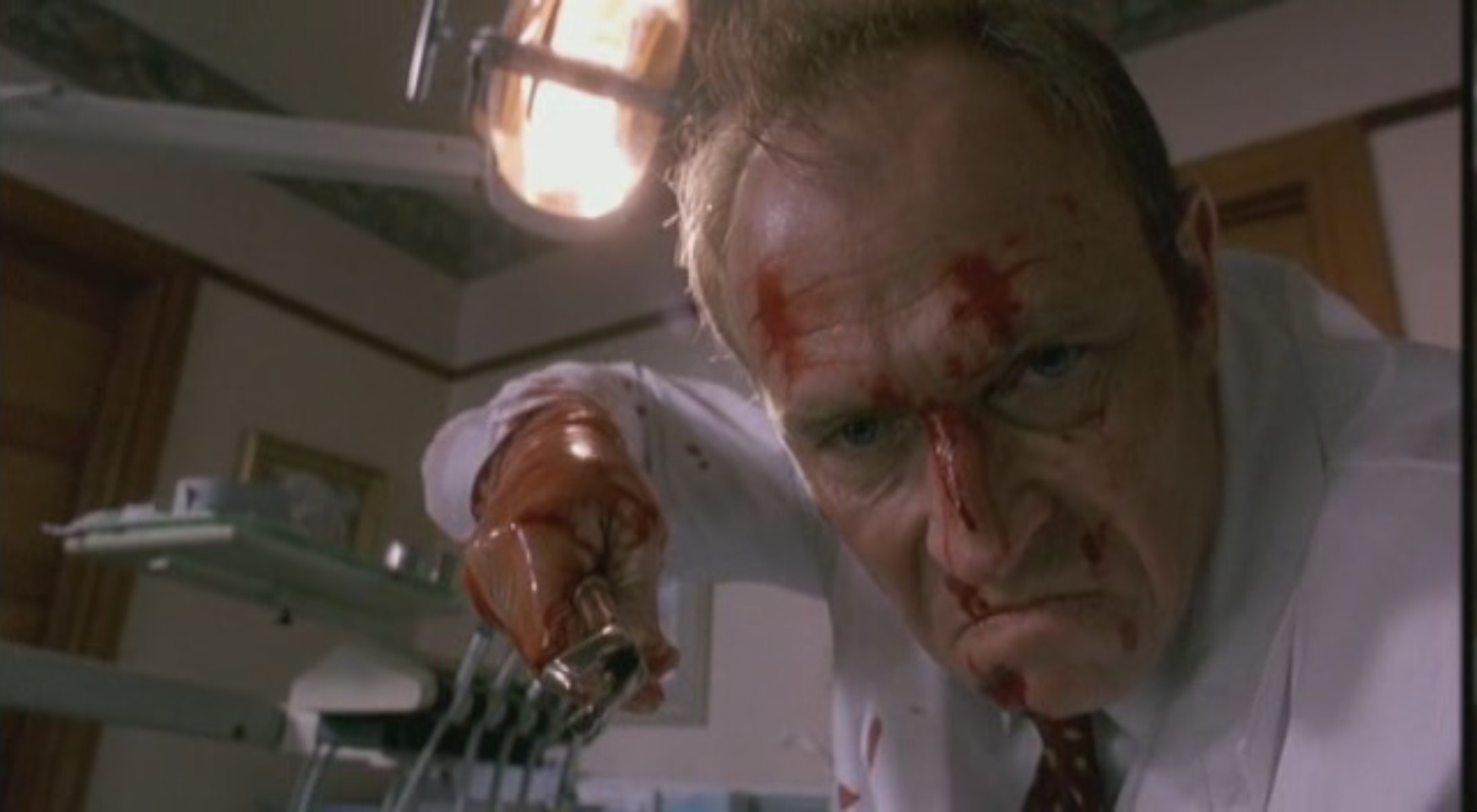
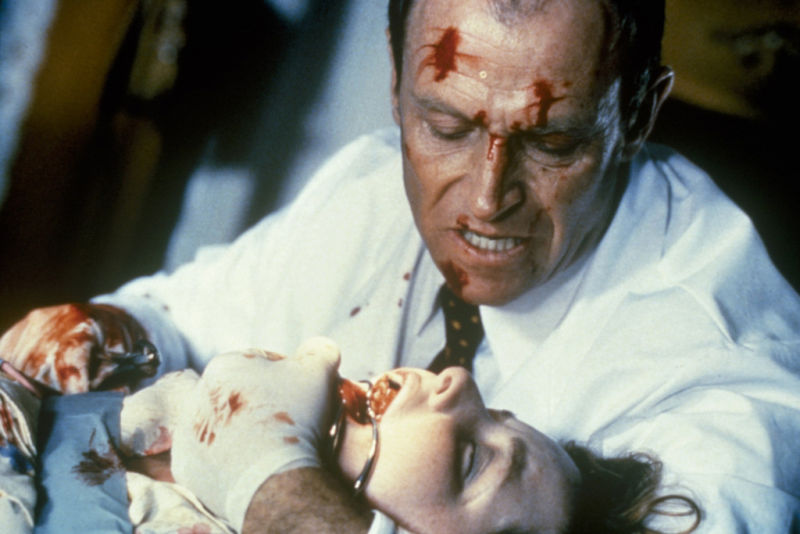
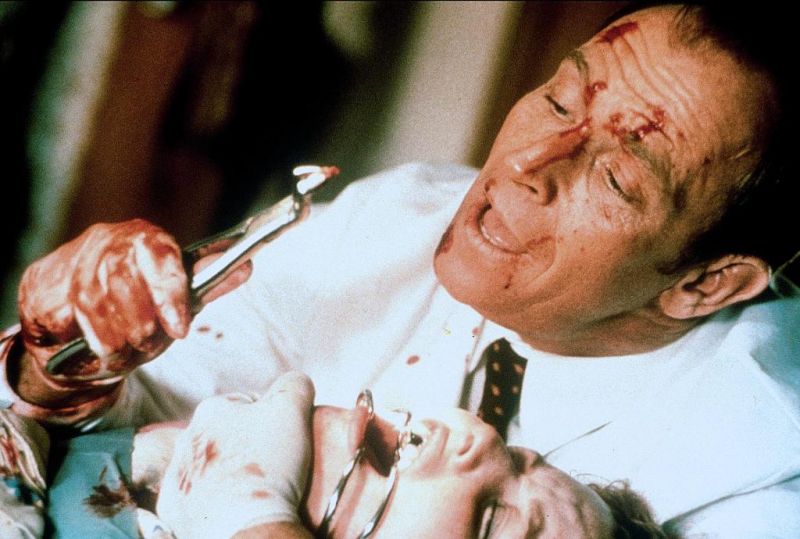
Tag Archives: bad movies

Hercules in New York

Hercules in New York

hercules6

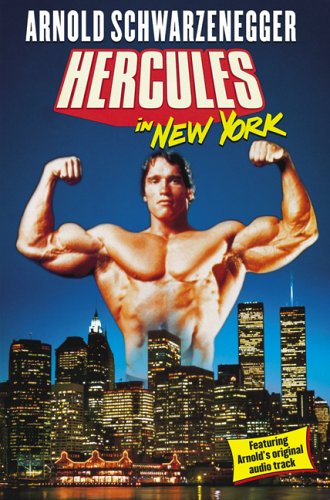
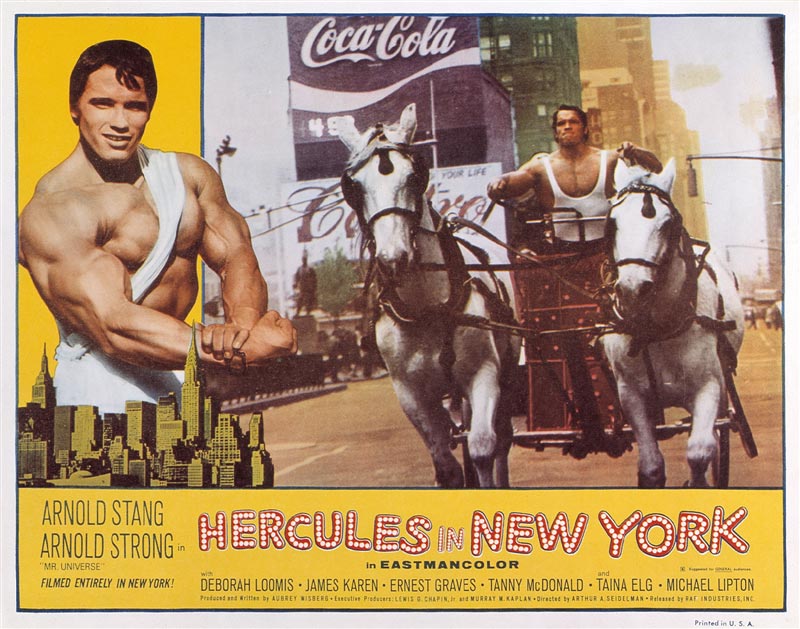
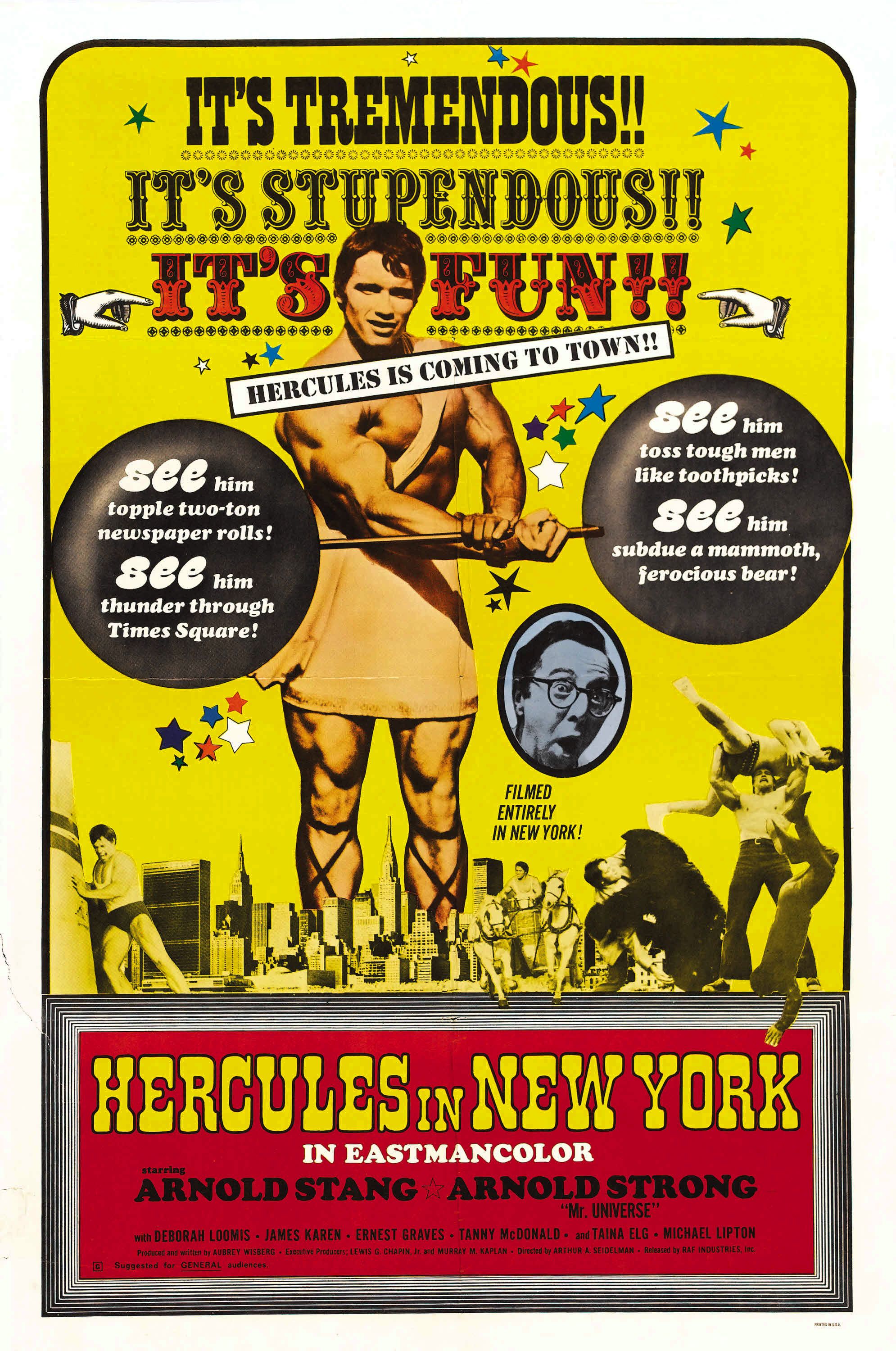
Today’s feature is a low-budget 1969 comedy by the name of “Hercules in New York”: a film most famous for featuring the first on-screen role for Arnold Schwarzenegger.

“Hercules in New York” was the last film written by Aubrey Wisberg, whose career featured included 1950s and 1960s science fiction films, as well as a handful or propaganda productions during World War II. Unsurprisingly, this film definitely seems misplaced in time. Even for 1969, the story and comedic style feels significantly dated. For contrast, “Hercules in New York” also saw the first directing job for Arthur Allan Seidelman, who has now had a significant career directing television movies and series. The mix of a wet-behind-the-ears director and an outdated, behind-the-times writer proved to be a bit of a perfect storm of awfulness for “Hercules in New York.”
hercules3Adding to the mix of inexperience and incompetence on the “Hercules in New York” crew was a cinematographer with no previous credits, and a musical composer with no listed credits before or since the movie. It honestly feels like the entire crew was pulled out of a hat, which I’m sure was done in an effort to keep the costs far below the radar.

The story of “Hercules in New York” follows the angsty demigod as he decides to explore the modern world, to the intense displeasure of his father, Zeus. He quickly becomes unwittingly involved in mafioso-run sports gambling in New York City, and manages to make headlines for his feats of strength. Enraged with his meddling, Zeus decides to punish Hercules, which leads to further shenanigans in the mortal world.

Worried about Arnold Schwarzenegger’s unwieldy last name, the producers on “Hercules in New York” decided to credit him as “Arnold Strong, ‘Mr. Universe.'” The name “Arnold Strong” was chosen as a sort of gag, playing off of his co-star’s name “Arnold Stang.” Mr. Universe was used, of course, because that was the title that Arnold was most known for at the time, as he won the famous bodybuilding competition at the age of 20 (just 2 years prior to “Hercules in New York”). His next film role wouldn’t be for another 4 years, when he essentially played an extra in the fantastic Robert Altman movie, “The Long Goodbye.”
hercules4One of the most infamous and memorable aspects of “Hercules in New York is the dubbing that was done early versions of the feature. Because of Arnold’s thick accent, it was decided that his lines should be dubbed over, which makes for entertaining watching in retrospect. Even in the versions with Arnold’s audio track re-inserted, you can hear the dubbed voice during a closing sequence where Hercules speaks through a radio to Arnold Stang’s character. It is honestly a toss-up as to which audio track is more entertaining: Arnold’s natural voice with the worst acting performance of his career, or the bizarre voice-over that doesn’t fit Arnold’s body in the slightest.

Some years ago, the rights for “Hercules in New York” were auctioned off on e-bay, accruing bids for just over half a million dollars by the auction’s end. Given poor reception and general infamy of the flick, it is possible that the winner significantly overpaid for the product. The movie currently holds a well-deserved 17% critic score on Rotten Tomatoes, along with a 29% audience score.

The character of Hercules has a long cinematic tradition: he has featured in big budget flicks, animated movies, cheap Italian films, and epic television series. Apart from Arnold Schwarzenegger, the character has been portrayed over the years by notables such as Dwayne “The Rock” Johnson, Lou Ferrigno, Kevin Sorbo, Ryan Gosling, Sergio Ciani, and Kirk Morris, among many, many others.

I haven’t been able to find budget information for “Hercules in New York,” but you have to assume that this was an incredibly cheap production just judging from the film quality. It is hard to say if it made any money, just because there isn’t exactly a wealth of information out there about it. The rights to the film have changed hands a few times over the years, and it is currently distributed by Trimark. However, I doubt that it makes any significant money on home video sales.
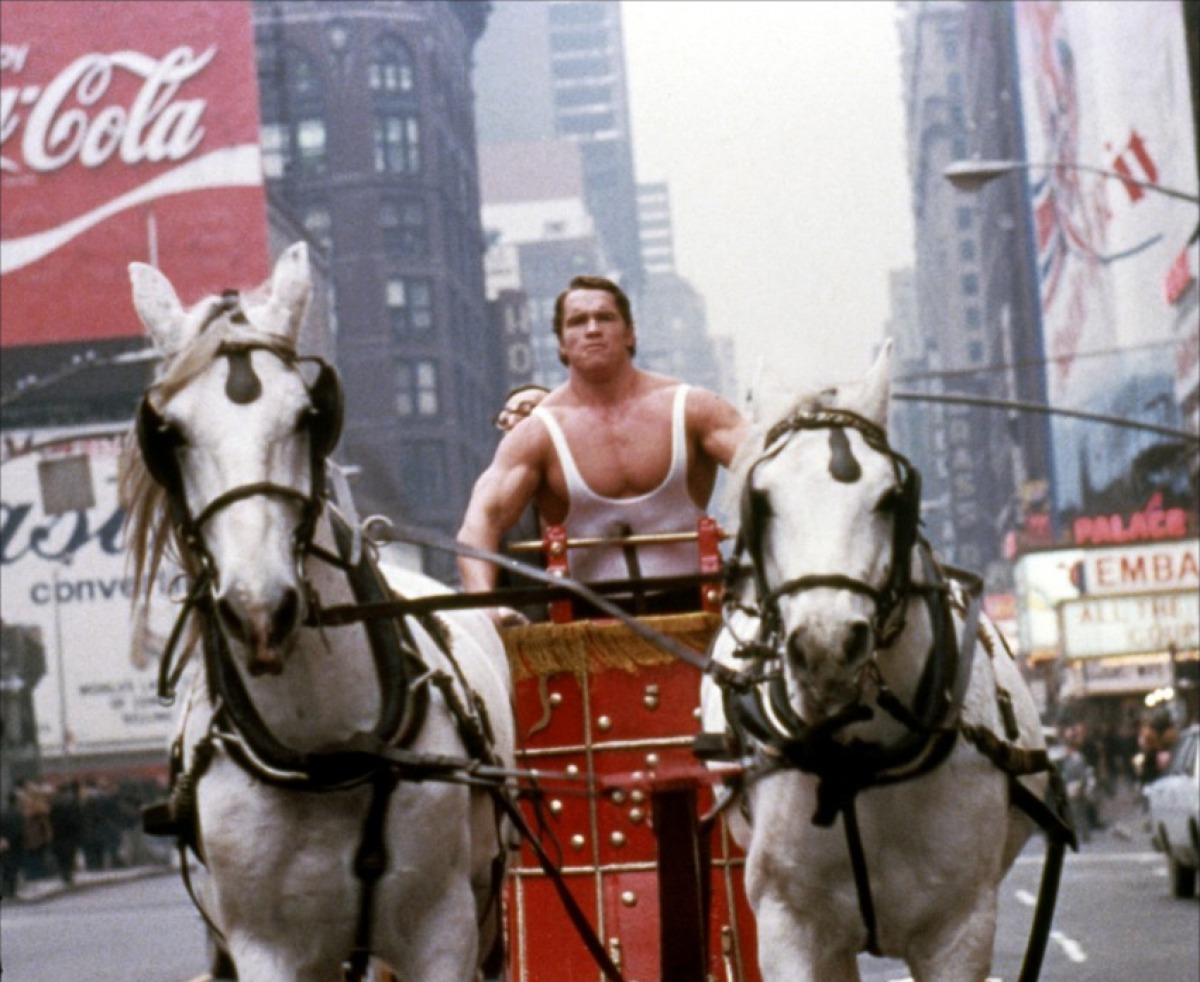
hercules2Strangely, I actually think that there is some promise in the concept for “Hercules in New York.” The Greek gods are constantly meddling in the mortal world in mythology, so why not have a fish out of water tale where a god comes down to do it again in the modern world? Of course, this film does just about everything wrong, but I think that this could have been a serviceable enough film in more capable hands at every level. Essentially, this is not a film that was damned from conception.

The biggest issue for “Hercules in New York” is its use of outdated (even for 1969) humor. The jokes are all incredibly weak and infantile, and a lot of the humor seems like it is supposed to come from Arnold Stang’s character, whose comic relief style was suited better for the comedy world prior to the JFK assassination. All of the comic portrayals in the film are overly-expressive, frenetic, and basically cartoonish: a style that can go wrong all too easily, and certainly does so here.

One other serious problem with “Hercules in New York” is that the hero, Hercules, is an absolute asshat throughout the movie. A few characters acknowledge this fact, but inexplicably forgive him and begin to like him for reasons that are never made clear on screen (which is a whole different issue with the writing in the film). The audience is clearly supposed to sympathize with the demigod, but I couldn’t help but identify with the put-out and exasperated Zeus, who has clearly had it with Hercules’s constant shit.

I would be remiss to not mention the amazingly awful Central Park bear fight in this film. The sequence almost rivals the bear fight from the Lou Ferrigno’s “Hercules” film, though I shockingly think that that one (a scene where a bear is thrown into space, mind you) is more believable that Arnold’s bear wrestling in this flick. Take a look for yourself:

At one point in the film, Mercury decides to intervene in the plot to help Hercules out of a bind. He does this by bafflingly summoning Samson and Atlas out of absolutely nowhere, exactly where they need to be to help Hercules. This might have been an interesting side plot (Mercury defying Zeus to help Hercules) if it had been developed earlier, but as it exists in the film, it feels like an improvised element used to patch a plot hole. It comes completely unprecedented and out of left field, and winds up being just another example of the mass ineptitude behind this movie.

All of the acting is this movie is honestly beyond awful. From the leads to the accessory players to the extras: not one person turns in a decent performance. At that point, you have to assume that the problem is not with the actors, but with the direction and the script: because honestly, what are the odds that you cast an entire production’s worth of duds? This isn’t “The Producers” as far as I know.

“Hercules in New York” is clearly trying to be a fish out of water comedy, but a good deal of it doesn’t make sense. Hercules should be treated as a man out of his own time, not like a creature from another planet. Is the audience supposed to believe that the Greek gods do not understand tact or basic social graces? Sure they live remotely, but they do have a sort of society on Olympus. There is the potential for this movie to be entertaining, but the writing never quite takes it in the right direction (at least not for long).
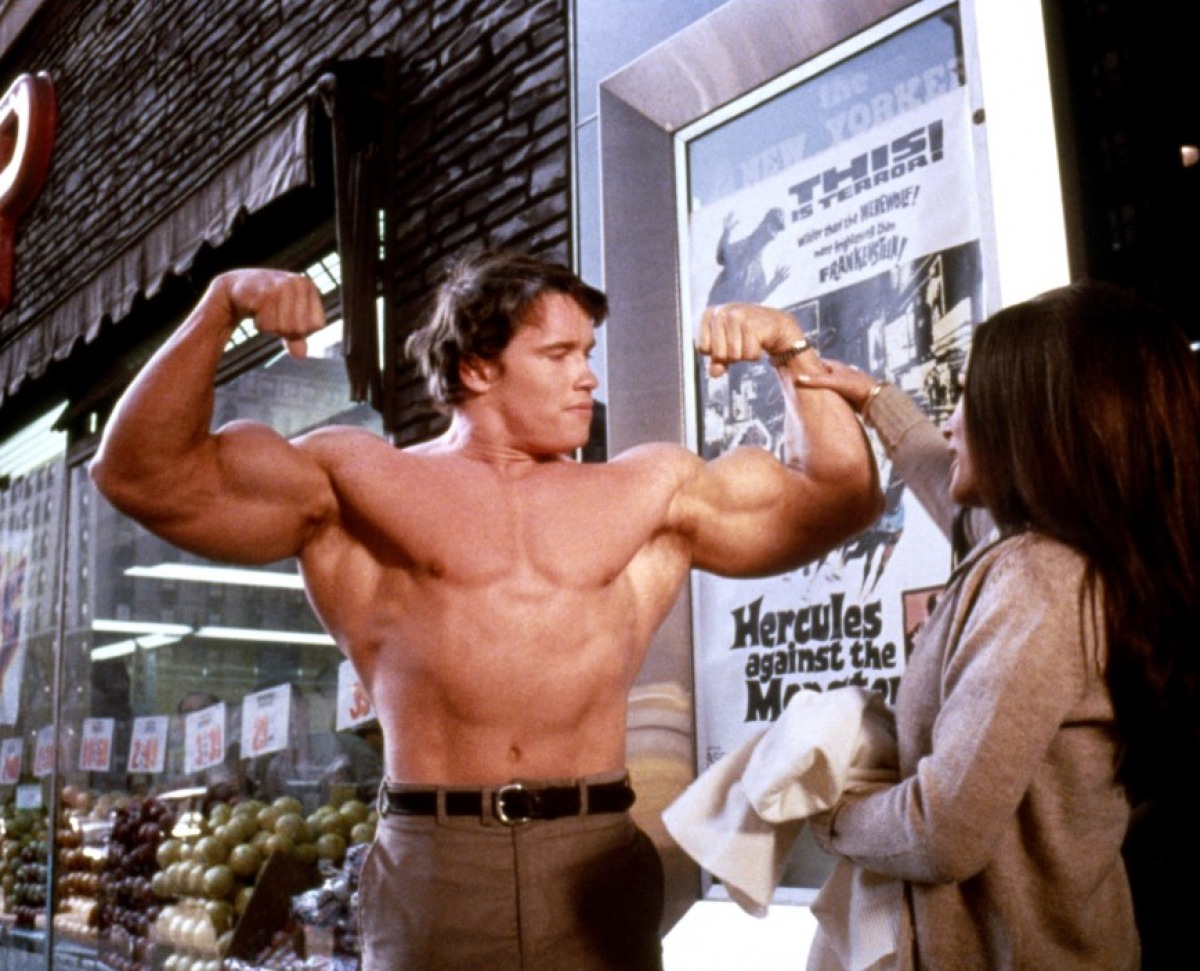
hercules1Overall, I think “Hercules in New York” sits right on the boundary between being an entertainingly awful movie and a dull, nearly-unwatchable one. If you ask me, it does land on the right side of that line, but only barely.  I can recommend this for bad movie lovers for the sake of a few select highlights, and because of just how awful Arnold is in this early role. However, it is a pretty weak recommendation: there are definitely more worthwhile bad movies to spend your time on.
YouTube Round-Up

Howdy there, loyal readers! This weekend wound up being a real doozy, so I don’t have a new review ready for today. Never fear though, because there is some good stuff coming up later this week, particularly as I start delving into my accumulated archive of bargain bin acquisitions.

In the meantime, I decided to round up a lovely bunch of full movies that are currently available, totally free, on the wide world of the internet. Enjoy!

—-

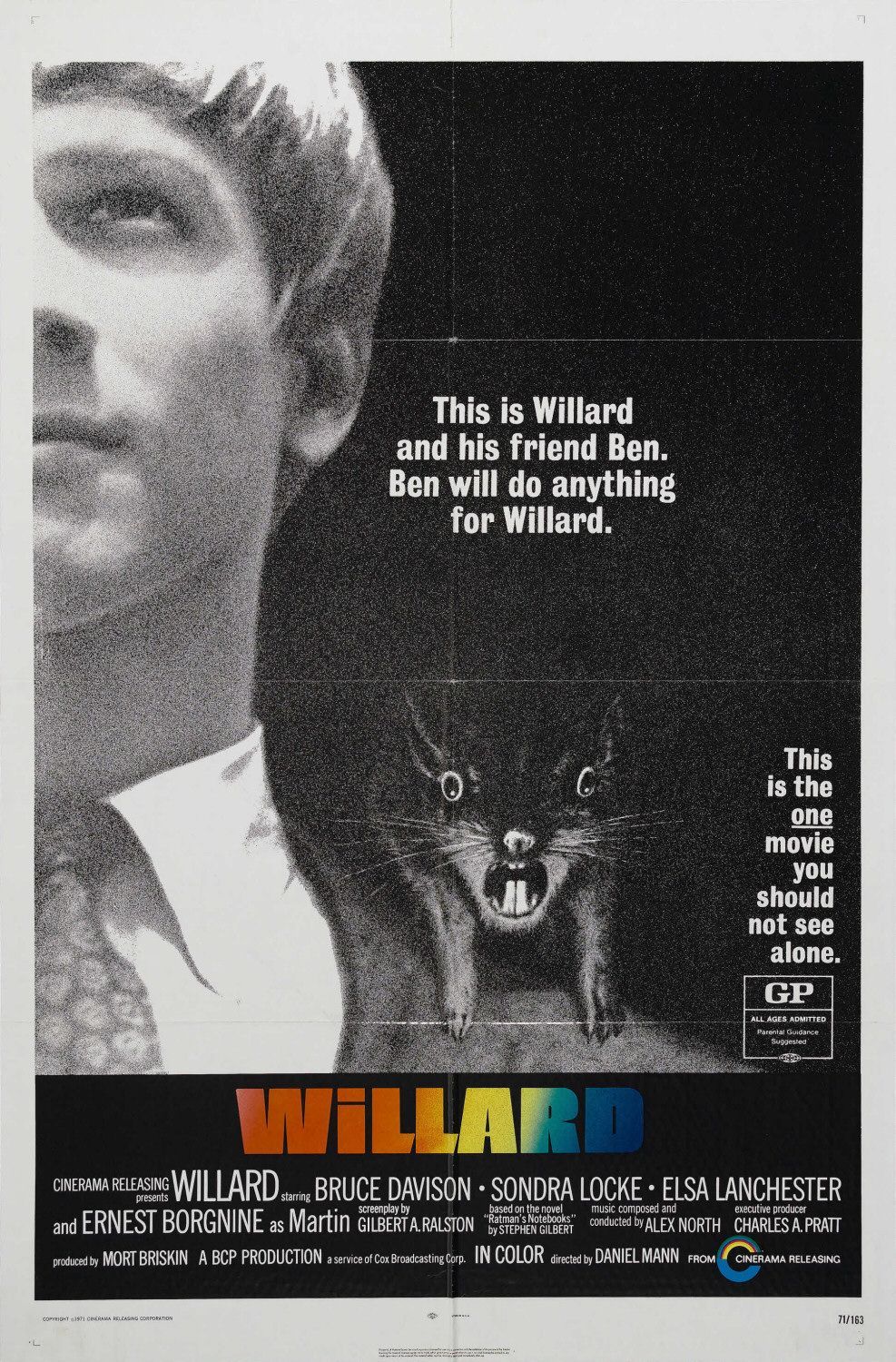
Willard

willard

I have had the damnedest time finding a physical copy of this 1971 classic, but luckily it has been hanging around on YouTube unimpeded for a while (though it is obviously a VHS rip). I particularly like “Willard” because of the way it blends a revenge story with a monster movie. The hybridization worked splendidly, and has been mimicked many times since. You also can’t help but identify with Willard, even as he starts going over the edge with his rat-fueled rampage. It is definitely worth a watch, particularly as it seems to be fading from the public consciousness. Here’s hoping it gets a blu-ray treatment at some point.

—-

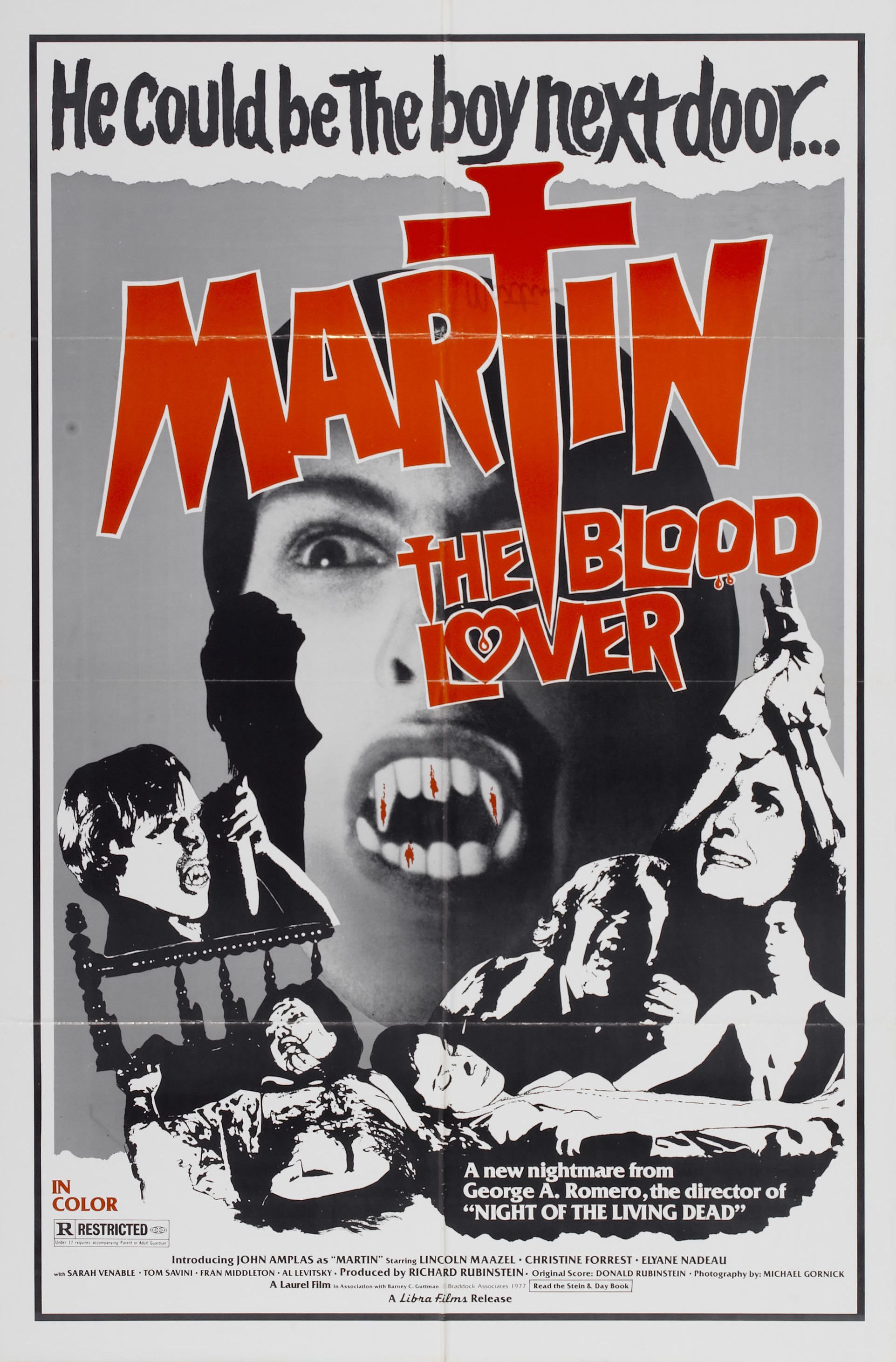
Martin
martin

“Martin” is a clever 1977 George Romero vampire movie that has managed to slip through the cracks of history, and is one that the writer/director highly regards as one of his finest films to this day. On debut, it wound up being overshadowed by “Assault on Precinct 13” at Cannes, and never managed to get much off the ground. I recently read about the film in Shock Value by Jason Zinoman, and the described counter-supernatural style really stuck out to me. The question of whether Martin is actually a vampire follows throughout the movie, and Romero uses this to poke at the over-tired tropes of vampire movies. It sounds like the sort of film that would work well today, so it may just have been long ahead of its time. What luck that this forgotten gem is hanging around in the annals of YouTube!

—-

A Bucket of Blood
bucketofblood

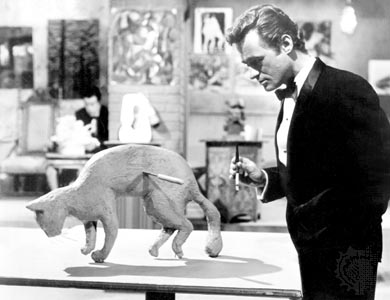
I absolutely love “A Bucket of Blood,” and think that it might just be Roger Corman’s true masterpiece. This film has been popping into my head quite a bit recently, particularly while re-watching Martin Scorcese’s “After Hours” and the modern cult classic “Murder Party.” Both of these films feature over-the-top, tongue-in-cheek assaults on the contemporary art world, something that has never been done better than in “A Bucket of Blood.” The story follows an awkward and incompetent aspiring artist who is shunned by his local arts community. Through a bizarre series of accidents, he winds up becoming a hit artist after plastering a mold over his neighbor’s cat, which he accidentally killed out of frustration. Loving the attention, he decides to replicate the success by going on killing spree, an immortalizing his victims by coating them with plaster. The movie horrifying, hilarious, and has one of the most relate-able and sympathetic serial killers that I have ever seen in a film. If you haven’t seen this, it gets an enthusiastic recommendation from me.

—-

Walking Tall
walkingtall

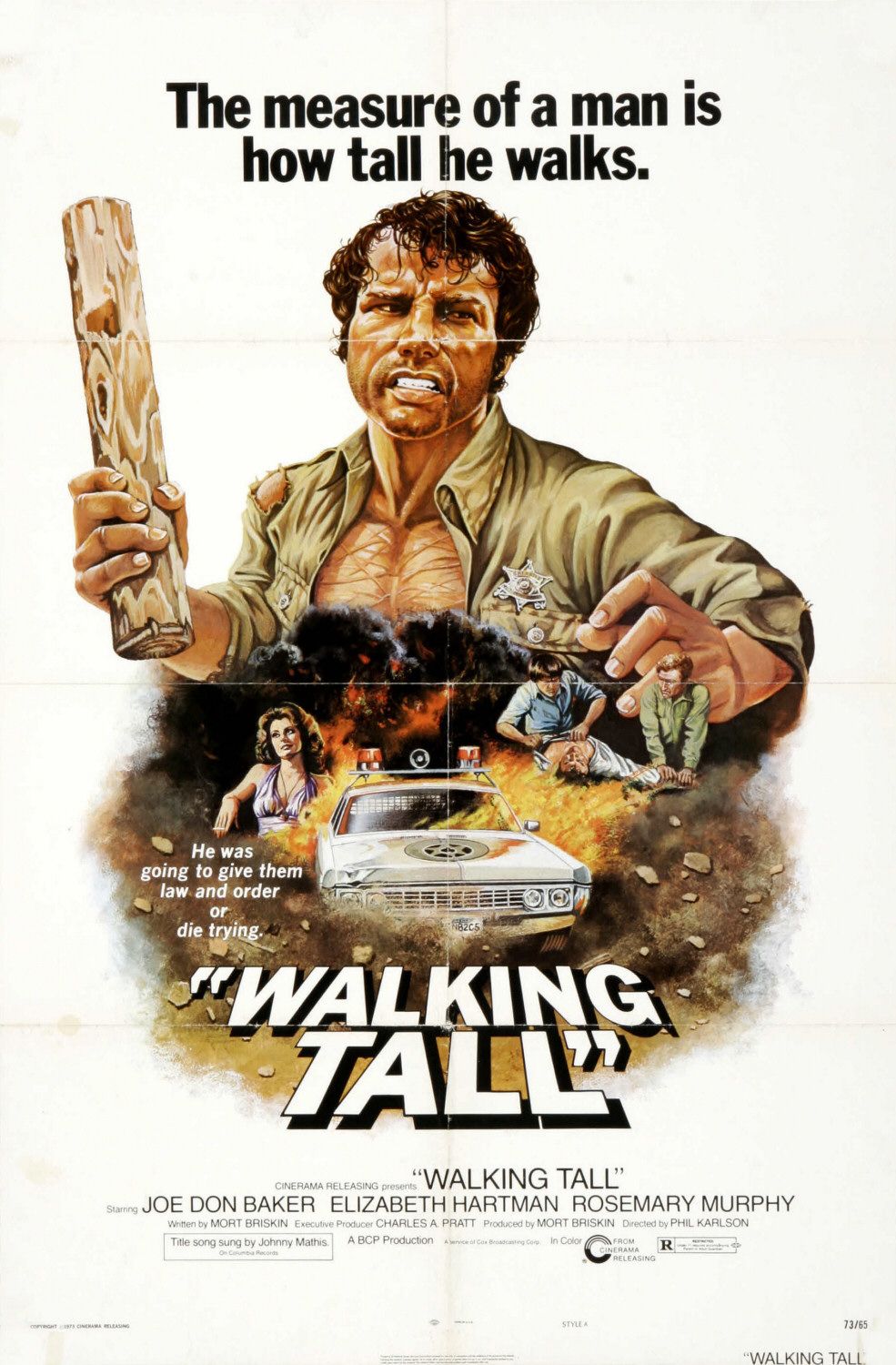
Nothing gives me quite as much joy as seeing Joe Don Baker show up in movies where I am not expecting to see him. I covered a few of his movies back in the IMDb Bottom 100, but I still hold that he is the best part about all of those awful movies. And, honestly, I kind of like “Mitchell.” I’m planning to cover Joe Don Baker in at least one upcoming review, but I think “Walking Tall” deserves a special little mention. Not only is this the Joe Don Baker-iest of all the Joe Don Baker movies, but like “Willard,” it has really fallen out of the public consciousness. I have likewise had no luck finding a physical copy of this movie, apart from the recent remake starring Dwayne Johnson. However, that flick definitely lacks the odd charm and grittiness of the original flick. I hope this gets a re-release of some sort in the near future, but for now, you can catch Joe Don Baker whacking people with a slab of wood to your heart’s content on YouTube.

—-

Hercules

hercules

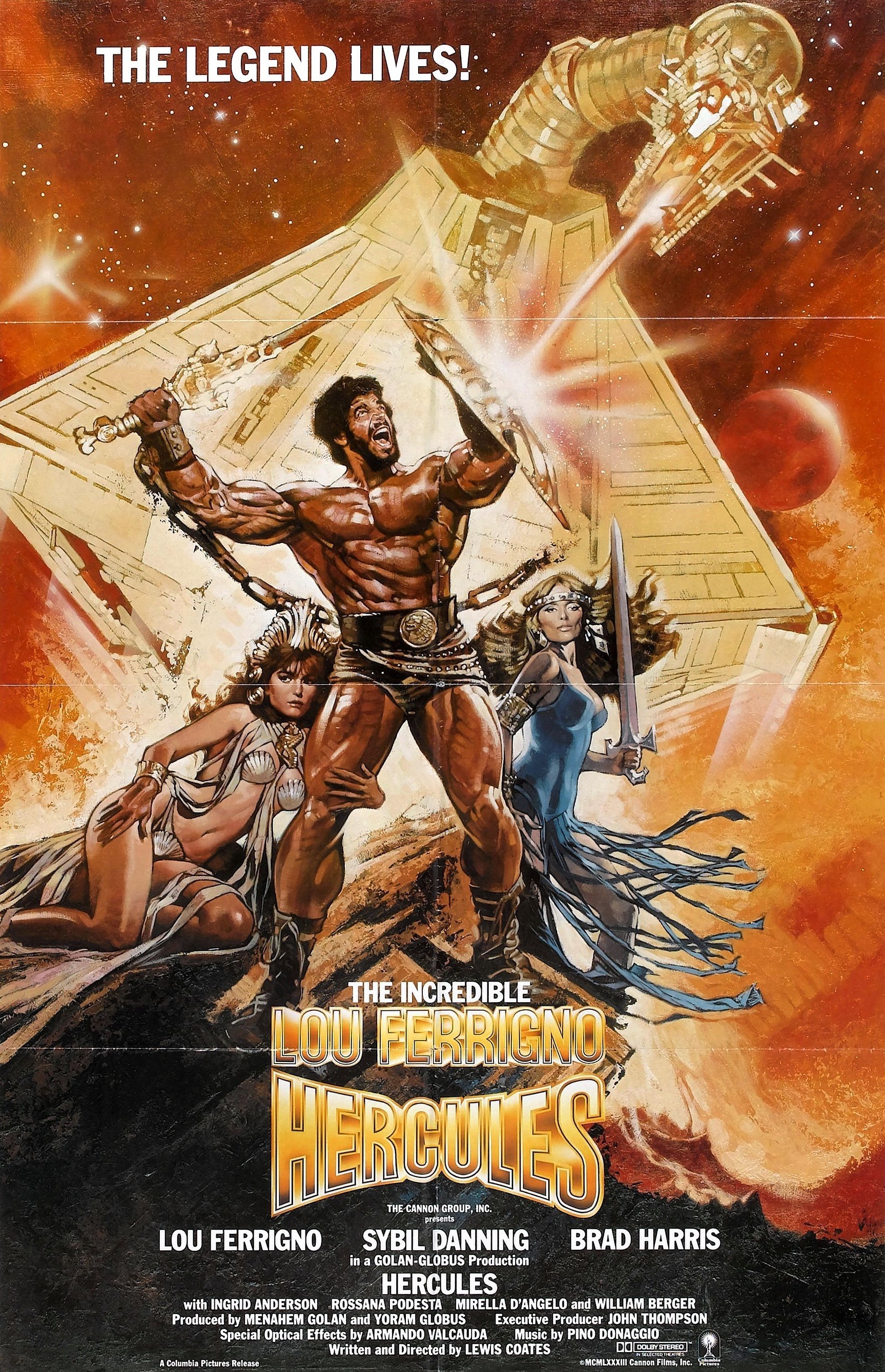
There are an awful lot of Hercules movies out there. In fact, I’m going to be spotlighting one of the lesser ones later this week. However, I don’t think any of them are as entertainingly bizarre as this 1983 Italian film by Luigi Cozzi. And, of course, it stars the Incredible Hulk himself, Lou Ferrigno.  If you thought that either of the 2014 Hercules flicks were disappointing, then this one is sure to never let your hopes get up again. The bear fight / tossing sequence has become particularly infamous, but there are a whole lot more things to enjoy in this film than just that brief clip. This one is almost certainly worth your time, if you are up for wasting an hour and change on YouTube. It is an experience. And, if you are up for more, there’s even a sequel out there!

Stuart Gordon Spotlight: “The Wonderful Ice Cream Suit”

The Wonderful Ice Cream Suit

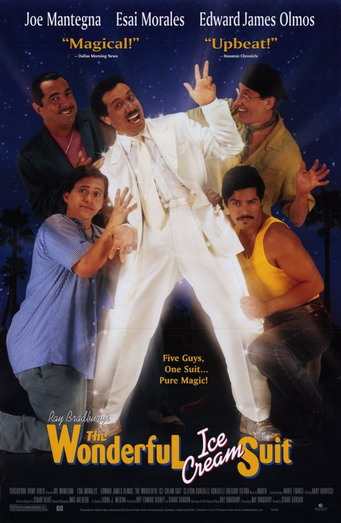
icecream1

Welcome back to Misan[tope]y Movie Blog’s two week spotlight on Stuart Gordon! Today, I’ll be highlighting the children’s film “The Wonderful Ice Cream Suit”

“The Wonderful Ice Cream Suit” united one of the most acclaimed horror directors, Stuart Gordon, with one of the undisputed masters of science fiction writing in history: Ray Bradbury. Unfortunately, their collaboration was not to be a science fiction horror classic, but a family-friendly adaptation of a short story about a white suit.

“The Magic White Suit” by Ray Bradbury was published in 1958 in the Saturday Evening Post, and was eventually retitled and popularized as “The Wonderful Ice Cream Suit.” Prior to the film, it was adapted by Ray Bradbury himself as both a traditional stage play and a musical, both of which had influence on the film version.

Ray Bradbury himself wrote the screenplay adaptation of his own work, marking another rare instance in which Stuart Gordon directed a film with no direct influence on the writing.

The cinematography on “The Wonderful Ice Cream Suit” was provided once again by long-time Stuart Gordon collaborator Mac Ahlberg, his second-to-last work with Gordon before his death in 2012.

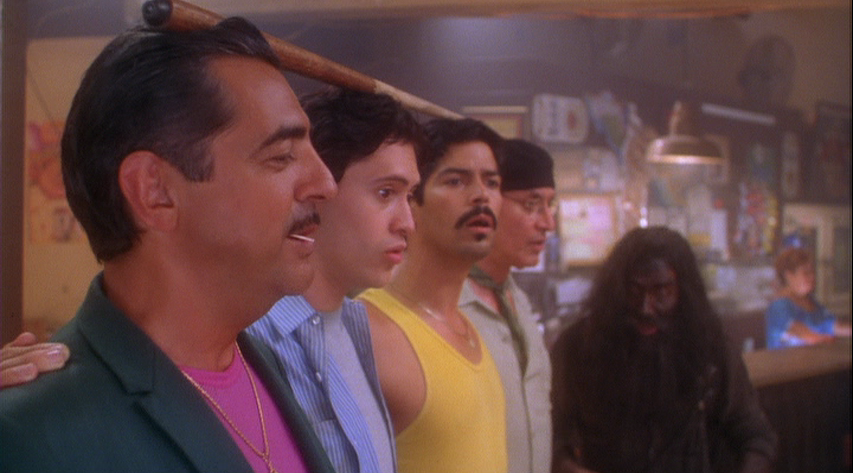
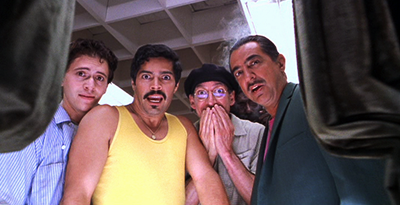
The story of “The Wonderful Ice Cream Suit” follows five down-on-their-luck men who happen to share the same suit measurements. They are ultimately assembled together for the purpose of buying an impeccable white suit, which they split the cost of and share. The rest of the film follows their developing friendship around the suit, as well as the way the suit affects their lives positively.

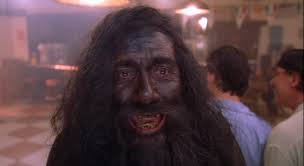
icecream3The cast of “The Wonderful Ice Cream Suit” is actually pretty impressive, boasting veterans like Joe Mantegna (who worked again with Gordon on “Edmond”) and Edward James Olmos. Clifton Collins Jr. reunited with Stuart Gordon after appearing in “Fortress,” and joins Esai Morales and Gregory Sierra to round out the central cast. The accessory cast includes cameos by comedy legend Sid Caesar and Howard Morris, as well as character actor Mike Moroff as a heavy.

icecream6Pedro Gonzales Gonzales also makes a quick cameo as a bitter landlord during the film’s first act. Apart from being a prolific actor, is also Clifton Collins Jr.’s grandfather. Collins used to use the name of “Gonzales Gonzales” in his honor. In another bit of trivia, Joe Mantegna starred in one of the stage adaptations of “The Wonderful Ice Cream Suit” prior to the making of the film.

Despite having a Ray Bradbury writing credit and an impressive cast, “The Wonderful Ice Cream Suit” wound up getting buried, only receiving a direct-to-video release and garnering very little attention. That said, it currently holds an 80% critics score and a 75% audience score on Rotten Tomatoes, and has a 6.6 rating on IMDb.

Personally, I think that this movie is absolutely wretched. First off, there is a pretty significant change to the original story’s ending. Normally, I don’t much mind changes to a story in an adaptation. However, in this case, the ending alteration completely changes the meaning of the story. In the original, it is revealed that the central character doesn’t need the suit to succeed, but just lacked the confidence that the suit gave him. It is an uplifting sort of message that dispels the idea that the suit was somehow supernatural, but that it revealed something positive within the men who wore it. In the movie, however, this key revelation is skipped. Instead, the lesson is changed to be about friendship, and how the suit brought the men together. Honestly, you can tell that this wasn’t the intended ending: instead of dismissing their obsessive materialism, the story endorses it, and loses some of its charm along the way.

Perhaps most egregious of the film’s flaws is the fact that it relies heavily on stereotypes to try to drudge up humor. Outside of the racial caricatures, the only other attempts at humor come in the form of loud noises and cartoonish, flailing physical comedy, which gets to be a pretty tired schtick after a while.

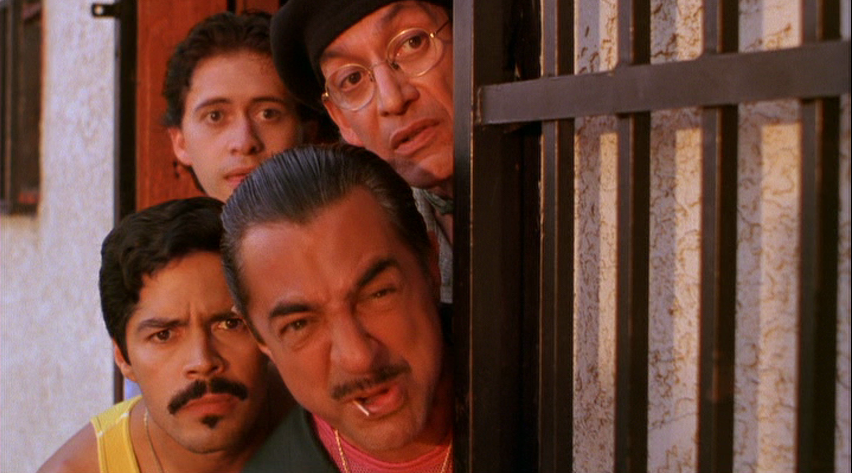
icecream2Worse yet, none of the characters manage to develop meaningfully, or even have any characterization at all outside of, at best, one trait. One of them is dirty, one of them is smart, one of them can sing: they might as well be cartoon dwarfs for all of their depth.

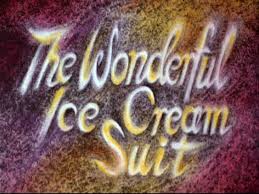
A couple of things that I will commend about the film are the theme song, which is alarmingly catchy, and the opening title animation, which is done interestingly colorful with sand art. There are also a few moments throughout the film where street art is integrated into the story, which is also pretty cool to see.

icecream5Probably the thing that bothered me the most about this film was the unfortunate squandering of some real acting talent. Olmos spends most of the film frenetically bouncing around, while Mantegna and the others basically function as “The Three Stooges,” decades displaced in time and using long-expired humor.

icecream4Overall, I just could not stand this film. I am generally not a big fan of family and children’s films, primarily because they tend to debase to the audience. There is a way to do family fare without descending into content that amounts to solely loud noises and flailing arms, and this film does not rise to that challenge. It basically represents everything that is wrong with most family comedies, with an extra side of unappealing racial stereotyping. I mean really: would it have been too difficult to portray Latino characters as something more dignified than live-action cartoons? Or hell, why not actually cast a full cast of Latinos for the movie (looking at you, Italian-American Joe Mantegna)?

There is absolutely no reason to seek out this movie. There isn’t any genuine entertainment value to it outside of Sid Caesar’s quick cameo, and even that isn’t really impressive. I will say that Stuart Gordon deserves some props for trying something outside of his usual film fare, but this was an experiment that just didn’t go quite right. As for Ray Bradbury’s writing, I don’t know what the hell happened here, but this film is absolutely awful.

Stuart Gordon Spotlight: “Dagon”

Dagon

dagon8

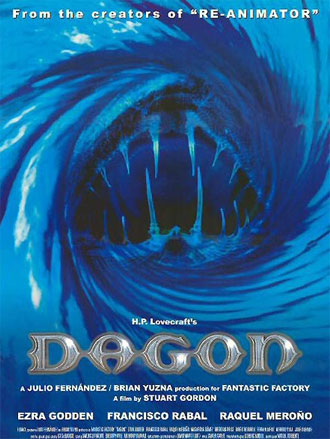
Welcome back to Misan[trope]y Movie Blog’s two week spotlight on writer/director Stuart Gordon! Next up is 2001’s “Dagon,” which sees Gordon dive back in to the Cthulhu mythos of H. P. Lovecraft.

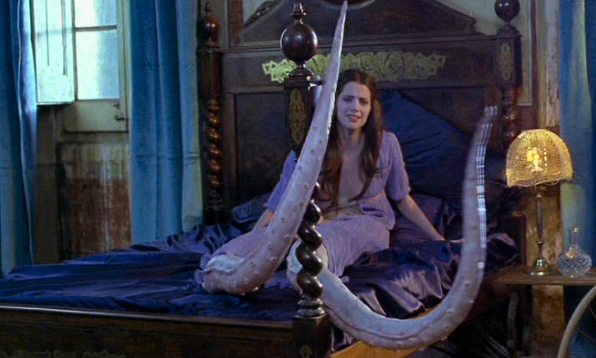
“Dagon” is a loose adaptation of H. P. Lovecraft’s “The Shadow Over Innsmouth,” the only one of his works to be published as an independent book (as opposed to a section of a magazine) in his lifetime, with a whopping printing of 200 units. The film adaptation changes some major details from the story, most notably the location (from New England to Spain), and the nature of the creatures (from frog-like to octopus-like).

“Dagon” once again reunited Dennis Paoli and Stuart Gordon on what would be one of their longest-running projects (taking over 15 years to ultimately see to the screen). Paoli took sole writing credit on “Dagon,” which was unusual given how often the two have acted as writing partners. “Dagon” was initially written to be made as a follow-up to “Re-Animator” in the 1980s, and was intended to have Jeffrey Combs in the lead. However, for a handful of reasons, “From Beyond” ultimately got precedence, putting “Dagon” on the back-burner for what wound up being well over a decade.

The cinematography on “Dagon” was provided by Carlos Suarez, an acclaimed Spanish cinematographer who has been working since the 1960s, but has never really branched outside of his home country.

The music on “Dagon,” which is only used sparingly in the film, was composed by Carles Cases, another Spanish member of the crew who has never particularly branched outside the world of Spanish-language cinema.

The special effects on “Dagon” were provided by DDT, an acclaimed Spanish special effects outfit that has worked on films such as “Hellboy” and “Pan’s Labyrinth,” where their skill in creating creatures has been excellently showcased.

A number of members of the production design and art team from “Dagon” would later work with producer Brian Yuzna on “Beyond Re-Animator,” the second of two dubious sequels to Stuart Gordon’s initial 1985 adaptation.

The cast of “Dagon” is led by Ezra Godden, who would later reunite with Stuart Gordon years later for “Dreams in the Witch House.” The British actor modeled his character of Paul on a combination of Woody Allen and Harold Lloyd, creating a sort of oddly comic and out of place protagonist. The cast also features the acclaimed Spanish actor Francisco (Paco) Rabal in one of his last on-screen performances before his death, as well as the first film role for actress Macarena Gomez.

dagon3 dagon7The story of “Dagon” follows four Americans  on a boating vacation, where they suddenly and mysteriously become shipwrecked just off of the Atlantic coast of Spain. In their search for medical help on shore, it quickly becomes clear that they have stumbled upon a peculiar and hostile village with a number of hidden secrets.

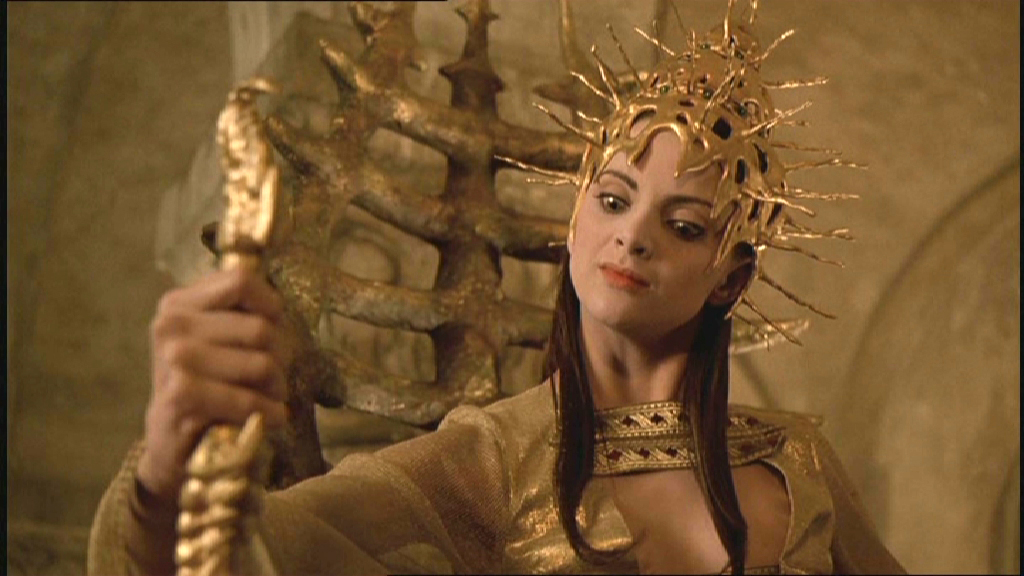
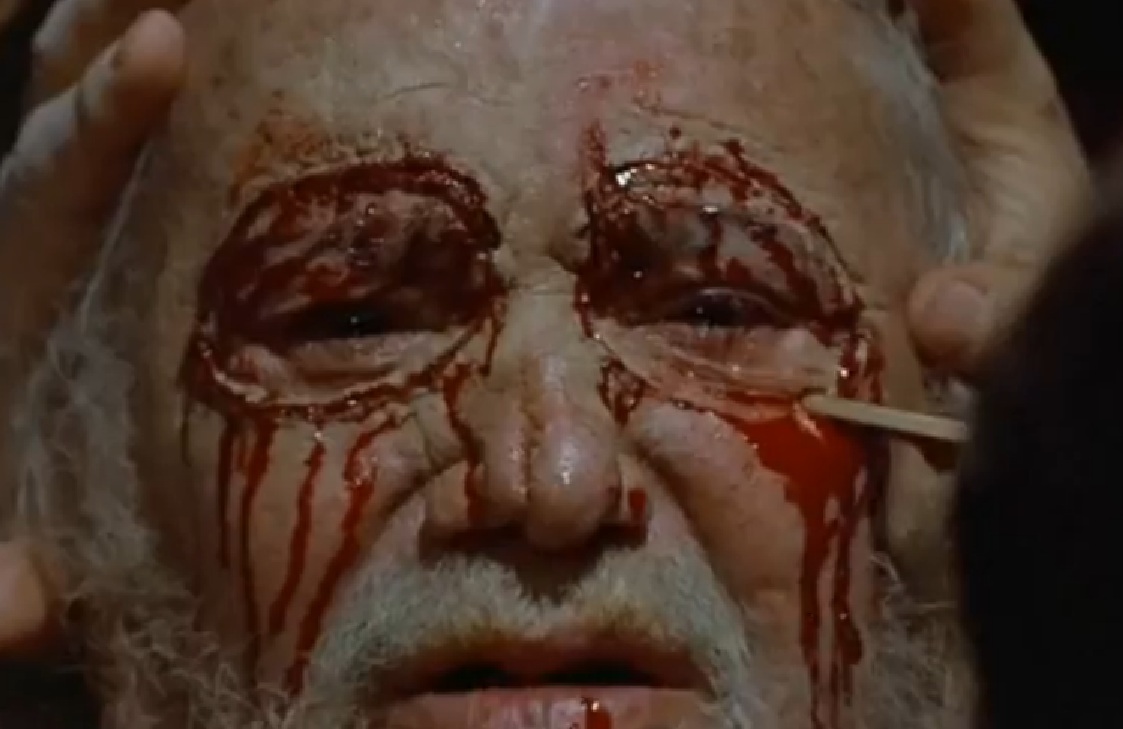
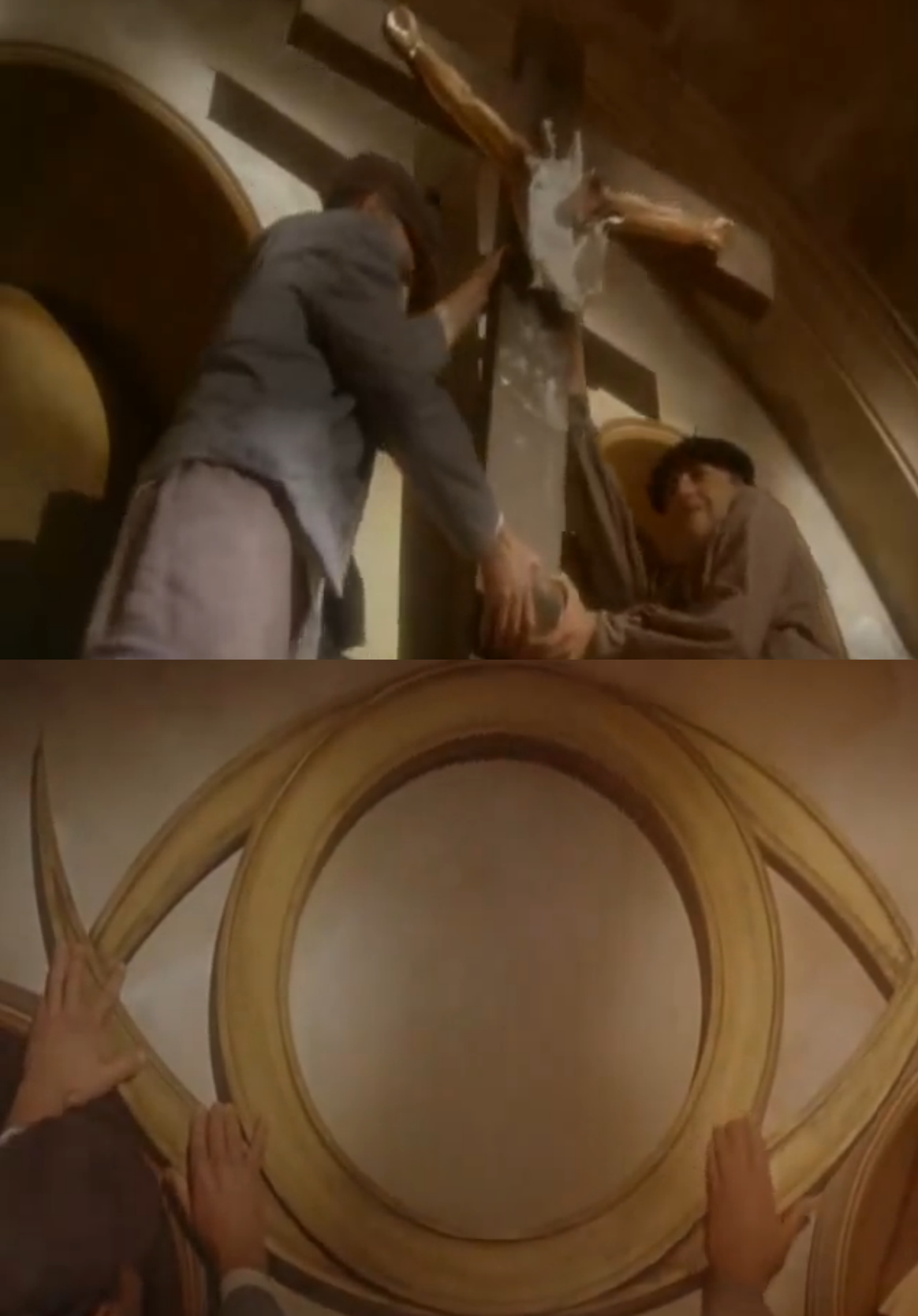
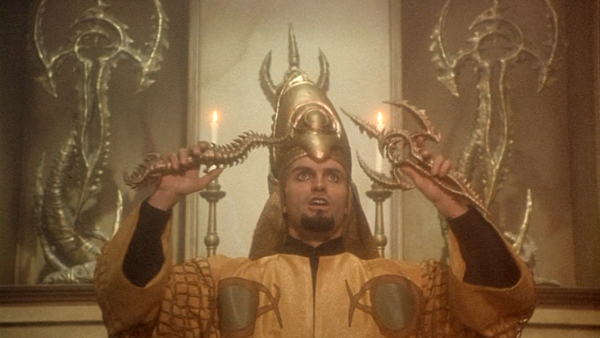
In the DVD commentary for “Dagon,” both Dennis Paoli and Stuart Gordon mention the concept of the story being a “battle of the gods.” Dagon was not just an invention of Lovecraft, it was based on a fish-god of the same name mentioned in the Old Testament as being the deity over the Philistines. Appropriately, there are a number of sequences showing conflict between Christianity and the Dagon-worshippers: notably, an extensive flashback sequence that depicts the revolution of the town from being Catholic to following the sea-god Dagon.

Apparently, Stuart Gordon was worried that there would be issues with finding Spanish extras willing to desecrate Christian symbols for this sequence. Hilariously, the cast and crew were more than happy to oblige, and reportedly destroyed all of the spares  off-screen as well, claiming it was therapeutic.

dagon9
The intersecting crescents “eye” symbol for Dagon was developed specifically for this film

Stuart Gordon and Dennis Paoli include a number of small details throughout “Dagon” that become more noticeable upon re-watching the film. For instance, none of the native islanders are ever shown blinking, a detail pulled from the source material that is meant to point to their “fishy-ness.” There are also a number of repeated phrases and actions on the part of Paul: he frequently mentions “two possibilities,” and is often faced with dichotomies throughout the film. Paul is also shown experiencing stomach pain, which becomes more intense and pronounced as the film goes on. Ultimately, the source of the pain is revealed to be a set of gills that have developed around his ribs. Personally, I would think that the sensation of growing gills would differ a little bit from a stomach cramp, but I have also never experienced a transformation into a fish-person.
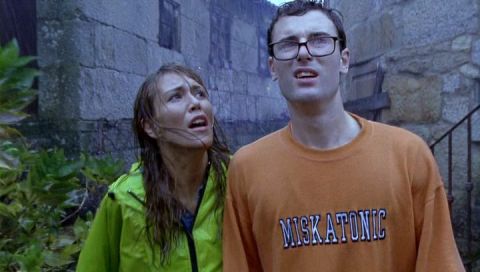
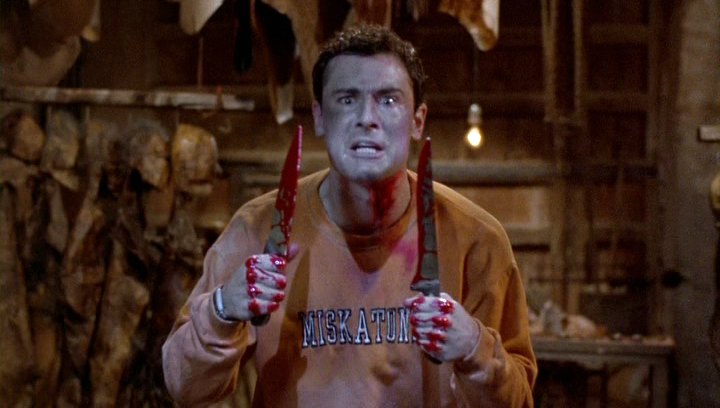
Those with a keen eye will notice that the Godden’s character of Paul wears a sweatshirt throughout the film bearing the name “Miskatonic University.” That fictitious school features prominently throughout Lovecraft’s works, and is directly featured in Stuart Gordon’s previous Lovecraft film adaptation, “Re-Animator.”

“Dagon” reportedly had a total budget of 4.2 million euros, a total that it didn’t even come close to meeting in a limited Spanish theatrical run. The movie currently holds a 6.3 rating on IMDb, and has Rotten Tomatoes scores of 56% from both audiences and critics, a rare case of consensus. No matter how you cut it, “Dagon” was not a successful feature.
Criticisms that I have seen of the movie have claimed that it was too specifically catered to fans of Lovecraft, while others have claimed that despite its attempts, it proves that Lovecraft’s style simply can’t be adapted to film in a way that is simultaneously successful and faithful.

Personally, I have a few issues with the film, but none of them specifically relate to the adaptation. I think that the changes made by Paoli were sensible, and that there is nothing inherently prohibitive about this story that would prevent it from making a good movie. Hell, I think Stuart Gordon came pretty close here to having one of his best films.

Unfortunately, there are definitely issues with “Dagon.” First off, Ezra Godden’s Woody Allen act is just distracting, and completely fails to extract any laughs. Worse yet, his development into a hero seems to happen inexplicably, and his final twist even moreso. I could see exactly how Jeffrey Combs might have managed this character, and if things had turned out different, I think he could have nailed it. Godden struggles to convey intensity, and never seems genuinely terrified. Combs has an ability to portray those things, while also pulling off a side of humor. Godden tried to do that, but he doesn’t have the same kind of balancing capabilities or the comedic chops to do so. While none of the performances were outstanding (Gomez was also distractingly awful at times), no one had the same amount of screentime or responsibility as Godden, and he just couldn’t keep it all together.

dagon1dagon4Apparently, there was some internal debate on the production over whether or not Dagon should be shown in the conclusion. There were a handful of poor decisions here that wound up just about sinking the movie for me. First, Gordon relented, and allowed Dagon to be shown on screen at all. Second, Dagon was depicted solely with low-budget, 2001 CGI. Third, CGI was used inexplicably and interchangeably with (really good) practical effects throughout the film. Computer generated special effects, with rare exception, age horribly, and that is absolutely the case with “Dagon.” Worse yet, there was no reason to have a full shot of a giant monster at all in this movie: Lovecraftian horror is atmospheric, and relies a lot on what you don’t see, and I believe Stuart Gordon knows that. This movie could have been pulled off with only a glancing shot of Dagon (“Cabin in the Woods”,  “Cloverfield”) or just by showing the results of his actions. However, I think I understand why that decision was ultimately made.

dagon2
dagon6 Seriously, the practical effects look ok

“Dagon” was a low-budget production, and in 2001, I imagine the computer effects featured were expensive. For whatever reason, it was decided at some point in the production that certain aspects of the film needed CGI. My guess is that the effects shop pushed it, and showed off the capabilities of their CGI department, and maybe even cut the production a good deal. At that point, I imagine the “in for a penny, in for a pound” logic took over, and decisions were made to get everything possible out of the money that was sunk into the effects. Thus, we get a number of CGI shots that look awful now, but were probably impressive then, including Dagon himself. Regardless of what the logic was, it still looks awful, and cheapens the look of the movie as a whole. Those kind of missteps are like a pin in a balloon for me, and can sink my opinion of a pretty good movie pretty quickly.

Overall, “Dagon” is not one of my favorites in Stuart Gordon’s filmography by a long-shot. There are a lot of things I like about it: the location, the monster designs, and the practical effects, for instance. However, the moments of poor CG just about spoil the whole thing for me, and most of the acting is really disappointing (or at worst, grating). There is a general lack of genuine intensity, and the whole movie feels hollow for it. If this movie had happened in the late 1980s with Jeffrey Combs (and probably Barbara Crampton, I would assume), I’m sure that the result would have been stronger on all fronts. Not only would the cast have been more capable, but the option and temptation of adding the extensive computer generated effects wouldn’t have been there due to technological and financial constraints. Worst case scenario, they would have attempted a practical solution to include Dagon at the end of the movie anyway, and I would be willing to bet that it would still look better (and certainly age better) than what made it onto the screen in 2001.

dagon5
I’m saying they sacrificed the film’s quality

All of that said, “Dagon” is still a pretty fun horror movie, and doesn’t deserve the generally scathing reviews that it garnered. The upsides are very strong, and there is certainly some entertainment value to the movie. “Dagon” is worth giving a shot, but I wouldn’t put it on the top of my Stuart Gordon list by any means.

Stuart Gordon Spotlight: “Fortress”

Fortress

fortress1

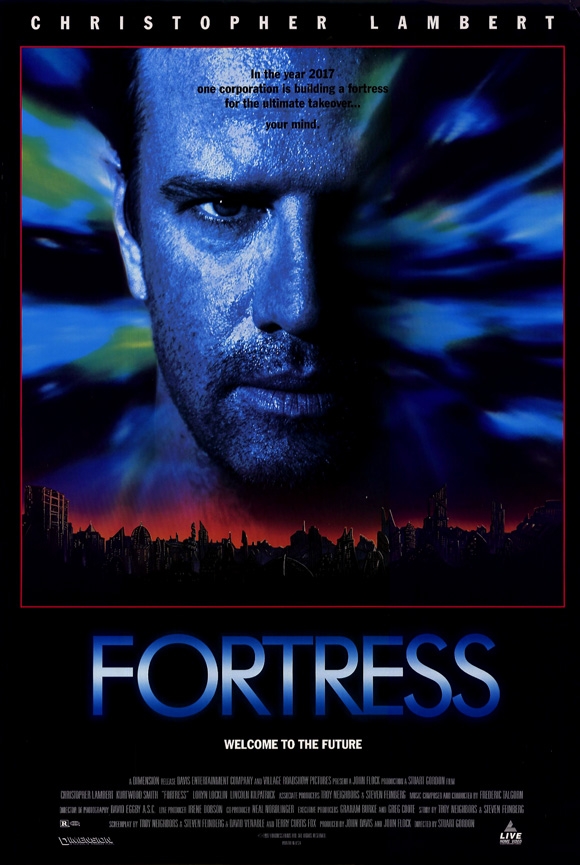
Welcome back to Misan[trope]y Movie Blog! Next up in the two week Stuart Gordon spotlight is “Fortress,” a 1992 Australian sci-fi flick starring the Highlander himself, Christopher Lambert.

“Fortress” marks one of the rare occasions where Stuart Gordon didn’t have any writing credit: he strictly directed “Fortress.” That is probably a good thing, because judging from the listed credits, there were already plenty of writers involved with the screenplay.

The initial story of “Fortress” is credited to both Troy Neighbors and Steven Feinberg, who share an initial screenplay credit with a third collaborator, David Venable. Following that, there were apparently re-writes done by Terry Curtis Fox, a scarce television writer who shares an additional (but separate) writing credit on the film. Judging by how the gymnastics sometimes go regarding writing credits on films, I wouldn’t be shocked to learn that plenty more hands were involved as well, but were left off of the final listing. I would be even less surprised to learn of some phantom writer on the project given the combined inexperienced of all of the listed writers involved.

The cinematography on “Fortress” was provided by David Eggby, a particularly well-regarded director of photography in Australia, who has extensive work on sci-fi features such as “Mad Max” and “Pitch Black” to his name.

Frédéric Talgorn returned to do the music on “Fortress” after contributing the excellent score to a previous Stuart Gordon movie, “Robot Jox.” Despite not being quite as memorable as the one he did for “Robot Jox,” the score to “Fortress” is certainly good, though perhaps unremarkable.

“Fortress” was distributed by Miramax’s Dimension Films in the United States, which was Bob Weinstein’s sub-division of the highly successful company. Dimension has historically focused on high profit-potential horror and sci-fi films, and “Fortress” was no exception. Interestingly, the Weinstein brothers retained the Dimension label when they ultimately jettisoned Miramax, and incorporated it into the current powerhouse that is the Weinstein Company today.

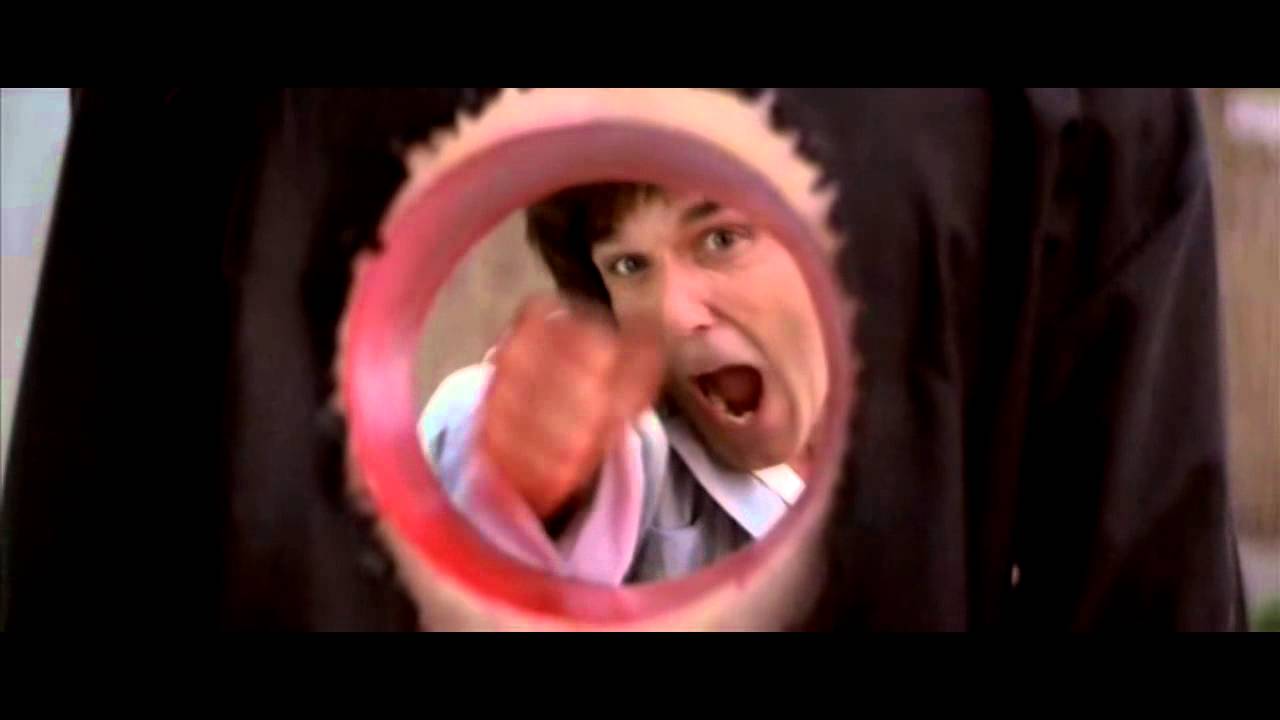
There is a lot to say about the effects in “Fortress.” There is certainly lots of gore and squibs to go around, which pushes the cheese limit on the flick. In particular, there’s a sequence where a guy has his entire stomach blown out, to the point where there is a complete and perfect hole that he can put his hand through. I’m pretty sure that was a gag in “Kung Pow: Enter the Fist,” which puts “Fortress” at the Rubicon of turning into self-parody. In spite of that, it never quite crosses that river in such a way as to lose the audience entirely, at least not in my opinion.

fortress7Something absolutely worth noting about “Fortress” is that the cyborgs and gadgets all look pretty damn cool, and fit in fantastically with the general set design (which is also top notch). That might seem like a basic thing, but I’m sure there are plenty of ways where this could have gone wrong. Practical effects are all over the place, which is a good practice for this kind of film. All of the sci-fi devices are believable and tangible, and nothing is completely ridiculous. Even the internal detonators placed in the prisoners are pretty simple explosives from the look of them. Speaking of explosives, there are also a couple of fantastic, classic explosions throughout the movie that action movie fans are sure to get a kick out of.

The effects people on “Fortress” included Robert Clark, who has worked effects and makeup on such films as “Starship Troopers,” “Mimic,” and “Cocoon,” and Robert Blalack, whose special effects credits include “Stars Wars – A New Hope,” “RoboCop,” “The Blues Brothers,” and the original “Cosmos” television series. “Fortress” also marked the first credit for the now-proficient visual effects producer Blondel Aidoo, who has worked such fantastic effects movies as “X-Men: Days of Future Past,” “Spider-Man,” and “Minority Report,” and such not-so-fantastic movies as “Marmaduke,” “Beverly Hills Chihuahua,” and “Kangaroo Jack.”

fortress3Outside of Christopher Lambert, the cast of “Fortress” includes a handful of recognizable faces, including Stuart Gordon favorite Jeffrey Combs and Kurtwood Smith of “RoboCop.” Character actor Clifton Collins, Jr. appears in an early role for him, before dropping his initial stage name of “Clifton Gonzalez Gonzalez,” which he bore in honor of his grandfather, the actor Pedro Gonzalez Gonzalez. The voice of the prison computer system is voiced by none other than Carolyn Purdy-Gordon, wife of Stuart Gordon and frequent antagonist-figure in his films. Other notables in the cast include Vernon Wells as a heavy inmate and Lincoln Kilpatrick as an aging prisoner facing parole.

fortress6The plot of “Fortress” follows a couple attempting to have a second child after an initial failed pregnancy. However, the dystopian future they live in (2017 United States, hilariously) operates on a strict one-child policy, meaning that they must attempt to cross a border out of the country without their pregnancy being detected by authorities. Unfortunately, they are caught at the Canadian border and sentenced to incarceration in an underground super-prison, where their child is to be confiscated upon birth. Lambert’s character tries to survive the hazardous world inside the prison, while also searching for a way to escape with his wife and unborn child before the out-of-control prison company can claim all of their lives.

“Fortress” made $46 million total on an estimated budget of $8 million, making it a significant financial success. However, it currently holds an IMDb rating of 5.8, a Rotten Tomatoes audience score of 48%, and a critic rating of 40%. Personally, I feel like these scores are a bit deceiving, as is the case with any film that falls within the good-bad aesthetic. Just at a cursory glance, some of those negative reviews acknowledge how fun the movie is, but give it a low score nonetheless.

Once again, as I have found with many critics’ reviews of Gordon’s movies in the past, I saw many that compared “Fortress” to Gordon’s earlier works, specifically “Re-Animator.” “Fortress” is very clearly a different kind of movie than “Re-Animator,” without any connection to the horror genre or Lovecraft, and Gordon wasn’t even involved in writing on “Fortress.” So, why on Earth would it be anything like “Re-Animator,” outside of a handful of stylistic and casting choices? It boggles my mind how some critics can’t separate the past and the present for directors and writers. I guarantee that someone out there is writing a review of “Maps To The Stars” right now complaining about how it isn’t “Videodrome” or “Eastern Promises.” You can’t ignore the body of work of a creator when writing about a new feature, but basing an entire review on it is beyond unfair.

As far as actual criticisms go, I saw a fair number of complaints about Lambert’s acting abilities. Personally, I don’t find him that distracting in general, though his accent is always pretty heavy. I usually enjoy his performances when he pops up in things, and “Fortress” is no exception. He isn’t a dynamic actor by any means, but he is pretty solid at the few character types he plays.

fortress4There are some good imaginative sci-fi elements to “Fortress” that are based on real social issues of the time: issues like the privatization of prisons, social anxieties on overpopulation, the institution of one-child laws, the use of technology in surveillance wiping away privacy, the replacement of humans by more efficient robotic workers, etc.

As far as performances go in “Fortress,” it is impossible not to mention Jeffrey Combs. He is once again solid in his supporting role, and is nearly unrecognizable with his long hair, massive lenses, and hippy-ish dialect. Also deserving of commendation is Kurtwood Smith, who is one of the best movie villains out there, period. I’m surprised he hasn’t gotten more opportunities to show it off over the years. He is incredibly memorable in “Fortress,” almost as much so as his most highly regarded role in “RoboCop.” It is just hard not to love a creepy, evil prison warden trying to get in touch with his humanity.

fortress5 fortress2There are a couple of well-executed twists and fake-out in “Fortress” that make it particularly memorable in my opinion. I really like the twist of what the government does with the “extra” children conceived outside of the one child limit. Cyborg experimentation sort of ties into aspirations of transhumanism, which is alluded to at points through dialogue as a way of dealing with overpopulation: the goal is to create a non-sexual, immortal cyborg population that will be able to sustain on the planet. It is also fun to see how the cyborg played by Smith condescends to his computer, looking down on the entity that represents a part of him that he comes to loathe. He clearly desires to be more human, and takes the frustration out on his computer. Speaking of which, the computer gets a glorious act of revenge with an outstanding death for Smith.

The ending sequence, which was apparently omitted from some versions of the movie, also features some bit I really enjoyed. There is a little bit of “Maximum Overdrive” thrown in at the last minute, which leads to a spectacular final explosion and one of the cruelest fake-out non-deaths you can imagine for the conclusion of a movie. Lambert’s reaction shot to the explosion is also hilarious, but I unfortunately haven’t been able to dig up a clip of it.

This is one of the few Stuart Gordon movies that I had not seen before this retrospective, and I was pleasantly surprised by it. Most of what I had heard was that it failed to live up to his other, more memorable works. However, I think this deserves consideration towards the top of the list for his career. I feel about “Fortress” what I expected to feel about “Castle Freak,” which is the opposite of what I was led to believe before watching them. “Fortress” is an absolute blast of a movie with some great sci-fi and action elements, hammy performances, cheesy / squibby effects, and a fun concept at the core. I think this movie generally deserves a second look, because I found an awful lot to like about it.

If you are looking for a fun flick for a bad movie showcase, I think “Fortress” will certainly fit the bill to your satisfaction. I mean, it is a sci-fi prison break movie featuring Herbert West, Connor MacLeod, and Clarence Boddicker. What about that isn’t to love?

Stuart Gordon Spotlight: “The Dentist”

The Dentist

dentist5

Welcome back to Misan[trope]y Movie Blog! Next up in the two week spotlight on writer/director Stuart Gordon is the 1996 endodontal driller thriller, “The Dentist.”

“The Dentist” was directed by frequent Stuart Gordon collaborator and producer Brian Yuzna, and is one of the few works that Stuart Gordon only wrote and did not direct. Once again, it was written in cooperation with his frequent writing partner Dennis Paoli, though the screenplay was later significantly re-worked and altered by a third writer, Charles Finch.

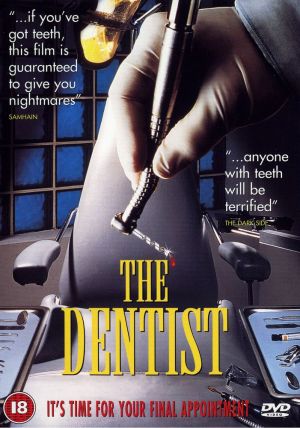
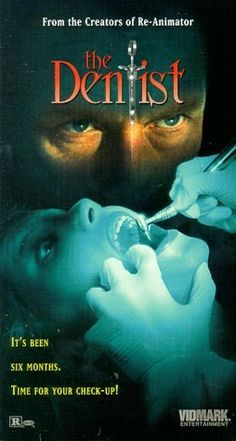
dentist6
This box art is the only one that I’ve seen that makes reference to Gordon and Paoli’s involvement

The music in “The Dentist” is, frankly, just god-damn ridiculous. It drifts from operatic belting to awful synthesizer arpeggios at break-neck speed, and seems to never relent throughout the whole movie. Just as with the cinematography, though, it seems to fit right in with the over-the-top performances and story, so that is hardly a complaint. Just listen to all of the musical madness going on in this scene, in which the background music shifts incoherently between being diagetic and non-diagetic (whether the characters can actually hear it or not). To set it up, Feinstone has been listening to opera in his office, when his unfaithful wife walks in to meet him. He then insists on taking a look at her teeth in his brand new, yet to be used operating room, with her not realizing his nefarious intentions:

The composer who was in charge of the score, Alan Howarth, was no rookie, either. He frequently collaborated with John Carpenter for music on films like “Big Trouble in Little China,” “Prince of Darkness,” “They Live,” and a number of the “Halloween” sequels, and additionally worked in the sound departments on films like “Army of Darkness,” “RoboCop 2,” and the first five “Star Trek” films. I have no idea what happened with “The Dentist,” but his more recent credits since that time are far less distinguished: for instance, they include some movie called “Evilution” and an IMDb Bottom 100 alumnus in “The Omega Code.”

Something that is impossible not to notice about “The Dentist” is the disorienting and at times nauseating cinematography. It is incredibly heavy-handed, but I have kind of grown to love it. Everything throughout the film is so way overdone, the bizarre shots more or less fit in with the rest of the production. Interestingly, the cinematography work had to be split between two men, because the initial director of photography (Dennis Maloney) had to withdraw part way through filming due to a family emergency. The final credit was given to Levie Isaacks, who came in as his relief.

The cast of “The Dentist” is led by Corbin Bernsen, in what is certainly his defining role. Ken Foree, who worked with Stuart Gordon on “From Beyond,” plays a police officer who ultimately catches onto the killer dentist’s trail. Linda Hoffman gets the honor of playing Bernsen’s long-suffering and unfaithful wife, who gets to ham up her material quite a bit in her own right. Last but not least, buried way down in the accessory cast is “The Avengers” member Mark Ruffalo, who plays a scummy talent agent who brings his model client in for a dental check up.

The story of “The Dentist” follows the progressive mental breakdown of one Dr. Feinstone, who, over the course of a day, is blackmailed by an IRS agent, discovers his wife’s infidelity, and finds that his favorite shirt has been ruined by a stain. This leads him to commit a string of murders over the course of his subsequent work-day at the dental office. These antics are somehow not discovered until after working hours have ended, and Feinstone has slipped away undetected. It is all pretty outlandish, to say the least.

dentist3The inspiration for “The Dentist” comes from the story of a real life serial killer dentist named Glennon Engleman. Interestingly, Corbin Bernsen played him in a television movie, “Beyond Suspicion,” years before the making of “The Dentist.” It may well have been a feather in his cap when it came to casting on the flick, for better or worse.

“The Dentist” was reportedly shot over the course of only 18 days, and cost only $2.5 million in total to make. Some of the cuts made to keep costs down included not having a story-board artist, excluding prop furniture from the budget,  and reusing the special effects props: notably the oversized mouth, which had interchangeable teeth to indicate different characters. Speaking of which, the designer of that effect, the highly acclaimed make-up effects artist Kevin Yagher, reportedly agreed to do his work on “The Dentist” as a favor, as he was reportedly far out of the production’s price range.

At one point, Corbin Bernsen’s character shoots and kills a neighbor’s dog. This incident leads to the police launching a formal investigation, which ultimately leads to his capture. During the sequence where the cops are investigating the crime scene, the dead dog shown is actually a stuffed goat, because apparently the production couldn’t come up with a convincing stuffed dog on that day of filming, but a goat was readily available. This is the kind of production story you just can’t make up.

The reception to “The Dentist” was overwhelmingly negative, with at least one reviewer uncertain if the movie was supposed to be a genre-mocking comedy or an earnest horror/thriller. The movie currently holds a 0% critic score on Rotten Tomatoes, alongside a 28% audience score. The IMDb rating is a bit higher with a 5.1, which I am going to believe is due to people now watching this as a good-bad flick in retrospect.

To put it mildly, Corbin Bernsen goes completely over the top and through the roof with his performance in this film. His dialogue is so venomous, faux-erudite, and delivered with such excessive, bitter intensity that it is absolutely hilarious. He meanders on about about the “filth” and “decay” in society with all of the focus, drive, and self-righteousness of a firebrand preacher railing against the foreign, vague evils of short-haired women and the godless undisciplined youth, and his content is equally as nonsensical as any backwoods testament you could dig up.  Most of the film consists of either Bernsen on one of these ranting tangents, or him slowly torturing people with poor dentistry practices (or, more often, a mixture of both). The entertainment value comes from both his performance, and from the clear bafflement of all of the accessory characters around him, who never seem to catch on to the fact that he’s losing his grip.

dentist1
"Nah, he seems fine to me. Why do you ask?" “Nah, he seems fine to me. Why do you ask?”

At one point towards the end of the film, a timid dental student stops Feinstone while he is viciously drilling at a tooth, noting that the patient is clearly in pain. Feinstone responds:

“Pain is an abstract emotion. It has to be managed, shaped, and disregarded as a distraction.”

The assistant allows him to carry on, but looks thoroughly disturbed and perplexed by the statement. This is almost the perfect encapsulation of the movie: meandering, lunatic dialogue by Bernsen, followed by perplexed reactions from the straight characters surrounding him, who ultimately do nothing to interfere.

On top of Bernsen’s performance, the accessory cast seems to constantly deliver out of the blue, non-sequitur lines that sound like they would come out of imperfect robotic facsimiles of humans, particularly whenever Bernsen isn’t on screen. Here is a segment of a conversation between the two cops on Feinstone’s trail, for instance:

Detective 1: “…[he’s] a regular James Bond!”

Detective 2, stiltedly: “A James Bond regular!”

Detective 1: *awkward sideways glance at Detective 2, silence*

I am pretty sure that Detective 2 (named “Sunshine,” by the way) would just straight-up fail a Turing test. How does that line (with that delivery) stay in this movie? Regardless of how it happened, I am glad it did, because these moments are absolutely golden.

Here is another segment of dialogue, where a mother is trying to make small talk with Bernsen’s Dr. Feinstone while he is working on her child’s teeth:

Mom: “There’s lot of money in dentistry?”

Feinstone, with a thousand yard stare: “I work hard….too hard to lose it all”

Mom: *confused silence*

I probably have a bit of an excessive fondness for this movie, as it was my first exposure to Stuart Gordon, but I honestly feel that it is the least-appreciated film he has worked on. I still rewatch it on a regular basis, and I still absolutely love it. Corbin Bernen’s performance is one of the most heavy-handed, ridiculous things I have seen in any movie, and it totally makes the film. Ken Foree adds some delightful flair, and gets to show off the comedic chops that you only see glimpses of in “From Beyond.” When you add in the bonkers score and cinematography, “The Dentist” becomes a truly magnificent achievement in awfulness.

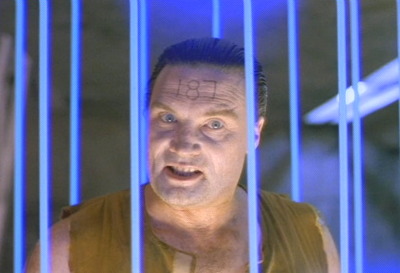
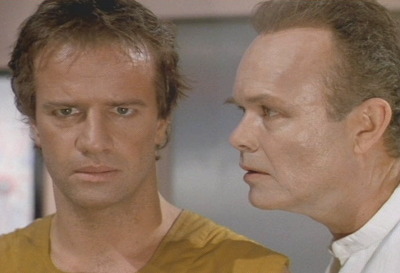
dentist4“The Dentist” is without a doubt a fun, good-bad movie, and definitely deserves some more attention. If you are looking for an awful horror film to showcase to friends, “The Dentist” is one worth considering. I would go so far as to schedule another visit every six months or so, just to check in. You don’t want your memory to decay, after all.

Stuart Gordon Spotlight: “Castle Freak”

Castle Freak

castlefreak1

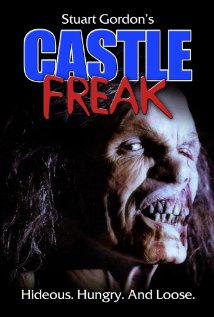
Welcome back to Misan[trope]y Movie Blog! Today’s feature in the two-week spotlight on acclaimed horror writer/director Stuart Gordon is the 1995 direct-to-video flick, “Castle Freak.”

“Castle Freak” is yet another Stuart Gordon adaptation of an H. P. Lovecraft tale, something that I wasn’t aware of until I started reading into the background on the film. It is specifically based on the short story “The Outsider,” which was published in 1926 in the magazine Weird Tales, which frequently showcased Lovecraft’s works. As is the case with many of Gordon’s Lovecraft adaptations, it varies from the source material significantly, to the point of being almost unrecognizable in its final on-screen form.

Dennis Paoli once again shares writing credit with Gordon on “Castle Freak,” marking their fourth collaboration of an eventual eight (nine if you liberally include the much-maligned sequel to “The Dentist,” in which both men take character credits only).

“Castle Freak” was a production of Full Moon Features, a company started by Charles Band after the dissolution of Empire Pictures, which distributed the Stuart Gordon movies “Re-Animator,” “From Beyond,” “Dolls,” and “Robot Jox.” Full Moon is almost certainly best known for its handful of b-movie franchises, including “Puppet Master,” “Trancers,” “The Gingerdead Man,” “Demonic Toys,” and “Dollman.” However, it also produced Stuart Gordon’s first Edgar Allan Poe adaptation, “The Pit and The Pendulum.”

The cinematography on “Castle Freak” was provided by Mario Vulpiani, a man who can claim the IMDb Bottom 100 and Mystery Science Theater 3000 superhero movie “The Pumaman” on his list of over 70 distinguished cinematography credits.

As should be expected of a Charles Band produced Stuart Gordon movie, brother Richard Band once again provides the score for “Castle Freak,” as he did with “Re-Animator” and “From Beyond.” It would mark the last time that Richard Band music would grace a Stuart Gordon work until the short film “Dreams In The Witch House” was created for the Maters of Horror television program many years later.

As is usual of the director, Stuart Gordon chose to go with a familiar cast on “Castle Freak.” Jeffrey Combs and Barbara Crampton both return once again, reuniting for the first time on screen since Stuart Gordon’s “From Beyond” nine years earlier. Jonathan Fuller plays the eerie title character, a whipping boy named Georgio. Fuller also had previous experience working with Stuart Gordon, specifically in his adaptation of Edgar Allan Poe’s “The Pit and The Pendulum” four years prior to the production of “Castle Freak.” The rest of the cast seems to be mostly filled out by Italian actors, such as Elisabeth Kaza, Luca Zingaretti, and Massimo Sarchielli. These casting choices were almost certainly motivated as much by financial prudence as any desire for realism, given the Italian filming location and low budget of the production.

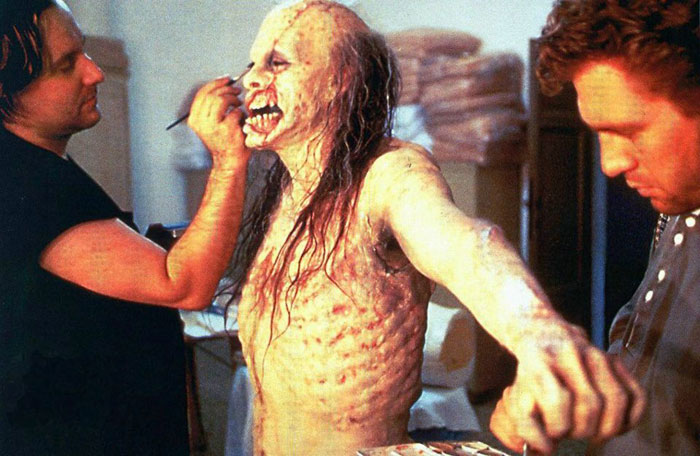
castlefreak6The effects on “Castle Freak” were provided by Optic Nerve Studios, a special effects outfit which has worked on such acclaimed films and as “Dracula: Dead and Loving It,” “Mighty Morphin Power Rangers: The Movie,” Roger Corman’s unreleased “Fantastic Four,” and “Battlefield Earth.” In all seriousness, they have a number of solid credits to their name as well: namely “Buffy The Vampire Slayer” and “Babylon 5,” which earned the team an Emmy for their prowess. Their work here definitely carries a heavy load, as Fuller’s title character requires extensive, convincing makeup to be an effective presence on screen. In my opinion, they nailed it.

castlefreak5“Castle Freak” has gained somewhat of a reinvigorated following in recent years, at least partially due to the highly acclaimed internet show, “The Flop House Podcast,” which has featured in depth discussions on details of the film (particular about whether the title character rips off his own genitalia or not). The movie has become inexorably linked with the show in the minds of fans,  and it has gradually become a running gag for the hosts to recommend the movie at the end of the show.

“Castle Freak” follows the story of a family on the rocks as they travel to Italy to check out a mysterious castle that was left to them via an unknown relative’s will. It turns out that the previous tenant, unbeknownst to anyone, kept a whipping boy in a dungeon of the castle. The maimed, feral, and surprisingly stealthy man quickly starts to cause havoc for the family, pushing them to a mental breaking point. Even without the presence of the eponymous “freak,” the family struggles with the hostility of the locals, as well as the latent tensions amongst themselves over a tragic accident years earlier.

“Castle Freak” is surprisingly a very straight movie, and could have perhaps used a little more tongue in cheek humor to lighten it up. Even a little more emphaticness from Combs could have helped, who is usually quick to provide that darkly comedic element without diluting the constructed horror atmosphere. Combs is pretty surprisingly subdued throughout the film, which seems like a waste after his “don’t expect it to tango” performance in “Re-Animator” and his hilarious brain-munching in “From Beyond.” His drunk acting is pretty great in “Castle Freak” at the very least, but it just isn’t quite enough to showcase his real capabilities to carry a film.

castlefreak4As I mentioned, there are some hard-core matrimonial tensions in this flick, and Crampton and Combs have to play at each others’ throats throughout the film. The source of their friction is slowly revealed throughout the story: Combs’s character caused the blindness of their daughter and the death of their young son in a horrific car accident, during which he was apparently driving intoxicated. They both do a good job with their roles, but it is a little strange to see two actors who are capable of extreme hammy-ness play an entire movie so straight. I kept expecting more memorable, over-the-top moments, and they never really came.

Something that isn’t quite a positive or a negative per se is the fact that “Castle Freak” is mostly a gross-out movie: the effects / makeup on Fuller is for the most part the extent of the horror in the film. Some people are more fond of this style than I am, but regardless, it is something worth knowing about the movie going into it. As I mentioned earlier, these practical effects are pretty good, and are certainly a strong point in the film. I think that just about anyone would wind up cringing at one point or another over the course of sitting through this film, which is a credit to both Fuller and the effects team.

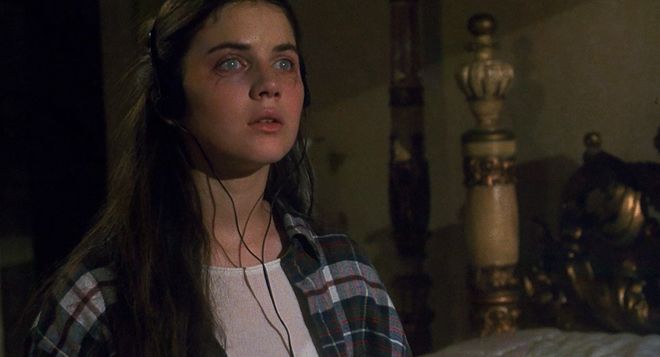
castlefreak2Something I did quite like about the film is the inclusion of a main character who is blind. The audience naturally sees things she can’t, which builds tension and provides a sort of visual dramatic irony. I kind of wish that this was played with more in the movie, but it really only comes into play early on, while the daughter is still investigating the castle.

castlefreak3Overall, I think this is a weaker Stuart Gordon film, but it still certainly has value as a horror flick. Combs and Crampton are good here without any doubt, and have great chemistry with each other (even if it is discordant by design). Jonathan Fuller is outstandingly eerie as the “freak,” and the effects work do a lot to accentuate him. The film as a whole is better than your typical sci-fi or horror television movie by a long-shot if you ask me. That said, it isn’t in my upper tier of Stuart Gordon features by any means. There just isn’t enough “fun” value here, which is very unusual for Stuart Gordon. I think that comes from how straight and sober the film’s tone is in comparison to many of his other movies, like “Dolls” or “The Dentist”. Hell, “Castle Freak” even makes “From Beyond” look a little lighthearted, because at least Ken Foree adds some solid comic relief to the early acts of that flick. Nobody ever steps up to provide that in “Castle Freak,” which I think was a misstep.

In spite of all that, “Castle Freak” still gets a recommendation from me, though not a particularly strong one. This seems like a movie that should be more entertaining than it is, though it certainly isn’t boring or bad. I had pretty high expectations going into it given it’s recent cult status, and I was a little disappointed on the whole. If you go in with the caveat that this isn’t going to be a particularly “fun” horror watch, but rather a more straight horror flick, then you will probably be more satisfied with the experience.

Stuart Gordon Spotlight: “Robot Jox”

Robot Jox

robotjox7

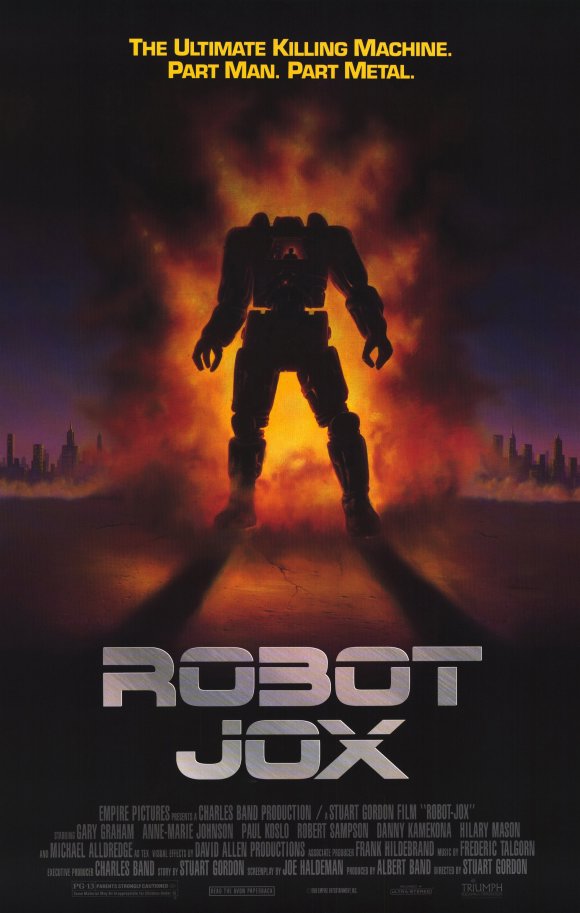
Welcome back to Misan[trope]y Movie Blog! Next up in the two week spotlight on writer/director Stuart Gordon is 1989’s ridiculously fun giant robot movie, “Robot Jox.”

“Robot Jox” was co-written by the acclaimed Hugo and Nebula winning sci-fi author Joe Haldeman, best known for the 1974 novel “The Forever War.” Reportedly, he is not a fan of the ultimate product of “Robot Jox” that made it to the screen. In 2008, he was quoted as saying:

Some people enjoy [Robot Jox], but to me it’s as if I’d had a child who started out well and then sustained brain damage

This opinion can almost certainly be attributed to frequent clashes between the author and director/co-writer Stuart Gordon over what the direction and tone of the film should be, which caused much of the production to apparently become a nightmare. Gordon wanted an audience-friendly story that could act as a visual, action-packed spectacle, whereas Haldeman was more interested in the story being a serious, harder sci-fi war drama. These visions proved, of course, to be generally incompatible.

Charles Band and his company, Empire Pictures, produced “Robot Jox,” just as they had done for Stuart Gordon’s earlier films “Dolls,” “From Beyond,” and “The Reanimator.” However, “Robot Jox” proved to be a much larger project for the company: the budget reportedly eventually hit $10 million, making it the most expensive undertaking by far for the b-movie outfit.

“Robot Jox” suffered significant delays on its release date due to the (perhaps predictable) bankruptcy of Charles Band’s Empire Pictures, which left it in limbo for a couple of years after the film was finished shooting.

One of the most distinguishing aspects of “Robot Jox” is its inspiring, top-notch score. The music on the film was provided by Frédéric Talgorn, who also worked on the Stuart Gordon film “Fortress,” as well as the animated “Heavy Metal 2000.”

The cinematography on “Robot Jox” was once again provided by frequent Stuart Gordon collaborator Marc Ahlberg, who had a handful of credits to his name in 1989. Included among these is the hilarious sci-fi boxing movie “Arena,” also a product of Charles Band’s Empire Pictures. It is worth checking out for die-hard b-movie fans in need of a deep cut: I have often summed up the film as “Rocky in Space.”

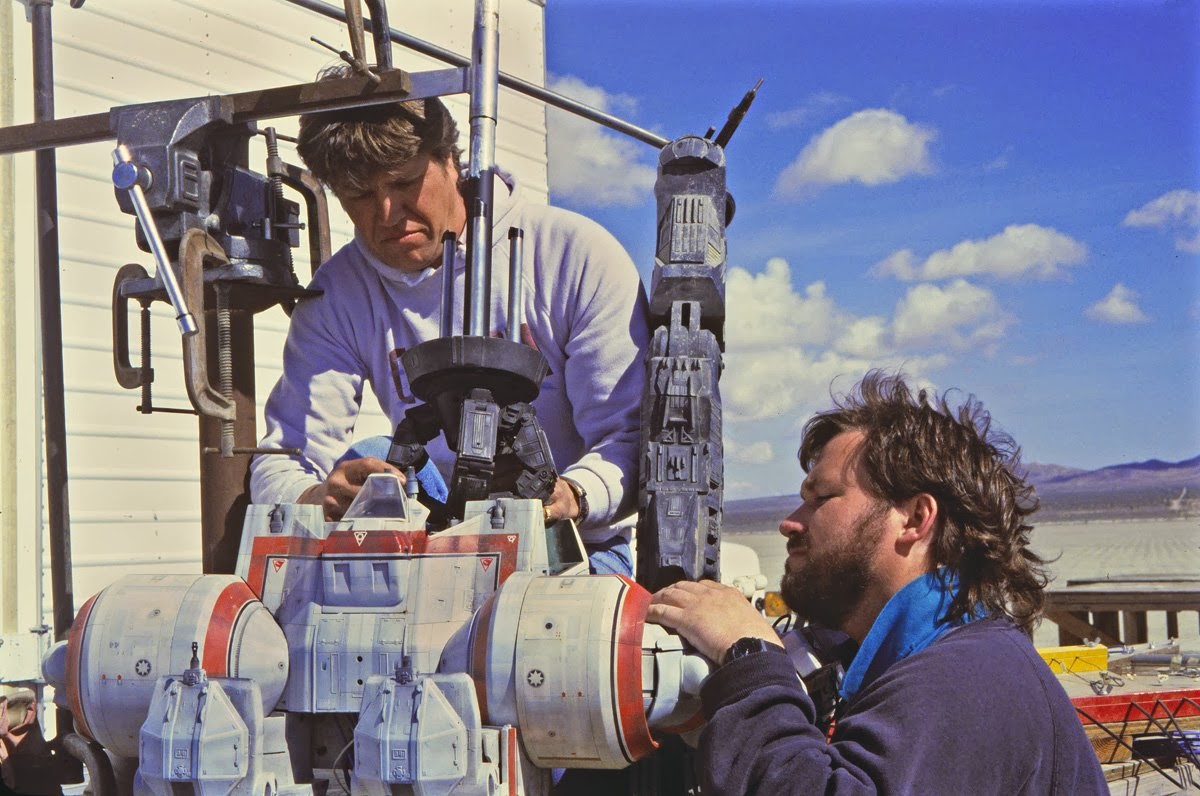
The extensive visual effects and stop motion work in “Robot Jox” was supervised and directed by David Allen, who worked the stop motion on b-movies such as Larry Cohen’s “Q” and “The Stuff,” IMDb Bottom 100 feature “Laserblast,” and Stuart Gordon’s own “Dolls.” Apparently, his work ran into multiple delays due to weather, as he insisted on filming against open sky. Stuart Gordon has stated that the weather issues caused the Mojave desert stop-motion filming to stretch on for “a year and a half…[because] everything that could have gone wrong went wrong.”

robotjox8 robotjox9The box office results on “Robot Jox” proved to be nearly as unfortunate and disastrous as the production process. On the rumored $10 million budget, the movie barely grossed $1.2 million in its limited theatrical release. Audiences at the time weren’t particularly thrilled with the movie, though it has certainly gained cult acclaim in the years since its release. It currently hold a 5.2 rating on IMDb and a 41% audience score on Rotten Tomatoes, through you would certainly get a different response from a group of bad movie lovers today.

The story of “Robot Jox” takes place in a post-apocalyptic world where international conflicts are settled through competitive combat utilizing large, piloted robots. A particular pilot, Alexander, has been causing havoc on the United States, defeating nine pilots in a row as the story begins. The meat of the story follows Achilles, an American pilot who is burned out following a traumatic bout with Alexander that proves fatal to a group of spectator civilians. He is forced to deal with the disdain from his fellow pilots and people for his decision to withdraw from competition, and has to make hard choices that will have global consequences.

The popularity of “Robot Jox” has significantly grown in the years since its flubbed theatrical release. It has recently been featured on the internet review show “Best of the Worst” by RedLetterMedia, it has inspired the Bad Movie Fiends Podcast to name it’s positive review scale “1-5 Jox” in honor of the film, and it even had sound bites remixed into a Nine Inch Nails track by Trent Reznor. Its cult status has even gotten it 35mm theatrical screenings at a couple of the Alamo Drafthouse Theaters in recent years. The release and popularity of Gullermo Del Toro’s “Pacific Rim” has also brought increased attention and viewership to the cult classic in the past few years, drawing many comparisons between the films by bringing giant, piloted robots back to the big screen.

“Robot Jox” does a pretty decent job of building up the desensitized and callous dystopian society that surrounds the plot. I wouldn’t quite call the details subtle, but the hostile and unempathetic behavior of the average person in the world is always noticeably in the background. Personally, I think this makes the peaceful ending all the more impressive and optimistic, but I am sure that many out there would disagree.

robotjox1Something that I noticed through reading reviews of “Robot Jox” is that even most of the negative reviews admit that the film is oddly endearing and fun to watch. Most of the complaints strike me as anachronistic gripes about the use of stop motion, or express issues with the overacting in one breath, only to ironically praise it in the next. This is clearly regarded as a classic good-bad film for a reason.

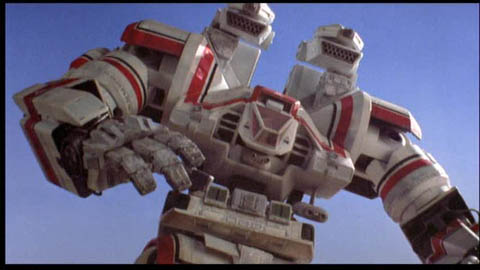
Personally, I think that the stop motion work in “Robot Jox” still looks pretty good for what it is. The method has fallen out of favor in recent years due to the expense involved, and because of the increasing availability of more (ironically) “realistic” computer-generated effects. At the time, however, this was as good as a live action giant robot movie could get effects-wise.

robotjox2My personal favorite sequence of “Robot Jox” is probably during the pilot training program, in which about 20 people are forced to climb an electrified jungle gym in a strobe-lighted room. It is at once clever, ridiculous, unnecessary, and perfectly placed in a movie filled with outlandish concepts and designs.

As iconic as the last shot of “Robot Jox” is, I feel like the ending probably turned off many typical action movie fans at the time. Conventional logic would have Achilles defeat Alexander, and Alexander pay for his murderous asshattery with a gruesome death. However, the ending winds up showcasing growth on the parts of both men, and they are able to bond over the camaraderie of being driven combatants who struggle to find meaning outside of the fight. The more I think about it, the more I like it. It helps that the acting is hilariously over-the-top and melodramatic, and that it ends on a freeze-frame. You just can’t ask for anything better than that.

Speaking of which, the over-the-top performances in “Robot Jox” define the movie just about as much as the robots themselves. Particularly, Michael Alldredge as “Tex” and Paul Koslo’s Alexander steal the show, chewing every bit of scenery that they can get their hands on. Gary Graham is perfectly melodramatic as Achilles, and clashes with Koslo’s Alexander in just about every way you can imagine. Keen eyes might also spot Stuart Gordon regulars such as Jeffrey Combs and Carolyn Purdy-Gordon filling in background roles.

robotjox6 robotjox5 robotjox3Overall, “Robot Jox” is one of the better good-bad movies out there that hasn’t quite seeped into the public consciousness yet. It isn’t on the level of “Troll 2,” “The Room,” or “Birdemic,” but it may very well be on its way. It is a fantastic showcase of Stuart Gordon’s peculiar style, which is particularly unusual given it is outside of his usual genre of horror. Despite the poor reception at the time, the second wind of this film in the secondary market is more than deserved, and I hope to see a blu-ray release at some point in the future. In any case, many regard this as their favorite Stuart Gordon movie, and I certainly get where they are coming from. It goes without saying that this is a strong recommendation from me: “Robot Jox” will serve for any of your potential bad movie nite needs without any doubt. If you go in knowing what this is, you won’t suffer the disappointment that 1990 theatrical audiences did. Just stop worrying, and love the Jox. Crash and burn.

Stuart Gordon Spotlight: “From Beyond”

From Beyond

frombeyond3

Welcome back to Misan[trope]y Movie Blog! Next up in the two week spotlight on the career of writer/director Stuart Gordon is 1986’s “From Beyond.”

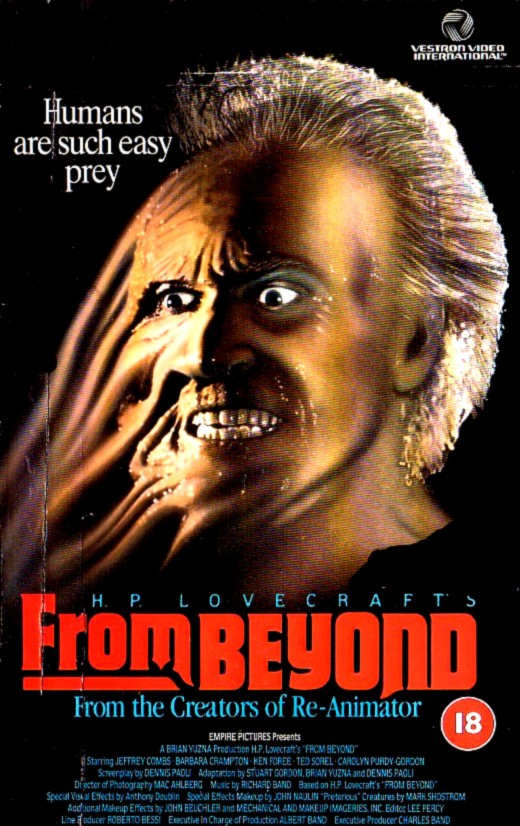
“From Beyond” is the spiritual follow-up to Stuart Gordon’s smash debut, “Re-Animator.” It would be the second of Stuart Gordon’s eventual four H.P. Lovecraft adaptations, and reunited much of the same cast and crew that created the cult classic predecessor. Gordon went back to Lovecraft again for inspiration on his later films “Dagon” and “Dreams in the Witch House,” but neither of those films got the same kind of attention as “Re-Animator” and “From Beyond.”

As mentioned, multiple players from “Re-Animator” return for “From Beyond,” most notably Jeffrey Combs and Barbara Crampton. Apparently, producers on the film opposed Crampton’s casting due to her youth, but Stuart Gordon specifically fought to let her have the role. Also in the cast is Ken Foree, who later pops up in the Gordon-penned movie “The Dentist,” and Stuart Gordon’s wife, Carolyn Purdy-Gordon. Ted Sorel, a character actor who never saw much success,  rounds out the cast, playing the mad doctor who loses himself in the “beyond” world.

Stuart Gordon shares screenwriting credit on “From Beyond” with two of his most frequent career collaborators, Brian Yuzna and Dennis Paoli, who were both involved with other Stuart Gordon-associated films such as “Re-Animator,” “The Dentist,” and “Castle Freak.”

Charles Band, the primary producer on the flick, is best known for the “Puppet Master” series of films. He specifically arranged for “From Beyond” to be done back to back with “Dolls” on the same sets as a cost-saving maneuver, in true Roger Corman tradition.

The cinematographer on “From Beyond” is Marc Ahlberg, who was also a frequent collaborator with Stuart Gordon for many years. Apart from working on Gordon movies such as “Dolls,” “Re-Animator,” and “Space Truckers,” he also did such notable gems as “Good Burger,” “Evil Bong,” and Joe Dante’s “The Second Civil War.”

The music in “From Beyond,” as was the case with “Re-Animator,” “Dolls,” and later “Dreams In The Witch House,” was provided by Charles Band’s brother, Richard: a veteran B-movie music master who additionally worked on the “Puppet Master” and “Demonic Toys” films with his brother.

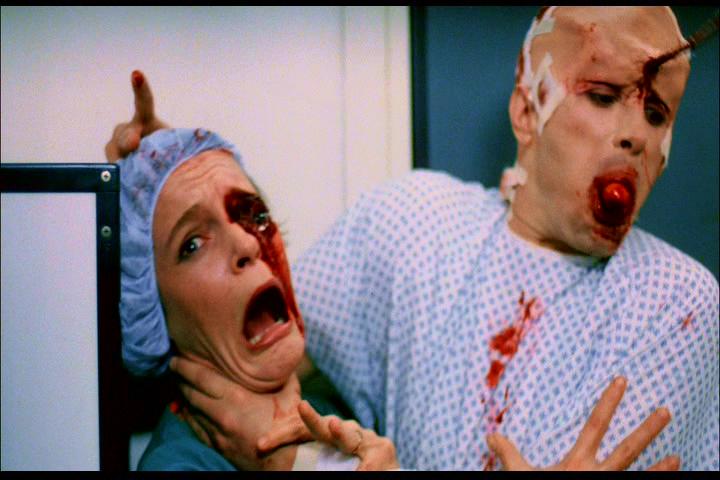
The special effects on “From Beyond” were provided by Mechanical and Makeup Imageries, who also worked on the Stuart Gordon films “Dolls” and “Robot Jox,” as well as other b-films such as  “Ghoulies,” “Troll,” and “Trancers.” As was the case with “Dolls,” it is clear that the special effects team had an absolute blast with this movie. Outside of a few cheesy effects to create the translucent “beyond” world, the creatures and mutants manifested via practical effects look like they were a dream to create, and look pretty fantastic for a lower-budget feature. The effects reminded me of some of David Cronenberg’s movies, such as “Videodrome” and “Scanners,” in the use of imaginative visceral entities and squibs.

frombeyond4“From Beyond” follows the story of a young physics graduate student, who is working with a cruel and obsessive professor on creating a device (the resonator) aimed at expanding human perception. When the initial test of the resonator is successful, a creature from a “beyond” dimension kills the professor, leaving the student apparently insane. A controversial psychiatrist decides to take the student on as a patient, intrigued by his experiments and their potential applications for the treatment of schizophrenia, Alzheimer’s, and other brain-related diseases. She convinces him to once again operate the resonator, resulting in further other-worldly shenanigans.

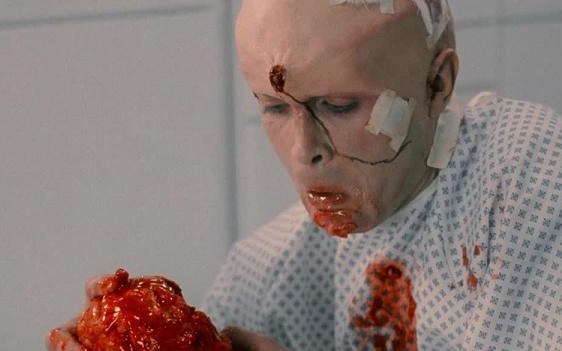
Outside of the effects work, the biggest strength of “From Beyond” are the performances. Particularly, I thought Barbara Crampton knocked her role out of the park, which is both a heavier and more dynamic character than the role she was given in “Re-Animator.” Jeffrey Combs is once again a blast, and gives the same 110% performance that anyone should expect from him. There is a particularly great moment where he is confronted by Carolyn Purdy-Gordon’s character while frantically eating a handful of brains. Boy, is that a sequence for the Jeffrey Combs career highlight reel.

frombeyond2 frombeyond1“From Beyond” was a financial failure on release, making back less than half of its $4.5 million budget. However, it was generally well received by audiences and critics, currently holding a 6.8 rating on IMDb and Rotten Tomatoes scores of 69% (audience) and 71% (critic).

While I think “From Beyond” is pretty enjoyable, it certainly isn’t without flaws. With so many returning players from “Re-Animator” and all of the other obvious similarities between the two films, it feels like there was too much of an effort put towards trying to replicate “Re-Animator,” rather than trying to create a work to stand on its own. It feels like an attempt to catch lightning in a bottle, and result of that is a number of moments that feel artificial and forced, and steals away some of the charm that the movie might have otherwise retained.

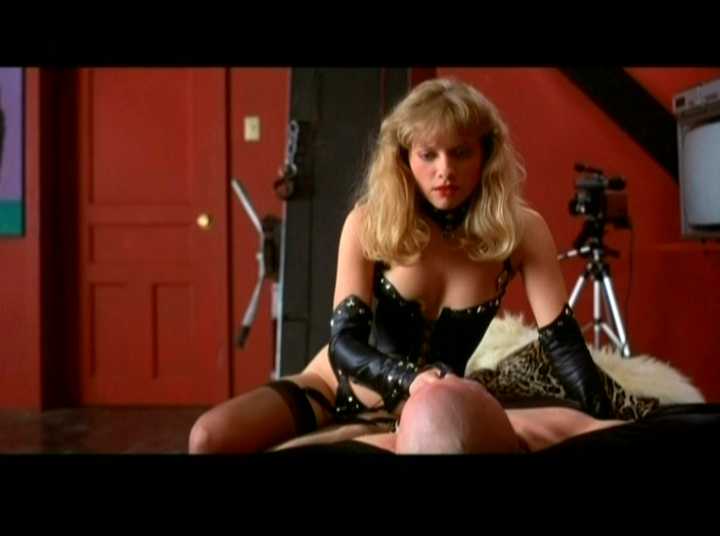
Something else that I certainly found off-putting about “From Beyond,” and something that also feels imitative of “Re-Animator,” is the amount of uncomfortably forced sexuality. There is an attempt to explain it away in dialogue as being a side-effect of the resonator, but I am quite curious if that was actually part of the source material. One of the biggest popular complaints about Gordon’s adaptations of Lovecraft are his insertions of nudity and sexuality into the tales, and I can’t help but wonder if that was the case here. There is certainly a way to use eroticism as a way to enhance a horror movie, but Gordon has never been able to find that balance if you ask me, mostly because most of his notable sex scenes are massively uncomfortable and non-consensual. That might have been what he was going for, but I feel like the emotions conjured from the inclusion of that kind of scene somewhat clashes with the traditional, squibby horror that makes up most of “From Beyond” and “Re-Animator.” Personally, I find it at best clashing and distracting, and at worst a potential detriment to the entire genre by turning both creative people and audiences away from the films.

frombeyond5The only other minor gripe I have about “From Beyond” is that the pacing of the story feels oddly stilted, and a number of moments feel like they could function as endings. It still functions fine, but it starts to feel a bit repetitive towards the end of the film.

“From Beyond” is a movie I expected to like more than I actually did. It is still pretty enjoyable, particularly the performances of Jeffrey Combs, Barbara Crampton, and Ken Foree, but it really lives in the shadow of “Re-Animator,” which is unfortunately a comparison that the film constantly draws thanks to the casting and style. I would be interested to see how someone would feel about this film if they hadn’t seen “Re-Animator” first, as I get the feeling that this is a case where the film’s context almost certainly dooms it. In any case, this is a somewhat more serious Stuart Gordon movie that is still a good bit of fun, and is worth checking out if you enjoyed any of his other films.

Stuart Gordon Spotlight: “Space Truckers”

Space Truckers

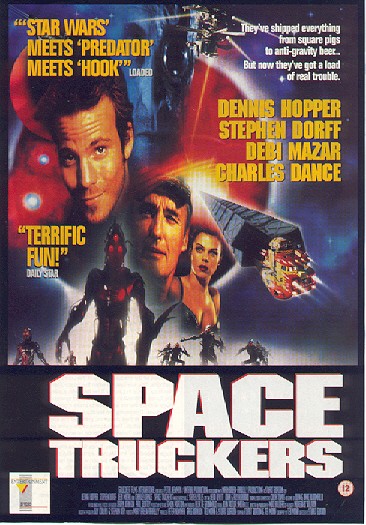
spacetruckers9

Welcome back to the Misan{trope]y Movie Blog! Next up in the Stuart Gordon Spotlight is 1996’s blue-collar sci-fi flick, “Space Truckers,” featuring the one and only Dennis Hopper.

Stuart Gordon both directed and co-wrote “Space Truckers,” sharing writing credit with one Ted Mann. Mann has primarily done television writing and producing on shows such as “NYPD Blue” and “Deadwood,” with his most recent high-profile credit being the 2012 mini-series “Hatfields & McCoys,” which starred Kevin Costner and Bill Paxton.

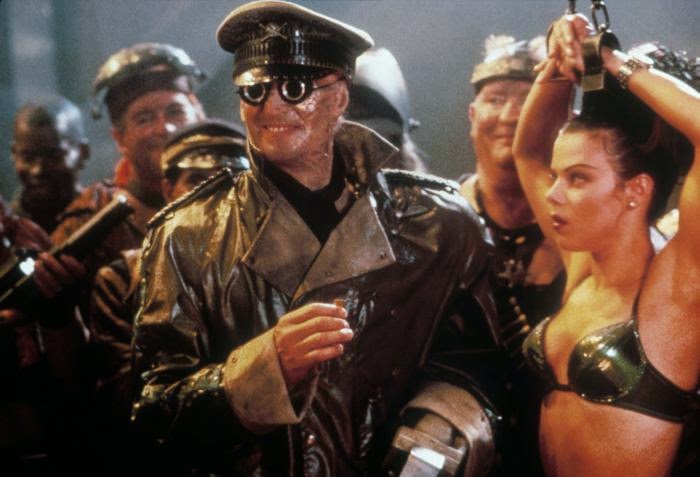
The cast of “Space Truckers” is undoubtedly headlined by the presence of Dennis Hopper, though it has more depth than you might expect. Charles Dance (“Last Action Hero,” “Game of Thrones”) plays one of the primary antagonists, Stephen Dorff (“Blade,” “Public Enemies”) plays a sidekick rookie trucker, and Debi Mazar (“L.A. Law,” “Entourage”) rounds out the main cast as the quasi love interest. In the background you might spot Jason O’Mara in his first theatrical credit, character actor Sean Lawlor, Shane Rimmer of “Dr. Strangelove,” and George Wendt of “Cheers.”

spacetruckers8 spacetruckers5The cinematography on “Space Truckers” was done by Marc Ahlberg, his fifth of an eventual seven collaborations with director Stuart Gordon. His career included an assortment of B-movies going all the way back to the 1950s (“Arena,” “Evil Bong,” “Trancers,” “Ghoulies”)and he worked all the way up until his death in 2012.

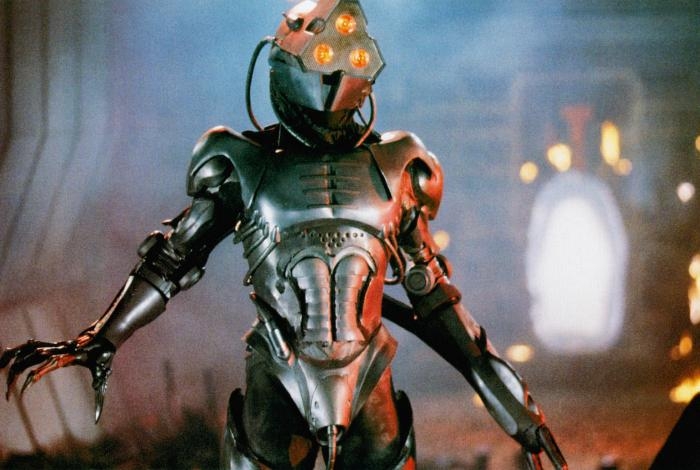
The plot of “Space Truckers,” interestingly enough, revolves around the secret development of a killer robot army intended to overthrow the Earth’s government. Dennis Hopper’s character is unknowingly tasked with hauling the robots to Earth, a trek which ultimately (and fortunately) features a number of unexpected obstacles.

spacetruckers6I initially got the idea of doing a Stuart Gordon Spotlight after seeing “Space Truckers” on a list of killer robot movies when researching potential flicks for my Killer Robot Week, which is why I didn’t cover it last week. Speaking of which, however, the robots featured in “Space Truckers” are much sleeker than what I expected. They were designed and constructed by Cannom Creations, who provided work for movies such as “Cocoon,” “Cocoon 2,” “Cyborg,” and “Blade.” Despite a couple of questionable / cheesy effects work, the robots themselves are pretty solid, and are fortunately mostly portrayed with practical effects. Instead of constructing actual robots like “Evolver” or “Chopping Mall,” the robots in “Space Truckers” are much more similar to the xenomorphs from the “Alien” franchise, in the sense that they are suits that feature humans inside to make their motions more realistic.

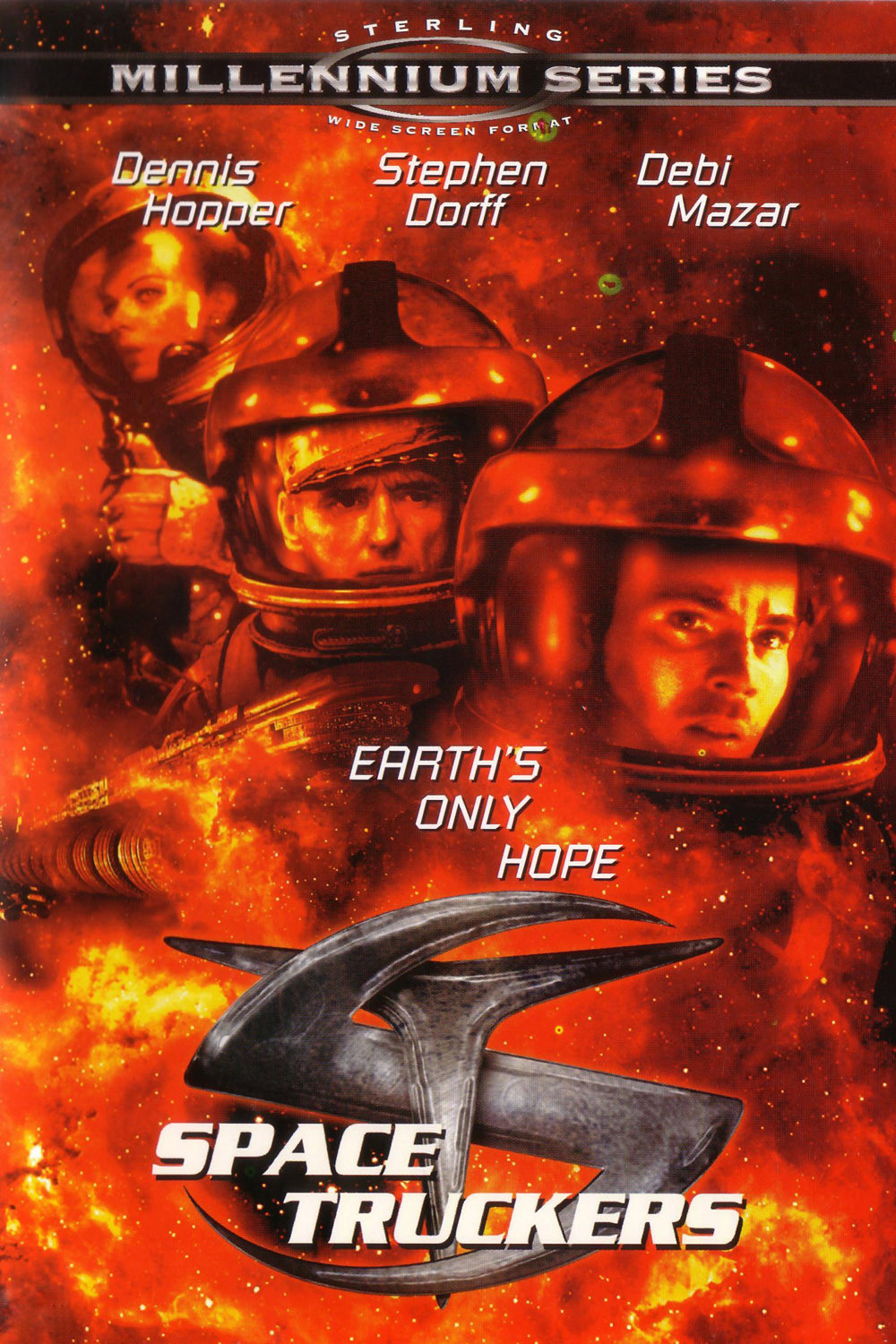
spacetruckers1 spacetruckers3“Space Truckers” was a massive financial failure, grossing less than $2 million on a reported budget of $25 million. It was likewise loathed by audiences and critics alike: it currently has a 5.1 rating on IMDb, which looks downright impressive next to the Rotten Tomatoes scores of 9% (critic) and 27% (audience). I am a little surprised at how hated this film was: from my perspective, it is very clearly a b-movie comedy, and I found it to be plenty enjoyable for being that. Just judging from the marketing I saw for the film, however, it appears that this was a difficult movie to pitch to audiences. Particularly in the secondary market, there was a clear attempt to make this appear to be a space drama akin to “Armageddon.” Just check out this DVD re-release cover:

spacetruckers11To be generous, that doesn’t exactly convey the tone of “Space Truckers” accurately. It does seem that people are looking back more fondly on this film in retrospect, as the IMDb score might indicate. Personally, I thought this movie worked pretty well: the idea was to make a blue collar sci-fi film, and I think this pulled off that concept. It isn’t exactly laugh-out-loud funny, and a lot of jokes land flat, but it is a notch higher than your typical television sci-fi movie. However, at a budget of $25 million, perhaps the product should have been more impressive than that.

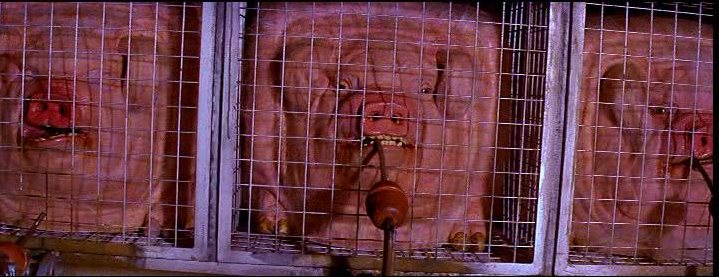
In general, “Space Truckers” manages to nail the atmosphere it set out for. It conveys a self-awareness without winking, acknowledging its outlandish premise through the set design (square pigs, beet cans in space, etc) and dialogue (“Did you hear something back there that sounds like there’s something back there?”). It could have used a bit of comedy script-doctoring to help with the laughs, but it is still a fun watch in my opinion.

spacetruckers12As far as criticisms go, there are certainly problems with “Space Truckers.” I mentioned the lack of effective comedy in the script, but there are a few other things worth mentioning. First off, the general passage of time is very unclear between the prologue and the main story. The film opens with a demonstration exercise of the developed killer robots, in which Charles Dance’s character is nearly killed. When the main story starts, Dance has managed to turn himself into a cyborg and take over / build a gang of space pirates, which I assume would take some time. However, the killer robots are just then being shipped to Earth as the main plot begins, being hauled by Hopper’s character. How long has it been since that training exercise that nearly killed Charles Dance’s character? Have the killing robots just been sitting in storage for years? What sense does that make? It is later revealed that Saggs (played by Shane Rimmer) was able to conquer the Earth without any help from the robots at all…but why would he do that? Any way you cut it, some explanation of the passage of time should have been included.

spacetruckers7The only other major issue I have with the film is also related to the writing: the love triangle between Hopper, Dorff, and Mazar feels very forced, and makes Hopper’s supposed protagonist much less likable. He is essentially forcing Mazar to marry him in exchange for passage to Earth, which is incredibly fucked up, and is not-at-all made up for by his eventual faux-redemption in the conclusion. The age difference and history between Mazar and Hopper is also a little perplexing: it is established that they have known each other for years, and that Hopper has proposed multiple times to her. When he asks about Mazar’s mother, he is shown a picture of her which is “20 years back,” which was from when Mazar was either very young or before she was born. So…how old is Mazar’s character supposed to be, and how old is Hopper? How long has Hopper been pursuing her? It just gets creepier the more you think about it.

Despite those issues, this is a pretty strong recommendation as a good-bad watch. It is almost certainly one of the lesser Stuart Gordon movies, but it is still quite a bit of fun. I wouldn’t go in expecting “Re-Animator,” because this is a comedy at its core, and that should be kept in mind. There aren’t any huge squib explosions here, and you shouldn’t be anticipating them. It is dumb fun, and might justify turning your brain off for a little bit to get maximum enjoyment.