The Touch of Satan is yet another low budget horror movie that can credit its inclusion in the Bottom 100 to the folks from Mystery Science Theater 3000. This is one that I have watched a number of times, though it is nowhere near being one of my favorites. The movie is pretty unremarkable among MST3K features, in that it is neither as dull as something like The Starfighters not as off the wall as Future War. It is very much a middle-of-the-road film for the program, which means that it is both relatively watchable while being plenty forgettable. Despite how many times I’ve seen this one, I was having trouble remembering plot points as I was initially reviewing it. That generally doesn’t speak well for a movie.
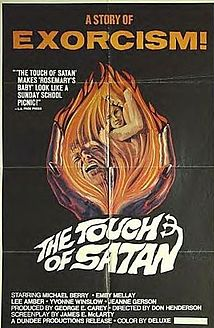
One of the kickers to this movie is that it is pretty mislabeled and confused in concept. The movie features witchcraft and witches, which is conflated with satanism and devil-worship in this movie. In case you aren’t aware, those aren’t even sort of the same thing. One of the early promotions played it up as an exorcism movie, which it most certainly is not. It may have been in a situation like “Devil Fish”, where no one was quite sure how to market the movie effectively (leading to a number of alternate titles). Interestingly, none of the titles I have seen have referred to either witches or immortality, which are actually more central to the plot of the movie.
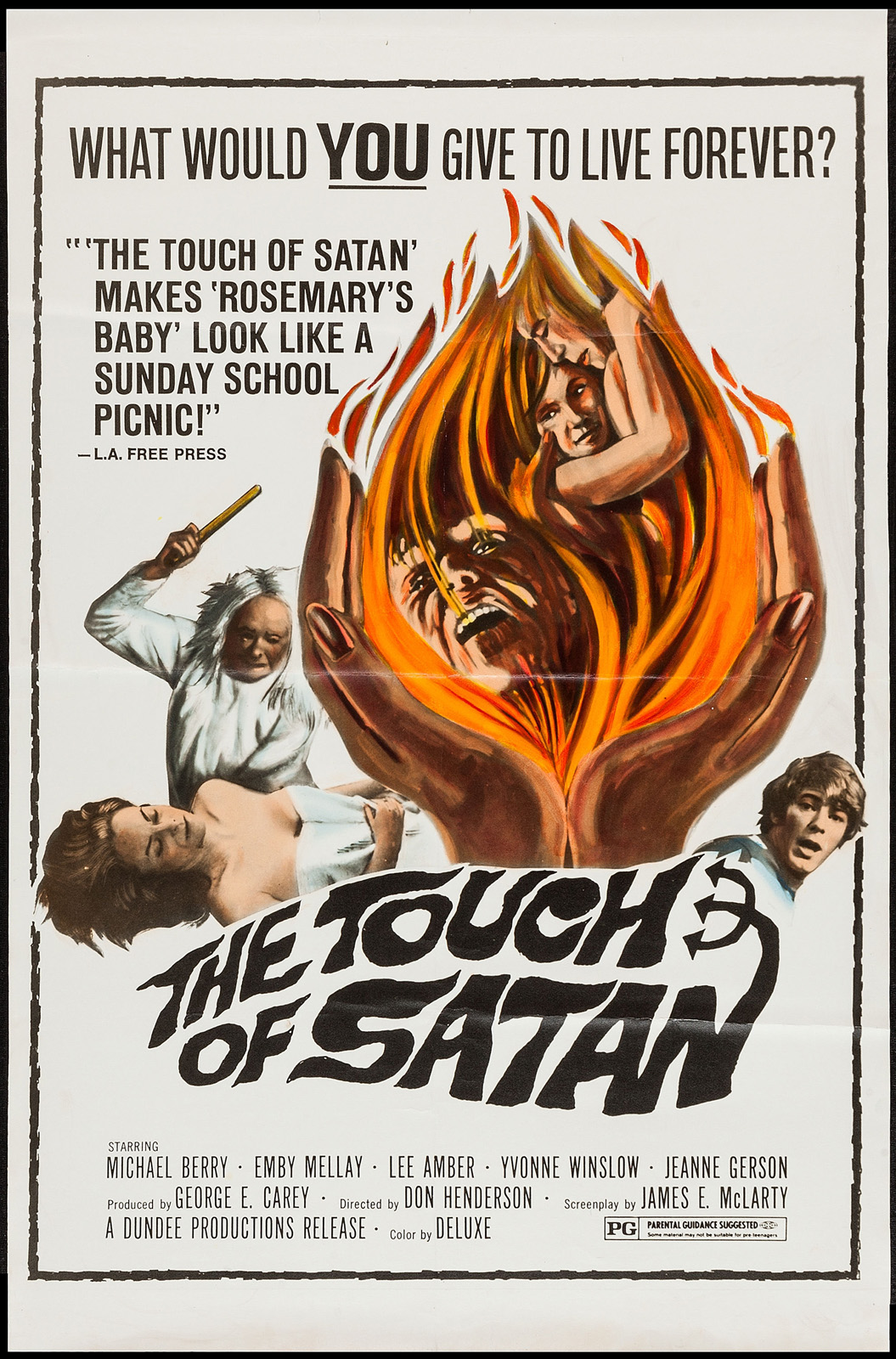
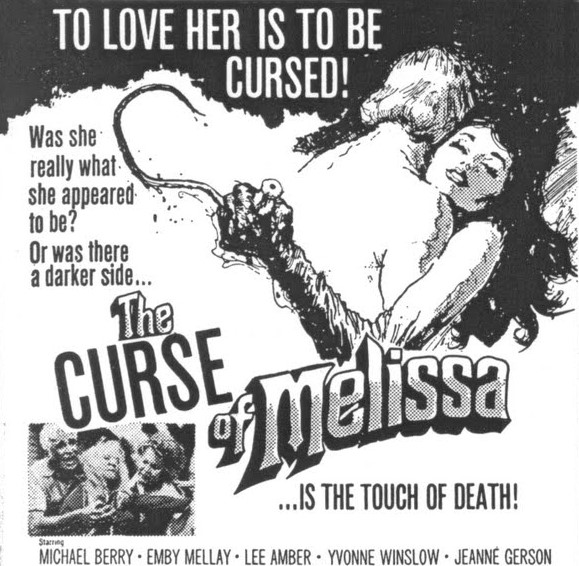
“The Touch of Satan” poster under the alt title of “The Curse of Melissa”
A pretty serious issue with the movie is the lack of a compelling villain. The killer in the movie is essentially just an old woman, which doesn’t exactly strike fear into the hearts of an audience. Again, that sort of villain is hard to market, as you can tell from the advertisements for the film that I’ve featured here. She also isn’t particularly interesting to watch on screen, and there isn’t any tension built around here. There just don’t seem to be any stakes (har har) to the movie, or a drive to keep the plot moving. It drags the film on significantly, and certainly contributes to how forgettable it is.
*exorcism not included
The acting and chemistry between the leading couple is also not up to par, which is a significant focus of most of the movie. If they were a little more compelling or intriguing, the movie may have come out more watchable. As it is, the whole thing is just a chore to sit through without the MST3K treatment. Even with it, it isn’t a great bad movie watch. It is typically available on Netflix streaming though, and makes for decent background noise if you are doing something else (like writing a review of this movie, for instance). Just don’t expect to get a whole lot of laughs out of it.
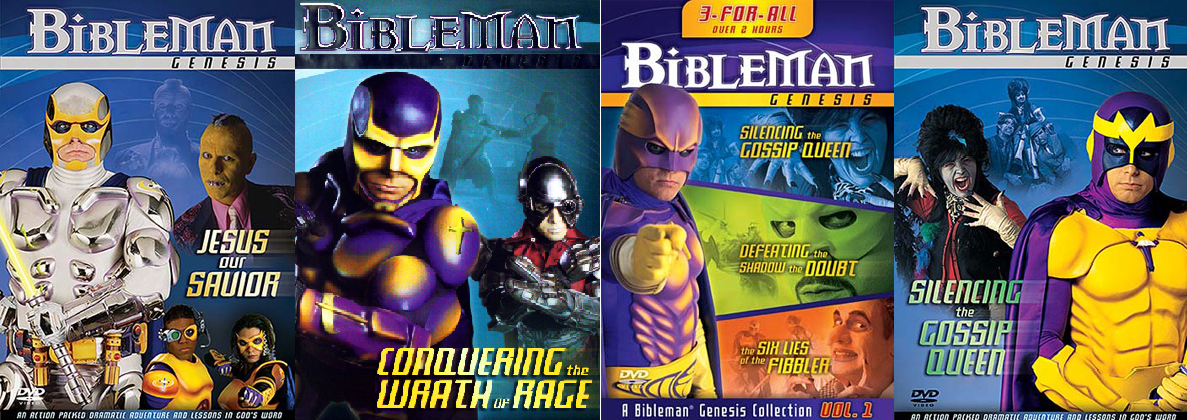
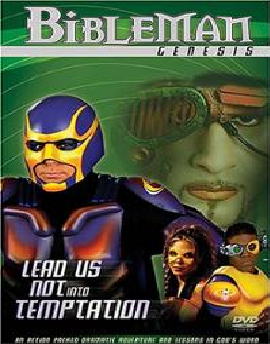
This is the first of many reviews I will be doing on the “BibleMan” series of films in “(God)Awful Movies”. I have been collecting these DVDs out of bargain bins for years, and quickly learned that they are some of the worst religious movies that you will ever come across. There are also tons of these out there in circulation, and I do my damnedest to pull as many of them out as I can. Originally played by Willie Aames of “Charles in Charge” fame, the “BibleMan” series was sporadically produced throughout the late 1990s and early 2000s. The quality is pretty far from consistent, which is clear from just looking at the costumes used over the years:
Consistency is the work of the devil
The origin story of BibleMan is…vague. As the astoundingly annoying theme song tells us, he used to be rich and powerful. Eventually, he lost everything, which led him to somehow becoming a superhero with the help of Jesus. That doesn’t answer much about the laser sword, the armor, or the super-strength (?) that he apparently acquired, but we aren’t supposed to question anything during BibleMan. It all just is.
There are a few regular villains and some rotating sidekicks that occasionally show up throughout the “BibleMan” series. In this episode, “Lead Us Not Into Temptation”, sidekicks BibleGirl and Cypher are both present, and the villain is a mostly forgettable regular who seems to use different aliases with each episode. There will be more on him later, though.
Cypher and BibleGirl usually get to hang out in one of the corners
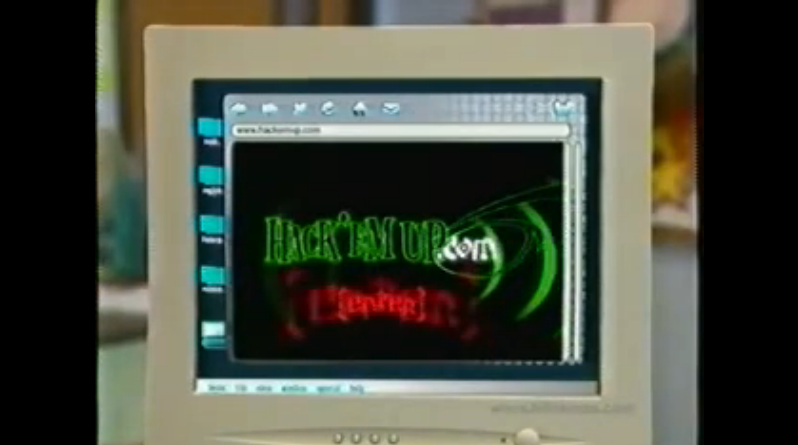
In “BibleMan: Lead Us Not Into Temptation”, the plot starts off as BibleMan tries to save a young, newly-converted Christian child by helping her overcome the bullying she faces from her non-Christian friends. Because, in our Christian-dominated society, that is totally a thing that actually happens. In any case, she becomes tempted by the evil magic of computers and the internet via peer pressure. Satanic forces take over her mind via the internet (a website called “Hackemup.com”) and try to make her to leave her new religion and hang out with her non-Christian bullies. It is…amazing.
“You wouldn’t believe the graphics!” – actual line of dialogue
The amount of luddite, imaginary computer magic going on in this episode is hilarious, and the misunderstanding of how computers and the internet function is baffling. Go figure that the folks behind “BibleMan” wouldn’t totally grasp the latest technology, given their top-notch mastery of computer generated effects. There are a lot of computer-ish terms thrown around without context in this episode, like this line in reference to the demonic website / game / vaguely evil internet thing (HackEmUp.com):
I went to the site. It was pretty cool. Well designed, lots of fail-safes and duplicate firewalls. Very high security for something like this…
That sounds like they read the back of the box for Norton Antivirus, and figured that’s all they needed to know to write this episode about the evil internet. As you would expect with any BibleMan episode, the special effects are hilariously pathetic. None of the websites look like anything that is actually on the internet, and the sets are as colorfully cartoonish as ever. There are predictably a lot of lasers and vaguely technological effects going on, including a bizarre force-field effect used to indicate that someone’s mind is being controlled by satanic computer magic. As with a number of the BibleMan features I’ve seen, there are a lot of winks to the camera that are played off as gags in “Lead Us Not Into Temptation”. They are clearly aware of the low quality of what they are making, and I suppose they are trying to excuse it by not taking the project overly seriously. However, the jokes are never really funny (despite the attempts), and the offensive portrayals of non-Christians and the very intention of the film to evangelize to children aren’t lost just because they lazily break the fourth wall every now and then. I’m tempted (heh) to say that they would have been better off just accepting what they were doing and playing it straight, because the whole deal is almost guaranteed to be hilariously bad once completed no matter what. Worse yet, the same annoying, jarring jingle is used after every instance of fourth wall humor, which winds up just being grating after a while.
One of the trademarks of the BibleMan franchise is that the heroes will quote bible verses while in combat, or in an attempt to make points in dialogue. This episode has an astoundingly shoe-horned instance of this, even when compared to other instances within the series:
BibleGirl: I’m worried about him (Cypher), and Riley
BibleMan: Me too.
BibleGirl: What can we do?
BibleMan: Well, the Bible says that we shouldn’t worry about anything, but pray and ask God for anything you need.
BibleGirl: I know this one! Phillipians 4:6!
BibleMan: That’s right! Then, we need to find out who is really behind this website!
Just to recap that dialogue, BibleMan says to pray about the issue and do nothing else. Then, he says to specifically do something about it. Was that scripture even sort of necessary or relevant there? Even better, the very next scene is BibleGirl spying on Cypher and reporting his activities to BibleMan, after which they confront him. Is that not the opposite of what he (and the bible) said to do? The villains of this episode are unfortunately not standouts in the series. Whereas many of the others are built on horrible stereotypes of scientists, jewish people, russians, etc; these villains are pretty run-of-the-mill cyborgs. I suppose that is because they were hackers? In any case, they don’t have any particularly memorable lines. However, they both manage to suffer pretty gruesome laser deaths at the hands of the Bible gang. If I recall correctly, that isn’t particularly unusual for BibleMan. They usually straight-up kill their antagonists, because that’s what children should be exposed to. The B-villain in this one even has a slow motion gun-drop as he is dying. I guess they want to get the point across that if you aren’t Christian or willing to convert, BibleMan may very well murder you with lasers.
The antagonist, in the process of laser disintegration at the hands of BibleMan
As you can probably gather without me stating it, there is a not-so-vague nefariousness to the BibleMan movies. They are clearly and unashamedly aimed at converting children (specifically younger than 9) into becoming Christian, and encourage the children to pressure their families into converting as well. Worse, the films actively and consistently disparage other religions and lifestyles to reach their ends. This episode in particular recommends that Christians (children and adults) should distance themselves from any non-Christian friends they have, and paints all non-Christians as evil, demonic, or bullies. It is beyond offensive, and is clearly trying to turn children into bigots at the earliest possible age. Even if all of the non-Christians in the episode were as horrible as they are depicted, the lesson should have been to not be friends with them because they are assholes, not because they aren’t Christian. I know some people who won’t watch these films because of how infuriating and offensive they are, but I still get a kick out of how colossally bad their film-making abilities are. These are certainly some of the most incompetent children’s videos out there, to the point that they make “3 Ninjas” movies look downright spectacular. In general, “Lead Us Not Into Temptation” I think is a pretty good introduction to the franchise for bad movie aficionados. This is one of the later ones, so the production value is a bit higher than you might expect. However, the computer / internet plot-line will have most nerds either rolling with laughter or tearing their hair out with frustration, which I suppose can be seen as good or bad. I do wish the villains were better in this one though, but that is a pretty minor gripe in the face of demonic computer magic. At least the bad guys get brutally murdered in the name of the lord!
Here is an abbreviated version of the episode from YouTube:
I highly recommend not paying money for a new copy, but these do show up in used bargain bins pretty often. That is where I usually get them myself, and going that route supports your local video stores and doesn’t support the “BibleMan” creators.
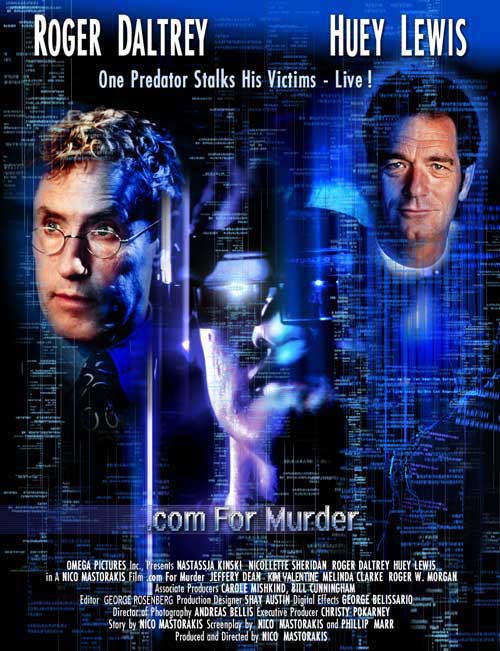
When you think of Huey Lewis and Roger Daltrey being involved in a movie, you should probably be picturing a pretty rocking soundtrack. Huey Lewis and The News are famously intertwined in the soundtracks of “Back to the Future” and “American Psycho”, and The Who are rightfully regarded as one of the best rock bands of all time. Daltrey was even pretty good in the cult classic theatrical release of “Tommy”, but that was a musical. “.com For Murder”, among its many flaws, features both Daltrey and Lewis as primary characters. They don’t a horrible job, but their presence is a little distracting, and I couldn’t help but expect that they would share screen time at some point (they don’t). They were just very peculiar casting choices that didn’t ultimately contribute to the movie in any way, and are two among a number of curious choices made while creating this film.
The entire premise of the film relies on the evil magic that is computers, something that the creators clearly knew/know absolutely nothing about. It is akin to someone making a movie about mountain climbing who has never seen a hill. The misunderstanding and vilifying of both the internet and technology in this movie is so over the top that any scenes involving either the internet dating site or the super-intelligent house (yeah, really) wind up being either cringe- or laugh-worthy, to the detriment of the movie. There is actually the nugget of interesting plot buried in this thing, but the execution is just inexcusable.
The killer wears these webcam / night vision goggles nearly the entire movie
The idea of a web-based dating site killer who broadcasts his murders via a portable webcam is remotely interesting, and seems like the sort of thing that might get a mediocre October release in theaters nowadays. Somehow, this film manages to turn that semi-promising plot into something astoundingly boring with a mixture of bad cinematography, a neo-luddite screenplay without any believable dialogue, and incredibly slow pacing. The acting is pretty mediocre, but it seemed to be that both Nastassja Kinski and Nicollette Sheridan (the actual leads of the movie) were being directed strangely. Both are familiar faces in bad movies (the “Cat People” remake and “Beverly Hills Ninja” respectively, for example), but I can’t help but think that they were capable of better here. The fact that writer / director Nico Mastorakis sort of dropped off the face of the earth after this film might support that theory. He certainly hasn’t been able to find any work since this film, anyway.
…who?
In general, “.com For Murder” didn’t have the knowledge, financial capability, or talent to be quite what it needed to be. I think that with a serious (second?) re-write, a larger budget, and a more competent director this could have been a half-decent thriller movie. Of course, it would absolutely need a better title. “.com For Murder” sort of implies that this movie would be about a killer-for-hire if you ask me. Nowadays, you could more easily use internet dating and streaming webcams as the framing of the movie, as I’m sure that wasn’t nearly as common or in the public knowledge back in 2002. I would think a title like “The Match-Maker” or “Kill Stream” might work better for this kind of flick today, and the audience would be far more familiar with the premise and the terminologies.
I think that this movie can be easily compared to the Sandra Bullock movie “The Net”, which, despite being made a number of years before this flick, had a better grasp on technology. It still used plenty of “computer magic” and was certainly far from good, but it clearly did at least enough preliminary homework to make the computers quasi-believable to the casual observer of the time. I highly recommend checking out the We Hate Movies episode on “The Net” by the way, it is a pretty good listen.
In any case, this is far from the worst movie in the Bottom 100. I’m tempted to say that this has been one of the best foreign films in the ranking so far, and I was generally pretty pleased with how ridiculous and dated it was. The pacing is a bit slow for it to be a great watch, but I can still generally recommend it to B-movie fans. There are enough highlights to justify it, such as the lethal electric back door on the genius computer house and the effortless rip-offs from “Silence of the Lambs” and “Rear Window”.
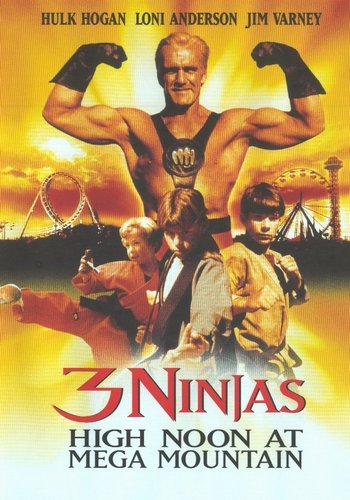
Hulk Hogan has one of the most baffling careers in movie history. I’m a little surprised that he only has two appearances in the IMDb Bottom 100 to be honest. One of those select features is the vapid children’s flick “3 Ninjas: High Noon at Mega Mountain”. For those that don’t recall, “3 Ninjas” was a franchise of children’s martial arts movies in the 1990’s. All of the movies featured atrocious child acting, boring plots, and abysmal fight choreography. Of course, that’s all mostly what you should expect from a 90’s children’s movie franchise. We had the Power Rangers movies around this same time too, after all. “High Noon at Mega Mountain”, the fourth in the “3 Ninjas” series, managed to make a particular name for itself by both featuring Hulk Hogan and for having exceptionally low quality, even for a children’s franchise.
It is hard to be excessively harsh towards a children’s movie, given the bar is already set pretty low. However, “High Noon at Mega Mountain” makes some errors that just aren’t forgivable. Primarily, it appears that the filmmakers failed to reserve the “Mega Mountain” (actually Denver, CO’s Elitch Gardens) amusement park for filming, as there are are people in the background casually enjoying themselves during what is supposed to be a terrorist hostage situation. That is indicative of the laziness going on behind the scenes of this movie, and what makes it stand out in the franchise. The bad fight choreography, acting, and writing all seems pretty much par for the course for this sort of movie, so it is hardly worth a mention. Appropriately, the writer/director of this flick has been put in charge of the upcoming straight-to-video “Baby Geniuses” sequels. Honestly, I was having flashbacks to “Baby Geniuses 2” repeatedly throughout this movie, particularly during the fight sequences. Admittedly, that movie is far worse than this one, but they are comparably lack-luster in many ways.
The thing that most bothered me about this movie is related to how it was marketed. Check out this image, which is widely featured on the movie’s VHS and DVD releases:
I don’t think it is unreasonable to assume from that image that Hulk Hogan is going to be an antagonist to a trio of children in this movie. That would mean that Hulk Hogan is likely to fight and be defeated by young children at some point in the film. That, to me, sounds hilariously awesome. However, that cover is quite deceiving.
In the movie, Hulk Hogan is the star of a failing television show along the lines of “Power Rangers”. His presence is essentially the excuse for why the ninja children show up at the park, and has nothing to do with the overarching plot as a whole. He tries to contribute as a good guy, but is typically thwarted by the actual villain of the movie played by Loni Anderson (weird casting there). She actually does a pretty hammy job as the villain, but when you are expecting a massive, grunting bad guy Hulkster; anything else is going to be disappointing. Jim Verney (of the Ernest franchise) does his damnedest as the B-villain though, and his over-the-top performance is one of the most watchable things in the movie.
Another specifically abysmal aspect of the movie is the shoehorning in of computer magic. There is a character introduced who primarily exists to hack things with her laptop, which is apparently capable of absolutely anything. All of the computer effects are CG’d, and look absolutely horrendous. I thought for a moment that I had started watching “.com For Murder” again they were so bad.
“High Noon at Mega Mountain” is right on the edge of falling out of the IMDb Bottom 100 at the moment, and I’m not really surprised by that. The bar is set really low for children’s movies as is, which doesn’t do it any favors in this forum. While this flick does manage to limbo below par for kids movies of the time, the other movies in the Bottom 100 of this genre blow it out of the water. Both “Baby Geniuses” movies and both animated “Titanic” films (more on that soon) are on an entirely different level than “High Noon at Mega Mountain”, for instance. There isn’t any reason to recommend this movie, it is generally just a pretty boring watch. The few upsides are far outweighed by the boring, cliched plot and dialogue. There might be a decent YouTube compilation of ridiculous moments that would be worth a few minutes of your time, but I wouldn’t advise sitting through the entire movie.
Sgt Pepper’s Lonely Hearts Club Band is a jukebox musical from 1978, which attempted to update Beatles songs with covers by more recent musical stars. Unfortunately, they didn’t cast very many actual actors. Or actually write much of a script, for that matter. And they cast Peter Frampton and the Bee-Gees as the lead characters. It isn’t good.
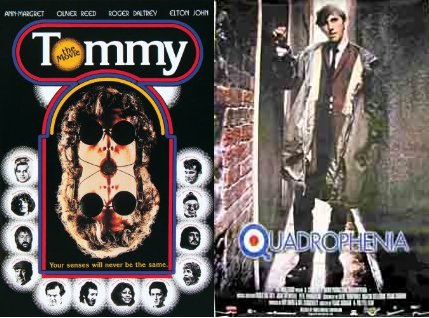
Donald Pleasence may have claimed that Pumaman was the worst film he ever did, but I have to assume that Sgt. Pepper’s was a close second. The movie is more of a visual companion to the star-studded soundtrack than it is any kind of narrative film. That said, most of the covers are more-or-less acceptable, and some are even pretty good. Given that was the primary purpose of the movie, I suppose it was a success on some level. However, as a film, it is absolute nonsense. Rock operas tell a story through the lyrics and music over the course of an album, and can be adapted to film pretty well. Both famous rock operas by The Who were adapted into cult favorite films, for example (Quadrophenia and Tommy). However, those stories weren’t just “best of” collections of songs by The Who: they were deliberately crafted to tell a story. Assembling unrelated songs in order to tell a story can be done for sure, but there has to be thought put into the arrangement (y’know, like a mix tape). In Sgt. Pepper’s case, it seemed like they just wanted to feature hits rather than tell a story. The result is a feature-length, confused music video for an album of Beatles covers. It isn’t easy or interesting to watch in general.
Musical movies from the same time period with plots
It is difficult to criticize anything else about the movie, because there is hardly any dialogue or acting to speak of. What writing there is (the plot) is just as incoherent as you can imagine. There is a quest to retrieve lost instruments, a hot air balloon action scene, and one of the most amazing/horrible unexpected endings I have ever seen to a movie. After Strawberry Fields (Peter Frampton’s love interest) is killed, a funeral scene takes place over the songs “Golden Slumbers” and “Carry that Weight”, the later as they carry the casket away. After the funeral, Peter Frampton’s character attempts to kill himself by jumping off of a building. However, just as he leaps, a weather vane in the image of Sgt. Pepper comes alive, freezes time, resurrects his dead girlfriend, resolves all of the dropped plot lines, and ends the film all while singing a passionate rendition of “Get Back”. It is an experience that everyone should sit through.
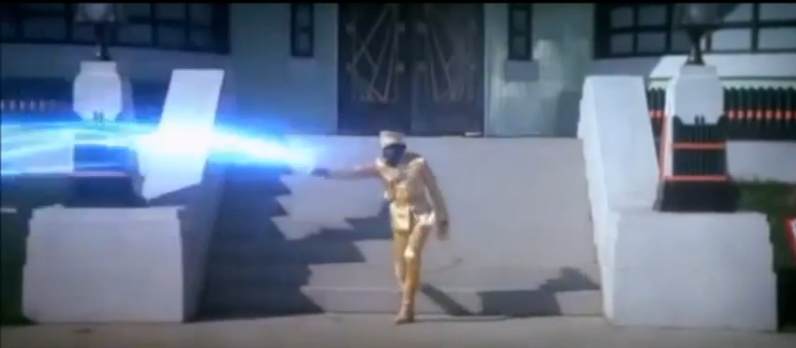
This is a weather vane in the process of resurrecting the dead
Honestly, if it hadn’t been for the hilarious incompetence of the ending, I would have thoroughly hated this movie. However, it is hard to argue with a baffling spectacle like that. Otherwise, the movie is just boring. The story isn’t paced well or fleshed out, and there isn’t much tying the scenes together into a narrative. Sgt Pepper’s is so barely a film, I almost feel like it shouldn’t qualify for the IMDb Bottom 100. I can’t help but wonder if that contributed to the fact that it is no longer on the list, getting overtaken by perhaps more competently made films. In any case, it wasn’t a particularly painful experience to sit through despite being boring, and some of the covers were worth sitting through the movie. However, I can only recommend watching this movie for the ending. I have never seen such a nonsensical, improvised resolution to a plot. Then again, I suppose the plot itself was pretty nonsensical and improvised to start with.
With Bob Hoskins’s recent death, a lot of bad movie fans have been going back to check out the big budget disaster that was Super Mario Bros. I recently discovered that the work that Bob Hoskins referred to as the worst film he ever made was actually on the IMDb Bottom 100 some years ago (although it has sense dropped out of the list). So, I decided to revisit this flop from my early childhood as well.
Super Mario Bros, like many adaptations gone awry, made the crucial mistake of angering the source material’s existing fan base. The script and direction should add their own voice to the work, but it is a delicate balance to hold (and it often goes badly). First and foremost, the negative popular reception of this film can be traced directly to this disgruntling of the fan base. There were a lot of liberties taken with the stories and the characters in the film that did not resonate well with the existing, massive base of passionate Nintendo fans. However, I don’t think that all of the creative decisions were necessarily bad, but they were certainly risky (and didn’t pay off).
Perhaps the most evident change from the source material are the peculiar decisions on the scenery and set design. Super Mario Bros. the game is well known for bright colors and castles, whereas the movie decided to go with a grungy, dystopian sci-fi appearance. I’m tempted to say that the film adaptation of Teenage Mutant Ninja Turtles may have influenced that decision (and many others), though I thought that the grungy scenery worked much better with that material. Likewise, the realistic practical effects seemed wholly unnecessary given the highly cartoonish source material. That said, I was generally impressed with them, despite them not really fitting the story well. Given the time, the effects on the Goombas and Yoshi are moderately impressive. However, that isn’t what people wanted to see. The fans wanted to see the loveable, puffy-cheeked Yoshi that they loved. Instead, they got a realistic, miniature carnivore. It was a risky decision, and as stated previously, was one that did not pan out well.
Another oft-complained about aspect of the film were the unnecessary changes to the existing characters. Most notably, fans were enraged at the absence of Princess Peach, the altered relationship between Mario and Luigi (not Bros?), and the name change to Dennis Hopper’s character (King Koopa vs Bowser). I personally think of these as pretty minor gripes in the larger picture, but they are indicative of the mentality of the film-makers. They (direction, writing) didn’t particularly care about the source material, and were not afraid to change details that fans cherished to tell their story. However, when dealing with such a high-profile adaptation with an existing, hyper-passionate fan base; these sorts of minor details need to be treated with a higher gravity than with your typical adaptation. The recent Marvel movies, for instance, have managed to keep the fans on their side with consistent nods and acknowledgements, despite having to change these sorts of details from the source comics. Still, it is unsteady ground to tread, and fan bases can turn on a dime.
The acting and dialogue in Super Mario Bros. is, in all honesty, fucking abysmal. However, I can’t help but feel like I should be lenient about them. The whole movie feels like it was primarily catered to children (which makes the dark set design and sex jokes a bit more odd), so that gives the dialogue and acting a naturally lower bar in that lens. However, it was not marketed that way: this was meant to be a blockbuster for the whole family, not just a spectacle for children. Looking at the movie from that perspective (the one that people would have had at the theaters), it is pretty much unforgivable for the dialogue to be this bad. I’m surprised the script got greenlit at all. There are three writers listed on IMDb, so it is plenty possible that the script went through some significant reworking. Still, the final product is just horrid. The actors, if you can believe Leguizamo, were so incredibly miserable on set that I am shocked they put in the hammy effort that they did for this wreck. Admittedly, I actually liked seeing Hopper’s cheesy rendition of Bowser. If he was unhappy in the role (I’m sure he was), he certainly didn’t show it.
Despite all of the issues with this film and its low quality, I am not surprised that it is no longer listed in the IMDb Bottom 100. Compared to everything else I have watched in this challenge, Super Mario Bros was a breeze, and damn near enjoyable. If I had been watching with a group of friends, it would have been a good time. I couldn’t say that for most of the schlock I have had to watch for this. This is sort of on the line between a “good” bad movie and a “bad” bad movie, but I would generally recommend checking it out if you dig riffing on crappy movies, and especially if you haven’t seen it in a number of years. It is pretty astounding.
Car 54, Where Are You? is a “comedy”, using a loose definition of the word. However, apparently it was almost a musical as well. Here is an excerpt from an AV Club interview with star John C. McGinley:
I have mixed feelings about Car 54, Where Are You? Because we shot it as a musical and whoever the studio head was at Orion, or whoever the powers that be were, cut all but, like, two musical numbers out of it. That is the same as cutting the musical numbers out of TheWizard Of Oz; it wouldn’t be that interesting. So the film, to me, doesn’t make sense without the musical numbers in it.
…
I wouldn’t pretend to know what happened, what the decision-making process was, but we busted our humps on those numbers, and then the film came out and I didn’t understand what I was watching.
I’m going to go out on a limb and say that more musical numbers would not have saved this unfunny, poorly-crafted cartoon of a movie. It might have made it more entertainingly bad though, but the quality and storytelling certainly wouldn’t have been helped.
“this would make more sense with singing, right?”
Not unlike fellow IMDb Bottom 100 movie Son of the Mask, this movie feels a bit misplaced in time, in that the movie’s creators are trying to bottle and re-purpose an older style of comedy in such a way that it can be pitched to a new, younger audience. Unfortunately, somewhere along the process this movie lost the apparent charm of the original Car 54 television show, ultimately turning off (and outraging) many fans of the show upon its release. That is one of the worst things you can do when doing a remake or adaptation, as one of the major advantages you have to start off with is an existing fan base that can potential help support your work. However, when the fan base turns on you, it can do very serious damage to the movie’s reception. Car 54, Where Are You? is a very good example of this potential boon turning into a negative weight, as the show’s fans were outraged at the poor quality of the movie. While the movie is certainly not good or entertaining, I can’t help but wonder how much of the negative reputation of the movie can be attributed to the scorned fan base.
As far as the plot of the movie goes, the audience is presented with a pretty basic buddy cop formula: a loose, sketchy cop (David Johansen) is paired with a by-the-books, top-of-his class rookie (McGinley). The movie quickly establishes that their coverage area is particularly crime-ridden, and that they are incredibly incompetent as a duo via an assortment of unfunny shenanigans. The primary plot of the movie sneaks in after the main characters are established: the precinct is tasked with holding a bookie-turned-informant (Jeremy Piven of Entourage), who is the key to putting away the infamous and eccentric local mobster played by Daniel Baldwin. The Car 54 duo is roped into this plot after a failed assassination attempt on Piven’s character alerts the police chief to a potential mole in the department. Believing that the Car 54 partners are far too incompetent to be moles, he entrusts them with defending the increasingly bizarre and detached-from-reality Piven character. Predictably, this plan goes awry because everyone involved is dramatically incompetent.
Another brilliant idea from the police chief
The movie has moments that almost reach levels of genuine comedy, particularly an unprompted cameo by Penn & Teller, and a hitman doing one of the worst Luca Brasi impressions you will ever run into. The finale takes place in an amusement park, which concludes with the claustrophobic mob boss confessing to all of his crimes after being put through the Tunnel of Love. Despite these few moments of mild laughs, the whole movie just isn’t funny enough to make the grade. There are too many jokes that completely whiff, and all of the characters are played way too over the top. Daniel Baldwin and Jeremy Piven both put in complete nonsense performances, to the point that their characters just aren’t believable in any way. Baldwin’s mob boss character is played up to be hilarious because of his claustrophobia (which isn’t funny to start with), but is so overblown that it doesn’t even make sense within any kind of logic. A scene in his office shows that his condition is so severe that he has a chalked circle around his desk (in the center of the cavernous room), over which no one is allowed to cross. Piven, meanwhile, doesn’t seem to have any sense of self-preservation. Despite obvious assassination attempts on him, at no point does he connect that he is in danger. His character is supposedly offering testimony to police against a dangerous mob boss, yet he doesn’t at all understand the gravity of his situation. There is just too much of this kind of unfunny nonsense for the movie to be enjoyable.
As with many of the comedies on this list, the behind-the-scenes work doesn’t appear to be particularly incompetent. From what I have been able to find out about the movie, there was a lot of editing done after the fact to produce this unfortunate result. That said, I don’t think that the hack-job is particularly noticeable, which I suppose is a credit to the editing team. McGinley clearly wanted to level blame in that direction, but the fact of the matter is that the jokes in the remaining script still aren’t funny. The director clearly had an odd vision for this movie to start with, which certainly didn’t help, but even a master couldn’t have made this screenplay work without a serious rewrite. Likewise, it is hard to blame the actors for treating the movie like a cartoon, because that is what they were given to work with. To my surprise, Rosie O’Donnell’s bit role in the movie has been particularly singled out as a poor performance. She certainly isn’t a high point, but she hardly compares to the bizarre performances by Piven and Baldwin in my opinion.
There are a lot of bad elements to the movie, but unfortunately none of them are quite poor enough to make the movie unintentionally enjoyable. That tends to be hard for comedies to pull off anyway, but I wonder if those extra musical numbers might have put this over the edge. Perhaps if there is a director’s cut of this movie out there somewhere, it is a ridiculous enough spectacle to give a watch. However, as it stands, it appears that someone tried to save this wreck in post-production, and may have turned it from being an opus of poor film-making into a sub-par, difficult-to-watch attempt at comedy.
I am incredibly surprised that I had never heard anything about this movie before. Honestly, Dark Harvest 2: The Maize: The Movie (take your pick on the title) is the most poorly crafted movie I have come across on the IMDb Bottom 100. It has all of the technical and acting incompetence of Birdemic combined with all of the filmmaking laziness of Zombie Nation. It is an unbelievable spectacle. I mean, the opening credits are even horrible.
The story loosely follows two young girls as they get lost in a haunted corn maze, and their ambiguously psychic father as he tries to rescue them from his premonition of a mysterious local child murderer who is hunting them down in the maze. There are also ghosts poorly ripped out of The Shining.
The majority of the movie consists of the father character yelling the names of his children while aimlessly wandering in the corn maze. It becomes infinitely boring and nauseating very quickly. Oftentimes, the director chooses to “enhance” these meandering scenes with picture-in-picture effects, which look bad even when they are done with a high budget (Ang Lee’s Hulk). Here, the effect looks atrocious.
As mentioned briefly, the acting in this movie is unforgivably bad for anything outside of YouTube. However, the script doesn’t do anyone any favors. There is one sequence where the daughters are talking to each other while lost in the maze, and it may be the most unwatchable sequence I have even seen in a movie. Both children sound like they are stumbling through reading their lines, and the lines themselves sound like the most inhuman dialogue even put to paper. Even the simple shot looks bad, like it was a home video from someone’s dusty VHS collection. It was like watching a perfect maelstrom of utter incompetence.
I recommend that any bad movie fan attempt to watch through this movie. It is a chore, but it feels like something that must be done: A rite of passage of sorts. If you can sit through this film, then no movie will ever be able to hurt you again.
Alone in the Dark is yet another video game adaptation by infamous director Uwe Boll. I already covered another one of his films, House of the Dead, which also resides in the IMDb Bottom 100. I thought that House of the Dead had a little bit more redeeming value to it than Alone in the Dark though, and I loathe that movie immensely. That alone says a lot about my dark opinions of this film (sorry about that).
I honestly try to be a little charitable when talking about Uwe Boll movies, because I think his personality and unpopularity among critics has colored a lot of reviews of his works. That said, it is pretty hard to deny that his movies are terrible, and I’m certainly not going to be one to deny that here. Regardless, I’ll try to start with some positives about this movie.
The first (and, well, only) positive thing I have to say about this movie is possibly a bit backhanded, because it is also a major complaint. I was impressed with his use of lighting in how he used it to relatively cover up some of his cheap/poor CG effects. That actually felt like a pretty good move, given what I assume were imposed budgetary limitations on the movie. However, the CG monsters were a bit integral to the plot, so the whole movie winds up being incredibly dark with random flashes of light (Uwe Boll bargain bin bullet effects), which makes the whole thing a pretty blinding experience. At times Boll tries to make up for this by substituting the CG monsters on screen with off-screen noises that imply their presence, but it winds up being a bit obvious as to what he is doing. Good try though, I guess?
Most of the movie looks like this
The movie’s plot is pretty typical if you find yourself watching SyFy Original movies on a regular basis. It isn’t deep, and there certainly isn’t too much though put into it. If I remember correctly, the monsters are underground dwellers (aliens at one point maybe?) that have been around throughout human history, and the characters find evidence of them in mysterious archaeological findings. The lead character (Christian Slater) is a former member of a secret government organization that tries to conceal the existence of these creatures, like a more militaristic version of the Men in Black. He teams up with some archaeologists (including Sharknado‘s Tara Reid) to try to contain (I guess?) the resurrection of these poorly CG’d creatures.
The acting is all pretty sub-par, and there isn’t anyone playing up their roles to add entertainment value. Everyone seems to be taking this movie incredibly seriously, which is really a shame. I feel like this had some potential if any of the actors would have been able to really let go, but I feel like they were equally constrained by the screenplay and the directing.
The biggest problems with this movie all come down to the lighting. I mentioned previously that this was a good way to try to conceal iffy CGI, but the whole movie comes out as too dark as a result of it. Equally, the constant darkness emphasizes another classic Uwe Boll cheap trick: post-production gun flashes. Uwe Boll loves these cheesy, bright gun flashes that are added in after the fact (I mentioned their presence in House of the Dead as well). In his other movie they look bad, but in a film where the characters are constantly immersed in darkness, the jarring flashes constant, and undo all of the work of concealing the flaws of the poorly CG’d monsters. It doesn’t matter much that you can’t see the shitty details of the monster CG when you are using the cheapest gun effects you can get your hands on.
oh come on
Alone in the Dark is a boring and painful watch. There isn’t any entertainment value to leech out of this thing, and you will almost certainly regret watching it once the headache from the constant flashing sets in. Worse, Boll once again concludes his movie by ripping off a much better, cherished cult classic. This time around, it is Sam Raimi’s Evil Dead: Boll concludes the movie with the first-person camera crashing in on the characters from behind, straight out of the fantastic conclusion to the original Evil Dead. Worse yet, the effect wasn’t necessary. The movie was already essentially over, and it could easily have just cut to black with the monster noises and had the same effect. At this point, I suppose that is just what you can expect from Uwe Boll.
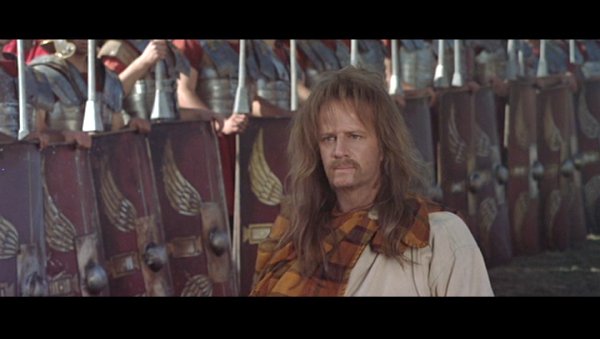
To start off with, I am unashamed to admit that I do not hate Christopher Lambert’s acting. He is a one-trick pony for sure, but I always liked him in the otherwise abysmal Mortal Kombat and Highlander movies. He is usually just the right amount of hammy for a B-movie, and can overact with the best of them. So, I was actually really disappointed to see him in this “historical” drama snooze-fest. It just doesn’t suit him, and he doesn’t suit this movie.
Druids / The Gaul is an attempt to adapt bits of Julius Caesar’s tale of his campaign in Gaul, focusing specifically on his relationship and rivalry with the Gaul leader Vercingétorix (played by Lambert). For those unaware, Vercingetorix is a legendary figure in history for uniting the tribes of Gaul to fight against Julius Caesar. There are a number of statues in his image around France today, so it isn’t so far fetched for someone to take a stab at making a movie based on his exploits.
Unfortunately, the people who chose to make this movie did not have the money or skill to fulfill their vision for an epic based on the great Gaul. The entire movie feels like it is aspiring to the successes of movies like Gladiator, but falls far short of the mark. It is clear during the few battle scenes that the film-makers are trying their best to make a “realistic” battle on a budget. There is very little in the way of compelling injuries or fighting, and a lot of clearly improvised spears to the gut. Some reviewers have been particularly harsh towards the costuming in the movie, but that is something I would forgive if they could manufacture a compelling battle. I don’t think I can be so merciful about Lambert’s hair though.
Despite Lambert’s uninspired performance and the budgetary issues, this movie still might have been decent if there had been an impressive script beneath it all. Unfortunately, it is at best mediocre. The dialogue isn’t horrible, but it certainly isn’t good enough to impress or make up for the other issues in the movie. Worst of all, the pacing of the film is very slow. I’m not sure who to blame that on exactly, but I am tempted to say that in this case it was a cacophonous concert between the directing, writing, and editing. I assume that they all wanted and expected a long-ish run time, because this was supposed to be an epic tale on screen. Unfortunately, it just comes off as boring instead of grand, because there isn’t much sense of motion or driving force in the film.
Overall, this is just sort of a boring, under-performing film. There are nuggets of a potentially good movie here, but no aspect of the movie is done well enough for it to get there. Everything is just shy of average, from the acting to the directing. It is certainly more watchable that a lot of Bottom 100 fare, but it is a long-shot from a good movie. It also isn’t bad enough for there to be unintentional entertainment value, so there really isn’t much of a reason for anyone to watch this movie. In general, I would recommend that people skip this one and watch something else, either something better or something worse.
Reviews/Trivia of B-Movies, Bad Movies, and Cult Movies.
![Misan[trope]y](https://misantropey.com/wp-content/uploads/2014/10/misantropeyhead1.png)











 Misan[trope]y