Category Archives: Uncategorized

Slipstream (1989)

Slipstream (1989)

slipstream894

Next up are a handful of reviews that I’ve been putting off for some time now. For those who have frequented the blog for a while (and also have sharp memories), you might recall that 3 different movies, all called “Slipstream,” have popped up frequently in my bargain bin movie hunting. Now I am finally going to watch all three of them, and see how they actually stack up. First up is 1989’s “Slipstream,” starring Mark Hamill and Bill Paxton.

“Slipstream” was directed by one Steven Lisberger, who is best known for writing and directing the original “TRON” in 1982.  He doesn’t have a whole lot of credits to his name, but apparently he worked anonymously on screenplays throughout the 1990s and 2000s, primarily because the failure of “Slipstream” tanked his potential career as a director.

The “Slipstream” screenplay was written by Tony Kayden, a television writer who did a few made-for-TV movies as well as a handful of episodes of shows like “The Waltons” and “Little House on the Prairie.” If that doesn’t sound like the ideal fit for a science fiction epic, you are probably right to think that.

The cinematography for “Slipstream” was provided by Frank Tidy, whose credits have included such masterpieces as Sylvester Stallone’s “Stop! Or My Mom Will Shoot!” and Steven Seagal’s “Under Seige.” However, he also worked as the director of photography on Ridley Scott’s first feature, 1977’s “The Duellists.”

The score for “Slipstream” (which is fantastic) was composed and conducted by Elmer Bernstein, and recorded by the London Symphonic Orchestra. Bernstein was a film composer and conductor who racked up hundreds of movie credits beginning in the 1950s, all the way up until his death in 2004. His credits include fantastic films (“Bringing Out The Dead,” “My Left Foot,” “Ghostbusters”), cult classics (“Heavy Metal”), and some of the worst regarded movies in cinema history (“Leonard Part 6,” “Robot Monster”).

slipstream891The special effects team for “Slipstream” involved a significant team of workers who were carried over by producer Gary Kurtz from an earlier collaboration on “The Empire Strikes Back,” including Andrew Kelly (“28 Days Later,” “Sunshine,” “Dune”), Phil Knowles (“Alien,” “Space Truckers”), Roger Nichols (“Batman Begins,” “Who Framed Roger Rabbit”), John Packenham (“Krull”), Alan Poole (“Empire of the Sun,” “The NeverEnding Story”), Peter Skehan (“Gladiator,” “Indiana Jones and The Last Crusade”), Ron Hone (“World War Z,” “Prometheus,” “League of Extraordinary Gentlemen”), and Neil Swan (“Alien,” “The Princess Bride”). Joining them were a couple of other special effects guys who have likewise gone on to significant careers: Steve Cullane (“Captain America: The First Avenger,” “Skyfall,” “Gravity,” “Hudson Hawk”) and Andrew Eio (“Mission: Impossible,” “Behind Enemy Lines,” “Event Horizon,” “Hackers”).

One of the most impressive aspects of “Slipstream” is the surprisingly deep cast, headlined by Mark Hamill and Bill Paxton, who both turn in memorable performances. The list also includes Ben Kingsley, Robbie Coltrane, F. Murray Abraham, and Bob Peck (in what might be his best role), who mostly mostly serve to fill out small roles throughout the film.

slipstream892One of the co-leads, Kitty Aldridge, has not had any acting credits since 1998, but has published a handful of novels throughout the 2000s since her acting career has ceased.

With such an impressively assembled, successful effects team and cast, you might be curious as to how “Slipstream” flew so far under the radar. Of course, there’s a reason for that. “Slipstream” only released in the UK and Australia (briefly), and the poor reception meant that it never got theatrical distribution in North America. It did wind up with a VHS release, and has since popped up on a ton of DVD compilations since falling into the public domain (which is how I came across it, of course).

The massive failure of “Slipstream” blew back particularly hard on Gary Kurtz, one of the film’s producers and arguably the driving force behind the film. Despite his earlier successes on influential and well-regarded films like “The Dark Crystal,” “American Graffiti,” and the first two “Star Wars” features, this failure basically sunk his career. He has only recently picked up producing again on a regular basis in the 2000s, and is still active at the age of 74.

The story of “Slipstream” follows a mysterious android (Bob Peck) as he is and pursued by both law enforcement (Mark Hamill) and a bounty hunter (Bill Paxton) in a weather-ravaged, post-apocalyptic world. The only means of travel in this world is by air on small, low-altitude planes, due to the catastrophic weather effects that ravage the landscape.

“Slipstream” was filmed throughout Europe, particularly in Turkey and Ireland, giving it a thoroughly impressive backdrop. Particularly, the extensive aerial shots over Ireland are absolutely gorgeous.

Reportedly, the original script for “Slipstream” was far more violent, but was cut significantly before filming. These cuts have been blamed partially for the movie’s general incoherence, though I personally feel that additional length is the last thing that this movie needed.

slipstream897As mentioned previously, “Slipstream” was very poorly regarded in the brief release it received at the time, primarily due to the meandering plot. Rotten Tomatoes currently has it at a 20% rating from both audiences and critics, though it comes from a fairly small sample size. IMDb has the movie at a somewhat higher 4.9, though that is still a long way from positive.

Most of the criticisms I have seen of “Slipstream” cite that it has very slow pacing, and that the plot meanders a bit too much. Some have complained about the effects being low quality, but that’s to be expected from a generally low-budget movie, regardless of the team behind it. Interestingly, it seems that the movie has been better received in retrospect, with people being somewhat fascinated by the casting and surprisingly good performances all around. I certainly agree that the movie is both longer and slower than it should be, but it does have a fair number of redeeming values.

First off, the performances in “Slipstream” are generally pretty good. Hamill manages to portray a chilling, strictly lawful antagonist, which provides a great foil for Bill Paxton’s laid-back, comic outlaw lead. Bob Peck mostly steals the show, however, with a great performance that captures the complexities of an advanced artificial being. His character slowly becomes more relate-able and human as the story goes on, which is pretty intriguing to watch Peck convey.

Unfortunately, the movie suffers from the extended absence of Mark Hamill’s character, who vanishes for an excruciating stretch of the middle of the film. I’m curious as to why this was done, because it doesn’t seem like a script improvisation, but rather an intentional design of the story. It does allow for some development, but his absence also makes the film far less interesting to watch for a decent stretch of time.

Of all of the problems with the film, none are quite as glaring as the pacing. This is at least partially to blame on the previously mentioned script cuts before filming, but a certain degree of blame has to rest with the director and editor for not recognizing the issue and finding a way to mend it. This seems like the perfect sort of film to have a director’s cut, but, because the major cuts were made before filming, there isn’t any spare footage to make such a re-cut possible.

Though it is hard to regard this as a true flaw, there are a whole lot of borrowed elements throughout “Slipstream,” that stand out significantly. There are some obvious similarities to “Star Wars” given the number of common contributors, but some of the more obvious parallels are to “3:10 to Yuma” (the plot) and “North by Northwest,” specifically in the opening sequence which depicts a plane/foot chase. Personally, I think the mixture of them all creates something kind of unique and interesting to watch, though I don’t think some of the homages should have been so blatantly done.

slipstream895The finale of the movie features a bizarre fight inside the cockpit of a plane, which is honestly the most exciting part of the film. Unfortunately, it passes a bit too quickly, particularly in comparison to the bloated, slow sequences that clog up most of the film.

M8DSLIP EC004I’m a big fan of the world that is constructed in “Slipstream,” particularly the background details. At one point, there is a cult portrayed that worships the weather, and another portion that presents a secluded, opulent colony trying to maintain their lifestyle and culture despite the apocalyptic surroundings. It mostly happens in the background, but it is fascinating to see how people have come to deal with the world after society has crumbled.

Overall, I liked this film far better than I expected to. It isn’t a high-quality film, and there are plenty of issues with it, but it was still generally enjoyable to watch, especially if you go in not expecting anything. The acting and music is particularly impressive, and if you can bear through the slower parts, it is worth a watch in my opinion.

HorrorHound Weekend Preview

Next week, I’m going to be heading over to Cincinnati to attend the annual HorrorHound Weekend.  I haven’t been to this event before, so I’m not quite sure what to expect. That said, I’m pretty intrigued by the lineups for the panels and screenings.

horrorhound

As far as the panels go, I am most thrilled about an impressive “Re-Animator” panel that looks to feature Jeffrey Combs, Stuart Gordon, Barbara Crampton, Bruce Abbot, Dennis Paoli, and Carolyn Purdy-Gordon. At this point, I have covered a whole bunch of Stuart Gordon movies that have featured the whole lot, so I will definitely be interested to hear what insights come out of that.

There are a couple of other panels I am looking forward to as well: MST3K founder Joel Hodgson has one all to his lonesome, and another features the core behind “American Mary,” a pretty solid 2012 horror movie that I only recently got around to. There are definitely more than a few high-profile ones that I will skip in favor of the film festival, though (I tried “Sons of Anarchy” and “The Walking Dead,” and I’m not big fans of either).

The movie screenings at HorrorHound are what I am really looking forward to: Fritz the Nite Owl is going to be doing his take on “Re-Animator,” there is a US premiere of a well-received H. R. Giger documentary, and I’ll finally get to check out “Bloodsucking Bastards,” an anti-corporate horror comedy that I’ve had my eye on since the trailer popped up.  I’ll also finally get that second viewing of “The Babadook” that I’ve been meaning to do, but I can just about guarantee that I’ll be passing on the opportunity to catch the “world premiere” of Bill Zebub’s latest. In case you are curious, it is called “Holocaust Cannibal,” and looks to hybridize all of the lesser elements of “Cannibal Holocaust” and the lowest of Nazi exploitation movies. If you think that sounds like it has entertainment potential, I can almost certainly guarantee  that it won’t live up to it. This is Bill Zebub we are talking about, and I sat through “Antfarm Dickhole.”

I’ll be sure to do a write-up after the convention to cover everything I wind up seeing. Honestly, I’m expecting to be pleasantly surprised by the film line-up, as I am not familiar with most of them. There is also a deep lineup of shorts, and I’m sure there will be some gold in there as well.

If you happen to be in the area, I recommend checking out the lineup to see if anything peaks your interest. If any of you readers are going to be there, feel free to get a hold of me on twitter (@Misantropey): I’m planning to be around throughout the weekend, and live-tweeting when I can.


Abraxas, Guardian of the Universe

Abraxas, Guardian of the Universe

abraxas6

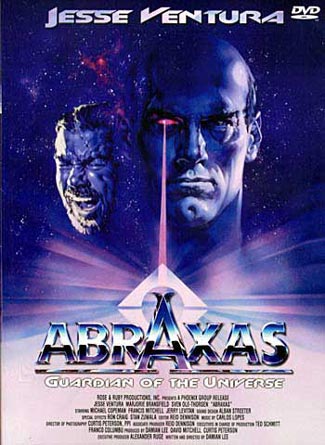
Today on the Misan[trope]y Movie Blog, we’re going to take a look at the 1990 Jesse Ventura sci-fi movie, “Abraxas, Guardian of the Universe.”

The writer and director of “Abraxas” is one Damian Lee, a B-movie writer, director, and producer who is still working today. His most recent flicks include a handful of smaller films: “A Fighting Man” (2014), “Hit it” (2013), and “A Dark Truth” (2012).

The cinematography on “Abraxas” is credited to three different people, which brings up some questions about the production. The first listed is Curtis Petersen, a veteran camera operator and b-movie cinematographer, who has well over 100 credits to his name (including “Rocky III,” “Rocky IV,” and “Look Who’s Talking”). Also credited are Mark Willis, a now-prolific camera operator working on television series such as “Hannibal,” “Copper,” and “Reign,” and Keith Thomson, another camera operator for whom “Abraxas” was one of his first ever credits. Given that there isn’t much information available about the film’s behind the scenes operations, it is anyone’s guess as to why all three men are credited, but I suspect that there was probably a dismissal at some point.

abraxas3

“Abraxas” features a handful of cheesy and cheap special effects, but they tend to work pretty well for the purposes of the movie. The special effects team doesn’t have a whole lot of credits between them, but I did notice that they all worked on the 1995 Roddy Piper movie “Jungleground,” which apparently features a lot of the same accessory crew as “Abraxas.” I’ve had that movie sitting in my collection for a good while now, so stay tuned for some coverage of that flick in the near future.

The music on “Abraxas” is really odd, featuring a significant number of strangely placed saxophone solos. The composer of the score was Carlos Lopes, who worked on the 1980s revival of “The Twilight Zone,” as well as a handful of smaller features over the years.

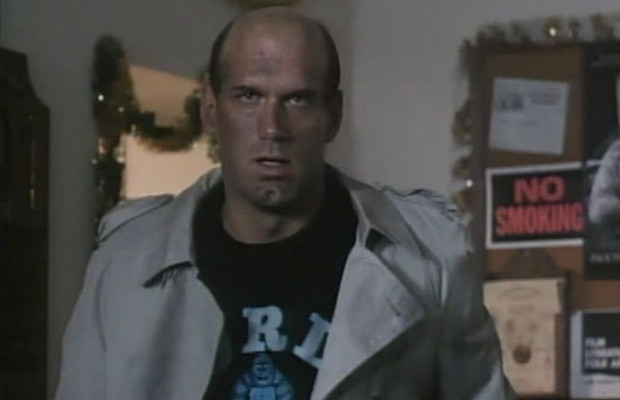
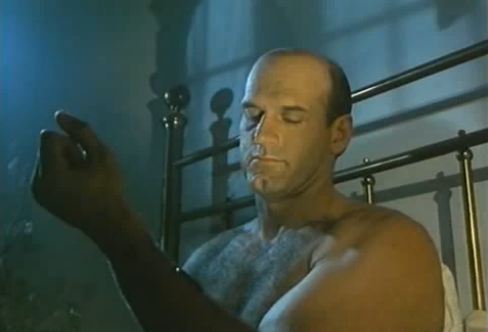
Apart from Jesse “The Body” Ventura, the wrestler turned actor turned politician, the cast of “Abraxas” notably features Sven Ole-Thorsen as his rival. Thorsen is fantastic ‘heavy’ character actor who has appeared in films like “The Running Man” (also with Ventura), “Twins,” “Gladiator,” and “Red Heat,” among many, many others. Both men are famously good friends with Arnold Schwarzenegger, whose film “Terminator” was a clear inspiration for “Abraxas.”

The rest of the cast on “Abraxas” is primarily filled out with unknowns, with the exception of the then-married couple of James Belushi and Marjorie Bransfield. “Abraxas” proved to be Bransfield’s only significant film acting role, as she hasn’t any credits since the mid-1990s. Belushi, bizarrely, is credited as “Principal Latimer,” the same name of his character in the 1987 movie “The Principal.” Whether his bit role was meant to be the same character is up for debate, but it certainly makes for an interesting little fun fact.

The story of “Abraxas” follows the title character (Ventura), a space cop, as he tracks down his former partner, the ruthless Secundus (Thorsen), who is fostering plans for domination of the universe. The pursuit lands both men on Earth, where Secundus impregnates a woman with a “comater,” which will apparently hold the key to the “anti-life equation” once it reaches maturity. Abraxas is faced with the decision of whether to kill a child, or run the risk of having Secundus’s plans come to fruition.

abraxas4
Apparently, this is space sex

As far as criticisms of “Abraxas” go, the attempts at comedy in the film merit a bit of shaming. All of the attempted jokes fall flat, and don’t fit in with the rest of the movie at all. I’m not sure what exactly inspired the attempted inclusion of comic relief in the movie, but I think it would have been better off either leaving it out entirely or committing more fully, and perhaps getting a comedy writer to do a pass on the script. When you just go half-way, you run the risk of having awkward, stilted moments in the middle of a serious movie.

Something that “Abraxas” engages in that is a minor pet peeve of mine is confusion over idioms. Almost any time a robot, alien, or person out of time is featured in a movie, it seems to be mandated for the script to attempt at least one joke about how the outsider doesn’t understand linguistic peculiarities. This isn’t inherently awful, but it has certainly been done to death. Also, particularly with aliens and humans displaced in time, there is no reason for them to not be familiar with the concept of idioms. For example, if I am speaking in another language with someone, and they mention a phrase that doesn’t seem to make much sense, one of the first things I will assume is that it is an idiom that I am not familiar with. People don’t naturally react to unfamiliar idioms by getting exasperated, it just doesn’t happen. And why not have the aliens use their own idioms, poorly translated into English? That’s at least a mildly better way to deal with the issue.

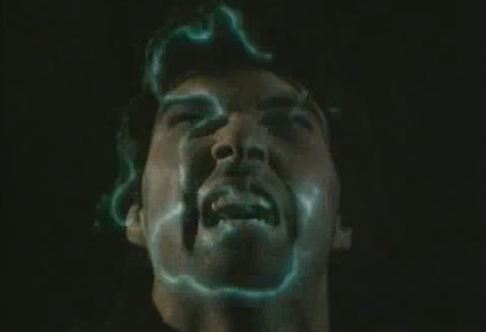
“Abraxas,” in true b-movie fashion, features a number of great, cheesy effects. In particular, there are a couple of solid head explosions scattered throughout the film, as Secundus’s favorite method of execution seems to be overloading people’s brains to the point of exploding. There are also some classic animated lightning / electricity effects that are sure to incite some nostalgia for b-movie fans.

abraxas5

Surprisingly, the central child actor  (the “comater”) is actually pretty solid in this film, which may have a direct correlation to the fact that he has almost no lines. Personally, I would be in favor of this being standard procedure for child actors. In all seriousness, the child is really effectively expressive without using his voice, and actually builds up a little bit of an air of menace by the conclusion of the film, as his powers become more honed.

Something that becomes evident very early on in “Arbraxas” is that the film features far too much internal voice-over, kind of like the awful cut of “Blade Runner” taken to a distant extreme. The monologues aren’t even limited to Jesse Ventura’s lead character: at times, both the villain (Secundus) and the love interest (Sonia) offer brief internal thoughts and narration, which is both lazy storytelling and a really confusing way to shift the audience’s POV.

abraxas2

Something that I have seen take a bit of criticism about “Abraxas” is the set and production design. While it is visibly cheap without any doubt, I actually thought that the work was pretty impressive, and made a little go a long way. It even sort of made sense in the story for the aliens to be comparatively only somewhat more technologically advanced, so they still use keyboards and simple computers. The intelligent armbands are a little bit of a leap, but how different could they possibly be from Siri?

If there is anything that I really dislike about “Abraxas,” it is the romantic subplot. Jesse Ventura just doesn’t seem up for the challenge of an emotional role, and he seems awkward and uncomfortable whenever that is what is required of his character. I thought that the story would actually have been more interesting if his mercy had come from a developing compassion for life in general rather than because of a specific attraction for one woman. It seems that would have made him a better foil for Secundus, and kept things from getting too bogged down emotionally.

abraxas1

Overall, “Abraxas” is definitely a fun good-bad movie worth giving a shot. It quite in an elite class of good-bad, but the film is entertaining enough to hold your attention, while also being plenty awful on a number of levels.

Hercules in New York

Hercules in New York

hercules6

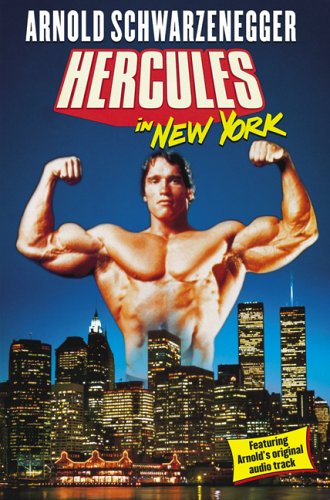
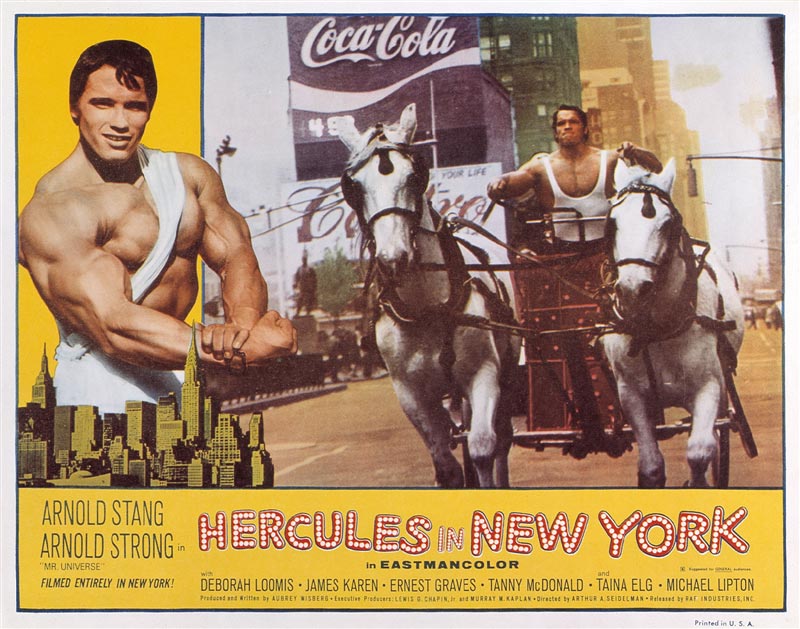
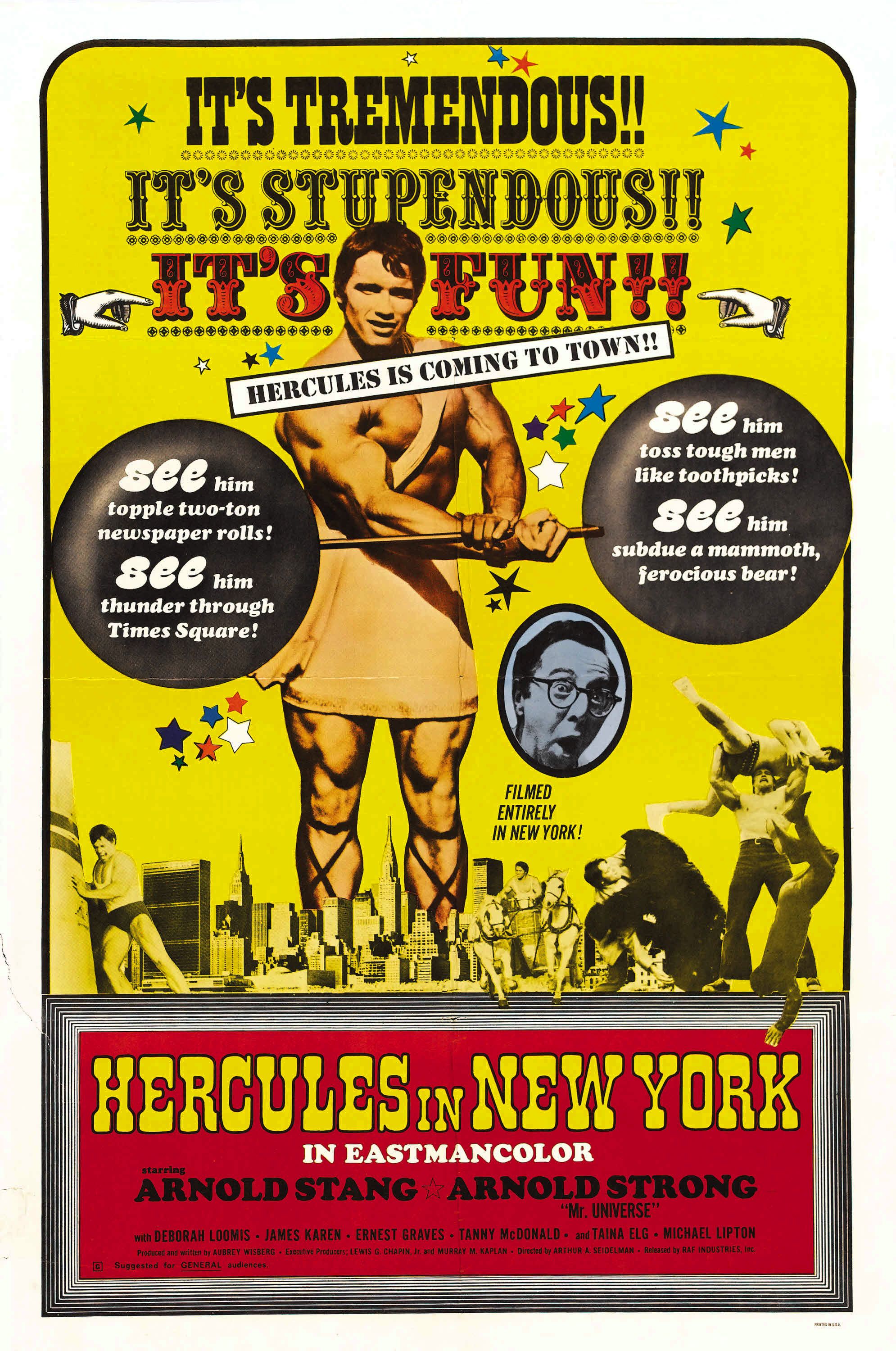
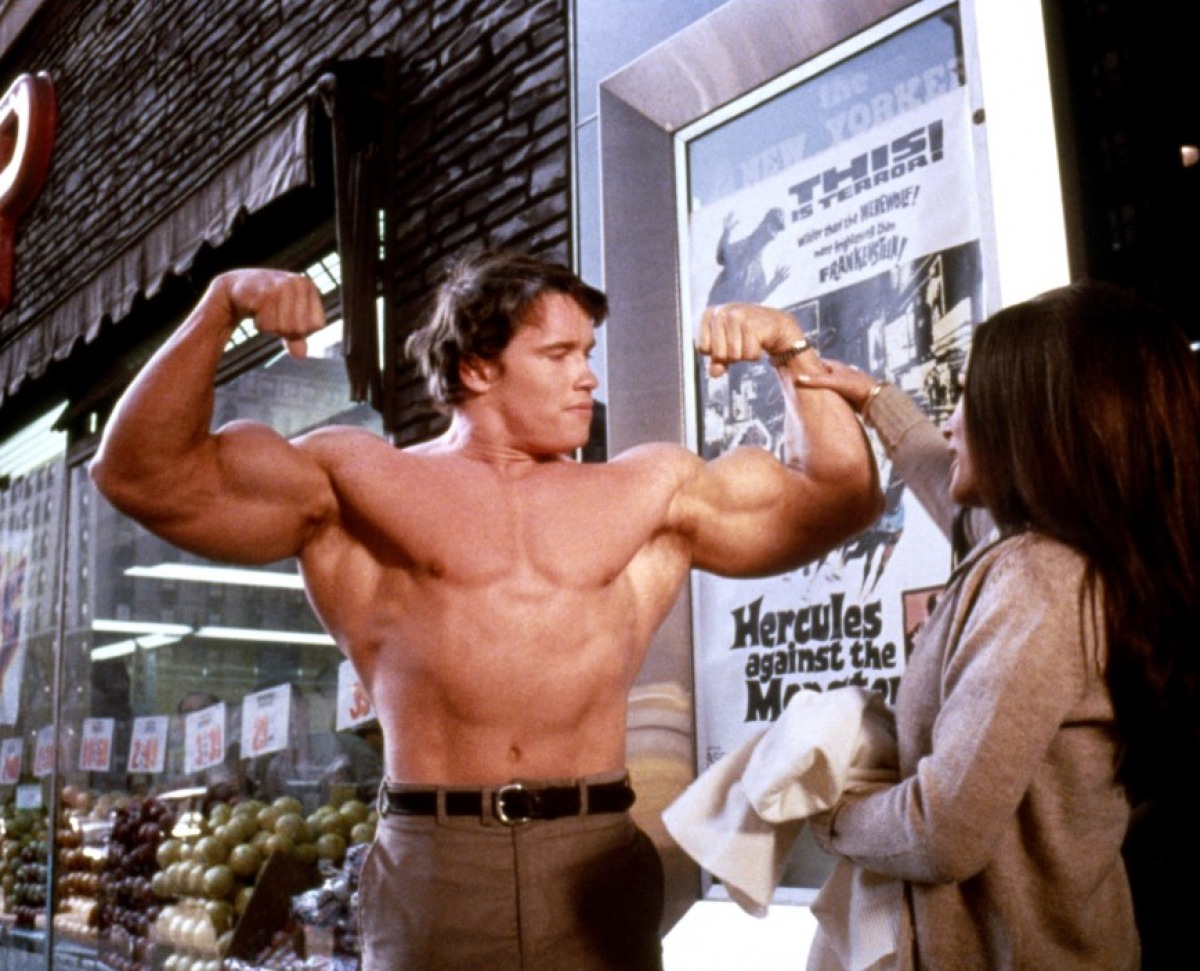
Today’s feature is a low-budget 1969 comedy by the name of “Hercules in New York”: a film most famous for featuring the first on-screen role for Arnold Schwarzenegger.

“Hercules in New York” was the last film written by Aubrey Wisberg, whose career featured included 1950s and 1960s science fiction films, as well as a handful or propaganda productions during World War II. Unsurprisingly, this film definitely seems misplaced in time. Even for 1969, the story and comedic style feels significantly dated. For contrast, “Hercules in New York” also saw the first directing job for Arthur Allan Seidelman, who has now had a significant career directing television movies and series. The mix of a wet-behind-the-ears director and an outdated, behind-the-times writer proved to be a bit of a perfect storm of awfulness for “Hercules in New York.”

hercules3Adding to the mix of inexperience and incompetence on the “Hercules in New York” crew was a cinematographer with no previous credits, and a musical composer with no listed credits before or since the movie. It honestly feels like the entire crew was pulled out of a hat, which I’m sure was done in an effort to keep the costs far below the radar.

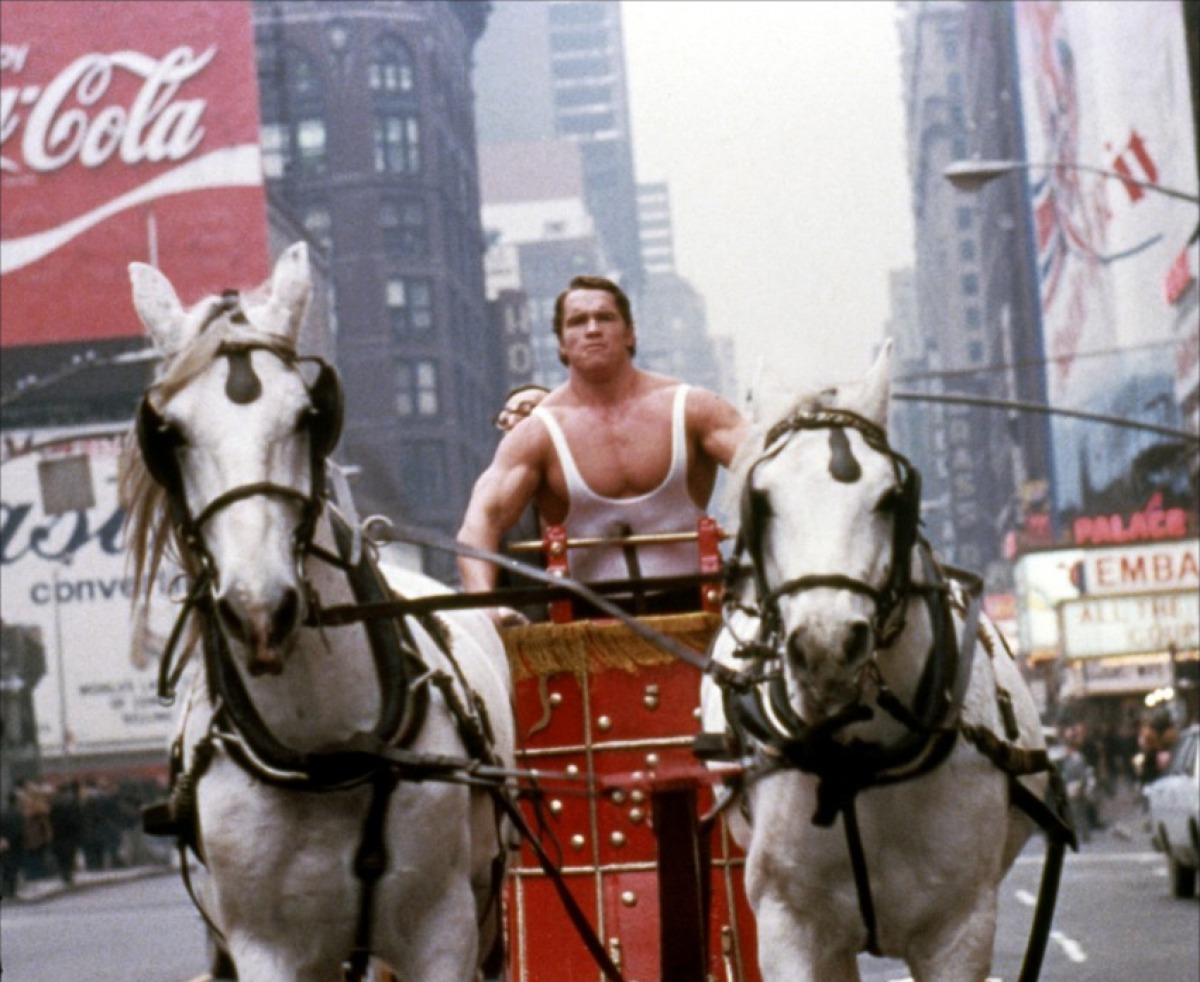
The story of “Hercules in New York” follows the angsty demigod as he decides to explore the modern world, to the intense displeasure of his father, Zeus. He quickly becomes unwittingly involved in mafioso-run sports gambling in New York City, and manages to make headlines for his feats of strength. Enraged with his meddling, Zeus decides to punish Hercules, which leads to further shenanigans in the mortal world.

Worried about Arnold Schwarzenegger’s unwieldy last name, the producers on “Hercules in New York” decided to credit him as “Arnold Strong, ‘Mr. Universe.'” The name “Arnold Strong” was chosen as a sort of gag, playing off of his co-star’s name “Arnold Stang.” Mr. Universe was used, of course, because that was the title that Arnold was most known for at the time, as he won the famous bodybuilding competition at the age of 20 (just 2 years prior to “Hercules in New York”). His next film role wouldn’t be for another 4 years, when he essentially played an extra in the fantastic Robert Altman movie, “The Long Goodbye.”

hercules4One of the most infamous and memorable aspects of “Hercules in New York is the dubbing that was done early versions of the feature. Because of Arnold’s thick accent, it was decided that his lines should be dubbed over, which makes for entertaining watching in retrospect. Even in the versions with Arnold’s audio track re-inserted, you can hear the dubbed voice during a closing sequence where Hercules speaks through a radio to Arnold Stang’s character. It is honestly a toss-up as to which audio track is more entertaining: Arnold’s natural voice with the worst acting performance of his career, or the bizarre voice-over that doesn’t fit Arnold’s body in the slightest.

Some years ago, the rights for “Hercules in New York” were auctioned off on e-bay, accruing bids for just over half a million dollars by the auction’s end. Given poor reception and general infamy of the flick, it is possible that the winner significantly overpaid for the product. The movie currently holds a well-deserved 17% critic score on Rotten Tomatoes, along with a 29% audience score.

The character of Hercules has a long cinematic tradition: he has featured in big budget flicks, animated movies, cheap Italian films, and epic television series. Apart from Arnold Schwarzenegger, the character has been portrayed over the years by notables such as Dwayne “The Rock” Johnson, Lou Ferrigno, Kevin Sorbo, Ryan Gosling, Sergio Ciani, and Kirk Morris, among many, many others.

I haven’t been able to find budget information for “Hercules in New York,” but you have to assume that this was an incredibly cheap production just judging from the film quality. It is hard to say if it made any money, just because there isn’t exactly a wealth of information out there about it. The rights to the film have changed hands a few times over the years, and it is currently distributed by Trimark. However, I doubt that it makes any significant money on home video sales.

hercules2Strangely, I actually think that there is some promise in the concept for “Hercules in New York.” The Greek gods are constantly meddling in the mortal world in mythology, so why not have a fish out of water tale where a god comes down to do it again in the modern world? Of course, this film does just about everything wrong, but I think that this could have been a serviceable enough film in more capable hands at every level. Essentially, this is not a film that was damned from conception.

The biggest issue for “Hercules in New York” is its use of outdated (even for 1969) humor. The jokes are all incredibly weak and infantile, and a lot of the humor seems like it is supposed to come from Arnold Stang’s character, whose comic relief style was suited better for the comedy world prior to the JFK assassination. All of the comic portrayals in the film are overly-expressive, frenetic, and basically cartoonish: a style that can go wrong all too easily, and certainly does so here.

One other serious problem with “Hercules in New York” is that the hero, Hercules, is an absolute asshat throughout the movie. A few characters acknowledge this fact, but inexplicably forgive him and begin to like him for reasons that are never made clear on screen (which is a whole different issue with the writing in the film). The audience is clearly supposed to sympathize with the demigod, but I couldn’t help but identify with the put-out and exasperated Zeus, who has clearly had it with Hercules’s constant shit.

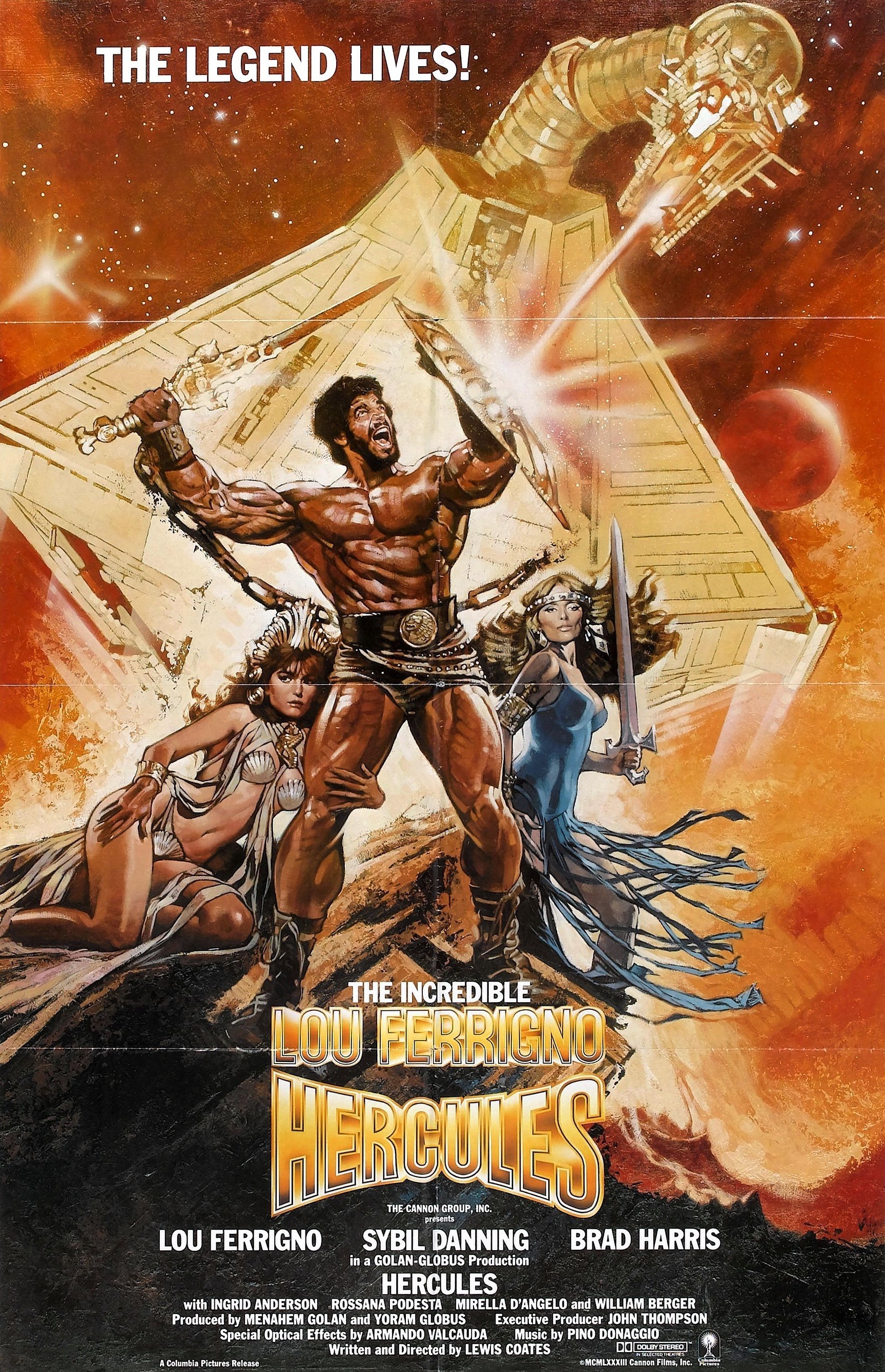
I would be remiss to not mention the amazingly awful Central Park bear fight in this film. The sequence almost rivals the bear fight from the Lou Ferrigno’s “Hercules” film, though I shockingly think that that one (a scene where a bear is thrown into space, mind you) is more believable that Arnold’s bear wrestling in this flick. Take a look for yourself:

At one point in the film, Mercury decides to intervene in the plot to help Hercules out of a bind. He does this by bafflingly summoning Samson and Atlas out of absolutely nowhere, exactly where they need to be to help Hercules. This might have been an interesting side plot (Mercury defying Zeus to help Hercules) if it had been developed earlier, but as it exists in the film, it feels like an improvised element used to patch a plot hole. It comes completely unprecedented and out of left field, and winds up being just another example of the mass ineptitude behind this movie.

All of the acting is this movie is honestly beyond awful. From the leads to the accessory players to the extras: not one person turns in a decent performance. At that point, you have to assume that the problem is not with the actors, but with the direction and the script: because honestly, what are the odds that you cast an entire production’s worth of duds? This isn’t “The Producers” as far as I know.

“Hercules in New York” is clearly trying to be a fish out of water comedy, but a good deal of it doesn’t make sense. Hercules should be treated as a man out of his own time, not like a creature from another planet. Is the audience supposed to believe that the Greek gods do not understand tact or basic social graces? Sure they live remotely, but they do have a sort of society on Olympus. There is the potential for this movie to be entertaining, but the writing never quite takes it in the right direction (at least not for long).

hercules1Overall, I think “Hercules in New York” sits right on the boundary between being an entertainingly awful movie and a dull, nearly-unwatchable one. If you ask me, it does land on the right side of that line, but only barely.  I can recommend this for bad movie lovers for the sake of a few select highlights, and because of just how awful Arnold is in this early role. However, it is a pretty weak recommendation: there are definitely more worthwhile bad movies to spend your time on.

YouTube Round-Up

Howdy there, loyal readers! This weekend wound up being a real doozy, so I don’t have a new review ready for today. Never fear though, because there is some good stuff coming up later this week, particularly as I start delving into my accumulated archive of bargain bin acquisitions.

In the meantime, I decided to round up a lovely bunch of full movies that are currently available, totally free, on the wide world of the internet. Enjoy!

—-

Willard

willard

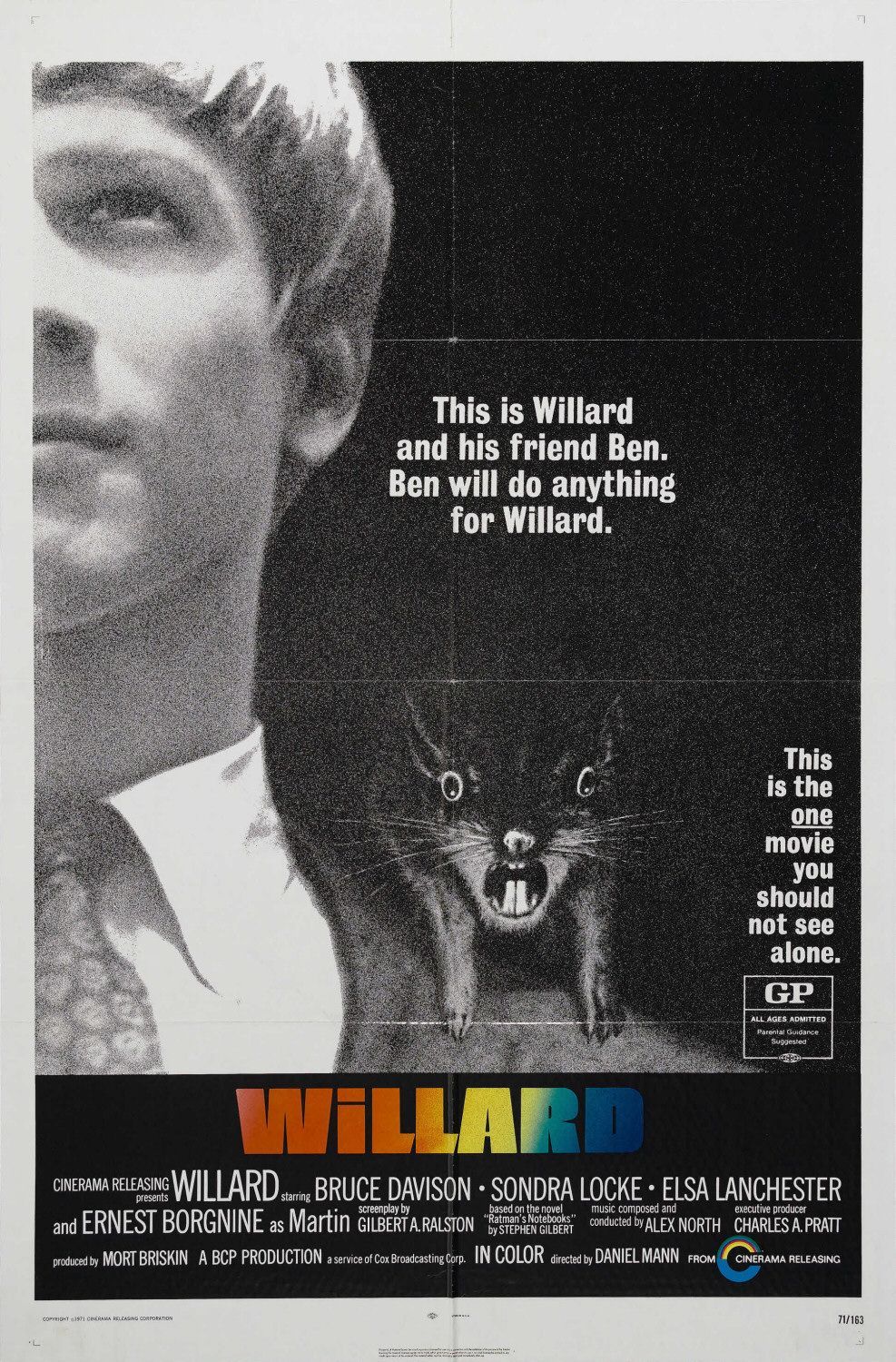
I have had the damnedest time finding a physical copy of this 1971 classic, but luckily it has been hanging around on YouTube unimpeded for a while (though it is obviously a VHS rip). I particularly like “Willard” because of the way it blends a revenge story with a monster movie. The hybridization worked splendidly, and has been mimicked many times since. You also can’t help but identify with Willard, even as he starts going over the edge with his rat-fueled rampage. It is definitely worth a watch, particularly as it seems to be fading from the public consciousness. Here’s hoping it gets a blu-ray treatment at some point.

—-

Martin
martin

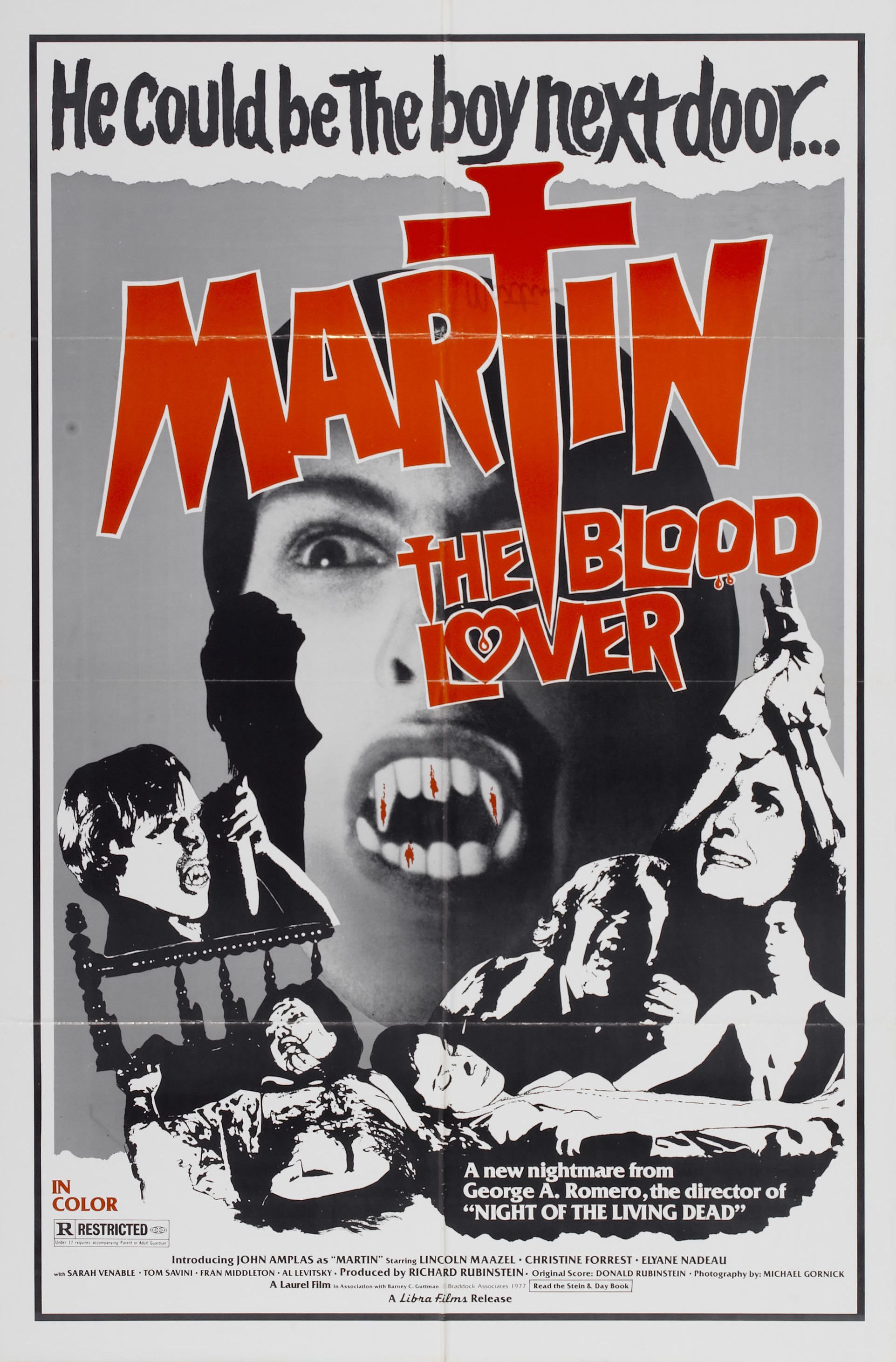
“Martin” is a clever 1977 George Romero vampire movie that has managed to slip through the cracks of history, and is one that the writer/director highly regards as one of his finest films to this day. On debut, it wound up being overshadowed by “Assault on Precinct 13” at Cannes, and never managed to get much off the ground. I recently read about the film in Shock Value by Jason Zinoman, and the described counter-supernatural style really stuck out to me. The question of whether Martin is actually a vampire follows throughout the movie, and Romero uses this to poke at the over-tired tropes of vampire movies. It sounds like the sort of film that would work well today, so it may just have been long ahead of its time. What luck that this forgotten gem is hanging around in the annals of YouTube!

—-

A Bucket of Blood
bucketofblood

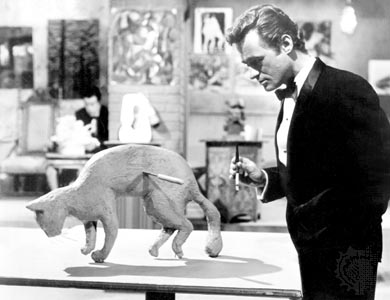
I absolutely love “A Bucket of Blood,” and think that it might just be Roger Corman’s true masterpiece. This film has been popping into my head quite a bit recently, particularly while re-watching Martin Scorcese’s “After Hours” and the modern cult classic “Murder Party.” Both of these films feature over-the-top, tongue-in-cheek assaults on the contemporary art world, something that has never been done better than in “A Bucket of Blood.” The story follows an awkward and incompetent aspiring artist who is shunned by his local arts community. Through a bizarre series of accidents, he winds up becoming a hit artist after plastering a mold over his neighbor’s cat, which he accidentally killed out of frustration. Loving the attention, he decides to replicate the success by going on killing spree, an immortalizing his victims by coating them with plaster. The movie horrifying, hilarious, and has one of the most relate-able and sympathetic serial killers that I have ever seen in a film. If you haven’t seen this, it gets an enthusiastic recommendation from me.

—-

Walking Tall
walkingtall

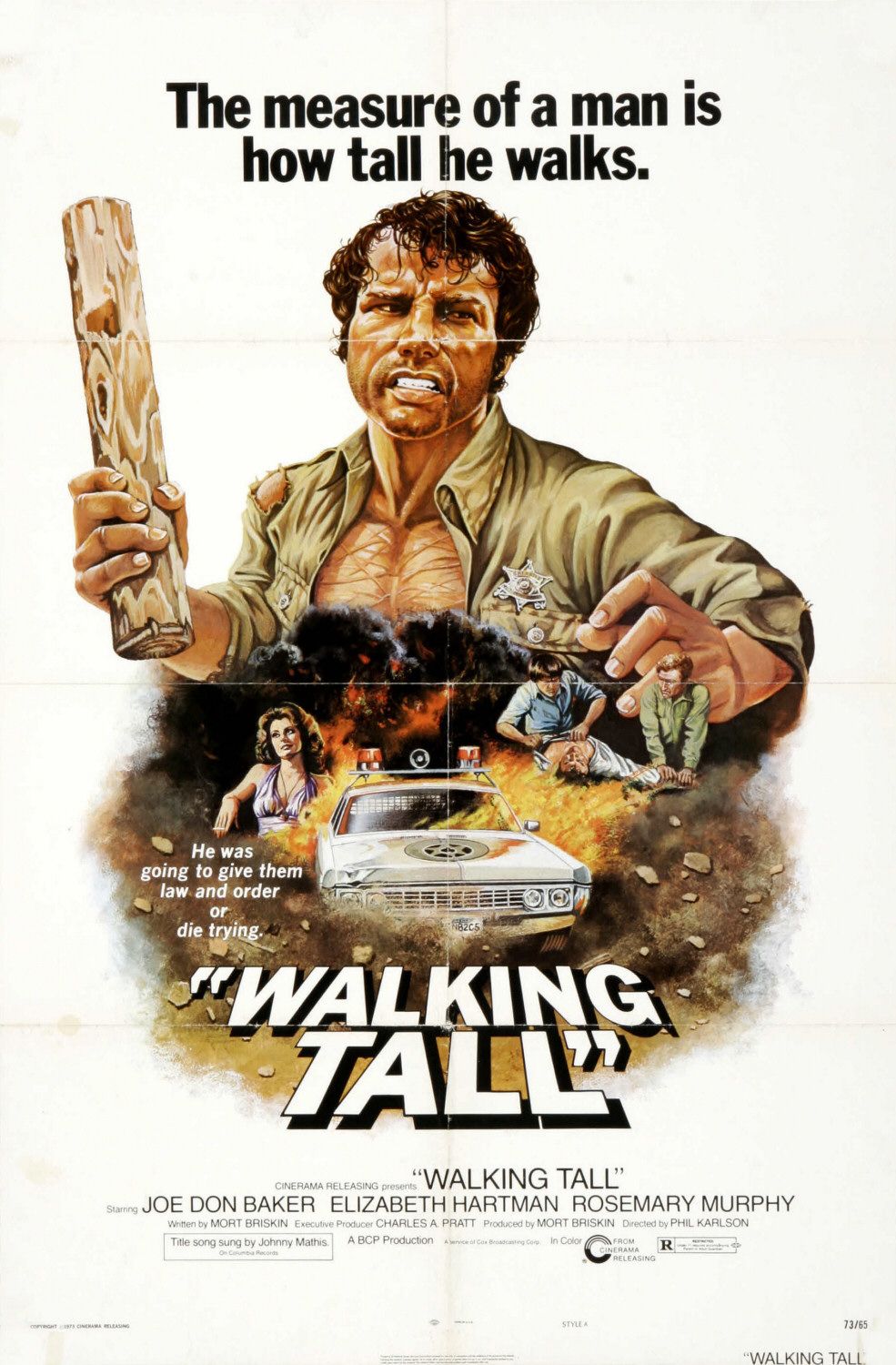
Nothing gives me quite as much joy as seeing Joe Don Baker show up in movies where I am not expecting to see him. I covered a few of his movies back in the IMDb Bottom 100, but I still hold that he is the best part about all of those awful movies. And, honestly, I kind of like “Mitchell.” I’m planning to cover Joe Don Baker in at least one upcoming review, but I think “Walking Tall” deserves a special little mention. Not only is this the Joe Don Baker-iest of all the Joe Don Baker movies, but like “Willard,” it has really fallen out of the public consciousness. I have likewise had no luck finding a physical copy of this movie, apart from the recent remake starring Dwayne Johnson. However, that flick definitely lacks the odd charm and grittiness of the original flick. I hope this gets a re-release of some sort in the near future, but for now, you can catch Joe Don Baker whacking people with a slab of wood to your heart’s content on YouTube.

—-

Hercules

hercules

There are an awful lot of Hercules movies out there. In fact, I’m going to be spotlighting one of the lesser ones later this week. However, I don’t think any of them are as entertainingly bizarre as this 1983 Italian film by Luigi Cozzi. And, of course, it stars the Incredible Hulk himself, Lou Ferrigno.  If you thought that either of the 2014 Hercules flicks were disappointing, then this one is sure to never let your hopes get up again. The bear fight / tossing sequence has become particularly infamous, but there are a whole lot more things to enjoy in this film than just that brief clip. This one is almost certainly worth your time, if you are up for wasting an hour and change on YouTube. It is an experience. And, if you are up for more, there’s even a sequel out there!

Kingsman: The Secret Service

Kingsman: The Secret Service

kingsman3

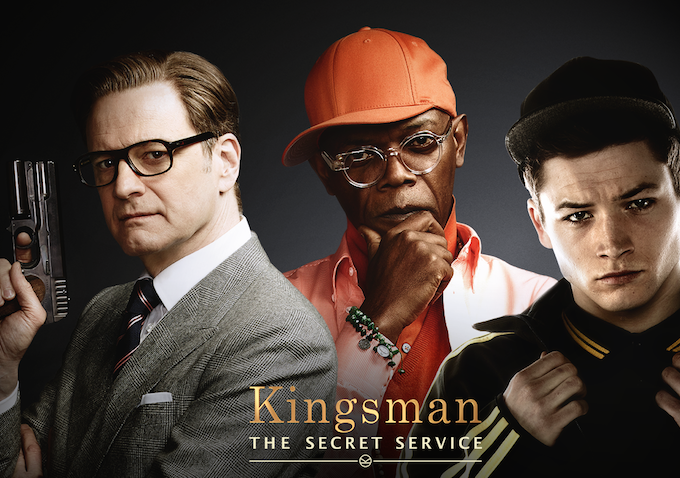
For those of you who are veterans of the Misan[trope]y Movie Blog, you’ll likely have noticed that I don’t do a whole lot of coverage of current cinematic fare. I prefer sniffing around in actor/director filmographies, sifting up obscure titles, and digging things out of bargain bins to cover. However, I’m going to make an exception on the case of “Kingsman: The Secret Service.”

As a caveat, this review absolutely necessitates SPOILERS. Now, I am the sort of person who will often forgo spoiler warnings, but I really want to emphasize that “The Kingsman” is worth going into unspoiled.

So.

****SPOILERS****

“The Kingsman” is very much a movie created in deep affection for the spy movie genre. In that way, it feels very similar to Edgar Wright’s Cornetto trilogy (“Shaun of the Dead,” “Hot Fuzz,” “The World’s End”). There is, to say the least, a lot to like about “The Kingmen” if you are a fan of the genre. Send ups come fast and furious, from everything from James Bond, to “Get Smart,” to the Bourne Trilogy. It plays with the  familiar tropes and stereotypes of the genre in just the way you would expect from a Wright/Pegg/Frost movies, and manages to play them almost entirely straight-faced while also turning them into something that feels new.

I absolutely recommend seeing this movie if you have any affection for spy or action flicks. I think the film is fantastic. That said, I have a handful of issues with it.

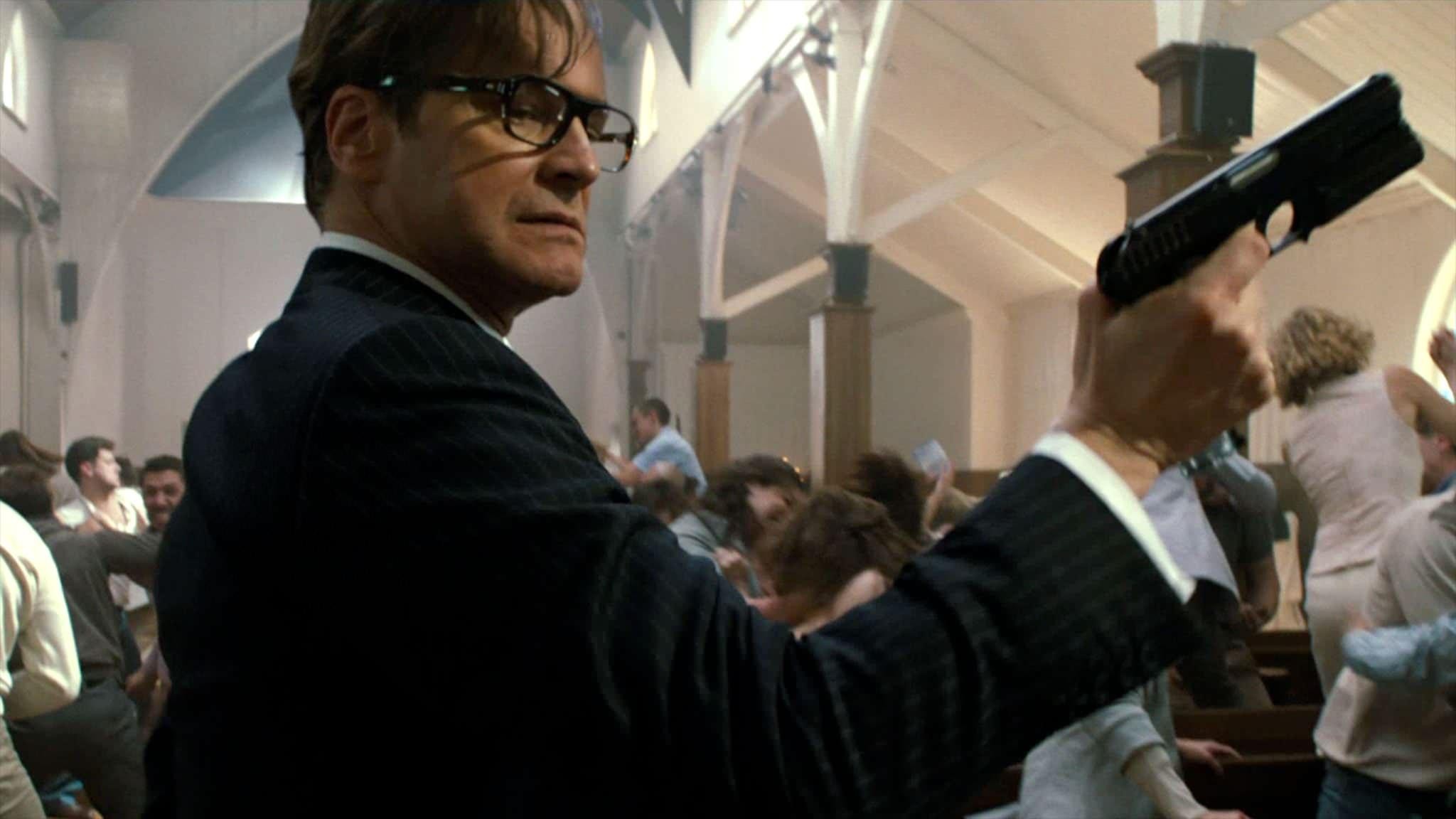
After the sure-to-be-infamous (and fantastically done) church scene, and the subsequent departure of Colin Firth, this film starts to fall apart. The last act doesn’t hold up with the rest of the film, which is kind of a shame. First off, it feels very rushed. It is true that they are put against a countdown for the last act, but it definitely feels hastily tossed together. I expected a little bit more internal infiltration of The Kingsmen to deal with, which could have gotten another solid fight scene out of the movie. It also would have put a more direct class conflict battle into the film, which is a theme that never quite comes to a head outside of the “poisoned drink” standoff with Caine (which is great, for sure).

Next thing: the climactic symphony of colorful head explosions. It is something to see, without a doubt. However, I was reminded of some of the Sony correspondences that came out regarding “The Interview.” In particular, discoloring the viscera from a head explosion was key in getting a desired MPAA rating out of that film, which leads me to wonder if the colorful head-explosion orgy in the climax of “The Kingsman” was actually creatively motivated, or was a compromise for the sake of a ratings board. In any case, you could argue that this was intentionally cartoonish, but I feel like this film would have served better with a more “Scanners”-esque style of head popping with practical effects. I’ll be interested to see what comes up in the Director’s commentary on this scene, anyway. Also, we get a close-up shot of an awful CGI head explosion of the Swedish Prime Minister during that sequence, and it looks absolutely godawful.

Last but not least, the “Princess” feels like a character and scenario that belongs in the bloopers. I understand it being a send-up to 007 and playing for laughs, but it does not fit with the movie in any way, and undercuts the potential romance with Lancelot that was alluded to throughout the film. It also cheapens a character who, in her only other major scene, seemed like an intriguing and ethical political leader. Her being reduced to a lazy sex joke at the 11th hour was disappointing for a number of reasons, not the least of which was the amount of screen-time set-up for a joke that wasn’t particularly funny.

Something that I still can’t decide is a positive or a negative is Samuel L. Jackson’s performance. I feel like he was going too far with the quirks, particularly with the speech impediment. With this kind of movie, Colin Firth’s character is correct: it is always made by the megalomaniacal, larger-than-life villain. Jackson just isn’t quite that. I did like his complicated motivations, which harkened to eugenicist’s logic and “The Watchmen” ethics.

kingsman2I’m going to be lenient on the lack of character depth across the board in this movie, because this is just a flashy, fun flick. It doesn’t make sense to complain about Mark Strong being a wooden board, or the main character being often insufferable, or Roxy getting almost nothing to do until she is shot into space (and out of the plot). I can forgive a lot of this stuff, because this is an action movie, and that naturally comes with the territory.

Now, again, I loved this movie. It was a boatload of fun. These are overall pretty minor issues, but I felt like they were worth throwing out there. So, here is a short list of things I thought were fantastic about the movie.

  • Holy shit, is it good to see Mark Hamill on the screen again
  • Car chase in reverse is fantastic
  • Michael Caine’s death scene. His last grunts are A+
  • Everything about the sequence introducing Lancelot and Gazelle (though the “split” still looks goofy 13 years on from “Equilibrium”)
  • The church sequence is one of the best action scenes in years
  • The design of Gazelle. Definitely feels like a character in the vein of Jaws and Oddjob
  • Galahad’s death
  • The final fight scene between Gazelle and Eggsy
  • Taking a balloon into space to blow up a satellite
  • Fitting room #3, and all of the gadgets therein
  • The idea of a philanthropist as the modern day, eccentric villain
  • Colin Firth’s performance 100% channeling early Michael Caine
  • Kingsman training was a fun way to kill time
  • Comedic moments, with rare exception, are right on target
  • All of the subtle (and not-so-subtle) references to “Get Smart,” James Bond, Jason Bourne, Jack Bauer, and others

See? I have lots of good things to say about this movie! If you disregarded the spoiler warning, I want to make it absolutely clear that this is a movie worth your time, and that my complaints shouldn’t dissuade you from attending a screening. If you even remotely think you would enjoy this movie, then go see it! Odds are good you will not be disappointed.

kingsman1
This scene will not disappoint you

Kudos to Matthew Vaughn, who is now 5/5 as a director if you ask me (“Layer Cake,” “Stardust,” “Kick-Ass,” “X-Men: Days of Future Past,” “Kingsman”). “Layer Cake,” his first, is probably my favorite British gangster movie of the modern era that isn’t directed by Guy Ritchie, and is a movie that I will absolutely recommend for anyone who enjoyed “Kingsman.”


“Sharknado”

Sharknado

sharknado6

Wednesday, Rifftrax’s live take on “Sharknado” from July will be available for download and streaming on their website. It was a damn good show (as all of their live ones typically are), and I highly recommend giving it a watch.

Of course, this Rifftrax release gives me a fantastic excuse to talk about the burgeoning franchise of centrifugal carcharadons, and whether these “Sharknado” flicks are worth the attention that they are garnering.

For those unaware, The Asylum, who creates the Sharknado movies, has been around since the late 90s, distributing and producing B-features. Over the past few years, they have made a name for themselves making two specific kinds of B-movies. First, they do a wide array of monster flicks: the “Mega Shark” movies, “2-Headed Shark Attack,” “Shark Week,” etc. Second, they have essentially created their own quasi-genre of the “mock-buster”: films designed to resemble current Hollywood releases as closely as possible, in order to parasitically feed on DVD sales. These have included such titles as “Snakes on a Train,” “Transmorphers,”  and “Atlantic Rim.” Unsurprisingly, this has gotten them into a little bit of legal hot water here and there, particularly with 2012’s “American Battleship,” whose name was eventually changed to “American Warships.” “Sharknado” obviously follows in the vein of the first type, clearly drawing inspiration from the outlandish “Mega Shark” series, which saw success similar to “Sharknado” a few years back, though not on the same scale.

Most of the movies put out by “The Asylum” are of pretty low quality by Hollywood standards, but are certainly leagues above Troma movies as far as production qualities go. They have particularly relied on cheap CGI in recent years to carry their films, which doesn’t enthrall today’s hardcore horror fans by any means. I mentioned in my “Lake Placid” review that I felt like the CGI used there really set the precedent for these Asylum monster movies, for better or worse. “Deep Blue Sea,” also from 1999, deserves some credit/fault as well for the first major modern CGI showcase of sharks on the big screen.

It is worth noting that while The Asylum’s movies are all of similarly low quality in regards to production values and CGI, they are not all equally entertaining. “Sharknado” is without a doubt one of the most genuinely entertaining products that they have put out, and I don’t think many would argue otherwise. Most of their movies are poorly paced, dull, and unmemorable, all of which are criticisms that I don’t think are valid to level at “Sharknado.” I will say that one of my favorite Asylum movies (maybe more so than “Sharknado”) was “Sherlock Holmes,” a mock-buster which was released just after the first Robert Downey Jr. / Guy Ritchie blockbuster. However, instead of just being satisfied with taking on a Holmes story, Asylum managed to wedge in an Iron Man suit, hologram dinosaurs, robots, and a hot air balloon battle. Really.

There is a really good video that circulated a bit last year that ruminated on the concept of good-bad (“nanar”) movies, and whether one could be made intentionally, a question that was clearly aimed at “Sharknado.”

The video did get me thinking, and I responded to it last month with a lengthy analysis of “The Producers” and “Springtime for Hitler,” in which I posit that there is a way to intentionally craft a bad movie. But, right now I want to dig into something that the video neglects to cover: the long tradition of intentionally made bad movies, which I believe deserves its own classification.

I mentioned Troma earlier in this post: in a lot of ways, they operate the same way that the Asylum does, but with a more tongue-in-cheek disposition and fondness for practical effects. They definitely have a cult following, and some of their films are regarded in the highest echelon of good-bad movies, but I don’t think anyone honestly believe that Troma goes into any of their movies aiming to create something conventionally “good.” “Surf Nazis Must Die,” “The Toxic Avenger,” “Tromeo & Juliet,” etc. are all clearly intentionally made bad movies, yet they have a loyal following of people who swear by them. They are still undoubtedly a divisive entity in the B-movie world though, so lets look at another example: Roger Corman.

troma2
Lloyd Kaufman, mastermind of Troma

Roger Corman is the undisputed King of the B-movies. Even beyond that, he is one of the most renowned fosterers of filmmaking talent in history, giving first breaks to people like Peter Bogdanavich, Francis Ford Coppola, Martin Scorcese, Jack Nicholson, and James Cameron, among many others. His career has spanned the better part of a century, and he, without any doubt, creates intentionally bad movies that are often widely adored. Recently, his producing credits have included the “Sharktopus” movies, the next of which is slated for 2016. On the other end of his long list of credits is 1955’s “The Beast With a Million Eyes”: he’s been doing this for a long, long time, and I think you would be hard-pressed to find someone who would claim that Corman movies don’t deserve recognition in a “good-bad” movie discussion.

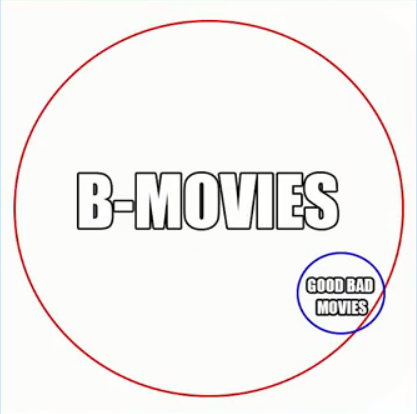
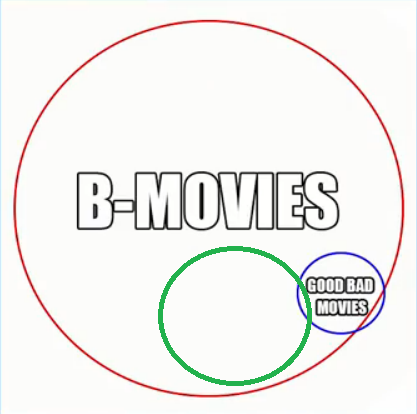
When it comes down to it, I think this video misses the category that “Sharknado” really belongs in. Here is a Venn diagram shown at 1:32:

sharknado1

I think that this diagram merits another circle. As he mentions, there are a few different definitions of what a “B-movie” is out there, and not all of them are made with the same sort of intentions of a Troma or Roger Corman film: to be outlandish for the sake of outlandishness. I’m going to include this category as a green circle on a modified version of the above graph, with the acknowledgement that not all of these intentionally made bad movies are “nanar”-style enjoyable, but some definitely are.

sharknado2So, I would claim that “Sharknado” gets the rare distinction or being in the intersection of the green and blue circles, alongside a handful of the more enjoyable Corman movies, treasured B-movie flicks like “Chopping Mall,” and a debatable selection of Troma’s filmography.

Getting back to “Sharknado,” I do not think is as bad as it is by design alone.  Particularly after seeing it on a big screen for the Rifftrax event, I believe that this is an incompetently made film beyond just the outlandish concept and writing. I think “Sharknado” is kind of like someone laughing at themselves to try to cover up a genuine weakness. As we all should know, laughing at it doesn’t make a flaw magically go away.

The CGI sharks and, more noticeably on a big screen, CGI weather effects look damn awful throughout this movie, and are probably the biggest weaknesses to the whole thing. Given how often the sharks and weather need to be shown on screen for this film to work, it is a pretty big issue that they look so poorly done. To be fair, they aren’t “Birdemic” birds, but they still look pretty awful.

sharknado5Something else that stands out more upon re-watching is the cinematography of “Sharknado,” in the sense that it is just god-awful. The camera movements are frankly nauseating, far more so than is ever justified. It isn’t like there are people out there who find bad cinematography hilarious, this is just honest incompetence in the film-making showing through.

So, I suppose my point with all of this is that “Sharknado” 1) follows in a long tradition of outlandish concept films, 2) is incompetent beyond just the concept, and 3) is still an entertaining film. I understand the detractors that aren’t fond of The Asylum’s brand of B-movies, but I do think that the success of “Sharknado” isn’t an accident: despite being an incompetently crafted movie, it is fun, and is almost certainly the result of a boiling down of The Asylum’s past successes. It isn’t the same kind of fun that “Troll 2” or “The Room” offers, but it is definitely similar to the old Corman-esque tradition.

sharknado7“Sharknado 3” is slated for debut in July 2015, and it looks like it will mark yet another change of venue for the franchise, this time to the nation’s capital. After the second film’s location of New York, NY, I hope there are some more twists in store for this third flick apart from new monuments to level. It is going to be hard to compare with a shark assault on the Big Apple.

And, again, Rifftrax’s take on Sharknado will be available on Wednesday, February 18th at Rifftrax.com. It was a fun show to watch, and if you enjoyed Sharknado, it is sure to enhance the experience for you.

sharknado3

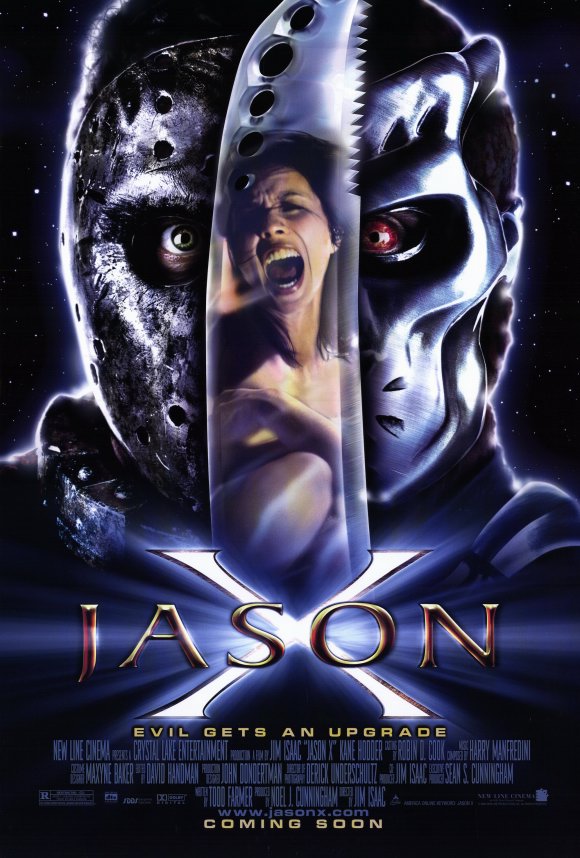
Jason X (Friday the 13th Part 10)

Jason X (Friday the 13th Part 10)

jasonx6

Happy Friday the 13th everyone! Given I have already covered parts VIII and V of the treasured horror film series that has so popularized the holiday, I figured that this would be an opportune time to take a look at one of the other much-maligned later entries into the franchise: specifically, the futuristic, sci-fi infused “Jason X.”

“Jason X” was written by Todd Farmer, and was his first major writing project. He has since gone on to write the “My Bloody Valentine” remake and the Nic Cage movie “Drive Angry,” which has a similar tongue-in-cheek tone to “Jason X.” The director of “Jason X,” James Isaac, doesn’t have many other directorial credits, but has worked in special effects on movies such as “Gremlins,” “Virtuosity,” and “eXistenZ.”

The cast of “Jason X” is headlined by Kane Hodder, who plays his famous role of Jason for the last time in the film. The rest of the cast is made up of various bit players and television actors, but lauded director David Cronenberg makes a brief cameo in the opening sequence of the film.

jasonx3“Jason X” is perhaps best known for being widely hated by critics and audiences alike. It currently hold a critic score of 20% and an audience score of 25% on Rotten Tomatoes, which is decidedly in the realm of the rotten. The film made just under 17 million at the box office on an estimated budget of 11 million, making it at least a profitable venture in spite of the poor reception.

“Jason X” was initially pitched because of developmental issues with getting the next planned movie in the series, “Freddy vs. Jason,” off of the ground. While that crossover was stuck in development hell, it was decided that another “Friday the 13th” movie should be made to keep the character of Jason in the public consciousness. And thus, the hockey-masked killer was sent into space.

In an attempt to keep the series fresh, “Jason X” is a film that tried a lot of new things. Unfortunately, most of them didn’t work out very well. The new, futuristic look for Jason wasn’t warmly received, and neither was the stilted attempt to make the movie a partial parody of the series. To make matters worse, “Jason X” was also one of the first major horror movies to rely heavily on CGI effects, which is something that still doesn’t sit well with horror purists. After all, this is a series that once claimed one of the kings of practical horror effects, Tom Savini. The writer and director tried to replicate some of the successful elements of “Alien” into the movie, but all of those attempts fall pretty flat and barely break out of being shallow, hollow pastiches. All of that said, at least the movie marked an attempt to try something new, and that is worth some credit. You can only terrorize campers at Crystal Lake so many times.

jasonx1While most of the attempts at humor in “Jason X” are really poorly executed, there is at least one segment that I thought was pretty great. At one point in the film, Jason is trapped in a holodeck. In an attempt to distract him, a simulation is produced of Camp Crystal Lake, complete with promiscuous, pot-smoking teenagers. Jason reacts by, of course, killing them, but does so in a way that nods to one of the most memorable deaths in the franchise up to that point:

That’s a pretty good way to nod at the history of the franchise, and poke at how over the top it had become. If only the whole film were so clever…

The acting and dialogue in “Jason X” is unarguably awful, but it is possible that this was done by design for the sake of self-parody. I think that might even be likely, but it unfortunately doesn’t make the movie any more entertaining, despite the best of intentions.

jasonx5It is interesting to note how much “Jason X” differs from the 2009 reboot of the franchise. Effectively, the reboot goes in the opposite direction stylistically, favoring a very dark and serious tone over any kind of camp. Interestingly, this approach also failed to resonate, earning scores just barely higher than “Jason X” from critics and audiences. This brings up an interesting question: what kind of “Friday the 13th” would satisfy audiences today? I suppose it would have to find a median between “Jason X” and “Friday the 13th” (2009), but I wonder if anyone will ever be able to find that balance. The entire reason that “Jason X” took so many chances is because the premise and the character of Jason have just been done to death, and there aren’t many places left to take it. I suppose we’ll see if Jason will ever be left dead indefinitely.

jasonx2“Jason X” surprisingly saw a number of sequels in the form of paperback books that were marketed for young adults. I never read any of them, but I have a hard time believing that Jason translates particularly well into the written word.

The good folks at MythBusters took on one of the more infamous scenes in the film, in which a character’s head is dunked into nitrogen and then smashed to pieces. In case you were curious, it was busted:

“Jason X” has the distinction of being the most lethal installment in the “Friday the 13th” franchise, clocking in with 28 deaths in total. Here they are, all handily compiled into a YouTube video:

So, how does “Jason X” hold up with the rest of the franchise? I know a lot of people who say it is the worst, but I don’t think that is quite fair. It definitely missed its mark with audiences, but the film itself isn’t poorly made. I think “Jason X” just took on too many (arguably poorly advised) risks that failed to pay off. The movie is at least watchable and has moments of entertainment when it comes down to it. “Jason X” certainly deserves to be considered as on the lowest tier of the franchise, along with V, VIII, and IX. However, I don’t think it can quite claim the bottom slot. I haven’t gone back to watch IX in a good while, but I’m leaning towards V being the worst in the franchise, and I think both of those films merit being ranked lower than “Jason X.”

jasonx4Personally, I would only recommend “Jason X” for “Friday the 13th” fans that want to burn through the entire franchise. I know that there are some people who appreciate “Jason X” as a good-bad flick, and I will admit that it has some good moments, but overall I don’t think that it is particularly noteworthy. It doesn’t quite deliver on its ambitions, and the result is an unfocused movie that isn’t quite sure what it is supposed to be.


Interview with “Bad Movie Nite!”

Bad Movie Nite! is a monthly showcase of classic bad movies shown in a handful of theaters around the country. I first came across them at Studio 35 Drafthouse and Cinema in Columbus, OH, and had to know more about the folks behind the madness. I recently caught up with Scott, the mysterious figure behind the programming, and ran a few questions by him.

“Bad Movie Nite!”: The title might be self explanatory, but what is it that you do?

Scott: The name “Bad Movie Nite!” to me means these are not good movies we’re showing, but only not good by conventional standards. I also mean bad as in Baaaaad.  Movies your Mom and Dad wouldn’t be happy you’re watching. Wait ’til they go to bed and keep the sound low. Bad in that way. As long as the movies entertain, they can never be all bad, right?

bmn3

What can you tell me about the mysterious (and, I assume, cloaked/hooded) figures behind “Bad Movie Nite!”? What inspired you to start doing these shows?

Scott: BMN! is the brainchild of me. I grew up watching Nite Owl Theater, USA Up All NIght, and TNT Night Flight. This show just basically recreates fond memories of my childhood. I started watching some of my favorites with a few friends on a weekly basis maybe 10 years ago as a way to ensure we get together consistently. Many of my friends had never heard of any of these. We loved cracking up watching them, but also getting caught up in the world of b-movies. We were getting exposed to any of the same actors, directors, stock footage, etc. 

Missing a BMN! became sacrilege. I’d play some trailers or a cheesy educational/social hygiene short beforehand. Shortly thereafter we started watching two movies and making a clip show of youtube clips in-between the movies like and intermission we call FILLER (to this day we call the clip show FILLER). The FILLER would get more and more elaborate. People took turns making it. Sometimes we would call in sick to work just to get it done. Over time, friends of friends would come over and either be baffled or engaged with BMN! I started getting the idea that what we were doing would be something others might be interested in seeing. 90% of the shows have been made by me, but early on and increasingly lately a few of my friends (including my wife) have been getting more and more involved. My wife designs the graphics for the show and the buttons we give away. 

bmn4

The BMN logo has a definite Svengali vibe to it. Is there a reason for that? Are you subconsciously controlling our minds with your show?

Scott: Thank you! That’s exactly the feeling I was going for. Become intoxicated by the insanity of BMN…

bmn1

A handful of theaters have shown your stuff around the country now. Where are they? Do you attend the shows? How did you wind up with multiple venues?

Scott: We have about 6 theaters all across the country. Just small theaters similar to S35 [Columbus, OH’s Studio 35] that we’ve known over the years for various things. We contacted a majority of them, but a few sought us out. Have never been to another location, but the Pittsburgh locale is on our to-visit list.

bmn12

Do you consider what you do akin to “horror hosts”? Or is this something that you think of as totally different?

Scott: I don’t really see myself / ourselves as a horror host. I see BMN! as a more of a secret broadcast that you tune into. I secret, sinister channel between the regular channels. A broadcast you’re not supposed to see. Goes back to the Svengali aspect of the logo you mentioned…

Part of the charm of your shows is definitely the editing. How much time do you spend on each new show?

Scott: Oh boy. Usually about 3 weeks from inception to finished product. It’s not really enough time. Every other month involves at least one sleepless night. The concrete showtime is the only thing that gets the show done each month. We’ve scraped entire shows the week of (The Hard Ticket show a few months back was made in less than 3 days). Long time… It’s never perfect, but I suppose that’s part of the charm too. The extremely gracious and loyal fans (BMNers) is ultimately what the drives the show to get finished. Disappointing them is not an option.bmn2

The first time I saw your show, I was reminded in some ways of “Everything is Terrible” (particularly your amazing pre-features). Are you fans of theirs?

Scott: I do like EIT. Also Found Footage Festival. There was a public access show in Albuquerque, NM a few years back called Forbidden Transmission. I loved that so much…

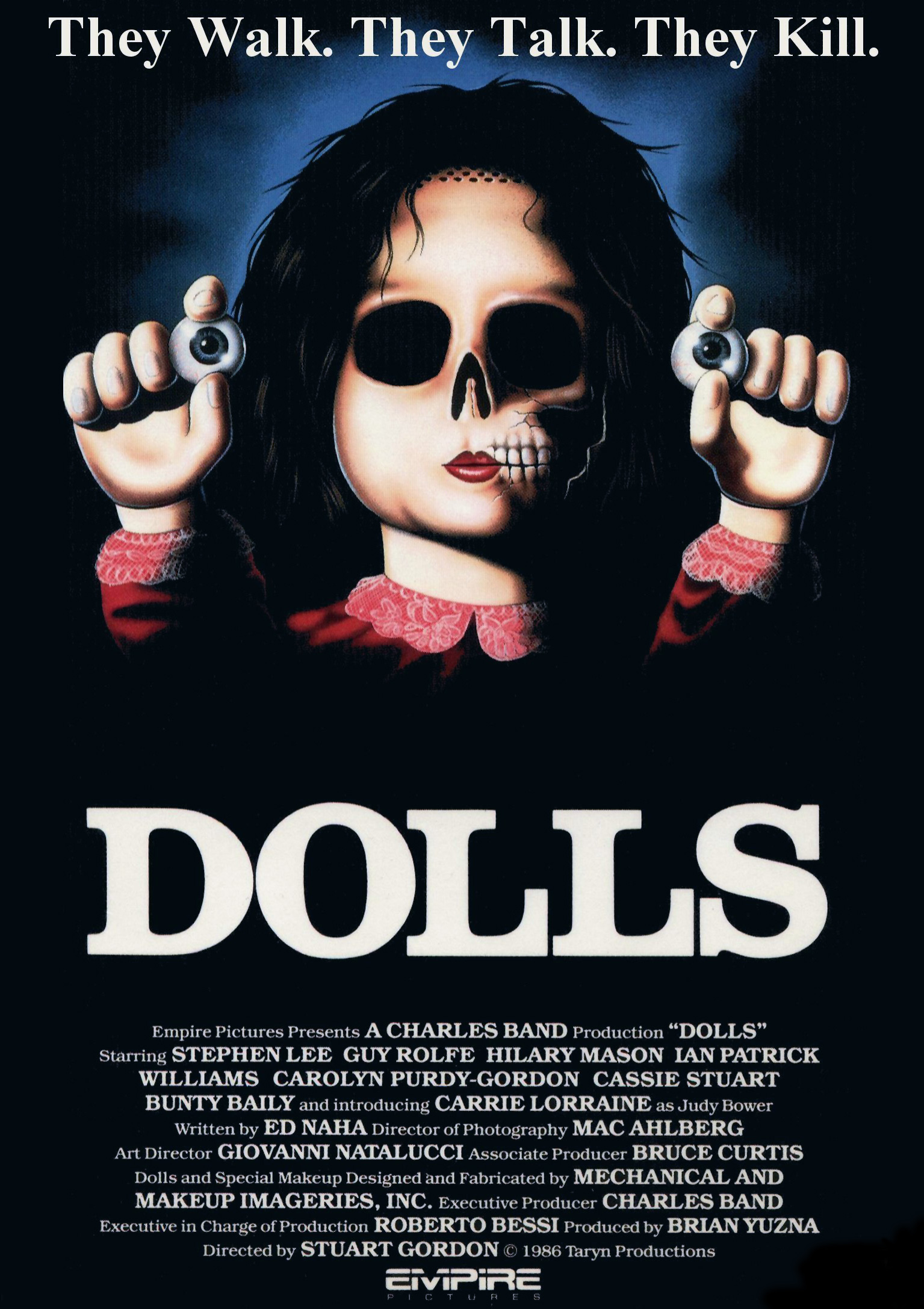
You’ve shown a lot of love for old VHS cover art in your pre-shows. What are a couple of your favorites?

Scott: Hmm… Let me peruse some. BRB… (Frantically looks at VHS tapes)

      
DOLLS
dolls1
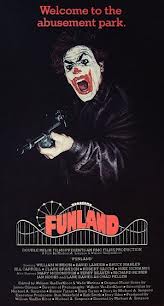
FUNLAND
bmn5
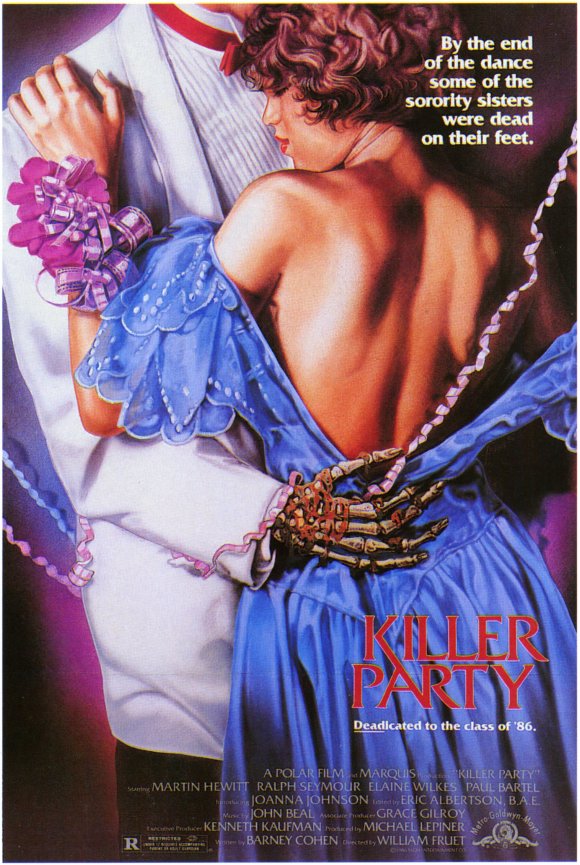
KILLER PARTY
bmn6
HELLO MARY LOU: PROM NIGHT 2
bmn7
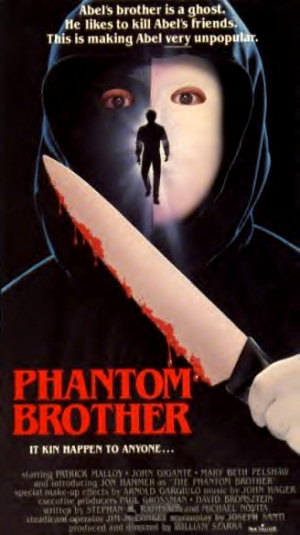
PHANTOM BROTHER
bmn8
SLASH DANCE
bmn9
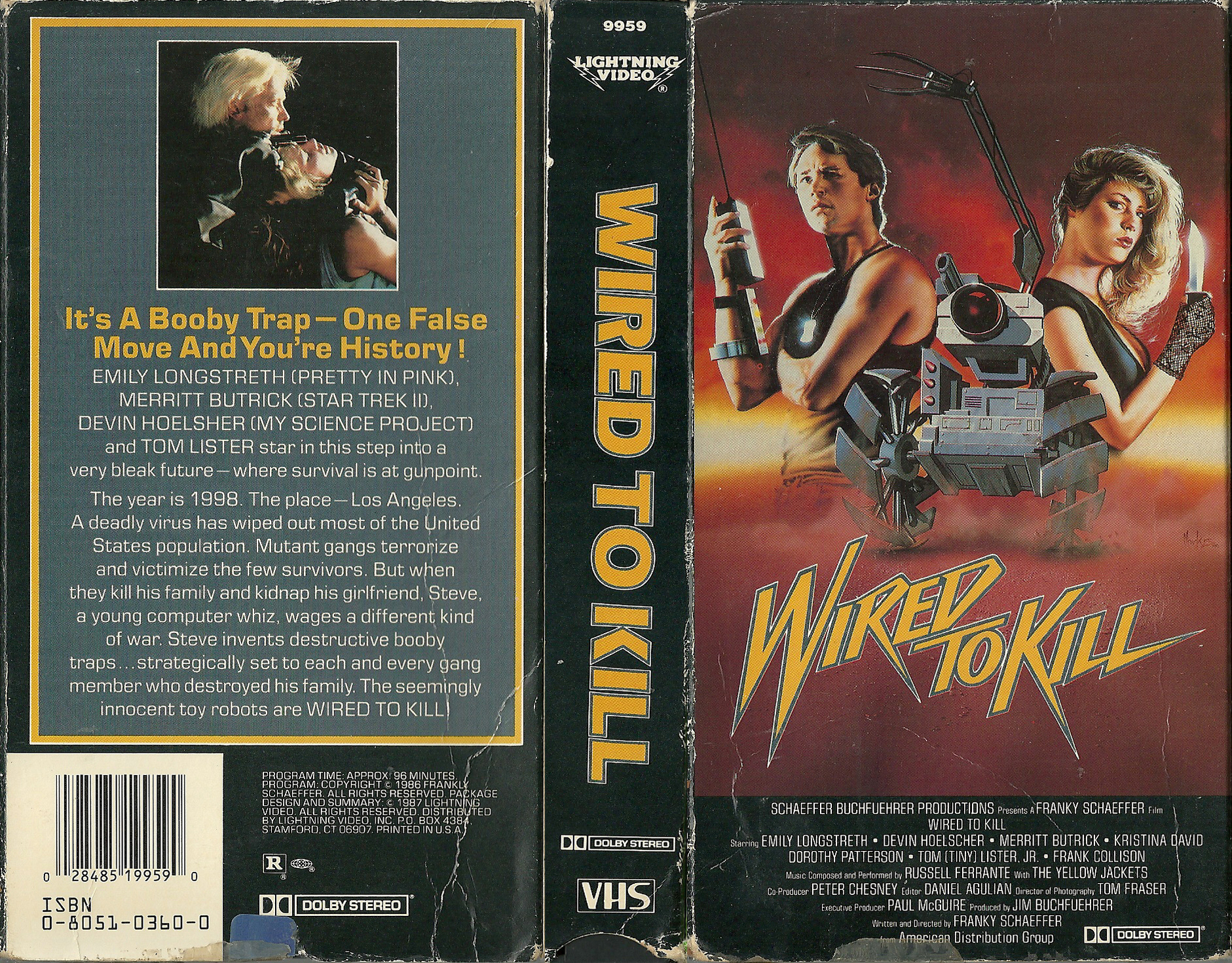
WIRED TO KILL
bmn11
MY MOM’S A WEREWOLF
bmn10

Too many to list really…

What was your introduction to the world of “bad movies”?

Scott: Again, watching late night shows like Nite Owl Theater and USA Up All Night. These cheesy movies, along with the hosts, and the late night commercials… I was seeing a whole different world. Taudry, violent, gratuitous… Loved it.fritz1

Are you MSTies (fans of Mystery Science Theater 3000)? If so, Mike or Joel?

Scott: I do enjoy MST3K. Don’t have a fave host.

joel

What is your favorite “good-bad” flick that people probably haven’t heard of?

Scott: #1 with a bullet for all-time: DR. ALIEN

Do you have a particular favorite “good-bad” movie director?

Scott: Jim Wynorski is probably too obvious. Adam Rifkin has made a couple legendarily bad b-movies that I love…

What do you think is the most important element to a “good-bad” movie?

Scott: FUN. A movie that delivers the goods on a variety of these  fronts (lasers, aliens, nudity, teens, drug use, cheesy dialogue, explosions). A movie that feels like it wasn’t just a cash grab. Something unique…

What has been your favorite movie covered so far in your show, in terms of entertainment value? Related: what do you think your best show has been so far? Is it the same?

Scott: Hard to say. I think the absolute show-stopper was DEADLY PREY. I really enjoyed showing STAR SLAMMER. The crowd liked that one too.

Are there any “bad movies” that you absolutely will not cover for BMN?

Scott: THE ROOM / BIRDEMIC / SHARKNADO The b-movies I love come from a by-gone era. Although there are redeeming qualities to all of these, there’s something missing, something hollow that I’m never totally on board with.

You’ve recently booked a second monthly show at Studio 35 in Columbus, OH, where you are doing shows dedicated to specific actors.The inaugural show, Nicolas Cage-a-thon, was a blast. Who can we expect to be featured in the future? (If you don’t do a Christopher Walk-a-thon, I will be disappointed)

Scott: HELL YES Walken will be a subject. Norris, Stallone, Busey are all in the pipeline. Arnold is the next one on February 27th.

What, in your opinion, are 5 movies that every bad movie lover absolutely must see?

Scott: Chopping Mall, Prom Night 2, Hard Ticket to Hawaii, Star Slammer, Frankenhooker

Do you have any upcoming shows to plug?

Scott: The Real Arnold Classic on 2/27 and our Gettin’ Unlucky in Space themed show on March 6th.

You can follow Bad Movie Nite! on Twitter and Facebook, and catch them every month at Columbus, OH’s Studio 35.

The Midnight Meat Train

The Midnight Meat Train

meattrain1

Today’s movie is a bit of deep cut (ha!): “The Midnight Meat Train,” starring Vinnie Jones and Bradley Cooper.

“The Midnight Meat Train,” which was written and produced by Clive Barker of the “Hellraiser” series, went through a brutal post-production and release process: between mandated cuts from the MPAA, budget limitations, and a major executive transition at Lion’s Gate (the departure of Peter Block), the movie hit significant delays, and only would up releasing in 100-odd theaters. Barker has described the experience of distributing the movie as “a journey into the real underbelly of Los Angeles.”

meattrain5
Apparently this is what distributing through Lion’s Gate is like

I first came across “The Midnight Meat Train” after it released On Demand through FEARnet (R.I.P.), and was of course hooked by the title. However, this is a film that goes far beyond just a catchy title: there is, perhaps surprisingly, a whole lot to like about this film.

“The Midnight Meat Train” was directed by Ryuhel Kitamura, a Japanese director who created “Godzilla: Final Wars” and the recent live-action adaptation of “Lupin III.” Kitamura was brought on after Patrick Tatopoulos, a creature creator and special effects guru who worked on “Underworld,” “I, Robot,” and “Trick ‘r Treat,” backed out of the production before filming began.

Kitamura described his vision for “The Midnight Meat Train” as being “the 80s way”: putting an emphasis on practical gore effects and tension, citing influences such as “The Hitcher,” “Hellraiser,” and “Friday the 13th.” In the commentary track on the film’s DVD, Kitamura specifically complains about the lazy and ineffective use of CGI gore in more recent horror movies, lamenting the days when practical effects were the only option. However, there is at least one distracting instance of CGI gore in “Midnight Meat Train,” which seems to be somewhat hypocritical.

meattrain8The cinematographer on “Midnight Meat Train,” Jonathan Sela, has recently received acclaim for his work on the cult action movie “John Wick.” His previous credits include “Max Payne,” “A Good Day to Die Hard.” and the remake of “The Omen”: none of which have quite the same flair or punch of “Midnight Meat Train” or “John Wick.”

The cast features most prominently character actor Vinnie Jones (“Snatch,” “Lock, Stock, and Two Smoking Barrels,” “X-Men United”) towards the beginning of his down-slide, and Academy Award nominee Bradley Cooper just as his stock was growing (he was coming off of the antagonist role in “Wedding Crashers”). Cooper’s character is not unlike Jake Gyllenhaal’s in “Nightcrawler”: he is a scummy photographer who observes the dark side of the city, without ever positively interacting with it. Unlike Gyllenhaal’s character, though, Cooper’s has a slowly growing conscience that inflates over the course of the story. It makes the character a little more likable as he starts to make more moral choices as the movie goes on.

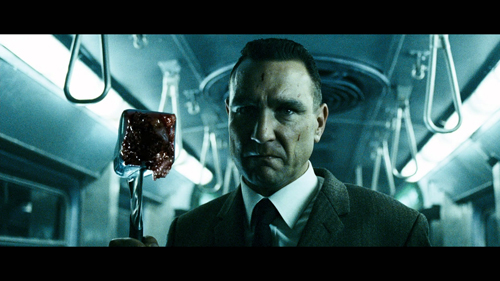
Vinnie Jones plays a stoic subway murderer and butcher named Mahogany, whose purpose and motivations are kept veiled throughout the film. This sort of “heavy” role is what has essentially made Vinnie Jones’s career, going all the way back to his Guy Ritchie crime movies. His dialogue is minimal, apparently based on input from the actor himself. It is hard to argue that the muteness doesn’t make his character more menacing.

The accessory cast includes horror stalwart Ted Raimi (brother of writer/director Sam Raimi), Leslie Bibb (“Iron Man”), Brooke Shields (“Endless Love”), Peter Jacobsen (“House, M.D.”), UFC fighter “Rampage” Jackson, and Tony Curran (“League of Extraordinary Gentlemen”). “Rampage” Jackson and Bradley Cooper would reunite only a couple of years later for the film remake of “The A-Team,” which might be worth a second look here on the blog.

meattrain3Clive Barker wrote the short story source material of “The Midnight Meat Train” based on an experience he had after first moving to New York City, in which he got lost while riding on a subway. The film manages to use the subway setting astoundingly to create tension and fear: everything from the screeching electrical sounds, to the sporadically flashing fluorescent lights, to the claustrophobic car space helps build the atmosphere for the film.

meattrain4Another one of my favorite aspects of “The Midnight Meat Train” is one that I think has gone particularly under-appreciated: the score. Music is absolutely crucial for building atmosphere effectively in horror movies, and the work done on “The Midnight Meat Train” is absolutely knocked out of the park. Robb Williamson and Johannes Kobilke deserve a lot of credit for this score. Here is one of my favorite tracks, “Leon Jumps on A Train”:

It is worth noting that the production design on “The Midnight Meat Train” is really fantastic, particularly given the budget restraints eventually leveled on the film. The set at the end of the film, which appears to be a cavern, is actually ingeniously made out of paper to keep costs down. Also of note, I personally think that Mahogany’s chrome hammer and meat hook are just damn slick, as is his simplistic, professional costuming. Everything down to his haircut is made to look rigid, pristine, and cold. You can just imagine how chilling that chrome hammer has to feel.

meattrain7Something else I appreciate about “The Midnight Meat Train” is that the audience gets to see the reactions of the locals to the series of murders. You see security tighten up on the subway as the film goes on, and there is even a great sequence where a vigilante Guardian Angel takes on Mahogany on the subway, and just about defeats him. You don’t usually get that kind of public anxiety coming through in horror movies, at least not done well. I was reminded a little bit of “Maniac Cop,” which also manages to pull off this public anxiety effect really well. It makes sense, though: a lot of people are afraid of using subways, which is something brought up in the film. Nothing makes a horror movie like laying the plot on top of a setting that is already terrifying to many people.

The film’s story offers a handful of pretty good twists that I don’t particularly want to spoil here. I will say that there is a sudden and unexpected turn that reminded me a lot of the cult classic “CHUD.” As strange as it is, the turn turn is pulled off pretty well through the use of creative editing, though there was also a financial motivation for not revealing the monsters too much. I actually think, much like with “Jaws,” that keeping the creatures scarce maintains their mysteriousness, and doesn’t ultimately hurt the movie. The writers and director still managed to come up with an impressive ending without their inclusion, which is worth checking out.

meattrain6As far as weaknesses go, the plot of “The Midnight Meat Train” goes in circles a little bit, and is definitely a slow burn as far as pacing goes. That doesn’t work for a lot of people, but overall I think that this is a really surprisingly good horror flick, and one that puts most recent entries into the genre to shame. I do wish that the handful of CGI gore sequences were replaced with practical effects, but there are also moments where the CG is pulled off excellently: notably, all of the external sequences of the subway cars in motion.

The critical reception for “The Midnight Meat Train” was pretty good for a horror movie, racking up  a 71% critic score on Rotten Tomatoes. The audience reception wasn’t quite as favorable: it currently has a 50% audience score on Rotten Tomatoes and a 6.3 rating on IMDb. That doesn’t particularly surprise me, though: I feel like this movie is pretty well catered to horror die hards, and doesn’t have much in the way of mass appeal. That isn’t necessarily a bad thing, though.

Overall, this is an outstanding horror movie with only a handful of minor issues. The CG blood is disappointing and the pacing can be off-putting for some, but the atmosphere, style, score, and acting are all so fantastic that I think they make up for it. Even the story is far better than you would expect for a movie like this, even given how incredibly strange it is towards the end.

meattrain2My recommendation, for horror fans particularly, is to seek this one out. “Midnight Meat Train” got a raw deal on release, which meant most people didn’t get an opportunity to see it. The film relies on its cult status, word of mouth, and the secondary market for building a fan base, and it is totally worth the pick up in my opinion. It isn’t a fun movie though, and probably isn’t great for a group watch (as the title might lead you to believe). It isn’t a good-bad movie, but rather it is just a good horror movie. You should absolutely  just know what you are getting into with this one ahead of time: if you do, I’m confident that most will enjoy it.