Today, I’m going to look at the 1997 horror film, Wishmaster.
The plot of Wishmaster is summarized on IMDb as follows:
A demonic djinn attempts to grant its owner three wishes, which will allow him to summon his brethren to Earth.
The film’s screenplay was written by Peter Atkins, who was also responsible for the horror films Hellraiser II and Hellraiser III.
Wishmaster was directed by Robert Kurtzman, an accomplished special effects artist who has won awards for his work on movies like Late Phases and Vampires. His directorial credits, which are far fewer than his effects credits, include The Demolitionist and The Rage.
The cast of Wishmaster includes Tammy Lauren (The Young & The Restless), Andrew Divoff (Air Force One), Robert Englund (A Nightmare On Elm Street), Chris Lemmon (Thunder In Paradise), Wendy Benson-Landes (Burlesque), Jenny O’Hara (Devil, Mystic River), Kane Hodder (Friday the 13th Part VII, Friday the 13th Part VIII, Jason X), George “Buck” Flower (The Fog, They Live, Starman), and Tony Todd (Candyman, The Crow).
The editor for the film was David Handman, whose other credits include Jason X, DeepStar Six, and Jason Goes To Hell. The cinematographer for Wishmaster was another horror veteran, Jacques Haitkin, who shot such films as Shocker, Maniac Cop 3, A Nightmare On Elm Street, Evolver, and A Nightmare On Elm Street 2.
The music for Wishmaster was provided by yet another horror stalwart – Harry Manfredini. His credits famously include Friday the 13th, House, DeepStar Six, House II, Jason X, A Talking Cat!?!, and Swamp Thing.
The effects for the film were provided by one of greatest horror effects teams of all time: Greg Nicotero, Howard Berger, and director Robert Kurtzman. The trio have contributed to such films as In The Mouth of Madness, From Dusk Til Dawn, Scream, Army of Darkness, Night of the Creeps, Predator, Dr. Giggles, From Beyond, Day of the Dead, and The Mist, as well as television shows like The Walking Dead and Fear The Walking Dead.
The executive producer for Wishmaster was late horror icon Wes Craven, who was responsible for horror classics like Last House On The Left, Scream, and A Nightmare On Elm Street.
Wishmaster was made on a $5 million budget, on which it brought in $15.7 million in its domestic theatrical run. Critically, the film currently holds a 5.8/10 user rating on IMDb, and Rotten Tomatoes scores of 24% from critics and 38% from audiences. Despite not making a huge financial or critical splash, Wishmaster still wound up being a franchise, with a total of three sequels made in subsequent years.
Wishmaster has one of the most essential elements for a b-level horror franchise: a fun, hammy villain. Even better, it also benefits from an interesting gimmick – giving a classic Faustian, deal-with-the-devil concept the horror flick treatment. For both of these reasons, I’ve seen Wishmaster often compared with Leprechaun. While I think Leprechaun does a better job of going into the realm of the absurd with its many sequels, I think the Wishmaster character strikes a more effective balance of menace and humor. Both, however, are mostly delightful b-level horror romps.
Where Wishmaster is particularly weak is in its cast beyond the titular monster. Despite the presence of a handful of horror icons, they are relegated almost entirely to glorified cameos, leaving the brunt of the acting load to a less-than-stellar central cast. Leading the pack is Tammy Lauren, who delivers all of her lines with the cadence and tone of a daytime soap opera player, which isn’t what you want from a horror lead.
Speaking of the cast, it seems bizarre to me that this production would pull together so many horror standbys, and under utilize almost all of them. If this had been pulled off like the “dream team” that it could have been, I can’t help but think that this could have the makings for a horror classic.
One aspect that Wishmaster did not skimp out on were the effects, which makes sense given Kurtzman’s background. The practical effects in particular are pretty stellar when they are at their weirdest, which is a delightful amount of the time. That said, there are some moments of digital effects that have aged very poorly.
While Wishmaster on the whole isn’t much, it is decent enough as a formulaic popcorn horror film. If it had been made a few years earlier, though, I think it would have suited audiences better. Particularly in the wake of Scream, audiences were a bit too knowledgeable and burned out on the old conventions of the genre, which were worn thin by over a decade of repetitive horror franchise flicks. All of that said, I think this is a fun flick to go back to now. Horror fans at least should give it a spin if they haven’t already.
Howdy, loyal followers! Today’s entry in Ivy On Celluloid is going to be a little different. Recently, I had the pleasure of speaking at the 2018 Con of Thrones, the largest fan-run Game of Thrones convention. My topic was highly related to the work I’ve been doing here: analyzing fictional portrayals of higher education. Below is a loose adaptation of the presentation I gave there, which took a look at the Order of the Maesters from Game of Thrones and A Song Of Ice and Fire.
Maesters and Mortarboards: Connections between Education in Westeros and Real World History
Let’s start with some introductions. I’m Gordon Maples- I have a BA in History, an in-progress MEd in Higher Education, and a pretty low-traffic film blog which you are currently reading. In fact, if you are reading this, there’s probably a 50% chance that you are a spam bot. If so, I appreciate your long-time support.
One of the things I have been writing about a lot recently is the intersection of my interests – film, history, and higher education. My Ivy On Celluloid series is dedicated to analyzing the depictions of higher education on film, and trying to dig up historical bases for those portrayals.
This brings me to Game of Thrones: while I was doing research for Ivy On Celluloid, my SO was watching through Game of Thrones for the first time. As I was watching along with her, I couldn’t help but think about the mysterious Order of the Maesters. While it isn’t a perfect 1-1 comparison, the Maesters are the equivalent to a medieval education institution in Westeros. But, how far does it diverge from its real world counterparts, both past and present?
Before I go any further, it is worth throwing a content notice on this: things are doing to get a bit dark towards the end of this post, as I get into the history of unethical experimentation and violence in research. Also, there is a non-zero chance that this is going to get super boring. Right about the time I get to the organization charts, you’ll be wishing you had your time back.
First off, let’s get some Maesters 101 out of the way – here’s a Game of Thrones Season 1 DVD extra that can get you up to speed:
Now that you have the basics, let’s look at the origins of this order, according to the Wiki of Ice and Fire:
Most accounts credit [the] foundation [of The Citadel] to Prince Peremore the Twisted…Peremore invited numerous scholars, including wise men, teachers, priests, healers, singers, wizards, alchemists, and sorcerors, to Oldtown. After Peremore’s death, his brother, King Urrigon, granted land alongside the Honeywine to “Peremore’s pets”, who developed the tract into the maesters’ Citadel.
So, basically, a long time ago, a Prince of the Hightowers got a bunch of dorks together to hang out and think about stuff in Oldtown. Then, after he died, the King granted the order some land, on which they built the Citadel. I will point out the variety of the dorks, though: the fact that wizards, alchemists, sorcerers, and priests were involved is really fascinating, as I’ll get into later.
Before I get back to the the origins of the order, let’s take a second to talk about the nomenclature of the institutional hierarchy. Doesn’t that sound neat? Here we go!
When a student comes to the Citadel, they immediately become a Novice, until such time as they prove their proficiency in a field to the satisfaction of the preeminent expert in that field (the Archmaester). At that time, they receive a chain link of a metal corresponding to their field of study (I’ll get more into curriculum later).
Once they have a chain link, the student becomes an Acolyte. Until they collect enough chain links to make a full chain (a distinction that isn’t exactly made clear), they remain an Acolyte indefinitely. Apparently, a good number of students at the Citadel never move beyond this level, either for lack of ability or lack of interest. Oberyn Martell, for example, is technically an Acolyte, because he earned a link for mastering poisons. However, he never intended to complete his chain to become a Maester.
Should an Acolyte earn (x) number of links, they are made to go through a ritual, in which they are tasked with lighting a glass candle over the course of a night in an empty room. This task, however, is not meant to be completed (more on this later). Then, they take a vow of celibacy and service to the realm, and formally become a Maester. They are assigned to a paying House, and serve the lord of the keep to which they are assigned. At the time of the events of Game of Thrones, there are 300 Maesters.
If a Maester proves to be the preeminent expert in a field of study, they can be appointed to the title of Archmaester. Archmaesters are located at the Citadel, and teach classes in their specialty to Acolytes and Novices, and also serve in the Conclave – the governing body of the Citadel and the Order of the Maesters, which selects the Grand Maester and determines the changes of the seasons. At the time of the events of Game of Thrones, there are 21 Archmaesters.
Archmaesters, are, for the record, my favorite group of people in Game of Thrones. They basically try to do as little bureaucratic work as possible, even with their very limited responsibilities as a Conclave. The perfect example of this is the selection of the Seneschal – the executive officer of the Conclave. In an annual ceremony, the Archmaesters randomly draw stones in a sort of lottery election. The winner/loser in this lottery has to be the Seneschal, and actually do bureaucratic work for a year. They so dislike responsibility and power, that they basically draw straws for it. The loser becomes the most powerful Maester for a year. This is counter to every other system of power and thought in Westeros.
The last Maester-related title is the Grand Maester. When I first read ASOIAF, I assumed the Grand Maester was pretty powerful guy. Like, he must be the top Maester, right? He works directly for the King! As it so happens, the Grand Maester has no power over the other Maesters. He is essentially a permanent emissary assigned by the Conclave to have the King’s ear. Even better, the Conclave has a rich history of picking the oldest and least effectual dude available to assign to King’s Landing. Prior to the appointment of Pycelle to Grand Maester, they had appointed three consecutive octogenarians, all of whom died in the service of the same King. King Aegon V had to specifically request that they stop shipping him old/dying guys to sit on his council, after which they sent him the forty-something Pycelle, who has since become yet another octogenarian.
Now that we’ve dug into the bureaucracy and titles of the Maesters, let’s look at real life for a second. If you thought Westeros was complicated, they ain’t got nothing on us.
To the best I can gather, a Novice is a pretty close parallel to an undergraduate student, who is yet to earn a degree. An Acolyte covers everything from a graduate student (who has earned an undergrad degree) to potentially an Assistant Professor. This is because the tenure process, which stands between the titles of Assistant and Associate, is a pretty close parallel to the oath taken by the Maester’s, and their permanent assignment to a keep. It isn’t a perfect 1-1, but it is pretty close. An Archmaester is probably close to a Full Professor, Academic Dean, or Department Chair, as these titles are all reserved for experts in their fields, and typically have a degree of bureaucratic responsibility. The Seneschal, for lack of a better equivalent, is pretty close to a Vice President/Provost or a President of a University.
To visualize all of this, let’s compare organization charts! Woo!
Here is the organization chart of Southern Methodist University, a roughly 12,000 student institution in Dallas, TX. It is on the small side of a large University – Ohio State University, for example, is five times the size of SMU.
Gee, that’s probably pretty hard to read, huh? That’s because THERE’S A WHOLE BUNCH OF NAMES ON THERE. Modern Universities are massive institutions, with tons of people making up the cogs and gears. Here’s something even better: the chart above only covers the Academic Affairs branch of SMU’s chart: which is only a fraction of the total organization. Even better, this chart only goes as far down as the Dean level – Department Chairs are totally omitted.
For the sake of comparison, here is my improvised organization chart for the Maesters:
First off, you can see the 300 total Maesters at the bottom. Above that are the 21 Archmaesters making up the Conclave. One of the Archmaesters, denoted by a frowny face, is the unlucky one having to do actual work as the Seneschal. Off to the side is the Grand Maester, denoted by a red box emblazoned with the word “OLD.” Unlike the SMU chart, this is the entire organization. There are, essentially, only two tiers of power (unless you count the Seneschal on his own). It is a pretty simple organization structure, that is very easy to explain. It even fits in a single image, without leaving anyone out! It turns out that the Maesters’ disdain of bureaucracy has created a pretty lean system.
On to the next topic, let’s talk about Church! Remember when I mentioned the collection of dorks who made up the original Maesters? One of those dork categories was “priests.” While the Order of the Maesters is not explicitly a religious order, this is a bit of a nod to one of their closest real life counterparts – the monastic schools of the medieval age.
Here is a quick excerpt I dug up, which talks about the role of the monastic schools in education in the medieval age:
Through the mid-eleventh century, monastic schools [were] the most stable force in education…much of the schools’ curriculum focused on teaching them to read and write Latin, and preparing them to join the ranks of the church…These monasteries [became] great repositories of knowledge, in that many of the books of the day were copied by hand in monastic scriptoria and stored in their libraries.
-“Medieval Education and the Role of the Church.” Arts and Humanities Through the Eras, edited by Edward I. Bleiberg, et al., vol. 3: Medieval Europe 814-1450, Gale, 2005, pp. 342-345. Gale Virtual Reference Library,
If some of that reminds you of anything, it should. The Citadel library is definitely inspired by the libraries of monastic schools, and the curriculum of the Maesters training is almost all focused on training more Maesters.
You don’t have to look far to see more quasi-religious elements of the Maesters. I mean, why else would they require celibacy? I see this as a pretty clear nod to their real life origins. Even their Conclave is based on Catholic bureaucracy. Likewise, their aesthetics are pretty clearly monk-ish in nature.
In the world of ice and fire, GRRM essentially decided to split the real life institution of the Church into two independent parts: the Faith of the Seven, and the Order of the Maesters. And, honestly, it kind of makes sense. It was around this age in reality that the experts and scholars from the monastic schools split off into their own institutions – early Universities, like the University of Paris. As you might recall, the Maesters were granted land and recognition by the crown – in reality, the orders had to organize themselves into guilds, and then form universities on their own.
All right, let’s get on to some symbolism! When you think symbols of academia, you probably picture a few different things. Maybe a diploma? One of those funny hats (a mortarboard)? A tassel? If you are Finnish, you might picture a sword and top hat! There are definitely a few different ones out there.
Regardless of what you associate with academia in the real world, the Maesters absolutely have reality beat. On top of their iconic chains – the physical embodiment of their mastered arts – Archmaesters also get a ring, rod, and facemask forged of the metal of their specialty. Below, you can see a depiction of Archmaester Ebrose in full regalia. Because his subject is medicine, he is adorned with silver. Awesome.
Speaking of chains and metals, let’s get into the curriculum of the Maesters. As I mentioned, the chain is the physical embodiment of a Maester’s completed curriculum – the metals of the links indicate what they have learned. In the real world, the closest thing to a chain is a transcript, which isn’t nearly as dramatic or visually compelling. It makes it much harder for everyone to know how many degrees / much debt you have.
The curriculum of the Maesters is intriguing, particularly in how it contrasts to the history of education in reality. The subjects that we know are taught in the Citadel include medicine, astronomy (nautical navigation), warcraft, poisons, higher mysteries, math and economics, ravenry, history, herblore, and castle-building, each of which have their own metals assigned to them. However, this is not exhaustive. Again, we know there are 21 Archmaesters, each with a specialty. However, there may be more than 1 Archmaester per subject – that detail has never been clarified.
This contrasts pretty starkly with reality. For a very long time, education curriculum was limited to the trivium – grammar, logic, and rhetoric – and the quadrivium – arithmetic, geometry, astronomy, and music. For the most part, these subjects were meant to provide a general, rounded education. However, in time, many became frustrated that colleges weren’t preparing people practical, career-based knowledge. In the United States, populist pressure for technical and agricultural education eventually led to the formation of A&M colleges in the late 1800s, which focused on practical education that readied students for specific careers. The purpose of education continues to be debated today, with people deriding and/or defending the merits and demerits of liberal arts and/or technical college ad nauseum. However, the Maesters managed to just skip over the conflict entirely. It didn’t take a cultural revolution to get them to teach practical knowledge alongside a traditional curriculum – they just sort of did it organically.
Now, I want to touch on one of my favorite Maester-related topics – scholasticism and the supernatural. To set this up, I want to show a clip of a conversation between Maester Luwin and Bran Stark. Note the way Luwin talks about the supernatural and magic.
This is representative of how the Maesters regard magic as a whole – they not only don’t give it credence, but they actively discourage research into it, and treat it explicitly like fantasy. While there is an Archmaester of the higher mysteries, very few students study it, and those who do are siphoned of their enthusiasm for it. Luwin is a good example of this – as a young man, he dreamed of magic, but his studies dispelled him of his fantastic notions.
But, you might be curious – why do the Maesters dismiss magic? This is because they have a basis in the logic of scholasticism – the method of thought that gave rise to the scientific method, and modern scientific thought and reasoning.
Scholasticism was…practiced in medieval schools. [It uses] techniques of Aristotelian logical inquiry to link Christian revelation, church doctrine, and the mysteries of the natural universe in a deeper and more reasonable understanding …The scholastics drew upon…logical analysis…establishing a common method of inquiry…and attempting to reason their way to a logical conclusion.
“Medieval Education and the Role of the Church.” Arts and Humanities Through the Eras, edited by Edward I. Bleiberg, et al., vol. 3: Medieval Europe 814-1450, Gale, 2005, pp. 342-345. Gale Virtual Reference Library,
We are led to believe that magic and the supernatural, as it exists in ASOIAF, does not have a basis in logic, and is therefore beyond the scope of scholasticism. This is true for reality as well – the academy is very focused on the observable, material, and real. If you want to put that to the test, ask a field biologist at random about Sasquatch, or any given Astrophysicist about alien abduction stories. The difference between reality and ASOIAF is that, in Martin’s world, magic was only dormant, not non-existent. Beyond this analysis, this just good world-building – the non-magical Westeros we are introduced to is more believable and tangible, and characters start exactly as skeptical as we are of the old stories and legends that seem beyond belief.
However, this disdain for the supernatural leads us to one of my favorite tinfoil-hat theories from ASOIAF. I’m going to let AltShiftX describe Marwyn the Mage and the basis for what is known as The Grand Maester Conspiracy.
Remember how I said that I love the Archmaesters? Well, Marwyn is my favorite of the lot. My take on the Grand Maester Conspiracy that he proposes is that there is nothing to substantiate it. Personally, I think he was just messing with Sam, the newest Novice at the Citadel, as he was on the way out of town. Keep in mind, the conversation happens as soon as the two are introduced. Basically…
Marwyn: Hello!
Sam: Hi! I’m Sam!
Marwyn: We killed the dragons, Sam. The Maesters intend to destroy magic, Sam. Sam, they are after me, and I am under suspicion. Sam, I must go now. Goodbye, Sam!
Sam: …
I just can’t wrap my wind around how else to take this interaction. This is a strange old man trying to rattle the rookie, and I absolutely love him for it.
In any case, suspicion of the Maesters is not unique to Marwyn’s crackpottery. The common folk, for good reason, aren’t particularly fond of the Maesters. They have a bit of a reputation, as the servants of high houses, of not much caring for commoners, particularly when it comes to medical care. Even many highborn folks are suspicious of them, due to their perceived concealment of their true identities.
I dare not even trust my maester…[they] are supposed to put aside old loyalties when they don their chains, but I cannot forget that [Maester} Theomore was born a Lannister of Lannisport!”
Wyman Manderly, Davos IV, ADWD
Likewise, the Maesters having total control of communications has led many to suspect that they manipulate information to their own ends, as best serves their agenda.
The Maesters read and write our letters, even for such lords as cannot read themselves, and who can say for a certainty that they are not twisting the words for their own ends?
Barbrey Dustin, The Prince of Winterfell, ADWD
This is not unlike a lot of populist and right-wing criticisms of higher education today. It isn’t uncommon to hear allegations that higher ed institutions brainwash students, or have a liberal agenda, or that they don’t teach real or accurate information. So, the Maesters deal with a pretty similar issue of public suspicion here.
However, the Maesters aren’t quite as elitist as they may initially sound. While they are definitely sexist and have a preference for high-born students, they don’t turn away common folks who wish to pursue knowledge.
Boys and young men from all over Westeros come to study, learn, and forge their chains at the Citadel. There is no age requirement, and despite the prejudice of the archmaesters to status of birth, males of every social status are allowed to forge their chain. As such, baseborns, bastards,younger children of lords, and even royalty can study together at the Citadel.
A Wiki of Ice and Fire, Maesters.
For a society that is so dramatically feudal and divided by class, the Maesters allowing commoners access to education is pretty unexpected. It also makes for an interesting comparison with reality:
In antiquity, education…was implicated in the structures of power, and specifically in training the rulers to rule and the ruled to be ruled. It was a largely exclusive process, and birth and class, rather than ability…were the operative criteria for determining who would be given training and knowledge. It created the empowered as empowered, the subjects as subjects.
Too, Y. L. (2001). Education in Greek and Roman Antiquity. Leiden: Brill.
Even today, education institutions are immensely elitist. Increasing access to quality education for women, racial minorities, and those of lower economic means is a major research focus and popular issue in education today. A huge part of that, however, is due to the cost of education, which easily stretches into the tens of thousands for a huge number of students seeking higher education. In Westeros, in contrast, the best education in the world, taught by the top masters in any given field, is completely free. The Maesters charge a fee for their services to all of the great and aspiring houses that house a Maester (which is all of them), and collect taxes from citizens of Oldtown. All of that money is put into the running of The Citadel, and the education of Novices and Acolytes. Basically, the richest of society subsidize the education of any (males) who wish to seek it. It is socialism with swords, y’all.
Now, let’s get on to the dark stuff. Qyburn is the current Hand of the Queen, and thus currently one of the most powerful people in Westeros. He is also a former Maester, stripped of his chain due to a series of unethical medical experiments centered on how to subvert death, executed on unwilling participants and prisoners.
So, there’s a long, long history of unethical experimentation in reality. There’s a whole wikipedia page just focused on unethical human experimentation in the United States. To be frank, this is important information for people to know – some terrible things have been done in the name of science and research, both inside and outside of the academy. Look up The Tuskeegee Experiments, The Stanford Prison Experiment, and Project MK Ultra, just as a start. It is a depressing wikipedia hole to go down, but an important one.
I want to mention two specific examples, because of their similarities to Qyburn. The first of these is a man named Dr. Leo Stanley.
Dr. Leo Stanley served as San Quentin’s chief surgeon for nearly four decades….Throughout, Stanley fixated on curing various crises of manhood. Under Stanley’s scalpel, prisoners became subjects in a series of eugenic treatments ranging from sterilization to implanting “testicular substances” from executed prisoners—and also goats—into San Quentin inmates. Stanley was convinced that his research would rejuvenate aged men, control crime, and limit the reproduction of the unfit.
The Strange Career of Leo Stanley: Remaking Manhood and Medicine at San Quentin State Penitentiary, 1913–1951 Author(s): Ethan Blue Source: Pacific Historical Review, Vol. 78, No. 2 (May 2009), pp. 210-241 Published by: University of California Press Stable
Dr. Leo Stanley was a eugenicist – he believed that actions should be taken to purify and improve humanity through genetic means. For the most part, that means he was a super-racist, hated people with disabilities, and was an all-around asshat. To these ends, he used his position as a prison surgeon to do a variety of experiments on non-consenting prisoners, including what was described above: implanting goat testes into people, and forcing sterilization. He was, not unlike Qyburn, a man who was absolutely sure that what he was doing was right, and for the best for humanity. He also abused his position to conduct wildly inappropriate experiments. Unlike Qyburn, he was never stripped of his degree – in fact, he was lauded by many, and worked for decades conducting his experiments on prisoners.
Another example I want to look at is Dr. Julius Hallervorden, a Nazi.
On October 28, 1940, Julius Hallervorden, a professor of brain anatomy,went to the extermination center in the Brandenburg jail. He was present when fiffty children were murdered by carbon monoxide. He dissected their brains immediately after…After the war he became subdirector of the Max Planck Institute for Brain Research in Frankfurt. There he published many papers on the brains…Certainly it was not Hallervorden’s idea to kill the children. He did not open the carbon monoxide valve. But to profit from the murder in such a way? Hallervorden’s science seems to be excellent. This makes the situation even worse in my eyes.
LaFleur, W. R., Böhme, G., & Shimazono, S. (2007). Dark Medicine : Rationalizing Unethical Medical Research. Bloomington, IN: Indiana University Press.
Just to recap, Dr. Hallervorden was a Nazi, was present for the murder of fifty children, and then immediately dissected their brains. For years after the war, he continued to publish on his childmurder brains, and even held a prestigious post a brain research institute in Germany. His contributions to brain research are still defended by many today, despite his complicity in and benefiting from the murder of children. I bring this up, in part, because people justify his actions in much the way Qyburn justifies his own. Also, it is worth noting the contrast between the treatment of Qyburn with the treatments of Stanley and Hallervorden. Qyburn lost his chain for his actions. Stanley and Hallervorden are still defended today, and got to retire with their degrees.
I will say that there are thorough institutional review boards at Universities now, that aim to prevent unethical experimentation in the academy. Still, that doesn’t undo past actions, and defenders of atrocious experimentation practices are still out there. However, it is hard not to note how much more swiftly the fictional, medieval Maesters dealt with ethical violations than the real institutions.
This concludes my run-down on the Order of the Maesters, and how they relate to the real-world history of the academy and research. This may have been interesting for you, or it might not have been. I hope it was the former, but if it was the latter, that’s tough. Thanks for reading!
Today, I’m going to take a look at the 2009 science-fiction film, The Box.
The plot of The Box is summarized on IMDb as follows:
A small wooden box arrives on the doorstep of a married couple, who know that opening it will grant them a million dollars and kill someone they don’t know.
The Box was directed and adapted by Richard Kelly, who is best known for his cult hit Donnie Darko, as well as Southland Tales and Domino. However, he has no listed directorial credits on IMDb since The Box, though a number of projects have apparently fallen through in that time.
The Box is based on the 1970 short story “Button, Button” by Richard Matheson, a widely acclaimed horror and science-fiction author and screenwriter known for the oft-adapted novel “I Am Legend,” as well as 17 episodes of The Twilight Zone, including one 1986 adaptation of “Button, Button”.
The cast of The Box includes Cameron Diaz (Vanilla Sky, Charlie’s Angels, Shrek, Being John Malkovich), James Marsden (Westworld, X-Men), Frank Langella (Brainscan, Masters of the Universe, Small Soldiers, The Ninth Gate, Good Night and Good Luck), James Rebhorn (The Game, Independence Day), and Gillian Jacobs (Community).
The cinematographer for the film was Steven Poster, who also shot Rocky V, Next of Kin, Stuart Little 2, Daddy Day Care, Donnie Darko, and Southland Tales.
The music for The Box was composed by a team made up of noted violinist Owen Pallett (Her), and Arcade Fire members Win Butler and Régine Chassagne.
The two lead characters in The Box, played by James Marsden and Cameron Diaz, are based largely on Richard Kelly’s actual parents, including details of their employment and the physical disability of Diaz’s character.
In its lifetime global theatrical release, The Box took in $33.3 million on a production budget of $30 million, meaning it barely covered the initial production costs alone – when advertising and post-production expenditures are taken into account, it was almost certainly a financial loss. Critically, the movie didn’t fare much better: it currently holds an IMDb user rating of 5.6/10, alongside Rotten Tomatoes scores of 45% from critics and 23% from audiences.
In Ann Hornaday’s review of The Box in The Washington Post, she illustrates some of the positives and negatives of the film:
Kelly treats what is essentially a Stanford University psychology experiment with inflated somberness. Diaz and Marsden look attractively worried throughout the nesting choices, options, riddles and conundrums of “The Box,” even if Diaz seems mostly to be pooching out her lips and affecting her best butter-won’t-melt Southern accent. Langella is far more impressive as the Man Who Stares at Scapegoats, which for some reason here are usually women.
To begin with, I wholeheartedly agree with Hornaday that Langella is fantastic in this film, and perfectly cast for his subtly menacing, soft-spoken, and other-worldly character.
That said, Hornaday is also on the mark to point out that The Box is defined by a sense of “inflated somberness,” and that “the characters move as if through Karo syrup.” The movie is not just surreal and dreamlike, but also more than a little sluggish and overburdened by incomplete tangents, nonsensical information, and space cadet ruminations.
Last but not least, Hornaday singles out the most distracting element of the movie: Cameron Diaz’s completely artificial southern accent. I’m not sure who made this decision, but regardless of whether it was Diaz or Kelly, the other should have put a stop to it. Not only is it shaky and over the top, but it distracts from an otherwise dark, surreal atmosphere.
The Box plays like the world’s murkiest Twilight Zone episode…Kelly has talent, but for his next movie, he might try coming down to earth and forgetting about the people who control the lightning.
This is probably the biggest issue with The Box – bloat. While the premise is really interesting, this adaptation is far too elongated and inflated, both in details and length. Just as with A Sound of Thunder, which I covered a few weeks ago, this is a source material that is clearly better suited for short form adaptation. It also reminded me of season four of the original run of The Twilight Zone, which experimented with an hour-long format. With rare exception, it just didn’t work as well for the material, and season five ultimately reverted to the half-hour format.
Also related to the Kelly’s screenplay adaptation, there is a bizarre and unnecessarily complicated divergence from the source in regards to the film’s ending. The original story has a tight conclusion, with the simple rhythm and finality of a punch-line. Kelly draws it out, dilutes it, and rambles and stumbles his way to an ending, somewhat obfuscating the lesson, and ruining the impact that punch-line rhythm provided in the original story. It was just a bad movie, even if it suited Kelly’s surreal stylistic tendencies more.
Roger Ebert was one of the critics who had a mostly favorable take on The Box, explaining:
many will hate “The Box.” What can I say? I’m not here to agree with you. This movie kept me involved and intrigued, and for that I’m grateful. I’m beginning to wonder whether, in some situations, absurdity might not be a strength.
There is definitely something to be said for the the fact that the surreal absurdity of the story adds to the tone and intrigue of The Box as a whole, not unlike with Donnie Darko. However, at a certain point, grandiose ambiguity just becomes nonsense – a line that The Box definitely straddles.
All of that said, The Box definitely has a unique atmosphere and aesthetic, which is the result of a meticulous attention to period details. It all fits the Matheson-based screenplay incredibly well, and adds to the phantasmagorical elements of the story. For that, and for Langella’s performance, I think this is probably worth digging up for science-fiction fans. While the movie is definitely flawed, most of its faults can probably be overlooked. For fans of the storytelling and aesthetic style of Donnie Darko, The Box is definitely worth a shot.
Today, I’m going to take a look at the 1997 Shaquille O’Neal superhero movie, Steel.
The plot of Steel is summarized on IMDb as follows:
John Henry Irons designs weapons for the military. When his project to create weapons that harmlessly neutralize soldiers is sabotaged, he leaves in disgust. When he sees gangs are using his weapons on the street, he uses his brains and his Uncle Joe’s junkyard know-how to fight back, becoming a real man of “steel.”
The general story and inspiration for Steel is based on the DC comic book character John Henry Irons, who goes by the monikers of “Steel” and “Man of Steel.” Irons was created by Louise Simonson and Jon Bogdanove in 1993, as part of a story that follows the death of Superman, and the rise of a handful of replacements to take up his mantle.
Steel was written and directed by Kenneth Johnson, who also created the television shows V and The Incredible Hulk, and directed a handful of episodes of JAG and the film Short Circuit 2.
Aside from famed basketball star Shaquille O’Neal, the cast of Steel includes Annabeth Gish (Mystic Pizza, Nixon, The X-Files), Judd Nelson (The Breakfast Club, New Jack City, Little Hercules in 3D), Richard Roundtree (Brick, Shaft, Maniac Cop, Shaft In Africa), Ray J (Mars Attacks, The Sinbad Show), Charles Napier (The Blues Brothers, The Silence of the Lambs, Dinocroc), and Hill Harper (The Skulls).
One of Steel‘s primary producers was music legend Quincy Jones, who most recently popped back into the news following a bizarre and candid interview with Vulture, in which he claimed, among other things, that Marlon Brando was so promiscuous that he would “fuck a mailbox.” Jones was apparently a big fan of the Steel character in DC comics, partially because he represented a “good role model” for children:
“I have seven children and, as a parent, I’m really aware of the lack of role models for today’s kids. It’s really left a hole in the world, and I don’t mean just for black kids. Their perspective on the future has changed for the worse, and I hate seeing young people who don’t believe in the future. Steel — and I don’t want to use that word `superhero,’ because he doesn’t fly or anything like that — represents a role model. Let’s just call him a `super human being.'”
-Quincy Jones on producing Steel
Steel‘s cinematographer was Mark Irwin – one of David Cronenberg’s frequent collaborators – who has shot such films as Videodrome, The Dead Zone, The Fly, Old School, Osmosis Jones, Passenger 57, RoboCop 2, Class of 1999, Dark Angel, and Scanners.
The editor for the film was John F. Link, an experienced cutter whose works include Die Hard, Predator, Commando, The Mighty Ducks, and Road House, to name a few.
The music for Steel was composed by Mervyn Warren, a five-time Grammy Award winner and a 10-time Grammy Award nominee, whose other scores include The Wedding Planner, Honey, Joyful Noise, and A Walk To Remember.
Shaq had to complete all of his scenes for the film in the space of five weeks, squeezing between his obligations to the Los Angeles Lakers training camp and the 1996 Summer Olympics. Despite his best efforts, he wound up earning a Golden Raspberry nomination for Worst Actor for his troubles.
Shaq also contributed to the film’s soundtrack, collaborating with Ice Cube, B Real, Peter Gunz, and KRS-One on the rap single “Men of Steel.” The song even managed to chart on the Billboard Hot 100.
Steel was made on an estimated $16 million production budget, on which it managed to take in just over $1.7 million in its lifetime theatrical run, making it a huge financial failure. However, its financial disappointment paled next to its critical reception: nearly everyone disliked Steel, audiences and critics alike. Currently, it holds Rotten Tomatoes scores of 12% from critics and 15% from audiences, along with an unenviable IMDb user rating of 2.8/10 (placing it on the cusp of breaking into the IMDb’s infamous “Bottom 100”).
One of the most popular criticisms I have seen of Steel is that the casting of Shaq was the movie’s fatal flaw. Obviously, Shaq is no actor, that is certainly not in dispute. However, to place all of the blame for this film’s failure on him is a mistake. Even if Shaq were not present, there is something fundamentally wrong about this film. And, honestly, I thought Shaq had some brief flashes of charm throughout the movie – film reviewer Peter Stack of the San Francisco Chronicle even described the performance as “appealing…breathes much needed large life into a tolerable stinker of a film.” Considering the limitations Shaq had for preparing for the film, I don’t think anyone could reasonably ask for more than a mediocre performance from a non-actor in a leading role, and Shaq at least achieved that.
As far as the Shaq casting decision goes, while he isn’t a natural in front of the camera, Shaq is definitely charismatic, so I can understand the producers taking a gamble on his performance for this film. More importantly, when it comes to casting, you couldn’t find a better physical fit for this part – if you separate the image from the context of the movie, Shaq in a suit of armor carrying a massive hammer is pretty awesome, in a way that most still of film superheroes aren’t.
Speaking of the suit, I think that it is one of the few positives of the film: it has a tangible grit to it that divorces it from the prevailing superhero images of the time. Also, as mentioned, I think it looks pretty believably imposing on Shaq.
Now, let’s move on to the real problem with Steel: the screenplay. Not only does it provide such memorable dialogue highlights as “smoke you like a blunt,” but there is a shocking amount of profanity included throughout for a film that, for the most part, has the tone and execution of a family comedy. I’m not sure if this was the result of rewrites, but this screenplay either has no concept of its intended audience, or the director unsuccessfully tried to execute a very different vision for the story than the one provided by the screenplay.
Overall, Steel is at once one of the most cliched superhero movies, while also being one of the most bizarre. The massive tone issues, Shaq’s unease in front of the camera, and the cheap-looking production values all serve to make a weird soup of a movie. Unfortunately, I didn’t find it to be a terribly entertaining concoction – this is more of something to briefly gawk at and move on. As far as a recommendation goes, I think Shaq film completists and 90’s nostalgia junkies might be obligated to seek this out. For everyone else, however, I think this is safe to pass on. This isn’t a hidden Black Panther that has been lost to the ages.
Today, I’m going to take a look at the 2014 speculative science-fiction drama-thriller, Transcendence.
The plot of Transcendence is summarized on IMDb as follows:
A scientist’s drive for artificial intelligence, takes on dangerous implications when his consciousness is uploaded into one such program.
The deep cast of Transcendence includes the likes of Johnny Depp (Donnie Brasco, Ed Wood, Cry-Baby, A Nightmare On Elm Street, Dead Man, From Hell, Secret Window, Blow, Edward Scissorhands, Pirates of the Caribbean, Fear and Loathing in Las Vegas), Rebecca Hall (The Prestige, The Town, Christine, The Gift, Iron Man 3), Morgan Freeman (The Shawshank Redemption, Dreamcatcher, Wanted, Lucky Number Slevin, Seven, Invictus, Driving Miss Daisy, Million Dollar Baby), Paul Bettany (Master & Commander, Avengers: Age of Ultron, Captain America: Civil War, Creation, Legion), Cillian Murphy (Batman Begins, Red Eye, 28 Days Later, Inception), Kate Mara (Fantastic Four, Shooter, We Are Marshall, The Martian, House of Cards), and Clifton Collins, Jr. (Capote, Traffic, WestWorld, The Boondock Saints II, Mindhunters).
The screenplay for the film was written by Jack Paglen, who also wrote the recent film Alien: Covenant, and is slated to be involved with the upcoming screenplay of Godzilla vs. Kong.
Transcendence is the directorial debut of Wally Pfister. On top of directing a handful of episodes of The Tick and Flaked, Pfister has been a cinematographer on such movies as The Prestige, Inception, The Dark Knight, Insomnia, Moneyball, Memento, Scotland, PA, Batman Begins, and The Dark Knight Rises.
The editor for the film was David Rosenbloom, whose other cutting credits include Black Mass, Deep Impact, Fracture, Friday Night Lights, The Recruit, Blue Chips, Hart’s War, Best Seller, Rudy, and Friday Night Lights.
The cinematographer for Transcendence was Jess Hall, who also shot the recent Ghost In The Shell adaptation, as well as Creation, Hot Fuzz, and Son of Rambow.
The musical score for the film was composed by Mychael Danna, who also provided scores for the films Moneyball, Life of Pi, 500 Days of Summer, Lakeview Terrace, 8MM, Capote, Fracture, and Little Miss Sunshine, among others.
Director Wally Pfister had the film shot on 35mm film: a practice that has become increasingly uncommon with the prevalence of digital filming techniques. However, Pfister has often shot on film for the numerous Christopher Nolan movies where he served as director of photography.
The screenplay for Transcendence made the 2012 Black List: a ranking generated from a survey of Hollywood insiders that spotlights the best-liked unproduced screenplays still in circulation at the time.
In its lifetime theatrical run worldwide, Transcendence brought in just over $103 million on an estimated production budget of $100 million. Given the production costs not included in that budget number, like promotion, the movie was likely a significant financial loss. Critically, Transcendence received mixed-to-negative reviews from both critics and audiences: currently, it holds an IMDb user rating of 6.3/10, alongside Rotten Tomatoes scores of 20% from critics and 37% from audiences.
In his review for Salon, Andrew O’hehir incisively referred to Transcendence as “a moronic stew of competing impulses – bad science meets bad sociology meets bad theology.” in The New Yorker, David Denby took a far more lenient perspective on the film, acknowledging some merit to its vision while noting its issues as a film:
I wish that the movie were better, because there’s a vivid fear lodged in it: that we could lose control to an artificial intelligence outfitted with human qualities, an electronic overlord that masters the grid…The movie is rhythmless and shapeless: Pfister throws in multiple climaxes and reversals and too many scenes of characters staring at computers in astonishment.
In yet another perspective, Stephanie Zacharek of The Village Voice portrays the film as neither idiotic nor visionary, but completely mundane and ordinary:
Transcendence…is just more business as usual, one of those “control technology or it will control you” sermons…Pfister tries to build layers of complexity into the material…but none of it takes, and the movie’s phony, love-beyond-the-grave ending doesn’t click, either.
While it is fair to say that critics were not high on Transcendence, the variation in their negative opinions is something I found really interesting. Is this a movie that had good ideas, but failed to capitalize on them fully? Is this a movie rotten to the core, with no redeeming elements at all? Or is it a run-of-the-mill, uninspired flick with nothing new to say, covered in a stylistic veneer? The fact that there is so much variation might be reason enough for people to give it a shot, because there seems to be a prism effect to the movie: people see vastly different things in it, depending on their angle.
My personal opinion is that this is a movie that only works on a surface level: the deeper one digs into it, the less it really makes sense. From one scene to the next, it shifts from being a Luddite manifesto to being a rumination on if humanity can exist peacefully within technology. It feels like whiplash, and the effect worsens as the story draws to a close. On one hand, I think this is why there are so many perspectives on the film out there: it is easy to read your own beliefs and opinions into it, because the movie doesn’t actually take a consistent position. While this might make the story aimless and muddy, it can also spark some interesting discussing among audience members. Does that make Transcendence a good film, though? That, I’m not sold on.
As far as positives go, Rebecca Hall is inarguably the standout performance of the film. Where the story doesn’t fully carry the dramatic weight, she manages to pick up the slack with a relatable, deep, and emotive performance of an obsessed, grieving, formerly-optimistic genius forced to come to terms with the drawbacks of her desires. Compared to the rest of the cast, who are either underutilized (Murphy, Collins, Jr., Bettany) or sleepwalking through the film (Depp, Freeman), she is the sole breath of fresh air that keeps the movie afloat.
While the film does address a lot of interesting sci-fi concepts, like artificial augmentation and a tech-based collective consciousness, they are all only glanced over on the surface level. I can’t help but feel that, for this reason, the story of Transcendence would benefit from a longer form, like a novel or television series. A lot of the concepts here merit more time for development and exploration than they are afforded on screen, and that lack of development makes the film lean more toward being a Luddite straw man argument against technological development, which I’m not certain was intentional.
All of that said, I couldn’t help but compare Transcendence to another movie I covered recently with a number of similarities: The Circle. Both films are about modern technology, have deep casts, and were critically panned. However, Transcendence looks like an absolute masterpiece in contrast to the train-wreck that is The Circle – so much so that I feel far less negatively towards Transcendence as a result of the natural comparison. For all of its flaws, Transcendence does feel like an honest effort, and it has a appealing, stylistic sheen. The Circle is genuinely the vapid, rotten, uninspired refuse that some critics claimed that Transcendence was.
I’m far from convinced that Transcendence is a good film. However, I think it merits some re-evaluation now that a few years have passed – perhaps not as a film, but as a science fiction work. For folks who like their sci-fi on the hard side, I think this might have some appeal. However, I don’t think this is much of an entertaining film, and most people can skip it without a second thought.
Today, I’m going to take a look at the Whiney Houston / Kevin Costner romantic thriller, The Bodyguard.
The plot of The Bodyguard is summarized on IMDb as follows:
A former Secret Service agent takes on the job of bodyguard to a pop singer, whose lifestyle is most unlike a President’s.
The cast of The Bodyguard includes Kevin Costner (Dances With Wolves, Waterworld, Mr. Brooks, Man of Steel, The Untouchables), Whitney Houston (Sparkle, The Preacher’s Wife, Waiting to Exhale), Bill Cobbs (Demolition Man, The Hudsucker Proxy, The People Under The Stairs), Ralph Waite (Days of our Lives, Cliffhanger, The Waltons), Tomas Arana (Frankenfish, The Bourne Supremacy, Gladiator, Tombstone), Michele Lamar Richards (Top Dog), Mike Starr (Dumb & Dumber, Uncle Buck, Ed Wood, Miller’s Crossing), Gerry Bamman (Home Alone, Runaway Jury), and Richard Schiff (The West Wing, The Lost World: Jurassic Park).
The Bodyguard was written and co-produced by Lawrence Kasdan, whose illustrious list of credits includes Raiders of the Lost Ark, The Empire Strikes Back, Return of the Jedi, Silverado, The Big Chill, Wyatt Earp, Dreamcatcher, and The Force Awakens.
The director on The Bodyguard was Mick Jackson, who also helmed such productions as Volcano, L.A. Story, and Clean Slate.
Two editors are credited with work on The Bodyguard: Donn Cambern (The Glimmer Man, Little Giants, Twins, Ghostbusters II, Major League II, Cannonball Run, The Last Picture Show, Easy Rider, Excalibur, Time After Time, Harry and The Hendersons) and Richard A. Harris (The Bad News Bear, Fletch, The Golden Child, Terminator 2, Last Action Hero, True Lies, Titanic, The Toy).
The cinematographer for the film was Andrew Dunn, who also shot Hot Rod, Hitch, Sweet Home Alabama, Monkeybone, Addicted To Love, Gosford Park, Practical Magic, and Precious.
The movie’s musical score was composed by Alan Silvestri, a prolific movie scorer with credits including The Polar Express, The Avengers, Ready Player One, Flight, Van Helsing, Cast Away, Judge Dredd, Reindeer Games, Volcano, Super Mario Bros, Cop And A Half, Forrest Gump, Mac And Me, Predator, and Predator 2, among many others.
One of the greatest claims to fame for The Bodyguard is that it boasts the best-selling film soundtrack of all time, courtesy of the work and popularity of co-star Whitney Houston.
According to IMDb, a number of musical talents were at some point considered for Whitney Houston’s role: Dolly Parton, Madonna, Joan Jett, Janet Jackson, Pat Benatar, and Olivia Newton-John among them.
Prior to the 1990s, the screenplay for The Bodyguard had been on the shelf since the mid-1970s, when it was written initially for Steve McQueen and Diana Ross. However, it failed to get made at the time because it was apparently deemed “too controversial” to be successful.
When the film was initially screened for test audiences, consistent feedback indicated that most viewers hated Whitney Houston’s performance, which led to some re-cutting to attempt to make her character more likable.
The Bodyguard received seven Golden Raspberry Award (Razzie) nominations, including one for Worst Picture (which it lost to Shining Through). It also notably received two Academy Award nominations, both for Best Original Song. Given it received so many Razzie nominations, you can accurately conclude that critics were generally not fond of the movie. However, audiences were quite a bit more receptive to it: The Bodyguard currently has a 6.2/10 IMDb user rating, alongside Rotten Tomatoes scores of 35% from critics and 64% from audiences.
Financially, however, The Bodyguard was a smash hit. On a reported production budget of $25 million, the film was able to take in over $411 million in its worldwide, lifetime theatrical run.
Glossy yet slack; it’s like Flashdance without the hyperkinetic musical numbers and with the romance padded out to a disastrously languid 2 hours and 10 minutes…To say that Houston and Costner fail to strike sparks would be putting it mildly. The two barely seem to be in the same room — the movie is like a discordant duet between their superstar auras.
I can’t argue with Gleiberman about his central point here: there is little to no chemistry between the Houston and Costner, and I don’t think that it is explained simply by Houston’s acting inexperience. After all, Houston wasn’t really an actress, so I think it is hard to blame her for the lack of chemistry: she was supposed to be guided and carried by the other performers. And, to her credit, I think she put in one scene’s worth of a decent performance (in the country music bar).
In my opinion, I think the bigger problem for the movie is actually Kevin Costner. The more time I have spent rewatching movies from the early 90s for this blog, the more I feel like the entire world was weirdly hypnotized by Costner during the era, and everyone (for some reason) collectively agreed to the delusion that he was a great actor. Kevin Costner, for a time, was The Emperor’s New Clothes of actors. Looking back now, the truth as I see it is that Costner is and has always been a terrible, one-note actor. He is almost always portraying some form of stoic in his films, which is convenient for a guy who seems to struggle with emoting most of the time. Worse yet, I find him to be completely unbelievable as a bad-ass lead: his entire vibe and appearance screams “step-father trying to look cool,” which doesn’t really work for what was intended to be an analog for a Kurosawa samurai. In the hands of another actor – ideally someone with capabilities for both gravitas and intimidation – I think The Bodyguard might have been a pretty decent movie. As it stands, though, it is a rightfully forgotten popcorn flick that was clearly built around a soundtrack. If not for latent nostalgia and a culture-wide fondness for the music pf the soundtrack, I don’t think anyone could make much of an argument in favor of the film in retrospect.
If you have fond memories of this movie, I don’t recommend going back to it: it is bound to disappoint you. For everyone else, I think listening to the soundtrack without the context of the film is probably preferable to actually watching it – this is an overly long movie with some pretty bad performances, highlighted only by some awkwardly-placed interludes and music videos. Just cut the chaff, and check out the music on its own if you want to experience the cultural impact of The Bodyguard.
Today, I’m going to take a look at 2005’s A Sound of Thunder: an ill-fated adaptation of a classic science-fiction tale.
The plot of A Sound of Thunder is summarized on IMDb as follows:
When a scientist sent back to the prehistoric era strays off the path he causes a chain of events that alters history in disastrous ways.
The cast of A Sound of Thunder includes Edward Burns (Saving Private Ryan, Alex Cross), Ben Kingsley (Gandhi, Sexy Beast, Schindler’s List, Iron Man 3, Lucky Number Slevin, Suspect Zero), Catherine McCormack (Braveheart, Spy Game), Corey Johnson (Captain Phillips, Jackie), and David Oyelowo (Selma, The Cloverfield Paradox, The Last King of Scotland, Nina).
A Sound of Thunder is based on a short story of the same name written by science-fiction legend Ray Bradbury, which was originally published in 1952. While this is the only film adaptation of the story, it has been translated to the small screen twice: once on The Ray Bradbury Theater, and another time in parody form on The Simpsons.
The screenwriters for this wayward adaptation of the Bradbury story were Thomas Dean Donnelly (Sahara, Conan The Barbarian), Joshua Oppenheimer (Dylan Dog: Dead of Night), and Gregory Poirier (National Treasure: Book of Secrets).
A Sound of Thunder was directed and shot by Peter Hyams, whose other films include Timecop, Sudden Death, Stay Tuned, Capricorn One, End of Days, and The Presidio, among others.
The editor for the film was Sylvie Landra, who also cut The Fifth Element, Leon: The Professional, and Catwoman, among other films.
The music for A Sound of Thunder was composed Nick Glennie-Smith, whose other works include Heaven Is For Real, We Were Soldiers, The Man In The Iron Mask, The Rock, and Home Alone 3.
Renny Harlin was the original director for the project, and even had Pierce Brosnan on board as the star. However, he was fired by the producers after he apparently made a creative decision that displeased Ray Bradbury, paving the way for Hyams to take over.
During filming of the movie in 2002, heavy floods damaged the sets, causing significant delays. Also, the production company wound up going bankrupt during the post-production process, meaning there was little-to-no money to finish the film. The combination of these factors led to the film’s release date being delayed by a total of two years.
A Sound of Thunder brought in just under $11.7 million in its lifetime theatrical run. However, given this take was on an estimated production budget of $80 million, the film was a huge financial failure. Critically, it didn’t fare any better: currently, it holds an IMDb user rating of 4.2/10, alongside Rotten Tomatoes scores of 6% from critics and 18% from audiences.
In his review for SPLICEDwire, Rob Blackwelder described A Sound of Thunder as “a catastrophe of bad acting, ludicrous science and conspicuously cheap special effects.” Personally, I can’t imagine a more succinct summary of the film. While I don’t feel nearly as strongly about the acting (it wasn’t notable enough to be notably bad), the science writing and special effects are mind-boggling: there are misunderstandings about basic evolutionary concepts, and the creatures all look like they walked out of an MS-DOS computer game. Interestingly, I think both of these notable weaknesses of the film trace back to issues with the production: the bad effects are a direct result of the bankruptcy of the production company before the film’s completion, and the writing issues relate to the screenplay attempting to be both an adaptation and expansion on the Bradbury source material.
Lawrence Toppman of The Charlotte Observer made an observation in his review of the film that I definitely agree with:
Some of this might have passed muster in a Twilight Zone episode, which would have been an ideal home for such a tale.
This material is basically tailor-made for a short-form adaptation: had this movie been made for the small screen (and with a shorter run time), the screenplay would have side-stepped having to speculate the sequence of events after the source story concluded. The voice of the screenplay would have sounded more consistent, and the more scientifically illiterate later acts of the film wouldn’t have been necessary in the first place. The more I think about it, the more this seems like an ideal story for a 1 hour television movie: something that might have been more realistic for a production plagued by financial issues from the start.
All in all, A Sound of Thunder is a shockingly terrible exemplar of what happens when the money for a film runs out before the visual effects are truly complete, and should serve as a cautionary tale to those who seek to dramatically modify and expand on source materials in their screenplays. I can recommend giving it a watch up until the “butterfly effect” moment, in which the time stream is initially distorted: the ending point of the Bradbury short story. While the film still isn’t good up until that point, the initial dinosaur effects are awe-inducingly terrible, and worth the 20-30 minutes for the first act. After that point, though, I’d say it is more than worth bailing out: there is nothing of worth beyond it.
Today, I’m going to take a look at a 1976 creature feature: Grizzly.
The plot of Grizzly is summarized on IMDb as follows:
An eighteen-foot-tall grizzly bear terrorizes a state park, leaving it up to a Park Ranger to save the day.
Grizzly was directed by William Girdler, who tragically died in a helicopter accident at the young age of 30. However, he made nine films in his six years as an active director, including Grizzly, Day of the Animals, and Asylum of Satan.
The central cast of Grizzly was made up of Christopher George (The Rat Patrol, The Exterminator, City of the Living Dead, Pieces, Day of the Animals), Andrew Prine (Gettysburg, The Miracle Worker), and Richard Jaeckel (The Dirty Dozen, Starman, 3:10 to Yuma, The Green Slime, Walking Tall Part 2).
The cinematographer for the film was William L. Asman, who is an experienced camera operator who has worked on shows like Star Trek: Deep Space Nine, 7th Heaven, and Melrose Place, as well as on movies like The Octagon, Brainstorm, Loverboy, Gremlins 2, Matinee, Speed, and The Rocketeer.
The editor for Grizzly was Bub Asman (cinematographer William Asman’s brother), who also cut Day of the Animals, and is a veteran sound effects editor with credits such as Sicario, American Sniper, Million Dollar Baby, 1941, Red Dawn, First Blood, Conan: The Barbarian, Speed 2, Demolition Man, and Prisoners.
The music for the movie was composed by Robert O. Ragland, whose other credits include 10 to Midnight, Q: The Winged Serpent, The Fear, The Touch of Satan, and The Thing With Two Heads.
The special effects work for Grizzly was provided by the duo of Phil Cory (Misery, The Aviator, Stop! Or My Mom Will Shoot, Cobra, Mannequin, The Wraith, The Monster Quad, Weekend at Bernie’s) and Bob Dawson (Star Trek III: The Search for Spock, Star Trek II: The Wrath of Khan, Christine, Prophecy, The Day After).
In 1983, a sequel to Grizzly (called Grizzly 2: The Predator or Grizzly 2: The Concert) was partially completed but never released, and has become somewhat of an icon among lost films. In 2014, The New York Post wrote an article on the film, which was set to star the likes of Charlie Sheen, George Clooney, and Laura Dern. From the article:
the tale [of the movie’s failed creation] involves — among other mishaps — stolen money, malfunctioning special effects and a script that was rewritten by none other than its Hungarian caterer.
In addition to the uncompleted sequel, there is also a fake sequel that is occasionally marketed as Grizzly II. 1977’s Claws, which is also about a killer grizzly bear, was re-released in the United States in 1978 in an attempt to capitalize on the success of Grizzly.
Grizzly was one in a large wave of Jaws knockoffs featuring any number of predatory animals that spanned throughout the late 1970s and early 1980s. Others films in this sub-genre included Piranha, Alligator, The Last Shark, Tentacles, and Orca.
The live bear used in filming was named “Teddy”: he was an 11 foot tall grizzly bear who was, at the time, the largest bear in captivity. The cast and crew were kept separated from the bear by an electric barrier for their safety, as the bear was trained by not tamed. For the attack sequences, a robotic bear was used in his place.
Grizzly was made on a low production budget of $750,000, on which it took in $39 million at the box office. This made it the most financially successful independent film of 1976, and for a time, the most profitable independent film of all time (a title that would be taken by Halloween two years later).
Despite the financial success of the movie, it isn’t a film remembered very fondly. Currently, it holds a 29% audience score on Rotten Tomatoes, alongside a 5.3/10 user rating on IMDb.
The first thing that is impossible not to notice about Grizzly is its similarity to Jaws. This movie is utterly unashamed about how much of a blatant knock-off it is. Instead of a shark, there’s a bear. Instead of a boat, there’s a helicopter. There are still three dudes making up the central team that faces off with the monster: a frustrated enforcement official, a salt of the earth quasi-sage, and a scientific naturalist. There are the same tensions with authority, as the Amity Island mayor is replaced by the head of the national park. Even the debate over species is the same: the authorities won’t acknowledge the presence of a grizzly bear in the same way that authorities didn’t acknowledge the unlikely presence of a great white. Swimmers are exchanged for hikers, rabid shark fisherman for game hunters, etc, etc, etc. One of the few points of departure is that the mauled kid gets to live, but the audience is shown some severed child-limbs for good measure.
That said, the Jaws formula, when done well, works. Grizzly is by no means Jaws quality, but the interactions between the three central characters are pretty interesting, and they seem pretty tangible and believable. The gore effects are kind of fantastic, and, shockingly, the attack sequences themselves are pretty decent. Unlike with Jaws, there is actually a fair bit of exposure of the big bad bear here, though the supposed scale isn’t well conveyed (a judicious use of miniatures would have won serious bonus points from me). I was actually surprised that this movie didn’t rely on stock footage for the bear, as most cheap knock-offs tend to do for wildlife. The actual attack scenes of course feature disembodied bear claws and fake bear replacements, which are also used to pretty good effect in their own right.
For such a cheap movie, there are some seriously entertaining set pieces in Grizzly. The first one of note is when the bear takes down a forestry service guard tower, which is pretty fantastic and harrowing to watch, despite how obviously cheap it was. On top of that, there is a pretty cool finale sequence where the bear takes out a helicopter, which is exactly the kind of thing anyone would want from a giant bear movie.
Overall, I was surprised how much fun Grizzly was. It is definitely not a strong recommend, mostly due to the pacing getting pretty slow and the action getting repetitive after a while, but it is still one of the better cheap Jaws knockoffs I’ve found. For movie buffs, it might be fun to devise some sort of Jaws bingo to play along with Grizzly. Bad movie fans, and folks who relish the bygone era of late 1970s creature features will find plenty to like here.
Today, I’m going to take a look at the 2004 horror western Dead Birds.
The plot of Dead Birds is summarized on IMDb as follows:
A group of Confederate soldiers hole up in an abandoned plantation after robbing a bank and find themselves at the mercy of supernatural forces.
The screenwriter for Dead Birds was Simon Barrett, who also served as a producer on the film. He has gone on to write noted horror and thriller films like The Guest, You’re Next, Frankenfish, and Blair Witch.
The director for the film was Alex Turner, who has been behind a handful of other films, including 2009’s Red Sands and the upcoming film The Voyager.
The cast of Dead Birds includes Henry Thomas (E.T., Legends of the Fall, Gangs of New York, Suicide Kings), Patrick Fugit (Saved, Wristcutters: A Love Story, Gone Girl, Almost Famous, White Oleander), Michael Shannon (Nocturnal Animals, Pottersville, The Shape of Water, Revolutionary Road, Midnight Special, Kangaroo Jack), Mark Boone Junior (Memento, Batman Begins, 30 Days of Night, Sons of Anarchy, Vampires, The Quick & The Dead), Nicki Aycox (Perfect Stranger, Joy Ride 2, Jeepers Creepers 2), and Isaiah Washington (Exit Wounds, Hollywood Homicide, Grey’s Anatomy).
The cinematography for the film was provided by Steve Yedlin, who has been a go-to director of photography for Rian Johnson, shooting Looper, Brick, Star Wars: The Last Jedi, and The Brothers Bloom, as well as other movies like San Andreas and the remake of Carrie.
The editor for Dead Birds was Brian Anton, who cut television series like Cold Justice and Sid the Science Kid, as well as a handful of independent films.
Dead Birds was filmed in and around Mobile, AL, which is also the approximate setting for the film’s story. In the handful of scenes that take place in the town of Fairhope, AL early in the film, the Dead Birds production utilized the still-standing sets from Tim Burton’s Big Fish for the backdrop, which was filmed in the area the previous year.
In February of 2010, after years of word-of-mouth circulation about the film, Dead Birds got a special theatrical screening in Los Angeles at the NuArt Theater, to the pleasure of many of the fans it gained along the way.
Currently, Dead Birds holds a 5.7/10 IMDb user rating, alongside Rotten Tomatoes scores of 50% critics and 40% audiences, which are far from ideal numbers. That said, the movie certainly has some fans.
First off, Dead Birds has an interesting premise. A cursed farm that tortures those who wander across it is an interesting enough start, but making it a Civil War period piece gives it an intriguing flair. The Western aesthetics and character types are interesting to see in a horror setting, and the entertaining cast of character actors add a lot of color to the scenario.
Unfortunately, Dead Birds has some serious issues. First off, the effects are a bit uneven: some shots are pretty cool, while others are jarring and rough around the edges (particularly the demonic facial contortions). Likewise, the story isn’t conveyed very well: outside of a choppy flashback vision sequence, there isn’t much in the way of exposition to walk the audience through the gang’s spooky predicament. Characters are also dispatched a bit too easily, and without either fanfare or gore, which should be most of the fun for a Lovecraft-inspired horror flick.
Last but not least, Dead Birds suffers from an inexplicably terrible title. I have gone back and forth in my head trying to figure out why they settled on that name, and I haven’t the slightest clue. I’m not sure how they thought that title would convey the sort of movie they had made, or how it would appeal to an audience looking for a horror-western, but it definitely doesn’t work. Honestly, with a better title, I suspect this movie would be a bigger underground success.
Overall, Dead Birds is a flawed, yet interestingly-conceived film. Even though it doesn’t much deliver on the promise of its premise, it is hard not to give it some credit for the effort. In a lot of ways, 2015’s Bone Tomahawk does what Dead Birds wanted to do: throw a colorful cast of Western characters into a horror movie scenario, and see what happens.
As far as a recommendation goes, horror fans might enjoy this as a deep cut. There are also plenty of recognizable character actors in the cast that film buffs might get a kick out of, even though none of them get much time or opportunity to do much. For most people, I think this flick would be a bit too dull. For this most part, this is a skippable movie. However, if you haven’t seen it already, Bone Tomahawk is everything this movie could have been and more.
Today, I’m going to take a look at a bizarre body horror film from 1991: Body Parts.
The plot of Body Parts is summarized on IMDb as follows:
After losing his arm in a car accident, a criminal psychologist has it replaced with a limb that belonged to a serial killer.
The story for Body Parts is based on a French crime fiction novel from 1965 called Et mon tout est un homme, written by the duo of Pierre Boileau and Pierre Ayraud. The pair published numerous works between the 1950s and 1990s, and have had a handful of film adaptations made from their stories. The most famous of these is certainly Alfred Hitchcock’s Vertigo, based on D’entre les morts.
Body Parts was directed and co-written by Eric Red, whose previous writing credits included Near Dark and The Hitcher. His co-writers for the film were Norman Snider (Casino Jack, Partners), producer Patricia Herskovic, and Joyce Taylor, who has no other recorded writing credits.
The central cast of Body Parts includes Jeff Fahey (The Lawnmower Man, Planet Terror, Machete), Lindsay Duncan (Birdman, Gifted), Kim Delaney (Army Wives, NYPD Blue, Mission to Mars), Zakes Mokae (Waterworld, Vampire in Brooklyn), and Brad Dourif (One Flew Over the Cuckoo’s Nest, Dune).
The editor for the film was Anthony Redman, whose other cutting credits include Street Fighter, Highlander II: The Quickening, King of New York, Red Heat, and Bad Lieutenant, among others.
The cinematographer for Body Parts was Theo Van de Sande, who has also shot a handful of high-profile films, such as Blade, Volcano, Bad Santa 2, and Grown Ups.
The score for the film was written by composer Loek Dikker, a classical and jazz pianist from the Netherlands. It is one of only a handful of films scores he’s done over his career, and one that ultimately won him a Saturn Award for best music.
The special effects and makeup effects crew for Body Parts included common elements with films such as The Shape of Water, Resurrection, Jason X, Mimic, Near Dark, Jacob’s Ladder, Total Recall, Judge Dredd, Daredevil, Congo, and Cube.
In 1967, there was an attempt to adapt the source material for Body Parts (the novel Et mon tout est un homme) to the screen by Arthur P. Jacobs (Planet of the Apes) and James Bridges, but it never came to fruition.
Body Parts was nominated for four Fangoria Chainsaw Awards: Brad Dourif for Best Supporting Actor, Lindsay Duncan for Best Supporting Actress, Loek Dikker for Best Soundtrack, and Gordon J. Smith for Best Makeup FX. Of the nomnations, only Dourif took home the prize.
According to a Los Angeles Times article from 1991, television advertisements for the movie were pulled in Wisconsin due to the discovery of Jeffrey Dahmer’s collection of numerous dismembered bodies. A Paramount spokesman is recorded as saying:
We pulled our TV ads out of sensitivity to the tragedy in Milwaukee, even though the storyline is not related at all to what happened.
Body Parts was made on a budget of $10 million, on which it managed to only bring in a total of $9.2 million. On top of that lackluster financial performances, critics and audiences were hardly enthusiastic for it. Body Parts currently holds an IMDb user rating of 5.5/10, alongside Rotten Tomatoes scores of 40% from critics and 34% from audiences.
An unapologetically ludicrous horror effort that often skirts the very edges of camp without going entirely over.
Personally, I find that to be a pretty apt description of Body Parts. The movie is centered around a weird original concept that could easily cross over into being goofy, but the film keeps its bearings. and is a lot of fun as a result. Jeff Fahey and Brad Dourif are pretty much perfect in their roles, as they are both sort of eerie character actors capable of chewing scenery. Without their presence, Body Parts could easily have been a real mess.
Appropriately, Body Parts is filled with fun (mostly eponymous) practical effects. However, what really steals the show is a car chase sequence, in which the driver of one car is handcuffed to the passenger in another. To say the lease, the sequence is an absolute blast, and was probably as fun to film as it is to watch.
Overall, Body Parts is a fun, mostly-forgotten horror movie with one of the more outlandish, bizarre plots I’ve come across. If you happen to stumble upon it, I’d recommend just about anyone give it a shot. Additionally, I would be remiss not to recommend the We Hate Movies podcast episode on the film, which is what initially brought my attention to it.
Reviews/Trivia of B-Movies, Bad Movies, and Cult Movies.
![Misan[trope]y](https://misantropey.com/wp-content/uploads/2014/10/misantropeyhead1.png)
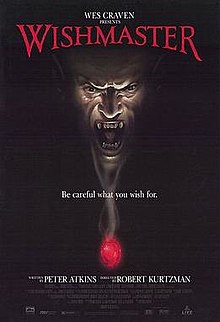
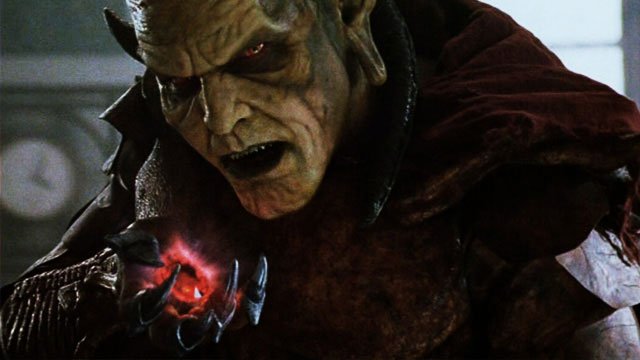



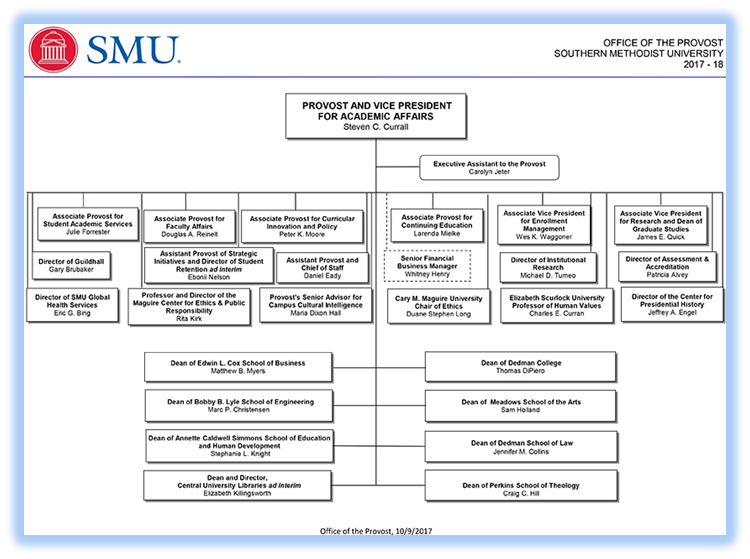

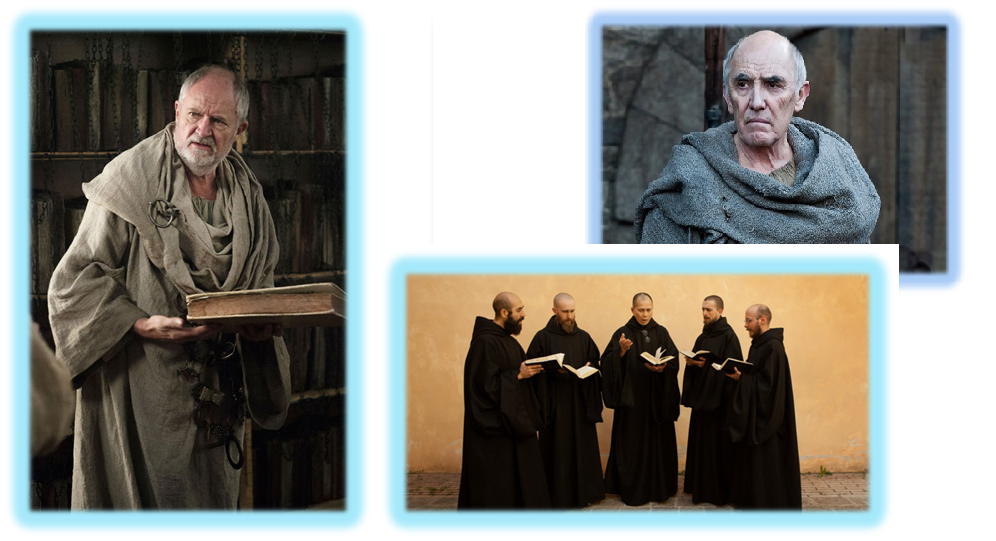

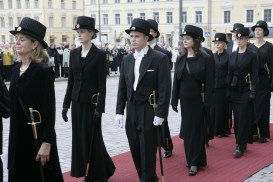


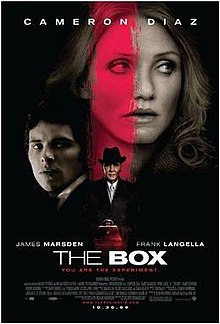



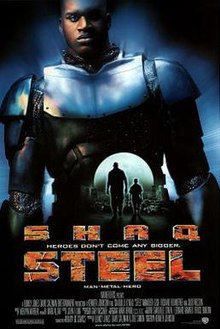


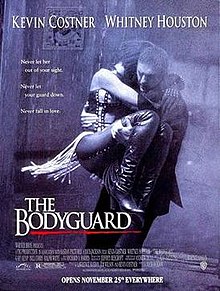
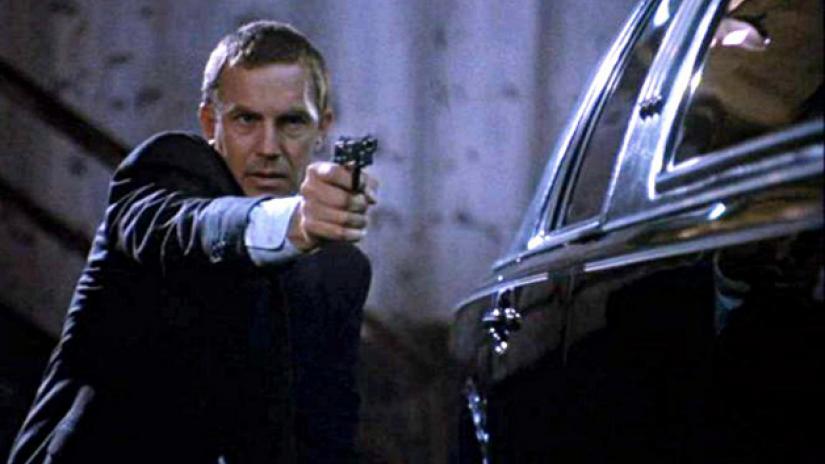
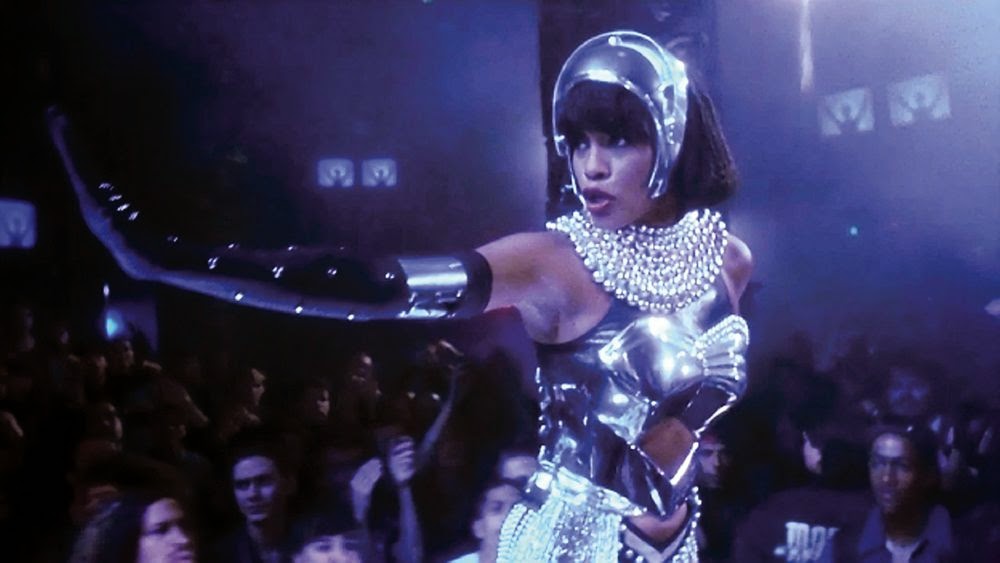
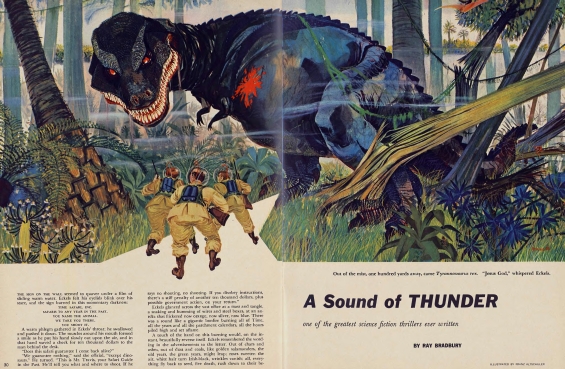
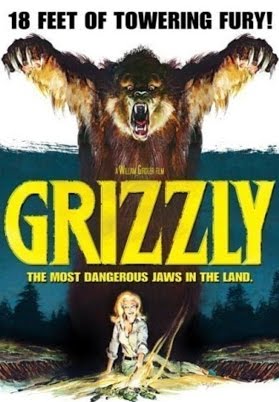

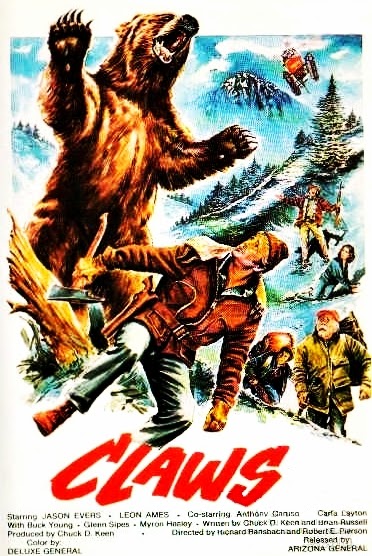
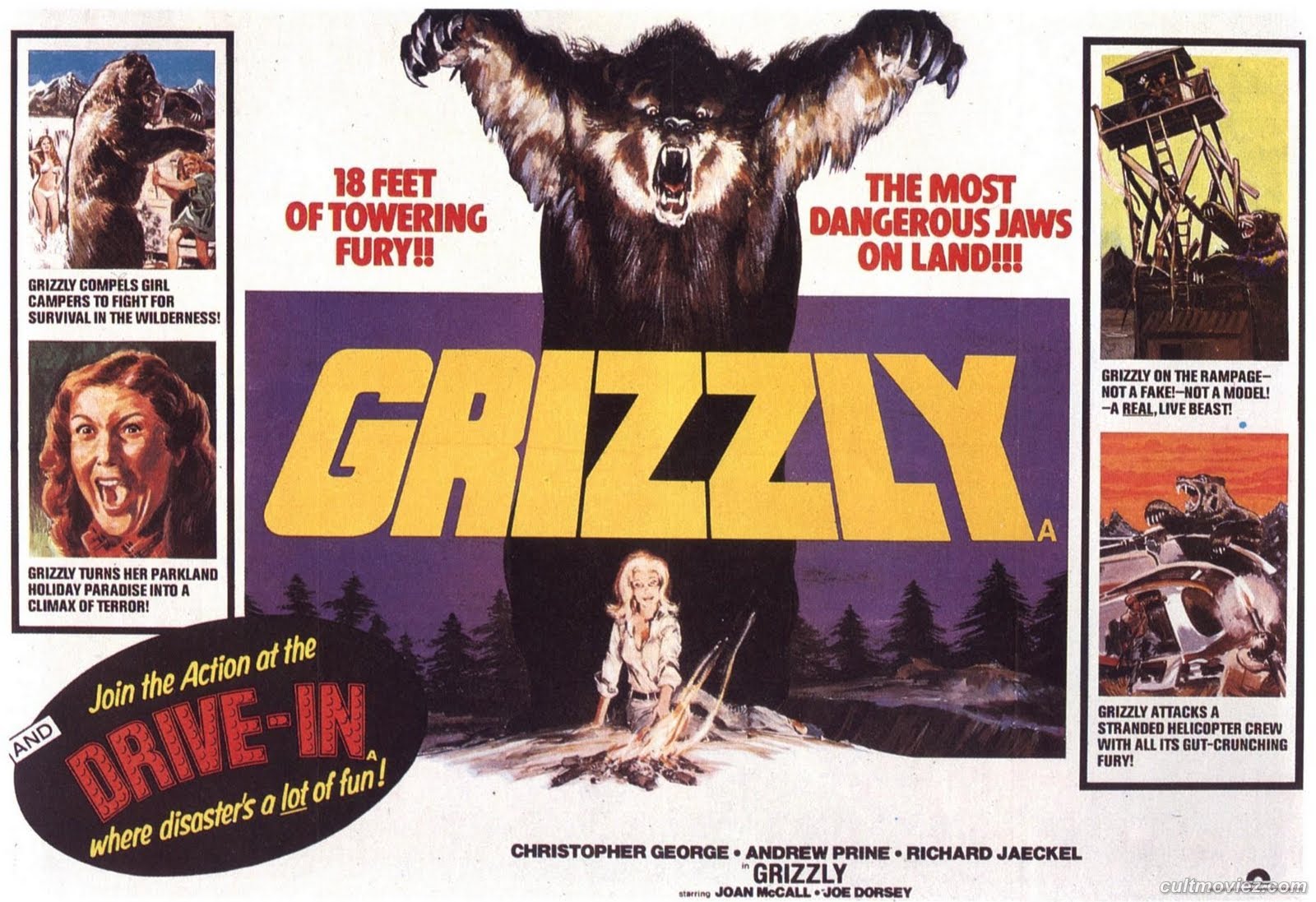


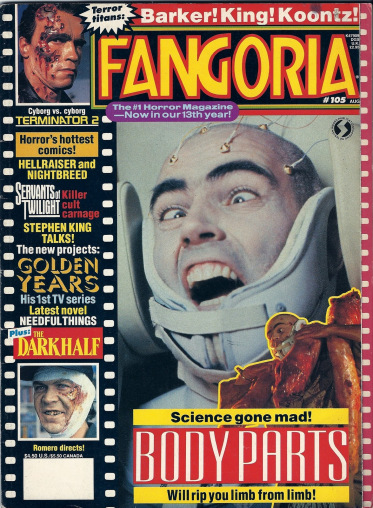

 Misan[trope]y