Hello, loyal readers! I’ve been a bit swamped as of late, and haven’t had the chance to write a full review this week. I do, however, have a quick recommendation:
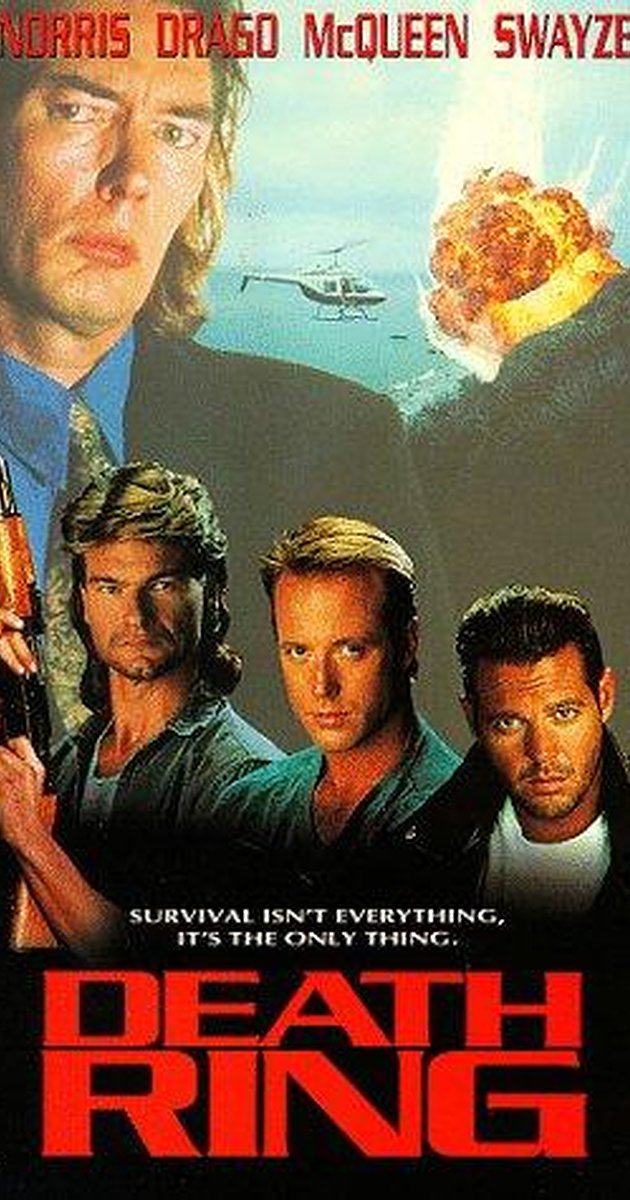
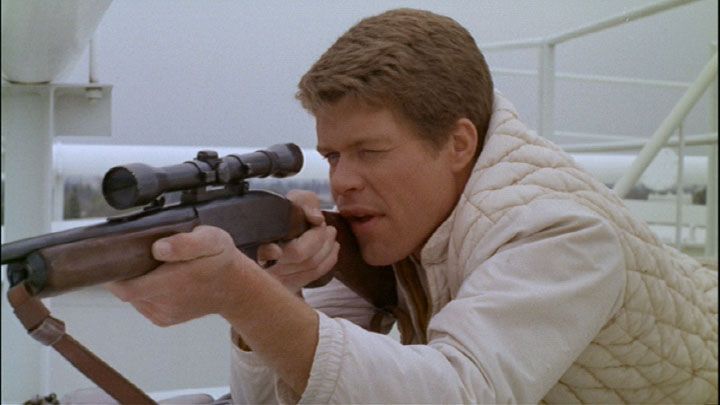
Don’t let that trailer throw you off: None of Patrick Swayze, Chuck Norris, or Steve McQueen are in this movie. Instead, this movie stars a bunch of people who have common last names with those people, which is about as hilariously deceptive as b-movie gimmickry gets.
This is a pretty clear cut Deadliest Game kind of human hunting movie, so the plot isn’t anything to write home about. However, the action scenes and the acting are delightfully cheesy. It may not be the unadulterated glory that is Deadly Prey, but Death Ring is a pretty good time for you b-movie fans out there. In particular, I enjoyed all of the creative cutting used to avoid moderately expensive gore effects. I assume they didn’t think anyone would notice.
The best part of the movie, however, is that fact that director R.J. Kizer has actually made it kind of big since the early 1990s. He is now an ADR editor with a whole lot of big studio credits under his belt. Deadpool, Inception, X-Men: First Class, Daredevil, Night at the Museum, The Dark Knight Rises, Jingle All The Way, Alien Resurrection, Street Fighter, and Showgirls are just a few among many movies he’s worked on since directing Death Ring in 1992.
Even better, he has had two other directorial credits in his career. One of them is a b-movie classic that you might be familiar with: Hell Comes To Frogtown.
Recently, I took a trip up to Detroit, MI to attend a John Carpenter retrospective concert (which was, for the record, awesome). While I was up that way, I decided to take a couple of days to explore the area. This included, of course, going on the hunt for physical media.
As with many other areas I’ve visited, I wasn’t able to find any accessible specific movie shops in the city limits of Detroit, so I decided to hit up a handful of local record stores and book shops in the city instead. What I found didn’t include a whole lot of VHS or DVD selection, but I wound up with a handful of soundtracks at least.
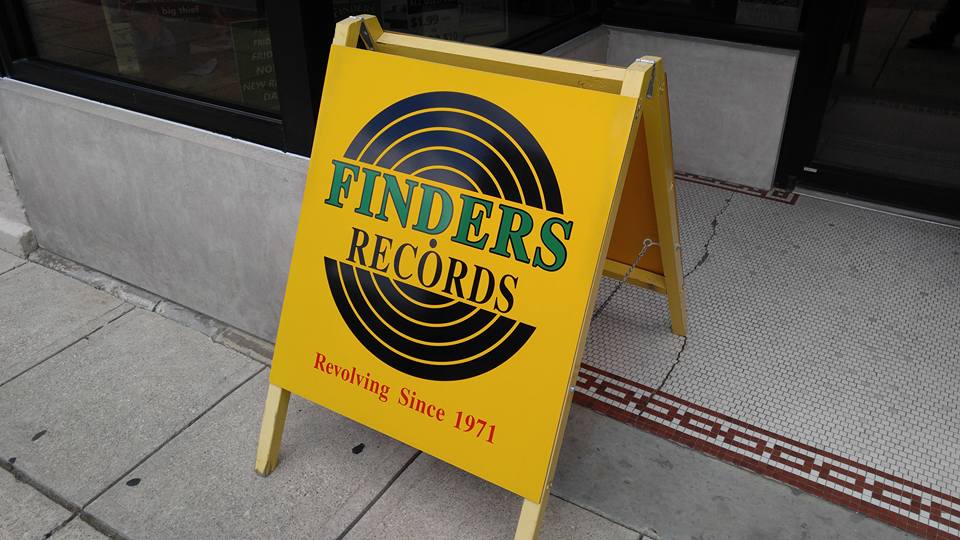
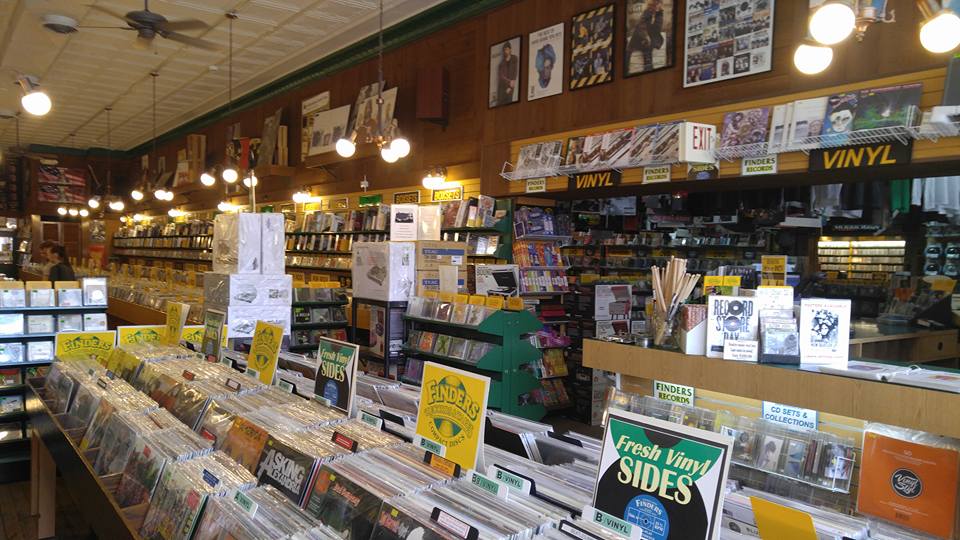
On the way up to Detroit, I took a quick detour based on my girlfriend’s recommendation. Bowling Green, OH, known for being the home of Bowling Green State University, has quite the local record shop: Finders Records.
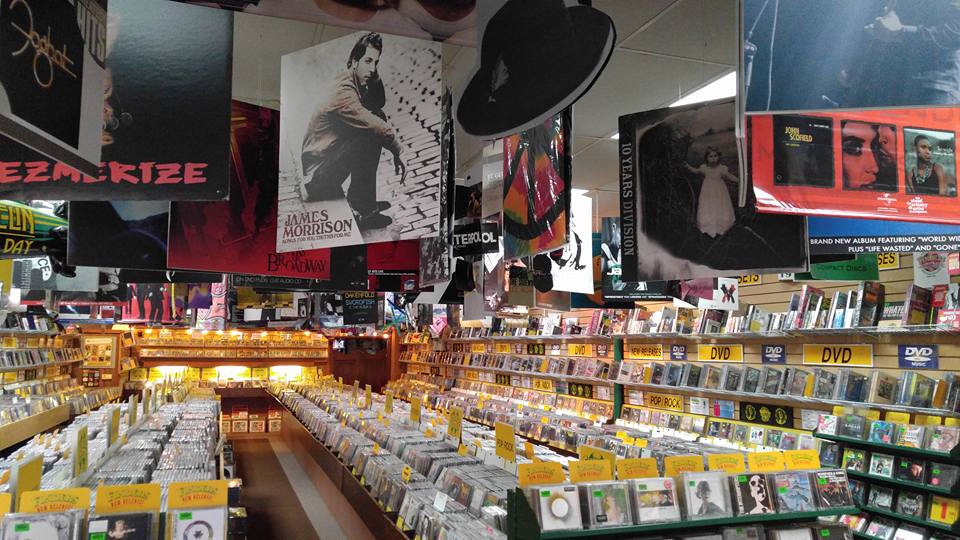
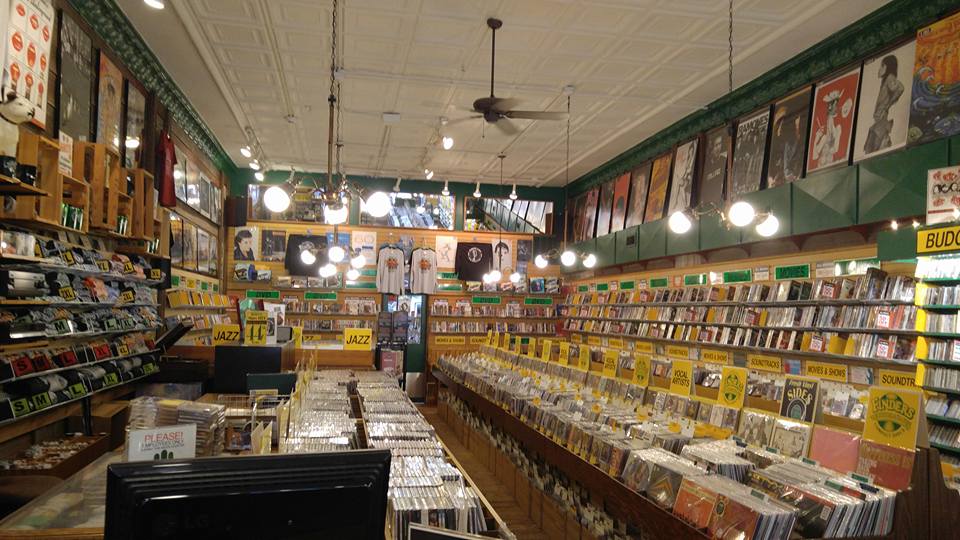
Finders Records is almost the perfect platonic ideal of a record store. It has a massive selection of both used and new vinyl, and the atmosphere and decor are easily unparalleled. It consists of three large rooms, each roughly the size of your typical record store, and they are all absolutely packed with media. The vibe of the place had me wondering if Liv Tyler or John Cusack would wander in the front door with some sort of angsty life problem.
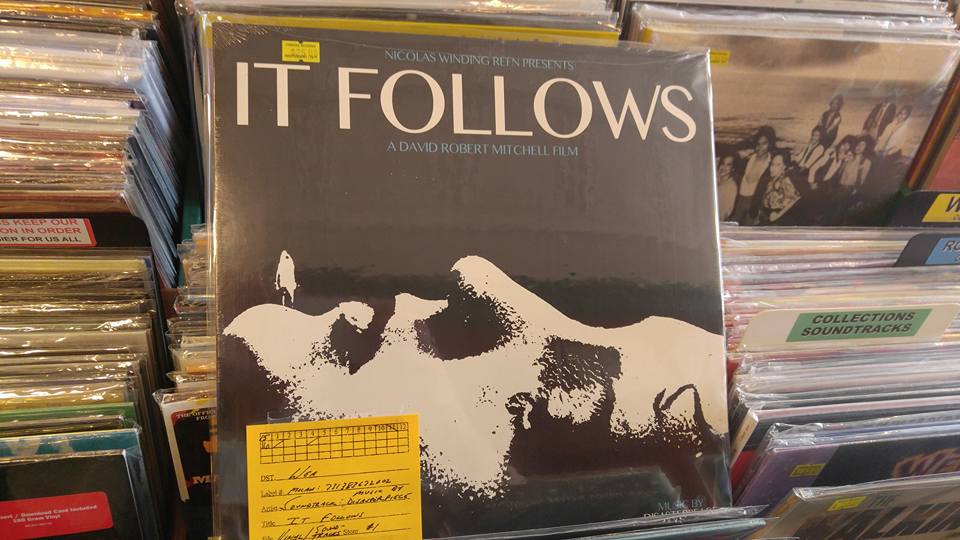
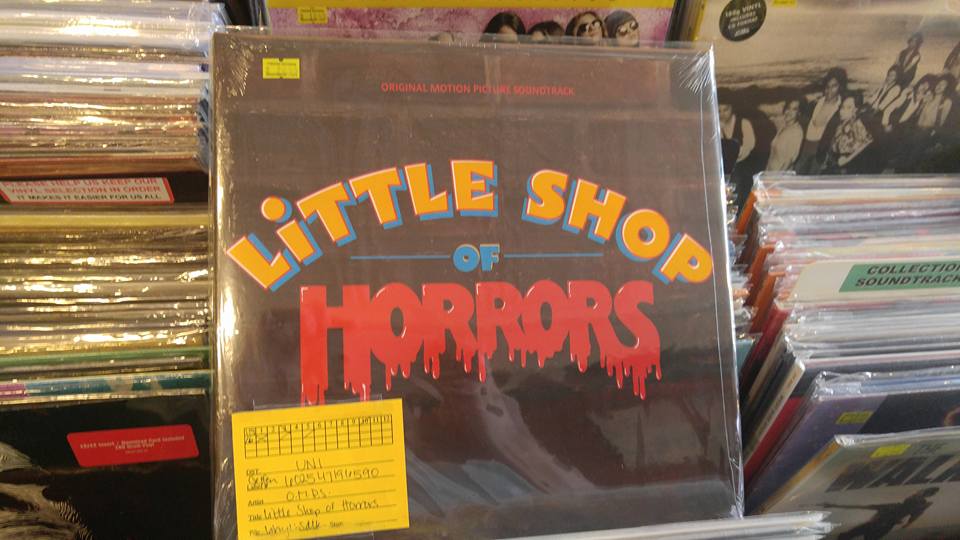
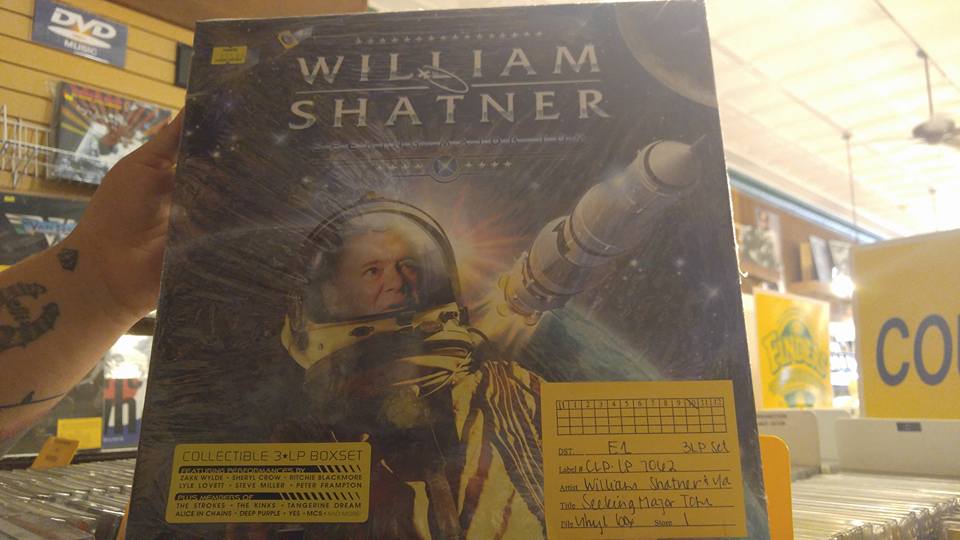
Unfortunately, as with many record stores, the DVDs were limited to concerts and music documentaries. However, the soundtrack selection was pretty stellar. Plus, there was a small buy/sell/trade down the block with a decent enough selection of movies and video games, though it wasn’t terribly much to write home about.
If you happen to find yourself around Toledo/Bowling Green in Northwest Ohio, you need to do yourself a favor and check out the impressive Finders Records.
Recently, I took a trip up to Detroit, MI to attend a John Carpenter retrospective concert (which was, for the record, awesome). While I was up that way, I decided to take a couple of days to explore the area. This included, of course, going on the hunt for physical media.
As with many other areas I’ve visited, I wasn’t able to find any accessible specific movie shops in the city limits of Detroit, so I decided to hit up a handful of local record stores and book shops in the city instead. What I found didn’t include a whole lot of VHS or DVD selection, but I wound up with a handful of soundtracks at least.
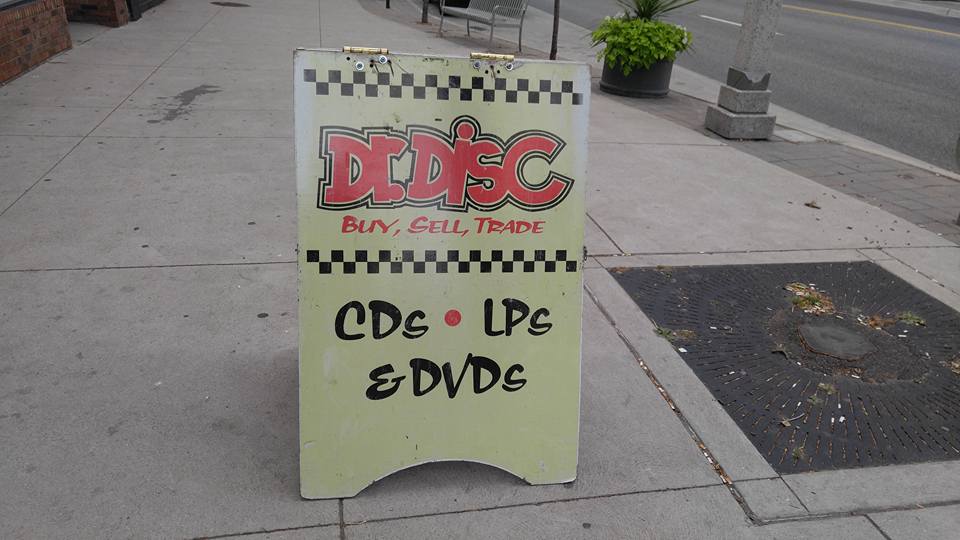
At one point over the weekend, my girlfriend and I took the scenic jaunt across the Detroit river into cheery old Windsor, Ontario, Canada. From what I saw, there isn’t much to the town, but there is a little two-story record shop called Dr. Disc.
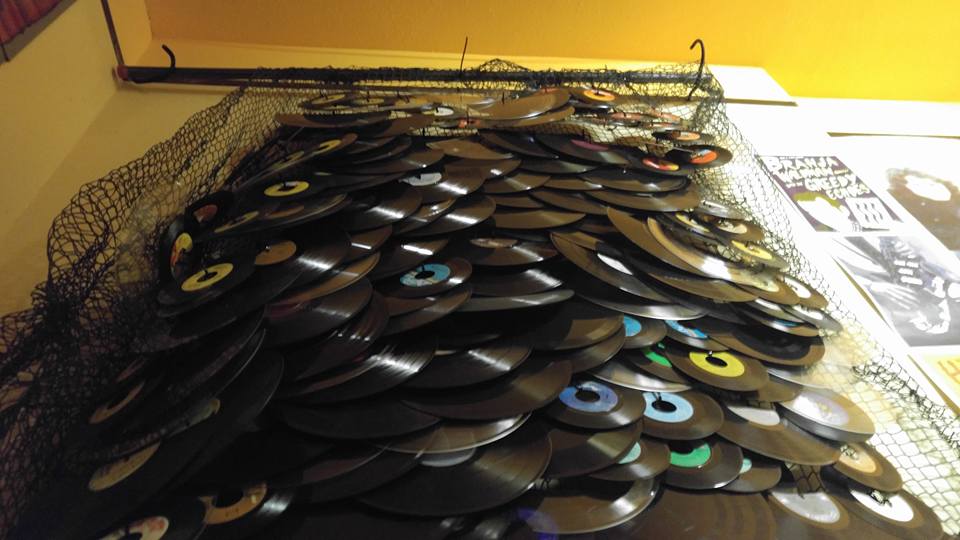
According to their website, Dr. Disc traces its lineage in Windsor back to 1982, which is pretty impressive. The space itself is quite cool, and decorated with everything from independent movie posters to a fishing net lined with vinyl records. There is another shop in Hamilton, ON with the same name and apparent branding, but they appear to be totally independent of each other. Maybe there used to be a chain of these at some point, and these are the last two survivors? Who knows?
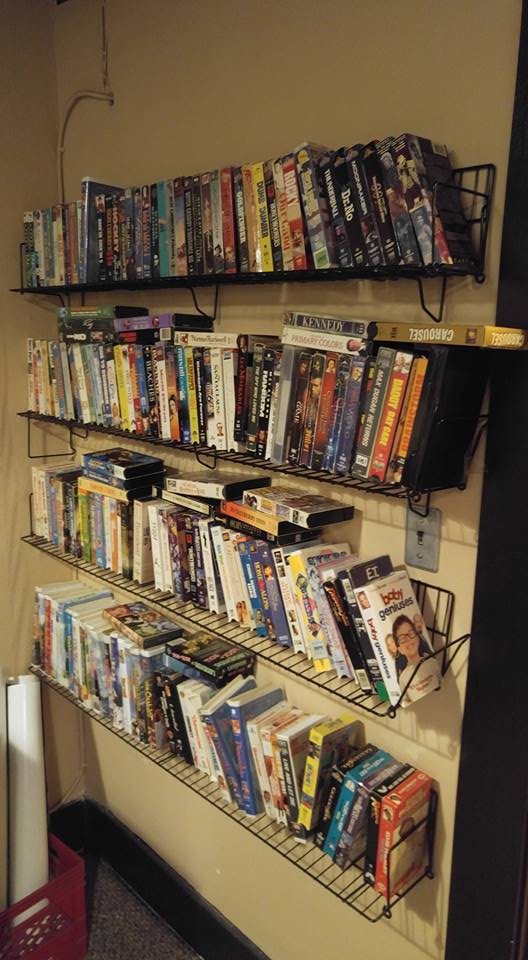
As far as selection goes, there’s a little bit of everything at Dr. Disc. There are obviously tons of records and CDs, but there’s also a good number of DVDs and Blu-Rays. Most interesting of all, though, was the tucked away corner of VHS tapes on the second story.
Proving without a doubt that Windsor is, indeed, Canadian, I saw more Don Cherry tapes and DVDs than I actually thought existed in the entire world. I’ve always known about him from being a hockey fan, but I had no idea that the tacky-suited loudmouth hockey commentator had an extensive line of DVDs and VHSs. On top of that, there were a handful of non-Cherry hockey blooper tapes that go back to the age of the Quebec Nordiques, OG Winnipeg Jets, and green-trimmed New Jersey Devils.
Recently, I took a trip up to Detroit, MI to attend a John Carpenter retrospective concert (which was, for the record, awesome). While I was up that way, I decided to take a couple of days to explore the area. This included, of course, going on the hunt for physical media.
As with many other areas I’ve visited, I wasn’t able to find any accessible specific movie shops in the city limits of Detroit, so I decided to hit up a handful of local record stores and book shops in the city instead. What I found didn’t include a whole lot of VHS or DVD selection, but I wound up with a handful of soundtracks at least.
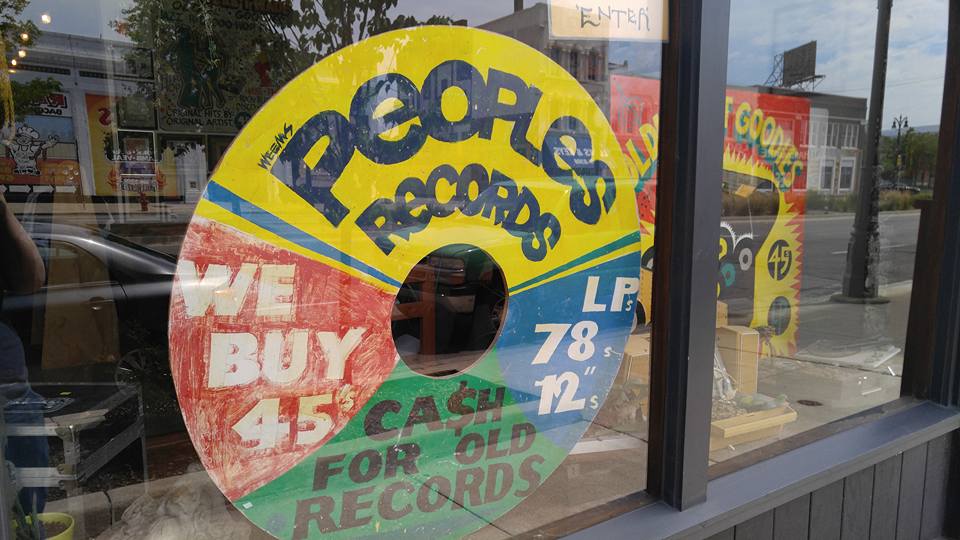
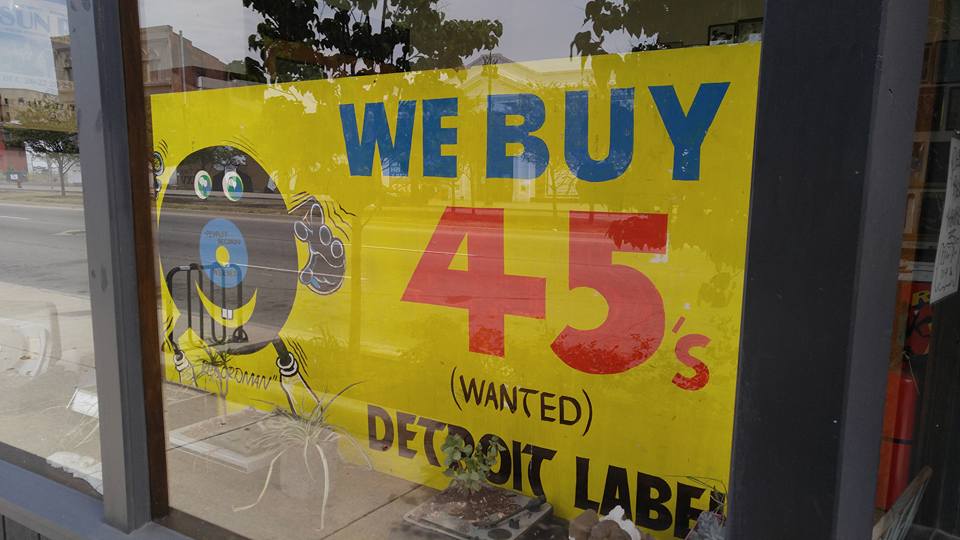
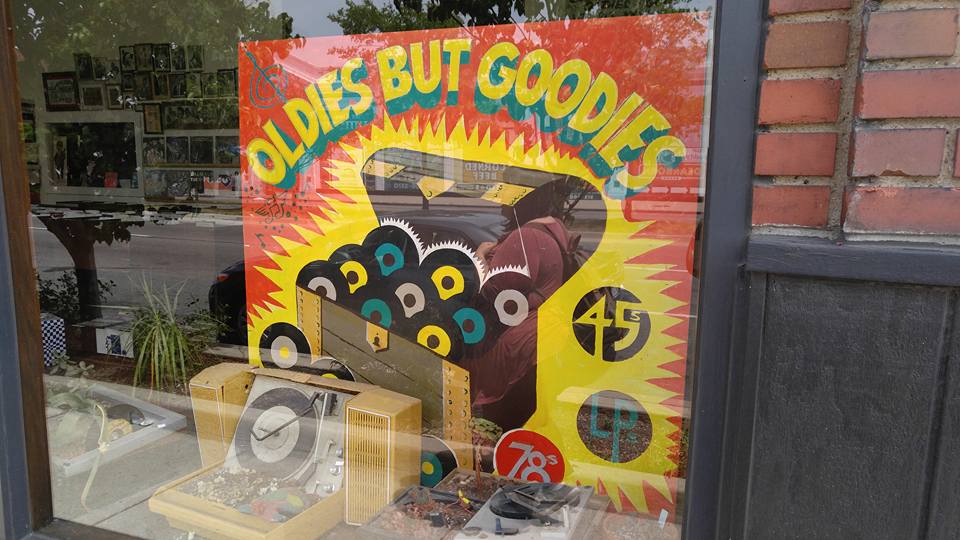
The first place I want to spotlight is People’s Records, which has been around in Detroit at one location or another for well over a decade. The vibe of the place definitely reflects Detroit itself: it is artistic, creative, grungy, and worn. I absolutely dug it.
Unfortunately for me, this is a pretty pure record shop, and there were no tagalong VHS tapes or DVDs to be found. However, there was quite an eclectic selection of soundtracks on vinyl, which I can always appreciate.
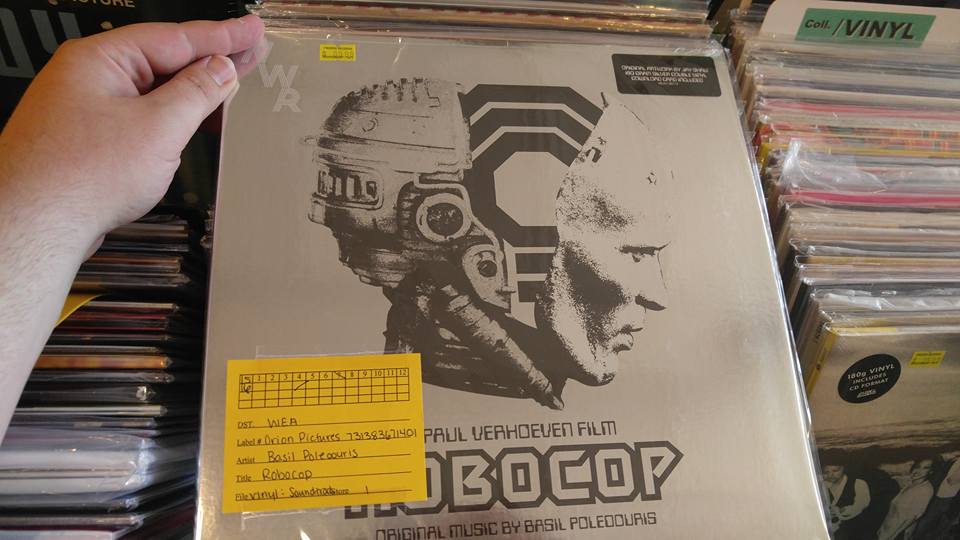
Specifically, I came out with a couple of soundtrack records which I was delighted to pick up.
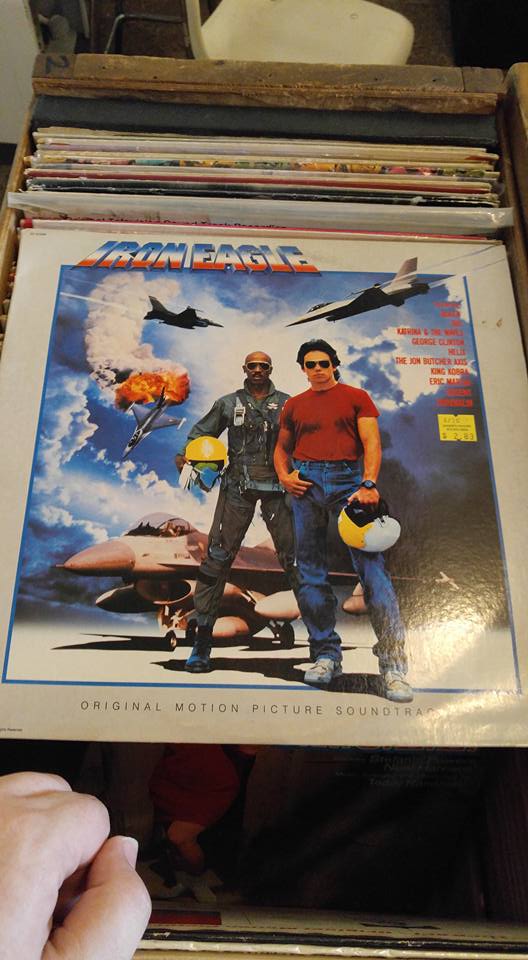
Ah, Iron Eagle. I haven’t thought about this flick in quite a while, but I couldn’t help but jump at the opportunity to have the vinyl soundtrack. Not only does this have tracks from Queen and George Clinton, but it also has the King Cobra theme song, which boasts one of the most 1980s music videos imaginable.
I had no idea what this movie was, but I couldn’t very well *not* buy this album. Just look at that cover art! I did a little bit of digging, and it appears that this was a very early Brooke Shields movie from 1979. It is a teen-focused flick that I initially assumed was trying to co-opt the popularity of the film version of Tommy, but it was behind the curve if that was the intention.
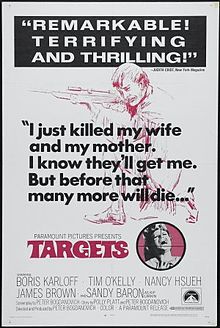
Today, I’m going to take a look at a controversial cult classic: Peter Bogdanovich’s 1968 feature, Targets.
The plot of Targets is summarized on IMDb as follows:
An elderly horror-film star, while making a personal appearance at a drive-in theater, confronts a psychotic Viet Nam War veteran who’s turned into a mass-murdering sniper.
Targets was written, produced, edited, and directed by Peter Bogdanovich, a lauded film critic who became one of the stalwart figures of the New Hollywood movement. After Targets, he built a strong career that included features like The Last Picture Show, What’s Up, Doc?, Mask, Paper Moon, Daisy Miller, and At Long Last Love, among many others. His wife at the time, Polly Platt, is credited as both his co-writer and the film’s production designer. She later gained more notoriety as a producer on such movies as Bottle Rocket, The War of The Roses, Broadcast News, and Say Anything.
The cinematographer on Targets was Laszlo Kovacs, who had a lengthy and notable career shooting films like Easy Rider, Shampoo, Paper Moon, Say Anything, and New York, New York.
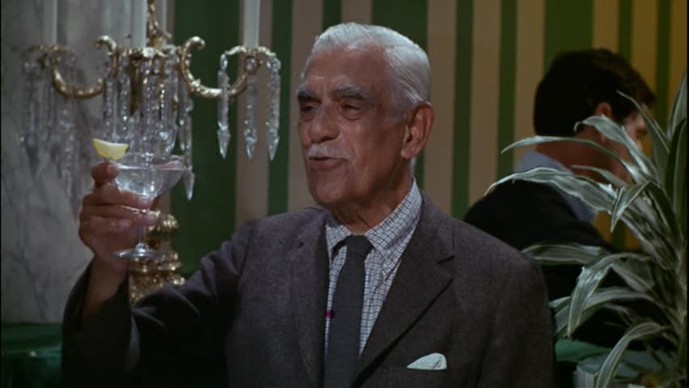
Roger Corman was an uncredited executive producer for the film, and was instrumental in its creation. He essentially gave Bogdanovich free reign on the project with a set budget, provided that he was able to make use of stock footage from a previous Corman production, The Terror, and found a way to use the elderly Boris Karloff for just two days. Ultimately, Karloff was needed for five days of shooting, but he waived his fee thanks to his fondness for the screenplay.
The shooting spree featured in Targets was inspired by true events, most notably the 1965 Highway 101 sniper attack, in which a sniper fired on moving cars from a nearby hill, and the Charles Whitman shootings at the University of Texas in 1966. The realistic depictions of mass shootings caused the film to be particularly controversial, even for a b-feature intended for a niche audience.
Samuel Fuller, a noted writer and director in his own right, apparently contributed significantly to the screenplay for Targets, but turned down credit for the movie.
Targets is regarded as one of the starting points for a new era in film horror, as well as a key point in the development of New Hollywood. Books like Shock Value and Easy Riders, Raging Bulls have gone into detail about the film’s production, and how it influenced Bogdanovich’s career and the way audiences thought about horror.
Targets currently has Rotten Tomatoes ratings of 88% from critics and 81% from audiences, along with an IMDb user score of 7.4/10. Its reputation over the years has only grown, as its influence has been felt and appreciated both in and outside of the horror genre.
Targets is, above all else, an effectively eerie movie. The lack of a soundtrack in particular gives the tense and shocking sequences a more pronounced and uncomfortable vibe. There are no cues to indicate what the audience’s reaction should be to any given action, which plays into the fact that the audience is subjected to the killer’s perspective for most of the movie. He doesn’t react to killing someone, and the film doesn’t either. I think that this apect, more so than the shooting sequences themselves, is what made the film so controversial and uncomfortable for people. Murder wasn’t a new topic for film, but showing it from a killer’s perspective was (and still is) genuinely unnerving.
While there are a lot of impressive elements to Targets, it is far from a perfect movie. As with most debut features, it is a little rough around the edges, particularly when it comes to the pacing of events. There are some distinct moments where the lulls in progress last a bit too long, but that said, this is a damn impressive first flick. While Bogdanovich arguably peaked early and has waned since the 1970s, this film provides a good overarching sense of his talents and potential.
For fans of b-movies, horror movies, the New Hollywood era, or even just film history in general, Targets is worth your time to dig up in my opinion. There are a lot of things to like about it, and they certainly far outweigh the negatives.
Today’s entry into the Larry Cohen Collection is Bone, his controversial directorial debut.
Bone is a tense and darkly humorous home invasion thriller that presents the story of a robbery that goes rapidly awry, and circuitously winds up unraveling the lives of all of the parties involved.
Bone was written, directed, and produced by Larry Cohen as his first feature film, after a notable career as a television writer. It laid the foundations for a long tenure in front of the camera that bounced between genres, and garnered Cohen a significant cult following.
The movie was co-edited and shot by George Folsey, Jr. (Hostel, Black Caesar, The Blues Brothers), with Michael Corey (God Told Me To) acting as his co-editor.
Aside from Larry Cohen, the producers for Bone included his then-wife Janelle Webb (A Return To Salem’s Lot, The Private Files of J. Edgar Hoover) and Peter Sabiston (It’s Alive, Hell Up In Harlem, Black Caesar).
The score to Bone was composed by Gil Melle, who also provided the music for movies like The Andromeda Strain and Killdozer.
A number of the effects in the movie were provided by eventual Academy Award winner and master of the field Rick Baker, who worked on a number of Cohen’s films early in his career.
The relatively small cast of Bone includes a young Yaphet Kotto (Alien, Live And Let Die, The Running Man), Andrew Duggan (A Return To Salem’s Lot), Jeannie Berlin (Inherent Vice, The Heartbreak Kid), and Joyce Van Patten (Grown Ups, Marley & Me, The Bad News Bears).
Bone proved to be a difficult movie to market, thanks to a combination of controversial themes and pitch-black humor. As a result, it received a handful of alternate titles, though the most ofen seen one is Housewife.
Bone was shot almost entirely in Larry Cohen’s own house and property, and even features his dog.
While Bone certainly has a positive cult reputation, its reviews on the whole are mixed. It currently holds a user rating of 6.8 on IMDb, along with Rotten Tomatoes scores of 67% from critics and 75% from audiences.
Personally, I see Bone as a bold work of a young director with an interesting vision. It is certainly unpolished and the product of a developing talent, but there are some flashes of really fantastic film-making here, particularly whenever a scene calls for a building of tension. Not only do the shots help build a simultaneous sense of uncomfortable distance and dangerously close proximity between the characters, but Cohen was able to get some really outstandingly emotional and creepy performances out of all four of the primary characters.
Oddly, the writing is really the weakest aspect of the movie. At first, the film has a clear clock on it to build the tension, but then it is dismissed outright. Honestly, I was a bit confused as to how much time was passing between scenes, and eventually the screenplay just drops the point altogether. Once that happens, the pacing of the movie gets kind of strange, and the last act makes for an odd sort of chase and rapid resolution. Looking back on it, I think this was a screenplay that Cohen wasn’t quite sure how to end, and it shows.
As far as a recommendation goes, Bone was definitely made for another time, which plays out as a positive and a negative. The movie provides a visual snapshot of Los Angeles at the time that is pretty cool to look at, but the political and social context behind this movie isn’t nearly as potent now. The humor is also sporadic and uneven, and it isn’t always clear what the message of the movie is. Regardless, as a exercise in building tension, there are some big positives to Bone. On top of that, one scene in particular features some of the earliest makeup work by Rick Baker, which adds a cool trivia bonus to the flick. Cohen fans at the least should check this one out, if you happen to be able to find a copy.
Welcome to a special feature here at the Misan[trope]y Movie Blog! Recently, I had a chat with one of the best known cult movie writer/directors: Larry Cohen.
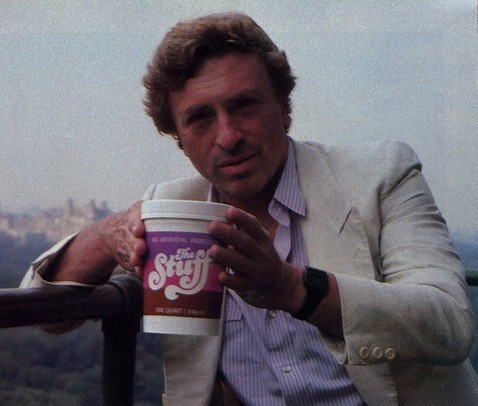
Cohen has had a career that has included hit television shows, blaxsploitation classics, and blockbuster screenplays, but he carved his unique place in film history by writing and directing memorable b-movies like The Stuff, It’s Alive, and Q: The Winged Serpent.
For more on his career, check out the Larry Cohen Collection here at Misantropey, where I have been working through his entire filmography.
Now, enjoy this interview with the one and only Larry Cohen.
It looks like I have made it to the benchmark of 500 published posts here at Misantropey.com. Here’s to another 500! Be sure to check out the Post Index for past reviews, and keep your eyes peeled for more to come here on the front page.
Yesterday, I had the chance to catch a pre-release tour screening of the latest film by Kevin Smith: Yoga Hosers. This horror-comedy (or comedy-horror) is a quasi-sequel to Tusk, and focuses on a handful of characters from that movie on a new adventure involving a Canadian Nazi conspiracy. Because this movie hasn’t hit theaters yet, I’m going to preface this review with a SPOILER WARNING.
Yoga Hosers was written, directed, and edited by Kevin Smith, a once-revered Sundance darling and Miramax loyalist who is now known for his sprawling podcast network, oversized hockey jerseys, and nerdy ramblings. However, he has never stayed away from movies for long, in spite of often claiming to be done with the medium. Yoga Hosers is the second in his planned “True North” trilogy: a series of movies set in Canada that was kicked off by Tusk, and will conclude with Moose Jaws at an undisclosed future time.
Smith’s cinematographer for the movie was James Laxton, who previously worked for him on Tusk, and has worked on an assortment of other films like Bad Milo and Nightcrawler.
The music for Yoga Hosers was provided by Christopher Drake, who has primarily worked on DC animated movies and video games like Injustice: Gods Among Us, Batman: Under The Red Hood, Justice League: Doom, and Batman: Arkham Origins.
The special effects and creature work for Yoga Hosers were overseen by Robert Kurtzman, who has had a long career working on films like Tusk, It Follows, The Faculty, John Dies At The End, the From Dusk Til Dawn trilogy, Vampires, In The Mouth of Madness, The People Under The Stairs, 976-EVIL, DeepStar Six, Army of Darkness, Tremors, and From Beyond, among many others. He even directed a handful of movies, like Wishmaster.
Yoga Hosers stars Johnny Depp (Donnie Brasco, Black Mass, The Lone Ranger, Sweeney Todd, Charlie and the Chocolate Factory, A Nightmare On Elm Street), his daughter Lily-Rose Melody Depp, Kevin Smith’s daughter Harley Quinn Smith, Kevin Smith’s podcast co-host Ralph Garman (Red State, Ted), Haley Joel Osment (Entourage, The 6th Sense), Tony Hale (Veep, Arrested Development), Justin Long (Drag Me To Hell, Accepted), Kevin Smith’s wife, Jennifer Schwalbach Smith (Red State, Jersey Girl), and Kevin Smith himself.
Initial reviews for Yoga Hosers are pretty negative. As of June 13th, 2016, Yoga Hosers has an IMDb user score of 4.9/10 with 499 votes tallied, and a Rotten Tomatoes critic score of 25%, with 20 critic reviews in.
The idea for Yoga Hosers was born on the set of Tusk, when Harley Quinn Smith and Lily-Rose Melody Depp were thrown in as minor characters in a convenience store scene on a whim by Kevin Smith. The result, according to Smith and Johnny Depp, was a surprisingly natural performance from both girls, and an impressive chemistry. Upon completion of the film, Smith claims that Johnny Depp expressed interest in reprising his character in the future, all of which planted the seeds for Smith to write a screenplay around the three minor Tusk characters.
The design and tone of Yoga Hosers was intended to imitate the sorts of movies that would run on late night cable during Smith’s childhood. In particular, Kevin Smith has cited Re-Animator, From Beyond, and Puppetmaster as the sort of movies that inspired Yoga Hosers. However, instead of making a movie purely in that vein, he wanted to center the story on teenage girls, once he realized that that demographic wasn’t able to enjoy those same movies he could, due to a lack of representation.
Yoga Hosers, unfortunately, doesn’t quite succeed in its aims. While there is some humor that would probably resonate with young women (primarily centered on texting and contemporary technology), most of the humor in movie is referential. For instance, the biggest laughs I recall from my screening were from cameos by people like Stan Lee and Kevin Conroy, or from direct references to other Kevin Smith works (primarily podcast in-jokes and one blatant Clerks reference). Worse than that, however, is the sheer quantity of tired non-jokes in the screenplay: exaggerated Canadian accents and cultural jokes are milked endlessly, awkward banter with Johnny Depp doesn’t play, celebrity impersonations are almost as prominent as they were in Master of Disguise, and the villainous “Bratzi” minions are a collective high pitched, shouting annoyance.
While there is nothing necessarily wrong with any of this (it is all a matter of preference, I guess), I have trouble believing that any of these elements would really appeal to tween girls, as Kevin Smith apparently intended. All of these things seem far more geared to appeal to middle-aged (and stoned) Kevin Smith fans than anyone else.
The thing that seems almost beyond belief to me is the fact that Johnny Depp gives the worst performance in a movie with two non-actor leads. Honestly, the Depp and Smith offspring do have good chemistry, and are generally ok with the load they were given. Depp, on the other hand, is just as jarring and unfunny as he was in his first turn with the character in Tusk. Apparently, his fascination with the character stems from, predictably enough, an obsession with facial prosthesis. Much like Eddie Murphy, Depp seems to have fallen into a trap in which he needs to be behind some sort of mask to give a performance. Even in Black Mass, in which he is quite good, he is transformed with makeup into another person. The manhunter Guy Lapointe is, as Smith tells it, a way for Johnny Depp to wear a prosthetic dick on his face (that was, apparently, VERY intentional), and use a fake accent that has annoyed the people closest to him for years. Now, Depp has a platform to annoy the movie-going public with it as well, or at least whoever actually shows up for Yoga Hosers.
The effects work in Yoga Hosers honestly perplexed me. I’m not sure if the green screen work was intentionally bad as a sort of homage, or if it was just shoddy. To Kurtzman’s credit, the sausage monsters are unsettling, but the use of CGI gore (well, saurkraut) looks absolutely unforgivably awful. The thing that stood out most, though, was the centerpiece of the film: a Nazi-crafted Golem built out of human remains and bratwurst in the shape of a hockey goalie. Looking past the obvious insensitivity of including a Nazi-built Jewish folkloric figure, the monster looks implausibly fake. Again, this might have been homage, but I couldn’t get past how clearly rubbery the texture looked. Compared to his work on Tusk (or any number of other films), the “Goalie Golem” just looked bad.
What really annoys me most about Yoga Hosers is that the parts are so much better than the product. Johnny Depp is a capable actor, Robert Kurtzman is a wizard, Kevin Smith is a decent director (and far better writer), and the stated motivations behind this movie are fantastic. I am a huge fan of the same kinds of movies that drove Smith to make Hosers, and I am also in agreement that women and girls need more representation in popular fiction. Yoga Hosers, in theory, is a movie that needs to me. That is why I feel so disappointed that it isn’t actually that movie.
Lastly, there is a big problem underneath this movie that seeps out in some not-so-subtle ways. Kevin Smith has a long-standing chip on his shoulder with the very concept of film criticism. For as easy-going, likable, inspiring, and positive-natured as the man usually is, Smith has nothing but contempt for those how would dare to point out flaws with a Kevin Smith movie. From what I can tell, this dates back a long way, at least to Jersey Girl, but really went into meltdown after Cop Out. In Yoga Hosers, he goes so far as to give the villain a distinct motivation: a desire to execute all art critics, which sets up a number of tired critic jokes. This reminded me a lot of the 1998 Godzilla, in which Roland Emmerich included a character based on Roger Ebert in order to mock him. The result, as you might expect, is that Emmerich looked like a petty jackass. Now, Kevin Smith has sunk roughly to the same level, which is regrettable to say.
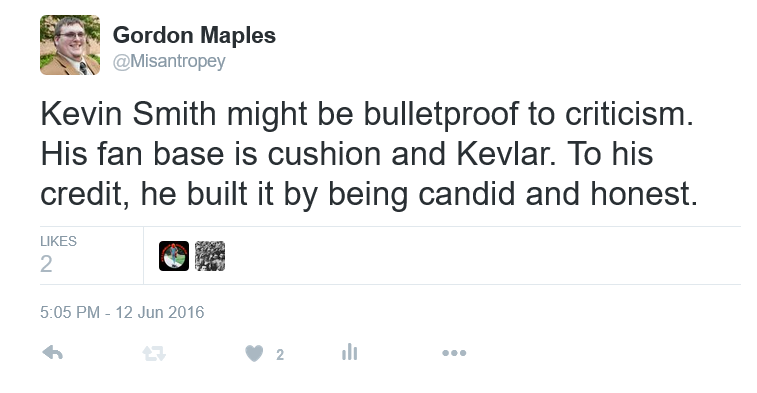
The thing is, I generally like Kevin Smith as a personality and nerd pundit. The screening of Yoga Hosers I went to took nearly 5 hours, but the movie itself was only a fraction of that time. Kevin Smith knows how to talk and endear himself to fans: he is honest and candid in a way that should doom him in the confidential land of Hollywood, but the admiration he has endeared has kept him afloat for years. Just the experience of listening to him talk has brought people out to theaters across the country, and his audience online likely dwarfs even that. As a public figure, Smith makes people laugh, and inspires lots of people to create. Honestly, that seems to be his true passion at this point. Unfortunately, his movies just aren’t as compelling as he is. There is a reason his tours are more Q+A than movies now: on a deeper level, people really want to hear him and experience him, not watch his movies.
All in all, I’ve been pulling for Smith to resurrect his film career. I really liked Red State, and thought that Tusk had some good highlights. Yoga Hosers, though, is a huge fall. It is everything negative that I feared it might be from the time it was announced. That said, I’m optimistic about Kevin Smith focusing on television: I think it might just suit him better at this point. As for Yoga Hosers, this is really only watchable for Kevin Smith fans, and even then, it is a toss-up. My advice is to skip this one.
Reviews/Trivia of B-Movies, Bad Movies, and Cult Movies.
![Misan[trope]y](https://misantropey.com/wp-content/uploads/2014/10/misantropeyhead1.png)



















 Misan[trope]y