Tag Archives: bad movies

Worst of 2016: Gods of Egypt

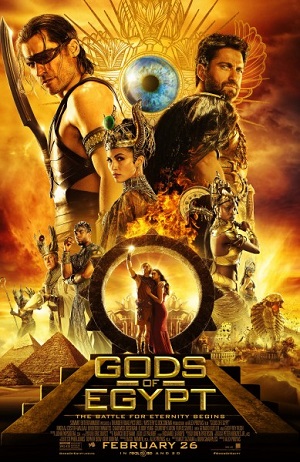
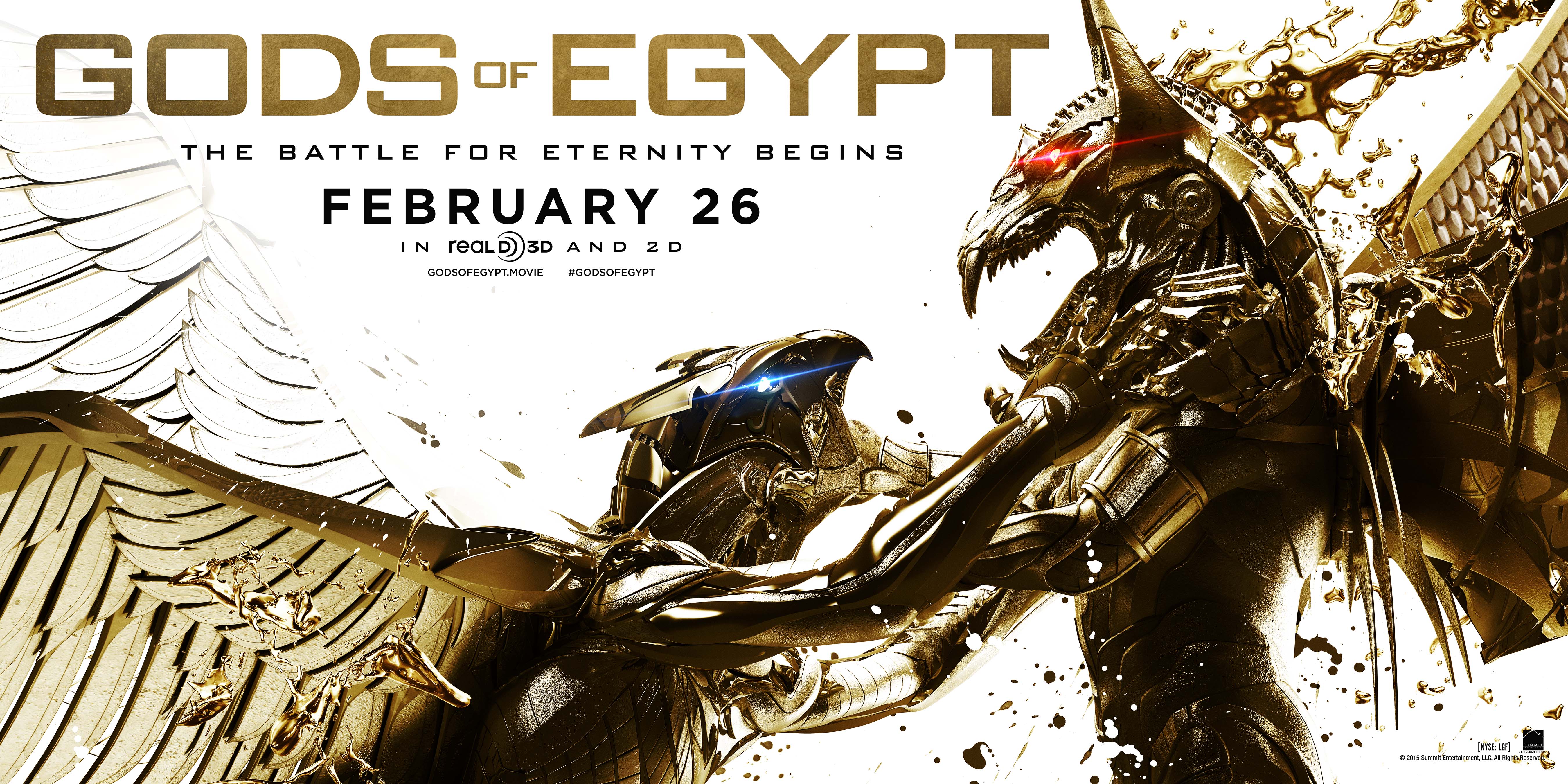
Gods of Egypt

goe2

Today, I am going to be kicking off an entire month dedicated to the worst films of 2016. First up is the controversial bomb, Gods of Egypt.

The plot of Gods of Egypt is summarized on IMDb as follows:

Mortal hero Bek teams with the god Horus in an alliance against Set, the merciless god of darkness, who has usurped Egypt’s throne, plunging the once peaceful and prosperous empire into chaos and conflict.

Gods of Egypt was directed by Alex Proyas, who is best known for movies like Dark City, The Crow, and I, Robot, among others.

The screenplay for the movie was written by the duo of Matt Sazama and Burk Sharpless, who recently penned Dracula: Untold and The Last Witch Hunter, and wrote the script for the upcoming Power Rangers movie.

Gods of Egypt stars Gerard Butler (300, Olympus Has Fallen), Nikolaj Coster-Waldau (Game of Thrones, Headhunters), Brenton Thwaites (Oculus, Maleficent), Geoffrey Rush (Mystery Men, Green Lantern, The King’s Speech), and Chadwick Boseman (Captain America: Civil War, 42).
goe1

Richard Learoyd served as the primary editor for the film, after cutting Proyas’s previous movies, Knowing and I, Robot. The cinematographer for Gods of Egypt was Peter Menzies Jr., who has shot such films as Four Brothers, The 13th Warriors, Kagaroo Jack, The Incredible Hulk, and Die Hard with a Vengeance. Also of note among the crew was the production designer, Owen Paterson. His design credits include work on The Matrix trilogy, Red Planet, V for Vendetta, and The Adventures of Priscilla, Queen of the Desert.

The musical score for Gods of Egypt was composed by Marco Beltrami, who has had a number of high profile film scores over his career, including Scream, Snowpiercer, Blade II, The Hurt Locker, Jonah Hex, The Faculty, and Mimic.

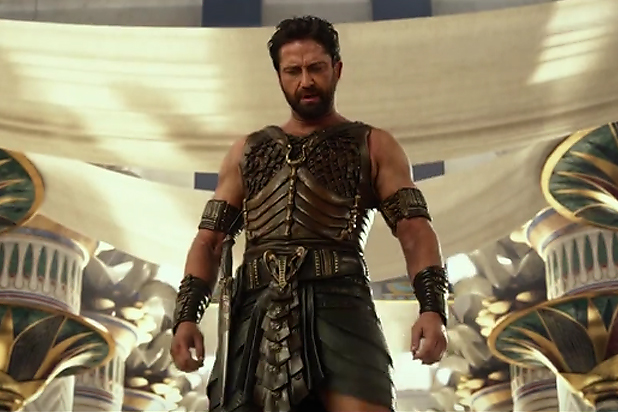
This plot of Gods of Egypt is a heavily modified version of the Egyptian myth “The Contendings of Horus and Set”, in which the gods Set and Horus vie for the rule of Egypt. Set, played by Gerard Butler in the movie, was the Egyptian god of the desert, storms, disorder, and violence, and served as lord of the red land (essentially, the deserts of Egypt). His foil, the protagonist Horus, is played by Nikolaj Coster-Waldau, and is the Egyptian god of the sky. Horus is the son of Set’s brother, Osiris, whom Set ursurped and murdered in his quest for power. Because of this, Horus and Set are at odds in Egyptian mythology, a conflict that is carries over into Gods of Egypt.
goe3

Other Egyptian mythological figures who appear in the film include Ra, the sun god; Osiris, the god of resurrection and the afterlife; Thoth, the father of science, religion, magic, and the written word; Apophis, the enemy of Ra and lord of chaos; Hathor, the goddess of love and beauty; and Anubis, who was the lord of the underworld, and tasked with ushering souls into the afterlife.

Gods of Egypt was filmed in Australia to stand in for the Sahara desert. While this was partially because of safety concerns, Australia also offers significant tax incentives to bring in film productions. Between these incentives and pre-selling international distribution rights, Lionsgate and Summit had very little risk involved with the project (rumored to be only $10 million), and almost certainly made a solid profit.

The title of the movie was modified in a number of markets to be Kings of Egypt, in order to avoid potential religious controversy and censorship. Interestingly, one of these countries wound up being Egypt itself.

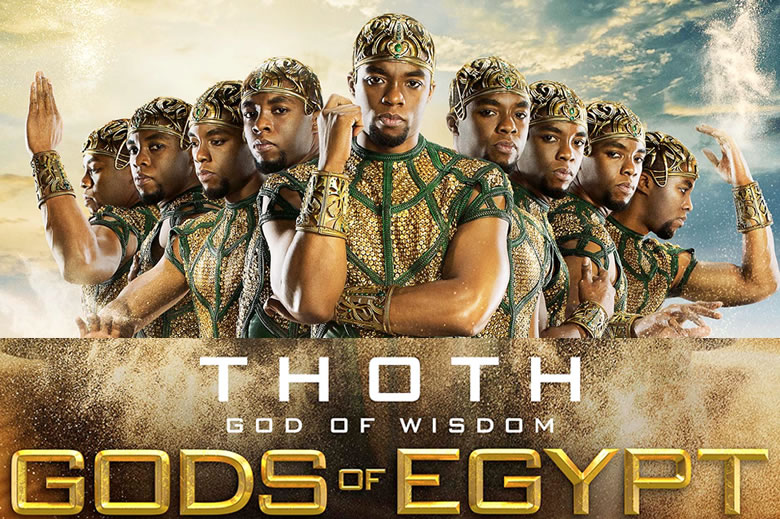
Controversially, Gods of Egypt features no Egyptian actors, and hardly players any of African descent. This caused a significant backlash from internet figures and film critics, prompting a wave of apologies from the director and the studio. Chadwick Boseman, who portrays Thoth in the film, had the following to say to GQ about the movie’s whitewashing of Egyptian mythology:

“When I originally was approached with the script, I thought this [critique] might come up, I really did. And I’m thankful that it did, because actually, I agree with it. That’s why I wanted to do it, so you would see someone of African descent playing Thoth, the father of mathematics, astronomy, the god of wisdom…people don’t make $140 million movies starring black and brown people.”
goe4

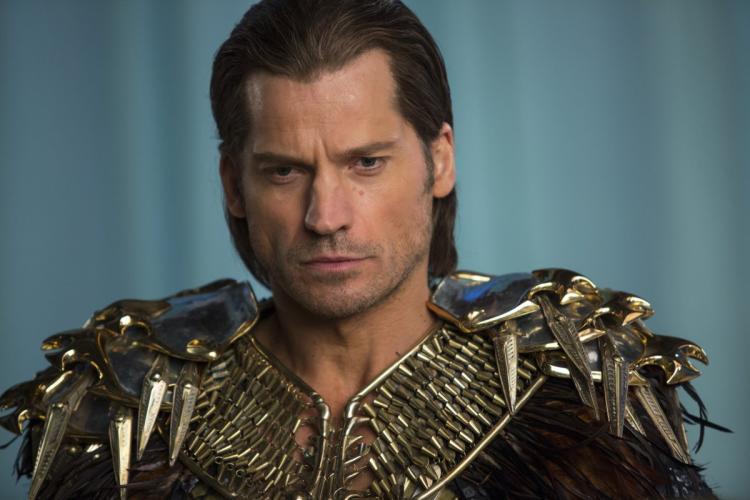
On the flip side, Nikolaj Coster-Waldau, who plays Horus in the movie, told The Red Bulletin his feelings on the controversy:

A lot of people are getting really worked up online about the fact that I’m a white actor. I’m not even playing an Egyptian; I’m an 8-foot-tall god who turns into a falcon. A part of me just wants to freak out, but then I think, “There’s nothing you can do about it.” You can’t win in that sort of discussion.
goe5

Following the near-universal negative reception to the movie, director Alex Proyas did what most directors of prominent flops seem to do: he lashed out at film critics.

They can rip into my movie while trying to make their mainly pale asses look so politically correct by screaming “white-wash!!!” like the deranged idiots they all are….we have a pack of diseased vultures pecking at the bones of a dying carcass. Trying to peck to the rhythm of the consensus. I applaud any film-goer who values their own opinion enough to not base it on what the pack-mentality say is good or bad.

Gods of Egypt was made on a production budget of $140 million, on which it took in a lifetime theatrical gross of just over $150 million dollars. While this ultimately covered the production, the production budget number doesn’t take into account post-production and marketing costs. However, thanks to the pre-sales and tax incentives, the film was probably profitable when all was said and done, though not the blockbuster smash that was hoped for. It is interesting to note that Gods of Egypt only made $31 million of its total gross domestically: the movie had to rely heavily on foreign markets to even get to it’s ultimate lackluster take.

In keeping with the disappointing monetary take and pre-release controversy, critics and audiences had little positive to say about Gods of Egypt. Currently, it holds Rotten Tomatoes scores of 16% from critics and 38% from audiences, along with an IMDb user rating of 5.5/10. Peter Bradashaw, in his review of the movie for The Guardian, said:

It’s…fuelled with its own absurdity, like an ecologically unsafe type of diesel.

I don’t think I could have said it better, honestly. Gods of Egypt has an awful lot of problems that plague it from top to bottom. First off, it lacks a clear direction or mission, often shifting focus from one McGuffin to the next, such as one or the other of Horus’s eyes, or Ra’s staff. The writing also relies heavily on prior knowledge of Egyptian mythology, rarely introducing characters or elaborating on any objects, people, or beasts not at the very center of the primary plot. Ra’s solar barge is glossed over, as is his space worm opponent. Likewise, the rules of the afterlife seem rather convoluted and prone to change, and further, apparently the afterlife as whole is edible? Also, it is heavily implied that Horus’s powers were either magnified or manifested from his eyes, until it was revealed that they weren’t actually connected, and that his eyes are mostly irrelevant. However, his eyes are still magic and capable of blinding mortals.

While the design and appearance of the movie is impressive at first glance, the shiny veneer and immaculate production design are often ruined by shoddy CGI, even outside of the cringe-inducing action sequences (which I’ll get to shortly). One frequently used, yet inconsistently applied, digital element in the film is the size differential between mortals and humans. Sometimes, the gods appear only slightly taller than most humans, and in other scenes, they look like giants. I understand wanting to make the gods look superhuman, but unlike the impressive perspective work done in Lord of the Rings for the hobbits, Gods of Egypt never nails down the art of pulling this off effectively, and it mostly served to make my eyes confused for the first few minutes of the run time.

While watching the movie’s action sequences, I was reminded of the climactic fight between Superman and Zod in Man of Steel: in spite of all of the damage and punches being thrown, I was pretty bored after only a few seconds. The hits never look like they have weight, and the rapid movements and cutting distract from any kind of tension or compelling visuals. That said, there wasn’t much to see in the first place: the animal transformations of Set and Horus that appear in most of their fights just look goofy. They are a little too fluid and shiny to be tangible, and stand out like two big, cartoonish sore thumbs whenever they show up. This is really unfortunate, because they should be cool, and I’m willing to bet that their designs on paper were fantastic. Similarly, a 9-foot-tall Geoffrey Rush on fire fighting a space dragon should one of the coolest things you could ever see, but the result on screen just looks like a bad video game.

There are some good things to say about a few of the performances, however. Chadwick Boseman’s hammy portrayal of Thoth is refreshing, and adds some genuine humor to the movie. Gerard Butler also seems really comfortable in the role of a heel, and I hope he continues on his path of villainous portrayals. Nikolaj Coster-Waldau is the platonic ideal of a stone-faced, handsome protagonist, and his comedic banter with his co-stars is genuinely charming at points. However, there are also some less than stellar performances to be found, particularly among the cast of mortal characters. Brenton Thwaites, who plays the (I guess) protagonist Bek, is absolutely terrible, from his inconsistent accent to his awkward deliveries. His romantic interest, played by Courtney Eaton, is also far from stellar (again, a bad accent), but is relegated to basically being a McGuffin herself instead of an actual character with an arc or discernible traits. Speaking of which, the accents n this movie range all over the place: I kind of suspect that there wasn’t any kind of directorial edict as to what the Egyptians would sound like, so each actor did whatever they felt like.

I’ve said it before, but it is worth reiterating again: Gods of Egypt has a pretty damn cool idea on paper: the designs of the sets and costumes are ambitious, bold, and interesting, and the classic story makes for a solid base for a film. However, the execution here was way off the mark. Partially, I think this is because the necessary budget to pull off the number of creatures and sets required to meet the vision was beyond the production’s grasp, so the production team settled on a number of less-than-ideal versions that came slightly cheaper.

The insensitivity and lack of foresight in the casting, which has come to embody the impact and legacy of Gods of Egypt, is 100% the result of Hollywood thinking: they clearly didn’t anticipate the backlash, and just wanted faces they thought would be marketable with a relatively affordable price tag. Hollywood is still trying to catch up with the zeitgeist on whitewashing: Ghost in the Shell, Exodus: Gods and Kings, and Gods of Egypt are all indicative of that. Partially due to obliviousness, partially due to stubbornness, and partially due to a powerful, capitalistic drive, a whole lot of studios and producers have held on to the model of The Conqueror: “John Wayne can be Genghis Khan, because he’ll sell the tickets and that’s what people want!” The only way to change this is to keep chipping away at the profits of these movies: don’t buy a ticket, and complain on social media as loud as you can. Eventually, the financial losses and toxic word of mouth will lead to some changes. At least, we can hope so.

As far as a recommendation goes, there are some positives to the film, but they don’t come anywhere near outweighing the negatives. If you haven’t seen it yet, don’t. Or, if you are deathly curious, look up some clips. I just wouldn’t advise putting any money into seeing this.
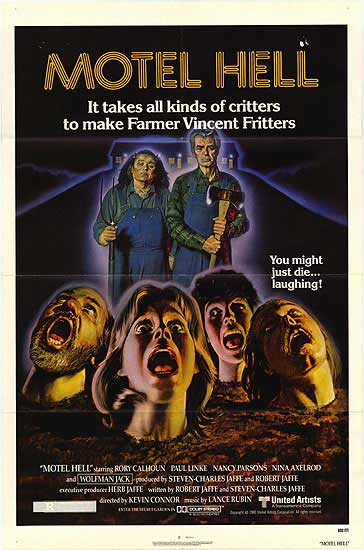
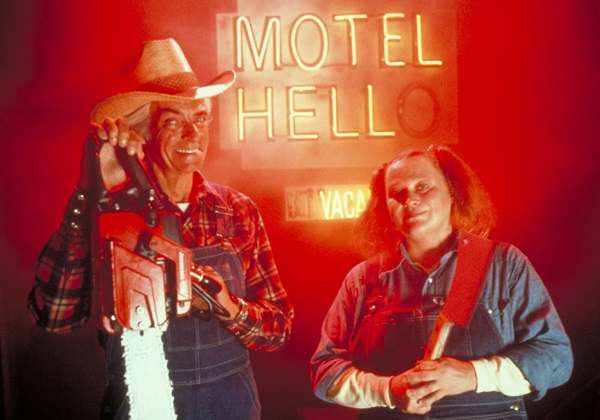
Motel Hell

Motel Hell

motelhell2

Today’s feature is a cult favorite horror comedy from 1980: Motel Hell.

Motel Hell was directed by Kevin Connor, who spent most of his career directing television movies and television series. The screenplay for the movie was written by brothers Robert Jaffe (who penned screenplays for Nightflyers and Demon Seed) and Steven-Charles Jaffe (producer of Star Trek VI, Near Dark, Ghost, and Time After Time), who also served as producers for the film.

The plot of Motel Hell is summarized on IMDb as follows:

A seemingly friendly farmer and his sister kidnap unsuspecting travelers and bury them alive, using them to create the “special ingredient” of their famous roadside fritters.

The cinematographer for the film was Thomas Del Ruth, who went on to shoot Death Wish II, The Breakfast Club, Stand By Me, The Running Man, The Mighty Ducks, and numerous episodes of The West Wing.

The editor for Motel Hell was Bernard Gribble, who also cut Caddyshack II, Death Wish, Top Secret, White Dog, and Aces: Iron Eagle III.

The music for the film was composed by Lance Rubin, who also provided music for the film Happy Birthday To Me, as well as the television shows King of the Hill and Fantasy Island.

The primary cast of Motel Hell was made up of Rory Calhoun (Night of the Lepus, The Texan), Paul Linke (K-PAX, Parenthood, Chips), Nina Axelrod (Critters 3, Roller Boogie), Wolfman Jack (American Graffiti), and Nancy Parsons (Sudden Impact, Porky’s, Steel Magnolias).

motelhell4The chainsaw duel that takes place during the climax of the film took multiple days of shooting to complete, and wasn’t even featured in the initial screenplay for the movie.

Speaking of, the screenplay of Motel Hell went through a number of rewrites and edits over the course of production. All in all, it took three years from the completion of the screenplay for the movie to hit the screen. The ultimate result was a far more comedic movie than what the original concept had been, which was at the behest of director Kevin Connor.

Motel Hell took more than a little influence from the hit 1974 horror film The Texas Chainsaw Massacre, including the prominent featuring of chainsaws and backwoods cannibalism in the plot. Tobe Hooper, who directed the original Texas Chainsaw Massacre, was even at one point interested in directing the movie. Interestingly, the 1986 sequel The Texas Chainsaw Massacre 2 bears some notable similarities to Motel Hell, and adopts its somewhat lighter tone.

motelhell3Motel Hell currently has an IMDb user rating of 6.1/10, and Rotten Tomatoes scores of 68% from critics and 49% from audiences. It was made on an estimated production budget of $3 million, on which it grossed just over $6.3 million in its domestic theatrical release.

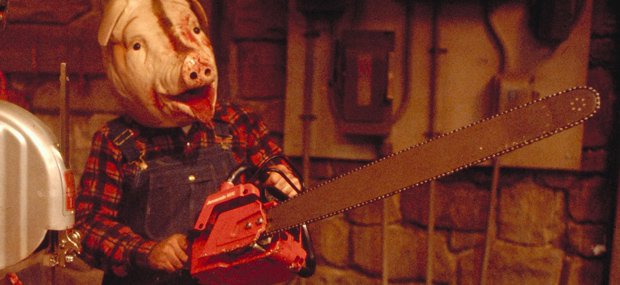
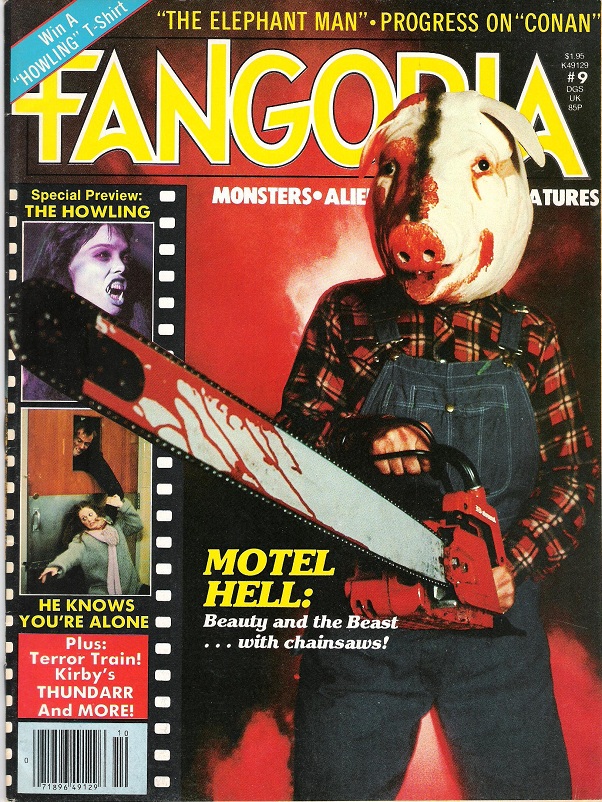
Personally, I think Motel Hell is a weird little movie with a strange sense of humor, but it does feature some undeniably creepy images. The “farm” is the best example of this: a plot of land where the lead characters bury living victims up to their heads, then remove their vocal cords. The result is a small field dotted with heads that flail, writhe, and gasp helplessly as the victims are force-fed over days, and eventually harvested. Likewise, the iconic chainsaw fight, in which Vincent dons a pig’s head as a mask, is probably the most lasting image from the film, and is genuinely upsetting (despite being a bit goofy).

The idea of a story built around a successful, cannibalistic food business isn’t new by any means: there’s Sweeney Todd, Soylent Green, and The Corpse Grinders, just to name a few. However, I think Motel Hell shows the most detail of the process, and the way it is depicted is a bit more creepy than other, similar stories.

That said, Motel Hell is far from flawless. It wasn’t written initially as a comedy, and it definitely shows. Humor is a hard thing to inject after the fact, and I can’t think of anything that was honestly funny about the movie, though it definitely tried to establish a humorous tone.

Overall, I think the movie was built on an interesting concept, but the writers struggled to create an actual story out of it. It bogs down a bit in the middle, and despite a handful of highlights, is kind of dull on the whole. I definitely like the design and concept of the movie far more than I liked actually watching it, as I could never really wrap my head around the characters.  The cartoon reality and exaggerated characters presented were just a little too far removed from tangibility for my taste. That said, a lot of people seem to enjoy this one, so bad movie fans and people who like cult films should at least give it a chance.

motelhell1


Worst Movies of 2016

Howdy loyal followers! We’ve had quite a year, haven’t we? With 2016 coming to a welcome close, I wanted to appropriately slam the door in its back with a quick rundown of the publicly perceived worst films of the year.

goe1

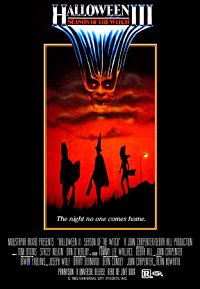
We all know that opinion is subjective, so I want to re-emphasize that this is a list I generated based on public perception. Basically, I took 14 currently published year-end “Worst of 2016” lists, then tallied up how often each film was listed. I thought that would be pretty simple and data-driven way to make my list. Unfortunately, I was very, very wrong about that first part. Between the handful of lists I initially pulled, I wound up with nearly 100 films, which included some obviously contentious, contrarian picks like Hell or High Water, Rogue One, and Captain Fantastic. For the sake of brevity, I’m only listing out movies here that appeared on more than 2 lists, but if you want to see the final version of my working document with all of the tallies and the sources used, you can find it here.

ninelives20162

Interestingly, there was far from a consensus pick for the worst picture of 2016: the most consistently reviled movie was only on 10/14 rankings. For the fraction-impaired, that means that just under 72% of the lists I pulled had it present at all, let alone at #1.

yogahosers3

Without further ado, here are the publicly perceived worst movies of 2016:

  1. Independence Day: Resurgence
  2. Mother’s Day
  3. (Tie) Batman v. Superman: Dawn of Justice / Suicide Squad / Warcraft
  4. (Tie) Gods of Egypt / Alice Through The Looking Glass
  5. (Tie) Dirty Grandpa / London Has Fallen / The Divergent Series: Allegiant
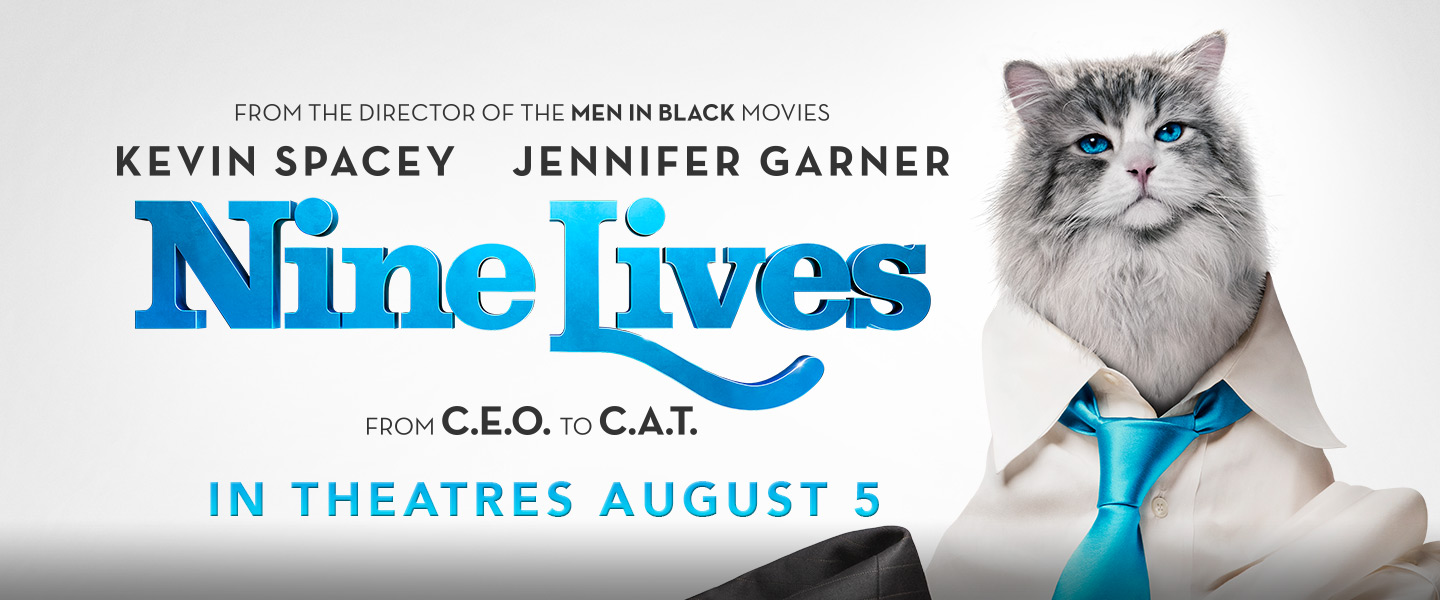
  6. (Tie) Yoga Hosers / Nine Lives / Zoolander 2 / X-Men: Apocalypse
  7. (Tie) Hillary’s America / Sea of Trees / Man Down / Inferno / Collateral Beauty / My Big Fat Greek Wedding 2

Are there any movies that you expected to see that didn’t make the cut?

Road House

Road House

roadhouse4

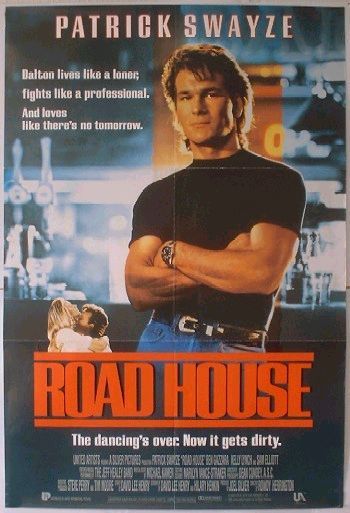
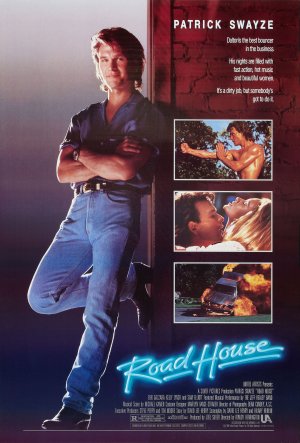
Today, I want to take a look at a beloved good-bad classic: 1989’s Road House.

The plot of Road House is summarized simply and eloquently on IMDb as follows:

A tough bouncer is hired to tame a dirty bar.

The screenplay for Road House had two credited writers: R. Lance Hill, who also wrote Out For Justice, and Hilary Henkin, who also penned Wag The Dog and Fatal Beauty.

Road House was directed by Rowdy Herrington, who also helmed the films Striking Distance, A Murder of Crows, and 1992’s Gladiator.

The primary cast of Road House is made up of Patrick Swayze (Dirty Dancing, Ghost, Point Break), Kelly Lynch (Virtuosity, Mr. Magoo), Sam Elliott (Hulk, The Big Lebowski, Fatal Beauty), and Ben Gazzara (Happiness, Anatomy of a Murder, The Big Lebowski).

The cinematographer for the film was none other than Dean Cundey, one of the most acclaimed modern directors of photography, who boasts countless well-known credits like Halloween and Jurassic Park. He is known by many as the Dean of Darkness, due to his uncanny proficiency in filming and utilizing low light and shadow.

Road House had two primary editors: John Link, who also cut Steel, Die Hard, The Mighty Ducks, and Predator, and Frank J. Urioste, who edited Deep Blue Sea, RoboCop, The Hitcher, and Total Recall.

The music for Road House was provided by Michael Kamen, whose also composed scores for movies like X-Men, Event Horizon, Frequency, The Iron Giant, Hudson Hawk, Die Hard, Last Action Hero, Action Jackson, Highlander, and Brazil, among many others.

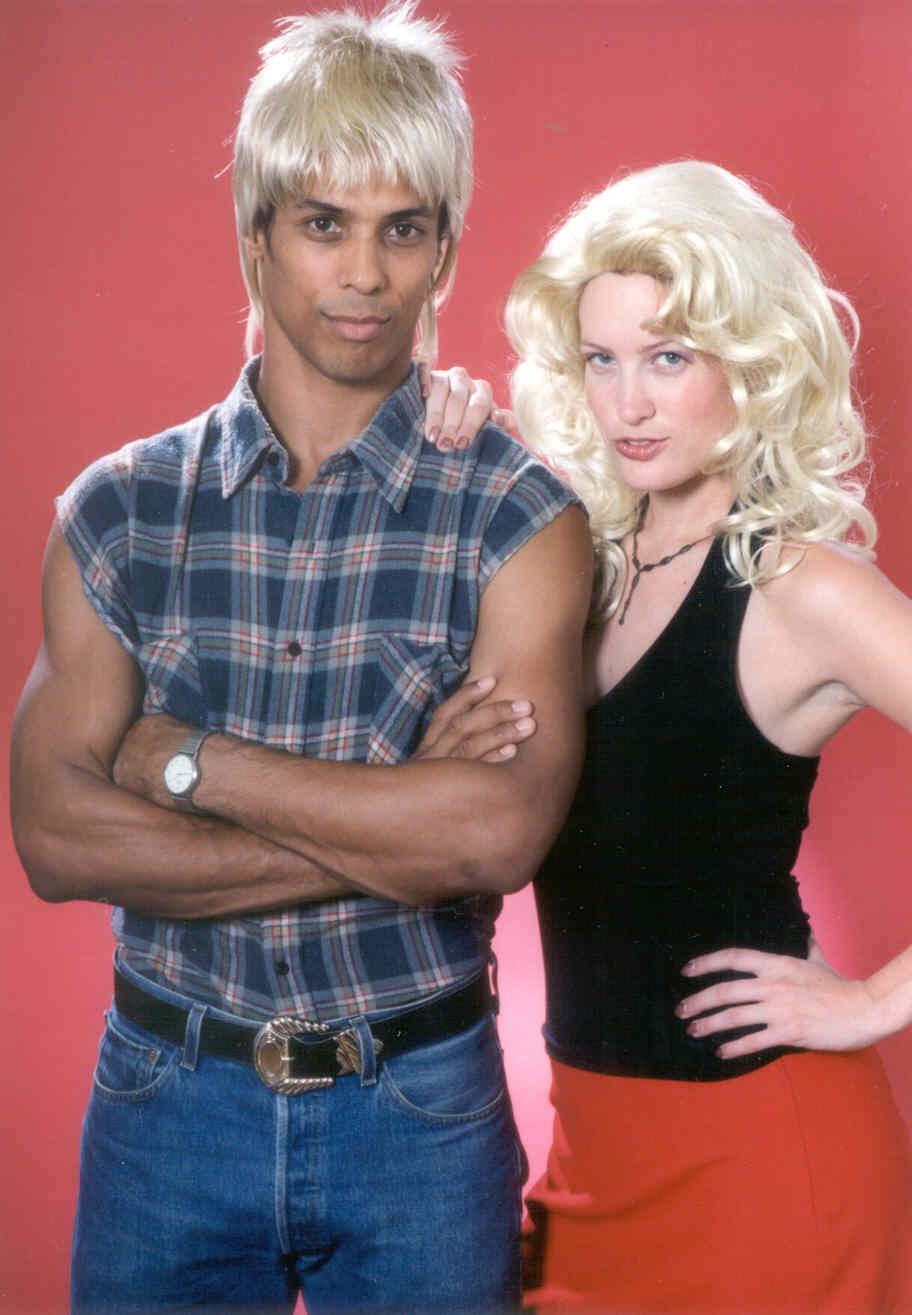
From December 2003 to February 2004, there was an off-Broadway musical titled “Road House: The Stage Version Of The Cinema Classic That Starred Patrick Swayze, Except This One Stars Taimak From The 80’s Cult Classic “The Last Dragon” Wearing A Blonde Mullet Wig” that is exactly what it sounds like. Here’s a promotional photo:

roadhouse1Road House received 5 Golden Raspberry nominations as one of the worst films of 1989, competing in the categories of Worst Picture, Worst Actor, Worst Supporting Actor, Worst Director, and Worst Screenplay. Ultimately, it didn’t wind up winning any of them. However, it was eventually listed as one of the “100 Most Enjoyably Bad Movies Ever Made” in Golden Raspberry Award founder John Wilson’s book The Official Razzie Movie Guide.

Patrick Swayze reportedly had to turn down lead roles in two other famously good-bad movies, Predator 2 and Tango & Cash, in order to do Road House.

The character of Dalton was reportedly named after Dalton, GA. R. Lance Hill, the movie’s writer, was particularly inspired after visiting a rowdy local bar in the town.

Interestingly, Annette Bening was originally cast opposite of Swayze in the role of Doc. She was ultimately replaced by Kelly Lynch, who claims that Bening was fired due to a lack of chemistry with Swayze.

Road House has the unique distinction of being the first movie to be subjected to “RiffTrax,” the Mike Nelson run follow-up to Mystery Science Theater 3000, which are distributed as scripted, comedic commentary tracks to be played simultaneously with films. Nelson previously labeled Road House as the cheesiest movie ever made in his book “Mike Nelson’s Movie Megacheese.”

roadhouse2According to Sam Elliott, all of the actors in Road House performed their own stunts. However, they were all done under the strict supervision of martial arts master Benny Urquidez, a noted kickboxing champion who worked on numerous theatrical productions as an advisor and coordinator.

Reportedly, there is a Road House remake coming up in the near future. Currently, it is set to star MMA icon Ronda Rousey, and has Nick Cassavetes attached to both write and direct.

Road House received a sequel many years after the fact in the form of Road House 2: Last Call, which was released straight to DVD in 2006.

In its lifetime domestic theatrical run, Road House grossed just a hair over $30 million, on an estimated production budget of $15 million. While this made the movie profitable, it didn’t resonate very well with critics. Over time, however, it has become a cult classic that has won over many.

Road House currently holds a user rating of 6.5/10 on IMDb, along with Rotten Tomatoes scores of 66% from general audiences and 38% from critics. Gene Siskel called the film “outrageous in terms of its cartoon-like plotting and dialogue,” and Roger Ebert wrote that Road House was “the kind of movie that leaves reality so far behind that you have to accept it on its own terms,” and that he “laughed more during [Road House] than during any of the so-called comedies I saw during the same week.”

Siskel and Ebert are both totally right about Road House: it is outrageous, it is completely divorced from reality, and it is funny as all hell because of it all.

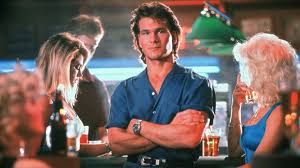
roadhouse3I think that, at the very least, Swayze and Elliott deliver solid performances here, and are as believable as they could possibly be considering the outlandishness of the concept. That said, the villains are an entirely different case. I definitely appreciate over-the-top villainy in action movies, but the gang in Road House drift consistently too far into cartoonish territory, to the point that they stop feeling like much of a threat, in spite of their posturing.

I think the two things that most stuck with audiences about this movie were the fights and the one-liners, and they are unarguably the two strongest elements of the film. Depending on who you ask, these are two of the most important elements of any action movie. If that happens to be your rubric, then this is a hard movie to beat for entertainment value. However, if you go into it expecting anything beyond that, like character depth or a thought-provoking plot, you might just be disappointed.

Overall, I think that Road House is just about perfect for what it is: mindless, entertaining action. This isn’t deep, this isn’t social commentary, this isn’t character study: this is spectacle in a pure form. If that is what you want from a movie, Road House delivers.

For action movie fans, good-bad movie fans, Patrick Swayze fans, and arguably movie fans of any kind, Road House is worth seeing at least once. Despite its mixed reception and modest box office, the movie has managed to seep pretty deep into popular culture, making viewing a sort of educational event if you haven’t already. At least, you can tell yourself that.

In honor of the holiday season, and a true cult film classic, have yourselves a Patrick Swayze Christmas!

Kangaroo Jack

Kangaroo Jack

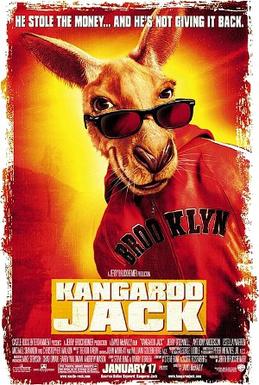
kjack1

Today’s feature is a weird, mostly-forgotten movie that attempted to blend, mob comedy, a buddy road trip formula, and a talking marsupial: Kangaroo Jack.

The plot of Kangaroo Jack is summarized on IMDb as follows:

Two childhood friends, a New York hairstylist and a would-be musician, get caught up with the mob and are forced to deliver $50,000 to Australia, but things go haywire when the money is lost to a wild kangaroo.

Kangaroo Jack had three credited writers: Steve Bing (Missing In Action, Missing In Action 2), Scott Rosenberg (Con Air, High Fidelity), and Barry O’Brien (Hannah Montana, CSI: Miami).

The film was directed by David McNally, whose only other feature directorial credit to date is 2000’s Coyote Ugly.

The cast of Kangaroo Jack includes Michael Shannon (Man of Steel, Bug, Boardwalk Empire), Christopher Walken (King of New York, The Deer Hunter, The Dead Zone), Dyan Cannon (Caddyshack II), Estella Warren (Driven, The Cooler), Marton Csokas (Timeline, Aeon Flux), Anthony Anderson (Scream 4), and Jerry O’Connell (Jerry Maguire, Scream 2).

The cinematographer for the movie was Peter Menzies Jr., who also shot The 13th Warrior, Die Hard with a Vengeance, Four Brothers, and Gods of Egypt, among others.

Kangaroo Jack ultimately had three credited editors: John Murray (Drop Dead Diva, Entourage), Jim May (Goosebumps, Van Helsing, Cowboys & Aliens), and William Goldenberg (Heat, Gone Baby Gone, Argo, National Treasure).

Jerry Bruckheimer, best known for producing movies like Top Gun, Beverly Hills Cop, Thief, Bad Boys, Con Air, The Rock, and Armageddon, was a key producer for Kangaroo Jack. The movie was even made under the banner of his production company, Jerry Bruckheimer Films.

The music for Kangaroo Jack was provided by Trevor Rabin, whose other film credits include Torque, Hot Rod, Deep Blue Sea, Con Air, and 12 Rounds.

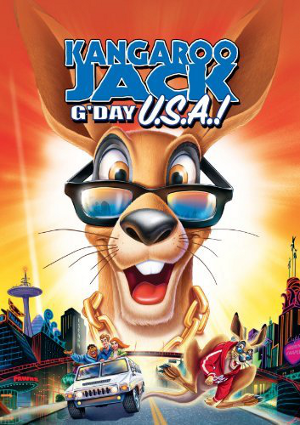
Kangaroo Jack received an animated sequel, Kangaroo Jack: G’Day USA!, which went direct to DVD in 2004. This sequel was more in line with the film’s advertising campaign: it was focused on the kangaroo’s shenanigans, and lost all of the adult humor and themes of its predecessor.

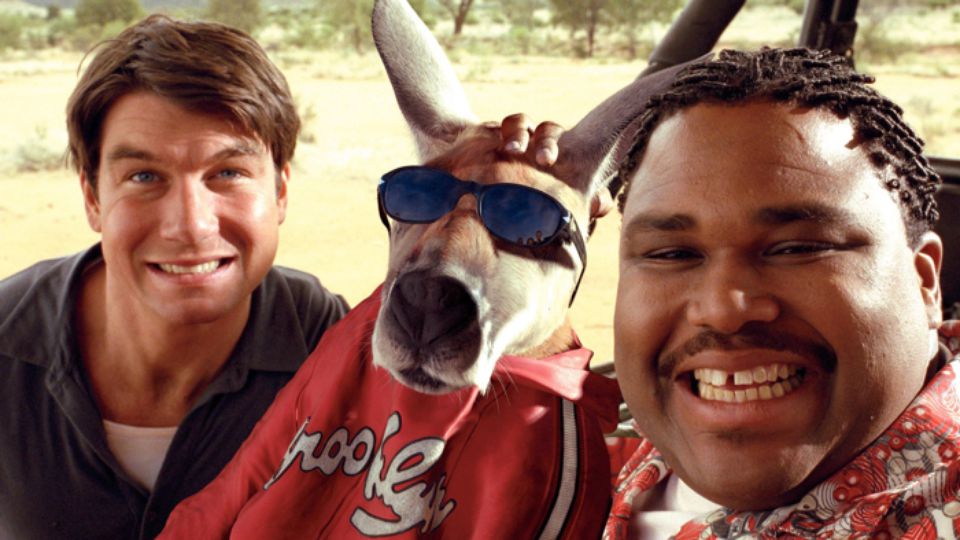
kjack3Australian character actor Adam Garcia has an uncredited role in the movie as the voice of Kangaroo Jack. Garcia was previously in director David McNally’s feature Coyote Ugly, three years prior.

Kangaroo Jack astoundingly only received one Golden Raspberry nomination, which was for Christopher Walken’s supporting performance. Interestingly, even that was only co-nominated with Walken’s role in Gigli, which was likely the true reason for the recognition.

Kangaroo Jack wasn’t without its victories, however, At the annual MTV movie awards, Kangaroo Jack won the prestigious Blimp Award for “Favorite Fart In A Movie.”

Inspired by the marketing campaign of Snow Dogs, the producers of Kangaroo Jack decided to focus their marketing efforts for the film around a brief hallucination sequence involving a talking kangaroo, despite the fact that the movie’s plot had nothing to do with talking animals. Initially, the movie’s title was Down and Under, and it was intended to be a hybrid of a mob comedy and a road trip movie. Once the movie was edited together, however, the producers realized that it was an absolute mess, and panicked over what looked to be a bomb. Ultimately, the studio put up the cash to shoot additional footage and create CGI kangaroo sequences, so that the film could be recut and marketed effectively as an animal feature.

Somewhat surprisingly, this deceptive advertising tactic worked, at least to a point. On a production budget that ultimately reached $60 million, the film managed to take in $88.9 million over its lifetime theatrical run. However, outside of incredibly young children, nearly everyone hated the movie. Currently, it holds a 4.4/10 IMDb user rating, along with Rotten Tomatoes scores of 8% from critics and 28% from audiences.

Kangaroo Jack is by no means a good movie. In fact, it is an unequivocally terrible movie. The CGI that was intended to salvage it at the time now looks incredibly dated. The humor ranges from dully crass to gay-panic offensive. The chemistry between the players, particularly the leads, is utterly nonexistent.

However, there are two good things about this movie: Christopher Walken and Michael Shannon. For reasons I will never fully understand, both of these men decided to put themselves into the zone for this movie.

Shannon, doing what he does best, is goddamn bone-chilling, even despite being given the role of a mustache-twirling cartoon. At this point, I’m convinced that Shannon could elevate even Snidely Whiplash into a icy-veined cinematic terror.

Walken, on the other hand, manages to turn what could have been hack-y comedic dialogue into something that is actually worth a laugh. His character, a mob boss, is basically a cardboard cutout, except for the fact that he is trying to expand his vocabulary, and is prone to malapropisms as a result. In the hands of just about anyone else, there is no way that ritualistically reciting the definition of “amorphous” into a recorder, or misusing the term “plethora” in place of “anathema,” could be funny. Walken, however, finds a way to make that shit work, at least in some small way.

There are a couple of ephemeral moments in Kangaroo Jack where only Walken and Shannon are on screen. If I were to come across a genie’s bottle right now, I might just waste that precious first wish on making this movie about them, and thus extending these precious moments of respite from the unrelenting parade of farts that is the rest of this movie.

kjack2Kangaroo Jack is a mess, and I can’t recommend that anyone go back to give it a second glance. It has been forgotten for a reason. If you happen to be one of the people who has fond memories of this from your childhood, I first highly recommend that you apologize to your parents and/or guardians, and then advise locking this movie up in a dusty guest room closet of your memory palace.

Cobra

Cobra

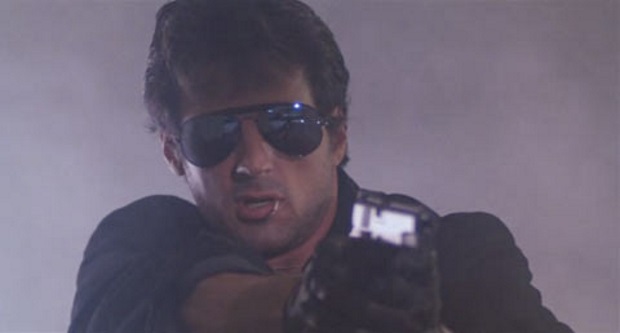
cobra1

Today’s feature is the Sylvester Stallone vehicle, Cobra.

The plot of Cobra is summarized on IMDb as follows:

A tough-on-crime street cop must protect the only surviving witness to a strange murderous cult with far reaching plans.

The screenplay for Cobra was penned by the Academy Award winning screenwriter and Academy Award nominated actor Sylvester Stallone, who also starred in film. His career as both an actor and screenwriter has had a fair share of ups and downs: flops like Judge Dredd, Rhinestone, and Driven, cult classics like Demolition Man, Rocky IV, Cliffhanger, and Over The Top, the label-defying homo-erotic buddy cop masterpiece Tango & Cash, and genre-defining flicks like First Blood and Rocky. In many ways, he is a genre unto himself.

The credited director for Cobra was George Cosmatos, who also directed the films Leviathan and Rambo: First Blood Part II, and was questionably credited with directing Tombstone after the initial director was dismissed. However, much like with Tombstone, there is some question as to whether his credit on Cobra is legitimate.

Beyond Stallone, the cast of Cobra includes Brigitte Nielsen (Red Sonja, Beverly Hills Cop II), Reni Santoni (Dirty Harry, Rain Man), and Brian Thompson (Mortal Kombat: Annihilation, Doctor Mordrid, Lionheart).

The film has two credited editors: Don Zimmerman (Galaxy Quest, Half Baked, Over The Top, Rocky IV) and James Symons (Tank Girl, Fortress 2, Rambo III, Teenage Mutant Ninja Turtles III).

The cinematographer for Cobra was Ric Waite, who also shot On Deadly Ground, Red Dawn, and Footloose, among others.

cobra2The music for Cobra was provided by Sylvester Levay, who also composed scores for Hot Shots! and Mannequin, and worked in the music departments for Howard the Duck and Scarface.

Cobra was produced in part by the legendary Cannon Group duo of Yoram Globus and Menahem Globus, who produced such films as Enter The Ninja, Over The Top, Masters of the Universe, Superman IV, Breakin’, American Ninja, The Apple, and Lifeforce, among many others.

The screenplay for Cobra is very loosely based on the novel Fair Game by Paula Gosling. Part of why it barely resembles the alleged source material is because Stallone added in numerous elements that he had come up with for his rewrite of Beverly Hills Cop, before he was ultimately dismissed from the project in favor of Eddie Murphy.

cobra4The initial cut of Cobra clocked in at over two hours, and reportedly featured much more violence and a far more fleshed-out plot than what ultimately made it to theaters. First, the decision was made to trim the film in order an extra theatrical screening each day in the theaters, in the hopes that the profits would be inflated. Even after these cuts, however, the MPAA gave the film an X rating. After that, lots of the violence was further toned down or removed to make it more palatable for distribution. The final theatrical release of the film clocked in at 87 minutes, meaning that over half an hour of plot and violence was omitted since the initial director’s cut. While this version has never received an official release, a work print does exist, and has been distributed underground.

Sylvester Stallone’s character in Cobra, Marion Cobretti, is named after John Wayne, whose real first name was Marion.

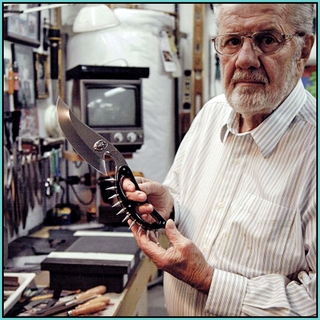
The iconic knife featured in Cobra was custom-made for the production by Herman Schneider, an acclaimed artisan knife-maker, and was intended to be distinct enough to stand out.

cobra5It is widely rumored that Cobra was actually directed by Sylvester Stallone, and that credited director George Cosmatos essentially performed the duty of a producer. At this point, this is generally accepted as true, given the number of crew who have claimed as such over the years.

Cobra was ultimately nominated for six Golden Raspberry awards, which are annually given out to the judged worst films and performances of the year. These included citations for Worst Director, Worst Actor, Worst Actress, Worst Supporting Actor, Worst New Star, Worst Screenplay, and Worst Picture.

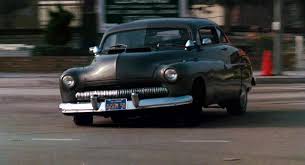
The car that features prominently in Cobra is a customized 1950 Mercury that was actually owned by Sylvester Stallone. Replicas were made for the various stunt scenes throughout the movie that were indistinguishable from the outside to the casual viewer.

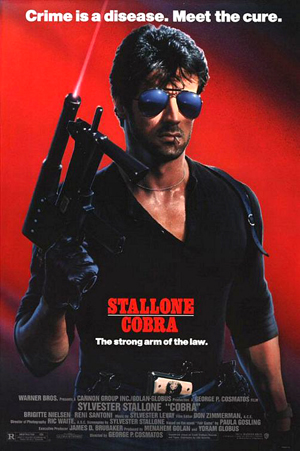
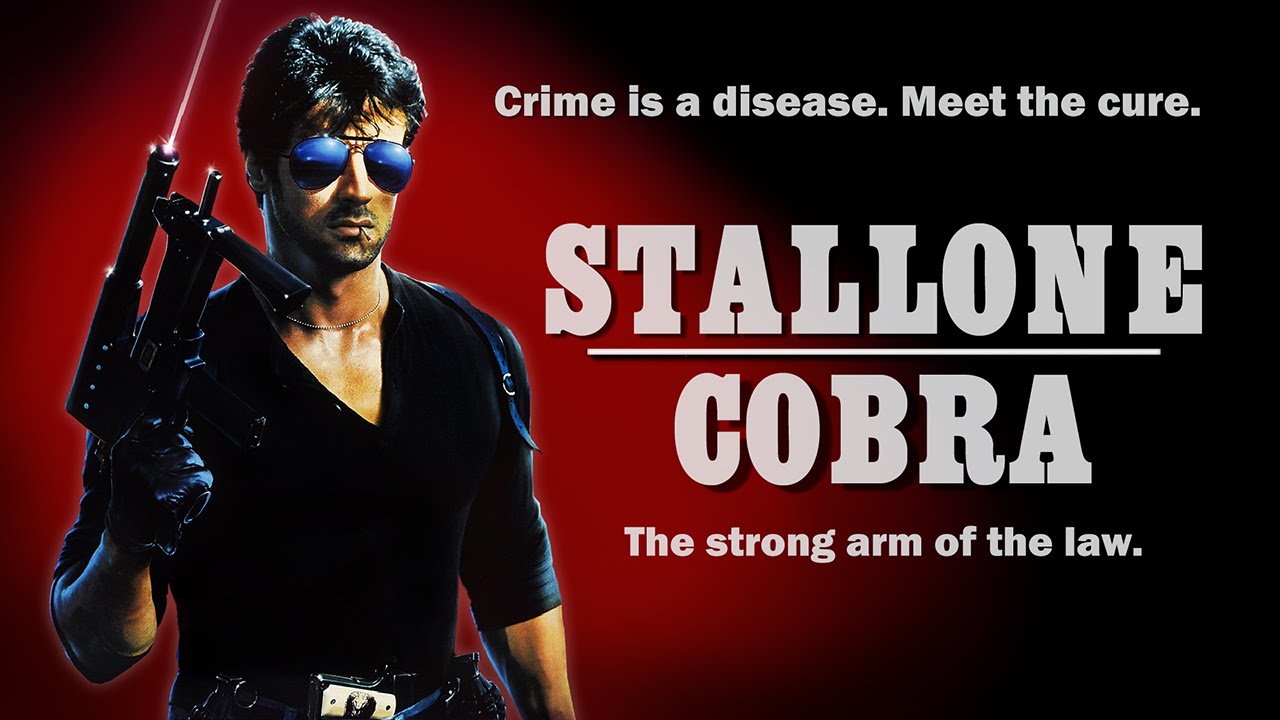
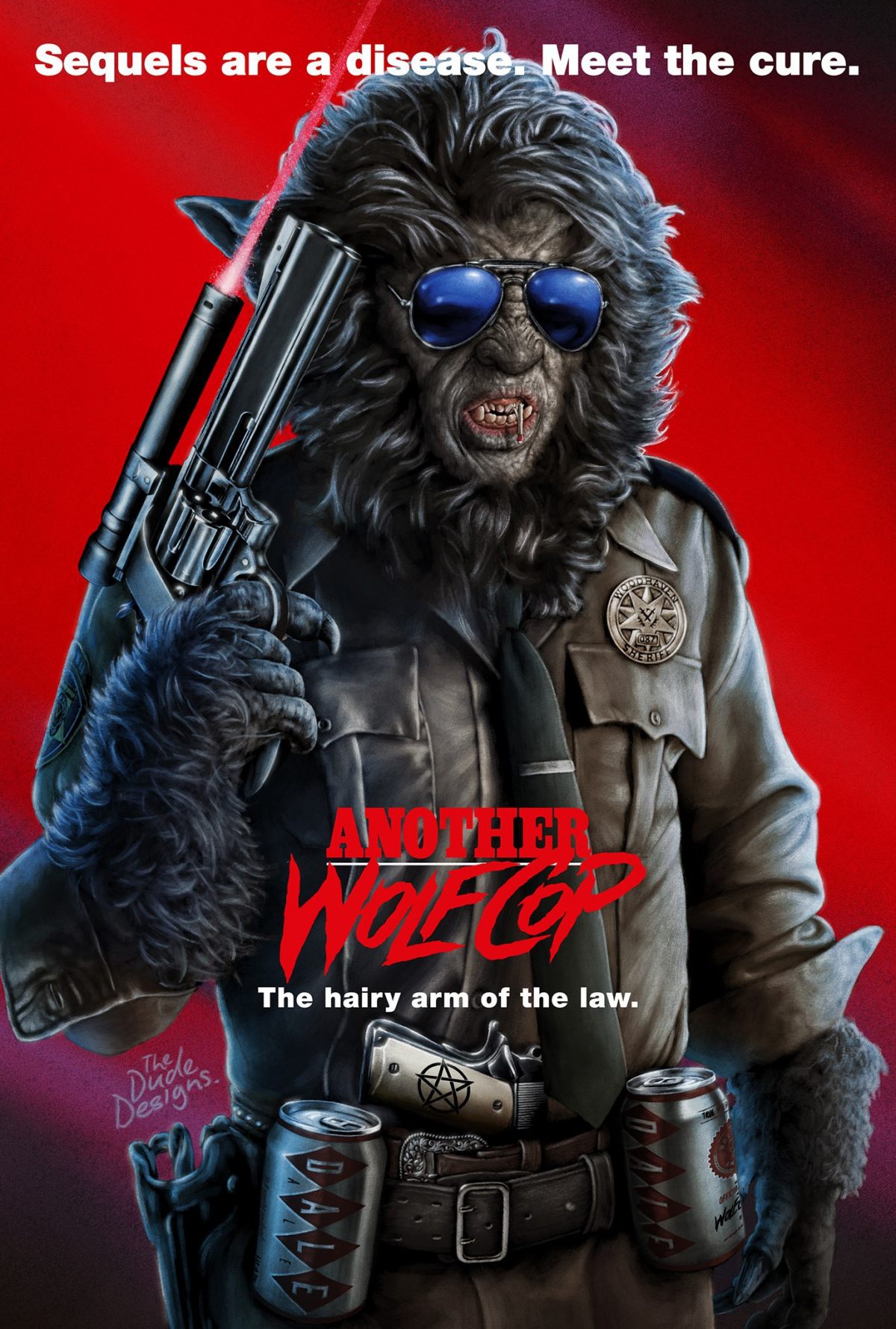
cobra3The poster for the film Another WolfCop is a parody of the iconic poster art for Cobra, and features the distinctive elements of a red background, reflective sunglasses, dark clothing, and a laser-sighted handgun aimed casually upwards.

cobra6 cobra1

Apparently, Stallone was a complete nightmare to work with during the filming of Cobra. In many ways, he was at the height of his powers, and was on a permanent ego trip. He refused to speak to most of the cast and crew, and spent most of his time flirting with his co-star and eventual wife Brigitte Nielsen instead of performing his duties. His antics regularly delayed scenes, and generally created a negative working atmosphere.

Apparently, Cobra had a slight influence on the cult hit Drive. Both the director, Nicolas Winding Refn, and the star, Ryan Gosling, are big fans of the movie, and Gosling modeled some of his character’s mannerisms after Cobretti, including his chewing habit (though the match is replaced with a toothpick).

The production budget for Cobra has been estimated at $25 million, on which it grossed $160 million worldwide over its theatrical run. This made it significantly profitable, though people tend to look back on it as a failure. This is probably because Cobra got a mostly negative reception from both critics and audiences. It currently holds an IMDb user rating of 5.7/10, along with Rotten Tomatoes scores of 13% from critics and 42% from audiences.

Cobra might the most “Sylvester Stallone” of the horde of 1980s Sylvester Stallone movies: it is stylistic to a point, cool, fun, shallow, and almost entirely mindless. It is just about everything you could possibly want from this era of Stallone.

That said, the bizarre plot has some interesting potential to it. The antagonistic cult is way more interesting than Cobretti, but doesn’t get a whole lot of focus. Apparently, this was something that was lost in the initial studio cut of the movie, prior to the second MPAA necessitated cut. I’m kind of curious to see the work print because of this: the extra violence might make it a more fun watch, but I’m curious how much the further focus on the cult might help the film’s story.

As far as action movies go, this is one of the coolest ones from a visual standpoint that you’ll come across. What it lacks in cerebral content and sensibility it almost makes up for with a fascinating mastery of color, a litany of violent deaths, and some pretty damn cool stunts. In general, I think it is a solid recommend for action movie fans. Even the shitty acting and bad line reads sort of suit the tone and style of the movie. If you need to let your brain check out for a bit, this is one way to do it. Just don’t listen too much or look too hard, and there is something to appreciate here.

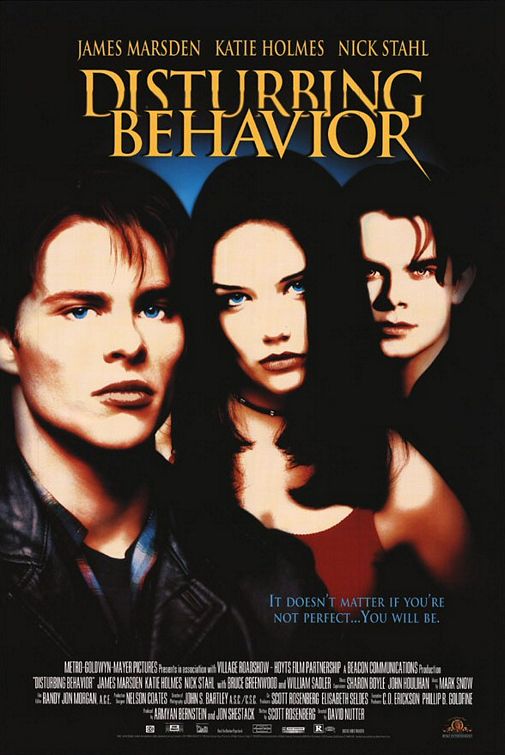
Disturbing Behavior

Disturbing Behavior

behavior5

Today’s feature is a 1998 high school set science-fiction horror movie not call The Faculty: Disturbing Behavior.

The plot of Disturbing Behavior is summarized on IMDb as follows:

The new kid in town stumbles across something sinister about the town’s method of transforming its unruly teens into upstanding citizens.

Disturbing Behavior was written by Scott Rosenberg, who also penned screenplays for High Fidelity, Con Air, Kangaroo Jack, Gone In Sixty Seconds, and the upcoming Jumanji reboot.

The director for Disturbing Behavior was David Nutter, who has done extensive directing work for television shows like Game of Thrones, The X-Files, The Flash, Arrow, Homeland, The Mentalist, The Sopranos, Supernatural, and The West Wing, among others.

The cinematographer for the picture was John S. Bartley, who shot the film Wrong Turn, and also worked extensively on television shows like 21 Jump Street, The X-Files, Lost, and Bates Motel.

behavior4Disturbing Behavior was cut by Randy Jon Morgan, who has had a long career editing on television, including on shows like Law & Order, ER, Criminal Minds, CSI, and Nash Bridges.

The music for the movie was composed by Mark Snow, who provided music for shows like The X-Files, The Lone Gunmen, Starsky & Hutch, and T.J. Hooker over his career.

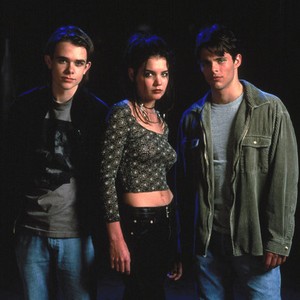
The cast of Disturbing Behavior is made up of James Marsden (Westworld, X-Men), Katie Holmes (Phone Booth, The Singing Detective, Batman Begins), Nick Stahl (Terminator 3, Sin City), Steve Railsback (Nukie, Lifeforce, Deadly Games), Bruce Greenwood (Capote, Star Trek, Star Trek Into Darkness, Thirteen Days), Katharine Isabelle (American Mary, Ginger Snaps), and William Sadler (Shawshank Redemption, The Green Mile).

behavior1Although an original director’s cut of Disturbing Behavior was approved by the studio for release, the feature was forced into re-cutting by the studio after a mixed test-screening that yielding criticisms of the ending and a sex scene, which were both ultimately removed. In response to the studio interference, the director tried to have his name removed from the movie, but eventually allowed it to remain in spite of his reservations. The director’s cut of the movie has never been released officially, though all of the removed scenes are featured as extras on the official DVD release.

The movie currently holds a 5.5/10 IMDb user rating, along with Rotten Tomatoes scores of 35% from critics and 39% from audiences, making it overall pretty poorly regarded.

Disturbing Behavior had a lifetime domestic box office total of $17.5 million on an estimated budget of $15 million, which I assume probably made it break even with relatively low advertising costs. However, I’m sure that a far more lucrative return was hoped for.

Holmes and Marsden are both perfectly serviceable supporting actors if you ask me, but I don’t think that either of them are emotive enough to carry a feature as a lead. In a best case scenario, they could lean on their co-lead to carry them. But, as is the case in this movie, when both leads are stone-faced pseudo-stoics, the movie as a whole suffers.

That said, for as much as Marsden and Holmes don’t work in this movie, Stahl does. His character feels a little more tangible and real than everyone around him, despite some moments of ridiculously quippy dialogue. When his character is eventually turned, his performance really makes it work, and is really the saving grace of the movie.

behavior3Something that bothered me a bit while watching the movie was the fact that not much time was given to exploring the hormonal rage side effect exhibited by a few of the characters. I thought this was the major conflict would come in during the climax: that eventually all of the students would be in a permanent rage-state as a result of their surgeries, leading them to attack everything that moves. While that would be less Stepford-like, which is what the movie was clearly going for, I think it could have made for an interesting sort of youth-in-revolt, generational conflict movie.

Speaking of the concept, I like the general idea of putting The Stepford Wives in a high school. There are a lot of social dynamics at work there, most prominently the fear of unruly youth in rebellion, the social dynamics of high school cliques, and the control each generation tries to exert upon the next. That said, this film didn’t quite capitalize on this potential, mostly by not showing much of the adult plot and motivations. Also, I think there was a missed potential here for a race angle: the violence people fear in schools, particularly “inner-city” ones, is almost always spawned from racism, something that isn’t at all addressed here (until the stinger at the end of the film, in a minor way). The in-group / out-group dynamic would also have been far more powerful from that perspective, and the film could have even had a plot based around the idea of school integration. Alas, it is what it is.

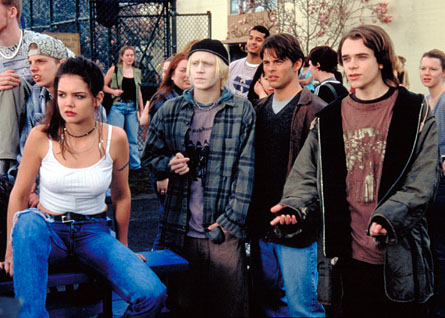
As with most high school movies, Disturbing Behavior just can’t resist bowing to the overdone, cartoonish, and exaggerated clique divides that dominate the genre. While the in-group out-group dynamic does serve a purpose for the plot, the initial introduction to the school introduced a ton of different “classes” which are never brought back up again. So, why even include E-heads and nerds if they don’t play into the story at all? Ultimately, this story is a conflict between the “fixed” kids and everyone else, so these other cliques weren’t ever necessary to establish.

Another pretty serious issue with this movie is the evil plot at the center of it. Not only is the villain a cartoonish (yet not entertaining) caricature of a mad scientist (who utters “science is god” just prior to being defeated), but his plot hinges entirely on the idea that all of the parents in the town will universally agree to mind control their children. If even one set of parents refuses to comply and reports him, the gig is up. The story never even addresses this issue: the parents are all more than happy to subject their children to experimental brain surgery without their consent, which is almost as fucked up as it is wildly unrealistic.

From reading about the crew, it was interesting to see how many of the key members came from an explicitly television background. Somewhat predictably, the movie looks and feels like it belongs on television as a result: something about the style seems more fit for a TV movie than a feature release. And, honestly, I think this movie probably could have been made as a television movie if they had creatively avoided some of the unnecessary CGI shots, and hired down with the casting a little more.

Overall, Disturbing Behavior is weighed down a lot by the lack of chemistry between the leads, some lazy writing that doesn’t do the intriguing concept justice, and a studio-interfered final cut that loses some key details. With all of that said, it is easily as watchable as any given episode of a late season of The X-Files.

I would recommend giving it a shot if you happen to come across it somewhere organically, but I don’t think it is worth specifically seeking out. The Faculty, its better-regarded and more fondly-remembered psuedo-twin is just a lot more fun: it has a better comedic voice to contrast the dark scenario, and has a far more dynamic and sympathetic cast of characters. It think Disturbing Behavior is rightfully overshadowed by it, and the comparisons it draws will always leave it with the short end of the stick.

Dr. Strange

Dr. Strange

strange6

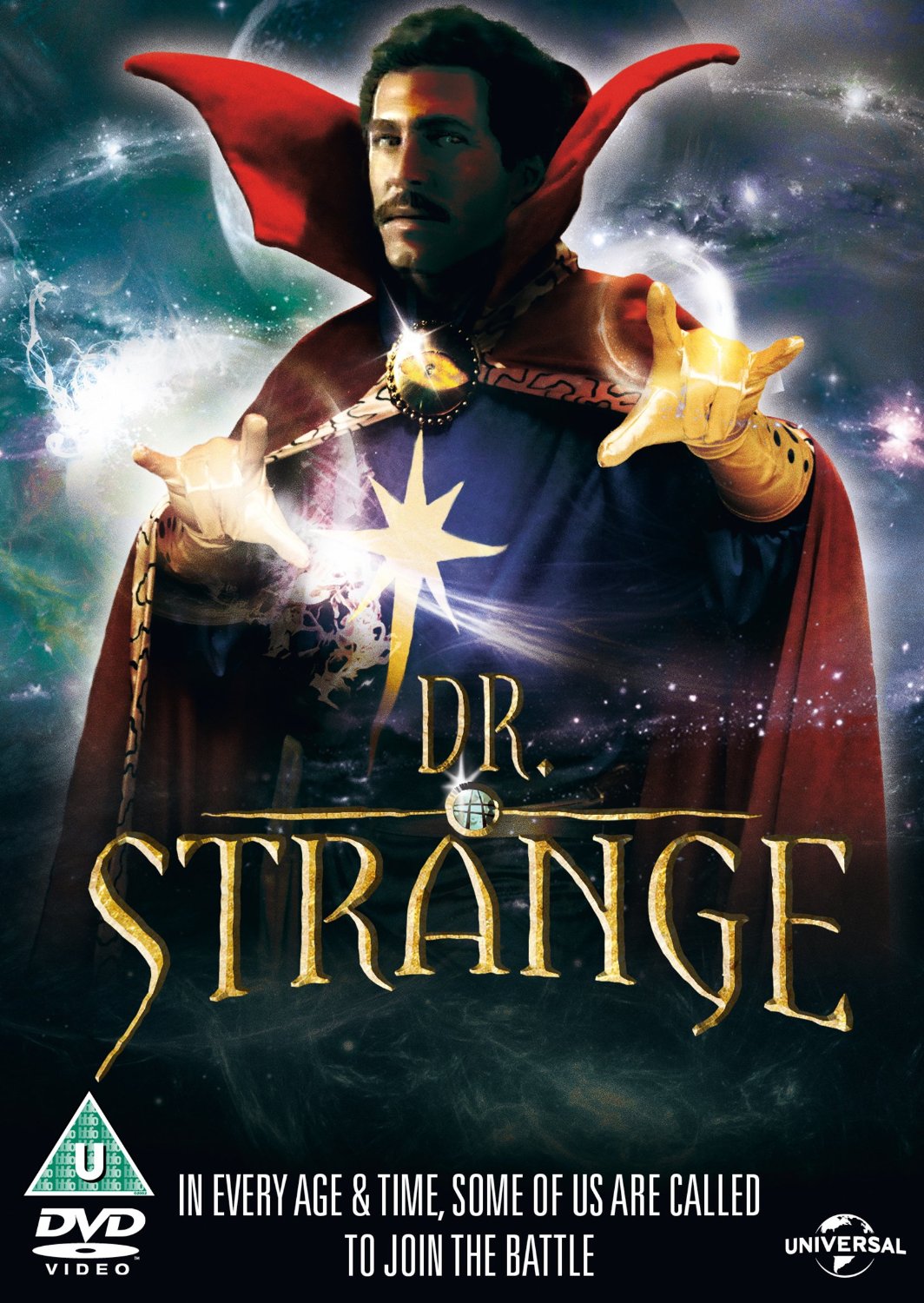
In honor of the big budget Marvel release this past weekend, today I want to take a look at one of the most overlooked Marvel movies of the past: 1978’s Dr. Strange.

The plot of Dr. Strange is summarized on IMDb as follows:

A psychiatrist becomes the new Sorcerer Supreme of the Earth in order to battle an evil Sorceress from the past.

This television movie incarnation of Dr. Strange was written, directed, produced, and generally conjured up by Philip DeGuere Jr., who was a career television writer and director who had assorted credits on shows like JAG, NCIS, The Dead Zone, and the 1980s incarnation of The Twilight Zone.

The film was shot by Enzo Martinelli, who provided cinematography work on a handful of television shows throughout his career, including Battlestar Galactica, The Six Million Dollar Man, and The Munsters.

Dr. Strange was edited by Christopher Nelson, who has had a long career editing acclaimed television shows like Lost, House, Six Feet Under, Mad Men, Hill Street Blues, The Incredible Hulk, Nash Bridges, and Bates Motel, among others.

Beyond DeGuere, the other producers for Dr. Strange were Gregory Hoblit, who went on to direct movies like Frequency, Fallen, and Primal Fear, and Alex Beaton, who produced the Doctor Who movie, The Greatest American Hero, and Kung Fu.

The music for Dr. Strange was composed by Paul Chihara, who also provided scores for Death Race 2000, The Bad News Bears Go To Japan, The Killing Time, The Morning After, Prince of the City, and the television series China Beach.

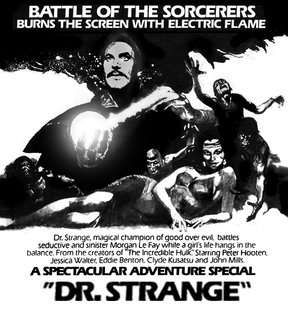
strange3The cast of Dr. Strange is made up most notably of Peter Hooten (Orca, The Inglorious Bastards) and Jessica Walter (Arrested Development, Archer), with the rest of the cast filled out by television regulars.

In 2016, a big budget Marvel film focused on the Doctor Strange character was released. It stars the much-beloved actor, Benedict Cumberbatch, in the role of Hugo Strange, and an accessory cast that boasts the likes of Tilda Swinton and Mads Mikkelson.

Dr. Strange was meant to serve as a backdoor pilot for a network TV series, which would have given CBS three live action Marvel properties, including the already running The Incredible Hulk and The Amazing Spider Man. However, CBS ultimately decided against creating a series around Dr. Strange due to low ratings.

strange2Morgan Le Fay, the antagonist in Dr. Strange, made her appearance in the Marvel comics universe shortly after the film released, but interestingly wouldn’t encounter the character of Dr. Strange for another 6 years in that medium.

The character in the movie known as Thomas Lindmer is a substitute for Dr. Strange‘s mentor in the comic book source material: the Ancient One, who would later be controversially portrayed by Tilda Swinton in the 2016 film.

The character of Dr. Strange was created by Steve Ditko, who is best known as the initial artist and co-creator of Spider-Man. Strange first appeared in a Marvel comics series called Strange Tales in July of 1963.

Stan Lee, the long time public face of Marvel comics, has stated that he had the most input on Dr. Strange of any of the early Marvel television adaptations. He attributes the popular failure of the movie to its time slot, which put it up against the wildly popular Roots.

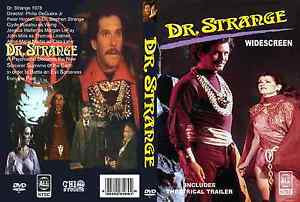
strange1Currently, Dr. Strange holds a 5.4/10 user rating on IMDb, which reflects its significant lack of popularity and acclaim. However, the new 2016 film is bound to bring more attention to it, and it even just got a DVD release this year after years of being relegated to dusty VHS copies as a result.

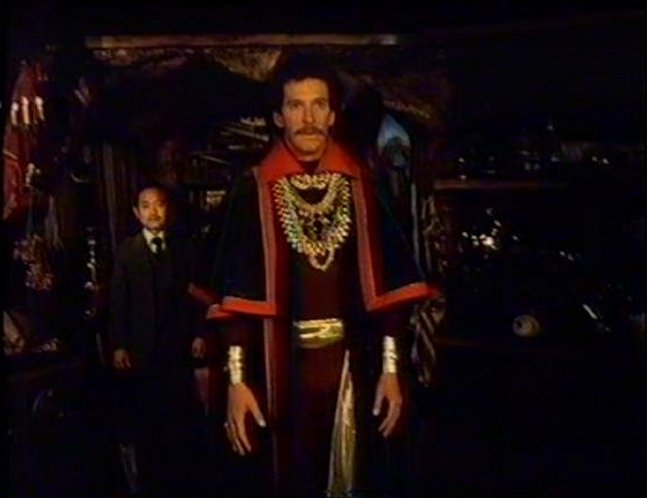
If you ask me, Dr. Strange plays out like a pretty decent pilot for a television drama, if not much of an actual movie. Most of the story centers on Dr. Strange as a Doctor, working in his hospital and dealing with patients. Of course, this ultimately intersects with the supernatural, but the story eases its way to that point, like you would expect a pilot origin story to do. I kind of like the portrayal of the character, and he even has a couple of decently witty lines. The thing that really stood out to me, though, was the score: it is pure 1970s chaos, and is absolutely beautiful in its weirdness. I was reminded of Dracula AD 1972 a bit, which I’m not going to count as a bad thing. The costuming and effects will take you on a trip back in time as well, but the music is really what ties it all together.

strange7I don’t think Dr. Strange is nearly as mind-blowing or essential as the 1989 Punisher when it comes to early Marvel adaptations, but it is certainly more watchable than the 1990 Captain America when you consider the context of its time. I kind of wish this had actually gone to series, because I assume the result would have been Garth Merenghi’s DarkPlace with wizards and some rockin’ 70s music.

if you are into old television or Marvel comics history, this is totally worth digging up. In the past, this was incredibly hard to come by, but with the new movie out, and an official dvd release of this flick on its tail, this movie is as readily available as it will ever be.

Timeline

Timeline

timeline2

Today’s feature is one of the lesser films to be based on a Michael Crichton work: 2003’s Timeline, directed by Richard Donner.

The plot of Timeline is summarized on IMDb as follows:

A group of archaeological students become trapped in the past when they go there to retrieve their professor. The group must survive in 14th century France long enough to be rescued.

Timeline is based on a novel written by Michael Crichton, who is best known for Jurassic Park, Congo, WestWorld, The Andromeda Strain, and E.R.. However, the screenplay adaptation for Timeline was penned by Jeff Maguire (Gridiron Gang) and George Nolfi (Sentinel, The Bourne Ultimatum, Ocean’s Twelve).

The director for the movie was Richard Donner, who is known for such features as The Toy, Superman, Superman II, The Goonies, Scrooged, and Lethal Weapon.

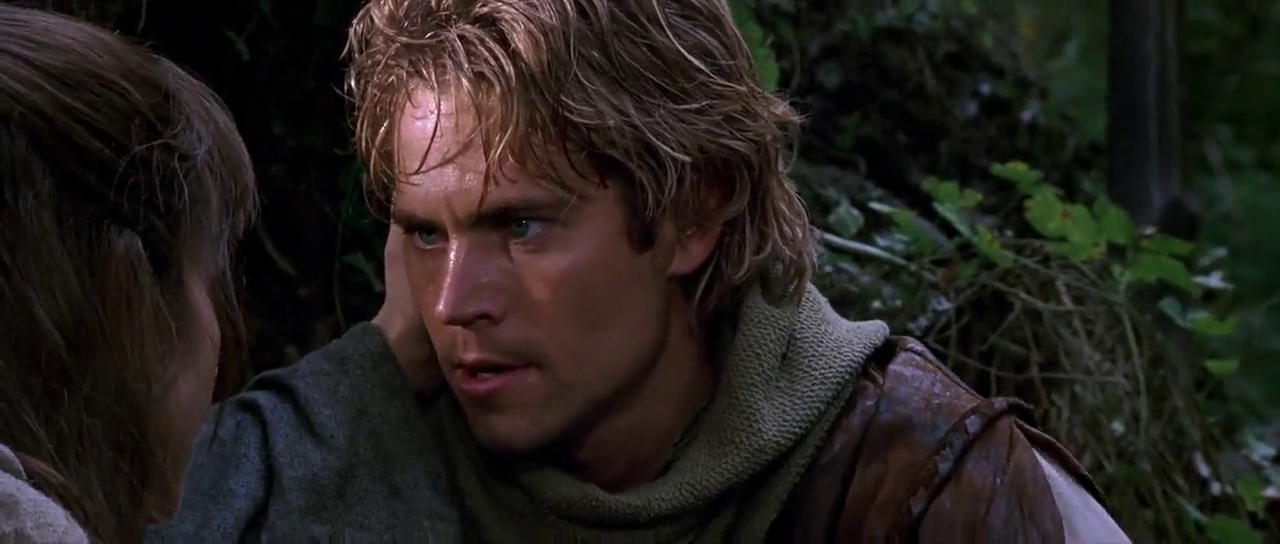
The cast of Timeline includes Paul Walker (The Fast and The Furious, The Skulls, She’s All That), Gerard Butler (Reign of Fire, Dracula 2000, 300, The Ugly Truth, Olympus Has Fallen), David Thewlis (The Island of Doctor Moreau), Anna Friel (Limitless), Neal McDonough (Minority Report), Billy Connolly (The Boondock Saints), and Frances O’Connor (Windtalkers).

timeline5The cinematographer on the movie was Caleb Deschanel, whose other credits include Killer Joe, Winter’s Tale, The Patriot, The Right Stuff, National Treasure, and The Passion of the Christ.

The editor for Timeline was Richard Marks, who has cut films like The Godfather: Part II, The Hand, Broadcast News, Serpico, Pretty In Pink, As Good As It Gets, and Julie and Julia over his career.

The music for the feature was provided by Brian Tyler, whose other credits include Simon Sez, Dragonball: Evolution, The Expendables, John Dies At The End, and Iron Man 3.

Apparently, Michael Crichton so hated the film adaptation of Timeline that he ceased licensing out his properties for the rest of his life, which unfortunately ended only a handful of years later.

The actors David Thewlis and Anna Friel met while working together on Timeline, and were romantic partners for many years afterwards.

Timeline experienced a number of behind the scenes issues. It was initially supposed to release in 2002, but was delayed after the studio was unsatisfied with Richard Donner’s cut of the film. The film had to be entirely re-cut twice more, which led to the entire Jerry Goldsmith score having to be replaced with one by Brian Tyler, due to Goldsmith’s failing health.

Initially, the role eventually filled by Gerard Butler was offered to James Bond actor Pierce Brosnan, who turned it down.

A third writer, Frank A. Cappello (Suburban Commando, Constantine), was at one point credited for film. He apparently wrote an entire draft of the screenplay, and was even credited on some of the film’s early promotional materials.

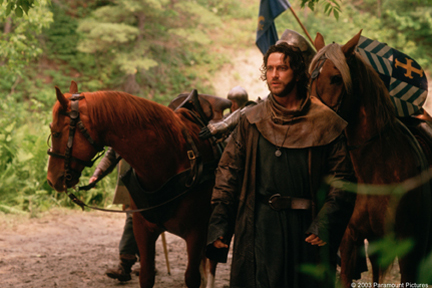
The battle at the center of Timeline‘s plot is entirely fictional, though the overarching conflict of The Hundred Years War was very much real. A number of liberties are taken with historical accuracy, as you might expect,  including some intentionally anachronistic insignias placed in the background as Easter eggs. One of these is the Quebec flag, which appears on a shield as a nod to the filming location.

Financially, Timeline was a significant loss. On an $80 million production budget, the movie only grossed just under $44 million theatrically, leaving the production significantly in the red.

timeline3Critically, Timeline fared equally as poorly. Currently, it holds a 5.6/10 IMDb user rating, and Rotten Tomatoes aggregate scores of 11% from critics and 45% from audiences.

Roger Ebert was one of the more charitable critics of the lot, giving the film a 2 star review. However, his criticisms echo much of the negative reaction to the feature:

“I felt too much of the movie consisted of groups of characters I didn’t care about, running down passageways and fighting off enemies and trying to get back to the present before the window of time slams shut…Just once I’d like to see a time-travel movie inspired by true curiosity about the past, instead of by a desire to use it as a setting for action scenes.”

As Ebert stated, one of the biggest weaknesses of the movie is the un-enthralling cast of characters. The interpersonal relationships and individual characters are all incredibly forgettable, to the point that some are only distinguishable based on their accents. Part of this is due to the cast just being unnecessarily large, to the point that the characters don’t get the space to develop on screen. As far as the dialogue and characters go, this movie is roughly as fleshed out as a lesser Friday the 13th sequel: individuals are only as identifiable as stereotypes, and only exist to be arrow fodder.

Plenty of fans of the source material have complained at length about changes to the screenplay, but I tend to let those kind of details slide: movies need to fit a more compressed medium, and writers and directors have the right to put their own creative stamps on things. So, for this movie, I’m not going to delve into those.

One of the more widely-mocked sequences from the movie involves the English army launching a volley of “night arrows” at their enemies. I remember this from the first time I saw this movie as a kid, and I definitely recall it not making any sense. “Night arrows” are not a thing: they are just normal arrows, shot at night, that aren’t on fire. The fact that characters act like this is some some of tactical brilliance is absolutely baffling to me, and I’ve never figured out just why that sequence was included.

Overall, Timeline is a way cooler idea than an actual movie. The weak casting and writing certainly didn’t help matters, but I’m not sure if this movie would have resonated with audiences even if everything fired on all cylinders. Even if Donner’s initial cut was a masterpiece, I don’t think a time travel movie set in this particular time period was going to excite anyone. The Hundred Years War just isn’t something that clicks for people in general at this point, let alone your average American audience.  If you want to mess with time travel, go to the dinosaurs, go to Rome, go to the Revolution, go to the Civil War, go to a recent 20th century decade, or go to the future. Some time periods are just more cinematic and intriguing than others for Hollywood, and I don’t think this time period makes the elite cut as far as options go for blockbusters.

As far as a recommendation goes, I found this movie to be incredibly dull and forgettable, and I’m hard-pressed to think of any redeeming qualities. Outside of seeing Gerard Butler in his long-hair period, or Paul Walker doing his damnedest to be a leading man, there’s not much worth seeing here.