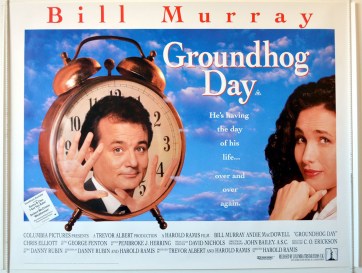
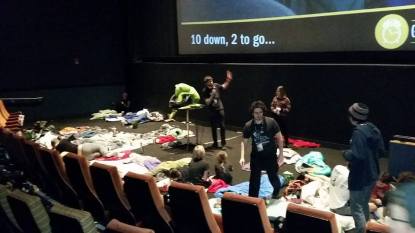
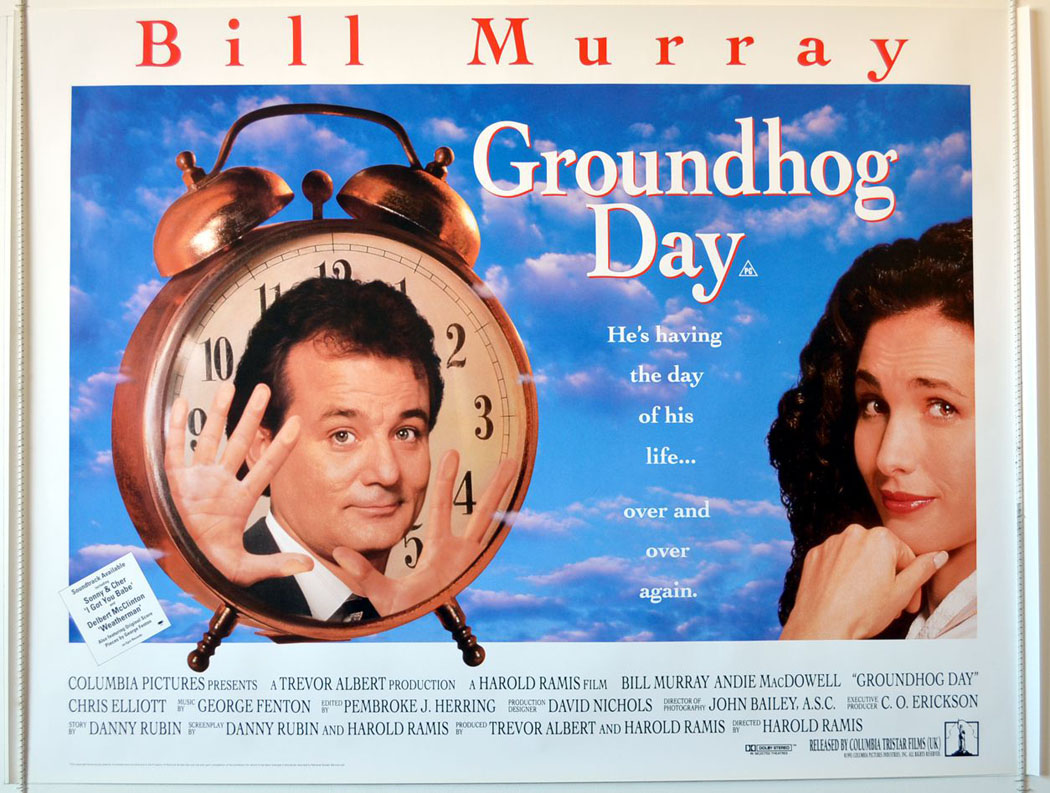
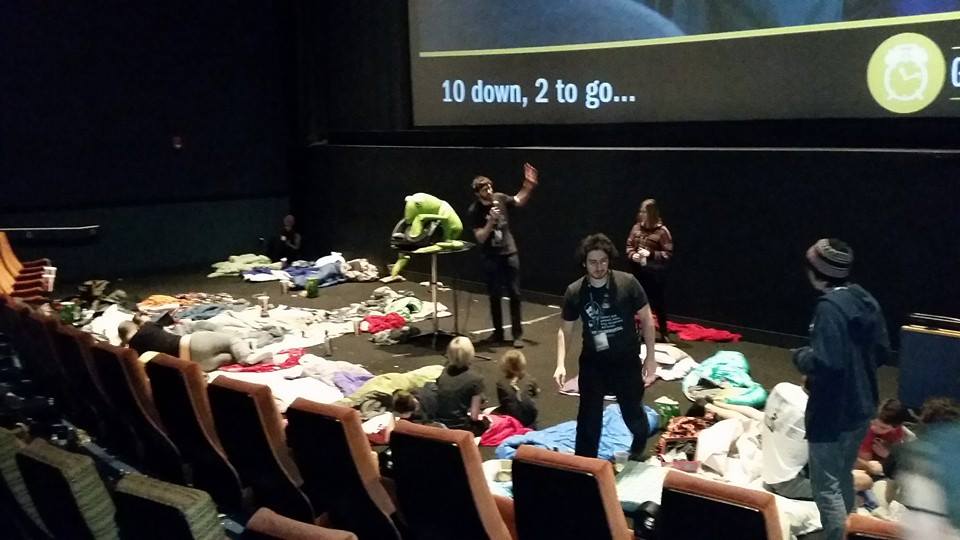
 This past Sunday, I participated in a 24-hour “Groundhog Day” marathon at the Gateway Film Center in Columbus, OH. To keep things interesting and lively, I decided to do a review between each of the 12 consecutive screenings of the movie.
Yesterday, I picked up a DVD copy of the movie, and went through Harold Ramis’s commentary while doing some research. Below are each of the reviews I wrote during the 20 minute intermissions, with some follow-up comments based on my research in italics.
“Groundhog Day” Review #1
I haven’t watched this movie in years, so it was good to get a fresh start. Bill Murray has a great way of delivering dialogue (of course), but I think the power of this movie is in the periphery cast: they are the control, and their performances have to be meticulously detailed for the story to work. If you don’t notice an aberration, then everything is working perfectly. Might be Tobolowski’s best role, and he is a dude who has been around the block.
Ramis made a specific note of the careful attention to continuity on the part of the crew. He also spoke at length about the casting process, noting that Tobolowski earned the role straight off of his audition. Of course, Murray did a fair amount of improvisation on the film, both in his physical acting and his dialogue.
Next thing: Phil creeps me out. Not just when he is supposed to, but the whole time. He is still obsessively catering his life to fit the desires of his “love interest,” even after he supposedly learns his lesson. Take the piano lessons: not something he did in earnest. I also wish they delved a little deeper and darker: the side plot with mortality, the homeless dude, deification, etc. doesn’t actually go anywhere: where is his epiphany from that, other than to refocus and re-obsess on attaining a specific mate? Creepy creepy creeptown. I would love to see some earlier drafts of the script…
“Groundhog Day” Review #2
I frequently watch movies twice in succession, so this isn’t too weird. However, I usually have time to research in between, which wasn’t the case here.
What stood out this time was how fucking awful Andie MacDowell’s character is. They tried to write what they thought was an ideal person: the result of which is inevitably boring. Characters need little flaws and tics to be interesting (beyond just not liking fudge, ffs). The only thing notable about her other than being “nice to people” is that she comes off as incredibly pretentious on a number of occassions. There should have been a glass-shattering moment where Murray realized she is human and has flaws, and learns to accept them. But nope. She also doesn’t exactly react realistically or consistently, which is kind of a problem for a character who ONLY REACTS TO THINGS.
As the marathon wore on, the audience became increasingly hostile to the character of Rita and MacDowell’s performance. Her in-and-out South Carolina accent, consistent breaking of character in scenes (noted by Ramis: Murray kept cracking her up), and increasing pretentiousness became more grating than anything else about the film after about 5 or so screenings.
I think I’m going to hate the shit out of this movie by midnight. Stay tuned.
I surprisingly don’t hate it, but it is hard to look at it objectively after being so saturated with it. I kind of consider it middle-of-the-road in content, but with a incredibly clever premise and structure.
“Groundhog Day” Review #3
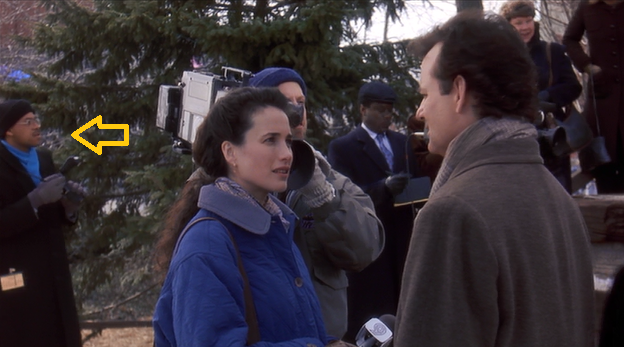
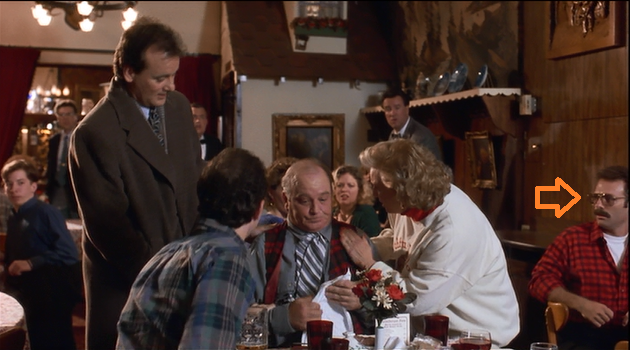
I’ve reached the point where background details are starting to stand out. Not the typical stuff, like Michael Shannon in his first film role, but like the dude in the background of the Gobbler’s Knob sequences who looks exactly like a young James Earl Jones. The amount of applause in the movie is astounding and rapidly becoming surreal. Why is there so much clapping in this movie? Is it intentional? Last but not least, there is a shocking amount of incredible “white people dancing” moments. Just everywhere.
The quantity of applause in the movie is surely the most surreal detail that came to the surface after multiple viewings. There are just a lot of crowd shots and group events in the movie, which means you rarely go a couple of scenes without some kind of applause break. The white people dancing moments never got less funny.
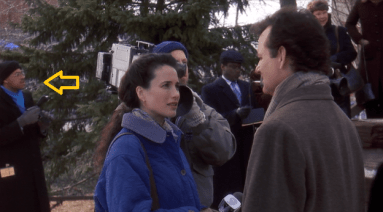
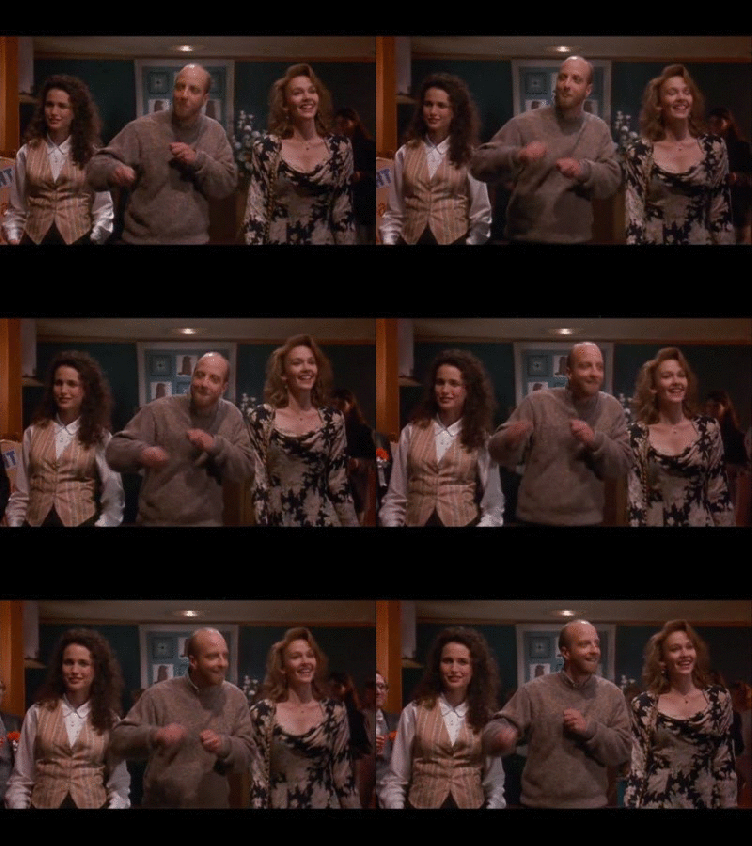
There are still more editing and pacing details that are bugging me that I’ll cover on the next round, but I’m generally far less grumpy now than I was after Round 2. Let’s see how the next one goes.
“Groundhog Day” Review #4
I’ve started using sectional divisions to make the screenings go by faster. The cyclical structure of GH makes it more difficult to sit through, because the script beats are a bit unconventional, so the sectioning has been helping me pace it personally. It has always helped on long drives, and this isn’t so different from that in principle. The sections are 1) introduction 2) indulgence 3) “romance” 4) depression 5) renaissance 6) conclusion.
This sectional breakdown is about the only way I made it though 24 hours of this movie. Interestingly enough, Ramis noted that the structure was inspired by the Kubler-Ross model (Five Stages of Grief). Mine is really similar, only really differing in a few spots. The Introduction covers denial, indulgence covers anger, “romance” is bargaining, depression is the same, and then I broke the acceptance into the renaissance and conclusion.
Section 3 is when Murray is at his creepiest and MacDowell’s character’s lack of depth really shows. Consistently, this has been when the literal chorus of snores has started, every time.
Every showing, this is where the audience disappeared. Until Murray started getting slapped in the face, at least.
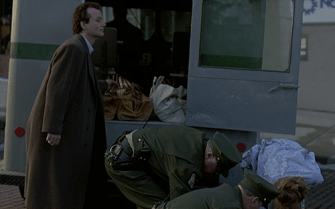
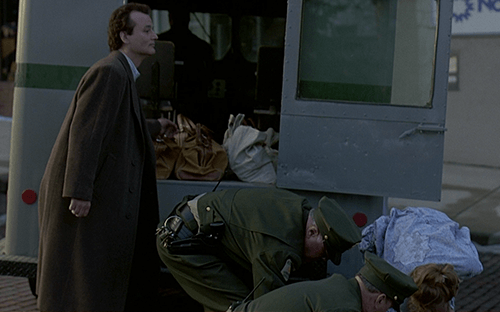
Section 2 has a specific sequence that really encapsulates the hit/miss nature of the film. Murray robs a banking truck by memorizing the habits of the guards, which shows you his crooked nature and that he is getting more meticulous and experienced with details.
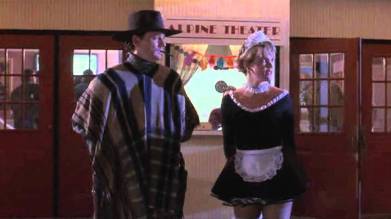
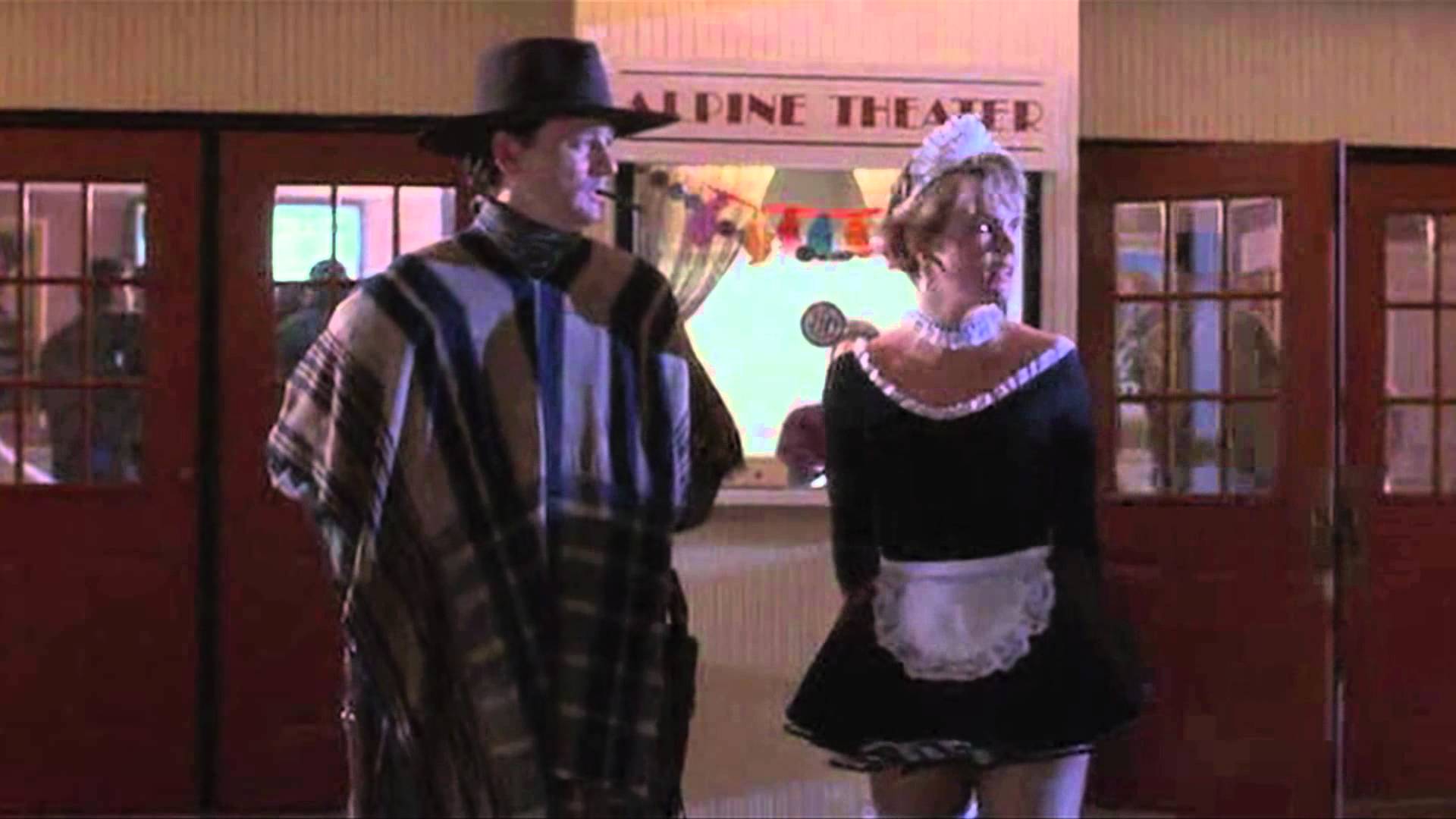
The second half of the sequence, however, serves no purpose at all. Murray is shown to have spent the money on a Benz, a prostitute, and a replica Clint Eastwood outfit. The sequence introduces a character that never returns, a location that never returns, and a number of objects that have no importance. It also establishes that characters don’t retain memories of previous days, but that is already laid out. Did Murray just really want in on “Three Amigos?” Anyway, the only attempt at a joke is an uncomfortable reference to the prostitute being underaged. Was Murray blackmailing Ramis to include his Eastwood impersonation? Why is this in the movie?
I hit the nail on the head on this one. In the DVD commentary, Ramis noted that this was entirely Murray’s idea, and that he did the Clint Eastwood impression “because he could.” We all have hits and misses, Bill Murray included. Ramis did mention that a lot of sequences were cut, so maybe this was supposed to tie in somewhere else? More importantly, how did this get through the final cut?
Anyway, more to come.
“Groundhog Day” Review #5
GH is, in many ways, a time travel movie. So, consequently, you have to talk about consequence! (Hurr)
GH tries to keep things simple, and evades what it can. However, there are some issues that can’t be skipped over. On day 3, Phil, in a panic, skips two conversations that he had on both previous days. This puts him at, underestimating, 30 seconds to 1 minute ahead of pace. However, that change fails to affect his subsequent encounter with Ned. That may seem petty, but I’d recommend looking at how a similar film dealt with the issue of temporal consequence: “Run Lola Run.”
In “Lola,” the beginning of her story cycle is affected differently each time it starts. The difference is only a handful of seconds each cycle, but it proves vital to the story. A few seconds is the difference between missing traffic, being impeded by it, or being nailed by a car. Looking at it from that angle, a minute being gained or lost is a lifetime.
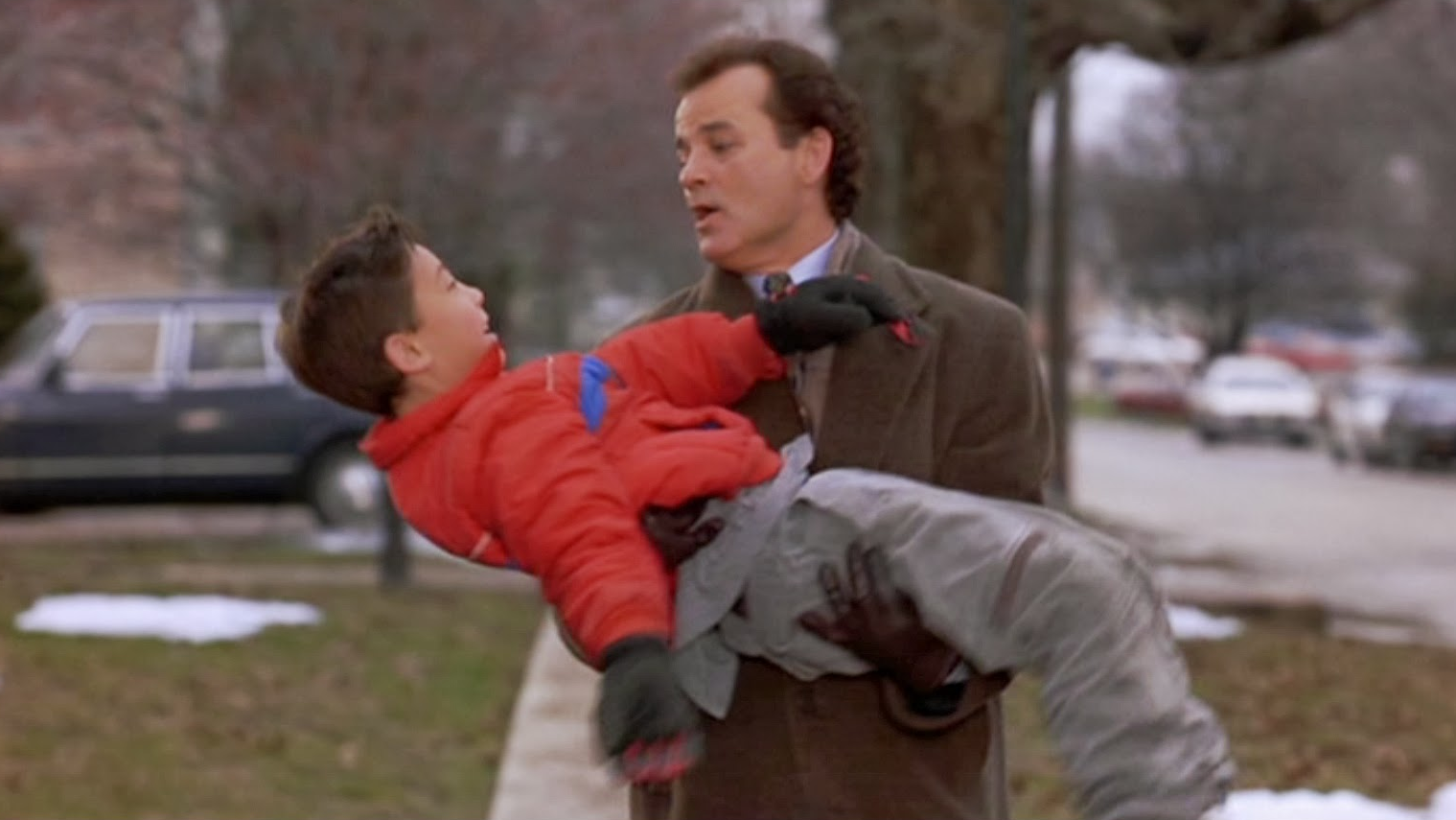
Elsewhere, the film also dodges the consequences of Phil’s inaction. The finale focuses on the positive effects he has on townsfolk, but it is never shown what the consequence of his inaction is for them. Does a child break a bone because Phil didn’t catch him? Does a man choke to death? The thing is, Phil knows: he lived through it all. But we aren’t shown any of these potentially compelling interactions. BTTF managed to thread these things in subtly, so it isn’t impossible.
I spotted one background instance of the consequence of Phil’s inaction later on, which is mentioned in a future review. But, in general, there isn’t much.
Let’s not even start in on how GH deals with the butterfly effect…I have another screening to get to.
I still don’t want to go into this. Let’s just say that the film is inconsistent on Phil’s ability to influence future events.
“Groundhog Day” Review #6
Let’s take a little Tarantino-esque turn, shall we?
Early in the film, Phil steals a large amount of money from a bank car. He clearly researched it out, and memorized people’s patterns to execute the plan flawlessly. However, it is only shown once, when he is still exploiting his “power.”
In the second showing, I started wondering if he made the heist part of his daily routine, like the piano lessons. I initially dismissed it because it appears to be in the afternoon, and Doris, the diner waitress, is already off – duty (she is an unwitting accomplice). But still, Phil throws out a lot of money in the movie, all the way up to the finale. 1000 dollar piano lessons, multiple insurance policies on a whim, handing hundreds in cash to the homeless…is it unreasonable to think he is commiting a daily, perfect heist?
If that’s true, then Phil walks out of the movie with a literal fat stack o’ cash. Surely enough to rent a small place in a Pennsylvania town…?
Is it Marcellus’s briefcase or Mr. Pink’s diamonds? Nah, but it is fun to think about!
I mentioned this in an interview at one point in the night. I’ll be sure to post it if I ever come across it on YouTube.
“Groundhog Day” Review #7
Apparently, GH was intended as a curse movie according to early drafts. Even if you count that as apocryphal, there is some supernatural force at work in the story, and those are always bound by their own internal logic. The rules weren’t divulged, but that doesn’t mean that they didn’t exist!
Ramis spoke at some length about the decision to ultimately omit the background on the curse, but he did mention that one draft involved a spurned ex-lover.
So, what actually broke the GH curse? True love? I don’t think so. I would argue that he already “had the girl” before the last cycle, and that also isn’t much of a lesson (I expect a little more from Ramis). If that was all, surely it would have broken earlier. Was it learning the value of good deeds? Nope, he had clearly been through the motions on every divulged good deed in the film, and knew them by heart to the last detail. I think the real game – changer / curse – breaker was entirely internal: in the last cycle, Connors finally accepted his conditions, and was content with them. I think love and good deeds were learned and done as means to the end of Connors learning contentedness with the world around him.
Ramis mentioned that his co-writer on the script, Danny Rubin, is a bit of a Zen Buddhist, which seems to support this theory.
I think this is a sort of anti-ambition, anti-corporate message as much as it is a love story. Connors goes from being a perpetual climber with no love or need for little things or little people to being appreciative and happy with his current station and his environment. Makes sense for late 80s early 90s, yeah?
“Groundhog Day” Review #8
Finally managed to do a little research on production history, so how about some casting factoids? Before Murray got the part, Tom Hanks was considered, but it was eventually decided he was too nice in the public mindset. Kind of a shame, because he has solid comedy upside (“The ‘Burbs” = ♥). Michael Keaton turned down the role, and I can definitely picture that choice. Interesting that most of the considered leads were drama – heavy with comedy bonus, as opposed to vice versa (which Murray certainly is).
Ramis mentioned that Andie Macdowell was always the first choice for her role, and that she asked permission to use her (arguably mangled) South Carolina accent. The rest of the cast features a bunch of Second City players brought down from Chicago, as well as a couple of SNL alum (Brain Doyle-Murray, Bill’s older brother, among them).
Definitely pushing into the final stretch, and my body is starting to feel it. I think I’m the only one who has been awake the whole time…bunch a cheaters, these folks.
“Groundhog Day” Review #9
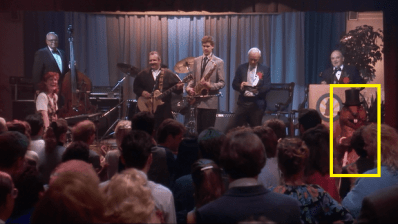
There are so many goddamn groundhogs in the background of this movie. I just noticed a six foot carved groundhog in a top hat prominently featured in the auction scene. On the 9th consecutive show. It is gigantic, and I have been looking for details. Really. They are everywhere. Dancing mascots. Wall art. Everywhere. To the point of saturation.
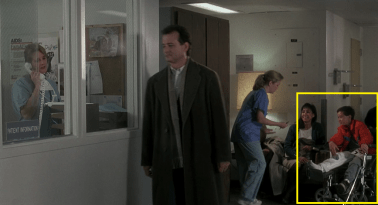
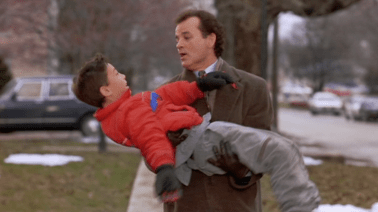
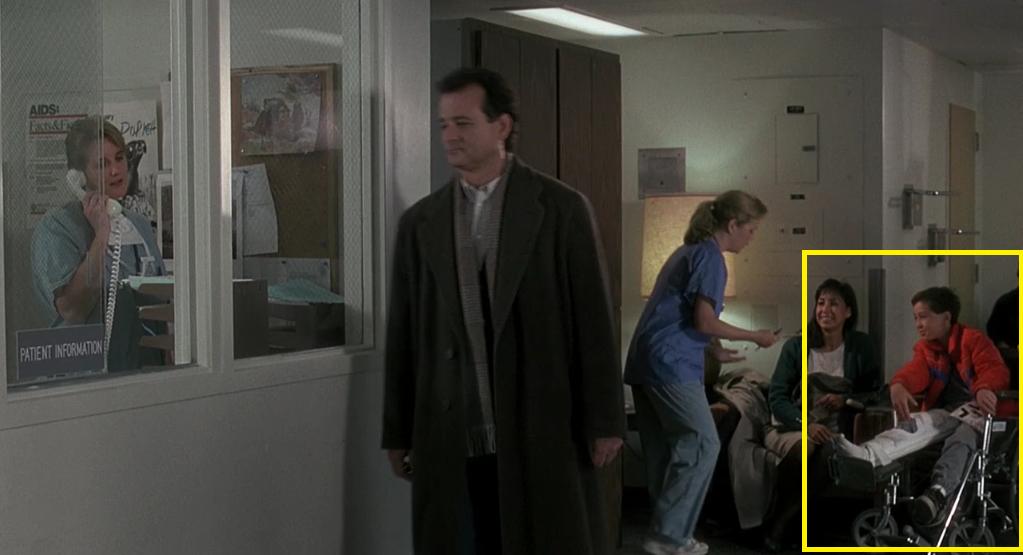
In other small details, I was pleased to find one instance of the consequence of Phil Connor’s inaction! The kid who falls out of the tree is in the background of a wide shot earlier in the film (in a hospital) with a broken leg in a cast. He is only identifiable by his distinctive red and blue striped jacket, or else there would be no way to catch it otherwise. I might have missed a few other background details, but I doubt anything else that interesting or semi-prominent.
“Groundhog Day” Review #10
One of the things that has stuck out with multiple viewings is the soundtrack / score. It has to do a lot of work, and manages to fit the variety of tones required of it. It definitely feels dated now, but it manages to do what it needs to. I particularly liked how music was used to accentuate on-screen surprise, discomfort, and confusion. I feel like a weak score could have sunk or seriously harmed a film that delicately balances its tone.
Ramis brought on Academy Award nominated composer George Fenton in to do the music, who worked on movies such as “Gandhi.” He instructed Fenton to imitate the style of Nino Rota, a renowned film score composes who worked on movies like “The Godfather.”
Speaking of which, I imagine this wasn’t the easiest film to market. I can see why so much deliberation went into casting the lead, because that had to be their biggest selling point for general audiences. Difficult to classify almost always means difficult to market. Anyway, It made a fair amount of money, particularly given it was competing in 1993, which was one hell of a deep year.
Adding to the marketing issues was the fact that “Groundhog Day” is uniquely American, meaning alternate titles had to be cooked up for foreign markets.
“Groundhog Day” Review #11
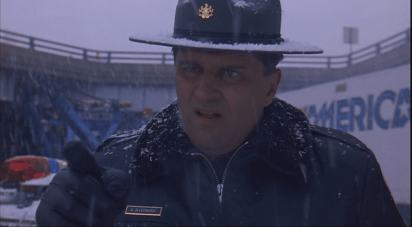
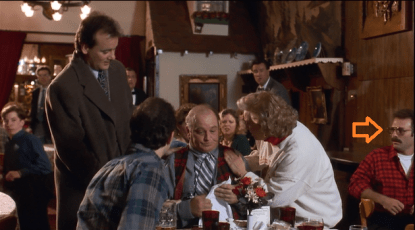
Gotta specifically call out the bit parts that I have come to love in this movie. Freddie Mercury Lumberjack? Yes. 1992 hair in the background of every scene? Of course. Highway patrolman who acts exclusively by emphatically pointing? Love em. Hilarious dancing white people everywhere, enough to explode the internet? Hoo boy.
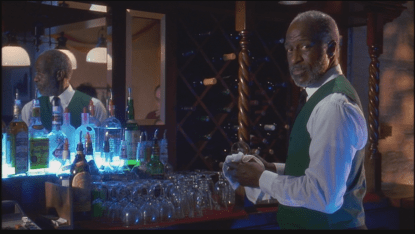
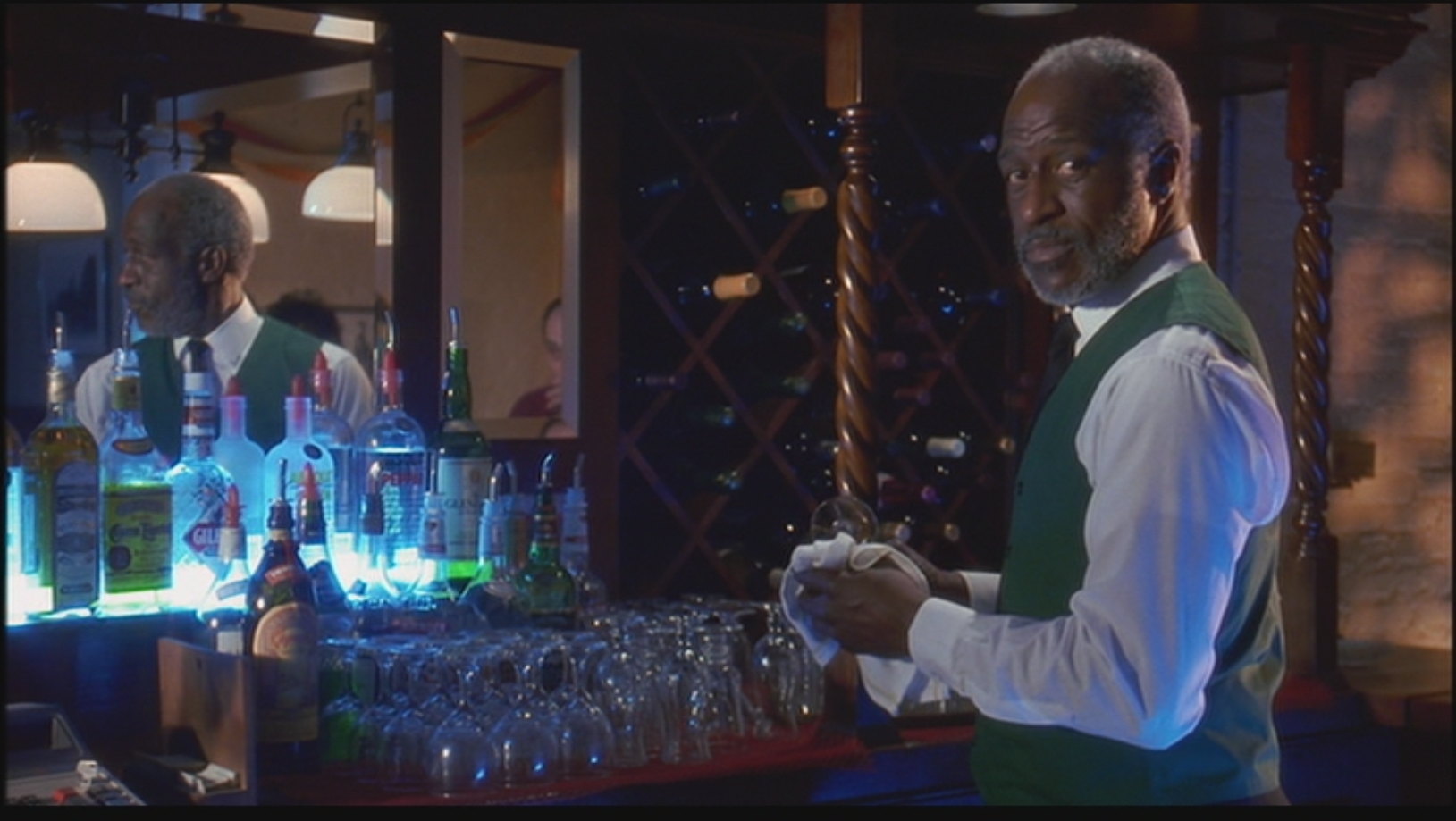
Last but not least though: the bartender who exists solely to shake his head in disapproval and clean glasses. He has maybe three lines, all a variation of “what are you having?”. His unimpressed, dismissive glass washing and head shaking, though…his performance ties the whole movie together. Astounding. Inspiring.
Can you tell that I was completely exhausted at this point? It turns out that the police officer / highway patrolman’s dialogue was completely unusable due to the amount of wind on set, so all of his dialogue is dubbed in after the fact by an entirely different actor.
Conclusion
So, I made it through the whole 24 hours. Surprisingly, I don’t hate “Groundhog Day” after all of that. Certainly there is nothing out there that is meant to be consumed in this way, but the structure of “Groundhog Day” makes it almost ideal for this kind of viewing.
A lot of details and issues popped up after so much repetition, but it stayed generally watchable the whole time. I still love Bill Murray’s improvisational sharpness and the unique concept behind the film, but the romance elements are definitely weak. I think people are very selective in what they remember about this movie: there are a lot of hits, but also a lot of misses here. The Clint Eastwood scene is very weak, the lack of thought put into the temporal consequences of actions, Andie Macdowell’s performance and writing: there are flaws scattered throughout. It is still good without any doubt, but a long shot away from great.
I have had a couple of days to sit on it, but I’m not sure if I’ll ever be able to totally look at “Groundhog Day” with a conventional critical eye after all of this. So, take it all with a grain of salt.
![Misan[trope]y](https://misantropey.com/wp-content/uploads/2014/10/misantropeyhead1.png)
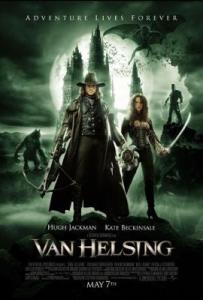
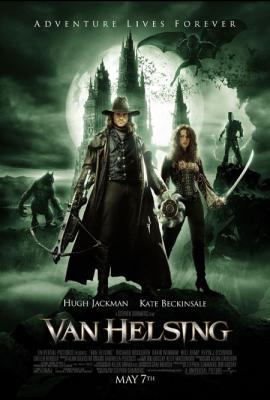
 What most have forgotten, however, is that this latest foray isn’t the first time Universal has attempted to resurrect the intersecting classic monster franchises in the modern era of film. Back in 2004, “Van Helsing” was released in an attempt to spur a line of films based on the “Monster Mash” bunch, featuring Hugh Jackman as the eponymous vampire hunter.
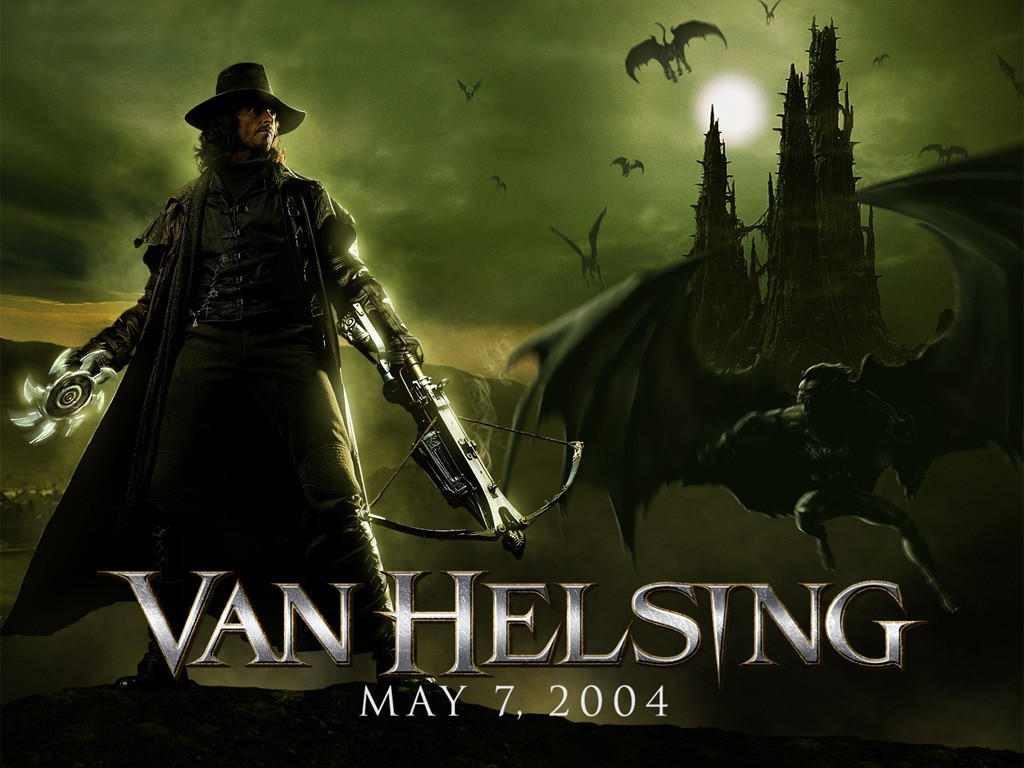 Despite being a financial hit, grossing over 300 million on a reported budget of 160 million, “Van Helsing” was generally loathed by critics and audiences alike (Rotten Tomatoes critic score is 23%, audience score is 57%), and thus failed to kick-start the lofty cinematic rebirth of the Universal monsters. Much like Dracula’s impish computer-generated spawn in the film, all of these aspirations of future box-office and world domination imploded before they had a chance to inflict any real havoc upon movie-going audiences.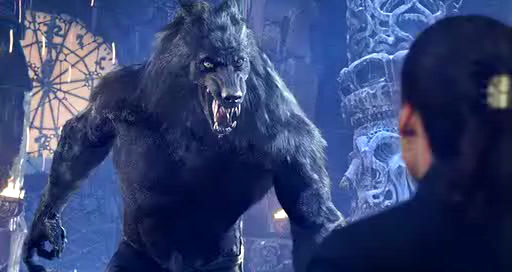
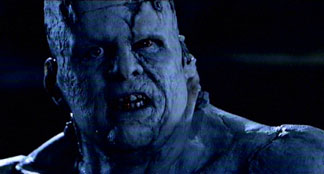
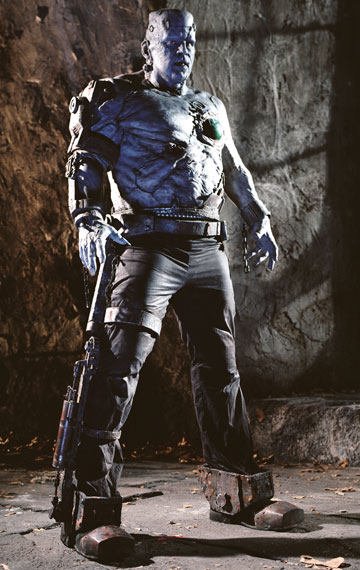 Something that I still can’t decide is a weakness or strength to the story is the presence of a lot of seemingly superfluous supernatural technology. In the film, Van Helsing has a sidekick who functions about the same as “Q” in the James Bond franchise: he is a friar who specializes in the development of technology for fighting monsters. As amusing as it is to think of a supernatural military R+D department at the Vatican, the character and technology seem to mostly exist for either comic relief or aesthetic reasons, and aren’t particularly necessary for the story. Although, there are moments where they are the only redeeming and entertaining aspects of the film, so I can hardly complain too much.
 One of the reasons I remember “Van Helsing” so well is because of its similarities with the Sean Connery-led film “The League of Extraordinary Gentlemen,” which came out the previous year. Both feature super-teams made of fictional characters, were moderate financial successes, and massive critical failures. They even have a moderate cross-section in that they both feature the character of Dr. Jekyll / Mr. Hyde. I am planning to readdress that film soon, so we will see how it holds up in comparison to “Van Helsing.”
 When it comes to the cast of “Van Helsing,” Jackman is the obvious centerpiece. By the time that “Van Helsing” came around, he was already established as a major action star with the first two “X-Men” movies, as well as leading credentials in “Swordfish” and “Kate & Leopold.” Co-starring in “Van Helsing” is Kate Backinsale, whose previous year featured the first installment in the eventual “Underworld” supernatural action franchise, as well as the astoundingly abysmal “Tiptoes” with Matthew McConaughey and Gary Oldman: an indie drama/comedy about a family of dwarves. It is beyond awful, as Daniel O’Brien of Cracked.com can explain:
 In general, I think I understand why “Van Helsing” failed to live up to Universal’s expectations for it. In 2004, Blockbusters were just about to turn in the direction of the “gritty reboot”, with “Batman Begins” popping up in 2005. “Van Helsing” I believe was too cartoony in execution for what audiences were really wanting at the time: for a movie focused on horror icons, it wasn’t scary in any way, and didn’t have a very dark tone either. The “steampunk” style I think would have looked better with a little more emphasis on practical effects over CG: the coolest thing in the movie is Frankenstein’s Monster, and he is the only one of the monsters portrayed consistently without extensive CG. The emphasis on hammy, over-dramatic antagonists just didn’t work either: Dracula’s wives are just groan-worthy to listen to now, and Dracula himself just isn’t menacing enough.
 I don’t think I can recommend “Van Helsing,” as it is one of those movies that isn’t quite bad enough to be on a good-bad level, and is still well out of the realm of being good. It might be worth a watch if you are curious what a “Avengers”-esque Universal monster movie might look like, but you will probably be disappointed in the result. It also sounds like we could very well see a remake of “Van Helsing” by the end of the decade, so it couldn’t hurt to look back to see what we might be in for. It is a generally watchable flick, but not an excessively fun one if you ask me.






 Misan[trope]y