Category Archives: Themed Reviews

Killer Robot Week: “Class of 1999”

Class of 1999

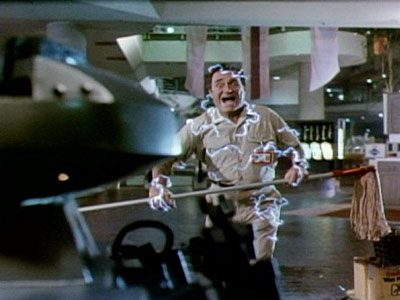
class19998

Today’s final entry into Killer Robot Week is “Class of 1999,” a film about a team of cyborg teachers cracking down in an unruly, seemingly post-apocalyptic high school.

“Class of 1999” was written and directed by Mark L. Lester, and was envisioned as a follow-up to his 1980 cult film “Class of 1984.” Lester is best known for his extensive work in action and horror movies, in particular “Firestarter” and “Commando.” Recently, Lester appears to be focusing more on the producing side of B-movies, doing work on such films as “Dragon Wasps,” “Toxin,” “Dragons of Camelot,” and “Poseidon Rex.”

The executive producer on “Class of 1999” is the somewhat infamous Lawrence Kasanoff, who is known for producing such B-films as “Blood Diner,” “Chud II,” and both “Mortal Kombat” films. However, his most recent abhorrent credit is as both writer and director on 2012’s “Foodfight!,” one of the most abysmal films released in years, and perhaps the worst animated feature of all time.

Mark Irwin, the cinematographer on “Class of 1999,” has had a significant career working on a wide range of features. He has credits on well-regarded films such as “The Fly,” “Scanners,” “The Dead Zone,” “Scream,” and “Robocop 2,” but has also had some less-than-lauded works: “Deck the Halls,” “Big Momma’s House 2,” “The Last Godfather,” and “Super Buddies.” He is still active today, and his most recent notable credit is on the Adult Swim show “Black Jesus.” However, the rest of his recent credits lead me to believe that he’ll be working on Tyler Perry productions before too long.

The cast of “Class of 1999” includes a number of well-regarded character actors, led most notably by Malcolm McDowell (“A Clockwork Orange,” “Time After Time,” “Caligula”) and Pam Grier (“Jackie Brown,” “Coffy”). The rest of the cast includes Stacy Keach (“American History X”), John P. Ryan (“It’s Alive,” “Bound”), and Patrick Kilpatrick (“Minority Report,” “Eraser”).  Given the setting of a high school, the lead roles in the film were given to younger, less experienced actors: Traci Lind, who popped up in a handful of movies (“Bugsy,” “My Boyfriend’s Back”) afterwards before falling off of the screen in the late 1990s, and Bradley Gregg, who has recently resurfaced after only a handful of credits in the new millennium.

class199910The story of “Class of 1999” takes place in the distant future of 1999, in which numerous major cities have been overrun by drug-addled youth gangs. In an attempt to salvage the public schools in these areas, the “Department of Educational Defense” pilots a program to use robotic teachers to run classes in the most hostile school environments. The plot follows a handful of students at the first school to use these robot teachers, and shows the robots’ violent decline as their programming (of course) begins to go awry.

The film portrays school violence, drug use, and gang activity amplified to an absolute maximum, which fits with the generally over-the-top tone and concept of the film. The robot teachers, in contrast, are designed on very traditional stereotypes, and instantly clash with the student body. This, of course, results in a significant amount of friction, which culminates in the liberal use of flamethrowers and high explosives on school grounds in a grand showdown of a conclusion.

class19997“Class of 1999” currently holds a 5.7 rating on IMDb, as well as a 52% audience score on Rotten Tomatoes. That doesn’t look so great, but you can only expect so much of a positive reaction to this sort of B-movie. BoxOfficeMojo.com reports that the movie’s total gross was just under 2.5 million, but I’ve found estimate that put the budget at well above 5 million, making it an overall financial loss. Despite all of this, the movie bizarrely received a direct-to-video sequel, “Class of 1999 II,” in 1994, without the involvement of Mark Lester.

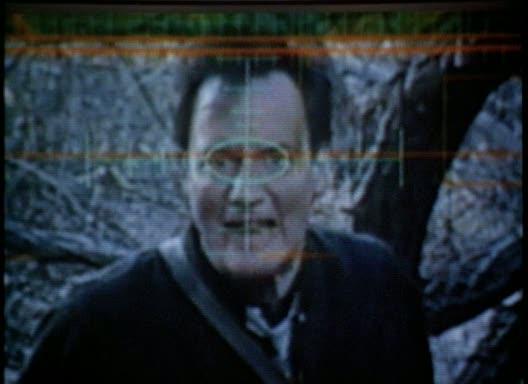
For me, the most memorable aspect of “Class of 1999” are the hammy performances by the assorted villains. The robotic teachers, for instance, are constantly dropping one-liners, almost as if it was written into their programming. Perhaps even better than the teachers themselves is their overseer, Dr. Forrest, played by Stacy Keach. His constant leering and over-the-top menacing presence is only outshone by his bizarre appearance in the movie. Just take a look at this guy:


class199912
class19993
class199913 You can’t do much better than that.

Something that I never quite understood about the concept of “Class of 1999” is why a group of kids in an officially lawless territory bothered to show up to a public school at all. There isn’t anything binding them to the school, and the students seem to flow in and out of the classes without aim anyway. Also, if the area is deemed too dangerous for police, then why is the government still putting teachers at risk to keep a public school open in the dead center of the area? It just doesn’t quite make sense to me.

class19999For a movie released in 1990, “Class of 1999” may seem notably (and unrealistically) pessimistic about the near future. It is worth keeping in mind the context of the time: 1989-1990 was arguably the height of anti-drug panic, anxiety over a perceived rise of violence in schools, and public fears about gang violence. “Class of 1990” hones in on all of these fears, and inflates them as much as possible to create a dramatic (and perhaps ridiculous) vision of a worst-case-scenario for the new millennium.

In the opening sequence of “Class of 1999,” while a robotic voice over is laying out the background for the story, a map pops up on screen showing the major urban areas in the United States that have been overrun by gangs. It might be a bit of a minor detail, but I couldn’t help but notice how dramatically misplaced Cleveland is. Check it out:

class19995

For those who might not be aware, Cleveland is on the shore of Lake Erie, on the northern boundary of Ohio:class199911I decided to check out Google Maps to see where Cleveland had been relocated to in this outlandishly depressing vision of 1999, and the closest place I could come up with is a small town called Cambridge, OH. Last I checked, Cleveland has not yet moved there in reality, though, but let’s keep our eyes peeled on that.

Something that is impossible not to note in “Class of 1999” is that it, along with countless other killer robot films, uses the same explanation for the robot’s sinister behavior. As with “Small Soldiers,” “Red Planet,” and “Evolver,” the teachers in “Class of 1999” are re-purposed military prototypes that revert to their original field programming. It isn’t necessarily a bad way to set up the background for the robots, but it has clearly been done now. I can’t particularly blame “Class of 1999” for this, given it was made in 1990, but writers of potential robot flicks should probably take note of how often this mechanic has already been used.

Overall, “Class of 1999” is a fun, good-bad flick. The acting is perfectly over-the-top, the premise and setting is ludicrous, and the deaths and effects certainly don’t disappoint. If you are looking for a bad movie to watch with friends, this is one worth putting on your list.

—-

Alas, with “Class of 1999,” Killer Robot Week has finally come to an end. So, here are some final thoughts.

First off, there are lots of fun killer robot movies out there. I only just started to scratch the surface with Killer Robot Week. I’m sure that there are plenty more robot movies out there that I don’t know anything about at all.

However, I couldn’t help but notice that there hasn’t been much in the way of high profile killer robot movies in recent years, outside of “Transformers” movies, bad “Terminator” sequels, and that wholly unnecessary recent RoboCop reboot.  Killer robots seem to have been sidelined in recent years, which is a bit of a shame.

2015, however, is going to be a Killer Robot renaissance: I can just feel it. High profile films like “Chappie,” “Avengers: Age of Ultron,” and “Terminator: Genisys” are bringing mechanized marauders back to the forefront of cinema in a big way, and if history tells us anything, imitation flicks will be right on their heels. In other exciting news, even BattleBots is coming back! Surely, these are signs of a bright future for our eventual robot overlords.

I’m looking forward to perhaps some more cerebral robot movies in coming years, incorporating the current popular anxieties over AI, the increased use of robotics for violence, and the arguably alarmingly rapid improvements in technology across the board in society. In a time of drones and practical robotics, now is the best time ever to see a real renaissance of robot and AI movies in general. Particularly in the horror genre, the best stories play on popular subliminal fears, which can often be pulled straight from the headlines. Just looking around, it seems to me that the Time of the Machines (for horror, anyway) is now. We live in a world that is increasingly dependent on technology, but still harbors significant luddite fears about our surroundings and our collective future. Here’s hoping someone can take advantage of all of this, and create some fantastic robot movies over the next few years.

Or, y’know, more vapid, fun killer robot movies couldn’t hurt either. I’d be ok with more of those, too.

If you want to catch up on the previous movies covered on Killer Robot Week, you can check them out here:

Red Planet

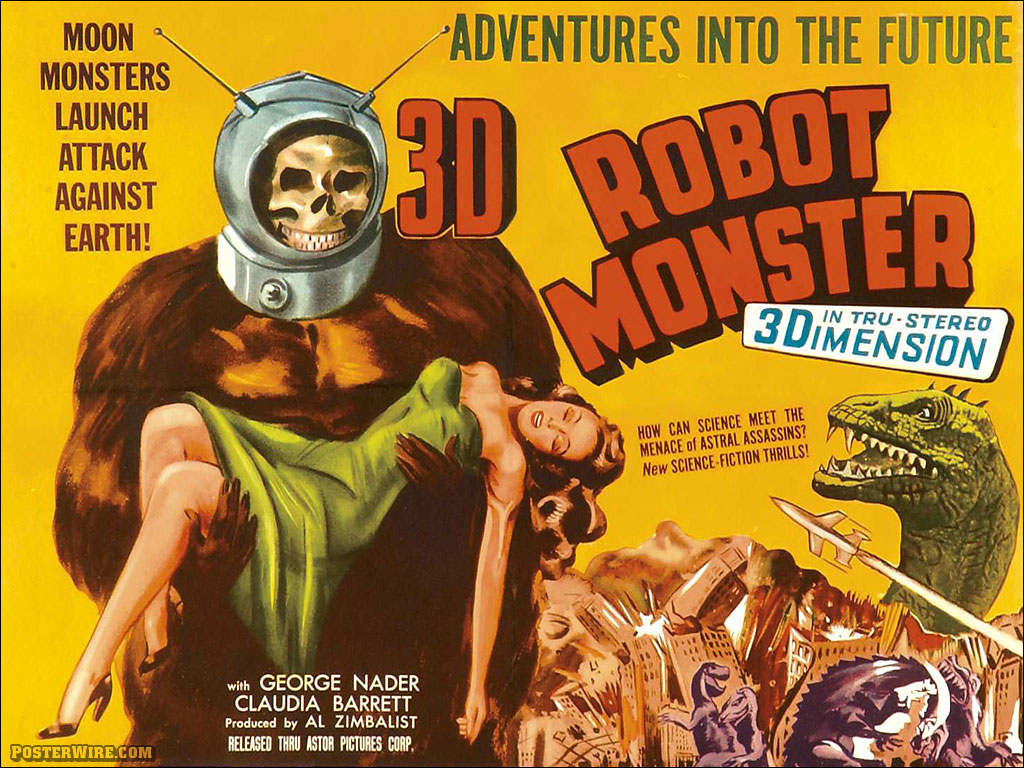
Robot Monster

Chopping Mall

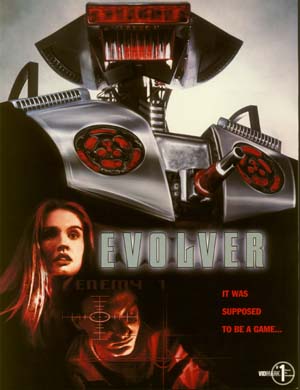
Evolver

Killer Robot Week: “Evolver”

Evolver

evolver2

Welcome back to Misan[trope]y Movie Blog! Today’s entry into Killer Robot Week is 1995’s “Evolver”: a tale of an Augmented Reality video game beta test gone horribly awry.

“Evolver” was written and directed by Mark Rosman, a fellow who has had a bit of an odd career. Before “Evolver,” his film career kicked off by writing and directing the 1983 movie “The House on Sorority Row.” Between that flick and “Evolver,” Rosman only saw a handful of TV series and movie credits, including an episode of “Alfred Hitchcock Presents.” He followed up “Evolver” with a 1997 Daniel Baldwin feature called “The Invader,” which features this amazing plot summary on IMDb (word for word):

Good alien from a dying race must impregnate an Earth woman to avoid extinction of his race. Bad alien whose race helped wipe out good alien’s race doesn’t want to see this happen.

After that blockbuster, Rosman went back to television until the mid-2000s, inexplicably directing a number of episodes of family friendly shows such as “Lizzie McGuire” and “Even Stevens.” In 2004-2005, he directed back-to-back Hillary Duff vehicles (“The Perfect Man,” “A Cinderella Story”), before retreating to the small screen once again. He is still active as of 2015, with his latest being a Hallmark Channel movie by the title of “A Wish Come True.” Hallmark Channel features and Hillary Duff movies are quite a long way from killer robot movies, huh?

The cinematographer on “Evolver,” Jacques Haitkin, has loads of experience behind the camera on horror flicks, racking up nearly 90 credits as of 2012. These have included films such as “Wishmaster,” “Maniac Cop 3,” “Shocker,” “A Nightmare On Elm Street,” and “A Nightmare On Elm Street 2,” among many, many others.

evolver1The cast of “Evolver” includes a couple of recognizable actors, including the voice of William H. Macy as the Evolver robot, just one year before his big critical break-out in the Coen brothers’ masterful “Fargo.” Also instantly recognizable is John de Lancie of “Star Trek: The Next Generation,” “Breaking Bad,” and more recently “My Little Pony: Friendship is Magic.” I have to say, I didn’t expect there to be one degree of separation between this obscure 1990s killer robot movie and the “Brony” subculture.

evolver5The rest of the “Evolver” cast includes Cindy Pickett (most recognizable from playing Ferris Bueller’s mom), character actor Paul Dooley, Ethan Embry (“Once Upon A Time,” “Late Phases”), and Tim Griffin (“American Sniper,” “Grey’s Anatomy”). Griffin has probably had the most consistent work of the bunch in recent years, drifting in and out of minor action and military roles effortlessly since 2007.

“Evolver” follows a pretty simple story: a arcade ace wins a contest that allows him to personally and exclusively beta test a brand new augmented reality video game, which is essentially a laser tag game with an AI-enhanced robot. The learning AI in the “Evolver” robot starts going awry and reverting to its original, militaristic applications (not unlike the plot of “Small Soldiers”), maiming and killing a handful of local teens as it learns to more effectively hunt and destroy.

evolver4To start with, I absolutely love the Evolver robot. I like the design in general, and particularly the way it changes shape slightly as it develops and learns. For what is a pretty simple robot, the design allows it to do some emoting via body language, particularly through the use of head-tilting. That, combined with William H. Macy’s voice work, allows him to to come off as endearing in some scenes, and genuinely intimidating in others. I particularly enjoyed how happy Evolver gets on the few occasions where he things he has won: there’s something weirdly charming and adorable about it.

There are a few moments in “Evolver” that make me wonder if it was motivated by the parental panic in the mid-1990s over the perceived rise of violence in video gaming: there are a couple of instances of “Evolving” learning bad behavior from television programs, with the implication that this is part of what reawakens his military programming.  Honestly, looking back, I think that this half-hearted message just makes the movie funnier in retrospect. To think, this film predates even the first “Grand Theft Auto” game by a solid two years, and came out almost parallel with “Mortal Kombat 3.”

Much like “Chopping Mall,” “Evolver” has a whole lot of minor character deaths throughout the film. While he doesn’t fire eye lasers like the Killbots, Evolver makes use of a lot of improvised weaponry. The two most memorable deaths I recall were executed via ball bearings and an arcade machine, respectively, showing a good deal of creativity with the character dispatching.

At one point, it is believed that “Evolver” has been defeated, and the robotics company takes him away to be destroyed. In true “Halloween 4” Michael Myers fashion, he suddenly comes back to life and wrecks the transport van, which I thought was a pretty cool scene. Unfortunately, there aren’t a whole lot of clips of “Evolver” out there, so just picture this scene with a killer robot in it:

Overall, “Evolver” is a pretty fun killer robot movie, particularly if you are a fan of massively outdated technology. The sheer quantity of ancient computers, video games, and gadgets is enough to send you on a nostalgia trip, and that’s without even getting into the whole killer robot plot. It isn’t quite on the level of “Chopping Mall,” but there is still a lot to enjoy out of this mid-90s B flick.

evolver3
Remember when this kind of video gaming was the hot thing decades before the Oculus Rift?

In general, I would recommend this one for B-movie fans. It is a little off of the beaten path, though it apparently got a fair amount of air time on the early days of the Sci-fi television network. Most people nowadays probably haven’t seen it though, and it is definitely worth the minimal effort to dig up.

If you missed the previously entries in Killer Robot Week here at Misan[trope]y, you can check them out here:
Red Planet

Robot Monster

Chopping Mall


Killer Robot Week: “Chopping Mall”

 Chopping Mall

choppingmall1

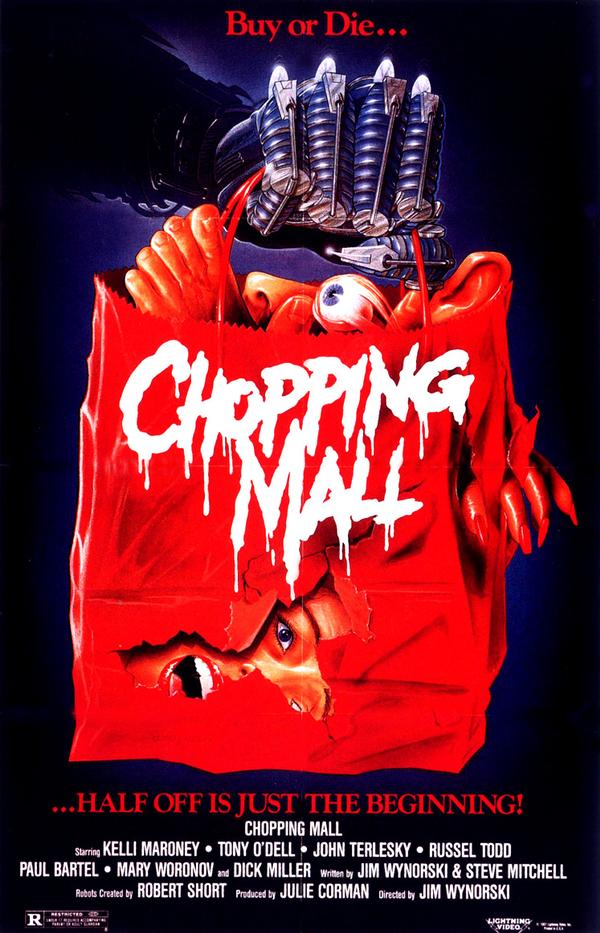
Welcome back to the Misan[trope]y Movie Blog! Today, in the third entry of Killer Robot Week, I’ll be taking a look at Jim Wynorski’s cult classic “Chopping Mall!”

“Chopping Mall” has just about everything you could possibly want from a B-movie: a dash of humor, over-the-top deaths that would make any highlight reel, and a fair share of one-liners. For example:

Let’s send these fuckers a Rambo-gram!

and

I’m just not used to be chased around a mall in the middle of the night by killer robots.

and of course, as is repeated by the robots after every human death:

Thank you, have a nice day!

What more could you possibly ask for?

choppingmall6
How about a head explosion?

Director Jim Wynorski is a bit of a notorious figure in the B-movie world. He spent a long time working under Roger Corman early on, and has now accrued 98 directorial credits to date over his career. However, a number of these have been pseudonymous soft-core porn features, such as “The Hills Have Thighs,” “The Devil Wears Nada,” and “The House on Hooter Hill.”

In 2009, a documentary was made about Jim Wynorski’s career called “Popatopolis.” In the film, a crew follows him over the course of three days, during which time he astoundingly completes an entire film (“The Witches of Breastwick”). The documentary was generally well-received, and brought a number of new eyes to the B-movie stalwart. It currently holds a 7.0 rating on IMDb.

As mentioned, Jim Wynorski has used a number of pseudonyms for his soft-core pornography and otherwise lesser works over the years. These have included “Rip Masters,” “H.R. Blueberry,” “Jay Andrews,” “Bob E. Brown,” “Tom Popatopolous,” “Noble Henry,” and “Arch Stanton.”

Jim Wynorski’s co-writer on “Chopping Mall,” Steve Mitchell, had a not-insignificant career in television writing after the film. His credits include episodes of classic shows like “Jem,” “G. I. Joe,” “Pacific Blue,” “Transformers,” and a movie from 1997 called “Against the Law.” However, he doesn’t have any credits more recent than 1998.

The distinctively 1980s music in “Chopping Mall” was composed and arranged by one Chuck Cirino, who has had a long career in B-movie music since. “Chopping Mall” was only his second film scoring gig, and he now claims over 60 (as well as a handful of Director and Cinematographer credits).

Director of Photography Tom Richmond has likewise had a long career post-“Chopping Mall,” including a number of cinematography credits on higher budget features such as “Mother Night,” “Killing Zoe,” “Little Odessa,” “The Singing Detective,” and “House of 1000 Corpses.” He is still active today, with a couple of shorts awaiting release.

choppingmall7

The designer of the robots in “Chopping Mall,” Robert Short, has had a long career in special effects. He designed the mermaid effects in “Splash,” worked on “1941,” “E.T.,” “Beetlejuice,” and “Piranha,” oversaw the effects work in “Punisher: War Zone,” and has work in three movies forthcoming in 2015. All together, he has been working on special effects in film for almost 40 years.

choppingmall2The cast of “Chopping Mall” includes a host of character actors that die hard bad movie fans might recognize. Barbara Crampton has featured in a laundry-list of Stuart Gordon movies (“The Re-animator,” “Castle Freak,” “From Beyond”), Dick Miller is a legendary Corman figure from his roles in “Little Shop of Horrors” and “A Bucket of Blood,”  and the combo of Mary Woronov and Paul Bartel have popped up all over Corman’s filmography. Star Tony O’Dell has had a number of small acting roles over the years, but appears to be more prolific in recent years as a dialog and voice coach on television shows such as “Girl Meets World,” “Emeril,” and “George Lopez.”

choppingmall4
Dick Miller being shocked to death in “Chopping Mall”

Something that stands out quite a bit about “Chopping Mall” are the numerous references to other B-movies hidden throughout. Two characters (played by Bartel and Woronov) are directly borrowed from the 1982 movie “Eating Raoul,” and the janitor played by Dick Miller is credited as being the same character he portrayed in the infamous Roger Corman movie “A Bucket of Blood,” creating an unlikely shared universe between the three films. There is also a brief clip shown from the Corman movie (“Attack of the Crab Monsters”), as well as a split second shot of the book “They Came From Outer Space,” which features the source material for another Corman-produced classic, “Death Race 2000.”

The “Chopping Mall” security robots are undoubtedly the most memorable part of the film. Their robotic voices were recorded by Jim Wynorski himself, who clearly had a blast with them. The robots themselves were functional and remotely controlled, down to the gripping rubber claws. Five were ultimately created for the production, just in case of damage over the course of filming. I wasn’t able to find out what happened to the robots themselves, but I want to believe that Jim Wynorski has one in his living room.

choppingmall3
Personally, I might use them to scare away Jehovah’s Witnesses. But I bet you can modify them to be Roombas too.

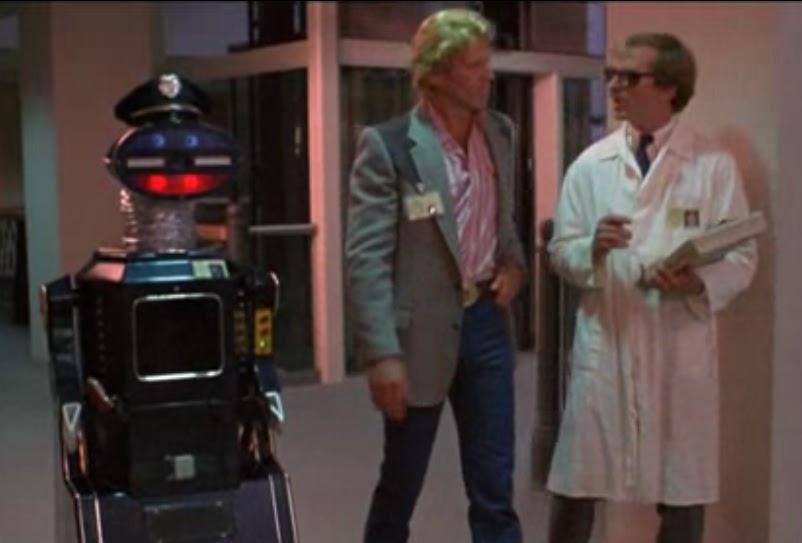
The robot design here is pretty simple: they operate, sensibly enough, with tank-style treads. Their laser eyes and electrical powers look excellently cheesy now, which is hardly something to complain about with this movie. They don’t have a ton of mobility, which makes them a little less terrifying that other killer robots I will cover this week, but they do get the job done. I also noticed that they look very similar to the police robot from “R.O.T.O.R.,” but that is neither here nor there.

robot-copThe plot is likewise pretty straightforward: a handful of kids are having a party in a mall after closing, and an electrical storm causes the brand new, untested security guard robots to malfunction. The story follows the group of teens as they attempt to find a way out of the locked-down mall, all while evading the blood-thirsty killbots.

“Chopping Mall,” released originally as “Killbots” in theaters (changed because it was believed to sound too kid-friendly), wasn’t a big hit upon release. It eventually did make money on its shoestring budget ($800,000), but this is one of those movies that has benefited immensely from word of mouth, cable replays, and its eventual cult status in the long run.

Given its unarguable cult classic status, “Chopping Mall” is frequently reviewed and discussed in bad movie forums, podcasts, blogs, etc. Personally, I’m a big fan of the coverage done by the We Hate Movies gang and the Bad Movie Fiends podcast, and recommend checking those out if you were a big fan of the film.

It probably goes without saying, but I highly recommend “Chopping Mall” for any bad movie fans. This is just about a must-see for hardcore aficionados of cinematic awfulness, and a good choice for introducing people to the style. The pacing is good, the deaths are memorable, and it infuses enough humor to be entertaining and plenty bearable for even casual audiences. If you are looking to show a bad movie to a mixed audience, this is a pretty good selection for you.

If you missed the previously entries in Killer Robot Week here at Misan[trope]y, you can check them out here:

Red Planet

Robot Monster

Killer Robot Week: “Robot Monster”

Robot Monster

robotmonster1

Welcome back to Killer Robot Week here at the Misan[trope]y Movie Blog! For those that missed the first entry, you can check out the “Red Planet” review here.

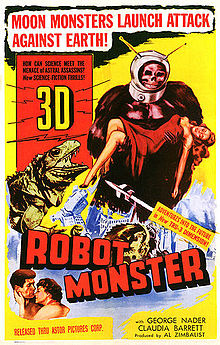
Today’s installment into Killer Robot Week is a truly beloved B-movie classic: “Robot Monster.”

“Robot Monster” is a classic among classics in the realm of B-movies. You will rarely find an elite ranking of “good-bad” films that fails to mention it in some way, and that back-handed praise is more than deserved for this feature.

The most memorable aspect of “Robot Monster,” and what consistently keeps it mentioned in the same breath with films like “The Creeping Terror,” is the awful monster design. The eponymous Robot Monster, Ro-Man, is instantly recognizable by movie buffs, given his simplistic wardrobe of a gorilla suit and a slightly modified diving helmet.

robotmonster5

I’ve mentioned before that a poor monster design isn’t a death sentence for a movie, but “Robot Monster” makes a lot of the same mistakes in that department that “The Creeping Terror” does: most notably, the embarrassingly awful monster gets way too much exposure and screen-time. The only way you can get away with a bad monster is by being creative with its absence, which can’t very well happen if the creature is never absent.

The writing in Robot Monster is nothing short of astounding. The story feels like a “Twilight Zone” episode written by an 11-year-old with dialogue penned by a younger sibling, and the allusions to Cold War anxieties are brandished towards the audience like a bludgeon. In short, the writing has all of the subtlety and sophistication of a man in a gorilla suit with a robot head. Here are a few choice lines worth noting:

[Ro-man]: I cannot – yet I must. How do you calculate that? At what point on the graph do “must” and “cannot” meet? Yet I must – but I cannot!

…and some more gold from Ro-Man:

[Ro-Man]: Hu-mans, listen to me. Due to an error in calculation, there are still a few of you left.

And, of course, Ro-Man threatening a child. This happens a fair amount:

[Johnny]: I think you are just a big bully, picking on those smaller than you are!

[Ro-Man]: Now I will kill you.

It certainly doesn’t help the dialogue that the acting isn’t exactly stellar to begin with. The movie features not one, but two major child characters, which is almost always a recipe for disaster. As you might expect, the two precocious kids can’t act with a damn, and are on screen almost as much as the robot monster himself. The rest of the characters include an elderly scientist and a love-hate couple, none of which are portrayed much better than the kids.

robotmonster4
Peripheral vision is negated by true love

There is an interesting question that I had to ask myself while watching this movie: is Ro-Man, as the title suggests, actually a robot? It seems like a necessary question to ask, given this is Killer Robot Week and all. His behavior and speech are very mechanical and robotic until later in the film, which seems to be a trait of his race (also called Ro-Man? There’s an anti-individualism aspect to them). It is also unclear if the diving helmet is part of a uniform / space suit, or if it is biologically part of the creature. Ro-Man’s commander, who is not on the planet, also wears the same helmet, so I don’t think it is a necessary breathing apparatus. In any case, I’m tempted to say that the Ro-Man are a sort of cyborg race, which incorporates both robotic and biological aspects. Interestingly enough, the term “cyborg” wouldn’t be officially coined for another 7 years after the release of “Robot Monster,” so maybe there actually is a little forward thinking there?

robotmonster2

“Robot Monster” was directed by a man named Phil Tucker, who didn’t do much else with his career. He has a few other directorial credits on films like “The Cape Canaveral Monsters” and “Dream Follies,” but nothing particularly notable.  He popped back up briefly in the 1970s as an editor and production manager, working on movies like “King Kong (1976),” “Orca,” and the “Wonder Woman” television show.

In the acclaimed book of film failures, “The Golden Turkey Awards” by the Medved brothers, it is stated that Phil Tucker attempted suicide after the abysmal critical reception to “Robot Monster.” From what I could find, this a bit of a bending of the truth: it is reported that the film’s distributor refused to pay him for his work on “Robot Monster,” which left him unemployed, broke, and in general dire straits. In addition to his history with depression, all of these factors apparently culminated in his suicide attempt in December 1953.

The writer of “Robot Monster” is listed as Wyott Ordung, who likewise doesn’t have a whole lot credited to his name. He had a few directing credits, specifically “Walk the Dark Street” and “Monster from the Ocean Floor,” but didn’t do much at all outside of the 1950s.

The cast of “Robot Monster,” to the surprise of no one, did not produce any major stars.  George Nader, who plays Roy in “Robot Monster,” seemed poised for stardom after winning a Golden Globe in 1954 as one of the most promising male newcomers, but never really managed to break out. Selena Royle, who is credited in “Robot Monster” as “Mother,” was a character actress throughout the 1940s for MGM, but was publicly accused of being a communist sympathizer in 1951, which was enough to essentially destroy her movie career going forward. “Robot Monster” would be her next-to-last big screen credit, with her movie career concluding in 1955 with “Murder is My Beat.”

robotmonster3

“Robot Monster” was filmed at Bronson Canyon, a particularly famous B-movie filming site outside of Los Angeles that has seen the likes of “Eegah!,” “Army of Darkness,” “They Saved Hitler’s Brain,” “The Searchers,” and countless others. “Robot Monster” has the distinction of having been filmed almost entirely at that location, with only one sequence being filmed in a nearby residential neighborhood. You will probably recognize the cave from “Robot Monster” as being the same one used for external shots of the Bat Cave in the Adam West “Batman” television show.

robotmonster6

A handful of clips from other films are used throughout “Robot Monster,” including a number of shots of stop motion dinosaurs from “Lost Continent” and a sequence of lizards fighting from “One Million B.C.” to make up the perplexing catastrophic conclusion.

Overall, “Robot Monster” is more than deserving of its reputation, regardless of how you want to interpret that statement. The film is a showcase of incompetence at every level, and the end result is absolutely entertaining.

For bad movie fans, this is a must see. “Robot Monster” is essentially a foundational work, on the level of “Manos: The Hands of Fate” and the more notorious Ed Wood films. Particularly for monster movies, this stands amongst the elite of the awful.


Killer Robot Week: “Red Planet”

Red Planet

redplanet6

Today, we’re kicking off Killer Robot Week with a bit of a forgotten sci-fi feature: 2000’s much maligned “Red Planet,” which features the killer military tracking robot AMEE.

“Red Planet” was directed by South African Antony Hoffman, and is to date the director’s only feature. He did a short in 2014, but has no other planned credits listed on IMDb. The best information that I could find indicated that he apparently does commercials these days, which I suppose is better than nothing.

A fellow named Chuck Pfarrer is listed as both the writer and a producer on “Red Planet,” and it has been his only credit in the new millennium. Previously, he had an assortment of writing credits on movies like “Hard Target,” “Darkman,” and “The Jackal.” However, his most telling credit is on the film “Virus,” just one year prior to “Red Planet.” Back to back high-profile, high-budget failures in consecutive years is just about what it takes to sink a career.

Another writer credited on “Red Planet” is Jonathan Lemkin, who is still around today. He went on to write the action movie “Shooter” starring Mark Wahlberg, and is listed as working on “G.I. Joe 3” at the moment. Before “Red Planet,” he mostly did television writing (“Hill Street Blues,” “21 Jump Street”), but did do screenplay work for “The Devil’s Advocate” and “Lethal Weapon 4.”

One other notable name in the crew is one Peter Suschitzky, who has most recently been the go-to cinematographer for David Cronenberg (“Crash,” “Eastern Promises,” “History of Violence,” “eXistenZ,” “Maps to the Stars”). However, his earlier credits go back a good ways, and include “The Man In The Iron Mask,” “Krull,” and a stand-out director of photography credit on “The Empire Strikes Back.”

The Art Department and Production Design team feature a couple of names still quite active today. Owen Paterson, who is credited with the production design, is currently attached to “Captain America: Civil War,” and has recently worked on “Godzilla (2014).” He also had a lengthy connection with the Wachowskis, doing the production design for all three “Matrix” movies, “V For Vendetta,” and “Speed Racer.” Hugh Bateup, who is credited as one of the Art Directors on “Red Planet,” took over Paterson’s Production Design role for the later Wachowski movies “Cloud Atlas” and “Jupiter Ascending” after serving as an art director for the siblings on the “Matrix” trilogy and “Speed Racer.”

“Red Planet” boasts a pretty interesting cast: Simon Baker (“The Mentalist”), Val Kilmer, Terrence Stamp, Carrie-Anne Moss, and Tom Sizemore lead the way in a minimal cast of astronauts who are sent to investigate a Mars terraforming project. Apparently, a lot of creative shooting had to be done with stand-ins and body doubles due to a major feud between Kilmer and Sizemore on set, which led to numerous instances where they refused to be present together for filming.

redplanet4

“Red Planet” was thoroughly loathed by critics and audiences upon release in 2000: Rotten Tomatoes has it at an abysmal 14% for critics, and an only slightly higher 28% for audiences. The box office didn’t fair much better: in total, the movie failed to rake in even half of its estimated 80 million dollar budget, making it a massive financial flop. However, opinion on the movie may be softening with time: its IMDb rating is up to a 5.6, and I’ve heard from a number of people who feel that it was unappreciated. Phil Plait of “Bad Astronomy” offers one of the few positive reviews out there:
“I was expecting a really bad movie, both plot-wise and astronomy-wise. What I got was an enjoyable movie. It is not very fast paced, which may be why the critics didn’t like it. The plot was not great, but good, and I thought the pacing was just fine. I expected Val Kilmer to chew up the scenery, but his character was actually a rather modest, likable fellow, and Kilmer played him very well. The special effects were also really good.”

First off: I definitely agree on (most of) the effects. AMEE, the killer robot of the story, is primarily done with CGI, but looks absolutely fantastic for being from 2000. Some other things in the story look less impressive (the oxygen bugs), but AMEE is undoubtedly the centerpiece.

Speaking of which, the design of AMEE is damn cool. The monoeye design of the infamous HAL is incorporated into a complex, impressively thought-out convertible robot that functions in both bipedal and quadrupedal modes.  I’m not a big fan of the kung-fu bipedal mode, but the quadropedal mode is really unsettling: AMEE’s motions are modeled after those of large, predatory cats, and the sense of cat-and-mouse in the plot is really punched home with that detail. It is also worth pointing out that some of the most recent robotics developments at Boston Dynamics bear some resemblances to AMEE’s quadropedal mode, which is interesting to see. Another bit of sci-fi technological foresight here is the inclusion of a helicopter drone on AMEE, a solid year or so before the recognized inception of the modern UAV program in the United States military and CIA.

Staying on the topic of science and technology, Phil Plait of the “Bad Astronomy” blog, who typically tears movies asunder for technical inaccuracies, actually had some good things to say about “Red Planet”:

…they used spinning wheels on the ship to simulate gravity, which would work. I was amazed to see two wheels, spinning in opposite directions. This is exactly what you want to do!

I did like this movie. While not action packed, I liked the pacing and the thoughtfulness of it. There were a few plot devices: (1) the gamma flare (2) why didn’t the military disable AMEE’s military mode before giving it to civilians? and (3) the bugs making oxygen. However, this is a factor of ten fewer plot devices than in most movies.

…it is my great pleasure to say that “Red Planet” is vastly better than “Mission to Mars”. Of course, the stomach flu is better than “Mission to Mars”.

That is pretty high praise coming from Plait, who is quite the stickler in the realm of depicting science accurately on screen.

So, why was “Red Planet” such a huge failure? One of the most common criticisms I saw of the film over a cursory glance of the Rotten Tomatoes critics blurbs was a perceived lack of originality, a  complaint that I think justifies some context.

“Red Planet” released in November of 2000, placing it 8 months after another Hollywood Mars expedition Sci-Fi flick: “Mission to Mars.” The two movies are rarely discussed separately, and are often a go-to example of similar movies racing to the box office, right next to “Armageddon”/”Deep Impact” and “Volcano”/”Dante’s Peak.” I can understand critics feeling over-saturated on the premise, and not giving “Red Planet” a fair shake on its own merits on the heels of “Mission to Mars.”

Another criticism of the film I have seen is the perceived lesson of “faith > science”, arguing that the movie has some concealed Luddite tendencies. I mean, there is a killer robot and a lot of wayward technology, so I can definitely see where that criticism comes from. There are also some painfully cringe-inducing lines of dialogue about faith that just feel strange and out of place: I have to wonder if this popped out of a rewrite or something, because the moments seem to pop out of nowhere, and don’t really contribute anything to the story. Val Kilmer’s extreme Christian Scientist beliefs have popped up recently in the news, proving that he is almost certainly devout to a fault as far as his personal health is concerned. I’m a little curious if he had any sway on the inclusion of these lines, which isn’t something that would be unheard of. In any case, they are a distraction and a weakness to the movie if you ask me. There isn’t anything strictly wrong with “science gone too far” stories, but it didn’t quite work here. I thought the more interesting line to follow would have been the “Jurassic Park” ‘life finds a way’ route, given that life manages to pop up despite all of the odds against it on Mars. Oh well.

Another frequent comment that I saw about “Red Planet,” which was treated as a positive or a negative depending on the critic, was how much the movie felt like a 1950s B-picture. Check out this excerpt from Roger Ebert’s positive take on the film:

“Red Planet” would have been a great 1950s science fiction film. It embodies the kind of nuts-and-bolts sci-fi championed by John W. Campbell Jr. in his Astounding magazine–right down to the notion that a space mission would be staffed by research scientists, and although there would be a woman on board, she would not be the kind of woman depicted in an aluminum brassiere on the covers of his competitors. This is a film where much of the suspense involves the disappearance of algae.

In contrast, here is the summary of a negative review from the Philadelphia Inquirer:

Feels a lot like a B-movie from the 1950s.

I actually think the biggest problems with this movie were external. The release of “Mission to Mars” and its negative reception was beyond the “Red Planet” team’s control, as was the apparent public disinterest in the style of movie they made. “Red Planet” doesn’t feel like a movie that went wrong at any point in its creation, but rather like a movie that became exactly what it was meant to be, only to find that no one wanted it. I think that “Red Planet” is a 1950s B movie that was trying to compete in a field of early 2000s techno-action, and it was not what people wanted or expected. It isn’t sophisticated enough to be “Contact,” but also not entertaining enough to cut it as a summer blockbuster. It may just be a project that was doomed from inception. That’s really a shame, because I don’t think this is a particularly bad movie: it isn’t great, but I think it is worth a solid “C.”

As far as the plot goes, I appreciated the bit of mystery element included around the terraforming. It reminded me of the similar mechanic used recently in “Interstellar,” which I think served well in that film as well. I wish that the oxygen bugs made a little more sense and some more time was spent on it, but the tension wasn’t ultimately built on that mystery when it comes down to it, so that might have been the right decision. “Interstellar” put weight on saving Earth, whereas there isn’t the same urgency with “Red Planet”: these astronauts are just trying to survive.

redplanet7
I mentioned a few members of the art and production design team earlier. I specifically read into them, because the work on this movie is nothing short of fantastic. I love all of the gadgets, the equipment, the ship, the set: all of the trim in this film is top notch without a doubt. Everything seemed vaguely futuristic, but not so far that it was beyond belief: that can be hard to pull off in sci-fi, which I think any creative futurist could tell you. The near future is tricky business, because you are never quite sure when/where the big technological jumps are going to come in.

redplanet2 redplanet1
As I mentioned before, I think “Red Planet” merits a pretty solid “C,” but I’m still going to recommend it, if only because this deserves a second, retroactive look by more people, unpolluted by the context that surrounded its release. Also, the visuals of the robot and the production design are just cool, and are worth giving it a watch alone.

BibleMan vs Evil Soft Drinks

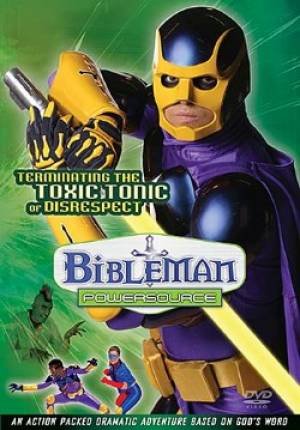
BibleMan: Terminating the Toxic Tonic of Disrespect
biblemantt1

It has been a while since I covered my favorite ol’ evangelical costumed crusader, so I figure it is about time to delve back into the cinematic cesspool that is my BibleMan DVD collection. Speaking of which, here it is:

biblemancollection

Today’s episode is entitled “Terminating the Toxic Tonic of Disrespect.” It doesn’t have the same ring as “A Light in the Darkness” or “The Six Lies of the Fibbler,” does it? In any case, this is the first BibleMan episode to feature Josh Carpenter after his initial, formal introduction as the new BibleMan in “A Fight for Faith.” This episode marks the beginning of the “PowerSource” run of the show, which is the most recent (and last?) incarnation of the character.

First off, the new BibleMan is definitely a bit of a downgrade. Robert Schlipp, who plays Josh Carpenter, is definitely just a preacher in a hero suit. To Willie Aames’s credit, his character of Miles Peterson definitely projected himself as a super-hero in the role, which is a pretty stark contrast next to Schlipp’s take on the role.

“Toxic Tonic” introduces a new sidekick in Melody, who is surely one of the worst actors in the entire universe. Bible Girl doesn’t entirely disappear, but is relegated to an off-screen support role for the episode. Cypher, BibleMan’s resident Black Friend(TM), also returns for the new series, and continues his role as the only half-bearable member of the team.

biblemantt5
The PowerSource Bible Team (Melody on the far right)

The introduction of Melody offers the only actually good lesson that I have seen in the entire series: BibleMan and Cypher at first assume that she is a delivery girl when she shows up at the base, and initially dismiss her as a moron despite her expertise with technology. Of course, in typical BibleMan form, they never acknowledge the obvious sexism of their assumptions, and only ultimately apologize for not respecting her as one in “God’s image.” So close, BibleMan. So close.

The villains, in a bit of a separation, aren’t the offensive stereotypes I typically expect of the series. Instead, the antagonistic duo is comprised of run-of-the-mill zany mad scientists: the neon-mohawked Dr. E. Meritus Snortinskoff (yeah, good job on that one) and his henchman named Stench. The two sinister scientists are executing a plan to make a bunch of kids indignant and rebellious by selling them “Empower” energy drinks made from sugar, water, and “pure evil.” The Bible team realize what is happening after noticing a bunch of burgeoning teenagers acting shitty to authority figures. You know what, BibleMan? Never change.

biblemantt3

The Bible Team ultimately wind up getting a sample of the “Empower” energy drink, and discover its contents (pure evil, bad attitudes, and probably a lot of high fructose corn syrup I assume?). This leads to a rambling, scripture-laced train of thought that could rival the revelation scene from “Black Dynamite.” Somehow, through rambling about trees for a while, the team figures out where to find the evil scientists.

Maybe my favorite aspect of this episode is that a good few minutes of run-time towards the beginning are eaten up through the use of what appears to be totally unnecessary recycled footage from the episode “Crushing the Conspiracy of the Cheater,” which, confusingly, wasn’t released until two years after “Toxic Tonic.” This brings up some serious questions of continuity in the series, but I am not going to dare delving into that.

biblemantt4Predictably, the Bible Team wins the day through grace, goodness, and the violent use of laser swords. The bad guys do get away this time (instead of dying horribly), but I don’t believe that either of them show back up later in the series.

biblemantt2This isn’t one of my favorite episodes, and certainly doesn’t compare to the “BibleMan vs The Internet” entry. However, it definitely has the same old heavy-handedness that all of the incarnations have. The episode of course ends with a prayer, and a plea for all of the viewers to convert to Christianity. As far as entertainment goes, I do kind of love how shitty the kids are who imbibe the “toxic tonic,” and how generally panicked the creators are about the idea of teenage rebellion. There is definitely something to enjoy here, but it isn’t one of the stronger good-bad entries in the show. That might have a little to do with the change of creative team with the dawn of the “Powersource” series, but I’ll need to watch more of them to see if there is a significant perceptible difference between the incarnations.

Bargain Bin(ge): January 2015

Half Price Books is a significantly-sized chain of physical media buy/sell/trades, located primarily throughout the Midwest and Texas. I had never been to one until I moved to Ohio, but they have quickly become go-to spots for my DVD hunting here.

halfpriced8

Though their selection is primarily books, all of the locations I have been to have also had significant stocks of DVDs, and every visit has yielded something interesting.

In keeping with the name, the prices are pretty great: I’ve rarely spent over $5 on any one DVD (usually in the $2 – $3 range). Additionally, I’ve found a lot of movies I haven’t found anywhere else before: everything from Lucio Fulci movies to shitty Saturn Productions kung fu flicks to a special edition of the razzie-nominated “Supergirl.”

This time around, I wound up with a handful of interesting / cheap finds. First up:

Sonic the Hedgehog: The Complete Series
halfpriced1

This isn’t the sort of thing that I would normally pick up. In fact, I left a couple of Mario Bros. animated show DVDs on the shelf the last time I was in the store. However, I actually remember watching bits of this show way back when I was a kid, and I figured the nostalgia of blasting through these would be worth a couple of bucks.

I don’t actually remember if this was any good as a cartoon or not. I seem to recall some later incarnations, but I don’t recall if they were better or worse than this original one. Aren’t chili dogs involved somehow?

Slither
halfpriced3

“Slither” is almost the perfect median between the James Gunn who created “Guardians of the Galaxy” and the James Gunn who interned with Troma and wrote “Tromeo and Juliet” for peanuts. You can tell that he has some real skill here, but “Slither” still has a lot of those Troma-tic, cheesy body horror roots. Nathan Fillion and Michael Rooker are both really awesome in this thing, and it still stands as maybe my favorite James Gunn movie so far. Somehow, I had never picked a copy of this up: $3 is a good enough price for me.

Dragon Force Operation
halfpriced6 halfpriced7

Oh boy, it is another Saturn Production DVD! These are almost always horrible kung-fu movies, and I suspect this one won’t be an exception. It has ratings from a whopping 12 users on IMDb, so I am guessing this isn’t exactly a well-known feature. Here’s hoping there is some entertainment value to be had from this one: the last Saturn Production I watched was Godfrey Ho’s “Dragon Against Vampire,” which was (to the shock of no one) fucking atrocious and complete nonsense.

I am a little disappointed that the synopsis of “Dragon Force Operation” doesn’t feature martial arts trained surgeons, but I am not giving up hope yet.

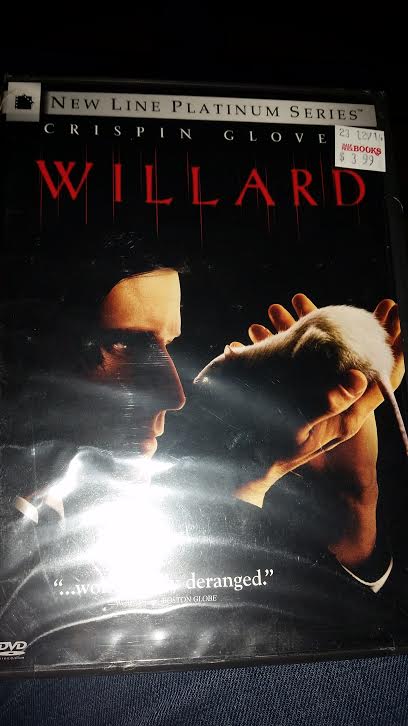
Willard (2003)
halfpriced2

I’ve actually been looking for a copy of this for a while. The original “Willard” is one of those films that I have always heard of, but never seen. I recently caught a trailer for it before a Fritz the Nite Owl screening, and it reignited my interest in digging up a copy. I had actually completely forgotten about this2003  remake until one of the Video Central clerks mentioned it. I think Crispin Glover is a pretty impressive and intense actor who has the ability to shine in otherwise poor movies, so I’m looking forward to checking this one out. The original is on YouTube, but I’m keeping my eyes open for a physical copy of it as well.

Time Changer
halfpriced5 halfpriced4

This one initially caught my eye because it looks, at first glance, to be a typical low-budget sci-fi flick. However, after reading the blurb, it is looking like it has real potential for a (God)Awful Movies review: it is apparently about a time-traveling Bible professor from 1890 who is shocked by the secularization that he sees the present day (and, y’know, just kids these days in general).
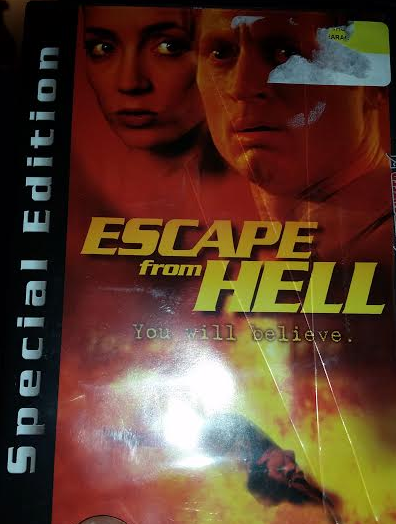
After doing a little research, it turns out that this movie only has at most two degrees of separation from the abysmal “Escape From Hell,” which has me super-excited to check it out on top of everything else. Also, the director’s most recent film is a rip-off of “God’s Not Dead.” Again: this guy made a worse version of “God’s Not Dead.”


Escape From Hell

Escape From Hell
hell3

It is about time I got back to (God)Awful Movies, the segment of the blog dedicated to the worst of religious cinema.

Today’s feature, “Escape From Hell,” is one that I have come across a couple of times in bargain bins in the deep south. I’m not sure how far it actually got distributed, but I’ve certainly never seen it outside of Alabama or Georgia. Here’s what my copy looks like:

hell1

I’m sure glad to know that I got the special edition! Hopefully that means there is some CGI Jabba the Hutt to enjoy.

The reason that I initially picked this up, apart from the title and the cover art, is because of the amazing blurbs on the back of this box. Here are a couple of them, including two from noted film critics Jerry Falwell and televangelist Jack Van Impe:

hell2

Well, I’m sold. I can’t wait to see if this film makes me think about my “life without Christ.”

Out of curiosity, I decided to dig around to see if there is a trailer out there for this thing. I ultimately dug one up, but, to my joy, I found something even better as well: a clip collection, courtesy of the fantastic folks over at Everything is Terrible!

Now I am definitely psyched. Here is the trailer I dug up as well, in case you happen to be curious:

Director Danny Carrales and writer Michael Martin have apparently worked together on a number of Christian features outside of “Escape to Hell,” including films called “The Gathering” and “Second Glance.” Star Daniel Kruse pops up in “The Gathering,” as well as another movie that Carrales and Martin worked on called “Pilgrim’s Promise.” One of the other actors in “Escape to Hell,” Terry Jernigan, has managed to appear in an assortment of bit film roles over the years, but my favorite credit of his is on an upcoming movie called “Sasquatch vs. Yeti.” You can bet that I am looking that one up.

I think that the biggest red flag for me when sifting through the IMDb entry far “Escape to Hell” was finding someone credited as “2D/3D animation and effects / special effects supervisor.” That can’t spell out anything good for this movie. Also, the person with that credit has nothing else current listed to their name outside of another Carrales/Martin feature (“Pilgrim’s Progress”).

My next favorite credit on this movie is one of the producers, Randy Smith, who is apparently a professional boom operator who has worked on an assortment of actually good movies (“12 Monkeys,” “Fear & Loathing in Las Vegas,” “Phone Booth”) and occasionally not-so-good movies (“Thinner,” “The Langoliers”).

Now, let’s see how this thing is. Will it scare me into the arms of Jesus? Will I be forced to reassess all my sinful life choices? Will I be able to even stay awake through this whole thing? Let’s find out!

Review:

Wow, this is really awful. I’m not really sure where to start.

The cinematography is awful in nearly every way you can imagine. Some of the shots are nothing short of nauseating for no reason whatsoever (just people walking down a hallway, for instance). There are so many dutch angles that you will question if your head is even on straight. When the camera is being used half-sensibly, everything feels like an infomercial, or a soap opera at best. Unfortunately, even those moments are few and far between.

The acting is about what you would expect: most of them seem like they are reading directly off of the scripts. In the few cases where that isn’t the case, they either hilariously overact, or sound like they are giving half-rate sermons. Of course, a lot of that blame deserves to be leveled at the writing as well, which is more heavy-handed than a steel gauntlet.

It turns out that my nervousness about that “2D/3D animation and effects / special effects supervisor” was more than justified. There is way more reliance on special effects than there should be in this flick, and they look really bad. I’m pretty sure that they didn’t look good when they were done originally in 2000, and they certainly don’t look good 15 years down the line. I’d bet that they could have pulled off better practical effects with the money they spent on the CG here, and wound up with something way more convincing (the few moments that do involve practical effects in this movie do look passable). That at least would have looked like something realistic, whereas the CG here just looks downright laughable. Moments where characters are cast into hell are supposed to be intimidating and terrifying, but instead they are profoundly hilarious.

Overall, this isn’t a movie worth spending the time to sit through. For the most part, it is just boring dialogue between characters you just can’t give a damn about. I would recommend checking out the “Everything is Terrible” highlights (which has all of the best parts included), and just leaving it alone from there. This isn’t a film that is going to change your life, and it certainly isn’t going to send anyone running to Jesus who wasn’t on his team already.


IMDb Bottom 100: Kirk Cameron’s Saving Christmas

Kirk Cameron’s Saving Christmas
savingxmas1

For those who haven’t heard yet, Kirk Cameron’s new movie “Saving Christmas” recently topped the IMDb’s Bottom 100 list. This came about just after Kirk Cameron attempted to inflate his movie’s score on Rotten Tomatoes by calling on his fan base to give his movie a “fresh” rating. Unfortunately for Cameron, that isn’t how the review aggregation site works. Even more unfortunately for Cameron, the internet doesn’t take too kindly to those sorts of shenanigans, nor does it have much patience for vapid evangelism.

savingxmas4

Thus, quick as a flash, all of the democratic online ratings for “Saving Christmas” (including the audience score on “Rotten Tomatoes” and the IMDb user score) tanked into oblivion. Kirk Cameron, being the Kirk Cameron that he is, believes that this is a result of a grand atheist conspiracy. Well, let us aim to get down to the truth of the matter then, shall we?

savingxmas2

Outside of the internet’s backlash to Cameron’s Rotten Tomatoes shenanigans, there are plenty of other reasons that “Saving Christmas” has been so poorly received. And, believe it or not, I don’t think the backlash is universally from internet atheists and disgruntled troll-folk. I honestly believe that Kirk Cameron managed to split his evangelical base with the message of “Saving Christmas”.

When it comes down to it, “Saving Christmas” isn’t about the mythical “War on Christmas” (as it was advertised): it is a movie aimed at evangelical, conservative Christians who either do not loudly celebrate Christmas, or publicly condemn common Christmas practices due to pagan roots or ties to sinful behavior. The very structure of the movie is laid out as a dialogue between Cameron and his fictitious brother-in-law (and fellow evangelical) Christian, who acts as the straw man of these sorts of Christmas detractors. Cameron, over the course of the movie, walks Christian through his complaints about the materialism of modern Christmas and the Pagan roots of many holiday traditions. Even though Cameron’s arguments for these practices being complimentary with Christianity are generally poorly thought out, it is clear that he is attempting to call out and persuade his fellow evangelicals to come around to his way of thinking. This is an attack movie on a sub-population of his own people.

This may be a bit obvious, but another big part of the reason that “Saving Christmas” has been so poorly received has nothing to do with the film itself, but is rather just a reaction to the fact that Kirk Cameron has his name plastered all over it. Cameron suffers from something that I’ve started calling the “Uwe Boll Effect”, in which the poor behavior and unpopularity of a key player in a film leads to the poor reception of their work, regardless of the work’s actual quality.

savingxmas6
I mean, all of his work is low quality anyway. Let’s be real.

These days, Cameron only registers on the public’s radar when he is saying something wildly homophobic, blatantly misogynistic, or is puppeting some sort of conservative agenda, and none of those things win you popularity points on the internet. Even without his attempt to inflate the movie’s scores, “Saving Christmas” would have registered abysmal scores on IMDb for this reason alone. It probably wouldn’t have been bad enough to hit the Bottom 100, but the fact that Cameron’s name is on the film meant that it wasn’t going to get anything over a 5.0 out of 10 (generous), and that is regardless of the actual quality of the movie.

savingxmas5

Before I get on to talking about the actual film, I want to clearly address something: “Saving Christmas” is in no way the worst movie of all time. The IMDb rankings and the Rotten Tomatoes audience score are both living, democratic scores, which means that they fluctuate in accordance with public opinion. The phenomenally low scores for “Saving Christmas” on these mediums should not be read to mean “this is the worst movie of all time”, but rather as “this is perceived by the public right now to be the worst movie of all time”. I see people misread these rankings all the time (particularly the IMDb). The user score is literally a popularity contest, not an intelligently crafted tome. I don’t mean to say that in a detracting manner: it is actually an interesting and valuable ranking that acts as a barometer of current popular opinion, which is frankly interesting as fuck. Both the Rotten Tomatoes audience score and the IMDb user score are fascinating numbers, but they need to be appreciated for what they actually represent. I can guarantee you that there is not a critic in the world who would cite “Saving Christmas” as being objectively worse as a film than “Monster-A-Go-Go”, and that should tell you all you need to know about the objective accuracy of the IMDb Bottom 100. Now, on to the movie.

“Saving Christmas” is, of course, quite bad. Most of the issues come from poor structure and pacing, which I believe are side effects of attempts to pad out the final run time of the flick. There is an extended, unnecessary dance sequence towards the end of the movie that doesn’t serve much of a purpose besides burning time, and there is a scene early on with no plot significance in which two peripheral character have a conversation almost entirely via ADR (automated dialogue replacement, voiceover done after the fact), meaning that it is entirely possible that the scene was not actually written until after it was filmed. I think these two sequences wound up being as long as they were specifically to pad the run time, which subsequently slowed down the pace of the movie. Even the story structure itself makes the movie feel longer: it is never clear as the dialogue between Cameron and Christian progresses where the movie is in the run time. Most linear plots provide a sort of shorthand for audiences: for instance, you generally have an idea of when the second act is wrapping up, just due to how the story is progressing on screen. In “Saving Christmas”, which lacks a traditional plot, the audience isn’t given any of these usual landmarks, so you never quite know where you are in the movie. The effect of this is that the movie feels longer than it actually is, which is generally something you don’t want to happen. This isn’t necessarily going to result in a bad movie (see: “Pulp Fiction” and “Reservoir Dogs”), but it doesn’t do a film any favors if the audience isn’t sufficiently engaged.

I have mentioned a little bit about the writing already, specifically the fact that it is mostly done as a dialogue between two characters. While the contents of Kirk Cameron’s lines are basically word salad, those scenes aren’t nearly as poorly written as the ones that aren’t specifically between the two lead characters. When not focused on Cameron and Christian, this movie goes off the rails in the writing department. Kirk Cameron provides voice-over in nearly every scene, which is something that would be grating in an otherwise good movie with a better actor doing the readings. But here, given that all of the voice-over is done by Kirk Cameron, delivered in a typical preacher’s cadence, and has the content of a thrown-together Sunday school class, you honestly feel like you are trapped in a visual companion to a Christmas sermon. Worse yet, the little exposure the audience gets to the accessory cast away from Cameron is plagued with lazy stereotypes and banal, unnecessary, and seemingly improvised dialogue.

savingxmas9
This image summarizes the movie perfectly: you can’t see the rest of the cast, because Kirk Cameron will not get out of the way

The acting in “Saving Christmas” is kind of difficult to cover. Kirk Cameron is clearly comfortable in his role, because he is absolutely in his element in this movie. The whole world of the movie does seem to bend and contour around him, almost like he is Neo in “The Matrix”, but I feel like that is more of a writing issue than an acting one. He does come off as incredibly smug, but I can’t really consider that a weakness of his performance: his role (and the movie) is smug by design. Writer/director Darren Doane is serviceable enough as Christian, though he spouts some horribly written lines of attempted comedic dialogue, and is portraying one of the least believable / most malleable characters I’ve ever seen on screen. Perhaps it speaks to his credit as an actor that the character still seems genuine despite all of that?

savingxmas8
Darren Doane, writer/director/co-star of “Saving Christmas”

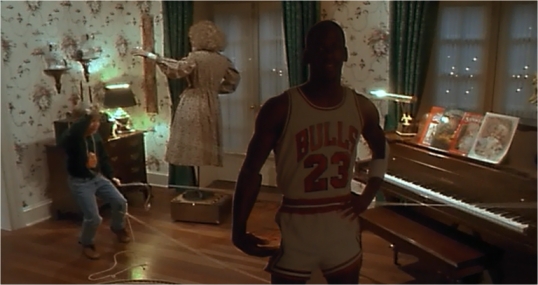
Beyond those two leads, the only other notable that stood out to me was the guy who plays Santa Claus, who has a great menacing look to him, but his line-reads were pretty miserable once he opened his mouth. As for the rest of the cast, the movie doesn’t spend enough time with most of them for me to make judgements either way: outside of the token black stereotype character, they are basically the cardboard cutouts from “Home Alone” that exist solely to create the illusion of a Christmas party.

savingxmas3

savingxmas7
Replace Culkin with Kirk Cameron and you pretty much have it

So, would I recommend “Saving Christmas?” Not particularly. Unless you are really into counter-apologetics and find Kirk Cameron’s usual bad arguments entertaining in general, there isn’t a whole lot of fun to have here. Alternatively, if you are particularly fond of watching bad movies for the sake of learning how films go wrong, there is some value to sitting through this. The structure is mind-boggling, and there are a number of sequences that are shockingly incompetent enough for a film buff to appreciate. That said, there are a handful of decent shots in the movie, so it isn’t absolutely horrible top to bottom. The straw man and stereotype-laden writing are generally just tiresome, and don’t produce any entertainment value, so the film just winds up being a dull experience when it comes down to it.

However, I definitely recommend watching this hilarious re-cut of the “Saving Christmas” trailer. Stick with it until the end, you won’t regret it:

Bargain Bin(ge): Orange Beach, AL

Over this past summer, I spent a little time on the Alabama gulf coast in Orange Beach, AL. It is a pretty small town even during the tourist season, so I wasn’t expecting to find any Bargain Binge locations to spotlight. However, it turns out that Orange Beach still has a little local video rental shop up and operating. I’m honestly not sure what the name of the place is, but I am pretty sure it isn’t “BOOKS DVD Rentals”.

orange2

Typically, I adore local video shops. I have featured a good number of them on this blog, and I look for them in all of the places I travel to. That said, this place was shitty. I went a number of times over the course of the week, and nearly every visit was horrible.

The first time I went into “BOOKS” was on a whim after a grocery trip, when I first spotted the place. It was roughly 3:00pm, and I was alone in the store for about 5 minutes before the old lady behind the counter kicked me out to “go to lunch”. This, for the record, is not a stellar business practice.

The second time I went into “BOOKS”, it was with a mission in mind. We all decided that we needed to watch “Deep Blue Sea” and “Twister” to break up the Great Gamera Marathon, and I wasn’t about to pay full price for either of those DVDs. To the credit of “BOOKS”, at least the store had both of those movies. Unfortunately, the visit was once again sunk by the customer service. The same old lady was in the store, this time sitting quietly next to the entrance. She didn’t say anything when I walked in, and made no motion during the handful of minutes that I stood at the checkout counter, movies in hand. I actually gave up and left the store, as she once again gave no signs of recognition as I left the store. Once again, this is not an ideal business practice.

orange3

A few minutes later, after spot-buying some groceries, I went back into “BOOKS”. Because damn it, I wanted “Twister” and “Deep Blue Sea”, and this old woman was going to take my money whether she wanted to or not. This time, she was standing behind the counter, which was already an improvement over the last visit. I brought the movies up, and so began the marathon of membership registration.

Most video rental stores need to keep some information (via a membership typically) so that they can track you down if you abscond with a movie. Typically this is a quick and painless process: they might make a copy of your ID or have you fill out a form, and you’ll be on your way in a minute or two. At “BOOKS”, this process lasts a lifetime. She first asked if I was already a member, to which I said “no”. She then asked me if I was sure, and transitioned into the story of the 20+ year business and it’s many re-brandings and relocations in that time. I know I rented at least once from a store down here before, so I figured I might as well see if I was in the system. I mean, it could save me a minute or two, right? As she started hunting and pecking at her ancient keyboard, I instantly knew I had made a mistake. Even after she discovered I was not in the system, she kept looking and saying every name aloud that sounded like a vague permutation of “Gordon Maples”. I eventually had to interrupt her to ask for a new registration.
Around this time, one of my friends walked into the shop, wondering what on earth was taking me so long. As soon as he came in, the lady looked over my shoulder and said, in a unnecessarily harsh tone, “Can I help you, sir?”, as if he was about to steal her precious collection of beach reads on display.

Apparently the looming threat of having two individuals in the store caused her to pick up the pace, because the rest of the process went relatively smoothly. She hunt-and-pecked my information into the computer at a steady pace, and I was on my way.

The last time I went into the store, to return “Twister” and “Deep Blue Sea”, nothing eventful happened, which I was kind of disappointed by at that point. When you get that far, you have to hope for a thrilling conclusion to the epic, but that was not to be. The same elderly lady was there, but she was quick, pleasant, and sufficiently acknowledged my existence. It didn’t make up for the previous encounters, and the prices were ridiculous ($4 per night per movie as I recall), but it was definitely improvement.

orange1

I do not recommend going to “BOOKS DVD Rental” if you happen to find yourself in Orange Beach, AL. Bring your own movies, or download something, or hope your vacation internet can sufficiently handle streaming. Or, shit, go outside. The place is gorgeous, enjoy it. Don’t be like me and spend your vacation watching Gamera movies.

choose wisely