I love Godzilla movies. I grew up watching both the Hesei and Showa movies on VHS, and actually remember waiting intently for some of the Heisei movies to premiere on video in the US. So, I have a lot of fond memories of watching old Godzilla movies.
With the recent Godzilla movie rocking the box office, a lot of the old flicks have been getting re-releases on blu-ray. Giddily, I’ve been revisiting a good number of them.
One of my favorites of the Showa era is “Godzilla vs Gigan”. There is a goofy human plot, lots of monster fighting action, cockroaches try to take over the world, Godzilla gets lines, Godzilla bleeds profusely, Godzilla loses a fight with a stationary object, Anguirus casually defies gravity, and the be-buzz-sawed Gigan gets introduced to the franchise. There is a whole lot to love/hate.
Godzilla get beat up by Gigan pretty bad, but beat worse by a stationary buildingSpecifically, this building defeats Godzilla
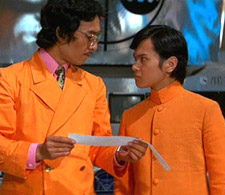
I can’t recommend this movie enough. Outside of “Godzilla vs. Monster Zero”, this is my favorite cheeseball flick from the Showa era of Godzilla. A lot of people point to “Godzilla vs Megalon” as the best of the worst of Showa, but “Megalon” doesn’t have cockroach aliens wearing human skin, or a Japanese Tommy Chong. It has nothing on this.
Japanese Tommy Chong kidnaps someone with that ear of cornSpace roaches have a divine sense of style
Trust me on this one, “Godzilla vs. Gigan” is well worth the watch. Unfortunately, I don’t believe it is on Netflix or online anywhere at the moment, but the DVD and bluray are readily available.
I recently wrote in to the popular bad movie podcast Bad Movie Fiends (BMFcast for short), asking about their general thoughts on the IMDb Bottom 100. I just checked out their most recent episode on “I, Frankenstein” last night, having totally forgotten about the email, and it turns out that they responded to it in the show! It starts just after the 1:24:00 mark towards the end, but I’ll list some key excerpts below:
[on the IMDb Bottom 100]
“It is a good representation of the most publicly well-known bad movies”
“One of the problems with the Bottom 100 is that a lot of people vote MST3k movies on there, but you are watching those movies through different means…if you are sitting in a room with three guys who are ripping the shit out of a movie, it is going to alter your opinion of it a little bit…it bothers me that a lot of that list is MST3k movies, but there is shit like Foodfight and Theodore Rex on there*, which deserve to be there”
“Because of crowd-sourced stuff, an Indian movie called “Gunday” is at the worst spot on IMDb due to a political thing…a twitter campaign to take it to the bottom of the Bottom 100″
“My problem with that whole list is that so much of it is the painful shit that you don’t want to sit through. That is truly the worst, but we look for entertaining bad. That is always our goal”
“It used to be movies like “Plan 9” and “Manos” at the top, and then everyone was like “OMG Birdemic”, and it gets to the top 10. Then it levels out..and it starts dropping out of there.”
“My recommendation to you, Gordon, is do not do this solo. Do not take this journey alone. Don’t. It will only end in pain. When you are solo, it hurts. It hurts bad.”
“I don’t trust [The IMDb Bottom 100]. The community as a whole can’t agree on what a bad movie is…I wouldn’t go by that Bottom 100 list, and watch them just because they are bad movies…those things are pain”
“If you are going to keep on this path, skip the comedies…a bad comedy has nothing left. For the love of god skip comedies. They will all be “Disaster Movie”, don’t do it”
*Foodfight isn’t on the Bottom 100 currently due to not meeting the vote quota criteria. Theodore Rex has a low enough score and enough votes, but is not in the ranking due to unlisted criteria.
Overall, they responded almost exactly how I expected. They brought up the flaws of an open democratic ranking system, the recent “Gunday” controversy (I’ll cover that in a future post), and the over-representation of features from MST3k in the Bottom 100. They also specifically caution against bad comedies, which is something I learned pretty damn quickly (but I’m not skipping them, that’s cheating). Bad comedies are, 99 times out of 100, irredeemably awful with very little takeaway value. Then again, this challenge is supposed to be difficult, after all.
It would be much easier if Paris Hilton would have never gotten into film, though
One aspect that I do find interesting about their responses is something I consider a sort of…philosophical difference between what they do and what I do here. The BMF guys are, with their show, specifically chasing down good-bad movies, using their sliding scale of 5 bags (bad) to 5 Jox (good, from “Robot Jox”) to rank everything they watch. They specifically go after lesser-known movies more often than not, and aim to raise the profile of what are basically diamonds in the rough: amazingly good-bad movies that have either been popularly forgotten or overlooked. I think that is a kick-ass goal, and something I am working on doing myself eventually with the Bargain Bin(ge). It isn’t very often that people find those golden good-bad movies, and you never quite know where they are going to come from, so all the more power to them for doing the leg work on digging them up. However, finding good-bad movies isn’t my goal with going through the IMDb Bottom 100. By nature of the voting quota for the list, movies in the IMDb Bottom 100 are already relatively well known, so it wouldn’t really make sense to use the list for that. There is still the chance that I will be surprised here and there (and I have been), but that isn’t the idea behind the challenge.
While the democratic system of the Bottom 100 has significant drawbacks, it also means that this ranking of bad movies is compiled by the quasi-consensus of the internet mob: the list has a zeitgeist to it, and a sense of cultural relevance. The fact that it is constantly updating actually fascinates me, whereas the BMF team sees that as a sort of weakness to the list. I think that it needs to be fluid to keep up with the times: just look at the archive rankings that I dug up from 2004, and check out the immense change that the list has undergone in that time. The will of the IMDb voting mob is ever-changing and fickle, and can be influenced by the times. I don’t think the Bottom 100 should be though of as a concrete and final list, but more like a sort of bad movie barometer for current trends.
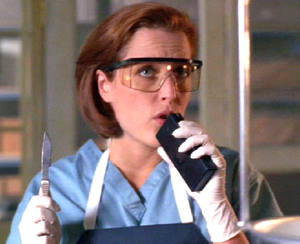
So, there is a sense that the IMDb Bottom 100 has cultural relevancy to it, and that definitely influenced my interest in taking on this challenge. However, that’s also not the whole reason why I am doing it. This is where the real philosophical difference comes in: I like watching bad movies. Not just good-bad movies, but all bad movies. If a movie doesn’t have that special charm that makes it so bad it is good, that doesn’t mean I won’t watch it. With that sort of movie (“The Maize: The Movie”, for example), I just take a different approach to it. Instead of enjoying the spectacle like a good audience should, I approach watching these crap movies more like you would approach an autopsy. I want to understand what went wrong with it, and what dysfunctions were fatal to the film. I want to know who/what killed it, the cause of death, and perhaps the motivation (if it is known). I like knowing how movies tick, and there are a lot of aspects to film-making that are invisible to the audience unless something is going wrong. As someone who doesn’t have a film background, I like learning these things by reverse engineering bad movies and poking at their flaws, so I can better understand what makes good movies good. I still absolutely adore good-bad movies, but I’ve learned how to approach bad-bad movies as well. The IMDb Bottom 100 offers a variety of films that have failed in countless different ways, and I’m personally interested in digging into that sort of thing. It may be difficult to watch through them at times, but I always wind up getting something out of the experience when all is said and done.
Kind of like that, yeah
Lastly, I chose to do this challenge to force me to write regularly and become ever-so-slightly more competent at video editing. And, of course, just to say that I did it. That alone is a good enough reason for me.
Also, I’m over half way done now. Might as well stick it out.
If any of you BMFers come across this, keep being awesome, and thanks for the response!
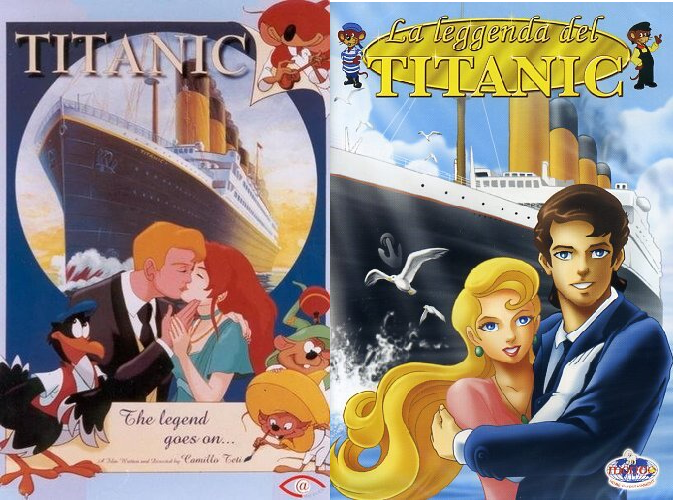
There are two foreign animated movies about the Titanic disaster that star talking animals. Both movies are, as you would expect, thoroughly bizarre. Due to the similarity of the titles and a mix up on my part, I wound up watching both of them, despite the fact that only one of them is in the IMDb Bottom 100. Interestingly enough, “The Legend of the Titanic” has an overall IMDb score of 1.3, which is well below the 2.4 of “Titanic: The Legend Goes On”, which is actually listed in the Bottom 100. There are more factors that go into the IMDb Bottom 100 ranking than score alone, though, which is why “The Legend of the Titanic” isn’t included. Most notably, there is a minimum quota of votes necessary for a movie to qualify for the list, a number which “The Legend of the Titanic” hasn’t reached yet. Still, given I had already watched the movie and that the score is so tremendously low, I figured I might as well review it in conjunction with “Titanic: The Legend Goes On”. In fact, if “The Legend of the Titanic” qualified right now for the IMDb ranking, it would come in at #1 in the Bottom 100. That is good enough for me.
“The Legend of the Titanic” was a far more entertainingly bad movie than I could have possibly expected. I honestly absolutely loved it. The villains were all over-the-top in the best possible way, including the notably eye-patched whaling baron primary antagonist (who was an absolute delight). The voice acting of the character reminded me of Harvey Korman playing Hedley Lamarr in “Blazing Saddles”, in that it was perfectly seething with high-class malevolence. The character also orchestrated one of the most elaborate and nonsensical plots I’ve ever seen in a movie, which certainly earns extra credit. Somehow, this man devised a plan to work with a gang of talking sharks to sink the Titanic in order to secure a monopoly on the Atlantic whaling market. It is even more ridiculous than what you are picturing.
These three organisms are primarily responsible for the sinking of the Titanic as part of a whaling monopoly conspiracy
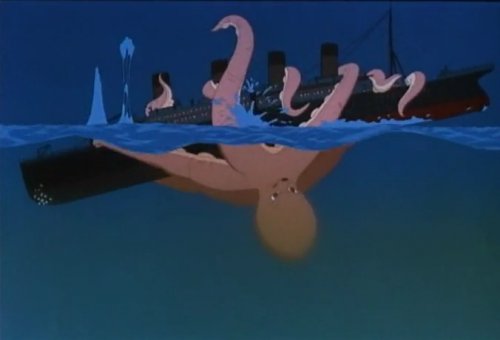
There are a plenty of other astoundingly nonsensical characters and plots in “The Legend of the Titanic”, including a woman who can talk to animals due to the reflections of moon beams in her tears, an octopus capable of throwing icebergs for miles, and talking Brazilian mice who apparently introduced soccer to the Americas. Needless to say, I can’t recommend this movie highly enough: the constant stream of nonsense in this movie is entertaining throughout.
This talking octopus prevents anyone from dying on the Titanic. Everyone survives.
“Titanic: The Legend Continues” is quite a different case. “The Legend of the Titanic” has an entertainingly nonsensical plot, but it is more or less half-competently assembled. “The Legend Continues” is an absolute wreck (ha) in comparison. The voice acting and animation are both massively jarring and out-of-sync, making the act of watching the movie a chore (more-so than it would have been anyway). It is also a musical, which adds a whole new layer of misery to the film.
The most famous scene of “Titanic: The Legend Continues” is undoubtedly a specific sequence featuring a poorly-animated rapping dog. However, there are two different versions of the movie which feature entirely different songs during the sequence. Both are pretty horrible, but I think there is no doubt as to which one is the worst. Check out this comparison:
Something else that is very clear about “The Legend Continues” is that the animators were not bashful about ripping off other works. There are character designs and sequences pulled straight out of other features unashamedly. For instance, check out a couple of the dog characters from “The Legend Continues”:
Look familiar? Of course they do. There is the potential for a fantastic (perhaps lethal) drinking game based on spotting the cliches and ripoffs in this movie.
One of the other huge problems with “The Legend Goes On” is an overabundance of characters, none of whom get much screen-time to develop personalities or stories. There are countless unnecessary one-dimensional characters in this film, such as the lounge singer, the first officer, the under-cover New York cop, and the jewel thief family. None of them play much into the plot, and those are just a handful of the useless human characters. I couldn’t even keep track of all of the stereotype-dependent animals wandering around on the ship.
I suppose “The Legend Continues” should get points for acknowledging that the Titanic disaster actually happened (unlike “Legend of the Titanic”), but everything was so hastily and lazily thrown together, I can’t help but like “Legend of the Titanic” more. “The Legend Goes On” is a move painful watch than “The Legend of the Titanic” if you ask me, and doesn’t have nearly as many laughs. There are plenty of nonsense moments that are entertaining, but most of the value of “The Legend Goes On” comes from basking in its incompetence in the realms of voice acting and animation. If you don’t get a kick out of watching cinematic failures, it is going to be very hard to sit through. However, I think these two movies go very well together. They are so astoundingly similar in plot and characters that they are very often confused with each other, and they even make a lot of the same mistakes. If you aren’t interested in sitting through them in their entirety though, The Nostalgia Critic has reviews of both movies that hit all of the highlights (below).
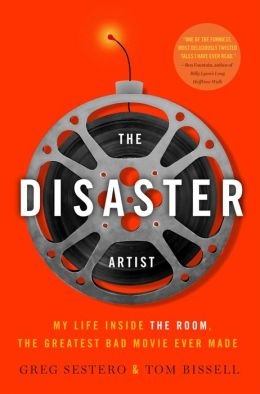
Right now there is a lot of buzz in the bad movie world surrounding James Franco’s involvement in an upcoming film adaptation of “The Disaster Artist”, a recent book about the making of cult-classic bad movie “The Room”.
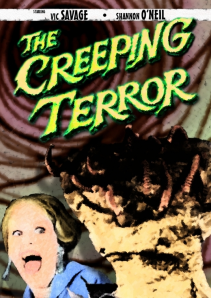
I’m just as excited as everyone else about seeing “The Disaster Artist” translated to film, but I just came across another movie that is currently hitting film festivals about the making of one of the most notorious bad movies from the 1960’s: “The Creeping Terror”
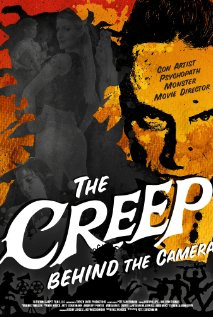
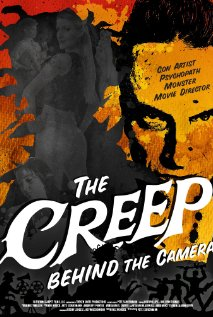
“The Creep Behind The Camera” is a dark comedy docu-drama that tells the story of the people behind “The Creeping Terror”, integrating interviews and stories with live-action reenactments. I’ve come across a few snippets of information about the making of “The Creeping Terror” while reading up on it for the IMDb Bottom 100 (coming up soon), and I am really looking forward to hearing more. From what I can tell, “The Creeping Terror” was a chaotic, low-budget disasterpiece run by a swindler/egomaniac who manipulated people into participating in the film. It also features one of the most perplexing, least convincing monsters that has ever hit the big screen. Needless to say, the “Creep Behind The Camera” crew had plenty to work with.
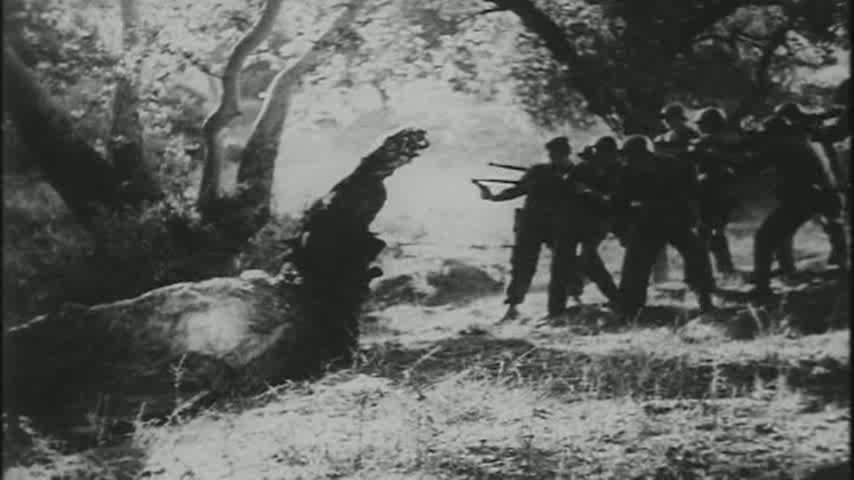
Stand as close as possible to the monster to shoot at it
I highly recommend checking out the trailer for “The Creep Behind The Camera” (below). It doesn’t look like it will shy away from some really dark territory, but it still strikes as a comedic work at heart. Reviews so far look pretty promising, so I’m keeping my fingers crossed that it gets distributed soon.
PasteMagazine.com recently published a list of the 100 “Best” B-movies of all time. In general, there are some great entries in the list, and it is a great starting point for someone new to the realm of bad movies. There are a few intentionally bad movies and Troma-style films that I’m not typically fond of due to their lack of earnestness, but that’s more of a personal preference. I still recommend checking out the whole list, but here are some particular selections from it that you can expect to see from me soon:
“Troll 2”
I’ve been holding off on this one, but it is coming. It has cemented itself in recent years as one of the modern paragons of bad cinema, and has built a phenomenal fan base. It has dropped in the Bottom 100 significantly, but it is still on there and I am definitely going to review it.
“Ben & Arthur”
I’ve never seen this one, but I have heard many comparisons of it to “The Room”, so I have high expectations. It is still hanging around in the Bottom 100, so you can expect this one sooner rather than later.
“Mac & Me”
You had better believe that this is coming. It isn’t in the Bottom 100 anymore, but it used to be. That’s enough of an excuse for me to check this out in the near future.
“BibleMan”
I have a pretty significant BibleMan DVD collection, and I can’t wait to dig into them. I’m focusing on the Bottom 100 first, but expect a bunch of these to show up in my (God)Awful Movies section in good time.
“Robot Monster”
I don’t know much about this one, apart from the fact that I found it in a bargain bin and it is an alumni of the IMDb Bottom 100. Also, the monster looks hilarious.
“Hobgoblins”
This is an old MST3k classic with some of the worst puppeteering I have seen since “Elves”. I’ve already watched it for the Bottom 100, but I haven’t written up my review yet.
“Hercules in New York”
Another alumni of the IMDb Bottom 100, known for being The Governator’s hilariously bad film debut. I’m looking forward to checking out this dubbed mess pretty soon.
One of the few things that I disagree heavily with the list’s author on is the #1 selection, “Hard Ticket to Hawaii”. It was featured recently on Red Letter Media’s Best of the Worst, and came in 3rd behind “Deadly Prey” and “Miami Connection” there. I personally prefer both of those movies to “Hard Ticket” as well. I recently watched all three, and while “Hard Ticket” has great inexplicable moments (death Frisbee, the infamous snake), it also has a lot of down time. It is also a movie that was designed to be tongue-in-cheek and is intentionally low quality (it is just barely not a porno), which doesn’t always work for me when it comes to bad movies. Both “Miami Connection” and “Deadly Prey” are, in contrast, honestly made movies, and are even more entertaining for it. If you ask many B-movie fans, earnestness is a really important quality in enjoyably bad movies, and for any “#1 Bad Movie” to lack it would fail to represent a key trait of the nebulous genre.
It may come as a bit of a surprise to some, but I don’t actually make it to movie theaters particularly often. I spend most of my time digging around through used DVD bargain bins and looking for deep cuts online, and it tends to be a much cheaper way to find much worse movies in general. However, sometimes a movie will hit theaters that gets my attention. So far this year, one in particular caught my eye and got me out to the big screen.
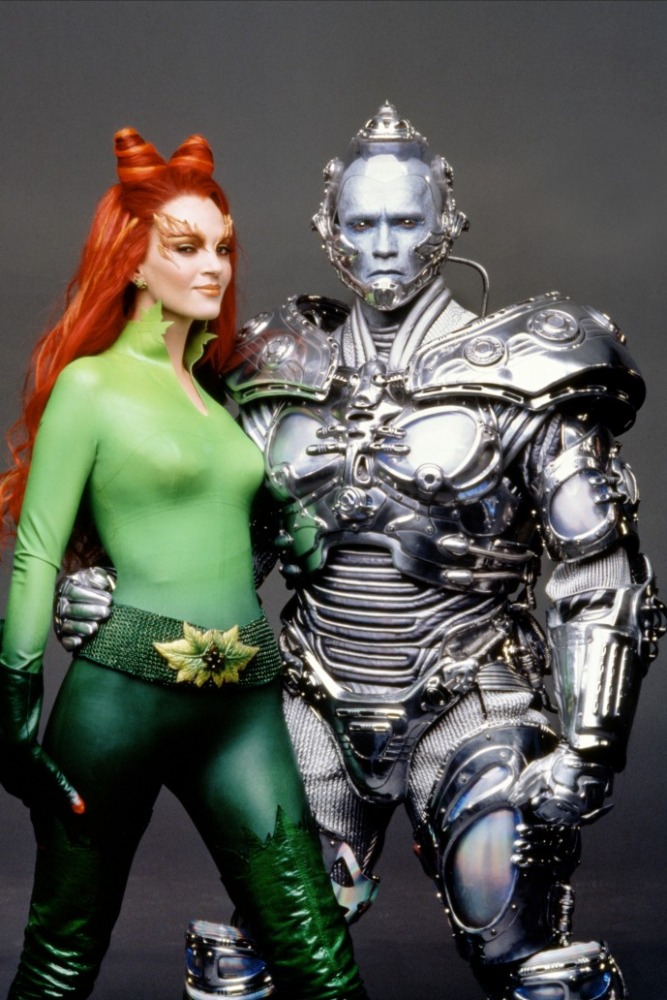
This was the feature directorial debut for Academy Award-winning writer Akiva Goldsman, and is also the worst thing he has been involved in since he penned the pun-saturated script for “Batman & Robin”.
yeah, that one
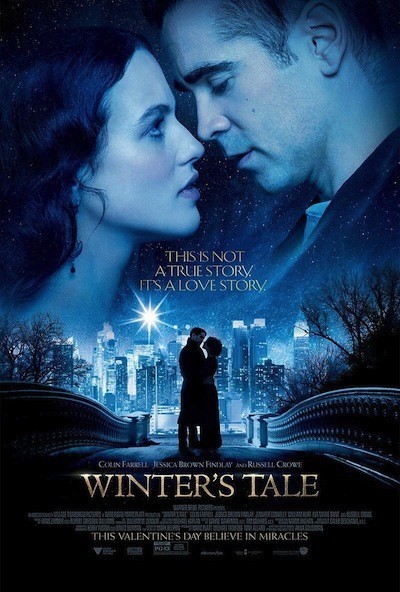
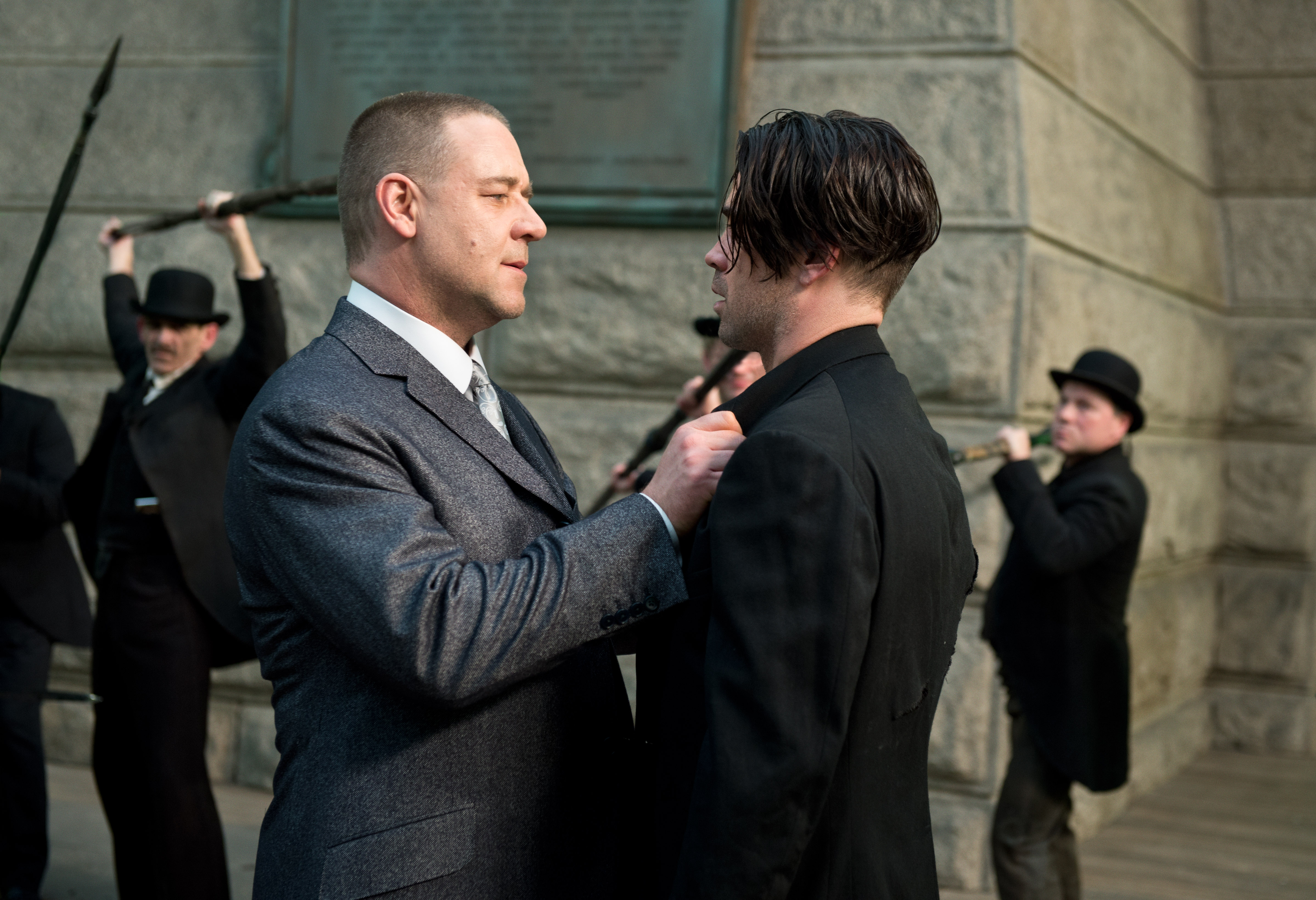
“Winter’s Tale” is a highly well-produced, visually striking, rambling assortment of nonsense. If I hadn’t known Akiva Goldman did the screenplay, I would have sworn that Deepak Chopra had a hand in writing the dialogue.
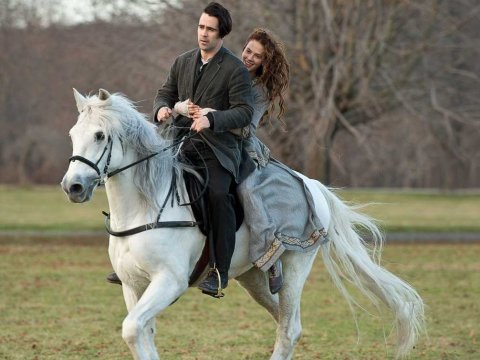
The story is as vapid in content as it is vague and enigmatic in details, which leaves viewers not familiar with the acclaimed source material very much out of the loop. There is a point early in the film where Russell Crowe’s antagonist character mentions in passing to a perplexed henchman that Colin Farrell’s magically-appearing (and flight-capable) horse is actually a dog. When the henchman inquires further, he is shot down by Crowe as if it were foolish to question the claim that the magic horse is actually a dog. That is kind of what sitting through the film is like: it sporadically spurts nonsense claims and dialogue, and doesn’t care if the audience is following along or not. As a general rule, you should aim for your film to make more sense to the casual observer than “Donnie Darko”, at least if you you are trying to sell it to a general audience.
Dog = Horse. What are you not getting here?
I don’t want to spoil the many, many entertaining nonsensical occurrences in this movie for anyone who hasn’t seen it, but I can guarantee that this is going to be a film that will be recalled for quite some time in discussions of big budget bad movies. It doesn’t even sound like it has the excuse that “47 Ronin” did of behind-the-scenes turmoil: this film is just the product of pure incompetence. Specifically, I think that incompetence on the part of the writing and directing is primarily to blame here. So, Akiva gets all the credit for this disasterpiece.
Without spoiling too much, let’s go through some highlights that actually happen over the course of “A Winter’s Tale”:
-inexplicable appearance of magical flying horse
-character orders a spotted owl in a fancy restaurant
-magical tuberculosis with no physical effects, not contagious
-magical horse is actually a dog
-Satan is a Jimi Hendrix enthusiast
-stars are actually dead people
-everyone gets exactly one (1) miracle
-Russell Crowe’s drunk Irish impression
-Colin Farrell’s ridiculous hair
-character turns into a snowman upon death
-cheap CGI monster effects to contort faces
-the tearing off of a man’s face, after which a character plays with his blood
-magical GPS jewels
-polite romantic conversation over tea with a home invader
-baby is abandoned in the ocean inside of a model boat
-death by sex
-uncredited, plot-important cameo by a famous actor who has no business doing a bit role in this movie
-riding a horse into space
The whole movie layers ridiculous dialogue onto preposterous premises, and fails to create the magical realism style that was needed for this story to work. It appears that all of the actors take their roles seriously, which enhances the unintentional comedic effect for the movie in my eyes. In particular, Russell Crowe’s performance is completely ridiculous. There are moments where he sounds like a drunk, evil leprechaun. Despite how poorly it comes off, I think he was actually trying at the role, but it winds up being a scenery-chewer through and through despite what I can’t help but assume was a serious effort.
The movie is going to be coming out on DVD in June, but in the meantime I recommend checking out the many reviews that have come out about the movie. How Did This Get Made? did a good episode on it, and The Cinema Snob’s Midnight Screening was a blast if you ask me. If I recall correctly, they both go into spoilers though, so be warned.
Welcome to a new segment of Misan[trope]y, called [God]Awful Movies!
There has been a bit of a boom as of recently with religious-themed movies in theaters, what with God’s Not Dead, Noah, Heaven is for Real, etc. (and in case you didn’t know, there is a high-budget remake of “Left Behind” in the pipeline, starring none other than Nic Cage). I intend to review some of these here for sure, but my primary focus is going to be on the more obscure features I come across (Mr. T and Corbin Bernsen’s Judgment, for instance). I’m also going to take aim at bad mythology-based movies (Hulk Hogan played Zeus once), sci-fi/religious hybrids (Legion, Constantine, Priest), and much more. Also, BibleMan. There is going to be a lot of BibleMan here.
In the meantime, enjoy this trailer for the upcoming God’s Not Dead knockoff (I hope that doesn’t become a regular thing), A Matter of Faith, which is due to come out in September.
Car 54, Where Are You? is a “comedy”, using a loose definition of the word. However, apparently it was almost a musical as well. Here is an excerpt from an AV Club interview with star John C. McGinley:
I have mixed feelings about Car 54, Where Are You? Because we shot it as a musical and whoever the studio head was at Orion, or whoever the powers that be were, cut all but, like, two musical numbers out of it. That is the same as cutting the musical numbers out of TheWizard Of Oz; it wouldn’t be that interesting. So the film, to me, doesn’t make sense without the musical numbers in it.
…
I wouldn’t pretend to know what happened, what the decision-making process was, but we busted our humps on those numbers, and then the film came out and I didn’t understand what I was watching.
I’m going to go out on a limb and say that more musical numbers would not have saved this unfunny, poorly-crafted cartoon of a movie. It might have made it more entertainingly bad though, but the quality and storytelling certainly wouldn’t have been helped.
“this would make more sense with singing, right?”
Not unlike fellow IMDb Bottom 100 movie Son of the Mask, this movie feels a bit misplaced in time, in that the movie’s creators are trying to bottle and re-purpose an older style of comedy in such a way that it can be pitched to a new, younger audience. Unfortunately, somewhere along the process this movie lost the apparent charm of the original Car 54 television show, ultimately turning off (and outraging) many fans of the show upon its release. That is one of the worst things you can do when doing a remake or adaptation, as one of the major advantages you have to start off with is an existing fan base that can potential help support your work. However, when the fan base turns on you, it can do very serious damage to the movie’s reception. Car 54, Where Are You? is a very good example of this potential boon turning into a negative weight, as the show’s fans were outraged at the poor quality of the movie. While the movie is certainly not good or entertaining, I can’t help but wonder how much of the negative reputation of the movie can be attributed to the scorned fan base.
As far as the plot of the movie goes, the audience is presented with a pretty basic buddy cop formula: a loose, sketchy cop (David Johansen) is paired with a by-the-books, top-of-his class rookie (McGinley). The movie quickly establishes that their coverage area is particularly crime-ridden, and that they are incredibly incompetent as a duo via an assortment of unfunny shenanigans. The primary plot of the movie sneaks in after the main characters are established: the precinct is tasked with holding a bookie-turned-informant (Jeremy Piven of Entourage), who is the key to putting away the infamous and eccentric local mobster played by Daniel Baldwin. The Car 54 duo is roped into this plot after a failed assassination attempt on Piven’s character alerts the police chief to a potential mole in the department. Believing that the Car 54 partners are far too incompetent to be moles, he entrusts them with defending the increasingly bizarre and detached-from-reality Piven character. Predictably, this plan goes awry because everyone involved is dramatically incompetent.
Another brilliant idea from the police chief
The movie has moments that almost reach levels of genuine comedy, particularly an unprompted cameo by Penn & Teller, and a hitman doing one of the worst Luca Brasi impressions you will ever run into. The finale takes place in an amusement park, which concludes with the claustrophobic mob boss confessing to all of his crimes after being put through the Tunnel of Love. Despite these few moments of mild laughs, the whole movie just isn’t funny enough to make the grade. There are too many jokes that completely whiff, and all of the characters are played way too over the top. Daniel Baldwin and Jeremy Piven both put in complete nonsense performances, to the point that their characters just aren’t believable in any way. Baldwin’s mob boss character is played up to be hilarious because of his claustrophobia (which isn’t funny to start with), but is so overblown that it doesn’t even make sense within any kind of logic. A scene in his office shows that his condition is so severe that he has a chalked circle around his desk (in the center of the cavernous room), over which no one is allowed to cross. Piven, meanwhile, doesn’t seem to have any sense of self-preservation. Despite obvious assassination attempts on him, at no point does he connect that he is in danger. His character is supposedly offering testimony to police against a dangerous mob boss, yet he doesn’t at all understand the gravity of his situation. There is just too much of this kind of unfunny nonsense for the movie to be enjoyable.
As with many of the comedies on this list, the behind-the-scenes work doesn’t appear to be particularly incompetent. From what I have been able to find out about the movie, there was a lot of editing done after the fact to produce this unfortunate result. That said, I don’t think that the hack-job is particularly noticeable, which I suppose is a credit to the editing team. McGinley clearly wanted to level blame in that direction, but the fact of the matter is that the jokes in the remaining script still aren’t funny. The director clearly had an odd vision for this movie to start with, which certainly didn’t help, but even a master couldn’t have made this screenplay work without a serious rewrite. Likewise, it is hard to blame the actors for treating the movie like a cartoon, because that is what they were given to work with. To my surprise, Rosie O’Donnell’s bit role in the movie has been particularly singled out as a poor performance. She certainly isn’t a high point, but she hardly compares to the bizarre performances by Piven and Baldwin in my opinion.
There are a lot of bad elements to the movie, but unfortunately none of them are quite poor enough to make the movie unintentionally enjoyable. That tends to be hard for comedies to pull off anyway, but I wonder if those extra musical numbers might have put this over the edge. Perhaps if there is a director’s cut of this movie out there somewhere, it is a ridiculous enough spectacle to give a watch. However, as it stands, it appears that someone tried to save this wreck in post-production, and may have turned it from being an opus of poor film-making into a sub-par, difficult-to-watch attempt at comedy.
I am incredibly surprised that I had never heard anything about this movie before. Honestly, Dark Harvest 2: The Maize: The Movie (take your pick on the title) is the most poorly crafted movie I have come across on the IMDb Bottom 100. It has all of the technical and acting incompetence of Birdemic combined with all of the filmmaking laziness of Zombie Nation. It is an unbelievable spectacle. I mean, the opening credits are even horrible.
The story loosely follows two young girls as they get lost in a haunted corn maze, and their ambiguously psychic father as he tries to rescue them from his premonition of a mysterious local child murderer who is hunting them down in the maze. There are also ghosts poorly ripped out of The Shining.
The majority of the movie consists of the father character yelling the names of his children while aimlessly wandering in the corn maze. It becomes infinitely boring and nauseating very quickly. Oftentimes, the director chooses to “enhance” these meandering scenes with picture-in-picture effects, which look bad even when they are done with a high budget (Ang Lee’s Hulk). Here, the effect looks atrocious.
As mentioned briefly, the acting in this movie is unforgivably bad for anything outside of YouTube. However, the script doesn’t do anyone any favors. There is one sequence where the daughters are talking to each other while lost in the maze, and it may be the most unwatchable sequence I have even seen in a movie. Both children sound like they are stumbling through reading their lines, and the lines themselves sound like the most inhuman dialogue even put to paper. Even the simple shot looks bad, like it was a home video from someone’s dusty VHS collection. It was like watching a perfect maelstrom of utter incompetence.
I recommend that any bad movie fan attempt to watch through this movie. It is a chore, but it feels like something that must be done: A rite of passage of sorts. If you can sit through this film, then no movie will ever be able to hurt you again.
Alone in the Dark is yet another video game adaptation by infamous director Uwe Boll. I already covered another one of his films, House of the Dead, which also resides in the IMDb Bottom 100. I thought that House of the Dead had a little bit more redeeming value to it than Alone in the Dark though, and I loathe that movie immensely. That alone says a lot about my dark opinions of this film (sorry about that).
I honestly try to be a little charitable when talking about Uwe Boll movies, because I think his personality and unpopularity among critics has colored a lot of reviews of his works. That said, it is pretty hard to deny that his movies are terrible, and I’m certainly not going to be one to deny that here. Regardless, I’ll try to start with some positives about this movie.
The first (and, well, only) positive thing I have to say about this movie is possibly a bit backhanded, because it is also a major complaint. I was impressed with his use of lighting in how he used it to relatively cover up some of his cheap/poor CG effects. That actually felt like a pretty good move, given what I assume were imposed budgetary limitations on the movie. However, the CG monsters were a bit integral to the plot, so the whole movie winds up being incredibly dark with random flashes of light (Uwe Boll bargain bin bullet effects), which makes the whole thing a pretty blinding experience. At times Boll tries to make up for this by substituting the CG monsters on screen with off-screen noises that imply their presence, but it winds up being a bit obvious as to what he is doing. Good try though, I guess?
Most of the movie looks like this
The movie’s plot is pretty typical if you find yourself watching SyFy Original movies on a regular basis. It isn’t deep, and there certainly isn’t too much though put into it. If I remember correctly, the monsters are underground dwellers (aliens at one point maybe?) that have been around throughout human history, and the characters find evidence of them in mysterious archaeological findings. The lead character (Christian Slater) is a former member of a secret government organization that tries to conceal the existence of these creatures, like a more militaristic version of the Men in Black. He teams up with some archaeologists (including Sharknado‘s Tara Reid) to try to contain (I guess?) the resurrection of these poorly CG’d creatures.
The acting is all pretty sub-par, and there isn’t anyone playing up their roles to add entertainment value. Everyone seems to be taking this movie incredibly seriously, which is really a shame. I feel like this had some potential if any of the actors would have been able to really let go, but I feel like they were equally constrained by the screenplay and the directing.
The biggest problems with this movie all come down to the lighting. I mentioned previously that this was a good way to try to conceal iffy CGI, but the whole movie comes out as too dark as a result of it. Equally, the constant darkness emphasizes another classic Uwe Boll cheap trick: post-production gun flashes. Uwe Boll loves these cheesy, bright gun flashes that are added in after the fact (I mentioned their presence in House of the Dead as well). In his other movie they look bad, but in a film where the characters are constantly immersed in darkness, the jarring flashes constant, and undo all of the work of concealing the flaws of the poorly CG’d monsters. It doesn’t matter much that you can’t see the shitty details of the monster CG when you are using the cheapest gun effects you can get your hands on.
oh come on
Alone in the Dark is a boring and painful watch. There isn’t any entertainment value to leech out of this thing, and you will almost certainly regret watching it once the headache from the constant flashing sets in. Worse, Boll once again concludes his movie by ripping off a much better, cherished cult classic. This time around, it is Sam Raimi’s Evil Dead: Boll concludes the movie with the first-person camera crashing in on the characters from behind, straight out of the fantastic conclusion to the original Evil Dead. Worse yet, the effect wasn’t necessary. The movie was already essentially over, and it could easily have just cut to black with the monster noises and had the same effect. At this point, I suppose that is just what you can expect from Uwe Boll.
Reviews/Trivia of B-Movies, Bad Movies, and Cult Movies.
![Misan[trope]y](https://misantropey.com/wp-content/uploads/2014/10/misantropeyhead1.png)
 One of my favorites of the Showa era is “Godzilla vs Gigan”. There is a goofy human plot, lots of monster fighting action, cockroaches try to take over the world, Godzilla gets lines, Godzilla bleeds profusely, Godzilla loses a fight with a stationary object, Anguirus casually defies gravity, and the be-buzz-sawed Gigan gets introduced to the franchise. There is a whole lot to love/hate.














 Misan[trope]y