Tag Archives: bad movies

Ninja III: The Domination

Ninja III: The Domination

ninja31

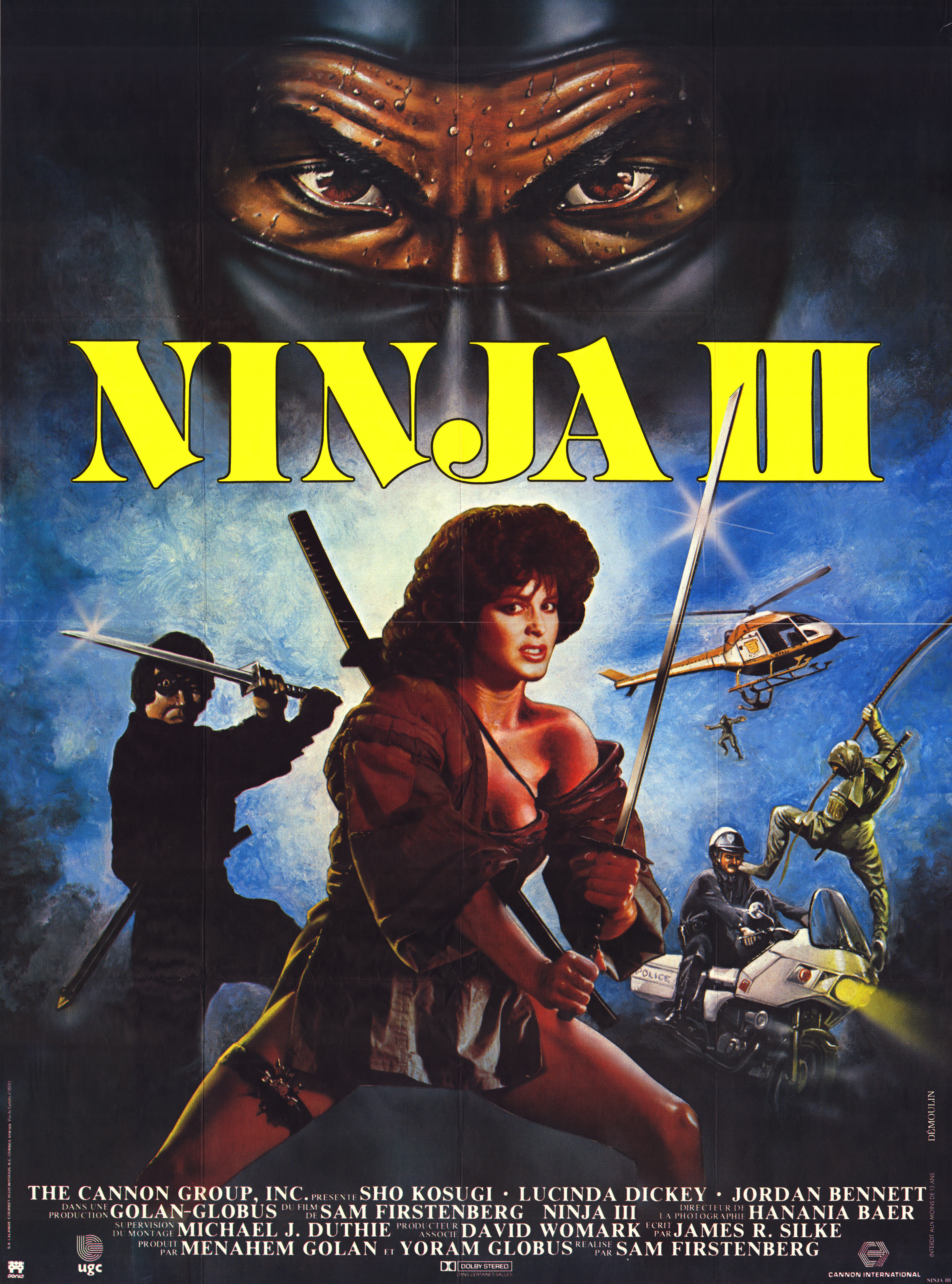
Today’s feature is the third and final movie in the Cannon ninja trilogy, and is a truly bizarre one at that: “Ninja III: The Domination.”

“Ninja III” was written by James R. Silke, who returned to the series after writing the predecessor, “Revenge of the Ninja.” Likewise, director Sam Firstenberg and effects artist Joe Quinlivan of “Revenge of the Ninja” returned for “Ninja III: The Domination.”

The cinematography for “Ninja III: The Domination” was provided by Hanania Baer, who later worked on films such as “American Ninja,” “Breakin’ 2: Electric Boogaloo,” and “Masters of the Universe.”

The music for “Ninja III: The Domination” marks a sharp departure from the previous two films in the series. Instead of the usual martial arts movie soundtrack, “Ninja III” is infused with catchy tunes modeled after 1980s pop music. The music composition is credited to Misha Segal (“The Last Dragon”) and Udi Harpaz (“Knight Rider,” “Archer”), and the score was orchestrated by Arthur Kempel (“Mystery Men,” “Behind Enemy Lines”).

“Ninja III: The Domination” is the third installment in the Cannon ninja trilogy (after “Enter the Ninja” and “Revenge of the Ninja”), and is yet another brainchild of the Menahem Golan and Yoram Globus tandem: the two Israeli cousins who ran Cannon films throughout the 1980s. “Ninja III” is certainly the strangest of the three movies, incorporating supernatural elements such as a possession into the story.
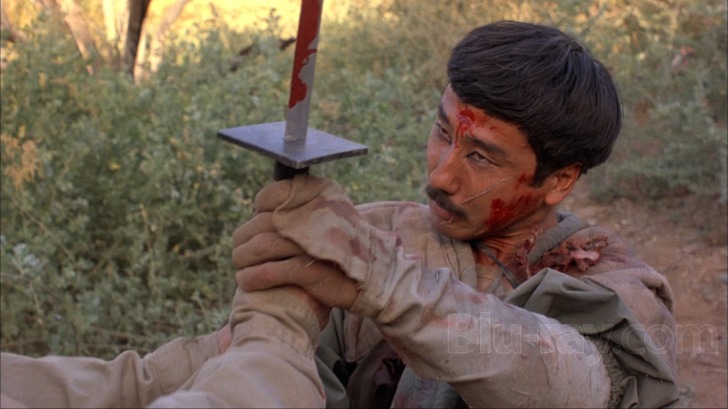
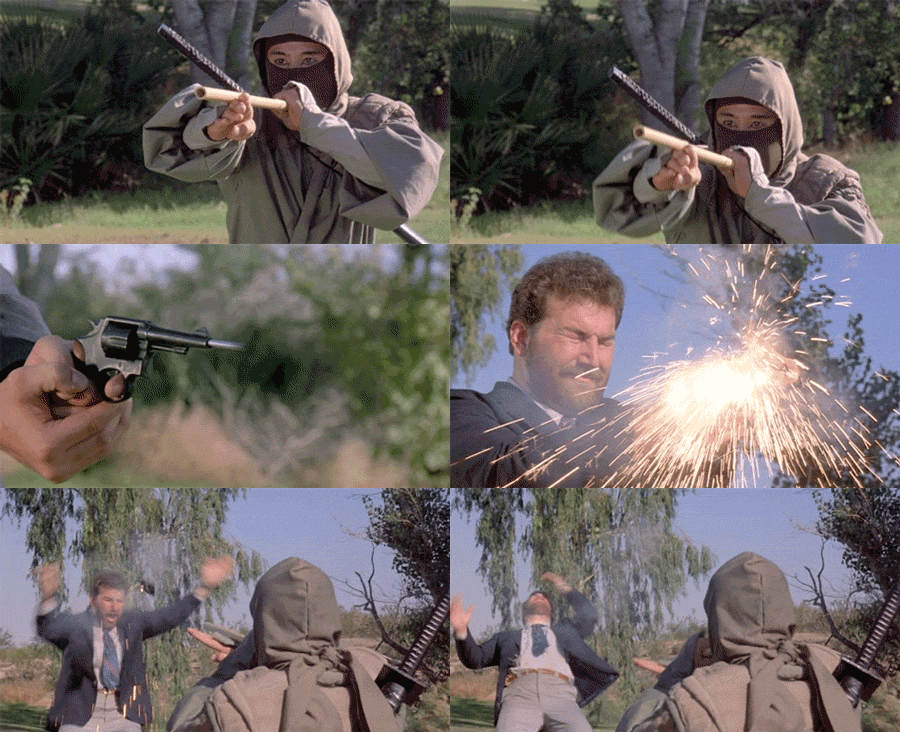
ninja33The cast of “Ninja III” once again features Sho Kosugi, but this time in more of a supporting role. The real lead of the movie is played by Lucinda Dickey in just her third film role after appearing as an extra in “Grease 2” and starring in Cannon Films’s “Breakin'”. Outside of appearing in the infamous “Breakin'” sequel and a movie called “Bloody Pom Poms” in 1988, she has not taken any other credited acting roles. Veteran actor James Hong appears as the evil ninja which possesses Dickey’s character throughout most of the film, and has an incredibly memorable opening sequence: an assassination and battle with police on a golf course.
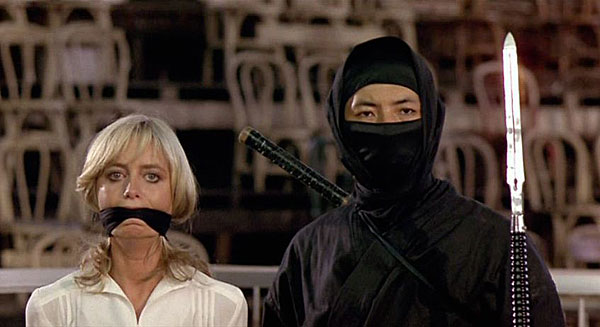
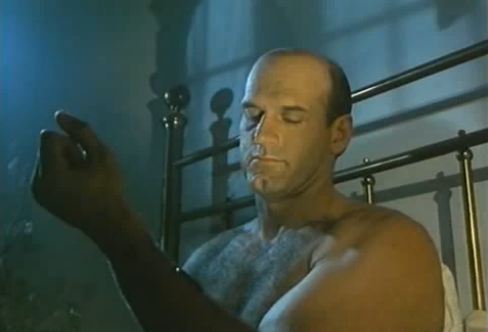
ninja35The story of “Ninja III: The Domination” follows an electrical worker and fitness junkie who, by happenstance, becomes possessed by the spirit of a malevolent ninja who wishes to enact revenge on the police officers who killed him. After an exorcism fails, a rival ninja is found who believes that he can free her from the evil ninja spirit.

Apparently, the arcade cabinet that appears in Dickey’s bedroom is a prototype for “Bouncer,” which was never mass produced and is now extremely rare (if not impossible) to find.

“Ninja III: The Domination” was featured on a ninja-themed episode of RedLetterMedia’s “Best of the Worst” series, alongside “Lethal Ninja” and “Ninja Warriors.” It wound up losing out to “Lethal Ninja,” but did receive one vote for “Best of the Worst” from the panel of 5.

To the credit of “Ninja III,” it certainly tried to mix up the formula from the previous two movies, and brought something new to the table without totally losing the spirit of the series. Unfortunately, the things that is brought to the table (pop music and aerobics) didn’t make a whole lot of sense. But still, the movie deserves points for the effort.
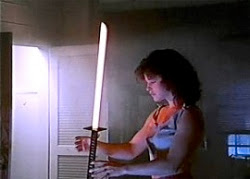
ninja34Speaking of which, “Ninja III” feels a little more like an exploitation movie than the previous two movies in the series, particularly in the sense that there is a whole lot more sexual showcasing in the shots. That said, there also seems to be significantly less violence and gore than the previous flicks, which I found kind of confusing for a movie that should be focused on ninja-related violence.

I think it is fair to say that “Ninja III” is the least beloved of the Cannon ninja trilogy, primarily because of the numerous bizarre creative decisions that deviated from the ninja movie formula people were accustomed to. It currently holds a less-than-positive 4.8 on IMDb from a few thousand voting members.

“Ninja III: The Domination” managed to gross nearly $8 million on an undisclosed (but undoubtedly small) budget, which I imagine made it at least moderately successful for Cannon. While it did not receive a sequel, Cannon continued to make ninja movies with the “American Ninja” franchise.

As far as criticisms go, there are certainly plenty to spread around. The acting and writing are predictably awful, but there are at least a few thoroughly entertaining sequences in the film, such as the golf course opening and the possessions scenes. My biggest issues with the movie are less about quality, and more about entertainment value. For instance, why isn’t there more Sho Kosugi in the movie? There just isn’t quite enough ninja action going on, and he could certainly have helped provide more of it. As it stands, Sho’s character almost seems like an afterthought given how little screen time he is given. As far as the writing goes, the love story in the movie is beyond preposterous, and the cop love interest comes off as creepy, stalkerish, and generally icky.
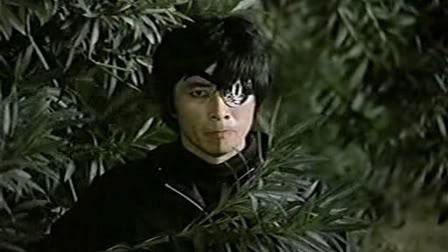
ninja32As far as the things I did like in this film, the sheer ridiculousness of the premise has to go way up there. Giving ninjas supernatural abilities to possess, hypnotize, and cause earthquakes (?!?) is just astounding. I also kind of love the excessively 1980s soundtrack, which all sound like songs that could come straight out of “Jem.”

Overall, “Ninja III” is a pretty entertaining movie, but is certainly the weak link of the trilogy in terms of quality. The story and the highlights make it more than watchable, but it is probably a better use of time to surf around on YouTube to find the good parts rather than sitting through the whole thing.
Enter The Ninja

Enter The Ninja

entertheninja1

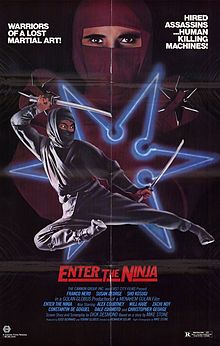
Today’s feature is a true cult classic, and the first installment in the infamous Cannon Group ninja trilogy: “Enter The Ninja.”

The story of “Enter the Ninja” was originated by Mike Stone, who was initially intended to play the lead in the movie. Ultimately, he acted as the film’s stunt coordinator and Franco Nero’s double after it was discovered that he wasn’t particularly good at acting. The screenplay credit is given to a man named Dick Desmond, who notably has no other writing credits.

“Enter the Ninja” was directed by one of the heads of Cannon Films, Menahem Golan. Initially, he was only slated to produce the flick, but ended up firing the original director, Emmett Alston, after only a handful of days of shooting.

entertheninja6The music on “Enter the Ninja” was provided by the team of W. Michael Lewis and Laurin Rinder, who previously worked together on the holiday-themed horror movie “New Year’s Evil.” Both returned to work together again on “Revenge of the Ninja,” the second in the Cannon ninja trilogy.

The special effects for “Enter the Ninja” were provided by Ben Otico, who worked as an art director and special effects technician on a number of exploitation films throughout the 1970s and 1980s, including “Women in Cages,” “Black Mamba,” and “She Devils in Chains.”

David Gurfinkel served as director of photography for the film, a fellow who would go on to work on such treasures as Sylvester Stallone’s “Over The Top,” “Teenage Mutant Ninja Turtles III,” “America 3000,” and “American Samurai.” His previous credit to “Enter the Ninja” was another notorious Cannon film also helmed by Menahem Golan, the bizarre musical “The Apple.” He also returned for the second film in the ninja trilogy, 1983’s “Revenge of the Ninja.”

“Enter the Ninja” was one of the first films to come out of Cannon after its acquisition by the Israeli cousins Menahem Goram and Yoram Globus, who led the company into a sort of renaissance of b-pictures and knock-offs from 1980 to 1994. The names “Goram and Globus” are now instantly synonymous with their low-budget 1980s movies, many of which have become treasured cult classics (including the ninja trilogy, which began with “Enter the Ninja”).

Franco Nero, who is best remembered as the original Django, was brought in at the last minute to star as the film’s lead. Because of his character’s American background, all of his dialogue was ultimately dubbed over. Sho Kosugi stars as Nero’s rival (the black ninja) in his first major film role, and is one of the only elements to remain throughout the Cannon ninja trilogy. Sho was also notably a real martial artist, and not only performed his own stunts, but also filled in as an extra ninja during the movie’s opening sequence. The main bad guy of the film is played by Christopher George (“Fantasy Island”), who unfortunately died just a couple of years later in his early 50s. Susan George (“Straw Dogs”) plays Nero’s love interest and inevitable kidnapping victim in the movie. The accessory cast includes Zachi Noy, Constantine Gregory, and Michael Dudikoff in a minor background role, who would later star in a film greatly influence by “Enter The Ninja”: “American Ninja.”

entertheninja3 entertheninja2

The story of “Enter the Ninja” follows an American war veteran who travels to Japan to master ninjitsu. After completing his training, he decides to visit a companion from his military days in the Philippines, which winds up entangling him in a bloody local conflict with a criminal land developer.

“Enter the Ninja” was filmed almost entirely on location in the Philippines, which pitted the cast and crew against oppressive natural elements: namely the weather and a variety of exotic animals. Further, the combination of nationalities in the cast and crew meant that at least three languages were regularly used on set, creating a peculiar communication situation.

“Enter the Ninja” received its title, predictably, because of the massive popularity of the 1973 Bruce Lee move “Enter the Dragon,” which was a significant financial success.

The memorable final ninja battle of “Enter the Ninja” was filmed in an actual cock-fighting arena located in the Philippines, which provides a spectacular and symbolic backdrop for an epic one-on-one battle to the death.

The nine levels of power featured in “Enter the Ninja” are a form of kuji, which are mantras used as a sort of meditation practice. The specific ones featured in the film were written about by the American ninjutsu master Stephen K. Hayes in his book “Warrior Ways of Enlightenment.”

“Enter the Ninja” is undoubtedly a cult classic among martial arts movies, and beloved by many. That said, it is also very much a low quality movie that didn’t exactly pop up on critics’ radars. It currently holds a somewhat harsh 4.9 rating on IMDb, which doesn’t accurately represent how treasured the film. Still, it is hard to argue that the film is “good” in any conventional sense of the term.

entertheninja5

I wasn’t able to dig up any financial details on “Enter the Ninja,” but presumably it made a significant amount of money on a rather low budget, given its popularity and the eventual sequels.

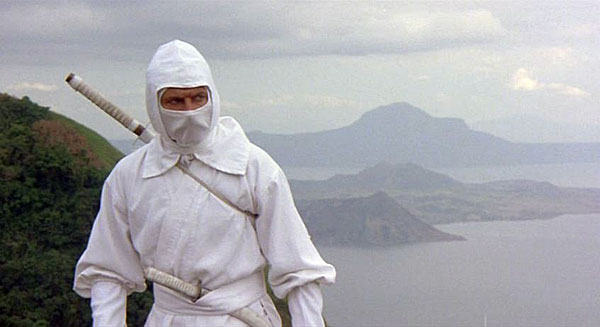
“Enter the Ninja” is certainly deserving of a lot of criticism. Why does Nero wear an entirely white ninja outfit, when the entire point of the art is stealth? It was certainly a decision made for the case of style over common  sense, but it is no less preposterous for it. The film is also rife with continuity errors, awful acting, and the (of course) distracting dubbing over Franco Nero’s lines. Even the casting of Franco Nero to begin with was a baffling decision made more for convenience than sensibility: he was brought in only because he was in the area, and Golan needed an actor to fill in the lead role after Stone proved to be a truly awful actor. Speaking of which, how bad must Stone have been that having an entirely dubbed-over Franco Nero was a better option?

Personally, there were a lot of things that I liked about this movie. I particularly love the primary villain death via ninja star, which ends in a sort of confused shrug that has become infamous. The final Sho/Nero fight scene in the cockfighting ring is also pretty fantastic and entertaining to watch. Even the secondary villains are fun and unique: the hook-handed enforcer is immensely entertaining, as is the excessively polite and proper Mr. Parker. For all of the issues with the film, there are a whole lot of memorable moments and characters that have stuck with me.

entertheninja4Overall, I think this movie is a whole lot of fun, though it may very well be the least entertaining of the Cannon ninja trilogy. I think that statement is more of a credit to the sequels than it is a discredit to “Enter the Ninja,” but I suppose that is very much up to interpretation. In any case, this is definitely worth watching for martial arts movie fans or bad movie aficionados. If multi-colored ninja battles and awful acting are up your alley, this is a flick worth checking out.

The Return of The Texas Chainsaw Massacre

The Return of The Texas Chainsaw Massacre

texaschainsawnext7 texaschainsawnext8

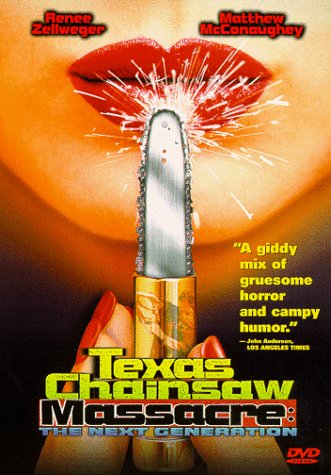
Next up is one of the most loathed horror sequels in history: 1994’s “The Return of The Texas Chainsaw Massacre,” which was later retitled “Texas Chainsaw Massacre: The Next Generation” for home video release.

“The Return of The Texas Chainsaw Massacre” was written and directed by Kim Henkel, who co-wrote the original “Texas Chainsaw Massacre” with Tobe Hooper, who is notably absent from involvement with this film.

The cinematography on “The Return of The Texas Chainsaw Massacre” was provided by Levie Isaacks, who has worked on films such as “Leprechaun”and  “The Dentist.”

The special effects on the film were provided by a handful of folks, including J.M. Logan (“The Dentist,” “I Know Who Killed Me”) and Andy Cockrum (“Sin City: A Dame To Kill For,” “Spy Kids 2”).

The cast of “The Return of The Texas Chainsaw Massacre” features a number of familiar faces, not the least of which are Matthew McConaughey and Renee Zellweger, who both appear before they saw significant success. Robert Jacks takes over in the famous role of Leatherface, and was the fourth person to play the character in as many movies. He had very little experience as an actor, appearing only briefly in Richard Linklater’s “Slacker” a handful of years earlier. Unfortunately, this was his last acting credit, as he died in 2001 at the age of 41. Interestingly, he also composed the music for the film.

texaschainsawnext4The story of “The Return of The Texas Chainsaw Massacre” centers around a handful of high school students who become stranded in rural Texas. As you would expect, they wind up on the wrong side of an eccentric family of sinister killers, who begin hunting them down one by one.

“The Return of The Texas Chainsaw Massacre” received two limited theatrical releases in 1995 and 1997, barely grossing $180,000 combined. The budget was low (estimated around $600,000), but the very low gross and limited release was undoubtedly a disappointment. Reception to the film was incredibly negative: it currently holds an 18% audience score and a 17% critic score on Rotten Tomatoes, along with a 3.0 rating on IMDb.

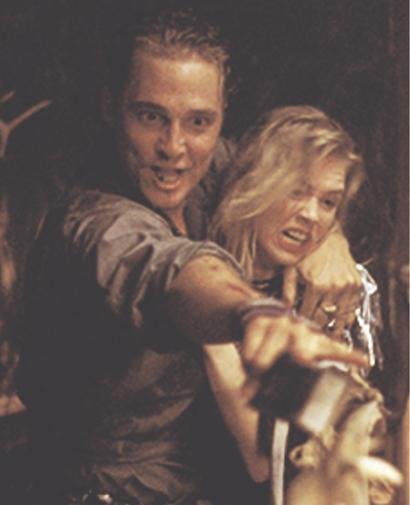
texaschainsawnext3Criticisms of the movie often mention the performances as one of the key issues, particularly on the part of McConaughey. Personally, I thought that his performance teetered precariously between being genuinely intense and astoundingly hammy, but I thought that it kind of worked for the character. Renee Zellweger, on the other hand, is just kind of awful. Then again, all of the actors had to deal with the writing on this movie, which was at best incomprehensible.

I think that a lot of criticisms of this movie make a bit too much fuss over Leatherface, or at least for the wrong reasons. He certainly isn’t intimidating in this movie, which was a serious misstep, but I didn’t think that it had anything to do with the fact that he was in drag. He could easily still have been intimidating regardless of the wardrobe: the problem was with the character’s writing, which had his spending most of his screen-time cowering and wailing.

texaschainsawnext2I saw an interesting argument online that “The Return of The Texas Chainsaw Massacre” is an early example of ‘meta-horror,’ in the same vein of “Cabin In The Woods” or “Scream.” There are a handful of lines early on that seem excessively prescient, but I didn’t think that it went much beyond that. Even the Illuminati twist doesn’t quite go far enough for ‘meta-horror’ case to hold much water for me. Interestingly, “Return” did release in the same year as Wes Craven’s “New Nightmare,” which could be considered the first ‘meta-horror’ film.

There are notably a lot of attempts to repeat shots from the original “Texas Chainsaw Massacre” in “Return,” which clearly rubbed many faithful fans in the wrong way. The story also ties into the original film loosely with the final shot, despite seemingly discounting the rest of the franchise’s history and continuity. Worse yet, the film lacks the artistic and tense cinematography of the original, coming off as a very cheap (if not bankrupt) knock-off of what is a treasured classic in the minds of many.

For reasons I am not entirely clear on, “Return of The Texas Chainsaw Massacre” drifts by design into the realm of comedy on more than one occasion. There are plenty of horror movies out there that have pulled this off effectively, but the “Texas Chainsaw” franchise has never been among them, which makes the movie all the more perplexing.

The ending of this movie is very strange, to say the least, and is probably the most complained about element of the film. Every major horror franchise seems to have at least one chapter that the world agrees to forget, for one reason or another. Remember Jason being a demon? Or Michael Myers being the result of an occult curse? Well, I’ll admit the “Texas Chainsaw Massacre” Slaughter family being involved with the Illuminati is weirder than those two examples, but still, I think that the point stands: “The Return of The Texas Chainsaw Massacre” is the black sheep of this franchise, and they all have at least one.

Overall, “Return of The Texas Chainsaw Massacre” was ill-conceived and poorly executed, resulting in a thoroughly baffling film experience. However, I think that it is also totally worth watching, particularly for bad movie fans. For no other reason, it is worth seeing McConaughey’s thoroughly over-the-top performance to appreciate just how far the guy has come since the dawn of his career.

texaschainsawnext6

Hudson Hawk

Hudson Hawk

hudsonhawk1

Today’s feature is the infamous Bruce Willis cat burglar passion project, “Hudson Hawk.”

“Hudson Hawk” was directed by Michael Lehmann, who was best known at the time for 1988’s “Heathers.” However, “Hudson Hawk” was only his third directorial feature. and his first with a significant budget.

The story of “Hudson Hawk” is credited to Bruce Willis and Robert Kraft, and went through a number of screenplay iterations before getting made. The writing credits ultimately went to Steven de Souza (“Die Hard,” “Judge Dredd,” “The Running Man,” “Street Fighter”) and Daniel Waters (“Heathers,” “Batman Returns,” “Demolition Man”).

hudsonhawk2The cinematography on “Hudson Hawk” was provided by Dante Spinotti (“Red Dragon,” “The Quick and The Dead,” “Slipstream”), who took over the project after Jost Vacano (“Robocop,” “Starship Troopers,” “Showgirls,” “Total Recall”) had to leave for other commitments due to production delays.

The cast of “Hudson Hawk” features, beyond Bruce Willis, a number of recognizable faces. Andie MacDowell (“Groundhog Day,” “Sex, Lies, and Videotape”) and Danny Aiello (“Once Upon A Time In America,” “The Godfather: Part II”) providing the secondary roles, with the accessory cast being filled out by actors such as James Coburn (“The Great Escape”), Richard E. Grant (“Withnail & I”), Sandra Bernhard (“King of Comedy”), David Caruso (“King of New York,” “CSI: Miami”), and Frank Stallone (“Lethal Games,” “The Roller Blade Seven”).

hudsonhawk6The story of “Hudson Hawk” centers around a master thief who has been recently released from prison, and tries to turn his life around. Over the course of the film, he is not only brought back into crime, but wrapped up in a convoluted plot for world domination involving covert agencies, alchemy, and a lost invention of Leonardo Da Vinci.

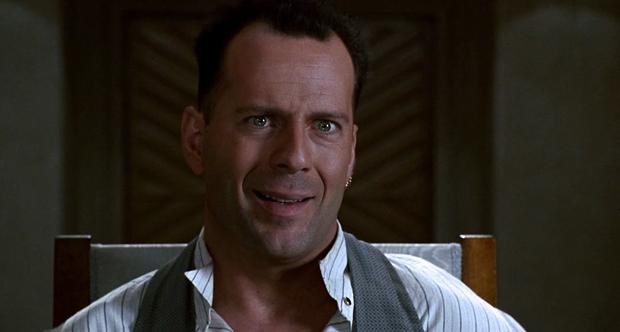
“Hudson Hawk” was undoubtedly a passion project for Bruce Willis, who served as an executive producer and co-writer on the movie as well as the star. To this day, he adamantly defends the film against the harsh criticisms against it.

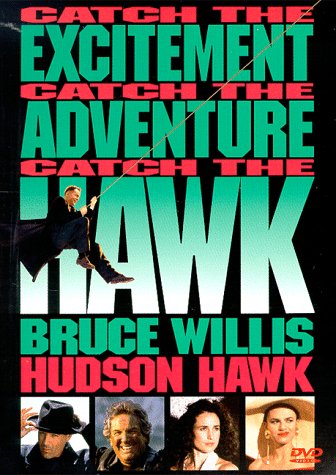
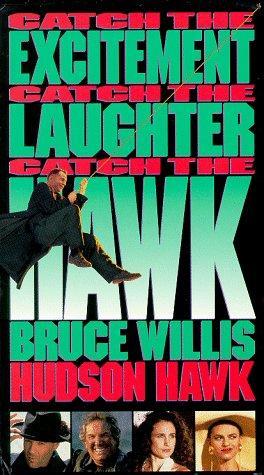
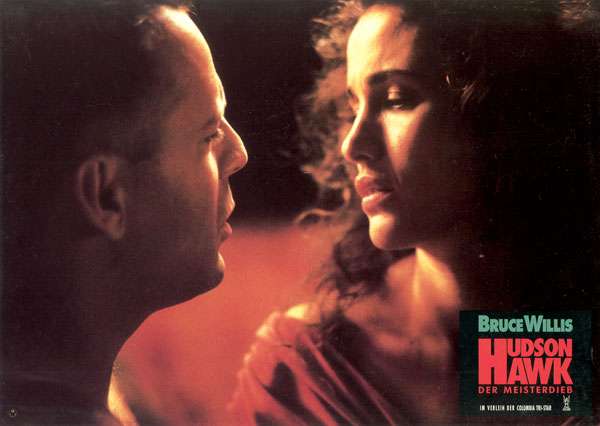
The bizarre and genre-defying tone to “Hudson Hawk,” combined with Bruce Willis’s existing image as an action star, created some serious difficulties in marketing the feature. Just looking at the various posters and home video release covers, you see a lot of differences in how the movie is portrayed .

hudsonhawk7 hudsonhawk1

“Hudson Hawk” suffered from a variety of production problems, particularly tied to the inflation of the budget, which was estimated to have reached upwards of 65 million dollars. The massive financial failure and skyrocketed budget of the film (which only grossed a total of $17 million) wound up leading to TriStar being bought out by Sony, joining Columbia into what became Sony Pictures Entertainment.

Mike Medavoy, who took over as head of TriStar during early production on “Hudson Hawk,” claimed in his book You’re Only As Good As Your Next One that he attempted to back out of the film, but that by the time he was in authority, over $12 million was sunk into the flick. In addition, both Bruce Willis and producer Joel Silver had “pay or play” deals, meaning that they were going to be paid for the film regardless of whether the project was finished. Thus, the studio was essentially stuck with a film seemingly destined to go poorly. Medavoy has stated that the movie had “three classic problems: 1) the star is the co-writer, 2) the producer is more powerful than the director, and 3) the director had never done a big film…there was no way to stop the train wreck.”

hudsonhawk4The introduction narration on “Hudson Hawk” is provided by William Conrad, who was brought on specifically because he also provided the narration for the “Rocky and Bullwinkle” cartoon, which was also cited as an influence on the story.

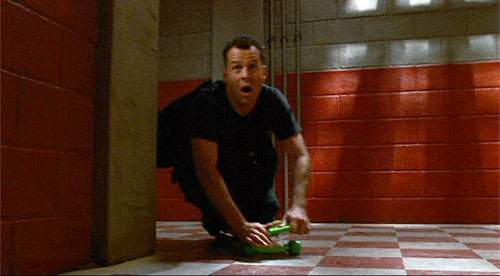
The gurney chase on the Brooklyn Bridge was inspired by “The Disorderly Orderly,” a 1964 Jerry Lewis comedy. Filming was done on location, and required shutting down the bridge for consecutive nights for filming, which reportedly enraged locals.

The reception by critics and audiences was overwhelmingly poor: it holds a 24% critic rating and a 57% audience rating on Rotten Tomatoes at the time of this writing. However, it does have an interesting cult following that has developed over the years, due to its oddball sensibilities and cracked style of humor.

For whatever it is worth, I have kept thinking about “Hudson Hawk” since I first saw it recently. It may be many negative things, but it is undoubtedly memorable.

hudsonhawk3Personally, I don’t hate the music included throughout the film, which is a big sore spot with many critics. I actually thought that the “Swinging on a Star” segment, which has gained some infamy, was one of the better moments in the movie. The music clearly had an influence on the film, as the character was initially conceived by Willis through the writing of song lyrics. From the outset, “Hudson Hawk” was going to have musical elements.

The humor in “Hudson Hawk” is a bit perplexing, and feels like it is misplaced in time. Physical comedy was already far out of fashion, and live action cartoon humor has rarely proved successful in the modern era. Further, it is all very uneven, varies widely in tone. Despite the clear influence from “The Three Stooges” and classic cartoons, the movie is also inter-cut with realistic violence and profanity, which are elements that mix like oil and water. What was the possible target audience for this movie with these sorts of mixed comedic elements? Director Michael Lehmann has described the film as having a “cartoonish sensibility in some of the action and violence,” which seems to indicate that the final product is, indeed, in accordance with the intended vision for the film.

Overall, “Hudson Hawk” is undoubtedly a trainwreck, and is a shadow that has been cast over many careers in the movie industry. However, it is certainly entertaining on some level: some will enjoy the intended comedic elements, while most should enjoy the inherent wrongness and ill-advised nature of the many odd creative decisions. Either way, I think that most people can enjoy this movie’s existence in one way or another.

Lethal Ninja (1991)

Lethal Ninja (1991)

lethalninja915

Today’s feature is the second movie I am covering with the redundant title of “Lethal Ninja,” this one being a convoluted 1991 ninja flick packed full of more nonsense than action.

“Lethal Ninja” was directed  and written for the screen by Stefan Rudnicki, who notably served as the second unit director on the IMDb Bottom 100 feature “Merlin’s Shop of Mystical Wonders.” The story is credited to someone named “Wes Martin,” who is not associated with the film on IMDb, and who I have not been able to find.

As far as the rest of the crew goes, the movie was produced by a man named Steve Rockmael, who worked as a producer on the first season of “Ancient Aliens,” and had costume design from Miye Matsumoto, who also worked on the “3 Ninjas” sequels (including “High Noon At Mega Mountain”). So far, the team has a pretty stellar collection of credits, right?

The original music on “Lethal Ninja” is credited to Jeff Lass, who is best known for his contributions to the soundtrack for 1990’s “Dick Tracy,” which was helmed by and starred Warren Beatty.

The story of “Lethal Ninja” centers around  a city with a crime-riddled Chinatown, where a mysterious mercenary ninja named J.D. offers to solve the extreme gang problems off the books, and for a price.

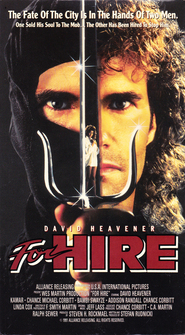
The original title of the movie was “For Hire,” which makes a lot more sense with the plot. I’m not sure what the logic of the name change was, but “Lethal Ninja” has to be one of the most ridiculous titles they could have come up with. Personally, I would have gone with the best of both worlds: “Ninja For Hire.”

lethalninja913“Lethal Ninja” has an IMDb rating of 4.8, from less than 30 members of the IMDb voting base. That definitely makes this an obscure flick, though it has gotten a bit more exposure as of recently since it was featured on RedLetterMedia’s “Best of the Worst.”

The opening of “Lethal Ninja” starts with an inexplicable dance party inside of an empty apartment, which quickly leads to dance fighting over early 90s rap. The rap number, of course, features extensive choreography. It is one of the few moments in the film that absolutely must be seen, and immediately throws you into the chaos of the movie.

“Lethal Ninja” notably centers on one of the least believable ninjas in cinema history: a be-mulleted white dude with a flair for the dramatic played by David Heavener, who has spent his entire career in similar b-movie productions.

lethalninja914As is tradition with many low-budget productions, there are a number of notable shots where boom microphones hilariously enter the frame that failed to be re-shot. It makes for a fun little game to keep your eyes peeled on the top boundary of the screen for their unintentional cameos.

Perhaps the most notorious segment of “Lethal Ninja” occurs during a funeral, which features a thoroughly uninspiring eulogy, an attempted assassination by a gangster in drag, and a wheelchair flip.

Unfortunately, most of the fight choreography in “Lethal Ninja” is pretty uninteresting, and never much captures a sense of excitement. It makes what should be compelling scenes pretty slow, and drags down the overall pacing of the flick.

For reasons that are unclear to me, there are a number of awkward attempts at humor peppered into the script for “Lethal Ninja.” One of the most awful instances I can recall is a stilted one-liner, which the ninja uses after sneaking up on a handful of gang members:

“Excuse me boys and girls, there sure is a great view up here, but isn’t it past your bedtime?”

First off, that is a way too long and verbose for a one-liner, which should be short and snappy. Secondly, why on earth would a ninja ruin the element of surprise? Isn’t being stealthy part of the whole “ninja” concept?

“Lethal Ninja” features one child actor prominently on screen, who plays a young boy being trained and mentored by the ninja. The character winds up following him around for a good portion of the movie, theoretically providing comic relief. Surprisingly, he isn’t particularly awful, which took me aback. For a movie like this, the fact that they wound up with a not-abysmal child actor is astoundingly unlikely.

lethalninja912The acting in “Lethal Ninja” is really a mixed bag: most of the villains play their roles very straight, never getting particularly hammy (which is really a shame). I’m still undecided on Heavener, who has some thoroughly awkward line deliveries, but mostly sells the character. The majority of the cast is pretty awful, but rarely in a way that is entertaining.

There is one incredibly terrible sex scene in the movie featuring one of the main bad guys, which features the large hairy man repeating “obey me” with a thoroughly unsettling look on his face. I wouldn’t call it a highlight, but it is impossible not to comment on.

lethalninja917Arguably the central villain for most of the movie is a former friend of J.D.’s named Miles, who almost rivals him in terms of ridiculous hairstyles and fashion sense. He’s probably the most entertaining villain in regards of his scenes and dialogue, but he also has what was easily the worst fight scene in the movie. At one point, Miles and J.D. battle in a park, awkwardly climbing trees and parrying each other until they decide to bow and go their separate ways. The whole sequence feels totally unnecessary, and is very dull to watch unfold.

Overall, “Lethal Ninja” is a very slow movie with only a few highlight moments (gang meditation and a car bomb plot, for instance), and isn’t particularly easy to follow. The poor sound quality makes dialogue difficult to understand, and the plot is convoluted and packed with characters to start with. That said, the highlight moments are definitely big highlights, and arguably are worth sitting through the rest of the movie for. There are some more entertainingly awful ninja movies out there, but this one will certainly work if that is what you are craving.

Lethal Ninja (1992)

Lethal Ninja (1992)

lethalninja921

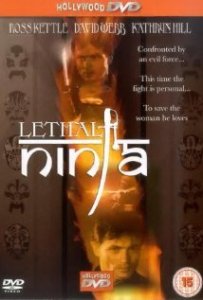
Welcome back to Misan[trope]y Movie Blog! Today’s feature is the first of two movies I will be spotlighting with the inherently redundant title of “Lethal Ninja.”

“Lethal Ninja” was directed by Yossi Wein (under the pseudonym Joseph Wein), and was his first directorial work. He has gone on to direct features such as “Death Train,” “Octopus 2: River of Fear,” and “Cyborg Cop III” over the years, staying firmly within the realm of b-movies. Wein has primarily acted as a cinematographer in his career, working on films like “American Ninja 4” and “Cyborg Cop.” Given his experience, he also provided the cinematography for “Lethal Ninja” instead of having a separate set of eyes for the job.

lethalninja923The screenplay for “Lethal Ninja” was penned by Chris Dresser, who curiously only has two theatrical writing credits: one for “Lethal Ninja” in 1992, and another for a movie called “Rogue Lion” from a solid 20 years earlier. What he did in the meantime is anyone’s guess.

“Lethal Ninja” was one of the first productions by Danny Lerner, who would go on to produce films as varied as “Shark Attack 3: Megalodon,” “Olympus Has Fallen,” “The Legend of Hercules,” and the sequels to “The Expendables” before his recent death in March of 2015. He manged to accumulate nearly 100 producing credits over his career, which consisted primarily of b-movies and low-budget features.

The cast of “Lethal Ninja” in packed full of anonymous b-movie players, led by one Ross Kettle as an American ninja named Joe Ford. The story follows Ninja Joe on a journey to a hostile African nation, where is archaeologist wife has been kidnapped by a crime organization. For reasons that aren’t entirely clear to me, he decides to take a sidekick along with him, who shockingly manages to live through the entire movie.

lethalninja922
“Bullshit, there is no way I live through this”

“Lethal Ninja” currently holds a 3.2 score on IMDb, which is hardly a glowing endorsement. However, most of the reviews I have seen recognize that this is at least an entertaining movie for what it is, but I don’t think anyone denies the low quality of the work.

Personally, I feel like “Lethal Ninja” is far from unoriginal, and deserves some credit for that. Many people specifically remember the “roller blades” sequence, which I actually didn’t hate. It was just about the only action sequence in the whole movie that looked any good, outside of the final battle on top of an oil tower (and even that was pretty limited). That said, this movie is very aware of what it is: mindless ninja action. And, thankfully, it mostly delivers. However, the movie isn’t particularly memorable overall, despite the roller-blading and a pretty hammy villain.

lethalninja924
Ninja Joe

If you know that ninja movies are your thing, then “Lethal Ninja” isn’t going to disappoint you. However, I am kind of mixed on whether to recommend this to other audiences: there are definitely better / more entertaining ninja flicks out there, but this one isn’t awful. The one that I absolutely recommend is watching the roller-blading sequence, which I promise makes no more sense in the context of the film.

Slipstream (2007)

Slipstream (2007)

slipstream072

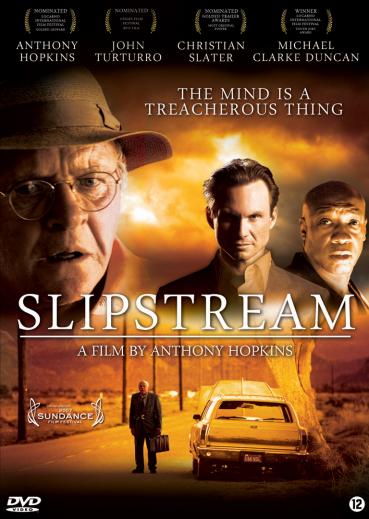
Next up is an official selection from 2007’s Sundance Film Festival: an Anthony Hopkins passion project which marks the third and final film I will cover by the name of “Slipstream.”

“Slipstream” was both written and directed by acclaimed veteran actor Anthony Hopkins (“The Silence of the Lambs”), marking his first screenwriting credit and his third directorial feature.

The cinematography on “Slipstream” was provided by Academy Award nominee Dante Spinotti, an Italian cinematographer who has regularly works on acclaimed Hollywood features since the 1990s. His credits have included “Manhunter,” “Red Dragon,” “L.A. Confidential,” “The Insider,” “The Quick and The Dead,” and even the much-applauded mega-hit “Hudson Hawk.”

The special effects on “Slipstream” were supervised by Ron Trost, who has accumulated nearly 100 special effects credits since the 1980s. Some of these films have include “The Omega Code,” “Mortal Kombat,” and “Seven Psychopaths,” truly running the gamut of quality.

Anthony Hopkins, in true dedication to his passion project, even composed the music for “Slipstream,” going so far as to perform on it as a piano soloist as well. Hopkins’s music was then arranged and orchestrated by Stephen Barton, who has worked on films such as “Man on Fire,” “The Number 23,” the the “Shrek” sequels.

The cast of “Slipstream” is impressively deep, and headlined by (of course) Anthony Hopkins himself. Christian Slater, Jeffrey Tambor, John Turturro, Michael Clarke Duncan, Michael Lerner, and Kevin McCarthy (as himself) all make appearances that drift in and out of the loosely-strung story.

slipstream073The surreal and convoluted plot to “Slipstream” more or less centers around an aging screenwriter (Hopkins) who believes that he may be losing his grip on reality. He is then unexpectedly called in to work on a film being adapted from one of his works. Unbeknownst to him, this is because the lead actor (Slater) has suddenly died on set, sending the production into disarray.

About the movie’s perplexing plot, Anthony Hopkins has been quoted as saying:

It’s about a man, who’s caught in a slipstream of time falling back on itself and he remembers his own future. My own interpretation is if there’s a God, that God is actually time. I’m fascinated by the fact the older I get every moment just slips past. What is real? You grasp this moment and then it’s gone. I was talking 10 minutes ago but that’s all gone, it’s all a dream.

Hopkins has also spoken a little about his personal motivation for writing the story:

I always wanted to poke fun at the movie business and the acting profession – they take themselves so seriously. I wanted to poke them in the nose. And what were people going to do? Arrest me if it wasn’t any good?

“Slipstream” was generally disliked by critics and audiences alike, and currently holds a 23% critics score and a 29% audience score on Rotten Tomatoes. It also currents has a mildly higher IMDb rating of 5.1, which is still well into the negative range. Here are some choice excerpts from some of the higher-profile critical reviews of the movie:

“…a creative anarchy that could either be considered tantalisingly multi-layered or simply a big mess. I think it’s both”
-The Daily Utah Chronicle

“…a lifetime’s worth of mental doodles [condensed] into one flatulent anti-industry tirade”
-IndieWire

“[a] vanity/insanity project”
-New York Post

“Annoying, pretentious twaddle of the highest order”
-Las Vegas Weekly

“…there should be a rule that movies helmed by movie stars turned directors need to come with some sort of equivalent of the Surgeon General warning label”
-Long Island Press

The two most common things I saw in both critic and audience reviews of “Slipstream” were the terms “stream of consciousness” and “unwatchable,” which just about sums up everything you need to know about it. It is certainly experimental, but the result is a combination of editing and cinematography that borders on nauseating. There is also no traditional plot structure to provide beats that can allow the audience to sense how far they are in the story, making the experience seem even longer and more arduous than it actually is. Some movies can get away with loose structures when they are interesting or entertaining, but “Slipstream” doesn’t deliver in either department. I will give Hopkins some credit, in that there is an attempted explanation for the poor editing in the meta-plot, but it doesn’t make the movie any easier to watch when you know that there is intentional logic behind it. The constant cuts, fades, color changes, audio changes, flipping frames, etc. are just as nauseating as if they had no reason to exist in the film at all.

slipstream074When it comes right down to it, “Slipstream” is just another pretentious art movie among many. It absolutely reeks of being a passion project, which can often spell disaster out of the gate regardless of a film’s quality. It doesn’t help that it isn’t as clear cut or effectively innovative as “Birdman,” and not nearly as fun as “Rubber,” so it just winds up dragging the audience around for an hour and a half as a mediocre art piece.

If anything about “Slipstream” stands out as a positive, it is the great cast. There is generally good acting all around, but the nature of the story means that nobody gets to show off for long, though. Jeffrey Tambor and Christian Slater specifically stand out in my opinion, even though Slater gets particularly little time on screen. On the flip side, this might be the worst John Turturro performance I have ever seen him deliver. He really feels miscast as an angry scumbag producer: I can’t help but feel that a more intimidating actor could have been pulled in for the part.

slipstream071“Slipstream” is clearly much better in concept and on the page than it is in execution on film. According to what I have read, Hopkins couldn’t get anyone else to commit to making it, so he wound up taking on almost all of the creative roles himself. I think that this movie could have definitely used a second creative mind in the mix, even if only to act as a check / balance for some of the more outlandish fringe concepts coming out of Hopkins’s head, particularly on the initial screenplay.

Overall, “Slipstream” is a nearly unwatchable, pretentious mess. It doesn’t have a whole lot of “good-bad” entertainment value, but it might be worth a watch for the curiosity of it alone. The performances are at least pretty good, but the only reason I could recommend this film is if you want to get a glimpse into the strange creative mind of Anthony Hopkins.

Slipstream (2005)

Slipstream (2005)

slipstream054

Today’s review is on a little known 2005 time travel bank heist movie, and the second feature I’m spotlighting with the title of “Slipstream.”

“Slipstream” was directed by David van Eyssen, who interestingly doesn’t have any other directorial film credits. The writers, Phillip Badger and Louis Morneau, worked together previously on the 1997 film “Retroactive,” and each have a handful of credits to their names. Morneau in particular might be best known for directing the 1999 bomb, “Bats.”

The cinematography on “Slipstream” was provided by Sonke Hansen, a cinematographer and camera operator who has worked on films such as “Enemy At The Gates,” “Cloud Atlas,” and “Ninja Assassin.”

The special effects for “Slipstream,” which are somewhat extensive, were overseen by Mickey Kirsten. Kirsten has a solid handful of special effects credits since 2000, including work on “The Constant Gardener” and “Chronicle.”

slipstream052The “Slipstream” score was provided by one Rob Lord, who primarily provides music for video games (“Just Cause,” “Just Cause 2”) and a handful of television documentaries.

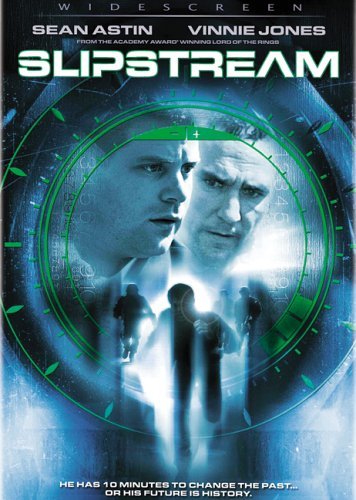
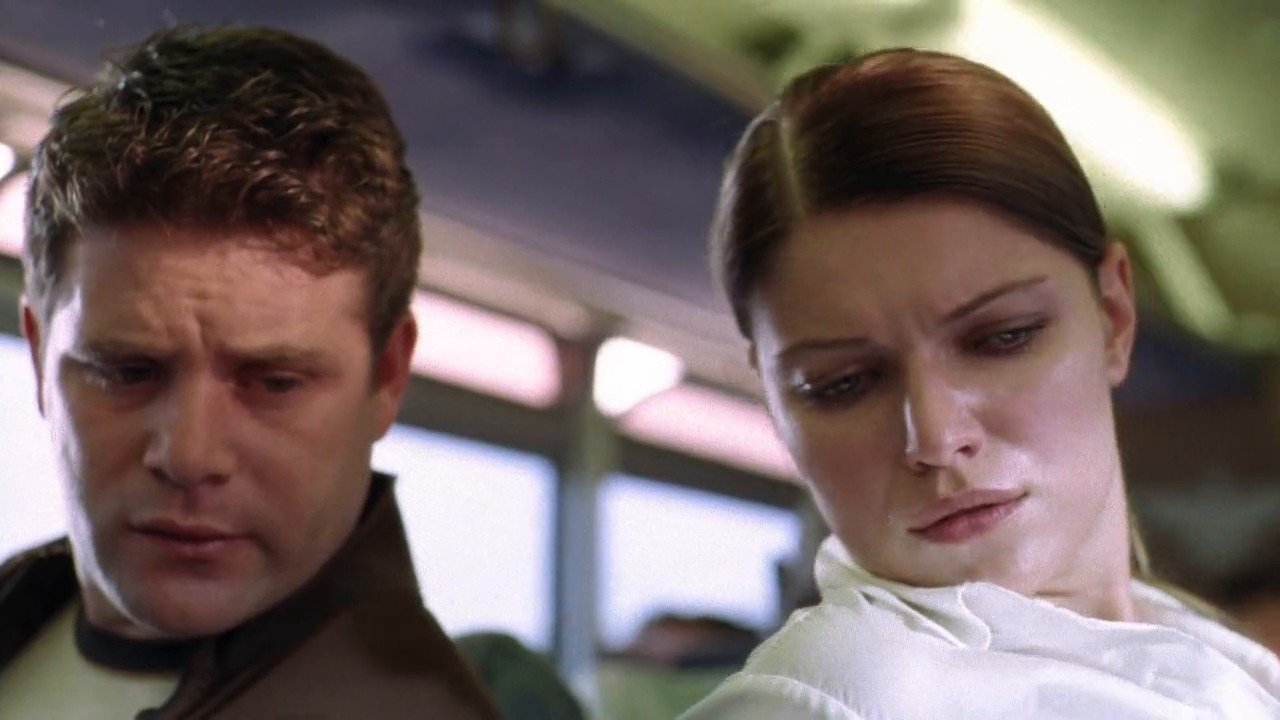
The cast of “Slipstream” is headlined by Sean Astin (“The Lord of the Rings”) and Vinnie Jones (“The Midnight Meat Train,” “Snatch”), who each play their usual character types of a timid hero and a heavy, respectively. Most of the acting weight of the movie falls on the two of them, as well as Ivana Milicevic (“Vanilla Sky”), who rounds out the minimal central cast.

slipstream051The story of “Slipstream” centers around Sean Astin’s character: a scientist who has helped develop a limited time travel device. In a baffling act that defies any kind of sense, he absconds with the device in order to flirt with a local bank teller, which apparently required time travel for him to pull off. The complication occurs when the bank is robbed by Vinnie Jones during Astin’s awful courting attempt, which rapidly snowballs into tragedy and subsequent time travel shenanigans.

“Slipstream” currently holds a score of 4.6 on IMDb, along with Rotten Tomatoes ratings of 34% (audience) and 0% (critics). Each score pulls from a relatively small sample size, but all of them are well into the negatives no matter how you cut it.

slipstream055While the special effects in “Slipstream” aren’t awful, especially given what I assume was a small budget, there are certainly a lot of overdone elements. In particular, there is an excess of slow motion sequences throughout the film, which are typically used to indicate the activation of the time travel device. However, it does become quite repetitive after it is used a couple of times.

The character writing in “Slipstream” is pretty far from fantastic. In particular, Astin’s character struck me as a total creep as opposed to just an awkward protagonist, which makes it harder to relate to him as the lead. There is also an attempt to get the audience to feel for Vinnie Jones’s villain character, which doesn’t make much sense given how ruthless and murderous he is throughout the story. It doesn’t help that the attempts to characterize him are pretty shallow, specifically through some awkwardly artificial banter between him and his partner about various crime movies.

slipstream053Personally, I feel like this movie would have been better if it never left the bank building, or at least not until the last act. The audience and characters don’t get much time to relate to the surroundings, which is usually one of the most fun aspects of time travel films. Instead of playing with the possibilities of the bank setting and the events of the robbery, the story winds up in a real rush to get away from the premise, which leads to it getting a bit off the rails. There is a reason this isn’t as highly regarded as films like “Run Lola Run” or “Groundhog Day.”

Perhaps the biggest issue with “Slipstream” is that the aspirations for the story exceeded the budget that was available to the team. While the effects aren’t bad for the money involved, the movie as a whole would have dramatically benefited from higher quality work. The whole movie just looks and feels cheaper than the interesting concept justifies. This isn’t just limited to the effects, either: but the casting, directing, and dialogue all seem to be stuck in the same boat.

Overall, “Slipstream” is a bit of a disappointment given the interesting premise. The trailer is frankly far more interesting than the movie itself. That said, despite all of the flaws with it, this is probably one of the better television science fiction movies from the era, and is a welcome change of pace from the various hybrid monster movies and “Lake Placid” sequels that were popping up at the time.

As far as a recommendation goes, this doesn’t quite fall into the realm of “good-bad.” It also isn’t anywhere near good, landing decidedly in the realm of mediocre. I don’t think it quite merits the low ratings it has, but it certainly doesn’t earn an overall positive score in my book. I’d generally advise skipping it, unless you are just a huge fan of time travel stories.


Slipstream (1989)

Slipstream (1989)

slipstream894

Next up are a handful of reviews that I’ve been putting off for some time now. For those who have frequented the blog for a while (and also have sharp memories), you might recall that 3 different movies, all called “Slipstream,” have popped up frequently in my bargain bin movie hunting. Now I am finally going to watch all three of them, and see how they actually stack up. First up is 1989’s “Slipstream,” starring Mark Hamill and Bill Paxton.

“Slipstream” was directed by one Steven Lisberger, who is best known for writing and directing the original “TRON” in 1982.  He doesn’t have a whole lot of credits to his name, but apparently he worked anonymously on screenplays throughout the 1990s and 2000s, primarily because the failure of “Slipstream” tanked his potential career as a director.

The “Slipstream” screenplay was written by Tony Kayden, a television writer who did a few made-for-TV movies as well as a handful of episodes of shows like “The Waltons” and “Little House on the Prairie.” If that doesn’t sound like the ideal fit for a science fiction epic, you are probably right to think that.

The cinematography for “Slipstream” was provided by Frank Tidy, whose credits have included such masterpieces as Sylvester Stallone’s “Stop! Or My Mom Will Shoot!” and Steven Seagal’s “Under Seige.” However, he also worked as the director of photography on Ridley Scott’s first feature, 1977’s “The Duellists.”

The score for “Slipstream” (which is fantastic) was composed and conducted by Elmer Bernstein, and recorded by the London Symphonic Orchestra. Bernstein was a film composer and conductor who racked up hundreds of movie credits beginning in the 1950s, all the way up until his death in 2004. His credits include fantastic films (“Bringing Out The Dead,” “My Left Foot,” “Ghostbusters”), cult classics (“Heavy Metal”), and some of the worst regarded movies in cinema history (“Leonard Part 6,” “Robot Monster”).

slipstream891The special effects team for “Slipstream” involved a significant team of workers who were carried over by producer Gary Kurtz from an earlier collaboration on “The Empire Strikes Back,” including Andrew Kelly (“28 Days Later,” “Sunshine,” “Dune”), Phil Knowles (“Alien,” “Space Truckers”), Roger Nichols (“Batman Begins,” “Who Framed Roger Rabbit”), John Packenham (“Krull”), Alan Poole (“Empire of the Sun,” “The NeverEnding Story”), Peter Skehan (“Gladiator,” “Indiana Jones and The Last Crusade”), Ron Hone (“World War Z,” “Prometheus,” “League of Extraordinary Gentlemen”), and Neil Swan (“Alien,” “The Princess Bride”). Joining them were a couple of other special effects guys who have likewise gone on to significant careers: Steve Cullane (“Captain America: The First Avenger,” “Skyfall,” “Gravity,” “Hudson Hawk”) and Andrew Eio (“Mission: Impossible,” “Behind Enemy Lines,” “Event Horizon,” “Hackers”).

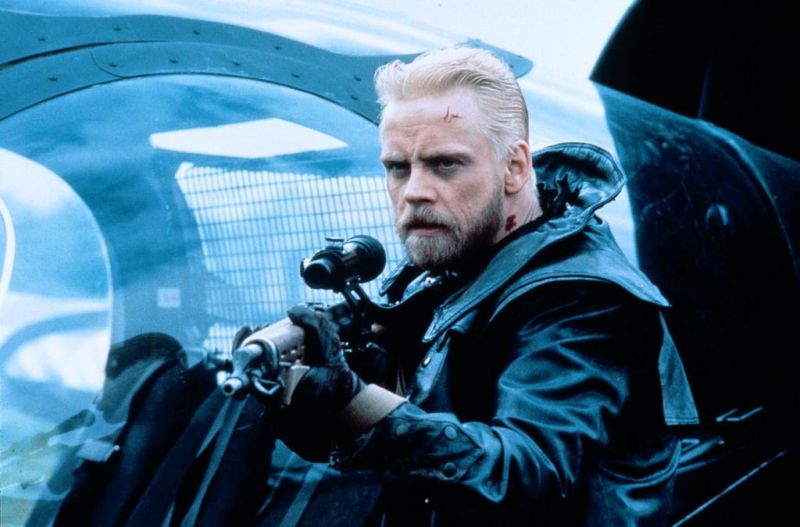
One of the most impressive aspects of “Slipstream” is the surprisingly deep cast, headlined by Mark Hamill and Bill Paxton, who both turn in memorable performances. The list also includes Ben Kingsley, Robbie Coltrane, F. Murray Abraham, and Bob Peck (in what might be his best role), who mostly mostly serve to fill out small roles throughout the film.

slipstream892One of the co-leads, Kitty Aldridge, has not had any acting credits since 1998, but has published a handful of novels throughout the 2000s since her acting career has ceased.

With such an impressively assembled, successful effects team and cast, you might be curious as to how “Slipstream” flew so far under the radar. Of course, there’s a reason for that. “Slipstream” only released in the UK and Australia (briefly), and the poor reception meant that it never got theatrical distribution in North America. It did wind up with a VHS release, and has since popped up on a ton of DVD compilations since falling into the public domain (which is how I came across it, of course).

The massive failure of “Slipstream” blew back particularly hard on Gary Kurtz, one of the film’s producers and arguably the driving force behind the film. Despite his earlier successes on influential and well-regarded films like “The Dark Crystal,” “American Graffiti,” and the first two “Star Wars” features, this failure basically sunk his career. He has only recently picked up producing again on a regular basis in the 2000s, and is still active at the age of 74.

The story of “Slipstream” follows a mysterious android (Bob Peck) as he is and pursued by both law enforcement (Mark Hamill) and a bounty hunter (Bill Paxton) in a weather-ravaged, post-apocalyptic world. The only means of travel in this world is by air on small, low-altitude planes, due to the catastrophic weather effects that ravage the landscape.

“Slipstream” was filmed throughout Europe, particularly in Turkey and Ireland, giving it a thoroughly impressive backdrop. Particularly, the extensive aerial shots over Ireland are absolutely gorgeous.

Reportedly, the original script for “Slipstream” was far more violent, but was cut significantly before filming. These cuts have been blamed partially for the movie’s general incoherence, though I personally feel that additional length is the last thing that this movie needed.

slipstream897As mentioned previously, “Slipstream” was very poorly regarded in the brief release it received at the time, primarily due to the meandering plot. Rotten Tomatoes currently has it at a 20% rating from both audiences and critics, though it comes from a fairly small sample size. IMDb has the movie at a somewhat higher 4.9, though that is still a long way from positive.

Most of the criticisms I have seen of “Slipstream” cite that it has very slow pacing, and that the plot meanders a bit too much. Some have complained about the effects being low quality, but that’s to be expected from a generally low-budget movie, regardless of the team behind it. Interestingly, it seems that the movie has been better received in retrospect, with people being somewhat fascinated by the casting and surprisingly good performances all around. I certainly agree that the movie is both longer and slower than it should be, but it does have a fair number of redeeming values.

First off, the performances in “Slipstream” are generally pretty good. Hamill manages to portray a chilling, strictly lawful antagonist, which provides a great foil for Bill Paxton’s laid-back, comic outlaw lead. Bob Peck mostly steals the show, however, with a great performance that captures the complexities of an advanced artificial being. His character slowly becomes more relate-able and human as the story goes on, which is pretty intriguing to watch Peck convey.

Unfortunately, the movie suffers from the extended absence of Mark Hamill’s character, who vanishes for an excruciating stretch of the middle of the film. I’m curious as to why this was done, because it doesn’t seem like a script improvisation, but rather an intentional design of the story. It does allow for some development, but his absence also makes the film far less interesting to watch for a decent stretch of time.

Of all of the problems with the film, none are quite as glaring as the pacing. This is at least partially to blame on the previously mentioned script cuts before filming, but a certain degree of blame has to rest with the director and editor for not recognizing the issue and finding a way to mend it. This seems like the perfect sort of film to have a director’s cut, but, because the major cuts were made before filming, there isn’t any spare footage to make such a re-cut possible.

Though it is hard to regard this as a true flaw, there are a whole lot of borrowed elements throughout “Slipstream,” that stand out significantly. There are some obvious similarities to “Star Wars” given the number of common contributors, but some of the more obvious parallels are to “3:10 to Yuma” (the plot) and “North by Northwest,” specifically in the opening sequence which depicts a plane/foot chase. Personally, I think the mixture of them all creates something kind of unique and interesting to watch, though I don’t think some of the homages should have been so blatantly done.

slipstream895The finale of the movie features a bizarre fight inside the cockpit of a plane, which is honestly the most exciting part of the film. Unfortunately, it passes a bit too quickly, particularly in comparison to the bloated, slow sequences that clog up most of the film.

M8DSLIP EC004I’m a big fan of the world that is constructed in “Slipstream,” particularly the background details. At one point, there is a cult portrayed that worships the weather, and another portion that presents a secluded, opulent colony trying to maintain their lifestyle and culture despite the apocalyptic surroundings. It mostly happens in the background, but it is fascinating to see how people have come to deal with the world after society has crumbled.

Overall, I liked this film far better than I expected to. It isn’t a high-quality film, and there are plenty of issues with it, but it was still generally enjoyable to watch, especially if you go in not expecting anything. The acting and music is particularly impressive, and if you can bear through the slower parts, it is worth a watch in my opinion.

Abraxas, Guardian of the Universe

Abraxas, Guardian of the Universe

abraxas6

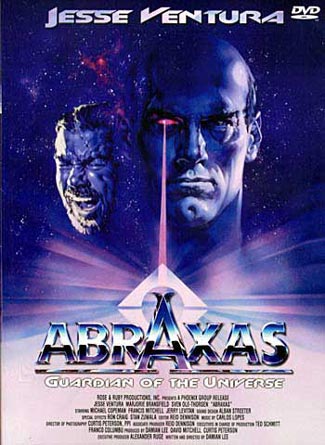
Today on the Misan[trope]y Movie Blog, we’re going to take a look at the 1990 Jesse Ventura sci-fi movie, “Abraxas, Guardian of the Universe.”

The writer and director of “Abraxas” is one Damian Lee, a B-movie writer, director, and producer who is still working today. His most recent flicks include a handful of smaller films: “A Fighting Man” (2014), “Hit it” (2013), and “A Dark Truth” (2012).

The cinematography on “Abraxas” is credited to three different people, which brings up some questions about the production. The first listed is Curtis Petersen, a veteran camera operator and b-movie cinematographer, who has well over 100 credits to his name (including “Rocky III,” “Rocky IV,” and “Look Who’s Talking”). Also credited are Mark Willis, a now-prolific camera operator working on television series such as “Hannibal,” “Copper,” and “Reign,” and Keith Thomson, another camera operator for whom “Abraxas” was one of his first ever credits. Given that there isn’t much information available about the film’s behind the scenes operations, it is anyone’s guess as to why all three men are credited, but I suspect that there was probably a dismissal at some point.

abraxas3

“Abraxas” features a handful of cheesy and cheap special effects, but they tend to work pretty well for the purposes of the movie. The special effects team doesn’t have a whole lot of credits between them, but I did notice that they all worked on the 1995 Roddy Piper movie “Jungleground,” which apparently features a lot of the same accessory crew as “Abraxas.” I’ve had that movie sitting in my collection for a good while now, so stay tuned for some coverage of that flick in the near future.

The music on “Abraxas” is really odd, featuring a significant number of strangely placed saxophone solos. The composer of the score was Carlos Lopes, who worked on the 1980s revival of “The Twilight Zone,” as well as a handful of smaller features over the years.

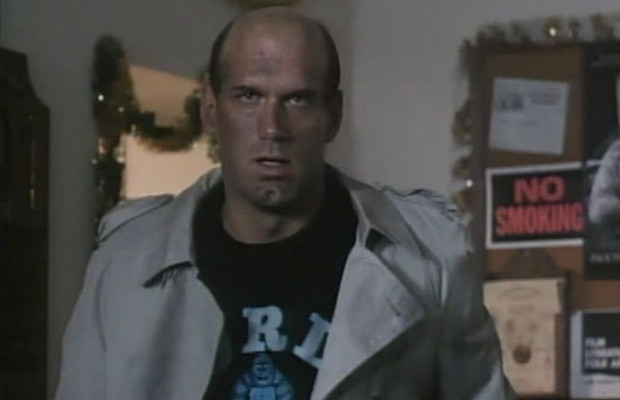
Apart from Jesse “The Body” Ventura, the wrestler turned actor turned politician, the cast of “Abraxas” notably features Sven Ole-Thorsen as his rival. Thorsen is fantastic ‘heavy’ character actor who has appeared in films like “The Running Man” (also with Ventura), “Twins,” “Gladiator,” and “Red Heat,” among many, many others. Both men are famously good friends with Arnold Schwarzenegger, whose film “Terminator” was a clear inspiration for “Abraxas.”

The rest of the cast on “Abraxas” is primarily filled out with unknowns, with the exception of the then-married couple of James Belushi and Marjorie Bransfield. “Abraxas” proved to be Bransfield’s only significant film acting role, as she hasn’t any credits since the mid-1990s. Belushi, bizarrely, is credited as “Principal Latimer,” the same name of his character in the 1987 movie “The Principal.” Whether his bit role was meant to be the same character is up for debate, but it certainly makes for an interesting little fun fact.

The story of “Abraxas” follows the title character (Ventura), a space cop, as he tracks down his former partner, the ruthless Secundus (Thorsen), who is fostering plans for domination of the universe. The pursuit lands both men on Earth, where Secundus impregnates a woman with a “comater,” which will apparently hold the key to the “anti-life equation” once it reaches maturity. Abraxas is faced with the decision of whether to kill a child, or run the risk of having Secundus’s plans come to fruition.

abraxas4
Apparently, this is space sex

As far as criticisms of “Abraxas” go, the attempts at comedy in the film merit a bit of shaming. All of the attempted jokes fall flat, and don’t fit in with the rest of the movie at all. I’m not sure what exactly inspired the attempted inclusion of comic relief in the movie, but I think it would have been better off either leaving it out entirely or committing more fully, and perhaps getting a comedy writer to do a pass on the script. When you just go half-way, you run the risk of having awkward, stilted moments in the middle of a serious movie.
Something that “Abraxas” engages in that is a minor pet peeve of mine is confusion over idioms. Almost any time a robot, alien, or person out of time is featured in a movie, it seems to be mandated for the script to attempt at least one joke about how the outsider doesn’t understand linguistic peculiarities. This isn’t inherently awful, but it has certainly been done to death. Also, particularly with aliens and humans displaced in time, there is no reason for them to not be familiar with the concept of idioms. For example, if I am speaking in another language with someone, and they mention a phrase that doesn’t seem to make much sense, one of the first things I will assume is that it is an idiom that I am not familiar with. People don’t naturally react to unfamiliar idioms by getting exasperated, it just doesn’t happen. And why not have the aliens use their own idioms, poorly translated into English? That’s at least a mildly better way to deal with the issue.

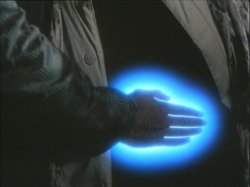
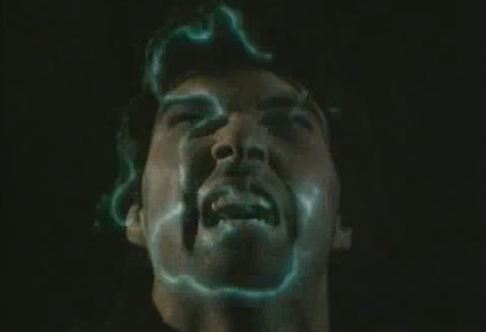
“Abraxas,” in true b-movie fashion, features a number of great, cheesy effects. In particular, there are a couple of solid head explosions scattered throughout the film, as Secundus’s favorite method of execution seems to be overloading people’s brains to the point of exploding. There are also some classic animated lightning / electricity effects that are sure to incite some nostalgia for b-movie fans.
abraxas5

Surprisingly, the central child actor  (the “comater”) is actually pretty solid in this film, which may have a direct correlation to the fact that he has almost no lines. Personally, I would be in favor of this being standard procedure for child actors. In all seriousness, the child is really effectively expressive without using his voice, and actually builds up a little bit of an air of menace by the conclusion of the film, as his powers become more honed.

Something that becomes evident very early on in “Arbraxas” is that the film features far too much internal voice-over, kind of like the awful cut of “Blade Runner” taken to a distant extreme. The monologues aren’t even limited to Jesse Ventura’s lead character: at times, both the villain (Secundus) and the love interest (Sonia) offer brief internal thoughts and narration, which is both lazy storytelling and a really confusing way to shift the audience’s POV.

abraxas2

Something that I have seen take a bit of criticism about “Abraxas” is the set and production design. While it is visibly cheap without any doubt, I actually thought that the work was pretty impressive, and made a little go a long way. It even sort of made sense in the story for the aliens to be comparatively only somewhat more technologically advanced, so they still use keyboards and simple computers. The intelligent armbands are a little bit of a leap, but how different could they possibly be from Siri?

If there is anything that I really dislike about “Abraxas,” it is the romantic subplot. Jesse Ventura just doesn’t seem up for the challenge of an emotional role, and he seems awkward and uncomfortable whenever that is what is required of his character. I thought that the story would actually have been more interesting if his mercy had come from a developing compassion for life in general rather than because of a specific attraction for one woman. It seems that would have made him a better foil for Secundus, and kept things from getting too bogged down emotionally.

abraxas1

Overall, “Abraxas” is definitely a fun good-bad movie worth giving a shot. It quite in an elite class of good-bad, but the film is entertaining enough to hold your attention, while also being plenty awful on a number of levels.