Today, I’m going to be taking a look at 2008’s super hero bomb, The Spirit.
The Spirit was directed and written by Frank Miller, who is primarily known for his comic book work on characters like Daredevil and Batman. His work in the movies, while less notable, is not insignificant: he penned the screenplays for RoboCop 2 and RoboCop 3, and co-directed both Sin City movies.
The source material for the film was a comic strip of the same name that was developed by Will Eisner, and ran primarily during the 1940s and 1950s.
The cast of The Spirit includes Samuel L. Jackson (Pulp Fiction, Jurassic Park, The Hateful Eight, Jackie Brown), Gabriel Macht (Suits), Eva Mendes (Ghost Rider, The Other Guys), Scarlett Johansson (Under the Skin, The Avengers, The Prestige, Lost In Translation), Sarah Paulson (Carol, American Horror Story), Dan Lauria (The Wonder Years), and Jaime King (Silent Night, Sin City, My Bloody Valentine).
The cinematographer for the film was Bill Pope, whose other credits include Spider-Man 3, Army of Darkness, Darkman, The Matrix, Scott Pilgrim vs. The World, The World’s End, and Spider-Man 2, as well as the television series Cosmos: A Spacetime Odyssey.
The musical score for The Spirit was provided by David Newman, who has also provided music for films like Serenity, Ice Age, Death To Smoochy, Galaxy Quest, The Phantom, The Mighty Ducks, Heathers, and Critters, among many others.
The Spirit was made on a production budget of $60 million, on which it grossed just over $39 million over its theatrical lifetime, making it a significant loss. Critically, it didn’t fare any better: it currently holds a 4.8/10 IMDb user score, along with abysmal Rotten Tomatoes ratings of 14% from critics and 25% from audiences.
One of the biggest issues with the movie is its wildly uneven tone. For the life of me, I can’t understand why there was so much slapstick written into the screenplay. The style of the movie is stylized to look deadpan and dark, which is appropriate for dark and gritty stories. However, there’s constantly shitty humor being thrown around in the dialogue, which causes a huge disconnect with all of the messaging around it. A movie that looks like this should just never include the line “toilets are always funny.”
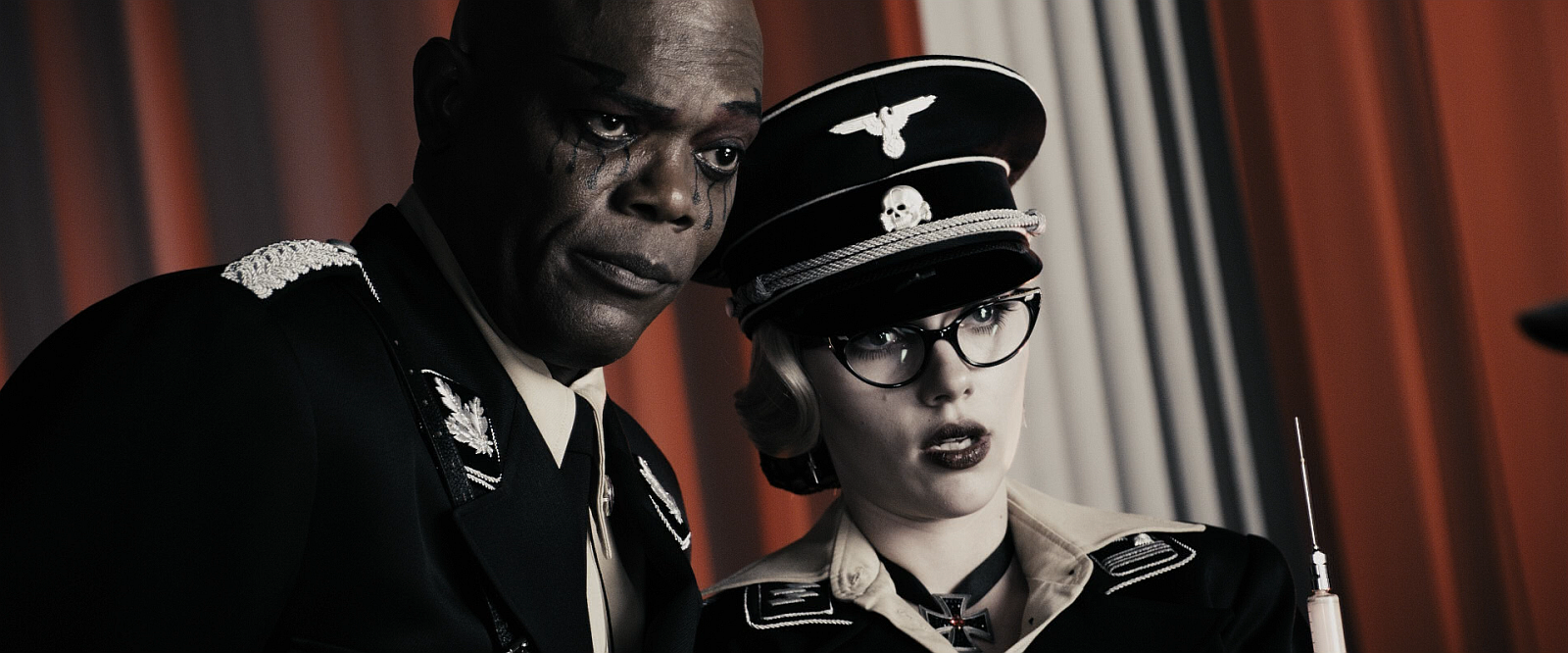
In another time, a movie with kind of odd sense of humor might have worked out. However, for contemporary audiences, I think it was just a bit too cartoon-y and out of touch. This wasn’t helped the sub-par comedic writing: maybe if the dialogue had actually been clever or funny, the movie would have resonated better with people, not unlike many of the Marvel movies have done. However, having Samuel L. Jackson parade around in racially and politically insensitive costumes isn’t exactly funny as much as it is uncomfortably weird and tone-deaf.
That being said, one of the few bearable things about The Spirit is the dastardly duo of Samuel L. Jackson and Scarlett Johansson, who are the only performers that seem to have a pulse in the movie. They are also the only ones who seem capable of delivering Miller’s god-awful dialogue, which seems to trip up everyone else. I do think that Dan Lauria was good casting for his small role, but he doesn’t have a whole lot to do in the movie apart from grumble.
When it comes down to it, The Spirit is an exercise in style over substance on every level. Miller clearly has an eye for individual images that work well in storyboarding and inside of comic frames, but the translation doesn’t always work on screen. The sort of comic stylizing used in the film can certainly work to solid effect, like in Sin City, but there is a delicate balance necessary for it to look just right. The Spirit just doesn’t find it, and I think that is specifically because Miller didn’t have a co-director to lean on, and offer a more cinematic eye to his work.
Overall, The Spirit is a painfully boring movie, despite having a pretty impressive design and look to it. Everything beneath that surface level, however, is at best sub-par. Re-watching the movie was even worse than I had remembered it: sequences drag on for far too long, and there are way too many tone-killing silly quips peppered in. On top of that, the stakes seem completely nonexistent: there’s never any believable challenge for the hero, as the villains are always too busy playing dress up to pose a real threat. I’d like to say that this is worth watching for some sort of unintentional entertainment value, but even Samuel L. Jackson at his peak hammy-ness isn’t enough to make this movie worth sitting through.
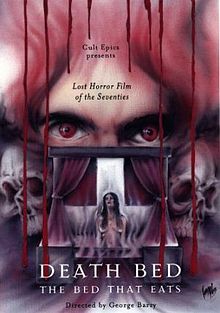
Today, I am going to take a look at a famously bad movie with a unique cult reputation: Death Bed: The Bed That Eats.
The simple plot of Death Bed: The Bed That Eats is summarized succinctly on IMDb as follows:
A bed possessed by a demon spirit consumes its users alive.
Death Bed: The Bed That Eats was directed and written by George Barry, and to this day has proven to be his sole film. However, a handful of the cast and crew went on to notable careers. William Russ, one of the actors, later appeared in Cruising, The Right Stuff, and wound up on the sitcom Boy Meets World. Editor Ron Medico went on to cut the cult creature feature Alligator, and had a significant career editing for documentaries and television after that. Cinematographer Robert Fresco wound up working on the 1980s revival of The Twilight Zone, and wound up working on a handful of documentaries as well. Last but not least, the special effects worker, Jock Brandis, went on to have a long career as a lighting technician and gaffer, working on movies like Videodrome, Scanners, The Brood, The Dead Zone, Maximum Overdrive, Blue Velvet, and Serial Mom, among others.
Famous comedian Patton Oswalt had a popular bit on his album Werewolves and Lollipops in which he obsesses over the inherent absurdity of the concept of Death Bed, and speculates what the inception process was like for the screenplay.
In 2002, Death Bed: The Bed That Eats received a remake in the form of Deathbed. The movie stars Joe Estevez (Soultaker) and was directed by Danny Draven, who has spent most of his career editing movies like A Talking Cat!?!, A Talking Pony!?!, Evil Bong, Ice Spiders, and The Gingerdead Man.
Death Bed: The Bed That Eats did not have an official release of any kind until 2004, over 25 years after its completion in 1977. Before that DVD release, Death Bed had been widely circulated online and via pirated VHS tapes, and developed its cult reputation. George Barry, the movie’s director and writer, allegedly forgot he had made it until he saw it online, and only decided to officially release it after seeing how much people enjoyed it.
Rumor has it that the lion’s share of the action in Death Bed was filmed on Keelson Island in Detroit, specifically in the infamous Gar Wood Mansion. The mansion was originally built by inventor Gar Wood in the 1920s, but sat empty for many years after his retirement. Starting in 1969, it became a renowned partying location, becoming a combination of a music venue and a counter-culture collective until it was shuttered in 1972. Only a handful of years later, the mansion suffered significant fire damage, and was eventually razed in the 1980s.
The company Cult Epics, which specializes in restoring and transferring cult movies to DVD and Blu-ray, released an updated Blu-ray version of Death Bed in 2014, which boasts a full commentary track with writer/director George Barry.
Recently, I had the rare experience of getting to see the officially restored Blu-ray version of Death Bed: The Bed That Eats in a theater, as part of a fundraiser for Cult Epics. Previously, I had only seen some rough clips of the movie online, and I was shocked at how clear the movie wound up looking on screen.
As you could probably gather at this point, Death Bed is pretty far from a cinematic masterpiece. That said, there are definitely some positive aspects to it: first and foremost, the effects. For each of the scenes where the bed consumes something/someone, there is a cut away to an amber-colored tank, which stands in for the bed’s interior digestive system. I’m not sure exactly how they did this, but I suspect they filled this tank with some sort of highly corrosive fluid, and dipped in objects on fishing line to show them digesting inside of the bed. At first, these shots are of things like an apple and a bucket of chicken, but the movie’s climax features a character’s hands disintegrated in the fluid, which actually looks pretty cool.
Outside of those effects shots, however, there isn’t much positive to say about Death Bed. Almost all of the dialogue in the movie is done in voice over, and is delivered in a sort of trance by a multitude of perspectives and narrators. The overarching plot doesn’t make a lot of sense, and is poorly conveyed to boot. The performances range from sleepwalking to possibly comatose, as most of the characters show no range of emotions or exhibit any kind of sensible reactions to the events around them. I’m pretty sure that fault doesn’t lie with the actors, though: the strange reactions and woozy behaviors were almost certainly part of the directorial intent, which was apparently to re-capture the surreal atmosphere of a dream. However, I don’t think it comes across quite as he wanted it to.
For me, this is the biggest question about Death Bed: how serious were they about this movie? While there are brief moments of knowing humor scattered throughout, including a sequence where the bed ingests a bottle of pepto-bismol, most of the movie plays as serious as a heart attack. It clearly isn’t as hammy as the name implies, and is a pretty far stretch from any kind of Troma or Full Moon b-movie. I usually describe this as one of the worst-executed art movies of all time: the atmosphere is way too self-important for it to fit in with the usual lot of b-movies and horror fare, and it certainly isn’t smartly profound or well-crafted enough to land in the Criterion collection. It is a unique little oddity that is unlike pretty much anything else out there, and worth giving a shot for that reason alone. While it can be a little dull at times, I think the ride as a whole is worth a ticket, particularly for b-movie and cult movie fans.
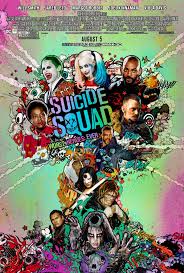
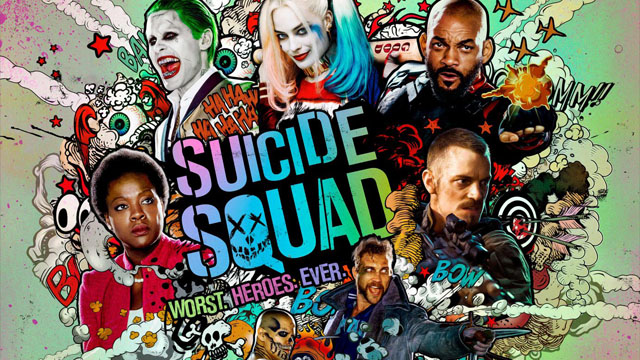
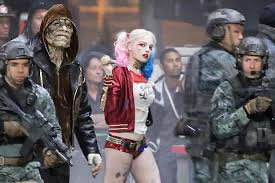
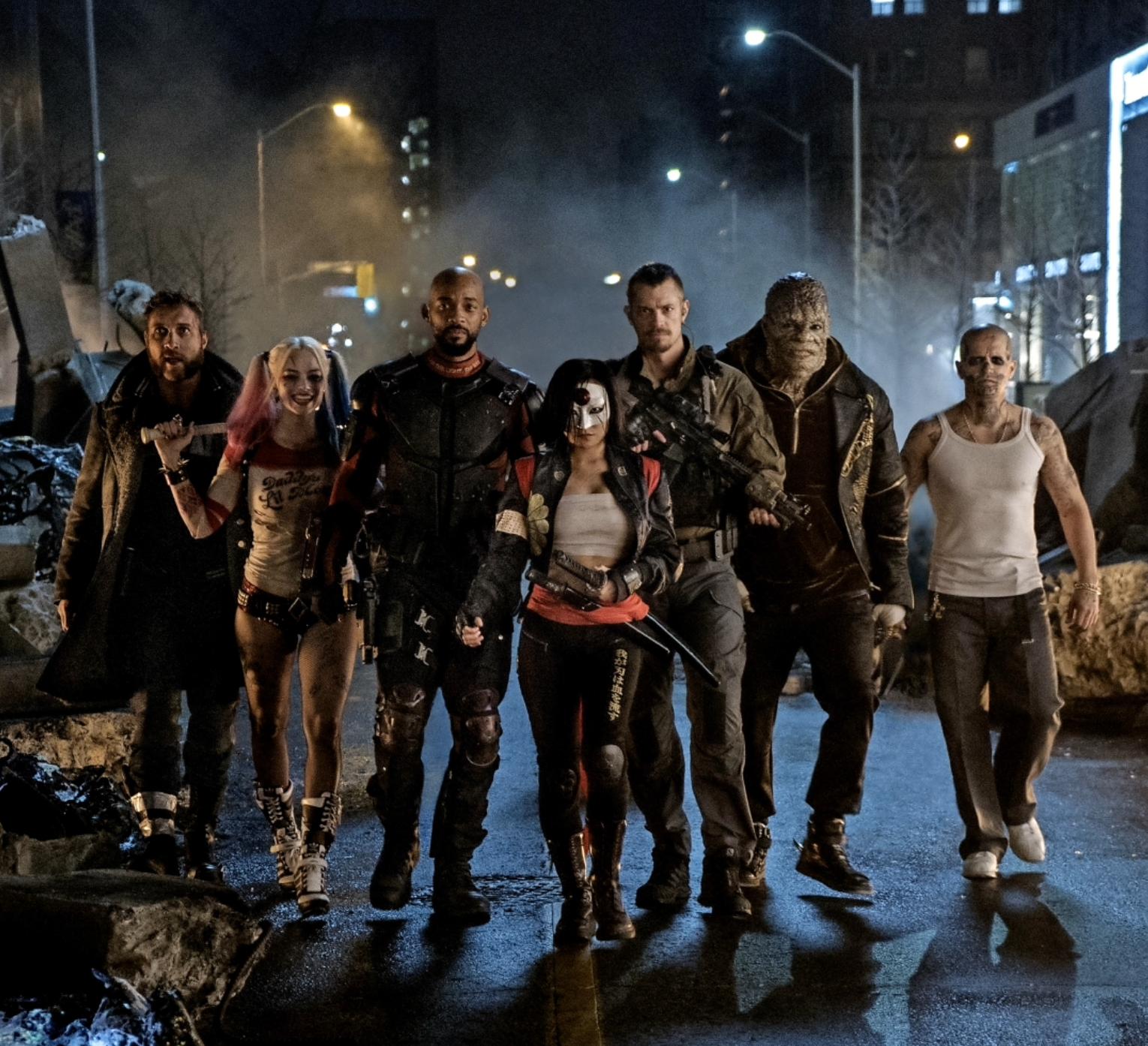
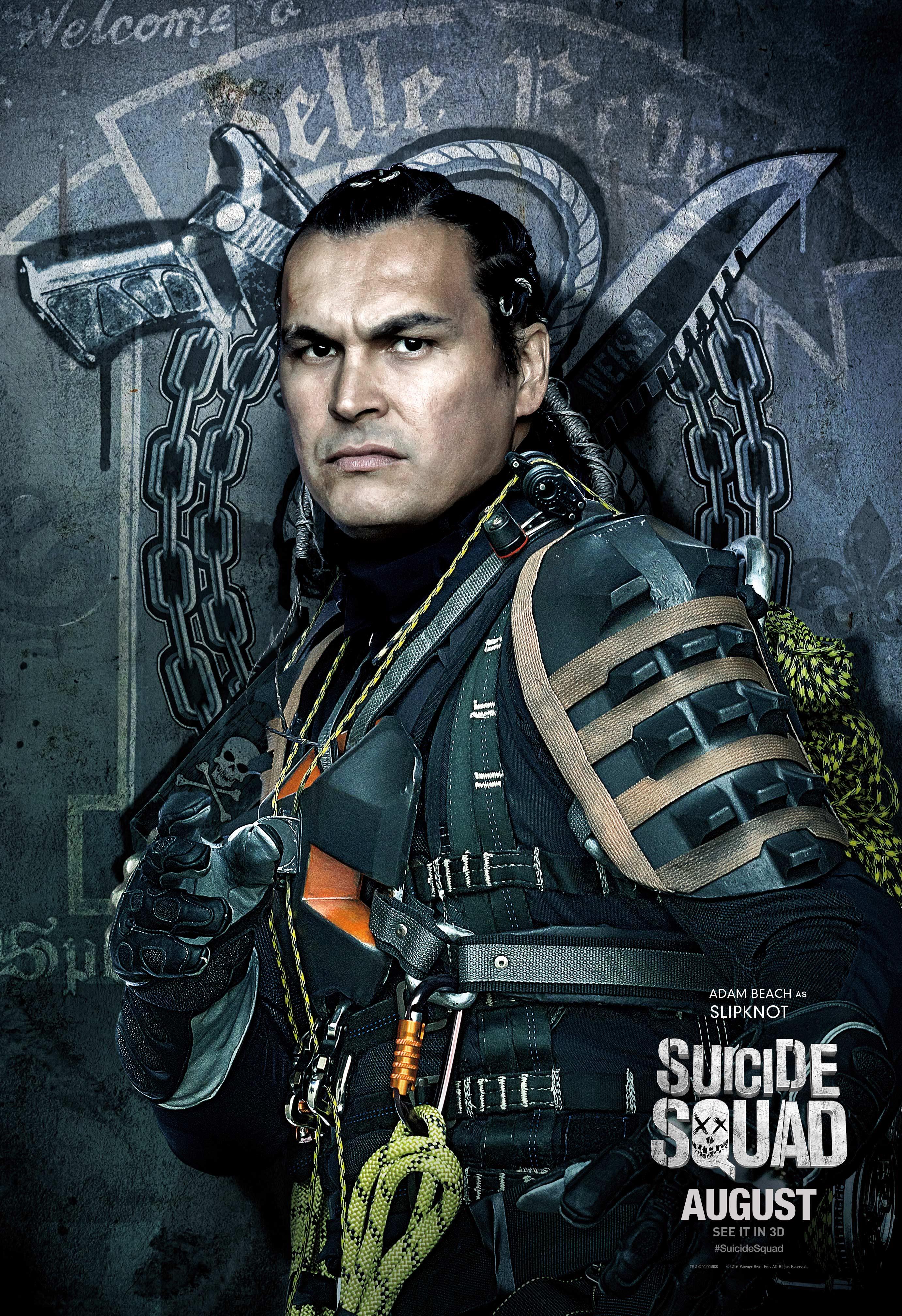
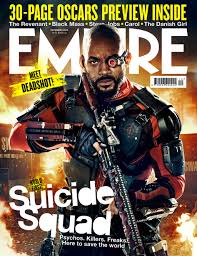
Today, as part of my series on the worst movies of 2016, I’m taking a look at one of the year’s most polarizing blockbusters: Suicide Squad.
The plot of Suicide Squad is summarized on IMDb as follows:
A secret government agency recruits some of the most dangerous incarcerated super-villains to form a defensive task force. Their first mission: save the world from the apocalypse.
Suicide Squad was written and directed by David Ayer, whose other credits include Fury, Sabotage, End of Watch, SWAT,Training Day, and The Fast and The Furious.
The Suicide Squad team debuted in DC comics in The Brave and The Bold #25 in 1959, though only the name truly remains of the initial incarnation now. Most of the elements now popularly recognized come from the modern version of the series that started with a revamp in the 1980s by John Ostrander, John Byrne, and Len Wein. The concept sees super-villains compiled together into a strike team to carry out tasks for the government, in exchange for their freedoms. The team has sporadically featured such notable DC villains as Poison Ivy, Captain Cold, The Penguin, and Black Adam, on top of more consistent core members like Deadshot, Captain Boomerang, and Harley Quinn, and has a regularly rotating cast of members.
The cast of Suicide Squad is made up of Margot Robbie (The Wolf of Wall Street, Whiskey Tango Foxtrot), Will Smith (Wild Wild West, Men In Black, I Am Legend, Independence Day, Winter’s Tale, After Earth), Viola Davis (Fences, State of Play), Jared Leto (Fight Club, Mr. Nobody, Requiem For A Dream, Alexander), and Jai Courtney (Jack Reacher, I, Frankenstein, Terminator Genisys).
The cinematographer for the film was Ramon Vasyenov, who shot the movies Fury, End of Watch, Charlie Countryman, and The East. The editor for Suicide Squad was John Gilroy, who has cut a handful of notable movies, including Nightcrawler, Pacific Rim, Warrior, Michael Clayton, Suspect Zero, and Billy Madison.
The musical score for the film was provided by Steven Price, who also worked on Fury, The World’s End, Gravity, and Attack the Block, among other projects.
A number of scenes of Killer Croc’s backstory were removed from the final theatrical cut, including depictions of his upbringing as a social outcast due to his physical appearance. Likewise, it was revealed that Croc crossed paths with Batman while working for numerous Gotham crime bosses. There were also scenes displaying his affinity for making sculptures out of discarded materials, and a sequence where he becomes sick at the helicopter escort to Midway City, prompting him to throw up half-digested pieces of goat.
Thanks to the financial success of Suicide Squad, there is a rumored follow-up in the pipeline to be called Gotham City Sirens, which is likely to focus on Harley Quinn, along with a handful of other Gotham City figures.
The initial trailer for Suicide Squad was set to the Queen song Bohemian Rhapsody, and wound up building a significant amount of positive buzz for the film. Thanks to it going viral, it has racked up over 78 million views on YouTube since its release.
It is popularly believed that the mixed-to-negative reactions to Batman v Superman: Dawn of Justice, combined with the overwhelmingly positive reception to Deadpool, led to a handful of re-shoots and re-cuts to Suicide Squad at the last minute in order to lighten its tone and inject humor.
A number of alternate casting rumors surrounded the development of Suicide Squad. Apparently, Tom Hardy dropped out of the role of Rick Flag in order to do The Revenant, and Ryan Gosling flat-out turned down the role of Joker due to the contract terms mandated by the studio.
Apparently, Jared Leto’s method acting for the role of Joker led to some less-than-savory antics on set. Reports indicated that he sent unwanted gifts to his fellow cast members, including packages containing used condoms, live rats, and bullets.
Financially, Suicide Squad was a significant hit: it grossed roughly $745 million worldwide on a production budget of $175 million. Critically, however, it proved to be one of the most polarizing films of the year. While it currently holds an IMDb user rating of 6.4/10, it also has a Rotten Tomatoes score of 26% from critics, and made many critics’ lists of the worst films of 2016.
It is worth noting that the version of Suicide Squad that I watched was the theatrical cut. For home video release, the advertising touted an improved “extended cut”, but I wanted to see exactly what audiences saw in the theaters, and what the producers and the studio thought was fit for the widest release.
One of the most common complaints I have seen about Suicide Squad is that the first half plays more like an extended music video than a movie. When I first heard that criticism, I assumed that it was embellishment. I was genuinely surprised at how apt that observation is: the first half hour of the movie is a strung-together sequence of pop songs that gave me flash backs to Sucker Punch.
Once the story does start moving, it is plagued by pacing issues. Some characters get overly-detailed introductions that drag the progression to a halt, while others seem to appear out of nowhere. The relationships between characters are vague, and some have little-to-no dialogue to develop themselves. Most of the enemies the team fight are literally faceless and essentially powerless, removing any kinds of stakes or threats from the table. Worse yet, the central mission at the heart of the story isn’t adequately revealed to the audience, making it unclear what story progress would even look like if it happened. The combination of all of these elements is a poorly built story framework that relies on undeveloped characters to carry it along, with no intrigue or tension to be found.
All of that said, there are some good things to say about Suicide Squad. While some of the CGI is definitely rough, there was clearly a lot of time and effort put into Killer Croc’s design and execution, and the result is arguably pretty cool. Unfortunately, he is also one of the characters with the least amount of screen time and development, which may have been due to the cost and labor involved with the makeup. Still, the character felt like a massive squandering of potential.
As far as other positives go, the Batman and Flash cameos were almost certainly the best parts of the film. I assume these were mostly included to make audiences excited for future interactions and films with these characters, and I have to say, I think the tactic worked. Even moreso than after Batman v Superman, I want to see Battfleck in his own feature, getting up to Batman shenanigans. Unfortunately, these cameo sequences are very brief, and front-loaded in the movie, so they don’t add much value to the film as a whole.
Overall, Suicide Squad is mostly a trainwreck. The writing, action, and editing all left a lot to be desired. The performances were hard to judge, because the cast clearly didn’t have anything here to work with. All of that said, from the perspective of pure spectacle, there is some value here. There is noise and color, and if that is what you want from a blockbuster, this is where you can find it. For anyone outside of that description who is not a die-hard DC fan, there is just no way I could recommend this film.
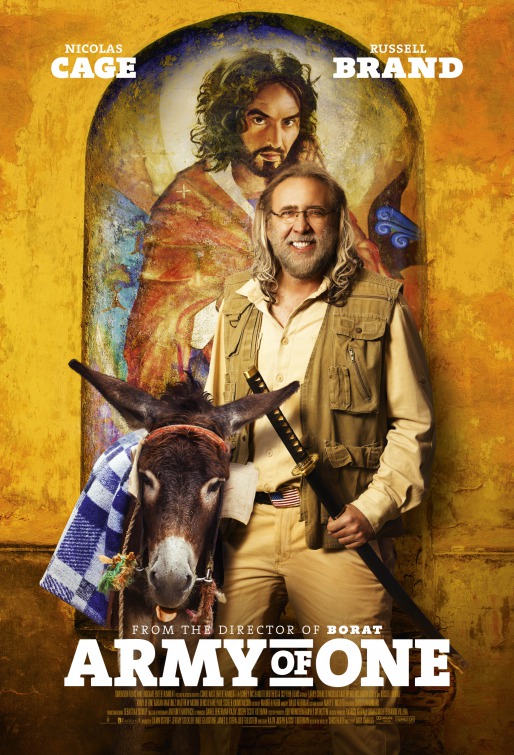
Next up in my “Worst of 2016” month is a strange, quasi-true story from director Larry Charles and acting demi-god Nicolas Cage: Army of One.
The plot of Army of One is succinctly summarized on IMDb as follows:
An American civilian sets out on his own to find Osama Bin Laden.
The screenplay for the movie was written by Rajiv Joseph and Scott Rothman, whose credits include Draft Day and a handful of episodes of Nurse Jackie. However, the story behind it is loosely based on the strange exploits of an eccentric and patriotic American named Gary Faulkner, who set upon a personal quest, supposedly ordered by God, to track down and capture Osama Bin Laden.
The director for the film was Larry Charles, who is possibly best known for his numerous collaborations with Sacha Baron Cohen (The Dictator, Borat, and Bruno), as well as for the documentary Religulous and the hit television show Curb Your Enthusiasm.
The cast of Army of One includes Nicolas Cage (Con Air, Face/Off, The Wicker Man, Vampire’s Kiss), Russell Brand (Get Him To The Greek, Forgetting Sarah Marshall), Paul Sheer (The League, Piranha 3D), Will Sasso (MADtv, The Three Stooges), Wendi McLendon-Covey (Reno 911), and Rainn Wilson (Super, The Office).
The cinematographer for the movie was Anthony Hardwick, who has worked extensively on television shows like Entourage, Important Things with Demitri Martin, and The Last Man On Earth, as well as on movies like Religulous and Bruno. Likewise, the film’s editor, Christian Kinnard, worked on a number of television shows, including Community and Superstore.
The music for Army of One was provided by David Newman, whose other works include The Spirit, Serenity, Ice Age, Death To Smoochy, Galaxy Quest, Jingle All The Way, The Mighty Ducks, Heathers, The War of the Roses, and Critters, among others.
Because Army of One released straight to streaming on demand and DVD, I couldn’t find any financial numbers for its take. However, it apparently had a very short run in select theaters, though certainly not enough to cover the production budget. That said, critically, Army of One was undoubtedly a disaster, and its low profile may have been a blessing for all involved. It currently holds a 5.0/10 IMDb user rating, along with Rotten Tomatoes scores of 27% from critics and 28% from audiences.
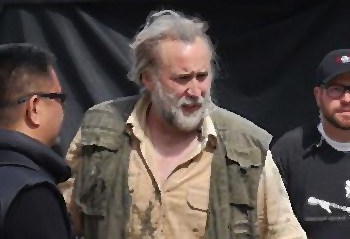
If there is anything positive that can be said about Army of One, it is that Nicolas Cage is at his most zany Nicolas Cage level of recent years. On top of that, it actually seems like he put effort into the performance of Gary Faulkner, and manages to imitate his mannerisms and cadence pretty well. That said, his high-pitched voice is pretty grating, and isn’t quite true to the reality of Faulkner.
One of the biggest flaws that I noticed about Army of One was a lack of coherent direction from scene to scene, which often had to be stitched together with narration. My personal suspicion is that the writing for the film was very loose to allow for improvised comedy, but wound up so loose that the story lost all of its connectivity, and the production team tried to patch the holes with narration.
Honestly, I’m not sure how scripted the movie was in the first place: a lot of it feels like pure improvisation, to the point that I’m not sure if a pen ever hit paper for this project. Director Larry Charles undoubtedly likes trying to get organic humor out of very loose scripting, like in Curb Your Enthusiasm or Borat. However, most of the successful films that have executed this style have been filmed as pseudo-documentaries, which gives them a more natural and raw appearance and flow. This isn’t done for Army of One, which I think was a mistake, as the clash of styles struck me as both jarring and painfully unfunny.
On top of the shooting style not suiting the improvisational writing, I don’t think Cage was well suited to carry the load of improvisational comedy to the extent that was expected of him for this film. Despite being surrounded by notable and capable comedians who are familiar with the format, the comedy never flows quite right off of Cage: it all just piles up on him, and he never seems to be able to juggle or throw things back. While the guy can definitely give a funny performance, I think improvisation is a very different set of skills that has never been at his core.
Last but not least, there is something undeniably mean-spirited about the nature of the humor in this movie. A lot of the advertising for the film compared the story to Don Quixote: a clueless hero with strong values suffers repeated failures, in comedic fashion. However, there is a difference between Faulkner and Quixote: Quixote wasn’t a real man. Faulkner is a real, living person with some very clear issues, which are played for laughs in the film. To laugh at Quixote’s naivete and foolishness on paper is one thing, but seeing these qualities in a real person isn’t so much funny as it is tragic. There are moments where it feels like Charles and company are punching down on a confused man undeserving of ire, all for the sake of a laugh. Unfortunately, getting laughs from this flick is like drawing blood from a stone, so it was basically all for nothing.
Overall, Army of One is a bit of a curiosity. While Cage’s performance is worth seeing for fans of his body of work, I think this is a movie primarily worth seeing on an educational level: there’s a lot that can be learned about improvisational comedy on film from comparing this to more successful films in the format. I personally believe that there are as many things to learn from failures as successes, and there are definitely some lessons hidden in the cracked, faulty foundation of Army of One. Also, on a mostly unrelated note, this movie has pretty well cemented my opinion that Larry Charles is a jackass.
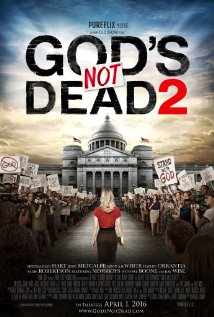
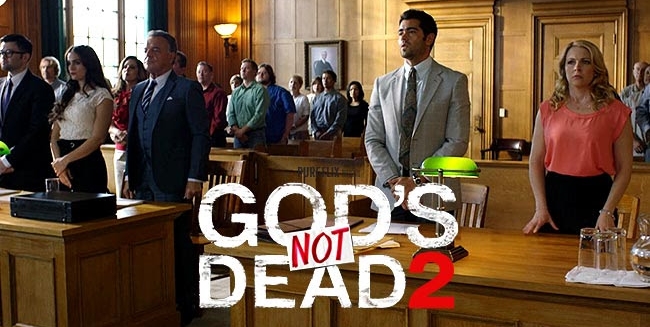
Up next in my series on the worst films of 2016 is the ultra-evangelical follow up to the 2014 hit God’s Not Dead: God’s Not Dead 2.
The plot of God’s Not Dead is loosely summarized on IMDb as follows:
When a high school teacher is asked a question in class about Jesus, her response lands her in deep trouble.
The lion’s share of the crew for God’s Not Dead 2 are holdovers from the first God’s Not Dead film, including director Harold Cronk, co-writers Chuck Conzelman and Cary Solomon, music composer Will Musser, cinematographer Brian Shanley, and editor Vance Null.
While there are few new faces at work behind the cameras, the cast features quite a number of new additions to the franchise. Gone are previous stars Kevin Sorbo, Shane Harper, and Dean Cain, but present are newcomers like Ernie Hudson (Ghostbusters, Leviathan, Congo), Ray Wise (RoboCop, Twin Peaks), and Melissa Joan Hart (Clarissa Explains It All). While a few bit players provide connective tissue between the films, God’s Not Dead 2 is not so much a sequel as it is a spin-off, telling an entirely new story in the same (very) fictional universe.
The lion’s share of God’s Not Dead 2 was filmed in Little Rock, Arkansas. This was a change in setting from the previous film, which was shot in Baton Rouge, Louisiana, primarily on the campus of Louisiana State University.
God’s Not Dead 2 was the final film of Fred Dalton Thompson, who died in November of 2015. While he was best known for his work in the Law & Order television franchise, he also had a handful of film roles in features like Baby’s Day Out, In The Line Of Fire, Days of Thunder, The Hunt For Red October, and the Scorsese remake of Cape Fear.
The production budget for the movie was estimated at $5 million. As with the first film, it wound up making a profit at the box office, taking in somewhere between $21 million and $24 million worldwide in its lifetime theatrical run. However, this paled in comparison to the profits for the original God’s Not Dead, which took in $62 million on a $2 million budget.
Critically, however, God’s Not Dead 2 didn’t do nearly so well. Currently, it holds Rotten Tomatoes ratings of 9% from critics and 63% from audiences, along with an IMDb user rating of 4.1/10.
Of all of the critical reviews that I read of the movie, I think that the Rotten Tomatoes critics consensus line best summarizes the essence of God’s Not Dead 2:
Every bit the proselytizing lecture promised by its title, God’s Not Dead 2 preaches ham-fistedly to its paranoid conservative choir.
Honestly, I can’t even begin to talk about all of the problems with the plot to this film. There are too many misconceptions, half-truths, straw men, and flat out lies to list out without it dominating the entire review. Frankly, that is why I didn’t review the original God’s Not Dead: I want to talk about a movie, not a paranoid treatise built on a foundation of sand. So, I am going to focus on other aspects of the movie, and leave the debunking to other folks. I can recommend reading reactions and reviews over at ThinkProgress, from the Freedom From Religion Foundation’s legal intern, and at Godless in Dixie.
As with the first film, one of the biggest weaknesses of God’s Not Dead 2 is the dialogue. Characters don’t speak organically, often sounding rigid and artificial, which further emphasizes the bloated, exaggerated caricatures that inhabit the cartoonish, simplistic story. At best, characters sound like they are delivering sermons. At worst, they just seem wooden and stilted.
The story itself, concept aside, is weighed down by the ensemble concept that provides its framework. Unlike the first film, the various plot threads and characters never really tie together in the end, and don’t much impact each other, which makes a lot of the movie feel pointless. In particular, a number of the loose connections to the first film could have been jettisoned to help the pacing of the story, like the Chinese student and the buddy priests. As it stands, the movie feels longer than it actually is because of the perceived lack of progression: the constant cutting between characters and plot threads makes following along feel like plodding through molasses.
One thing that I noticed quite a bit in the screenplay was a consistent ire directed at Stanford University. While Stanford is certainly a prestigious school with a liberal pedigree, I’m not sure why it wound up being the specific target of the film’s disdain for liberal higher education. Why not Harvard or Princeton? I would have assumed that the Yankee, Ivy league elite would be the go-to targets of extreme conservatives.
In regards to performances in God’s Not Dead 2, there is a pretty wide range to be found. While most of the cast sleepwalk through their dialogue, like the typically charming Ernie Hudson, Ray Wise in particular embraces his role as a God-hating, moustache-twirling attorney. The movie lights up just the tiniest bit whenever he is on screen, and he provides some much needed energy for the courtroom sequences.
All in all, God’s Not Dead 2 feels more like a fan film than a sequel, which is really odd given how much of the creative team returned from the first film. The whole affair feels chained to the previous movie, going so far as to force the title into the dialogue unnecessarily. That said, I actually think some of the technical craft is improved, though my memory is a little fuzzy in regards to the previous film.
As far as a recommendation goes, there is unfortunately not enough entertainment value here to enjoy the experience. It is just too dull and plodding to make sitting through it fun at all, despite Ray Wise’s performance and a handful of notable moments of complete disjointedness from reality.
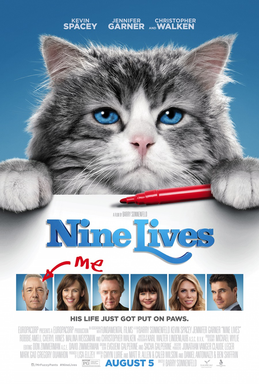
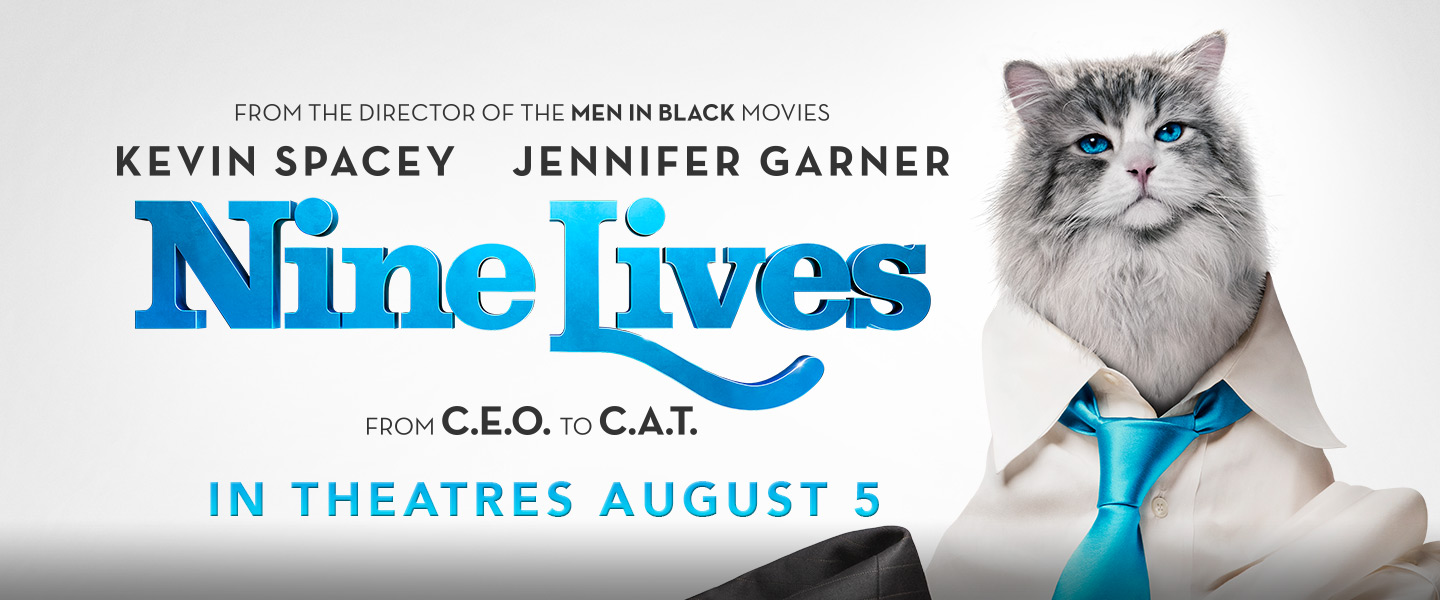
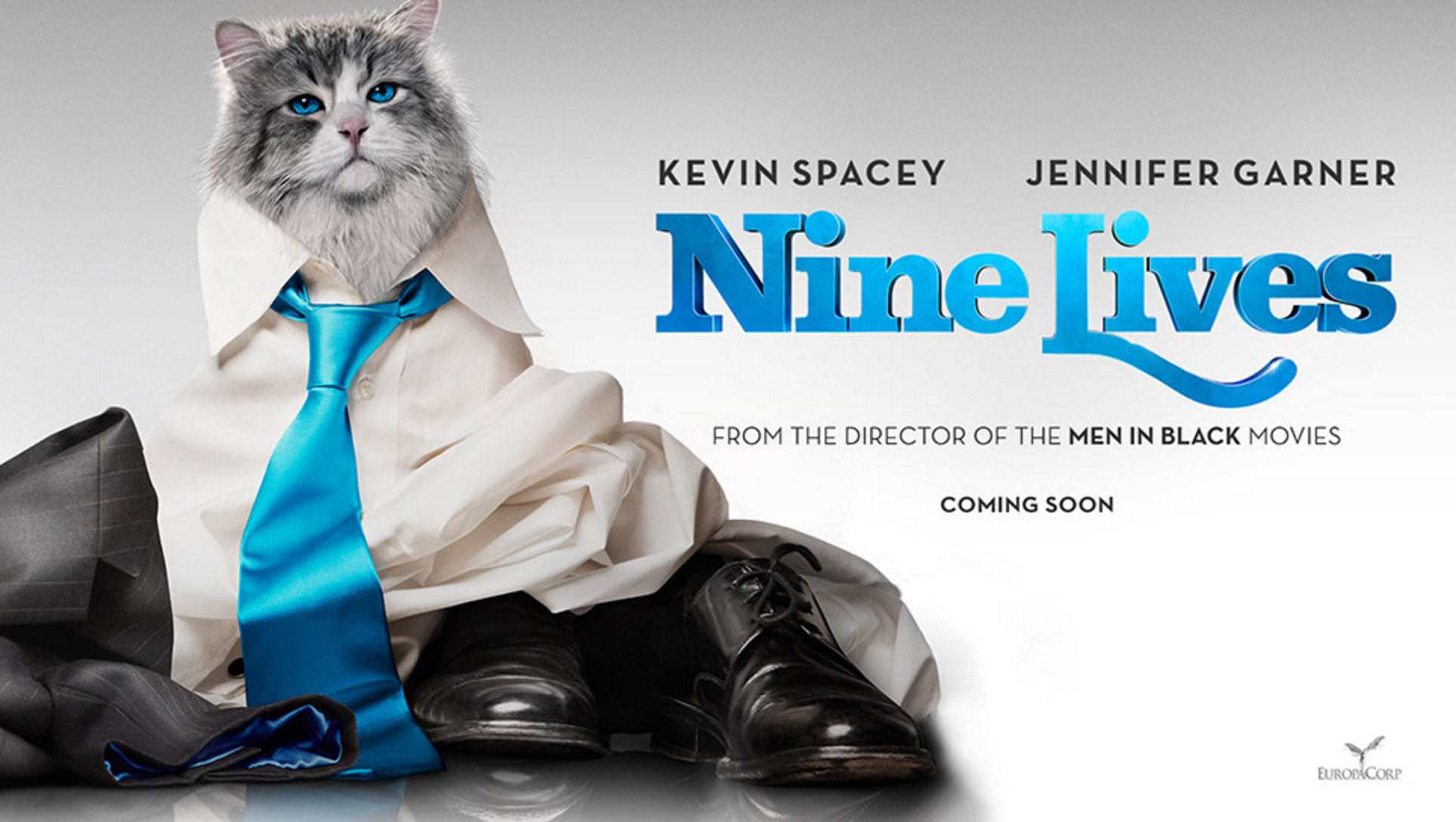
Continuing my spotlight on the worst films of 2016, today I am going to be covering the Kevin Spacey talking cat movie, Nine Lives.
The plot of Nine Lives, according to IMDb, is as follows:
A stuffy businessman finds himself trapped inside the body of his family’s cat.
The director of Nine Lives was Barry Sonnenfeld, who is best known for movies like The Addams Family, Men In Black, Men In Black II, Men In Black 3, Get Shorty, Wild Wild West, and RV.
The screenplay for Nine Lives has five credited writers, including Caleb Wilson and Matt Allen, who previously wrote Soul Surfer and Four Christmases.
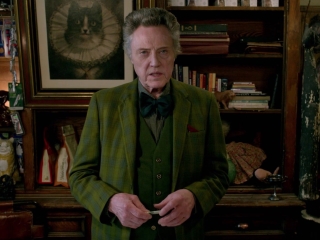
The cast of the movie includes the likes of Kevin Spacey (The Usual Suspects, L.A. Confidential, House of Cards, American Beauty, Swimming With Sharks, Se7en), Christopher Walken (Suicide Kings, The Deer Hunter, King of New York, Dead Zone, Catch Me If You Can, Seven Psychopaths, Pulp Fiction, Kangaroo Jack), Jennifer Garner (Alias, Dallas Buyers Club, Juno, Daredevil, Elektra), and Cheryl Hines (Curb Your Enthusiasm, RV, The Ugly Truth).
The cinematographer for the film was Karl Walter Lindenlaub, who also shot the movies Stargate, Independence Day, The Haunting, Universal Soldier, and Dolphin Tale.
Don Zimmerman acted as a co-editor for the movie, adding to a long list of credits that includes Marmaduke, Half Baked, Patch Adams, Over The Top, Cobra, Galaxy Quest, The Cat In The Hat, Night At The Museum, and Liar, Liar.
The visual effects for Nine Lives were primarily provided by the company Rodeo FX, which is credited for work on movies like The Amazing Spider-Man, Terminator Salvation, Source Code, Jupiter Ascending, Jonah Hex, Abraham Lincoln: Vampire Hunter, Warcraft, Gods of Egypt, and Deadpool, among many others. On top of that, they provided all visual effects work for Game of Thrones seasons 4 and 5.
The famously odd-looking cat, Lil Bub, who has a massive social media following that numbers in the millions, has a cameo appearance in Nine Lives as one of the cats under Christopher Walken’s care.
Nine Lives was made on an estimated production budget of $30 million, on which it took in a lifetime, worldwide gross of $44 million. While this covered the production budget, it likely didn’t net much of a profit after post-production and marketing costs.
Critically, Nine Lives was, understandably, not received well. Currently, it holds an IMDb user rating of 5.2/10, along with Rotten Tomatoes scores of 11% from critics and 43% from audiences.
The first and biggest problem with Nine Lives is one that plagues most productions that feature talking animals: bad CGI. While technology has improved since movies like Cats & Dogs and Son of the Mask, the computer-generated cat work that appears prominently in Nine Lives is still solidly within the uncanny valley: it is good enough to be convincing on one level, but still obviously not natural to an off-putting degree. While this might be passable in limited use and in low-light conditions, the effects sequences are almost all in full light, and are often painfully prolonged.
One of the things that bothered me the most about the film were the cat-related sound decisions made on the part of the production. During the sequences where Kevin Spacey inhabits the cat, his attempts at communication with humans are shown from other characters’ points of view as being intense, pained, and jarring feline yowls. Not only is this profoundly annoying to listen to, but it doesn’t always make sense: cats have a range of noises that they can make, so why would communication attempts always come across as yowling, as opposed to purring or meowing?
It is worth noting that, despite the inane plot, most of the prominent players in the film put in surprisingly decent performances. Spacey doesn’t seem to be totally phoning in his role, despite the fact that most of his role is voice-over. Likewise, Jennifer Garner has some moments of genuine emotion, and Christopher Walken is his usual eccentric self.
As far as other positives go, I have to say that I kind of like some of the design choices for the movie, particularly in regards to the color palette. For instance, each of the primary locations has a unique color theme: Walken’s store is dominated by greens and browns, giving it a natural and home-y look, which is a stark foil to the Firebrand offices, which are immaculately white with bright, red trim. Likewise, Walken’s store is cluttered and busy, and he always has complicated patterns in his darker-toned clothes. In contrast, Brand and his corporate building are almost always shown in bright solids, with little to no patterns involved: everything is sharply angled, sleek, and clean-cut. This is a minor thing that often gets overlooked in movies, and is usually meant to cause subliminal associations as opposed to overt ones. In Nine Lives, however, the stark contrasts and vivid colors contribute to a cartoon-y, hyper-realistic atmosphere that actually works pretty well. In most movies, these over-the-top colors and contrasts might be a distraction, but in this very specific case, they fit.
One aspect of the film that I have seen some reviewers complain about is the plot’s focus on corporate minutiae. Even though it didn’t stand out to me when I was watching the movie, it is definitely a problem that so much of the plot is about corporate back-dealings and Kevin Spacey’s will: not only because it doesn’t make for interesting watching, but because the core demographic for the film, children, generally aren’t going to understand or care about it.
Related to this, I have a bit of an issue with the moral compass of the movie. Initially, the curse is put upon Kevin Spacey so that he would learn to appreciate his family. Prior to the transformation, the biggest object between Spacey and is family is his new skyscraper: a surrogate image for his ambition, hubris, and obsessive work behavior. After the transformation, Spacey’s son winds up taking on the task of completing the building, in an effort to both prove himself and solidify his father’s legacy.
However, this focus on the building by his son bothered me. Spacey’s son is always shown in the context of his job: he is never revealed to have a family or partner of his own beyond his cold mother and Kevin Spacey, despite clearly being an adult with an accomplished career. As the plot progresses, he is shown distancing himself from his warmer step-family in order to focus on the building project, just like Spacey did. In the final act, he even goes so far as to neglect being present at his father’s potential death bed so that he could commit a corporate power play. It seems to me that this character should have come away from the story having learned not to devote all of his life to work, like his father had. Instead of the idea of legacy being tied into a company or a building, both characters should have come away understanding that loved ones, good will, and relationships are what really build a legacy. Instead, the conclusion vindicates Spacey’s obsession with his building and company being the symbols of his legacy: both are retained/completed, letting him have his cake and eat it too.
Despite my issues with the writing and the effects, this movie could certainly have been a whole lot worse. In fact, a number of reviews lamented that it wasn’t, because it would then have had more entertainment value. As it stands, I think that some children might just be entertained by Nine Lives:there are at least enough requisite bodily fluid and excrement jokes to meet certain infantile humor quotas. That said, there is no way that I could recommend this movie to anyone. The positives are outweighed by the negatives, and the negatives aren’t even entertaining negatives that could help you power through.
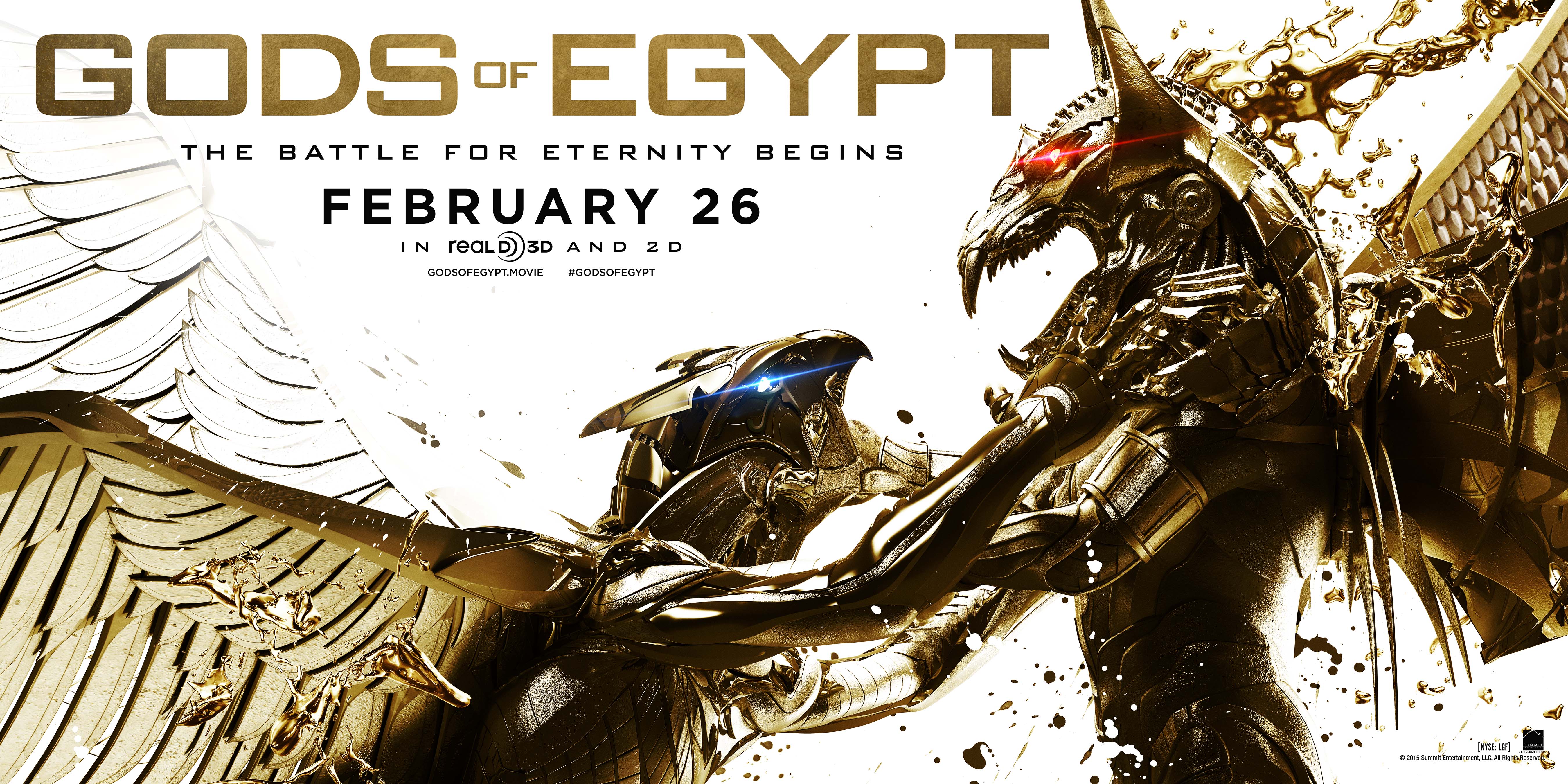
Today, I am going to be kicking off an entire month dedicated to the worst films of 2016. First up is the controversial bomb, Gods of Egypt.
The plot of Gods of Egypt is summarized on IMDb as follows:
Mortal hero Bek teams with the god Horus in an alliance against Set, the merciless god of darkness, who has usurped Egypt’s throne, plunging the once peaceful and prosperous empire into chaos and conflict.
Gods of Egypt was directed by Alex Proyas, who is best known for movies like Dark City, The Crow, and I, Robot, among others.
The screenplay for the movie was written by the duo of Matt Sazama and Burk Sharpless, who recently penned Dracula: Untold and The Last Witch Hunter, and wrote the script for the upcoming Power Rangers movie.
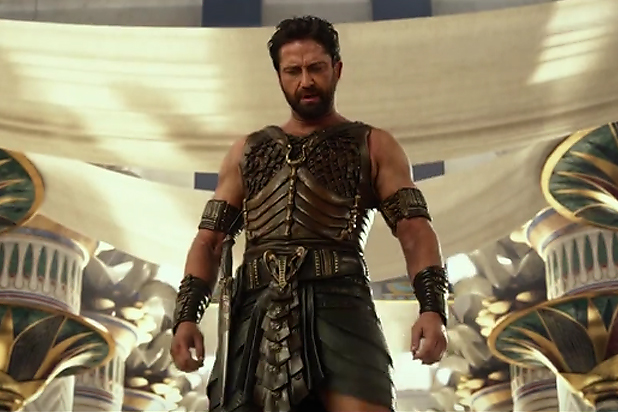
Gods of Egypt stars Gerard Butler (300, Olympus Has Fallen), Nikolaj Coster-Waldau (Game of Thrones, Headhunters), Brenton Thwaites (Oculus, Maleficent), Geoffrey Rush (Mystery Men, Green Lantern, The King’s Speech), and Chadwick Boseman (Captain America: Civil War, 42).
Richard Learoyd served as the primary editor for the film, after cutting Proyas’s previous movies, Knowing and I, Robot. The cinematographer for Gods of Egypt was Peter Menzies Jr., who has shot such films as Four Brothers, The 13th Warriors, Kagaroo Jack, The Incredible Hulk, and Die Hard with a Vengeance. Also of note among the crew was the production designer, Owen Paterson. His design credits include work on The Matrix trilogy, Red Planet, V for Vendetta, and The Adventures of Priscilla, Queen of the Desert.
The musical score for Gods of Egypt was composed by Marco Beltrami, who has had a number of high profile film scores over his career, including Scream, Snowpiercer, Blade II, The Hurt Locker, Jonah Hex, The Faculty, and Mimic.
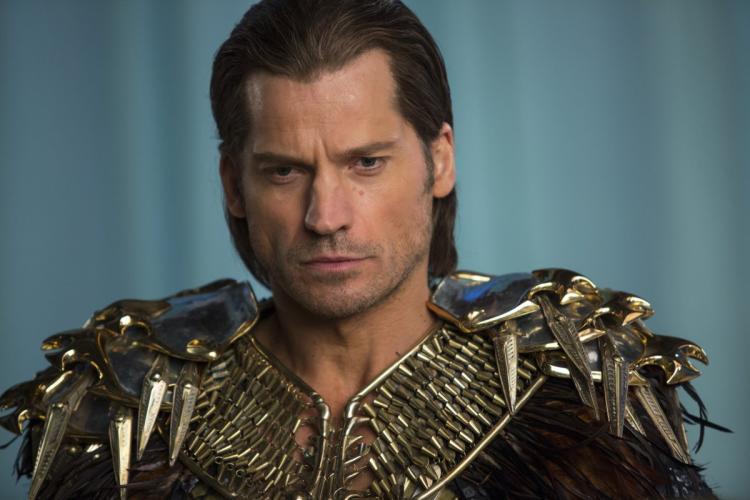
This plot of Gods of Egypt is a heavily modified version of the Egyptian myth “The Contendings of Horus and Set”, in which the gods Set and Horus vie for the rule of Egypt. Set, played by Gerard Butler in the movie, was the Egyptian god of the desert, storms, disorder, and violence, and served as lord of the red land (essentially, the deserts of Egypt). His foil, the protagonist Horus, is played by Nikolaj Coster-Waldau, and is the Egyptian god of the sky. Horus is the son of Set’s brother, Osiris, whom Set ursurped and murdered in his quest for power. Because of this, Horus and Set are at odds in Egyptian mythology, a conflict that is carries over into Gods of Egypt.
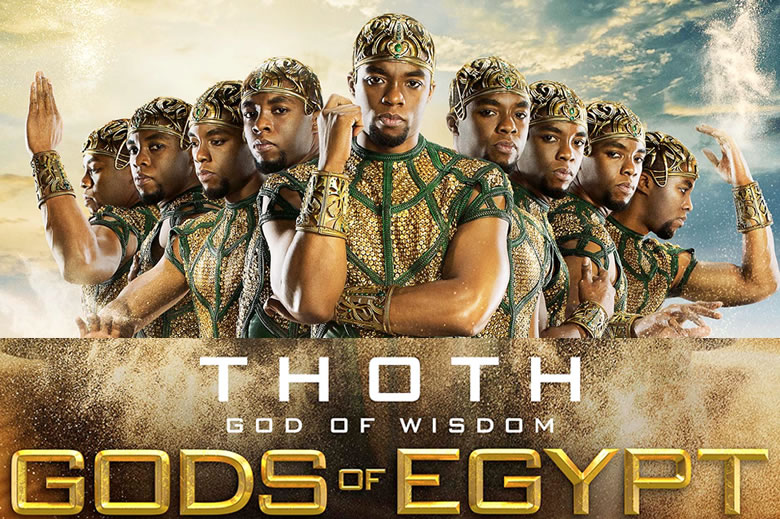
Other Egyptian mythological figures who appear in the film include Ra, the sun god; Osiris, the god of resurrection and the afterlife; Thoth, the father of science, religion, magic, and the written word; Apophis, the enemy of Ra and lord of chaos; Hathor, the goddess of love and beauty; and Anubis, who was the lord of the underworld, and tasked with ushering souls into the afterlife.
Gods of Egypt was filmed in Australia to stand in for the Sahara desert. While this was partially because of safety concerns, Australia also offers significant tax incentives to bring in film productions. Between these incentives and pre-selling international distribution rights, Lionsgate and Summit had very little risk involved with the project (rumored to be only $10 million), and almost certainly made a solid profit.
The title of the movie was modified in a number of markets to be Kings of Egypt, in order to avoid potential religious controversy and censorship. Interestingly, one of these countries wound up being Egypt itself.
Controversially, Gods of Egypt features no Egyptian actors, and hardly players any of African descent. This caused a significant backlash from internet figures and film critics, prompting a wave of apologies from the director and the studio. Chadwick Boseman, who portrays Thoth in the film, had the following to say to GQ about the movie’s whitewashing of Egyptian mythology:
“When I originally was approached with the script, I thought this [critique] might come up, I really did. And I’m thankful that it did, because actually, I agree with it. That’s why I wanted to do it, so you would see someone of African descent playing Thoth, the father of mathematics, astronomy, the god of wisdom…people don’t make $140 million movies starring black and brown people.”
On the flip side, Nikolaj Coster-Waldau, who plays Horus in the movie, told The Red Bulletin his feelings on the controversy:
A lot of people are getting really worked up online about the fact that I’m a white actor. I’m not even playing an Egyptian; I’m an 8-foot-tall god who turns into a falcon. A part of me just wants to freak out, but then I think, “There’s nothing you can do about it.” You can’t win in that sort of discussion.
Following the near-universal negative reception to the movie, director Alex Proyas did what most directors of prominent flops seem to do: he lashed out at film critics.
They can rip into my movie while trying to make their mainly pale asses look so politically correct by screaming “white-wash!!!” like the deranged idiots they all are….we have a pack of diseased vultures pecking at the bones of a dying carcass. Trying to peck to the rhythm of the consensus. I applaud any film-goer who values their own opinion enough to not base it on what the pack-mentality say is good or bad.
Gods of Egypt was made on a production budget of $140 million, on which it took in a lifetime theatrical gross of just over $150 million dollars. While this ultimately covered the production, the production budget number doesn’t take into account post-production and marketing costs. However, thanks to the pre-sales and tax incentives, the film was probably profitable when all was said and done, though not the blockbuster smash that was hoped for. It is interesting to note that Gods of Egypt only made $31 million of its total gross domestically: the movie had to rely heavily on foreign markets to even get to it’s ultimate lackluster take.
In keeping with the disappointing monetary take and pre-release controversy, critics and audiences had little positive to say about Gods of Egypt. Currently, it holds Rotten Tomatoes scores of 16% from critics and 38% from audiences, along with an IMDb user rating of 5.5/10. Peter Bradashaw, in his review of the movie for The Guardian, said:
It’s…fuelled with its own absurdity, like an ecologically unsafe type of diesel.
I don’t think I could have said it better, honestly. Gods of Egypt has an awful lot of problems that plague it from top to bottom. First off, it lacks a clear direction or mission, often shifting focus from one McGuffin to the next, such as one or the other of Horus’s eyes, or Ra’s staff. The writing also relies heavily on prior knowledge of Egyptian mythology, rarely introducing characters or elaborating on any objects, people, or beasts not at the very center of the primary plot. Ra’s solar barge is glossed over, as is his space worm opponent. Likewise, the rules of the afterlife seem rather convoluted and prone to change, and further, apparently the afterlife as whole is edible? Also, it is heavily implied that Horus’s powers were either magnified or manifested from his eyes, until it was revealed that they weren’t actually connected, and that his eyes are mostly irrelevant. However, his eyes are still magic and capable of blinding mortals.
While the design and appearance of the movie is impressive at first glance, the shiny veneer and immaculate production design are often ruined by shoddy CGI, even outside of the cringe-inducing action sequences (which I’ll get to shortly). One frequently used, yet inconsistently applied, digital element in the film is the size differential between mortals and humans. Sometimes, the gods appear only slightly taller than most humans, and in other scenes, they look like giants. I understand wanting to make the gods look superhuman, but unlike the impressive perspective work done in Lord of the Rings for the hobbits, Gods of Egypt never nails down the art of pulling this off effectively, and it mostly served to make my eyes confused for the first few minutes of the run time.
While watching the movie’s action sequences, I was reminded of the climactic fight between Superman and Zod in Man of Steel: in spite of all of the damage and punches being thrown, I was pretty bored after only a few seconds. The hits never look like they have weight, and the rapid movements and cutting distract from any kind of tension or compelling visuals. That said, there wasn’t much to see in the first place: the animal transformations of Set and Horus that appear in most of their fights just look goofy. They are a little too fluid and shiny to be tangible, and stand out like two big, cartoonish sore thumbs whenever they show up. This is really unfortunate, because they should be cool, and I’m willing to bet that their designs on paper were fantastic. Similarly, a 9-foot-tall Geoffrey Rush on fire fighting a space dragon should one of the coolest things you could ever see, but the result on screen just looks like a bad video game.
There are some good things to say about a few of the performances, however. Chadwick Boseman’s hammy portrayal of Thoth is refreshing, and adds some genuine humor to the movie. Gerard Butler also seems really comfortable in the role of a heel, and I hope he continues on his path of villainous portrayals. Nikolaj Coster-Waldau is the platonic ideal of a stone-faced, handsome protagonist, and his comedic banter with his co-stars is genuinely charming at points. However, there are also some less than stellar performances to be found, particularly among the cast of mortal characters. Brenton Thwaites, who plays the (I guess) protagonist Bek, is absolutely terrible, from his inconsistent accent to his awkward deliveries. His romantic interest, played by Courtney Eaton, is also far from stellar (again, a bad accent), but is relegated to basically being a McGuffin herself instead of an actual character with an arc or discernible traits. Speaking of which, the accents n this movie range all over the place: I kind of suspect that there wasn’t any kind of directorial edict as to what the Egyptians would sound like, so each actor did whatever they felt like.
I’ve said it before, but it is worth reiterating again: Gods of Egypt has a pretty damn cool idea on paper: the designs of the sets and costumes are ambitious, bold, and interesting, and the classic story makes for a solid base for a film. However, the execution here was way off the mark. Partially, I think this is because the necessary budget to pull off the number of creatures and sets required to meet the vision was beyond the production’s grasp, so the production team settled on a number of less-than-ideal versions that came slightly cheaper.
The insensitivity and lack of foresight in the casting, which has come to embody the impact and legacy of Gods of Egypt, is 100% the result of Hollywood thinking: they clearly didn’t anticipate the backlash, and just wanted faces they thought would be marketable with a relatively affordable price tag. Hollywood is still trying to catch up with the zeitgeist on whitewashing: Ghost in the Shell, Exodus: Gods and Kings, and Gods of Egypt are all indicative of that. Partially due to obliviousness, partially due to stubbornness, and partially due to a powerful, capitalistic drive, a whole lot of studios and producers have held on to the model of The Conqueror: “John Wayne can be Genghis Khan, because he’ll sell the tickets and that’s what people want!” The only way to change this is to keep chipping away at the profits of these movies: don’t buy a ticket, and complain on social media as loud as you can. Eventually, the financial losses and toxic word of mouth will lead to some changes. At least, we can hope so.
As far as a recommendation goes, there are some positives to the film, but they don’t come anywhere near outweighing the negatives. If you haven’t seen it yet, don’t. Or, if you are deathly curious, look up some clips. I just wouldn’t advise putting any money into seeing this.
Today’s feature is a cult favorite horror comedy from 1980: Motel Hell.
Motel Hell was directed by Kevin Connor, who spent most of his career directing television movies and television series. The screenplay for the movie was written by brothers Robert Jaffe (who penned screenplays for Nightflyers and Demon Seed) and Steven-Charles Jaffe (producer of Star Trek VI, Near Dark, Ghost, and Time After Time), who also served as producers for the film.
The plot of Motel Hell is summarized on IMDb as follows:
A seemingly friendly farmer and his sister kidnap unsuspecting travelers and bury them alive, using them to create the “special ingredient” of their famous roadside fritters.
The cinematographer for the film was Thomas Del Ruth, who went on to shoot Death Wish II, The Breakfast Club, Stand By Me, The Running Man, The Mighty Ducks, and numerous episodes of The West Wing.
The editor for Motel Hell was Bernard Gribble, who also cut Caddyshack II, Death Wish, Top Secret, White Dog, and Aces: Iron Eagle III.
The music for the film was composed by Lance Rubin, who also provided music for the film Happy Birthday To Me, as well as the television shows King of the Hill and Fantasy Island.
The primary cast of Motel Hell was made up of Rory Calhoun (Night of the Lepus, The Texan), Paul Linke (K-PAX, Parenthood, Chips), Nina Axelrod (Critters 3, Roller Boogie), Wolfman Jack (American Graffiti), and Nancy Parsons (Sudden Impact, Porky’s, Steel Magnolias).
The chainsaw duel that takes place during the climax of the film took multiple days of shooting to complete, and wasn’t even featured in the initial screenplay for the movie.
Speaking of, the screenplay of Motel Hell went through a number of rewrites and edits over the course of production. All in all, it took three years from the completion of the screenplay for the movie to hit the screen. The ultimate result was a far more comedic movie than what the original concept had been, which was at the behest of director Kevin Connor.
Motel Hell took more than a little influence from the hit 1974 horror film The Texas Chainsaw Massacre, including the prominent featuring of chainsaws and backwoods cannibalism in the plot. Tobe Hooper, who directed the original Texas Chainsaw Massacre, was even at one point interested in directing the movie. Interestingly, the 1986 sequel The Texas Chainsaw Massacre 2 bears some notable similarities to Motel Hell, and adopts its somewhat lighter tone.
Motel Hell currently has an IMDb user rating of 6.1/10, and Rotten Tomatoes scores of 68% from critics and 49% from audiences. It was made on an estimated production budget of $3 million, on which it grossed just over $6.3 million in its domestic theatrical release.
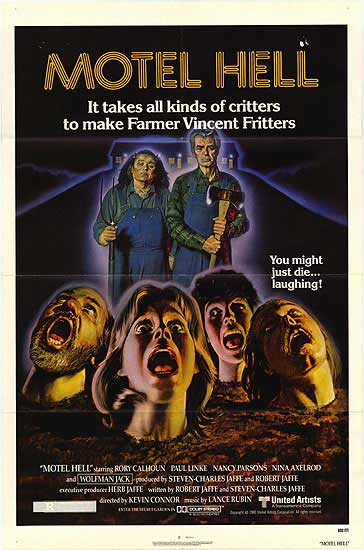
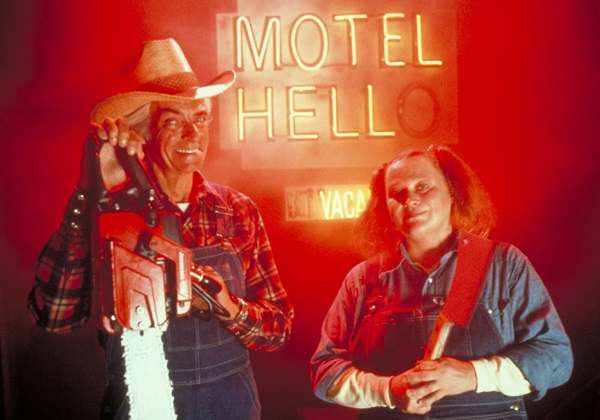
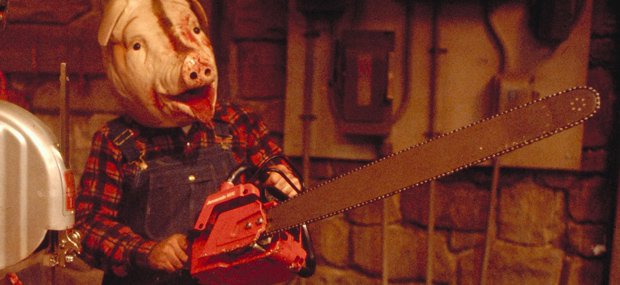
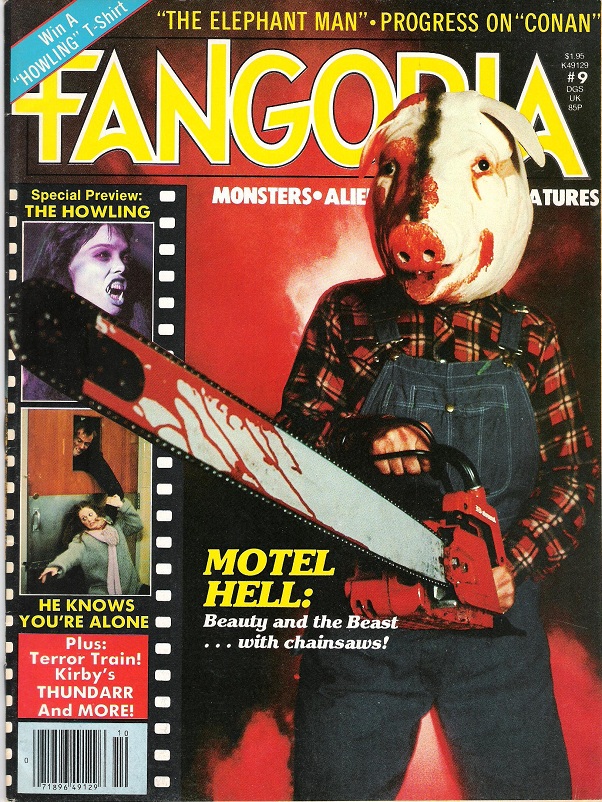
Personally, I think Motel Hell is a weird little movie with a strange sense of humor, but it does feature some undeniably creepy images. The “farm” is the best example of this: a plot of land where the lead characters bury living victims up to their heads, then remove their vocal cords. The result is a small field dotted with heads that flail, writhe, and gasp helplessly as the victims are force-fed over days, and eventually harvested. Likewise, the iconic chainsaw fight, in which Vincent dons a pig’s head as a mask, is probably the most lasting image from the film, and is genuinely upsetting (despite being a bit goofy).
The idea of a story built around a successful, cannibalistic food business isn’t new by any means: there’s Sweeney Todd, Soylent Green, and The Corpse Grinders, just to name a few. However, I think Motel Hell shows the most detail of the process, and the way it is depicted is a bit more creepy than other, similar stories.
That said, Motel Hell is far from flawless. It wasn’t written initially as a comedy, and it definitely shows. Humor is a hard thing to inject after the fact, and I can’t think of anything that was honestly funny about the movie, though it definitely tried to establish a humorous tone.
Overall, I think the movie was built on an interesting concept, but the writers struggled to create an actual story out of it. It bogs down a bit in the middle, and despite a handful of highlights, is kind of dull on the whole. I definitely like the design and concept of the movie far more than I liked actually watching it, as I could never really wrap my head around the characters. The cartoon reality and exaggerated characters presented were just a little too far removed from tangibility for my taste. That said, a lot of people seem to enjoy this one, so bad movie fans and people who like cult films should at least give it a chance.
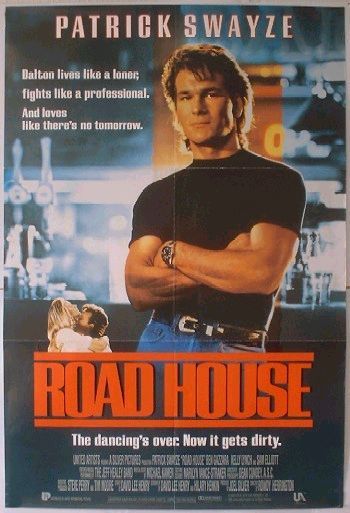
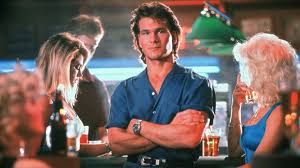
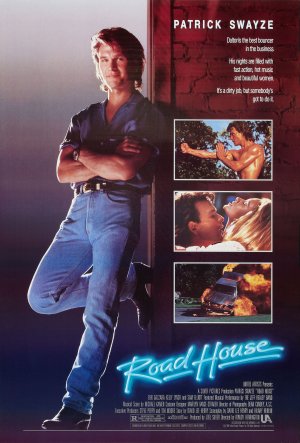
Today, I want to take a look at a beloved good-bad classic: 1989’s Road House.
The plot of Road House is summarized simply and eloquently on IMDb as follows:
A tough bouncer is hired to tame a dirty bar.
The screenplay for Road House had two credited writers: R. Lance Hill, who also wrote Out For Justice, and Hilary Henkin, who also penned Wag The Dog and Fatal Beauty.
Road House was directed by Rowdy Herrington, who also helmed the films Striking Distance, A Murder of Crows, and 1992’s Gladiator.
The primary cast of Road House is made up of Patrick Swayze (Dirty Dancing, Ghost, Point Break), Kelly Lynch (Virtuosity, Mr. Magoo), Sam Elliott (Hulk, The Big Lebowski, Fatal Beauty), and Ben Gazzara (Happiness, Anatomy of a Murder, The Big Lebowski).
The cinematographer for the film was none other than Dean Cundey, one of the most acclaimed modern directors of photography, who boasts countless well-known credits like Halloween and Jurassic Park. He is known by many as the Dean of Darkness, due to his uncanny proficiency in filming and utilizing low light and shadow.
Road House had two primary editors: John Link, who also cut Steel, Die Hard, The Mighty Ducks, and Predator, and Frank J. Urioste, who edited Deep Blue Sea, RoboCop, The Hitcher, and Total Recall.
The music for Road House was provided by Michael Kamen, whose also composed scores for movies like X-Men, Event Horizon, Frequency, The Iron Giant, Hudson Hawk, Die Hard, Last Action Hero, Action Jackson, Highlander, and Brazil, among many others.
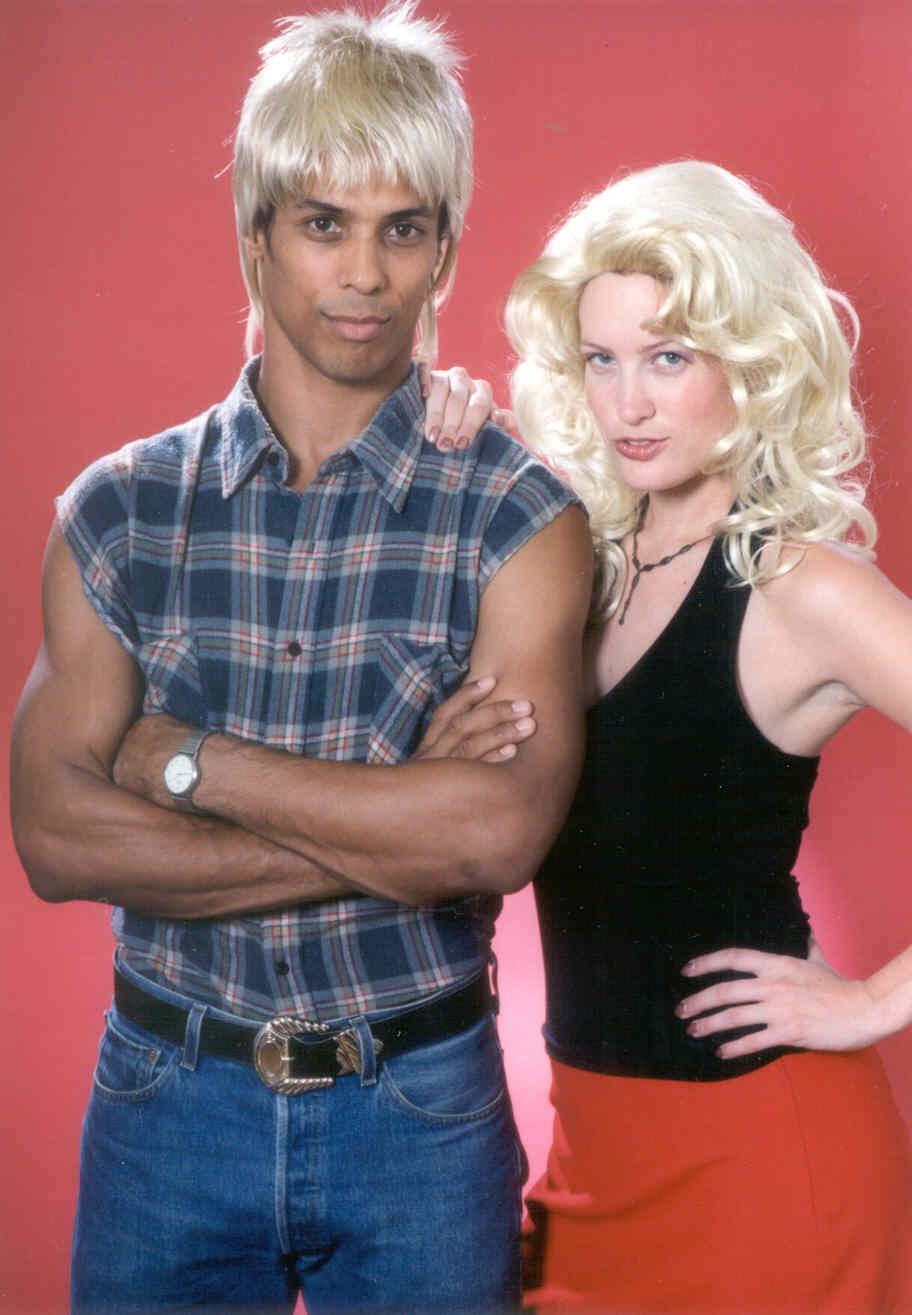
From December 2003 to February 2004, there was an off-Broadway musical titled “Road House: The Stage Version Of The Cinema Classic That Starred Patrick Swayze, Except This One Stars Taimak From The 80’s Cult Classic “The Last Dragon” Wearing A Blonde Mullet Wig” that is exactly what it sounds like. Here’s a promotional photo:
Road House received 5 Golden Raspberry nominations as one of the worst films of 1989, competing in the categories of Worst Picture, Worst Actor, Worst Supporting Actor, Worst Director, and Worst Screenplay. Ultimately, it didn’t wind up winning any of them. However, it was eventually listed as one of the “100 Most Enjoyably Bad Movies Ever Made” in Golden Raspberry Award founder John Wilson’s book The Official Razzie Movie Guide.
Patrick Swayze reportedly had to turn down lead roles in two other famously good-bad movies, Predator 2 and Tango & Cash, in order to do Road House.
The character of Dalton was reportedly named after Dalton, GA. R. Lance Hill, the movie’s writer, was particularly inspired after visiting a rowdy local bar in the town.
Interestingly, Annette Bening was originally cast opposite of Swayze in the role of Doc. She was ultimately replaced by Kelly Lynch, who claims that Bening was fired due to a lack of chemistry with Swayze.
Road House has the unique distinction of being the first movie to be subjected to “RiffTrax,” the Mike Nelson run follow-up to Mystery Science Theater 3000, which are distributed as scripted, comedic commentary tracks to be played simultaneously with films. Nelson previously labeled Road House as the cheesiest movie ever made in his book “Mike Nelson’s Movie Megacheese.”
According to Sam Elliott, all of the actors in Road House performed their own stunts. However, they were all done under the strict supervision of martial arts master Benny Urquidez, a noted kickboxing champion who worked on numerous theatrical productions as an advisor and coordinator.
Reportedly, there is a Road House remake coming up in the near future. Currently, it is set to star MMA icon Ronda Rousey, and has Nick Cassavetes attached to both write and direct.
Road House received a sequel many years after the fact in the form of Road House 2: Last Call, which was released straight to DVD in 2006.
In its lifetime domestic theatrical run, Road House grossed just a hair over $30 million, on an estimated production budget of $15 million. While this made the movie profitable, it didn’t resonate very well with critics. Over time, however, it has become a cult classic that has won over many.
Siskel and Ebert are both totally right about Road House: it is outrageous, it is completely divorced from reality, and it is funny as all hell because of it all.
I think that, at the very least, Swayze and Elliott deliver solid performances here, and are as believable as they could possibly be considering the outlandishness of the concept. That said, the villains are an entirely different case. I definitely appreciate over-the-top villainy in action movies, but the gang in Road House drift consistently too far into cartoonish territory, to the point that they stop feeling like much of a threat, in spite of their posturing.
I think the two things that most stuck with audiences about this movie were the fights and the one-liners, and they are unarguably the two strongest elements of the film. Depending on who you ask, these are two of the most important elements of any action movie. If that happens to be your rubric, then this is a hard movie to beat for entertainment value. However, if you go into it expecting anything beyond that, like character depth or a thought-provoking plot, you might just be disappointed.
Overall, I think that Road House is just about perfect for what it is: mindless, entertaining action. This isn’t deep, this isn’t social commentary, this isn’t character study: this is spectacle in a pure form. If that is what you want from a movie, Road House delivers.
For action movie fans, good-bad movie fans, Patrick Swayze fans, and arguably movie fans of any kind, Road House is worth seeing at least once. Despite its mixed reception and modest box office, the movie has managed to seep pretty deep into popular culture, making viewing a sort of educational event if you haven’t already. At least, you can tell yourself that.
In honor of the holiday season, and a true cult film classic, have yourselves a Patrick Swayze Christmas!
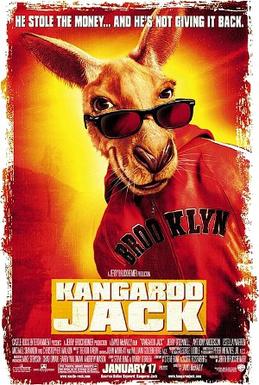
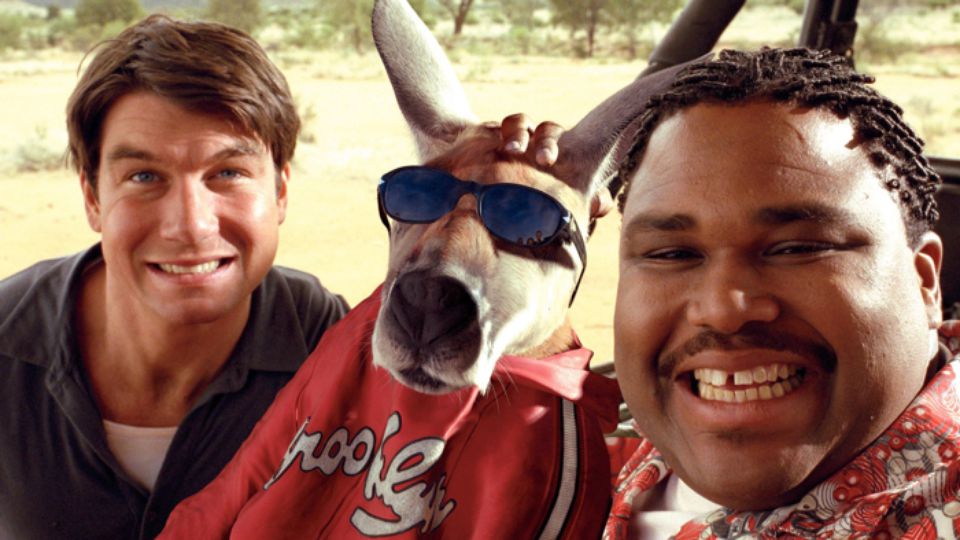
Today’s feature is a weird, mostly-forgotten movie that attempted to blend, mob comedy, a buddy road trip formula, and a talking marsupial: Kangaroo Jack.
The plot of Kangaroo Jack is summarized on IMDb as follows:
Two childhood friends, a New York hairstylist and a would-be musician, get caught up with the mob and are forced to deliver $50,000 to Australia, but things go haywire when the money is lost to a wild kangaroo.
Kangaroo Jack had three credited writers: Steve Bing (Missing In Action, Missing In Action 2), Scott Rosenberg (Con Air, High Fidelity), and Barry O’Brien (Hannah Montana, CSI: Miami).
The film was directed by David McNally, whose only other feature directorial credit to date is 2000’s Coyote Ugly.
The cast of Kangaroo Jack includes Michael Shannon (Man of Steel, Bug, Boardwalk Empire), Christopher Walken (King of New York, The Deer Hunter, The Dead Zone), Dyan Cannon (Caddyshack II), Estella Warren (Driven, The Cooler), Marton Csokas (Timeline, Aeon Flux), Anthony Anderson (Scream 4), and Jerry O’Connell (Jerry Maguire, Scream 2).
The cinematographer for the movie was Peter Menzies Jr., who also shot The 13th Warrior, Die Hard with a Vengeance, Four Brothers, and Gods of Egypt, among others.
Kangaroo Jack ultimately had three credited editors: John Murray (Drop Dead Diva, Entourage), Jim May (Goosebumps, Van Helsing, Cowboys & Aliens), and William Goldenberg (Heat, Gone Baby Gone, Argo, National Treasure).
Jerry Bruckheimer, best known for producing movies like Top Gun, Beverly Hills Cop, Thief, Bad Boys, Con Air, The Rock, and Armageddon, was a key producer for Kangaroo Jack. The movie was even made under the banner of his production company, Jerry Bruckheimer Films.
The music for Kangaroo Jack was provided by Trevor Rabin, whose other film credits include Torque, Hot Rod, Deep Blue Sea, Con Air, and 12 Rounds.
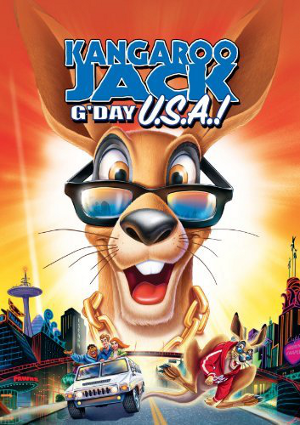
Kangaroo Jack received an animated sequel, Kangaroo Jack: G’Day USA!, which went direct to DVD in 2004. This sequel was more in line with the film’s advertising campaign: it was focused on the kangaroo’s shenanigans, and lost all of the adult humor and themes of its predecessor.
Australian character actor Adam Garcia has an uncredited role in the movie as the voice of Kangaroo Jack. Garcia was previously in director David McNally’s feature Coyote Ugly, three years prior.
Kangaroo Jack astoundingly only received one Golden Raspberry nomination, which was for Christopher Walken’s supporting performance. Interestingly, even that was only co-nominated with Walken’s role in Gigli, which was likely the true reason for the recognition.
Kangaroo Jack wasn’t without its victories, however, At the annual MTV movie awards, Kangaroo Jack won the prestigious Blimp Award for “Favorite Fart In A Movie.”
Inspired by the marketing campaign of Snow Dogs, the producers of Kangaroo Jack decided to focus their marketing efforts for the film around a brief hallucination sequence involving a talking kangaroo, despite the fact that the movie’s plot had nothing to do with talking animals. Initially, the movie’s title was Down and Under, and it was intended to be a hybrid of a mob comedy and a road trip movie. Once the movie was edited together, however, the producers realized that it was an absolute mess, and panicked over what looked to be a bomb. Ultimately, the studio put up the cash to shoot additional footage and create CGI kangaroo sequences, so that the film could be recut and marketed effectively as an animal feature.
Somewhat surprisingly, this deceptive advertising tactic worked, at least to a point. On a production budget that ultimately reached $60 million, the film managed to take in $88.9 million over its lifetime theatrical run. However, outside of incredibly young children, nearly everyone hated the movie. Currently, it holds a 4.4/10 IMDb user rating, along with Rotten Tomatoes scores of 8% from critics and 28% from audiences.
Kangaroo Jack is by no means a good movie. In fact, it is an unequivocally terrible movie. The CGI that was intended to salvage it at the time now looks incredibly dated. The humor ranges from dully crass to gay-panic offensive. The chemistry between the players, particularly the leads, is utterly nonexistent.
However, there are two good things about this movie: Christopher Walken and Michael Shannon. For reasons I will never fully understand, both of these men decided to put themselves into the zone for this movie.
Shannon, doing what he does best, is goddamn bone-chilling, even despite being given the role of a mustache-twirling cartoon. At this point, I’m convinced that Shannon could elevate even Snidely Whiplash into a icy-veined cinematic terror.
Walken, on the other hand, manages to turn what could have been hack-y comedic dialogue into something that is actually worth a laugh. His character, a mob boss, is basically a cardboard cutout, except for the fact that he is trying to expand his vocabulary, and is prone to malapropisms as a result. In the hands of just about anyone else, there is no way that ritualistically reciting the definition of “amorphous” into a recorder, or misusing the term “plethora” in place of “anathema,” could be funny. Walken, however, finds a way to make that shit work, at least in some small way.
There are a couple of ephemeral moments in Kangaroo Jack where only Walken and Shannon are on screen. If I were to come across a genie’s bottle right now, I might just waste that precious first wish on making this movie about them, and thus extending these precious moments of respite from the unrelenting parade of farts that is the rest of this movie.
Kangaroo Jack is a mess, and I can’t recommend that anyone go back to give it a second glance. It has been forgotten for a reason. If you happen to be one of the people who has fond memories of this from your childhood, I first highly recommend that you apologize to your parents and/or guardians, and then advise locking this movie up in a dusty guest room closet of your memory palace.
Reviews/Trivia of B-Movies, Bad Movies, and Cult Movies.
![Misan[trope]y](https://misantropey.com/wp-content/uploads/2014/10/misantropeyhead1.png)





 Misan[trope]y