Today I am going to take a look at a truly bizarre low budget film about a killer cat: 1988’s Uninvited.
The plot of Uninvited is succinctly summarized on IMDb as follows:
A mutated killer cat finds its way on-board a yacht.
Uninvited was produced, written, and directed by Greydon Clark, who is probably best known for his work on the Joe Don Baker movies Final Justice and Joysticks.
The music for the film was provided by Dan Slider, who most notably composes and orchestrates the music for the long-running television series America’s Funniest Home Videos.
The cinematographer for Uninvited was Nicholas von Sternberg, who shot the blaxsploitation classic Dolemite, Greydon Clark’s films Final Justice and Joysticks, and David DeCoteau’s infamous Dr. Alien.
The cast of the film is headlined by George Kennedy, who is best known for more acclaimed movies like Cool Hand Luke and The Dirty Dozen, and is by far the most recognizable face in the lot. Other cast members include Alex Cord (Airwolf), Clu Galuger (Return of the Living Dead), Clare Carey (Coach), and Toni Hudson (Leatherface: Texas Chainsaw Massacre III).
The year prior to Uninvited, a similar movie was released in China called Evil Cat, which also follows the sinister exploits of a blood-thirsty feline.
Currently, Uninvited holds an impressively low 4.0/10 IMDb user rating, along with a 50% audience score on Rotten Tomatoes.
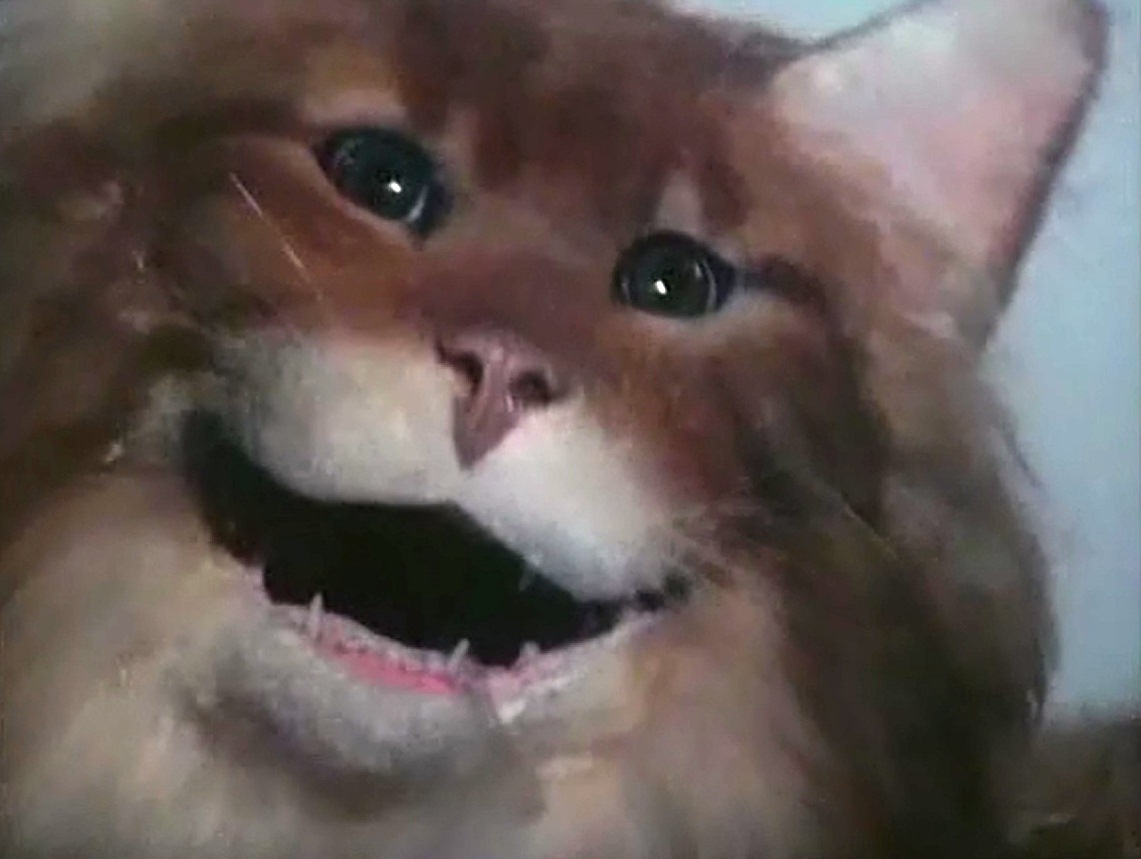
I sincerely believe that there is only reason that this movie is at all remembered: the cat monster puppet. Holy crap, this cat puppet is honestly one of the worst movie effects I have ever seen. With that said, this movie is simultaneously made and broken by that ridiculous cat puppet. Without it, the movie would have been completely forgettable, and totally lost to the ages. With it, the movie is exponentially more atrocious, but enough so that it has stuck with people through the years.
Beyond the puppet, there isn’t much to say about the movie. As you might expect, it has a really slow story, which is fairly typical of this sort of b-movie. If the story had stayed targeted on the cat, there might have been some potential, but the focus regularly drifts to a group of teenagers and a couple of criminals, who are all pretty dull.
Outside of a couple of interesting bulging vein effects, the technical aspects of the movie are pretty much what you would expect from this sort of flick: there are a lot of sound issues, the music is hilariously awful, and the visuals certainly aren’t anything to write home about.
While Uninvited showcases an interesting idea and original concept, I think this was a case of the filmmakers vision exceeding his grasp. With such a low budget, there is just no way that an elaborate cat-demon could have been pulled off adequately. While that may mean that this movie was doomed from the start, I can certainly say that I am glad it exists, because it is so unique. I highly recommend looking up some clips and stills from the movie, but I certainly don’t endorse sitting through it. The pacing issues make sitting through the whole run time a little too much of a slog, but the cat puppet action simply can’t be missed.
Today, I’ll be taking a look at what is arguably the low point of M. Night Shyamalan’s film career to date: 2008’s The Happening.
The plot of The Happening is summarized on IMDb as follows:
A science teacher, his wife, and a young girl struggle to survive a plague that causes those infected to commit suicide.
The Happening was written and directed by the one and only M. Night Shyamalan, whose whiplash-inducing up and down career has included films like The Sixth Sense, The Village, Unbreakable, After Earth, Signs, and Split.
The cast of the movie includes the likes of Mark Wahlberg (The Departed, Boogie Nights, The Fighter, The Other Guys), Zooey Deschanel (500 Days of Summer, Elf, The Hitchhiker’s Guide To The Galaxy), Betty Buckley (Carrie, Wyatt Earp), John Leguizamo (John Wick, Bloodline, Super Mario Brothers, Spawn), and Alan Ruck (Twister, Speed, Ferris Bueller’s Day Off).
The cinematographer for The Happening was Tak Fujimoto, who also shot Devil, The Sixth Sense, Philadelphia, The Silence of the Lambs, Pretty In Pink, and Where the Buffalo Roam, among others. The film’s editor was Conrad Buff IV, who has had credits that range from comedies like Monster Trucks, True Lies, and Space Balls to science fiction like The Abyss, Species, and Terminator 2.
The musical score for the film was composed by James Newton Howard, one of M. Night Shyamalan’s most frequent collaborators. On top of The Happening, he also did the music for the films Michael Clayton, Nightcrawler, Green Lantern, The Dark Knight, The Last Airbender, Lady In The Water, Dreamcatcher, Space Jam, and Waterworld.
Mark Wahllberg has since denounced The Happening, saying that he primarily took the job because of the opportunity to portray a science teacher, rather than a cop or a crook.
Amy Adams, who has since become one of the most acclaimed actresses in Hollywood, turned down the lead role in The Happening that eventually went to Zooey Deschanel.
The Happening was made on a production budget of $48 million, on which it took in a worldwide, lifetime gross of $163.5 million. While this was almost certainly profitable, the film was absolutely brutalized by critics and audiences alike: it currently holds an IMDb user rating of 5.0/10, along with Rotten Tomatoes scores of 18% from critics and 24% from audiences.
One of the few positive reviews for The Happening interestingly came from one of the most well-regarded film critics of the time: Roger Ebert. In his review, he referred to the film as, among other things, “too thoughtful for the summer action season.” At the same time, he was prescient in predicting the film’s critical failure, writing:
I suspect I’ll be in the minority in praising this film. It will be described as empty, uneventful, meandering. But for some, it will weave a spell.
Watching the performances and deliveries in The Happening, it is hard to believe that the actors weren’t intentionally playing for comedy. In particular, Wahlberg’s performance is surreal in its hilarity: despite the tone around him, he managed to get a number of laughs out of me, despite the fact that there is no overt humor in the screenplay. His conversation with a plastic plant is honestly funnier than most actual comedy routines these days if you ask me.
One of the most obvious issues with The Happening is its underlying message. More specifically, the message is far too heavy-handed, and lacks the subtlety to make it truly powerful. That said, there is a kernel of an interesting idea within The Happening: plants fighting back against humans as an evolutionary defense sounds like the early makings for a pretty nifty creature feature, but it would have to be at least a little tongue-in-cheek to be effective.
One of the few positive things that can be said about The Happening is that it had an R-rating, and managed to use it to a decent effect. A number of the suicide scenes are impressively gory, and provide brief moments of loose entertainment in a generally very slow, plodding film.
Overall, The Happening had an interesting foundation in its idea, but a bunch of things clearly went wrong over the course of seeing that vision to the screen. While it is easy to place blame on the cast for their performances, I think that the writing is far more responsible for the film’s larger issues: Shyamalan might have considered having someone co-write, re-write, or at least punch up the script before handing it wholesale to his actors. However, I suspect Shyamalan was a bit overprotective of the screenplay, given he was also the film’s director. Generally, screenwriters are out the door early in production, and the director is free to alter the work to fit their vision after that. However, when the director and the writer are the same person, necessary screenplay cuts and changes may not happen out of a sense of pride and defensiveness. If there is anything that is known about M. Night Shyamalan at this point, it is that he is a man prone to pride and defensiveness, so the shoe does seem to fit.
As far as a recommendation goes, I think The Happening is a pretty fun ride, even though it is a bit slow in the pacing department. In particular, Wahlberg’s flailing in his role is captivating, like watching a cat try to get sticky tape off of its paw: the motions and expressions are excessive, while always being just a little too unnatural to be believed as earnest. The absolutely brutal death sequences in the movie add a little more entertainment as well, primarily due to their bizarre natures. That said, I think this is a movie best suited for bad movie fans: I’m not sure if there would be as much fun to sap out of the film for your typical, casual moviegoer.
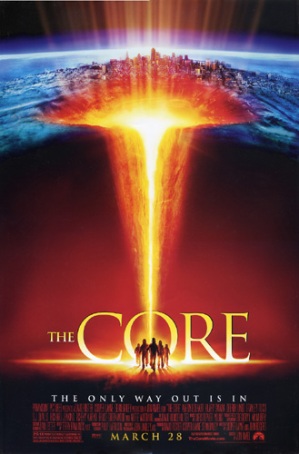
Today, I am going to take a look at one of the most infamously terrible natural disaster movies: 2003’s The Core.
The plot of The Core is summarized on IMDb as follows:
The only way to save Earth from catastrophe is to drill down to the core and set it spinning again.
The screenplay for The Core had two credited writers: Cooper Layne, who also penned the remake of The Fog, and John Rogers, who wrote Catwoman and worked extensively on Cosby and Leverage.
The Core was directed by Jon Amiel, whose other film works include Copycat, Creation, Entrapment, and The Man Who Knew Too Little. On top of that, his television credits include work on shows like The Tudors, The Borgias, Marco Polo, The Singing Detective, and Hemlock Grove.
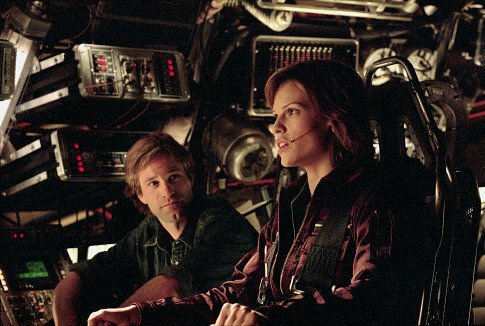
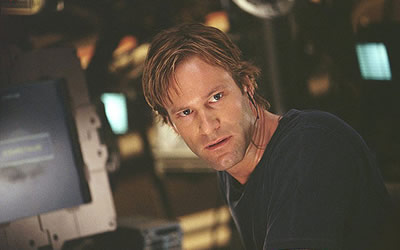
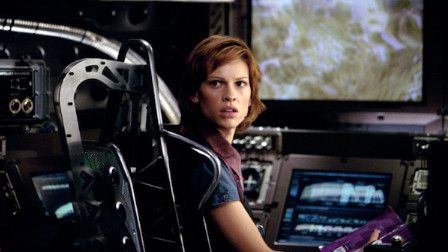
The substantial cast for the movie includes Aaron Eckhart (The Dark Knight, Thank You For Smoking, Suspect Zero), Stanley Tucci (Road To Perdition, Lucky Number Slevin, Spotlight, The Lovely Bones), Hilary Swank (Million Dollar Baby, Insomnia, Boys Don’t Cry, The Next Karate Kid), Bruce Greenwood (Star Trek, Flight), Delroy Lindo (Domino, Sahara, Gone In Sixty Seconds, Broken Arrow, Get Shorty), Tcheky Karyo (Bad Boys, The Patriot, GoldenEye), and Richard Jenkins (Bone Tomahawk, White House Down, The Cabin In The Woods, Six Feet Under).
The cinematographer for The Core was John Lindley, who also shot St Vincent, Legion, The Good Son, The Sum Of All Fears, True Believer, Field of Dreams, The Serpent and The Rainbow, Pleasantville, and Money Train. Terry Rawlings, who has cut films like GoldenEye, Entrapment, Alien, Alien 3, and Legend over his career, provided the primary editing.
The musical score for the movie was provided by Christopher Young, whose other music credits include movies like Sinister, The Rum Diary, Drag Me To Hell, Spider-Man 3, Swordfish, Rounders, Trick or Treat, and Hider In The House, among many others.
A fictitious material known as “Unobtanium” is referred to a handful of times in the movie. “Unobtanium” is essentially a short-hand code word in science-fiction to refer to a non-existent material with inexplicable powers or properties. The term will occasionally make its way into film scripts: most prominently in James Cameron’s Avatar. However, it is widely viewed as a lazy move.
At the University of British Columbia, The Core is routinely shown in a course on “Earth and Ocean Science” as a demonstration of bad science in movies. However, Bad Astronomy’s Phil Plait, who specializes in criticizing bad movie science, didn’t take as much of an issue with the movie as you might think.
The Core is essentially a high-budget remake of Deep Core, a low-budget science fiction movie from 2000 that starred Wil Wheaton, Bruce McGill, and Terry Farrell.
Made on a $60 million budget, The Core wound up with a lifetime theatrical gross of $73.5 million. While this was able to cover the costs of production on paper, it likely didn’t make much in the way of profit once advertising and post-production costs were taken into account.
Critically, The Core was instantly the victim of mockery for its outlandish concept. It currently holds an IMDb user score of 5.4/10, along with Rotten Tomatoes ratings of 41% from critics 33% from audiences, and is widely remembered as one of the goofier disaster movies of the era.
Upon a re-watch, the first thing that stood out to me about The Core is that the effects haven’t aged well: a lot of the CGI that probably looked good in the early 2000s looks like it belongs in a SyFy original movie today. While this is a testament to the speed of technological innovation, it doesn’t do the film any favors.
One of the reasons that The Core is still remembered today is because of the huge liberties it took with movie magic science. While the premise is certainly goofy, I didn’t find the bogus science nearly as distracting as I expected: the film actually does a pretty good job of immersing the audience in its exaggerated reality, and somehow it holds up the suspension of disbelief.
Aaron Eckhart, as always, is a charming lead. However, I feel like he was a bit miscast: the character was clearly written to be a bit of a helpless nerd who lacks assertiveness and confidence, and who grows from the experiences of the story. Eckhart, however, just looks too much like a movie star. Outside of his pretty awful hair cut, I didn’t find him a good fit for his character’s needs. Stanley Tucci, on the other hand, is fantastically hammy in his semi-villainous role, and was perfectly cast. Outside of those two, there are so many character actors in this movie that I couldn’t possibly list them all. What is important, however, is that they all put in decent performances, from the top to the bottom of the cast.
Rewatching it now, one of the biggest issues I have with The Core are the excessively agonizing character deaths for generally likable characters. Typically, the more painful deaths are saved for characters with vices, or ones who have in some way earned their demise, based on their decisions or behavior. Think about how often the unlikable jocks are killed off in horror movies, for instance. In The Core, however, the two most brutal deaths are experienced by supporting characters who are, more or less, flawless. Why do these characters suffer such terrible deaths, like being slowly crushed or boiled alive? My best guess is that this was a simple way to raise the stakes of the plot, and reinforce the inherent danger of their mission. However, it definitely left me with a weird taste in my mouth. The traditional karmic wheel that mandates character deaths just doesn’t seem to be in motion.
Overall, The Core is a very shallow movie when it comes to plot and character. However, it almost makes up for it with the performances from the cast, and the sheer silliness and popcorn-friendliness of the flick. The biggest issue with the movie in retrospect are the overabundance of CGI effects, which certainly haven’t aged well. That said, I think this is a b-level blockbuster worth digging back up for a fun watch: just don’t expect much substance underneath the surface.
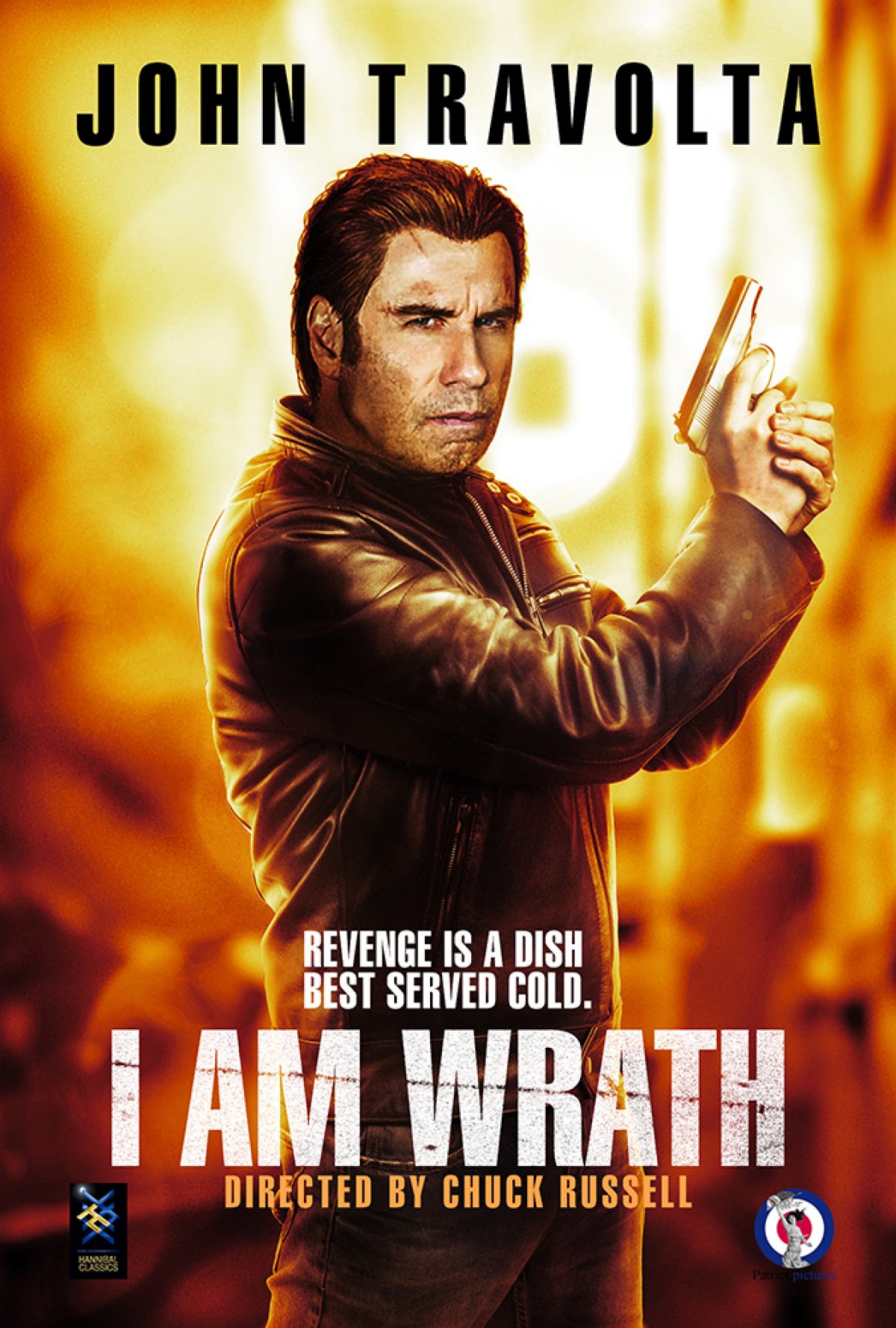
Today, I’m going to take a look at a 2016 direct-to-video action flick starring John Travolta: I Am Wrath.
The plot of I Am Wrath is summarized on IMDb as follows:
A man is out for justice after a group of corrupt police officers are unable to catch his wife’s killer.
I Am Wrath was directed by Chuck Russell, who is best known for movies like the 1988 remake of The Blob, The Mask, The Scorpion King, and A Nightmare On Elm Street 3: The Dream Warriors.
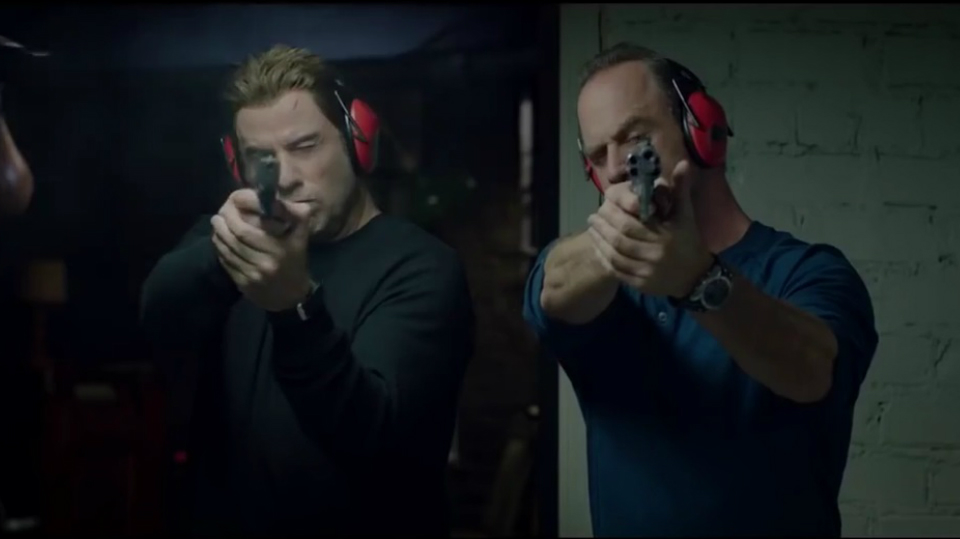
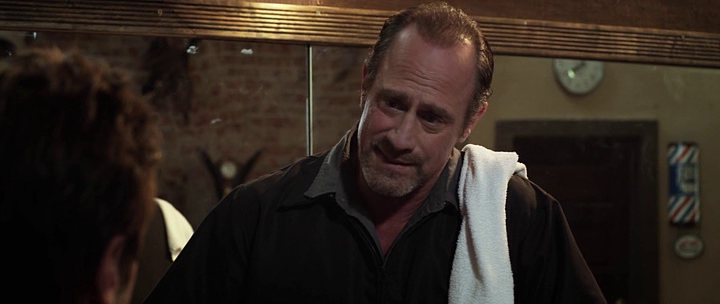
The cast for the movie is headlined by John Travolta (Pulp Fiction, Face/Off. Grease) and Christopher Meloni (Law & Order: Special Victims Unit, Man of Steel), with additional performances by Amanda Schull (Suits, Twelve Monkeys), Sam Trammell (True Blood), Patrick St. Esprit (Narcos, Sons of Anarchy), and Rebecca De Mornay (Risky Business, Wedding Crashers).
The music for I Am Wrath was composed by Haim Mazar, whose other credits include The Iceman, The Taking of Deborah Logan, and the television show Teen Mom.
The cinematographer for the film was Andrzej Sekula, who shot the cult favorite movies American Psycho, Hackers, Four Rooms, Pulp Fiction, and Reservoir Dogs, and also directed the horror sequel Cube 2: Hypercube.
I Am Wrath was filmed primarily in the city of Columbus, OH, a non-typical location for a film production. A number of local landmarks show up in the movie, including the Ohio Statehouse, the illuminated arches of High Street, and the local diner chain Buckeye Donuts.
Rumor has it that the initial plan for the film was for William Friedkin, of The Exorcist and The French Connection, to direct, with Nicolas Cage in the starring role. However, numerous delays led to the eventual combination of Russell and Travolta.
The title of the film, I Am Wrath, is a reference to the Bible passage Jeremiah 6:11, which reads as follows in the New International Version of the text:
But I am full of the wrath of the Lord, and I cannot hold it in.
“Pour it out on the children in the street and on the young men gathered together; both husband and wife will be caught in it, and the old, those weighed down with years.
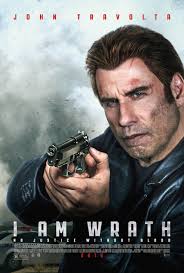
Upon their release, the promotional images and posters for I Am Wrath were the subject of widespread online mockery for their incompetent and awkward construction.
“this…has left me at a complete loss for words. All I can do is implore you to share this post with as many people as possible. The world needs to know.” – Scott Wampler, Birth.Movies.Death.
I Am Wrath ultimately released straight to video, and was not received warmly. It currently holds Rotten Tomatoes scores of 11% from critics and 34% from audiences, along with an IMDb user rating of 5.3/10.
For the past few years, I have been living and working in Columbus, OH, so I happened to be around while I Am Wrath was filming locally. Outside of a few blips in the news about John Travolta being in town for a role, I didn’t hear a whole lot about it. However, it was interesting to see familiar locations on screen while watching the movie: for folks in New York or Los Angeles, that is probably no big deal, but seeing Columbus on screen was kind of bizarre.
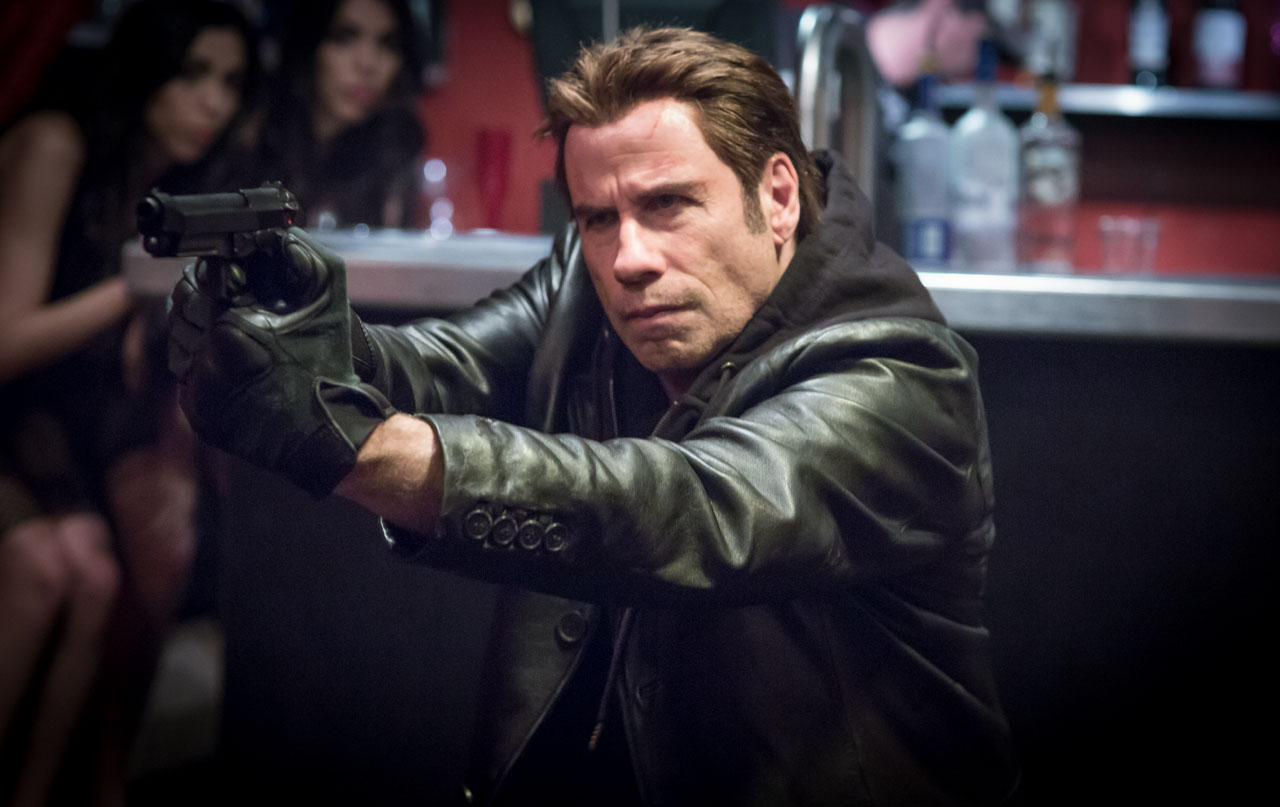
Despite a handful of interesting visuals peppered throughout the movie, I Am Wrath is far and away dominated and defined by its central performances. Unfortunately, thanks to John Travolta’s half-sleepwalking rendition of a mercenary / car factory administrator, the movie is all the weaker because of it. That said, Christopher Meloni provides the film with an iota of charm and levity with his improvised wit, though he is woefully missed when not on screen (which is, unfortunately, often). Meloni, unlike Travolta, seems to understand the schlock that he is wrapped up in, and leans into the absurdity of the situation, and clearly enjoys his tough guy routine.
Travolta, by contrast, is a black hole: a human-shaped void that made me question if this was the same hammy scenery-chewer I remembered from Face/Off, Swordfish, and Battlefield Earth. Say what you will about any of those performances, but the guy was never lacking in passion or enthusiasm in those roles.
Beyond Travolta’s banal lead performance, the biggest issue with I Am Wrath is almost certainly the screenplay, which is basically a paint-by-numbers revenge plot. There are a few things I liked about it, though: for instance, there’s a RoboCop-like dynamic between some of the villains, which is always nice to see. However, there is also a lot of bad dialogue, and way too much information is revealed far too blatantly for the message to have much of a punch. Worst of all, I think the I Am Wrath screenplay has one of the most egregious and hilarious examples of a placeholder character name making it all the way to the final draft: Governor Merserve, the self-serving Governor. That’s just inexcusable.
Honestly, I wish there was something to recommend about I Am Wrath. Unless you are a big fan of Christopher Meloni, or a Columbus local interested in seeing the city on screen, there just isn’t anything compelling here. Even the action sequences aren’t terribly enthralling, and are by and large forgettable. If you want a cheesy action movie, look into whatever Nic Cage has out this week, and give this one a pass.
Today, I’m going to be taking a look at 2008’s super hero bomb, The Spirit.
The Spirit was directed and written by Frank Miller, who is primarily known for his comic book work on characters like Daredevil and Batman. His work in the movies, while less notable, is not insignificant: he penned the screenplays for RoboCop 2 and RoboCop 3, and co-directed both Sin City movies.
The source material for the film was a comic strip of the same name that was developed by Will Eisner, and ran primarily during the 1940s and 1950s.
The cast of The Spirit includes Samuel L. Jackson (Pulp Fiction, Jurassic Park, The Hateful Eight, Jackie Brown), Gabriel Macht (Suits), Eva Mendes (Ghost Rider, The Other Guys), Scarlett Johansson (Under the Skin, The Avengers, The Prestige, Lost In Translation), Sarah Paulson (Carol, American Horror Story), Dan Lauria (The Wonder Years), and Jaime King (Silent Night, Sin City, My Bloody Valentine).
The cinematographer for the film was Bill Pope, whose other credits include Spider-Man 3, Army of Darkness, Darkman, The Matrix, Scott Pilgrim vs. The World, The World’s End, and Spider-Man 2, as well as the television series Cosmos: A Spacetime Odyssey.
The musical score for The Spirit was provided by David Newman, who has also provided music for films like Serenity, Ice Age, Death To Smoochy, Galaxy Quest, The Phantom, The Mighty Ducks, Heathers, and Critters, among many others.
The Spirit was made on a production budget of $60 million, on which it grossed just over $39 million over its theatrical lifetime, making it a significant loss. Critically, it didn’t fare any better: it currently holds a 4.8/10 IMDb user score, along with abysmal Rotten Tomatoes ratings of 14% from critics and 25% from audiences.
One of the biggest issues with the movie is its wildly uneven tone. For the life of me, I can’t understand why there was so much slapstick written into the screenplay. The style of the movie is stylized to look deadpan and dark, which is appropriate for dark and gritty stories. However, there’s constantly shitty humor being thrown around in the dialogue, which causes a huge disconnect with all of the messaging around it. A movie that looks like this should just never include the line “toilets are always funny.”
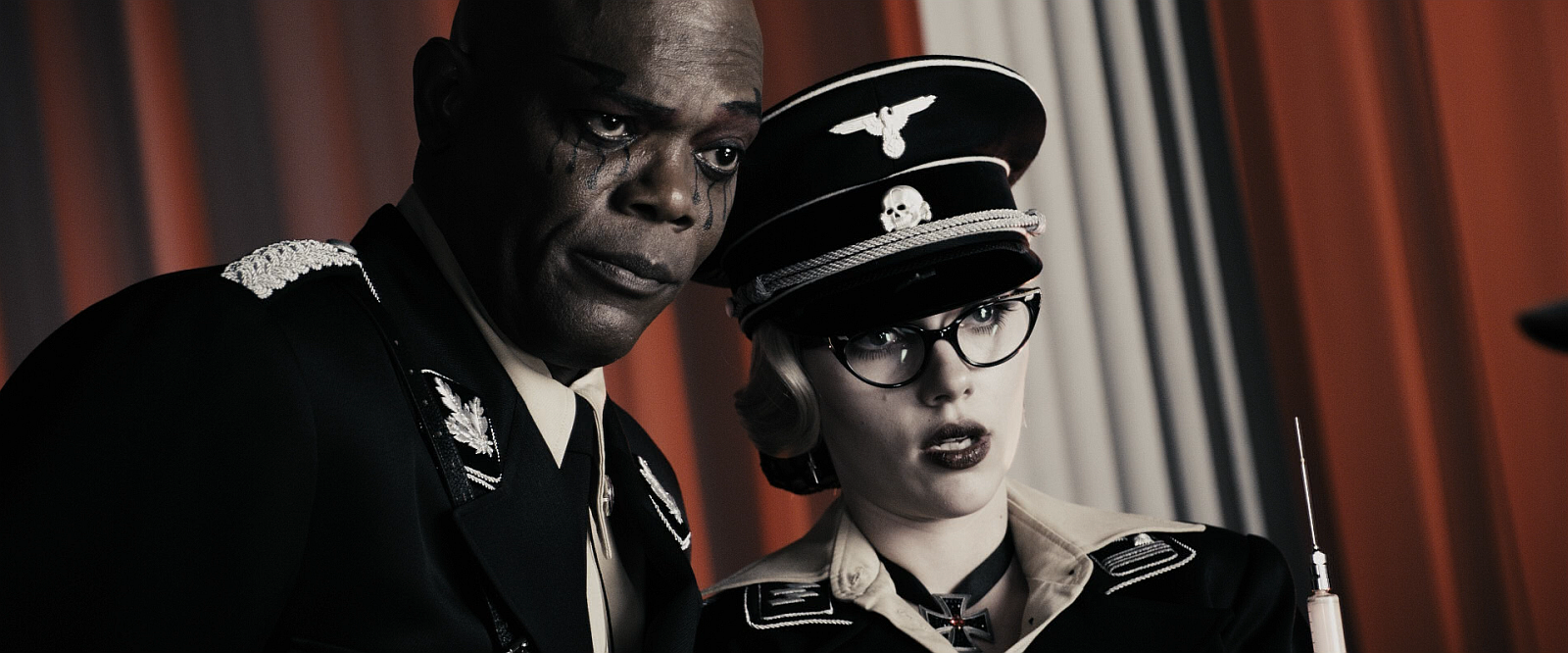
In another time, a movie with kind of odd sense of humor might have worked out. However, for contemporary audiences, I think it was just a bit too cartoon-y and out of touch. This wasn’t helped the sub-par comedic writing: maybe if the dialogue had actually been clever or funny, the movie would have resonated better with people, not unlike many of the Marvel movies have done. However, having Samuel L. Jackson parade around in racially and politically insensitive costumes isn’t exactly funny as much as it is uncomfortably weird and tone-deaf.
That being said, one of the few bearable things about The Spirit is the dastardly duo of Samuel L. Jackson and Scarlett Johansson, who are the only performers that seem to have a pulse in the movie. They are also the only ones who seem capable of delivering Miller’s god-awful dialogue, which seems to trip up everyone else. I do think that Dan Lauria was good casting for his small role, but he doesn’t have a whole lot to do in the movie apart from grumble.
When it comes down to it, The Spirit is an exercise in style over substance on every level. Miller clearly has an eye for individual images that work well in storyboarding and inside of comic frames, but the translation doesn’t always work on screen. The sort of comic stylizing used in the film can certainly work to solid effect, like in Sin City, but there is a delicate balance necessary for it to look just right. The Spirit just doesn’t find it, and I think that is specifically because Miller didn’t have a co-director to lean on, and offer a more cinematic eye to his work.
Overall, The Spirit is a painfully boring movie, despite having a pretty impressive design and look to it. Everything beneath that surface level, however, is at best sub-par. Re-watching the movie was even worse than I had remembered it: sequences drag on for far too long, and there are way too many tone-killing silly quips peppered in. On top of that, the stakes seem completely nonexistent: there’s never any believable challenge for the hero, as the villains are always too busy playing dress up to pose a real threat. I’d like to say that this is worth watching for some sort of unintentional entertainment value, but even Samuel L. Jackson at his peak hammy-ness isn’t enough to make this movie worth sitting through.
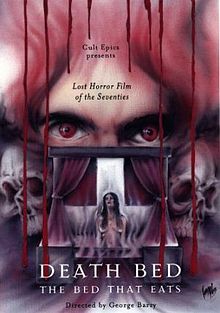
Today, I am going to take a look at a famously bad movie with a unique cult reputation: Death Bed: The Bed That Eats.
The simple plot of Death Bed: The Bed That Eats is summarized succinctly on IMDb as follows:
A bed possessed by a demon spirit consumes its users alive.
Death Bed: The Bed That Eats was directed and written by George Barry, and to this day has proven to be his sole film. However, a handful of the cast and crew went on to notable careers. William Russ, one of the actors, later appeared in Cruising, The Right Stuff, and wound up on the sitcom Boy Meets World. Editor Ron Medico went on to cut the cult creature feature Alligator, and had a significant career editing for documentaries and television after that. Cinematographer Robert Fresco wound up working on the 1980s revival of The Twilight Zone, and wound up working on a handful of documentaries as well. Last but not least, the special effects worker, Jock Brandis, went on to have a long career as a lighting technician and gaffer, working on movies like Videodrome, Scanners, The Brood, The Dead Zone, Maximum Overdrive, Blue Velvet, and Serial Mom, among others.
Famous comedian Patton Oswalt had a popular bit on his album Werewolves and Lollipops in which he obsesses over the inherent absurdity of the concept of Death Bed, and speculates what the inception process was like for the screenplay.
In 2002, Death Bed: The Bed That Eats received a remake in the form of Deathbed. The movie stars Joe Estevez (Soultaker) and was directed by Danny Draven, who has spent most of his career editing movies like A Talking Cat!?!, A Talking Pony!?!, Evil Bong, Ice Spiders, and The Gingerdead Man.
Death Bed: The Bed That Eats did not have an official release of any kind until 2004, over 25 years after its completion in 1977. Before that DVD release, Death Bed had been widely circulated online and via pirated VHS tapes, and developed its cult reputation. George Barry, the movie’s director and writer, allegedly forgot he had made it until he saw it online, and only decided to officially release it after seeing how much people enjoyed it.
Rumor has it that the lion’s share of the action in Death Bed was filmed on Keelson Island in Detroit, specifically in the infamous Gar Wood Mansion. The mansion was originally built by inventor Gar Wood in the 1920s, but sat empty for many years after his retirement. Starting in 1969, it became a renowned partying location, becoming a combination of a music venue and a counter-culture collective until it was shuttered in 1972. Only a handful of years later, the mansion suffered significant fire damage, and was eventually razed in the 1980s.
The company Cult Epics, which specializes in restoring and transferring cult movies to DVD and Blu-ray, released an updated Blu-ray version of Death Bed in 2014, which boasts a full commentary track with writer/director George Barry.
Recently, I had the rare experience of getting to see the officially restored Blu-ray version of Death Bed: The Bed That Eats in a theater, as part of a fundraiser for Cult Epics. Previously, I had only seen some rough clips of the movie online, and I was shocked at how clear the movie wound up looking on screen.
As you could probably gather at this point, Death Bed is pretty far from a cinematic masterpiece. That said, there are definitely some positive aspects to it: first and foremost, the effects. For each of the scenes where the bed consumes something/someone, there is a cut away to an amber-colored tank, which stands in for the bed’s interior digestive system. I’m not sure exactly how they did this, but I suspect they filled this tank with some sort of highly corrosive fluid, and dipped in objects on fishing line to show them digesting inside of the bed. At first, these shots are of things like an apple and a bucket of chicken, but the movie’s climax features a character’s hands disintegrated in the fluid, which actually looks pretty cool.
Outside of those effects shots, however, there isn’t much positive to say about Death Bed. Almost all of the dialogue in the movie is done in voice over, and is delivered in a sort of trance by a multitude of perspectives and narrators. The overarching plot doesn’t make a lot of sense, and is poorly conveyed to boot. The performances range from sleepwalking to possibly comatose, as most of the characters show no range of emotions or exhibit any kind of sensible reactions to the events around them. I’m pretty sure that fault doesn’t lie with the actors, though: the strange reactions and woozy behaviors were almost certainly part of the directorial intent, which was apparently to re-capture the surreal atmosphere of a dream. However, I don’t think it comes across quite as he wanted it to.
For me, this is the biggest question about Death Bed: how serious were they about this movie? While there are brief moments of knowing humor scattered throughout, including a sequence where the bed ingests a bottle of pepto-bismol, most of the movie plays as serious as a heart attack. It clearly isn’t as hammy as the name implies, and is a pretty far stretch from any kind of Troma or Full Moon b-movie. I usually describe this as one of the worst-executed art movies of all time: the atmosphere is way too self-important for it to fit in with the usual lot of b-movies and horror fare, and it certainly isn’t smartly profound or well-crafted enough to land in the Criterion collection. It is a unique little oddity that is unlike pretty much anything else out there, and worth giving a shot for that reason alone. While it can be a little dull at times, I think the ride as a whole is worth a ticket, particularly for b-movie and cult movie fans.
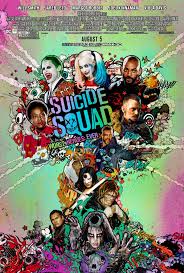
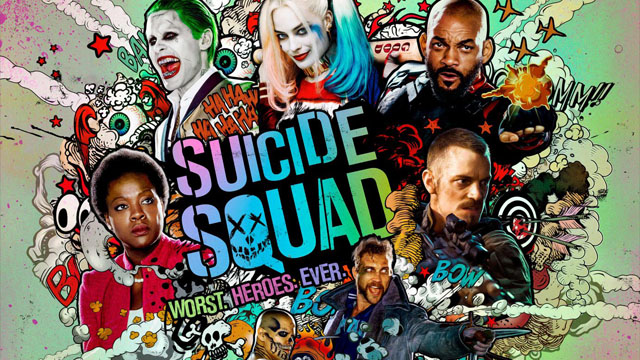
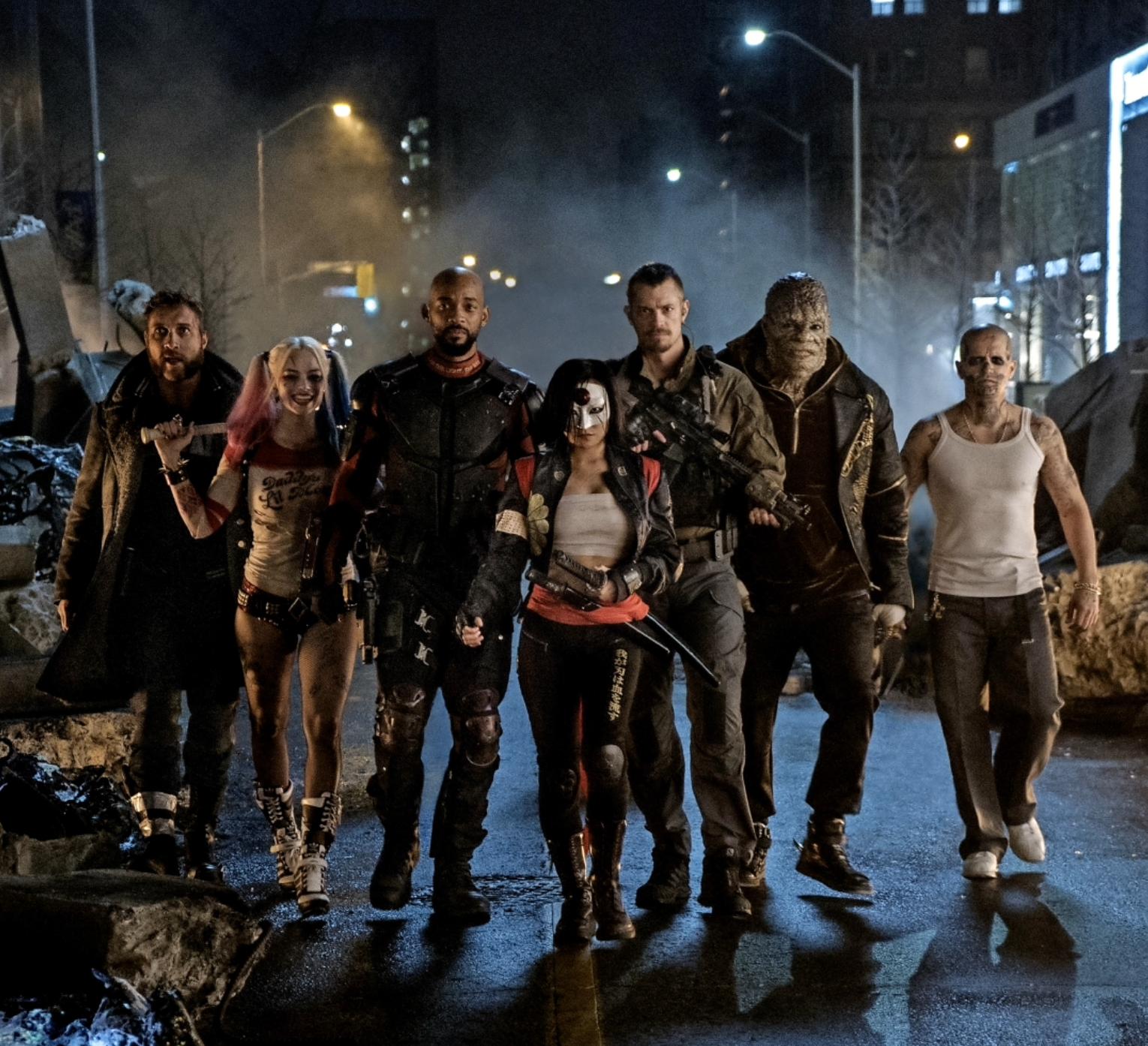
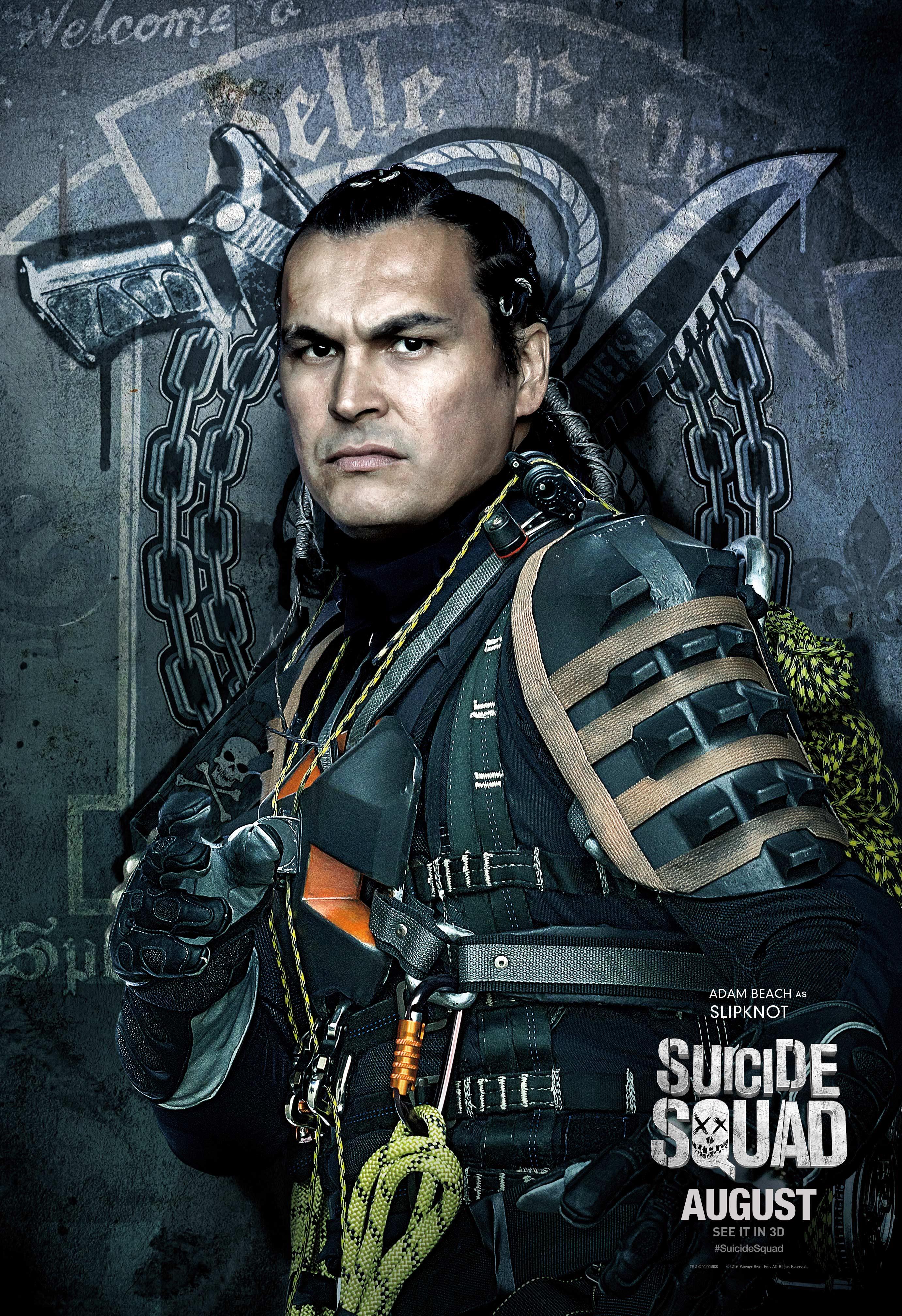
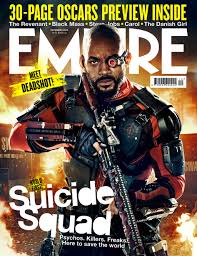
Today, as part of my series on the worst movies of 2016, I’m taking a look at one of the year’s most polarizing blockbusters: Suicide Squad.
The plot of Suicide Squad is summarized on IMDb as follows:
A secret government agency recruits some of the most dangerous incarcerated super-villains to form a defensive task force. Their first mission: save the world from the apocalypse.
Suicide Squad was written and directed by David Ayer, whose other credits include Fury, Sabotage, End of Watch, SWAT,Training Day, and The Fast and The Furious.
The Suicide Squad team debuted in DC comics in The Brave and The Bold #25 in 1959, though only the name truly remains of the initial incarnation now. Most of the elements now popularly recognized come from the modern version of the series that started with a revamp in the 1980s by John Ostrander, John Byrne, and Len Wein. The concept sees super-villains compiled together into a strike team to carry out tasks for the government, in exchange for their freedoms. The team has sporadically featured such notable DC villains as Poison Ivy, Captain Cold, The Penguin, and Black Adam, on top of more consistent core members like Deadshot, Captain Boomerang, and Harley Quinn, and has a regularly rotating cast of members.
The cast of Suicide Squad is made up of Margot Robbie (The Wolf of Wall Street, Whiskey Tango Foxtrot), Will Smith (Wild Wild West, Men In Black, I Am Legend, Independence Day, Winter’s Tale, After Earth), Viola Davis (Fences, State of Play), Jared Leto (Fight Club, Mr. Nobody, Requiem For A Dream, Alexander), and Jai Courtney (Jack Reacher, I, Frankenstein, Terminator Genisys).
The cinematographer for the film was Ramon Vasyenov, who shot the movies Fury, End of Watch, Charlie Countryman, and The East. The editor for Suicide Squad was John Gilroy, who has cut a handful of notable movies, including Nightcrawler, Pacific Rim, Warrior, Michael Clayton, Suspect Zero, and Billy Madison.
The musical score for the film was provided by Steven Price, who also worked on Fury, The World’s End, Gravity, and Attack the Block, among other projects.
A number of scenes of Killer Croc’s backstory were removed from the final theatrical cut, including depictions of his upbringing as a social outcast due to his physical appearance. Likewise, it was revealed that Croc crossed paths with Batman while working for numerous Gotham crime bosses. There were also scenes displaying his affinity for making sculptures out of discarded materials, and a sequence where he becomes sick at the helicopter escort to Midway City, prompting him to throw up half-digested pieces of goat.
Thanks to the financial success of Suicide Squad, there is a rumored follow-up in the pipeline to be called Gotham City Sirens, which is likely to focus on Harley Quinn, along with a handful of other Gotham City figures.
The initial trailer for Suicide Squad was set to the Queen song Bohemian Rhapsody, and wound up building a significant amount of positive buzz for the film. Thanks to it going viral, it has racked up over 78 million views on YouTube since its release.
It is popularly believed that the mixed-to-negative reactions to Batman v Superman: Dawn of Justice, combined with the overwhelmingly positive reception to Deadpool, led to a handful of re-shoots and re-cuts to Suicide Squad at the last minute in order to lighten its tone and inject humor.
A number of alternate casting rumors surrounded the development of Suicide Squad. Apparently, Tom Hardy dropped out of the role of Rick Flag in order to do The Revenant, and Ryan Gosling flat-out turned down the role of Joker due to the contract terms mandated by the studio.
Apparently, Jared Leto’s method acting for the role of Joker led to some less-than-savory antics on set. Reports indicated that he sent unwanted gifts to his fellow cast members, including packages containing used condoms, live rats, and bullets.
Financially, Suicide Squad was a significant hit: it grossed roughly $745 million worldwide on a production budget of $175 million. Critically, however, it proved to be one of the most polarizing films of the year. While it currently holds an IMDb user rating of 6.4/10, it also has a Rotten Tomatoes score of 26% from critics, and made many critics’ lists of the worst films of 2016.
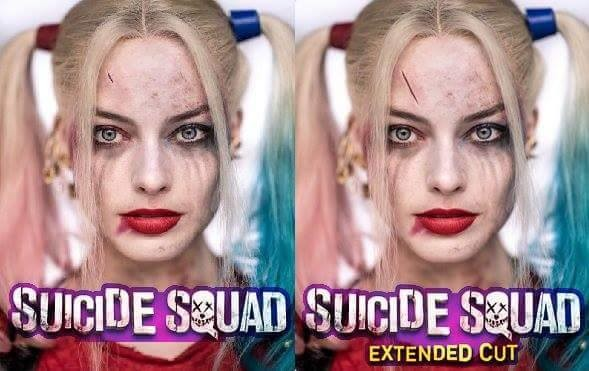
It is worth noting that the version of Suicide Squad that I watched was the theatrical cut. For home video release, the advertising touted an improved “extended cut”, but I wanted to see exactly what audiences saw in the theaters, and what the producers and the studio thought was fit for the widest release.
One of the most common complaints I have seen about Suicide Squad is that the first half plays more like an extended music video than a movie. When I first heard that criticism, I assumed that it was embellishment. I was genuinely surprised at how apt that observation is: the first half hour of the movie is a strung-together sequence of pop songs that gave me flash backs to Sucker Punch.
Once the story does start moving, it is plagued by pacing issues. Some characters get overly-detailed introductions that drag the progression to a halt, while others seem to appear out of nowhere. The relationships between characters are vague, and some have little-to-no dialogue to develop themselves. Most of the enemies the team fight are literally faceless and essentially powerless, removing any kinds of stakes or threats from the table. Worse yet, the central mission at the heart of the story isn’t adequately revealed to the audience, making it unclear what story progress would even look like if it happened. The combination of all of these elements is a poorly built story framework that relies on undeveloped characters to carry it along, with no intrigue or tension to be found.
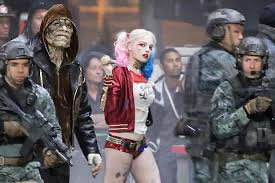
All of that said, there are some good things to say about Suicide Squad. While some of the CGI is definitely rough, there was clearly a lot of time and effort put into Killer Croc’s design and execution, and the result is arguably pretty cool. Unfortunately, he is also one of the characters with the least amount of screen time and development, which may have been due to the cost and labor involved with the makeup. Still, the character felt like a massive squandering of potential.
As far as other positives go, the Batman and Flash cameos were almost certainly the best parts of the film. I assume these were mostly included to make audiences excited for future interactions and films with these characters, and I have to say, I think the tactic worked. Even moreso than after Batman v Superman, I want to see Battfleck in his own feature, getting up to Batman shenanigans. Unfortunately, these cameo sequences are very brief, and front-loaded in the movie, so they don’t add much value to the film as a whole.
Overall, Suicide Squad is mostly a trainwreck. The writing, action, and editing all left a lot to be desired. The performances were hard to judge, because the cast clearly didn’t have anything here to work with. All of that said, from the perspective of pure spectacle, there is some value here. There is noise and color, and if that is what you want from a blockbuster, this is where you can find it. For anyone outside of that description who is not a die-hard DC fan, there is just no way I could recommend this film.
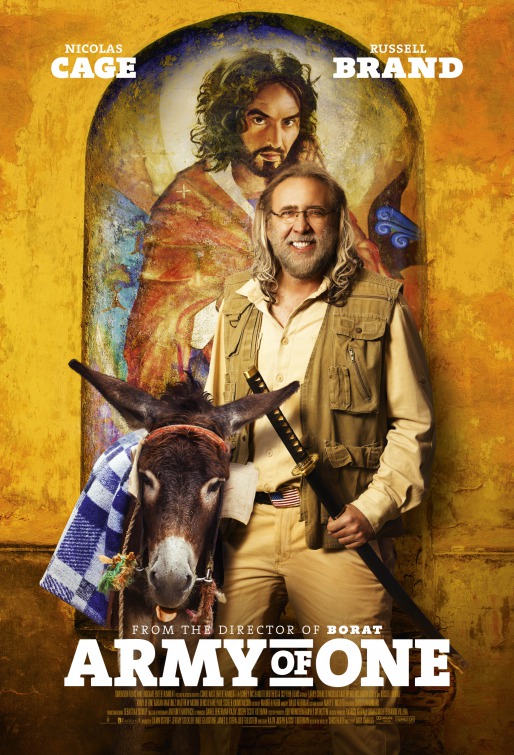
Next up in my “Worst of 2016” month is a strange, quasi-true story from director Larry Charles and acting demi-god Nicolas Cage: Army of One.
The plot of Army of One is succinctly summarized on IMDb as follows:
An American civilian sets out on his own to find Osama Bin Laden.
The screenplay for the movie was written by Rajiv Joseph and Scott Rothman, whose credits include Draft Day and a handful of episodes of Nurse Jackie. However, the story behind it is loosely based on the strange exploits of an eccentric and patriotic American named Gary Faulkner, who set upon a personal quest, supposedly ordered by God, to track down and capture Osama Bin Laden.
The director for the film was Larry Charles, who is possibly best known for his numerous collaborations with Sacha Baron Cohen (The Dictator, Borat, and Bruno), as well as for the documentary Religulous and the hit television show Curb Your Enthusiasm.
The cast of Army of One includes Nicolas Cage (Con Air, Face/Off, The Wicker Man, Vampire’s Kiss), Russell Brand (Get Him To The Greek, Forgetting Sarah Marshall), Paul Sheer (The League, Piranha 3D), Will Sasso (MADtv, The Three Stooges), Wendi McLendon-Covey (Reno 911), and Rainn Wilson (Super, The Office).
The cinematographer for the movie was Anthony Hardwick, who has worked extensively on television shows like Entourage, Important Things with Demitri Martin, and The Last Man On Earth, as well as on movies like Religulous and Bruno. Likewise, the film’s editor, Christian Kinnard, worked on a number of television shows, including Community and Superstore.
The music for Army of One was provided by David Newman, whose other works include The Spirit, Serenity, Ice Age, Death To Smoochy, Galaxy Quest, Jingle All The Way, The Mighty Ducks, Heathers, The War of the Roses, and Critters, among others.
Because Army of One released straight to streaming on demand and DVD, I couldn’t find any financial numbers for its take. However, it apparently had a very short run in select theaters, though certainly not enough to cover the production budget. That said, critically, Army of One was undoubtedly a disaster, and its low profile may have been a blessing for all involved. It currently holds a 5.0/10 IMDb user rating, along with Rotten Tomatoes scores of 27% from critics and 28% from audiences.
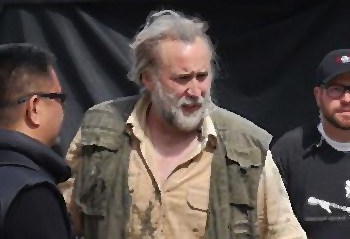
If there is anything positive that can be said about Army of One, it is that Nicolas Cage is at his most zany Nicolas Cage level of recent years. On top of that, it actually seems like he put effort into the performance of Gary Faulkner, and manages to imitate his mannerisms and cadence pretty well. That said, his high-pitched voice is pretty grating, and isn’t quite true to the reality of Faulkner.
One of the biggest flaws that I noticed about Army of One was a lack of coherent direction from scene to scene, which often had to be stitched together with narration. My personal suspicion is that the writing for the film was very loose to allow for improvised comedy, but wound up so loose that the story lost all of its connectivity, and the production team tried to patch the holes with narration.
Honestly, I’m not sure how scripted the movie was in the first place: a lot of it feels like pure improvisation, to the point that I’m not sure if a pen ever hit paper for this project. Director Larry Charles undoubtedly likes trying to get organic humor out of very loose scripting, like in Curb Your Enthusiasm or Borat. However, most of the successful films that have executed this style have been filmed as pseudo-documentaries, which gives them a more natural and raw appearance and flow. This isn’t done for Army of One, which I think was a mistake, as the clash of styles struck me as both jarring and painfully unfunny.
On top of the shooting style not suiting the improvisational writing, I don’t think Cage was well suited to carry the load of improvisational comedy to the extent that was expected of him for this film. Despite being surrounded by notable and capable comedians who are familiar with the format, the comedy never flows quite right off of Cage: it all just piles up on him, and he never seems to be able to juggle or throw things back. While the guy can definitely give a funny performance, I think improvisation is a very different set of skills that has never been at his core.
Last but not least, there is something undeniably mean-spirited about the nature of the humor in this movie. A lot of the advertising for the film compared the story to Don Quixote: a clueless hero with strong values suffers repeated failures, in comedic fashion. However, there is a difference between Faulkner and Quixote: Quixote wasn’t a real man. Faulkner is a real, living person with some very clear issues, which are played for laughs in the film. To laugh at Quixote’s naivete and foolishness on paper is one thing, but seeing these qualities in a real person isn’t so much funny as it is tragic. There are moments where it feels like Charles and company are punching down on a confused man undeserving of ire, all for the sake of a laugh. Unfortunately, getting laughs from this flick is like drawing blood from a stone, so it was basically all for nothing.
Overall, Army of One is a bit of a curiosity. While Cage’s performance is worth seeing for fans of his body of work, I think this is a movie primarily worth seeing on an educational level: there’s a lot that can be learned about improvisational comedy on film from comparing this to more successful films in the format. I personally believe that there are as many things to learn from failures as successes, and there are definitely some lessons hidden in the cracked, faulty foundation of Army of One. Also, on a mostly unrelated note, this movie has pretty well cemented my opinion that Larry Charles is a jackass.
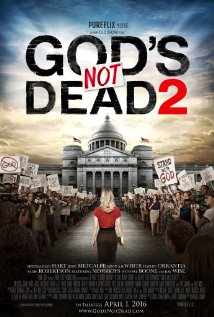
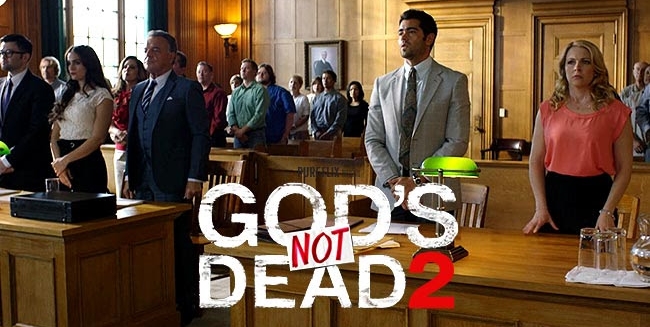
Up next in my series on the worst films of 2016 is the ultra-evangelical follow up to the 2014 hit God’s Not Dead: God’s Not Dead 2.
The plot of God’s Not Dead is loosely summarized on IMDb as follows:
When a high school teacher is asked a question in class about Jesus, her response lands her in deep trouble.
The lion’s share of the crew for God’s Not Dead 2 are holdovers from the first God’s Not Dead film, including director Harold Cronk, co-writers Chuck Conzelman and Cary Solomon, music composer Will Musser, cinematographer Brian Shanley, and editor Vance Null.
While there are few new faces at work behind the cameras, the cast features quite a number of new additions to the franchise. Gone are previous stars Kevin Sorbo, Shane Harper, and Dean Cain, but present are newcomers like Ernie Hudson (Ghostbusters, Leviathan, Congo), Ray Wise (RoboCop, Twin Peaks), and Melissa Joan Hart (Clarissa Explains It All). While a few bit players provide connective tissue between the films, God’s Not Dead 2 is not so much a sequel as it is a spin-off, telling an entirely new story in the same (very) fictional universe.
The lion’s share of God’s Not Dead 2 was filmed in Little Rock, Arkansas. This was a change in setting from the previous film, which was shot in Baton Rouge, Louisiana, primarily on the campus of Louisiana State University.
God’s Not Dead 2 was the final film of Fred Dalton Thompson, who died in November of 2015. While he was best known for his work in the Law & Order television franchise, he also had a handful of film roles in features like Baby’s Day Out, In The Line Of Fire, Days of Thunder, The Hunt For Red October, and the Scorsese remake of Cape Fear.
The production budget for the movie was estimated at $5 million. As with the first film, it wound up making a profit at the box office, taking in somewhere between $21 million and $24 million worldwide in its lifetime theatrical run. However, this paled in comparison to the profits for the original God’s Not Dead, which took in $62 million on a $2 million budget.
Critically, however, God’s Not Dead 2 didn’t do nearly so well. Currently, it holds Rotten Tomatoes ratings of 9% from critics and 63% from audiences, along with an IMDb user rating of 4.1/10.
Of all of the critical reviews that I read of the movie, I think that the Rotten Tomatoes critics consensus line best summarizes the essence of God’s Not Dead 2:
Every bit the proselytizing lecture promised by its title, God’s Not Dead 2 preaches ham-fistedly to its paranoid conservative choir.
Honestly, I can’t even begin to talk about all of the problems with the plot to this film. There are too many misconceptions, half-truths, straw men, and flat out lies to list out without it dominating the entire review. Frankly, that is why I didn’t review the original God’s Not Dead: I want to talk about a movie, not a paranoid treatise built on a foundation of sand. So, I am going to focus on other aspects of the movie, and leave the debunking to other folks. I can recommend reading reactions and reviews over at ThinkProgress, from the Freedom From Religion Foundation’s legal intern, and at Godless in Dixie.
As with the first film, one of the biggest weaknesses of God’s Not Dead 2 is the dialogue. Characters don’t speak organically, often sounding rigid and artificial, which further emphasizes the bloated, exaggerated caricatures that inhabit the cartoonish, simplistic story. At best, characters sound like they are delivering sermons. At worst, they just seem wooden and stilted.
The story itself, concept aside, is weighed down by the ensemble concept that provides its framework. Unlike the first film, the various plot threads and characters never really tie together in the end, and don’t much impact each other, which makes a lot of the movie feel pointless. In particular, a number of the loose connections to the first film could have been jettisoned to help the pacing of the story, like the Chinese student and the buddy priests. As it stands, the movie feels longer than it actually is because of the perceived lack of progression: the constant cutting between characters and plot threads makes following along feel like plodding through molasses.
One thing that I noticed quite a bit in the screenplay was a consistent ire directed at Stanford University. While Stanford is certainly a prestigious school with a liberal pedigree, I’m not sure why it wound up being the specific target of the film’s disdain for liberal higher education. Why not Harvard or Princeton? I would have assumed that the Yankee, Ivy league elite would be the go-to targets of extreme conservatives.
In regards to performances in God’s Not Dead 2, there is a pretty wide range to be found. While most of the cast sleepwalk through their dialogue, like the typically charming Ernie Hudson, Ray Wise in particular embraces his role as a God-hating, moustache-twirling attorney. The movie lights up just the tiniest bit whenever he is on screen, and he provides some much needed energy for the courtroom sequences.
All in all, God’s Not Dead 2 feels more like a fan film than a sequel, which is really odd given how much of the creative team returned from the first film. The whole affair feels chained to the previous movie, going so far as to force the title into the dialogue unnecessarily. That said, I actually think some of the technical craft is improved, though my memory is a little fuzzy in regards to the previous film.
As far as a recommendation goes, there is unfortunately not enough entertainment value here to enjoy the experience. It is just too dull and plodding to make sitting through it fun at all, despite Ray Wise’s performance and a handful of notable moments of complete disjointedness from reality.
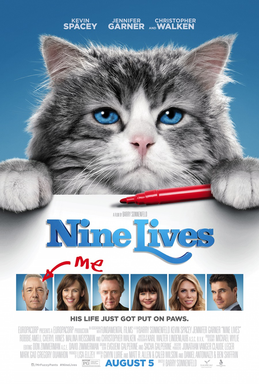
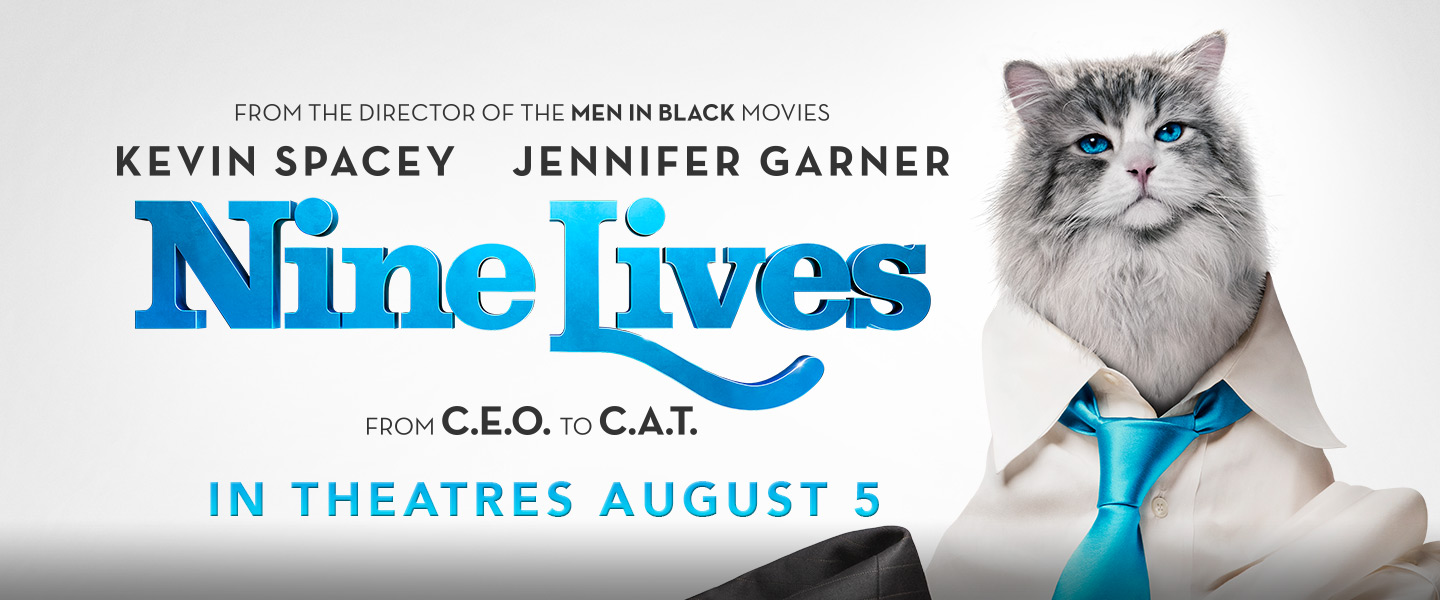
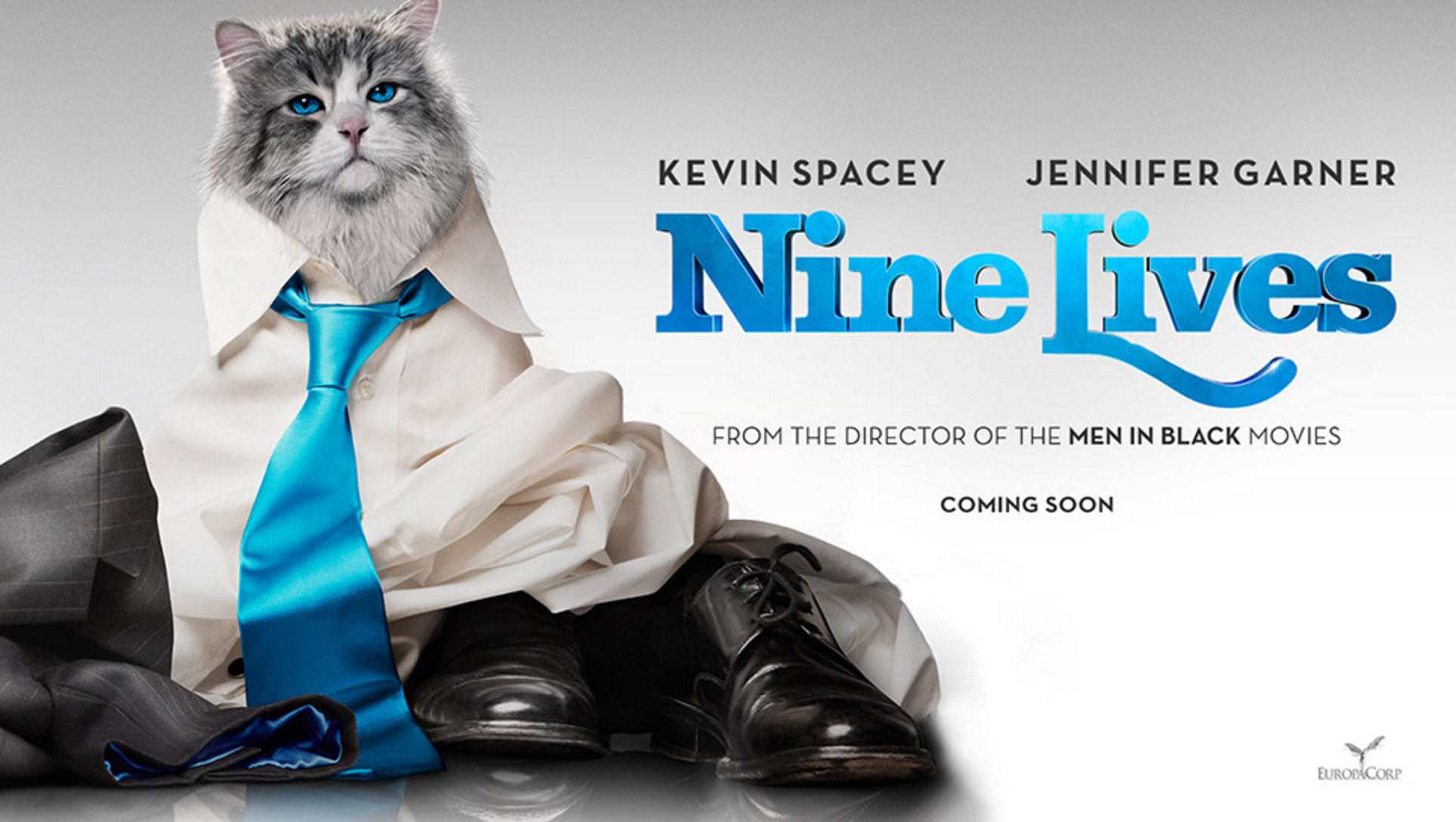
Continuing my spotlight on the worst films of 2016, today I am going to be covering the Kevin Spacey talking cat movie, Nine Lives.
The plot of Nine Lives, according to IMDb, is as follows:
A stuffy businessman finds himself trapped inside the body of his family’s cat.
The director of Nine Lives was Barry Sonnenfeld, who is best known for movies like The Addams Family, Men In Black, Men In Black II, Men In Black 3, Get Shorty, Wild Wild West, and RV.
The screenplay for Nine Lives has five credited writers, including Caleb Wilson and Matt Allen, who previously wrote Soul Surfer and Four Christmases.
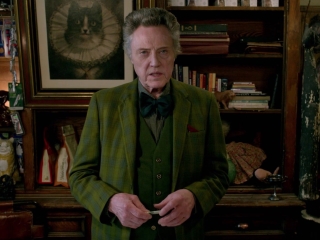
The cast of the movie includes the likes of Kevin Spacey (The Usual Suspects, L.A. Confidential, House of Cards, American Beauty, Swimming With Sharks, Se7en), Christopher Walken (Suicide Kings, The Deer Hunter, King of New York, Dead Zone, Catch Me If You Can, Seven Psychopaths, Pulp Fiction, Kangaroo Jack), Jennifer Garner (Alias, Dallas Buyers Club, Juno, Daredevil, Elektra), and Cheryl Hines (Curb Your Enthusiasm, RV, The Ugly Truth).
The cinematographer for the film was Karl Walter Lindenlaub, who also shot the movies Stargate, Independence Day, The Haunting, Universal Soldier, and Dolphin Tale.
Don Zimmerman acted as a co-editor for the movie, adding to a long list of credits that includes Marmaduke, Half Baked, Patch Adams, Over The Top, Cobra, Galaxy Quest, The Cat In The Hat, Night At The Museum, and Liar, Liar.
The visual effects for Nine Lives were primarily provided by the company Rodeo FX, which is credited for work on movies like The Amazing Spider-Man, Terminator Salvation, Source Code, Jupiter Ascending, Jonah Hex, Abraham Lincoln: Vampire Hunter, Warcraft, Gods of Egypt, and Deadpool, among many others. On top of that, they provided all visual effects work for Game of Thrones seasons 4 and 5.
The famously odd-looking cat, Lil Bub, who has a massive social media following that numbers in the millions, has a cameo appearance in Nine Lives as one of the cats under Christopher Walken’s care.
Nine Lives was made on an estimated production budget of $30 million, on which it took in a lifetime, worldwide gross of $44 million. While this covered the production budget, it likely didn’t net much of a profit after post-production and marketing costs.
Critically, Nine Lives was, understandably, not received well. Currently, it holds an IMDb user rating of 5.2/10, along with Rotten Tomatoes scores of 11% from critics and 43% from audiences.
The first and biggest problem with Nine Lives is one that plagues most productions that feature talking animals: bad CGI. While technology has improved since movies like Cats & Dogs and Son of the Mask, the computer-generated cat work that appears prominently in Nine Lives is still solidly within the uncanny valley: it is good enough to be convincing on one level, but still obviously not natural to an off-putting degree. While this might be passable in limited use and in low-light conditions, the effects sequences are almost all in full light, and are often painfully prolonged.
One of the things that bothered me the most about the film were the cat-related sound decisions made on the part of the production. During the sequences where Kevin Spacey inhabits the cat, his attempts at communication with humans are shown from other characters’ points of view as being intense, pained, and jarring feline yowls. Not only is this profoundly annoying to listen to, but it doesn’t always make sense: cats have a range of noises that they can make, so why would communication attempts always come across as yowling, as opposed to purring or meowing?
It is worth noting that, despite the inane plot, most of the prominent players in the film put in surprisingly decent performances. Spacey doesn’t seem to be totally phoning in his role, despite the fact that most of his role is voice-over. Likewise, Jennifer Garner has some moments of genuine emotion, and Christopher Walken is his usual eccentric self.
As far as other positives go, I have to say that I kind of like some of the design choices for the movie, particularly in regards to the color palette. For instance, each of the primary locations has a unique color theme: Walken’s store is dominated by greens and browns, giving it a natural and home-y look, which is a stark foil to the Firebrand offices, which are immaculately white with bright, red trim. Likewise, Walken’s store is cluttered and busy, and he always has complicated patterns in his darker-toned clothes. In contrast, Brand and his corporate building are almost always shown in bright solids, with little to no patterns involved: everything is sharply angled, sleek, and clean-cut. This is a minor thing that often gets overlooked in movies, and is usually meant to cause subliminal associations as opposed to overt ones. In Nine Lives, however, the stark contrasts and vivid colors contribute to a cartoon-y, hyper-realistic atmosphere that actually works pretty well. In most movies, these over-the-top colors and contrasts might be a distraction, but in this very specific case, they fit.
One aspect of the film that I have seen some reviewers complain about is the plot’s focus on corporate minutiae. Even though it didn’t stand out to me when I was watching the movie, it is definitely a problem that so much of the plot is about corporate back-dealings and Kevin Spacey’s will: not only because it doesn’t make for interesting watching, but because the core demographic for the film, children, generally aren’t going to understand or care about it.
Related to this, I have a bit of an issue with the moral compass of the movie. Initially, the curse is put upon Kevin Spacey so that he would learn to appreciate his family. Prior to the transformation, the biggest object between Spacey and is family is his new skyscraper: a surrogate image for his ambition, hubris, and obsessive work behavior. After the transformation, Spacey’s son winds up taking on the task of completing the building, in an effort to both prove himself and solidify his father’s legacy.
However, this focus on the building by his son bothered me. Spacey’s son is always shown in the context of his job: he is never revealed to have a family or partner of his own beyond his cold mother and Kevin Spacey, despite clearly being an adult with an accomplished career. As the plot progresses, he is shown distancing himself from his warmer step-family in order to focus on the building project, just like Spacey did. In the final act, he even goes so far as to neglect being present at his father’s potential death bed so that he could commit a corporate power play. It seems to me that this character should have come away from the story having learned not to devote all of his life to work, like his father had. Instead of the idea of legacy being tied into a company or a building, both characters should have come away understanding that loved ones, good will, and relationships are what really build a legacy. Instead, the conclusion vindicates Spacey’s obsession with his building and company being the symbols of his legacy: both are retained/completed, letting him have his cake and eat it too.
Despite my issues with the writing and the effects, this movie could certainly have been a whole lot worse. In fact, a number of reviews lamented that it wasn’t, because it would then have had more entertainment value. As it stands, I think that some children might just be entertained by Nine Lives:there are at least enough requisite bodily fluid and excrement jokes to meet certain infantile humor quotas. That said, there is no way that I could recommend this movie to anyone. The positives are outweighed by the negatives, and the negatives aren’t even entertaining negatives that could help you power through.
Reviews/Trivia of B-Movies, Bad Movies, and Cult Movies.
![Misan[trope]y](https://misantropey.com/wp-content/uploads/2014/10/misantropeyhead1.png)

 The cast of the film is headlined by George Kennedy, who is best known for more acclaimed movies like Cool Hand Luke and The Dirty Dozen, and is by far the most recognizable face in the lot. Other cast members include Alex Cord (Airwolf), Clu Galuger (Return of the Living Dead), Clare Carey (Coach), and Toni Hudson (Leatherface: Texas Chainsaw Massacre III).
 Beyond the puppet, there isn’t much to say about the movie. As you might expect, it has a really slow story, which is fairly typical of this sort of b-movie. If the story had stayed targeted on the cat, there might have been some potential, but the focus regularly drifts to a group of teenagers and a couple of criminals, who are all pretty dull.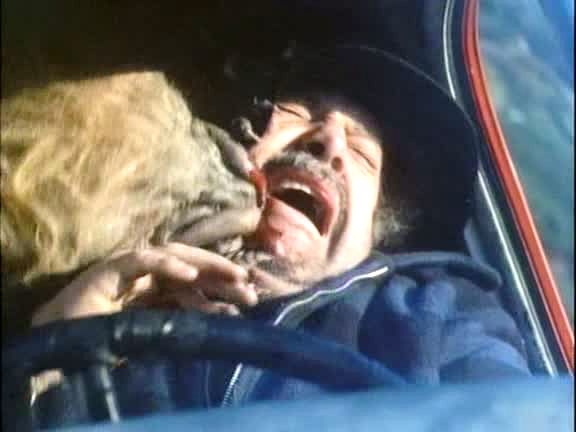




 Misan[trope]y