Tag Archives: movie

Eragon

Eragon

eragon1

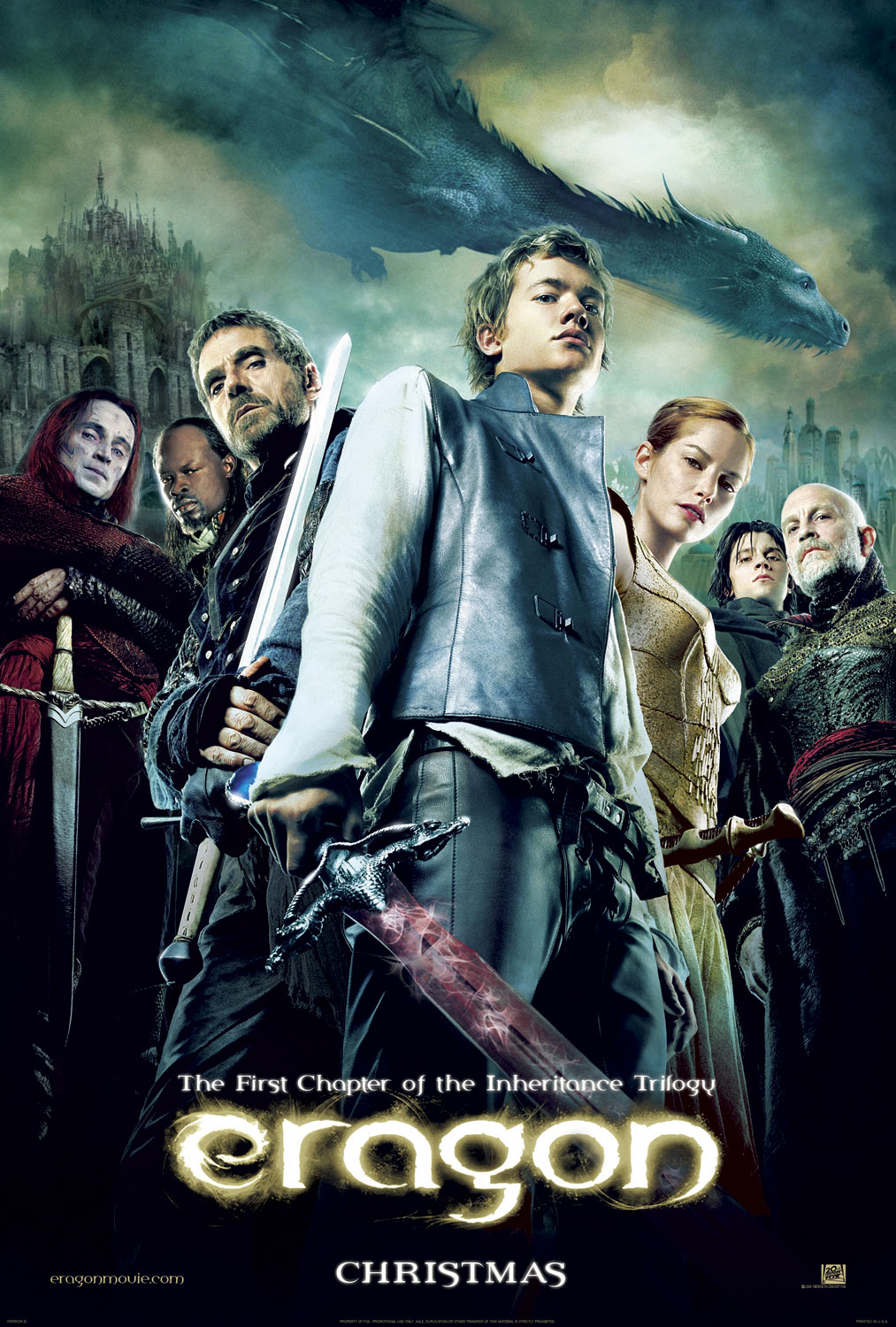
Today, I’m going to take a look at a 2006 movie that desperately wanted to kick-start the next big blockbuster franchise: Eragon.

The plot of Eragon is summarized on IMDb as follows:

In his homeland of Alagaesia, a farm boy happens upon a dragon’s egg — a discovery that leads him on a predestined journey where he realizes he’s the one person who can defend his home against an evil king.

The screenplay for Eragon was ultimately credited to Peter Buchman, whose other credits include Jurassic Park III and the two-part 2008 biopic on life of Che Guevara. However, this was also settled after some significant disagreements on the credits were brought to the Writer’s Guild of America, so other parties were clearly involved with the writing.

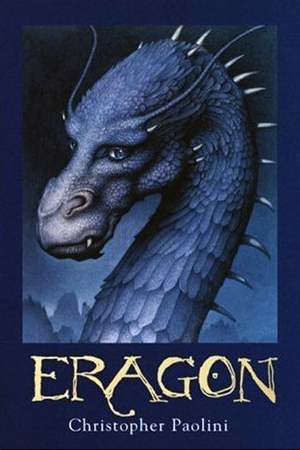
The source material for Eragon was the first installment of Christopher Paolini’s Inheritance Cycle novel series, which is also entitled Eragon. The book was initially self-published in 2002, but gained a wider following after its republishing in 2003. It wound up being a best-selling children’s franchise for years, spawning three successful sequels.
eragon5Eragon was directed by Stefen Fangmeier, a successful visual effects worker who has contributed to Game of Thrones, Twister, Jurassic Park, The Mask, Small Soldiers, and Galaxy Quest, among others. However, this was his first (and so far, only) directorial project.

The cast for the film includes Jeremy Irons (Dungeons & Dragons, The Lion King, Batman v Superman: Dawn of Justice), John Malkovich (Being John Malkovich, Burn After Reading, Rounders), Robert Carlyle (Trainspotting), Sienna Guillory (Luther, High-Rise), and Ed Speleers (Downton Abbey).
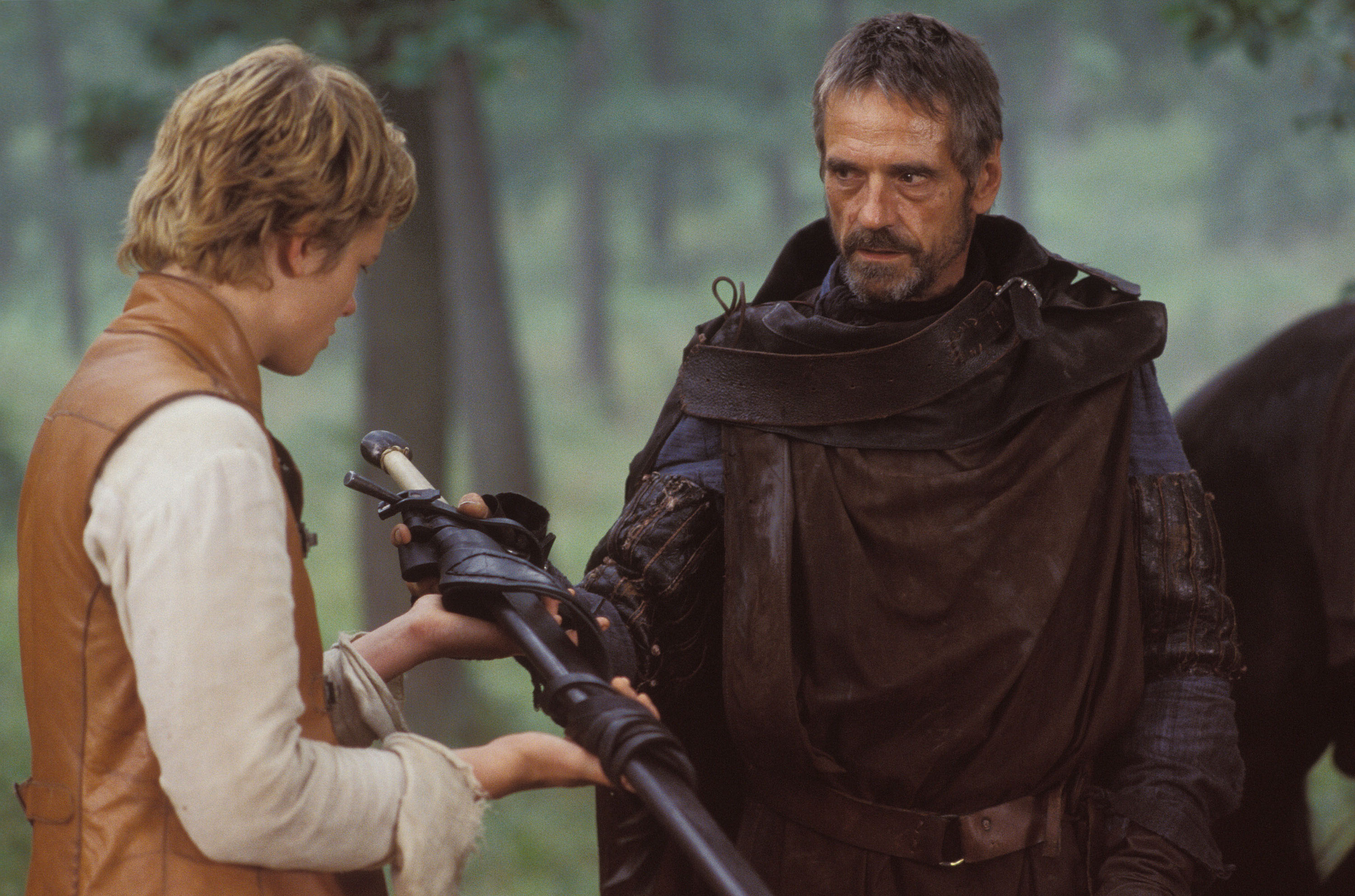
eragon2The cinematographer for Eragon was Hugh Johnson, who also shot the films The Chronicles of Riddick and G.I. Jane.

The film ultimately required the work of three editors, likely due to studio-mandated re-cuts. These credited editors were Chris Lebenzon (Radio, Big Fish, xXx, Con Air), Masahiro Hirakubo (Trainspotting, The Beach, The White Helmets), and Roger Barton (World War Z, Bad Boys 2, Speed Racer, Gone In Sixty Seconds).

The music for Eragon was composed by Patrick Doyle, who also provided scores for Donnie Brasco, Thor, Brave, and Carlito’s Way, among others.
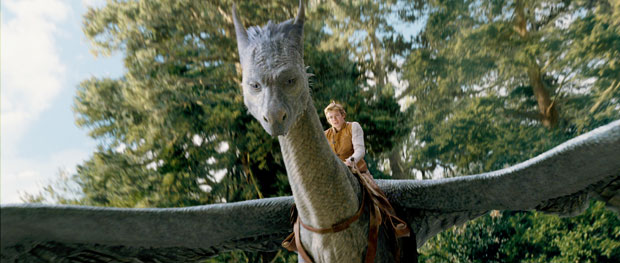
eragon4Apparently, both Ian McKellan and Patrick Stewart were considered for the role that ultimately went to Jeremy Irons. However, both men were unavailable for the same reason: the filming of X-Men: The Last Stand.

Interestingly, Eragon was the last major Hollywood film to get a VHS home release, in 2007. This followed decades of the format’s dominance, dating back to the late 1970s.

Eragon was made on a production budget of $100 million, on which it brought in a total lifetime theatrical gross of $249.5 million, making a nice profit. However, it wasn’t nearly as successful as hoped, not was it received well by fans or critics. Thus, the sequels never came to fruition.

Speaking of the film’s reception, Eragon currently holds an IMDb user rating of 5.1/10, along with Rotten Tomatoes scores of 16% from critics and 46% from audiences. All of these scores are pretty far from positive, and film is remembered widely as a failure as a result.

The first thing that has to be said about Eragon is that the effects haven’t aged well. Even if the effects looked spectacular at the time, rapid technology changes and developments have been particularly cruel to CGI-heavy movies from the mid-2000s. Looking back with an eye accustomed to current films, going back a few years draws some really unfavorable comparisons to more developed works. However, I seem to remember seeing Eragon when it was released, and not being impressed by the dragon. It might look fantastic in an animated setting, but it doesn’t seem to interact with the tangible world like it should, which stands out dramatically.

As far as the performances go, the thing that I most noticed was how obviously checked out John Malkovich is throughout the run time. I suspect that his part wrapped with only a few days of shooting, and he clearly was not into the zone for it. While his dialogue is certainly terrible, the level of dispassion in his deliveries is hard to match if you were trying. On the other end of the spectrum, Jeremy Irons is pretty solid: he is a guy who tends to put in good performances no matter what, and he manages to weave his way around some shoddy writing. The rest of the cast is pretty forgettable: particularly the lead, who is the living embodiment of white bread.
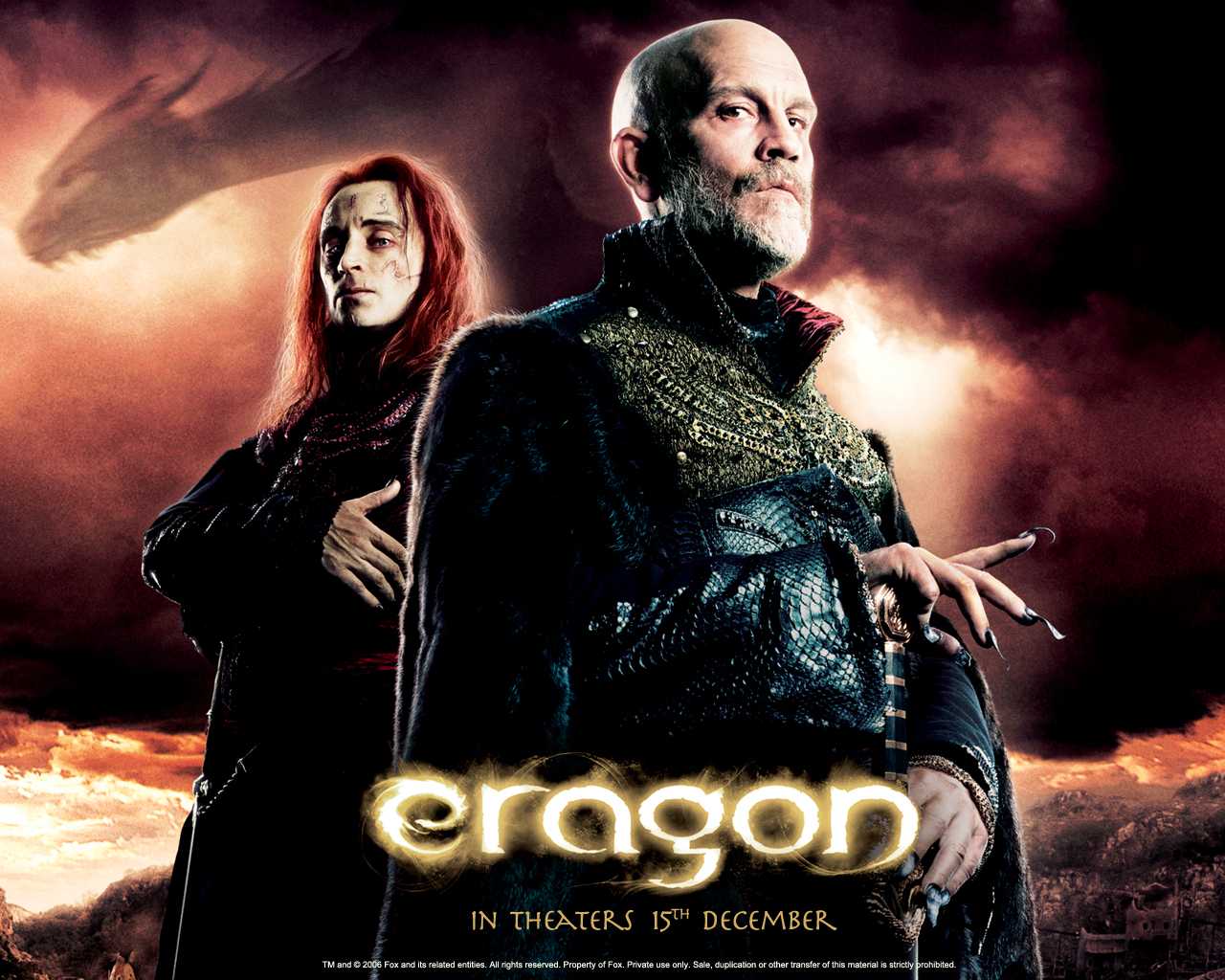
eragon3One of the biggest criticisms that has been levied at the source material for Eragon is how apparently derivative it is from other science fiction and fantasy works. While it might be easy to attribute this to the author simply following the patterns of the monomyth, I think this goes far beyond following the broad strokes of the Hero’s journey. Only having the reference of the film to go by, I was struck by how many story beats and sequences reminded me of Star Wars, one of the most popular and recognizable adherents to the monomyth. Typically, the Hero’s journey is a loose blueprint, which you only notice if you are specifically looking for it. Honestly, you shouldn’t notice it if the writing is well done: you want to be in a position of familiarity without feeling like you are going through the motions of a routine. It is hard to be invested in a story that plays out like a paint by numbers puzzle. However, that is exactly what Eragon is: a story that reeks of unwelcome familiarity, like a greasy spoon meal that violently revolts in the digestive tract.

One of the biggest issues that looms over Eragon like a fog is the then-recency of the highly successful and well-received Lord of the Rings trilogy, helmed by Peter Jackson.  The comparison is highly unfavorable on pretty much every level: production design, performances, makeup, visual effects, writing, cinematography, music, etc. Just skimming through contemporaneous critical reviews, it is clear that Lord of the Rings was still heavily entrenched in the minds of the public. Even if Eragon had been good, the comparison was inevitably going to be drawn, and there was no way that the judgement was going to be in Eragon‘s favor. I’m sure the producers had this notion of being able to find a sweet spot between Harry Potter, Star Wars, and Lord of the Rings, but that was clearly short-sighted, and put way too much pressure on the back of Eragon.

Another big issue I have with the film is how many plot threads and characters are being balanced throughout the story. Even though a lot of things were changed and cut through the process of the adaptation (to the immense ire of the book’s fan base), I still think that there is way too much happening. There are a number of characters that I don’t even recall being named, like the leader of the resistance group. Introductions are blown through in a split second, which makes caring about any of the characters really difficult.

Overall, I think that Eragon was built on excessively lofty expectations and a foundation of sand. There’s nothing particularly worth recommending about the movie: as much as I love Jeremy Irons, he isn’t enough of a force to save it. The producers were clearly blinded by the profit potential of a youth fantasy franchise with familiar elements of both Lord of the Rings and Harry Potter, and didn’t give consideration to meeting the quality of those films. On top of that, I’m thinking that the screenplay could have used a lot more work, and the whole film could almost certainly have benefited from the oversight of a seasoned director rather than a first-timer.
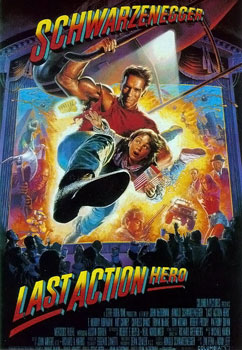
Last Action Hero

Last Action Hero
lah1

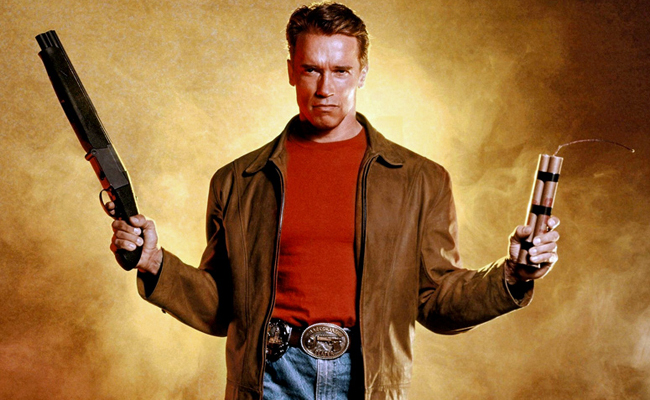
Today, I’m going to take a look at a deconstructionist action comedy classic: Last Action Hero.

The plot of Last Action Hero is summarized on IMDb as follows:

With the help of a magic ticket, a young film fan is transported into the fictional world of his favorite action film character.

Last Action Hero has four officially credited writers, though it is widely known that others also contributed to the screenplay. One of these uncredited writers was the late Carrie Fisher, who frequently did script doctoring in the 1980s and 1990s. The four writers who are officially associated with the film are Shane Black (The Nice Guys, Kiss Kiss, Bang Bang, Lethal Weapon, Monster Squad), David Arnott (The Adventures of Ford Fairlane), Adam Leff (PCU, Bio-Dome), and Zak Penn (The Avengers, The Incredible Hulk, Elektra, X-Men: The Last Stand, Suspect Zero).

The director for Last Action Hero was John McTiernan, a highly-regarded action film director who has been responsible for movies like Die Hard, Die Hard With A Vengeance, Predator, The 13th Warrior, and The Hunt For Red October.

The astounding cast of Last Action Hero includes Arnold Schwarzenegger (Jingle All The Way, Total Recall, The Running Man, Terminator), Charles Dance (Space Truckers, Game of Thrones), Tom Noonan (Anomalisa, The Astronaut’s Wife, RoboCop 2, Wolfen), F. Murray Abraham (Amadeus, Grand Budapest Hotel, Surviving The Game), Ian McKellen (X-Men, The Keep, Lord of the Rings), and Austin O’Brien (Lawnmower Man, Lawnmower Man 2).

lah3The cinematographer for the film was Dean Semler, whose other shooting credits include Super Mario Bros, Dances With Wolves, Cocktail, The Road Warrior, Razorback, Waterworld, Young Guns, Bruce Almighty, Stealth, and Paul Blart: Mall Cop 2, among many others.

Last Action Hero had two primary editors: John Wright (The Incredible Hulk, The Passion of the Christ, The 13th Warrior, Speed, The Running Man) and Richard A. Harris (Titanic, The Golden Child, Fletch, True Lies, The Bad News Bears).

The musical score for the movie was composed by Michael Kamen, who has had a ton of credits over his career: The Iron Giant, X-Men, Event Horizon, Hudson Hawk, Road House, Die Hard, Lethal Weapon, Highlander, Action Jackson, and Brazil among them.

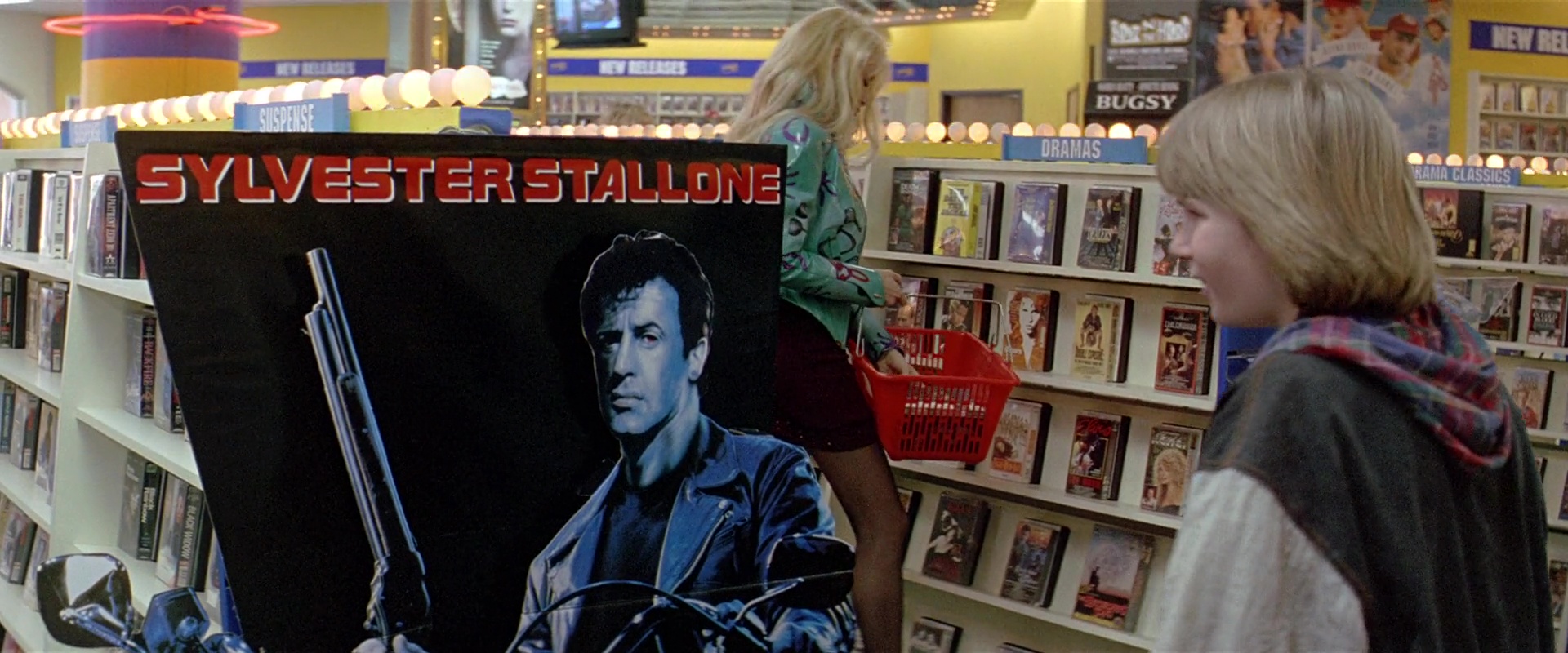
One of the most memorable gags in the movie occurs in the fictitious movie universe within the movie, in which Schwarzenegger doesn’t exist. In an attempt to prove that their reality is false, Slater is led into a video store by Danny, who shows him a standee of Terminator 2, only to see Sylvester Stallone listed as the star instead of Schwarzenegger. This is a sort of nod to the similarities between the two actors’ movies in the 1980s and 1990s, which were, at times, indistinguishable.

lah5On November 5, 2013, the online outlet A.V. Club ran a feature imploring people to give Last Action Hero a re-watch and re-evaluation. While there are plenty who still speak ill of the movie, the reception to it has certainly warmed over the years.

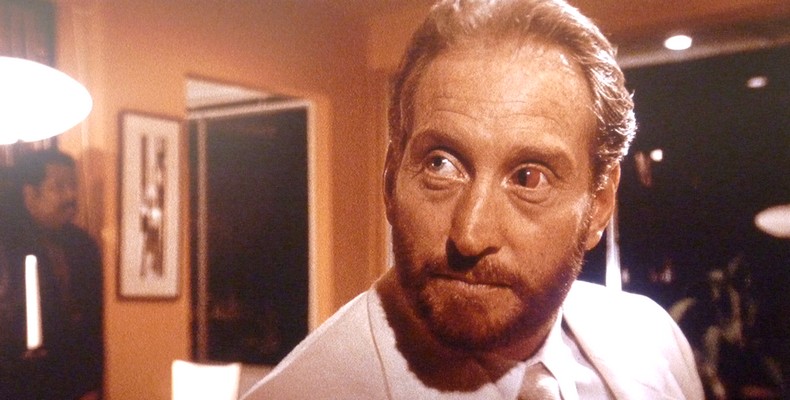
Rumor has it that Alan Rickman turned down the role in Last Action Hero ultimately filled by Charles Dance, despite the fact that the role was written with him in mind, due to the pay not being high enough. Initially, Timothy Dalton was cast to fill in, but ultimately had to drop out before filming, leaving the path open for Dance. Apparently, Dance had a tongue-in-cheek t-shirt made that read “I’m Cheaper Than Alan Rickman” as a result.

The AC/DC song “Big Gun” was written and produced specifically for Last Action Hero, much like their earlier song “Who Made Who” was done for the infamous Stephen King movie, Maximum Overdrive.

At one point, Steven Spielberg was approached to helm Last Action Hero, but turned it down in order to pursue making Schindler’s List.

In the last act of Last Action Hero, Ian McKellen surprisingly portrays the character of Death from the classic film The Seventh Seal, which was originally played by Bengt Ekerot.

One of the more clever references in the film pokes fun at F. Murray Abraham’s award-winning role as Salieri in Amadeus, and his subsequent type-casting as a movie villain. When he first appears on screen, Danny tells Slater not to trust him, explaining that “he killed Mozart!”

Last Action Hero was made on a production budget of $85 million, on which it grossed just over $187 million in its international lifetime theatrical run. While this was ultimately profitable, it was far below the lofty expectations placed upon it.

Last Action Hero currently holds an IMDb user rating of 6.2/10, alongside Rotten Tomatoes scores of 46% from audiences and 37% from critics. While these scores are certainly low, the movie has been winning over a steady cult following in the years since its release.

Personally, I really like Last Action Hero, and not just because of its clever, genre-aware screenplay. Schwarzenegger is genuinely charming in the movie, and might be in the top form of his career comedically. Likewise, Charles Dance is absolutely haunting as the film’s villain, but also manages to be quite funny at times.

lah2

One of the most lauded aspects of the movie, at least nowadays, is its screenplay’s expert execution of genre deconstruction, long before that style came into fashion with films like Scream or Cabin In The Woods.  More importantly, the screenplay for Last Action Hero shows a lot of respect for its audience: it gives us the benefit of the doubt that we have seen action movies before, and uses that prior knowledge to either play into or subvert our expectations.

Another thing that I particularly enjoy about Last Action Hero is its general design. There are lots of small details that distinctly contrast reality from the world of the movies: for instance, the color and lighting vary greatly between the two settings. The movie world is always evenly lit and sunny, filled with bright yellows and oranges. Reality, on the other hand, is almost always shown at night, with long shadows stretching down alleyways. The only lights and colors come from neon signs on the streets. This provides an instant rubric for where any given action is taking place, without having to constantly establish whether characters are inside or outside of the fantasy world. For a movie with this level of depth, that kind of detail really matters: it keeps the audience subconsciously on track with the changing settings.

Overall, I think that Last Action Hero is a brilliant action-comedy, particularly for anyone who enjoys the action genre movies that dominated the 1980s. It manages to build an interesting story around the fantastical fun of walking through a movie world, and the humor generally works. The cast is immensely deep, and the knowing cameos and nods to other genre pictures make for a damn fun time. For bad movie fans, action movie fans, and pretty much anyone who enjoys a little bit of 1980s/1990s nostalgia, I highly recommend giving Last Action Hero a shot, or giving it a second look.

lah4

Uninvited

Uninvited

uninvited3

Today I am going to take a look at a truly bizarre low budget film about a killer cat: 1988’s Uninvited.

The plot of Uninvited is succinctly summarized on IMDb as follows:

A mutated killer cat finds its way on-board a yacht.

Uninvited was produced, written, and directed by Greydon Clark, who is probably best known for his work on the Joe Don Baker movies Final Justice and Joysticks.

The music for the film was provided by Dan Slider, who most notably composes and orchestrates the music for the long-running television series America’s Funniest Home Videos.

The cinematographer for Uninvited was Nicholas von Sternberg, who shot the blaxsploitation classic Dolemite, Greydon Clark’s films Final Justice and Joysticks, and David DeCoteau’s infamous Dr. Alien.

uninvited2The cast of the film is headlined by George Kennedy, who is best known for more acclaimed movies like Cool Hand Luke and The Dirty Dozen, and is by far the most recognizable face in the lot. Other cast members include Alex Cord (Airwolf), Clu Galuger (Return of the Living Dead), Clare Carey (Coach), and Toni Hudson (Leatherface: Texas Chainsaw Massacre III).

The year prior to Uninvited, a similar movie was released in China called Evil Cat, which also follows the sinister exploits of a blood-thirsty feline.

Currently, Uninvited holds an impressively low 4.0/10 IMDb user rating, along with a 50% audience score on Rotten Tomatoes.

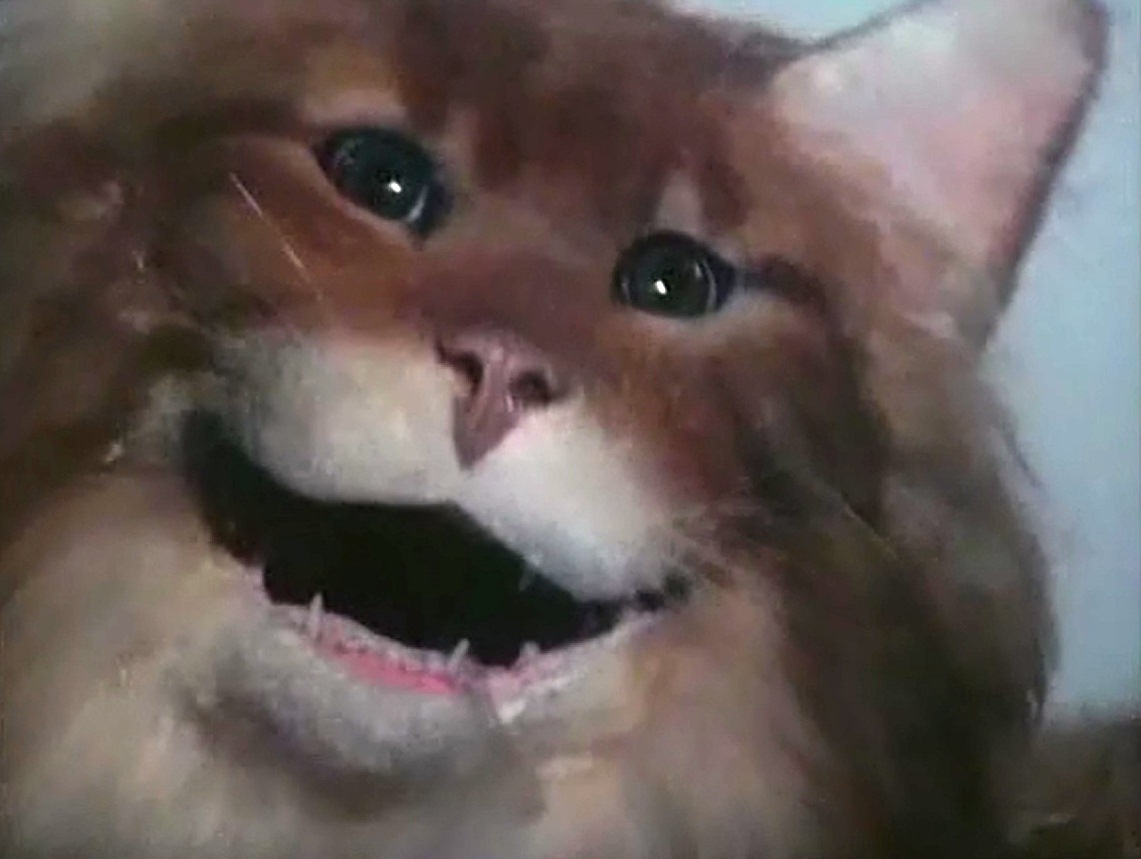
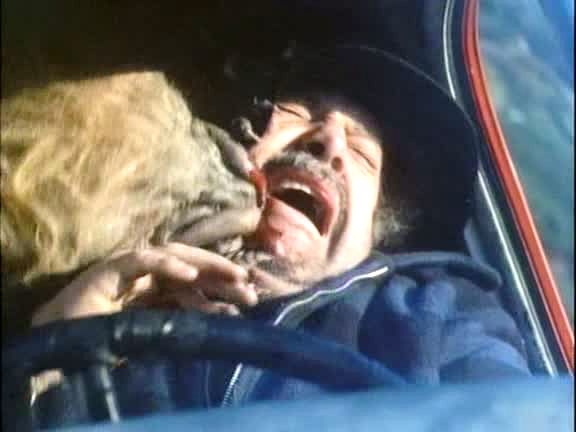
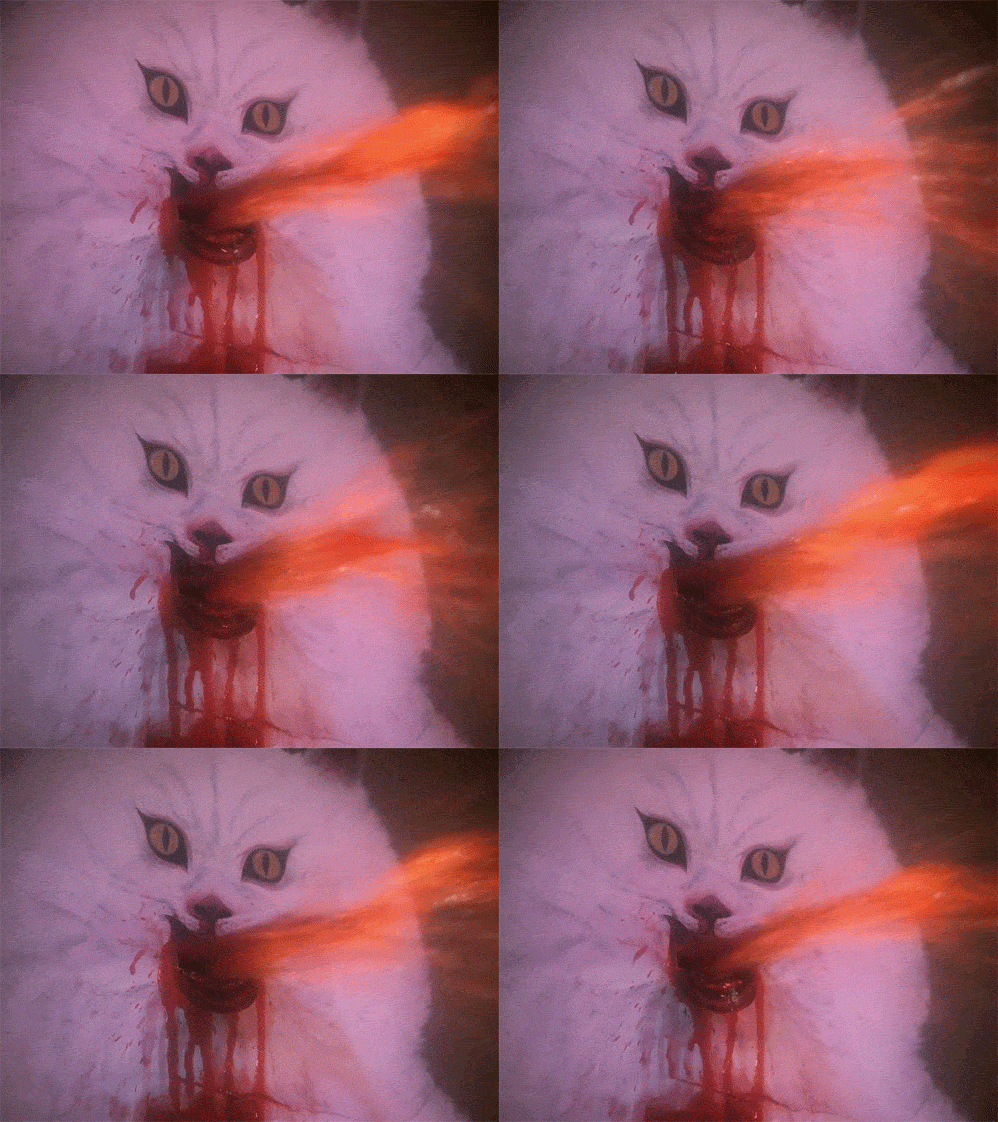
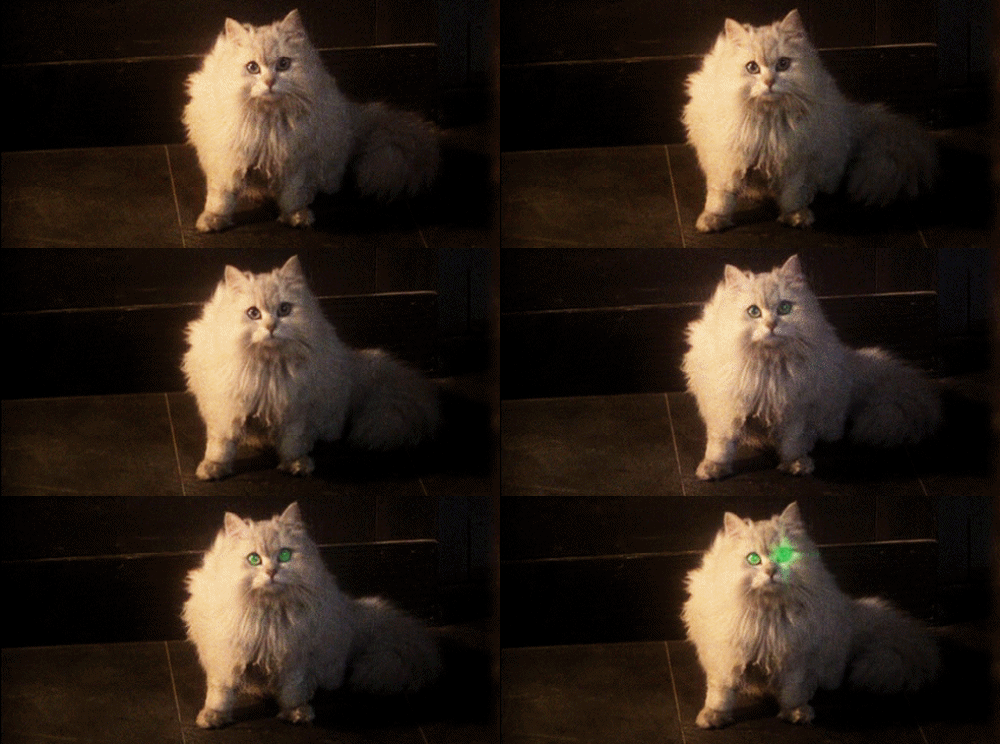
I sincerely believe that there is only reason that this movie is at all remembered: the cat monster puppet. Holy crap, this cat puppet is honestly one of the worst movie effects I have ever seen. With that said, this movie is simultaneously made and broken by that ridiculous cat puppet. Without it, the movie would have been completely forgettable, and totally lost to the ages. With it, the movie is exponentially more atrocious, but enough so that it has stuck with people through the years.

uninvited4Beyond the puppet, there isn’t much to say about the movie. As you might expect, it has a really slow story, which is fairly typical of this sort of b-movie. If the story had stayed targeted on the cat, there might have been some potential, but the focus regularly drifts to a group of teenagers and a couple of criminals, who are all pretty dull.

Outside of a couple of interesting bulging vein effects, the technical aspects of the movie are pretty much what you would expect from this sort of flick: there are a lot of sound issues, the music is hilariously awful, and the visuals certainly aren’t anything to write home about.

While Uninvited showcases an interesting idea and original concept, I think this was a case of the filmmakers vision exceeding his grasp. With such a low budget, there is just no way that an elaborate cat-demon could have been pulled off adequately.  While that may mean that this movie was doomed from the start, I can certainly say that I am glad it exists, because it is so unique. I highly recommend looking up some clips and stills from the movie, but I certainly don’t endorse sitting through it. The pacing issues make sitting through the whole run time a little too much of a slog, but the cat puppet action simply can’t be missed.

uninvited5

The Happening

The Happening

happening1

Today, I’ll be taking a look at what is arguably the low point of M. Night Shyamalan’s film career to date: 2008’s The Happening.

The plot of The Happening is summarized on IMDb as follows:

A science teacher, his wife, and a young girl struggle to survive a plague that causes those infected to commit suicide.

The Happening was written and directed by the one and only M. Night Shyamalan, whose whiplash-inducing up and down career has included films like The Sixth Sense, The Village, Unbreakable, After Earth, Signs, and Split.

The cast of the movie includes the likes of Mark Wahlberg (The Departed, Boogie Nights, The Fighter, The Other Guys), Zooey Deschanel (500 Days of Summer, Elf, The Hitchhiker’s Guide To The Galaxy), Betty Buckley (Carrie, Wyatt Earp), John Leguizamo (John Wick, Bloodline, Super Mario Brothers, Spawn), and Alan Ruck (Twister, Speed, Ferris Bueller’s Day Off).

The cinematographer for The Happening was Tak Fujimoto, who also shot Devil, The Sixth Sense, Philadelphia, The Silence of the Lambs, Pretty In Pink, and Where the Buffalo Roam, among others. The film’s editor was Conrad Buff IV, who has had credits that range from comedies like Monster Trucks, True Lies, and Space Balls to science fiction like The Abyss, Species, and Terminator 2.

The musical score for the film was composed by James Newton Howard, one of M. Night Shyamalan’s most frequent collaborators. On top of The Happening, he also did the music for the films Michael Clayton, Nightcrawler, Green Lantern, The Dark Knight, The Last Airbender, Lady In The Water, Dreamcatcher, Space Jam, and Waterworld.

Mark Wahllberg has since denounced The Happening, saying that he primarily took the job because of the opportunity to portray a science teacher, rather than a cop or a crook.

Amy Adams, who has since become one of the most acclaimed actresses in Hollywood, turned down the lead role in The Happening that eventually went to Zooey Deschanel.

The Happening was made on a production budget of $48 million, on which it took in a worldwide, lifetime gross of $163.5 million. While this was almost certainly profitable, the film was absolutely brutalized by critics and audiences alike: it currently holds an IMDb user rating of 5.0/10, along with Rotten Tomatoes scores of 18% from critics and 24% from audiences.

One of the few positive reviews for The Happening interestingly came from one of the most well-regarded film critics of the time: Roger Ebert. In his review, he referred to the film as, among other things, “too thoughtful for the summer action season.” At the same time, he was prescient in predicting the film’s critical failure, writing:

I suspect I’ll be in the minority in praising this film. It will be described as empty, uneventful, meandering. But for some, it will weave a spell.

Watching the performances and deliveries in The Happening, it is hard to believe that the actors weren’t intentionally playing for comedy. In particular, Wahlberg’s performance is surreal in its hilarity: despite the tone around him, he managed to get a number of laughs out of me, despite the fact that there is no overt humor in the screenplay. His conversation with a plastic plant is honestly funnier than most actual comedy routines these days if you ask me.

One of the most obvious issues with The Happening is its underlying message. More specifically, the message is far too heavy-handed, and lacks the subtlety to make it truly powerful. That said, there is a kernel of an interesting idea within The Happening: plants fighting back against humans as an evolutionary defense sounds like the early makings for a pretty nifty creature feature, but it would have to be at least a little tongue-in-cheek to be effective.

One of the few positive things that can be said about The Happening is that it had an R-rating, and managed to use it to a decent effect. A number of the suicide scenes are impressively gory, and provide brief moments of loose entertainment in a generally very slow, plodding film.

Overall, The Happening had an interesting foundation in its idea, but a bunch of things clearly went wrong over the course of seeing that vision to the screen. While it is easy to place blame on the cast for their performances, I think that the writing is far more responsible for the film’s larger issues: Shyamalan might have considered having someone co-write, re-write, or at least punch up the script before handing it wholesale to his actors. However, I suspect Shyamalan was a bit overprotective of the screenplay, given he was also the film’s director. Generally, screenwriters are out the door early in production, and the director is free to alter the work to fit their vision after that. However, when the director and the writer are the same person, necessary screenplay cuts and changes may not happen out of a sense of pride and defensiveness. If there is anything that is known about M. Night Shyamalan at this point, it is that he is a man prone to pride and defensiveness, so the shoe does seem to fit.

As far as a recommendation goes, I think The Happening is a pretty fun ride, even though it is a bit slow in the pacing department. In particular, Wahlberg’s flailing in his role is captivating, like watching a cat try to get sticky tape off of its paw: the motions and expressions are excessive, while always being just a little too unnatural to be believed as earnest. The absolutely brutal death sequences in the movie add a little more entertainment as well, primarily due to their bizarre natures. That said, I think this is a movie best suited for bad movie fans: I’m not sure if there would be as much fun to sap out of the film for your typical, casual moviegoer.

I Am Wrath

I Am Wrath

iamwrath1

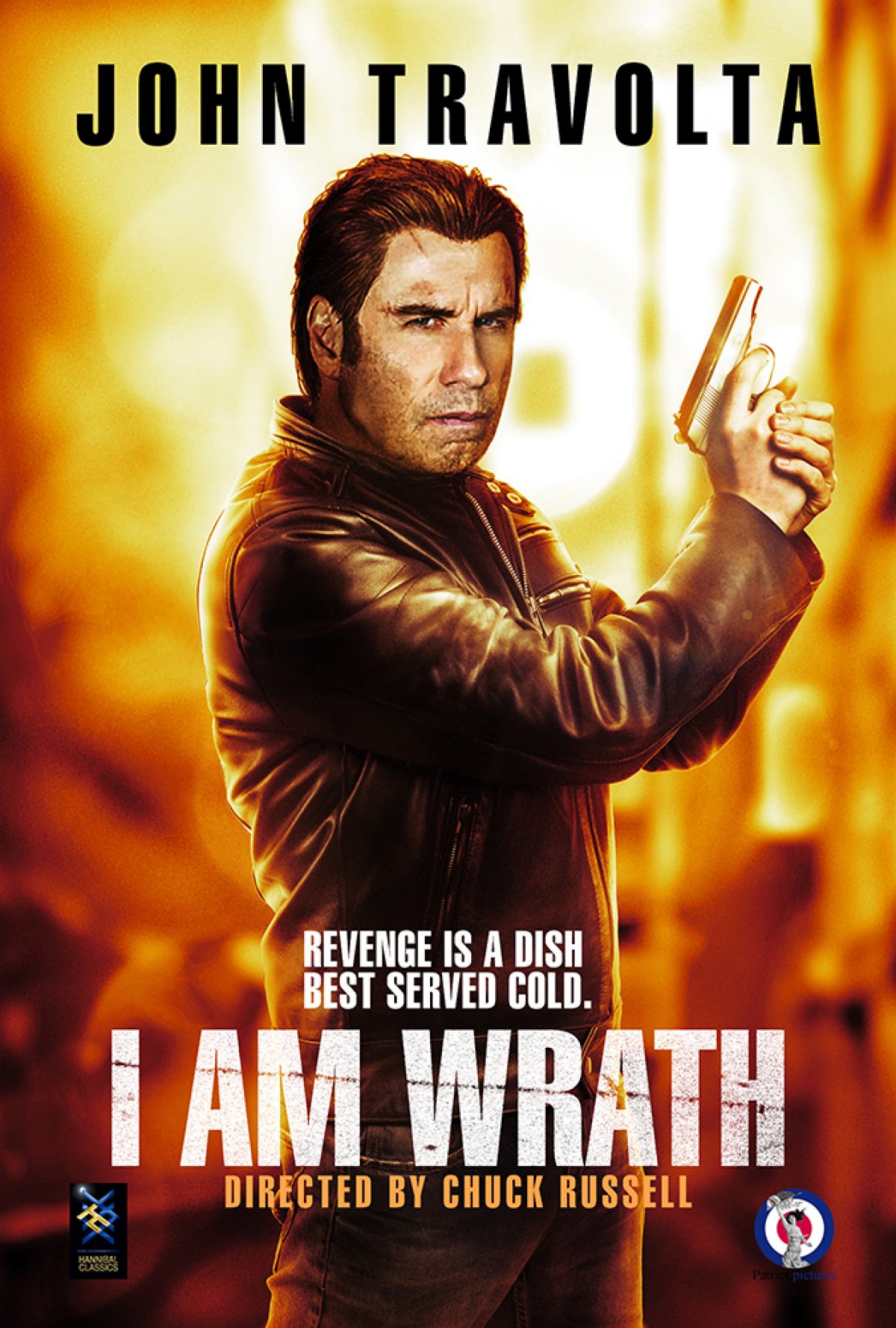
Today, I’m going to take a look at a 2016 direct-to-video action flick starring John Travolta: I Am Wrath.

The plot of I Am Wrath is summarized on IMDb as follows:

A man is out for justice after a group of corrupt police officers are unable to catch his wife’s killer.

I Am Wrath was directed by Chuck Russell, who is best known for movies like the 1988 remake of The Blob, The Mask, The Scorpion King, and A Nightmare On Elm Street 3: The Dream Warriors.

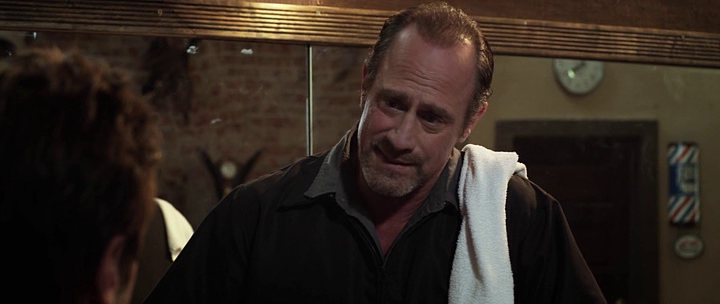
The cast for the movie is headlined by John Travolta (Pulp Fiction, Face/Off. Grease) and Christopher Meloni (Law & Order: Special Victims Unit, Man of Steel), with additional performances by Amanda Schull (Suits, Twelve Monkeys), Sam Trammell (True Blood), Patrick St. Esprit (Narcos, Sons of Anarchy), and Rebecca De Mornay (Risky Business, Wedding Crashers).

iamwrath7

The music for I Am Wrath was composed by Haim Mazar, whose other credits include The Iceman, The Taking of Deborah Logan, and the television show Teen Mom.

The cinematographer for the film was Andrzej Sekula, who shot the cult favorite movies American Psycho, Hackers, Four Rooms, Pulp Fiction, and Reservoir Dogs, and also directed the horror sequel Cube 2: Hypercube.

I Am Wrath was filmed primarily in the city of Columbus, OH, a non-typical location for a film production. A number of local landmarks show up in the movie, including the Ohio Statehouse, the illuminated arches of High Street, and the local diner chain Buckeye Donuts.

Rumor has it that the initial plan for the film was for William Friedkin, of The Exorcist and The French Connection, to direct, with Nicolas Cage in the starring role. However, numerous delays led to the eventual combination of Russell and Travolta.

The title of the film, I Am Wrath, is a reference to the Bible passage Jeremiah 6:11, which reads as follows in the New International Version of the text:

But I am full of the wrath of the Lord,
    and I cannot hold it in.

“Pour it out on the children in the street
    and on the young men gathered together;
both husband and wife will be caught in it,
    and the old, those weighed down with years.

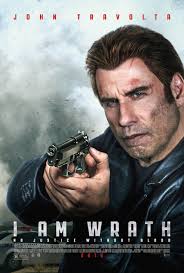
Upon their release, the promotional images and posters for I Am Wrath were the subject of widespread online mockery for their incompetent and awkward construction.

iamwrath5
“this…has left me at a complete loss for words. All I can do is implore you to share this post with as many people as possible. The world needs to know.” – Scott Wampler, Birth.Movies.Death.

I Am Wrath ultimately released straight to video, and was not received warmly. It currently holds Rotten Tomatoes scores of 11% from critics and 34% from audiences, along with an IMDb user rating of 5.3/10.

For the past few years, I have been living and working in Columbus, OH, so I happened to be around while I Am Wrath was filming locally. Outside of a few blips in the news about John Travolta being in town for a role, I didn’t hear a whole lot about it. However, it was interesting to see familiar locations on screen while watching the movie: for folks in New York or Los Angeles, that is probably no big deal, but seeing Columbus on screen was kind of bizarre.

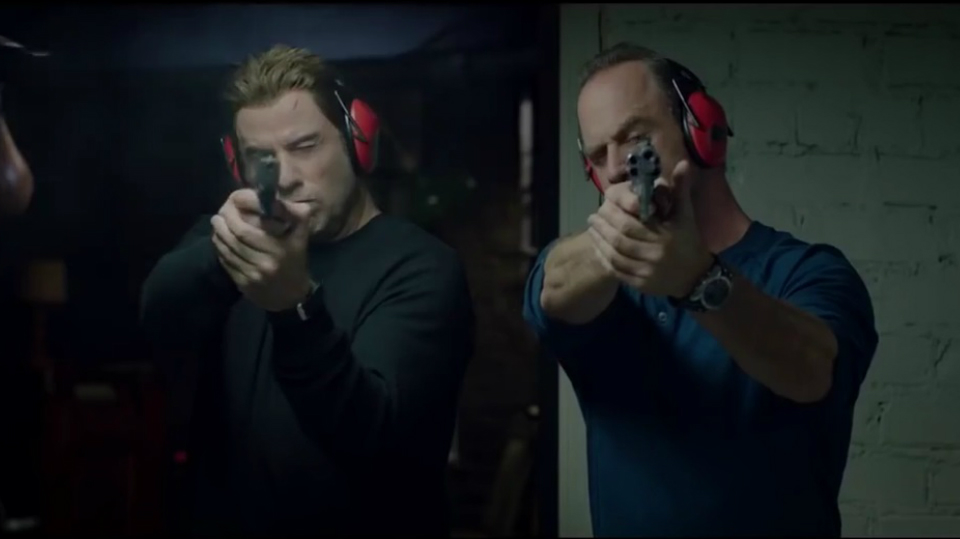
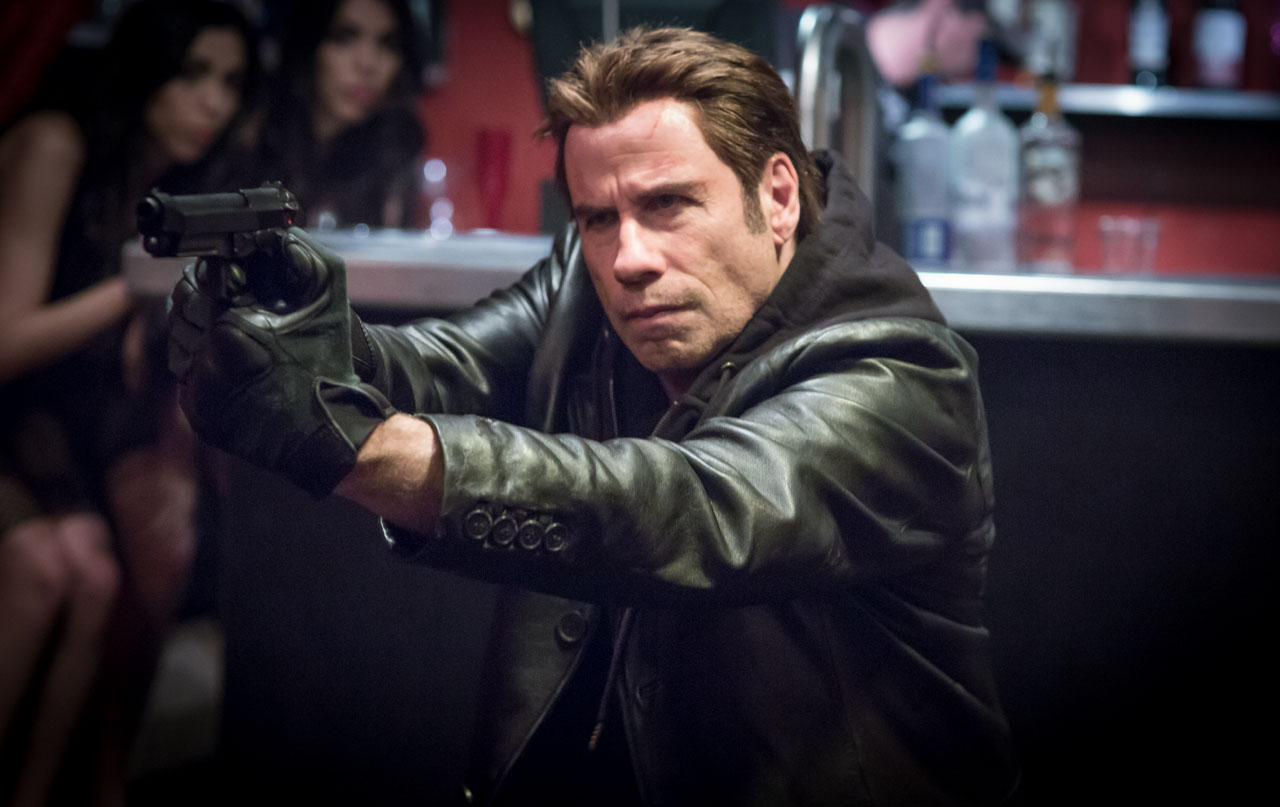
Despite a handful of interesting visuals peppered throughout the movie, I Am Wrath is far and away dominated and defined by its central performances. Unfortunately, thanks to John Travolta’s half-sleepwalking rendition of a mercenary / car factory administrator, the movie is all the weaker because of it. That said, Christopher Meloni provides the film with an iota of charm and levity with his improvised wit, though he is woefully missed when not on screen (which is, unfortunately, often). Meloni, unlike Travolta, seems to understand the schlock that he is wrapped up in, and leans into the absurdity of the situation, and clearly enjoys his tough guy routine.

iamwrath6

Travolta, by contrast, is a black hole: a human-shaped void that made me question if this was the same hammy scenery-chewer I remembered from Face/Off, Swordfish, and Battlefield Earth. Say what you will about any of those performances, but the guy was never lacking in passion or enthusiasm in those roles.

Beyond Travolta’s banal lead performance, the biggest issue with I Am Wrath is almost certainly the screenplay, which is basically a paint-by-numbers revenge plot. There are a few things I liked about it, though: for instance, there’s a RoboCop-like dynamic between some of the villains, which is always nice to see. However, there is also a lot of bad dialogue, and way too much information is revealed far too blatantly for the message to have much of a punch. Worst of all, I think the I Am Wrath screenplay has one of the most egregious and hilarious examples of a placeholder character name making it all the way to the final draft: Governor Merserve, the self-serving Governor. That’s just inexcusable.

iamwrath3

Honestly, I wish there was something to recommend about I Am Wrath. Unless you are a big fan of Christopher Meloni, or a Columbus local interested in seeing the city on screen, there just isn’t anything compelling here. Even the action sequences aren’t terribly enthralling, and are by and large forgettable. If you want a cheesy action movie, look into whatever Nic Cage has out this week, and give this one a pass.

Hausu

Hausu

hausu8

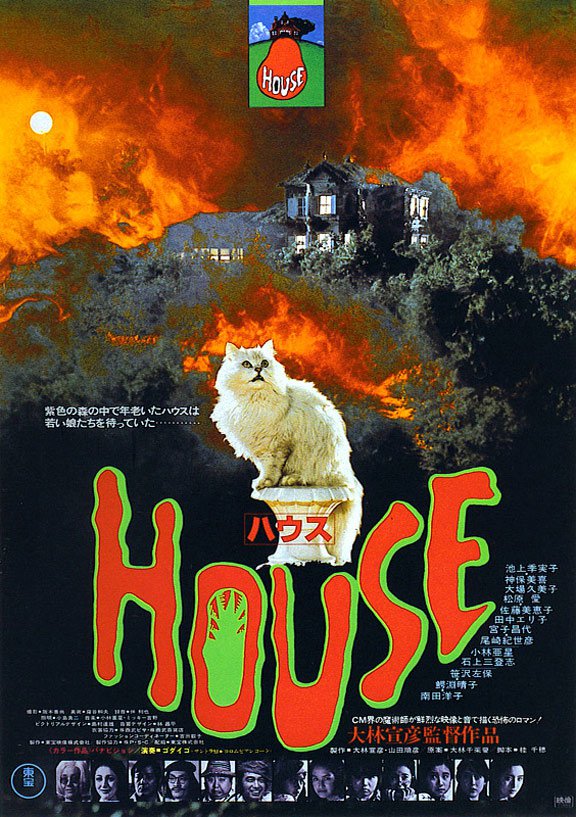
Today, I’m going to take a look at a truly bizarre, one of a kind film: 1977’s Hausu.

The plot of Hausu is summarized on IMDb as follows:

A schoolgirl and six of her classmates travel to her aunt’s country home, which tries to devour the girls in bizarre ways.

Hausu was directed and produced by Nobuhiko Ôbayashi, who was previously known for doing a fair amount of television, short film, and commercial directing in Japan. Obayashi, or “OB,” also provided the film’s distinct special effects, and was notably the primary advocate for the film during its tumultuous pre-production. While he has continued to make many films over the years, and is considered a celebrity in Japan, Hausu is by far his film with the most international recognition and acclaim.

Serving as the production designer and assistant director for the film was Kazuo Satsuya, who provided design work for two other notable cult movies: Lady Snowblood and Godzilla vs. Mechagodzilla.

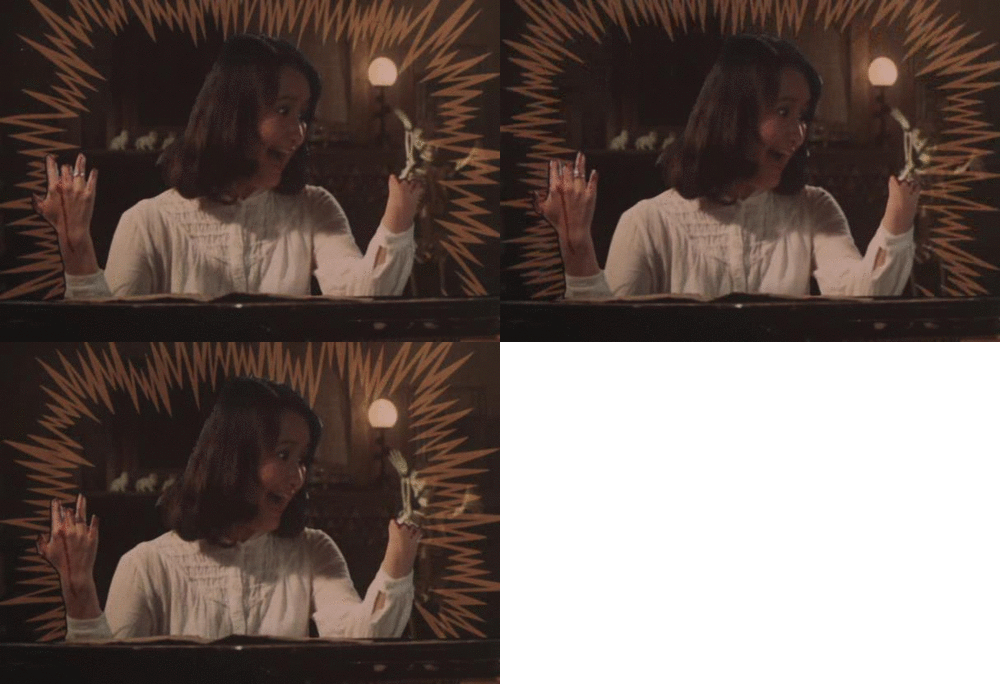
hausu2One of the producers for Hausu was Tomoyuki Tanaka, a Toho producer who had a hand in the creation of countless Japanese cinema classics, including monster flicks like Godzilla, Rodan, and Mothra, as well as Kurosawa features like Yojimbo, The Bad Sleep Well, Kagemusha, and Sanjuro.

A number of the most distinct elements of the film were based on ideas collected from OB’s young daughter prior to the writing of the screenplay. He has said that he asked his daughter for ideas because “children can come up with things that can’t be explained.” Among the many ideas from his young daughter that made their way into the final film were the hand-eating piano keys, the very concept of a killer house, the watermelon-head being pulled from a well, and the bizarre pillow attack.

hausu5Following the project getting a green light from Toho, none of the Toho staff directors wanted to take it on, fearing that the film could easily be a career-ender due to the screenplay’s outlandish concept. After it sat unproduced for 2 years, OB, the film’s primary driving force, was given permission to direct. Toho was initially hesitant to let him take the reigns, specifically because he wasn’t on staff with the company.

Hausu finally got a theatrical release on July 30, 1977 in Japan as part of a double feature. It wound up being a surprise success, as it particularly struck a chord with cinema-going youth. Despite its popularity, the film didn’t make it officially to North American theaters or homes until well into the 2000s.

The Criterion Collection, which is known for distributing influential and well-regarded films on home video, released DVDs and blu-rays of Hausu in October 2010, bringing a new audience to the film.

hausu1Hausu has had a complicated history with critics: Japanese critics didn’t care for it initially when it was released in theaters, but its long-belated release in North America led to a critical re-evaluation decades later. North American critics have mostly praised it, and time has solidly cemented the movie as a memorable cult classic.

The two most defining elements of Hausu are, without much argument, its bizarre images and odd, often confusing tone. One of the most frequent descriptions I have heard of the movie is that it is like a “fever dream,” and there isn’t really a better way to describe it. There’s a sense of discontinuity between the film’s bleak content, cartoonish color, and whiplashed tone that makes it seem that it could only be the result of madness, and perhaps a wholesale divorce from reality.

One of the most impressive aspects of Hausu is its peculiar production design. The prominent matte painting backdrops and clear set pieces are surreal in how transparently artificial they are. In a sort of rejection of traditional wisdom, the design spits in the face of immersion: there is never a moment where the audience could confuse the events in the film with reality. In that sense, I was reminded a bit of The Cabinet of Dr. Caligari, though with a dramatic injection of frenetic color, gore, and LSD.

hausu3One of my initial issues with the movie while I was watching it was that the characters are incredibly thin, and are mostly boiled down to single character traits. On top of that, the lack of characterization and time on screen for the individual girls makes most of them hard to distinguish from each other. However, as the movie went on, this is an element that started to interest me. Each of the girls have names that are related to their assigned traits, and occasionally to their deaths. It might be fair to write this off as shallow writing, but at the same time, there is also a debatable element of genre-awareness present as well. Given how transparently artificial the movie’s design is, why wouldn’t the characters follow suit? Whether this screenplay is an example of trope-awareness and genre-deconstruction is something that is probably worth discussing, whether it was intended or not by the writer.

hausu4Any of these elements I have mentioned so far could potentially be argued as positives or negatives, depending on who you asked about them. I think this is something that makes Hausu a uniquely interesting movie to discuss, and is one of the top reasons that I would recommend just about anyone give this movie a shot. For cult movie fans, it is absolutely essential. But, for everyone else, I think this is still worth watching. I would recommend going into the movie with as little information as possible, however. There are definitely enough highlights to entertain most audience members, though the movie does take a little time to get going, and the slapstick elements are likely to fall flat with many.

hausu6

Jockstrap Slaughterhouse

Jockstrap Slaughterhouse

Today, I’m going to be fulfilling a request from one of my gracious Patreon patrons, and talking about Jockstrap Slaughterhouse.

The plot of Jockstrap Slaughterhouse is summarized on IMDb as follows:

An evil football player terrorizes a group of nerds in this bloody throwback to 80’s slasher flicks.

Jockstrap Slaughterhouse was written, directed, produced, shot, and edited by Leopold Vincent Medley, who has a handful of independent short films and features to his credit going back to 2011.

As with most small independent projects helmed by weekend warriors, Jockstrap Slaughterhouse clearly faced the natural limitations that come with working on a low budget. That said, the blood that is shown on screen looks quite good. However, its appearance is sporadic: there are moments where blood should absolutely be present when it isn’t, like in the (theoretically) bloody denouement. There also isn’t much in the way of makeup work, which could have gone a long way for the production: the villain is in an obvious Halloween mask, and he could have looked a lot better with a little bit of makeup work (that wouldn’t have broken the bank).

Jockstrap suffers from a handful of issues that can easily be chalked up to inexperience. For instance, there is a lot of distractingly shaky handheld camera work where a tripod would have made a whole lot more sense. Honestly, that’s just a thing that happens, and is typically rectified by just having multiple takes to choose from. Watching over the footage at the time could have helped the production avoid having to deal with unsatisfactory, wobbly footage as well, though the shakes aren’t always obvious until an image is blown up.

While there are a number of technical issues with the film, the thing that hurt the film the most from my perspective was the writing. First off, a lot of the attempted humor fails to come across as intended. Imitating and mocking the shallow characterizations that defined 1980s horror movies is tricky business. If you do it wrong, you look, at best, like a lazy writer playing into the stereotypes that you had intended to satirize. At worst, you like an asshole punching down at marginalized groups.

On top of the issues with the comedy writing, there seem to be some structural issues with the screenplay: there were a number of times while watching the film that it didn’t seem to have a blueprint. The screenplay, on top of providing dialogue for the characters, should be a pacing tool, which bolsters the natural act structure of the story. In Jockstrap, there doesn’t seem to be a logical sequence of events. For most of the run-time, characters are just getting picked off at random by the killer. Rarely do these deaths have any consequences: characters never go to the police, come up with a plan, or even evacuate the home that they know the killer has free access to. This sort of lack of logical progression in a story results in a diminished investment on the part of the audience: if the characters don’t behave or think like people would, then how is an audience to identify with them? On top of that, if there are no consequences for actions, and the characters aren’t capable of making logical decisions, then there isn’t much tissue left to connect scenes to each other. When scenes aren’t connected to one another, then your movie doesn’t have any flow, and your audience will inevitably get bored.

On a positive note,  I will say that Jockstrap effectively uses a few local landmarks to try to keep the visuals interesting. Making the most of your surroundings and keeping an eye open for distinct locations can lead to some cool results. In the case of Houston, it is a city that isn’t often seen on screen, so there should be a lot of open possibilities.

Something that specifically stuck out to me about Jockstrap is that it attempted a couple of montages and a chase sequence. These are both complicated sorts of sequences that require adept editing to come off right. Honestly, while they all left a lot to be desired, but there were some flashes of decency in the chase. The best thing I can recommend to the team is to attempt some earnest imitation: pick some chase sequences and montages that you know that you like, then watch them a whole lot. Break them down, and think about what makes them good. Experiment with techniques like match cuts that can help make sequences more fluid, and see what you can do based on your observations.

Overall, Jockstrap Slaughterhouse is clearly an early effort from a group of filmmakers with some drive. There is a lot of polishing to do, but having the energy and motivation to create is always the first and hardest step in the process of creation.

Bleeders

Bleeders (1997)

bleeders1

Today, I’m going to be fulfilling a request from one of my gracious Patreon patrons, and talking about 1997’s Bleeders.

The plot of Bleeders is summarized on IMDb as follows:

A man travels to an island with his girlfriend in search of his relatives but he finds maybe more than what he wanted to know.

Bleeders is loosely based on a serialized 1923 H.P. Lovecraft story called The Lurking Fear, which had been translated to the screen twice previously in Dark Heritage (1989) and The Lurking Fear (1994).

Among the credited screenplay writers for Bleeders is Dan O’bannon, who was known for genre flicks like Alien, Return of the Living Dead, Lifeforce, Total Recall, and Screamers. Also listed is Ronald Shusett, whose works include Freejack, Above The Law, and King Kong Lives.

bleeders2Bleeders was directed by Peter Svatek, who also helmed Witchboard III: The Possession, the television show Big Wolf On Campus, and television movies like Baby For Sale and The Christmas Choir.

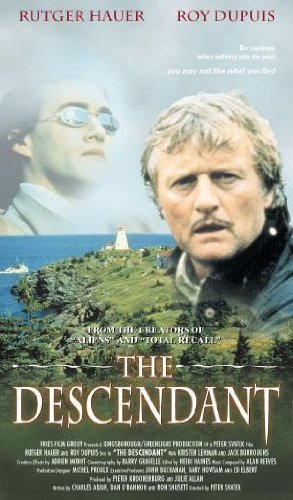
The cast for the movie is headlined by Roy Dupuis (Screamers, La Femme Nikita), Kristin Lehman (The Killing, The Way of The Gun), and noted character actor Rutger Hauer (Blade Runner, Surviving The Game, The Hitcher).

bleeders5The creature designs for the film were provided by CJ Goldman, who went on to work on larger movies like Battlefield: Earth, Pacific Rim, The Fountain, 300, and X-Men: Apocalypse.

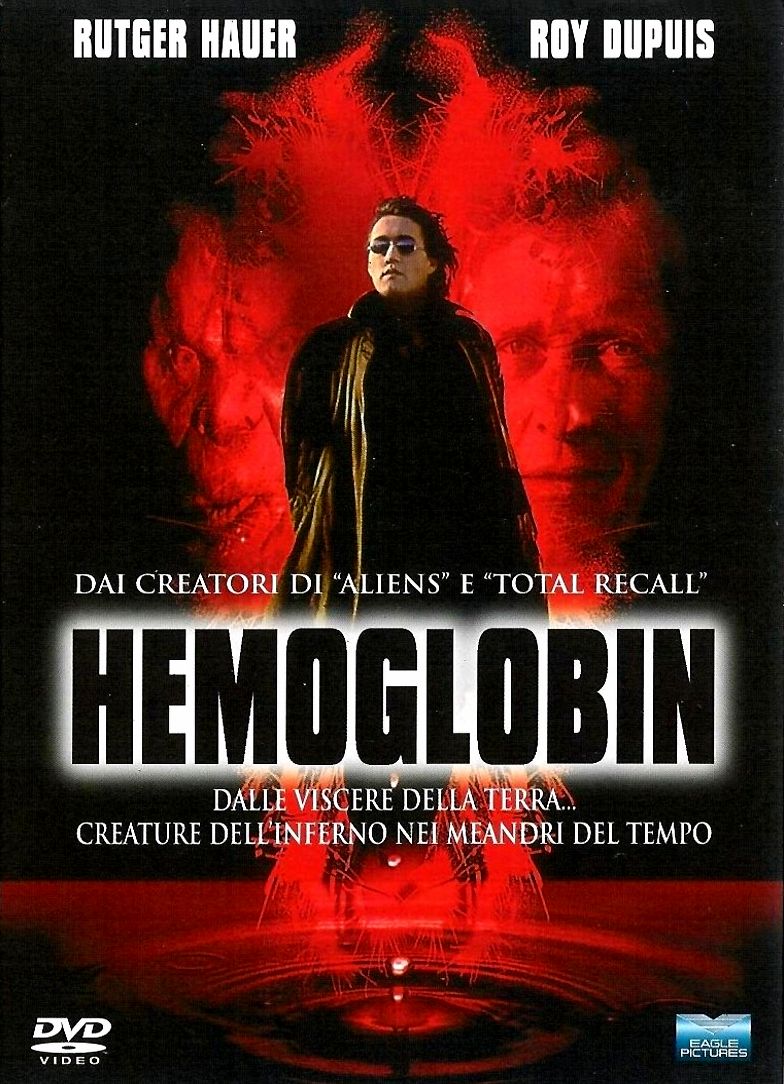
As with many b-movies, Bleeders has been released under a number of different titles over the years, including Hemoglobin and The Descendant.

Bleeders currently holds an IMDb user score of 3.8, alongside an unenviable 30% audience score on Rotten Tomatoes. A prominent review of the film on HorrorNews.net confidently stated that “I’ll be damned if there was anything in this picture worth seeing again,” which succinctly sums up the general reaction to the film.

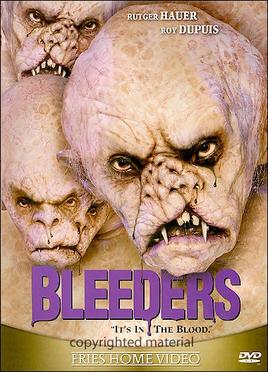
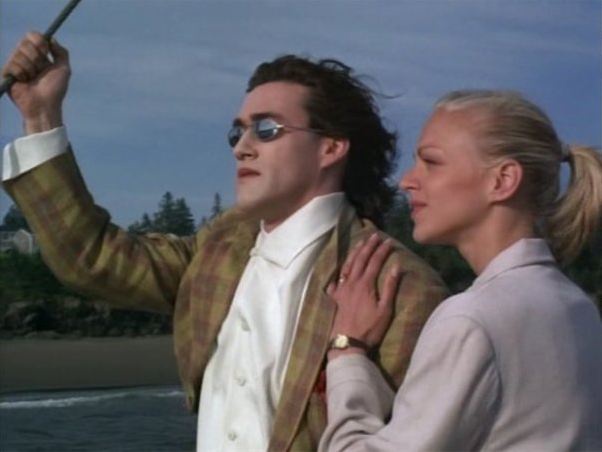
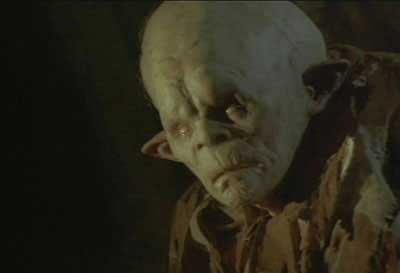
When I first saw images of Bleeders, the first thing that stuck out to me were the monster designs. They don’t look particularly good, but they are, I suppose, imaginative. I assume that the budget, particularly for the effects, was really low, so there was a lot of necessary creativity to accommodate those restrictions. Honestly, considering that, the monsters could definitely have looked a whole lot worse.

bleeders4

That said, there is definitely a problem with the monsters: they aren’t scary. While they do successfully rack up a kill count over the course of the movie, they are never particularly intimidating, which I think is more the fault of the direction than the creature designs themselves. There is one specific sequence I recall in the film where one of the beasts charges out of a clothes dryer at a potential victim, only to get caught in a sheet, flail confusedly, and then fall head-first into a boat motor. That sequence is probably the best representation of a Dungeons and Dragons “critical fail” that I have ever seen on screen, and it doesn’t give the CHUD-like beasts much gravitas.

The ludicrousness of that incident aside, the moment in the movie that has made the most lasting impression on me was a sequence that was meant to have great plot significance. One of the lead characters is, during the story’s climax, forced into a position where he must succumb to his long-suppressed cannibalistic nature. On its own, this setup has the makings for a decently dramatic scene. However, the way he goes about indulging this need is at once too gross, while arguably not being explicit enough: he eats (drinks?) a wet specimen of a human fetus.

While the act isn’t shown, the lead up and its aftermath are. On one hand, the very idea of eating a wet specimen is hella gross, and that is accurately and sufficiently conveyed. On the other hand, from the perspective of understanding and experiencing the character, not actually capturing this final, irredeemable act is a huge loss for the audience: it is a pivotal, climactic moment for a central character that is played entirely off-screen. While suggestion can certainly be powerful, missing out on the entire fall from grace isn’t something that can be overcome easily. At the very least, the act could have been done in silhouette or in deep shadow: any way that the content could be understood and experienced, while details of the act could still be somewhat concealed. The moment simply would have been more powerful if the audience could have experienced it.

This brings me to the biggest issue with the film: there really isn’t anyone for the audience to identify with. One of the strengths of Lovecraft’s stories comes from his ability to write horror from a distinct perspective, which helps immerse readers into his tales of terror. However, Bleeders lacks this immersive identification with any of the characters. If the story were from the perspective of the sick young man, that might have worked as a descent into madness. If the story had been through the eyes of his love-stricken, confused caretaker, there still could have been a story there, as she is the most notable outsider on the island. Instead, the narrative doesn’t back anyone in particular: the audience is left without even the slightest guidance. On top of that, the characters are all so damn weird and unbelievable that I couldn’t help but feel like a wholly disengaged gawker, rather than an invested observer of the story.


bleeders3Overall, Bleeders is a weird, if uneven, b-movie. Rutger Hauer is good for what little time he is on screen, and there are a couple of other hammy performances that lighten up the experience of watching the flick. However, the story is pretty damn slow, and pretty much everything that shows up on screen is visually bland. There are definitely the makings of a decent movie with the source material, but this isn’t it.

As far as a recommendation goes, I’m on the fence. Bleeders is definitely not your everyday b-movie, and it does have some redeeming qualities, but they aren’t enough for me to recommend it to anyone but the most die-hard bad movie fans.

If you want to be able to request movies to be covered on Misan[trope]y, check out my Patreon page! Right now, early adopters that are willing to contribute $3 a month will get to make a request every month!

Jane Got A Gun

Jane Got A Gun

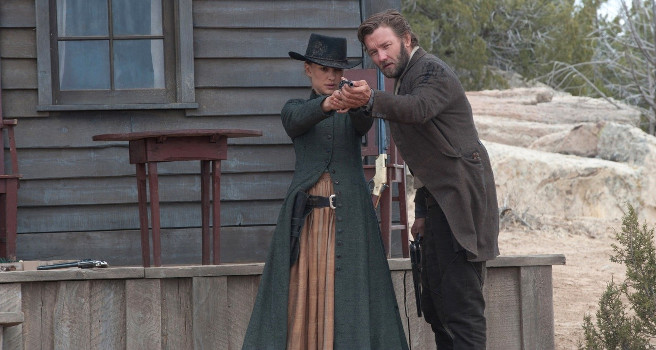
jane1

Today, I want to dig into an early 2016 flop that I think is worth a second look: Jane Got A Gun.

Jane Got A Gun has three credited screenplay writers: the duo of Joel Edgerton (The GiftThe Rover) and Anthony Tambakis (Warrior), and initial screenplay writer Brian Duffield (Insurgent).

The director for the film was Gavin O’Connor, whose other credits include Warrior, Pride & Glory, and Miracle. He also directed the movie The Accountant, which released just a few months after Jane Got A Gun in 2016.

The cast of Jane Got A Gun includes Natalie Portman (Black Swan, The Professional, Jackie, Thor, Heat, Mars Attacks!), Joel Edgerton (The Thing, The Gift, Loving, Midnight Special, Black Mass), Ewan McGregor (Trainspotting, The Island, I Love You, Phillip Morris, Nightwatch), Noah Emmerich (The Truman Show, Frequency), Boyd Holbrook (Narcos, Milk), and Rodrigo Santoro (300, WestWorld).

Mandy Walker provided the cinematography work for Jane Got A Gun, following up previous credits on films like Shattered Glass, Australia, Truth, and Tracks. The current critical success Hidden Figures is her latest shooting credit.

The editor for the film was Alan Cody, who cut the films Speed 2: Cruise Control, Inspector Gadget, and Corky Romano, as well as a number of episodes of shows like Black Sails and The Pacific.

The music for Jane Got A Gun was provided by the duo of Lisa Gerrard and Marcello De Francisci, who have worked on films like Samsara, Gladiator, Layer Cake, Tears of the Sun, and Ali.

The original script by Brian Duffield was named to the 2011 Black List, which is a survey of the most-liked unproduced screenplays floating around Hollywood. Other screenplays that made the 2011 list and have since seen a screen treatment include The Imitation Game, The Accountant, Dirty Grandpa, Bad Words, and Maggie.

Initially, Jane Got A Gun was planned to be a very different-looking movie than what ultimately hit the screen. Michael Fassbender, Bradley Cooper, and Jude Law were all at one point or another attached as main players in the movie during its tumultuous pre-production. Fassbender reportedly departed due to scheduling conflicts, though rumours also indicate a clash with the originally attached director, Lynne Ramsay (We Need To Talk About Kevin). Ramsay herself left the production shortly before filming over a conflict with one of the producers, which led to a lawsuit for breach of contract. Her departure saw both Jude Law and the cinematographer Darius Khondji leave as well, throwing the movie into last-minute disarray. This prompted a screenplay re-write, the arrival (and subsequent departure) of Bradley Cooper, and the last minute casting of McGregor to replace him.

The initial release date announced for Jane Got A Gun was August 29, 2014. After a number of delays, and the production company Relativity Media ultimately filing for bankruptcy, the Weinstein Company acquired the film’s distribution rights, and quietly released it on January 29, 2016.

On top of not being promoted much by the Weinstein Company (a Variety critic said it opened “with only slightly more advance notice than a traffic accident”), Jane Got A Gun ultimately wasn’t screened for the press ahead of its release, which is typically a sign of either a poor quality film, or an indication that the studio doesn’t care about the project.

While it did get a wide theatrical release, Jane Got A Gun wound up being an early flop for 2016, raking in a paltry $3 million in its lifetime theatrical gross on a production budget estimated at $25 million.

Critically, the movie didn’t fare any better. As of now, Jane Got A Gun holds a Metacritic score of 49, a 5.8/10 user rating on IMDb, and Rotten Tomatoes scores of 38% from audiences and 40% from critics.

In his review for Variety, Joe Leydon specifically pointed out something that I think had a significant impact on the perception of Jane Got A Gun for critics:

For those who have perused the countless accounts of last-minute cast changes, musical directors’ chairs and repeatedly delayed release dates, it may be difficult to objectively judge what actually appears on screen here without being distracted by thoughts of what could have been, or should have been.

First off, I want to point out that I watched this movie a good while after its initial theatrical run, and didn’t do any reading into its background going into it. I only vaguely remember its brief theatrical release, and didn’t recall all of the behind-the-scenes shenanigans that plagued its production. I had the luxury of watching it with my girlfriend after coming across it on Netflix, in a relative vacuum of public opinion, industry gossip, an critical chatter.

Personally, I think that the film is populated by good performances from the entire primary cast. I fully agree with Leydon, who specifically cites Portman as “persuasive and compelling”, Edgerton as hitting “the right balance of sullen gruffness and soulful sincerity,” and lauds how McGregor “artfully entwines amusement and menace as he serves generous slices of ham.” I particularly concur with his assessment of McGregor, who embraces his role of a western villain with a particularly emphatic mustache twirl. Likewise, I think Edgerton is probably one of the most underappreciated talents in the business: not only in regards to his performances, but with his writing and directing as well. If you haven’t seen them already, both The Gift and The Rover have been masterpieces of imaginative tension in the last few years, and both have his fingerprints all over them.

jane2

The screenplay for the film provides a good siege setup, and allows the tension for the final conflict to build throughout the meat of the film. I particularly appreciate how it bounces between revealing flashbacks and siege preparations in the present day, which slowly reveal histories and relationships between the various players. I will say that I thought that the ultimate payoff was a bit lacking, and that the conclusion was pretty weak, but if you value the journey over the destination, there is quite a lot to enjoy here.

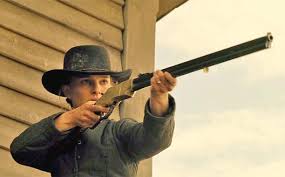
As with the negative buzz and reporting that haunted Jane Got a Gun before its release, the production was also hexed with a handful of bad trailers, and a lackluster marketing campaign. Despite the way the movie was pitched to audiences, it isn’t really a story about Natalie Portman being a badass gunslinger. The tale is significantly more grounded than that, and far less showboat-y. Portman’s Jane is human and relatable above all else. The story begins as she is unexpectedly backed into a corner, and she then spends most of the film fighting with everything she has in order to hold her ground. At no point is she more than what she started as: she is always very human, even in the midst of combat. She never turns into a spontaneous superhero in a firefight, like Jamie Foxx’s Django. Because of this, Jane Got A Gun is more of a spotlight on an average person pushed to the edge than the story of a stereotypical badass. In a market dominated by cookie-cutter superheroes and badasses, it is actually kind of refreshing to see if you ask me.

jane3

On top of that, Jane Got A Gun is a story that is imbued with a lot of emotions: grief, desperation, heartbreak, and fear most prominently among them. If an audience was expecting a relentless series of firefights to snack on popcorn to, getting hit with this heavy, darkly atmospheric movie probably wouldn’t be a welcome experience. Honestly, I wouldn’t have been satisfied with the result if I had seen the trailers for the movie ahead of time.

On top of providing inaccurate representations of the movie, the international trailers were particularly bad about revealing too much information. Information control is kind of essential to this film: the reveals of past relationships, character traits, and outcomes of past events over the course of the film are key to maintaining the audience’s intrigue. The trailers, however, give far more information than is needed, spoiling a number of reveals that are far better when done organically in the film itself.

I mentioned previously that I was disappointed with the film’s ending. Personally, I felt like it was far too tonally inconsistent with the rest of the movie: it is just too Hollywood, which feels out of left field for such a bleak movie. Not only does the optimistic ride into the sunset not work for the style or the tone of the screenplay, but it doesn’t logically work very well, either. For the sake of not spoiling anything, I won’t go too far into it, but last 10 minutes of the movie made me seriously wonder if there was going to be a Brazil twist.

Overall, I think that Jane Got A Gun is a worthwhile neo-western, if not anything revolutionary. I think it certainly deserves some props, especially given the problems with production. I’m still surprised at how harshly it was received by critics: I definitely get why audiences had trouble digging it, given its marketing, but critics are usually a different story. I suspect the initial hype and coverage over its long production poisoned the well a bit for them, and started a lot of people off on the wrong foot. The Weinstein Company not screening it for critics almost certainly exacerbated things as well. All in all, I think this film was a victim of semi-paranoid prognosticating on the part of the industry media and the online buzz-machine, and is worth another look. If you like Edgerton’s or O’Connor’s other works, or just have a fondness for neo-westerns as a genre, give this one a go. That said, know what you are in for: a slow-burning, emotionally-driven, grounded siege movie.


Death Bed: The Bed That Eats

Death Bed: The Bed That Eats

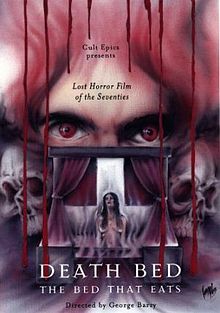
220px-death_bed-_the_bed_that_eats_filmposter

Today, I am going to take a look at a famously bad movie with a unique cult reputation: Death Bed: The Bed That Eats.

The simple plot of Death Bed: The Bed That Eats is summarized succinctly on IMDb as follows:

A bed possessed by a demon spirit consumes its users alive.

Death Bed: The Bed That Eats was directed and written by George Barry, and to this day has proven to be his sole film. However, a handful of the cast and crew went on to notable careers. William Russ, one of the actors, later appeared in Cruising, The Right Stuff, and wound up on the sitcom Boy Meets World. Editor Ron Medico went on to cut the cult creature feature Alligator, and had a significant career editing for documentaries and television after that. Cinematographer Robert Fresco wound up working on the 1980s revival of The Twilight Zone, and wound up working on a handful of documentaries as well. Last but not least, the special effects worker, Jock Brandis, went on to have a long career as a lighting technician and gaffer, working on movies like Videodrome, Scanners, The Brood, The Dead Zone, Maximum Overdrive, Blue Velvet, and Serial Mom, among others.

Famous comedian Patton Oswalt had a popular bit on his album Werewolves and Lollipops in which he obsesses over the inherent absurdity of the concept of Death Bed, and speculates what the inception process was like for the screenplay.

In 2002, Death Bed: The Bed That Eats received a remake in the form of Deathbed. The movie stars Joe Estevez (Soultaker) and was directed by Danny Draven, who has spent most of his career editing movies like A Talking Cat!?!, A Talking Pony!?!, Evil Bong, Ice Spiders, and The Gingerdead Man.

Death Bed: The Bed That Eats did not have an official release of any kind until 2004, over 25 years after its completion in 1977. Before that DVD release, Death Bed had been widely circulated online and via pirated VHS tapes, and developed its cult reputation. George Barry, the movie’s director and writer, allegedly forgot he had made it until he saw it online, and only decided to officially release it after seeing how much people enjoyed it.

Rumor has it that the lion’s share of the action in Death Bed was filmed on Keelson Island in Detroit, specifically in the infamous Gar Wood Mansion. The mansion was originally built by inventor Gar Wood in the 1920s, but sat empty for many years after his retirement. Starting in 1969, it became a renowned partying location, becoming a combination of a music venue and a counter-culture collective until it was shuttered in 1972. Only a handful of years later, the mansion suffered significant fire damage, and was eventually razed in the 1980s.

The company Cult Epics, which specializes in restoring and transferring cult movies to DVD and Blu-ray, released an updated Blu-ray version of Death Bed in 2014, which boasts a full commentary track with writer/director George Barry.

Recently, I had the rare experience of getting to see the officially restored Blu-ray version of Death Bed: The Bed That Eats in a theater, as part of a fundraiser for Cult Epics. Previously, I had only seen some rough clips of the movie online, and I was shocked at how clear the movie wound up looking on screen.

As you could probably gather at this point, Death Bed is pretty far from a cinematic masterpiece. That said, there are definitely some positive aspects to it: first and foremost, the effects. For each of the scenes where the bed consumes something/someone, there is a cut away to an amber-colored tank, which stands in for the bed’s interior digestive system. I’m not sure exactly how they did this, but I suspect they filled this tank with some sort of highly corrosive fluid, and dipped in objects on fishing line to show them digesting inside of the bed. At first, these shots are of things like an apple and a bucket of chicken, but the movie’s climax features a character’s hands disintegrated in the fluid, which actually looks pretty cool.

Outside of those effects shots, however, there isn’t much positive to say about Death Bed. Almost all of the dialogue in the movie is done in voice over, and is delivered in a sort of trance by a multitude of perspectives and narrators. The overarching plot doesn’t make a lot of sense, and is poorly conveyed to boot. The performances range from sleepwalking to possibly comatose, as most of the characters show no range of emotions or exhibit any kind of sensible reactions to the events around them. I’m pretty sure that fault doesn’t lie with the actors, though: the strange reactions and woozy behaviors were almost certainly part of the directorial intent, which was apparently to re-capture the surreal atmosphere of a dream. However, I don’t think it comes across quite as he wanted it to.

For me, this is the biggest question about Death Bed: how serious were they about this movie? While there are brief moments of knowing humor scattered throughout, including a sequence where the bed ingests a bottle of pepto-bismol, most of the movie plays as serious as a heart attack. It clearly isn’t as hammy as the name implies, and is a pretty far stretch from any kind of Troma or Full Moon b-movie. I usually describe this as one of the worst-executed art movies of all time: the atmosphere is way too self-important for it to fit in with the usual lot of b-movies and horror fare, and it certainly isn’t smartly profound or well-crafted enough to land in the Criterion collection. It is a unique little oddity that is unlike pretty much anything else out there, and worth giving a shot for that reason alone. While it can be a little dull at times, I think the ride as a whole is worth a ticket, particularly for b-movie and cult movie fans.