This past weekend, I took a trip with my family to spend Thanksgiving in the tourist destination of Gatlinburg, Tennessee, right in the midst of the Smoky Mountains.
During the time that we were there, a small fire in Chimney Tops burned in relative containment in a section of the Great Smoky Mountains National Park, just a few miles away from the city. We even drove past it on Saturday, and took photos of the smoke from a nearby park road, assuming it was essentially under control. Less than 24 hours after we left Gatlinburg to go home on Sunday, extreme wind gusts spread the fire rapidly through the dry forest, and brought the blaze into the town at an unprecedented speed. At the time of this writing, I have seen a handful of images and videos of the damage done to Gatlinburg, but the real extent of the fire isn’t entirely clear. Currently, there are 3 confirmed deaths in association with the fire.
This is what the Chimney Tops fire looked like when I saw it on Nov 26
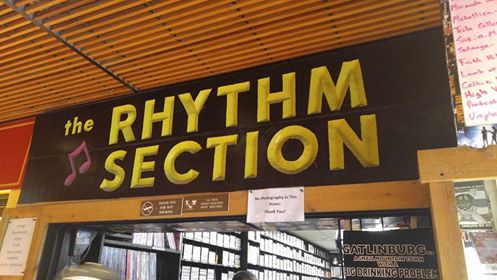
Before this tragedy erupted, I did the same thing that I do with any location I visit: I stopped by a local record store to take a look at their movie and soundtrack selections. In the case of Gatlinburg, I was a little surprised to find a little shop called The Rhythm Section. The town itself is quite small, so I assume this little spot has survived on the heavy tourism traffic in the area as opposed to consistent local patronage. In any case, the shop is as charming as it is compact, and might be the most space-utilitarian record store I have seen.
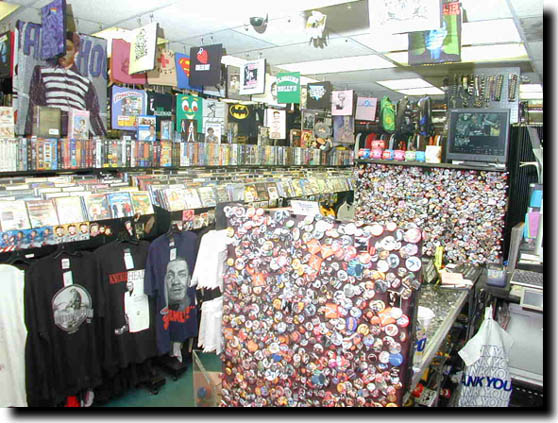
Unfortunately, the shop has a specific policy banning photography in the store, so I don’t have my usual photographic coverage for this post. However, I will say that the selection of posters, buttons, t-shirts, and other miscellaneous items was off the charts, even if the selection of records wasn’t as fleshed out. The DVD selection was also pretty impressive: there were a fair number of cult and foreign flicks in their stacks, including a mixture of Hesei and Showa Godzilla features that you wouldn’t stumble across terribly often.
However, as the name suggests, The Rhythm Section is definitely a music-first shop. If that is your passion, then this is a place that deserves some dedicated time. For movie fans, their selection is interesting and entertaining, but not terribly deep or thrifty. I’d still recommend picking up something, even just a patch or a button, because the place is just such a welcome sight among a plethora of cheap, confederate flag peddling junk stores.
In the wake of the fires that have done such immense damage to the region, and Gatlinburg in particular, I’m sending all my best to the folks at The Rhythm Section, and the other residents of the impacted area. If you want to help, I’ve seen some recommendations to support the organization Friends of the Smokies.
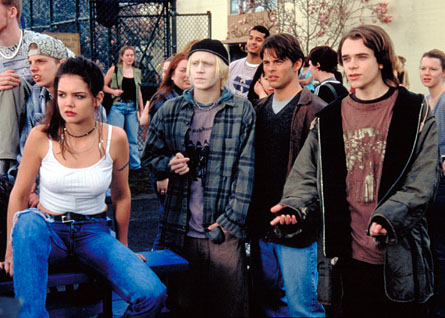
Today’s feature is a 1998 high school set science-fiction horror movie not call The Faculty: Disturbing Behavior.
The plot of Disturbing Behavior is summarized on IMDb as follows:
The new kid in town stumbles across something sinister about the town’s method of transforming its unruly teens into upstanding citizens.
Disturbing Behavior was written by Scott Rosenberg, who also penned screenplays for High Fidelity, Con Air, Kangaroo Jack, Gone In Sixty Seconds, and the upcoming Jumanji reboot.
The director for Disturbing Behavior was David Nutter, who has done extensive directing work for television shows like Game of Thrones, The X-Files, The Flash, Arrow, Homeland, The Mentalist, The Sopranos, Supernatural, and The West Wing, among others.
The cinematographer for the picture was John S. Bartley, who shot the film Wrong Turn, and also worked extensively on television shows like 21 Jump Street, The X-Files, Lost, and Bates Motel.
Disturbing Behavior was cut by Randy Jon Morgan, who has had a long career editing on television, including on shows like Law & Order, ER, Criminal Minds, CSI, and Nash Bridges.
The music for the movie was composed by Mark Snow, who provided music for shows like The X-Files, The Lone Gunmen, Starsky & Hutch, and T.J. Hooker over his career.
The cast of Disturbing Behavior is made up of James Marsden (Westworld, X-Men), Katie Holmes (Phone Booth, The Singing Detective, Batman Begins), Nick Stahl (Terminator 3, Sin City), Steve Railsback (Nukie, Lifeforce, Deadly Games), Bruce Greenwood (Capote, Star Trek, Star Trek Into Darkness, Thirteen Days), Katharine Isabelle (American Mary, Ginger Snaps), and William Sadler (Shawshank Redemption, The Green Mile).
Although an original director’s cut of Disturbing Behavior was approved by the studio for release, the feature was forced into re-cutting by the studio after a mixed test-screening that yielding criticisms of the ending and a sex scene, which were both ultimately removed. In response to the studio interference, the director tried to have his name removed from the movie, but eventually allowed it to remain in spite of his reservations. The director’s cut of the movie has never been released officially, though all of the removed scenes are featured as extras on the official DVD release.
The movie currently holds a 5.5/10 IMDb user rating, along with Rotten Tomatoes scores of 35% from critics and 39% from audiences, making it overall pretty poorly regarded.
Disturbing Behavior had a lifetime domestic box office total of $17.5 million on an estimated budget of $15 million, which I assume probably made it break even with relatively low advertising costs. However, I’m sure that a far more lucrative return was hoped for.
Holmes and Marsden are both perfectly serviceable supporting actors if you ask me, but I don’t think that either of them are emotive enough to carry a feature as a lead. In a best case scenario, they could lean on their co-lead to carry them. But, as is the case in this movie, when both leads are stone-faced pseudo-stoics, the movie as a whole suffers.
That said, for as much as Marsden and Holmes don’t work in this movie, Stahl does. His character feels a little more tangible and real than everyone around him, despite some moments of ridiculously quippy dialogue. When his character is eventually turned, his performance really makes it work, and is really the saving grace of the movie.
Something that bothered me a bit while watching the movie was the fact that not much time was given to exploring the hormonal rage side effect exhibited by a few of the characters. I thought this was the major conflict would come in during the climax: that eventually all of the students would be in a permanent rage-state as a result of their surgeries, leading them to attack everything that moves. While that would be less Stepford-like, which is what the movie was clearly going for, I think it could have made for an interesting sort of youth-in-revolt, generational conflict movie.
Speaking of the concept, I like the general idea of putting The Stepford Wives in a high school. There are a lot of social dynamics at work there, most prominently the fear of unruly youth in rebellion, the social dynamics of high school cliques, and the control each generation tries to exert upon the next. That said, this film didn’t quite capitalize on this potential, mostly by not showing much of the adult plot and motivations. Also, I think there was a missed potential here for a race angle: the violence people fear in schools, particularly “inner-city” ones, is almost always spawned from racism, something that isn’t at all addressed here (until the stinger at the end of the film, in a minor way). The in-group / out-group dynamic would also have been far more powerful from that perspective, and the film could have even had a plot based around the idea of school integration. Alas, it is what it is.
As with most high school movies, Disturbing Behavior just can’t resist bowing to the overdone, cartoonish, and exaggerated clique divides that dominate the genre. While the in-group out-group dynamic does serve a purpose for the plot, the initial introduction to the school introduced a ton of different “classes” which are never brought back up again. So, why even include E-heads and nerds if they don’t play into the story at all? Ultimately, this story is a conflict between the “fixed” kids and everyone else, so these other cliques weren’t ever necessary to establish.
Another pretty serious issue with this movie is the evil plot at the center of it. Not only is the villain a cartoonish (yet not entertaining) caricature of a mad scientist (who utters “science is god” just prior to being defeated), but his plot hinges entirely on the idea that all of the parents in the town will universally agree to mind control their children. If even one set of parents refuses to comply and reports him, the gig is up. The story never even addresses this issue: the parents are all more than happy to subject their children to experimental brain surgery without their consent, which is almost as fucked up as it is wildly unrealistic.
From reading about the crew, it was interesting to see how many of the key members came from an explicitly television background. Somewhat predictably, the movie looks and feels like it belongs on television as a result: something about the style seems more fit for a TV movie than a feature release. And, honestly, I think this movie probably could have been made as a television movie if they had creatively avoided some of the unnecessary CGI shots, and hired down with the casting a little more.
Overall, Disturbing Behavior is weighed down a lot by the lack of chemistry between the leads, some lazy writing that doesn’t do the intriguing concept justice, and a studio-interfered final cut that loses some key details. With all of that said, it is easily as watchable as any given episode of a late season of The X-Files.
I would recommend giving it a shot if you happen to come across it somewhere organically, but I don’t think it is worth specifically seeking out. The Faculty, its better-regarded and more fondly-remembered psuedo-twin, is just a lot more fun: it has a better comedic voice to contrast the dark scenario, and has a far more dynamic and sympathetic cast of characters. It think Disturbing Behavior is rightfully overshadowed by it, and the comparisons it draws will always leave it with the short end of the stick.
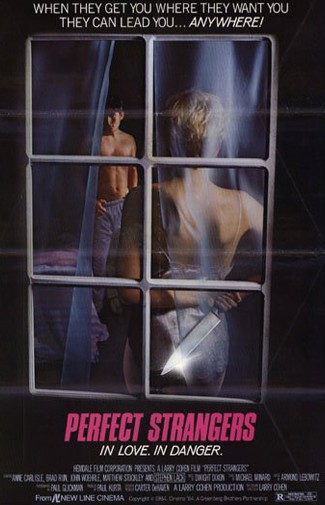
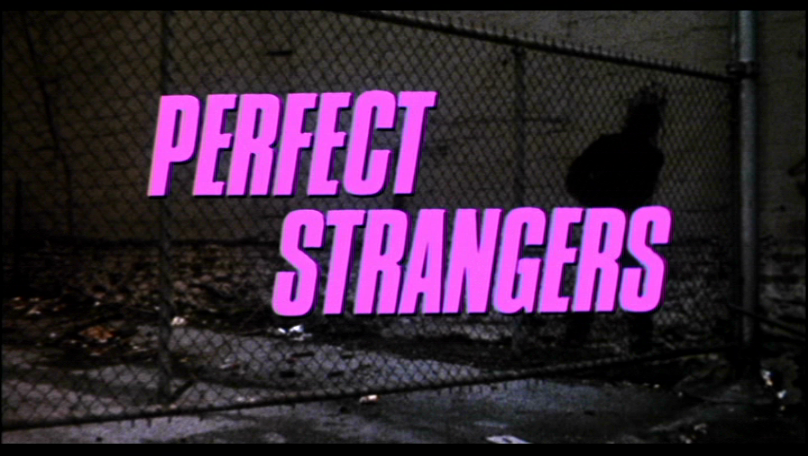
Today, I am continuing my spotlight on the career of notable b-movie writer/director Larry Cohen, who I interviewed earlier this year. Next up is 1984’s Perfect Strangers.
The plot of Perfect Strangers is summarized on IMDb as follows:
A hit-man tries to seduce the mother of a child who witnessed his most recent kill.
Perfect Strangers was both written and directed by Larry Cohen, and was released in the same year as another of his films, Special Effects. Perfect Strangers was Cohen’s follow-up directorial feature after the 1982 cult classic monster movie Q: The Winged Serpent.
The cast of Perfect Strangers includes Brad Rijn (Special Effects, A Return To Salem’s Lot), Anne Carlisle (Liquid Sky, Desperately Seeking Susan), Stephen Lack (Scanners, Dead Ringers), and Ann Magnuson (Small Soldiers, Glitter, Panic Room).
The cinematographer for the film was Paul Glickman, a frequent Larry Cohen collaborator who also shot The Stuff, Special Effects, God Told Me To, and See China And Die.
Perfect Strangers was edited by Armond Lebowitz, who also cut Larry Cohen’s films The Ambulance, Full Moon High, A Return To Salem’s Lot, Special Effects, The Stuff, and Q: The Winged Serpent.
Currently, Perfect Strangers has a 5.3/10 user rating on IMDb, from just over 230 submitted user reviews.
When I first heard about Perfect Strangers, I thought that the concept sounded pretty promising. The idea of a hitman needing to take out a child witness, and doing so by initiating a relationship with the mothers, creates an interesting atmosphere for tension. Unfortunately, this movie never really goes anywhere with that idea, and never feels much like a thriller or a romance.
The biggest issue with the movie is, surprisingly, the writing. Cohen has written some interesting and thoughtful screenplays, but this definitely isn’t one of them. I’m not sure if this was just rushed, but the characters don’t have any depth to them, and their dialogue and interactions all feel and look incredibly forced and unbelievable. Worse yet, there are a number of subplots that range from being uninteresting to being mind-warpingly ridiculous, like the presented local feminist action group members in that story who all behave like one-dimensional, man-hating caricatures written to life from the darker corners of the internet.
It doesn’t help that Cohen just doesn’t seem to have anything to say with this movie. His stronger stories have typically had roots in satirizing elements of culture, or understanding popular anxieties. Perfect Strangers comes off like the entire film was an excuse to rail against modern feminists and new-age mothering techniques, which he had mysterious personal vendettas against. The result is a straw man dressed up like a romantic thriller, and it shows.
Another huge problem with Perfect Strangers is the cinematography. The entire movie was filmed in pretty extreme soft focus, like it entirely takes place in a sitcom flashback or a shitty sex scene. I actually thought that something was wrong with the transfer, but apparently the movie was intended to be filmed in blur-o-vision. It is not only distracting, but it makes the entire movie look less rich and detailed, and almost supernatural. For a movie that should be grounded in a grim and gritty reality, the technique just doesn’t fit at all.
Last but not least, and I can’t emphasize this enough, Perfect Strangers has some of the most obnoxious, shitty child acting I have ever seen, which is particularly impressive because the child character is essentially a mute. I can’t totally blame this on the child, though: I’m pretty sure this was an inevitable outcome for casting a two year old. For the life of me, I don’t understand why Cohen didn’t write the kid as just a little bit older, so that they might have been able to find a child actor capable of pulling it off. The child could just be a mute or something, and the story could have worked almost exactly the same.
I’m pretty sure that Perfect Strangers is the worst Larry Cohen feature I have seen so far, but I still have a few left to get through before I’ve gotten through his primary filmography. I certainly can’t recommend it to anyone: this was a career misstep on Cohen’s part for sure if you ask me.
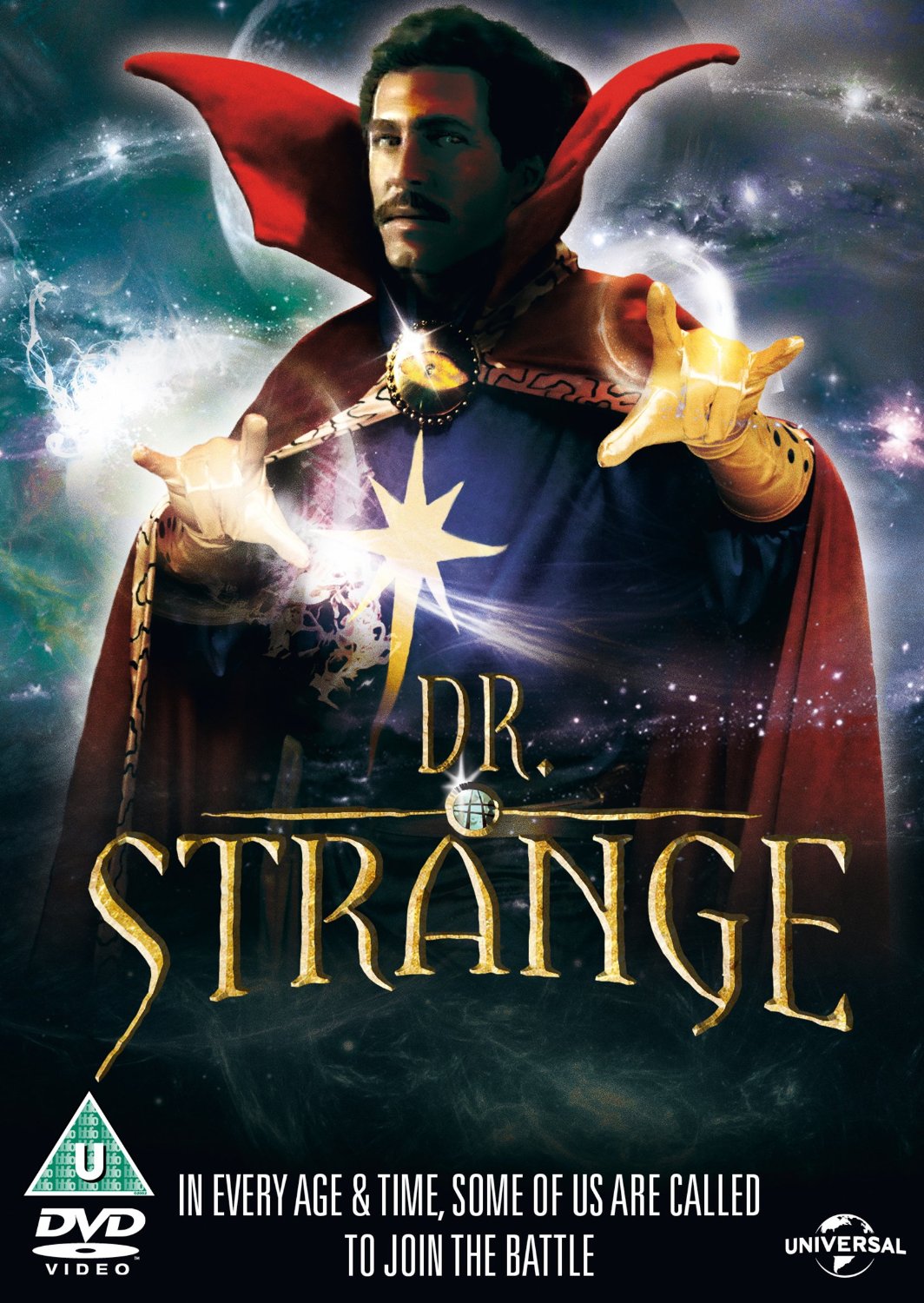
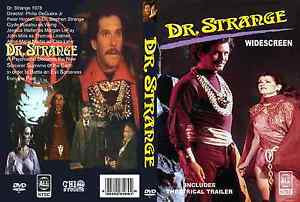
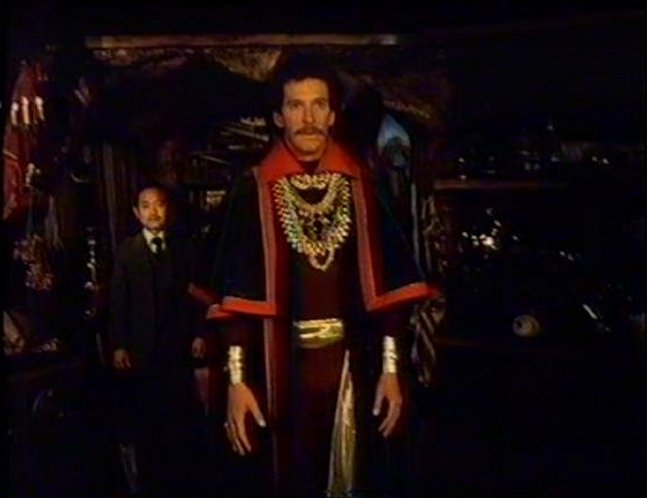
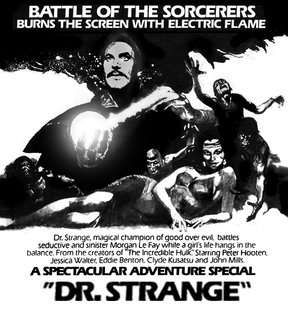
In honor of the big budget Marvel release this past weekend, today I want to take a look at one of the most overlooked Marvel movies of the past: 1978’s Dr. Strange.
The plot of Dr. Strange is summarized on IMDb as follows:
A psychiatrist becomes the new Sorcerer Supreme of the Earth in order to battle an evil Sorceress from the past.
This television movie incarnation of Dr. Strange was written, directed, produced, and generally conjured up by Philip DeGuere Jr., who was a career television writer and director who had assorted credits on shows like JAG, NCIS, The Dead Zone, and the 1980s incarnation of The Twilight Zone.
The film was shot by Enzo Martinelli, who provided cinematography work on a handful of television shows throughout his career, including Battlestar Galactica, The Six Million Dollar Man, and The Munsters.
Dr. Strange was edited by Christopher Nelson, who has had a long career editing acclaimed television shows like Lost, House, Six Feet Under, Mad Men, Hill Street Blues, The Incredible Hulk, Nash Bridges, and Bates Motel, among others.
Beyond DeGuere, the other producers for Dr. Strange were Gregory Hoblit, who went on to direct movies like Frequency, Fallen, and Primal Fear, and Alex Beaton, who produced the Doctor Who movie, The Greatest American Hero, and Kung Fu.
The music for Dr. Strange was composed by Paul Chihara, who also provided scores for Death Race 2000, The Bad News Bears Go To Japan, The Killing Time, The Morning After, Prince of the City, and the television series China Beach.
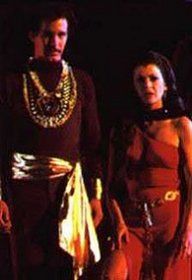
The cast of Dr. Strange is made up most notably of Peter Hooten (Orca, The Inglorious Bastards) and Jessica Walter (Arrested Development, Archer), with the rest of the cast filled out by television regulars.
In 2016, a big budget Marvel film focused on the Doctor Strange character was released. It stars the much-beloved actor, Benedict Cumberbatch, in the role of Hugo Strange, and an accessory cast that boasts the likes of Tilda Swinton and Mads Mikkelson.
Dr. Strange was meant to serve as a backdoor pilot for a network TV series, which would have given CBS three live action Marvel properties, including the already running The Incredible Hulk and The Amazing Spider Man. However, CBS ultimately decided against creating a series around Dr. Strange due to low ratings.
Morgan Le Fay, the antagonist in Dr. Strange, made her appearance in the Marvel comics universe shortly after the film released, but interestingly wouldn’t encounter the character of Dr. Strange for another 6 years in that medium.
The character in the movie known as Thomas Lindmer is a substitute for Dr. Strange‘s mentor in the comic book source material: the Ancient One, who would later be controversially portrayed by Tilda Swinton in the 2016 film.
The character of Dr. Strange was created by Steve Ditko, who is best known as the initial artist and co-creator of Spider-Man. Strange first appeared in a Marvel comics series called Strange Tales in July of 1963.
Stan Lee, the long time public face of Marvel comics, has stated that he had the most input on Dr. Strange of any of the early Marvel television adaptations. He attributes the popular failure of the movie to its time slot, which put it up against the wildly popular Roots.
Currently, Dr. Strange holds a 5.4/10 user rating on IMDb, which reflects its significant lack of popularity and acclaim. However, the new 2016 film is bound to bring more attention to it, and it even just got a DVD release this year after years of being relegated to dusty VHS copies as a result.
If you ask me, Dr. Strange plays out like a pretty decent pilot for a television drama, if not much of an actual movie. Most of the story centers on Dr. Strange as a Doctor, working in his hospital and dealing with patients. Of course, this ultimately intersects with the supernatural, but the story eases its way to that point, like you would expect a pilot origin story to do. I kind of like the portrayal of the character, and he even has a couple of decently witty lines. The thing that really stood out to me, though, was the score: it is pure 1970s chaos, and is absolutely beautiful in its weirdness. I was reminded of Dracula AD 1972 a bit, which I’m not going to count as a bad thing. The costuming and effects will take you on a trip back in time as well, but the music is really what ties it all together.
I don’t think Dr. Strange is nearly as mind-blowing or essential as the 1989 Punisher when it comes to early Marvel adaptations, but it is certainly more watchable than the 1990 Captain America when you consider the context of its time. I kind of wish this had actually gone to series, because I assume the result would have been Garth Merenghi’s DarkPlace with wizards and some rockin’ 70s music.
if you are into old television or Marvel comics history, this is totally worth digging up. In the past, this was incredibly hard to come by, but with the new movie out, and an official dvd release of this flick on its tail, this movie is as readily available as it will ever be.
Recently, I took a quick drive up to Cleveland, OH, which was my first time in the prominent Great Lakes city. Admittedly, I only knew as much as the internet had told me of it.
As I usually do when exploring a new city, I set aside some time to hunt for film-related used media: soundtrack records, DVDs, VHS, laserdiscs, etc.
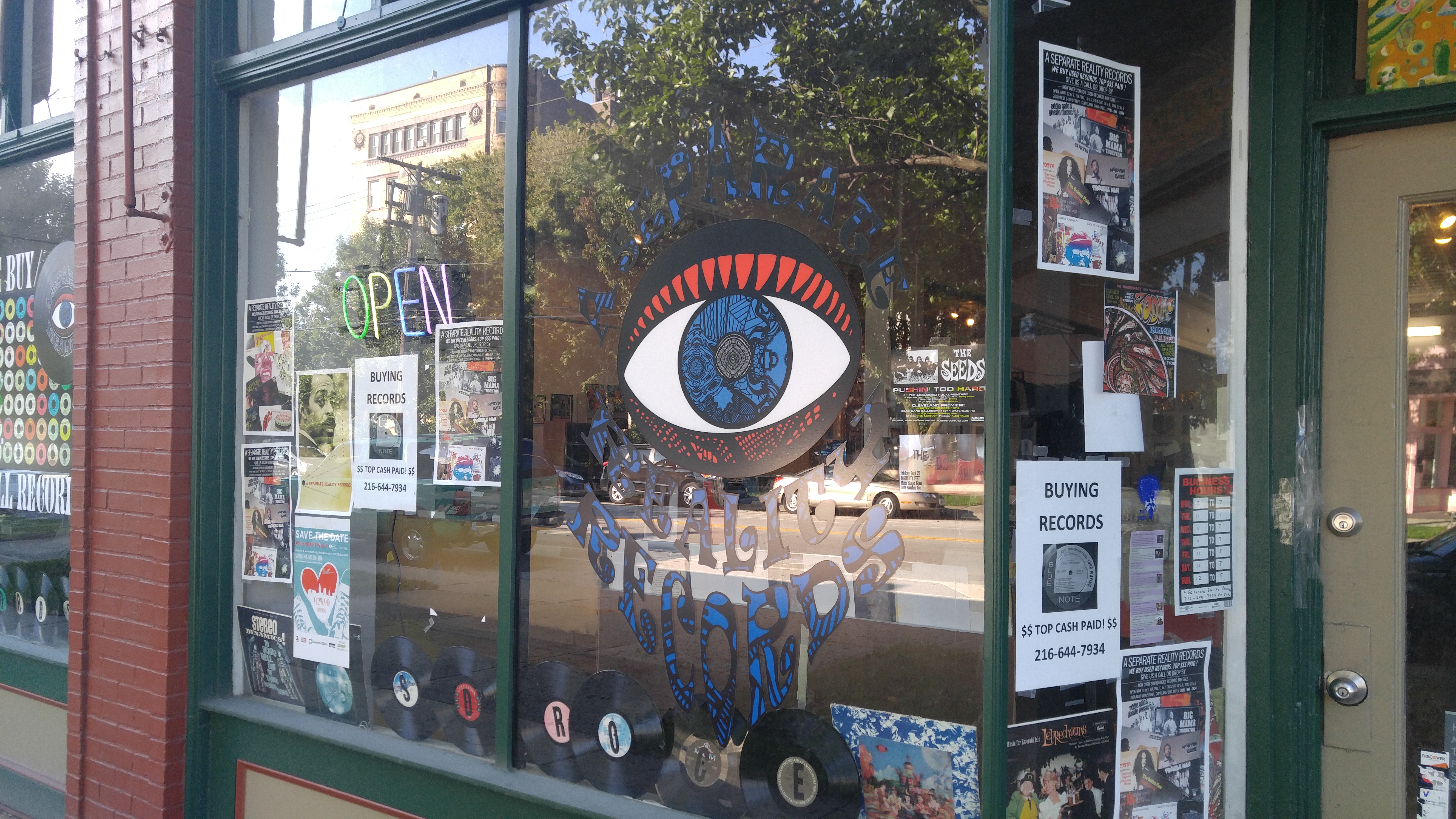
One of my stops in the city was a trippy little record store called A Separate Reality, which initially stuck out to me due to its prominent eyeball logo.
While A Separate Reality doesn’t have any movies among its considerable inventory, this is the kind of record store I always hope to find. The selection of vintage soundtracks was as massive as it was eccentric, featuring everything from science-fiction classics to italian horror flicks to blaxploitation legends to children’s films. The selection included so many notables that I’m only going to spotlight only a handful of them here, and recommend that people check this place out on their own.
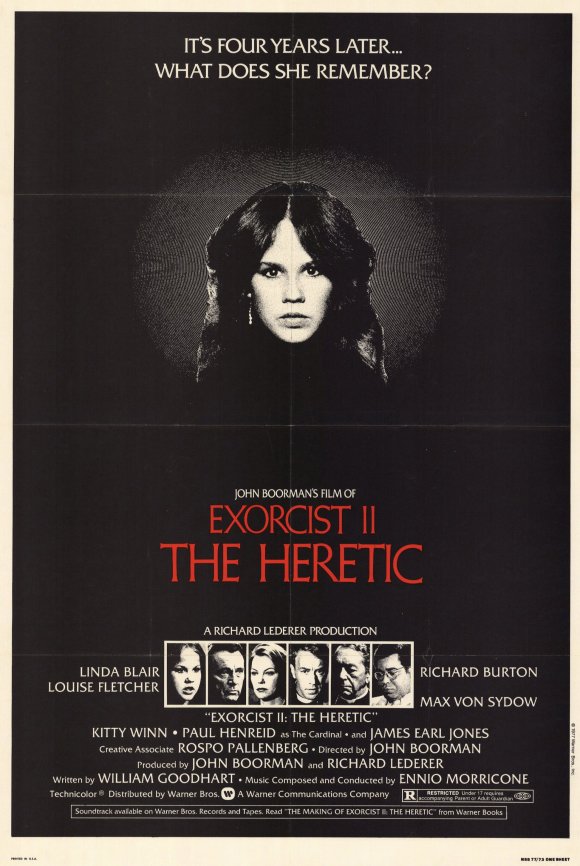
The Exorcist II: The Heretic
The Exorcist II is one of the most infamous Hollywood failures of all time, and a movie I have covered on the blog before. However, it also features a score from famed composer Ennio Morricone, who recently (finally) won an Academy Award for The Hateful Eight. However, if you are a fan of his work on movies like The Thing, Once Upon A Time In The West, or Once Upon A Time In America, you might be in for a shock with his score here. It’s…well…distinct.
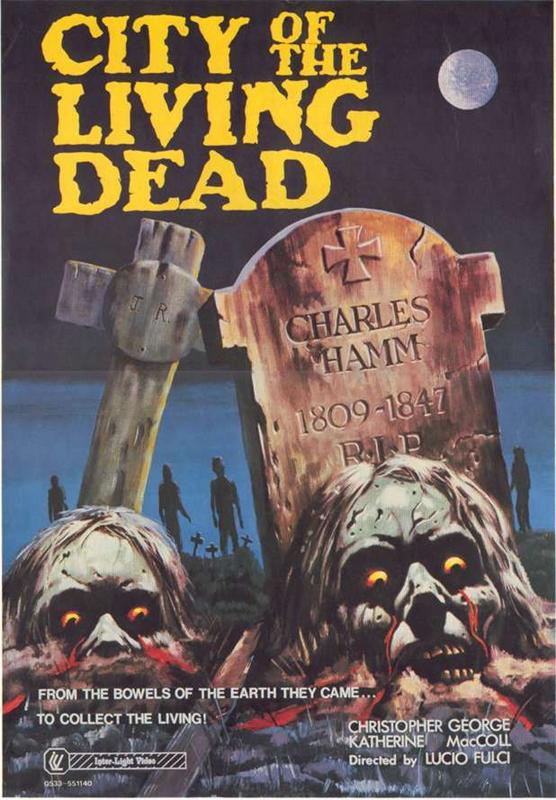
City of the Living Dead
City of the Living Dead is a 1980 film by Lucio Fulci. The score was composed by Fabio Frizzi, a frequent Fulci collaborator who also provided music for his films A Cat In The Brain, The Beyond, and Zombie, as well as the bizarre 1977 Italian version of Godzilla by Luigi Cozzi.
Hercules
Hercules is a 1983 movie directed by Luigi Cozzi for Cannon films, and stars Lou Ferrigno as the legendary demi-god. Even if you haven’t seen this movie, you may have been exposed to the infamous clip of Ferrigno throwing a bear into outer space. I did a full write-up on this bizarre movie a while back, and I highly recommend it.
The score for Hercules was provided by Pino Donaggio, who is probably best known for his work with Brian De Palma (Carrie, Blow Out, Raising Cain, Body Double, Dressed To Kill) and Joe Dante (Piranha, The Howling).
Americathon
Americathon is a strange relic of a movie, that could only possibly come from 1979. It is a satiric future vision of a United States dominated by Jimmy Carter and liberals, with a focus on environmentalism to the detriment of private business and the national debt. It is a weird window into an America before the Reagan presidency, and looking at it now is kind of bizarre. There is a whole lot of xenophobia and racism baked into this feature, and it doesn’t seem to have much of a point to it, but from a socio-political lens, it is an interesting movie to observe.
I first caught this movie at the 2016 B-fest in Chicago, and it is one of the features that has most stuck with me. However, that is admittedly mostly because Meat Loaf fights a car in it. The politics are kind of interesting too, though. The soundtrack includes tracks from The Beach Boys, Eddie Money, and Elvis Costello, among a handful of others, which makes it somewhat notable.
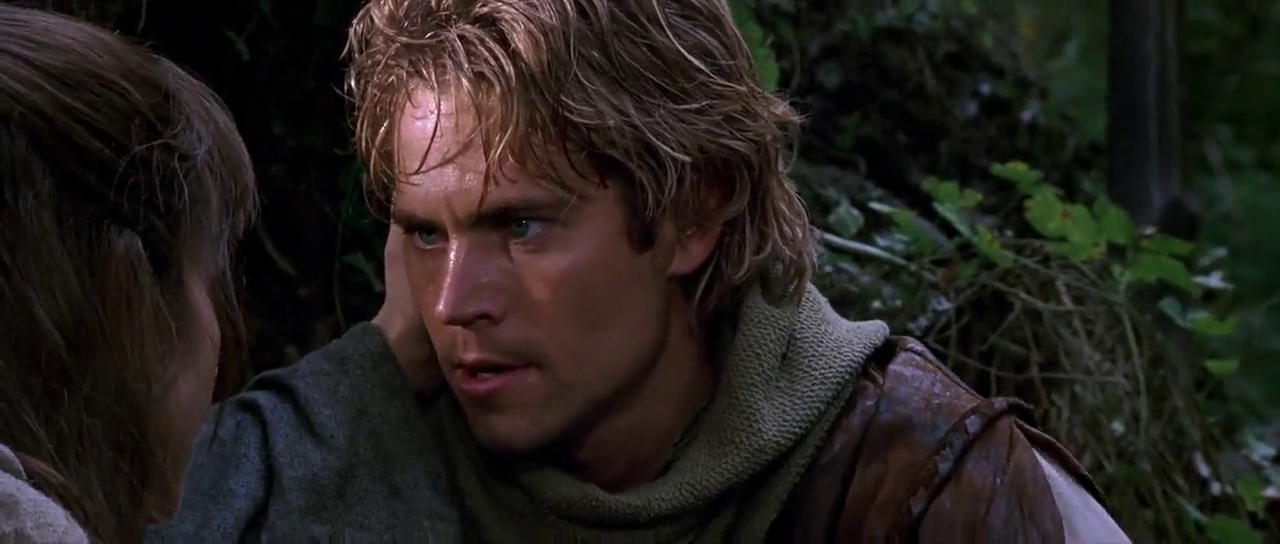
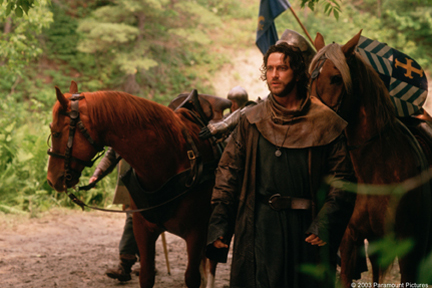
Today’s feature is one of the lesser films to be based on a Michael Crichton work: 2003’s Timeline, directed by Richard Donner.
The plot of Timeline is summarized on IMDb as follows:
A group of archaeological students become trapped in the past when they go there to retrieve their professor. The group must survive in 14th century France long enough to be rescued.
Timeline is based on a novel written by Michael Crichton, who is best known for Jurassic Park, Congo, WestWorld, The Andromeda Strain, and E.R.. However, the screenplay adaptation for Timeline was penned by Jeff Maguire (Gridiron Gang) and George Nolfi (Sentinel, The Bourne Ultimatum, Ocean’s Twelve).
The director for the movie was Richard Donner, who is known for such features as The Toy, Superman, Superman II, The Goonies, Scrooged, and Lethal Weapon.
The cast of Timeline includes Paul Walker (The Fast and The Furious, The Skulls, She’s All That), Gerard Butler (Reign of Fire, Dracula 2000, 300, The Ugly Truth, Olympus Has Fallen), David Thewlis (The Island of Doctor Moreau), Anna Friel (Limitless), Neal McDonough (Minority Report), Billy Connolly (The Boondock Saints), and Frances O’Connor (Windtalkers).
The cinematographer on the movie was Caleb Deschanel, whose other credits include Killer Joe, Winter’s Tale, The Patriot, The Right Stuff, National Treasure, and The Passion of the Christ.
The editor for Timeline was Richard Marks, who has cut films like The Godfather: Part II, The Hand, Broadcast News, Serpico, Pretty In Pink, As Good As It Gets, and Julie and Julia over his career.
The music for the feature was provided by Brian Tyler, whose other credits include Simon Sez, Dragonball: Evolution, The Expendables, John Dies At The End, and Iron Man 3.
Apparently, Michael Crichton so hated the film adaptation of Timeline that he ceased licensing out his properties for the rest of his life, which unfortunately ended only a handful of years later.
The actors David Thewlis and Anna Friel met while working together on Timeline, and were romantic partners for many years afterwards.
Timeline experienced a number of behind the scenes issues. It was initially supposed to release in 2002, but was delayed after the studio was unsatisfied with Richard Donner’s cut of the film. The film had to be entirely re-cut twice more, which led to the entire Jerry Goldsmith score having to be replaced with one by Brian Tyler, due to Goldsmith’s failing health.
Initially, the role eventually filled by Gerard Butler was offered to James Bond actor Pierce Brosnan, who turned it down.
A third writer, Frank A. Cappello (Suburban Commando, Constantine), was at one point credited for film. He apparently wrote an entire draft of the screenplay, and was even credited on some of the film’s early promotional materials.
The battle at the center of Timeline‘s plot is entirely fictional, though the overarching conflict of The Hundred Years War was very much real. A number of liberties are taken with historical accuracy, as you might expect, including some intentionally anachronistic insignias placed in the background as Easter eggs. One of these is the Quebec flag, which appears on a shield as a nod to the filming location.
Financially, Timeline was a significant loss. On an $80 million production budget, the movie only grossed just under $44 million theatrically, leaving the production significantly in the red.
Critically, Timeline fared equally as poorly. Currently, it holds a 5.6/10 IMDb user rating, and Rotten Tomatoes aggregate scores of 11% from critics and 45% from audiences.
Roger Ebert was one of the more charitable critics of the lot, giving the film a 2 star review. However, his criticisms echo much of the negative reaction to the feature:
“I felt too much of the movie consisted of groups of characters I didn’t care about, running down passageways and fighting off enemies and trying to get back to the present before the window of time slams shut…Just once I’d like to see a time-travel movie inspired by true curiosity about the past, instead of by a desire to use it as a setting for action scenes.”
As Ebert stated, one of the biggest weaknesses of the movie is the un-enthralling cast of characters. The interpersonal relationships and individual characters are all incredibly forgettable, to the point that some are only distinguishable based on their accents. Part of this is due to the cast just being unnecessarily large, to the point that the characters don’t get the space to develop on screen. As far as the dialogue and characters go, this movie is roughly as fleshed out as a lesser Friday the 13th sequel: individuals are only as identifiable as stereotypes, and only exist to be arrow fodder.
Plenty of fans of the source material have complained at length about changes to the screenplay, but I tend to let those kind of details slide: movies need to fit a more compressed medium, and writers and directors have the right to put their own creative stamps on things. So, for this movie, I’m not going to delve into those.
One of the more widely-mocked sequences from the movie involves the English army launching a volley of “night arrows” at their enemies. I remember this from the first time I saw this movie as a kid, and I definitely recall it not making any sense. “Night arrows” are not a thing: they are just normal arrows, shot at night, that aren’t on fire. The fact that characters act like this is some some of tactical brilliance is absolutely baffling to me, and I’ve never figured out just why that sequence was included.
Overall, Timeline is a way cooler idea than an actual movie. The weak casting and writing certainly didn’t help matters, but I’m not sure if this movie would have resonated with audiences even if everything fired on all cylinders. Even if Donner’s initial cut was a masterpiece, I don’t think a time travel movie set in this particular time period was going to excite anyone. The Hundred Years War just isn’t something that clicks for people in general at this point, let alone your average American audience. If you want to mess with time travel, go to the dinosaurs, go to Rome, go to the Revolution, go to the Civil War, go to a recent 20th century decade, or go to the future. Some time periods are just more cinematic and intriguing than others for Hollywood, and I don’t think this time period makes the elite cut as far as options go for blockbusters.
As far as a recommendation goes, I found this movie to be incredibly dull and forgettable, and I’m hard-pressed to think of any redeeming qualities. Outside of seeing Gerard Butler in his long-hair period, or Paul Walker doing his damnedest to be a leading man, there’s not much worth seeing here.
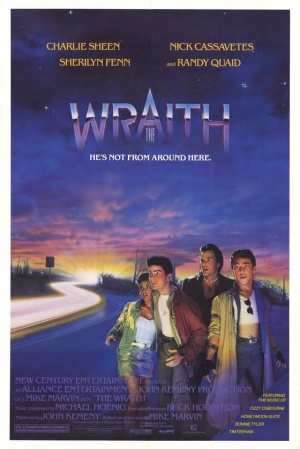
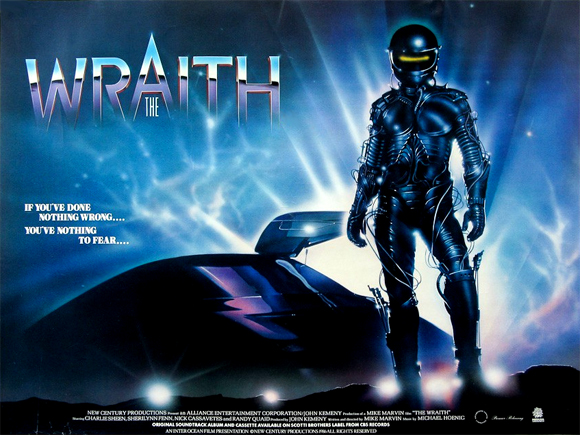
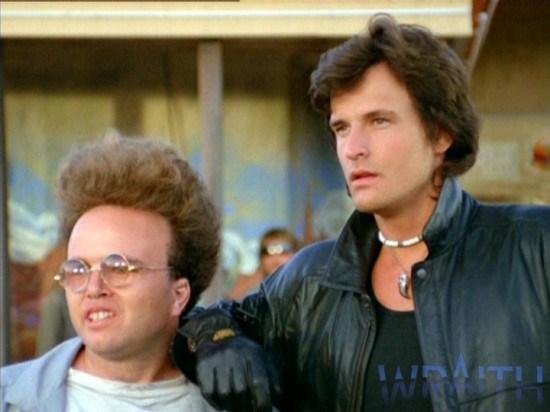
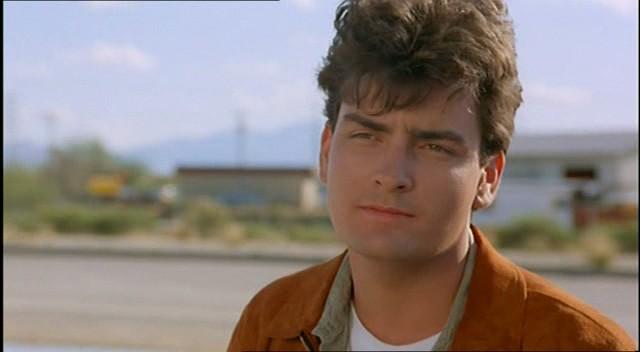
Today’s feature is the 1986 car-ghost revenge movie, The Wraith, starring two of the industry’s most infamous figures: Randy Quaid and Charlie Sheen.
The plot of The Wraith is summarized on Rotten Tomatoes as follows:
This supernatural teen action film is about a strange reincarnation with the emphasis on “car.” Young Jamie is killed by the evil Packard (Nick Cassavetes) and his gang of thugs because Jamie was caught romancing Keri (Sherilyn Fenn), Packard’s girlfriend. Suddenly “the Wraith” — a black turbo racing car shows up to challenge Packard (sounds like a Detroit auto duel) whose livelihood comes from stealing cars. What happens next is an endless series of car chases as Packard’s gang of punks start to bite the dust, one by one. Then Jake (Charlie Sheen) comes into town on a motorcycle and makes a play for Keri, giving rise to old animosities one more time.
The Wraith was written and directed by Mike Marvin, whose other credits include writing Hot Dog: The Movie and directing Hamburger: The Motion Picture.
The cinematographer for the film was Reed Smoot, who has worked significantly filming concert movies like Justin Bieber: Never Say Never and Jonas Brothers: The 3D Concert Experience, and also shot Homeward Bound: The Incredible Journey.
The Wraith featured work by two primary editors: Scott Conrad (Class of 1999, A Boy And His Dog, Cat’s Eye, Rocky) and Gary Rocklen, who never had any other editing credits.
Two people were given credit for the music in The Wraith: J. Peter Robinson (Beeper, New Nightmare, Wayne’s World, The Wizard, The Gate, Blind Fury) and Michael Hoenig (Class of 1999, Dracula 3000, The Gate).
The producers on The Wraith were Jeffrey Sudzin (Confessions of a Dangerous Mind, Brainscan, Idle Hands, Fright Night Part 2), John Kemeny (The Gate, Iron Eagle II), and Buck Houghton (The Twilight Zone, Hawaii Five-O).
The cast of The Wraith includes Charlie Sheen (Hot Shots, Men At Work, Platoon, Wall Street, Major League), Randy Quaid (Christmas Vacation, Vacation, Kingpin, Independence Day, The Last Detail, Heartbeeps), Nick Cassavetes (Face/Off, The Astronaut’s Wife, Blind Fury, Class of 1999 II), Sherilyn Fenn (Boxing Helena, Wild At Heart), and Clint Howard (Evilspeak, The Dentist II, Carnosaur, Night Shift, Ice Cream Man, Santa With Muscles).
Financially, The Wraith was far from a huge hit, grossing only $1.4 million domestically on a production budget of $2.7 million. However, the movie’s international grosses managed to get the film to break even with its budget.
Critically, The Wraith is far more fondly remembered by audiences than film critics: it currently holds Rotten Tomatoes aggregate scores of 27% from critics and 63% from audiences, along with an IMDb user rating of 5.9/10.
The Wraith isn’t a terribly deep movie, and there isn’t much beyond surface level aesthetics that will stick with you. The characters and story are frankly about as paper-thin as they come. As Leonard Maltin put it, this is arguably a movie that is for people who “favor fast cars and lots of noise.” That said, boy does this movie bring it in the department of fast cars and lots of noise.
The races are shot well, the cars themselves are arguably more distinctive and memorable than any of the drivers behind them, and the stunts and effects are marvelous: if you want to see cars in an old-school movie explosion, this movie is for you. There may not be anything beneath the surface of the film, but that surface has a pretty nifty sheen to it.
I do feel like this movie is oddly anachronistic: outside of the soundtrack and the sheer Charlie Sheen-ness of it all, this seems like it would have fit in with the old days of grindhouse car movies. Honestly, if this movie were made today, people would probably laud it for its ode to a bygone era. If you slap some Kavinsky over it and put a leather jacket on Ryan Gosling again, there might just be a cool remake or re imagining here waiting to be cooked up.
Overall, I think there is enough good here to make it worth checking out. There are a lot of missed opportunities to make this a true horror or suspense film, but the stunts and races just about make up for the lacking plot and cartoonish characters. Hopefully, someone will take this concept and build on it someday, because I feel like there is a lot more potential here than was tapped into with The Wraith.
Recently, I took a quick drive up to Cleveland, OH, which was my first time in the prominent Great Lakes city. Admittedly, I only knew as much as the internet had told me of it.
As I usually do when exploring a new city, I set aside some time to hunt for film-related used media: soundtrack records, DVDs, VHS, laserdiscs, etc.
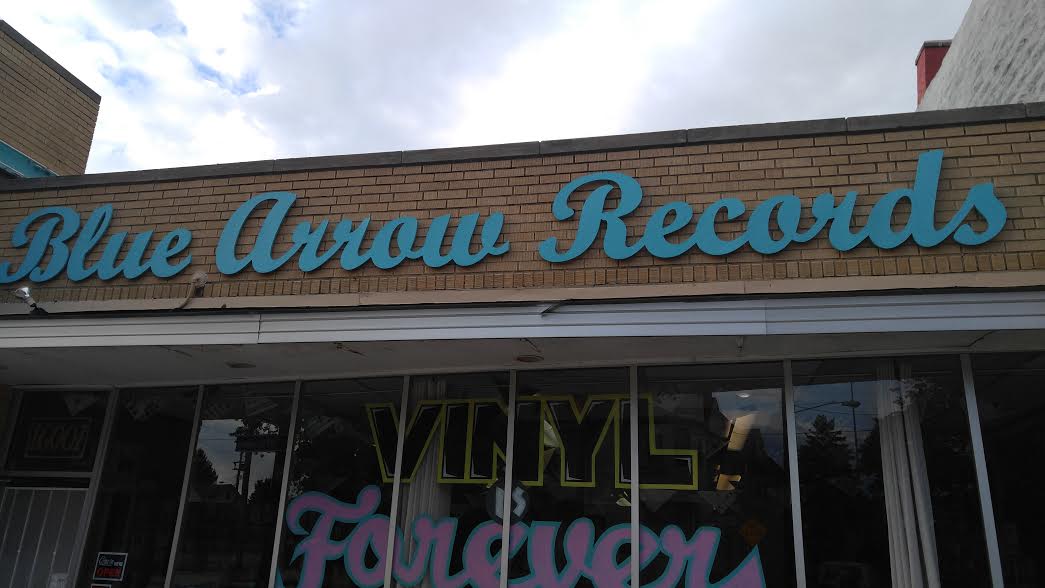
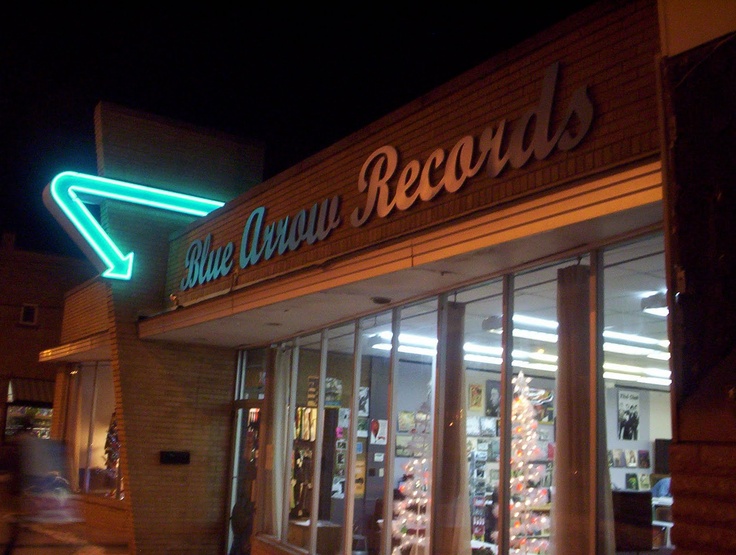
My first stop in Cleveland was Blue Arrow Records, located in the Waterloo Arts District, and surrounded by buildings adorned with street art and sculpture gardens. It definitely has a cool vibe to it, synthesizing a hip and eccentric interior with an anachronistic external aesthetic, punctuated by the eponymous neon blue arrow.
As far as the selection goes, Blue Arrow is a pure record store, and there aren’t any significant wayward VHS or DVDs to be found hiding out on their shelves. However, they do have a not-to-shabby collection of soundtrack records, of which a number caught my eye.
To Live And Die In LA is a 1985 crime movie directed by William Friedkin, the lauded New Hollywood auteur who helmed The French Connection and The Exorcist. In many ways, To Live And Die In LA is an attempt to re-capture the success of The French Connection, with a distinctly 1980s flair. One of the keystones of that 1980s aesthetic that Friedkin wanted for the film was the soundtrack, which is provided in entirety by the band Wang Chung. Seriously. Of course, when I saw this soundtrack on the shelves at Blue Arrow for $3, it absolutely went home with me.
I recently saw To Live And Die In LA for the first time, which was spurred on after reading William Friedkin’s autobiography. While it is a bit uneven, the movie is well designed, well acted, features one of the greatest car chases in film history, and is at least partially responsible for the rise of Willam Dafoe. It is a pretty good time, subverts the tropes and expectations of the genre, and deserves a second look (to say the least). The Wang Chung soundtrack is just the cherry on top of an already pretty damn cool movie, and I highly recommend seeking it out.
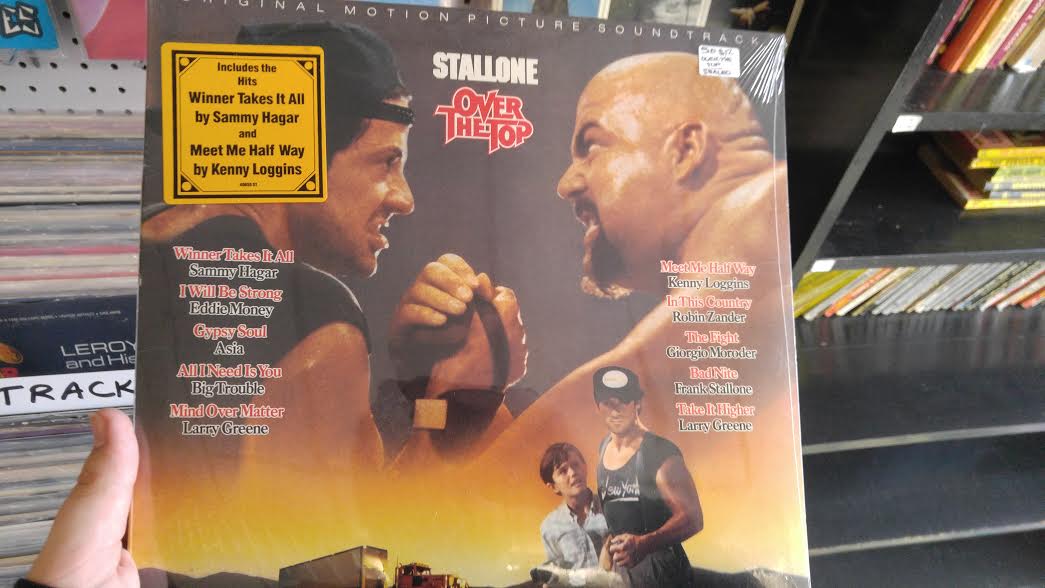
Over The Top is a 1987 Canon feature starring Sylvester Stallone that I covered on the blog some time ago. I regard this as a must-watch for bad movie fans, and it encapsulates a lot of what makes late 1980s cheese-ball flicks what they are. The soundtrack for the film is no exception, featuring such acts as Asia, Sammy Hagar, Kenny Loggins, and Sylvester Stallone’s brother, Frank Stallone.
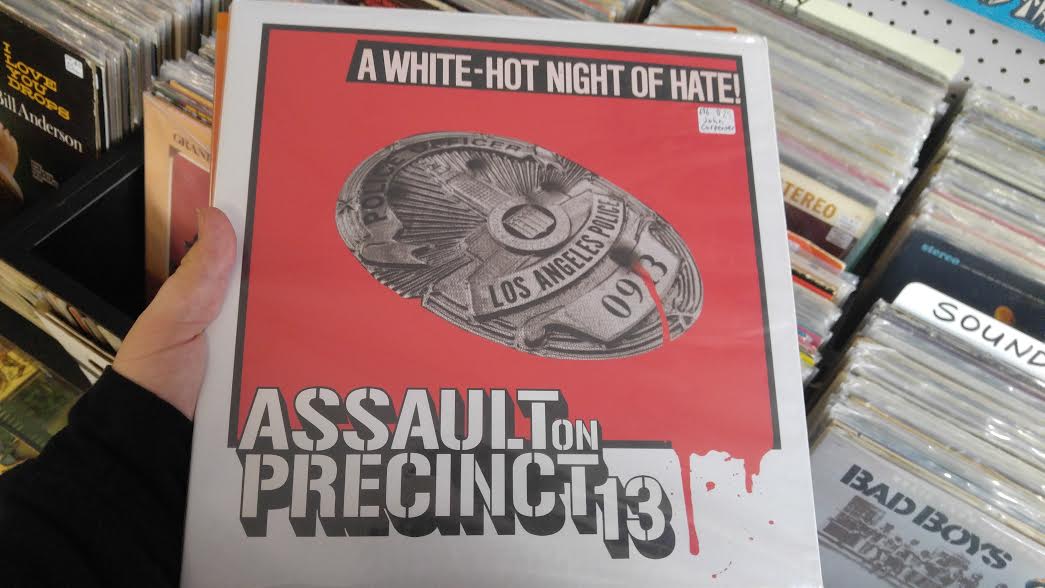
Assault on Precinct 13 is the movie that explosively introduced the world at large to John Carpenter. I personally still regard it as one of his best movies, and perhaps the most iconic siege thriller ever put to film. As with most of Carpenter’s films, it also features a synthesizer score created by the director, which is defined by simple rhythms and haunting drones. I like the score to Assault on Precinct 13 almost as much as the movie itself, and would have picked it up if it hadn’t been so expensive. There’s just no such thing as cheap John Carpenter vinyl these days.
Reviews/Trivia of B-Movies, Bad Movies, and Cult Movies.
![Misan[trope]y](https://misantropey.com/wp-content/uploads/2014/10/misantropeyhead1.png)

 Unfortunately, the shop has a specific policy banning photography in the store, so I don’t have my usual photographic coverage for this post. However, I will say that the selection of posters, buttons, t-shirts, and other miscellaneous items was off the charts, even if the selection of records wasn’t as fleshed out. The DVD selection was also pretty impressive: there were a fair number of cult and foreign flicks in their stacks, including a mixture of Hesei and Showa Godzilla features that you wouldn’t stumble across terribly often.
 However, as the name suggests, The Rhythm Section is definitely a music-first shop. If that is your passion, then this is a place that deserves some dedicated time. For movie fans, their selection is interesting and entertaining, but not terribly deep or thrifty. I’d still recommend picking up something, even just a patch or a button, because the place is just such a welcome sight among a plethora of cheap, confederate flag peddling junk stores.
 In the wake of the fires that have done such immense damage to the region, and Gatlinburg in particular, I’m sending all my best to the folks at The Rhythm Section, and the other residents of the impacted area. If you want to help, I’ve seen some recommendations to support the organization Friends of the Smokies.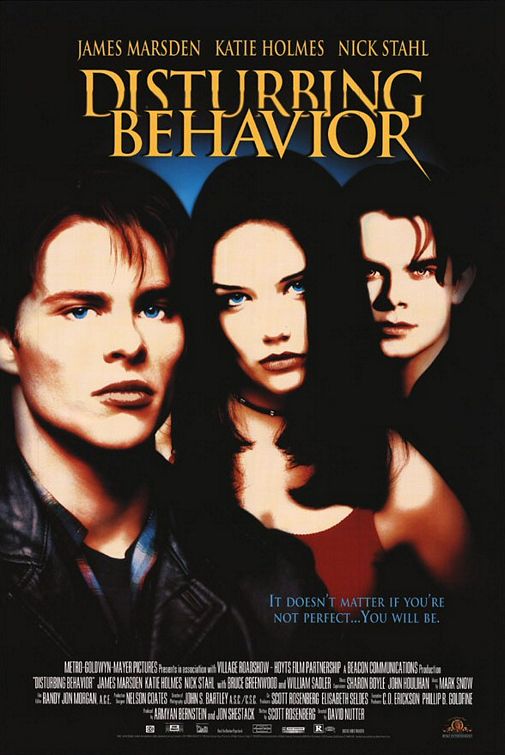









 Misan[trope]y