R.I.P.D.

R.I.P.D.

ripd1

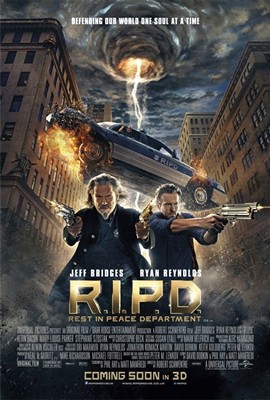
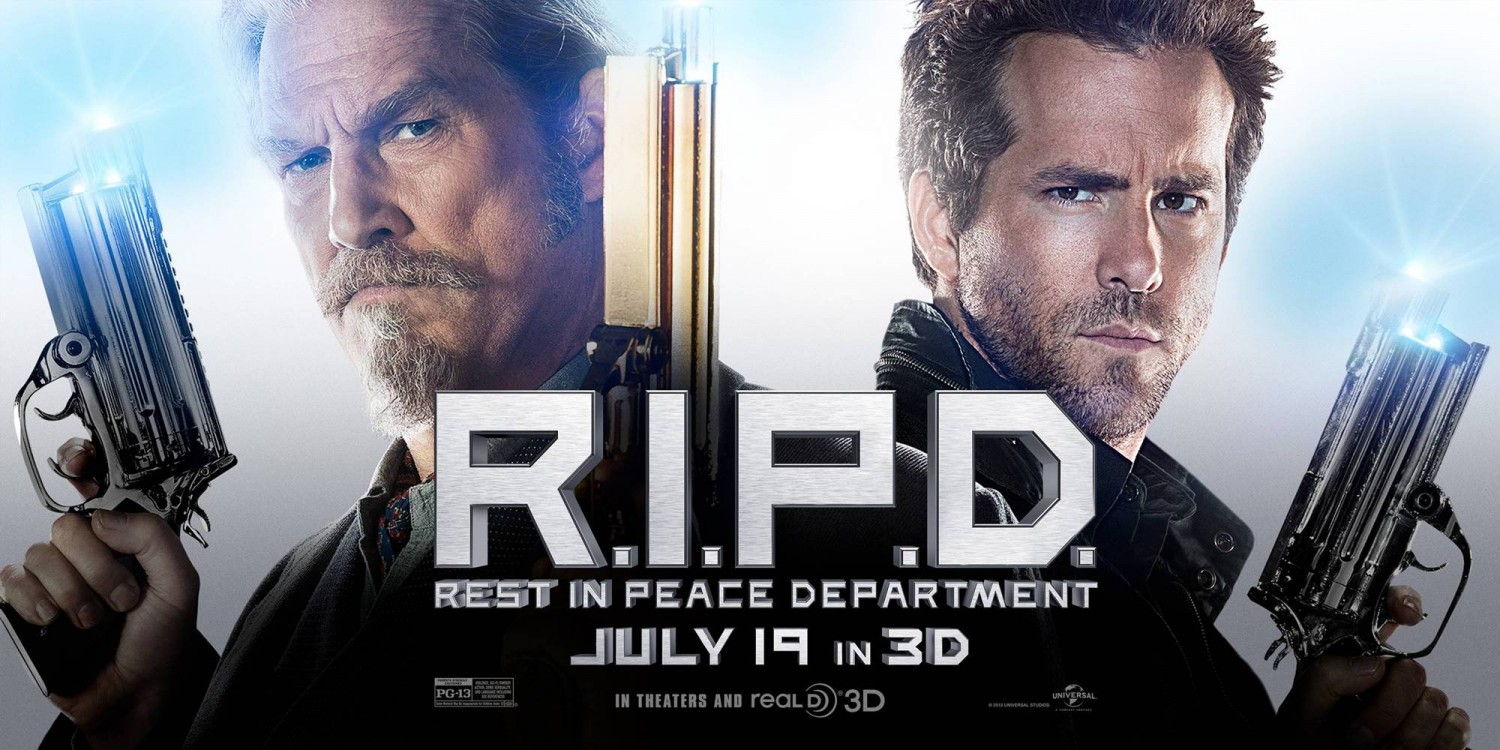
Today’s feature is the 2013 Ryan Reynolds and Jeff Bridges buddy cop flick, R.I.P.D..

The plot of R.I.P.D. is summarized on IMDb as follows:

A recently slain cop joins a team of undead police officers working for the Rest in Peace Department and tries to find the man who murdered him.

The director for the film was Robert Schwentke, whose other credits include RED, Flightplan, and The Time Traveler’s Wife.

R.I.P.D. is based on a Dark Horse comic book originally created by Peter Lenkov, who also penned the screenplay for Demolition Man, and has done a fair amount of writing and producing on television. The three other credited writers for the movie were David Dobkin, director of Fred Claus and Wedding Crashers, and the writing duo of Phil Hay and Matt Manfredi, who penned Aeon Flux, The Tuxedo, and Ride Along.

The editor for the movie was Mark Helfrich, who also cut Red Dragon, Season of the Witch, Hercules, Rush Hour, Predator, Scary Movie, Showgirls, and Revenge of the Ninja.
ripd2The score for the film was composed by Christophe Beck, who has provided music for movies like Ant-Man, Get Hard, Frozen, We Are Marshall, and The Tuxedo, among a handful of others.

The cinematographer for R.I.P.D. was Alwin H. Küchler, who has shot a batch of other high-profile movies, which includes Steve Jobs, Sunshine, Hanna, and Divergent.

The cast for R.I.P.D. is headlined by Jeff Bridges (Hell or High Water, The Big Lebowski, Starman) and Ryan Reynolds (Deadpool, The Voices, Green Lantern), with supporting roles filled in by Kevin Bacon (Cop Car, Tremors, Super, Friday The 13th), Mary-Louise Parker (Weeds, RED, Red Dragon), James Hong (Big Trouble In Little China), and Stephanie Szostak (We Bought A Zoo, Iron Man 3).
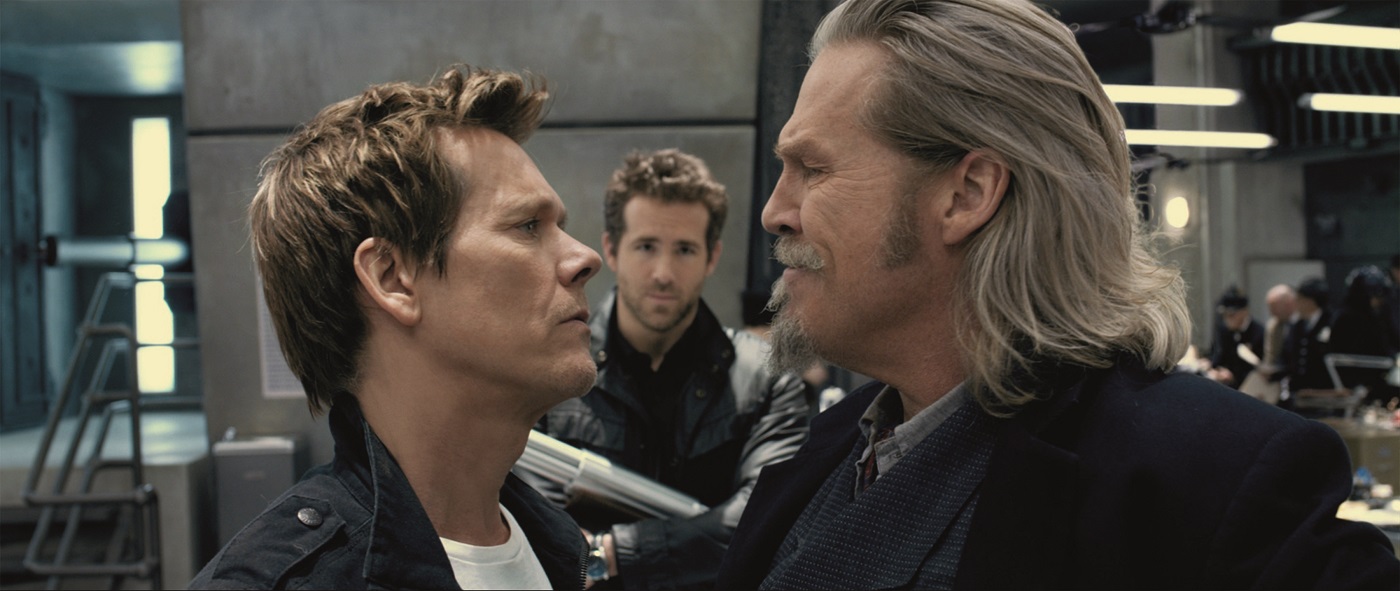
ripd4During a reddit Ask Me Anything thread, Jeff Bridges commented that he enjoyed making R.I.P.D. with the cast and crew, but attributed the film’s ultimate failure to studio interference. Specifically, Bridges stated that “the suits just cut it against the grain, and I thought, screwed it up”.

Apparently, Zach Galifianakis was originally cast as Roy Powell (the role eventually taken by Jeff Bridges), but had to drop out due to scheduling conflicts.

The reception for the movie was generally negative. It currently hold a user rating of 5.6/10 on IMDb, along with Rotten Tomatoes scores of 13% from critics and 38% from audiences. Financially, it also significantly disappointed: it was made on a production budget of $130 million, on which it only grossed $78.3 million in its worldwide theatrical run.

In my opinion, Reynolds and Bridges are both pretty solid in this movie: they are both talented comedic actors, but despite that, they can’t significantly elevate the material that they were given for this flick. That said, they are the sole forces in the movie that make it watchable and entertaining to any degree. Bacon and Parker also fill in good supporting roles, and round out a decent cast. In particular, I have one hell of a soft spot for villainous Bacon. As far as casting goes, I just wish that there was more James Hong, who won my admiration forever with Big Trouble In Little China.
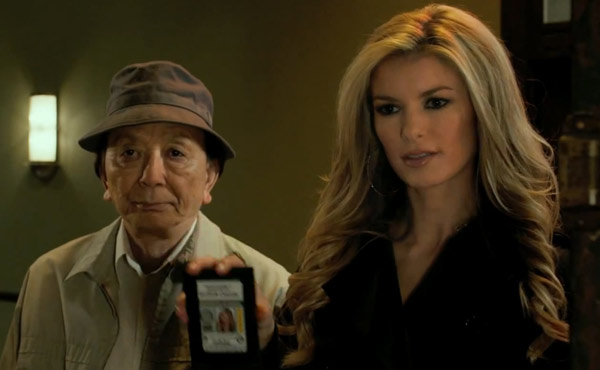
ripd3As far as negatives go, and there are plenty, the thing that stands out most are the effects. Particularly for 2013, the visual effects are incredibly bad, and I’m not quite sure why. Either corners were cut with the budget, or the project as a whole was dramatically rushed. There are moments where the CGI gave me flashbacks to early 2000s movies like Van Helsing or LXG, which is totally inexcusable for a movie outside of the SyFy Channel. The effects were distracting enough to snap me out of any engagement I had with the story, which was limited to begin with.

This brings up another big problem: there isn’t enough time spent in the world created in this movie. The characters never seem to get past the most superficial level of depth, and even the R.I.P.D. institution itself is only shown in passing. Reynolds, who should be the audience’s avatar to the supernatural world, is never properly introduced to his new surroundings, so the audience isn’t either. I understand that the movie wanted to avoid hand-holding, and maintain a chaotic mystique to the world, but the result here is a little too hands-off. There at least needed to be a better establishment of the R.I.P.D. itself early on, much like the Men In Black organization is introduced in that movie.

Speaking of which, I think the comparisons to MIB that have often been bandied about when talking about R.I.P.D. aren’t entirely justified. Supernatural initialisms aside, R.I.P.D. is fairly distinct from M.I.B. for a handful of reasons that might not be noticeable at first glance. First and foremost, the central partner relationships in these two movies are quite different. In MIB, Will Smith is a hammy fish-out-of-water who brings most of the comedy to the table via his misunderstandings, mishaps, and unique perspective. Tommy Lee Jones is mostly a stone-faced straight-man, though quite a good one, and his comedy comes from his nonchalance in the fact of absurdity. In R.I.P.D., the duo is only similar to MIB insofar as one is old and experienced, and the other is new to the force. Reynolds’s character is more of the straight half of the duo, and is in many ways bound by his contemporary law training. His comedy, if you can call it that, comes from the frustrations of adapting to a new set of rules and a new, unfamiliar bureaucracy. Bridges plays the ham: though he has tons of experience as an officer, he is still distinctly anachronistic, which is the source of a lot of the humor around his character. He is still casual in the face of absurdity, but it doesn’t define him in the way that it does Jones in MIB. Really, R.I.P.D. is more complicated than MIB in most ways, but certainly not better for it. MIB keeps characters, concepts, and institutions outlandish, but ultimately simple and digestible.

R.I.P.D. isn’t good by any stretch: the effects are awful, the dialogue is iffy, and the story isn’t terribly engaging, but it isn’t nearly as bad as I thought it would be from the critical response. The cast really saves it from being an unwatchable disaster, but only just. If you are a Ryan Reynolds or Jeff Bridges fan, you probably wouldn’t regret the time spent watching this flick.

Mannequin 2: On The Move

Mannequin 2: On The Move

mannequintwo1

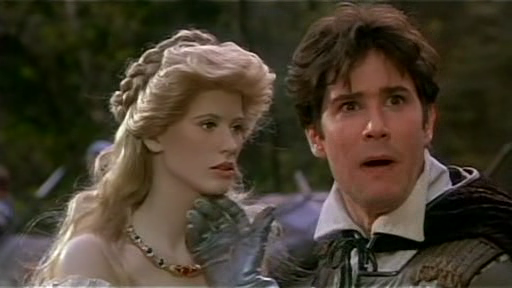
Today’s feature is one of the most unnecessary and inexplicable sequels in movie history: Mannequin 2: On The Move.

The plot of Mannequin 2 is summarized on IMDb as follows:

A young department store intern falls in love with a female store mannequin who is really a peasant girl fallen under a thousand year spell. She comes to life whenever he removes the cursed necklace from her.

Mannequin 2 was directed by Stewart Raffill, whose other films include Tammy and the T-Rex, Mac and Me, and The Philadelphia Experiment.

The handful of writers involved with Mannequin 2 included Edward Rugoff (Mr. Nanny, Mannequin), David Isaacs (Critical Condition, Cheers), Ken Levine (Frasier, M*A*S*H), Michael Gottlieb (Mr. Nanny, Mannequin), and Betsy Israel, who has no other listed credits.

mannequintwo2The primary cast of the film is made up by Kristy Swanson (Deadly Friend, The Phantom), William Ragsdale (Fright Night, Fright Night Part 2, Left Behind), Meshach Taylor (Mannequin, The Howling), Terry Kiser (Weekend At Bernie’s, Weekend At Bernie’s II, Friday the 13th Part VII), and Stuart Pankin (Fatal Attraction, Striptease, Arachnophobia).

The music for Mannequin 2 was composed by David McHugh, who also provided music for The Dream Team, Mystic Pizza, and Moscow On The Hudson, among a handful of others.

The estimated budget for Mannequin 2 was $13 million, on which it only grossed a minute $3.8 million in its theatrical run, making it a significant financial failure. Critically, it didn’t fare any better: it currently holds an IMDb user rating of 4.0/10, alongside Rotten Tomatoes scores of 13% from critics and 41% from audiences.

mannequintwo4Mannequin 2 is a bad movie to be sure, but there are some weirdly redeeming qualities here. First and foremost, the cast seems like they totally bought in on the inherent goofiness of the concept, and they all exaggerate their roles in a way that the movie at least remotely entertaining. Also, there are a lot of issues I had with the first film that are mostly rectified here. For instance, characters are more realistically weirded out by the concept of someone fucking a mannequin, which was missing in the first movie. Also, despite the humor still mostly missing the mark, I feel like the deliveries and performances are actually better in this sequel. Particularly, I thought Terry Kiser got a great opportunity to mustache-twirl with this flick, and absolutely owned it. Likewise, both leads are at least more relatable and likable in this movie, even if they are not quite as deep as a standard kiddie pool.

Something that is particularly strange about this film is the lack of actual mannequin screen time. For most of the film, the curse that creates the eponymous mannequin is actually lifted, which in a lot of ways is good: it allows both that character and her relationships to develop in a realistic way. However, it also drifts pretty far from the concept of the movie: this is more of a time travel love story or Sleeping Beauty concept than a movie about a mannequin. Honestly, that is probably for the best at the end of the day.

mannequintwo3Overall, despite Mannequin 2 being immensely campy and weak in the humor department, I think it is actually a pretty decent remake of the original movie, if not a good sequel. Honestly, the two movies are connected in total by a single line of dialogue, and I think this movie primarily focuses on trying to fix issues with the first movie and re-imagine the concept. On a level, it works: I think the movie is better than the first because of that effort. However, it is still an atrocious, if watchable, comedy movie.

mannequintwo5If you like campy humor, then you might just be surprised by this movie. I think there is a reason why these movies have a cult following: they master a specific niche kind of humor that doesn’t resonate with most audiences. For people that can find the value in the movie, I think it is a pretty good time. For almost everyone else in the universe, this movie is just yet another bad, dated comedy movie. However, bad movie fans should definitely give it a look.

Showdown In Little Tokyo

Showdown in Little Tokyo

littletokyo4

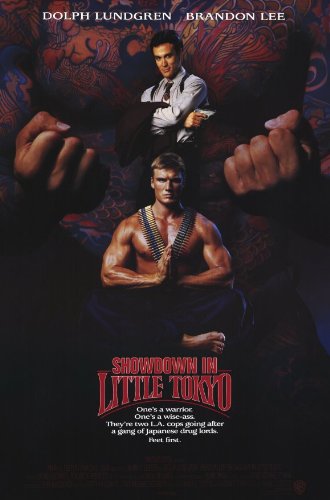
Today’s feature is a b-grade buddy cop classic: 1991’s Showdown In Little Tokyo.

The plot of Showdown in Little Tokyo is summarized on Rotten Tomatoes as follows:

Dolph Lundgren stars as police detective Chris Kenner, an American raised in Japan. He is given a new partner, Johnny Murata (Brandon Lee, making his Hollywood debut), a Japanese raised in America. The two are made for each other — Chris doesn’t appreciate American culture, while Johnny doesn’t much like Japanese culture. One thing they both enjoy are the martial arts, of which they are experts. The two are assigned to L.A.’s Little Tokyo, trying to nab the notorious Yoshida (Carey-Hiroyuki Tagawa), a drug manufacturer using a local brewery as his distribution center.

Showdown in Little Tokyo was directed and produced by Mark L. Lester, who was also behind movies such as Class of 1999, Class of 1984, Commando, Roller Boogie, and Firestarter.

The two writers for the film only have a handful of other credits between them, most notably a couple of episodes of Dragnet and a television adaptation of The Watsons Go To Birmingham.

The cinematographer for Showdown In Little Tokyo was Mark Irwin, who shot Scream, Scanners, Videodrome, The Fly, Class of 1999, RoboCop 2, New Nightmare, Kingpin, and Steel, among many, many other well-known features.

A total of four editors wound up putting in work on Showdown in Little Tokyo: Michael Eliot (Maniac Cop 3: Badge of Silence), Robert A. Ferretti (Tango & Cash, Rocky V, Die Hard 2, Gymkata), Steven Kemper (Face/Off, Timecop), and Stuart Baird (Demolition Man, Lethal Weapon).

The musical score for the movie was provided by David Michael Frank, whose other credits include Poison Ivy, Suburban Commando, Out For Justice, Hard To Kill, and Best of the Best II.

The cast for Showdown In Little Tokyo is primarily made up by Dolph Lundgren (Rocky IV, The Punisher, I Come In Peace, Johnny Mnemonic), the late Brandon Lee (Laser Mission, The Crow), Tia Carrere (Wayne’s World, Kull The Conqueror), and Cary-Hiroyuki Tagawa (Mortal Kombat, Vampires, The Phantom).

littletokyo3Showdown In Little Tokyo suffered from a significant amount of studio interference, primarily in the form of mandated edits to the final product. Likewise, even before the movie was shot, the screenplay went through a number of different forms. The experience burned director Mark Lester out on working in the studio system, leading him to take on smaller, self-funded projects.

The public reception for Showdown In Little Tokyo was generally negative. It currently holds Rotten Tomatoes ratings of 29% from critics and 51% from audiences, alongside an IMDb user rating of 6.0. Likewise, the movie certainly didn’t set the box office on fire: it brought in well under $3 million in its theatrical release, on a estimated production budget of $8 million.

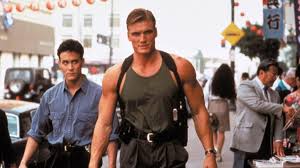
I was introduced to Showdown in Little Tokyo pretty recently. For whatever reason, it has never been on my b-movie radar, and I have absolutely no idea why. As far as cheap, b-level action movies go, this is about as good as it gets. Not only does this movie showcase a classic buddy-cop formula, but the fights are entertaining, the antagonist is more than sufficiently hammy, and all of the players seem to be having a great time with the material. I’m a huge fan of this particular era of Dolph Lundgren, as he took on some damn entertaining projects, and gave performances that I think easily out-class contemporaries like Stallone or Schwarzenegger, and Showdown is no exception.

littletokyo2There is one aspect of Showdown In Little Tokyo that definitely makes it stand out from the field of similar action flicks: outside of perhaps Tango & Cash, it is the most homoerotic entry into the buddy cop genre.

Showdown in Little Tokyo doesn’t bill itself as a gay action film. And like most action movies, that doesn’t do much to disarm just how amazingly queer it is. I mean, we’re talking about a movie where a muscular blonde guy spends entire scenes clad in nothing but black leather hot pants and men compliment each other on the exquisiteness of their dicks

Teleport City

That excerpt is no exaggeration, either. In one particularly notable moment in the film, Brandon Lee tells Dolph Lundgren that he has “the biggest dick I’ve ever seen on a man,” and the script and performances are both laden with slightly more subtle references to the two men having a potential attraction.

Much like with Tango & Cash, it isn’t totally clear if this angle was intentional on the part of the writer/director team (though the penis line seems pretty blatant). Regardless, the chemistry of the subtext adds a lot of entertainment value to what is already an amusing, saturated-with-machismo buddy-cop feature.

I can’t recommend Showdown In Little Tokyo highly enough. Not only is the action good, but the performances are memorable, the plot is over-the-top, and even the costuming got a few chuckles out of me. This is the pinnacle of a specific type of b-movie film-making, and it’ll take you on a time-traveling trip to a bygone era. The comedic performance of Brandon Lee brings up a lot of questions of what might have been if the fates had taken another turn, and Lundgren is still in his top form here. The homoerotic angle of the films adds a whole extra layer of entertainment value, whether it is read as intentional and subversive, or just hilariously oblivious on the part of the creative team. Either way, I think it is hard not to find something to enjoy on a re-watch of Showdown in Little Tokyo.

littletokyo1

Critters

Critters

critters1

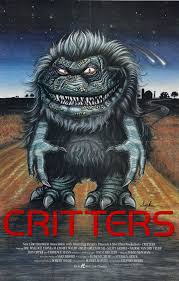
Today’s feature is 1986’s Critters, which is not at all a knock-off of the 1980s classic, Gremlins. Not at all.

The plot of Critters is summarized on IMDb as follows:

A race of small, furry aliens make lunch out of the locals in a farming town.

Critters was co-written and directed by Stephen Herek, who went on to make The Mighty Ducks, Bill & Ted’s Excellent Adventure, Mr. Holland’s Opus, Holy Man, 101 Dalmatians, and Don’t Tell Mom The Babysitter’s Dead, among others. His co-writer for the movie was Domonic Muir, who also wrote The Gingerdead Man and the first three Evil Bong movies.

The director of photography for the movie was Tim Suhrstedt, whose long list of credits includes Idiocracy, Little Miss Sunshine, Office Space, Men At Work, Teen Wolf, Mystic Pizza, and Mannequin.

Critters was edited by Larry Bock, who also cut movies like Breakin’, Alligator, Joysticks, Final Justice, Bring It On, The Mighty Ducks, Bill & Ted’s Excellent Adventure, and The Santa Clause over his career.

The creature effects for the movie were provided by Chiodo Brothers Productions, whose members also worked on Robot Jox, Critters 2, Demolition Man, Critters 3, Carnosaur, Critters 4, Team America: World Police, Screamers, Killer Klowns From Outer Space, Ghoulies, RoboCop 2, and Theodore Rex, among many others.

critters2The visual effects work for Critters was done by two outfits: Fantasy II Effects, which has gone on to work on Moonrise Kingdom, Vampire in Brooklyn, Hellboy, The Core, Last Action Hero, Aliens, and Tremors (and more) in the years since, and Quick Silver FX Studio, which also did Eliminators and Invasion Earth: The Aliens Are Here before apparently dropping off the radar.

The music for Critters was composed by David Newman, who went on to score numerous films, like Death To Smoochy, The Brave Little Toaster, Heathers, Bill & Ted’s Excellent Adventure, Hoffa, Jingle All The Way, Galaxy Quest, Throw Momma From The Train, Matilda, The Phantom, Ice Age, and The Spirit, among many, many others.

Critters stars Billy Zane (Titanic, The Phantom, Brotherhood of Justice, Demon Knight), Dee Wallace (The Howling, Cujo, E.T.), Billy Green Bush (The Hitcher, Five Easy Pieces), Scott Grimes (E.R.), and Lin Shaye (Pledge This, Kingpin).

Financially, Critters made a decent profit, grossing just over $13 million domestically on an estimated $2 million budget.

Critters received a generally negative response from both critics and audiences. Currently, it holds Rotten Tomatoes scores of 57% from critics and 45% audiences, along with an IMDb user rating og 6.0/10.

Interestingly, one of the handful of critics to give Critters a seal of approval was Roger Ebert, who gave the movie 3 stars:

…what’s interesting is the way the movie refuses to be just a thriller…What makes “Critters” more than a ripoff are its humor and its sense of style. This is a movie made by people who must have had fun making it.

Personally, I agree with Ebert on this to a point. The fact that Critters doesn’t play itself as a straight monster movie does set itself out from a lot of other science fiction, but it also feels very Gremlins. The fact that the monsters here aren’t as emotive or intriguing as their higher-budget cousins doesn’t help, either: they are a little too similar, and Critters doesn’t come close to matching the quality of the humor, gore, dread, or nostalgic awe on display in Gremlins.

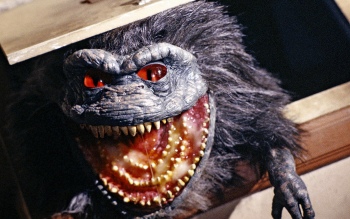
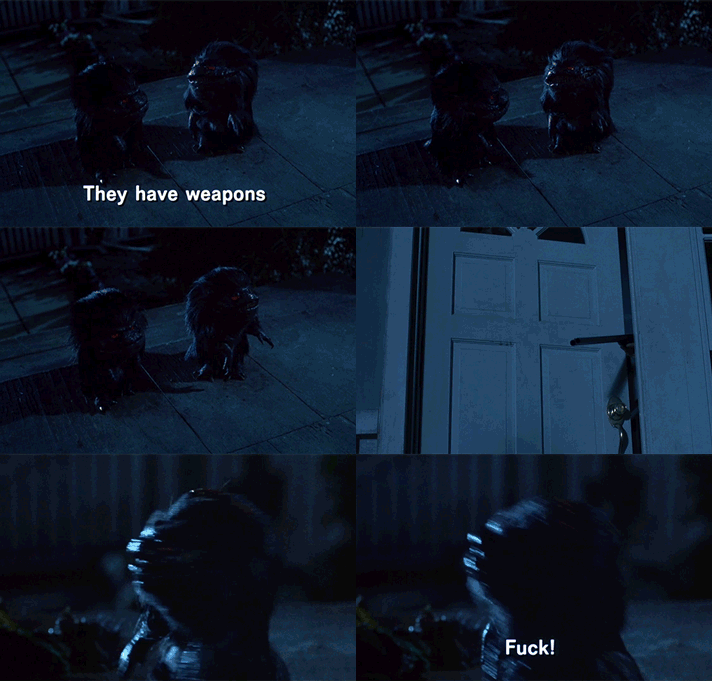
I think Critters probably plays better today, with a fair amount of distance from its cohort films like Ghoulies and Gremlins, than it did on its initial release. A lot of the aspects that drew unfavorable comparisons back then feel more like homages than ripoffs when you watch it today. That said, no amount of time or distance passed is going to make this movie good. There are definitely some comedic highlights, but the uneven performances and stilted dialogue hinder the movie as a whole. I will say that this makes for a pretty even waypoint between Leprechaun and Gremlins when it comes to the scale of success of horror-comedies, so it could certainly be a lot worse. Also, the eponymous Critters themselves aren’t too shabby: there are some moments of really excellent puppet work.

critters3If you are looking for a little 1980s flashback, this is a decent movie to serve that purpose. It isn’t great, or even terribly memorable, but it is entertaining enough to justify your time.

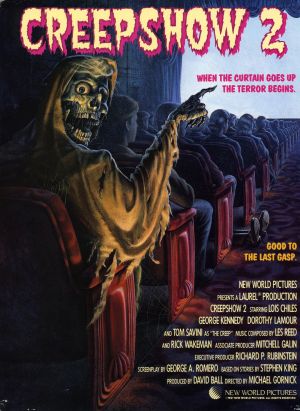
Creepshow 2

Creepshow 2

creepshowtwo

Today’s feature is Creepshow 2, the 1987 sequel to the hit anthology horror film, Creepshow.

The plot of Creepshow 2 is summarized on IMDb as follows:

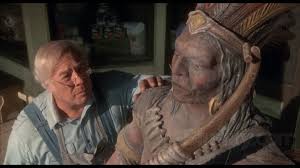
Three more bone-chilling tales that include a vengeful wooden Native American, a monstrous blob in a lake, and a hitchhiker who wants revenge and will not die.

Creepshow 2 was directed by Michael Gornick, who served as George Romero’s director of photography on Martin, Dawn of the Dead, and the original Creepshow. However, Creepshow 2 is his only feature-length directing credit.

The movie’s screenplay was written by George Romero, who directed the original Creepshow (as well as influential horror films like Night of the Living Dead and Dawn of the Dead). Interestingly, he didn’t have any hand in the writing of Creepshow, as Stephen King penned the screenplay. While King did lend material for Creepshow 2, he was not involved with the sequel’s screenplay writing process beyond that.

The special effects and makeup effects team for the film provided early credits for Greg Nicotero and Howard Berger, who have each had distinguished careers in the decades since, working on films and television shows like Kill Bill, Inglorious Basterds, The Hateful Eight, Drag Me To Hell, Sin City, Breaking Bad, and The Walking Dead.

Tom Savini, who provided the effects for the original Creepshow, returned as a consultant for this sequel, and appears on screen as the host between segments.

creepshowtwo3

The stars of Creepshow 2 include George Kennedy (Cool Hand Luke), Tom Savini (From Dusk Til Dawn), Stephen King (Creepshow), Daniel Beer (Point Break), and Lois Chiles (Moonraker).

Apparently, Creepshow 2 was initially intended to have 5 sequences, just like its predecessor. However, budget constraints led to two sequences being cut. One of them, “The Cat From Hell,” eventually made it on screen as part of Tales From The Darkside: The Movie, which many consider to be the spiritual successor to Creepshow 2.

In 2006, a Creepshow 3 was released without any involvement from George Romero or Stephen King. The fan reaction, predictably, was overwhelmingly negative. However, its release was so limited that most fans of the franchise aren’t aware of its existence.

The reception to Creepshow 2 was generally negative, and paled significantly in comparison to the original. It currently holds an IMDb user rating of 6.0/10, alongside Rotten Tomatoes scores of 39% from audiences and 33% from critics.

Creepshow 2 took in an estimated $14 million in its total lifetime theatrical release. While this was profitable given its $3.5 million budget, it was hardly a blockbuster smash.

creepshowtwo1

The biggest burden that Creepshow 2 has to carry is the baggage of its namesake. Honestly, I think this is a pretty decent horror anthology movie, but it so fails to live up to the affectionate detail and loyalty of the original Creepshow, that it is actually made worse by bearing its name.

The original Creepshow is fun, funny, and did a whole lot on a very small budget, thanks to a scrappy, independent crew. Creepshow 2 was expected to match it with a fraction of its budget, a director without a track record, and without the direct help of Stephen King on the screenplay. From the onset, the die was cast for Creepshow 2 to be a disappointing sequel.

Yet, while it certainly isn’t as good as Creepshow, Creepshow 2 could certainly have been a lot worse. Most of the makeup effects actually look quite good in spite of the budgetary limits, thanks in large part to folks like Howard Berger and Greg Nicotero, who were still making names for themselves as quality and innovative effects workers. The writing is probably the weakest aspect of the movie, but I suspect this is the result of the last 2 sequences being cut out of the film: they needed to make up that time somewhere, so they padded out the existing features. Unfortunately, the result is that all 3 remaining vignettes feel bloated as all hell, and the pacing of the film as a whole suffers for it.

creepshowtwo2

Creepshow 2 desperately misses a bunch of the little details that really defined the original movie, too. While there is an attempt to recreate the animated transitions, the result isn’t creepy as much as it is cartoony and goofy, and the style just seems a bit off. Likewise, there is a limited attempt to re-capture the creative and vivid lighting work from the first film, but it is definitely minimal. The dramatically limited death sequences from Creepshow, for instance, don’t make a return.

I think the key to enjoying Creepshow 2 is to manage expectations, and ignore its title. When stacked up against Creepshow, it just can’t compare. However, I think it is better than similar anthology films like Cat’s Eye, and is worth checking out for horror fans, at least for the effects work. However, that does come with a massive caveat.

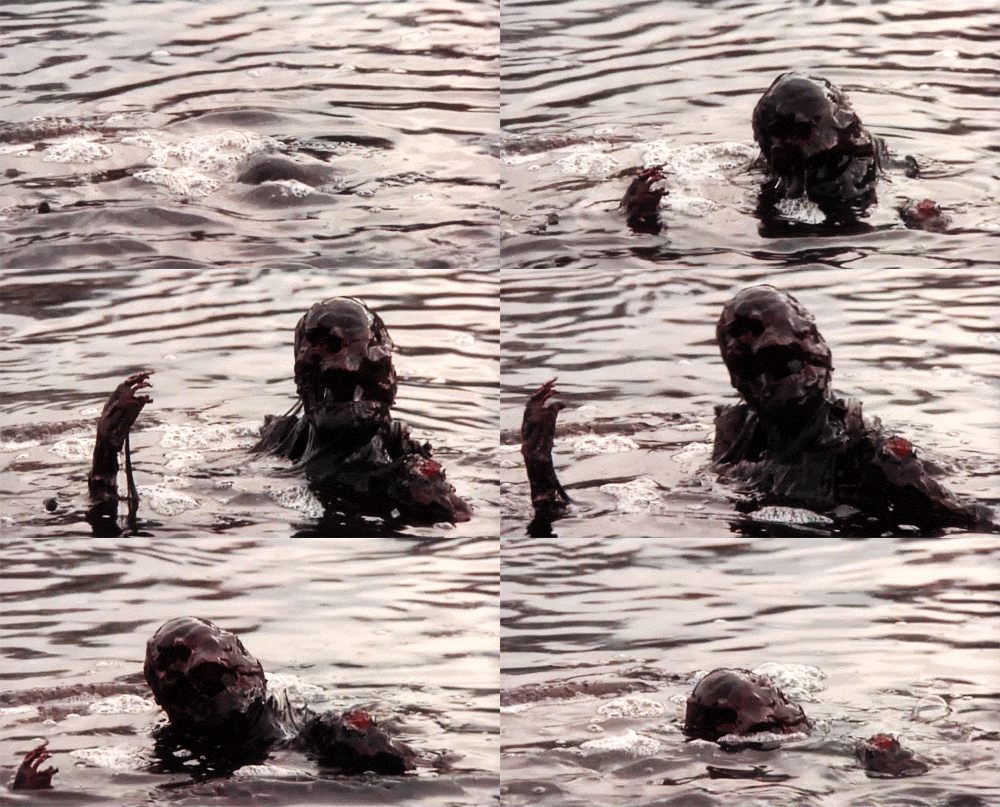
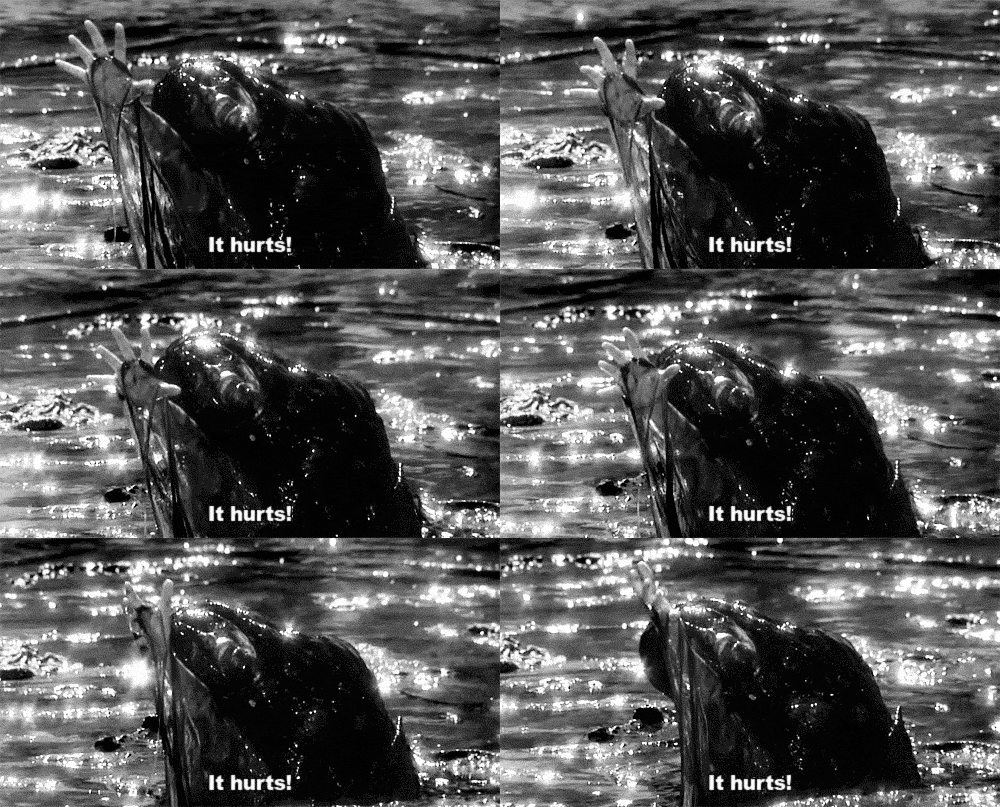
There is something that absolutely has to be mentioned about this movie: it features the most egregiously inappropriate and unnecessary sexual assault I have ever seen in a major motion picture. During the segment “The Raft,” two characters (a woman and a man) are trapped on a raft in the middle of a lake, set a-siege by a flesh-eating blob that floats on top of the lake’s water. By the time night falls, both of their respective partners have been eaten by the creature, and they decide to take shifts to keep watch. During the male’s shift, he decides not to watch the monster, but to kiss and fondle his fellow trapped acquaintance in her sleep, which leads directly to her death via his negligence.

There are so many things wrong with this, that it is hard to know where to start. First off, pragmatically, it was also in his interest to keep an eye on the killer monster lurking mere feet away, rather than assault his fellow captive. Secondly, from a writing standpoint, there was no established precedence for the action: the character was never shown in a negative light, or revealed to have salacious intent towards the woman. The action is completely out of nowhere, and turns the character into something totally different than he was established as: a cautious, science-obsessed quasi-dork who plays second fiddle to an alpha jock friend. Last but not least, what the ever-loving fuck was the point of it? This kind of casual sexual assault is way too common throughout the genre, and contributes to the genre as a whole having a reputation as a tone-deaf dudes’ club. Particularly without any kind of story or character justification, this was clearly just thrown in for the hell of it, and was even tossed into the movie’s trailer to boot. The ultimate result of the sequence is that the monster is able to sneak up on the pair, which would happen anyway if they had just fallen asleep of exhaustion. It isn’t like there wasn’t an obvious alternative here.

If Creepshow 2 were absent that short sequence, I could confidently recommend it to people. As it is, however, it merits that caution.

Lifepod

Lifepod

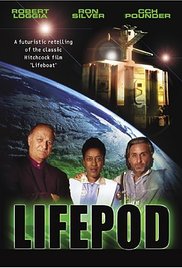
lifepod

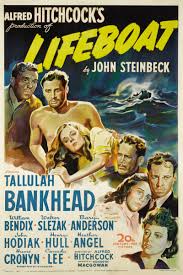
Today’s feature is an ambitious remake of Alfred Hitchcock’s Lifeboat, with a science fiction twist: 1993’s Lifepod.

Lifepod was directed by the well-regarded character actor Ron Silver, who is best known for movies like Timecop and The West Wing. However, it was his only directorial feature over his career.

The screenplay adaptation for Lifepod is credited to producers Jay Roach and Pen Densham, who each have a handful of television writing credits for shows like Space Rangers and Poltergeist: The Legacy.

The cast for Lifepod includes director Ron Silver, Robert Loggia (Over The Top, Scarface), and C.C.H. Pounder (Face/Off, RoboCop 3), among others.

The score composition for the movie was done by Mark Mancina, who was in a bit of a transitional period at the time. Before Lifepod, his credits included primary low-budget fare like Space Mutiny. Following Lifepod, however, he got the chance to dictate the music on some much larger productions, such as Speed, Speed 2: Cruise Control, Bad Boys, Twister, Con Air, Tarzan, and Training Day.

Alan Baumgartner served as the film’s primary editor, whose credits since include comedies like Zombieland, Meet The Fockers, and Dodgeball: A True Underdog Story, as well as more recently acclaimed movies like American Hustle, Trumbo, and Joy.

Lifepod was made specifically for television broadcast, and was first debuted on June 28, 1993 on Fox. It currently holds an IMDb user rating of 5.9/10, which, while far from stellar, could certainly be much worse.

The plot of Lifepod is summarized on IMDb as follows:

Remaking a Hitchcock movie well is a difficult task to say the least: some could argue that even Hitchcock himself wasn’t very good at it (I personally prefer the first Man Who Knew Too Much). So, when I first heard about the oddity that is Lifepod, I knew I had to check it out. Shifting the setting and genre for a remake can yield interesting results, and distance the remake enough from the original that it isn’t judged as harshly as it could be. On top of that, these kinds of shifts can allow the writers and director a little more creativity with the material.

lifepod1

In the case of Lifepod, I think that this source material is uniquely suited to this particular re-imagining. The similarities of being lost at sea and being adrift in space are notable, and the interpersonal tensions intrinsic to the story are universal in such a way that the temporal setting doesn’t impact their potency: betrayal is just as shocking and painful in the 30th century as in the 20th.

Lifepod isn’t a masterpiece by any means. Not only are there some mediocre effects and performances, but the pacing isn’t great, and the music doesn’t do a very good job of building the necessary tension to make the story really punch. That said, there are enough compelling moments to make this movie worth watching, beyond its gimmicky value as a Hitchcock remake in space. Silver in particular gives a memorable performance, and the cast (for the most part) play pretty well off of each other. The set design is also pretty decent, though I wish the pod had more of a claustrophobic feel to it: it is hard to tell just how big it is throughout the movie. In general, however, this is definitely a stand-out as far as television movies go.

Murdercycle

Murdercycle

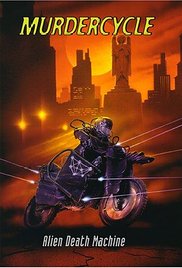
murdercycle1

Today’s flick is a little-known 1999 feature from the infamous library of Full Moon Entertainment: the amazingly-titled Murdercycle.

Murdercycle was distributed by Full Moon Entertainment, an outfit run by Charles Band that is infamous for b-level horror movies like Castle Freak, Demonic Toys, and Dollman, and notoriously terrible franchises like Puppet Master, The Evil Bong, and The Gingerdead Man.

Apparently, Murdercycle was created from the remnants of an unrealized Charles Band project from back in the days of Empire Pictures, which would have involved motorcycles battling each other in something called Battle Bikes. However, it didn’t get made before Empire folded, and Band went back to the drawing board years later under his new Full Moon label.

Between the director and two credited screenwriters for the movie, only one of them has any other credits to his name: writer Neal Marshall Stevens, who used his frequent pseudonym “Benjamin Carr” for the project. His other credits include Retro Puppet Master, Hellraiser: Deader, and Thir13en Ghosts, along with a handful of other low budget horror films.

The plot of Murdercycle is summarized on IMDb as follows:

A meteor falls to earth near a secret CIA military hideout and merges with a motorcycle and it’s rider to create an alien soldier bent on recovering an alien artifact. Military soldiers with the help of a female doctor that can read minds try to figure out what is going on and how to stop it before it kills them. They are also hindered by the CIA agent in charge of the base who refuses to divulge the hideouts’ secrets which could help them.

At first glance, Murdercycle seems to have all of the required elements for a fun b-movie. Honestly, I was sold on the title alone. A killer motorcycle? How could that be boring?

I went into Murdercycle without any other background than that. Based on the title, I thought of a few directions the movie might go. It could be a story like Death Proof or The Hitcher, about an unhinged biker who builds a rig equipped with blades, explosives, and gadgets for terrorizing people on the road. Or, maybe the motorcycle is just operating itself for purposes of mischief and murder, like a Maximum Overdrive or Killdozer situation. Either way, I would have been more than content.

Instead, Murdercycle has very little to do with the titular vehicular manslaughterist (which, as it turns out, is an alien that absorbs technology). The movie is, weirdly enough, a bit of a character drama, and spends a lot of time focusing on betrayals, interpersonal tensions, and widespread deception. The murderous wheeler is an occasional interjection of lackluster pyrotechnics into what is otherwise a military drama. While that might sound kind of intriguing to some, the characters and dialogue are pretty severely lacking, and the acting ranges from “soap opera adequate” to “community theater unqualified.”

The motorcycle itself is disappointing as well. It isn’t even a motorcycle as much as it is a dirt bike with a bunch of vaguely menacing accoutrements glued onto it. To say the least, it didn’t match the image of a bladed, chrome, roaring Harley Davidson beast with a taste for blood that was initially conjured in my head from the title.

murdercycle2
The Murdercycle
Image result for evil motorcycle
Google Image result for “evil motorcycle”
Image result for killer motorcycle
Google Image result for “killer motorcycle”

An unexpected amount of time in the move is dedicated to vaguely interesting philosophical issues, like the ethics of Artificial Intelligence and the potential boundary-violating practice of mind reading. Weirdly, though, the ability to read people’s thoughts is taken as a given,and is apparently public knowledge in the world of the movie: one of the central characters is a psychic, and no one is terribly surprised, alarmed, or even incredulous about that claim.

The real problem with the injecting of these philosophical ideas into the story isn’t that they are there (science fiction really should intersect with philosophy), but how they are written in. Every time one of these thought-provoking issues comes up, the movie grinds to a complete halt, and they are addressed with the subtlety of a hammer on a gong. Even worse, they are addressed really poorly, like you are sitting in on the first session of a Philosophy 101 course.

Likewise, the writers clearly wanted to slip in references to comic books in the screenplay, which is something that can be done well and effectively without distracting the audience. However, instead of making the references organic and natural, the characters are written to go out of their way to mention specifics about the Fantastic Four over and over again, beyond the point of saturation.

Honestly, this is one of the most disappointing movies I have seen in a long time. Not only is the title golden, but there were plenty of ways to make the movie better, even with the existing plot. I actually appreciate some of the ideas presented here, which indicate some ambition in the writing, but the execution was disappointingly sloppy. The end result of it all is a movie that is basically Predator, but with freshman philosophy discussions instead of over-the-top machismo, and an amateurishly-decorated dirtbike instead of a terrifying alien.

Fateful Findings

Fateful Findings

fateful-findings-film-cover

This past week, I had my first opportunity to experience Fateful Findings, a movie from the contemporary trash cinema master, Neil Breen.

Neil Breen, who performed just about every major role behind the scenes of the movie, is apparently a successful Las Vegas architect who self-funds his film productions with his profits. On top of his numerous behind the scenes duties, he also stars in all of his films, and Fateful Findings is no exception.

Fateful Findings was released in 2013, and is Breen’s third feature-length work. A fourth feature, Pass Thru, is due to release in 2016.

Fateful Findings is a movie that almost defies summary. There are so many sub-plots, dropped threads, and non-sequiturs that the story is barely coherent. On IMDb, the plot is broken down as follows:

A small boy discovers a mystical power as a child. He is then separated from his childhood girlfriend. He grows up to be a computer scientist who is hacking into the most secret national and international secrets, as well as being an acclaimed novel writer. His childhood ‘finding’ gives him amazing paranormal powers. He is reunited with the childhood girlfriend, mystically, on his hospital deathbed… as his relationship with his current drug addict girlfriend is deteriorating. The passions build between the threesome. Mystical, psychiatric and worldly forces rise to prevent him from revealing the hacked secrets. He attempts to reveal all in a Washington DC large press conference, with ‘fateful’ and dangerous consequences.

Fateful Findings is one of the most deeply incompetent films I have seen in a long time. Honestly, Coleman Francis, who could never quite figure out how sound worked on film, made more watchable movies than Neil Breen. Not only is Fateful Findings written in a confusing, convoluted, and rambling way, but both the sound and visuals are lacking on a near-parallel level.
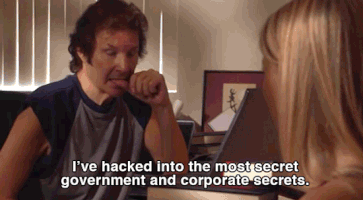
fateful1

Any given sequence might feature an airplane flying overhead, a loud air conditioner, inexplicably loud ambient tones, or silence for no apparent artistic purpose. Really, the sound throughout the movie is a crap shoot in every way imaginable. There is even one sequence where the sound of keyboard typing continues in the background after the character is no longer on the computer.

The visuals are primarily comprised of awkward close-ups, with occasional strangely set up two shots. A number of sequences feature two or more people at a table, which rapidly become confusing thanks to the way the shots are structured, and the fact that Breen can’t seem to fit more than two people in any given shot.  Even worse, however, is the fact that the acting is all truly horrendous, which makes the pressure of the closeups unbearable. On top of that, the editing leaves in long stretches of silence between lines, that only serve to enhance the awkwardness of their deliveries.

fateful2

Honestly, I could go on forever nitpicking specific issues with this movie. However, here is the key takeaway: with the right group of people, Fateful Findings is a blast. This is a weird movie that takes itself way too seriously, and is all the more comedic because of it. It is almost artistic in its lack of cogency, and in how it revels in its own terrible form and practice.  Surreal might be the right word for it, but I would hesitate to give it that much credit: it is a nonsensical fever dream of a concept that somehow made it to film without getting translated into any language at all.

The Thing With Two Heads

The Thing With Two Heads

thingtwoheads

Today I’m going to take a quick look at a b-movie classic: The Thing With Two Heads.

The Thing With Two Heads was a 1972 low budget movie that was presented by the notorious Samuel Z. Arkoff, and distributed by American International Pictures. The film’s writer/director, Lee Frost, had a long career making exploitation features, including 1975’s The Black Gestapo.

The plot of The Thing With Two Heads is summarized on IMDb as follows:

A rich but racist man is dying and hatches an elaborate scheme for transplanting his head onto another man’s body. His health deteriorates rapidly, and doctors are forced to transplant his head onto the only available candidate: a black man from death row.

The movie primarily stars Academy Award winner Ray Milland and former NFL star Roosevelt Grier as the mismatched central pair.

Effects legend and winner of many Academy Awards Rick Baker appears briefly in the film in a gorilla suit, and apparently did work on the effects as well, though without credit.

The score for The Thing With Two Heads was provided by Richard O. Ragland, who also provided music for Q: The Winged Serpent, The Touch of Satan, and Grizzly, among many others low budget features.

Nowadays, The Thing With Two Heads is regarded as an off-color cheese-ball classic of trash cinema, that certainly has a bit of a cult following. Roger Ebert gave the movie a 1-star review, and IMDb currently has it at an unenviable 4.1/10 from its user base, but it certainly hasn’t disappeared into absolute obscurity by any means.

The Thing With Two Heads is certainly a movie made for its time period. This reminded me in some ways of Bone, and in other ways of the standard field of blaxploitation movies that came out in the 1970s. However, its goofiness kind of defies classification: it is hard to call this anything other than a b-movie, though there are definitely blaxploitation elements. It isn’t what anyone would call progressive in its portrayal of race, but given the time period, it certainly could have been worse.

The movie certainly isn’t good by any stretch of the imagination, but it has some odd value as a silly relic of its time period. For b-movie fans who can stomach lesser Roger Corman movies, The Thing With Two Heads shouldn’t be any trouble, and might be worth checking out. The effects and stunts are in particular pretty hilariously inept, which are almost worth the experience on their own.

Batman v Superman: Dawn of Justice

Batman v Superman: Dawn of Justice

batmansuperman2

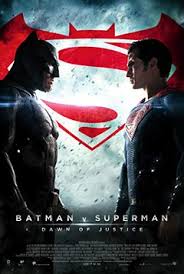
With the release of Suicide Squad this past weekend, I figured it was about time to take a look at DC’s previous critical bomb. And so, today’s feature is the much-hyped and highly divisive DC cinematic grudge match, Batman v Superman: Dawn of Justice.

Dawn of Justice was written by Chris Terrio, most notably of Argo, and David S. Goyer, whose previous credits include Dark City, Batman Begins, Blade II, Demonic Toys, and Ghost Rider: Spirit of Vengeance, among others.

The movie was directed by the ever-divisive Zack Snyder, whose previous films include 300, Watchmen, Man of Steel, and Sucker Punch. Snyder has already been attached to direct the Dawn of Justice follow-ups, Justice League and Justice League Part Two, and is a listed producer on all upcoming DC cinematic universe features.

The cinematographer for Batman v Superman was Larry Fong, who shot such films as 300, Sucker Punch, and Watchmen, and is working on the upcoming Kong: Skull Island. Before he made the permanent jump to blockbuster films, he worked extensively on the TV show Lost.

The editor for the film was David Brenner, who previously cut flicks like 2012, Wanted, The Day After Tomorrow, The Patriot, Independence Day, The Doors, and World Trade Center.

Dawn of Justice boasts a large cast list that includes Ben Affleck, Henry Cavill, Jesse Eisenberg, Amy Adams, Diane Lane, Jeremy Irons, Holly Hunter, and Lawrence Fishburne, among others.

The plot of Batman v Superman: Dawn of Justice is summarized on IMDb as follows:

Fearing that the actions of Superman are left unchecked, Batman takes on the Man of Steel, while the world wrestles with what kind of a hero it really needs.

Long before Dawn of Justice hit theaters, it managed to get on the wrong side of many fans of DC comics with the casting of Ben Affleck as Bruce Wayne and Batman. Many couldn’t separate him from his unsuccessful string of action features, which included a stint as the Marvel superhero Daredevil, prior to his critical rebirth with his acclaimed directing career. Surprisingly, most fans now cite Affleck’s depiction of Batman (“Batfleck”) as one of the few highlights of Dawn of Justice.

batmansuperman3While Dawn of Justice is not the first film installment in the DC Cinematic Universe, as it follows the continuity of Man of Steel, it is undoubtedly the key launching point for DC’s imminent future on screen. It introduces not only Batman, but Wonder Woman, Aquaman, The Flash, and Cyborg as potential subjects for connected stories down the line.

Both the plot and aesthetics of Dawn of Justice borrow heavily from two key source materials: “The Death of Superman” and “The Dark Knight Returns.” However, the result manages to defy being faithful to either comic story, and likely wouldn’t please die hard fans of one or the other.

In July of 2016, an expanded cut of Batman v Superman was released on DVD and Blu-ray, which included 30 minutes of cut footage. This director’s cut has been marketed as an Ultimate Edition, and was meant to counter some popular criticisms of the theatrical cut.

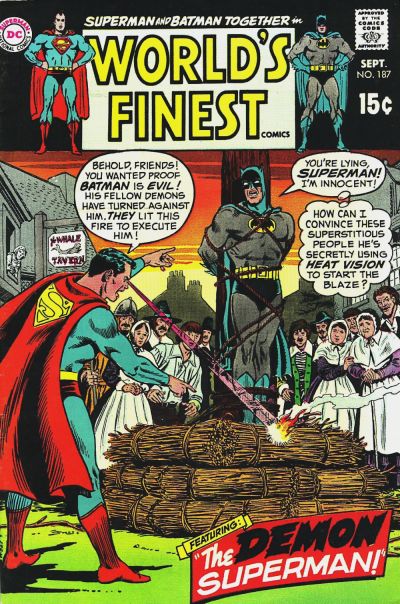
The idea of a Batman and Superman team up has a long history, both inside and outside of the pages of DC comics. Series such as World’s Finest have seen the two iconic characters team up with fellow allies and get up to all manner of shenanigans, including occasionally traveling in time. Likewise, the characters have crossed paths many times in animation, such as the Super Friends ad Justice League series.

batmansuperman1Batman v Superman was greeted with a notably mixed reception, particularly online. The Rotten Tomatoes scores currently sit at 27% from critics and 65% from audiences, which is a significant gulf, and has been cause for claims of bias and conspiracy on the parts of some. The IMDb score is no less contentious: it currently sits at a 6.9/10, but that is only after alleged vote brigades inflated the score for weeks after the film’s initial release.

Batman v Superman is a movie that certainly has a fair share of flaws, but I think its biggest failing is the lack of character building in the screenplay. The movie so heavily relies on the audience’s recognition of the characters on screen, that it doesn’t bother building them beyond that. I have never had so much trouble feeling invested in characters in a superhero movie, and I’m including movies like Howard The Duck and Daredevil in there.

On top of the character issues, there is a strange lack of connection between sequences throughout the movie, to the point that long stretches just feel like bloated montages. It is hard to relate to anyone in the story as a result, because you don’t really spend quality time with any of them. Instead of the characters feeling like close friends of the audience via shared experience, they just come off as adjacent acquaintances. There is just no emotional bond built between the characters and the observers.

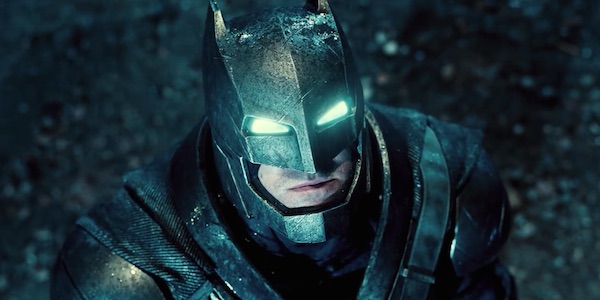
However, there are a few notable bright spots to the movie. Batman, on all fronts, is actually pretty solid. Jeremy Irons is a spectacular Alfred, and his dialogue with Affleck was the most real and relatable thing in the movie. Personally, I also thought the aesthetics of the Batman suit and paraphernalia were a welcome departure from all of the character’s previous film appearances. The armor and voice modulator were a nice touch, as hokey as they might seem to some, and Affleck absolutely nailed an aged and burnt-out Bruce Wayne. Honestly, I think that Batfleck would have been a better fit for a story like The Dark Knight Rises, in which his methods are either publicly frowned upon or no longer needed, but he is cornered into a return to form.

Likewise, Wonder Woman was definitely cool to see, and looked cool in action on screen. Gal Gadot has gotten a little bit of unmerited criticism for her accent, but I thought it fit the character pretty well, and it wasn’t exactly distracting. However, Wonder Woman’s presence also made the move feel even more bloated than it already was. She (and the rest of the Justice League) felt a little too forced and transparent as mechanisms to build branching paths for a sprawling film franchise. That might have been fine if they were worked in as minor references or as concluding teasers, but they are given a little too much focus, to the detriment of the story and film as a whole. The result is both a muddy story and a poor introduction to some key franchise characters. The Justice League either needed way more attention and a role in the plot, or way less time on screen.

Almost certainly the most mocked aspect of Dawn of Justice is the cause of the two central heroes’ ultimate alliance: the revelation that they both have moms named Martha. I can understand that this was an attempt to emotionally tie the two characters together, and give them common ground to come to terms on. Unfortunately, not only isn’t this commonality built up very well, but it is just too simplistic, and comes off as borderline comedic as a result. It is just too minor of a coincidence to justify burying the hatchet on a pretty serious grudge.

Overall, Batman v Superman isn’t unwatchable by any means, but it is definitely sup-par. Snyder does have a gift for crafting images, but he’s never really gotten a handle on story or characters, which are necessary to give those images genuine gravity. For fans of Snyder’s other works, this is probably a perfectly acceptable flick. Likewise, die-hard Superman and Batman fans may just be pleased to see their idols on screen again. However, in my opinion, this is not just sub-par, but disappointingly forgettable. What of this movie, in 10 years, will be remembered? Martha? Batfleck? The box office number? Almost nothing about the story or the emotion that should have defined this movie will last. As with many Snyder films, this is an exercise in spectacle that is ultimately all flash and no substance.