Supergirl

Supergirl

supergirl3

Today, I’ll be covering one of the most infamous superhero films of all time: 1984’s “Supergirl.”

“Supergirl” was directed by Jeannot Szwarc, who is best known for directing “Jaws 2,” as well as a number of television shows in recent years (including episodes of “Supernatural” and “Bones”). The script for “Supergirl” was written by David Odell, who also wrote the screenplays for “Masters of the Universe” and “The Dark Crystal.” His writing career on films understandably didn’t survive the 1980s.

The cinematography on “Supergirl” was provided by Alan Hume, who racked up over 100 cinematography credits over his career. His works include “A Fish Called Wanda,” “Octopussy,” “A View To A Kill,” and “Return of the Jedi.”

The effects team for “Supergirl” included Alan Barnard (“Krull,” “Indiana Jones and The Last Crusade”), Peter Biggs (“Who Framed Roger Rabbit?”), Brian Warner (“Superman,” “Hudson Hawk,” “Alien 3”), Ken Morris (“Willow,” “A View To A Kill”), Peter Dawson (“Gymkata,” “Batman,” “Full Metal Jacket”), Michael Dunleavy (“Event Horizon,” “Gladiator,” “Aliens”), and Ron Cartwright (“Space Truckers”).

The score for “Supergirl” was conducted and composed by Jerry Goldsmith, who created over 250 film compositions over his career, including scores for “The 13th Warrior,” “Small Soldiers,” “Mulan,” “Gremlins,” “Congo,” “The ‘Burbs,” “First Blood,” “Alien,” “Poltergeist,” and “Logan’s Run.”

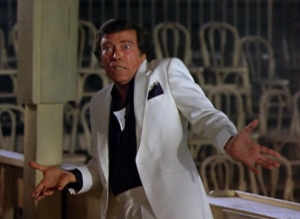
“Supergirl” features an impressively deep cast, headlined by newcomer Helen Slater in the lead role. The accessory cast includes such notables as Faye Dunaway, Peter O’Toole, Mia Farrow, Brenda Vaccaro, Peter Cook, and Marc McClure (reprising his role as Jimmy Olsen from the “Superman” movies).
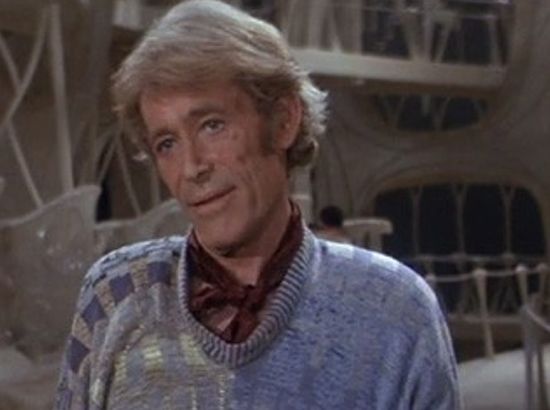
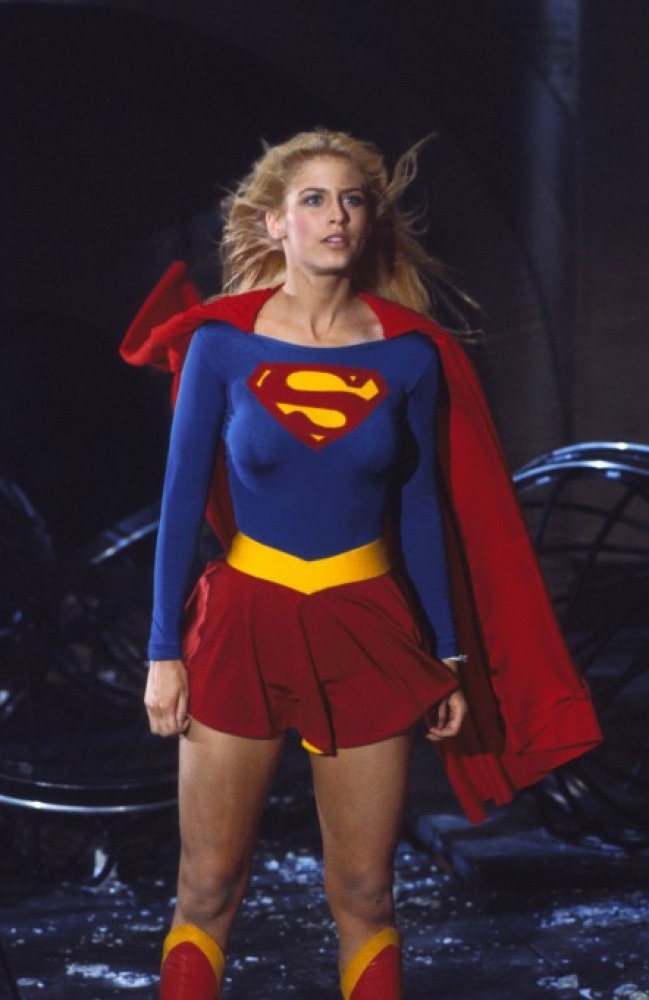
supergirl6The story of “Supergirl” follows the hero as she leaves her home in search of a mysterious lost energy source, which she tracks down to Earth. While hunting it down, she has to learn how to adapt to human customs and blend in with the world.

“Supergirl” is, in fact, canonical with the famous “Superman” series of films starring Christopher Reeves, and iterations of the screenplay intended for him to appear as Superman in either a cameo or supporting role.
supergirl4With DC recently relaunching a combined cinematic universe, it may just be a matter of time before Supergirl gets another chance at a big screen adaptation. Currently, there is a CBS television series being created around the character, which may or may not ultimately tie in to the cinematic universe.

Helen Slater made a number of appearances on the hit television adaptation of the Superman story called “Smallville,” in which she played Superman’s mother, a nod to her earlier role as a Kryptonian in “Supergirl.”

Interestingly, two distinct cuts of “Supergirl” exist. One is an “international” director’s cut that only premiered on home video years after the movie’s release, while the other is a significantly trimmed version that was theatrically released by TriStar after Warner Brothers shelved it.

The casting pool for the character of Supergirl apparently included notables such as Melanie Griffith and Brooke Shields, which makes it all the more impressive (and perplexing) that it ultimately went to an unknown name. Likewise, the character of Selena was pitched to Dolly Parton, Jane Fonda, and Goldie Hawn before it was ultimately (and infamously) taken on by Faye Dunaway.
supergirl1The screenplay for “Supergirl” reportedly had to go through a good number of rewrites, each with drastic story differences around the inclusion and exclusion of specific characters. One of the producers (Alyssa Cartagena) was apparently so unhappy with the script’s final form and the production as a whole that she was ultimately dismissed from the film, which was probably better for her in the long run anyway.

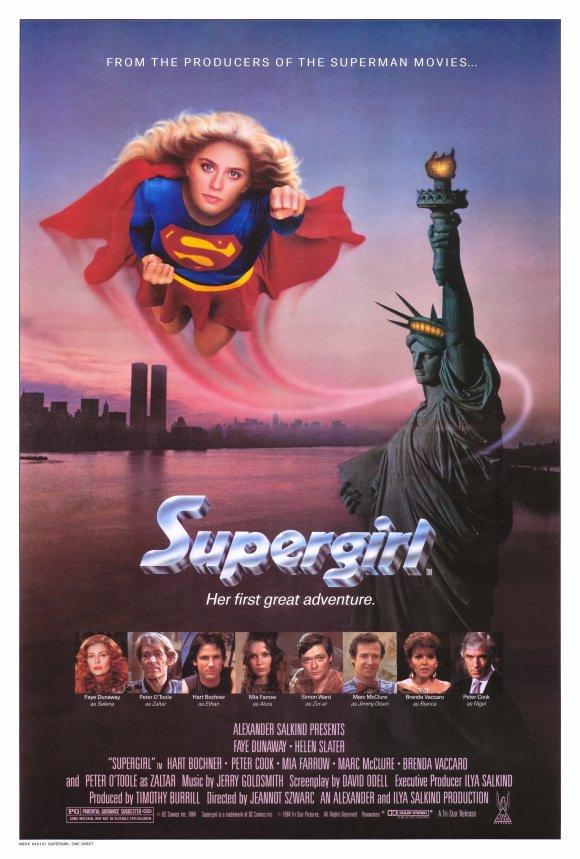
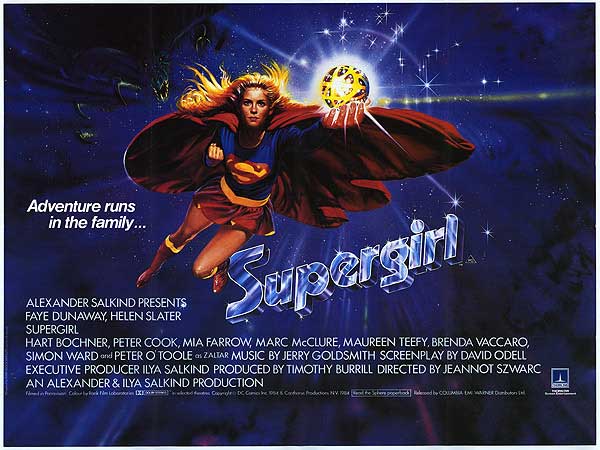
The original theatrical poster for “Supergirl” famously (and hilariously) features the Statue of Liberty in the background, holding her torch in the wrong hand. Of course, that is the sort of attention to detail you can expect from one of the worst regarded films of the 1980s.

supergirl3The character of Supergirl was created in 1959 by Otto Binder and Al Plastino, and is an immensely popular character in the DC universe. Much like Superman, she is a surviving Kryptonian who is given similar powers to Superman while on Earth. Unlike her film version, however, she has developed a good deal of depth over the years, and has gone through a number of reboots and character shifts.

The reception to the “Supergirl” movie was incredibly negative, and the film was nominated for two Golden Raspberries for Faye Dunaway and Peter O’Toole’s performances as the worst of the year. The movie currently holds Rotten Tomatoes ratings of 7% (critic) and 26% (audience), as well as an IMDb score of 4.3.
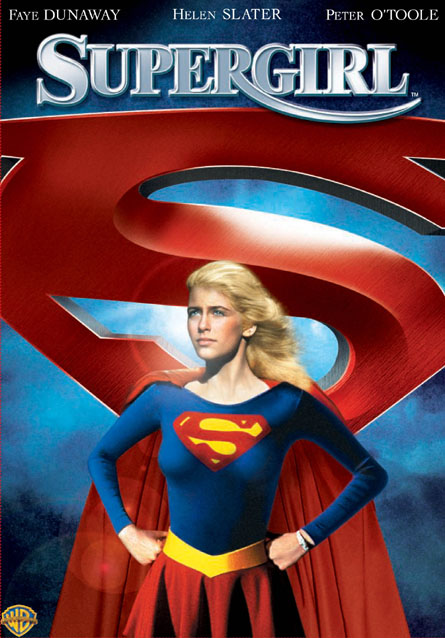
supergirl2“Supergirl” had a lifetime gross of just over $14 million in its theatrical run. However, the budget was estimated at $35 million for the picture, making it a significant financial failure when all was said and done.

The biggest problem with “Supergirl” by a significant margin is the writing. The dialogue, the plot, and the characters are all just awful, and it is frankly amazing that this was the product that resulted after five re-writes. Particularly, all of the women come off as excessively simplistic and infantile, specifically Dunaway’s Selena and Supergirl herself. I’m not sure if the characters were intended to be funny, but the way they are written just doesn’t work at all. As much as Dunaway was disparaged for her work in “Supergirl,” she actually seemed like a strong point for me, if for no other reason than she put some intensity and passion into the ridiculous role.
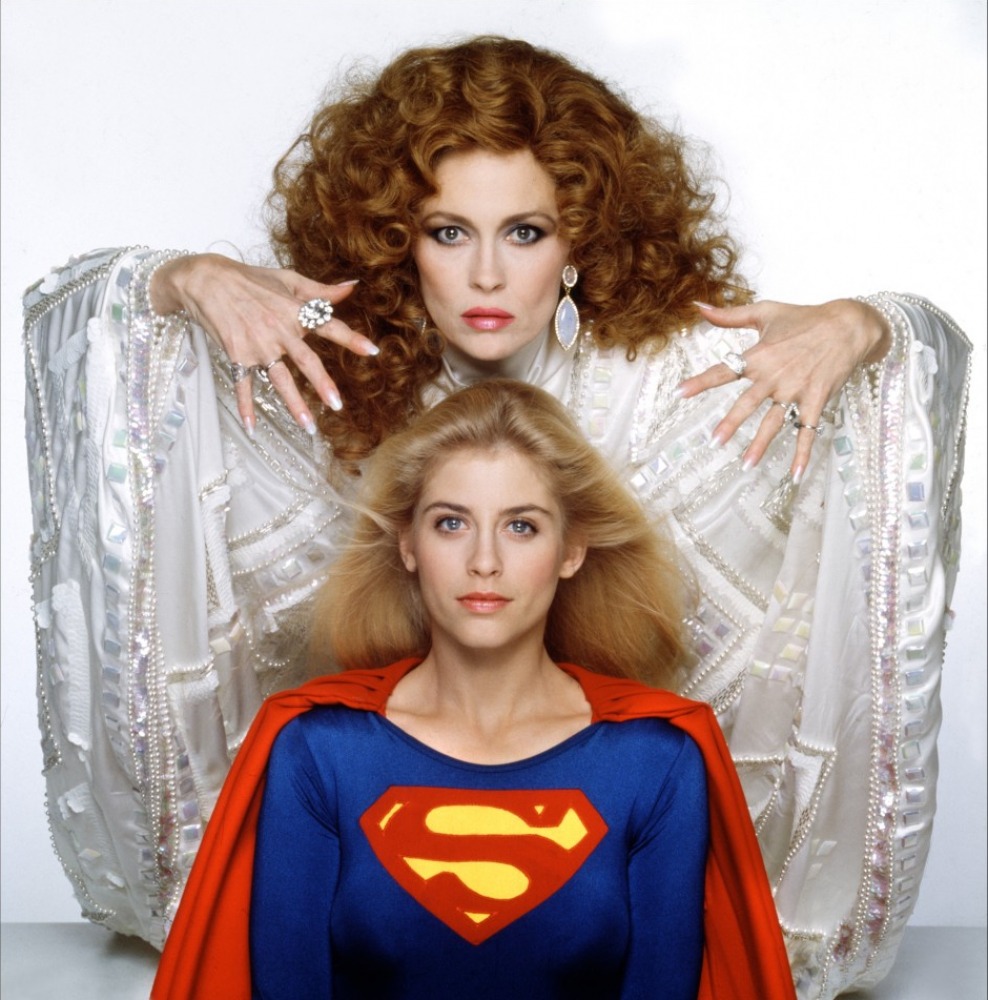
supergirl5Overall, “Supergirl” suffers a lot not just from the writing and acting, but also from some incredibly slow pacing, which is a problem that can kill any film that would otherwise be entertaining. The highlights of the film are probably worth looking up, but in general it is far too slow to be an entertaining watch. Faye Dunaway is about the only saving grace to the film, and her absence is notable when she isn’t on screen.

For bad movie lovers, “Supergirl” is probably worth giving a shot for the experience of it, and for the highlight moments. However, general audiences probably won’t want to hang around for the whole trainwreck, and could very well doze off somewhere in the second act.
Dollman

Dollman

dollman1

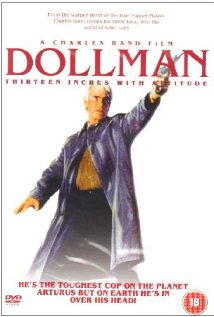
Today’s b-movie feature is “Dollman,” the story of a stranded renegade cop from space who barely measures a foot tall on Earth.

“Dollman” was directed by b-movie legend Albert Pyun, who has been behind films like “Cyborg,” “Captain America,” “Alien From L.A.,” and “The Sword and The Sorcerer” over his 30+ year directing career.

The screenplay for “Dollman” is credited to Chris Roghair, who has no other acknowledged writing credits. The story is credited to Charles Band himself, who ran Full Moon Pictures, the outfit which produced the film. There were a couple of other hands involved in the writing that didn’t received formal credit on the film, namely David Padian (“Puppet Master II”) and Ed Naha (“Dolls,” “Troll,” “C.H.U.D. II”).

dollman3The cinematography for “Dollman” was provided by George Mooradian, who also worked on features such as “Bats,” “Omega Doom,” and “The Hitcher II.”

The effects team on “Dollman” included Bill Sturgeon (“Videodrome,” “An American Werewolf in London,” “Aliens,” “The Frighteners”), Logan Frazee (“Blade Runner,” “Willy Wonka & The Chocolate Factory,” “Heat,” “Mystery Men”) Mike Smithson (“Thor,” “Avatar,” “Teen Wolf Too”) Garrett Immel (“Drag Me To Hell,” “Scream,” “Sin City”) James Belohovik (“Evil Dead II,” “The Thing,” “Robot Jox”), and Roger Borelli (“Men In Black,” “Darkman,” “Army of Darkness”).

The music for “Dollman” was provided by Anthony Riparetti, who has contributed scores for other Albert Pyun movies such as “Alien From L.A.” and “Knights.”

dollman6The cast of “Dollman” is headlined by Tim Thomerson (“Trancers,” “Fade to Black”) and Jackie Earl Haley (“Watchmen”), with the supporting cast being rounded out by Kamala Lopez (“I Heart Huckabees”), Frank Collison (“O Brother, Where Art Thou?”, “The Village”) and Nicholas Guest (“Trading Places”).

The story of “Dollman” follows a renegade space policeman as he pursues an alien criminal to Earth, where the two of them only measure a foot tall. They are then forced to find a way off of the planet while surviving life in the gang-dominated Bronx and battling each other.

“Dollman” received a sequel via a crossover with another Full Moon Features franchise, “Demonic Toys.” “Dollman vs The Demonic Toys,” as it was creatively titled, was directed by Charles Band and is widely disliked even by fans of his work.

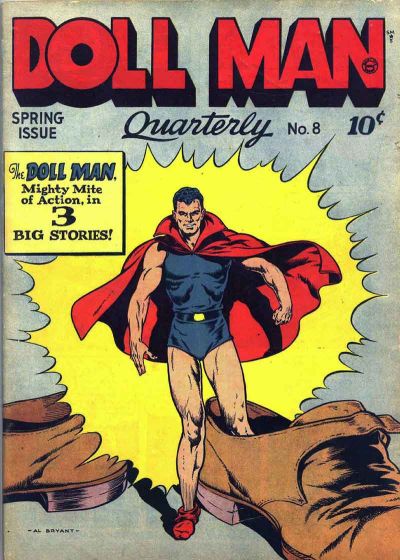
Interestingly, “Doll Man” is an actual super hero who currently exists within the D.C. canon, though he is best known for in his golden age form published by Quality Comics. He was interestingly the first shrinking comic book hero, predating more well known characters like “Ant Man.” Full Moon’s “Dollman” also had its own limited run in comics published by Eternity, which produced series based on a number of the production’s features.

dollman2I wasn’t able to find any information about the budget or financial gains of the film, but I assume that the budget was significantly low given the production company. I would be shocked if it didn’t ultimately turn a profit of some kind. The movie has a bit of a cult following, but isn’t widely beloved: it currently has an IMDb rating of 5.8, and a Rotten Tomatoes audience score of 37%.

Most reviews I have seen of “Dollman” admit that, despite its cheesiness, it certainly has some entertainment value to it for fans of b-movies. I can’t help but agree: it isn’t fantastic by any means, but there are plenty of things to enjoy in “Dollman” if you can accept it for the minimal (ha) production that it is.

The special effects throughout “Dollman” are really a mixed bag. I loved the work that was done to the environments to make characters appear small, and the over-the-top squibs kind of work, but the rest of the effects just don’t cut it. That said, the squibs are more than enough to enjoy for bad movie fans.

dollman4I will say that the sets and production design in “Dollman” are ok, and definitely distinguish Earth and the alien world. However, the lighting and shots make things very difficult to see, particularly in the early segments on the alien planet. It pretty much offsets the creative details of the world when you can’t see them on screen.

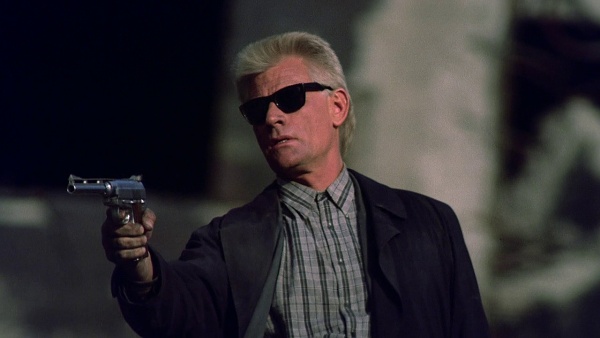
One of the key draws of “Dollman” is definitely the super gun, which essentially makes up for the character’s small size. The effects of it are absolutely ridiculous and it is beyond overpowered, but it certainly is fun to watch. I will note that the guns design and Dollman’s personality make it pretty transparent that his character is basically Dirty Harry in a sci-fi setting, but that is hardly something to complain about.

The writing and acting throughout the movie is pretty awful, but Tim Thomerson definitely stands out as a highlight. He manages to make some otherwise cringe-worthy one-liners and puns work for his bad-ass character, which is no small feat.

Overall, “Dollman” isn’t a great movie, and doesn’t quite deserve classification among the elite “good-bad” features out there either. It certainly has entertaining moments that give it value, but it isn’t an essential watch if you ask me. If you are a fan of Full Moon or Albert Pyun, you will probably enjoy it, but average audiences might not be as enthusiastic about the feature.

Howard the Duck

Howard the Duck

howard1

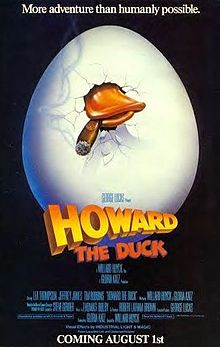
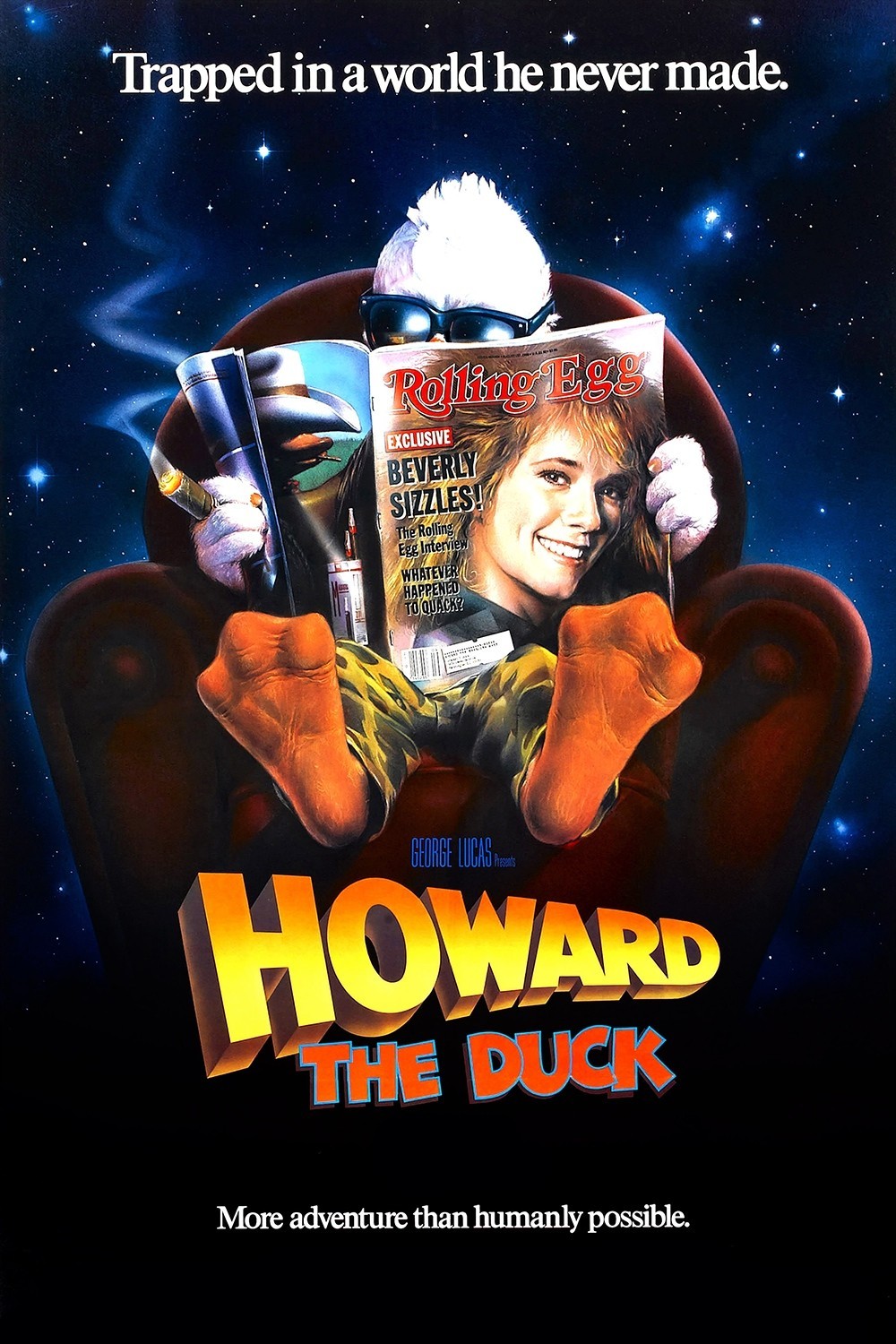
Today’s feature is “Howard the Duck,” one of the most infamous and perplexing failures in Hollywood history, and also the first cinematic adaptation from the Marvel universe.

Howard the Duck was directed and co-written by William Huyck, who famously wrote “American Graffiti” and “Indiana Jones and The Temple of Doom.” He only had four directing credits, of which “Howard the Duck” was his largest production (and, notably, his last).

howard4Huyck wrote “Howard the Duck” alongside his wife and frequent writing partner Gloria Katz, who also served as a producer on the movie. The story is very loosely based on the beloved Marvel comic series created by Steve Gerber, with drastic changes to the tone and characters.

The music on “Howard the Duck” was provided by John Barry, with the original songs written by Thomas Dolby. Barry is best known for working on a number of the James Bond movies, as well as assorted films like “Starcrash,” “The Cotton Club,” and “Midnight Cowboy.” Dolby is best known for the hit “She Blinded Me With Science!”, but also worked on a number of films such as “We’re Back!” and “FernGully.”

The cinematography on “Howard the Duck” was provided by Academy Award nominee Richard H. Kline, who worked on science fiction films such as “The Andromeda Strain,” “Soylent Green,” and “Star Trek: The Motion Picture,” and accrued over 55 cinematography credits over his career.

“Howard the Duck” is famously associated with George Lucas, who served as executive producer on the film. It is unclear exactly how much input he had on the creative decisions on the production, but most of the blame for the film has been leveled at him regardless.

The cast of “Howard the Duck” features Lea Thompson (“Back to the Future”), Jeffrey Jones (“Ferris Bueller’s Day Off”), and Tim Robbins (“The Shawshank Redeption”), as well as Chip Zien as the voice of Howard.

Interestingly, “Howard the Duck” produced a lot of alternate casting rumors for most of the major roles. Reportedly, people such as Paula Abdul, Kim Basinger, Jodi Benson, Sarah Jessica Parker, Lori Singer and Tori Amos were all considered for the role of Beverly before it ultimately went to Lea Thompson. Likewise, the voice work casting field for Howard included names such as Rob Paulsen, John Cusack, and Martin Short. Most hilariously of all in my opinion is the fact that Jay Leno was considered for the role of Phil, which went to Tim Robbins. I can only imagine how awful that could have been, given what “Collision Course” was like a few years later.

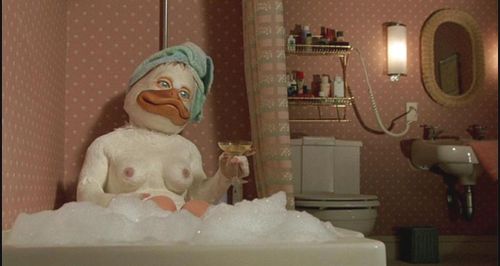
The story of “Howard the Duck” centers around a humanoid duck from a parallel dimension, who is pulled into our world by a science experiment gone wrong. The plot follows Howard as he tries to adapt to Earth, and looks for a way to get back to his home planet.

howard6The source material for “Howard the Duck” has a famously tumultuous history. After being created by Steve Gerber, Disney went after Marvel comics about the character, alleging that Howard was too similar to Donald Duck. After a character redesign to smooth over the issue and a critically lauded run, further lengthy fights ensued between Gerber and Marvel over ownership of the character after he was unceremoniously fired, and the comic cancelled.  This fight resulted in a lawsuit over the film’s production, as well as passive blows in the pages of Gerber’s later comics.

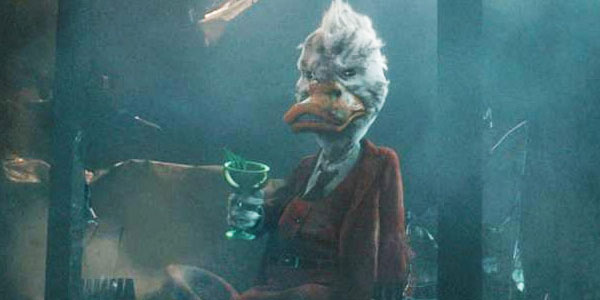
The character of Howard the Duck famously appeared in a cameo at the end of the hit “Guardians of the Galaxy,” establishing Howard as a member of the modern Marvel cinematic universe.

howard5Reportedly, the duck suit used for Howard cost the production nearly $2 million alone, on an estimated total budget of $37 million. It was operated by a a number of different actors throughout the production, though it is primarily credited to Ed Gale, who received his first acting credit for the movie.

“Howard the Duck” was ultimately nominated for seven Golden Raspberries (Razzies), which are handed out to the perceived worst films of the year. It wound up winning four, including a tie with Prince’s “Under the Cherry Moon” for Worst Picture.

howard3Amazingly, the failure of “Howard the Duck” ultimately played an important part in the origin of Pixar. After the construction of Skywalker Ranch, Lucas was relying on “Howard the Duck” to be a significant hit to cover the cost of the project. After the movie failed to profit significantly, Lucas wound up near bankruptcy, and sold Industrial Light and Magic’s animation studio to Steve Jobs, which laid the core foundation for Pixar.
It has been reported that famed directorJohn Landis nearly took the job of helming “Howard the Duck,” but ultimately turned it down due to the inclusion of a car chase with police, citing the similarities to his earlier film “The Blues Brothers.” He wound up directing the successful comedy “Three Amigos!” in 1986 instead.

“Howard the Duck” features a number of Wilhelm screams, which is a stock sound effect that George Lucas is particularly fond of using in his movies. If you are not familiar with it by name, you have almost certainly heard it countless times before in movies without realizing it.

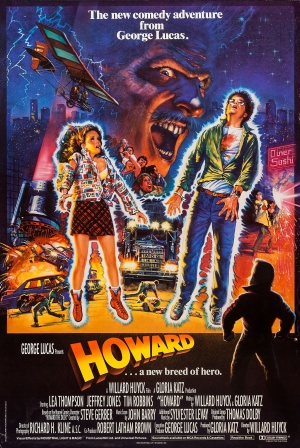
“Howard the Duck” managed to gross over $37 million in total worldwide in its theatrical run, but on a budget of $37 million, only barely making back the money put into it (and dramatically failing to meet expectations). Interestingly, most of the theatrical money came from overseas markets, and was considered a massive failure domestically. Interestingly, it also went by the alternate title of “Howard: A New Breed of Hero” for the Australian and UK releases, which significantly toned down the duck imagery for the promotional materials.

howard9Reception for “Howard the Duck” was understandably negative, though it has gained some loyal fans over the years. It currently holds an IMDb rating of 4.5, along with Rotten Tomatoes scores of 14% (critic) and 39% (audience).

Of all of the negative reviews of “Howard the Duck” that I have seen, none have failed to mention that absurd overuse of puns throughout the film. Puns are of course a staple in action movies, but never so frequently or egregiously as they are used here. I assume their use was intentional and meant to be a running gag, but it just doesn’t work in the way that it was intended.

The effects work has been mocked to some degree in reviews that I have seen of the film, but I actually thought it all looked ok for the time, even the duck suit. The monsters certainly haven’t aged well, but the makeup work holds up impressively well in my opinion.

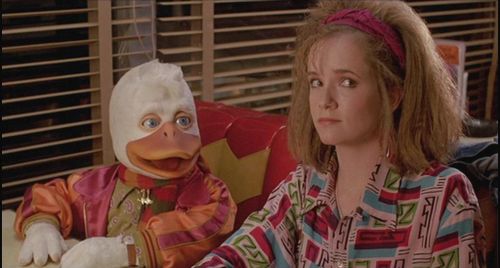
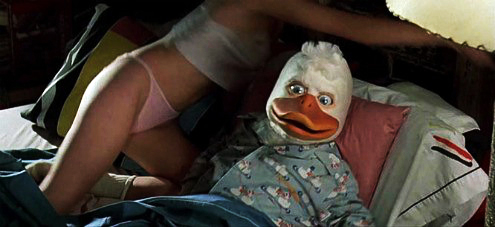
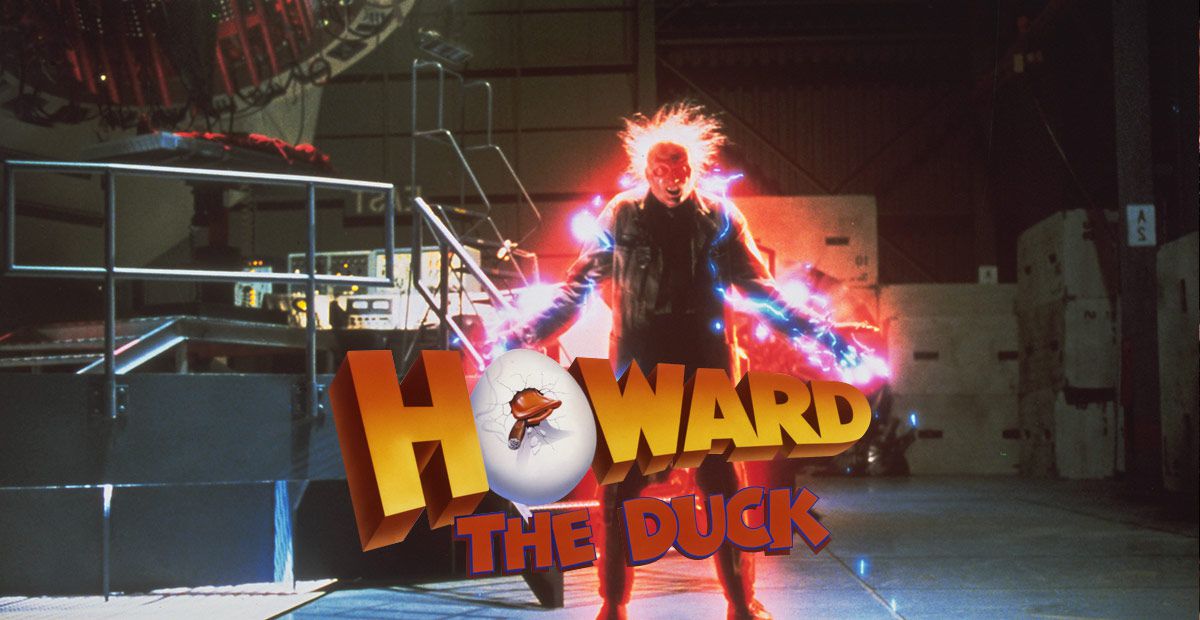
howard2The reactions from the characters in the film to outlandish situations are never understandable or believable, which is something that I think was supposed to be funny. For instance, the public reactions to Howard, an anthropomorphic duck, are all over the board. Some assume he is a child in a suit, others think he is a Pet, while one bright fellow assumes he is a ventriloquist’s dummy. Likewise, Jeffrey Jones’s dramatic possession isn’t treated by observers in any sort of understandable fashion. One character thinks he is an evangelical preacher, while others seem to assume he is just suffering from a lack of coffee. At the very least, I expected someone to appear concerned before it got to the point that he was firing lightning out of his eyes and glowing.

howard7For all of the issues with “Howard the Duck,” there are a few moments of genuine humor, though few and far between. I particularly enjoyed the line “I hate violence! You have to go in there and beat them up!”, which reminded me of the War Room from “Dr. Strangelove,” which is the only way one should ever mention “Howard the Duck” and Stanley Kubrick in the same breath.

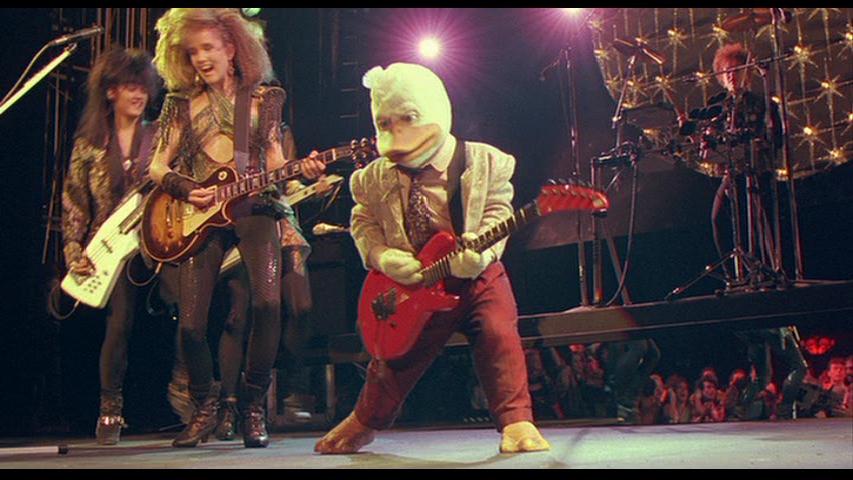
Among the many infamous aspects of “Howard the Duck,” the musical ending might be the most memorable. It has become immortalized for not only the theme song, but also for Howard’s inexplicable guitar work. Interestingly, the singing for the sequence is actually done by Lea Thompson and the backup actors. It was apparently deemed good enough to not justify dubbing over.

One of the biggest issues with “Howard the Duck” is the clear confusion with who the audience for the film was supposed to be. The movie retains some of the profanity and adult humor from the source material, but plays like a kids movie and was ultimately (somehow) rated PG. Richard Corless of TIME magazine wrote in his review: “The movie is too scuzzy to beguile children, too infantile to appeal to adults,” which perfectly captures the core problem with the film. Similarly, Gene Siskel wrote in his review simply “who was this stupid film made for?” The reception and tone of “Howard the Duck” reminded me quite a bit of “Hudson Hawk,” another high profile critical failure from Hollywood that I covered recently. Both movies share a sense of humor, which hybridizes a cartoonish style with adult content, which failed to resonate with audiences in both instances.

Fans of the original comic series were of course disappointed with the way Howard was ultimately written in the film, feeling that he was portrayed much softer and more tame than he should have been. On the flip side, many found that the toned-down perversity that remained in the script were too risque for general audiences, meaning that it failed to satisfy either population. It makes the movie a sort of cautionary tale of why you should have an audience in mind for a film, rather than trying to please everyone: more often than not, the result is disappointment. The only reason it makes sense to me, and what the logic behind the decision probably was, is tied directly to the budget. Clearly, there were hopes that “Howard” would prove to be a cash cow, and a PG rating means that more people would be able to buy tickets, and more theaters would be interested in booking it. Of course, that plan didn’t quite pan out as hoped.

howard8
This slipped into a PG movie

“Howard the Duck” doesn’t get a strong recommendation from me, primarily because of how dull the movie gets at points. The only reason I kind of have to recommend it is because of how engrained it is in popular culture as a Hollywood failure, but that certainly doesn’t count for nothing. “Howard the Duck” is probably one of the most recognizable Hollywood failures of all time, and that makes it essential watching for bad movie fans without any doubt. For people not interested in the background of the film and its context, however, there are far more entertaining movies to dig up out there.

God Told Me To

God Told Me To

godtoldmeto1

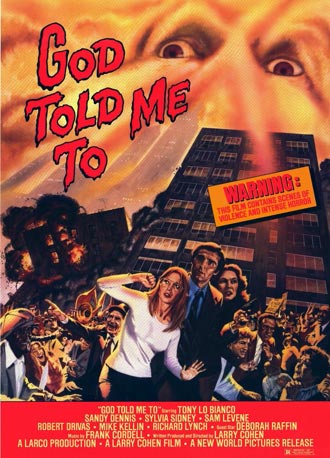
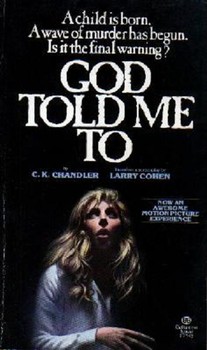
Today’s feature is a surreal and somewhat obscure feature by b-movie icon Larry Cohen: “God Told Me To.”

“God Told Me To” was written and directed by Larry Cohen, one of my favorite figures in the b-movie world. He is probably best known for “It’s Alive,” but is also responsible for “The Stuff,” the “Maniac Cop” franchise, “Phone Booth,” and the blaxploitation classic “Black Caesar,” among many others.

The effects on “God Told Me To” were provided by first-timer Steve Neill, who went on to work special effects on movies like “Puppet Master,” “The Stuff,” “Saturday the 14th,” and “Laserblast.”

godtoldmeto2

“God Told Me To” was photographed by a man named Paul Glickman, who worked with Larry Cohen again in the 1980s on a handful of later films (“The Stuff,” “Perfect Strangers,” and “Special Effects”).

The music for “God Told Me To” was provided by Frank Cordell, and was his last film composition before his death in 1980. The music was initially slated to be provided by the legendary Bernard Hermann after he finished on “Taxi Driver,” but he tragically died of a heart attack immediately after completing that film’s score.

godtoldmeto3

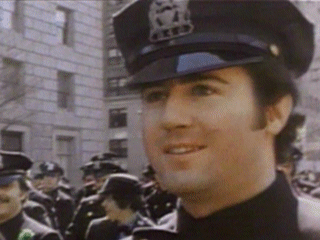
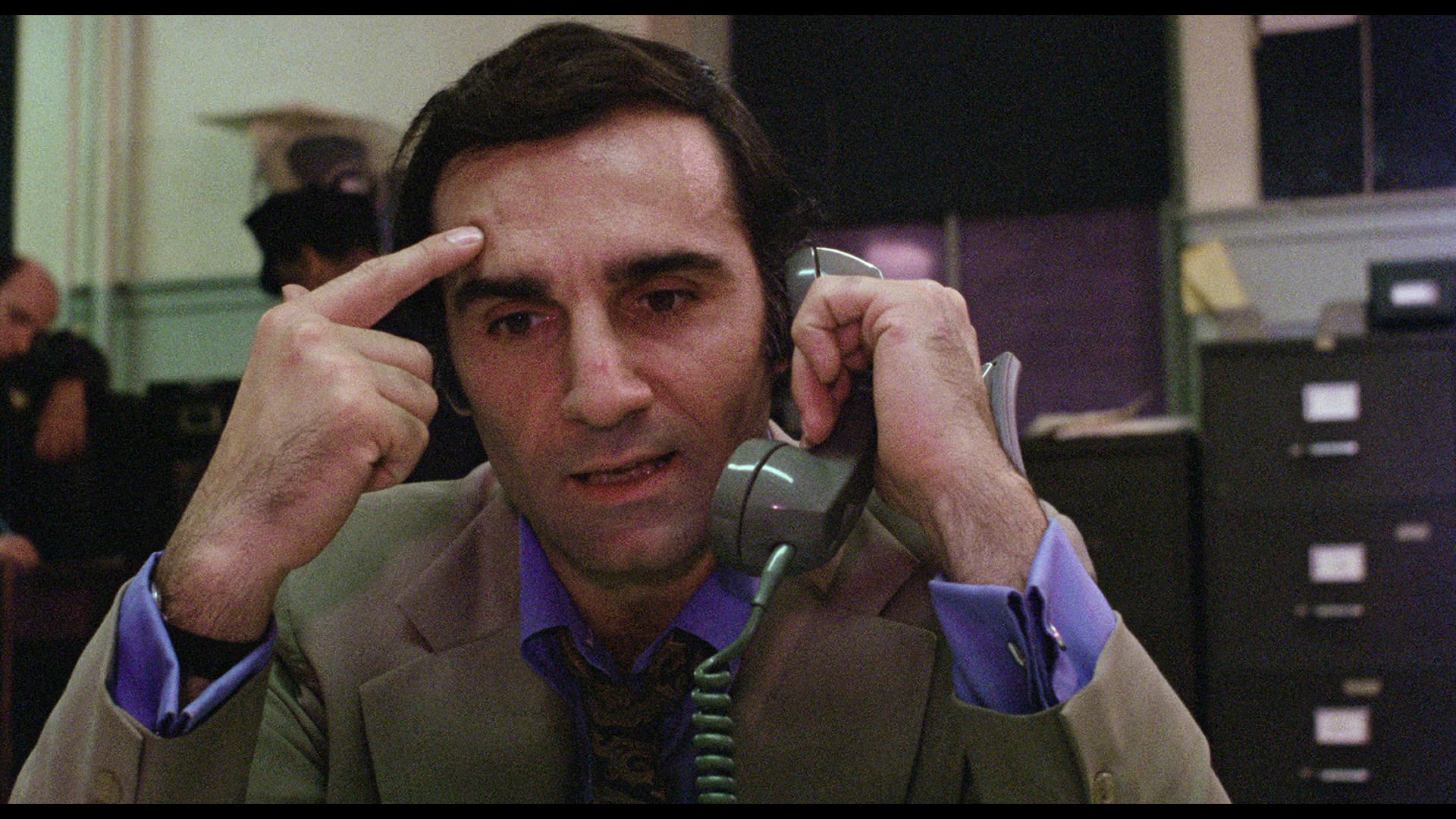
The cast of “God Told Me To” was led by Tony Lo Bianco, Richard Lynch, Sylvia Sidney, Sandy Dennis, Deborah Raffin, and Robert Drivas. Interestingly, Andy Kaufman briefly appears in his first film role, surprisingly as one of the killers.

godtoldmeto7

The story of “God Told Me To” centers around an investigation into a series of perplexing murders, in which the killers all claim to have been instructed by God. A particularly religious detective attempts to dig up the bizarre roots of what he convinces himself are cult-motivated murders, in an attempt to prevent any more killings.

“God Told Me To” was also released under a couple of alternate titles, including “Demon” and “God Told Me To Kill,” though it is most widely known and recognized by the original title. I personally prefer “God Told Me To Kill,” but I am willing to bet that that title wasn’t going to fly for the theatrical release.

godtoldmeto5

One particularly surreal sequence of “God Told Me To” depicting an alien abduction (yes, the plot involves aliens by the end) features footage pulled from the 1970s British Sci-Fi series “Space: 1999.”

“God Told Me To” was clearly made on a minimal budget, but it looks pretty impressive considering. I wasn’t able to dig up any box office or budget information on the film, but apparently it was not financially successful or well-received upon its initial release. However, it has certainly gained a good deal of cult popularity over the years, particularly within the horror community. It was recently named as #94 on list of the 100 greatest horror movies on TimeOut.com, based on voting from an assortment of horror professionals (including Simon Pegg and Roger Corman, reportedly).

godtoldmeto6

“God Told Me To” was, as mentioned, not well received when it was initially released in theaters. It currently holds Rotten Tomatoes ratings of 55% (audience) and 75% (critic), as well as an IMDb score of 6.3.

“God Told Me To” is without a doubt a very weird movie that goes in odd directions, and is anything but predictable. Reviews I have seen almost always cite the ending and various revelations as confusing, but nonetheless inventive. It seems like only a very particular niche of viewers are going to enjoy this film, just because of where the surreal plot ultimately goes.

Roger Ebert wrote a particularly scathing review that took shots at both the screenplay and the editing on “God Told Me To”:

“This is the most confused feature-length film I’ve ever seen…There were times when I thought the projectionist was showing the reels in random order…a sort of 52-card pick-up of cinema.”

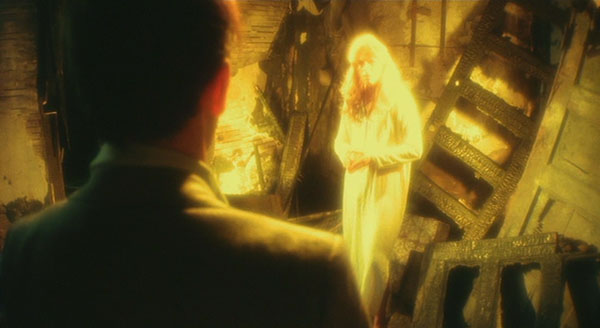
I personally think that the way the film is put together fits with the way the story becomes increasingly surreal as the plot goes on, and that Ebert was a bit more than unfair with his treatment of the film. The review is brief, but it is clear from the outset that he went in expecting to hate the movie, and that the experimental aspects of its construction didn’t work for him. I agree about his assessment of the cult leader character though, and thought they could have done a better job with him. He should have been something more than “a hippie who glowed yellow,” which I didn’t think carried the gravity that it should have.

godtoldmeto4

For fans of Larry Cohen’s earlier works, it is easy to see little bits of influence from his blaxsploitation movies in the details of “God Told Me To,” particularly in the inclusion of a flamboyant, extortionist gangster. Cohen’s films “Black Caesar” and “Hell Up In Harlem” are seen as near-essentials of the sub-genre, and are certainly worth looking into.

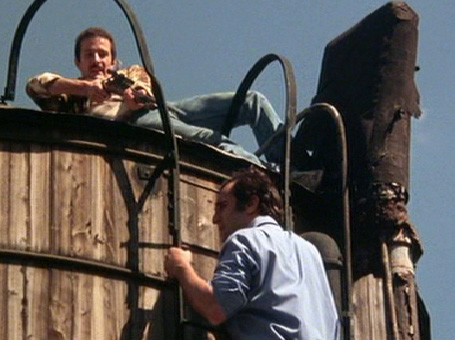
The opening sniper sequence of “God Told Me To” reminded me of another movie called “Targets,” Peter Bogdanovich’s first film made in 1968. The movie similarly centers around a spree killing, and features some similar shots of sniping. It has been on my radar for a while now, and may very well pop up on the blog for a review sooner or later.

Overall, I liked “God Told Me To,” though not as much as I thought I would going into it. The movie loses most of its coherence towards the end, which doesn’t necessarily have to happen with a surreal storyline if you ask me, but usually does. The film also loses some steam after a really strong opening hook and first act, but I thought that the ending was ultimately satisfying after a little bit of dragging in the middle.

I can definitely recommend “God Told Me To” for fans of Larry Cohen’s other works,  as well as for hardcore horror folks in general. I will say that it may be a bit weird for general audiences, and it is also a bit of a slow burn pacing-wise, with an atmospheric style that won’t resonate with a lot of people. I see this movie as a curiosity that is understandably obscure, and it is certainly not as fun or light-hearted as some of the later, more memorable Cohen movies. That said, it is arguably Cohen’s best film. If the bizarre plot doesn’t turn you off, I recommend giving it a shot.

Night Shift

Night Shift

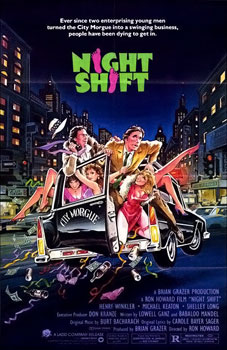
nightshift1

Today’s feature is a somewhat forgotten film from 1982 that stars Batman and the Fonz, and is directed by none other than Opie: “Night Shift.”

“Night Shift” was directed by Academy Award winner Ron Howard, and was only his second directorial feature after the Roger Corman produced “Grand Theft Auto” in 1977, which he also starred in. Those with a keen eye might spot Howard in “Night Shift” as well, though he only appears briefly while obnoxiously playing a saxophone.

The screenplay for “Night Shift” was written by the duo of Lowell Ganz and Babaloo Mandel, who went on to pen “A League of Their Own” and “City Slickers,” among many other memorable films. The “Night Shift” cinematography was done by one James Crabe, who is best known for his work on “Rocky” and the first two “The Karate Kid” movies, making for an overall very interesting team behind the film.

“Night Shift” had two primary producers: Ron Howard’s now long-time partner Brian Grazer, and a man named Don Kranze, for whom this was his last film credit. Kranze was primarily an assistant director in the 1950s and 1960s, working on acclaimed films like “12 Angry Men,” “The Hustler,” “The Graduate,” and “A Face In The Crowd.”

The music for “Night Shift” was provided by Academy Award and Grammy Award winner Burt Bacharach, who has, to date, written 73 US top 40 hits over his long career. The ending theme for “Night Shift”, “That’s What Friends Are For,” later became a #1 hit after being covered by a super-group led by Dionne Warwick for the charity American Foundation for AIDS Research.

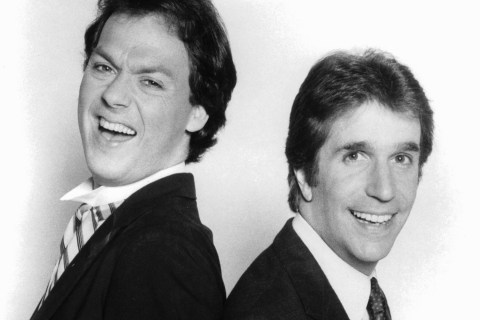
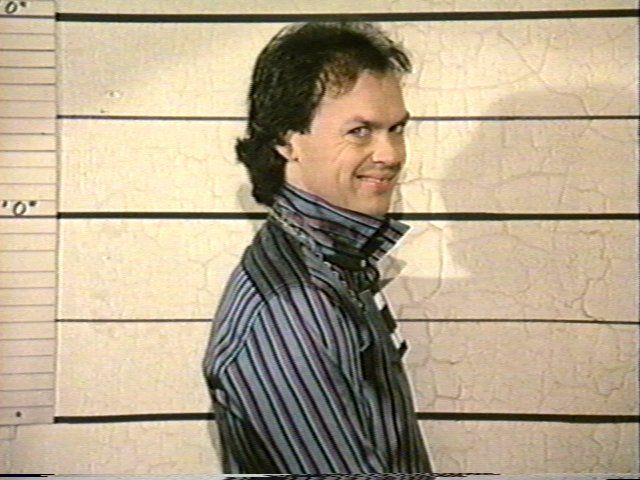
The cast of “Night Shift” most notably features acclaimed actor Michael Keaton in his first major film role. It also starred Ron Howard’s “Happy Days” cohort Henry Winkler, at arguably the height of his powers (in the middle of “Happy Days,” though after his infamous shark jump). In the years since “Happy Days,” he has more often played zany characters and self parodies in supporting roles, such as in “Arrested Development,” “The Waterboy,” and “Scream.” Meanwhile, Keaton has become iconic for his work in both comedies and dramas, including “Beetlejuice,” “Batman,” and the recently acclaimed “Birdman.”

The supporting cast of “Night Shift” includes Shelley Long (just before the start of “Cheers”), Gina Hecht (“Mork & Mindy,” “Seinfeld”), and character actor Clint Howard, as well as a few recognizable pre-fame background players in Kevin Costner and Shannen Doherty.

The story of “Night Shift” follows two late-night employees at a city morgue, who, through a series of unlikely shenanigans, wind up running an underground prostitution ring while on the job. Predictably, this leads them into conflict with local organized crime, the law, and each other before long.

nightshift4Critics generally liked “Night Shift,” (Rotten Tomatoes score of 95%) and specifically the central performances by Keaton and Winkler. The movie suffers a little bit by comparison to similar features (namely “Risky Business”), and is certainly not a polished work in comparison to Howard’s later work. Still, the main players have all seen at least a moderate amount of success in the years since “Night Shift,” and it has gained a bit of cult popularity.

The popular reception to “Night Shift” was good, but not great. It currently hold a Rotten Tomatoes audience score of 61%, and an IMDb rating of 6.5. The movie grossed over $20 million in its theatrical release. Though I wasn’t able to dig up the film’s budget, I would be shocked if that number didn’t make for a significant profit on it.

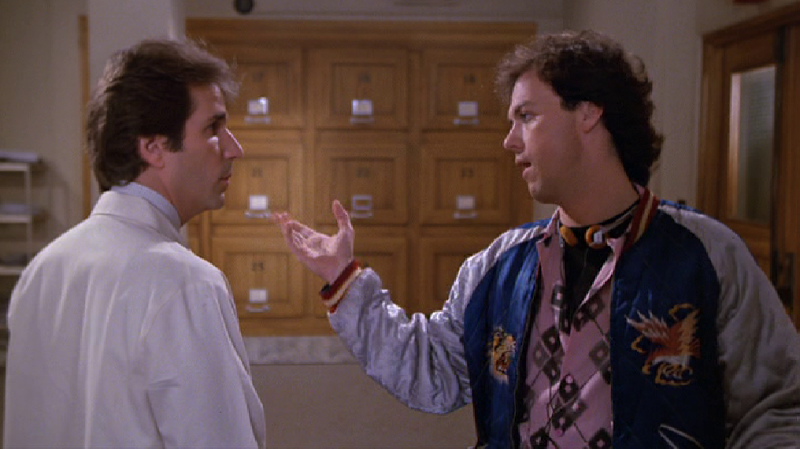
nightshift2I generally enjoyed “Night Shift,” though it certainly falls off in the second half as far as the pacing goes. The conflicts between the characters drag on a little longer than they need to, and the run time of over 1 hour 45 minutes could certainly have used some trimming. The movie also isn’t as much of a black comedy as you might expect for a film about a morgue prostitution ring: it is actually a bit tame, and Keaton relies more on zany, frenetic comedy than anything else. There is also some really uncomfortable attempts at comedy around Gina Hecht’s character that just don’t fit in the movie or land, though it is arguably necessary to demonize her somewhat to make Winkler stay likable and sympathetic throughout the story. That said, Keaton and Winkler are excellent, and their chemistry really drives the film.

nightshift3Overall, “Night Shift” is a pretty good watch, but mostly on the merits of the individual parts rather than the product as a whole. Without the context of the careers of Ron Howard, Michael Keaton, and Henry Winkler, I think this movie would be more forgotten than it is. Michael Keaton’s return to prominence with “Birdman” has brought this back into the public consciousness on some level, and gave me the motivation to go dig it up. There is some entertainment value to it, but not as much as I expected, and certainly not in the way I expected. If it sounds like the sort of movie you would enjoy, then you probably would. Otherwise, you are not missing much here.

Plotopsy Podcast #9 – Re-Animator

Re-Animator

reanimator9

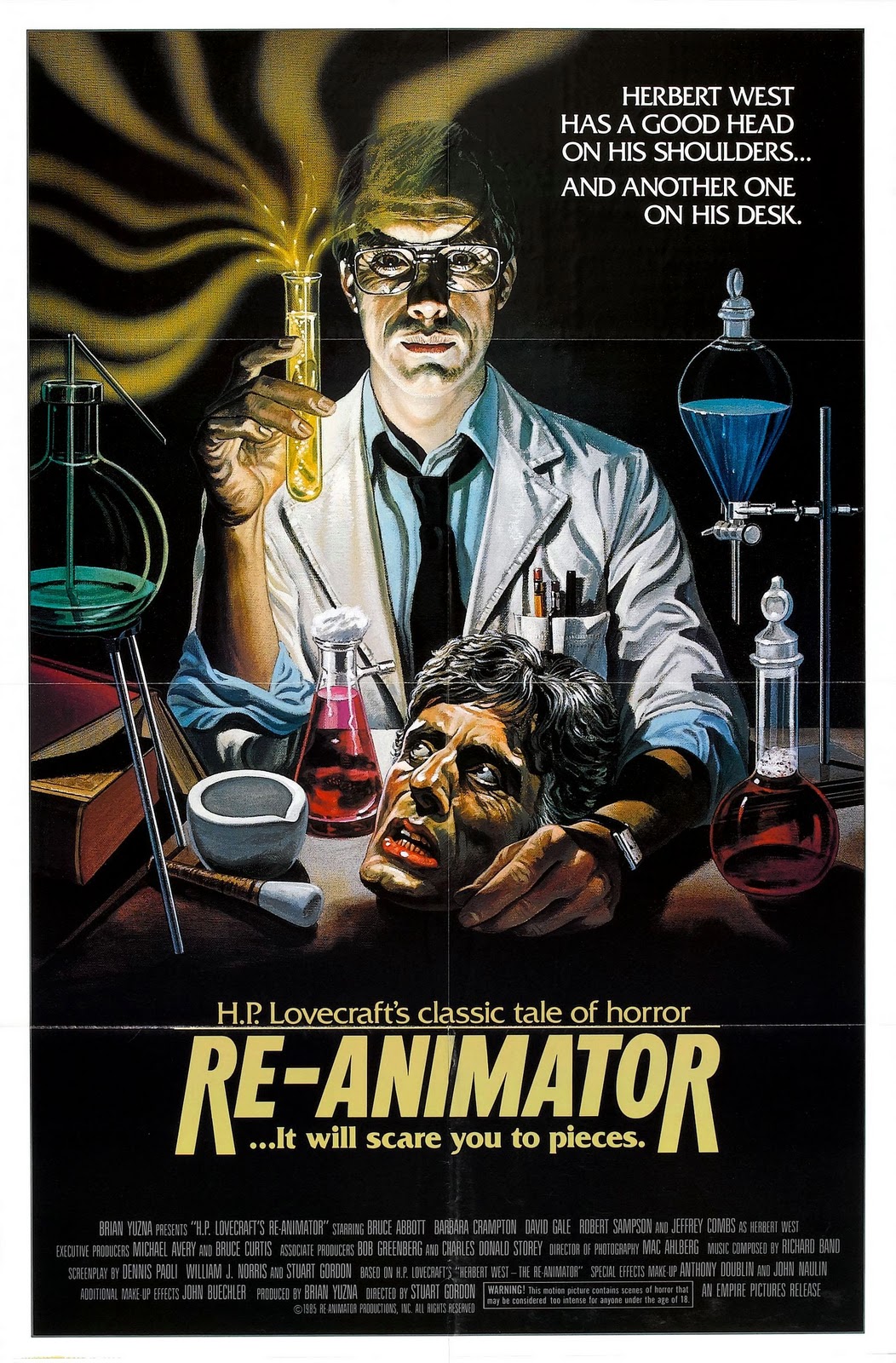
Welcome back to the (Plot)opsy Podcast! It has been a while since the last episode due to some technical issues, but now the show has been appropriately brought back to life! On this episode, I go into some fun facts and trivia about Stuart Gordon’s cult classic debut feature, “Re-Animator.” It is pretty fascinating how the combination of an experienced stage director, an out of print story, and some creative frugality can make for such a memorable classic of horror! I recommend checking out my text review of the movie from last month if you find yourself wanting more.

Ninja III: The Domination

Ninja III: The Domination

ninja31

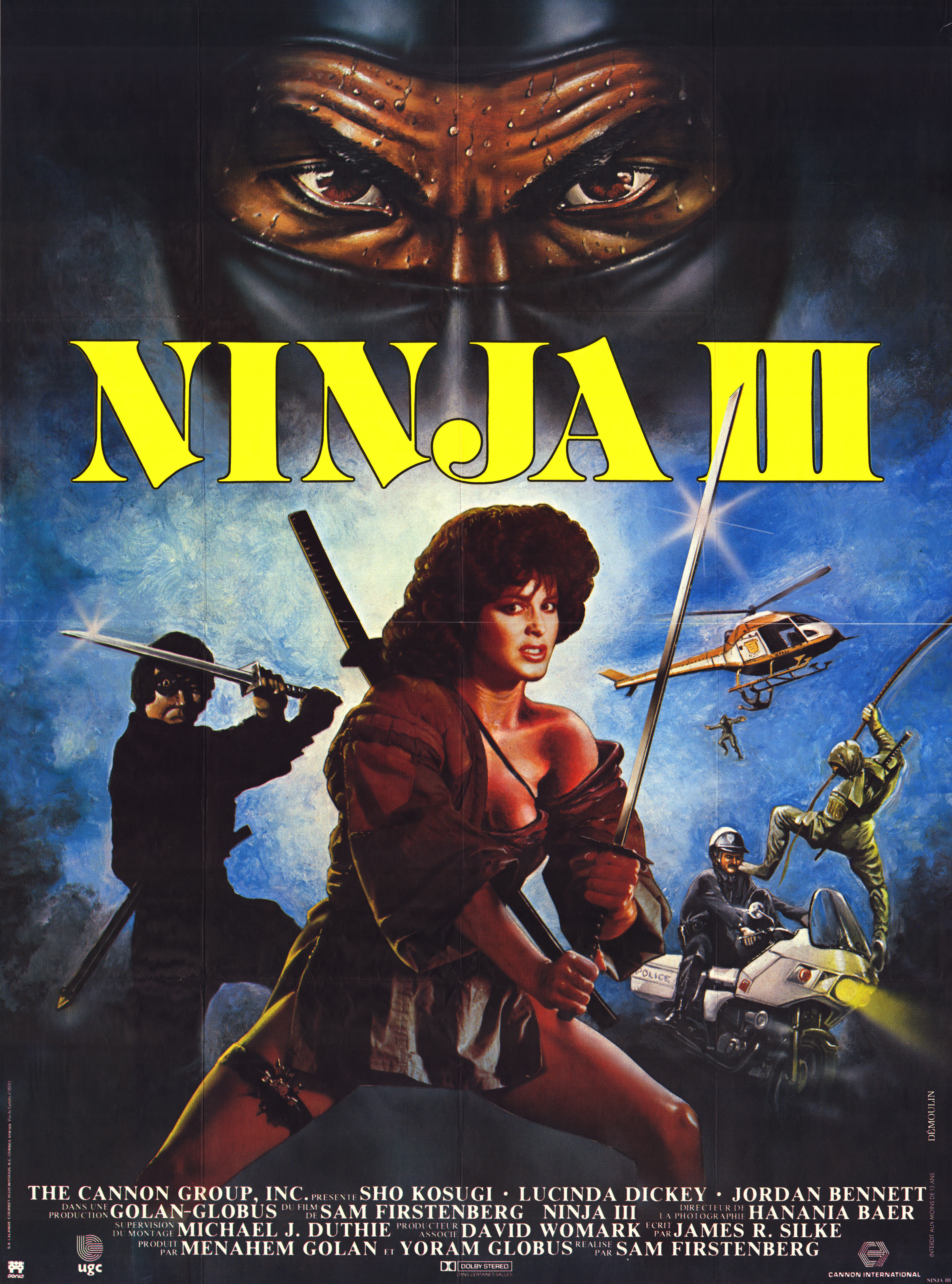
Today’s feature is the third and final movie in the Cannon ninja trilogy, and is a truly bizarre one at that: “Ninja III: The Domination.”

“Ninja III” was written by James R. Silke, who returned to the series after writing the predecessor, “Revenge of the Ninja.” Likewise, director Sam Firstenberg and effects artist Joe Quinlivan of “Revenge of the Ninja” returned for “Ninja III: The Domination.”

The cinematography for “Ninja III: The Domination” was provided by Hanania Baer, who later worked on films such as “American Ninja,” “Breakin’ 2: Electric Boogaloo,” and “Masters of the Universe.”

The music for “Ninja III: The Domination” marks a sharp departure from the previous two films in the series. Instead of the usual martial arts movie soundtrack, “Ninja III” is infused with catchy tunes modeled after 1980s pop music. The music composition is credited to Misha Segal (“The Last Dragon”) and Udi Harpaz (“Knight Rider,” “Archer”), and the score was orchestrated by Arthur Kempel (“Mystery Men,” “Behind Enemy Lines”).

“Ninja III: The Domination” is the third installment in the Cannon ninja trilogy (after “Enter the Ninja” and “Revenge of the Ninja”), and is yet another brainchild of the Menahem Golan and Yoram Globus tandem: the two Israeli cousins who ran Cannon films throughout the 1980s. “Ninja III” is certainly the strangest of the three movies, incorporating supernatural elements such as a possession into the story.

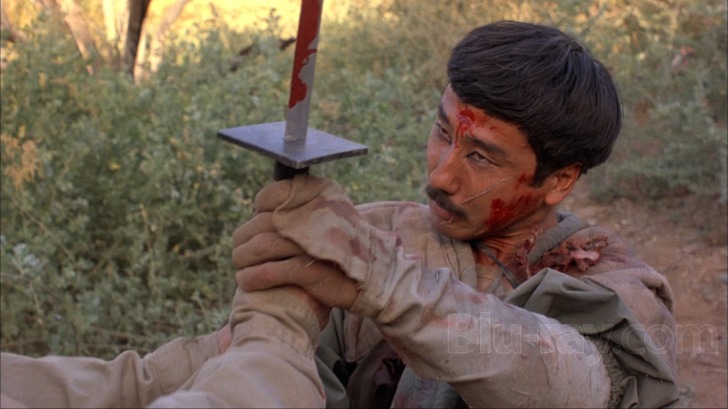
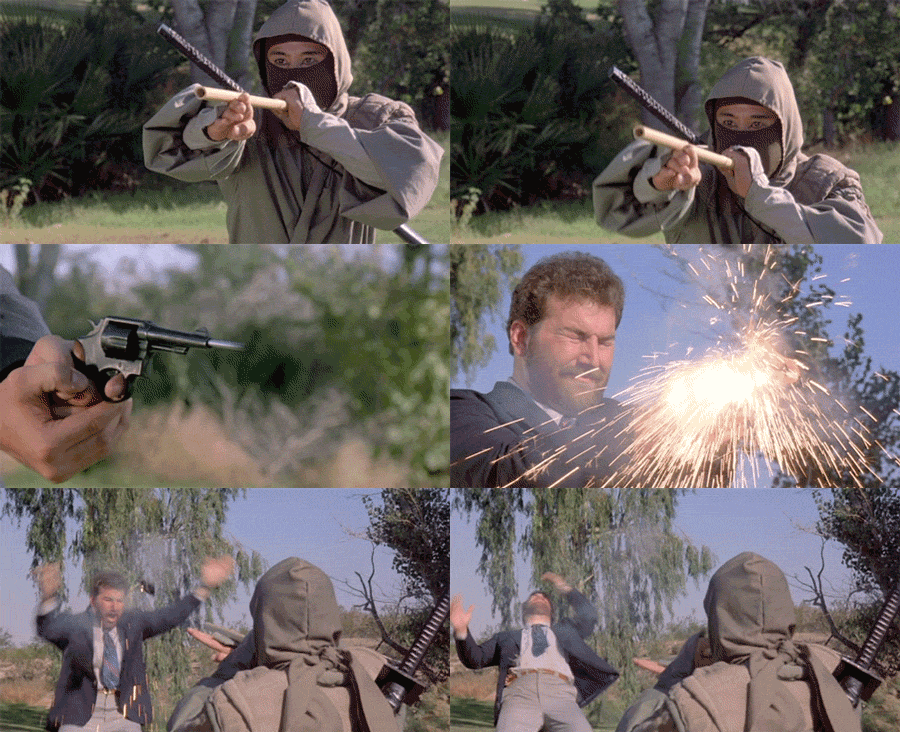
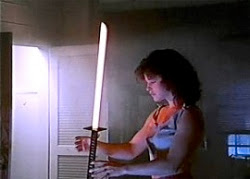
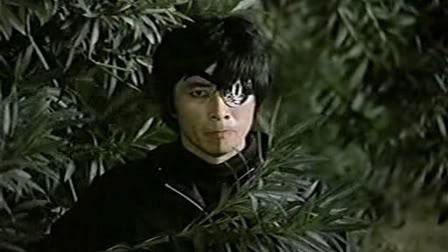
ninja33The cast of “Ninja III” once again features Sho Kosugi, but this time in more of a supporting role. The real lead of the movie is played by Lucinda Dickey in just her third film role after appearing as an extra in “Grease 2” and starring in Cannon Films’s “Breakin'”. Outside of appearing in the infamous “Breakin'” sequel and a movie called “Bloody Pom Poms” in 1988, she has not taken any other credited acting roles. Veteran actor James Hong appears as the evil ninja which possesses Dickey’s character throughout most of the film, and has an incredibly memorable opening sequence: an assassination and battle with police on a golf course.

ninja35The story of “Ninja III: The Domination” follows an electrical worker and fitness junkie who, by happenstance, becomes possessed by the spirit of a malevolent ninja who wishes to enact revenge on the police officers who killed him. After an exorcism fails, a rival ninja is found who believes that he can free her from the evil ninja spirit.

Apparently, the arcade cabinet that appears in Dickey’s bedroom is a prototype for “Bouncer,” which was never mass produced and is now extremely rare (if not impossible) to find.

“Ninja III: The Domination” was featured on a ninja-themed episode of RedLetterMedia’s “Best of the Worst” series, alongside “Lethal Ninja” and “Ninja Warriors.” It wound up losing out to “Lethal Ninja,” but did receive one vote for “Best of the Worst” from the panel of 5.

To the credit of “Ninja III,” it certainly tried to mix up the formula from the previous two movies, and brought something new to the table without totally losing the spirit of the series. Unfortunately, the things that is brought to the table (pop music and aerobics) didn’t make a whole lot of sense. But still, the movie deserves points for the effort.

ninja34Speaking of which, “Ninja III” feels a little more like an exploitation movie than the previous two movies in the series, particularly in the sense that there is a whole lot more sexual showcasing in the shots. That said, there also seems to be significantly less violence and gore than the previous flicks, which I found kind of confusing for a movie that should be focused on ninja-related violence.

I think it is fair to say that “Ninja III” is the least beloved of the Cannon ninja trilogy, primarily because of the numerous bizarre creative decisions that deviated from the ninja movie formula people were accustomed to. It currently holds a less-than-positive 4.8 on IMDb from a few thousand voting members.

“Ninja III: The Domination” managed to gross nearly $8 million on an undisclosed (but undoubtedly small) budget, which I imagine made it at least moderately successful for Cannon. While it did not receive a sequel, Cannon continued to make ninja movies with the “American Ninja” franchise.

As far as criticisms go, there are certainly plenty to spread around. The acting and writing are predictably awful, but there are at least a few thoroughly entertaining sequences in the film, such as the golf course opening and the possessions scenes. My biggest issues with the movie are less about quality, and more about entertainment value. For instance, why isn’t there more Sho Kosugi in the movie? There just isn’t quite enough ninja action going on, and he could certainly have helped provide more of it. As it stands, Sho’s character almost seems like an afterthought given how little screen time he is given. As far as the writing goes, the love story in the movie is beyond preposterous, and the cop love interest comes off as creepy, stalkerish, and generally icky.

ninja32As far as the things I did like in this film, the sheer ridiculousness of the premise has to go way up there. Giving ninjas supernatural abilities to possess, hypnotize, and cause earthquakes (?!?) is just astounding. I also kind of love the excessively 1980s soundtrack, which all sound like songs that could come straight out of “Jem.”

Overall, “Ninja III” is a pretty entertaining movie, but is certainly the weak link of the trilogy in terms of quality. The story and the highlights make it more than watchable, but it is probably a better use of time to surf around on YouTube to find the good parts rather than sitting through the whole thing.

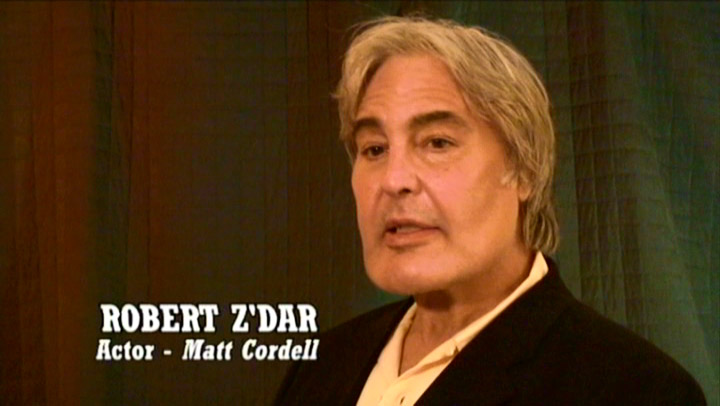
Robert Z’Dar: 1950-2015

It was announced yesterday that b-movie actor Robert Z’Dar died Monday night. His career included countless entertaining b-movies, so I wanted to provided a brief retrospective here in the form of some trailers. Well wishes to all of his loved ones and friends, and may his unforgettable performances and jaw live on indefinitely in his films.

zdar

Maniac Cop


Maniac Cop II


Maniac Cop 3: Badge of Silence


Samurai Cop


Tango & Cash


Soultaker


Future War


American Chinatown

Revenge of the Ninja

Revenge of the Ninja

revengeninja2

The next feature up is the second installment in the Cannon ninja trilogy: “Revenge of the Ninja.”

“Revenge of the Ninja” was written by James R. Silke, who, along with director Sam Firstenberg, would return for the final installment in the Cannon ninja trilogy: the bizarre supernatural “Ninja III: The Domination.”

Initially, Menahem Golan intended to direct “Revenge of the Ninja” just as he did with “Enter the Ninja,” but instead gave the project to Firstenberg, who would go on direct the first two “American Ninja” movies and the infamous “Breakin’ 2: Electric Boogaloo” for Cannon.

The effects on “Revenge of the Ninja,” which are a step up in quality from the previous film “Enter the Ninja,” were provided by Joe Quinlivan, who would go on to work on larger budget movies like “Face/Off,” “Tombstone,” and “Robocop 2.” He also interestingly provided effects for a movie I have previously covered, the bizarre incest drama “House of Yes.” He also returned for “Ninja III: The Domination” to close out the Cannon ninja trilogy.

revengeninja1The cinematography was provided once again by David Gurfinkel, one of the few returning elements in “Revenge of the Ninja” carried over from “Enter the Ninja.” Gurfinkel managed to rack up nearly 90 film credits over his career, spanning from the 1960s into the 2010s, primarily on low-budget B-movies.

The music was once again provided by the “Enter the Ninja” duo of W. Michael Lewis and Laurin Rinder, with the notable addition of one Robert J. Walsh. Walsh went on to provide music for countless cartoon shows in the late 80s (“Jem,” “GI Joe,” “My Little Pony,” “Muppet Babies”), as well as some off-the-wall documentaries (“UFO: The Greatest Story Ever Denied”) and b-movies (“Leprechaun,” “Nightbeast,” “Zombie Nation”).

“Enter the Ninja” was one of the first films to come out of Cannon after its acquisition by the Israeli cousins Menahem Goram and Yoram Globus, who led the company into a sort of renaissance of b-pictures and knock-offs from 1980 to 1994. The names “Goram and Globus” are now instantly synonymous with their low-budget 1980s movies, many of which have become treasured cult classics (including the ninja trilogy, which began with “Enter the Ninja”).

“Revenge of the Ninja,” the second in the Cannon ninja trilogy, came two years following the success of “Enter the Ninja.” Despite having no story or character overlap, “Revenge of the Ninja” is widely regarded as a sequel in a spiritual sense, capturing the same ambiance and style of “Enter the Ninja,” and featuring a handful of returning elements in the cast and crew.

The cast of “Revenge of the Ninja” features one key returning member of the “Enter the Ninja” cast: Sho Kosugi. Whereas he played the rival ninja in “Enter,” “Revenge” places him in the sympathetic lead role, which he really thrives in. He’s also a slightly more believable ninja that Franco Nero, which is quite the understatement. Kane Kosugi and Shane Kosugi, Sho’s actual children, play his character’s young boys in the movie. Not to get too far into spoiler territory, but Kane gets a significantly greater amount of screen-time than his brother.

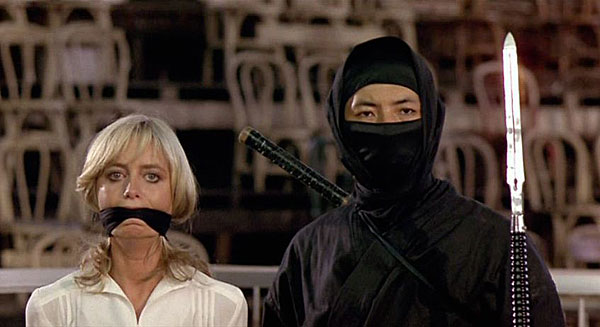
revengeninja4The story of “Revenge of the Ninja,” predictably enough, centers around a ninja who is out for revenge. The opening of the film shows Sho Kosugi’s family being murdered by a group of presumably rival ninjas, which leads him to flee to the United States with his mother and sole surviving child for the sake of their safety. A friend gives him an art gallery stateside for him to make a living, and Sho practices pacifism for years as his child begins to grow up. It is ultimately revealed that the gallery is not what it appears to be, and that the friend is not to be trusted. After some violent shenanigans, the titular ninja-related revenge kicks into high gear for an amazing shuriken-packed conclusion.

The initial theatrical and home video release of “Revenge of the Ninja” featured a number of cuts to tone down the explicit violence. However, the versions that are available now are uncut, with some of the more gore-y, blood-splattering sequences restored.

revengeninja3“Revenge of the Ninja” was filmed almost entirely in Salt Lake City, a very significant departure from the tropical, Philippines setting of the previous film. Unsurprisingly, this wasn’t done for any artistic decision on the part of Golan and Globus: rather, they chose Salt Lake City specifically because the Utah Film Commission reportedly promised no permits, location fees or union deals for the production.

Perhaps the most memorable sequence of the film is the brutal prologue, in which Sho Kosugi’s family is slaughtered in their home. Amazingly, this sequence was apparently not initially in the script: instead, it was added in after Menahem Globus found the story to be lacking in depth after shooting began.

The fans of “Revenge of the Ninja” vary from 1980s nostalgics to die hard martial arts movie fans to those who enjoy “good-bad” flicks. It is probably the best reviewed of the Cannon ninja trilogy, which really isn’t saying much: it hold a 6.0 on IMDb and a 58% audience rating on Rotten Tomatoes. That said, it is still undoubtedly a cult classic with plenty of die hard fans.

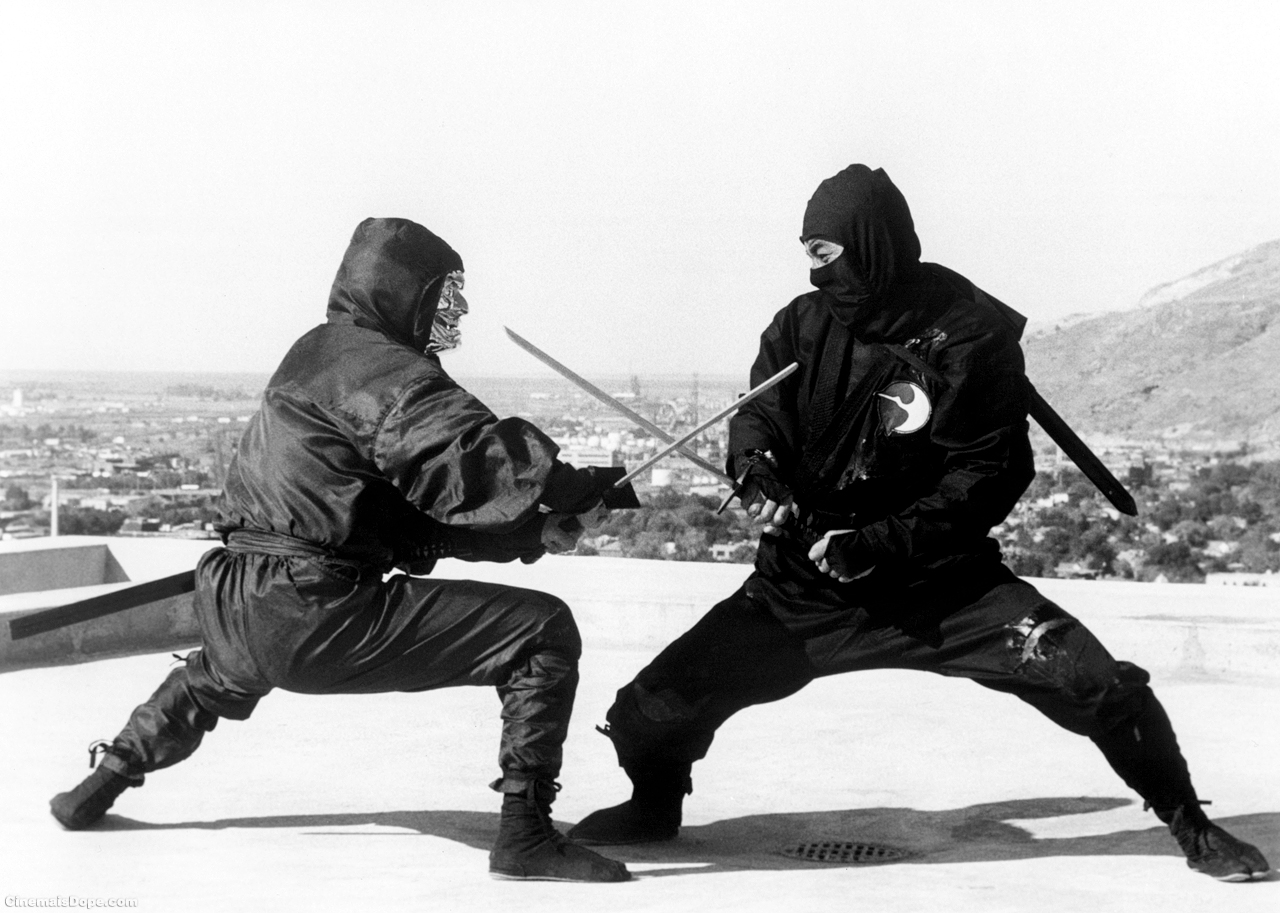
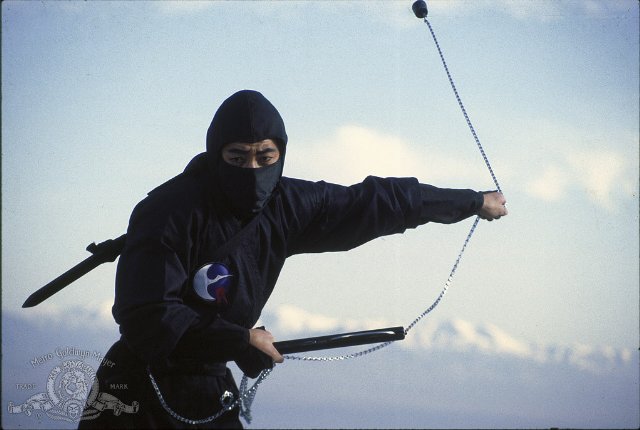
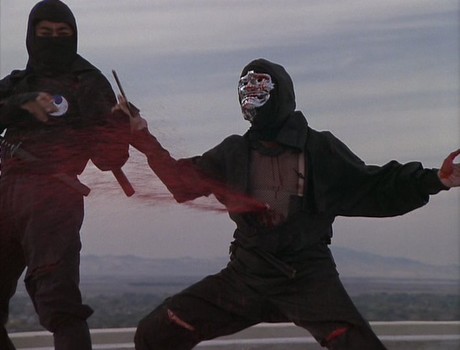
“Revenge of the Ninja” has pretty much everything you would expect from a ninja movie: awful acting across the board, ridiculous physics (catching an arrow with your teeth?), and some excellent ninja fighting action. The finale once again features a one-on-one battle to the death, but this time it occurs on city rooftops. It isn’t quite as memorable as the cockfighting ring in “Enter the Ninja,” but there is a good deal of it that occurs on a tennis court, which is pretty awesome.

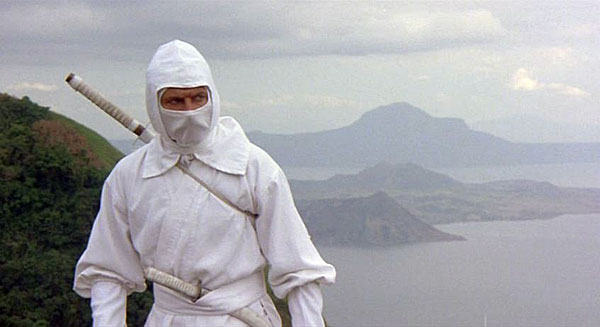
One of the criticisms of “Enter the Ninja” that I have seen a lot is about the impracticality of Nero’s all-white ninja suit. In “Revenge of the Ninja,” both the good and bad ninjas wear black, which is honestly a bit confusing. It might make more sense, but it is a little too easy to lose track of who is who. I’m not going to say that a white suit is the way to go, but there are certainly ways to distinguish ninja uniforms from each other.

One of the most infamous events in “Revenge of the Ninja” occurs in the prologue, in which Sho Kosugi catches three arrows out of mid-air (the last with his teeth). This sequence almost certainly influenced a “MythBusters” episode in which the gang tested whether it was realistically possible to catch an arrow mid-flight.

One issue I had with this film is that the passage of time between the prologue and the main story seems off. It is shown that Sho’s gallery has not yet opened as the story begins to unfold, while his child is shown to be in elementary school. However, in the prologue, the surviving child is still a baby. It seemed heavily implied that Sho and his surviving family moved immediately after the events of the prologue, which leaves a good amount of time (enough for a baby to become a young child) missing. I might have just missed a detail on my initial watch, but it certainly stuck out to me. Given the prologue was added in later, it seems entirely possible to me that this was just a continuity oversight.

One thing that “Revenge of the Ninja” lacks are colorful antagonists. The rival in “Revenge” isn’t particularly memorable, and doesn’t have understandable goals, outside of wanting to be wealthy and powerful. He is also a very straight villain, and doesn’t do a whole lot of hamming it up, which is what I always want from this sort of movie.

Overall, this is a thoroughly enjoyable ninja movie, and is very much deserving of the cult status it has accrued. Sho Kosugi is awesome to watch, and the film is worth checking out on his merits alone for ninja movie fans. Bad movie lovers will love the awful acting, the silly plot, and the special effects, not to mention the genuinely entertaining fight scenes. As for general audiences, this is probably as good as any ninja movie for breaking someone into the genre, and it manages to keep up a steady pace better than most of its peer flicks.

Enter The Ninja

Enter The Ninja

entertheninja1

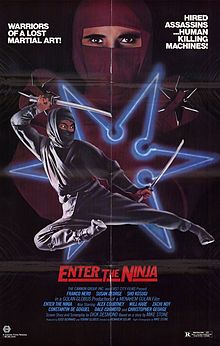
Today’s feature is a true cult classic, and the first installment in the infamous Cannon Group ninja trilogy: “Enter The Ninja.”

The story of “Enter the Ninja” was originated by Mike Stone, who was initially intended to play the lead in the movie. Ultimately, he acted as the film’s stunt coordinator and Franco Nero’s double after it was discovered that he wasn’t particularly good at acting. The screenplay credit is given to a man named Dick Desmond, who notably has no other writing credits.

“Enter the Ninja” was directed by one of the heads of Cannon Films, Menahem Golan. Initially, he was only slated to produce the flick, but ended up firing the original director, Emmett Alston, after only a handful of days of shooting.

entertheninja6The music on “Enter the Ninja” was provided by the team of W. Michael Lewis and Laurin Rinder, who previously worked together on the holiday-themed horror movie “New Year’s Evil.” Both returned to work together again on “Revenge of the Ninja,” the second in the Cannon ninja trilogy.

The special effects for “Enter the Ninja” were provided by Ben Otico, who worked as an art director and special effects technician on a number of exploitation films throughout the 1970s and 1980s, including “Women in Cages,” “Black Mamba,” and “She Devils in Chains.”

David Gurfinkel served as director of photography for the film, a fellow who would go on to work on such treasures as Sylvester Stallone’s “Over The Top,” “Teenage Mutant Ninja Turtles III,” “America 3000,” and “American Samurai.” His previous credit to “Enter the Ninja” was another notorious Cannon film also helmed by Menahem Golan, the bizarre musical “The Apple.” He also returned for the second film in the ninja trilogy, 1983’s “Revenge of the Ninja.”

“Enter the Ninja” was one of the first films to come out of Cannon after its acquisition by the Israeli cousins Menahem Goram and Yoram Globus, who led the company into a sort of renaissance of b-pictures and knock-offs from 1980 to 1994. The names “Goram and Globus” are now instantly synonymous with their low-budget 1980s movies, many of which have become treasured cult classics (including the ninja trilogy, which began with “Enter the Ninja”).

Franco Nero, who is best remembered as the original Django, was brought in at the last minute to star as the film’s lead. Because of his character’s American background, all of his dialogue was ultimately dubbed over. Sho Kosugi stars as Nero’s rival (the black ninja) in his first major film role, and is one of the only elements to remain throughout the Cannon ninja trilogy. Sho was also notably a real martial artist, and not only performed his own stunts, but also filled in as an extra ninja during the movie’s opening sequence. The main bad guy of the film is played by Christopher George (“Fantasy Island”), who unfortunately died just a couple of years later in his early 50s. Susan George (“Straw Dogs”) plays Nero’s love interest and inevitable kidnapping victim in the movie. The accessory cast includes Zachi Noy, Constantine Gregory, and Michael Dudikoff in a minor background role, who would later star in a film greatly influence by “Enter The Ninja”: “American Ninja.”

entertheninja3 entertheninja2

The story of “Enter the Ninja” follows an American war veteran who travels to Japan to master ninjitsu. After completing his training, he decides to visit a companion from his military days in the Philippines, which winds up entangling him in a bloody local conflict with a criminal land developer.

“Enter the Ninja” was filmed almost entirely on location in the Philippines, which pitted the cast and crew against oppressive natural elements: namely the weather and a variety of exotic animals. Further, the combination of nationalities in the cast and crew meant that at least three languages were regularly used on set, creating a peculiar communication situation.

“Enter the Ninja” received its title, predictably, because of the massive popularity of the 1973 Bruce Lee move “Enter the Dragon,” which was a significant financial success.

The memorable final ninja battle of “Enter the Ninja” was filmed in an actual cock-fighting arena located in the Philippines, which provides a spectacular and symbolic backdrop for an epic one-on-one battle to the death.

The nine levels of power featured in “Enter the Ninja” are a form of kuji, which are mantras used as a sort of meditation practice. The specific ones featured in the film were written about by the American ninjutsu master Stephen K. Hayes in his book “Warrior Ways of Enlightenment.”

“Enter the Ninja” is undoubtedly a cult classic among martial arts movies, and beloved by many. That said, it is also very much a low quality movie that didn’t exactly pop up on critics’ radars. It currently holds a somewhat harsh 4.9 rating on IMDb, which doesn’t accurately represent how treasured the film. Still, it is hard to argue that the film is “good” in any conventional sense of the term.

entertheninja5

I wasn’t able to dig up any financial details on “Enter the Ninja,” but presumably it made a significant amount of money on a rather low budget, given its popularity and the eventual sequels.

“Enter the Ninja” is certainly deserving of a lot of criticism. Why does Nero wear an entirely white ninja outfit, when the entire point of the art is stealth? It was certainly a decision made for the case of style over common  sense, but it is no less preposterous for it. The film is also rife with continuity errors, awful acting, and the (of course) distracting dubbing over Franco Nero’s lines. Even the casting of Franco Nero to begin with was a baffling decision made more for convenience than sensibility: he was brought in only because he was in the area, and Golan needed an actor to fill in the lead role after Stone proved to be a truly awful actor. Speaking of which, how bad must Stone have been that having an entirely dubbed-over Franco Nero was a better option?

Personally, there were a lot of things that I liked about this movie. I particularly love the primary villain death via ninja star, which ends in a sort of confused shrug that has become infamous. The final Sho/Nero fight scene in the cockfighting ring is also pretty fantastic and entertaining to watch. Even the secondary villains are fun and unique: the hook-handed enforcer is immensely entertaining, as is the excessively polite and proper Mr. Parker. For all of the issues with the film, there are a whole lot of memorable moments and characters that have stuck with me.

entertheninja4Overall, I think this movie is a whole lot of fun, though it may very well be the least entertaining of the Cannon ninja trilogy. I think that statement is more of a credit to the sequels than it is a discredit to “Enter the Ninja,” but I suppose that is very much up to interpretation. In any case, this is definitely worth watching for martial arts movie fans or bad movie aficionados. If multi-colored ninja battles and awful acting are up your alley, this is a flick worth checking out.