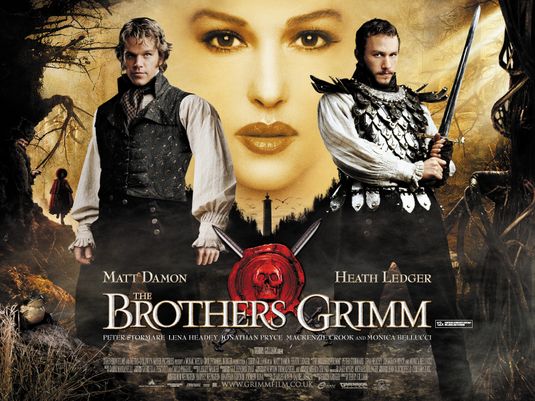
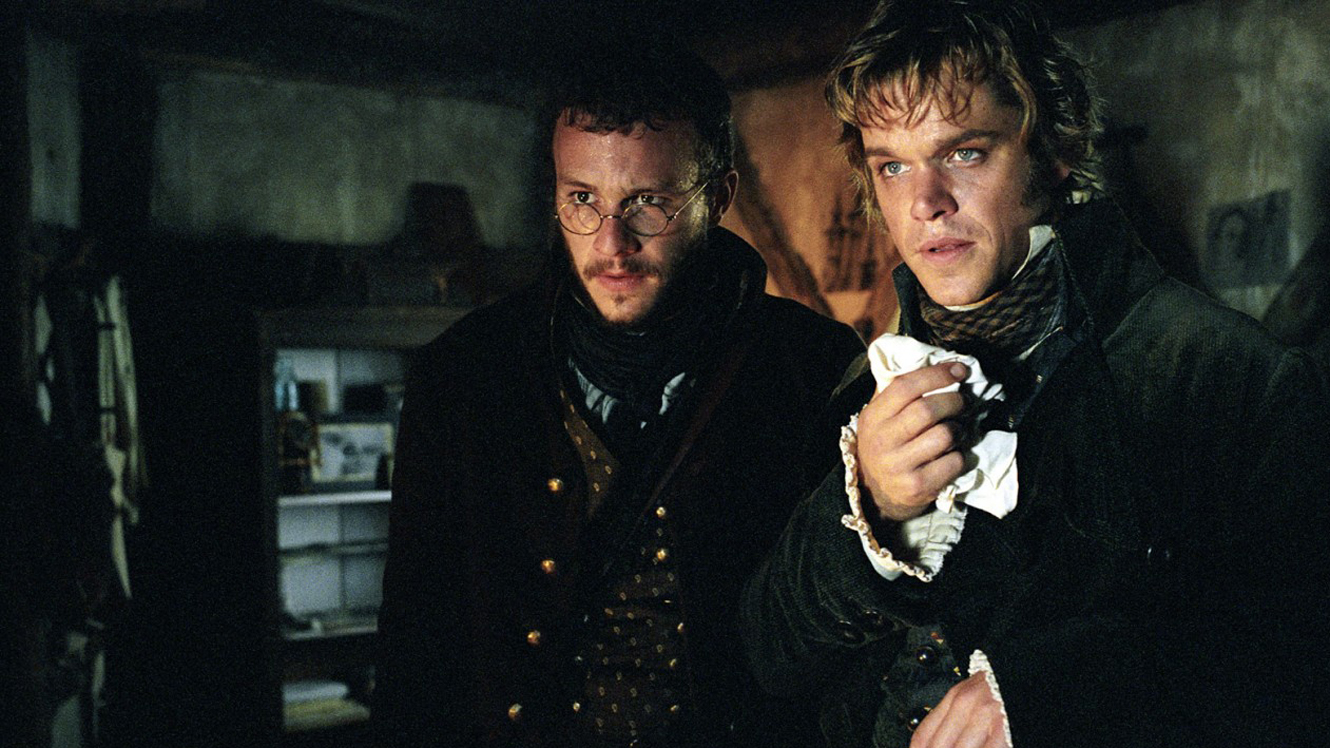
The Midnight Meat Train

The Midnight Meat Train

meattrain1

Today’s movie is a bit of deep cut (ha!): “The Midnight Meat Train,” starring Vinnie Jones and Bradley Cooper.

“The Midnight Meat Train,” which was written and produced by Clive Barker of the “Hellraiser” series, went through a brutal post-production and release process: between mandated cuts from the MPAA, budget limitations, and a major executive transition at Lion’s Gate (the departure of Peter Block), the movie hit significant delays, and only would up releasing in 100-odd theaters. Barker has described the experience of distributing the movie as “a journey into the real underbelly of Los Angeles.”

meattrain5
Apparently this is what distributing through Lion’s Gate is like

I first came across “The Midnight Meat Train” after it released On Demand through FEARnet (R.I.P.), and was of course hooked by the title. However, this is a film that goes far beyond just a catchy title: there is, perhaps surprisingly, a whole lot to like about this film.

“The Midnight Meat Train” was directed by Ryuhel Kitamura, a Japanese director who created “Godzilla: Final Wars” and the recent live-action adaptation of “Lupin III.” Kitamura was brought on after Patrick Tatopoulos, a creature creator and special effects guru who worked on “Underworld,” “I, Robot,” and “Trick ‘r Treat,” backed out of the production before filming began.

Kitamura described his vision for “The Midnight Meat Train” as being “the 80s way”: putting an emphasis on practical gore effects and tension, citing influences such as “The Hitcher,” “Hellraiser,” and “Friday the 13th.” In the commentary track on the film’s DVD, Kitamura specifically complains about the lazy and ineffective use of CGI gore in more recent horror movies, lamenting the days when practical effects were the only option. However, there is at least one distracting instance of CGI gore in “Midnight Meat Train,” which seems to be somewhat hypocritical.

meattrain8The cinematographer on “Midnight Meat Train,” Jonathan Sela, has recently received acclaim for his work on the cult action movie “John Wick.” His previous credits include “Max Payne,” “A Good Day to Die Hard.” and the remake of “The Omen”: none of which have quite the same flair or punch of “Midnight Meat Train” or “John Wick.”

The cast features most prominently character actor Vinnie Jones (“Snatch,” “Lock, Stock, and Two Smoking Barrels,” “X-Men United”) towards the beginning of his down-slide, and Academy Award nominee Bradley Cooper just as his stock was growing (he was coming off of the antagonist role in “Wedding Crashers”). Cooper’s character is not unlike Jake Gyllenhaal’s in “Nightcrawler”: he is a scummy photographer who observes the dark side of the city, without ever positively interacting with it. Unlike Gyllenhaal’s character, though, Cooper’s has a slowly growing conscience that inflates over the course of the story. It makes the character a little more likable as he starts to make more moral choices as the movie goes on.

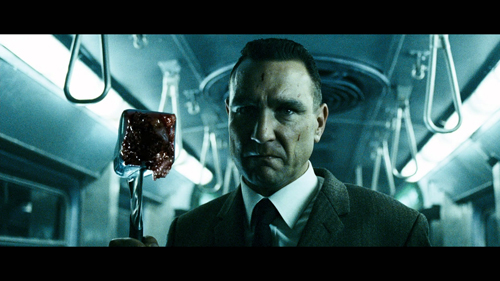
Vinnie Jones plays a stoic subway murderer and butcher named Mahogany, whose purpose and motivations are kept veiled throughout the film. This sort of “heavy” role is what has essentially made Vinnie Jones’s career, going all the way back to his Guy Ritchie crime movies. His dialogue is minimal, apparently based on input from the actor himself. It is hard to argue that the muteness doesn’t make his character more menacing.

The accessory cast includes horror stalwart Ted Raimi (brother of writer/director Sam Raimi), Leslie Bibb (“Iron Man”), Brooke Shields (“Endless Love”), Peter Jacobsen (“House, M.D.”), UFC fighter “Rampage” Jackson, and Tony Curran (“League of Extraordinary Gentlemen”). “Rampage” Jackson and Bradley Cooper would reunite only a couple of years later for the film remake of “The A-Team,” which might be worth a second look here on the blog.

meattrain3Clive Barker wrote the short story source material of “The Midnight Meat Train” based on an experience he had after first moving to New York City, in which he got lost while riding on a subway. The film manages to use the subway setting astoundingly to create tension and fear: everything from the screeching electrical sounds, to the sporadically flashing fluorescent lights, to the claustrophobic car space helps build the atmosphere for the film.
meattrain4Another one of my favorite aspects of “The Midnight Meat Train” is one that I think has gone particularly under-appreciated: the score. Music is absolutely crucial for building atmosphere effectively in horror movies, and the work done on “The Midnight Meat Train” is absolutely knocked out of the park. Robb Williamson and Johannes Kobilke deserve a lot of credit for this score. Here is one of my favorite tracks, “Leon Jumps on A Train”:

It is worth noting that the production design on “The Midnight Meat Train” is really fantastic, particularly given the budget restraints eventually leveled on the film. The set at the end of the film, which appears to be a cavern, is actually ingeniously made out of paper to keep costs down. Also of note, I personally think that Mahogany’s chrome hammer and meat hook are just damn slick, as is his simplistic, professional costuming. Everything down to his haircut is made to look rigid, pristine, and cold. You can just imagine how chilling that chrome hammer has to feel.

meattrain7Something else I appreciate about “The Midnight Meat Train” is that the audience gets to see the reactions of the locals to the series of murders. You see security tighten up on the subway as the film goes on, and there is even a great sequence where a vigilante Guardian Angel takes on Mahogany on the subway, and just about defeats him. You don’t usually get that kind of public anxiety coming through in horror movies, at least not done well. I was reminded a little bit of “Maniac Cop,” which also manages to pull off this public anxiety effect really well. It makes sense, though: a lot of people are afraid of using subways, which is something brought up in the film. Nothing makes a horror movie like laying the plot on top of a setting that is already terrifying to many people.

The film’s story offers a handful of pretty good twists that I don’t particularly want to spoil here. I will say that there is a sudden and unexpected turn that reminded me a lot of the cult classic “CHUD.” As strange as it is, the turn turn is pulled off pretty well through the use of creative editing, though there was also a financial motivation for not revealing the monsters too much. I actually think, much like with “Jaws,” that keeping the creatures scarce maintains their mysteriousness, and doesn’t ultimately hurt the movie. The writers and director still managed to come up with an impressive ending without their inclusion, which is worth checking out.

meattrain6As far as weaknesses go, the plot of “The Midnight Meat Train” goes in circles a little bit, and is definitely a slow burn as far as pacing goes. That doesn’t work for a lot of people, but overall I think that this is a really surprisingly good horror flick, and one that puts most recent entries into the genre to shame. I do wish that the handful of CGI gore sequences were replaced with practical effects, but there are also moments where the CG is pulled off excellently: notably, all of the external sequences of the subway cars in motion.

The critical reception for “The Midnight Meat Train” was pretty good for a horror movie, racking up  a 71% critic score on Rotten Tomatoes. The audience reception wasn’t quite as favorable: it currently has a 50% audience score on Rotten Tomatoes and a 6.3 rating on IMDb. That doesn’t particularly surprise me, though: I feel like this movie is pretty well catered to horror die hards, and doesn’t have much in the way of mass appeal. That isn’t necessarily a bad thing, though.

Overall, this is an outstanding horror movie with only a handful of minor issues. The CG blood is disappointing and the pacing can be off-putting for some, but the atmosphere, style, score, and acting are all so fantastic that I think they make up for it. Even the story is far better than you would expect for a movie like this, even given how incredibly strange it is towards the end.

meattrain2My recommendation, for horror fans particularly, is to seek this one out. “Midnight Meat Train” got a raw deal on release, which meant most people didn’t get an opportunity to see it. The film relies on its cult status, word of mouth, and the secondary market for building a fan base, and it is totally worth the pick up in my opinion. It isn’t a fun movie though, and probably isn’t great for a group watch (as the title might lead you to believe). It isn’t a good-bad movie, but rather it is just a good horror movie. You should absolutely  just know what you are getting into with this one ahead of time: if you do, I’m confident that most will enjoy it.

 

League of Extraordinary Gentlemen

The League of Extraordinary Gentlemen

lxg6

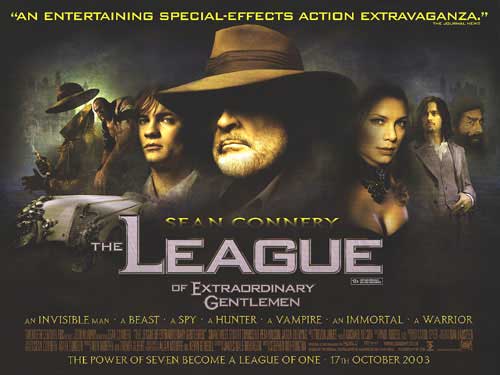
Today’s feature is best known as the movie that made Sean Connery quit acting: “The League of Extraordinary Gentlemen.”

“LXG” is an adaptation from an Alan Moore comic series, who you might recognize as the guy behind “The Watchmen” and “V For Vendetta.” As is the case with most adaptations from graphic novels, the fan base of the source material of “LXG” is hard to please, and was pretty much guaranteed to bemoan any minor changes to the story that they have so cherished (see: criticisms of “The Watchmen” film ending). Personally, I treat those sort of adaptation criticisms with a grain of salt: a fan base should be considered when making a movie, but they shouldn’t dictate it. Director and screenwriters need the freedom to make a work their own. Sometimes the fans love the outcome of this creative freedom (“Guardians of the Galaxy”, “The Dark Knight”, “Iron Man”), but sometimes (most times) they hate it with the burning passion of 1000 suns (“Super Mario Bros”, “Howard the Duck”, “Batman & Robin”, “The Watchmen”, “Daredevil”, etc). This is what I call “nerd rage”: it is frequent, usually excessive, and often unreasonable. And it is powerful.

lxg1
The power of bat nipples

So, why does Hollywood so often take the risk of dealing with fickle fanbases? Well, partially it is because fanbases exist, and will buy tickets to see movies regardless of how they feel about the quality of the product on screen. How many “Transformers” fans do you know that went to go see those movies in spite of the quality? Film producers and studios know about that. Also, and of probably equal importance: Hollywood is “creatively bankrupt.” I put quotes there, because original ideas do exist in Hollywood and in the film business as a whole, but big studios are generally unwilling to take chances on them when their alternatives have existing fan bases waiting to flock into a theater. That is why you can expect a whole lot more Marvel movies than “John Wick”s.

In the case of “LXG,” however, both creators of the source material (Moore and illustrator Kevin O’Neill) were incredibly unhappy with the final product of the film, and weren’t afraid to let the public know: so it wasn’t just the fans this time. Moore is quoted as saying, on the topic of the film adaptations of his works: “I have a dwindling respect for cinema as it is currently expressed.” On the specific topic of the experience of dealing with the eventual lawsuit against “LXG,” he was a little more colorful:

“They seemed to believe that the head of 20th Century Fox called me up and persuaded me to steal this screenplay, turning it into a comic book which they could then adapt back into a movie, to camouflage petty larceny.” This led to Moore giving a ten-hour deposition – he believes he’d have suffered less if he’d “sodomised and murdered a busload of children after giving them heroin.”

Yikes.

Anyway, rage aside, let’s dig into “The League of Extraordinary Gentlemen.” The film is directed by Stephen Norrington, whose film career was effectively destroyed by it. His only other major directorial work was “Blade,” a comic book adaptation that managed to not infuriate everyone in the known universe. He previously worked special effects on “Aliens” and “Alien 3,” which is pretty impressive stuff. However, the production process of “LXG” apparently burned him out entirely: not just the poor reception, but the difficulty of working with the producers, the studio, and the dealing with large acting personalities (Sean Connery). It sounds like the perfect storm of all of the elements ultimately did him in. He has gone so far as to publicly state that he will never direct a film again.
lxg5“League of Extraordinary Gentlemen” cinematographer Dan Laustsen has worked on a number of other notable productions, mostly in the horror genre. These include Guillermo Del Toro’s “Mimic,” both version of “Night Watch,” and the film adaptation of “Silent Hill.”

The film was written by a guy named James Robinson, whose other credits include…not much. The thing that kills me is that the few credits he does have seem to be related to comics on the whole, so I am willing to be he was a big fan of “LXG” going into it. I’m willing to bet that the reception was not pleasant for him.
lxg3One of my favorite B-movie writer/directors, Larry Cohen, was involved in a lawsuit against the “League of Extraordinary Gentlemen” production, claiming that the film plagiarized a script he and Martin Poll pitched to 20th Century Fox multiple times called “Cast of Characters,” which included a number of characters that wound up in the film but were not present in Alan Moore’s source material for the movie. To say the least, that is pretty suspicious, as is the fact that the matter was settled out of court (which stinks of a payoff to me). The fact that such an inexperienced writer was solely trusted with the writing of this major studio project is also a wee bit suspicious.

The cast of “League of Extraordinary Gentlemen” is highlighted, obviously, by the last hurrah of sorts for Sean Connery, who plays the famous fictional adventurer Allan Quatermain. The rest of the cast includes Richard Roxburgh as the primary villain (more on the similarities to “Van Helsing” in a minute), Jason Flemyng as Dr. Jekyll / Mr Hyde (again with the “Van Helsing” flashback…), Tony Curran (VIncent Van Gogh in “Doctor Who”, the conductor in “Midnight Meat Train”) as an invisible man, Shane West as Tom Sawyer, and a host of other minor actors playing various literary characters.

lxg4Much has been made of Sean Connery’s role in “LXG”: it is said that he only took it because he regretted passing on two other major roles (Gandalf in “Lord of the Rings” and Morpheus in “The Matrix”), and didn’t want to miss a potential franchise winner. Sean Connery is also reported to have been somewhat of an intimidating presence on the set, making other actors uneasy and being a general nightmare for the director, Stephen Norrington. He also went do far as to demand major script changes to make his character more likable.

“LXG” was absolutely stomped by critics upon release, and the audience reaction wasn’t much better. The film currently holds a 17% critic score and a 44% audience score on Rotten Tomatoes. Financially, the movie made a reported 179 million on a budget of 78 million, which is certainly profitable. However, aspirations were clearly much higher for the film. A sequel was reportedly planned that would be based on “War of the Worlds” by H.G. Wells, but the poor reviews and not-good-enough box office performance meant that this potential space epic never quite managed to get off the ground. It probably didn’t help that the director and star both rage-quit the industry as a result of the production, either.

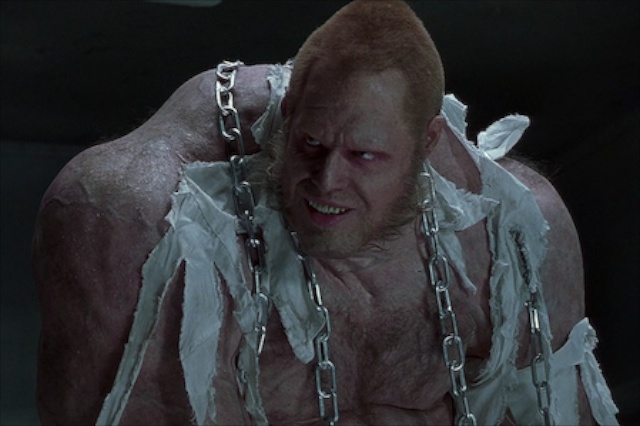
Personally, I feel like critics were way too harsh on this movie at the time. I remember liking it well enough as a kid, and I still found plenty of positives to enjoy upon a re-watch. For most of the movie, the CG stays pretty reserved: I still think that the invisibility effect looks pretty solid. Also, the practical effects used for Mr. Hyde (when they are used) look great. I’m also a big fan of the production designed, which has garnered the film a bit of a cult following due to its steampunk aesthetic. I particularly adore the interpretation of Captain Nemo’s Nautilus. It is just cool.

lxg2All of that said, there are a fair share of issues with the film, to say the least. The CGI gets way out of control as the film goes on, climaxing in a ridiculous battle between Mr. Hyde and a…bigger Mr. Hyde? It looks absolutely awful. The plot also starts to unravel after the twist, and pacing goes completely awry heading into the third act. When Sean Connery starts staring at a tiger for a few seconds in the snow, and you can’t help but wonder where the hell the story went.

In a recent post on “Van Helsing,” I mentioned a lot of similarities between that one and this one. So, how do they compare? Let’s start with a few of the similarities.

First: is RIchard Roxburgh a better villain in “LXG” or “Van Helsing”? I think this one has to go hands down to “LXG”: Roxburgh’s Dracula is just plain awful. He’s hammy, but not hammy enough, and doesn’t come off as threatening in any way. Q in “LXG” is at least mysterious, and I liked his costume design pretty well.

Second: which has the better Jekyll/Hyde? I have to give this one to “LXG” as well: while the CG bits of Hyde do look awful, there are also a few moments of really solid-looking practical effects on the character. In “Van Helsing,” it is all bad. However, he also isn’t a central character to that story, which is worth noting.

Third: which has the better cast of characters? Both movies are built on the concept of throwing a bunch of existing characters together. As far as appearances go, this go to “LXG” again. As fun as the Universal monsters are, Frankenstein’s monster is the only one who looks any good in “Van Helsing.” On the the flip side, “LXP” offers better execution on the team members: the invisible man effect, Nemo’s costume design, and the moments of practical Hyde all particularly stand out. However, it is also hard to argue that the League is more fun in concept than the Monster Mash bunch.

“Van Helsing” is overall a more fun movie to watch. However, it isn’t nearly as polished across the board as “LXP.” On a quality level, I think “LXP” gets the nod, but not by a whole lot. It is still a bit of a train wreck, but it is at least occasionally passable. However, “LXP” is also way too subdued, touching on being outright boring. There is a lot of standing around, which doesn’t happen in “Van Helsing.” There may be awful CGI and horrendous accents, but things are consistently happening in that movie. Overall, I think it is too close to call.

If it weren’t for all of the interesting background, I wouldn’t recommend the “League of Extraordinary Gentlemen” to people. Again, there are things I like about it, but the product on the whole is a bit south of mediocre. I don’t think it is the legendary failure that some critics hail it as, but it is certainly not good.

Lake Placid

Lake Placid

placid1

Today’s review is on “Lake Placid,” a 1999 movie about a gigantic killer crocodile terrorizing a remote lake in Maine.

“Lake Placid” was directed by Steve Miner, who has been working as a director in television and movies since the early 80s. His biggest credits outside of “Lake Placid” are probably “Friday the 13th Part 2,” “Friday the 13th Part III: 3D,” “Halloween H20,” and the 2008 remake of “Day of the Dead.” “Lake Placid” was written by David E. Kelley, who has had significant success creating and writing television shows such as “Boston Legal,” “Chicago Hope,” “Ally McBeal,” “LA Law,” and “Doogie Howser,” but hasn’t done a whole lot of work in movies. Cinematographer Daryn Okada had previously worked with Miner on “Halloween H20,” but most of his experience is interestingly in comedies, such as “Black Sheep” and “Captain Ron,” and has since worked on larger productions such as “Mean Girls” and “Let’s Be Cops.”

“Lake Placid” marks the third film I have covered to feature work from legendary creature creator Stan Winston (the other two being “Small Soldiers” and “The Bat People”). Most seem to consider “Lake Placid” to be one of the lesser entries in his career: he is only creating a crocodile, after all, and most of the heavy lifting is done through CG. However, I still think it looks pretty solid. Even the CG used has held up a lot better than I expected it to, and looks more or less on par with today’s “Sharknadoes” and the other Asylum monster flicks. That isn’t too shabby for 1999.

placid2“Lake Placid” was unsurprisingly a critical failure, currently holding a 40% critics score and 36% audience score on Rotten Tomatoes. However, according to BoxOfficeMojo.com, “Lake Placid” grossed just under 57 million dollars on a budget of 27 million, making it a financial success. The movie eventually got 3 direct-to-tv sequels that received significant airtime on the Sci-Fi / SyFy network, which I think have kept it in the public consciousness longer than it would have otherwise. I personally consider “Lake Placid” to be one of the primary forerunners to the Asylum monster movies that make up the mainstay of SyFy’s original movie lineup today, including “Mega Shark,” “Sharknado,” and “Supercroc.”

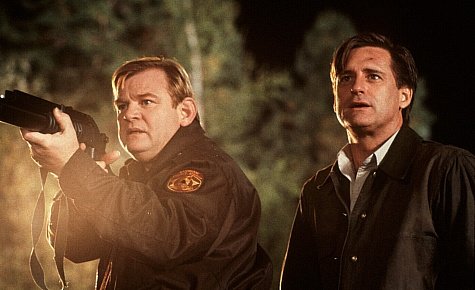
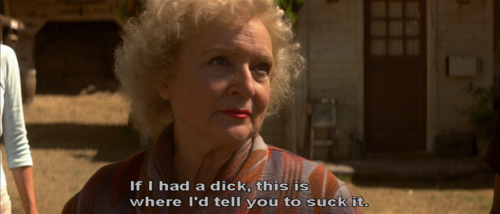
The cast of “Lake Placid” is made up primarily of B-list actors, led by Bridget Fonda, who was coming off of starring in Sam Raimi’s 1998 movie “A Simple Plan.” Bill Pullman co-stars, following up on a handful of successful roles in the mid-1990s (“Independence Day,” “Lost Highway”). The rest of the cast includes Brendan Gleeson, Oliver Platt (one of my favorite character actors), and Betty White, who essentially defined her modern persona with her role in this movie.

Essentially, “Lake Placid” follows the formula of “Jaws”: something is killing people in the waters off a small town, but it is unclear what it is. The local police (Gleeson and Pullman) are stumped, which leads to a big city, out-of-towner expert being called in (Fonda). An eccentric hunter then shows up who gives the impression that he can solve the situation (Platt), and off the story goes a-hunting the monster.

placid5Apart from Brody being split in two, there are a few other differences in the formula for “Lake Placid.” Firstly, Hooper is replaced with a woman character, which isn’t necessarily a bad idea. This allows for a romance subplot, but also unfortunately opens the door for a lot of lazy, shitty comedy, which I will delve into in a bit. The setting of a lake, as opposed to the ocean, doesn’t allow for the same kind of isolation and character developmental opportunities during the hunting process that is allowed for in “Jaws.” This winds up being a pretty big weakness for the movie: the characters don’t get much depth, because they don’t spend enough time together outside of the action for the audience to get to know them.
placid4For me, the biggest problem for the movie is in its attempts to be funny. I didn’t remember this as a horror comedy, because honestly, it just isn’t. Most of the humor is lazy, dull, or just off the mark in general. Instead of poking at the weaknesses of the genre or the ludicrousness of the plot (see: “Hot Fuzz,” “Shaun of the Dead”), it tries to find humor in the fact that one of the characters is a woman, and can’t handle camping outdoors. It just doesn’t work, because it isn’t funny. There is a way to make a funny movie out of a “Jaws” scenario, but “Lake Placid” just isn’t it.  Honestly, I think someone knew this, because the movie is not marketed as a comedy in any way. On a shelf, it just looks like another monster movie, and that is what it really should have been. Even “Jaws” itself is funnier than this movie, and all of the comedy in that movie is done as relief. There isn’t a single moment in “Lake Placid” (without Betty White in it) that is as funny as any of the comic relief moments in “Jaws,” which is pretty bad for a movie that is trying to be a comedy.
To the movie’s credit, there are a number of things I like in it. Stan Winston’s effects are fantastic as usual, and there is also a pretty cool action sequence or two in which the crocodile takes on a helicopter. Oliver Platt manages to stay charming despite the issues with the dialogue and writing, and is the biggest highlight in the movie outside of Betty White. The ending also taken an interesting turn in that the characters decided not to kill the crocodile, which is unusual for the genre. Over the credits, there is a shot of the tranquilized crocodile being hauled via a semi-truck to Florida, I would assume to be placed in a zoo or preserve. Just from skimming the IMDb boards, this seems to have elicited a mixed reaction from audiences.

As a side note, I can’t help but feel that “Lake Placid” suffers from the “Pacific Rim” effect of having an incredibly poor title that fails to convey the plot of the movie. Surely they could have done better than that, right? Even “Crocodile” or “Croc” would have worked better if you ask me.

placid7
“Crocodile vs Helicopter” would have sufficed

I have seen a good number of comparisons between “Lake Placid”  and “Deep Blue Sea,” another 1999 movie that has developed a bit of a cult following. I personally have a more vivid memory of “Deep Blue Sea,” but on my last re-watch I don’t recall the CGI holding up quite as well as it does in “Lake Placid.” That said, the dialogue and acting seems much better in “Deep Blue Sea,” and it doesn’t try to hit the comedy angle in the way that “Lake Placid” does. Personally, I think that is a weakness in the “Lake Placid” script, so I’m generally on Team “Deep Blue Sea,” but I think it merits another re-watch. It does have an LL Cool J rap, which I don’t believe “Lake Placid” can claim. Point: “Deep Blue Sea.”

Overall, I was surprised at how bad “Lake Placid” is in retrospect, in particular because the things that were bad were not the things I expected. A lot of the problems are in the dialogue and writing: it half-heartedly tries to be self-aware and counter-genre, but the attempts at humor aren’t executed very well. Oliver Platt is a great comedic actor, but even he couldn’t make the dialogue for his character actually funny. In general, I have to agree with Roger Ebert’s assessment of the film: it is “completely wrong-headed from beginning to end.” He hilariously also calls it a “sort of failed Anaconda,” which is an arguably equally awful movie, which Ebert adored for reasons that I don’t think anyone truly understands.

placid3I might recommend this movie for the sake of nostalgia, because there are some ok bits here and there in the film. The characters and writing is generally just so awful though that it is difficult to sit through any sequences in which a crocodile isn’t actively attacking something. Luckily, the movie doesn’t bother with the human element too much, so you might be able to bear it. (speaking of bears…)


Van Helsing

Van Helsing
helsing1

For those who have been paying attention to the Hollywood craze of creating combined cinematic universes, the upcoming reboots of Universal’s treasured monster movie franchises comes as no surprise. The first installment in the line-wide reboot was 2014’s “Dracula: Untold”, which wasn’t a promising start, but the Universal Pictures upper brass certainly aren’t giving up on a potentially ludicrously lucrative combined universe.

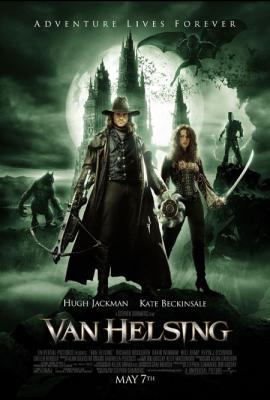
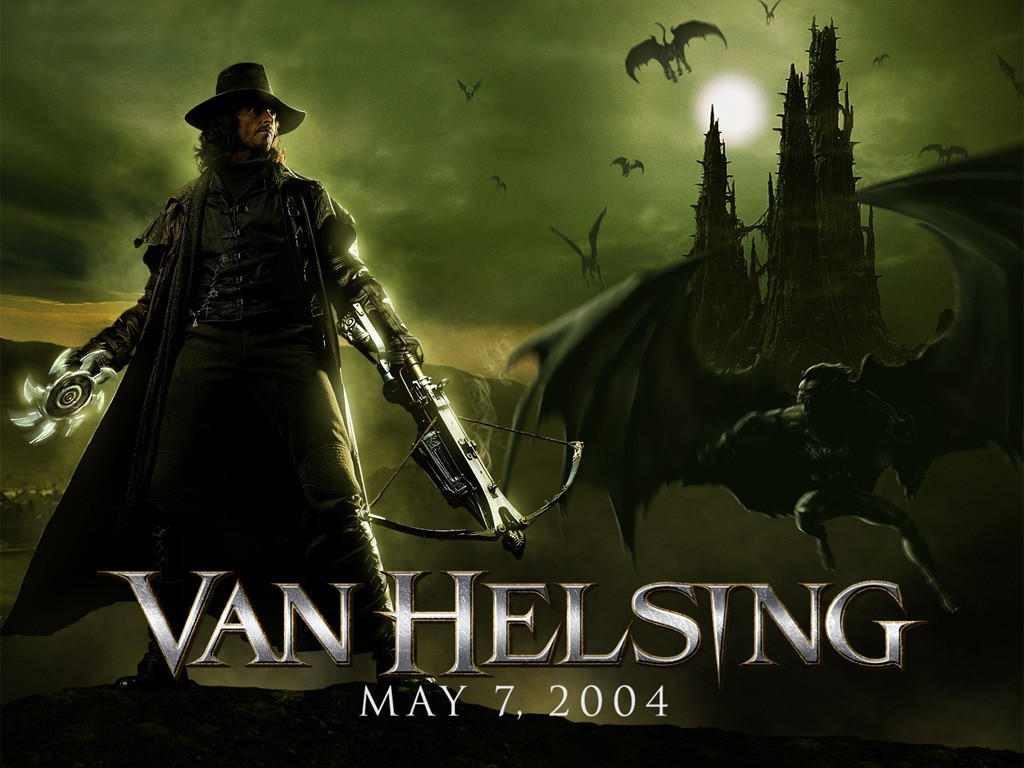
helsing11What most have forgotten, however, is that this latest foray isn’t the first time Universal has attempted to resurrect the intersecting classic monster franchises in the modern era of film. Back in 2004, “Van Helsing” was released in an attempt to spur a line of films based on the “Monster Mash” bunch, featuring Hugh Jackman as the eponymous vampire hunter.

helsing2Despite being a financial hit, grossing over 300 million on a reported budget of 160 million, “Van Helsing” was generally loathed by critics and audiences alike (Rotten Tomatoes critic score is 23%, audience score is 57%), and thus failed to kick-start the lofty cinematic rebirth of the Universal monsters. Much like Dracula’s impish computer-generated spawn in the film, all of these aspirations of future box-office and world domination imploded before they had a chance to inflict any real havoc upon movie-going audiences.

Most people are aware of the cinematic tradition of the Dracula character, but Van Helsing has an impressive history on screen in his own right. Such diverse actors as Peter Cushing, Anthony Hopkins, Christopher Plummer, Malcolm McDowell, Jon Voight, Casper Van Dien, Mel Brooks, Peter Fonda, Bruce Campbell, and Laurence Olivier have all played the vampire hunter character in one form or another, in addition to Hugh Jackman’s 2004 portrayal of the character. I’ve even covered one of Peter Cushing’s performances of the character in “Dracula A.D. 1972” here on the blog, as well as Bruce Glover’s IMDb Bottom 100 worthy take on the character in “Die Hard Dracula”. Hugh Jackman’s version of Helsing certainly stands out amongst all of the others though, given the more action focus and superhero tone of “Van Helsing.” I’m also pretty confident that 2004 marks the only time where Professor Helsing has become a werewolf at any point in the story.

helsing7
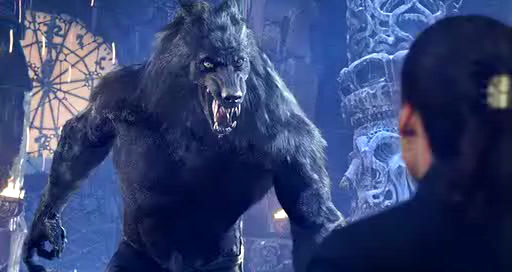
The werewolves look pretty awful, by the way

Writer/Director of “Van Helsing” Stephen Sommers hasn’t done a ton of work since the film, outside of 2009’s “G.I. Joe: The Rise of Cobra” and 2013’s “Odd Thomas,” both of which he directed and co-wrote. He does have an upcoming project called “When Worlds Collide,” but isn’t any information available yet as to when it will be released. The cinematographer on “Van Helsing,” Allen Daviau, actually has some solid credits on his resume from his long history working with Steven Spielberg, including work on “The Color Purple,” “Empire of the Sun,” “E.T.” and the short film “Amblin.”

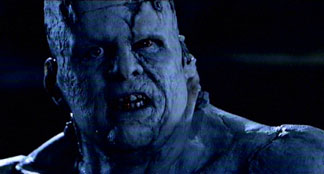
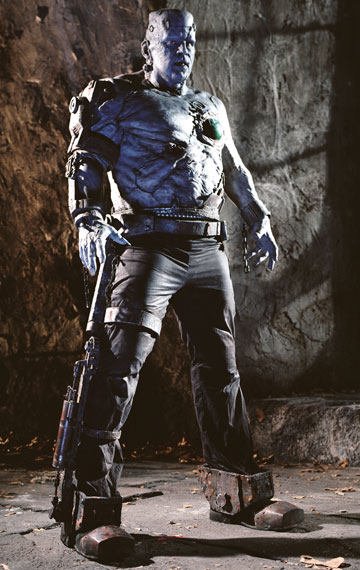
One of the biggest criticisms of “Van Helsing” was that it overused computer generated images, something that is still an issue with the horror genre today. While the CG in the movie is definitely overboard, it holds up better than I expected. Typically, because of the rapid improvements in computer technology, CGI becomes rapidly and notably outdated in films. In “Van Helsing,” however, most of the effects are still holding up pretty well for being over 10 years down the line. They are definitely too cartoony and will continue to age poorly, but it still holds up moderately ok. Some scenes undoubtedly look better than others, and the few practical effects present (notably the interpretation of Frankenstein’s Monster, which I think looks awesome)  blow the CG away, but overall I was impressed that the movie didn’t look much worse in review.

helsing9
helsing12Something that I still can’t decide is a weakness or strength to the story is the presence of a lot of seemingly superfluous supernatural technology. In the film, Van Helsing has a sidekick who functions about the same as “Q” in the James Bond franchise: he is a friar who specializes in the development of technology for fighting monsters. As amusing as it is to think of a supernatural military R+D department at the Vatican, the character and technology seem to mostly exist for either comic relief or aesthetic reasons, and aren’t particularly necessary for the story. Although, there are moments where they are the only redeeming and entertaining aspects of the film, so I can hardly complain too much.

The score to “Val Helsing” is certainly interesting, and one of the better aspects of the movie. Composer Alan Silvestri is all over Hollywood, and has provided scores to movies such as “The Avengers,” “Captain America: The First Avenger,” and the “G.I. Joe” films. It isn’t a score that will necessarily stick with you, but it does a good job of serving its purpose in the film.

helsing5One of the reasons I remember “Van Helsing” so well is because of its similarities with the Sean Connery-led film “The League of Extraordinary Gentlemen,” which came out the previous year. Both feature super-teams made of fictional characters, were moderate financial successes, and massive critical failures. They even have a moderate cross-section in that they both feature the character of Dr. Jekyll / Mr. Hyde. I am planning to readdress that film soon, so we will see how it holds up in comparison to “Van Helsing.”

helsing6When it comes to the cast of “Van Helsing,” Jackman is the obvious centerpiece. By the time that “Van Helsing” came around, he was already established as a major action star with the first two “X-Men” movies, as well as leading credentials in “Swordfish” and “Kate & Leopold.” Co-starring in “Van Helsing” is Kate Backinsale, whose previous year featured the first installment in the eventual “Underworld” supernatural action franchise, as well as the astoundingly abysmal “Tiptoes” with Matthew McConaughey and Gary Oldman: an indie drama/comedy about a family of dwarves. It is beyond awful, as Daniel O’Brien of Cracked.com can explain:

The accessory cast of “Van Helsing” features a good number of character actors, including Robbie Coltrane (Hagrid from the “Harry Potter” movie franchise), Richard Roxburgh (star of the Australian TV show “Rake”), Kevin J. O’Connor (“The Mummy”), and David Wenham (“300,” “Public Enemies”). They don’t have much in the way of name recognition, but they all have a fair amount of television and movie experience. That said, a lot of the performances in “Van Helsing” are awful, particularly anyone trying to don a Transylvanian accent (Richard Roxburgh is particularly wretched in that department). I think that is probably less of a complaint about the actors as much as it is about the direction and general tone of the film, which is pretty cartoony out of the gate. I doubt that Roxburgh’s Dracula performance would be waltzing around a room chewing scenery without some degree of direction from Sommers.

helsing8In general, I think I understand why “Van Helsing” failed to live up to Universal’s expectations for it. In 2004, Blockbusters were just about to turn in the direction of the “gritty reboot”, with “Batman Begins” popping up in 2005. “Van Helsing” I believe was too cartoony in execution for what audiences were really wanting at the time: for a movie focused on horror icons, it wasn’t scary in any way, and didn’t have a very dark tone either. The “steampunk” style I think would have looked better with a little more emphasis on practical effects over CG: the coolest thing in the movie is Frankenstein’s Monster, and he is the only one of the monsters portrayed consistently without extensive CG. The emphasis on hammy, over-dramatic antagonists just didn’t work either: Dracula’s wives are just groan-worthy to listen to now, and Dracula himself just isn’t menacing enough.

helsing10 helsing4I don’t think I can recommend “Van Helsing,” as it is one of those movies that isn’t quite bad enough to be on a good-bad level, and is still well out of the realm of being good. It might be worth a watch if you are curious what a “Avengers”-esque Universal monster movie might look like, but you will probably be disappointed in the result. It also sounds like we could very well see a remake of “Van Helsing” by the end of the decade, so it couldn’t hurt to look back to see what we might be in for. It is a generally watchable flick, but not an excessively fun one if you ask me.

Carnage

Clerk’s Pick

Clerk:
Hannah, Video Central (Columbus, OH)

videoc

Movie:
Carnage
carnage1

Pitch:
“The casting is really great. You would think it would be a dark comedy from looking at it, but it is almost more…physical? It is about two couples whose children get into a fistfight on a playground, and they start teaming up against each other over the course of the movie. It is one of those movies where a minor thing winds up becoming a really big deal. I think it was adapted from a play, because it definitely feels really stage-y. I really love the tagline: ‘a comedy of no manners.’

Background:

“Carnage” is a 2011 movie directed and co-written by Roman Polanski, the once-lauded director (and noted scumbag pedophile-on-the-run) who was behind such classic movies as “Chinatown” and “Rosemary’s Baby.” “Carnage” is an adaptation from an award-winning French play called “God of Carnage” by Yasmina Reza, who shares co-writing credit on the film with Polanski.

Outside of the opening and closing scenes that are set in a Brooklyn park, the entirety of “Carnage” takes place in a single apartment. The bulk of the scenes were shot in France by Polanski, while the few exteriors and the playground scenes were shot by a second unit in the US (given Polanski is a fugitive and all).

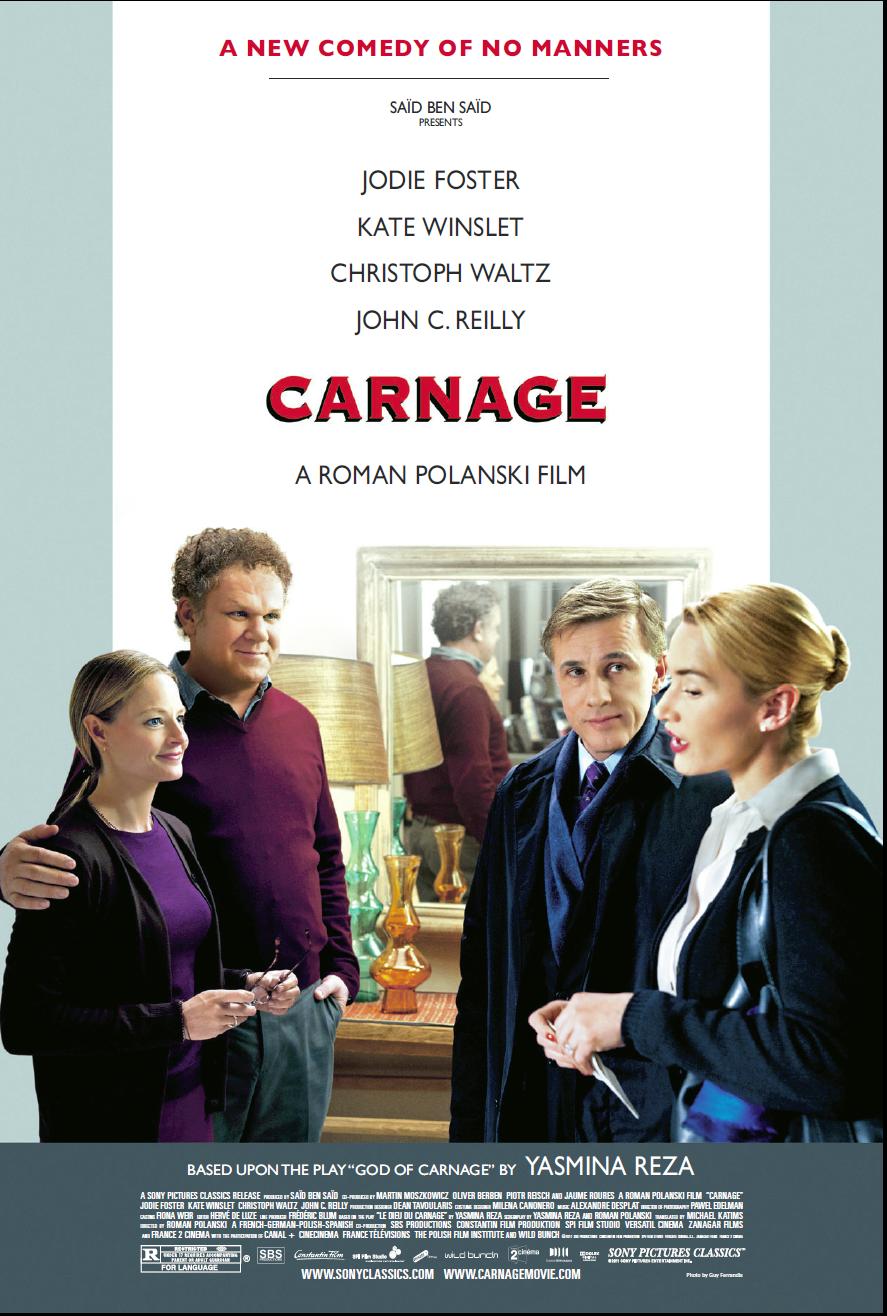
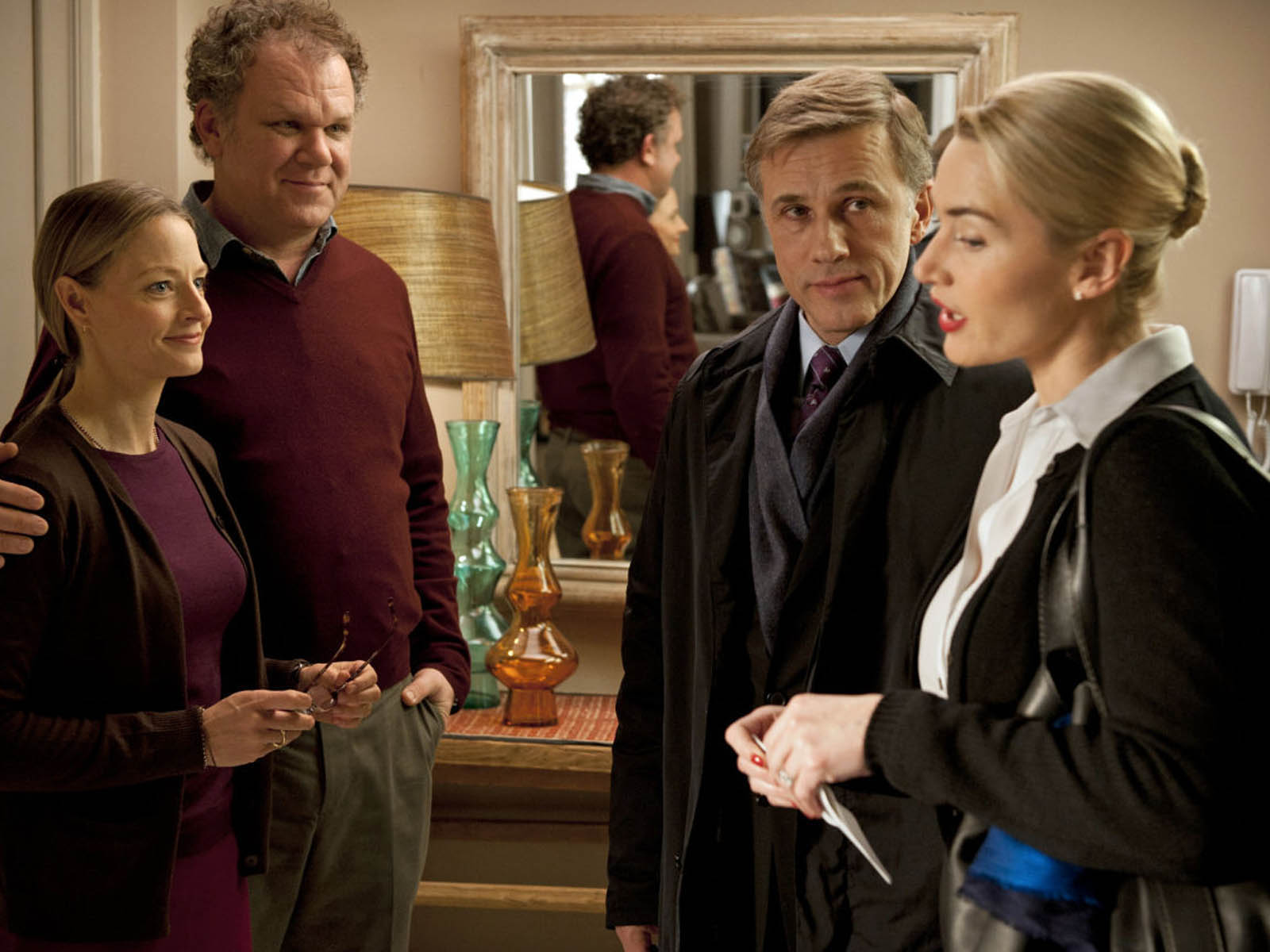
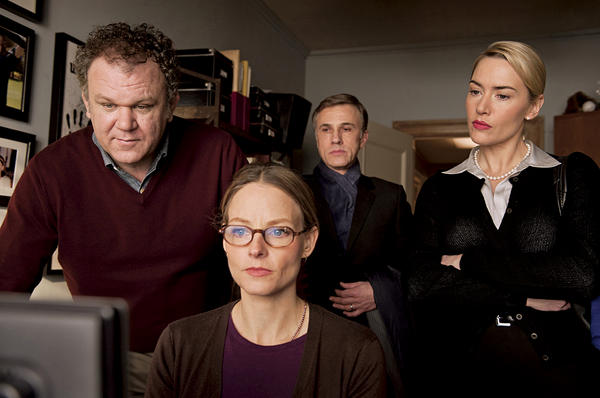
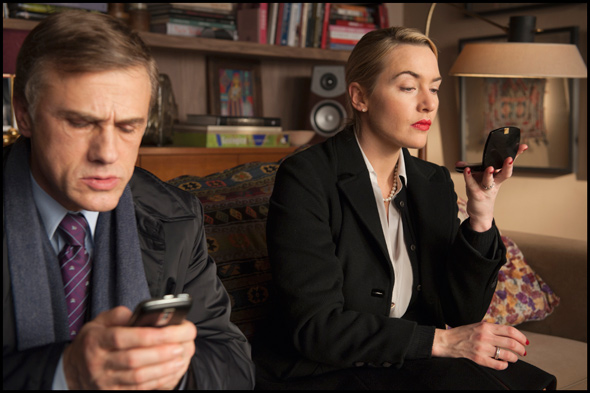
The cast of “Carnage” is very small, and is primarily comprised of notable actors Jodie Foster, Kate Winslet, Christoph Waltz, and John C. Reilly. Foster and Reilly play a couple whose son is attacked by the child of Waltz and Winslet, and the story picks up with the parents meeting to talk over the situation and the consequences for the children.

carnage1The music in “Carnage” is done by french composer Alexandre Desplat, who has recently scored critically-acclaimed films such as “Argo” and “The King’s Speech,” and previously worked on movies such as “The Fantastic Mr. Fox” and “The Curious Case of Benjamin Button.” Desplat has worked with Polaski on a number of films besides “Carnage,” including on “The Ghost” and “Venus in Furs.”

“Carnage” was nominated for a litany of awards, primarily in Europe. Winslet and Foster both earned Golden Globe nominations, however, but neither of them took home the prize.

Despite the many awards it accrued, the film’s ratings are only moderately above average. It currently holds a 71% critic score on Rotten Tomatoes, a 66% audience score, and a 7.2 rating on IMDb.

Review:

“Carnage,” unfortunately, is kind of forgettable. There is nothing particularly bad about the movie, but nothing much stands out about it either. All of these actors are better in other things, and at times it feels like they are just trying too hard to stand out *cough*Jodie Foster*cough*. It seems like they are acting at each other at times, which doesn’t make for a very compelling watch.

carnage4All of that said, the casting is pretty great. These are all generally good actors, but none of them put up their best performances for this one. The best thing I can compare this to is “Who’s Afraid of Virginia Wolf?”, but “Carnage” doesn’t seem to be or feel like it is as heartfelt or genuine as that cinema classic.

I would wager that this is a great play to see on stage, but something just doesn’t gel quite right with this as a film. I’m not sure what the issue is, but the movie feels really run-of-the-mill. I would expect this sort of film from just about any indie director out there, but not Roman Polanski. It just feels oddly…sterile? It is like all of the right elements are being heated in a beaker, but the reaction just isn’t happening.

carnage3“Carnage” interestingly feels like it drags on too long, despite being a pretty short movie (80 minutes). There isn’t a lot of motion to the film, and the characters mostly talk themselves into concentric circles through the story, which is almost certainly why it feels so much longer than it is. After a while, the only interesting thing about the film is watching Academy Award winners pretending to get progressively drunk.

“Carnage” reminded me a little of an earlier Clerk’s Pick, “It’s A Disaster”, but I think that movie was actually pulled off better. It has the same sort of bottle scenario and rapidly degrading sanity that are both present in “Carnage”, but it just seems to move along better. I would wager that “Carnage” offers the better performances of the two, but it just doesn’t feel quite as entertaining.

carnage5After all of the meandering conversation, argumentation, and outright yelling, “Carnage” comes to what feels like a really abrupt ending that doesn’t feel earned or justified. It bookends pretty nicely, but nothing seems to be resolved or changed as a result of the story. I’d also say that no one really learned anything or grew as a result of the story, so it all ultimately feels kind of pointless. Then again, that might have been the point. In any case, I didn’t come out of it feeling entertained.

All of that said, “Carnage” has a very interesting concept. I don’t think it was pulled off particularly well, but there are undoubtedly good elements to it. Although, I will say that I have no idea how either Winslet or (especially) Foster got Golden Globe nominations out of this. That is just boggling my mind, because Foster is just downright chewing scenery in this thing, and Winslet spends a non-trivial part of the movie fake-vomiting.

Recommendation:

I think that some people would really enjoy this movie, but that most would be better advised to skip it. I even like this kind of bottled-setting drama, but I wasn’t particularly impressed with “Carnage.” At times it feels both overacted and excessively preachy, and neither of those things do the movie any favors. If this is the kind of movie you are looking for, I would think that there are a lot better ones to find with very similar setups.

Maybe if you are a big fan of Foster or Winslet, this will be a better watch for you. I am not particularly high on either of them, and their performances in this didn’t change my mind. They certainly look their parts and were cast well, but they just didn’t quite do it for me.


Groundhog Day Marathon Recap

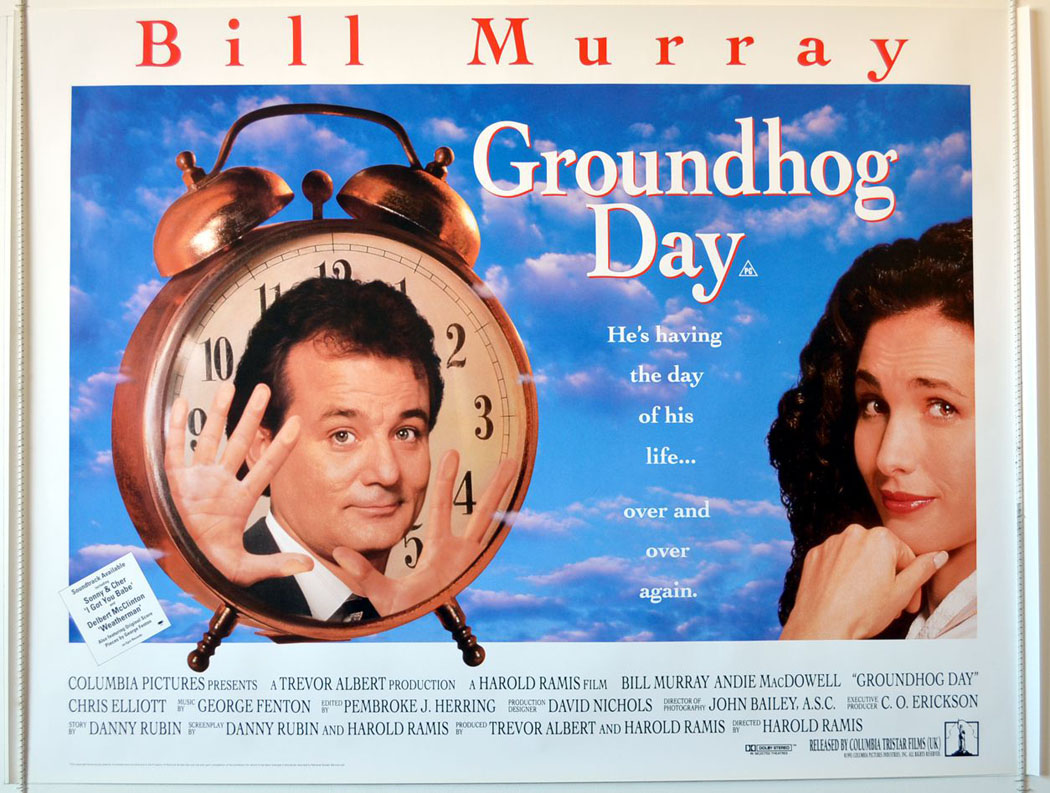
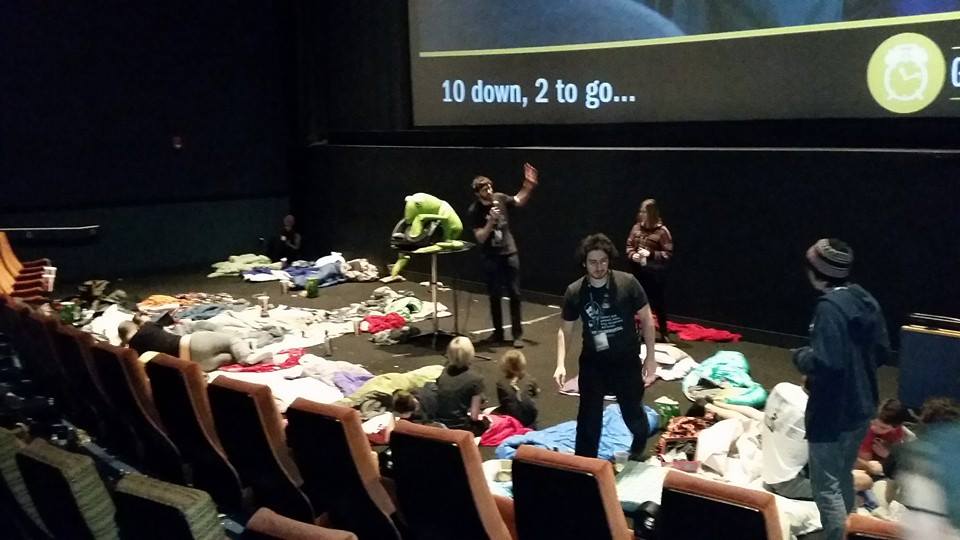
This past Sunday, I participated in a 24-hour “Groundhog Day” marathon at the Gateway Film Center in Columbus, OH. To keep things interesting and lively, I decided to do a review between each of the 12 consecutive screenings of the movie.

Yesterday, I picked up a DVD copy of the movie, and went through Harold Ramis’s commentary while doing some research. Below are each of the reviews I wrote during the 20 minute intermissions, with some follow-up comments based on my research in italics.

“Groundhog Day” Review #1

I haven’t watched this movie in years, so it was good to get a fresh start. Bill Murray has a great way of delivering dialogue (of course), but I think the power of this movie is in the periphery cast: they are the control, and their performances have to be meticulously detailed for the story to work. If you don’t notice an aberration, then everything is working perfectly. Might be Tobolowski’s best role, and he is a dude who has been around the block.

Ramis made a specific note of the careful attention to continuity on the part of the crew. He also spoke at length about the casting process, noting that Tobolowski earned the role straight off of his audition. Of course, Murray did a fair amount of improvisation on the film, both in his physical acting and his dialogue.

Next thing: Phil creeps me out. Not just when he is supposed to, but the whole time. He is still obsessively catering his life to fit the desires of his “love interest,” even after he supposedly learns his lesson. Take the piano lessons: not something he did in earnest. I also wish they delved a little deeper and darker: the side plot with mortality, the homeless dude, deification, etc. doesn’t actually go anywhere: where is his epiphany from that, other than to refocus and re-obsess on attaining a specific mate? Creepy creepy creeptown. I would love to see some earlier drafts of the script…


“Groundhog Day” Review #2

I frequently watch movies twice in succession, so this isn’t too weird. However, I usually have time to research in between, which wasn’t the case here.

What stood out this time was how fucking awful Andie MacDowell’s character is. They tried to write what they thought was an ideal person: the result of which is inevitably boring. Characters need little flaws and tics to be interesting (beyond just not liking fudge, ffs). The only thing notable about her other than being “nice to people” is that she comes off as incredibly pretentious on a number of occassions. There should have been a glass-shattering moment where Murray realized she is human and has flaws, and learns to accept them. But nope. She also doesn’t exactly react realistically or consistently, which is kind of a problem for a character who ONLY REACTS TO THINGS.

As the marathon wore on, the audience became increasingly hostile to the character of Rita and MacDowell’s performance. Her in-and-out South Carolina accent, consistent breaking of character in scenes (noted by Ramis: Murray kept cracking her up), and increasing pretentiousness became more grating than anything else about the film after about 5 or so screenings.

I think I’m going to hate the shit out of this movie by midnight. Stay tuned.

I surprisingly don’t hate it, but it is hard to look at it objectively after being so saturated with it. I kind of consider it middle-of-the-road in content, but with a incredibly clever premise and structure. 


“Groundhog Day” Review #3

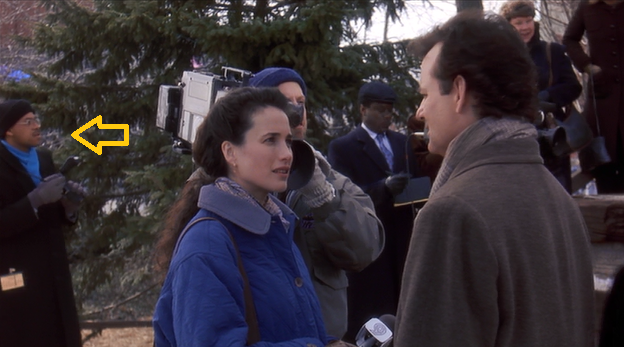
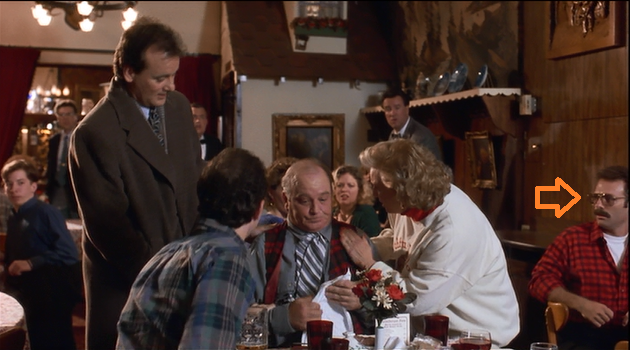
I’ve reached the point where background details are starting to stand out. Not the typical stuff, like Michael Shannon in his first film role, but like the dude in the background of the Gobbler’s Knob sequences who looks exactly like a young James Earl Jones. The amount of applause in the movie is astounding and rapidly becoming surreal. Why is there so much clapping in this movie? Is it intentional? Last but not least, there is a shocking amount of incredible “white people dancing” moments. Just everywhere.

The quantity of applause in the movie is surely the most surreal detail that came to the surface after multiple viewings. There are just a lot of crowd shots and group events in the movie, which means you rarely go a couple of scenes without some kind of applause break. The white people dancing moments never got less funny.
groundhog1
groundhoggif
There are still more editing and pacing details that are bugging me that I’ll cover on the next round, but I’m generally far less grumpy now than I was after Round 2. Let’s see how the next one goes.

“Groundhog Day” Review #4

I’ve started using sectional divisions to make the screenings go by faster. The cyclical structure of GH makes it more difficult to sit through, because the script beats are a bit unconventional, so the sectioning has been helping me pace it personally. It has always helped on long drives, and this isn’t so different from that in principle. The sections are 1) introduction 2) indulgence 3) “romance” 4) depression 5) renaissance 6) conclusion.

This sectional breakdown is about the only way I made it though 24 hours of this movie. Interestingly enough, Ramis noted that the structure was inspired by the Kubler-Ross model (Five Stages of Grief). Mine is really similar, only really differing in a few spots. The Introduction covers denial, indulgence covers anger, “romance” is bargaining, depression is the same, and then I broke the acceptance into the renaissance and conclusion.

Section 3 is when Murray is at his creepiest and MacDowell’s character’s lack of depth really shows. Consistently, this has been when the literal chorus of snores has started, every time.

Every showing, this is where the audience disappeared. Until Murray started getting slapped in the face, at least.

Section 2 has a specific sequence that really encapsulates the hit/miss nature of the film. Murray robs a banking truck by memorizing the habits of the guards, which shows you his crooked nature and that he is getting more meticulous and experienced with details.

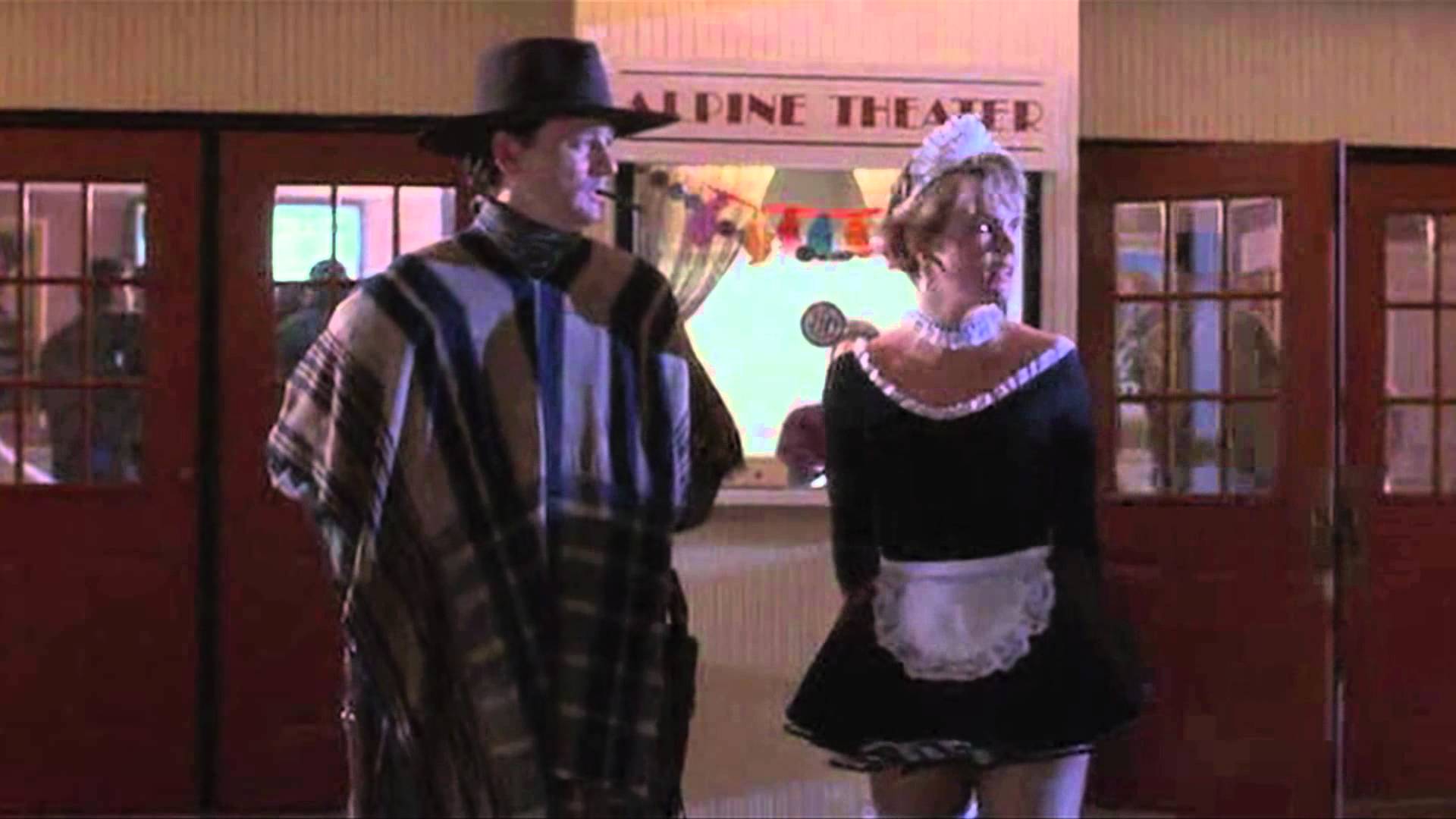
The second half of the sequence, however, serves no purpose at all. Murray is shown to have spent the money on a Benz, a prostitute, and a replica Clint Eastwood outfit. The sequence introduces a character that never returns, a location that never returns, and a number of objects that have no importance. It also establishes that characters don’t retain memories of previous days, but that is already laid out. Did Murray just really want in on “Three Amigos?” Anyway, the only attempt at a joke is an uncomfortable reference to the prostitute being underaged. Was Murray blackmailing Ramis to include his Eastwood impersonation? Why is this in the movie?

I hit the nail on the head on this one. In the DVD commentary, Ramis noted that this was entirely Murray’s idea, and that he did the Clint Eastwood impression “because he could.” We all have hits and misses, Bill Murray included. Ramis did mention that a lot of sequences were cut, so maybe this was supposed to tie in somewhere else? More importantly, how did this get through the final cut?

Anyway, more to come.

groundhog7

“Groundhog Day” Review #5

GH is, in many ways, a time travel movie. So, consequently, you have to talk about consequence! (Hurr)

GH tries to keep things simple, and evades what it can. However, there are some issues that can’t be skipped over. On day 3, Phil, in a panic, skips two conversations that he had on both previous days. This puts him at, underestimating, 30 seconds to 1 minute ahead of pace. However, that change fails to affect his subsequent encounter with Ned. That may seem petty, but I’d recommend looking at how a similar film dealt with the issue of temporal consequence: “Run Lola Run.”

In “Lola,” the beginning of her story cycle is affected differently each time it starts. The difference is only a handful of seconds each cycle, but it proves vital to the story. A few seconds is the difference between missing traffic, being impeded by it, or being nailed by a car. Looking at it from that angle, a minute being gained or lost is a lifetime.

Elsewhere, the film also dodges the consequences of Phil’s inaction. The finale focuses on the positive effects he has on townsfolk, but it is never shown what the consequence of his inaction is for them. Does a child break a bone because Phil didn’t catch him? Does a man choke to death? The thing is, Phil knows: he lived through it all. But we aren’t shown any of these potentially compelling interactions. BTTF managed to thread these things in subtly, so it isn’t impossible.

I spotted one background instance of the consequence of Phil’s inaction later on, which is mentioned in a future review. But, in general, there isn’t much.

Let’s not even start in on how GH deals with the butterfly effect…I have another screening to get to.

I still don’t want to go into this. Let’s just say that the film is inconsistent on Phil’s ability to influence future events.

“Groundhog Day” Review #6

Let’s take a little Tarantino-esque turn, shall we?

Early in the film, Phil steals a large amount of money from a bank car. He clearly researched it out, and memorized people’s patterns to execute the plan flawlessly. However, it is only shown once, when he is still exploiting his “power.”

In the second showing, I started wondering if he made the heist part of his daily routine, like the piano lessons. I initially dismissed it because it appears to be in the afternoon, and Doris, the diner waitress, is already off – duty (she is an unwitting accomplice). But still, Phil throws out a lot of money in the movie, all the way up to the finale. 1000 dollar piano lessons, multiple insurance policies on a whim, handing hundreds in cash to the homeless…is it unreasonable to think he is commiting a daily, perfect heist?

If that’s true, then Phil walks out of the movie with a literal fat stack o’ cash. Surely enough to rent a small place in a Pennsylvania town…?

Is it Marcellus’s briefcase or Mr. Pink’s diamonds? Nah, but it is fun to think about!

I mentioned this in an interview at one point in the night. I’ll be sure to post it if I ever come across it on YouTube.

groundhog4

“Groundhog Day” Review #7

Apparently, GH was intended as a curse movie according to early drafts. Even if you count that as apocryphal, there is some supernatural force at work in the story, and those are always bound by their own internal logic. The rules weren’t divulged, but that doesn’t mean that they didn’t exist!

Ramis spoke at some length about the decision to ultimately omit the background on the curse, but he did mention that one draft involved a spurned ex-lover.

So, what actually broke the GH curse? True love? I don’t think so. I would argue that he already “had the girl” before the last cycle, and that also isn’t much of a lesson (I expect a little more from Ramis). If that was all, surely it would have broken earlier. Was it learning the value of good deeds? Nope, he had clearly been through the motions on every divulged good deed in the film, and knew them by heart to the last detail. I think the real game – changer / curse – breaker was entirely internal: in the last cycle, Connors finally accepted his conditions, and was content with them. I think love and good deeds were learned and done as means to the end of Connors learning contentedness with the world around him.

Ramis mentioned that his co-writer on the script, Danny Rubin, is a bit of a Zen Buddhist, which seems to support this theory.

I think this is a sort of anti-ambition, anti-corporate message as much as it is a love story. Connors goes from being a perpetual climber with no love or need for little things or little people to being appreciative and happy with his current station and his environment. Makes sense for late 80s early 90s, yeah?

“Groundhog Day” Review #8

Finally managed to do a little research on production history, so how about some casting factoids? Before Murray got the part, Tom Hanks was considered, but it was eventually decided he was too nice in the public mindset. Kind of a shame, because he has solid comedy upside (“The ‘Burbs” = ♥). Michael Keaton turned down the role, and I can definitely picture that choice. Interesting that most of the considered leads were drama – heavy with comedy bonus, as opposed to vice versa (which Murray certainly is).

Ramis mentioned that Andie Macdowell was always the first choice for her role, and that she asked permission to use her (arguably mangled) South Carolina accent. The rest of the cast features a bunch of Second City players brought down from Chicago, as well as a couple of SNL alum (Brain Doyle-Murray, Bill’s older brother, among them).

Definitely pushing into the final stretch, and my body is starting to feel it. I think I’m the only one who has been awake the whole time…bunch a cheaters, these folks.

“Groundhog Day” Review #9

There are so many goddamn groundhogs in the background of this movie. I just noticed a six foot carved groundhog in a top hat prominently featured in the auction scene. On the 9th consecutive show. It is gigantic, and I have been looking for details. Really. They are everywhere. Dancing mascots. Wall art. Everywhere. To the point of saturation.

groundhog2

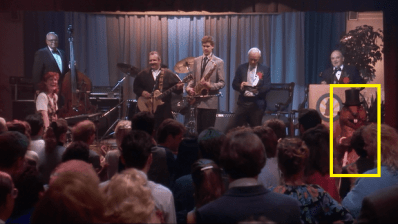
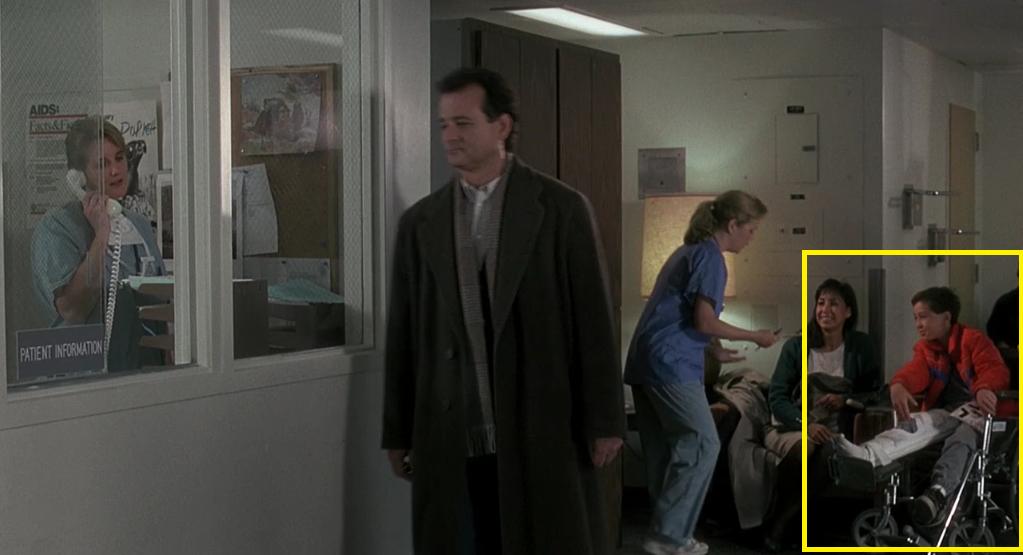
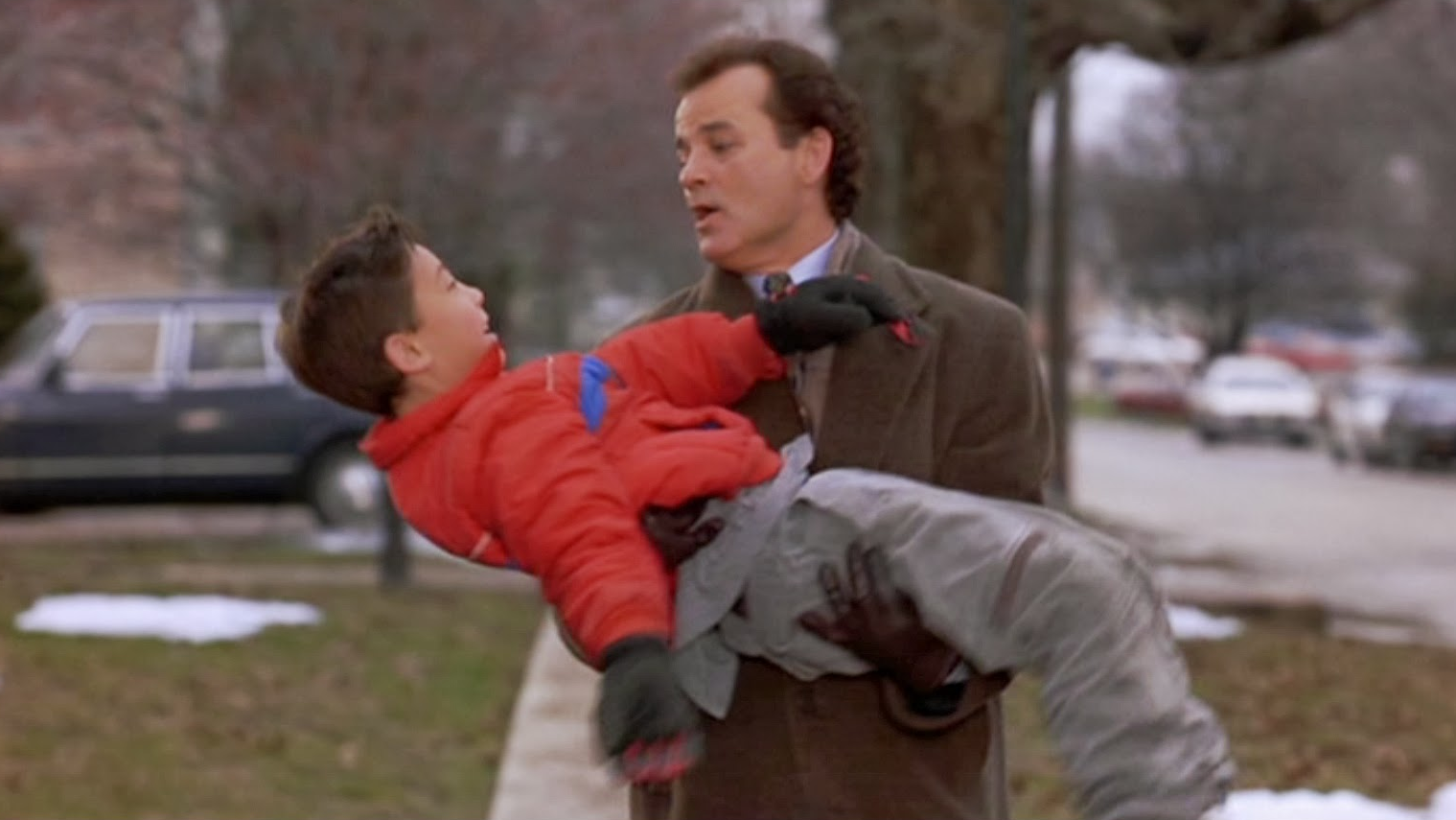
In other small details, I was pleased to find one instance of the consequence of Phil Connor’s inaction! The kid who falls out of the tree is in the background of a wide shot earlier in the film (in a hospital) with a broken leg in a cast. He is only identifiable by his distinctive red and blue striped jacket, or else there would be no way to catch it otherwise. I might have missed a few other background details, but I doubt anything else that interesting or semi-prominent.

groundhog5 groundhog6

“Groundhog Day” Review #10

One of the things that has stuck out with multiple viewings is the soundtrack / score. It has to do a lot of work, and manages to fit the variety of tones required of it. It definitely feels dated now, but it manages to do what it needs to. I particularly liked how music was used to accentuate on-screen surprise, discomfort, and confusion. I feel like a weak score could have sunk or seriously harmed a film that delicately balances its tone.

Ramis brought on Academy Award nominated composer George Fenton in to do the music, who worked on movies such as “Gandhi.” He instructed Fenton to imitate the style of Nino Rota, a renowned film score composes who worked on movies like “The Godfather.”

Speaking of which, I imagine this wasn’t the easiest film to market. I can see why so much deliberation went into casting the lead, because that had to be their biggest selling point for general audiences. Difficult to classify almost always means difficult to market. Anyway, It made a fair amount of money, particularly given it was competing in 1993, which was one hell of a deep year.

Adding to the marketing issues was the fact that “Groundhog Day” is uniquely American, meaning alternate titles had to be cooked up for foreign markets.

groundhog3

“Groundhog Day” Review #11

Gotta specifically call out the bit parts that I have come to love in this movie. Freddie Mercury Lumberjack? Yes. 1992 hair in the background of every scene? Of course. Highway patrolman who acts exclusively by emphatically pointing? Love em. Hilarious dancing white people everywhere, enough to explode the internet? Hoo boy.

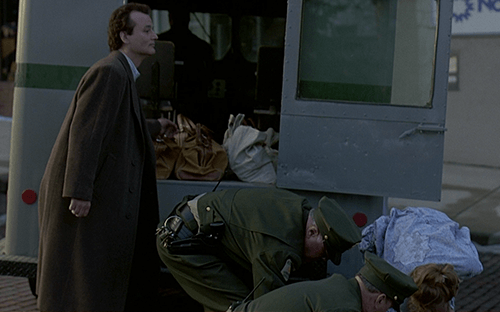
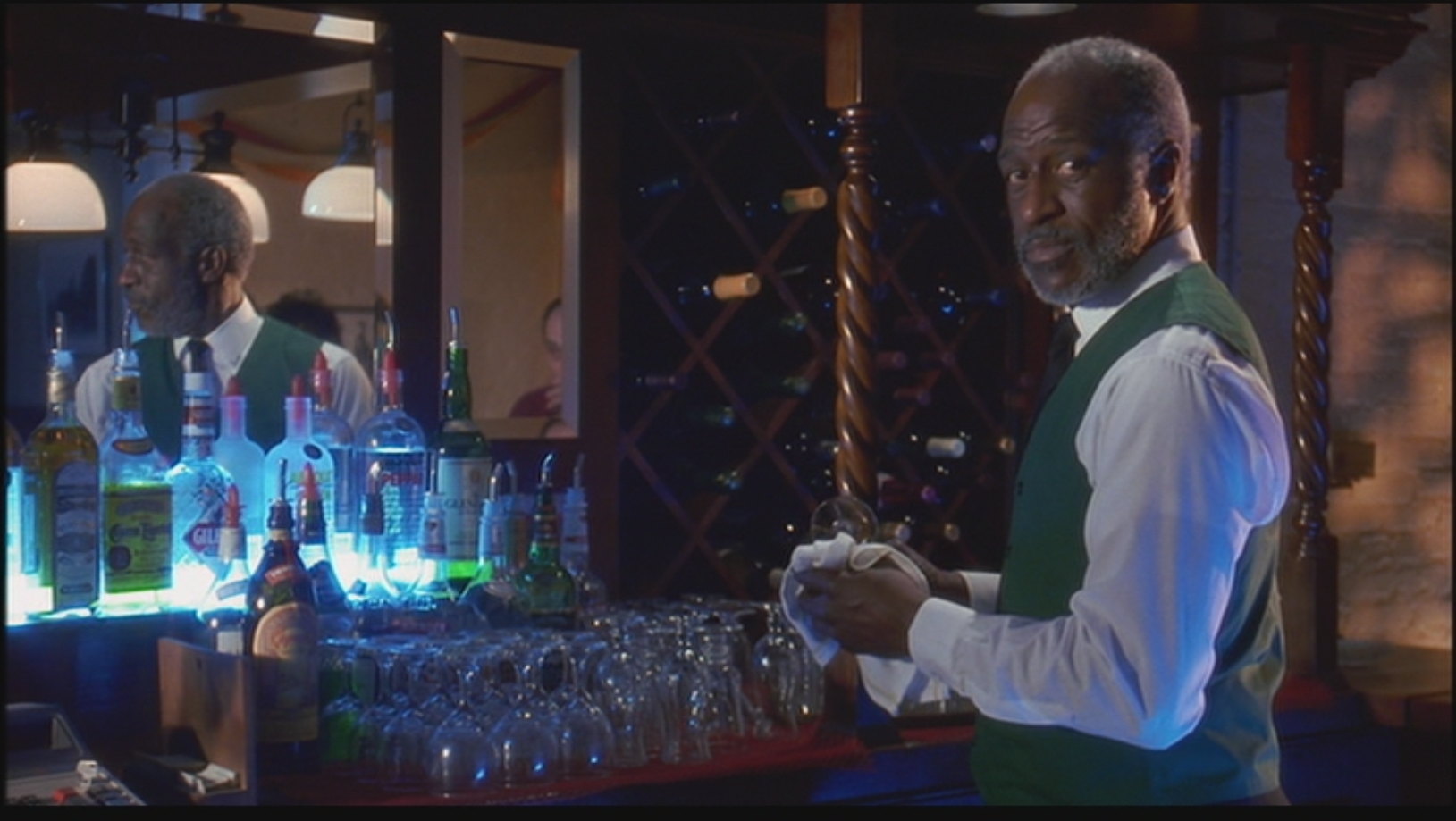
Last but not least though: the bartender who exists solely to shake his head in disapproval and clean glasses. He has maybe three lines, all a variation of “what are you having?”. His unimpressed, dismissive glass washing and head shaking, though…his performance ties the whole movie together. Astounding. Inspiring.

Can you tell that I was completely exhausted at this point? It turns out that the police officer / highway patrolman’s dialogue was completely unusable due to the amount of wind on set, so all of his dialogue is dubbed in after the fact by an entirely different actor.

groundhog1 groundhog groundhog2

Conclusion

So, I made it through the whole 24 hours. Surprisingly, I don’t hate “Groundhog Day” after all of that. Certainly there is nothing out there that is meant to be consumed in this way, but the structure of “Groundhog Day” makes it almost ideal for this kind of viewing.

A lot of details and issues popped up after so much repetition, but it stayed generally watchable the whole time. I still love Bill Murray’s improvisational sharpness and the unique concept behind the film, but the romance elements are definitely weak. I think people are very selective in what they remember about this movie: there are a lot of hits, but also a lot of misses here. The Clint Eastwood scene is very weak, the lack of thought put into the temporal consequences of actions, Andie Macdowell’s performance and writing: there are flaws scattered throughout. It is still good without any doubt, but a long shot away from great.

I have had a couple of days to sit on it, but I’m not sure if I’ll ever be able to totally look at “Groundhog Day” with a conventional critical eye after all of this. So, take it all with a grain of salt.

BibleMan vs Evil Soft Drinks

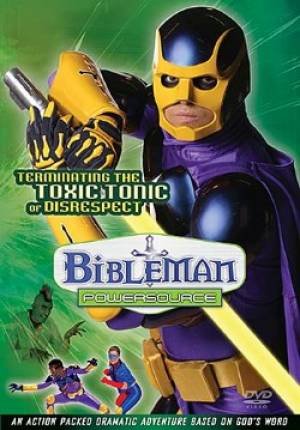
BibleMan: Terminating the Toxic Tonic of Disrespect
biblemantt1

It has been a while since I covered my favorite ol’ evangelical costumed crusader, so I figure it is about time to delve back into the cinematic cesspool that is my BibleMan DVD collection. Speaking of which, here it is:

biblemancollection

Today’s episode is entitled “Terminating the Toxic Tonic of Disrespect.” It doesn’t have the same ring as “A Light in the Darkness” or “The Six Lies of the Fibbler,” does it? In any case, this is the first BibleMan episode to feature Josh Carpenter after his initial, formal introduction as the new BibleMan in “A Fight for Faith.” This episode marks the beginning of the “PowerSource” run of the show, which is the most recent (and last?) incarnation of the character.

First off, the new BibleMan is definitely a bit of a downgrade. Robert Schlipp, who plays Josh Carpenter, is definitely just a preacher in a hero suit. To Willie Aames’s credit, his character of Miles Peterson definitely projected himself as a super-hero in the role, which is a pretty stark contrast next to Schlipp’s take on the role.

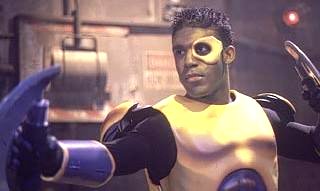
“Toxic Tonic” introduces a new sidekick in Melody, who is surely one of the worst actors in the entire universe. Bible Girl doesn’t entirely disappear, but is relegated to an off-screen support role for the episode. Cypher, BibleMan’s resident Black Friend(TM), also returns for the new series, and continues his role as the only half-bearable member of the team.

biblemantt5
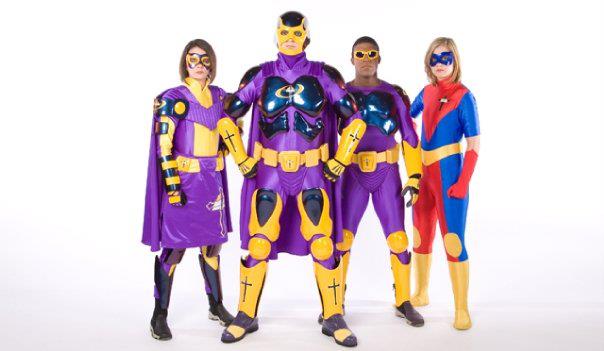
The PowerSource Bible Team (Melody on the far right)

The introduction of Melody offers the only actually good lesson that I have seen in the entire series: BibleMan and Cypher at first assume that she is a delivery girl when she shows up at the base, and initially dismiss her as a moron despite her expertise with technology. Of course, in typical BibleMan form, they never acknowledge the obvious sexism of their assumptions, and only ultimately apologize for not respecting her as one in “God’s image.” So close, BibleMan. So close.

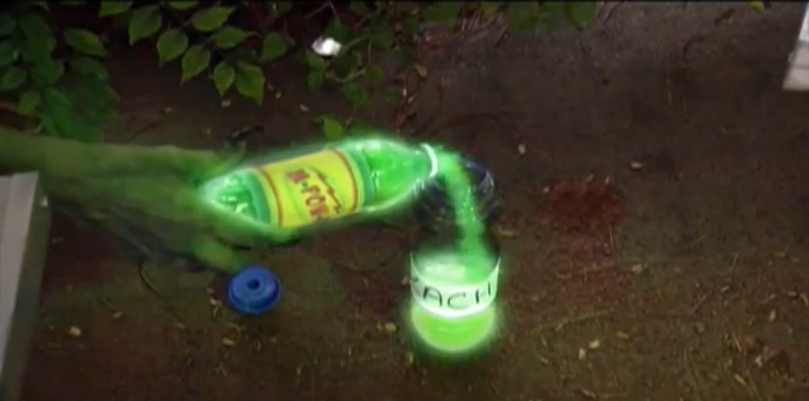
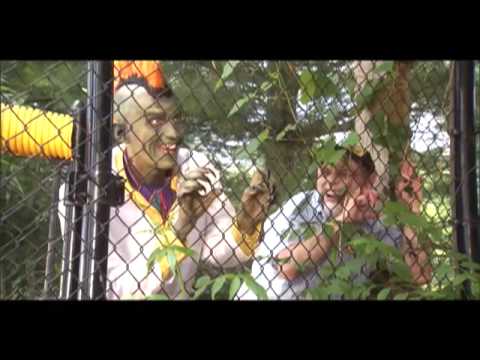
The villains, in a bit of a separation, aren’t the offensive stereotypes I typically expect of the series. Instead, the antagonistic duo is comprised of run-of-the-mill zany mad scientists: the neon-mohawked Dr. E. Meritus Snortinskoff (yeah, good job on that one) and his henchman named Stench. The two sinister scientists are executing a plan to make a bunch of kids indignant and rebellious by selling them “Empower” energy drinks made from sugar, water, and “pure evil.” The Bible team realize what is happening after noticing a bunch of burgeoning teenagers acting shitty to authority figures. You know what, BibleMan? Never change.

biblemantt3

The Bible Team ultimately wind up getting a sample of the “Empower” energy drink, and discover its contents (pure evil, bad attitudes, and probably a lot of high fructose corn syrup I assume?). This leads to a rambling, scripture-laced train of thought that could rival the revelation scene from “Black Dynamite.” Somehow, through rambling about trees for a while, the team figures out where to find the evil scientists.

Maybe my favorite aspect of this episode is that a good few minutes of run-time towards the beginning are eaten up through the use of what appears to be totally unnecessary recycled footage from the episode “Crushing the Conspiracy of the Cheater,” which, confusingly, wasn’t released until two years after “Toxic Tonic.” This brings up some serious questions of continuity in the series, but I am not going to dare delving into that.

biblemantt4Predictably, the Bible Team wins the day through grace, goodness, and the violent use of laser swords. The bad guys do get away this time (instead of dying horribly), but I don’t believe that either of them show back up later in the series.

biblemantt2This isn’t one of my favorite episodes, and certainly doesn’t compare to the “BibleMan vs The Internet” entry. However, it definitely has the same old heavy-handedness that all of the incarnations have. The episode of course ends with a prayer, and a plea for all of the viewers to convert to Christianity. As far as entertainment goes, I do kind of love how shitty the kids are who imbibe the “toxic tonic,” and how generally panicked the creators are about the idea of teenage rebellion. There is definitely something to enjoy here, but it isn’t one of the stronger good-bad entries in the show. That might have a little to do with the change of creative team with the dawn of the “Powersource” series, but I’ll need to watch more of them to see if there is a significant perceptible difference between the incarnations.

The Ladykillers

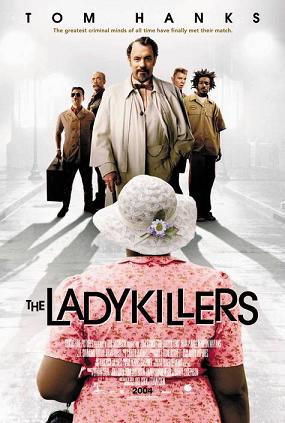
The Coen brothers, Joel and Ethan, are two of the most acclaimed filmmakers working today, and are almost certainly the most lauded currently active film-making duo. Their filmography is rife with cult classics and best picture nominees alike, and at times it seems that everything that they touch turns to gold. However, that was not always the case.

In 2004, the Coen’s released a quasi-remake of the Peter Sellers / Alec Guinness movie “The Ladykillers,” starring one of the most acclaimed contemporary actors in Tom Hanks. The match seemed destined for glory, with Hanks coming off of acclaimed roles in “Catch Me If You Can” and “Road to Perdition,” and the Coens having just released a series of acclaimed films (“O Brother, Where Art Thou?,” “Intolerable Cruelty,” “The Man Who Wasn’t There”). Even T-Bone Burnett, who produced the highly acclaimed music for “O Brother Where Art Thou?” and “The Big Lebowski,” was attached to work on the soundtrack.  Every aspect of the film seemed crafted with winning in mind. “The Ladykillers,” however, was not received well.

ladykillers1Despite being nominated for the Palme d’Or at Cannes and Irma P. Hall receiving wide acclaim for her role in the film, “The Ladykillers” was widely panned, and is often considered to be the weakest of the Coen brothers’ works. The film has an underwhelming 55% critic score on Rotten Tomatoes, and an even lower audience score at 43%. The IMDb users have the film at a slightly higher 6.2, which is still far from a fantastic score for the Coens.

This is one of those films where I think the context of the movie is absolutely essential to understanding the critical response to it. For instance, most of the criticisms of “The Ladykillers” that you will find pulled together on Rotten Tomatoes fall into one of three categories:

1. The Coens can do better than this / Why isn’t this another “Fargo?”

‘Frankly, this doesn’t have that Coen magic.’

‘When the Coen brothers are capable of making brilliant stuff like Fargo, should they really be spending their time making pictures like The Ladykillers?’

‘There’s a hint of the usual Coen genius here…but only a hint.’

‘If you set your expectations low enough there are real laughs to be had, but coming to the Coens with low expectations somehow just feels wrong.’

2. The characters are too quirky and unbelievable

‘…a series of hoops the characters must jump through to prove just how strange they are.’

‘A lukewarm live-action Loony Tunes cartoon’

3. It isn’t as good as the original “The Ladykillers”

‘The Coen Brothers try their hand at remaking one of the best of the 1950s Alec Guinness comedies. A version that has little to offer anyone who has seen the original.’

‘Uninvolving and tedious rendition of the 1955 British classic, film is too slow at the gate with longwinded speeches bogging down the momentum.’

‘Such a slight effort compared to the original Ladykillers and past Coen works.’

Just looking at 1 and 3, you can start to see why people were so hard on “The Ladykillers.” Not only is the film a remake of a beloved classic that could not possibly be lived up to, but people had very high expectations of the Coens. Although “Intolerable Cruelty” received generally better reviews “The Ladykillers,” it also faced the perhaps unrealistic criticism by many of being “too normal” or “not Coen enough.” I personally think that the timing of “The Ladykillers,” following only a year after “Intolerable Cruelty,” likely suffered from being the second of two consecutive a-typical Coen brothers movies. Critics that tolerated “Cruelty” as an experiment by the Coens weren’t going to forgive another film that didn’t fit the preordained Coen mold, which I think is a real injustice for the film.

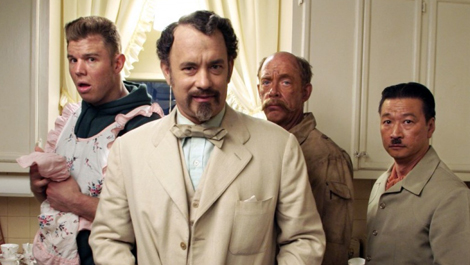
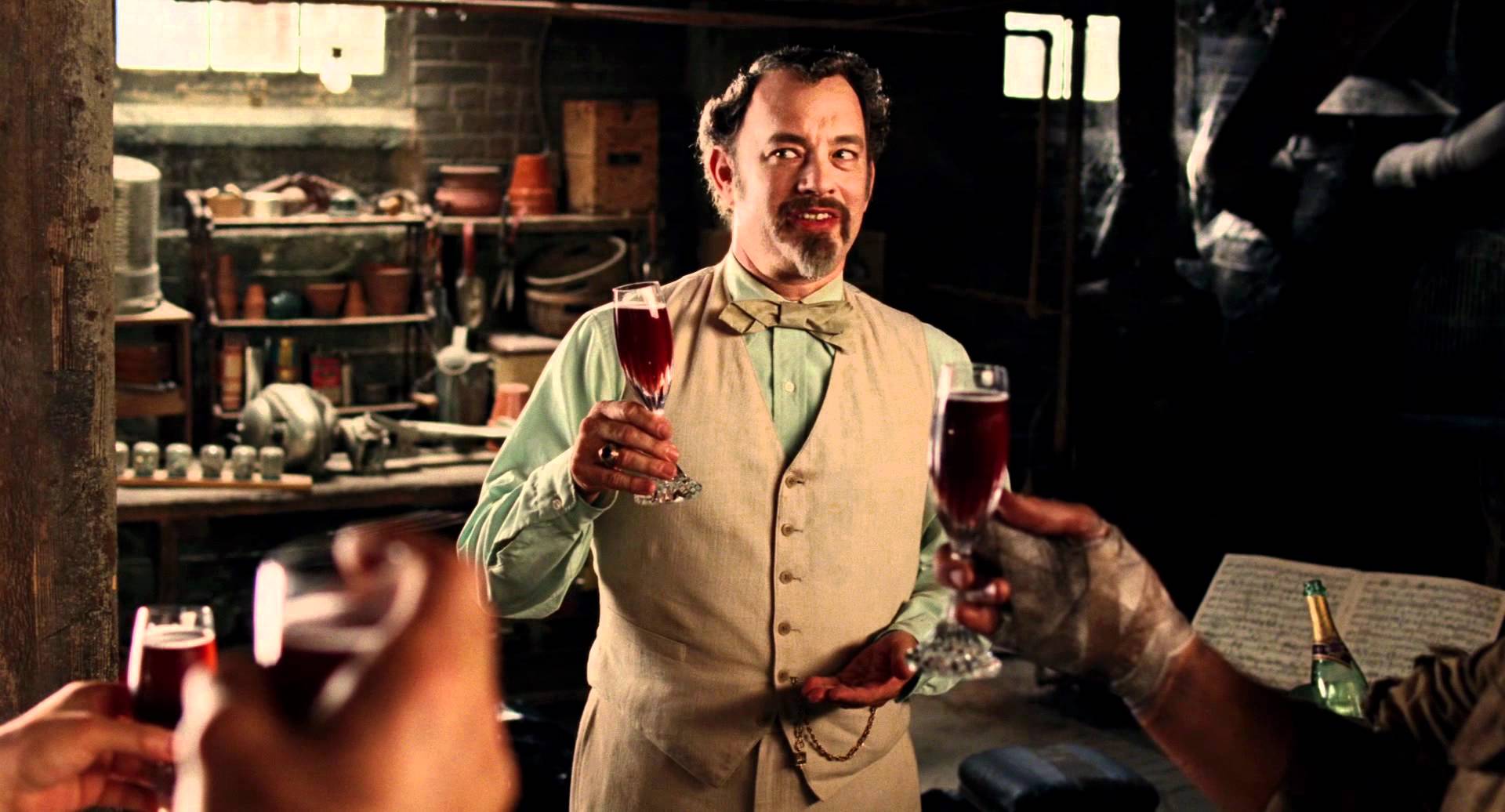
ladykillers2Looking at “The Ladykillers” on its own merits, it is definitely a strange, dark comedy with highly exaggerated characters. The criticism that the characters are too unrealistic and quirky isn’t exactly wrong, but I think that they all fit the generally off-kilter ambiance of the film perfectly. In any case, I don’t think that the way the characters behave or interact is an error on the part of the Coens: I think that “The Ladykillers” is exactly the movie that they intended to make. It may not be in accordance with the tastes of general audiences, but since when has that ever stopped the Coens from making whatever movie they felt like making?

“The Ladykillers” may very well be the weakest of the Coen brothers filmography, but I would say that it is far from being a bad film overall. The negative critical reception at the time was, in my opinion, unfair. I believe that both the acclaim of the Coens, the popularity of the source material, and the fatigue of the critics after the “a-Coen-esque” “Intolerable Cruelty” set this movie up to fail from the start, as the Coen’s vision of the film was never in accordance with what audiences and critics wanted or expected from them. One of my favorite negative criticisms of “The Ladykillers” listed on Rotten Tomatoes unintentionally illuminates this point:

“Increasingly, the Coens seem more intent on amusing themselves than the audience.”

Y’know what? There is nothing at all wrong with that. I think that same attitude has produced a number of more recent Coen movies, such as “Burn After Reading” and “A Simple Man.” Particularly, “A Simple Man” is not a film that ever had a chance at a wide draw, but they made it anyway. If the Coens started making movies just to amuse an audience, then they wouldn’t have the integrity and acclaim that they have today as artists in the film world. At the time of “The Ladykillers,” I don’t think audiences or critics were ready for the free-wheeling Coens that we have now. Hell, there were a good number of critics that greatly disliked “The Big Lebowski” at the time, and that film looks damn near mainstream compared with the sort of movies they have put out since then.

ladykillers3On the flip side, the negative reaction to “The Ladykillers” almost certainly directly led to one massive positive: “No Country For Old Men.” Functioning as the opposite end of the pendulum swing to “The Ladykillers,” the Coen’s follow-up was exactly the dark, brooding spectacle that people were craving from them, and the brothers reaped their rewards for it. Perhaps the Coens would have done “No Country” regardless of how “The Ladykillers” was received, but I’m willing to bet that having “The Ladykillers” blow up in their face gave them a little more incentive to give the people what they wanted, for better or worse.

The Langoliers

The Langoliers
langoliers3

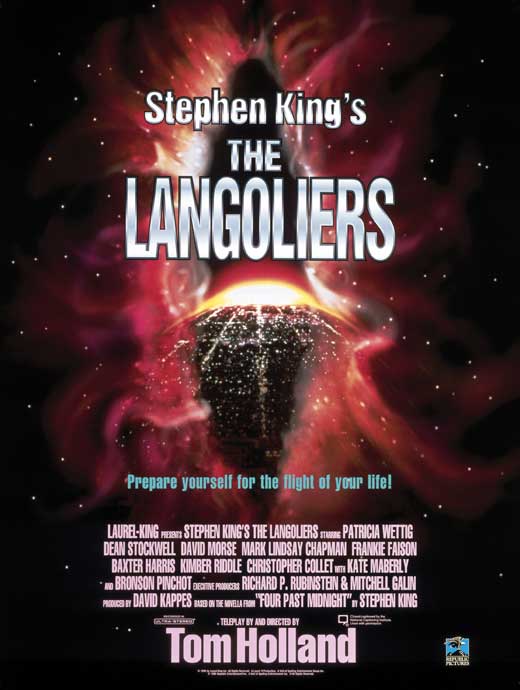
“The Langoliers” is a 1995 ABC miniseries adapted from a Stephen King novella of the same name (it came from the same collection that later produced the Johnny Depp movie “Secret Window”).  I think most people have forgotten about it (for good reason, I might add), but I definitely remember watching this on TV when I was a kid. Specifically, I remember the hilariously terrible eponymous ‘langoliers,’ that look something like evil mollusks crossed with a chainsaw.

langoliers1Apart from the langoliers themselves, the series is chock full of other crappy CG effects, and they have all aged about as well as an open bowl of shrimp. For instance, the plot involves a rift in space-time, which an airplane accidentally flies through. Here’s what that looks like:

langoliers2Not so great, huh? For even more CG fun, here is the climax of the film set to “Guile’s Theme” from “Street Fighter.” Just look at those giant Pac-Man raisins go!

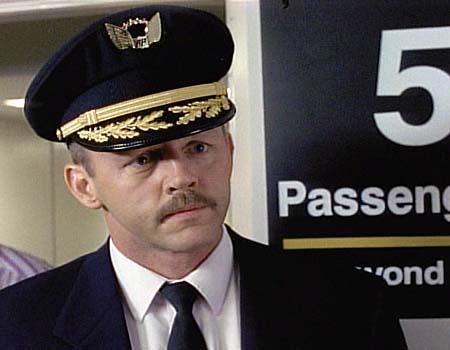
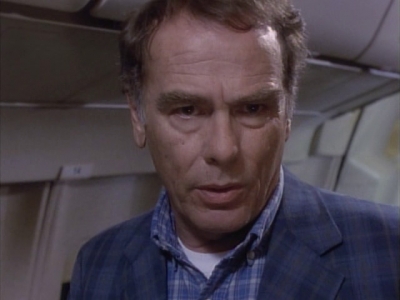
Aside from the awful CG throughout, the next most memorable aspect of the series are the performances. There are a handful of decent actors featured, such as Dean Stockwell and David Morse, but they all wind up looking pretty abysmal in this thing. Stockwell in particular winds up playing a heavy-handed Sherlock Holmes analogue, which is surprisingly one of the less distractingly awful performances in “The Langoliers.” Morse, who I guess is supposed to be the lead, plays one of the most generic characters I have ever seen on screen. Conveniently for the story though, he also happens to be a pilot! Of course, if he were anything else, everyone would have just died before the end of the first act, and the movie/series wouldn’t be 3 hours long.

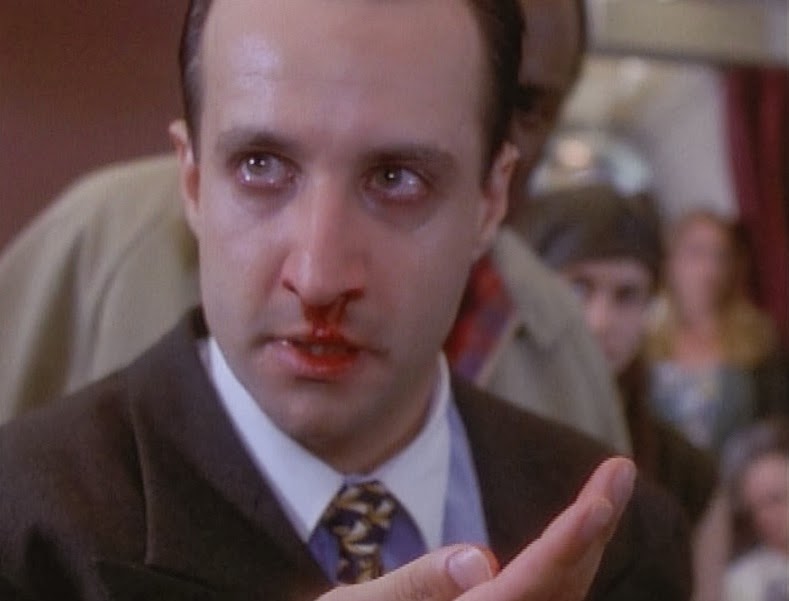
langoliers7langoliers6Chewing the scenery with arguably more gusto than the langoliers themselves is Bronson Pinchot, who plays the increasingly unhinged character of Craig Toomy: a stock broker of some sort who is in the midst of a breakdown as the story begins. His performance is, to say the least, memorable.  Here’s a clip of Toomey hallucinating an argument with his father. Honestly, it is on the level of “amazingly awful”:

On the other end of the acting spectrum is Kate Maberly, who plays a young blind girl with inexplicable psychic powers named Dinah. Her performance is, in a word, bad. You can check out a little bit of it in the trailer, though it hardly scratches the surface of how terrible her line reads are:

Rounding out the cast are a few more notables: Frankie Faison, who would later play Commissioner Ervin Burrell in “The Wire”, Patricia Wettig, who has does extensive acting work on television, and Mark Lindsay Chapman, who most would probably only recognize as the Chief Officer from “Titanic.” While Wettig gets her fair share of ridiculous lines in the third act (“Are we the new people?!?”), Chapman definitely steals the show for most of the movie. Essentially, Chapman plays a grittier version of James Bond: a rough around the edges assassin and hit man with some sort of connection to the British government. As with Stockwell’s Holmes-ian character and Morse’s pilot, it is ridiculously handy to the story that a super-agent with field training winds up in the crew of survivors, particularly once Toomey finally snaps.

langoliers5
I mean, he looks so harmless though?

The entire reason I went back to watch “The Langoliers” in the first place was because I noticed a handful of similarities while watching the recent Nicolas Cage “Left Behind” film. Particularly, both stories involve people inexplicably disappearing from aircraft, leaving personal possessions behind. Here is a clip from the earlier Kirk Cameron adaptation, which I think shows a lot of the similarities:

It turns out that the first “Left Behind” novel came out in 1995, 5 years after King published “The Langoliers,” and the same year that “The Langoliers” miniseries aired on ABC. It turns out that I’m not the only one to notice the similarity: you’ll find comments all over the internet pointing out the parallels. I’m sure it is only a coincidence, but it sure is a fun one: that makes 3 awful movies with almost the exact same premise!

The director and screen-writer of “The Langoliers” is Tom Holland, who is almost certainly best known for writing and directing “Fright Night” and “Child’s Play.” However, he has pretty much fallen off the map in recent years. I imagine this has a little bit to do with his abysmal follow-up to “The Langoliers”: another Stephen King adaptation called “Thinner.” I recently watched that as well, and it makes “The Langoliers” look like “Touch of Evil.”

Due to the mixed bag of underacting, overacting, and hilariously bad CG effects, I think there is a lot of entertainment value to be had from “The Langoliers.” I particularly enjoyed the handful of instances where the actors have to stare out of plane windows and react to the langoliers, which they obviously can’t see. That’s just the sort of thing that can set me a-giggling.

The series / movie (the DVD cut just sort of merges them) is definitely too long at 3 hours, but I didn’t think it was impossible to sit through. All the same, I think a super-cut of the highlights gets the entertainment across without wasting a significant portion of your day. The Nostalgia Critic pulls together a good number of clips for his review of the series, so I can recommend checking that out for anyone curious:


The Brothers Grimm

Clerk’s Pick

Clerk:
Hannah, Video Central (Columbus, OH)

videoc

Movie:
The Brothers Grimm
grimm2

Pitch:
“It almost has a USA series sort of concept. They are the brothers Grimm, but they are con artists. I love the little references to the Grimm tales, and it is just a generally fun movie. Also, it is beautiful, being a Terry Gilliam movie. Critics really didn’t care for it, but I think it is pretty fun, and I enjoyed it when I watched it again recently.”

Background:

“The Brothers Grimm” seems like a winning combination from the start: the Grimm tales are some of the most beloved, dark fairy tales of all time, and here they are put into the hands of one of the most visionary and imaginative directors out there in Terry Gilliam, who specifically specializes in the bleak and strange (“12 Monkeys,” “Brazil”).

grimm1The writer of “Brothers Grimm” is credited as Ehren Kruger, who is probably best known for his involvement in writing a number of the “Transformers” films. He has a number of other credits to his name that predate “Grimm,” such as the Ben Affleck flick “Reindeer Games” and the much-maligned third “Scream” movie. His only particularly well-liked work seems to be “The Ring,” for which he wrote the adapted English screenplay. Interestingly, the writing credit on “Grimm” was the subject of much controversy: Terry Gilliam and Tony Grisoni (“Fear and Loathing in Las Vegas”) apparently extensively re-wrote Kruger’s script, but were denied writing credits by the Writers Guild of America.

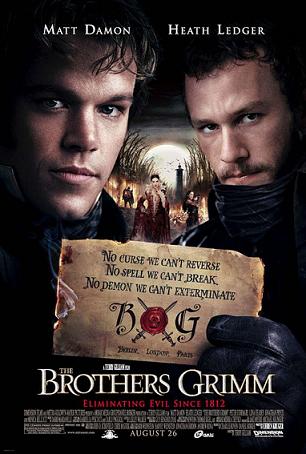
The cast of “Grimm” features the late Heath Ledger and Matt Damon as the eponymous Brothers. Outside of them, the cast features Gilliam favorite Jonathan Pryce (“Brazil”), the now-acclaimed Lena Headey (“Game of Thrones”), Peter Stormare (“Fargo”), Monica Bellucci (“Irreversible”), Mackenzie Crook (“Pirates of the Caribbean”), and character actor Roger Ashton-Griffiths. Interestingly enough, Headey, Pryce, Crook, and Ashton-Griffiths have all appeared in recent seasons of “Game of Thrones” in an assortment of roles.

grimm3Interestingly, it is reported that Gilliam wanted Johnny Depp for Damon’s role, but Bob Weinstein dissented, claiming that Depp was not commercial enough. Of course, Depp’s “Pirates of the Caribbean” released during the production (2003), changing his status overnight. Stormare’s role was apparently given to Robin Williams initially, but he dropped out before filming.

grimm6Among the producing credits on “The Brothers Grimm” are the notorious Weinstein brothers, Harvey and Bob. This movie released just as the brothers were fleeing Disney (and their original company of Mirimax) in 2005, for the greener pastures of their new incarnation, The Weinstein Company. Technically, “Grimm” released under Bob Weinstein’s Dimension Films label (in cooperation with MGM and Summit due to the budget), though it could be considered one of the first productions of The Weinstein Company.

Unsurprisingly, the Weinsteins clashed significantly with Gilliam over the course of the film’s production. In a 2009 interview, Gilliam had some choice words about the brothers and the ultimate product that is “The Brothers Grimm”:

“…they’re interesting producers, but they are people who are good at those jobs and not at directing movies. And yet they want to be filmmakers. They interfered more than I’ve ever been interfered with before.”

“it’s not the film they wanted and it’s not quite the film I wanted. It’s the film that is a result of two people, or two groups of people, who aren’t working well together.”

As Hannah mentioned, “The Brothers Grimm” was not well-received on release. It currently holds a critic score of 38% and an audience score of 39% on Rotten Tomatoes, a rare case of agreement between the two barometers. However, the IMDb user score is notably higher at a 5.9, which may indicate that the movie has been looked back on more fondly in recent years (though not dramatically). It did manage to make some money on a high budget of an estimated $88 million, but not much. It is really something when a movie can break $100 million total in ticket sales and not make an impressive gross.

Review:

The best aspect of “The Brothers Grimm” is almost unarguably the effects. They are a little dated a decade down the line (the werewolf transformations, particularly), but not excessively so. Visually, the film is really solid all around, with an interesting mix of CG and practical effects. There is also some masterful use of lighting (particularly in a couple of the Mirror Queen sequences), which is to be expected from Terry Gilliam.

You can tell that there are the makings of a good Gilliam movie here, but that it just couldn’t come to fruition. I’m sure Gilliam would blame the Weinsteins’ constrictions for that, but I think that Gilliam’s vision was just too big for the realistic budget: the film almost didn’t get released at all due to the skyrocketing budget of the flick. Of course, the writing wasn’t exactly stellar either, which didn’t give the movie much of a foundation to work with.

The script is pretty shoddy on the dialogue front, to the point that the actors can’t really salvage it. They are still pretty charming and do what they can with the material, but it just isn’t very good. The constant nods to the Grimm Fairy Tales are to be expected, but they come a little too often and a little too blatantly for my taste. It isn’t as bad as “League of Extraordinary Gentlemen” or “Van Helsing” by a longshot though, which some have (I think unfairly) drawn parallels to. Probably worst of all though is the fact that the plot just isn’t very interesting or engaging. I loved the initial concept, but the plot’s inane complexities really took me out of it by the third act. I just couldn’t stay invested in the labyrinthine details as the story progressed.

grimm5There is another pretty big problem with this film, and I think it is one that significantly impacted the behind the scenes tensions: this movie is just too long for what it is. I know that one of the fighting points between the Weinsteins and Gilliam was over  the director’s right to final cut (final say on the editing of the movie), and I’m willing to bet the Weinsteins wanted him to tighten it up against his wishes. And you know what? They were right in this case. One of Gilliam’s greatest weaknesses is pacing, and a number of his more recent movies have been criticized for this problem. I don’t think it is as bad here as it has been in some other films of his, but the 2 hours of run-time here feels as long as a Peter Jackson Tolkien adaptation, and it isn’t nearly entertaining enough to justify it.

Recommendation:

Unless you are a die hard fan of the Grimm Fairy Tales, or are a Terry Gilliam completest, I think “The Brothers Grimm” is pretty skippable. It has some good moments, and I don’t think it is as bad as the critics treated it on release, but I found it to be a mediocre film overall. Gilliam is capable of a whole lot better, and it is hard to divorce the ultimate product of this movie from the incredible potential it had.