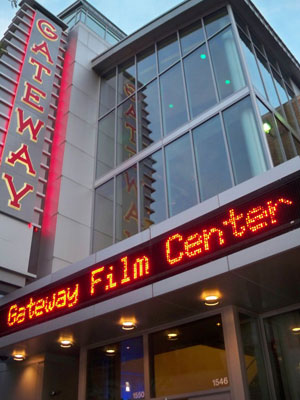
I recently found out that the good folks over at Columbus, OH’s Gateway Film Center do an annual 24 hour marathon of “Groundhog Day” ahead of that most marmot-friendly of holidays. As an incentive to take on the challenge, they offer free movie tickets for a year to anyone daring enough to sit through 12 consecutive showings of the Bill Murray classic.
So, of course, I’m going to be giving it a shot. This Sunday, I’m going to be holed up in the Gateway Film Center for just over 24 hours with a bunch of other film nuts, and I’m going to make it all the way through this meta-Sisyphean experience. Laptops are unfortunately banned from the theater, or else I would definitely liveblog it. In any case, we will get 15 minutes between screening, so I’ll be sure to take notes on all of the little details in the movie that are sure to surface after repeated viewings, as well as on my general mental state following each viewing. Here’s to making it through to the other side!
Be sure to check back next week to see how the marathon went, and if I managed to prove my cinematic endurance.
Half Price Books is a significantly-sized chain of physical media buy/sell/trades, located primarily throughout the Midwest and Texas. I had never been to one until I moved to Ohio, but they have quickly become go-to spots for my DVD hunting here.
Though their selection is primarily books, all of the locations I have been to have also had significant stocks of DVDs, and every visit has yielded something interesting.
In keeping with the name, the prices are pretty great: I’ve rarely spent over $5 on any one DVD (usually in the $2 – $3 range). Additionally, I’ve found a lot of movies I haven’t found anywhere else before: everything from Lucio Fulci movies to shitty Saturn Productions kung fu flicks to a special edition of the razzie-nominated “Supergirl.”
This time around, I wound up with a handful of interesting / cheap finds. First up:
This isn’t the sort of thing that I would normally pick up. In fact, I left a couple of Mario Bros. animated show DVDs on the shelf the last time I was in the store. However, I actually remember watching bits of this show way back when I was a kid, and I figured the nostalgia of blasting through these would be worth a couple of bucks.
I don’t actually remember if this was any good as a cartoon or not. I seem to recall some later incarnations, but I don’t recall if they were better or worse than this original one. Aren’t chili dogs involved somehow?
“Slither” is almost the perfect median between the James Gunn who created “Guardians of the Galaxy” and the James Gunn who interned with Troma and wrote “Tromeo and Juliet” for peanuts. You can tell that he has some real skill here, but “Slither” still has a lot of those Troma-tic, cheesy body horror roots. Nathan Fillion and Michael Rooker are both really awesome in this thing, and it still stands as maybe my favorite James Gunn movie so far. Somehow, I had never picked a copy of this up: $3 is a good enough price for me.
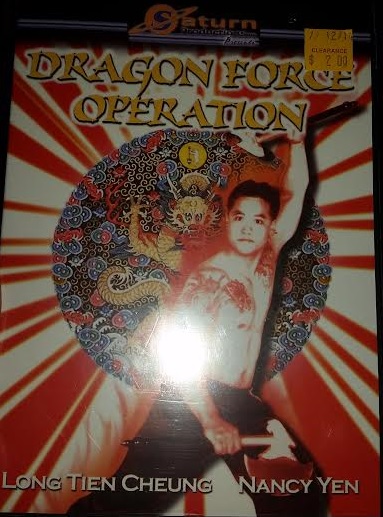
Oh boy, it is another Saturn Production DVD! These are almost always horrible kung-fu movies, and I suspect this one won’t be an exception. It has ratings from a whopping 12 users on IMDb, so I am guessing this isn’t exactly a well-known feature. Here’s hoping there is some entertainment value to be had from this one: the last Saturn Production I watched was Godfrey Ho’s “Dragon Against Vampire,” which was (to the shock of no one) fucking atrocious and complete nonsense.
I am a little disappointed that the synopsis of “Dragon Force Operation” doesn’t feature martial arts trained surgeons, but I am not giving up hope yet.
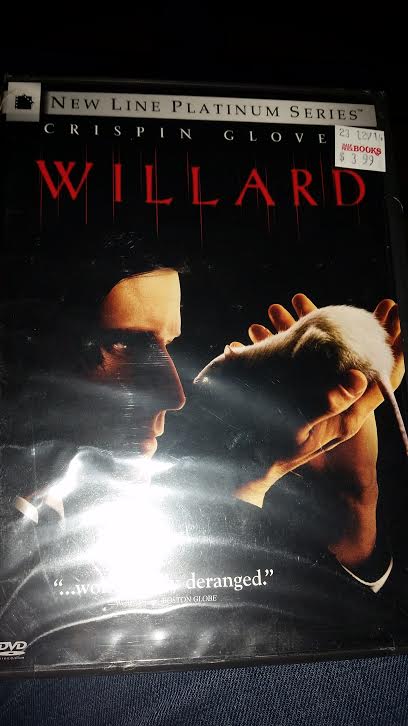
I’ve actually been looking for a copy of this for a while. The original “Willard” is one of those films that I have always heard of, but never seen. I recently caught a trailer for it before a Fritz the Nite Owl screening, and it reignited my interest in digging up a copy. I had actually completely forgotten about this2003 remake until one of the Video Central clerks mentioned it. I think Crispin Glover is a pretty impressive and intense actor who has the ability to shine in otherwise poor movies, so I’m looking forward to checking this one out. The original is on YouTube, but I’m keeping my eyes open for a physical copy of it as well.
This one initially caught my eye because it looks, at first glance, to be a typical low-budget sci-fi flick. However, after reading the blurb, it is looking like it has real potential for a (God)Awful Movies review: it is apparently about a time-traveling Bible professor from 1890 who is shocked by the secularization that he sees the present day (and, y’know, just kids these days in general).
After doing a little research, it turns out that this movie only has at most two degrees of separation from the abysmal “Escape From Hell,” which has me super-excited to check it out on top of everything else. Also, the director’s most recent film is a rip-off of “God’s Not Dead.” Again: this guy made a worse version of “God’s Not Dead.”
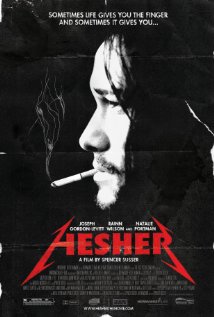
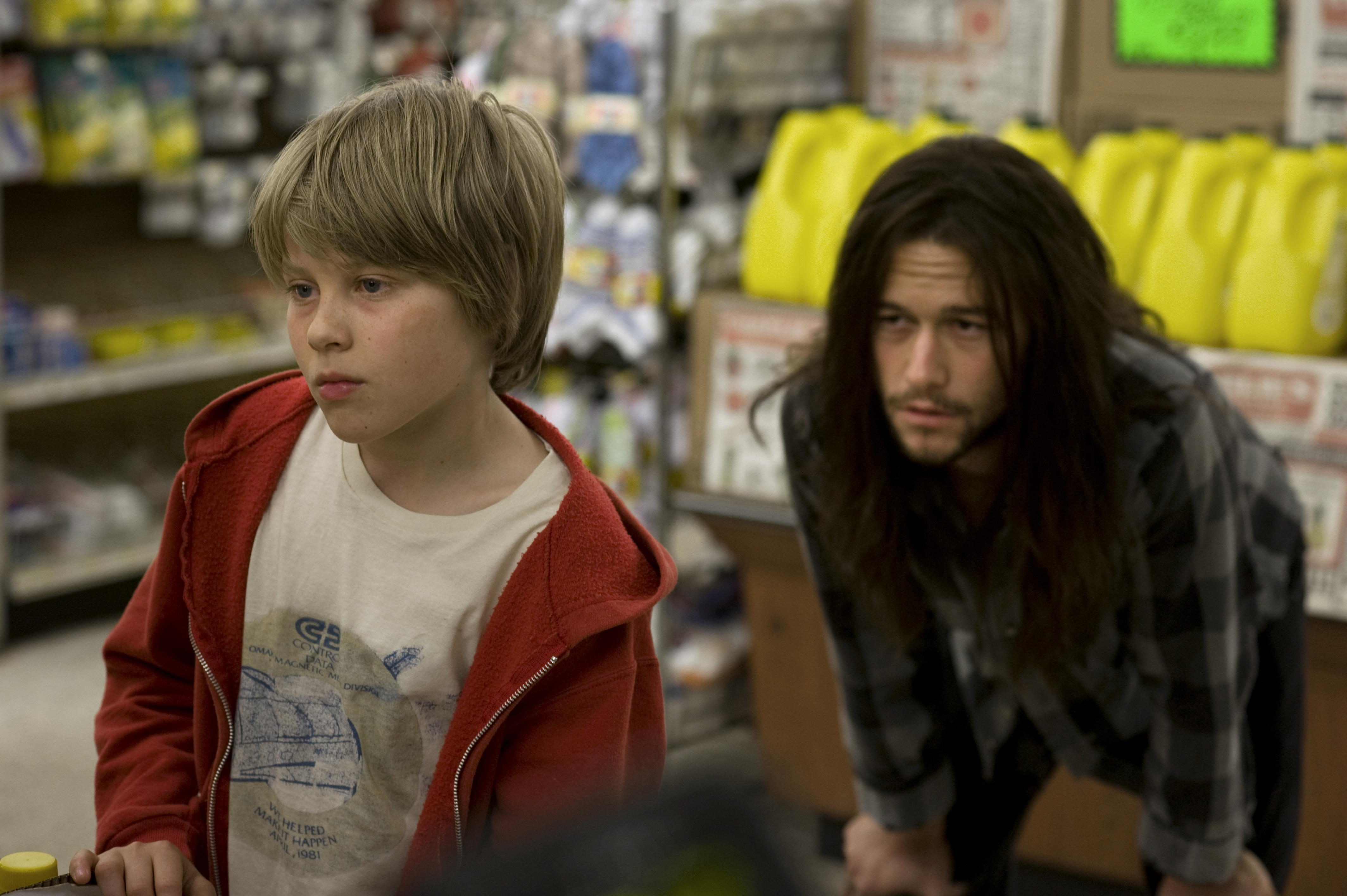
Pitch: “It is like ‘Metalocalypse’ meets ‘Mary Poppins.’ It is probably my favorite Joseph Gordon-Levitt role: he plays a stoner asshole, but he manages to help the other characters get over the loss of their wife/mother.”
Background:
Spencer Susser, co-writer, editor, and director of “Hesher,” doesn’t have a whole lot of credits to his name to delve into. For the most part, he has only created a handful of short films over the years since 1999, perhaps most notably the mockumentary “R2-D2: Beneath the Dome.” “Hesher” remains his only full-length feature, and his only notable work recently is directing a 2014 episode of the Netflix series “Hemlock Grove.”
The writing team behind “Hesher,” outside of Susser, consists of writer/director David Michod (who has gained acclaim for his recent films “Animal Kingdom” and “The Rover”) and a guy named Brian Charles Frank, who at the time had no other credits. However, Frank more recently wrote a television show called “Wolfpack of Reseda” for Fox Digital Studios, but doesn’t appear to have anything else in the pipeline.
The cast of “Hesher” not only includes Joseph Gordon-Levitt in the title role, but also a handful of Hollywood regulars, including Rainn Wilson and Natalie Portman. The movie technically centers on a child character, meaning that there is a lot of pressure put on the lead child actor in Devin Brochu, who has been in movies like “Rubber” and “In the Valley of Elah.” The rest of the cast includes the much-lauded Piper Laurie (“Carrie,” “Twin Peaks,” “The Hustler”), character actor John Carroll Lynch, and another child actor in Brendan Hill.
Although “Hesher” was nominated for the Grand Jury Prize at the 2010 Sundance Film Festival, it didn’t get much love from critics in general. It has a Rotten Tomatoes score of 54%, with an average rating of 5.7. Audiences seem to appreciate the film a bit more, as it holds an IMDb rating of 7.1 and a Rotten Tomatoes audience score of 61%. Still, those aren’t exactly stellar numbers.
The character of Hesher is reportedly based on Metallica bassist Cliff Burton: a long-haired, hard-partying musician who was killed in a bus crash in 1986. Appropriately, the soundtrack of “Hesher” includes a number of Metallica tracks that feature Burton.
Review:
Much like another movie I recently reviewed, “House of Yes,” “Hesher” is fairly dependent on one character. Unsurprisingly, that character is Joseph Gordon-Levitt’s title role of “Hesher.” Almost everything that happens in the film is somehow catalyzed by Hesher, or is done in reaction to him. However, he is interestingly not the main character: he is just a roving force of destruction that creates the plot in his wake. It probably goes without saying, but JGL is thoroughly impressive in the role.
The actual lead of the film is portrayed by Devin Brochu, whose character is a young child trying to deal with the recent death of his mother and family’s financial hardships (not to mention an obnoxious school bully). For a child performance, it is beyond impressive. It is always a gamble to put a kid in the dramatic center of a serious movie, but in this case it certainly paid off. I hope Brochu sticks around in film, I’m looking forward to seeing him in more things in the future.
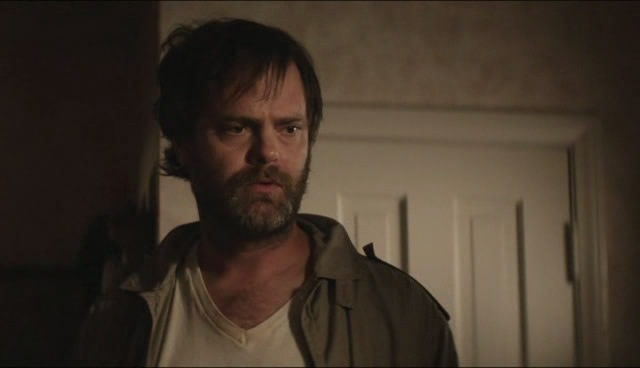
Brochu’s father is played by Rainn Wilson, who is maybe the most under-appreciated dark comedy actor out there today. Though he is best known for his role from the American adaptation of “The Office,” Wilson has been brilliant in movies like James Gunn’s “Super,” and has just recently started a leading role in the dark comedy cop show “Backstrom.” In “Hesher,” his character is a straight foil for JGL, but the intensity and sorrow that Wilson brings to the role is incredibly humanizing for a character that could easily have been dull and forgettable.
In general, this is a film that is powered by performances. The only real weak spot I noted was Natalie Portman, who doesn’t really have a whole lot to do in the movie: her character doesn’t get the same kind of screen time or opportunities as most of the others, making her more or less just a distant satellite in the story.
Spencer Susser earned a commendation for “Best First Time Director” at the Philadelphia Film Festival for “Hesher,” and I think it is definitely well-merited. The way the film is shot plays a solid role in how the drama plays out, and a number of moments are particularly impressive at building tension. I also really like how the film is lit: the only time anything is brightly lit or colored is during a flashback sequence, which not only makes it stand out, but also emphasizes the dark ambiance of the movie in general. It is subtle enough that you don’t particularly notice it, which basically means it is done well.
I can recommend this one pretty heartily. The performances and direction are really solid, and I definitely don’t see eye-to-eye with the critical detractors on this one. A number of the complaints I saw cited issues with the narrative flow and with the general vulgarity of the movie, and more specifically with the lack of likeability in the character of Hesher. While the plot is slow, I don’t see how the vulgarity or unlikeability of Hesher is a weakness to the film: it is kind of essential to it. “Hesher” is a quirky indie movie to be sure, and it is definitely rough around the edges, but there is enough good going on in this movie to forgive some of the indie stereotypes it holds to. It is by no means a great movie, but it is definitely in the realm of “good.”
Pitch:
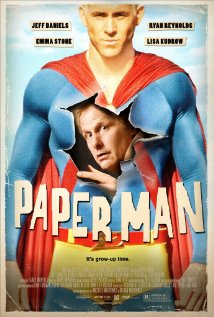
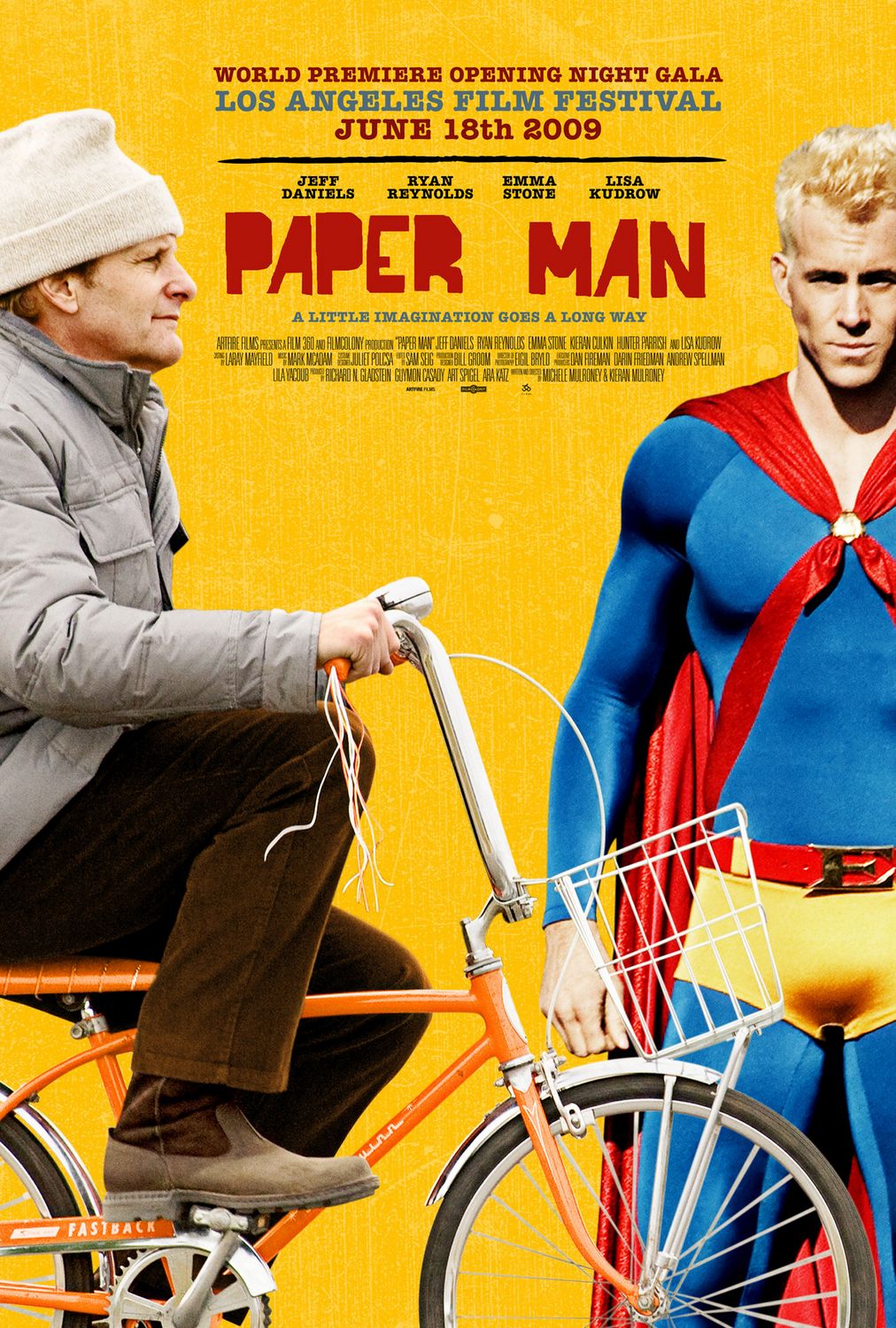
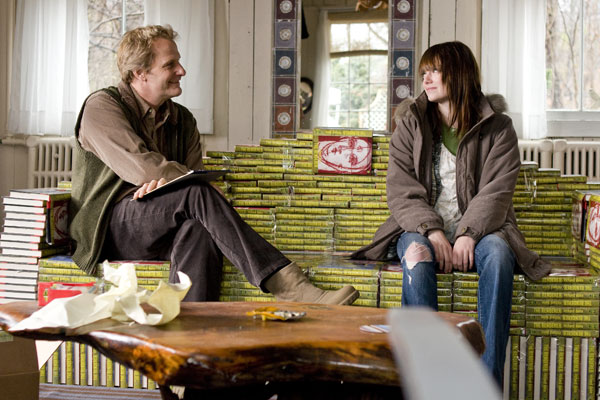
“It is a coming of age story, where Ryan Reynolds plays Jeff Daniels’s imaginary friend from childhood, who is still sticking around as an adult. I wind up recommending it to a lot of people who like Emma Stone, as this was one of her first really big roles.”
Background:
“Paper Man” is the creation of a co-writer, co-director team of spouses Kieran and Michele Mulroney. This is the only film that either of them has directed, and their writing credits are also pretty limited: Guy Ritchie’s 2011 “Sherlock Holmes: A Game of Shadows” is the only other major feature attributed to them. However, Kieran has a good number of bit acting roles here and there. Notably, he is also the brother of the more prolific actor, Dermot Mulroney (“Zodiac,” “August: Osage County”).
“Paper Man” features an interesting cast, including Jeff Daniels (still a couple of years off from his resurgence on “The Newsroom”) and Ryan Reynolds, who was coming off of his role as Wade Wilson in the high budget action flick “X-Men Origins: Wolverine” (a character he is set to reprise in 2016’s “Deadpool”). As Max mentioned, it also features Emma Stone before she really hit the map. Probably my favorite surprise in the cast, however, is Kieran Culkin, who is well known for his roles in “Igby Goes Down” and “Scott Pilgrim vs. The World,” but doesn’t do a whole lot of acting. He also featured in the first two “Home Alone” movies with his brother Macaulay, not that he is particularly recognizable from those.
“Paper Man” was not well relieved by critics or audiences at the time: the film currently holds a 31% score on Rotten Tomatoes, with an average score of 4.7 from critics and 3.2 from audiences. However, for whatever reason, it has a much higher score with the IMDb users, where it currently has a 6.7.
The crew of “Paper Man” includes editor Sam Seig, who has worked on films such as “Minority Report,” “Munich,” and “Catch Me If You Can,” and cinematographer Eigil Bryld, who has worked on the film “In Bruges” and the acclaimed American adaptation of “House of Cards.”
Review:
I’ve always liked Ryan Reynolds’s comedic roles, even though he hasn’t necessarily picked them well. In “Paper Man,” he is really the comedic force: Jeff Daniels isn’t absent, but he mostly reacts to other characters, and awkwardly stumbles around the film. Reynolds is a great sort of interior monologue / hallucination for Daniels’s character, and definitely illustrates his self-loathing through the dialogue. Without Reynolds’s comedic timing and superhero good looks, the movie probably wouldn’t work so well.
On another front, Emma Stone really proves herself as a dramatic actor in “Paper Man,” and I can see what she started getting better roles after this. Her character has a lot of dramatic weight to haul around in the film, and she definitely makes it work.
The film has a really interesting premise (a writer with an imaginary friend), but it doesn’t quite work here. A number of the characters are just quirky enough to be beyond belief, but not enough to be outlandishly entertaining on their own. Also, Daniels and Culkin often just come off as…creepy. These are both actors I like, but something about the way they are written is at times off-putting and uncomfortable, and I definitely don’t feel any sort of connection to them (which I assume was intended). Culkin’s character and behavior starts to make a lot more sense as the movie goes on, at least. Again, Reynolds is great comedically and Stone is fantastic dramatically, but the rest of the world around them just isn’t quite up to par. The film also seems to drag on longer than it particularly needs to, but that might just be because there isn’t a whole lot interesting going on (particularly whenever there is an extended on-screen absence of Ryan Reynolds). However, when either Daniels/Reynolds or Daniels/Stone are on screen together, everything clicks into place fantastically either dramatically or comedically, depending on the combo. It is kind of a shame that the rest of the film fails to live up to their respective chemistry.
When it comes down to it, this is a film I can certainly recommend to people who are fond of quirky indie comedies. It isn’t great, but if that is your cup of tea, it is probably worth a watch. Outside of that, I can recommend this to people who are either curious to see a more obscure Emma Stone role, or to anyone who is just dying to see Ryan Reynolds in spandex outside of “Deadpool” or “Green Lantern.” I wish it held together better, but the product as it exists isn’t bad. I think critics were mostly just over-saturated on quirky indie comedies at the time, and were perhaps a bit too harsh on it as a result.
It is about time I got back to (God)Awful Movies, the segment of the blog dedicated to the worst of religious cinema.
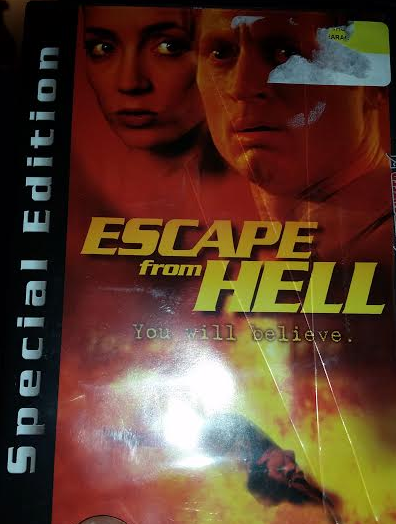
Today’s feature, “Escape From Hell,” is one that I have come across a couple of times in bargain bins in the deep south. I’m not sure how far it actually got distributed, but I’ve certainly never seen it outside of Alabama or Georgia. Here’s what my copy looks like:
I’m sure glad to know that I got the special edition! Hopefully that means there is some CGI Jabba the Hutt to enjoy.
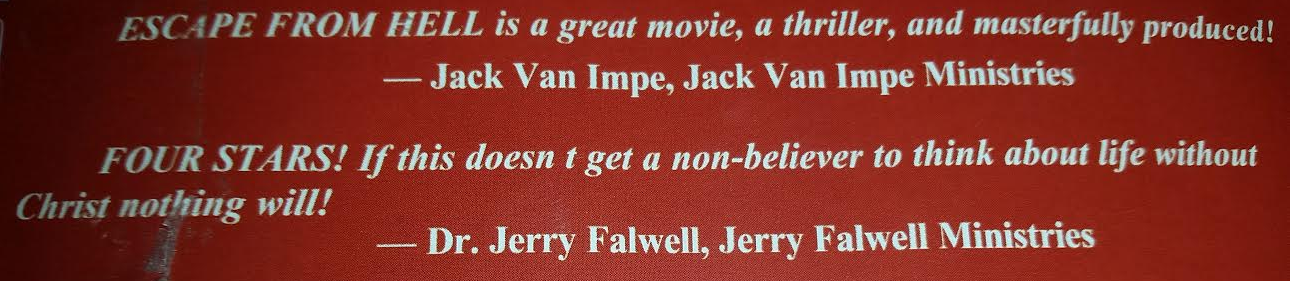
The reason that I initially picked this up, apart from the title and the cover art, is because of the amazing blurbs on the back of this box. Here are a couple of them, including two from noted film critics Jerry Falwell and televangelist Jack Van Impe:
Well, I’m sold. I can’t wait to see if this film makes me think about my “life without Christ.”
Out of curiosity, I decided to dig around to see if there is a trailer out there for this thing. I ultimately dug one up, but, to my joy, I found something even better as well: a clip collection, courtesy of the fantastic folks over at Everything is Terrible!
Now I am definitely psyched. Here is the trailer I dug up as well, in case you happen to be curious:
Director Danny Carrales and writer Michael Martin have apparently worked together on a number of Christian features outside of “Escape to Hell,” including films called “The Gathering” and “Second Glance.” Star Daniel Kruse pops up in “The Gathering,” as well as another movie that Carrales and Martin worked on called “Pilgrim’s Promise.” One of the other actors in “Escape to Hell,” Terry Jernigan, has managed to appear in an assortment of bit film roles over the years, but my favorite credit of his is on an upcoming movie called “Sasquatch vs. Yeti.” You can bet that I am looking that one up.
I think that the biggest red flag for me when sifting through the IMDb entry far “Escape to Hell” was finding someone credited as “2D/3D animation and effects / special effects supervisor.” That can’t spell out anything good for this movie. Also, the person with that credit has nothing else current listed to their name outside of another Carrales/Martin feature (“Pilgrim’s Progress”).
My next favorite credit on this movie is one of the producers, Randy Smith, who is apparently a professional boom operator who has worked on an assortment of actually good movies (“12 Monkeys,” “Fear & Loathing in Las Vegas,” “Phone Booth”) and occasionally not-so-good movies (“Thinner,” “The Langoliers”).
Now, let’s see how this thing is. Will it scare me into the arms of Jesus? Will I be forced to reassess all my sinful life choices? Will I be able to even stay awake through this whole thing? Let’s find out!
Review:
Wow, this is really awful. I’m not really sure where to start.
The cinematography is awful in nearly every way you can imagine. Some of the shots are nothing short of nauseating for no reason whatsoever (just people walking down a hallway, for instance). There are so many dutch angles that you will question if your head is even on straight. When the camera is being used half-sensibly, everything feels like an infomercial, or a soap opera at best. Unfortunately, even those moments are few and far between.
The acting is about what you would expect: most of them seem like they are reading directly off of the scripts. In the few cases where that isn’t the case, they either hilariously overact, or sound like they are giving half-rate sermons. Of course, a lot of that blame deserves to be leveled at the writing as well, which is more heavy-handed than a steel gauntlet.
It turns out that my nervousness about that “2D/3D animation and effects / special effects supervisor” was more than justified. There is way more reliance on special effects than there should be in this flick, and they look really bad. I’m pretty sure that they didn’t look good when they were done originally in 2000, and they certainly don’t look good 15 years down the line. I’d bet that they could have pulled off better practical effects with the money they spent on the CG here, and wound up with something way more convincing (the few moments that do involve practical effects in this movie do look passable). That at least would have looked like something realistic, whereas the CG here just looks downright laughable. Moments where characters are cast into hell are supposed to be intimidating and terrifying, but instead they are profoundly hilarious.
Overall, this isn’t a movie worth spending the time to sit through. For the most part, it is just boring dialogue between characters you just can’t give a damn about. I would recommend checking out the “Everything is Terrible” highlights (which has all of the best parts included), and just leaving it alone from there. This isn’t a film that is going to change your life, and it certainly isn’t going to send anyone running to Jesus who wasn’t on his team already.
Pitch:
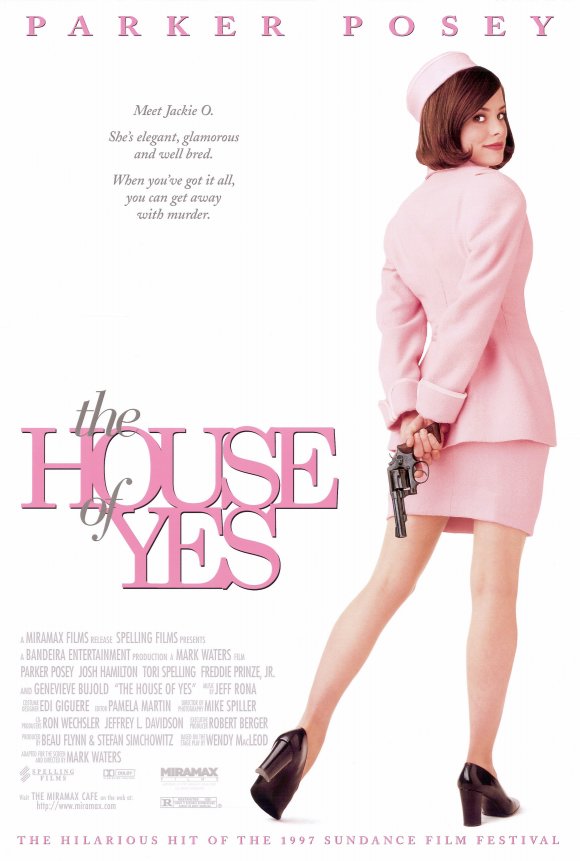
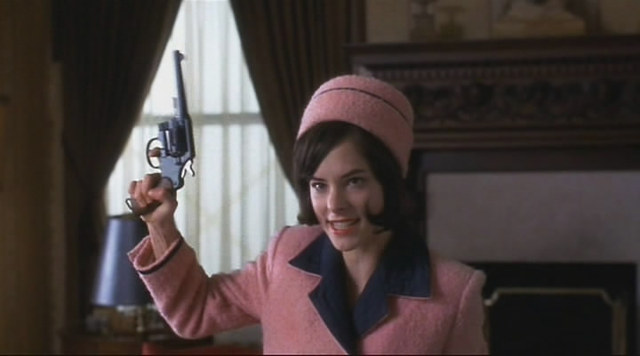
“This is a weird movie. I think it is a Thanksgiving flick? In any case, a family is all reunited for some reason, and it has a sort of dinner setting. One character thinks that she is Jackie-O. It isn’t the focus of the movie though, and it seems realistic in that the family just seems to have dealt with it. In any case, things go very wrong”
Background:
“House of Yes” is an adaptation from an acclaimed play by Wendy MacLeod. Director / screenwriter Mark Waters has had significant success since doing “House of Yes,” though only on the directing side of things: he has been behind the camera on movies like “Mean Girls,” “Freaky Friday,” and “Just Like Heaven,” but has not had a single screenwriting credit since “House of Yes.”
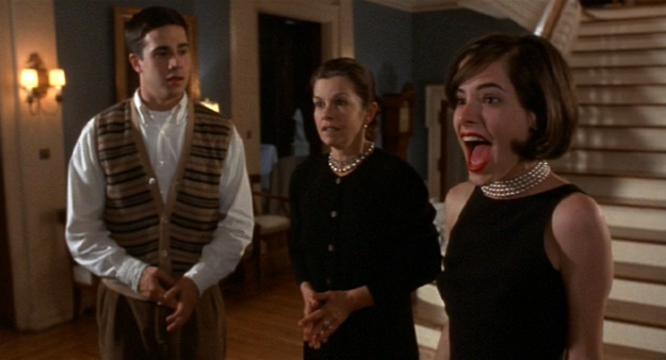
“House of Yes” has a not-insignificant cast, although the jewel in the crown is undoubtedly Parker Posey, who plays the delusional “Jackie-O.” Rachel Leigh Cook interestingly appears in a very early role as the same character in flashbacks. Others in the cast include Freddie Pinze Jr., Tori Spelling, and Josh Hamilton.
Elsewhere in the crew, co-executive producer Scott Silver later co-wrote the Academy Award nominated screenplay for “The Fighter.” Cinematographer Michael Spiller has since done extensive directing in television, earning awards for shows such as “Modern Family” and “The Bernie Mac Show.” Casting director Mary Vernieu has worked on a number of acclaimed movies in recent years, including “Black Swan,” “End of Watch,” “Looper,” and “The Wrestler.”
While “House of Yes” did well at festivals, it ultimately received mixed reviews. Currently, the movie has a 64% on Rotten Tomatoes, a 78% audience score, and a 6.7 IMDb user rating. Parker Posey’s role as Jackie O was well-praised, getting specific recognition at the Sundance Film Festival. However, on the other side of the spectrum, Tori Spelling was nominated for a Golden Raspberry for her role in the movie, specifically for “Worst New Star.”
Review:
You can really feel that this was originally performed on a stage. There is something about the way scenes are set up and about how characters behave that are distinctly stage-like. It isn’t necessarily a bad thing, as much as it is just something that is worth noting. I’m a little curious if this would turn off audiences to the movie, or if it wouldn’t significantly affect their perception of it. I suppose there is a lot more about this particular movie that would put off your average audience that the stage-y atmosphere, but I’ll get to that soon enough.
Parker Posey’s “Jackie O” is undoubtedly the centerpiece of the story, and she fills the role well. Every line she speaks increases the tension of a scene, and she creates a hauntingly realistic unbalanced atmosphere. That said, the next most impressive performance is interestingly Rachel Leigh Cook, who plays the same character in a flashback. This was a couple of years before she hit the spotlight, but she does a great job of doing the same things that Posey does with the character, which don’t exactly come intuitively to young actors (who are, frankly, usually crap).
I’m not usually a big fan of the Golden Raspberry awards, but I can’t really disagree with their decision to nominate Tori Spelling for her role in this movie. She’s the only real weak link in the cast (though Prinze isn’t exactly heavy lifting either), and there is a lot of burden on her shoulders for the film. It still holds together despite her not holding up her end, but it would certainly have been a stronger film overall with someone more competent in the role.
I’m a big fan of well done dark comedies, but I’m not really sure if this classifies for the genre. There’s nothing funny happening at all in the movie, which kind of confuses me. It isn’t necessarily wrong for the movie to not have any humor, but it makes the marketing seem really deceptive. From my perspective, it just strikes me as a strange dramatic film. Whereas something like “It’s A Disaster” creates humor out of bleak situations, “House of Yes” just presents bleak situations. There are no attempts to make light of anything, or to extract humor like blood from a stone. There are just uncomfortable scenarios and peculiar people, and that is all. Again, this isn’t a bad thing: it is still interesting to watch, but it defies the label of comedy if you ask me.
When it comes to a recommendation, I think I could recommend this to anyone who knows what they are getting into, and are OK with that. Otherwise, I think that this would be an unpleasant experience. When you are expecting to get something dark yet lofty, and instead get a heavy plot about murder, incest, and mental illness without a laugh or smirk to be had, you have every right to be a little unhappy with the product. However, as a drama, it is a well-done and tense story with a number of solid performances.
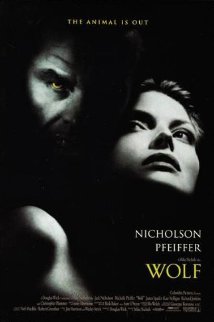
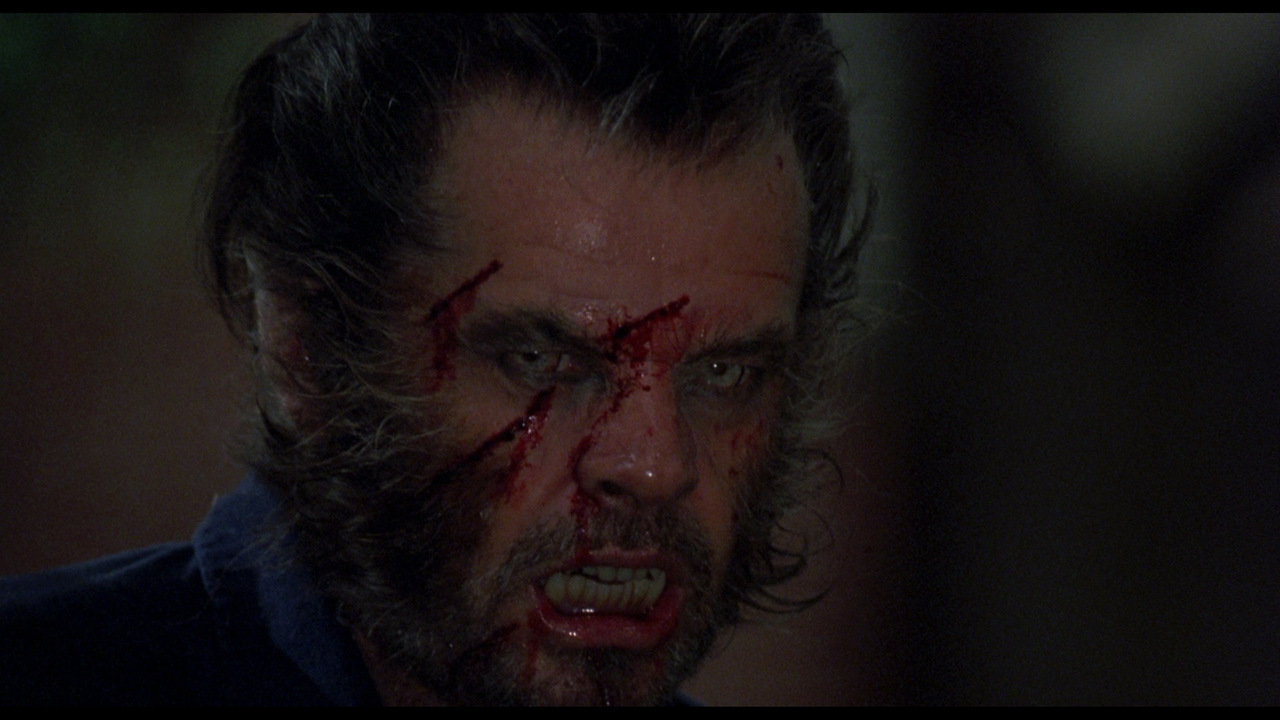
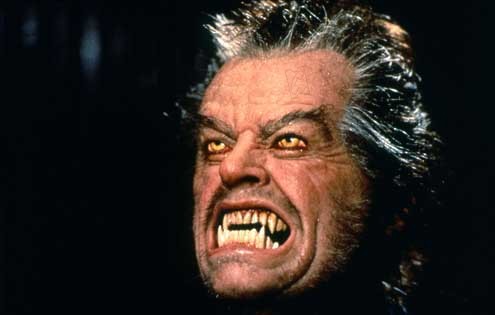
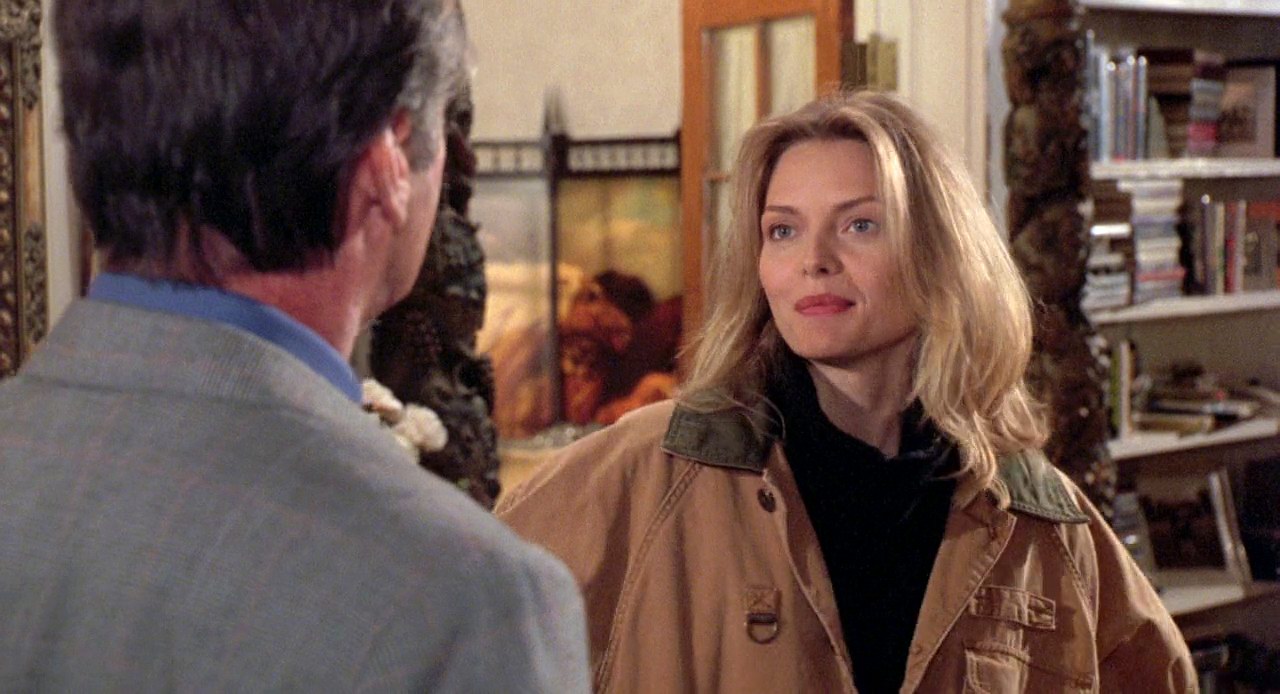
I first heard about 1994’s “Wolf” through the We Hate Movies podcast (it was a little before my time). I am pretty sure that I had seen images and clips from the movie before, specifically of Nicholson in the werewolf makeup, but in general I hadn’t heard anything about this film before I came upon their review. That particular surprised me, because it has a huge cast for 1994: Jack Nicholson, Michelle Pfeiffer, and James Spader were all pretty big names at the time.
The movie did make money (131 million total on a reported budget of 70 million), but I suspect it has faded into obscurity due to much higher expectations than it delivered. Director Mike Nichols and Jack Nicholson had scored in the past with “Carnal Knowledge,” and hopes were that their reuniting would spark magic. Unfortunately, Nichols’s magic from “The Graduate” and “Who’s Afraid of Virginia Woolf?” waned through the 1980s and early 1990s, and “Wolf” proved to be no exception. The critical reaction was mixed, and far from the knockout that was surely anticipated. It certainly didn’t help financially either that the movie opened between the releases of “Speed” and “The Lion King”: both bigger, more successful, and more exciting movies.
Many complaints at the time about “Wolf” centered around the fact that it lacks the traditional action and horror that one would expect, despite a few good Nicholson moments. Some put the blame on the script for lacking energy, whereas other put it on Nichols as the man with the final word on the film. It is generally agreed that it was an experimental and new take on a werewolf movie, but it is a mixed bag among critics and audiences as to whether it worked or not.
It seems that the most memorable scene from “Wolf” is a bathroom sequence shared between Spader and Nicholson, in which Nicholson’s wolf-mad character fires Spader and then pees on his shoes in a display of dominance.
One of the biggest complaints about “Wolf” is the ending, which was the result of extensive re-shoots after the initial one tested very poorly. Personally, I think it is far too long, and could have said in 30 seconds or less what it ultimately conveyed in almost 2 minutes. Also, and this is another huge issue with the film as a whole: the wolf puppet looks absolutely ridiculous. You can see it for yourself here:
In any case, it is shocking that this the best ending that they could come up with after over 6 months worth of delays for re-shooting. It also really feels like the third act was manifested out of thin air: it just doesn’t feel right, particularly in its pacing. James Spader, however, is really fantastic in the third act, probably the only redeeming aspect of it.
There are a number of things this movie does really well. Most notably, it builds suspense spectacularly with the cinematography and sound, as well as with the performances . That said, there’s not much payoff, which means that the constant buildup just drags down the pacing. Still, it isn’t so bad to the point of being distracting, but just enough to be disappointing.
Overall, I didn’t hate this movie. It certainly hasn’t aged well, but compared to CG-heavy werewolf movies from more recent years, that cheesy-looking puppet wolf is holding up pretty damn well for over 20 years down the line. The casting, not just of of Nicholson as a werewolf, but the whole cast from James Spader to Christopher Plummer, is just perfect. They all work well together, and they all of the principal players get a chance to shine. The makeup on the film is generally pretty good (which is no surprise, as acclaimed makeup artist Rick Baker was in charge), something that is key to any werewolf movie. However, the writing and directing really hold it back, in the sense that it subverts audience expectations in a bad way: there is never really any extensive werewolf rage to be enjoyed, except in very brief spurts. It is mostly about business culture, which is certainly not what people were in the theater for.
That said, I respect the attempt to do something different with “Wolf.” It is a unique take on a werewolf story, and has more depth in the concept that you would expect. However, it isn’t executed as well as it could have been, which leaves it in a half-committed no-man’s-land between horror and suspenseful drama, not quite succeeding at either. It might have just had too high of aspirations to be able to succeed at what Nichols and company wanted to do with it.
I definitely understand why this has been a movie more or less lost to the ages: 1994 was one hell of a year for movies, and this is not a good enough film to stand out from the pack. Even though this isn’t a really bad movie, it definitely failed to live up to expectations of critics and audiences in just about every possible way. This is another movie where you can’t help but wonder what could have been if a different creative team had gotten a hold of it.
I recommend checking out the urinal scene between Spader and Nicholson, which is definitely the highlight of the flick. It might be worthwhile to look up some clips of the ridiculous wolf puppet, but even the context of the movie to be much fun. Spader is pretty great in the third act, but that probably isn’t worth sitting through the whole film. Outside of all of that, this is an absolutely forgettable flick. It isn’t necessarily bad, but at best only a hair above mediocre.
A few years ago, I spent a Halloween doing a full watch through Warwick Davis’s infamous “Leprechaun” franchise. Like most bad movie people, I was already very familiar with the first and fifth installments (“Leprechaun: In The Hood”), but I was curious about the rest of them.
For the most part, they are pretty forgettable. I can’t speak for the new WWE reboot of the franchise (“Leprechaun: Origins”), but “Leprechaun 6: Back 2 The Hood” and “Leprechaun 2” were nearly unwatchable and definitely the worst of the bunch that were out at the time.
“Leprechaun 4” is deserving of a rewatch/review post to itself: essentially, it is a generic sci-fi movie that has the Leprechaun cut in in lieu of an actual alien creature. It is a little bizarre, to say the least.
However, none of the Leprechaun movies (including the original and “In The Hood”) have stood out in my memory quite as much as “Leprechaun 3,” and I’m surprised it doesn’t get more attention.
As with a number of horror movie sequels, “Leprechaun 3” has a ridiculous, gimmicky setting to try and make the story new and interesting (see: “Jason Takes Manhattan”). In “Lep 3”, that setting is none other than Las Vegas, NV.
The more I have thought about it, the more I love the concept of this movie. Leprechauns are all about wishes, luck, and wealth: where better to throw one than Las Vegas? However, the setting is only the surface of what is notable about this flick.
In a baffling turn, the plot of “Leprechaun 3” actually primarily centers around a person who is bitten by Warwick Davis’s creature, who slowly (and inexplicably) starts to become what I can only describe as a “were-leprechaun.” Yeah, that’s the kind of movie we are dealing with.
As I mentioned, it has been a few years since my “Leprechaun” marathon, so I was curious as to how much I might have forgotten about this film, and if I was perhaps remembering it more fondly as a good-bad movie than I should have. So, I just gave it a re-watch, and here are some of my thoughts on it after a second viewing.
—–
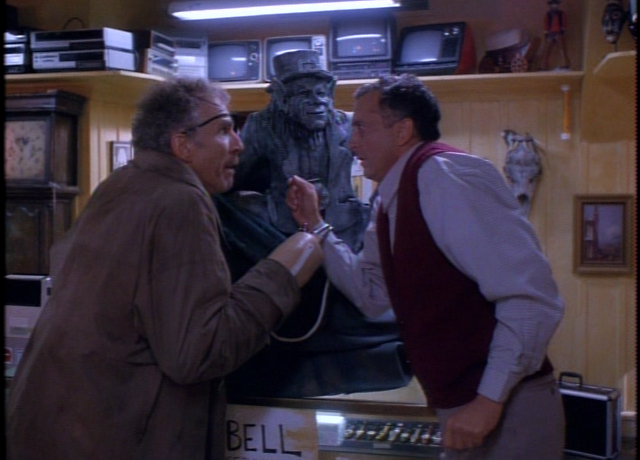
I totally forgot how this movie began, and what brought the Leprechaun to Vegas in the first place. A one-eyed man (who I don’t recall from the second movie) wanders into a pawn shop in Vegas with the Leprechaun, in it’s dormant stone form, dragging behind him in a raggedy sack. He then sells him to the pawn broker for 20 bucks and disappears. The broker then almost immediately awakens the Leprechaun by removing his cursed medallion, to the shock of no one. Then, the rhyming starts. I almost forgot just how horrible and distracting the lazy and cringe-worthy rhyming dialogue was in these movies.
Perhaps the only thing worse than Warwick Davis’s lines in these movies are the ones given to everyone else. Here’s an interaction from the film, for instance, after a young boy discovers a woman whose car has broken down:
“Have you ever blown a rod before?”
“I beg your pardon?”
“The engine, I meant”
Oh come on now, that is a bit of a stretch (to say the least). And this is less than 5 minutes into the film, in one of the first lines of dialogue introducing central characters. It doesn’t exactly go up from there, either. Speaking of which, that “young boy” (who supposedly isn’t old enough to walk on a casino floor) looks like he is almost 30.
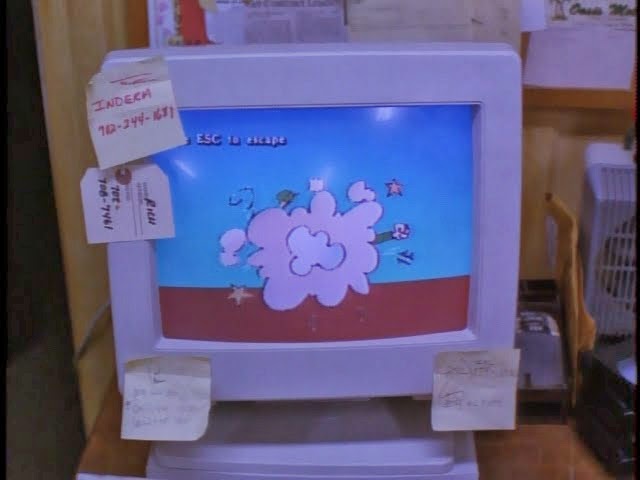
Here’s another thing I forgot: the internet hilariously plays a really important role in this 1995 movie. I am a total sucker for movies that include the internet before anyone knew much about it, and this one is no different. The internet in this movie is basically just a poorly animated storybook and guide to everything Leprechaun (and Were-Leprechaun) related.
Another thing that somehow slipped my memory: one of the main characters is a skeevy magician, who is played as hammily as possible by an actor named John DeMita, who primarily does voice acting nowadays for video games and English dubs of anime series (“Final Fantasy XIII-2,” “Naruto”).
The leads of the film are the aforementioned 30 year old supposed teenager, who becomes hooked on gambling / becomes a were-leprechaun, and his love interest: an ambitious magician’s assistant. Other notable characters in the unnecessarily and shockingly large cast of “Leprechaun 3” include an over-the-hill roulette dealer who lusts for the beauty of her youth, a casino worker who is in debt to the mob, and, strangely enough, the pawn broker from the opening. Somehow, the Leprechaun winds up stuck in that pawn shop for over half an hour of run time, making the broker a mildly important player in the film. His theft of one of the Leprechaun’s coins is the catalyst of the entire casino-centric story.
When the Leprechaun finally does make it to the casino, the movie somewhat sidetracks as he starts taking out most of the accessory cast while his last lost coin continues to change hands. The most notable of these deaths is of the roulette dealer, who wishes for youth and beauty. As with any sort of crafty and devious wish-granting creature, it quickly goes sideways on her when Leppy tracks her down. This is one of those things that is easier to show than to tell:
There are just no words to describe how ridiculous that is. I have to admit, though, that’s kind of what I assumed happened off screen in “Willie Wonka.”
The whole middle act of the film is basically Warwick Davis hamming it up in the casino, killing off characters, and continuing with all of the worst rhymes that the writers could think up. The best of all of these deaths is definitely the magician’s, who bites it towards the end of the movie in a unique take on the classic “sawing a person in half” trick.
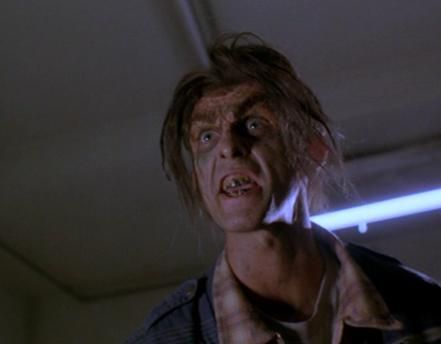
Of course, I have to get into the whole “were-leprechaun” plot. It turns out that it was a little different than what I remembered: the main character is turned into a were-leprechaun because he both bitten and is exposed to Leppy’s blood, which is apparently toxic and burns like acid (very xenomorph-like). Other than that, it is about exactly what you would expect: he starts wearing bad prosthetic facial hair, freckles magically appear on his face, and he starts rhyming incessantly in a fake Irish accent. It is pretty annoying in the moment, but hilarious to look back on.
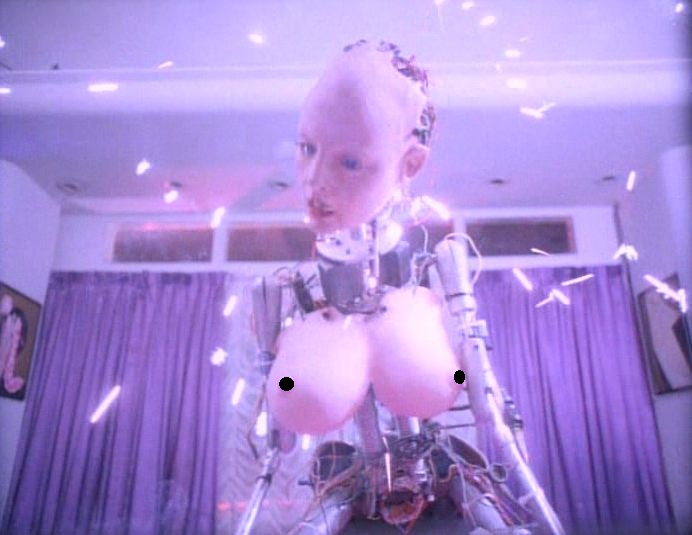
There is a particular segment of the film that I forgot about in which the magician’s assistant and co-lead, Tammy, is possessed by the lost coin after the casino boss makes a wish to sleep with her. The coin is stolen again before anything happens, but the whole segment has massively uncomfortable undertones. The casino boss is almost immediately killed afterwards by Leppy, who summons a killer sex robot from his TV, which is one of the more bizarre cases of instant karma in film that you’ll ever come across.
The finale, of course, features some extensive Leprechaun battles between Leppy and the were-creature, and features lines such as:
For pulling this trick,
I’ll chop off your dick!
and
Cut her nose,
and I’ll hack off your toes!
and
Power to power
You have much to learn
Taller or shorter
I’ll make you burn!
I can’t emphasize this enough: every single line between these two central characters in the last act is like this. Back and forth, back and forth: constant. Again, this is as annoying as anything in the universe to sit through, but I am laughing my ass off thinking about it now.
The Leprechaun is ultimately defeated with the creative use of a flamethrower, but only after he fails to lure Scott, the were-leprechaun, to join him on what he literally refers to as “the green side.” Scott is magically cured of his were-leprechaunism after the bout for reasons that aren’t exactly clear meaning that there’s a happy ending for Tammy and Scott. However, the last line has to be overdone, inappropriate, and cheesy, so the writers decided to rip off the last line to “Casablanca.” I can’t even begin to go into how much is wrong with that.
So, does “Leprechaun 3” hold up as a good bad movie? Honestly, it is way better than I remembered (on a good-bad level, of course). The characters are all hammed up to the max, the plot is the perfect sort of nonsense. I would recommend this one over the original or “In The Hood” in a heartbeat. In general, this is a movie that bad movie lovers should not miss by any means. The only big problem with it is the casino boss sequence’s sexual assault overtones, which could have been fixed really easily with a quick rewrite. It isn’t just unnecessary for the story and shitty to include, but it also messes with the whole tone of the movie. With that caveat, this is a solid good-bad movie recommendation from me.
Pitch:
“A bunch of people are at a dinner party when some sort of biochemical attack occurs, and they all wind up trapped together. They don’t like each other very much, so it doesn’t go very well. David Cross is in it, and it is a definitely worth a watch.”
Background:
“It’s A Disaster” is a dark comedy written and directed by Todd Berger, following a number of contentious couples who are trapped at a brunch by an unfolding chemical disaster.
Todd Berger
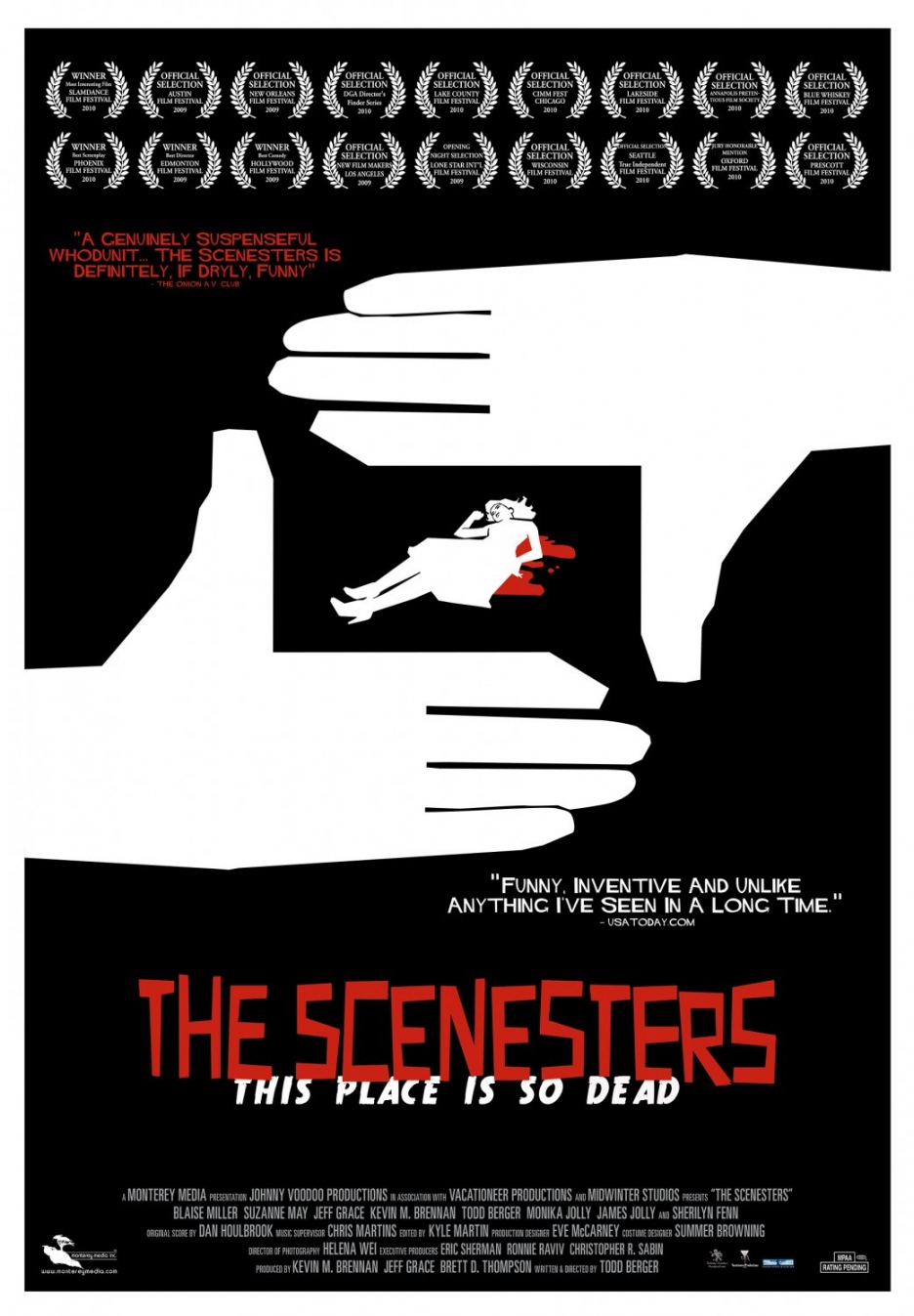
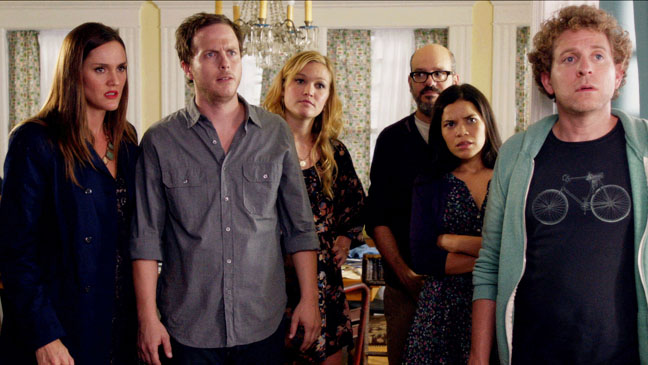
Todd Berger has an assortment of writing, acting, and directing credits for things such as “Kung Fu Panda: Secrets of the Masters,” and “Southland Tales.” His most acclaimed film apart from “It’s A Disaster” is the only other one on which he has served as writer/director: “The Scenesters,” another dark comedy that he did 3 years prior to “It’s A Disaster.” It is about a serial killer who targets hipsters, and a vigilante plot to stop him. That film won a number of awards at film festivals such as Slamdance and the Phoenix Film Festival, but didn’t get a whole lot of exposure beyond that.
“It’s a Disaster” has a number of recognizable faces in the cast, such as David Cross (“Arrested Development,” “Mr Show,” “The Increasingly Poor Decisions of Todd Margaret”) and America Ferrera (“Ugly Betty,” “End of Watch”). However, the majority of it is made up of members of the comedy troupe The Vacationeers, who specialize in comedic shorts and features (including Todd Berger’s other feature film, “The Scenesters”).
Reception of “It’s A Disaster” was mixed: despite a number of awards at film festivals (New Orleans Film Festival, Bendfilm Festival, Edmonton International Film Festival), Rotten Tomatoes has it scored at 77%, with a critic’s average rating at 6.3. The audience score is 59% with an average score of 3.4, and the IMDb user rating is 6.5.
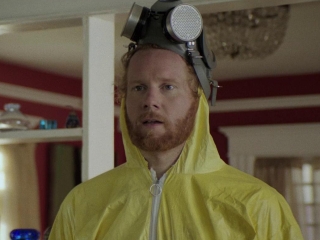
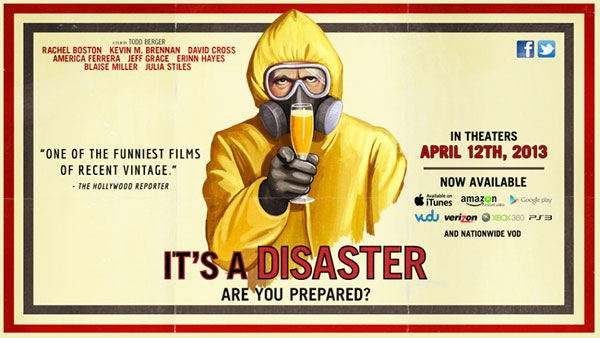
The film’s poster, lampooning the historical Kitchener / Uncle Sam recruitment posters, is probably as well regarded, if not better, than the film itself. The image of a man in a hazmat suit with a glass being ominously thrust towards the observer ties in incredibly well with the film’s plot and tone. If that doesn’t get you to watch the film, then it probably isn’t meant for you.
Review:
“It’s A Disaster” is very heavy for a comedy, even a dark one. It bounces from being a more-or-less lighthearted tale of bickering, cheating couples to incorporating murder plots and contemporary fears of domestic terrorism. It is still good without any doubt, but the tone is far from steady or even.
David Cross, as expected, is fantastic in the film. He is one of the funniest actors out there today in the realm of black comedy, and this film really allows him to show some of the range of what he is capable of. The rest of the roles in the movie are pretty clear-cut, though they definitely all devolve into different shades of panic over the course of the film.
The writing, particularly for the dialogue, is fantastic. The characters definitely have distinctive voices, and their interactions are always entertaining. In a film with a number of twists, there are also some great subtle hints threaded throughout the film in the dialogue, which is always good to see. That said, the characters become increasingly cartoony and unbelievable as the story moves on, but I think it adds to the surreal feel of the film as a whole, so it isn’t excessively distracting.
When it comes down to whether I can recommend “It’s A Disaster,” it is really a tough call. As I mentioned, this is a really heavy film that deals with a horrifying situation as the plot progresses. The interpersonal humor is all pretty funny for the bulk of the film, but things get exponentially more bleak in the last act. If anyone is a big fan of David Cross (particularly “Todd Margaret”), then this film is a must see. In general, I think anyone who can handle “Todd Margaret” would enjoy this film, as the tones are definitely similar.
Recently, I read a book recounting the story of the early days of DreamWorks, called “The Men Who Would Be King” by Nicole LaPorte. The book features extensive insight into the many DreamWorks features produced during the Spielberg/Katzenberg/Geffen years of the company. One of the most interesting of these that I specifically recounted from my childhood was “Small Soldiers,” a movie that I really enjoyed at the time it was released. However, it was a critical and financial disappointment for the company, despite being technically successful. To understand why the film was so poorly received and regarded at the time, there is a fair amount of background information worth reading into.
“Small Soldiers” was conceived from an interesting mix of envy and greed. Pixar and Disney released the smash hit “Toy Story” in 1995 to massive acclaim and fortune not only on screen, but also from lucrative toy and merchandise tie-ins. In response, the team at DreamWorks struck up a deal with Hasbro to do tie-in toy merchandise for a series of films. DreamWorks notably had a historical axe to grind with Disney, due to Jeffrey Katzenberg’s rocky relationship with Michael Eisner, and the fact that many animators at DreamWorks were poached from the great mouse. Topping “Toy Story” would have been nothing short of a major triumph and vindication for the company. And so, “Small Soldiers” was the first of these Hasbro tie-in features released, and the expectation of it was to match or surpass the “Toy Story” acclaim and fortune earned for Disney and Pixar.
In a recent review of “Small Soldiers” by Doug Walker (The Nostalgia Critic), numerous similarities to “Toy Story” are specifically pointed out from the movie, and they are pretty undeniable. However, “Small Soldiers” is definitely a very different beast than the lofty and light-hearted “Toy Story”, and I wouldn’t be surprised if some of those sequences were the result of not-so-subtle arm-twisting by the DreamWorks brass.
Joe Dante, a B-movie and cult director who had seen success with movies like “Gremlins,” “Piranha,” and “The Burbs,” was attached to direct “Small Soldiers.” In retrospect, this was probably a misstep for a film that was intended to primarily to serve a youth audience. Even “Gremlins,” arguably his most family friendly movie at the time, is a good deal darker than your typical blockbuster family fare. It can certainly be said that the darkly comedic ultimate product of “Small Soldiers” is a creation born from Joe Dante’s influence.
A number of writers ultimately worked on the script for “Small Soldiers.” First, the team of Ted Elliott and Terry Rossio, who had struck big for Katzenberg on “Aladdin,” worked on the film. Those two continued to work for DreamWorks on a number of other films, including “The Road to El Dorado” and “Shrek,” before working extensively on the “Pirates of the Carribbean” franchise for Disney. The other writers who later worked on the screenplay included Adam Rifkin, who penned the hit “Mouse Hunt” for DreamWorks in the previous year, and Gavin Scott, who co-wrote “The Borrowers” in 1997 for Working Title.
On May 21, 1998, less than two months before the release of “Small Soldiers” in theaters, an expelled High School student named Kip Kinkel murdered his parents and committed a school shooting in Springfield, Oregon. This sparked a lot of public conversation about the marketing of violence to children, and some believe that this event caused the film to be more harshly criticized than it might have been otherwise.
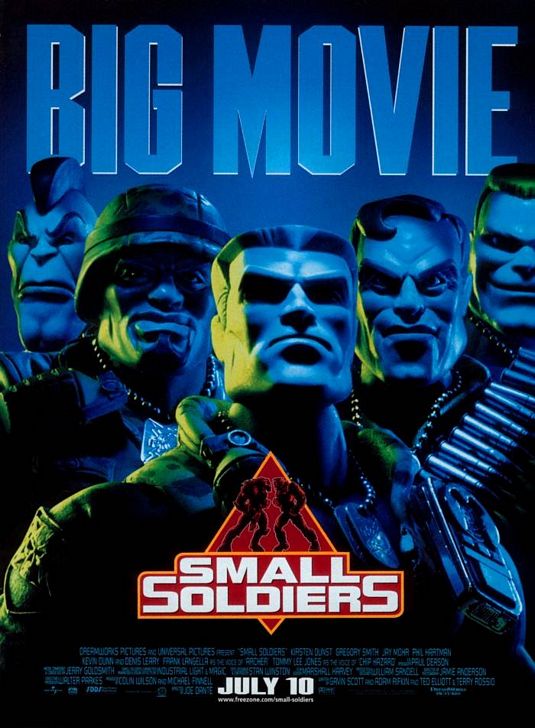
Not helping the matter, the final product of “Small Soldiers” was far more violent than expected: promotional materials even had to be altered (most notably the poster, in which a gun was reportedly digitally removed from Chip Hazard’s hand). The movie was ultimately slapped with a PG-13 (the only DreamWorks movie to get the rating), which caused a stir given it was being marketed with the Burger King equivalent of a Happy Meal. This also theoretically limited its financial potential by keeping young children out of the theaters, which certainly didn’t go over well with DreamWorks. This also understandably further opened up a lot of questions about violent products being catered to children, which almost certainly negatively affected many reviews of the movie.
“Small Soldiers” has a deep cast of comedic character actors that provide a lot of the comic power of the film, including David Cross, Jay Mohr, and Dennis Leary. However, it is undoubtedly not a product suitable for young children, not only because of the violence, but because the humor is rather dark and laced with social satire that they couldn’t possibly get. The PG-13 rating is certainly justified, in any case. The movie’s cast also notably features a pre-fame Kirsten Dunst, and, sadly, the last screen performance of Phil Hartman.
Phil Hartman, beloved comedic actor of “Saturday Night Live,” “NewsRadio,” “The Simpsons,” and “The Groundlings” comedy troupe fame, has a bit role in “Small Soldiers” as the moronic father of Kirsten Dunst’s character. Tragically, Hartman was murdered by his wife just before the release of “Small Soldiers,” making it his last live action theatrical role.
A number of references to Joe Dante’s movie “Gremlins” are hidden throughout the movie (including a direct reference to the Gremlin ‘Gizmo’), as well as numerous nods to classic B-movies. Dante got his start in film cutting B-movie trailers for Roger Corman, and has maintained his connection to B cinema to this day. His website, Trailers From Hell, is essentially a love letter to the old school B classics, featuring trailer commentaries from lauded B-movie writers, directors, and special effects masters such as Stuart Gordon, Eli Roth, Rick Baker, Lloyd Kaufman, Larry Cohen, Roger Corman, and himself.
The special effects and designs for the action figures in “Small Soldiers” were done by legendary creature creator Stan Winston, and includes a mixture of practical and computer generated effects. This same technique earned Winston massive acclaim on “Jurassic Park” only a handful of years before. The figures themselves are particularly impressive, as you can see on display below:
The voice acting cast of “Small Soldiers” is incredibly deep, and features a rogues gallery of notables. Outside of Tommy Lee Jones, there are a number of alums from “The Dirty Dozen” that make up the Gi Joe esque Commando Elite, including George Kennedy, Clint Walker, Ernest Borgnine, and Jim Brown. The Gorgonites feature voices from Frank Langella, Christopher Guest, Michael McKean, and Harry Shearer. Even the Barbie analogues impressed into service by the Commando Elite late in the film feature the voices of Christina Ricci and Sarah Michelle Gellar.
“Small Soldiers” was created during a time in which DreamWorks functioned as a massive multimedia company, with interest in film, video games, animation, and music. Appropriately, DreamWorks attempted to milk every last drop from films released during this time period, and “Small Soldiers” was no exception. The film got a soundtrack that featured rap remixes of classic rock songs, a DreamWorks video game, and a slew of tie-in toys from the DreamWorks arrangement with Hasbro. In theory, “Small Soldiers” was intended to be a family movie with massive crossover potential that would provide proof of the DreamWorks multi-media model. Of course, that isn’t what it wound up being, to the disappointment of many.
So, why was “Small Soldiers” such a disappointment? Honestly, I think that the hands-off style of DreamWorks, which operated its live action with a “power to the artists” mentality reminiscent of United Artists, really burned them with “Small Soldiers.” I don’t think that the marketing team and the brass in general quite grasped the dark creature that was being created with “Small Soldiers”, or maybe they were just incapable of reigning it in for whatever reason. If DreamWorks had it set in their mind that they wanted a “Toy Story”, they probably should have hit the panic button the minute that military-grade microchips and hostage situations popped into a draft of the script. Also, there probably should have been more thought put into giving the film to a guy known for creating dark genre movies in Joe Dante. Secondarily, part of the issue with the film was just timing: releasing on the heels of a school shooting was something outside of their control, and didn’t do them any favors in the press or with critics.
Now, this is a case where I actually like “Small Soldiers.” I think it is a pretty enjoyable dark comedy in the vein of “The Burbs” if you can divorce it from its context. The “Toy Story” connection, the extensive and inappropriate marketing campaign, and the general social atmosphere around the film all really contributed to the generally negative reception movie if you ask me. I would recommend giving it another shot if someone hasn’t seen it in a number of years: I think it holds up pretty damn well, and is far more clever than it has any business being.
That is all for today’s (Plot)opsy Podcast! Check in next week when I’ll be covering another DreamWorks flick, Sam Mendes’s “Road to Perdition.” Make sure to like Misan[trope]y Movie Blog on Facebook and subscribe to the (Plot)opsy Podcast on iTunes to keep up with all of the latest updates.
Reviews/Trivia of B-Movies, Bad Movies, and Cult Movies.
![Misan[trope]y](https://misantropey.com/wp-content/uploads/2014/10/misantropeyhead1.png)





















 Misan[trope]y