Tag Archives: b-movies

Extra-Terrestrial Visitors

Extra-Terrestrial Visitors

extraterr2

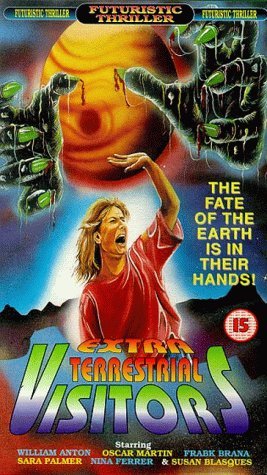
Today’s feature is an E.T. knockoff called Extra Terrestrial Visitors, through it is better known by many as The Pod People.

The Pod People was directed and co-written by Juan Piquer Simon, who was also behind such films as Slugs: The Movie, Pieces, and The Rift. His co-writer was Joaquín Grau, who previously worked with Simon on Los Diablos Del Mar and Mystery On Monster Island.

The film featured two credited cinematographers: Ricardo Navarrete, a camera operator who worked on Solarbabies, Conan The Barbarian, and Guns of the Magnificent Seven, and Juan Mariné, who shot Pieces and The Rift for the director, Juan Simon.

The editor for The Pod People was Antonio Gimeno, who also cut The Werewolf vs. The Vampire Woman, Mario Bava’s Planet of the Vampires, and Slugs: The Movie.

The memorable music in The Pod People was composed by the duo of Michael Demer and Librado Pastor, neither of whom have any other significant film score composition credits.

The effects work on the film was done by Pedro Camacho (Slugs: The Movie, Pieces, Zorro) and Basilio Cortijo (Battle of the Bulge, The Trojan Women, Cthulhu Mansion).

The plot to The Pod People is immensely complicated, and follows a number of different threads. The main plot follows a young boy who discovers a mysterious egg in the woods, which he takes home with him. It soon hatches into a juvenile alien with telekinetic powers, leading to an assortment of shenanigans. Elsewhere in the woods, a traveling rock band comes across the adult alien that laid the egg, leading to an entirely separate series of shenanigans (that involves a lot more murder).

The movie was featured under the title of The Pod People in the third season of the cult television show Mystery Science Theater 3000, which has significantly contributed to the film’s popularity, and spread the use of The Pod People as its primary title.

Speaking of which, The Pod People is known by a ton of different release titles: Extra-Terrestrial Visitors, Tales of Trumpy, The Return of E.T., Visitor, and The New Extraterrestrials among them.

The reception to The Pod People online is significantly poor, likely due to its popular association with Mystery Science Theater 3000. It currently sits in the IMDb Bottom 100 with a rating of 2.1, and has a Rotten Tomatoes audience score of 15%.

The Pod People suffers immensely from a lack of focus, as it tries to balance two movie concepts that are diametrically opposed to each other. When it comes down to it, this movie should either have been primarily a child-friendly romp with a baby alien, or a cut-and-dry sci-fi alien slasher, but not both. This is clearly a case where the crew assumed the flick could be everything to everyone, but it just couldn’t pull it off.

The music throughout The Pod People is absolutely awful, but it is also probably the single biggest reason the movie is so memorable. The ambient synthesizer tones that play throughout the film are only matched by the ridiculous rock tune, “Hear The Engines Roll Now,” and MST3K crew managed to have fun mocking all of it.

extraterr1To the crew’s credit, the alien designs in The Pod People are certainly not what you would expect, and wind up looking genuinely unique without breaking the budget of the movie. The elephant-Sasquatches are still cheesy without any doubt, but you aren’t going to confuse them with any other movie monsters out there.

Bad editing and poorly paced screenwriting combines to keep The Pod People from ever getting a steady flow or rhythm to it, which makes it all the harder to sit through. The two main plot threads take a long while to converge, and the movie bounces between them a bit too much until they do ultimately wind up combining. I’m sure the crew didn’t realize at the time just how jarring it would all wind up being, but you would think that the editing would work to salvage the product moreso than it did.

As far as plot details go, I still don’t understand why Trumpy is telekinetic. The power doesn’t come into play at any other point, apart from to showcase some cheesy effects, and I can’t think of any practical use of the power for an adult alien. Trumpy’s mother also never seems to use it, which brings into question whether the adult aliens have the power at all.

Overall, this can be a pretty fun bad movie to watch if you have the patience to get through the halfway point. Once the two main plot lines converge, the pacing gets more bearable through to the conclusion. That said, without the MST3K commentary, the stretch of the movie between “Hear The Engines Roll Now” and the plot convergence is nearly unfathomably boring. That said, the Mystery Science Theater 3000 episode on the movie is one of their best, and is worth checking out.
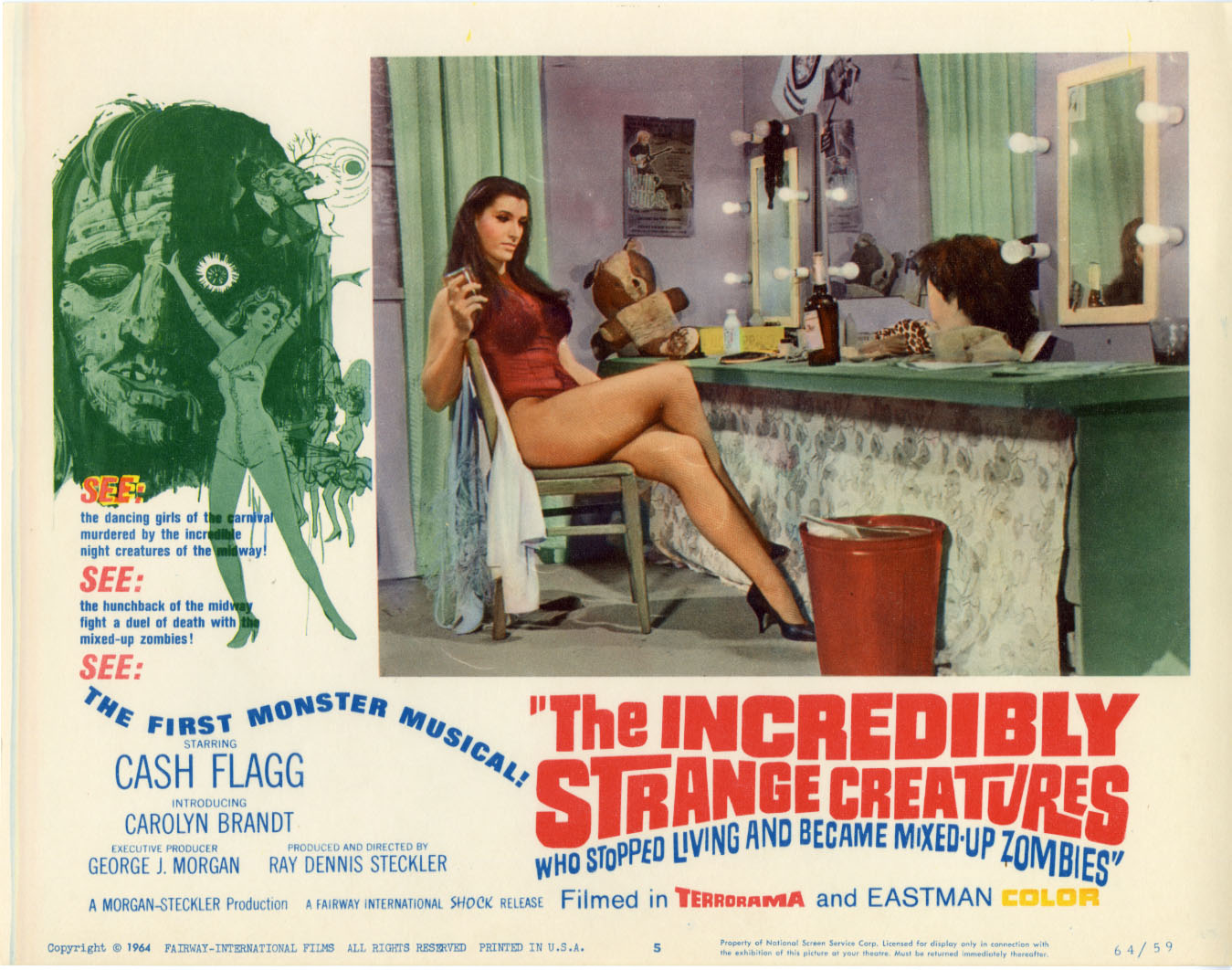
The Incredibly Strange Creatures Who Stopped Living and Became Mixed-Up Zombies

The Incredibly Strange Creatures Who Stopped Living and Became Mixed-Up Zombies

mixedup1

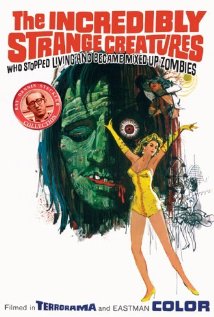
Today’s flick is the infamous monster movie musical, The Incredibly Strange Creatures Who Stopped Living and Became Mixed-Up Zombies.

The Incredibly Strange Creatures Who Stopped Living and Became Mixed-Up Zombies was directed and produced by Ray Dennis Steckler, who was also behind such movies as The Sexorcist, The Horny Vampire, The Mad Love Life of a Hot Vampire, and, no kidding, How to Make A Sex Movie. He also played the protagonist in The Incredibly Strange Creatures Who Stopped Living and Became Mixed-Up Zombies under a pseudonym: Cash Flagg. The credited screenplay writers for the movie were Gene Pollock (The Thrill Killers) and Robert Silliphant (The Creeping Terror, The Beach Girls and The Monster).

The cinematographer for The Incredibly Strange Creatures Who Stopped Living and Became Mixed-Up Zombies was Joseph V. Mascelli, who also shot the b-movies The Thrill Killers and Wild Guitar, and went on to direct the classic bad movie The Atomic Brain.

The film’s editor was Don Schneider, whose only other feature film editing credit was another classically terrible b-movie, Eegah.

The memorable music for The Incredibly Strange Creatures Who Stopped Living and Became Mixed-Up Zombies was done by Libby Quinn, who has no other film score composition credits, and Andre Brummer, who worked on films like Eegah, Monster From The Ocean Floor, Mudhoney, and something called Fertilize the Blaspheming Bombshell.

The makeup effects work on The Incredibly Strange Creatures Who Stopped Living and Became Mixed-Up Zombies was done by one Tom Scherman, who went on to do miniature and visual effects work on movies like Robot Jox, The Crater Lake Monster, and Flesh Gordon.

mixedup2The plot of The Incredibly Strange Creatures Who Stopped Living and Became Mixed-Up Zombies centers around a musical carnival, where a young man is cursed into becoming a murderous zombie by the carnival’s fortune teller. This leads him to go on a killing rampage, taking out many of the teenaged attendees at the carnival.

The original title for the film was reportedly supposed to be The Incredibly Strange Creature: Or Why I Stopped Living and Became a Mixed-up Zombie, but Columbia pictures threatened a lawsuit due to the similarity of it to the full title of Dr. Strangelove, a significant hit by Stanley Kubrick that released the previous year. The director, Ray Dennis Steckler, also said that Face of Evil was an early working title.

Speaking of alternate titles, the film wound up releasing under a handful of different titles over the years: The Incredibly Mixed-Up Zombie, Diabolical Dr. Voodoo, and The Teenage Psycho Meets Bloody Mary among them.

The Incredibly Strange Creatures Who Stopped Living and Became Mixed-Up Zombies was famously featured on a season 8 episode of the popular bad movie television show Mystery Science Theater 3000, which exposed it to a much wider audience than it ever had before.

Primarily because of the film’s appearance on MST3K, it has a very negative reception on internet review aggregators: it currently has a 2.2 rating on IMDb (qualifying it for the IMDb’s Bottom 100), and Rotten Tomatoes scores of 20% (critics) and 14% (audience).

For the life of me, I don’t understand why on earth this movie had to be a musical. All of the numbers are distracting, poorly shot, horribly executed, and they drag out the plot much longer than it has any need to go. I never thought I would praise Girl in Gold Boots, but that movie looks like a professional musical production compared to this mess. The best guess that I have is that the music was the gimmick intended to get audiences into the theater, but I’m not really sure what the common population of monster movie fans and musicals was at the time to draw from.

The costuming throughout the movie is surprisingly dull given the setting of the story at a carnival. The makeup on the antagonist is way over the top, however. Personally, I think costuming and makeup needs to be an all or nothing thing: you can half-ass it or go all the way, but mixing it up makes the movie look and feel inconsistent.

The cinematography in this movie is just straight bad. There are point of view roller coaster shots that are excessively shaky to the point of causing nausea, and moments where superimposed images are placed on top of other superimposed images in an attempt to create a surreal effect. Worst of all, the musical performance sequences are just inexcusably poorly shot for something billed as a musical, staying generally out of focus and distant. My favorite cinematography goof in the movie, however, is the sharply-angled palm reading sequence, which the MST3K guys hilariously riffed without saying a word: they all just leaned dramatically in a given direction to imitate the shot.

The pacing of the plot was the real coffin nail for this movie in my opinion. It has musical numbers chained to both ankles that drag it down immensely, and the result is a film that can barely hobble through its run time. Outside of the musical performances, there are plenty of other scenes that run too long, and plenty of footage that isn’t necessary at all for the plot. I think this  movie could be recut into something slightly better, but the best editor in the world could only really improve it so much. There just isn’t quite enough decent content in this flick for a full-length, quality movie.

All of that said, I do like the premise the the story. Pre-Romero zombie movies are interesting to bump into, and pull from the classic zombie lore that is mostly forgotten by cinema nowadays. This story in particular sticks to the mind control and voodoo aspects of classic zombieism, and might have been a good horror movie with a different director, writer, cast, and with 100% less musical numbers. So, it might have been ok if it were a different movie entirely.

Some people out there rave about this movie as an elite good-bad flick, but I’ve always found it immensely boring, even with the Mystery Science Theater 3000 treatment. The highlights are worth checking out (mostly the musical numbers), but I wouldn’t personally recommend sitting through the whole thing.

Water Foul: The Last Shark

The Last Shark

lastshark1

Today’s entry into the “Water Foul” spotlight on awful aquatic monster flicks is The Last Shark, likely the most notorious of the Jaws knock-offs.

The Last Shark had three credited writers: Vincenzo Mannino (Hallucination Strip, Murder-Rock: Dancing Death, The New York Ripper), Marc Princi (The Squeeze, Terror Stalks The Class Reunion), and producer Ugo Tucci (Zombie, Once Upon A Time In The West).

The director of The Last Shark was Enzo Castellari, who also directed 1990: The Bronx Warriors, The Inglorious Bastards, Keoma, and The Shark Hunter.

The cinematographer for the film was Alberto Spagnoli, who shot such films as the Italian Lou Ferrigno Hercules movies and Peter Bogdanovich’s Daisy Miller.

The editor for the movie was Gianfranco Amicucci, who also cut a number of Castellari’s other films, including Keoma, The Inglorious Bastards, and 1990: The Bronx Warriors. He also went on to edit a number of Ruggero Deodato (Cannibal Holocaust) movies, including The Washing Machine and Mom I Can Do It.

The music for The Last Shark was composed by Guido and Maurizio De Angelis, who contributed scores to a number of other low-budget features like The Shark Hunter, Keoma, and Alien 2: On Earth.

Aside from co-writer Ugo Tucci, the producers for The Last Shark were Maurizio Amati (Cannibal Apocalypse), Sandro Amati (The New Gladiators), and Edward Montoro (Pieces, Pod People, Anthropophagus, Grizzly).

The makeup and special effects for The Last Shark were done by Giovanni Morosi (Inglorious Bastards, Escape From The Bronx) and Antonio Corridori (Mission Impossible III, Piranha II, U-571, The Italian Job).

The cast of The Last Shark included James Franciscus (Beneath The Planet Of The Apes), Joshua Sinclair (Judgment in Berlin, 1990: The Bronx Warriors, Keoma), Vic Morrow (1990: The Bronx Warriors, Twilight Zone: The Movie), Giancarlo Prete (Bad Cop Chronicles, Escape From The Bronx), and Stefania Goodwin (1990: The Bronx Warriors, Super Mario Bros.).

The plot of The Last Shark surrounds a string of shark attack deaths off the coast of a tourist town, but an ambitious local politician refuses to close the beaches due to an upcoming wind-surfing event. After the event turns into a tragedy, the whole town goes into a frenzy trying to catch and kill the crazed, monstrous shark.

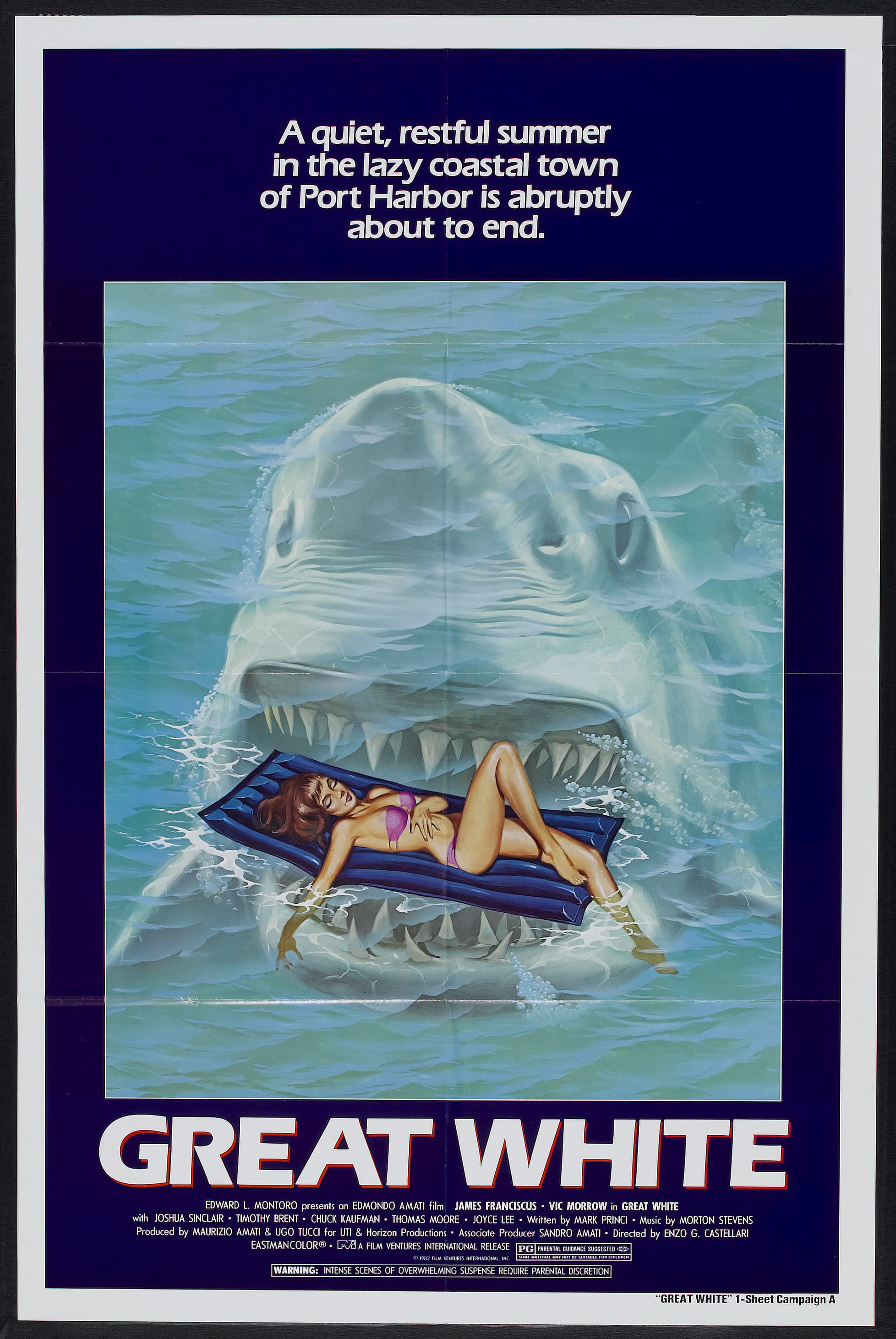
As you might suspect from that plot synopsis, The Last Shark was marketed as a Jaws sequel in a handful of foreign markets, while being titled Great White for its release in the United States. Regardless, Universal Pictures filed a lawsuit against the production for being too similar to Jaws, which led to an injunction and the film being pulled from theaters.

lastshark2 lastshark4

A sequel to The Last Shark was at one point planned, but the shark was too heavily damaged during the production to re-use, and it was decided that it wasn’t worth the trouble to create a new one.

The reception to The Last Shark was roundly negative: it currently holds a 4.6 rating on IMDb, alongside a 35% audience score on Rotten Tomatoes.

I wasn’t able to dig up a number for the budget on The Last Shark, but I assume it was pretty low. Primarily due to piggy-backing on the popularity of Jaws, the film grossed 18 million in its United States theatrical run (despite being pulled from theaters), making it significantly profitable on the whole.

lastshark3To the credit of the politician character in this movie, he at least does more than the mayor in Jaws. Instead of outright refusing to acknowledge the shark attacks, he surrounds the beach with shark-proof netting to provide a sense of security for the locals participating in the wind-surfing event. Of course, this doesn’t wind up working, but it is certainly more effort than doing nothing.

The music for this movie is all over the place, and even opens with an upbeat and pop-inspired number. It just doesn’t fit with what should be a thriller or adventurous soundtrack, and is a huge departure from the classic Jaws score.

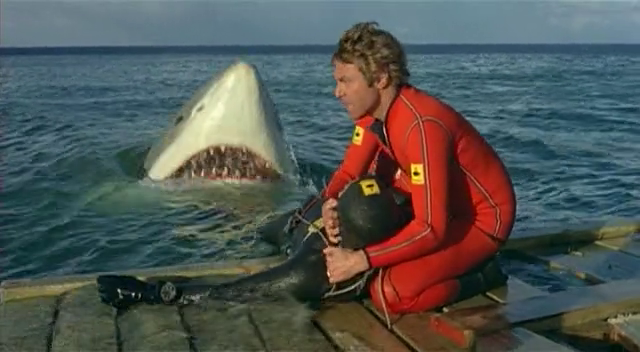
Most of times the shark is shown on screen in The Last Shark, it is done with stock footage. However, a mechanical shark is used occasionally, and looks absolutely terrible. They would have been better off just not bothering with underwater footage of the replicated shark at all.

All of that said, there is some extensive miniature work in this movie that, in my opinion, doesn’t look excessively terrible, particularly when compared to the CGI shark nonsense we get today. At one point the shark takes out a helicopter, which is simultaneously awesome and hilarious. However, nothing stands out quite as much as the ultimate shark death at the end of the movie.

Overall, The Last Shark is a pretty entertaining watch, particularly for fans of Jaws. The film is so not-subtle about being a knockoff that sequences are basically lifted straight out of Jaws and thrown into this movie. It is certainly understandable why Universal wasn’t thrilled about this movie, because it takes more than a few steps too far. As far as entertainment value goes, the shark and miniature effects are hilarious, and the actor playing not-Quint is pretty entertaining. This is a movie worth digging up if you want to watch an old school cheap shark movie that wasn’t made by Syfy and The Asylum.

Water Foul: Octaman

Octaman

octaman2

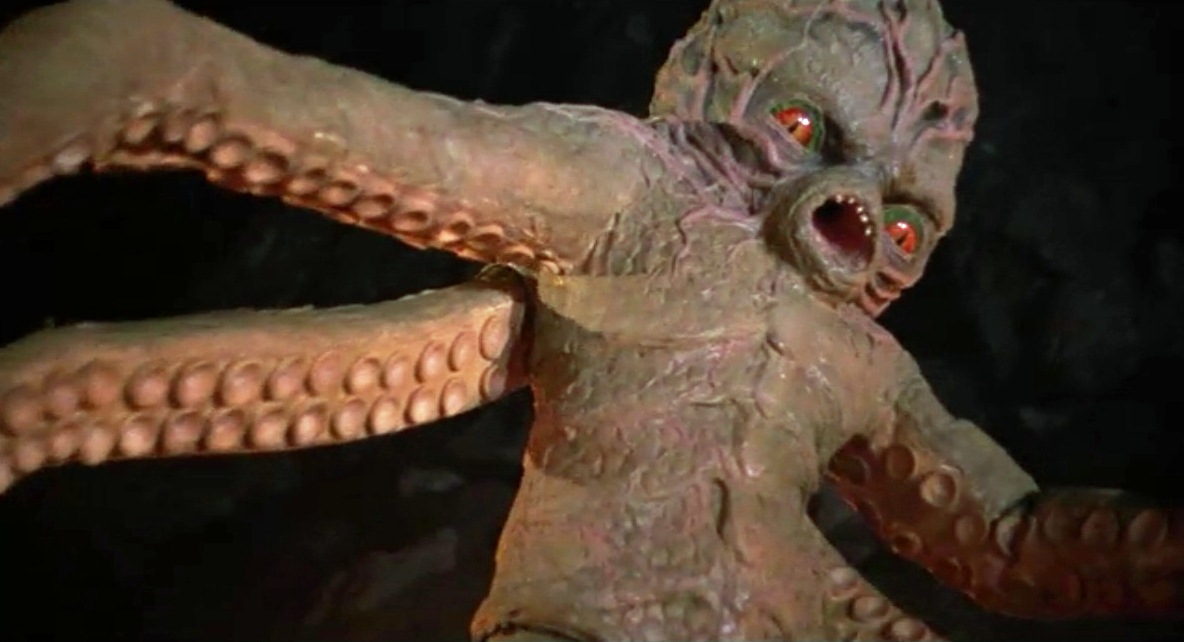
Today’s movie is Octaman, which features a human-octopus hybrid suit designed by repeat Academy Award winner Rick Baker.

Octaman was written, directed, and produced by Harry Essex, who was also behind such films as It Came From Outer Space and Creature From The Black Lagoon.

The cinematographer on the film was Robert Caramico, who also shot numerous episodes of the television shows Just Shoot Me and Dallas, the Fred Williamson blaxploitation western Boss (that’s, uh, not the original title), and Ted V. Mikels’s The Black Klansman.

The effects team for the movie included Academy Award winner Rick Baker (An American Werewolf in London, Men in Black, Ed Wood, Wolf, Videodrome, It’s Alive, It Lives Again, Black Caesar), Doug Beswick (Aliens, The Terminator, Evil Dead II, Ghostbusters), and Ron Kinney (Wild Riders, The Cremators). Beswick and Baker specifically designed the Octaman suit, under the belief that it would be kept in shadows and obscured for most of the film. Unfortunately, that wasn’t the case.

octaman4The cast of Octaman included Pier Angeli (Battle of the Bulge, The Angry Silence), Jeff Morrow (This Island Earth, The Giant Claw, The Creature Walks Among Us), and Kerwin Mathews (Jack The Giant Killer, The 7th Voyage of Sinbad).

The story of Octaman is delightfully straightforward: a team of scientists stumbles upon a mysterious mutated hybrid of an octopus and a human, and the creature proceeds to make all of their lives miserable and significantly shorter.

Footage of Octaman shows up under a variety of different titles in movies like Gremlins 2 and Fright Night, as an homage both to the influence of Rick Baker as an effects master, and as a throwback to traditional, b-level horror and monster movies.

octaman1The reception to Octaman was unsurprisingly negative, and it currently holds a 3.5 rating on IMDb, alongside a 23% audience score on Rotten Tomatoes.

The budget for the movie was reportedly $250,000, which is a pretty astounding microbudget. However, the product on screen holds true to the saying “you get what you pay for.”

Octaman is a movie that feels, looks, and sounds misplaced in time. The movie could have been made any time from the tail end of the 1950s to (particularly cheaply) in the 1980s, and I don’t think it would look or sound all that different. It is a curiosity of a film that rides the line between being an homage and legitimately being the thing that it is trying to send up (honestly, I’m still not 100% sure which this is).

octaman3The suit itself is probably the most impressive aspect of the movie given the budget, but the way it is shot and used is just hilariously awful. It is a real testament to the importance of cinematography and editing when it comes to movies with practical monsters, because the way it is shown on screen makes all the difference between it being intimidating and it being impossibly goofy.

Speaking of which, the lighting throughout the movie is astoundingly terrible, and most of it comes off looking like incomprehensible blackness (except for the monster, the one thing that should be kept a bit obscured). For most of the film, it is a chore to parse out what the hell is supposed to be happening on screen, because all of the colors used are on a scale of pitch black to relatively dark blue.

Octaman uses a few moments of monster point-of-view shots, which popped up here and there throughout the history of b-movies. However, it became particular famous for its use in highly-acclaimed, b-movie influenced films like Jaws, Predator, and Halloween.

The only real highlight to the film comes when a plot is executed to capture the monster by confusing it with strobe lights and encircling it with fire, in order to “burn up the oxygen all around him.” Astoundingly, this works, and the team throws a net over the monster and calls it a day. That part of the plan, however, doesn’t turn out so well.

octaman5Overall, Octaman is a pretty run-of-the-mill, cheaply made b-movie. If not for Rick Baker’s involvement, it would probably only amount to a footnote in the history of bad movies. However, Baker’s participation and future success adds an element of trivia to the movie, which makes it moderately more worth checking out. Personally, I think the movie is pretty dull, but I’d recommend looking up some clips and photos of the suit in action to get an idea of where a 12-time Academy Award nominated (and 7-time winner) effects guru comes from.

Water Foul: Godzilla vs. The Sea Monster

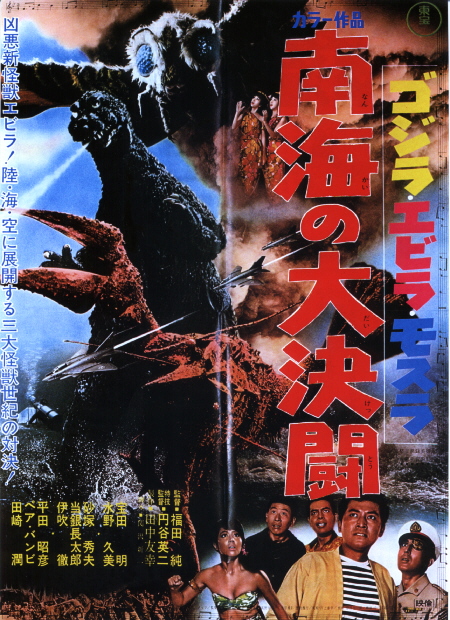
Godzilla vs. The Sea Monster

seamonster2

Today’s entry into the “Water Foul” spotlight on the worst aquatic monsters in movie history is 1966’s Godzilla vs. The Sea Monster.

Godzilla vs The Sea Monster was written by Shinichi Sekizawa, the primary writer of the Showa era of Godzilla. His credits include the MST3K-infamous Godzilla vs. Megalon, Godzilla vs. Gigan, Godzilla’s Revenge, King Kong vs. Godzilla, Godzilla vs. Monster Zero, Ghidorah: The Three Headed Monster, Godzilla vs. Mothra, and Godzilla vs. Mechagodzilla.

The director for Godzilla vs The Sea Monster was Jun Fukuda. This was his first Godzilla movie, and afterwards he would direct four more in the Showa era of the franchise: Son of Godzilla, Godzilla vs Gigan, Godzilla vs. Megalon, and Godzilla vs. Mechagodzilla.

The cinematographer on the film was Kazuo Yamada, who also shot Son Of Godzilla, Samurai III, and Samurai Rebellion, as well as Key of Keys, which was used as the source material for Woody Allen’s What’s Up, Tiger Lily?

The editor for Godzilla vs The Sea Monster was Ryohel Fujii, who was yet another Toho regular, cutting such films as Ghidorah: The Three Headed Monster, King Kong Escapes, Frankenstein Conquers The World, and Godzilla vs. Monster Zero.

Executive Producer Tomoyuki Tanaka was a producer of the Godzilla franchise from the original Godzilla all the way through the conclusion of the Hesei era, 1995’s Godzilla vs. Destroyah. He also frequently produced movies for Akira Kurosawa, such as Yojimbo, Kagemusha, and Sanjuro.

The music on Godzilla vs. The Sea Monster was done by Masaru Sato, who accrued 236 score composition credits over his illustrious career, including Yojimbo, Throne of Blood, Sanjuro, Godzilla Raids Again, and The Hidden Fortress.

The Godzilla vs. The Sea Monster effects team included Sadamasa Arikawa (Godzilla, Destroy All Monsters, Mothra, Rodan), Sokei Tomioka (Terror of Mechagodzilla, King Kong Escapes, Frankenstein Conquers the World), Taka Yuki (Godzilla, Ghidorah: The Three Headed Monster), Fumio Nakadai (Son of Godzilla, Godzilla’s Revenge), Eiji Tsuburaya (Godzilla, Godzilla Raids Again, Throne of Blood, Rodan, Mothra), Teruyoshi Nakano (Godzilla vs. Mothra, Godzilla 1985), and Akira Watanabe (The Green Slime, Godzilla, Godzilla Raids Again, Destroy All Monsters).

The cast of the movie included a number of recognizable faces from other Toho films: Akira Takarada (Godzilla, Godzilla vs. Mothra, King Kong Escapes, Godzilla vs. Monster Zero), Kumi Mizuno (Godzilla: Final Wars, Godzilla vs. Monster Zero, Frankenstein Conquers the World), Chôtarô Tôgin (Destroy All Monsters), and Tôru Ibuki (Terror of Mechagodzilla, Godzilla vs. Monster Zero).

The plot of Godzilla vs. The Sea Monster has very little to do with the monsters themselves. A terrorist organization has taken over a small island, and is secretly developing nuclear weapons there. They use a giant shrimp, named Ebirah, to defend the island and prevent any of their captured slaves from escaping. However, they ultimately capture a Japanese citizen, and his family goes hunting after him, ultimately leading to the discovery of the secret base. Serendipitously, Godzilla is found sleeping in a cave nearby, and is awakened to fight Ebirah. Also, Mothra is hanging around on a nearby island (where the slaves were mostly kidnapped from), and eventually shows up to help towards the end of the story.

seamonster1Godzilla vs. The Sea Monster was initially planned to be a King Kong movie, and many of that monster’s trademarks and characteristics remain in the movie. Godzilla’s uncharacteristic obsession with a woman and his awakening via lightning were both associated with King Kong as opposed to the King of the Monsters. The lightning revival came from King Kong vs. Godzilla, which was also due to a last minute monster replacement (King Kong for Frankenstein’s Monster), making the trait all the more confusing.

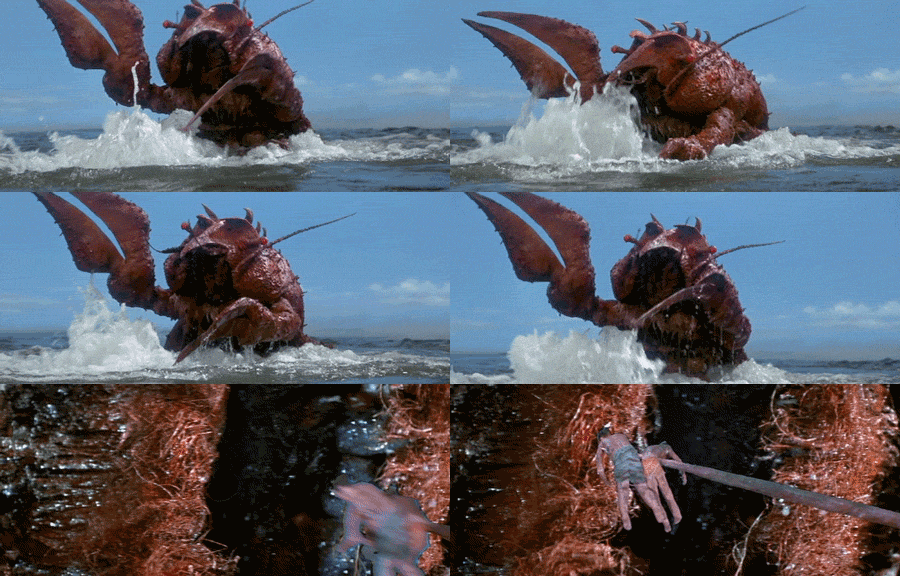
The Sea Monster itself, Ebirah, is named after the japanese word for shrimp, ‘ebi.’ This essentially confirms that Ebirah is supposed to be a shrimp, though it looks a bit more like a lobster.

Godzilla vs. The Sea Monster interestingly marks the last appearance of a full-grown Mothra in the Showa era of Godzilla, though the larval form pops up again in Destroy All Monsters in 1968.

Mystery Science Theater 3000, the popular bad movie television show, had an episode dedicated to Godzilla vs. The Sea Monster in its second season. The episode immediately followed the more recognizable and terrible Godzilla vs. Megalon, which famously features the robot Jet Jaguar.

The reception to Godzilla vs. The Sea Monster was generally negative, and is regarded as one of the weaker entries into the series. It currently holds a rating of 5.1 on IMDb, along with a 39% audience score on Rotten Tomatoes.

First off, Godzilla vs. The Sea Monster definitely focuses far more on the human plot than the monsters, which is bound to be part of why it is so unpopular. Godzilla doesn’t even appear on screen until an hour into the picture. However, the story isn’t super-awful as far as the Showa era of Godzilla is concerned. The terrorist organization isn’t as memorable as sound-prone aliens from Planet X or angry cockroach people, but they serve well enough here.

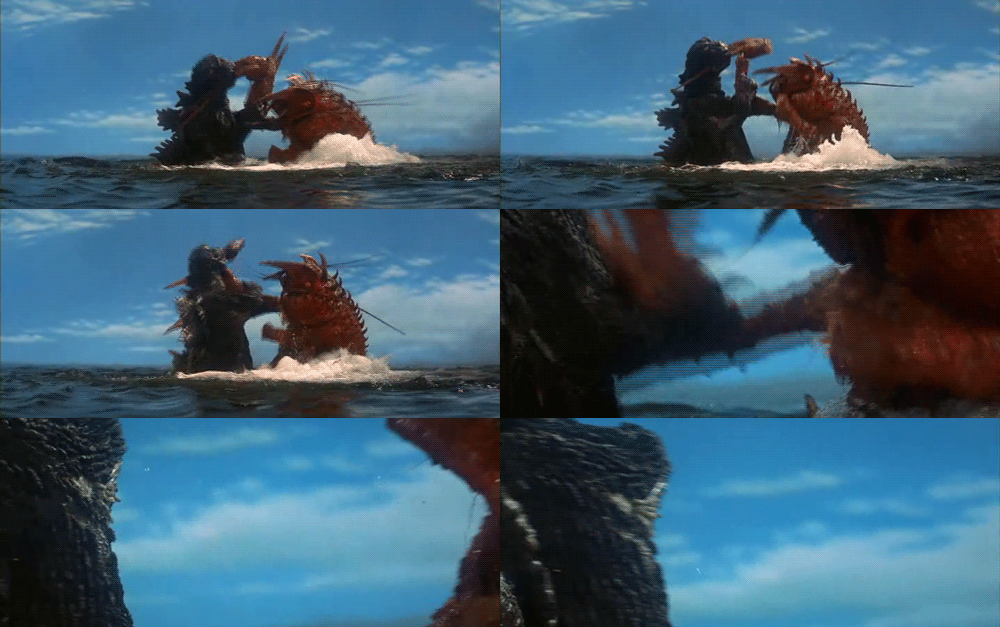
The monster fighting that does appear in the movie is really lackluster. Ebirah isn’t particularly powerful, and doesn’t have any way to effectively compete with Godzilla, eand ventually gets his claws torn off without much fanfare. There are a couple of other minor battles, such as a skirmish between Godzilla and Mothra and the appearance of a Rodan-like bird monster, but they are both pretty brief and unmemorable. The movie does feature an infamous volleyball fight between Ebirah and Godzilla, which I believe pops up again re-purposed in the even more terrible Godzilla’s Revenge.

seamonster3My favorite part of the film by far is when Ebirah spears two people on one of his claws like a shish kebab, which both looks ridiculous and is kind of jarring. You don’t see the Toho monsters directly kill people very often, though death is heavily implied by their stomping and blasting. It definitely stands out as a highlight moment in the movie, and is one of the few clips worth checking out.

seamonster4Overall, Godzilla vs. The Sea Monster is a pretty mediocre entry in the Showa era of Godzilla. It isn’t particularly over-the-top or entertaining in comparison to the rest of the series, but also isn’t quite amusingly abysmal enough to make sitting through it much fun. The MST3K episode is pretty solid and the background trivia is interesting, so if you want to watch it, I’d recommend going that route with it.

Water Foul: Devil Fish

Devil Fish

bottom25devil

Today’s installment into the “Water Foul” spotlight on the worst aquatic monster movies ever made is one of the illustrious members of IMDb’s Bottom 100: 1984’s Devil Fish.

Devil Fish was directed and co-written by Lamberto Bava, the son of the legendary giallo director Mario Bava (Black Sunday, Black Sabbath). He directed the film under the pseudonym of John Old, Jr., which was a frequent practice for Italian directors making knock-off films. Lamberto Bava also worked with noted Italian horror icon Dario Argento on the films Demons and Demons II.

The other credited writers on the film included Dardano Sacchetti (The Beyond, 1990: The Bronx Warriors, Manhattan Baby), Gianfranco Clerici (Cannibal Holocaust, The New York Ripper), Luigi Cozzi (Starcrash, Hercules, The Adventures of Hercules 2), and Sergio Martino (The Mountain of the Cannibal God, The Great Alligator, Torso).

The cinematographer for Devil Fish was Giancarlo Ferrando, who also shot movies like Troll 2, Hands of Steel, Warrior of the Lost World, The Great Alligator, and Torso.

The editor on Devil Fish was one Roberto Sterbini, who has also performed editing duties on films like Zombi 3, Hands of Steel, and Beyond the Door II.

The music for Devil Fish was provided by Fabio Frizzi, who also provided scores to Zombie, The Beyond, and the outlandish 1977 colorized, Italian version of Godzilla by Devil Fish co-writer Luigi Cozzi.

The ‘shark’ for the movie was created by one Ovidio Taito, who astoundingly has no other listed special effects credits on IMDb. The rest of the special effects are credited to Germano Natali, who also worked on movies like Starcrash, Suspira, The Beyond, Hercules, and King Solomon’s Mines.

The plot of Devil Fish is pretty straightforward: it follows a hunt for a mysterious, unidentified creature that is attacking swimmers off the coast of Florida.

As the dialogue loves to remind the audience throughout the film, the monster featured in the movie is clearly not a shark. Despite this, one of the most common alternate titles of this movie is simply Shark. Other alternate titles included Red Ocean, Devouring Waves, Monster Shark, and Shark: Red On The Ocean.

The reception to Devil Fish online is incredibly negative, and its IMDb rating of 2.4 places it in the Bottom 100 of the website. However, this is mostly due to the fact that the movie was featured on the hit show Mystery Science Theater 3000, which tends to dramatically skew votes into the negative range.

Devil Fish was obviously a Jaws knockoff in concept, but it clearly went very wrong somewhere in the creation process. The plot moves almost unbearably slowly in the movie, and the plot lines are barely interesting enough to follow in the first place. There is also, of course, tons of bad science loosely thrown around to try to explain the squid-shark antagonist of the film. I particularly like that it is supposedly capable of breaking down into individual cells and reforming into countless copies of itself, provided they don’t completely destroy it within a set amount of time. As you could probably predict, the evil shark-beast was created by sinister scientists for a vague military purpose, which explains some of its more outlandish qualities.

As bad creature movies often do, the monster was shown far too early on in this movie, and is given too much exposure throughout the film. On top of that, it looks really damn goofy, because the design is pretty much a sharktopus. While it looks good as far as quality goes, particularly for a movie as cheap as this one, it is damn near impossible to take a sharktopus seriously as the central monster of a movie.

Aside from the monster, the blood effects used in this film are really shoddy. There is a point where a character is shot and instantaneously has clearly fake blood dried on his shirt, which is pointed out to great comedic effect by the MST3k crew.

Overall, Devil Fish is a shockingly dull movie, given what it is. Despite fleeting moments of amazingness, like when the monster is killed by a mass of flamethrowers, the pacing of the film is so awful that it is a chore to sit through the whole thing. Even the handful of attacks are boring and routine, whereas they should be highlights of the flick. Unless you are used to watching through movies with Mystery Science Theater 3000, this is a movie that you should absolutely skip. There just isn’t enough going on here to be entertaining.

Water Foul: The Shark Hunter

The Shark Hunter

OLYMPUS DIGITAL CAMERA

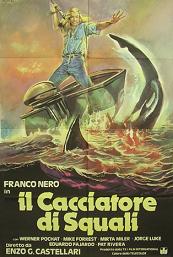
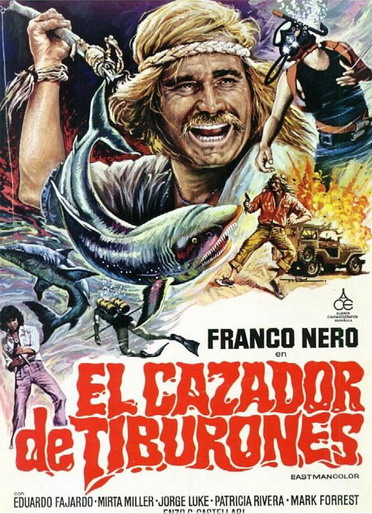
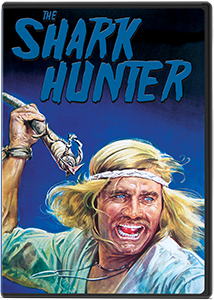
Today’s feature is a little-known Franco Nero movie from 1979: The Shark Hunter.

The Shark Hunter was written by a team that included Alfredo Gianetti (The Blue Eyed Bandit, Divorce Italian Style), co-producer Jaime Comas Gil (A Fistful of Dollars, Cabo Blanco), Tito Carpi (Escape from the Bronx), Jesus Folgar (Watch Out, We’re Mad) and Gisella Longo (Adam and Eve).

The director of The Shark Hunter, Enzo Castellari, was also behind a number of other low-budget Italian productions like The Last Shark, 1990: The Bronx Warriors, Keoma, and The Inglorious Bastards.

The editor for the film was Gianfranco Amicucci, who also cut Keoma, 1990: The Bronx Warriors, and The Inglorious Barstards for Castellari.

The cinematographer on The Shark Hunter was Raul Perez Cubero, who accrued nearly 100 cinematography and director of photography film credits over his career.

The special effects in The Shark Hunter are credited to Alvaro Passeri, which is, according to IMDb, a pseudonym for producer and director Massimiliano Cerchi, who went on to create such films as Satan Claus and Hellbilly.

sharkhunter8The music for The Shark Hunter was composed by Guido and Maurizio De Angelis, who contributed scores to a number of other low-budget features like The Last Shark, Keoma, and Alien 2: On Earth.

The cast of The Shark Hunter includes Franco Nero (Django, Massacre Time, Die Hard II, Omega Code 2), Werner Pochath (Flatfoot in Africa), Jorge Luke (Clear and Present Danger), and Michael Forest (Body of Evidence, Macross Plus, Big O, Mobile Suit Gundam F91).

The reception to The Shark Hunter online is mixed: it currently has a 5.0 rating on IMDb and a 67% audience score on Rotten Tomatoes. However, it is certainly not well known, and both of those numbers come off of very small sample sizes.

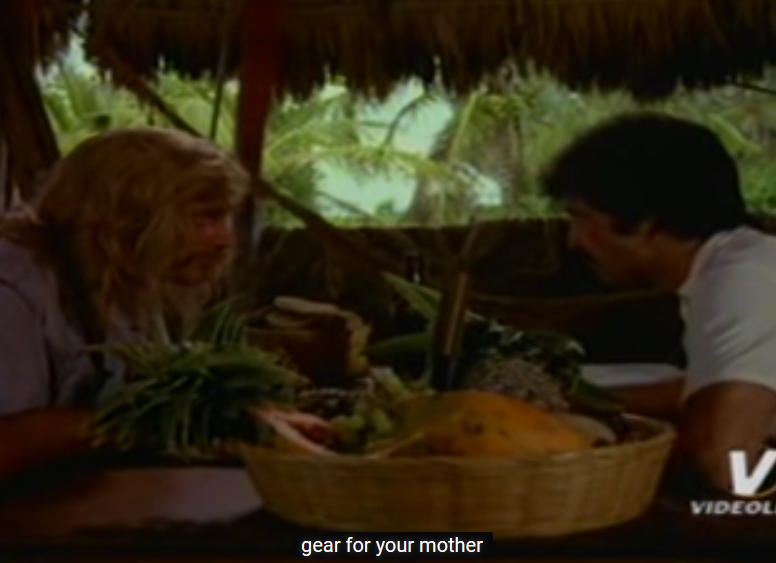
I usually don’t cover movies that I can’t understand. However, I decided to give this a shot at this one with translated YouTube subtitles. The results were less than stellar.

sharkhunter2 sharkhunter3 sharkhunter4 sharkhunter5 sharkhunter6In spite of the language barrier, I was still able to piece together the gist of the story. Franco Nero stars as a mysterious professional shark hunter with a hidden criminal past, who has taken up on a remote island after the death of his wife. He becomes engulfed in a wild treasure hunt when word starts to spread about a downed aircraft just off shore with a massive load of cash. All of the forces need his input because of his expertise as a shark hunter (the waters around the wreck are infested with sharks), and for his criminal prowess. This places him in the middle of a dangerous web of violent and greedy individuals that start to appear on the island.

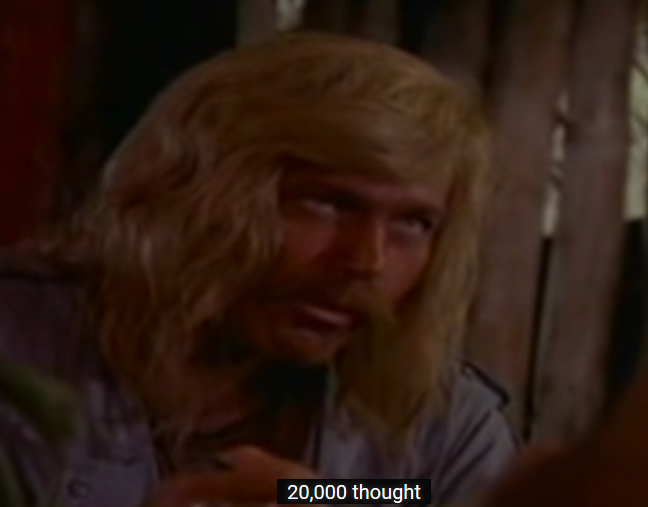
The Shark Hunter takes a while to get going, but the last third of the movie is pretty much non-stop. Once all of the invested parties are established and the treasure heist is planned, everything heats up pretty well: there’s a pretty decent boat/plane chase, a bunch of alarmingly realistic shark wrestling. and Franco Nero wearing what I assume is the most ridiculous wigs ever to grace a film. As badass as Nero is throughout the film, that wig of blonde, flowing locks still looks absolutely ludicrous, and steals the show most of the time.

sharkhunter7As I mentioned previously, there are a number of sequences in this movie where Franco Nero’s stunt double (I assume) actually wrestles a goddamn shark in the water. I was worried that the movie was about to turn into an unintentional remake of Lucio Fulci’s Zombie, and I’m actually curious as to how they pulled all of the shark wrestling off. Some years earlier, Samuel Fuller had similar stunts in his film Shark! that utilized live, sedated sharks, which tragically resulted in the death of one of the film’s stuntmen. I’d like to think that they didn’t do the same thing here.

sharkhunter1I kind of like the plot to this movie (at least the bits that I could understand), and appreciated the way that the crime and heist aspects played into the adventure setting. It made for an interesting sort of genre-bender that took notes from all across the board, synthesizing into something that felt unique.

Overall, this isn’t a particularly awful film, but it certainly isn’t high quality, and suffers from an obviously shoe-string budget. The beginning is far too slow, but the conclusion pretty much makes up for the weaknesses of the first act. The shark wrestling is kind of nerve-wracking because you have to assume that the stunt people were actually in significant danger, which adds an extra element to the movie (for better or worse). I would love to find a legitimately subtitled or dubbed copy of The Shark Hunter, because it was kind of a struggle to get through with the nonsense translations, but it was still compelling enough to get me through it.

Water Foul: Piranha II

Piranha II: The Spawning

piranhaii1

Today, I’m going to be continuing my spotlight of the worst aquatic horror movies with yet another infamous sequel: Piranha II: The Spawning.

Piranha II has three credited screenplay writers: James Cameron (The Terminator, Aliens, The Abyss, Avatar, Titanic), Ovidio Assonitis (The Visitor, Tentacles), and Charles H. Eglee (Dark Angel, Dexter, The Shield). James Cameron is also the sole credited director, however, he reportedly was dismissed and had no control over the editing process, which was dictated by producer and co-writer Ovidio Assonitis. Because of this, there is some question of how much of Cameron’s work actually made it to the screen.

The cinematographer for Piranha II was Roberto Plazzoli, who also shot such films as Starcrash, Midnight Ride, and Tentacles. The editor on Piranha II was Roberto Silvi, who also cut the films Tombstone, Leviathan, and The Ninth Configuration.

piranhaii2The musical score for Piranha II was composed by Stelvio Cipriani, who also created music for the Mario Bava movies Baron Blood and A Bay of Blood, as well as a number of other killer animal flicks like The Great Alligator and Beaks.

Aside from Ovidio Assonitis, the other producers on Piranha II were Chako van Leeuwen (Piranha, Piranha 3D, Piranha 3DD) and Jeff Schechtman (Piranha, Invasion of the Bee Girls, Enter the Dragon, Killing Zoe).

The effects team for Piranha II included Brain Wade (Van Helsing, Wild Wild West, Galaxy of Terror, Jaws 3D), Maurizio Trani (Troll 2, 1990: The Bronx Warriors), Gilberto Carbonaro (Keoma), Mario Cassar (Leviathan, Cutthroat Island, Final Justice), Antonio Corridori (The Italian Job, The Last Shark), Gino De Rossi (Hudson Hawk, Casino Royale, The Inglorious Bastards), and Glannetto De Rossi (Kull The Conqueror, Dune, The Beyond, Zombie).

piranhaii3The cast for Piranha II is primarily made up of Lance Henriksen (The Last Samurai, Aliens, Hard Target, The Terminator), Ricky Paull Goldin (The Blob, All My Children), Carole Davis (Mannequin, The Flamingo Kid), and Steve Marachuk (Eyes of Laura Mars).

The plot of Piranha II follows an investigation into a series of bizarre deaths in the waters around a Caribbean island. While it is at first suspected of being the work of sharks or barracudas, it is eventually discovered that the genetically modified monsters from Piranha have unexpectedly returned, and mutated into having the ability to fly.

James Cameron is outspoken about how much he deeply dislikes the final product of Piranha II, saying the following:

I was replaced after two-and-a-half weeks by the Italian producer. He just fired me and took over, which is what he wanted to do when he hired me. It wasn’t until much later that I even figured out what had happened. It was like, “Oh, man, I thought I was doing a good job.” But when I saw what they were cutting together, it was horrible. In actual fact, I did some directing on the film, but I don’t feel it was my first movie.

Not only was Cameron dismissed before the film was completed and locked out of the editing room, but Miller Drake, who was a trailer cutter alongside Piranha director Joe Dante at Roger Corman’s New World Pictures, was briefly attached to direct before him, and was quickly fired by Assonitis before filming. This is particularly unfortunate, as his idea for the movie sounds pretty cool:

Miller’s intention was that Piranha II should hinge upon Kevin McCarthy’s scientist from Piranha, even though he had seemingly perished in the first movie. “I pitched this idea of bringing Kevin McCarthy back, all chewed up and mutilated from the previous movie,” says Drake. “He was on an abandoned oil rig and he was developing these flying piranhas out there to get revenge, or whatever. I think we were going to bring Barbara Steele back and have him kill her by smashing her head through a fish tank.”

The idea for James Cameron’s hit The Terminator came from the time period when Piranha II was releasing in Italy. Cameron got significantly ill while powerlessly fretting over the movie overseas in the United States, and had a vivid fever dream about a skeletal, killer robot, which became the primary inspiration for The Terminator’s central machine.

Regardless of the unusual situation behind the scenes, Piranha II is still officially James Cameron’s directorial debut, at least on paper. His name remaining on the picture after being fired is apparently due to a contractual stipulation which required that an American had to be credited as the director on the film, or else he would likely have been taken off the movie’s credits, as he initially requested.

piranhaii5James Cameron’s b-movie roots interestingly go deeper than just Piranha II. Before his ill-fated directorial debut, he worked on such films as Galaxy of Terror, Battle Beyond the Stars, and Escape From New York as a visual effects artist, production designer, and art director.

The budget for Piranha II was astoundingly reported as less than $150,000, which it managed to make back with a marginal profit on a limited theatrical release in Europe.

Piranha II has been widely loathed by audiences and critics ever since its release. It currently holds a rating of 3.5 on IMDb, alongside amazingly low Rotten Tomatoes scores of 7% (critics) and 10% (audiences).

The fish in Piranha II just look terrible, even in comparison to the less than impressive monstrous stars of the original Piranha. The addition of wings on the creatures just comes off as comical rather than menacing, in spite of how hard the movie tries to make them terrifying. Fortunately, the film wisely tries to keep the fish off screen and out of focus as much as possible, but there is just no getting around how goofy they look when they do show up.

piranhaii4Worse than anything else is the fact that Piranha II is astoundingly slowly paced, and doesn’t do much to keep the audience’s attention. Honestly, this is one of the most boring movies I have watched since I finished the IMDb Bottom 100, and that is saying a lot. I was able to focus on an Italian Franco Nero movie with no subtitles better than I could stay tuned into Piranha II.

Overall, Piranha II is a train wreck of a movie with little to no redeeming value. However, the behind the scenes stories are really fascinating and interesting, enough so that it is almost worth watching through the movie to get some context. If you aren’t planning to do some reading for the sake of trivia, though, you should avoid Piranha II at all costs. However, the clips of the flying piranhas are worth checking out, because those are hilarious.

Water Foul: Alligator

Alligator

alligator1

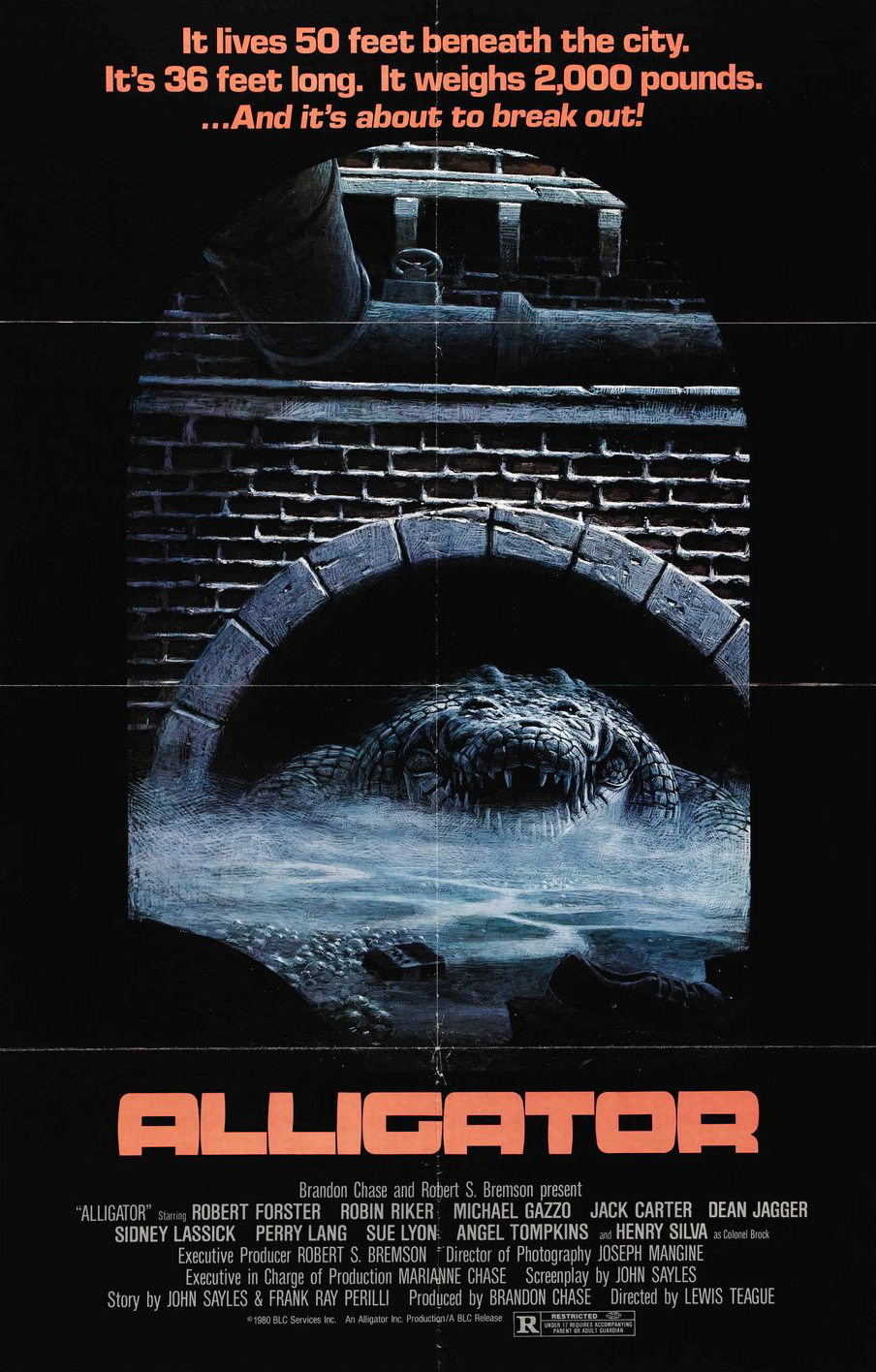
Today, my “Water Foul” series on the worst aquatic-themed horror movies continues with 1980’s Alligator.

Alligator was directed by Lewis Teague, who went on to direct the Stephen King film adaptations of Cujo and Cat’s Eye, as well as the Jay Leno and Pat Morita buddy cop comedy, Collision Course.

Alligator was written by John Sayles (Piranha, The Howling, The Spiderwick Chronicles, The Brother From Another Planet) and Frank Ray Perilli (Laserblast), though the latter apparently only wrote the almost entirely scrapped first draft.

The cinematographer on Alligator was Joseph Mangine, who also shot Albert Pyun’s The Sword and The Sorcerer, Mother’s Day, and Alligator 2: The Mutation.

Alligator featured two primary editors: Larry Bock (Final Justice, Rock ‘n’ Roll High School, The Mighty Ducks, Bring It On) and Ron Medico (Death Bed: The Bed That Eats).

The music for Alligator was composed by Craig Huxley, who also contributed scores to the television show Walker, Texas Ranger and the Meat Loaf musical movie, Roadie.

The producers for Alligator included Mark L. Rosen (Spice World, The Sword and The Sorcerer), Tom Jacobson (The Ladykillers, Flashdance), Brandon Chase (Alligator 2: The Mutation, UFO’s Are Real), and Robert Bremson (Over The Edge, Obsession).

The special effects team for Alligator included Robert Short (Chopping Mall, Piranha), Richard Helmer (Apocalypse Now, Airplane!, Child’s Play), William Shourt (Serenity, Minority Report), John Ramsey (U-571), Pete Gerard (Ghostbusters, Terminator 2, Batman & Robin), David Beasley (Inspector Gadget, Stargate, The Blob), and David Bartholomew (Ghost Dad, Never Say Never Again).

alligator4The cast of Alligator is composed of Robert Forster (Jackie Brown, Vigilante), Robin Riker (The Bold and The Beautiful), Michael Gazzo (Last Action Hero, Cannonball Run II, The Godfather Part II), Dean Jagger (Game of Death, Elmer Gantry, King Creole), Sydney Lassick (Carrie, Cool as Ice), and an early, uncredited appearance by Kane Hodder (Jason X, Friday the 13th Part VIII).

The story of the film centers around a series of mysterious killings in the sewers of Chicago. The investigation ultimately reveals that an over-sized alligator, which had lived off of discarded animal corpses and experimental lab rats after being flushed as a baby, is hunting beneath the busy streets, and killing off countless unsuspecting locals. The police force then has to hunt down and destroy the beast, while the local government tries to cover up the sinister origins of the creature.

Apparently, the original script by Ray Perilli had the story taking place in Milwaukee, and outlandishly explained that the alligator grew massive in the sewers due to runoff from beer production. John Sayles reportedly scrapped the entire draft and started over from scratch, though Perilli was still ultimately given a writing credit on the movie.

According to IMDb, the buggy animatronic alligator used in the film was donated to the University of Florida to act as an unofficial mascot for the Florida Gators, though I wasn’t able to confirm its current location.

ALLIGATOR, 1980Alligator ultimately received a sequel in the form of Alligator II: The Mutation in 1991, a whole 11 years after the film’s initial release in 1980. Unfortunately, it was not received well, meaning I will likely give it a look here on the blog sooner or later.

Astoundingly, Alligator spawned a popular tie-in children’s board game made by the Ideal Toy Company. The commercial for it is up on YouTube, and provides one hell of a flashback to a time when children’s toys were made from R-rated movies.

The reception to Alligator was generally mixed: it currently holds Rotten Tomatoes scores of 67% (critics) and 48% (audiences), with an IMDb rating of 5.9. However, the movie was ultimately quite profitable in its theatrical run, grossing $6.5 million on an estimated $1.75 million budget.

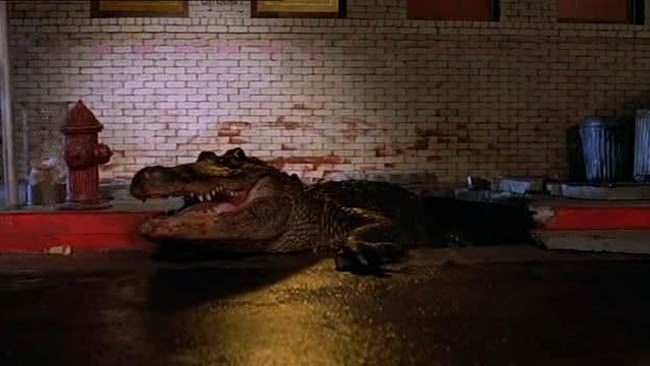
All in all, the alligator itself doesn’t look half bad in this movie. Apparently it didn’t work very well, much like Bruce (the shark from Jaws), so the crew had to be a little creative in how they shot it. I think it worked out pretty well considering, as the gator looks genuinely intimidating. They aren’t particularly hyperactive animals to start with, so it isn’t like they needed a whole lot of action shots of the creature doing gymnastics. In my opinion, the large, lumbering gait of the beast seemed to drive home how little fear it had for humans during its limited time on screen, which I think contrasts pretty greatly to the Lake Placid crocodiles, who always struck me as being a bit too nimble.

There is an odd comedic tone to Alligator that is laced into the characters and the dialogue in the film. It is clearly self aware about what it is, and mocks itself lightly while not ruining the genuine monster movie tone. It never drifts so far as to become outright parody, which is a good thing in my opinion. This is a movie that hits right on the nose of the tropes and characteristic of a Jaws-era monster thriller, and it plays with them well.

I, like most people of my generation, only know Robert Forster as a distinctive-looking older character actor. Apart from some clips from William Lustig’s Vigilante, I had never seen any films from the earlier part of his career before this one, and it is almost surreal to see him so young. It reminded me a little bit of Sam Elliott in Frogs, in that he is almost unrecognizable as a younger man.

alligator3Overall, this isn’t all that bad of a monster flick. It has unfortunately been mostly forgotten, as the legacy of Crocodilian horror seems to be dominated by Lake Placid. That said, this is a flick that is worth checking out just for the novelty of it. There are some cheap effects strewn throughout the movie, but the plot is just darkly humorous enough to keep most b-movie lovers invested in the story through to the end. If you are craving an off the wall monster movie with some 1980s grit, Alligator can certainly provide.

Troll

Troll

trollone1

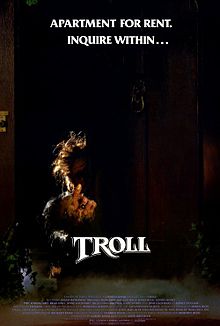
Today’s movie is a little flick called Troll, starring Michael Moriarty and Sonny Bono.

The writer for Troll was Ed Naha, who also wrote the screenplays for films like Dolls, Dollman, Omega Doom, and C.H.U.D. II: Bud the CHUD.

Troll was directed by John Carl Buechler, who was also behind such films as Ghoulies Go To College, The Eden Formula, and Friday the 13th Part VII. He has also worked extensively as an effects artist on low budget films like Piranha, Robot Jox, Dolls, From Beyond, Carnosaur, and The Gingerdead Man.

The cinematographer on Troll was Romano Albani, who most notably shot the film TerrorVision, as well as Dario Argento’s Inferno.

The editor for Troll was Lee Percy, who has cut such films as The Ice Harvest, Boys Don’t Cry, The Believer, Dolls, From Beyond, and Re-Animator over his career.

The producers for Troll were Albert Band, Charles Band, and Debra Dion, who were all heavily involved with the production company, Empire Pictures. Empire was Charles Band’s initial independent company that existed throughout the 1980s, prior to the creation of the more recognizable Full Moon Entertainment. The outfit also produced films like Trancers, Re-Animator, From Beyond, Dolls, and Robot Jox, and laid the foundations for a number of Full Moon franchises.

The makeup effects supervisor on Troll was John Vulich, an eventual Emmy winning effects artist who would work on acclaimed television series like Babylon 5, The X-Files, and Buffy the Vampire Slayer.

The creature creation for Troll was done by the director himself, John Carl Beuchler. The rest of the team included Brent Armstrong (Hollow Man, It’s Alive 3, Starship Troopers, In The Mouth of Madness), Howard Berger (Evil Dead 2, Maniac Cop 3, Scream, The Faculty, Kill Bill), R. Christopher Biggs (Super Mario Bros., Hudson Hawk, Teen Wolf), Everett Burrell (Aliens, DeepStar Six, Castle Freak), Gino Crognale (The Spirit, From Beyond, 976-EVIL, Django Unchained), and Mitch Devane (Dolls, From Beyond, Captain America).

trollone6The visual effects team for Troll was made up of Jim Aupperle (Evil Dead 2, Beetlejuice, RoboCop 3, Dollman, Son of the Mask), James Belohovek (Robot Jox, Leviathan, Evolver, RoboCop 3, Dollman), Steve Burg (Robot Jox, Leviathan, Chopping Mall, Waterworld, Interstellar), Linda Drake (From Beyond, Dr. Alien, The Smurfs 2, Chopping Mall), Kevin Kutchaver (Robot Jox, RoboCop 3, Last Action Hero, Blade, League of Extraordinary Gentlemen, Shoot Em Up), Len Morganti (School Spirit, Argo, Robot Jox, RoboCop 3, Blind Fury, True Believer), and Martine Tomczyk (Super Mario Bros., Apollo 13, The Last Dragon), as well as a handful of others.

The musical score for Troll was done by Richard Band, Charles Band’s brother. He has famously provided music to movies like Re-Animator, Castle Freak, The Pit and The Pendulum, and Laserblast.

The cast for Troll features a number of recognizable faces, including Michael Moriarty (It’s Alive 3, The Stuff, Q, Law & Order), Sonny Bono (The Sonny and Cher Show, Hairspray), Noah Hathaway (The NeverEnding Story), Shelley Hack (Charlie’s Angels), Julia Louis-Dreyfuss (Seinfeld), and June Lockhart (Lost in Space, Lassie).

trollone2The plot of Troll centers around a young family who is moving into a new home in a San Francisco apartment complex. Unbeknownst to them, however, an evil, magical troll also calls the complex home, and has sinister plans for the new tenants. The young Harry Potter, Jr. teams up with a friendly local witch in an attempt to save his sister, who is captured by the troll as the family is moving in.

Troll has received increased attention in recent years thanks to the cult popularity of the pseudo-sequel, Troll 2, directed by Claudio Fragasso. Troll 2 is widely considered one of the elite good-bad movies of all time, and even inspired a documentary about it called Best Worst Movie. However, despite some debate on the point, Troll 2 doesn’t have any direct official connection to Troll, nor does it actually feature trolls at all in the film.

troll22Two of the central characters in Troll bear the name Harry Potter, which is of course now the title of a phenomenally popular book and movie franchise. However, the books wouldn’t be written for another handful of years, leading some to wonder if J.K. Rowling took the name from this movie.

The reception to Troll was overwhelmingly poor. It currently has a 4.2 score on IMDb, along with ratings of 29% (critics) and 28% (audience) on Rotten Tomatoes.

Troll had an estimated production budget of just over $1 million. It managed to gross roughly $5.5 million domestically in its theatrical run, making it a profitable low-budget feature in spite of the poor reception.

Troll features, without any doubt, one of the most aggravatingly annoying child actors I have ever seen in a movie. For most of the movie, the little girl character is possessed by the troll, so she has to act like an evil character in disguise. Frankly, it is unbearable whenever she starts growling or trying to be scary.

trollone4Michael Moriarty, as always, is delightfully eccentric and goofy in Troll. He isn’t quite as memorable as he was in Q: The Winged Serpent or The Stuff, but he has some solid moments in here despite not having a whole lot of screen time. Likewise, Sonny Bono plays a great scummy neighbor during his brief presence in the film, before he turns into a weird plant-thing.

trollone3There were far more pop culture references than I expected in this movie, to such name brand products as Star Trek and Godzilla. I assume this was an intentional touch by Ed Naha, who seems to enjoy inserting humor and self-awareness into his movie scripts. Speaking of which, there are some genuinely funny moments in this movie: I am particularly fond of the fake movie clips that show up in the background.

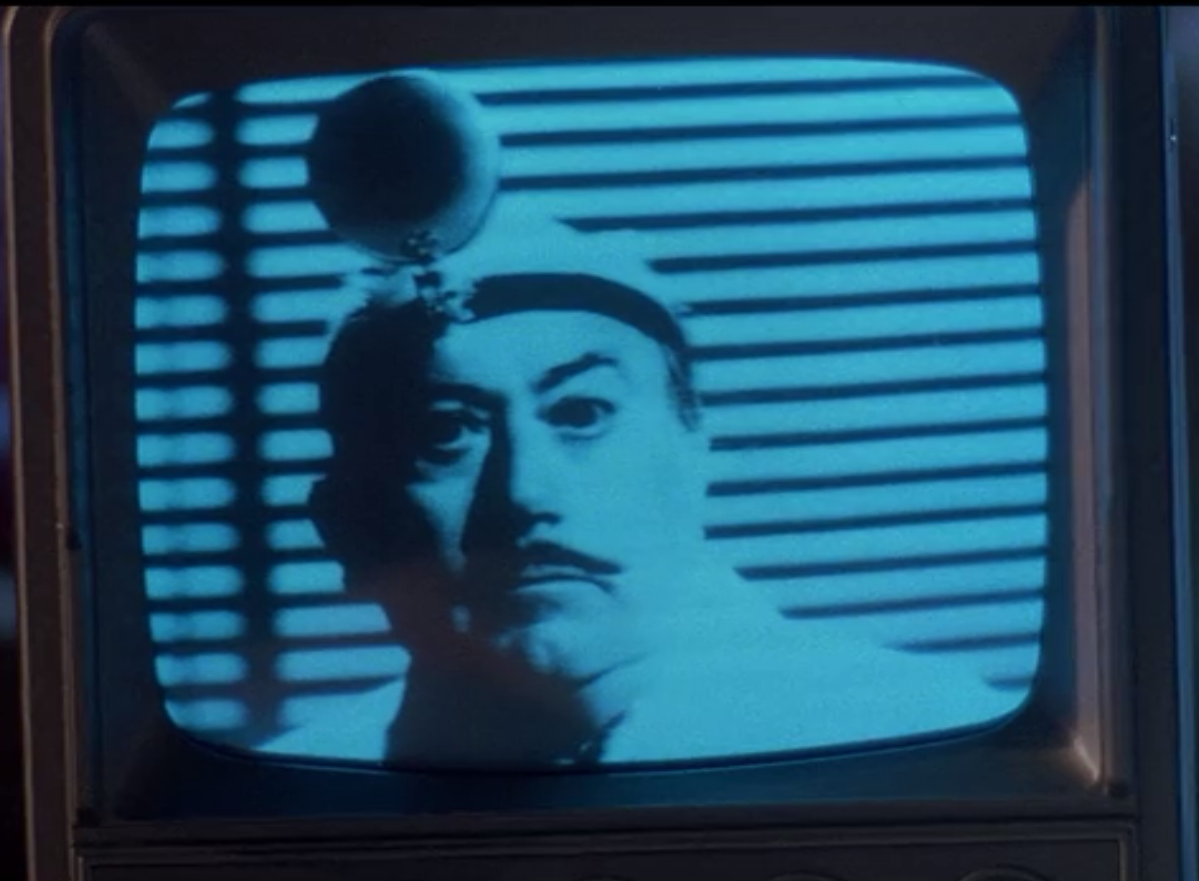
trollone7“That may look like your canary, Tweety, my dear… It may sing like Tweety, it may molt like Tweety…but your canary is a pod person from the planet Mars.”

The climax of the movie features some really dated lightning effects that are impossible not to remark on. I am sure it looked at least ok at the time, but it is pretty hilarious to watch these outdated visual effects now.

trollone8The troll itself isn’t particularly menacing, and something about the costume just seems unwieldy and awkward. It honestly makes Warwick Davis in the Leprechaun franchise look genuinely frightening by comparison. Even worse is that the smaller troll creatures look vastly different, and amazingly look even cheaper than the central troll.

trollone5Overall, Troll isn’t an elite bad movie, particularly when compared to its pseudo-sequel. However, there is plenty to enjoy here between the bad effects, hammy acting, ludicrous plot, and troll-singing. It would be worth a recommendation based on Sonny Bono’s death scene and Michael Moriarty’s presence on their own, let alone all of the other nonsense going on in this film. For bad movie aficionados, this is a must-see.