Tag Archives: movies

Cooties

Cooties

cooties2

This past weekend, I went to check out the latest horror comedy to hit theaters: Cooties, starring Elijah Wood and Rainn Wilson.

The last few horror-comedies I saw in theaters were big winners with me: Bloodsucking Bastards and Dead Snow 2: Red vs. Dead, specifically. However, Cooties was a much different story. I’m not quite sure yet if I just didn’t like it, or if I honestly hated it. I’ve decided to percolate on that a bit, but in the meantime, here are some thoughts.

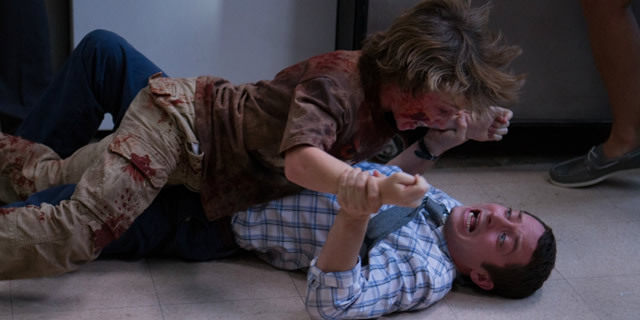
Cooties takes place in a small town elementary school near a massive chicken factory, and follows the outbreak of a chicken-born virus from the factory that turns children into zombie-like cannibals. The elementary school serves as ground zero for the outbreak, leaving a handful of surviving teachers trapped within its confines.

First off, these issues I have aren’t rooted in that premise. Children infected with a zombie-esque virus is great: it brings up some ethical questions about fighting children, allows for some great creepy child-acting, and you get to see some shitty little kids turn into fleshy goo as a bonus. I’m all good on that front; I couldn’t be happier.
cooties3Where this movie absolutely fails is in the writing, in just about every way that writing could realistically fail. To start with, the cast includes a number of lazy stereotypes that couldn’t be less believable as human beings. Let’s start with Hitachi, a Japanese janitor who randomly appears halfway through the movie. He lives in the basement of the school (janitors do that, yeah?), and serves three purposes for the film: 1) to offer a character seaweed to eat, which they decline 2) to offer a fake ancient parable of wisdom before a fight, which is cut off because it is too long (hilarious, right?), and 3) to kill a bunch of child-zombies with well-choreographed martial arts (of course). Is it worth pointing out how lazy the writing for this character is? Honestly, that isn’t so much a character as it is an outline for a racist cartoon.

Other characters in the story include a woman teacher whose only lines refer to guns, conservative politics, or her emergency rape button, and a science teacher with brain damage who doesn’t understand social cues, and has extensive surgical and medical knowledge beyond his education. Although, to their credit, they at least have a few character traits. The surviving children characters who tag along with the gang of teachers are even more vague outlines than that: one of them is “nerd with diabetes,” and the other is “already had her first period.” Both of these descriptions have direct plot relevance, making them more devices than characters when all is said and done. Outside of their respective plot moments, the two children are seldom seen or heard, and barely even have reactions to the violence around them. This might have been a statement about desensitization, but I think the directors just forgot to tell them to do anything.
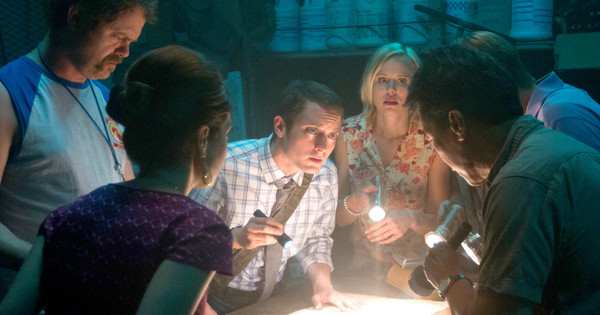
On to a structural screenplay problem: Cooties is one of those apocalyptic movies that just sort of…ends. I absolutely loathe this practice, going all the way back to The Birds. It always seems like a cop-out to me, because there is rarely a realistic way to “resolve” an Armageddon scenario in a third act. The Birds at least more of less completes a story, though: Cooties honestly feels like it is missing an act. There is no solid conclusion to the story, no statement of where the characters are going, and no tangible goal that has been achieved. There is a brief mention of the magical brain-damaged scientist making a vaccine, but it is never stated how he would be able to do that, or what would be needed to make that happen. The movie just sort of leaves the audience hanging without any resolution.

Instead of having a finale that satisfies the audience and in some way resolves the plot, here’s how Cooties breaks down. About two-thirds of the way through the movie, the teachers manage to escape from the elementary school, and make it out of the town of “Fort Chicken”. The last third of the film sees them trapped in a neighboring town after running out of gas, which they eventually manage to escape over the rolling of the credits.

In short, the story moves from a primary siege scenario into a much shorter secondary siege scenario, and then it just ends. Movies that hinge on this kind of plot need to stay in that initial siege until the conclusion/resolution of the story, or else the tension will completely dissipate. Tension is a thing that has to be carefully built, and it can’t effectively be rushed. Just like with a building, knocking it down is much easier than putting it back up. The fact that this movie ruins the initial siege (and the tension inherent to it) and then tries to set up another one exhibits a massive misunderstanding of how tension fundamentally works. The thing that bothers me most about this is that Leigh Whannell, the co-writer of Cooties, is no rookie. The guy wrote Saw, which is a fantastically tense and intriguing flick, so he knows how this is supposed to work.

It is easy to say that a horror-comedy doesn’t have to follow the same rules as horror, but that just isn’t true. Shaun of the Dead, for example, deals with a very realistic siege scenario, and builds significant tension with it. Horror-comedies need to be both horrors and comedies in order to work, and when that balance tips too far, the movie falls apart. Cooties suffers from this in a big way: it is a comedy with gore effects more than it is a horror-comedy. The film so absolutely fails in building tension and dread that it defies its own purported label (in a bad way).
cooties1Let’s change gears and dig into some of the logic in this movie for a minute. It is explicitly stated at one point (after an improvised autopsy by the magical scientist) that the infected children have very limited brain functions due to the virus turning their grey matter black (what?). However, the infected are shown to still have plenty of higher brain functions throughout the film, specifically when it serves the plot. For instance, one of them consciously cuts off the building’s electricity and destroys all of the cell phones on the property. Another one is shown riding a bicycle, while yet another is shown putting makeup on a corpse. All of these activities (any many more I haven’t mentioned that are shown) require quite a lot of active brainpower, in contradiction to what is stated at the autopsy. On the flip side, at other moments in the story, the children are effectively brain dead, mindlessly eating pills thrown at them or staring blankly into a floor grate, failing to see the obviously visible people underneath it.

The perplexing logic isn’t limited to the virus, either. It is revealed at one point that Elijah Wood’s character quit his job as a teacher in New York City to move back to his home of Fort Chicken (a place that he hates) to live with his mom and be a substitute teacher, specifically because he “missed” someone he hadn’t spoken to in roughly 15 years. The story tries to skirt around how obviously creepy this is, but it never really starts making sense. There is never any other reason given for him moving back to Fort Chicken, other than to pretend that he is working on his novel (which he was already doing in New York). He mentions being depressed, but that background is never delved into or brought back up.

I wish this all was the extent of the issues I have with this movie, but there is plenty more I could get into. For instance, there is a half-assed sequence where the movie explicitly chickens out of a baby death, almost certainly the result of bowing to external pressures. There is also the fact that no actual characters die throughout the movie, in spite of how little that makes sense. There are also more lazy moments of comedy than I care to count, including a Lord of the Rings reference leveled at Elijah Wood, a litany of bad hallucination jokes barely fit for an Evil Bong movie, and Rainn Wilson’s character beating the dead horse of his cookie-cutter gym teacher trope until it is little more than a horse-skin flesh sack.
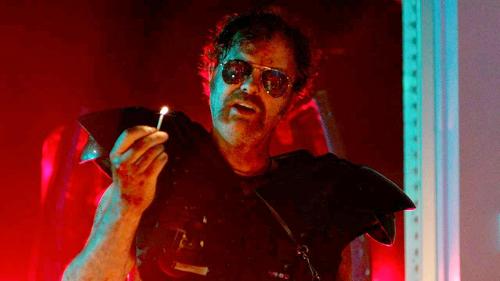
cooties5All of that said, there are some things I liked about this movie. The effects generally look good, the child actors could have been far worse, and there are some genuine moments of humor scattered throughout. Personally, I laughed out loud when Elijah Wood revealed that the name of his in-progress novel about a possessed boat was titled “Keel Them All.” There is also an easily-loathable antagonist in the story: Patriot, a kid born on 9/11 who believes he was sent by God to join the marines and kill a bunch of “towelheads.” You just can’t help but hate this entitled little shit, who spends his time brazenly bullying classmates and threatening teachers (before he ever becomes inclined to eat them).

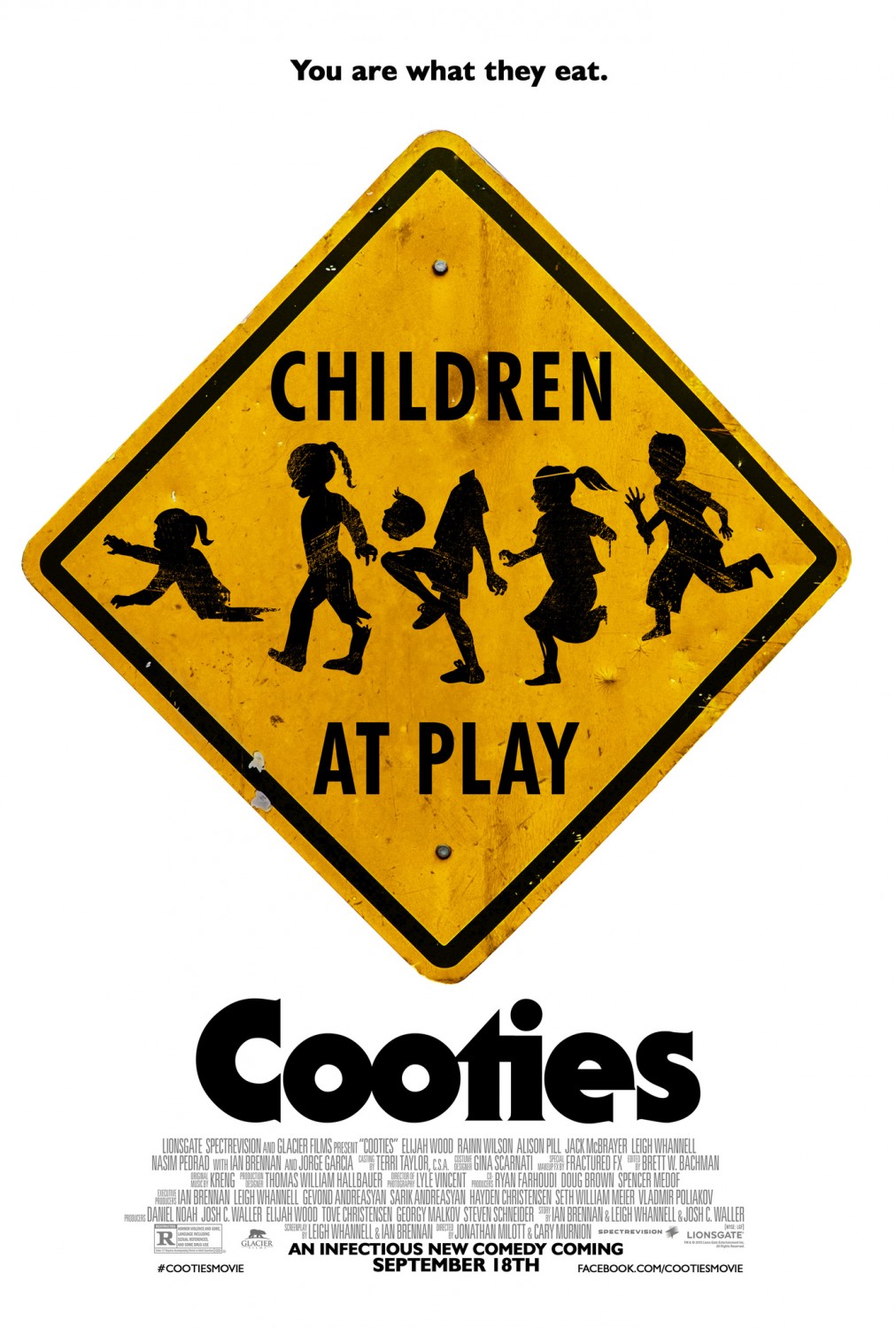
Overall, Cooties is disappointing above all else. I was initially excited because of the casting and the retro-style poster, and hoped for an interestingly-constructed throwback horror comedy. The movie is weighed down by lazy jokes, aggravating stereotyping, and a bad structure, and winds up being funny in spite of itself only some of the time. Despite how much I dislike this movie, I wouldn’t tell horror and horror-comedy fans to specifically avoid it. I think it actually serves as an interesting counterexample to more effective horror-comedies like Shaun of the Dead, and it sounds like it does have some fans out there. If you just want a gore movie, this will provide that for you, but I try to have higher standards and expectations from the genre. Anybody can throw a bucket of blood at you, only some can make you feel fear at the same time, and even fewer still can make you laugh in the middle of it all.

The Fog (1980)

The Fog (1980)

fog2

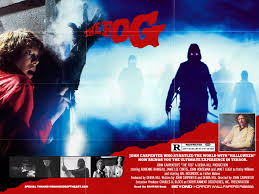
Today’s feature is one of John Carpenter’s many cult classic films: 1980’s The Fog.

The Fog was co-written, directed, and scored by horror master John Carpenter as his follow-up to the smash hit Halloween, and was  co-written and produced by his frequent collaborator Debra Hill.

The cinematographer for the film was Dean Cundey, and accomplished shooter who has worked on such movies as Jurassic Park, Garfield, Flubber, Apollo 13, Hook, Road House, Back To The Future, Big Trouble In Little China, Halloween, Escape From New York, and many more.

The Fog featured work by two credited editors: production designer Tommy Lee Wallace (Halloween, It, Fright Night 2) and Charles Bornstein (Halloween, Critters 2, Howling 2, Return of the Living Dead 2).

The distinctive musical score for The Fog was provided by director John Carpenter, something he often did for films he was involved with.

The team of producers for the movie included co-writer Debra Hill, Pegi Brotman (The Philadelphia Experiment), and Barry Bernardi (The Punisher, Christine, Paul Blart: Mall Cop, Pixels, The Devil’s Advocate, Click).

The special effects team for The Fog included Rob Bottin (The Thing, Fight Club, RoboCop, Legend, Piranha, RoboCop 3), Edward Ternes (Clue, Wonder Woman), Erica Ueland (Children of the Corn, Halloween), Richard Albain Jr. (Assault on Precinct 13, Malcolm in the Middle), and James Liles (1941, Logan’s Run).

fog3

The cast for The Fog included Tom Atkins (Maniac Cop, Halloween III, Creepshow), Jamie Lee Curtis (Halloween, Prom Night, Trading Places), Janet Leigh (Psycho, Touch of Evil, The Manchurian Candidate, Night of the Lepus), Adrienne Barbeau (Creepshow, Swamp Thing, Escape From New York), John Houseman (Rollerball, The Paper Chase), and Hal Holbrook (Capricorn One, Creepshow, Wall Street).

The Fog notably featured the mother and daughter acting combo of Janet Leigh and Jamie Lee Curtis, who have both had highly acclaimed acting careers. However, they only appeared in one other movie together: Halloween H20.

Special effects worker Rob Bottin plays the role of Blake, the lead ghost, in The Fog. He wound up being cast specifically because of his size after he expressed interest in taking an on-screen role in a John Carpenter movie. He would later famously head the effects team for John Carpenter’s memorable take on The Thing.

Director and co-writer John Carpenter was married to lead actress Adrienne Barbeau at the time The Fog was filmed, and the lead role was apparently written specifically for her from the outset. They divorced only a few years after the film’s release, in 1984.

In order the achieve the desired, surreal effect for the fog retreat sequences in the movie, the film had to be run backwards. This means that Adrienne Barbeau had to act in reverse for these sequences, a notable feat.

Reportedly, horror legend Christopher Lee was initially intended for Hal Holbrook’s character, but had a scheduling conflict that prevented him from taking it up.

fog1

The Fog received a 2005 remake directed by Rupert Wainwright, but it was very poorly received by audiences and critics alike. Ultimately, it racked up an astonishing 4% critics score on Rotten Tomatoes, along with an abysmal 3.6 rating on IMDb.

The Fog had a reported budget of just $1 million, and in total grossed over $21 million domestically in its theatrical run, making the movie significantly profitable.

While The Fog was not nearly as profitable or well loved by audiences or critics as Halloween, it is certainly a cult favorite for many. Currently, it holds a 6.8 rating on IMDb, along with Rotten Tomatoes scores of 69% from critics and 63% from audiences.

First and foremost, The Fog has an excellently constructed, creepy atmosphere, which is effectively emphasized by Carpenter’s eerie score. Personally, I think that the music is an improvement on Carpenter’s previous work on Halloween, though that is a point that is certainly up for debate.

With the ghostly sequences, Carpenter makes very interesting use of light in conjunction with the eponymous fog, creating a lot of back-lighting, imposing shadows, and halo effects over the monsters. The obscured vision also keeps the tension high, as both the audience and the characters are never quite sure where in the fog the monsters are.

In his review, Roger Ebert pointed out a significant issue with The Fog: that “it needs a better villain”.

The problem is with the fog. It must have seemed like an inspired idea to make a horror movie in which clouds of fog would be the menace, but the idea just doesn’t work out in “The Fog,” …The movie’s made with style and energy, but it needs a better villain.

In general, I agree with this overall sentiment. Horror movies are almost always defined by the threat, and while the image of “The Fog” itself is menacing, the figures within it just aren’t quite scary or imposing enough. The fog effects certainly allow for a lot of horror ambiance, but it doesn’t feel to me like it ever really pays off.  The story is a bit too slowly paced to begin with, which certainly doesn’t help with the lack of viewer satisfaction, particularly in the minds of 1980 theater audiences expecting to see another Halloween.

Overall, The Fog is a solid atmospheric horror movie that has been perhaps unjustly buried in John Carpenter’s body of work. It may not be his best film (or even one of his best films), but it is fantastic on its own, assuming you can divorce it from the reputations of its predecessors and descendants in the Carpenter filmography. If you dig horror movies, you certainly owe it to yourself to give it a watch.

Death To Smoochy

Death To Smoochy

DeathToSmoochy1

Today’s feature is Danny DeVito’s twisted depiction of the cracked world of children’s entertainment: Death to Smoochy.

Death to Smoochy was written by Adam Resnick, who is best known for the movie Cabin Boy and his extensive writing work on The Late Show with David Letterman, The Larry Sanders Show, and Saturday Night Live.

Death to Smoochy was directed by noted actor Danny DeVito, who was also behind such films as War of the Roses, Matilda, Hoffa, and Throw Momma From The Train.

The cinematographer for the movie was Anastas Michos, who also shot Keeping the Faith and The Big Kahuna, and worked as a camera operator on such films as Quiz Show, Lean on Me, and Born on the Fourth of July.

The editor on Death to Smoochy was Jon Poll, who is known for cutting films like Captain America, Monkeybone, Cabin Boy, Meet the Parents, and Mystery, Alaska.

The team of producers behind the film included Andrew Lazar (American Sniper, Jonah Hex, Confessions of A Dangerous Mind), Peter Macgregor-Scott (The Jerk, Revenge of the Nerds, Batman & Robin, Under Siege), Doug Davison (The Grudge, The Departed), John Kreidman (Watchmen, The Smurfs 2, Zookeeper), and Joshua Levinson (Matilda, Jonah Hex, Gattaca).

The musical score for Death to Smoochy was composed by David Newman, who also scored such films as Galaxy Quest, The Mighty Ducks, Jingle All The Way, Ice Age, Tommy Boy, Norbit, The Spirit, Serenity, Heathers, War of the Roses, and Matilda, among many others.

The visual effects team for the movie was composed of Lincoln Kupchak (Red Planet, Blood Diamond), John Mesa (Army of Darkness, Darkman), Penny Mesa (Deep Blue Sea, Red Planet), William Mesa (976-EVIL, The Italian Job), Dan Novy (24, The Guardian), Jeffrey A. Okun (Suburban Commando, Shocker, Die Hard 2, Sphere), L. Elizabeth Powers (Son of the Mask, League of Extraordinary Gentlemen, Daredevil), Liz Radley (Collateral, On Deadly Ground, Batman & Robin), Ken Stranahan (Red Planet, Deep Blue Sea, Son of the Mask), James Tittle (Suspect Zero, Red Eye, Dreamcatcher, Gigli, Stealth), and Jeffrey White (Holes, Red Planet).

deathtosmoochy5

The special effects unit for Death to Smoochy included such names as Taku Dazai (Slither, Dracula 2000), Aaron Dinsmore (The Incredible Hulk, Dracula 2000), Walter Klassen (Jason X), David Kleinstein (Frequency, Boardwalk Empire), David Loveday (Blues Brothers 2000, X-Men, Lucky Number Slevin, 300), Jim McGillivary (Pompeii, Silent Hill), Laird McMurray (Crimson Peak, Pixels, Pacific Rim, Stuck, The Dead Zone), Jim Peacock (Saw V, Tommy Boy), John Poulter (Secret Window, Taking Lives, Stuck), David Reaume (Glitter, Chicago, Silent Hill, Kick-Ass, Devil), John Stifanich (The Substitute 2, Signs, Boardwalk Empire), and Stephen Wallace (Scott Pilgrim vs. The World).

The makeup effects team for the film included Marlene Aarons (Repo Men, Max Payne), Tim Mogg (Glitter, Death Wish V), Ve Neill (Ed Wood, Beetlejuice, Laserblast, Kingdom of the Spiders), Pipsan Ayotte (Pacific Rim, The Love Guru), and Selena Evans-Miller (Major Payne, Matinee, The Waterboy).

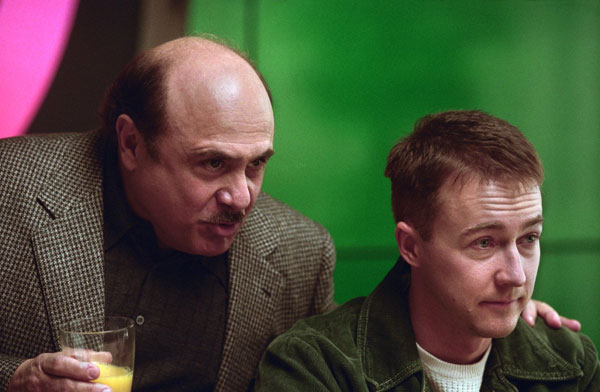
The deep cast of Death to Smoochy was made up of Robin Williams (Insomnia, Patch Adams, Good Will Hunting, Dead Poets Society, One Hour Photo, The Birdcage, The Fisher King), Edward Norton (Fight Club, Primal Fear, The Illusionist, Rounders, Red Dragon), Danny DeVito (Batman Returns, One Flew Over The Cuckoo’s Nest, L.A. Confidential, It’s Always Sunny In Philadelphia, Twins), Jon Stewart (The Faculty, The Daily Show), Pam Ferris (Matilda, Children of Men, The Raven), Catherine Keener (Being John Malkovich, Capote, Hamlet 2, The Soloist, Captain Phillips), and Harvey Fierstein (Independence Day), among others.

Reportedly, Jim Carrey turned down a role in Death To Smoochy in order to make the film The Majestic, which released in 2001.

Robin Williams earned a Golden Raspberry nomination for worst actor for his role of Rainbow Randolph in Death To Smoochy, but wound up losing out to Hayden Christensen’s Anakin Skywalker from Attack of the Clones.

deathtosmoochy3

The budget for Death To Smoochy was reportedly $50 million, of which it made back less than $8.5 million theatrically. Needless to say, it was a massive financial flop.

At the time of its release, critics were really tough on the twisted dark comedy, earning it aggregate scores of 38% from MetaCritic and 42% from Rotten Tomatoes. In particular, Roger Ebert gave the movie a scathing review, which opened as follows:

“Only enormously talented people could have made “Death to Smoochy.” Those with lesser gifts would have lacked the nerve to make a film so bad, so miscalculated, so lacking any connection with any possible audience. To make a film this awful, you have to have enormous ambition and confidence, and dream big dreams.”

That said, public perception towards the movie has softened over time, and it currently holds an IMDb rating of 6.4 alongside a Rotten Tomatoes audience score of 66%.

deathtosmoochy4

I personally have fond memories of watching this movie on the cable channel Comedy Central, where it played in numerous blocks over the years. This heavy replay time almost certainly helped win over much of its current cult following.

Another reason for the movie’s cult popularity is similarly tied to Comedy Central: the massive rise in popularity of Jon Stewart, who was only a couple of years into his run at The Daily Show when the film released. Throughout the show’s run, he would often reference his involvement with the movie as an example of his acting (in)experience, exposing it to new people with each passing mention.

Most of the criticism leveled against Death to Smoochy at the time of its release focused on its cynical and allegedly “mean-spirited” screenplay. Personally, I’ve never quite understood those complaints: the story is darkly comedic, but it isn’t “mean-spirited” towards any particular characters, outside of the deserving corporate flunkies and would-be murderers.

My biggest issue with the film, if you can call it that, is with the acting. Both Norton and Williams are beyond over-the-top in their portrayals, to the point that they both seem like caricatures more than humans, like the yin and yang of overacting. That said, the lack of identifiable humanity and excess of cheesy showmanship displayed oddly fits both of their characters well. As children’s entertainers, of course they would be off-putting, eccentric, and clown-like. I have to assume, because of the immense talent on all sides of the camera here, that this is what the team had in mind for the characters, and that they were portrayed as intended. Regardless, both men come off as difficult to relate to, which I imagine didn’t help the movie with general audiences.

The first thing I noticed upon re-watching Death to Smoochy is how deliberately shot and colorful it is: every sequence is meticulously planned for blocking and color, certainly more-so than you would expect from a comedic film like this. Part of this was undoubtedly DeVito’s vision for the film, but the commentary included on the DVD reveals that cinematographer Anastas Michos had more than a little bit of influence on each individual shot.

deathtosmoochy2

Overall, this was niche movie made with a mass appeal budget. In general, dark comedies won’t fly with the movie-going masses, which was an error with the very inception of the picture. That said, the people with whom the movie resonates absolutely delight in it, and time has certainly shown favorably on the film, making it a bit of a cult classic.

If you like dark comedies or enjoy Danny DeVito’s other directorial efforts, then this is a must-see flick. The humor is very dark, which turned many away from it, but if you go in knowing what to expect, then you are far more likely to enjoy it for what it is.

Gamera 3: Revenge of Iris

Gamera 3: Revenge of Iris

gamerairis1

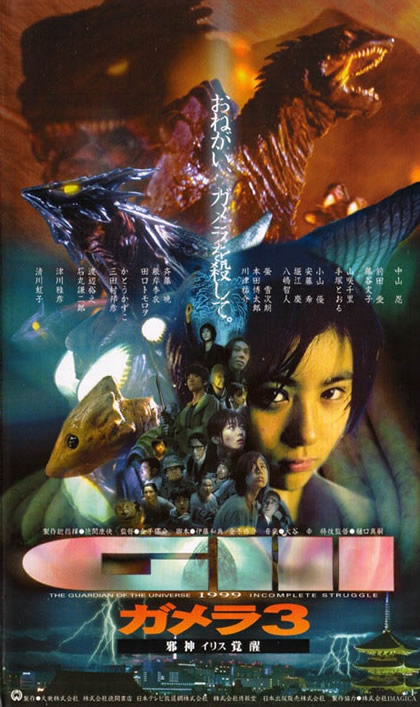
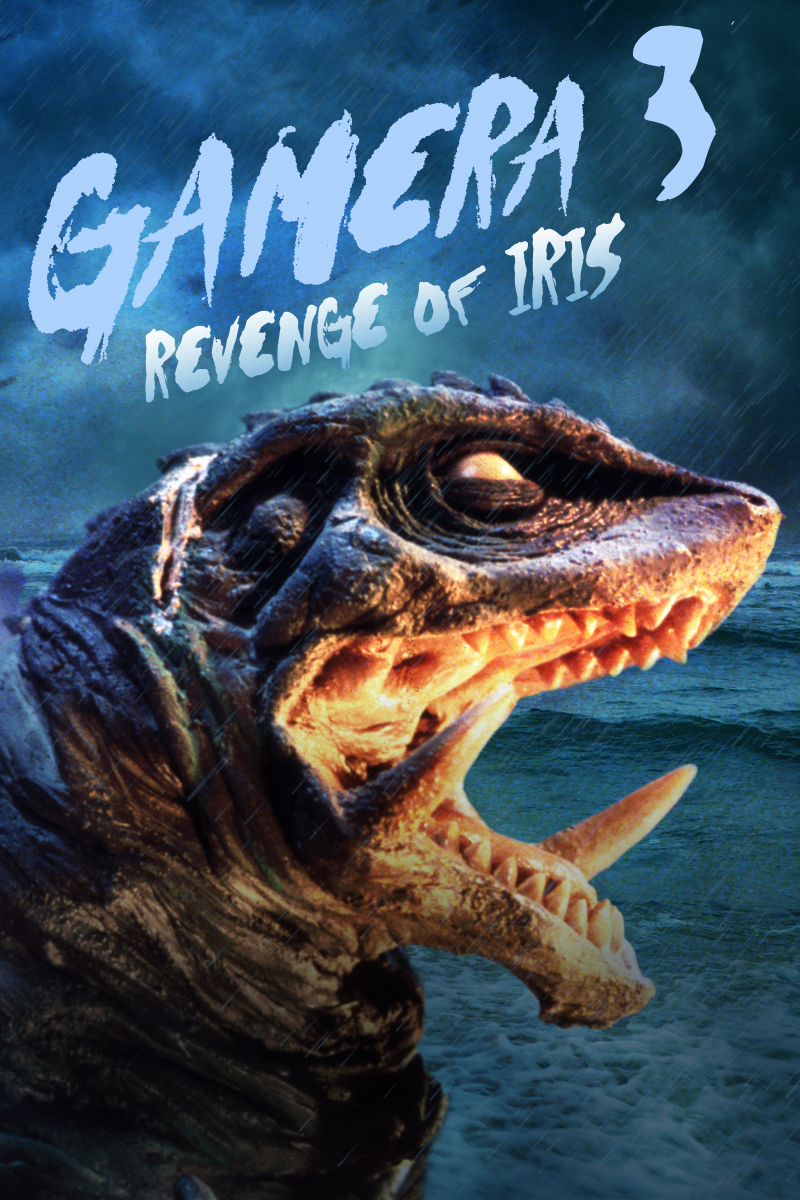
Today’s feature is the concluding entry into the Heisei era Gamera Trilogy: 1999’s Gamera 3: Revenge of Iris.

Gamera 3: Revenge of Iris was once again written by Kazunori Itô, who also penned the previous two movies (Gamera: Guardian of the Universe and Gamera 2: Attack of Legion) as well as the movie adaptation of Ghost in the Shell and .hack//SIGN.

The director for Gamera 3 was Shûsuke Kaneko, who also helmed the Death Note movie and Toho’s Godzilla, Mothra, King Ghidorah: All Out Attack. This was his last work in the Gamera franchise after directing Gamera: Guardian of the Universe and Gamera 2: Attack of Legion.

The cinematographer, Junichi Tozawa, likewise returned from Gamera: Guardian of the Universe and Gamera 2: Attack of Legion.

The editor for Gamera 3 was a newcomer to the franchise: Isao Tomita, who also cut Godzilla, Mothra, King Ghidorah: Giant Monsters All-Out Attack.

The producing team for Gamera 3 included Naoki Sato (Gamera 2, One Missed Call, Three…Extremes), Yasuyoshi Tokuma (Spirited Away, Princess Mononoke), and Tsutomu Tsuchikawa (Dead or Alive, The City of Lost Souls).

The effects team for Gamera 3 included Makoto Kamiya (Godzilla vs. Biollante), Rikiya So (Godzilla: Final Wars), Shinji Higuchi (Gamera 2, Gamera, Attack on Titan), Mahiro Maeda (Blue Submarine No. 6, Mad Max: Fury Road, Porco Rosso, Gamera).

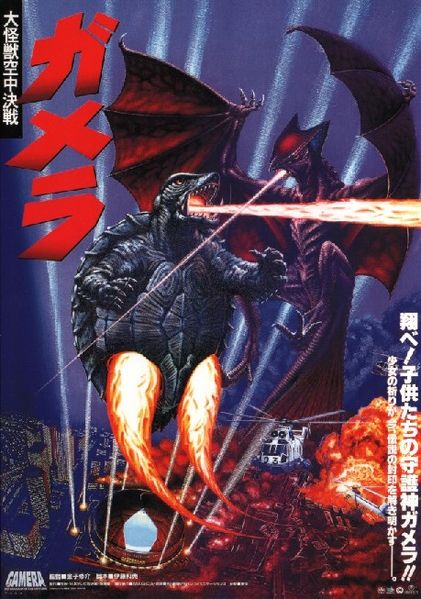
gamerairis2There has been one more Gamera movie created following the release of Revenge of Iris, though it is not regarded as part of the Heisei era trilogy: 2006’s Gamera The Brave. There are currently rumors that a new Gamera movie is being produced in the wake of the success of the American Godzilla, though specific details are sketchy.

Gamera 3: Revenge of Iris was very well received among fans, and some regard it as the greatest non-Godzilla kaiju movie ever made. It currently holds a 7.4 rating on IMDb, alongside an impressive 91% audience score on Rotten Tomatoes.

A background aspect of the plot in Revenge of Iris is the return of a number of Gyaos, which were the principle adversaries in Guardian of the Universe. Iris, Gamera’s mysterious new adversary, is alluded to be a mutated subspecies of Gyaos, and retains some of the monster’s physical characteristics. The Showa era also brought back Gyaos occasionally to show how much stronger the new foes were in comparison to past threats, but their purpose in this movie is much different. Instead of acting as a display of how powerful the new enemy is, they exist to pose something of an ethical question: are the Gyaos or Gamera the greater threat in the grand scheme of things? If only one can be dealt with, which should be the priority to defeat?

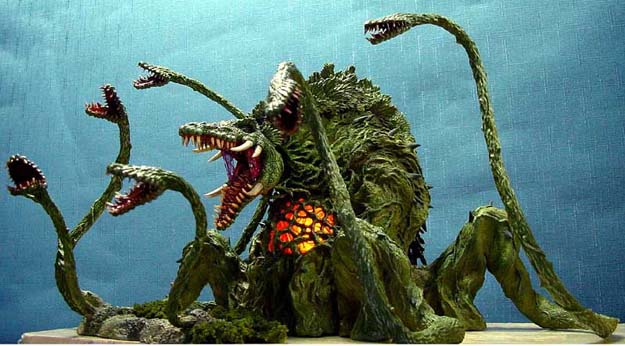
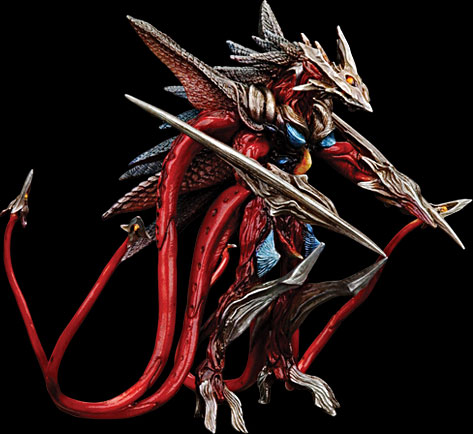
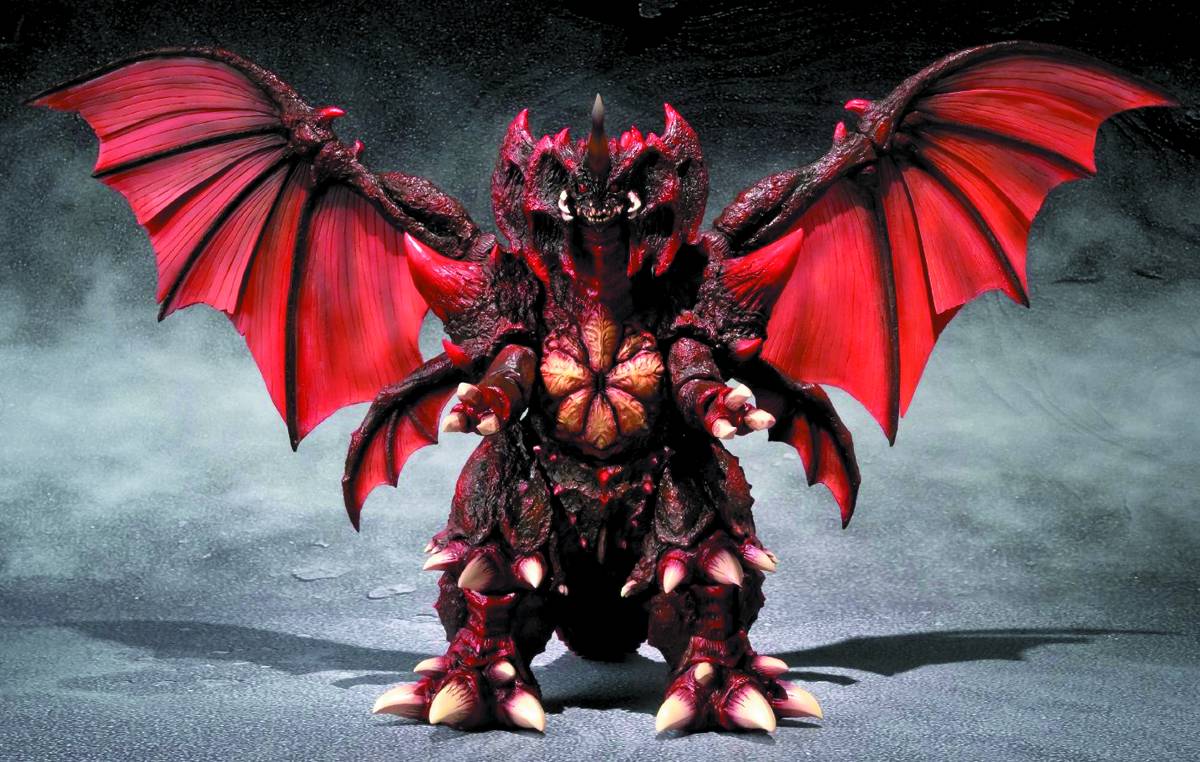
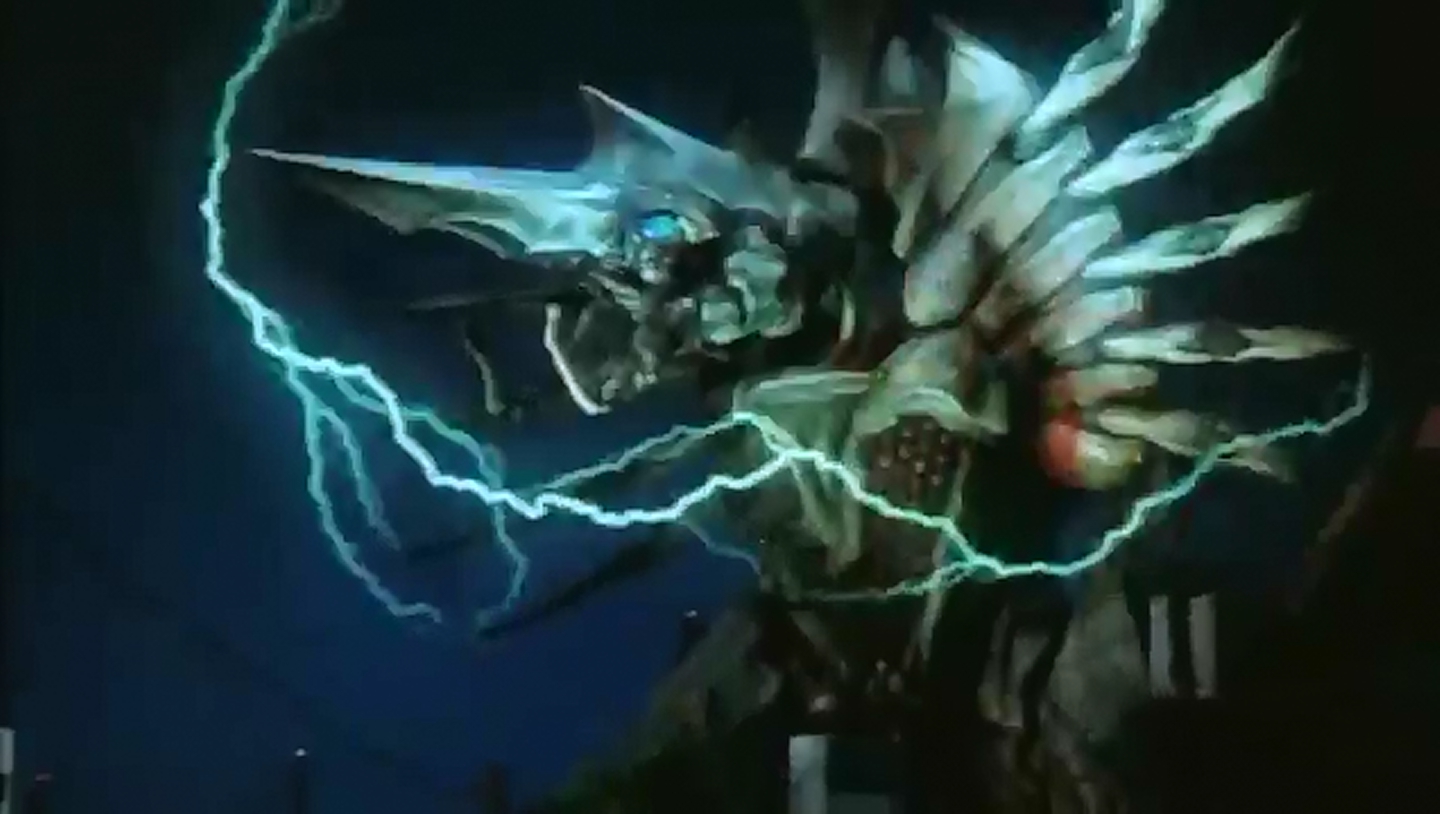
Iris, the primary adversary in Gamera 3, is a curiously designed creature. The head and sharp angles still look like a Gyaos, but tentacle-like appendages add a new element to the creature. Personally, I think it looks a little too busy on paper, though it does look pretty cool on screen. The tentacles reminded me a bit of Biollante, a Heisei Godzilla villain, though I like the aesthetic of the water flora/alligator much better than the…whatever Iris is supposed to vaguely look like. The color scheme also reminded me of the far less interesting Godzilla villain Destroyah, which was a clear influence.

gamerairis5
Godzilla villain, Biollante
gamerairis3
Iris
gamerairis6
Godzilla villain, Destroyah

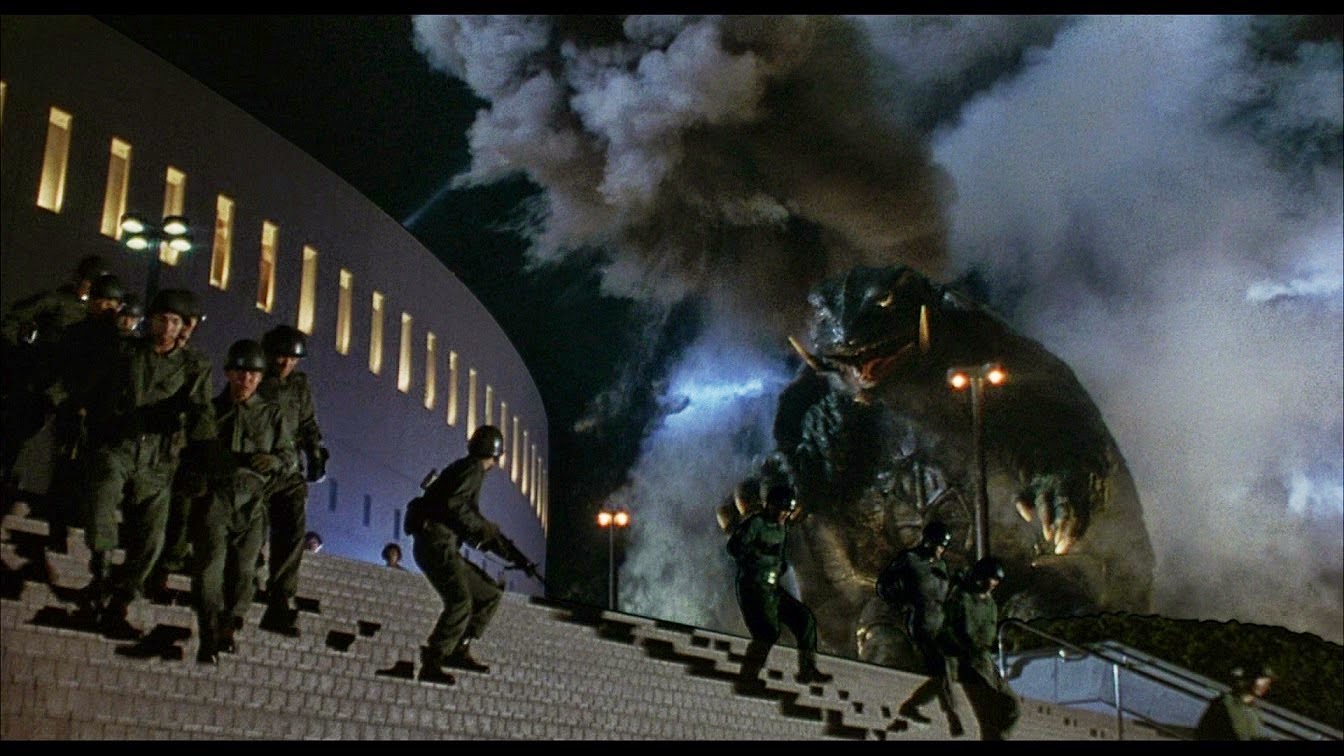
There is a notable scarcity of Gamera in Gamera 3, which lends an atmosphere of menace and mystery in the wake of the unclear ending to Attack of Legion. This fits well with the movie’s grounded approach to kaiju, emphasizing the collateral damage and ethical issues inherent to their presence. In particular, one scene shows Gamera apparently saving a child, but at the expense of countless other lives, which are brutally depicted being scorched in path of his fire breath.

I mentioned in my coverage of Attack of Legion that the effects look particularly good in that movie. Astoundingly, Revenge of Iris puts that preceding film to shame. The monsters look fantastic, and the building destruction miniatures and flame effects are shot and executed even better than they were previously, making the movie all the more brutal and visceral in accordance with the darker tone.

Amazingly, the human story (which is a historic weakness of kaiju movies) is pretty interesting here, and builds on principles and precedence established in the first two movies. There is a genuine sense of urgency, terror, and anger in their stories, and you can’t help but care about their struggle. This is also the only kaiju movie I can think of where I genuinely wanted the film to cut away from the monster action to get back to the humans, which is damn near heresy. Still, it works, and works quite well.

Overall, this is a movie that deserves its positive reputation. However, it does suffer a little bit from not being able to stand on its own. Realistically, the intertwined stories mean that to appreciate this movie, Guardian of the Universe and Attack of Legion are mandatory viewing for this film to have a full effect. That said, if you can commit to the whole trilogy, this movie is a fantastic conclusion, and a top-tier kaiju film. Fans of the genre owe it to themselves to watch through the entire trilogy, if only to appreciate the mastery that is shown in this conclusion.

Gamera 2: Attack of Legion

Gamera 2: Attack of Legion

gameralegion1

Today’s movie marks the second entry into the Hesei era of Gamera: 1996’s Gamera 2: Attack of Legion.

Gamera 2: Attack of Legion was written once again by Kazunori Itô, who also penned Ghost in the Shell, .hack//SIGN, Gamera: Guardian of the Universe, and Gamera 3: Revenge of Iris.

Likewise, director Shûsuke Kaneko (Death Note, Godzilla, Mothra, King Ghidorah: All Out Attack) returns from Gamera: Guardian of the Universe, and would stay with the franchise through Gamera 3: Revenge of Iris.

The cinematography on Gamera 2 was provided solely by Junichi Tozawa, who shared shooting duties on Gamera: Guardian of the Universe. As with the director and writer, he would return for Gamera 3: Revenge of Iris.

The editor for the film was once again Shizuo Arakawa, who cut Gamera: Guardian of the Universe, but would not return for the third film in the Heisei series.

The producing team for Gamera 2 included Yasuyoshi Tokuma (Spirited Away, Princess Mononoke), Tsutomu Tsuchikawa (Dead or Alive, The City of Lost Souls), and newcomer Naoki Sato (Gamera 3, One Missed Call, Three…Extremes).

The effects team for Gamera 2 included Shin’ichi Fushima (Godzilla Against Mechgodzilla, Godzilla vs. Megaguirus), Tomo’o Haraguchi (Gamera, Air Doll), Shinji Higuchi (Gamera, Gamera 3, Attack on Titan), Toshio Miike (Godzilla: Final Wars, Godzilla: Tokyo S.O.S.), Makoto Kamiya (Godzilla vs. Biollante), and Shin’ichi Wakasa (Godzilla 2000, Godzilla vs. Destroyah, Rebirth of Mothra).

gameralegion4The reception to Gamera 2: Attack of Legion managed to exceed the acclaim of the well-regarded previous movie: it currently holds an 84% audience score on Rotten Tomatoes alongside an IMDb rating of 7.3.

Legion is an interesting sort of villain, and provides a unique challenge for Gamera. Its parasitic nature reminded me a bit of one of the Showa Gamera villains: Jiger. However, Attack of Legion goes in a far less cartoon-y direction than Gamera vs. Jiger. The first fight between Gamera and Legion was particularly interesting because of the size difference between the monsters, but a mother entity is eventually introduced that is closer to Gamera’s weight class. I actually was a little disappointed in this, because the idea of a colony of small organisms acting as a villain seems way more interesting and unique to me. In any case, the central Legion monster still looks fantastic, combining insect-like attributed with a reptilian body and metallic trim. It looked to me like a monster on the same level with Toho’s Gigan: a monster that is decidedly other-worldly in appearance.

gameralegion2Something that I specifically noticed about Gamera 2 is that the effects look really good, particularly the pyrotechnics and miniatures. The classic style is retained, but none of the destruction comes off as silly: the way things are shot keep the carnage grounded and generally realistic.

Interestingly, Gamera is out of commission for a significant portion of the second act of Attack of Legion, which again echoes Gamera vs. Jiger. However, instead of a goofy anatomical adventure saving the day, Gamera’s human connection is sacrificed to wake him up from his coma, which ends the story on an ominous, downbeat note.

That said, the ending departure of Legion is a bit silly. Essentially, Gamera shoots a giant blast out of his chest with the help of…Earth energy? Something like that? Basically, the effect is like a spirit bomb from Dragonball, but is never explained further.

gameralegion3In spite of a few minor complaints, this is a pretty fun kaiju showcase, and manages to build and improve on the previous movie without losing any connections to the story. I wouldn’t recommend watching it without seeing Guardian of the Universe first, but I think it is definitely worth giving a watch.

Gamera: Guardian of the Universe

Gamera: Guardian of the Universe

gameraguardian1

Today’s feature was the debut of the Hesei era of the famed kaiju franchise Gamera: 1995’s Gamera: Guardian of the Universe.

Gamera: Guardian of the Universe was written by Kazunori Itô, who is best known for Ghost in the Shell and .hack//SIGN. He would also return to write both of the following Gamera films.

The movie was directed by Shûsuke Kaneko, who also helmed the film adaptation of the popular anime Death Note as well as the Toho kaiju showcase Godzilla, Mothra, King Ghidorah: All Out Attack. As with Ito, Kaneko returned for both of the subsequent Gamera movies.

Gamera: Guardian of the Universe featured two cinematographers: Kenji Takama (Welcome Back Mr. McDonald, Death Note: The Last Name) and Junichi Tozawa, who would later shoot Gamera 2: Attack of Legion and Gamera 3: Revenge of Iris.

The editor for Gamera: Guardian of the Universe was Shizuo Arakawa, who would also cut the sequel, Gamera 2: Attack of Legion.

The producers for the film included Hiroyuki Kato (who has produced recent episode of the Pokemon television show), Yasuyoshi Tokuma (Spirited Away, Princess Mononoke), and Tsutomu Tsuchikawa, a frequent collaborator of Takashi Miike’s on such movies as Dead or Alive and The City of Lost Souls.

The effects team for Gamera: Guardian of the Universe included Hajime Matsumoto (The Grudge, Ringu), Mahiro Maeda (Mad Max: Fury Road, Blue Submarine No. 6), Tomo’o Haraguchi (Gamera 2: Attack of Legion, Air Doll), Shinji Higuchi (Gamera 2: Attack of Legion, Gamera 3: Revenge of Iris, Attack on Titan), Makoto Kamiya (Godzilla vs. Biollante), Toshio Miike (Godzilla: Final Wars, Godzilla: Tokyo S.O.S.), and Shin’ichi Fushima (Godzilla Against Mechgodzilla, Godzilla vs. Megaguirus).

gameraguardian4The cast for the movie includes Ihara Tsuyoshi (13 Assassins, Letters From Iwo Jima), Shinobu Nakayama (Fist of Legend, Godzilla vs. Mechagodzilla II), Ayako Fujitani (Man From Reno, Gamera 2: Attack of Legion, Gamera 3: Revenge of Iris), and Hirotarô Honda (Kamikaze Girls).

The antagonist monster of the film, Gyaos, was performed by a woman actor, which was reportedly the first time this was done in the history of kaiju movies.

gameraguardian5The reception to Gamera: Guardian of the Universe was generally positive: it currently holds a 6.9 rating IMDb alongside a 75% audience score on Rotten Tomatoes, which is plenty respectable for a franchise known for its historic low quality.

Gamera: Guardian of the Universe stands in sharp contrast to the Showa era of the franchise, which I covered a while back. Whereas those movies were generally goofy and aimed at children, Gamera: Guardian of the Universe has a much more serious and dark tone, more in line with a typical monster or disaster movie. There is also the notable absence of children characters in the cast, which was a staple of the Showa era and the Gamera character.

I particularly appreciate that Gamera: Guardian of the Universe still uses the classic rubber suit monster effects, just updated for the times. If they had attempted to use mid-1990s CGI, this movie would be nearly unwatchable. Speaking of which, the team also made the solid decision to introduce both Gamera and his classic foe Gyaos in this movie. The original Gamera didn’t feature an antagonist, and is the weakest in the franchise from an action standpoint because of it (unlike the original Gojira, which was a true drama that didn’t need monster action to carry it).

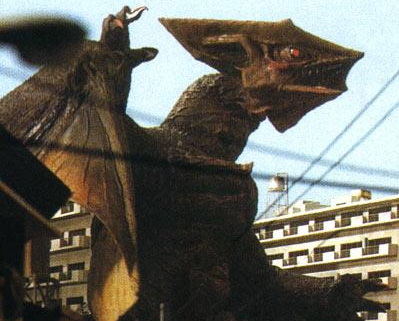
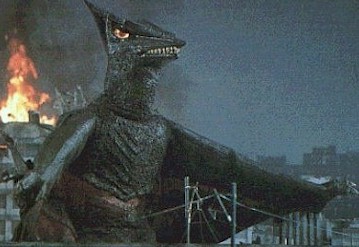
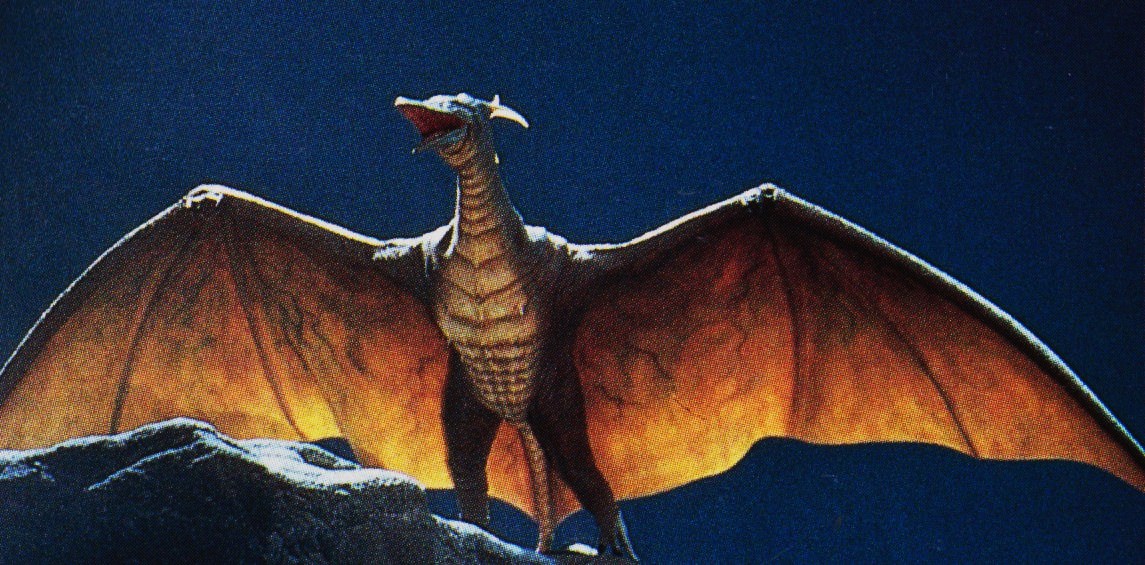
Gyaos in this movie looks more like Toho’s Rodan more than I ever remember him looking before. The design used in the Showa era had a larger, more pronounced triangular head, whereas the Hesei update is toned down significantly with a head more reasonably proportional to the body. The result is a creature that looks very similar to the Heisei design of Rodan which debuted a handful of years before in Godzilla vs. Mechagodzilla II.

Gyaos design from Showa era
gameraguardian2
Gyaos design from Heisei era
Rodan design from Heisei era

Overall, this is a really enjoyable kaiju movie. It isn’t revolutionary in any sense and doesn’t break any new ground for the genre, but is perfectly serviceable for what it is. For fans of big monster action, this is absolutely worth checking out. It still isn’t as good as the Heisei Godzilla flicks, but that shouldn’t come as any sort of surprise. The fact that a Gamera movie is honestly worth the time spent watching it is noteworthy enough.

Bargain Bin(ge): McKay Used Books (Chattanooga, TN)

Ah, McKay Used Books. I covered the Nashville location a while back, but this time my travels took me to the Chattanooga location of the immense media store.

mckay10The chain is very small, with only three locations throughout Tennessee. It is distantly related to the similarly-titled Edward McKay Used Books chain in North Carolina, though the connection is apparently tenuous and ancient at this point.

McKay is distinguished both by its immense size and low prices: all of the locations are two stories, and packed to the gills with used media of every fashion. The bargain section for DVDs even features massive laundry bins filled with movies on sale for less than $2, which is about as good as a deal is going to get.

mckay8 mckay9As always, I came away from McKay’s with a nice little haul of movies:

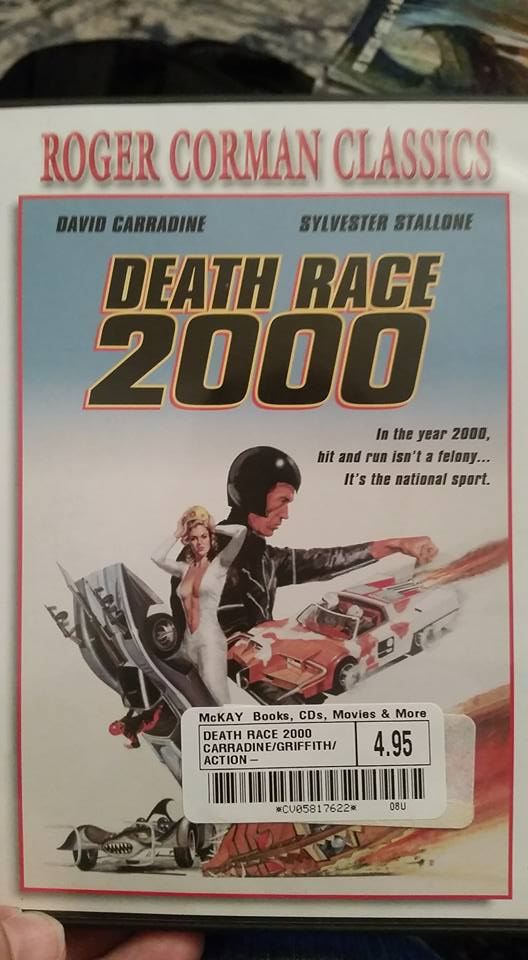
Death Race 2000

mckay1

Death Race 2000, for those not familiar with it, is one of the key Roger Corman classics. It includes an early appearance of Sylvester Stallone, David Carradine in top form, and some social commentary scattered amid the gory action. There was a remake in 2008 by Paul W.S. Anderson that wasn’t entirely terrible, but missed the oddball tone of the original. If you haven’t seen it, definitely give it a shot.

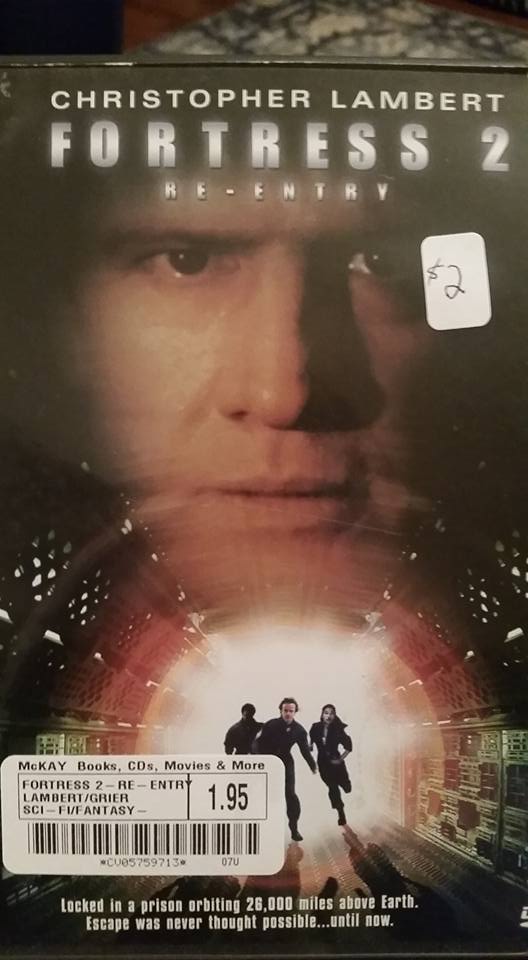
Fortress 2

mckay7

Fortress 2 is a sequel to Stuart Gordon’s Fortress, which I covered a while back. I don’t know anything specific about it, though apparently the premise is that the jail is in space this time. I can only hope that things careen into something resembling an episode of Superjail!

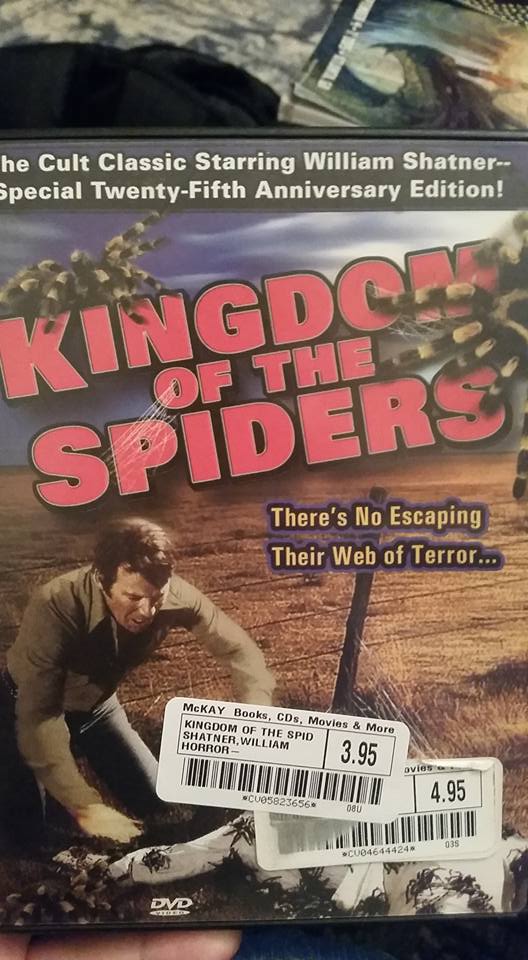
Kingdom of the Spiders

mckay6

This is another off-the-wall find. Kingdom of the Spiders is a little cult classic creature feature starring William Shatner just before Star Trek: The Motion Picture. I regard it as the middle ground between “young” Shatner and “old” Shatner, like the missing link in the evolution of Captain Kirk. Also, the movie features a boatload of live tarantulas acting as the monsters. No camera trickery or rubber suits here.

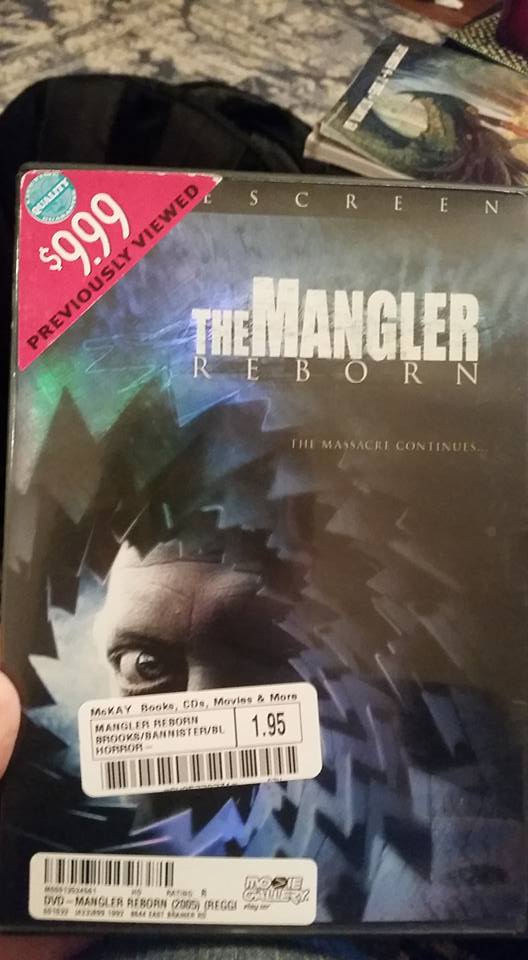
The Mangler Reborn

mckay5

At first, I assumed that this was the sequel to The Mangler, the infamous tale of a murderous laundry folding machine. Unfortunately, this is actually the third movie in the series, and rounds out the inexplicable Mangler trilogy. I may have to dig up a copy of Mangler 2 before I give this one a watch. I mean, what if I miss some important plot information?

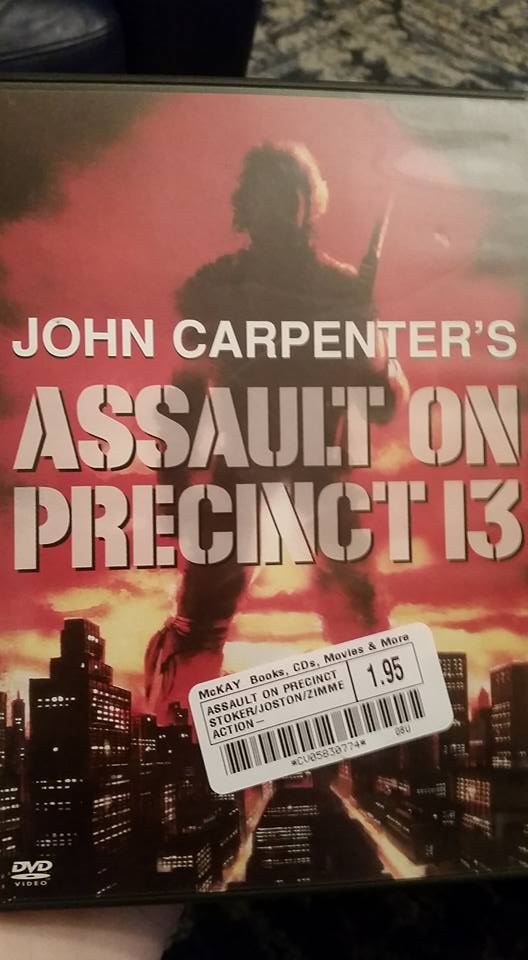
Assault on Precinct 13

mckay2

I absolutely love this movie, and it has proven to be a surprisingly difficult DVD to dig up. This was regarded as the professional debut of John Carpenter, who wound up conquering the late 1970s and 1980s with highly-regarded cult movies like Halloween, They Live, Christine, Escape From New York, and The Thing. However, the shock of Assault On Precinct 13 is what launched him into notoriety. This movie is high tension action at its best, capturing the menace and claustrophobia of a modern siege situation like no other movie has. Also, the soundtrack is fucking awesome.

Pocket Ninjas

mckay3

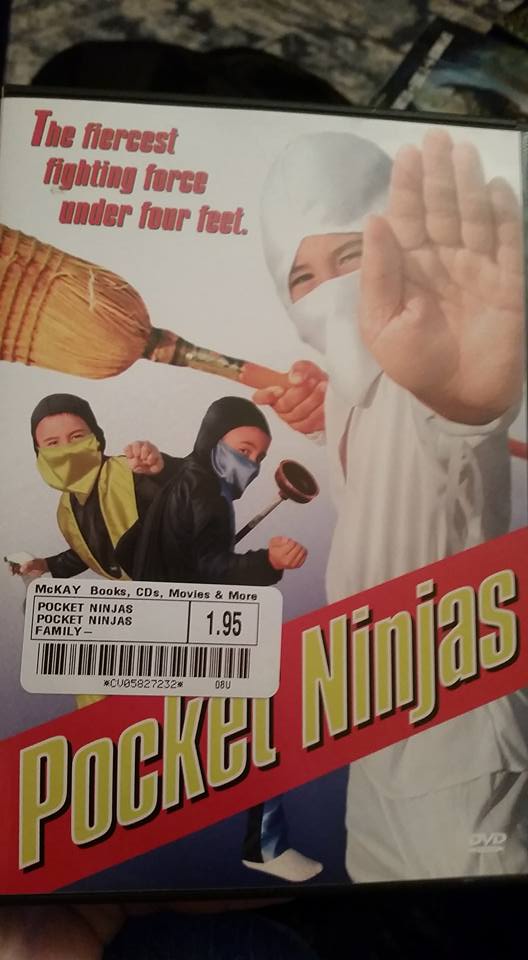
Pocket Ninjas is regarded as one of Robert Z’Dar’s most terrible movies, and that is saying a lot for a guy who made an impressive career exclusively out of being in shit movies. I haven’t seen it, but I am expecting something nearly unwatchable if the IMDb rating of 1.5 is to be believed.

Jack Brooks Monster Slayer

mckay4

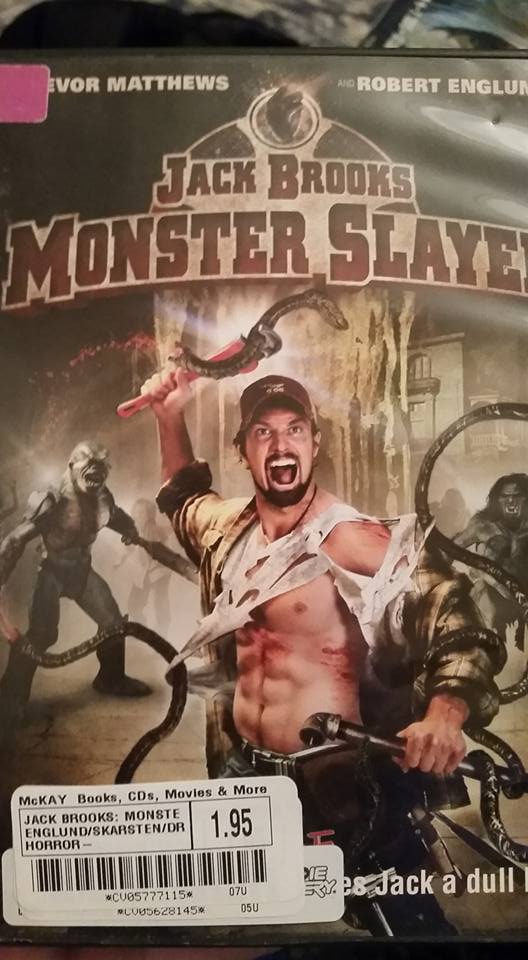
Jack Brooks Monster Slayer is a horror comedy that I know nothing about, but apparently Robert Englund shows up in it at some point. I could see this going in a lot of different directions in regards to quality, but I figured that it was worth the gamble.

Yor: The Hunter From The Future

Yor: The Hunter From The Future

yor2

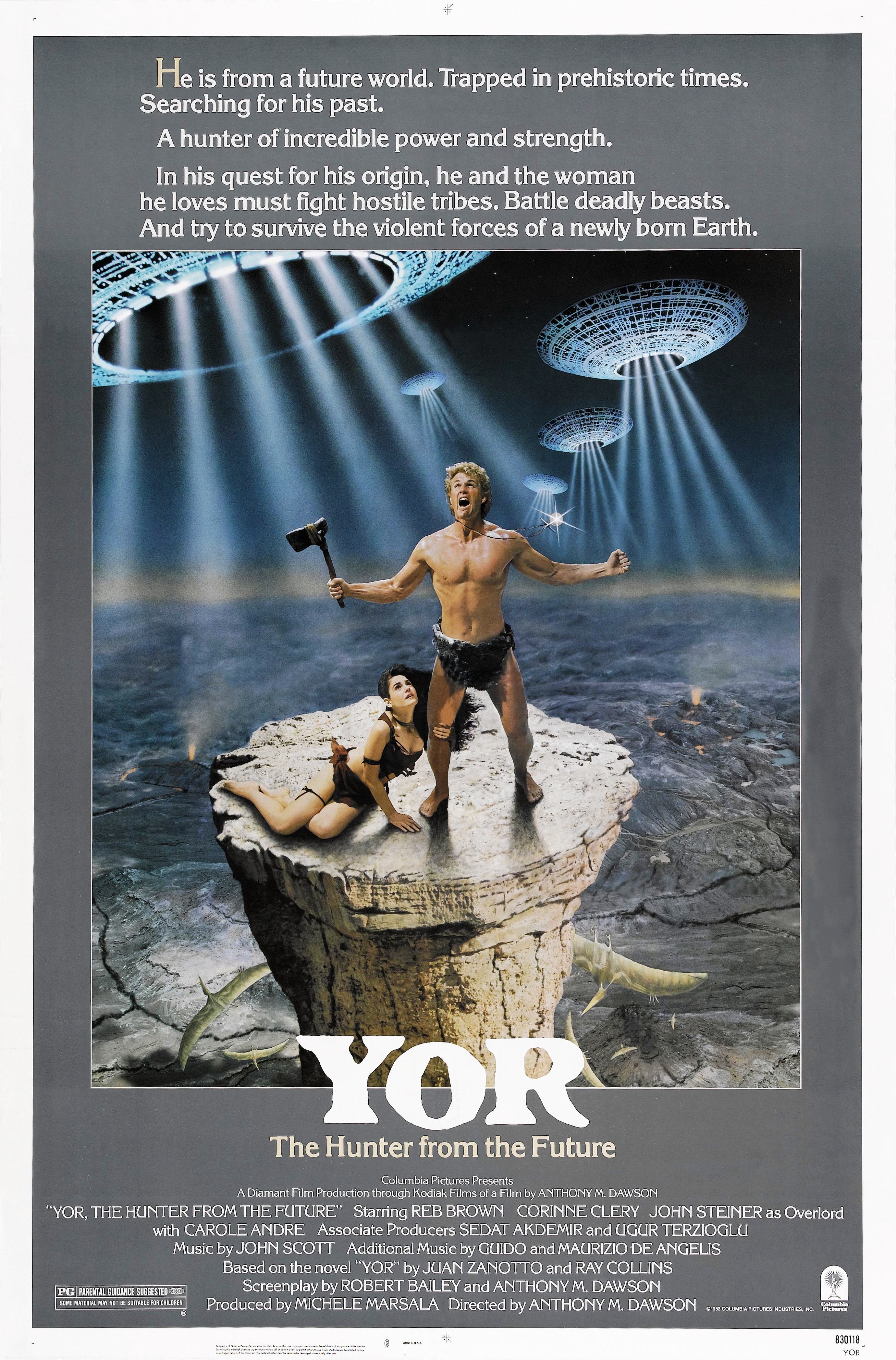
Today’s feature is a true cult classic sci-fi / fantasy b-movie: Yor: The Hunter From The Future.

The story behind Yor is a loose adaptation of a comic called Henga, El Cazador, which was originally created by the duo of Ray Collins and Juan Zanotto.

Yor was co-written and directed by Antonio Margheriti, a prolific creator of knockoff b-movies such as Cannibal Apocalypse, Horror Castle, Flesh For Frankenstein, Alien From The Deep, and Killer Fish. His co-writer on the screenplay was Robert Bailey, an experienced visual effects artist who has worked on films like Evilspeak, Blade Runner, and C.H.U.D. II: Bud the Chud.

The cinematographer for Yor was Marcello Masciocchi, who also shot the films Boot Hill, All the Way Boys, Ace High, and Jungle Holocaust.

Yor featured two primary credited editors: Alberto Moriani (Zombie Holocaust, Zombi 3) and Giorgio Serrallonga (For A Few Dollars More, Turn The Other Cheek).

The special effects on Yor were provided by the low-budget team of director Antonio Margheriti, his daughter Antonella Margheriti, and his son Edoardo Margheriti (who would later serve as an assistant director on Hudson Hawk).

The makeup effects for Yor were provided by Mario Scutti, who is best known for working on David Lynch’s failed science fiction epic, Dune.

yor3The memorable music for Yor was provided by John Scott, who also composed music for films like Trog, Man on Fire, and King Kong Lives over his career.

The cast for Yor included low-level action star Reb Brown (Space Mutiny, Captain America (1979), Strike Commando, Howling II), Corinne Cléry (Moonraker), Carole André (Death in Venice, Dillinger is Dead), and Luciano Pigozzi (Blood and Black Lace, Two Women).

yor5The plot of Yor combines elements of science fiction and fantasy, particularly in regards to the setting. In the beginning of the film, it is assumed that Yor takes place in the distant past, but it is later revealed through Yor’s journeys that the world he lives in are ruins from a technologically advanced civilization. Unfortunately, the full title of the movie (Yor, The Hunter From The Future) completely spoils this twist out of the gate.

Yor wound up with three Golden Raspberry nominations: Reb Brown for Worst New Star, the theme song “Yor’s World” for Worst Song, and the score as a whole for Worst Musical Score. Despite not winning in any of those categories, Yor is listed in The Official Razzie Movie Guide as one of “The 100 Most Enjoyably Bad Movies Ever Made.”

Yor was not particularly well-received, but has held up through the years as a cult favorite bad movie. It currently hold a 4.1 rating on IMDb, along with Rotten Tomatoes scores of 17% (critics) and 50% (audiences).

Everything about Yor both feels and looks cheap, which gives the production a certain charm, not unlike many Corman flicks or similar Italian b-movies. While Reb Brown is always a hammy delight, he isn’t quite in Space Mutiny or Strike Commando form in Yor. In general, he is a cut and dry barbarian here, which is a slight disappointment. The biggest draw here are the goofy effects, which are hilariously incompetent. As mentioned earlier, the director elected to do the effects himself (with the help of his children) rather than hire a crew or bring in outside help, which reminds me of an old lawyer’s saying: “A man who is his own lawyer has a fool for a client.” If you ask me, the same logic held true here for the effects work.

There are certainly some vivid highlights from this movie, but on the whole it is about as slow and dull as the Ator movies if you ask me, though the peaks arguably justify the tribulations of the valleys.

yor4Yor is a movie that has proven pretty contentious among bad movie fans. Some absolutely adore it, while plenty of others find it too boring to enjoy on the whole. Personally, I recommend at least giving it a shot, with the caveat that it is far from a good-bad slam dunk. If you go in with managed expectations, you’ll have a better time with it. At the very least, whether you want to watch the film or not, you absolutely must listen to the bizarre prog-rock theme song.

Bargain Bin(ge): Unclaimed Baggage / Nerdtopia (Scottsboro, AL)

Scottsboro, AL is approximately in the middle of nowhere. I’ve grown up with a family lake house nearby, so I’ve been going in and out of the small city for many years. However, I’ve never considered it much of a location for DVD hunting, so I never expected to cover it here on the blog.

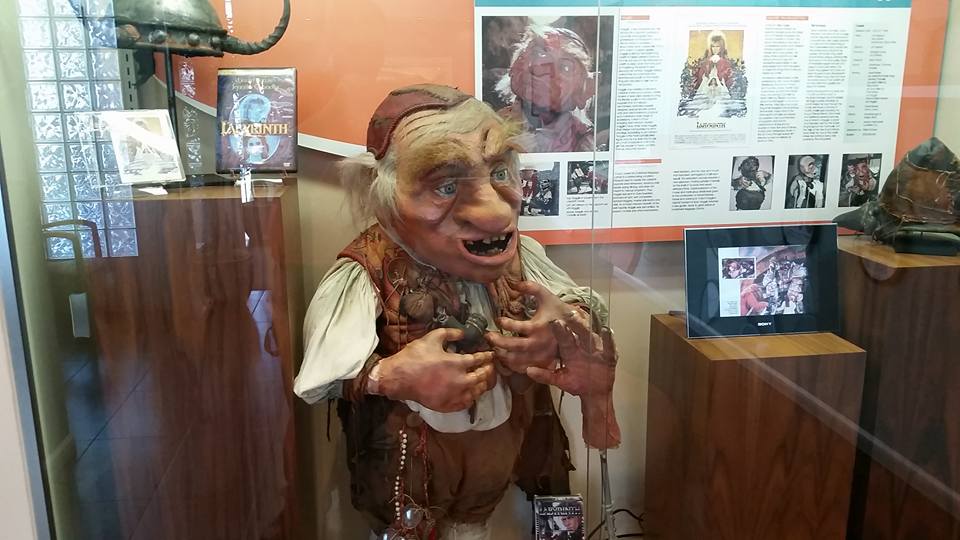
One of the city’s few claims to fame (outside of racism) is Unclaimed Baggage: the mythical place where all lost luggage items from airlines eventually go to stay. As you might imagine, it has an interesting collection of media and electronics (as well as one of the creatures from Labyrinth, weirdly enough).

unclaimed2

unclaimed3

However, the downside is that the store doesn’t exactly discriminate based on quality, so the selection is mostly special features discs and single discs from dvd sets. If you have the time to spend, you might find something decent in the muck. For example, I picked up an old Doctor Who dvd there for a couple of bucks once. However, on this particular round I didn’t have a lot of time to kill. That said, I still found a little something amidst the stacks:

The Kid Stays In The Picture

unclaimed4

This is an acclaimed documentary about Robert Evans, one of the key figures of the New Hollywood era. He had hands in movies like The Godfather, Chinatown, and Marathon Man, among many others. However, he is definitely a polarizing figure, and his interactions with Coppola on The Godfather are particularly legendary (depending on who you ask about them). I’ve read a bit about him in an assortment of books about the era, but I’ve never actually gotten around to this documentary. I’ve heard plenty of good things, so picking it up for a buck or two seemed more than worth it.

Elsewhere in Scottsboro, a new little store has popped up: Nerdtopia, located right on the town’s square.

nerdtopia1

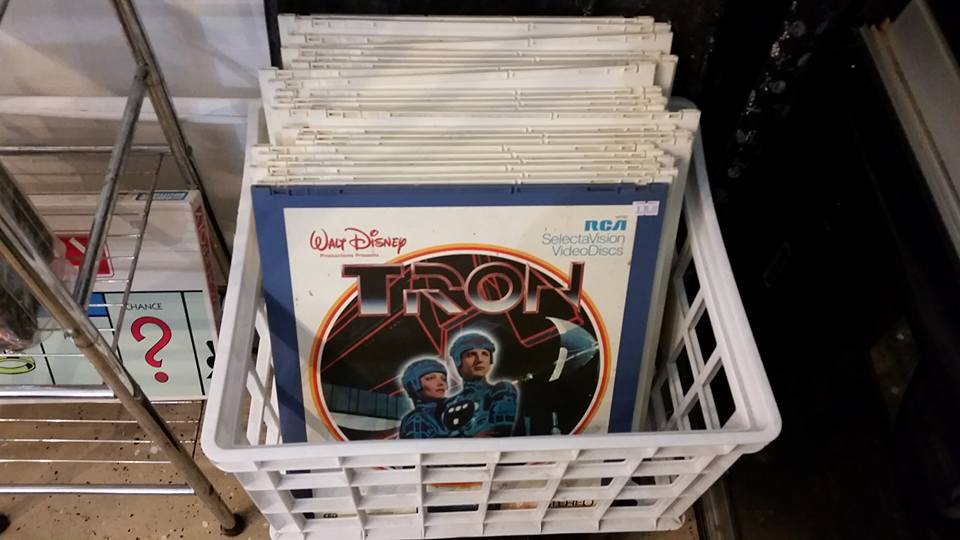
While it didn’t provide much of a selection for movies, it is certainly a spirited little eclectic store. It was filled with comics, trading cards, vintage toys, albums, tabletop games, video games, and even a little box of ancient pre-laserdiscs (!) that I didn’t even recognize in the corner. I considered picking up the Tron one just to act as a piece of wall art.

nerdtopia2

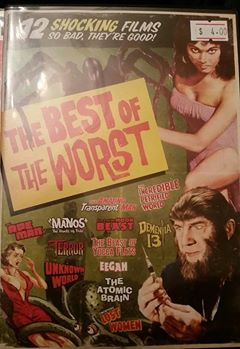
I did wind up picking up a solid compilation of classic bad movies to give them some support, but this place is worth checking out in spite of the limited movie selection. These little nerd shops off the beaten trail especially need support from their local geeks and passers-through, so I recommend dropping by there if life ever lands you in Scottsboro, AL.

nerdtopia3

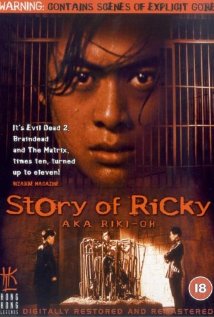
Riki-Oh: The Story of Ricky

Riki-Oh: The Story of Ricky

ricky1

Today’s feature is one of the most ludicrously violent action movies of all time: Riki-Oh: The Story of Ricky.

Ricki-Oh is based on a popular manga series of the same name that was developed by illustrator Tetsuya Saruwatari and writer Masahiko Takajo in 1988. Aside from this infamous film adaptation, the series was also turned into an anime OVA in 1989.

Riki-Oh was directed by Ngai Choi Lam, who also provided the screenplay for the movie. He only has a handful of other credits to his name, the most notable of them being  the curiously-titled Erotic Ghost Story from 1987.

The cinematographer on Riki-Oh was Hoi-Man Mak, a camera operator who has worked on action films like Four Assassins and Flash Point.

Riki-Oh featured two primary credited editors: Peter Cheung (Enter The Dragon, Rumble In The Bronx, The Chinese Connection) and Chuen Tak Keung (Center Stage, Erotic Ghost Story).

The music for Riki-Oh was provided by Fei Lit Chan, who also composed scores for the martial arts film Dragon Inn and one of Ngai Choi Lam’s previous films, Erotic Ghost Story.

The producers of Riki-Oh included John Sirabella (Tokyo Gore Police, Destroy All Monsters, Godzilla vs. Megalon) and Lam Chua (Armour of God, Crime Story, Erotic Ghost Story).

The makeup effects for Riki-Oh were done by Fung-Yin Cheng and Chi-Wai Cheung, the latter of whom also provided the special effects work for the movie.

The stunt coordinator for the film was Philip Kwok, an accomplished performer who has worked on films like Hard Boiled and the James Bond movie Tomorrow Never Dies.

The cast for the Riki-Oh included Siu-Wong Fan (Ip Man, Ip Man 2, Kung Fu Killer) in the title role, Ka-Kui Ho (City of Fire, Prison on Fire), and Mei Sheng Fan (The Young Master, Magnificent Butcher).

The plot of Riki-Oh follows a seemingly super-powered martial artist as he navigates his way through prison life, picking fights with both the prisoners’ ruthless gangs and the corrupt administration along the way.

Riki-Oh is best remembered as on of the most ridiculously gory action movies ever made, in an attempt to imitate the original style of the manga source material. However, the effects don’t translate particularly realistically to a live-action scenario. Reportedly, so much fake blood was used in the finale sequence of Riki-Oh that it took days for the red tint to come out of Siu-Wong Fan’s skin.

Due to its over-the-top stylistic violence, Riki-Oh has a dedicated cult following among martial arts and action movie junkies. Currently, it holds an IMDb rating of 7.2, along with Rotten Tomatoes scores of 89% (critics) and 85% (audience).

To be perfectly honest, I don’t have any strong criticisms about this movie. The logical issues with the plot are hardly worth fretting over in the midst of the bizarre spectacle that unfolds over this movie’s run-time. The only major negative is the Warden’s aggravating man-child, but even that character is forgivable thanks to what the rest of the movie has to offer. This is a film that is best to just experience without any explanation or context, in order to truly appreciate just what it is.

The plot (which is nonsense) doesn’t matter, the background (which is sparse) doesn’t matter, and the characters (who primarily exist to be dismembered and exploded) certainly don’t matter. This film is a meticulous exercise in adapting manga to the live action screen, and it is accurate in that quest in spite of any reason or sense. If you aren’t squeamish, this is an action movie that is more than worth checking out, just to say that you have. Go in expecting blood and nonsense, and you will be gleefully satisfied.