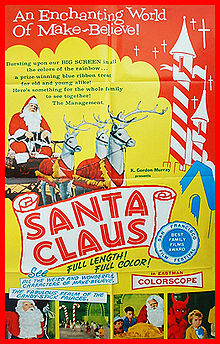
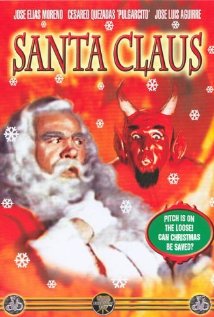
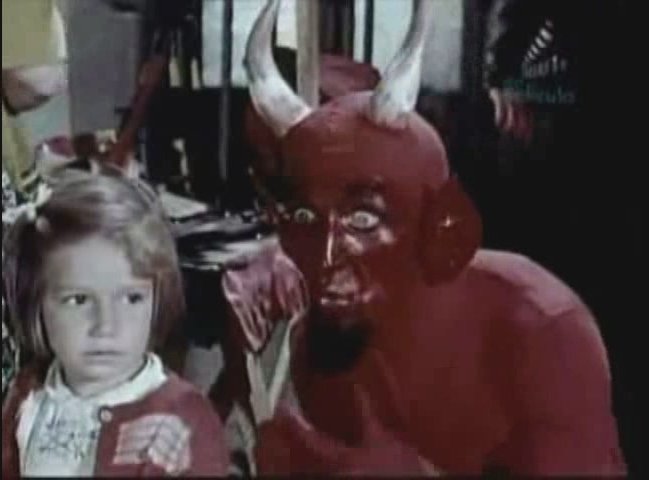
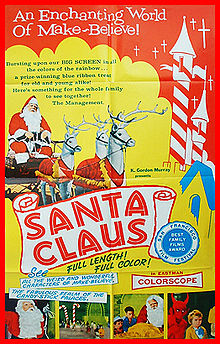
Today on the (Plot)opsy Podcast, I am spotlighting a particularly infamous IMDb Bottom 100 film as part of the 15 Days of Bad Christmas Movies: a 1959 Mexican production called “Santa Claus.” Despite the simple title, this is one of the strangest Christmas movies out there: the plot involves Satan, Merlin, some of the creepiest surveillance devices in cinema history, robotic reindeer, and Santa’s captive child workforce who are housed indefinitely in his space castle. I recommend seeking it out.
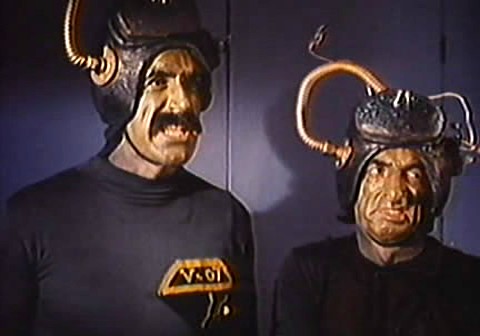
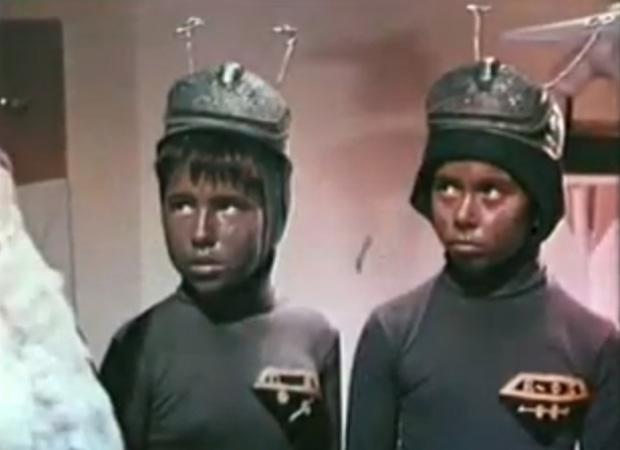
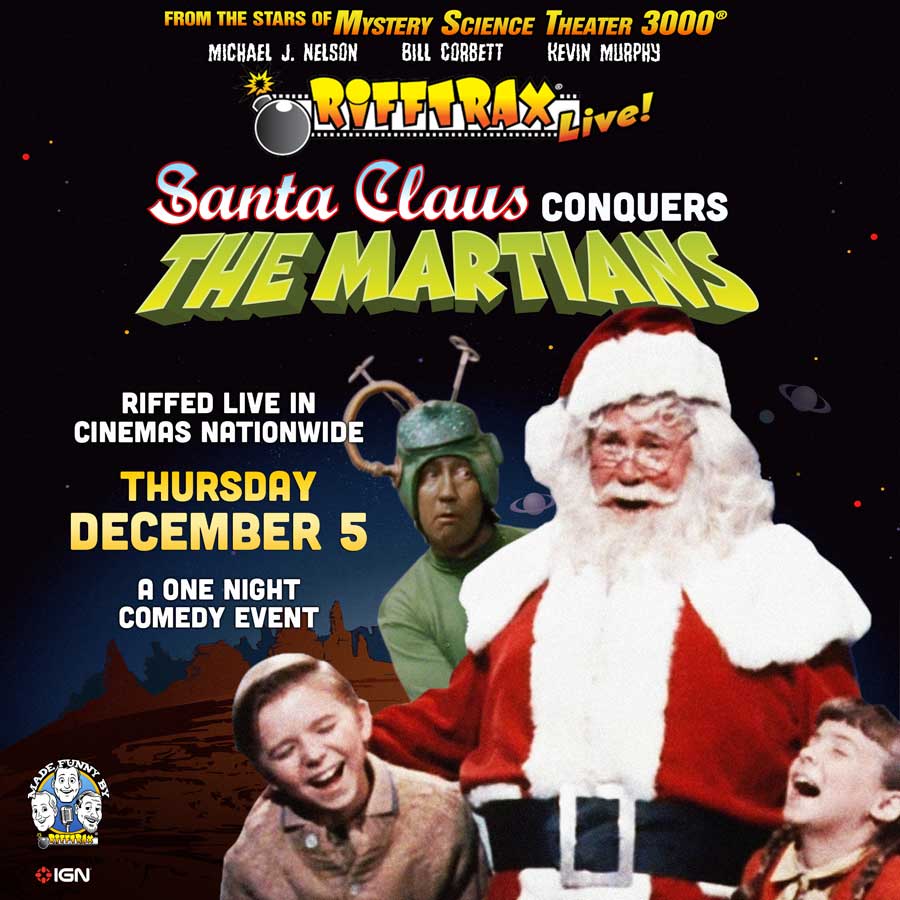
An assortment of Santa’s humanoid listening devicesSanta with his mechanical toy reindeerThe demon Pitch attempting to tempt LupitaSanta Claus with PitchLupita with giant, horrific, dancing dollsPromotion for the December 2014 Rifftrax Live event featuring “Santa Claus”
Be sure to visit my cohorts in the “15 Days of Bad Christmas Movies”:
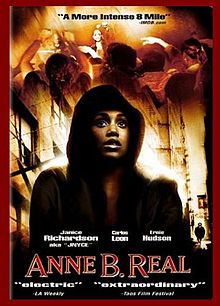
This may seem to be an obvious caveat for a post covering a movie on the IMDb Bottom 100, but I feel like it still bears stating: “Anne B Real” is not a good movie. However, in my opinion, it is also not an excessively bad one.
When I initially heard the synopsis of “Anne B Real”, I expected that the film would be blatantly offensive, and generally atrocious. Here is the sort version currently on IMDb:
ANNE B. REAL is the coming of age story of a young female rapper, who finds her inspiration by reading the Diary of Anne Frank.
From reading that alone, it certainly seems like there are a lot of ways for the story to go very wrong. As it turns out, “Anne B Real” is basically just a low budget passion project about growing up in the face of adverse circumstance, and is a story that focuses on a young girl slowly gaining self-confidence in her abilities. Again, this isn’t a good movie: it is the sort of thing that wouldn’t make the cut at your average film festival I feel. Mercifully, Anne Frank doesn’t serve as an ethereal rap coach or anything like that, which was what I was expecting. The downside of this, however, is that the movie is really boring.
There isn’t a whole lot to say about the movie: every aspect of it is just a little below par. The writing, the acting, the directing: nothing is offensively bad, but none of it is particularly good. This actually brings up a very interesting question: how did “Anne B Real” wind up in the IMDb Bottom 100? How did this little passion project art film draw so much ire and garner so much attention as to break into the ranking in the first place? Honestly, I have absolutely no idea. The movie is very forgettable and boring, but it is nothing like the rest of the films in the IMDb Bottom 100.
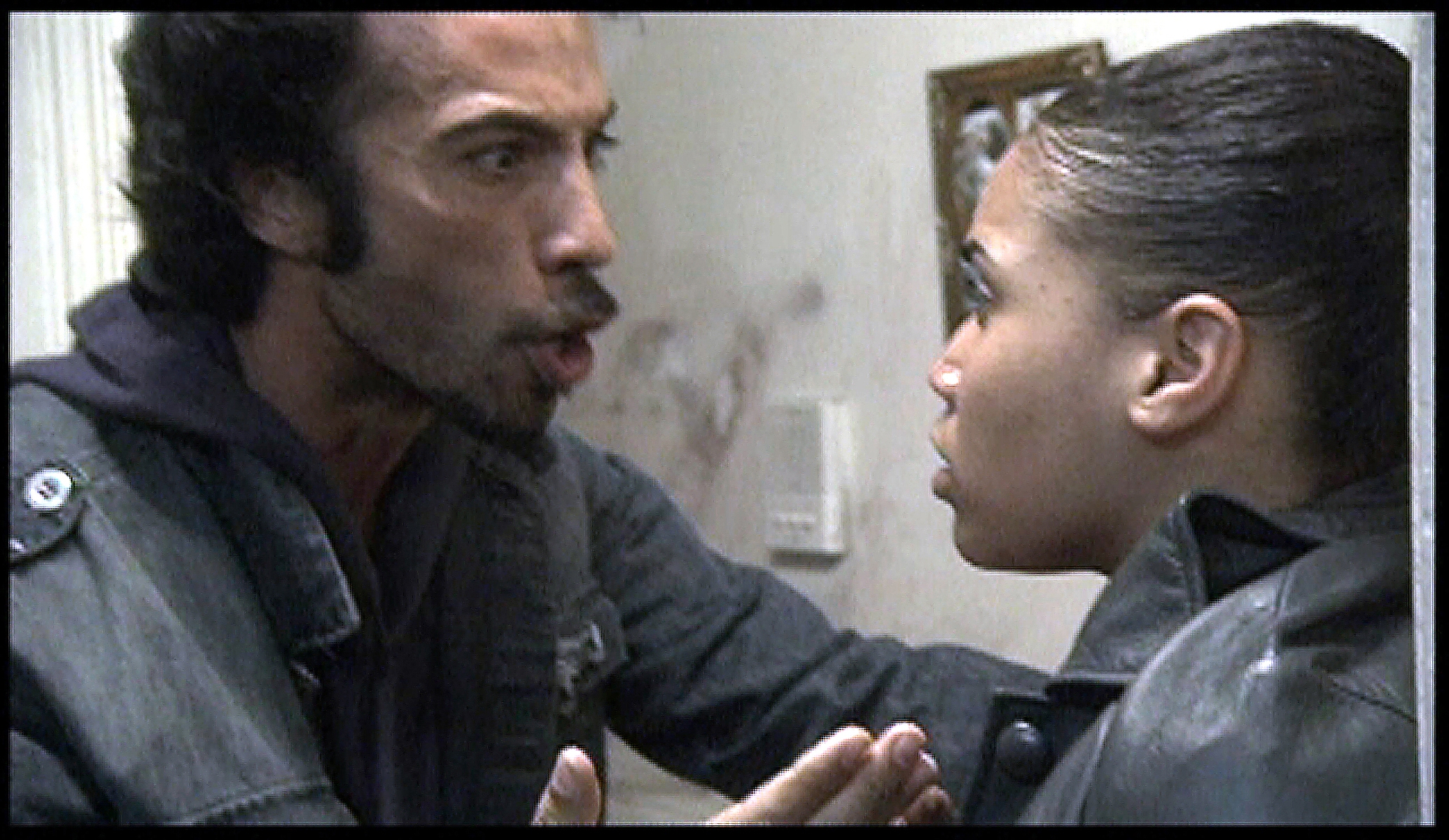
This is the only actor I recognized, and I only know him as “that one guy from Dexter”
The only other movie where I had this feeling after watching it was “Crossover”, which I covered way back when I first started with the list. That movie is similarly low-budget and amateurish, but not at all painful to sit through if you ask me. Honestly, I’m inclined to say it is better than “Anne B Real”, if only for Wayne Brady’s role in the movie as a skeevy sports agent.
There is a pretty notable similarity between “Crossover” and “Anne B Real”, and as much as I hope it isn’t why these films are so lowly ranked, it may very well be the case: both films have almost entirely black casts. One of the downsides of a no-holds-barred democratic ranking system like the IMDb Bottom 100 is that it will inevitably reflect biases among the users. I’m not saying that IMDb is like Stormfront or anything, but I am curious if there are some latent tendencies in the IMDb userbase to be unfairly harsh on films like “Crossover” and “Anne B Real”. They are both bad movies, but they are also ranked much lower and judged much more harshly than I think they should. These aren’t Ed Wood level movies by a long shot.
In any case, there aren’t any compelling reasons to recommend “Anne B Real”. The movie is pretty dull, and there isn’t much in the way of entertainment value to be had. The story isn’t all that bad, but it just feels sloppily executed and poorly paced. It is squarely on the wrong side of mediocre when it comes to bad movie enjoyment, but I would rather sit through this countless times than take on another Ulli Lommel movie.
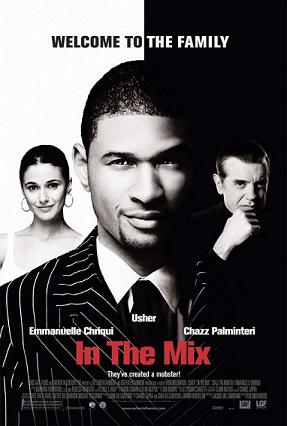
There are plenty of things to complain about with “In The Mix”. It is definitely not a flawless movie (it isn’t even a good movie), but it was damn near refreshing compared to most of the things I have had to watch in the IMDb Bottom 100 as of late.
Most of the complaints I have seen about “In The Mix” are completely valid. More than anything else, I have seen a lot of criticism of the stereotype-laden script, which also spends an inordinate amount of time worshiping the lead character played by Usher. The way women treat Usher in the film is far beyond unrealistic, to be sure, and the constant reliance on Italian and African-American stereotypes is both lazy on the part of the writers and tiring to sit through. Even more baffling is the fact that Usher has no loss of mobility after being shot in the shoulder at the beginning of the movie, and is allowed to act as a bodyguard while recovering from a serious injury. However, I’m going to focus on some positives with this review. Because, shockingly, I found a lot of things positive worth noting in this train-wreck of a movie, particularly in comparison to other IMDb Bottom 100 flicks.
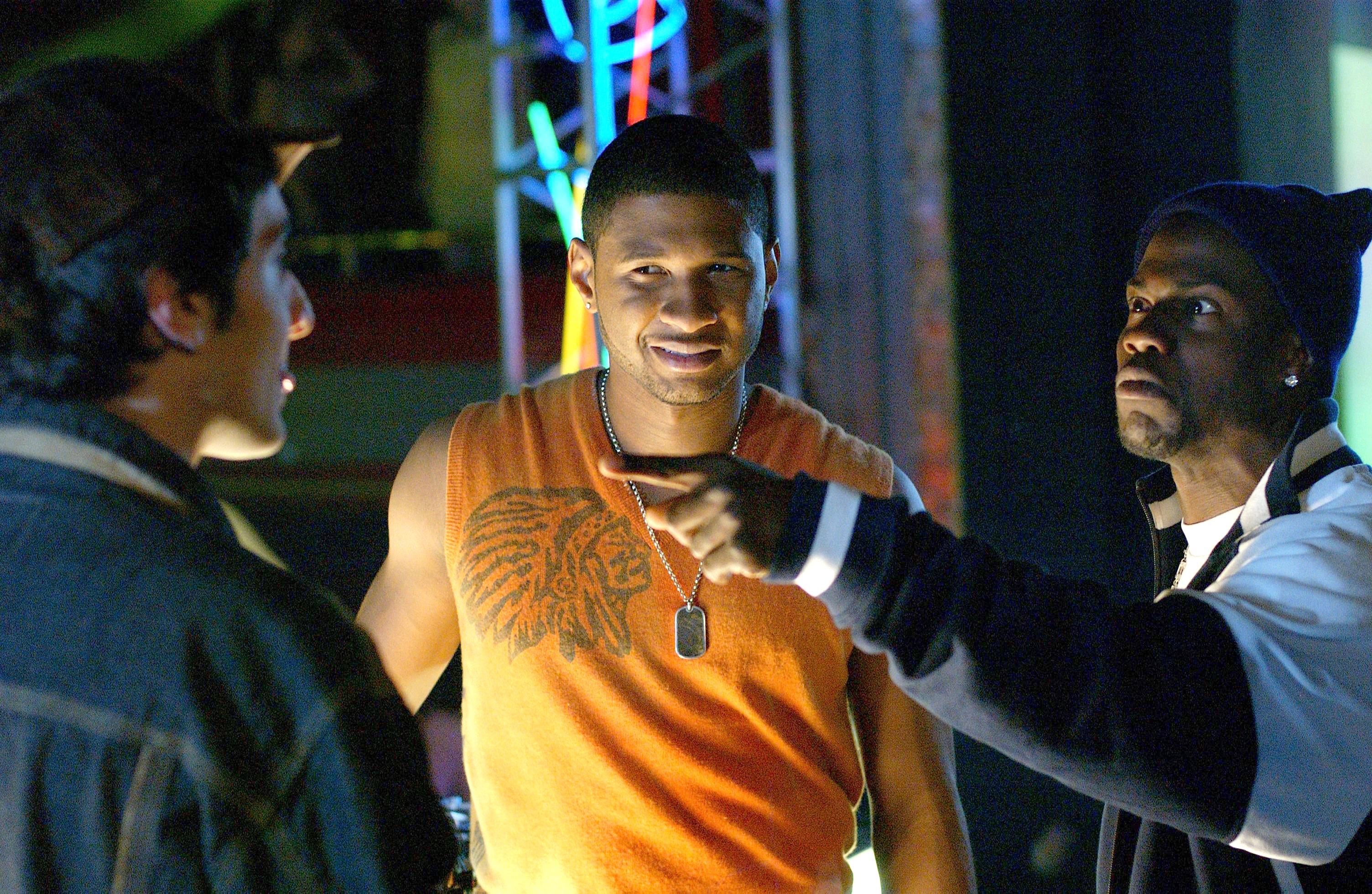
“Look, it is just a gunshot wound. I can still be an effective bodyguard for your daughter”
First off, “In The Mix” bears a significant similarity to a handful of IMDb Bottom 100 members, primarily in that it is structured around and starring a non-actor celebrity. But, in comparison to those (“Daniel der Zauberer”, “From Justin to Kelly”, “Popstar”), “In The Mix” pulls this off pretty well. The problems with “In The Mix” are almost entirely compartmentalized to the writing, which is shocking for being a movie centered around a non-actor. Usher, despite what I expected, was pretty serviceable in this movie. Compared to Justin Guarini or Aaron Carter, he’s Orson Welles.
Well, he’s at least Robert Costanzo. Maybe not Orson.
More importantly, Usher seems to actually have chemistry with his co-lead Emmanuelle Chriqui, and both of them seem to be enjoying themselves. I think the greatest weakness of any of these celebrity vehicle movies is a lack of connection between the actors, which can make a huge difference in how watchable and believable the movie is on the whole. Usher manages to pull this off, and despite the poor quality of the movie overall, deserves credit for that.
I’ve noticed that a lot of folks direct their ire about this movie towards Usher, but not typically because of his performance. More often than not, I’ve seen complaints that he didn’t take responsibility as one of the film’s Executive Producers to ensure the ultimate quality of the project. I have a bit of a problem with this complaint. First off, the director is the one responsible for the project as a whole. When it comes down to it, the role of Executive Producer is left intentionally vague: it can mean a lot of different things on different productions. As I understand it, Usher was given that credit primarily due to his vested interest in the product as its public face. Just because he holds an Exec. Producer title doesn’t mean he is responsible for the quality of the film: producers are far more likely to be responsible for the fundraising and the marketing of the flick than anything else. Also, Usher isn’t an experienced movie maker, so how exactly would he have spotted a problem during development if he didn’t know what to look for? It may not have been wise to give him a producer nod, but even that falls back to being the director’s fault. From what I can tell, at worse Usher was complicit in the failure of the movie. At best, he did his damnedest to make it better, and failed to single handedly save the movie.
The accessory cast of “In The Mix” is, appropriately, a mixed bag. The poor dialogue and writing in general anchor the whole product down, but a few folks still deliver half decent performances. It is always nice to see a bunch of character actors like Robert Costanzo and Chazz Palminteri doing their mobster thing, but the grating comic relief performance by Kevin Hart leaves a whole lot to be desired (like, for instance, the sweet embrace of death).
“In The Mix” is a film teetering on falling out of the IMDb Bottom 100, and for good reason. It is a movie that is just “good” enough to not be entertainingly bad, which puts it unfortunately into the range of forgettable mediocrity. There isn’t anything outlandishly bad enough about it for me to recommend watching through the whole thing, but it serves as an interesting side-by-side comparison with the other celebrity-driven IMDb Bottom 100 features I mentioned here.
Ulli Lommel is one of those rare filmmakers who seems to be able to do no right. I honestly can’t think of any other filmmaker who so thoroughly embodies the legendary incompetence of Ed Wood for today’s film world. Some time ago, I covered his film “Zombie Nation”. As bad as that film is, it is a masterpiece in comparison to Lommel’s infamous part-documentary, part-fever dream known as “Daniel – der Zauberer”, which is widely considered to be the worst German movie of all time.
“Daniel der Zauberer” is a thoroughly fictionalized tale centering around the inexplicable German pop sensation Daniel Kublbock, who gained notoriety after winning Germany’s equivalent of American Idol. Speaking of which, this movie makes “From Justin to Kelly” look like a narrative masterpiece and in-depth character study.
In the world of “der Zauberer”, Daniel Kublbock is not just a pop star, but is also a wizard in training under the tutelage of his long-deceased grandfather (played by Lommel himself). In addition, he is apparently such a divisive figure in German society that a number of teenagers feel so much ire for him and his music that they wish to see him die. A good deal of the plot centers around a couple of these disgruntled youths attempting to assassinate Daniel, and that is unbelievably one of the less ludicrous aspects of the movie. Daniel ultimately wins over his would-be assassins and all of his other passionate detractors with his positive energy and friendliness by the time the movie ends, which is particularly notable given how painfully awkward Daniel is in front of a camera. Frankly, Daniel wouldn’t be able to win over a puppy with his charm and charisma.
Daniel with Ulli Lommel, who plays his wizard mentor / dead grandfather / sometimes one-armed brass musician companion.
For “Daniel – der Zauberer”, the devil is definitely in the details. All of the things that are typically invisible in well-crafted movies stand out like swollen thumbs here. The cinematography is on par with an amateur home video, the editing and sound are painfully distracting, and one continuity error is even so blatant that there is a half-hearted attempt to write it into the movie (Ulli Lommel’s character has a disappearing and reappearing arm).
The writing is really unfocused and vague throughout the movie, and fails to establish important elements to the story for the audience: most notably, it is not made absolutely clear that Daniel is a wizard in training until the last act, and his relation to Ulli Lommel’s character isn’t covered until the film’s conclusion. The dialogue isn’t much better, but it is hard to tell whether the writing or the acting is more to blame for what ultimately makes it on screen. Either way, the result is nothing short of abysmal.
There are a number of directorial decisions in this movie that truly boggle my mind. In a number of scenes, archival footage from various reality show appearances by Daniel are spliced in for seemingly no reason at all. I can understand the extensive use of concert footage in the movie given it more or less ties into the character, but the reality show clips just don’t make any sense at all. One of these sequences takes place while Daniel is having a nightmare where a mysterious man slowly approaches Daniel with a knife while he is sleeping. During the sequence, clips of Daniel on a German version of “Fear Factor” are cut in seemingly at random. Without provocation, the screen flashes to Daniel covered in bugs on what is clearly a reality show setup. In a more baffling sequence, footage is shown of Daniel playing with a couple of baby tigers, intercut with him…not really doing anything at all. He is just kind of standing around.
I am on the fence about whether I can recommend “Daniel – der Zauberer”. Part of me wants to say that this is a movie so incompetently made that it has to be seen to be believed. At this point, even Daniel Kublbock has admitted that it is truly awful, and that has to mean something from someone whose career is built on spreading positive energy. However, it is also a pretty boring experience to sit through, and given it didn’t get a release in English, the necessity of digging up the fan-made subtitles means that you have to go a bit out of your way to watch it. If you have a handy copy, give it a watch. I would just say do it with the caveat that it isn’t going to be a fun experience. This isn’t a movie for a group of people to watch and enjoy ironically, it is a movie that must be suffered individually, like a ritual.
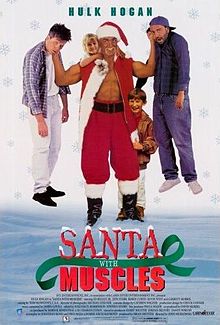
Continuing with the “15 Days of Bad Christmas Movies”, today’s entry is on the 1996 Hulk Hogan vehicle “Santa With Muscles”. Get ready for some Santamania!
“Santa With Muscles” is one of a handful of attempts to turn Hulk Hogan into a legitimate crossover star. After his performance in “Rocky III”, Hulk starred in a string of unsuccessful movies. Much can be said of his films like “No Holds Barred” and “Suburban Commando”, but his movie career was undoubtedly more successful than his brief music career, which consisted of one hilarious album entitled “Hulk Rules”. I suggest looking it up on YouTube, it is pretty laughable.
The plot of Santa With Muscles centers around the egomaniac health mogul and millionaire Blake Thorne (played by Hulk Hogan), who, after becoming severely concussed during a run-in with police, wakes up believing himself to be Santa Claus. This leads to Thorne becoming a vigilante orphan advocate in his local community, all while a con man pretending to be his elf (Don Stark) tries to prevent him from re-discovering his identity as part of an elaborate attempt at bank fraud.
Another plot surfaces when a it is revealed that a local eccentric health-obsessive and germophobe (Ed Begley, Jr) is terrorizing an orphanage via his super-powered minions (their powers, of course, are not explained). Their actions prompt Thorne to repeatedly intervene on behalf of the orphanage, gaining him minor celebrity status as a peace-keeper along the way.
Goon with electric powers, for reasons.
Among the orphanage residents is the now famous actress Mila Kunis, in one of her earliest film roles. Interestingly enough, co-star Don Stark would later play her father for many years on the hit sitcom “That 70’s Show”.The sleeveless Santa suit that Hogan wears for much of the movie is designed in-story by Mila Kunis’s character, Sarah. When asked about the design, she claims that it was inspired by a comic book, specifically “Mega Man #96”. Mega Man is a well known video game hero and one of the franchise faces of Capcom. While he has had a couple of comic book runs, none have made it to #98, and the blue robotic boy does not much resemble Santa Claus, nor does he use a utility belt or wear a red suit. That said, his creator, Dr Light, bears a significant similarity to the jolly saint nick. But, I’m willing to bet that there isn’t a real connection there.
Dr Light and Mega Man
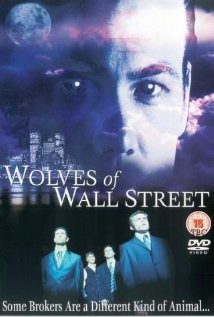
The executive producer of “Santa With Muscles” is none other than Jordan Belfourt, a man now famous as “The Wolf of Wall Street”. Belfourt served as Executive Producer of six movies in 1996, including “Santa with Muscles” and another Hulk Hogan family feature called “Secret Agent Club”. Belfourt also became good friends with notorious B-movie director David DeCoteau during this brief fling with the movie business. DeCoteau later loosely adapted Belfourt’s tales from Wall Street into a homoerotic werewolf movie called “The Wolves of Wall Street”, a flick that predated Scorcese’s famous work by a solid decade.
At the beginning of “Santa With Muscles”, Hulk Hogan is playing a character clearly based heavily on himself, but he is inexplicably a complete dick to everyone around him. Why might that be? Well, this is more justified than you might think: it isn’t a Dickensian redemption tale for the sake of Christmas alone.
In July of 1996, Hulk Hogan made the shocking move to turn heel for the first time in his career: a term used to signify a “villain” in the pro wrestling community. Ironically, this turn to the dark side coincided with his adoption of the nickname “Hollywood”: I’m guessing he had higher aspirations for his film career than “3 Ninjas: High Noon at Mega Mountain”. In any case Hulk continued on as a consistent villain in the WCW wrestling league for a number of years after this. The November 1996 release of “Santa With Muscles” places it in the midst of Hulk’s sinister turn, so it makes sense that he plays a callous and cold character as the story unfolds.
Hogan’s “Hollywood” heel persona
According to IMDb’s trivia section, the original author’s draft of “Santa with Muscles” was changed so extensively that he sued to have his name taken off of the film. I haven’t found any information to independently substantiate the rumor, but I certainly wouldn’t be shocked if this were true. The three credited writers on the film include one person with no other credits of any kind, a fellow who is only credited as an assortment of extras (he played a water slide attendant in “Bill and Ted’s Excellent Adventure”, apparently), and another person with a handful of credits solely as a casting assistant. It isn’t exactly a writing dream team.
“Santa With Muscles” director John Murlowski was also responsible for the other 1996 Hulk Hogan movie, “Secret Agent Club”. However, he is probably best known for helming the film “Cop Dog”: a kid’s movie in which the ghost of a dead dog possessed by a fallen cop leads a young child on a quest for revenge. It is a very strange film.
Among the accessory cast of “Santa With Muscles” are Clint Howard, who is the brother of famed director Ron Howard (and a stalwart B-movie character actor in his own right). He has featured in movies such as “The Ice Cream Man” and “Evilspeak”, not to mention a veritable drove of Uwe Boll movies. Also appearing is Garret Morris, best known as an inaugural cast member of NBC’s beloved comedy sketch program Saturday Night Live.
The climax of “Santa With Muscles” sees Hulk Hogan doing battle with Ed Begley Jr (clad, as always, in a hazmat suit) in an expansive cave below the orphanage. It is revealed that the building sits atop a mine filled with valuable explosive crystals, which is why Begley had been trying to expel the orphans. It is also inexplicably revealed that both men were raised in the orphanage as children, and at one point were best friends. In light of these bizarre and lazy revelations, the two men have a sword fight with the highly explosive crystals, which somehow doesn’t blow them both up into tiny meat chunks. The aftermath of the battle does ultimately see the orphanage explode, after which Thorne opens his mansion up as a new location for the children, completing his redemption.
On to the plotopsy of the film: what led to the failure of “Santa With Muscles”?
First off, it is just too damn cartoon-y. The villains have ridiculous unexplained superpowers, and chew their way through scenery throughout the film. Ed Begley Jr’s lead villain is played as such an over the top germophobe that the trees in front of his house are shown covered in plastic. That kind of thinking makes my brain want to implode.
Just random shrubs covered in plasticUntil the end of the movie, Ed Begley Jr’s character refuses to leave the mansion, instead appearing via a TV to outsiders.
Of course, centering a movie around Hulk Hogan isn’t such a great idea either. He may be a good showman, but he is a horrendous actor. Watching him stumble through lines in this movie is embarrassing, particularly during an interview sequence where he is supposed to be acting nervous. It takes an unfathomable void of talent to not be able to appear nervous and confused. Last but certainly not least, this script is absolutely abysmal. The plot is baffling and poorly paced, and the dialogue is awkward and stilted throughout the film. I am kind of curious what the original draft looked like, and how it managed to be mutated into the state that it ended up in.
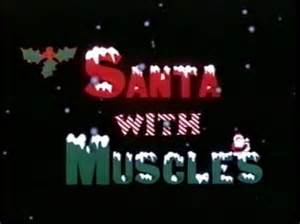
I think a toddler designed the title card
All in all, I absolutely recommend giving Santa With Muscles a watch if you can find a copy of it. It is definitely a movie you have to see to believe, and it may be the worst entry in Hulk Hogan’s abysmal filmography. The pacing slows down significantly here and there, but there are generally enough confusing and outlandish moments to keep your eyebrows cocked and your jaw on the floor through the entire run time.
That’s all for today’s (Plot)opsy Podcast here at the Misan[trope]y Movie Blog! I recommend checking out the rest of the “15 Days of Bad Christmas Movies”. Here’s what you will find this week:
So, make sure to check in with all of those good folks as part of the “15 Days of Bad Christmas Movies”! Also, make sure to check back here next week for the next (Plot)opsy Podcast on the infamous 1959 Mexican Christmas movie: “Santa Claus”
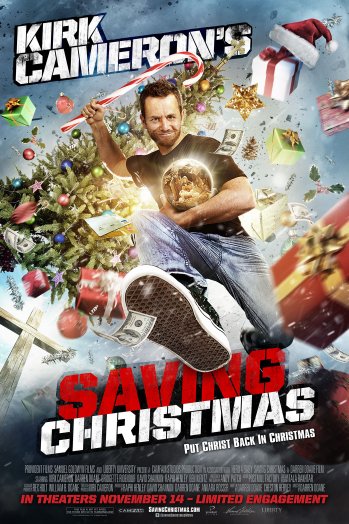
For those who haven’t heard yet, Kirk Cameron’s new movie “Saving Christmas” recently topped the IMDb’s Bottom 100 list. This came about just after Kirk Cameron attempted to inflate his movie’s score on Rotten Tomatoes by calling on his fan base to give his movie a “fresh” rating. Unfortunately for Cameron, that isn’t how the review aggregation site works. Even more unfortunately for Cameron, the internet doesn’t take too kindly to those sorts of shenanigans, nor does it have much patience for vapid evangelism.
Thus, quick as a flash, all of the democratic online ratings for “Saving Christmas” (including the audience score on “Rotten Tomatoes” and the IMDb user score) tanked into oblivion. Kirk Cameron, being the Kirk Cameron that he is, believes that this is a result of a grand atheist conspiracy. Well, let us aim to get down to the truth of the matter then, shall we?
Outside of the internet’s backlash to Cameron’s Rotten Tomatoes shenanigans, there are plenty of other reasons that “Saving Christmas” has been so poorly received. And, believe it or not, I don’t think the backlash is universally from internet atheists and disgruntled troll-folk. I honestly believe that Kirk Cameron managed to split his evangelical base with the message of “Saving Christmas”.
When it comes down to it, “Saving Christmas” isn’t about the mythical “War on Christmas” (as it was advertised): it is a movie aimed at evangelical, conservative Christians who either do not loudly celebrate Christmas, or publicly condemn common Christmas practices due to pagan roots or ties to sinful behavior. The very structure of the movie is laid out as a dialogue between Cameron and his fictitious brother-in-law (and fellow evangelical) Christian, who acts as the straw man of these sorts of Christmas detractors. Cameron, over the course of the movie, walks Christian through his complaints about the materialism of modern Christmas and the Pagan roots of many holiday traditions. Even though Cameron’s arguments for these practices being complimentary with Christianity are generally poorly thought out, it is clear that he is attempting to call out and persuade his fellow evangelicals to come around to his way of thinking. This is an attack movie on a sub-population of his own people.
This may be a bit obvious, but another big part of the reason that “Saving Christmas” has been so poorly received has nothing to do with the film itself, but is rather just a reaction to the fact that Kirk Cameron has his name plastered all over it. Cameron suffers from something that I’ve started calling the “Uwe Boll Effect”, in which the poor behavior and unpopularity of a key player in a film leads to the poor reception of their work, regardless of the work’s actual quality.
I mean, all of his work is low quality anyway. Let’s be real.
These days, Cameron only registers on the public’s radar when he is saying something wildly homophobic, blatantly misogynistic, or is puppeting some sort of conservative agenda, and none of those things win you popularity points on the internet. Even without his attempt to inflate the movie’s scores, “Saving Christmas” would have registered abysmal scores on IMDb for this reason alone. It probably wouldn’t have been bad enough to hit the Bottom 100, but the fact that Cameron’s name is on the film meant that it wasn’t going to get anything over a 5.0 out of 10 (generous), and that is regardless of the actual quality of the movie.
Before I get on to talking about the actual film, I want to clearly address something: “Saving Christmas” is in no way the worst movie of all time. The IMDb rankings and the Rotten Tomatoes audience score are both living, democratic scores, which means that they fluctuate in accordance with public opinion. The phenomenally low scores for “Saving Christmas” on these mediums should not be read to mean “this is the worst movie of all time”, but rather as “this is perceived by the public right now to be the worst movie of all time”. I see people misread these rankings all the time (particularly the IMDb). The user score is literally a popularity contest, not an intelligently crafted tome. I don’t mean to say that in a detracting manner: it is actually an interesting and valuable ranking that acts as a barometer of current popular opinion, which is frankly interesting as fuck. Both the Rotten Tomatoes audience score and the IMDb user score are fascinating numbers, but they need to be appreciated for what they actually represent. I can guarantee you that there is not a critic in the world who would cite “Saving Christmas” as being objectively worse as a film than “Monster-A-Go-Go”, and that should tell you all you need to know about the objective accuracy of the IMDb Bottom 100. Now, on to the movie.
“Saving Christmas” is, of course, quite bad. Most of the issues come from poor structure and pacing, which I believe are side effects of attempts to pad out the final run time of the flick. There is an extended, unnecessary dance sequence towards the end of the movie that doesn’t serve much of a purpose besides burning time, and there is a scene early on with no plot significance in which two peripheral character have a conversation almost entirely via ADR (automated dialogue replacement, voiceover done after the fact), meaning that it is entirely possible that the scene was not actually written until after it was filmed. I think these two sequences wound up being as long as they were specifically to pad the run time, which subsequently slowed down the pace of the movie. Even the story structure itself makes the movie feel longer: it is never clear as the dialogue between Cameron and Christian progresses where the movie is in the run time. Most linear plots provide a sort of shorthand for audiences: for instance, you generally have an idea of when the second act is wrapping up, just due to how the story is progressing on screen. In “Saving Christmas”, which lacks a traditional plot, the audience isn’t given any of these usual landmarks, so you never quite know where you are in the movie. The effect of this is that the movie feels longer than it actually is, which is generally something you don’t want to happen. This isn’t necessarily going to result in a bad movie (see: “Pulp Fiction” and “Reservoir Dogs”), but it doesn’t do a film any favors if the audience isn’t sufficiently engaged.
I have mentioned a little bit about the writing already, specifically the fact that it is mostly done as a dialogue between two characters. While the contents of Kirk Cameron’s lines are basically word salad, those scenes aren’t nearly as poorly written as the ones that aren’t specifically between the two lead characters. When not focused on Cameron and Christian, this movie goes off the rails in the writing department. Kirk Cameron provides voice-over in nearly every scene, which is something that would be grating in an otherwise good movie with a better actor doing the readings. But here, given that all of the voice-over is done by Kirk Cameron, delivered in a typical preacher’s cadence, and has the content of a thrown-together Sunday school class, you honestly feel like you are trapped in a visual companion to a Christmas sermon. Worse yet, the little exposure the audience gets to the accessory cast away from Cameron is plagued with lazy stereotypes and banal, unnecessary, and seemingly improvised dialogue.
This image summarizes the movie perfectly: you can’t see the rest of the cast, because Kirk Cameron will not get out of the way
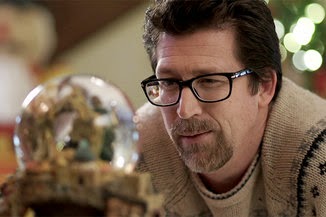
The acting in “Saving Christmas” is kind of difficult to cover. Kirk Cameron is clearly comfortable in his role, because he is absolutely in his element in this movie. The whole world of the movie does seem to bend and contour around him, almost like he is Neo in “The Matrix”, but I feel like that is more of a writing issue than an acting one. He does come off as incredibly smug, but I can’t really consider that a weakness of his performance: his role (and the movie) is smug by design. Writer/director Darren Doane is serviceable enough as Christian, though he spouts some horribly written lines of attempted comedic dialogue, and is portraying one of the least believable / most malleable characters I’ve ever seen on screen. Perhaps it speaks to his credit as an actor that the character still seems genuine despite all of that?
Darren Doane, writer/director/co-star of “Saving Christmas”
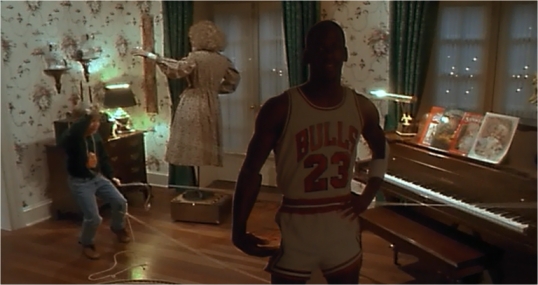
Beyond those two leads, the only other notable that stood out to me was the guy who plays Santa Claus, who has a great menacing look to him, but his line-reads were pretty miserable once he opened his mouth. As for the rest of the cast, the movie doesn’t spend enough time with most of them for me to make judgements either way: outside of the token black stereotype character, they are basically the cardboard cutouts from “Home Alone” that exist solely to create the illusion of a Christmas party.
Replace Culkin with Kirk Cameron and you pretty much have it
So, would I recommend “Saving Christmas?” Not particularly. Unless you are really into counter-apologetics and find Kirk Cameron’s usual bad arguments entertaining in general, there isn’t a whole lot of fun to have here. Alternatively, if you are particularly fond of watching bad movies for the sake of learning how films go wrong, there is some value to sitting through this. The structure is mind-boggling, and there are a number of sequences that are shockingly incompetent enough for a film buff to appreciate. That said, there are a handful of decent shots in the movie, so it isn’t absolutely horrible top to bottom. The straw man and stereotype-laden writing are generally just tiresome, and don’t produce any entertainment value, so the film just winds up being a dull experience when it comes down to it.
However, I definitely recommend watching this hilarious re-cut of the “Saving Christmas” trailer. Stick with it until the end, you won’t regret it:
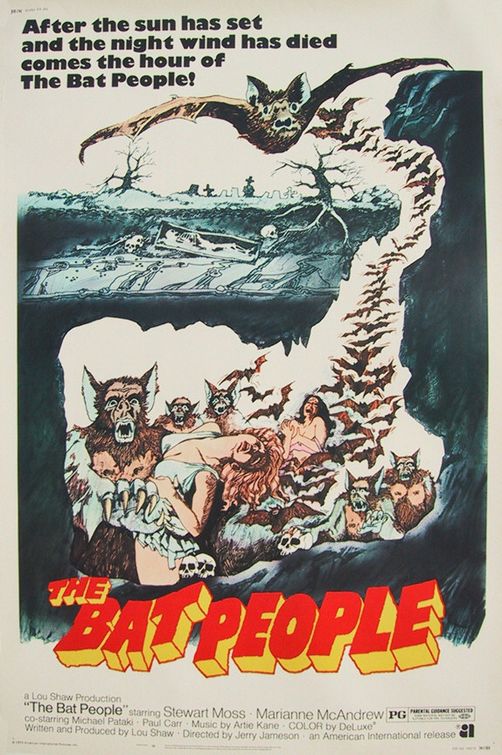
“Bat People” is yet another recent addition to the IMDb Bottom 100. As with many other members of the list, this is a B-movie that had the great misfortune to be featured on Mystery Science Theater 3000. However, I didn’t think it was a particularly notable entry in the series. Overall, it has a pretty standard B-movie formula, and is very similar to other movies I have covered in the IMDb Bottom 100 already (namely “Horrors of Spider Island” and “Track of the Moon Beast”). Basically, someone is bitten by a bat, and then slowly becomes a bat-man through a serious of murderous fits.
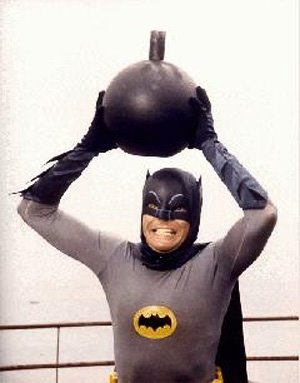
A murderous fit of a batman
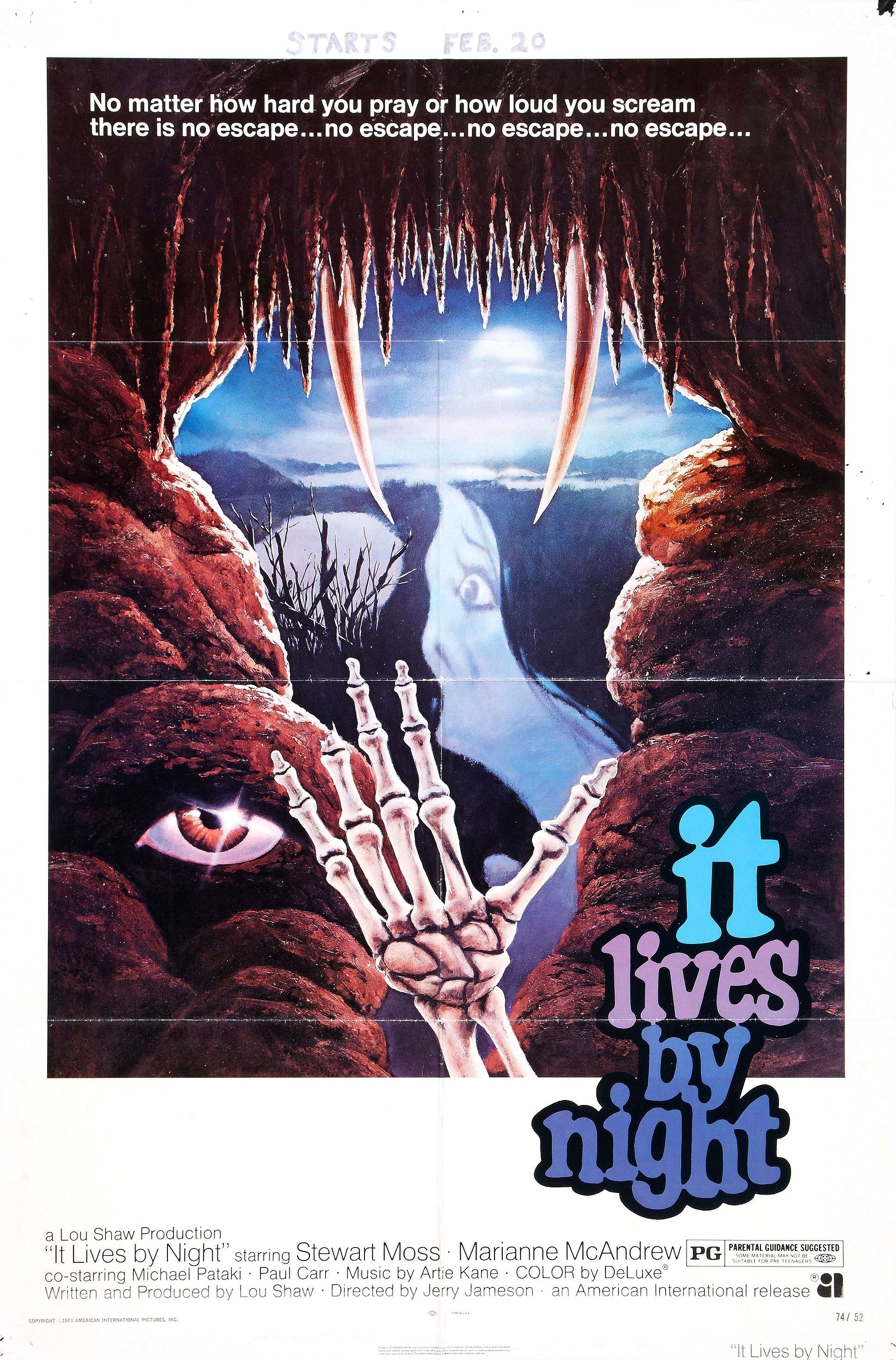
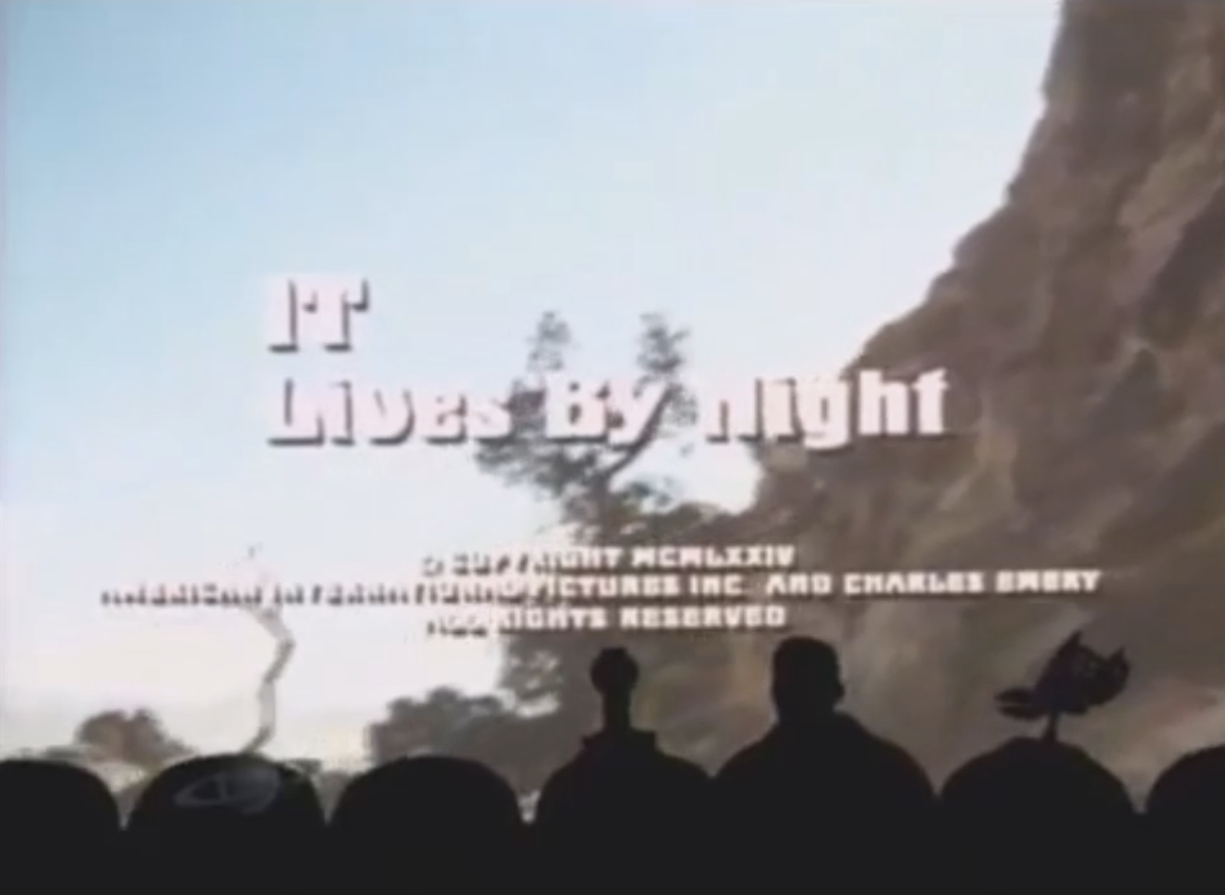
As is not unusual with low budget B-flicks of the time, this is another film with a good number of alternate titles. IMDb recognizes “Bat People” as the official name, but it is also widely known as “It Lives By Night” due to the popularity of the MST3K episode (which ran it under the less-used alt title).
As far as interesting trivia goes, “Bat People” was Stan Winston’s first feature film makeup work, which is a real shame given how awful the lighting is in most of the movie. The makeup effects that you can make out in the darkness don’t look totally horrible, which isn’t exactly shocking given the storied career in special effects and makeup that he would ultimately have.
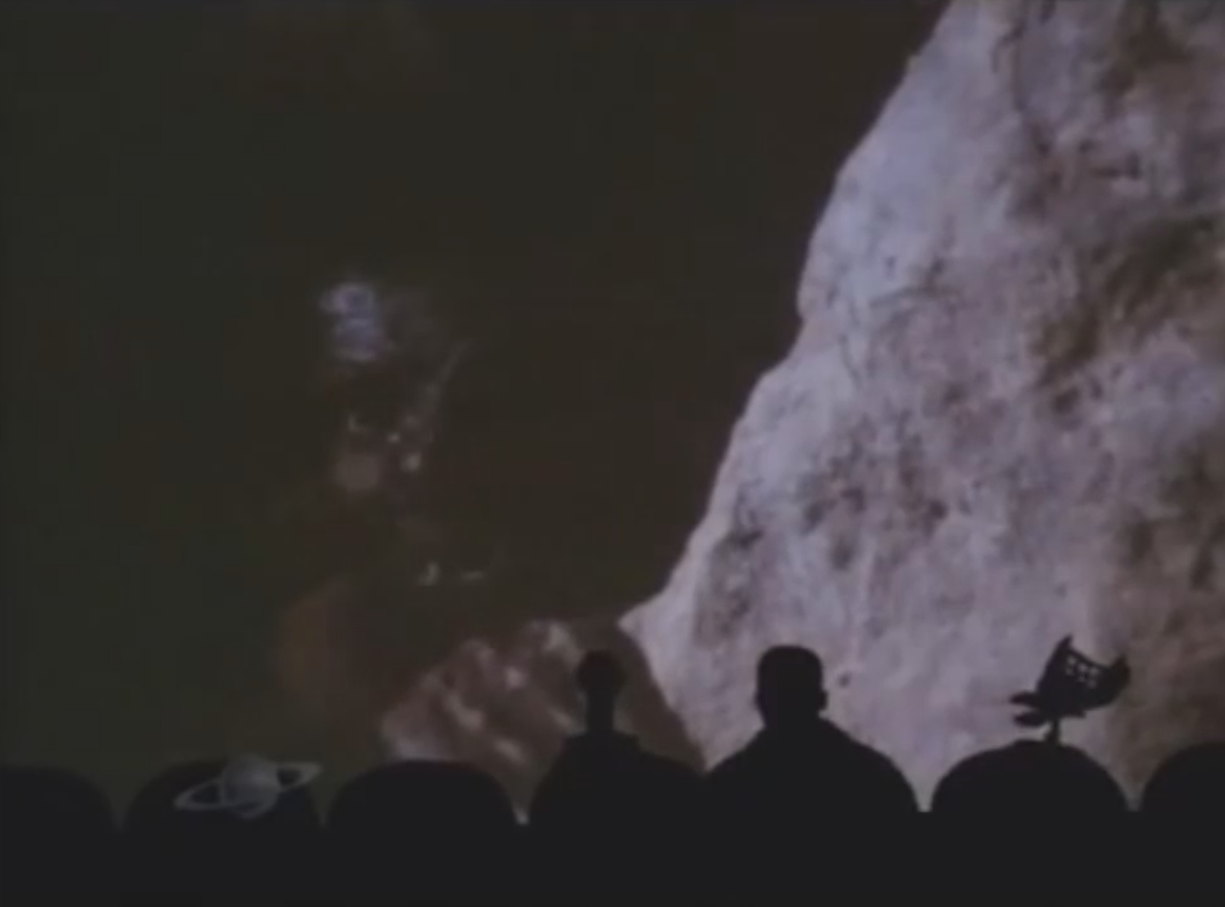
These are probably the best-lighted shots of makeup in the movie
While the acting and writing in “Bat People” could certainly be better, nothing is nearly as distractingly awful about this movie as the lighting. Given much of the movie takes place in caves and at night, you have to expect a fair deal of darkness. That said, there is a way to deal with filming at night, and this flick totally fails at pulling it off. Even the opening shot is so dark that it is unclear what the image is supposed to be for a number of seconds.
As far as other complaints go, I wasn’t really impressed with the execution of the ending. Part of this is due to the fact that the twist wasn’t set up well enough in the writing, but there also wasn’t much of a sense of suspense in the final sequence like there should have been.
Overall, this is a pretty forgettable and skippable movie that I can’t recommend on its own devices. The story is formulaic enough that it is pretty easy to follow along, but there just isn’t much entertaining going on as the movie progresses. That said, this was a really fun episode of MST3K, and the comedic commentary really works well with this one. It isn’t the best MST3K episode, but it is a pretty good one worth checking out.
Ok, look. Everyone has reviewed “Battlefield Earth”. There is literally no ground left to tread, and no stone left to turn over. Here are just a handful of existing “Battlefield Earth” reviews that are totally worth your time to check out:
If that’s not enough for you, go give a listen to the eviscerating episode of “How Did This Get Made?” on the movie.
Now that you have watched and listened to all of those reviews, you are at the point where I was when I started watching this movie for the first time. I already knew about the hammy acting, the bad effects, the baffling editing, the behind-the-scenes troubles, the Razzies, and the whole cavalcade of incompetencies and bizarrities surrounding the movie. And, really, there isn’t anything else to say. Here is the opening to Roger Ebert’s half-star review, who sums it all up as well as anyone could:
“Battlefield Earth” is like taking a bus trip with someone who has needed a bath for a long time. It’s not merely bad; it’s unpleasant in a hostile way. The visuals are grubby and drab. The characters are unkempt and have rotten teeth. Breathing tubes hang from their noses like ropes of snot. The soundtrack sounds like the boom mike is being slammed against the inside of a 55-gallon drum.
I will note something about “Battlefield Earth”: it is a near-perfect example of a Hollywood bad movie. I’ve covered a lot of movies in the IMDb Bottom 100, but most of them have been foreign or independent productions. However, there is nothing quite like an all-star failure that had high expectations. I think the only other IMDb Bottom 100 flicks that had a comparable fall are “Gigli” and “Foodfight”, and neither of them were quite as catastrophic or public as “Battlefield Earth”.
This movie was supposed to be *big*. There was tons of money behind it, lots of marketing, a line of toys, blueprints for sequels, and everything you would expect from a top-tier box office performer. The colossal failure of this movie, particularly in the wake of successful sci-fi flicks like “The Matrix”, was a real shock.
As you would expect, the behind-the-scenes hubris is palpable when you watch this movie. The overconfidence exudes from every frame, which is part of what makes the failure of this film so damn satisfying in comparison to its low-budget cohorts in the IMDb Bottom 100. Here is a relevant quote from Mystery Science Theater 3000 and Rifftrax member Kevin Murphy, as recorded in “Showgirls, Teen Wolves, and Astro Zombies” by Michael Adams:
“When you see a film like Warren Beatty’s “Town & Country”, you can see all of the ego in the world on the screen…Schadenfreude is a classic human emotion. We have a passion for seeing people we hold up as models of success fall down. That goes back to Aristophanes. All the badness just comes off the screen – incompetently made and morally bankrupt, a nice combination.”
Murphy absolutely nails a major part of why it is so much fun to watch a big-budget bad movie. These flicks aren’t necessarily the worst things out there, but they very much failed to meet blockbuster expectations. Movies like “Batman & Robin” and “Spider-Man 3” immediately come to mind in this category: they are nowhere near as incompetent as “Oasis of the Zombies” or “Monster A Go Go”, but they are way more entertaining failures to watch through due to that sweet, sweet schadenfreude.
Every joke about the ridiculous makeup and costuming has already been made. I guarantee it.
I absolutely recommend “Battlefield Earth” to any bad movie fans. Despite some issues with pacing, the things that are bad about this movie add to the unintentional entertainment value. Objectively, it isn’t realistically bad enough to make an honest Bottom 100 ranking, but I have no issue with it being in the IMDb Bottom 100: there is just to much to hate and enjoy about this movie that it fits right in down there.
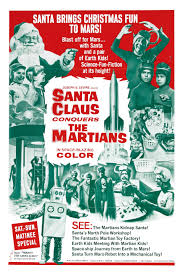
Today, as part of the “15 Days of Bad Christmas Movies” pod crawl, I will be talking about the B-movie holiday classic and IMDb Bottom 100 stalwart, “Santa Claus Conquers the Martians”.
To begin with, the setting of “Santa Claus Conquers the Martians” is a bit peculiar. In this universe, Santa Claus is an established, real person: there is no particular mystery or mysticism associated with him. This is fairly bizarre for a Christmas movie, to say the least: most use the mystery surrounding him as part of the story. The movie even opens with Santa being casually interviewed on TV at the north pole (where he, of course, has a physical workshop in the near-uninhabitable tundra). This sequence also features the first appearance of the character Mrs. Claus on the big screen, as “SCCTM” predated “Rudolph, the Red Nosed Reindeer” to the theaters by 3 weeks in 1964. Santa also strangely forgets the names of his reindeer during this scene, famously referring to “Blitzen” as “Nixon”. Keep in mind, at this point in time Nixon was only know as the former Vice President of the United States, and as the man who lost the Presidency to a Catholic.
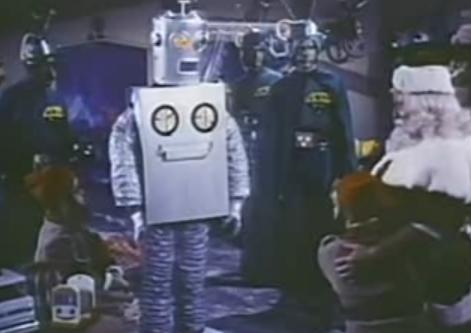
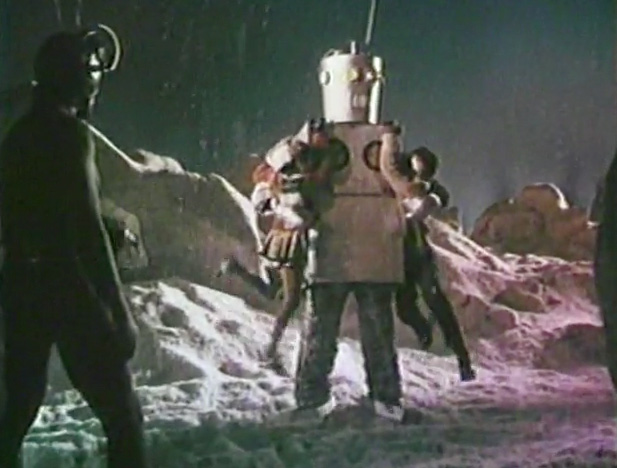
Part of the charm of “SCCTM” comes from a horde of cheap effects used throughout the film: these include the kind-of animated introductory credits, a man in a polar bear suit that makes the bear fight in Lou Ferrigno’s “Hercules” look dignified, a cardboard killer robot named Torg (not to be confused with Torgo from “Manos: The Hands of Fate”), space ships of Ed Wood levels of quality, and martian costumes consisting of what appear to be spare television and vacuum cleaner parts. Last but not least, the Martians carry magic guns (capable of freezing or tickling targets) that are just recolored “Wham-O” air blasters. Personally, I can’t hold the fact that the production was frugal with effects too harshly against them, but the end result of all of these cost-saving decisions is pretty entertaining to see on screen.
A lot of fanfare has been made regarding the inaccuracy of the title of this movie. Santa does not do any fighting in the movie, and doesn’t claim Mars for the glory of the North Pole. The more accurate title is “Santa Claus and the Martian Civil War”: the conflict of the story comes from a split in martian society over whether the joy of Christmas should be assimilated into their lifestyle. The martian elder Chochem warns that the children of Mars will become rebellious if they are not exposed to yule-tide cheer, a controversial declaration which sparks the initial martian expedition to retrieve Santa in the first place, and plants the seeds of the eventual martian rebellion by Voldar. so if anything Santa is a catalyst to conflict, not a space conquistador.
Despite not featuring any real conquering, there is a climactic fight scene in the movie, in which toys are used by Santa Claus and the martian children to annoy and distract Voldar and the martian rebels until they are subdued by Kimar and his loyalist soldiers. It is a frenetically shot scene that needs to be seen to be believed, and is perhaps the most infamous sequence in the film.
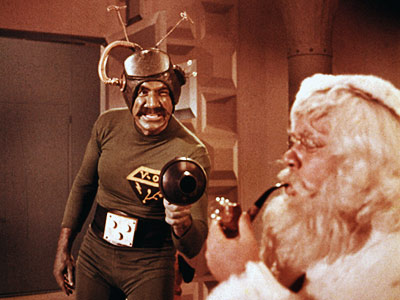
The leader of the martian rebels, Voldar, is one of the most purely evil characters in the history of film. He not only convinces the martians to kidnap and interrogate a pair of human children, but he also attempts to murder Santa Claus and two kidnapped children on multiple occasions, including an incident in which he attempts to launch them into the void of space via an airlock. He is also established to be particularly bellicose and fond of war, at one point commenting on Mars’s past as a military society. Mars, of course, is the romanticized name for Greek god Ares, who is the god of war in both mythologies. He also has a legendarily villainous mustache, just in case it wasn’t clear to the audience that he would be the mutinous villain of the story.
Voldar, ordering a robot to murder childrenVoldar is the one with the stache, of course
It is worth noting that the Martian naming conventions in the script and by and large astoundingly lazy: four of the primary martian characters are named Kimar, Momar, Bomar, Girmar. standing for “King Martian”, “Mom Martian”, “Boy Martian”, and “Girl Martian”, respectively.
One of the most memorable parts of “SCCTM” is undeniably the theme song, Hooray for Santa (or Santy) Claus: it is absurdly catchy, and features some mean trumpet work to boot. I specifically recall finding the sheet music to this is my high school band’s archives, and despite my pleadings, we ultimately never performed it publicly. The song is arguably the best thing to come about as a result of this film, though you probably won’t hear it on a Christmas radio station.
Infamous actress Pia Zadora appears in this film as Girmar in her first on-screen role (she was 8 years old at the time). She is best known as a punching bag for movie critics in the 1980s, particularly for her Razzie nominated roles in “Butterfly” and “The Lonely Lady”. Bafflingly, she also received a Golden Globe for her performance in “Butterfly”, a decision that is mocked and criticized to this day
One of these is Pia Zadora. Flip a coin, I can’t tell them apart. Does that make me a Martian racist?
At the end of the movie, it is decided that one of the martians (Dropo, who provides much of the film’s comic relief) will take on all the duties of Santa Claus for Mars. It is never made clear as to why this wasn’t tried in the first place: the martians have a concept of what Santa does, and it is established that they have earth television programs that feature him prominently. Why wouldn’t they try to replicate Santa’s work first, instead of going through the trouble of apprehending Santa? Who knows?
The cult status of SCCTM is iconic among “so bad it is good movies” and Christmas movies alike. it particularly took off in popularity after it was featured in the show MST3K in the 1990s. The movie has since seen multiple adaptations to the stage, is often cited as one of the worst movies of all time in professional publications, has become a staple in the IMDb Bottom 100 ranking, inspired a spin-off novelization, and was even re-dubbed in Brazil as a drug comedy called “Santa and the Magic Powder”. It was re-riffed live by the Mike Nelson MST3K crew as part of a Rifftrax Live event in December of 2013, which was simulcast in theaters around the United States and Canada.
Promo for the Live Rifftrax of “Santa Claus Conquers the Martians” from December 2013.Photo from a stage production of “Santa Claus Conquers the Martians” in Fullerton, CA
As to the Plotopsy of SCCTM, what went wrong with this production? As I previously mentioned, the defining aspect of the movie is frugality, bordering on frank cheapness. That said, there is an honest charm to this film that has turned it into the cult classic that it is, much of which is rooted in those same financial limitations of the production. So, when it comes down to it, the movie’s weakness is its strength, and it wouldn’t be what it is without it. The cheesy writing is also often criticized, but to a certain degree, that was unavoidable: after all, this was intended as a simple children’s film, so cheesy elements were going to seep in regardless. Director Nicholas Webster did have success directing television, so he certainly wasn’t incompetent behind a camera (though the failure of SCCTM pretty much killed his chances with features). There are even some shockingly half-decent shots to be found in SCCTM, so unlike many bad movies, it isn’t so much a failure on a technical level.
I can’t recommend this one highly enough, especially with the MST3k riffs. It is horrible and absolutely deserving of a place in the IMDb Bottom 100, but it is also an absolute blast. Definitely check it out if you haven’t already, it is readily available on YouTube.
You can catch up with the 15 Days of Bad Christmas Movies over with the Stinker Madness Podcast who just covered “Home Alone 3”, the If We Made It Podcast who just did “Ernest Saves Christmas”, the JT Movie Podcast, who took aim at “Jack Frost” this week (notably the creepy snowman one, not the Michael Keaton one), and Dark Corners of This Sick World on YouTube, who are featuring one of my personal holiday bad movie favorites this coming Monday, “Elves”: because nothing says Merry Christmas like a Nazi incest plot.
Make sure to tune in next week for my next entry in the 15 Days of Bad Christmas Movies, which will feature the Hulk Hogan vehicle and fellow IMDB bottom 100 member, “Santa with Muscles”
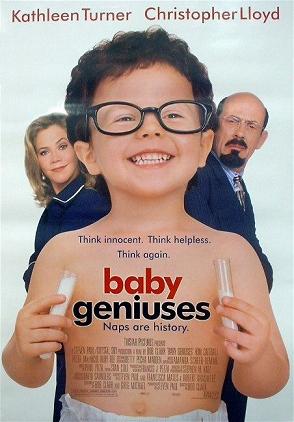
One of the great questions surrounding the stalwarts of the IMDb Bottom 100 is “Which is worse, ‘Baby Geniuses’ or ‘Baby Geniuses 2?'” In general, most seem to think less of the Jon Voight led sequel. However, The Nostalgia Critic made an interesting case for the first movie being the lesser. Personally, I agree with NC on this one: I think that despite “Baby Geniuses 2” being the more incompetent movie (which is saying a lot), Jon Voight’s performance manages to make it a more entertaining watch than “Baby Geniuses”. “Baby Geniuses” does have its own cast of self-debasing actors, most notably Christopher Lloyd (“Back to the Future”) and Kathleen Turner (“War of the Roses”), but neither of them get the same kind of screen time or go to nearly the same over-the-top lengths as Voight does in the sequel, which is strangely kind of a weakness to “Baby Geniuses” when it comes down to a comparison.
“Baby Geniuses” has one particular sequence that qualifies, surprisingly, as unadulterated nightmare fuel. For whatever reason, a lot of the plot takes place around an amusement park that features a host of remote-controlled animatronic creatures. Among these animatronics are Santa Claus, a terrifying clown that could put Tim Curry to shame, and a horrific 8-foot baby that is equipped with a speaker. During the climax of the movie, the genius babies take over the animatronics to create a distraction, which leads to a horrifying battle between a small army of security personnel and a robotic horde of terrifying animatronics, led by a bellowing giant baby. It is really unsettling and out of place to say the least.
“Baby Geniuses” mercifully doesn’t resort to the cheesy computer generated effects that the sequels do, but the stunts and voice-over work are aggravatingly obnoxious none-the-less. It goes without saying that the babies weren’t exactly stellar actors, and it isn’t like there was much anyone could do about that (apart from not making a movie about babies). Does that make it forgivable? Absolutely not. The experience of watching babies giggle and flail while adults provide their voices is miserable, even if it was all unavoidable by the picture’s very design.
There is an interesting question to be asked of the “Baby Geniuses” franchise: who is the target audience of the movies? Are young children supposed to be enjoying these movies? Are babies supposed to be gawking at the noises and colors? Or is the goal of these movies to entertain elderly people who find babies unbearably cute? Honestly, I’m not convinced that the people behind the franchise are totally sure of this. It seems like these movies aim for all of these targets, which is almost certainly part of why they are ultimately so damn weird.
One of the strangest aspects of this movie involves a mysterious maturation process that all of the babies go through when they hit 2 years old (if I recall correctly). Without much warning, it is shown that each baby character loses all of their memories and thoughts as they turn into…actual people? In any case, all of the babies are aware of this process, and they face it not unlike an adult would face the prospect of death. Essentially, the characters are dying: all of their defining characteristics and personalities disappear in the blink of an eye. To say that this is really bizarre to see in a movie about super-intelligent babies is a massive understatement. I did not expect to see babies go through an existential crisis when I turned on this movie. I mean, who would?
If there is anything positive to say about “Baby Geniuses” it is that the plot is very straightforward. It boils down to a simple case of mistaken identity, which is as close as the movie ever gets to being Hitchcock-ian. In any case, there isn’t anything particularly wrong with the plot or the structure of the film: all of the frills on top of it are just shitty.
Overall, it is impossible to recommend “Baby Geniuses” as an enjoyable bad movie. Most of the film is just boring when it comes down to it, and there are very few sequences that prove entertaining. To the sequel’s credit, there are certainly more bafflingly watchable moments to be had there, courtesy of the Academy Award winning actor Jon Voight. The most I can recommend is to find a supercut of highlights of the two movies, or check out detailed video reviews of them.
Reviews/Trivia of B-Movies, Bad Movies, and Cult Movies.
![Misan[trope]y](https://misantropey.com/wp-content/uploads/2014/10/misantropeyhead1.png)


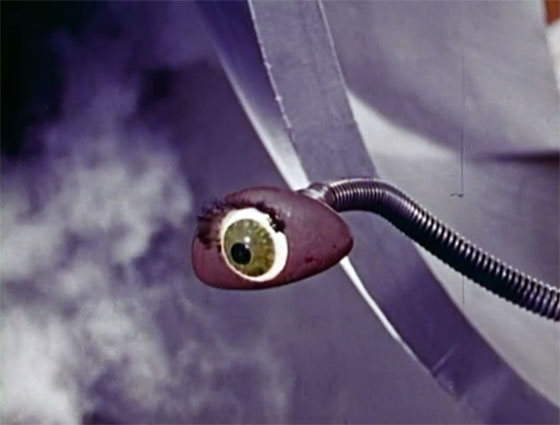 An assortment of Santa’s humanoid listening devices









































 Misan[trope]y