Today’s feature is Danny DeVito’s twisted depiction of the cracked world of children’s entertainment: Death to Smoochy.
Death to Smoochy was written by Adam Resnick, who is best known for the movie Cabin Boy and his extensive writing work on The Late Show with David Letterman, The Larry Sanders Show, and Saturday Night Live.
Death to Smoochy was directed by noted actor Danny DeVito, who was also behind such films as War of the Roses, Matilda, Hoffa, and Throw Momma From The Train.
The cinematographer for the movie was Anastas Michos, who also shot Keeping the Faith and The Big Kahuna, and worked as a camera operator on such films as Quiz Show, Lean on Me, and Born on the Fourth of July.
The editor on Death to Smoochy was Jon Poll, who is known for cutting films like Captain America, Monkeybone, Cabin Boy, Meet the Parents, and Mystery, Alaska.
The team of producers behind the film included Andrew Lazar (American Sniper, Jonah Hex, Confessions of A Dangerous Mind), Peter Macgregor-Scott (The Jerk, Revenge of the Nerds, Batman & Robin, Under Siege), Doug Davison (The Grudge, The Departed), John Kreidman (Watchmen, The Smurfs 2, Zookeeper), and Joshua Levinson (Matilda, Jonah Hex, Gattaca).
The musical score for Death to Smoochy was composed by David Newman, who also scored such films as Galaxy Quest, The Mighty Ducks, Jingle All The Way, Ice Age, Tommy Boy, Norbit, The Spirit, Serenity, Heathers, War of the Roses, and Matilda, among many others.
The special effects unit for Death to Smoochy included such names as Taku Dazai (Slither, Dracula 2000), Aaron Dinsmore (The Incredible Hulk, Dracula 2000), Walter Klassen (Jason X), David Kleinstein (Frequency, Boardwalk Empire), David Loveday (Blues Brothers 2000, X-Men, Lucky Number Slevin, 300), Jim McGillivary (Pompeii, Silent Hill), Laird McMurray (Crimson Peak, Pixels, Pacific Rim, Stuck, The Dead Zone), Jim Peacock (Saw V, Tommy Boy), John Poulter (Secret Window, Taking Lives, Stuck), David Reaume (Glitter, Chicago, Silent Hill, Kick-Ass, Devil), John Stifanich (The Substitute 2, Signs, Boardwalk Empire), and Stephen Wallace (Scott Pilgrim vs. The World).
The makeup effects team for the film included Marlene Aarons (Repo Men, Max Payne), Tim Mogg (Glitter, Death Wish V), Ve Neill (Ed Wood, Beetlejuice, Laserblast, Kingdom of the Spiders), Pipsan Ayotte (Pacific Rim, The Love Guru), and Selena Evans-Miller (Major Payne, Matinee, The Waterboy).
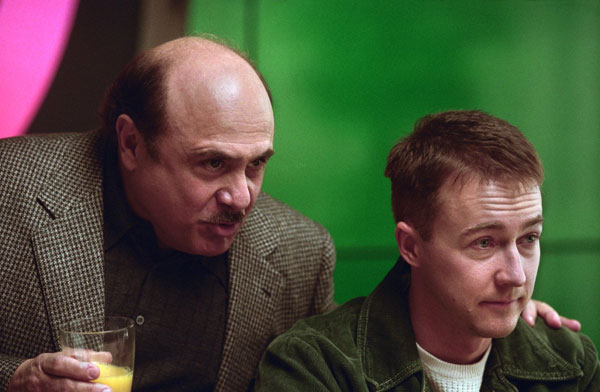
The deep cast of Death to Smoochy was made up of Robin Williams (Insomnia, Patch Adams, Good Will Hunting, Dead Poets Society, One Hour Photo, The Birdcage, The Fisher King), Edward Norton (Fight Club, Primal Fear, The Illusionist, Rounders, Red Dragon), Danny DeVito (Batman Returns, One Flew Over The Cuckoo’s Nest, L.A. Confidential, It’s Always Sunny In Philadelphia, Twins), Jon Stewart (The Faculty, The Daily Show), Pam Ferris (Matilda, Children of Men, The Raven), Catherine Keener (Being John Malkovich, Capote, Hamlet 2, The Soloist, Captain Phillips), and Harvey Fierstein (Independence Day), among others.
Reportedly, Jim Carrey turned down a role in Death To Smoochy in order to make the film The Majestic, which released in 2001.
Robin Williams earned a Golden Raspberry nomination for worst actor for his role of Rainbow Randolph in Death To Smoochy, but wound up losing out to Hayden Christensen’s Anakin Skywalker from Attack of the Clones.
The budget for Death To Smoochy was reportedly $50 million, of which it made back less than $8.5 million theatrically. Needless to say, it was a massive financial flop.
At the time of its release, critics were really tough on the twisted dark comedy, earning it aggregate scores of 38% from MetaCritic and 42% from Rotten Tomatoes. In particular, Roger Ebert gave the movie a scathing review, which opened as follows:
“Only enormously talented people could have made “Death to Smoochy.” Those with lesser gifts would have lacked the nerve to make a film so bad, so miscalculated, so lacking any connection with any possible audience. To make a film this awful, you have to have enormous ambition and confidence, and dream big dreams.”
That said, public perception towards the movie has softened over time, and it currently holds an IMDb rating of 6.4 alongside a Rotten Tomatoes audience score of 66%.
I personally have fond memories of watching this movie on the cable channel Comedy Central, where it played in numerous blocks over the years. This heavy replay time almost certainly helped win over much of its current cult following.
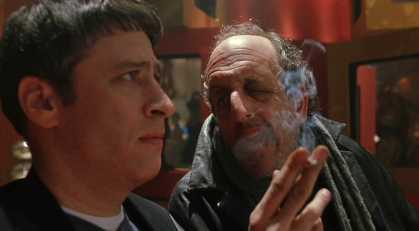
Another reason for the movie’s cult popularity is similarly tied to Comedy Central: the massive rise in popularity of Jon Stewart, who was only a couple of years into his run at The Daily Show when the film released. Throughout the show’s run, he would often reference his involvement with the movie as an example of his acting (in)experience, exposing it to new people with each passing mention.
Most of the criticism leveled against Death to Smoochy at the time of its release focused on its cynical and allegedly “mean-spirited” screenplay. Personally, I’ve never quite understood those complaints: the story is darkly comedic, but it isn’t “mean-spirited” towards any particular characters, outside of the deserving corporate flunkies and would-be murderers.
My biggest issue with the film, if you can call it that, is with the acting. Both Norton and Williams are beyond over-the-top in their portrayals, to the point that they both seem like caricatures more than humans, like the yin and yang of overacting. That said, the lack of identifiable humanity and excess of cheesy showmanship displayed oddly fits both of their characters well. As children’s entertainers, of course they would be off-putting, eccentric, and clown-like. I have to assume, because of the immense talent on all sides of the camera here, that this is what the team had in mind for the characters, and that they were portrayed as intended. Regardless, both men come off as difficult to relate to, which I imagine didn’t help the movie with general audiences.
The first thing I noticed upon re-watching Death to Smoochy is how deliberately shot and colorful it is: every sequence is meticulously planned for blocking and color, certainly more-so than you would expect from a comedic film like this. Part of this was undoubtedly DeVito’s vision for the film, but the commentary included on the DVD reveals that cinematographer Anastas Michos had more than a little bit of influence on each individual shot.
Overall, this was niche movie made with a mass appeal budget. In general, dark comedies won’t fly with the movie-going masses, which was an error with the very inception of the picture. That said, the people with whom the movie resonates absolutely delight in it, and time has certainly shown favorably on the film, making it a bit of a cult classic.
If you like dark comedies or enjoy Danny DeVito’s other directorial efforts, then this is a must-see flick. The humor is very dark, which turned many away from it, but if you go in knowing what to expect, then you are far more likely to enjoy it for what it is.
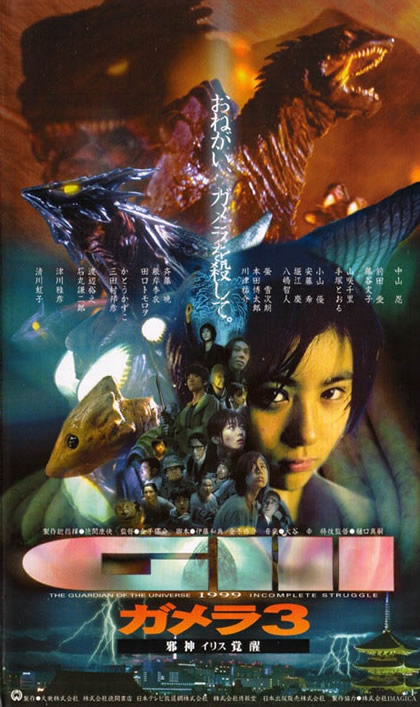
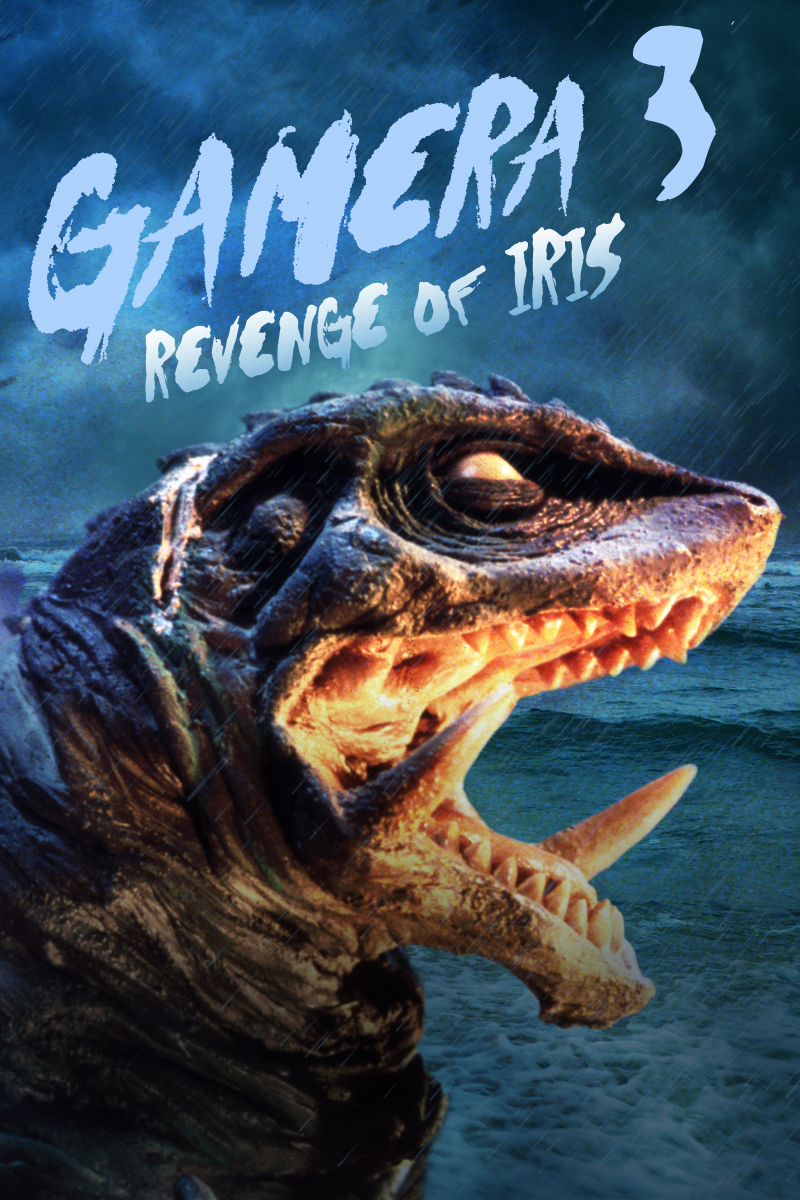
Today’s feature is the concluding entry into the Heisei era Gamera Trilogy: 1999’s Gamera 3: Revenge of Iris.
Gamera 3: Revenge of Iris was once again written by Kazunori Itô, who also penned the previous two movies (Gamera: Guardian of the Universe and Gamera 2: Attack of Legion) as well as the movie adaptation of Ghost in the Shell and .hack//SIGN.
The director for Gamera 3 was Shûsuke Kaneko, who also helmed the Death Note movie and Toho’s Godzilla, Mothra, King Ghidorah: All Out Attack. This was his last work in the Gamera franchise after directing Gamera: Guardian of the Universe and Gamera 2: Attack of Legion.
The cinematographer, Junichi Tozawa, likewise returned from Gamera: Guardian of the Universe and Gamera 2: Attack of Legion.
The editor for Gamera 3 was a newcomer to the franchise: Isao Tomita, who also cut Godzilla, Mothra, King Ghidorah: Giant Monsters All-Out Attack.
The producing team for Gamera 3 included Naoki Sato (Gamera 2, One Missed Call, Three…Extremes), Yasuyoshi Tokuma (Spirited Away, Princess Mononoke), and Tsutomu Tsuchikawa (Dead or Alive, The City of Lost Souls).
The effects team for Gamera 3 included Makoto Kamiya (Godzilla vs. Biollante), Rikiya So (Godzilla: Final Wars), Shinji Higuchi (Gamera 2, Gamera, Attack on Titan), Mahiro Maeda (Blue Submarine No. 6, Mad Max: Fury Road, Porco Rosso, Gamera).
There has been one more Gamera movie created following the release of Revenge of Iris, though it is not regarded as part of the Heisei era trilogy: 2006’s Gamera The Brave. There are currently rumors that a new Gamera movie is being produced in the wake of the success of the American Godzilla, though specific details are sketchy.
Gamera 3: Revenge of Iris was very well received among fans, and some regard it as the greatest non-Godzilla kaiju movie ever made. It currently holds a 7.4 rating on IMDb, alongside an impressive 91% audience score on Rotten Tomatoes.
A background aspect of the plot in Revenge of Iris is the return of a number of Gyaos, which were the principle adversaries in Guardian of the Universe. Iris, Gamera’s mysterious new adversary, is alluded to be a mutated subspecies of Gyaos, and retains some of the monster’s physical characteristics. The Showa era also brought back Gyaos occasionally to show how much stronger the new foes were in comparison to past threats, but their purpose in this movie is much different. Instead of acting as a display of how powerful the new enemy is, they exist to pose something of an ethical question: are the Gyaos or Gamera the greater threat in the grand scheme of things? If only one can be dealt with, which should be the priority to defeat?
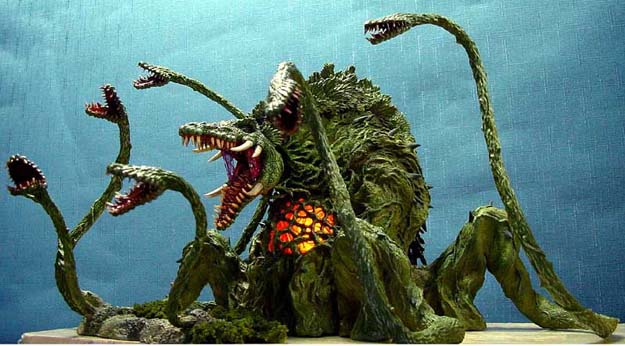
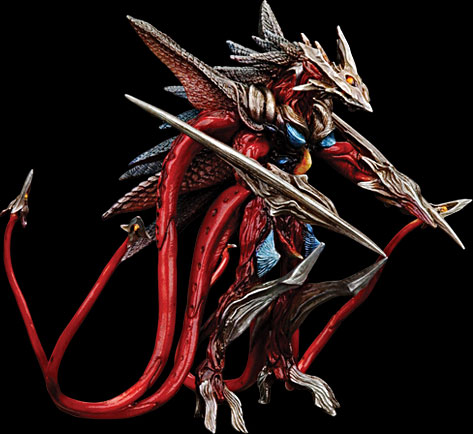
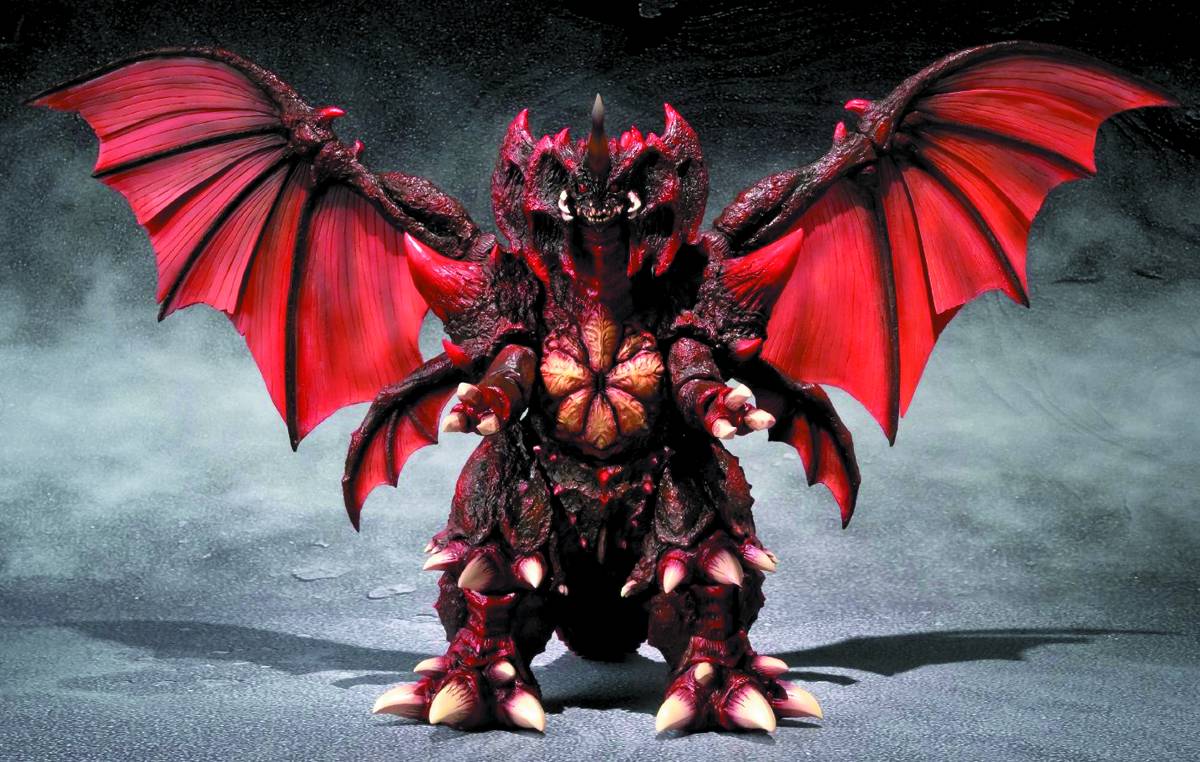
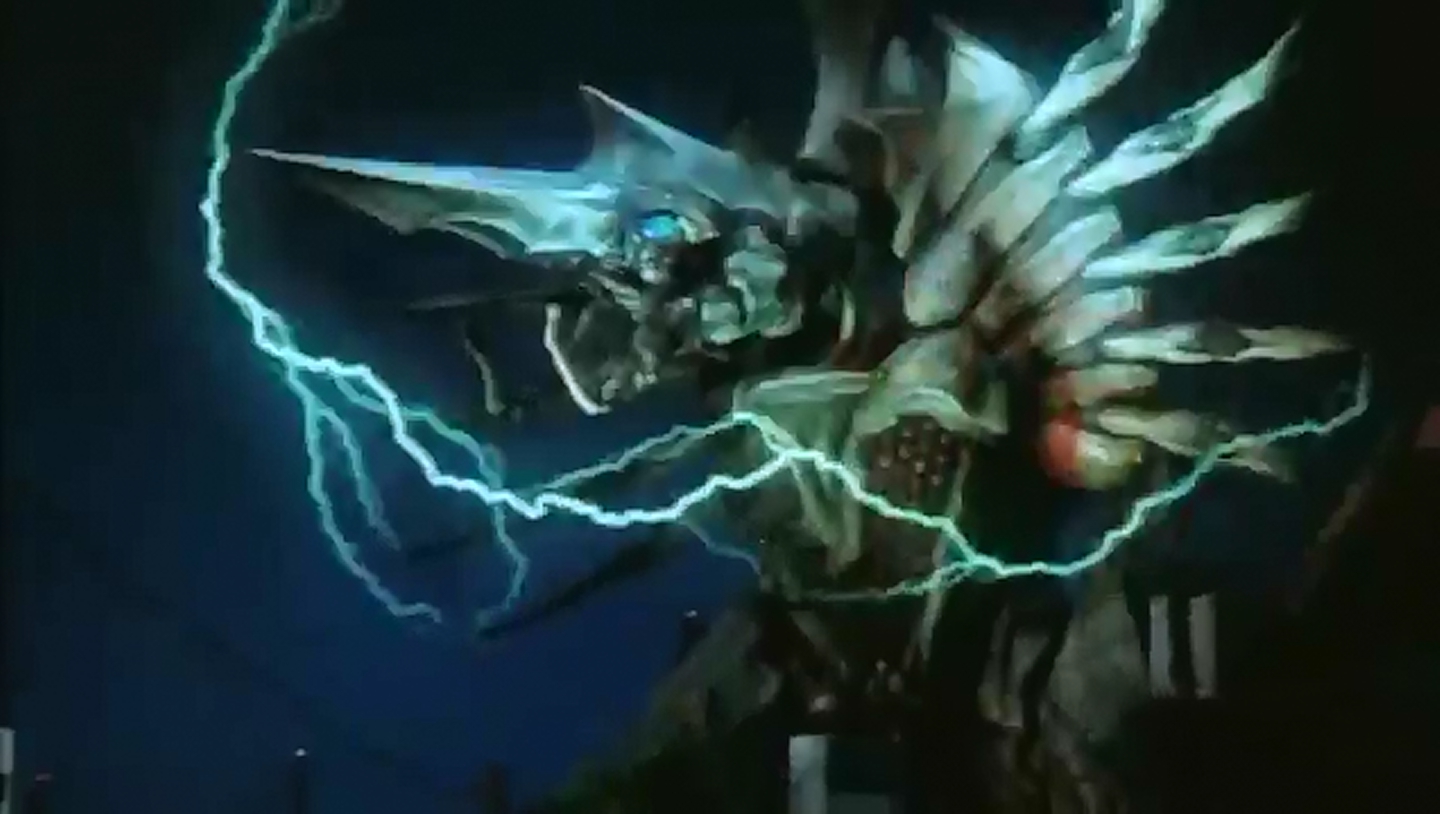
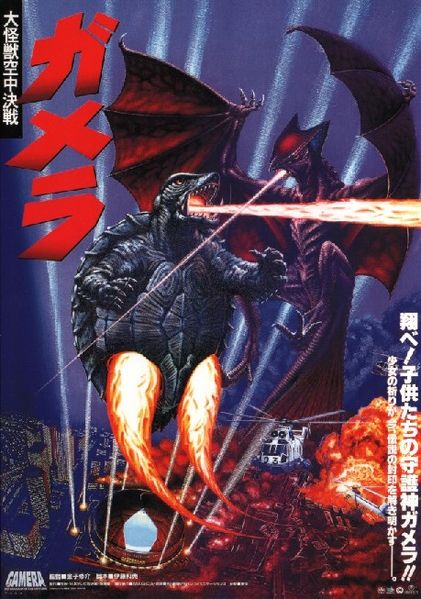
Iris, the primary adversary in Gamera 3, is a curiously designed creature. The head and sharp angles still look like a Gyaos, but tentacle-like appendages add a new element to the creature. Personally, I think it looks a little too busy on paper, though it does look pretty cool on screen. The tentacles reminded me a bit of Biollante, a Heisei Godzilla villain, though I like the aesthetic of the water flora/alligator much better than the…whatever Iris is supposed to vaguely look like. The color scheme also reminded me of the far less interesting Godzilla villain Destroyah, which was a clear influence.
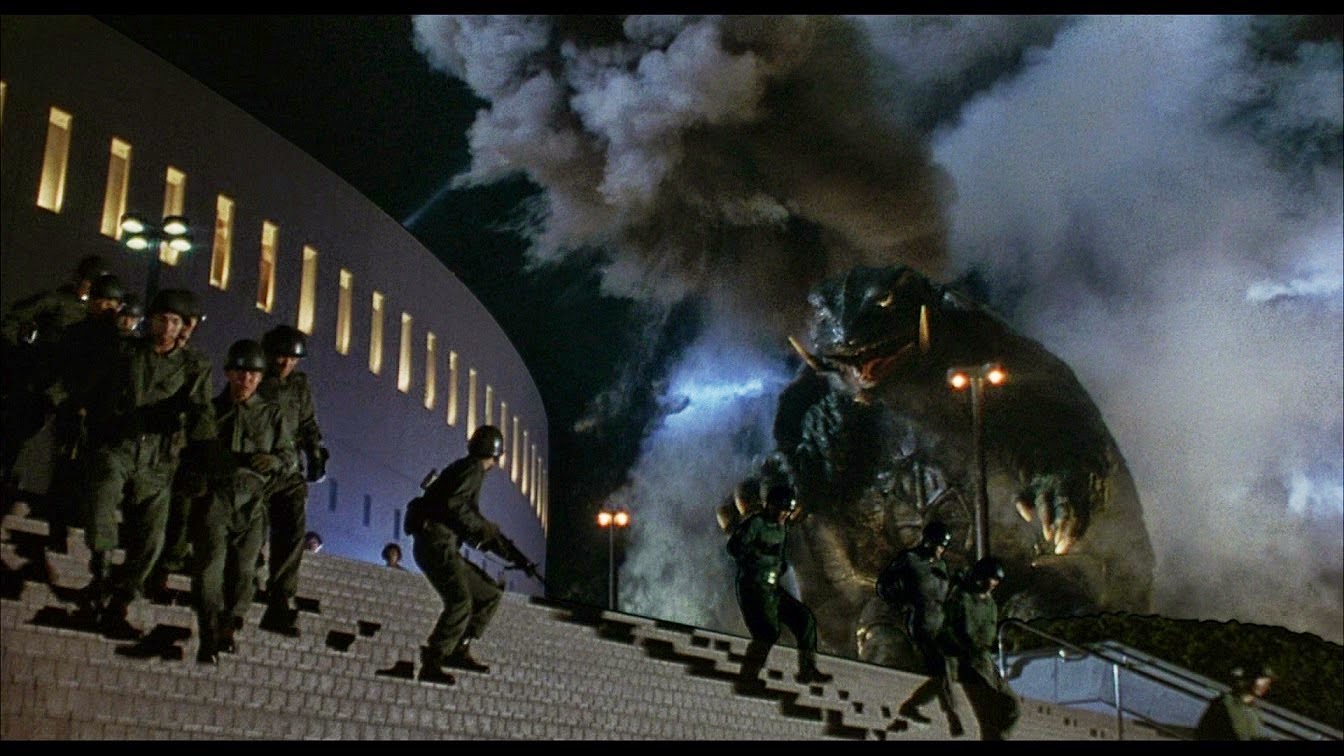
There is a notable scarcity of Gamera in Gamera 3, which lends an atmosphere of menace and mystery in the wake of the unclear ending to Attack of Legion. This fits well with the movie’s grounded approach to kaiju, emphasizing the collateral damage and ethical issues inherent to their presence. In particular, one scene shows Gamera apparently saving a child, but at the expense of countless other lives, which are brutally depicted being scorched in path of his fire breath.
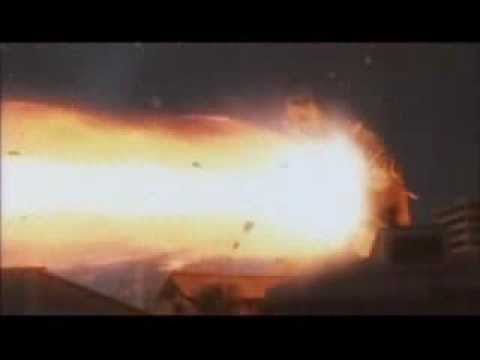
I mentioned in my coverage of Attack of Legion that the effects look particularly good in that movie. Astoundingly, Revenge of Iris puts that preceding film to shame. The monsters look fantastic, and the building destruction miniatures and flame effects are shot and executed even better than they were previously, making the movie all the more brutal and visceral in accordance with the darker tone.
Amazingly, the human story (which is a historic weakness of kaiju movies) is pretty interesting here, and builds on principles and precedence established in the first two movies. There is a genuine sense of urgency, terror, and anger in their stories, and you can’t help but care about their struggle. This is also the only kaiju movie I can think of where I genuinely wanted the film to cut away from the monster action to get back to the humans, which is damn near heresy. Still, it works, and works quite well.
Overall, this is a movie that deserves its positive reputation. However, it does suffer a little bit from not being able to stand on its own. Realistically, the intertwined stories mean that to appreciate this movie, Guardian of the Universe and Attack of Legion are mandatory viewing for this film to have a full effect. That said, if you can commit to the whole trilogy, this movie is a fantastic conclusion, and a top-tier kaiju film. Fans of the genre owe it to themselves to watch through the entire trilogy, if only to appreciate the mastery that is shown in this conclusion.
Today’s movie marks the second entry into the Hesei era of Gamera: 1996’s Gamera 2: Attack of Legion.
Gamera 2: Attack of Legion was written once again by Kazunori Itô, who also penned Ghost in the Shell, .hack//SIGN, Gamera: Guardian of the Universe, and Gamera 3: Revenge of Iris.
Likewise, director Shûsuke Kaneko (Death Note, Godzilla, Mothra, King Ghidorah: All Out Attack) returns from Gamera: Guardian of the Universe, and would stay with the franchise through Gamera 3: Revenge of Iris.
The cinematography on Gamera 2 was provided solely by Junichi Tozawa, who shared shooting duties on Gamera: Guardian of the Universe. As with the director and writer, he would return for Gamera 3: Revenge of Iris.
The editor for the film was once again Shizuo Arakawa, who cut Gamera: Guardian of the Universe, but would not return for the third film in the Heisei series.
The producing team for Gamera 2 included Yasuyoshi Tokuma (Spirited Away, Princess Mononoke), Tsutomu Tsuchikawa (Dead or Alive, The City of Lost Souls), and newcomer Naoki Sato (Gamera 3, One Missed Call, Three…Extremes).
The effects team for Gamera 2 included Shin’ichi Fushima (Godzilla Against Mechgodzilla, Godzilla vs. Megaguirus), Tomo’o Haraguchi (Gamera, Air Doll), Shinji Higuchi (Gamera, Gamera 3, Attack on Titan), Toshio Miike (Godzilla: Final Wars, Godzilla: Tokyo S.O.S.), Makoto Kamiya (Godzilla vs. Biollante), and Shin’ichi Wakasa (Godzilla 2000, Godzilla vs. Destroyah, Rebirth of Mothra).
The reception to Gamera 2: Attack of Legion managed to exceed the acclaim of the well-regarded previous movie: it currently holds an 84% audience score on Rotten Tomatoes alongside an IMDb rating of 7.3.
Legion is an interesting sort of villain, and provides a unique challenge for Gamera. Its parasitic nature reminded me a bit of one of the Showa Gamera villains: Jiger. However, Attack of Legion goes in a far less cartoon-y direction than Gamera vs. Jiger. The first fight between Gamera and Legion was particularly interesting because of the size difference between the monsters, but a mother entity is eventually introduced that is closer to Gamera’s weight class. I actually was a little disappointed in this, because the idea of a colony of small organisms acting as a villain seems way more interesting and unique to me. In any case, the central Legion monster still looks fantastic, combining insect-like attributed with a reptilian body and metallic trim. It looked to me like a monster on the same level with Toho’s Gigan: a monster that is decidedly other-worldly in appearance.
Something that I specifically noticed about Gamera 2 is that the effects look really good, particularly the pyrotechnics and miniatures. The classic style is retained, but none of the destruction comes off as silly: the way things are shot keep the carnage grounded and generally realistic.
Interestingly, Gamera is out of commission for a significant portion of the second act of Attack of Legion, which again echoes Gamera vs. Jiger. However, instead of a goofy anatomical adventure saving the day, Gamera’s human connection is sacrificed to wake him up from his coma, which ends the story on an ominous, downbeat note.
That said, the ending departure of Legion is a bit silly. Essentially, Gamera shoots a giant blast out of his chest with the help of…Earth energy? Something like that? Basically, the effect is like a spirit bomb from Dragonball, but is never explained further.
In spite of a few minor complaints, this is a pretty fun kaiju showcase, and manages to build and improve on the previous movie without losing any connections to the story. I wouldn’t recommend watching it without seeing Guardian of the Universe first, but I think it is definitely worth giving a watch.
Today’s feature was the debut of the Hesei era of the famed kaiju franchise Gamera: 1995’s Gamera: Guardian of the Universe.
Gamera: Guardian of the Universe was written by Kazunori Itô, who is best known for Ghost in the Shell and .hack//SIGN. He would also return to write both of the following Gamera films.
The movie was directed by Shûsuke Kaneko, who also helmed the film adaptation of the popular anime Death Note as well as the Toho kaiju showcase Godzilla, Mothra, King Ghidorah: All Out Attack. As with Ito, Kaneko returned for both of the subsequent Gamera movies.
Gamera: Guardian of the Universe featured two cinematographers: Kenji Takama (Welcome Back Mr. McDonald, Death Note: The Last Name) and Junichi Tozawa, who would later shoot Gamera 2: Attack of Legion and Gamera 3: Revenge of Iris.
The editor for Gamera: Guardian of the Universe was Shizuo Arakawa, who would also cut the sequel, Gamera 2: Attack of Legion.
The producers for the film included Hiroyuki Kato (who has produced recent episode of the Pokemon television show), Yasuyoshi Tokuma (Spirited Away, Princess Mononoke), and Tsutomu Tsuchikawa, a frequent collaborator of Takashi Miike’s on such movies as Dead or Alive and The City of Lost Souls.
The effects team for Gamera: Guardian of the Universe included Hajime Matsumoto (The Grudge, Ringu), Mahiro Maeda (Mad Max: Fury Road, Blue Submarine No. 6), Tomo’o Haraguchi (Gamera 2: Attack of Legion, Air Doll), Shinji Higuchi (Gamera 2: Attack of Legion, Gamera 3: Revenge of Iris, Attack on Titan), Makoto Kamiya (Godzilla vs. Biollante), Toshio Miike (Godzilla: Final Wars, Godzilla: Tokyo S.O.S.), and Shin’ichi Fushima (Godzilla Against Mechgodzilla, Godzilla vs. Megaguirus).
The cast for the movie includes Ihara Tsuyoshi (13 Assassins, Letters From Iwo Jima), Shinobu Nakayama (Fist of Legend, Godzilla vs. Mechagodzilla II), Ayako Fujitani (Man From Reno, Gamera 2: Attack of Legion, Gamera 3: Revenge of Iris), and Hirotarô Honda (Kamikaze Girls).
The antagonist monster of the film, Gyaos, was performed by a woman actor, which was reportedly the first time this was done in the history of kaiju movies.
The reception to Gamera: Guardian of the Universe was generally positive: it currently holds a 6.9 rating IMDb alongside a 75% audience score on Rotten Tomatoes, which is plenty respectable for a franchise known for its historic low quality.
Gamera: Guardian of the Universe stands in sharp contrast to the Showa era of the franchise, which I covered a while back. Whereas those movies were generally goofy and aimed at children, Gamera: Guardian of the Universe has a much more serious and dark tone, more in line with a typical monster or disaster movie. There is also the notable absence of children characters in the cast, which was a staple of the Showa era and the Gamera character.
I particularly appreciate that Gamera: Guardian of the Universe still uses the classic rubber suit monster effects, just updated for the times. If they had attempted to use mid-1990s CGI, this movie would be nearly unwatchable. Speaking of which, the team also made the solid decision to introduce both Gamera and his classic foe Gyaos in this movie. The original Gamera didn’t feature an antagonist, and is the weakest in the franchise from an action standpoint because of it (unlike the original Gojira, which was a true drama that didn’t need monster action to carry it).
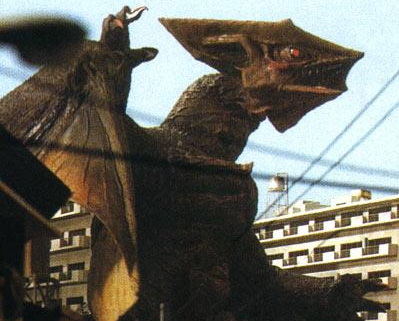
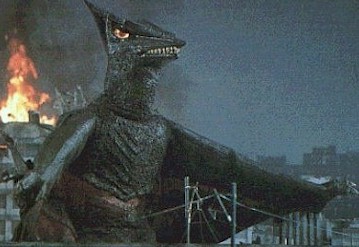
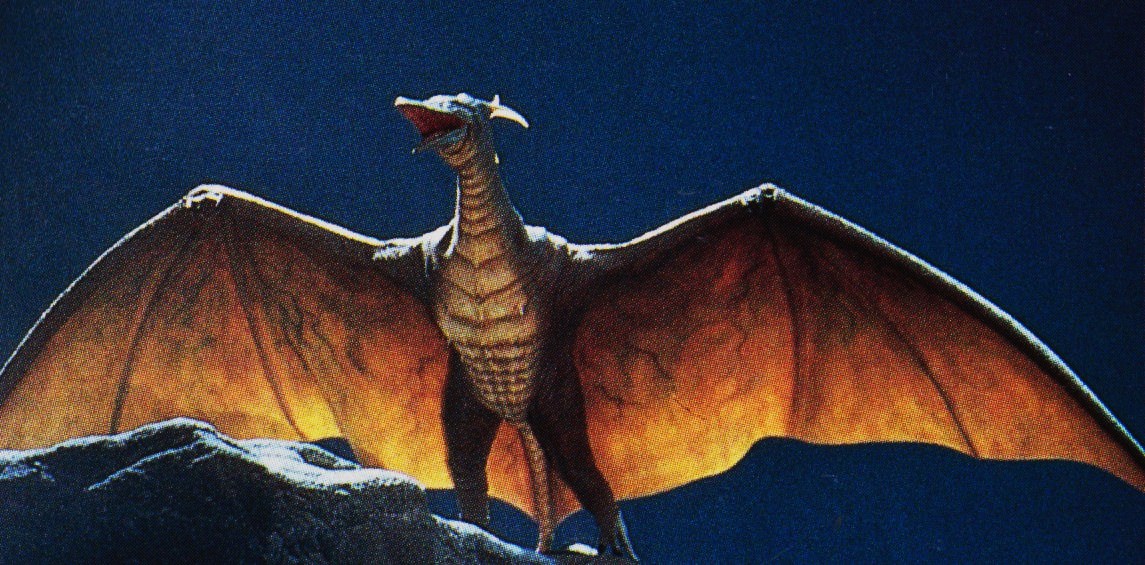
Gyaos in this movie looks more like Toho’s Rodan more than I ever remember him looking before. The design used in the Showa era had a larger, more pronounced triangular head, whereas the Hesei update is toned down significantly with a head more reasonably proportional to the body. The result is a creature that looks very similar to the Heisei design of Rodan which debuted a handful of years before in Godzilla vs. Mechagodzilla II.
Gyaos design from Showa eraGyaos design from Heisei eraRodan design from Heisei era
Overall, this is a really enjoyable kaiju movie. It isn’t revolutionary in any sense and doesn’t break any new ground for the genre, but is perfectly serviceable for what it is. For fans of big monster action, this is absolutely worth checking out. It still isn’t as good as the Heisei Godzilla flicks, but that shouldn’t come as any sort of surprise. The fact that a Gamera movie is honestly worth the time spent watching it is noteworthy enough.
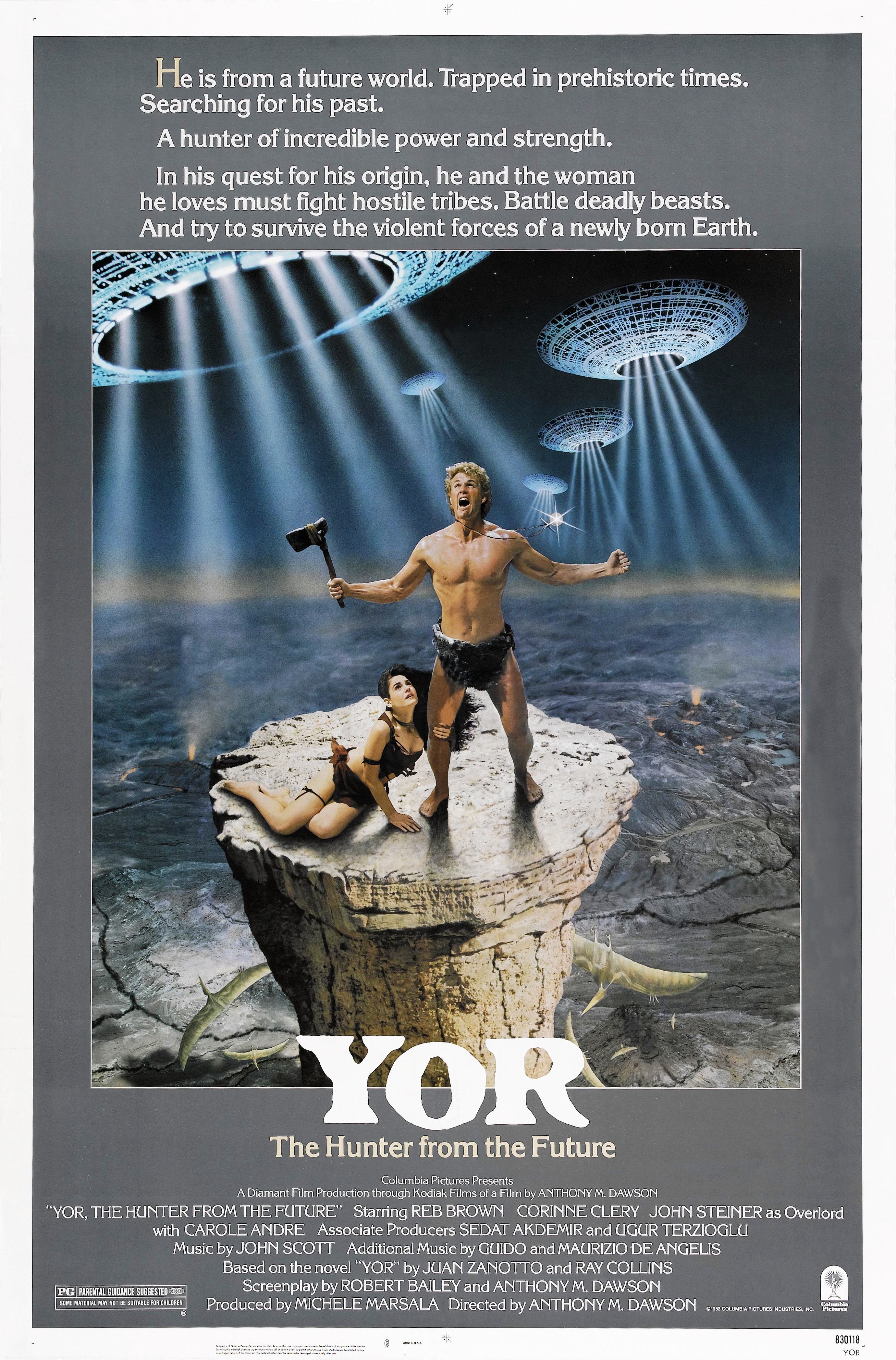
Today’s feature is a true cult classic sci-fi / fantasy b-movie: Yor: The Hunter From The Future.
The story behind Yor is a loose adaptation of a comic called Henga, El Cazador, which was originally created by the duo of Ray Collins and Juan Zanotto.
Yor was co-written and directed by Antonio Margheriti, a prolific creator of knockoff b-movies such as Cannibal Apocalypse, Horror Castle, Flesh For Frankenstein, Alien From The Deep, and Killer Fish. His co-writer on the screenplay was Robert Bailey, an experienced visual effects artist who has worked on films like Evilspeak, Blade Runner, and C.H.U.D. II: Bud the Chud.
The cinematographer for Yor was Marcello Masciocchi, who also shot the films Boot Hill, All the Way Boys, Ace High, and Jungle Holocaust.
Yor featured two primary credited editors: Alberto Moriani (Zombie Holocaust, Zombi 3) and Giorgio Serrallonga (For A Few Dollars More, Turn The Other Cheek).
The special effects on Yor were provided by the low-budget team of director Antonio Margheriti, his daughter Antonella Margheriti, and his son Edoardo Margheriti (who would later serve as an assistant director on Hudson Hawk).
The makeup effects for Yor were provided by Mario Scutti, who is best known for working on David Lynch’s failed science fiction epic, Dune.
The memorable music for Yor was provided by John Scott, who also composed music for films like Trog, Man on Fire, and King Kong Lives over his career.
The cast for Yor included low-level action star Reb Brown (Space Mutiny, Captain America (1979), Strike Commando, Howling II), Corinne Cléry (Moonraker), Carole André (Death in Venice, Dillinger is Dead), and Luciano Pigozzi (Blood and Black Lace, Two Women).
The plot of Yor combines elements of science fiction and fantasy, particularly in regards to the setting. In the beginning of the film, it is assumed that Yor takes place in the distant past, but it is later revealed through Yor’s journeys that the world he lives in are ruins from a technologically advanced civilization. Unfortunately, the full title of the movie (Yor, The Hunter From The Future) completely spoils this twist out of the gate.
Yor wound up with three Golden Raspberry nominations: Reb Brown for Worst New Star, the theme song “Yor’s World” for Worst Song, and the score as a whole for Worst Musical Score. Despite not winning in any of those categories, Yor is listed in The Official Razzie Movie Guide as one of “The 100 Most Enjoyably Bad Movies Ever Made.”
Yor was not particularly well-received, but has held up through the years as a cult favorite bad movie. It currently hold a 4.1 rating on IMDb, along with Rotten Tomatoes scores of 17% (critics) and 50% (audiences).
Everything about Yor both feels and looks cheap, which gives the production a certain charm, not unlike many Corman flicks or similar Italian b-movies. While Reb Brown is always a hammy delight, he isn’t quite in Space Mutiny or Strike Commando form in Yor. In general, he is a cut and dry barbarian here, which is a slight disappointment. The biggest draw here are the goofy effects, which are hilariously incompetent. As mentioned earlier, the director elected to do the effects himself (with the help of his children) rather than hire a crew or bring in outside help, which reminds me of an old lawyer’s saying: “A man who is his own lawyer has a fool for a client.” If you ask me, the same logic held true here for the effects work.
There are certainly some vivid highlights from this movie, but on the whole it is about as slow and dull as the Ator movies if you ask me, though the peaks arguably justify the tribulations of the valleys.
Yor is a movie that has proven pretty contentious among bad movie fans. Some absolutely adore it, while plenty of others find it too boring to enjoy on the whole. Personally, I recommend at least giving it a shot, with the caveat that it is far from a good-bad slam dunk. If you go in with managed expectations, you’ll have a better time with it. At the very least, whether you want to watch the film or not, you absolutely must listen to the bizarre prog-rock theme song.
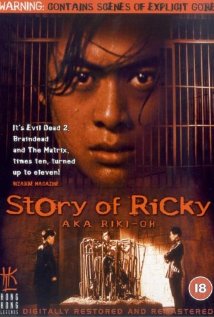
Today’s feature is one of the most ludicrously violent action movies of all time: Riki-Oh: The Story of Ricky.
Ricki-Oh is based on a popular manga series of the same name that was developed by illustrator Tetsuya Saruwatari and writer Masahiko Takajo in 1988. Aside from this infamous film adaptation, the series was also turned into an anime OVA in 1989.
Riki-Oh was directed by Ngai Choi Lam, who also provided the screenplay for the movie. He only has a handful of other credits to his name, the most notable of them being the curiously-titled Erotic Ghost Story from 1987.
The cinematographer on Riki-Oh was Hoi-Man Mak, a camera operator who has worked on action films like Four Assassins and Flash Point.
Riki-Oh featured two primary credited editors: Peter Cheung (Enter The Dragon, Rumble In The Bronx, The Chinese Connection) and Chuen Tak Keung (Center Stage, Erotic Ghost Story).
The music for Riki-Oh was provided by Fei Lit Chan, who also composed scores for the martial arts film Dragon Inn and one of Ngai Choi Lam’s previous films, Erotic Ghost Story.
The producers of Riki-Oh included John Sirabella (Tokyo Gore Police, Destroy All Monsters, Godzilla vs. Megalon) and Lam Chua (Armour of God, Crime Story, Erotic Ghost Story).
The makeup effects for Riki-Oh were done by Fung-Yin Cheng and Chi-Wai Cheung, the latter of whom also provided the special effects work for the movie.
The stunt coordinator for the film was Philip Kwok, an accomplished performer who has worked on films like Hard Boiled and the James Bond movie Tomorrow Never Dies.
The cast for the Riki-Oh included Siu-Wong Fan (Ip Man, Ip Man 2, Kung Fu Killer) in the title role, Ka-Kui Ho (City of Fire, Prison on Fire), and Mei Sheng Fan (The Young Master, Magnificent Butcher).
The plot of Riki-Oh follows a seemingly super-powered martial artist as he navigates his way through prison life, picking fights with both the prisoners’ ruthless gangs and the corrupt administration along the way.
Riki-Oh is best remembered as on of the most ridiculously gory action movies ever made, in an attempt to imitate the original style of the manga source material. However, the effects don’t translate particularly realistically to a live-action scenario. Reportedly, so much fake blood was used in the finale sequence of Riki-Oh that it took days for the red tint to come out of Siu-Wong Fan’s skin.
Due to its over-the-top stylistic violence, Riki-Oh has a dedicated cult following among martial arts and action movie junkies. Currently, it holds an IMDb rating of 7.2, along with Rotten Tomatoes scores of 89% (critics) and 85% (audience).
To be perfectly honest, I don’t have any strong criticisms about this movie. The logical issues with the plot are hardly worth fretting over in the midst of the bizarre spectacle that unfolds over this movie’s run-time. The only major negative is the Warden’s aggravating man-child, but even that character is forgivable thanks to what the rest of the movie has to offer. This is a film that is best to just experience without any explanation or context, in order to truly appreciate just what it is.
The plot (which is nonsense) doesn’t matter, the background (which is sparse) doesn’t matter, and the characters (who primarily exist to be dismembered and exploded) certainly don’t matter. This film is a meticulous exercise in adapting manga to the live action screen, and it is accurate in that quest in spite of any reason or sense. If you aren’t squeamish, this is an action movie that is more than worth checking out, just to say that you have. Go in expecting blood and nonsense, and you will be gleefully satisfied.
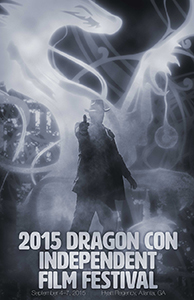
This past weekend, I attended the massive nerd event DragonCon, which is now a cultural staple of Atlanta, GA. There is a lot to say about the conference as a whole, but I first want to spotlight the DragonCon Independent Film Festival, which I spent most of my conference time attending. Unfortunately, due to the crowds, it was impossible for me to see all of the films in the lineup. That said, here are the selections I did manage to catch, with my brief thoughts on each.
Younglings Younglings is a Star Wars fan film that closed out the Fan Films block of the festival. It gives a snapshot of a distant future in which the series has branched out to multiple trilogies (unimaginable!), and the original fans are now well into their twilight years. It all takes place around a table in a diner, where a group of old friends come to blows regarding Star Wars fandom and the value of Boba Fett. It is worth checking out if you can get a hold of it.
Writer’s Cramp
I have a lot to say about Writer’s Cramp, one of the few feature-length entries in the festival. It has a solid enough concept behind it, but it is really only enough to fuel the content for a short film. The movie gets slow and repetitive quickly, as it relies almost exclusively on malapropisms and spoonerisms for humor, which gets hokey and tired very fast. Unfortunately for everyone, this movie clocks in at over 100 minutes. To make matters worse, there are unnecessary segments scattered throughout the run-time that really should have been cut, so the run time total was certainly not all essential viewing for the story. Most of the characters in the story lack any sense of realism or voice, particularly the child whose only characteristic is verbosity. That said, there is good costuming and style at times, and the acting is pretty solid given what they were working with. Judging from the information offered by the director/writer/editor/producer/etc (?) at the festival, this appears to be a case where people were ousted from the production quicker than in a George R. R. Martin work. Apparently an editor quit, the initial director was dismissed, and the writer took on both roles rather than fill them in with someone else. The result is something that reeks of creative control without reasonable checks: a one-trick pony feature that runs far too long on a premise that would have suited a short film at best, and had a creative force behind it that was never forced to kill her darlings.
Victim Victim takes place entirely in an interrogation room, where two cops are interviewing a woman who was found at the scene of a brutal and mysterious decapitation. Overall, it is an ok flick. It suffers from being a bit too predictable and having a really terrible anticlimax, thought (a cringe-y one-liner that doesn’t land).
A Tricky Treat A Tricky Treat is simple, gory, and has just the right amount of humor involved to make it work. To say anything more about it would serve to spoil the twist (which is predictable, but worth seeing). I’ll just say that it makes for a classic Halloween tale.
SuperBob SuperBob was one of the few feature-length entries in the festival, and the only one I saw that I liked. It is an interesting film that tackles the serious ethical implications of super-heroism while also staying a romantic comedy throughout. Catherine Tate is solid in her supporting role, and was far less grating and obnoxious than I was used to. There was also good casting for the lead role: a guy who at once strikes as a wholesome every-man, but is also nondescript enough to be your boring neighbor. He also deals with a wide range of emotions throughout the story, as it twists from serious drama to dark comedy to romance at the drop of a dime. Typically that would be an issue for me, but this flick manages to blend political satire, romance, and dry humor in a way that builds some really identifiable characters in the chaos of it all, and you see real growth in them as it moves along. The biggest flaw lies in the documentary perspective of the film, which goes in and out without consistency. However, it wasn’t extremely distracting for me. The movie is a long way from being Big Man Japan or Man Bites Dog, but it is more than worth giving a shot. If you want a more approachable fictional documentary along the lines of those two acclaimed movies with a welcome injection of dry British humor, then seek it out once it is released.
Tenspotting Tenspotting is kind of an unbearable fan film, even for a Doctor Who fan. The plot in summary is that an obsessive and elitist fan is seeking out an equally dedicated loyalist at a Doctor Who convention, and has unwavering standards for knowledge of the franchise. She eventually learns that there is more to life than Doctor Who minutia, but the fact that was a necessary lesson for her should point out a pretty serious flaw: you simply can’t identify with her, let alone like her.
Sharkasaurus Sharkasaurus feels like any given movie in The Asylum’s filmography, but boiled down as far as it could go. There is a bit of a culture war element to it between science and religion, but nobody wins in the end (except for the Sharkasaurus, of course).
Slut Slut is a serial killer flick with a solid, identifiable heroine. She has a curious charm in her awkwardness, which reminded me a little of Carrie, though this short goes in a very different direction. There is definitely a message here about the skewed sexual ethics of horror movies which is pretty fantastic, and something that the genre deserves to be put to task for. The film holds on to an odd sense of humor throughout, despite the serious suspense and dark tone on the whole.
Prelude to Axanar
Holy cow, this was awesome. Apparently this movie is a pretty big deal, and raised over half a million dollars over the course of an IndieGoGo campaign. Word is that they are working on a full-length version of this short, which I am now eagerly awaiting. Essentially, this is a historical documentary about an event from the Star Trek universe that is entirely fictitious. The re-enactments are fantastic, the acting and cinematography of the interviews are stellar, and the whole film has an incredibly professional appearance. This one is available on YouTube, and is absolutely worth checking out.
Return of the Zombie Lawyer Commercials Return of the Zombie Lawyer Commercials is exactly what it sounds like. It is what it is, and that isn’t a bad thing. It was clearly a back yard production, but the concept is really fun and there are some solid laughs to be had from it.
Postpartum
Creepy acting made this one stand out a lot for me. A woman loses her mind after a failed pregnancy, believing her child to be alive. This leads her to kill anyone who enters her home who would challenge her delusion, which makes for quite a creepy collection of skeletons in her closet after a while.
Kragos the Dishonored
I get what they were trying to do with this silent Star Trek fan film, but it just didn’t work at all if you ask me. The story is very poorly conveyed (even for a silent flick), and I don’t think the appeal extends much outside of Trek fandom. It stands in pretty sharp contrast next to the other Trek fan film in the fest (Axanar, which I mentioned previously).
Knock, Knock…
This is one of the few shorts in the festival that I had seen before. I don’t have any particularly strong feelings about it, but it is certainly a good short, just perhaps not as memorable as some of the others in this particular lineup. I do recommend showing this to any young children that you want to terrify forever.
Invaders Invaders is a funny flick with a lot of gore and some twistedly inspired cinematography. It is very brief, but manages to have some great banter and effects over its short run time. It is also one of the only flicks I recall from the festival that hilariously runs through its own credits.
I Dare You
I wish I had more positive things to say about this movie. The production design looked pretty ok? The zombie makeup is…adequate? At the end of the day, I Dare You looks and feels like a Hollywood-generic zombie movie, but shorter and without the money. Before I saw the movie, I attended a panel that featured the director of this film, which sent me some red flags before going into it. First off, he said that the most influential dystopian film on him and his work was Paul W. S. Anderson’s Resident Evil. That film isn’t totally without value, but that is hardly the future vision of Brazil, or Minority Report, or Children of Men, or Blade Runner, or A Clockwork Orange, or just about any other non-generic zombie movie in the entire genre of dystopian films. Even Repo: The Genetic Opera has a more interesting and well-fleshed vision of a dystopian future than Resident Evil. The second thing that he said on the panel that bugged me is that he specifically noted that he didn’t think about any social meaning for his work when he was creating it. Dystopian fiction, to be frank, requires some social criticism to even be watchable. The idea is to take a current social ill and exaggerate it over time to point out what it could ultimately do to society. For example, overreach of law enforcement in Minority Report, Corporatization in RoboCop, censorship and anti-intellectualism in Fahrenheit 451, and the unreasonable reign of bureaucracy in Brazil. Even I Dare You sort of says something about unethical scientific experimentation, though that seems to have been something of an accident. In any case, the twist is way too predictable in this movie, and it feels in totality like a collage of previous works that has been lightly reheated and labelled as something new, like a hot dog made from butcher scraps.
Grave Shivers Grave Shivers is a short film that functions as a compilation of even shorter micro-films that are all pretty great. The highlight of the bunch is probably the Satanic Girl Scout troop, but all three of the shorts are entertaining. They are worth giving a watch, and the whole thing is available to check out on Vimeo.
Evercare Evercare is a horror-comedy psuedo-documentary that is absolutely made by the performance of the lead character: a home care nurse who has adapted her skills to the world following a zombie apocalypse. As she explains in the introduction, the old folks weren’t able to make it through the incident (effectively eliminating her job), but that many families had loved ones who were turned into zombies. She discovered that the needs of zombies were similar to those of the elderly, and started a program for in-house zombie care. The setup is unique, the acting is great, and the jokes are consistently funny, making this a short that is more than worth checking out.
Dread Dread has a good concept behind it (a child haunted by a mysterious spectre), but the style just didn’t work for me. It looked like a J-horror in many ways, which I have never really been on board with personally. Also, the title doesn’t really match with the content, and feels a bit tacked-on for dramatic effect.
Downstairs Downstairs is a rare horror-comedy where the comedy honestly takes a back seat to the horror elements, but the synthesis works great on the whole. The movie displays top notch timing for both the humor and the scares (which are hard things to balance). I did think it suffered from a bit of an anticlimax, but the ride was definitely fun.
Directors on Directing Directors on Directing is as hilarious as it is simple. The movie exists to poke at self-aggrandizing film-makers in a spectacular, explosive, and gory fashion, and it nails that biting tone perfectly. The setup is that of a fake documentary featuring directors talking about “the power of film-making,” which seems clear enough at first, until it is revealed that the “power” is the ability to cause dramatic cranial explosions.
Devil Makes Work
This was a visually striking film for sure, but there isn’t a whole lot to say about Devil Makes Work when it comes down to it. The acting is solid and the images are creatively synthesized, but I had a hard time remembering anything about this short until I watched the trailer. It just failed to stick with me at all, which probably says something about the film as a whole. Apparently I’m not alone in regards to those feelings, so I’ll just post the following from MJ Simpson’s blog post on the film, which says everything I could and more:
[Devil Makes Work] is a great showcase for the director and, frankly, if I was looking for someone to direct a big budget music video, I’d be knocking on his door. We can see that Soulsby has a very strong visual sense, that he has a masterful camera eye, that he has a strong worth ethic and that he has the organisational skills to lead a team of a hundred people and craft something amazing.
A feature film is more than a succession of stylish images…There is certainly a trend in Hollywood to make awful, empty movies that are rammed to the gills with vast amounts of special effects: all style and no substance, all sizzle and no sausage. Films that jump from one set piece explosion or alien spaceship or car chase to the next without any concern for making sense or appealing to anything but the most visceral emotions…Films which cost obscene amounts of money and, let’s face it, sometimes make obscene amounts of money back. Maybe that’s the gig that Guy Soulsby is pitching for here.
But films – good films – are about stories. And characters. And relationships. Devil Makes Work is a beautifully shot and edited sequence of vignettes but it’s not a narrative piece.
Dead Hearts Dead Hearts is a well-shot, cute, and excellently-narrated dark romantic comedy: one of the finest entries into that sub-genre that I have seen. I was also shocked at how good the fight sequences are, and how well the visual design of the whole production comes off. It genuinely looks and feels like a cracked storybook, which is impressive to say the least. This might have been my favorite of the whole festival, which is not something I expected going into it.
The Case Of Evil The Case of Evil is a sort of follow-up on the classic Robert Johnson tale. The film has a traditional, Twilight Zone-esque tone and look to it, which I really appreciated. I’m a little surprised how rare it is to see that nowadays, as there is such a long history to horror shorts with that appearance. In any case, it is somewhat predictable, but builds tension pretty well none-the-less.
The Bloodline
There were certainly good things stylistically about The Bloodline, but the Sin City / graphic novel look has just been done too much at this point, and didn’t really work here. The story also proved a little too predictable for my taste, and the writing and acting left a lot to be desired out of this one.
Bad Guy #2 Bad Guy #2 is a gory skewering of an old action movie trope: the volatile hierarchy of fictitious criminal organizations. The eponymous character takes his place just below “The Kingpin” and “The Right Hand Man,” but just above “Bad Guy #3.” His newly appointed position, however, is famously the first to be killed off when things go awry. This flick is definitely fun and filled with impressive effects, and is one of the films I most want to watch again out of the shorts lineup.
The Amazing Rondini The Amazing Rondini is an entertaining spin on a “deal with the devil” story. A failing magician is recruited by a man who appears to be the Devil to execute a number of wayward souls in exchange for otherworldly magical powers. To the demon’s surprise, the magician is totally down with the idea, and proves to be a pretty efficient killer after working the kinks out.
600$
600$ is fantastic, and was undoubtedly one of my favorites of the festival. It had a number of good twists as the truth behind the plot is slowly revealed through flashbacks, and is funny in a broken sort of way. The story follows a hitman who has to change professions after the market for hired assassins drops out. His new job proves to be similar to his old: he gets paid to usher people into the next world, but this time via well-plotted assisted suicides.
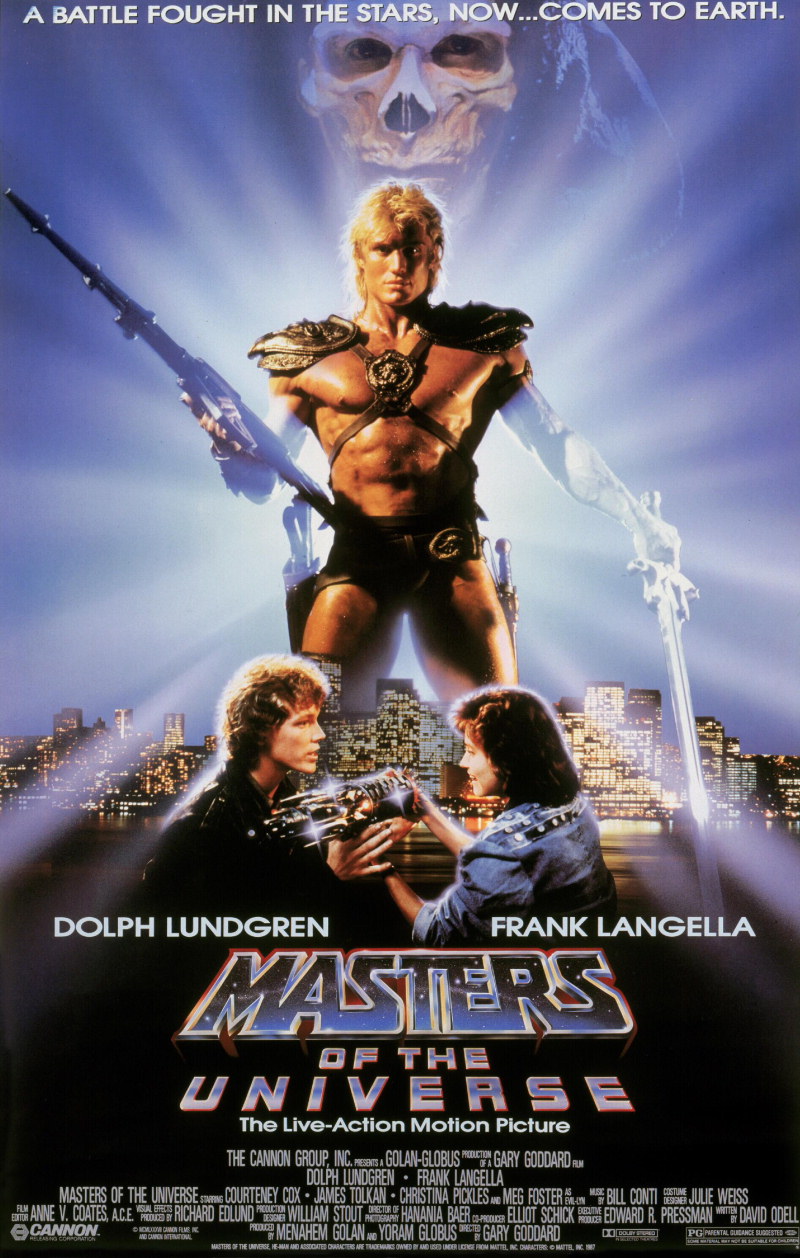
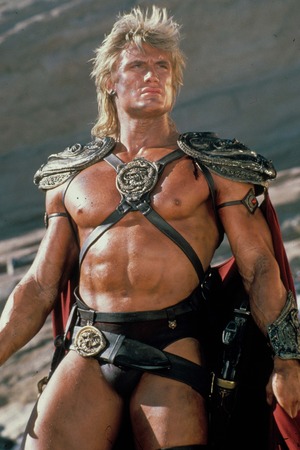
Today’s feature is the much-maligned film adaptation of the Mattel franchise He-Man: Cannon Group’s Masters of the Universe.
Masters of the Universe was written by David Odell, who also penned such films as Supergirl, The Dark Crystal, and numerous episodes of The Muppet Show.
The director on Masters of the Universe was Gary Goddard, which is to date his only feature film directorial credit. However, he has produced and written a number of shorts and 3D/4D shows for theme parks over the years, if that counts for anything.
The cinematographer for Masters of the Universe was Hanania Baer, who has shot such movies as American Ninja, Ninja III: The Domination, Breakin’ 2: Electric Boogaloo, The Brotherhood of Justice, and Ernest Scared Stupid.
The editor on the film was Anne V. Coates, who has also cut movies such as Fifty Shades of Grey, Congo, Lawrence of Arabia, Striptease, Erin Brockovich, and The Golden Compass over her career.
The two primary producers of Masters of the Universe were Menahem Golan and Yoram Globus, the infamous duo behind the flurry of Cannon Group b-movies that dominated the 1980s (Enter the Ninja, Revenge of the Ninja, Ninja III: The Domination, American Ninja). The other producers included Elliot Schick (Total Recall), Edward Pressman (The Island of Dr. Moreau, Judge Dredd, Street Fighter), and Evzen Kolar (Surf Ninjas).
The makeup effects team for Masters of the Universe included Robin Beauchesne (Killer Workout, Iron Man 2, First Daughter, National Treasure), James Kagel (Stargate, Child’s Play, Big Trouble In Little China), Todd McIntosh (April Fool’s Day), Gerald Quist (Drive, Jonah Hex, Breakfast of Champions, Re-Animator), June Westmore (Sphere), and Michael Westmore (Raging Bull, Capricorn One).
The Masters of the Universe special effects team was composed of Larry Roberts (Volcano, 3 Ninjas Kick Back), Karl G. Miller (Cat People, The Blues Brothers, Battlestar Galactica), Daniel Hutten (Die Hard, Solarbabies), R.J. Hohman (The Perfect Storm, Cyborg, Popeye, The Two Jakes), and Arthur Brewer (The Hitcher, Swamp Thing, Smokey and The Bandit).
The massive team of visual effects artists on Masters of the Universe included common elements with such productions as Ghostbusters, Volcano, Coneheads, Leonard Part 6, Fright Night, Donnie Darko, Battle Beyond The Stars, Mystery Men, Lawnmower Man 2, Ghost, and Raiders of the Lost Ark.
The music for Masters of the Universe was composed by Bill Conti, who is best known for his work on the Rocky movies, The Karate Kid, and The Right Stuff.
The cast of Masters of the Universe included Dolph Lundgren (Rocky IV, Dark Angel, The Punisher, Red Scorpion), Frank Langella (The Twelve Chairs, Junior, Cutthroat Island, Small Soldiers, The Ninth Gate), Meg Foster (They Live, Leviathan, Blind Fury, The Lords of Salem), Billy Barty (Willow, Legend), Courteney Cox (Friends, Scream, Cougar Town), Chelsea Field (Death Spa, The Last Boy Scout, Flipper), and James Tolkan (Back To The Future).
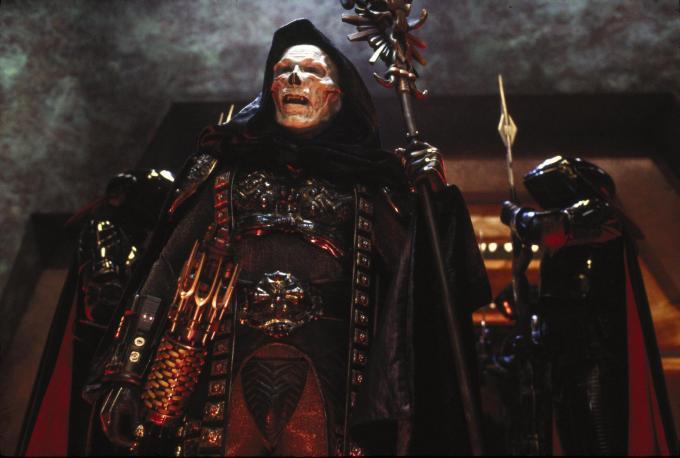
The plot of Masters of the Universe follows a group of resistance fighters from a faraway planet who are transported to Earth through the use of a mysterious scientific device. However, their enemies soon follow, in an effort to exterminate them and solidify their sinister rule. He-Man and his allies have to work with a handful of humans from Earth to defeat the evil Skeletor to save both Earth and the faraway planet of Eternia from the long reach of darkness.
In an interview, director Gary Goddard spoke about the stylistic influence of the works of Jack Kirby on Masters of the Universe, saying:
“the storyline was greatly inspired by the classic Fantastic Four/Doctor Doom epics, The New Gods and a bit of Thor thrown in here and there. I intended the film to be a “motion picture comic book,” though it was a tough proposition to sell to the studio at the time. ‘Comics are just for kids,’ they thought. They would not allow me to hire Jack Kirby who I desperately wanted to be the conceptual artist for the picture”
The costuming for the character of Evil-Lyn caused actor Meg Foster significant bruising in particularly inconvenient locations, and reportedly weighed well over 40 pounds in total. Interestingly, the eerie appearance of her eyes in the movie was completely natural, and required no enhancements or contact lenses.
Frank Langella reportedly loved playing the character of Skeletor, and even wrote some of the more memorable lines in the movie himself. He initially took the role because of how much his son loved the franchise, a situation that echoes the similar casting of Raul Julia in the Street Fighter adaptation some years later.
Interestingly, Masters of the Universe is an adaptation specifically from the original line of toys, and not the immensely popular cartoon, which establishes very different backstories for the characters and the plot. This confused many fans of the franchise when the movie initially released, and almost certainly contributed to the negative reception it received.
The failure of Masters of the Universe, coupled with the disappointment of Superman IV, supposedly foiled plans by the Cannon Group to invest in a high budget film adaptation of Spider-Man in the late 1980s, which was to be funded by the profits of those two films.
A sequel to Masters of the Universe was cast and written, but was ultimately scrapped just as the Cannon Group was going under. Very little is known about the abandoned production, other than that it would have been directed by Albert Pyun (Captain America).
A reboot of Masters of the Universe is currently in the works (and has been for a few years), with the latest information that Thor: The Dark World screenwriter Christopher Yost has been attached to keep it moving along. No directors are currently attached to the project, and no clear timeline has been set for shooting or release.
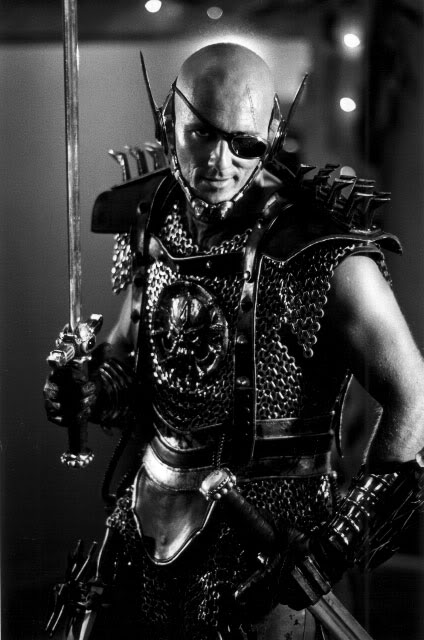
Anthony De Longis, one of the actors in the film, was initially hired as a sword expert, and provided all of the fight choreography for the film. He even filled in as Skeletor in the fight sequences, and trained Dolph Lundgren on how to use a sword.
Masters of the Universe proved to be a financial failure, bringing in only 17 million at the box office on a budget of 22 million. Likewise, the reviews of the movie were brutal, clocking in at 17% on Rotten Tomatoes from critics and 41% from audiences, along with an IMDb rating of 5.3.
One of my biggest issues with the film’s plot is the fact that no bystanders are ever harmed, or even witness the events that take place on Earth. How do no people see an alien army marching through suburban streets, or small aircraft flying over a mid-sized town? At one point, the police finally do show up, but only after they are drug to the scene by another police officer. It is assumed that at no point over the duration of the plot did anyone report suspicious activity, let along openly panic at witnessing an alien invasion.
The story of Masters of the Universe seems to assume previous knowledge of the characters, their relationships, and the basic premise of the story, which is especially confusing given that the adaptation is taken directly from a series of action figures, which are not historically known for establishing plot. The beginning of the movie could even be seen as a follow-up from a previous film given how little backstory is provided.
One unnecessary addition to the cast of Masters of the Universe that particularly got on my nerves was the annoying troll character, Gwildor. While he is crucial to the plot during a handful of moments, his primary purpose is to provide comic relief, which never fails to fall flat. Also, the makeup on the dwarf-like creature is really odd and unsettling, as if he were left out in the sun for too long.
Dolph Lundgren is surprisingly solid enough in this movie, given that he still didn’t have a solid hold on the English language at this point. That said, this certainly wasn’t a dialogue-heavy role for him, which was certainly for the best.
The most notable aspect of Masters of the Universe is that it feels like a patchwork of better known movies from the time, like Star Wars and Back to The Future. There is not much original to it when all is said and done, and the screenplay is about as basic and no-frills as it could possibly be.
overall, I can certainly see why this movie didn’t resonate with existing He-Man fans. That said, there is a fair amount of fun to be had with this admirably mindless entry into the filmography of the 1980s. Frank Langella absolutely hams it up as Skeletor, and the creature work is all very over the top. There are more lasers and goofy visual effects than you could possibly dream of, and the plot itself centers around a synthesizer with the ability to open dimensional portals. What more could you possibly ask for?
The value of this movie definitely comes from a combined sense of nostalgia and how poorly the film has aged on the whole. It isn’t an elite good-bad movie for sure, but I think that it is more than worth checking out at least once for the novelty of it.
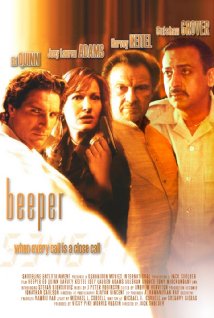
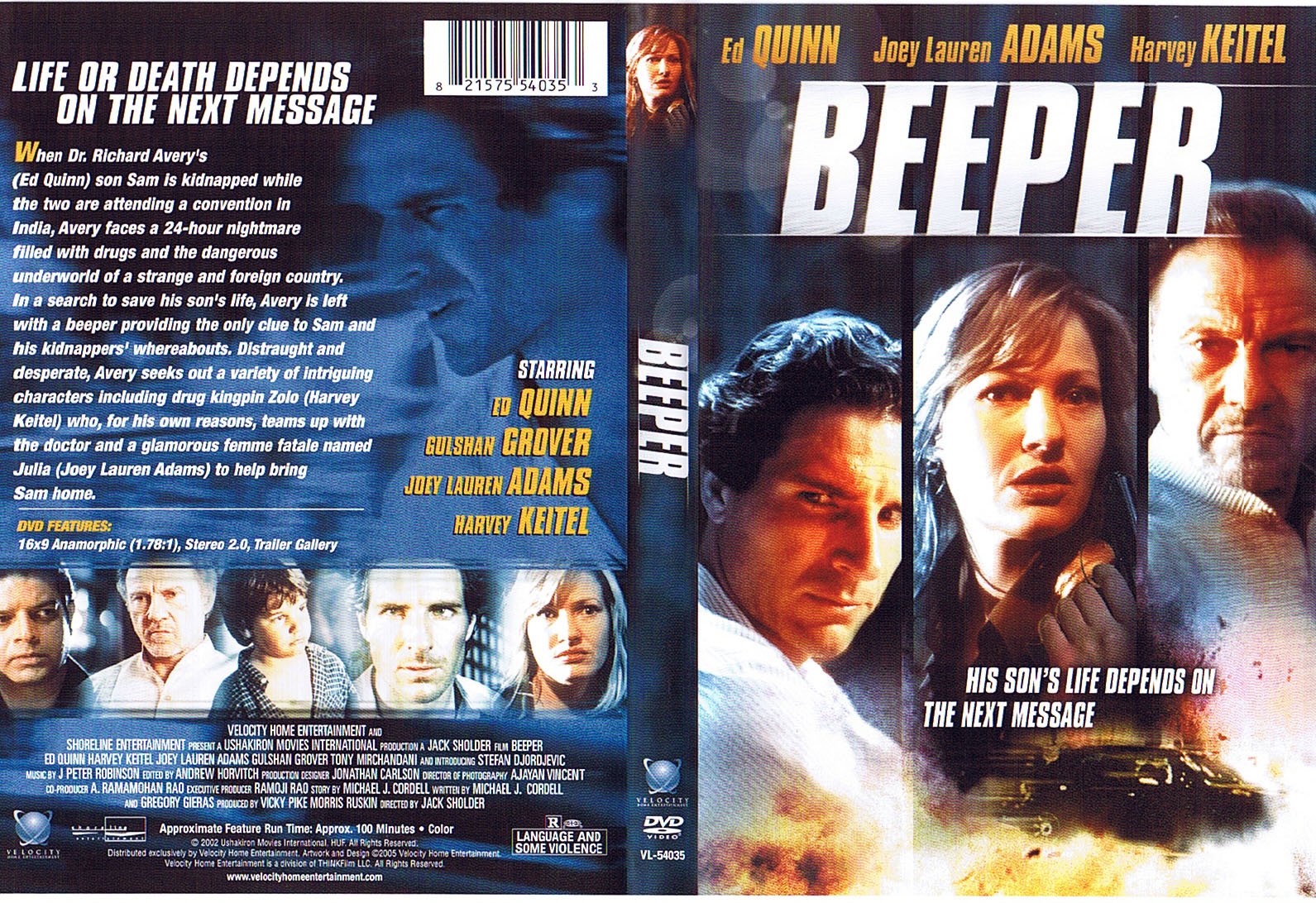
Today’s flick is a mostly forgotten 2002 thriller that takes its name from an item that is now a technological relic: Beeper.
The writers for Beeper were Gregory Gieras, who has since written the monster movies Big Ass Spider and Centipede, and Michael Cordell, who has no other listed credits on IMDb.
The director for Beeper was Jack Sholder, who also directed such films as Arachnid, Wishmaster 2, Renegades, The Hidden, and A Nightmare On Elm Street 2.
The cinematographer for Beeper was Ajayan Vincent, who also shot Centipede, which was written and directed by Beeper co-writer Gregory Gieras.
The musical score for Beeper was composed by J. Peter Robinson, who has also provided music for such movies as Detroit Rock City, Vampire In Brooklyn, New Nightmare, The Wizard, and Blind Fury.
The cast of Beeper is headlined by Harvey Keitel (Taxi Driver, Pulp Fiction, Reservoir Dogs, Bad Lieutenant), Joey Lauren Adams (Chasing Amy), Ed Quinn (Starship Troopers 2, House of the Dead 2), and Gulshan Grover (Hera Pheri, I Am Kalam).
The plot of Beeper centers around the kidnapping of a prestigious doctor’s son while he is traveling in India. He is then given instructions by the child’s captors via an electronic pager, and has to to figure out a way to get his son back from the criminal organization that his holding him hostage.
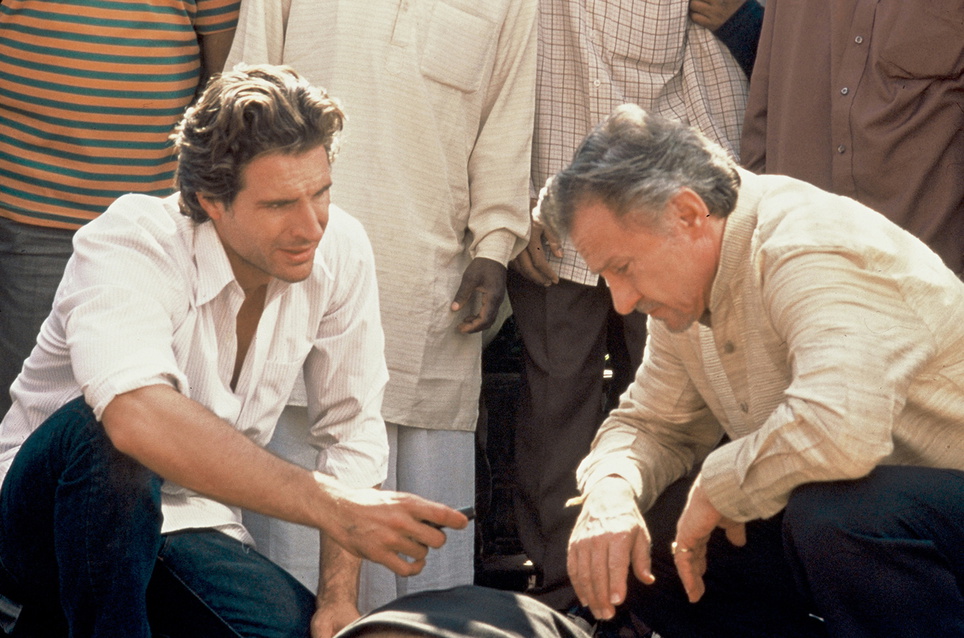
Beeper was filmed in the city of Hyderabad in India, which features a good deal of photogenic architecture, which can be seen in the background of many shots.
The film was produced by a company called Shoreline Entertainment, which specializes in the production and distribution of b-movies like Ninja Cheerleaders, Parasite, and Voodoo Lagoon, just to name a few.
The reception for Beeper, at least from what I could find, was pretty negative: the film currently holds a 4.4 on IMDb, along with a Rotten Tomatoes audience score of 17%.
First off, the lead character (played by Ed Quinn) in Beeper looks and sounds just enough like Christian Bale from American Psycho that throughout the movie I kept expecting him to eventually snap and start murdering people with an axe or a chainsaw. I think this is due to some mixture of his wardrobe, his hair style, and the cadence of his voice, but it was pretty amusingly distracting for me during less exciting moments of the film regardless.
The production was able to scout out some really inspiring locations for the movie, given the historic architecture throughout Hyderabad. I’m a little surprised more western productions don’t use Indian locations more often, given their impressive visuals and the fact that the country has a significant existing film infrastructure available.
As I kind of suspected, Harvey Keitel isn’t a major player in this movie, despite being highly billed on most of the promotional materials I have seen. He is far and away the biggest and most expensive name in the movie, and I imagine the production kept the amount of time they needed him on set to a minimum for financial reasons.
In general, the beeper itself provides a pretty interesting plot device to move things forward wile maintaining a sense of mystery and vagueness in the riddles and messages. While the plot mostly amounts to a high stakes scavenger hunt, there are certainly worse gimmicks out there.
Overall, Beeper isn’t awful as far as low-budget thrillers go, but it also isn’t particularly outstanding in any way. As much as there were a few things I liked about it, I mostly didn’t have strong feelings about the movie one way or another. I do wish Keitel got to shine a bit more, though I can certainly understand why he was in a limited role. He also was clearly phoning in his performance, as he has with many over the past few years.
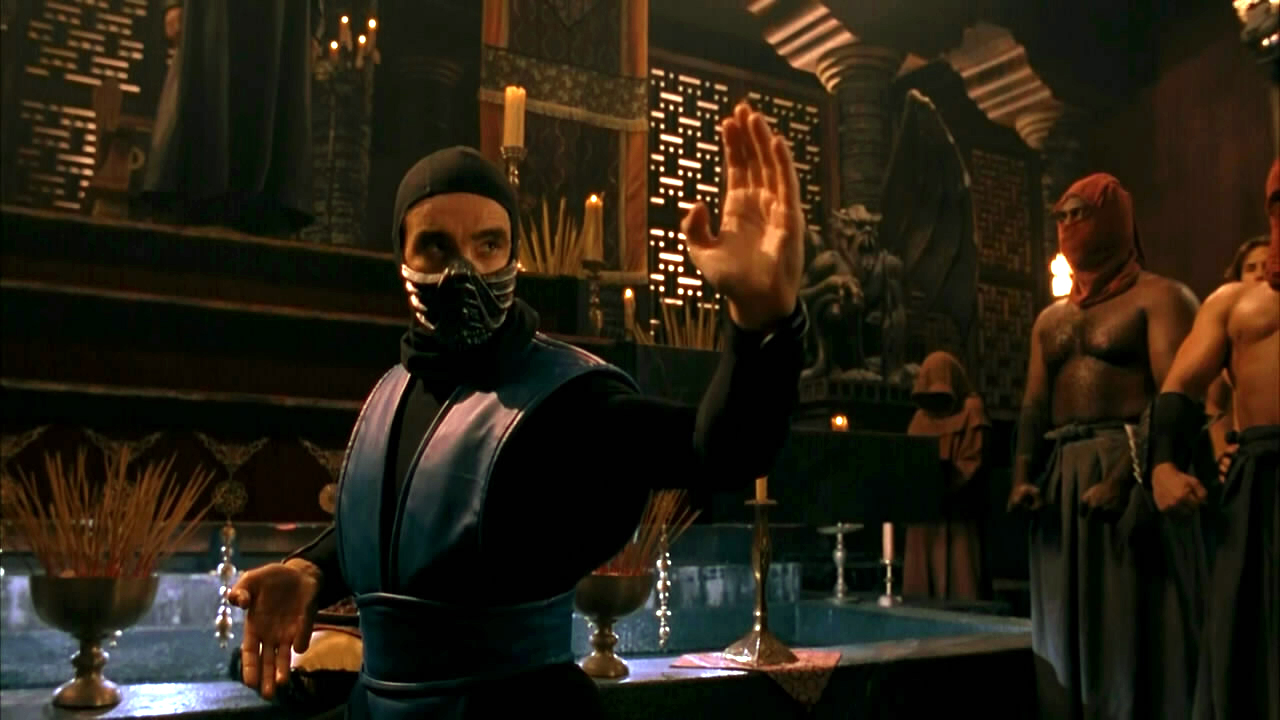
Today’s movie is one of the most famously successful video game film adaptations of all time: 1995’s Mortal Kombat.
The screenplay for Mortal Kombat was written by one Kevin Droney, who only had a few scattered credits writing for television shows like Highlander and Hunter at the time. Since Mortal Kombat, he only wrote one other feature: Wing Commander, also based on a successful video game.
Mortal Kombat was directed by Paul W.S. Anderson, who has also been behind such movies as Pompeii, Resident Evil, and Event Horizon.
The cinematographer for Mortal Kombat was John R. Leonetti, who also shot movies like The Conjuring, Insidious, I Know Who Killed Me, Joe Dirt, The Scorpion King, The Mask, and Child’s Play 3.
The editor for the film was Martin Hunter, who has cut such films as Event Horizon, The Chronicles of Riddick, and Full Metal Jacket.
The music for Mortal Kombat was composed by George S. Clinton, who has also worked on such films as The Love Guru, Beverly Hills Ninja, American Ninja 2, and American Ninja 3.
The makeup effects for Mortal Kombat were provided by a team that included Moni Mansano (Hook, Ninja III: The Domination, Revenge of the Ninja), Thomas Floutz (Face/Off, Critters, From Beyond), Eileen Kastner-Delago (Thor, Cliffhanger), and Raqueli Dahan (True Detective, Kingpin, The Usual Suspects).
The special effects team for the film was composed of Joanne Bloomfield (Tremors II, Galaxy Quest), Duncan Capp (Troy, The Brothers Grimm), Michael Dawson (A View to a Kill, Judge Dredd), Michel Gagne (Space Jam, Vampire in Brooklyn, Demolition Man), Patrick Gerrety (Red Planet, Con Air, Theodore Rex), Alec Gillis (Leviathan, Wolf), David Hoehn (Space Truckers, Wolf, Anaconda), Tom Woodruff, Jr. (Wolf, Leviathan), Patricia Villalobos (Leprechaun 3, Slither), Ron Trost (The Omega Code), Kirk Skodis (Small Soldiers, Prehysteria), and Alison Savitch (Simon Sez).
The cast of Mortal Kombat includes Christopher Lambert (Highlander 2, Fortress, The Gaul), Robin Shou (Death Race, Beverly Hills Ninja), Linden Ashby (Teen Wolf, Melrose Place), Cary-Hiroyuki Tagawa (Vampires, License To Kill), Bridgette Wilson (Billy Madison), and Talisa Soto (License To Kill).
The plot of Mortal Kombat centers on an extreme, supernatural martial arts tournament, where the finest fighters from multiple dimensions fight to the death for the ultimate claim of glory.
The production of Mortal Kombat was plagued with casting difficulties from the onset. First, Brandon Lee (Laser Mission) was selected to be Johnny Cage, but tragically died during the filming of The Crow. Then, Jean-Claude Van Damme turned down the role to star in a rival video game movie adaptation: Street Fighter. Rumors have also circulated that Tom Cruise and Johnny Depp were both approached for the role, but turned it down. Adding to the troubles, Cameron Diaz was apparently at one point set to play the part of Sonya Blade, but had to back out due to an injury before filming began.
The soundtrack to Mortal Kombat was particularly huge, going platinum in less than two weeks after its release. The music was a mix of techno and dance, integrating clips from the the original game audio, which proved to resonate with fans.
Steven Spielberg, a fan of the video game, was apparently supposed to appear in a cameo role during the introductory Johnny Cage scene, but scheduling conflicts ultimately prevented him from doing so.
Mortal Kombat was of course a massively controversial video game due to its violent and graphic fatalities, leading to significant public outcry against it. The film, on the other hand, is not particularly gory, and even received a PG-13 rating by the MPAA.
Not only did Mortal Kombat receive a sequel in Moral Kombat Annihilation, but a number of attempts have popped up over the years to reboot the franchise on film. Currently, James Wan (Saw, Furious 7) is reportedly attached to an upcoming adaptation by Warner Brothers, which is set tentatively set to release sometime in 2016. There is also an ongoing web series based on the game called Mortal Kombat Legacy, which was created after the positive reception to the short film Mortal Kombat: Rebirth.
The reception to Mortal Kombat was generally pretty poor: it currently holds a 5.8 rating on IMDb, alongside Rotten Tomatoes scores of 33% (critics) and 58% (audiences). In spite of the negative reviews, the movie managed to rake in a whole lot of money: it grossed $122 million worldwide in theaters on a budget of $18 million.
Personally, I feel like Mortal Kombat is one of the more loyal video game movie adaptations out there, with the exception of the lack of gore (which is notable). However, the character designs and fighting arenas all look like they could be pulled straight out of the games, and the fighting sequences aren’t too shabby. While the lack of gore is a huge issue for this movie, I can’t imagine a more faithful adaptation under a PG-13 rating.
All of that said, just because a movie is accurate to the game doesn’t make it a good film. The game Mortal Kombat is more or less plotless, and doesn’t really connect one fight scene to the next. That means that the screenplay for the movie was on its own in regards to connective tissue to string the fights together, and it didn’t do a particularly good job of it. When a fight scene isn’t in progress, this movie is just…dull. The characters and plot, while fine and good for the purposes of a fighting game, are really boring when applied to a movie that requires progress and character development.
It is worth noting that the very idea of a PG-13 Mortal Kombat movie is a bit bizarre and soulless to start with. Clearly, the only reason to make the movie PG-13 was so that it could be marketed to a younger audience, and thus increase its potential at the box office. However, the game is intentionally violent and catered to an adult audience, so making the movie sanitized for the purpose of reaching out to early teens (and younger) is just kind of icky. I personally think an R-rated movie with more realistic and brutal violence is more appropriate than the cartoonish and bloodless affair in this film. Realistically, which one of those is setting a worse understanding of the consequence of violence at the end of the day? Also, and more importantly, an R-rated Mortal Kombat would be way more entertaining.
Overall, Mortal Kombat isn’t an absolutely awful movie, at least when put side-to-side with other video game adaptations (like its sequel, or the many Uwe Boll features). I do think most of its value at this point comes from nostalgia more than anything else, though I am always a big fan of Christopher Lambert hamming it up in a campy movie. I feel about the same way about this movie as I do about Super Mario Bros: I’ll watch it and enjoy it out of a sense of nostalgia, but there isn’t really any doubt that this qualifies as a bad movie. I think its reputation is worse than it deserves from fans due to the lack of gore, but it also isn’t deserving of any props.
If you are going on a 90s kick and are looking for a way to extend your nostalgia trip, pop in Mortal Kombat. It can serve that purpose well enough.
Reviews/Trivia of B-Movies, Bad Movies, and Cult Movies.
![Misan[trope]y](https://misantropey.com/wp-content/uploads/2014/10/misantropeyhead1.png)












 Misan[trope]y