“The Fiendish Works of Dr. Fear” marks the third entry into “The Bibleman Adventure,” which is the second incarnation of the franchise.
“The Fiendish Works of Dr. Fear” is once again directed by Eric J. Smith, who also took the reins on the previous episode, “The Incredible Force of Joy.” Willie Aames, who also plays Bibleman, co-directs, and the writing for the episode is credited to Marion Rose Wells.
The central villain of “The Fiendish Works of Dr. Fear” is, of course, Dr. Fear. However, the character is once again played by the same actor, Brian Lemmons, who portrayed the previous two villains: The Master of Misery and The Shadow of Doubt, a fact that is pointed out once again by his self-aware sidekick, Ludicrous. This time, Dr. Fear appears to be partially cybernetic, which gives him a little more interesting appearance. The evil computer program, “L.U.C.I.,” who appeared in the live version of “The Incredible Force of Joy,” also shows up as an accessory villain.
Both the intelligent computer, U.N.I.C.E., and a sidekick, Coats, appear alongside Bibleman in “The Fiendish Works of Dr. Fear,” just as they did in the previous two “Bibleman Adventure” installments.
The story of “The Fiendish Works of Dr. Fear” follows Bibleman as he leads the “Clean is Cool” campaign to keep kids off of drugs (or something like that). Meanwhile, a new villain named Dr. Fear plots to fill people with anxieties and destroy their self confidence, even taking aim at Bibleman himself. I assume that also has something to do with drugs, but I wasn’t entirely clear on that point. Bibleman, as per usual, has to figure out the villain’s plan and overcome his own fears to win the day.
“The Fiendish Works of Dr. Fear” shockingly kicks off with Bibleman dancing to a swing number with lyrics about saying ‘no’ to drugs. I can’t even make this kind of ridiculous thing up, that is actually how the episode starts.
This episode also features the first (but not the last) time that Bibleman appears on a televised talk show. Of course, Dr. Fear uses this opportunity to strike Bibleman with some sort of fear ray, which sets off his anxieties about appearing on camera, leading him to briefly botch the interview.
For once, Bibleman actually takes a fair amount of damage in the combat sequences, particularly thanks to Dr. Fear’s ranged attack. Speaking of which, why exactly doesn’t Bibleman have a way of fighting from a distance? You would think that with the amount of technology at his disposal, he would have some sort of plan for this kind of thing. He ultimately figures out a way around it, but it wouldn’t have been as much of an issue if he just had some sort of bible-themed projectile for combat.
The humor here is still cringe-inducingly awful, and bows to a number of lazy stereotypes for no discernible reason. The plot also isn’t as entertainingly cheesy as other episodes, which, combined with yet another lackluster villain, makes for a pretty dull watch on the whole. The most amusingly terrible thing in the episode is the swing dance in the opening sequence, which passes pretty quickly. “The Fiendish Works of Dr. Fear” definitely isn’t on the top of my list for Bibleman episodes, but it is also far from the worst. It also features a brutal villain death for Dr. Fear, but it generally pales in comparison to most of the other episodes.
“Incredible Force of Joy” is the second installment in “The Bibleman Adventure,” which is itself the second incarnation of the show.
“The Incredible Force of Joy” was directed by Eric J. Smith, and written by Albert Upton and Cory Edwards. This marks the first time that star Willie Aames was not involved in either the writing or direction of the episode, at least as far as the listed credits go.
The villain in “The Incredible Force of Joy” is basically just the return of Shadow of Doubt from the previous episode, but now under the name of Master of Misery. His henchman, Ludicrous, is also back, and a second supporter is introduced in the form of an evil computer named L.U.C.I.. L.U.C.I. is essentially the counter-balance to Bibleman’s computer, U.N.I.C.E., and continues to appear throughout the series. This practice of re-using villains under new monikers also continues throughout the rest of the Bibleman franchise.
Bibleman once again has a couple of allies present in the form of Coats and U.N.I.C.E., who were both introduced in the previous episode, “Defeating the Shadow of Doubt.”
The story of “The Incredible Force of Joy” centers on this new villain called the Master of Misery, who has developed some sort of weapon and computer program that can make people sad. He manages to infiltrate Bibleman’s lair, and corrupts his computer with the program, creating chaos for the team. Meanwhile, the Master of Misery launches his evil plan to corrupt children by making a young child miss a science fair. Bibleman, as always, has to figure out a way to foil the villain’s plans, and help the young boy make the science fair. This also marks perhaps the only time that Bibleman has supported science in any way.
“The Incredible Force of Joy” marks some notable improvements to the Bibleman costume. The appearance is more streamlined than the previous incarnation, and the cowl is pretty dramatically altered as well, with a gradient of purple and yellow.
Once again, the villain knows the location of Bibleman’s lair for no stated reason, which raises some questions for me as to whether theere might be a mole within Bibleman’s inner circle. However, Bibleman doesn’t seem particularly alarmed by that fact, which struck me as kind of odd.
“The Incredible Force of Joy” features the first iconic full armor sequence for Bibleman, and is also the first episode to have a live performance incarnation. The audio of the full armor sequence takes over for the old “The Bibleman Show” theme song in the introductory credits, completing the transition into “The Bibleman Adventure” series.
The plot of “The Incredible Force of Joy” features an awful lot of jargon-packed computer hacking magic that doesn’t make even a shred of sense, particularly on the part of the bad guys. The astounding misunderstanding of technology pops up a few more times in the series going forward, at least in some of the episodes that I have already seen.
The episode starts with the murder via laser evaporation of an unnamed villain (who resembles The Fibbler) by Coats, which isn’t treated with much seriousness by either character. Bibleman even offers a classic one-liner for the situation:
“Don’t you hate it when guys smoke?”
The smoking remain of a human being
Once again, this shows just how callous, unforgiving, and violent Bibleman and his crew can be, making him more like a comic book antihero (The Punisher) than a traditional superhero (Superman, Captain America). Interestingly, U.N.I.C.E., Bibleman’s computer, is the one who ultimately kills the Mastery of Misery, which sets a dangerous precedent in my mind about artificial intelligence committing murder.
Overall, “The Incredible Force of Joy” is another middling episode in the series, but the quality of the show from a production standpoint is clearly steadily improving. The villain here is once again a bit forgettable, but the techno-magic provides some entertainment value to the episode. The attempts at humor of course still fall flat, but there are some unintentional laughs to be had here.
In 1998, two years after the conclusion of “The Bibleman Show,” “Defeating the Shadow of Doubt” marked the first episode of “The Bibleman Adventure,” the second and longest-running incarnation of the show.
For “Defeating the Shadow of Doubt,” Willie Aames takes sole writing and directing credits, and continues to star as the crusading eponymous hero, Bibleman. Chris Fann, who was previously co-director on “The Bibleman Show,” is now relegated to director of photography, I assume for the purpose of giving Aames sole credit. Notably, Tony Salerno’s creation credit for the Bibleman character is absent from both the ending and opening, which makes me wonder how much internal turbulence there was over the change of direction for the show.
The villain of the episode is Shadow of Doubt, who is overall a pretty generic antagonist for Bibleman. He uses a sort of chemical to inspire doubt in people, which reminded me a bit of the mind control used by previous villains. His performance is certainly over the top, but the character still comes off as pretty dull on the whole. He does have a fourth wall breaking henchman named Ludicrous, who is somewhat self-aware about his position, and steals the show from Shadow of Doubt in most of the villain scenes. However, Shadow does get his time to shine with his frenetic dancing musical number.
“Who is both a verb and a noun!”
“Shadow of Doubt!”
For the first time in the franchise, Bibleman has allies in the form U.N.I.C.E. and Coats. U.N.I.C.E. is an intelligent, speaking computer that runs the Bibleman headquarters, and continues to appear throughout the rest of the series. Coats is a pretty generic assistant / sidekick, who has a vague sort of military aesthetic to him.
The story of “Defeating the Shadow of Doubt” centers on a young girl, Kyla, who has lost her faith, which is initially assumed to be due to her parents arguing. However, there are also sinister forces at play in the form of a Pandora’s box of doubt, planted by a new villain called Shadow of Doubt. Bibleman has to overcome his own insecurities and find a way to defeat the shadow, and help restore Kyla’s faith.
Kyla: “You don’t know how I feel! Nobody does! Not even God!”
Bibleman: “Kyla, that’s just not true. God does care…I mean, he must?”
“Defeating the Shadow of Doubt” features a new introduction that focuses more on action, and also introduces the more familiar BibleMan logo. The old theme song is still around, but it plays over the credits as opposed to the introduction sequence. Honestly, it is a bit strange tone-wise to have both styles present, but I am guessing that will only be the case for a few of these transition episodes.
There is still a children’s musical number at the beginning of the episode, but it is cut into semi-digestible small chunks. I’m curious if this was initially intended as part of an episode of “The Bibleman Show,” and was repurposed for “Defeating the Shadow of Doubt.”
“Defeating the Shadow of Doubt” features more deliberate attempts at humor than previous episodes, most of which awkwardly fall flat. As the series goes on, the amount of tongue in cheek self-awareness seems to increase, which adds a whole new dimension of cringe-inducing awkwardness to the show.
The entire episode of “Defeating the Shadow of Doubt” reinforces a stereotype that the only reason people leave religion is due to some trauma or sinister influence, which just isn’t true by a long shot. The Bibleman version of questioning faith is also kind of hilarious in its lack of sincerity.
“In my mind I know all the right scriptures. I just don’t feel like they are real. One thing is for certain: whoever this [villain] is, he has affected my ability to reason.”
-Bibleman
I was a little surprised when Shadow of Doubt survived the episode, especially given the show’s pattern for giving villains violent and tortuous ends. I assume this was done to make a statement about how doubt never totally goes away, or something to that effect.
“Defeating the Shadow of Doubt” is more or less middle-of-the-road as far as entertainment value for Bibleman goes. The villain could certainly have been better, but there are still some entertainingly awful child acting and dialogue moments that help it out. It is certainly easier to sit through than the first two episodes of “The Bibleman Show,” and features a lot more cheesy action and fighting, if that is what you are looking for.
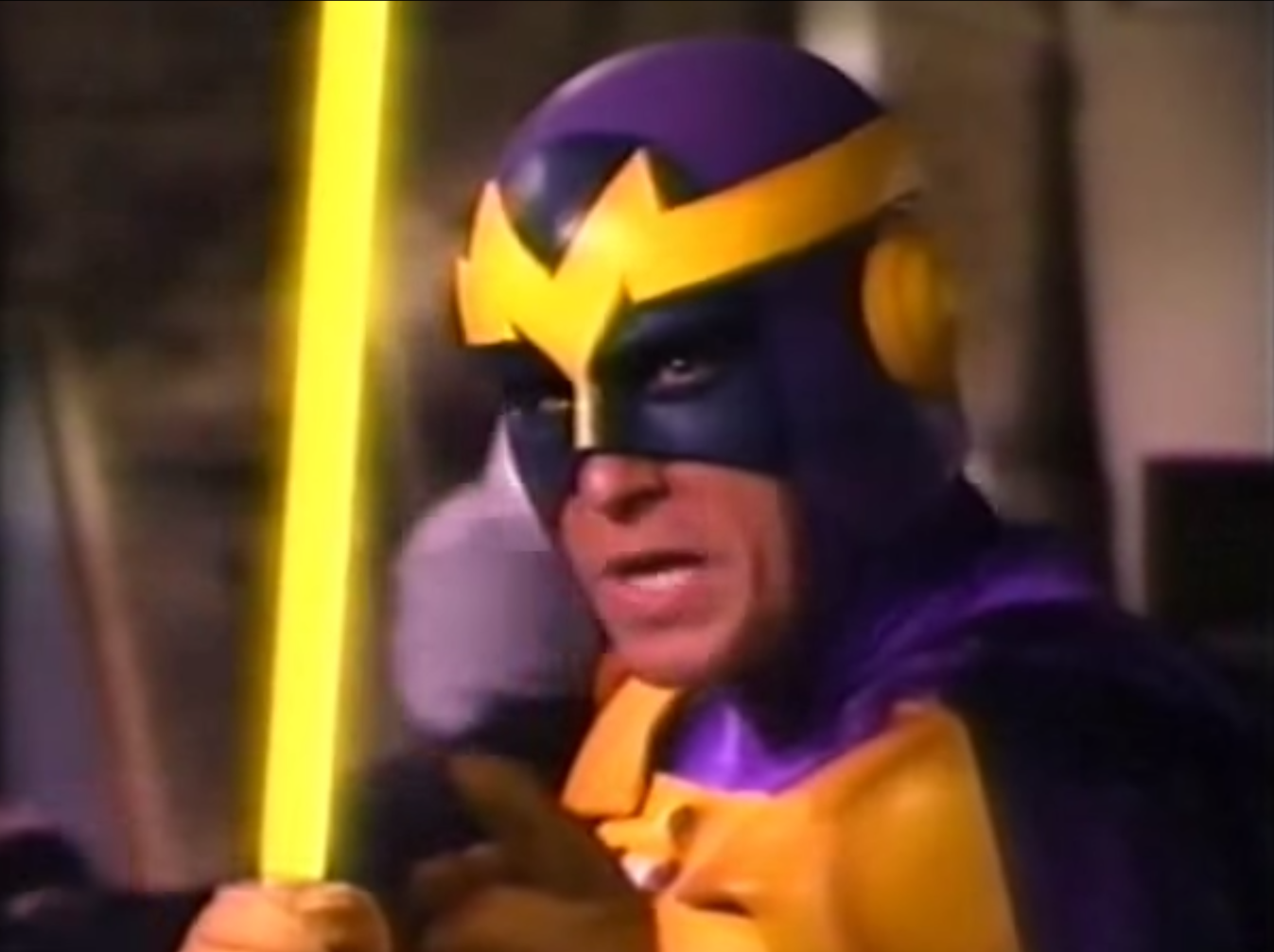
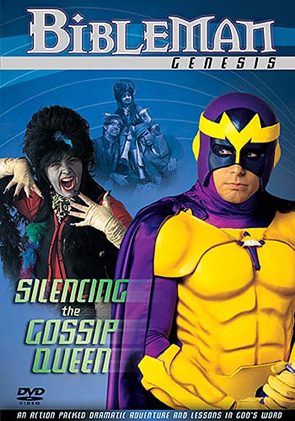
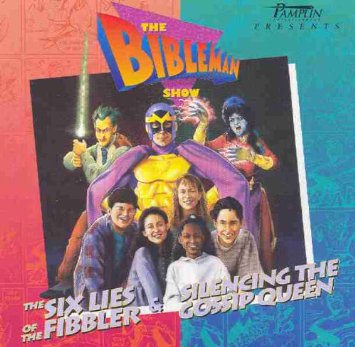
“Silencing the Gossip Queen” is the final episode in the original series of Bibleman, called “The Bibleman Show.” As with the previous episode, “Six Lies of the Fibbler,” Willie Aames is credited as writer, producer, and co-director, as well as filling in the lead role as Bibleman.
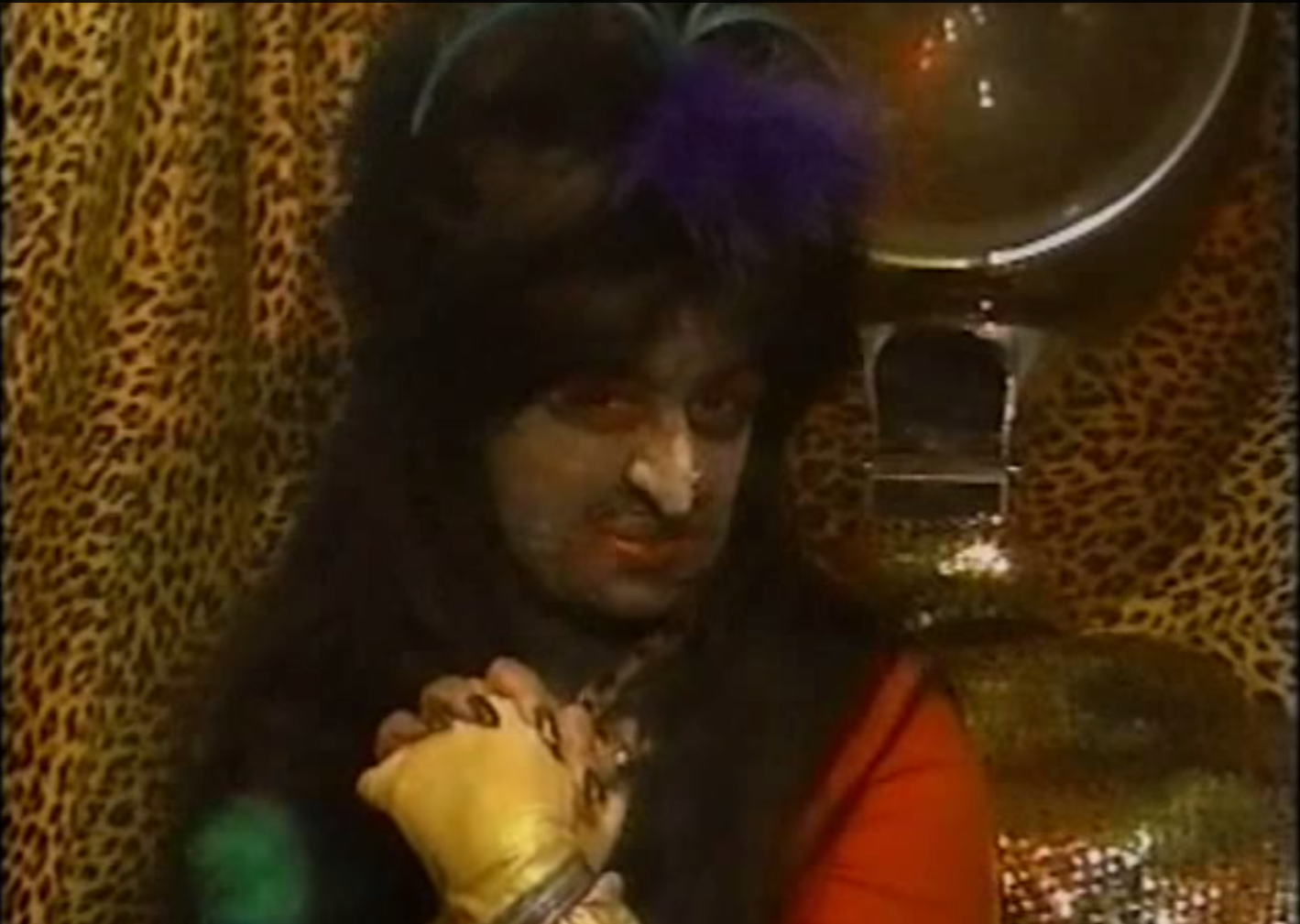
The villain of the episode is the eponymous Gossip Queen, who looks like a traditional witch, and also has force lightning powers like Emperor Palpatine. She apparently just generally hates friendship and good things, which is the extent of the motivation that is provided. She has henchmen by the names of Loose lips and Blabbermouth, which I guess fits with the dastardly theme of gossip. Once again, the villain somehow knows Bibleman’s secret identity without any explanation, and attacks directly at him before trying to go after the children. Also of note is that the Gossip Queen gets a musical number, which is the first time the villain has gotten to perform in the show.
“An ounce of gossip is worth a pound of trouble”
-Bibleman
The story of “Silencing the Gossip Queen” centers upon the same group of musical kids that appeared in the previous installments of “The Bibleman Show.” The time, a villain called The Gossip Queen conspires to break up their special friendship through the use of planted rumors and hearsay. Once again, Bibleman has to help repair the damage and save the day from evil, but only after escaping his kidnapping by The Gossip Queen.
Once again, the villains die miserable, brutal deaths in “Silencing the Gossip Queen.” Bibleman evaporates both Loose Lips and Blabbermouth with deflected lightning blasts, and then melts the Gossip Queen with his laser sword, after which he looks directly into the camera and says:
“The bible warns against ladies like her”
Honestly, that part is pretty bad ass. However, there is something to be said for the fact that Bibleman seems to frequently leave his enemies as corpses. Most heroes that do that are well within the bounds of being anti-heroes, and the practice is pretty seriously frowned on as far as superhero decorum goes. I suppose you can chalk that up to his particularly brutal and conservative version of biblical morality.
“Silencing the Gossip Queen” isn’t nearly as entertainingly awful as “Six Lives of the Fibbler,” but it is worlds better than the first two episodes in the series. Regardless, I’m thrilled to be done with “The Bibleman Show,” because I just can’t handle any more awful child-driven Christian musical numbers. I hadn’t seen any of these episodes previously, and now I think I know why they aren’t as popular as the later series, which strike me as being generally better polished in most regards. They are still awful, and I might eat my words on this, but they aren’t nearly as bad as “The Bibleman Show,” which is generally a dull, unfocused mess. As far as a recommendation goes, you could do worse than “Silencing the Gossip Queen,” but there are some more entertaining entries in the Bibleman franchise that are more worth your time.
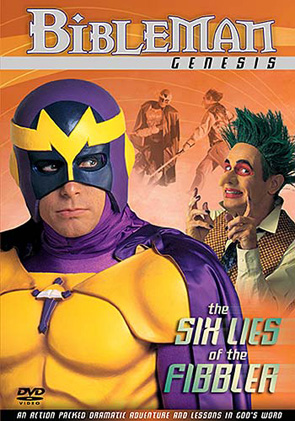
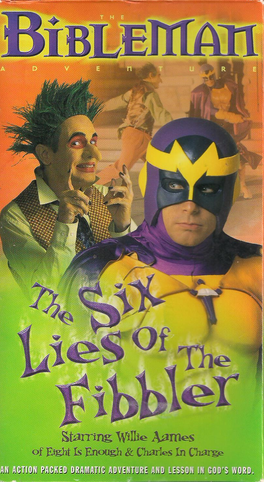
“Six Lies of the Fibbler” is the third episode of the original Bibleman series, “The Bibleman Show.” Willie Aames wrote, produced, and co-directed “Six Lies of the Fibbler,” while also portraying the lead character of Bibleman. Chris Fann again co-directs, but Milt Schaffer and C. Scott Votaw are notably absent from the credits, and Tony Salerno is relegated to solely receiving creation credit for the episode. There is definitely a quality difference between the first two episodes and “Fibbler” that makes me wonder if there was some change in personnel and direction behind the scenes, which might explain a lot.
“Six Lies of the Fibbler” is once again a musical, as all of the original “The Bibleman Show” episodes appear to be. The introductory song is something like “Bible Vision,” which sounds like a useless power that Bibleman might actually have. The music certainly hasn’t gotten any better from the first two episodes, and the increase in necessary dramatic acting on the children’s parts results in a product that is hilariously awful, more so than the first two entries in the series.
The villain of “Six Lies of the Fibbler” is, of course, The Fibbler: a damn creepy orange clown who hypnotizes children into lying through the use of some sort of magic dust. The Fibbler is definitely the most ridiculous and over the top villain on the show thus far, and is genuinely a bit unsettling, particularly thanks to the makeup work (which is reminiscent of The Joker). I will note that for the first time in the series, the villain actually interacts with the kids, rather than just going after Bibleman. This does liven things up a little bit, and gives the villain character some badly needed additional screen time in comparison to the first two episodes.
“Six Lies of the Fibbler” introduces a lot of elements that pop up a bunch later on in the series, including Bibleman’s laser sword, the recitation of bible verses while fighting, and a bible lair, which becomes a key set and base of operations later on.
The story of “Six Lies of the Fibbler” once again follows the same children’s musical group from “Big Big Book” and “Back to School,” but this time there is unrest within their ranks. Their youngest member is influenced by a villain named The Fibbler into compulsively lying to her friends, which drives a wedge into the musical group. Bibleman eventually figures out what is going on, and helps bring the group back together.
One of my big issues with the plot of “Six Lies of the Fibbler” is that the kid was drugged into lying, but it still forced to apologize for her actions while under the effects of The Fibbler’s drugs. The other kids forgive her, but was it ever really her fault? She was a victim, and forced into lying to the group. It is also notable that Bibleman knows that this is the case, but never tells the girl that she was being manipulated by a villain with mysterious chemicals. Way to go, Bibleman.
Speaking of the villain, The Fibbler straight up explodes after his fight with Bibleman, starting a trend of brutal villain deaths that continues throughout the series. Bibleman doesn’t directly kill him, but something tells me that he doesn’t have a non-lethal code of ethics. I’ve read enough of the bible to know that.
“Six Lies of the Fibbler” just sort of ends right in the middle of a musical number, like they were caught off-guard in the editing process by how long it ultimately ran. I had a brief flashback to the botched conclusion of “Dracula 3000,” which might actually be better than any given episode of “Bibleman.”
“Six Lies of the Fibbler” is actually an episode of “Bibleman” that I would recommend. The villain is ridiculous, the story doesn’t make sense, the acting is awful, and the series is still young enough that all of the costumes and props are incredibly cheap. Even the musical numbers are arguably baffling enough to justify sitting through, though that is definitely up for debate. If you are looking for an introduction to the world of Bibleman, “Six Lies of the Fibbler” is a good place to start.
“Back to School” marks the second episode of the original Bibleman video series, “The Bibleman Show.” Willie Aames is once again the title role of Bibleman, and also shares directing and writing credit for the episode. The rest of the team is pretty much the same from “Big Big Book”: C. Scott Votaw, Milt Schaffer, and creator Tony Salerno also have writing credits, with Votaw and and Chris Fann taking co-directing roles alongside Aames.
In the first episode of “The Bibleman Show,” “Big Big Book,” I understood the amount of singing involved. I mean, it was centered around a church musical. However, this episode also starts off with singing, but without the inherent, semi-reasonable justification. It is eventually explained that the same group of kids is going to be performing a similar musical at a local school (thus “Back to School”), but that bit of exposition has to be awkwardly forced into a scene in the form of a fake telephone call.
I can’t describe just how much my heart sank when it dawned on me that all of these original BibleMan episodes were going to be musicals. The fact that the kids in this episode aren’t even in an obvious venue to be singing makes it all seem much worse to me. To add to my frustrations with the whole situation, one of the songs, which takes place entirely in an RV, is specifically about a fictitious train:
Let’s take a trip through the creation
Head on down to the revelation
The train is waiting at the gospel station
so get on board the bible train
Could they not have come up with a song about a “Bible Bus?” That would at least be a closer comparison than a damn train. There is also alliteration to that phrase, which is perfect for this kind of lazy product. Why am I doing their job for them?
The primary villain in “Back to School” is Madame Glitz: a vaguely sinister, vain, and fame-obsessed woman who inexplicably knows Bibleman’s secret identity. She operates with the help of a henchman named ‘Mr. Thug,’ which is pretty much all you need to know about him. Her primary motivation seems to be envy over Bibleman’s popularity, so she plans to kidnap him to turn his fans against him. If that doesn’t make a whole lot of sense to you, you aren’t alone on that.
“I love it when famous guys don’t show up! Then you can boo and hiss and stuff.”
-actual dialogue from “Back to School”
The story of “Back to School” once again focuses on a children’s musical performance, this time taking place at their local school (which I hope isn’t a public one, because that sounds like a separation of church and state violation to me). Bibleman is scheduled to appear alongside them, as he did in “Big Big Book,” but is kidnapped by Madame Glitz just before the show begins. Bibleman eventually prays his way out of his binds, terrifyingly imprisons Glitz in a television, and shows up in time for a grand finale with the kids.
After watching “Back to School,” I think I understand why the direction for Bibleman was changed so quickly. It is really just more of the same of what was offered in “Big Big Book,” and there are only so many ways to replicate the same boring story over and over again. The villain is once again the highlight, and she is unfortunately hardly in the episode at all. The largest chunk of it is once again dedicated to the godawful children’s musical numbers, which were really testing my patience with this one. Also, somehow the dialogue seems to have gotten worse for this episode. My favorite exchange by far is right after the musical has completed, when two kids in the audience enthusiastically say to each other:
Kid 1: Wow! That was excellent!
Kid 2: Yeah! Seriously, comic books are tame compared to this stuff. I think I’m going to go out and get me a bible!
Kid 1: Cool idea! Me too!
It is like the producers’ fantasy-land version of America’s youth. Shame it didn’t work out that way for them, isn’t it?
I don’t recommend watching this episode, but it is available in its entirely on YouTube if you are just deathly curious. If you can’t resist, I implore you to at least skim through the songs, because you aren’t going to be missing anything with them. The only exception is, of course, “The Bible Train,” which managed to inexplicably fill me with hate and darkness.
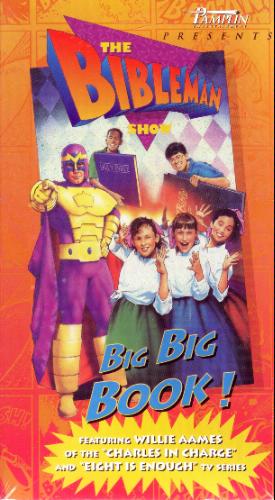
In 1995, the first ever installment of the Bibleman franchise came to be. “Big Big Book” kicked off the short lived initial incarnation of the series, called “The Bibleman Show,” and launched an evangelical quasi-phenomenon.
Willie Aames, who is best known for television shows like “Charles in Charge” and “Eight is Enough,” co-wrote, co-directed, and stars here as Bibleman, and is the person most publicly recognized as being associated with the show.
The character’s creation is credited to Tony Salerno, who also has writing and producing credits on this initial episode. The other two writers on the episode were Milt Schaffer and C. Scott Votaw, the latter of which worked in a variety of capacities on b-movies like “2001 Maniacs,” “Bikini Drive-In,” and Jim Wynorski’s “Dinosaur Island.”
The initial Bibleman costume used in “The Bibleman Show” episodes is pretty laughable, and was clearly constructed on a minimal budget. Compared to the shiny, chrome/plastic uniform that would show up in later episodes, it is amazing to see how far the show and the character came over the course of its run.
“Big Big Book” doesn’t feature any sidekicks for Bibleman, who I assume start showing up in the later series. The villain is a pretty generic evil scientist with green skin, named Dr. Decepto, which is certainly a pattern for Bibleman villains as the show goes on. He isn’t quite as elaborate or offensive as many of the later antagonist, but the performance is plenty hammy enough to be entertaining. He also has a great high-pitched evil laugh, which is always a plus.
The story of “Big Big Book” follows a group of children who are working on a bible-themed musical for their church. The planning isn’t going well, and a number of the kids want to quit, in order to not be embarrassed by a sub-par result. Bibleman shows up at a rehearsal, and tells the kids a story about a previous exploit where he prayed his way out of a hairy situation with Dr. Decepto. The story gives them the confidence to go forward with the show, which theoretically goes off without a hitch. Except, of course, for the fact that it sounds awful, but no one seems to care all that much. They are just happy that they went through with it.
“God’s probably sitting up there thinking: ‘Nice lame-o show, kids.'”
The content of the musical is of course ridiculous, and takes a handful of potshots at science education and evolution. It is pretty much exactly what you would expect from a Bibleman musical, honestly. Some of the kids straight-up cannot sing, which makes parts of it nearly unwatchable. The whole thing is kind of like a worse version of “Kidz Bop” for fake Christian music, if you can imagine such a thing. The musical section also takes up a huge chunk of the episode, which unfortunately (?) doesn’t have a lot of Bibleman in it.
The one fight sequence in “Big Big Book” is a blurry mess, and is almost as hard to watch as the musical. Bibleman notably doesn’t have the laser sword of the later episodes, instead using a traditional sword and shield.
If there is anything positive to say about “Big Big Book,” it is that it actually has some charm to it compared to the later episodes of the seriess, which attempt to be comedic and self-aware. It is still completely awful and beyond cheesy, cut it is at least an honestly made mess.
The theme song is also much different than what I am accustomed to hearing with the later episodes, which drift into a sort of pseudo-rock style. This initial theme song is pretty generic and forgettable, but certainly contributes to the heavy 1990s style of the episode.
Speaking of which, the 1990s bleeds out of every pore of this video. The fashion, the hair, the music, the colors: all of it makes for an astounding flashback. The nostalgia factor of it all is actually pretty amusing, and might make the whole thing worth sitting through for some folks.
As you would expect, “Big Big Book” features awful acting from all involved, and horrendous writing to boot. However, the added ‘benefit’ of the musical is what makes this episode stand out from the pack that I had previously seen. Lots of Bibleman episodes feature a song, but this episode being centered around a children’s church musical makes it so much worse than any of the music offered with other episodes. It is nearly unbearable.
Brad Jones, better known as The Cinema Snob, took a look at this episode on his show “DVD-R Hell.” If you don’t want to stomach actually watching this, his overview hits the key points and highlights with his typical sardonic wit.
This is the first of the initial run of “The Bibleman Show” episodes that I have sat through, and I’m mostly just hoping (praying?) that the rest of these early episodes don’t feature as much cringe-inducing singing.
June 10-17 is Secular Students Week, a week dedicated to the stories and work of the awesome students served by the Secular Student Alliance. The week also marks a big fundraiser for the organization (which I proudly support and work for), with a $20,000 challenge on the line if we can bring in 500 donations (of any size) over the course of the week.
To do my part, I’m going to be resurrecting my (God)Awful Movies segment with a bang: by covering the entire infamous video series of “BibleMan” over the course of the week. Also, I’m pledging to honor any coverage requests for people who donate to the Secular Student Alliance (through my fundraising page) over the course of the week. If you want me to cover your favorite movie, a movie you made, a training video you found on YouTube, a cat video, a movie you think I will hate/love, a horror film about killer rabbits, whatever: I’ll honor whatever you point me to. That doesn’t mean I’ll like it, but I will certainly watch and write about it. Caveat emptor, as they say.
Now, if you aren’t familiar with BibleMan, here is the rundown: it was a long-running home video series that starred an evangelical superhero in a garish armored outfit. Each story followed a vague biblical lesson, and often featured musical numbers, awful special effects, inane plots, and over the top villains. It has achieved a bit of cult status, and has been referenced and parodied in shows like “The Venture Bros.” and films like “Super.”
“BibleMan” initially starred Willie Ames of “Charles in Charge,” who was eventually replaced in the later installments. It managed to spawn a number of touring live performances, a video game, and some licensed merchandise that is still floating around out there somewhere.
One of the things that I enjoyed during my time as a secular student at the University of Alabama was the occasional ironic viewing of “BibleMan.” A lot of people I knew grew up with the costumed crusader, who is a common presence in children’s programming in evangelical churches (which, as you might imagine, are numerous in the area). For many, college is the first time that they could look back and laugh a bit at some aspects of their religious upbringings, and BibleMan always made for a prime therapeutic target.
Of course, it isn’t all funny. Some of the lessons and content in “BibleMan” teach (explicitly or implicitly) xenophobic, anti-semitic, and anti-scientific rhetoric. I have made it a personal policy to buy any copies I find at buy/sell/trade stores (which doesn’t profit the BibleMan folks), in order to do my part to keep them out of the hands of kids.
In any case, the Secular Student Alliance helps build and sustain communities for young atheists, agnostics, humanists, etc. on college and high school campuses across the United States, much like the one that I was in at the University of Alabama. We also, as an organization, strongly support interfaith and progressive cooperation on campuses (LGBT orgs, Feminist groups, etc). If atheism isn’t your bag, that’s all cool by me! We aren’t out to destroy churches or shame the religious: we’re trying to be constructive, by building communities where they didn’t exist previously. I think many religious folks take for granted the advantages and benefits of having a natural community around their faith: it gives them a social network, a meeting spot, and a pool of people you can potentially lean on in times of need. That is the sort of thing we are building for the not-so-religious across the country, in cooperation with organizations like Openly Secular.
Regardless, enjoy the ride through BibleMan over the next week! If you can spare it, toss a couple of bucks to the Secular Student Alliance: it’ll help us (and more importantly, our students) out a ton. If you do, I’ll cover a movie of your choice. Again, here is my campaign page for donations. Just shoot me an email at mail@misantropey.com, and I’ll be sure to do your bad movie bidding.
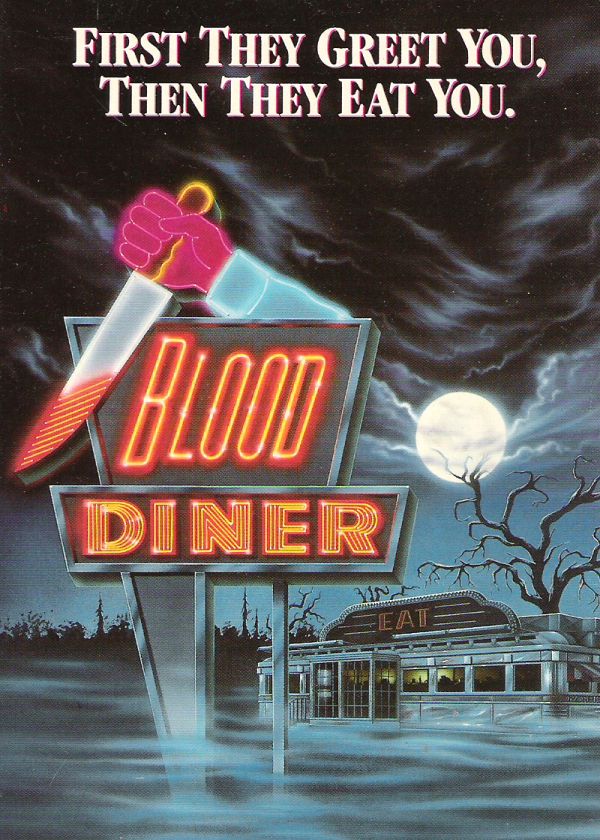
Today’s feature is “Blood Diner,” a peculiar little horror-comedy from the late 1980s that involves cannibalism, blood sacrifice, and veggie burgers.
“Blood Diner” was written by Michael Sonye. Sonye was primarily an actor, appearing in films such as “Surf Nazis Must Die,” but wrote a handful of b-movie screenplays, including “Cold Steel” and “Star Slammer.”
“Blood Diner” was directed and produced by Jackie Kong, who only had a handful of credits in the 1980s. She was also involved in the schlocky films “Night Patrol” and “The Being.”
The cinematography for “Blood Diner” was done by Jurg V. Walther, who has worked on such (not-so) esteemed films as “Daniel Der Zauberer,”“Zombie Nation,” “Joysticks,” and “Hot Dog: The Movie.”
The music for “Blood Diner” was composed by Don Preston, who did the music for most of Jackie Kong’s films, as well as “Eye of the Tiger” and “Android.” He also interestingly provided the synthesizer work for the score to “Apocalypse Now.”
The editor on “Blood Diner” was Thomas Meshelski, who also cut such horror films as “Puppetmaster” and “TerrorVision.”
One of the executive producers for “Blood Diner” was Lawrence Kasanoff, who is best known for producing movies like “Mortal Kombat” and “Class of 1999,” but also infamously directed the animated disaster that is “Foodfight!”
Most of the cast of “Blood Diner” is made up of actors who have appeared in no other films, or at most just a handful of other similarly low-budget horror movies. Usually movies like this seem to have one or two players who eventually found some form of success, but that isn’t the case here.
The story of “Blood Diner” centers around two cannibal brothers who co-own and operate a diner. They plan to resurrect an ancient God with a massive blood sacrifice, under the guidance of their newly resurrected undead uncle. Their preparations (namely the mass killings) attract attention from the police, who race against the clock to foil their plans.
The reception for “Blood Diner” was unsurprisingly negative, though not as poor as one might expect. It currently holds a rating of 5.0 on IMDb, along with a 53% audience score on Rotten Tomatoes.
“Blood Diner” was apparently initially intended as a sequel to Herschell Gordon Lewis’s “Blood Feast,” but the idea was scrapped before filming commenced. However, the plot similarities certainly remain for the sake of homage and parody.
A few parts of “Blood Diner” play for genuine laughs, such as the opening radio interruption warning listeners about an escaped killer in the area. However, most of the comedy feels added in after the fact, like this was meant to be serious horror, but half way through they realized how ridiculous it all was and tried to laugh off their incompetence. The result is a quasi-parody that rides the line between mocking and truly becoming the thing it is trying to make fun of. The humor is also pretty lazy on the whole, like it was concocted on the fly by people who don’t make a living in comedy.
Something else that can’t be ignored about “Blood Diner” is the musical score, which is the deadly combination of being both really terrible and extremely loud. The sound editing is straight horrendous, to the point that the music manages to overpower the outlandish acting on screen at times (or at least that was the case on my copy).
Speaking of which, ‘hammy’ doesn’t even begin to describe the acting in “Blood Diner.” Everyone seems to be over the top in one way or another, like all of the characters are trying to out-weird or act over each other. There is also some god-awful child acting in the introduction sequence that ranks up there with some of the worst that I have ever seen.
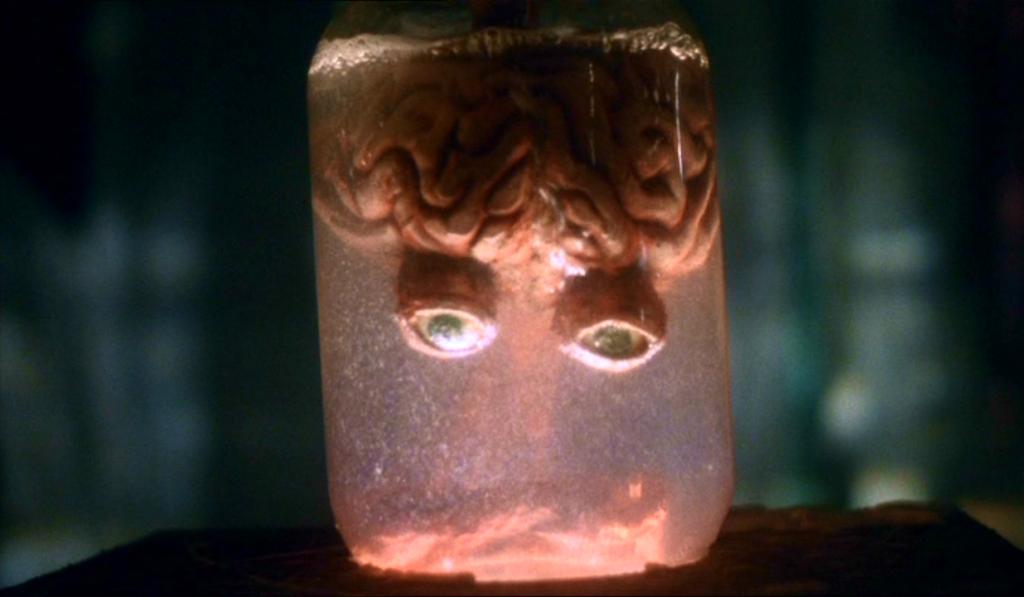
If there is anything positive to say about “Blood Diner,” it is that the cast of characters is certainly colorful, and makes for an odd and surreal world for the story to take place in. One of the key accessory characters, for instance, is a rival diner owner who is also a compulsive ventriloquist. There is also a group of explicitly vegetarian cheerleaders, a Hitler-themed professional wrestler, a talking undead brain, and a popular craze of nude aerobics.
One thing I still don’t understand about the plot is why the brothers pretend that their cannibalistic product is vegetarian, apart from the fact that it seems to be a popular fad in the world of the movie. It just strikes me as a little too easy of a ruse to spot, and they couldn’t possibly keep it up for too long for logistical reasons alone.
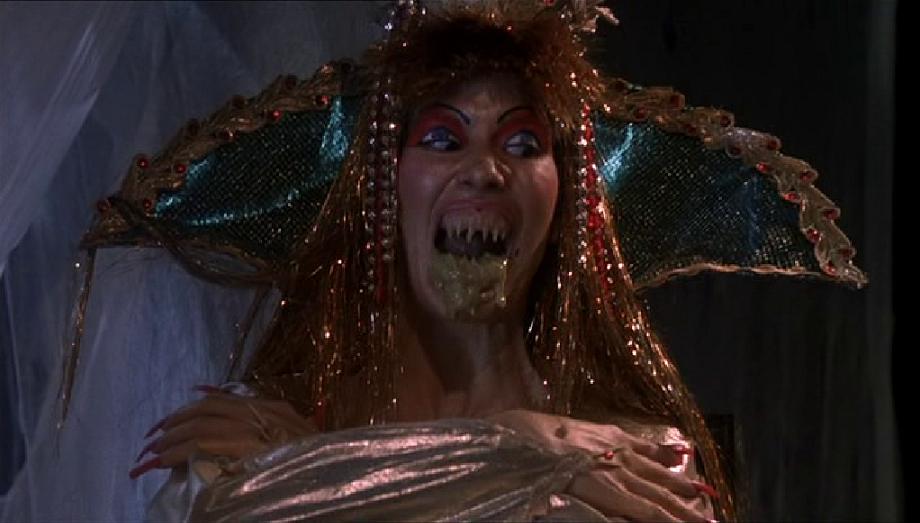
The God-raising ritual itself (the “blood buffet”) is the most bizarre section of the film by far. The Frankenstein-ish patchwork vessel for the deity is genuinely unsettling and bizarre, and the entire sequence plays like an intense fever dream. The nightclub setting is pretty much perfect for the finale, and the awful music is up to 11 throughout the whole sequence. The film is probably worth watching for that alone, because it is a spectacle of awfulness.
Overall, “Blood Diner” is a damn strange movie. As I said before, it rides a line between being parody and an earnestly terrible film, which makes it all the more intriguing to watch. How many of these moments were meant to be funny? Were they meant to be funny in the way that they are funny? The finale sequence alone makes it worth the watch for bad movie lovers, but I’m not totally sure how casual movie goers would react to it. It certainly isn’t dull, and has a lot of gore and ridiculousness to go around, but it also doesn’t quite have the same charm of the bad movie “classics” that everyone loves, which I think is because of the elements of intentional humor within it. If you are looking for a deep cut for a bad movie night, this could make an interesting pick. Better yet, it is entirely available on YouTube.
Today’s feature is the surreal musical “The Singing Detective,” starring Robert Downey Jr. and Mel Gibson.
“The Singing Detective” was initially written as a BBC series by Dennis Potter, who also wrote the screenplay which ultimately led to this movie adaptation. Potter actually did suffer from extreme psoriasis, just like the lead character in “The Singing Detective.” Unfortunately, he died of cancer almost ten years before this film of his work was made.
“The Singing Detective” was directed by Keith Gordon, an actor who has directed a handful of pictures, such as “Mother Night,” “Waking the Dead,” and “A Midnight Clear.”
The cinematographer for “The Singing Detective” was Tom Richmond, who also shot such films as “Chopping Mall,” “Killing Zoe,” “Stand and Deliver,” “Mother Night,” and “House of 1000 Corpses.”
The editor on “The Singing Detective” was Jeff Wishengrad, who had worked with Keith Gordon on “Waking the Dead” and “The Chocolate War,” and also cut the horror film “Sorority House Massacre.”
The significant makeup effects team for “The Singing Detective” was composed of members of Captive Audience Productions, which is best known for doing movies like “The Passion of the Christ,” “Bicentennial Man,” “A Beautiful Mind,” and “Van Helsing.” The team included Anita Brabec (“The Hunger Games,” “Confessions of a Dangerous Mind”), Tom Killeen (“Red Planet,” “Spider Man 3”), Keith VanderLaan (“Son of the Mask,”“Van Helsing,” “Kull The Conqueror”), Greg Cannom (“The Pit and The Pendulum,”“Space Truckers,” “Jingle All The Way,” “Captain America,”“Highlander II,”“It Lives Again”), Corey Czekaj (“The Master of Disguise,” “Avatar”), Mark Nieman (“Foxcatcher,” “Big Momma’s House”), Pam Phillips (“Sideways,” “Bones”), Sam Sainz (“Toys,” “RoboCop 3”), and Patty York (“From Hell,” “Secret Window”).
The visual effects for “The Singing Detective” were provided by WhoDoo EFX, a company which also worked on such films as “Charlie Wilson’s War,” “The Stepford Wives,” and “X2.” The specific credited workers were Helena Packer (“The Last of the Mohicans,” “Tank Girl,” “Twin Peaks”) and Mark Ritcheson (“The Tuxedo,” “Anamorph”).
The special effects team for “The Singing Detective” was made up of Scott Blackwell (“24”), Jeremy Hays (“League of Extraordinary Gentlemen,”“State of Play,” “Tiptoes”), and David Peterson (“8MM,” “The X Files,” “Monkeybone,” “The Adventures of Ford Fairlane”).
The cast for “The Singing Detective” is headed by Robert Downey Jr. (“Iron Man,” “Kiss Kiss, Bang Bang”), Mel Gibson (“Lethal Weapon,” “Signs,” “Braveheart,” “Mad Max”), and Robin Wright (“House of Cards,” “State of Play,” “Unbreakable”), with the accessory players filled out by Adrien Brody (“The Pianist,” “Predators”), Jon Polito (“Miller’s Crossing,” “The Man Who Wasn’t There”), Katie Holmes (“Phone Booth”), Carla Gugino (“Sucker Punch,” “Watchmen”), and Jeremy Northam (“Mimic,” “The Net”).
The story of “The Singing Detective” takes place primarily inside the mind of a troubled, bedridden author with a debilitating skin condition, who increasingly lives inside a hallucination of one of his stories, where he lives as a dashing detective who also sings at a local night club.
Robert Downey, Jr. and Keith Gordon apparently met while they were both filming the Rodney Dangerfield comedy film “Back to School,” in which they both portrayed young characters.
The screenplay for “The Singing Detective” spent years rotating from studio to studio, with directors such as Robert Altman and David Cronenberg at one point or another expressing interest. Rumor has it that Altman was set to cast Dustin Hoffman as the lead, whereas Cronenberg had his eyes set on Al Pacino.
“The Singing Detective” was made on a budget of nearly $8 million, but grossed less than 350,000 in its limited theatrical run, making it a significant financial flop. The reception wasn’t much better: it currently has a 5.6 rating on IMDb, along with Rotten Tomatoes scores of 39% (critics) and 41% (audience).
“The Singing Detective” has a number of similarities to another Keith Gordon movie that I really like: “Mother Night,” adapted from the Kurt Vonnegut novel. Both stories center on an awful but oddly sympathetic protagonist being put through the ringer of life’s harshest struggles. However, “The Singing Detective” doesn’t pull off the same gravity as “Mother Night,” which benefits greatly from being shot starkly and in uniform shadows. Campbell from “Mother Night” is also a little more realistically portrayed as a human in deep pain, and isn’t constantly thrown into surreal hallucinations and manic musical numbers (which is not a fault to be leveled at Downey).
Speaking of which, Robert Downey Jr. is a particular highlight to “The Singing Detective,” and uses his typical sarcastic, frenetic charm to great effect. However, it is also combined with a pained bitterness and instability to create an incisive and paranoid character.
“The Singing Detective” is a little too incoherent to work effectively, but it is also oddly not quite surreal enough, either. I would have been fascinated to have seen Cronenberg’s or Altman’s takes on the story, because I think either of their styles would have fit it fantastically. Altman would have relied on character interactions, whereas Cronenberg could have turned it into something like “Videodrome” with a film noir twist.
This story just isn’t suited for casual moviegoers at all, and the advertising seemed to be done in a way that would trick people into the theater, which is a clear recipe for a disaster reception. The campaign certainly didn’t portray the movie as what it is: a depressing, cynical hallucination. It seemed like the advertising team just saw the title, and tried to sell the movie on that alone. Honestly, who wouldn’t have expected a jukebox musical noir from something called “The Singing Detective?”
Translation from television to film is always a bit tricky, as television shows are typically structured to follow a much longer arc than movie. In this case, the story of “The Singing Detective” specifically doesn’t lend itself well to the act structure of a film (at least for mass audiences). I was reminded a lot of Anthony Hopkins’s “Slipstream,” in that it lost itself in being profound, drifting right off into incoherence, and the slow pacing certainly didn’t do that any favors.
The production of “The Singing Detective” probably should have done new renditions of the songs featured in the film, as the lip syncing just doesn’t come off right, and isn’t particularly consistent either. The old tracks also keep the sequences from being truly distinct or charming, which they really could have been. The writer, Dennis Potter, was apparently adamant that the actors not sing the songs, so the lip syncing was actually specifically written into the script. This brings up another issue, in that the writer (or in this case, his will) may have had too much influence on the production (usually they have almost none), and thus muddled the vision. In any case, I guess what they did here is still better than “Viva Laughlin,” the failed musical television show (which was also adapted from an acclaimed BBC series) in which the actors bizarrely sang over the original tracks. It could always be worse, right?
Mel Gibson, to my shock, is actually pretty good here, and is nearly unrecognizable with the makeup effects. He doesn’t usually step outside of his comfort zone, so this was interesting to see. This was also a few years before he went completely off the rails, while he still had some real talent before sliding into self-parody. Robin Wright is also pretty great, as she always seems to be. She might be one of the most under-appreciated consistent performers in the business, even when in mediocre-to-awful movies.
Overall, “The Singing Detective” is a thoroughly flawed but interesting watch. The performances and direction are good, but the writing seems to be missing something to push it over the edge. Given the resurgence of both Robert Downey Jr. and Robin Wright in recent years, it is interesting to go back to. However, if you are just looking for pre-“Iron Man” RDJ performances, go to “Less Than Zero,” “Kiss Kiss, Bang Bang,” or “True Believer” before this one.
Reviews/Trivia of B-Movies, Bad Movies, and Cult Movies.
![Misan[trope]y](https://misantropey.com/wp-content/uploads/2014/10/misantropeyhead1.png)











 Misan[trope]y