Action Jackson

Action Jackson

actionjackson1

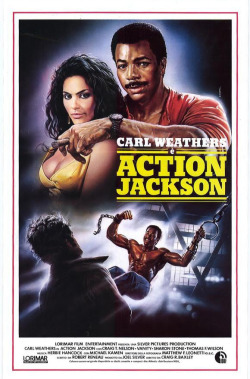
Today’s feature is the 1988 Carl Weathers super-cop movie, Action Jackson.

Action Jackson was written by Robert Reneau, who is best known for writing the screenplay for Demolition Man. The director for the film was Craig R. Baxley, who also helmed the Dolph Lundgren movie Dark Angel (AKA I Come In Peace). However, he is most known for being a veteran stunt coordinator, with a career on such productions as Predator and The Warriors.

The cinematographer for Action Jackson was Matthew F. Leonetti, who also shot the movies Santa’s Slay, The Butterfly Effect, Red Heat, Commando, and The Bat People. The editor for the movie was Mark Helfrich, who has cut films like R.I.P.D., Paul Verhoeven’s Showgirls, and the Cannon movie Revenge of the Ninja.

The producers for Action Jackson were Steve Perry (Speed 2: Cruise Control, Executive Decision, Road House) and Joel Silver (Speed Racer, Dungeons & Dragons, Swordfish, Hudson Hawk, Predator 2, Xanadu).

The musical score for Action Jackson was composed by the team of Michael Kamen (X-Men, Iron Giant, Event Horizon, Last Action Hero, Hudson Hawk, The Dead Zone) and noted jazz-funk pianist Herbie Hancock (Death Wish, ‘Round Midnight).

The team of effects workers on Action Jackson included Andrew Sebok (Memento, The Last Boy Scout, Die Hard, Road House), Jay Bartus (Jingle All The Way, Dark Angel, Seven Psychopaths), Al Di Sarro (Speed 2: Cruise Control, Red Dragon, Predator), James Camomile (Swordfish, Heaven’s Gate), Scott H. Eddo (Judge Dredd, Hudson Hawk, Mystery Men, Saw),

The cast of Action Jackson includes Carl Weathers (Predator, Rocky, Arrested Development), Craig T. Nelson (Poltergeist, Coach), Vanity (Never Too Young To Die, The Last Dragon), Sharon Stone (Casino, Basic Instinct), Thomas Wilson (Back To The Future, April Fool’s Day), Robert Davi (Predator 2, Maniac Cop 2, Maniac Cop 3), and Bill Duke (Predator, Commando).
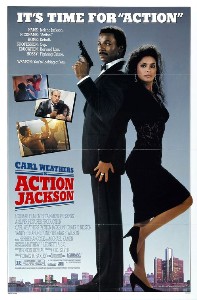
actionjackson2The noted music personality Paula Abdul provided the choreography work for Action Jackson, which released in theaters the same year that her debut album became a hit.

The concept for Action Jackson, a blaxploitation-inspired police action movie with Weathers in the lead, was conceived of on the set of Predator. As a result, the two productions have a number of common elements both in front of and behind the camera.

Vanity wound up receiving a Golden Raspberry Award nomination for her role in Action Jackson, which are given out to the judged worst performances and movies of the year. She ultimately lost out to Liza Minelli for her performances in Rent-A-Cop and Arthur 2: On The Rocks.

The hope was for Action Jackson to mark the first in a series of films, making up a franchise for years to come. Unfortunately, though the movie grossed $20 million domestically on a budget of $7 million, the reviews were overwhelmingly negative: it currently holds Rotten Tomatoes scores of 10% (critics) and 32% (audience), alongside an IMDb rating of 5.1. Adding on top of the complications, the production company and its library/rights were soon sold, making a sequel even more unlikely.

In regards to performances, Carl Weathers was enjoying himself throughout making Action Jackson, and is solid throughout the film likely because of that. I personally didn’t think Vanity was all that bad, particularly when compared with her other acting roles before this. Craig T. Nelson, on the other hand, is absolutely top-of-the-line as the antagonist in this movie.

actionjackson3As you would expect given the director’s history with stunt work, Action Jackson is filled with solid stunts of every variety, culminating in a sports car rampaging through a mansion. The stunts help build the generally fun and exciting tone for the movie, which is careful never to take itself too seriously, but never goes so far as to wink to the camera.

My biggest criticism of Action Jackson is that it seems to drag on just a little too long for what it is, but I think it does a good enough job of staying interesting throughout the run time. Most of the criticisms I have seen have either claimed that it is too boring, or too light-hearted in tone for how violent the content is. For instance, here is a blurb from Roger Ebert’s review:

Rarely have comedy and gruesome violence been combined in such a blithe mixture, as if the violence didn’t really count.

I can perhaps see how a violent action-comedy wouldn’t have flown for many people in 1988, but this is not some excessively violent flick by today’s standards of action comedy. Honestly, the content didn’t really occur to me at all while watching the movie. It isn’t dramatically different from something you would see in an average police-focused television drama nowadays, and I didn’t think it ruined the comedy or vice-versa in any sense. It seems to me that people have warmed to the movie over the years, as it was perhaps a bit ahead of its time in that regard.

When it comes to blaxploitation send-up movies, Black Dynamite is definitely my favorite of the lot, but Action Jackson is a solid, more serious homage to the genre. It isn’t a “good” movie by any means, but I think it is successful in being what it was intended to be. I think it deserves a second look from people nowadays at the very least, because it strikes me as having been written off a bit too hastily.
 

Judge Dredd

Judge Dredd

dredd1

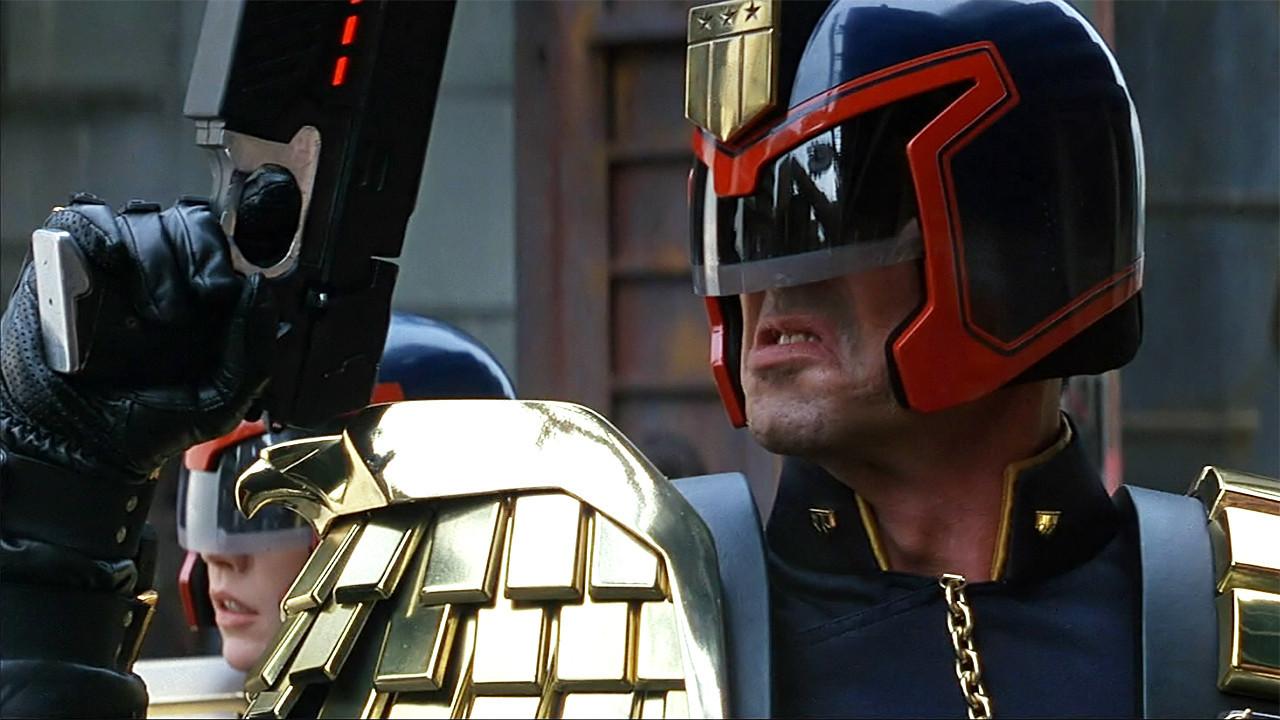
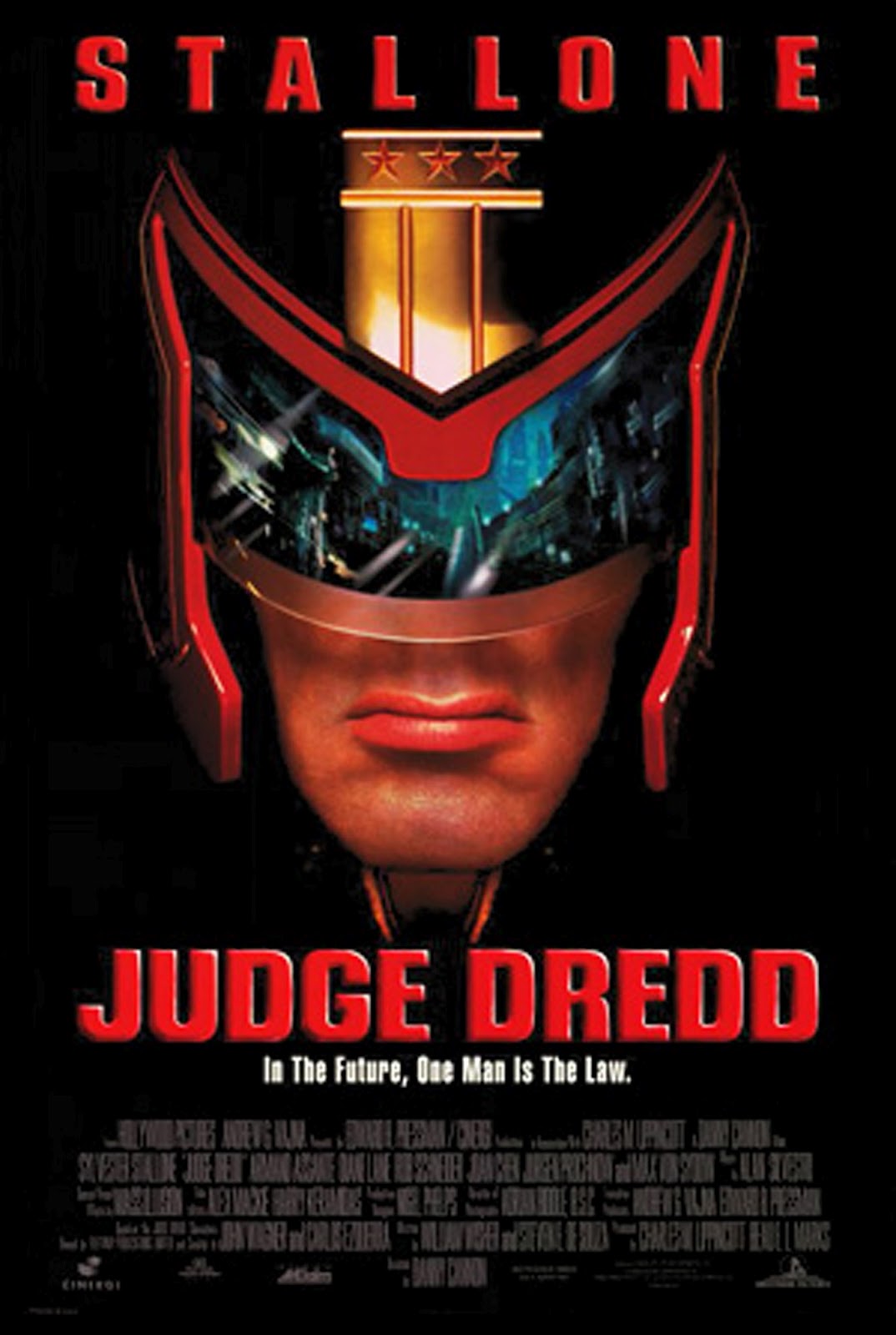
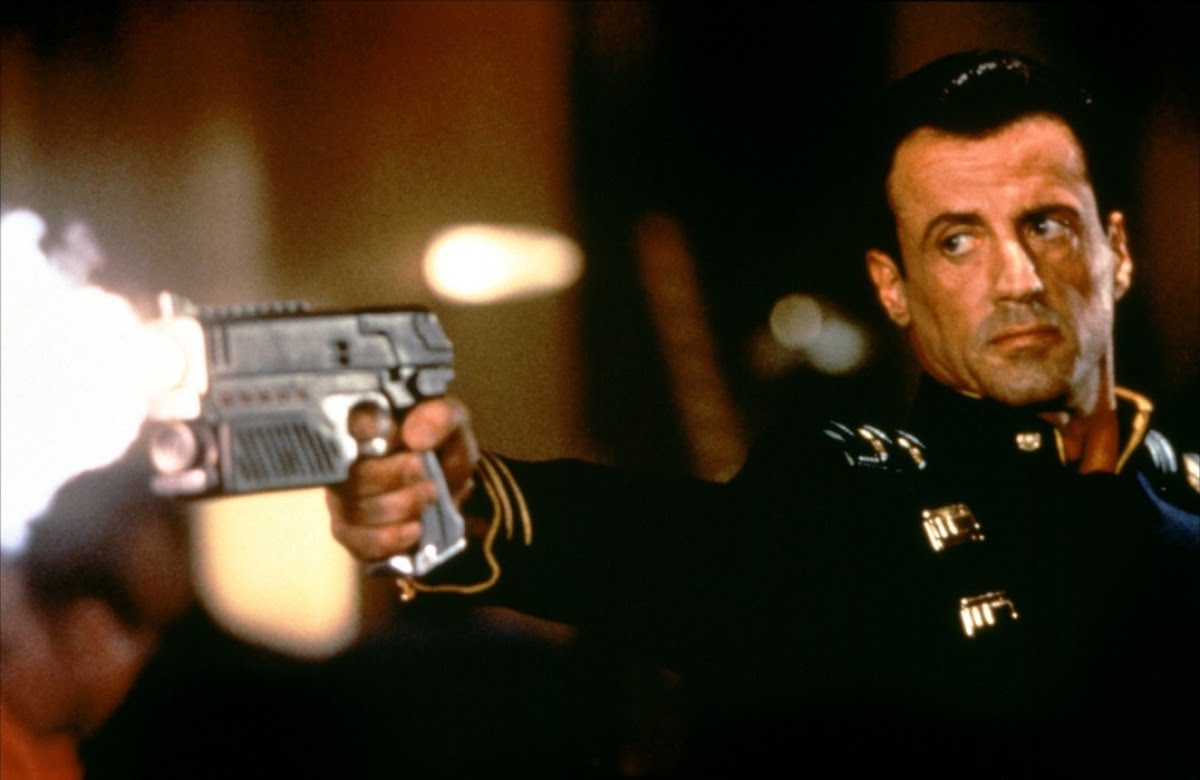
Today’s feature is 1995’s Judge Dredd, starring Sylvester Stallone.

Judge Dredd is an adaptation from a comic series created by John Wagner and Carlos Ezquerra, and is based on a specific plot line conceived of by Michael De Luca (In The Mouth of Madness, Freddy’s Dead: The Final Nightmare) and co-screenwriter William Wisher (Terminator 2, The Terminator, The 13th Warrior).

The screenplay was, as mentioned, co-written by William Wisher in cooperation with Steven de Souza, who is best known for such films as Street Fighter, Die Hard, Hudson Hawk, The Running Man, and Commando.

Judge Dredd was directed by one Danny Cannon, who was also behind the films I Still Know What You Did Last Summer and Phoenix, as well as some extensive on television shows like CSI, Gotham, and Nikita.

The cinematographer for the film was Adrian Biddle, who also shot such movies as Event Horizon, Willow, Aliens, The Princess Bride, and Reign of Fire.

Judge Dredd had two primary editors: Harry Keramidas, best known for cutting Children of the Corn and Back To The Future, and Alex Mackie (The Substitute).

The team of producers for Judge Dredd included Edward R. Pressman (Masters of the Universe, Street Fighter, The Island of Dr. Moreau), Andrew G. Vajna (DeepStar Six, Red Heat, Total Recall), Tony Munafo (Demolition Man, Cobra, Over The Top), and Beau Marks (Son of the Mask, Anaconda, Die Hard).

The musical score for Judge Dredd was composed by Alan Silvestri, who also provided the music for such films as Mac and Me, Predator 2, Stop Or My Mom Will Shoot, Super Mario Bros., Cop & 1/2, Van Helsing, and Back To The Future.

The special effects team for Judge Dredd included, among others, Clive Beard (Event Horizon, The Fifth Element), Paul Clancy (Batman Begins, Skyfall), Steve Cullane (Slipstream, Hudson Hawk), Michael Dawson (Mortal Kombat), Michael Durkan (Event Horizon, Gladiator), Frank Guiney (Hudson Hawk, Lost in Space), Alexander Gunn (Band of Brothers, Stardust), David Hunter (Black Hawk Down, The Mummy Returns), Shaun Rutter (GoldenEye, Hugo), and Brian Warner (Supergirl, Superman III, Die Another Day).

The makeup effects crew for the movie included Paul Catling (Hellraiser), Chris Cunningham (Alien 3, Alien: Resurrection), Nick Dudman (Batman, Legend, Supergirl, Krull), Neill Gorton (Doctor Who, The League of Extraordinary Gentlemen), and Jeni Walker (DeepStar Six, Leonard Part 6, Children of Men).

The Judge Dredd visual effects were provided by the company Mass Illusions, which has worked on films like The Matrix, Event Horizon, Starship Troopers, and What Dreams May Come, among many others.

The cast of Judge Dredd is made up of Sylvester Stallone (Rhinestone, Tango & Cash, Cliffhanger, Cobra, Death Race 2000), Armand Assante (Fatal Instinct, Hoffa), Rob Schneider (The Hot Chick, Deuce Bigalow: Male Gigolo, The Animal), Jürgen Prochnow (The Keep, Dune, The Seventh Sign), Max von Sydow (The Exorcist, Minority Report, Dune), and Diane Lane (Trumbo, Hollywoodland, The Cotton Club).

In 2012, another film adaptation of the Judge Dredd character was made, titled simply Dredd. The film has become a bit of a cult classic, with a dedicated and loyal following.

Apparently, Stallone demanded a number of changes to the Judge Dredd screenplay, mostly to increase the comedy. Cannon, on the other hand, wanted a darker tone for the film more in line with the source material, leading to significant friction on the set. Afterwards, Danny Cannon swore never to work with another Hollywood star. Adding to the friction was the fact that Cannon was a fan of the source material, whereas Stallone wasn’t familiar with the character at all until he was cast, and didn’t give the source any sense of reverence.

One notable change between the film iteration and original comic character of Judge Dredd is the helmet: while the design is faithful, the character in the comics never removes the iconic helmet, whereas Stallone spends most of the film with his face exposed.

dredd5Given the production history of Judge Dredd, there are a lot of alternate casting rumors that have arisen over the years. Reportedly, Joe Pesci was the first choice for Schneider’s role, and Christopher Walken turned down the part of Dredd’s antagonist, Rico. Less surprising in the fact that Arnold Schwarzenegger was considered for the title role of Judge Dredd before Stallone was attached to the project.

Before Danny Cannon was decided upon to helm the picture, the other directors that were approached reportedly included Richard Donner (Lethal Weapon, Superman, Scrooged, The Goonies), Renny Harlin (Cliffhanger, Deep Blue Sea), Richard Stanley (The Island of Doctor Moreau, Hardware, Dust Devil), Peter Hewitt (Bill & Ted’s Bogus Journey), and even the Coen brothers.

Judge Dredd proved to be a significant financial failure: on a budget reported to be as high as $70 million, it only managed to gross $35 million in its total theatrical run. Unfortunately, it was equally as reviled by critics, earning a 18% on the review aggregator Rotten Tomatoes. Audiences weren’t thrilled either, earning it a 30% audience score on Rotten Tomatoes and an IMDb rating of 5.4.

The first and most glaring issue with Judge Dredd is the constant presence of Rob Schneider. Not only is his acting generally bad and the writing for his character not funny, but he doesn’t fit into this film in the slightest. Outside of his presence, the movie has a very serious and violent tone, which he mostly serves to undermine and confuse. According to what I’ve read, Stallone was primarily responsible for Schneider’s role being dramatically expanded, which hits on another big issue with the movie: it was made with two very different visions in mind.

I’m not familiar with the source material that Judge Dredd is pulled from, so I’m not 100% sure what in the movie comes from there and what was written specifically for the movie. Throughout the film, Judge Dredd uses the catchphrase “I knew you’d say that,” which, regardless of whether it came from the comics or not, comes off as clunky and forced on screen (at least in the way that it is delivered).

dredd3Much has been said about Armand Assante’s excessive performance as Rico in this movie. While his character is certainly played with more than a little too much enthusiasm, his scenes are by far the most enjoyable parts of the film. If it weren’t for Assante, this would be a much harder movie to sit through.

dredd4The set design and effects in Judge Dredd actually look pretty good if you ask me. There’s definitely some influence from things like Blade Runner and Brazil, but it still manages to look unique in a way that works pretty well for the movie. Likewise, the costuming on the judges looks sharp.

Judge Dredd isn’t nearly as bad a movie as I had heard, but it has more than a few serious problems. If someone did a cut of the movie with Rob Schneider cut out, I have a feeling that it would be almost half-decent, as the tone issues and writing surrounding his character make up most of the problems with this movie. Stallone, for all of his issues, has the appearance of Dredd nailed down, so it is hard to say that he was bad casting for the film. Likewise, Assante adds massive entertainment value to the picture, so I have trouble picturing a more reserved performance in that role making the movie any better.

Personally, I think this is a movie worth watching for the experience of it. It isn’t super entertaining or fun, but Assante makes it intermittently entertaining, and the movie has managed to seep into the public consciousness enough to justify being familiar with it. Also, it might help people to appreciate the wonder that is 2012’s Dredd all the more.

dredd2

Legion

Legion

legion1

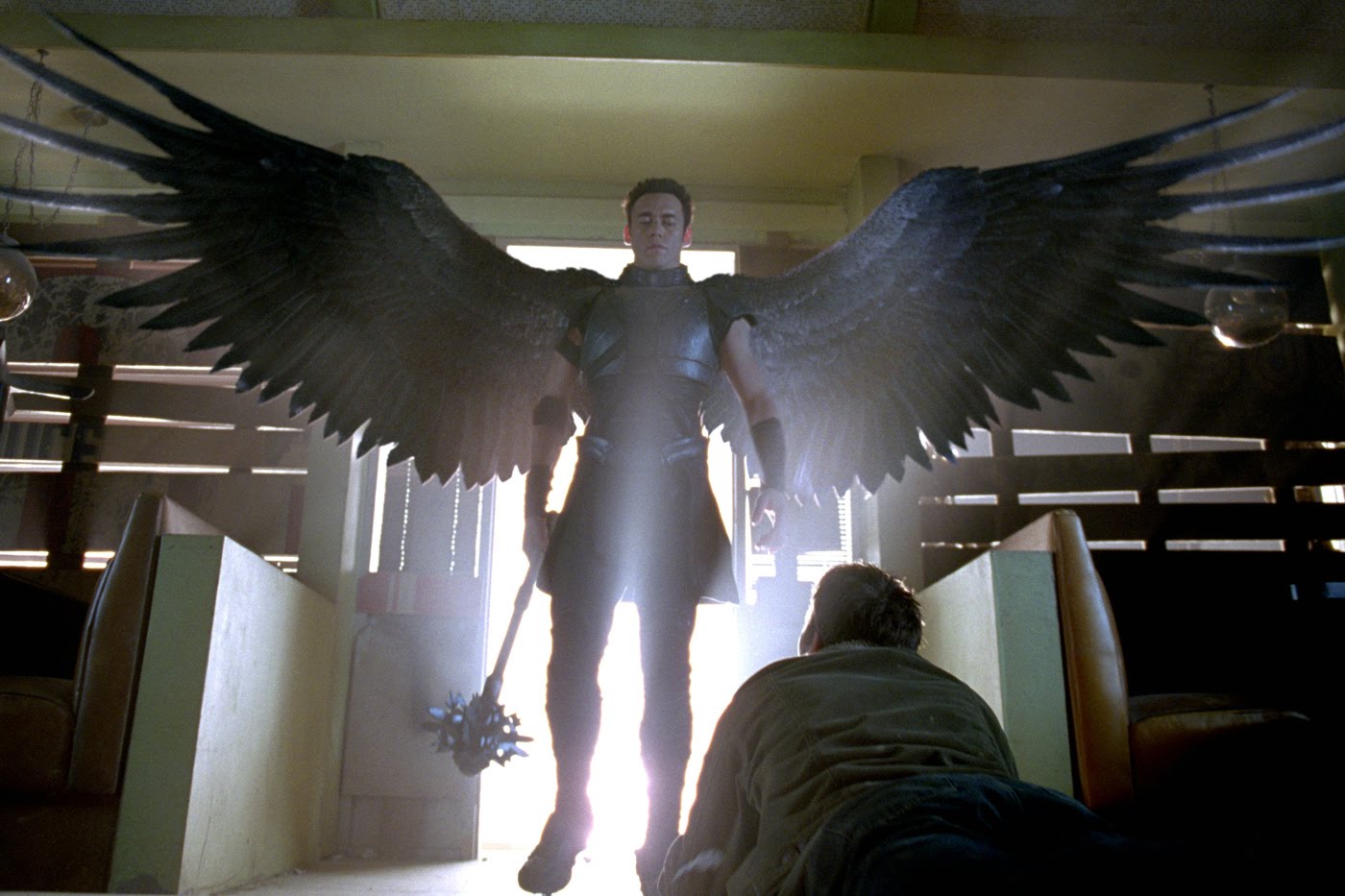
Today’s film is Legion, a 2010 quasi-religious sci-fi horror film starring Paul Bettany.

Legion was directed, produced, and co-written by Scott Stewart, who is best known for Dark Skies and Priest. The other writer on the film was Peter Schink, who has primarily worked as an editor on such movies as Detroit Rock City and Barb Wire.

The cinematographer for Legion was John Lindley, who has shot such various films as Mr. Brooks, The Core, Sneakers, True Believer, Field of Dreams, and The Good Son.

The editor for the film was Steven Kemper, who also cut the movies Timecop, Face/Off, Showdown in Little Tokyo, and 1989’s The Punisher.

The team of producers behind Legion included effects worker Jonathan Rothbart (Blade Runner, Dragonheart, Hellboy), Gary Michael Walters (Nightcrawler, Whiplash, Drive), Marc Sadeghi (The Spirit), Jonathan Oakes (Drive, The Hole), David Lancaster (Dracula 3000, Slipstream), and Michel Litvak (Only God Forgives).

The musical score for the movie was composed by one John Frizzell, who has contributed music for such other features as Ghost Ship, Office Space, and Dante’s Peak.

The group of makeup effects workers on the film included Svetlana Brit (Gamer, The Lone Ranger), Isabel Harkins (Donnie Darko, Striptease), Glenn Hetrick (King of the Ants, Blade II), Jason James (Watchmen, The Cabin in the Woods), Richard Maybery (Seven Psychopaths, Starship Troopers), Veronica McAleer (Priest), Melanie Tooker (Wishmaster, Bubba Ho-Tep), Corey Welk (The Avengers, No Country For Old Men), Steve Winsett (Star Trek Into Darkness), Georgia Allen (Interstellar), and Art Anthony (Manic, Wild Wild West).

legion2The special effects team on Legion included Suma Adams (Spider-Man 3, Sucker Punch), Kevin Carter (Dracula 3000, Hitman, Death Race), Sophia Coronado (TRON: Legacy, The Last Airbender), Tommy Frazier (The Haunting, Stealth, Burlesque), Nicholas Hiegel (Inception, Iron Man), Daniel Holt (Beerfest), Marc Irvin (Congo, The Green Mile), Louis Kiss (Space Truckers, Drive Angry), Margaret Johnson (Hamlet 2, Bottle Rocket), Bob Mano (The Happening, Lake Placid, Small Soldiers), Ian O’Connor (The Fog, Torque), Larry Odien (Space Truckers, From Dusk Till Dawn, Captain America), Brad Palmer (The Hunger Games), and Mike Prawitz (The Avengers).

The massive visual effects crew for Legion was composed (partially) of Melissa Abad (Cowboys & Aliens), Neishaw Ali (John Wick, Pompeii), Joe Bauer (Game of Thrones, Frailty, Double Team), Jeff Campbell (Jason X, The Cell), Ryan Clarke (Man of Steel, Jurassic World), Del DePierro (Noah, The Spirit), Kai Zhang (Watchmen, Pompeii), Steve Wigmore (Saw IV), Antonello Stornelli (Black Swan, Speed Racer), Migs Rustia (The Mist, The Spirit), Jonathan Rothbart (Avatar, Sin City), Rebecca Ramsey (Torque, Wolf, Mortal Kombat), and Fiona McLean (Dragonball: Evolution).

The cast of Legion was made up by such players as Paul Bettany (Creation, Avengers: Age of Ultron), Lucas Black (Jarhead, Sling Blade), Tyrese Gibson (Death Race, 2 Fast 2 Furious), Adrianne Palicki (John Wick, Agents of S.H.I.E.L.D.), Charles Dutton (Mimic, Alien 3), Dennis Quaid (Frequency, Jaws 3-D), Kevin Durand (Winter’s Tale, Smokin Aces), Jon Tenney (The Closer, Green Lantern), Willa Holland (Arrow), and Kate Walsh (Private Practice, Grey’s Anatomy).

legion4The story presented in Legion has been followed up and and somewhat re-imagined in the television series Dominion, which has been running on the Syfy network since 2014.

The estimated budget for Legion was $26 million, on which it grossed just under $68 million in its worldwide theatrical run. In spite of its profitability, the movie was universally panned by critics and audiences: it currently holds an IMDb rating of 5.2, alongside Rotten Tomatoes aggregate scores of 19% (critics) and 31% (audience).

Personally, I really like the premise to Legion. Siege situations like the one featured here can make for pretty fun and tense movies, like Assault on Precinct 13 or Maximum Overdrive. Also, the presence of a quasi-religious Christian pantheon has worked pretty well for the current hit show Supernatural, which was already well into its cable run by the time Legion came along in 2010, not to mention countless other movies like Constantine or The Gate. 

So, the match here would seem to be a perfect fit. But, for some reason that is hard to specifically pinpoint, it just isn’t. Personally, I found the movie to be pretty dull and flat overall, in spite of a decent scenario and premise, and I clearly am not alone in that thinking. The plot winds up following a bit too closely to The Terminator, which makes it seems a little too familiar than it should. That feeling certainly isn’t helped at all by the mediocre writing and acting across the board here, which makes the movie feel and look like an accessory cast in need of a charismatic and dynamic lead (or two).

legion3

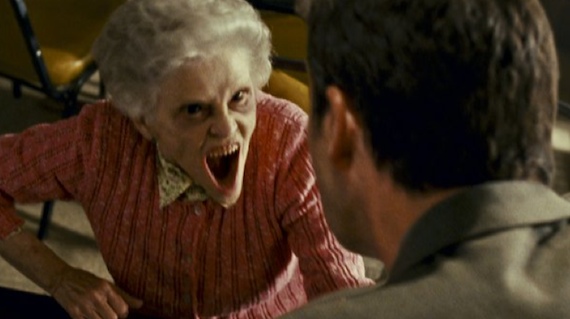
The effects work in Legion is a mixed bag. The practical effects and designs all look genuinely eerie and off-putting, but they are almost ruined at times by some hokey-looking animation that hasn’t aged particularly well, even for just five years down the line.

Overall, Legion is an unfortunately forgettable and mediocre display that never quite lives up to the promise of its premise. There are certainly a handful of highlights, but the film is just a hint too dull to be very enjoyable. I could maybe recommend it as background noise or a time-killer, but not much beyond that.

The Faculty

The Faculty

faculty1

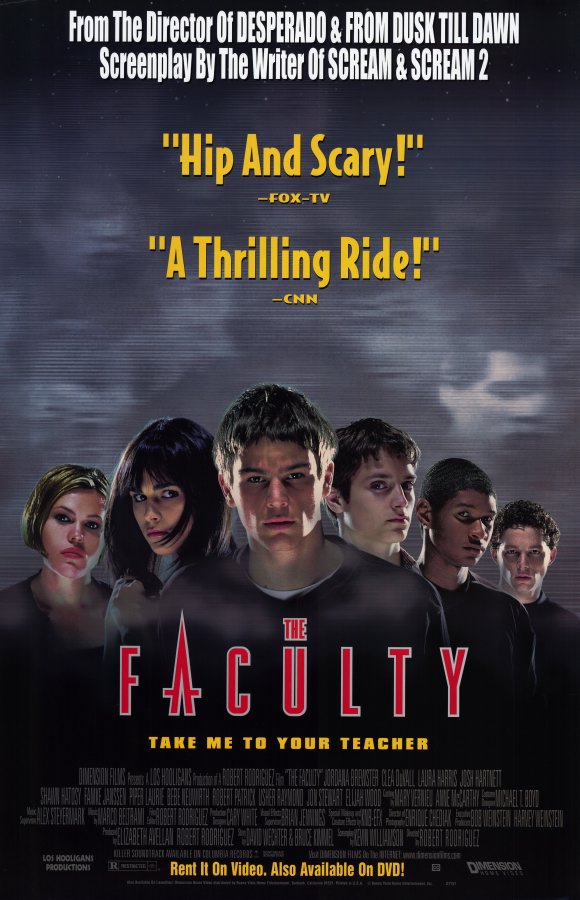
Today’s feature is Robert Rodriguez’s 1998 Sci-Fi / Horror flick, The Faculty.

The screenplay for The Faculty was written by Kevin Williamson, who is best known for his work on the slashers Scream, Scream 2, and I Know What You Did Last Summer. The screenplay based on a story concept that is credited to David Wechter and Bruce Kimmel, who have (among other things) produced the hit television show Penn & Teller: Bullshit!

The Faculty was directed and edited by cult favorite auteur Robert Rodriguez, who has been behind such films as Planet Terror, Machete, Desperado, Spy Kids, From Dusk Till Dawn, Sin City, and the notorious micro-budget classic El Mariachi.

The cinematographer for The Faculty was Enrique Chediak, who also shot the films 127 Hours, 28 Weeks Later, and Repo Men.

faculty2

The musical score for The Faculty was provided by Marco Beltrami, who also provided music for such films as Snowpiercer, The Hurt Locker, Resident Evil, Mimic, and Scream.

The producing team for The Faculty was led by the infamous duo of Harvey and Bob Weinstein, who are best known for helming Miramax and The Weinstein Company, and through them regularly dominating annual awards shows. The Faculty was produced through the Dimension label, which Bob Weinstein ran to specifically focus on profitable horror movies. The rest of the producers included Tamara Smith (Spy Kids), Bill Scott (Predators, Sin City), and Elizabeth Avellan (Sin City, Desperado).

The makeup effects team for The Faculty included Greg Nicotero (From Beyond, DeepStar Six, Pick Me Up, Maniac Cop 3, The Black Cat), Howard Berger (Troll, Maniac Cop 3, 976-EVIL, In The Mouth of Madness), Chris Hanson (S. Darko, Hellboy), Robert Kurtzman (It Follows, Maniac Cop 3, DeepStar Six, From Beyond, Late Phases), Don Malot (From Dusk Till Dawn), Ermahn Ospina (Sin City, Desperado), and Alan Tuskes (The Island of Dr. Moreau, The Cell).

The group of special effects workers on The Faculty was made up in part by Evan Campbell (Dogma, Elves, Spawn), Mike Edmonson (DeepStar Six, Theodore Rex, Wild Wild West, Daredevil), David Heron (Van Helsing, Daredevil, The Core), Scott Kodrik (Mortal Kombat, Batman & Robin), James W. McCormick (RoboCop 2, Sin City), John McLeod (Leonard Part 6, Howard the Duck), Mike Reedy (Wild Wild West, RoboCop 3), Wayne Toth (Wishmaster, Vampire in Brooklyn), and Bill Zahn (Carnosaur, Battlefield Earth).

faculty4

The visual effects crew for The Faculty included such members as Michel Barriere (Pacific Rim, Battlefield Earth), William L. Arance (Superman IV, Bordello of Blood), Louise Bertrand (Mimic, Jurassic World), Ozzie Carmona (Son of the Mask, Van Helsing), Scott Coulter (It’s Alive, Shark Attack 3, The Garbage Pail Kids Movie, The Mangler, Arena), Sean C. Cunningham (Apollo 13, X-Men), John Joyce (The League of Extraordinary Gentlemen, The Core), Tom Lamb (Son of the Mask, Van Helsing), Jeryd Pojawa (The Core, The Abyss), Mark Ross-Sullivan (Mars Attacks, The League of Extraordinary Gentlemen), and Rooster Teeth’s Matt Hullum.

The impressively deep cast of The Faculty included Josh Hartnett (Lucky Number Slevin, Sin City), Elijah Wood (North, The Good Son, Sin City), Jon Stewart (Death To Smoochy), Salma Hayek (Desperado, From Dusk Till Dawn), Clea DuVall (Argo), Jordana Brewster (The Fast & The Furious), Laura Harris (Dead Like Me), Famke Jannsen (X-Men), Piper Laurie (Carrie, Hesher), Christopher McDonald (Happy Gilmore), Bebe Neuwirth (Jumanji), Robert Patrick (The X-Files), and Usher Raymond (In The Mix).

Sarah Michelle Gellar and Charisma Carpenter of Buffy The Vampire Slayer both reportedly turned down roles in The Faculty, as well as Gillian Anderson of The X-FIles.

The production of The Faculty was essentially a Weinstein patchwork creation that was pulled together in the wake of their Dimension mega-hit Scream, in an attempt to catch lightning in a bottle. The initial screenplay had been floating around without any takers for some time, but the Weinsteins decided to pick it up and have Scream‘s Kevin Williamson do rewrites on the dialogue and the characters to punch it up. Rodriguez was, at the time, a trustworthy Miramax-experienced director who looked to have massive potential after 1996’s hit From Dusk Till Dawn.

The Faculty was made on an estimated production budget of $15 million, on which it grossed well over $40 million in its theatrical run. In spite of its decent box office returns, critics and audiences weren’t terribly impressed with the film at the time. The Rotten Tomatoes aggregator currently has the film at 54% approval from critics and 55% approval from audiences, along with an IMDb rating of 6.4.

It is pretty clear to me that audiences and critics at the time found the formula in The Faculty a bit too similar to Scream, but time seems to have allowed people nowadays to appreciate it as a work on its own. Still, it is not nearly as adept of a genre deconstruction as Scream, and the comparisons were (and are) inevitable. The fact that it was very much engineered by the Weinsteins in order to capitalize on Scream almost assuredly contributed to the bitter taste in many people’s mouths. All of that considered, however, the team of Rodriguez and Williamson created something that is genuinely entertaining and fun with The Faculty, even if it wasn’t a genre-redefining masterpiece like Scream.

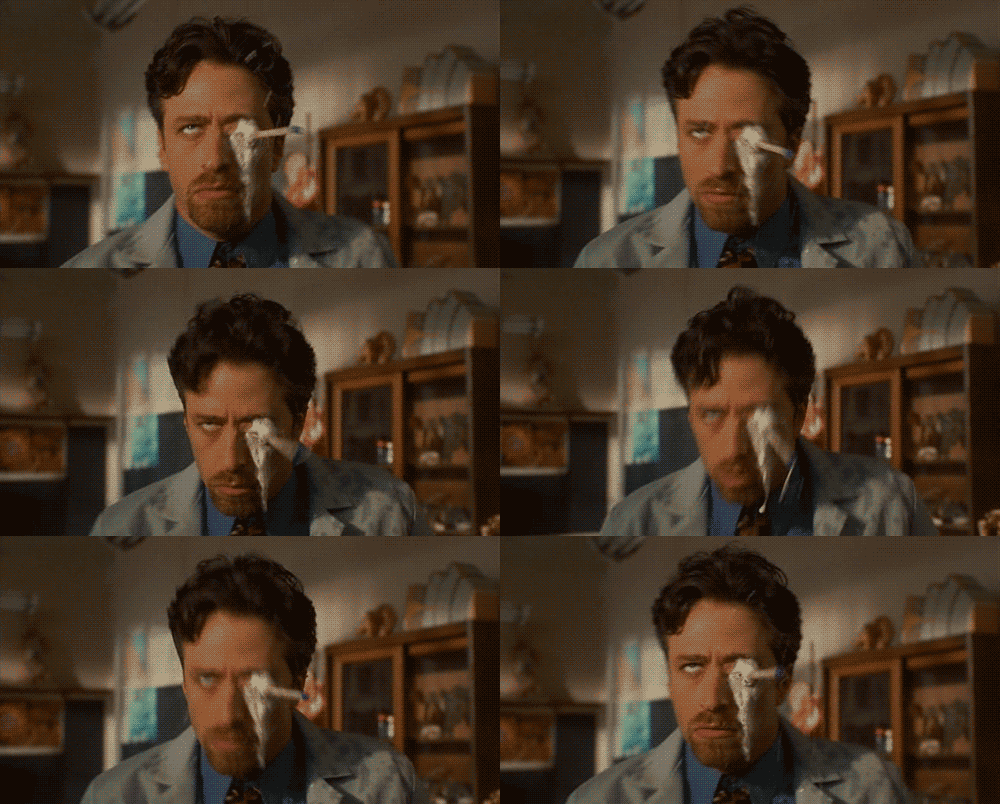
The effects work on The Faculty is a mixed bag when looking back on it nearly two decades down the line. The practical effects, as you would expect, still look pretty good. The visual effects and computerized stuff, on the other hand, don’t look nearly as sharp. That said, for a 1998 movie, they were probably top of the line.

faculty3

One of the biggest things that I noticed going back to The Faculty is the fantastic casting, and how many familiar faces are littered throughout the deep stable of characters. The fact that there isn’t just one obvious star helps build a sense of uncertainty, and drives home the idea that any one of the central party could be a false hero. That said, there are almost unarguably too many characters in the story, which is something that I assume was a result of the Williamson rewrite. While it helps with the general tone and sense of unease, the downside is that all of the characters are forced into shorthand stereotypes for the sake of time.

The Faculty is overall a pretty fun watch, and has benefited from the passage of time to crawl out from beneath Scream‘s shadow. The lack of any sequels serving to tarnish its reputation (like what happened to Scream) has also helped to preserve the flick in many ways. If you haven’t gone back to watch it in a while, it is worth your while for the nostalgia trip alone.

The Fog (2005)

The Fog (2005)

fog20051

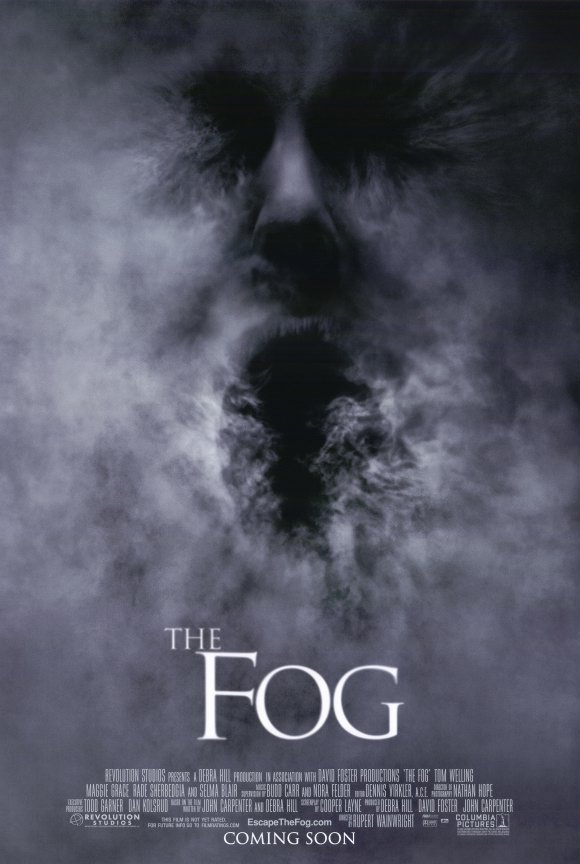
Today’s feature is the 2005 remake of John Carpenter’s 1980 film, The Fog.

The screenplay for The Fog was written by Cooper Layne, based on the original 1980 film penned by John Carpenter and Debra Hill. His only other writing credit at the time was the 2003 flop The Core, which has the distinction of being widely regarded as the most scientifically inaccurate movie ever written.  In the years since, he has not only had no writing credits, but no listed theatrical credits of any kind.

The Fog was directed by Rupert Wainwright, who had previously helmed the movies Blank Check and Stigmata. To date, much like Layne, he hasn’t worked on any other feature-length films.

The cinematographer for The Fog was Nathan Hope, who is known for shooting the horror sequels The Prophecy 3, Hellraiser: Inferno, and Mimic 2.

The film’s editor was Dennis Virkler, who has cut such films as Daredevil, Batman & Robin, Freejack, Under Siege, Xanadu, The Hunt For Red October, and Airplane II, among many others.

The musical score for The Fog was created by Graeme Revell, who has composed music for movies such as Sin City, Daredevil, Red Planet, Suicide Kings, Spawn, From Dusk Til Dawn, Tank Girl, and Street Fighter.

The producing team behind The Fog included the original 1980 creative team of John Carpenter and Debra Hill (Halloween, Escape From New York), Mark Cartier (Beowulf, The Core), Derek Dauchy (Marmaduke, The Master of Disguise, Anger Management), David Foster (The Thing, The Core, Hart’s War, Short Circuit), Todd Garner (Paul Blart: Mall Cop 2, Paul Blart: Mall Cop), and Dan Kolsrud (Mystery, Alaska, L.A. Confidential, Se7en, Falling Down).

The makeup effects team for the film included Jill Bailey (The Score), Rebeccah Delchambre (The A-Team, Fido), Chris Devitt (American Mary, The Wicker Man), Monica Huppert (Marmaduke, Slither), Michelle Lemieux (Slither, The Core), Toby Lindala (Supernatural, Lake Placid), Harlow MacFarlane (Sucker Punch, Mansquito), Shauna Magrath (Bordello of Blood, The 6th Day), Geoff Redknap (The Black Cat, The X-Files), and Toby Lindala (Dreamcatcher, Lake Placid).

The special effects work on the movie was done by a group that included Douglas Beard (Catwoman, Ghost Rider), Bob Comer (Willard, Fringe), Barry Hebein (Alone In The Dark, Slap Shot 3), Dan Keeler (Air Bud), Robert Lyle (Freddy vs. Jason), Eric Milner (House of the Dead), Ian O’Connor (Mystery Men, The Mask, Torque), Terry Sonderhoff (Bordello of Blood, The Good Son), Harry Tomsic (The Grey), and Robert Yeager (Catwoman).

fog20053

The team of visual effects artists on The Fog included Chris Watts (Waterworld, 300, Demolition Man), Colin Strause (Looper, Jonah Hex, Torque), Greg Strause (Volcano, Constantine), Karl Rogovin (300, 2012, Green Lantern), George McCarthy (Avengers, Speed Racer, Lost in Space, Sucker Punch), Scott Michelson (Looper, Torque, Constantine), Adam Lisagor (Kiss Kiss Bang Bang, The Day After Tomorrow), Bill Kunin (Terminator 3), and Jeff Olm (Zodiac, Reign of Fire).

The cast for The Fog included Tom Welling (Smallville), Maggie Grace (Taken), Selma Blair (Hellboy), DeRay Davis (21 Jump Street), and Kenneth Welsh (The Aviator).

fog20052

Debra Hill, who was a co-writer and producer on the original The Fog, died of cancer just before filming began on this remake. She still received a producing credit on the picture, as well as a special thanks and dedication.

Before Tom Welling was ultimately decided on for the lead, a number of young actors were allegedly considered to star in the film. These included Henry Cavill (Man of Steel), Matthew Fox (Lost), Matthew Davis (The Vampire Diaries, S. Darko), Oliver Hudson (Nashville, Black Christmas), Peter Facinelli (Nurse Jackie, Twilight), and Ben McKenzie (Gotham, Southland, The O.C.). In other alternate casting trivia, apparently Fergie of the music group The Black Eyed Peas was at one point attached for a role in the film, but had to back out at the last minute due to a schedule conflict.

The lead character’s name in The Fog, Nick Castle, was taken from the man who played Michael Myers in the original Halloween for John Carpenter, which was his preceding film before 1980’s The Fog.

Reportedly, this remake of The Fog was green-lit by Revolution Studios before Cooper Layne’s screenplay was even finished.

The estimated budget of The Fog was $18 million, on which it managed to gross just over $46 million in its total theatrical run. In spite of it being a profitable movie, critics and audiences absolutely despised it: the film currently holds an IMDb rating of 3.6, alongside Rotten Tomatoes scores of 4% (critics) and 19% (audience). The production clearly anticipated a negative response, as it was not screened for critics before its release.

The first obvious issue with The Fog is the weak casting. Most of the leads were obviously pulled from television shows hot at the moment, rather than cast for their talent. Even worse, the fact that all of the stars were just hot for the moment at the time the film was made has made the movie dated very quickly.
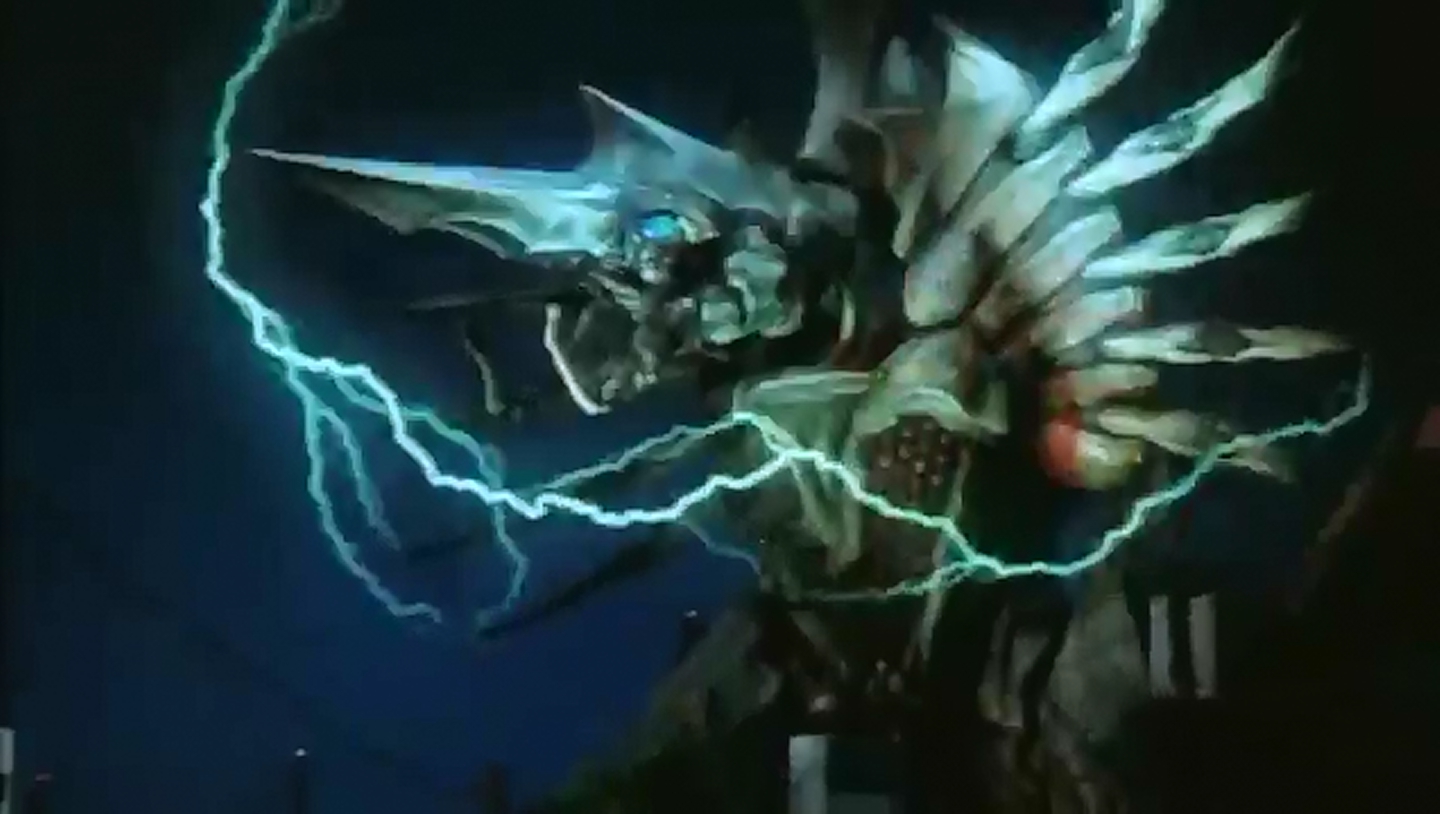
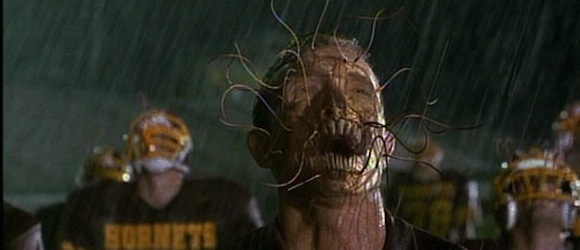
As one review noted, The Fog suffers from one of the same problems as the original, in that “seeing ghosts is less scary than imagining them.” While the fog itself has an eerie effect, once again the figures within it just aren’t quite intimidating enough, and seem like an anticlimax to the build-up of the fog.

One of the major strengths of the original iteration of The Fog was the tense and eerie atmosphere, which was accentuated by John Carpenter’s musical score. Unfortunately, neither element is accurately replicated in this re-imagining, which generally comes off as flat and generic. Instead of something akin to Carpenter’s minimalist synthesizer score, the music is at once too complicated and indistinct, like it could have fit into any horror movie from 2005. Here’s a side by side comparison of the soundtracks of the original and the remake of The Fog:

Personally, one of my biggest issues with The Fog is that it focuses way too much on the backstory of the curse, which struck me as entirely unnecessary, and actually sapped some of the creepy mystique and menace from the threat. Even worse, a lot of the information is revealed to the audience right out of the gate, removing any potential element of mystery from the plot.

The Fog struck me as, above all else, not in the spirit of the original film. At the end of the day, it isn’t so much bad as it is immensely generic and poorly envisioned. There are some good things about it, but they are few and far between, and vastly outweighed by its mediocrity, poor casting, and sub-par writing. There aren’t any redeeming values to it as an entertainingly bad movie unfortunately, so there aren’t any compelling reasons to give it a watch (outside of the morbid curiosity of John Carpenter fans). I recommend just skipping right by this one, though the original is more than worth your time.

Cooties

Cooties

cooties2

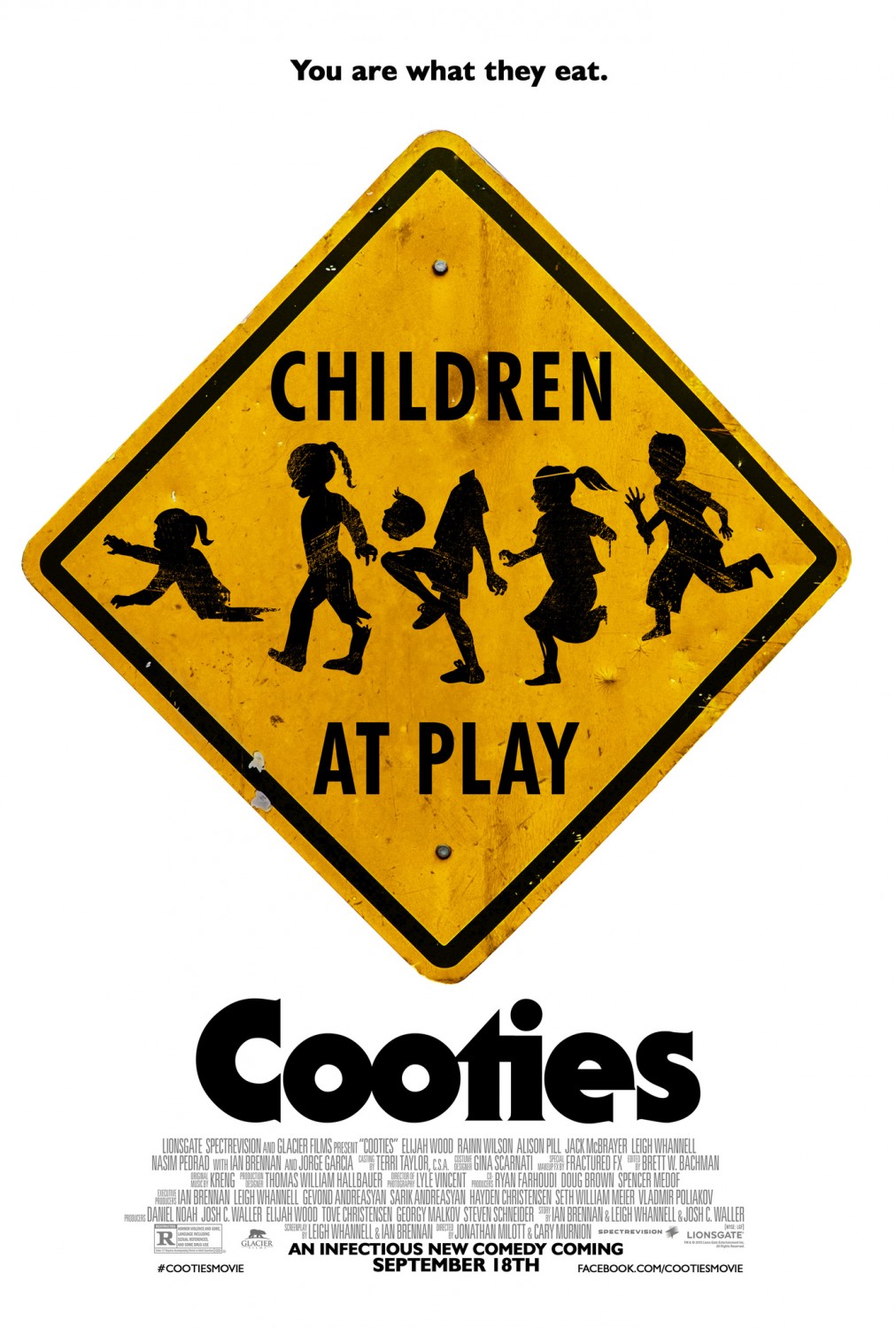
This past weekend, I went to check out the latest horror comedy to hit theaters: Cooties, starring Elijah Wood and Rainn Wilson.

The last few horror-comedies I saw in theaters were big winners with me: Bloodsucking Bastards and Dead Snow 2: Red vs. Dead, specifically. However, Cooties was a much different story. I’m not quite sure yet if I just didn’t like it, or if I honestly hated it. I’ve decided to percolate on that a bit, but in the meantime, here are some thoughts.
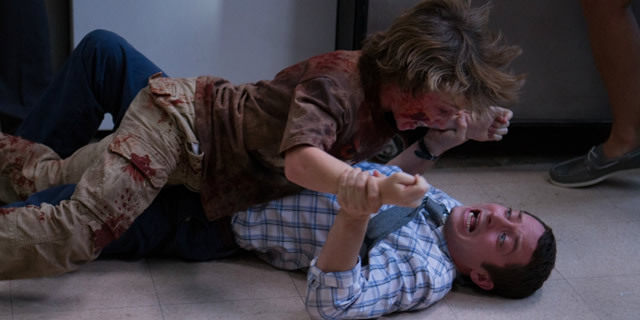
Cooties takes place in a small town elementary school near a massive chicken factory, and follows the outbreak of a chicken-born virus from the factory that turns children into zombie-like cannibals. The elementary school serves as ground zero for the outbreak, leaving a handful of surviving teachers trapped within its confines.

First off, these issues I have aren’t rooted in that premise. Children infected with a zombie-esque virus is great: it brings up some ethical questions about fighting children, allows for some great creepy child-acting, and you get to see some shitty little kids turn into fleshy goo as a bonus. I’m all good on that front; I couldn’t be happier.

cooties3Where this movie absolutely fails is in the writing, in just about every way that writing could realistically fail. To start with, the cast includes a number of lazy stereotypes that couldn’t be less believable as human beings. Let’s start with Hitachi, a Japanese janitor who randomly appears halfway through the movie. He lives in the basement of the school (janitors do that, yeah?), and serves three purposes for the film: 1) to offer a character seaweed to eat, which they decline 2) to offer a fake ancient parable of wisdom before a fight, which is cut off because it is too long (hilarious, right?), and 3) to kill a bunch of child-zombies with well-choreographed martial arts (of course). Is it worth pointing out how lazy the writing for this character is? Honestly, that isn’t so much a character as it is an outline for a racist cartoon.

Other characters in the story include a woman teacher whose only lines refer to guns, conservative politics, or her emergency rape button, and a science teacher with brain damage who doesn’t understand social cues, and has extensive surgical and medical knowledge beyond his education. Although, to their credit, they at least have a few character traits. The surviving children characters who tag along with the gang of teachers are even more vague outlines than that: one of them is “nerd with diabetes,” and the other is “already had her first period.” Both of these descriptions have direct plot relevance, making them more devices than characters when all is said and done. Outside of their respective plot moments, the two children are seldom seen or heard, and barely even have reactions to the violence around them. This might have been a statement about desensitization, but I think the directors just forgot to tell them to do anything.

On to a structural screenplay problem: Cooties is one of those apocalyptic movies that just sort of…ends. I absolutely loathe this practice, going all the way back to The Birds. It always seems like a cop-out to me, because there is rarely a realistic way to “resolve” an Armageddon scenario in a third act. The Birds at least more of less completes a story, though: Cooties honestly feels like it is missing an act. There is no solid conclusion to the story, no statement of where the characters are going, and no tangible goal that has been achieved. There is a brief mention of the magical brain-damaged scientist making a vaccine, but it is never stated how he would be able to do that, or what would be needed to make that happen. The movie just sort of leaves the audience hanging without any resolution.

Instead of having a finale that satisfies the audience and in some way resolves the plot, here’s how Cooties breaks down. About two-thirds of the way through the movie, the teachers manage to escape from the elementary school, and make it out of the town of “Fort Chicken”. The last third of the film sees them trapped in a neighboring town after running out of gas, which they eventually manage to escape over the rolling of the credits.

In short, the story moves from a primary siege scenario into a much shorter secondary siege scenario, and then it just ends. Movies that hinge on this kind of plot need to stay in that initial siege until the conclusion/resolution of the story, or else the tension will completely dissipate. Tension is a thing that has to be carefully built, and it can’t effectively be rushed. Just like with a building, knocking it down is much easier than putting it back up. The fact that this movie ruins the initial siege (and the tension inherent to it) and then tries to set up another one exhibits a massive misunderstanding of how tension fundamentally works. The thing that bothers me most about this is that Leigh Whannell, the co-writer of Cooties, is no rookie. The guy wrote Saw, which is a fantastically tense and intriguing flick, so he knows how this is supposed to work.

It is easy to say that a horror-comedy doesn’t have to follow the same rules as horror, but that just isn’t true. Shaun of the Dead, for example, deals with a very realistic siege scenario, and builds significant tension with it. Horror-comedies need to be both horrors and comedies in order to work, and when that balance tips too far, the movie falls apart. Cooties suffers from this in a big way: it is a comedy with gore effects more than it is a horror-comedy. The film so absolutely fails in building tension and dread that it defies its own purported label (in a bad way).

cooties1Let’s change gears and dig into some of the logic in this movie for a minute. It is explicitly stated at one point (after an improvised autopsy by the magical scientist) that the infected children have very limited brain functions due to the virus turning their grey matter black (what?). However, the infected are shown to still have plenty of higher brain functions throughout the film, specifically when it serves the plot. For instance, one of them consciously cuts off the building’s electricity and destroys all of the cell phones on the property. Another one is shown riding a bicycle, while yet another is shown putting makeup on a corpse. All of these activities (any many more I haven’t mentioned that are shown) require quite a lot of active brainpower, in contradiction to what is stated at the autopsy. On the flip side, at other moments in the story, the children are effectively brain dead, mindlessly eating pills thrown at them or staring blankly into a floor grate, failing to see the obviously visible people underneath it.

The perplexing logic isn’t limited to the virus, either. It is revealed at one point that Elijah Wood’s character quit his job as a teacher in New York City to move back to his home of Fort Chicken (a place that he hates) to live with his mom and be a substitute teacher, specifically because he “missed” someone he hadn’t spoken to in roughly 15 years. The story tries to skirt around how obviously creepy this is, but it never really starts making sense. There is never any other reason given for him moving back to Fort Chicken, other than to pretend that he is working on his novel (which he was already doing in New York). He mentions being depressed, but that background is never delved into or brought back up.

I wish this all was the extent of the issues I have with this movie, but there is plenty more I could get into. For instance, there is a half-assed sequence where the movie explicitly chickens out of a baby death, almost certainly the result of bowing to external pressures. There is also the fact that no actual characters die throughout the movie, in spite of how little that makes sense. There are also more lazy moments of comedy than I care to count, including a Lord of the Rings reference leveled at Elijah Wood, a litany of bad hallucination jokes barely fit for an Evil Bong movie, and Rainn Wilson’s character beating the dead horse of his cookie-cutter gym teacher trope until it is little more than a horse-skin flesh sack.

cooties5All of that said, there are some things I liked about this movie. The effects generally look good, the child actors could have been far worse, and there are some genuine moments of humor scattered throughout. Personally, I laughed out loud when Elijah Wood revealed that the name of his in-progress novel about a possessed boat was titled “Keel Them All.” There is also an easily-loathable antagonist in the story: Patriot, a kid born on 9/11 who believes he was sent by God to join the marines and kill a bunch of “towelheads.” You just can’t help but hate this entitled little shit, who spends his time brazenly bullying classmates and threatening teachers (before he ever becomes inclined to eat them).

Overall, Cooties is disappointing above all else. I was initially excited because of the casting and the retro-style poster, and hoped for an interestingly-constructed throwback horror comedy. The movie is weighed down by lazy jokes, aggravating stereotyping, and a bad structure, and winds up being funny in spite of itself only some of the time. Despite how much I dislike this movie, I wouldn’t tell horror and horror-comedy fans to specifically avoid it. I think it actually serves as an interesting counterexample to more effective horror-comedies like Shaun of the Dead, and it sounds like it does have some fans out there. If you just want a gore movie, this will provide that for you, but I try to have higher standards and expectations from the genre. Anybody can throw a bucket of blood at you, only some can make you feel fear at the same time, and even fewer still can make you laugh in the middle of it all.

The Fog (1980)

The Fog (1980)

fog2

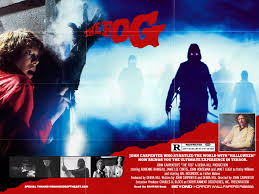
Today’s feature is one of John Carpenter’s many cult classic films: 1980’s The Fog.

The Fog was co-written, directed, and scored by horror master John Carpenter as his follow-up to the smash hit Halloween, and was  co-written and produced by his frequent collaborator Debra Hill.

The cinematographer for the film was Dean Cundey, and accomplished shooter who has worked on such movies as Jurassic Park, Garfield, Flubber, Apollo 13, Hook, Road House, Back To The Future, Big Trouble In Little China, Halloween, Escape From New York, and many more.

The Fog featured work by two credited editors: production designer Tommy Lee Wallace (Halloween, It, Fright Night 2) and Charles Bornstein (Halloween, Critters 2, Howling 2, Return of the Living Dead 2).

The distinctive musical score for The Fog was provided by director John Carpenter, something he often did for films he was involved with.

The team of producers for the movie included co-writer Debra Hill, Pegi Brotman (The Philadelphia Experiment), and Barry Bernardi (The Punisher, Christine, Paul Blart: Mall Cop, Pixels, The Devil’s Advocate, Click).

The special effects team for The Fog included Rob Bottin (The Thing, Fight Club, RoboCop, Legend, Piranha, RoboCop 3), Edward Ternes (Clue, Wonder Woman), Erica Ueland (Children of the Corn, Halloween), Richard Albain Jr. (Assault on Precinct 13, Malcolm in the Middle), and James Liles (1941, Logan’s Run).

fog3

The cast for The Fog included Tom Atkins (Maniac Cop, Halloween III, Creepshow), Jamie Lee Curtis (Halloween, Prom Night, Trading Places), Janet Leigh (Psycho, Touch of Evil, The Manchurian Candidate, Night of the Lepus), Adrienne Barbeau (Creepshow, Swamp Thing, Escape From New York), John Houseman (Rollerball, The Paper Chase), and Hal Holbrook (Capricorn One, Creepshow, Wall Street).

The Fog notably featured the mother and daughter acting combo of Janet Leigh and Jamie Lee Curtis, who have both had highly acclaimed acting careers. However, they only appeared in one other movie together: Halloween H20.

Special effects worker Rob Bottin plays the role of Blake, the lead ghost, in The Fog. He wound up being cast specifically because of his size after he expressed interest in taking an on-screen role in a John Carpenter movie. He would later famously head the effects team for John Carpenter’s memorable take on The Thing.

Director and co-writer John Carpenter was married to lead actress Adrienne Barbeau at the time The Fog was filmed, and the lead role was apparently written specifically for her from the outset. They divorced only a few years after the film’s release, in 1984.

In order the achieve the desired, surreal effect for the fog retreat sequences in the movie, the film had to be run backwards. This means that Adrienne Barbeau had to act in reverse for these sequences, a notable feat.

Reportedly, horror legend Christopher Lee was initially intended for Hal Holbrook’s character, but had a scheduling conflict that prevented him from taking it up.

fog1

The Fog received a 2005 remake directed by Rupert Wainwright, but it was very poorly received by audiences and critics alike. Ultimately, it racked up an astonishing 4% critics score on Rotten Tomatoes, along with an abysmal 3.6 rating on IMDb.

The Fog had a reported budget of just $1 million, and in total grossed over $21 million domestically in its theatrical run, making the movie significantly profitable.

While The Fog was not nearly as profitable or well loved by audiences or critics as Halloween, it is certainly a cult favorite for many. Currently, it holds a 6.8 rating on IMDb, along with Rotten Tomatoes scores of 69% from critics and 63% from audiences.

First and foremost, The Fog has an excellently constructed, creepy atmosphere, which is effectively emphasized by Carpenter’s eerie score. Personally, I think that the music is an improvement on Carpenter’s previous work on Halloween, though that is a point that is certainly up for debate.

With the ghostly sequences, Carpenter makes very interesting use of light in conjunction with the eponymous fog, creating a lot of back-lighting, imposing shadows, and halo effects over the monsters. The obscured vision also keeps the tension high, as both the audience and the characters are never quite sure where in the fog the monsters are.

In his review, Roger Ebert pointed out a significant issue with The Fog: that “it needs a better villain”.

The problem is with the fog. It must have seemed like an inspired idea to make a horror movie in which clouds of fog would be the menace, but the idea just doesn’t work out in “The Fog,” …The movie’s made with style and energy, but it needs a better villain.

In general, I agree with this overall sentiment. Horror movies are almost always defined by the threat, and while the image of “The Fog” itself is menacing, the figures within it just aren’t quite scary or imposing enough. The fog effects certainly allow for a lot of horror ambiance, but it doesn’t feel to me like it ever really pays off.  The story is a bit too slowly paced to begin with, which certainly doesn’t help with the lack of viewer satisfaction, particularly in the minds of 1980 theater audiences expecting to see another Halloween.

Overall, The Fog is a solid atmospheric horror movie that has been perhaps unjustly buried in John Carpenter’s body of work. It may not be his best film (or even one of his best films), but it is fantastic on its own, assuming you can divorce it from the reputations of its predecessors and descendants in the Carpenter filmography. If you dig horror movies, you certainly owe it to yourself to give it a watch.

Death To Smoochy

Death To Smoochy

DeathToSmoochy1

Today’s feature is Danny DeVito’s twisted depiction of the cracked world of children’s entertainment: Death to Smoochy.

Death to Smoochy was written by Adam Resnick, who is best known for the movie Cabin Boy and his extensive writing work on The Late Show with David Letterman, The Larry Sanders Show, and Saturday Night Live.

Death to Smoochy was directed by noted actor Danny DeVito, who was also behind such films as War of the Roses, Matilda, Hoffa, and Throw Momma From The Train.

The cinematographer for the movie was Anastas Michos, who also shot Keeping the Faith and The Big Kahuna, and worked as a camera operator on such films as Quiz Show, Lean on Me, and Born on the Fourth of July.

The editor on Death to Smoochy was Jon Poll, who is known for cutting films like Captain America, Monkeybone, Cabin Boy, Meet the Parents, and Mystery, Alaska.

The team of producers behind the film included Andrew Lazar (American Sniper, Jonah Hex, Confessions of A Dangerous Mind), Peter Macgregor-Scott (The Jerk, Revenge of the Nerds, Batman & Robin, Under Siege), Doug Davison (The Grudge, The Departed), John Kreidman (Watchmen, The Smurfs 2, Zookeeper), and Joshua Levinson (Matilda, Jonah Hex, Gattaca).

The musical score for Death to Smoochy was composed by David Newman, who also scored such films as Galaxy Quest, The Mighty Ducks, Jingle All The Way, Ice Age, Tommy Boy, Norbit, The Spirit, Serenity, Heathers, War of the Roses, and Matilda, among many others.

The visual effects team for the movie was composed of Lincoln Kupchak (Red Planet, Blood Diamond), John Mesa (Army of Darkness, Darkman), Penny Mesa (Deep Blue Sea, Red Planet), William Mesa (976-EVIL, The Italian Job), Dan Novy (24, The Guardian), Jeffrey A. Okun (Suburban Commando, Shocker, Die Hard 2, Sphere), L. Elizabeth Powers (Son of the Mask, League of Extraordinary Gentlemen, Daredevil), Liz Radley (Collateral, On Deadly Ground, Batman & Robin), Ken Stranahan (Red Planet, Deep Blue Sea, Son of the Mask), James Tittle (Suspect Zero, Red Eye, Dreamcatcher, Gigli, Stealth), and Jeffrey White (Holes, Red Planet).

deathtosmoochy5

The special effects unit for Death to Smoochy included such names as Taku Dazai (Slither, Dracula 2000), Aaron Dinsmore (The Incredible Hulk, Dracula 2000), Walter Klassen (Jason X), David Kleinstein (Frequency, Boardwalk Empire), David Loveday (Blues Brothers 2000, X-Men, Lucky Number Slevin, 300), Jim McGillivary (Pompeii, Silent Hill), Laird McMurray (Crimson Peak, Pixels, Pacific Rim, Stuck, The Dead Zone), Jim Peacock (Saw V, Tommy Boy), John Poulter (Secret Window, Taking Lives, Stuck), David Reaume (Glitter, Chicago, Silent Hill, Kick-Ass, Devil), John Stifanich (The Substitute 2, Signs, Boardwalk Empire), and Stephen Wallace (Scott Pilgrim vs. The World).

The makeup effects team for the film included Marlene Aarons (Repo Men, Max Payne), Tim Mogg (Glitter, Death Wish V), Ve Neill (Ed Wood, Beetlejuice, Laserblast, Kingdom of the Spiders), Pipsan Ayotte (Pacific Rim, The Love Guru), and Selena Evans-Miller (Major Payne, Matinee, The Waterboy).

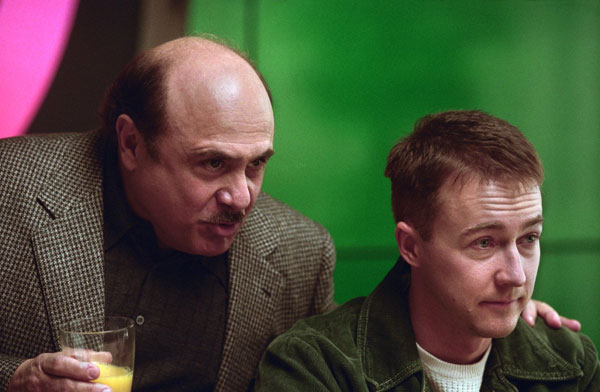
The deep cast of Death to Smoochy was made up of Robin Williams (Insomnia, Patch Adams, Good Will Hunting, Dead Poets Society, One Hour Photo, The Birdcage, The Fisher King), Edward Norton (Fight Club, Primal Fear, The Illusionist, Rounders, Red Dragon), Danny DeVito (Batman Returns, One Flew Over The Cuckoo’s Nest, L.A. Confidential, It’s Always Sunny In Philadelphia, Twins), Jon Stewart (The Faculty, The Daily Show), Pam Ferris (Matilda, Children of Men, The Raven), Catherine Keener (Being John Malkovich, Capote, Hamlet 2, The Soloist, Captain Phillips), and Harvey Fierstein (Independence Day), among others.

Reportedly, Jim Carrey turned down a role in Death To Smoochy in order to make the film The Majestic, which released in 2001.

Robin Williams earned a Golden Raspberry nomination for worst actor for his role of Rainbow Randolph in Death To Smoochy, but wound up losing out to Hayden Christensen’s Anakin Skywalker from Attack of the Clones.

deathtosmoochy3

The budget for Death To Smoochy was reportedly $50 million, of which it made back less than $8.5 million theatrically. Needless to say, it was a massive financial flop.

At the time of its release, critics were really tough on the twisted dark comedy, earning it aggregate scores of 38% from MetaCritic and 42% from Rotten Tomatoes. In particular, Roger Ebert gave the movie a scathing review, which opened as follows:

“Only enormously talented people could have made “Death to Smoochy.” Those with lesser gifts would have lacked the nerve to make a film so bad, so miscalculated, so lacking any connection with any possible audience. To make a film this awful, you have to have enormous ambition and confidence, and dream big dreams.”

That said, public perception towards the movie has softened over time, and it currently holds an IMDb rating of 6.4 alongside a Rotten Tomatoes audience score of 66%.

deathtosmoochy4

I personally have fond memories of watching this movie on the cable channel Comedy Central, where it played in numerous blocks over the years. This heavy replay time almost certainly helped win over much of its current cult following.

Another reason for the movie’s cult popularity is similarly tied to Comedy Central: the massive rise in popularity of Jon Stewart, who was only a couple of years into his run at The Daily Show when the film released. Throughout the show’s run, he would often reference his involvement with the movie as an example of his acting (in)experience, exposing it to new people with each passing mention.

Most of the criticism leveled against Death to Smoochy at the time of its release focused on its cynical and allegedly “mean-spirited” screenplay. Personally, I’ve never quite understood those complaints: the story is darkly comedic, but it isn’t “mean-spirited” towards any particular characters, outside of the deserving corporate flunkies and would-be murderers.

My biggest issue with the film, if you can call it that, is with the acting. Both Norton and Williams are beyond over-the-top in their portrayals, to the point that they both seem like caricatures more than humans, like the yin and yang of overacting. That said, the lack of identifiable humanity and excess of cheesy showmanship displayed oddly fits both of their characters well. As children’s entertainers, of course they would be off-putting, eccentric, and clown-like. I have to assume, because of the immense talent on all sides of the camera here, that this is what the team had in mind for the characters, and that they were portrayed as intended. Regardless, both men come off as difficult to relate to, which I imagine didn’t help the movie with general audiences.

The first thing I noticed upon re-watching Death to Smoochy is how deliberately shot and colorful it is: every sequence is meticulously planned for blocking and color, certainly more-so than you would expect from a comedic film like this. Part of this was undoubtedly DeVito’s vision for the film, but the commentary included on the DVD reveals that cinematographer Anastas Michos had more than a little bit of influence on each individual shot.

deathtosmoochy2

Overall, this was niche movie made with a mass appeal budget. In general, dark comedies won’t fly with the movie-going masses, which was an error with the very inception of the picture. That said, the people with whom the movie resonates absolutely delight in it, and time has certainly shown favorably on the film, making it a bit of a cult classic.

If you like dark comedies or enjoy Danny DeVito’s other directorial efforts, then this is a must-see flick. The humor is very dark, which turned many away from it, but if you go in knowing what to expect, then you are far more likely to enjoy it for what it is.

Gamera 3: Revenge of Iris

Gamera 3: Revenge of Iris

gamerairis1

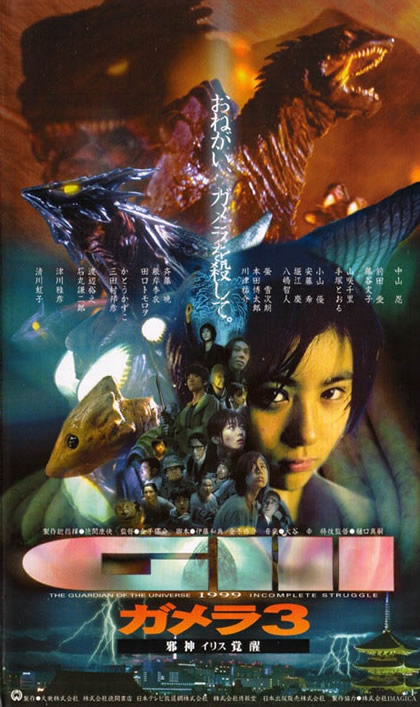
Today’s feature is the concluding entry into the Heisei era Gamera Trilogy: 1999’s Gamera 3: Revenge of Iris.

Gamera 3: Revenge of Iris was once again written by Kazunori Itô, who also penned the previous two movies (Gamera: Guardian of the Universe and Gamera 2: Attack of Legion) as well as the movie adaptation of Ghost in the Shell and .hack//SIGN.

The director for Gamera 3 was Shûsuke Kaneko, who also helmed the Death Note movie and Toho’s Godzilla, Mothra, King Ghidorah: All Out Attack. This was his last work in the Gamera franchise after directing Gamera: Guardian of the Universe and Gamera 2: Attack of Legion.

The cinematographer, Junichi Tozawa, likewise returned from Gamera: Guardian of the Universe and Gamera 2: Attack of Legion.

The editor for Gamera 3 was a newcomer to the franchise: Isao Tomita, who also cut Godzilla, Mothra, King Ghidorah: Giant Monsters All-Out Attack.

The producing team for Gamera 3 included Naoki Sato (Gamera 2, One Missed Call, Three…Extremes), Yasuyoshi Tokuma (Spirited Away, Princess Mononoke), and Tsutomu Tsuchikawa (Dead or Alive, The City of Lost Souls).

The effects team for Gamera 3 included Makoto Kamiya (Godzilla vs. Biollante), Rikiya So (Godzilla: Final Wars), Shinji Higuchi (Gamera 2, Gamera, Attack on Titan), Mahiro Maeda (Blue Submarine No. 6, Mad Max: Fury Road, Porco Rosso, Gamera).

gamerairis2There has been one more Gamera movie created following the release of Revenge of Iris, though it is not regarded as part of the Heisei era trilogy: 2006’s Gamera The Brave. There are currently rumors that a new Gamera movie is being produced in the wake of the success of the American Godzilla, though specific details are sketchy.

Gamera 3: Revenge of Iris was very well received among fans, and some regard it as the greatest non-Godzilla kaiju movie ever made. It currently holds a 7.4 rating on IMDb, alongside an impressive 91% audience score on Rotten Tomatoes.

A background aspect of the plot in Revenge of Iris is the return of a number of Gyaos, which were the principle adversaries in Guardian of the Universe. Iris, Gamera’s mysterious new adversary, is alluded to be a mutated subspecies of Gyaos, and retains some of the monster’s physical characteristics. The Showa era also brought back Gyaos occasionally to show how much stronger the new foes were in comparison to past threats, but their purpose in this movie is much different. Instead of acting as a display of how powerful the new enemy is, they exist to pose something of an ethical question: are the Gyaos or Gamera the greater threat in the grand scheme of things? If only one can be dealt with, which should be the priority to defeat?

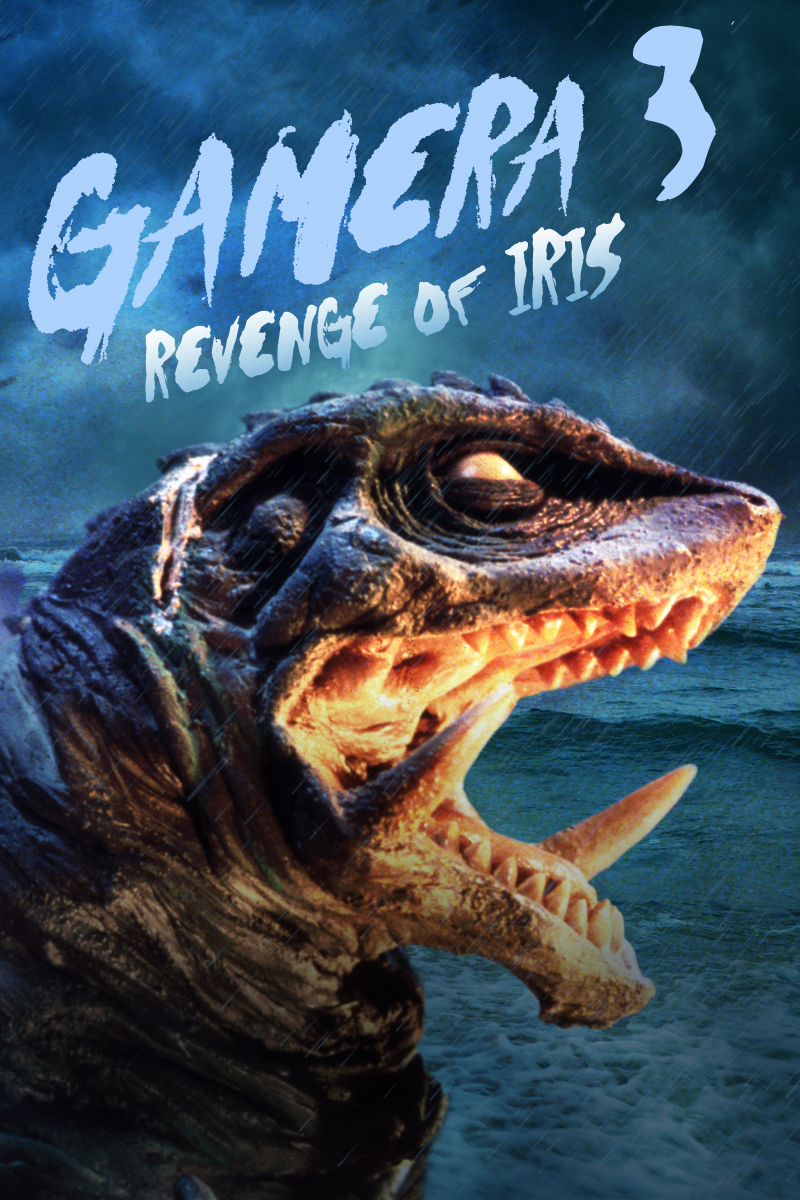
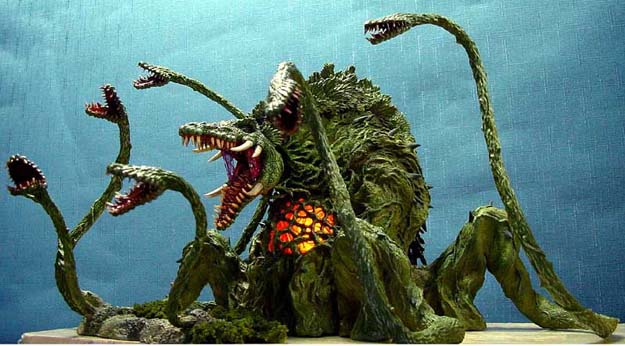
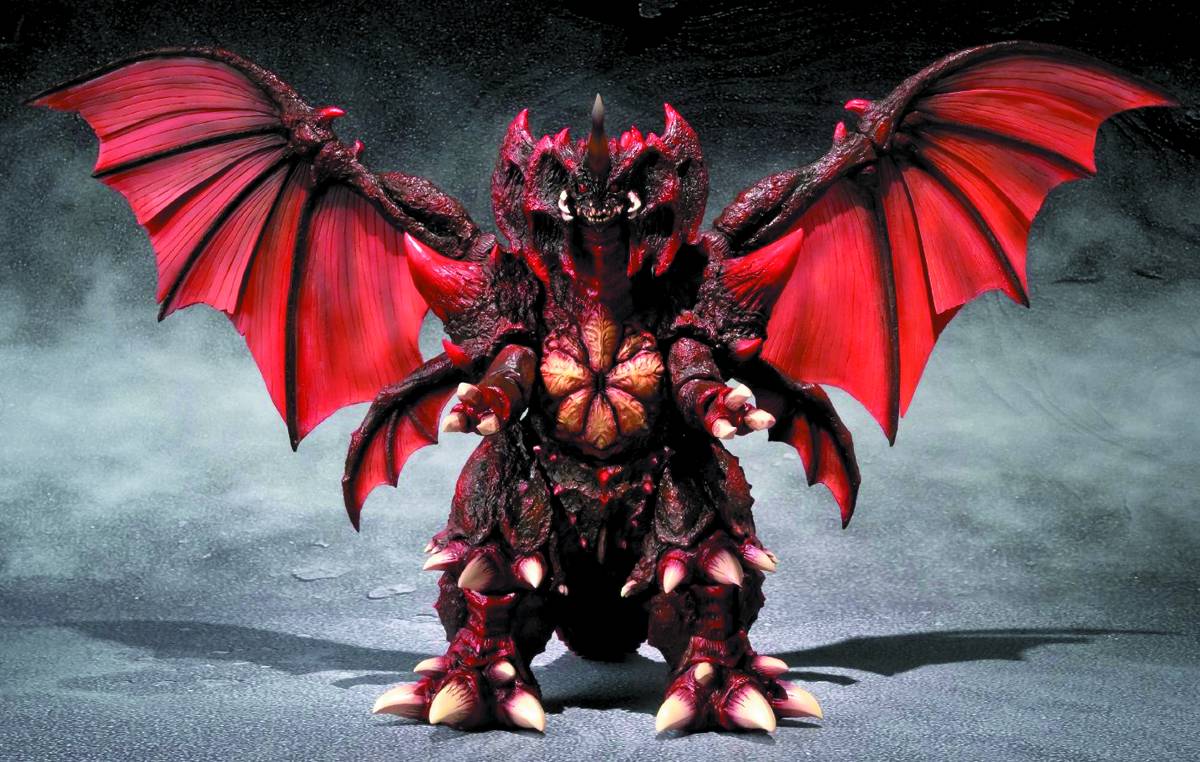
Iris, the primary adversary in Gamera 3, is a curiously designed creature. The head and sharp angles still look like a Gyaos, but tentacle-like appendages add a new element to the creature. Personally, I think it looks a little too busy on paper, though it does look pretty cool on screen. The tentacles reminded me a bit of Biollante, a Heisei Godzilla villain, though I like the aesthetic of the water flora/alligator much better than the…whatever Iris is supposed to vaguely look like. The color scheme also reminded me of the far less interesting Godzilla villain Destroyah, which was a clear influence.

gamerairis5
Godzilla villain, Biollante
gamerairis3
Iris
gamerairis6
Godzilla villain, Destroyah

There is a notable scarcity of Gamera in Gamera 3, which lends an atmosphere of menace and mystery in the wake of the unclear ending to Attack of Legion. This fits well with the movie’s grounded approach to kaiju, emphasizing the collateral damage and ethical issues inherent to their presence. In particular, one scene shows Gamera apparently saving a child, but at the expense of countless other lives, which are brutally depicted being scorched in path of his fire breath.

I mentioned in my coverage of Attack of Legion that the effects look particularly good in that movie. Astoundingly, Revenge of Iris puts that preceding film to shame. The monsters look fantastic, and the building destruction miniatures and flame effects are shot and executed even better than they were previously, making the movie all the more brutal and visceral in accordance with the darker tone.

Amazingly, the human story (which is a historic weakness of kaiju movies) is pretty interesting here, and builds on principles and precedence established in the first two movies. There is a genuine sense of urgency, terror, and anger in their stories, and you can’t help but care about their struggle. This is also the only kaiju movie I can think of where I genuinely wanted the film to cut away from the monster action to get back to the humans, which is damn near heresy. Still, it works, and works quite well.

Overall, this is a movie that deserves its positive reputation. However, it does suffer a little bit from not being able to stand on its own. Realistically, the intertwined stories mean that to appreciate this movie, Guardian of the Universe and Attack of Legion are mandatory viewing for this film to have a full effect. That said, if you can commit to the whole trilogy, this movie is a fantastic conclusion, and a top-tier kaiju film. Fans of the genre owe it to themselves to watch through the entire trilogy, if only to appreciate the mastery that is shown in this conclusion.

Gamera 2: Attack of Legion

Gamera 2: Attack of Legion

gameralegion1

Today’s movie marks the second entry into the Hesei era of Gamera: 1996’s Gamera 2: Attack of Legion.

Gamera 2: Attack of Legion was written once again by Kazunori Itô, who also penned Ghost in the Shell, .hack//SIGN, Gamera: Guardian of the Universe, and Gamera 3: Revenge of Iris.

Likewise, director Shûsuke Kaneko (Death Note, Godzilla, Mothra, King Ghidorah: All Out Attack) returns from Gamera: Guardian of the Universe, and would stay with the franchise through Gamera 3: Revenge of Iris.

The cinematography on Gamera 2 was provided solely by Junichi Tozawa, who shared shooting duties on Gamera: Guardian of the Universe. As with the director and writer, he would return for Gamera 3: Revenge of Iris.

The editor for the film was once again Shizuo Arakawa, who cut Gamera: Guardian of the Universe, but would not return for the third film in the Heisei series.

The producing team for Gamera 2 included Yasuyoshi Tokuma (Spirited Away, Princess Mononoke), Tsutomu Tsuchikawa (Dead or Alive, The City of Lost Souls), and newcomer Naoki Sato (Gamera 3, One Missed Call, Three…Extremes).

The effects team for Gamera 2 included Shin’ichi Fushima (Godzilla Against Mechgodzilla, Godzilla vs. Megaguirus), Tomo’o Haraguchi (Gamera, Air Doll), Shinji Higuchi (Gamera, Gamera 3, Attack on Titan), Toshio Miike (Godzilla: Final Wars, Godzilla: Tokyo S.O.S.), Makoto Kamiya (Godzilla vs. Biollante), and Shin’ichi Wakasa (Godzilla 2000, Godzilla vs. Destroyah, Rebirth of Mothra).

gameralegion4The reception to Gamera 2: Attack of Legion managed to exceed the acclaim of the well-regarded previous movie: it currently holds an 84% audience score on Rotten Tomatoes alongside an IMDb rating of 7.3.

Legion is an interesting sort of villain, and provides a unique challenge for Gamera. Its parasitic nature reminded me a bit of one of the Showa Gamera villains: Jiger. However, Attack of Legion goes in a far less cartoon-y direction than Gamera vs. Jiger. The first fight between Gamera and Legion was particularly interesting because of the size difference between the monsters, but a mother entity is eventually introduced that is closer to Gamera’s weight class. I actually was a little disappointed in this, because the idea of a colony of small organisms acting as a villain seems way more interesting and unique to me. In any case, the central Legion monster still looks fantastic, combining insect-like attributed with a reptilian body and metallic trim. It looked to me like a monster on the same level with Toho’s Gigan: a monster that is decidedly other-worldly in appearance.

gameralegion2Something that I specifically noticed about Gamera 2 is that the effects look really good, particularly the pyrotechnics and miniatures. The classic style is retained, but none of the destruction comes off as silly: the way things are shot keep the carnage grounded and generally realistic.

Interestingly, Gamera is out of commission for a significant portion of the second act of Attack of Legion, which again echoes Gamera vs. Jiger. However, instead of a goofy anatomical adventure saving the day, Gamera’s human connection is sacrificed to wake him up from his coma, which ends the story on an ominous, downbeat note.

That said, the ending departure of Legion is a bit silly. Essentially, Gamera shoots a giant blast out of his chest with the help of…Earth energy? Something like that? Basically, the effect is like a spirit bomb from Dragonball, but is never explained further.

gameralegion3In spite of a few minor complaints, this is a pretty fun kaiju showcase, and manages to build and improve on the previous movie without losing any connections to the story. I wouldn’t recommend watching it without seeing Guardian of the Universe first, but I think it is definitely worth giving a watch.