Tag Archives: cult movies

The Fog (1980)

The Fog (1980)

fog2

Today’s feature is one of John Carpenter’s many cult classic films: 1980’s The Fog.

The Fog was co-written, directed, and scored by horror master John Carpenter as his follow-up to the smash hit Halloween, and was  co-written and produced by his frequent collaborator Debra Hill.

The cinematographer for the film was Dean Cundey, and accomplished shooter who has worked on such movies as Jurassic Park, Garfield, Flubber, Apollo 13, Hook, Road House, Back To The Future, Big Trouble In Little China, Halloween, Escape From New York, and many more.

The Fog featured work by two credited editors: production designer Tommy Lee Wallace (Halloween, It, Fright Night 2) and Charles Bornstein (Halloween, Critters 2, Howling 2, Return of the Living Dead 2).

The distinctive musical score for The Fog was provided by director John Carpenter, something he often did for films he was involved with.

The team of producers for the movie included co-writer Debra Hill, Pegi Brotman (The Philadelphia Experiment), and Barry Bernardi (The Punisher, Christine, Paul Blart: Mall Cop, Pixels, The Devil’s Advocate, Click).

The special effects team for The Fog included Rob Bottin (The Thing, Fight Club, RoboCop, Legend, Piranha, RoboCop 3), Edward Ternes (Clue, Wonder Woman), Erica Ueland (Children of the Corn, Halloween), Richard Albain Jr. (Assault on Precinct 13, Malcolm in the Middle), and James Liles (1941, Logan’s Run).

fog3

The cast for The Fog included Tom Atkins (Maniac Cop, Halloween III, Creepshow), Jamie Lee Curtis (Halloween, Prom Night, Trading Places), Janet Leigh (Psycho, Touch of Evil, The Manchurian Candidate, Night of the Lepus), Adrienne Barbeau (Creepshow, Swamp Thing, Escape From New York), John Houseman (Rollerball, The Paper Chase), and Hal Holbrook (Capricorn One, Creepshow, Wall Street).

The Fog notably featured the mother and daughter acting combo of Janet Leigh and Jamie Lee Curtis, who have both had highly acclaimed acting careers. However, they only appeared in one other movie together: Halloween H20.

Special effects worker Rob Bottin plays the role of Blake, the lead ghost, in The Fog. He wound up being cast specifically because of his size after he expressed interest in taking an on-screen role in a John Carpenter movie. He would later famously head the effects team for John Carpenter’s memorable take on The Thing.

Director and co-writer John Carpenter was married to lead actress Adrienne Barbeau at the time The Fog was filmed, and the lead role was apparently written specifically for her from the outset. They divorced only a few years after the film’s release, in 1984.

In order the achieve the desired, surreal effect for the fog retreat sequences in the movie, the film had to be run backwards. This means that Adrienne Barbeau had to act in reverse for these sequences, a notable feat.

Reportedly, horror legend Christopher Lee was initially intended for Hal Holbrook’s character, but had a scheduling conflict that prevented him from taking it up.
fog1

The Fog received a 2005 remake directed by Rupert Wainwright, but it was very poorly received by audiences and critics alike. Ultimately, it racked up an astonishing 4% critics score on Rotten Tomatoes, along with an abysmal 3.6 rating on IMDb.

The Fog had a reported budget of just $1 million, and in total grossed over $21 million domestically in its theatrical run, making the movie significantly profitable.

While The Fog was not nearly as profitable or well loved by audiences or critics as Halloween, it is certainly a cult favorite for many. Currently, it holds a 6.8 rating on IMDb, along with Rotten Tomatoes scores of 69% from critics and 63% from audiences.

First and foremost, The Fog has an excellently constructed, creepy atmosphere, which is effectively emphasized by Carpenter’s eerie score. Personally, I think that the music is an improvement on Carpenter’s previous work on Halloween, though that is a point that is certainly up for debate.

With the ghostly sequences, Carpenter makes very interesting use of light in conjunction with the eponymous fog, creating a lot of back-lighting, imposing shadows, and halo effects over the monsters. The obscured vision also keeps the tension high, as both the audience and the characters are never quite sure where in the fog the monsters are.

In his review, Roger Ebert pointed out a significant issue with The Fog: that “it needs a better villain”.

The problem is with the fog. It must have seemed like an inspired idea to make a horror movie in which clouds of fog would be the menace, but the idea just doesn’t work out in “The Fog,” …The movie’s made with style and energy, but it needs a better villain.

In general, I agree with this overall sentiment. Horror movies are almost always defined by the threat, and while the image of “The Fog” itself is menacing, the figures within it just aren’t quite scary or imposing enough. The fog effects certainly allow for a lot of horror ambiance, but it doesn’t feel to me like it ever really pays off.  The story is a bit too slowly paced to begin with, which certainly doesn’t help with the lack of viewer satisfaction, particularly in the minds of 1980 theater audiences expecting to see another Halloween.

Overall, The Fog is a solid atmospheric horror movie that has been perhaps unjustly buried in John Carpenter’s body of work. It may not be his best film (or even one of his best films), but it is fantastic on its own, assuming you can divorce it from the reputations of its predecessors and descendants in the Carpenter filmography. If you dig horror movies, you certainly owe it to yourself to give it a watch.

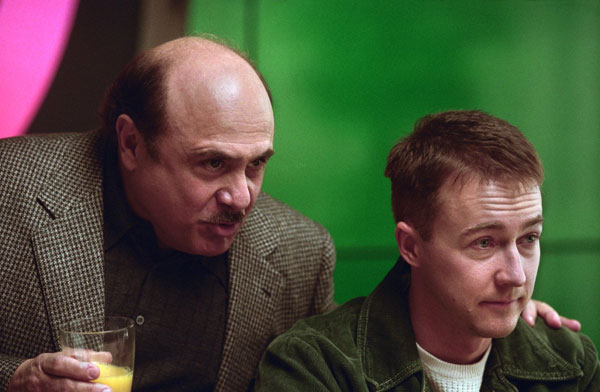
Death To Smoochy

Death To Smoochy

DeathToSmoochy1

Today’s feature is Danny DeVito’s twisted depiction of the cracked world of children’s entertainment: Death to Smoochy.

Death to Smoochy was written by Adam Resnick, who is best known for the movie Cabin Boy and his extensive writing work on The Late Show with David Letterman, The Larry Sanders Show, and Saturday Night Live.

Death to Smoochy was directed by noted actor Danny DeVito, who was also behind such films as War of the Roses, Matilda, Hoffa, and Throw Momma From The Train.

The cinematographer for the movie was Anastas Michos, who also shot Keeping the Faith and The Big Kahuna, and worked as a camera operator on such films as Quiz Show, Lean on Me, and Born on the Fourth of July.

The editor on Death to Smoochy was Jon Poll, who is known for cutting films like Captain America, Monkeybone, Cabin Boy, Meet the Parents, and Mystery, Alaska.

The team of producers behind the film included Andrew Lazar (American Sniper, Jonah Hex, Confessions of A Dangerous Mind), Peter Macgregor-Scott (The Jerk, Revenge of the Nerds, Batman & Robin, Under Siege), Doug Davison (The Grudge, The Departed), John Kreidman (Watchmen, The Smurfs 2, Zookeeper), and Joshua Levinson (Matilda, Jonah Hex, Gattaca).

The musical score for Death to Smoochy was composed by David Newman, who also scored such films as Galaxy Quest, The Mighty Ducks, Jingle All The Way, Ice Age, Tommy Boy, Norbit, The Spirit, Serenity, Heathers, War of the Roses, and Matilda, among many others.

The visual effects team for the movie was composed of Lincoln Kupchak (Red Planet, Blood Diamond), John Mesa (Army of Darkness, Darkman), Penny Mesa (Deep Blue Sea, Red Planet), William Mesa (976-EVIL, The Italian Job), Dan Novy (24, The Guardian), Jeffrey A. Okun (Suburban Commando, Shocker, Die Hard 2, Sphere), L. Elizabeth Powers (Son of the Mask, League of Extraordinary Gentlemen, Daredevil), Liz Radley (Collateral, On Deadly Ground, Batman & Robin), Ken Stranahan (Red Planet, Deep Blue Sea, Son of the Mask), James Tittle (Suspect Zero, Red Eye, Dreamcatcher, Gigli, Stealth), and Jeffrey White (Holes, Red Planet).

deathtosmoochy5

The special effects unit for Death to Smoochy included such names as Taku Dazai (Slither, Dracula 2000), Aaron Dinsmore (The Incredible Hulk, Dracula 2000), Walter Klassen (Jason X), David Kleinstein (Frequency, Boardwalk Empire), David Loveday (Blues Brothers 2000, X-Men, Lucky Number Slevin, 300), Jim McGillivary (Pompeii, Silent Hill), Laird McMurray (Crimson Peak, Pixels, Pacific Rim, Stuck, The Dead Zone), Jim Peacock (Saw V, Tommy Boy), John Poulter (Secret Window, Taking Lives, Stuck), David Reaume (Glitter, Chicago, Silent Hill, Kick-Ass, Devil), John Stifanich (The Substitute 2, Signs, Boardwalk Empire), and Stephen Wallace (Scott Pilgrim vs. The World).

The makeup effects team for the film included Marlene Aarons (Repo Men, Max Payne), Tim Mogg (Glitter, Death Wish V), Ve Neill (Ed Wood, Beetlejuice, Laserblast, Kingdom of the Spiders), Pipsan Ayotte (Pacific Rim, The Love Guru), and Selena Evans-Miller (Major Payne, Matinee, The Waterboy).

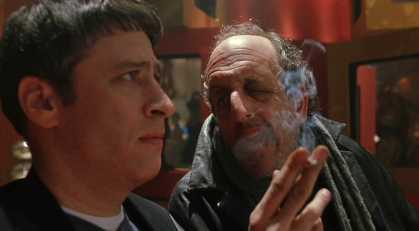
The deep cast of Death to Smoochy was made up of Robin Williams (Insomnia, Patch Adams, Good Will Hunting, Dead Poets Society, One Hour Photo, The Birdcage, The Fisher King), Edward Norton (Fight Club, Primal Fear, The Illusionist, Rounders, Red Dragon), Danny DeVito (Batman Returns, One Flew Over The Cuckoo’s Nest, L.A. Confidential, It’s Always Sunny In Philadelphia, Twins), Jon Stewart (The Faculty, The Daily Show), Pam Ferris (Matilda, Children of Men, The Raven), Catherine Keener (Being John Malkovich, Capote, Hamlet 2, The Soloist, Captain Phillips), and Harvey Fierstein (Independence Day), among others.

Reportedly, Jim Carrey turned down a role in Death To Smoochy in order to make the film The Majestic, which released in 2001.

Robin Williams earned a Golden Raspberry nomination for worst actor for his role of Rainbow Randolph in Death To Smoochy, but wound up losing out to Hayden Christensen’s Anakin Skywalker from Attack of the Clones.

deathtosmoochy3

The budget for Death To Smoochy was reportedly $50 million, of which it made back less than $8.5 million theatrically. Needless to say, it was a massive financial flop.

At the time of its release, critics were really tough on the twisted dark comedy, earning it aggregate scores of 38% from MetaCritic and 42% from Rotten Tomatoes. In particular, Roger Ebert gave the movie a scathing review, which opened as follows:

“Only enormously talented people could have made “Death to Smoochy.” Those with lesser gifts would have lacked the nerve to make a film so bad, so miscalculated, so lacking any connection with any possible audience. To make a film this awful, you have to have enormous ambition and confidence, and dream big dreams.”

That said, public perception towards the movie has softened over time, and it currently holds an IMDb rating of 6.4 alongside a Rotten Tomatoes audience score of 66%.

deathtosmoochy4

I personally have fond memories of watching this movie on the cable channel Comedy Central, where it played in numerous blocks over the years. This heavy replay time almost certainly helped win over much of its current cult following.

Another reason for the movie’s cult popularity is similarly tied to Comedy Central: the massive rise in popularity of Jon Stewart, who was only a couple of years into his run at The Daily Show when the film released. Throughout the show’s run, he would often reference his involvement with the movie as an example of his acting (in)experience, exposing it to new people with each passing mention.

Most of the criticism leveled against Death to Smoochy at the time of its release focused on its cynical and allegedly “mean-spirited” screenplay. Personally, I’ve never quite understood those complaints: the story is darkly comedic, but it isn’t “mean-spirited” towards any particular characters, outside of the deserving corporate flunkies and would-be murderers.

My biggest issue with the film, if you can call it that, is with the acting. Both Norton and Williams are beyond over-the-top in their portrayals, to the point that they both seem like caricatures more than humans, like the yin and yang of overacting. That said, the lack of identifiable humanity and excess of cheesy showmanship displayed oddly fits both of their characters well. As children’s entertainers, of course they would be off-putting, eccentric, and clown-like. I have to assume, because of the immense talent on all sides of the camera here, that this is what the team had in mind for the characters, and that they were portrayed as intended. Regardless, both men come off as difficult to relate to, which I imagine didn’t help the movie with general audiences.

The first thing I noticed upon re-watching Death to Smoochy is how deliberately shot and colorful it is: every sequence is meticulously planned for blocking and color, certainly more-so than you would expect from a comedic film like this. Part of this was undoubtedly DeVito’s vision for the film, but the commentary included on the DVD reveals that cinematographer Anastas Michos had more than a little bit of influence on each individual shot.

deathtosmoochy2

Overall, this was niche movie made with a mass appeal budget. In general, dark comedies won’t fly with the movie-going masses, which was an error with the very inception of the picture. That said, the people with whom the movie resonates absolutely delight in it, and time has certainly shown favorably on the film, making it a bit of a cult classic.

If you like dark comedies or enjoy Danny DeVito’s other directorial efforts, then this is a must-see flick. The humor is very dark, which turned many away from it, but if you go in knowing what to expect, then you are far more likely to enjoy it for what it is.

Gamera 3: Revenge of Iris

Gamera 3: Revenge of Iris

gamerairis1

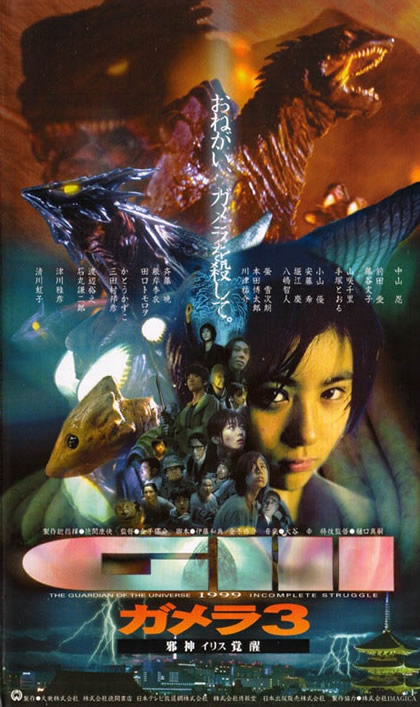
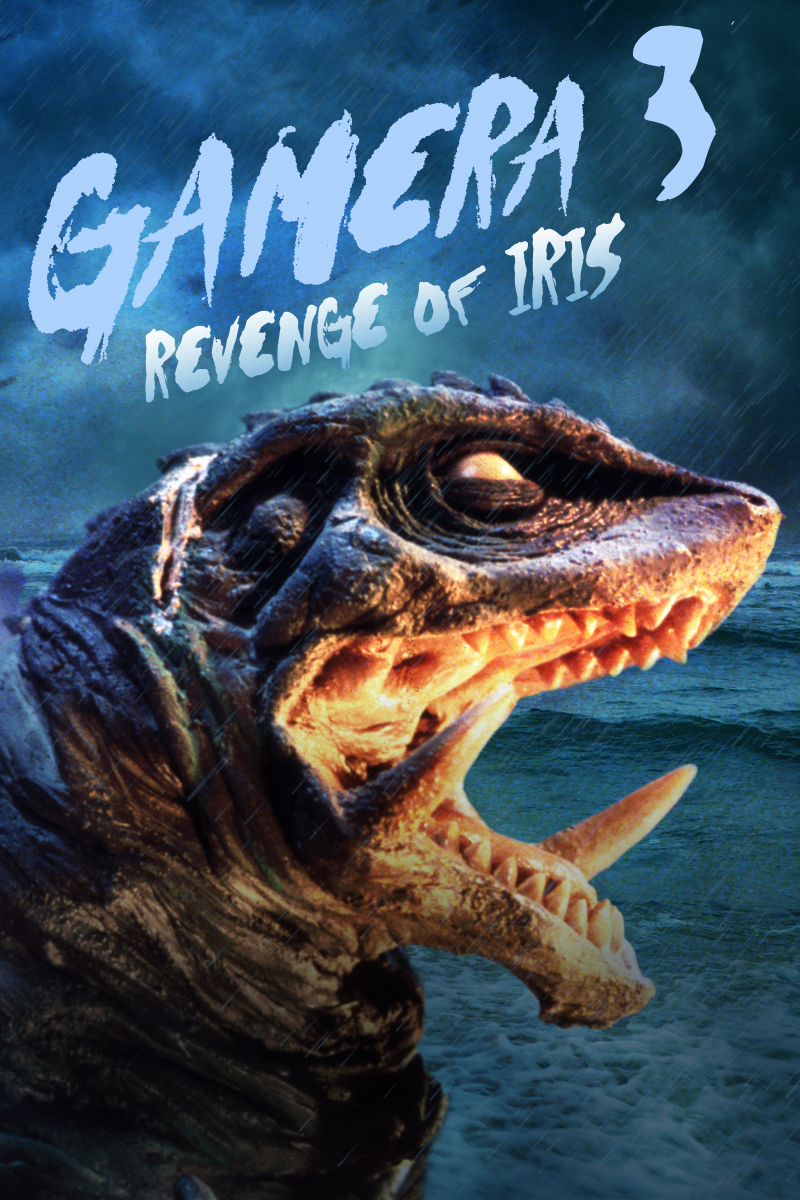
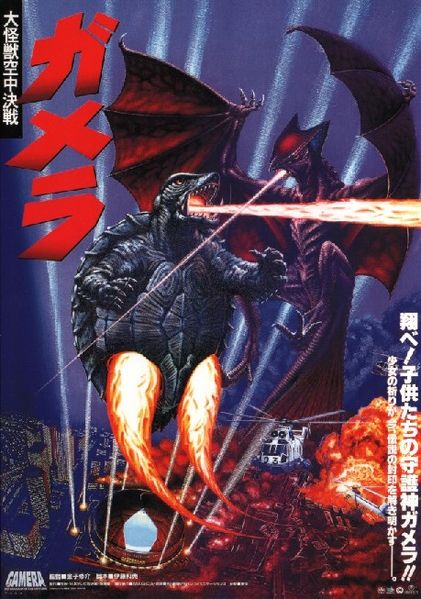
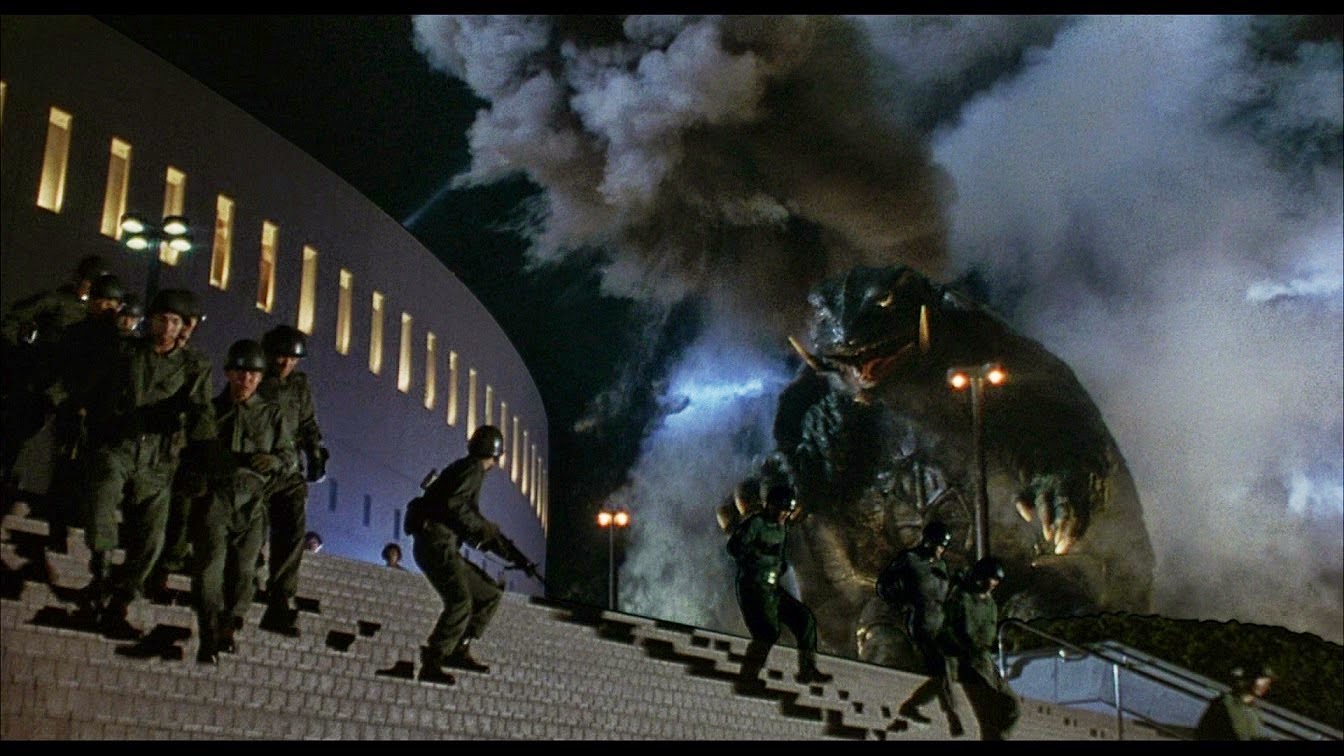
Today’s feature is the concluding entry into the Heisei era Gamera Trilogy: 1999’s Gamera 3: Revenge of Iris.

Gamera 3: Revenge of Iris was once again written by Kazunori Itô, who also penned the previous two movies (Gamera: Guardian of the Universe and Gamera 2: Attack of Legion) as well as the movie adaptation of Ghost in the Shell and .hack//SIGN.

The director for Gamera 3 was Shûsuke Kaneko, who also helmed the Death Note movie and Toho’s Godzilla, Mothra, King Ghidorah: All Out Attack. This was his last work in the Gamera franchise after directing Gamera: Guardian of the Universe and Gamera 2: Attack of Legion.

The cinematographer, Junichi Tozawa, likewise returned from Gamera: Guardian of the Universe and Gamera 2: Attack of Legion.

The editor for Gamera 3 was a newcomer to the franchise: Isao Tomita, who also cut Godzilla, Mothra, King Ghidorah: Giant Monsters All-Out Attack.

The producing team for Gamera 3 included Naoki Sato (Gamera 2, One Missed Call, Three…Extremes), Yasuyoshi Tokuma (Spirited Away, Princess Mononoke), and Tsutomu Tsuchikawa (Dead or Alive, The City of Lost Souls).

The effects team for Gamera 3 included Makoto Kamiya (Godzilla vs. Biollante), Rikiya So (Godzilla: Final Wars), Shinji Higuchi (Gamera 2, Gamera, Attack on Titan), Mahiro Maeda (Blue Submarine No. 6, Mad Max: Fury Road, Porco Rosso, Gamera).

gamerairis2There has been one more Gamera movie created following the release of Revenge of Iris, though it is not regarded as part of the Heisei era trilogy: 2006’s Gamera The Brave. There are currently rumors that a new Gamera movie is being produced in the wake of the success of the American Godzilla, though specific details are sketchy.

Gamera 3: Revenge of Iris was very well received among fans, and some regard it as the greatest non-Godzilla kaiju movie ever made. It currently holds a 7.4 rating on IMDb, alongside an impressive 91% audience score on Rotten Tomatoes.

A background aspect of the plot in Revenge of Iris is the return of a number of Gyaos, which were the principle adversaries in Guardian of the Universe. Iris, Gamera’s mysterious new adversary, is alluded to be a mutated subspecies of Gyaos, and retains some of the monster’s physical characteristics. The Showa era also brought back Gyaos occasionally to show how much stronger the new foes were in comparison to past threats, but their purpose in this movie is much different. Instead of acting as a display of how powerful the new enemy is, they exist to pose something of an ethical question: are the Gyaos or Gamera the greater threat in the grand scheme of things? If only one can be dealt with, which should be the priority to defeat?

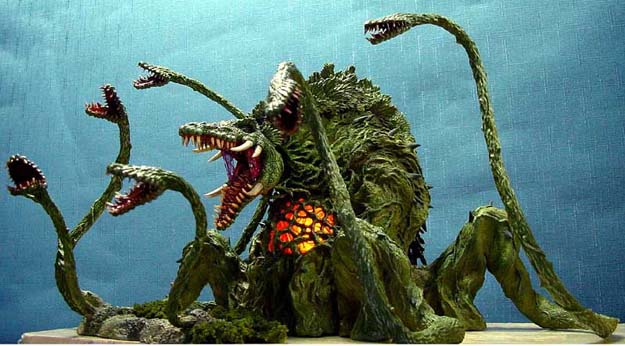
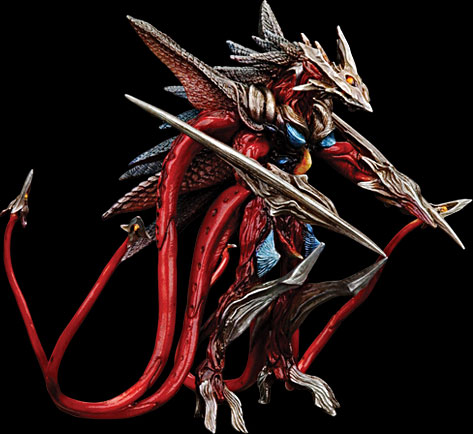
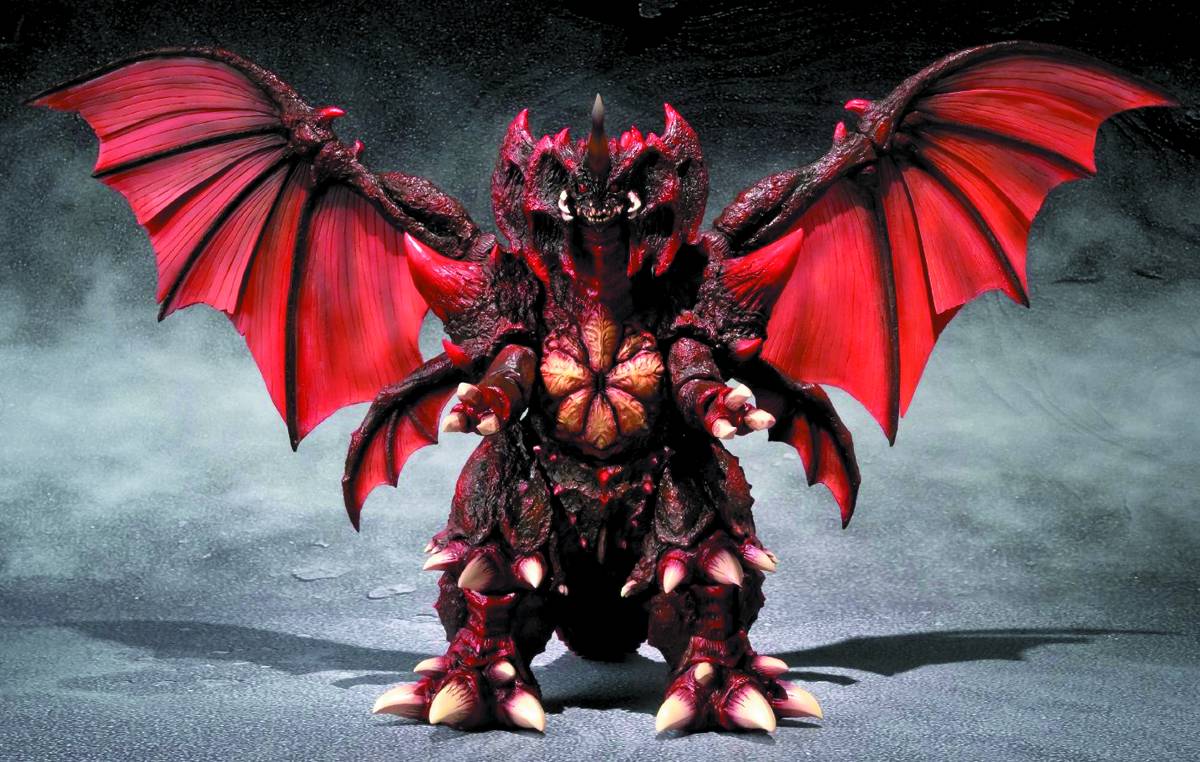
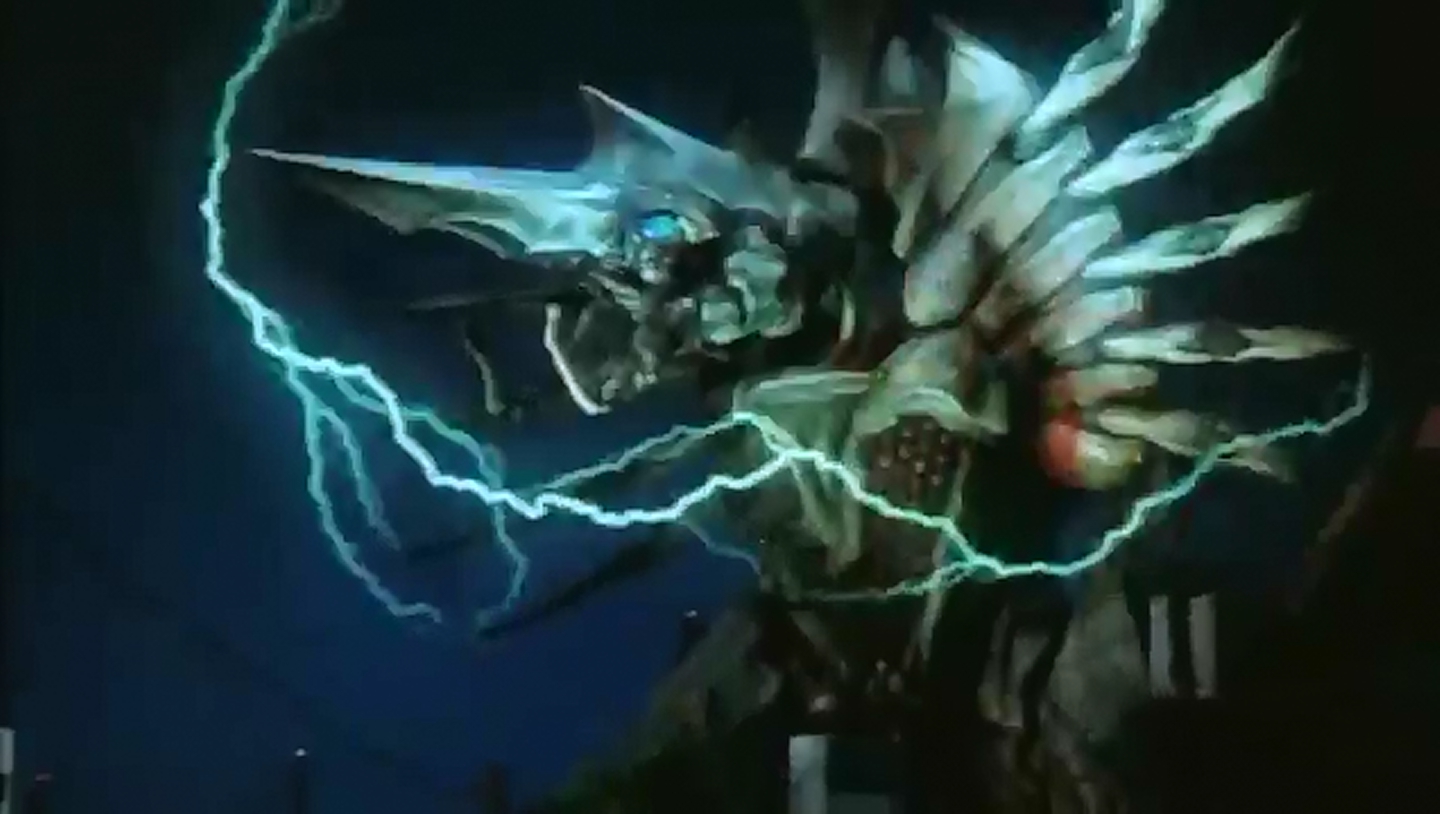
Iris, the primary adversary in Gamera 3, is a curiously designed creature. The head and sharp angles still look like a Gyaos, but tentacle-like appendages add a new element to the creature. Personally, I think it looks a little too busy on paper, though it does look pretty cool on screen. The tentacles reminded me a bit of Biollante, a Heisei Godzilla villain, though I like the aesthetic of the water flora/alligator much better than the…whatever Iris is supposed to vaguely look like. The color scheme also reminded me of the far less interesting Godzilla villain Destroyah, which was a clear influence.

gamerairis5
Godzilla villain, Biollante
gamerairis3
Iris
gamerairis6
Godzilla villain, Destroyah

There is a notable scarcity of Gamera in Gamera 3, which lends an atmosphere of menace and mystery in the wake of the unclear ending to Attack of Legion. This fits well with the movie’s grounded approach to kaiju, emphasizing the collateral damage and ethical issues inherent to their presence. In particular, one scene shows Gamera apparently saving a child, but at the expense of countless other lives, which are brutally depicted being scorched in path of his fire breath.

I mentioned in my coverage of Attack of Legion that the effects look particularly good in that movie. Astoundingly, Revenge of Iris puts that preceding film to shame. The monsters look fantastic, and the building destruction miniatures and flame effects are shot and executed even better than they were previously, making the movie all the more brutal and visceral in accordance with the darker tone.

Amazingly, the human story (which is a historic weakness of kaiju movies) is pretty interesting here, and builds on principles and precedence established in the first two movies. There is a genuine sense of urgency, terror, and anger in their stories, and you can’t help but care about their struggle. This is also the only kaiju movie I can think of where I genuinely wanted the film to cut away from the monster action to get back to the humans, which is damn near heresy. Still, it works, and works quite well.

Overall, this is a movie that deserves its positive reputation. However, it does suffer a little bit from not being able to stand on its own. Realistically, the intertwined stories mean that to appreciate this movie, Guardian of the Universe and Attack of Legion are mandatory viewing for this film to have a full effect. That said, if you can commit to the whole trilogy, this movie is a fantastic conclusion, and a top-tier kaiju film. Fans of the genre owe it to themselves to watch through the entire trilogy, if only to appreciate the mastery that is shown in this conclusion.

Gamera 2: Attack of Legion

Gamera 2: Attack of Legion

gameralegion1

Today’s movie marks the second entry into the Hesei era of Gamera: 1996’s Gamera 2: Attack of Legion.

Gamera 2: Attack of Legion was written once again by Kazunori Itô, who also penned Ghost in the Shell, .hack//SIGN, Gamera: Guardian of the Universe, and Gamera 3: Revenge of Iris.

Likewise, director Shûsuke Kaneko (Death Note, Godzilla, Mothra, King Ghidorah: All Out Attack) returns from Gamera: Guardian of the Universe, and would stay with the franchise through Gamera 3: Revenge of Iris.

The cinematography on Gamera 2 was provided solely by Junichi Tozawa, who shared shooting duties on Gamera: Guardian of the Universe. As with the director and writer, he would return for Gamera 3: Revenge of Iris.

The editor for the film was once again Shizuo Arakawa, who cut Gamera: Guardian of the Universe, but would not return for the third film in the Heisei series.

The producing team for Gamera 2 included Yasuyoshi Tokuma (Spirited Away, Princess Mononoke), Tsutomu Tsuchikawa (Dead or Alive, The City of Lost Souls), and newcomer Naoki Sato (Gamera 3, One Missed Call, Three…Extremes).

The effects team for Gamera 2 included Shin’ichi Fushima (Godzilla Against Mechgodzilla, Godzilla vs. Megaguirus), Tomo’o Haraguchi (Gamera, Air Doll), Shinji Higuchi (Gamera, Gamera 3, Attack on Titan), Toshio Miike (Godzilla: Final Wars, Godzilla: Tokyo S.O.S.), Makoto Kamiya (Godzilla vs. Biollante), and Shin’ichi Wakasa (Godzilla 2000, Godzilla vs. Destroyah, Rebirth of Mothra).

gameralegion4The reception to Gamera 2: Attack of Legion managed to exceed the acclaim of the well-regarded previous movie: it currently holds an 84% audience score on Rotten Tomatoes alongside an IMDb rating of 7.3.

Legion is an interesting sort of villain, and provides a unique challenge for Gamera. Its parasitic nature reminded me a bit of one of the Showa Gamera villains: Jiger. However, Attack of Legion goes in a far less cartoon-y direction than Gamera vs. Jiger. The first fight between Gamera and Legion was particularly interesting because of the size difference between the monsters, but a mother entity is eventually introduced that is closer to Gamera’s weight class. I actually was a little disappointed in this, because the idea of a colony of small organisms acting as a villain seems way more interesting and unique to me. In any case, the central Legion monster still looks fantastic, combining insect-like attributed with a reptilian body and metallic trim. It looked to me like a monster on the same level with Toho’s Gigan: a monster that is decidedly other-worldly in appearance.

gameralegion2Something that I specifically noticed about Gamera 2 is that the effects look really good, particularly the pyrotechnics and miniatures. The classic style is retained, but none of the destruction comes off as silly: the way things are shot keep the carnage grounded and generally realistic.

Interestingly, Gamera is out of commission for a significant portion of the second act of Attack of Legion, which again echoes Gamera vs. Jiger. However, instead of a goofy anatomical adventure saving the day, Gamera’s human connection is sacrificed to wake him up from his coma, which ends the story on an ominous, downbeat note.

That said, the ending departure of Legion is a bit silly. Essentially, Gamera shoots a giant blast out of his chest with the help of…Earth energy? Something like that? Basically, the effect is like a spirit bomb from Dragonball, but is never explained further.

gameralegion3In spite of a few minor complaints, this is a pretty fun kaiju showcase, and manages to build and improve on the previous movie without losing any connections to the story. I wouldn’t recommend watching it without seeing Guardian of the Universe first, but I think it is definitely worth giving a watch.

Gamera: Guardian of the Universe

Gamera: Guardian of the Universe

gameraguardian1

Today’s feature was the debut of the Hesei era of the famed kaiju franchise Gamera: 1995’s Gamera: Guardian of the Universe.

Gamera: Guardian of the Universe was written by Kazunori Itô, who is best known for Ghost in the Shell and .hack//SIGN. He would also return to write both of the following Gamera films.

The movie was directed by Shûsuke Kaneko, who also helmed the film adaptation of the popular anime Death Note as well as the Toho kaiju showcase Godzilla, Mothra, King Ghidorah: All Out Attack. As with Ito, Kaneko returned for both of the subsequent Gamera movies.

Gamera: Guardian of the Universe featured two cinematographers: Kenji Takama (Welcome Back Mr. McDonald, Death Note: The Last Name) and Junichi Tozawa, who would later shoot Gamera 2: Attack of Legion and Gamera 3: Revenge of Iris.

The editor for Gamera: Guardian of the Universe was Shizuo Arakawa, who would also cut the sequel, Gamera 2: Attack of Legion.

The producers for the film included Hiroyuki Kato (who has produced recent episode of the Pokemon television show), Yasuyoshi Tokuma (Spirited Away, Princess Mononoke), and Tsutomu Tsuchikawa, a frequent collaborator of Takashi Miike’s on such movies as Dead or Alive and The City of Lost Souls.

The effects team for Gamera: Guardian of the Universe included Hajime Matsumoto (The Grudge, Ringu), Mahiro Maeda (Mad Max: Fury Road, Blue Submarine No. 6), Tomo’o Haraguchi (Gamera 2: Attack of Legion, Air Doll), Shinji Higuchi (Gamera 2: Attack of Legion, Gamera 3: Revenge of Iris, Attack on Titan), Makoto Kamiya (Godzilla vs. Biollante), Toshio Miike (Godzilla: Final Wars, Godzilla: Tokyo S.O.S.), and Shin’ichi Fushima (Godzilla Against Mechgodzilla, Godzilla vs. Megaguirus).

gameraguardian4The cast for the movie includes Ihara Tsuyoshi (13 Assassins, Letters From Iwo Jima), Shinobu Nakayama (Fist of Legend, Godzilla vs. Mechagodzilla II), Ayako Fujitani (Man From Reno, Gamera 2: Attack of Legion, Gamera 3: Revenge of Iris), and Hirotarô Honda (Kamikaze Girls).

The antagonist monster of the film, Gyaos, was performed by a woman actor, which was reportedly the first time this was done in the history of kaiju movies.

gameraguardian5The reception to Gamera: Guardian of the Universe was generally positive: it currently holds a 6.9 rating IMDb alongside a 75% audience score on Rotten Tomatoes, which is plenty respectable for a franchise known for its historic low quality.

Gamera: Guardian of the Universe stands in sharp contrast to the Showa era of the franchise, which I covered a while back. Whereas those movies were generally goofy and aimed at children, Gamera: Guardian of the Universe has a much more serious and dark tone, more in line with a typical monster or disaster movie. There is also the notable absence of children characters in the cast, which was a staple of the Showa era and the Gamera character.

I particularly appreciate that Gamera: Guardian of the Universe still uses the classic rubber suit monster effects, just updated for the times. If they had attempted to use mid-1990s CGI, this movie would be nearly unwatchable. Speaking of which, the team also made the solid decision to introduce both Gamera and his classic foe Gyaos in this movie. The original Gamera didn’t feature an antagonist, and is the weakest in the franchise from an action standpoint because of it (unlike the original Gojira, which was a true drama that didn’t need monster action to carry it).

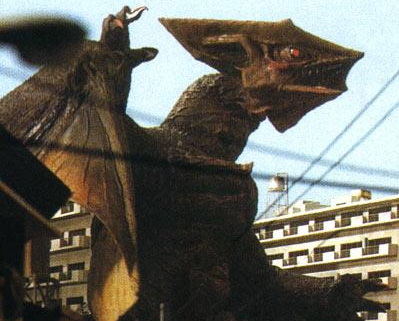
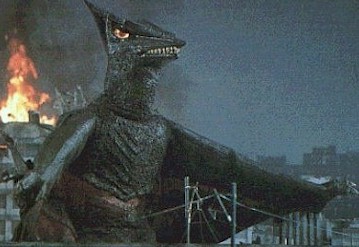
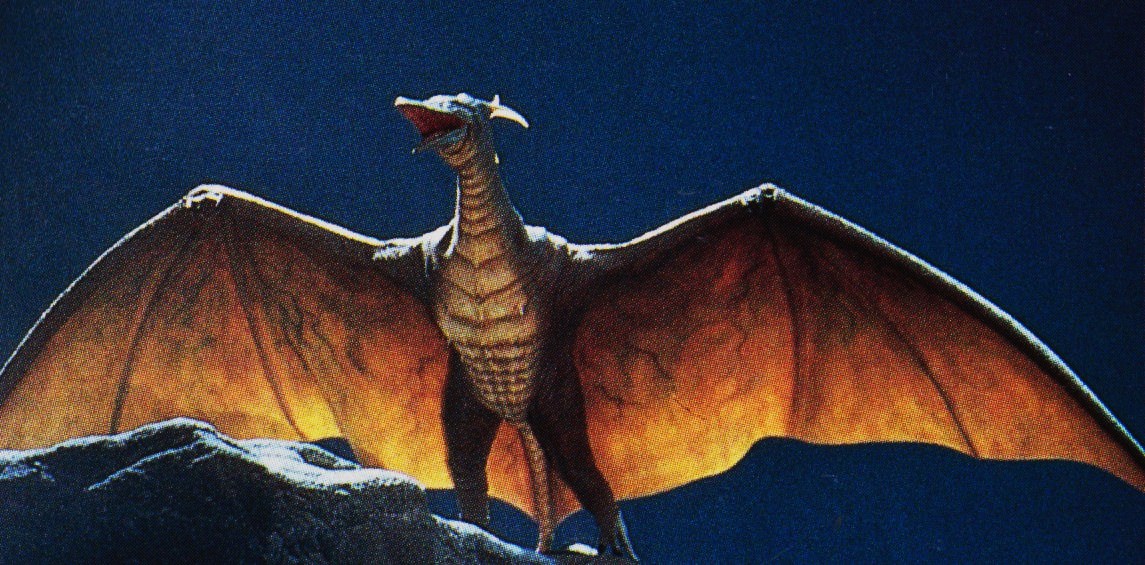
Gyaos in this movie looks more like Toho’s Rodan more than I ever remember him looking before. The design used in the Showa era had a larger, more pronounced triangular head, whereas the Hesei update is toned down significantly with a head more reasonably proportional to the body. The result is a creature that looks very similar to the Heisei design of Rodan which debuted a handful of years before in Godzilla vs. Mechagodzilla II.

Gyaos design from Showa era
gameraguardian2
Gyaos design from Heisei era
Rodan design from Heisei era

Overall, this is a really enjoyable kaiju movie. It isn’t revolutionary in any sense and doesn’t break any new ground for the genre, but is perfectly serviceable for what it is. For fans of big monster action, this is absolutely worth checking out. It still isn’t as good as the Heisei Godzilla flicks, but that shouldn’t come as any sort of surprise. The fact that a Gamera movie is honestly worth the time spent watching it is noteworthy enough.

Reefer Madness

Reefer Madness

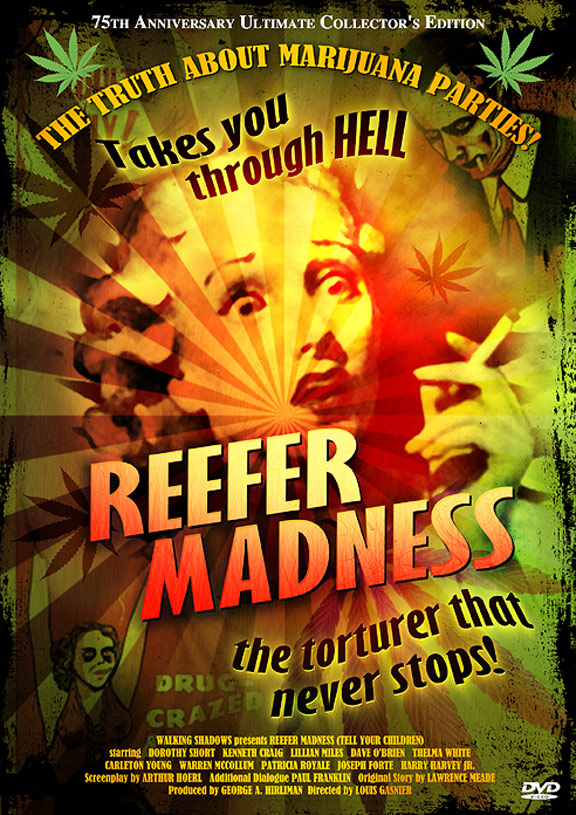
reefermadness1

Today’s feature is one of the most infamously terrible cult movies of all time: Reefer Madness.

Reefer Madness was directed and cowritten by Louis J. Gasnier (Parisian Love, The Perils of Pauline), with the screenplay being provided by Arthur Hoerl, who wrote numerous low budget movies over his career, including The Lost Tribe, Texas to Bataan, and Mystery in Swing.

The cinematography and camera work on Reefer Madness was provided by Jack Greenhalgh, who also shot Robot Monster, Dead Men Walk, The Mad Monster, and Lost Continent.

The musical director for the film was Abe Meyer, who also worked on such movies as Revolt of the Zombies and another famous anti-marijuana flick, Assassin of Youth.

The editor for Reefer Madness was Carl Pierson, who also cut movies like The Ape Man, The Dawn Rider, and Blue Steel.

The cast of Reefer Madness includes Dave O’Brien (The Red Skelton Hour), Lillian Miles (The Gay Divorcee), Carleton Young (Kansas City Confidential, The Man Who Shot Liberty Valance), and Dorothy Short (Assassin of Youth).

The plot of Reefer Madness follows a group of teenagers who become corrupted by nefarious dope fiends, who get them addicted to “the demon weed,” marijuana.

Reefer Madness inspired a loose musical remake in 2005 starring Alan Cumming, Kristen Bell, and Neve Campbell, which was based on a 1992 musical play inspired by the original film. The movie was produced by the Showtime television network, and debuted at the 2005 Sundance Film Festival.

The plot of Reefer Madness is based loosely on the highly publicized case of Victor Licata, who murdered his family in 1933. Anti-drug activists claimed that his crimes were influenced by the use of marijuana, and the case was used to propagate the idea that marijuana could cause people to become violent. However, the idea that his marijuana use had anything to do with his violent behavior has been highly criticized, given we was found to have psychological conditions that left him prone to violent outbursts.

Reefer Madness has built up a significant ironic cult following among marijuana enthusiasts, which has grown after years of being held as a midnight screening staple.

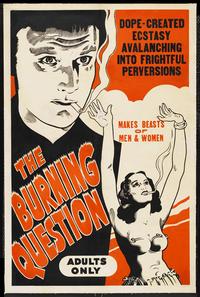
Reefer Madness was originally titled Tell Your Children, and has been billed under a number of alternate titles over the years, including The Burning Question, Dope Addict, and Doped Youth.

reefermadness3The film is officially in the public domain, though the title card claims that it was copyrighted. The production of the movie is unclear, but popular belief is that it was written and produced by a religious group as anti-marijuana propaganda, but no one has ever come forward with a legitimate claim to the copyright. The version of the movie that most are familiar with is the result of a re-release, which inserted additional footage so it could be billed as an exploitation movie.

The reception to Reefer Madness has been traditionally negative, though it has become a cult movie staple for its transparent agenda and unrealistic plot. It currently holds a 3.7 rating on IMDb, alongside Rotten Tomatoes scores of 46% from critics and 38% from audiences. It is worth noting that due to the movie’s cult status, there are a number of ironic positive reviews on both sites that have artificially elevated the scores.

The acting in Reefer Madness is of course way over the top, which fits perfectly with the exaggerated writing throughout the movie. The fact that it is obvious that no one in the production had any idea of how marijuana works definitely adds to the effect of the movie as a whole. Now that marijuana is on track for widespread legalization in the United States over the next few years, it is a good time to go back and look at the history of the public perception of the drug, which Reefer Madness showcases quite well.

The popularity of Reefer Madness as an ironic bad movie helped launch an entire subgenre of b-movie, specifically focused on the stoner demographic. I think that it is fair to say that movies like Evil Bong wouldn’t exist without the cult reputation of Reefer Madness.

reefermadness2Reefer Madness is certainly deserving of its reputation, and is a blast to sit through. I am a total sucker for these old social hygiene films, like I Accuse My Parents, and always get a kick out of seeing the sensationalized realities depicted within them. Reefer Madness‘s depiction of the effects of marijuana is one of the funniest things that I have ever seen in this kind of movie, just because of how wrong it is, and how much the actors desperately try to sell their performances. Reefer Madness is a solid recommendation from me, and I feel like every b-movie fan has an obligation to watch it at least once, because of its cultural relevance if nothing else.

Miami Connection

Miami Connection

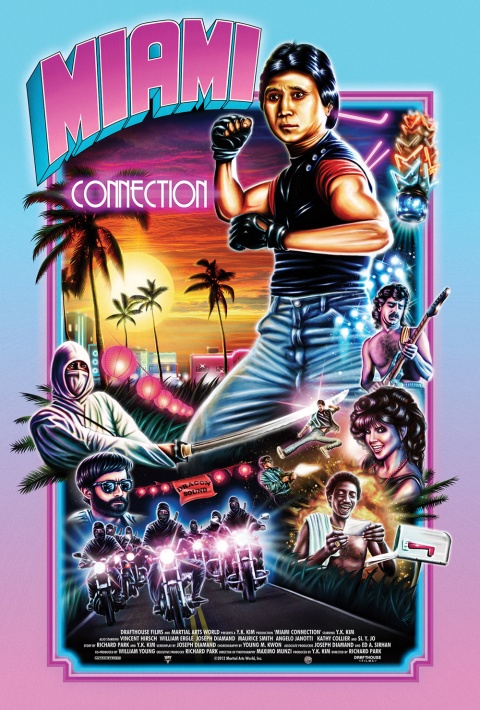
miamiconnection1

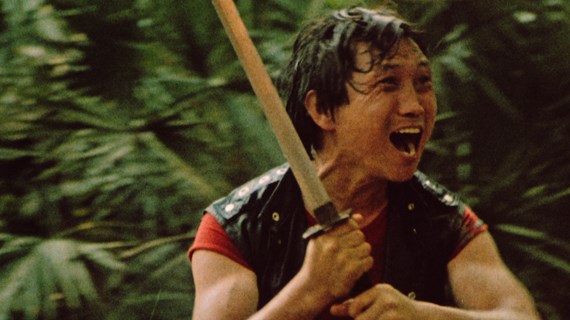
Today’s feature is Miami Connection, a once-lost movie that features all of the cocaine, ninjas, and 80s rock you could ever want.

Miami Connection was directed, produced, and co-written by Woo-Sang Park, who was also behind American Chinatown, Gang Justice, and LA Streetfighters. His co-writers were two of the film’s stars and co-producers, Joseph Diamand and Y.K. Kim.

The cinematographer for Miami Connection was Maximo Munzi, who also shot such films as Detonator, Scorcher, and American Chinatown.

Both the music and special effects makeup work for Miami Connection was provided by Jon McCallum, who also worked on films like Future Shock, Project Eliminator, Soultaker, and Surf Nazis Must Die.

miamiconnection2The plot of Miami Connection centers around a group of students at the University of Central Florida in Orlando, who share a passion for taekwondo and their family-friendly rock and roll band, Dragon Sound. When Dragon Sound bumps a local gang peddling cocaine from a night club venue, their adversaries go out for revenge, and the conflict rapidly escalates.

The star of Miami Connection is Y.K. Kim, who is a noted master of taekwondo, and a local celebrity in Orlando. Apparently, he arranged most of the filming locations and extras for the movie based on his good will with the greater community. For instance, the bikers featured in the background were reportedly real local bikers from the Orlando area, and were compensated for their time in beer.

miamiconnection3Most of Miami Connection was filmed on (or near) the University of Central Florida campus in the Orlando, FL area. Despite the title of the movie, no part of the filming took place in Miami.

For years, Miami Connection was lost to the ages. Its theatrical release in 1988 barely broke out of Florida, and most of the screenings were limited to the Orlando area. The Orlando Sentinel apparently even named it the worst film of the year. In 2009, a programmer at Alamo Drafthouse picked up a copy on ebay, and screened it at one of the theaters. This eventually led to Drafthouse Films picking up the film for redistribution, which has led to its rising status as a cult classic.

Former Mystery Science Theater 3000 hosts Mike Nelson, Bill Corbett, and Kevin Murphy have announced that Miami Connection will be the lampooned feature for their Rifftrax Live event on October 1, 2015, which is bound to increase the movie’s profile even further.

Thanks to its new-found cult status, Miami Connection currently has an IMDb rating of 6.1, alongside Rotten Tomatoes scores of 69% from critics and 70% from audiences. However, I don’t think anyone would claim that it is an objectively “good” movie by any means: most of those positive reviews are acknowledging that the movie is immensely entertaining for its “good-bad” qualities.

There is so much to talk about in Miami Connection that I honestly have no idea where to start. The musical numbers and rock sequences might be what sets it apart the most from the pack of b-movies out there, and those songs are guaranteed to get stuck in your head, but the movie goes so much further than just those amazing tunes:

The acting is astoundingly terrible across the board in Miami Connection, with Y.K. Kim leading the pack with his thick accent and indecipherable dialogue. The performances are at times beyond belief, like during either of the “letter” sequences, which are some of the most bafflingly awful showcases of acting I have ever seen.

If there is anything honestly good about Miami Connection, it is the aesthetic. The look of the movie is just delightful, and you can feel how charmingly low budget it was, and how much people enjoyed being involved with it. It still doesn’t make any sense and is amateurish from top to bottom, but it sure as hell has charm. Scott Tobias sums up the movie perfectly in his review for The A.V. Club:

Hits the sweet spot between stunning ineptitude, hilariously dated period touchstones, and a touching naïveté that gives it an odd distinction.

The ending of Miami Connection takes an unexpected and dramatically dark turn for a movie about man-children singing about fighting ninjas and “stupid cocaine.” The absolute slaughter that takes place in the last few minutes feels like it belongs in a totally differently film, which just adds to how endlessly bizarre Miami Connection is on the whole (there is apparently an even darker alternate ending to the movie as well). The ending title message about pacifism is also one of the most confusing and jarring conclusions to a film I have seen since Dracula 3000, but it is somehow amazing at the same time.

Something that is never addressed in the movie is the fact that all of the central characters appear to be far too old to be living together in a small house, let alone be typical college undergraduates. Speaking of which, the University of Central Florida could not be plastered on this movie any more than it already is: if one of the main characters is wearing a shirt, there’s a 90% UCF branding is on it. I think the wardrobe might have been provided by the college bookstore.

Miami Connection is one of the best good-bad movies out there: the acting is ridiculous, the writing is silly without being aware of itself, and the plot is out-of-this world strange. If you have the opportunity to catch this one, I can’t recommend it highly enough. For bad movie fans, I would go so far as to say that Miami Connection is a must-see movie, alongside movies like Troll 2, Manos: The Hands of Fate, Birdemic, and Samurai Cop.

C.H.U.D. II: Bud the Chud

C.H.U.D. II: Bud the Chud

chudii1

Today’s feature is truly one of the most unnecessary and strange sequels of all time: C.H.U.D. II: Bud the Chud.

C.H.U.D. II was written by Ed Naha, who also penned such movies as Troll and Dolls. However, he did so under a pseudonym: M. Kane Jeeves. The fact that a man who was willing to have his name on Dolls and Troll declined credit for C.H.U.D. II should say a lot about the sort of movie we are dealing with here.

The film was directed David Irving, who has directed such films as (Night of the Cyclone, Rumpelstiltskin, Sleeping Beauty). However, he had no previous experience with directing horror movies.

The cinematographer for C.H.U.D. II was Arnie Smith, who has primarily worked on biographical documentaries like Aldous Huxley: Darkness and Light, Bogart: The Untold Story, and The Unknown Peter Sellers.

The film’s editor was Barbara Pokras, who cut such memorable films as The Giant Spider Invasion and The Return of The Living Dead.

The producers for C.H.U.D. II included Lawrence Kasanoff (Mortal Kombat, Foodfight!, Class of 1999, Blood Diner), Jonathan Krane (Face/Off, Battlefield Earth, Swordfish), Simon Lewis (Look Who’s Talking), and Anthony Santa Croce (Monk, Tales From The Darkside)

The music for C.H.U.D. II was composed by Nicholas Pike, who worked on scores for a number of episodes of Masters of Horror (including Pick Me Up), Freddy’s Nightmares, It’s Alive (2008), and Critters 2.

The C.H.U.D. II effects team included Allan Apone (Evilspeak, Galaxy of Terror, Going Overboard, Deep Blue Sea), Douglas White (Merlin’s Shop of Mystical Wonders, UHF), Michael Spatola (Iron Man 3, Going Overboard), Bryan Moore (Dolls, Tremors II), Tim Huchthausen (Blind Fury, 1941), and John Fifer (Return to Horror High, Cyber Tracker).

The cast for C.H.U.D. II includes Gerrit Graham (Child’s Play 2, Chopping Mall), Brian Robbins (Head of the Class), Tricia Leigh Fisher (Book of Love), Robert Vaughn (Bullitt, The Magnificent Seven, Battle Beyond The Stars), Larry Cedar (The Gingerdead Man), Larry Linville (M*A*S*H), and June Lockhart (Troll, Deadly Games, Lost In Space).

chudii3The plot of C.H.U.D. II centers around a sole surviving experimental C.H.U.D., which was synthesized by the military from the original race of Cannibalistic Humanoid Underground Dwellers in an attempt to create a super-soldier. However, the project was scrapped, and “Bud” was left in the care of a Center for Disease Control. At the beginning of the story, Bud is accidentally freed by some teenagers, after which he begins creating a new army of C.H.U.D.s, and generally causes havoc for the local townsfolk.

The reception to C.H.U.D. II: Bud the Chud was definitively negative at the time, though it has a bit of a cult following now. Currently, it holds an IMDb rating of 3.6, which is still impressively low.

chudii4This flick astoundingly takes place in a totally different genre from C.H.U.D., and the monsters don’t look remotely like CHUDs as they were previously depicted. There is just no way that this movie was originally written as a sequel to C.H.U.D., because there are just too many dramatic differences. To be generous, CHUD II is to CHUD what Return of the Living Dead is to Night of the Living Dead: the movies are not really related, though the previous film is nodded at here and there in the story of the “sequel”.

Speaking of which, what value was there to the C.H.U.D. name that it made sense to brand this random zombie comedy? It was a bit of a cult classic, but it was never a cash cow or particularly beloved to the point of being worth a sequel. Honestly, this makes more sense as a Weekend at Bernie’s sequel, and would probably be funnier that way. The protagonists in this movie spend a lot of time trying to use Bud to get a good grade in a science class, which fits way better in a silly comedy franchise than the sequel to grimy cannibal movie.

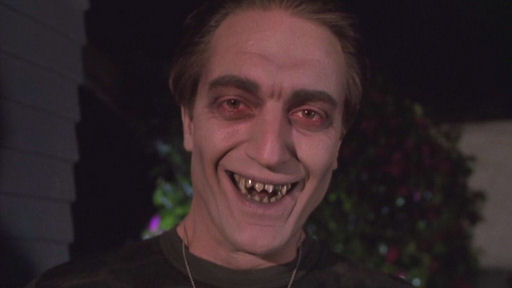
chudii2Regarding the monsters themselves, the CHUDs in C.H.U.D. II are really unimpressive. The zombie makeup here is mostly just pale foundation, eye pits, and messed up teeth. The original CHUDs are still cheap, but they are at least a bit eerie with their contorted faces and lantern eyes. There isn’t even an attempt to recreate them here.

I couldn’t very well forget to talk about the music in this movie, which is absolutely ridiculous. Bud, the Alpha CHUD, gets his own theme song, which plays constantly throughout the movie whenever the character is on screen.

Speaking of Bud, the character is far more intelligent and thoughtful than it was ever implied that CHUDs could be. This may be due to him being a synthesized, experimental super-soldier rather than a natural CHUD, but I personally think that was just a plot convenience used to explain away any inconsistencies with the first film. However, it is pretty funny to think of Bud the super-soldier CHUD dressed up as Captain America.

This isn’t an easy flick to recommend. It isn’t particularly fun as a comedy or as a b-movie, and clearly didn’t have a whole lot of care put into it. That said, it is certainly cheesy and hammy, and is probably worth giving a shot for bad movie fans. I just wouldn’t go in with any kind of high expectations, because this isn’t anywhere close to being a good-bad elite flick. Just in the realm of zombie comedies, there are far better options out there to dig up.

The Last Dragon

The Last Dragon

lastdragon1

This post is based on a viewer request, which is being filled due to a donation to the Secular Student Alliance via my campaign during Secular Students Week (June 10-17, 2015). Thanks to all for your contributions!

Today’s feature is Berry Gordy’s The Last Dragon, a musical martial arts movie that has become a true cult classic.

The credited writer of The Last Dragon is  Louis Venosta, who only has a handful of other writing credits listed on IMDb. Outside of one short film, the only other things he has written are Bird On A Wire and a handful of episodes of the science fiction television show First Wave.

The Last Dragon was directed by Michael Schultz, was was also behind Car Wash and Sgt. Pepper’s Lonely Hearts Club Band. More recently, he has directed a handful of episodes of television shows like Arrow, Chuck, and Touched By An Angel.

The cinematography on The Last Dragon was provided by James A. Contner, who also shot Jaws 3-D, The Flamingo Kid, and Cruising. He has done a good deal of directing on television, including numerous episodes of Buffy The Vampire Slayer, Angel, 21 Jump Street, and Charmed.

Christopher Holmes served as the editor for The Last Dragon: an experienced cutter who has also worked on films like Five Easy Pieces, Sgt. Pepper’s Lonely Hearts Club Band, Car Wash, Donnie Brasco, Staying Alive, and Conan the Barbarian.

The special effects work on the film is credited to Gary Zeller, who also worked on Scanners, Dawn of the Dead, Vigilante, Visiting Hours, and Amityville II: The Possession. The makeup effects were  provided by Allen Weisinger, who has done effects work on such films as The Wiz, Wolfen, Tootsie, Goodfellas, The Silence of the Lambs, and Scent of a Woman.

The music for The Last Dragon was composed by Misha Segal, who has also provided scores to such movies as The Human Centipede III, Ninja III: The Domination, and The New Adventures of Pippi Longstocking.

The producers on The Last Dragon were Joseph M Caracciolo (Spider-Man 3, Charlie’s Angels, Biloxi Blues, 8MM), Rupert Hitzig (Jaws 3-D, Wolfen), and the famed record producer and songwriter Berry Gordy, the founder of Motown.

The Last Dragon was choreographed in part by Lester Wilson, who famously planned the choreography for movies like The Wiz, Saturday Night Fever, and Sister Act.

The cast of The Last Dragon features Taimak (No More Dirty Deals), Vanity (Never Too Young To Die, Deadly Illusion, Action Jackson), Christopher Murney (Barton Fink), Julius Carry (Disco Godfather), Faith Prince (Huff, Spin City), Mike Starr (Ed Wood, On Deadly Ground, Anne B. Real, Snake Eyes, Black Dynamite, The Ice Harvest), Jim Moody (Personal Best, Lean On Me, Fame), Ernie Reyes, Jr. (Red Sonja, Surf Ninjas, Paper Dragons, Rush Hour 2, Teenage Mutant Ninja Turtles II: The Secret of the Ooze), and future notable actors William H. Macy (Cellular, Evolver, Fargo, Edmond) and Chazz Palminteri (A Bronx Tale, In The Mix, The Usual Suspects) in small, early roles.

lastdragon2

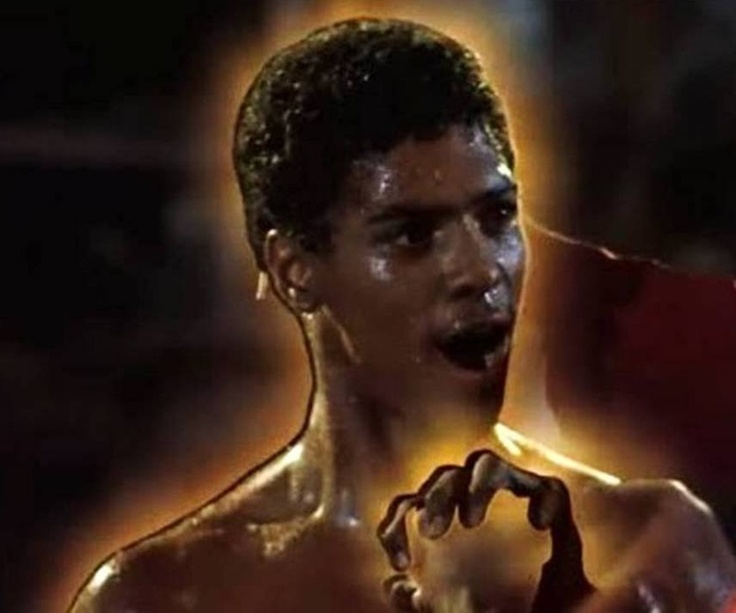
The plot of The Last Dragon  follows a young martial artist living in Harlem, who winds up on the wrong side of a local martial arts obsessed crime boss, while also also getting involved in a feud between a violent music promoter and a famous singer/television show host. He has to face all of these challenges while simultaneously working to attain the final level of martial arts mastery, known as “The Glow.”

The soundtrack for The Last Dragon earned two Razzie nominations for Worst Original Song: the title theme song, and Vanity’s “7th Heaven.”

The famous martial arts movie Enter the Dragon, starring Bruce Lee,  appears during a theater sequence towards the beginning of The Last Dragon, which was clearly a major inspiration for this film. Likewise, clips of Fists of Fury and The Chinese Connection pop up later in the film, as well as some explicit dialogue about the influence of Bruce Lee on the lead character.

The hit song “Rhythm of the Night” by DeBarge was released as part of the soundtrack for The Last Dragon, and ultimately got as high as #3 on the US Billboard Hot 100.

The band LMFAO, which was made up of two descendants of The Last Dragon producer Berry Gordy, references the film in their hit single “Sexy and I Know It,” with the lyric “like Bruce Leroy I got The Glow.”

The Last Dragon currently has a score of 6.8 on IMDb, along with Rotten Tomatoes ratings of 20% (critics) and 86% (audience). It is worth noting what accounts for that huge gulf: the Rotten Tomatoes critics score comes almost entirely from reviews that were written at the time of the film’s release, whereas the IMDb rating and Rotten Tomatoes audience score are continually updated with new submissions and input. The huge gulf between the reception it received from critics at the time and the reputation it has in the minds of moviegoers now is quite notable, and reflects its status as a cult classic in the opinions of many.

While it was a critical failure at the time, The Last Dragon managed to gross an impressive $25.7 million at the domestic box office, making it a financial success on a reported budget of $10 million.

Some of the songs featured in The Last Dragon are unfathomably awful, like Vanity’s “7th Heaven.” I don’t know what exactly went wrong there, but it just sounds awkward and really unpleasant, which is surprising for a movie that is supposed to be powered by the musical numbers.

Speaking of the songs, the one really successful entry into the soundtrack is “Rhythm of the Night,” which I mentioned previously. However, it winds up getting obviously shoehorned into the movie, which grinds the plot to a halt for the duration that it plays. Theoretically, the soundtrack is suppose to accentuate the movie, and not deliberately distract from it, which is how the song winds up functioning here.

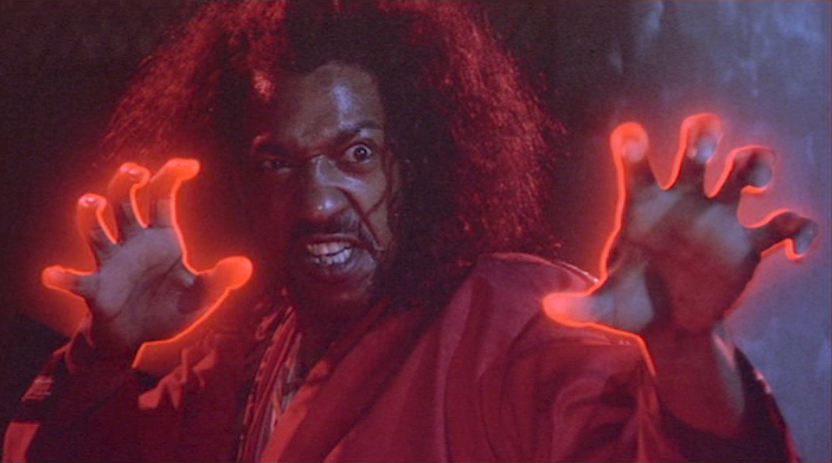
The villain of the film, Sho ‘Nuff, is a fantastically hammy adversary for the stoic hero, ‘Bruce’ LeRoy Green, and his portrayal is probably the most memorable aspect of the movie. Personally, I wish he featured more prominently in the film, as he seems to disappear for a while in the middle of the story. On the flip side, Taimak clearly isn’t much of an actor (which is particularly clear when anything emotional is required of him), though he seems more than competent with the stunts and fighting.

lastdragon4

The Last Dragon has a generally flashy design to it all the way from the costumes to the sets, which is justifiably over-the-top given the tone and style of the movie. I could see how it could turn some people off, but I thought it all worked pretty well.

lastdragon3

The fight sequences that pop up in The Last Dragon could be shot better to emphasize the action, but they certainly aren’t awful by any means. For the most part, the crew’s experience wasn’t with martial arts movies, so it is understandable that they weren’t experts at pulling that aspect of the film off. And, to their credit, it is for the most part good enough.

The Last Dragon rightfully doesn’t take itself too seriously, and audiences certainly shouldn’t either. This is a film that is, above all else, fun and entertaining. It isn’t meant to be any deeper than its surface value, and there’s not necessarily anything wrong with that. I mean, ‘Bruce’ LeRoy? We aren’t dealing with subtlety here. But honestly, who is complaining? The movie knows exactly what it is, and leans into that identity.

Speaking of which, naming the central character ‘Bruce’ LeRoy was a nice homage to the countless Bruce Lee clone movies that flooded the video market after Enter the Dragon, which all seemed to use a permutation of the name ‘Bruce Lee’ for their lead.

Overall, The Last Dragon is a pretty entertaining flick that merges two distinct styles, though it certainly has a whole lot of flaws. However, most of them just contribute to the charm of the flick, and help build the ambiance of the movie being an honest Bruce Lee knockoff film. The Last Dragon is a fun ride that is worth checking out for bad movie fans, though it drifts into being too self-aware at moments to appreciate as an earnest good-bad feature. Regardless, it is plenty of fun.

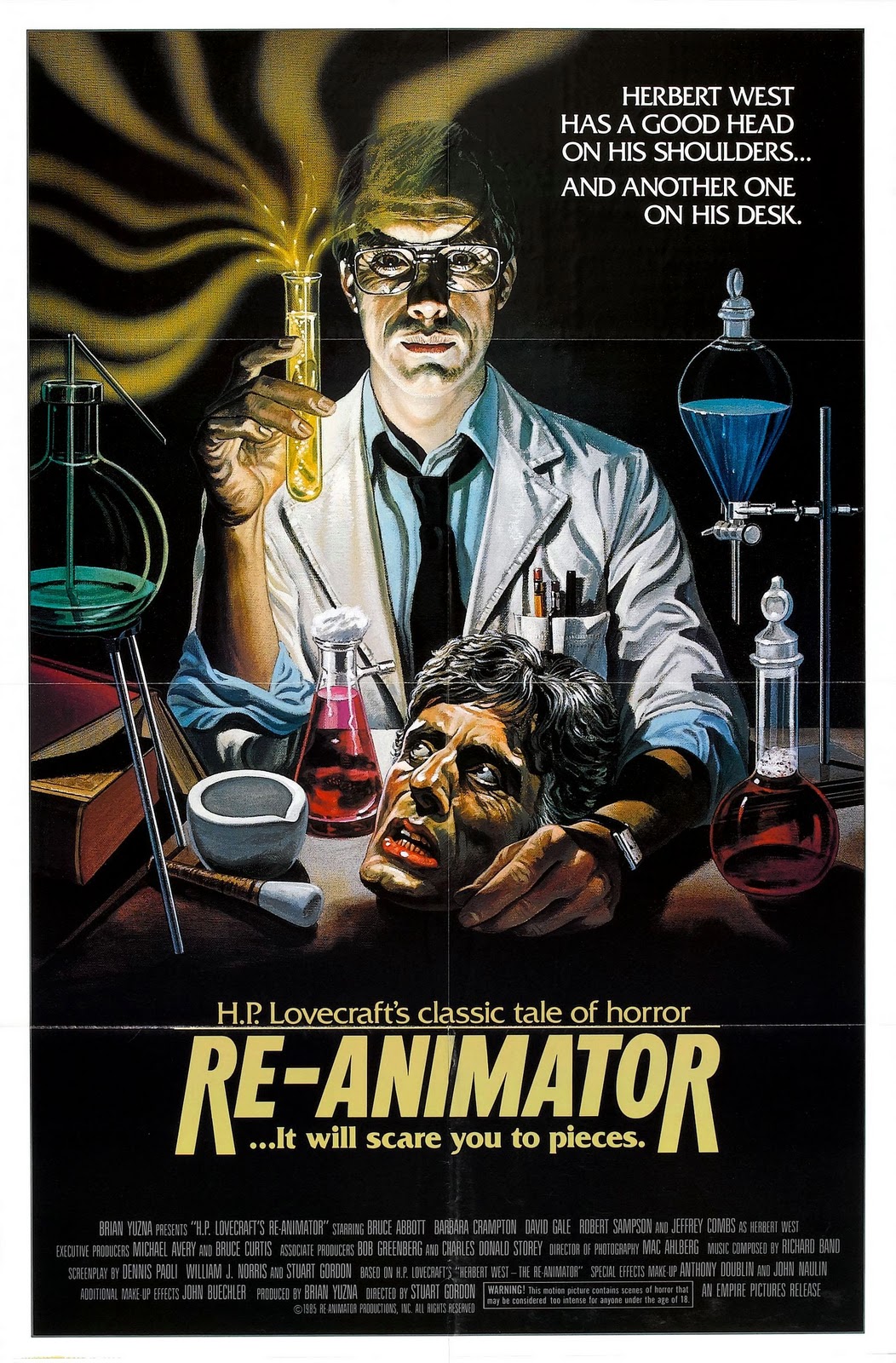
Plotopsy Podcast #9 – Re-Animator

Re-Animator

reanimator9

Welcome back to the (Plot)opsy Podcast! It has been a while since the last episode due to some technical issues, but now the show has been appropriately brought back to life! On this episode, I go into some fun facts and trivia about Stuart Gordon’s cult classic debut feature, “Re-Animator.” It is pretty fascinating how the combination of an experienced stage director, an out of print story, and some creative frugality can make for such a memorable classic of horror! I recommend checking out my text review of the movie from last month if you find yourself wanting more.