Tag Archives: movies

Larry Cohen Collection: “The Stuff”

The Stuff

thestuff7

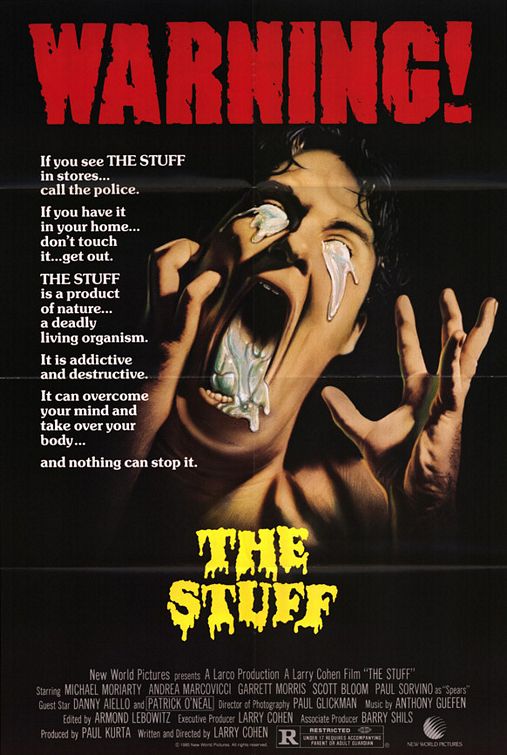
Next up in the Larry Cohen Spotlight is perhaps my favorite of all of his films: the campy consumerism satire, “The Stuff.”

“The Stuff” was written, directed, and co-produced by Larry Cohen, in cooperation with his production collaborators Paul Kurta (“Q,” “Perfect Strangers,” “Hell On Weels,” “Veronica Mars”) and Barry Shils (“Special Effects,” “It’s Alive III”).

The makeup effects for “The Stuff” are credited to a team including Ed French (“Creepshow 2,” “C.H.U.D.,” “Paul Blart Mall Cop,” “Dragonball: Evolution”), Michael Maddi (“The Blob,” “Saturday Night Live”), Steve Neill (“God Told Me To,” “It’s Alive III,” “Q,” “Laserblast,” “Full Moon High,” “Battle Beyond The Stars”), Rick Stratton (“Class of 1999,” “Star Trek: The Next Generation,” “Galaxy Quest”), and Craig Lyman (“Winter’s Tale,” “The Happening,” “The Cotton Club”).

The special effects work is credited to one Bret Culpepper, who worked on other productions such as “Re-Animator,” “The Beastmaster,” and “Back to the Future Part III” as a special effects worker and technical advisor.

The visual effects team for “The Stuff” comprised of David Allen (“Robot Jox,” “Dolls,” “Q,” “Laserblast”), Jim Danforth (“The Prophecy,” “Ninja III: The Domination,” “The Thing”), Jim Doyle (“Showgirls,” “Breakin’ 2: Electric Boogaloo,” “A Nightmare On Elm Street”), Paul Gentry (“Space Truckers,” “RoboCop 3,” “Predator 2”), John Lambert (“Soultaker”), David Stipes (“Real Genius,” “Night of the Creeps,” “Arena”), and Ted Rae (“Lawnmower Man 2,” “Jaws 3-D,” “Night of the Comet”).
thestuff2 thestuff3 thestuff5The cinematography on “The Stuff” was provided by Paul Glickman, who also acted as director of photography on Larry Cohen movies “God Told Me To” and “Special Effects.”

“The Stuff” was edited by Armond Lebowitz, who also cut the Larry Cohen movies “Q: The Winged Serpent,” “Special Effects,” and “Full Moon High.”

thestuff6The stunt coordinator on “The Stuff” was Jery Hewitt, who has worked on a diversity of films such as “The Big Lebowski,” “Fargo,” “Christmas Evil,” “Michael Clayton,” “No Country For Old Men,” and “Cop Out.”

The cast for “The Stuff” is headlined by frequent Larry Cohen collaborator Michael Moriarty, with additional roles filled out by Garret Morris (“Saturday Night Live”), James Dixon (“It’s Alive”), Andrea Marcovicci (“The Hand”), Paul Sorvino (“Goodfellas,” “Repo! The Genetic Opera”), Danny Aiello (“Hudson Hawk,” “Moonstruck”), and Patrick O’Neal (“Under Siege”). In the background, you might spot recognizable faces like Eric Bogosian (“Special Effects”), Abe Vigoda (“The Godfather”), Patrick Dempsey (“Loverboy,” “Scream 3”), Laurene Landon (“Maniac Cop,” “Maniac Cop 2,” “It’s Alive III”), Brooke Adams (“The Dead Zone,” “Days of Heaven”), and Mira Sorvino (“Mimic,” “Mighty Aphrodite”).

thestuff8The story of “The Stuff” surrounds a mysterious dessert that takes the consumer world by storm, thus throwing the established dessert industry into a panic. They collectively hire a former intelligence agent named Mo Rutherford to investigate the product and discover the secret recipe via corporate espionage. As the covert investigation proceeds, however, “The Stuff” becomes increasingly eerie, suspicious, and dangerous. After a series of team-ups with a disgruntled mascot, a paramilitary organization, and an orphaned child, Rutherford decides to take The Stuff head on.

“The Stuff” features some really interesting effects work, including a bedroom attack by the stuff that pays homage to “A Nightmare On Elm Street,” even using the exact same effects room for the shot.

The Stuff itself was made up of an assortment of materials depending on the scene: ice cream, yogurt, fire extinguishing foam, and a wretched fish bone-meal concoction were all used at one point or another, and some of the shots are even superimposed animation.

thestuff10Arsenio Hall was apparently considered for the role of Chocolate Chip Charlie, which ultimately went to “Saturday Night Live” alum Garrett Morris.

There was an extensive copyright dispute over the effects used in “The Stuff,” which led to a lengthy legal battle (Effects Associates, Inc v Cohen) that set significant precedence for the ownership of effects work done for films, and is actually a pretty interesting read for anyone with a cursory interest in copyright law.

The reception for “The Stuff” was somewhat mixed: it currently holds Rotten Tomatoes scores of 70% (critics) and 45% (audience), with an IMDb rating of 5.9. “The Stuff” was made on a $1.7 million budget, and received only a limited theatrical release with an undisclosed total gross. However, it has certainly become a cult classic thanks to effects, acting, and bizarrely humorous plot.

As with many of Cohen’s films, “The Stuff” provides a significant element of social commentary, particularly about consumerism and the food industry. There is even a specific call-out in the dialogue about the fact that the recipe for Coca-Cola is kept secret, and no one seems to care.

thestuff9The effects work on “The Stuff” is often mocked for its ridiculousness, but I actually though that it was pretty impressive work given the low budget on the film. Sure, it is definitely squibby and cheesy, but it certainly got the job done on budget. Apart from some dated super-imposed effects, the film still looks pretty good, thanks in large part to the extensive use of practical effects.

thestuff4The plot of “The Stuff” becomes very similar to “Invasion of the Body Snatchers” as it progresses, with many people being replaced or possessed by the nefarious dessert treat. Larry Cohen would later co-write his own version of “Invasion of the Body Snatchers” with 1993’s “Body Snatchers,” ultimately directed by Abel Ferrara.

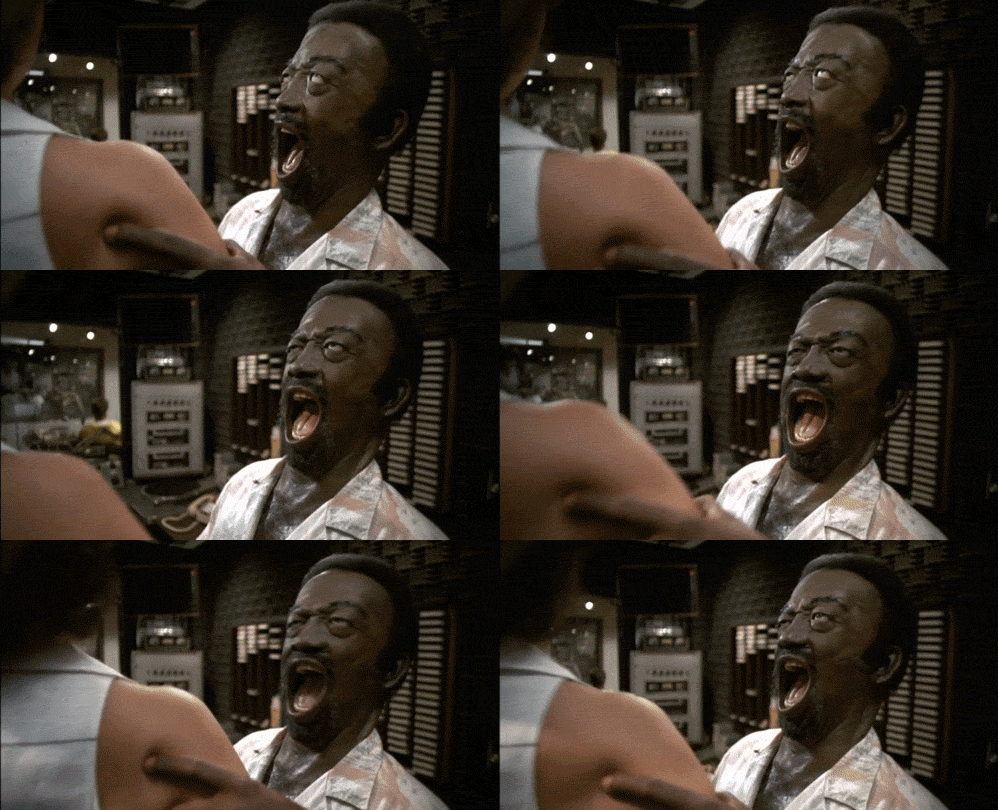
The performances in “The Stuff” are distinctly and astoundingly over the top, particularly on the parts of Moriarty, Sorvino, and Morris. I absolutely adore Moriarty’s southern-fried pseudo-buffoon ex-intelligence agent, and even the child actor gets to go over the top with his infamous grocery store freak-out:

Overall, “The Stuff” is probably one of my favorite films, and is just about the pinnacle of what a good-bad movie can be. The performances, effects, and writing are all spot on, and create what is almost a Platonic ideal of a b-movie. It should go without saying, but “The Stuff” is a solid recommend from me for just about everyone. It is clever, funny, sharp, goofy, and just the right amount of gory.
Roar

Roar

roar4

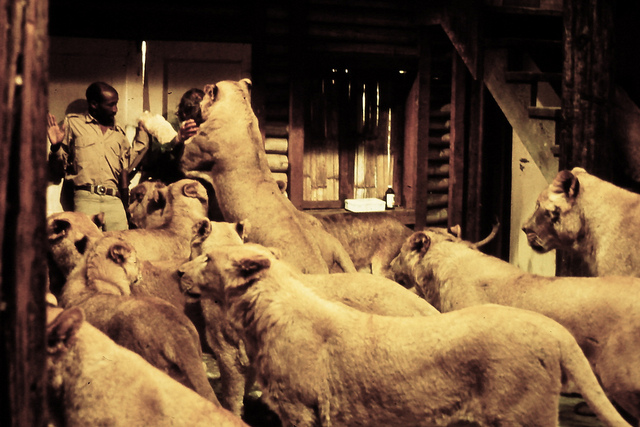
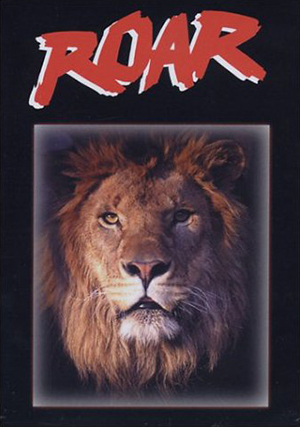
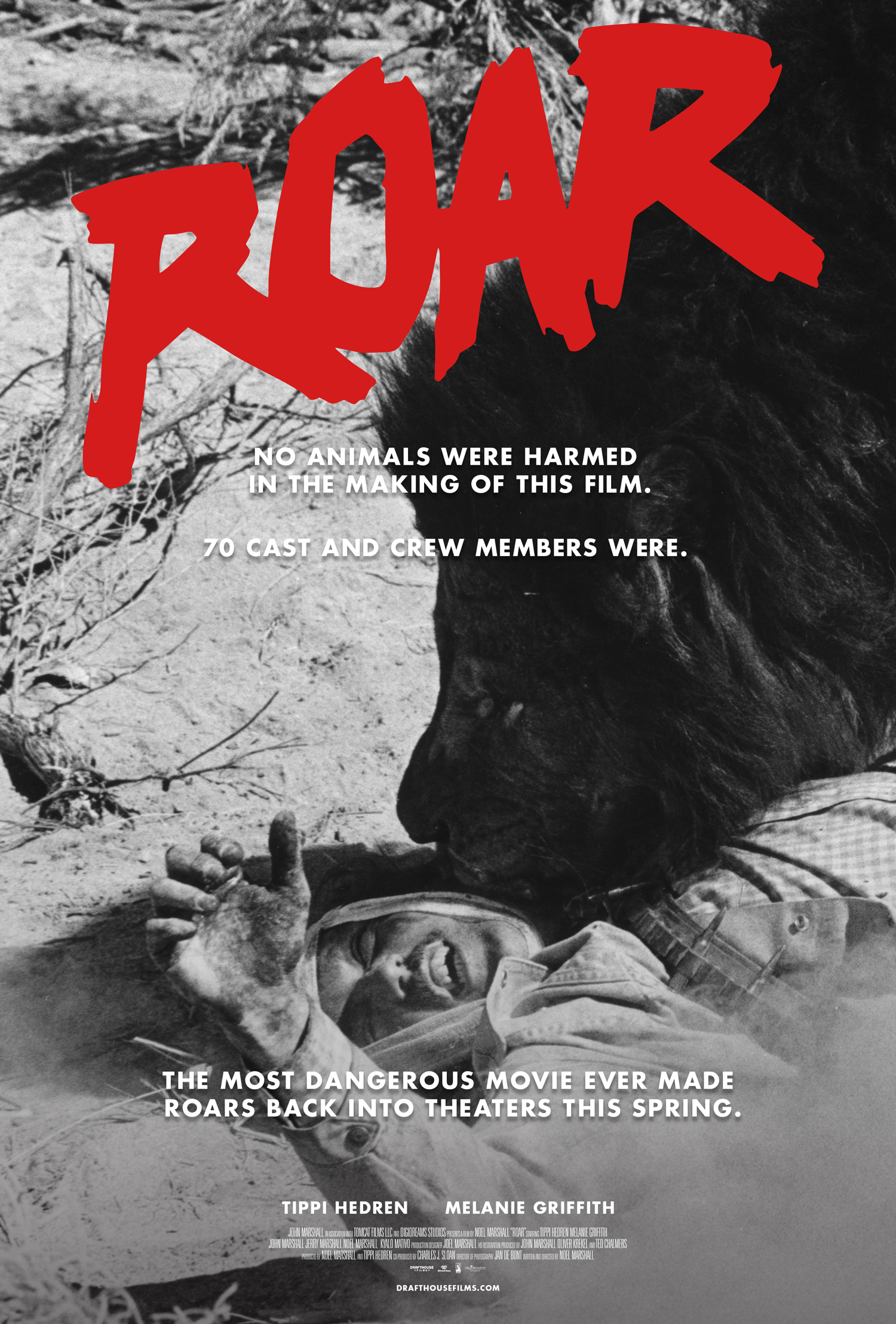
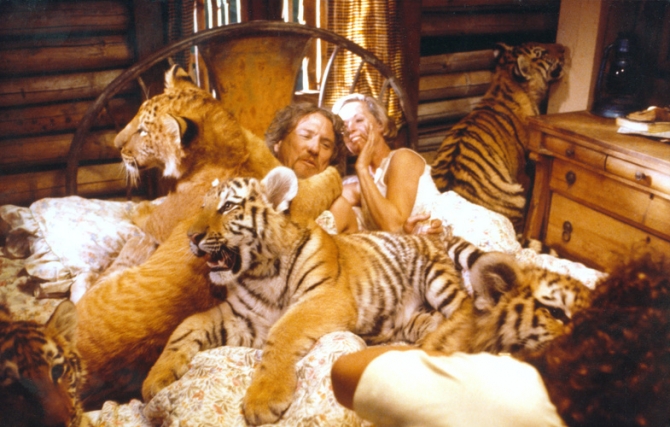
Today’s feature is a bit of a curiosity, in that it is possibly the most dangerous movie ever filmed: 1981’s “Roar,” starring Tippi Hedren, Melanie Griffith, and a shit-ton of lions. Many thanks to the Gateway Film Center for screening the film, and the Alamo Drafthouse for helming the re-release.

“Roar” was written, directed, and produced by Noel Marshall, who is best known for acting as a producer on “The Exorcist” and a handful of other pictures, as well as being the husband of the famed actress Tippi Hedren (who also starred in and produced “Roar”).

The cinematographer and supervising editor on “Roar” was Jan De Bont, who went on to become a successful director and director of photography on some significant Hollywood movies (“Leonard Part 6,” “Speed,” “Speed 2,” “Twister,” “Die Hard,” “The Hunt For Red October”).

The distinctive music for “Roar” was composed by Terrence Minogue, who has no other credited film work. It was performed, however, by the National Philharmonic Orchestra, a recording orchestra out of London that can be heard on soundtracks for movies such as “Supergirl,” “Alien,” “Total Recall,” and “The Exorcist.”

One of the other producers on “Roar” was Banjiro Uemura, who also later produced the Hayao Miyazaki classic animated film, “Spirited Away.”

“Roar” was filmed at a southern California ranch owned by Tippi Hedren and Noel Marshall, where the family for years acquired and raised countless big cats, and lived alongside them not unlike as depicted in the film.

The cast of “Roar” was a true family affair, headlined by Tippi Hedren and director Noel Marshall, who also acted as the primary financiers for the film. Most of the rest of the cast is filled out by their children: John Marshall, Jerry Marshall, and the later Hollywood star and two-time Golden Raspberry winner Melanie Griffith (“Working Girl,” “Body Double,” “Bonfire of the Vanities,” “Crazy in Alabama”).

The story of “Roar” centers around a family traveling to visit their radical big cat researcher father, who is embedded with a pride of lions while simultaneously introducing an assortment of foreign wild cats into the pride. Just before the family arrives, a new, aggressive lion arrives to challenge the balance and leadership of the pride, putting the family in significant danger.

roar1

“Roar” is likely best remembered due to the multiple attacks and maulings that occurred on set during filming. Noel Marshall at one point had to be hospitalized for his wounds, which reportedly required years to recover from. He was also bitten through his hand in a sequence that remained in the finished film. Likewise, Melanie Griffith required plastic surgery after the film, and reportedly fifty stitches to her face. The assistant director, Doron Kauper, was nearly killed after one of the lions tore open his neck and attacked his face. John Marshall reportedly needed over fifty stitches to repair a wound from a lion bite. Tippi Hedren not only broke a leg after falling off of an elephant, but also needed more than thirty stitches after being bitten on the back of her head by a lioness. Reportedly, Tippi Hedren has said of the experience of being bitten by a lion:

“Let me tell you, it hurts when you’re bitten by a lion. It’s not only that you may have an open, gaping wound, plus shock, but the pressure of those enormous jaws is so strong that it hurts”

“Roar” ultimately took over a decade to actually complete from writing to release, partially due to the death of a number of the lions in the wake of a tragic flood of the property resulting from a local dam break.

The idea for the story of “Roar” was apparently conceived of by Hedren and Marshall while making a movie in Africa, during which they discovered an abandoned house on a wild game reserve that had become overrun by a pride of lions. The financial success of the 1966 lion-centric movie “Born Free” also seemed to signal that the idea could be financially viable.

roar2

Tippi Hedren later founded the Roar Foundation, which supports the Shambala Reserve for wild and endangered cats in Acton, California (many of which have descended from the cats used in “Roar”). Hedren is now a staunch animal rights activist who opposes the private ownership of big cats, and regrets letting her family live in proximity to the dangerous animals. She wrote a book about the making of the movie in 1985, called “Cats of Shambala.”

In 2015, the Alamo Drafthouse produced a re-release of “Roar” that marked the first time that the movie has hit American theaters. The initial release of the film only played in international markets, grossing only $2 million of the reported $17 million budget.

roar5

The reception for “Roar” was understandably mixed. The film is more of an astounding spectacle and experience than it is a sensible motion picture, which has led to it receiving Rotten Tomatoes scores of 70% (critics) and 58% (audience), along with an IMDb rating of 6.4.

It is really hard to view and analyze “Roar” like one would a typical motion picture, because it is truly impossible to separate the film from its astounding back story and the shock of seeing the experience on screen.

roar3

From the point of view of looking at “Roar” like a standard film, it is just terrible. Plot lines are dropped (what happened to the disgruntled poachers?), the story is nonsense, and the acting (can you really call it acting?) is pretty atrocious on the part of the Marshalls. The pacing and shots are generally jarring as well, because the film was very much dictated by the cats’s behavior, which was naturally erratic and unpredictable, something that is explicitly acknowledged in the credits. The entire film feels like a sequence of shots that were aimlessly strung together in the editing stage, which is a film-making practice that typically only Terrence Malick can get away with.

“Roar” is very obviously a message movie, which is a bit confusing and wrong-headed given how violent the large cats are over the course of the story. There is also a lot of genre confusion, in that the film was not portrayed or marketed as a horror movie, despite how terrifying the product is to watch. The story tries to play off the conclusion as peaceful, with the humans adapting to living around the lions in peace, which frankly makes no sense after all of the chaos and violence that they have inflicted on the family.

Speaking of which, the only character who reacts to the various dangerous animals like a human actually would is Mativo, a supporting character who spends most of his time trying to get his coat back from an assortment of deadly animals. However, even his terror at the cats is overcome by the end of the film, when he joins the family in cuddling and playing with the pride of lions. At the very least, he should be upset at the fact that the cats absolutely destroyed his jacket, and also managed to sink his boat.

Overall, despite the fact that “Roar” is a pretty awful movie by film standards, I consider it a must-see for movie fans. It isn’t a film so much as it is a shocking and baffling visual experience, which is one of the most honestly terrifying things that I have ever watched. I don’t consider it “so bad it is good” like most of the films I cover, but more as a truly unique experience that belongs more in a category with films like “Cannibal Holocaust” that are defined by their back story, rather than the product on screen.

Larry Cohen Collection: “Maniac Cop 3”

Maniac Cop 3: Badge of Silence

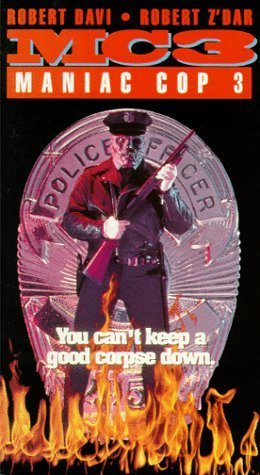
maniaccopthree2

Next in the Larry Cohen collection is the finale of the Maniac Cop trilogy: “Maniac Cop 3: Badge of Silence.”

“Maniac Cop 3” was once again written and produced by Larry Cohen, and was initially directed by William Lustig of “Maniac Cop” and “Maniac Cop 2” as well. However, he ultimately walked off of the film when the initial cut only came in at 50 minutes, refusing to film any additional footage. Producer Joel Soisson (“Dracula 2000,” “The Prophecy,” “Mimic 2”) filled in for the additional sequences, and the film was ultimately Alan Smithee-d for the DVD release.

maniaccopthree3The cinematography for “Maniac Cop 3” was provided by Jacques Haitkin, who also did photography work for “The Ambulance,” “Shocker,” “Evolver,” “A Nightmare on Elm Street,” and “Galaxy of Terror.”

The effects team on “Maniac Cop 3” was comprised on experienced makeup and special effects technicians, including Howard Berger (“The Cell,” “The Faculty,” “In The Mouth of Madness”), Robert Kurtzman (“Tusk,” “It Follows,” “John Dies At The End,” “From Beyond”), Bill Miller-Jones (“Maniac Cop,” “Hell Comes to Frogtown”), Greg Nicotero (“Seven Psychopaths,” “Ghosts of Mars,” “Torchwood”), Stephen DeLollis (“Reservoir Dogs,” “Pulp Fiction”), Larry Fioritto (“Halloween 4,” “Knight Rider”), Bruce Mattox (“Capricorn One,” “The China Syndrome”), Wes Mattox (“Django: Unchained,” “Deep Blue Sea,” “Daredevil”), and Robert Phillips (“Volcano,” “Se7en,” “Shocker”).

maniaccopthree6Outside of Larry Cohen and Joel Soisson, the producers on “Maniac Cop 3” included Michael Leahy (“Pulse”) and W.K. Border (“Trekkies,” “The Prophecy,” “Bill & Ted’s Excellent Adventure”).

The editors on “Maniac Cop 3” included David Kern (“Maniac Cop,” “Maniac Cop 2”), Michael Eliot (“Stargate SG-1,” “Stargate Atlantis”), and Rick Tuber (“Lie to Me,” “Nash Bridges,” “ER”)

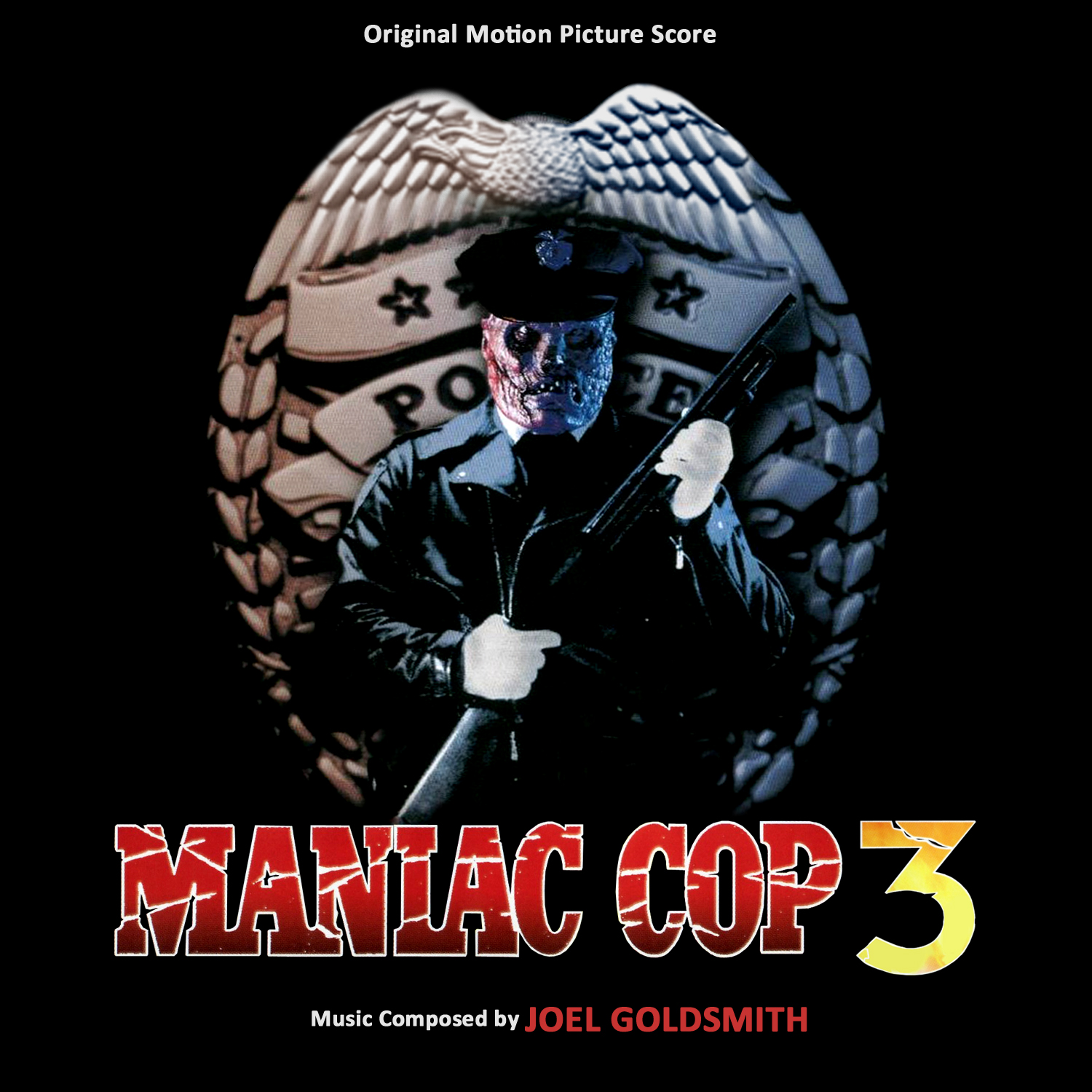
The score for “Maniac Cop 3” was provided by Joel Goldsmith, who worked on the music for “Kull The Conqueror,” “Laserblast,” and the television show “Stargate SG-1.”

maniaccopthree1The cast of “Maniac Cop 3” is headlined by returning players Robert Z’Dar and Robert Davi, with an accessory team made up by Robert Forrester (“Jackie Brown”), Jackie Earle Haley (“Watchmen”), Doug Savant (“Teen Wolf”), Grand Bush (“Lethal Weapon,” “Demolition Man”), Paul Gleason (“Die Hard”), Gretchen Becker (“The Doors”), Caitlin Dulany (“Winter’s Tale,” “Class of 1999 II”), and Ted Raimi (“Midnight Meat Train”).

The story of “Maniac Cop 3” picks up some time after the events of “Maniac Cop 2,” after the honorable burial of Matt Cordell following his name being cleared. However, a mysterious voodoo priest resurrects the Maniac Cop with unclear motives, while the NYPD is still trying to deal with a crime epidemic on the streets.

maniaccopthree5“Maniac Cop 3” had a rather poor reception, earning a 4.9 rating on IMDb along with an abysmal 18% Rotten Tomatoes audience score. It is widely considered to be the worst in the series, and was given a thorough roasting by the podcast “We Hate Movies.”

“Maniac Cop 3” was given an NC-17 by the MPAA, which killed any chance of it getting a theatrical release. It debuted on HBO, and eventually got a home video release. I wasn’t able to dig up any budget numbers for the flick, but the fact that it failed to make it to theaters leads me to believe that it was likely a losing proposition.

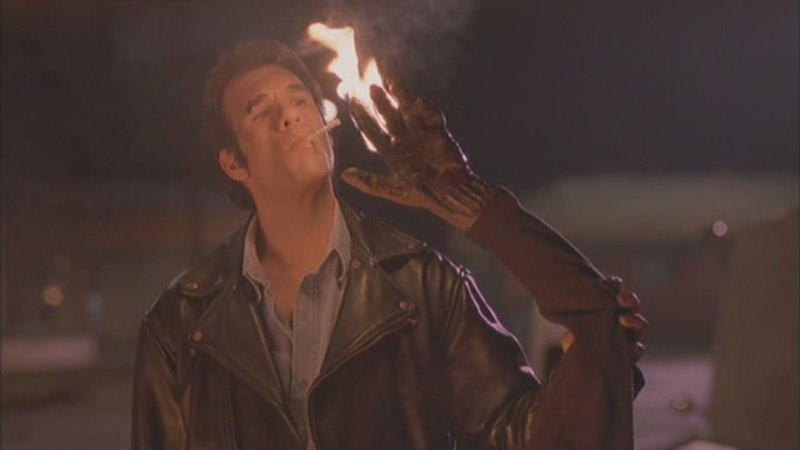
The biggest problem with “Maniac Cop 3” is that you can tell that the movie was padded out. For instance, the entire final car chase sequence feels like lagniappe: the story is over and resolved, and there’s just no real reason for the chase to happen. However, it does allow Robert Davi to light a cigarette with Maniac Cop’s detached arm, so how upset can you be? In any case, the additional footage throws a massive wrench into the pacing of the film, which wasn’t all that well paced to start with.

maniaccopthree7Robert Davi gets a lot more screen time in “Maniac Cop 3” than he got in “Maniac Cop 2,” and I think he did a pretty decent job carrying the load as the sole lead for the feature. Of all the problems with the film, he didn’t seem to me to be one of them.

The plot to “Maniac Cop 3” is pretty much nonsense. Essentially, it is “Bride of Maniac Cop,” but there’s no real connection between Kate and Cordell. Further, Cordell’s story is over, and it doesn’t make sense why he would want to come back to life at this point. His drive for revenge is what propelled him throughout the franchise, and in “Maniac Cop 3” it just isn’t there.

“Maniac Cop 3” does attempt to explain Cordell’s seemingly superhuman powers with voodoo magic. However, it is unclear if he was resurrected prior to the beginning of the franchise. It seems like that has to be what happened, because it is never explained how he went from brain-dead to god-like between the events of the back story and the beginning of “Maniac Cop.” However, there is a definite lack of clarity there.

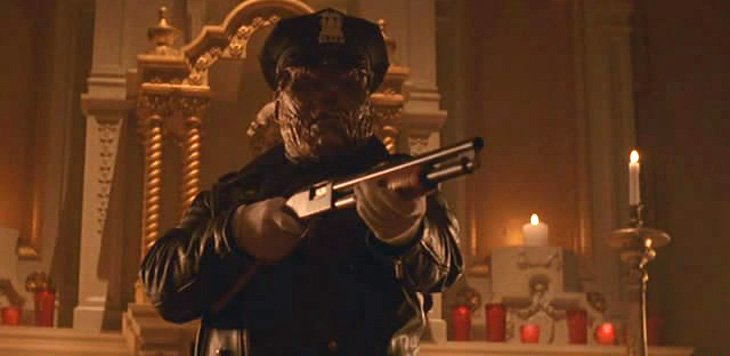
maniaccopthree4Overall, “Maniac Cop 3” is more of a good-bad entertaining watch that the other two films in the series. The first two are actually pretty good b-movies, whereas “Maniac Cop 3” is just an embarrassing parade of nonsense and behind the scenes drama. That said, there are some entertaining moments, like the Maniac Cop driving a car while on fire, and playing skeet with an innocent pedestrian. If you have the tolerance to sit through bad b-movies, you might want to give “Maniac Cop 3” a shot.

Larry Cohen Collection: “Maniac Cop 2”

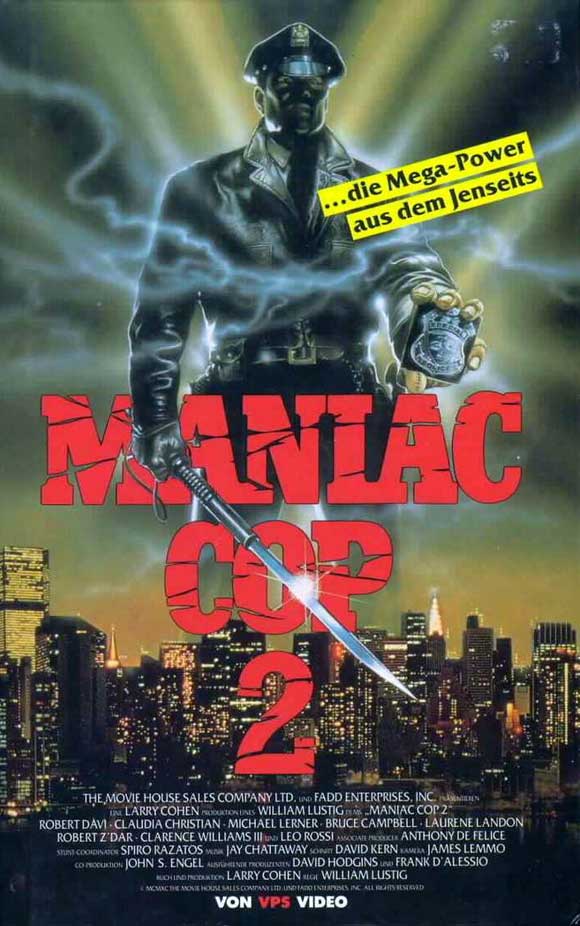
Maniac Cop 2

Print

Next up in the Larry Cohen Collection is “Manic Cop 2,” which continues Matt Cordell’s crusade for revenge against the city officials and criminals who set up his imprisonment and murder.

“Maniac Cop 2” was once again written and produced by Larry Cohen, with William Lustig also taking up the directorial reins for the sequel.

The director of photography on “Maniac Cop 2” was James Lemmo, who was one of the cinematographers from the first “Maniac Cop,” and also worked with William Lustig on “Vigilante.”

The effects team on “Maniac Cop 2” included Wayne Beauchamp (“Pray For Death,” “Children of the Corn,” “C.H.U.D. 2: Bud the Chud”), Bill Miller-Jones (“Hell Comes to Frogtown”), Dean Gates (“Day of the Dead,” “Super Mario Bros,” “Maximum Overdrive”), John Carter (“Evilspeak,” “The Sword and The Sorcerer”), John Eggett (“Heart Condition,” “Deadly Games”), Jeff Naparstek (“King of New York,” “Winter’s Tale”), Matt Vogel (“C.H.U.D.,” “The Thin Blue Line,” “American Gangster”), and Larry Arpin (“Blood Diner,” “Evil Dead II,” “The Dentist”).

maniaccoptwo5Outside of Larry Cohen, one of the other producers on “Maniac Cop 2” was John Engel, who also produced “James and the Giant Peach” and worked on the film “Cabin Boy.”

“Maniac Cop 2” was again edited by David Kern, who, in addition to “Maniac Cop,” also worked on films such as “It’s Alive III,” “Crazy In Alabama,” “Rush Hour,” “Sky High,” and “George of the Jungle.”

The score for “Maniac Cop 2” was once again provided by Jay Chattaway, who also provided music for “Maniac,” “Vigilante,” and the Steven King adaptation, “Silver Bullet.”

Bruce Campbell, Robert Zdar, and Laurene Landon reprise their roles from “Maniac Cop,” joining new additions to the franchise Robert Davi (“Die Hard,” “License to Kill”), Clarence Williams III (“Half Baked,” “The Butler”), Claudia Christian (“Babylon 5,” “Arena”), Michael Lerner (“Barton Fink,” “Godzilla”), Charles Napier (“The Silence of the Lambs,” “Rambo: First Blood Part II”), and Leo Rossi (“Halloween II,” “Leonard Part 6”).

maniaccoptwo4The story of “Maniac Cop” picks up right after the events of “Maniac Cop,” with the NYPD still not acknowledging the survival of Matt Cordell, but clearing previously accused detective Jack Forrest regardless. However, the killings continue, and another serial killer arises, preying on exotic dancers throughout the city. Against the odds, the two killers join forces against the police and the city, out for revenge and chaos.

Director Sam Raimi (“Army of Darkness,” “Spider-Man”) once again appears in a cameo role, as the well-noted and instantly-recognizable character actor Danny Trejo (“Anaconda,” “Machete,” “Breaking Wind”) in one of his first on-screen performances.

“Maniac Cop 2” currently has a 5.8 rating on IMDb, as well as Rotten Tomatoes scores of 60% (critics) and 41% (audience), which is interestingly higher than the original “Maniac Cop.”

The budget of “Maniac Cop 2” was notably higher than the original, topping off at an estimated $4 million. The movie, however, went direct to video in the United States. I wasn’t able to dig up any gross information, but given the lack of success of the first film, I would be shocked if it made a significant profit over its foreign theatrical run.

maniaccoptwo2“Maniac Cop 2” received praise for its use of New York City locations and excellent practical effects, particularly the pyrotechnics in the film’s climax, which make for a significantly explosive conclusion.

Some fans of “Maniac Cop” were upset by the quick dispatching of the characters that returned from the first film. My point of view on that is, the main character of “Maniac Cop” (Tom Atkins) didn’t make it all the way through that movie, so how can it be a surprise that main characters get killed off here?

maniaccoptwo3William Lustig said in an interview that he considers “Maniac Cop 2” to be his best work, saying:

I do consider ‘Maniac Cop 2′ to be my best film. It was the film [where] I felt as though myself and my crew were really firing on all cylinders. And I think we made a terrific B-movie. We tried to make it a better film [than “Maniac Cop”]. Take the ideas and concepts and first and improve upon them.

“Maniac Cop 2” provides more action than the first movie, which is one of the biggest complaints I noticed people having with it. At the same time, that happens at the expense of some of the effective atmosphere of “Maniac Cop,” but only to a certain degree.

Overall, “Maniac Cop 2” is a pretty solid sequel to the original, and is far better than the typical horror sequel by far. Robert Davi is a good addition to the franchise without any doubt. However, it feels a little bit like two movies forced into one: the first segment of the film basically just wraps up the story of the first, and then it gets on to its own story. It makes the whole film feel just a little weirdly paced and off-focus.

For fans of “Maniac Cop,” Larry Cohen, or William Lustig, this is a film worth checking out. For fans of Bruce Campbell, he doesn’t appear in much of the movie, and isn’t his typical hammy self either. This isn’t a campy movie, and if you have your expectations about that straight going into it, you’ll find something to enjoy.

Larry Cohen Collection: “Maniac Cop”

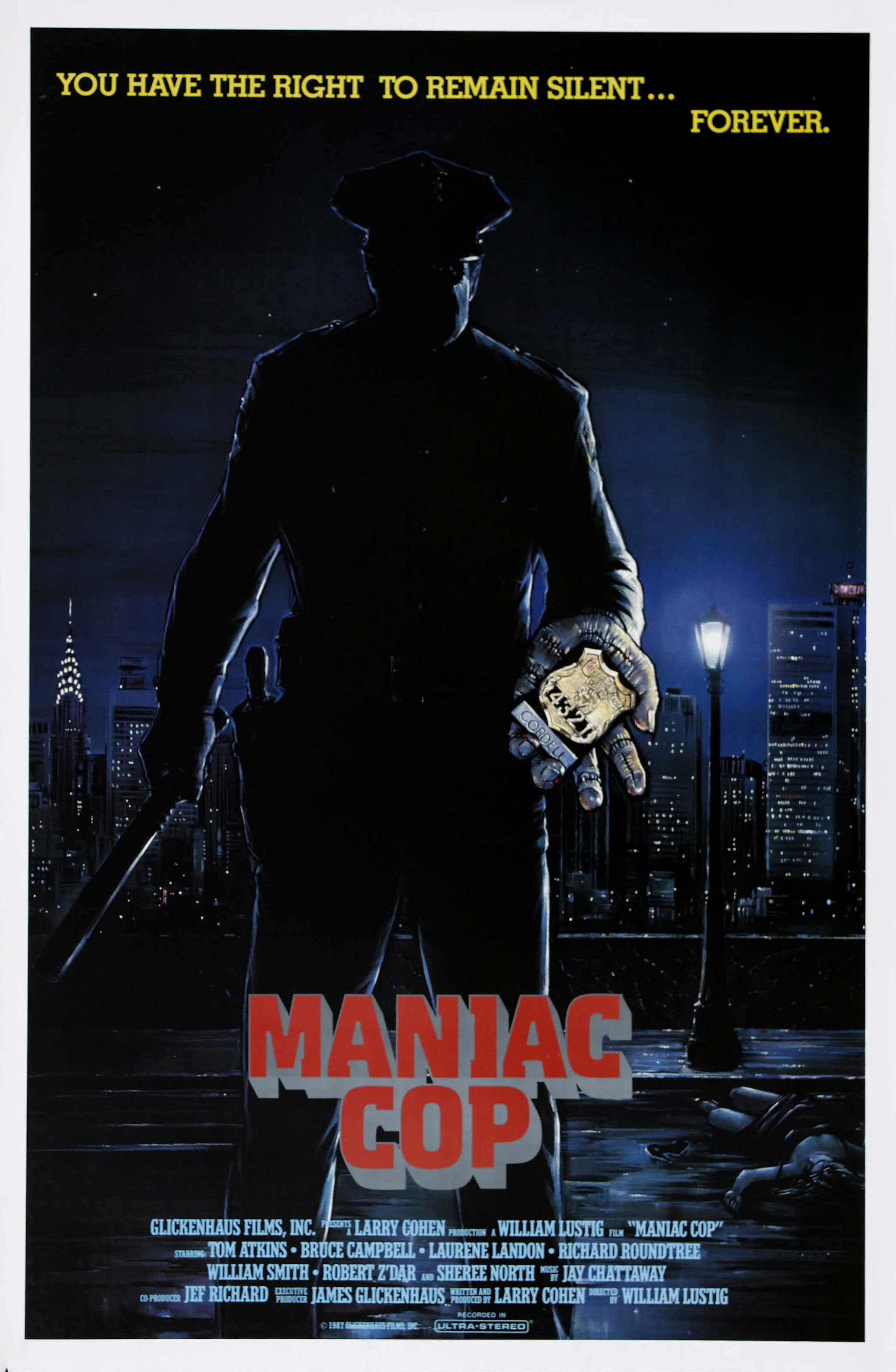
Maniac Cop
maniaccop1

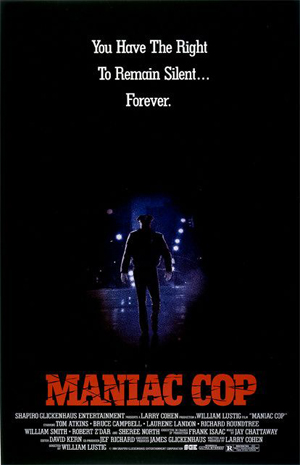
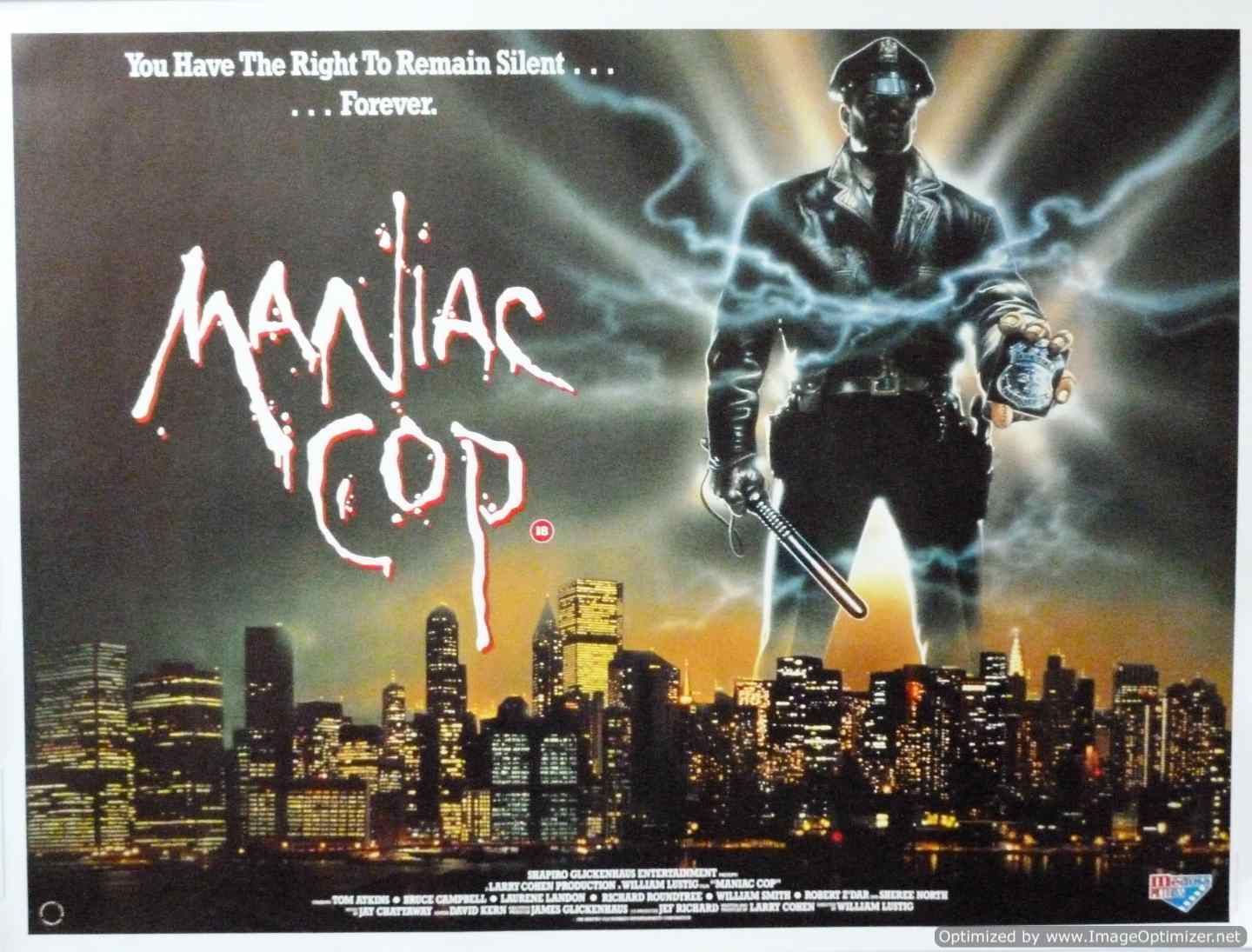
Next up in the Larry Cohen Collection is the cult classic “Maniac Cop,” a battle of the chins between Bruce Campbell and Robert Z’Dar.
“Maniac Cop” was written and produced by Larry Cohen, and ultimately spawned a franchise of three movies. The film was directed by William Lustig, who is best known for his sleazy cult classic films “Maniac” and “Vigilante.”

The cinematography on “Maniac Cop” was provided by two people: James Lemmo (“Maniac Cop 2”) and Vincent J. Rabe (“Hit List”), neither of whom have had much in the way of significant film credits.

The effects team for “Maniac Cop” included makeup work by Brad Look (“Thor,” “Star Trek: First Contact,” “The Hunger Games”) and Bill Miller-Jones (“Hell Comes To Frogtown,” “Maniac Cop 2,” “Maniac Cop 3”), visual effects by Larry Arpin (“The Dentist,” “The Expendables,” “Leprechaun,” “The Ambulance”), and special effects work by David Atherton (“Face/Off,” “Shocker”), John Naulin (“From Beyond,” “Re-Animator,” “Highlander II,” “The Omega Code”), Paul Staples (“Fatal Games”), and Laszlo Stumpf (“Cyborg,” “American Ninja 2”).

maniaccop3Aside from Larry Cohen, the producers on “Maniac Cop” were James Glickenhaus (“Frankenhooker,” “The Exterminator,” “McBain”) and Jefferson Richard (“976-Evil II”), who also served as a second unit director on the film

The editor for “Maniac Cop” was David Kern. who also did editing work on “Rush Hour,” “Rush Hour 2,” “The Running Man,” and “It’s Alive III.”

The music for “Maniac Cop” was provided by Jay Chattaway, who also scored William Lustig’s movies “Maniac” and “Vigilante,” as well as the Larry Cohen film “The Ambulance” and the notorious Chuck Norris flick “Invasion U.S.A.”

The art direction and production design on “Maniac Cop” was provided  by Jonathan Hodges, who has worked as a property master and carpenter on films like “Pulp Fiction,” “Reservoir Dogs,” “Chopping Mall,” “House,” and “Critters.”

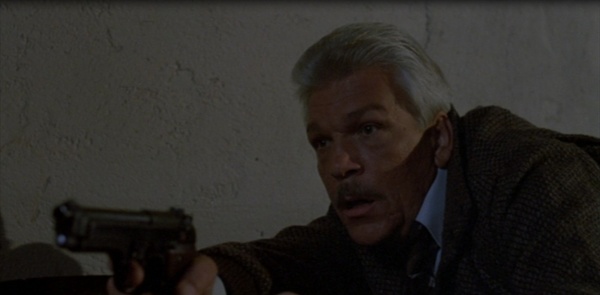
The cast of “Maniac Cop” reads like a b-movie all-star team: Bruce Campbell (“The Evil Dead,” “Army of Darkness”), Tom Atkins (“Halloween III,” “The Fog”), Robert Z’Dar (“Soultaker,” “Samurai Cop,” “Tango & Cash”), Richard Roundtree (“Shaft,” “Q: The Winged Serpent”), Jill Gatsby (“Vampire’s Kiss,” “Class of 1999,” “The Ambulance”), James Dixon (“It’s Alive”), and beloved director Sam Raimi (“The Evil Dead,” “Drag Me To Hell”).

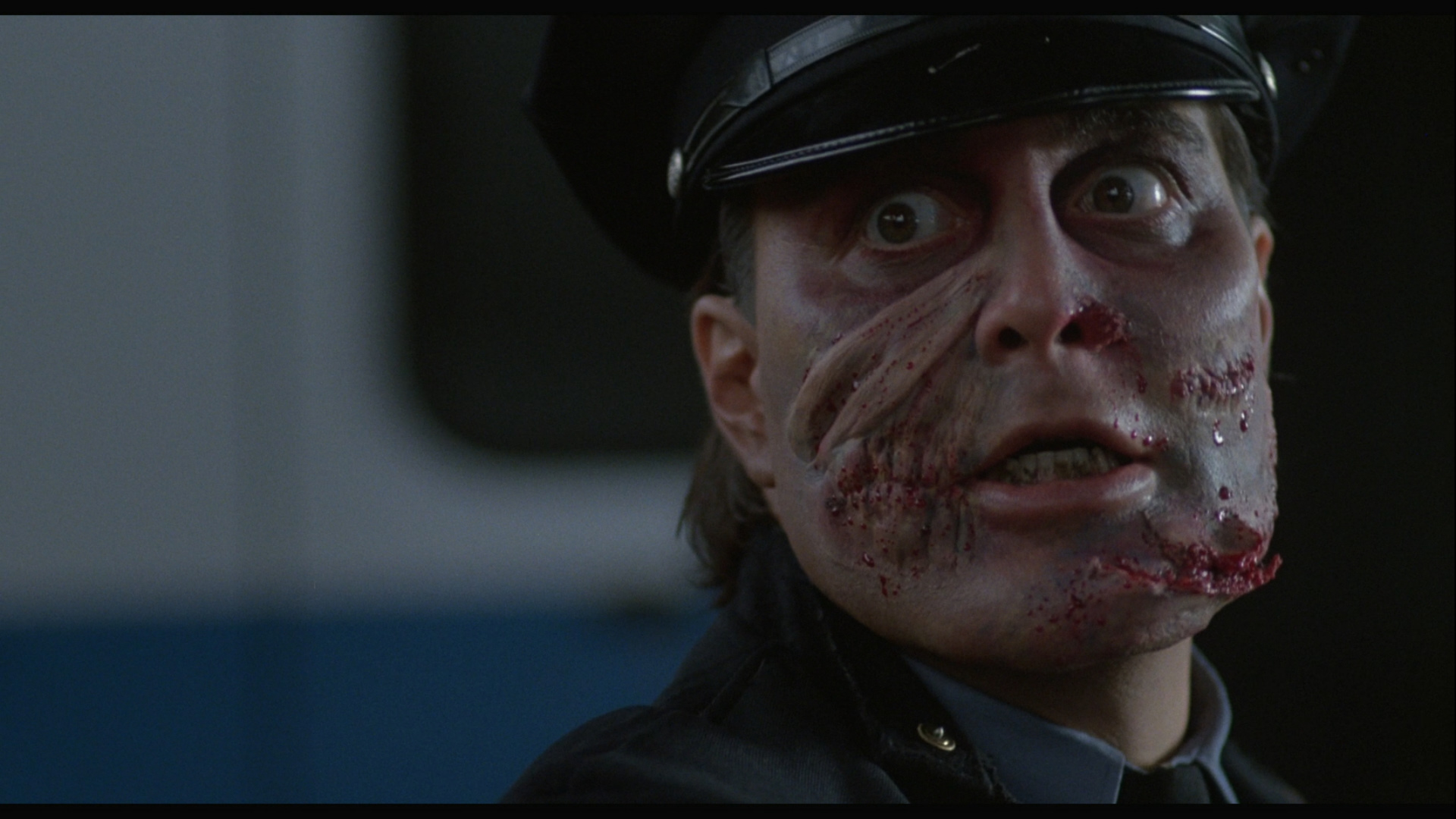
maniaccop6The story of “Maniac Cop” follows an investigation into a series of murders committed by a man dressed as a police officer in the streets of New York City. The NYPD is desperate to find the culprit as the public is whipped into a frenzy of suspicion and distrust of the department. Meanwhile, the investigation begins to uncover a possible suspect with a motive for revenge against the NYPD brass.

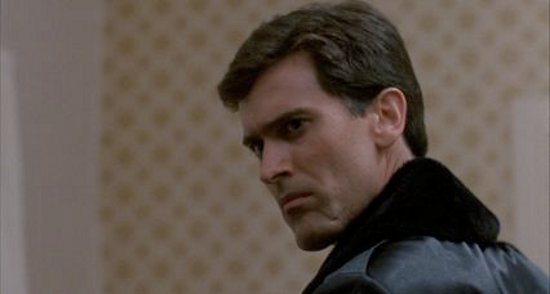
Two of the stars of “Maniac Cop,” Bruce Campbell and Robert Z’Dar, have both gone by the nickname of “The Chin” due to their distinctive facial structures.

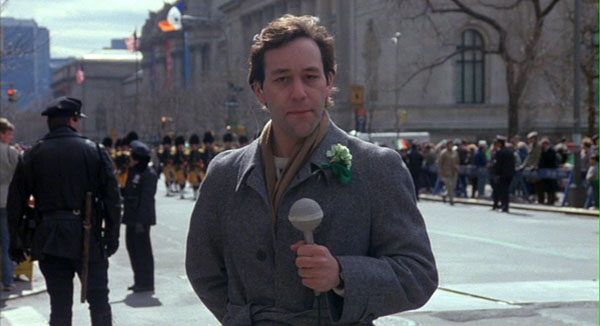
Sam Raimi, the acclaimed director of films like “The Evil Dead” and “The Evil Dead II,” appears not only as an actor in “Maniac Cop,” but also worked behind the camera for the St. Patrick’s Day parade sequence in the movie.

maniaccop9Famed boxerJake LaMotta, whose biography provided the source material for Martin Scorcese’s “Raging Bull,” acts in a brief cameo in “Maniac Cop” as one of the unnamed police officers.

“Maniac Cop” was filmed back to back with another William Lustig film, “Hit List,” which starred Leo Rossi (“Leonard Part 6,” “Maniac Cop 2”) and Lance Henriksen (“Aliens,” “The Last Samurai”).

maniaccop2Over the past couple of years, rumors have surfaced about a potential “Maniac Cop” remake or prequel involving director Nicolas Winding Refn (“Drive,” “Only God Forgives”) and writer Ed Brubaker (“Captain America: The Winter Soldier”), though I haven’t been able to dig up anything since May 2014.

“Maniac Cop” was not particularly well-received, and currently has Rotten Tomatoes scores of 50% (critics) and 39% (audience), along with an IMDb rating of 6.0. That said, it certainly has a dedicated cult following.

“Maniac Cop” didn’t make money on it’s limited theatrical release, grossing under 700,000 on a 1.1 million budget, but still turned into a horror franchise of some note with a series of three films.

Just as any good horror movie should do, “Maniac Cop” latches onto a public anxiety. In this case, this fear is of the police abusing their position of power, which puts people in a position of helplessness due to the corruption in the institution.

“Maniac Cop” doesn’t exactly take a stance on the police in general, and presents both pro- and anti-cop sentiments. The corruption of the institution is emphasized, as well as the (justified) lack of public trust in it. At the same time, a few of the police officers are portrayed as “good” cops: honest, principled, and willing to stand up to the institution at its worst.

maniaccop7“Maniac Cop” received a harsh reception at the time, in the sense that people seemed to either love it or hate it. It is undoubtedly a b-movie made with generally low quality, which turns off a certain amount of viewers to start with. It also takes elements from a number of genres, such as mystery, slasher, and your typical cop flick, which is a mixture that didn’t necessarily work for everyone. Further, it isn’t as campy or hammy as you might expect for a film with Bruce Campbell in the lead: he actually plays his role pretty straight, which is unusual. It doesn’t help that the movie is also a pretty slow burn, something that most slasher fans don’t have much patience for.

Personally, I like “Maniac Cop.” It is a bit slow, but the intrigue and performances kept me from ever getting bored with it. Likewise, the mixture of the genre elements made it a little more interesting to me than just your typical slasher flick, and the elements of social commentary on the police were more than welcome. I also appreciate that it maintains some of the gritty ambiance of William Lustig’s earlier film “Maniac,” which is one of the stronger elements of that flick.

maniaccop8Something that I will agree with the detractors of “Maniac Cop” is that Campbell isn’t quite campy enough for what audiences expect from him, which may have been intentional on either his or Lustig’s part. I also would have loved more of Richard Roundtree in the film, to help illustration more of the corruption in the department (also because he’s just great).

Overall, I think b-movie fans will generally find things to enjoy about “Maniac Cop,” though I think specially Cohen and Lustig fans will like it the best of anyone. General audiences are a bit of a toss-up: I’m sure there are many who would find it too dull, but I don’t think that is necessarily true across the board. I’m interested to see if the remake actually happens, because I feel like Refn’s style could fit the film quite well, and adapt the story effectively to current audiences. I also think that now may be the perfect time to bring back Cordell, as public anxieties about police run amok seem to be at an all-time high.

Larry Cohen Collection: “Phone Booth”

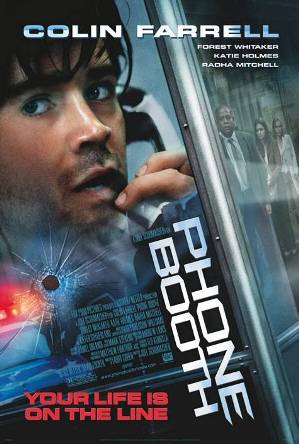
Phone Booth

phonebooth1

Next up in the Larry Cohen Collection is the the 2002 thriller hit “Phone Booth,” starring Colin Farrell and Kiefer Sutherland.

the screenplay for “Phone Booth” was written by Larry Cohen, around the same time that he wrote “Cellular,” which was designed to be a similar yet opposite story. It removes the element of immobility that exists in “Phone Booth,” but retains the connection to the phone.

“Phone Booth” was directed by Joel Schumacher, who has helmed such films as “Falling Down,” “Batman & Robin,” “Batman Forever,” “The Lost Boys,” “8MM,” and “The Number 23” over his career as a director.

The cinematographer on “Phone Booth” was Matthew Libatique, who was nominated for an Academy Award for his work on “Black Swan.” He also provided photography for movies like “Iron Man,” “The Fountain,” and “Requiem for a Dream.”

phonebooth8

The effects on “Phone Booth” were provided by a team that included James Fredburg (“Big Trouble In Little China,” “The Abyss,” “American Horror Story”), Trenton Driver (“World Trade Center”), and Chad Baalbergen (“Smokin’ Aces,” “Fallen”). The visual effects were specifically designed by Nathan McGuinness, who has worked on films like “Battleship,” “The Island,” “Kangaroo Jack,” “Man On Fire,” “Minority Report,” and “Catch Me If You Can.”

The music for “Phone Booth” was provided by Harry Gregson-Williams, who also provided scores for “Gone Baby Gone,” “Shrek,” and “Man On Fire,” among other movies.

phonebooth6

The producers on “Phone Booth” included Ted Kurdyla (“Fallen”), Gil Netter (“The Blind Side,” “Dude, Where’s My Car?”), and, oddly enough, comedy guru David Zucker (“The Naked Gun,” “Top Secret,” “Airplane”).

“Phone Booth” was edited by a man named Mark Stevens, who also cut movies other movies for Schumacher such as “The Number 23,” “Batman Forever,” and “Batman & Robin.”

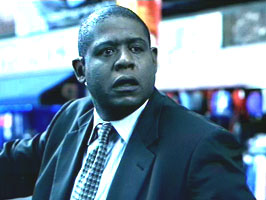
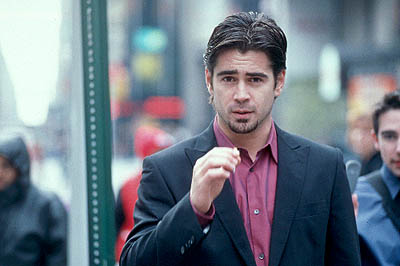
The cast for “Phone Booth” is headlined by Colin Farrell (“In Bruges,” “Winter’s Tale,” “Seven Psychopaths,” “Daredevil”), and also includes Kiefer Sutherland (“The Lost Boys,” “Stand By Me,” “24”), Forrest Whitaker (“Battlefield Earth,” “The Butler,” “The Last King of Scotland”), Katie Holmes (“Batman Begins,” “The Singing Detective”), and Radha Mitchell (“Man On Fire,” “Pitch Black,” “Silent Hill”).

phonebooth4

The plot of “Phone Booth” follows a top-tier publicist who is held hostage in a phone booth by a crusading sniper. Over the course of the film, the sniper attempts to force the publicist to publicly confess and atone for his bad behaviors and deceptions of those around him.

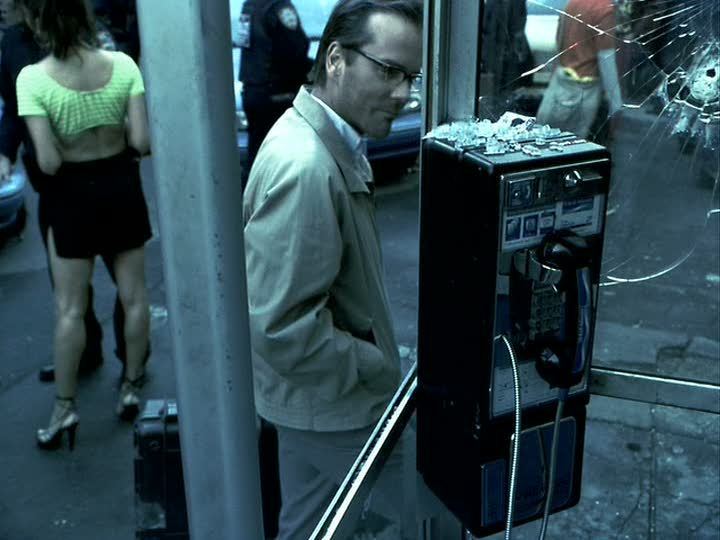
The phone booth in “Phone Booth” was actually functional, and someone read the caller’s lines over the phone to Colin Farrell during filming. Sutherland’s audio was recorded later, and then edited in.

phonebooth3

The plot of the film takes place in real time, adding to it’s realistic tone and tension. Even more interesting is that the movie was filmed in chronological order, something that isn’t often done.

Reportedly, Colin Farrell’s confession finale was shot in just one take, which is particularly impressive given the sequence’s length and gravity.

Larry Cohen has cited the sniper sequence from his early film “God Told Me To” as one of the inspirations for him to write the sniper-centric screenplay for “Phone Booth.”

Before Colin Farrell landed the lead role, actors such as Mel Gibson, Will Smith, and Jim Carrey were all considered for part, but were either not available or turned it down.

The original screenplay for “Phone Booth” received a 2008 stage adaptation in Japan, playing in both Tokyo and Osaka to favorable reviews.

The original story for “Phone Booth” apparently ended with the caller being killed off in the final raid, but it was changed during the production to allow the character to survive.

Before Kiefer Sutherland was brought on, Ron Eldard was initially cast as the voice, but ultimately had to drop out of the production.

The theatrical release of “Phone Booth” was pushed back by the studio due to the Beltway sniper spree killings in October of 2002, and would up getting its release a couple of months later.

phonebooth7

“Phone Booth” grossed just under $98 million in it’s worldwide theatrical run on a budget of $13 million, making it a significant financial hit.

“Phone Booth” also received a generally positive reception from critics and audiences, and currently holds an IMDb rating of 7.1, along with Rotten Tomatoes scores of 71% (critics) and 64% (audience).

Colin Farrell really made a name for himself as an actor in “Phone Booth,” and is huge reason why the movie is as acclaimed as it is. Sutherland’s voice has also become somewhat iconic due to his performance here, and is now a regular voice actor in commercials and video games.

phonebooth2

Outside of the performances, the concept behind “Phone Booth” and the tension built in the screenplay both deserve a lot of props. The idea of being trapped in a phone booth by a sniper taps into a lot of simultaneous fears: the fear of being watched, claustrophobia, the anxieties of being publicly exposed, and more. The setting alone creates an immense amount of tension, and the way the film is written manages to add on to it.

My only particular complaint with “Phone Booth” is that the color filtering is pretty extreme, to the point of being a little distracting. I think that was a bit of a fad to do at the time, and a lot of cop procedurals and action films were really bad about it (and still are). The film is so thoroughly bathed in blue that you would swear that the story takes place in an alternate dimension where Earth has a blue sun.

Overall, “Phone Booth” is a fantastic thriller movie, and probably one of the better ones of the new millennium. The performances are solid, the writing is clever, and the premise is both simple and enthralling. If you enjoy a good thriller, “Phone Booth” is undoubtedly worth checking out.

Larry Cohen Collection: “Q: The Winged Serpent”

Q: The Winged Serpent

q3

Next up in the Larry Cohen Collection is the monster movie “Q: The Winged Serpent,” starring Michael Moriarty and David Carradine.

“Q: The Winged Serpent” was written, directed, and produced by Larry Cohen. It was his ninth theatrical feature, following just one year after “Full Moon High.”

The cinematographer for “Q” was Fred Murphy, who has more recently provided photography for films like Stephen King’s “Secret Window” and the slasher mash-up “Freddy vs Jason.”

q5

The effects team for “Q,” which was comprised of a number of model makers and stop motion experts, included David Allen (“Robot Jox,” “Laserblast,” “Dolls,” “The Stuff”), Randall Cook (“Laserblast,” “Fright Night,” “Ghostbusters,” “The Lord of the Rings”), Roger Dicken (“The Blood Beast Terror,” “White Dog,” “Alien”), Dennis Gordon (“Robot Jox,” “Demonic Toys,” “Shrek”), and Peter Kuran (“Lake Placid,” “RoboCop 3,” “Tango & Cash,” “Starship Troopers,” “Star Wars: Episode IV – A New Hope”).

q2

The music for “Q” was provided by a man named Robert O. Ragland, who has written scores for many b-movies over his career, including “The Touch of Satan,” “Grizzly,” and “10 to Midnight.”

One of the executive producers on “Q” was Paul Kurta, who has recently produced television shows like “Hell on Wheels” and “Veronica Mars.” He also produced a number of other Larry Cohen films, such as “Special Effects,” “The Stuff,” “Perfect Strangers,” “It’s Alive III,” and “A Return To Salem’s Lot,” as well as the cult classic “Empire Records” by Allan Moyle.

“Q” was edited by Armond Lebowitz, a regular Larry Cohen contributor who also cut “Full Moon High,” “Perfect Strangers,” “The Ambulance,” “Special Effects,” and “The Stuff.”

q1

The cast for “Q: The Winged Serpent” included David Carradine (“Death Race 2000,” “Kill Bill”), Michael Moriarty (“The Stuff,” “It’s Alive III,” “Law & Order”), Candy Clark (“The Man Who Fell To Earth,” “American Graffiti”) Richard Roundtree (“Shaft,” “Brick”) Malachy McCourt (“Ryan’s Hope”), and James Dixon (“It’s Alive”).

q6

The story of “Q” follows an investigation into a string of mysterious murders, which ultimately leads to the discovery of a large carnivorous creature prowling the skyscrapers of New York City. The NYPD must then figure out how to track and destroy the beast before it kills again, and figure out where exactly it came from.

Larry Cohen decided to make “Q” after he was fired from another movie (“I, the Jury”), because he wanted to be able to justify the expensive hotel room in New York City that he had already paid for. Cohen conceived of the story while admiring the Chrysler building, and noting that it would be an awesome place to have a monster’s nest. Amazingly enough, Q ultimately vastly outperformed “I, the Jury” on a fraction of the budget,

The film’s script was highly improvised, as you can probably imagine from the impromptu beginnings.  David Carradine wound up accepting his role before ever seeing a script (he was a friend of Cohen’s from the army), and didn’t get to read it until the first day of shooting. Michael Moriarty improvised entire sequences of the film, such as his bar piano audition, and he has even claimed that the dog’s grumpy reaction to his performance was 100% real.

Bruce Willis expressed interest in playing the role that ultimately went to David Carradine, but it was decided at the time that he wasn’t bankable enough for the role. At the time, he had only been an extra on television, and wouldn’t reach stardom until the late 1980s. Likewise, Cohen considered giving Moriarty’s role to a then-unknown New York improv comedian named Eddie Murphy, but was convinced otherwise for the same reasons that he didn’t cast Willis.

Segments of “Q” were actually filmed on the top of the Chrysler Building, which was immensely complicated given the state of disrepair of the area at the time. Unlike the Empire State Building, the top of the Chrysler Building didn’t have a finished observation area (or even windows), was open air, and was littered with junk and supplies. The building was even having lights installed on the top during filming, which Cohen managed to use to his advantage. The baskets on the side of the building in the final shootout were not installed for the production, but were actually already there for the lighting installation.

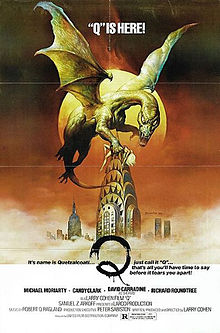
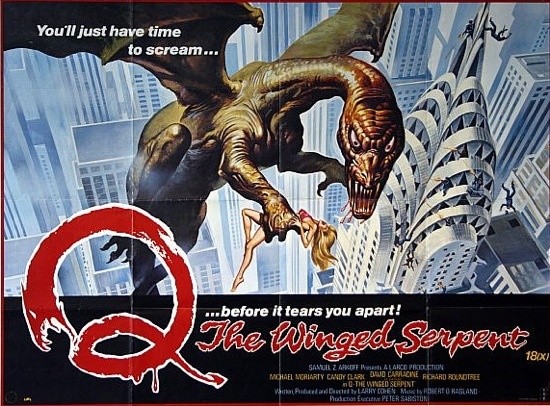
Some foreign versions of the poster for “Q” feature the monster with feathers and teeth. This is because the posters were created before anyone had actually seen the movie, and the artists only had general descriptions of what the monster looked like.

q7

“Q” was made on a low budget of just over $1 million, and although I wasn’t able to dig up the box office and gross information, it was undoubtedly profitable. However, “Q” had a mixed critical reception, and currently hold Rotten Tomatoes ratings of 65% (critics) and 42% (audience), along with an IMDb score of 6.1.

Unfortunately, in today’s world of ever-advancing computer special effects, stop motion has aged pretty poorly. That said, given the low budget, “Q” is about the best stop motion work that you will find in film. Still, today’s audience expects more from effects, which I think biases some people against the film.

Most reviews I have read love Moriarty’s cracked, eccentric performance, though some find it too hammy or aggravating. There’s also no arguing that the character is an unlikable scumbag, but the film seems perfectly aware of this.

“Q” is in many ways ridiculous, and has humorous elements that were not alluded to in the advertising. I imagine that people at time were conflicted on how to take that. Dark comedy is kind of like licorice, it either resonates with you or it doesn’t. Either way, you don’t necessarily want it to be a surprise.

Of all of the complaints about “Q” that I have seen, the most common one has been that the plot is too slow or dull. It is certainly like a fast-paced film, and has a couple of notable sub-plots, but I didn’t find any of it too uninteresting or distracting myself. I think that mostly comes down to whether or not you like Moriarty’s character, as he gets a lot of the screen-time.

Roger Ebert’s review of “Q” notes that much of the movie plays as a sort of dedication to Samuel Arkoff, the legendary b-movie producer whose studio produced the movie:

Arkoff has been producing films for thirty years now, and even if he was honored with a retrospective at the Museum of Modern Art, his heart still lies with shots of a giant flying lizard attacking a woman in a bikini on top of a Manhattan skyscraper. He’s just that kinda guy. There are, in fact, several shots in “Q” that owe their ancestry to Sam Arkoff. I am aware, of course, that Larry Cohen gets credit for having written and directed this movie, but where would Cohen or any other director be without the rich heritage of a quarter-century of American-International Pictures made by Sam Arkoff?

Ebert’s review also brings up a significant plot hole in the story of “Q” that is glossed over in the film: “How did one Quetzalcoatl get pregnant?”

q4

Regardless, the stop motion effects and plot both provide fantastic send-ups to both the classic Ray Harryhausen films and the famous Japanese monster movies, and is a more honest and genuine ode to those works than any of the remakes and attempted reboots that have been done over the years. “Q” is a dedication to the history of b-movies, and does so fantastically if you ask me. Not only that, but the writing and performances are entertaining, particularly Moriarty’s character. You can tell that this was a fun movie to make, and it comes across in all of the performances. I highly recommend checking it out if you are a horror and monster movie fan, because you are bound to find something to like here.

Plotopsy Podcast #10 – It’s Alive

It’s Alive

itsalive1

Welcome to Misan[trope]y Movie Blog’s (Plot)opsy Podcast! Today, I’ll be taking a look at the Larry Cohen cult classic monster baby movie, “It’s Alive.”

The story of “It’s Alive” follows the bizarre birth of a monstrous, murderous baby, which proceeds to go on a killing rampage. A manhunt for the child is launched, while the parents are left to deal with the realization that their child is potentially inhuman.

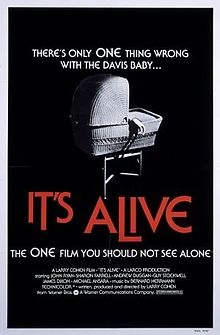
The title of the movie was concocted as part of the advertising campaign, and produced two different memorable taglines: “Whatever it is, it’s alive” and “There is only one thing wrong with the Davis baby: It’s Alive.” Arthur Manson, who was the head of advertising at Warner Brothers during the production of “It’s Alive” was the brains behind the campaign, and has used it in lectures on film promotion, and it has even been featured in professional advertising classes on the subject.

itsalive6

The infamous delivery scene was filmed in a functional operating room, and filming had to be abruptly paused during a shoot for an emergency delivery. The child that was born in that delivery even appears briefly in the film.

As outlandish as the premise for “It’s Alive” may seem, monster babies are featured in plenty of mythology and lore, particularly when pregnancies are not taken care of or a child is not baptized. The stories have inspired all manner of superstitious traditions, some of which still exist today. Some of these legends include the changelings throughout Europe, the Spanish xaninos, and the terrifying Japanese sankai, who are demon babies who run away immediately after birth and return to kill their mother. Even in the bible, there is a description of a monstrous birth in 2 Esdras 5:8: as part of a series of cataclysmic events.

The idea of for “It’s Alive” supposedly came from Larry Cohen watching a baby have a temper tantrum, and noting specifically how violent it was, and how destructive it could be if it had more power.

The release of “It’s Alive” drew obvious comparisons to Roman Polanski’s 1968 horror hit, “Rosemary’s Baby.” In a lot of ways, “It’s Alive” is kind of a theoretical look at what Rosemary’s baby might actually be like, given it wasn’t shown in any detail in the Polanski film.

Larry Cohen’s career started with him writing for television programs throughout the 1960s, including “The Invaders” and “Blue Light.” In the early 1970s, he started directing a handful of blacksploitation films, the most notable of which was “Black Caesar” starring Fred Williamson. After “It’s Alive,” Cohen went on to create a number of cult classic horror movies with comedic twists in the 1980s, such as “The Stuff” and “Q: The Winged Serpent.” Cohen had a bit of a renaissance in the early 2000s after writing a couple of successful thrillers in “Phone Booth” (starring Colin Farrell) and “Cellular” (starring Chris Evans), but hasn’t had any new credits since 2010.

itsalive5

“It’s Alive” features a musical score composed by the legendary Bernard Herrmann, who is best known for “Psycho,” “Citizen Kane,” “North By Northwest,” and “Vertigo.” “It’s Alive” was one of his last scores before his unexpected death, next to “Taxi Driver,” which won him a posthumous Academy Award.

Peter Honess, the editor for “It’s Alive,” has gone on to a fantastic career of cutting larger budget Hollywood flicks like “L.A. Confidential,” “Harry Potter And The Chamber of Secrets,” and the cult classic “Highlander.”

The Director of Photography on “It’s Alive,” Fenton Hamilton, was a lighting technician during the golden age of Hollywood, and finished his career doing cinematography work for Cohen. He was in poor health during most of his time working with Cohen, and the Cohen film “Full Moon High” was dedicated to his memory after his death.

Lauded special effects guru Rick Baker provided the creature design for the mutant babies in “It’s Alive,” and was one of his first major effects roles. He has gone on to win 7 Academy Awards on 12 nominations, for films like “An American Werewolf In London,” “Men In Black,” and “Ed Wood.”

itsalive7

By design, these is very little exposure of the monster on screen in “It’s Alive.” Cohen has said that this was to allow the audience to use their imagination, and to help build suspense, which was partially influenced by the famous pool sequence from “Cat People.” Later, this principle was made famous with Steven Spielberg’s “Jaws.”

The baby’s point of view double vision effect was done based on input from doctors, who reportedly told Cohen that a child’s vision would not be as focused as an adult’s. Speaking of which, using the monster’s point of view was another principle later used in “Jaws” to great acclaim.

itsalive2

The haunting baby monster scream used in “It’s Alive” is an actual baby cry that is played backwards and amplified, to chilling effect.

“It’s Alive” ultimately spawned two sequels, “It Lives Again” in 1978 and “It’s Alive III: Island of the Alive” in 1987, as well as a remake in 2008 by Josef Rusnak. Cohen wrote and directed both sequels, but had little involvement with the remake, which he has described as:

A terrible picture, just beyond awful. I would advise anybody who likes my film to cross the street and avoid seeing the new enchilada.

After a surprisingly successful first run in theaters as a sleeper hit, “It’s Alive” got a second theatrical release, playing on a double bill with the infamously awful “The Exorcist II.” Surprisingly, “It’s Alive” became the second highest grossing movie in Warner Bros history…in Singapore.

Naturally, there is a certain degree of social commentary in “It’s Alive,” something that is a bit of a Larry Cohen trademark. Specifically, the film subtly ponders on the issue of abortion. The babies in the story are created due to a flawed abortion drug, which made them vicious, using the same logic of pests and bacteria that become drug-resistant if they happen to survive extermination.

One of the keys to effective horror is being able to capitalize on existing anxieties of the time. “It’s Alive” not only taps into the fears associated with new parenthood, but also touches on the widening generation gap between adults and youth in the late 1960s and 1970s, and the estrangement and fear that resulted.

itsalive4

Most of the actors in “It’s Alive” were Irish, something that was allegedly completely coincidental on Cohen’s part. Many of them became Cohen regulars, earning the collective nickname of “Cohen’s Traveling Irish Players.”

“It’s Alive” was filmed partially in Larry Cohen’s actual home. By his logic, this meant that he didn’t have to pay for an expensive rental location, and he also didn’t have to, quote, “Get up and go to work.”

“Hell Up in Harlem”, the sequel to Cohen’s earlier film “Black Caesar,” was filmed and edited on the weekends during the production of “It’s Alive,” with much of the same crew. This means that the team put in consecutive seven-day work weeks to create both pictures at once.

On to the Plotopsy of the film: what makes “It’s Alive” so memorable? Obviously, the outlandish premise and the Rick Baker effects have gone a long way towards cementing the flick in the collective cultural memory, but the score, the cinematography, and the acting is all memorable and unique, making the film a genuinely impressive horror movie that is highly lauded by fans of the genre.

That’s all for today’s (Plot)opsy Podcast! Be sure to check out Misan[trope]y Movie Blog on Facebook and @Misantropey on Twitter for new posts. updates, and reviews.


Larry Cohen Collection: “It’s Alive 3: Island Of The Alive”

It’s Alive 3: Island Of The Alive

islandalive5

Next up in the Larry Cohen Collection is the finale of the “It’s Alive” trilogy: “It’s Alive 3: Island Of The Alive.”

“It’s Alive 3” was once again written, directed, and produced by Larry Cohen, almost 10 years after the release of “It Lives Again,” the second installment in the franchise.

The cinematographer for “It’s Alive 3” was once again Daniel Pearl, who contributed significantly on the photography for “It Lives Again,” and also worked on “Full Moon High” and “The Texas Chain Saw Massacre.”

The special effects on “It’s Alive 3” were provided in part by Brent Armstrong (“Starship Troopers,” “Class of 1999,” “In The Mouth Of Madness”) and Bill Hedge (“Piranha,” “Species,” “Airplane!”), replacing Rick Baker, who worked on the first two films in the series.

The music for “It’s Alive 3” was provided by Laurie Johnson, who worked extensively on the soundtrack for “It Lives Again,” and has provided scores for movies such as “Dr. Strangelove” and “Tiger Bay.”

The producers for “It’s Alive 3” included Paul Kurta and Barry Shils returning to the series after working on “It Lives Again,” along with newcomers Paul Stader, a proficient career stuntman who worked on “Star Trek” and “The Planet of the Apes,” and Barabara Zitwer, who went on to produce “Vampire’s Kiss” and Larry Cohen’s “The Ambulance.”

“It’s Alive 3” was edited by David Kern, who went on to edit the “Maniac Cop” trilogy and do sound editing for larger movies like “Rush Hour” and “Scream 3.”

James Dixon is the only returning actor from the first two films, reprising his role as Lt. Perkins. Larry Cohen regular Michael Moriarty (“The Stuff,” “Q: The Winged Serpent”) joins the franchise, along with Karen Black (“Nashville”), Laurene Landon (“Full Moon High,” “Maniac Cop”), Macdonald Carey (“Days of Our Lives”), and Gerrit Graham (“C.H.U.D. II: Bud The Chud”).

islandalive6

The events of “It’s Alive 3” take place an undisclosed amount of time after the events of “It Lives Again,” after a number of more sinister baby monsters are born. The story starts with a trial to determine what to do with the apprehended baby monsters, during which it is decided that they will be placed in isolation on an island. Some time later, a team of hunters is hired by a drug company to kill all of the babies, in order to erase any proof tying one of their drugs to the monstrous mutation.

“It’s Alive 3” was filmed back-to-back with “A Return To Salem’s Lot,” using much of the same cast and crew, much like Stuart Gordon’s “From Beyond” and “Dolls.”

“It’s Alive 3” was filmed on location in Hawaii, despite the story theoretically being set in the Caribbean.

The opening sequence of “It’s Alive 3” was used in the 1988 movie “The Dead Pool” starring Clint Eastwood, as an example of the film work of a murdered fictitious b-movie director played by Liam Neeson.

“It’s Alive 3” was given a limited theatrical release, but I wasn’t able to dig up any information in regards to its budget or finances. However, the reception certainly wasn’t positive: it currently holds a 4.5 rating on IMDb, along with Rotten Tomatoes ratings of 50% (critics) and 15% (audience).

islandalive3

Many saw “It’s Alive 3” as milking the very last drop out of the “It’s Alive” franchise, seeing it as a purely profit motivated production. This is obviously not entirely untrue, but I think it caused some unreasonable hostility towards the film’s existence.

Michael Moriarty, as always, is fantastic. He delivers another memorable performance, as he always seems to do when working with Larry Cohen. I’m a bigger fan of his character in “The Stuff,” but his portrayal in “It’s Alive 3” is certainly an interesting one, and is probably the best reason for checking out the film.

“It’s Alive 3” is without a doubt more overtly humorous than “It Lives Again” and “It’s Alive,” which didn’t exactly resonate with many fans of the franchise. However, above all, this movie is fun by design. That’s not a bad thing if you ask me, but it is certainly a departure from the earlier movies. It also follows up the story and consequences of the first two films very well, and does fit with the trilogy thematically in my opinion.

Something I absolutely did not expect was the revelation that the baby monsters have telepathic powers, which seems to come totally out of left field. It isn’t totally if they develop the skill over time, or if they always had mind powers in the previous movies.

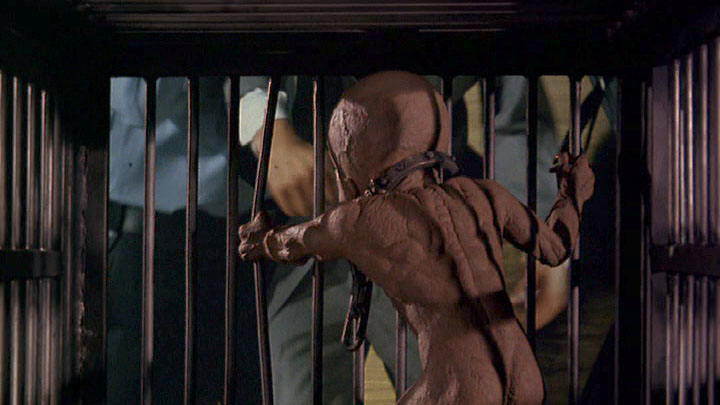
There are a few moments in “It’s Alive 3” where stop motion is used to portray the baby monsters, which looks absolutely awful. The movie notably doesn’t try to hid or obscure the babies, instead choosing to keep them out in the open. I actually don’t have as much of a problem with this, given the entire foundation of the story is about the babies being normalized and exposed to society, and ultimately rejected. That said, they certainly don’t look very good, but that somewhat adds to the comedic element of the film.

islandalive4

A lot of reviews compare “It’s Alive 3” to “The Lost World: Jurassic Park,” which I find kind of hilarious, because the two films are astoundingly similar. The babies are left to roam free on an isolated island, a corporation tries to exploit them for their own benefit, a secret team is sent to the island covertly, and the monsters ultimately escape to the mainland. They were even both filmed primarily on the same island. I will say, I kind of wish Jeff Goldblum and Michael Moriarty could have been in both movies, because the combo would have improved both pictures drastically.

Overall, “It’s Alive 3” is the black sheep of the franchise without any doubt. However, it is a damn fun movie, and I recommend it highly for anyone looking for a good bad watch. Moriarty is gold, the babies are ridiculous, the plot is outlandish, and there are plenty of great horror movie deaths to enjoy. As much as I like the first two, I definitely have a soft spot for the ridiculousness of “It’s Alive 3.”

Larry Cohen Collection: “It Lives Again”

It’s Alive 2: It Lives Again

itlivesagain2 itlivesagain4

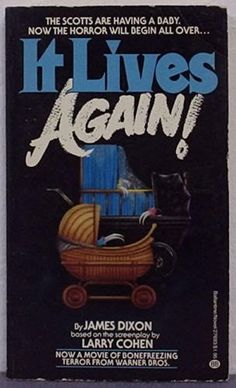
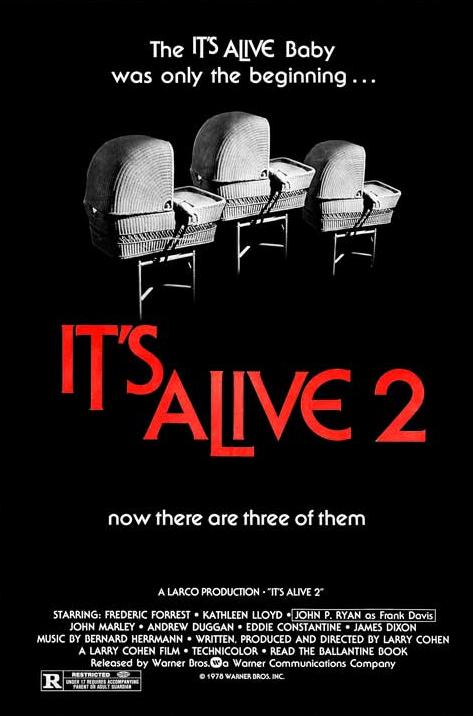
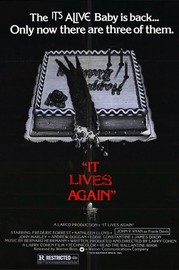
The next feature up in the Larry Cohen collection is the second entry in the “It’s Alive” trilogy: “It Lives Again.”

“it Lives Again” was written, directed, and produced by Larry Cohen, and marked the first time since “Hell Up In Harlem” that he took on a sequel to one of his films.

The cinematography for “It Lives Again” was provided primarily by Fenton Hamilton, who worked with Cohen on a number of his earlier films (“Black Caesar,” “Hell Up In Harlem,” “It’s Alive”). Additional work was done by Daniel Pearl, who went on to become one of Cohen’s regular cinematographers on films like “Deadly Illusion” and “A Return to Salem’s Lot.” Supposedly, Hamilton left the productions on bad terms, clashing with Cohen creatively. However, Cohen dedicated “Full Moon High” to his memory after his death.

The makeup effects on “It Lives Again” were provided by the now-legendary special effects guru Rick Baker (“Videodrome,” “Men In Black,” “Track of the Moon Beast”), who returned after working with Larry Cohen previously on “Bone,” “Black Caesar,” and “It’s Alive.”

“It Lives Again” features the same music composed by the legendary Bernard Herrmann (“Psycho,” “Taxi Driver,” “Citizen Kane”) that was used in “It’s Alive,” with some additional work done by Laurie Johnson (“Dr. Strangelove”), who would return for “It’s Alive III.”

itlivesagain5

Aside from Larry Cohen, the other producer for “It Lives Again” was William Wellman, Jr, an actor who appeared in “It’s Alive” and “Black Caesar.”

“It Lives Again” had a number of editors, including Curtis Burch (“Joysticks”), Dennis Michelson (“On Deadly Ground”) and Carol O’blath (“Brain Dead,” “Puppet Master III”).

itlivesagain1

The cast for “It Lives Again” features John P. Ryan, Andrew Duggan, and James Dixon reprising their roles from the original “It’s Alive.” The rest of the cast includes Frederic Forrest (“Falling Down,” “Apocalypse Now”), Kathleen Lloyd (“The Missouri Breaks”), John Marley (“The Godfather”), Eddie Constantine (“The Long Good Friday”), and Jill Gatsby (“Class of 1999”).

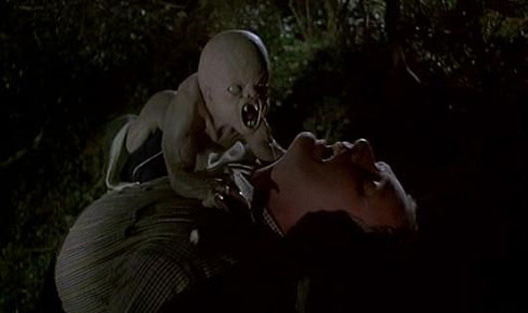
The story of “It Lives Again” takes place shortly after the events of “It’s Alive,” following up on that film’s cliffhanger. More killer babies are popping up around the country, and the government is frantically trying to eliminate them before they are born. Frank Davis, the father of the child in the first film, goes on a mission to warn as many potential parents as possible about the government’s plans for their babies.

I couldn’t dig up any budget or box office information for “It Lives Again,” but the existence of “It’s Alive III” seems to indicate some level of financial success. The reception to the movie, however, wasn’t so good. It currently holds a 5.0 rating on IMDb, along with Rotten Tomatoes scores of 44% (critics) and 28% (audience).

itlivesagain3

The performance of Frederic Forrest in “It Lives Again” is particularly intense, and the fallout of the central couple after their baby is taken away provides some very real drama in the story. That said, you certainly can’t get attached to him, and the film doesn’t feature any really memorable or sympathetic characters.

Once again, Larry Cohen creates a very serious and dark film out of a truly outlandish concept, while not entirely losing the humor inherent to a horde of babies murdering people.

One of the new ideas in “It lives Again” answers the question of how to deal with the babies that manage to survive. Given they are human, they can’t exactly kill them once they are alive and well. The idea of trying to train the evil babies to be good is kind of hilarious, but it is played off seriously enough that it is almost believable in the film’s context.

“It Lives Again” lacks some of the punch and thought that drove the first movie, but it still isn’t bad in my opinion. It marks a bit of a drop-off in quality, but not nearly to the same degree as your typical sequel.

Cohen is wise to not show too much of the babies in “It Lives Again,” just like he did with “It’s Alive.” As good as Rick Baker’s work is, it provides better tension to show less of them, and they inherently look a little bit ridiculous. Thankfully, they are mostly kept in shadows, blurs, and silhouettes.

alive085

Overall, this is a worthy follow-up if you really liked the original “It’s Alive.” Some people will certainly find it boring because of its comparatively slower pacing, but I think there is still plenty to like here. If you are up for a story about murderous babies, “It Lives Again” certainly delivers that.