Water Foul: Attack of the Crab Monsters

Attack of the Crab Monsters

crabmonsters1

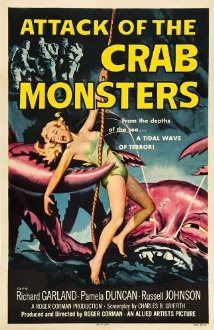
Today’s flick is Roger Corman’s famous creature feature b-movie, Attack of the Crab Monsters.

Attack of the Crab Monsters was written and co-produced by Charles Griffith, a frequent Corman collaborator who penned such memorable flicks as Death Race 2000, A Bucket of Blood, and The Little Shop of Horrors.

The director and producer of Attack of The Crab Monsters was, of course, Roger Corman, who is widely known as the king of the b-movies. Though he has primarily worked as a producer over the years, he also has over 50 directing credits, including The Wild Angels, The Creature From The Haunted Sea, A Bucket of Blood, and The Little Shop of Horrors.

The cinematographer for Attack of the Crab Monsters was Floyd Crosby, who also shot movies like House of Usher, The Raven, and X: The Man With X-Ray Eyes for Roger Corman.
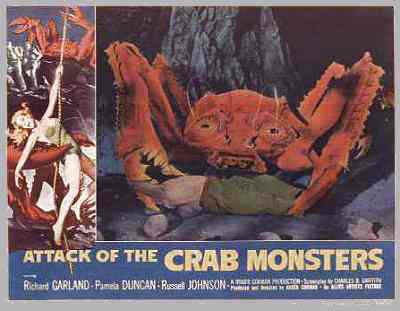
crabmonsters2The editor for the film was Charles Gross, who cut a handful of other b-movies like Invasion of the Saucer Men and It Conquered The World.

The musical score for Attack of the Crab Monsters was provided by Ronald Stein, who composed music for other Roger Corman flicks like The Terror, Attack of the 50 Foot Woman, and Francis Ford Coppolla’s debut film, Dementia 13.

The cast of Attack of the Crab Monsters included Ed Nelson (A Bucket of Blood), Richard Garland (Mutiny in Outer Space), Beach Dickerson (The Trip, Creature From The Haunted Sea), Richard Cutting (South Pacific), Mel Welles (The Little Shop Of Horrors), Leslie Bradley (The Conqueror), and Russell Johnson (Gilligan’s Island).
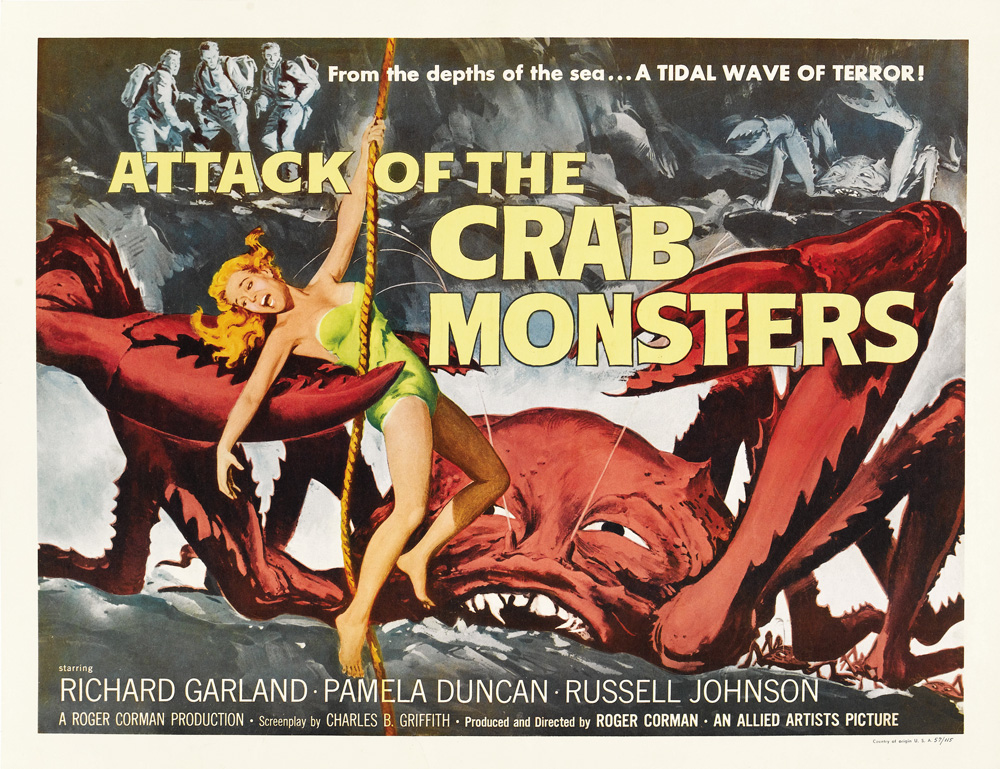
crabmonsters3The plot of Attack of the Crab Monsters follows a group of scientists who are researching into the after effects of the Bikini Atoll nuclear tests on local wildlife. To their shock, they discover that a couple of ornery giant crabs that have mutated dramatically, to the point of acquiring telepathic powers.

The eponymous crab monsters were portrayed via a two-person suit, with one person filling the body and another operating the claws. Instead of having designated effects workers to operate the effects, actors who weren’t in the specific scene were assigned to run the crab.

Attack of the Crab Monsters initially released on a drive-in double bill with Not of This Earth, another Roger Corman directed creature feature from 1957.

Attack of the Crab Monsters is one of the most iconic of the Roger Corman monster movies, and has appeared in the background of many other films as a form of homage. For instance, sharp eyes might spot the poster or clips of the film in movies like Chopping Mall or Found.

Writer/producer Charles Griffith directed all of the underwater sequences in the movie, supposedly because he was inspired by documentary filming done by Jacques Cousteau.

Jim Wynorski, a cohort of Roger Corman’s who has directed such flicks as Chopping Mall, Piranhaconda, and 976-EVIL II, has expressed interest in helming a remake of Attack of the Crab Monsters. However, Corman is reportedly against the idea, despite Wynorski having previously remade a number of his other movies, most notably Not of This Earth and The Wasp Woman.

In an interview with Dennis Fischer, writer and producer Charles Griffith said the following about the inception of Attack of the Crab Monsters:

“Roger came to me and said, ‘I want to make a picture called ‘Attack of the Giant Crabs,’ and I asked, ‘Does it have to be atomic radiation?’ He responded, ‘Yes.’ He said it was an experiment. ‘I want suspense or action in every scene. No kind of scene without suspense or action.’ His trick was saying it was an experiment, which it wasn’t. He just didn’t want to bother cutting out the other scenes, which he would do.”

The reception to Attack of the Crab Monsters wasn’t particularly great at the time, however, it is undoubtedly a classic Roger Corman movie today. It currently holds a 4.8 rating on IMDb, and Rotten Tomatoes scores of 29% (audience) and 67% (critics).

In true Corman fashion, it is estimated that the budget for Attack of the Crab Monsters was an astounding $70,000, on which it certainly managed to turn a profit.

Attack of the Crab Monsters certainly doesn’t waste any time getting started: before any character names are even introduced, a crab is on screen and decapitating an extra. This is particularly interesting, given how slowly paced many of these older monster flicks are (The Horror of Party Beach comes to mind). As mentioned previously, this constant action was part of Corman’s plan for the film from the onset, which pays off pretty well for what this movie is. The downside of this, however, is that the audience isn’t given any time to relate to the cast of characters, because they aren’t given any breathing room to be human, and die off quicker than you can get through ice breakers.
crabmonsters4The plot of Attack of the Crab Monsters could be accurately described as infamously outlandish. The premise that irradiated crabs with superhuman intelligence and telepathic powers are looking to conquer the world is a few steps beyond the mere bizarre, even for a 1950s b-movie. The fact that the crabs actually have dialogue puts this flick in a league of its own if you ask me.

The underwater footage in the movie actually looks pretty good, and if the claim from writer Charles Griffith is true, I’m actually pretty impressed that the production actually did it themselves. Underwater sequences seem to beg for stock footage, and I wouldn’t have put it past them to use whatever was laying around or handy to plug the hole in the movie.

The ending of Attack of the Crab Monsters is appropriately abrupt and baffling given the rest of the film, with a character collapsing an electrical tower onto the last surviving crab, killing both dramatically. However, this climax occurs almost entirely off-screen, being portrayed primarily via an electric sound effect over a reaction shot of the last two survivors. This shot lasts approximately 10 seconds before a fade into the ending card, with the following concluding lines summing up the movie:

“He gave his life…”

“I know.”

*THE END*

There is something particularly appropriate about the movie interrupting and cutting off the character’s final thoughts, like it was trying to hurry people out the door and didn’t actually care what the actors had to say about the situation anyway.  The entire movie clocks in at barely over an hour, and shuffles its way quickly through that entire run time. I’m willing to bet that the aim was to get the film to an even 60 minutes, but the team just barely missed the mark. Still, it is almost refreshing to see a movie that races too fast from beginning to end, especially given how many slow movies I have had to sit through. It doesn’t make the movie good (pacing that is too fast is still a problem), but it is certainly harder for me to complain about.

Overall, Attack of the Crab Monsters is a rightfully legendary b-movie. You can’t help but giggle when a goofy giant crab claw materializes from off screen without the character seeing it, or when a giant crustacean sets up an elaborate plot by mimicking human speech patterns, throwing its voice, and sabotaging complex communications equipment. The fact that the film takes itself seriously at all is astounding, particularly with the crabs roaring like pissed off gorillas for half of the movie, and speaking in German accents for the other half. The sheer wackiness of the story elevates the feature over a lot of similar flicks from the era without any doubt. It still holds onto the expected bad acting and goofy effects that are hallmarks of the genre, but having nefarious, psychic sea-life hanging about puts Attack of the Crab Monsters a rank or two above its peers in the realm of entertainment value. If you are looking for a b-movie classic to check out, this should be on your list.
The Creep Behind The Camera

The Creep Behind The Camera

creepbehind1

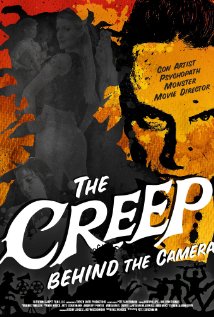
Today’s flick is the newly-released docu-drama, The Creep Behind The Camera, which tells the astounding story behind the legendarily awful b-movie The Creeping Terror.

The Creep Behind The Camera was directed and written by Pete Schuermann, who has been behind a number of low-budget flicks since his debut in 1999. The Creep Behind The Camera was specifically funded via a crowdfunding campaign on Kickstarter, raising over $70,000 dollars from a horde of supporters.

The Creeping Terror, the inspiration and subject of The Creep Behind The Camera, is widely regarded as one of the worst monster movies of all time. The monster itself is particularly memorable, and could be accurately described as a carpet from outer space.

Further, the film is filled with bad acting, terrible narration, nonexistent sound work, and an earworm of a theme song, which have all combined to make it a sort of ironic classic. It gained even more of a following after being featured on a season 6 episode of the show Mystery Science Theater 3000, which was dedicated to digging up the worst movies of all time.

As bad as the movie itself is, the stories that have circulated about the film’s production have added an extra mythos to the flick. The Creep Behind the Camera is dedicated to digging into that swirl of outlandish rumors: that the director was a con-artist working under a false identity, that no one in the production had film experience, and that it was financed by having actors pay for the privilege of playing a part in the movie, and countless more. As it turns out, it appears that many of these legends about The Creeping Terror may be true (or at least partially so).

The Creep Behind The Camera is composed of a series of interviews and testaments from people involved with the production of The Creeping Terror, interspersed with dramatic recreations of the events. While most of the film is dedicated to The Creeping Terror, a fair portion of it is also spent on the miscellaneous misdeeds and antics of the film’s star and director, Vic Savage/AJ Nelson.

While the actual content of the information is the primary draw for this movie (and is certainly fascinating), the performances in the dramatic sequences are really what tie it together. Particularly, Josh Phillips portrays AJ Nelson with a mix of charisma, insecurity, violence, self-delusion, and conniving that helps build the larger than life persona of the eccentric swindler behind The Creeping Terror.

The Creep Behind The Camera interestingly doesn’t take place in chronological order, and bounces around throughout the pre-production, post-production, and filming of The Creeping Terror without any particularly coherence. However, I felt like this worked pretty well, particularly in the parts focusing specifically on Nelson. The audience should be just as flabbergasted and perplexed by this figure as his crew was, and that feeling definitely gets across in the movie. The fact that he is initially introduced naked in front of a mirror, wearing a fake Hitler mustache, and repeating “I am God” to himself is about the best way to sum up Nelson in a nutshell, regardless of when that event occurred in his timeline.

For bad movie fans, The Creep Behind The Camera is necessary viewing, and helps fill in the gaps and questions that were left in the wake of the train wreck that is The Creeping Terror. The flick is currently available on most Video On Demand mediums, and The Creeping Terror is fairly easy to dig up on YouTube.

Miami Connection

Miami Connection

miamiconnection1

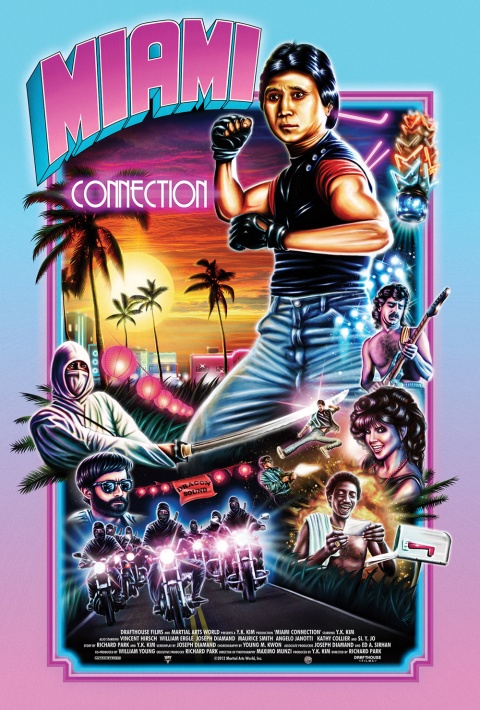
Today’s feature is Miami Connection, a once-lost movie that features all of the cocaine, ninjas, and 80s rock you could ever want.

Miami Connection was directed, produced, and co-written by Woo-Sang Park, who was also behind American Chinatown, Gang Justice, and LA Streetfighters. His co-writers were two of the film’s stars and co-producers, Joseph Diamand and Y.K. Kim.

The cinematographer for Miami Connection was Maximo Munzi, who also shot such films as Detonator, Scorcher, and American Chinatown.

Both the music and special effects makeup work for Miami Connection was provided by Jon McCallum, who also worked on films like Future Shock, Project Eliminator, Soultaker, and Surf Nazis Must Die.

miamiconnection2The plot of Miami Connection centers around a group of students at the University of Central Florida in Orlando, who share a passion for taekwondo and their family-friendly rock and roll band, Dragon Sound. When Dragon Sound bumps a local gang peddling cocaine from a night club venue, their adversaries go out for revenge, and the conflict rapidly escalates.

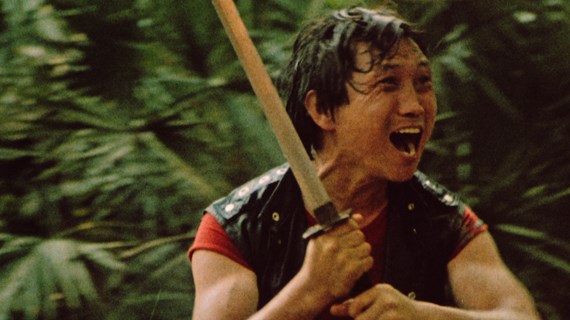
The star of Miami Connection is Y.K. Kim, who is a noted master of taekwondo, and a local celebrity in Orlando. Apparently, he arranged most of the filming locations and extras for the movie based on his good will with the greater community. For instance, the bikers featured in the background were reportedly real local bikers from the Orlando area, and were compensated for their time in beer.

miamiconnection3Most of Miami Connection was filmed on (or near) the University of Central Florida campus in the Orlando, FL area. Despite the title of the movie, no part of the filming took place in Miami.

For years, Miami Connection was lost to the ages. Its theatrical release in 1988 barely broke out of Florida, and most of the screenings were limited to the Orlando area. The Orlando Sentinel apparently even named it the worst film of the year. In 2009, a programmer at Alamo Drafthouse picked up a copy on ebay, and screened it at one of the theaters. This eventually led to Drafthouse Films picking up the film for redistribution, which has led to its rising status as a cult classic.

Former Mystery Science Theater 3000 hosts Mike Nelson, Bill Corbett, and Kevin Murphy have announced that Miami Connection will be the lampooned feature for their Rifftrax Live event on October 1, 2015, which is bound to increase the movie’s profile even further.

Thanks to its new-found cult status, Miami Connection currently has an IMDb rating of 6.1, alongside Rotten Tomatoes scores of 69% from critics and 70% from audiences. However, I don’t think anyone would claim that it is an objectively “good” movie by any means: most of those positive reviews are acknowledging that the movie is immensely entertaining for its “good-bad” qualities.

There is so much to talk about in Miami Connection that I honestly have no idea where to start. The musical numbers and rock sequences might be what sets it apart the most from the pack of b-movies out there, and those songs are guaranteed to get stuck in your head, but the movie goes so much further than just those amazing tunes:

The acting is astoundingly terrible across the board in Miami Connection, with Y.K. Kim leading the pack with his thick accent and indecipherable dialogue. The performances are at times beyond belief, like during either of the “letter” sequences, which are some of the most bafflingly awful showcases of acting I have ever seen.

If there is anything honestly good about Miami Connection, it is the aesthetic. The look of the movie is just delightful, and you can feel how charmingly low budget it was, and how much people enjoyed being involved with it. It still doesn’t make any sense and is amateurish from top to bottom, but it sure as hell has charm. Scott Tobias sums up the movie perfectly in his review for The A.V. Club:

Hits the sweet spot between stunning ineptitude, hilariously dated period touchstones, and a touching naïveté that gives it an odd distinction.

The ending of Miami Connection takes an unexpected and dramatically dark turn for a movie about man-children singing about fighting ninjas and “stupid cocaine.” The absolute slaughter that takes place in the last few minutes feels like it belongs in a totally differently film, which just adds to how endlessly bizarre Miami Connection is on the whole (there is apparently an even darker alternate ending to the movie as well). The ending title message about pacifism is also one of the most confusing and jarring conclusions to a film I have seen since Dracula 3000, but it is somehow amazing at the same time.

Something that is never addressed in the movie is the fact that all of the central characters appear to be far too old to be living together in a small house, let alone be typical college undergraduates. Speaking of which, the University of Central Florida could not be plastered on this movie any more than it already is: if one of the main characters is wearing a shirt, there’s a 90% UCF branding is on it. I think the wardrobe might have been provided by the college bookstore.

Miami Connection is one of the best good-bad movies out there: the acting is ridiculous, the writing is silly without being aware of itself, and the plot is out-of-this world strange. If you have the opportunity to catch this one, I can’t recommend it highly enough. For bad movie fans, I would go so far as to say that Miami Connection is a must-see movie, alongside movies like Troll 2, Manos: The Hands of Fate, Birdemic, and Samurai Cop.

Suspect Zero

Suspect Zero

suspectzero2

Today’s feature is the 2004 psychic serial killer thriller Suspect Zero, starring Aaron Eckhart and Ben Kingsley.

The screenplay for Suspect Zero was co-written by Billy Ray (Shattered Glass, Volcano, State of Play, Hart’s War, The Hunger Games) and Zak Penn (The Avengers, Last Action Hero, Elektra, Behind Enemy Lines), with the original story credit going to Penn.

The director on Suspect Zero was E. Elias Merhige, who was also behind films like Shadow of the Vampire and Begotten, but hasn’t made a full length feature since the release of Suspect Zero in 2004.

The cinematographer for Suspect Zero was Michael Chapman, whose shooting credits range from massively influential films like Raging Bull, Taxi Driver, and The Last Detail, to cult classics like Scrooged and The Lost Boys, to popcorn flicks like Kindergarten Cop, Space Jam, Ghostbusters II, and Evolution.

Suspect Zero had two primary editors: Robert K. Lambert (Red Planet, House of 1000 Corpses, Rollerball, Ed) and John Gilroy (Nightcrawler, Pacific Rim, Michael Clayton).

The score for Suspect Zero was composed by Clint Mansell, who is known for providing memorable music for films like Black Swan, Moon, The Wrestler, Requiem for A Dream, and Pi.

The effects work for the film was done by a team that included Thomas Burman (Frogs, Con Air, Hudson Hawk, Teen Wolf), Bari Dreiband-Burman (The Mask of Zorro, Howard The Duck), Stephan Dupuis (Ant-Man, Jason X, RoboCop 3), Todd McIntosh (Marmaduke, Torchwood, City Slickers II), Kenneth Van Order (Speed 2, The Hateful Eight), and Matt Kutcher (The Hottie and The Nottie, The Midnight Meat Train).

The team of producers on Suspect Zero included Paula Wagner (Vanilla Sky, Mission: Impossible), Nigel Sinclair (Rush, End of Watch, Mindhunters, The Life of David Gale), Tom Rosenberg (Crank, Million Dollar Baby, Gamer), Gary Lucchesi (The Midnight Meat Train, Aeon Flux, Virtuosity), Lester Berman (The Postman, Superman), Moritz Borman (World Trade Center, Alexander), and director E. Elias Merhige.

The cast of Suspect Zero is led by Aaron Eckhart (Thank You For Smoking, The Dark Knight), Ben Kingsley (Schindler’s List, Iron Man 3, Sexy Beast), Carrie-Anne Moss (Memento, The Matrix), and Harry Lennix (State of Play, Man of Steel, The Matrix Revolutions).

suspectzero3The plot of Suspect Zero follows a telepathic vigilante on the hunt for a theoretic undetectable serial killer, who he refers to as “Suspect Zero.” Meanwhile, a police officer is on the hunt for the renegade telepath, and is on the trail of bodies (all of serial killers) left in his wake.

Zak Penn’s initial screenplay for Suspect Zero reportedly started circling Hollywood in 1995. Over the years, notables such as Paul Schrader, Sylvester Stallone, Ben Affleck, and Tom Cruise all expressed interest in the project before it actually made it to the screen. Cruise even stayed on the film as a producer through his production company, though his name specifically doesn’t appear in the credits.

Suspect Zero was made on a budget of $27 million, though it only raked in $11.4 million in its worldwide theatrical release. The reception at the time was relatively negative: it accrued Rotten Tomatoes scores of 18% from critics and 38% from audiences. However, time has been kinder to the film, and the IMDb rating (which is updated more consistently frequently) has risen to a 5.9.

suspectzero1Suspect Zero definitely suffers from the inevitable comparisons to David Fincher’s Se7en, which is by all accounts a much better movie. Most of the criticisms I have read at least mention the stylistic similarities if nothing else. However, the movie deserves to be considered on its own merits, and I think the time and distance from Se7en has allowed that to happen. Still, the movie is far from flawless.

First off, a number of the surreal ‘vision’ sequences seemed way too forced to me, and I never got on board with the idea of using thermal ‘Predator-vision’ to indicate the psychic sequences. It just seemed to me that there had to be a better way to get across the idea of remote vision without resorting to what basically amounted to a night vision filter.

As much as I like both Aaron Eckhart and Ben Kingsley, neither of them put in consistently impressive performances in this flick. However, I think that has far more to do with the way that the characters are written over anything they could do. None of the characters have much in the way of personality in this movie, and there isn’t much to them beyond their explicitly-stated back stories, which is a real shame. There are flashes of interesting chemistry between the two actors, but it never totally clicks.

Likewise, the screenplay for Suspect Zero isn’t particularly effective at telling its story. It gets the point across, and the audience gets from A to B eventually, but there isn’t a whole lot of depth to it beyond the basic road map. Visually, the movie is pretty interesting, and it almost makes up for some of the weaknesses in the writing. However, even that goes overboard, as I mentioned with the ‘Predator-vision’.

As far as positives go, I’m a big fan of the score to this movie, and how it is used to create discomfort and tension throughout the film. Mansell always seems pretty good at that, and he really gets to show off his creepy composition skills here.

Overall, I think this film gets an unwarranted bad reputation. It isn’t great by any means, but I think people were particularly weary of Se7en imitators at the time. It is a bit slow and arty in its aesthetic for the casual movie-going crowd, but if you are interested in dark cop/serial killer films, this is definitely one worth checking out. I feel similarly about The Cell, which came out a handful of years earlier, though that film is far more surreal, and nearly unbearably pretentious. It also makes Suspect Zero look comparatively coherent.

If you are a big fan of The X-files and True Detective, Suspect Zero might hit the perfect middle ground for you in terms of both style and substance, just don’t go in expecting anything Earth-shattering.

Arena

Arena

arena4

Today’s movie is Empire Pictures’s mostly forgotten sci-fi boxing flick from 1989: Arena.

Arena was written by Danny Bilson, who also penned Trancers, Trancers II, The Flash, and The Rocketeer, and Paul De Meo, who wrote flicks like The Vipers, Eliminators, and The Sentinel.

The director on Arena was Peter Manoogian, who was also behind movies like Demonic Toys, Eliminators, and Seedpeople, among others.

The cinematographer on the film was the veteran Mac Ahlberg, a frequent Stuart Gordon collaborator who has shot such films as Evil Bong, Re-Animator, Space Truckers, Good Burger, The Wonderful Ice Cream Suit, DeepStar Six, Robot Jox, King of the Ants, Dolls, and From Beyond.

The editor on Arena was Andy Horvitch, another Stuart Gordon cohort who also cut films like Stuck, Edmond, The Pit and The Pendulum, The Wonderful Ice Cream Suit, Beeper, and Demonic Toys.

The producers on Arena included Empire Pictures head Charles Band, Debra Dion (Dolls, Trancers, Troll, Ghoulies), Irwin Yablans (Men at Work, Halloween, Halloween III), and J. Larry Carroll (Laserblast, Diagnosis: Murder).

arena2The music on the film was provided by Richard Band, the brother of Charles Band and noted music composer who has worked on such films as Re-Animator, From Beyond, Dreams In The Witch House, Castle Freak, Troll, and Laserblast.

The makeup effects team for Arena included Scott Coulter (It’s Alive (2008), Shark Attack 3: Megalodon, The Garbage Pail Kids Movie, Friday the 13th Part VIII), Bruce Barlow (From Beyond, Leviathan, Ghoulies II, Dinocroc), Adam Hill (On Deadly Ground, Leonard Part 6, The Abyss, Masters of the Universe), and Alessandro Jacoponi (Troll).

John Carl Beuchler (Troll, Carnosaur, Dolls, From Beyond) was in charge of the creature effects for Arena. The rest of the special effects team included Michael Deak (Pick Me Up, The Lawnmower Man, From Beyond, The Dentist), Mike Elizalde (Lady In The Water, The Frighteners, Total Recall, The Happening), Jeffrey Farley (Wolf, Carnosaur, Robot Jox, Shocker, Evil Bong), Steve Wang (Hell Comes To Frogtown, DeepStar Six), A.J. Workman (Moonwalker, Look Who’s Talking, Mac and Me), Renato Agostini (The Core, Leviathan), and ‘Screaming Mad’ George (Space Truckers, Jack Frost, The Dentist 2).

arena1The visual effects team for Arena was made up of David Stipes (The Lawnmower Man, The Stuff, Creepshow) and Jeff Pyle (Waterworld, On Deadly Ground, Volcano), who primarily did miniature work for the movie.

The cast for the movie included Claudia Christian (Babylon 5), Marc Alaimo (Total Recall, Tango & Cash), Paul Satterfield (Bruce Almighty, Creepshow 2), Hamilton Camp (Joe Dirt, Almost Heroes), Armin Shimmerman (Star Trek: Deep Space Nine), and Shari Shattuck (On Deadly Ground, Death Spa).

The plot of Arena takes place in a distant future, where a number of alien races from throughout the galaxy interact. This society includes a popular form of entertainment: a modified version of boxing.  The story follows a human as he becomes an unlikely star in the arena, and challenges the defending champion. Basically, it is Rocky in space.

Arena currently holds a 5.2 rating on IMDb, along with a 34% audience score on the Rotten Tomatoes review aggregator. However, these both come from pretty small sample sizes, as Arena definitely qualifies as a forgotten feature.

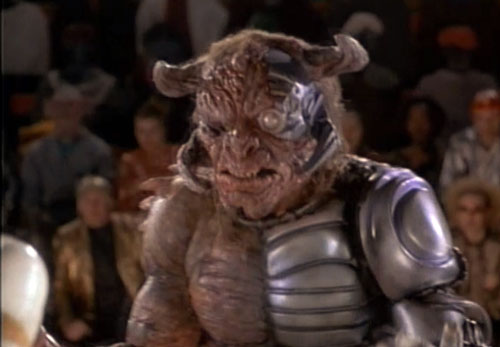
Personally, I was impressed with the creativity and the vision behind the monster designs in Arena, particularly given the fact that there was an extremely limited budget for the team to work with. Most of the aliens are just humans with some makeup effects, but a handful of them are more insect-like or otherwise complicated puppets or rubber suits.

arena3That said, the voice over work (for the monsters that required it) was absolutely atrocious. Horn, the primary antagonist, sounds absolutely ridiculous when he is supposed to come off as intimidating, and comes off as incredibly cartoon-y rather than menacing.

Late in the movie, there is a femme fatale who is introduced over the course of what is supposed to be a seductive musical number. However, just like the monster voice over work, it is absolutely awful. Honestly, he song is almost unbearable to listen to, with or without the lackluster singing, and it plays in the background of an entire scene. It is pretty surreal to watch, given the lead character is absolutely enamored with the impossibly terrible performance, and is distracted by it throughout the scene. Even worse, he acts like he is totally unaware that the singer is affiliated with his enemies, despite the fact that they were introduced by his primary antagonist. Just like Rocky, the hero of Arena (appropriately named “Armstrong”) isn’t the brightest of bulbs.

Overall, there are definitely some highlights to Arena that make it worth watching through, but I think the real value of the movie is in the outlandish premise. A run-of-the-mill sports movie set in outer space against the backdrop of a dystopian society turns a flick that is otherwise pretty basic into something incredibly bizarre. I feel like this is the most true sequel to Rocky IV, as the only way for a boxing match to have greater consequence than ending The Cold War is for a match to literally save the universe.

For bad movie fans, Arena is a good deep cut to check out. I think it would make a pretty good pairing with Robot Jox given the similar sports-movie styles, though Robot Jox is definitely the better movie of the two.

Jungleground

Jungleground

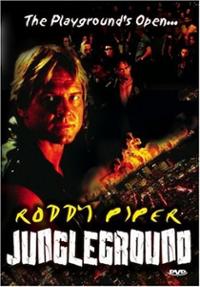
jungleground1

Today, I am going to take a look at one of the lesser-known movies starring the late “Rowdy” Roddy Piper: 1995’s Jungleground.

Jungleground was written by Michael Stokes, who also penned the movies Iron Eagle IV, The Marsh, Exit Speed, and a number of episodes of children’s television shows, including Rolie Polie Olie, Totally Spies, and Miss Spider’s Sunny Patch Friends.

Jungleground was directed by a fellow named Don Allan, who never had any other directing gigs on feature motion pictures, but worked on a couple of documentaries.

The cinematographer for Jungleground was Gilles Corbeil, who also shot the action movies Back in Action and Balance of Power, and has worked as a camera operator on such films as Mimic, Shoot Em Up, 16 Blocks, Pixels, Pacific Rim, and the upcoming Crimson Peak.

The musical score for Jungleground was provided by Varouje, who has also done scores for low budget movies like The Circuit, G.O.D., Tiger Claws, and Expect No Mercy.

The effects team for Jungleground included Liz Gruszka (Devil, Kick-Ass), Ron Craig (Abraxas: Guardian of the Universe, Death Wish V), Antony Stone (Generation Kill, Lord of War), Jeff Skochko (Silent Hill, Cube 2: Hypercube, Repo! The Genetic Opera), and Stan Zuwala (The Adjuster, Iron Eagle IV),

The producers of Jungleground were Peter K. Simpson (Prom Night, Prom Night II), George Flak (The Marsh, Striking Poses), and Ilana Frank (Prom Night II, Prom Night III).

The cast of Jungleground is composed of the late wrestling star and cult icon Roddy Piper (Hell Comes To Frogtown, They Live), Torri Higginson (Stargate: Atlantis), JR Bourne (Teen Wolf, The Butterfly Effect 2), Rachel Wilson (Breaker High, The Glass House), Nicholas Campbell (Goon),  and Nicole de Boer (Cube, The Dead Zone, Star Trek: Deep Space Nine).

The story of Jungleground takes place in a mostly abandoned, lawless city (“the jungleground”) run by ruthless gangs. An undercover policeman is outed and captured after a sting gone bad, and is given one night to escape the jungleground, or else his fiancee will be executed by his captors.

JUNGLEGROUND, Roddy Piper, 1995. ©Norstar Releasing

Jungleground is a pretty obscure movie, with just over 1000 user reviews between IMDb and Rotten Tomatoes combined. Of the two, it currently holds a 5.1 rating on IMDb, and a 44% audience score on Rotten Tomatoes, which are hardly glowing numbers.

The plot to Jungleground gets pretty complicated as it moves along, but it clearly takes a lot of inspiration from Escape From New York and The Warriors, much like 1990: The Bronx Warriors. There is a notable side plot about the interior workings of the “Ragnarockers” gang that operates in the jungleground, but the fact that it rarely actually connects to the main plot with Piper drags the story down a bit, which is a definite weakness of the film.

While Roddy Piper gets a handful of one-liners in the movie, he doesn’t seem to be having as much fun as he did in They Live and Hell Comes to Frogtown. His charisma still comes through here and there, and he makes the movie entertaining more than any other single element in it, but he certainly isn’t on the top of his game. It strikes me as though he is taking the movie far more seriously than it merits, which is ultimately a disservice to what is definitely campy material.

Jungleground strikes me as a movie lost in time. I am still kind of shocked that this is from 1995, because it looks like it could easily have come from anywhere between 1982 and 1989. If not for Roddy Piper looking just a tad older than he did in They Live, I would have sworn that this was made back to back with something like Class of 1999.

jungleground3Overall, Jungleground probably qualifies as middle-of-the-road as far as b-movies go. I picked this up on a whim from a video store some time ago, and the untimely death of Piper gave me the motivation to actually pop it in and review it. I had higher hopes for it being a forgotten gem, but it certainly isn’t a painful movie to sit through. It isn’t as good as similar movies like Escape From New York or The Warriors, or as good-bad as knockoffs like 1990: The Bronx Warriors, but it is a totally serviceable b-level action movie if that is what you are craving. Piper might not be at the top of his game here, but he is still definitely Rowdy Roddy Piper, and has fleeting moments of true badassdom (such as the ending, in which he leaves the film’s villain quadriplegic, but alive).

Manic

Manic

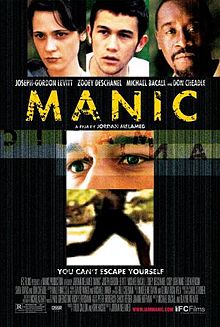
manic1

This post is based on a viewer request, which is being filled due to a donation to the Secular Student Alliance via my campaign during Secular Students Week (June 10-17, 2015). Thanks to all for your contributions!

Today’s movie is Manic, an intense and realistic story about a group of young people being treated for a variety of mental illnesses.

Manic was written Michael Bacall (21 Jump Street, 22 Jump Street, Scott Pilgrim vs. The World) and Blayne Weaver (Honey 2, Weather Girl), who both also appear in the film.

The director for the film was Jordan Melamed, whose only other directing credit is a 2012 documentary called Futures Past. However, he also wrote the screenplay for Twelve, a 2010 movie by Joel Schumacher which he also served as producer on.

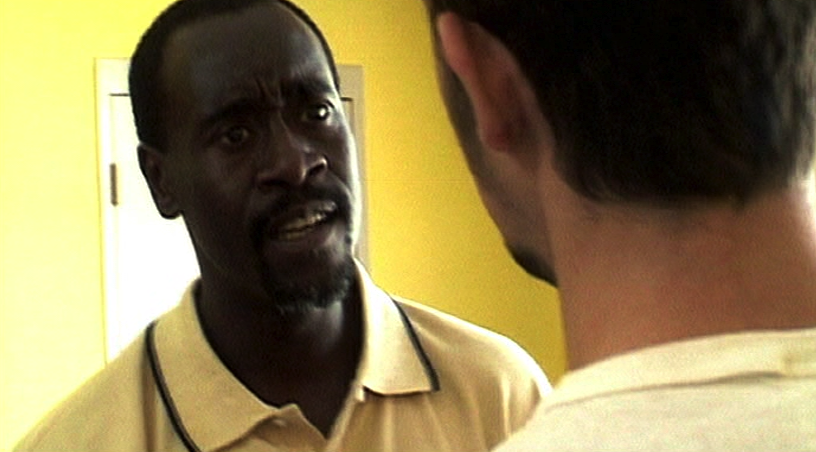
The cast of Manic includes Don Cheadle (Swordfish, Hotel Rwanda, Iron Man 2), Joseph Gordon-Levitt (Brick, Looper, Inception), Zooey Deschanel (500 Days of Summer, The Happening), Elden Henson (Daredevil, The Mighty Ducks), Cody Lightning (Smoke Signals, Brick), and co-writer Michael Bacall (Django Unchained).

manic6The story of Manic centers around a number of patients in the psych ward of a hospital, who are all in the process of dealing with a variety of mental illnesses. As the movie goes along, some of the patients progress, others regress, and a handful of friendships and bonds are formed.

Manic features a handful of teenagers in the background who had actually been treated in institutions for mental illnesses, which adds to the realism of the setting and the tone of the movie.

Zooey Deschanel and Joseph Gordon-Levitt once again acted alongside each other years later in 500 Days of Summer, an acclaimed indie romantic comedy that immensely popularized both actors.

Manic notably premiered at the 2001 Sundance Film Festival, one of the most revered showcases of independent films in  the United States.

The reception to Manic was generally positive. On the Rotten Tomatoes review aggregator, Manic currently holds scores of 67% (critics) and a 79% (audience), alongside an IMDb rating of 7.4. Manic reportedly had a budget of $1.5 million, but it was only able to make less than $70,000 in a limited theatrical run.

One of the biggest criticisms I have seen of the film is the near-nauseating use of handheld camerawork throughout the film, which clearly didn’t sit well with many critics. However, I though it gave the film a more realistic style, and the shots occasionally served to make the audience appropriately uncomfortable and generally ill-at-ease. It still was distracting at points, but I didn’t see it as a negative for the film as a whole. Above all, this strikes me as a movie that was aiming for realism, and shooting with tripods and stabilizers might have served to take away from that feeling without adding anything of real value. Roger Ebert was particularly vocal about his disdain for the shooting style in his review:

Melamed and Hay made an unfortunate decision to use the hand-held style that specializes in gratuitous camera movement, just to remind us it’s all happening right now. There are swish-pans from one character to another, an aggressive POV style, and so much camera movement that we’re forced to the conclusion that it’s a deliberate choice. A little subtle hand-held movement creates a feeling of actuality; too much is an affectation…the camera style [of Manic} made me work hard to see it at all.

Manic serves as a fantastic showcase of acting abilities if nothing else, particularly from Zooey Deschanel and Joseph Gordon-Levitt. While both actors have found their footing in Hollywood now, it is a shame to see Deschanel pigeon-holed into her “Manic Pixie Dream Girl” persona, which she can’t seem to escape. Manic makes it clear that she can do much more if given the opportunity.  Similarly, Joseph Gordon-Levitt shows a potential for violence and simmering intimidation in Manic that he rarely gets to utilize in his roles today.  He does use those qualities a bit in Hesher, however, which is also worth checking out. Cheadle also gets to showcase himself a bit, but his character definitely takes a back seat to the youth in the movie, and he has less of a resolution than any of the other characters in the movie.

The non-traditional plot structure for Manic makes it difficult to tell as an audience member where you are in the progression of the story, and it isn’t really clear until the third act that an end is anywhere in sight. At first this bothered me a bit, but it actually fits with the Sisyphean theme of the movie really well now that I have spent some time thinking about it.

manic5While this might be a mixed bag for some people, I like the ending to Manic. It makes an interesting point on what freedom is, a point that had been made throughout the story. It also provides an interesting foil for the memorable ending to perhaps the most famous movie about a mental institution, One Flew Over the Cuckoo’s Nest. You can escape a physical institution, but as the Manic tagline suggests, “you can’t escape yourself.”

Overall, this is a very emotionally heavy movie that definitely isn’t for everyone. The shooting style and pacing could also turn a lot of people off, but the performances generally make it worth checking out. I’m not usually a huge fan of hyper-realistic cinema, but I thought the use of handheld cameras was a good decision here, and it is hard for me to imagine the movie without them.

If you are interested in checking this out, you need to know that this isn’t One Flew Over The Cuckoo’s Nest or I’m A Cyborg, But That’s OK. This is neither a straight conventional drama or a romantic comedy against the backdrop of an institution: it is an honestly bleak and stark look at what dealing with mental illness as a young person can be like, and it doesn’t pull any punches. If that is something you want to see, then give Manic a shot.

manic4

Swordfish

Clerk’s Pick

Clerk:
Max, Video Central (Columbus, OH)

videoc

Movie:
Swordfish
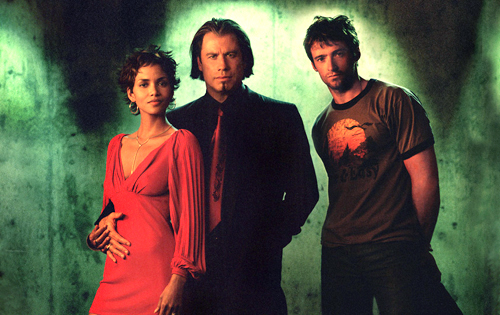
swordfish1

Pitch:
“Believe it or not, it isn’t because Halle Berry  is topless in it. I really like John Travolta’s speeches about movies (and how those sequences are shot). The movie also basically gives away the ending early on, but in a way that you don’t realize it, and it still comes off as a twist. I think it is a more clever movie than it gets credit for, and is worth revisiting.”

Background:

Swordfish tells the story of the planning and execution of an elaborate and technologically advanced heist. The protagonist is a notorious hacker, who has just served a 2-year prison sentence. He is roped into the heist by a mysterious mastermind to handle the programming behind the scenes, but is never given the whole story of what the heist will entail. Of course, the plot features a number of twists and misdirections, and a hearty quantity of explosions.

Swordfish was written and produced by Skip Woods, who has also provided screenplays for Hitman, Sabotage, X-Men Origins: Wolverine, A Good Day to Die Hard, and The A-Team. The director for Swordfish was Dominic Sena, who was also behind such movies as Gone in 60 Seconds, Season of the Witch, and Kalifornia. Likewise, Swordfish was edited by Stephen Rivkin, who has also cut films like Stealth, Avatar, Blackhat, and My Cousin Vinny.

Swordfish required a massive visual effects team due to the complicated nature of a number of the sequences. The team included common elements with films like Avatar, Jingle All The Way, Tank Girl, The Italian Job, Speed, The Abyss, Fight Club, Monkeybone, Minority Report, Judge Dredd, Deep Blue Sea, Cloud Atlas, Jupiter Ascending, and Mystery Men, among others.

The music on Swordfish was provided by Paul Oakenfold, an acclaimed DJ who has had remixes featured in movies like The Matrix Reloaded, Collateral, and Shoot ‘Em Up, and Christopher Young, who has composed scores for films like Sinister, Drag Me To Hell, Spider-Man 3, The Core, and Rounders.

The cinematographer for Swordfish was Paul Cameron, who also shot movies like Deja Vu, Man on Fire, Collateral, and the remake of Total Recall.

The cast of Swordfish is pretty deep, and includes the likes of Hugh Jackman (The Prestige, X-Men, Van Helsing), John Travolta (Battlefield: Earth, Face/Off, The Punisher), Halle Berry (Catwoman), Vinnie Jones (The Midnight Meat Train), Don Cheadle (Hotel Rwanda, Iron Man 2), Sam Shepard (Stealth, The Right Stuff), and Zach Grenier (Fight Club, Mother Night, Deadwood).

swordfish2

Swordfish was nominated for a Golden Raspberry award, which are dishonors given out for the judged worst films and performances of the year. Specifically, John Travolta received a nomination for Worst Actor for his work on Swordfish and Domestic Disturbance, but lost out to Tom Green for Freddy Got Fingered.

The reception to Swordfish has been mixed over the years. Rotten Tomatoes, which primarily tracks contemporaneous reviews of movies from critics, has it at 26% aggregate score.  However, IMDb, which tracks reviews continuously from its user base, has it at a significantly higher 6.5 rating.

The budget for Swordfish was estimated to be just north of $100 million. It managed to make a profit on that with a worldwide theatrical gross of just over $147 million, though expectations for it were clearly higher. For comparison’s sake, The Matrix managed to make well over $400 million worldwide on a smaller budget.

Halle Berry reportedly received an extra $500,000 on top of her salary for the movie to do her topless scene, which she apparently agreed to in order to overcome her fear of on-screen nudity.

The opening explosion sequence was, at the time, one of the most complicated visual effects shots in Warner Brothers history. It utilized much of the effects technology that was popularized in The Matrix two years earlier, and required the use of 135 cameras.

Swordfish released just months before the September 11, 2001 terrorist attacks, and is oddly prescient about some of the issues that would follow the event. Notably, Hugh Jackman’s character is said to have hacked into U.S. government files to sabotage a mass program of illegal surveillance of citizens, a program that actually began occurring after 9/11, and was exposed by Edward Snowden.

Review:

First off, Swordfish features too much color filtering, to the point of being obnoxious. That might not have been too distracting at the time, but after years of CSI television shows beating that particular dead horse, it is impossible not to notice. As with many other aspects of the movie, I’m sure this was done based on the influence of The Matrix, which I’ll get to more in a bit.

This might be a bit of a surprise, but I don’t hate John Travolta in this. I always enjoy his hammy acting, particularly in things like The Punisher and Face/Off. However, the writing for his character is incredibly pretentious and sleazy, which I am sure was at least partially intentional. Regardless, he is really easy to hate, but whether that is a positive or a negative is up to the viewer.

In general, the writing for the movie feels edgy for the sake of being edgy, and gives off a tone of pretending to be cooler than it actually is (not unlike Hackers, a similarly computer-themed flick). Everything about the dialogue just comes off as “trying too hard,” which isn’t a vibe you want your movie to give off.

Just about everything about Swordfish‘s aesthetic and style feels intentionally derivative of The Matrix. I mentioned the use of color already, but the music, costumes, effects, and the prominence of computers/hacking in the story-line all combine to make something that looks and feels a little too familiar. This isn’t necessarily objectively bad, and isn’t as noticeable now unless you look into the context of the film, but at the time, all of these similarities would have stood out in bold to both critics and audiences.

Recommendation:

I have mixed feelings about Swordfish. At times, it is genuinely entertaining and interesting, but at others it is unbearably pretentious and hokey. The excessive vigilante patriotism also came off as weird to me, and just doesn’t line up with the hedonistic personality that Travolta’s character was laid out to have throughout the movie. This trait was apparently emphasized more in rewrites on the movie, which resulted in a handful of alternate endings.

If you like heist movies and can handle sitting through the tech nonsense of Hackers, The Net, and The Matrix sequels, then Swordfish is worth sitting through for the occasional good parts. I still think it is more bad than good, but there is definitely entertainment value to it on the whole.

I particularly recommend checking out the We Hate Movies podcast episode on the film for a more detailed walk-through of the movie, and a few other perspectives on the film as a whole.

A Simple Plan

Clerk’s Pick

Clerk:
Hannah, Video Central (Columbus, OH)

videoc

Movie:
A Simple Plan

simpleplan2

Pitch:
“I like Sam Raimi thrillers. I like his horror-comedies too, but this and The Gift really stand out to me. He has an ability to utilize the setting in his stories, which is something that a lot of directors seem to overlook. I also generally like Billy Bob Thornton in things, though he seems like he is a bit of an asshole as a person.”

Background:

A Simple Plan was directed by the one and only Sam Raimi, who is best known for his uniquely shot horror-comedies like The Evil Dead, Army of Darkness, and Drag Me To Hell. He has also made some more traditional Hollywood fare in more recent years, like the initial Spider-Man trilogy and Oz: The Great and Powerful. I think many people forget that he went through a number of different genres over the middle portion of his career, like his action-western The Quick and The Dead and the standard sports drama For Love Of The Game. A Simple Plan, though well-regarded, isn’t associated as strongly with Raimi himself as many of his other movies.

The movie is based on a 1993 novel by Scott B. Smith, who also provided the screenplay adaptation for the film. Surprisingly, the only other screenplay work he has done was for the 2008 film The Ruins, despite how highly acclaimed his work was on A Simple Plan.

The cast of the movie includes Billy Bob Thornton (The Ice Harvest, Sling Blade, Bad Santa, The Man Who Wasn’t There), Bill Paxton (Slipstream, Predator 2, Frailty, Aliens), Bridget Fonda (Lake Placid, Monkeybone), and Gary Cole (Harvey Birdman: Attorney At Law, The West Wing, Office Space)

The music was done by the acclaimed composer Danny Elfman, who is one of the most recognizable scorers working today. His work on such films as Batman, Batman Returns, The Nightmare Before Christmas, and Beetlejuice have cemented him as one of the most unique and distinctively-styled composers out there.

The cinematography for A Simple Plan was done by Alar Kivilo, who also shot such films as Copper Mountain, The Blind Side, The Ice Harvest, Frequency, and Hart’s War.

A Simple Plan was nominated for two Academy Awards: best adapted screenplay and best supporting actor (Billy Bob Thornton). It raked in a number of other accolades, including SAG and Golden Globe nominations for Thornton, along with widespread recognition for the score and the screenplay. The film in its totality was nominated for such accolades as the Saturn Award, the Edgar Allan Poe Award, and the Broadcast Film Critics Association Award for Best Picture.

This movie took a number of years to actually get made after its initially publication as a novel, thanks to a number of changes to the cast and crew. One early iteration had Nicolas Cage on board to star, with Ben Stiller directing. Later on, names like Brad Pitt, John Boorman, Juliette Lewis, and John Dahl were attached at one point or another before the final cast and crew listings were settled.

A Simple Plan currently holds a 7.5 rating on IMDb, along with Rotten Tomatoes scores of 90% (critics) and 81% (audience). Despite the film’s acclaim, it failed to make back its reported $30 million budget, raking in just over $16 million in its domestic theatrical run.

Review:

First off, I have to note that Bill Paxton gets to show off some of his real talent in this movie, which always seems to come to the surface when he isn’t hamming it up in a sci-fi movie. Billy Bob Thornton might be the one who got the most acclaim out of this movie (and it was certainly deserved), but Paxton shouldn’t be overlooked. The way his character turns from being a staunch moral center to a fully corrupted criminal at break-neck speed is really astounding, and Bridget Fonda plays a fantastic Lady MacBeth in his ear throughout his fall.

 “You work for the American Dream, you don’t steal it.”

“Then this is even better!”

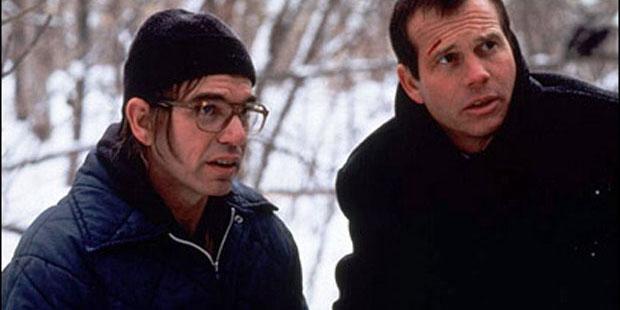
simpleplan3There is a historically tight relationship between Sam Raimi and the Coen Brothers (they worked together on both Crimewave and The Hudsucker Proxy), and this movie really feels like Raimi’s take on a Coen Brothers style movie. The atmospheric similarities to Fargo are impossible not to mention, especially given that Fargo came out just two years prior to A Simple Plan. Reportedly, Raimi even learned how to effectively film in the frigid elements thanks to the Coens. Despite the similar snowy aesthetics and criminal plots, the two films are very different sorts of movies. A Simple Plan is very emotional in its focus on the characters, and stays grounded in reality throughout the story. The characters in Fargo are a bit cartoonish, and create an atmosphere that feels somewhat more exaggerated than the world we really live in, but not so much so that it drifts into a realm that is beyond belief.

A Simple Plan might not be a great movie, but it is certainly a very good one. The performances from Paxton, Thornton, and Fonda are all notable, and the dialogue is really spot-on. The pacing is unfortunately a bit too slow if you ask me, and the story also never builds up quite enough tension for what the film seemed to require (at least, not until the explosive climax and conclusion). Raimi’s shots and imagery are a bit heavy-handed (the birds lack any kind of subtlety, for instance), but the film still looks great on the whole. Overall, it is an entertaining film to watch unfold thanks to the performances and the dialogue.

Recommendation:

A Simple Plan is basically Coen Brothers Lite: it has the same gist of the original, but not all of the content. There is a lot good going on here, and it certainly stands on its own, but it inevitably incites comparisons to Fargo, which is just a much better crafted film from top to bottom. I definitely recommend checking it out, as it is a solid dramatic crime thriller with some great acting and dialogue on all fronts. It is also thoroughly emotionally taxing, and the last third of the film is genuinely powerful.