Tag Archives: bad movies

Marmaduke

Marmaduke

marmaduke1

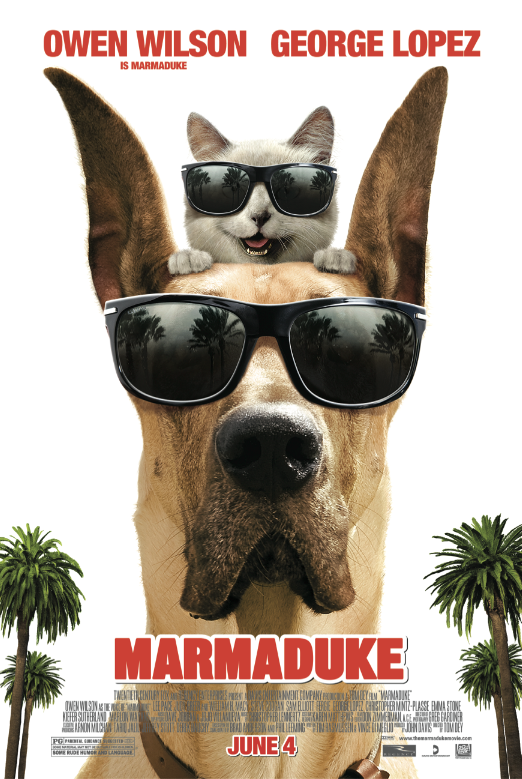
Today’s feature is a 2010 comic strip movie adaptation that literally no one wanted or asked for: Marmaduke.

Marmaduke is loosely based on the comic strip created by Brad Anderson and Phil Leeming. The screenplay for the movie was written by Tim Rasmussen (License to Wed) and Vince Di Meglio, the latter of which worked as a visual effects artist on films like Miss Congeniality and Daredevil.

The director for Marmaduke was Tom Dey, who has also been behind such Hollywood comedy films as Shanghai Noon and Failure to Launch. The cinematographer was Greg Gardiner, who previously shot Son of the Mask and Elf, among many others. Don Zimmerman, who has had a long career as an editor in Hollywood with such movies as Rush Hour 3, Over The Top, Rocky IV, Patch Adams, Galaxy Quest, Being There, and Coming Home, did the cutting for Marmaduke.

The musical score for the film was provided by Christopher Lennertz, who has worked extensively on the television show Supernatural, as well as films like Soul Plane, Disaster Movie, and Horrible Bosses.

The special makeup effects on Marmaduke were provided by a team including Bill Terezakis (Taken 2, House of the Dead, Snow Dogs, Friday the 13th Part VIII), Frida Norrman (TRON: Legacy, Rise of the Planet of the Apes), Todd McIntosh (Masters of the Universe, Torchwood), and Celine Godeau (American Mary, Slither, Dreamcatcher).

The Marmaduke special effects team was made up of Gary Heidrick (Scary Movie 3, Catwoman), Hike Hyrman (Van Helsing, Brothers Grimm, League of Extraordinary Gentlemen, The Black Cat), Wayne Syzbunka (Lake Placid, The Black Cat, Pick Me Up, Dreams in the Witch House, Blade: Trinity), James Lorimer (Cellular, Van Helsing, Tank Girl, Drive, Flubber, Garfield), Steve Davis (Scary Movie, Snow Buddies, Friday the 13th Part VIII), Richard Darwin (Lost in Space, Dungeons & Dragons, The Flintstones, Babe), and Cara E. Anderson (Trucks, The Mangler 2, The Core, Superbabies: Baby Geniuses 2).

The massive visual effects team for Marmaduke included work by a number of effects companies, including Cinesite, Rhythm and Hues, and Image Engine, and in total included elements that worked on such diverse movies as Iron Man, Frozen, Big Hero 6, Life of Pi, The Golden Compass, Skyfall, Live Free or Die Hard, The Ugly Truth, Piranha 3D, Cloud Atlas, Pacific Rim, The Frighteners, The Brothers Grimm, Guardians of the Galaxy, Alvin and the Chipmunks47 Ronin and Yogi Bear.

The team of producers for Marmaduke included Derek Dauchy (xXx, Master of Disguise, Mr Popper’s Penguins), Arnon Milchan (Epic Movie, Daredevil, Fight Club, Heat, LA Confidential, King of Comedy, 12 Years A Slave, Gone Girl, Birdman), Jeffrey Stott (Drive, Nightcrawler, Whiplash, The Adventures of Pluto Nash, North), and John Davis (Waterworld, Eragon, Fortress, Predator 2).

The deep cast for Marmaduke includes Lee Pace (Guardians of the Galaxy), William H. Macy (Evolver, Cellular, Edmond, Fargo) Owen Wilson (Anaconda, Inherent Vice, The Life Aquatic, Wedding Crashers), Emma Stone (Birdman, Paper Man, Gangster Squad, The Amazing Spider Man), Keifer Sutherland (The Lost Boys, Phone Booth, Stand By Me, Pompeii) George Lopez, Steve Coogan (Tropic Thunder, Hamlet 2), Fergie, Sam Elliott (The Big Lebowski, Frogs, Road House), Marlon Wayans (The Ladykillers), Damon Wayans (Major Payne), and Judy Greer (Archer, Arrested Development).

marmaduke3

Ron Perlman was apparently at one point attached to the movie in the role that ultimately went to Sam Elliott, but left the production for unknown reasons.

According to the IMDb trivia section for the movie, Marmaduke contains:

two dog farts, three urine gags, two hits to the groin, one animal belch, two record scratch moments and two uses of the phrase “Who let the dogs out?”

The reception to Marmaduke was very negative, and it currently holds an IMDb rating of 4.1 alongside Rotten Tomatoes scores of 9% (critics) and 42% (audience). Regardless of the negative reception, Marmaduke wound up being profitable in overseas markets, in total grossing almost $84 million on a $50 million budget. Despite being in the black at the end of its run, the film certainly didn’t meet expectations, particularly in the domestic sphere.

The first and most distracting aspect of the movie I have to mention is the dog mouths, which are computer manipulated to move with speech patterns. While the result looks better than similar children’s movies that have tried the same thing, it actually winds up stuck in the uncanny valley, creating a sort of hypnotic and unsettling effect.

Speaking of the effects, the movie goes beyond overboard in a number of sequences. The scenes that feature Marmaduke dancing or surfing, both of which happen more than you might expect in the film, look absolutely awful, particularly the Bollywood-style dance scene at the end of the film. If the film had kept the effects a little more subtle, they might have gotten away with a watchable product. However, it definitely goes the way of Son of the Mask and Cats & Dogs in the excessive effects use.

marmaduke2

The story of Marmaduke is a lot deeper than it has any right to be, considering how much of the humor is related to farting or peeing. At the same time, however, it is all painfully cliche and predictable. Most of the plot centers around an oppressive racist/classist system that operates at a local dog park, which grants pure breed dogs privileges not afforded to mutts. Marmaduke, a newcomer to the area, spends most of the movie trying to ingratiate himself with the ruling class, before learning a valuable lesson about friendship, turning his back on it, and throwing a wrench into the system. Keep in mind, this is theoretically based on a comic strip that not only does not address classism or systemic oppression in any form, but rarely even features actual humor.

Speaking of which, why bother with trying to make a movie out of this source material? I have a hunch that this was at some point a speculative script for a generic talking dog movie, and that the Marmaduke brand was pretty much tossed onto it as a promotional plan. Because, really, there is just no content in the source material to create a plot out of, so why not just use whatever is laying around? It is true that Marmaduke doesn’t have a whole lot of die hard fans, but it is at least a recognizable name that could be marketed based on that recognition, giving it some value.

I’m not going to bother digging into the laziness of the humor in this movie, because there is just no point to it. However, there are a number of things about the story that bother me. Theoretically, the plot is your typical fish out of water setup, but the audience has no frame of reference of what Marmaduke’s usual surroundings are like, which undermines the whole premise. What was Kansas like for this giant dog, anyway? How is this new situation in California different for him? Aside from the audience being told that things are different, nothing is ever shown to drive home the contrast between the two locations.

Overall, Marmaduke is your typical children’s movie trash, bowing to base humor, bad effects, and tired plots. While the cast is really impressive, it is totally wasted on this movie. There isn’t really anything to recommend about the movie, outside of the fact that it is a near-perfect example of what is wrong with children’s and family films today. Unless you are just deathly curious, you should avoid this wreck. Or, better yet, check out The Flop House Podcast for another perspective on the film (with the same conclusion).
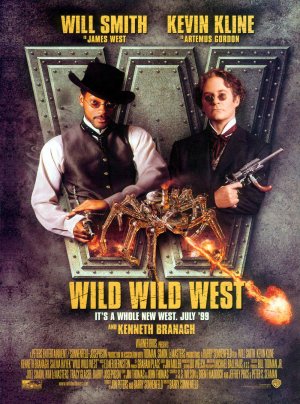
Wild Wild West

Wild Wild West

wildwest1

Today’s feature is Wild Wild West, one of the strangest alternate history movies ever to come out of mainstream Hollywood.

Wild Wild West is loosely based on a television show of the same name that ran from 1965-1969 on CBS, which featured characters of the same names and a similar focus on ridiculous gadgets.

The screenplay credit for Wild Wild West is given to two writing duos: Brent Maddock and S.S. Wilson (Tremors, Ghost Dad, Short Circuit), and Jeffrey Price and Peter Seaman (Who Framed Roger Rabbit?, How The Grinch Stole Christmas). The story credit, however, is given to another duo: Jim Thomas and John Thomas, who have been behind such movies as Predator, Predator 2, and Mission to Mars.

The director/producer for Wild Wild West was Barry Sonnenfeld, who also directed Men in Black, Get Shorty, RV, and The Addams Family, and was previously a cinematographer under the Coen brothers for Blood Simple, Raising Arizona, and Miller’s Crossing.

The cinematographer on Wild Wild West was Michael Ballhaus, a frequent Martin Scorcese collaborator who has shot such acclaimed films as The Departed, Gangs of New York, Sleepers, After Hours, Quiz Show, and Goodfellas.

The editor for the film was Jim Miller, who frequently cut movies for Barry Sonnenfeld, including Get Shorty, Men in Black, and The Addams Family. He also edited another movie I particularly like: Michael Mann’s Collateral, starring Tom Cruise and Jamie Foxx.

The team of producers for Wild Wild West included Jon Peters (Batman, Caddyshack II, Man of Steel, Tango & Cash, An American Werewolf in London), Tracey Barone (Money Train), Barry Josephson (The Last Boy Scout, The Ladykillers), Graham Place (The Hudsucker Proxy, Barton Fink), Joel Simon (Steel), Chris Soldo (Sgt. Pepper’s Lonely Hearts Club Band, 1941, Snake Eyes), and Neri Tannenbaum (Orange is the New Black).

The visual effects team for Wild Wild West included a number of workers from Industrial Light and Magic, one of the most acclaimed effects companies in the business. The company was founded by George Lucas for the purpose of providing visual effects for the Star Wars films, and has since worked on films like Howard the Duck, Cocoon, E.T., Raiders of the Lost Ark, Back to The Future, Jurassic Park, Hudson Hawk, Deep Blue Sea, Small Soldiers, and Congo.

The special effects makeup on Wild Wild West included work by Rick Baker (Black Caesar, It’s Alive, It Lives Again, Videodrome), a 7-time Academy Award winner who is easily one of the most acclaimed individuals in special effects and makeup today. He won one of his Academy Awards in the previous year for work on the Barry Sonnenfeld film Men in Black, which goes a long way towards explaining his involvement here.

The music for Wild Wild West was provided by Elmer Bernstein, a legendary film composer who worked on scores for such films as Bringing Out The Dead, My Left Foot, Slipstream, Leonard Part 6, Airplane!, To Kill A Mockingbird, The Great Escape, Robot Monster, and The Magnificent Seven, among countless others.

The cast of Wild Wild West is primarily comprised of Will Smith (After Earth, Hancock, Bad Boys, Winter’s Tale), Kenneth Branagh (Hamlet, Henry V, Valkyrie), Kevin Kline (A Fish Called Wanda, The Big Chill), Ted Levine (Silence of the Lambs, The Mangler), and Salma Hayek (From Dusk Til Dawn, Dogma, Desperado),

Wild WIld West follows two special government agents in the Reconstruction era, who are charged with tracking down a notable Confederate sympathizer with significant financial capacity who has reportedly been kidnapping expert scientists.  The further they dig into the matter, the more the eccentric duo discover a plot to kick-start a second Civil War through the use of advanced technology, which they have to figure out a way to stop.

Writer/director Kevin Smith (Tusk, Red State, Clerks, Chasing Amy) has a famous story about Wild Wild West producer Jon Peters from when they briefly worked together on the abandoned project to remake Superman in the 1990s, which theoretically explains the mechanical spider / spider motif that appears throughout Wild Wild West. If you haven’t heard the story before, I highly recommend checking it out.

Will Smith reportedly turned down the lead role in The Matrix to do this movie, which he has since said was the worst decision of his career.

Robert Conrad, star of the Wild Wild West television show, spoke out against this film adaptation, harshly criticizing it publicly. Apparently, Will Smith himself apologized to Conrad years later for the poor quality of the film.

Plans apparently existed to make a film version of Wild Wild West since at least the early 1990s, and at one point Mel Gibson was attached to star, and Richard Donner was going to direct.

The reception to Wild Wild West was overwhelmingly poor, and the film currently holds an IMDb rating of 4.8, along with Rotten Tomatoes scores of 17% (critics) and 28% (audience).

wildwest2

Wild Wild West had a worldwide theatrical gross of just over $222 million, on a reported production budget of $170 million. While it was profitable based on those numbers, it didn’t come anywhere near the lofty Hollywood expectations for it, particularly given the price tag, and is publicly remembered as a failure.

Wild Wild West features some hammy acting from Kline and Branagh, with the two chewing scenery all over the movie. However, I thought Kline was actually a pretty solid U.S. Grant that is totally wasted on this movie. Will Smith does his charismatic shtick, which isn’t particularly remarkable or horrible here.

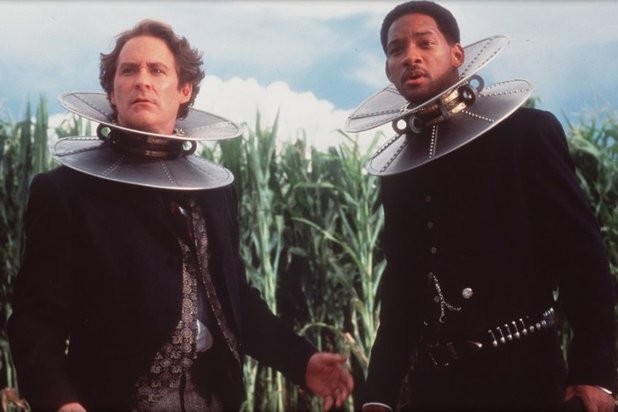
The movie features a lot of over the top technology, which is a fair homage to the show, at least to an extent. I can understand the thinking here: people liked the eccentric gadgets in James Bond movies and Men in Black, so I can see why the team thought the steam-punk inventions would resonate with people. However, it all goes a few steps too far into the ridiculous, with killer disks, head projectors, and giant mechanical death spiders.

wildwest3
And mechanical collars?

Wild Wild West was pitched to audiences as a buddy cop action comedy, but the comedy just doesn’t work throughout the film, and Kline and Smith never particularly click. It turns out that a lot of the comedic elements in the movie were added through reshoots that were done after poor test screenings, which gives the whole movie an unbalanced feel. Comedy isn’t something that can be added haphazardly after the fact: if it is going to work, it needs to either be specifically directed, or ingrained in the screenplay from the beginning.

The length of Wild Wild West is a bit too long for what it is, and the movie already feels stretched out due to the meandering plot structure and interspersed moments of bad comedy. Really, there is no reason for this movie to stretch anywhere near a two hour run-time, given it isn’t particularly complicated or epic.

Overall, Wild Wild West isn’t a totally un-entertaining movie, but it was definitely poorly conceived and executed. The effects and production design are specifically pretty cool, and it still has a bit of a cult following for that aspect alone. However, the humor is pretty bad, which drags the whole thing down. It is still worth checking out thanks to the ridiculous performances from Kline and Branaugh (and to a lesser extent Levine), though, and there is plenty of nostalgia tied into the film for a lot of people.

Borat

Borat

borat1

This post is based on a viewer request, which is being filled due to a donation to the Secular Student Alliance via during Secular Students Week (June 10-17, 2015). Thanks to all for your contributions!

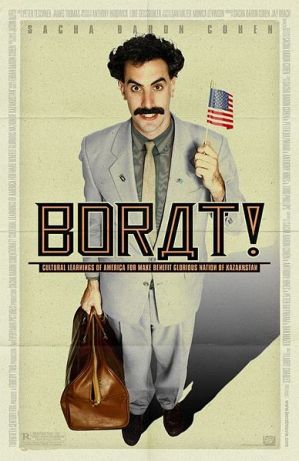
Today’s feature is Sacha Baron Cohen’s infamous shock-documentary, Borat: Cultural Learnings of America for Make Benefit Glorious Nation of Kazakhstan.

Borat was directed by Larry Charles, who has also been behind the documentary-style comedies Religulous, Bruno, and The Dictator, and has also served as a producer on television shows like Seinfeld, Curb Your Enthusiasm, Dilbert, The Tick, and Entourage.

Borat is based on a character originally created by Sacha Baron Cohen for Da Ali G Show, but the movie astoundingly has a total of 9 credited writers, including both story and screenplay credits for Cohen, Anthony Hines (Bruno), and Peter Baynham (I’m Alan Partridge), as well as a screenplay credit for Dan Mazer (Da Ali G Show) and a story credit for Todd Phillips (Old School, Road Trip, The Hangover Part II, The Hangover Part III).

The cinematography in Borat was provided by the duo of Anthony Hardwick (Bruno, Religulous, Entourage) and Luke Geissbuhler (Helvetica, A LEGO Brickumentary)

Borat in total had three primary editors: Craig Alpert (Pineapple Express, Funny People, Knocked Up), Peter Teschner (Horrible Bosses, Bride of Re-Animator, I Spy, Josie and the Pussycats), and James Thomas (The Muppets, Fanboys, Hot Tub Time Machine).

The music for Borat was provided by Sacha Baron Cohen’s brother, Erran, who has also provided the music for his other films The Dictator and Bruno.

The team of producers on Borat included co-writers Sacha Baron Cohen, Dan Mazer, and Peter Baynham, as well as Jay Roach (Meet the Parents, Meet the Fockers, Austin Powers: International Man of Mystery) and Monica Levinson (The Watch, Bruno).

The cast of Borat is made up mostly of unaware non-actors, outside of Sacha Baron Cohen and Ken Davitian (The Artist, Meet the Spartans, Get Smart, Frogtown II). A couple of recognizable faces do pop up in non-acting roles as themselves, like Pamela Anderson and politician Alan Keyes.

Todd Phillips was initially slated to direct the film, but left after filming just one sequence (the rodeo) due to creative differences with the rest of the team. He did wind up with a story credit on the final product, however.

The release of Borat unsurprisingly met with an immense amount of controversy, with countless individuals speaking out against the depictions and representations in the movie, as well as a handful of lawsuits being filed against the production.

In spite of the controversy, the initial response to Borat from critics and audiences was generally positive, and it still holds a 91% from critics on Rotten Tomatoes, as well as a MetaCritic score of 89%. However, time hasn’t been particularly kind to the movie: the continuously recorded IMDb rating has sunk to 7.3, alongside the currently updated Rotten Tomatoes audience score of 79% and MetaCritic user score of 7.2.

Borat made well over $128 million in its initial domestic theatrical release, on top of $133 million internationally, despite a number of national bans. The initial production budget was $18 million (what the hell was that money spent on?), making the movie wildly profitable, especially for a documentary.

There is a certain unfocused quality to Borat. Who is the audience supposed to laugh at in this movie? Instead of punching up or punching down, it just seems to flail, swinging limbs confusedly in every direction and hitting whatever it happens to come into contact with. This idea of the ‘equal opportunity offender’ seemed to be particularly popular at the time, using the idea that making fun of everyone excused making fun of stigmatized and oppressed groups in even the most lazy and demeaning ways. For an example of that, just take a look at Carlos Mencia’s Mind of Mencia, which ran on Comedy Central for 3 years from 2005 to 2008, operating specifically on this mentality.

borat3
“NOT very nice”

The moments of humor that are effective in Borat are pretty niche in their interest, having a specific focus on a combination embarrassment and schadenfreude. While this has gotten more popular over the years due to the correspondent segments on The Daily Show and the style of The Colbert Report, it still isn’t the sort of comedy that pops up a lot in blockbusters. This makes it all the more perplexing as to why it was so widely successful at the time. The best way to explain it is that the movie is satire gone wrong, and a lot of people were laughing at the ‘wrong things’. For instance, when Borat is referenced in popular culture, it is never done by playing on the humor of making common people look ridiculous for their hypocrisies and prejudices, but by mimicking the eccentricities of the character of Borat himself, like his bathing suit and his accent. Those aspects seem to me to be more of a means to an end in the movie, where the laughs are meant to be focused on the reactions of the people. Still, that doesn’t make these details ok, because they are still incredibly negative and shallow, but it is telling that those are the aspects of the film that people latched onto.

However, most of the humor throughout Borat is lazy and based on a ludicrous, concocted version of the nation of Kazakhstan: a lot of it seems to be based on massive misconceptions and general xenophobia towards people from the Middle East and Eastern Europe, making the movie not all that unlike the clueless conservative people it primarily aims to mock. Even the way the film is shot keeps the focus almost exclusively on the character of Borat, whereas Daily Show correspondent segments almost always stay trained on the target, with the character specifically being used to draw out reactions.

Speaking of which, why use Kazakhstan here? There is no resemblance between the portrayal in the movie and the actual country, so why not just make up a fake country? It just strikes me as being antagonistic without reason, just as a way to piss off yet another group of people. It is also a thoroughly confused portrayal, bouncing between considering the country Middle Eastern or Eastern European, which aren’t the same thing. Even worse, it isn’t really either of those things: It is a massive country, but is best classified as Central Asia. Hell, it has a massive Eastern border with China, and a significant Northern border with Russia. Honestly, I think they only picked Kazakhstan for this movie because it ends in “-stan,” and I guess that qualifies as ‘close enough’.

borat2

Borat definitely capitalizes off of domestic xenophobia and racism in the wake of 9/11 and the renewed American engagement in the Middle East, but it also punches hard at conservative and evangelical elements in the US, as I mentioned previously. It is also worth noting the amount of Russian and former Soviet influence on the style of pseudo-Kazakhstan, which provides kind of a double-whammy as far as ingrained negative bias from the perspective of western audiences.

It is worth pointing out that Cohen’s style of humor has seemingly rapidly decreased in popularity over time, with each of his Borat-esque films making less of an impact than the last. However, he has done some acting in a few acclaimed films in recent years, like 2012’s Les Miserables and Tim Burton’s Sweeney Todd, and isn’t awful as a comic relief element in those dramas.

On the Rotten Tomatoes aggregator, one review blurb in particular stood out to me, from critic Matthew De Abaitua of Film4:

“Borat is the funniest film imaginable right now.”

I think that kind of captures the phenomenon of this movie: for better or worse (mostly worse), it is a product of a specific time. I think a lot of people rightfully look back on it negatively now, but that should tell us a lot about the movie-going masses of 2006 in comparison to today’s audience more than anything else.

Sacha Baron Cohen made the decision to retire the character of Borat not too long after the film’s release, which I think was the best move for everyone. His reasoning is that he couldn’t surprise people anymore due to the character’s popularity, but I think there’s much more to it than that: Borat as an entity doesn’t belong in the present day, and it rapidly became the sort of tone-deaf portrayal that it was theoretically trying to mock. On some level Cohen must have known that, and it had to have influenced his decision to set the character aside.

I think Borat is worth rewatching for a lot of people, particularly to understand where society was at the time for it to become such a hit. The movie is honestly unremarkable, and suffers from being horrifically unfocused and poorly paced. If there is anything positive to say about it, it is that Cohen is capable of disappearing into a role, and that the film manages to sporadically capture the elusive quality of schadenfreude. However, it gets very bogged down in focusing on Borat as a semi-human caricature, rather than on the people around him. It does provide a semi-coherent example of how satire can so easily drift astray, and become a negative force.

The BibleMan Marathon

Just as a reminder, today is the last day of Secular Students Week. So, today only, If you make a donation to the Secular Student Alliance, I’ll cover a movie of your choice.

shadowofdoubt3

Yesterday, the final post went up concluding my marathon of the Bibleman franchise. Over the course of 15 years and 3 incarnations, Bibleman became one of the most popular and recognizable figures in Christian entertainment. So, how was the experience of completing the series?

It was pretty awful. There are definitely some golden moments here and there throughout the series that make for some ironic laughs, but the real purpose behind the series as an evangelical tool aimed at children is always present and evident, and it gives the whole series an unavoidably creepy vibe.

cheater4

bully3 fightforfaith5
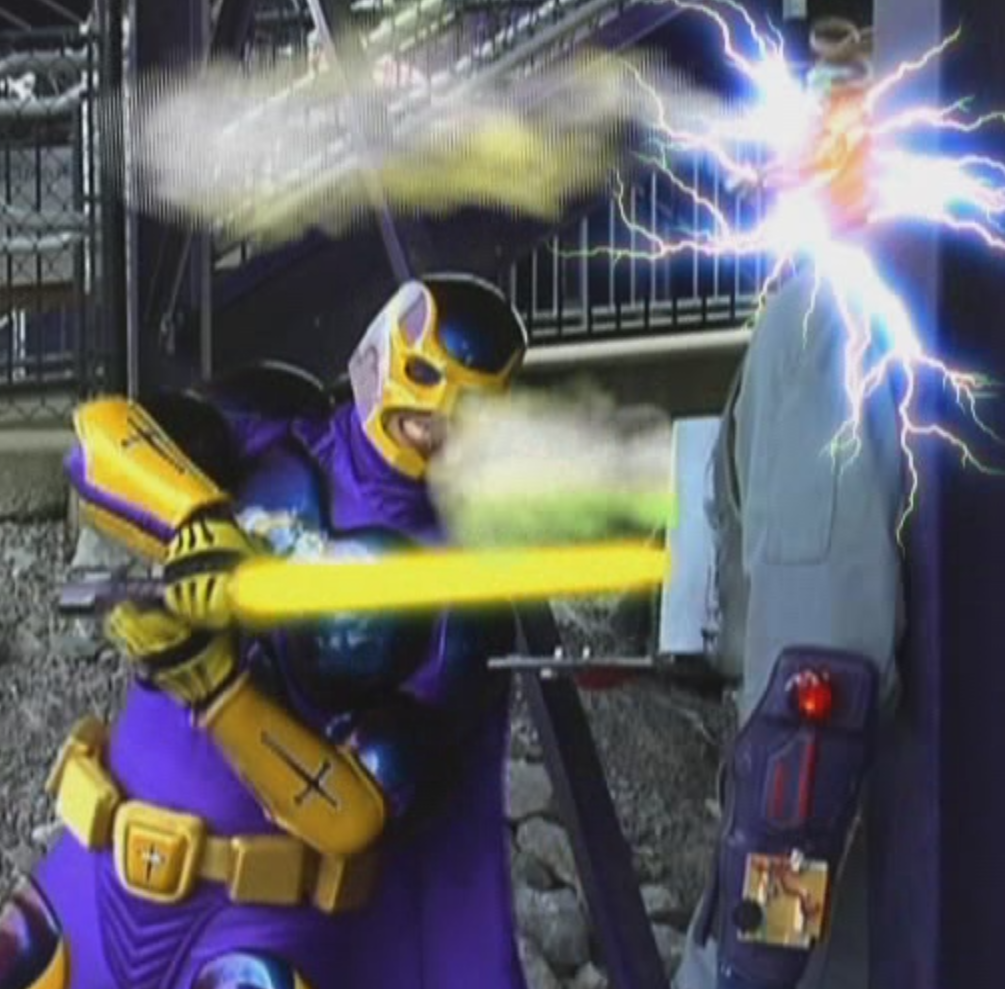
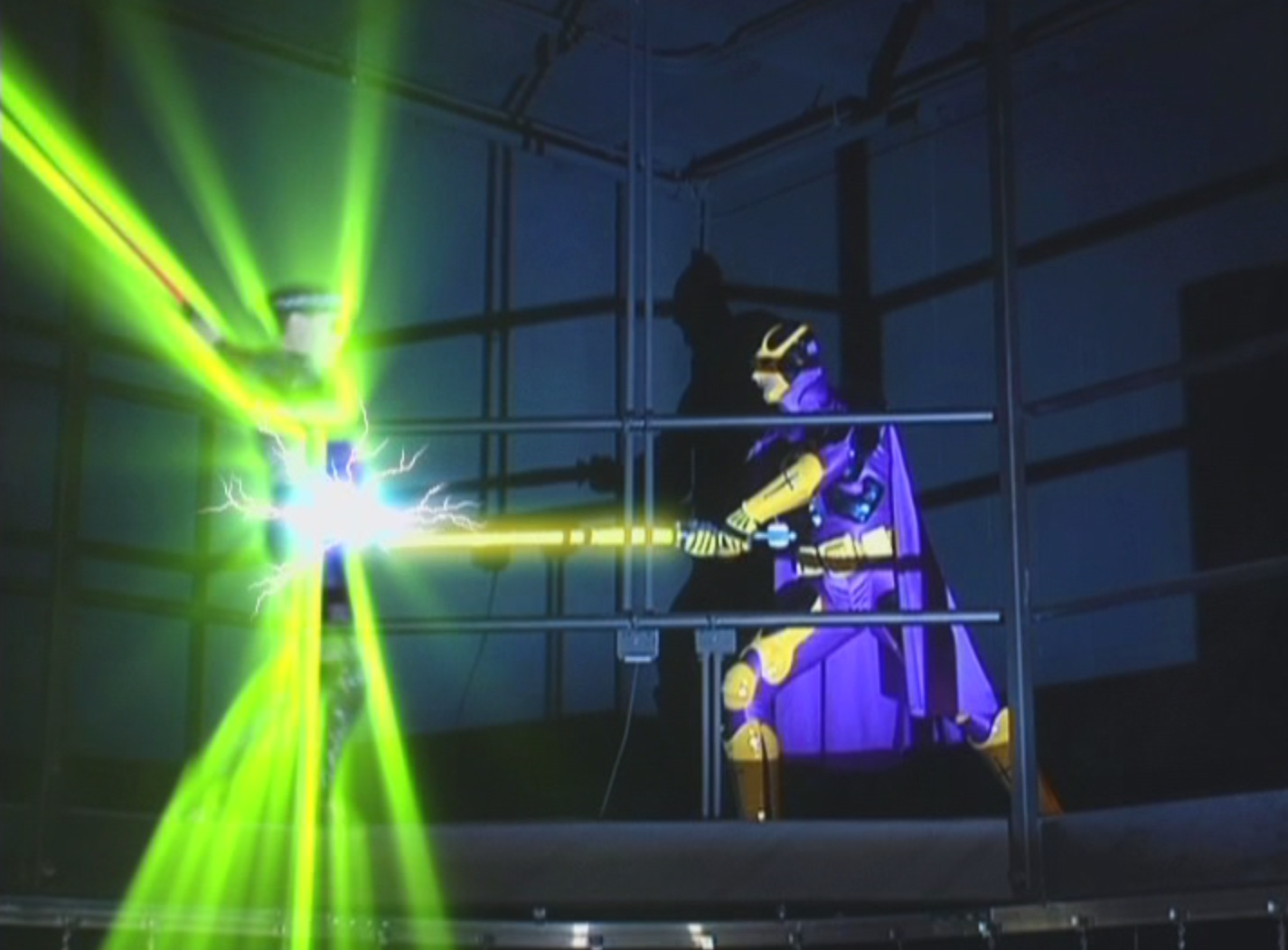
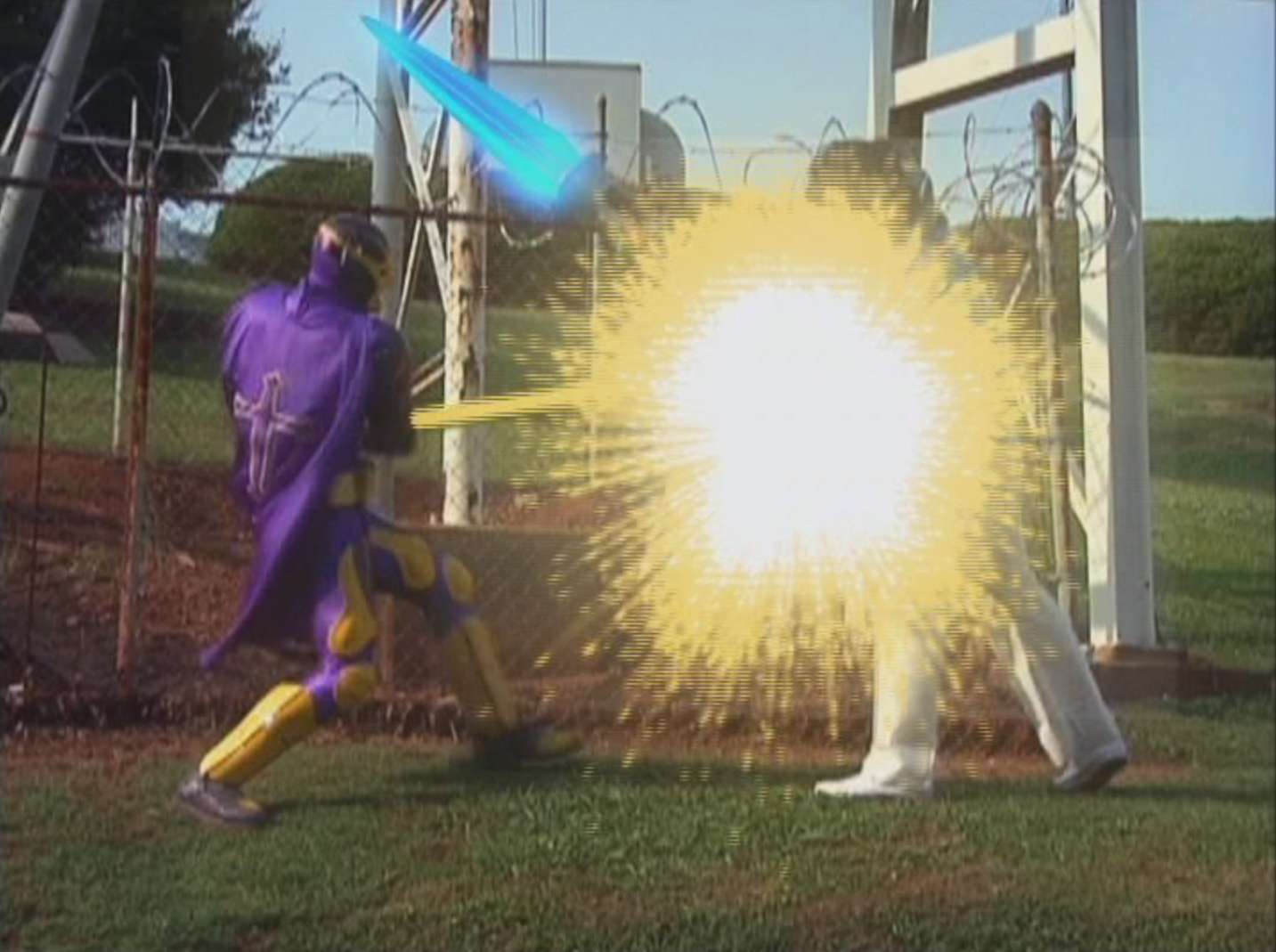
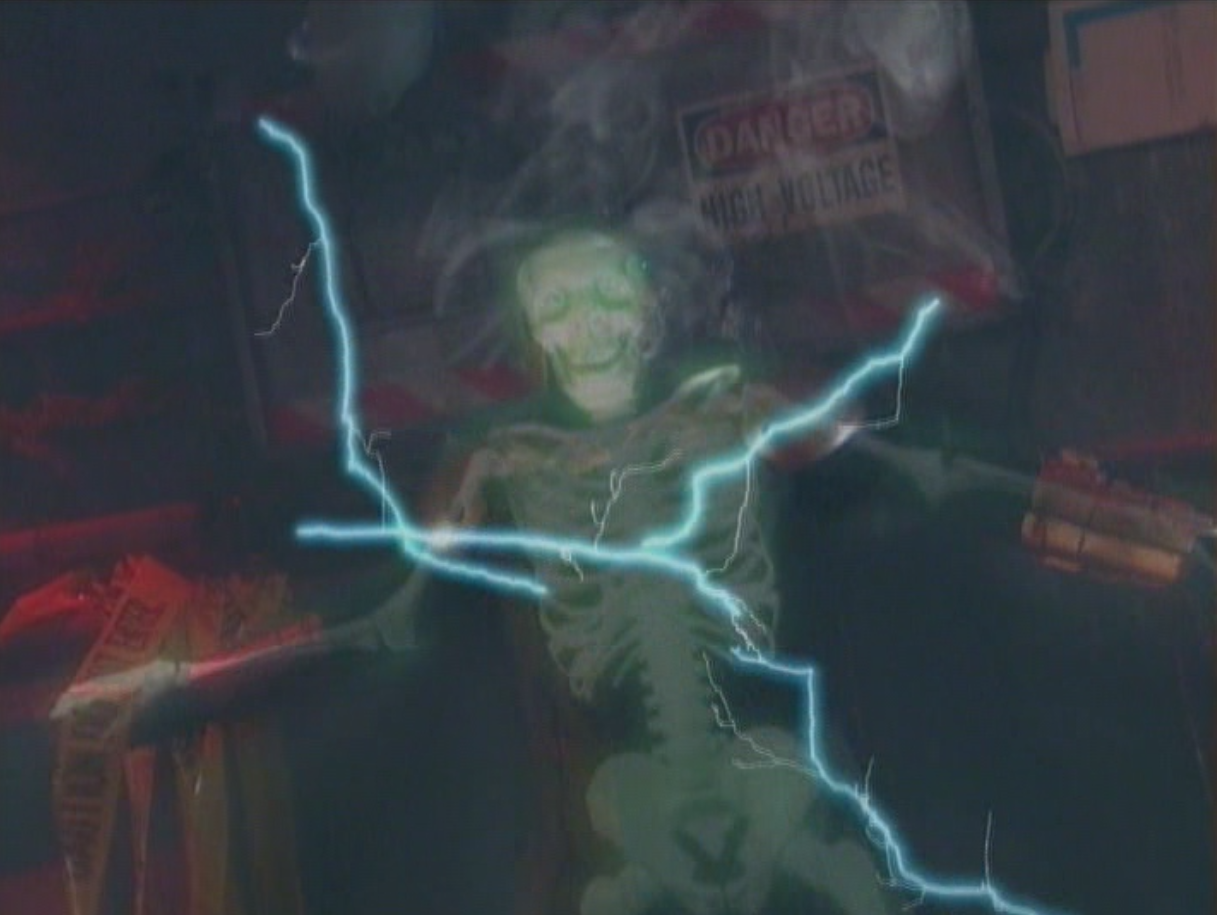
Oh, and did I mention all of those brutal Bibleman kills? Here’s a sampling of some of my favorites from the series for you: I’ll have to go back and come up with a final kill count for the franchise at some point, though.
laziness3
cheater7
cheater3
princeofpride4
lightdarkness4

As far as some other final thoughts on the series go, I was amazed to see how much it actually changed over time. Even more interestingly, it was astounding to see how many different hands the series went through, and too how they each impacted the product that wound up on screen. Throughout the series, I got the feeling that there was a lot of tension and backstabbing going on behind the scenes, as creators, actors, and directors would frequently disappear from the franchise, never to return. The creator of the Bibleman character doesn’t even get credit past episode four. I would love to interview some people involved with the show to get a better idea of what all happened behind the scenes, because there just isn’t a lot of information out there, and I can’t go very far on conjecture alone.

Anyway, without further ado, here is the master index of my Bibleman reviews, in chronological order:


The BibleMan Show: Big Big Book

The BibleMan Show: Back to School

The BibleMan Show: Six Lies of the Fibbler

The BibleMan Show: Silencing the Gossip Queen

The BibleMan Adventure: Defeating the Shadow of Doubt

The BibleMan Adventure: The Incredible Force of Joy

The BibleMan Adventure: The Fiendish Works of Dr. Fear

The BibleMan Adventure: Conquering the Wrath of Rage

The BibleMan Adventure: Shattering the Prince of Pride

The BibleMan Adventure: Breaking the Bonds of Disobedience

The BibleMan Adventure: Lead Us Not Into Temptation

The BibleMan Adventure: Jesus Our Savior Part 1

The BibleMan Adventure: Jesus Our Savior Part 2

The BibleMan Adventure: A Light In The Darkness

The BibleMan Adventure: Divided We Fall

The BibleMan Adventure: A Fight For Faith

BibleMan: Powersource: Terminating the Toxic Tonic of Disrespect

BibleMan: Powersource: Tuning Out the Unholy Hero

BibleMan: Powersource: Crushing the Conspiracy of The Cheater

BibleMan: Powersource: Lambasting the Legions of Laziness

BibleMan: Powersource: Blasting the Big Gamemaster Bully

BibleMan: Powersource: Combating the Commandant of Confusion

BibleMan: Powersource: In The Presence of Enemies


Thanks for sticking this out with me, everyone! Next week, I’ll be back to the usual bad movie reviews. As for the rest of this week, you can look forward to a few more requests to be fulfilled over the next couple of days.

Just as a reminder, today is the last day of Secular Students Week. So, today only, If you make a donation to the Secular Student Alliance, I’ll cover a movie of your choice.

New Post Index and Last Day for Requests

misantropeyhead

Based on some recent feedback, I found that the archives here on Misan[trope]y are a bit difficult to navigate. So, I’ve created an alphabetical post index, which you can now find on the top menu bar. Feel free to take a stroll through the past three years of reviews, but keep in mind that the older the reviews, the shorter and less detailed they are.

Speaking of which, from going through a bunch of my old posts to build the index, I noticed that I covered a lot of classic bad movies with really minimal posts, particularly towards the beginning of the IMDb Bottom 100 challenge. So, I’m planning to re-cover a bunch of those with a bit more detail in the near future, like Birdemic, Troll 2, and Manos: The Hands of Fate.

In the meantime, today is the last day where you can donate here to the Secular Student Alliance and make me watch whatever you want! It doesn’t matter how much you give, I will honor any request you have. I have already written about watching paint dry, Willy Wonka vs. Charlie and The Chocolate Factory, and I have tons more request-posts going up over the next week. Also, feel free to make me cover something again, particularly if I didn’t give it much detail at the time, or you thought I was way off the mark (I see all of you Hudson Hawk apologists out there).

ssalogo
Many thanks to everyone who has donated so far, and even more thanks to all of you who suffered through the Bibleman Marathon with me! If you haven’t given yet, I would love it if you did. If you can’t though, we are still totally cool. I hope you all are enjoying the posts, and you can always get me at mail@misantropey.com.

robotjox1

BibleMan: In The Presence of Enemies

In The Presence of Enemies

presence1

Today, I’m continuing my week-long marathon of the Bibleman franchise as part of Secular Students Week. If you make a donation to the Secular Student Alliance this week, and I’ll cover a movie of your choice.

2010’s “In The Presence of Enemies” marks the final episode of the third and final incarnation of the Bibleman franchise: “Bibleman: Powersource.” Willie Aames’s replacement, Robert Schlipp, stars once again in the lead role of Bibleman in this final entry into the franchise.

“In The Presence of Enemies” was produced, directed, and written once again by Steve Gilreath, who was a consistent creative presence throughout all of the episodes in “Bibleman: Powersource.”

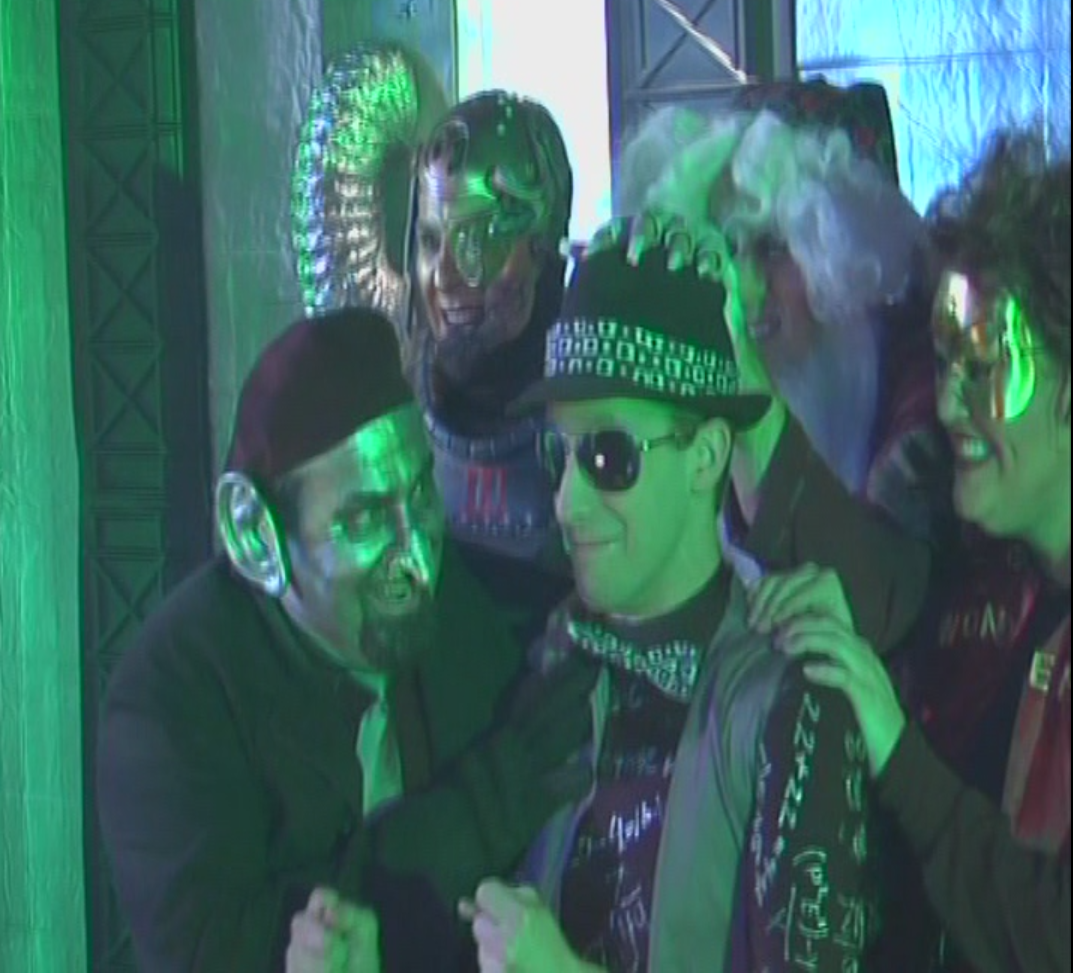
“In the Presence of Enemies,” as the name suggests, features nearly the entire cast of villains from throughout the run of “Bibleman: Powersource,” including The Cheater, Snortinskoff, Gamemaster, The Slacker, 2kul 4skul, and the supercomputer, L.U.C.I.. Likewise, Bibleman is joined by his entire team of allies from throughout the duration of “Bibleman: Powersource”: Melody, Cypher, and Biblegirl.

The story of “In The Presence of Enemies” follows an alliance between a number of Bibleman’s toughest adversaries, who have grown frustrated with the hero interfering with their various sinister shenanigans. Together, they try to bring down the Bible Adventure Team with a cooperative plot to write and distribute a fake version of the bible with manufactured scripture, in order to confuse them and lead them astray.

The episode opens up with Bibleman and Cypher being flown around in fighter jets, for pretty much no reason at all. It reminded me of the racecar introduction to “Lambasting the Legions of Laziness,” in that it just seems to be something they wanted to do, and it helped them kill time.

presence3

It was a nice move to actually have a proper, consolidated sendoff for “Bibleman: Powersource”, as “The Bibleman Adventure” limped to its conclusion with various elements of finality spread throughout “A Fight for Faith,” “A Light In The Darkness,” and “Divided We Fall.” I do wish that either The Wacky Protester or Luxor Spawndroth had been brought back as a nod to the previous incarnation, but I wasn’t particularly shocked by their absence. From what I can tell, the transition from “The Bibleman Adventure” to “Powersource” wasn’t particularly pleasant, and those bridges were likely burned.

However, this is also probably the shortest episode in the whole franchise, not even clocking in at thirty minutes. Traditional wisdom would say that a finale should be big and flashy, but this is just the opposite: half-assed and short, like they just wanted to get it over with and put it in the can.  Despite the presence of so many bad guys, this episode just feels small and uninspired, featuring a countless number of extraneous clips and flashbacks, and even a foodfight between the various villains. They couldn’t even get the guy who plays Snortinskoff to physically show up, and have him literally phone in his performance.

The villains’ plot, which involves creating a fake bible, is beyond ridiculous. They honestly think that Bibleman and company, who obsessively quote scripture from memory, won’t realize that their bibles have been tampered with, which goes to prove that Bibleman villains are far from the brightest bulbs out there. However, the plot inexplicably works for a while, proving that anti-intellectual super heroes might not be the best idea, either.

presence2

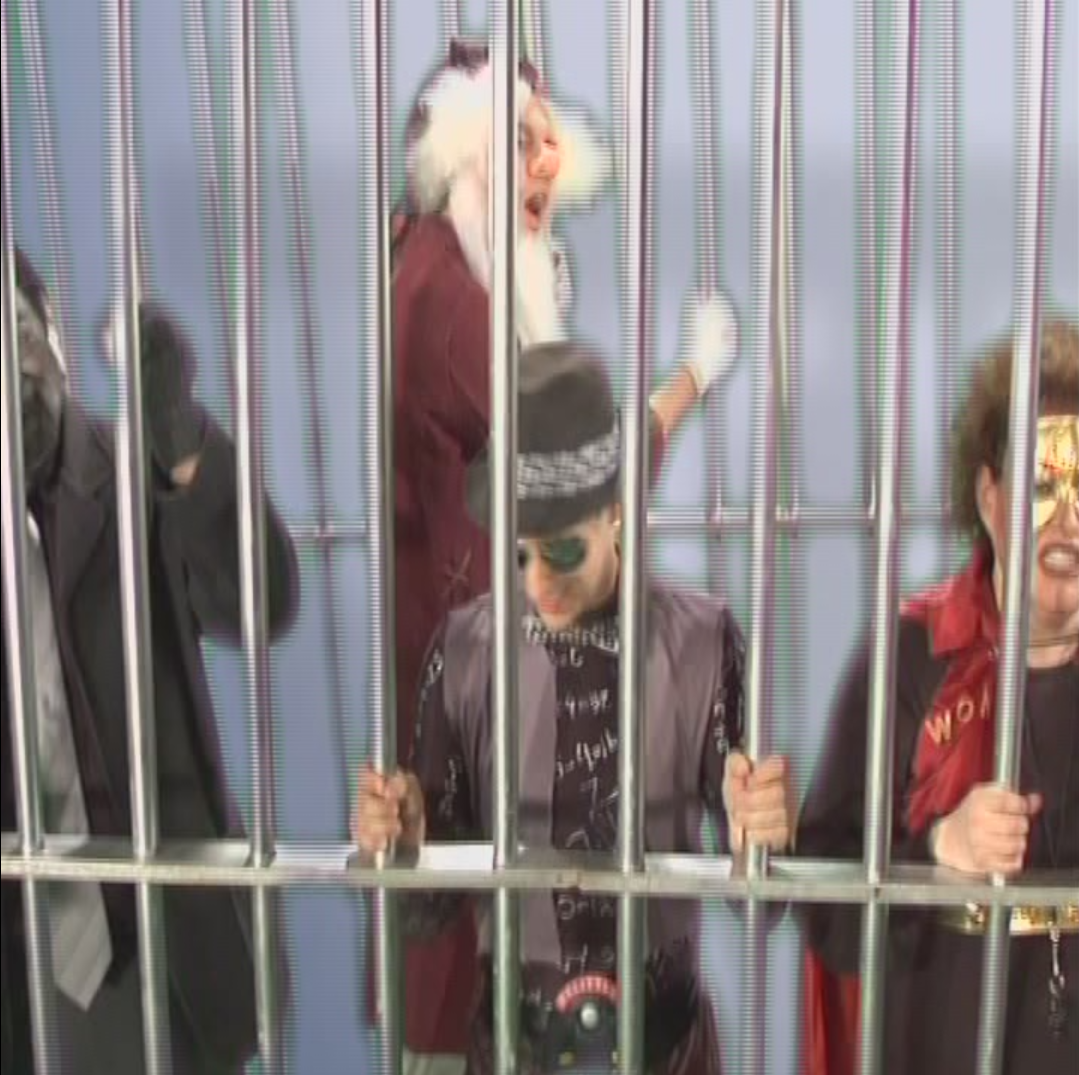
In a rare showcase of mercy to conclude the series, the villains are shrunk, captured, and placed in a tiny cage for the amusement of the Bible Adventure Team, instead of ritually executed to please their ever-hungry God. However, Gamemaster is never shown in the cage, and Snortinskoff is also never specifically dealt with, leaving a theoretical window open for future adventures. Thankfully, however, those have not come to be.

presence4

Between this and the equally zero-effort “Combating the Commandant of Confusion,” “Bibleman Powersource” manages to end even less gracefully than “The Bibleman Adventure.” This was clearly either due to financial constraints or a collapse behind the scenes, or perhaps even a combination of both of these things. In any case, “In the Presence of Enemies” makes for a pretty lackluster nose-dive into the finish line for the “Bibleman” franchise. On the positive side of things, this means I’m done with Bibleman! You all can look forward to retrospective on the series within the next day, and thanks for sticking around!

You still have a day to make donations here in order to have a coverage request on the blog honored! I already covered the experience of watching paint dry, so literally anything is on the table. Even paint.

BibleMan: Combating the Commandant of Confusion

Combating the Commandant of Confusion

confusion1

Today, I’m continuing my week-long marathon of the Bibleman franchise as part of Secular Students Week. If you make a donation to the Secular Student Alliance this week, and I’ll cover a movie of your choice.

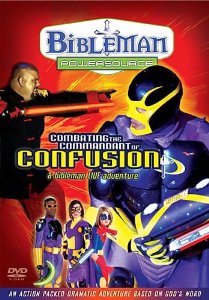
2010’s “Combating the Commandant of Confusion” marks the penultimate episode of the third and final incarnation of the Bibleman franchise: “Bibleman: Powersource.” Willie Aames’s replacement, Robert Schlipp, stars once again in the lead role of Bibleman.

“Combating the Commandant of Confusion” is once again produced and directed by Steve Gilreath, but is this time written by Bibleman himself, Robert Schlipp.

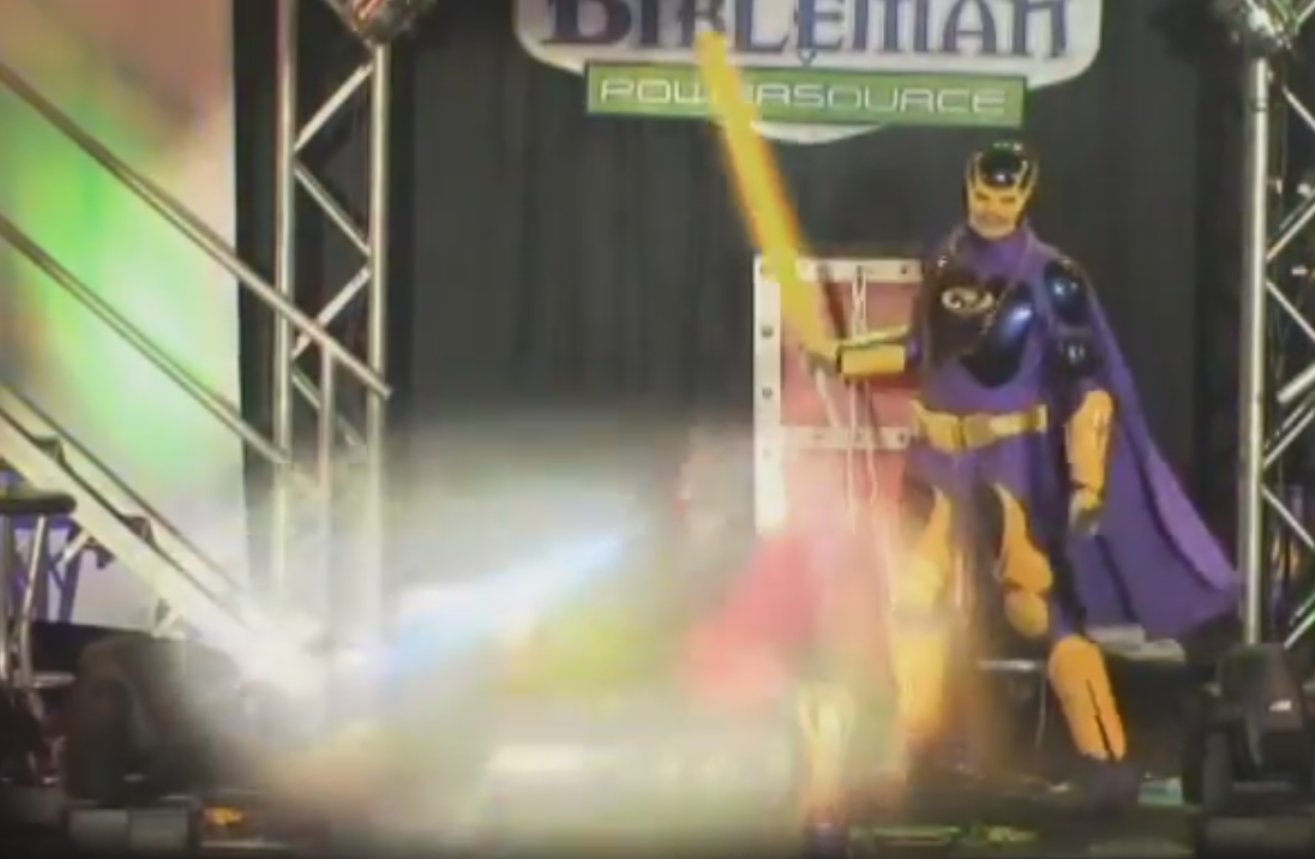
The central villain of “Combating the Commandant of Confusion” is the eponymous Commandant: a metallic, verbose, Soviet-inspired, malapropism-spouting military commander. However, the first villain who appears on stage is a henchman named Chaos, who is just some person in a jumpsuit and a motocross biking helmet. This, frankly, sets a new standard for laziness in Bibleman villain designs.

confusion2
“I am especially fond of severe harm”

Bibleman’s allies for the episode include the entire Powersource incarnation of the Bible Adventure Team: Cypher, Biblegirl, and Melody, though Melody is relegated to a minimal supporting role.

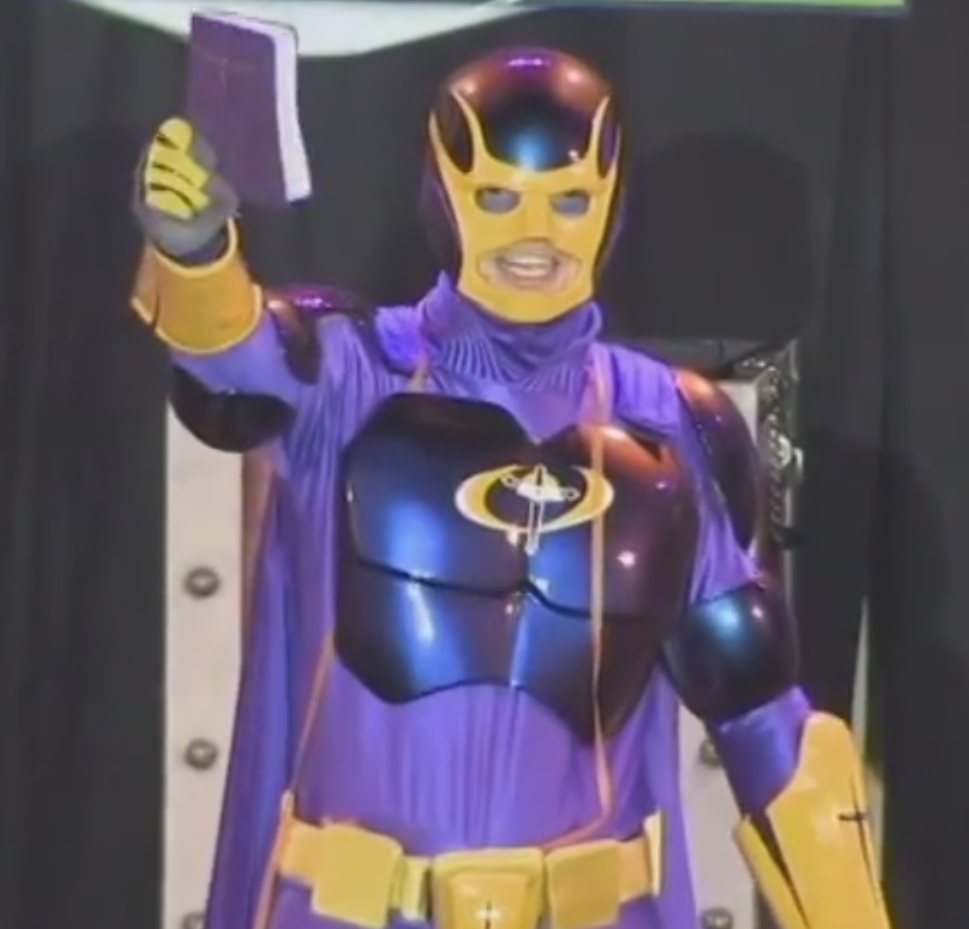
The story of the episode follows the Bible Adventure Team hosting a training demonstration to a live audience, in which they are supposed to use a new, recently developed weapon. However, the Commandant of Confusion and Chaos steal the instructions for the device, and plot to replace it with some sort of vaguely evil gizmo to destroy Bibleman and company. Of course, the team figures out a way to defeat them, and ultimately reveal that the “weapon” is actually just a bible. Really.

confusion6
“The most powerful weapon…is the word of God!” You might have a point there, you fundamentalist paramilitary vigilante.

The episode starts with a retrospective of the entirety of “Bibleman Powersource” to date,  totaling in for a whopping two and a half minutes of the run time. It is not only totally unnecessary background, but given the abnormally short length of the episode, I imagine that they were desperate to fill in the time with anything they could find. Likewise, the ending features a particularly bloated prayer segment that seems to drag on indefinitely.

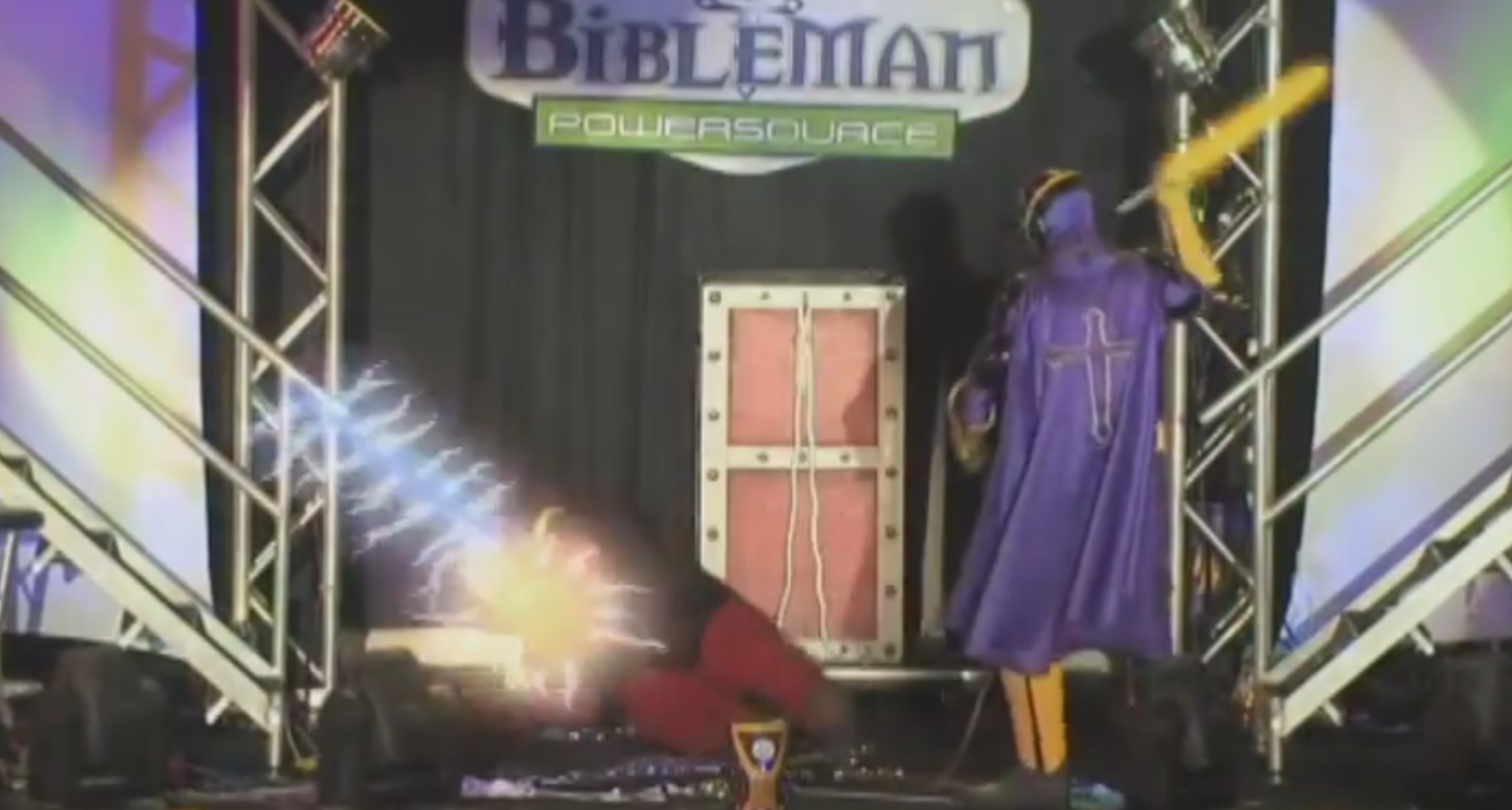
There are live versions of a number of episodes in the Bibleman series, but “Combating the Commandant of Confusion” seems to be the only one that lacks a standard filmed version of the episode. I’m not sure if they did this specifically to cut costs, but it is kind of jarring. They try to make the live setup make sense as if it is a standard episode, under the guise of it being a training academy. However, it is pretty transparent given the low quality of the film and the restricted camera angles.

confusion7

Something else that is odd about the episode is that, despite this being a live episode, post-production special effects are still used as if it was a standard episode, which just comes off looking strange.

The central concept behind this episode seems to be a sentiment of anti-intellectualism, with the portrayal of the Commandant being a verbose fraud who uses his appearance of intellect to confuse and manipulate people. This reminds me of how a lot of fundamentalists seem to think of university professors at secular institutions. However, I was a bit surprised at how the villain was designed: why did he have to be military-themed? They literally just had one of those with Baron Von Braggard in the previous episode, and it would make a whole lot more sense for Confusion to be a tweed-clad professor caricature, given the way he carries himself and uses language.

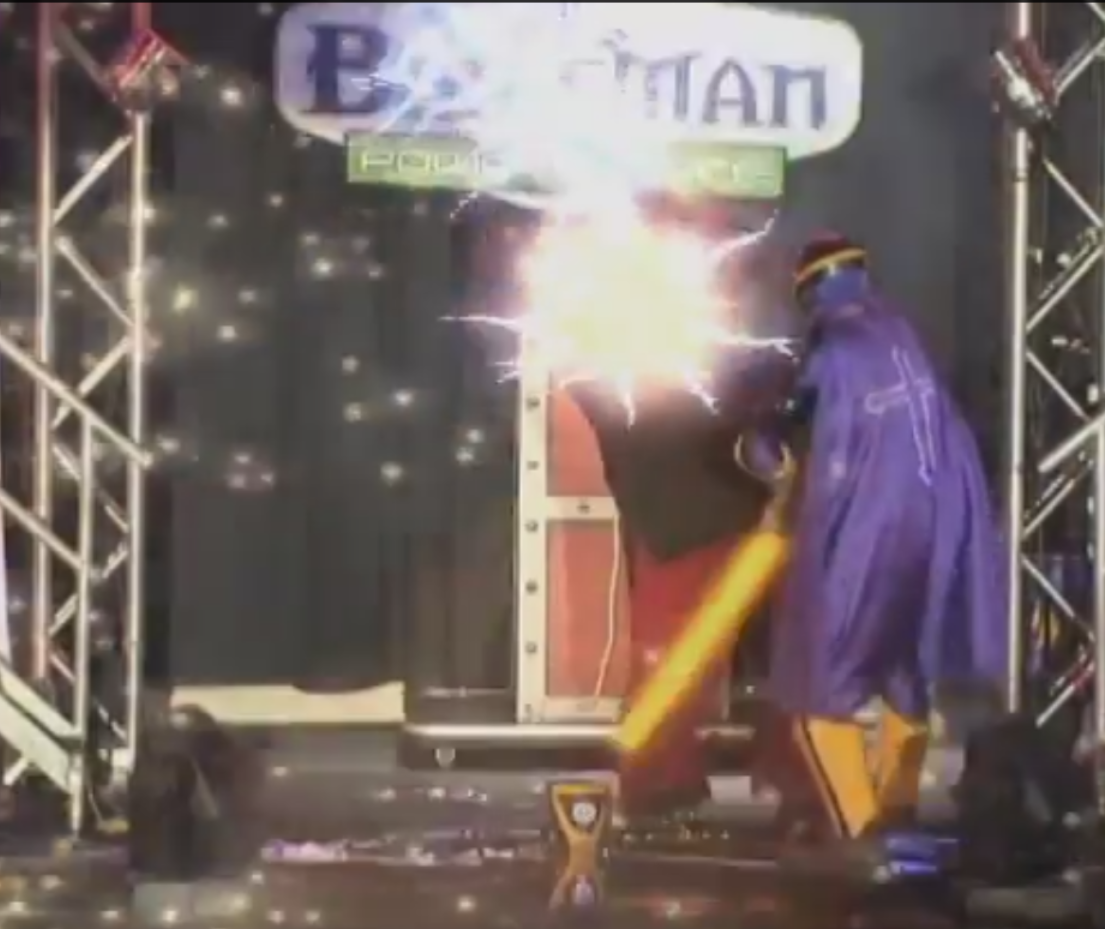
The Commandant of Confusion is, of course, struck down by the Bible Adventure Team at the conclusion of the episode. The Commandant winds up taking a slash from Bibleman’s laser sword, which leaves him thoroughly disintegrated, while Chaos manages to escape unharmed.

confusion5 confusion3 confusion4

“Combating the Commandant of Confusion” is incredibly half-assed in just about every way you can imagine. The villains are dull, the story is boring, the run-time is short and packed with filler, and they didn’t even bother to do a professional, studio version of the episode. This is corner-cutting and production laziness at its finest, and makes the episode absolutely skippable.

BibleMan: Blasting The Big Gamemaster Bully

Blasting The Big Gamemaster Bully

bully1

Today, I’m continuing my week-long marathon of the Bibleman franchise as part of Secular Students Week. If you make a donation to the Secular Student Alliance this week, and I’ll cover a movie of your choice.

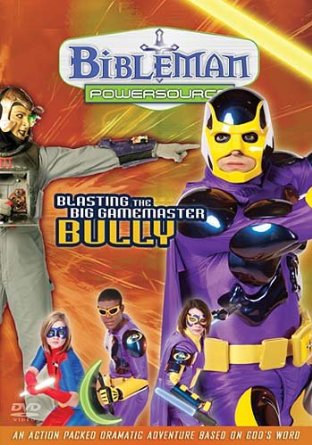
2009’s “Blasting the Big Gamemaster Bully” marks the fifth episode of the third and final incarnation of the Bibleman franchise: “Bibleman: Powersource.” Willie Aames’s replacement, Robert Schlipp, stars once again in the lead role of Bibleman.

“Blasting the Big Gamemaster Bully” is once again written by Michael Nolan (“Crushing the Conspiracy of The Cheater,” “Terminating the Toxic Tonic of Disrespect”) and directed/produced by series regular Steve Gilreath.

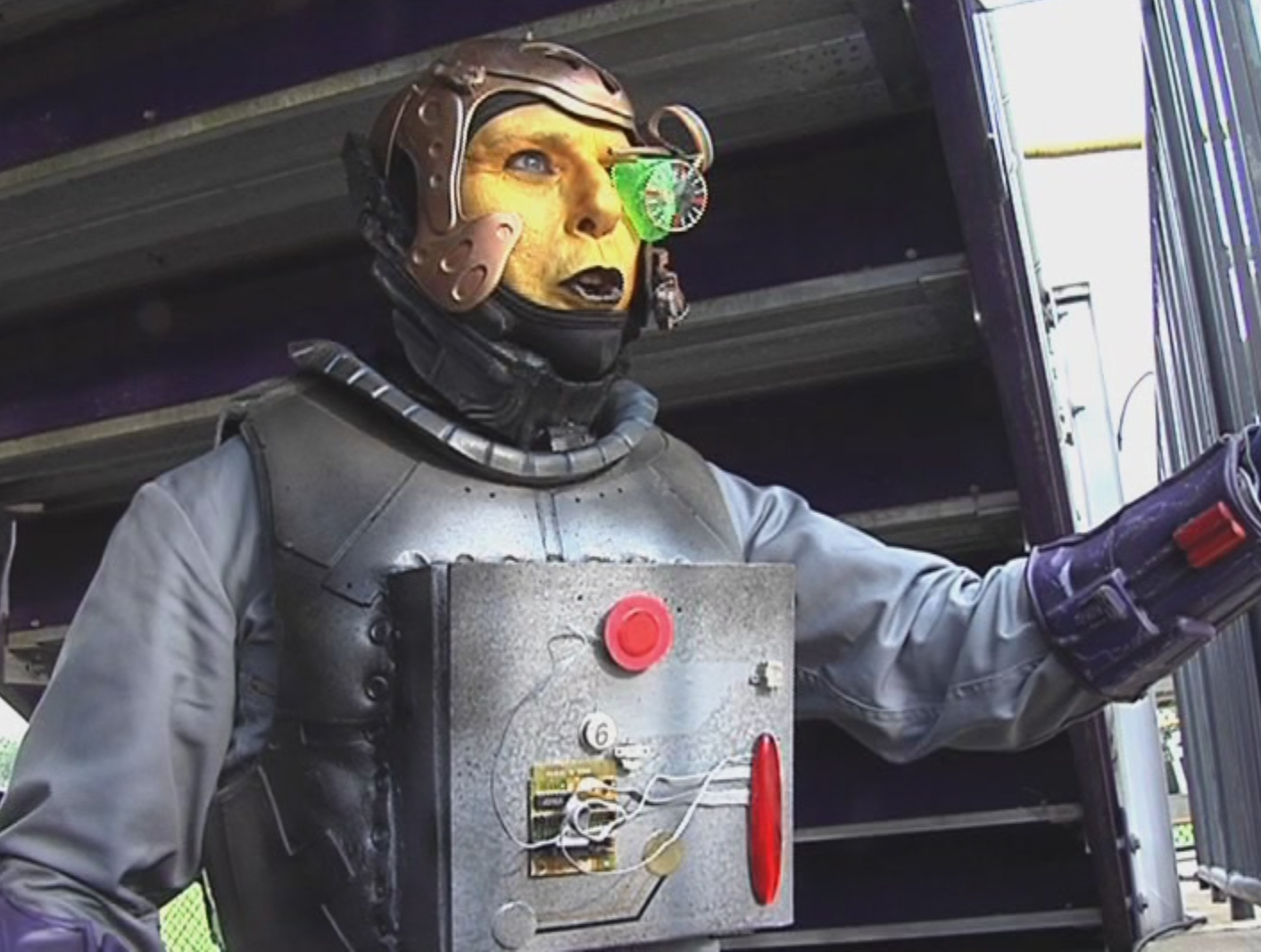
The primary villain of the episode is, of course, Gamemaster: a robot who previously popped up in a minor role in “Lambasting the Legions of Laziness,” in which he was notably stabbed to death by Bibleman. A secondary villain appears in the form of a pig-nosed militaristic creature named Baron Tantamount Von Braggart.

Bibleman is joined by his usual team of allies: his long-time sidekick Cypher, Biblegirl, and the relative newcomer, Melody.

The story of the episode follows Gamemaster, who has been reconstructed and upgraded since Bibleman destroyed him in “Lambasting the Legions of Laziness.” With the help of the evil computer L.U.C.I., he creates a video game called “Big Bad Bully,” which allows kids to pretend to be bullies in a factional realm. However, it apparently brainwashes the children into becoming violent and confrontational at the same time, which raises the attention of Bibleman’s team. Of course, they have to find a way to help the children, stop the video game, and find a way to stop the bullying epidemic in the local schools.

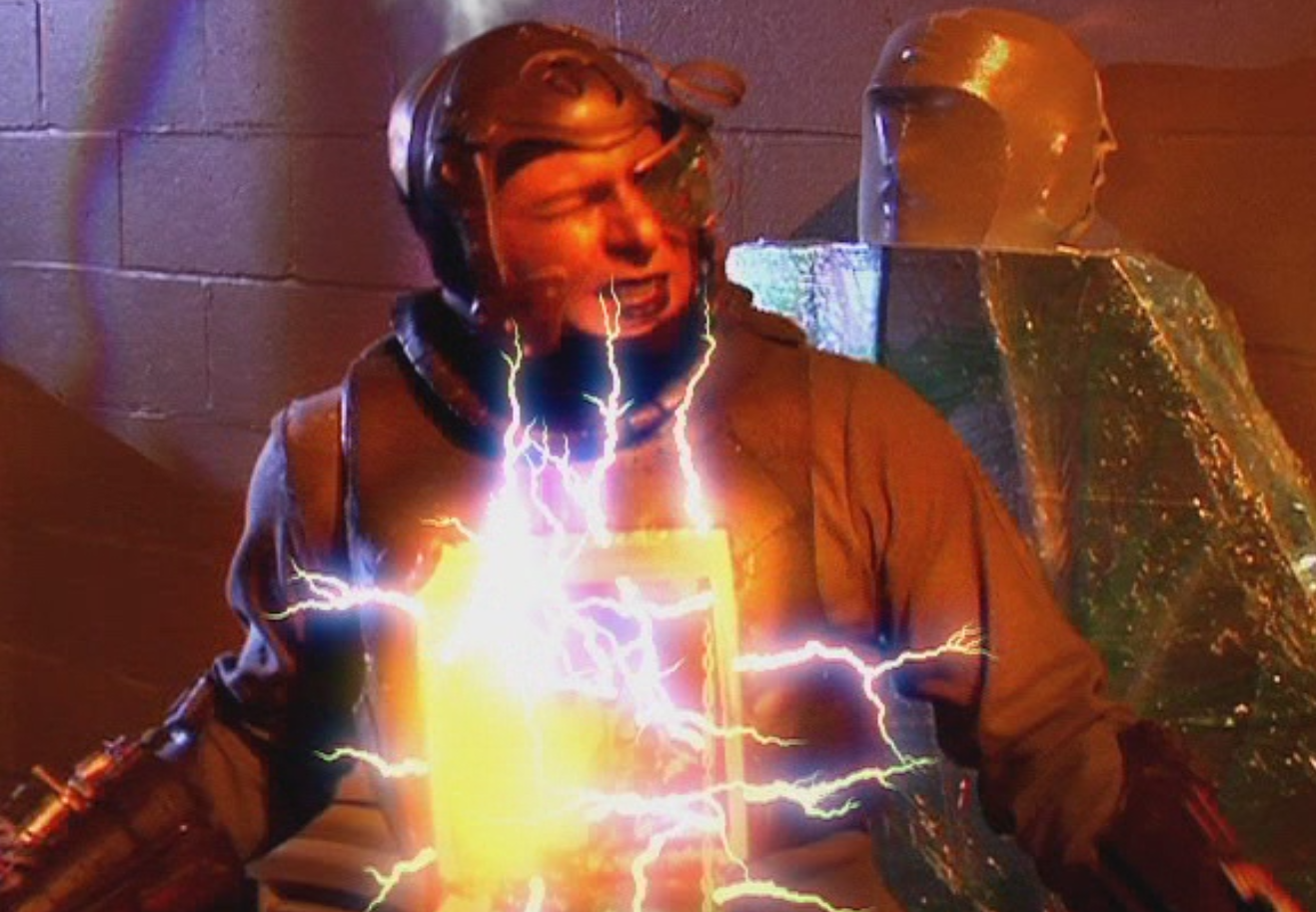
Von Braggart, in fitting with Bibleman tradition, dies brutally in the introductory sequence when his death laser somehow interacts negatively with his electric cane, leaving him a glowing, shocked mess. Surprisingly, Bibleman and team had nothing at all to do with this, and it actually seemed to be a genuine accident. I guess that is one of the hazards of keeping a death laser laying around.

bully2

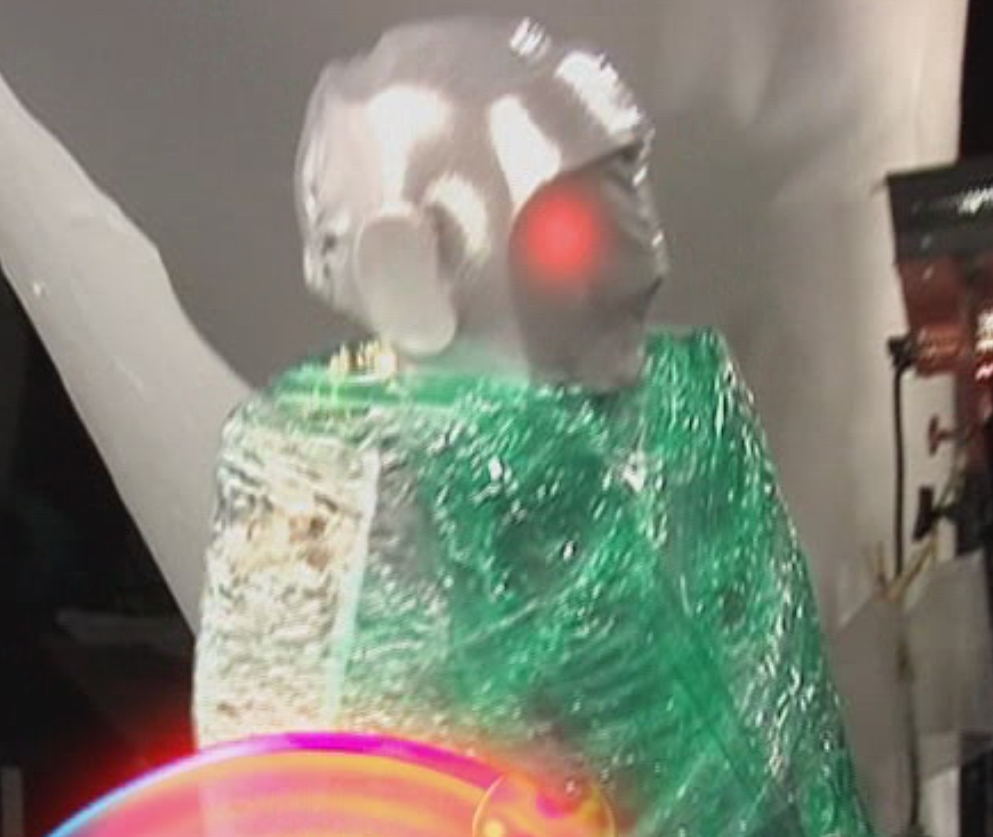
Gamemaster is helped out by a legion of cheap-looking robot henchmen, which make his costume look comparatively advanced (and I previously compared him to ‘Sex Robot’). I honestly think they are made out of cardboard wrapped in cellophane, which is a combination that even makes classic Doctor Who episodes look impressive.

bully3

This episode actually shows a little bit of clever continuity from earlier in the series, which it deserves props for. In “Lambasting the Legions of Laziness,” Gamemaster sees Bibleman without his mask on, and manages to figure out his secret identity through searching a facial recognition database. He then uses information about Carpenter’s past to manipulate him, which is actually a pretty solid villain move.

Speaking of which, Gamemaster seems to be the only mostly-serious villain in the entire series, which actually serves to make him pretty forgettable among a colorful cast of villains. If I have a choice between watching The Cheater chew scenery or watching Gamemaster do actual villain things, I’m going to go with The Cheater every time. I don’t think anybody watches Bibleman for traditional bad guys, and having one at the center of an episode doesn’t do anyone any favors. To his credit, Gamemaster does seem to use a lot of puns, but his monotone doesn’t allow them to land very well.

bully4

Bibleman ultimately dispatches Gamemaster with the strategic use of a water balloon, which causes him to short circuit and burn out. I guess he deserves props for resourcefulness, but why the hell didn’t Gamemaster have any kind of waterproofing? What does he do when it rains? In any case, the bible team reaches a new level of cruelty with what they do to him after his defeat: instead of finishing him off, Cypher and Melody wipe his memory and force him to sing children’s bible songs indefinitely on loop. Honestly, couldn’t they just have stabbed him again? That’s just a weird thing to do to what I assume is at least a partly biological organism.

bully5

The episode’s plot is definitely based on the moral panic over violent video games, which was particularly heated in the 1990s and early 2000s. In fact, one of the most notorious video game companies, Rockstar, which creates the “Grand Theft Auto” series, actually did essentially create a bully-themed video game like the one featured in this episode, called, appropriately enough, “Bully.” It released roughly a year before this Bibleman episode, which means that it was likely an influence on the bully game featured in the plot.

I feel kind of mixed as to whether this episode gets a recommendation from me. Gamemaster is pretty boring, but it is kind of interesting to see an actual villain pop up for once. His henchman robots are hilariously cheap, but the story itself is way more forgettable than it might sound like. If you want to watch a video game episode of “Bibleman,” then “A Fight For Faith” was absolutely hilarious. This episode, outside of some minor details, is pretty forgettable.

Willy Wonka vs Charlie: King of the Chocolate Factory

Willy Wonka and The Chocolate Factory

wonka2

Charlie and The Chocolate Factory

wonka1

This post is based on a viewer request, which is being filled due to a donation to the Secular Student Alliance via my fundraising page during Secular Students Week (June 10-17, 2015). That means that you still  (at the time of this publication) have a day to donate and have your request filled!

Today, I’m going to be taking a look at a couple of films based on Roald Dahl’s book, Charlie and The Chocolate Factory: the charming 1971 classic, Willy Wonka and The Chocolate Factory, directed by Mel Stuart and featuring Gene Wilder, and the 2005 re-imagining helmed by Tim Burton and starring Johnny Depp, which used the original book’s title.

Willy Wonka, is, of course, one of the most widely beloved family movies in history. Gene Wilder’s performance, the visual style, and the memorable musical numbers all made for a fantastic experience that has lasted well through the years.

When it came time for the inevitable reboot for the classic flick, Tim Burton was the choice to bring Wonka back to the screen. On paper, it makes sense to hand the reigns of a remake to one of the quirkiest and darkest children’s movies ever made to Tim Burton. At this point, he had shown that he was more than capable of making weird, dark, family-focused movies that could resonate with massive audiences. However, Charlie failed to see the kind of success of his previous films like Beetlejuice and Batman.

For context, Charlie and The Chocolate Factory was made around the time that Burton’s career was only just starting to look less pristine than it once had. While his previous film, Big Fish, was generally well liked, his highly publicized remake of Planet of the Apes was not warmly received, and proved that Burton was more than capable of mishandling a film. However, no one expected Burton to become the critical pariah that he is now. The next few Depp / Burton collaborations were increasingly more reviled following Charlie, with the possible exception of Sweeney Todd (depends who you ask). Charlie and The Chocolate Factory essentially marked the beginning of Burton’s and Depp’s steady fall from critical grace, which would later include Alice in Wonderland and Dark Shadows.

To start off the comparison between these two films, let’s look at the opening sequences. Charlie presents a dull, drab, and mechanized world created through digital effects, which, to be fair, gives off the vibe of a true industrial factory. However, Willy Wonka presents a wondrously shot sequence of the fascinating process of physically making candy, which shows off the beauty of uniformity, almost like the various candies were synchronized swimmers. While Buton’s introduction does set the visual tone for the film, it doesn’t do so in nearly the vivid way that Stuart did: building a sense of child-like wonder from the first shot and note of the score. Frankly, it just doesn’t even begin to compare as far as first impressions go. You can take a look at both introductions below:

Speaking on the introductory sequences, they also showcase another major difference between these films. Willy Wonka extensively uses practical effects throughout the film, which is primarily because the technology to do otherwise didn’t really exist at the time. If you do take a look at the few special effects that are present in the film, they are the most dated things in the movie by far (like the green screen use in Mike Teevee’s fall). On the other hand, Charlie might as well be a Star Wars prequel with the amount of special effects used to construct the other-worldly sets. We are now only 10 years down the line from Charlie’s release, and it already looks massively outdated and flat due to the rapid advances in technology during that time. That is unfortunately the nature of doing a special effects movie: they don’t age well, with very rare exception. On the flip side, Willy Wonka has still held on to most of it’s charm, because it only relies on gimmicks when it absolutely has to, instead favoring the construction of a tangible world of wonder.

One of the keys to the success of the original Willy Wonka was the musical score, which created a number of memorable songs. For Burton’s take, long-time collaborator Danny Elfman was brought on for the music, who is one of the most acclaimed composers working today. Unfortunately, he totally missed the mark in Charlie. While the background music is pretty decent, the songs are totally forgettable, to the point that they seem phoned in. Willy Wonka has a beloved soundtrack that was of course going to be difficult to follow up on, but instead of paying respectful homage, Elfman went in an entirely different direction that just didn’t resonate with people. The music was frankly more than backdrop in Willy Wonka: it was a key to the emotional core of the film, helping to portray intense moments of sadness, longing, and joy in ways that dialogue alone couldn’t. Thus, the failure of the soundtrack to Charlie goes beyond just not providing decent musical interludes: it marks a failure to illustrate the emotions of the characters.

For an example of this, The Chocolate Room introduction sequence exemplifies everything that is right about Wonka and everything that is wrong about Charlie. Wonka uses the song “Pure Imagination” to introduce the guests to his world, while also teaching us a little bit about Wonka’s misanthropic outlook: if you are paying attention, you come to understand why he is a recluse, and why he has chosen to live in the land of his creation. Humanity, essentially, just can’t live up to his standards for it, so he has willingly retreated away from it into a land of his own imagination. It is a really moving sequence, where Wilder gets to show off his emotional range as an actor, and give us insights into Wonka’s mindset without him explicitly telling us what he is thinking. Most people focus on the children in the sequence, but it is actually a much more interesting scene to watch with Wonka in focus and the purpose of the contest in mind. Charlie, on the other hand, just shows a room full of computer generated chocolate and candy, with narration from Wonka as if the audience is watching an industrial training video. Frankly, it’s dull, and lacks any of the emotional punch or potency of its predecessor. Depp’s Wonka just seems bored, like he is going through the motions. That isn’t the worst way to portray him, but it just doesn’t live up to the previous portrayal from Wilder, and lacks the powerful subtleties and emotions that were present there.

I’m a big fan of the set design and visual style of Willy Wonka: the split-in-half office furniture, the human hands for coat hangers, and the various candy creations are all laced with visual ingenuity, in a way that a master, eclectic inventor would believably design things. This is usually something Tim Burton is particularly good at portraying, but in my opinion, the result with Charlie is something that is at once excessively alien and astoundingly flat. Willy Wonka‘s visuals are odd, but never lose a slight sense of reality and believability. Charlie might as well be an animated film for how it looks, even in segments where it should really appear realistic. This may be more of my personal preference than anything, because there are certainly fans of Burton’s visual style in Charlie, but I wasn’t a fan of it here.

Of course, I have to bring up the style of Willy Wonka himself in these two films. There is an astounding amount of depth in Wilder’s performance, without any explicit detail ever being offered: you can tell that he is fatigued by the way he speaks and carries himself, sliding in a biting bit of humor here and there. I even adore his odd moments of randomly changing languages in the middle of a scene, which adds more flair of eccentricity and intelligence to him. Depp’s Wonka, on the other hand, is just a man-child: a Michael Jackson-influenced version of Wilder’s character, with all of the subtleties and wit sapped out. As much as that image might fit what people would imagine on paper for an eccentric candy man, it isn’t actually very interesting to watch. It is also worth noting that Depp, while being a good actor, isn’t nearly as talented at the comedic aspects of the profession as Gene Wilder, which certainly didn’t do him any favors in this role.

When it comes to the humor in these movies, the writing for Charlie just doesn’t even compare to Wonka. The amount of sly humor in the background of Willy Wonka is part of what makes it so legendary, and at times makes it seem like an episode of Monty Python’s Flying Circus. For instance, the scenes showing the fervor over the golden ticket sweepstakes are hilarious in Wonka: sequences like the indignant supercomputer, the Wonka bar hostage situation, and the teacher who can’t quite figure out how to calculate percentages are as golden as Wonka’s goose eggs. For comparison, the gags in Charlie are just weak. The accessory cast doesn’t get to do a whole lot, and Wonka’s quips aren’t nearly as surreal or vaguely menacing as they were in Wonka.

Child acting is tricky, particularly when the characters aren’t particularly deep. Willy Wonka certainly didn’t hit 100% with the casting, but the kids were passable at least, and fantastic at best (like Veruca Salt, who I thought built a fantastically loathsome character with her performance). Burton’s Charlie, on the other hand, is filled with even more one-dimensional, obnoxious creatures, who suffer even further from being portrayed by half-assed child actors. Even the kid who plays Charlie himself is nearly unbearable.

Last but not least, Burton’s Charlie provides a lot of extraneous information that isn’t essential to the story, and saps a bit of the element of imagination and wonder out of it. For example, explicitly showing the other children alive was unnecessary, and actually ruined some of the darker humor. Likewise, the Oompa Loompa homeland should really have been left to the imagination, because nothing could be shown that could live up what people concocted in their minds. Also, what is the point of meeting Willy Wonka’s dad? Every time there is a flashback to Wonka’s past, the story grinds to a halt, and the exposition about Wonka’s life is ultimately useless. I love Christopher Lee as much as anybody else, but his character just wasn’t needed at all here.  Charlie might have included some of these things in order to be more faithful to the book, but that doesn’t necessarily make for a better movie.

The Nostalgia Critic took a look at the comparison between these two films previously. I agree with him on most of his points, but he has a far more positive take on the Burton version than I do. Personally, I find it incredibly obnoxious and shallow, even for a children’s feature. I also think it actually marks the dramatic beginning of Burton’s slide into mediocrity, even more so than his take on Planet of the Apes. I will say that I didn’t hate Sweeney Todd, but the rest of his work over the past decade doesn’t even come close to the achievements of his career before that. If he didn’t have such a loyal, cult-ish following, he would be done for as a directorial force.

To Burton’s credit, Charlie is a distinct movie made from his own vision, and he didn’t allow himself to be constrained or ruled by the classic film. I don’t doubt that this is exactly the film that he intended to make, and all power to him for doing that. However, it just isn’t very good, and is particularly not as good as the original. It just doesn’t seem like he was firing at all cylinders for whatever reason, because he is undoubtedly capable of better work than this. I will say that it definitely portrays the differences between the classes very well, which is a really important aspect to the story, but I don’t have a whole lot of positive things to say beyond that.

I’m not one of those people who gets up in arms at every announcement of a film reboot: it is just a fact of the business at this point. I don’t at all mind new takes on classic stories, because that happens in all creative mediums, and oftentimes improvements come of them. For example, look at Charlie‘s Christopher Lee: his take on the character Dracula for Hammer Films provided a new vision of a classic, and one that has dramatically influenced the direction of the vampire in contemporary fiction. So, reboots aren’t always bad. That said, there is definitely a reason why people are so weary of the Hollywood reboot machine these days: the good products are few and far between, and Charlie and the Chocolate Factory is no exception.

On the positive side, the release of Charlie and The Chocolate Factory exposed a whole new generation to the classic Willy Wonka, which is certainly a good thing. And, of course, Charlie has its share of fans who defend it, so it at least managed to resonate with some people out there. I don’t agree with those people, but there’s a reason why there are so many varieties of candy.

BibleMan: Lambasting The Legions of Laziness

Lambasting The Legions of Laziness

laziness1

Today, I’m continuing my week-long marathon of the Bibleman franchise as part of Secular Students Week. If you make a donation to the Secular Student Alliance this week, and I’ll cover a movie of your choice.

2008’s “Lambasting the Legions of Laziness” marks the fourth episode of the third and final incarnation of the Bibleman franchise: “Bibleman: Powersource.” Willie Aames’s replacement, Robert Schlipp, stars once again in the lead role of Bibleman.

“Lambasting the Legions of Laziness” is once again produced and directed by series regular Steve Gilreath, and written by Jeff Durham, who previously penned “Tuning Out The Unholy Hero.”

The primary villain of the episode is The Slacker, who looks like a wizard in pajamas. There is also a secondary villain, a robot named Gamemaster, who will pop back up in his own dedicated episode later on.

Bibleman is of course joined by his usual lineup of Bible Adventure Team allies: Cypher, Melody, and the newly reappointed Biblegirl.

The story follows The Slacker as he uses a magical lantern to cause members of Bibleman’s bible study group to become listless and unmotivated. Bibleman and company eventually realize something is wrong, but not until after they fall victim to his magic themselves. Of course, prayer manages to cure them (as it always does), and the team then goes after The Slacker.

The episode opens with Bibleman driving a race car, during which a guy in a cheap robot costume (Gamemaster) tries to assassinate him. Speaking of which, Gamemaster looks about as advanced as Sex Robot or the cardboard box outfits from “The Humans Are Dead” by Flight of the Conchords, and speaking in one of the laziest robot impersonation voices that you will ever hear.

laziness2

In true Bibleman fashion, Gamemaster is straight-up stabbed to death by the crusading hero, who clearly isn’t very big on mercy or the potential for redemption. Or, at least, not for robots.

laziness3

The main villain of the episode, The Slacker, features some of the worst aging makeup I have ever seen. Could they not have found an older man to play the part, as opposed to trying to transform a young guy? Even the fake beard looks embarrassingly awful, and those just can’t be all that hard to come by.

laziness4

I feel like this episode is vaguely anti-marijuana in its message, but without ever explicitly stating that. The Slacker’s demeanor and everyone’s behavior under his spell throughout the episode struck me as being what a fundamentalist Christian would imagine being stoned is like, which is pretty damn hilarious to me. That also means that this episodes marks yet another instance in the series where the villain blatantly drugs children, which is pretty creepy as far as tropes / motifs go.

Something that you might spot in the background of this episode is one of the Bibleman branded action figures. Specifically, a figure of El Furioso (“Conquering The Wrath of Rage”) is used as part of one of The Slacker’s devices, which Bibleman manages to defuse.

laziness5

In the end of the episode, Bibleman and company wind up defeating The Slacker, and hold him at the point of their laser swords. The Slacker makes the reasonable inquiry as to what they are going to do with him, which may very well have saved his life, judging from Bibleman’s murderous track record. However, the outcome is ultimately kind of creepy. Here is how it plays out:

The Slacker: “So tell me, Bibleman, what are you planning to do with me?”

Bibleman: “I think you need a long vacation. I’ll even buy you a one-way ticket.”

There is then an immediate cut to the following image:

laziness6

That sure does raise a lot of questions, doesn’t it? Now, i don’t think it is unreasonable to assume that “The Bad Place” is Hell. However, when someone gets a “one-way ticket” to Hell, that usually means they have been quite thoroughly murdered. Also, how exactly is this package supposed to be delivered to “The Bad Place,” regardless of whether it is Hell or anywhere else? That just isn’t specific enough at all, and I’m pretty sure, theologically speaking, there aren’t a whole lot of people out there who believe that Hell has a deliverable postal address. In any case, I believe that The Slacker pops up in the series finale, so he managed to survive his “one-way ticket” to “The Bad Place.”

“Lambasting the Legions of Laziness” isn’t one of the stronger entries into the franchise, and I personally think that the villain is one of the dullest and least interesting. I mean, there is only so much you can do with a villain centered around sloth, so I guess they did what they could. Still, the story is unremarkable, and the makeup on The Slacker is distractingly terrible, and there aren’t really enough highlights to make the experience of watching through the episode worth it.