Category Archives: Uncategorized

Suspect Zero

Suspect Zero

suspectzero2

Today’s feature is the 2004 psychic serial killer thriller Suspect Zero, starring Aaron Eckhart and Ben Kingsley.

The screenplay for Suspect Zero was co-written by Billy Ray (Shattered Glass, Volcano, State of Play, Hart’s War, The Hunger Games) and Zak Penn (The Avengers, Last Action Hero, Elektra, Behind Enemy Lines), with the original story credit going to Penn.

The director on Suspect Zero was E. Elias Merhige, who was also behind films like Shadow of the Vampire and Begotten, but hasn’t made a full length feature since the release of Suspect Zero in 2004.

The cinematographer for Suspect Zero was Michael Chapman, whose shooting credits range from massively influential films like Raging Bull, Taxi Driver, and The Last Detail, to cult classics like Scrooged and The Lost Boys, to popcorn flicks like Kindergarten Cop, Space Jam, Ghostbusters II, and Evolution.

Suspect Zero had two primary editors: Robert K. Lambert (Red Planet, House of 1000 Corpses, Rollerball, Ed) and John Gilroy (Nightcrawler, Pacific Rim, Michael Clayton).

The score for Suspect Zero was composed by Clint Mansell, who is known for providing memorable music for films like Black Swan, Moon, The Wrestler, Requiem for A Dream, and Pi.

The effects work for the film was done by a team that included Thomas Burman (Frogs, Con Air, Hudson Hawk, Teen Wolf), Bari Dreiband-Burman (The Mask of Zorro, Howard The Duck), Stephan Dupuis (Ant-Man, Jason X, RoboCop 3), Todd McIntosh (Marmaduke, Torchwood, City Slickers II), Kenneth Van Order (Speed 2, The Hateful Eight), and Matt Kutcher (The Hottie and The Nottie, The Midnight Meat Train).

The team of producers on Suspect Zero included Paula Wagner (Vanilla Sky, Mission: Impossible), Nigel Sinclair (Rush, End of Watch, Mindhunters, The Life of David Gale), Tom Rosenberg (Crank, Million Dollar Baby, Gamer), Gary Lucchesi (The Midnight Meat Train, Aeon Flux, Virtuosity), Lester Berman (The Postman, Superman), Moritz Borman (World Trade Center, Alexander), and director E. Elias Merhige.

The cast of Suspect Zero is led by Aaron Eckhart (Thank You For Smoking, The Dark Knight), Ben Kingsley (Schindler’s List, Iron Man 3, Sexy Beast), Carrie-Anne Moss (Memento, The Matrix), and Harry Lennix (State of Play, Man of Steel, The Matrix Revolutions).

suspectzero3The plot of Suspect Zero follows a telepathic vigilante on the hunt for a theoretic undetectable serial killer, who he refers to as “Suspect Zero.” Meanwhile, a police officer is on the hunt for the renegade telepath, and is on the trail of bodies (all of serial killers) left in his wake.

Zak Penn’s initial screenplay for Suspect Zero reportedly started circling Hollywood in 1995. Over the years, notables such as Paul Schrader, Sylvester Stallone, Ben Affleck, and Tom Cruise all expressed interest in the project before it actually made it to the screen. Cruise even stayed on the film as a producer through his production company, though his name specifically doesn’t appear in the credits.

Suspect Zero was made on a budget of $27 million, though it only raked in $11.4 million in its worldwide theatrical release. The reception at the time was relatively negative: it accrued Rotten Tomatoes scores of 18% from critics and 38% from audiences. However, time has been kinder to the film, and the IMDb rating (which is updated more consistently frequently) has risen to a 5.9.

suspectzero1Suspect Zero definitely suffers from the inevitable comparisons to David Fincher’s Se7en, which is by all accounts a much better movie. Most of the criticisms I have read at least mention the stylistic similarities if nothing else. However, the movie deserves to be considered on its own merits, and I think the time and distance from Se7en has allowed that to happen. Still, the movie is far from flawless.

First off, a number of the surreal ‘vision’ sequences seemed way too forced to me, and I never got on board with the idea of using thermal ‘Predator-vision’ to indicate the psychic sequences. It just seemed to me that there had to be a better way to get across the idea of remote vision without resorting to what basically amounted to a night vision filter.

As much as I like both Aaron Eckhart and Ben Kingsley, neither of them put in consistently impressive performances in this flick. However, I think that has far more to do with the way that the characters are written over anything they could do. None of the characters have much in the way of personality in this movie, and there isn’t much to them beyond their explicitly-stated back stories, which is a real shame. There are flashes of interesting chemistry between the two actors, but it never totally clicks.

Likewise, the screenplay for Suspect Zero isn’t particularly effective at telling its story. It gets the point across, and the audience gets from A to B eventually, but there isn’t a whole lot of depth to it beyond the basic road map. Visually, the movie is pretty interesting, and it almost makes up for some of the weaknesses in the writing. However, even that goes overboard, as I mentioned with the ‘Predator-vision’.

As far as positives go, I’m a big fan of the score to this movie, and how it is used to create discomfort and tension throughout the film. Mansell always seems pretty good at that, and he really gets to show off his creepy composition skills here.

Overall, I think this film gets an unwarranted bad reputation. It isn’t great by any means, but I think people were particularly weary of Se7en imitators at the time. It is a bit slow and arty in its aesthetic for the casual movie-going crowd, but if you are interested in dark cop/serial killer films, this is definitely one worth checking out. I feel similarly about The Cell, which came out a handful of years earlier, though that film is far more surreal, and nearly unbearably pretentious. It also makes Suspect Zero look comparatively coherent.

If you are a big fan of The X-files and True Detective, Suspect Zero might hit the perfect middle ground for you in terms of both style and substance, just don’t go in expecting anything Earth-shattering.

Arena

Arena

arena4

Today’s movie is Empire Pictures’s mostly forgotten sci-fi boxing flick from 1989: Arena.

Arena was written by Danny Bilson, who also penned Trancers, Trancers II, The Flash, and The Rocketeer, and Paul De Meo, who wrote flicks like The Vipers, Eliminators, and The Sentinel.

The director on Arena was Peter Manoogian, who was also behind movies like Demonic Toys, Eliminators, and Seedpeople, among others.

The cinematographer on the film was the veteran Mac Ahlberg, a frequent Stuart Gordon collaborator who has shot such films as Evil Bong, Re-Animator, Space Truckers, Good Burger, The Wonderful Ice Cream Suit, DeepStar Six, Robot Jox, King of the Ants, Dolls, and From Beyond.

The editor on Arena was Andy Horvitch, another Stuart Gordon cohort who also cut films like Stuck, Edmond, The Pit and The Pendulum, The Wonderful Ice Cream Suit, Beeper, and Demonic Toys.

The producers on Arena included Empire Pictures head Charles Band, Debra Dion (Dolls, Trancers, Troll, Ghoulies), Irwin Yablans (Men at Work, Halloween, Halloween III), and J. Larry Carroll (Laserblast, Diagnosis: Murder).

arena2The music on the film was provided by Richard Band, the brother of Charles Band and noted music composer who has worked on such films as Re-Animator, From Beyond, Dreams In The Witch House, Castle Freak, Troll, and Laserblast.

The makeup effects team for Arena included Scott Coulter (It’s Alive (2008), Shark Attack 3: Megalodon, The Garbage Pail Kids Movie, Friday the 13th Part VIII), Bruce Barlow (From Beyond, Leviathan, Ghoulies II, Dinocroc), Adam Hill (On Deadly Ground, Leonard Part 6, The Abyss, Masters of the Universe), and Alessandro Jacoponi (Troll).

John Carl Beuchler (Troll, Carnosaur, Dolls, From Beyond) was in charge of the creature effects for Arena. The rest of the special effects team included Michael Deak (Pick Me Up, The Lawnmower Man, From Beyond, The Dentist), Mike Elizalde (Lady In The Water, The Frighteners, Total Recall, The Happening), Jeffrey Farley (Wolf, Carnosaur, Robot Jox, Shocker, Evil Bong), Steve Wang (Hell Comes To Frogtown, DeepStar Six), A.J. Workman (Moonwalker, Look Who’s Talking, Mac and Me), Renato Agostini (The Core, Leviathan), and ‘Screaming Mad’ George (Space Truckers, Jack Frost, The Dentist 2).

arena1The visual effects team for Arena was made up of David Stipes (The Lawnmower Man, The Stuff, Creepshow) and Jeff Pyle (Waterworld, On Deadly Ground, Volcano), who primarily did miniature work for the movie.

The cast for the movie included Claudia Christian (Babylon 5), Marc Alaimo (Total Recall, Tango & Cash), Paul Satterfield (Bruce Almighty, Creepshow 2), Hamilton Camp (Joe Dirt, Almost Heroes), Armin Shimmerman (Star Trek: Deep Space Nine), and Shari Shattuck (On Deadly Ground, Death Spa).

The plot of Arena takes place in a distant future, where a number of alien races from throughout the galaxy interact. This society includes a popular form of entertainment: a modified version of boxing.  The story follows a human as he becomes an unlikely star in the arena, and challenges the defending champion. Basically, it is Rocky in space.

Arena currently holds a 5.2 rating on IMDb, along with a 34% audience score on the Rotten Tomatoes review aggregator. However, these both come from pretty small sample sizes, as Arena definitely qualifies as a forgotten feature.

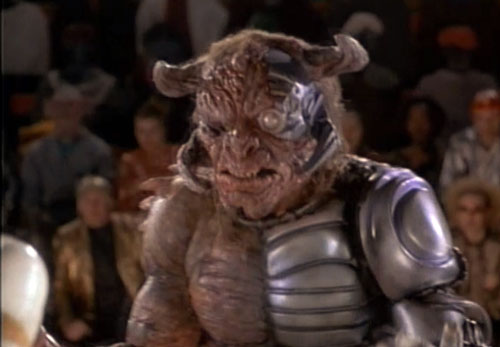
Personally, I was impressed with the creativity and the vision behind the monster designs in Arena, particularly given the fact that there was an extremely limited budget for the team to work with. Most of the aliens are just humans with some makeup effects, but a handful of them are more insect-like or otherwise complicated puppets or rubber suits.

arena3That said, the voice over work (for the monsters that required it) was absolutely atrocious. Horn, the primary antagonist, sounds absolutely ridiculous when he is supposed to come off as intimidating, and comes off as incredibly cartoon-y rather than menacing.

Late in the movie, there is a femme fatale who is introduced over the course of what is supposed to be a seductive musical number. However, just like the monster voice over work, it is absolutely awful. Honestly, he song is almost unbearable to listen to, with or without the lackluster singing, and it plays in the background of an entire scene. It is pretty surreal to watch, given the lead character is absolutely enamored with the impossibly terrible performance, and is distracted by it throughout the scene. Even worse, he acts like he is totally unaware that the singer is affiliated with his enemies, despite the fact that they were introduced by his primary antagonist. Just like Rocky, the hero of Arena (appropriately named “Armstrong”) isn’t the brightest of bulbs.

Overall, there are definitely some highlights to Arena that make it worth watching through, but I think the real value of the movie is in the outlandish premise. A run-of-the-mill sports movie set in outer space against the backdrop of a dystopian society turns a flick that is otherwise pretty basic into something incredibly bizarre. I feel like this is the most true sequel to Rocky IV, as the only way for a boxing match to have greater consequence than ending The Cold War is for a match to literally save the universe.

For bad movie fans, Arena is a good deep cut to check out. I think it would make a pretty good pairing with Robot Jox given the similar sports-movie styles, though Robot Jox is definitely the better movie of the two.

Jungleground

Jungleground

jungleground1

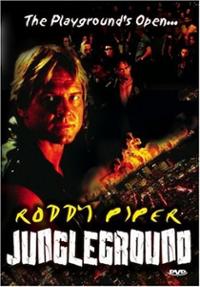
Today, I am going to take a look at one of the lesser-known movies starring the late “Rowdy” Roddy Piper: 1995’s Jungleground.

Jungleground was written by Michael Stokes, who also penned the movies Iron Eagle IV, The Marsh, Exit Speed, and a number of episodes of children’s television shows, including Rolie Polie Olie, Totally Spies, and Miss Spider’s Sunny Patch Friends.

Jungleground was directed by a fellow named Don Allan, who never had any other directing gigs on feature motion pictures, but worked on a couple of documentaries.

The cinematographer for Jungleground was Gilles Corbeil, who also shot the action movies Back in Action and Balance of Power, and has worked as a camera operator on such films as Mimic, Shoot Em Up, 16 Blocks, Pixels, Pacific Rim, and the upcoming Crimson Peak.

The musical score for Jungleground was provided by Varouje, who has also done scores for low budget movies like The Circuit, G.O.D., Tiger Claws, and Expect No Mercy.

The effects team for Jungleground included Liz Gruszka (Devil, Kick-Ass), Ron Craig (Abraxas: Guardian of the Universe, Death Wish V), Antony Stone (Generation Kill, Lord of War), Jeff Skochko (Silent Hill, Cube 2: Hypercube, Repo! The Genetic Opera), and Stan Zuwala (The Adjuster, Iron Eagle IV),

The producers of Jungleground were Peter K. Simpson (Prom Night, Prom Night II), George Flak (The Marsh, Striking Poses), and Ilana Frank (Prom Night II, Prom Night III).

The cast of Jungleground is composed of the late wrestling star and cult icon Roddy Piper (Hell Comes To Frogtown, They Live), Torri Higginson (Stargate: Atlantis), JR Bourne (Teen Wolf, The Butterfly Effect 2), Rachel Wilson (Breaker High, The Glass House), Nicholas Campbell (Goon),  and Nicole de Boer (Cube, The Dead Zone, Star Trek: Deep Space Nine).

The story of Jungleground takes place in a mostly abandoned, lawless city (“the jungleground”) run by ruthless gangs. An undercover policeman is outed and captured after a sting gone bad, and is given one night to escape the jungleground, or else his fiancee will be executed by his captors.

JUNGLEGROUND, Roddy Piper, 1995. ©Norstar Releasing

Jungleground is a pretty obscure movie, with just over 1000 user reviews between IMDb and Rotten Tomatoes combined. Of the two, it currently holds a 5.1 rating on IMDb, and a 44% audience score on Rotten Tomatoes, which are hardly glowing numbers.

The plot to Jungleground gets pretty complicated as it moves along, but it clearly takes a lot of inspiration from Escape From New York and The Warriors, much like 1990: The Bronx Warriors. There is a notable side plot about the interior workings of the “Ragnarockers” gang that operates in the jungleground, but the fact that it rarely actually connects to the main plot with Piper drags the story down a bit, which is a definite weakness of the film.

While Roddy Piper gets a handful of one-liners in the movie, he doesn’t seem to be having as much fun as he did in They Live and Hell Comes to Frogtown. His charisma still comes through here and there, and he makes the movie entertaining more than any other single element in it, but he certainly isn’t on the top of his game. It strikes me as though he is taking the movie far more seriously than it merits, which is ultimately a disservice to what is definitely campy material.

Jungleground strikes me as a movie lost in time. I am still kind of shocked that this is from 1995, because it looks like it could easily have come from anywhere between 1982 and 1989. If not for Roddy Piper looking just a tad older than he did in They Live, I would have sworn that this was made back to back with something like Class of 1999.

jungleground3Overall, Jungleground probably qualifies as middle-of-the-road as far as b-movies go. I picked this up on a whim from a video store some time ago, and the untimely death of Piper gave me the motivation to actually pop it in and review it. I had higher hopes for it being a forgotten gem, but it certainly isn’t a painful movie to sit through. It isn’t as good as similar movies like Escape From New York or The Warriors, or as good-bad as knockoffs like 1990: The Bronx Warriors, but it is a totally serviceable b-level action movie if that is what you are craving. Piper might not be at the top of his game here, but he is still definitely Rowdy Roddy Piper, and has fleeting moments of true badassdom (such as the ending, in which he leaves the film’s villain quadriplegic, but alive).

Manic

Manic

manic1

This post is based on a viewer request, which is being filled due to a donation to the Secular Student Alliance via my campaign during Secular Students Week (June 10-17, 2015). Thanks to all for your contributions!

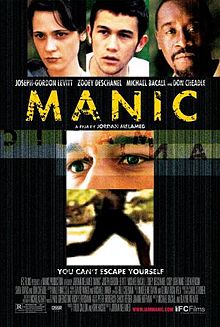
Today’s movie is Manic, an intense and realistic story about a group of young people being treated for a variety of mental illnesses.

Manic was written Michael Bacall (21 Jump Street, 22 Jump Street, Scott Pilgrim vs. The World) and Blayne Weaver (Honey 2, Weather Girl), who both also appear in the film.

The director for the film was Jordan Melamed, whose only other directing credit is a 2012 documentary called Futures Past. However, he also wrote the screenplay for Twelve, a 2010 movie by Joel Schumacher which he also served as producer on.

The cast of Manic includes Don Cheadle (Swordfish, Hotel Rwanda, Iron Man 2), Joseph Gordon-Levitt (Brick, Looper, Inception), Zooey Deschanel (500 Days of Summer, The Happening), Elden Henson (Daredevil, The Mighty Ducks), Cody Lightning (Smoke Signals, Brick), and co-writer Michael Bacall (Django Unchained).

manic6The story of Manic centers around a number of patients in the psych ward of a hospital, who are all in the process of dealing with a variety of mental illnesses. As the movie goes along, some of the patients progress, others regress, and a handful of friendships and bonds are formed.

Manic features a handful of teenagers in the background who had actually been treated in institutions for mental illnesses, which adds to the realism of the setting and the tone of the movie.

Zooey Deschanel and Joseph Gordon-Levitt once again acted alongside each other years later in 500 Days of Summer, an acclaimed indie romantic comedy that immensely popularized both actors.

Manic notably premiered at the 2001 Sundance Film Festival, one of the most revered showcases of independent films in  the United States.

The reception to Manic was generally positive. On the Rotten Tomatoes review aggregator, Manic currently holds scores of 67% (critics) and a 79% (audience), alongside an IMDb rating of 7.4. Manic reportedly had a budget of $1.5 million, but it was only able to make less than $70,000 in a limited theatrical run.

One of the biggest criticisms I have seen of the film is the near-nauseating use of handheld camerawork throughout the film, which clearly didn’t sit well with many critics. However, I though it gave the film a more realistic style, and the shots occasionally served to make the audience appropriately uncomfortable and generally ill-at-ease. It still was distracting at points, but I didn’t see it as a negative for the film as a whole. Above all, this strikes me as a movie that was aiming for realism, and shooting with tripods and stabilizers might have served to take away from that feeling without adding anything of real value. Roger Ebert was particularly vocal about his disdain for the shooting style in his review:

Melamed and Hay made an unfortunate decision to use the hand-held style that specializes in gratuitous camera movement, just to remind us it’s all happening right now. There are swish-pans from one character to another, an aggressive POV style, and so much camera movement that we’re forced to the conclusion that it’s a deliberate choice. A little subtle hand-held movement creates a feeling of actuality; too much is an affectation…the camera style [of Manic} made me work hard to see it at all.

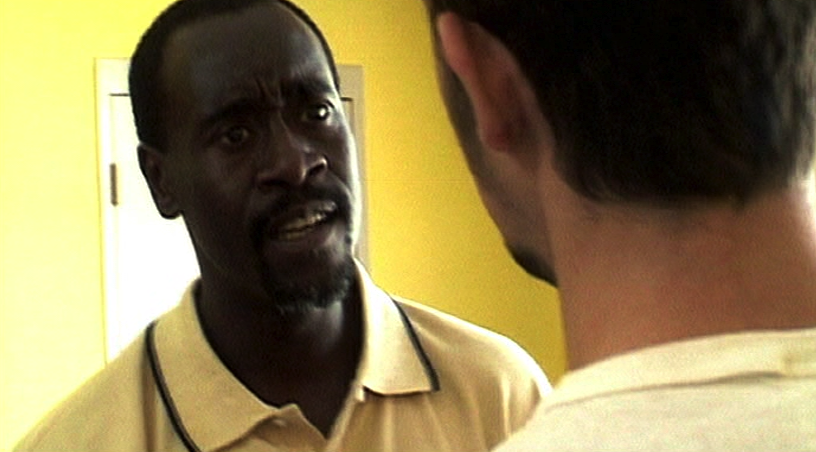
Manic serves as a fantastic showcase of acting abilities if nothing else, particularly from Zooey Deschanel and Joseph Gordon-Levitt. While both actors have found their footing in Hollywood now, it is a shame to see Deschanel pigeon-holed into her “Manic Pixie Dream Girl” persona, which she can’t seem to escape. Manic makes it clear that she can do much more if given the opportunity.  Similarly, Joseph Gordon-Levitt shows a potential for violence and simmering intimidation in Manic that he rarely gets to utilize in his roles today.  He does use those qualities a bit in Hesher, however, which is also worth checking out. Cheadle also gets to showcase himself a bit, but his character definitely takes a back seat to the youth in the movie, and he has less of a resolution than any of the other characters in the movie.

The non-traditional plot structure for Manic makes it difficult to tell as an audience member where you are in the progression of the story, and it isn’t really clear until the third act that an end is anywhere in sight. At first this bothered me a bit, but it actually fits with the Sisyphean theme of the movie really well now that I have spent some time thinking about it.

manic5While this might be a mixed bag for some people, I like the ending to Manic. It makes an interesting point on what freedom is, a point that had been made throughout the story. It also provides an interesting foil for the memorable ending to perhaps the most famous movie about a mental institution, One Flew Over the Cuckoo’s Nest. You can escape a physical institution, but as the Manic tagline suggests, “you can’t escape yourself.”

Overall, this is a very emotionally heavy movie that definitely isn’t for everyone. The shooting style and pacing could also turn a lot of people off, but the performances generally make it worth checking out. I’m not usually a huge fan of hyper-realistic cinema, but I thought the use of handheld cameras was a good decision here, and it is hard for me to imagine the movie without them.

If you are interested in checking this out, you need to know that this isn’t One Flew Over The Cuckoo’s Nest or I’m A Cyborg, But That’s OK. This is neither a straight conventional drama or a romantic comedy against the backdrop of an institution: it is an honestly bleak and stark look at what dealing with mental illness as a young person can be like, and it doesn’t pull any punches. If that is something you want to see, then give Manic a shot.

manic4

C.H.U.D. II: Bud the Chud

C.H.U.D. II: Bud the Chud

chudii1

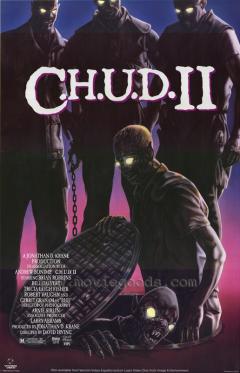
Today’s feature is truly one of the most unnecessary and strange sequels of all time: C.H.U.D. II: Bud the Chud.

C.H.U.D. II was written by Ed Naha, who also penned such movies as Troll and Dolls. However, he did so under a pseudonym: M. Kane Jeeves. The fact that a man who was willing to have his name on Dolls and Troll declined credit for C.H.U.D. II should say a lot about the sort of movie we are dealing with here.

The film was directed David Irving, who has directed such films as (Night of the Cyclone, Rumpelstiltskin, Sleeping Beauty). However, he had no previous experience with directing horror movies.

The cinematographer for C.H.U.D. II was Arnie Smith, who has primarily worked on biographical documentaries like Aldous Huxley: Darkness and Light, Bogart: The Untold Story, and The Unknown Peter Sellers.

The film’s editor was Barbara Pokras, who cut such memorable films as The Giant Spider Invasion and The Return of The Living Dead.

The producers for C.H.U.D. II included Lawrence Kasanoff (Mortal Kombat, Foodfight!, Class of 1999, Blood Diner), Jonathan Krane (Face/Off, Battlefield Earth, Swordfish), Simon Lewis (Look Who’s Talking), and Anthony Santa Croce (Monk, Tales From The Darkside)

The music for C.H.U.D. II was composed by Nicholas Pike, who worked on scores for a number of episodes of Masters of Horror (including Pick Me Up), Freddy’s Nightmares, It’s Alive (2008), and Critters 2.

The C.H.U.D. II effects team included Allan Apone (Evilspeak, Galaxy of Terror, Going Overboard, Deep Blue Sea), Douglas White (Merlin’s Shop of Mystical Wonders, UHF), Michael Spatola (Iron Man 3, Going Overboard), Bryan Moore (Dolls, Tremors II), Tim Huchthausen (Blind Fury, 1941), and John Fifer (Return to Horror High, Cyber Tracker).

The cast for C.H.U.D. II includes Gerrit Graham (Child’s Play 2, Chopping Mall), Brian Robbins (Head of the Class), Tricia Leigh Fisher (Book of Love), Robert Vaughn (Bullitt, The Magnificent Seven, Battle Beyond The Stars), Larry Cedar (The Gingerdead Man), Larry Linville (M*A*S*H), and June Lockhart (Troll, Deadly Games, Lost In Space).

chudii3The plot of C.H.U.D. II centers around a sole surviving experimental C.H.U.D., which was synthesized by the military from the original race of Cannibalistic Humanoid Underground Dwellers in an attempt to create a super-soldier. However, the project was scrapped, and “Bud” was left in the care of a Center for Disease Control. At the beginning of the story, Bud is accidentally freed by some teenagers, after which he begins creating a new army of C.H.U.D.s, and generally causes havoc for the local townsfolk.

The reception to C.H.U.D. II: Bud the Chud was definitively negative at the time, though it has a bit of a cult following now. Currently, it holds an IMDb rating of 3.6, which is still impressively low.

chudii4This flick astoundingly takes place in a totally different genre from C.H.U.D., and the monsters don’t look remotely like CHUDs as they were previously depicted. There is just no way that this movie was originally written as a sequel to C.H.U.D., because there are just too many dramatic differences. To be generous, CHUD II is to CHUD what Return of the Living Dead is to Night of the Living Dead: the movies are not really related, though the previous film is nodded at here and there in the story of the “sequel”.

Speaking of which, what value was there to the C.H.U.D. name that it made sense to brand this random zombie comedy? It was a bit of a cult classic, but it was never a cash cow or particularly beloved to the point of being worth a sequel. Honestly, this makes more sense as a Weekend at Bernie’s sequel, and would probably be funnier that way. The protagonists in this movie spend a lot of time trying to use Bud to get a good grade in a science class, which fits way better in a silly comedy franchise than the sequel to grimy cannibal movie.

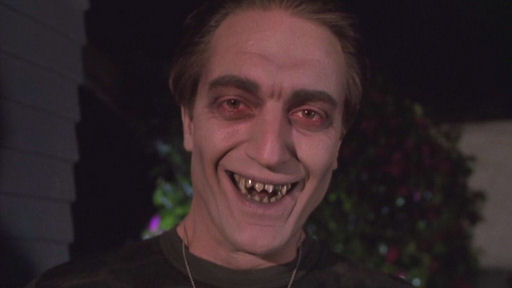
chudii2Regarding the monsters themselves, the CHUDs in C.H.U.D. II are really unimpressive. The zombie makeup here is mostly just pale foundation, eye pits, and messed up teeth. The original CHUDs are still cheap, but they are at least a bit eerie with their contorted faces and lantern eyes. There isn’t even an attempt to recreate them here.

I couldn’t very well forget to talk about the music in this movie, which is absolutely ridiculous. Bud, the Alpha CHUD, gets his own theme song, which plays constantly throughout the movie whenever the character is on screen.

Speaking of Bud, the character is far more intelligent and thoughtful than it was ever implied that CHUDs could be. This may be due to him being a synthesized, experimental super-soldier rather than a natural CHUD, but I personally think that was just a plot convenience used to explain away any inconsistencies with the first film. However, it is pretty funny to think of Bud the super-soldier CHUD dressed up as Captain America.

This isn’t an easy flick to recommend. It isn’t particularly fun as a comedy or as a b-movie, and clearly didn’t have a whole lot of care put into it. That said, it is certainly cheesy and hammy, and is probably worth giving a shot for bad movie fans. I just wouldn’t go in with any kind of high expectations, because this isn’t anywhere close to being a good-bad elite flick. Just in the realm of zombie comedies, there are far better options out there to dig up.

Superbabies: Baby Geniuses 2

Superbabies: Baby Geniuses 2

bottombabyg2

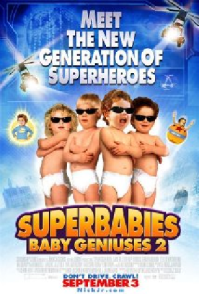
Today’s feature is the particularly infamous bad movie Superbabies: Baby Geniuses 2.

The two writers on Baby Geniuses 2 were Gregory Poppen (Chilly Christmas, The Prince and The Surfer, The Million Dollar Kid) and producer Steven Paul (Baby Geniuses, Karate Dog, Never Too Young to Die).

Baby Geniuses 2 was directed by Bob Clark, who is best known for directing movies like A Christmas Story, Rhinestone, Black Christmas, and Porky’s. Baby Geniuses 2 was sadly the last film he would direct, as he died in a car wreck shortly after the film wrapped.

The editor for Baby Geniuses 2 was Stan Cole, who also cut Baby Geniuses, Rhinestone, and Black Christmas for director Bob Clark.

Aside from co-writer Steven Paul, the producers for Baby Geniuses 2 included Eric Breiman (Bratz: The Movie), Jan Fantl (Slipstream (2005), Feardotcom), Rosanne Milliken (Tucker and Dale vs. Evil), Reinhild Graber (Boat Trip, Dracula 3000), and David Marlow (Lexx).

The music for the movie was provided in part by Paul Zaza, who has also provided scores for films like My Bloody Valentine, Prom Night, Porky’s, and A Christmas Story.

The Baby Geniuses 2 makeup effects team was composed of such people as Agnieszka Echallier (In The Name of The King, Hollow Man 2), Joel Echallier (Postal, Air Buddies, Dreamcatcher, Blade: Trinity), Julianne Kaye (Jack Frost 2), and Joan Issacson (Street Smart, Jacknife).

The special effects work on Baby Geniuses 2 was done by a group including Rory Cutler (The Mangler 2, Jennifer’s Body, The Fly II), Brant McIlroy (Scary Movie, Catwoman), Vittorio Palmisani (Fido, The Chronicles of Riddick), Cara E. Anderson (Marmaduke, Trucks, The Core), CJ Wills (Miracle), and Neil Westlake (Smokin’ Aces 2, Big Nothing, The Last Mimzy).

The massive visual effects team for Baby Geniuses 2 included elements from such films as Thor, Ghost Rider, Charlie and The Chocolate Factory, Elysium, Into The Storm, Josie & The Pussycats, Resident Evil, Deep Blue Sea, Baby Geniuses, Spider Man 3, Jingle All The Way, Hot Fuzz, Thunderpants, Spice World, Drag Me To Hell, and Event Horizon.

The cast of Baby Geniuses 2 includes Jon Voight (Bratz: The Movie, Anaconda, Deliverance), Scott Baio (Charles in Charge), Vanessa Angel (Kingpin), Peter Wingfield (Catwoman), Justin Chatwin (Dragonball: Evolution), and Skyler Shaye (Bratz: The Movie).

babygeniusestwo2The plot of Baby Geniuses 2 follows a group of young babies who stay at a local daycare, and speak in a mysterious baby language. They tell the story of a mythical Superbaby called ‘The Kahuna’, who appears to them shortly afterwards in order to foil an evil plot unfolding under their noses. With the help of their babysitter, the babies get kidnapped by Kahuna and are taken to his Willy Wonka-esque hideout, where they are subsequently turned into superheroes. Eventually the plot ends, and everyone is supposedly happy as all of the children’s memories are wiped.

Baby Geniuses 2 has become a mainstay at the bottom of the IMDb’s Bottom 100, and has held the bottom slot on more than a few occasions. As of this writing, it is sitting at #15 in the ranking.

Baby Geniuses 2 shockingly wound up spawning multiple sequels: Baby Geniuses and The Mystery of the Crown Jewels (2013), Baby Geniuses and The Treasures of Egypt (2014), and Baby Geniuses and The Space Baby (2015). As I understand it, all of these films follow characters established in Baby Geniuses 2 rather than Baby Geniuses, which have very little relationship to each other from a plot perspective.

Baby Geniuses 2 wound up with a total of 4 Golden Raspberry nominations, which are given out as a dishonor for the worst films and performances of the year. It racked up nominations for Worst Director, Worst Picture, Worst Supporting Actor, and Worst Screenplay, but it astoundingly did not win any of them, as they were primarily taken by Catwoman and Fahrenheit 9/11.

Baby Geniuses 2 had a budget of roughly $20 million, though it grossed less than $10 million in its theatrical release, making it a significant financial failure.

The reception to Baby Geniuses 2 was overwhelmingly negative: it currently holds a 1.9 on IMDb, along with scores of 0% (critics) and 19% (audience) on the movie review aggregator Rotten Tomatoes.

The bad visual effects and stunts work throughout Baby Geniuses 2 come fast and furious, and just look awful. The effects are all emphasized far too much for a movie that really didn’t require their presence at all. While the fighting scenes are laughable in their incompetence at first, that novelty dries up pretty fast as the movie drags on.

babygeniusestwo1The worst offense in this movie (in my opinion) is the dubbing work done over the babies, who were clearly directed to just randomly move their mouths. Any time you are relying on child actors you are running a big risk for your movie, but the fact that this was riding on baby actors absolutely doomed it (just like its predecessor). Unless you turn to butter at the sight of blithering babies, it is unbearable to watch.

If there is anything memorable about this movie, it is Jon Voight and his ridiculous fake accent. Voight certainly hams up his role to the max in truly bizarre fashion, but that is unfortunately hardly enough to make this movie watchable.

As far as the writing goes in the movie, there is a pathetic attempt at a plot twist that anyone over 5 could spot from a mile away. There is also a half-assed attempt to preach about how awful and lazy watching television causes people to be through the plot, while the movie is simultaneously a mind-numbingly awful movie. The dialogue is almost forgivable, given that babies are supposed to be the ones speaking for most of the film, but there are a number of instances where their vocabulary is far more advanced than it should be, throwing a wrench into any semblance of consistency in the dialogue writing. Most of the attempts at humor relate to poop and/or diapers, a topic which is retread over and over again throughout the film.

Whoopi Goldberg has a perplexing and unnecessary cameo in this movie that I still can’t quite wrap my brain around. She plays herself, and is apparently part of a network of militarized babies (or something), which makes exactly as much sense as it sounds like it does.

There is something that has bugged me ever since I first saw this movie: who was the intended audience for it supposed to be? I’m not sure if this would actually entertain children or babies, as it seems to emphasize the babies being supposedly cute more than anything else. I suppose if you are one of those people that turns to mush whenever you see a baby, this movie might actually have been made for you. In all seriousness, if watching babies be babies for an hour and a half seems like a raucous good time to you, then this movie is totally up your alley, and you should have at it.

For everyone else out there, I highly recommend not watching this movie. It is a horrible mess of a film with no redeeming qualities outside of Jon Voight, who might be worth looking up some clips of. I do suspect that there is a meta-plot to this movie about how it is actually capable of killing your brain cells, just in case you are the sort of person who wants to read too deeply into a movie about babies. However, I assume that I’m probably alone there.

Going Overboard

Going Overboard

goingoverboard1

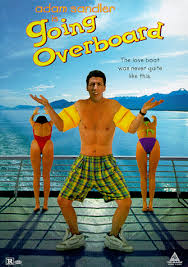
Today’s feature is the often-forgotten early Adam Sandler vehicle, Going Overboard.

Going Overboard was directed and co-written by Valerie Breiman, who went on to direct Bikini Squad and Love & Sex. Her co-writers were stars Adam Sandler and Scott LaRose, as well as the uncredited Adam Rifkin (Small Soldiers, Mousehunt, The Invisible Maniac), who also produced the film and appears in the movie.

The cinematographer on Going Overboard was Ron Jacobs, who, since 2000, has only worked in film as a driver and transportation manager. The editor for the film, Randy D. Wiles, has primarily worked on television shows over the years, like Quantum Leap, JAG, NCIS, and Tequila & Bonetti.

The music for Going Overboard was composed by Steven Scott Smalley, who has primarily worked as an orchestrator on films like Iron Eagle, RoboCop, Tommy Boy, Starship Troopers, Tiptoes, and Paul Blart: Mall Cop.

The special effects makeup for Going Overboard was done by a team that included Michael Spatola (Iron Man 3, Little Monsters, Never Too Young To Die), Allan Apone (CHUD II: Bud the Chud, UHF, Deep Blue Sea, The Avengers), and Mary Brando (Bachelor Party).

The cast of Going Overboard includes Adam Sandler (Jack & Jill, Grown Ups, Billy Madison), Billy Zane (Titanic, The Phantom, Critters, The Brotherhood of Justice), Billy Bob Thornton (The Ice Harvest, Sling Blade, The Man Who Wasn’t There), Scott LaRose (The Sixth Man, Booty Call), Ricky Paull Goldin (Piranha II), and Peter Berg (Battleship, Aspen Extreme, Shocker, Hancock).

The plot of Going Overboard follows an aspiring comedian working on a commercial cruise ship, who desperate tries to figure out the secrets to effect stand up comedy and self confidence.

Adam Sandler to this day doesn’t acknowledge the existence of this film, and doesn’t list it among the credits on his website. Considering the quality of movies that he is willing to claim, that speaks volumes about how bad Going Overboard really is.

Going Overboard is widely loathed by audiences and critics alike, and currently holds a rating of 1.9 on IMDb, landing it in the website’s Bottom 100 films. The Rotten Tomatoes audience score isn’t any better: an abysmal 11%.

First off, the cinematography on the film is just horrible, though part of that is justifiably due to the production trying to film the movie in the cramped confines of a cruise ship, which certainly isn’t conducive to it. However, there are long shots and bad angles that go much deeper than just the difficulties of the environment. The fact that the cinematographer didn’t wind up with any other credits is no surprise given the product here.

Going Overboard does a lot of unnecessary fourth wall breaking, with most of the instances acting as transitions or outright apologies for the poor quality of the film. The film literally starts with Adam Sandler breaking character to explain that the movie had no budget, and tries to lower audience expectations out of the gate. The fourth wall is later broken in desperate attempts for laughs throughout the film, but it never really works.

goingoverboard4It is interesting to see a pre-Saturday Night Live Sandler trying to take on a leading role. He is just as bad as he always is, but in a different sort of way. He clearly isn’t used to the spotlight in Going Overboard, and looks obviously uncomfortable with the camera on him. He also hasn’t worked out his trademark comedic cadence, though flashes of it pop up here and there throughout the story.If there is any trivial worth to the movie, it is to see how Sandler has managed to develop into his modern persona.

It doesn’t seem like anyone in the cast or crew of Going Overboard was putting in any real effort here. While the film was obviously filmed in a rush, it generally feels as if the motivation behind this movie is that the team wanted to go on a cruise together, and film along the way when they could.

goingoverboard2For being as despised as it is, I actually found Going Overboard to be mostly watchable. It isn’t funny, and it definitely has plenty of technical and writing issues, but the team behind the film clearly wasn’t working with anything to start with, and didn’t much care about putting out a quality product at the end of the day. So, it is hard to have any kind of expectations for this flick: it is basically a home movie. I’m not sure if the self-aware aspect of the film helps it or hurts it, but I do know that this is a film I would still take over anything in Uwe Boll’s or Uli Lommel’s filmographies. Basically, there are far worse movies out there.

I actually think that there is a potentially funny movie hidden inside of this film somewhere. I could imagine this plot with someone like Louis CK, a genuinely talented self-loathing comedian, as a cruise ship waiter who is down on his luck, with dreams of doing stand up comedy. I could see an effectively brash comedian like Dennis Leary or Dennis Miller as the washed up antagonist comic, relegated from his banner years to doing a cruise ship show. Seriously, there is a potential movie there.

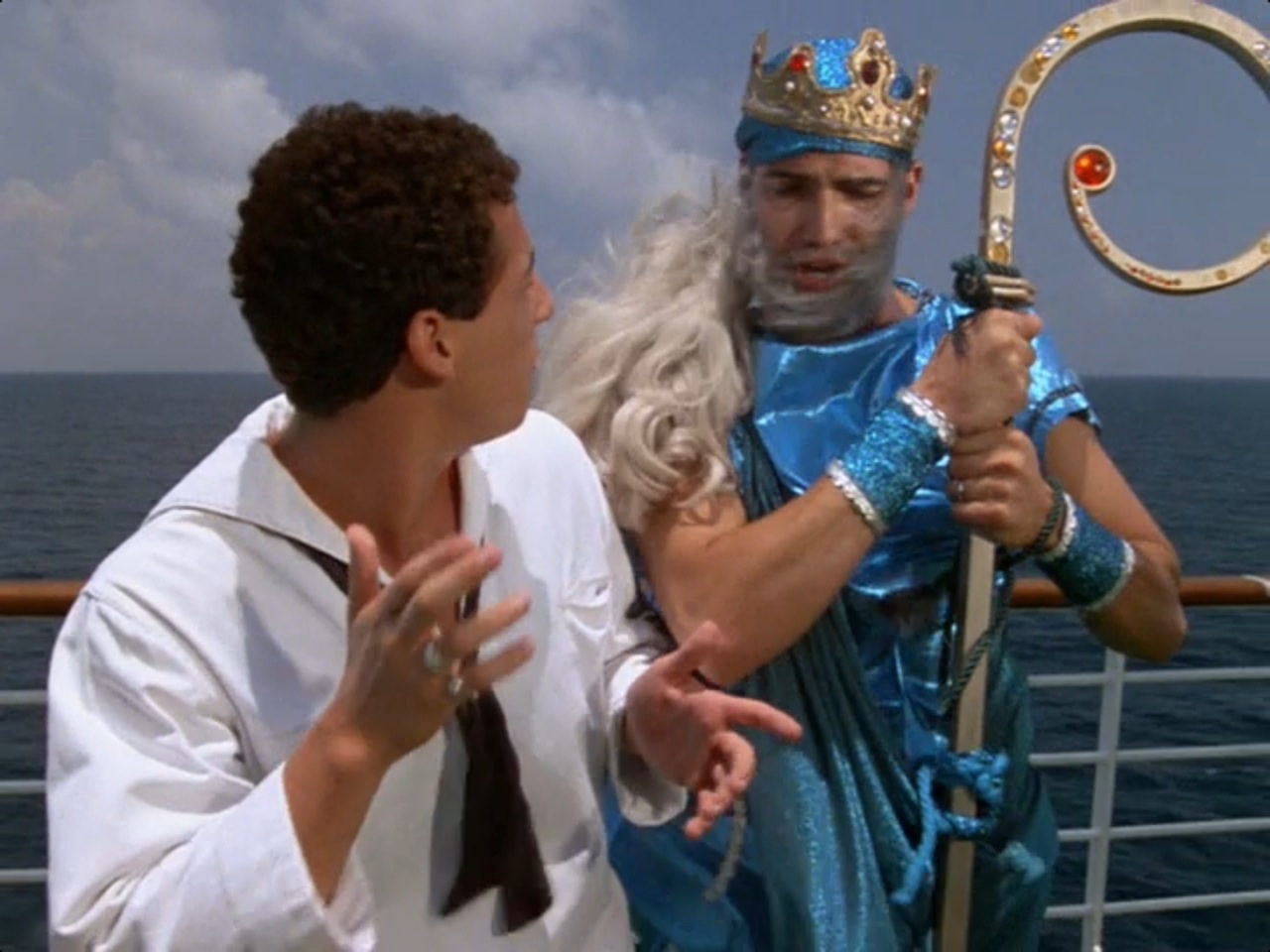
The thing that makes this movie stand out, over anything else, is the inclusion of countless unnecessary characters. For instance, the Greek God Poseidon and infamous dictator General Noriega both feature prominently as characters in the movie. The plot also manages to go completely off the rails, eventually featuring a Panamanian hit squad that has a deep love of stand-up comedy. The movie ends with Adam Sandler hooking up with the demigod daughter of Poseidon, and the rival comic
drowning after being tossed overboard in what is essentially a mutiny. That sounds more like the way you would end some sort of Greco-Roman epic, not an Adam Sandler comedy vehicle.

goingoverboard3The bizarreness of the ending to this film, coupled with the unique incompetence behind the scenes, actually makes this whole mess relatively interesting to watch, in the same way that dissecting a mutated squirrel from Chernobyl might be.

I certainly can’t heavily recommend this movie, but it is one of the few bad comedy movies that I have ever gone back to rewatch. Most bad comedies try too hard to be funny, whereas this mess suffers from the exact opposite problem. It is certainly a unique movie, and I would at least recommend watching it for no other reason than that Adam Sandler doesn’t want you to.

Extra-Terrestrial Visitors

Extra-Terrestrial Visitors

extraterr2

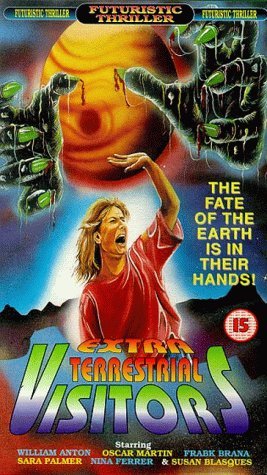
Today’s feature is an E.T. knockoff called Extra Terrestrial Visitors, through it is better known by many as The Pod People.

The Pod People was directed and co-written by Juan Piquer Simon, who was also behind such films as Slugs: The Movie, Pieces, and The Rift. His co-writer was Joaquín Grau, who previously worked with Simon on Los Diablos Del Mar and Mystery On Monster Island.

The film featured two credited cinematographers: Ricardo Navarrete, a camera operator who worked on Solarbabies, Conan The Barbarian, and Guns of the Magnificent Seven, and Juan Mariné, who shot Pieces and The Rift for the director, Juan Simon.

The editor for The Pod People was Antonio Gimeno, who also cut The Werewolf vs. The Vampire Woman, Mario Bava’s Planet of the Vampires, and Slugs: The Movie.

The memorable music in The Pod People was composed by the duo of Michael Demer and Librado Pastor, neither of whom have any other significant film score composition credits.

The effects work on the film was done by Pedro Camacho (Slugs: The Movie, Pieces, Zorro) and Basilio Cortijo (Battle of the Bulge, The Trojan Women, Cthulhu Mansion).

The plot to The Pod People is immensely complicated, and follows a number of different threads. The main plot follows a young boy who discovers a mysterious egg in the woods, which he takes home with him. It soon hatches into a juvenile alien with telekinetic powers, leading to an assortment of shenanigans. Elsewhere in the woods, a traveling rock band comes across the adult alien that laid the egg, leading to an entirely separate series of shenanigans (that involves a lot more murder).

The movie was featured under the title of The Pod People in the third season of the cult television show Mystery Science Theater 3000, which has significantly contributed to the film’s popularity, and spread the use of The Pod People as its primary title.

Speaking of which, The Pod People is known by a ton of different release titles: Extra-Terrestrial Visitors, Tales of Trumpy, The Return of E.T., Visitor, and The New Extraterrestrials among them.

The reception to The Pod People online is significantly poor, likely due to its popular association with Mystery Science Theater 3000. It currently sits in the IMDb Bottom 100 with a rating of 2.1, and has a Rotten Tomatoes audience score of 15%.

The Pod People suffers immensely from a lack of focus, as it tries to balance two movie concepts that are diametrically opposed to each other. When it comes down to it, this movie should either have been primarily a child-friendly romp with a baby alien, or a cut-and-dry sci-fi alien slasher, but not both. This is clearly a case where the crew assumed the flick could be everything to everyone, but it just couldn’t pull it off.

The music throughout The Pod People is absolutely awful, but it is also probably the single biggest reason the movie is so memorable. The ambient synthesizer tones that play throughout the film are only matched by the ridiculous rock tune, “Hear The Engines Roll Now,” and MST3K crew managed to have fun mocking all of it.

extraterr1To the crew’s credit, the alien designs in The Pod People are certainly not what you would expect, and wind up looking genuinely unique without breaking the budget of the movie. The elephant-Sasquatches are still cheesy without any doubt, but you aren’t going to confuse them with any other movie monsters out there.

Bad editing and poorly paced screenwriting combines to keep The Pod People from ever getting a steady flow or rhythm to it, which makes it all the harder to sit through. The two main plot threads take a long while to converge, and the movie bounces between them a bit too much until they do ultimately wind up combining. I’m sure the crew didn’t realize at the time just how jarring it would all wind up being, but you would think that the editing would work to salvage the product moreso than it did.

As far as plot details go, I still don’t understand why Trumpy is telekinetic. The power doesn’t come into play at any other point, apart from to showcase some cheesy effects, and I can’t think of any practical use of the power for an adult alien. Trumpy’s mother also never seems to use it, which brings into question whether the adult aliens have the power at all.

Overall, this can be a pretty fun bad movie to watch if you have the patience to get through the halfway point. Once the two main plot lines converge, the pacing gets more bearable through to the conclusion. That said, without the MST3K commentary, the stretch of the movie between “Hear The Engines Roll Now” and the plot convergence is nearly unfathomably boring. That said, the Mystery Science Theater 3000 episode on the movie is one of their best, and is worth checking out.

The Incredibly Strange Creatures Who Stopped Living and Became Mixed-Up Zombies

The Incredibly Strange Creatures Who Stopped Living and Became Mixed-Up Zombies

mixedup1

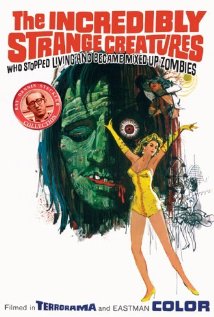
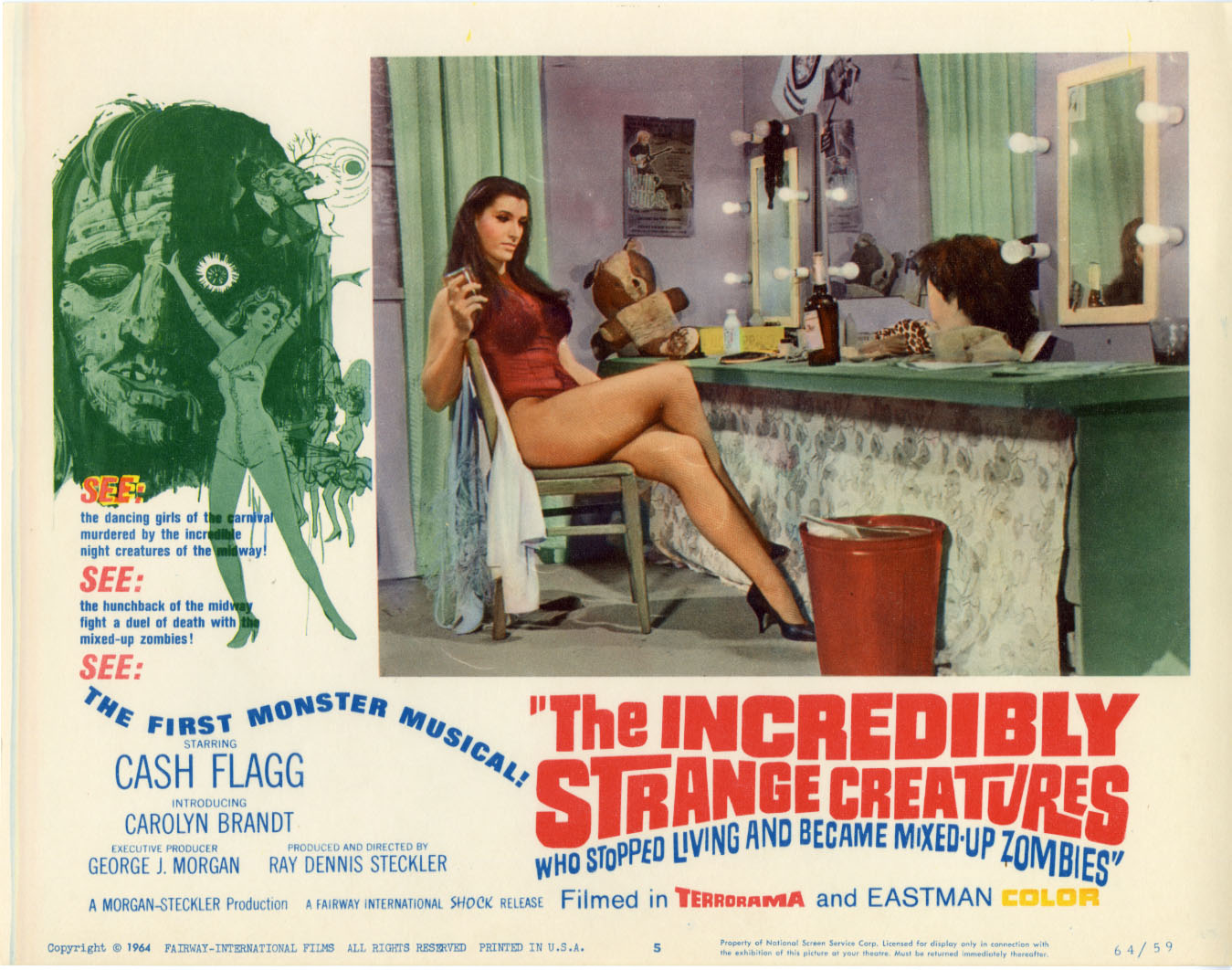
Today’s flick is the infamous monster movie musical, The Incredibly Strange Creatures Who Stopped Living and Became Mixed-Up Zombies.

The Incredibly Strange Creatures Who Stopped Living and Became Mixed-Up Zombies was directed and produced by Ray Dennis Steckler, who was also behind such movies as The Sexorcist, The Horny Vampire, The Mad Love Life of a Hot Vampire, and, no kidding, How to Make A Sex Movie. He also played the protagonist in The Incredibly Strange Creatures Who Stopped Living and Became Mixed-Up Zombies under a pseudonym: Cash Flagg. The credited screenplay writers for the movie were Gene Pollock (The Thrill Killers) and Robert Silliphant (The Creeping Terror, The Beach Girls and The Monster).

The cinematographer for The Incredibly Strange Creatures Who Stopped Living and Became Mixed-Up Zombies was Joseph V. Mascelli, who also shot the b-movies The Thrill Killers and Wild Guitar, and went on to direct the classic bad movie The Atomic Brain.

The film’s editor was Don Schneider, whose only other feature film editing credit was another classically terrible b-movie, Eegah.

The memorable music for The Incredibly Strange Creatures Who Stopped Living and Became Mixed-Up Zombies was done by Libby Quinn, who has no other film score composition credits, and Andre Brummer, who worked on films like Eegah, Monster From The Ocean Floor, Mudhoney, and something called Fertilize the Blaspheming Bombshell.

The makeup effects work on The Incredibly Strange Creatures Who Stopped Living and Became Mixed-Up Zombies was done by one Tom Scherman, who went on to do miniature and visual effects work on movies like Robot Jox, The Crater Lake Monster, and Flesh Gordon.

mixedup2The plot of The Incredibly Strange Creatures Who Stopped Living and Became Mixed-Up Zombies centers around a musical carnival, where a young man is cursed into becoming a murderous zombie by the carnival’s fortune teller. This leads him to go on a killing rampage, taking out many of the teenaged attendees at the carnival.

The original title for the film was reportedly supposed to be The Incredibly Strange Creature: Or Why I Stopped Living and Became a Mixed-up Zombie, but Columbia pictures threatened a lawsuit due to the similarity of it to the full title of Dr. Strangelove, a significant hit by Stanley Kubrick that released the previous year. The director, Ray Dennis Steckler, also said that Face of Evil was an early working title.

Speaking of alternate titles, the film wound up releasing under a handful of different titles over the years: The Incredibly Mixed-Up Zombie, Diabolical Dr. Voodoo, and The Teenage Psycho Meets Bloody Mary among them.

The Incredibly Strange Creatures Who Stopped Living and Became Mixed-Up Zombies was famously featured on a season 8 episode of the popular bad movie television show Mystery Science Theater 3000, which exposed it to a much wider audience than it ever had before.

Primarily because of the film’s appearance on MST3K, it has a very negative reception on internet review aggregators: it currently has a 2.2 rating on IMDb (qualifying it for the IMDb’s Bottom 100), and Rotten Tomatoes scores of 20% (critics) and 14% (audience).

For the life of me, I don’t understand why on earth this movie had to be a musical. All of the numbers are distracting, poorly shot, horribly executed, and they drag out the plot much longer than it has any need to go. I never thought I would praise Girl in Gold Boots, but that movie looks like a professional musical production compared to this mess. The best guess that I have is that the music was the gimmick intended to get audiences into the theater, but I’m not really sure what the common population of monster movie fans and musicals was at the time to draw from.

The costuming throughout the movie is surprisingly dull given the setting of the story at a carnival. The makeup on the antagonist is way over the top, however. Personally, I think costuming and makeup needs to be an all or nothing thing: you can half-ass it or go all the way, but mixing it up makes the movie look and feel inconsistent.

The cinematography in this movie is just straight bad. There are point of view roller coaster shots that are excessively shaky to the point of causing nausea, and moments where superimposed images are placed on top of other superimposed images in an attempt to create a surreal effect. Worst of all, the musical performance sequences are just inexcusably poorly shot for something billed as a musical, staying generally out of focus and distant. My favorite cinematography goof in the movie, however, is the sharply-angled palm reading sequence, which the MST3K guys hilariously riffed without saying a word: they all just leaned dramatically in a given direction to imitate the shot.

The pacing of the plot was the real coffin nail for this movie in my opinion. It has musical numbers chained to both ankles that drag it down immensely, and the result is a film that can barely hobble through its run time. Outside of the musical performances, there are plenty of other scenes that run too long, and plenty of footage that isn’t necessary at all for the plot. I think this  movie could be recut into something slightly better, but the best editor in the world could only really improve it so much. There just isn’t quite enough decent content in this flick for a full-length, quality movie.

All of that said, I do like the premise the the story. Pre-Romero zombie movies are interesting to bump into, and pull from the classic zombie lore that is mostly forgotten by cinema nowadays. This story in particular sticks to the mind control and voodoo aspects of classic zombieism, and might have been a good horror movie with a different director, writer, cast, and with 100% less musical numbers. So, it might have been ok if it were a different movie entirely.

Some people out there rave about this movie as an elite good-bad flick, but I’ve always found it immensely boring, even with the Mystery Science Theater 3000 treatment. The highlights are worth checking out (mostly the musical numbers), but I wouldn’t personally recommend sitting through the whole thing.

Pumaman

Pumaman

bottom25puma

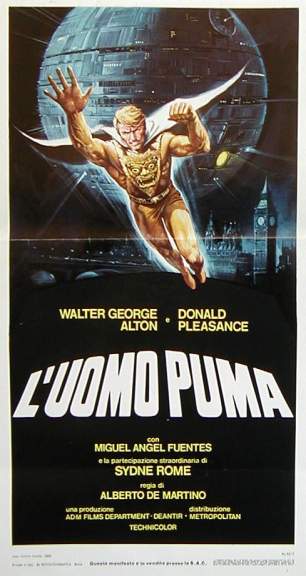
Today’s feature is undoubtedly one of the worst superhero movies of all time: 1980’s Pumaman.

Pumaman was directed and co-written by Alberto De Martino, who was also behind such low-budget fare as Holocaust 2000, Miami Golem, Dirty Heroes, and Gladiators 7. The other credited writers on the film were Massimo De Rita (Blood in the Streets, Everybody’s Fine) and Luigi Angelo (Black Killer).

The cinematographer for Pumaman was Mario Vulpiani, who primarily worked on Italian movies throughout his career. However, he did wind up shooting Stuart Gordon’s cult classic H.P. Lovecraft adaptation, Castle Freak.

pumaman1The editor on Pumaman was Vincenzo Tomassi, who frequently worked for Lucio Fulci on films like The Beyond, Zombie, and The New York Ripper. He also cut the infamous film Cannibal Holocaust, as well as the monster movies Killer Crocodile and Killer Crocodile 2.

The music for Pumaman was provided by Renato Serio, who also composed the score for 1982’s Alone in the Dark. The theme song to Pumaman might be the most notorious and memorable aspect of the movie next to the hilarious flying effects, and I wish everyone luck in trying to get the song out of your heads.

The cast of Pumaman included Donald Pleasance (Halloween, The Great Escape, Escape From New York, Warrior of the Lost World, Django 2), Walter George Alton (Heavenly Bodies), and Miguel Angel Fuentes (Fitzcarraldo, Herod’s Law).

The plot of Pumaman centers around a young man who is given an assortment of super-powers by Aztec gods / an amulet / aliens / his genetics, and has to hunt down a sinister madman who is trying to use an enchanted mask for nefarious purposes.

It has been reported that Donald Pleasance regarded Pumaman as the worst movie he ever participated in, though I haven’t been able to dig up a source on that outside of the IMDb trivia section.

Pumaman is primarily known by bad movie fans because it was featured in a 1998 episode of the hit show Mystery Science Theater 3000, which was known for digging b-movies out of obscurity to comedic effect.

The star of the film, Walter George Alton, is apparently now a medical malpractice attorney in New York City, and has left his acting career well behind him, having only featured in a handful of flicks aside from Pumaman.

The reception to Pumaman, particularly following being featured on Mystery Science Theater 3000, was hugely negative. It currently has a 30% audience score on Rotten Tomatoes, along with an impressive 2.1 rating on IMDb, ranking it in the Bottom 100 films on the website (which is how I initially came across it).

The attempted flying effect in this movie is just pathetic, to the point of being absolutely hilarious. It is something that you honestly need to see to believe. There are a number of other thoroughly unimpressive attempts at special effects scattered throughout the movie, including a spaceship that looks either looks like the Monarch’s cocoon from The Venture Bros or a Christmas ornament, depending on who you ask.

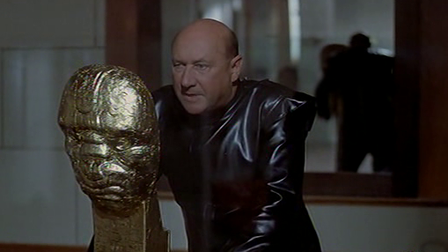
pumaman2The acting is unsurprisingly sub-par throughout Pumaman, but Donald Pleasence does ham up his role quite a bit. There are a number of moments where you can tell that he knows how bad this movie is going to be when all is said and done, but he still puts effort into it regardless. It is also worth mentioning that it has to be difficult to effectively act when you are having to peek out from behind a giant, ridiculous mask prop for nearly the whole movie.

pumaman3The story to Pumaman makes very little sense. For instance, I’m still not clear on why the main character is a “puma” man, given his powers involve teleportation, flying, and (oddly) faking suicide. Are those typical puma behaviors that I just wasn’t aware of? It is also a bit unclear as to what the origins of his powers are. While it seems that they are granted to him from aliens, it is also mentioned that the powers are somehow hereditary, which doesn’t make much sense to me.

Overall, Pumaman contains a fantastic brew of honest incompetence that generates a genuinely entertaining product. It is absolutely terrible in every technical aspect I can think of, which makes it a bafflingly hilarious experience to watch. It confusedly stumbles its way through the run time, and never fails to be a spectacle of low-budget determination devoid of talent. For fans of bad movies, this is an essential flick to check out, with or without the accompaniment of Mystery Science Theater 3000.