Tag Archives: movies

The Stepford Wives (2004)

The Stepford Wives

stepford1

Today’s film is a truly unnecessary and awful remake: Frank Oz’s “The Stepford Wives,” from 2004.

The screenplay for “The Stepford Wives” was written by Paul Rudnick, who also penned “Jeffrey” and “Addams Family Values.” The story is very loosely based on a novel by Ira Levin, who also wrote “Rosemary’s Baby” and “A Kiss Before Dying.” The novel was originally adapted for the screen in 1975 by Bryan Forbes, and that flick is a well-regarded classic science fiction thriller.

The director for “The Stepford Wives” was Frank Oz, who has directed such films as “The Dark Crystal” and “Little Shop of Horrors.” However, he is best known as a celebrated voice actor, and is behind such iconic characters as Yoda, Miss Piggy, Fozzie Bear, and The Cookie Monster.

The cinematographer on “The Stepford Wives” was Rob Hahn, who previously shot for Frank Oz on “In & Out” and “The Score.” Most of his career has been spent as a camera operator on films like “Midnight Run,” “Batman Returns,” and “The Golden Child.”

The score for “The Stepford Wives” was done by David Arnold, who also did the music for such films as “Hot Fuzz,” “Casino Royale,” and “Stargate.”

The editor for “The Stepford Wives” was Jay Rabinowitz, an accomplished worker who has cut movies such as “Rosewater,” “The Fountain,” “Requiem For A Dream,” “Dead Man,” and “Mother Night.”

The producers for “The Stepford Wives” included Ronald M. Bozman (“Philadelphia,” “The Silence of The Lambs,” “The Ref”), Donald De Line (“Yogi Bear,” “Burlesque”), Leslie J. Converse, who was previously Frank Oz’s assistant, Scott Rudin (“Ex Machina,” “The Social Network”), and Edgar Sherick, one of the producers from the original movie who sadly died before the remake was released.

The cast for “The Stepford Wives” is headlined by Nicole Kidman (“Eyes Wide Shut,” “Australia”), Bette Midler (“Hocus Pocus”), Matthew Broderick (“Godzilla,” “Addicted to Love”), Christopher Walken (“The Dead Zone,” “True Romance”), Glenn Close (“Fatal Attraction,” “Damages”), Roger Bart (“The Midnight Meat Train,” “The Producers”), and Jon Lovitz (“Saturday Night Live,” “Happiness”).

PhotoELF Edits: 2009:12:09 --- Saved as:  24-Bit  98% JPEG YUV444 --- batch crop --- crop 2009:12:07 --- Batch ResizedThe story of “The Stepford Wives” centers around a high powered television executive who is suddenly fired from her company. Her family decides to move with her to the small, suburban, Connecticut town of Stepford, where she can recover from the stress of losing her job. However, there is a dark secret to the town of Stepford and the surreal families that inhabit it.

Oddly, this remake of “The Stepford Wives” isn’t really even in the same genre of the original film/novel, which emphasize the elements of science-fiction, thriller, and mystery. This film, in contrast, is a black comedy with loose elements of science-fiction interspersed, with little to no thrilling aspects.

During an interview with the AV Club, Frank Oz spoke at length about his feelings on “The Stepford Wives”:

The Stepford Wives was too big and it was unsatisfying to do. Not that it was unsatisfying to do, but it was unsatisfying as a result, because as much as I loved parts of it, and I’m really proud of so much of it, the entire movie wasn’t what I wanted it to be. It’s my own fault, I didn’t follow my instincts

….

on Stepford Wives, for the first time and through nobody’s fault but my own, all the actors were great, but I was too beholden to the budget —I felt too responsible if the budget was getting higher. And I don’t like to work with that high a budget, and I tried to play it safe in decision-making, as opposed to following my gut, subversive instincts. And it was a mistake, my mistake totally.

[The direction/tone] wasn’t clear. That’s ’cause the director didn’t have a clear thought. Totally my fault.

The reception to “The Stepford Wives” was certainly not positive. The film currently has a rating of 5.2 on IMDb, with Rotten Tomatoes scores of 26% (critics) and 29% (audience).

Nancy Griffin of The New York Times wrote an article about the issues surrounding the production of “The Stepford Wives” just days before the theatrical release. Apparently there were numerous test screenings, last minute edits, re-shoots, and immense tensions between various cast and crew members, which made for a hostile set and generally disjointed production.

“The Stepford Wives” was made on a budget of $90 million, and ultimately grossed a total of roughly $102 million in it’s theatrical run. That made the movie profitable, but due to not meeting expectations and being hated by critics, it is publicly remembered as a failure.

One of the biggest problems with “The Stepford Wives” is that all of the characters are utterly despicable, to the point that they aren’t even believable. There is also no real comeuppance for the majority of them. For instance, the villainous husbands are ultimately punished by being forced to do the household shopping at the grocery store. Personally, I try to believe that most functioning, healthy adults can handle going to a grocery store. Speaking of which, why are all of these husbands portrayed as oafs? When it comes down to it, they are evil. They essentially sacrifice the lives of their spouses so they can be lazy, but I’ll delve more into their sinister behavior later. Even Nicole Kidman’s lead character is introduced as being a hateful, exploitative piece of human garbage, and she never really does anything to redeem herself. In fact, one line of dialogue (from her husband) describes her in the following way:

“Your whole attitude makes people try to kill you.”

After she learns to cook and dress in colors, the audience is just supposed to forgive her for being such an ass previously, which makes for quite the borked moral compass on the whole.

Speaking of which, the characters make for the biggest difference between this 2004 remake and the original film. Matthew Broderick’s character is much deeper, sinister, and subtle figure in the original movie, which is replaced by an awkward but well-meaning buffoon in the remake. Likewise, the protagonist in the original film is a relateable, artistic feminist in a community clinging to outdated, conservative values. In the remake, Kidman is a strawman version of a business world feminist, and lacks any of the soul or depth that made the original character interesting. The cinematography, lighting, and tension are also big departures from the original film, and the only real improvements in the remake are (arguably) the musical score and production design. For instance, the famous grocery store scene looks much better in the remake, but doesn’t have nearly the same gravity as it does in the original, and further doesn’t fit in with the comedic style of the remake at all.

To the credit of “The Stepford Wives,” it does have brief flashes of humor. Jon Lovitz always has a way of lighting up in minor roles, and Bette Midler’s seething deliveries in the film are unparalleled. That said, Broderick and Kidman both wind up being pretty wooden, which is a big problem given the importance of their roles. Glenn Close does a good job of making her role hammy and larger-than-life, but the rest of the wives are perhaps a little too good at being robots. Christopher Walken is also unfortunately a bit disappointing, especially given what we all know he is capable of doing.

“The Stepford Wives” is a waste of a pretty good cast and an excellent story, which is twisted into something that is simultaneously a vapid sex comedy and a cynical quasi-dissection of relationships. The film is misanthropic and bitter with a thin veneer of comedy, and it never really seems to lighten up. The whole tone is biting enough that the movie seems to despise it’s own existence, particularly as it lazily tries to stab at societal gender roles while simultaneously reinforcing them. It is a confused, self-loathing piece of work.

One of the biggest questions I have about “The Stepford Wives” remake is this: how exactly do the wives work? Are they replaced with robots, as they were in the original movie and novel? That doesn’t appear to be the case, because they are fixed/cured in the end. Are they victims of some kind of mind control? That is how the plot haphazardly tries to explain it, but that doesn’t cover the electrical shocks and glitches seen earlier in the film. Are they cyborgs, equipped with artificial enhancements? They don’t appear to affected at all after they are freed, even the ones that previously functioned as ATMs. However, that is the only explanation that really makes sense, and it directly contradicts what is said in the exposition. The story tries to claim that the wives are solely the result of implanted microchips, but that fails to explain the remote controls, the aforementioned sparks, the mechanical motion bugs, or the inexplicable inflatable boobs. I’m curious if there were major changes to the screenplay that might explain some of these vestigial details, or if this treatment just never made any sense from the start.

The biggest change for this remake was the axing of the original, downer ending. I’m guessing going full “Pod People” made the husbands too nefarious for the comedic-focused remake. But, as far as I am concerned, they were already re-written as unapologetic rapists for the re-imagining of the story. When it comes down to it, you can’t give consent when you have a mind control chip in your head, and being married isn’t an on-demand sex entitlement agreement. So, how exactly are these mind-controlling rapists more likable and appropriate for a comedy than the murderous, conspiratorial husbands from the original? Personally, I don’t think they are, and the fact that they are portrayed as just being oafs as opposed to villains makes the internal morality of the film even more twisted.

Another one of my problems with the writing of “The Stepford Wives” is the way that the comedy is structured. It is all set up and delivered in such a way that you can almost hear a laugh track after every lazily placed joke. It makes all of the conversations feel more inorganic than the actual robots in the story, and doesn’t do anything to make the characters feel like anything other than sloppy cut-outs.

As far as the effects in “The Stepford Wives” go, the worst thing I saw was the robot dog, which apart from being excessively goofy, looks absolutely awful. Would it have been so difficult to make a physical robot dog, like K-9 from “Doctor Who”? Because, as you should expect, the computer generated mutt has aged incredibly poorly. Or, better yet, maybe a robot dog wasn’t a necessary addition for the film?

I’m been wracking by brain trying to figure out why Frank Oz decided to do “The Stepford Wives.” My best guess is that he believed that it had the potential to catch the same lightning of “Little Shop of Horrors,” which was also a remake of a classic film in a new genre. It is still remembered as his career highlight as a director, and I suspect that it sat in the back of his mind throughout the production. However, “The Stepford Wives” doesn’t play to his specialties in the way that “Little Shop of Horrors” did: namely, the puppet effects. Also, “Little Shop of Horrors” was already tightly written for the stage, which “The Stepford Wives” certainly was not. If “Stepford” had been rewritten before going into production, some of the major problems might have been ironed out. Unfortunately, as it is, the movie is a castle built on sand.

“The Stepford Wives” is twisted in all the wrong ways. It fails to be an insightful satire, an interesting sci-fi, or a funny comedy. It is a complete failure in all of its intentions, and the amount of star-power behind it just made it fall all the harder. The fact that it is branded as a remake is an insult to the source material, and I’m honestly a little confused what it was not just called something else and played as a parody.

Despite a few funny lines, “The Stepford Wives” isn’t really worth the time to sit through. It isn’t enjoyable, though it isn’t brutally unwatchable either. However, there is so much wrong with the writing, characters, logic, and internal morality that the film approaches being a spectacle of wrongness, and an exemplar of just how awful a Hollywood product can be. All of that said, the original “The Stepford Wives” is a fine movie, and I’ll give the remake credit for bringing a new audience to it.
Laser Mission

Laser Mission

lasermission1

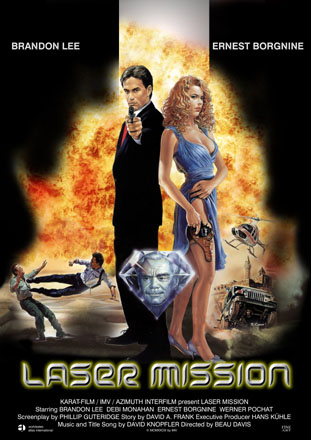
Today’s flick is Brandon Lee’s “Laser Mission,” an odd little low-budget action movie with more ambition than sense.

The director for “Laser Mission” was BJ Davis, who is an accomplished stunt worker with experience on movies like “Fatal Games,” “The Hand,” “Darkman,” and “Army of Darkness.” He also directed a handful of other smaller pictures, such as “White Ghost” and “Forget About It.” The two writers of “Laser Mission” were Phillip Gutteridge and David Frank, neither of whom have any other screen credits.

lasermission5The producer and cinematographer for “Laser Mission” were the father and son duo of Hans Kuhle, Sr. and Hans Kuhle, Jr. The latter of the two had previously worked on films like “City Wolf” and the BJ Davis movie “White Ghost.”

The music for “Laser Mission” was interestingly provided by David Knopfler, who is best known for being part of the band “Dire Straits.”

The effects team for “Laser Mission” included Debbie Christiane (“River of Death,” “Gor”), Debbie Nicoll (“Gor II,” “Lethal Ninja”), and Jannie Wienland (“The Order,” “Cyborg Cop,” “Sweepers”).

The three credited editors for “Laser Mission” were Bob Yrtuc, E. Selavie, and Robert L. Simpson, who received an Academy Award nomination for 1940’s “The Grapes of Wrath.” “Laser Mission” was his last credited picture, and was released an astonishing (and suspicious) 12 years posthumously.

The cast for “Laser Mission” includes a number of vaguely familiar faces, specifically Brandon Lee (“The Crow”), Ernest Borgnine (“Small Soldiers,” “The Dirty Dozen,” “McHale’s Navy”), Graham Clarke (“Space Mutiny,” “The Evil Below”), and Debi A. Monahan (“Night Court,” “Shattered”).

The story of “Laser Mission” centers on a freelance operative is sent into an African nation by the CIA to rescue a kidnapped expert laser scientist. He is running against the clock, as communists are hoping to force the kidnapped expert to build a devastating laser weapon.

lasermission3Reportedly, David Hasselhoff was at one point considered for the lead role that ultimately went to Brandon Lee. I’m honestly not sure if that would have been an upgrade or a downgrade, but Lee is certainly one of the stronger aspects of the film.

Robert L. Simpson’s editor credit absolutely baffles me. As far as I can tell, he was long dead before any shooting ever even happened. It could just be an IMDb error, or a weird tribute by the filmmakers. I’m sure someone out there knows the story, but I wasn’t able to dig it up.

lasermission2The reception for “Laser Mission” has been generally negative, as it has accrued a Rotten Tomatoes audience score of 25% and an IMDb rating of 3.4. I couldn’t dig up any financial details, but there is no way that this was a particularly expensive production. I assume the went straight to video, but who knows? It might have had a limited theatrical run somewhere. In any case, it has a bit of a following now as a good-bad classic, and is considered by some to be the platonic ideal of a low-budget schlock action movie.

As far as issues with “Laser Mission” go, it is hard to rank them in terms of severity. The first thing I noticed is that the film quality is just awful, which isn’t surprising for this sort of small production. Still, it just looks awful, in a way that you just know how terrible the movie is going to be out of the gate.

Brandon Lee’s acting is probably one of the few mildly positive aspects of the film, but the rest of the acting is atrocious. There is no romantic chemistry at all between Lee and his partner, Borgnine’s accent is all over the place, characters rotate nationalities, and the comic relief bits are just unbearable. The writing is obviously at least partially at fault here, as the unnecessary and clunky attempts at humor certainly don’t help anything. The title of the movie is even awkwardly wedged into a bit of dialogue, which is just spectacular.

lasermission6The unnecessary comic relief cop duo, who don’t really serve a purpose for the overall story, make for some of the most unbearable moments in the film. All of their bits boil down to “Women can’t do _____!” / “Yes I can!”, with the occasional interspersed physical comedy routines. It feels like they wandered in from an entirely different movie, and all of the plot progress has to grind to a halt to make room for them.

During the first few sequences of the film, Brandon Lee’s character literally wears Clark Kent glasses as a disguise, which was worth a legitimate laugh. However, it was one of the few that the film pulled from me.

lasermission4The cinematography on “Laser Mission” is nothing short of awful, to the point that it is hard to tell what is happening in any given shot. Shots are constantly too far away from the action, off-center, and linger far too long, which is just weird to look at.

As far as positive things go, there are certainly some good stunts throughout “Laser Mission,” which isn’t a surprise given the director’s professional background.

“Laser Mission” has a few good moments here and there, including a ridiculous conclusion and a laughable diamond heist, but overall it is pretty slow and uneventful. The clunky acting and dialogue are front and center if that is your thing, but I generally consider this a deep cut only fit for hard core bad movie fans. I just don’t see it working for a mixed audience of casual movie watchers.

Double Team

Double Team

doubleteam4

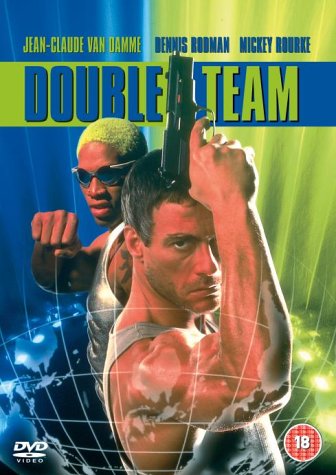
Today’s feature is yet another off-the-wall buddy cop team-up: Dennis Rodman and Jean-Claude Van Damme in “Double Team.”

One of the writers for “Double Team” was Don Jakoby (“Evolution,” “Vampires,” “Philadelphia Experiment II”), who also served as a producer on the film. The other credited screenplay contributor was Paul Mones, an actor who appears in the James Spader movie “Tuff Turf,” and who also wrote some smaller flicks like “Fathers & Sons,” starring Jeff Goldblum.

The director for “Double Team” was Hark Tsui, an acclaimed Chinese action movie director who was making his American debut. He has also been behind films like “Knock Off,” “Seven Swords,” and the “Once Upon A Time In China” series.

The cinematographer for “Double Team” was Peter Pau, who also shot “Shoot ‘Em Up,” “Dracula 2000,” and “Bride of Chucky.”

doubleteam6The editor on “Double Team” was Bill Pankow, who has cut an assortment of acclaimed films, including “Snake Eyes” and “The Untouchables.”

The distinct musical score for “Double Team” was done by Gary Chang, who also scored “A Shock To The System,” “The Substitute,” and the infamous 1996 version of “The Island of Dr. Moreau” starring Val Kilmer and Marlon Brando.

One of the producers for “Double Team” was Richard G. Murphy, who was previously Van Damme’s assistant on “Universal Soldier,” and has produced other Van Damme movies like “Timecop,” “Knock Off,” and “Replicant.” The other producers included Moshe Diamant (“It’s Alive,” “Timecop,” “Dark Angel,” “Simon Sez,” “Pray For Death”), Hark Tsui’s wife, Nansun Shi, David Rodgers (“Total Recall,” “Vampires”), and Rick Nathanson (“Poison Ivy,” “China O’Brien,” “Red Cliff”).

The makeup effects on “Double Team” were done by the duo of Katalin Elek (“The Monster Squad,” “SpaceCamp”) and Zoltan Elek (“Street Fighter,” “Timecop,” “Leviathan”). The special effects team for the film included Daniel Acon (“Cliffhanger,” “The Life Aquatic With Steve Zissou”), Phillipe Hubin (“Lucy,” “Taken 2,” “The Happening”), and Bruno Van Zeebroeck (“Jaws 3-D,” “Class of 1999,” “The Thing”).

The “Double Team” visual effects team featured such people as Peter Siciliano (“Carnosaur,” “Class of 1999 II”), Mark Intravartolo (“Guardians of the Galaxy,” “Tropic Thunder,” “Sucker Punch”), Ziad Seirafi (“Tales From The Crypt,” “Green Lantern”), Brent Gilmartin (“Monkeybone,” “Bruce Almighty”), Leif Einarsson (“Torque,” “Hollow Man”), Brian Conlon (“Wild Wild West,” “300”), Joe Bauer (“Game of Thrones,” “Blade Trinity”), and Rick Cortes (“League of Extraordinary Gentlemen,” “Dexter,” “Here Comes Dr. Tran”).

The cast for “Double Team” is of course highlighted by Jean Claude Van Damme (“Timecop,” “Cyborg,” “JCVD”) and Dennis Rodman (“Simon Sez”), with Mickey Rourke (“Angel Heart,” “The Wrestler,” “Iron Man 2”) filling in as their antagonist.

The story of “Double Team” focuses primarily on Van Damme, who is a special agent on the verge of retirement with a young child on the way. On a mission involving Rodman, he manages to make a dramatic mistake which lands him into an unofficial prison camp for ex-operatives. The story quickly turns into a tale of escape and revenge, culminating in a number of significant explosions.

doubleteam5
also disguises

Mickey Rourke, in preparation for his villainous role opposite Van Dame, apparently took significant martial arts training to get into shape. The result is a surprisingly ripped Rourke, who would years later mimic the physique for his acclaimed role in “The Wrestler.”

“Double Team” apparently had sequel plans, though they never materialized for one reason or another. My guess is that Rodmen’s acting aspirations didn’t quite pan out, making a sequel difficult.

“Double Team” was apparently the first film to use a Coca Cola vending machine as direct product placement, which unbelievably plays a significant role in the film’s plot.

The reception to “Double Team” wasn’t exactly fantastic, and it has earned a 4.6 rating on IMDb, along with Rotten Tomatoes scores of 11% (critics) and 24% (audience).

The budget for “Double Team” was reportedly around $30 million, of which only about $11.5 million was made back in the film’s U.S. theatrical release.

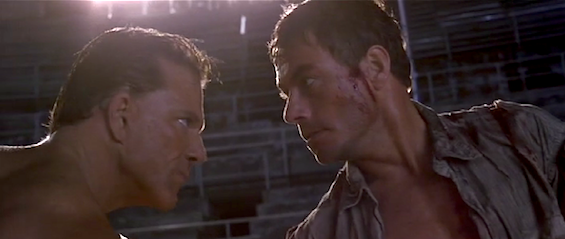
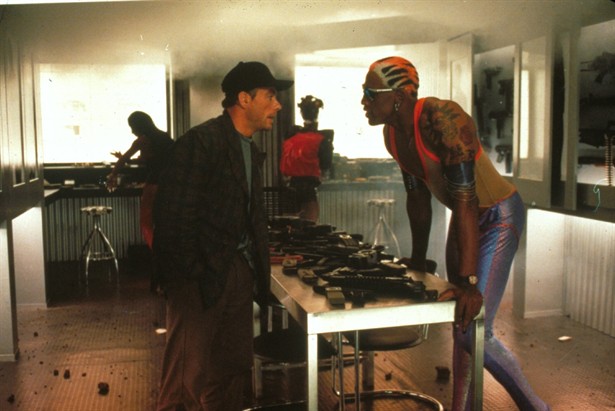
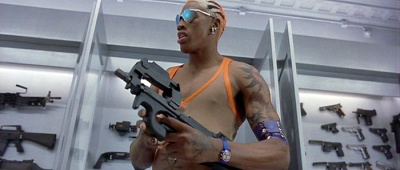
doubleteam2One of the most memorable and bizarre aspects of “Double Team” is the use of odd sets and locations. For instance, Dennis Rodman’s introduction takes place in a neon SCUBA nightclub, the finale takes place in a coliseum, and a major firefight is set in the middle of a carnival, complete with clowns getting downed as casualties in the crossfire.

Speaking of which, boy does this movie destroy that carnival. Clearly the production had a lot of fun with the location, and got everything they could out of it. Also, outside of the clown murder, a child and countless bystanders also die in the same scene.
The product placement in “Double Team” is a little over the top, particularly for Coca Cola. Not only does a coke machine wind up playing a key role in saving the central characters from an explosion, but a coke can also features prominently in Van Damme’s escape from his pseudo-prison. It is one thing for products to appear in a film, but it is another for the name brand to actually serve a direct function in the plot.

As you might expect, “Double Team” features lots of explosions and fireballs. Unfortunately, most of them look just fucking terrible, which is kind of astounding. The finale sequence has some of the worst executed explosions I have ever seen, and they look terrible enough that they essentially ruin the sequence.

When it comes to the plot of “Double Team,” I actually thought that the bizarre hitman/special agent retirement home was a far more interesting and original concept than the central revenge storyline. Personally, I would rather see a movie about that, making a sort of hybrid of “John Wick” and “Fortress.”

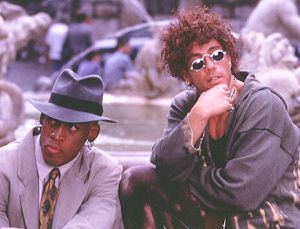
Unsurprisingly, Dennis Rodman’s outfits are way out there, and add a lot of color to the film. Rodman as an actor isn’t really suited for comic relief though, and he is frankly better as the straight man in “Simon Sez” than he is here. Of course, the writing didn’t help anything, particularly with the near-constant basketball references forced into the dialogue.

doubleteam3Interestingly, “Double Team” features an order of cyber monks, much like the other Rodman film “Simon Sez.” However, they don’t appear to be connected in any way, making for an unexpected coincidence.

Mickey Rourke is actually pretty fantastic in “Double Team,” and is easily too good for the movie. He looks intimidating and sinister, and delivers a performance worthy of a much better script. His death is also one of the most memorable ones from any action film, as he kills himself with a land mine while being mauled by a giant tiger.

doubleteam7The sheer volume of collateral damage and casualties in “Double Team” is unusually high, even for an action flick. It seems like every major sequence has to have at least one innocent gunned down, which makes it stand out from most other oddball, buddy action movies.

The best fight sequence of the movie is undoubtedly the foot knife fight, which features some solid choreography and camera work. Unfortunately, it is also one of the shorter sequences in the film, which was a little disappointing, especially given how long the others seem to drag on for.

The finale of “Double Team” rose an interesting question for me: did Rourke buy the same tiger from the carnival where his wife and son died? Was the specific tiger part of his revenge plan? I don’t see how it would make sense to have an entirely different tiger introduced in act three, but trying to think through Rourke’s logic is boggling. Maybe his grief made him commit a lot of bizarre impulse purchases from the carnival?

doubleteam1Overall, “Double Team” has some solid highlights, but is a little too slow and sloppily edited to be a lot of fun. The beginning and end are good enough, but the middle drags a bit more than it needed to. It isn’t a painful watch though, and the finale is enough in my book to warrant a recommendation.

Dracula 3000

Dracula 3000

dracula30001

Today’s flick is the atrocious futuristic Dracula tale, “Dracula 3000.”

“Dracula 3000” was co-written and directed by Darrell Roodt, who also worked on films such as “Dangerous Ground” and “Cry, The Beloved Country.” The other credited writer is Ivan Milborrow, who has primarily worked as a sound worker on films like “From Dusk Till Dawn 3” and “Spud.”

The cinematographer on “Dracula 3000” was Giulio Biccari, who primarily works in television, such as the BBC show “Luther” and the documentary series “America: The Story of US.”

One of the editors for “Dracula 3000” was Avril Beukes, who has worked on a number of foreign productions such as “Prey,” “Yesterday,” and “Red Dust.” The other was Ronelle Loots, who cut the South African film “Faith Like Potatoes.”

The musical score for “Dracula 3000” was written by Michael Hoenig, who also provided music for “Class of 1999” and the 1988 remake of “The Blob.”

The prosthetic work for “Dracula 3000” was provided by a team including Dennis Beechey (“Shark Attack 2”), Rob Carlisle (“Dredd,” “Lord of War”), and Clinton Smith (“Guardians of the Galaxy,” “World War Z”). The visual effects for “Dracula 3000” were done by Cassiano Prado, whose only other effects credit is another film I have covered previously, “Slipstream (2005).”

The special effects team for “Dracula 3000” included Roly Jansen, a stunt coordinator who worked on “Space Mutiny” and “The Mangler,” Kevin Carter (“Legion,” “Dead Snow”), Tyrell Kemlo (“Troy,” “Blood Diamond”), and Cordell McQueen (“Machine Gun Preacher”).

dracula30005The producers for “Dracula 3000” included Jan Fantl (“Baby Geniuses 2,” “Feardotcom”), James Atherton (“The Proposition”), Frank Hubner (“Boat Trip,” “The Karate Dog,” “A Sound of Thunder”), Brad Krevoy (“Beverly Hills Ninja,” “Kingpin”), David Lancaster (“Drive,” “Nightcrawler,” “Whiplash”), and Jorg Westercamp (“Starship Troopers 3”).

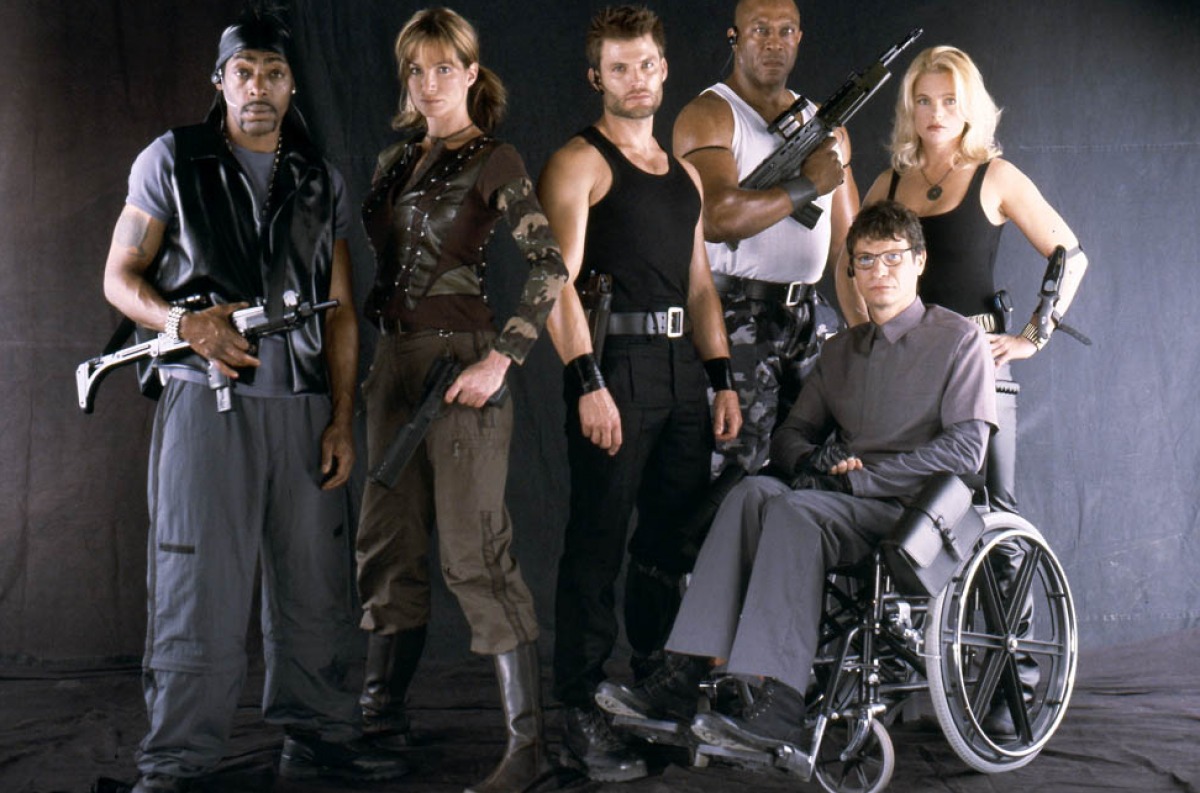
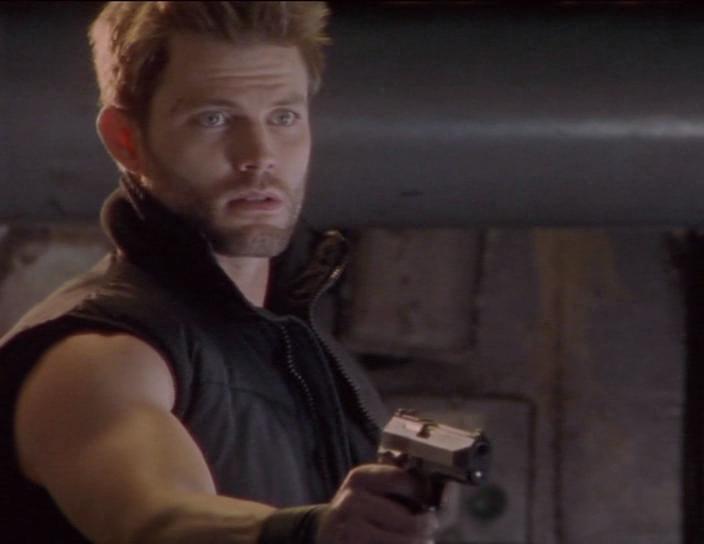
The cast of “Dracula 3000” is led by Casper Van Dien (“The Omega Code,” “Starship Troopers”) who plays a future incarnation of the vampire hunter Van Helsing. The rest of the cast is filled out by Tiny Lister (“No Holds Barred”), Coolio (“Daredevil,” “Pterodactyl”), Alexandra Kamp-Groeneveld (“2001: A Space Travesty”), Erika Eleniak (“Bordello of Blood,” “Under Siege”), Udo Kier (“Shadow of the Vampire,” “Blade”), and Langley Kirkwood (“Dredd,” “Generation Kill”) as Orlock / Dracula.

dracula30002The story of “Dracula 3000” takes place in the distant future, specifically on a spaceship traveling in a sparsely populated area with a skeleton crew. The ship surprisingly runs across an adrift, abandoned shipping vessel, and stops to investigate. Unfortunately, the incompetent crew manages to release a sleeping vampire who was dormant in the abandoned ship, leading to a number of blood-sucking incidences.

“Dracula 3000” released the same year as “Van Helsing,” a big-budget Hollywood movie partially inspired by the classic tale of Dracula. It is fair to say that this at least partially inspired the production of this low-budget, clearly rushed product.

Speaking of influences, “Dracula 3000” also came a few years after the larger film “Dracula 2000,” which also modernized the legendary vampire story. It is hard to argue that the title wasn’t given with the intention of fooling people into believing it was a sequel.

Interestingly, “Dracula 3000” marks the third Dracula movie I have covered on the blog, after “Die Hard Dracula” and “Dracula A.D. 1972,” which also attempted to modernize the tale for 1970s audiences. Of course, Dracula also appeared in “Van Helsing” and is vaguely mentioned in “League of Extraordinary Gentlemen,” but neither of those movie quite qualify as ‘Dracula movies’ if you ask me.

The starship used in “Dracula 3000” was apparently dug up after being initially used on a failed CBS sci-fi television series called “Space Rangers” from the early 1990s.

The reception to “Dracula 3000” could be best be summarized as ‘astoundingly poor,’ racking up a hefty 2.0 rating on IMDb, along with a 16% audience score on Rotten Tomatoes.

It is hard to decide where to start when it comes to flaws with “Dracula 3000.” The acting is of course awful, which is compounded by some truly embarrassingly lazy dialogue. Coolio is particularly heinous on both fronts, as he is both a bad actor and was expected to provide comic relief by providing one-liners and commentary, which are all excruciating. The best actor of the bunch is probably Udo Kier, who appears to have literally phoned in his performance through a webcam, and never appears on screen with other characters. Van Dien and Lister actually seem half-competent standing next to the rest of the cast, which is saying a lot given their acting careers.

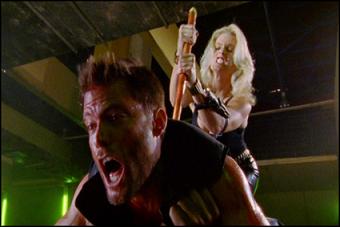
dracula30004Speaking of failed humor, there is a lot of sexual creepiness written into a number of the characters in “Dracula 3000,” which seems to be played up for laughs. Not only is it not funny, but it is baffling to the point of being utterly surreal, and it is a little surprising that no one called it out over the course of the production. The one strong woman in the whole film (who is still pretty awful) turns out to literally be a sex robot, and is last seen getting slapped on the ass by a character who had been creepily taunting her throughout the film. It doesn’t make sense for the characters, reverts any development, borks the context, and it is just damn lazy to boot.

Speaking of which, that ass-slap takes place during a post-credit sequence that follow one of the most abrupt endings I have ever seen in a film. It literally just comes out of nowhere, like they wrote themselves into a wall or ran out of money, and couldn’t find a way to actually finish the movie. Basically, instead of having a final conflict with the vampire, the two survivors decide to veer into the sun. They then decide to have sex, and the scene cuts to a cheap explosion which prompts the credits. The first time I saw the movie, it was running in a late spot on the Sci-Fi Channel. I recall having my jaw drop at the abruptness and laziness of the ending, and it is one of the bad movie experiences that has most stuck with me over the years.

As far as other issues with the film go, there is a half-assed attempt to tie the story into the same universe as Bram Stoker’s “Dracula,” by explicitly stating the the common names pulled over from the novel weren’t coincidental, and that the crew are descendents of characters. That would make sense, if there were any way for Dracula to have planned the course of the ancient ship, and had known about a bunch of descendents of his enemies that hadn’t been born yet and what their flight paths would be. With a little thought, it all kind of falls apart.

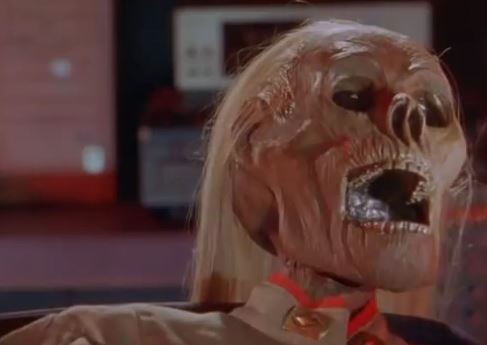
“Dracula 3000,” unsurprisingly, features awful looking effects work. The prop that stuck out most to me was an obviously plastic skeleton, which I assume was supposed to look frightening.

dracula30003Another little detail mentioned in the dialogue that bothered me is the revelation that the ship came from a planet of vampires. How is that supposed to work, exactly? Unless it is a penal colony, why would vampires have any incentive to band together on their own planet, when their survival is dependent on feeding on non-vampires. They would obviously eventually starve due to a scarcity of food. Also, this brings up a point I’ve never quite understood. Is ‘vampire’ a species, or a condition? I always assumed it was ‘vampirism,’ and that it could theoretically effect any sort of living being. It isn’t stated as such, but if there are other sentient races in the world of “Dracula 3000,” couldn’t they also have vampires? In that case, it makes even less sense for them to band together, as they appear to need blood from their origin species to sustain themselves. Honestly, none of it makes all that much sense.

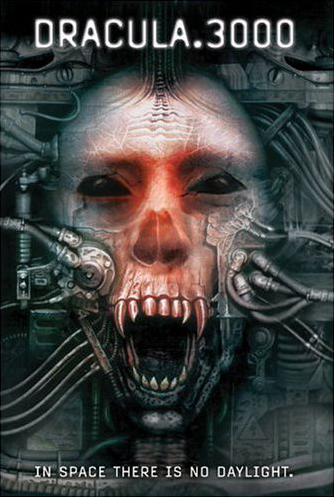
My guess is that the marketing plan for “Dracula 3000” was banking on three things: 1) people confusing it with “Van Helsing,” 2) people confusing it with “Dracula 2000” (or a sequel), and 3) people being lured in by bad ass cover art, which was the same tactic used for “Zombie Nation.” Because, honestly, the cover art is undoubtedly the coolest thing about this stinker of a movie.

Overall, “Dracula 3000” is a dull little train wreck. If you can handle sci-fi original movies and flicks from “The Asylum,” that is basically what you are getting here, just don’t expect much in the way of excitement. The acting and effects are awful, and the ending will leave you shocked in the worst possible way.

Dead Heat

Dead Heat

deadheat4

Today’s feature is the infamous undead buddy cop movie, “Dead Heat.”

The director for “Dead Heat” was Mark Goldblatt, an accomplished editor for such films as “Super Mario Bros.,” “Enter The Ninja,” “Predator 2,” and “Humanoids from the Deep.” His only other directorial credit came the following year with 1989’s “The Punisher,” starring action icon Dolph Lundgren.

“Dead Heat” was written by Terry Black, and it was interestingly the only film writing job in his career. However, he is the brother of Shane Black, who is well known for his action movies “Lethal Weapon,” “Last Action Hero,” and “Kiss Kiss Bang Bang.”

The cinematographer for “Dead Heat” was Robert D. Yeoman, who has also shot such films as “The Wizard,” “Moonrise Kingdom,” and “Whip It,” among many others.

The musical score for “Dead Heat” was composed by Ernest Troost, who also scored the cult classic giant worm movie, “Tremors.”

The makeup  effects on “Dead Heat” were done by the XFX effects group, for which “Dead Heat” was their first film. The group went on to work on films like “The Abyss,” “Species,” “The Dentist,” and “Zoolander.” The company’s founder and primary effects designer was Steve Johnson, who earlier worked on “Humanoids from the Deep,” “Videodrome,” and “An American Werewolf In London.” The rest of the team included Craig Caton (“Leviathan,” “The Stuff,” “Predator 2”), Gunnar Ferdinandsen (“Total Recall,” “RoboCop 3”), William Forsche (“Dolls,” “From Beyond,” “Beetlejuice”), Steve Frakes (“Leviathan,” “Hollow Man,” “Darkman”), Chris Goehe (“Howard The Duck,” “Ghostbusters II”), and Russell Seifert (“Leviathan,” “The Garbage Pail Kids Movie”).

deadheat1The special effects team for “Dead Heat” included such effects workers as Jeff Frink (“Maximum Overdrive,” “Dragnet,” “Ernest Goes To Jail”), Patrick Read Johnson (“Baby’s Day Out,” “Dragonheart”), and Todd Masters (“Slither,” “Snakes On A Plane,” “Red State,” “American Mary”).

The visual effects crew for “Dead Heat” was made up of Ernest D. Farino (“Cyborg,” “The Terminator,” “The Thing”) and XFX’s Steve Johnson (“Humanoids from the Deep,” “The Cat in The Hat,” “League of Extraordinary Gentlemen,” “Big Trouble In Little China”), who took on multiple effects effects roles for the flick.

“Dead Heat” was edited by Harvey Rosenstock, who cut such flicks as “Scent of A Woman,” “Tombstone,” “Radio,” and the Robin Williams remake of “Flubber.”

The producers for “Dead Heat” included David Helpern (“Leave It To Beaver”), Michael Meltzer (“Sometimes They Come Back…Again,” “The Hidden”), and Allen Alsobrook (“Repo Man,” “The Sword and The Sorcerer”).

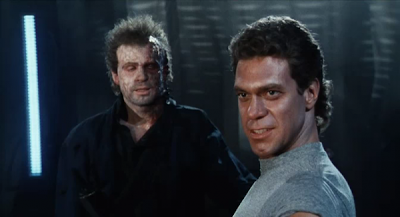
The cast of “Dead Heat” is headlined by Joe Piscopo (“Saturday Night Live”) and Treat Williams (“White Collar,” “1941”) as the two central cops, with an accessory cast including Vincent Price (“House on Haunted Hill,” “The Tingler,” “The Fly”), Lindsay Frost (“The Ring”), Darren McGavin (“A Christmas Story”), Robert Picardo (“The Howling,” “976-EVIL”), Keye Luke (“Gremlins”), and Peter Kent (“Re-Animator”).

The story of “Dead Heat” is a traditional buddy cop formula, with a twist inspired from a classic film noir (“D.O.A.”). Basically, an ace cop is killed in the line of duty, and then resurrected by a mysterious machine. His body is going to decompose in a matter of hours, so he has to find his killers before he deteriorates into zombie goo, with the help of his obnoxious partner and a questionable femme fatale.

Peter Kent, the one-time body double for Arnold Schwarzenegger, once again plays a reanimated corpse in “Dead Heat,” after memorably appearing in Stuart Gordon’s “Re-Animator” as a walking corpse three years earlier.

The original written ending for “Dead Heat” was very similar to Terry Gilliam’s “Brazil,” in that it is revealed that the finale is entirely occurring within Treat’s rapidly decomposing imagination. While the final ending isn’t exactly upbeat, it is almost certainly more audience-friendly than the “Brazil” treatment originally planned.

Speaking of which, the ending was hardly the only aspect of the film that failed to make the final cut. According to the DVD commentary, the film had to be re-cut 9 times to satisfy the MPAA before they were able to avoid an NC-17 rating, which left a significant amount of gore and effects work unused. While a restored version was at one point planned for the home video release, it did not ultimately happen. One of these cuts features the b-movie icon Dick Miller (“Gremlins,” “Chopping Mall,” “A Bucket of Blood”), who appears briefly as a night watchman in the cemetery.

Apparently a sequel to “Dead Heat” was at one point planned. However, a writer’s strike provided a death nail after the film had already failed to be significantly profitable. In the DVD commentary, Black revealed that his loose sequel plan included a scene with a self-autopsy, and a proposed tag line of: “This time, they are even more dead!” One of the biggest issues in writing the draft, Black explained, was obviously the fact that (spoilers) all of the characters are dead at the end of “Dead Heat.” A studio executive pointed out to Black that this wasn’t really much of an impediment for a movie plot centering on a resurrection machine, which is admittedly a fair point.

deadheat3One of the biggest complaints I have heard about “Dead Heat” is the presence of Joe Piscopo, who is near-universally reviled as a comedic actor. Interestingly, according to the creative team featured on the DVD commentary, New World Pictures wouldn’t make the movie without Piscopo being involved in a central role, for whatever reason that might have been.

The plot of “Dead Heat” was influenced heavily by a classic noir film, “D.O.A.” A clip from the movie appears in the background of one scene, specifically the memorable revenge climax. The plot of “D.O.A.” follows a man who has been poisoned, and only has a few hours to live. He uses his time to track down his killer, and enact revenge on his own behalf, much like the events in “Dead Heat.”

The reception to “Dead Heat” was not particularly positive: it has accrued a 6.0 score on IMDb, along with Rotten Tomatoes ratings of 13% (critics) and 50% (audience). However, it is certainly remembered as one of the stranger entries into the “buddy cop” genre.

“Dead Heat” was made on a budget just shy of  $6 million, but ultimately grossed less than $4 million in it’s domestic release, failing to make a profit.

Of all of the problems with “Dead Heat,” Piscopo is undoubtedly at the top of the list. His persona and character are unbearable, and all of comedic moments and punch lines feel forced. He mostly seems to serve to distract from the story at hand, and is so unessential that he disappears for a significant portion of the film, suffering an off-screen demise.
Unfortunately, in a movie that should be able to rely on visual work, the effects don’t look good at all in “Dead Heat.” Part of this problem is due to the decision to film primarily during the day, which instantly makes the makeup less intimidating. However, that isn’t where the problems end. The makeup is overdone at parts (particularly on Treat’s face), and continuity gets to be a big problem when primary characters can’t heal, and bullet holes start to inexplicably disappear. Worse, computer effects are used for some heavier melting effects, which look just awful now. I’m not sure if the effects cuts made for the MPAA actually hurt or helped the movie, because what made the cut doesn’t look great.

deadheat2Speaking of which, it is evident from watching the film that it was heavily cut for the ratings board. There are numerous instances where reactions shots are shown to things the audience doesn’t get to see, to the point that the changes are jarring and obvious.

The elderly Vincent Price’s role in the film is minimal, unfortunately. When he does appear, he sells his role just fine. However, his character doesn’t make any sense. Why exactly did he leave the code implicating the ‘body doc’ if he was never buried, and was involved in the conspiracy? If it wasn’t him that left the code, why did the random corpse know that much about the coroner to be able to identify him by his license plate? I’m wondering if this is due to the “Brazil” ending getting axed, leading to the finale being tacked on after that original version got vetoed. It is mentioned in the DVD commentary that Vincent Price’s monologue in this finale was written by a studio executive, which struck me as a bit suspicious, and may support this theory.

On a related note, the ending to “Dead Heat” feels oddly rushed, and characters suddenly die throughout the last third of the movie, including two central cast members off-screen. I’d be interested to know to what extent the story had to be fiddled with before filming, because it feels increasingly choppy as the story progresses.

The highlight of “Dead Heat” is undoubtedly a sequence in which an entire Chinese butcher shop is resurrected, sparking one of the strangest fight scenes that I have ever seen in a movie.

deadheat5Overall, “Dead Heat” is a flawed flick with a handful of highlights that make it worth watching through in my opinion. If Piscopo had been recast and some of the MPAA cuts avoided, this may very well have become a classic. However, it is what it is. The butcher shop scene should sell it for most horror fans.

Texas Chainsaw Massacre 2

The Texas Chainsaw Massacre 2

texaschainsawtwo1

Today’s feature is the disappointing follow-up to one of the most lauded horror films of all time: “The Texas Chainsaw Massacre 2.”

The writing credit for “Texas Chainsaw Massacre 2” is given to L.M. Kit Carson, who also wrote the films “Breathless” and “Paris, Texas,” with a story credit given to director Tobe Hooper.

“Texas Chainsaw Massacre 2” was directed by Tobe Hooper, who was behind the creation of the original horror classic. He has also created such films as “The Mangler,” “Poltergeist,” and “Night Terrors” over his career.

The cinematography for “Texas Chainsaw Massacre 2” was done by Richard Kooris, who later shot the necrophilia-themed crime comedy “Drop Dead Sexy,” starring Crispin Glover and Jason Lee.

The editor for “Texas Chainsaw Massacre 2” was Alain Jakubowicz, who also cut such acclaimed films as “Simon Sez,” “America 3000,” and “The Apple.”

The makeup effects for “Texas Chainsaw Massacre 2” was provided by a team that included experienced effects workers Tom Savini (“Friday the 13th,” “Maniac,” “Dawn of the Dead”) and Bart Mixon (“Guardians of the Galaxy,” “The Midnight Meat Train,” “Killer Klowns From Outer Space”).

The special effects team for “Texas Chainsaw Massacre 2” included Gabe Bartalos (“Dolls,” “From Beyond,” “Leprechaun 4”), Ray Beetz (“City Slickers II”), Gino Crognale (“Frankenhooker,” “976-EVIL,” “From Beyond,” “Troll”), Mitch Devane (“The Pit and The Pendulum,” “Captain America”), Josh Hakian (“The Wizard,” “Jonah Hex”), Shawn McEnroe (“Humanoids from the Deep,” “The Howling”), Joe Quinlivan (“Face/Off,” “House of Yes,” “Ninja III: The Domination”), Ken Sher (“Blade”), Eddie Surkin (“Single White Female,” “Escape From New York”), and John Vulich (“King of the Ants,” “Castle Freak,” “Dolls,” “Dr. Alien”).

The music for “Texas Chainsaw Massacre 2” was provided by the combination of Tobe Hooper and Jerry Lambert, the latter of whom has worked on soundtracks for films such as “Jason X” and “The Omega Code.”

“Texas Chainsaw Massacre 2” was produced by the Cannon Films duo of Golan and Globus, who I have mentioned before when covering “Enter The Ninja,” “Revenge of the Ninja,” and “Ninja III: The Domination.” Basically, they were low-budget exploitation kings of the 1980s, and picking up a sequel to such an acclaimed and high-grossing low-cost flick must have sounded like a slot machine jackpot to the pair.

The production designer for “Texas Chainsaw Massacre 2” was Cary White, who later worked on movies like “The Faculty,” “Spy Kids,” and “Mean Girls” as an art director.

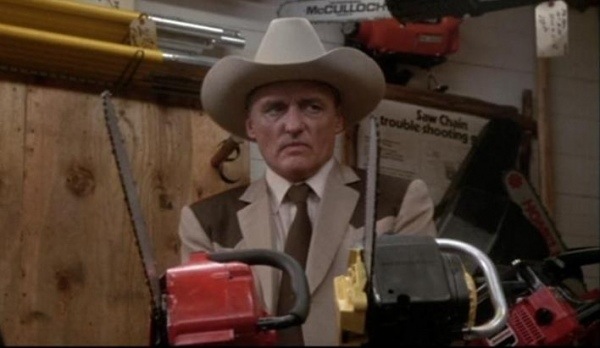
texaschainsawtwo5The cast for “Texas Chainsaw Massacre 2” is led by Dennis Hopper (“Blue Velvet,” “Space Truckers”), Caroline Williams (“Leprechaun 3,” “Days of Thunder”), Bill Moseley (“Repo! The Genetic Opera,” “Old 37,” “Army of Darkness”), and Jim Siedow (“The Texas Chain Saw Massacre”).

The story of “Texas Chainsaw Massacre 2” takes place many years after the events of the first film, and follows one of the victims’ father on a crusade to find out what happened to the missing teens. Meanwhile, the cannibalistic family has taken up becoming renowned barbeque experts in north Texas, using human victims for the meat. After the family kills a couple of teens during a live radio call-in, the DJ becomes alarmed and contacts the vengeance-seeking father.

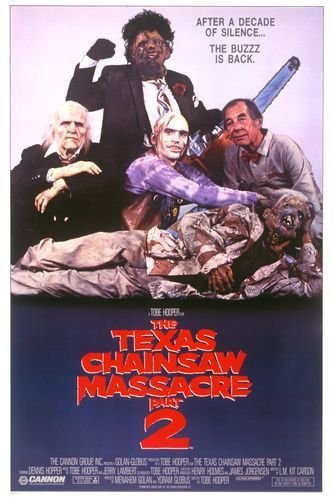
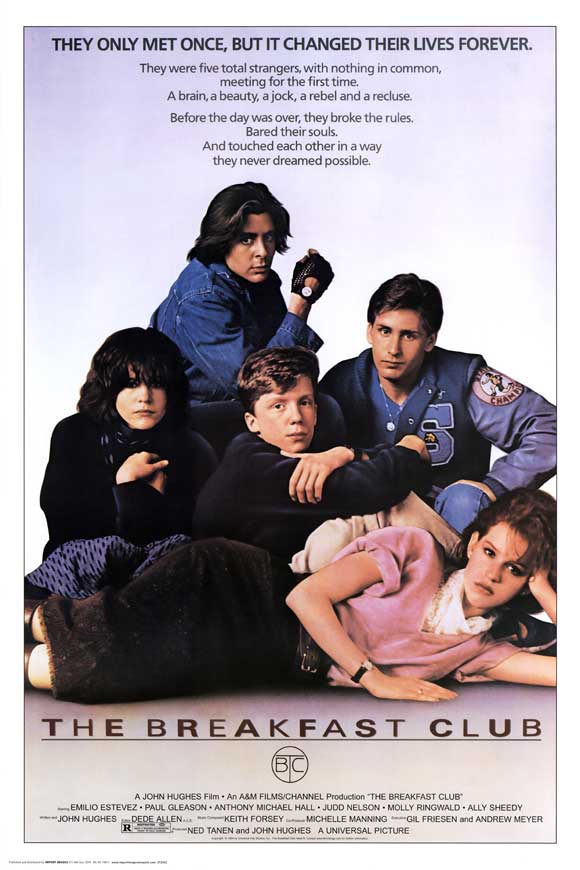
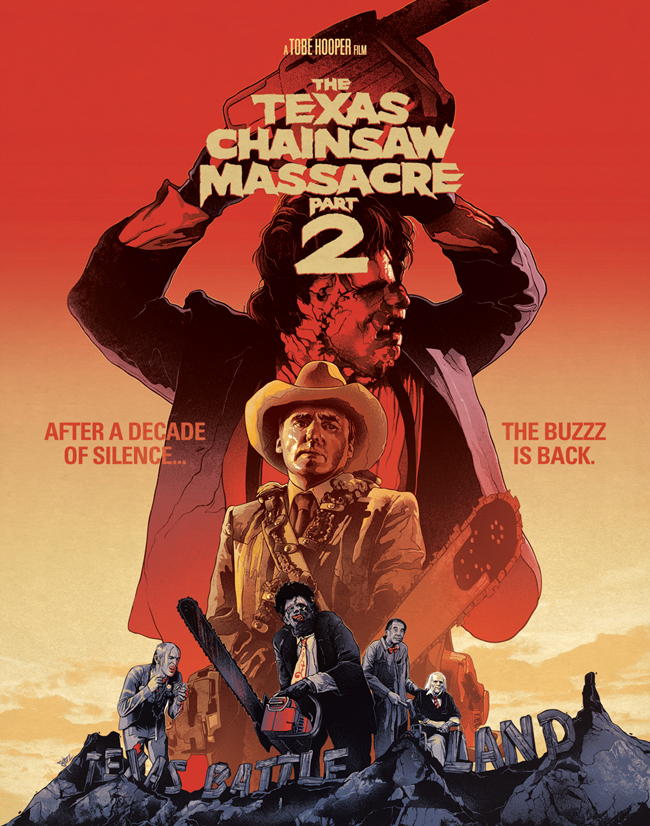
The poster most widely used for “Texas Chainsaw Massacre 2” confusingly parodies the popular format of “The Breakfast Club,” featuring the members of the cannibal family in similar poses. While that may have been evident at the time, it just looks strange outside of that context.

texaschainsawtwo1 texaschainsawtwo6

Unsurprisingly, “Texas Chainsaw Massacre 2” initially released unrated due to receiving an “X” rating from the Motion Picture Association of America ratings board, which is typically a death sentence for theatrical distribution.  While the film made it into theaters in the U.S., it ran into much bigger difficulties with censors in other countries, such as Australia and West Germany.

The story of “Texas Chainsaw Massacre 2” takes place during the weekend of the University of Texas – University of Oklahoma football game, which is known as the “Red River Showdown,” a nickname that is mentioned multiple times throughout the film.

“Texas Chainsaw Massacre 2” wasn’t met with a particularly warm reception, earning Rotten Tomatoes scores of 42% (critics) and 44% (audience), along with an IMDb rating of 5.5.

texaschainsawtwo3The estimated budget for “Texas Chainsaw Massacre 2” was $4.7 million, and it wound up grossing just over $8 million in its total domestic theatrical run, making it profitable on the whole.

“Texas Chainsaw Massacre 2” isn’t nearly as distinctive or suspenseful as the first film, and is packed with bizarre moments of humor and the constant presence of the cartoonish cannibal family. It is as if Hooper either didn’t understand what made the original impress upon so many people, or he was deliberately denying the audience what they wanted. I dug up a couple of quotes from an A.V. Club interview that seems to indicate the latter:

I was just going to produce it and I couldn’t find a director. Literally, I couldn’t find anyone my budget would afford, a director whose work I knew, so I ended up running out of time and directing it myself. In doing so, I amplified the comedy and, I think, gave the general audience exactly what they did not want.

It’s crazy as hell. It’s a film that’s just loony. But at least I got a chance to make a comedy—a very grim comedy—that is receiving an acknowledgement for its stylization.

The fact that Hooper was reluctant to make the movie in the first place certainly doesn’t surprise me, and might account for why it took so long to happen. The interview also makes it clear that Hooper was more interested in doing something different and challenging than doing something that people would like, and that was certainly his prerogative as the creator. However, he couldn’t be shocked when people didn’t ultimately like it at the time.

texaschainsawtwo4The A.V. Club has an interesting positive retrospective about “Texas Chainsaw Massacre 2” that makes one very good point:

Stretch tries to appeal to his humanity, the parts inside almost all of us that want love and affection and sex, and it works. That’s what makes Leatherface a much more interesting villain than Freddy or Jason; he has more in common with Lennie in Of Mice And Men than an inhuman killing machine.

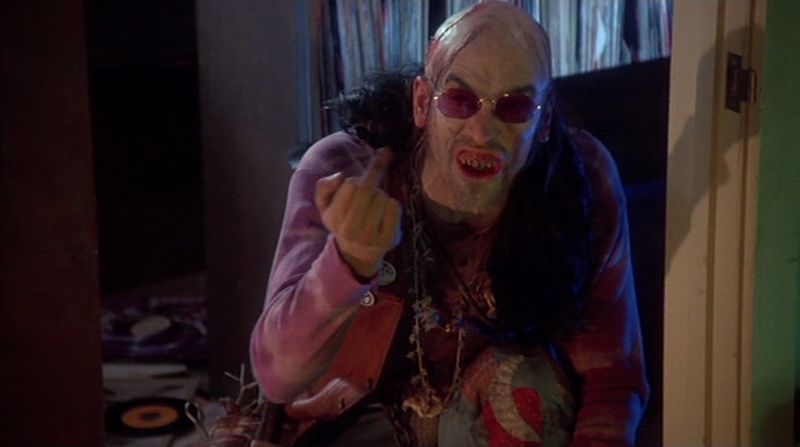
Leatherface is certainly treated like more of an actual character in “Texas Chainsaw Massacre 2,” which can be looked at either positively or negatively. Personally, while I think the growth for the character was an interesting touch, I didn’t think the performance was anywhere near as impressive, chilling, or human as the way Gunnar Hansen portrayed him. A lot of that comes down, I think, to the way he used body language to portray the character, which seems totally lacking in this sequel. There is also an argument to be made that Leatherface doesn’t need to be developed all that much past being a chainsaw wielder, but I actually am a bigger fan of horror threats having real human faces on them (ha), which is something that Jason, Michael Myers, etc. tend to lack.

The climax of “Texas Chainsaw Massacre 2” shows off a chainsaw duel between Leatherface and Dennis Hopper’s character, which is as entertaining as the movie ever gets. The proper finale of the movie is pretty lackluster in my opinion, which the surviving lead character mindlessly swinging a chainsaw around and screaming, channeling their very best Leatherface for no reason in particular.

texaschainsawtwo2Overall, “Texas Chainsaw Massacre 2” wasn’t as bad as I expected, and is a solid few rungs above “The Next Generation” in conventional quality. That said, I liked that flick a little better as a good-bad watch, primarily because of McConaughey’s performance, which doesn’t have a parallel in “Texas Chainsaw Massacre 2.” The closest thing is Bill Moseley, who just came off as obnoxious and annoying to me, but there are plenty who disagree.

If you are looking for an entertainingly awful horror watch, there are a lot of better choices in the major horror franchises than this. “Texas Chainsaw Massacre 2” is mostly just disappointing and slow, a result of Tobe Hooper choosing a humorous direction for the franchise without the acting or writing capabilities to pull it off. It is also definitely one of the least entertaining Cannon movies I’ve seen overall, which was a bit of a surprise.

Speed 2: Cruise Control

Speed 2: Cruise Control

speedtwo1

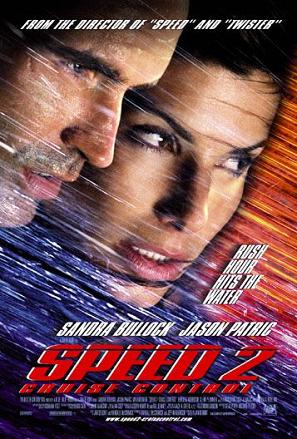
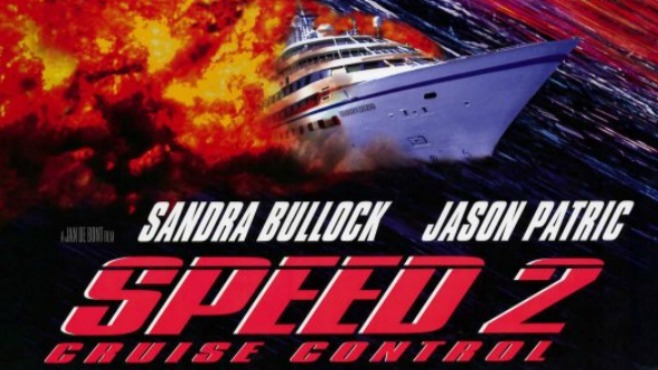
Today’s feature is yet another truly reviled, unnecessary sequel: “Speed 2: Cruise Control.”

“Speed 2” was directed, produced, and co-written by Jan De Bont, who has had a significant career as both a director and a cinematographer, working on such films as “Roar,” “Twister,” “The Haunting,” and “Leonard Part 6.” The screenplay writing credit for “Speed 2” was given to two other people: Randall McCormick (“Titan A.E.,” “The Scorpion King 2,” “The Scorpion King 3”) and Jeff Nathanson (“Catch Me If You Can,” “Rush Hour 2,” “Rush Hour 3”).

Character creation credit for “Speed 2” was given to the writer of “Speed,” Graham Yost (“Mission to Mars,” “Justified”), who was apparently bumped from the creative side of “Speed 2” early on in the project due to a difference of vision from De Bont.

The cinematographer for “Speed 2” was Jack N. Green, who also shot such movies as “Unforgiven,” “The Net,” and, more recently, “Hot Tub Time Machine.”

The musical score for “Speed 2” was provided by Mark Mancina, who has composed music for such films as “Space Mutiny,” “Con Air,” and “Twister.”

The editor for “Speed 2” was Alan Cody, who has cut a number of comedy movies like “Corky Romano” and “Inspector Gadget.”

The massive special effects team for “Speed 2” included Mike Reedy (“Daredevil,” “RoboCop 3,” “TRON”), Tom von Badinski (“Epic Movie,” “Waterworld”), Al Broussard (“Mimic,” “Volcano”), Paul Stewart (“Tango & Cash”), Bruce Robles (“Lethal Weapon,” “Virtuosity”), Al Di Sarro (“Predator”), Craig Barnett (“Deep Blue Sea,” “Congo”), David Eland (“Cellular”), Mike Sasgen (“Torque,” “Demolition Man”), Timothy Vierra (“Small Soldiers”), Michael Tice (“Toys,” “Jaws: The Revenge”), and many, many others.

The visual effects team for “Speed 2” included numerous members of Industrial Light and Magic and Rhythm and Hues, two highly acclaimed effects studios. The film’s team thus had common elements with such productions as “Minority Report,” “Congo,” “Small Soldiers,” “Hudson Hawk,” “Titanic,” “Avatar,” “Pacific Rim,” “The Golden Child,” “Antz,” “Shrek,” “Deep Blue Sea,” and “Star Wars: Episode I.”

Aside from Jan De Bont, the other producers for “Speed 2” were Mark Gordon (“League of Extraordinary Gentlemen,” “Speed”), Steve Perry (“True Romance,” “Road House”), Michael Peyser (“Hackers”), and Glenn Salloum (“Twister,” “SLC Punk”), who was also De Bont’s longtime assistant.

The three art directors for “Speed 2” were William Ladd Skinner (“Rocky IV,” “Heaven’s Gate,” “1941,” “Rollerball”), Daniel Ross (“Casino,” “Jingle All The Way”), and Dan Olexiewicz (“American History X”).

Astoundingly, due to the amount of shooting necessary for “Speed 2”, the production necessitated a first assistant director, a second unit director,  a first assistant director for the second unit, a second assistant director, a second assistant director for the second unit, and two second second assistant directors. Try listing all of those credits three times fast.

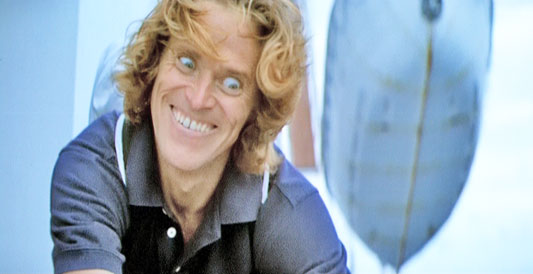
The cast of “Speed 2” is headlined by Sandra Bullock (“The Net,” “Demolition Man”), Willem DaFoe (“Shadow of the Vampire,” “Mississippi Burning”), Jason Patric (“Sleepers,” “The Lost Boys”), Temuera Morrison (“Star Wars: Episode II,” “Green Lantern”), Bo Svenson (“Walking Tall Part II”), and Brian McCardie (“Filth,” “Rob Roy”).

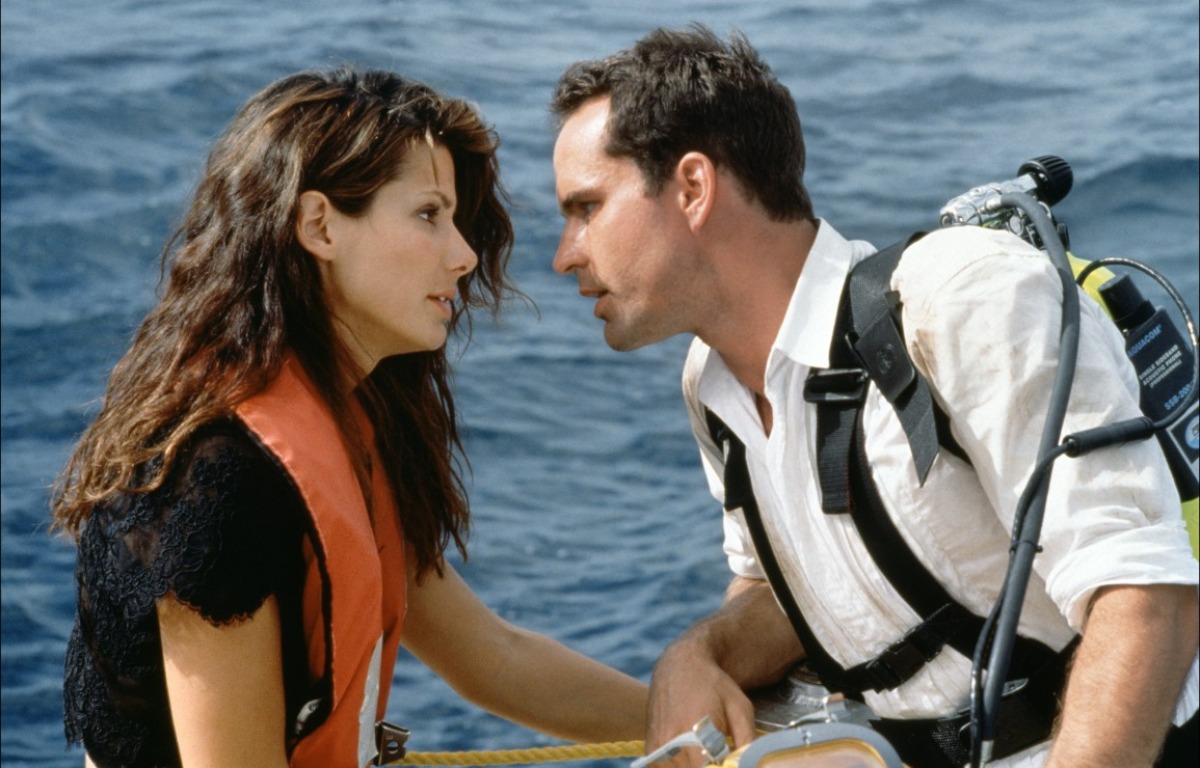
speedtwo3The story of “Speed 2” picks up with Sandra Bullock’s character a number of months after the events of “Speed.” Keanu Reeves is long gone, and she is well into a new relationship. The new boyfriend, in an attempt to propose to her, decides to surprise her with a cruise vacation. Unfortunately, their ship is highjacked, and it is up to the couple to save the passengers from a raging computer genius with an axe to grind with the cruise line company.

Keanu Reeves was initially supposed to return and reprise his role from “Speed,” and the screenplay was written with that in mind. However, he turned it down, choosing specifically to not do another action movie. Bafflingly, there were almost no changes to the script after he declined, making the central romantic plot thoroughly confusing throughout the film.

Keanu’s departure also meant that the production was thrown into a bit of a casting pickle. Before Jason Patric was settled on, Matthew McConaughey, Jon Bon Jovi, and Christian Slater were all apparently considered for the lead role.

One of the key differences between “Speed” and “Speed 2” is the amount of attempted humor, which is apparently something that Jan De Bont specifically pushed for to differentiate the film from “Speed.”

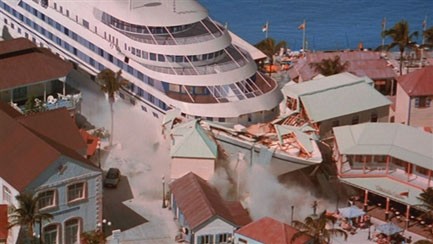
The dramatic finale sequence, in which the cruise ship runs aground through a coastal town, reportedly cost $25 million on its own, making it the most expensive stunt in history at the time. The entire town was built from scratch, and the entire front of the ship portrayed was real (it was run on an underwater rail), with only the back half being filled in with computer generation for the sequence.

speedtwo4Sandra Bullock has gone on record as saying that “Speed 2” is “the biggest piece of crap ever made,” a claim that many critics and audiences might agree with. The reception for “Speed 2” was incredibly poor, earning Rotten Tomatoes scores of 3% (critics) and 16% (audience), along with an IMDb rating of 3.7. However, Roger Ebert and Gene Siskel both surprisingly gave the film positive reviews, going against the popular grain.

The budget for “Speed 2” was an outlandish (for the time) estimated $160 million. Through its theatrical run, it managed to pull in a tiny profit, grossing $164 million total. Interestingly, over 70% of the total gross came from foreign markets, and it was considered a major disappointment domestically in spit of making some money.

My biggest issue “Speed 2” is that Bullock’s character is immensely unlikable. The problem is primarily due to how much the screenplay tries to use her for comic relief, which she rarely pulls off. Part of that is on Bullock, but most of it is definitely the fault of the writing, which provides awful stilted dialogue throughout the film. That bad writing also negatively effects the relationship chemistry between Patric and Bullock, which the fans of the first movie are mostly already pulling against due to their attachment to Keanu’s character.

Unfortunately for the film, the absence of Keanu Reeves is constantly evident. Jason Patric, shockingly, lacks the same on-screen presence and charisma that Reeves provided, and Keanu isn’t exactly an inspiring figure to start with. If the movie hadn’t been a contractual obligation, Keanu’s decision not to return should have killed it before filming ever started.

speedtwo2“Speed 2” clocks in at roughly 2 hours, much longer than most would be willing to devote to a movie about a boat slowly inching towards a stationary object. The film could clearly have been cut better, and the pacing throughout the finale feels like the team was afraid to cut anything because of how expensive it all was. Frankly, the whole ending sequence seems to drag on indefinitely, with numerous false conclusions that make “Leviathan” look like a masterpiece.

One of the most baffliing aspect of “Speed 2” is how many people supposedly fail to see a gigantic cruise ship bearing down on them. The film features water skiers, sailboats, and pedestrians not noticing the presence and roar of a cruise ship until it is literally feet away from them, which is asking a little much from the audience’s suspension of disbelief. Speaking of which, the unspoken death toll from the events of the film must have been massive, given the number of buildings and watercraft crushed beneath the ship.

Overall, “Speed 2” certainly isn’t a good movie. Ironically, its biggest sin is being too slow, but the writing certainly didn’t do it any favors. The finale is a spectacle I suppose, but one that drags on a little too long for my taste. That said, Willem DaFoe hams his role up immensely, and livens up his segments.

speedtwo5When it comes to making a recommendation on “Speed 2,” I want to leave readers with a quick excerpt from Roger Ebert’s positive review. Despite the film’s flaws, he has a good point here:

Is the movie fun? Yes. Especially when the desperate Bullock breaks into a ship’s supply cabinet and finds a chainsaw, which I imagine all ships carry. And when pleasure boaters somehow fail to see a full-size runaway ocean liner until it is three feet from them. Movies like this embrace goofiness with an almost sensual pleasure. And so, on a warm summer evening, do I.

Mac And Me

Mac And Me

macme1

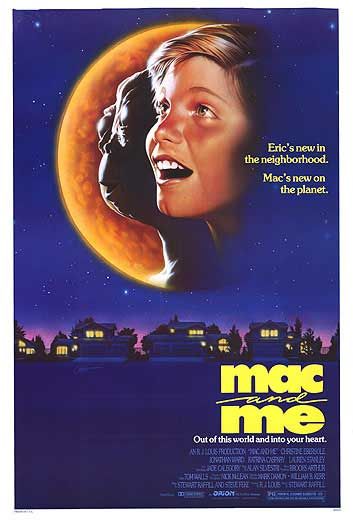
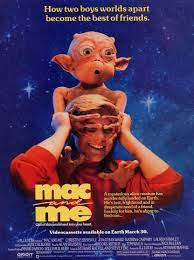
Today’s feature is the infamous McDonald’s commercial and “E.T.” knockoff, “Mac And Me.”

“Mac And Me” was written and directed by Stewart Raffill, who is best known for the films “Mannequin: On The Move” and “The Philadelphia Experiment.” The film was also co-written by Steve Feke, who has penned such flick as “When A Stranger Calls” and “Poltergeist III.”

The effects team on “Mac And Me” included Joseph Yanuzzi (“Ghost Dad,” “Saturday the 14th”), Steven James (“Leviathan,” “The Monster Squad”), William Forsche (“Dead Heat,” “Dolls,” “From Beyond”), and Martin Becker (“Suburban Commando”).

The cinematographer for “Mac And Me” was Nick McLean, who also shot movies like “Spaceballs,” “The Goonies,” and “Stroker Ace.”

The score for “Mac And Me” was provided by Alan Silvestri, who has accrued well over 100 composing credits for films including “Van Helsing,” “Super Mario Bros.,” “The Avengers,” “Forrest Gump,” and “Predator 2.”

The editor for “Mac And Me” was Tom Walls, who has cut a handful of movies including “Bachelor Party,” “House Party 3,” and “Surf Ninjas.”

One of the producers on “Mac And Me” was Mark Damon, who was a driving force behind the loathed “It’s Alive” remake, as well as films like “Short Circuit” and “The Lost Boys.” Another producer was R.J. Louis, whose credits include “Vegas Vacation” and “The Karate Kid.”

The cast for “Mac And Me” includes Christine Ebersole (“The Wolf Of Wall Street”), Jonathan Ward (“Steel Magnolias”), Danny Cooksey (“Salute Your Shorts,” “Diff’rent Strokes”) Laura Waterbury (“Better Off Dead…”), Bud Ekins (“The Next Karate Kid”), and George Flower (“Maniac Cop,” “They Live,” “The Fog”). In the background, sharp eyes might spot Jennifer Anniston (“Leprechaun”) in her first on-screen appearance, as well as Andrew Divoff of “Wishmaster” and “Air Force One.”

The story of “Mac And Me” follows a family of alien lifeforms who become stranded on Earth, and have to find a way to escape from evil scientists from NASA who want to experiment on them. As you might expect, they befriend a kind-hearted band of children along the way and become involved in an assortment of shenanigans.

macme3

“Mac And Me” has regained a degree of cult notoriety thanks to the Hollywood actor Paul Rudd, who has repeatedly played a specific clip from the movie whenever he has appeared on Conan O’Brien’s late night talk shows.

“Mac And Me” is probably the best known of the many “E.T.” knockoffs that spawned throughout the 1980s, which include other infamous films like “Nukie” and “Pod People.”

The infamous dance scene in “Mac And Me” was filmed in a McDonald’s constructed specifically for filming purposes, and has been used for commercials, films, and training videos.

“Mac And Me” was made with a profit sharing agreement with Ronald McDonald Children’s Charities. Unfortunately, the film was a financial disappointment, failing to make a profit on its estimated $13 million budget, grossing just under $6.5 million in its total theatrical run.

“Mac And Me” won two Golden Raspberries at the 1988 Razzie Awards, but ultimately lost worst feature to “Cocktail” in a competitive year that also featured the much-loathed sequel “Caddyshack II.”

“E.T. and Me” was the initial planning title for the screenplay that became “E.T.,” and was clearly the inspiration for the title of “Mac And Me.”

Apparently, both Kim Basinger and Anjelica Huston declined offers to play the lead role in “Mac And Me,” with Basinger choosing to instead star in “My Stepmother Is An Alien,” another awful alien-themed comedy movie.

The reception for “Mac And Me” was astoundingly poor, and the film currently hold an astounding 0% critics score on Rotten Tomatoes. The audience score is a still-awful 38%, which lands along the same lines as the IMDb rating of 3.4.

One of the most frequent criticisms of “Mac And Me” that I have seen focuses on the flagrant product placement that is inserted throughout the film for companies and products such as McDonald’s, Sears, and Coca-Cola. The presence of product placement is more or less a staple in modern film-making, but “Mac and Me” lacks any degree of subtlety about the practice, placing it in an elite echelon with films like “Foodfight!” and “Torque.” Audiences will tolerate and even embrace a slight degree of product placement, but the more evident it is, the more people are likely to take issue with it. The fact that “Mac And Me” was already obviously a financial rip-off of another movie didn’t exactly give audiences or critics the incentive to be charitable, and people were brutal in their complaints about the excessive advertising in the film. One critic went to far as to refer to the film as “a 99-minute commercial occasionally interrupted by a not-so-good children`s movie.”

macme2

It should come as no surprise, but the acting in “Mac And Me” is astoundingly terrible. This is partly due to the fact that so much of the acting load is put on to children, who are prone to be awful actors to begin with. However, the kids in “Mac And Me” struck me as awful even by child acting standards, and are honest difficult to watch and listen to.

The alien designs and effects in “Mac And Me” are frankly awful. “E.T.” wasn’t an attractive alien by any means, but he looks like a work of art next to the rubbery, bizarre appearance of the “Mac And Me” walking nightmare creatures. For a movie like this, the creatures should be a focal point with an immense amount of effort and care dedicated to them. Instead, it looks like the aliens were afterthoughts in “Mac And Me”, and even look worse than b-movie stop motion aliens from films like “Laserblast,” which was released a whole ten years before “Mac And Me” (on what was certainly a lower budget).

“Mac And Me” is, of course, a truly shameless ripoff of “E.T.,” and wasn’t even particularly well timed for a typical ‘mockbuster’ aiming to profit on the coat tails of a big budget success. I just can’t fathom how it took 6 years to get an “E.T.” imitation out into theaters, and why anyone thought it would be a recipe for success after so many years had passed? For comparison, most of today’s ‘mockbusters’ come out around the same time as the DVD release for their target movie, in the hopes that people will confuse it with the hit (such as “Transmorphers” and “Transformers”). At most, the gap between the blockbuster and the mockbuster is a year.

Overall, “Mac And Me” is a visually painful and intellectually dull experience, but it certainly holds a place in film history. The product placement and alien suits almost need to be seen to be believed, and I would consider it a justified “good-bad” classic for the sheer amount of wrong-headedness required on the part of the production and creative teams for “Mac And Me” to ever happen. For fans of bad movies, “Mac And Me” is worth checking out, but the experience isn’t necessarily going to be fun or enjoyable. It is more like required reading.

Water Foul: “Deep Blue Sea”

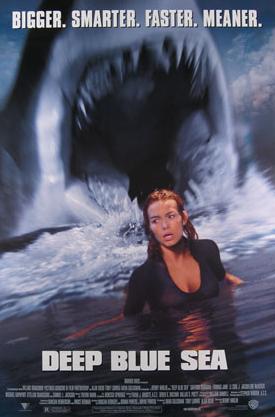
Deep Blue Sea

deepbluesea1

Today, I’m going to be concluding this week’s spotlight on awful marine monster movies with a personal favorite: 1999’s “Deep Blue Sea.”

The three writers for “Deep Blue Sea” were the duo of Donna and Wayne Powers (“The Italian Job”) and Duncan Kennedy, an Australian who was inspired to write the initial screenplay by an experience he had as a child, where he witnessed the aftermath of a fatal shark attack. The event was apparently highly traumatic, and led to him having recurring nightmares throughout his childhood.

The director of “Deep Blue Sea” was Renny Harlin, who is best known for such action flicks as “Cliffhanger,” “12 Rounds,” and “Mindhunters.”

The cinematography for “Deep Blue Sea” was provided by Stephen F. Windon, who has done photography for “Furious Seven,” “The Patriot,” “The Postman,” and “Crocodile Dundee II” over his career.

The makeup effects team for “Deep Blues Sea” included Clinton Wayne (“Daredevil,” “The Perfect Storm”), Allan Apone (“Evilspeak,” “Going Overboard”), Chad Atkinson (“The Cell,” “Bubba Ho-Tep”), Jeff Dawn (“Total Recall,” “Last Action Hero,” “Terminator 2”), Jim Kail (“Anaconda,” “Ghosts of Mars”), Steve LaPorte (“Van Helsing,” “Caddyshack II,” “The Judas Project”), Michael Shawn McCracken (“Congo,” “The Midnight Meat Train”), and Matthew Mungle (“Daredevil,” “The Midnight Meat Train,” “Congo,” “Class of 1999,” “Roar”).

The impressive special effects team for “Deep Blue Sea” included Craig Barnett (“Speed 2,” “Congo”), Darrell Burgess (“Anaconda,” “Batman & Robin”), Walt Conti (“Free Willy”), William Dawson (“Waterworld,” “Drive Angry,” “Blade”), Michael Duenas (“Thor,” “Iron Man”), Eugene Hubbard (“Face/Off,” “Demolition Man”), Michael Clarke (“Interstellar,” “The Avengers”), Mario Vanillo (“The Last Airbender,” “The Prestige”), Jim McPherson (“Leviathan,” “State of Play,” “Escape From LA,” “Men In Black”), Rick Thompson (“The Aviator,” “Die Hard”), John Richardson (“Straw Dogs,” “Aliens,” “Superman”), Wes Mattox (“Daredevil,” “Pulp Fiction,” “Maniac Cop 3”), and Barry McQueary (“Ant-Man,” “Argo”), among many, many others.

deepbluesea6The astonishingly large visual effects team for “Deep Blue Sea” honestly has too many key people for me to list, but it includes common personnel with such diverse films as “Sphere,” “Van Helsing,” “Avengers: Age of Ultron,” “Paul Blart: Mall Cop,” “The Abyss,” “The Omega Code,” “Red Planet,” “RoboCop 3,” “Small Soldiers,” “Space Jam,” “Iron Man,” “Pacific Rim,” “Judge Dredd,” “Guardians of the Galaxy,” “Kazaam,” “Avatar,” “The League of Extraordinary Gentlemen,” “Kangaroo Jack,” and “The Matrix.”

The dedicated animation department for “Deep Blue Sea” was composed of Steve Nichols (“Van Helsing,” “Guardians Of The Galaxy”) and Rick O’Connor (“Jurassic Park III,” “Signs,” “Battleship”).

The score for “Deep Blue Sea” was written by Trevor Rabin, who has contributed music to a number of other memorable films such as “12 Rounds,” “Torque,” and “Con Air.”

“Deep Blue Sea” featured three editors: Derek Brechen (“Stargate,” “The Patriot,” “Iron Man”), Frank Urioste (“RoboCop,” “The Hitcher,” “Road House,” “Total Recall”), and Dallas Puett (“Red Planet,” “Kull The Conqueror,” “2 Fast 2 Furious”).

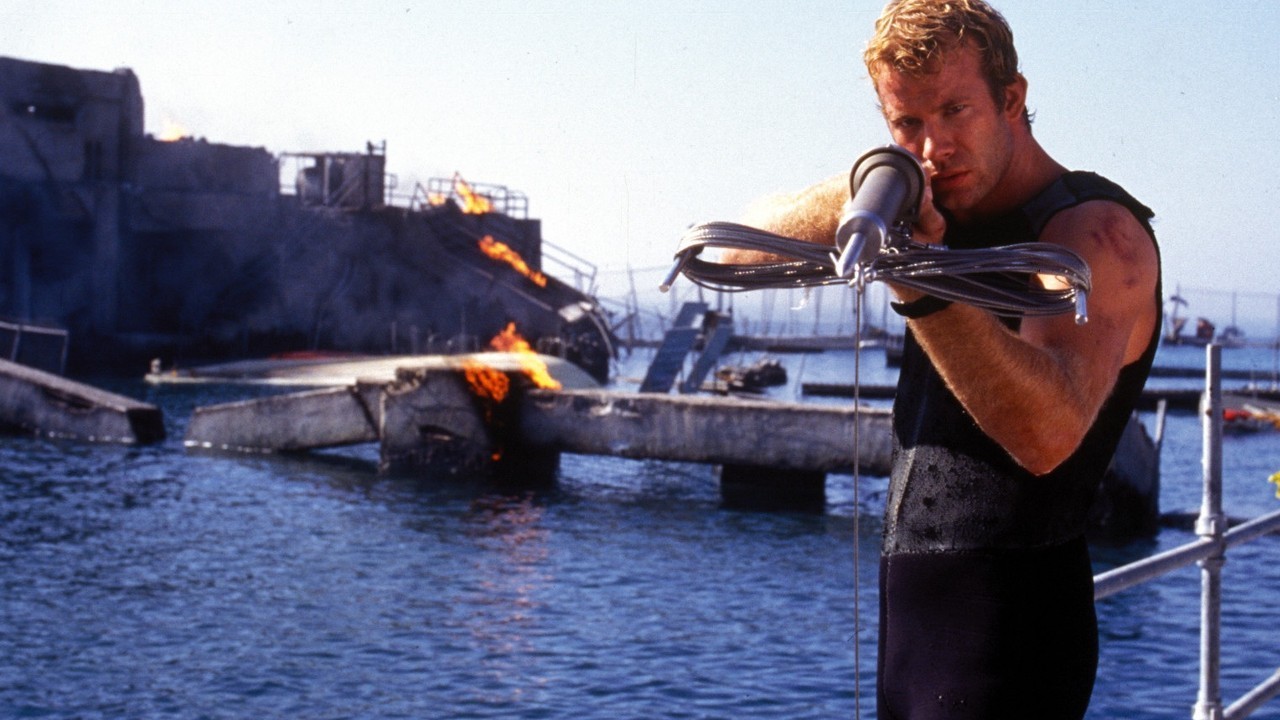
deepbluesea2The cast for “Deep Blue Sea” includes Samuel L. Jackson (“Kingsman,” “Pulp Fiction,” “Jackie Brown”), Thomas Jane (“The Punisher”), Saffron Burrows (“Troy”), LL Cool J (“Rollerball,” “S.W.A.T.”), Michael Rapaport (“The 6th Day,” “True Romance”), Stellan Skarsgard (“Thor”), Aida Turturro (“The Sopranos”), and Jacqueline McKenzie (“The Water Diviner”).

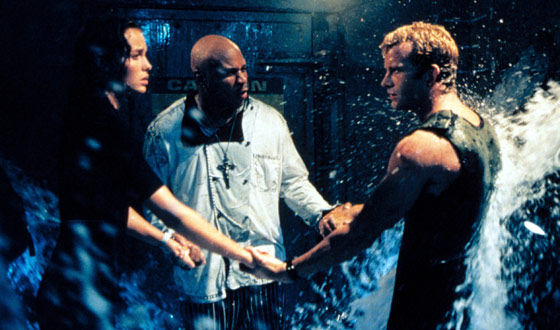
deepbluesea3The story of “Deep Blue Sea” takes place on an experimental marine facility, where scientists are studying sharks for a potential cure for Alzheimer’s. However, when the project goes over-budget and ethical concerns begin arising, their primary benefactor comes to investigate the situation himself. From there, things rapidly go awry.

The role of the chef, which ultimately went to LL Cool J, was initially offered to Samuel L. Jackson, who turned it down due to it being too small of a role. Ironically, due to script changes, the chef role wound up being arguably larger than the character Jackson wound up playing in the picture.

“Deep Blue Sea” is likely best known for a dramatic twist, in which Samuel L. Jackson’s character is surprisingly (and brutally) killed in the middle of the film. This move was apparently inspired by Tom Skerritt’s role in “Alien,” according to Renny Harlin. In theory, because he was the most recognizable face, audiences naturally latch to him as a point of reference. Of course, when the character dies, it has the effect of pulling a rug out from under the viewers. Harlin used this same technique again in “Mindhunters,” in which two different recognizable (and assumed lead) characters are shockingly killed off early in the film.

deepbluesea4The plot of “Deep Blue Sea” is loosely based on the amount of real life medical research that has been done on sharks over the past few decades, but it also perpetuates some significant falsehoods about the creatures. For instance, the belief that sharks can’t get cancer has been recently debunked. Also, the popular myth that sharks have to continue movies to survive isn’t true across the board: some species are capable of pumping water across their gills without moving.

There have been a few other movies called “Deep Blue Sea” over the years, including 2011’s “The Deep Blue Sea” starring Tom Hiddleston, and a 1955 romantic drama of the same name starring Vivien Leigh. Neither of those movies involved CGI sharks, however.

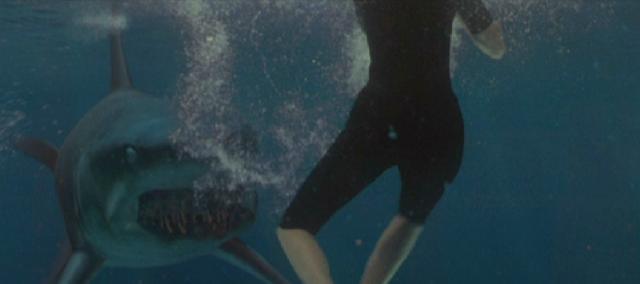
The modified sharks featured in “Deep Blue Sea” are shortfin mako sharks, which are known particularly for their speed, and are the fastest among all sharks. In line with the movie’s plot, they are also one of the smartest species of shark, and have an impressive brain to body ratio. However, they are also particular ill-suited for captivity, which pokes a significant hole in the underlying concept of the film.

“Deep Blue Sea” was filmed primarily at the Baja Studios near Tijuana, Mexico, which were built specifically for the filming of “Titanic.” Unfortunately, it hasn’t been used for filming in a number of years, and the town where it is located has apparently been deteriorating over the past few years.

At the beginning of “Deep Blue Sea,” a bull shark is shown with a license plate stuck in its mouth. The license plate number and state match the same one that was featured in “Jaws,” which was a nice, subtle homage.

The submarine the appears in the background of the well room also appeared in “Sphere,” an earlier film that also starred Samuel L. Jackson, alongside Dustin Hoffman.

According to Harlin, it took 20 takes to film his very brief cameo towards the beginning of the movie, and he apparently hasn’t taken any on-screen roles since.

“Deep Blue Sea” had a particularly notable tie-in single and music video, performed by LL Cool J, one of the co-stars of the film. It is one of the most baffling and catchy themes I have ever heard for a film, and essentially retells the entire plot of the film from the sharks’ perspectives.

“Deep Blue Sea” featured a number of impromptu screenplay changes along the way, including combing two characters into what became LL Cool J’s chef character and expanding the role (allowing him to survive), ultimately killing off Saffron Burrows’ character, and changing how some of the sharks were killed.

deepbluesea5The estimated budget for “Deep Blue Sea” was $60 million, and it ultimately grossed around $164 million in its total theatrical run, making it a significant hit. The reception wasn’t quite as positive as those numbers suggest, though the film certainly has a cult following. It currently hold an IMDb rating of 5.8, alongside Rotten Tomatoes scores of 56% (critics) and 38% (audience).

The biggest issue with “Deep Blue Sea” is definitely the poorly-aging CGI effects, but it is worth noting that the practical sharks look pretty good. As you might expect, there are some big drawbacks to mechanical sharks in regards to movement limitations and costs, and they are also notoriously fickle (I recommend reading about “Bruce” from “Jaws”). There are also some brief moments of CGI water in the background that, without fail, always looks awful.

There are undoubtedly some big problems with the plot of “Deep Blue Sea,” specifically regarding the impossible intelligence of the sharks. For instance, it is claimed that the sharks planned the flooding of the research facility in order to escape, which would require knowledge of the schematics of the building, the makeup of the fences, and the weather conditions. It is even possibly implied that one of the sharks operates a convection oven in order to flush out LL Cool J (a point of some contention). It is one thing for the sharks to be exceptionally smart, it is another thing for them to manifest knowledge they would have no way of knowing, unless the experiments made them psychic. Which, honestly, would be a hilarious twist.

deepbluesea7
“IT’S AFRAID!”

Much like “Piranha” and “Humanoids From The Deep,” “Deep Blue Sea” taps into popular fears about genetic modification and the potential for science to go awry (there are definitely some “Frankenstein” nods as well). There is also a popular fear of sharks in the public consciousness since the cultural phenomenon of “Jaws,” which definitely adds to the atmosphere of “Deep Blue Sea.” It is fair to say that the film wouldn’t be the same with intelligent, giant rabbits, even if they were vicious and vindictive.

Something I particularly like about “Deep Blue Sea” is the concept and design of Aquatica, the floating research fortress. The aesthetic is always something I though was cool, and it doesn’t have the same overused “grates and pipes” look from “Alien,” “Leviathan,” etc. It is generally pretty sleek and polished, which makes it look more like a sparkling, new research facility.

Overall, “Deep Blue Sea” has plenty of problems, but the sheer “fun” factor is off the charts. The performances are great, the plot is cheesy, the atmosphere is fantastic, and if you can swallow the bad CGI, there is no way not to have a good time while watching this flick. Honestly, the CGI here still looks better than the “Sharknado” movies, well over a decade later, so it isn’t impossible to stomach. For people looking for a Hollywood cheese fest, a bit of nostalgia, or a top-flight shark thriller, “Deep Blue Sea” should fit your bill.

Water Foul: “Cane Toads: An Unnatural History”

Cane Toads: An Unnatural History

canetoad1Next up in my “Water Foul” spotlight on some of the worst aquatic monsters in film history is a little bit of non-fiction: the cult documentary “Cane Toads: An Unnatural History.”

“Cane Toads: An Unnatural History” might be my favorite documentary of all time. Errol Morris and Werner Herzog have nothing on this charming, weird little piece of film. The musical numbers, the excessively melodramatic tone, the off-kilter humor, the eccentric locals, the genuine educational aspects: it is damn near perfect from top to bottom. I wouldn’t in a million years consider “Cane Toads” to be a bad movie, but more people should see it, so I couldn’t help but take the opportunity to give it a shout-out. It is a goddamn riot. Also, if “Cane Toad Blues” doesn’t get stuck in your head, you have no soul.

If you happen to enjoy “Cane Toads: An Unnatural History” (why wouldn’t you?), then you’re in luck: there’s a sequel. As with most follow-ups, it isn’t quite as good as the first, but it is still more than worth your time to sit through.