Tag Archives: worst movies

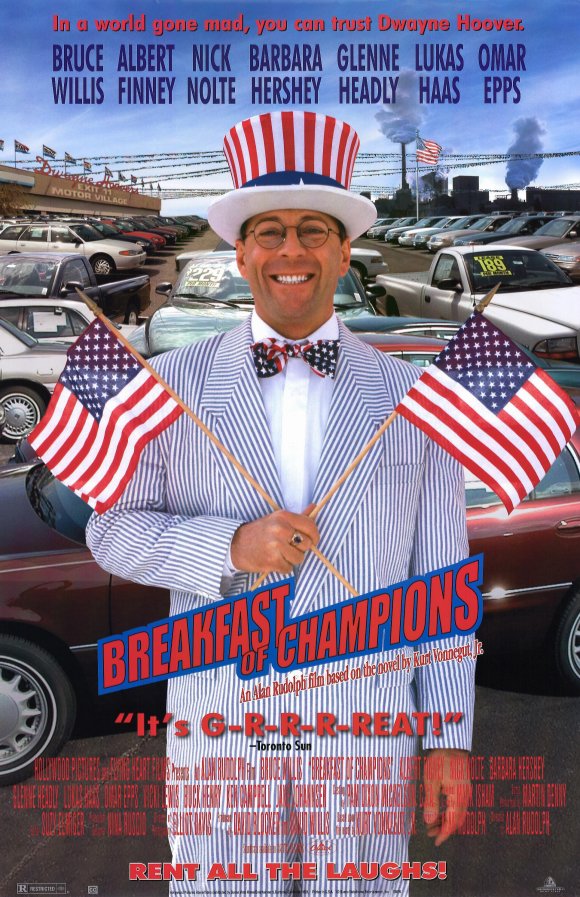
Breakfast of Champions

Breakfast of Championsbreakfastofchampions1

Today’s feature is the ill-received adaptation of Kurt Vonnegut’s lauded novel “Breakfast of Champions,” starring Bruce Willis and Nick Nolte.

“Breakfast of Champions” was written for the screen and directed by Alan Rudolph (“Buffalo Bill and The Indians,” “Afterglow,” “Mrs. Parker and the Vicious Circle”), based on the famous and acclaimed surreal novel by Kurt Vonnegut.

The cinematographer for “Breakfast of Champions” was Elliot Davis, who has done shooting work since for films like “Twilight,” “Legally Blonde 2,” “Lords of Dogtown,” and “Finding Graceland.”

The effects team for “Breakfast of Champions” included Chris Wells (“Torque,” “Looper,” “Captain America: The First Avenger”), Robert Stromberg (“Battlefield Earth,” “Fortress”), Richard Ivan Mann (“Spider-Man 3,” “The Happening,” “Tank Girl”), Steven Fagerquist (“From Justin To Kelly,” “The Terminator,” “Van Helsing”), Mark Breakspear (“The Last Airbender,” “Thor: The Dark World,” “American Sniper”), Rob Blue (“The Faculty,” “Small Soldiers,” “Bad Boys II”), Ray Brown (“Class of 1999,” “Ultraviolet”), and Bob Riggs (“Next,” “Green Lantern,” “Rush Hour 3”).

breakfastofchampions5The producers for “Breakfast of Champions” included David Blocker (“Frailty,” “Into The Wild”),  W. Mark McNair (“Into The Storm,” “Joy Ride”), and Bruce Willis’s brother David Willis (“Hudson Hawk,” “The Kid”), as well as Willis’s frequent producer and assistant Stephen J. Eads (“The Whole Nine Yards,” “Bandits”).

The editor for “Breakfast of Champions” was Suzy Elmiger, who has also cut films such as “Movie 43” and “Feel The Noise.”

The music for “Breakfast of Champions” was composed by Academy Award nominee Mark Isham, who also provided music for films such as “Next,” “Timecop,” “Point Break,” “The Cooler,” “Quiz Show,” and “A River Runs Through It.”

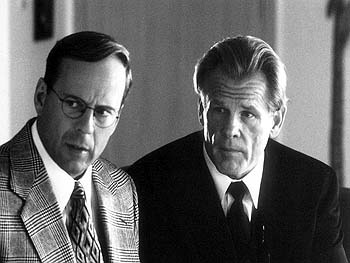
The cast for “Breakfast of Champions” is actually pretty impressive, headlined by Bruce Willis and Nick Nolte (who had previously starred in another Vonnegut adaptation, “Mother Night”). The accessory cast includes Albert Finney (“Skyfall,” “Erin Brockovich”), Barbara Hershey (“Insidious,” “Falling Down”), Glenne Headly (“ER,” “Dick Tracy”), Lukas Haas (“Brick,” “Inception”), Omar Epps (“House,” “Dracula 2000”), Vicki Lewis (“Mousehunt,” “Godzilla”), Buck Henry (“Catch-22,” “The Graduate”), Owen Wilson (“Anaconda,” “Inherent Vice”), Will Patton (“Gone In 60 Seconds,” “The Postman”), Chip Zien (“Howard The Duck”), Michael Jai White (“Spawn,” “The Dark Knight,” “Black Dynamite”), and Michael Clarke Duncan (“Daredevil,” “The Green Mile”), among others.
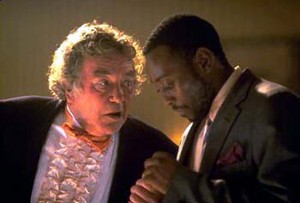
breakfastofchampions4The story of “Breakfast of Champions” primarily follows a used car dealer who is rapidly descending into madness, though segments also spotlight a struggling eccentric author and an assortment of other local characters in a Midwestern town.

An intriguing number of cast members in “Breakfast of Champions” also appeared in the previous year’s blockbuster, “Armageddon,” including Bruce Willis, Michael Clarke Duncan, Will Patton, Owen Wilson, Ken Hudson Campbell, and Shawnee Smith.

breakfastofchampions2“Breakfast of Champions” had a production budget of $12 million, and didn’t even gross 500,000 in a very limited theatrical release, making it a massive bomb. It was also incredibly poorly received, earning a 4.6 rating on IMDb, along with Rotten Tomatoes scores of 32% (audience) and 26% (critics). Kurt Vonnegut himself has apparently claimed that the film is “painful to watch.”

The Entertainment Weekly review of “Breakfast of Champions” written by Owen Gleiberman included the following criticism of the film:

What thrived in the book was Vonnegut’s portrait of post-counterculture America turned into an ironic landscape of happy-face consumerism. Rudolph, in an act of insane folly, seems to think that what matters is the story. The result could almost be his version of a Robert Altman disaster — a movie so unhinged it practically dares you not to hate it.

Admittedly, “Breakfast of Champions” is clearly a difficult source material to adapt to the screen. However, Gleiberman hits on one of the key problems with this attempt: the story of the novel doesn’t matter nearly as much as the atmosphere and the tone, which are the elements that the film somehow totally manages to miss. The odd charm and screwball cynicism didn’t make the jump from the page to the screen here, even if the gist of the story did.
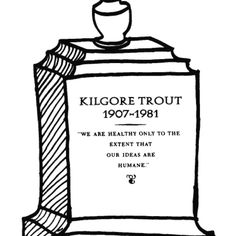
breakfastofchampions3To the credit of the filmmakers, there was at least an attempt to integrate the distinctive illustrations from the book into the film, but they just didn’t work in the same way. A lot of the humor of the novel comes in the form of the various descriptions of the sketches, which never comes through in the movie. The story and characters written by Vonnegut often require a lot of internal dialogue, which can be difficult to pull off on screen. Of the Vonnegut film adaptations I have seen, “Mother Night” does it the best, but it also doesn’t have to deal with the burden of being comedic.
breakfastofchampions6 breakfastofchampions7I’ve noticed that some people have praised Bruce Willis’s performance in the film, but I personally feel like he was strangely cast and not quite suited for the dramatic elements of the role. Throughout the movie, he seems to struggle in portraying the emotional spectrum and sporadic instability of his character. On the other hand, I thought Nick Nolte was fantastic in his seemingly limited screen time in the film, and was the only thing keeping me at all invested in the movie.

Some have claimed that “Breakfast of Champions,” for all of its flaws, is a striking visual movie. Personally, I couldn’t disagree with that assessment more. The movie just looks bad, particularly when there are any surreal special effects called for. They would have been better off not using effects at all than having ones that make the movie look cheap, which is what the case ultimately was here.

Overall, “Breakfast of Champions” fails to capture the surreal comedy of the source material, and winds up being a pretty dull watch. There are some decent performances, but the total sum product is nonsense in the worst possible way. I don’t recommend giving it a watch unless you are a die hard Vonnegut fan, or are just deathly curious.
Mac And Me

Mac And Me

macme1

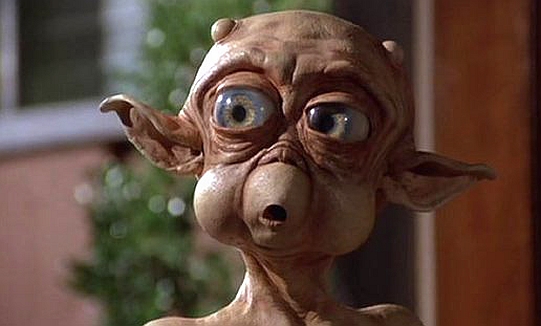
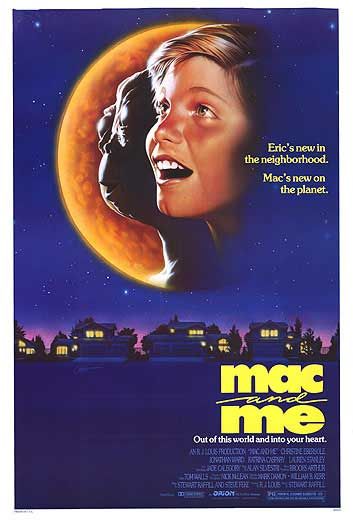
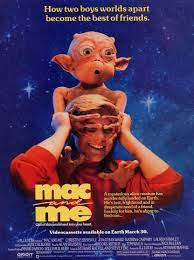
Today’s feature is the infamous McDonald’s commercial and “E.T.” knockoff, “Mac And Me.”

“Mac And Me” was written and directed by Stewart Raffill, who is best known for the films “Mannequin: On The Move” and “The Philadelphia Experiment.” The film was also co-written by Steve Feke, who has penned such flick as “When A Stranger Calls” and “Poltergeist III.”

The effects team on “Mac And Me” included Joseph Yanuzzi (“Ghost Dad,” “Saturday the 14th”), Steven James (“Leviathan,” “The Monster Squad”), William Forsche (“Dead Heat,” “Dolls,” “From Beyond”), and Martin Becker (“Suburban Commando”).

The cinematographer for “Mac And Me” was Nick McLean, who also shot movies like “Spaceballs,” “The Goonies,” and “Stroker Ace.”

The score for “Mac And Me” was provided by Alan Silvestri, who has accrued well over 100 composing credits for films including “Van Helsing,” “Super Mario Bros.,” “The Avengers,” “Forrest Gump,” and “Predator 2.”

The editor for “Mac And Me” was Tom Walls, who has cut a handful of movies including “Bachelor Party,” “House Party 3,” and “Surf Ninjas.”

One of the producers on “Mac And Me” was Mark Damon, who was a driving force behind the loathed “It’s Alive” remake, as well as films like “Short Circuit” and “The Lost Boys.” Another producer was R.J. Louis, whose credits include “Vegas Vacation” and “The Karate Kid.”

The cast for “Mac And Me” includes Christine Ebersole (“The Wolf Of Wall Street”), Jonathan Ward (“Steel Magnolias”), Danny Cooksey (“Salute Your Shorts,” “Diff’rent Strokes”) Laura Waterbury (“Better Off Dead…”), Bud Ekins (“The Next Karate Kid”), and George Flower (“Maniac Cop,” “They Live,” “The Fog”). In the background, sharp eyes might spot Jennifer Anniston (“Leprechaun”) in her first on-screen appearance, as well as Andrew Divoff of “Wishmaster” and “Air Force One.”

The story of “Mac And Me” follows a family of alien lifeforms who become stranded on Earth, and have to find a way to escape from evil scientists from NASA who want to experiment on them. As you might expect, they befriend a kind-hearted band of children along the way and become involved in an assortment of shenanigans.

macme3

“Mac And Me” has regained a degree of cult notoriety thanks to the Hollywood actor Paul Rudd, who has repeatedly played a specific clip from the movie whenever he has appeared on Conan O’Brien’s late night talk shows.

“Mac And Me” is probably the best known of the many “E.T.” knockoffs that spawned throughout the 1980s, which include other infamous films like “Nukie” and “Pod People.”

The infamous dance scene in “Mac And Me” was filmed in a McDonald’s constructed specifically for filming purposes, and has been used for commercials, films, and training videos.

“Mac And Me” was made with a profit sharing agreement with Ronald McDonald Children’s Charities. Unfortunately, the film was a financial disappointment, failing to make a profit on its estimated $13 million budget, grossing just under $6.5 million in its total theatrical run.

“Mac And Me” won two Golden Raspberries at the 1988 Razzie Awards, but ultimately lost worst feature to “Cocktail” in a competitive year that also featured the much-loathed sequel “Caddyshack II.”

“E.T. and Me” was the initial planning title for the screenplay that became “E.T.,” and was clearly the inspiration for the title of “Mac And Me.”

Apparently, both Kim Basinger and Anjelica Huston declined offers to play the lead role in “Mac And Me,” with Basinger choosing to instead star in “My Stepmother Is An Alien,” another awful alien-themed comedy movie.

The reception for “Mac And Me” was astoundingly poor, and the film currently hold an astounding 0% critics score on Rotten Tomatoes. The audience score is a still-awful 38%, which lands along the same lines as the IMDb rating of 3.4.

One of the most frequent criticisms of “Mac And Me” that I have seen focuses on the flagrant product placement that is inserted throughout the film for companies and products such as McDonald’s, Sears, and Coca-Cola. The presence of product placement is more or less a staple in modern film-making, but “Mac and Me” lacks any degree of subtlety about the practice, placing it in an elite echelon with films like “Foodfight!” and “Torque.” Audiences will tolerate and even embrace a slight degree of product placement, but the more evident it is, the more people are likely to take issue with it. The fact that “Mac And Me” was already obviously a financial rip-off of another movie didn’t exactly give audiences or critics the incentive to be charitable, and people were brutal in their complaints about the excessive advertising in the film. One critic went to far as to refer to the film as “a 99-minute commercial occasionally interrupted by a not-so-good children`s movie.”

macme2

It should come as no surprise, but the acting in “Mac And Me” is astoundingly terrible. This is partly due to the fact that so much of the acting load is put on to children, who are prone to be awful actors to begin with. However, the kids in “Mac And Me” struck me as awful even by child acting standards, and are honest difficult to watch and listen to.

The alien designs and effects in “Mac And Me” are frankly awful. “E.T.” wasn’t an attractive alien by any means, but he looks like a work of art next to the rubbery, bizarre appearance of the “Mac And Me” walking nightmare creatures. For a movie like this, the creatures should be a focal point with an immense amount of effort and care dedicated to them. Instead, it looks like the aliens were afterthoughts in “Mac And Me”, and even look worse than b-movie stop motion aliens from films like “Laserblast,” which was released a whole ten years before “Mac And Me” (on what was certainly a lower budget).

“Mac And Me” is, of course, a truly shameless ripoff of “E.T.,” and wasn’t even particularly well timed for a typical ‘mockbuster’ aiming to profit on the coat tails of a big budget success. I just can’t fathom how it took 6 years to get an “E.T.” imitation out into theaters, and why anyone thought it would be a recipe for success after so many years had passed? For comparison, most of today’s ‘mockbusters’ come out around the same time as the DVD release for their target movie, in the hopes that people will confuse it with the hit (such as “Transmorphers” and “Transformers”). At most, the gap between the blockbuster and the mockbuster is a year.

Overall, “Mac And Me” is a visually painful and intellectually dull experience, but it certainly holds a place in film history. The product placement and alien suits almost need to be seen to be believed, and I would consider it a justified “good-bad” classic for the sheer amount of wrong-headedness required on the part of the production and creative teams for “Mac And Me” to ever happen. For fans of bad movies, “Mac And Me” is worth checking out, but the experience isn’t necessarily going to be fun or enjoyable. It is more like required reading.

Water Foul: “Mega Piranha”

Mega Piranha

megapiranha1

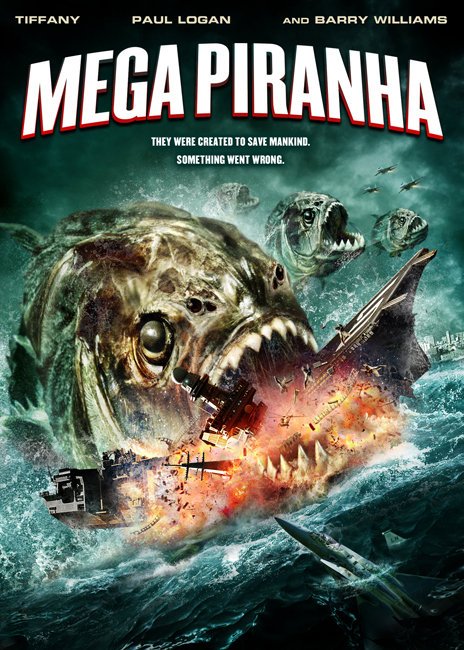
Next up in the “Water Foul” spotlight on the worst marine terrors in movie history is one of the lesser monster flicks produced by The Asylum: “Mega Piranha.”

The writer/director for “Mega Piranha” was Eric Forsberg, who has written such fantastic features as “Ghost Shark” and “Snakes On A Train.” He interestingly hasn’t done any directing work since “Mega Piranha,” which released in 2010.

The cinematographer for “Mega Piranha” was Bryan Olinger, who has worked on similarly low-budget flicks like “Area 407” and the “Sherlock Holmes” mockbuster, which is probably my favorite movie from The Asylum due to its ridiculous and bizarre plot, involving dinosaur hallucinations, an “Iron Man” suit, and complicated airships.

The editor on “Mega Piranha” was a guy named Bill Parker, who also cut The Asylum’s mockbuster sequel “Transmorphers: Fall of Man.”

The special effects on “Mega Piranha” were provided by Tom Devlin, who has also provided effects work for movies like “Daredevil,” “Sand Sharks,” “Club Dread,” and “Poultrygeist: Night of the Chicken Dead.”

megapiranha3The visual effects team for “Mega Piranha” included Mark Kochinski (“Space Truckers,” “Hellboy,” “Red Planet”), Andrew Harlow (“Cloverfield,” “Children of Dune”), Guenever Goik (“300: Rise of an Empire,” “Dawn Of The Planet Of The Apes”), David Carlson (“Wishmaster,” “TRON: Legacy”), Yancy Calzada (“Evil Dead II,” “Demonic Toys”), Kevin Lane (“A Sound of Thunder,” “Avalanche Sharks”), and Scott Wheeler (“3 Ninjas: High Noon At Mega Mountain,” “Scary Movie 2”).

The producers for “Mega Piranha” included Paul Bales (“Sharknado,” “Atlantic Rim”), Stephen Fiske (“Paranormal Entity”), and two of the co-founders of The Asylum: David Michael Latt (“King of the Ants,” “Santa Claws”) and David Rimawi (“King of the Ants,” “Supercroc”).

The musical score for “Mega Piranha” was composed by Chris Ridenhour, one of the go-to composers for The Asylum. He has also provided the music for the films “Sharknado 2,” “Abraham Lincoln vs Zombies,” “Transmorphers,” “Mega Shark vs Giant Octopus,” and the upcoming “Sharknado 3.”

The cast of “Mega Piranha” is led by Paul Logan (“Days Of Our Lives”), 1980s teen pop star Tiffany, and Barry Williams (“The Brady Bunch”), along with an awful lot of people whom I doubt anyone would recognize.

megapiranha5
Honestly, I didn’t recognize Tiffany either.

The story of “Mega Piranha” is not all that much different from “Piranha:” genetically enhanced piranha escape from an experimental facility into a central water system, a begin terrorizing the locals. The biggest differences involve the setting (a politically charged Venezuela) and the size of the piranha, which increases exponentially by the day.

“Mega Piranha” was created as a ‘mockbuster’ of “Piranha 3D,” the second remake of the 1970s “Jaws” knockoff “Piranha.” That means that “Mega Piranha” is technically a knockoff of a reboot of a knockoff. In another odd twist, the release of “Piranha 3D” wound up being delayed, so “Mega Piranha” aired before the film made it to theaters. That’s actually a bad thing for a ‘mockbuster,’ because they parasitically depend on the hype and advertising campaigns of the larger film to build an audience.

“Mega Piranha” is one of many monster-themed, CGI-heavy movies created by The Asylum for the Syfy channel, the most famous of which are the “Sharknado” and “Mega Shark” franchises. Rival schlockmasters and fellow Syfy channel contributors New Horizons Pictures (“Sharktopus,” “Dinoshark,” “Carnosaur”) made their own take on a piranha flick in 2012 with the hybrid “Piranhaconda,” directed by Jim Wynorski (“Chopping Mall”) and produced by Roger Corman.

The reception to “Mega Piranha” was, predictably, not good. It currently holds an IMDb rating of 2.4, along with Rotten Tomatoes scores of 8% (critics) and 16% (audience). The movie initially aired on Syfy in April of 2010, to a recorded 2.2 million views.

The CGI in “Mega Piranha” looks awful, to the point that the fish puppets in “Piranha” look far better, and that was in the 1970s. The production couldn’t even convincingly sink a boat with practical effects, or portray a helicopter, or even replicate an alligator head (which you can literally buy in many gas stations). It is honestly pretty pathetic to watch.

megapiranha7Another aspect of “Mega Piranha” that I just didn’t understand was the amount of really extreme color tinting, that struck me as totally unnecessary. It felt like watching “CSI” with the color filter taken to the max, which is an effect that can pretty much only serve to make your movie look awful (assuming you aren’t David Fincher or the Coen brothers).

“Mega Piranha” also inexplicably labels all of the characters when they appear on screen, which would would feel weird in even the cheesiest of action movies. That is the sort of practice that belongs in outdated sitcom introductions, not a horror/monster movie.

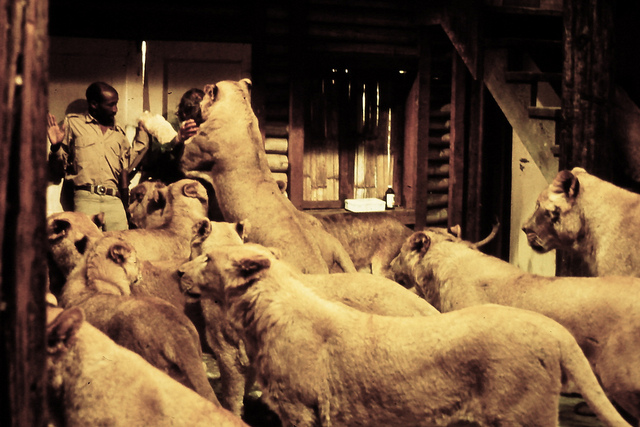
One of the strangest part of “Jaws” occurs after the climactic death scene, when the shark dramatically (and confusingly) roars as it sinks to its demise in a cloud of blood. “Mega Piranha,” in perhaps a misguided homage, has it’s monster fish roar constantly throughout the film, to the point that the movie sounds like the masses of lions in “Roar.”

Not to nitpick, but one of the key plot points in “Mega Piranha” is that the fish are reproducing at a rapid rate (roughly every day), and growing exponentially with each generation. As far as I understand math, doesn’t that mean that the species would rapidly burn out? At a certain point, there wouldn’t be enough food to sustain the population in a given area, and the competition would rapidly whittle it down. The short life span, dramatically increasing size, and rapid breeding would just serve to accelerate the process of the species dying out. Sure, people are in danger and it would be best to eliminate them, but the terror would only last a week at most (they explicitly state they will be as big as whales within a few days). Bigger isn’t necessarily better from an evolutionary and biological standpoint, something the movie (and the scientist characters) totally seem to miss. There is a reason we don’t have bus-sized sharks anymore, after all. In fact, the biggest issue facing the characters and the world of the film is probably how the piranha would wreck the ecosystems of the areas they pass through over the course of that week, which is never actually discussed in the film. Piranha of that size and number could wind up killing massive populations of whales in that short period of time, and that would be a serious bummer.

megapiranha4I don’t have to tell you that the dialogue and acting is bad in “Mega Piranha.” We all know those things are bad. If you have seen one movie from “The Asylum,” you have basically seen them all: they all function as variation on a mediocre theme, being played over and over again and again until we tear out our ears or start singing along, or maybe both.

“Mega Piranha” is a sort of movie that I generally find hard to enjoy. Companies like The Asylum and Troma don’t set out to make quality products, and try to pass off their lack of passion and exceptional incompetence with a giggle and a wink. I try to avoid them as a general practice, as earnestly made b-movies and Hollywood flops are just typically more interesting. The Asylum in particular is also very insulated, and tends to use the same crews over and over again, which results in all of their movies looking and feeling very similar. Just take a look at all of the crew credits earlier in this review, and look at how many of those credits are other Asylum flicks. Something that made the 1960s and 1970s Roger Corman movies so interesting is that he brought in fresh, interesting people straight out of film school to make many of his pictures: this resulted in the discoveries of people like Francis Ford Coppola, Martin Scorcese, James Cameron, and countless others. The Asylum doesn’t seem to comprehend that there is value to variety and vision, and instead clusters together like an isolated cult running a sovereign nation of schlock. It isn’t a good look, and they aren’t winning over a lot of new people for it.

If you like awful CGI monsters and the usual products put out by The Asylum, feel free to whistle right along to the tune of “Mega Piranha.” Otherwise, I suggest digging up something else. Even some of the more popular Asylum flicks, like a “Mega Shark” or a “Sharknado,” would be more worth your time than this.

Water Foul: “Leviathan”

Leviathan

leviathan2

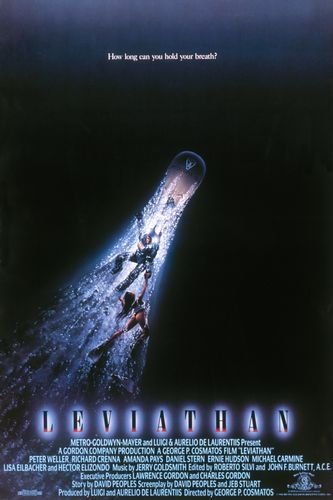
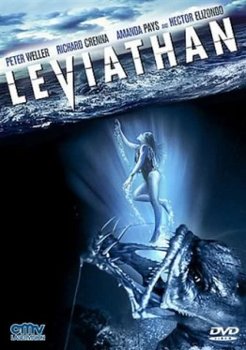
Continuing with the “Water Foul” spotlight on some of the worst aquatic terrors in cinematic history, the next feature I will be covering is 1989’s “Leviathan.”

The two credited writers for “Leviathan” were David Webb Peoples (“Blade Runner,” “12 Monkeys,” “Unforgiven”) and Jeb Stuart (“Die Hard,” “The Fugitive”). The director, George P. Cosmatos, is best known for films like “Cobra,” “Tombstone,” and “Rambo: First Blood Part II,” for which he received a Golden Raspberry nomination.

The cinematographer on “Leviathan” was Alex Thomson, who has worked as a director of photography and camera operator on such films as “Demolition Man,” “Cliffhanger,” “Labyrinth,” and “Fahrenheit 451.”

The “Leviathan” visual effects team was comprised of Rene Clark (“Detroit Rock City,” “Bunraku”), C. Mitchell Bryan (“Robot Jox,” “Stargate”), James Belohovek (“Troll,” “Evil Dead II,” “The Thing”), Ed Thompson (“Mystery Men,” “SpaceCamp”), Paul Stewart (“Tango & Cash,” “Speed 2: Cruise Control”), David B. Sharp (“Fortress,” “Muppets From Space,” “Event Horizon”), Barry Nolan (“Maximum Overdrive,” “Dune”), Niels Nielson (“Lawnmower Man 2,” “The Fifth Element”), Richard Malzahn (“Kull The Conqueror,” “Suburban Commando,” “Joe Dirt,” “Serenity”), and Jurgen Heimann (“Pacific Rim,” “Attack The Block,” “Hellboy”).

leviathan6The makeup effects on “Leviathan” were done by a group that included Katalin Elek (“Double Team,” “SpaceCamp,” “The Monster Squad”), Bruce Barlow (“From Beyond,” “Virtuosity,” “Arena”), Zoltan Elek (“Street Fighter,” “Timecop,” “The Day After”), and John Rosengrant (“Small Soldiers,” “Congo,” “Batman Returns,” “The Avengers”).

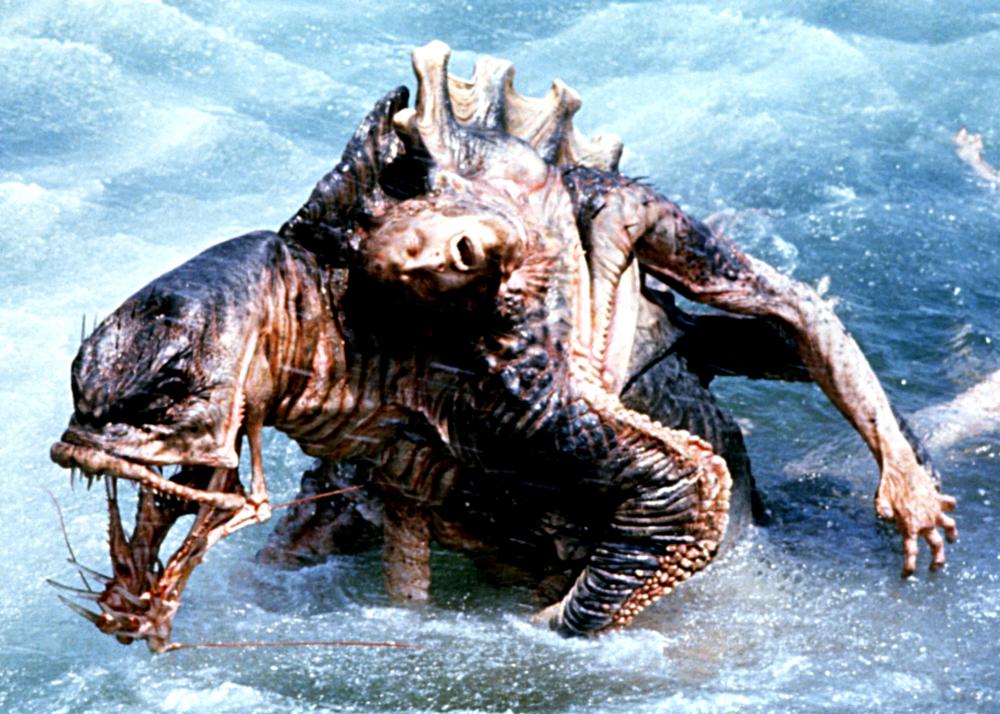
The massive special effects and creature design team for “Leviathan” was provided by the legendary Stan Winston Studios, and included, aside from Stan Winston himself (“Bat People,” “Lake Placid”): Tom Woodruff Jr. (“Tremors,” “Paul Blart: Mall Cop 2”), Jeff Kennemore (“The Garbage Pail Kids Movie,” “Class of 1999”), Richard J. Landon (“Predator 2,” “Constantine”), Shane Mahan (“Iron Man,” “Inspector Gadget”), Karen Mason (“DeepStar Six,” “Where The Wild Things Are”), Pat McClung (“The Abyss,” “Masters of the Universe”), Jim McPherson (“Slumber Party Massacre II,” “State of Play,” “Deep Blue Sea”), Hal Miles (“976-EVIL,” “Leprechaun 4: In Space”), Brian Penikas (“Tank Girl,” “Face/Off,” “Guardians of the Galaxy,” “Interstellar”), John Rosengrant (“Aliens,” “Predator,” “Small Soldiers”), Andy Schoneberg (“Mortal Kombat,” “Planet Terror”), Grant Arndt (“Hell Comes To Frogtown”), John Blake (“From Beyond,” “Starship Troopers,” “Showgirls”), Roger Borelli (“Dollman”), Mario Cassar (“Cutthroat Island,” “Final Justice”), Craig Caton (“The Stuff,” “Big Trouble In Little China”), Steve Frakes (“Evolution,” “Jumanji”), Mark Garbarino (“Kung Fu Killer,” “Paul Blart: Mall Cop 2,” “Robot Holocaust”), Alec Gillis (“Dragonball Evolution,” “Grown Ups 2”), Steven James (“Mac and Me,” “Baby’s Day Out”), Steve Johnson (“League of Extraordinary Gentlemen,” “Humanoids from the Deep”), Michael Spatola (“C.H.U.D. II: Bud the Chud,” “Going Overboard,” “Zomboobies!”), Shannon Shea (“Ghosts of Mars,” “In The Mouth of Madness,” “House”), and many, many others.

LEVIATHAN, 1989, (c) MGM

The producers on “Leviathan” included the Italian duo of Luigi and Aurelio De Laurentis, the brother and nephew of famed producer Dino De Laurentis. Aurelio went on to act as executive producer on “Sky Captain and the World of Tomorrow,” as well as a number of Italian features. The two other producers on the flick were brothers Charles and Lawrence Gordon, the founders of Largo Entertainment. Combined, they produced such films as “Die Hard,” “Waterworld,” “Field of Dreams,” “K-9,” “Predator,” and “Predator 2.

The music for “Leviathan” was provided by Jerry Goldsmith, a proficient film composer and conductor with over 250 composition credits, including “Small Soldiers,” “Congo,” “Supergirl,” “Capricorn One,” “Total Recall,” “The ‘Burbs,” “Chinatown,” and “The Omen,” among countless others.

The two editors for “Leviathan” were John F. Burnett, best known for “Grease” and “Grease 2,” and Roberto Silvi, who would later cut “Tombstone.”

The production designer for “Leviathan” was Ron Cobb, who also worked on an assortment of other films, including “Space Truckers,” “Conan The Barbarian,” “Firefly,” “Robot Jox,” “Alien,” and “Total Recall.”

The cast for “Leviathan” included Peter Weller (“RoboCop”), Ernie Hudson (“Congo,” “Ghostbusters”), Daniel Stern (“Home Alone,” “City Slickers”), Richard Crenna (“First Blood,” “Judging Amy”), Amanda Pays (“The Flash,” “Max Headroom”), Lisa Eilbacher (“The Last Samurai,” “Beverly Hills Cop”), Hector Elizondo (“Chicago Hope”), and Meg Foster (“They Live,” “Masters of the Universe”).

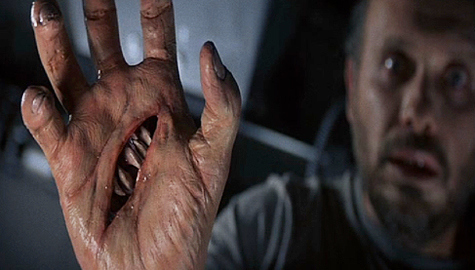
leviathan5The story of “Leviathan” follows a crew of deep sea minors who stumble across a mysterious Soviet shipwreck that contains strange, genetic monstrosities that begin to hunt down the crew members.

Interestingly, very little of “Leviathan” was actually filmed underwater, but the illusion is built up impressively with the lighting, particles in the air, and misting. I was surprised how believable the ultimate product actually was, though it is certainly noticeable when you are keeping an eye out for it.

The reception for “Leviathan” wasn’t exactly positive, though people seem to have softened to it in retrospect: it current has a 5.7 IMDb rating, alongside Rotten Tomatoes scores of 14% (critics) and 25% (audience).

The domestic gross for “Leviathan” was just under $16 million on a budget of $20 million, meaning it failed to make back its money in the theatrical run. Of course, the fact that the 1989 movie market was saturated by deep sea adventures (six in total: “DeepStar Six,” “The Abyss,” “Endless Descent,” “Lords Of The Deep,” “The Evil Below,” and “Leviathan”) certainly didn’t help its odds of being profitable.

leviathan1There is a solid little review on ReelFilm.com that talks about one of the criticisms I have most often seen about “Leviathan”: specifically, the dragging middle section of the flick:

Cosmatos ultimately spends far too much time dwelling on the various characters’ day-to-day exploits aboard the mining station – to the extent that it becomes impossible not to wish that the aforementioned threat would hurry up and make its appearance, already

The focus on the characters does weigh things down a little in the middle, but I also thought that it made the characters a little more real and relate-able. They aren’t expertly written by any means, but the crew is more interesting than your typical sci-fi flick today.

The effects work isn’t bad in “Leviathan,” but it is nowhere near groundbreaking. I did definitely like the early stage design of the creature as a lamprey, which I thought was the coolest aspect of the effects work. However, the ultimate product in the final stage of the creature’s evolution just seems too busy, and looks a little ridiculous because of it.

leviathan4“Leviathan” is a pale comparison to similar sci-fi horror of the era, but it has to be looked at on its own merits if you ask me. It isn’t as flagrant of a rip off as “Humanoids from the Deep,” but it isn’t exactly subtle about borrowing elements from “Alien,” “The Thing,” and “Aliens.” Interestingly, it predated “The Abyss” by just a few months, despite many seeing it as a knock-off of that film in retrospect.

As far as the cast goes, Daniel Stern and Ernie Hudson are pretty great, and ham up their roles well. Peter Weller takes on the lead duties just fine, but as with most of his characters, he isn’t exactly flashy. He has a couple of fantastic lines towards the end of the film, though.

If you ask me, I think “Leviathan” suffers from having too many false endings. The shark bit, for example, was just totally unnecessary, and was immediately follow up with another surprise. You can’t just toy with the pacing and arc that much, particularly at the very end of a story.

1989 was, of course, well into the tail end of the Cold War. It was an interesting touch having the ship and creature be of Soviet origin, given there were a lot of worries about nukes and other weapons going unmaintained or forgotten as the Soviet Union was falling.

Overall, there are some fun bits throughout “Leviathan,” but it isn’t particularly memorable as a whole. It definitely suffered in the public eye by being one in a massive field of deep water movies in 1989. It also drags a bit too much, and borrows a little too heavily from other works, which clearly left a sour taste in many mouths. It is a mostly forgotten flick now, but it is worth revisiting for sure, as it doesn’t merit the harshness of the contemporary criticisms it received upon release.

Water Foul: “Frog-g-g!”

Frog-g-g!

froggg3

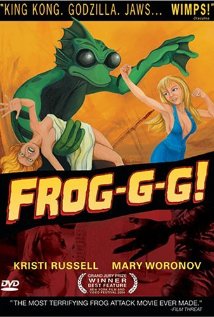
Today I am continuing my “Water Foul” spotlight on the very worst aquatic monsters to ever grace a screen with the low-budget homage/parody: “Frog-g-g!”

“Frog-g-g!” was written, directed, and edited by Cody Jarrett, who has also created a similar-styled  women-in-prison homage in “Sugar Boxx.”

The effects team for “Frog-g-g!” included a couple of veteran makeup and effects artists, Patricia Urias (“The League of Extraordinary Gentlemen,” “Jennifer’s Body,” “Drag Me To Hell”) and Greg Solomon (“Zombeavers,” “Batman & Robin,” “I Am Legend”).

The music for “Frog-g-g!” was composed by Will Flint and Blake Neely. The latter has composed music for numerous television shows in the past few years, including “The Mentalist,” “Arrow,” and “The Flash.”

The cinematography on “Frog-g-g!” was provided by David E. Diano, who has worked as a camera operator on semi-notable films like “SpaceCamp,” “Night Shift,” “Street Fighter,” and “Spider-Man 3.”

The cast of “Frog-g-g!” is led by Kristi Russell, who has since become a successful casting director for television shows like “Bar Rescue,” “Storage Wars,” and “Ice Road Truckers.” The rest of the cast includes Ariadne Shaffer (“Better Luck Tomorrow”), Robert Patrick Brink (“The Insider”), Michael McConnohie (“Vampire Hunter D,” “The Big O,” “Monster”), James Duval (“Donnie Darko”), and Mary Woronov (“Chopping Mall,” “Death Race 2000,” “Eating Raoul”).

froggg1The story of “Frog-g-g!” centers around an EPA investigation into a chemical company that may be polluting the water supply of a small, conservative farming town. It turns out that the pollution is far worse than initially thought, creating a murderous, humanoid frog creature.

“Frog-g-g!” wasn’t particularly well-received, and currently holds a 13% audience score on Rotten Tomatoes along with a 4.4 IMDb rating.

“Frog-g-g!” certainly has flashing moments of cleverness, particularly when viewed back-to-back with “Humanoids from the Deep,” the primary inspiration for the flick. The sex-obsessed sea monster being the result of human pollution is 100% “Humanoids from the Deep,” and “Frog-g-g!” manages to lampoon just about every ridiculous detail from that overly-serious film.

That said, “Frog-g-g!” is actually pretty boring, drags along for a good while. Instead of being a frame, the premise and setup is almost the whole movie, making the film almost more of an “Erin Brockavich” knockoff than a monster movie.

froggg2As you would expect, the acting in “Frog-g-g!” is particularly awful (likely by design to a certain degree), particularly on the part of the various “bad guys,” like the big businessman and the corrupt sheriff.

In a lot of ways, “Frog-g-g!” has the opposite problems of “Humanoids from the Deep”: instead of being too serious, it is far too silly. Worse, the film lacks any element of earnest creativity, and feels almost feels like a Troma movie because of it (except that it arguably looks better). In fact, in the behind the scenes documentary about “Frog-g-g!,” one of the crew members specifically says “This is so Troma, it is unbelievable,” in such a way that I assume it was meant positively.

The most entertaining element of “Frog-g-g!” is definitely the frog suit and the monster’s portrayal, which makes it all the more unfortunate how little screen time it gets. Particularly, the overly-dramatic walking and leaping motions are just hilarious.
“Frog-g-g!” contains a surprising amount of social conflict, specifically surrounding conservative vs liberal values. There are blatant criticisms of homophobia, corporate and governmental corruption, urban vs rural values, and pollution scattered throughout the film, which holds true to a good number of classic b-pictures.

It is impossible not to notice the really shitty quality of the movie overall from a production standpoint. Unfortunately, is does not strike me as being done in a classic b-movie sort of way, but rather in a ‘we couldn’t afford to make it look better’ kind of way. That isn’t something I can realistically hold against the film, but it is also something that can’t be easily ignored.

froggg4“Frog-g-g!” also makes the decision to feature the same “Alien” knock-off ending as was used in “Humanoids,” and it looks faithfully ridiculous. However, it also seems like the sort of nod that only someone with intimate knowledge of “Humanoids from the Deep” would get, which might not have been the best way to go about this film. If the movie had been a little more broad in its parody of b-films, it might have resonated with a few more people.
Overall, “Frog-g-g!” is kind of dull, with only brief flashes of entertainment. It is certainly better than just about any “Troma” flick out there, but only by a hair. I would only recommend this one for people who really like films like “Creature From The Black Lagoon” or “Zaat,” otherwise it isn’t going to be worth sitting through.


Water Foul: “Humanoids from the Deep”

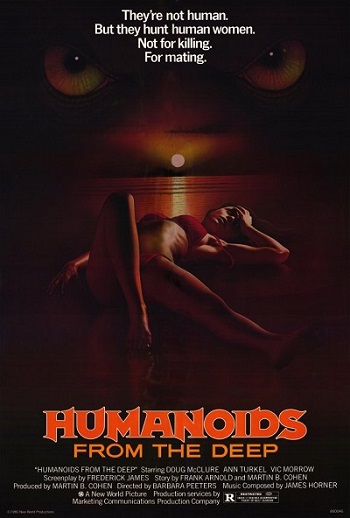
Humanoids From The Deep

humanoids1

Next up in the “Water Foul” spotlight on cinematic aquatic terrors is the 1980 creature feature, “Humanoids From The Deep.”

The story of “Humanoids From The Deep” was conceived of by producer Martin B. Cohen and Frank Arnold, an aging actor. The screenplay was written by William Martin, who notably doesn’t have any other film credits according to IMDb.

The primary director on “Humanoids From The Deep” was Barbara Peeters, who had directed a handful of exploitation films previously, and went on to direct for television programs like “Falcon Crest.” Later on, Jimmy T. Murakami (“Battle Beyond The Stars”) was brought in to direct additional sequences, but didn’t ultimately receive official credit for his work on the film.

The cinematographer for “Humanoids From The Deep” was Daniel Lacambre, who also shot “Battle Beyond The Stars” and “Saturday The 14th.”

The producers on “Humanoids From The Deep” included the legendary b-movie figure Roger Corman, story co-writer Martin B. Cohen, and Hunt Lowry, who has gone on to produce films like “Donnie Darko,” “Last of the Mohicans,” and “Top Secret!”

The effects team for “Humanoids From The Deep” included Steve Johnson (“Big Trouble In Little China,” “The League of Extraordinary Gentlemen,” “Videodrome”), Shawn McEnroe (“The Howling,” “Cocoon”), Kenny Myers (“Species,” “Galaxy Of Terror,” “Galaxina”), Margaret Prentice (“The Thing,” “RoboCop,” “Total Recall”), Roger George (“Chopping Mall,” “Ghoulies,” “Grand Theft Auto,” “Never Too Young To Die”), and Chris Walas (“Piranha,” “Gremlins,” “The Fly”).

The editor on “Humanoids” was Mark Goldblatt, who also cut such films as “Enter The Ninja,” “Predator 2,” “Super Mario Bros.,” and “The Howling.” He also went on to direct a couple of movies, the cult classics “Dead Heat” and 1989’s “The Punisher.”

The music for “Humanoids” was composed by James Horner, who would later win an Academy Award for his score to “Titanic,” and has received numerous accolades for films such as “A Beautiful Mind,” “Braveheart,” “Aliens,” and “Avatar.” “Humanoids” was one of his first film scores, and his early career featured a number of similar low budget horror and sci fi features like “Battle Beyond The Stars,” “The Hand,” and “Krull.”

Assistant director for “Humanoids From The Deep” James Sbardellati went on to work on films like “Slipstream,” “Frailty,” “The Island Of Dr. Moreau,” “The Beastmaster,” and “She’s All That,” and also got head directing duties for the 1983 sword and sorcery cult flick “Deathstalker.”

The cast of “Humanoids from the Deep” includes Doug McClure (“Cannonball Run II,” “Roots”), Ann Turkel (“Deep Space”), Vic Morrow (“Twilight Zone: The Movie,” “Roots,” “1990: The Bronx Warriors”), Anthony Pena (“The Running Man”), and Hoke Howell (“Kingdom Of The Spiders”).

The story of “Humanoids From The Deep” centers around a seaside town that becomes terrorized by mutated, sex-crazed creatures from the sea. As the plot progresses, it is revealed that the creatures were created as a byproduct from hazardous chemicals and genetically modified organisms that had been introduced into the local ecosystem.

humanoids3“Humanoids” was given a made-for-television remake in 1996 starring Robert Carradine that ultimately aired on Showtime to negative reviews.
Apparently, a fair amount of personnel drama ensued around the filming and post-production of “Humanoids from the Deep.” As mentioned earlier, Jimmy Murakami was brought in to film additional sequences after Peeters refused to do so, specifically because the proposed additions were all focused on increasing the gore and explicit sexual content of the film, which was counter to the original vision for the movie. One of the actors, Ann Turkel, tried to stop the release of the picture after she caught wind of the content of the additional sequences (to no avail).
Reportedly, additional actors had to be hired to play the parts of the monsters after the stunt men on “Humanoids” refused to wear the monster suits.

Menahem Golan (“Enter The Ninja,” “Revenge of the Ninja,” “Ninja III”) had at one point planned to make a sequel to “Humanoids From The Deep” in the early 1990s, but the plans ultimately fell through.

Joe Dante, who had just finished directing the film “Piranha,” reportedly turned down the opportunity to direct “Humanoids From The Deep.”

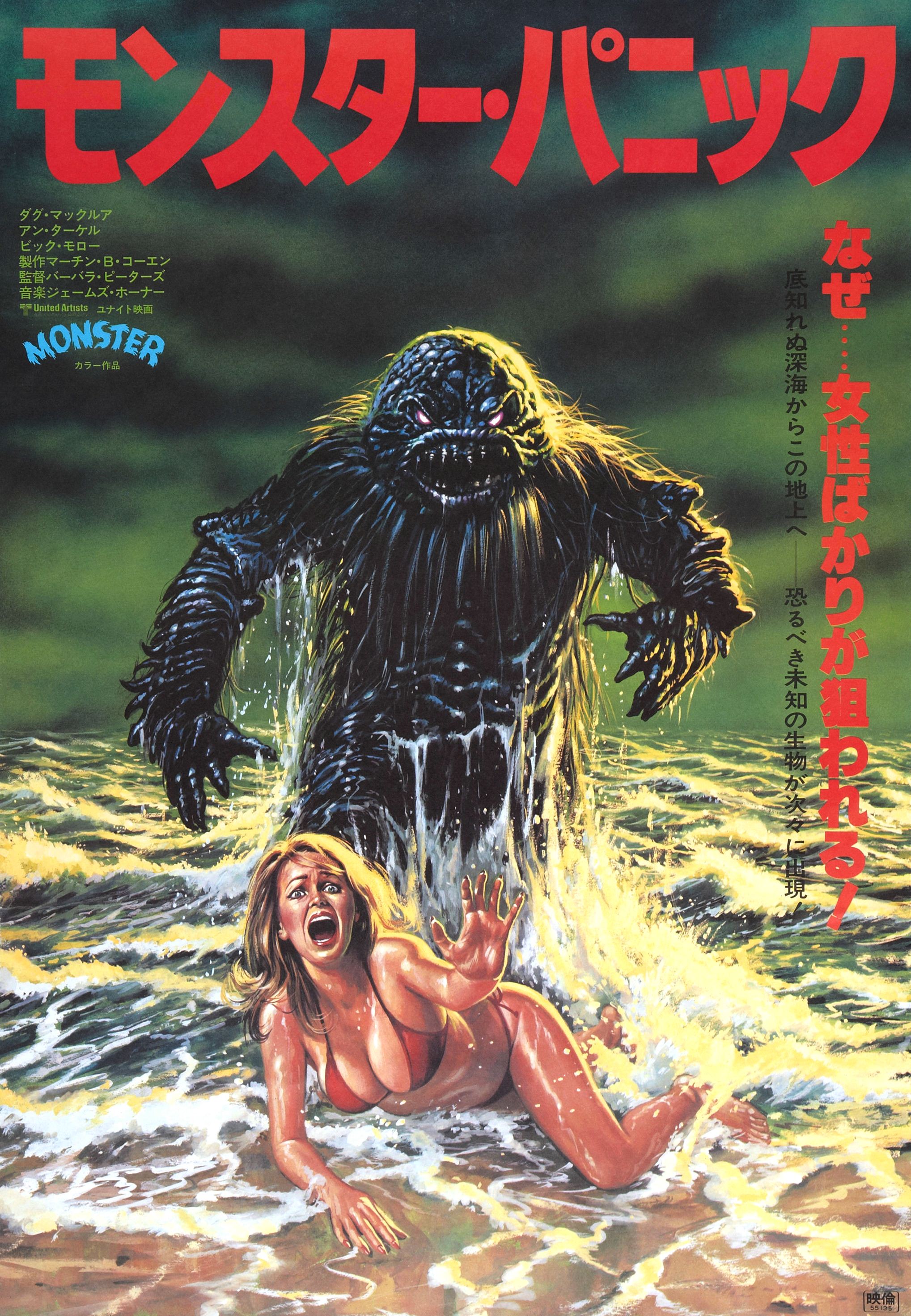
“Humanoids” went by a number of working titles throughout production in an attempt to give the film a sense of legitimacy and class. Two of these titles were “Beneath the Darkness” and “Monster,” the latter of which was used as the final title in some foreign markets.

humanoids4“Humanoids” managed to gross a reported $2.5 million on an undisclosed budget, which was almost assuredly far less than $2.5 million. The film currently holds an IMDb rating of 5.7, along with Rotten Tomatoes scores of 56% (critics) and 43% (audience), making for a generally poor reception.

Even though a lot of Murakami’s extended sequences and extra shots didn’t make it to the final cut, it is clear that there was an attempt to up the sleaze factor from watching the film. The amount of totally unnecessary sexual violence on the part of the creatures (which is never adequately explained/rationalized) is absolutely through the roof, to the point that it even drags the pacing of the film down. The film was interestingly both praised and scorned for the explicit nudity and violence by various critics, creating an contentious division of opinion.

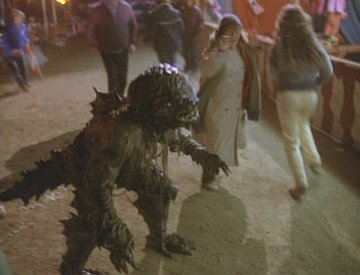
The monsters in “Humanoids” honestly don’t look great, They are certainly better than the typical rubber suit beasts that popped up in flicks like “Zaat” or “Horror of Party Beach,” but this was also made in 1980 and on a budget upwards of $2 million: it should look better than those flicks. In fact, it should look astoundingly better, which it unfortunately doesn’t.

One of the biggest problems with “Humanoids” is that it takes itself a bit too seriously for what it is. Outside of one or two semi-humorous sequences (there’s an attempted seduction via puppet?), this film is dead serious from start to finish, and never feels fun. I don’t understand what something so inherently ridiculous was made with such gloomy style, because it certainly doesn’t do the film any favors.

humanoids5Also not helping the overly serious tone, awful monsters, and way-too-heavy content are the poorly-written characters. Basically, none of the characters are memorable in the slightest, and they seem to all die before you get to know them. For all of the things I dislike about, say, “Lake Placid,” I can give you broad strokes of what each of the central characters was like. Gun to my head, I have no idea how to describe the characters in “Humanoids,” except for that one creep who attempt the puppet-assisted seduction.

Last but not least, “Humanoids from the Deep” is guilty of a whole lot of rip-offs from much bigger and more successful contemporary blockbusters. There is obviously a lot of “Jaws” influence (the attack sequences and POV monster shots, for example) in the film, easily as much as there is from the more obvious predecessors “Creature From The Black Lagoon” or “Horror of Party Beach.” “Humanoids” even goes so far as to rip off the dramatic “Alien” chest-burster with the ending (which looks awful). I am a little surprised that they couldn’t figure out a way to wedge a light saber or a star destroyer into this flick to cover all of the blockbuster bases. In for a penny, in for a pound, right? Regardless, “Humanoids” is a knock-off from top to bottom, and doesn’t have a lot in the way of original contributions.

“Humanoids From The Deep” is like licorice: some seem to absolutely love this one, whereas it incites revulsion from many others. As much as I love b-movies (and licorice), I wasn’t impressed overall with “Humanoids From The Deep.” It is a faithful enough update of the old sea monster classics, but it is definitely missing something. The sexually charged monsters are just weird, and the whole thing is way heavier and more serious than it needed to be. It also feels like a soulless assembly of other successful elements from movies at the time that just don’t work when thrown together. Sexual-themed dread works in “Alien,” but it doesn’t need to be in “Jaws.” If you are into Corman movies, this is probably worth checking out, but it certainly isn’t in his upper echelon of memorable works by a long-shot.

Water Foul: “Frogs”

Frogs

frogs1

Today’s aquatic-themed horror flick is George McCowan’s 1972 killer frog feature: “Frogs.”

“Frogs” was written by Robert Hutchinson and Robert Blees, the latter of which wrote screenplays for numerous films and television series from the 1940s through the 1980s, including “High School Confidential” and “Dr. Phibes Rises Again.”

The director for “Frogs,” George McCowan, spent most of his career working on television shows like “Starsky & Hutch,” “Fantasy Island,” “S.W.A.T.,” and “Charlie’s Angels.” However, he also directed one of the sequels to “The Magnificent Seven”: “The Magnificent Seven Ride!”

frogs6The special effects makeup for “Frogs” was provided by Thomas R. Burman in one of his first major effects gigs. He has since worked on television shows and films such as “Nip/Tuck,” “Grey’s Anatomy,” “Hudson Hawk,” “Con Air,” “Last Action Hero,” “Howard The Duck,” “Halloween III,” and “Teen Wolf Too.”

The cinematographer for “Frogs” was Mario Tosi, who has acted as director of photography for such films as “Carrie,” “The Main Event,” and “The Stunt Man.”

The producers for “Frogs” included George Edwards (“Games,” “Voyage To The Prehistoric Planet,” “What’s The Matter With Helen?”) and Norman T. Herman (“Blacula,” “Bloody Mama,” “The Legend Of Hell House”), who were both proficient b-movie producers for many years.

The editor on “Frogs” was Fred R. Fetishans, who cut a number of other low budget films including “Dillinger,” “The Man From Planet X,” “Wild In The Streets,” “The Ghost In The Invisible Bikini,” and “How To Stuff A Wild Bikini.”

The assistant editor on “Frogs,” James L. Honore, went on to work as a production manager on films like “The Hitcher,” “Full Moon High,” “Pumpkinhead,” and “Collision Course.”

frogs3The music on “Frogs” was composed by Les Baxter, who also wrote scores for a number of Roger Corman’s films (“X: The Man With X-Ray Eyes,” “The Raven,” “Pit And The Pendulum”), as well as Mario Bava’s “Black Sunday” and “Black Sabbath.” However, he is almost certainly best remembered for writing the iconic whistled theme from the television show “Lassie.”

“Frogs” was produced and distributed by American International Pictures, and presented by the famed AIP b-movie duo of Samuel Arkoff (“Q,” “Hell Up In Harlem”) and James H. Nicholson.

The cast for “Frogs” includes most notably a pre-fame (and pre-stache) Sam Elliott (“Road House,” “The Big Lebowski”). The rest of the cast is made up of Joan Van Ark (“Spider-Woman”), Adam Roarke (“The Stunt Man”), Lynn Borden (“Walking Tall,” “Hazel”), and Academy Award winner Roy Milland (“The Lost Weekend,” “The Thief,” “The Thing With Two Heads,” “Dial M For Murder,” “X: The Man with the X-Ray Eyes”).

frogs4The story of “Frogs” follows a group of people who become stranded in a remote swamp after the wildlife begins randomly attacking them. Most of the plot consists of them attempting to escape to civilization, or being picked off one-by-one by stock footage of mostly harmless wetland wildlife.

Reportedly, 600 frogs were used for the production, many of which escaped over the course of filming in Florida’s Eden State Park.

“Frogs” has about as many ridiculous character deaths in it as it does amphibians, but one in particular didn’t make the cut for the final film. A quicksand-related death was cut out for apparently being too silly (which means it must have been very silly, given the rest of the deaths included), but was still used in trailers.

frogs7“Frogs” was apparently inspired partially by the surprising box office success of “Willard,” which also used otherwise-innocuous animals to deadly effect.

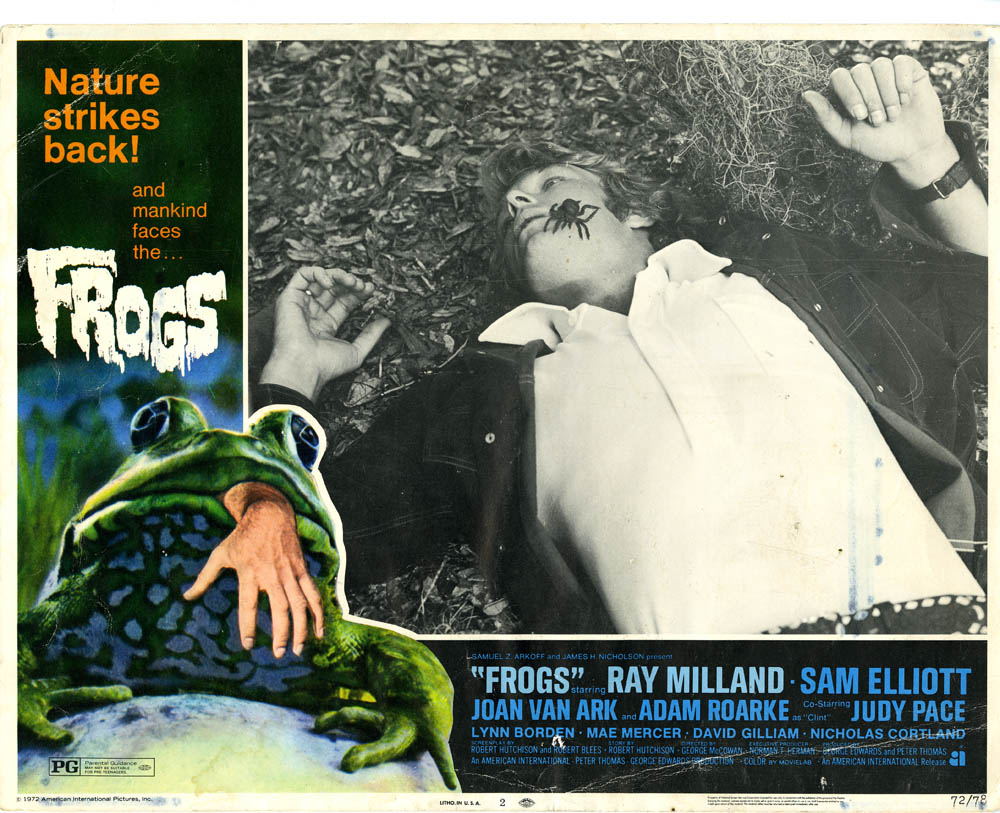
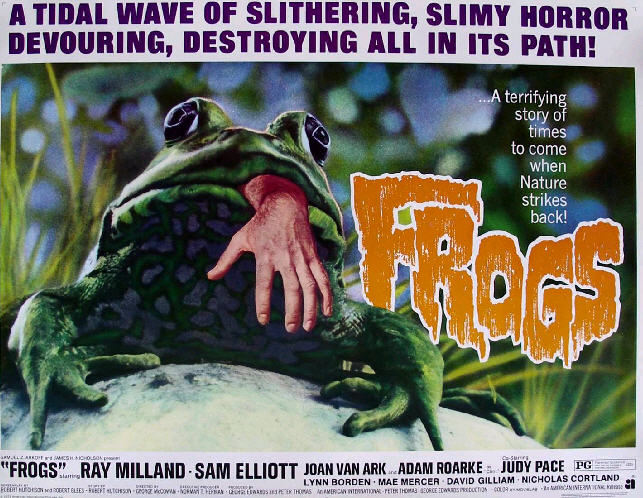
One of the most infamous aspects of “Frogs” was it’s ludicrous and confusing poster, which seemed to imply that the film is about a giant. evil frog. In fact, no one in the movie is ever shown being eaten by a frog, and none of the frogs featured are any larger than a small dog (which is still pretty damn big for a frog).

frogs2During one section of the movie, are number of characters are attacked and chased by a flock of birds. Unfortunately, the production couldn’t afford to film with real birds, meaning that the scene had to be cobbled together with a mixture of stock footage and superimposed images on the film.

Noted satirist Fran Lebowitz apparently stated that “Frogs” was “the best bad movie I have ever seen in my life” in her review of the film. Another review, at Antagony & Ecstacy, said of “Frogs”:

It’s this kind of flatfooted incompetence that can turn a sane person into a dedicated bad movie watcher for the rest of their days.

As you might expect, “Frogs” wasn’t exactly a critically-lauded hit. It currently holds an IMDb rating of 4.2, along with Rotten Tomatoes scores of 20% (critics) and 25% (audiences). I wasn’t able to dig up any gross or budget information on the flick, but there is certainly no arguing that it was made on the cheap. In spite of the quality, I would be shocked if it didn’t make money at some point.

As mentioned earlier, “Frogs” features a number of preposterous deaths committed by mostly innocuous swamp creatures. I managed to dig up the following video that collects some of the highlights, for your viewing pleasure:

I have to give “Frogs” a little bit of credit, because it does try to build a movie around the increasing social concerns about environmentalism and pollution. In the early 1970s, the chemical insecticide DDT was in the process of being banned, after discoveries were made about how dramatically the compound effected wildlife. “Frogs” not-so-subtly postulates that nature could find a way to fight back in a war against humans due to our mistreatment of the planet, making the film’s plot both timely and socially-charged, while also tapping into a clear public anxiety. I suppose it also deserves some points for trying to make a horror movie out of stock footage, pocket change, and duct tape, which is clearly no easy task.

Most of the performances in “Frogs” are at-best mediocre, with the notable exception of Ray Milland. He absolutely plays up his character in “Frogs” as much as he possibly can, and constructs a truly repulsive characterization that encapsulates all of the negative aspects of traditional southern society. He livens up the film every time he is on screen, and is the true villain of the story when it comes down to the wire. Stuart Gordon, a writer and director whom I have covered extensively, has said of Milland’s later work in b-movies:

“The thing about Milland is that you always get the feeling that he’s having fun in these movies…he doesn’t take it any less seriously than he did ‘The Lost Weekend,” he really plays it for all that it’s worth”

As much as the cinematography tries, I just couldn’t find the eponymous frogs to be at all intimidating. For the most part, they watch on as other animals kill off characters, and never seem to post much of a threat themselves. The final sequence of the film, which is very much designed like a horror movie, is about as close as the movie ever gets to menace as the frogs force their way into the plantation home. Even then, the ridiculousness of the situation makes it somewhat comic in spite of itself.

frogs5Overall, “Frogs” isn’t the most exciting good-bad movie out there, but the sheer preposterousness of the plot and the character deaths makes it a solid recommend in my opinion. I’m not sure why it hasn’t achieved more popular cult acclaim in bad movie circles, but it is certainly ridiculous enough to merit watching with a group of friends. Luckily, it isn’t a very difficult film to dig up, and copies are readily available through Netflix and YouTube.

Water Foul: “Horror Of Party Beach”

Horror Of Party Beach

partybeach2

Today, I’m kicking off a new section of the blog spotlighting the very worst aquatic creatures ever to grace a screen: a section I have decided to refer to as “Water Foul.” First up is the infamous monster movie / beach party flick, “Horror of Party Beach.”

“Horror of Party Beach” was written and photographed by Richard Hilliard, who was also behind films like “The Lonely Sex” and “Violent Midnight.” The film was directed and produced by Del Tenney, who also directed “I Eat Your Skin” and “Curse Of The Living Corpse.”

One of the producers on “Horror of Party Beach” was Alan V. Iselin, who also produced such timeless masterpieces as “Frankenstein Meets The Spacemonster” and “Come Spy With Me.”

The music for “Horror of Party Beach” was provided by Wilford L. Holcombe, who also scored “Curse Of The Living Corpse” and “Violent Midnight.”

Assistant director Wayne Tippit became a dedicated actor following “Horror of Party Beach,” appearing in numerous bit roles in films, and even featuring in television shows like “Melrose Place” and “L.A. Law” until his death in 2009.

Most of the cast for “Horror Of Party Beach” acted in no other films in their careers, including the leads: John Scott, Alice Lyon, and Allan Laurel.

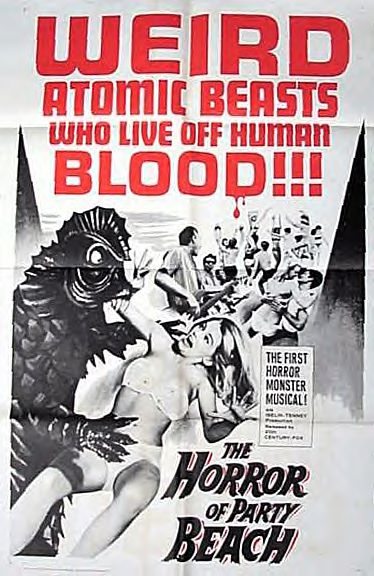
The story of “Horror of Party Beach” is pretty much self-explanatory: radioactive sea creatures begin terrorizing a small beach town with a significant population of partying teenagers.

partybeach4In Stephen King’s nonfiction work Danse Macabre, he apparently refers to the film as “an abysmal little wet fart of a picture,” but is also a fan of the movie for focusing the plot and back story on a number of the anxieties of the postwar era.

“Horror of Party Beach” is one of the films included in the 1978 book “The Fifty Worst Films of All Time” by Harry Medved and Randy Lowell, which was the predecessor to the immensely popular “Golden Turkey Awards.”

A promotional sign was posted at every theater showing “Party at Horror Beach” which stated:

“FOR YOUR PROTECTION! We will not permit you to see these shockers unless you agree to release the theatre of all responsibility for death by fright!”

partybeach3In true William Castle style, audience members actually had to sign a “fright release” waiver prior to entering the theater.

“Horror of Party Beach” was filmed back to back with another feature with a nearly identical cast and crew, “Curse Of The Living Corpse,” with which it played on a double bill.

Because “Horror at Party Beach” was filmed in black and white, the production was able to use chocolate syrup for blood, a technique that was popularly used throughout the black and white era.

For reasons known only to the filmmakers, Alice Lyon’s lines are dubbed throughout the entire running of the film. This was a technique that was done in a lot of bad movies that couldn’t quite get the hang of sound recording on set, like “The Creeping Terror” and “The Beast of Yucca Flats.”

Because of the film’s low-budget, the production couldn’t afford to portray an actual ‘car crash.’ The one in the film was done through the use of sound effects and creative camera angles, which (shockingly) were particularly compelling.

The film apparently inspired a the punk song  called “The Horror of Party Beach” by Sloppy Seconds, which more or less follows the plot and details of the movie.

At the time, “Horror of Party Beach” claimed to be the first horror monster musical, despite the fact that “The Incredibly Strange Creatures Who Stopped Living And Became Mixed-Up Zombies” released months earlier, and was structured in a more traditionally musical format.

“Horror of Party Beach” was apparently made for just over $100,000. I wasn’t able to dig up any gross information, but with a budget that low, there’s almost no way that it failed to make money. It is well known as a famously awful movie, and currently holds a justifiably terrible  2.7 rating on IMDb, along with a 28% audience score on Rotten Tomatoes.

The acting in “The Horror of Party Beach” is astoundingly awful, which makes plenty of sense given most of the cast was filled out by local non-actors. The dubbing that is used is also both unnecessary and distracting, adding to all of the other issues with the feature.

Most notably, the monsters featured in “The Horror of Party Beach” are comical, easily on the lowest tier of quality with films like “Zaat,” “Track of the Moon Beast,” “The Creeping Terror,” and “Robot Monster.”

partybeach1The MST3k riff of “The Horror of Party Beach” points out a pretty big plot issue, in that the revelation that sodium can kill the monsters is just forgotten and dropped for multiple scenes, as if either the script or the editing was done in the wrong order. That is the sort of thing that either the script supervisor or an editor should have caught long before a copy made it on to a screen.

Overall, “The Horror at Party Beach” is a perfect example of an old, cheap b-movie. You can’t help but love the bad acting, the awful dialogue, and the cheesy monster suits. That said, it isn’t quite as memorable as many of its peers. As far as bad musical numbers go, I’d choose “Eegah!” over this any day, and the monsters here aren’t nearly as memorably terrible as “The Creeping Terror” or “Robot Monster.” If you are a die hard bad movie fan, I recommend giving this flick a shot. Otherwise, this isn’t really a required watch in my opinion: there are just better options in the genre out there, and also ones with better riffs if that is what you are after.

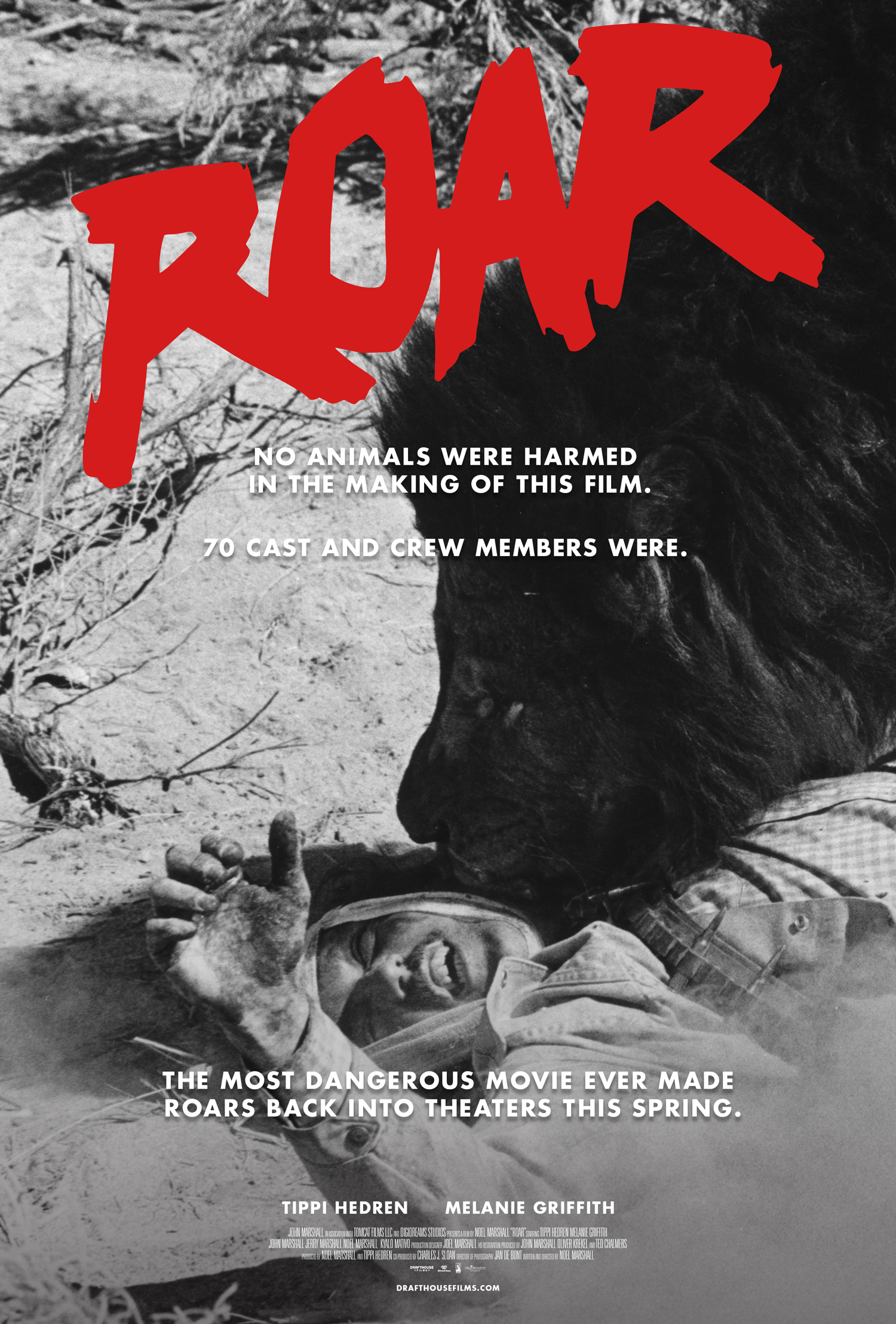
Roar

Roar

roar4

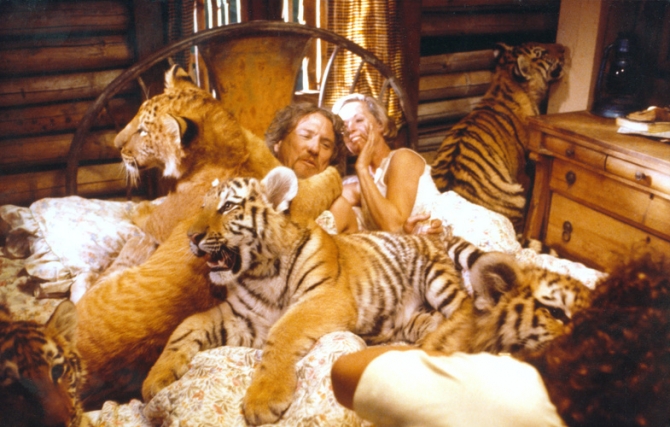
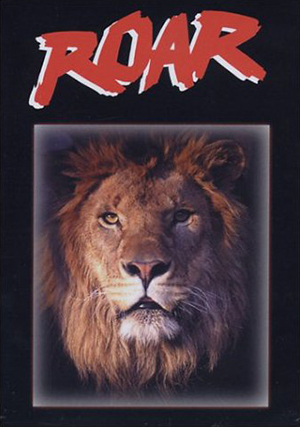
Today’s feature is a bit of a curiosity, in that it is possibly the most dangerous movie ever filmed: 1981’s “Roar,” starring Tippi Hedren, Melanie Griffith, and a shit-ton of lions. Many thanks to the Gateway Film Center for screening the film, and the Alamo Drafthouse for helming the re-release.

“Roar” was written, directed, and produced by Noel Marshall, who is best known for acting as a producer on “The Exorcist” and a handful of other pictures, as well as being the husband of the famed actress Tippi Hedren (who also starred in and produced “Roar”).

The cinematographer and supervising editor on “Roar” was Jan De Bont, who went on to become a successful director and director of photography on some significant Hollywood movies (“Leonard Part 6,” “Speed,” “Speed 2,” “Twister,” “Die Hard,” “The Hunt For Red October”).

The distinctive music for “Roar” was composed by Terrence Minogue, who has no other credited film work. It was performed, however, by the National Philharmonic Orchestra, a recording orchestra out of London that can be heard on soundtracks for movies such as “Supergirl,” “Alien,” “Total Recall,” and “The Exorcist.”

One of the other producers on “Roar” was Banjiro Uemura, who also later produced the Hayao Miyazaki classic animated film, “Spirited Away.”

“Roar” was filmed at a southern California ranch owned by Tippi Hedren and Noel Marshall, where the family for years acquired and raised countless big cats, and lived alongside them not unlike as depicted in the film.

The cast of “Roar” was a true family affair, headlined by Tippi Hedren and director Noel Marshall, who also acted as the primary financiers for the film. Most of the rest of the cast is filled out by their children: John Marshall, Jerry Marshall, and the later Hollywood star and two-time Golden Raspberry winner Melanie Griffith (“Working Girl,” “Body Double,” “Bonfire of the Vanities,” “Crazy in Alabama”).

The story of “Roar” centers around a family traveling to visit their radical big cat researcher father, who is embedded with a pride of lions while simultaneously introducing an assortment of foreign wild cats into the pride. Just before the family arrives, a new, aggressive lion arrives to challenge the balance and leadership of the pride, putting the family in significant danger.

roar1

“Roar” is likely best remembered due to the multiple attacks and maulings that occurred on set during filming. Noel Marshall at one point had to be hospitalized for his wounds, which reportedly required years to recover from. He was also bitten through his hand in a sequence that remained in the finished film. Likewise, Melanie Griffith required plastic surgery after the film, and reportedly fifty stitches to her face. The assistant director, Doron Kauper, was nearly killed after one of the lions tore open his neck and attacked his face. John Marshall reportedly needed over fifty stitches to repair a wound from a lion bite. Tippi Hedren not only broke a leg after falling off of an elephant, but also needed more than thirty stitches after being bitten on the back of her head by a lioness. Reportedly, Tippi Hedren has said of the experience of being bitten by a lion:

“Let me tell you, it hurts when you’re bitten by a lion. It’s not only that you may have an open, gaping wound, plus shock, but the pressure of those enormous jaws is so strong that it hurts”

“Roar” ultimately took over a decade to actually complete from writing to release, partially due to the death of a number of the lions in the wake of a tragic flood of the property resulting from a local dam break.

The idea for the story of “Roar” was apparently conceived of by Hedren and Marshall while making a movie in Africa, during which they discovered an abandoned house on a wild game reserve that had become overrun by a pride of lions. The financial success of the 1966 lion-centric movie “Born Free” also seemed to signal that the idea could be financially viable.

roar2

Tippi Hedren later founded the Roar Foundation, which supports the Shambala Reserve for wild and endangered cats in Acton, California (many of which have descended from the cats used in “Roar”). Hedren is now a staunch animal rights activist who opposes the private ownership of big cats, and regrets letting her family live in proximity to the dangerous animals. She wrote a book about the making of the movie in 1985, called “Cats of Shambala.”

In 2015, the Alamo Drafthouse produced a re-release of “Roar” that marked the first time that the movie has hit American theaters. The initial release of the film only played in international markets, grossing only $2 million of the reported $17 million budget.

roar5

The reception for “Roar” was understandably mixed. The film is more of an astounding spectacle and experience than it is a sensible motion picture, which has led to it receiving Rotten Tomatoes scores of 70% (critics) and 58% (audience), along with an IMDb rating of 6.4.

It is really hard to view and analyze “Roar” like one would a typical motion picture, because it is truly impossible to separate the film from its astounding back story and the shock of seeing the experience on screen.

roar3

From the point of view of looking at “Roar” like a standard film, it is just terrible. Plot lines are dropped (what happened to the disgruntled poachers?), the story is nonsense, and the acting (can you really call it acting?) is pretty atrocious on the part of the Marshalls. The pacing and shots are generally jarring as well, because the film was very much dictated by the cats’s behavior, which was naturally erratic and unpredictable, something that is explicitly acknowledged in the credits. The entire film feels like a sequence of shots that were aimlessly strung together in the editing stage, which is a film-making practice that typically only Terrence Malick can get away with.

“Roar” is very obviously a message movie, which is a bit confusing and wrong-headed given how violent the large cats are over the course of the story. There is also a lot of genre confusion, in that the film was not portrayed or marketed as a horror movie, despite how terrifying the product is to watch. The story tries to play off the conclusion as peaceful, with the humans adapting to living around the lions in peace, which frankly makes no sense after all of the chaos and violence that they have inflicted on the family.

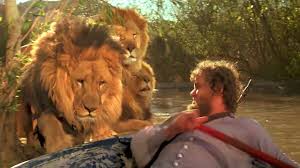
Speaking of which, the only character who reacts to the various dangerous animals like a human actually would is Mativo, a supporting character who spends most of his time trying to get his coat back from an assortment of deadly animals. However, even his terror at the cats is overcome by the end of the film, when he joins the family in cuddling and playing with the pride of lions. At the very least, he should be upset at the fact that the cats absolutely destroyed his jacket, and also managed to sink his boat.

Overall, despite the fact that “Roar” is a pretty awful movie by film standards, I consider it a must-see for movie fans. It isn’t a film so much as it is a shocking and baffling visual experience, which is one of the most honestly terrifying things that I have ever watched. I don’t consider it “so bad it is good” like most of the films I cover, but more as a truly unique experience that belongs more in a category with films like “Cannibal Holocaust” that are defined by their back story, rather than the product on screen.

Larry Cohen Collection: “Maniac Cop 3”

Maniac Cop 3: Badge of Silence

maniaccopthree2

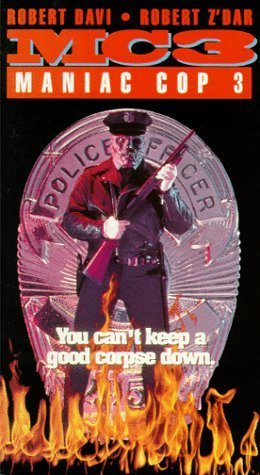
Next in the Larry Cohen collection is the finale of the Maniac Cop trilogy: “Maniac Cop 3: Badge of Silence.”

“Maniac Cop 3” was once again written and produced by Larry Cohen, and was initially directed by William Lustig of “Maniac Cop” and “Maniac Cop 2” as well. However, he ultimately walked off of the film when the initial cut only came in at 50 minutes, refusing to film any additional footage. Producer Joel Soisson (“Dracula 2000,” “The Prophecy,” “Mimic 2”) filled in for the additional sequences, and the film was ultimately Alan Smithee-d for the DVD release.

maniaccopthree3The cinematography for “Maniac Cop 3” was provided by Jacques Haitkin, who also did photography work for “The Ambulance,” “Shocker,” “Evolver,” “A Nightmare on Elm Street,” and “Galaxy of Terror.”

The effects team on “Maniac Cop 3” was comprised on experienced makeup and special effects technicians, including Howard Berger (“The Cell,” “The Faculty,” “In The Mouth of Madness”), Robert Kurtzman (“Tusk,” “It Follows,” “John Dies At The End,” “From Beyond”), Bill Miller-Jones (“Maniac Cop,” “Hell Comes to Frogtown”), Greg Nicotero (“Seven Psychopaths,” “Ghosts of Mars,” “Torchwood”), Stephen DeLollis (“Reservoir Dogs,” “Pulp Fiction”), Larry Fioritto (“Halloween 4,” “Knight Rider”), Bruce Mattox (“Capricorn One,” “The China Syndrome”), Wes Mattox (“Django: Unchained,” “Deep Blue Sea,” “Daredevil”), and Robert Phillips (“Volcano,” “Se7en,” “Shocker”).

maniaccopthree6Outside of Larry Cohen and Joel Soisson, the producers on “Maniac Cop 3” included Michael Leahy (“Pulse”) and W.K. Border (“Trekkies,” “The Prophecy,” “Bill & Ted’s Excellent Adventure”).

The editors on “Maniac Cop 3” included David Kern (“Maniac Cop,” “Maniac Cop 2”), Michael Eliot (“Stargate SG-1,” “Stargate Atlantis”), and Rick Tuber (“Lie to Me,” “Nash Bridges,” “ER”)

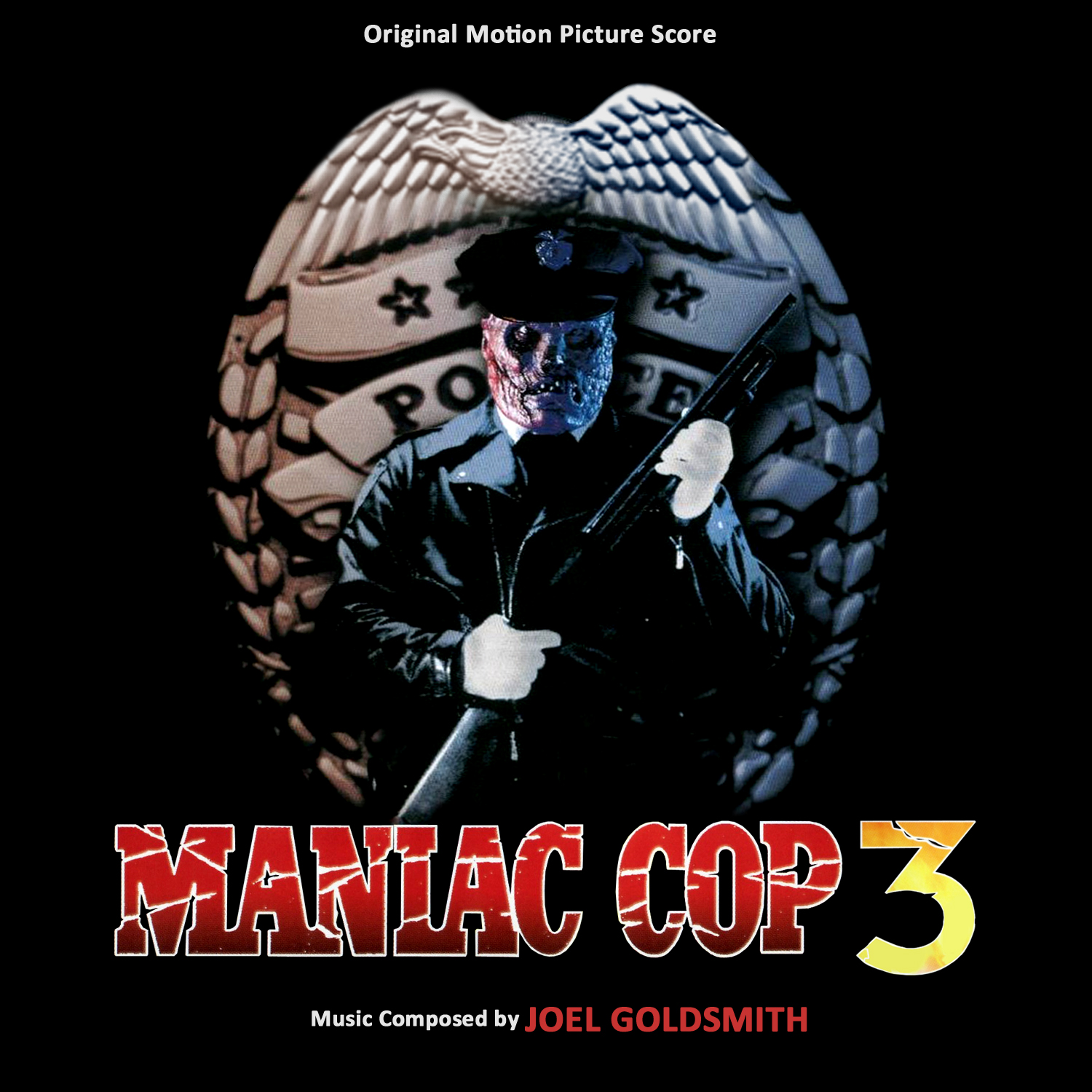
The score for “Maniac Cop 3” was provided by Joel Goldsmith, who worked on the music for “Kull The Conqueror,” “Laserblast,” and the television show “Stargate SG-1.”

maniaccopthree1The cast of “Maniac Cop 3” is headlined by returning players Robert Z’Dar and Robert Davi, with an accessory team made up by Robert Forrester (“Jackie Brown”), Jackie Earle Haley (“Watchmen”), Doug Savant (“Teen Wolf”), Grand Bush (“Lethal Weapon,” “Demolition Man”), Paul Gleason (“Die Hard”), Gretchen Becker (“The Doors”), Caitlin Dulany (“Winter’s Tale,” “Class of 1999 II”), and Ted Raimi (“Midnight Meat Train”).

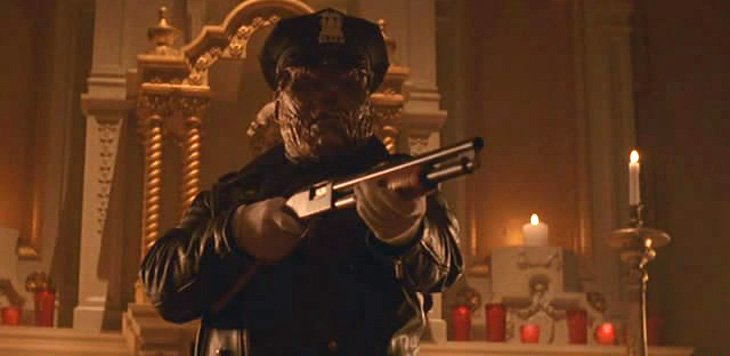
The story of “Maniac Cop 3” picks up some time after the events of “Maniac Cop 2,” after the honorable burial of Matt Cordell following his name being cleared. However, a mysterious voodoo priest resurrects the Maniac Cop with unclear motives, while the NYPD is still trying to deal with a crime epidemic on the streets.

maniaccopthree5“Maniac Cop 3” had a rather poor reception, earning a 4.9 rating on IMDb along with an abysmal 18% Rotten Tomatoes audience score. It is widely considered to be the worst in the series, and was given a thorough roasting by the podcast “We Hate Movies.”

“Maniac Cop 3” was given an NC-17 by the MPAA, which killed any chance of it getting a theatrical release. It debuted on HBO, and eventually got a home video release. I wasn’t able to dig up any budget numbers for the flick, but the fact that it failed to make it to theaters leads me to believe that it was likely a losing proposition.

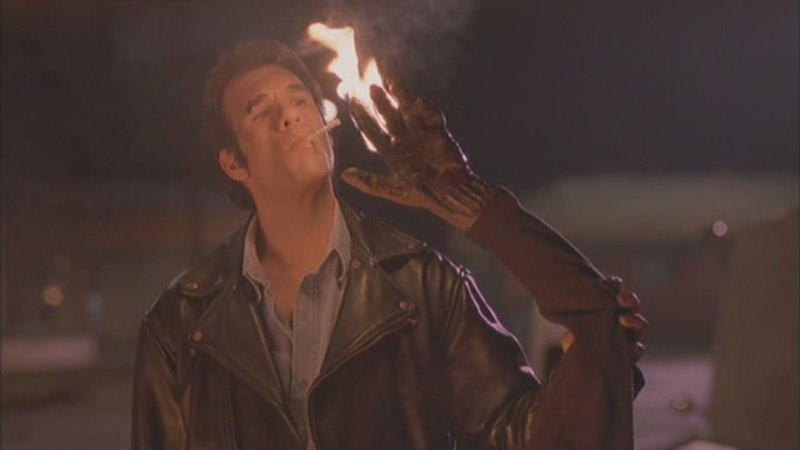
The biggest problem with “Maniac Cop 3” is that you can tell that the movie was padded out. For instance, the entire final car chase sequence feels like lagniappe: the story is over and resolved, and there’s just no real reason for the chase to happen. However, it does allow Robert Davi to light a cigarette with Maniac Cop’s detached arm, so how upset can you be? In any case, the additional footage throws a massive wrench into the pacing of the film, which wasn’t all that well paced to start with.

maniaccopthree7Robert Davi gets a lot more screen time in “Maniac Cop 3” than he got in “Maniac Cop 2,” and I think he did a pretty decent job carrying the load as the sole lead for the feature. Of all the problems with the film, he didn’t seem to me to be one of them.

The plot to “Maniac Cop 3” is pretty much nonsense. Essentially, it is “Bride of Maniac Cop,” but there’s no real connection between Kate and Cordell. Further, Cordell’s story is over, and it doesn’t make sense why he would want to come back to life at this point. His drive for revenge is what propelled him throughout the franchise, and in “Maniac Cop 3” it just isn’t there.

“Maniac Cop 3” does attempt to explain Cordell’s seemingly superhuman powers with voodoo magic. However, it is unclear if he was resurrected prior to the beginning of the franchise. It seems like that has to be what happened, because it is never explained how he went from brain-dead to god-like between the events of the back story and the beginning of “Maniac Cop.” However, there is a definite lack of clarity there.

maniaccopthree4Overall, “Maniac Cop 3” is more of a good-bad entertaining watch that the other two films in the series. The first two are actually pretty good b-movies, whereas “Maniac Cop 3” is just an embarrassing parade of nonsense and behind the scenes drama. That said, there are some entertaining moments, like the Maniac Cop driving a car while on fire, and playing skeet with an innocent pedestrian. If you have the tolerance to sit through bad b-movies, you might want to give “Maniac Cop 3” a shot.