Mortal Kombat

Mortal Kombat

kombat7

Today’s movie is one of the most famously successful video game film adaptations of all time: 1995’s Mortal Kombat.

The screenplay for Mortal Kombat was written by one Kevin Droney, who only had a few scattered credits writing for television shows like Highlander and Hunter at the time. Since Mortal Kombat, he only wrote one other feature: Wing Commander, also based on a successful video game.

Mortal Kombat was directed by Paul W.S. Anderson, who has also been behind such movies as Pompeii, Resident Evil, and Event Horizon.

The cinematographer for Mortal Kombat was John R. Leonetti, who also shot movies like The Conjuring, Insidious, I Know Who Killed Me, Joe Dirt, The Scorpion King, The Mask, and Child’s Play 3.

kombat1The editor for the film was Martin Hunter, who has cut such films as Event Horizon, The Chronicles of Riddick, and Full Metal Jacket.

The music for Mortal Kombat was composed by George S. Clinton, who has also worked on such films as The Love Guru, Beverly Hills Ninja, American Ninja 2, and American Ninja 3.

The makeup effects for Mortal Kombat were provided by a team that included Moni Mansano (Hook, Ninja III: The Domination, Revenge of the Ninja), Thomas Floutz (Face/Off, Critters, From Beyond), Eileen Kastner-Delago (Thor, Cliffhanger), and Raqueli Dahan (True Detective, Kingpin, The Usual Suspects).

The special effects team for the film was composed of Joanne Bloomfield (Tremors II, Galaxy Quest), Duncan Capp (Troy, The Brothers Grimm), Michael Dawson (A View to a Kill, Judge Dredd), Michel Gagne (Space Jam, Vampire in Brooklyn, Demolition Man), Patrick Gerrety (Red Planet, Con Air, Theodore Rex), Alec Gillis (Leviathan, Wolf), David Hoehn (Space Truckers, Wolf, Anaconda), Tom Woodruff, Jr. (Wolf, Leviathan), Patricia Villalobos (Leprechaun 3, Slither), Ron Trost (The Omega Code), Kirk Skodis (Small Soldiers, Prehysteria), and Alison Savitch (Simon Sez).

kombat4The Mortal Kombat visual effects team included common elements with such films as Life of Pi, Batman & Robin, Minority Report, Congo, Daredevil, Red Planet, Theodore Rex, Predator 2, Super Mario Bros, Captain America, Bordello of Blood, and TRON.

The team of producers for Mortal Kombat included Lawrence Kasanoff (Foodfight!, Class of 1999, Blood Diner, C.H.U.D. II: Bud the Chud) and Robert Engelman (Mystery Men, Kazaam, Blade, Shocker, From Justin To Kelly).

The cast of Mortal Kombat includes Christopher Lambert (Highlander 2, Fortress, The Gaul), Robin Shou (Death Race, Beverly Hills Ninja), Linden Ashby (Teen Wolf, Melrose Place), Cary-Hiroyuki Tagawa (Vampires, License To Kill), Bridgette Wilson (Billy Madison), and Talisa Soto (License To Kill).

kombat5The plot of Mortal Kombat centers on an extreme, supernatural martial arts tournament, where the finest fighters from multiple dimensions fight to the death for the ultimate claim of glory.

The production of Mortal Kombat was plagued with casting difficulties from the onset. First,  Brandon Lee (Laser Mission) was selected to be Johnny Cage, but tragically died during the filming of The Crow. Then, Jean-Claude Van Damme turned down the role to star in a rival video game movie adaptation: Street Fighter. Rumors have also circulated that Tom Cruise and Johnny Depp were both approached for the role, but turned it down. Adding to the troubles, Cameron Diaz was apparently at one point set to play the part of Sonya Blade, but had to back out due to an injury before filming began.

The soundtrack to Mortal Kombat was particularly huge, going platinum in less than two weeks after its release. The music was a mix of techno and dance, integrating clips from the the original game audio, which proved to resonate with fans.

Steven Spielberg, a fan of the video game, was apparently supposed to appear in a cameo role during the introductory Johnny Cage scene, but scheduling conflicts ultimately prevented him from doing so.

Mortal Kombat was of course a massively controversial video game due to its violent and graphic fatalities, leading to significant public outcry against it. The film, on the other hand, is not particularly gory, and even received a PG-13 rating by the MPAA.

kombat2Not only did Mortal Kombat receive a sequel in Moral Kombat Annihilation, but a number of attempts have popped up over the years to reboot the franchise on film. Currently, James Wan (Saw, Furious 7) is reportedly attached to an upcoming adaptation by Warner Brothers, which is set tentatively set to release sometime in 2016. There is also an ongoing web series based on the game called Mortal Kombat Legacy, which was created after the positive reception to the short film Mortal Kombat: Rebirth.

The reception to Mortal Kombat was generally pretty poor: it currently holds a 5.8 rating on IMDb, alongside Rotten Tomatoes scores of 33% (critics) and 58% (audiences). In spite of the negative reviews, the movie managed to rake in a whole lot of money: it grossed $122 million worldwide in theaters on a budget of $18 million.

Personally, I feel like Mortal Kombat is one of the more loyal video game movie adaptations out there, with the exception of the lack of gore (which is notable). However, the character designs and fighting arenas all look like they could be pulled straight out of the games, and the fighting sequences aren’t too shabby. While the lack of gore is a huge issue for this movie, I can’t imagine a more faithful adaptation under a PG-13 rating.
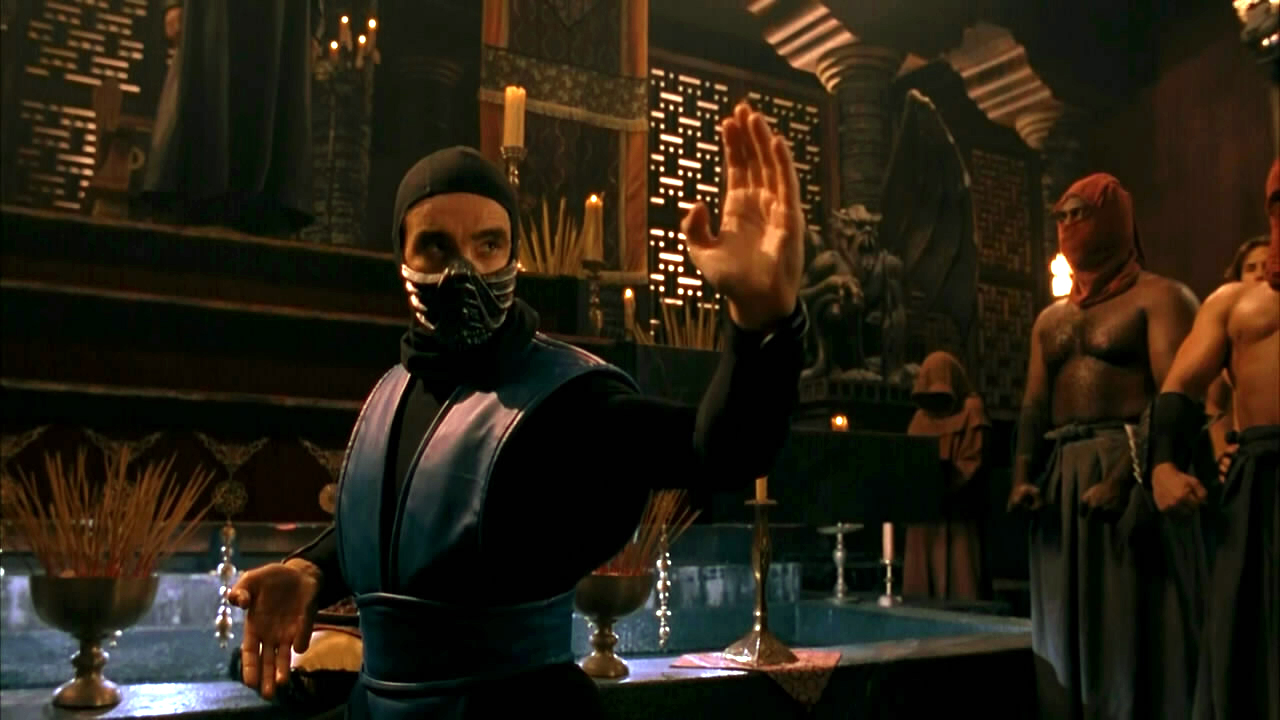
kombat3All of that said, just because a movie is accurate to the game doesn’t make it a good film. The game Mortal Kombat is more or less plotless, and doesn’t really connect one fight scene to the next. That means that the screenplay for the movie was on its own in regards to connective tissue to string the fights together, and it didn’t do a particularly good job of it. When a fight scene isn’t in progress, this movie is just…dull. The characters and plot, while fine and good for the purposes of a fighting game, are really boring when applied to a movie that requires progress and character development.

It is worth noting that the very idea of a PG-13 Mortal Kombat movie is a bit bizarre and soulless to start with. Clearly, the only reason to make the movie PG-13 was so that it could be marketed to a younger audience, and thus increase its potential at the box office. However, the game is intentionally violent and catered to an adult audience, so making the movie sanitized for the purpose of reaching out to early teens (and younger) is just kind of icky. I personally think an R-rated movie with more realistic and brutal violence is more appropriate than the cartoonish and bloodless affair in this film. Realistically, which one of those is setting a worse understanding of the consequence of violence at the end of the day? Also, and more importantly, an R-rated Mortal Kombat would be way more entertaining.

Overall, Mortal Kombat isn’t an absolutely awful movie, at least when put side-to-side with other video game adaptations (like its sequel, or the many Uwe Boll features). I do think most of its value at this point comes from nostalgia more than anything else, though I am always a big fan of Christopher Lambert hamming it up in a campy movie. I feel about the same way about this movie as I do about Super Mario Bros: I’ll watch it and enjoy it out of a sense of nostalgia, but there isn’t really any doubt that this qualifies as a bad movie. I think its reputation is worse than it deserves from fans due to the lack of gore, but it also isn’t deserving of any props.

If you are going on a 90s kick and are looking for a way to extend your nostalgia trip, pop in Mortal Kombat. It can serve that purpose well enough.

Ghost Dad

Ghost Dad

ghostdad1

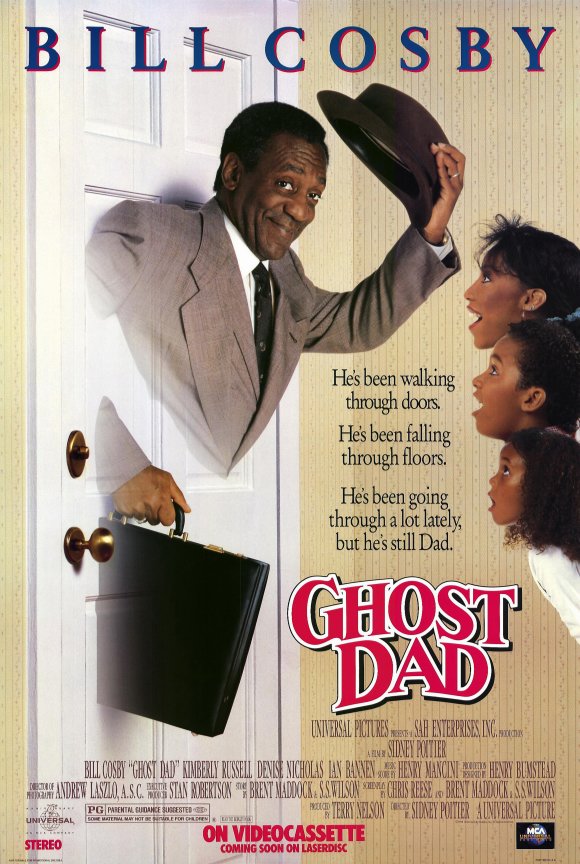
Today’s feature is a 1990 Bill Cosby vehicle: Ghost Dad.

The team of writers for Ghost Dad included Brent Maddock (Heart and Souls, Short Circuit 2, Tremors 2), S.S. Wilson (Tremors, Wild Wild West, Short Circuit), and Chris Reese (The Chamber).

Ghost Dad was directed by famed actor Sidney Poitier, of films such as Guess Who’s Coming To Dinner and The Jackal. To date, Ghost Dad has been his last directorial feature, but it wasn’t his first: he earlier worked with Bill Cosby on the features A Piece of the Action, Uptown Saturday Night, and Let’s Do It Again, and also directed the Gene Wilder comedies Stir Crazy and Hanky Panky.

The editor for Ghost Dad was Pembroke J. Herring, who also cut Groundhog Day, Johnny Dangerously, European Vacation, Tora! Tora! Tora!, and Out of Africa. The cinematographer for the film was Andrew Laszlo, who also cut Innerspace, First Blood, The Warriors, and Poltergeist II.

The musical score for Ghost Dad was composed by Henry Mancini, an Academy Award and Grammy-winning composer who was behind the scores for such movies as The Pink Panther and Breakfast At Tiffany’s.

The team of producers for Ghost Dad included Terence Nelson (Xanadu), David Wisnievitz (Training Day, A Civil Action), and Stan Robertson (Men of Honor).

The makeup effects on Ghost Dad were provided by Stephanie Cozart Burton, who has extensively worked on a number of television shows, and has credits on In Living Color and White Men Can’t Jump.

The special effects team included Eric Rylander (Gangster Squad, Battleship), Bruce Minkus (Van Helsing, Steel), Richard Helmer (Burlesque, Alligator, Men At Work), Richard Buckler (Blade), and Noel Butcher (Tremors).

ghostdad4The significant visual effects team behind Ghost Dad included common elements with films like Blade Runner, TRON, RoboCop, The Abyss, Last Action Hero, and The League of Extraordinary Gentlemen, among many others.

The cast for Ghost Dad includes Bill Cosby (Leonard Part 6), Kimberly Russell (The Game, Precious), Denise Nicholas (Blacula, Capricorn One), Ian Bannen (Flight of the Phoenix), Christine Ebersole (The Wolf Of Wall Street), Arnold Stang (Hercules in New York), and Barry Corbin (Northern Exposure).

The plot of Ghost Dad centers on a middle-aged father who is apparently killed in a car accident, but continues living as a disembodied spirit. He slowly learns the quirks and rules of his new state of being, while trying to continue his daily life with his job and his family as if nothing had happened.

ghostdad2Reportedly, Steve Martin was originally set to star in Ghost Dad, when the picture was supposed to be directed by John Badham. Once those plans fell apart, the project fell to the team of Cosby and Poitier.

Interestingly, the Patrick Swayze hit Ghost released shortly after Ghost Dad in the same year, and was received much better by the general public.

Ghost Dad was the first movie for Bill Cosby since the disastrous Leonard Part 6, a film so bad that he publicly denounced it and allegedly bought the television rights specifically in order to bury it. That movie still holds a spot in the IMDb’s Bottom 100.

The reception to Ghost Dad was overwhelmingly poor: it currently has a  4.3 rating on IMDb, alongside Rotten Tomatoes scores of  7% (critics) and 32% (audience).

The rules for the afterlife are bizarre, and aren’t fully explained or followed consistently. Even worse, the plot in general manages to sidestep the serious implications of death with a story twist revealing that Cosby’s character isn’t actually dead, which also negates the very title of the movie.

A lot of the gags throughout the movie are based more on Cosby’s conditional invisibility than his status as a ghost, which brings up a lot of questions as to how the writing process for this movie went. Given his death is negated, why not just make this an invisible dad movie? It allows for most of the same jokes, but avoids the immensely depressing undertones that sap all of the potential humor out of what is theoretically a family comedy.

GHOST DAD, Kimberly Russell, Bill Cosby, 1990, (c)UniversalThe failure of Ghost Dad was the coffin nail for the potential film career of Bill Cosby, which, given what has come to light about his behavior and character, is almost certainly for the best. It is hard to imagine how much bigger Cosby might have gotten if his movie career took off, and how difficult it would have been to expose him if he had even more power. So, I guess we can thank the failures of Ghost Dad and Leonard Part 6 for keeping the beast from growing too large to slay?

Personally, I think that this is a far worse movie than Leonard Part 6, though that film is almost certainly more loathed in the public consciousness of moviegoers. However, there is some weird charm to that flick that is totally absent in Ghost Dad, which is just wrong all the way down to its foundation and premise. That said, it is certainly a spectacle to sit through this confused mess of a movie, so I recommend giving it a shot if you happen to find it laying around somewhere. Also, there is something to be said for watching both Ghost Dad and Leonard Part 6 explicitly because Bill Cosby doesn’t want you to.

How To Make A Monster

How To Make A Monster

makeamonster5

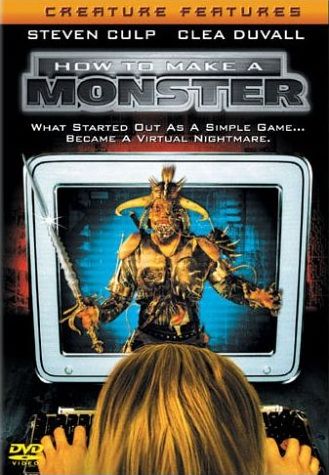
Today’s feature is a television movie from 2001: How To Make A Monster.

How To Make A Monster was written and directed by George Huang, who is best known for Trojan War and the Kevin Spacey dark comedy Swimming With Sharks.

The cinematographer for How To Make A Monster was Steven Finestone, who also shot Swimming With Sharks for George Huang, and worked as a camera operator on films like The Philadelphia Experiment, Saturday the 14th, Battle Beyond The Stars, and Humanoids From The Deep.

The editors on How To Make A Monster were Daniel T. Cahn (The Young and The Restless, Darkman II) and Kristina Trirogoff, who was an assistant editor on Phone Booth, Collateral, Heat, McHale’s Navy, and Gone Fishin’.

The musical score for How To Make A Monster was composed by David Reynolds, who has worked in the music departments for such movies as Rounders, The Big Kahuna, Species, Entrapment, and Wanted.

The special effects on How To Make A Monster were provided by the Stan Winston Studios, and the creature design is credited to Stan Winston himself (Jurassic Park, Small Soldiers, Congo, Lake Placid, Predator 2, Leviathan, Terminator 2).

makeamonster1The cast of How To Make A Monster includes Clea DuVall (Argo, The Faculty, She’s All That, But I’m A Cheerleader), Steven Culp (Bosch, JAG), voice actor Jason Marsden, Tyler Mane (X-Men, Troy), Karim Prince (Power Rangers Zeo), and Danny Masterson (That ’70s Show).

The plot of How To Make A Monster centers on a video game development team who is hired to revamp a horror game that has been panned by test audiences. They are given four weeks to create a new monster and overhaul the game, with a $1 million bonus on the line for whoever makes the game the scariest. However, the monster AI they develop proves to be a little more effective than they had planned.

How To Make A Monster features a cameo by b-movie actress Julie Strain as herself, doing motion capture for the fictitious video game featured in the movie. She is best known for such movies as Heavy Metal 2000, Sorceress, and Out For Justice.

One of the monsters depicted in the game featured in the movie is clearly modeled after pikachu, the popular species of electric mouse from Pokemon. However, the adorable icon is re-imagined as a monster worth of Doom.

makeamonster4The reception to How To Make A Monster was pretty negative: it currently holds a 4.4 rating on IMDb, and a 30% audience score on Rotten Tomatoes.

The monster itself in How To Make A Monster actually looks pretty cool, and becomes more of a gory patchwork of slain characters as the movie progresses.

As you would imagine, all of the sequences that take place “in game” have aged pretty poorly, given how quickly graphic technologies for video games have developed over the years. However, I think it is kind of charming, and feels like a sort of period piece as a result. For video game fans, there are certainly enough nods to the audience and ample nostalgia for them get a kick out of re-watching this movie now.

makeamonster3However, there are certainly some huge drawbacks to this movie. The characters are all very simple stereotypes that are far from flattering to the population of gamers, and people in the tech industry in general. Even worse, the resulting tone as a whole is at best bluntly misanthropic. The conclusion of the story dives that home even further, as it is very downbeat and depressing (and not nearly as clever as it thinks it is). Interestingly enough, it reminded me a lot of the mediocre ending of Swimming With Sharks, an earlier work by the same writer/director, which has the same sort of tone and resolution.

On the whole, I am pretty conflicted about How To Make A Monster. The creature is definitely the reason to watch, but the writing and characters that surround it can’t really be avoided, and they are all some combination of creepy, disgusting, or vile. The preachy message about greed and corporatism isn’t necessarily wrong by any means, but the way it is executed is far overblown. You’ll also probably figure out that the title of the film has a double meaning as the soon as all of the characters are established, or at least by the end of the first act.

If you really like Stan Winston effects or early horror PC games, I think this is worth checking out. For everyone else, I think it is a toss-up. The writing isn’t any worse than most slasher movies at the end of the day, and this is probably a tad better than Evolver when it comes to killer video game movies. However, Evolver is way more fun in my opinion, which is what this movie is missing most overall.

Bargain Bin(ge): The Music Box (Pensacola, FL)

Pensacola, FL is a top-notch beach-going destination for the southeastern United States, and is perhaps the gem of the Florida panhandle. Not only that, but it is also home to the acrobatic airplane team The Blue Angels! Unfortunately for the pasty and nerdy of us, that is about all there is to the city.

musicbox15
This is pretty much all of Pensacola in one image. This is even from the city website.

Lucky for you fellow film geeks, there is some DVD hunting to be had in Pensacola! Specifically, there is a little record shop called The Music Box with a significant selection of eclectic films (interestingly set aside in a glass-cased room), as well as a ton of soundtracks on vinyl. I honestly lost count of how many rare flicks and IMDb Bottom 100 entries this place had copies of, because most of them were things I personally already own. That said, I still came out with a nice little haul to round out my collection.

musicbox1

musicbox7

musicbox8
The DVD chamber

musicbox9

Bad Taste

musicbox4

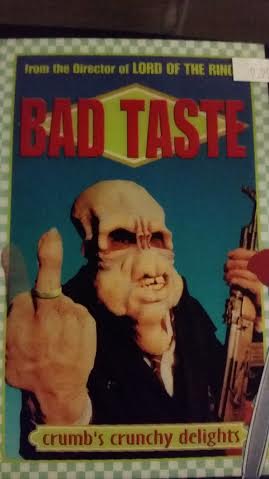
For those who don’t know, Peter Jackson’s origins are a bit…strange. Bad Taste was his first feature back in New Zealand, and is true low-budget comedy gore in its purest form. It isn’t particularly easy to get a hold of at this point, so I was happy to find a copy here. If you haven’t seen it, it is an interesting forerunner for Dead Alive and Meet The Feebles, which both improve on various elements introduced in Bad Taste. Also, Jackson cuts a rubber alien in half with a chainsaw at one point, which is awesome.

Trick or Treat

musicbox5

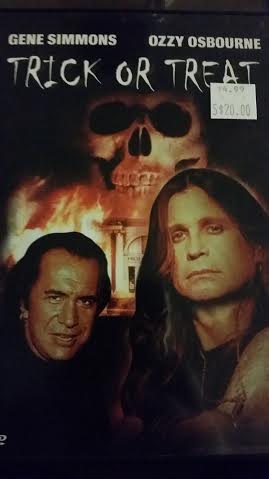
At this point, I think more people are familiar with the similarly titled 2007 cult classic Trick ‘r Treat than this earlier flick from the 1980s. However, Trick or Treat certainly has its following, particularly among classic rock and metal fans. As you might deduce from the box art, Ozzy Osbourne and Gene Simmons both pop up in small roles, and have been used significantly to try to sell the movie in recent years. I’m curious to give it a watch, because the plot reminds me a bit of the lawsuit against Judas Priest that popped up a few years later, alleging that subliminal messages were put into their albums encouraging harmful behavior. Otherwise, I have heard mixed things in regards to its entertainment value, but I’m more than willing to give it a shot. Look forward to a review of this flick in October.

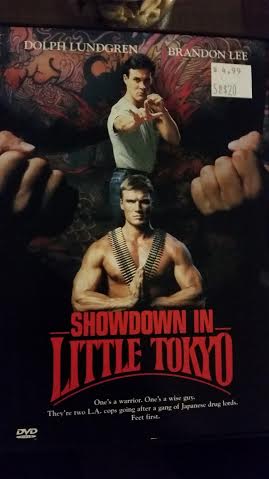
Showdown in Little Tokyo

musicbox6

Dolph Lundgren and Brandon Lee is one hell of a duo. This is another one of those action movies that is clearly up my alley, but has managed to somehow evade me over the years. I’m looking forward to finally catching it, as I assume it is as magical and wonderful as it appears to be.

Warriors of the Wasteland

musicbox3

Enzo Castellari is a name that deserves a lot more attention in the bad movie world. He is one of the masters of the Italian knock-off, with works like The Shark Hunter, The Last Shark, 1990: The Bronx Warriors, and Inglorious Bastards to his credit. Warriors of the Wasteland (aka The New Barbarians) is yet another one of his b-movies with a dedicated following, focusing on the aesthetic of post-apocalyptic flicks like Mad Max. I’ll be interested to see how it stacks up next to other Mad Max knockoffs like Hell Comes to Frogtown, which starred the late Roddy Piper. The involvement of Fred Williamson (Black Caesar, Hell Up In Harlem, 1990: The Bronx Warriors) here has me plenty excited to check this thing out as well.

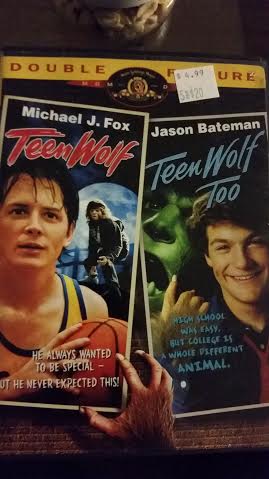
Teen Wolf / Teen Wolf Too

musicbox2

Teen Wolf is considered a classic of the 1980s, and I imagine that everyone has at least heard of the defining werewolf teen sports comedy of the age (though Full Moon High had its moments). The popular re-imagining on MTV has kept the idea in the public consciousness at the very least, even for those who don’t recall Michael J. Fox’s hairy basketball career.  Teen Wolf Too, on the other hand, goes among the rankings of the most maligned and unnecessary sequels in movie history. Jason Bateman (who was at the time just a recognizable child actor) has succeeded in his career as an adult in spite of the hiccup, but it still looms over him like a black cloud for people who are aware of the film.

As I mentioned earlier, The Music Box also had an interesting selection of soundtracks. Of course, I picked up a couple of notables that I couldn’t turn down:

Xanadu

musicbox12

Xanadu is a deeply polarizing movie, with die-hard fans and staunch detractors all carrying passionate opinions on its value. Whether you consider it a cult classic or a bad movie of the lowest order, nothing defined this flick quite like its soundtrack. Here, I managed to dig up a vinyl copy of the ELO-helmed album, which I’m happy to have in my collection. Again, this is a movie that I feel will make for an inevitable blog post, as it was a winner/loser in the very first Golden Raspberry awards, and made a significant impact on the public consciousness. Not only that, but it also released on one of the most infamous double bills of all time with the unarguably wretched pseudo-biopic of The Village People, Can’t Stop The Music.

Mannequin

musicbox11

Not too long ago, I had a request to cover Mannequin, one of Cannon Group’s many odd contributions to the 1980s. If there is anything that has stuck with the public consciousness about this flick, it is the hit song “Nothing’s Gonna Stop Us Now” by Starship. As opposed to being a full album, this one is just a single, but I figured it was still certainly worth picking up. I’m thinking it will go nicely on one of my walls, even if it never comes anywhere near my record player.

The Punisher

The Punisher

punisher1

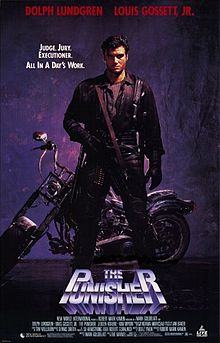
Today’s movie is a lesser-known early Marvel comic book adaptation: 1989’s The Punisher.

The Punisher is a character who was initially created by Gerry Conway, Ross Andru, and John Romita, Sr. for Marvel, and he was debuted in The Amazing Spider-Man issue #129 in 1974. 1989’s The Punisher marked his first appearance in a film, though not his last: two other high profile movies were created with the character in 2004 (The Punisher) and 2008 (Punisher: War Zone), and an upcoming television series starring the character is currently in the works as part of the greater Marvel cinematic universe.

The writer for The Punisher was Boaz Yakin, who also penned From Dusk Til Dawn 2, The Rookie, and Prince of Persia: The Sands of Time, and also directed movies like Remember The Titans and Uptown Girls.

The Punisher was directed by Mark Goldblatt, who is best known as the proficient editor of such movies as Predator 2, Enter The Ninja, Humanoids From The Deep, Piranha, Super Mario Bros, The Howling, Commando, The Terminator, and Terminator 2: Judgement Day. The Punisher is one of only two feature-length directorial efforts by Goldblatt, the other being the buddy cop zombie flick Dead Heat.

The editor for The Punisher was Tim Wellburn, who also cut the Stuart Gordon flick Fortress and the BeastMaster television series. The cinematographer for the film was Ian Baker, who also shot such movies as Queen of the Damned, Evan Almighty, and Roxanne.

The musical score for The Punisher was composed by Dennis Dreith, who has worked as an orchestrator on movies like The Rock, Jurassic Park, and Misery.

The visual effects for The Punisher were done by one Roger Cowland, who has worked on such films as Babe, The Piano, Mad Max: Beyond Thunderdome, and The Howling III.

The Punisher special effects and makeup teams included common elements with movies like The Matrix, The Road Warrior, Street Fighter, Fortress, Crocodile Dundee II, Razorback, and Mad Max, among others.

One of the producers for The Punisher was Robert Mark Kamen, an accomplished action movie writer who penned screenplays for such movies as Taken, The Transporter, The Fifth Element, Lethal Weapon 3, and The Karate Kid.

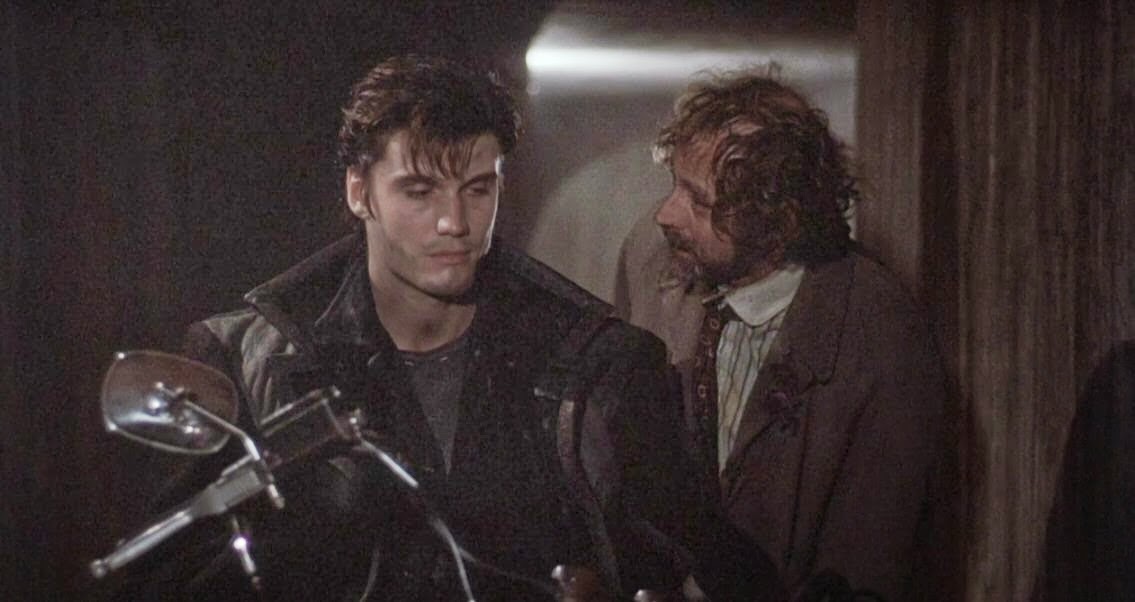
The cast for The Punisher includes Dolph Lundgren (Masters of the Universe, Dark Angel, Rocky IV), Louis Gossett Jr. (Iron Eagle, Jaws 3-D), Jeroen Krabbé (The Fugitive, The Living Daylights), Barry Otto (The Great Gatsby, The Howling III), Nancy Everhard (DeepStar Six), and Kim Miyori (Metro).

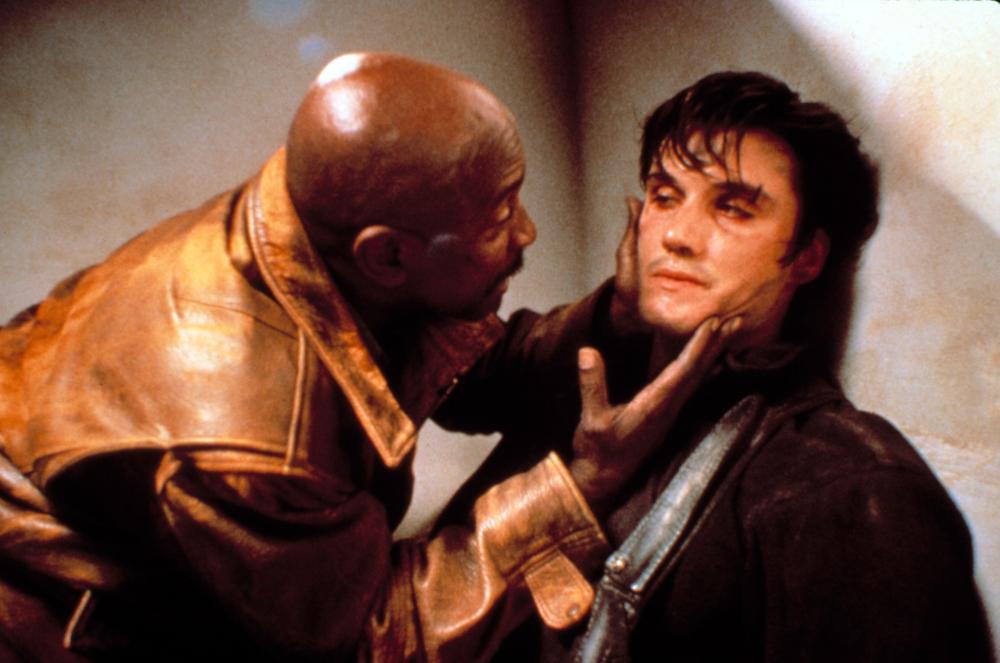
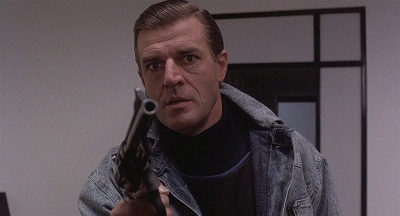
THE PUNISHER, Louis Gossett, Jr., Dolph Lundgren 1989.The plot of The Punisher follows Frank Castle, an ex-cop turned vigilante who hunts down and executes members of the mafia and other criminal figures. After 5 years of his activities, the local criminal scene has weakened considerably, but the vacancy also attracts the interest of a foreign criminal power: the Yakuza. After the Yakuza attempts to seize the remaining operations of the mafia by kidnapping the surviving leadership’s children, Castle winds up making strange allies through his efforts to save the children and put the Yakuza down.

punisher4Reportedly, most of the fight choreography for the film was done with full contact, given professional martial artists were hired for the fighting roles instead of stuntmen. Dolph Lundgren did most of his own stunts for his role as well, given his martial arts background.

The Punisher is one of the best known “Ozploitation” action movies: meaning it was filmed in Australia, and done with extreme violence on an exploitation level.

A sequel to the movie was at one point planned, but the production company (New World Pictures) wound up going bankrupt before it could happen.

The Punisher interestingly did not theatrically release in the United States, due to the aforementioned bankruptcy of the production company. However, it managed to distribute to theaters internationally (at least, in places where it wasn’t outright banned), and popped up on home video shortly thereafter.

The beginning of The Punisher features a thinly-veiled version of John Gotti, one of the most well-known gangsters of the modern era. In 1989 (the year of this film’s release), he was still two years off from his ultimate conviction and incarceration, but was very much a public and recognizable figure as a crime boss. While the character isn’t explicitly named John Gotti in the movie, he is referred to as “The Dapper Don,” a well-known nick-name of Gotti’s.

The reception to The Punisher was generally negative: it currently holds Rotten Tomatoes scores of 28% (critics) and 32% (audience), along with an IMDb rating of 5.6. However, it has a dedicated cult following in spite of the bad reviews.

punisher3The Punisher has a great grimy look and feel to it, which is definitely a credit to this being an exploitation-style action movie. Honestly, I think this ambiance fits The Punisher as a character better than the other adaptations, though I don’t hate either of those films as much as some people do. As weird as Lundgren’s casting might seem at first glance, I think he nails the spirit of the character pretty well. Also, it is hard not to appreciate that this movie isn’t an origin story, and that the plot the screenwriter came up with is actually pretty cool, and deals with a realistic consequence of the presence of a Punisher-style vigilante.

punisher2I have never understood why so many people vocally hate this movie. The absence of the iconic skull image is certainly notable, but that actually strikes me as pretty minute on the grand scale of things. This movie is over-the-top violence and action, which is basically what the spirit of The Punisher is all about. Dolph even does a pretty good job with his lines, which is likely the result of him being given permission to rewrite them for his comfort level. I feel like it is a real shame that Goldblatt hasn’t directed any other movies, as both Dead Heat and The Punisher are entertaining flicks that have become cult classics.

I definitely recommend checking this movie out, as it is probably the best of the Marvel movies made before the modern era of the Marvel Cinematic Universe, Sony’s Spider-Man flicks, and Fox’s X-men franchise. I think b-movie and action fans in particular will enjoy this adaptation, perhaps more so than die-hard fans of the comics.

Bargain Bin(ge): Replays Gameware (Tuscaloosa/Northport, AL)

Tuscaloosa, AL isn’t a particularly big or interesting place. Unless you’re there for football, school, or the unimaginable combination of the two, there isn’t a whole lot to soak in. I would know, because I lived there for a while.

That said, there are a surprising number of used media stores in the area for how modest the population is. I’ve already covered the MovieStop chain quite a bit, which has a prominent location in Tuscaloosa. However, the real gems in the area are two sites of the small franchise Replays Gameware & DVDs, which you will seldom see outside of small towns and modest cities like Tuscaloosa.

replayttown6

While the selection isn’t outstanding, these shops aren’t afraid to hold blowout sales to clear out their stock, particularly for their DVDs (as they are primarily vintage gaming shops).  If you catch them during one of those (as I did), the deals are very solid. There is also something to be said about the atmosphere at these shops: they are far less sterile than many of the larger buy/sell/trade chains, and hold on to the intimate and casual ambiance that a lot of people miss from the days of video rental. For people who are into that, Replays has never failed to deliver that for me.

Getting on to the actual haul, let’s start with the central Tuscaloosa location:

replayttown4

Evolver

replayttown3

Holy shit! It’s my favorite William H. Macy-voiced killer robot: Evolver! I covered this particular flick as part of Killer Robot Week, but this is actually the first time I had come across a DVD copy of it. Of course, I had to pick it up. Why wouldn’t I? If you want to know more, go check out my earlier review of it. Or, better yet, just dig it up on Netflix without any primer.

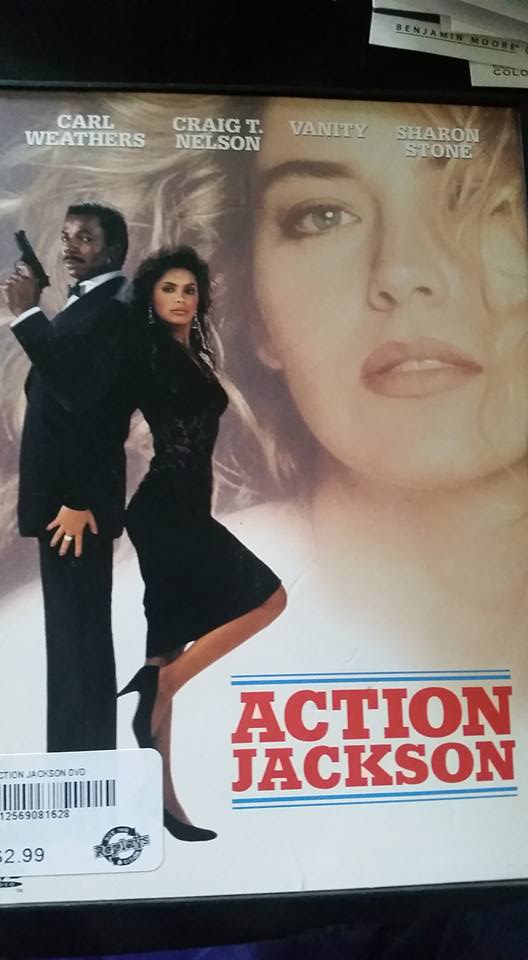
Action Jackson

replayttown1

Action Jackson is a movie where Carl Weathers (Predator, Rocky, Arrested Development) plays a super-cop, which is all I need to know about it. Also, Vanity of Never Too Young To Die and The Last Dragon co-stars alongside him, in case I needed extra incentive to pick this up (I didn’t). This is another one of those movies that I have just never gotten around to, so when I spotted it on sale, I decided that it should come home with me. I have a feeling that if I throw that movie in my DVD player, I’ll have a mean stew going.

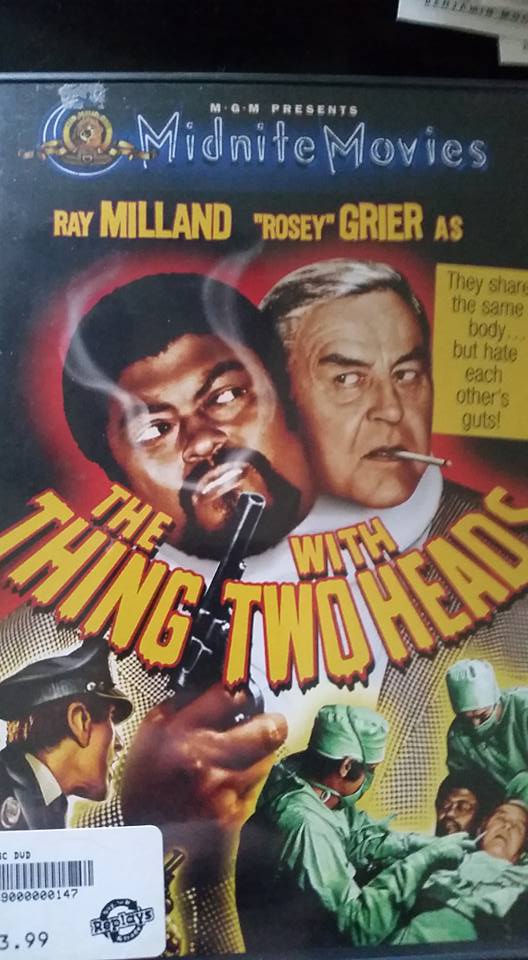
The Thing With Two Heads

replayttown2

Gosh, where can I possibly start with this bizarre b-movie? It is about a racist white man whose (functioning) head is grafted onto a black guy, which results in a movie’s worth of hilarious, action-filled hi-jinks. Academy Award winner Ray Milland did this flick in 1972, the same year in which he featured prominently in the outlandish horror movie Frogs, which I covered here previously. I first heard about this flick when Stuart Gordon did a spotlight on it for Trailers From Hell, and it has been on my to-watch list ever since.  Keep your eyes peeled, because this sounds like a lock for me to cover at some point in the future.

While the Tuscaloosa location did yield me those three much-appreciated finds, the Northport location just outside of town really gave me some fuel for the bad movie fire:

replaynp5

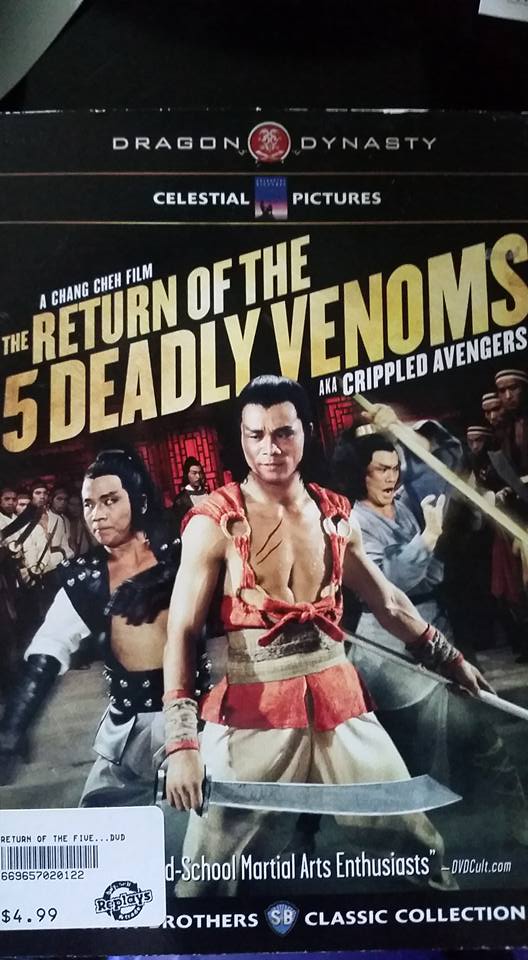
The Crippled Avengers

replaynp1

Martial Arts films definitely aren’t my strong suit, and my knowledge base is admittedly pretty lacking in this department. However, this is a flick that I heard about recently via The Cinema Snob, and I was a little surprised to see it with a DVD release at all given how obscure most of his picks are. I hear that this is actually a pretty decent action flick, but I may just cover it anyway for its cult appeal.

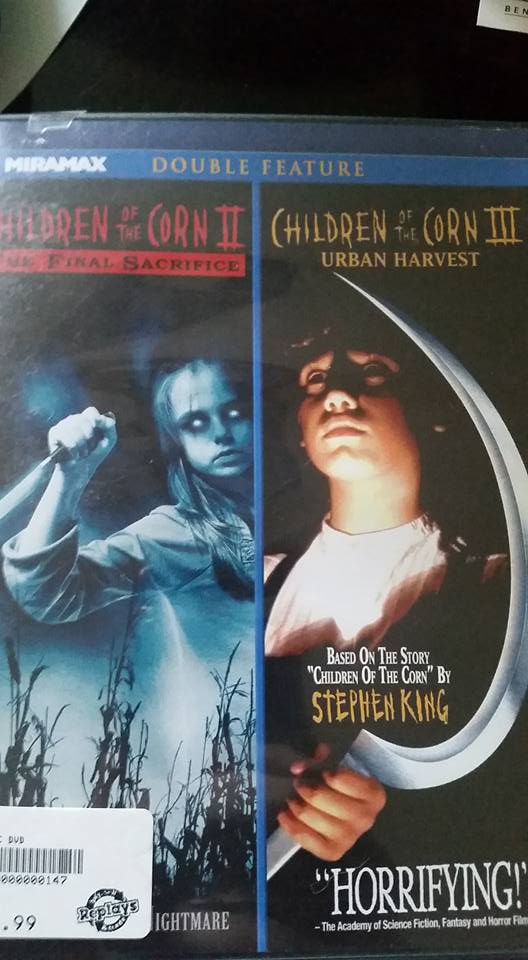
Children of the Corn II / Children of the Corn III

replaynp3

This is a franchise that I have no experience with outside of the original. However, I do know that people hate these two movies with a burning passion, and that I have never seen them. Thus, this was an obvious pickup for me.

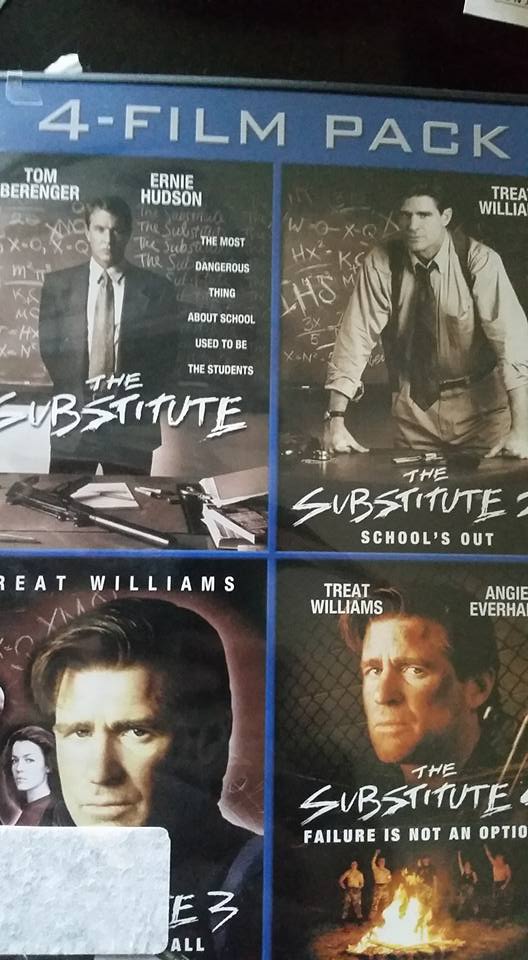
The Substitute / The Substitute II / The Substitute III / The Substitute IV

replaynp4

There are three sequels to The Substitute? And they all star the zombie-cop  Treat Williams? There is absolutely no way that these movies are good, and the fact that I had no idea they existed makes me absolutely giddy. I can’t wait to dig into these, and I hope they yield something worth covering here on the blog.

The original The Substitute was featured on the We Hate Movies podcast not too long ago, which made me give consideration to picking it up at some point. I vaguely remember seeing it as a kid, but it was really easy to get confused with The Principal, one of the finest films in the history of cinema. Regardless, I am baffled that this flick managed to spawn so many sequels, which has me deathly curious as to how the story continuity works between them.

Fright Night / Monster High / The Craft / Brainscan

replaynp2

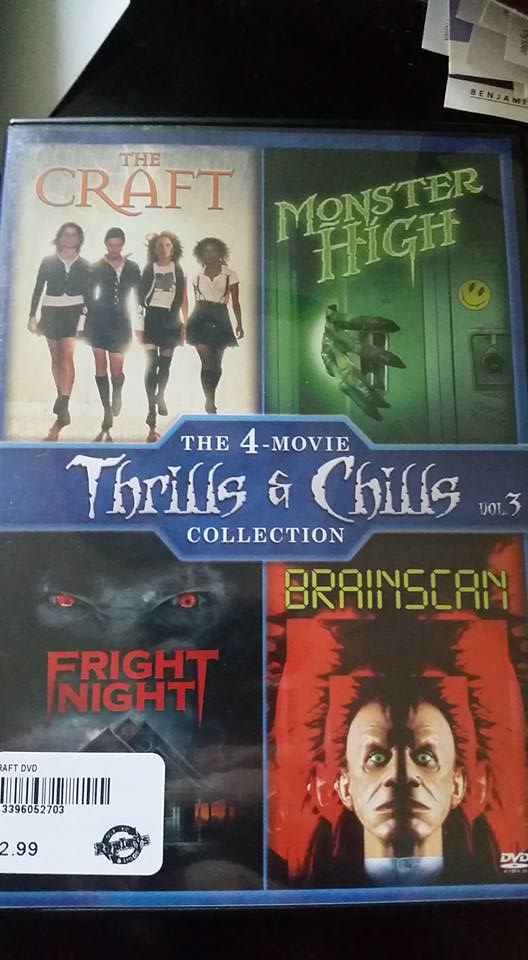
It is hard to resist the allure of a cheap compilation DVD. In this case, cult classics Fright Night and The Craft anchor a couple of lesser-known flicks that leech onto their sides like barnacles. The one that initially caught my eye was Brainscan, which was on my shortlist to cover back during Killer Robot Week. However, I have a hunch that Monster High is going to be the highlight of the bunch, because it sounds absolutely wretched, and holds an unenviable IMDB rating of 3.3.

Gymkata

Gymkata

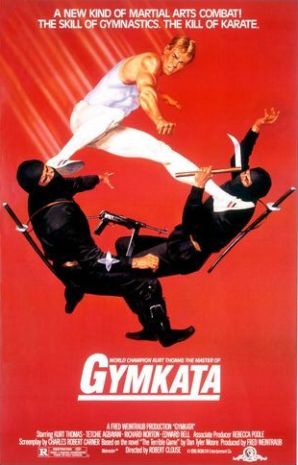
gymkata1

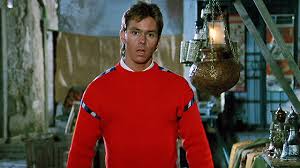
Today’s feature is Gymkata, a peculiar gymnastics/martial arts hybrid movie that has become a beloved good-bad classic.

Gymkata was based on a novel written by Dan Tyler Moore called “The Terrible Game,” and the screenplay for the flick was contributed by Charles Robert Carner, who is best known for the Rutger Hauer movie Blind Fury and the 1997 remake of Vanishing Point.

Gymkata was directed by Robert Clouse, who was also behind the Cynthia Rothrock action flick China O’Brien, as well as the Bruce Lee classics Game of Death and Enter the Dragon.

The cinematographer for Gymkata was Godfrey Godar, who also served as director of photography on Game of Death and Howling IV.  He is also an experienced camera operator, working on such films as Supergirl and Superman IV: The Quest For Peace.

Gymkata was edited by Robert Ferretti, who has cut such action movies as On Deadly Ground, Under Siege, Rocky V, Die Hard 2, Out For Justice, and Tango & Cash.

The effects team for Gymkata included Peter Dawson (Supergirl, Batman), Terry Glass (The Brothers Grimm, League of Extraordinary Gentlemen), Marijan Karoglan (Blubberella, Rosencrantz & Guildenstern Are Dead), Steve Purcell (Lethal Weapon 3, Risky Business), Angelo Mattei (Demons, Touch of Death), and Lamberto Marini (Alien 2: On Earth, The Exorcist: Italian Style, The Adventures of Hercules II, Sacco & Vanzetti).

The music for Gymkata was provided by Alfi Kabiljo, who also provided scores for the 1991 thriller Scissors, as well as the horror-comedy Transylvania 6-5000.

The cast of Gymkata was made up of primarily inexperienced players: Kurt Thomas (a professional gymnast), Tetchie Agbayani (a former Playboy model), fight coordinator Richard Norton (The Octagon, American Ninja, Stealth), Bob Schott (Head of the Family, In the Line of Fire), and stuntman John Barrett (Mighty Morphin Power Rangers, American Kickboxer).

The plot of Gymkata surrounds a peculiar martial arts competition in the fictitious nation of Parmistan, of which no one has survived for centuries. The reward for completing the competition is the granting of any request, which catches the attention of the United States government, who wants to use Parmistan as the site for an experimental missile defense program. Agents recruit a young American to compete in the competition, whose father was previously lost within the boundaries of Parmistan. The young hero has to push his limits to survive the competition, and try to discover the fate of his missing father.

Kurt Thomas, the star of Gymkata, was a former championship gymnast, and performed all of his own stunts for the movie. He was a member of the 1976 US Olympic Gymnastics team, and was expected to compete for the gold medal in 1980, but the United States ultimately boycotted the Moscow-held games.

gymkata2The plot of Gymkata references the “Star Wars” satellite missile defense program, which was a real Cold War program that was announced in 1983 by Ronald Reagan, but never really came to fruition. Still, the program became engrained in pop culture, and showed up in many films of the 1980s, like Spies Like Us, Real Genius, and RoboCop.

Surprisingly, the term “gymkata” is never used in the film to refer to the lead character’s fighting style. His unique method of combining martial arts with gymnastics is never really mentioned in the film, bringing into question why they didn’t just recruit a general martial arts master for the mission.

Though Gymkata is a cult classic now, it wasn’t well received at the time. It currently holds a 4.1 rating on IMDb, alongside Rotten Tomatoes scores of 18% from critics and 41% from users. I wasn’t able to dig up a budget for Gymkata, but it managed to gross just under $6 million in its lifetime theatrical run, which I assume was profitable given the absence of stars or complicated effects.

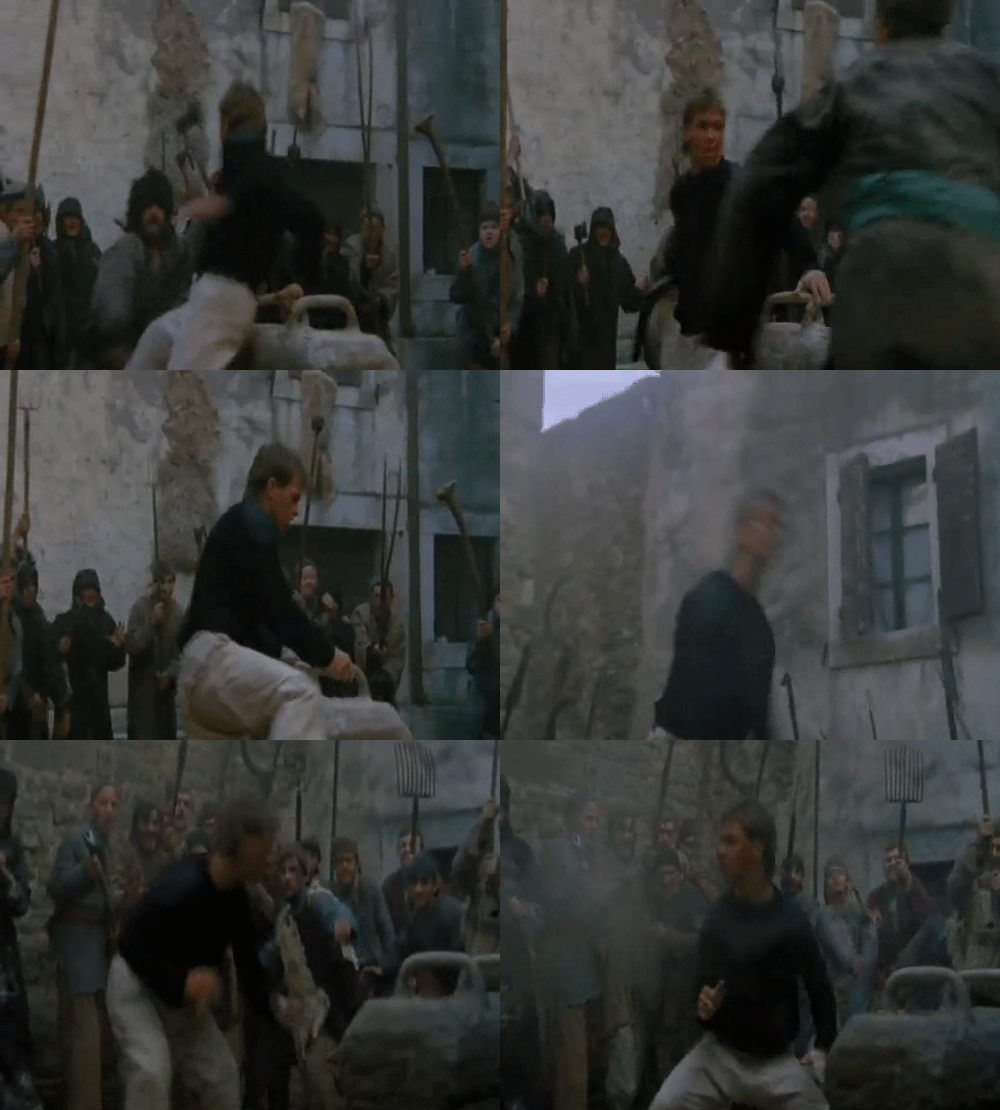
The action sequences in Gymkata are pretty entertaining, but the surroundings always seem a little too conveniently laid out to be handy for an aggressive gymnast. There is particularly no good reason for a sawhorse to be conveniently sitting in the middle of a penal village filled with zombie-people.

gymkata3 gymkata4To the credit of Gymkata, I can’t say that the movie ever gets boring. The plot and characters are confounding throughout the run time, but there is always enough going on to keep you invested in the parade of nonsense happening on screen.

Gymkata features one of the least believable and most unnecessary twists that I have ever seen in a movie, particularly because it is made irrelevant within minutes of being revealed. I’m not going to spoil it because I absolutely recommend watching this movie, but it is astoundingly unnecessary and pulled out of left field.

Overall, Gymkata almost doesn’t qualify as a bad movie at all. The directing, shooting, and fight choreography is all pretty fantastic, but the story written around it all is just astoundingly nonsensical, and makes this into a wonderful little cult gem that seems to encapsulate all that is beautiful about 1980s action movies. Even the acting isn’t quite as bad as I would have expected, even from people who are essentially non-actors.

As I mentioned previously, Gymkata is a solid recommendation from me. If you want to know more about the film, it has been covered by We Hate Movies, How Did This Get Made, Red Letter Media, and even Cracked.com. However, I recommend watching it first before you dig any further into it, because it is more than worth the effort of watching with as little knowledge as possible.

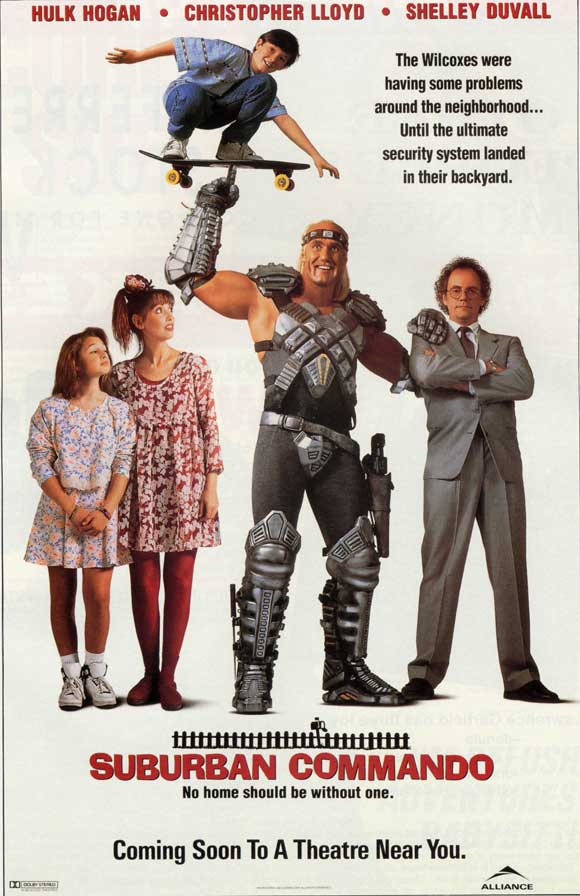
Suburban Commando

Suburban Commando

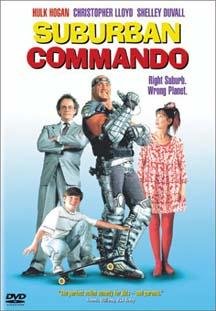
suburban1

Today’s feature is one of the few films to star the now-disgraced wrestling superstar Hulk Hogan: Suburban Commando.

Suburban Commando was written by Frank Cappello, who also wrote the films Constantine, He Was A Quiet Man, and No Way Back. The movie was directed by Burt Kennedy, who was also behind the western comedy Support Your Local Sheriff and the John Wayne flick The Train Robbers.

The cinematographer for Suburban Commando was Bernd Heinl, who didn’t have a ton of credits to his name, but shot the movies The Little Vampire and Bagdad Cafe. Likewise, the editor on the film, Terry Stokes, cut a number of horror sequels over his career with Critters 4, Critters 3, The Blob, and A Nightmare on Elm Street 3.

suburban2The team of special effects artists on Suburban Commando was made up of Steve Johnson (Dead Heat, Humanoids From The Deep, The Dentist, Leviathan), Dean Miller (Waterworld, Fright Night, The Texas Chain Saw Massacre, Tales From The Crypt), Bill Corso (Deadpool, Foxcatcher, Dreamcatcher, Galaxy Quest, The Garbage Pail Kids Movie), Thomas Bellissimo (Red State, Dogma, Jackie Brown), Charles Belardinelli (Saw, Killer Klowns From Outer Space, Resurrection, Bordello of Blood), Tassilo Baur (DeepStar Six, House), John Calpin (Lake Placid, Small Soldiers, Congo), Joel Harlow (Tusk, Battlefield Earth, The Langoliers, Leprechaun) Brian Sipe (Son of the Mask, Van Helsing), and Mike Smithson (Dollman, Dead Heat, The Island of Dr. Moreau, Tank Girl, Battlefield Earth).

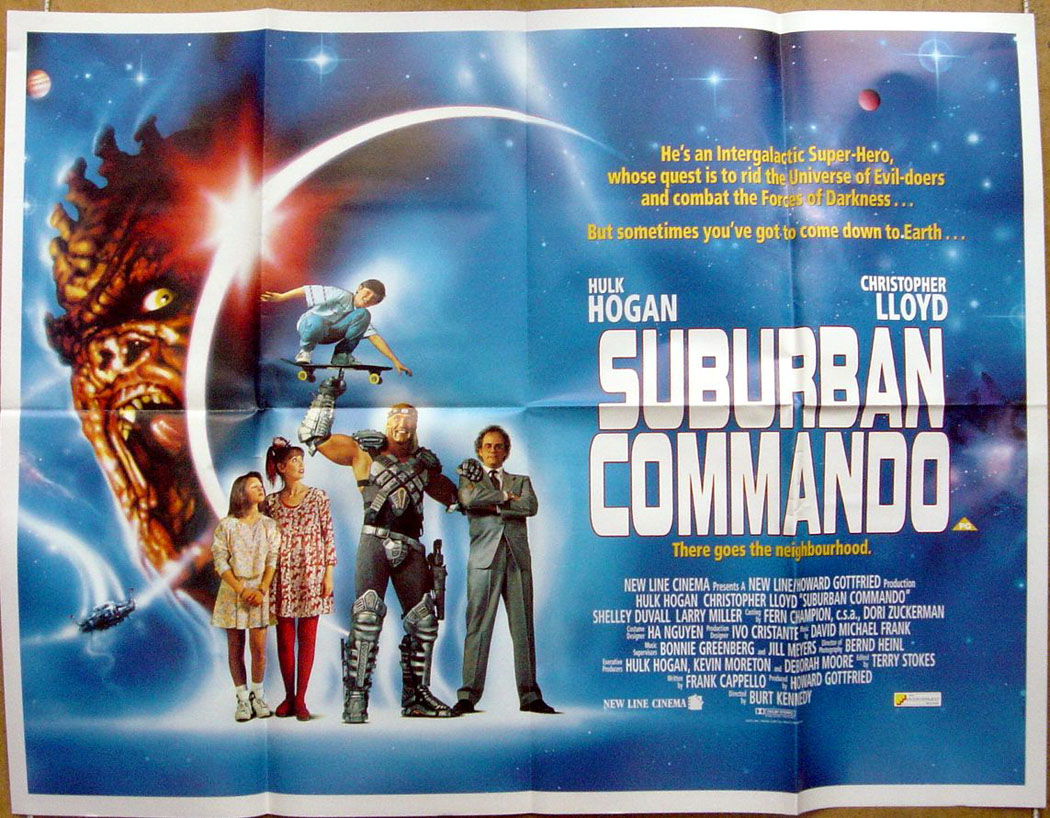
Original Cinema Quad Poster - Movie Film PostersThe visual effects team for Suburban Commando included Richard Cross (Teenage Mutant Ninja Turtles III, Muppets From Space), Heather Davis Baker (Van Helsing, Wolf, The Master of Disguise), Robert Habros (Theodore Rex, SpaceCamp, Army of Darkness, Leviathan), Richard Malzahn (SpaceCamp, Josie and The Pussycats, Dune, Leviathan), Brett B. White (Puppetmaster, Gremlins 2).

The makeup work on the film was done by Cheri Montesanto-Medcalf, who also contributed to the effects on movies like Tank Girl, Mr. Nanny, and RoboCop 2.

The score for Suburban Commando was composed by David Michael Frank, who also provided music for films like Poison Ivy, Out for Justice, and Hard to Kill.

suburban4The team of producers for the movie included Howard Gottfried (Network, Body Double), Deborah Moore (The Mask, Surf Ninjas, The Island of Dr. Moreau, Heart Condition). Kevin Moreton (Menace II Society), John Marshall (Lawnmower Man 2, Supergator), and the film’s star, Hulk Hogan.

The cast of Suburban Commando was headlined by Hulk Hogan (Santa With Muscles, No Holds Barred, 3 Ninjas: High Noon at Mega Mountain), Christopher Lloyd (Baby Geniuses, Foodfight!, Who Framed Roger Rabbit), Shelley Duvall (The Shining, Popeye), and Larry Miller (Foodfight!, Kiss Kiss Bang Bang).

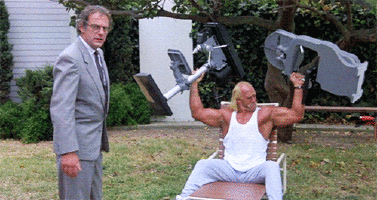
The plot of Suburban Commando follows an expert interstellar warrior who becomes stranded on Earth, specifically in a suburban community. The hard-nosed soldier has to adapt to the customs of the area while repairing his spaceship, leading to a number of shenanigans.

suburban3Suburban Commando was originally written for Arnold Schwarzenegger and Danny DeVito, but they chose to make Twins instead. This decision led to the screenplay being sold to another studio, and then significantly reworked into a science fiction story .

Tragically, a special effects worker (Michael Colvin) was killed in an on set accident involving a faulty trap door, which he was testing at the time.

Suburban Commando features a number of reused props from other productions, including guns from Masters of the Universe and the P.K.E. meter from Ghostbusters.

Suburban Commando was not well received upon its initial release, and it currently holds a 4.3 rating on IMDb alongside Rotten Tomatoes scores of 20% (critics) and 32% (audiences). Even worse, it only managed to gross $6.9 million in its theatrical run on an estimated budget of $11 million, making it a significant financial failure for the studio.

I like Christopher Lloyd, partially because he always seems to put effort into his roles, regardless of how bad the greater movie might be. Both Baby Geniuses and Foodfight! come to mind, but his delivery of the line “I was frozen today!” in Suburban Commando is the perfect example of how much passion and intensity the man is capable of injecting into absolute nonsense.

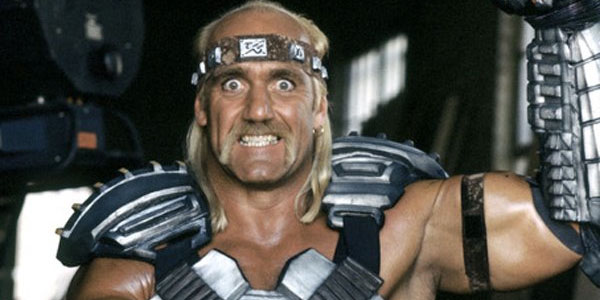
Hogan, on the other hand, is about as terrible as he is with any of his acting roles in Suburban Commando. For someone who seems to be a natural showman, and has spent his entire professional life as a glorified stage performer, he has always seemed awkward in from of a camera. I think this has at least a little to do with the lack of a live crowd when filming, which seems to be what actually gives him his motivation and energy to perform. It is kind of weird to even picture him on a quiet sound stage, surrounded by cameras and boom microphones.

Knowing that this screenplay was initially intended for the duo of Danny DeVito and Arnold Schwarzenegger brings up all kinds of “what if?” scenarios. It is impossible not to picture this movie with the Twins duo after you have the knowledge of this screenplay’s background. That said, I think Lloyd fills in his role just fine, and is probably as good or better than what DeVito could have pulled off. Hogan, on the other hand, just doesn’t have Schwarzenegger’s comedic chops, which is really saying something given his work on Hercules in New York and Jingle All The Way. But, for what it is worth, Schwarzenegger is more expressive than Hogan, and generally seems to have better timing and reactions for a comedic role. As bad as Hercules in New York is, Arnold has come a long way since then. Hogan, on the other hand, hasn’t ever really gotten better at acting since No Holds Barred. If anything, he’s gotten worse, given Santa With Muscles and 3 Ninjas: High Noon at Mega Mountain were actually later in his acting career. He was pretty entertaining as a voice actor in China, IL, but that was more self-parody than anything else. Now that the guy has been outed as a racist, publicly disgraced, and disowned by the WWE, it seems unlikely that he will be getting any more acting roles. Which, really, is for the best.

There is a really perplexing clip from Suburban Commando that has made the rounds on the internet, in which someone in the background of a scene appears to randomly toss their dog into the ocean. It isn’t relevant to the plot at all, and the context doesn’t help, but the image is certainly worth checking out the the sheer bizarreness of it.

suburban7Suburban Commando does have entertaining moments to it, but in general it is a pretty generic family-friendly pseudo-comedy. The plot is silly, the acting is bad, and even the music is pretty atrocious throughout. However, I think it is worth checking out for bad movie fans, at least for the novelty value of it as a Hogan/Lloyd team-up that literally nobody wanted. Also, Larry Miller always seems to be delightful when he shows up in a movie, and certainly doesn’t phone it in here as Christopher Lloyd’s sketchy boss.

The Killer Shrews

The Killer Shrews

killershrews4

Today’s flick is a notoriously terrible creature feature: The Killer Shrews.

The writer of The Killer Shrews was Jay Simms, who also wrote the low-budget b-movies The Giant Gila Monster, Panic In Year Zero!, and The Creation of the Humanoids. The director for The Killer Shrews was Ray Kellogg, who was also behind The Giant Gila Monster, and previously worked as a visual effects artist on movies like The Seven Year Itch and Gentlemen Prefer Blondes.

The cinematographer on the film was Wilfred M. Cline, who worked on such b-movies as The Giant Gila Monster, William Castle’s The Tingler, and Calamity Jane.

The editor for the movie was one Aaron Stell, who also cut highly acclaimed films like To Kill A Mockingbird and Touch of Evil, along with b-movies like The Giant Gila Monster, Silent Running, and Creature With The Atomic Brain.

The music composers for The Killer Shrews were Emil Cadkin and Harry Bluestone, a frequent composition duo. The latter of the two was a noted violinist who has had compositions featured in movies like Night of the Living Dead, Frida, and The Ladykillers.

The cast of The Killer Shrews included James Best (The Dukes of Hazzard), Ken Curtis (Gunsmoke), Baruch Lumet (The Pawnbroker), and the film’s producer, Gordon McLendon.

The plot of The Killer Shrews follows a group of people on a remote island, where a series of scientific experiments have created a species of giant, aggressive shrews with venomous bites. During a hurricane, the group of terrified people are put under siege by the shrews, and have to struggle to survive and find a way to escape with their lives.

The Killer Shrews wound up featured in a season 4 episode of the cult hit television show Mystery Science Theater 3000, which was dedicated to mocking many of the worst films in history.

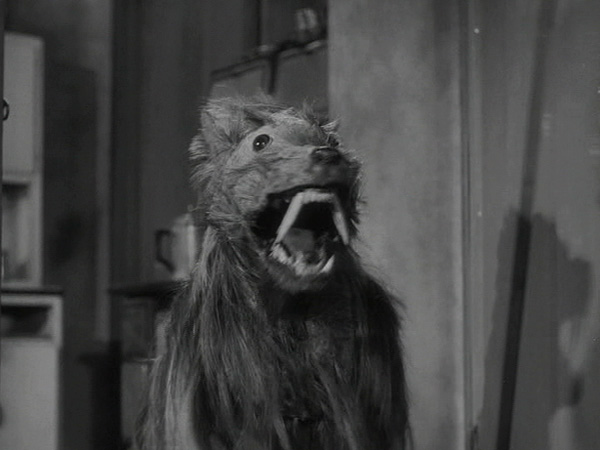
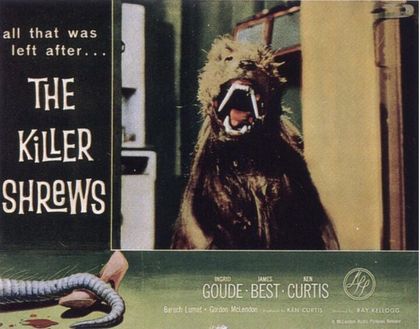
Depending on the shot, the eponymous killer shrews that appear in the film are either portrayed by hand puppets or dogs in vaguely shrew-like costumes, which you can see in screenshots below.

killershrews2 killershrews1The Killer Shrews notably received a colorized home video release in 2007 along with its companion film, The Giant Gila Monster. Personally, I don’t think the colorization really adds anything to the movie, but it is available if that is the sort of thing you are interested in.

Astoundingly, a sequel to the movie was made in 2012,  over 50 years after the original’s release, called Return of The Killer Shrews. The follow up follows a documentary crew that stumbles across the island decades after the events of the first movie, where the shrews have developed significantly over the years.

The Killer Shrews is widely regarded as a terrible, yet classic, b-level monster movie. It currently holds a 3.7 rating on IMDb, along with Rotten Tomatoes scores of 50% (critics) and 25% (audience).

The Killer Shrews was made on an estimated budget of $123,000, and grossed roughly $1 million in its theatrical run on a double bill with The Giant Gila Monster. Both of the movies were made back to back outside of Dallas, TX, with much of the same crew involved. Both films are now regarded as b-movie classics for their respectively memorable monster effects.

Almost the entire plot of The Killer Shrews takes place over the course of a siege, with the characters barricaded into a compound and surrounded by the eponymous shrews. While there are plenty of good movies that use sieges effectively, it is really easy for movies with this device to become boring, because there is no natural motion or progression for the story in a physical sense. Movies like Assault on Precinct 13 use the small confines to create tension, and hone in on the psychological developments of the characters as the siege proceeds, and they are forced to bond and interact with each other. Unfortunately, The Killer Shrews doesn’t quite grasp how to do this, so most of the movie is just characters sitting around waiting for things to happen, and they never seem to really bond effectively.

The thing that really makes this movie memorable, however, are the effects. The shrews are some of the most silly movie monsters of all time, in both their puppet and dog forms. The hand puppets actually look kind of menacing, but they are still recognizably just hand puppets, and are about as intimidating as a herd of stuffed weasels. The dogs, on the other hand, just look adorable, and their outfits make them look all the more ridiculous. On screen, they look like they are just having a good time running around, but the actors have to try to make them seem terrifying with their reactions.

killershrews3Overall, this is a fun little monster movie that has managed to last through the years. There is certainly nothing groundbreaking about it, but the effects are just silly and charming enough to make this worth sitting through. The ending, in which the survivors essentially use a phalanx formation to get past the shrews, is also pretty memorable in how ridiculous it is. If you like classic low-budget monster flicks, this one is worth checking out. It is far from the worst of the bunch out there, and I actually enjoy it more than most of its peers because of how earnest it seems to be from beginning to end. Fortunately it is in the public domain, so it isn’t a hard one to get a hold of.
Reefer Madness

Reefer Madness

reefermadness1

Today’s feature is one of the most infamously terrible cult movies of all time: Reefer Madness.

Reefer Madness was directed and cowritten by Louis J. Gasnier (Parisian Love, The Perils of Pauline), with the screenplay being provided by Arthur Hoerl, who wrote numerous low budget movies over his career, including The Lost Tribe, Texas to Bataan, and Mystery in Swing.

The cinematography and camera work on Reefer Madness was provided by Jack Greenhalgh, who also shot Robot Monster, Dead Men Walk, The Mad Monster, and Lost Continent.

The musical director for the film was Abe Meyer, who also worked on such movies as Revolt of the Zombies and another famous anti-marijuana flick, Assassin of Youth.

The editor for Reefer Madness was Carl Pierson, who also cut movies like The Ape Man, The Dawn Rider, and Blue Steel.

The cast of Reefer Madness includes Dave O’Brien (The Red Skelton Hour), Lillian Miles (The Gay Divorcee), Carleton Young (Kansas City Confidential, The Man Who Shot Liberty Valance), and Dorothy Short (Assassin of Youth).

The plot of Reefer Madness follows a group of teenagers who become corrupted by nefarious dope fiends, who get them addicted to “the demon weed,” marijuana.

Reefer Madness inspired a loose musical remake in 2005 starring Alan Cumming, Kristen Bell, and Neve Campbell, which was based on a 1992 musical play inspired by the original film. The movie was produced by the Showtime television network, and debuted at the 2005 Sundance Film Festival.

The plot of Reefer Madness is based loosely on the highly publicized case of Victor Licata, who murdered his family in 1933. Anti-drug activists claimed that his crimes were influenced by the use of marijuana, and the case was used to propagate the idea that marijuana could cause people to become violent. However, the idea that his marijuana use had anything to do with his violent behavior has been highly criticized, given we was found to have psychological conditions that left him prone to violent outbursts.

Reefer Madness has built up a significant ironic cult following among marijuana enthusiasts, which has grown after years of being held as a midnight screening staple.

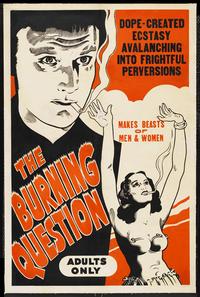
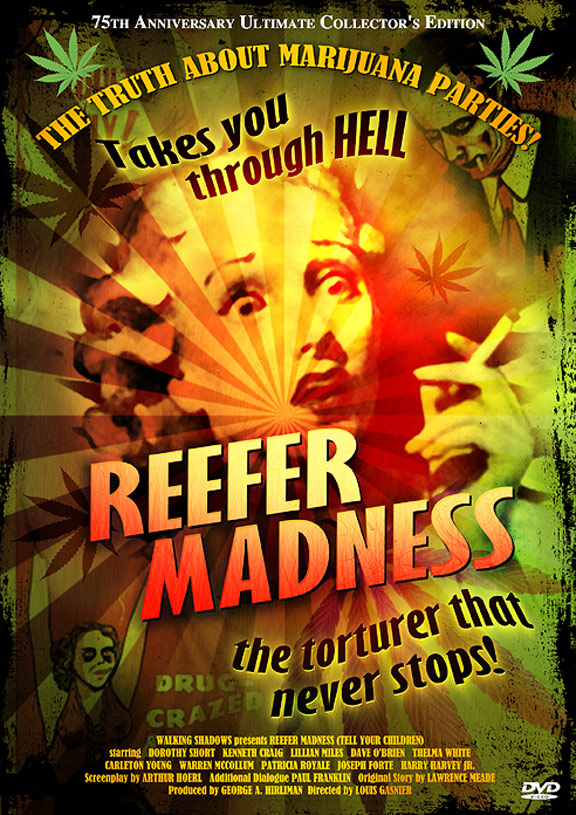
Reefer Madness was originally titled Tell Your Children, and has been billed under a number of alternate titles over the years, including The Burning Question, Dope Addict, and Doped Youth.

reefermadness3The film is officially in the public domain, though the title card claims that it was copyrighted. The production of the movie is unclear, but popular belief is that it was written and produced by a religious group as anti-marijuana propaganda, but no one has ever come forward with a legitimate claim to the copyright. The version of the movie that most are familiar with is the result of a re-release, which inserted additional footage so it could be billed as an exploitation movie.

The reception to Reefer Madness has been traditionally negative, though it has become a cult movie staple for its transparent agenda and unrealistic plot. It currently holds a 3.7 rating on IMDb, alongside Rotten Tomatoes scores of 46% from critics and 38% from audiences. It is worth noting that due to the movie’s cult status, there are a number of ironic positive reviews on both sites that have artificially elevated the scores.

The acting in Reefer Madness is of course way over the top, which fits perfectly with the exaggerated writing throughout the movie. The fact that it is obvious that no one in the production had any idea of how marijuana works definitely adds to the effect of the movie as a whole. Now that marijuana is on track for widespread legalization in the United States over the next few years, it is a good time to go back and look at the history of the public perception of the drug, which Reefer Madness showcases quite well.

The popularity of Reefer Madness as an ironic bad movie helped launch an entire subgenre of b-movie, specifically focused on the stoner demographic. I think that it is fair to say that movies like Evil Bong wouldn’t exist without the cult reputation of Reefer Madness.

reefermadness2Reefer Madness is certainly deserving of its reputation, and is a blast to sit through. I am a total sucker for these old social hygiene films, like I Accuse My Parents, and always get a kick out of seeing the sensationalized realities depicted within them. Reefer Madness‘s depiction of the effects of marijuana is one of the funniest things that I have ever seen in this kind of movie, just because of how wrong it is, and how much the actors desperately try to sell their performances. Reefer Madness is a solid recommendation from me, and I feel like every b-movie fan has an obligation to watch it at least once, because of its cultural relevance if nothing else.