Tag Archives: bad movies

Water Foul: “Hell Comes To Frogtown”

Hell Comes To Frogtown

hellfrogtown

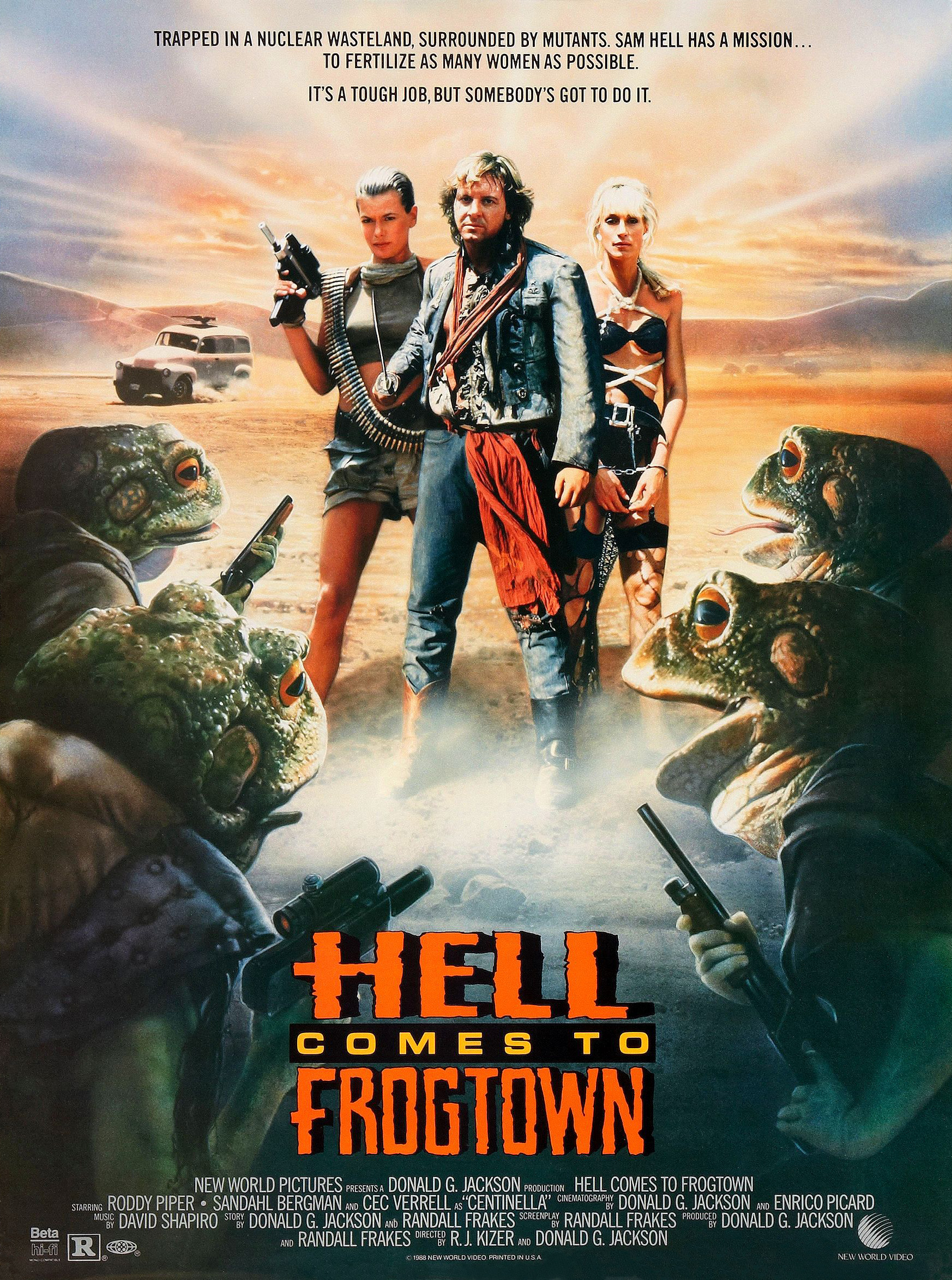
Next up in my “Water Foul” spotlight on aquatic-themed monster flicks is “Hell Comes to Frogtown,” starring the one and only “Rowdy” Roddy Piper.

“Hell Comes To Frogtown” was co-directed, co-written, shot, and produced by Donald G. Jackson, who also wrote and directed “The Roller Blade Seven” and all three “Frogtown” sequels: “Frogtown II,” “The Toad Warrior,” and “Max Hell Frog Warrior.” The screenplay was written by Randall Frakes, who was a camera operator on “Escape From New York,” “Battle Beyond The Stars,” and “Galaxy of Terror,” and also served as a producer on “Hell Comes To Frogtown.”

hellfrogtown3The other credited director and editor on “Hell Comes To Frogtown” was R.J. Kizer, who has done sound editing on such films as “Interstellar,” “Daredevil,” “Jingle All The Way,” “Inception,” and “The Dark Knight Rises,” and did the primary editing on “Galaxy of Terror” and “Battle Beyond The Stars.”

The impressive “Hell Comes To Frogtown” creature effects were done by a team that included Grant Arndt (“Leviathan,” “Pumpkinhead,” “976-EVIL”), Makiko Kida (“Fright Night,” “Big Trouble In Little China”), David Kindlon (“Leprechaun,” “DeepStar Six,” “From Beyond”), Steve Patino (“The Monster Squad,” “Predator”), Matt Rose (“Aliens,” “Men In Black,” “Ed Wood”), Johnnie Saiko (“League of Extraordinary Gentlemen,” “Hollow Man,” “Future War”), Steve Wang (“Devil’s Advocate,” “Arena,” “Predator”) and pyrotechnics by Wayne Beauchamp (“Exorcist II,” “Maniac Cop 2,” “Pray For Death”).

hellfrogtown4The makeup effects for “Hell Comes To Frogtown” were done in part by June Brickman (“Taken,” “Slipstream,” “Ernest Goes To Jail”) and Cynthia Barr (“Small Soldiers,” “Congo”).

The musical score on “Hell Comes To Frogtown” was provided by David Shapiro, who has worked on the soundtracks for “It’s Alive 3” and “Evil Laugh.”

The secondary editor for “Hell Comes To Frogtown” was James Matheny, who worked as a sound editor on such pictures as “The Exorcist,” “Gattaca,” “The Day After Tomorrow,” and “Big.”

The production design was done by Dins W.W. Danielsen, who has worked as an art director and production designer on such films as “The Hitcher,” “Pet Sematary,” and “Men At Work.”

The cast for “Hell Comes To Frogtown” is headlined by the professional wrestler “Rowdy” Roddy Piper, who starred in “They Live” and “Jungleground.” The rest of the cast is filled out by William Smith (“Conan The Barbarian,” “Boss,” “Maniac Cop”), Sandahl Bergman (“Red Sonja,” “Conan The Barbarian”), Rory Calhoun (“The Texan,” “The Colossus of Rhodes”), Eyde Byrde (“Doc Hollywood”), Nicholas Worth (“Swamp Thing,” “Darkman”) and Cliff Bemis (“Dallas”).
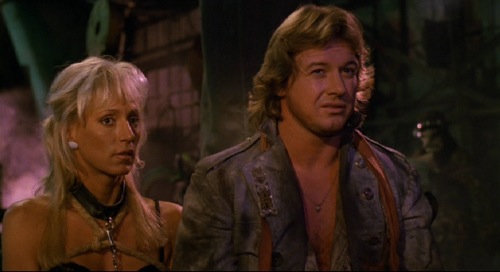
hellfrogtown2The story of “Hell Comes To Frogtown” takes place in a post nuclear war, matriarchal society with a rapidly dwindling population. The mostly-sterile humans that remain alive are constantly at war with various tribes of mutants, including a race of frog people. Hell, a legendary warrior with the rare trait of sexual virility, is captured by the matriarchal government, and impressed into a mission to rescue a group of women trapped in Frogtown. Along the way, he is required to mate with as many ovulating women as possible, or else he will be executed by his keepers.

“Hell Comes to Frogtown” managed to spawn (ha!) a number of sequels, including “Frogtown II,” “The Toad Warrior,” and “Max Hell Frog Warrior.”

“Hell Comes To Frogtown” has become a bit of a cult movie, but has never received any real acclaim. The film currently has an IMDb rating of 5.4, along with Rotten Tomatoes scores of 40% (critics) and 48% (audience).

“Hell Comes To Frogtown” was made on an estimated budget of $7 million, which almost certainly was mostly eaten up by the special effects, given the rest of the movie looks like it was made on a microbudget. I wasn’t able to dig up any gross numbers, but I would be shocked if it was able to make that amount back. However, the existence of so many sequels might indicate otherwise.

For whatever it is worth, the frog heads look pretty good in “Hell Comes To Frogtown,” especially considering that it predated the “Teenage Mutant Ninja Turtles” movie. Unfortunately, the rest of the movie doesn’t live up to them as far as quality goes.

The biggest problem with “Hell Comes To Frogtown” is the strange tone, which is generally goofy while also being violent and sexually explicit. It suffers from similar issues as “Hudson Hawk,” though it is a much more extreme case when it comes to the sexual aspects. Speaking of which, the film has a number of bizarre sexual situations that just feel completely out of place, and the film doesn’t really need them. In particular, the infamous “dance of the three snakes” comes to mind (which was originally written to be nude, making it all the stranger). All of that said, Roddy Piper does his damnedest to make it all work, and he winds up being a highlight of the movie. If the lead had taken the role more seriously, this would have been damn near unwatchable.

I do like the general atmosphere of “Hell Comes To Frogtown” from an aesthetic viewpoint, and it generally fits the popular image of a post-apocalypse: tattered clothes, armored vehicles, small western-style towns, endless deserts, a technology vacuum, and the inexplicable presence of heavy ammunition in spite of it all.
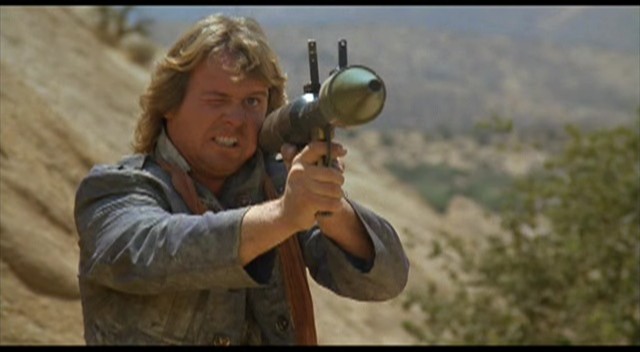
hellfrogtown5The result of the sexual ethics of the society combined with the production design, dialogue, and costuming is a very odd world: basically, it’s “Zardoz,” “Mad Max,” and the humor of “Escape From New York” in a blender, with all of the artistic merit carefully strained out. If that sounds appealing to you, and I know for many it does, then this is a movie worth giving a shot. It does have fun moments to be sure, but it wasn’t quite up my alley.
Water Foul: “Leviathan”

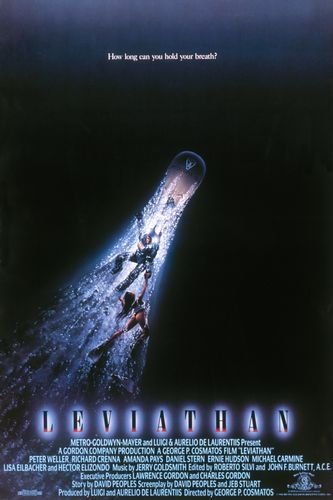
Leviathan

leviathan2

Continuing with the “Water Foul” spotlight on some of the worst aquatic terrors in cinematic history, the next feature I will be covering is 1989’s “Leviathan.”

The two credited writers for “Leviathan” were David Webb Peoples (“Blade Runner,” “12 Monkeys,” “Unforgiven”) and Jeb Stuart (“Die Hard,” “The Fugitive”). The director, George P. Cosmatos, is best known for films like “Cobra,” “Tombstone,” and “Rambo: First Blood Part II,” for which he received a Golden Raspberry nomination.

The cinematographer on “Leviathan” was Alex Thomson, who has worked as a director of photography and camera operator on such films as “Demolition Man,” “Cliffhanger,” “Labyrinth,” and “Fahrenheit 451.”

The “Leviathan” visual effects team was comprised of Rene Clark (“Detroit Rock City,” “Bunraku”), C. Mitchell Bryan (“Robot Jox,” “Stargate”), James Belohovek (“Troll,” “Evil Dead II,” “The Thing”), Ed Thompson (“Mystery Men,” “SpaceCamp”), Paul Stewart (“Tango & Cash,” “Speed 2: Cruise Control”), David B. Sharp (“Fortress,” “Muppets From Space,” “Event Horizon”), Barry Nolan (“Maximum Overdrive,” “Dune”), Niels Nielson (“Lawnmower Man 2,” “The Fifth Element”), Richard Malzahn (“Kull The Conqueror,” “Suburban Commando,” “Joe Dirt,” “Serenity”), and Jurgen Heimann (“Pacific Rim,” “Attack The Block,” “Hellboy”).

leviathan6The makeup effects on “Leviathan” were done by a group that included Katalin Elek (“Double Team,” “SpaceCamp,” “The Monster Squad”), Bruce Barlow (“From Beyond,” “Virtuosity,” “Arena”), Zoltan Elek (“Street Fighter,” “Timecop,” “The Day After”), and John Rosengrant (“Small Soldiers,” “Congo,” “Batman Returns,” “The Avengers”).

The massive special effects and creature design team for “Leviathan” was provided by the legendary Stan Winston Studios, and included, aside from Stan Winston himself (“Bat People,” “Lake Placid”): Tom Woodruff Jr. (“Tremors,” “Paul Blart: Mall Cop 2”), Jeff Kennemore (“The Garbage Pail Kids Movie,” “Class of 1999”), Richard J. Landon (“Predator 2,” “Constantine”), Shane Mahan (“Iron Man,” “Inspector Gadget”), Karen Mason (“DeepStar Six,” “Where The Wild Things Are”), Pat McClung (“The Abyss,” “Masters of the Universe”), Jim McPherson (“Slumber Party Massacre II,” “State of Play,” “Deep Blue Sea”), Hal Miles (“976-EVIL,” “Leprechaun 4: In Space”), Brian Penikas (“Tank Girl,” “Face/Off,” “Guardians of the Galaxy,” “Interstellar”), John Rosengrant (“Aliens,” “Predator,” “Small Soldiers”), Andy Schoneberg (“Mortal Kombat,” “Planet Terror”), Grant Arndt (“Hell Comes To Frogtown”), John Blake (“From Beyond,” “Starship Troopers,” “Showgirls”), Roger Borelli (“Dollman”), Mario Cassar (“Cutthroat Island,” “Final Justice”), Craig Caton (“The Stuff,” “Big Trouble In Little China”), Steve Frakes (“Evolution,” “Jumanji”), Mark Garbarino (“Kung Fu Killer,” “Paul Blart: Mall Cop 2,” “Robot Holocaust”), Alec Gillis (“Dragonball Evolution,” “Grown Ups 2”), Steven James (“Mac and Me,” “Baby’s Day Out”), Steve Johnson (“League of Extraordinary Gentlemen,” “Humanoids from the Deep”), Michael Spatola (“C.H.U.D. II: Bud the Chud,” “Going Overboard,” “Zomboobies!”), Shannon Shea (“Ghosts of Mars,” “In The Mouth of Madness,” “House”), and many, many others.

LEVIATHAN, 1989, (c) MGM

The producers on “Leviathan” included the Italian duo of Luigi and Aurelio De Laurentis, the brother and nephew of famed producer Dino De Laurentis. Aurelio went on to act as executive producer on “Sky Captain and the World of Tomorrow,” as well as a number of Italian features. The two other producers on the flick were brothers Charles and Lawrence Gordon, the founders of Largo Entertainment. Combined, they produced such films as “Die Hard,” “Waterworld,” “Field of Dreams,” “K-9,” “Predator,” and “Predator 2.

The music for “Leviathan” was provided by Jerry Goldsmith, a proficient film composer and conductor with over 250 composition credits, including “Small Soldiers,” “Congo,” “Supergirl,” “Capricorn One,” “Total Recall,” “The ‘Burbs,” “Chinatown,” and “The Omen,” among countless others.

The two editors for “Leviathan” were John F. Burnett, best known for “Grease” and “Grease 2,” and Roberto Silvi, who would later cut “Tombstone.”

The production designer for “Leviathan” was Ron Cobb, who also worked on an assortment of other films, including “Space Truckers,” “Conan The Barbarian,” “Firefly,” “Robot Jox,” “Alien,” and “Total Recall.”

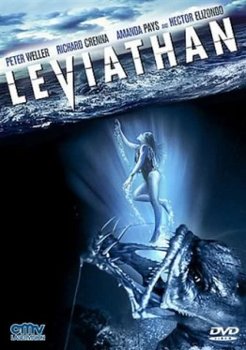
The cast for “Leviathan” included Peter Weller (“RoboCop”), Ernie Hudson (“Congo,” “Ghostbusters”), Daniel Stern (“Home Alone,” “City Slickers”), Richard Crenna (“First Blood,” “Judging Amy”), Amanda Pays (“The Flash,” “Max Headroom”), Lisa Eilbacher (“The Last Samurai,” “Beverly Hills Cop”), Hector Elizondo (“Chicago Hope”), and Meg Foster (“They Live,” “Masters of the Universe”).

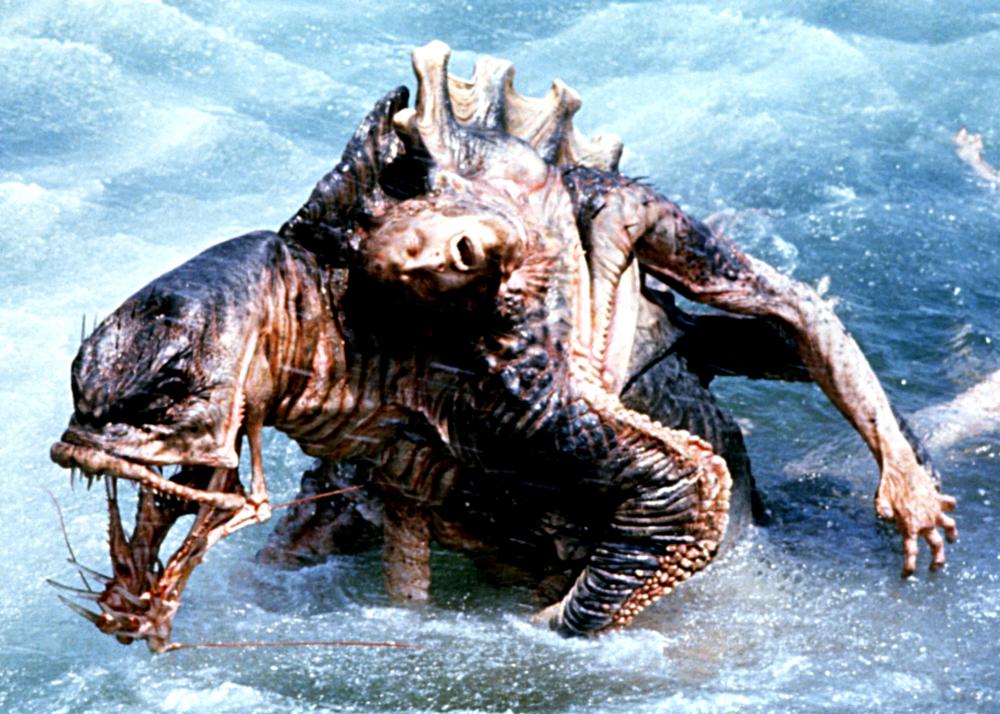
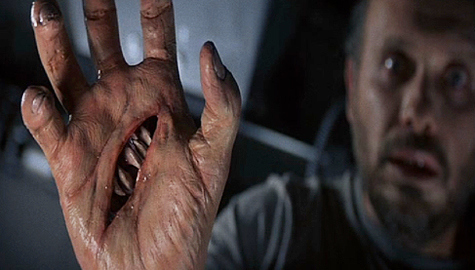
leviathan5The story of “Leviathan” follows a crew of deep sea minors who stumble across a mysterious Soviet shipwreck that contains strange, genetic monstrosities that begin to hunt down the crew members.

Interestingly, very little of “Leviathan” was actually filmed underwater, but the illusion is built up impressively with the lighting, particles in the air, and misting. I was surprised how believable the ultimate product actually was, though it is certainly noticeable when you are keeping an eye out for it.

The reception for “Leviathan” wasn’t exactly positive, though people seem to have softened to it in retrospect: it current has a 5.7 IMDb rating, alongside Rotten Tomatoes scores of 14% (critics) and 25% (audience).

The domestic gross for “Leviathan” was just under $16 million on a budget of $20 million, meaning it failed to make back its money in the theatrical run. Of course, the fact that the 1989 movie market was saturated by deep sea adventures (six in total: “DeepStar Six,” “The Abyss,” “Endless Descent,” “Lords Of The Deep,” “The Evil Below,” and “Leviathan”) certainly didn’t help its odds of being profitable.

leviathan1There is a solid little review on ReelFilm.com that talks about one of the criticisms I have most often seen about “Leviathan”: specifically, the dragging middle section of the flick:

Cosmatos ultimately spends far too much time dwelling on the various characters’ day-to-day exploits aboard the mining station – to the extent that it becomes impossible not to wish that the aforementioned threat would hurry up and make its appearance, already

The focus on the characters does weigh things down a little in the middle, but I also thought that it made the characters a little more real and relate-able. They aren’t expertly written by any means, but the crew is more interesting than your typical sci-fi flick today.

The effects work isn’t bad in “Leviathan,” but it is nowhere near groundbreaking. I did definitely like the early stage design of the creature as a lamprey, which I thought was the coolest aspect of the effects work. However, the ultimate product in the final stage of the creature’s evolution just seems too busy, and looks a little ridiculous because of it.

leviathan4“Leviathan” is a pale comparison to similar sci-fi horror of the era, but it has to be looked at on its own merits if you ask me. It isn’t as flagrant of a rip off as “Humanoids from the Deep,” but it isn’t exactly subtle about borrowing elements from “Alien,” “The Thing,” and “Aliens.” Interestingly, it predated “The Abyss” by just a few months, despite many seeing it as a knock-off of that film in retrospect.

As far as the cast goes, Daniel Stern and Ernie Hudson are pretty great, and ham up their roles well. Peter Weller takes on the lead duties just fine, but as with most of his characters, he isn’t exactly flashy. He has a couple of fantastic lines towards the end of the film, though.

If you ask me, I think “Leviathan” suffers from having too many false endings. The shark bit, for example, was just totally unnecessary, and was immediately follow up with another surprise. You can’t just toy with the pacing and arc that much, particularly at the very end of a story.

1989 was, of course, well into the tail end of the Cold War. It was an interesting touch having the ship and creature be of Soviet origin, given there were a lot of worries about nukes and other weapons going unmaintained or forgotten as the Soviet Union was falling.

Overall, there are some fun bits throughout “Leviathan,” but it isn’t particularly memorable as a whole. It definitely suffered in the public eye by being one in a massive field of deep water movies in 1989. It also drags a bit too much, and borrows a little too heavily from other works, which clearly left a sour taste in many mouths. It is a mostly forgotten flick now, but it is worth revisiting for sure, as it doesn’t merit the harshness of the contemporary criticisms it received upon release.

Water Foul: “Frog-g-g!”

Frog-g-g!

froggg3

Today I am continuing my “Water Foul” spotlight on the very worst aquatic monsters to ever grace a screen with the low-budget homage/parody: “Frog-g-g!”

“Frog-g-g!” was written, directed, and edited by Cody Jarrett, who has also created a similar-styled  women-in-prison homage in “Sugar Boxx.”

The effects team for “Frog-g-g!” included a couple of veteran makeup and effects artists, Patricia Urias (“The League of Extraordinary Gentlemen,” “Jennifer’s Body,” “Drag Me To Hell”) and Greg Solomon (“Zombeavers,” “Batman & Robin,” “I Am Legend”).

The music for “Frog-g-g!” was composed by Will Flint and Blake Neely. The latter has composed music for numerous television shows in the past few years, including “The Mentalist,” “Arrow,” and “The Flash.”

The cinematography on “Frog-g-g!” was provided by David E. Diano, who has worked as a camera operator on semi-notable films like “SpaceCamp,” “Night Shift,” “Street Fighter,” and “Spider-Man 3.”

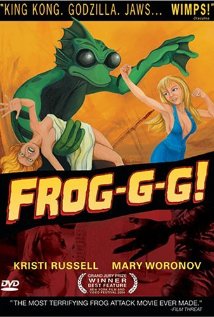
The cast of “Frog-g-g!” is led by Kristi Russell, who has since become a successful casting director for television shows like “Bar Rescue,” “Storage Wars,” and “Ice Road Truckers.” The rest of the cast includes Ariadne Shaffer (“Better Luck Tomorrow”), Robert Patrick Brink (“The Insider”), Michael McConnohie (“Vampire Hunter D,” “The Big O,” “Monster”), James Duval (“Donnie Darko”), and Mary Woronov (“Chopping Mall,” “Death Race 2000,” “Eating Raoul”).

froggg1The story of “Frog-g-g!” centers around an EPA investigation into a chemical company that may be polluting the water supply of a small, conservative farming town. It turns out that the pollution is far worse than initially thought, creating a murderous, humanoid frog creature.

“Frog-g-g!” wasn’t particularly well-received, and currently holds a 13% audience score on Rotten Tomatoes along with a 4.4 IMDb rating.

“Frog-g-g!” certainly has flashing moments of cleverness, particularly when viewed back-to-back with “Humanoids from the Deep,” the primary inspiration for the flick. The sex-obsessed sea monster being the result of human pollution is 100% “Humanoids from the Deep,” and “Frog-g-g!” manages to lampoon just about every ridiculous detail from that overly-serious film.

That said, “Frog-g-g!” is actually pretty boring, drags along for a good while. Instead of being a frame, the premise and setup is almost the whole movie, making the film almost more of an “Erin Brockavich” knockoff than a monster movie.

froggg2As you would expect, the acting in “Frog-g-g!” is particularly awful (likely by design to a certain degree), particularly on the part of the various “bad guys,” like the big businessman and the corrupt sheriff.

In a lot of ways, “Frog-g-g!” has the opposite problems of “Humanoids from the Deep”: instead of being too serious, it is far too silly. Worse, the film lacks any element of earnest creativity, and feels almost feels like a Troma movie because of it (except that it arguably looks better). In fact, in the behind the scenes documentary about “Frog-g-g!,” one of the crew members specifically says “This is so Troma, it is unbelievable,” in such a way that I assume it was meant positively.

The most entertaining element of “Frog-g-g!” is definitely the frog suit and the monster’s portrayal, which makes it all the more unfortunate how little screen time it gets. Particularly, the overly-dramatic walking and leaping motions are just hilarious.

“Frog-g-g!” contains a surprising amount of social conflict, specifically surrounding conservative vs liberal values. There are blatant criticisms of homophobia, corporate and governmental corruption, urban vs rural values, and pollution scattered throughout the film, which holds true to a good number of classic b-pictures.

It is impossible not to notice the really shitty quality of the movie overall from a production standpoint. Unfortunately, is does not strike me as being done in a classic b-movie sort of way, but rather in a ‘we couldn’t afford to make it look better’ kind of way. That isn’t something I can realistically hold against the film, but it is also something that can’t be easily ignored.

froggg4“Frog-g-g!” also makes the decision to feature the same “Alien” knock-off ending as was used in “Humanoids,” and it looks faithfully ridiculous. However, it also seems like the sort of nod that only someone with intimate knowledge of “Humanoids from the Deep” would get, which might not have been the best way to go about this film. If the movie had been a little more broad in its parody of b-films, it might have resonated with a few more people.

Overall, “Frog-g-g!” is kind of dull, with only brief flashes of entertainment. It is certainly better than just about any “Troma” flick out there, but only by a hair. I would only recommend this one for people who really like films like “Creature From The Black Lagoon” or “Zaat,” otherwise it isn’t going to be worth sitting through.


Water Foul: “Humanoids from the Deep”

Humanoids From The Deep

humanoids1

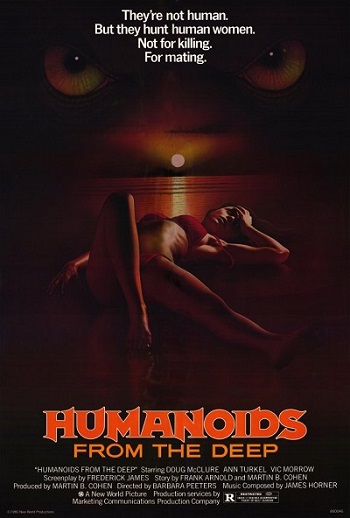
Next up in the “Water Foul” spotlight on cinematic aquatic terrors is the 1980 creature feature, “Humanoids From The Deep.”

The story of “Humanoids From The Deep” was conceived of by producer Martin B. Cohen and Frank Arnold, an aging actor. The screenplay was written by William Martin, who notably doesn’t have any other film credits according to IMDb.

The primary director on “Humanoids From The Deep” was Barbara Peeters, who had directed a handful of exploitation films previously, and went on to direct for television programs like “Falcon Crest.” Later on, Jimmy T. Murakami (“Battle Beyond The Stars”) was brought in to direct additional sequences, but didn’t ultimately receive official credit for his work on the film.

The cinematographer for “Humanoids From The Deep” was Daniel Lacambre, who also shot “Battle Beyond The Stars” and “Saturday The 14th.”

The producers on “Humanoids From The Deep” included the legendary b-movie figure Roger Corman, story co-writer Martin B. Cohen, and Hunt Lowry, who has gone on to produce films like “Donnie Darko,” “Last of the Mohicans,” and “Top Secret!”

The effects team for “Humanoids From The Deep” included Steve Johnson (“Big Trouble In Little China,” “The League of Extraordinary Gentlemen,” “Videodrome”), Shawn McEnroe (“The Howling,” “Cocoon”), Kenny Myers (“Species,” “Galaxy Of Terror,” “Galaxina”), Margaret Prentice (“The Thing,” “RoboCop,” “Total Recall”), Roger George (“Chopping Mall,” “Ghoulies,” “Grand Theft Auto,” “Never Too Young To Die”), and Chris Walas (“Piranha,” “Gremlins,” “The Fly”).

The editor on “Humanoids” was Mark Goldblatt, who also cut such films as “Enter The Ninja,” “Predator 2,” “Super Mario Bros.,” and “The Howling.” He also went on to direct a couple of movies, the cult classics “Dead Heat” and 1989’s “The Punisher.”

The music for “Humanoids” was composed by James Horner, who would later win an Academy Award for his score to “Titanic,” and has received numerous accolades for films such as “A Beautiful Mind,” “Braveheart,” “Aliens,” and “Avatar.” “Humanoids” was one of his first film scores, and his early career featured a number of similar low budget horror and sci fi features like “Battle Beyond The Stars,” “The Hand,” and “Krull.”

Assistant director for “Humanoids From The Deep” James Sbardellati went on to work on films like “Slipstream,” “Frailty,” “The Island Of Dr. Moreau,” “The Beastmaster,” and “She’s All That,” and also got head directing duties for the 1983 sword and sorcery cult flick “Deathstalker.”

The cast of “Humanoids from the Deep” includes Doug McClure (“Cannonball Run II,” “Roots”), Ann Turkel (“Deep Space”), Vic Morrow (“Twilight Zone: The Movie,” “Roots,” “1990: The Bronx Warriors”), Anthony Pena (“The Running Man”), and Hoke Howell (“Kingdom Of The Spiders”).

The story of “Humanoids From The Deep” centers around a seaside town that becomes terrorized by mutated, sex-crazed creatures from the sea. As the plot progresses, it is revealed that the creatures were created as a byproduct from hazardous chemicals and genetically modified organisms that had been introduced into the local ecosystem.

humanoids3“Humanoids” was given a made-for-television remake in 1996 starring Robert Carradine that ultimately aired on Showtime to negative reviews.

Apparently, a fair amount of personnel drama ensued around the filming and post-production of “Humanoids from the Deep.” As mentioned earlier, Jimmy Murakami was brought in to film additional sequences after Peeters refused to do so, specifically because the proposed additions were all focused on increasing the gore and explicit sexual content of the film, which was counter to the original vision for the movie. One of the actors, Ann Turkel, tried to stop the release of the picture after she caught wind of the content of the additional sequences (to no avail).

Reportedly, additional actors had to be hired to play the parts of the monsters after the stunt men on “Humanoids” refused to wear the monster suits.

Menahem Golan (“Enter The Ninja,” “Revenge of the Ninja,” “Ninja III”) had at one point planned to make a sequel to “Humanoids From The Deep” in the early 1990s, but the plans ultimately fell through.

Joe Dante, who had just finished directing the film “Piranha,” reportedly turned down the opportunity to direct “Humanoids From The Deep.”

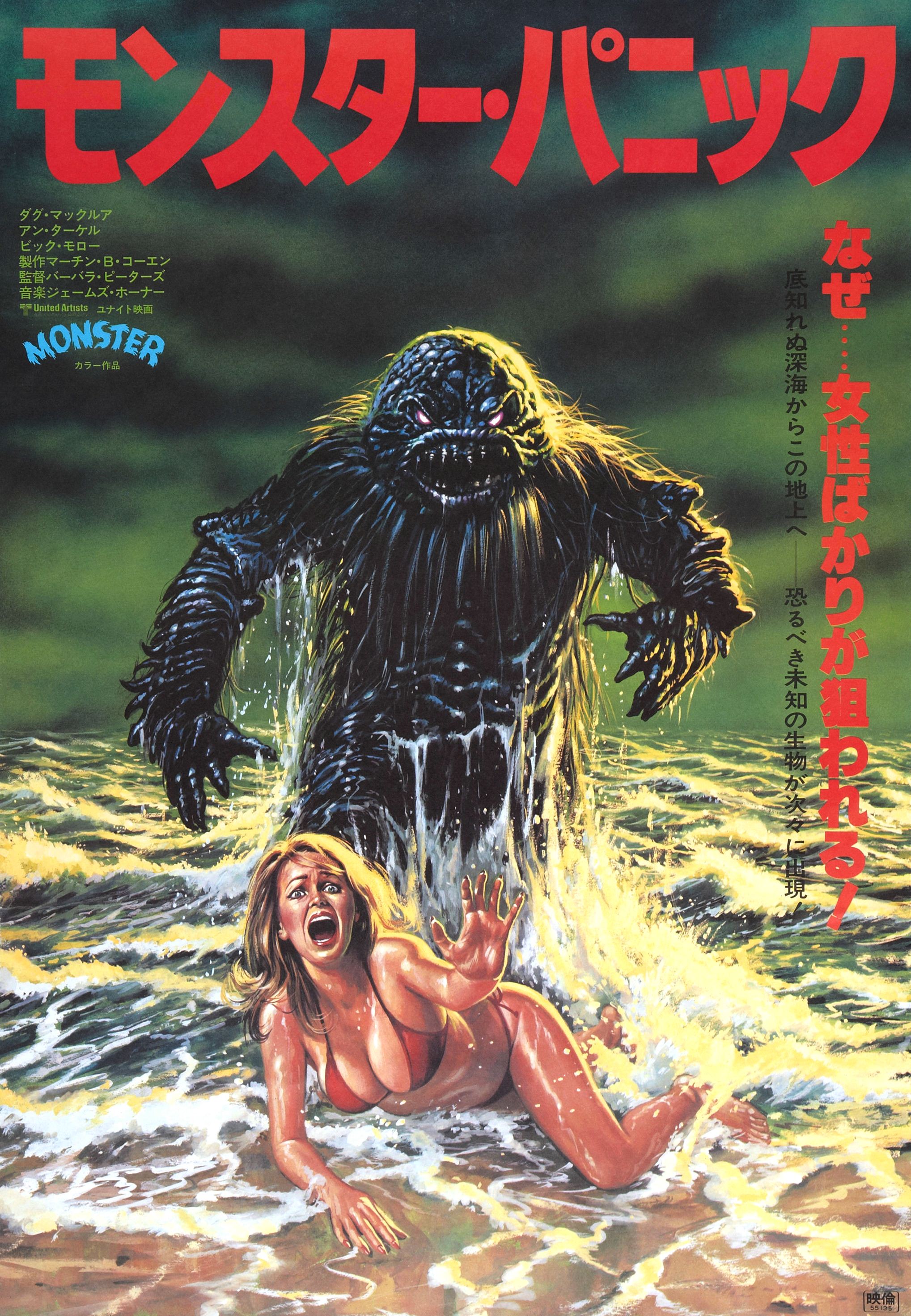
“Humanoids” went by a number of working titles throughout production in an attempt to give the film a sense of legitimacy and class. Two of these titles were “Beneath the Darkness” and “Monster,” the latter of which was used as the final title in some foreign markets.

humanoids4“Humanoids” managed to gross a reported $2.5 million on an undisclosed budget, which was almost assuredly far less than $2.5 million. The film currently holds an IMDb rating of 5.7, along with Rotten Tomatoes scores of 56% (critics) and 43% (audience), making for a generally poor reception.

Even though a lot of Murakami’s extended sequences and extra shots didn’t make it to the final cut, it is clear that there was an attempt to up the sleaze factor from watching the film. The amount of totally unnecessary sexual violence on the part of the creatures (which is never adequately explained/rationalized) is absolutely through the roof, to the point that it even drags the pacing of the film down. The film was interestingly both praised and scorned for the explicit nudity and violence by various critics, creating an contentious division of opinion.

The monsters in “Humanoids” honestly don’t look great, They are certainly better than the typical rubber suit beasts that popped up in flicks like “Zaat” or “Horror of Party Beach,” but this was also made in 1980 and on a budget upwards of $2 million: it should look better than those flicks. In fact, it should look astoundingly better, which it unfortunately doesn’t.

One of the biggest problems with “Humanoids” is that it takes itself a bit too seriously for what it is. Outside of one or two semi-humorous sequences (there’s an attempted seduction via puppet?), this film is dead serious from start to finish, and never feels fun. I don’t understand what something so inherently ridiculous was made with such gloomy style, because it certainly doesn’t do the film any favors.

humanoids5Also not helping the overly serious tone, awful monsters, and way-too-heavy content are the poorly-written characters. Basically, none of the characters are memorable in the slightest, and they seem to all die before you get to know them. For all of the things I dislike about, say, “Lake Placid,” I can give you broad strokes of what each of the central characters was like. Gun to my head, I have no idea how to describe the characters in “Humanoids,” except for that one creep who attempt the puppet-assisted seduction.

Last but not least, “Humanoids from the Deep” is guilty of a whole lot of rip-offs from much bigger and more successful contemporary blockbusters. There is obviously a lot of “Jaws” influence (the attack sequences and POV monster shots, for example) in the film, easily as much as there is from the more obvious predecessors “Creature From The Black Lagoon” or “Horror of Party Beach.” “Humanoids” even goes so far as to rip off the dramatic “Alien” chest-burster with the ending (which looks awful). I am a little surprised that they couldn’t figure out a way to wedge a light saber or a star destroyer into this flick to cover all of the blockbuster bases. In for a penny, in for a pound, right? Regardless, “Humanoids” is a knock-off from top to bottom, and doesn’t have a lot in the way of original contributions.

“Humanoids From The Deep” is like licorice: some seem to absolutely love this one, whereas it incites revulsion from many others. As much as I love b-movies (and licorice), I wasn’t impressed overall with “Humanoids From The Deep.” It is a faithful enough update of the old sea monster classics, but it is definitely missing something. The sexually charged monsters are just weird, and the whole thing is way heavier and more serious than it needed to be. It also feels like a soulless assembly of other successful elements from movies at the time that just don’t work when thrown together. Sexual-themed dread works in “Alien,” but it doesn’t need to be in “Jaws.” If you are into Corman movies, this is probably worth checking out, but it certainly isn’t in his upper echelon of memorable works by a long-shot.

Water Foul: “Frogs”

Frogs

frogs1

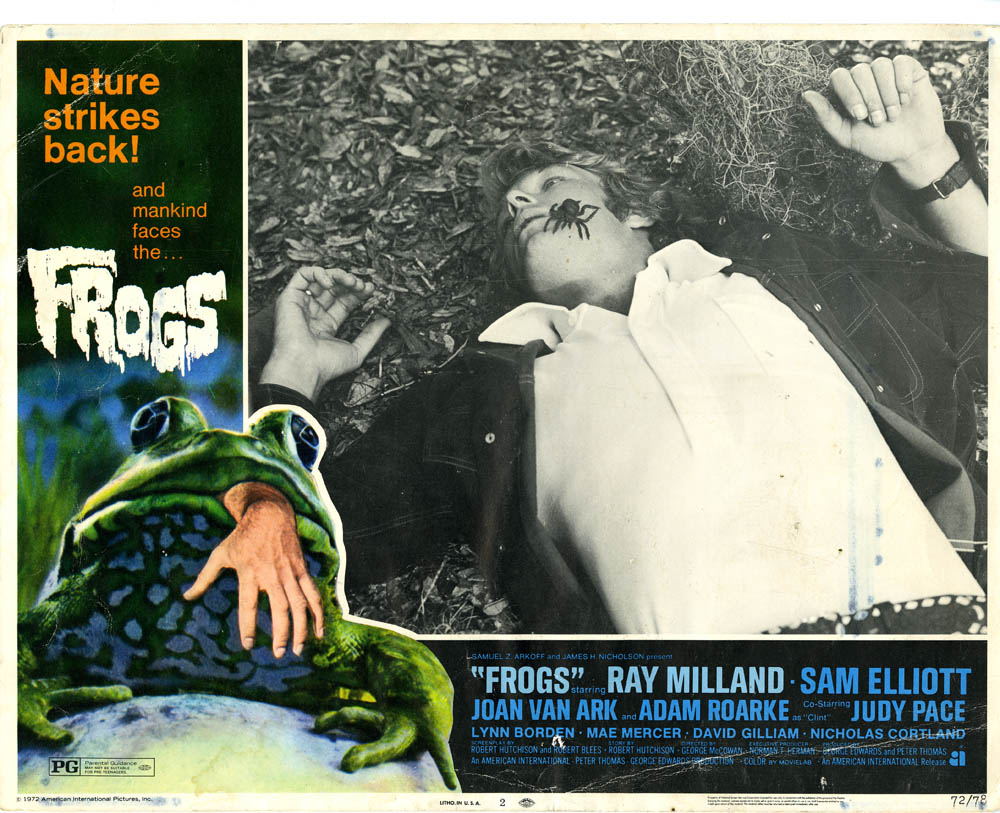
Today’s aquatic-themed horror flick is George McCowan’s 1972 killer frog feature: “Frogs.”

“Frogs” was written by Robert Hutchinson and Robert Blees, the latter of which wrote screenplays for numerous films and television series from the 1940s through the 1980s, including “High School Confidential” and “Dr. Phibes Rises Again.”

The director for “Frogs,” George McCowan, spent most of his career working on television shows like “Starsky & Hutch,” “Fantasy Island,” “S.W.A.T.,” and “Charlie’s Angels.” However, he also directed one of the sequels to “The Magnificent Seven”: “The Magnificent Seven Ride!”

frogs6The special effects makeup for “Frogs” was provided by Thomas R. Burman in one of his first major effects gigs. He has since worked on television shows and films such as “Nip/Tuck,” “Grey’s Anatomy,” “Hudson Hawk,” “Con Air,” “Last Action Hero,” “Howard The Duck,” “Halloween III,” and “Teen Wolf Too.”

The cinematographer for “Frogs” was Mario Tosi, who has acted as director of photography for such films as “Carrie,” “The Main Event,” and “The Stunt Man.”

The producers for “Frogs” included George Edwards (“Games,” “Voyage To The Prehistoric Planet,” “What’s The Matter With Helen?”) and Norman T. Herman (“Blacula,” “Bloody Mama,” “The Legend Of Hell House”), who were both proficient b-movie producers for many years.

The editor on “Frogs” was Fred R. Fetishans, who cut a number of other low budget films including “Dillinger,” “The Man From Planet X,” “Wild In The Streets,” “The Ghost In The Invisible Bikini,” and “How To Stuff A Wild Bikini.”

The assistant editor on “Frogs,” James L. Honore, went on to work as a production manager on films like “The Hitcher,” “Full Moon High,” “Pumpkinhead,” and “Collision Course.”

frogs3The music on “Frogs” was composed by Les Baxter, who also wrote scores for a number of Roger Corman’s films (“X: The Man With X-Ray Eyes,” “The Raven,” “Pit And The Pendulum”), as well as Mario Bava’s “Black Sunday” and “Black Sabbath.” However, he is almost certainly best remembered for writing the iconic whistled theme from the television show “Lassie.”

“Frogs” was produced and distributed by American International Pictures, and presented by the famed AIP b-movie duo of Samuel Arkoff (“Q,” “Hell Up In Harlem”) and James H. Nicholson.

The cast for “Frogs” includes most notably a pre-fame (and pre-stache) Sam Elliott (“Road House,” “The Big Lebowski”). The rest of the cast is made up of Joan Van Ark (“Spider-Woman”), Adam Roarke (“The Stunt Man”), Lynn Borden (“Walking Tall,” “Hazel”), and Academy Award winner Roy Milland (“The Lost Weekend,” “The Thief,” “The Thing With Two Heads,” “Dial M For Murder,” “X: The Man with the X-Ray Eyes”).

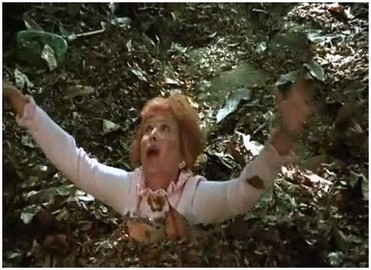
frogs4The story of “Frogs” follows a group of people who become stranded in a remote swamp after the wildlife begins randomly attacking them. Most of the plot consists of them attempting to escape to civilization, or being picked off one-by-one by stock footage of mostly harmless wetland wildlife.

Reportedly, 600 frogs were used for the production, many of which escaped over the course of filming in Florida’s Eden State Park.

“Frogs” has about as many ridiculous character deaths in it as it does amphibians, but one in particular didn’t make the cut for the final film. A quicksand-related death was cut out for apparently being too silly (which means it must have been very silly, given the rest of the deaths included), but was still used in trailers.

frogs7“Frogs” was apparently inspired partially by the surprising box office success of “Willard,” which also used otherwise-innocuous animals to deadly effect.

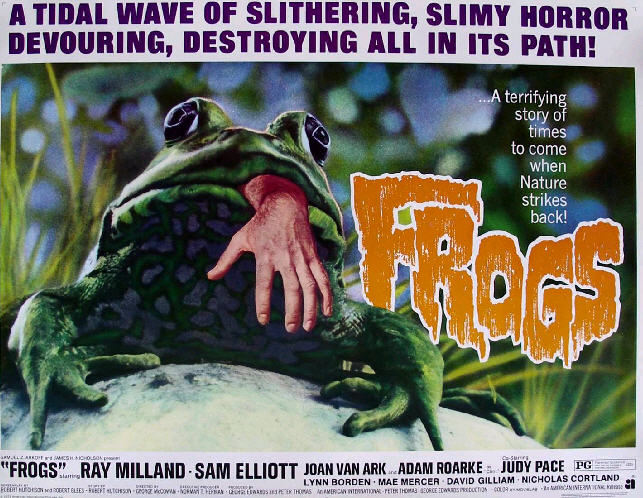
One of the most infamous aspects of “Frogs” was it’s ludicrous and confusing poster, which seemed to imply that the film is about a giant. evil frog. In fact, no one in the movie is ever shown being eaten by a frog, and none of the frogs featured are any larger than a small dog (which is still pretty damn big for a frog).

frogs2During one section of the movie, are number of characters are attacked and chased by a flock of birds. Unfortunately, the production couldn’t afford to film with real birds, meaning that the scene had to be cobbled together with a mixture of stock footage and superimposed images on the film.

Noted satirist Fran Lebowitz apparently stated that “Frogs” was “the best bad movie I have ever seen in my life” in her review of the film. Another review, at Antagony & Ecstacy, said of “Frogs”:

It’s this kind of flatfooted incompetence that can turn a sane person into a dedicated bad movie watcher for the rest of their days.

As you might expect, “Frogs” wasn’t exactly a critically-lauded hit. It currently holds an IMDb rating of 4.2, along with Rotten Tomatoes scores of 20% (critics) and 25% (audiences). I wasn’t able to dig up any gross or budget information on the flick, but there is certainly no arguing that it was made on the cheap. In spite of the quality, I would be shocked if it didn’t make money at some point.

As mentioned earlier, “Frogs” features a number of preposterous deaths committed by mostly innocuous swamp creatures. I managed to dig up the following video that collects some of the highlights, for your viewing pleasure:

I have to give “Frogs” a little bit of credit, because it does try to build a movie around the increasing social concerns about environmentalism and pollution. In the early 1970s, the chemical insecticide DDT was in the process of being banned, after discoveries were made about how dramatically the compound effected wildlife. “Frogs” not-so-subtly postulates that nature could find a way to fight back in a war against humans due to our mistreatment of the planet, making the film’s plot both timely and socially-charged, while also tapping into a clear public anxiety. I suppose it also deserves some points for trying to make a horror movie out of stock footage, pocket change, and duct tape, which is clearly no easy task.

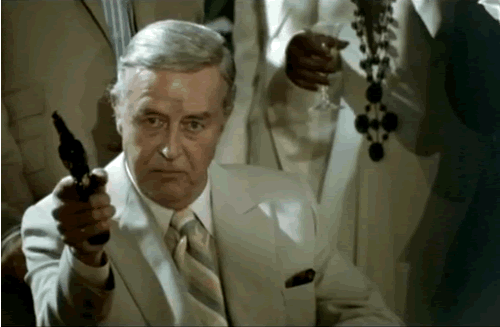
Most of the performances in “Frogs” are at-best mediocre, with the notable exception of Ray Milland. He absolutely plays up his character in “Frogs” as much as he possibly can, and constructs a truly repulsive characterization that encapsulates all of the negative aspects of traditional southern society. He livens up the film every time he is on screen, and is the true villain of the story when it comes down to the wire. Stuart Gordon, a writer and director whom I have covered extensively, has said of Milland’s later work in b-movies:

“The thing about Milland is that you always get the feeling that he’s having fun in these movies…he doesn’t take it any less seriously than he did ‘The Lost Weekend,” he really plays it for all that it’s worth”

As much as the cinematography tries, I just couldn’t find the eponymous frogs to be at all intimidating. For the most part, they watch on as other animals kill off characters, and never seem to post much of a threat themselves. The final sequence of the film, which is very much designed like a horror movie, is about as close as the movie ever gets to menace as the frogs force their way into the plantation home. Even then, the ridiculousness of the situation makes it somewhat comic in spite of itself.

frogs5Overall, “Frogs” isn’t the most exciting good-bad movie out there, but the sheer preposterousness of the plot and the character deaths makes it a solid recommend in my opinion. I’m not sure why it hasn’t achieved more popular cult acclaim in bad movie circles, but it is certainly ridiculous enough to merit watching with a group of friends. Luckily, it isn’t a very difficult film to dig up, and copies are readily available through Netflix and YouTube.

Water Foul: “Horror Of Party Beach”

Horror Of Party Beach

partybeach2

Today, I’m kicking off a new section of the blog spotlighting the very worst aquatic creatures ever to grace a screen: a section I have decided to refer to as “Water Foul.” First up is the infamous monster movie / beach party flick, “Horror of Party Beach.”

“Horror of Party Beach” was written and photographed by Richard Hilliard, who was also behind films like “The Lonely Sex” and “Violent Midnight.” The film was directed and produced by Del Tenney, who also directed “I Eat Your Skin” and “Curse Of The Living Corpse.”

One of the producers on “Horror of Party Beach” was Alan V. Iselin, who also produced such timeless masterpieces as “Frankenstein Meets The Spacemonster” and “Come Spy With Me.”

The music for “Horror of Party Beach” was provided by Wilford L. Holcombe, who also scored “Curse Of The Living Corpse” and “Violent Midnight.”

Assistant director Wayne Tippit became a dedicated actor following “Horror of Party Beach,” appearing in numerous bit roles in films, and even featuring in television shows like “Melrose Place” and “L.A. Law” until his death in 2009.

Most of the cast for “Horror Of Party Beach” acted in no other films in their careers, including the leads: John Scott, Alice Lyon, and Allan Laurel.

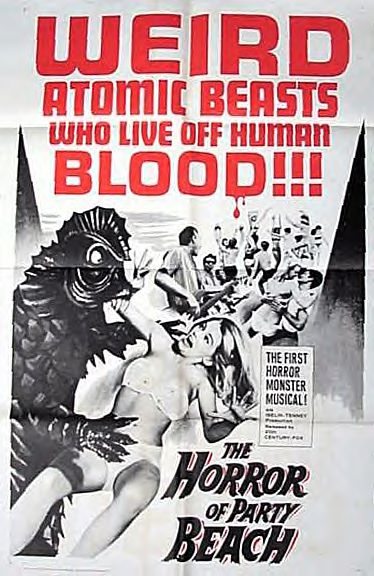
The story of “Horror of Party Beach” is pretty much self-explanatory: radioactive sea creatures begin terrorizing a small beach town with a significant population of partying teenagers.

partybeach4In Stephen King’s nonfiction work Danse Macabre, he apparently refers to the film as “an abysmal little wet fart of a picture,” but is also a fan of the movie for focusing the plot and back story on a number of the anxieties of the postwar era.

“Horror of Party Beach” is one of the films included in the 1978 book “The Fifty Worst Films of All Time” by Harry Medved and Randy Lowell, which was the predecessor to the immensely popular “Golden Turkey Awards.”

A promotional sign was posted at every theater showing “Party at Horror Beach” which stated:

“FOR YOUR PROTECTION! We will not permit you to see these shockers unless you agree to release the theatre of all responsibility for death by fright!”

partybeach3In true William Castle style, audience members actually had to sign a “fright release” waiver prior to entering the theater.

“Horror of Party Beach” was filmed back to back with another feature with a nearly identical cast and crew, “Curse Of The Living Corpse,” with which it played on a double bill.

Because “Horror at Party Beach” was filmed in black and white, the production was able to use chocolate syrup for blood, a technique that was popularly used throughout the black and white era.

For reasons known only to the filmmakers, Alice Lyon’s lines are dubbed throughout the entire running of the film. This was a technique that was done in a lot of bad movies that couldn’t quite get the hang of sound recording on set, like “The Creeping Terror” and “The Beast of Yucca Flats.”

Because of the film’s low-budget, the production couldn’t afford to portray an actual ‘car crash.’ The one in the film was done through the use of sound effects and creative camera angles, which (shockingly) were particularly compelling.

The film apparently inspired a the punk song  called “The Horror of Party Beach” by Sloppy Seconds, which more or less follows the plot and details of the movie.

At the time, “Horror of Party Beach” claimed to be the first horror monster musical, despite the fact that “The Incredibly Strange Creatures Who Stopped Living And Became Mixed-Up Zombies” released months earlier, and was structured in a more traditionally musical format.

“Horror of Party Beach” was apparently made for just over $100,000. I wasn’t able to dig up any gross information, but with a budget that low, there’s almost no way that it failed to make money. It is well known as a famously awful movie, and currently holds a justifiably terrible  2.7 rating on IMDb, along with a 28% audience score on Rotten Tomatoes.

The acting in “The Horror of Party Beach” is astoundingly awful, which makes plenty of sense given most of the cast was filled out by local non-actors. The dubbing that is used is also both unnecessary and distracting, adding to all of the other issues with the feature.

Most notably, the monsters featured in “The Horror of Party Beach” are comical, easily on the lowest tier of quality with films like “Zaat,” “Track of the Moon Beast,” “The Creeping Terror,” and “Robot Monster.”

partybeach1The MST3k riff of “The Horror of Party Beach” points out a pretty big plot issue, in that the revelation that sodium can kill the monsters is just forgotten and dropped for multiple scenes, as if either the script or the editing was done in the wrong order. That is the sort of thing that either the script supervisor or an editor should have caught long before a copy made it on to a screen.

Overall, “The Horror at Party Beach” is a perfect example of an old, cheap b-movie. You can’t help but love the bad acting, the awful dialogue, and the cheesy monster suits. That said, it isn’t quite as memorable as many of its peers. As far as bad musical numbers go, I’d choose “Eegah!” over this any day, and the monsters here aren’t nearly as memorably terrible as “The Creeping Terror” or “Robot Monster.” If you are a die hard bad movie fan, I recommend giving this flick a shot. Otherwise, this isn’t really a required watch in my opinion: there are just better options in the genre out there, and also ones with better riffs if that is what you are after.

Larry Cohen Collection: “The Stuff”

The Stuff

thestuff7

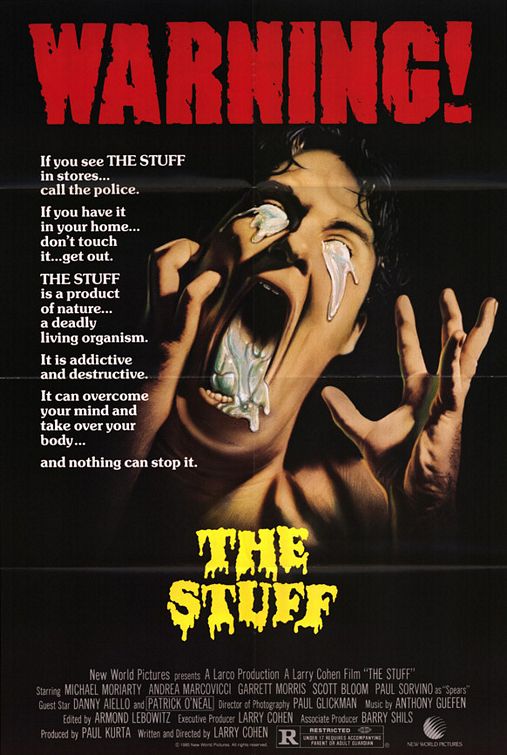
Next up in the Larry Cohen Spotlight is perhaps my favorite of all of his films: the campy consumerism satire, “The Stuff.”

“The Stuff” was written, directed, and co-produced by Larry Cohen, in cooperation with his production collaborators Paul Kurta (“Q,” “Perfect Strangers,” “Hell On Weels,” “Veronica Mars”) and Barry Shils (“Special Effects,” “It’s Alive III”).

The makeup effects for “The Stuff” are credited to a team including Ed French (“Creepshow 2,” “C.H.U.D.,” “Paul Blart Mall Cop,” “Dragonball: Evolution”), Michael Maddi (“The Blob,” “Saturday Night Live”), Steve Neill (“God Told Me To,” “It’s Alive III,” “Q,” “Laserblast,” “Full Moon High,” “Battle Beyond The Stars”), Rick Stratton (“Class of 1999,” “Star Trek: The Next Generation,” “Galaxy Quest”), and Craig Lyman (“Winter’s Tale,” “The Happening,” “The Cotton Club”).

The special effects work is credited to one Bret Culpepper, who worked on other productions such as “Re-Animator,” “The Beastmaster,” and “Back to the Future Part III” as a special effects worker and technical advisor.

The visual effects team for “The Stuff” comprised of David Allen (“Robot Jox,” “Dolls,” “Q,” “Laserblast”), Jim Danforth (“The Prophecy,” “Ninja III: The Domination,” “The Thing”), Jim Doyle (“Showgirls,” “Breakin’ 2: Electric Boogaloo,” “A Nightmare On Elm Street”), Paul Gentry (“Space Truckers,” “RoboCop 3,” “Predator 2”), John Lambert (“Soultaker”), David Stipes (“Real Genius,” “Night of the Creeps,” “Arena”), and Ted Rae (“Lawnmower Man 2,” “Jaws 3-D,” “Night of the Comet”).

thestuff2 thestuff3 thestuff5The cinematography on “The Stuff” was provided by Paul Glickman, who also acted as director of photography on Larry Cohen movies “God Told Me To” and “Special Effects.”

“The Stuff” was edited by Armond Lebowitz, who also cut the Larry Cohen movies “Q: The Winged Serpent,” “Special Effects,” and “Full Moon High.”

thestuff6The stunt coordinator on “The Stuff” was Jery Hewitt, who has worked on a diversity of films such as “The Big Lebowski,” “Fargo,” “Christmas Evil,” “Michael Clayton,” “No Country For Old Men,” and “Cop Out.”

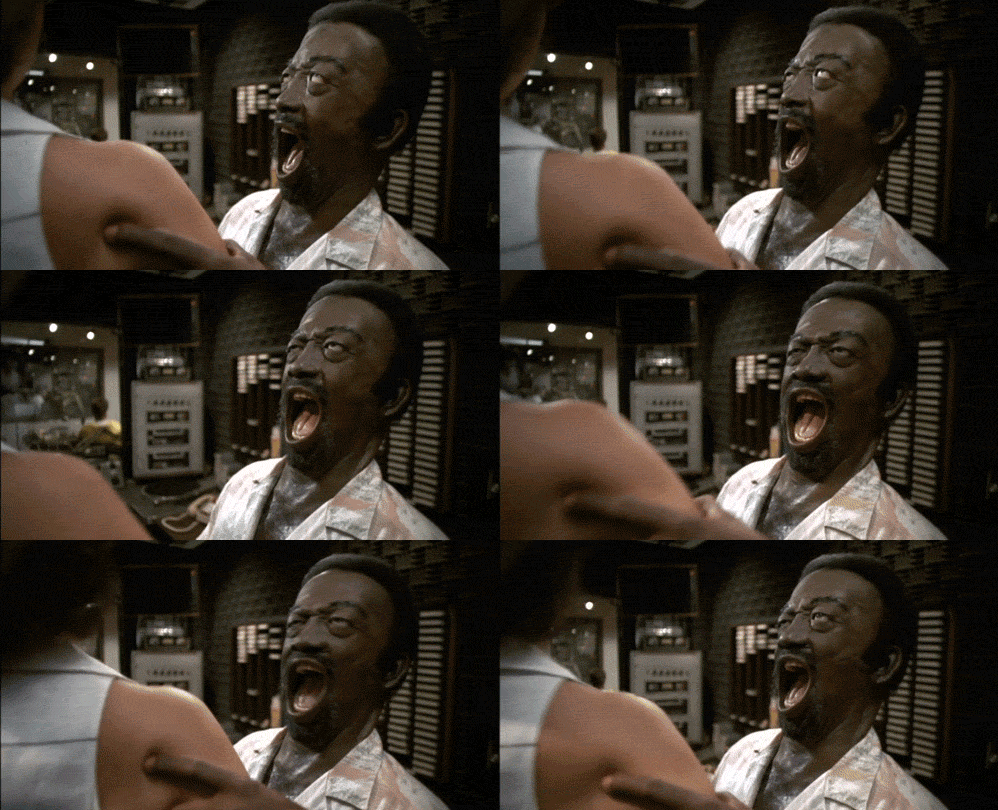
The cast for “The Stuff” is headlined by frequent Larry Cohen collaborator Michael Moriarty, with additional roles filled out by Garret Morris (“Saturday Night Live”), James Dixon (“It’s Alive”), Andrea Marcovicci (“The Hand”), Paul Sorvino (“Goodfellas,” “Repo! The Genetic Opera”), Danny Aiello (“Hudson Hawk,” “Moonstruck”), and Patrick O’Neal (“Under Siege”). In the background, you might spot recognizable faces like Eric Bogosian (“Special Effects”), Abe Vigoda (“The Godfather”), Patrick Dempsey (“Loverboy,” “Scream 3”), Laurene Landon (“Maniac Cop,” “Maniac Cop 2,” “It’s Alive III”), Brooke Adams (“The Dead Zone,” “Days of Heaven”), and Mira Sorvino (“Mimic,” “Mighty Aphrodite”).

thestuff8The story of “The Stuff” surrounds a mysterious dessert that takes the consumer world by storm, thus throwing the established dessert industry into a panic. They collectively hire a former intelligence agent named Mo Rutherford to investigate the product and discover the secret recipe via corporate espionage. As the covert investigation proceeds, however, “The Stuff” becomes increasingly eerie, suspicious, and dangerous. After a series of team-ups with a disgruntled mascot, a paramilitary organization, and an orphaned child, Rutherford decides to take The Stuff head on.

“The Stuff” features some really interesting effects work, including a bedroom attack by the stuff that pays homage to “A Nightmare On Elm Street,” even using the exact same effects room for the shot.

The Stuff itself was made up of an assortment of materials depending on the scene: ice cream, yogurt, fire extinguishing foam, and a wretched fish bone-meal concoction were all used at one point or another, and some of the shots are even superimposed animation.

thestuff10Arsenio Hall was apparently considered for the role of Chocolate Chip Charlie, which ultimately went to “Saturday Night Live” alum Garrett Morris.

There was an extensive copyright dispute over the effects used in “The Stuff,” which led to a lengthy legal battle (Effects Associates, Inc v Cohen) that set significant precedence for the ownership of effects work done for films, and is actually a pretty interesting read for anyone with a cursory interest in copyright law.

The reception for “The Stuff” was somewhat mixed: it currently holds Rotten Tomatoes scores of 70% (critics) and 45% (audience), with an IMDb rating of 5.9. “The Stuff” was made on a $1.7 million budget, and received only a limited theatrical release with an undisclosed total gross. However, it has certainly become a cult classic thanks to effects, acting, and bizarrely humorous plot.

As with many of Cohen’s films, “The Stuff” provides a significant element of social commentary, particularly about consumerism and the food industry. There is even a specific call-out in the dialogue about the fact that the recipe for Coca-Cola is kept secret, and no one seems to care.
thestuff9The effects work on “The Stuff” is often mocked for its ridiculousness, but I actually though that it was pretty impressive work given the low budget on the film. Sure, it is definitely squibby and cheesy, but it certainly got the job done on budget. Apart from some dated super-imposed effects, the film still looks pretty good, thanks in large part to the extensive use of practical effects.

thestuff4The plot of “The Stuff” becomes very similar to “Invasion of the Body Snatchers” as it progresses, with many people being replaced or possessed by the nefarious dessert treat. Larry Cohen would later co-write his own version of “Invasion of the Body Snatchers” with 1993’s “Body Snatchers,” ultimately directed by Abel Ferrara.

The performances in “The Stuff” are distinctly and astoundingly over the top, particularly on the parts of Moriarty, Sorvino, and Morris. I absolutely adore Moriarty’s southern-fried pseudo-buffoon ex-intelligence agent, and even the child actor gets to go over the top with his infamous grocery store freak-out:

Overall, “The Stuff” is probably one of my favorite films, and is just about the pinnacle of what a good-bad movie can be. The performances, effects, and writing are all spot on, and create what is almost a Platonic ideal of a b-movie. It should go without saying, but “The Stuff” is a solid recommend from me for just about everyone. It is clever, funny, sharp, goofy, and just the right amount of gory.

Larry Cohen Collection: “Maniac Cop 3”

Maniac Cop 3: Badge of Silence

maniaccopthree2

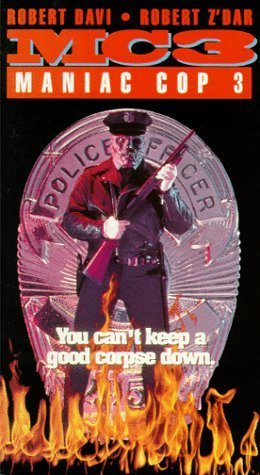
Next in the Larry Cohen collection is the finale of the Maniac Cop trilogy: “Maniac Cop 3: Badge of Silence.”

“Maniac Cop 3” was once again written and produced by Larry Cohen, and was initially directed by William Lustig of “Maniac Cop” and “Maniac Cop 2” as well. However, he ultimately walked off of the film when the initial cut only came in at 50 minutes, refusing to film any additional footage. Producer Joel Soisson (“Dracula 2000,” “The Prophecy,” “Mimic 2”) filled in for the additional sequences, and the film was ultimately Alan Smithee-d for the DVD release.

maniaccopthree3The cinematography for “Maniac Cop 3” was provided by Jacques Haitkin, who also did photography work for “The Ambulance,” “Shocker,” “Evolver,” “A Nightmare on Elm Street,” and “Galaxy of Terror.”

The effects team on “Maniac Cop 3” was comprised on experienced makeup and special effects technicians, including Howard Berger (“The Cell,” “The Faculty,” “In The Mouth of Madness”), Robert Kurtzman (“Tusk,” “It Follows,” “John Dies At The End,” “From Beyond”), Bill Miller-Jones (“Maniac Cop,” “Hell Comes to Frogtown”), Greg Nicotero (“Seven Psychopaths,” “Ghosts of Mars,” “Torchwood”), Stephen DeLollis (“Reservoir Dogs,” “Pulp Fiction”), Larry Fioritto (“Halloween 4,” “Knight Rider”), Bruce Mattox (“Capricorn One,” “The China Syndrome”), Wes Mattox (“Django: Unchained,” “Deep Blue Sea,” “Daredevil”), and Robert Phillips (“Volcano,” “Se7en,” “Shocker”).

maniaccopthree6Outside of Larry Cohen and Joel Soisson, the producers on “Maniac Cop 3” included Michael Leahy (“Pulse”) and W.K. Border (“Trekkies,” “The Prophecy,” “Bill & Ted’s Excellent Adventure”).

The editors on “Maniac Cop 3” included David Kern (“Maniac Cop,” “Maniac Cop 2”), Michael Eliot (“Stargate SG-1,” “Stargate Atlantis”), and Rick Tuber (“Lie to Me,” “Nash Bridges,” “ER”)

The score for “Maniac Cop 3” was provided by Joel Goldsmith, who worked on the music for “Kull The Conqueror,” “Laserblast,” and the television show “Stargate SG-1.”

maniaccopthree1The cast of “Maniac Cop 3” is headlined by returning players Robert Z’Dar and Robert Davi, with an accessory team made up by Robert Forrester (“Jackie Brown”), Jackie Earle Haley (“Watchmen”), Doug Savant (“Teen Wolf”), Grand Bush (“Lethal Weapon,” “Demolition Man”), Paul Gleason (“Die Hard”), Gretchen Becker (“The Doors”), Caitlin Dulany (“Winter’s Tale,” “Class of 1999 II”), and Ted Raimi (“Midnight Meat Train”).

The story of “Maniac Cop 3” picks up some time after the events of “Maniac Cop 2,” after the honorable burial of Matt Cordell following his name being cleared. However, a mysterious voodoo priest resurrects the Maniac Cop with unclear motives, while the NYPD is still trying to deal with a crime epidemic on the streets.

maniaccopthree5“Maniac Cop 3” had a rather poor reception, earning a 4.9 rating on IMDb along with an abysmal 18% Rotten Tomatoes audience score. It is widely considered to be the worst in the series, and was given a thorough roasting by the podcast “We Hate Movies.”

“Maniac Cop 3” was given an NC-17 by the MPAA, which killed any chance of it getting a theatrical release. It debuted on HBO, and eventually got a home video release. I wasn’t able to dig up any budget numbers for the flick, but the fact that it failed to make it to theaters leads me to believe that it was likely a losing proposition.

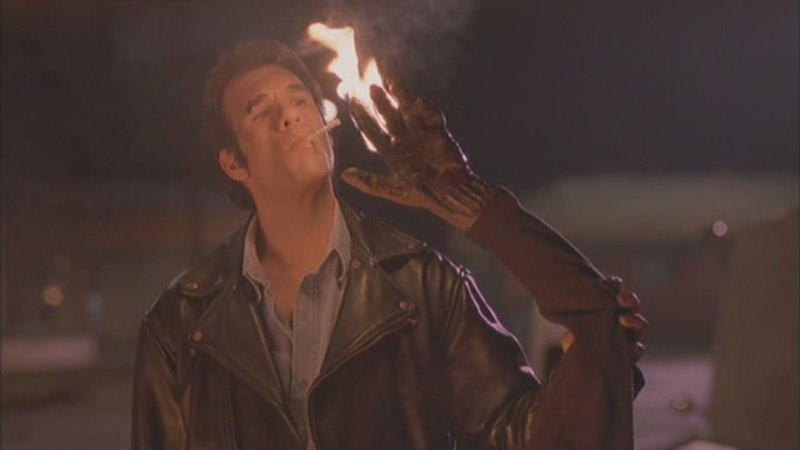
The biggest problem with “Maniac Cop 3” is that you can tell that the movie was padded out. For instance, the entire final car chase sequence feels like lagniappe: the story is over and resolved, and there’s just no real reason for the chase to happen. However, it does allow Robert Davi to light a cigarette with Maniac Cop’s detached arm, so how upset can you be? In any case, the additional footage throws a massive wrench into the pacing of the film, which wasn’t all that well paced to start with.

maniaccopthree7Robert Davi gets a lot more screen time in “Maniac Cop 3” than he got in “Maniac Cop 2,” and I think he did a pretty decent job carrying the load as the sole lead for the feature. Of all the problems with the film, he didn’t seem to me to be one of them.

The plot to “Maniac Cop 3” is pretty much nonsense. Essentially, it is “Bride of Maniac Cop,” but there’s no real connection between Kate and Cordell. Further, Cordell’s story is over, and it doesn’t make sense why he would want to come back to life at this point. His drive for revenge is what propelled him throughout the franchise, and in “Maniac Cop 3” it just isn’t there.

“Maniac Cop 3” does attempt to explain Cordell’s seemingly superhuman powers with voodoo magic. However, it is unclear if he was resurrected prior to the beginning of the franchise. It seems like that has to be what happened, because it is never explained how he went from brain-dead to god-like between the events of the back story and the beginning of “Maniac Cop.” However, there is a definite lack of clarity there.

maniaccopthree4Overall, “Maniac Cop 3” is more of a good-bad entertaining watch that the other two films in the series. The first two are actually pretty good b-movies, whereas “Maniac Cop 3” is just an embarrassing parade of nonsense and behind the scenes drama. That said, there are some entertaining moments, like the Maniac Cop driving a car while on fire, and playing skeet with an innocent pedestrian. If you have the tolerance to sit through bad b-movies, you might want to give “Maniac Cop 3” a shot.

Larry Cohen Collection: “Maniac Cop 2”

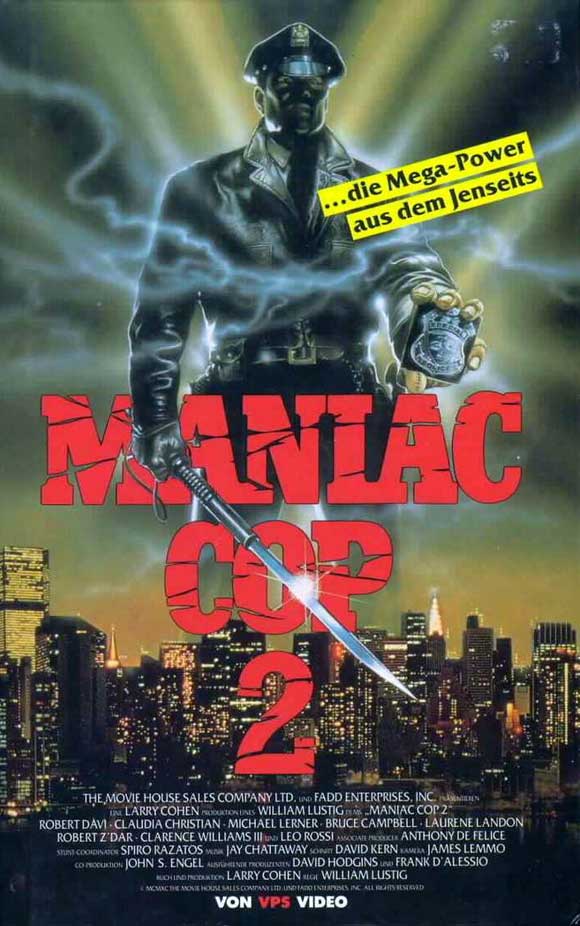
Maniac Cop 2

Print

Next up in the Larry Cohen Collection is “Manic Cop 2,” which continues Matt Cordell’s crusade for revenge against the city officials and criminals who set up his imprisonment and murder.

“Maniac Cop 2” was once again written and produced by Larry Cohen, with William Lustig also taking up the directorial reins for the sequel.

The director of photography on “Maniac Cop 2” was James Lemmo, who was one of the cinematographers from the first “Maniac Cop,” and also worked with William Lustig on “Vigilante.”

The effects team on “Maniac Cop 2” included Wayne Beauchamp (“Pray For Death,” “Children of the Corn,” “C.H.U.D. 2: Bud the Chud”), Bill Miller-Jones (“Hell Comes to Frogtown”), Dean Gates (“Day of the Dead,” “Super Mario Bros,” “Maximum Overdrive”), John Carter (“Evilspeak,” “The Sword and The Sorcerer”), John Eggett (“Heart Condition,” “Deadly Games”), Jeff Naparstek (“King of New York,” “Winter’s Tale”), Matt Vogel (“C.H.U.D.,” “The Thin Blue Line,” “American Gangster”), and Larry Arpin (“Blood Diner,” “Evil Dead II,” “The Dentist”).

maniaccoptwo5Outside of Larry Cohen, one of the other producers on “Maniac Cop 2” was John Engel, who also produced “James and the Giant Peach” and worked on the film “Cabin Boy.”

“Maniac Cop 2” was again edited by David Kern, who, in addition to “Maniac Cop,” also worked on films such as “It’s Alive III,” “Crazy In Alabama,” “Rush Hour,” “Sky High,” and “George of the Jungle.”

The score for “Maniac Cop 2” was once again provided by Jay Chattaway, who also provided music for “Maniac,” “Vigilante,” and the Steven King adaptation, “Silver Bullet.”

Bruce Campbell, Robert Zdar, and Laurene Landon reprise their roles from “Maniac Cop,” joining new additions to the franchise Robert Davi (“Die Hard,” “License to Kill”), Clarence Williams III (“Half Baked,” “The Butler”), Claudia Christian (“Babylon 5,” “Arena”), Michael Lerner (“Barton Fink,” “Godzilla”), Charles Napier (“The Silence of the Lambs,” “Rambo: First Blood Part II”), and Leo Rossi (“Halloween II,” “Leonard Part 6”).

maniaccoptwo4The story of “Maniac Cop” picks up right after the events of “Maniac Cop,” with the NYPD still not acknowledging the survival of Matt Cordell, but clearing previously accused detective Jack Forrest regardless. However, the killings continue, and another serial killer arises, preying on exotic dancers throughout the city. Against the odds, the two killers join forces against the police and the city, out for revenge and chaos.

Director Sam Raimi (“Army of Darkness,” “Spider-Man”) once again appears in a cameo role, as the well-noted and instantly-recognizable character actor Danny Trejo (“Anaconda,” “Machete,” “Breaking Wind”) in one of his first on-screen performances.

“Maniac Cop 2” currently has a 5.8 rating on IMDb, as well as Rotten Tomatoes scores of 60% (critics) and 41% (audience), which is interestingly higher than the original “Maniac Cop.”

The budget of “Maniac Cop 2” was notably higher than the original, topping off at an estimated $4 million. The movie, however, went direct to video in the United States. I wasn’t able to dig up any gross information, but given the lack of success of the first film, I would be shocked if it made a significant profit over its foreign theatrical run.

maniaccoptwo2“Maniac Cop 2” received praise for its use of New York City locations and excellent practical effects, particularly the pyrotechnics in the film’s climax, which make for a significantly explosive conclusion.

Some fans of “Maniac Cop” were upset by the quick dispatching of the characters that returned from the first film. My point of view on that is, the main character of “Maniac Cop” (Tom Atkins) didn’t make it all the way through that movie, so how can it be a surprise that main characters get killed off here?

maniaccoptwo3William Lustig said in an interview that he considers “Maniac Cop 2” to be his best work, saying:

I do consider ‘Maniac Cop 2′ to be my best film. It was the film [where] I felt as though myself and my crew were really firing on all cylinders. And I think we made a terrific B-movie. We tried to make it a better film [than “Maniac Cop”]. Take the ideas and concepts and first and improve upon them.

“Maniac Cop 2” provides more action than the first movie, which is one of the biggest complaints I noticed people having with it. At the same time, that happens at the expense of some of the effective atmosphere of “Maniac Cop,” but only to a certain degree.

Overall, “Maniac Cop 2” is a pretty solid sequel to the original, and is far better than the typical horror sequel by far. Robert Davi is a good addition to the franchise without any doubt. However, it feels a little bit like two movies forced into one: the first segment of the film basically just wraps up the story of the first, and then it gets on to its own story. It makes the whole film feel just a little weirdly paced and off-focus.

For fans of “Maniac Cop,” Larry Cohen, or William Lustig, this is a film worth checking out. For fans of Bruce Campbell, he doesn’t appear in much of the movie, and isn’t his typical hammy self either. This isn’t a campy movie, and if you have your expectations about that straight going into it, you’ll find something to enjoy.

Larry Cohen Collection: “Maniac Cop”

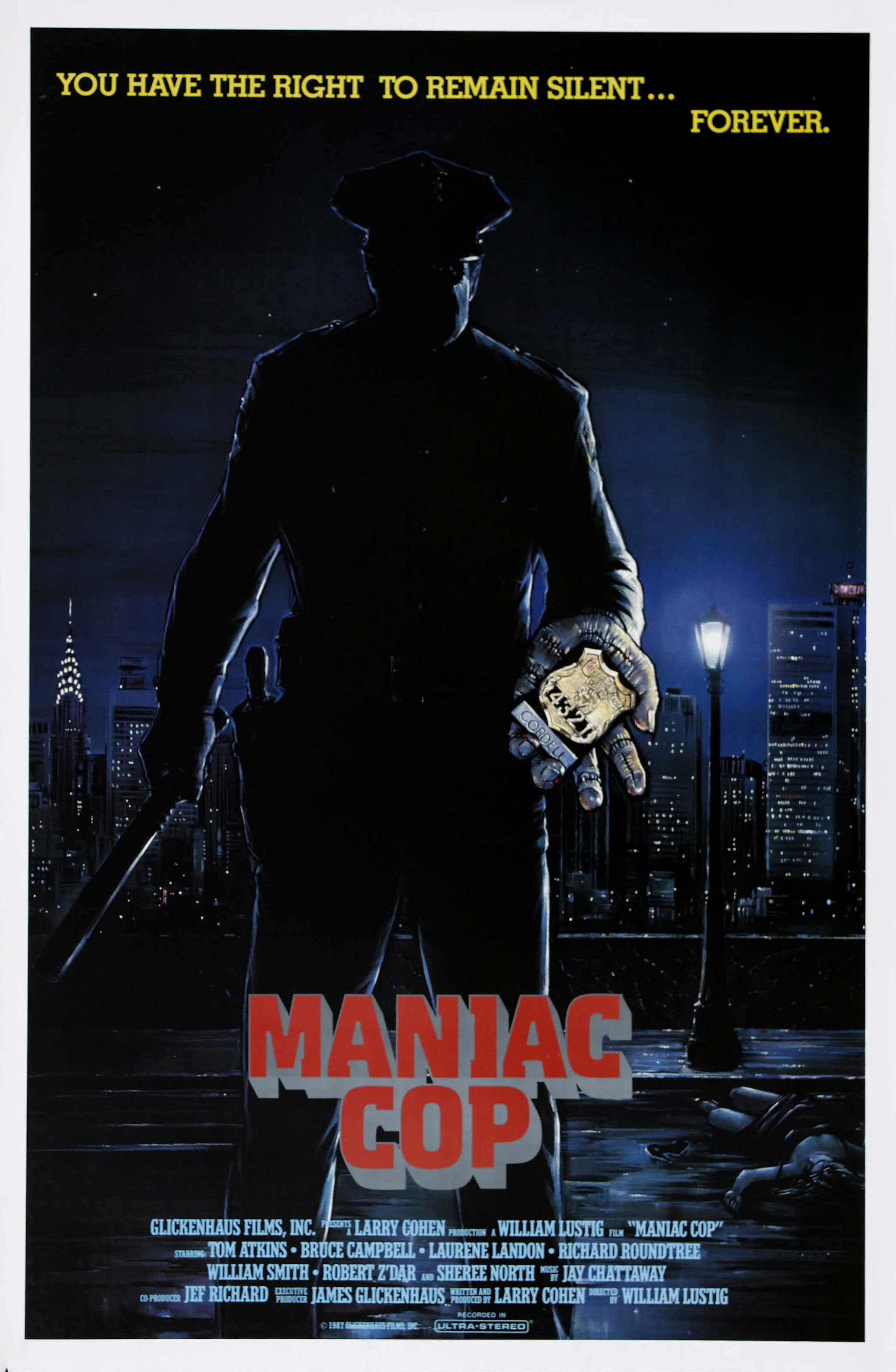
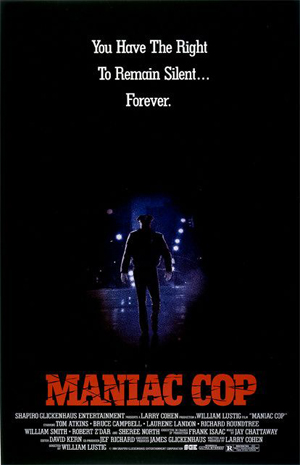
Maniac Cop
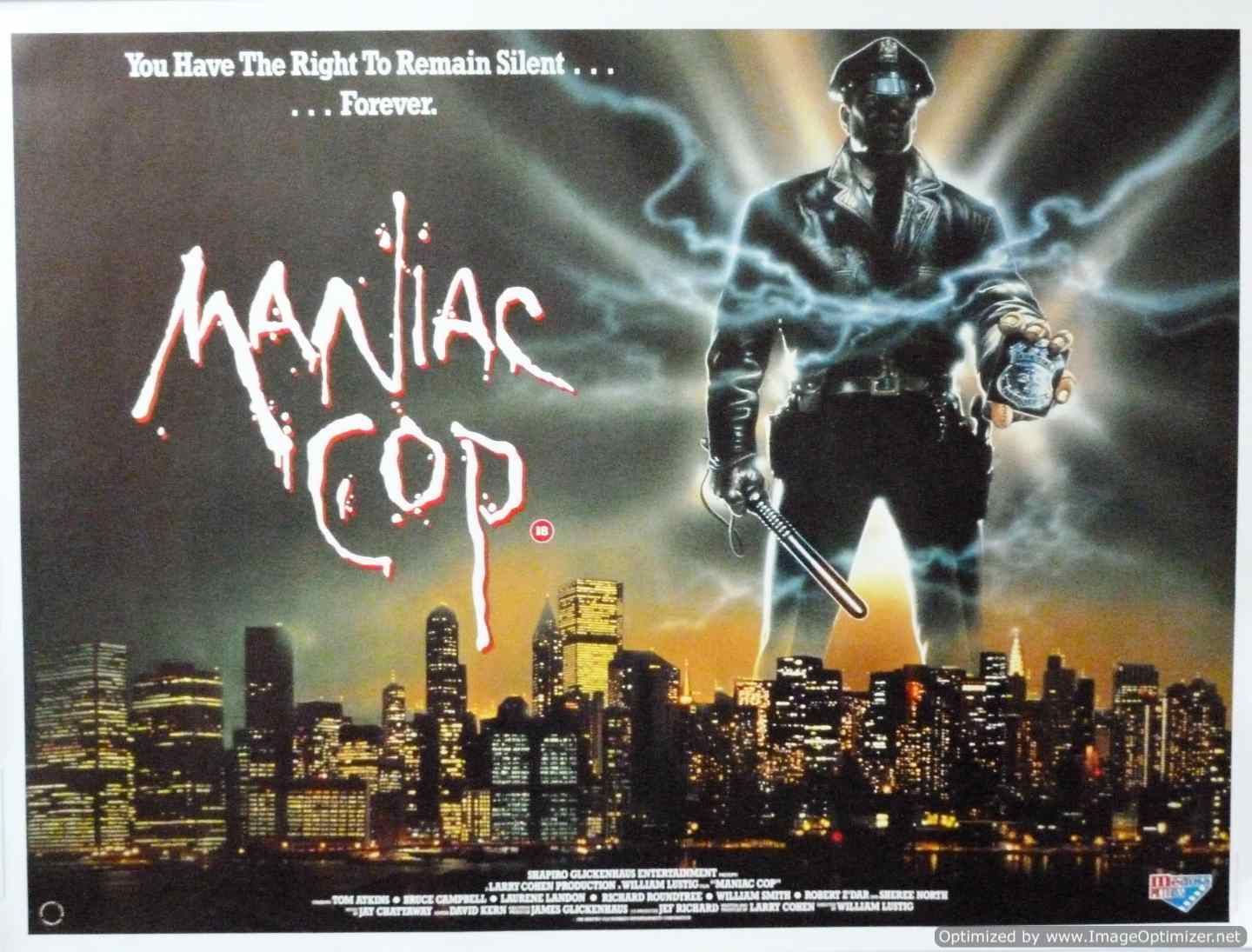
maniaccop1

Next up in the Larry Cohen Collection is the cult classic “Maniac Cop,” a battle of the chins between Bruce Campbell and Robert Z’Dar.

“Maniac Cop” was written and produced by Larry Cohen, and ultimately spawned a franchise of three movies. The film was directed by William Lustig, who is best known for his sleazy cult classic films “Maniac” and “Vigilante.”

The cinematography on “Maniac Cop” was provided by two people: James Lemmo (“Maniac Cop 2”) and Vincent J. Rabe (“Hit List”), neither of whom have had much in the way of significant film credits.

The effects team for “Maniac Cop” included makeup work by Brad Look (“Thor,” “Star Trek: First Contact,” “The Hunger Games”) and Bill Miller-Jones (“Hell Comes To Frogtown,” “Maniac Cop 2,” “Maniac Cop 3”), visual effects by Larry Arpin (“The Dentist,” “The Expendables,” “Leprechaun,” “The Ambulance”), and special effects work by David Atherton (“Face/Off,” “Shocker”), John Naulin (“From Beyond,” “Re-Animator,” “Highlander II,” “The Omega Code”), Paul Staples (“Fatal Games”), and Laszlo Stumpf (“Cyborg,” “American Ninja 2”).

maniaccop3Aside from Larry Cohen, the producers on “Maniac Cop” were James Glickenhaus (“Frankenhooker,” “The Exterminator,” “McBain”) and Jefferson Richard (“976-Evil II”), who also served as a second unit director on the film

The editor for “Maniac Cop” was David Kern. who also did editing work on “Rush Hour,” “Rush Hour 2,” “The Running Man,” and “It’s Alive III.”

The music for “Maniac Cop” was provided by Jay Chattaway, who also scored William Lustig’s movies “Maniac” and “Vigilante,” as well as the Larry Cohen film “The Ambulance” and the notorious Chuck Norris flick “Invasion U.S.A.”

The art direction and production design on “Maniac Cop” was provided  by Jonathan Hodges, who has worked as a property master and carpenter on films like “Pulp Fiction,” “Reservoir Dogs,” “Chopping Mall,” “House,” and “Critters.”

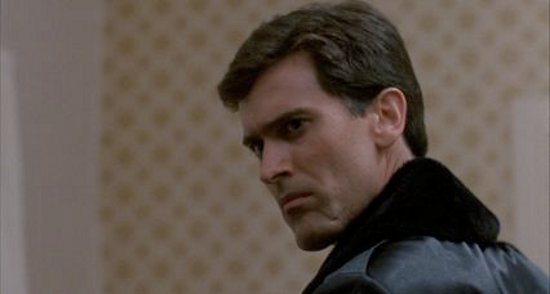
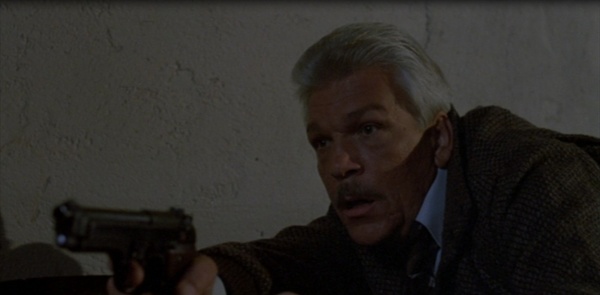
The cast of “Maniac Cop” reads like a b-movie all-star team: Bruce Campbell (“The Evil Dead,” “Army of Darkness”), Tom Atkins (“Halloween III,” “The Fog”), Robert Z’Dar (“Soultaker,” “Samurai Cop,” “Tango & Cash”), Richard Roundtree (“Shaft,” “Q: The Winged Serpent”), Jill Gatsby (“Vampire’s Kiss,” “Class of 1999,” “The Ambulance”), James Dixon (“It’s Alive”), and beloved director Sam Raimi (“The Evil Dead,” “Drag Me To Hell”).

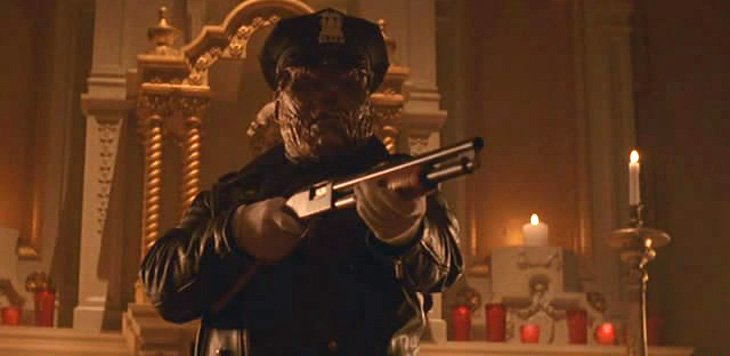
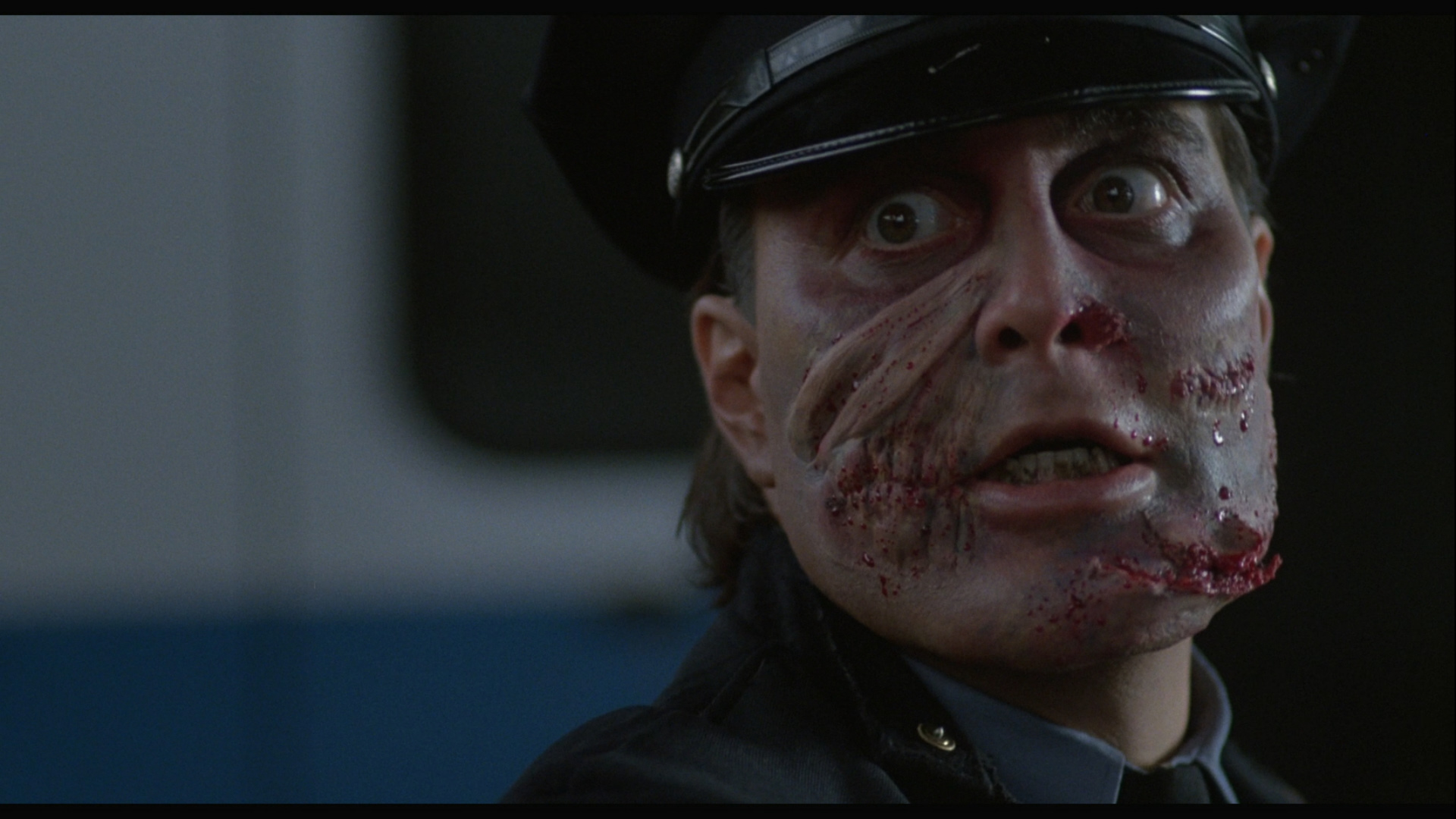
maniaccop6The story of “Maniac Cop” follows an investigation into a series of murders committed by a man dressed as a police officer in the streets of New York City. The NYPD is desperate to find the culprit as the public is whipped into a frenzy of suspicion and distrust of the department. Meanwhile, the investigation begins to uncover a possible suspect with a motive for revenge against the NYPD brass.

Two of the stars of “Maniac Cop,” Bruce Campbell and Robert Z’Dar, have both gone by the nickname of “The Chin” due to their distinctive facial structures.

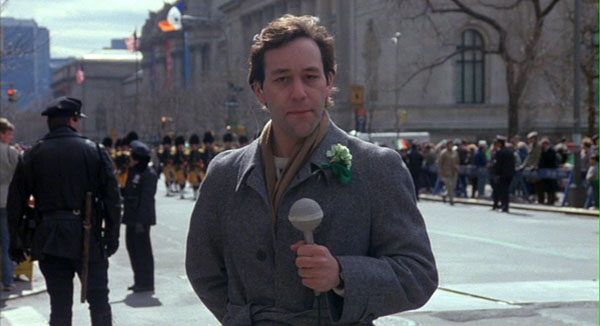
Sam Raimi, the acclaimed director of films like “The Evil Dead” and “The Evil Dead II,” appears not only as an actor in “Maniac Cop,” but also worked behind the camera for the St. Patrick’s Day parade sequence in the movie.

maniaccop9Famed boxerJake LaMotta, whose biography provided the source material for Martin Scorcese’s “Raging Bull,” acts in a brief cameo in “Maniac Cop” as one of the unnamed police officers.

“Maniac Cop” was filmed back to back with another William Lustig film, “Hit List,” which starred Leo Rossi (“Leonard Part 6,” “Maniac Cop 2”) and Lance Henriksen (“Aliens,” “The Last Samurai”).

maniaccop2Over the past couple of years, rumors have surfaced about a potential “Maniac Cop” remake or prequel involving director Nicolas Winding Refn (“Drive,” “Only God Forgives”) and writer Ed Brubaker (“Captain America: The Winter Soldier”), though I haven’t been able to dig up anything since May 2014.

“Maniac Cop” was not particularly well-received, and currently has Rotten Tomatoes scores of 50% (critics) and 39% (audience), along with an IMDb rating of 6.0. That said, it certainly has a dedicated cult following.

“Maniac Cop” didn’t make money on it’s limited theatrical release, grossing under 700,000 on a 1.1 million budget, but still turned into a horror franchise of some note with a series of three films.

Just as any good horror movie should do, “Maniac Cop” latches onto a public anxiety. In this case, this fear is of the police abusing their position of power, which puts people in a position of helplessness due to the corruption in the institution.

“Maniac Cop” doesn’t exactly take a stance on the police in general, and presents both pro- and anti-cop sentiments. The corruption of the institution is emphasized, as well as the (justified) lack of public trust in it. At the same time, a few of the police officers are portrayed as “good” cops: honest, principled, and willing to stand up to the institution at its worst.

maniaccop7“Maniac Cop” received a harsh reception at the time, in the sense that people seemed to either love it or hate it. It is undoubtedly a b-movie made with generally low quality, which turns off a certain amount of viewers to start with. It also takes elements from a number of genres, such as mystery, slasher, and your typical cop flick, which is a mixture that didn’t necessarily work for everyone. Further, it isn’t as campy or hammy as you might expect for a film with Bruce Campbell in the lead: he actually plays his role pretty straight, which is unusual. It doesn’t help that the movie is also a pretty slow burn, something that most slasher fans don’t have much patience for.

Personally, I like “Maniac Cop.” It is a bit slow, but the intrigue and performances kept me from ever getting bored with it. Likewise, the mixture of the genre elements made it a little more interesting to me than just your typical slasher flick, and the elements of social commentary on the police were more than welcome. I also appreciate that it maintains some of the gritty ambiance of William Lustig’s earlier film “Maniac,” which is one of the stronger elements of that flick.

maniaccop8Something that I will agree with the detractors of “Maniac Cop” is that Campbell isn’t quite campy enough for what audiences expect from him, which may have been intentional on either his or Lustig’s part. I also would have loved more of Richard Roundtree in the film, to help illustration more of the corruption in the department (also because he’s just great).

Overall, I think b-movie fans will generally find things to enjoy about “Maniac Cop,” though I think specially Cohen and Lustig fans will like it the best of anyone. General audiences are a bit of a toss-up: I’m sure there are many who would find it too dull, but I don’t think that is necessarily true across the board. I’m interested to see if the remake actually happens, because I feel like Refn’s style could fit the film quite well, and adapt the story effectively to current audiences. I also think that now may be the perfect time to bring back Cordell, as public anxieties about police run amok seem to be at an all-time high.