Tag Archives: movies

Speed Racer

Speed Racer

Today, I’m going to take a look at 2008’s divisive, live action film adaptation of Speed Racer.

The plot of Speed Racer is summarized on IMDb as follows:

A young driver, Speed Racer, aspires to be champion of the racing world with the help of his family and his high-tech Mach 5 automobile.

Speed Racer was written and directed by the duo of Lana and Lilly Wachowski, who are best known for The Matrix trilogy, Jupiter Ascending, Cloud Atlas, and the television series Sense8.

The central cast of Speed Racer includes Emile Hirsch (Into The Wild, Milk, Killer Joe), Susan Sarandon (Thelma & Louise, Igby Goes Down, The Rocky Horror Picture Show, Bull Durham), John Goodman (10 Cloverfield Lane, The Big Lebowski, Blues Brothers 2000, Barton Fink, Matinee, King Ralph, The Flintstones), Christina Ricci (Monster, Black Snake Moan, Casper, The Addams Family), Matthew Fox (Bone Tomahawk, Lost, Alex Cross), and Rain (I’m A Cyborg, But That’s OK).
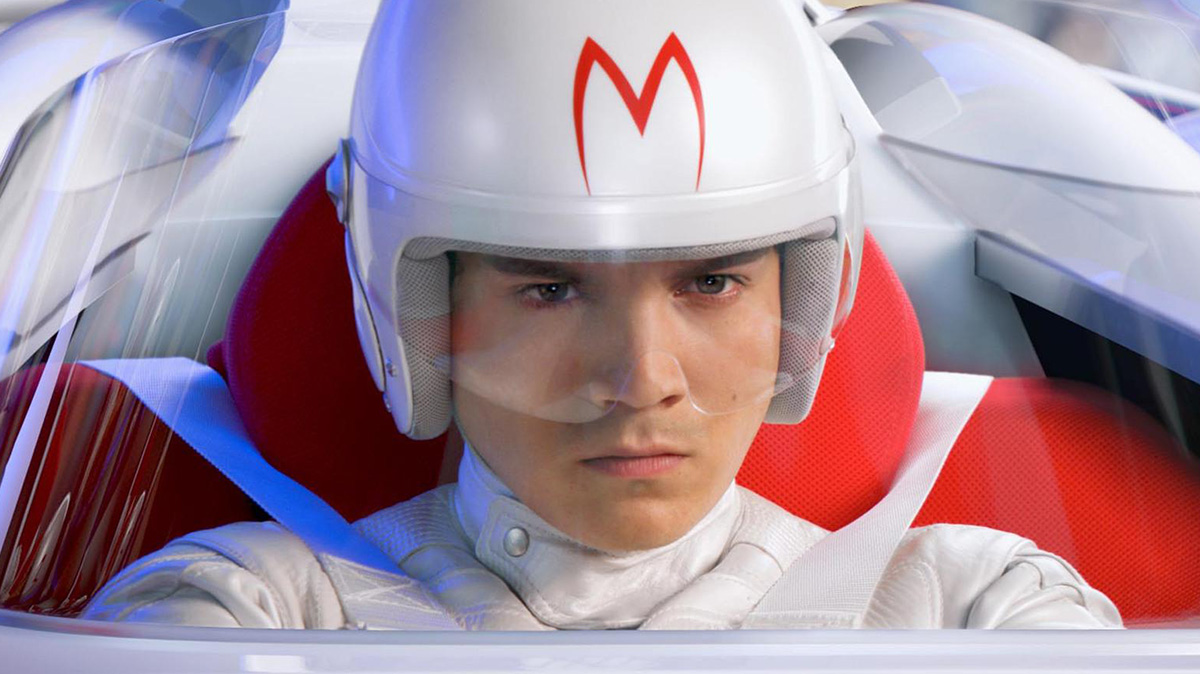
The cinematographer for the film was David Tattersall, whose other credits include Tooth Fairy, Next, The Green Mile, Soldier, Con Air, The Matador, Die Another Day, and Theodore Rex, among others.

Speed Racer employed the work of two primary editors: Zach Staenberg (Bunraku, Ender’s Game, Lord of War, Police Academy, The Matrix) and Roger Barton (The Grey, The A-Team, Bad Boys II, Ghost Ship, Pearl Harbor).

The musical score for Speed Racer was composed by Michael Giacchino, who also provided music for Doctor Strange, Rogue One, Jurassic World, Super 8, Ratatouille, Up, and John Carter.

The designer for the production was Owen Paterson, who has done work on such visually distinct films as The Matrix, Gods of Egypt, The Green Hornet, Red Planet, and V For Vendetta.

Keanu Reeves, whose career was resurrected by the Wachowskis’ The Matrix, turned down the role of Racer X in Speed Racer. Other alternative casting rumors about the production include that Kate Mara was at one point considered for Trixie, and the lead role of Speed could well have gone to Joseph Gordon-Levitt, Zac Efron, or Shia LaBeouf.

There were multiple attempts to make a film adaptation of Speed Racer over the years prior to the Wachowskis’, dating back to the early 1990s. Various planned incarnations were set to feature Nicolas Cage, Johnny Depp, and Vince Vaughn over that time period, with Alfonso Cuaron, Hype Williams, and Julien Temple all being attached to direct the film at one point or another.

PETA, the contentious animal rights organization, claimed that the production of Speed Racer engaged in animal cruelty. This was confirmed by the American Humane Association Animal Safety Representative who worked on the set: specifically, there was an incident where the animal trainer hit a chimpanzee in retaliation for biting an actor.

Speed Racer has the unenviable claim of receiving a Golden Raspberry nomination, which are given out to the worst films and performances of a given year. In this case, it was nominated in the category of Worst Prequel, Remake, Ripoff, or Sequel, but lost out to Indiana Jones and The Kingdom of the Crystal Skull.

The reception to Speed Racer was fairly mixed: it currently holds Rotten Tomatoes scores of 39% from critics and 60% from audiences, along with an IMDb user rating of 6.0/10. Financially, however, it did not far well at all: on a production budget of $120 million, it took in an international lifetime box office gross of just $93.9 million.

On April 1, 2017, Jon Humbert of The Hollywood Reporter published a defense of Speed Racer, which included the following:

An editing and compositing master class, each shot of Speed Racer lingers for mere flashes, with overlaid background and foreground action. It’s clear the directors are playing up the manga and animated style — and translating that to film as best as possible…Admittedly, outlandish costumes and absurd colors clash with “so expensive it’s bad CGI” — creating a visual mess at times…which isn’t entirely a bad thing. It’s just its own thing.

In general, I agree with Humbert’s assessment of Speed Racer. I think that the Wachowskis did one of the better jobs of translating the style of manga and anime to the screen in a live action format. While the CGI isn’t perfect by any means, and some sequences suffer from visual overload, the movie is all uniform enough that even the rougher sequences hold together adequately. Also, when compared to something like Transformers, the visuals actually compare pretty well: in general, it is clear to the audience what is happening at any given moment, unlike in the other franchise.

The reason that I decided to take a look back at Speed Racer to begin with was because of a video essay by Patrick H. Willems, a YouTuber who generally makes some insightful and interesting stuff. In his essay, he compares and contrasts the styles and color palettes of Speed Racer with traditional superhero movies like Civil War and The Dark Knight, and talks at length about the modern trend of realism in non-realistic movies. He makes a number of good points: namely, that Speed Racer‘s colors and vibrancy don’t detract from its emotional core. Basically, it doesn’t have to be realistic to be identifiable. Speed Racer is unique and interesting as a result of shirking the accepted norms of realism, which is why it still stands out from the pack of blockbusters visually and stylistically nearly a decade later.

Something that definitely stood out more on a re-watch were the smooth and creative transitions that are used throughout the film. A lot of the techniques that are used in Speed Racer are lauded when employed by someone like Edgar Wright. In fact, I think a direct line can be traced between Speed Racer and Scott Pilgrim vs The World. While that doesn’t make up for some of Speed Racer‘s drawbacks, such as its terrible comic relief, shallow characterizations, and less-than-thrilling story, I think the visual craft of the film makes it worth a second look and reassessment on its own.

In regards to those stated drawbacks, they are a bit tricky in their own right. It can be argued that the comic relief is accurate to the source material: the same goes for the weak characters and plot. I suppose it is a matter of perspective: if something is bad in the source material, should it be changed for an adaptation, or kept in tact for the sake of accuracy? Personally, I could have done with a whole lot less of the kid and monkey shenanigans, but the plot and characters make sense to me to keep as they are.

When it comes down to it, Speed Racer is (and should be) all about the races: to the movie’s credit, that is exactly what the Wachowskis executed. The track set pieces are absolutely electric, and the races are gripping, which is what the movie should have always been about. All of the issues that I hear pointed out about it, outside of the complaints about the occasional moments of visual clutter, are about the fringes of the film. As annoying as the kid and monkey are, they are never front and center. Likewise, the plot is far secondary to the spectacle.

Speed Racer is not a great movie. It may not even be a good movie. However, it is a creative and interesting movie, that may be the best example we have of what the Wachowskis’ innovative concepts in high gear look like when things generally go right. At the very least, I think it is worth another look, particularly in our current era of drab blockbusters. I think that, similar to Batman & Robin, Speed Racer probably came along at the wrong time: it may have been a successfully executed vision, but it isn’t a vision that people wanted.
The Guyver

The Guyver

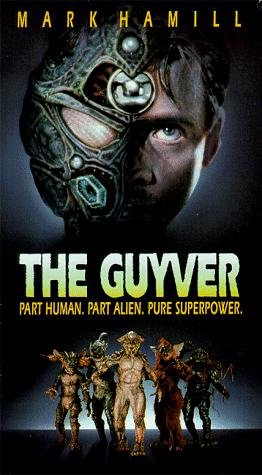
Today, I’m going to take a look at the bizarre live action manga adaptation, The Guyver.

The plot of The Guyver is described on IMDb as follows:

A young man discovers a mechanical device that merges with his own body, turning him into a cyborg superhero. When strange creatures start appearing, trying to take the device back, he begins to uncover a secret plot to genetically engineer terrifying monsters.

The source material for The Guyver is the manga series Bio Booster Armor Guyver, which was created by Yoshiki Takaya. The series first debuted in a serialized format in 1985, as part of the magazine Shonen Captain.

The Guyver had two directors, who both had extensive careers as special effects and makeup artists: Screaming Mad George, whose credits include Predator, Space Truckers, Children of the Corn III, The Dentist 2, Jack Frost, and A Nightmare On Elm Street 3,  and Steve Wang, who worked on DeepStar Six, Harry and the Hendersons, The Monster Squad, Arena, and Hell Comes To Frogtown. However, neither man had any significant directing experience at the time. Years later, Wang directed 1997’s Drive and one episode of Power Rangers: Lost Galaxy, but neither man has done much in the way of directing outside of that.

The cast for the film included Mark Hamill (Slipstream, The Big Red One, The Flash, Batman: The Animated Series, Star Wars), Jeffrey Combs (Re-Animator, The Frighteners, From Beyond, Doctor Mordred, Castle Freak, Fortress), David Gale (Re-Animator, Bride of Re-Animator), Michael Berryman (The Hills Have Eyes), Linnea Quigley (Witchtrap, Night of the Demons, Return of the Living Dead), Vivian Wu (The Last Emperor, Teenage Mutant Ninja Turtles III), and Jack Armstrong (Days of Our Lives, The Bold and The Beautiful, All My Children).

The cinematographer for The Guyver was Levie Isaacks, whose other shooting credits include The Dentist, Texas Chainsaw Massacre: The Next Generation, Leprechaun, and Children of the Corn II.

The Guyver had two primary editors: Andy Horvitch (The Wonderful Ice Cream Suit, Stuck, Arena, American Ninja, The Pit and The Pendulum, Beeper, Demonic Toys, Edmond) and Joe Woo Jr., who was an assistant editor on The Fog, The Abyss, The Beastmaster, First Knight, Tuff Turf, and The New Adventures of Pippi Longstocking.

One of the producers for the film was Brian Yuzna, a renowned horror director and producer who is known for working on films like Re-Animator, From Beyond, Dolls, Dagon, The Dentist, and The Dentist 2, among others.

The Guyver received a sequel in 1994, titled Guyver 2: Dark Hero. This iteration was directed solely by Steve Wang, and had a markedly darker tone than the first film. It was also far better received than its predecessor, and is a bit of a cult movie in its own right.

The source manga, Bio Booster Armor Guyver, has been adapted a number of times over the years. On top of this live action film and its sequel, it was turned into a 2005 26-episode anime series, a 1989 12-episode OVA series, and a short 1986 OVA titled Guyver: Out of Control.

If there is anything that can be said about The Guyver, it is that it is a movie filled with unique and ambitious effects. Honestly, the effects work here looks like stuff that you would find a much higher budget feature: these guys clearly knew what they were doing when they made these suits, and they look pretty impressive, particularly for a cheap movie.

One of my favorite aspects of The Guyver is that it is populated with lots of recognizable b-movie character actors, likely due to the directors’ connections from other productions, and the influence of Brian Yuzna. Guys like Jeffrey Combs and David Gale just know how to ham up a performance, and can add a lot to depth roles in a cast.

Live action movies with manga or anime source materials face distinct issues of tone and style, and The Guyver is no exception. It is by no means as weird and awkwardly done as Ricki-O: The Story of Ricki, but there are definitely some characters and dialogue moments that probably fit right in on the page, but didn’t translate quite right to live-action. Exaggerated motions and behaviors come off as particularly slapstick when acted out, as opposed to when they are drawn, which causes more tonal whiplash than when sequences are animated. For The Guyver, those comedic elements offset a style that should be more purely horrific, and the contrast creates a lot of jarring discord that just doesn’t belong on screen, even if it flowed well on the page. The best example of this is the first Guyver transformation, in which a goofy street gang harasses and cracks jokes at the protagonist, before they are quickly dispatched. Their antics belong in a Saturday morning cartoon, rather than a body horror superhero flick, and they cheapen the impact of the initial transformation sequence.

Overall, I think The Guyver is worth checking out, if only for the effects. Particularly for b-movie fans, the cast here is kind of a delight as well, even if the screenplay is a bit lacking. As I understand, the sequel is actually quite a bit better, and deals with a lot of the tonal issues that bothered me with this one, so I may check that out soon and cover it here.

Samurai Cop

Samurai Cop

Today, I am going to take a look at a cult favorite in the realm of bad movies: 1991’s Samurai Cop.

The plot of Samurai Cop is summarized on IMDb as follows:

Joe Marshall and Frank Washington are two police detectives who must stop the ruthless activities of the Katana, a renegade Yakuza gang composed of violent and sadistic killers who want to lead the drug trade in Los Angeles.

Samurai Cop was directed, written, produced, and co-edited by Amir Shervan, whose other features include the similarly low-budgeted Hollywood Cop, Killing American Style, and Young Rebels.

The cast of the film includes Robert Z’Dar (Maniac Cop, Maniac Cop 2, Maniac Cop 3, Tango & Cash, Soultaker), Mark Frazer (Samurai Cop 2), Mathew Karedas (Samurai Cop 2, American Revenge), Melissa Moore (Sorority House Massacre II), Gerald Okamura (Big Trouble In Little China), and Cranston Komuro (Samurai Cop 2).

The ridiculously catchy music for Samurai Cop was provided by Alan DerMarderosian, who also composed music for the equally infamous Hobgoblins, as well as Killing American Style, Mind Trap, Terror In Beverly Hills, and Vice Academy.

In 2015, due to the film’s raised profile and cult status, Samurai Cop received a fan-funded sequel in the form of Samurai Cop 2: Deadly Vengeance, which featured a number of the cast members from the original movie.

Initially, Samurai Cop did not receive any kind of theatrical release. However, Rifftrax simulcasted a screening of the movie to numerous movie theaters for a live show in April of 2017.

Matt Hannon, who plays the titular character, cut his distinctly long hair as soon as he wrapped shooting for Samurai Cop. However, the production ultimately required reshoots, for which he had to wear an ill-fitting and not-at-all convincing wig, which stands out notably in the few sequences where it appears.

Samurai Cop received its initial DVD release in 2004, but gained a significantly higher profile after an additional DVD release in 2013 by Cinema Epoch, which was followed up by a blu-ray release in the subsequent year.

As with many cheap productions, the team behind Samurai Cop didn’t record any sound on set. Thus, nearly all of the dialogue was recorded after the fact as ADR (automated dialogue replacement). This is at times jarring, thanks to the lack of any ambient noise or music beneath many of the vocal tracks, as well as the awkward line readings from the actors. On top of that, a number of the actors didn’t return to record lines, leading to their characters being dubbed by other voices, or exact lines of dialogue being used multiple times.

It is hard to conjure up any positive traits of Samurai Cop, given it is one of the most incompetently crafted movies of all time. However, I will say that the music, when it decides to show up, it pretty damn catchy. Unfortunately, the baffling editing leaves the majority of the movie in silence.

Speaking of which, this may be the worst edited movie I have ever seen. Not only are there plenty of jarring cuts, but events don’t cohesively tie together, dialogue doesn’t line up with mouth movements or on-screen actions, reaction shots pop up at random in the middle of sentences, and trying to figure out what exactly is going wrong in any given scene is a lost cause.

That is not to say that all of the problems of Samurai Cop boil down to editing. These are, without any doubt, bad performances from the top of the cast to the bottom. However, what really makes the performances in Samurai Cop uniquely bad is the awkward ADR recording: the line reads are stilted and weirdly emphasized, and when that is combined with the bad syncing, the result is down-right comedic.

That said, it is hard to put all of the blame on the actors: they have to have something to work with, after all. In the case of Samurai Cop, I would be fascinated to see a copy of the screenplay, if one ever existed. If the editing comes off as confusing, I can’t imagine how perplexing it was to read this material on the page.

Overall, Samurai Cop is a sort of perfect storm of “doing it wrong.” Most bad movies have redeeming qualities: Samurai Cop is a rare flick that is bottom-of-the-barrel in every perceivable category of storytelling and filmmaking, and that makes it something unique. However, somehow, the result isn’t painful in the slightest. Samurai Cop is an absolute delight, and never fails to entertain me on a re-watch. It manages to really get cooking in the action sequences, and the weird performances manage to keep even the lulls in the screenplay oddly captivating.

For bad movie fans, I think Samurai Cop is a staple of the genre. For even casual audiences, I think this is a movie worth checking out, just for how surreal its awfulness is.

Sphere

Sphere

Today, I’m going to cover the 1998 Michael Crichton adaptation, Sphere.

The setup for Sphere is summarized on IMDb as follows:

A spaceship is discovered under three hundred years’ worth of coral growth at the bottom of the ocean.

The director for Sphere was Barry Levinson, who is known for movies like Wag the Dog, Sleepers, Toys, Rain Man, The Natural, Good Morning, Vietnam, and Bugsy.

Sphere is based on a novel of the same name by Michael Crichton, who was a well-known producer and director on top of being a best-selling author. Westworld, Jurassic Park, E.R., Congo, Twister, The 13th Warrior, Timeline, The Andromeda Strain, and many other prominent television shows and movies were either adaptations of his works, or were directly created for the screen by him.

While Crichton did occasionally provide screen treatments for his own novels, in the case of Sphere the adaptation work was done by Kurt Wimmer, who is best known for writing and directing the movies Equilibrium and Ultraviolet.

Additional screenplay credits were also given to Paul Attanasio, who has also written for films like The Good German, Donnie Brasco, Disclosure, Quiz Show, and The Sum of All Fears, and Barry Levinson’s former assistant, Stephen Hauser.

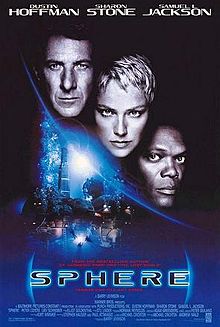
The cast for Sphere includes Dustin Hoffman (The Graduate, Rain Man, Marathon Man, Straw Dogs), Sharon Stone (Casino, The Quick and The Dead, Total Recall, Basic Instinct), Samuel L. Jackson (The Hateful Eight, Pulp Fiction, Jackie Brown, Django Unchained), Liev Schreiber (Spotlight, X-Men Origins: Wolverine, Goon), and Queen Latifah (Taxi, Chicago, Bringing Down The House, Stranger Than Fiction).

The cinematographer for the film was Adam Greenberg, who also shot movies like Rush Hour, North, Eraser, Ghost, Three Men And A Baby, Terminator 2: Judgment Day, Iron Eagle, and Near Dark.

The editor for Sphere was Stu Linder, whose other credits include cutting Quiz Show, Rain Man, Sleepers, Wag The Dog, and Toys, among others.

The musical score for the movie was composed by Elliot Goldenthal, who also provided music for the films Heat, Frida, Batman & Robin, Demolition Man, Alien 3, Pet Sematary, Batman Forever, Titus, Public Enemies, and Across the Universe, among others.

Sphere‘s production designer was Norman Reynolds, who also designed movies like Raiders of the Lost Ark, Return of the Jedi, The Empire Strikes Back, Alien 3, Mission: Impossible, and Return to Oz, and additionally served as art director for Star Wars – A New Hope, Superman, and Superman II.

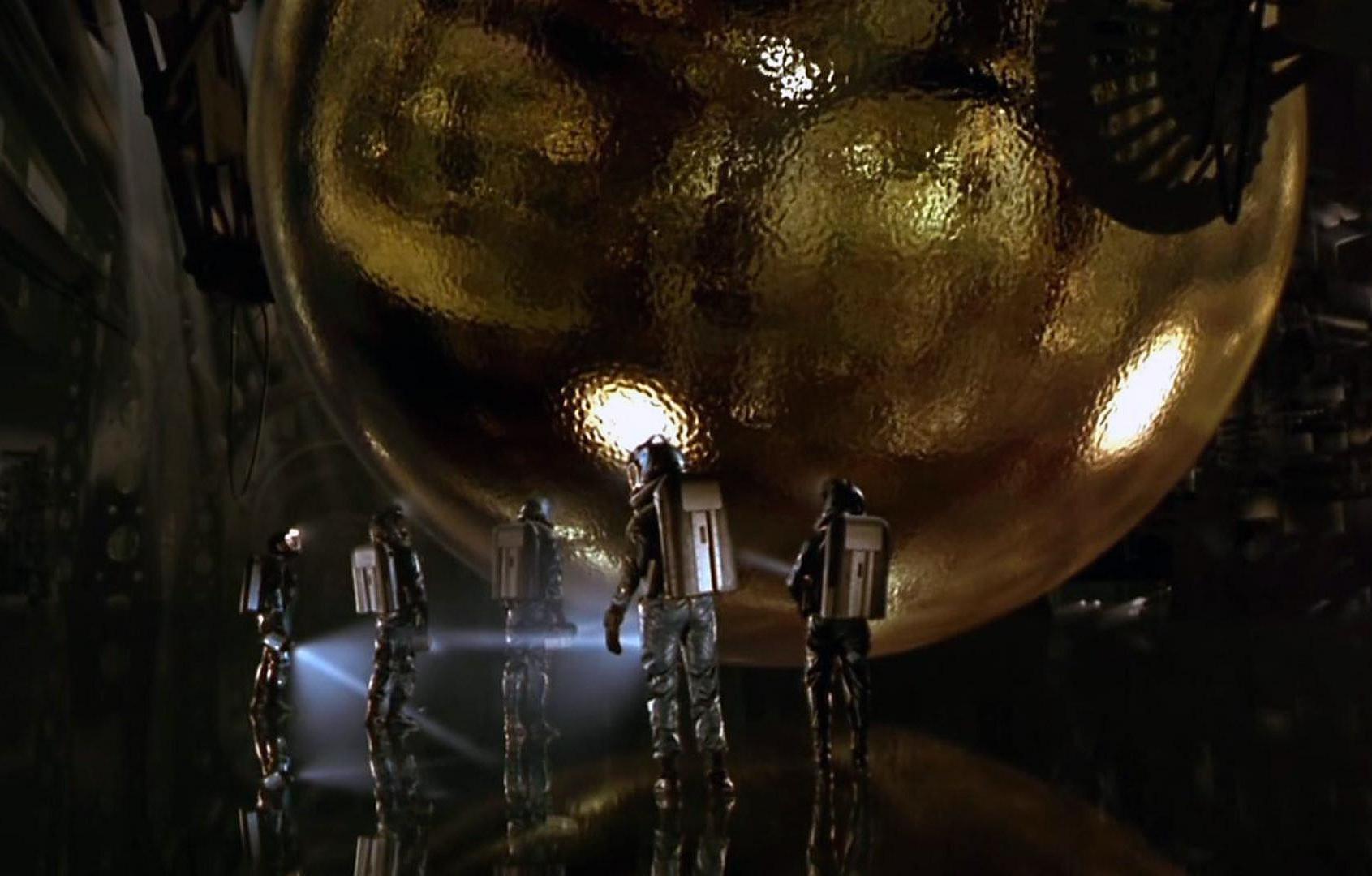
As with any adaptation, there are a number of details from the Sphere book that were changed for the film. Aside from the elimination of a few characters, the most interesting of these changes is actually the eponymous sphere’s coloration. In the book, it is silvery and chrome-like in appearance. Apparently, this was initially supposed to be the case on screen as well, but the decision was made for the sphere to be gold in the middle of the production, apparently for aesthetic reasons.

Interestingly, the ending of the movie was re-shot due to complaints from test audiences. While these sorts of changes are typically in response to petty complaints from fickle or shallow audience members, in this case, the change made the move more sensible. The initial cut failed to account for the decompression needed for the characters to acclimate from being in the far depths of the ocean, and test audiences didn’t buy it when the survivors made it to the surface.

Sphere grossed just over $50 million in its worldwide theatrical release. However, the production budget alone has been recorded as anywhere from $73 million to $80 million, making it a significant financial failure.

Unfortunately, the critical reception to the movie wasn’t any better: it currently holds Rotten Tomatoes scores of 12% from critics and 38% from audiences, along with an IMDb user rating of 6.0/10.

Personally, I think there are definitely some things to like about Sphere. For instance, Samuel L. Jackson is pretty damn good here, and is about as restrained, menacing, and cerebral as you’ll see him in anything. In general, the small cast puts out some solid performances. Aside from Jackson, Liev Schreiber is always a great supporter, and Stone does a serviceable job with her role. However, I think Hoffman doesn’t quite fit with the rest of the cast, and wasn’t the best choice to lead the film. I suspect that Levinson just likes working with him, and he was the most bankable name that was available to the production.

The biggest positive for the movie, however, it its design. The underwater facility just looks cool, and does a lot for the atmosphere of the film. Everything has a compelling science-fiction appearance, and it gets across the concept of the deep sea as a foreign world.

Likewise, I really like the concept for the story. I remember reading the book many years ago, and liking it quite a bit. The story is a bit surreal and highly psychological, which could have made for something compelling on screen. The book uses the high tension, claustrophobic setting to great effect, so there was certainly something for the film to work with. In the right hands, Sphere could be an effective science-fiction whodunnit, not unlike The Thing. At least, the blueprint was certainly there.

Unfortunately, in spite of the performances, the design, and a decent source, this movie is incredibly boring and forgettable. Honestly, it is a bit difficult to nail down exactly why. The whole movie feels a bit rushed, which makes it particularly difficult to get invested in the characters. At the same time, it is far from action-packed, so it is hard to say where all of the time goes. The movie certainly could have benefited from some character building sequences, as well as some better moments of sustained tension.

I think the biggest issue with the movie is that it was just put in the wrong hands. There’s nothing about Barry Levinson’s works that would indicate that he’d be a good fit for a psychological science fiction thriller. On top of that, the screenplay sounds like it was bounced around quite a bit, and probably suffered from that.

Overall, as I stated previously, Sphere is pretty forgettable. I do think that the source could make for a good sci-fi thriller someday, but this certainly isn’t it. With the recent television success of Westworld, I’m hopeful that people will start digging back through Crichton’s works, and will see the potential that was squandered with this iteration of Sphere.

Drive Angry

Drive Angry

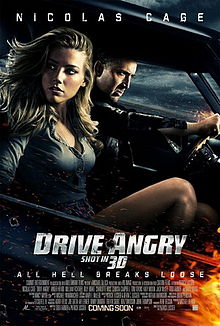
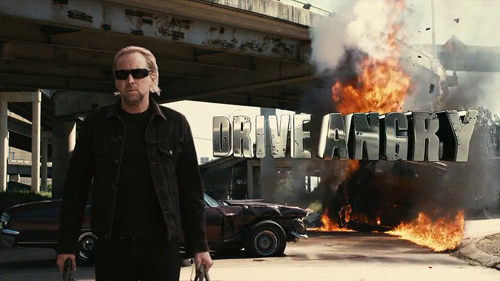
Continuing my perusal through the works of Nicolas Cage, today I am getting into gear with 2011’s Drive Angry.

The plot of Drive Angry is summarized on IMDb as follows:

A vengeful father escapes from hell and chases after the men who killed his daughter and kidnapped his granddaughter.

Drive Angry was directed, edited, and co-written by Patrick Lussier. As an editor, his credits include a number of later Wes Craven movies: notably Vampire In Brooklyn, Music of the Heart, Scream, Scream 2, Scream 3, Red Eye, and New Nightmare. As a screenwriter and director, he has done Dracula 2000, Dracula II: Ascension, Dracula III: Legacy, Terminator: Genisys (screenplay), and the remake of My Bloody Valentine (director). His co-writer for Drive Angry, Todd Farmer, previously contributed to the screenplays for Jason X and My Bloody Valentine, and also appeared in the film as Frank.

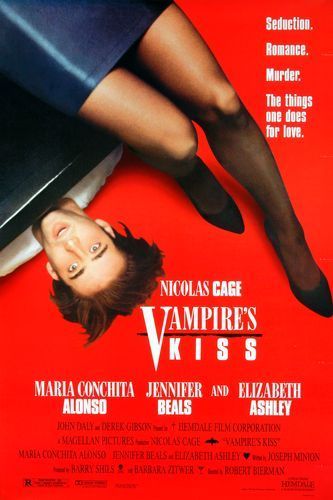
The cast of Drive Angry includes Nicolas Cage (Snake Eyes, Vampire’s Kiss, Ghost Rider, Stolen, Con Air, Face/Off, The Rock, Leaving Las Vegas, Adaptation.), William Fichtner (Teenage Mutant Ninja Turtles, Ultraviolet, Wrong, The Perfect Storm, Armageddon, Equilibrium), Amber Heard (The Ward, 3 Days To Kill), David Morse (The Langoliers, The Green Mile, Disturbia, Contact), Billy Burke (Twilight, Fracture), and Tom Atkins (The Fog, Halloween III, Maniac Cop, Night of the Creeps).

The cinematographer for Drive Angry was Brian Pearson, whose other shooting credits include Into The Storm, American Mary, Final Destination 5, Larry Cohen’s Masters of Horror entry Pick Me Up, and The Karate Dog.

The musical score for the film was composed by Michael Wandmacher, who also composed music for Underworld: Blood Wars, Piranha 3D, Punisher: War Zone, From Justin To Kelly, and the acclaimed video game Bloodborne.

The special effects foreman for the production was William Purcell, whose previous effects credits included RoboCop, Star Trek II: The Wrath of Khan, Super Mario Bros., Speed 2: Cruise Control, and Young Guns.

The character of The Accountant, who is played by William Fichtner, is shown with a type of Greek coin called an obol. While obols were an ancient form of currency, they are famously remembered for their use in funerals: according to myth, they were placed in a deceased person’s mouth or eyes, so that they could pay for passage over the river Styx and into the afterlife. The Accountant is essentially a gatekeeper for the barrier between the world of the living and the world of the dead, so the presence of the obol is a nod to a relevant ancient custom.

Originally, Drive Angry was written and envisioned for an older actor, ideally someone who was in their 70’s. However, when Nicolas Cage approached the producers to express interest, they decided to go with him in the lead.

The advertising campaign for Drive Angry heavily emphasized that it was filmed in 3D, in an attempt to capitalize on a gimmick which was rapidly coming back into fashion. Apparently, the plan to film in 3D was a major reason why Nicolas Cage was interested in being involved in the first place.

Drive Angry was made on a production budget of $50 million, on which it took in a lifetime box office gross of roughly $28.9 million, making it a significant financial flop. Critically, it didn’t fare any better. It currently holds an IMDb user rating of 5.4/10, alongside Rotten Tomatoes scores of 46% from critics and 37% from audiences.

The first thing that absolutely must be mentioned about Drive Angry is that William Fichtner’s character of The Accountant is absolutely fantastic. He clearly had an absolute blast playing the character, and adds an immensely entertaining layer to the movie. Likewise, the villain, played by Billy Burke, is quite a bit of fun, and hams up his preacher character plenty. For that matter, the entire cast is loaded with entertaining character actors from top to bottom: I’m always kind of a sucker for David Morse and Tom Atkins, and having them pop up added a lot of entertaining color to film, regardless of how small their parts were.

In regards to the cast, however, Drive Angry has an unexpected weakness: Nicolas Cage.  For a man who has made a career out of screaming, manic performances, Cage could have been a little more crazy for a movie called Drive Angry. For whatever reason, he doesn’t really own the material, and plays his character as subdued and brooding rather than enraged. He is still serviceable enough, but he certainly doesn’t elevate the movie, which is a huge waste of both his, and the material’s, potentials.

As far as other weaknesses of the film go, at least in my opinion, the 3D work definitely wasn’t worth it. I assume that the budget had to be inflated to accommodate the costs of the technology, and the movie would have probably been more aesthetically pleasing and less of a financial loss without it. It is probably a product of the era, but the 3D sequences just don’t look very good today: they are a little too flat-looking by current standards, thanks to the rapid advancements of technology over the years. Not only are the 3D-emphasized sequences dated, but they are even more jarring given how many practical effects are used alongside them.

Speaking of which, the practical stuff, such as the aftermath gore effects and most of the car stunts, look great. If they weren’t marred by so much bad CGI mixed in, this would be a pretty cool effects movie. As it is, though, the effects style is really inconsistent, and leaves a lot to be desired.

Part of why these drawbacks are so frustrating is because there really is a good idea here: the plot and characters are generally fun, and they capture the spirit of an old-school grindhouse picture. However, the bad effects moments are a huge downer, and undercut all of the good elements here, to the point that it is a hard movie to recommend, despite how much it gets right.

For fans of the old grindhouse b-movie style, I think you’ll wind up in the same boat as me with Drive Angry: at times, you’ll be ecstatic with the positives, and at other times, you’ll be groaning and shaking your head at the negatives. I personally think that the peaks are worth the valleys in this case, but just barely. For casual movie watchers, I think it really comes down to how much you can tolerate bad CGI. If you are accustomed to modern disaster movies and Transformers sequels, this will come as a breath of fresh air, and you’ll be able to appreciate the positives of the film more. For effects sticklers, the negatives might be overwhelmingly distracting.

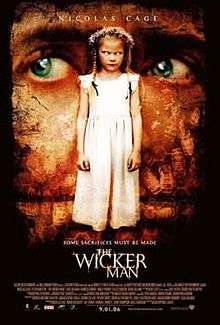
The Wicker Man (2006)

The Wicker Man

To continue my jaunt through the cinematic realm of Nicolas Cage, today I am going to look at the infamous 2006 remake of The Wicker Man.

The plot of The Wicker Man is summarized on IMDb as follows:

A sheriff investigating the disappearance of a young girl from a small island discovers there’s a larger mystery to solve among the island’s secretive, neo-pagan community.

The Wicker Man is based on an acclaimed 1973 film of the same name starring Christopher Lee. That film was in turn a loose adaptation of the 1967 novel Ritual by David Pinner, though it was not initially formally credited as such. The 1973 film is widely regarded as a horror classic, and stands in sharp contrast to its 2006 remake.

The 2006 version of The Wicker Man was both written and directed by Neil LaBute, who has directed movies like Lakeview Terrace, Nurse Betty, the remake of Death At A Funeral, Possession, and a number of episodes of Hell On Wheels.

The cast of The Wicker Man includes Nicolas Cage (Con Air, Ghost Rider, Face/Off, The Rock, Drive Angry, Leaving Las Vegas, Stolen, National Treasure, Adaptation., Vampire’s Kiss, Snake Eyes), Ellen Burstyn (Requiem For A Dream, The Fountain, Interstellar, The Exorcist, The Last Picture Show), Kate Beahan (The Crocodile Hunter: Collision Course, Flightplan), Frances Conroy (Scent of a Woman, The Crucible, Six Feet Under), and Molly Parker (House of Cards, Deadwood, Hollywoodland).

The cinematographer for The Wicker Man was Paul Sarossy, whose other shooting credits include Charlie Bartlett, The Sweet Hereafter, Chloe, and notable television series like The Borgias and Copper.

The music for the film was composed by Angelo Badalamenti, who is notably a frequent collaborator with David Lynch, scoring such works as Twin Peaks, Twin Peaks: Fire Walk With Me, Blue Velvet, Wild at Heart, Lost Highway, and Mulholland Drive. On top of his Lynch credits, Badalamenti provided music for movies like Auto Focus, Christmas Vacation, Cabin Fever, Secretary, The Beach, and A Nightmare On Elm Street 3.

Both Robin Hardy, director of the 1973 The Wicker Man, and Christopher Lee, the film’s star, denounced the poor quality of the film’s remake. In 2011, Robin Hardy directed a sequel to his original film, called The Wicker Tree, which met with a reception almost as bad as the remake he denounced.

The original cut of The Wicker Man got an R-rating from the MPAA. Neil LaBute decided to make some minor changes to get a PG-13 for the theatrical release, in hopes that it would reach a wider audience. Interestingly, when the movie eventually released on DVD as an unrated version, not all of the footage was put back in: roughly four minutes from the original cut didn’t get re-inserted.

Nicolas Cage has claimed that the movie was intentionally made as an absurdist comedy, based on both his and LaBute’s vision. Some critics have agreed that it is a sort of black comedy, though very few who regard it as such think that the comedic elements were done well.

One of the key changes to the screenplay for this remake of The Wicker Man was the addition of the gender dynamic. The island is Summersisle is portrayed as a strict matriarchal system, where men are essentially used solely for breeding and labor.

Also, in the original iteration of The Wicker Man, the island is called “Summerisle”. Apparently, the change of the name to “Summersisle” for the remake was done because it was believed that Americans would have an easier time pronouncing it.

The Wicker Man was made on a production budget of $40 million, on which it took in a lifetime theatrical gross of just under $39 million. The reception to the film, however, was damning. Currently, it holds an IMDb user rating of 3.7/10, and has Rotten Tomatoes scores of 15% from critics and 17% from audiences. It ultimately wound up with a number of Golden Raspberry Award nominations, including for Worst Picture and Worst Actor, but didn’t wind up winning any.

In 2016, Brian Collins of Birth.Movies.Death. wrote an elaborate defense of The Wicker Man, which makes some interesting points:

[The Wicker Man is] unfairly maligned and curiously lambasted for its remake status when the original has its own share of offbeat choices… this was one of the more inspired [remake] choices for a major studio to throw a lot of money at…

the original Wicker Man was a realtively (sic) obscure British film that barely saw release in the US…Warner Bros. wasn’t giving Neil LaBute and Nicolas Cage 40 million dollars to remake a horror movie because they knew fans would show up – they saw potential in this strange tale being retold by these unique talents, regardless of the fact that it had been done before.

Is it a masterpiece? Heavens no.  But I wouldn’t offer the original that high of a compliment, either…I don’t think it’s fair to dismiss the remake outright simply because it’s a big budget movie that played on 2,000 screens instead of this weird little British movie you saw on TV on a late night broadcast.

Collins hits on something in this piece that I noticed a lot when reading through contemporaneous reviews of the film. Over and over again, reviews harped on the movie being an “unnecessary” remake, as if the original was an untouchable fixture that couldn’t be improved. While I understand that the oversaturation of remakes is frustrating, remakes are not inherently bad: sometimes, they bring fresh, new visions to stories. On top of that, I would argue that a remake of The Wicker Man was necessary: it has brought the original movie back into the public consciousness in a big way, and raised it out of obscurity.

All of that said, a bias against remakes combined with rose-tinted nostalgia glasses don’t totally account for the negative reaction to The Wicker Man. Make no mistake, this is a bad movie, and for a litany of reasons.

As mentioned previously, Nicolas Cage has claimed that the vision for the film was always comedic, though absurdist. If that’s the case, something went wrong, and the humor doesn’t come across. People don’t laugh at this because it is inherently comedic, but because it is nonsensical, and punctuated by Cage’s outlandish performance. One critical response to the film (by MaryAnn Johansen of Flick Filosopher) put my feelings on this issue well:

I’d look more kindly on Neil LaBute’s profoundly silly movie… if I thought he meant any of it in jest, if any of it were winking at us even a little.

As much as Cage may claim that the production had comedic intentions from the outset, there are just no signs of those intentions on screen. The tone, the music, the supporting performances, the cinematography: pretty much every element of the film (outside of Cage) is played absolutely straight. While that would certainly be absurd if done with intention, Occam’s razor dictates that it is far more likely that Cage was off the rails on his own tangent with his quasi-comedic performance.

For those same reasons, it is impossible for me to write off the transparently misogynistic themes and portrays in The Wicker Man as satiric or comedic. The thesis of this film is essentially that a matriarchal society is inherently oppressive, and devoid of critical thought. You can almost read LaBute’s thoughts: “Of course a society led women is going to be irrational, right?” It is hard not to imagine Neil LaBute filming sequences of Nic Cage punching women without experiencing an element of catharsis, given the amount of disdain laced through this screenplay. The fact that LaBute alone made the decision to alter the island society from the original film to be a matriarchy is more than a little telling as to his feelings towards women and feminism, and the look isn’t good.

As far as positives go, I have to say that The Wicker Man does look good: if you weren’t paying attention, you might mistake it for an artfully crafted film. Likewise, I like the setting of Summersisle: there is a sense of tension and foreboding to it, which contrasts interestingly with the bright, natural images that make it up. In that way, it isn’t unlike the bees that inhabit it: they are aesthetically pleasing, but dangerous.

While it may be true that critics were harsher to this movie based on its status as a remake, there are more than a handful of problems with it. It bows to countless genre cliches, promotes a misogynistic narrative, and has a bafflingly unfocused tone, and that’s without even touching on the perplexing, erratic performance from Nicolas Cage. It ultimately deserves the derision and ridicule that has been levied at it over the years, despite a few redeeming elements.

Much like Death Bed: The Bed That Eats, The Wicker Man falls in the rare category of bad movies that fancy themselves as art pieces, which carries a uniquely off-kilter tone. It is the sort of movie that you can truly marvel at, and get lost wrapping your brain around just how ill-conceived it was.

As far as a recommendation goes, I think this film’s reputation precedes it. If you think you might enjoy watching this movie, you probably will. Nicolas Cage fanatics are sure to enjoy his zany antics, to say the least, and absolutely have to give it a watch.

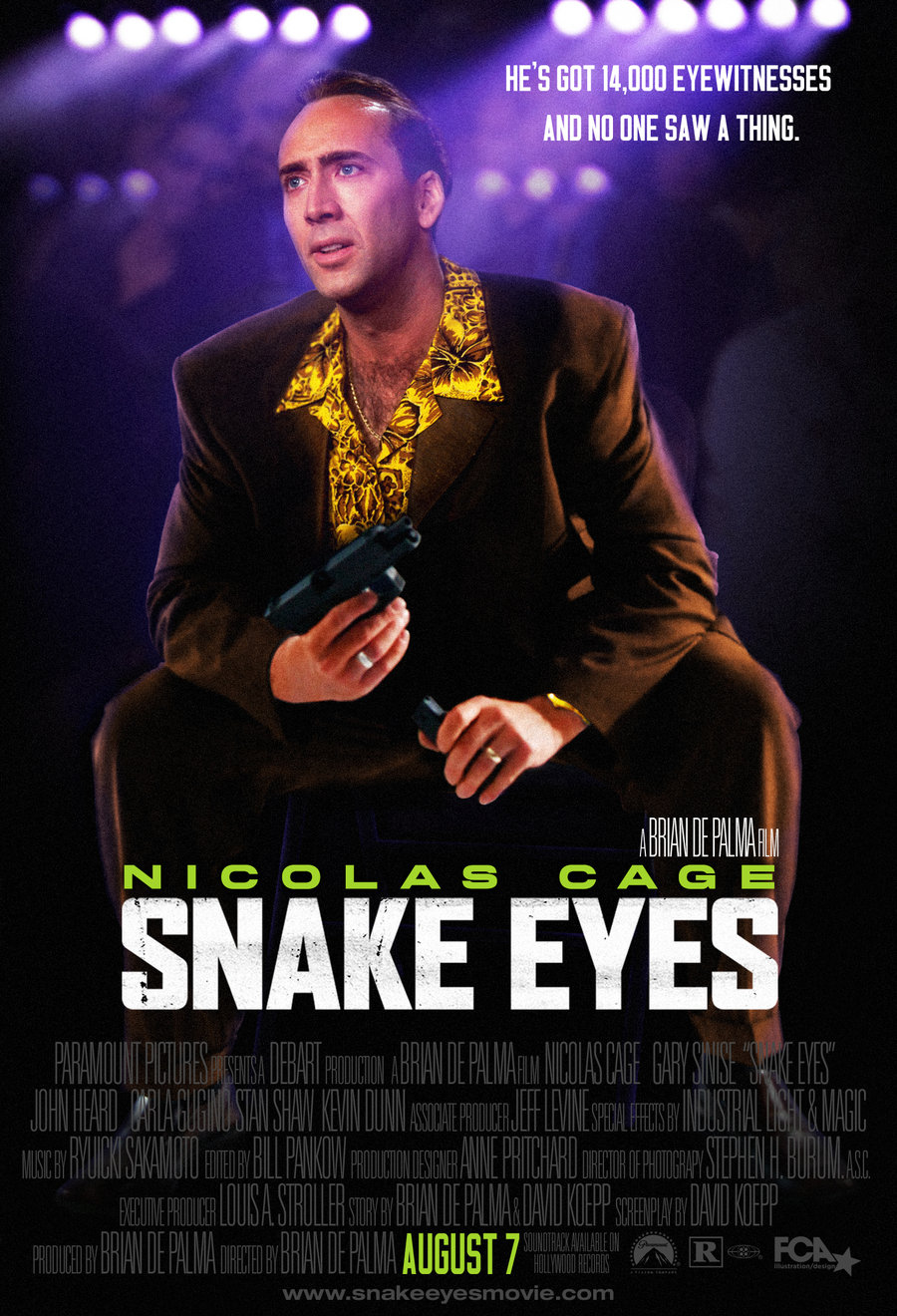
Snake Eyes

Snake Eyes

Today, I’m going to delve into yet another Nicolas Cage feature: Brian De Palma’s 1998 casino thriller, Snake Eyes.

The plot of Snake Eyes is summarized on IMDb as follows:

A shady police detective finds himself in the middle of a murder conspiracy at an important boxing match in an Atlantic City casino.

Snake Eyes was directed and produced by Brian De Palma, an acclaimed auteur who has been behind films like Scarface, Mission: Impossible, The Untouchables, Carlito’s Way, Mission To Mars, Blow Out, Dressed To Kill, Carrie, and Body Double, among others.

The screenwriter for Snake Eyes was David Koepp, who penned flicks like Indiana Jones and the Kingdom of the Crystal Skull, Panic Room, Secret Window, Spider-Man, The Shadow, Jurassic Park, I Come In Peace, Death Becomes Her, Carlito’s Way, and Mission: Impossible.

The primary cast of the film includes Nicolas Cage (Con Air, Face/Off, Vampire’s Kiss, Leaving Las Vegas, Adaptation., The Wicker Man, Ghost Rider, The Cotton Club), Gary Sinise (Apollo 13, The Green Mile, Forrest Gump, Mission To Mars, The Stand), John Heard (Home Alone, CHUD, Cat People, After Hours, The Pelican Brief), Carla Gugino (Watchmen, Sin City, Night At The Museum, Sucker Punch, American Gangster), Kevin Dunn (Veep, Warrior, Small Soldiers, Godzilla), Michael Rispoli (Kick-Ass, Death To Smoochy, Rounders, Volcano), Luis Guzman (Waiting…, The Adventures of Pluto Nash, Oz, The Substitute, Boogie Nights), and Mike Starr (Ed Wood, Goodfellas, Dumb and Dumber, Black Dynamite).

The cinematographer for Snake Eyes was Stephen H. Burum, whose other shooting credits include Hoffa, Mystery Men, The Shadow, Rumble Fish, The Outsiders, and The Entity, as well as a number of other Brian De Palma movies, including Mission To Mars, Carlito’s Way, Raising Cane, and The Untouchables.

The editor on the film was Bill Pankow, who is known for cutting Drumline, Money Train, Double Team, American Ultra, Feel The Noise, Max, Carlito’s Way, The Bonfire of the Vanities, Body Double, and The Untouchables.

The musical score for Snake Eyes was composed by Ryuichi Sakamoto, who also provided music for the movies Femme Fatale, The Adventures of Milo & Otis, Merry Christmas, Mr. Lawrence, and The Last Emperor.

Snake Eyes is perhaps most well known for its striking opening sequence, which is filmed and edited to appear as though it is all one continuous, 20-minute shot. While the shots are very long, the sequence has a 8 well hidden cuts, with the longest unbroken stretch coming in at roughly 12 minutes.

The original ending for the movie has Atlantic City completely destroyed by a hurricane, and the casino dramatically destroyed by the initial storm surge. Though the major destruction sequences were cut, references to the storm are peppered throughout the screenplay.

Both Will Smith and Al Pacino were offered Sinise’s antagonist role in the film. Pacino outright turned it down, while Will Smith required a huge paycheck to take on the part, which was too high for the production to take on.

The reported production budget for Snake Eyes was $73 million, though Brian De Palma has claimed that it actually came in under budget, at $68 million. In its lifetime theatrical run, the movie managed to take in just under $104 million, easily making back its budget.

The reception to Snake Eyes from critics and audiences wasn’t nearly as good. Currently, the movie holds an IMDb user rating of 5.9/10, along with Rotten Tomatoes scores of 40% from critics and 35% from audiences. Among the film’s harshest critics was Roger Ebert, who, despite adoring the opening sequence, said that “it’s the worst kind of bad film: the kind that gets you all worked up and then lets you down, instead of just being lousy from the first shot.”

In the wake of the 2016 documentary De Palma, which delves into the filmography and life of the acclaimed director, Birth.Movies.Death. writer Dominic Griffin decided to take another look at the popularly derided Snake Eyes:

Snake Eyes is a thrilling look at a world too far gone for salvation, and unless you’re a sincere Femme Fatale apologist, the last great film Brian De Palma made.

It is impossible to talk about Snake Eyes, positively or negatively, without addressing its opening sequence. While its style has been nearly universally praised, there have been some people who have complained of its gimmickry. Personally, I think the faux-seamless sequence works excellently to portray the event, particularly given how many times it is brought back up throughout the movie. There is a distinct sense that you, as the audience, should be paying attention to the details of the event: you are seeing all of the minutiae for a reason, or else it wouldn’t be shown. While there are certainly some issues with the film, the opening certainly isn’t one of them. If anything, it has cemented it as a footnote in film history.

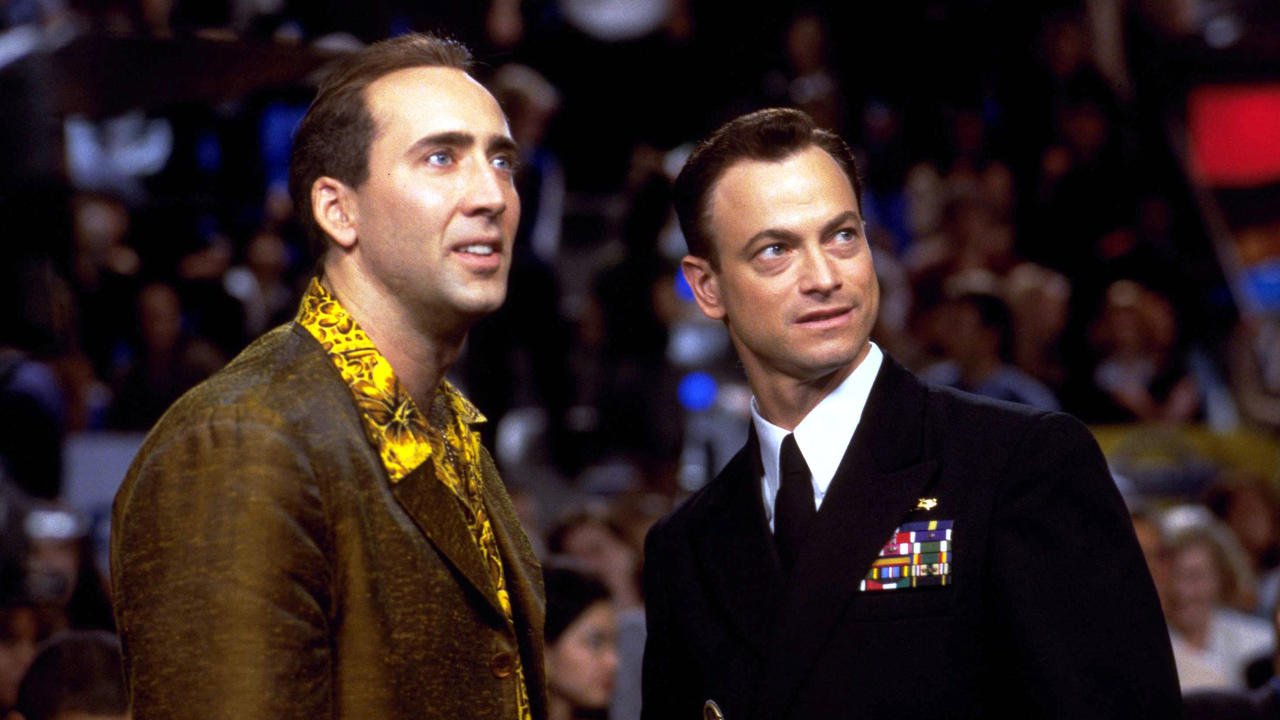
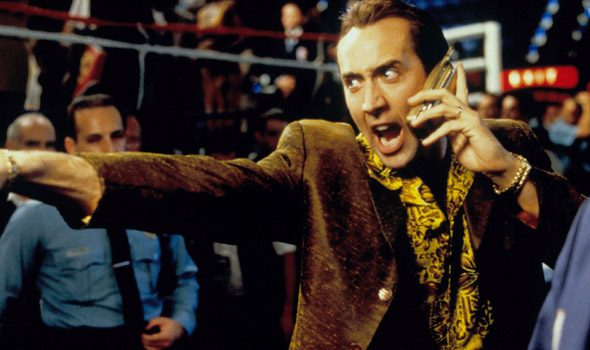
Nicolas Cage is, to put it mildly, a divisive figure in the world of Hollywood acting. Plenty will claim that he is a one-note rodeo clown devoid of genuine ability, beyond having exaggerated facial features and a distinctive scream. Personally, I am a bit of a Cage apologist: when he is in his element and sticking to what he does well, he can bring energy to a movie better than just about anyone else. With Snake Eyes, I think he is perfectly cast: everything about him screams sleazeball. His naturally erratic behavior, the way he sardonically delivers dialogue, and his shifty physical demeanor all fit the character excellently, to the point that I have trouble picturing anyone else in the role. The ridiculous suit he is put in for most of the movie would look downright comedic on anyone else, but seems to fit his personality like a second skin.

Though many critics adamantly disagree with this, I personally like that the big “reveal” is done early in the movie, primarily because it feels genuinely unexpected and in sharp contrast to genre expectations. Likewise, I think that the revelation to the audience (and not to the protagonist) adds a level of tension to the two characters’ interactions that wouldn’t be there otherwise, which makes for compelling viewing. In responding to criticism of the reveal decision, De Palma has said that “the problem is that it isn’t about who did it. It’s a mystery about a relationship, two people, and how finding that out affects their relationship.” This all reminded me of Alfred Hitchcock’s famous description of the difference between “shock” and “suspense,” which you can see here:

If the character reveal in Snake Eyes had been saved for the climax, it would have only served for traditional shock value: the bomb suddenly going off under the table. However, De Palma chose to reveal to the audience that the bomb was present. The lead character is none the wiser, but now the audience knows the truth and the stakes involved, and there is real suspense at play.

While there are quite a few things that I like about Snake Eyes, it has some pretty significant issues that hinder it from being a really great film. First and foremost among those issues is the story’s pacing, which loses steam rapidly as the third act gets going. The more the movie leans towards being a traditional action flick, the less unique and interesting it is, and the entire conclusion feels more like a Con Air set piece than the conclusion to an innovative thriller. It just doesn’t do the movie justice, if you ask me.

On the subject of the ending, there are a number of critics who seem to believe that the originally planned ending, which sees the casino and Atlantic City totally destroyed by a hurricane, might have saved the film. Personally, I just don’t see it. I think that the originally planned ending would have been hokey and way too on-the-nose with its messaging, and might have hurt the movie even more than the half-assed action film conclusion that we currently have.

Overall, I think it is a fair assessment to say that Snake Eyes is a step above the typical Hollywood fare in terms of style and entertainment, thanks in large part to De Palma’s ambitious opening and Cage’s performance. However, the pacing issues definitely keep it a step below being a classic. That said, I can certainly understand why so many critics were disappointed with it: De Palma is capable of a whole lot better than this, and there are some serious flashes of brilliance here. Unfortunately, those peaks make the valleys seem all the deeper.

As far as a recommendation goes, I highly advocate watching the opening sequence for sure. While Birdman and Rope are more popular examples of long takes with hidden cuts, I think the Snake Eyes opening adds more to the movie as a whole than the long takes in those flicks: it has more thematic purpose here than just being a gimmick, or providing a third person omniscient POV. Apart from that, die hard Nic Cage and De Palma fans should definitely watch the whole movie. While it isn’t great by any means, I think that it is worth the time for the highlights.

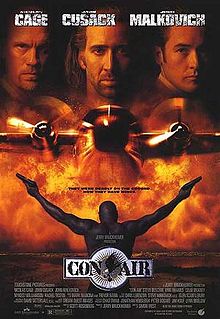
Con Air

Con Air

Today, I’m going to take a look at the notorious Nicolas Cage action flick, Con Air.

The plot of Con Air is summarized on IMDb as follows:

Newly paroled ex-con and former U.S. Ranger Cameron Poe finds himself trapped in a prisoner transport plane when the passengers seize control.

The screenplay for Con Air is credited to Scott Rosenberg, whose other credits include Kangaroo Jack, High Fidelity, Disturbing Behavior, and Gone In Sixty Seconds, among others.

The director for the film was rookie helmer Simon West, who has gone on to direct movies like Stolen, When A Stranger Calls, The Mechanic, The Expendables 2, and Lara Croft: Tomb Raider. However, perhaps his best known credit is directing the infamous 1987 music video for Rick Astley’s “Never Gonna Give You Up.”

The huge cast of character actors that makes up Con Air includes the likes of Nicolas Cage (Vampire’s Kiss, The Wicker Man, Left Behind, Leaving Las Vegas, Ghost Rider, Snake Eyes, Bringing Out The Dead, Adaptation.), John Cusack (Grosse Pointe BlankHigh Fidelity, 1408, The Raven, Being John Malkovich, 2012, War, Inc.), John Malkovich (Rounders, Eragon, Burn After Reading), Ving Rhaimes (Pulp Fiction, Mission: Impossible, Mission: Impossible II, Mission: Impossible III), Steve Buscemi (Boardwalk Empire, Reservoir Dogs, Fargo, The Big Lebowski, Armageddon), Colm Meaney (Star Trek: Deep Space Nine, Star Trek: The Next Generation, Hell On Wheels), Danny Trejo (Machete, Machete Kills, Anaconda, From Dusk Till Dawn, Desperado), and Dave Chappelle (Half-Baked, Chappelle’s Show).

The cinematographer for Con Air was David Tattersall, who also shot such films as The Green Mile, Speed Racer, Next, Die Another Day, Theodore Rex, Soldier, and The Majestic, among others.

Con Air ultimately had three credited editors: Glen Scantlebury (Stolen, Teenage Mutant Ninja Turtles, Twixt, Armageddon), Steve Mirkovich (Hardcore Henry, 16 Blocks, Broken Arrow, Big Trouble In Little China, Prince of Darkness, Cool World, The Astronaut’s Wife), and Chris Lebenzon (Eragon, Big Fish, Enemy of the State, Mars Attacks, Ed Wood, Hudson Hawk, Wolfen, Top Gun, Days of Thunder).

The musical score for Con Air is credited to both Mark Mancina (Moana, Shooter, Training Day, Twister, Speed, Speed 2: Cruise Control) and Trevor Rabin (12 Rounds, Snakes On A Plane, Torque, National Treasure, Kangaroo Jack, Deep Blue Sea). Apparently, due to his commitment to Speed 2: Cruise Control, Mancina didn’t have time to complete his work on Con Air, and Rabin filled in to complete the project.

Con Air was produced by Jerry Bruckheimer, one of the most prolific and popular film and television producers of the past few decades. His television shows include CSI, CSI: Miami, Cold Case, CSI: NY, and The Amazing Race, and just a handful of his film credits are The Rock, National Treasure, Armageddon, Pirates of the Caribbean. Top Gun, Bad Boys, and Days of Thunder.

In a 2007 interview with The Guardian, John Cusack justified his decision to take part in Con Air, despite not actually liking the movie:

I use those kinds of films to get leverage…you wouldn’t think Con Air had anything to do with Max, but in my career it does. It’s doing Con Air, or doing romantic comedies, that makes Max possible. The bad stuff you just try to make as good as you can.

In an appearance on Inside The Actor’s Studio, comedian Dave Chappelle claimed that he improvised nearly all of the dialogue for his minor part in Con Air.

In the credits, Con Air is dedicated to Phil Swartz. Swartz was an effects worker for the production who was killed in an on-set accident, in which a plane fell off of its rigging.

The song “How Do I Live,” which is featured prominently in Con Air, had the rare claim of being nominated for both Best Original Song at the Academy Awards and Worst Original Song at the Razzie Awards. However, it wound up winning neither distinction.

Con Air was made on a production budget of $75 million, on which it took in a lifetime theatrical gross of just over $224 million, making it significantly profitable. Critically, though, it was a bit of a mixed bag: it currently holds Rotten Tomatoes scores of 54% from critics and 75% from audiences, alongside an IMDb user score of 6.8.

One of Con Air‘s prominent advocates was Roger Ebert, who gave the film 3/4 stars in his review for the Chicago Sun-Times:

The movie is essentially a series of quick setups, brisk dialogue and elaborate action sequences…it moves smoothly and with visual style and verbal wit.

In this case, I’m not sure if I completely agree with Ebert’s opinion, particularly on the point of the “quick setups” and action sequences. I think that Con Air is one of the key action movies that is most guilty of action over-saturation. Essentially, there are so many set ups, explosions, and grandiose moments, that ultimately each of their impacts is diluted. If a movie is nothing but explosions and gunfire, then those moments will be less notable that a single dramatic explosion in a different film. At the same time, it can be said that the constant flashes can keep an audiences attention. However, I tend to think of Con Air as more like a strobe light: after a few minutes, the effect has worn off, and the moments that should be thrilling just feel normalized and repetitive.

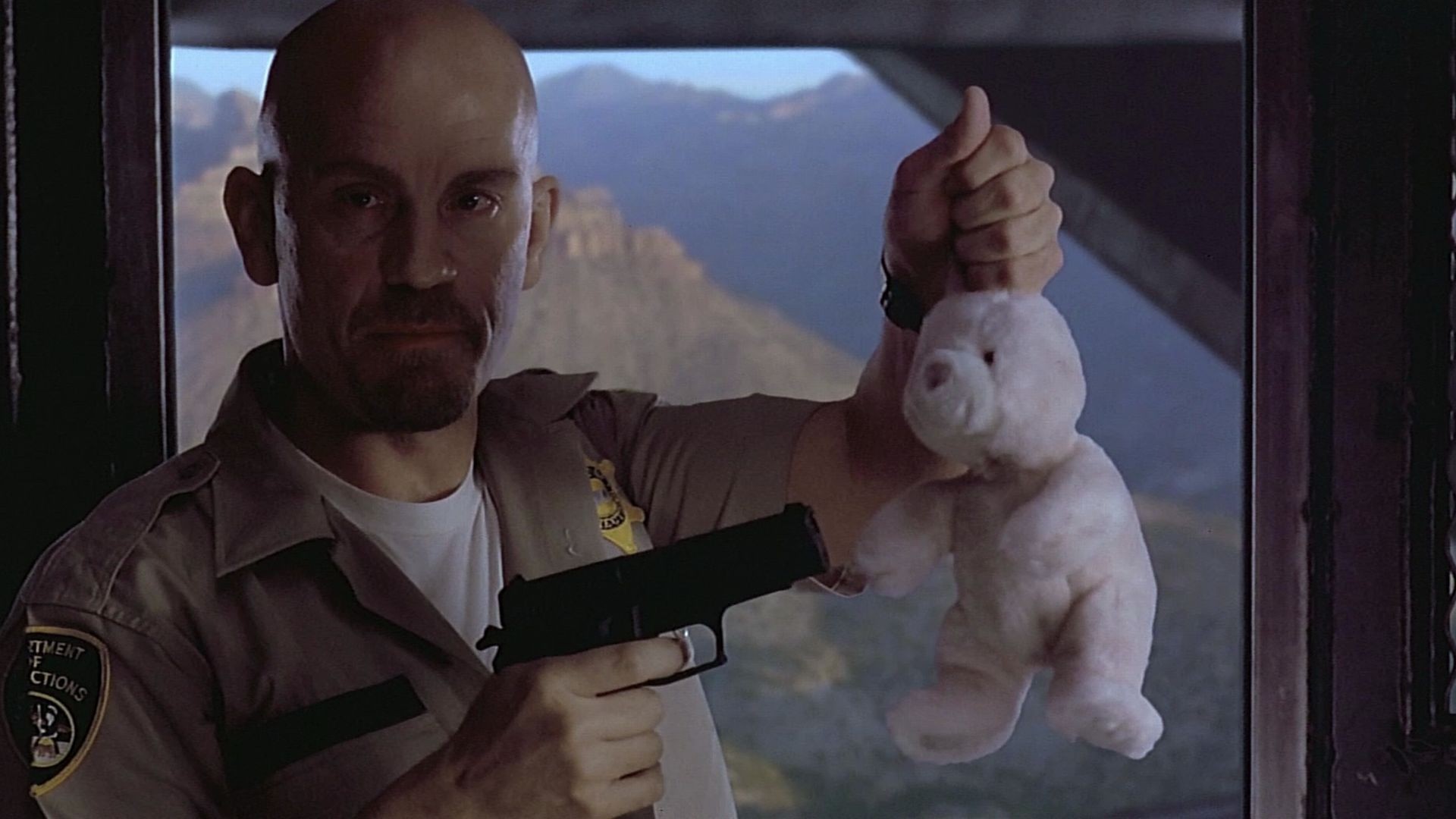
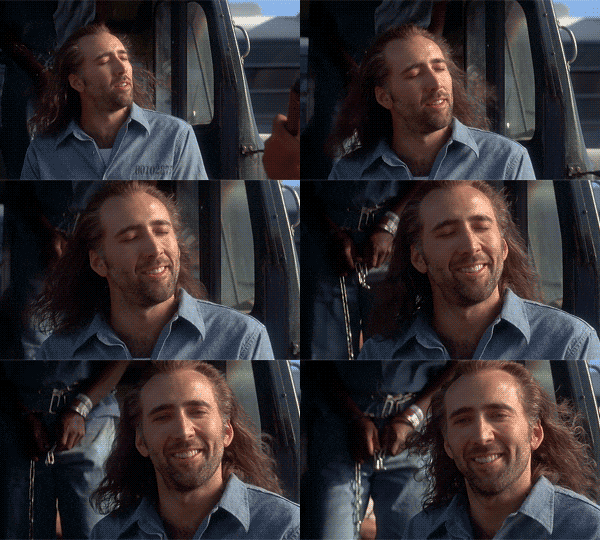
As far as positives go, it is hard to get better than the rogue’s gallery of character actors that populate the eponymous plane. Led by John Malkovich, the whole cast of villains is eccentric, colorful, volatile, and beyond over-the-top. Between the lot of them, there is more scenery-chewing than we might ever see on screen again. On the flip side, however, is Nicolas Cage: perhaps the king of the cinematic freak-out. Unfortunately, however, his character here is polite to the point of near stoicism, and even when unleashed, never quite goes wide-eyed in Cage-y fury. If anything, he is the closest thing to a stable presence in the film, which doesn’t suit him in the slightest. Luckily, he does use an absolutely outrageous interpretation of an Alabama accent, which has cemented this as one of his worst performances regardless.

Thanks to its frequent appearances on cable, I assume that most people have caught Con Air before, or know of its reputation. I don’t have to mention that this is a big, silly action movie with the depth of a kiddie pool. I will say that it is anything but tasteful, and hasn’t aged terribly well in a multitude of ways. Most surprisingly, though, is that I found it to be not quite as exciting as I remembered on this particular re-watch. It is still a pretty fun ride as far as blockbuster fare goes, particularly in today’s market. However, I think this might be the rare movie that I think is better to experience in clips and highlights, or left relegated to fond memories.