Category Archives: Themed Reviews

Water Foul: Alligator

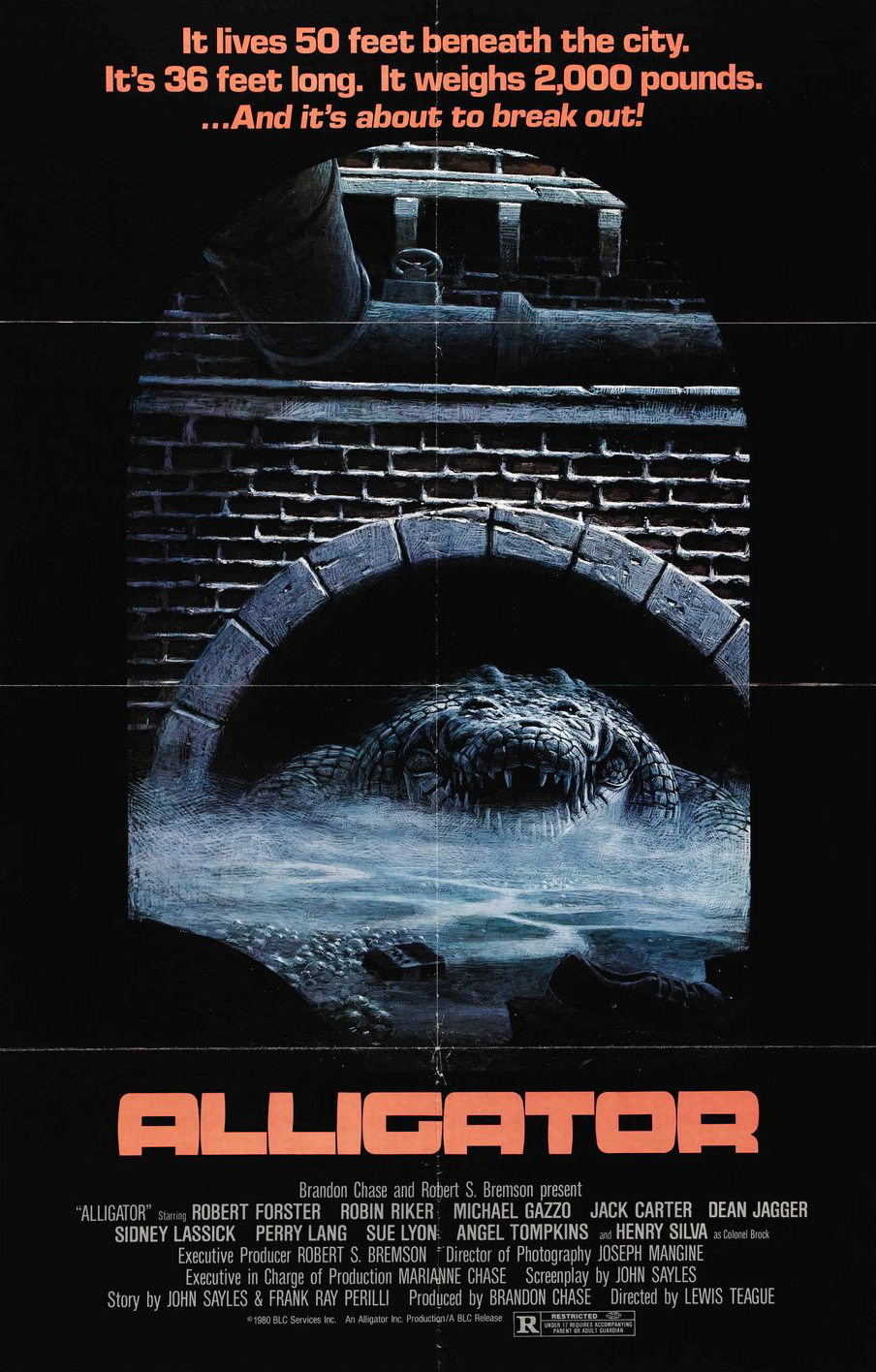
Alligator

alligator1

Today, my “Water Foul” series on the worst aquatic-themed horror movies continues with 1980’s Alligator.

Alligator was directed by Lewis Teague, who went on to direct the Stephen King film adaptations of Cujo and Cat’s Eye, as well as the Jay Leno and Pat Morita buddy cop comedy, Collision Course.

Alligator was written by John Sayles (Piranha, The Howling, The Spiderwick Chronicles, The Brother From Another Planet) and Frank Ray Perilli (Laserblast), though the latter apparently only wrote the almost entirely scrapped first draft.

The cinematographer on Alligator was Joseph Mangine, who also shot Albert Pyun’s The Sword and The Sorcerer, Mother’s Day, and Alligator 2: The Mutation.

Alligator featured two primary editors: Larry Bock (Final Justice, Rock ‘n’ Roll High School, The Mighty Ducks, Bring It On) and Ron Medico (Death Bed: The Bed That Eats).

The music for Alligator was composed by Craig Huxley, who also contributed scores to the television show Walker, Texas Ranger and the Meat Loaf musical movie, Roadie.

The producers for Alligator included Mark L. Rosen (Spice World, The Sword and The Sorcerer), Tom Jacobson (The Ladykillers, Flashdance), Brandon Chase (Alligator 2: The Mutation, UFO’s Are Real), and Robert Bremson (Over The Edge, Obsession).

The special effects team for Alligator included Robert Short (Chopping Mall, Piranha), Richard Helmer (Apocalypse Now, Airplane!, Child’s Play), William Shourt (Serenity, Minority Report), John Ramsey (U-571), Pete Gerard (Ghostbusters, Terminator 2, Batman & Robin), David Beasley (Inspector Gadget, Stargate, The Blob), and David Bartholomew (Ghost Dad, Never Say Never Again).
alligator4The cast of Alligator is composed of Robert Forster (Jackie Brown, Vigilante), Robin Riker (The Bold and The Beautiful), Michael Gazzo (Last Action Hero, Cannonball Run II, The Godfather Part II), Dean Jagger (Game of Death, Elmer Gantry, King Creole), Sydney Lassick (Carrie, Cool as Ice), and an early, uncredited appearance by Kane Hodder (Jason X, Friday the 13th Part VIII).

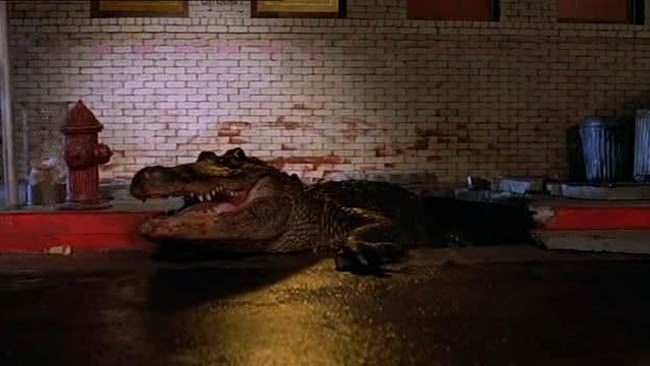
The story of the film centers around a series of mysterious killings in the sewers of Chicago. The investigation ultimately reveals that an over-sized alligator, which had lived off of discarded animal corpses and experimental lab rats after being flushed as a baby, is hunting beneath the busy streets, and killing off countless unsuspecting locals. The police force then has to hunt down and destroy the beast, while the local government tries to cover up the sinister origins of the creature.

Apparently, the original script by Ray Perilli had the story taking place in Milwaukee, and outlandishly explained that the alligator grew massive in the sewers due to runoff from beer production. John Sayles reportedly scrapped the entire draft and started over from scratch, though Perilli was still ultimately given a writing credit on the movie.

According to IMDb, the buggy animatronic alligator used in the film was donated to the University of Florida to act as an unofficial mascot for the Florida Gators, though I wasn’t able to confirm its current location.

ALLIGATOR, 1980Alligator ultimately received a sequel in the form of Alligator II: The Mutation in 1991, a whole 11 years after the film’s initial release in 1980. Unfortunately, it was not received well, meaning I will likely give it a look here on the blog sooner or later.

Astoundingly, Alligator spawned a popular tie-in children’s board game made by the Ideal Toy Company. The commercial for it is up on YouTube, and provides one hell of a flashback to a time when children’s toys were made from R-rated movies.

The reception to Alligator was generally mixed: it currently holds Rotten Tomatoes scores of 67% (critics) and 48% (audiences), with an IMDb rating of 5.9. However, the movie was ultimately quite profitable in its theatrical run, grossing $6.5 million on an estimated $1.75 million budget.

All in all, the alligator itself doesn’t look half bad in this movie. Apparently it didn’t work very well, much like Bruce (the shark from Jaws), so the crew had to be a little creative in how they shot it. I think it worked out pretty well considering, as the gator looks genuinely intimidating. They aren’t particularly hyperactive animals to start with, so it isn’t like they needed a whole lot of action shots of the creature doing gymnastics. In my opinion, the large, lumbering gait of the beast seemed to drive home how little fear it had for humans during its limited time on screen, which I think contrasts pretty greatly to the Lake Placid crocodiles, who always struck me as being a bit too nimble.

There is an odd comedic tone to Alligator that is laced into the characters and the dialogue in the film. It is clearly self aware about what it is, and mocks itself lightly while not ruining the genuine monster movie tone. It never drifts so far as to become outright parody, which is a good thing in my opinion. This is a movie that hits right on the nose of the tropes and characteristic of a Jaws-era monster thriller, and it plays with them well.

I, like most people of my generation, only know Robert Forster as a distinctive-looking older character actor. Apart from some clips from William Lustig’s Vigilante, I had never seen any films from the earlier part of his career before this one, and it is almost surreal to see him so young. It reminded me a little bit of Sam Elliott in Frogs, in that he is almost unrecognizable as a younger man.

alligator3Overall, this isn’t all that bad of a monster flick. It has unfortunately been mostly forgotten, as the legacy of Crocodilian horror seems to be dominated by Lake Placid. That said, this is a flick that is worth checking out just for the novelty of it. There are some cheap effects strewn throughout the movie, but the plot is just darkly humorous enough to keep most b-movie lovers invested in the story through to the end. If you are craving an off the wall monster movie with some 1980s grit, Alligator can certainly provide.
Larry Cohen Collection: “The Ambulance”

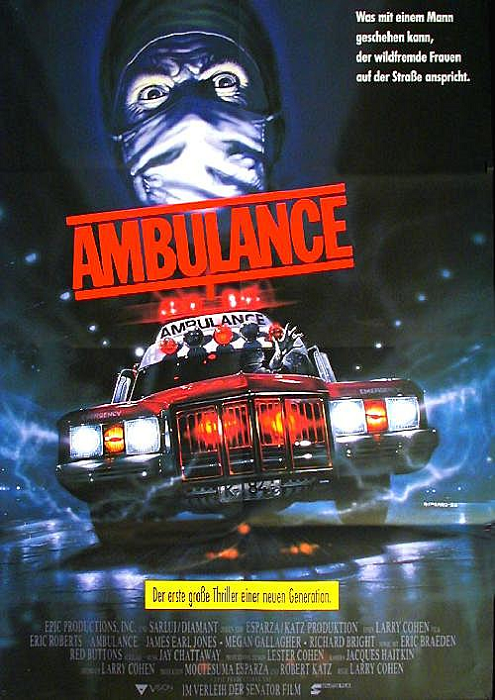
The Ambulance

ambulance1

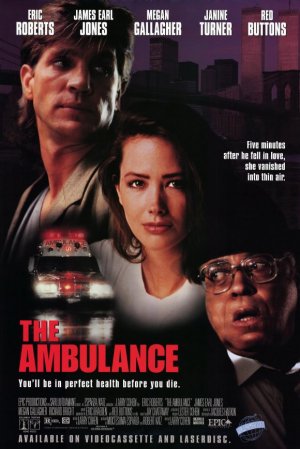
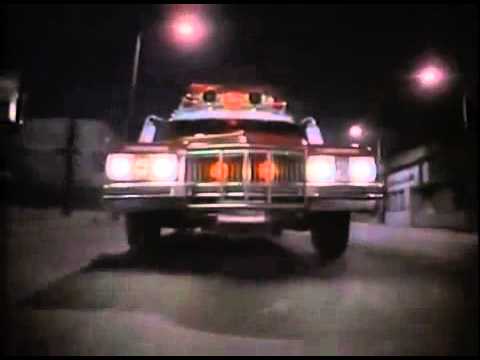
Today’s feature is Larry Cohen’s paramedic terror: 1990’s “The Ambulance.”

“The Ambulance” was both written and directed by Larry Cohen, marking his 17th theatrical directorial feature. However, it is also one of only two feature films he directed throughout the 1990s.

The cinematographer for “The Ambulance” was Jacques Haitkin, who also famously shot such films as “A Nightmare on Elm Street,” “Wishmaster,” “Shocker,” and “Maniac Cop 3.”

The musical score was provided by Jay Chattaway, who additionally worked on the William Lustig flicks “Maniac Cop,” “Maniac Cop 2,” and “Maniac.”

ambulance2“The Ambulance” ultimately featured two editors: Armond Lebowitz, a frequent Larry Cohen collaborator who cut “Special Effects,” “Q,” “The Stuff,” and “Full Moon High,” and Claudia Finkle, who did the editing for “Howling IV” and “Howling V.”

The effects team for “The Ambulance” included Theo Mayes (“Boogie Nights,” “Maniac Cop 2”), Jennifer Aspinall (“The Toxic Avenger”), Larry Arpin (“The Dentist,” “Highlander II,” “Maniac Cop,” “Leprechaun”), Rob Benevides (“Strangers With Candy”), Kevin McCarthy (“Hobgoblins,” “Demonic Toys”), and Ron Petruccione (“Serenity,” “Con Air,” “Dante’s Peak”).

The producers for “The Ambulance” were Barbara Zitwer (“It’s Alive III,” “Vampire’s Kiss”), Robert Katz (“It’s Alive”), and Moctesuma Esparza (“Gettysburg,” “Selena”), the latter two of which have worked together extensively for Maya Entertainment and Esparza/Katz Productions.

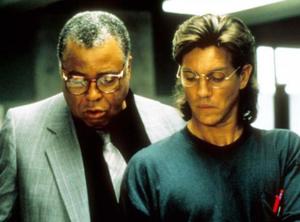
The cast of “The Ambulance” includes Eric Roberts (“Inherent Vice,” “Miss Castaway,” “Wolves of Wall Street,” “Best of the Best”), James Earl Jones (“Field of Dreams,” “Exorcist II,” “Conan the Barbarian”), Eric Braeden (“Titanic,” “The Rat Patrol”), Red Buttons (“The Poseidon Adventure,” “The Longest Day”), Megan Gallagher (“Hill Street Blues,” “The Larry Sanders Show”), Janine Turner (“Northern Exposure,” “Cliffhanger”), Nick Chinlund (“Con Air,” “Lethal Weapon 3”), Laurene Landon (“Maniac Cop,” “Maniac Cop 2,” “Pick Me Up”), and Jill Gatsby (“Class of 1999,” “Maniac Cop,” “Vampire’s Kiss”).

ambulance5The story of “The Ambulance” follows an amateur investigation into a series of mysterious disappearances after the victims were taken away by what appeared to be an ambulance crew. As the comic artist turned vigilante digs deeper, he begins to uncover a conspiracy, putting his life and sanity in danger.

A while back, I attended the premiere of horror flick called “Old 37,” which features a number of similarities to “The Ambulance.” The Kane Hodder vehicle also centers around killers utilizing an ambulance to kidnap people, though it lacks a lot of the more interesting story aspects of “The Ambulance.” That said, it isn’t all too bad, particularly for a film directed by “Alan Smithee.”

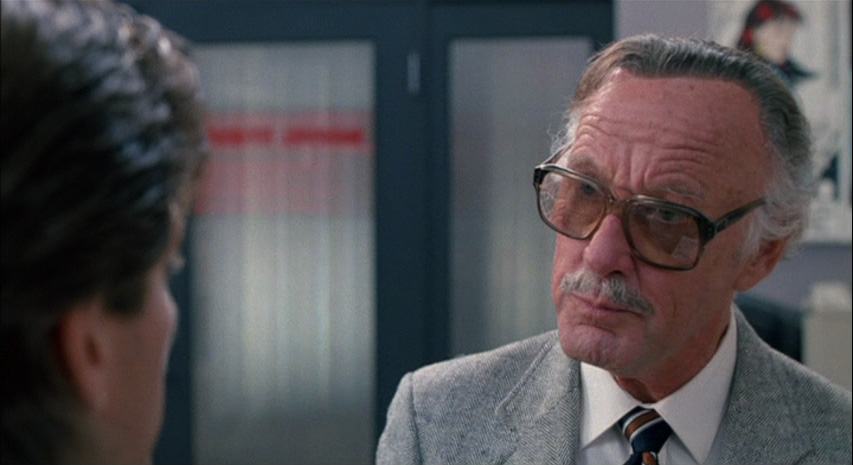
The legendary superhero creator Stan Lee has a quick cameo in “The Ambulance,” which is something he has become famous for with the recent boom of Marvel superhero films over the last decade and a half.

ambulance6Larry Cohen’s entry into the television series “Masters of Horror,” titled “Pick Me Up,” features an homage to “The Ambulance” with it’s twist ending, featuring two killers who have commandeered an ambulance for nefarious purposes.

I wasn’t able to dig up any budget or gross information on “The Ambulance,” but it is fair to say that it was a low-budget affair. The reception to the film was mixed: it currently has a 5.8 rating on IMDb, and Rotten Tomatoes scores of 75% (critics) and 55% (audience). For the most part, the film has been forgotten outside of die hard horror circles, though the film has certainly influenced a handful of other works.

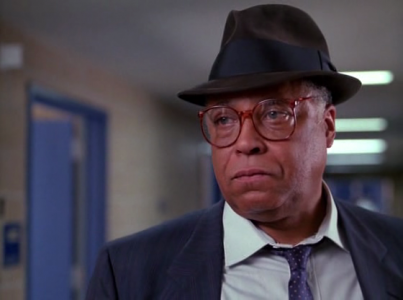
ambulance4I found James Earl Jones to be a bit too cartoon-y with his portrayal of the obsessive, bubble gum chewing, eccentric detective here. Eric Roberts, on the other hand, is surprisingly solid in the lead role. I always associate him with lower-tier roles, which is where he usually seems to thrive, but he manages to pull his weight here with the spotlight. However, his hair is every kind of ridiculous in this movie, which is at least mildly distracting.

Eric Roberts’s character, however, is written like an absolute creep. The entire instigation for the film is because he was essentially harassing a woman on the street, and refused to leave her alone. It was clearly supposed to come off as charming and eccentric, but the whole exchange is skin-crawling. The woman does her damnedest to get him to go away, and has a couple of solid lines over the course of the interaction, the highlight of which is this:

“I have met creepier guys than you, but I don’t recall when”

“The Ambulance” curiously plays more like a conspiracy movie than I expected, and is less of a horror film than it is a thriller, and has some action and comedy elements as well. It sits on the boundary between a lot of different genres, but doesn’t balance it as well as some other films do.

The plot is interesting, and ties into people’s anxieties about the monolithic medical industry and the cruelty of product testing. There is also certainly a fear associated with the prone state of being in an ambulance on a stretcher, as well as being helpless in the face of corporate bureaucracy. On the surface “The Ambulance” isn’t much, but there is more to it than there appears to be at first glance.

ambulance3The soundtrack to “The Ambulance” notably has an awful lot of synthesizer and saxophone, which is a mixture that I am always on board for in these 1980s / 1990s flicks.

Eric Roberts’s job as a Marvel comics artist allows for a quick Stan Lee, but apart from that, it isn’t particularly important to the story. He winds up spending the entire film investigating and chasing down leads, so why not just make him a private investigator or a journalist? I can understand not making him a cop because of the progression of the story, but the skills he winds up using don’t make much sense for a comics illustrator.

Last but not least, Eric Braeden’s evil Doctor is chillingly creepy as the villain, and is the highlight of the whole flick. However, the parlor scene he has early on explains a little too much too quickly in my opinion. It also doesn’t make much sense for him to divulge the information he does to the forced patient, apart from to inform the audience of what is actually happening. I’m a little curious if this sequence was added in at some point, or if it was initially placed somewhere else in the script.

Overall, “The Ambulance” is in the lower tier of Larry Cohen’s filmography, but had the potential to be much better. It feels like it wasn’t given time to percolate properly, and the result is something rushed and of lower quality than it should be. I love the premise and the story, but the details are really lackluster, and the pacing isn’t great. Also, some of the performances are pretty weak, like Red Buttons, who seems totally out of place here. For Larry Cohen fans, it is worth checking out. However, it really could have been much better given the originality of the concept.

Larry Cohen Collection: “Best Seller”

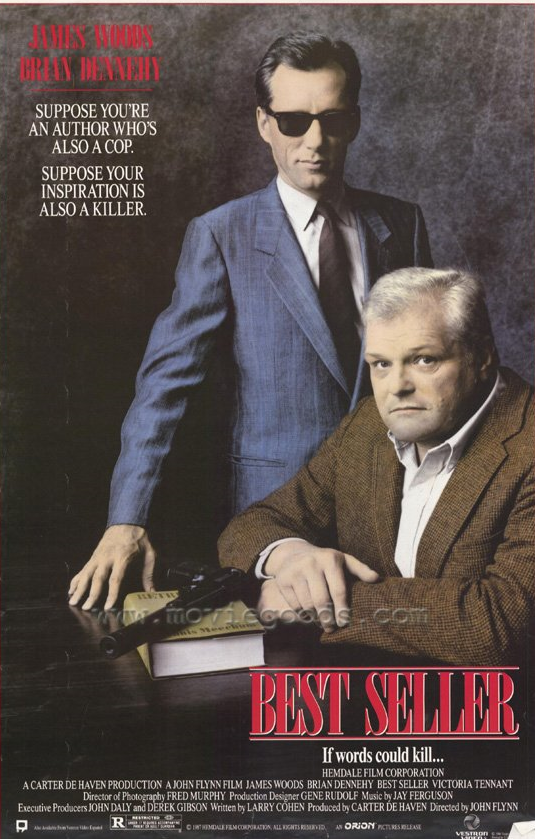
Best Seller

bestseller1

Next up in the Larry Cohen Collection is 1987’s “Best Seller,” starring James Woods and Brian Dennehy.

“Best Seller” was directed by John Flynn, who also made “Brainscan,” “Out for Justice,” “Lock Up,” and”Rolling Thunder.” His primary style has always been crime-based action-dramas, which fits well with Larry Cohen’s flair for police procedural.

The original screenplay for “Best Seller” was, of course, written by Larry Cohen. However, John Flynn may have considerably modified himself it before filming, but wasn’t ultimately given a writing credit. He also apparently came up with the title, which was originally “Hard Cover” (which I think sounds way cooler).

The cinematographer for “Best Seller” was Fred Murphy, who also shot “Secret Window,” “October Sky,” “Hoosiers,” and Larry Cohen’s own “Q: The Winged Serpent.”

“Best Seller” was edited by David Rosenbloon, who also cut such features as “Deep Impact,” “Primal Fear,” “Fracture,” “Frequency,” and “Blue Chips.”

The musical score for “Best Seller” was provided by Jay Ferguson, who also scored flicks like “Double Dragon” and “Tremors II.”

The producers for “Best Seller” included John Daly (“Vampire’s Kiss,” “Hoosiers,” “Platoon”), Derek Gibson (“The Return of The Living Dead”), and Larry Cohen collaborator Carter DeHaven (“Special Effects,” “Perfect Strangers”).

bestseller3The effects team on “Best Seller” was composed of Ken Speed (“2 Fast 2 Furious,” “God’s Not Dead,” “Cobra,” “The Doors”), Robert L. Olmstead (“Cellular,” “Predator 2,” “Iron Man”), Peter Kunz (“Precious,” “Changing Lanes,” “Exterminator 2,” “The Hurricane”), Pamela Peitzman (“The Last Airbender,” “Alien From L.A.,” “The Hitcher”), and Deborah Figuly (“True Believer,” “Never Too Young To Die,” “Less Than Zero”).

“Best Seller” was distributed by Orion Pictures, which was behind a handful of well-regarded flicks throughout the 1980s and early 1990s before falling into bankruptcy. Such features included “RoboCop,” “Amadeus,” “Mississippi Burning,” “Dances With Wolves,” and “The Silence of the Lambs,” but also turkeys like “RoboCop 3,” and “Car 54, Where Are You?.” Former head and co-founder of Orion, Mike Medavoy, has a pretty great book out there called “You’re Only As Good As Your Next One” about his experiences in the industry (which included stints with United Artists and TriStar as well as Orion) that I highly recommend picking up for movie trivia junkies.

The cast for “Best Seller” is headlined by James Woods (“Videodrome,” “Cat’s Eye,” “Casino,” “True Believer”) and Brian Dennehy (“First Blood,” “Cocoon”), with other roles filled out by Victoria Tennant (“L.A. Story,” “Flowers in the Attic”), Paul Shenar (“Raw Deal,” “Scarface”), and George Coe (“The Omega Code,” “Kramer vs. Kramer,” “Archer”).

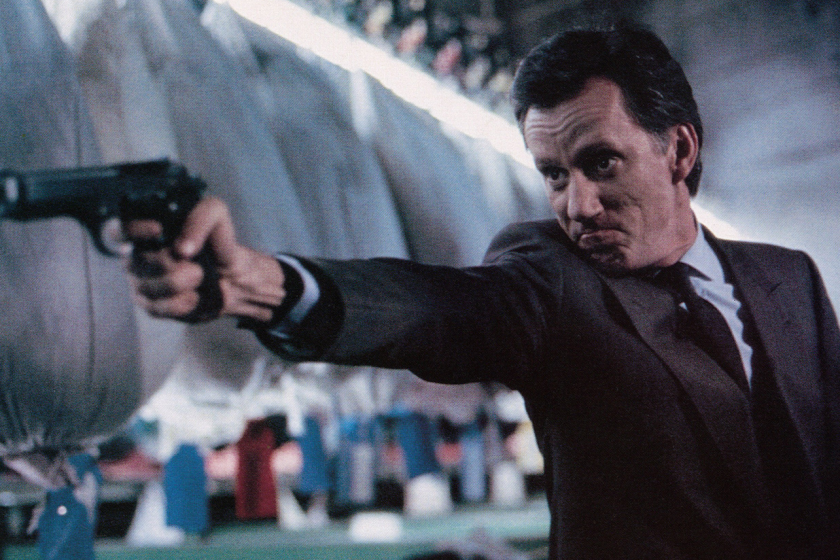
bestseller2The story of “Best Seller” follows a cop-turned-author who is pulled into a massive conspiracy by a former hitman looking to tell the story of his career working for a corrupt politician.

The reception to “Best Seller” was pretty mixed: it currently holds Rotten Tomatoes scores of 67% (critics) and 54% (audience), along with an IMDb rating of 6.5.

I couldn’t dig up any budget numbers for “Best Seller,” but it ultimately grossed just under 4.3 million in its domestic theatrical release. That is hardly Earth-shattering (or best-selling), but if the budget was low enough, it may have been profitable.

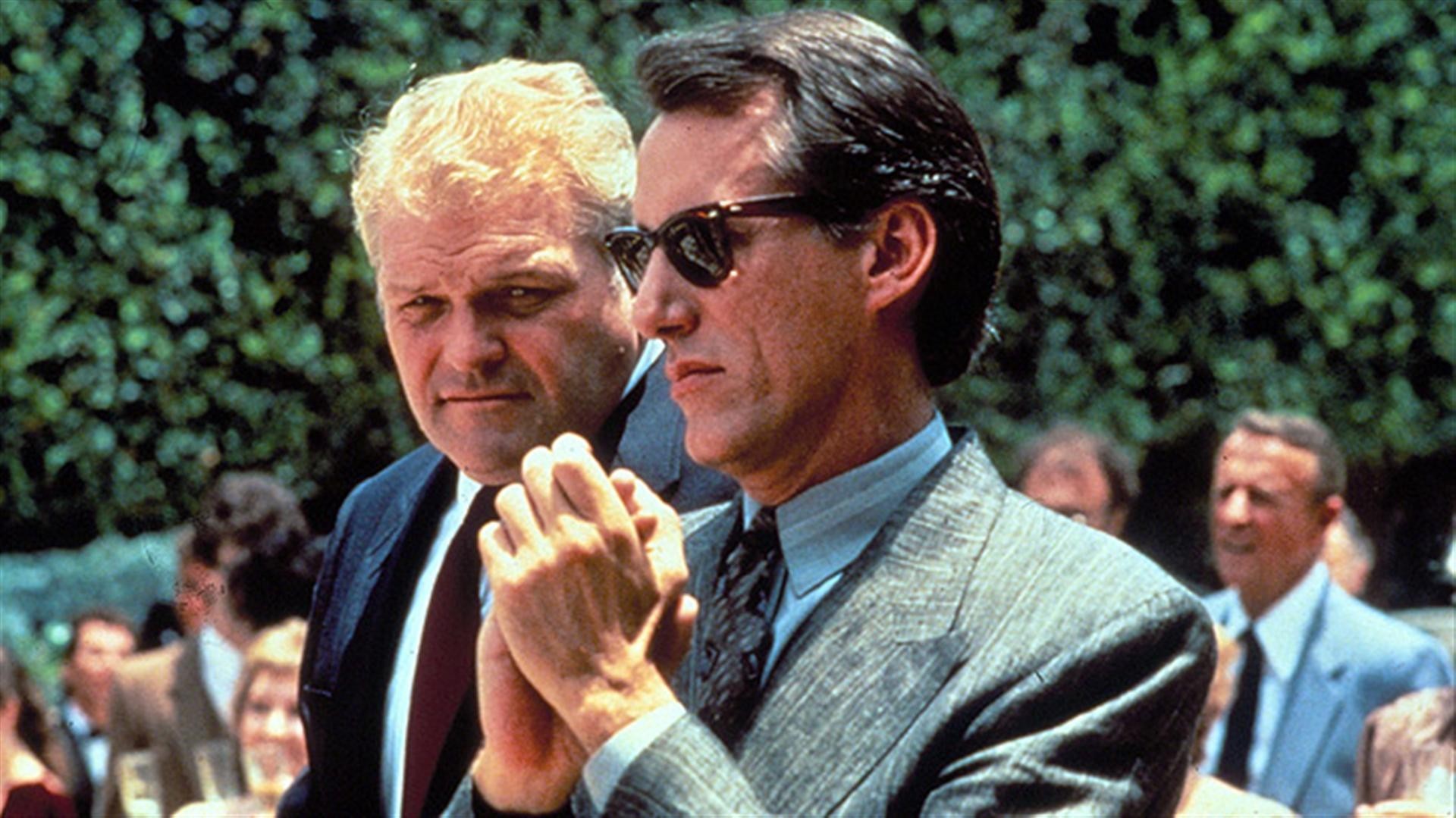
Personally, I wasn’t sold on Brian Dennehy as the lead here. There are plenty of cop-style character actors out there that I think would have fit better, like Robert Davi or Tom Atkins. However, he is definitely physical intimidating at times, which I assume was the reason for his casting. James Woods, on the other hand, is thoroughly awesome here. He blends his peculiar charm with a sense of menace to create a likable yet dangerous character who is clearly capable of snapping into violence at a moment’s notice. The chemistry between the two actors is pretty good, but the rest of the cast comes up a bit short. The antagonists just aren’t intimidating or large enough to feel like the massive threat that they are supposed to be.  Also, the daughter character comes off as having no depth or practical intelligence with her minimal screen time, and winds up inexplicably running into the arms of a guy who just shot her father for no clear reason, other than to create a hostage situation. She also accepts rides in cars from mysterious figures, like she is the lead in a stranger danger PSA.

The story pacing to “Best Seller” isn’t great: the tension is built pretty well, but it is never quite clear how much time has elapsed, how close the book is to being finished, or how near the story is to a climax or resolution. It feels more like a simmer than the tension of a burning wick, with no clear ending ever in sight. The lack of a clear finish line (book publication? how many drafts is that going to take?) really hurts the plot, but it is still a pretty good thriller regardless.

Roger Ebert brings up another issue with the movie in his perhaps excessively scathing review of the film:

If there’s one thing I can’t stand, it’s a movie about a character who is slow to catch on. When I’m watching a movie and something is perfectly obvious and the hero persists in not understanding it, my frustration grows and I want to shout advice at the screen. “Best Seller” has a character like that, played by Brian Dennehy, an intelligent actor who usually plays characters who are fairly swift. Not this time.

Ebert certainly has a point, and it is something that I noticed while watching the movie. However, I assumed most of his reticence about the conspiracy was more because of his suspicions and unease with James Woods rather than him not catching on with the clues, though he has one or two lines (“corporations don’t kill people” / “I don’t believe that someone could destroy police evidence”) that either reveal an immense naivete or a flaw in the character writing.

The ending credits song for “Best Seller,” called “Perfect Ending,” is absolutely ridiculous, and sounds like an honest buddy cop love theme. Everything from the melodramatic lyrics to the guitar riffs to the synthesizer background work is just off the charts wacky in the best possible way. It seems like the sort of song that would have fit into something like “Dead Heat” or “Samurai Cop.”

Overall, “Best Seller” is a flawed but entertaining flick. There are some things to like about it, and some things that don’t click. It doesn’t belong in an elite category for the genre, but it is worth giving a shot for James Woods, who gets to show off a bit here. Also, that ending song gave me a solid belly laugh.

Larry Cohen Collection: “Pick Me Up”

Masters of Horror: Pick Me Up

pickmeup1

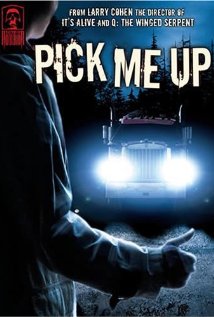
Today, I’m going to be taking another stroll through the career of writer/director Larry Cohen with the “Masters of Horror” feature, “Pick Me Up.”

“Pick Me Up” was directed by Larry Cohen for the television show “Masters of Horror,” which showcased original work by some of the most famed figures in horror film history. I have already covered two episodes of the series directed by Stuart Gordon: “The Black Cat” and “Dreams In The Witch House.”

“Pick Me Up” was written by David J. Schow, who penned such horror flicks as “Texas Chainsaw Massacre III,” “Critters 3,” “Critters 4,” and “The Crow.”

“Pick Me Up” was edited by Marshall Harvey, a veteran horror editor and frequent Joe Dante collaborator who also cut “Lake Placid,” “Small Soldiers,” and “Matinee” (among many others).

pickmeup5

The cinematographer on “Pick Me Up” was Brian Pearson, who also shot the more recent horror flicks “American Mary,” “The Butterfly Effect 2,” and “Into the Storm.”

The makeup effects team for “Pick Me Up” included Mike Fields (“Dreams In The Witch House,” “The Black Cat”), Sarah Graham (“The Cabin In The Woods,” “Supernatural”), Margaret Solomon (“Timecop,” “The Black Cat”), and Amanda McGowan (“Sucker Punch,” “Final Destination 5”).

The “Pick Me Up” special effects were done by the KNB EFX group, which has worked on “The Walking Dead,” “Maniac Cop 3,” “Army of Darkness,” “The Faculty,” and “Sin City” under the lead of Greg Nicotero and Howard Berger. The rest of the team included Scott Patton (“The Mangler”), Frank Rydberg (“Devil’s Advocate,” “Drag Me To Hell”), Andy Schoneberg (“Dead Heat”), Shannon Shea (“Leviathan”), Wayne Szybunka (“Lake Placid,” “Marmaduke”), Lindsay Vivian (“Sin City”), Grady Holder (“Lake Placid,” “Small Soldiers”), Robert Freitas (“Men In Black,” “Species”), and Michael Deak (“From Beyond,” “The Dentist”).

pickmeup4

The visual effects for “Pick Me Up” were done by a team that included Sebastien Bergeron (“Tucker & Dale vs. Evil”), Mladen Miholjcic (“Andromeda”), Lee Wilson (“The Fly,” “Videodrome”), and Stephen Paschke (“Watchmen”).

The music for “Pick Me Up” was composed by Jay Chattaway, who also did the scores for the Larry Cohen films “Maniac Cop,” “Maniac Cop 2,” and “The Ambulance.”

The cast for “Pick Me Up” features frequent Larry Cohen collaborator Michael Moriarty (“It’s Alive III,” “A Return to Salem’s Lot,” “Q,” “The Stuff”), along with Fairuza Balk (“Almost Famous,” “The Waterboy”), Warren Kole (“The Following”), Laurene Landon (“Maniac Cop,” “Maniac Cop 2”), Malcolm Kennard (“The Matrix Reloaded”), Crystal Lowe (“Insomnia”), and Paul Anthony (“Blade: Trinity”).

pickmeup2

Michael Moriarty does some improvised piano work during a sequence in “Pick Me Up,” much like he did in his audition scene in “Q: The Winged Serpent.”

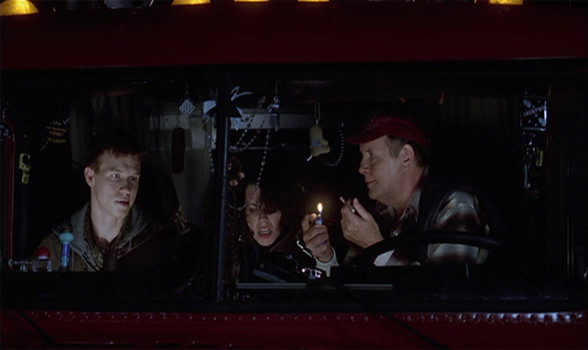
The two dueling serial killers in “Pick Me Up” are named Walker and Wheeler, obviously coined after their modes of transportation: hitch-hiking and an 18-wheeler truck, respectively.

As far as highlights go, there is at least one highly memorable murder committed by Walker, in which he strangles a man with a dead snake. Apart from that, deaths are interestingly not emphasized, and a number happen off-screen. More attention is paid to suspense and the serial killers themselves rather than their actions, which I found pretty interesting.

pickmeup6

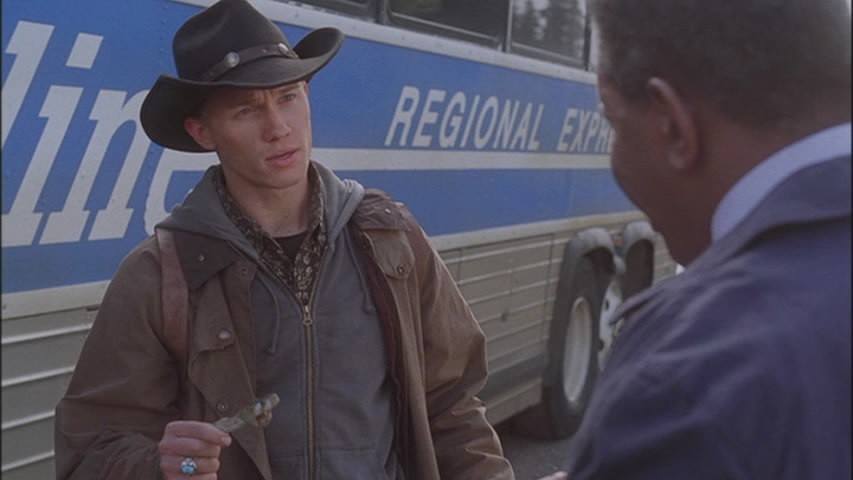
“Pick Me Up” features a number of tongue-in-cheek direct references to classic horror movies, including “Psycho” and “The Texas Chain Saw Massacre.” The flick also adopts major elements from both of those movies for the plot: the setting of a creepy, remote hotel (“Psycho”), and the presence of a killer hitch-hiker (“The Texas Chain Saw Massacre”).

pickmeup3

My biggest issue with “Pick Me Up” is surprisingly Michael Moriarty, who seemed more than a bit spaced out to me, like he might have been excessively drunk during the shoot. That might have just been part of the character, but I got the feeling from watching him that that wasn’t the case. Regardless, he is still a scene stealer and has his same quirky charm, but he isn’t on the top of his game.

Overall, “Pick Me Up” works with an interesting premise, and both the writing and directing is done with a clear affection for the genre. There are a couple of solid sequences, but I can’t help but feel that it could have been pulled off better. Compared to Stuart Gordon’s “Masters of Horror” episodes, Larry Cohen’s contribution here is a bit lacking. For fans of horror, it is worth checking out, but it is probably skippable for anyone else.

The BibleMan Marathon

Just as a reminder, today is the last day of Secular Students Week. So, today only, If you make a donation to the Secular Student Alliance, I’ll cover a movie of your choice.

shadowofdoubt3

Yesterday, the final post went up concluding my marathon of the Bibleman franchise. Over the course of 15 years and 3 incarnations, Bibleman became one of the most popular and recognizable figures in Christian entertainment. So, how was the experience of completing the series?

It was pretty awful. There are definitely some golden moments here and there throughout the series that make for some ironic laughs, but the real purpose behind the series as an evangelical tool aimed at children is always present and evident, and it gives the whole series an unavoidably creepy vibe.

cheater4

bully3 fightforfaith5
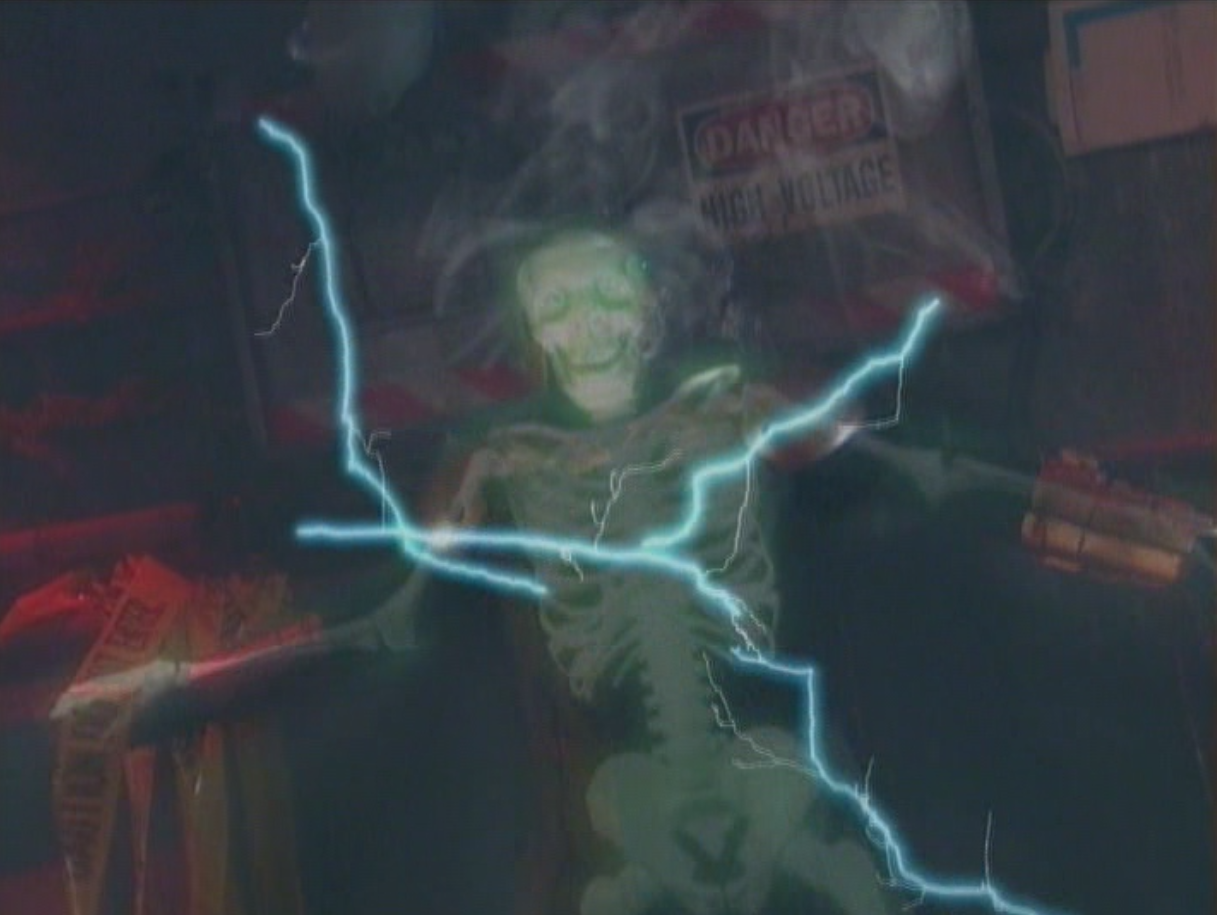
Oh, and did I mention all of those brutal Bibleman kills? Here’s a sampling of some of my favorites from the series for you: I’ll have to go back and come up with a final kill count for the franchise at some point, though.
laziness3
cheater7
cheater3
princeofpride4
lightdarkness4

As far as some other final thoughts on the series go, I was amazed to see how much it actually changed over time. Even more interestingly, it was astounding to see how many different hands the series went through, and too how they each impacted the product that wound up on screen. Throughout the series, I got the feeling that there was a lot of tension and backstabbing going on behind the scenes, as creators, actors, and directors would frequently disappear from the franchise, never to return. The creator of the Bibleman character doesn’t even get credit past episode four. I would love to interview some people involved with the show to get a better idea of what all happened behind the scenes, because there just isn’t a lot of information out there, and I can’t go very far on conjecture alone.

Anyway, without further ado, here is the master index of my Bibleman reviews, in chronological order:


The BibleMan Show: Big Big Book

The BibleMan Show: Back to School

The BibleMan Show: Six Lies of the Fibbler

The BibleMan Show: Silencing the Gossip Queen

The BibleMan Adventure: Defeating the Shadow of Doubt

The BibleMan Adventure: The Incredible Force of Joy

The BibleMan Adventure: The Fiendish Works of Dr. Fear

The BibleMan Adventure: Conquering the Wrath of Rage

The BibleMan Adventure: Shattering the Prince of Pride

The BibleMan Adventure: Breaking the Bonds of Disobedience

The BibleMan Adventure: Lead Us Not Into Temptation

The BibleMan Adventure: Jesus Our Savior Part 1

The BibleMan Adventure: Jesus Our Savior Part 2

The BibleMan Adventure: A Light In The Darkness

The BibleMan Adventure: Divided We Fall

The BibleMan Adventure: A Fight For Faith

BibleMan: Powersource: Terminating the Toxic Tonic of Disrespect

BibleMan: Powersource: Tuning Out the Unholy Hero

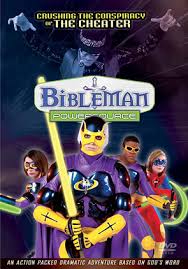
BibleMan: Powersource: Crushing the Conspiracy of The Cheater

BibleMan: Powersource: Lambasting the Legions of Laziness

BibleMan: Powersource: Blasting the Big Gamemaster Bully

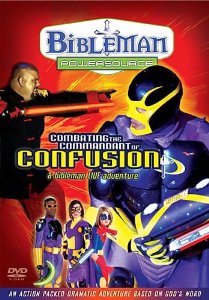
BibleMan: Powersource: Combating the Commandant of Confusion

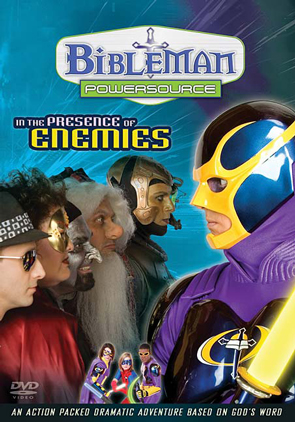
BibleMan: Powersource: In The Presence of Enemies


Thanks for sticking this out with me, everyone! Next week, I’ll be back to the usual bad movie reviews. As for the rest of this week, you can look forward to a few more requests to be fulfilled over the next couple of days.

Just as a reminder, today is the last day of Secular Students Week. So, today only, If you make a donation to the Secular Student Alliance, I’ll cover a movie of your choice.

BibleMan: In The Presence of Enemies

In The Presence of Enemies

presence1

Today, I’m continuing my week-long marathon of the Bibleman franchise as part of Secular Students Week. If you make a donation to the Secular Student Alliance this week, and I’ll cover a movie of your choice.

2010’s “In The Presence of Enemies” marks the final episode of the third and final incarnation of the Bibleman franchise: “Bibleman: Powersource.” Willie Aames’s replacement, Robert Schlipp, stars once again in the lead role of Bibleman in this final entry into the franchise.

“In The Presence of Enemies” was produced, directed, and written once again by Steve Gilreath, who was a consistent creative presence throughout all of the episodes in “Bibleman: Powersource.”

“In the Presence of Enemies,” as the name suggests, features nearly the entire cast of villains from throughout the run of “Bibleman: Powersource,” including The Cheater, Snortinskoff, Gamemaster, The Slacker, 2kul 4skul, and the supercomputer, L.U.C.I.. Likewise, Bibleman is joined by his entire team of allies from throughout the duration of “Bibleman: Powersource”: Melody, Cypher, and Biblegirl.

The story of “In The Presence of Enemies” follows an alliance between a number of Bibleman’s toughest adversaries, who have grown frustrated with the hero interfering with their various sinister shenanigans. Together, they try to bring down the Bible Adventure Team with a cooperative plot to write and distribute a fake version of the bible with manufactured scripture, in order to confuse them and lead them astray.

The episode opens up with Bibleman and Cypher being flown around in fighter jets, for pretty much no reason at all. It reminded me of the racecar introduction to “Lambasting the Legions of Laziness,” in that it just seems to be something they wanted to do, and it helped them kill time.

presence3

It was a nice move to actually have a proper, consolidated sendoff for “Bibleman: Powersource”, as “The Bibleman Adventure” limped to its conclusion with various elements of finality spread throughout “A Fight for Faith,” “A Light In The Darkness,” and “Divided We Fall.” I do wish that either The Wacky Protester or Luxor Spawndroth had been brought back as a nod to the previous incarnation, but I wasn’t particularly shocked by their absence. From what I can tell, the transition from “The Bibleman Adventure” to “Powersource” wasn’t particularly pleasant, and those bridges were likely burned.

However, this is also probably the shortest episode in the whole franchise, not even clocking in at thirty minutes. Traditional wisdom would say that a finale should be big and flashy, but this is just the opposite: half-assed and short, like they just wanted to get it over with and put it in the can.  Despite the presence of so many bad guys, this episode just feels small and uninspired, featuring a countless number of extraneous clips and flashbacks, and even a foodfight between the various villains. They couldn’t even get the guy who plays Snortinskoff to physically show up, and have him literally phone in his performance.

The villains’ plot, which involves creating a fake bible, is beyond ridiculous. They honestly think that Bibleman and company, who obsessively quote scripture from memory, won’t realize that their bibles have been tampered with, which goes to prove that Bibleman villains are far from the brightest bulbs out there. However, the plot inexplicably works for a while, proving that anti-intellectual super heroes might not be the best idea, either.

presence2

In a rare showcase of mercy to conclude the series, the villains are shrunk, captured, and placed in a tiny cage for the amusement of the Bible Adventure Team, instead of ritually executed to please their ever-hungry God. However, Gamemaster is never shown in the cage, and Snortinskoff is also never specifically dealt with, leaving a theoretical window open for future adventures. Thankfully, however, those have not come to be.

presence4

Between this and the equally zero-effort “Combating the Commandant of Confusion,” “Bibleman Powersource” manages to end even less gracefully than “The Bibleman Adventure.” This was clearly either due to financial constraints or a collapse behind the scenes, or perhaps even a combination of both of these things. In any case, “In the Presence of Enemies” makes for a pretty lackluster nose-dive into the finish line for the “Bibleman” franchise. On the positive side of things, this means I’m done with Bibleman! You all can look forward to retrospective on the series within the next day, and thanks for sticking around!

You still have a day to make donations here in order to have a coverage request on the blog honored! I already covered the experience of watching paint dry, so literally anything is on the table. Even paint.

BibleMan: Combating the Commandant of Confusion

Combating the Commandant of Confusion

confusion1

Today, I’m continuing my week-long marathon of the Bibleman franchise as part of Secular Students Week. If you make a donation to the Secular Student Alliance this week, and I’ll cover a movie of your choice.

2010’s “Combating the Commandant of Confusion” marks the penultimate episode of the third and final incarnation of the Bibleman franchise: “Bibleman: Powersource.” Willie Aames’s replacement, Robert Schlipp, stars once again in the lead role of Bibleman.

“Combating the Commandant of Confusion” is once again produced and directed by Steve Gilreath, but is this time written by Bibleman himself, Robert Schlipp.

The central villain of “Combating the Commandant of Confusion” is the eponymous Commandant: a metallic, verbose, Soviet-inspired, malapropism-spouting military commander. However, the first villain who appears on stage is a henchman named Chaos, who is just some person in a jumpsuit and a motocross biking helmet. This, frankly, sets a new standard for laziness in Bibleman villain designs.

confusion2
“I am especially fond of severe harm”

Bibleman’s allies for the episode include the entire Powersource incarnation of the Bible Adventure Team: Cypher, Biblegirl, and Melody, though Melody is relegated to a minimal supporting role.

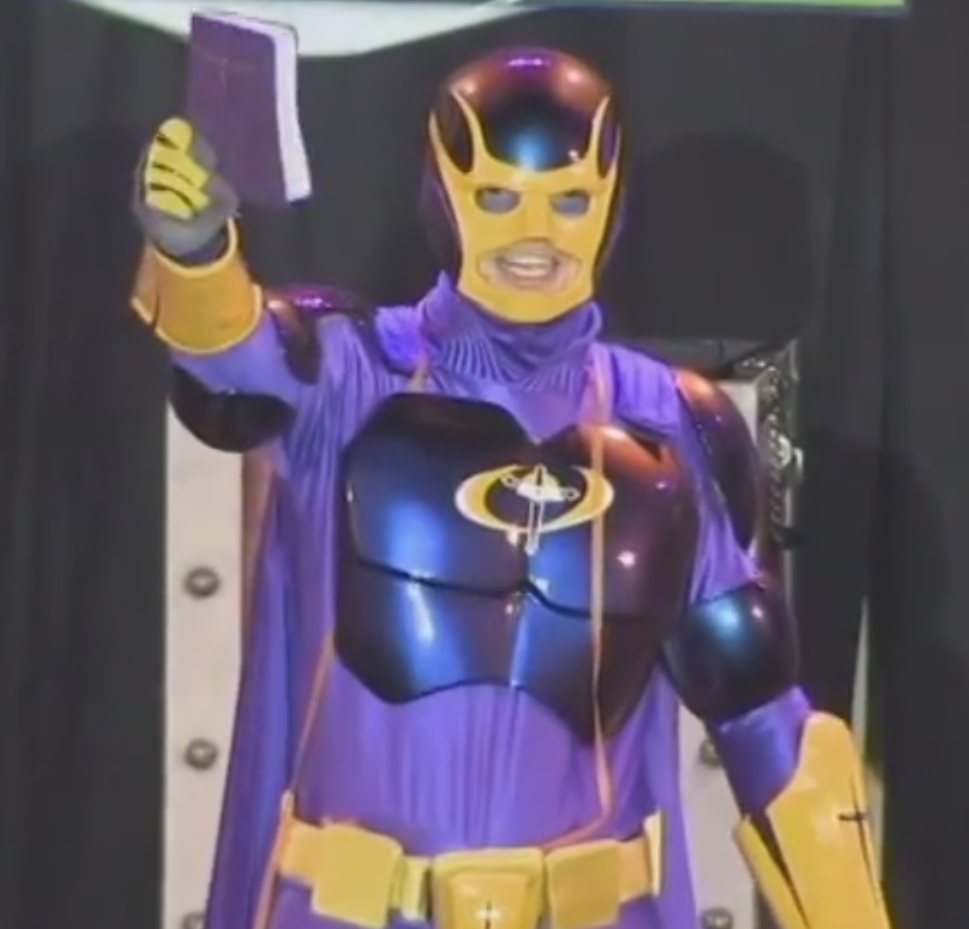
The story of the episode follows the Bible Adventure Team hosting a training demonstration to a live audience, in which they are supposed to use a new, recently developed weapon. However, the Commandant of Confusion and Chaos steal the instructions for the device, and plot to replace it with some sort of vaguely evil gizmo to destroy Bibleman and company. Of course, the team figures out a way to defeat them, and ultimately reveal that the “weapon” is actually just a bible. Really.

confusion6
“The most powerful weapon…is the word of God!” You might have a point there, you fundamentalist paramilitary vigilante.

The episode starts with a retrospective of the entirety of “Bibleman Powersource” to date,  totaling in for a whopping two and a half minutes of the run time. It is not only totally unnecessary background, but given the abnormally short length of the episode, I imagine that they were desperate to fill in the time with anything they could find. Likewise, the ending features a particularly bloated prayer segment that seems to drag on indefinitely.

There are live versions of a number of episodes in the Bibleman series, but “Combating the Commandant of Confusion” seems to be the only one that lacks a standard filmed version of the episode. I’m not sure if they did this specifically to cut costs, but it is kind of jarring. They try to make the live setup make sense as if it is a standard episode, under the guise of it being a training academy. However, it is pretty transparent given the low quality of the film and the restricted camera angles.

confusion7

Something else that is odd about the episode is that, despite this being a live episode, post-production special effects are still used as if it was a standard episode, which just comes off looking strange.

The central concept behind this episode seems to be a sentiment of anti-intellectualism, with the portrayal of the Commandant being a verbose fraud who uses his appearance of intellect to confuse and manipulate people. This reminds me of how a lot of fundamentalists seem to think of university professors at secular institutions. However, I was a bit surprised at how the villain was designed: why did he have to be military-themed? They literally just had one of those with Baron Von Braggard in the previous episode, and it would make a whole lot more sense for Confusion to be a tweed-clad professor caricature, given the way he carries himself and uses language.
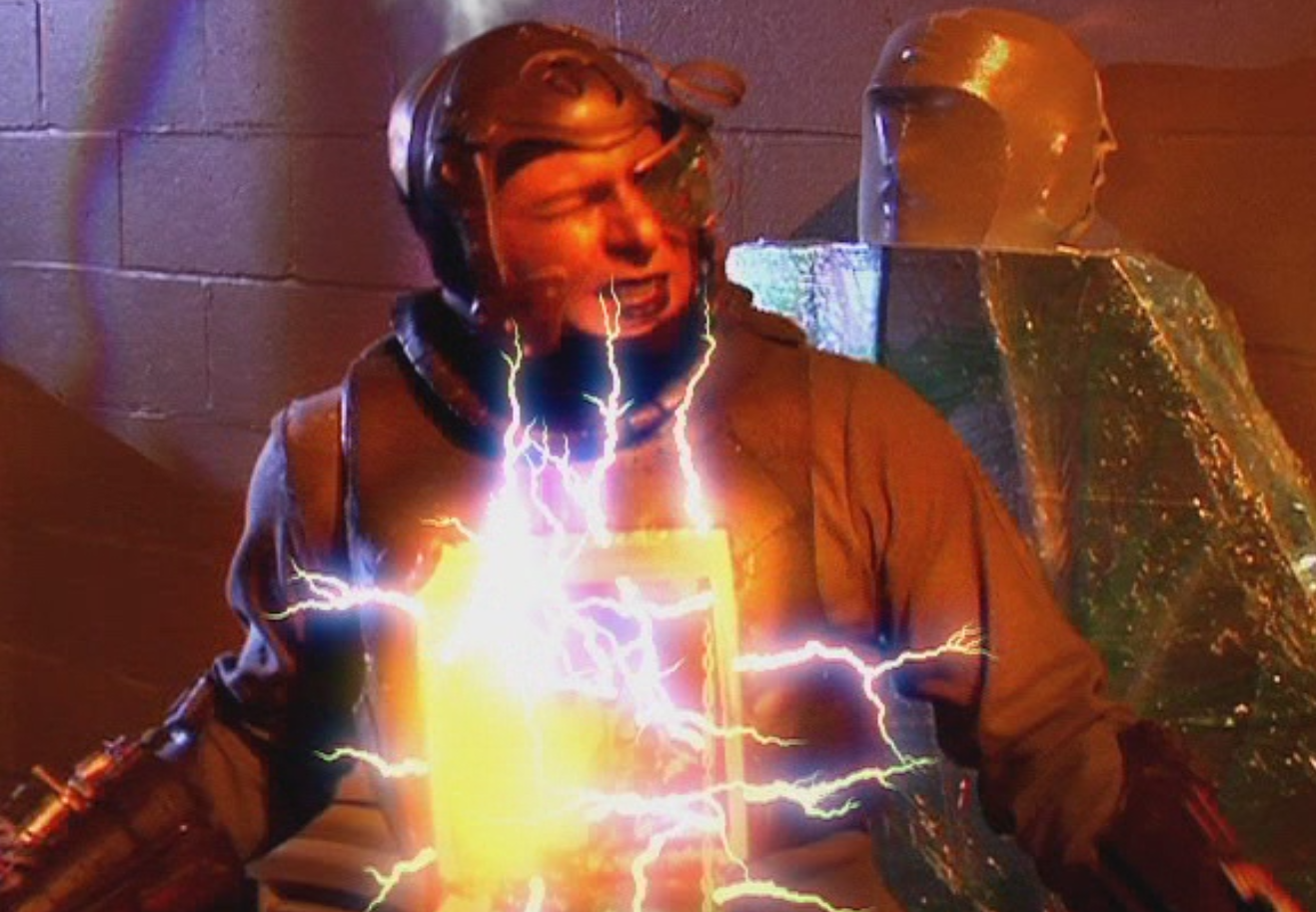
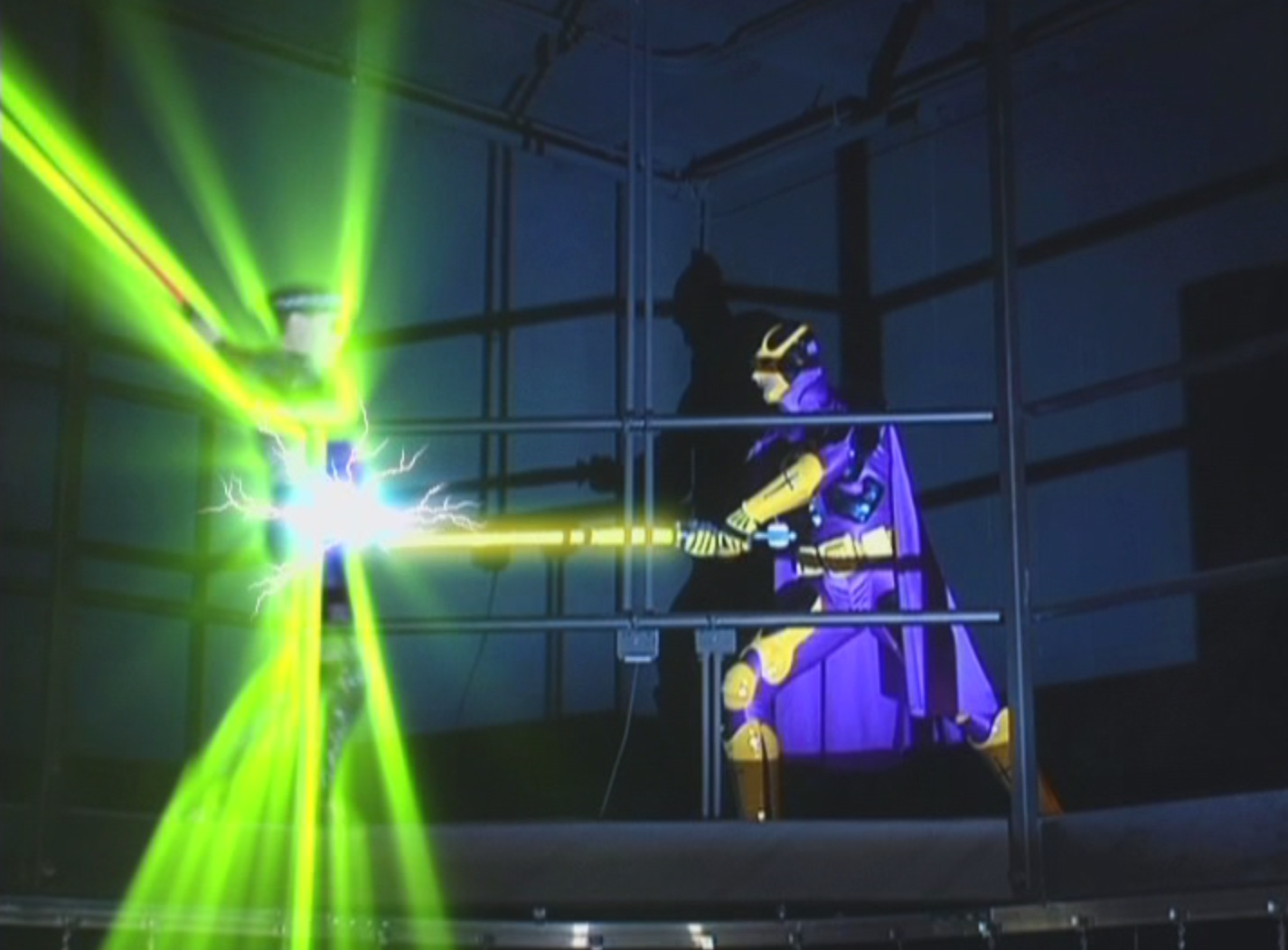
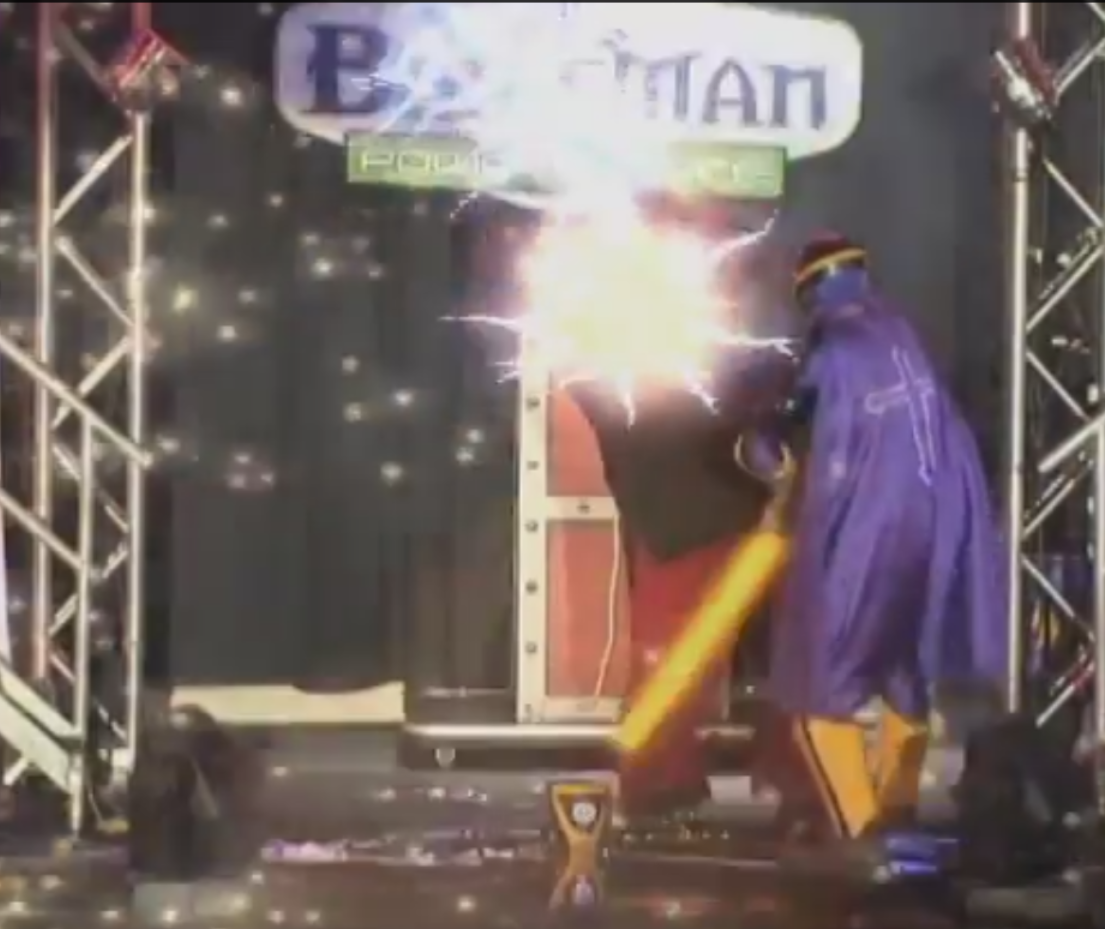
The Commandant of Confusion is, of course, struck down by the Bible Adventure Team at the conclusion of the episode. The Commandant winds up taking a slash from Bibleman’s laser sword, which leaves him thoroughly disintegrated, while Chaos manages to escape unharmed.

confusion5 confusion3 confusion4

“Combating the Commandant of Confusion” is incredibly half-assed in just about every way you can imagine. The villains are dull, the story is boring, the run-time is short and packed with filler, and they didn’t even bother to do a professional, studio version of the episode. This is corner-cutting and production laziness at its finest, and makes the episode absolutely skippable.

BibleMan: Blasting The Big Gamemaster Bully

Blasting The Big Gamemaster Bully

bully1

Today, I’m continuing my week-long marathon of the Bibleman franchise as part of Secular Students Week. If you make a donation to the Secular Student Alliance this week, and I’ll cover a movie of your choice.

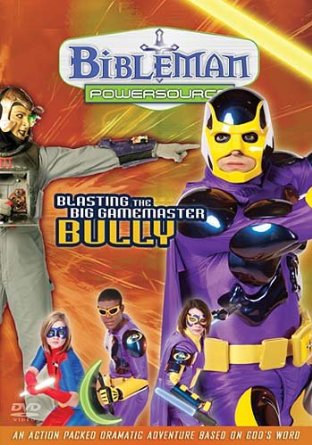
2009’s “Blasting the Big Gamemaster Bully” marks the fifth episode of the third and final incarnation of the Bibleman franchise: “Bibleman: Powersource.” Willie Aames’s replacement, Robert Schlipp, stars once again in the lead role of Bibleman.

“Blasting the Big Gamemaster Bully” is once again written by Michael Nolan (“Crushing the Conspiracy of The Cheater,” “Terminating the Toxic Tonic of Disrespect”) and directed/produced by series regular Steve Gilreath.

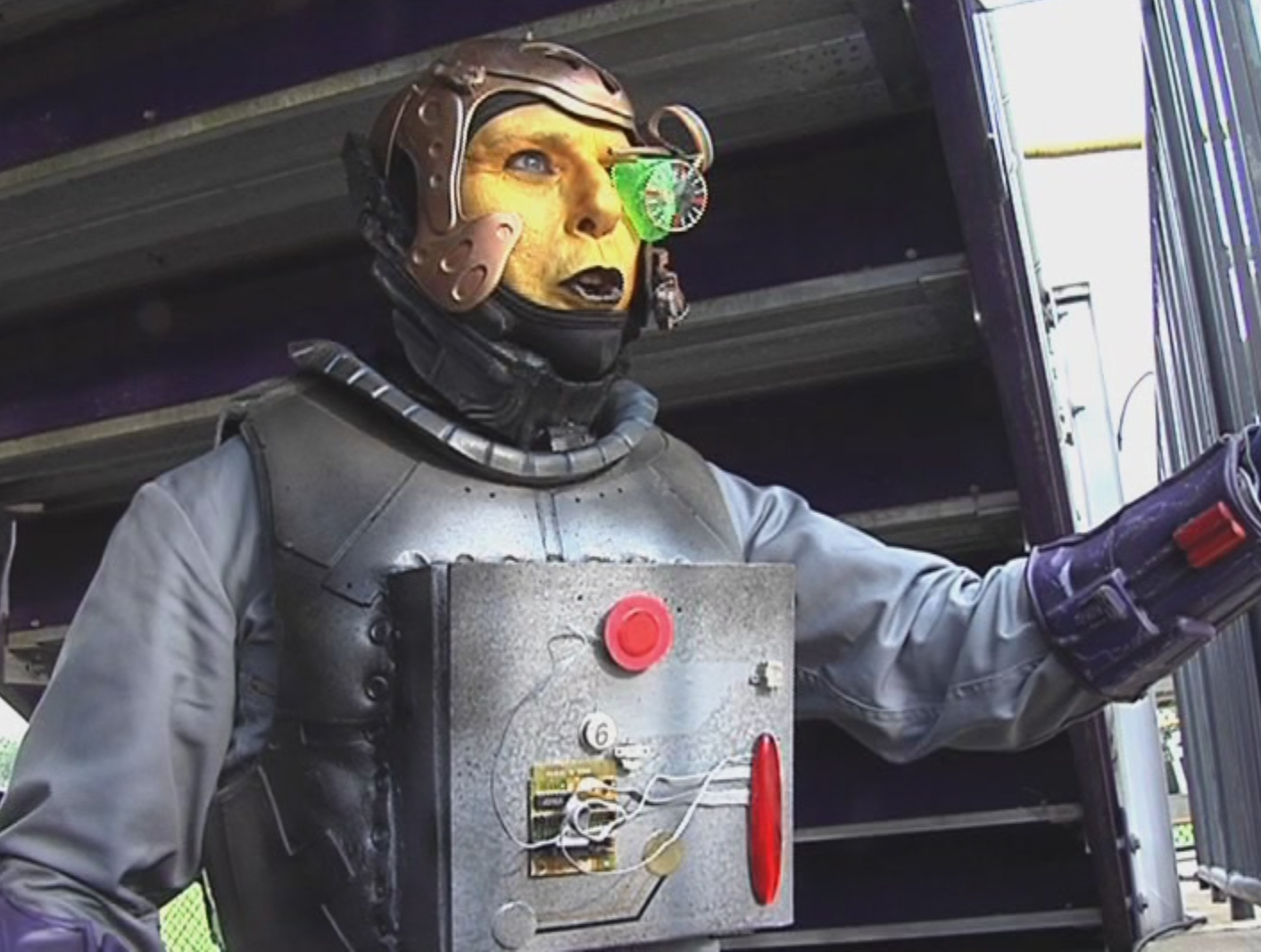
The primary villain of the episode is, of course, Gamemaster: a robot who previously popped up in a minor role in “Lambasting the Legions of Laziness,” in which he was notably stabbed to death by Bibleman. A secondary villain appears in the form of a pig-nosed militaristic creature named Baron Tantamount Von Braggart.

Bibleman is joined by his usual team of allies: his long-time sidekick Cypher, Biblegirl, and the relative newcomer, Melody.

The story of the episode follows Gamemaster, who has been reconstructed and upgraded since Bibleman destroyed him in “Lambasting the Legions of Laziness.” With the help of the evil computer L.U.C.I., he creates a video game called “Big Bad Bully,” which allows kids to pretend to be bullies in a factional realm. However, it apparently brainwashes the children into becoming violent and confrontational at the same time, which raises the attention of Bibleman’s team. Of course, they have to find a way to help the children, stop the video game, and find a way to stop the bullying epidemic in the local schools.

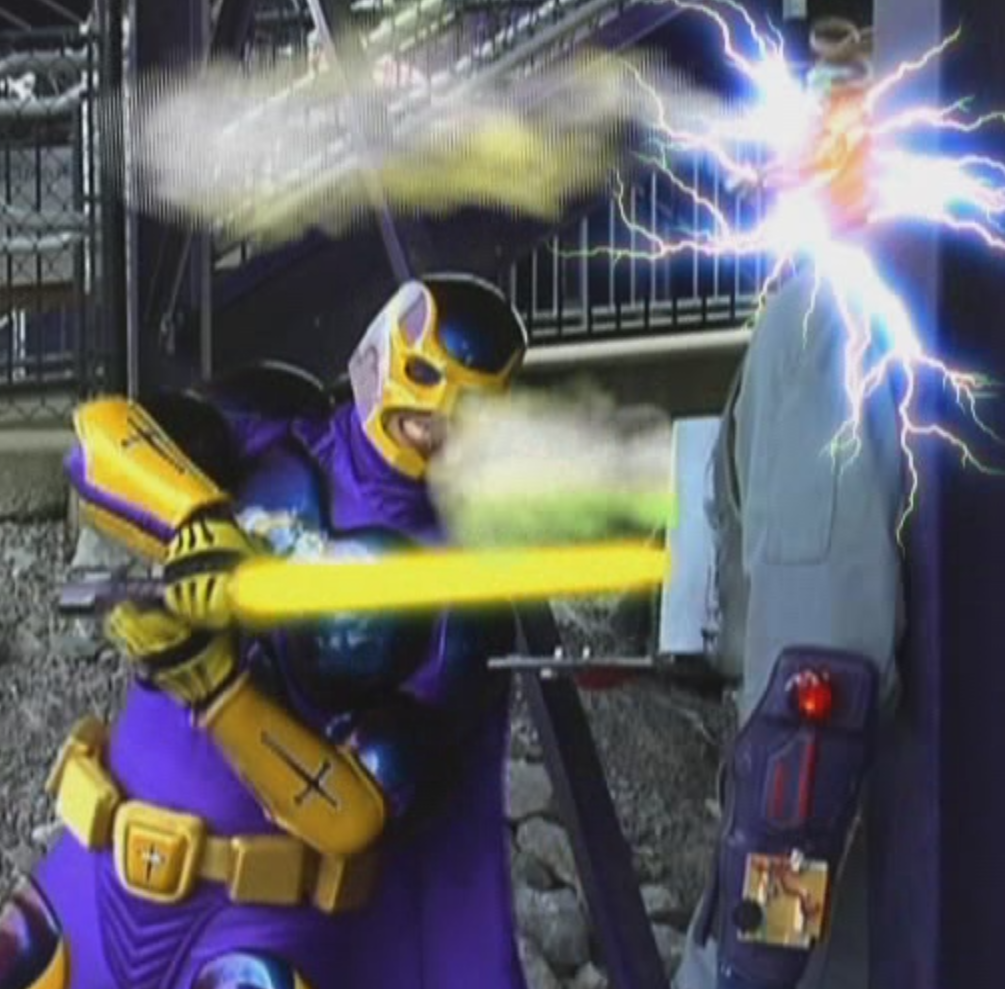
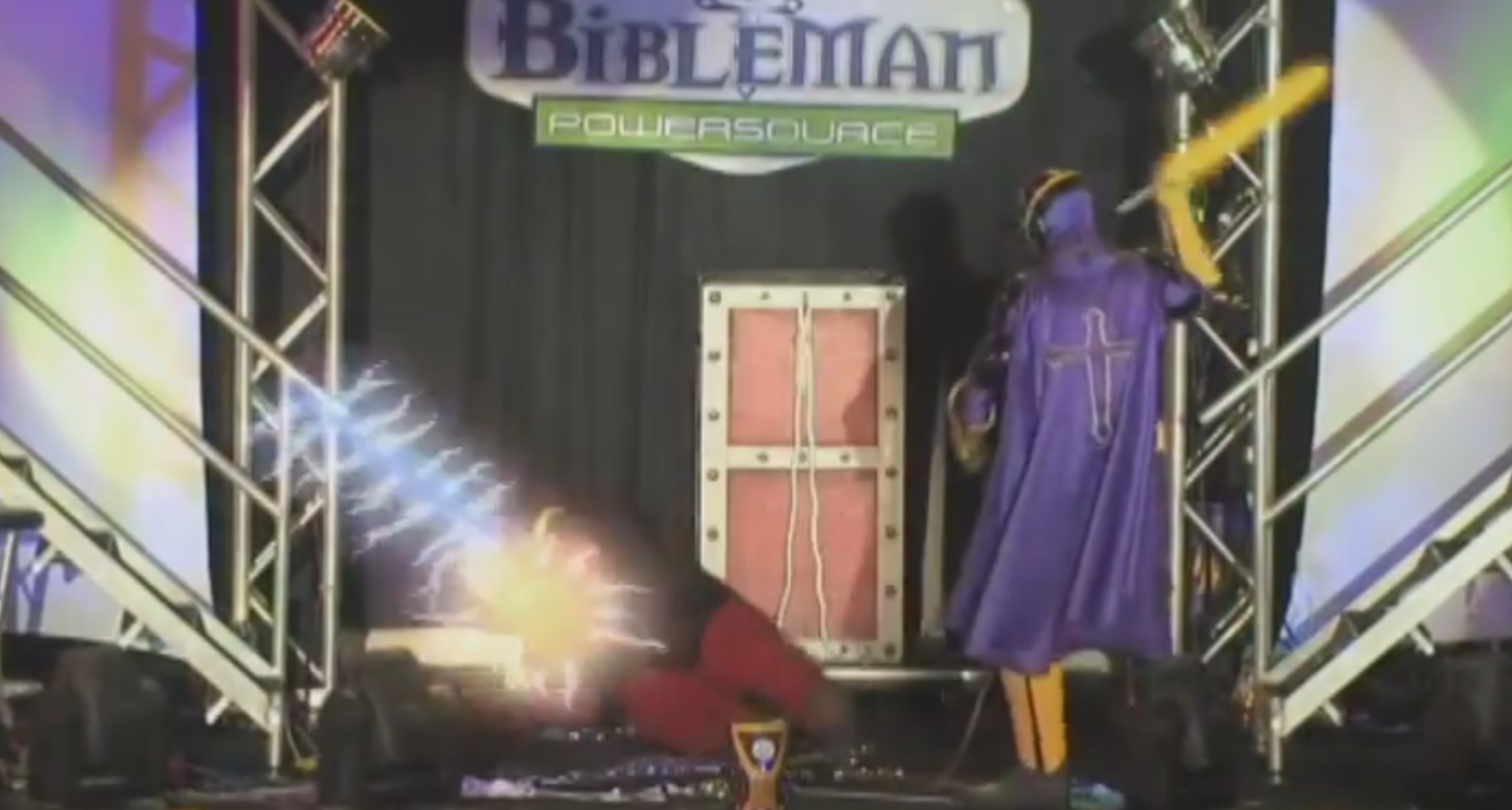
Von Braggart, in fitting with Bibleman tradition, dies brutally in the introductory sequence when his death laser somehow interacts negatively with his electric cane, leaving him a glowing, shocked mess. Surprisingly, Bibleman and team had nothing at all to do with this, and it actually seemed to be a genuine accident. I guess that is one of the hazards of keeping a death laser laying around.

bully2

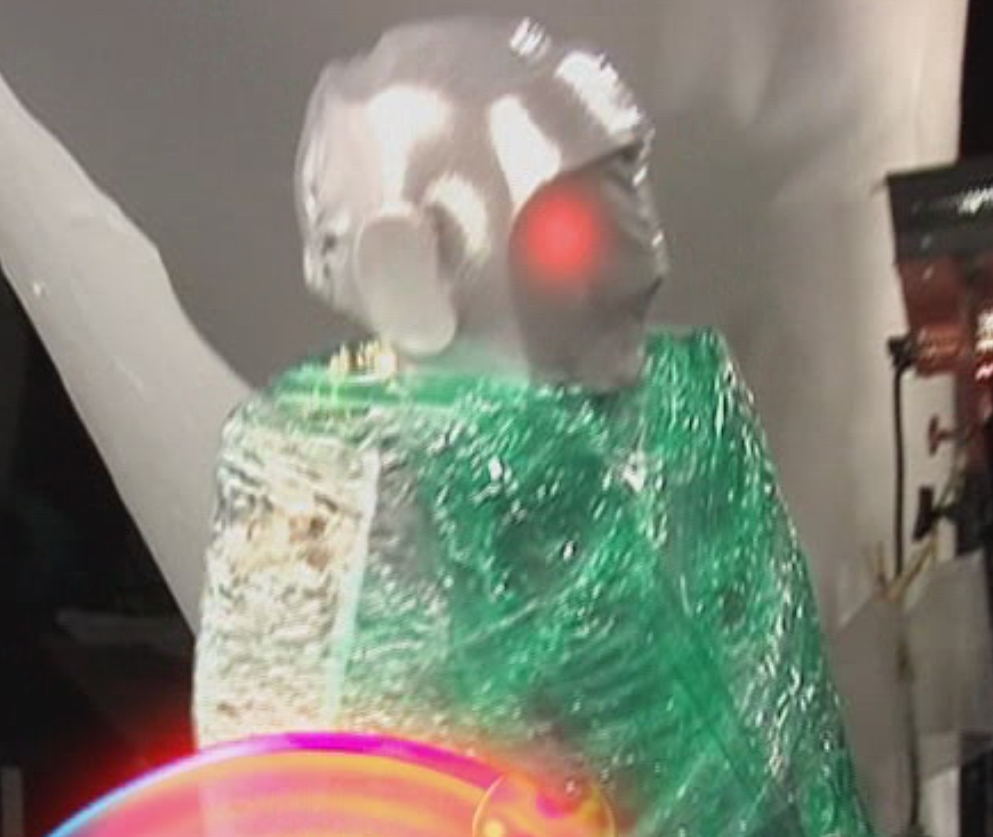
Gamemaster is helped out by a legion of cheap-looking robot henchmen, which make his costume look comparatively advanced (and I previously compared him to ‘Sex Robot’). I honestly think they are made out of cardboard wrapped in cellophane, which is a combination that even makes classic Doctor Who episodes look impressive.

bully3

This episode actually shows a little bit of clever continuity from earlier in the series, which it deserves props for. In “Lambasting the Legions of Laziness,” Gamemaster sees Bibleman without his mask on, and manages to figure out his secret identity through searching a facial recognition database. He then uses information about Carpenter’s past to manipulate him, which is actually a pretty solid villain move.

Speaking of which, Gamemaster seems to be the only mostly-serious villain in the entire series, which actually serves to make him pretty forgettable among a colorful cast of villains. If I have a choice between watching The Cheater chew scenery or watching Gamemaster do actual villain things, I’m going to go with The Cheater every time. I don’t think anybody watches Bibleman for traditional bad guys, and having one at the center of an episode doesn’t do anyone any favors. To his credit, Gamemaster does seem to use a lot of puns, but his monotone doesn’t allow them to land very well.

bully4

Bibleman ultimately dispatches Gamemaster with the strategic use of a water balloon, which causes him to short circuit and burn out. I guess he deserves props for resourcefulness, but why the hell didn’t Gamemaster have any kind of waterproofing? What does he do when it rains? In any case, the bible team reaches a new level of cruelty with what they do to him after his defeat: instead of finishing him off, Cypher and Melody wipe his memory and force him to sing children’s bible songs indefinitely on loop. Honestly, couldn’t they just have stabbed him again? That’s just a weird thing to do to what I assume is at least a partly biological organism.

bully5

The episode’s plot is definitely based on the moral panic over violent video games, which was particularly heated in the 1990s and early 2000s. In fact, one of the most notorious video game companies, Rockstar, which creates the “Grand Theft Auto” series, actually did essentially create a bully-themed video game like the one featured in this episode, called, appropriately enough, “Bully.” It released roughly a year before this Bibleman episode, which means that it was likely an influence on the bully game featured in the plot.

I feel kind of mixed as to whether this episode gets a recommendation from me. Gamemaster is pretty boring, but it is kind of interesting to see an actual villain pop up for once. His henchman robots are hilariously cheap, but the story itself is way more forgettable than it might sound like. If you want to watch a video game episode of “Bibleman,” then “A Fight For Faith” was absolutely hilarious. This episode, outside of some minor details, is pretty forgettable.

BibleMan: Lambasting The Legions of Laziness

Lambasting The Legions of Laziness

laziness1

Today, I’m continuing my week-long marathon of the Bibleman franchise as part of Secular Students Week. If you make a donation to the Secular Student Alliance this week, and I’ll cover a movie of your choice.

2008’s “Lambasting the Legions of Laziness” marks the fourth episode of the third and final incarnation of the Bibleman franchise: “Bibleman: Powersource.” Willie Aames’s replacement, Robert Schlipp, stars once again in the lead role of Bibleman.

“Lambasting the Legions of Laziness” is once again produced and directed by series regular Steve Gilreath, and written by Jeff Durham, who previously penned “Tuning Out The Unholy Hero.”

The primary villain of the episode is The Slacker, who looks like a wizard in pajamas. There is also a secondary villain, a robot named Gamemaster, who will pop back up in his own dedicated episode later on.

Bibleman is of course joined by his usual lineup of Bible Adventure Team allies: Cypher, Melody, and the newly reappointed Biblegirl.

The story follows The Slacker as he uses a magical lantern to cause members of Bibleman’s bible study group to become listless and unmotivated. Bibleman and company eventually realize something is wrong, but not until after they fall victim to his magic themselves. Of course, prayer manages to cure them (as it always does), and the team then goes after The Slacker.

The episode opens with Bibleman driving a race car, during which a guy in a cheap robot costume (Gamemaster) tries to assassinate him. Speaking of which, Gamemaster looks about as advanced as Sex Robot or the cardboard box outfits from “The Humans Are Dead” by Flight of the Conchords, and speaking in one of the laziest robot impersonation voices that you will ever hear.

laziness2

In true Bibleman fashion, Gamemaster is straight-up stabbed to death by the crusading hero, who clearly isn’t very big on mercy or the potential for redemption. Or, at least, not for robots.

laziness3

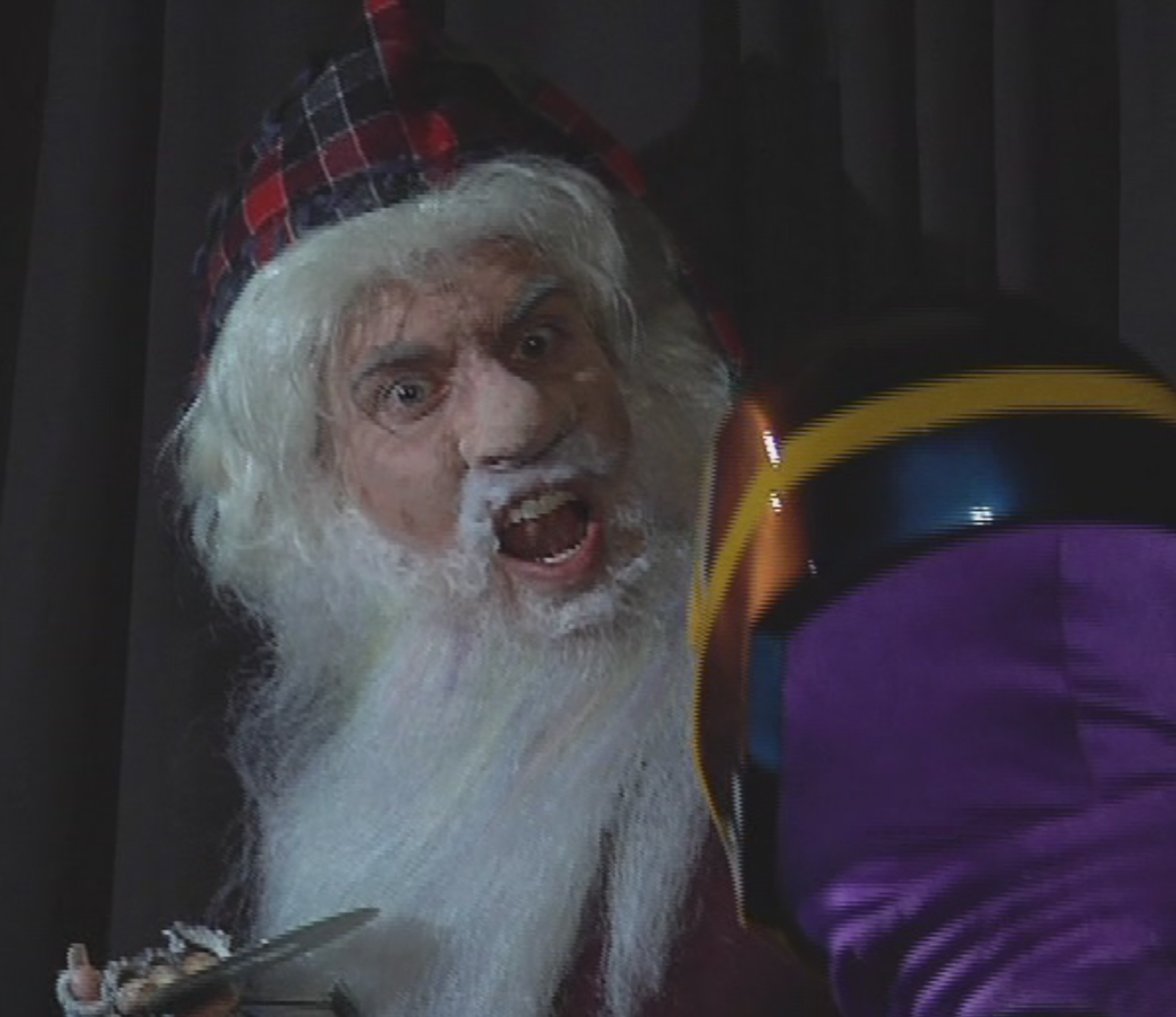
The main villain of the episode, The Slacker, features some of the worst aging makeup I have ever seen. Could they not have found an older man to play the part, as opposed to trying to transform a young guy? Even the fake beard looks embarrassingly awful, and those just can’t be all that hard to come by.

laziness4

I feel like this episode is vaguely anti-marijuana in its message, but without ever explicitly stating that. The Slacker’s demeanor and everyone’s behavior under his spell throughout the episode struck me as being what a fundamentalist Christian would imagine being stoned is like, which is pretty damn hilarious to me. That also means that this episodes marks yet another instance in the series where the villain blatantly drugs children, which is pretty creepy as far as tropes / motifs go.

Something that you might spot in the background of this episode is one of the Bibleman branded action figures. Specifically, a figure of El Furioso (“Conquering The Wrath of Rage”) is used as part of one of The Slacker’s devices, which Bibleman manages to defuse.

laziness5

In the end of the episode, Bibleman and company wind up defeating The Slacker, and hold him at the point of their laser swords. The Slacker makes the reasonable inquiry as to what they are going to do with him, which may very well have saved his life, judging from Bibleman’s murderous track record. However, the outcome is ultimately kind of creepy. Here is how it plays out:

The Slacker: “So tell me, Bibleman, what are you planning to do with me?”

Bibleman: “I think you need a long vacation. I’ll even buy you a one-way ticket.”

There is then an immediate cut to the following image:

laziness6

That sure does raise a lot of questions, doesn’t it? Now, i don’t think it is unreasonable to assume that “The Bad Place” is Hell. However, when someone gets a “one-way ticket” to Hell, that usually means they have been quite thoroughly murdered. Also, how exactly is this package supposed to be delivered to “The Bad Place,” regardless of whether it is Hell or anywhere else? That just isn’t specific enough at all, and I’m pretty sure, theologically speaking, there aren’t a whole lot of people out there who believe that Hell has a deliverable postal address. In any case, I believe that The Slacker pops up in the series finale, so he managed to survive his “one-way ticket” to “The Bad Place.”

“Lambasting the Legions of Laziness” isn’t one of the stronger entries into the franchise, and I personally think that the villain is one of the dullest and least interesting. I mean, there is only so much you can do with a villain centered around sloth, so I guess they did what they could. Still, the story is unremarkable, and the makeup on The Slacker is distractingly terrible, and there aren’t really enough highlights to make the experience of watching through the episode worth it.

BibleMan: Crushing the Conspiracy of the Cheater

Crushing the Conspiracy of the Cheater

cheater1

Today, I’m continuing my week-long marathon of the Bibleman franchise as part of Secular Students Week. If you make a donation to the Secular Student Alliance this week, and I’ll cover a movie of your choice.

2007’s “Crushing the Conspiracy of The Cheater” marks the third episode of the third and final incarnation of the Bibleman franchise: “Bibleman: Powersource.” Robert Schlipp stars once again in the lead role of Bibleman.

“Crushing the Conspiracy of The Cheater” was directed by Steve Gilreath, and written by Michael Nolan: both of whom are regulars behind the scenes on the “Powersource” series.

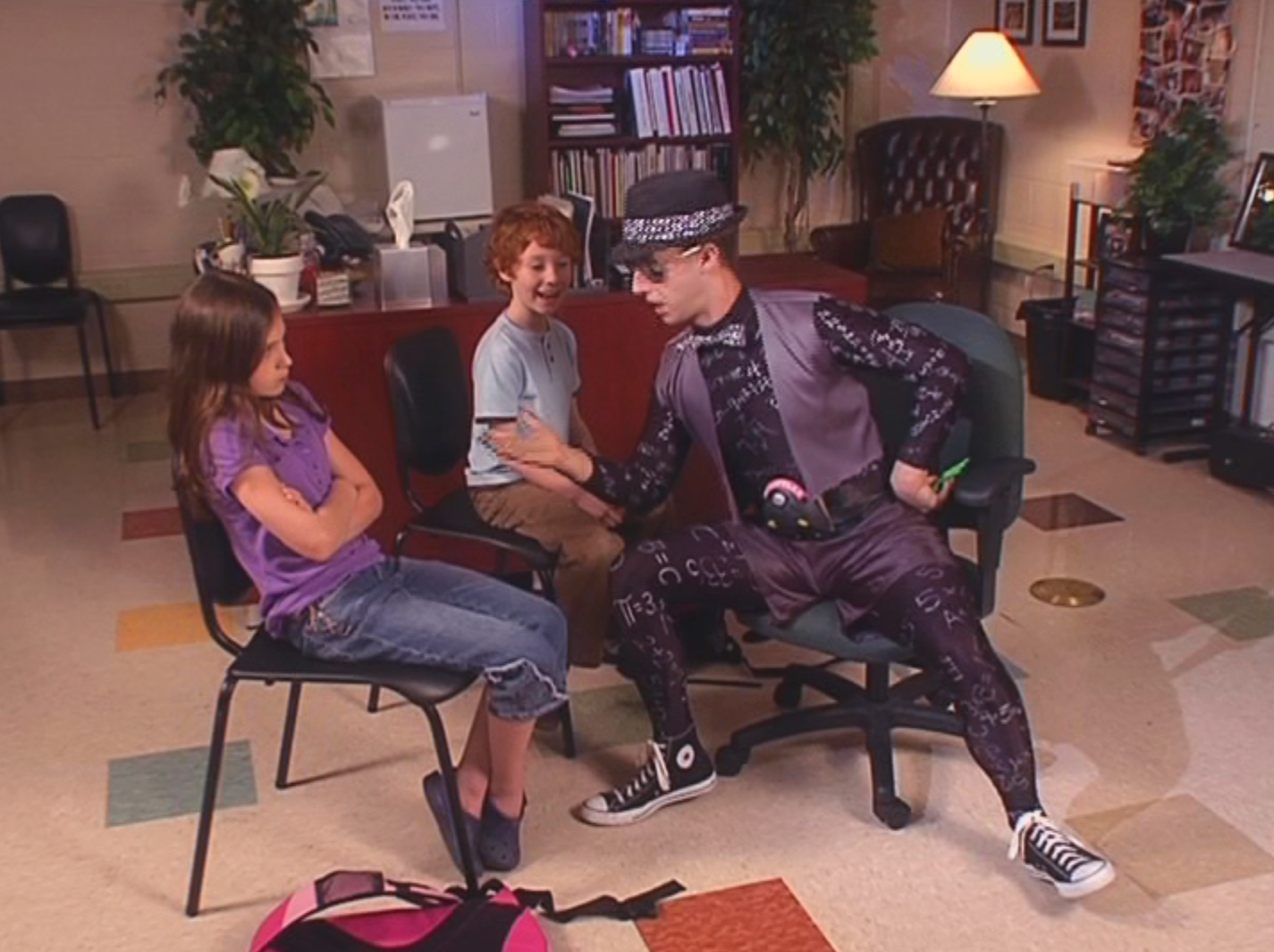
The central villain of the episode is The Cheater, who was previously introduced in “Terminating the Toxic Tonic of Disrespect” in a flashback. The episode also features two accessory villains, played by radio personalities Rick & Bubba. Predictably, they are a radio-themed dastardly duo called The Whine Brothers.

Bibleman is once again joined by his allies Cypher and Melody in “Crushing the Conspiracy of The Cheater,” and Biblegirl also finally makes her physical return to the series after being absent for two episodes.

The story of “Crushing The Conspiracy of The Cheater” focuses on a plot by the villain known as The Cheater to trick young Christian students into cheating on their schoolwork, as well as a local Bible Bowl. L.U.C.I., the evil supercomputer, manages to steal all of the answers for the Bible Bowl from U.N.I.C.E., and The Cheater then distributes them via a hotline. Of course, Bibleman and company catch wind of this, and aim to stop The Cheater and teach the children a lesson about being honest and not trusting strange men that show up at your school.

cheater5
If they fell for this, they might be beyond saving.

First off, The Whine Brothers are very perplexing creatures. They are played by the radio hosts Rick & Bubba, so it is no surprise that they have a radio theme. However, their appearance is just bizarre: they look like Elvis impersonators with bullhorns on their ears and microphones spouting from their necks. Also, their evil plan is to make children whine a bunch? Don’t they pretty much do that anyway? Also, one of them definitely uses a cheap air blaster as a weapon, which gave me a lovely flashback to “Santa Claus Conquers The Martians.”

cheater2

Also, in Bibleman tradition, both of The Whine Brothers explode violently, with Bibleman taking one of them out in a classic Obi Wan vs. Darth Vader move. This is actually more directly violent than he usually is, as he typically deflects blasts back at villains to kill them. Likewise, The Cheater ultimately takes a stab to the gut at the end of the episode, marking two pretty dramatic kills for Bibleman in one story. Or, rather, it would have: The Cheater somehow survives due to his Ant-Man shrinking device malfunctioning from the blow.

cheater3

cheater7

Clearly they needed to fill time in this episode, because there is a sequence where Bibleman operates heavy machinery in order to dispose of the evil gadget being used by The Whine Brothers. Usually this is glossed over, but apparently in this episode it was important that the audience see that Bibleman can operate a backhoe.

cheater4

One of the main child actors in the episode is absolutely awful, and has very thick southern drawl that is absent from any other character. I don’t know how anyone thought it was a good idea to put him on screen, much less give him a primary speaking role. The best I can guess is that he was related to someone in the production, because there isn’t anything quite as traditionally Christian as nepotism.

In regards to The Cheater himself, I am really confused how nobody spotted this guy walking into a school? Because he might be the least subtle villain in the show thus far. I was reminded a little bit of The Wacky Protester in “A Fight For Faith,” who abducted children from a church without being questioned, while carrying a box labeled “evil.”

cheater6

Speaking of the villains, how does L.U.C.I. keep bouncing from villain to villain? She has been in every episode of Powersource thus far, without any explanation of how she was discovered after the fall of The Wacky Protester, or how she is coming into the possession of the various villains of the series. The transition from Luxor Spawndroth to Primordius Drool was at least sensible, and adequately explained the transition of the computer. No such luck here.

This episode is a pretty solid recommendation from me. The Cheater is probably the most over-the-top adversary in the franchise next to The Wacky Professor, and every second he is on screen is a joy. The radio bad guys are also super-cheesy, and seeing Bibleman inexplicably operate heavy machinery is just golden. The story itself is kind of dull, but there are certainly some highlights here.