Jingle All The Way

Jingle All The Way

jingle1

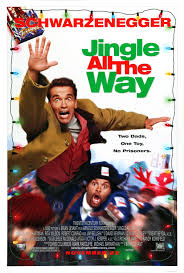
Today’s feature is the 1996 holiday comedy Jingle All The Way, starring Arnold Schwarzenegger and Sinbad.

Jingle All The Way was written by Randy Kornfield, whose only other particularly notable film was the horror comedy Eight Legged Freaks.

Jingle All The Way was directed by Brian Levant, who also helmed such esteemed flicks as Snow Dogs, A Christmas Story 2, The Flintstones, Beethoven, and The Flintstones In Viva Rock Vegas.

The cinematographer for the movie was Victor J. Kemper, who shot movies like Hot To Trot, Clue, Xanadu, Mr. Mom, Slap Shot, Dog Day Afternoon, and National Lampoon’s Vacation.

Jingle All The Way featured three credited editors: Adam Weiss (Dracula: Dead And Loving It, Bull Durham), Wilt Henderson (Howling II, Gremlins 2), and Kent Beyda (S. Darko, Jonah Hex, The Flintstones, Saturday the 14th, This Is Spinal Tap).

JINGLE ALL THE WAY, Arnold Schwarzenegger, 1996, TM & Copyright (c) 20th Century Fox Film Corp. All rights reserved.The team of producers for Jingle All The Way included Michael Barnathan (Pixels, Monkeybone), noted director Chris Columbus (Home Alone, Nine Months), Paula DuPré Pesmen (The Cove, Mrs. Doubtfire), Warren Zide (Final Destination 5, American Pie), Dick Vane (The Phantom, Harry and the Hendersons), and Mark Radcliffe (The Help, Home Alone).

The makeup effects for the film were provided by Louis Lazzara (Be Cool, Face/Off, Friday the 13th Part V, American Ninja II, Teen Wolf Too), Sheila Evers (Family Matters, Good Burger), Jeff Dawn (Deep Blue Sea, Be Cool), Greg Cannom (Van Helsing, Son Of The Mask, Space Truckers, Thinner, Highlander II, Captain America, Dr. Alien, Titanic), and Keith VanderLaan (Space Truckers, Van Helsing, Son of the Mask).

The special effects work on Jingle All The Way was in part done by William Aldridge (Halloween III, Class of 1999, Demolition Man, The Fifth Element), Jon G. Belyeu (Halloween III, Tango & Cash, The Dead Zone, The Goonies), Chris Burton (Interstellar, Lethal Weapon 3, Lethal Weapon 2), and Jay Bartus (Dark Angel, Action Jackson),

The visual effects unit for Jingle All The Way included Todd Boyce (Stealth, Hollow Man), Rhonda Gunner (Swordfish, Timecop), Richard E. Hollander (Daredevil, Timecop, Face/Off), Gregory L. McMurry (Predator 2, Con Air, The Core), Glenn Neufeld (The Core, Paycheck), Derek Spears (Daredevil, RIPD, Face/Off), Rich Thorne (Monkeybone, Evolver).

The musical score for Jingle All The Way was composed by David Newman, who also provided music for movies like The Spirit, Death To Smoochy, Little Monsters, War of the Roses, Heathers, Critters, and Throw Momma From The Train.

The cast of Jingle All The Way includes Arnold Schwarzenegger (Hercules in New York, The Running Man, The Terminator, Kindergarten Cop, Junior, Commando, Predator), Sinbad (Houseguest), Jim Belushi (Taking Care Of Business, Abraxas, The Principal, Red Heat, Mr. Destiny), Phil Hartman (Saturday Night Live, Small Soldiers), Jake Lloyd (Star Wars Episode I: The Phantom Menace), and Rita Wilson (Auto Focus, Mixed Nuts).

The plot of Jingle All The Way is summarized on IMDb as follows:

A father needs to get a Turbo Man action figure for his son just before Christmas. Unfortunately, every store is sold out of Turbo Man figures, and he must travel all over town and compete with everybody else to find a Turbo Man figure.

A sequel, Jingle All The Way 2, was released straight-to-video in December of 2014, and starred notorious blue-collar comedian Larry The Cable Guy.

A lawsuit and subsequent court battle was fought over the screenplay of Jingle All The Way, which was claimed to have been plagiarized from a previously submitted work called Could This Be Christmas?, which was similarly inspired by the public frenzy over Cabbage Patch Kids dolls in 1983.

Jingle All The Way had surprisingly limited merchandising tie-ins thanks to the rushed production schedule, though there was a run of 13.5 inch Turbo-Man action figures the coincided with the movie’s release.

jingle3The production budget for Jingle All The Way was estimated at $60 million, on which it grossed just under $130 million in its lifetime global theatrical release. However, in spite of the movie’s profitability, the reception wasn’t particularly positive: currently, it holds an IMDb user rating of 5.4, alongside Rotten Tomatoes aggregate scores of 17% from critics and 38% from audiences.

First off, Arnold Schwarzenegger is totally out of his element and miscast in the lead role of Jingle All The Way. His character seems to be written for an average every-man, which he just isn’t. Arnold is capable of pulling off a fair number of things on screen, but being an average Joe is not one of them. He is more believable as the super hero TurboMan than he is as a suburban dad and small businessman, which undermines a lot of what the movie is supposed to portray.

Jake Lloyd, the child actor who is most infamous for his role as Anakin Skywalker in Star Wars Episode I: The Phantom Menace, is featured prominently in Jingle All The Way, and he is nothing short of abysmal. His deliveries are astoundingly terrible, even by child actor standards. On the flip side, both Phil Hartman and Sinbad are entertaining in their smaller roles as Schwarzenegger’s foils, but neither get enough time to do a whole lot.

Overall, Jingle All The Way is far from an unwatchable movie. The acting and the effects are certainly lacking, and it never quite delivers on its somewhat interesting premise. That said, it is an easy watch that has some entertaining moments, and is harmless as a cheesy holiday feature. It also has bonus points for being fantastic nostalgia fodder for many people nowadays, which is enough of a justification to revisit it in my book.

You don’t have to dig too deep to find other thoughts on Jingle All The Way. Personally, I recommend checking out the We Hate Movies podcast episode on the movie (as well as their follow-up on Jingle All The Way 2) and the spotlight done by The Nostalgia Critic.

Silent Night, Deadly Night Part 2

Silent Night, Deadly Night Part 2

silentnightdeadlynighttwo1

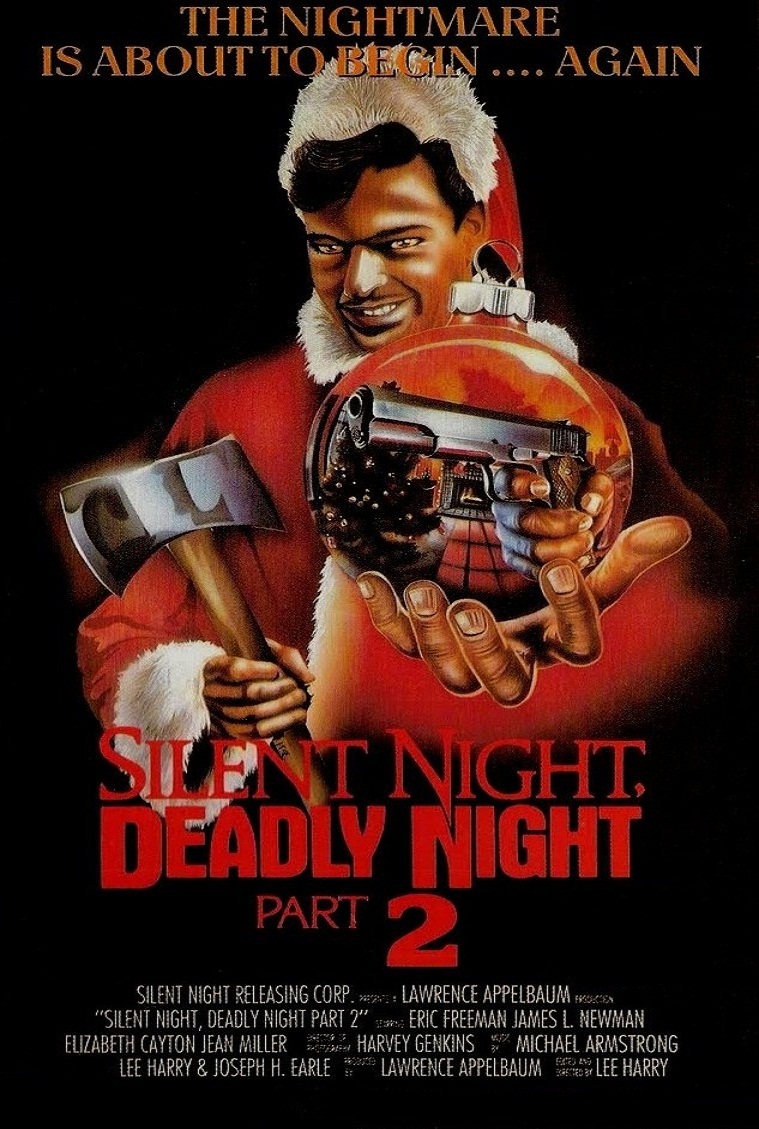
Today’s feature is a seasonal favorite in the realm of bad movies: Silent Night, Deadly Night 2.

Silent Night, Deadly Night 2 was co-written, directed, and edited by Lee Harry, who only had a handful of other low-budget credits over his career.

The cinematographer for Silent Night, Deadly Night 2 was Harvey Genkins, who also shot The Garbage Pail Kids Movie, H.O.T.S., and Don’t Drink The Water.

The primary producer for the movie was Lawrence Appelbaum, whose other credits included Charles Band’s The Alchemist, Penitentiary II, and Badge 373.

The effects work on Silent Night, Deadly Night 2 was provided by a team that included R. Christopher Biggs (Hudson Hawk, Super Mario Bros.), Camille Calvet (Firefly, Army of Darkness, The Garbage Pail Kids Movie), Tassilo Baur (Suburban Commando, House, DeepStar Six), and Bruce Scivally (Best of the Best 4).

The plot of Silent Night, Deadly Night 2 is summarized on IMDb as follows:

Ricky, the brother of the killer in the first film, talks to a psychiatric about how he became a brutal killer after his brother died, leading back to Mother Superior.

silentnightdeadlynighttwo2Silent Night, Deadly Night 2 is particularly well known due to the popularity of an out of context sequence of the movie that was circulated on the internet, in which the lead character hilariously murders someone while shouting “Garbage Day!”

Initially, Silent Night, Deadly Night 2 wasn’t intended to be a sequel, but an extended re-cut of the original movie with a a re-shot framing device. Ultimately, there was enough unique material for it to be labeled as an independent movie, though it still relies heavily on stock footage from the preceding feature.

The reception to Silent Night, Deadly Night 2 was negative from the handful of people who wound up actually seeing it when it was released. While the viral clip certainly expanded its audience in the past few years, there still isn’t any love to be found for this film. Currently, it holds a 3.5 user rating on IMDb, along with a 30% audience score on Rotten Tomatoes.

silentnightdeadlynighttwo3Silent Night, Deadly Night 2 is, for the most part, just a retread of the first movie. The amount of reused footage from Silent Night, Deadly Night is immense, which is understandable given the original intent for this to simple by a re-cut rather than a sequel. Still, as it stands, the movie is an outstandingly lazy excuse for a sequel.

The reason that this movie has entered the public consciousness at all is because of the lead performance by Eric Freeman, which is without a doubt memorable. In his brief time on screen, he manages to be so laughably terrible and over the top that the movie is almost worth watching as a result.

Overall, this movie isn’t really a complete movie at all. This is the equivalent of DLC content on a video game being sold as a standalone sequel at full price, which is roughly as dishonest as it is disappointing. The new content that is here is entertaining, but there just isn’t nearly enough of it, making this a totally half-assed feature. For the “Garbage Day” sequence alone, this is worth checking out. However, you shouldn’t expect too much from it, and I would generally recommend the original movie or Christmas Evil over this flick any day.

For more thoughts on Silent Night, Deadly Night 2, I recommend checking out the coverage of it over at The Cinema Snob and Antagony & Ecstasy.

Silent Night, Deadly Night

Silent Night, Deadly Night

silentnightdeadlynight2

Today’s feature is perhaps the most infamous Christmas-themed horror movie: Silent Night, Deadly Night.

Silent Night, Deadly Night was written by Paul Caimi and Michael Hickey, neither of whom have any other listed writing credits on IMDb, outside of character credits on the sequel, Silent Night, Deadly Night 2.

The director on Silent Night, Deadly Night was Charles E. Sellier Jr., who has spent the vast majority of his career producing documentaries like Apocalypse And The End Times, The Search For Heaven, Evidence of Heaven, The Incredible Discovery of Noah’s Ark, and The Case For Christ’s Resurrection.

The cinematographer on Silent Night, Deadly Night was Henning Schellerup, who was a camera operator on movies like Maniac Cop, Suburban Commando, A Nightmare on Elm Street, Death Race 2000, and The Incredible Melting Man.

The editor for the film was Michael Spence, whose other credits included The Dread and One Dark Night.

The effects work on Silent Night, Deadly Night was done by a team that included Karl Wesson (Van Helsing, Blow), Richard N. McGuire (Re-Animator, Critters), Susan Reyes (Halloween 4), Judee Guilmette (Hider In The House), Rick Josephsen (Cujo, Fright Night Part 2), and G. Lynn Maughan (Teenage Mutant Ninja Turtles III, Cujo).

silentnightdeadlynight3The musical score for the film was provided by Perry Botkin Jr., who also worked on the television show Mork And Mindy and 1981’s Tarzan, The Ape Man.

The cast of Silent Night, Deadly Night includes Linnea Quigley (Return of the Living Dead, Fatal Games, Night of the Demons, Pumpkinhead II), Lilyan Chauvin (Predator 2, Catch Me If You Can), Charles Dierkop (Police Woman), Gilmer McCormick (Slaughterhouse-Five), and Britt Leach (Weird Science).

The plot of Silent Night, Deadly Night is summarized on IMDb as follows:

After his parents are murdered, a young tormented teenager goes on a murderous rampage dressed as Santa, due to his stay at an orphanage where he was abused by the Mother Superior.

Silent Night, Deadly Night spawned an entire franchise of films, which encompassed four sequels (Silent Night, Deadly Night 2, Silent Night Deadly Night III: Better Watch Out!, Initiation: Silent Night, Deadly Night 4, and Silent Night, Deadly Night 5: The Toy Maker) and a 2012 remake called Silent Night.

Extreme controversy surrounded the release of Silent Night, Deadly Night, specifically because of the film’s advertising campaign, which emphasized the killer being Santa Claus. The violent portrayal of the beloved character sparked boycotts and protests across the United States, leading to the suspension of the advertising campaign, and eventually the withdrawal of the movie from theaters just two weeks after its release.

Adding to the litany of issues with the film’s release, Silent Night Deadly Night also shared an opening weekend as Wes Craven’s A Nightmare On Elm Street, one of the most influential modern horror films.

Reportedly, a number of the more violent scenes in the movie were ghost directed by the film’s editor, Michael Spence, because director Charles E. Sellier Jr. wasn’t comfortable shooting the graphic sequences.

Silent Night, Deadly Night was initially created under the production title of Slayride, which is a pun which would be used years later in the comedy-horror film Santa’s Slay.

A number of other directors were reportedly considered to helm Silent Night, Deadly Night, including Sam Raimi (The Evil Dead, The Evil Dead II, Drag Me To Hell, Army of Darkness, A Simple Plan, The Quick And The Dead, Darkman), Albert Magnoli (Purple Rain, Tango & Cash), and Ken Kwapis (The Larry Sanders Show, Malcolm In The Middle, The Bernie Mac Show, The Office).

Silent Night, Deadly Night bears some striking similarities to a number of previous horror movies that also featured killers dressed as Santa Claus, most notably Christmas Evil from 1980 and the Tales From The Crypt anthology film from 1972. However, neither of those films met with the same extreme backlash faced by Silent Night, Deadly Night.

In 2013, the horror publication Fangoria sponsored a re-release of Silent Night, Deadly Night in select theaters for the holiday season.

silentnightdeadlynight1Silent Night, Deadly Night was made on a production budget of just over $1 million, and grossed roughly $2.5 million in its brief theatrical run before being pulled. At least partially fueled by the boycotts and protests, critics were particularly cold in their receptions of the movie: Siskel and Ebert went so far as to publicly shame the production companies and the crew for their involvement with the movie. However, in part due to that response, Silent Night, Deadly Night is now cemented as a cult horror movie, and is a seasonal staple for many horror fans.

Personally, when it comes to Christmas-themed Santa Claus slasher movies, I’m a bigger fan of Christmas Evil than I am of Silent Night, Deadly Night. However, there are definitely some enjoyable aspects to Silent Night, Deadly Night, and the swirl of controversy that surrounded it essentially immortalized it for horror fans, and has made it essential viewing as a result. Beneath that, however, Silent Night, Deadly Night is just a pretty generic slasher that only has the Santa Claus gimmick to set it apart, and, as mentioned earlier, that was a path that had already been tread.  The flick has its place in movie history due to the protests and boycotts, which is the best reason to hunt it down and give it a watch each holiday season for horror fans. The fact that is has a fun, campy sensibility is lagniappe.

For more thoughts on Silent Night, Deadly Night, I recommend checking out the coverage by both The Cinema Snob and The Horror Guru.

Mixed Nuts

Mixed Nuts

mixednuts1

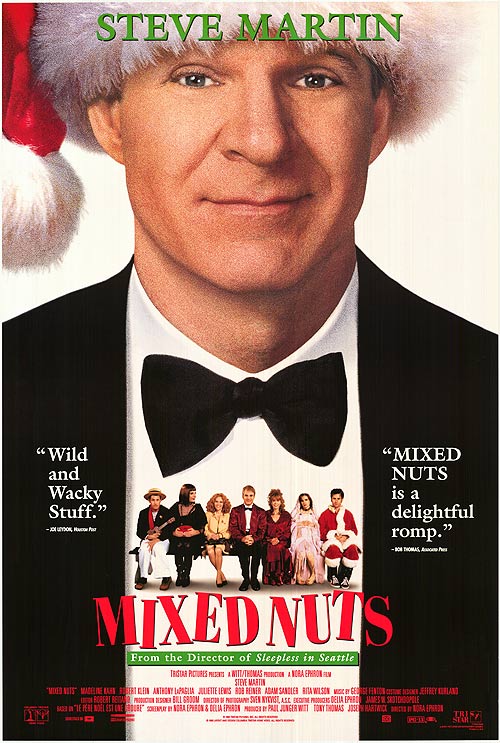
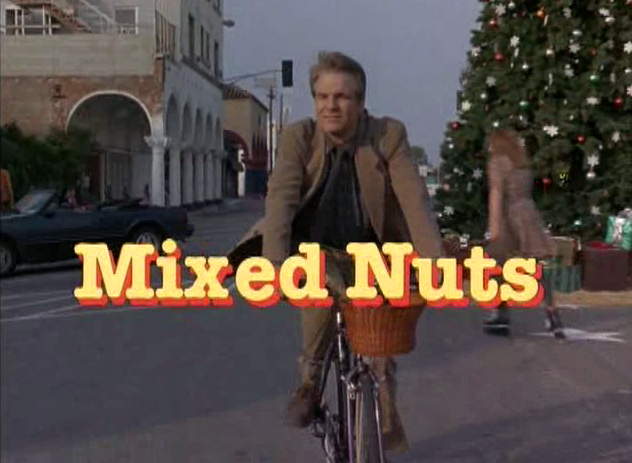
Today, I’m kicking off my holiday review season with 1994’s dark comedy, Mixed Nuts.

Mixed Nuts was co-written and directed by Nora Ephron, whose other credits include Julie & Julia, Michael, Sleepless In Seattle, and You’ve Got Mail. Her co-writer on the film was Delia Ephron, her sister and frequent screenplay collaborator, who also served as a producer.

mixednuts3The cinematographer on Mixed Nuts was Sven Nykvist, who also shot What’s Eating Gilbert Grape, Persona, Chaplin, and Sleepless in Seattle, among many others.

The editor for the film was Robert Reitano, who also cut the movies The Juror, True Colors, My Blue Heaven, and Sleepless In Seattle.

The team of producers for Mixed Nuts included included Tony Thomas (The Golden Girls, Insomnia), James W. Skotchdopole (True Romance, Django: Unchained), Paul Junger Witt (Three Kings, Dead Poets Society), and Joseph Hartwick (Striptease).

mixednuts2The musical score for Mixed Nuts was composed by George Fenton, whose other credits include Groundhog Day, The Fisher King, Hitch, and You’ve Got Mail.

The significant cast of Mixed Nuts boasts the likes of Steve Martin (The Jerk, Sgt. Pepper’s Lonely Hearts Club Band, Dirty Rotten Scoundrels, Bowfinger, Sgt. Bilko), Madeline Kahn (Blazing Saddles, Young Frankenstein, Clue), Robert Klein (Primary Colors, How To Lose A Guy In 10 Days), Anthony LaPaglia (Empire Records, The Client), Juliette Lewis (Natural Born Killers, From Dusk Till Dawn), Rob Reiner (The Wolf of Wall Street, Primary Colors), Adam Sandler (Going Overboard, Jack & Jill, The Waterboy, Mr. Deeds, Pixels, Grown Ups), Parker Posey (The House of Yes, Josie & The Pussycats), Rita Wilson (Jingle All The Way, Auto Focus), Joley Fisher (The Mask), Steven Wright (Son of the Mask, Natural Born Killers), Haley Joel Osment (A.I., Tusk, The Sixth Sense), and both Jon Stewart (Death To Smoochy, The Faculty) and Liev Schreiber (Scream 3, X-Men Origins: Wolverine, Sphere, Goon) in their first theatrical roles.

The plot of Mixed Nuts is summarized on IMDb as follows:

The events focus around a crisis hotline business on one crazy night during the Christmas holidays.

mixednuts4The production budget for Mixed Nuts was $15 million, on which it grossed only $6.8 million in its lifetime domestic theatrical release, making it a significant financial loss. Likewise, critics openly ripped into the movie, making for a Rotten Tomatoes aggregate score of 7%. Audiences were more charitable to the movie, but only slightly so: currently, it holds a Rotten Tomatoes audience aggregate score of 47%, along with an IMDb user rating of 5.3.

The sheer talent on display in Mixed Nuts is immense, which adds to how incredibly disappointing it is that the movie is so poorly constructed. While Steve Martin isn’t on top of his game here, Madeleine Kahn is fantastic, and Liev Shreiber, in spite of his character being somewhat poorly written, is a highlight of the movie. On the flip side, Adam Sandler is roughly as unbearable as he ever is in comedies.

The tone of Mixed Nuts is undoubtedly its central problem, and can best be described as incredibly bizarre. This is a rare film that tries to be both dark in its comedy and physically zany, with rapidly recited dialogue and physical comedy interspersed with incredibly dark themes and situations. This is a combination that has rarely, if ever, proven effective, as they two styles mix about as well as oil and water. The only example off the top of my head that pulled this off well is Death to Smoochy, which looks like a downright even-keeled feature next to Mixed Nuts, which is really saying something for a Robin Williams movie. Even then, there are plenty of critics who disagree, and vocally attacked that movie for the same reason.

On top of the odd tone, Mixed Nuts is also one of the strangest-paced movies I have ever seen. For most of the story, the dialogue and music moves at a frenetic, break-neck speed. However, it sputters at random points down to a crawl, then idles for a few minutes before hitting the gas again. The result is that the movie would have been uneasy to watch and follow, even if the tone and story hadn’t been massive issues.

Overall, there aren’t any particular redeeming values to Mixed Nuts if you ask me. I know that the movie has some die-hard fans out there, but I just don’t get it. Outside of a handful of performances that aren’t terrible, there isn’t anything fun going on here, and that’s coming from someone who usually enjoys dark comedies. Unless you happen to be a die hard Steve Martin fan or are desperate from an obscure comedy for your holiday watch list, I wouldn’t recommend digging up Mixed Nuts.

For more thoughts on Mixed Nuts, you can check out Janet Maslin’s coverage in the New York TImes, Roger Ebert’s review, or the combined video skewering by both Siskel & Ebert.

Mazes And Monsters

Mazes And Monsters

mazesandmonsters2

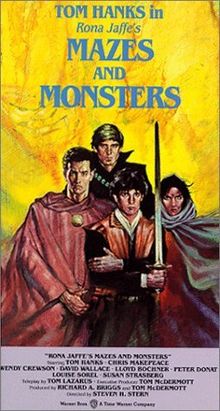
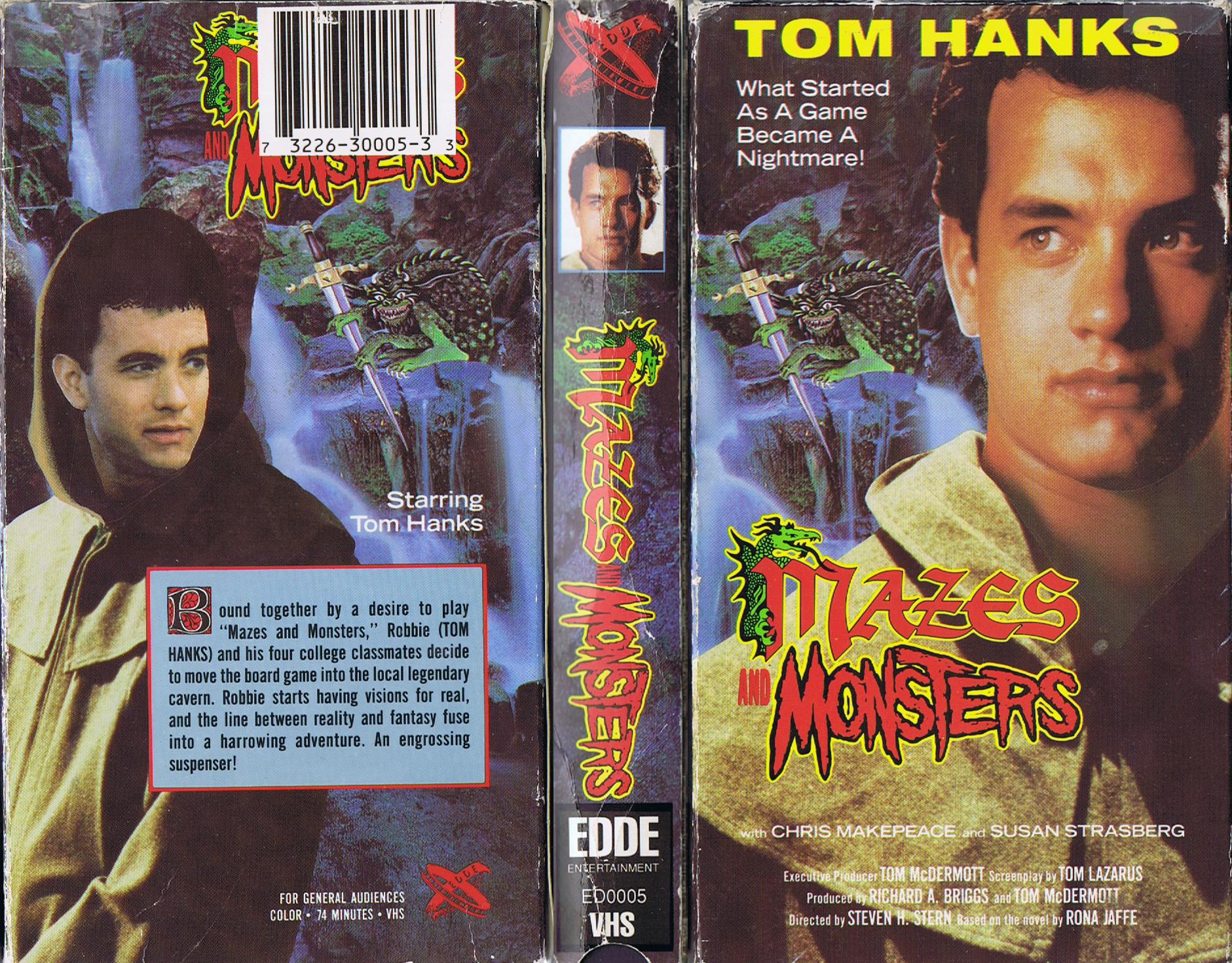
Today’s feature is arguably the capstone of parental paranoia over the role-playing game Dungeons & Dragons: 1982’s Mazes and Monsters.

Mazes and Monsters was adapted from a 1981 novel written by Rona Jaffe (who served as a producer on the film), which was loosely inspired by the disappearance of James Dallas Egbert III, which was incorrectly cited as being related to his hobby of playing fantasy role-playing games. The screenplay for the movie was written by Tom Lazarus, who also wrote the movie Stigmata and worked on television shows like Freddy’s Nightmares and Jake And The Fatman.

The director for Mazes And Monsters was Steven H. Stern, who specialized in television movies throughout his career. His other credits included Morning Glory, Rolling Vengeance, and Running, among many others.

The cinematographer for the movie was Laszlo George, who shot movies like Nothing Personal, Running, The Bear, and Rolling Vengeance.

The editor for Mazes and Monsters was Bill Parker, who cut numerous episodes of television series like Columbo, MacGyver, The Six Million Dollar Man, and Emergency!.

The musical score for Mazes And Monsters was composed by Hagood Harding, who also did music for The Creeper, Anne of Green Gables, and the animated feature The Wonderful Wizard of Oz.

The makeup effects for the film were done by one Linda Gill, who also provided effects work on movies like Johnny Mnemonic, Parents, PCU, Strange Brew, Alive, and Cocktail.

The cast of Mazes and Monsters includes Tom Hanks (The ‘Burbs, Catch Me If You Can, Splash, Road To Perdition, Toy Story, Turner & Hooch, Big, Saving Private Ryan, The Green Mile, Dragnet, Philadelphia) in his first leading role, Wendy Crewson (The Good Son, The Santa Clause, Air Force One), David Wallace (General Hospital, Days Of Our Lives), Chris Makepeace (Vamp), Lloyd Wolfe Bochner (Millennium, The Lonely Lady), Anne Francis (Forbidden Planet), Murray Hamilton (Jaws, The Graduate), Susan Strasberg (The Delta Force), Louise Sorel (Days Of Our Lives), Vera Miles (The Searchers, The Wrong Man, Psycho), and Peter Donat (War of the Roses, The Game).

The plot of Mazes and Monsters is summarized on IMDb as follows:

Bound together by a desire to play “Mazes and Monsters,” Robbie and his four college classmates decide to move the board game into the local legendary cavern. Robbie starts having visions for real, and the line between reality and fantasy fuse into a harrowing adventure.

mazesandmonsters1One of the co-stars of Mazes and Monsters, Wendy Crewson, starred in another similarly-themed movie in 1983: Skullduggery. This movie follows a young man as he slowly becomes a serial killer due to the influence of a role-playing game, and it is astoundingly far worse than Mazes and Monsters.

Aside from Mazes and Monsters, the most famous thing to come out of the era of moral panic surrounding Dungeons & Dragons was a specific religious tract by Jack Chick, titled Dark Dungeons, which infamously portrays a highly fictionalized version of the game. This story was itself adapted into a tongue-in-cheek web series in 2014, thanks to crowdfunded Kickstarter.

The reception for Mazes and Monsters was generally negative, though it has become a bit of an ironic cult movie for fans of role-playing games. It currently holds a 4.2 user rating on IMDb, along with a 20% audience aggregate score on Rotten Tomatoes.

Tom Hanks is one of the few bright spots in Mazes and Monsters. While his performance is certainly hammy, his character shows flashes of genuine emotional distress and earnest anguish, which is interesting to see in the early career of such a storied actor. Unfortunately, the rest of the cast in thoroughly unremarkable. The only character who really stuck out to me was the runt of the group, who only did so due to his fascination for wearing ludicrous and varied hats, which changed from scene to scene.

Like with any movie with a definite message behind it, Mazes And Monsters is really transparent about what it has to say: that role-playing games and fantasy escapism are bad, period. This iron-clad belief doesn’t allow the screenplay much wiggle room to build the characters or portray the game in a way that is grounded in reality, which is always a weakness of this kind of movie. Also interesting is the fact that Hanks’s character is revealed to have already had issues relating to the game before the movie starts, and none of the other characters are harmed by the game. This sort of undermines the message, as clearly this problem had far more to do with Hanks’s personality and underlying issues than it had to do with the game.

Overall, this is a legendary bad movie, both for it’s role in the moral panic surrounding Dungeons and Dragons and for its placement in the storied career of Tom Hanks. That said, it is a pretty dull film on the whole. There are a few stand-out moments that are certainly entertaining, but if not for its fascinating cultural relevance as a relic of its time, I wouldn’t strongly recommend that people go back and watch it. As it stands, though, this is worth digging up for bad movie fans at the very least.

For more thoughts on the far-out movie that is Mazes and Monsters, I recommend checking out the episodes on the flick over at The Spoony Experiment and Good Bad Flicks.

Trucks

Trucks

trucks1

Today’s feature is Trucks, a 1997 television movie adapted from a Stephen King story about killer automobiles.

Trucks is based on the same Stephen King short story that turned into the 1986 movie Maximum Overdrive, which King himself directed and adapted. The screenplay for this made-for-television adaptation, however, was written by Brian Taggert, who also penned Omen IV and Poltergeist III.

Trucks was directed by Chris Thomson, a career television director who worked on a variety of television movies, as well as on the shows Flipper and Time Trax.

The cinematographer for the movie was Robert Draper, whose credits include Halloween 5, Tales From The Darkside: The Movie, and numerous episodes of both Tales From The Crypt and Tales From The Darkside.

The editor for Trucks was Lara Mazur, who worked extensively on television shows like Andromeda, Dead Like Me, and Highlander.

The team of producers on Trucks included Mark Amin (Leprechaun, Evolver, Leprechaun 3, The Dentist, The Dentist 2, Chairman of the Board), Bruce David Eisen (Leprechaun In The Hood, The Dentist 2), Greg Griffin (Ice Road Truckers, America’s Next Top Model), and Jerry Leider (My Favorite Martian).

The effects work for Trucks was provided by a team that was made up of Pamela Athayde (Capote), Erich Martin Hicks (Babylon 5, Leprechaun In The Hood), Cara Anderson (Marmaduke, Baby Geniuses 2), Darcy Davis (Final Destination, A Christmas Story 2), Kevin Stadnyk (Deep Evil, Blade Trinity), and Rory Cutler (Iron Eagle II, The Fly II).

trucks4The musical score for Trucks was provided by Michael Richard Plowman, who also did music for Laserhawk, the cartoon Sonic Boom, and a number of nonfiction documentaries like Triggers: Weapons That Changed The World, Untold Stories of the E.R., and The Man With The 200 lb Tumor.

The cast of Trucks includes Timothy Busfield (Revenge of the Nerds, Field of Dreams), Brenda Bakke (Demon Knight, Under Siege 2, L.A. Confidential), Aidan Devine (A History of Violence), Jay Brazeau (Insomnia, Best In Show), and Brendan Fletcher (Freddy vs. Jason).

The plot of Trucks is summarized on IMDb as follows:

Based on the short story by Stephen King, this tells the tail of trucks suddenly coming to life and attacking their owners.

trucks3Given that Trucks was a television movie, it wasn’t particularly widely seen. That said, the people who did see it didn’t exactly like it: the movie currently holds a 3.8 user rating on IMDb, along with a 30% audience aggregate score on Rotten Tomatoes.

Comparisons between Trucks and the earlier adaptation of the same story, Maximum Overdrive, are unfortunately impossible to avoid, which doesn’t do Trucks any favors. As much as Maximum Overdrive is a bad movie (a good bad movie if you ask me), it was also a big movie with impressive effects work and a sense of visual spectacle. Trucks, being a much smaller production, just can’t compete with what Maximum Overdrive put on screen. Likewise, the low-budget cast isn’t nearly as impressive, which is saying something given how weak the performances were in Overdrive.

trucks2Overall, outside of a couple of memorable highlight moments, Trucks is just an immensely forgettable movie. It mostly exists as a footnote on the much better known Maximum Overdrive, but I think it is worth checking out for die-hard Stephen King fans, or for people who got a good laugh out of Overdrive. Trucks does take itself a bit too seriously, and never quite feels fun, which I think was a mistake for what is a pretty goofy premise. However, the handful of highlights make it worth digging up for bad movie fanatics.

Wired

Wired

wired1

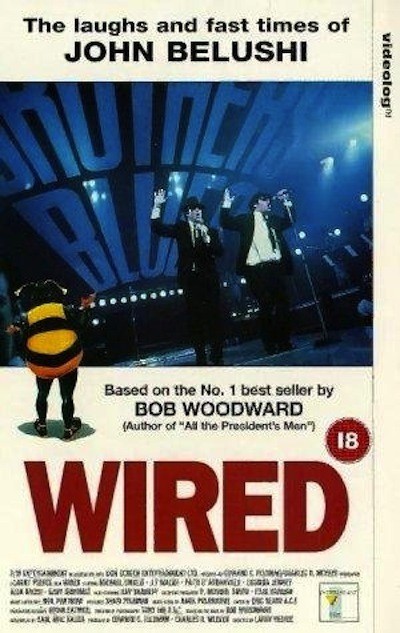
Today’s picture is one of the most hated biopics ever made: 1989’s Wired, which paints a less-than-generous portrait of comedian John Belushi.

The screenplay for Wired was written by Earl Mac Rauch, whose other credits include Martin Scorcese’s flop New York, New York, and the cult sci-fi movie The Adventures of Buckaroo Banzai Across The 8th Dimension. The source material for the movie was penned by journalist Bob Woodward, who is best known for his involvement in exposing the Watergate scandal.

The director on Wired was Larry Peerce, who worked on the television shows Batman and Touched By An Angel, and also helmed a handful of movies dating back to the early 1960s, including Goodbye, Columbus and The Other Side Of The Mountain.

The cinematographer for the film was Tony Imi, who also shot the movies Babycakes, Enemy Mine, and Survival Island.

The editor on Wired was Eric A. Sears, who cut Cellular, Shooter, Spy Hard, D2: The Mighty Ducks, Final Destination 2, and Final Destination 5, among many others.

The team of producers for Wired included Edward S. Feldman (The Truman Show, The Golden Child, The Hitcher, Fuzz, Hot Dog: The Movie), Austen Jewell (Motel Hell), and Charles Meeker (Hamburger: The Motion Picture, The Hitcher, The Golden Child).

The musical score for Wired was composed by Basil Poledouris, who also provided music for movies like Conan The Barbarian, Red Dawn, RoboCop, Iron Eagle, RoboCop 3, On Deadly Ground, Free Willy, and Starship Troopers.

wired2The effects work for the film was provided by a team that included Craig Lyman (The Stuff, Carlito’s Way, The Fisher King, The Happening, Men In Black III), Vera Yurtchuk (Teen Wolf, Tuff Turf), and Robert Calvert (Iron Eagle, Cutthroat Island, Monkeybone, Con Air, Castle).

The cast of Wired includes Michael Chiklis (The Shield, Fantastic Four), Ray Sharkey (Cop And A Half, No Mercy, Wise Guys), J.T. Walsh (Sling Blade, Executive Decision), Patti D’Arbanville (Real Genius, The Fan), Lucinda Jenney (Rain Man, Thirteen Days), and Alex Rocco (The Godfather, Smokin Aces).

The plot of Wired is summarized on IMDb as follows:

The ghost of John Belushi looks back on his troubled life and career, while journalist Bob Woodward researches Belushi’s life as he prepares to write a book about the late comic actor.

In one of the sequences featuring the fictionalized John Landis, a helicopter is prominently heard in the background. This is a not-so-subtle reference to an infamous on-set accident involving a helicopter on Twilight Zone: The Movie that killed three people under his watch, including actor Vic Morrow (The Last Shark, 1990: The Bronx Warriors).

Given that Wired was not an authorized biographical feature, it was haunted by the specter of legal issues. Numerous prominent figures in Belushi’s life threatened to sue if they were portrayed in the film, and Saturday Night Live skits were officially off-limits thanks to NBC’s copyright. The result of this on screen is the featuring of oddly manufactured facsimiles of SNL skits, which only vaguely resemble actual performances, and feature few (if any) of Belushi’s co-stars.

WIRED, from left: Gary Groomes as Dan Aykroyd, Michael Chiklis as John Belushi, 1989 © Taurus EntertainmentWired was widely reviled by both audiences and critics alike upon its release: it currently holds a 4.5 on IMDb, along with Rotten Tomatoes aggregate scores of 4% from critics and 15% from audiences. Appropriately, the movie was also a financial disaster. On a production budget of roughly $13 million, the movie only managed to gross just over $1 million in its theatrical run, which was significantly impacted by a boycott of the movie which was vocally supported by many of Belushi’s friends and family.

The portrayal of John Belushi in this movie, as many have pointed out, is written is an excessively brutal way, which emphasizes everything negative about the man, while glossing over any of his positive impacts and traits. However, Chiklis’s performance is actually pretty spot-on if you ask me, despite the issues with the material he was working with. His mannerisms and voice were clearly the result of some meticulous effort on his part, and the result is pretty impressive.

WIRED, Lucinda Jenney as Judy Belushi, Michael Chiklis as John Belushi, 1989, © Taurus EntertainmentSomething that bothered me a lot about Wired is how much it feels like a vanity project of the author, Bob Woodward. The fact that he is written into the screenplay as a character is a bit over the top, and Belushi’s portrayed obsessive fascination with him as a celebrity is a little beyond ridiculous. If Belushi’s portrayal wasn’t enough poor taste for this movie, the self-aggrandizing portrait of Bob Woodword adds a layer of sleaze on top of the stack.

The message of Wired is nothing if not heavy-handed, which is a significant weakness of the film. A good biopic should focus on building the central character, with the flaws included as part of the holistic entity of them. Wired, however, just focuses on the flaws of John Belushi, which gives an incomplete picture of the character, and makes his downfall less potent as a result. If the movie wanted to effectively telegraph an anti-drug message, it should have built up a sympathetic character, and then had him destroyed by his drug addiction, which would have had emotional weight. As it stands, Belushi is painted as an asshole from the start, so the tragedy of his story is negated.

Overall, Wired isn’t the worst movie out there. There are actually some interesting aspects to it, like the surreal framing device, some moments of appropriately bleak humor, and Chiklis’s performance. That said, the screenplay clearly has an axe to grind and a message to deliver, which taints everything it touches. The result is a bitter, self-righteous, and hateful movie that is impossible to like, in spite of some of its positive aspects. I can’t very well recommend the movie, because it isn’t a film that can really be enjoyed. However, it has some trivia value thanks to its background, which might make it worth checking out for some.

For some other thoughts on Wired, I recommend checking out the coverage of the movie by The Cinema Snob , as well as the episode on it by the We Hate Movies podcast.

Darkman III: Die Darkman Die

Darkman III: Die Darkman Die

darkmaniii1

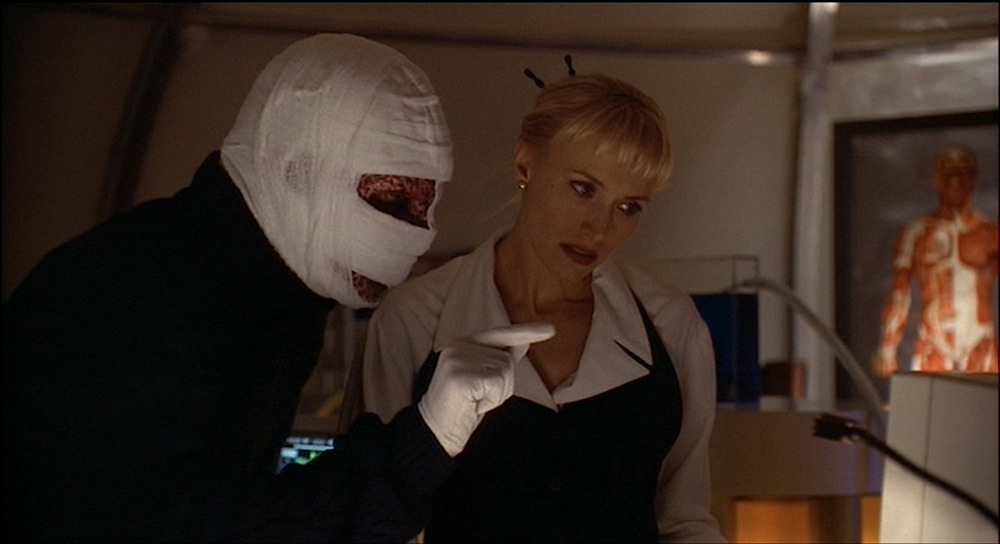
Today’s feature is the finale of the Darkman trilogy: Darkman III: Die Darkman Die.

Darkman III: Die Darkman Die was written by the duo of Michael Colleary (Face/Off, Death Wish V) and Mike Werb (The Mask, Face/Off).

Darkman III was directed and shot by Bradford May, an experienced television director who worked on shows like Dallas, Hawaii Five-O, JAG, Smallville, and Supernatural, and also helm the previous entry in the Darkman franchise, Darkman II: The Return of Durant.

The editor for Darkman III: Die Darkman Die was Daniel T. Cahn, who has done extensive editing on he small screen for shows like The Young and The Restless, Cheers, and 7th Heaven, and also cut the high-tech creature feature How To Make A Monster.

The producers for the film included original Darkman writer/director Sam Raimi, David Roessell (Inspector Gadget 2, Nick Fury: Agent of SHIELD), Rob Tapert (The Evil Dead, Timecop, Army of Darkness), Bernadette Joyce (Airwolf, Knight Rider), and David Eick (Battlestar Galactica).

The effects team on Darkman III included Wayne Toth (Darkman II, Vampires, The Faculty), Evan Campbell (Super Mario Bros., Elves, Darkman II, Spawn, The Faculty), Brock Jolliffe (Gladiator Cop, Darkman II), Robert Sheridan (Shatterbrain, Open Range), Jon Campfens (Stuck, Slither), Derek Grime (Johnny Mnemonic, Cube, Darkman II), Gudrun Heinze (Mimic, Undercover Brother), and Simon St. Laurent (American Psycho).

The original musical score for Darkman III was provided by Randy Miller (Hellraiser III, Darkman II), with Danny Elfman’s themes from Darkman getting some heavy re-use.

The cast of Die Darkman Die includes Arnold Vosloo (24, The Mummy), Jeff Fahey (The Lawnmower Man, Machete, Body Parts, Planet Terror), Darlanne Fluegel (Lock Up, Once Upon A Time In America), Roxann Dawson (Star Trek: Voyager), and Nigel Bennett (The Skulls).

The plot of Darkman III: Die Darkman Die is summarized on IMDb as follows:

Darkman, needing money to continue his experiments on synthetic skin, steals a crate of cash from drug lord Peter Rooker, attracting the gangster’s attention. Rooker is determined to find the source of Darkman’s super strength, and uses his beautiful but evil doctor to lure Darkman into a trap. Thinking that the doctor will restore feeling to his tortured body, he discovers too late that they have taken a sample of his adrenaline, which they will market as a super steroid. As Darkman plans his revenge on Rooker’s gang, he slowly begins to care about Rooker’s neglected wife and daughter. He must now find a way to help them, and destroy Rooker before he uses the adrenaline to plunge the city into chaos.

Darkman III was, like its predecessor, released straight to video, and was not given a theatrical release. Still, it wasn’t received well by those who did catch it: the movie currently holds a 4.7 user rating on IMDb, alongside equally abysmal Rotten Tomatoes aggregate scores of 33% from critics and 21% from audiences.

darkmaniii2The introduction to the movie looks and feels like the start of a television show rather than a movie. The background is laid out in voiceover and clips ahead of the credits, rather than having it weaved into the story itself. It seems unnecessary and amateurish to me, to say the least. Even if this was meant to be a television show script, it should have been modified to suit this form.

Given this movie was filmed back to back with Darkman II, most of my criticisms of that movie still stand here, so I’ll avoid retreading on any of that. One of the big differences between the two is the antagonist, who is played by Jeff Fahey as a new character in Die Darkman Die.

I like the concept behind the plot here: inevitably the clandestine research done by Darkman would continue to mount expenses, and his vigilante activities would draw a lot of attention from both police and criminals. The concept of manufacturing his power and distributing it as a drug adds a great little commentary about capitalism and drug use to the story, which is a nice new dimension to it as well.

As much as I like aspects of Darkman III, it is ultimately still a disappointing, half-assed sequel when placed next to the original Darkman. Because this is less of a sequel as much as it is a parallel film with Darkman II, it doesn’t really have an opportunity to improve on any of its problems. Basically, this is just more of the same, rather than a new film with an entirely new vision. I can’t say that it is better than Darkman II, because that film is undoubtedly more suited as a sequel to the original, but it also isn’t the worst thing out there. For what is probably the worst film in the franchise, it isn’t all that bad, particularly for straight to video action.

For bad movie fans, I think the whole Darkman series is worth checking out. Both of the sequels have some upsides that justify viewing, and the original is simply a fantastic cult movie.

Street Fighter

Street Fighter

streetfighter1

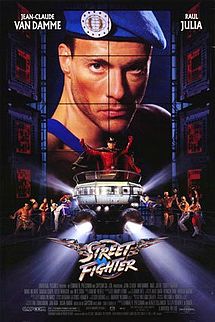
Today’s feature is a classic video game movie adaptation, starring Raul Julia and Jean-Claude Van Damme: 1994’s Street Fighter.

Street Fighter was written and directed by Steven E. de Souza, whose other writing credits include The Flintstones, The Running Man, Die Hard, 48 Hours, Commando, Hudson Hawk, Judge Dredd, and Beverly Hills Cop III.

The cinematographer for the movie was William A. Fraker, whose list of credits include SpaceCamp, The Island of Doctor Moreau, WarGames, 1941, The Exorcist II, Vegas Vacation, and Tombstone.

Street Fighter astoundingly has five primary credited editors: Robert F. Shugrue (It, Star Trek III: The Search for Spock), Anthony Redman (Highlander II, Red Heat, Body Parts, Bad Lieutenant), Dov Hoenig (Dark City, Heat, The Crow, The Fugitive, Manhunter), Donn Aron (Heroes, Another 48 Hours), and Edward M. Abroms (Blue Thunder, Ironside).

The music for Street Fighter was composed by Graeme Revell, who also provided music for The Fog, Freddy vs. Jason, Daredevil, Red Planet, Blow, and Spawn, among many others.

The team of producers for the film included Tim Zinnemann (The Running Man, Pet Sematary), Kenzo Tsujimoto (Street Fighter: The Animated Series), Akio Sakai (Final Fantasy: The Spirits Within), Edward R. Pressman (Judge Dredd, Masters of the Universe), Grant Hill (Jupiter Ascending, Titanic), and Sasha Harari (The Doors).

The effects workers for Street Fighter included Zoltan Elek (Leviathan, Timecop, Double Team), Maggie Fung (The Island of Doctor Moreau, Mission Impossible III), Brian Cox (Ghost Ship, Razorback), Suzanne M. Benson (Spy Hard), Dean Sadmune (The 6th Day, Tammy and the T-Rex), Rob Conn (Eragon), Rodney Burke (Stealth, Red Planet, The Punisher), Mont Fieguth (The Matrix, The Punisher), Paul Gorrie (Hot Fuzz, Red Planet, Dark City), Walter Van Veenendaal (Son of the Mask, The Matrix), and David Young (Stealth, Mad Max Beyond Thunderdome).

The cast of Street Fighter inlcudes Jean-Claude Van Damme (Double Team, Timecop, Kickboxer, Universal Soldier, Cyborg, Lionheart, Hard Target), Raul Julia (The Addams Family), Ming-Na Wen (Mulan, Agents of SHIELD), Damian Chapa (Under Siege), Kylie Minogue (Moulin Rouge, Doctor Who), Byron Mann (Catwoman), Roshan Seth (Gandhi, Indiana Jones and the Temple of Doom), Andrew Bryniarski (Batman Returns, Rollerball, Any Given Sunday), Robert Mammone (The Matrix Reloaded, The Matrix Revolutions), and Jay Tavare (Adaptation).

streetfighter2The plot of Street Fighter is pretty basic, and summarized on IMDb as follows:

Col. Guile and various other martial arts heroes fight against the tyranny of Dictator M. Bison and his cohorts.

Essentially, Bison is a dictator of a fictitious foreign country, where he has built a highly technological army that threatens the world at large. A number of different parties, all with different motivations, all converge with the goal of deposing him.

Another Street Fighter film adaptation was made in 2009, called Street Fighter: The Legend of Chun Li. The goal was for this movie to contrast with the 1994 effort by being far more serious in tone. However, it proved to be even less well-received, and even had lower grosses than the original.

streetfighter4The Street Fighter video game series debuted in arcades in 1987, but became huge in the 1990s with the release of Street Fighter II, and cemented the franchise as one of the elite fighting video games, alongside the more violent and graphic Mortal Kombat.

Interestingly, the production of Street Fighter happened almost concurrently with the film adaptation of its key rival franchise, Mortal Kombat, which released in 1995. Reportedly, Van Damme even turned down the role of Johnny Cage in that movie due to his involvement with Street Fighter.

Hilariously, there were two different official Street Fighter: The Movie video game adaptations: one was made explicitly for arcades, and another was produced independently for the home console systems Sega Saturn and PlayStation. These games featured the vague likenesses of the actors from the feature as their characters.

streetfighter3The martial arts movie legend Sonny Chiba had an unrelated franchise of films in the 1970s similarly called The Street Fighter, which included the sequels Sister Street Fighter, Return of the Street Fighter, and The Street Fighter’s Last Revenge. These films are lauded as grindhouse action favorites, and are hailed by die-hard fans of the genre.

Raul Julia sadly died soon after he finished filming for his role in Street Fighter, making it his last film appearance. Even during filming, he was suffering from his cancer, which limited his ability to perform in action scenes.

streetfighter5Street Fighter was made on a production budget of $35 million, on which it grossed just shy of 100 million in its lifetime global theatrical release. In spite of that profitability, the reception to Street Fighter was overwhelmingly negative: it currently holds a 3.7 user rating on IMDb, alongside Rotten Tomatoes aggregate scores of 12% from critics and 20% from audiences.

Personally, I don’t hold any ill feelings towards this movie whatsoever. It doesn’t take itself very seriously, and there are some solid humorous moments interspersed with the naturally over the top and ridiculous action story, which I welcomed. The fact that the video game is basically plot-less left a lot of wiggle room for how to construct this movie, and what they came up with is something that I don’t think is half bad. Some fans were clearly unhappy with some character changes that were made to fit them into the confines of the story, but at the same, there was a lot of attention put into making sure the characters at least looked their parts, which I appreciated.

Most people note Raul Julia as an obvious highlight of this movie, and I absolutely agree. He has some highly memorable lines, looks iconic in the role, and manages to even slip some humor into a role that is absolutely straight and iron-faced. However, I think the good performances go beyond just him: I actually like JCVD in this picture as well. He looks on top of his game, and gets a couple of hammy moments of his own in the movie. The rest of the cast is a bit of a mixed bag, though I personally loved the comic relief portrayal of Zangief and the duo of Ryu and Ken, which were all criticized by many.

Trying to nail down what the problem was with this movie isn’t easy. I think the failure had more to do with the world not knowing what it wanted from this movie than anything else. Were fans expecting a serious, gritty action picture? That wouldn’t be at all in the spirit of the cartoonish video game, with has distinguished itself from Mortal Kombat by being more colorful and flamboyant, as opposed to gory and brutal.

The one thing I do wish was incorporated into the movie was some of the music from the Street Fighter game, which is outstandingly memorable, particularly Guile’s Theme. How awesome would it have been for an orchestrated version to have been included in one of the battles?

As it stands, Street Fighter was a very early video game adaptation, before the concept became a doomed proposition. And, honestly, I think it is one of the better ones out there. There is certainly way more to enjoy in this silly movie than there is in any of Uwe Boll’s litany of video game adaptations, and I think this one might be worth a nod over Mortal Kombat as well (though that is debatable). I think this is honestly a fantastic good-bad movie watch, and nails action humor better than your average movie that attempts it. Fans of the games should appreciate the pandering via the inclusion of so many characters as well, who are surprisingly well-weaved into the movie if you ask me.

You don’t have to look very far to find other thoughts about Street Fighter: it seems like every person in the bad movie reviewing game has taken it on at some point. I recommend going through the lot of them, because there is quite a lot of variety in the thoughts on this movie, and a whole lot of backstory to read into about it as well.

Roadie

Roadie

roadie2

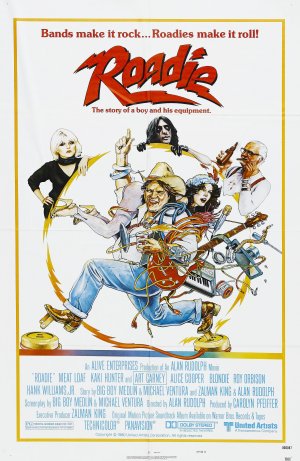
Today’s feature is a rock & roll musical comedy starring Meat Loaf. Buckle up, because it is 1980’s Roadie.

The screenplay for Roadie was written by Michael Ventura and Big Boy Medlin, the latter of whom was a journalist who conceived of the central character, and went on to be an executive at E! Entertainment. Story credit for the film was also given to director Alan Rudolph, who helmed movies like Breakfast of Champions, The Secret Lives of Dentists, and Afterglow, and executive producer Zalman King.

The cinematographer for Roadie was David Myers, who is best known for documentaries like Marjoe and Woodstock, but also shot George Lucas’s debut movie, THX 1138.

The editor for the film was Tom Walls, who also cut Surf Ninjas, Mac And Me, Bachelor Party, and Mortal Thoughts.

ROADIE, Meat Loaf (aka Marvin Lee Aday), 1980, © United ArtistsOutside of Zalman King, the producers for Roadie included John Pommer, who was a production manager on The Great Santini, Walking Tall, and Paths of Glory, and Carolyn Pfeiffer, who also produced the Vanilla Ice vehicle, Cool As Ice.

The musical score for Roadie was composed by Craig Huxley, who also provided the music for the movie Alligator, wrote the theme song for Walker, Texas Ranger, and provided sound work on Motel Hell and Thriller.

The effects team on Roadie included Mike Moschella (Hook, Wild In The Streets), Joyce Rudolph (Teen Wolf, Hider In The House), John Frazier (White Dog, War of the Roses, Hesher), and Howard Jensen (Ed Wood, Rocky IV).

The cast of the movie is made up of Meat Loaf (Fight Club, Crazy In Alabama, Spice World, The Rocky Horror Picture Show), Kaki Hunter (Porky’s), Art Carney (Last Action Hero, The Late Show), Soul Train producer Don Cornelius, Gailard Sartain (Fried Green Tomatoes, Mississippi Burning), Joe Spano (Hill Street Blues), and Sonny Carl Davis (Evil Bong, Trancers II).

ROADIE, Meat Loaf, Debbie Harry, 1980, (c) United ArtistsThe plot of Roadie is summarized on IMDb as follows:

A young Texas good ol’ boy has a knack with electronic equipment, and that talent gets him a job as a roadie with a raucous traveling rock-and-roll show.

During the introduction of the character of Travis Redfish, the house shown to be his home is the same one prominently featured in The Texas Chain Saw Massacre, which is a nod to his character’s Texan origin.

Roadie is filled with cameos from across the music industry, with screen time given to icons like Roy Orbison, Deborah Harry of Blondie, Alice Cooper, and Hank Williams Jr.. Interestingly, the cameo by Alice Cooper was initially meant for Mick Jagger, who wasn’t available to film.

Roadie received a number of alternate titles for international markets, given that the slang term ‘roadie’ doesn’t translate well. The Spanish-language title was Los Locos Caminos Del Rock (which translates to The Crazy Roads of Rock), while the Italian title was similarly Roadie: Le Strade Del Rock (The Road of Rock).

roadie3I couldn’t find a production budget estimate for Roadie, but the financial details I did dig up indicated that it grossed under $5 million in its lifetime theatrical run in the United States, which is unlikely to have been very profitable (if at all), depending on how much money was sunk into it.

The reception to Roadie was generally negative: it currently holds an IMDb user rating of 5.0, along with Rotten Tomatoes aggregate scores of 17% from critics and 56% from audiences.

Roadie is a very strange movie that I’m not quite sure how to classify. It walk and talks like a comedy, but there are no jokes to be found anywhere in this movie. The only attempts at humor come from the honest ignorance of Meat Loaf’s character, or the occasional concussion symptoms. There are also a handful of colorful and outlandish characters, but nothing about them is specifically funny. Meat Loaf’s father watches television, Meat Loaf’s sister has a grating voice, and so on, and so on.

roadie1Meat Loaf’s character isn’t even particularly consistent: sometimes he is a child-like simpleton, sometimes he is a wizard-tier engineer capable of fixing extra-terrestrial vehicles, and other times he’s just a brash, conservative asshat. To Meat Loaf’s credit, he sells the portrayal at each one of these turns, but it feels like a bunch of different people rather than a singular character.

The primary love interest of the movie is a 16-year-old aspiring groupie with an obsession with Alice Cooper, and an apparent psychic ability to detect rock songs in radio waves. She is at times purely manipulative, but in other moments a child-like, naive, and honest character. Much like the problem with Meat Loaf’s Travis Redfish, she seems like an entirely different character in any given scene, to the point that the interactions between the two of them are essentially a crapshoot of personalities that could interact in any variety of ways.

Overall, Roadie is a confused, strange movie that rests on top of a very weak screenplay. The music industry cameos are interesting to see, but there isn’t much to the movie outside of that. The final scene, in which Redfish is set to repair a downed UFO, is one of the weirdest shark-jumping conclusions I have ever seen to a movie, but it isn’t nearly enough to save it on the whole. This is an almost entirely forgotten movie, though, and is an interesting deep cut if you happen to stumble across it. It has some redeeming value, but not much. Bad movie fans might give it a shot, but I wouldn’t advise anyone else to seek it out.