Tag Archives: worst movies

Masters of the Universe

Masters of the Universe

masters2

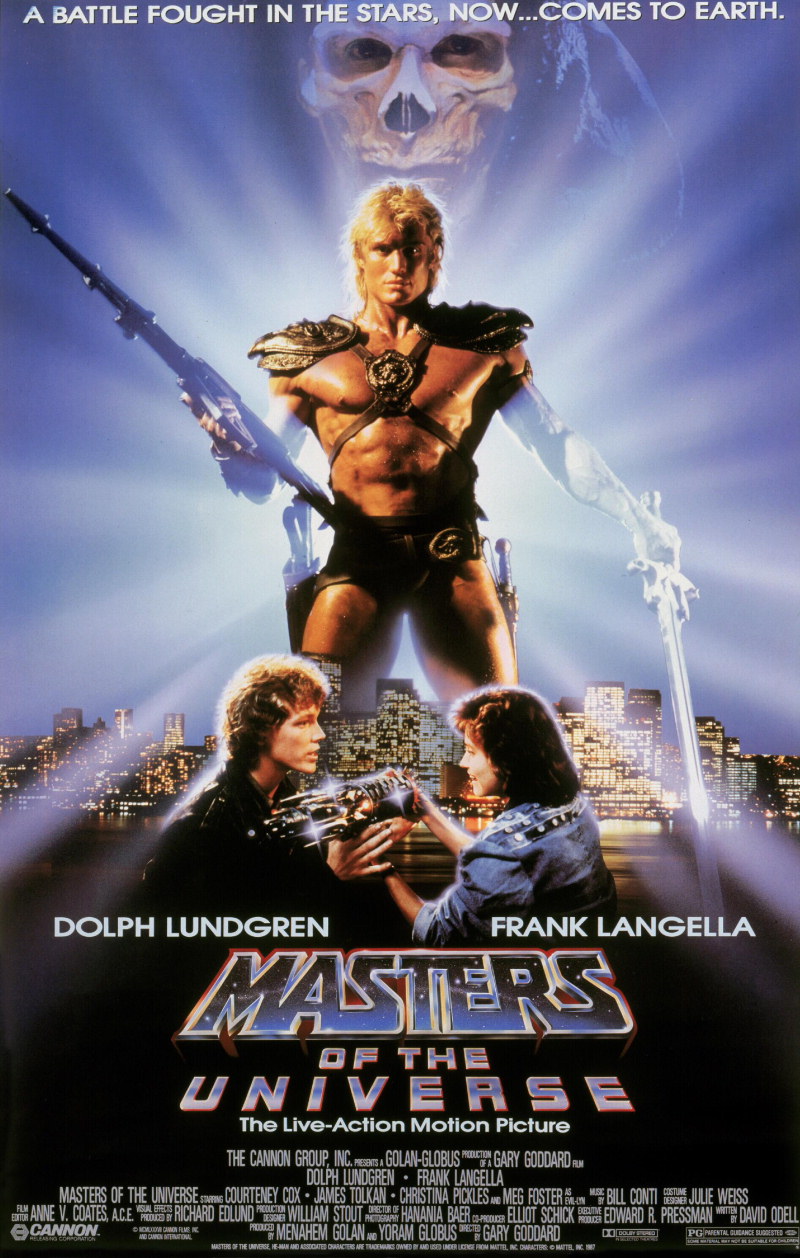
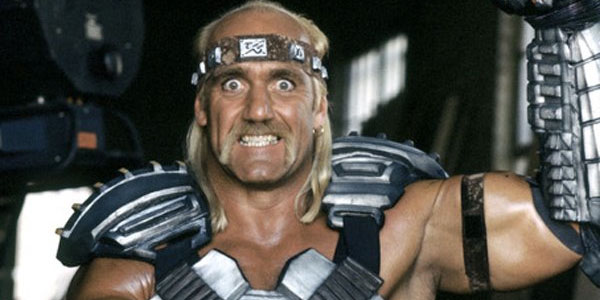
Today’s feature is the much-maligned film adaptation of the Mattel franchise He-Man: Cannon Group’s Masters of the Universe.

Masters of the Universe was written by David Odell, who also penned such films as Supergirl, The Dark Crystal, and numerous episodes of The Muppet Show.

The director on Masters of the Universe was Gary Goddard, which is to date his only feature film directorial credit. However, he has produced and written a number of shorts and 3D/4D shows for theme parks over the years, if that counts for anything.

The cinematographer for Masters of the Universe was Hanania Baer, who has shot such movies as American Ninja, Ninja III: The Domination, Breakin’ 2: Electric Boogaloo, The Brotherhood of Justice, and Ernest Scared Stupid.

The editor on the film was Anne V. Coates, who has also cut movies such as Fifty Shades of Grey, Congo, Lawrence of Arabia, Striptease, Erin Brockovich, and The Golden Compass over her career.

The two primary producers of Masters of the Universe were Menahem Golan and Yoram Globus, the infamous duo behind the flurry of Cannon Group b-movies that dominated the 1980s (Enter the Ninja, Revenge of the Ninja, Ninja III: The Domination, American Ninja). The other producers included Elliot Schick (Total Recall), Edward Pressman (The Island of Dr. Moreau, Judge Dredd, Street Fighter), and Evzen Kolar (Surf Ninjas).

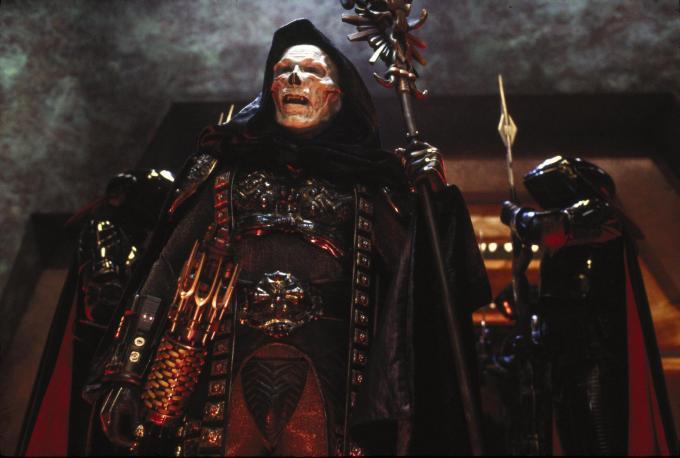
The makeup effects team for Masters of the Universe included Robin Beauchesne (Killer Workout, Iron Man 2, First Daughter, National Treasure), James Kagel (Stargate, Child’s Play, Big Trouble In Little China), Todd McIntosh (April Fool’s Day), Gerald Quist (Drive, Jonah Hex, Breakfast of Champions, Re-Animator), June Westmore (Sphere), and Michael Westmore (Raging Bull, Capricorn One).
masters3

The Masters of the Universe special effects team was composed of Larry Roberts (Volcano, 3 Ninjas Kick Back), Karl G. Miller (Cat People, The Blues Brothers, Battlestar Galactica), Daniel Hutten (Die Hard, Solarbabies), R.J. Hohman (The Perfect Storm, Cyborg, Popeye, The Two Jakes), and Arthur Brewer (The Hitcher, Swamp Thing, Smokey and The Bandit).

The massive team of visual effects artists on Masters of the Universe included common elements with such productions as Ghostbusters, Volcano, Coneheads, Leonard Part 6, Fright Night, Donnie Darko, Battle Beyond The Stars, Mystery Men, Lawnmower Man 2, Ghost, and Raiders of the Lost Ark.

The music for Masters of the Universe was composed by Bill Conti, who is best known for his work on the Rocky movies, The Karate Kid, and The Right Stuff.

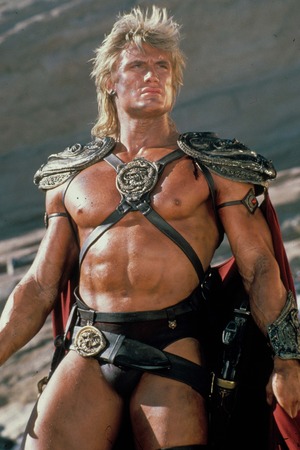
The cast of Masters of the Universe included Dolph Lundgren (Rocky IV, Dark Angel, The Punisher, Red Scorpion), Frank Langella (The Twelve Chairs, Junior, Cutthroat Island, Small Soldiers, The Ninth Gate), Meg Foster (They Live, Leviathan, Blind Fury, The Lords of Salem), Billy Barty (Willow, Legend), Courteney Cox (Friends, Scream, Cougar Town), Chelsea Field (Death Spa, The Last Boy Scout, Flipper), and James Tolkan (Back To The Future).

masters4

The plot of Masters of the Universe follows a group of resistance fighters from a faraway planet who are transported to Earth through the use of a mysterious scientific device. However, their enemies soon follow, in an effort to exterminate them and solidify their sinister rule. He-Man and his allies have to work with a handful of humans from Earth to defeat the evil Skeletor to save both Earth and the faraway planet of Eternia from the long reach of darkness.

In an interview, director Gary Goddard spoke about the stylistic influence of the works of Jack Kirby on Masters of the Universe, saying:

“the storyline was greatly inspired by the classic Fantastic Four/Doctor Doom epics, The New Gods and a bit of Thor thrown in here and there. I intended the film to be a “motion picture comic book,” though it was a tough proposition to sell to the studio at the time. ‘Comics are just for kids,’ they thought. They would not allow me to hire Jack Kirby who I desperately wanted to be the conceptual artist for the picture”

The costuming for the character of Evil-Lyn caused actor Meg Foster significant bruising in particularly inconvenient locations, and reportedly weighed well over 40 pounds in total. Interestingly, the eerie appearance of her eyes in the movie was completely natural, and required no enhancements or contact lenses.

masters6

Frank Langella reportedly loved playing the character of Skeletor, and even wrote some of the more memorable lines in the movie himself. He initially took the role because of how much his son loved the franchise, a situation that echoes the similar casting of Raul Julia in the Street Fighter adaptation some years later.

Interestingly, Masters of the Universe is an adaptation specifically from the original line of toys, and not the immensely popular cartoon, which establishes very different backstories for the characters and the plot. This confused many fans of the franchise when the movie initially released, and almost certainly contributed to the negative reception it received.

The failure of Masters of the Universe, coupled with the disappointment of Superman IV, supposedly foiled plans by the Cannon Group to invest in a high budget film adaptation of Spider-Man in the late 1980s, which was to be funded by the profits of those two films.

A sequel to Masters of the Universe was cast and written, but was ultimately scrapped just as the Cannon Group was going under. Very little is known about the abandoned production, other than that it would have been directed by Albert Pyun (Captain America).

A reboot of Masters of the Universe is currently in the works (and has been for a few years), with the latest information that Thor: The Dark World screenwriter Christopher Yost has been attached to keep it moving along. No directors are currently attached to the project, and no clear timeline has been set for shooting or release.

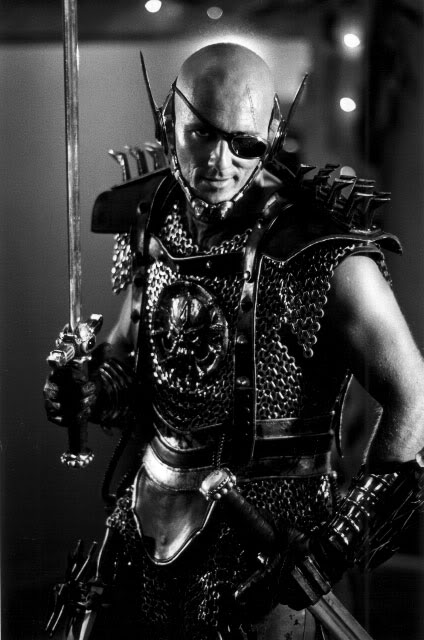
Anthony De Longis, one of the actors in the film, was initially hired as a sword expert, and provided all of the fight choreography for the film. He even filled in as Skeletor in the fight sequences, and trained Dolph Lundgren on how to use a sword.
masters7

Masters of the Universe proved to be a financial failure, bringing in only 17 million at the box office on a budget of 22 million. Likewise, the reviews of the movie were brutal, clocking in at 17% on Rotten Tomatoes from critics and 41% from audiences, along with an IMDb rating of 5.3.

One of my biggest issues with the film’s plot is the fact that no bystanders are ever harmed, or even witness the events that take place on Earth. How do no people see an alien army marching through suburban streets, or small aircraft flying over a mid-sized town? At one point, the police finally do show up, but only after they are drug to the scene by another police officer. It is assumed that at no point over the duration of the plot did anyone report suspicious activity, let along openly panic at witnessing an alien invasion.

The story of Masters of the Universe seems to assume previous knowledge of the characters, their relationships, and the basic premise of the story, which is especially confusing given that the adaptation is taken directly from a series of action figures, which are not historically known for establishing plot. The beginning of the movie could even be seen as a follow-up from a previous film given how little backstory is provided.

One unnecessary addition to the cast of Masters of the Universe that particularly got on my nerves was the annoying troll character, Gwildor. While he is crucial to the plot during a handful of moments, his primary purpose is to provide comic relief, which never fails to fall flat. Also, the makeup on the dwarf-like creature is really odd and unsettling, as if he were left out in the sun for too long.

Dolph Lundgren is surprisingly solid enough in this movie, given that he still didn’t have a solid hold on the English language at this point. That said, this certainly wasn’t a dialogue-heavy role for him, which was certainly for the best.
masters5

The most notable aspect of Masters of the Universe is that it feels like a patchwork of better known movies from the time, like Star Wars and Back to The Future. There is not much original to it when all is said and done, and the screenplay is about as basic and no-frills as it could possibly be.

overall, I can certainly see why this movie didn’t resonate with existing He-Man fans. That said, there is a fair amount of fun to be had with this admirably mindless entry into the filmography of the 1980s. Frank Langella absolutely hams it up as Skeletor, and the creature work is all very over the top. There are more lasers and goofy visual effects than you could possibly dream of, and the plot itself centers around a synthesizer with the ability to open dimensional portals.  What more could you possibly ask for?

The value of this movie definitely comes from a combined sense of nostalgia and how poorly the film has aged on the whole. It isn’t an elite good-bad movie for sure, but I think that it is more than worth checking out at least once for the novelty of it.
Beeper

Beeper

beeper1

Today’s flick is a mostly forgotten 2002 thriller that takes its name from an item that is now a technological relic: Beeper.

The writers for Beeper were Gregory Gieras, who has since written the monster movies Big Ass Spider and Centipede, and Michael Cordell, who has no other listed credits on IMDb.

The director for Beeper was Jack Sholder, who also directed such films as Arachnid, Wishmaster 2, Renegades, The Hidden, and A Nightmare On Elm Street 2.

The cinematographer for Beeper was Ajayan Vincent, who also shot Centipede, which was written and directed by Beeper co-writer Gregory Gieras.

Beeper‘s primary editor was Andy Horvitch, who also cut the Stuart Gordon movies Edmond, Stuck, The Pit and The Pendulum, and The Wonderful Ice Cream Suit, as well as flicks like Arena, American Ninja, Demonic Toys, and Trancers II.

The visual effects team for Beeper included Jim Stewart (Troll, Chopping Mall, School Spirit, Dr. Alien, The Dentist 2, King of the Ants), Brady Hallongren (Scorcher), Sean Hewitt (Alien Hunter, Poolhall Junkies), and Rita Schrag (The Dentist 2, Soccer Dog, King of the Ants).

The musical score for Beeper was composed by J. Peter Robinson, who has also provided music for such movies as Detroit Rock City, Vampire In Brooklyn, New Nightmare, The Wizard, and Blind Fury.

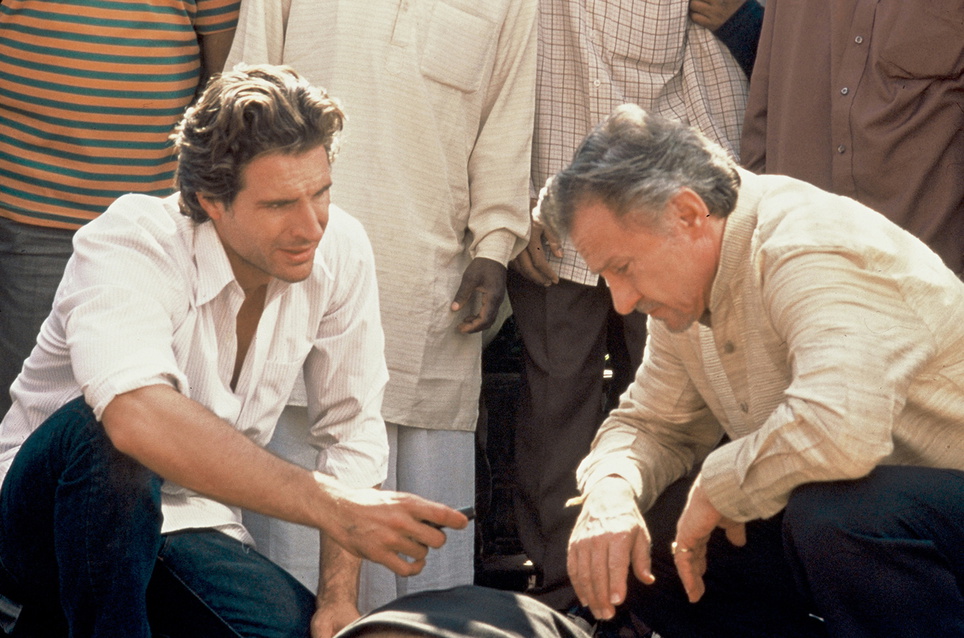
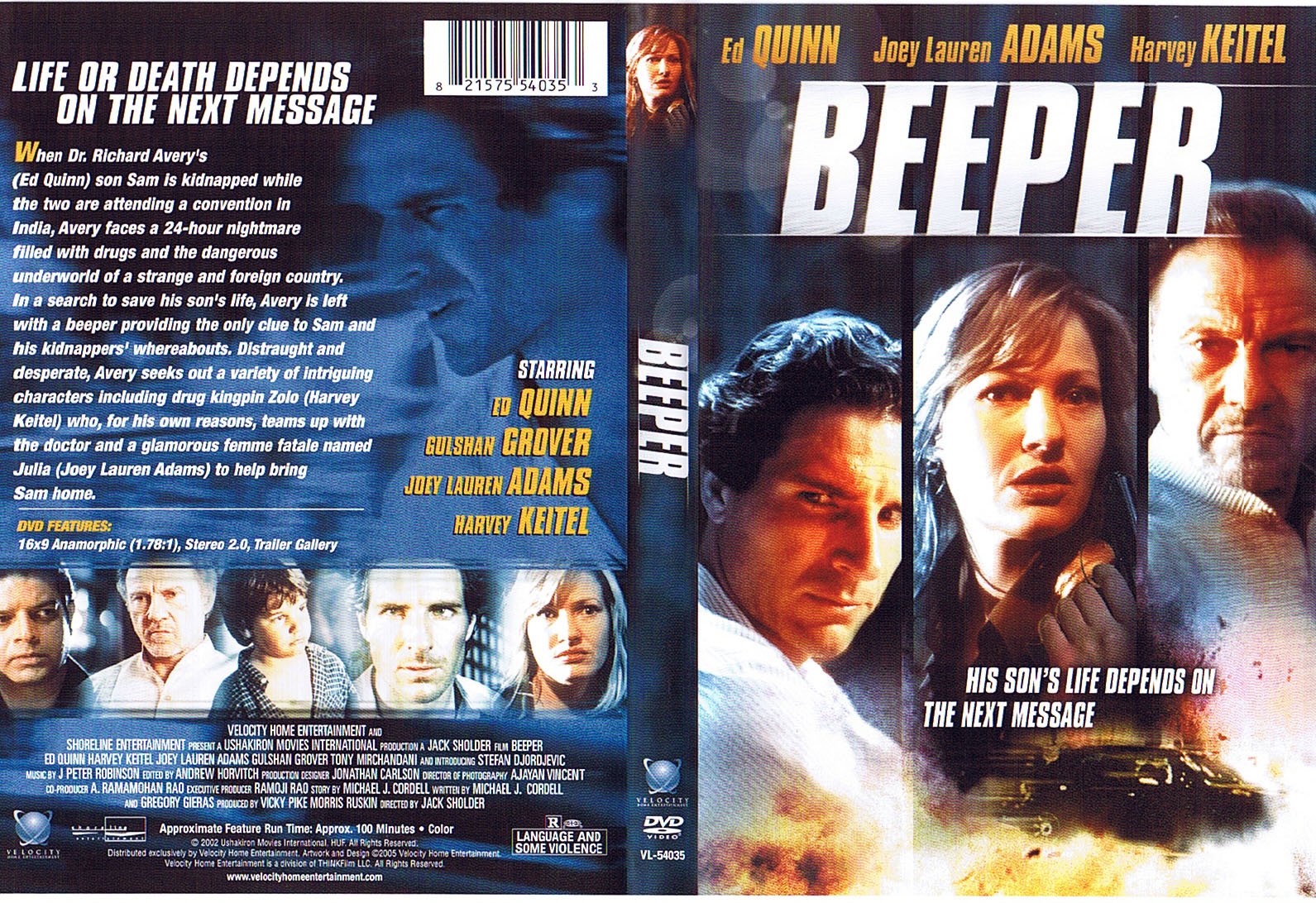
The cast of Beeper is headlined by Harvey Keitel (Taxi Driver, Pulp Fiction, Reservoir Dogs, Bad Lieutenant), Joey Lauren Adams (Chasing Amy), Ed Quinn (Starship Troopers 2, House of the Dead 2), and Gulshan Grover (Hera Pheri, I Am Kalam).

beeper2The plot of Beeper centers around the kidnapping of a prestigious doctor’s son while he is traveling in India. He is then given instructions by the child’s captors via an electronic pager, and has to to figure out a way to get his son back from the criminal organization that his holding him hostage.

Beeper was filmed in the city of Hyderabad in India, which features a good deal of photogenic architecture, which can be seen in the background of many shots.

The film was produced by a company called Shoreline Entertainment, which specializes in the production and distribution of b-movies like Ninja Cheerleaders, Parasite, and Voodoo Lagoon, just to name a few.

The reception for Beeper, at least from what I could find, was pretty negative: the film currently holds a 4.4 on IMDb, along with a Rotten Tomatoes audience score of 17%.

First off, the lead character (played by Ed Quinn) in Beeper looks and sounds just enough like Christian Bale from American Psycho that throughout the movie I kept expecting him to eventually snap and start murdering people with an axe or a chainsaw. I think this is due to some mixture of his wardrobe, his hair style, and the cadence of his voice, but it was pretty amusingly distracting for me during less exciting moments of the film regardless.

beeper3The production was able to scout out some really inspiring locations for the movie, given the historic architecture throughout Hyderabad. I’m a little surprised more western productions don’t use Indian locations more often, given their impressive visuals and the fact that the country has a significant existing film infrastructure available.

As I kind of suspected, Harvey Keitel isn’t a major player in this movie, despite being highly billed on most of the promotional materials I have seen. He is far and away the biggest and most expensive name in the movie, and I imagine the production kept the amount of time they needed him on set to a minimum for financial reasons.

In general, the beeper itself provides a pretty interesting plot device to move things forward wile maintaining a sense of mystery and vagueness in the riddles and messages. While the plot mostly amounts to a high stakes scavenger hunt, there are certainly worse gimmicks out there.

Overall, Beeper isn’t awful as far as low-budget thrillers go, but it also isn’t particularly outstanding in any way. As much as there were a few things I liked about it, I mostly didn’t have strong feelings about the movie one way or another. I do wish Keitel got to shine a bit more, though I can certainly understand why he was in a limited role. He also was clearly phoning in his performance, as he has with many over the past few years.

Mortal Kombat

Mortal Kombat

kombat7

Today’s movie is one of the most famously successful video game film adaptations of all time: 1995’s Mortal Kombat.

The screenplay for Mortal Kombat was written by one Kevin Droney, who only had a few scattered credits writing for television shows like Highlander and Hunter at the time. Since Mortal Kombat, he only wrote one other feature: Wing Commander, also based on a successful video game.

Mortal Kombat was directed by Paul W.S. Anderson, who has also been behind such movies as Pompeii, Resident Evil, and Event Horizon.

The cinematographer for Mortal Kombat was John R. Leonetti, who also shot movies like The Conjuring, Insidious, I Know Who Killed Me, Joe Dirt, The Scorpion King, The Mask, and Child’s Play 3.

kombat1The editor for the film was Martin Hunter, who has cut such films as Event Horizon, The Chronicles of Riddick, and Full Metal Jacket.

The music for Mortal Kombat was composed by George S. Clinton, who has also worked on such films as The Love Guru, Beverly Hills Ninja, American Ninja 2, and American Ninja 3.

The makeup effects for Mortal Kombat were provided by a team that included Moni Mansano (Hook, Ninja III: The Domination, Revenge of the Ninja), Thomas Floutz (Face/Off, Critters, From Beyond), Eileen Kastner-Delago (Thor, Cliffhanger), and Raqueli Dahan (True Detective, Kingpin, The Usual Suspects).

The special effects team for the film was composed of Joanne Bloomfield (Tremors II, Galaxy Quest), Duncan Capp (Troy, The Brothers Grimm), Michael Dawson (A View to a Kill, Judge Dredd), Michel Gagne (Space Jam, Vampire in Brooklyn, Demolition Man), Patrick Gerrety (Red Planet, Con Air, Theodore Rex), Alec Gillis (Leviathan, Wolf), David Hoehn (Space Truckers, Wolf, Anaconda), Tom Woodruff, Jr. (Wolf, Leviathan), Patricia Villalobos (Leprechaun 3, Slither), Ron Trost (The Omega Code), Kirk Skodis (Small Soldiers, Prehysteria), and Alison Savitch (Simon Sez).

kombat4The Mortal Kombat visual effects team included common elements with such films as Life of Pi, Batman & Robin, Minority Report, Congo, Daredevil, Red Planet, Theodore Rex, Predator 2, Super Mario Bros, Captain America, Bordello of Blood, and TRON.

The team of producers for Mortal Kombat included Lawrence Kasanoff (Foodfight!, Class of 1999, Blood Diner, C.H.U.D. II: Bud the Chud) and Robert Engelman (Mystery Men, Kazaam, Blade, Shocker, From Justin To Kelly).

The cast of Mortal Kombat includes Christopher Lambert (Highlander 2, Fortress, The Gaul), Robin Shou (Death Race, Beverly Hills Ninja), Linden Ashby (Teen Wolf, Melrose Place), Cary-Hiroyuki Tagawa (Vampires, License To Kill), Bridgette Wilson (Billy Madison), and Talisa Soto (License To Kill).

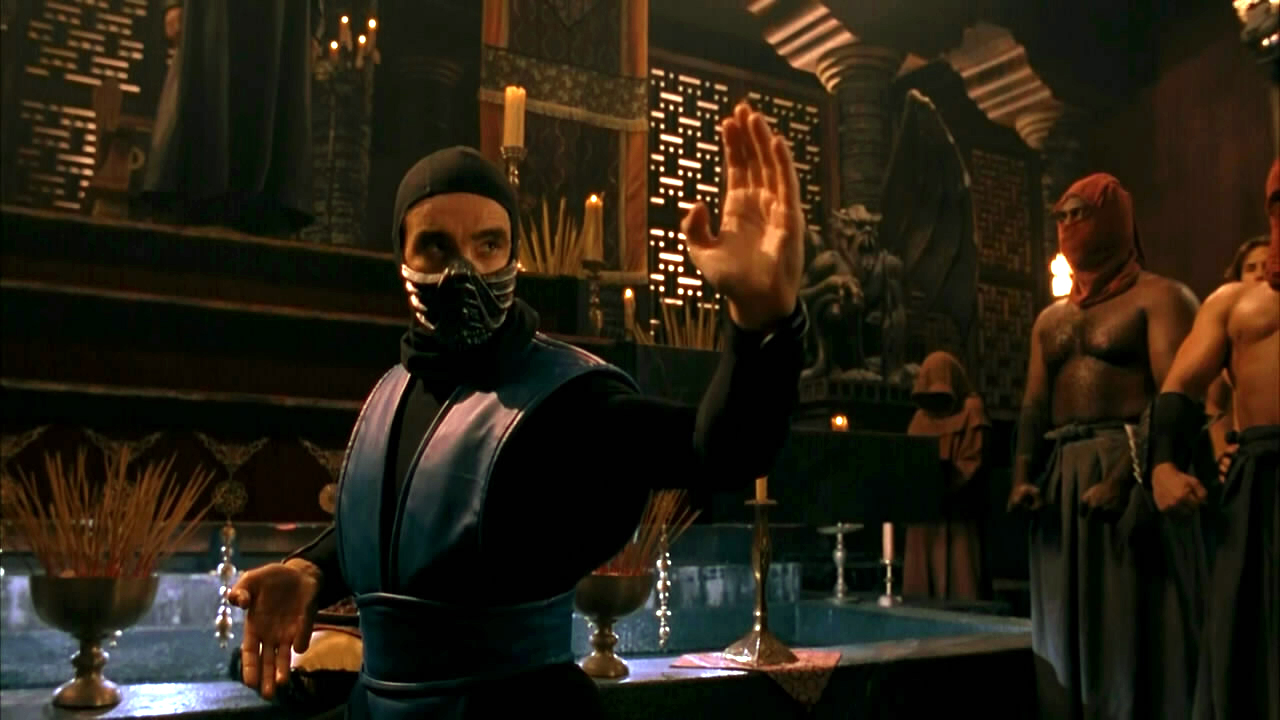
kombat5The plot of Mortal Kombat centers on an extreme, supernatural martial arts tournament, where the finest fighters from multiple dimensions fight to the death for the ultimate claim of glory.

The production of Mortal Kombat was plagued with casting difficulties from the onset. First,  Brandon Lee (Laser Mission) was selected to be Johnny Cage, but tragically died during the filming of The Crow. Then, Jean-Claude Van Damme turned down the role to star in a rival video game movie adaptation: Street Fighter. Rumors have also circulated that Tom Cruise and Johnny Depp were both approached for the role, but turned it down. Adding to the troubles, Cameron Diaz was apparently at one point set to play the part of Sonya Blade, but had to back out due to an injury before filming began.

The soundtrack to Mortal Kombat was particularly huge, going platinum in less than two weeks after its release. The music was a mix of techno and dance, integrating clips from the the original game audio, which proved to resonate with fans.

Steven Spielberg, a fan of the video game, was apparently supposed to appear in a cameo role during the introductory Johnny Cage scene, but scheduling conflicts ultimately prevented him from doing so.

Mortal Kombat was of course a massively controversial video game due to its violent and graphic fatalities, leading to significant public outcry against it. The film, on the other hand, is not particularly gory, and even received a PG-13 rating by the MPAA.

kombat2Not only did Mortal Kombat receive a sequel in Moral Kombat Annihilation, but a number of attempts have popped up over the years to reboot the franchise on film. Currently, James Wan (Saw, Furious 7) is reportedly attached to an upcoming adaptation by Warner Brothers, which is set tentatively set to release sometime in 2016. There is also an ongoing web series based on the game called Mortal Kombat Legacy, which was created after the positive reception to the short film Mortal Kombat: Rebirth.

The reception to Mortal Kombat was generally pretty poor: it currently holds a 5.8 rating on IMDb, alongside Rotten Tomatoes scores of 33% (critics) and 58% (audiences). In spite of the negative reviews, the movie managed to rake in a whole lot of money: it grossed $122 million worldwide in theaters on a budget of $18 million.

Personally, I feel like Mortal Kombat is one of the more loyal video game movie adaptations out there, with the exception of the lack of gore (which is notable). However, the character designs and fighting arenas all look like they could be pulled straight out of the games, and the fighting sequences aren’t too shabby. While the lack of gore is a huge issue for this movie, I can’t imagine a more faithful adaptation under a PG-13 rating.

kombat3All of that said, just because a movie is accurate to the game doesn’t make it a good film. The game Mortal Kombat is more or less plotless, and doesn’t really connect one fight scene to the next. That means that the screenplay for the movie was on its own in regards to connective tissue to string the fights together, and it didn’t do a particularly good job of it. When a fight scene isn’t in progress, this movie is just…dull. The characters and plot, while fine and good for the purposes of a fighting game, are really boring when applied to a movie that requires progress and character development.
It is worth noting that the very idea of a PG-13 Mortal Kombat movie is a bit bizarre and soulless to start with. Clearly, the only reason to make the movie PG-13 was so that it could be marketed to a younger audience, and thus increase its potential at the box office. However, the game is intentionally violent and catered to an adult audience, so making the movie sanitized for the purpose of reaching out to early teens (and younger) is just kind of icky. I personally think an R-rated movie with more realistic and brutal violence is more appropriate than the cartoonish and bloodless affair in this film. Realistically, which one of those is setting a worse understanding of the consequence of violence at the end of the day? Also, and more importantly, an R-rated Mortal Kombat would be way more entertaining.

Overall, Mortal Kombat isn’t an absolutely awful movie, at least when put side-to-side with other video game adaptations (like its sequel, or the many Uwe Boll features). I do think most of its value at this point comes from nostalgia more than anything else, though I am always a big fan of Christopher Lambert hamming it up in a campy movie. I feel about the same way about this movie as I do about Super Mario Bros: I’ll watch it and enjoy it out of a sense of nostalgia, but there isn’t really any doubt that this qualifies as a bad movie. I think its reputation is worse than it deserves from fans due to the lack of gore, but it also isn’t deserving of any props.

If you are going on a 90s kick and are looking for a way to extend your nostalgia trip, pop in Mortal Kombat. It can serve that purpose well enough.

Ghost Dad

Ghost Dad

ghostdad1

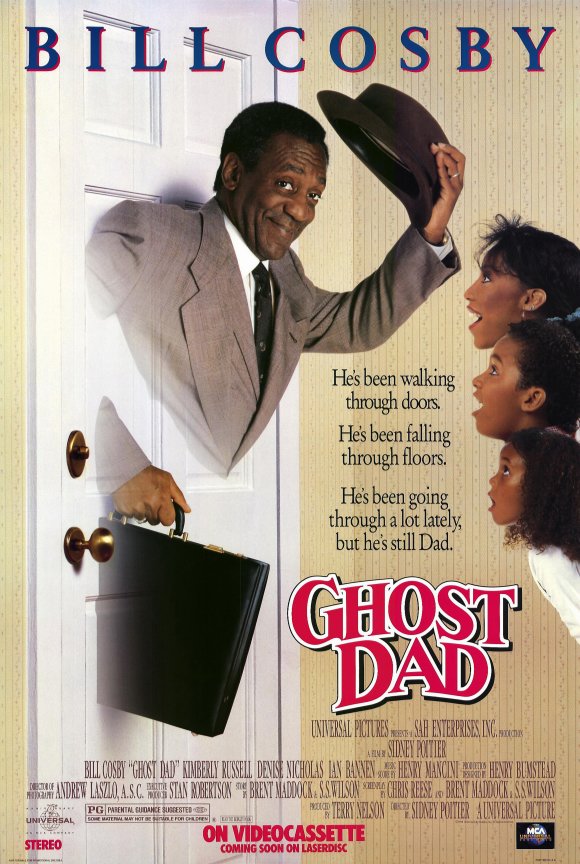
Today’s feature is a 1990 Bill Cosby vehicle: Ghost Dad.

The team of writers for Ghost Dad included Brent Maddock (Heart and Souls, Short Circuit 2, Tremors 2), S.S. Wilson (Tremors, Wild Wild West, Short Circuit), and Chris Reese (The Chamber).

Ghost Dad was directed by famed actor Sidney Poitier, of films such as Guess Who’s Coming To Dinner and The Jackal. To date, Ghost Dad has been his last directorial feature, but it wasn’t his first: he earlier worked with Bill Cosby on the features A Piece of the Action, Uptown Saturday Night, and Let’s Do It Again, and also directed the Gene Wilder comedies Stir Crazy and Hanky Panky.

The editor for Ghost Dad was Pembroke J. Herring, who also cut Groundhog Day, Johnny Dangerously, European Vacation, Tora! Tora! Tora!, and Out of Africa. The cinematographer for the film was Andrew Laszlo, who also cut Innerspace, First Blood, The Warriors, and Poltergeist II.

The musical score for Ghost Dad was composed by Henry Mancini, an Academy Award and Grammy-winning composer who was behind the scores for such movies as The Pink Panther and Breakfast At Tiffany’s.

The team of producers for Ghost Dad included Terence Nelson (Xanadu), David Wisnievitz (Training Day, A Civil Action), and Stan Robertson (Men of Honor).

The makeup effects on Ghost Dad were provided by Stephanie Cozart Burton, who has extensively worked on a number of television shows, and has credits on In Living Color and White Men Can’t Jump.

The special effects team included Eric Rylander (Gangster Squad, Battleship), Bruce Minkus (Van Helsing, Steel), Richard Helmer (Burlesque, Alligator, Men At Work), Richard Buckler (Blade), and Noel Butcher (Tremors).

ghostdad4The significant visual effects team behind Ghost Dad included common elements with films like Blade Runner, TRON, RoboCop, The Abyss, Last Action Hero, and The League of Extraordinary Gentlemen, among many others.

The cast for Ghost Dad includes Bill Cosby (Leonard Part 6), Kimberly Russell (The Game, Precious), Denise Nicholas (Blacula, Capricorn One), Ian Bannen (Flight of the Phoenix), Christine Ebersole (The Wolf Of Wall Street), Arnold Stang (Hercules in New York), and Barry Corbin (Northern Exposure).

The plot of Ghost Dad centers on a middle-aged father who is apparently killed in a car accident, but continues living as a disembodied spirit. He slowly learns the quirks and rules of his new state of being, while trying to continue his daily life with his job and his family as if nothing had happened.

ghostdad2Reportedly, Steve Martin was originally set to star in Ghost Dad, when the picture was supposed to be directed by John Badham. Once those plans fell apart, the project fell to the team of Cosby and Poitier.

Interestingly, the Patrick Swayze hit Ghost released shortly after Ghost Dad in the same year, and was received much better by the general public.

Ghost Dad was the first movie for Bill Cosby since the disastrous Leonard Part 6, a film so bad that he publicly denounced it and allegedly bought the television rights specifically in order to bury it. That movie still holds a spot in the IMDb’s Bottom 100.

The reception to Ghost Dad was overwhelmingly poor: it currently has a  4.3 rating on IMDb, alongside Rotten Tomatoes scores of  7% (critics) and 32% (audience).

The rules for the afterlife are bizarre, and aren’t fully explained or followed consistently. Even worse, the plot in general manages to sidestep the serious implications of death with a story twist revealing that Cosby’s character isn’t actually dead, which also negates the very title of the movie.

A lot of the gags throughout the movie are based more on Cosby’s conditional invisibility than his status as a ghost, which brings up a lot of questions as to how the writing process for this movie went. Given his death is negated, why not just make this an invisible dad movie? It allows for most of the same jokes, but avoids the immensely depressing undertones that sap all of the potential humor out of what is theoretically a family comedy.

GHOST DAD, Kimberly Russell, Bill Cosby, 1990, (c)UniversalThe failure of Ghost Dad was the coffin nail for the potential film career of Bill Cosby, which, given what has come to light about his behavior and character, is almost certainly for the best. It is hard to imagine how much bigger Cosby might have gotten if his movie career took off, and how difficult it would have been to expose him if he had even more power. So, I guess we can thank the failures of Ghost Dad and Leonard Part 6 for keeping the beast from growing too large to slay?

Personally, I think that this is a far worse movie than Leonard Part 6, though that film is almost certainly more loathed in the public consciousness of moviegoers. However, there is some weird charm to that flick that is totally absent in Ghost Dad, which is just wrong all the way down to its foundation and premise. That said, it is certainly a spectacle to sit through this confused mess of a movie, so I recommend giving it a shot if you happen to find it laying around somewhere. Also, there is something to be said for watching both Ghost Dad and Leonard Part 6 explicitly because Bill Cosby doesn’t want you to.

How To Make A Monster

How To Make A Monster

makeamonster5

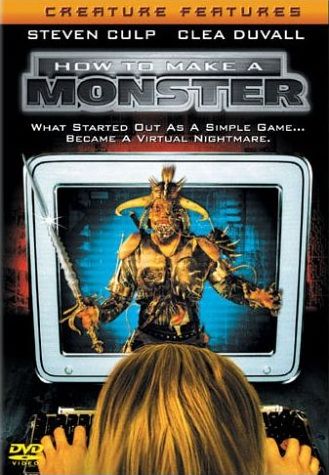
Today’s feature is a television movie from 2001: How To Make A Monster.

How To Make A Monster was written and directed by George Huang, who is best known for Trojan War and the Kevin Spacey dark comedy Swimming With Sharks.

The cinematographer for How To Make A Monster was Steven Finestone, who also shot Swimming With Sharks for George Huang, and worked as a camera operator on films like The Philadelphia Experiment, Saturday the 14th, Battle Beyond The Stars, and Humanoids From The Deep.

The editors on How To Make A Monster were Daniel T. Cahn (The Young and The Restless, Darkman II) and Kristina Trirogoff, who was an assistant editor on Phone Booth, Collateral, Heat, McHale’s Navy, and Gone Fishin’.

The musical score for How To Make A Monster was composed by David Reynolds, who has worked in the music departments for such movies as Rounders, The Big Kahuna, Species, Entrapment, and Wanted.

The special effects on How To Make A Monster were provided by the Stan Winston Studios, and the creature design is credited to Stan Winston himself (Jurassic Park, Small Soldiers, Congo, Lake Placid, Predator 2, Leviathan, Terminator 2).

makeamonster1The cast of How To Make A Monster includes Clea DuVall (Argo, The Faculty, She’s All That, But I’m A Cheerleader), Steven Culp (Bosch, JAG), voice actor Jason Marsden, Tyler Mane (X-Men, Troy), Karim Prince (Power Rangers Zeo), and Danny Masterson (That ’70s Show).

The plot of How To Make A Monster centers on a video game development team who is hired to revamp a horror game that has been panned by test audiences. They are given four weeks to create a new monster and overhaul the game, with a $1 million bonus on the line for whoever makes the game the scariest. However, the monster AI they develop proves to be a little more effective than they had planned.

How To Make A Monster features a cameo by b-movie actress Julie Strain as herself, doing motion capture for the fictitious video game featured in the movie. She is best known for such movies as Heavy Metal 2000, Sorceress, and Out For Justice.

One of the monsters depicted in the game featured in the movie is clearly modeled after pikachu, the popular species of electric mouse from Pokemon. However, the adorable icon is re-imagined as a monster worth of Doom.

makeamonster4The reception to How To Make A Monster was pretty negative: it currently holds a 4.4 rating on IMDb, and a 30% audience score on Rotten Tomatoes.

The monster itself in How To Make A Monster actually looks pretty cool, and becomes more of a gory patchwork of slain characters as the movie progresses.

As you would imagine, all of the sequences that take place “in game” have aged pretty poorly, given how quickly graphic technologies for video games have developed over the years. However, I think it is kind of charming, and feels like a sort of period piece as a result. For video game fans, there are certainly enough nods to the audience and ample nostalgia for them get a kick out of re-watching this movie now.

makeamonster3However, there are certainly some huge drawbacks to this movie. The characters are all very simple stereotypes that are far from flattering to the population of gamers, and people in the tech industry in general. Even worse, the resulting tone as a whole is at best bluntly misanthropic. The conclusion of the story dives that home even further, as it is very downbeat and depressing (and not nearly as clever as it thinks it is). Interestingly enough, it reminded me a lot of the mediocre ending of Swimming With Sharks, an earlier work by the same writer/director, which has the same sort of tone and resolution.

On the whole, I am pretty conflicted about How To Make A Monster. The creature is definitely the reason to watch, but the writing and characters that surround it can’t really be avoided, and they are all some combination of creepy, disgusting, or vile. The preachy message about greed and corporatism isn’t necessarily wrong by any means, but the way it is executed is far overblown. You’ll also probably figure out that the title of the film has a double meaning as the soon as all of the characters are established, or at least by the end of the first act.

If you really like Stan Winston effects or early horror PC games, I think this is worth checking out. For everyone else, I think it is a toss-up. The writing isn’t any worse than most slasher movies at the end of the day, and this is probably a tad better than Evolver when it comes to killer video game movies. However, Evolver is way more fun in my opinion, which is what this movie is missing most overall.

Gymkata

Gymkata

gymkata1

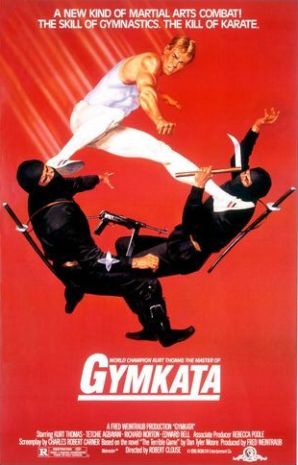
Today’s feature is Gymkata, a peculiar gymnastics/martial arts hybrid movie that has become a beloved good-bad classic.

Gymkata was based on a novel written by Dan Tyler Moore called “The Terrible Game,” and the screenplay for the flick was contributed by Charles Robert Carner, who is best known for the Rutger Hauer movie Blind Fury and the 1997 remake of Vanishing Point.

Gymkata was directed by Robert Clouse, who was also behind the Cynthia Rothrock action flick China O’Brien, as well as the Bruce Lee classics Game of Death and Enter the Dragon.

The cinematographer for Gymkata was Godfrey Godar, who also served as director of photography on Game of Death and Howling IV.  He is also an experienced camera operator, working on such films as Supergirl and Superman IV: The Quest For Peace.

Gymkata was edited by Robert Ferretti, who has cut such action movies as On Deadly Ground, Under Siege, Rocky V, Die Hard 2, Out For Justice, and Tango & Cash.

The effects team for Gymkata included Peter Dawson (Supergirl, Batman), Terry Glass (The Brothers Grimm, League of Extraordinary Gentlemen), Marijan Karoglan (Blubberella, Rosencrantz & Guildenstern Are Dead), Steve Purcell (Lethal Weapon 3, Risky Business), Angelo Mattei (Demons, Touch of Death), and Lamberto Marini (Alien 2: On Earth, The Exorcist: Italian Style, The Adventures of Hercules II, Sacco & Vanzetti).

The music for Gymkata was provided by Alfi Kabiljo, who also provided scores for the 1991 thriller Scissors, as well as the horror-comedy Transylvania 6-5000.

The cast of Gymkata was made up of primarily inexperienced players: Kurt Thomas (a professional gymnast), Tetchie Agbayani (a former Playboy model), fight coordinator Richard Norton (The Octagon, American Ninja, Stealth), Bob Schott (Head of the Family, In the Line of Fire), and stuntman John Barrett (Mighty Morphin Power Rangers, American Kickboxer).

The plot of Gymkata surrounds a peculiar martial arts competition in the fictitious nation of Parmistan, of which no one has survived for centuries. The reward for completing the competition is the granting of any request, which catches the attention of the United States government, who wants to use Parmistan as the site for an experimental missile defense program. Agents recruit a young American to compete in the competition, whose father was previously lost within the boundaries of Parmistan. The young hero has to push his limits to survive the competition, and try to discover the fate of his missing father.

Kurt Thomas, the star of Gymkata, was a former championship gymnast, and performed all of his own stunts for the movie. He was a member of the 1976 US Olympic Gymnastics team, and was expected to compete for the gold medal in 1980, but the United States ultimately boycotted the Moscow-held games.

gymkata2The plot of Gymkata references the “Star Wars” satellite missile defense program, which was a real Cold War program that was announced in 1983 by Ronald Reagan, but never really came to fruition. Still, the program became engrained in pop culture, and showed up in many films of the 1980s, like Spies Like Us, Real Genius, and RoboCop.

Surprisingly, the term “gymkata” is never used in the film to refer to the lead character’s fighting style. His unique method of combining martial arts with gymnastics is never really mentioned in the film, bringing into question why they didn’t just recruit a general martial arts master for the mission.

Though Gymkata is a cult classic now, it wasn’t well received at the time. It currently holds a 4.1 rating on IMDb, alongside Rotten Tomatoes scores of 18% from critics and 41% from users. I wasn’t able to dig up a budget for Gymkata, but it managed to gross just under $6 million in its lifetime theatrical run, which I assume was profitable given the absence of stars or complicated effects.

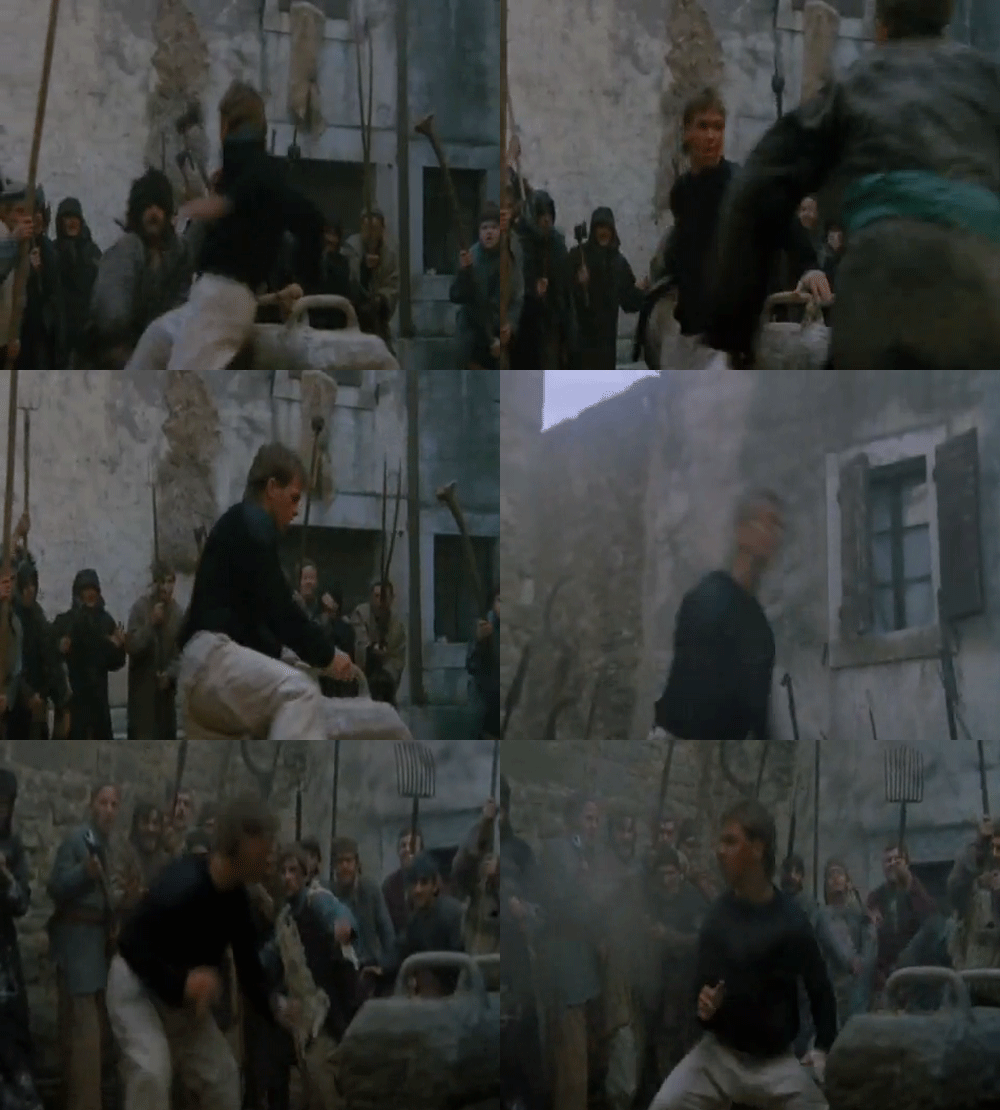
The action sequences in Gymkata are pretty entertaining, but the surroundings always seem a little too conveniently laid out to be handy for an aggressive gymnast. There is particularly no good reason for a sawhorse to be conveniently sitting in the middle of a penal village filled with zombie-people.

gymkata3 gymkata4To the credit of Gymkata, I can’t say that the movie ever gets boring. The plot and characters are confounding throughout the run time, but there is always enough going on to keep you invested in the parade of nonsense happening on screen.

Gymkata features one of the least believable and most unnecessary twists that I have ever seen in a movie, particularly because it is made irrelevant within minutes of being revealed. I’m not going to spoil it because I absolutely recommend watching this movie, but it is astoundingly unnecessary and pulled out of left field.

Overall, Gymkata almost doesn’t qualify as a bad movie at all. The directing, shooting, and fight choreography is all pretty fantastic, but the story written around it all is just astoundingly nonsensical, and makes this into a wonderful little cult gem that seems to encapsulate all that is beautiful about 1980s action movies. Even the acting isn’t quite as bad as I would have expected, even from people who are essentially non-actors.

As I mentioned previously, Gymkata is a solid recommendation from me. If you want to know more about the film, it has been covered by We Hate Movies, How Did This Get Made, Red Letter Media, and even Cracked.com. However, I recommend watching it first before you dig any further into it, because it is more than worth the effort of watching with as little knowledge as possible.

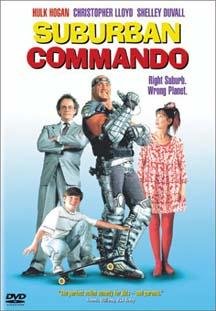
Suburban Commando

Suburban Commando

suburban1

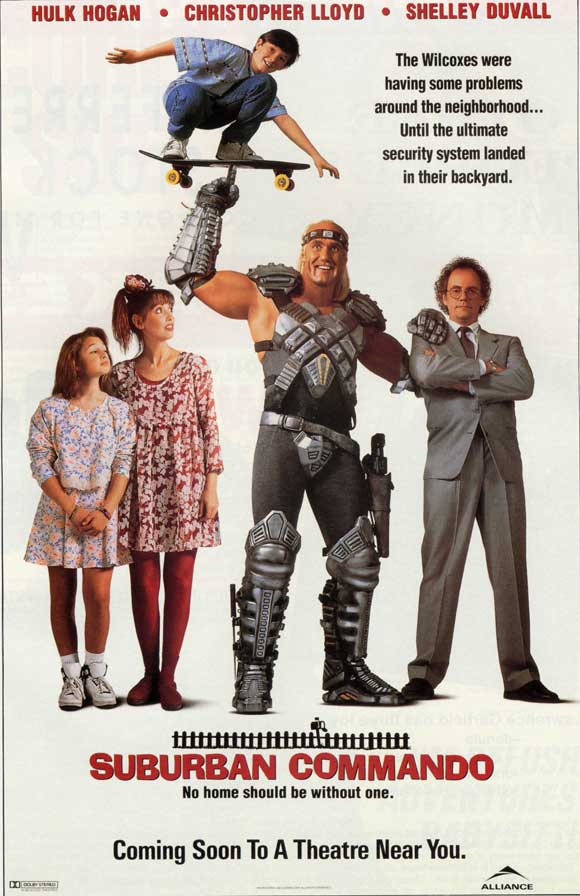
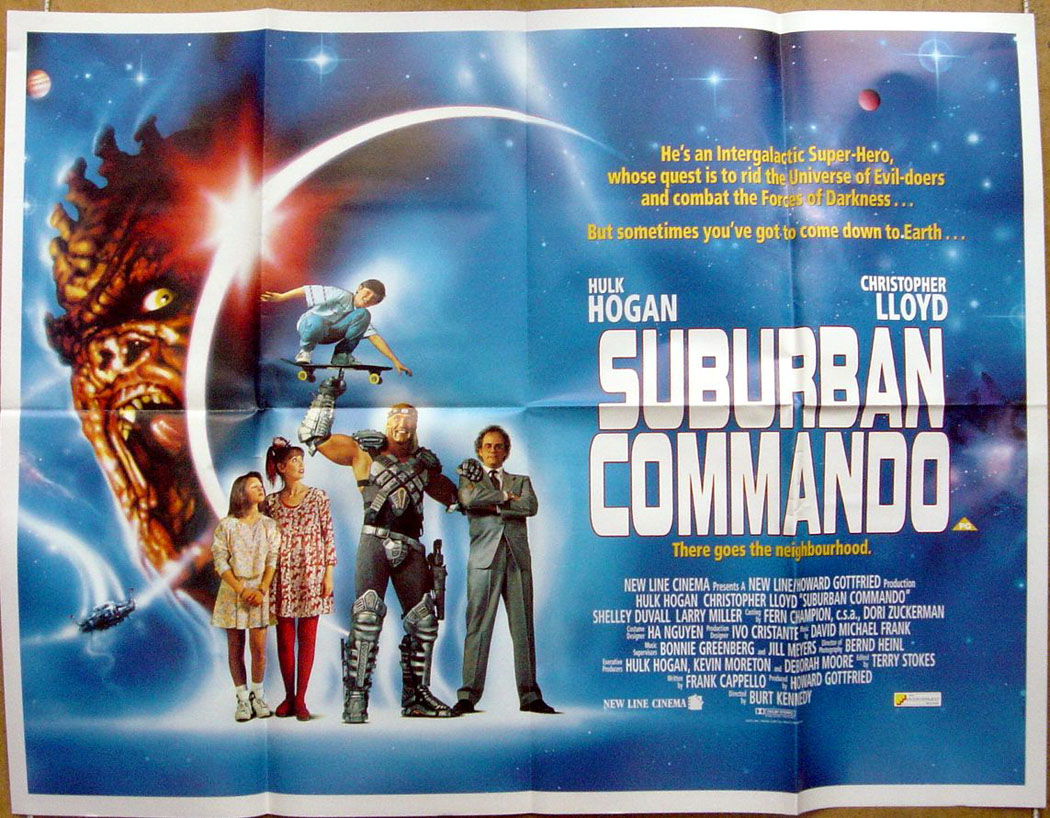
Today’s feature is one of the few films to star the now-disgraced wrestling superstar Hulk Hogan: Suburban Commando.

Suburban Commando was written by Frank Cappello, who also wrote the films Constantine, He Was A Quiet Man, and No Way Back. The movie was directed by Burt Kennedy, who was also behind the western comedy Support Your Local Sheriff and the John Wayne flick The Train Robbers.

The cinematographer for Suburban Commando was Bernd Heinl, who didn’t have a ton of credits to his name, but shot the movies The Little Vampire and Bagdad Cafe. Likewise, the editor on the film, Terry Stokes, cut a number of horror sequels over his career with Critters 4, Critters 3, The Blob, and A Nightmare on Elm Street 3.

suburban2The team of special effects artists on Suburban Commando was made up of Steve Johnson (Dead Heat, Humanoids From The Deep, The Dentist, Leviathan), Dean Miller (Waterworld, Fright Night, The Texas Chain Saw Massacre, Tales From The Crypt), Bill Corso (Deadpool, Foxcatcher, Dreamcatcher, Galaxy Quest, The Garbage Pail Kids Movie), Thomas Bellissimo (Red State, Dogma, Jackie Brown), Charles Belardinelli (Saw, Killer Klowns From Outer Space, Resurrection, Bordello of Blood), Tassilo Baur (DeepStar Six, House), John Calpin (Lake Placid, Small Soldiers, Congo), Joel Harlow (Tusk, Battlefield Earth, The Langoliers, Leprechaun) Brian Sipe (Son of the Mask, Van Helsing), and Mike Smithson (Dollman, Dead Heat, The Island of Dr. Moreau, Tank Girl, Battlefield Earth).

Original Cinema Quad Poster - Movie Film PostersThe visual effects team for Suburban Commando included Richard Cross (Teenage Mutant Ninja Turtles III, Muppets From Space), Heather Davis Baker (Van Helsing, Wolf, The Master of Disguise), Robert Habros (Theodore Rex, SpaceCamp, Army of Darkness, Leviathan), Richard Malzahn (SpaceCamp, Josie and The Pussycats, Dune, Leviathan), Brett B. White (Puppetmaster, Gremlins 2).

The makeup work on the film was done by Cheri Montesanto-Medcalf, who also contributed to the effects on movies like Tank Girl, Mr. Nanny, and RoboCop 2.

The score for Suburban Commando was composed by David Michael Frank, who also provided music for films like Poison Ivy, Out for Justice, and Hard to Kill.

suburban4The team of producers for the movie included Howard Gottfried (Network, Body Double), Deborah Moore (The Mask, Surf Ninjas, The Island of Dr. Moreau, Heart Condition). Kevin Moreton (Menace II Society), John Marshall (Lawnmower Man 2, Supergator), and the film’s star, Hulk Hogan.

The cast of Suburban Commando was headlined by Hulk Hogan (Santa With Muscles, No Holds Barred, 3 Ninjas: High Noon at Mega Mountain), Christopher Lloyd (Baby Geniuses, Foodfight!, Who Framed Roger Rabbit), Shelley Duvall (The Shining, Popeye), and Larry Miller (Foodfight!, Kiss Kiss Bang Bang).

The plot of Suburban Commando follows an expert interstellar warrior who becomes stranded on Earth, specifically in a suburban community. The hard-nosed soldier has to adapt to the customs of the area while repairing his spaceship, leading to a number of shenanigans.

suburban3Suburban Commando was originally written for Arnold Schwarzenegger and Danny DeVito, but they chose to make Twins instead. This decision led to the screenplay being sold to another studio, and then significantly reworked into a science fiction story .

Tragically, a special effects worker (Michael Colvin) was killed in an on set accident involving a faulty trap door, which he was testing at the time.

Suburban Commando features a number of reused props from other productions, including guns from Masters of the Universe and the P.K.E. meter from Ghostbusters.

Suburban Commando was not well received upon its initial release, and it currently holds a 4.3 rating on IMDb alongside Rotten Tomatoes scores of 20% (critics) and 32% (audiences). Even worse, it only managed to gross $6.9 million in its theatrical run on an estimated budget of $11 million, making it a significant financial failure for the studio.

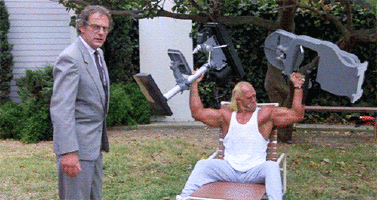
I like Christopher Lloyd, partially because he always seems to put effort into his roles, regardless of how bad the greater movie might be. Both Baby Geniuses and Foodfight! come to mind, but his delivery of the line “I was frozen today!” in Suburban Commando is the perfect example of how much passion and intensity the man is capable of injecting into absolute nonsense.

Hogan, on the other hand, is about as terrible as he is with any of his acting roles in Suburban Commando. For someone who seems to be a natural showman, and has spent his entire professional life as a glorified stage performer, he has always seemed awkward in from of a camera. I think this has at least a little to do with the lack of a live crowd when filming, which seems to be what actually gives him his motivation and energy to perform. It is kind of weird to even picture him on a quiet sound stage, surrounded by cameras and boom microphones.

Knowing that this screenplay was initially intended for the duo of Danny DeVito and Arnold Schwarzenegger brings up all kinds of “what if?” scenarios. It is impossible not to picture this movie with the Twins duo after you have the knowledge of this screenplay’s background. That said, I think Lloyd fills in his role just fine, and is probably as good or better than what DeVito could have pulled off. Hogan, on the other hand, just doesn’t have Schwarzenegger’s comedic chops, which is really saying something given his work on Hercules in New York and Jingle All The Way. But, for what it is worth, Schwarzenegger is more expressive than Hogan, and generally seems to have better timing and reactions for a comedic role. As bad as Hercules in New York is, Arnold has come a long way since then. Hogan, on the other hand, hasn’t ever really gotten better at acting since No Holds Barred. If anything, he’s gotten worse, given Santa With Muscles and 3 Ninjas: High Noon at Mega Mountain were actually later in his acting career. He was pretty entertaining as a voice actor in China, IL, but that was more self-parody than anything else. Now that the guy has been outed as a racist, publicly disgraced, and disowned by the WWE, it seems unlikely that he will be getting any more acting roles. Which, really, is for the best.

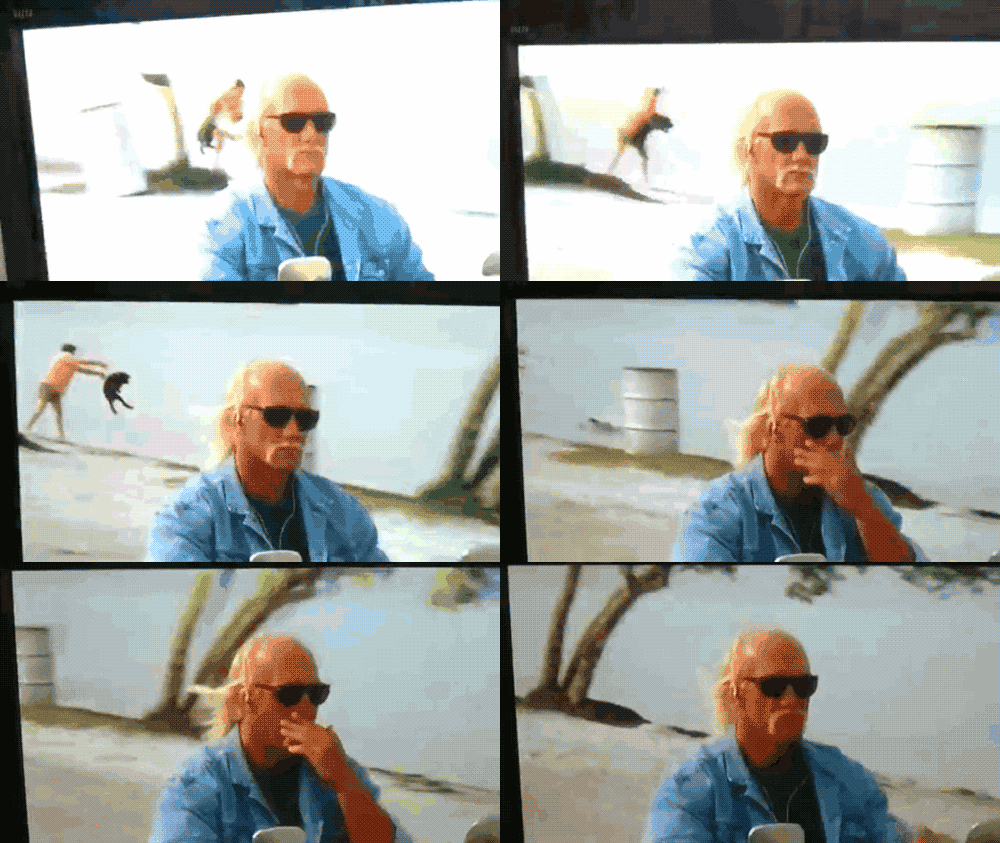
There is a really perplexing clip from Suburban Commando that has made the rounds on the internet, in which someone in the background of a scene appears to randomly toss their dog into the ocean. It isn’t relevant to the plot at all, and the context doesn’t help, but the image is certainly worth checking out the the sheer bizarreness of it.
suburban7Suburban Commando does have entertaining moments to it, but in general it is a pretty generic family-friendly pseudo-comedy. The plot is silly, the acting is bad, and even the music is pretty atrocious throughout. However, I think it is worth checking out for bad movie fans, at least for the novelty value of it as a Hogan/Lloyd team-up that literally nobody wanted. Also, Larry Miller always seems to be delightful when he shows up in a movie, and certainly doesn’t phone it in here as Christopher Lloyd’s sketchy boss.

The Island of Doctor Moreau

The Island of Doctor Moreau

moreau4

Today’s flick is the disastrous 1996 adaptation of The Island of Dr. Moreau, starring Val Kilmer and Marlon Brando.

The Island of Doctor Moreau is based on a famous work by H.G. Wells, which has been adapted a number of times to the screen, dating all the way back to 1932’s Island of Lost Souls. The screenplay for this particular incarnation was written by Richard Stanley (Hardware, Dust Devil) and Ron Hutchinson (The Josephine Baker Story).

The screenplay co-writer Richard Stanley was initially brought on board to direct, but was ultimately fired and replaced by John Frankenheimer (The Manchurian Candidate, Reindeer Games, Ronin). However, rumor has it that Stanley snuck back on to the production as an extra, specifically made up as one of the background creatures so that he could eavesdrop on the progress of the movie.

The cinematographer for The Island of Dr. Moreau was William A. Fraker, who also shot such films as Vegas Vacation, Tombstone, Street Fighter, SpaceCamp, WarGames, The Exorcist II, Rosemary’s Baby, 1941, and Bullitt, and was nominated for a total of 6 different Academy Awards over his career.

The Island of Doctor Moreau featured two primary editors: Adam P. Scott, who has worked on films like Any Given Sunday, The Insider, Blade, and Matchstick Men, and Paul Rubell, who cut The Cell, Thor, The League of Extraordinary Gentlemen, Collateral, and Battleship. A third editor, Thom Noble (Red Dawn, Thelma & Louise, Alex Cross, Fahrenheit 451), worked without credit on the film.

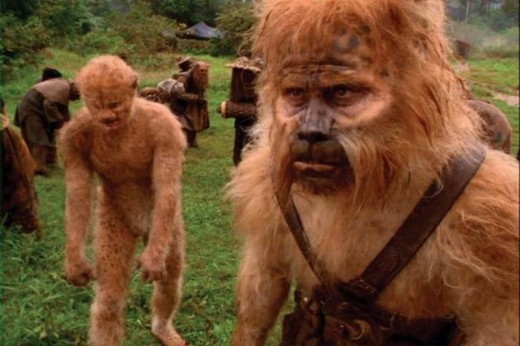
The makeup and special effects for The Island of Doctor Moreau were provided by the prestigious Stan Winston Studios, led by none other than Stan Winston himself, a four time Academy Award winner. The makeup and special effects teams included common elements with movies like The Thing, The Cell, John Dies At The End, Tremors, Congo, Jurassic Park, Lake Placid, Small Soldiers, The Bat People, Predator 2, Avatar, Iron Man, Hollow Man, Class of 1999, Pacific Rim, Aliens, Leviathan, Dollman, and Dead Heat.

moreau2The score for The Island of Dr. Moreau was composed by Gary Chang, who also provided music for movies like The Substitute, Under Siege, and A Shock To The System.

The three producers on the film were Claire Rudnick Polstein (Austin Powers, Wag The Dog), Tim Zinnemann (Street Fighter, The Running Man) and Edward R. Pressman (Street Fighter, Judge Dredd, Masters of the Universe, The Hand).

The cast for The Island of Dr. Moreau included David Thewlis (The Big Lebowski, DragonHeart), Val Kilmer (Heat, Kiss Kiss Bang Bang, Top Gun), Marlon Brando (On The Watefront, The Godfather, A Streetcar Named Desire, Apocalypse Now), Ron Perlman (Pacific Rim, Hellboy), Mark Dacascos (American Samurai, Only The Strong, Double Dragon, Scorcher), Peter Elliott (Congo), Temuera Morrison (Speed 2), and Fairuza Balk (The Waterboy).

moreau3The plot of The Island of Dr. Moreau follows a shipwrecked man who is rescued and brought to an isolated island.  However, the island is inhabited by a reclusive and eccentric doctor, who has been performing experiments splicing genes from humans with animals, and has created a population of hybrid abominations. As the story progresses, the hybrids become increasingly unruly and savage, and ultimately revolt against their creator.

As he did with many of his later movies, Marlon Brando was affixed with a radio receiver in his ear so that someone off-screen could feed his lines to him. However, during The Island of Doctor Moreau, the device received a good deal of interference from local radio frequencies, and lore has it that Brando would frequently read off messages from police scanners  instead of his lines, without realizing his mistake.

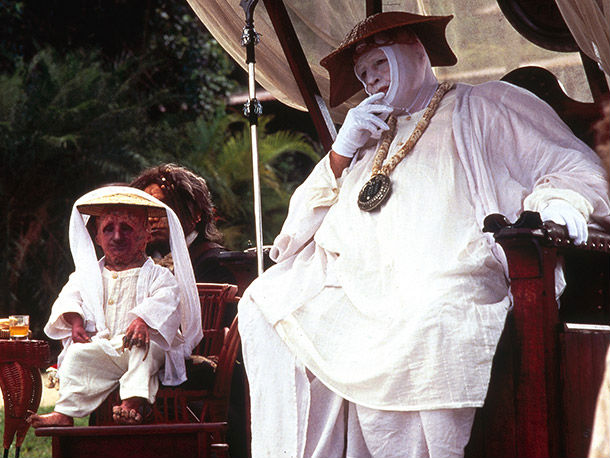
moreau1One particularly infamous sequence from The Island of Doctor Moreau, in which Brando plays a piano duet with his small companion (who he insisted on having as part of the production), was famously lampooned in the second Austin Powers movie. The sequence went so far as to even include the stacked miniature piano setup used in Moreau.

In 2014, a documentary was released detailing the troubled production behind The Island of Doctor Moreau, titled Lost Soul: The Doomed Journey of Richard Stanley’s Island of Dr. Moreau.

Val Kilmer tried to get out of the movie before filming began, but was contractually forced to participate. He openly disliked the direction of the film, and was reportedly actively disruptive during the production. Rewrites reassigned many of his lines to Ron Perlman’s character so that his screentime could be further limited, and the director reported said “Cut. Now get that bastard off my set” after the last take with Kilmer wrapped.

Rob Morrow was originally cast as the lead, but left after Stanley was fired from the production. This led to Thewlis being brought in on short notice to take over the role.

Because of numerous rewrites and changes in direction, the screenplay for The Island of Doctor Moreau went through no less than four distinct incarnations over the course of the production.

The Island of Doctor Moreau wound up with six Golden Raspberry nominations, which are given out to the worst films and performances of the year. Outside of Marlon Brando winning for worst supporting actor, however, it wound up getting beat out in the major categories by the Demi Moore movie Striptease.

The popular reception to The Island of Doctor Moreau was quite poor, though it did wind up making its money back at the box office (a gross of $49 million on a budget of $40 million). It currently holds Rotten Tomatoes scores of 23% (critics) and 20% (audience), along with a 4.4 rating on IMDb.

The Stan Winston designed creature effects are pretty impressive, and are probably the biggest reason that this movie is remembered in any kind of positive light. Some of the creatures certainly look more realistic than others, but the sheer amount of makeup work that had to be done to transform so many actors must have been daunting, and it isn’t too outlandish to say that the movie probably wouldn’t have happened at all without Winston’s involvement.

Where the movie really falls apart is with the screenplay, which, as I mentioned earlier, went through a number of rewrites. This was clearly an ambitious project, but it comes off on screen as trying to do far too much, and it lacks an even tone or style thanks to all of the edits and rewrites. Apparently, apart from the full screenplay rewrites, some of the actors also rewrote their own lines, which contributes even more to the bizarre inconsistencies throughout the film.

The one-two acting punch of Marlon Brando and Val Kilmer, which should have been a knock-out combo on paper, proved to be an absolute disaster for this production. Not only did both men already have reputations for being troublesome on sets, but both were in particularly bad personal situations during the filming of Moreau: Kilmer was suddenly embroiled in an unexpected divorce, and Brando was mourning the recent suicide of his daughter. Adding to the powder keg, appropriately enough, was an atomic test that was performed near a property owned by Brando, went sent him even further into a dark psychological state. The mixture of all of these elements created two lead actors who wanted nothing more than to be off the production, and gave respective performances that could accurately be described as sabotage.

Overall, this a legendarily terrible movie, but is another one of those productions that feels like it had some honest potential behind it. The behind the scenes antics are fascinating to read into, and make the movie worth a watch if you ask me. Kilmer and Brando are also hypnotically awful in their performances, despite how little screen time they get.
I first saw this  movie when I was pretty young, when it got a lot of airplay on the Sci-Fi Channel, and it made a significant impression on me. I remember being particularly baffled by Kilmer’s drug-fueled Brando impression in particular, which might be the highlight of the whole film. If you happen to come across this one, it is worth picking up, particularly if you are a fan of movie trivia. I also recommend giving a watch to the documentary about it, Lost Soul.

Water Foul: Shark

Shark

shark

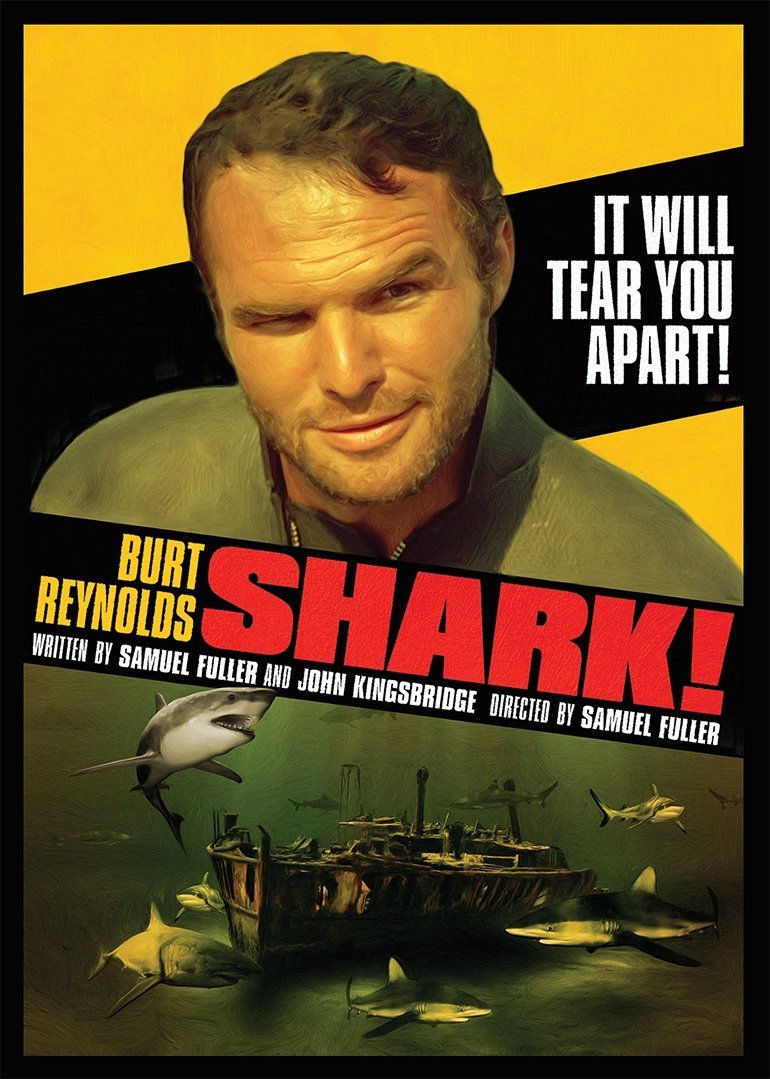
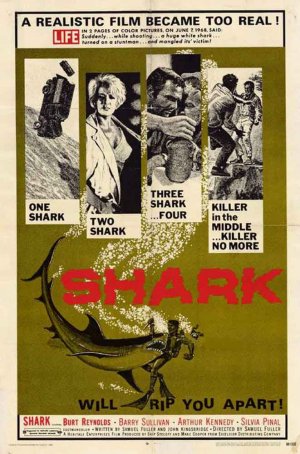
Today, I’m going to take a look at 1969’s infamous Samuel Fuller movie, Shark.

Shark was directed and co-written by Samuel Fuller, who is known for such films as White Dog and The Big Red One. The other co-writer on the flick was John Dugan, who had an assortment of obscure television writing credits over his career.

The story of Shark is based loosely on the novel “His Bones Are Coral” by Victor Canning, who also famously wrote the source material for Alfred Hitchcock’s Family Plot.

shark3The cinematographer for Shark was Raul Martinez Solares, who shot such Santa Claus, Night of the Bloody Apes, and a number of Santo movies among his astounding 278 career cinematography credits.

The editor on the film was Carlos Savage, who also cut such films as Simon of the Desert, Los Olvidados, and The Exterminating Angel.

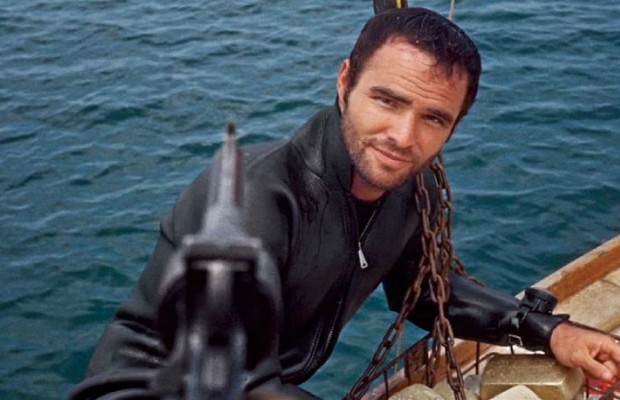
The cast for Shark includes Burt Reynolds (Deliverance, At Long Last Love, Gator, Cop & 1/2, Stroker Ace), Enrique Lucero (The Shark Hunter, The Wild Bunch), Barry Sullivan (Earthquake, Planet of the Vampires, The Bad and The Beautiful), Silvia Pinal (The Exterminating Angel), and Arthur Kennedy (Lawrence of Arabia, Elmer Gantry).

shark4The story of Shark follows a gun-runner played by Burt Reynolds who becomes stranded after losing his cargo off the shore of Sudan. He winds up being hired to salvage and plunder a ship lost in nearby shark-infested waters as attempt to cover his losses, but the trek puts him in even greater peril than he would have expected.

Alternate titles for this flick included Caine, Man-Eater, and Shark! (with an emphasized exclamation). The movie went through a number of name changes after a stuntman was attacked and killed on camera by a supposedly sedated shark, which was distastefully used by producers to promote the film. Samuel Fuller decided to quit the production because of the tragic death being used as an advertising gimmick. Fuller even tried to take his name off of the final release of the film, but to no avail.

shark2Shark certainly isn’t a beloved movie: it currently holds a 4.4 rating on IMDb, alongside a 30% audience score on Rotten Tomatoes. The fact that the producers used a tragic death during the production to promote the film almost certainly left a bitter taste in many viewers mouths, much as it did Fuller.

It is kind of surreal to see Burt Reynolds so young on film, and without his iconic mustache. He is certainly handsome, but has more of a Marlon Brando, old Hollywood look to him that I just don’t associate with Burt Reynolds’s appearance as we think of him in the public consciousness. While he had been on television a bit already in shows like Gunsmoke and Hawk, 1969 was really when he started taking on lead roles in feature films. Apart from Shark, he also popped up in Sam Whiskey and 100 Rifles that year, which primed him to show up in the higher profile films Deliverance and Fuzz in 1972. The combination of those two movies put him solidly in the public consciousness as a movie star, and his career blossomed from there (at least until Cop & 1/2, that is).

I watched this movie on a secondhand VHS, because this is not an easy flick to come by. However, the drawback is that the quality of the copy was garbage, and wasn’t able to tell if the tape or the actual source film was the issue. Regardless, the movie that I watched didn’t look very good from a quality standpoint, though the shots were certainly not incompetently put together (they are even pretty great at times).

The infamous shark wrestling sequences are really eerie to watch, as supposedly they kept the footage in that killed the stunt worker. It is pretty clear from watching the footage that they were not taking adequate precautions, much like with the similar sequences in The Shark Hunter. To understate it immensely, the experience is uncomfortable.

Silvia Pinal, who appears as Reynolds’s love interest in Shark, is absolutely fantastic in the movie, and her chemistry with Reynolds is through the roof. Apparently, she is an acclaimed Mexican stage and film actress, and appeared in a number of acclaimed films by Luis Bunuel in the early 1960s: The Exterminating Angel, Simon of the Desert, and Viridiana.

shark5Overall, Shark feels like a good movie that could have been. From what I have read, Fuller leaving the production meant the movie was left in the hands of the producing team for post-production and editing, where it was hacked quite badly. Combined with the the poor physical quality of the film, the totally serviceable acting and directing in the film is tragically totally wasted. This is the sort of movie that bothers me more than any other: a project with immense potential that wound up missing the mark for reasons beyond the creative vision. You could almost describe it as heartbreaking.

Mostly because this was such a massive pain to dig up, I can’t really recommend going through the trouble of digging this movie up. If you are a huge Burt Reynolds fan, it might be worth seeing some of his early work, but otherwise, the trivia behind the movie is the most interesting aspect of it, and that doesn’t require actually watching it.
Water Foul: Attack of the Giant Leeches (2008)

Attack of the Giant Leeches (2008)

leeches20082

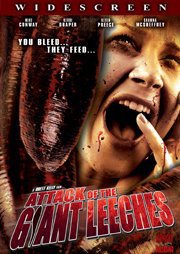
Today’s flick is a modern remake of a classic Roger Corman creature feature: Attack of the Giant Leeches, from 2008.

Attack of the Giant Leeches was written by Jeff O’Brien, who also penned such movies as Bikini Girls From The Lost Planet and Ghost in A Teeny Bikini. Likewise, Attack of the Giant Leeches was directed by Brett Kelly, who has been behind such cheesy flicks as Jurassic Shark and My Fair Zombie, and even wrote Raiders of the Lost Shark.

The visual effects for Attack of the Giant Leeches were provided by Tony Masiello, who has worked on movies like Shrek 2, The Smurfs, Man of Steel, The Amazing Spider-Man, and Ghost Rider: Spirit of Vengeance.

The music for the film was provided by Kevin MacLeod, who somehow has nearly 2000 composition credits over his career according to IMDb, primarily on short films and documentary features.

Attack of the Giant Leeches unsurprisingly carries over the same basic plot from the original movie: two giant leeches are living in a swamp, and kidnapping locals to feed off of. The disappearances spike curiosity, and the leeches are inevitably discovered.

This remake was neither widely distributed nor well-received: it currently holds a 3.0 rating on IMDb from less than 100 voters, and a 43% audience score on Rotten Tomatoes from 52 users.

leeches20081

This movie is basically just total garbage. It looks and sounds like Ben and Arthur mixed with an Ulli Lommel movie (Zombie Nation or Daniel Der Zauberer, take your pick), and the acting is all on par with those movies as well. However, it was clearly made with admiration for the source material, and it perhaps stays a little too loyal to a movie that is by no means a masterpiece to begin with.

I will say that this movie got a genuine laugh from me when the leeches first showed up. Instead of having people in full leech costumes like the original movie, this flick uses obviously rubber leech appendages, which come from off screen to wiggle around and gently rub at the actors. Whenever a movie uses that kind of monster, I can’t help but picture the production assistant that had to wear the monster arm, standing just off screen trying not to giggle at how ridiculous the effect looks. However, to the movie’s credit, these monsters look far more like giant leeches than the squid-like creatures in the original movie.

Attack of the Giant Leeches also features some of the worst day-for-night shooting I have ever seen in a movie, in which there is a light blue filter placed over a scene that is obviously being shot during the day. You can get away with that sometimes if it is done well, but this is one of the laziest implementations of it I have ever seen. Characters are wearing baseball caps that are obviously casting shadows from high sunlight, sun reflections are coming off the water, and the cloud cover makes it obvious that this wasn’t just filmed during the say, but on a pretty bright day.

As far as positive things to say, this remake did put some effort into making the ending more interesting. Instead of just dynamite fishing to kill the leeches, there is a more tense showdown that involves bait and self-sacrifice. Even though the explosion effects look terrible, it is still a noted improvement on the conclusion of the original movie. They also put in an honest effort to update the underlying fears that motivate the storyline. In the original, the creatures were the result of atomic shenanigans from Cape Canaveral. In this remake, however, the movie takes a Birdemic approach to the villains, attributing their existence to pollution of their ecosystem.

Overall, this movie is amateurish and trashy, and hardly worth spending any time on. That said, this was clearly a fan creation born of affection for the source material, and it does manage to improve on it in some key ways. Regardless, unless you really liked the original movie or have an affinity for this sort of low budget horror, this would be best to avoid.