The Mangler Reborn

The Mangler Reborn

manglerreborn1

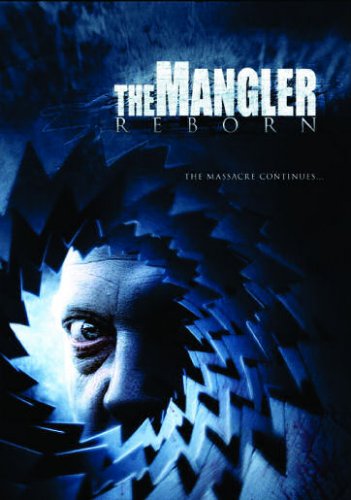
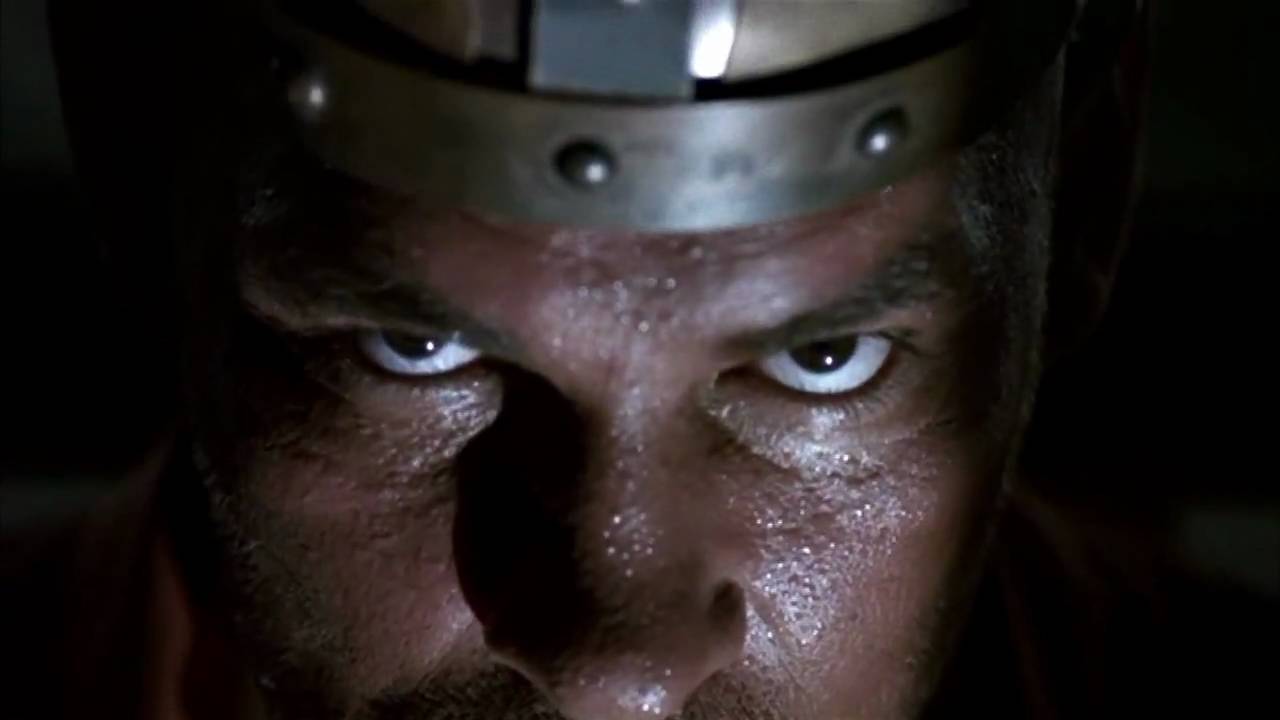
Today’s feature is the last in an unnecessary trilogy of horror movies about a killer laundry folding machine: The Mangler Reborn.

The Mangler Reborn was co-written and co-directed by the duo of Eric Gardner and Matt Cunningham, who have worked on such films as Decampitated, Altered Species, and Starship Troopers.

The cinematographer for the film was Thaddeus Wadleigh, who shot the acclaimed documentaries The Invisible War and Who Killed The Electric Car?.

The editor on The Mangler Reborn was Matthew Cassel, who also cut Cheaper by the Dozen 2, and served as an assistant editor on such movies as McHale’s Navy, Judge Dredd, and Street Fighter.

The team of producers on the movie included Barry Barnholtz (Leprechaun, The Mangler 2), Mark Burman (Piranha Sharks), Melvin Butters (Bundy: An American Icon), Dan Golden (Sharktopus, Supergator), and Scott Pearlman (Birdemic 2).

The effects work for The Mangler Reborn was provided by Nicole Dome (The Dread), Elizabeth Fox (Bikini Pirates), Brian Hillard (Seven Psychopaths, No Country For Old Men), Amy Mills (@midnight), Lara Salzano (Spike), and Richard Miranda (Monster High, The Running Man).

manglerreborn3The cast for the film was made up primarily by Aimee Brooks (Critters 3), Reggie Bannister (Phantasm), Weston Blakesley (Pleasantville), and Juliana Dever (Castle),

Before The Mangler Reborn, two previous entries were made into the franchise: The Mangler and The Mangler II. The movies have been far from loved by audiences: none of them have managed to accrue over a 4.0 rating on IMDb, and The Mangler Reborn is no exception at an abysmal 3.1.

The first thing I noticed about The Mangler Reborn is that it looks very cheap, almost like it was someone’s home video project. While The Mangler certainly isn’t good, there is no mistaking that it is clearly a movie made by professionals.

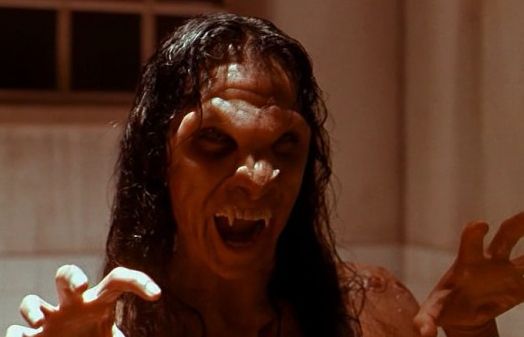
There is also very little in the way of meaningful connections to tie this fairly generic serial killer movie to The Mangler, apart from the establishment that the killer is apparently possessed by the spirit of the machine, and feeds his victims to it. I wouldn’t honestly be surprised if this screenplay existed in some form before there was any plan to make it a sequel to The Mangler.

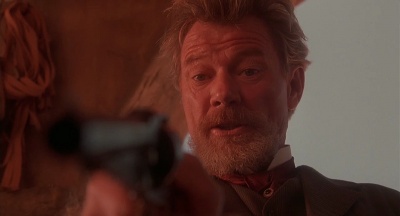
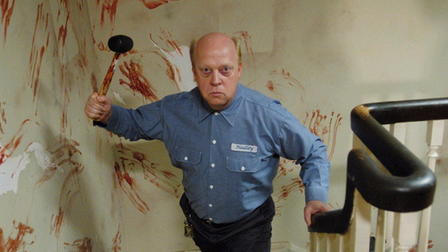
If there is anything positive to say about The Mangler Reborn, it is that Weston Blakesley plays the possessed serial killer, Hadley, very well. His character is partially terrifying just because he is such an everyman, but there is also an understated creepiness to Blakesley’s rigid physical performance. He looks and sounds like a person being controlled, which is effectively off-putting in an otherwise shallow and uninspired movie.
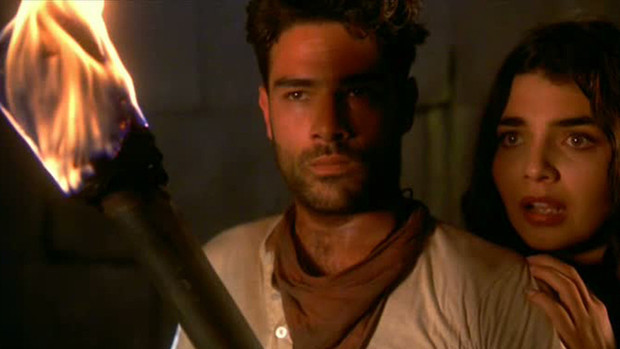
manglerreborn2The plot structure definitely doesn’t help the slow, dull pace of the film at all. For most of the story, the audience are presented with a series of characters who are presented with the identical challenge of escaping from Hadley’s murder-house. Ultimately, they all fail in very similar ways, providing no sense of progress or variety. The way this film is executed only has the material to really fill out a short movie, but to make a feature, the same actions are repeated multiple times. To say the least, it makes the film very tiring to sit through.

Overall, I was immensely disappointed with The Mangler Reborn. I expected more nonsense folding machine murders, but instead got a crappy serial killer movie with the iconic evil folding machine awkwardly wedged into the plot. Unless you are deathly curious or are determined to complete The Mangler trilogy (but why would you?), there’s no reason to spend the time watching through The Mangler Reborn. If there’s anything this film did do for me, it effectively reminded me how much fun the ridiculous original The Mangler was by comparison, so I recommend people dig that one up.

From Dusk Till Dawn 3: The Hangman’s Daughter

From Dusk Till Dawn 3: The Hangman’s Daughter

dusktilldawnthree1

Today’s feature is the concluding entry into the From Dusk Till Dawn trilogy: From Dusk Till Dawn 3: The Hangman’s Daughter.

From Dusk Till Dawn 3 was co-written by original From Dusk Till Dawn director Robert Rodriguez with his cousin Alvaro Rodriguez, who has served as a writer on the From Dusk Till Dawn television series and Machete.

The Hangman’s Daughter was directed by P. J. Pesce, who also helmed Smokin’ Aces 2, Lost Boys: The Tribe, and worked on television shows like Tremors, Fringe, and Supernatural.

The cinematographer for From Dusk Till Dawn 3 was Michael Bonvillain, who also shot the films Zombieland and American Ultra.

The editor on the film was Lawrence A. Maddox, who has worked extensively on the television shows Raising Hope and Life on Mars, and also cut the film American Kickboxer 2.

The musical score for From Dusk Till Dawn 3 was provided by Nathan Barr, who also did the music for Beerfest, True Blood, Club Dread, Hostel, and Hemlock Grove.

hangman3The team of producers for The Hangman’s Daughter included original From Dusk Till Dawn director and co-writers Robert Rodriguez (The Faculty, Sin City) and Quentin Tarantino (Pulp Fiction, Jackie Brown, Django Unchained, Kill Bill), Meir Teper (Crazy In Alabama, What’s Eating Gilbert Grape), Gianni Nunnari (The Departed, From Dusk Till Dawn), Michael Murphey (Dredd, Trick or Treat), Lawrence Bender (Intruder, Reservoir Dogs), and Elizabeth Avellan (The Faculty, Desperado).

The makeup effects work was provided by Howard Berger (The Black Cat, The Faculty, Maniac Cop 3), Michael Deak (Pick Me Up, From Beyond), Chiz Hasegawa (Tremors 4, Scream 2), Greg Nicotero (Intruder, DeepStar Six, From Beyond), Robert Kurtzman (It Follows), Melanie Tooker (Legion, Wishmaster), and Bill Hunt (District 9, Scream).

The special effects team for The Hangman’s Daughter included Andre G. Ellingson (Criminal Minds), Giuliano Fiumani (The Core, Waterworld), Chris Hanson (S. Darko, The Faculty), Albert Lannutti (Fright Night), Wayne Toth (The Faculty, Spawn), Janek Zabielski (The Mangler), and Eugene Botha (From Dusk Till Dawn 2).

The visual effects crew for the film was made up of Jim Carbonetti (Simon Sez, The Faculty), Scott Coulter (It’s Alive, Shark Attack 3, The Faculty), George Johnsen (Dogma, Foodfight), Laurel Klick (Wolfen, Bordello of Blood, Mortal Kombat), Greg Nelson (The Faculty, Torque), Patrick Perez (Speed Racer, Stealth), and Jeremy Yates (Simon Sez).

The cast of From Dusk Till Dawn 3 was made up of Michael Parks (Tusk, Red State, Django Unchained), Danny Trejo (Machete, From Dusk Till Dawn 2, Breaking Wind, Anaconda), Marco Leonardi (Cinema Paradiso), Temuera Morrison (Speed 2: Cruise Control), Rebecca Gayheart (Urban Legend), and Orlando Jones (MADtv, Evolution).

hangman4The name of the film, The Hangman’s Daughter, is taken from a short story written by the real author Ambrose Bierce, who is fictitiously portrayed as a lead character in the movie.

Much like From Dusk Till Dawn 2, From Dusk Till Dawn 3 released straight to video, and was similarly poorly received. It currently holds a 4.8 rating on IMDb. which is still very low, but is notably better than From Dusk Till Dawn 2‘s 4.0.

Michael Parks is fantastic, as he always seems to be. the movie vastly improves whenever his character is on screen. However, he typically appears in conjunction with a couple of bible salesmen, who are a bit excessively cartoonish in the first section of the movie.

The Hangman’s Daughter has a pretty interesting story before the vampires pop up, which is a big improvement over the second movie. The characters (for the most part) are compelling and given some degree of depth, including even the bible salesmen couple as the movie goes on.

hangman1I personally like that the setting of the movie is in the past, rather than another story set in the present day. The lack of the familiar “Titty Twister” bar makes it feel more like a departure from the first movie, which I think is a good thing in this case to keep things fresh.

As was the case with Texas Blood Money, The Hangman’s Daughter definitely looks notably cheaper than the first From Dusk Till Dawn, but I found that the gore and makeup looked much better here than in Texas Blood Money, which relied a bit too much on visual effects rather than practical ones.

A handful of decisions that are made throughout the movie are thoroughly confusing to me, like the clairvoyant inebriation of Ambrose Bierce, the sepia dance sequence that comes on without precedence, and the really disappointing conclusion. However, I think there were far more good things going on in this movie than bad, which is more than I anticipated from the film. I would go so far as to say that this movie is a pretty decent sequel for From Dusk Till Dawn, when you take the budget differential into account.

Overall, I think The Hangman’s Daughter is definitely worth checking out for fans of the first movie, or for anyone who enjoyed Michael Parks’s recent work in Kevin Smith’s Red State and Tusk. He is definitely the primary draw here, though there are plenty of other positive things to enjoy in the movie. It isn’t great by any means, but it is serviceable for what it is.

From Dusk Till Dawn 2: Texas Blood Money

From Dusk Till Dawn 2: Texas Blood Money

dusktilldawntwo1

Today’s feature is the reviled straight-to-video sequel, From Dusk Till Dawn 2: Texas Blood Money.

From Dusk Till Dawn 2 was directed and co-written by Scott Spiegel, who was also behind the cult classic slasher flick, Intruder. His co-writers on the film were Boaz Yakin (The Punisher, Prince of Persia) and actor Duane Whitaker (Hobgoblins, Pulp Fiction).

The cinematographer for Texas Blood Money was Philip Lee, who provided camera work on such films as Best Seller, Hoosiers, and Jurassic Park III, and was cinematographer for the horror flick Route 666.

The editor for the film was Bob Murawski, who also cut the films Gone With The Pope, Army of Darkness, The Hurt Locker, and Drag Me To Hell, among others.

The musical score for From Dusk Till Dawn 2 was composed by Joseph Williams, who also provided music for The War At Home, Roswell, and Windfall.

The team of producers for Texas Blood Money included original From Dusk Till Dawn director and co-writers Robert Rodriguez (The Faculty, Sin City) and Quentin Tarantino (Pulp Fiction, Jackie Brown, Django Unchained, Kill Bill), Meir Teper (Crazy In Alabama, What’s Eating Gilbert Grape), Gianni Nunnari (The Departed, From Dusk Till Dawn), Michael Murphey (Dredd, Trick or Treat), Russell Markowitz (Wishmaster, Suicide Kings), Lawrence Bender (Intruder, Reservoir Dogs), and Elizabeth Avellan (The Faculty, Desperado).

The makeup effects crew for From Dusk Till Dawn 2 included Greg Nicotero (The Faculty, Scream, Maniac Cop 3), Chiz Hasegawa (Tremors 4, Scream 2), Howard Berger (Trancers, Intruder, Troll, Ghoulies), Kamar Bitar (Sin City, The Cell), Michael Deak (Pick Me Up, Demonic Toys, Arena, From Beyond, The Dentist), and Robert Kurtzman (It Follows, Intruder, The Faculty, Vampires, DeepStar Six).

fromdusktillsawntwo2The special effects for the film were provided by Mark Byers (Leprechaun 3, Epic Movie), Jason Collins (Firefly, Ghosts of Mars), Steven Ficke (Cellular, Snake Eyes), Chris Hanson (S. Darko, Vampires), Scott Kodrik (The Faculty, Mortal Kombat), Antony Stone (Jungleground), and Janek Zabielski (The Mangler, From Dusk Till Dawn 3).

The visual effects work for Texas Blood Money was done in part by Jamison Goei (Whiplash, Dracula 2000), Phillip Giles (The Prophecy, Guardians of the Galaxy), Gina Di Bari (Red Planet, Wishmaster), Dave Gregory (Contact, Poison Ivy), Eugene Jeong (Watchmen), Shant Jordan (Bats, Street Fighter), Laurel Klick (Wolfen, Mortal Kombat), and Patrick Perez (Stealth, 2012).

The cast for the film was made up of Robert Patrick (Terminator 2, The Faculty), Bo Hopkins (Midnight Express), Brett Harrelson (The People vs. Larry Flynt), Raymond Cruz (Breaking Bad), Danny Trejo (Machete, Desperado, Anaconda, Breaking Wind), James Parks (Red State, Death Proof), and Bruce Campbell (Evil Dead, Maniac Cop, Maniac Cop 2).

fromdusktillsawntwo3Texas Blood Money was the second of three original movies in the From Dusk Till Dawn franchise, followed closely by The Hangman’s Daughter. The property has since been rebooted as a television series that started in 2014 on Robert Rodriguez’s El Ray network.

From Dusk Till Dawn 2 was reportedly made on a budget of $5 million, but ultimately went straight to video with no theatrical release. Reviews of the movie were overwhelmingly negative, raking in a 4.0 rating on IMDb and Rotten Tomatoes scores of 9% from critics and 20% from general audiences.

Texas Blood Money is very slow to get started, which isn’t helped by the fact that the criminal set up in the first half isn’t nearly as compelling as the one from the original From Dusk Till Dawn. Even when the action does get going, it isn’t shot or paced particularly well, making the whole film feel much longer than it actually is.

The significant budget constraints on the production mean that the sets and effects look visibly much cheaper than the original film, but they don’t look awful for what they had to work with. The most distracting thing I noticed were the bats, which look really terrible depending on the scene. For instance, in the Psycho-esque shower scene, which is filmed in close confines, the bat looks nothing short of comical. However, in outdoor sequences, it doesn’t look nearly as bad.

fromdusktillsawntwo1A lot of the shots in Texas Blood Money strike me as if the director and cinematographer were trying a bit too hard to be original and artistic, which is sort of a unique problem for a horror movie. The problem is that many of the shots are distracting, and draw the audience’s eye away from the action. For instance, there are a few shots that are done from various obscured points of view, which while interesting, don’t serve much of a purpose. At worst, they are jarring enough to pull the audience out of an otherwise tense scene.

Overall, Texas Blood Money is disappointingly dull above all else. If there is anything that can be said of the original From Dusk Till Dawn, it is that it certainly wasn’t boring. Texas Blood Money totally missed that sense of fun that was captured so well with the original film, which turns it into a bit of a slog. Unless you are a die hard fan of the first movie, there’s not enough here to even justify a casual glance.

The People Under the Stairs

The People Under the Stairs

peoplestairs1

Today’s feature is a cult classic from the filmography of the late Wes Craven: The People Under The Stairs.

The People Under The Stairs was written, directed, and produced by the late Wes Craven, who was behind such films as Scream, A Nightmare On Elm Street, The Last House On The Left, Shocker, The Hills Have Eyes, and Vampire In Brooklyn.

The cinematographer for the film was Sandi Sissel, who served as a second unit director of photography on such movies as Cellular, Daredevil, and Master & Commander: The Far Side Of The World.

The editor on The People Under The Stairs was James Coblentz, who also cut the films Final Destination and Species III, as well as a number of episodes of The X-Files.

The makeup effects team for The People Under The Stairs was made up of Greg Nicotero (Maniac Cop 3, Pick Me Up, DeepStar Six, From Beyond), Robert Kurtzman (Maniac Cop 3, It Follows, Tremors), Earl Ellis (Captain America, Star Trek: Enterprise), Michelle Bühler (Communion, Swordfish), Howard Berger (The Black Cat, The Faculty, Pumpkinhead, Ghoulies), and Mark Maitre (Night of the Creeps, The Cell).

The special effects work on The People Under The Stairs were provided by a group of people that included Peter Chesney (The Ladykillers, Waterworld), Robert Clark (Mimic, Cocoon), Mark Goldberg (Robot Jox, Evolver), Camilla Henneman (Cocoon, The Blob), Timothy Huizing (It’s Alive, Smokin Aces, Small Soldiers, The League of Extraordinary Gentlemen), James McLoughlin (DeepStar Six, Wolf), Dean Miller (Suburban Commando, Fright Night), and J.D. Streett (Waterworld, Men In Black).

peoplestairs3Outside of Wes Craven, the producers on The People Under The Stairs were Stuart M. Besser (Scream, Scream 3, Need For Speed), Dixie Capp (Young Guns II), Shep Gordon (Cool As Ice, They Live), and Marianne Maddalena (Red Eye, Dracula 2000).

The musical score for the film was composed by Don Peake, who also did the music for the earlier Wes Craven film The Hills Have Eyes, as well as for the television series Knight Rider.

The cast for the film included Brandon Adams (The Mighty Ducks, The Sandlot), A.J. Langer (Escape From L.A.), Ving Rhames (Pulp Fiction), Sean Whalen (Tammy and the T-Rex, Twister), Kelly Jo Minter (The Lost Boys), Conni Marie Brazelton (ER), Wendy Robie (The Glimmer Man, Twin Peaks), and Everett McGill (Silver Bullet, Dune).

Eventual Academy Award winner Hillary Swank auditioned for the role of Roach in The People Under The Stairs, which was ultimately filled by Sean Whalen. At the time, Swank had only appeared in a handful of television series.

Noted film composer Graeme Revell (Sin City, Daredevil, Spawn, Tank Girl, Suicide Kings) put together a score for The People Under The Stairs that was rejected by the production, and replaced by the one composed by Don Peake. He still has a credit on the movie as a composer of “additional music.”

The concept for The People Under The Stairs was inspired by a real news story about children who were locked in their rooms by their parents, and were discovered during an investigation of a break-in. Craven was known for pulling horror plots out of headlines, which is also how he formulated the concept for A Nightmare On Elm Street.

The People Under The Stairs had a reported production budget of $6 million, and grossed just over $24 million in its lifetime domestic theatrical release.

The reception to The People Under The Stairs was mixed: it currently holds an IMDb rating of 6.3, alongside Rotten Tomatoes scores of 59% (critics) and 58% (audience). That said, it has become a bit of a cult classic among horror movie fans.

The parents in The People Under The Stairs, played by Wendy Robie and Everett McGill, are incredibly creepy, and they sell their abusive, evangelical, overbearing characters very well. Honestly, their couple is more terrifying than most movie monsters I have seen.  However, as with many Craven villains, they rapidly devolve into comic book hamminess, and lose their sense of menace when they start trotting around in full body leather wielding shotguns.

peoplestairs2One of the most surprising things to note in The People Under The Stairs, however, is the fact that there is some really good child acting. That is quite a rarity for any movie, let alone a horror film.

This film has an impressively tense and slow-burning buildup in the first act, which is helped a bit by putting the audience in the innocent point of view of Fool, who is thrown out of his element very quickly. The eventual reveal of what is going on in the mysterious house is done slowly, which allows the uneasy atmosphere to build through the set design, acting, and music, rather than the writing revealing anything straight-out. However, once the situation is revealed, the atmosphere is quickly dissipated by a lot of hammy acting and action.

As far as negatives go, the attempts at humor really didn’t work for me in The People Under The Stairs, and felt a bit unnecessary and forced in an otherwise unfunny scenario. Some horror films lend themselves easily to humor, but a film about captive children, torture, and child abuse isn’t exactly a laugh mine like an Evil Dead movie can be.

Overall, I can definitely see how The People Under The Stairs has become a cult classic, but I can also see why a lot of people aren’t particularly fond of it. It definitely isn’t one of Wes Craven’s more noteworthy works, but it is still worth checking out for horror fans. It isn’t nearly as fun or violently goofy as Shocker, and certainly isn’t as intriguingly meta as New Nightmare, but The People Under The Stairs might be a more solid movie all around than either of those bordering Craven features. At the same time, I don’t think it is as memorable as either of those movies, which is definitely a weakness.

Shocker

Shocker

shocker1

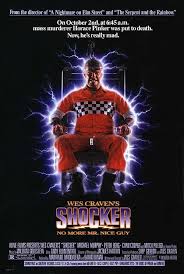
Today’s feature is one of the popularly-regarded missteps in the storied career of the late Wes Craven: 1989’s Shocker.

Shocker was written, directed, and produced by the late Wes Craven, who was famously behind movies like Scream, The Last House On The Left, A Nightmare On Elm Street, and The Hills Have Eyes.

The cinematographer for the film was Jacques Haitkin, who is best known for shooting such horror features as Wishmaster, Maniac Cop 3, Evolver, The Ambulance, A Nightmare On Elm Street, and Galaxy of Terror. The editor for Shocker was Andy Blumenthal, who also cut the films Waiting…, Waiting For Guffman, and Five Corners.

The team of makeup effects artists for Shocker included Lance Anderson (Wild Wild West, The Thing, The Island of Doctor Moreau), David LeRoy Anderson (Spawn, Waterworld), Suzanne Sanders (Surf Ninjas, Critters 3, Critters 4), A.J. Workman (Communion, Arena), Roger McCoin (Darkman, The Garbage Pail Kids Movie), Dan Frye (Creepshow 2, Shaun of the Dead), Jeffrey S. Farley (Evil Bong, Wolf, Carnosaur, Arena, Kingdom of the Spiders), Scott Coulter (Garbage Pail Kids Movie, The Mangler, Arena, It’s Alive), and David Atherton (Face/Off, Maniac Cop).

The special effects team for Shocker was made up of Robert Phillips (Volcano, Maniac Cop 3), David L. Hewitt (It’s Alive III, Willow), Joe Heffernan (The Ladykillers, Waterworld), Christopher Gilman (Watchmen, The Blob), and Larry Fioritto (Reservoir Dogs, Pulp Fiction, The Prophecy),

The visual effects work for the film was done in part by Alan Barnett (Spawn, Volcano), Roger Dorney (Spaceballs, Ghost Dad), Jeffrey A. Okun (Red Planet, Deep Blue Sea, Suburban Commando), Allen Blaisdell (Theodore Rex, Red Planet), Joshua Cushner (Critters, Ghosts of Mars), and Samuel Recinos (Masters of the Universe, Big Trouble In Little China).

shocker4Outside of Wes Craven, the producers on Shocker included Shep Gordon (Cool As Ice, They Live), Peter Foster (The People Under The Stairs), Marianne Maddalena (Red Eye, Dracula 2000), and Robert Engelman (Foodfight, Mortal Kombat).

The music for Shocker was provided by the combination of rock star Alice Cooper, band-mate Michael Owen Bruce, and William Goldstein (Fame).

The cast for Shocker included Peter Berg (Collateral, Corky Romano, Going Overboard), Mitch Pileggi (The X-Files, Sons of Anarchy, Supernatural), Michael Murphy (White House Down, Nashville), Sam Scarber (Over The Top), and Ted Raimi (The Midnight Meat Train, Intruder).

Reportedly, it took Shocker 13 submissions to the MPAA rating board, each with new cuts, in order to get an ‘R’ rating instead of an ‘X’, which would have made wide distribution to theaters nearly impossible.

shocker3Shocker was designed to be the beginning of a franchise, but it didn’t ultimately make enough money to justify further installments. That said, it was a profitable feature: in total, it grossed roughly $16.6 million in its domestic theatrical release, on a budget of $5 million.

Despite the positive gross, the film was poorly received by both critics and audiences: it currently holds a 5.4 rating on IMDb, alongside Rotten Tomatoes scores of 12% from critics and 30% from audiences.

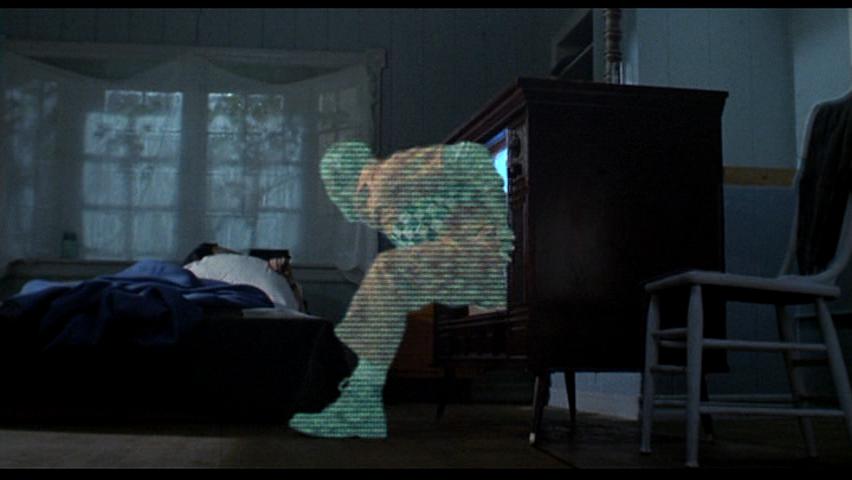
The first thing that is painfully evident watching Shocker today is that the visual effects (particularly the various ghost and electric effects) have not aged particularly well over the years. I’m sure they looked perfectly passable at the time, but now it is a bit distracting and jarring to see cartoonish lightning bolts pop up in every other scene.

The villain of the film, played primarily by Mitch Pilleggi, is way over the top, and chews up the scenery in every scene he appears in. However, because of the nature of his power, he isn’t actually on screen a whole lot, which is a real shame given how entertaining he is.

In general, Shocker looks and feels a little too similar to the later incarnations of A Nightmare On Elm Street, with lots of one-liners thrown about and the surreal dread put on the backburner. Pilleggi seems like he is doing an impression of Kruger throughout the film, which doesn’t help with the existing parallels of an ethereal undead serial killer villain. As entertaining as he is, Pilleggi isn’t Robert Englund.

Overall, Shocker is plenty of fun as a cheesy horror movie, with acting and effects that are well over the top. However, it lacks Wes Craven’s typical vision and style, which made him one of the most lauded figures in the genre. It is worth checking out for its entertainment value, but it is a bit disappointing as a work from Craven.

A Nightmare On Elm Street 2: Freddy’s Revenge

A Nightmare On Elm Street 2: Freddy’s Revenge

elmstreettwo1

Today’s feature is arguably the black sheep of the A Nightmare On Elm Street franchise: A Nightmare On Elm Street 2: Freddy’s Revenge.

While Wes Craven was given a character credit on the movie, the screenplay for A Nightmare On Elm Street 2 was provided by one David Chaskin, who also wrote The Curse and I, Madman.

The director for Freddy’s Revenge was Jack Sholder, who was also behind the movies Beeper, The Hidden, and Wishmaster 2.

The film had two credited cinematographers: Jacques Haitkin, of A Nightmare On Elm Street, Wishmaster, Evolver, Maniac Cop 3, The Ambulance, and Shocker, and Christopher Tufty, who worked as a camera operator on films like Piranha, The Beastmaster, Critters, and Best Seller.

elmstreettwo2A Nightmare On Elm Street 2 likewise had two credited editors: Bob Brady, who is best known for cutting Super Fly, and Arline Garson (House of Dark Shadows, The Swap, Alone In The Dark).

The team of producers for Freddy’s Revenge included Stephen Diener (The Hidden, A Nightmare On Elm Street 3: Dream Warriors), Stanley Dudelson (A Nightmare On Elm Street), Michael Murphey (Dredd, Trick or Treat, Bill & Ted’s Excellent Adventure), Sara Risher (Critters, Surf Ninjas), Robert Shaye (Xtro, Freddy vs. Jason), and Joel Soisson (Maniac Cop 3, The Prophecy).

The musical score for the film was composed by Christopher Young, who also provided music for the films Trick or Treat, Hellraiser, Species, The Core, and Drag Me To Hell.

The makeup and special effects for A Nightmare On Elm Street 2 were provided by a team that included Wendy Hogan (3rd Rock From The Sun, Roseanne), Daniel Marc (House II), Bart Mixon (Double Dragon, Hellboy), Kevin Yagher (The Dentist, 976-EVIL), Richard Albain (Bloodtide, The Giant Spider Invasion), Paul Boyington (Invaders From Mars), Rick Lazzarini (Dead Heat, Evilspeak, Aliens), Ron Nary (Malcolm In The Middle), and Mark Shostrum (DeepStar Six, From Beyond).

elmstreettwo6The visual effects crew for the film was made up of Paul Boyington (Ed Wood, Iron Eagle III), Loring Doyle (Sin City, Willow, Twister), Paul Huston (Labyrinth, Cocoon, Congo), Ian Kincaid (Cujo, Casino), and Wes Takahashi (S. Darko, The Core).

The cast for Freddy’s Revenge was composed of Robert Englund (The Mangler, A Nightmare On Elm Street), Mark Patton (Come Back To The 5 and Dime, Jimmy Dean, Jimmy Dean), Kim Myers (Hellraiser: Bloodline), Robert Rusler (Weird Science), Clu Gulager (Return of the Living Dead), Hope Lange (Blue Velvet), Marshall Bell (Total Recall), Sydney Walsh (Point Break), and Christie Clark (Days of our Lives).

Wes Craven apparently declined to be involved with this specific A Nightmare On Elm Street sequel because of some issues with the screenplay and its portrayal of Kruger. He also reportedly had little to no desire to turn the film into a franchise from the beginning.

Recently, David Chaskin has claimed that the homoerotic subtext was written into the screenplay intentionally, but that the cast and crew were totally unaware of it during filming. It is now somewhat of a cult classic because of this, and regarded specifically as “the gay one” among fans of the franchise. Coincidentally, the cast lead of the movie (Mark Patton) was an openly gay actor, and considers himself the first male scream queen due to his specifically vocal role in the film.

elmstreettwo5Reportedly, John Stamos, Brad Pitt, Christian Slater, and Michael J. Fox all either auditioned or were seriously considered for the lead role in the movie.

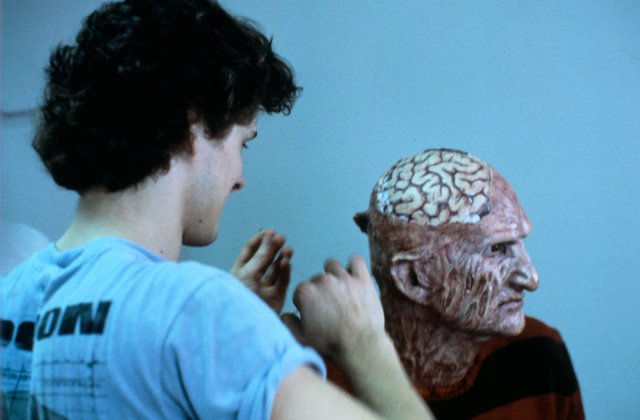
Robert Englund was not initially brought back to play Freddy Kruger in the film, and the role was instead filled in by an extra. The production eventually gave Englund the raise he initially asked for (and was denied) and brought him on board the film, because the extra was reportedly terrible in screen tests.

A Nightmare On Elm Street 2 was made on a budget of $3 million, on which it grossed roughly $30 million in North America alone. Its financial success paved the way for the franchise to continue, in spite of a poor reception with critics and fans. Currently, the movie holds a rating of 5.3 on IMDb, along with Rotten Tomatoes scores of 42% (critics) and 33% (audience), and most fans regard it as the weakest entry in the franchise.

One of the most entertaining moments in A Nightmare On Elm Street 2 is the infamous dance sequence, which was apparently included based on the success of the dancing sequence in Risky Business at the behest of the film’s producers.

Another infamous sequence in Freddy’s Revenge is the shower scene, which contains sexual subtext that is about as close to straight up text as subtext gets. Check out the whole thing below (included with a number of other highlights), in which a naked gym teacher is bound with jump ropes and repeatedly whipped with a towel:

Mark Patton, the lead in Freddy’s Revenge, has an impressive high-pitched scream that he gets plenty of mileage out of in this movie. It is hard to describe just how unreal it is, as it sounds almost like it was coming out of a young boy, and doesn’t fit Patton’s appearance or standard voice at all.

A Nightmare On Elm Street 2 is interestingly the only film in the franchise with a male in the center of the story being tortured by Freddy Kruger, with a woman in the more traditional “hero” role trying to save them. The film has gained some acclaim for this gender role reversal, and it has almost certainly helped contribute to its cult appeal.

Personally, I think this film is an interesting and fresh take that moves the story from the original movie in a new direction, which is what a sequel should ideally do. The idea of Freddy possessing people is interesting to me, as he otherwise shouldn’t be able to impact the physical world. I feel similar about this movie as I do about Halloween III: it is a different direction for a franchise that is original and inventive, but people ultimately just wanted more of the same. Both movies are certainly flawed, but they are both fun horror flicks that tried to change the mold of their respective franchises.

elmstreettwo4Overall, A Nightmare On Elm Street 2 isn’t totally awful, but it certainly isn’t good. It has a lot of entertaining moments, but they come in bursts, and are separated by some slow pacing and plenty of down time. That said, it is worth watching through at least once, and appreciating it as the Top Gun of horror movies. Horror fans and bad movie fans alike need to mark this one down as a necessary watch.

Brainscan

Brainscan

brainscan1

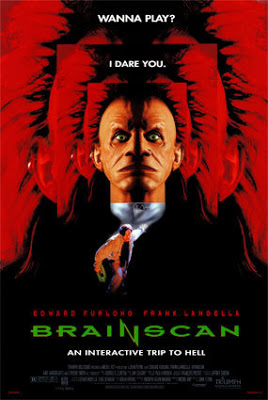
Today’s feature is Brainscan, a 1994 horror film about a killer video game.

Brainscan was written by the combination of Brian Owens (Happy Hell Night) and Andrew Kevin Walker, who is best known for the notable films Sleepy Hollow, 8MM, and Se7en.

The director on Brainscan was John Flynn, who was also behind the movies Best Seller, Out For Justice, and Lock Up, among others.

The cinematographer for the film was Francois Protat, who most famously shot the sci-fi film Johnny Mnemonic and the morbid comedy Weekend at Bernie’s,

Brainscan had two credited editors: Jay Cassidy, known for cutting films like Silver Linings Playbook, American Hustle, Foxcatcher, and Fright Night Part 2, and Phillip Linson Deadfall, who worked on Friday the 13th: The Final Chapter and Tombstone.

The team of producers on the film included Bob Hayward (Step Up, Step Up 2: The Streets), Joe Nicolo (Shade, Tooth and Nail), Michel Roy (Loaded Weapon I), and Jeffrey Sudzin (Idle Hands, Fright Night Part 2, Hamburger: The Motion Picture).

The musical score for Brainscan was composed by George S. Clinton, who also provided music for such films as The Love Guru, Austin Powers, Mortal Kombat, Beverly Hills Ninja, American Ninja 2, and American Ninja 3.

The special effects team for the film included Evan Brainard (Mortal Kombat, Space Truckers), Gary Coates (Trailer Park Boys, The Curious Case of Benjamin Button), Ryal Cosgrove (Scanners II), Jacques Godbout (Scanners, Vigilante), and Steve Wright (Eastern Promises, The World’s End).

The makeup effects were provided by a unit that was made up by Steve Johnson (Dead Heat, Species, League of Extraordinary Gentlemen, Videodrome, Humanoids From The Deep, Suburban Commando, Leviathan), Adrien Morot (Death Race, Battlefield Earth), Joel Harlow (Battlefield Earth, Suburban Commando, The Langoliers), Loren Gitthens (Darkman, Fright Night Part 2), Joe Fordham (Evolver, Species II), Norman Cabrera (Wolf, Spawn, The Cell), and Mike Smithson (Dollman, Dead Heat, Teen Wolf Too).

The visual effects on Brainscan were done in part by Art Durinski (TRON), Lisa Foster (Wolf, Virtuosity), Aristomenis Tsirbas (Titanic, Star Trek: Enterprise), Teddy Yang (Shark Tale, Mission To Mars), Cosmas Bolger Jr. (Swordfish, Red Planet, The Core, Club Dread), Chris Casady (Tank Girl, Children of the Corn II), Lisa Adamson (Wolf), Michael Rivero (Stargate, Coneheads), Karen Skouras (From Dusk Till Dawn, Tank Girl), and Steve Wright (Superman III, Blade: Trinity).

The cast of Brainscan was made up of Edward Furlong (American History X, Terminator 2), Frank Langella (Masters of the Universe, Small Soldiers, The Ninth Gate, The Twelve Chairs), T. Ryder Smith (The Venture Brothers), Amy Hargreaves (Homeland), and Jamie Marsh (Evolver).

brainscan4Reportedly, Edward Furlong and director John Flynn didn’t get along throughout the production of the film. Furlong was apparently in the midst of his teenage rebellious phase, and was under-performing his role on top of that (in the opinion of Flynn).

Brainscan managed to pull in a $4.3 million gross in its total theatrical run, but I wasn’t able to dig up any budget information. My guess is that it was profitable on what was likely a low budget, but not enough so to justify a sequel.

The reception to the movie was mixed. Critics landed on the negative end of the spectrum from what I have seen, giving it a metascore of 18% on Rotten Tomatoes. Audiences, on the other hand, have been a good deal kinder, earning it a 6.1 on IMDb and a 61% Rotten Tomatoes audience score.

Furlong’s lead character is introduced to the audience as a voyeur, spying on the girl who lives across the street from him with an advanced camera and computer system. This doesn’t seem to be played by the film as intentionally creepy, and comes off more as a way to establish that he is a socially inept geek. That really started me off on the wrong foot with both the character and the movie in general, because that kind of behavior is pretty blatantly creepy and wrong, and doesn’t inspire any positive feelings from me.

The background of the movie features a lot of pseudo-advanced technology, like a voice-activated personal computer and what seems to be a form of online telephone system. While these are very much real things now, they were pretty far off in 1994. I’m not sure if these are more examples of a cheesy misunderstanding of contemporaneous technology on the part of the production or surprisingly successful futurism by the writing, but either way they are pretty entertaining to see.

brainscan3Brainscan has a pretty serious case of tone confusion if you ask me. The first few minutes build up a surreal and uneasy-feeling setting, which are followed by some impressive gore effects and menacing sequences. However, it turns a bit jokey and lighthearted at times, thanks to the excessively flamboyant villain (which I assume was designed with Freddy Kruger in mind) and some mostly unnecessary gags. What comes out isn’t quite a dark comedy, as much as it is a straight horror movie with poorly integrated humor that mixes like oil and water.

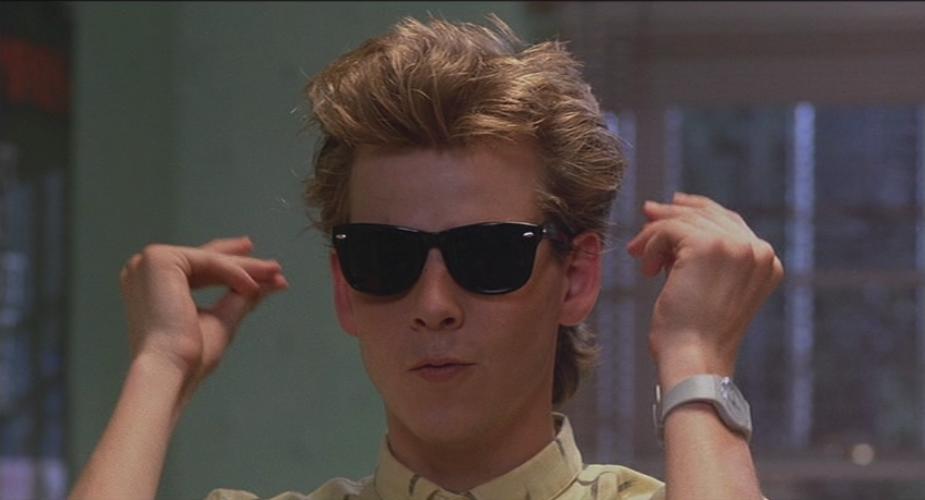
That said, the makeup effects are effectively bizarre, and not just in terms of gore. The Trickster, the Freddy-esque villian, has some of the most ridiculous hair I have ever seen outside of a 1980s music video, and is heavily made up to look vaguely inhuman. The computer generated visual effects, however, have aged very poorly, making the climax sequence almost laugh-out-loud hilariously dated.

brainscan2Overall, Brainscan isn’t an awful horror movie, and does showcase some interesting ideas here and there. However, the execution leaves a bit to be desired, like the idea wasn’t quite percolated on long enough. The practical effects generally do look good though, making it easy enough to watch, but the writing and acting aren’t quite on par. For horror fans, I think it is worth checking out. As a bad movie watch, it has enough cheesy moments, bad acting, and weird plot bits to make it worth digging up, though it definitely isn’t a top-tier choice for me. That said, the tail end of the movie showcases some memorably terrible visual effects that are bound to stick with you.

Intruder

Intruder

intruder3

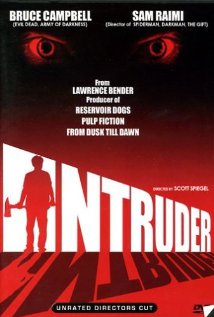
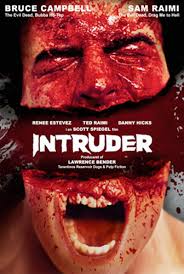
Today’s flick is 1989’s Intruder, a slasher film known for briefly featuring Bruce Campbell and Sam Raimi.

Intruder was written and directed by Scott Spiegel, who also directed From Dusk Till Dawn 2: Texas Blood Money and Hostel Part III. He is also a longtime fried and collaborator of Sam Raimi, and has appeared in the background of such movies as Evil Dead, Evil Dead II, Spider-Man, The Quick and The Dead, and Drag Me To Hell.

The cinematographer for Intruder was Fernando Argüelles, who has worked extensively shooting the television shows Prison Break, Grimm, and Hemlock Grove.

The editor for Intruder was King Wilder, who was a post-production editor on Men At Work and Dark Angel (aka I Come In Peace), and cut Cannibal Women In The Avocado Jungle of Death.

Intruder was the first producing role for Lawrence Bender, who has since become a frequent collaborator with Quentin Tarantino, producing his films Reservoir Dogs, Pulp Fiction, and Kill Bill. Charles Band, who is best known for helming Full Moon Pictures and Empire Pictures, also served as an uncredited producer for distributing the film through Empire.

The effects team for Intruder included Howard Berger (The People Under The Stairs, Evil Dead II, Maniac Cop 3, In The Mouth of Madness, The Faculty), Robert Kurtzman (It Follows, Tusk, The Faculty, Maniac Cop 3), Greg Nicotero (Day of the Dead, From Dusk Till Dawn, Sin City), and Sean Rodgers (Glory, Child’s Play 2, Deepstar Six).

intruder2The cast of Intruder included Elizabeth Cox (Night of the Creeps), Renee Estevez (The West Wing, Heathers), Dan Hicks (Maniac Cop, Evil Dead II), Sam Raimi (Maniac Cop, Maniac Cop 2, Miller’s Crossing), Ted Raimi (The Midnight Meat Train), Bruce Campbell (The Evil Dead, Army of Darkness), and Eugene Robert Glazer (La Femme Nikita).

intruder4Bruce Campbell and Sam Raimi, who were childhood friends and frequent collaborators with director Scott Spiegel, both appear in the film. In spite of their small roles, both men were marketed as leads due to how recognizable they were from the Evil Dead franchise.

Reportedly, Tobe Hooper (The Texas Chain Saw Massacre, Poltergeist, The Mangler) was at one point approached to direct Intruder early in the project’s lifetime, but decided to work on something else instead.

The original title of the movie was intended to be The Night Crew, but was changed in the hopes that a more generic slasher title would help the movie’s marketability.

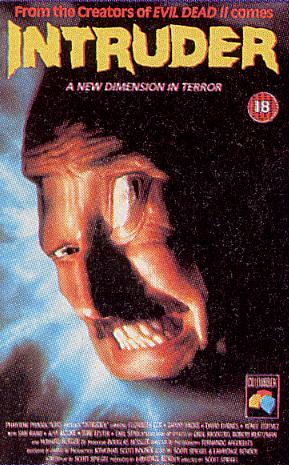
The original VHS cover for Intruder hilariously spoils the identity of the mysterious killer, effectively ruining the suspense built throughout the film.

intruder1

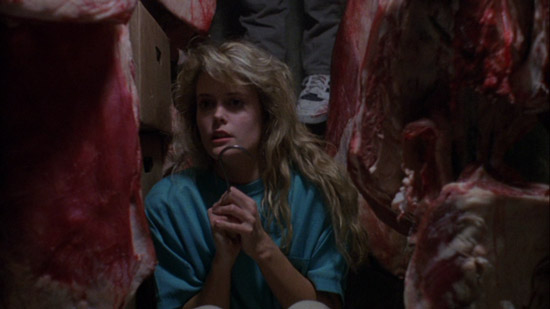
One of the first things I noticed when I first saw Intruder was how solid the effects looked. Honestly, the gore effects are fantastic for the movie being as low budget as it is, even if they are way over the top. It is kind of astounding to see how far the effects workers on this movie have come: all of them are now in demand makeup artists, with Nicotero and Berger leading the lauded effects team for The Walking Dead.

Likewise, the cinematography in the movie is way better than it has any right to be. The shots are generally creative and well constructed, and tense when they need to be. There are a few that are a bit too distracting, but the fact that there was effort and thought put into the shots at all puts this flick above most of its low-budget horror peers.

The acting in Intruder is almost certainly its weakest element. Most of the line-reads are painful to listen to, outside of one or two decent performances in the cast. However, you can’t argue that it isn’t honest to the genre.

For all of the flaws with the plot and acting in Intruder, the movie does have a good, well set-up red herring. The truth of the actual killer is very well concealed, and far overshadowed by the allusions to the more obvious, explicitly creepy antagonist.

Overall, Intruder is about as entertaining of a low-budget slasher movie as you are likely to find. It has a bit of a cracked sense of humor, great effects, and the sort of awful acting you would expect from this kind of movie. If you are looking for a horror film that doesn’t take itself too seriously, this is one that is worth checking out.

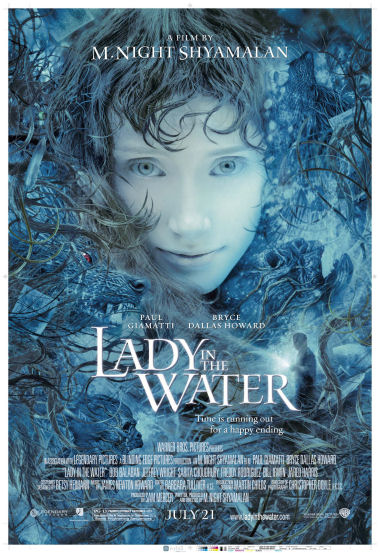
Lady in the Water

Lady in the Water

ladywater1

Today’s feature is one of M. Night Shyamalan’s more forgotten flicks: 2006’s Lady In The Water.

Lady In The Water was written,  directed, and produced by M. Night Shyamalan, who is best known for such movies as Signs, The Sixth Sense, The Village, The Happening, and The Last Airbender, among others.

The cinematographer on The Lady In The Water was Christopher Doyle, who also shot the 1998 Psycho remake and the 2002 action film Hero.

The editor for Lady In The Water was Barbara Tulliver, who previously cut the M. Night Shyamalan movie Signs, as well as the film Brooklyn’s Finest.

The makeup effects team for the film included Steven E. Anderson (Willow, Star Trek: Enterprise), Jason Barnett (The League of Extraordinary Gentlemen, Hellboy), Adrienne Bearden (The Lovely Bones), Mike Elizalde (Arena, Looper), Diane Heller (The Last Airbender, The Happening), Don Kozma (Sleepy Hollow, Signs), Mike Manzel (Slither, The Ring), Bernadette Mazur (The Stepford Wives, Hackers), James Ojala (John Dies At The End, Thor), and Wesley Wofford (The Last Airbender, Collateral).

The special effects for Lady In The Water were provided by a unit that included Peter Abrahamson (Son of the Mask, Van Helsing), Jim Beinke (Cabin Boy), Bryan Blair (Children of the Corn III, Hollow Man), Darin Bouyssou (Lake Placid, Small Soldiers, The Island of Doctor Moreau), Steve Cremin (Van Helsing, Unbreakable), Eric Fiedler (Evolver, House, Stargate), Frederick Fraleigh (Attack the Block, Evolution), Dave Grasso (How To Make A Monster, Congo), Moto Hata (Men in Black), Jurgen Heimann (Robot Jox, Prehysteria), Steve Katz (Serenity, The Mist), Taishiro Kiya (Space Truckers), Steve Wang (DeepStar Six, Arena, Hell Comes To Frogtown).

The producers for Lady In The Water were John Rusk (After Earth, Devil, The Happening), Jose L. Rodriguez (The Last Airbender, The Village, The Happening), and Sam Mercer (Van Helsing, Congo).

The musical score for Lady In The Water was composed by James Newton Howard, who also wrote the music for such films as Pretty Woman, Flatliners, Falling Down, Waterworld, Collateral, Nightcrawler, and The Happening.

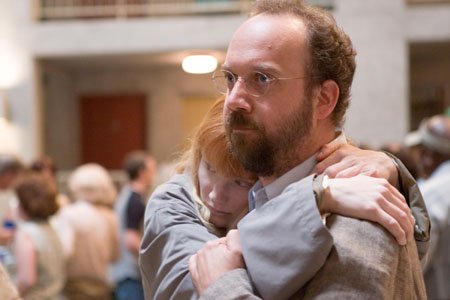
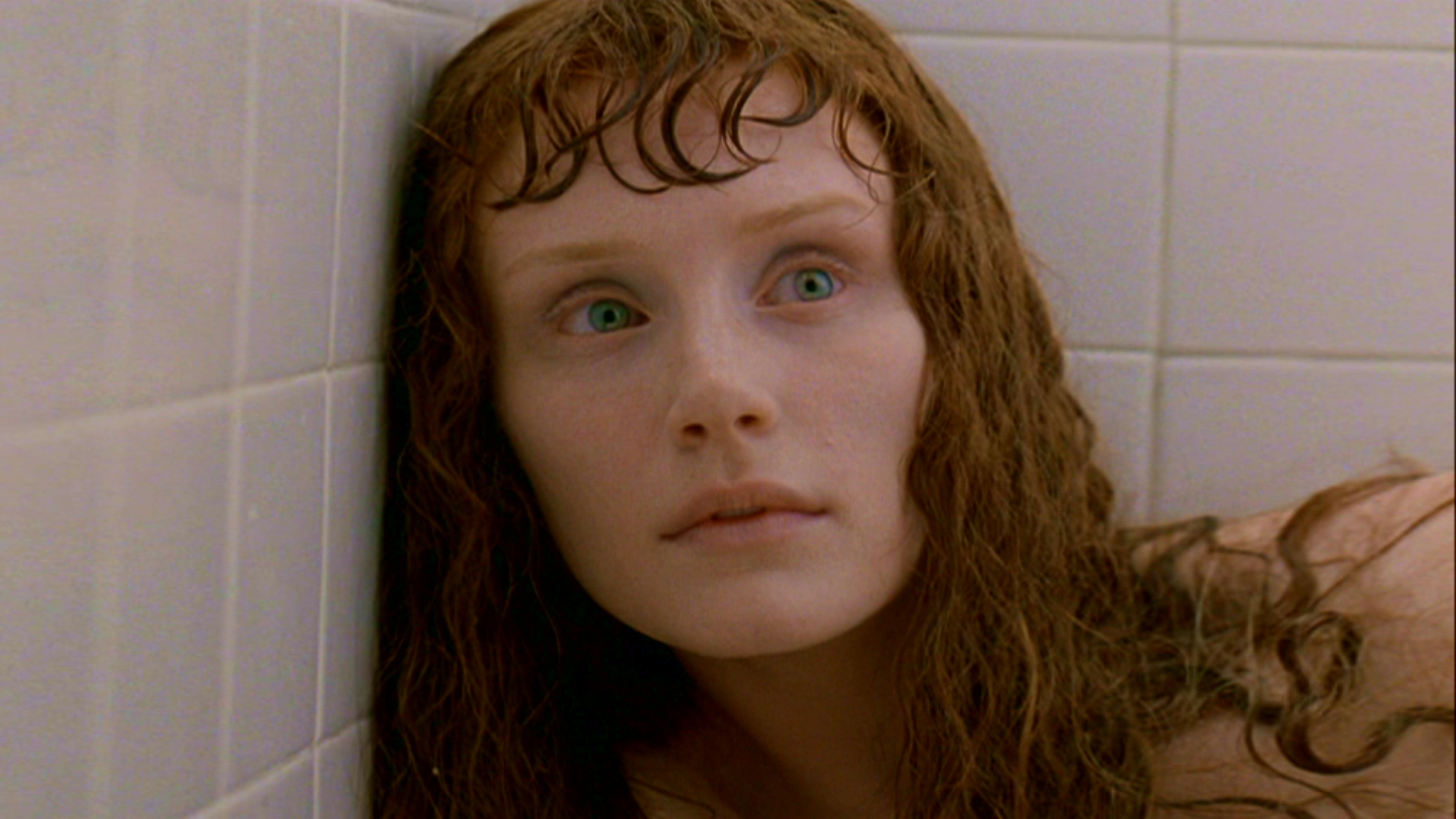
The cast for Lady In The Water includes Paul Giamatti (Shoot Em Up, Sideways), Bryce Dallas Howard (The Village, Jurassic World), Jeffrey Wright (Boardwalk Empire), Bob Balaban (Gosford Park, Close Encounters of the Third Kind), Sarita Choudhury (Homeland), Cindy Cheung (Obvious Child), Freddy Rodriguez (Planet Terror, Six Feet Under), and, as always, M. Night Shyamalan himself.

ladywater3Lady In The Water received a number of Golden Raspberry Award nominations as one of the worst films of the year, including winning for Worst Director and Worst Supporting Actor, both of which went to M. Night Shyamalan. Likewise, it received numerous nominations for the annual Stinkers Bad Movie Awards, winning Worst Supporting Actress for Cindy Cheung.

The reception to Lady In The Water was generally negative: it has accrued Rotten Tomatoes aggregate scores of 24% (critics) and 49% (audience), along with an IMDb rating of 5.7. Likewise, it only barely managed to make back its production budget of $70 million, grossing just over $72 million worldwide in its theatrical run.

The bedtime story at the center of Lady in the Water is apparently one that Shyamalan originally wrote to tell his children at night.

Lady In The Water marked M. Night Shyamalan’s dramatic departure from Disney, who had produced his last three movies, for Warner Brothers. Apparently, M. Night was infuriated by a series of actions by Disney executives that led him to believe that the company no longer valued creativity. Some believe that this decision partially contributed to the movie’s financial failure, as Warner Brothers didn’t promote the movie as heavily as Disney had his previous films.

The book The Man Who Heard Voices: Or, How M. Night Shyamalan Risked His Career On A Fairy Tale and Lost tells the behind-the-scenes story of what happened during the pre-production and production of Lady In The Water, and how those decisions impacted Shyamalan’s career following. While some claim that he may be on the upswing with 2015’s The Visit, many would agree that his career-defining fall from grace began with Lady in the Water.

The plot to Lady in the Water is meandering, convoluted, and surreal, which are all traits that can be pretty interesting in an art movie depending on the circumstances. However, in a Hollywood movie made for $70 million, it was doomed to failure from the start, even if it was made well. As it so happens, Shyamalan wasn’t/isn’t capable enough as a director or a writer to turn the abstract concept behind this movie into a coherent and entertaining on-screen product.

ladywater2Personally, I kind of like the weird idea behind this movie. The concept of an obscure, forgotten fairy tale coming true is pretty interesting, and there were plenty of ways the plot could have run with that. The film just never lives up to what it could be: not enough happens to keep an audience entertained, the run time is too long, and the revelations either come too slow or too fast, both of which are bad for building this fictitious mythos necessary for the complicated plot.

Lady In The Water, if nothing else, is a curiosity of a movie. It isn’t entertaining or coherent, but it does build an ambiance and sense of tension pretty effectively that makes it at least vaguely interesting at times. That would be enough to loosely recommend it for the experience, but sitting through two hours of the pretentious nonsense that makes up this movie is just excruciating. Unless you have an academic interest in the bizarre career of M. Night Shyamalan, there’s no particularly compelling reason to sit through this whole movie.

Cop And A Half

Cop And A Half

cophalf1

Today’s feature is the much-maligned buddy cop comedy, Cop And A Half.

Cop and A Half was written by Arne Olsen, who also penned the films Red Scorpion and Mighty Morphin Power Rangers: The Movie. The film was directed by actor Henry Winkler, who is best known for playing The Fonz on the show Happy Days. However, he has also featured in films and television shows like Scream, Arrested Development, Night Shift, and The Waterboy.

The cinematographer for the film was Bill Butler, who has shot such movies as Jaws, Grease, Rocky IV, Anaconda, Child’s Play, The Conversation, and Frailty over his career.

Cop And A Half has three credited editors: Daniel P. Hanley (Jonah Hex, Apollo 13, Cocoon, Willow, Night Shift), C. Timothy O’Meara (Hoosiers, My Science Project, The Last Starfighter), and Roger Tweten, who was an assistant editor on Splash and Night Shift.

The producers on Cop And A Half were Tova Laiter (The Scarlet Letter, Varsity Blues), Elaine Hall, and Paul Maslansky (Police Academy).

The musical score for Cop And A Half was composed by Alan Silvestri, who also provided the music for such films as Van Helsing, Volcano, Judge Dredd, Forrest Gump, Super Mario Bros., Predator 2, Mac And Me, and The Abyss.

The team of effects workers on the movie included Jay Cannistraci (The Substitute, Rocky V), Marie Del Russo (Summer Rental, Porky’s II), Brian McManus (Striptease, Boogie Nights), Ken Gorrell (Transformers, Eight Legged Freaks, Deja Vu), Ray O. Hardesty (Ghost Dad, Bad Boys), Richard Lee Jones (2 Fast 2 Furious), Bruce E. Merlin (Speed 2, Mr Nanny, Cutthroat Island), and Richard Scioli (The Substitute, The Last of the Mohicans).

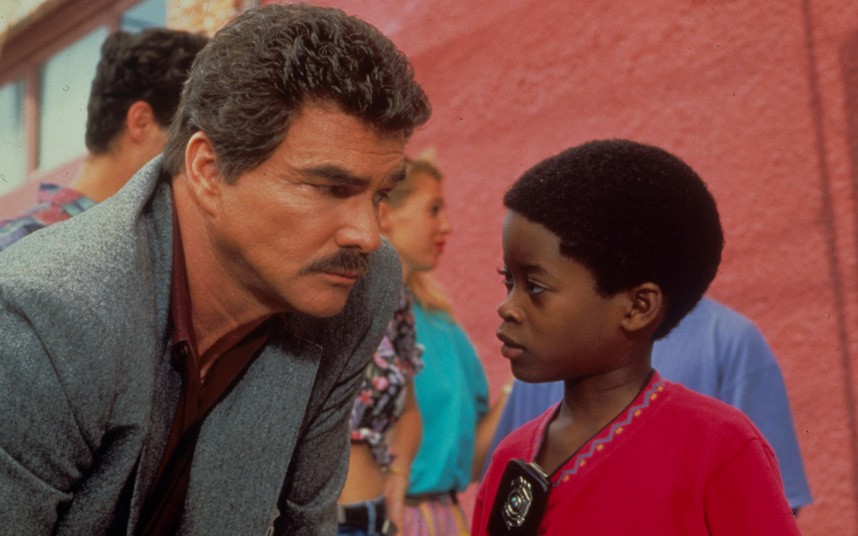
The cast for Cop And A Half was made up of Burt Reynolds (Shark, Deliverance, Stroker Ace, Boogie Nights), Ruby Dee (American Gangster, Baby Geniuses), Holland Taylor (Legally Blonde, The Truman Show), Ray Sharkey (Wired), Frank Sivero (Goodfellas), Rocky Giordani (Maniac Cop), Marc Macaulay (Killer Joe), and newcomer child actor Norman Golden II.

Photo by Moviestore Collection/REX (1557365a)

Cop And A Half proved to be the final acting role for Ray Sharkey, who died of AIDS shortly after he completed the movie in 1993. The character actor was only 40 years old at the time of his death.

Apparently, Cop And A Half was initially proposed as a sequel to the Arnold Schwarzenegger comedy Kindergarten Cop, but was ultimately rewritten so that it could stand alone.

Cop And A Half made just over $40 million in its worldwide theatrical release, though I wasn’t able to find any estimates on the production budget. Regardless, it was certainly profitable on the whole. However, critics and audiences alike loathed the movie, earning it a 3.8 rating on IMDb and Rotten Tomatoes scores of 17% (critics) and 35% (audience).

The child is way too obnoxious and precocious, which seems to be the entire crux of the movie’s premise. Unfortunately, it just winds up being infinitely grating as opposed to charming or silly, not unlike the Baby Geniuses flicks.

The flip side of the annoying child performance by Norman Golden II is Burt Reynolds, who I thought was actually pretty great given the circumstances. Most of the scenes of him threatening the child come off as hilariously inappropriate, and he never softens on his tough0nosed attitude throughout the film.

There are a couple of odd sequences in this film that have contributed to it being at the very least memorable. First off, there is one scene where Burt Reynolds and the child go to a seedy biker bar, and the kid orders a milk “in a dirty glass.” Second, and more infamously, there is an inexplicable sequence where Burt Reynolds starts urinating in a toilet while the child is brushing his teeth, at which point the kid insists they play “swords,” and proceeds to pee on his shoes. That bit is about as awkward and unfunny as it sounds.

Overall, the biggest issue with Cop And A Half is the “Half”: the child character played by Golden. The kid is written badly, performed badly, and is generally a nuisance to have on screen. Unfortunately, the child makes up the lion’s share of the movie, but it is worth noting that the other elements here aren’t all that terrible. Burt Reynolds is pretty solid as a bitter veteran cop, Ray Sharkey is entertaining as the flamboyant villain, and the plot (while complete nonsense) at least serves to keep the ball rolling throughout the run time. It is kind of a shame that Winkler gave up on directing features after this, because I don’t see the issues with this movie as being particularly his fault. He’s done a little bit of television directing over the years, but it looks like Cop And A Half will remain the capstone for film directing career.

This is a very difficult movie to recommend. Personally, I can’t stand bad child acting, and would normally advise avoiding any feature that has a bad child actor in a lead role. Cop And A Half, however, was almost redeemed for me based on its “WTF” value: Burt Reynolds screaming threats at the shitty kid, the ludicrous plot, and the few moments that tread into the outlandishly bizarre make this at least a somewhat entertaining watch, in spite of the awful lead.