Larry Cohen Collection: “Best Seller”

Best Seller

bestseller1

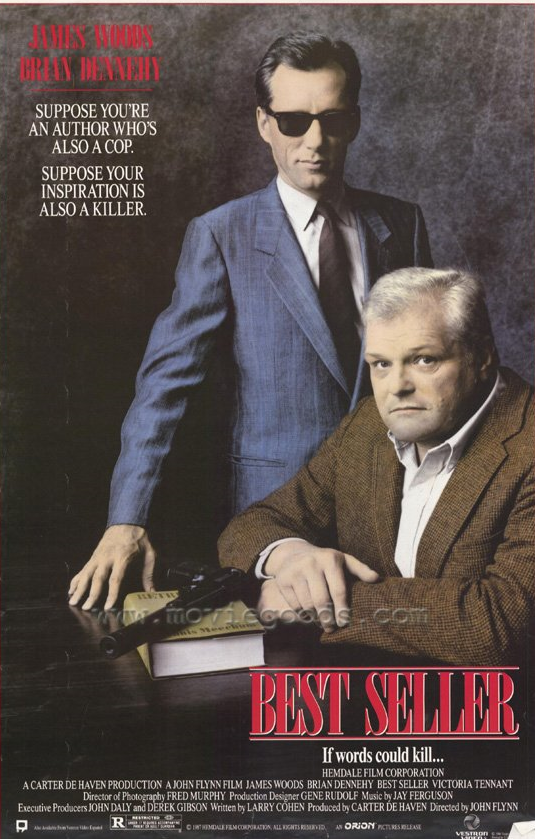
Next up in the Larry Cohen Collection is 1987’s “Best Seller,” starring James Woods and Brian Dennehy.

“Best Seller” was directed by John Flynn, who also made “Brainscan,” “Out for Justice,” “Lock Up,” and”Rolling Thunder.” His primary style has always been crime-based action-dramas, which fits well with Larry Cohen’s flair for police procedural.

The original screenplay for “Best Seller” was, of course, written by Larry Cohen. However, John Flynn may have considerably modified himself it before filming, but wasn’t ultimately given a writing credit. He also apparently came up with the title, which was originally “Hard Cover” (which I think sounds way cooler).

The cinematographer for “Best Seller” was Fred Murphy, who also shot “Secret Window,” “October Sky,” “Hoosiers,” and Larry Cohen’s own “Q: The Winged Serpent.”

“Best Seller” was edited by David Rosenbloon, who also cut such features as “Deep Impact,” “Primal Fear,” “Fracture,” “Frequency,” and “Blue Chips.”

The musical score for “Best Seller” was provided by Jay Ferguson, who also scored flicks like “Double Dragon” and “Tremors II.”

The producers for “Best Seller” included John Daly (“Vampire’s Kiss,” “Hoosiers,” “Platoon”), Derek Gibson (“The Return of The Living Dead”), and Larry Cohen collaborator Carter DeHaven (“Special Effects,” “Perfect Strangers”).
bestseller3The effects team on “Best Seller” was composed of Ken Speed (“2 Fast 2 Furious,” “God’s Not Dead,” “Cobra,” “The Doors”), Robert L. Olmstead (“Cellular,” “Predator 2,” “Iron Man”), Peter Kunz (“Precious,” “Changing Lanes,” “Exterminator 2,” “The Hurricane”), Pamela Peitzman (“The Last Airbender,” “Alien From L.A.,” “The Hitcher”), and Deborah Figuly (“True Believer,” “Never Too Young To Die,” “Less Than Zero”).

“Best Seller” was distributed by Orion Pictures, which was behind a handful of well-regarded flicks throughout the 1980s and early 1990s before falling into bankruptcy. Such features included “RoboCop,” “Amadeus,” “Mississippi Burning,” “Dances With Wolves,” and “The Silence of the Lambs,” but also turkeys like “RoboCop 3,” and “Car 54, Where Are You?.” Former head and co-founder of Orion, Mike Medavoy, has a pretty great book out there called “You’re Only As Good As Your Next One” about his experiences in the industry (which included stints with United Artists and TriStar as well as Orion) that I highly recommend picking up for movie trivia junkies.

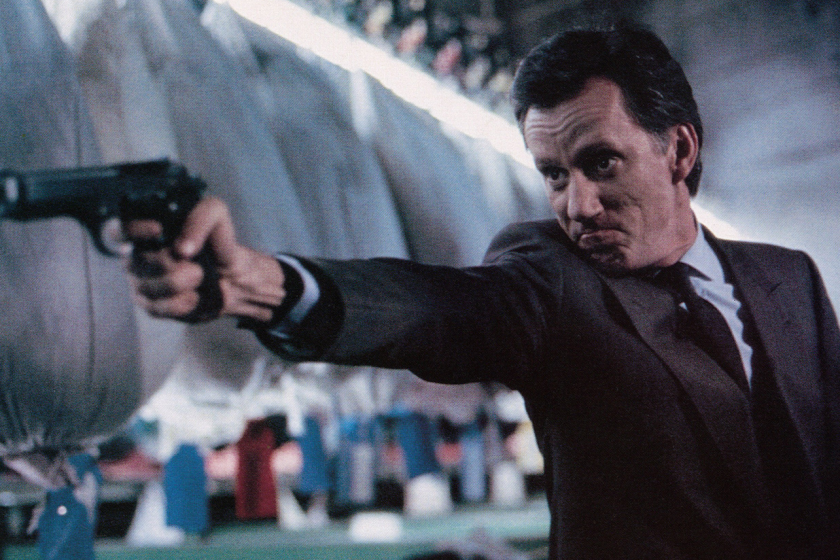
The cast for “Best Seller” is headlined by James Woods (“Videodrome,” “Cat’s Eye,” “Casino,” “True Believer”) and Brian Dennehy (“First Blood,” “Cocoon”), with other roles filled out by Victoria Tennant (“L.A. Story,” “Flowers in the Attic”), Paul Shenar (“Raw Deal,” “Scarface”), and George Coe (“The Omega Code,” “Kramer vs. Kramer,” “Archer”).
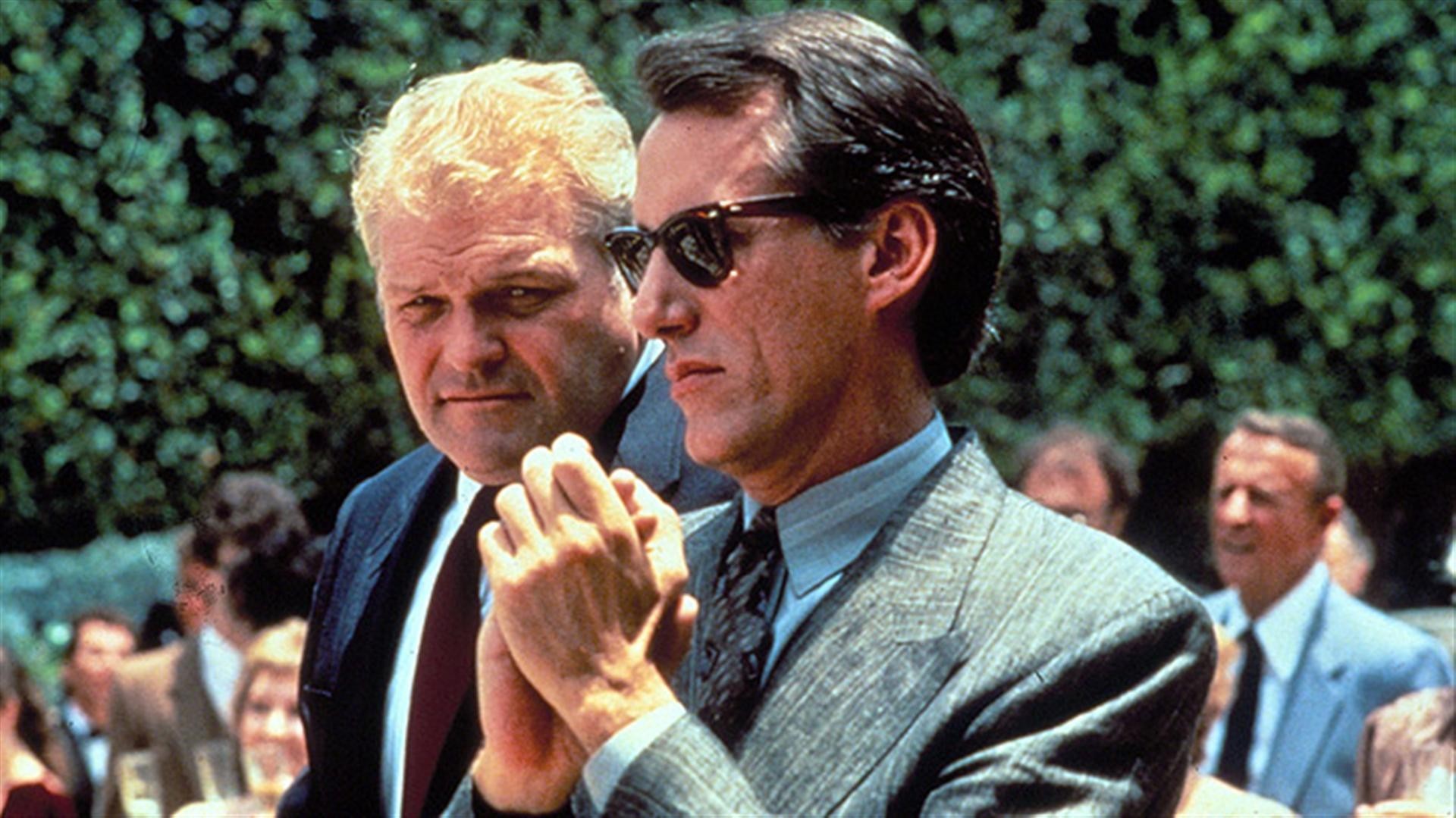
bestseller2The story of “Best Seller” follows a cop-turned-author who is pulled into a massive conspiracy by a former hitman looking to tell the story of his career working for a corrupt politician.

The reception to “Best Seller” was pretty mixed: it currently holds Rotten Tomatoes scores of 67% (critics) and 54% (audience), along with an IMDb rating of 6.5.

I couldn’t dig up any budget numbers for “Best Seller,” but it ultimately grossed just under 4.3 million in its domestic theatrical release. That is hardly Earth-shattering (or best-selling), but if the budget was low enough, it may have been profitable.

Personally, I wasn’t sold on Brian Dennehy as the lead here. There are plenty of cop-style character actors out there that I think would have fit better, like Robert Davi or Tom Atkins. However, he is definitely physical intimidating at times, which I assume was the reason for his casting. James Woods, on the other hand, is thoroughly awesome here. He blends his peculiar charm with a sense of menace to create a likable yet dangerous character who is clearly capable of snapping into violence at a moment’s notice. The chemistry between the two actors is pretty good, but the rest of the cast comes up a bit short. The antagonists just aren’t intimidating or large enough to feel like the massive threat that they are supposed to be.  Also, the daughter character comes off as having no depth or practical intelligence with her minimal screen time, and winds up inexplicably running into the arms of a guy who just shot her father for no clear reason, other than to create a hostage situation. She also accepts rides in cars from mysterious figures, like she is the lead in a stranger danger PSA.

The story pacing to “Best Seller” isn’t great: the tension is built pretty well, but it is never quite clear how much time has elapsed, how close the book is to being finished, or how near the story is to a climax or resolution. It feels more like a simmer than the tension of a burning wick, with no clear ending ever in sight. The lack of a clear finish line (book publication? how many drafts is that going to take?) really hurts the plot, but it is still a pretty good thriller regardless.

Roger Ebert brings up another issue with the movie in his perhaps excessively scathing review of the film:

If there’s one thing I can’t stand, it’s a movie about a character who is slow to catch on. When I’m watching a movie and something is perfectly obvious and the hero persists in not understanding it, my frustration grows and I want to shout advice at the screen. “Best Seller” has a character like that, played by Brian Dennehy, an intelligent actor who usually plays characters who are fairly swift. Not this time.

Ebert certainly has a point, and it is something that I noticed while watching the movie. However, I assumed most of his reticence about the conspiracy was more because of his suspicions and unease with James Woods rather than him not catching on with the clues, though he has one or two lines (“corporations don’t kill people” / “I don’t believe that someone could destroy police evidence”) that either reveal an immense naivete or a flaw in the character writing.

The ending credits song for “Best Seller,” called “Perfect Ending,” is absolutely ridiculous, and sounds like an honest buddy cop love theme. Everything from the melodramatic lyrics to the guitar riffs to the synthesizer background work is just off the charts wacky in the best possible way. It seems like the sort of song that would have fit into something like “Dead Heat” or “Samurai Cop.”

Overall, “Best Seller” is a flawed but entertaining flick. There are some things to like about it, and some things that don’t click. It doesn’t belong in an elite category for the genre, but it is worth giving a shot for James Woods, who gets to show off a bit here. Also, that ending song gave me a solid belly laugh.

Larry Cohen Collection: “Pick Me Up”

Masters of Horror: Pick Me Up

pickmeup1

Today, I’m going to be taking another stroll through the career of writer/director Larry Cohen with the “Masters of Horror” feature, “Pick Me Up.”

“Pick Me Up” was directed by Larry Cohen for the television show “Masters of Horror,” which showcased original work by some of the most famed figures in horror film history. I have already covered two episodes of the series directed by Stuart Gordon: “The Black Cat” and “Dreams In The Witch House.”

“Pick Me Up” was written by David J. Schow, who penned such horror flicks as “Texas Chainsaw Massacre III,” “Critters 3,” “Critters 4,” and “The Crow.”

“Pick Me Up” was edited by Marshall Harvey, a veteran horror editor and frequent Joe Dante collaborator who also cut “Lake Placid,” “Small Soldiers,” and “Matinee” (among many others).

pickmeup5

The cinematographer on “Pick Me Up” was Brian Pearson, who also shot the more recent horror flicks “American Mary,” “The Butterfly Effect 2,” and “Into the Storm.”

The makeup effects team for “Pick Me Up” included Mike Fields (“Dreams In The Witch House,” “The Black Cat”), Sarah Graham (“The Cabin In The Woods,” “Supernatural”), Margaret Solomon (“Timecop,” “The Black Cat”), and Amanda McGowan (“Sucker Punch,” “Final Destination 5”).

The “Pick Me Up” special effects were done by the KNB EFX group, which has worked on “The Walking Dead,” “Maniac Cop 3,” “Army of Darkness,” “The Faculty,” and “Sin City” under the lead of Greg Nicotero and Howard Berger. The rest of the team included Scott Patton (“The Mangler”), Frank Rydberg (“Devil’s Advocate,” “Drag Me To Hell”), Andy Schoneberg (“Dead Heat”), Shannon Shea (“Leviathan”), Wayne Szybunka (“Lake Placid,” “Marmaduke”), Lindsay Vivian (“Sin City”), Grady Holder (“Lake Placid,” “Small Soldiers”), Robert Freitas (“Men In Black,” “Species”), and Michael Deak (“From Beyond,” “The Dentist”).

pickmeup4

The visual effects for “Pick Me Up” were done by a team that included Sebastien Bergeron (“Tucker & Dale vs. Evil”), Mladen Miholjcic (“Andromeda”), Lee Wilson (“The Fly,” “Videodrome”), and Stephen Paschke (“Watchmen”).

The music for “Pick Me Up” was composed by Jay Chattaway, who also did the scores for the Larry Cohen films “Maniac Cop,” “Maniac Cop 2,” and “The Ambulance.”

The cast for “Pick Me Up” features frequent Larry Cohen collaborator Michael Moriarty (“It’s Alive III,” “A Return to Salem’s Lot,” “Q,” “The Stuff”), along with Fairuza Balk (“Almost Famous,” “The Waterboy”), Warren Kole (“The Following”), Laurene Landon (“Maniac Cop,” “Maniac Cop 2”), Malcolm Kennard (“The Matrix Reloaded”), Crystal Lowe (“Insomnia”), and Paul Anthony (“Blade: Trinity”).

pickmeup2

Michael Moriarty does some improvised piano work during a sequence in “Pick Me Up,” much like he did in his audition scene in “Q: The Winged Serpent.”

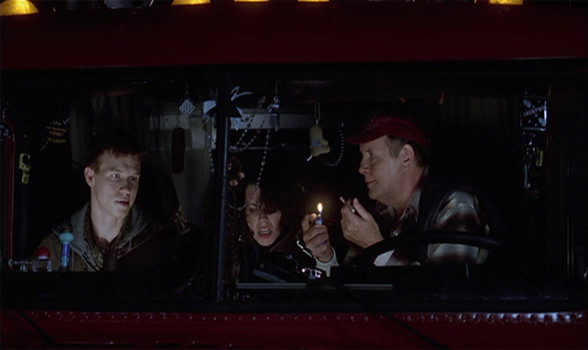
The two dueling serial killers in “Pick Me Up” are named Walker and Wheeler, obviously coined after their modes of transportation: hitch-hiking and an 18-wheeler truck, respectively.

As far as highlights go, there is at least one highly memorable murder committed by Walker, in which he strangles a man with a dead snake. Apart from that, deaths are interestingly not emphasized, and a number happen off-screen. More attention is paid to suspense and the serial killers themselves rather than their actions, which I found pretty interesting.

pickmeup6

“Pick Me Up” features a number of tongue-in-cheek direct references to classic horror movies, including “Psycho” and “The Texas Chain Saw Massacre.” The flick also adopts major elements from both of those movies for the plot: the setting of a creepy, remote hotel (“Psycho”), and the presence of a killer hitch-hiker (“The Texas Chain Saw Massacre”).

pickmeup3

My biggest issue with “Pick Me Up” is surprisingly Michael Moriarty, who seemed more than a bit spaced out to me, like he might have been excessively drunk during the shoot. That might have just been part of the character, but I got the feeling from watching him that that wasn’t the case. Regardless, he is still a scene stealer and has his same quirky charm, but he isn’t on the top of his game.

Overall, “Pick Me Up” works with an interesting premise, and both the writing and directing is done with a clear affection for the genre. There are a couple of solid sequences, but I can’t help but feel that it could have been pulled off better. Compared to Stuart Gordon’s “Masters of Horror” episodes, Larry Cohen’s contribution here is a bit lacking. For fans of horror, it is worth checking out, but it is probably skippable for anyone else.

On Free Speech and Reddit

This post is based on a viewer request, which is being filled due to a donation to the Secular Student Alliance via during Secular Students Week (June 10-17, 2015). Thanks to all for your contributions!

This is probably the most interesting and difficult request I received over the course of Secular Students Week. Right in the middle of the week, the popular link aggregator site, Reddit, decided to have a collective breakdown after a handful of subreddit forums were banned based on spreading hate speech. The front page was flooded with negative images of Reddit CEO Ellen Pao and unflattering photos of obese people, due to the largest of the banned subreddits being r/fatpeoplehate. Countless redditors claimed that their right to free speech was being violated, and that they were being unfairly censored. So, someone decided to ask my opinion on the whole matter.

I’ve been using Reddit for a few years now, but I stay pretty compartmentalized to subreddits that suit my interest, which is really what the site seems to be designed for. The site also harbors a lot of vile, dark corners  dedicated hate speech, racism, sexism, and violence, most of which I have managed to stay blissfully ignorant to. However, this past week wasn’t the first time that the Reddit community threw a collective tantrum over a subreddit banning, even in just the time that I recall. r/jailbait, which was dedicated to often non-consensual pornographic images of women on the edge of legal ages of consent, was banned in 2011 after being the subject of a CNN segment by Anderson Cooper.

More recently, r/TheFappening, which was dedicated to the distribution of hacked nude photos of celebrities, was banned in 2014, which also led to backlash from the greater Reddit community.

From what I have seen, Reddit has historically been run and populated by extreme believers in free speech, who advocate for the forum to have little to no moderation or censorship of content. However, this certainly isn’t true across the board: each subreddit has a specific set of rules that can place any number of limitations on the smaller sub-communities.

Ellen Pao, who is the current target and pariah of these Reddit traditionalists, has a different direction and vision for Reddit. Her opinion seems to be that the position of Reddit as an unfiltered free speech platform has turned countless potential members away by harboring antagonistic hate groups, and wants the community to be more about acceptance and openness to all instead of being a staunch paragon of extreme free speech at the expense of certain groups. In the wake of all of the negative coverage about places like r/jailbait, r/TheFappening, r/creepshots, and others, I think it is pretty easy to understand why this is Pao’s projected direction.

The criticism of Pao comes from two distinct perspectives. One population wants her removed, and Reddit as a whole to refocus on being a broad and essentially lawless land of free speech. The other (less vocal) population has focused their criticisms on Pao not taking the policy far enough, noting that numerous subreddits that promote racism and sexism have been left unbanned. Obviously, it is impossible to make both of these populations happy at the same time, and Reddit is at a crossroads of which way it should go.

My opinion on the matter is that the flag-bearing advocates for absolute free speech on all platforms will always exist, but that they are a generally toxic element to communities. Their belief in equal-opportunity verbal assault and expression without repercussion naturally favors those who are in majority and privileged positions, and thus creates communities that primarily only serve those people (because everyone else is implicitly turned away). This population is naturally going to drift into the next platform that is going to be willing to accept them, and it is really inevitable that they will do so sooner or later. Growing communities have to diversify their user base, and the free speech brigade can serve to actively work against that goal, even if that isn’t what they intend.

The most common complaint that I have heard from the absolutist free speech advocates about the changing state of Reddit is that banning subreddits based on content will lead to subjective bannings in the future for everything from blasphemy to dissenting political opinions. Personally, I don’t think that is particularly realistic: places like r/atheism and r/politics aren’t in any danger, because they don’t (for the most part) actively harass people, and have their own internal guidelines dictating post content.

A good example of this in the film world is the MPAA ratings board, Despite all of the problems with the Motion Picture Association of America ratings board, it was initially created as an insurance of free speech in film: an internal policing/labeling organization for the film industry to subvert any attempts at censorship by local or state governments. It has become a thoroughly corrupt institution now, but that’s a conversation for another time. The point is, its purpose isn’t unlike subreddit moderators: to self-censor and label content, so the big guys (the government, Reddit) don’t have to get involved. As long as subreddits are held to a basic standard of not harboring hate speech, threats of violence, harassment, illegal activities, etc, then all should be fine and dandy. Subreddits already follow a labeling standard not unlike the one the MPAA started with: NSFW (not safe for work) and SFW (safe for work), and no one seems to be bothered by that. Of course, this isn’t a perfect parallel: Reddit, as a private entity, can ban subreddits, users, and content (as it should be able to) as retribution for violating guidelines, whereas the MPAA ratings are strictly about labeling, and the government is limited in how it can interfere with the individual films. Still, the parallels are notable.

Personally, I think the concepts of both the MPAA ratings board and the Reddit site-wide content standards are good. Reddit’s changing standards will hopefully continue to make the site more welcoming to a diverse set of users and drive away the darker, toxic elements of the community. The MPAA, on the other hand, has at least allowed for an effective system of labeling content (except for all of that corruption involved), and theoretically hasn’t stood in the way of films being made (in practice, that hasn’t been the case). Again, I could spend a lot of time just talking about the positives and negatives of the MPAA ratings, but that isn’t what this post is about.

I’m not going to get too deep into how misguided the free speech warriors of Reddit are, but I will say that they aren’t necessarily uniformly awful. Free speech is a serious issue, particularly when it comes to government censorship of art, protest, and blasphemy, and these die-hard free speech folk do a lot of speaking out on those fronts. However, a private company refusing to offer a platform to hate speech isn’t a free speech issue. When it comes down to it, they don’t have any obligation to provide soapboxes to anyone. Likewise, a movie studio turning down a proposed remake of Triumph of the Will isn’t a free speech issue: you can make that movie if you want, but nobody is under an obligation to help you do so. In a more realistic and current example, no one is under any obligation to help Uwe Boll make yet another shitty movie. So, regardless of how much good work these free speech warriors might otherwise do, it is pretty much irrelevant for this conversation, and it doesn’t make them any less damaging to the construction / cohesion of a diverse community.

Looking at Reddit as the private company that it is, I think that it is doing exactly what it needs to: in order to continue forward growth and diversification, the growing pains are going to be experienced in saying farewell to the free speech warriors who have historically provided the site’s foundation. Realistically, the free speech flag-bearers are going to find new platforms to suit them, and Reddit will be able to move on with a user base that doesn’t allow for as much hate and toxicity. I don’t think that is going to happen tomorrow, but I see it as an inevitability on both fronts. Reddit is never going to be able to serve the free speech warriors the way it used do, and the free speech warriors are only going to increasingly serve as an anchor to growth going forward.

So, I think Reddit should lean in, and continue becoming a place that is less hospitable to the free speech warriors. Of course there will be complaining and revolting, but all of that noise, I think, is going to work in the long run to Reddit’s benefit: it will sound a bell out to the previously disenfranchised ex-Redditors and folks who were turned off by the site’s darker elements that the coast is clearing, and that Reddit is re-branded and open for business.

There is a lot of tension between Reddit and a rival website, Tumblr. The two sites have no need to be at odds, though: they are fundamentally different in structure, and perfectly capable of co-existing for a cross-section of users. The tension that exists is solely because of the generally more progressive user base of Tumblr, which frequently butts heads with the free speech warriors who call Reddit home. If those free speech warriors can successfully be jettisoned, and Reddit refocused as a link aggregator and community host rather than a safe haven for hate speech and radical free speech advocates, then I think it can better serve the up and coming base of the internet. This might be to the malign of many, but it is what makes the most sense for the website going forward. It might mean a lot of shitposts from 14 year olds for the time being (which are both bearable and inevitable regardless, and are at least better than white supremacists flooding the site), but they will eventually grow into shitposting 24 year olds and 34 year olds in time, which is better for the site in the long run.

Just as I kind of expected, this post meandered and rambled a bit. I hope folks found it interesting, though, and I highly recommend checking out the documentary This Film Is Not Yet Rated for a crash course on the MPAA ratings board and the history of film censorship in the United States, and the YouTube video of Uwe Boll getting pissed off about Rampage 3 just for the hell of it (both videos are embedded in this post). Next week, I’ll be back to the usual movie reviews!

Borat

Borat

borat1

This post is based on a viewer request, which is being filled due to a donation to the Secular Student Alliance via during Secular Students Week (June 10-17, 2015). Thanks to all for your contributions!

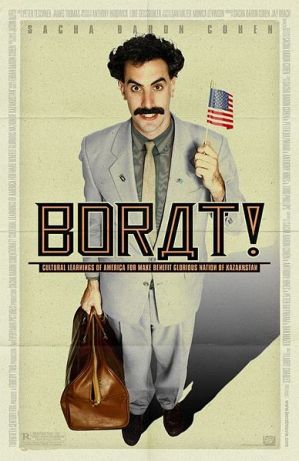
Today’s feature is Sacha Baron Cohen’s infamous shock-documentary, Borat: Cultural Learnings of America for Make Benefit Glorious Nation of Kazakhstan.

Borat was directed by Larry Charles, who has also been behind the documentary-style comedies Religulous, Bruno, and The Dictator, and has also served as a producer on television shows like Seinfeld, Curb Your Enthusiasm, Dilbert, The Tick, and Entourage.

Borat is based on a character originally created by Sacha Baron Cohen for Da Ali G Show, but the movie astoundingly has a total of 9 credited writers, including both story and screenplay credits for Cohen, Anthony Hines (Bruno), and Peter Baynham (I’m Alan Partridge), as well as a screenplay credit for Dan Mazer (Da Ali G Show) and a story credit for Todd Phillips (Old School, Road Trip, The Hangover Part II, The Hangover Part III).

The cinematography in Borat was provided by the duo of Anthony Hardwick (Bruno, Religulous, Entourage) and Luke Geissbuhler (Helvetica, A LEGO Brickumentary)

Borat in total had three primary editors: Craig Alpert (Pineapple Express, Funny People, Knocked Up), Peter Teschner (Horrible Bosses, Bride of Re-Animator, I Spy, Josie and the Pussycats), and James Thomas (The Muppets, Fanboys, Hot Tub Time Machine).

The music for Borat was provided by Sacha Baron Cohen’s brother, Erran, who has also provided the music for his other films The Dictator and Bruno.

The team of producers on Borat included co-writers Sacha Baron Cohen, Dan Mazer, and Peter Baynham, as well as Jay Roach (Meet the Parents, Meet the Fockers, Austin Powers: International Man of Mystery) and Monica Levinson (The Watch, Bruno).

The cast of Borat is made up mostly of unaware non-actors, outside of Sacha Baron Cohen and Ken Davitian (The Artist, Meet the Spartans, Get Smart, Frogtown II). A couple of recognizable faces do pop up in non-acting roles as themselves, like Pamela Anderson and politician Alan Keyes.

Todd Phillips was initially slated to direct the film, but left after filming just one sequence (the rodeo) due to creative differences with the rest of the team. He did wind up with a story credit on the final product, however.

The release of Borat unsurprisingly met with an immense amount of controversy, with countless individuals speaking out against the depictions and representations in the movie, as well as a handful of lawsuits being filed against the production.

In spite of the controversy, the initial response to Borat from critics and audiences was generally positive, and it still holds a 91% from critics on Rotten Tomatoes, as well as a MetaCritic score of 89%. However, time hasn’t been particularly kind to the movie: the continuously recorded IMDb rating has sunk to 7.3, alongside the currently updated Rotten Tomatoes audience score of 79% and MetaCritic user score of 7.2.

Borat made well over $128 million in its initial domestic theatrical release, on top of $133 million internationally, despite a number of national bans. The initial production budget was $18 million (what the hell was that money spent on?), making the movie wildly profitable, especially for a documentary.

There is a certain unfocused quality to Borat. Who is the audience supposed to laugh at in this movie? Instead of punching up or punching down, it just seems to flail, swinging limbs confusedly in every direction and hitting whatever it happens to come into contact with. This idea of the ‘equal opportunity offender’ seemed to be particularly popular at the time, using the idea that making fun of everyone excused making fun of stigmatized and oppressed groups in even the most lazy and demeaning ways. For an example of that, just take a look at Carlos Mencia’s Mind of Mencia, which ran on Comedy Central for 3 years from 2005 to 2008, operating specifically on this mentality.

borat3
“NOT very nice”

The moments of humor that are effective in Borat are pretty niche in their interest, having a specific focus on a combination embarrassment and schadenfreude. While this has gotten more popular over the years due to the correspondent segments on The Daily Show and the style of The Colbert Report, it still isn’t the sort of comedy that pops up a lot in blockbusters. This makes it all the more perplexing as to why it was so widely successful at the time. The best way to explain it is that the movie is satire gone wrong, and a lot of people were laughing at the ‘wrong things’. For instance, when Borat is referenced in popular culture, it is never done by playing on the humor of making common people look ridiculous for their hypocrisies and prejudices, but by mimicking the eccentricities of the character of Borat himself, like his bathing suit and his accent. Those aspects seem to me to be more of a means to an end in the movie, where the laughs are meant to be focused on the reactions of the people. Still, that doesn’t make these details ok, because they are still incredibly negative and shallow, but it is telling that those are the aspects of the film that people latched onto.

However, most of the humor throughout Borat is lazy and based on a ludicrous, concocted version of the nation of Kazakhstan: a lot of it seems to be based on massive misconceptions and general xenophobia towards people from the Middle East and Eastern Europe, making the movie not all that unlike the clueless conservative people it primarily aims to mock. Even the way the film is shot keeps the focus almost exclusively on the character of Borat, whereas Daily Show correspondent segments almost always stay trained on the target, with the character specifically being used to draw out reactions.

Speaking of which, why use Kazakhstan here? There is no resemblance between the portrayal in the movie and the actual country, so why not just make up a fake country? It just strikes me as being antagonistic without reason, just as a way to piss off yet another group of people. It is also a thoroughly confused portrayal, bouncing between considering the country Middle Eastern or Eastern European, which aren’t the same thing. Even worse, it isn’t really either of those things: It is a massive country, but is best classified as Central Asia. Hell, it has a massive Eastern border with China, and a significant Northern border with Russia. Honestly, I think they only picked Kazakhstan for this movie because it ends in “-stan,” and I guess that qualifies as ‘close enough’.

borat2

Borat definitely capitalizes off of domestic xenophobia and racism in the wake of 9/11 and the renewed American engagement in the Middle East, but it also punches hard at conservative and evangelical elements in the US, as I mentioned previously. It is also worth noting the amount of Russian and former Soviet influence on the style of pseudo-Kazakhstan, which provides kind of a double-whammy as far as ingrained negative bias from the perspective of western audiences.

It is worth pointing out that Cohen’s style of humor has seemingly rapidly decreased in popularity over time, with each of his Borat-esque films making less of an impact than the last. However, he has done some acting in a few acclaimed films in recent years, like 2012’s Les Miserables and Tim Burton’s Sweeney Todd, and isn’t awful as a comic relief element in those dramas.

On the Rotten Tomatoes aggregator, one review blurb in particular stood out to me, from critic Matthew De Abaitua of Film4:

“Borat is the funniest film imaginable right now.”

I think that kind of captures the phenomenon of this movie: for better or worse (mostly worse), it is a product of a specific time. I think a lot of people rightfully look back on it negatively now, but that should tell us a lot about the movie-going masses of 2006 in comparison to today’s audience more than anything else.

Sacha Baron Cohen made the decision to retire the character of Borat not too long after the film’s release, which I think was the best move for everyone. His reasoning is that he couldn’t surprise people anymore due to the character’s popularity, but I think there’s much more to it than that: Borat as an entity doesn’t belong in the present day, and it rapidly became the sort of tone-deaf portrayal that it was theoretically trying to mock. On some level Cohen must have known that, and it had to have influenced his decision to set the character aside.

I think Borat is worth rewatching for a lot of people, particularly to understand where society was at the time for it to become such a hit. The movie is honestly unremarkable, and suffers from being horrifically unfocused and poorly paced. If there is anything positive to say about it, it is that Cohen is capable of disappearing into a role, and that the film manages to sporadically capture the elusive quality of schadenfreude. However, it gets very bogged down in focusing on Borat as a semi-human caricature, rather than on the people around him. It does provide a semi-coherent example of how satire can so easily drift astray, and become a negative force.

Don’t Copy That Floppy

Don’t Copy That Floppy

copyfloppy

This post is based on a viewer request, which is being filled due to a donation to the Secular Student Alliance via during Secular Students Week (June 10-17, 2015). Thanks to all for your contributions!

There are few things in this world as delightful as dated Public Service Announcements and safety videos. There is so much nostalgia tied to these often extreme and tone-deaf cautionary messages, that it is hard not to look back fondly on them. Some of them have even become cultural staples of their times. Is there a better encapsulation of 1950s America than “Duck and Cover?” Or the late 1980s and early 1990s, as depicted by the Partnership for a Drug Free America?

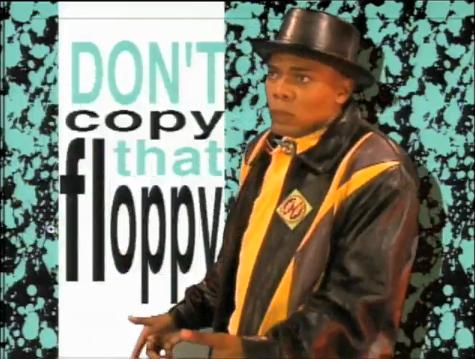
But, of course, as you get deeper into the world of PSAs and children’s educational videos, things get much cheesier and weirder pretty quickly. This is the world where you might stumble across “Don’t Copy That Floppy,” right next to “Be Cool About Fire Safety” and “The Kids’ Guide To The Internet.”

“Don’t Copy That Floppy” was created in 1992 by the Software Publisher’s Association, to raise awareness about copyright infringement and piracy. It was distributed to countless schools on VHS, but didn’t gain the popularity it has today until it popped up on YouTube many years later, and has gained a particular ironic popularity as a meme among the internet-savvy and technologically proficient. It even gained enough popularity that a sequel was produced in 2009, in order to update the message for a new era of technology and younger audiences.

There are a lot of reasons why this video has become so popular, not the least of which is the widespread nostalgia for the earlier days of computer technology. Given how quickly developments and improvements have occurred, it is hard not to giggle at the simpler days of floppy discs in a year when even CDs are on the way out as a storage device. However, in the case of “Don’t Copy That Floppy,” the message is what has really given it longevity (or the lack of it): anti-piracy.

Online piracy of video and music content is now easily commonplace, and is the topic of major legal battles and debate all over the world. Terms like “Napster” and “The Pirate Bay” are now in the public lexicon, in a way that the makers of “Don’t Copy That Floppy” just couldn’t have anticipated. The conversation over the ethics of online piracy is easily one of the biggest and most heated battlegrounds in the technological sphere today, so seeing it boiled down to such one-sided simplicity in the form of an early 1990s rap number is nothing short of ludicrous from the point of view of someone watching today.

Also, the video definitely goes over the top with its claims, such as implying that piracy will ultimately destroy the computer age, and that all computer businesses will have to shut down as a result of making duplicate copies of “The Oregon Trail.” It also only presents the most basic of straw man counterarguments, making it essentially propaganda as opposed to being an informative piece.

Last but not least, “Don’t Copy That Floppy” seems to perfectly capture the style of the early 1990s with its colorful backgrounds, dated hair styles, memorable fashion, awful music, and cheesy use of a green screen for effects. For anyone who lived through that decade, this video is an absolute delight.

I don’t remember ever actually seeing this video in school, but I certainly recall a whole bunch like it. Thanks to YouTube, these kinds of videos are easily within reach for anyone to check out, and thank goodness for that, because it is awful fun to go back through videos like these. If you have 10 minutes to kill on the internet, do yourself a favor and give a watch to “Don’t Copy That Floppy.”

The BibleMan Marathon

Just as a reminder, today is the last day of Secular Students Week. So, today only, If you make a donation to the Secular Student Alliance, I’ll cover a movie of your choice.

shadowofdoubt3

Yesterday, the final post went up concluding my marathon of the Bibleman franchise. Over the course of 15 years and 3 incarnations, Bibleman became one of the most popular and recognizable figures in Christian entertainment. So, how was the experience of completing the series?

It was pretty awful. There are definitely some golden moments here and there throughout the series that make for some ironic laughs, but the real purpose behind the series as an evangelical tool aimed at children is always present and evident, and it gives the whole series an unavoidably creepy vibe.

cheater4

bully3 fightforfaith5
Oh, and did I mention all of those brutal Bibleman kills? Here’s a sampling of some of my favorites from the series for you: I’ll have to go back and come up with a final kill count for the franchise at some point, though.

laziness3
cheater7
cheater3
princeofpride4
lightdarkness4

As far as some other final thoughts on the series go, I was amazed to see how much it actually changed over time. Even more interestingly, it was astounding to see how many different hands the series went through, and too how they each impacted the product that wound up on screen. Throughout the series, I got the feeling that there was a lot of tension and backstabbing going on behind the scenes, as creators, actors, and directors would frequently disappear from the franchise, never to return. The creator of the Bibleman character doesn’t even get credit past episode four. I would love to interview some people involved with the show to get a better idea of what all happened behind the scenes, because there just isn’t a lot of information out there, and I can’t go very far on conjecture alone.

Anyway, without further ado, here is the master index of my Bibleman reviews, in chronological order:


The BibleMan Show: Big Big Book

The BibleMan Show: Back to School

The BibleMan Show: Six Lies of the Fibbler

The BibleMan Show: Silencing the Gossip Queen

The BibleMan Adventure: Defeating the Shadow of Doubt

The BibleMan Adventure: The Incredible Force of Joy

The BibleMan Adventure: The Fiendish Works of Dr. Fear

The BibleMan Adventure: Conquering the Wrath of Rage

The BibleMan Adventure: Shattering the Prince of Pride

The BibleMan Adventure: Breaking the Bonds of Disobedience

The BibleMan Adventure: Lead Us Not Into Temptation

The BibleMan Adventure: Jesus Our Savior Part 1

The BibleMan Adventure: Jesus Our Savior Part 2

The BibleMan Adventure: A Light In The Darkness

The BibleMan Adventure: Divided We Fall

The BibleMan Adventure: A Fight For Faith

BibleMan: Powersource: Terminating the Toxic Tonic of Disrespect

BibleMan: Powersource: Tuning Out the Unholy Hero

BibleMan: Powersource: Crushing the Conspiracy of The Cheater

BibleMan: Powersource: Lambasting the Legions of Laziness

BibleMan: Powersource: Blasting the Big Gamemaster Bully

BibleMan: Powersource: Combating the Commandant of Confusion

BibleMan: Powersource: In The Presence of Enemies


Thanks for sticking this out with me, everyone! Next week, I’ll be back to the usual bad movie reviews. As for the rest of this week, you can look forward to a few more requests to be fulfilled over the next couple of days.

Just as a reminder, today is the last day of Secular Students Week. So, today only, If you make a donation to the Secular Student Alliance, I’ll cover a movie of your choice.

New Post Index and Last Day for Requests

misantropeyhead

Based on some recent feedback, I found that the archives here on Misan[trope]y are a bit difficult to navigate. So, I’ve created an alphabetical post index, which you can now find on the top menu bar. Feel free to take a stroll through the past three years of reviews, but keep in mind that the older the reviews, the shorter and less detailed they are.

Speaking of which, from going through a bunch of my old posts to build the index, I noticed that I covered a lot of classic bad movies with really minimal posts, particularly towards the beginning of the IMDb Bottom 100 challenge. So, I’m planning to re-cover a bunch of those with a bit more detail in the near future, like Birdemic, Troll 2, and Manos: The Hands of Fate.

In the meantime, today is the last day where you can donate here to the Secular Student Alliance and make me watch whatever you want! It doesn’t matter how much you give, I will honor any request you have. I have already written about watching paint dry, Willy Wonka vs. Charlie and The Chocolate Factory, and I have tons more request-posts going up over the next week. Also, feel free to make me cover something again, particularly if I didn’t give it much detail at the time, or you thought I was way off the mark (I see all of you Hudson Hawk apologists out there).

ssalogo
Many thanks to everyone who has donated so far, and even more thanks to all of you who suffered through the Bibleman Marathon with me! If you haven’t given yet, I would love it if you did. If you can’t though, we are still totally cool. I hope you all are enjoying the posts, and you can always get me at mail@misantropey.com.

robotjox1

BibleMan: In The Presence of Enemies

In The Presence of Enemies

presence1

Today, I’m continuing my week-long marathon of the Bibleman franchise as part of Secular Students Week. If you make a donation to the Secular Student Alliance this week, and I’ll cover a movie of your choice.

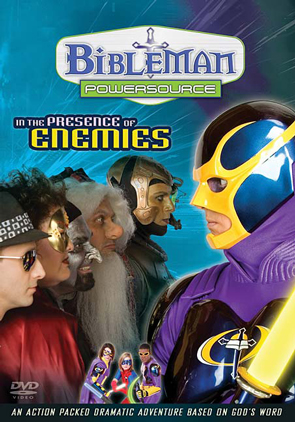
2010’s “In The Presence of Enemies” marks the final episode of the third and final incarnation of the Bibleman franchise: “Bibleman: Powersource.” Willie Aames’s replacement, Robert Schlipp, stars once again in the lead role of Bibleman in this final entry into the franchise.

“In The Presence of Enemies” was produced, directed, and written once again by Steve Gilreath, who was a consistent creative presence throughout all of the episodes in “Bibleman: Powersource.”

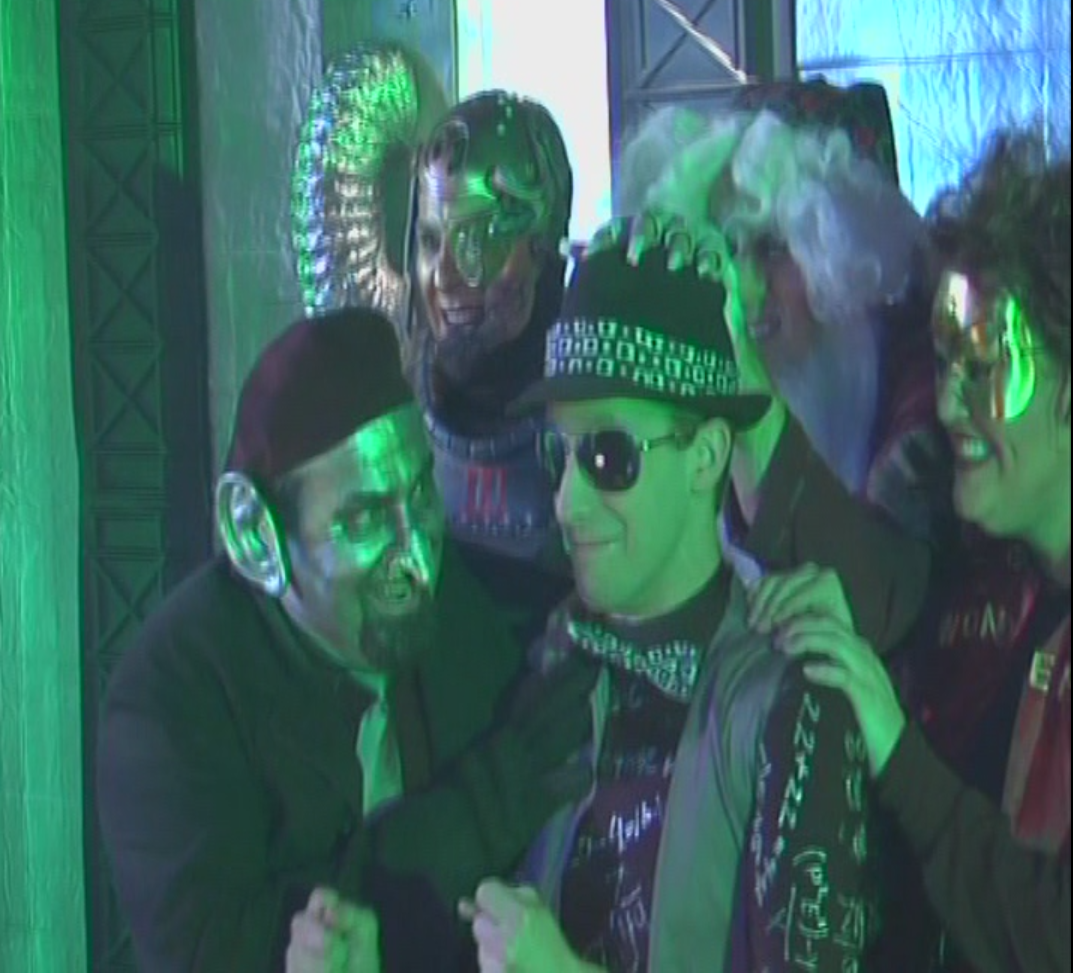
“In the Presence of Enemies,” as the name suggests, features nearly the entire cast of villains from throughout the run of “Bibleman: Powersource,” including The Cheater, Snortinskoff, Gamemaster, The Slacker, 2kul 4skul, and the supercomputer, L.U.C.I.. Likewise, Bibleman is joined by his entire team of allies from throughout the duration of “Bibleman: Powersource”: Melody, Cypher, and Biblegirl.

The story of “In The Presence of Enemies” follows an alliance between a number of Bibleman’s toughest adversaries, who have grown frustrated with the hero interfering with their various sinister shenanigans. Together, they try to bring down the Bible Adventure Team with a cooperative plot to write and distribute a fake version of the bible with manufactured scripture, in order to confuse them and lead them astray.

The episode opens up with Bibleman and Cypher being flown around in fighter jets, for pretty much no reason at all. It reminded me of the racecar introduction to “Lambasting the Legions of Laziness,” in that it just seems to be something they wanted to do, and it helped them kill time.

presence3

It was a nice move to actually have a proper, consolidated sendoff for “Bibleman: Powersource”, as “The Bibleman Adventure” limped to its conclusion with various elements of finality spread throughout “A Fight for Faith,” “A Light In The Darkness,” and “Divided We Fall.” I do wish that either The Wacky Protester or Luxor Spawndroth had been brought back as a nod to the previous incarnation, but I wasn’t particularly shocked by their absence. From what I can tell, the transition from “The Bibleman Adventure” to “Powersource” wasn’t particularly pleasant, and those bridges were likely burned.

However, this is also probably the shortest episode in the whole franchise, not even clocking in at thirty minutes. Traditional wisdom would say that a finale should be big and flashy, but this is just the opposite: half-assed and short, like they just wanted to get it over with and put it in the can.  Despite the presence of so many bad guys, this episode just feels small and uninspired, featuring a countless number of extraneous clips and flashbacks, and even a foodfight between the various villains. They couldn’t even get the guy who plays Snortinskoff to physically show up, and have him literally phone in his performance.

The villains’ plot, which involves creating a fake bible, is beyond ridiculous. They honestly think that Bibleman and company, who obsessively quote scripture from memory, won’t realize that their bibles have been tampered with, which goes to prove that Bibleman villains are far from the brightest bulbs out there. However, the plot inexplicably works for a while, proving that anti-intellectual super heroes might not be the best idea, either.

presence2

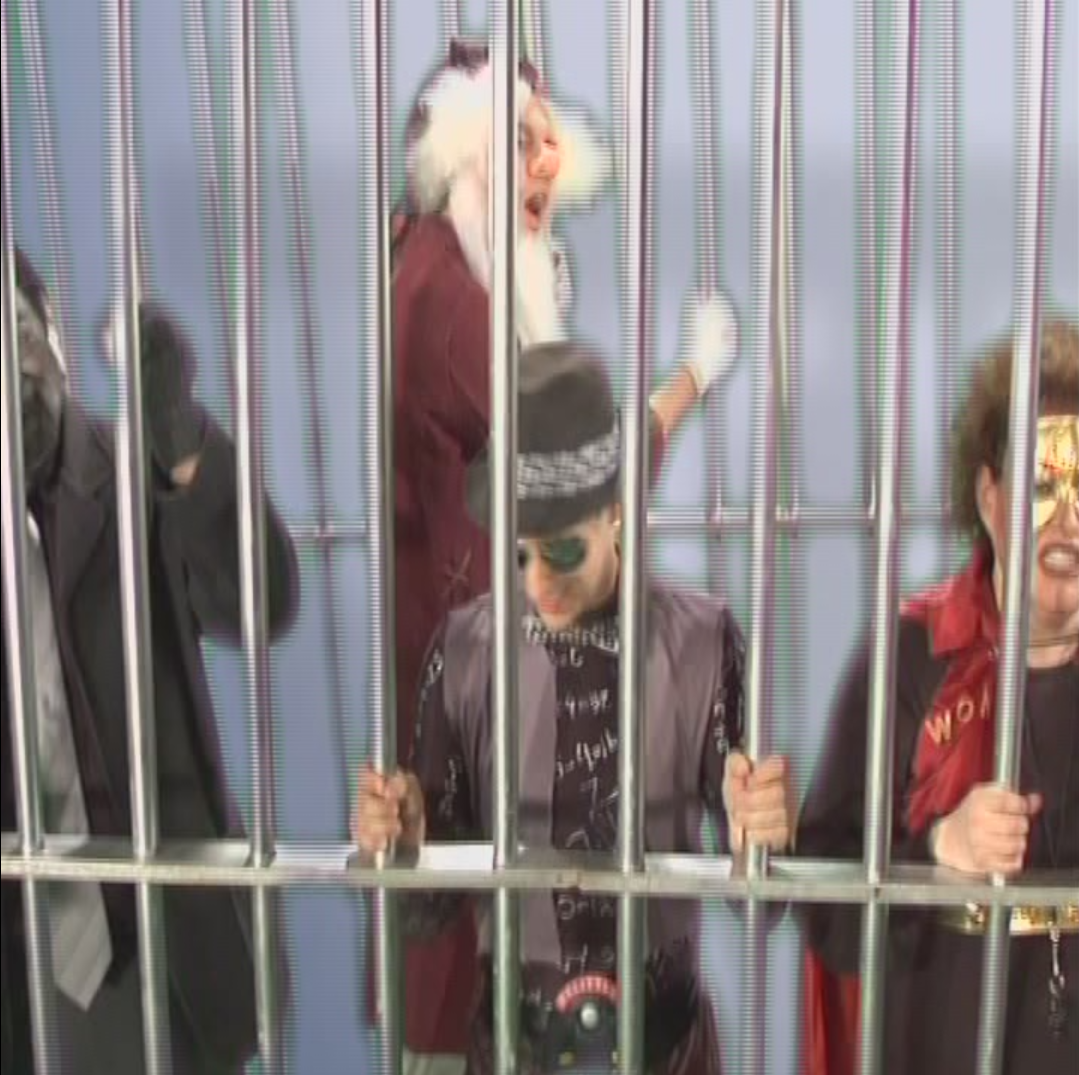
In a rare showcase of mercy to conclude the series, the villains are shrunk, captured, and placed in a tiny cage for the amusement of the Bible Adventure Team, instead of ritually executed to please their ever-hungry God. However, Gamemaster is never shown in the cage, and Snortinskoff is also never specifically dealt with, leaving a theoretical window open for future adventures. Thankfully, however, those have not come to be.

presence4

Between this and the equally zero-effort “Combating the Commandant of Confusion,” “Bibleman Powersource” manages to end even less gracefully than “The Bibleman Adventure.” This was clearly either due to financial constraints or a collapse behind the scenes, or perhaps even a combination of both of these things. In any case, “In the Presence of Enemies” makes for a pretty lackluster nose-dive into the finish line for the “Bibleman” franchise. On the positive side of things, this means I’m done with Bibleman! You all can look forward to retrospective on the series within the next day, and thanks for sticking around!

You still have a day to make donations here in order to have a coverage request on the blog honored! I already covered the experience of watching paint dry, so literally anything is on the table. Even paint.

BibleMan: Combating the Commandant of Confusion

Combating the Commandant of Confusion

confusion1

Today, I’m continuing my week-long marathon of the Bibleman franchise as part of Secular Students Week. If you make a donation to the Secular Student Alliance this week, and I’ll cover a movie of your choice.

2010’s “Combating the Commandant of Confusion” marks the penultimate episode of the third and final incarnation of the Bibleman franchise: “Bibleman: Powersource.” Willie Aames’s replacement, Robert Schlipp, stars once again in the lead role of Bibleman.

“Combating the Commandant of Confusion” is once again produced and directed by Steve Gilreath, but is this time written by Bibleman himself, Robert Schlipp.

The central villain of “Combating the Commandant of Confusion” is the eponymous Commandant: a metallic, verbose, Soviet-inspired, malapropism-spouting military commander. However, the first villain who appears on stage is a henchman named Chaos, who is just some person in a jumpsuit and a motocross biking helmet. This, frankly, sets a new standard for laziness in Bibleman villain designs.

confusion2
“I am especially fond of severe harm”

Bibleman’s allies for the episode include the entire Powersource incarnation of the Bible Adventure Team: Cypher, Biblegirl, and Melody, though Melody is relegated to a minimal supporting role.

The story of the episode follows the Bible Adventure Team hosting a training demonstration to a live audience, in which they are supposed to use a new, recently developed weapon. However, the Commandant of Confusion and Chaos steal the instructions for the device, and plot to replace it with some sort of vaguely evil gizmo to destroy Bibleman and company. Of course, the team figures out a way to defeat them, and ultimately reveal that the “weapon” is actually just a bible. Really.

confusion6
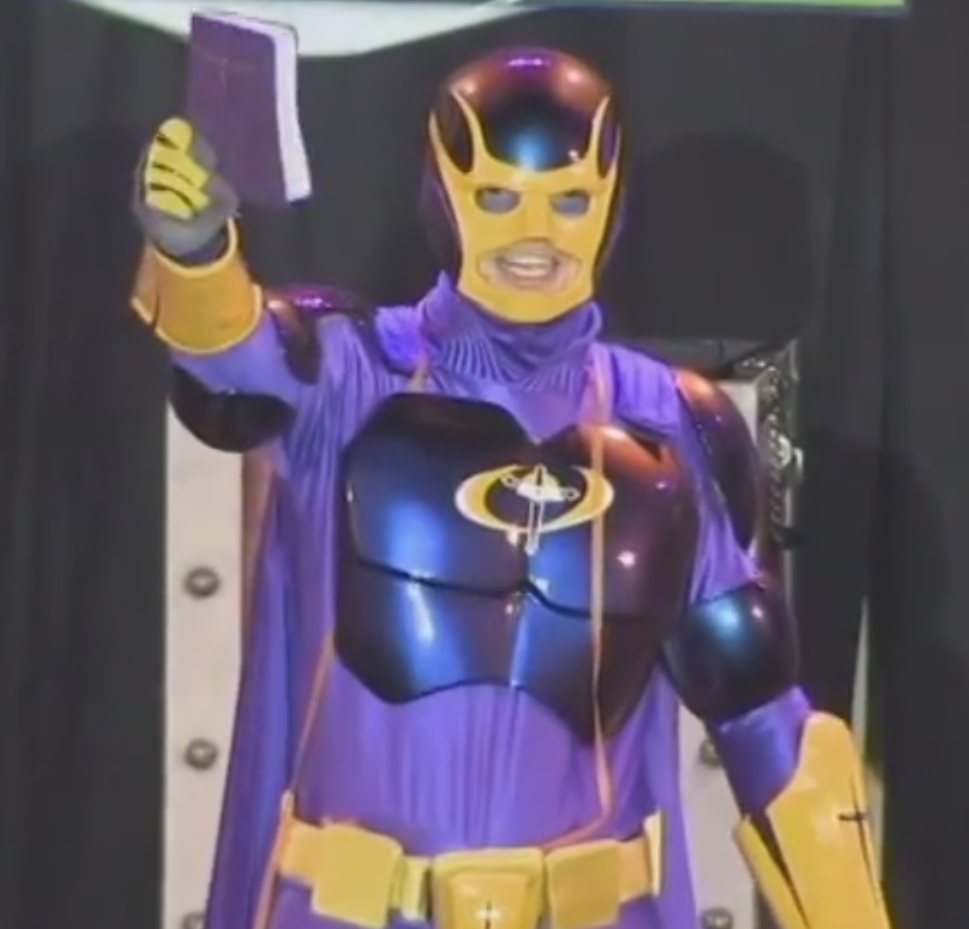
“The most powerful weapon…is the word of God!” You might have a point there, you fundamentalist paramilitary vigilante.

The episode starts with a retrospective of the entirety of “Bibleman Powersource” to date,  totaling in for a whopping two and a half minutes of the run time. It is not only totally unnecessary background, but given the abnormally short length of the episode, I imagine that they were desperate to fill in the time with anything they could find. Likewise, the ending features a particularly bloated prayer segment that seems to drag on indefinitely.

There are live versions of a number of episodes in the Bibleman series, but “Combating the Commandant of Confusion” seems to be the only one that lacks a standard filmed version of the episode. I’m not sure if they did this specifically to cut costs, but it is kind of jarring. They try to make the live setup make sense as if it is a standard episode, under the guise of it being a training academy. However, it is pretty transparent given the low quality of the film and the restricted camera angles.

confusion7

Something else that is odd about the episode is that, despite this being a live episode, post-production special effects are still used as if it was a standard episode, which just comes off looking strange.

The central concept behind this episode seems to be a sentiment of anti-intellectualism, with the portrayal of the Commandant being a verbose fraud who uses his appearance of intellect to confuse and manipulate people. This reminds me of how a lot of fundamentalists seem to think of university professors at secular institutions. However, I was a bit surprised at how the villain was designed: why did he have to be military-themed? They literally just had one of those with Baron Von Braggard in the previous episode, and it would make a whole lot more sense for Confusion to be a tweed-clad professor caricature, given the way he carries himself and uses language.

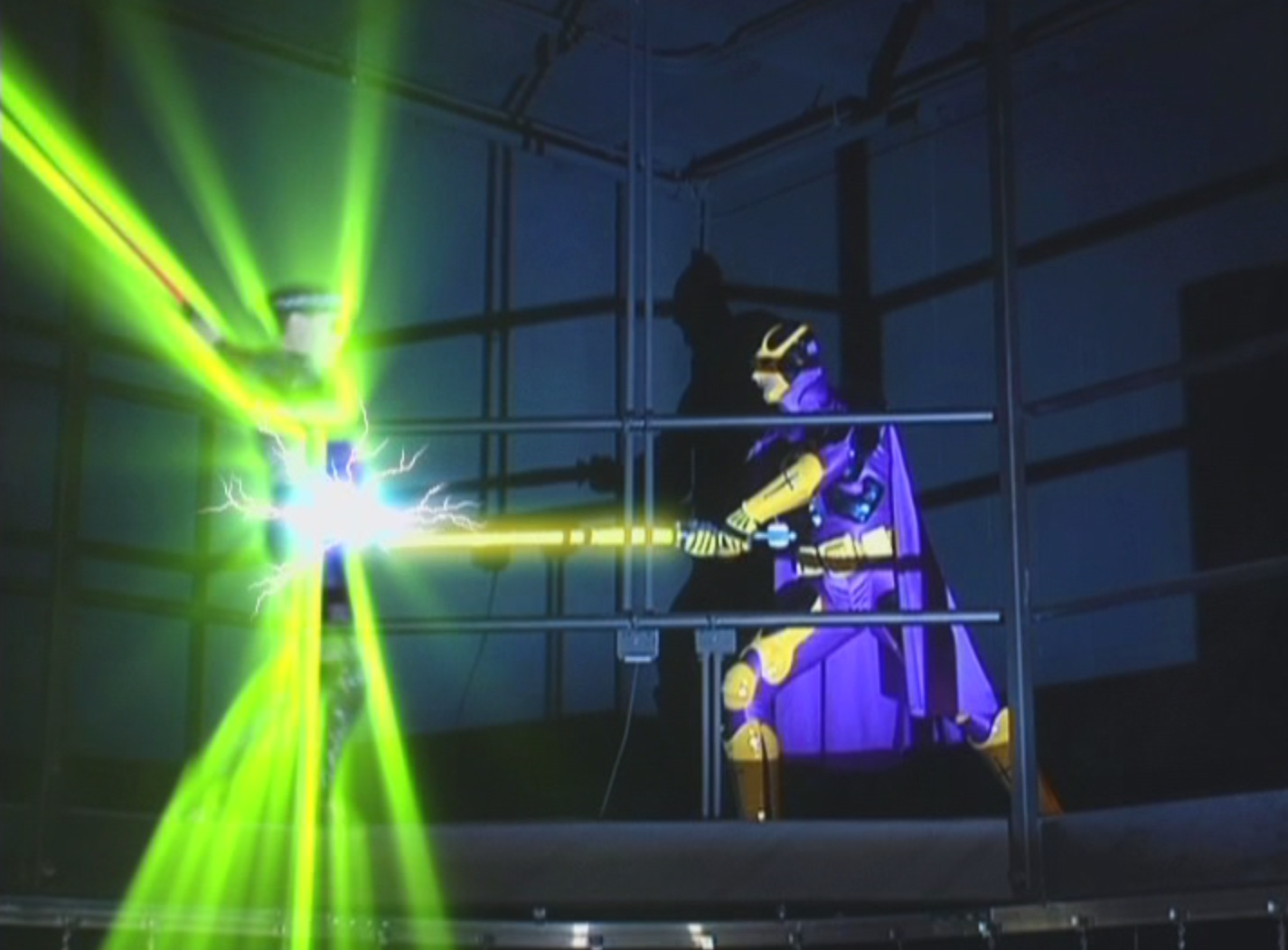
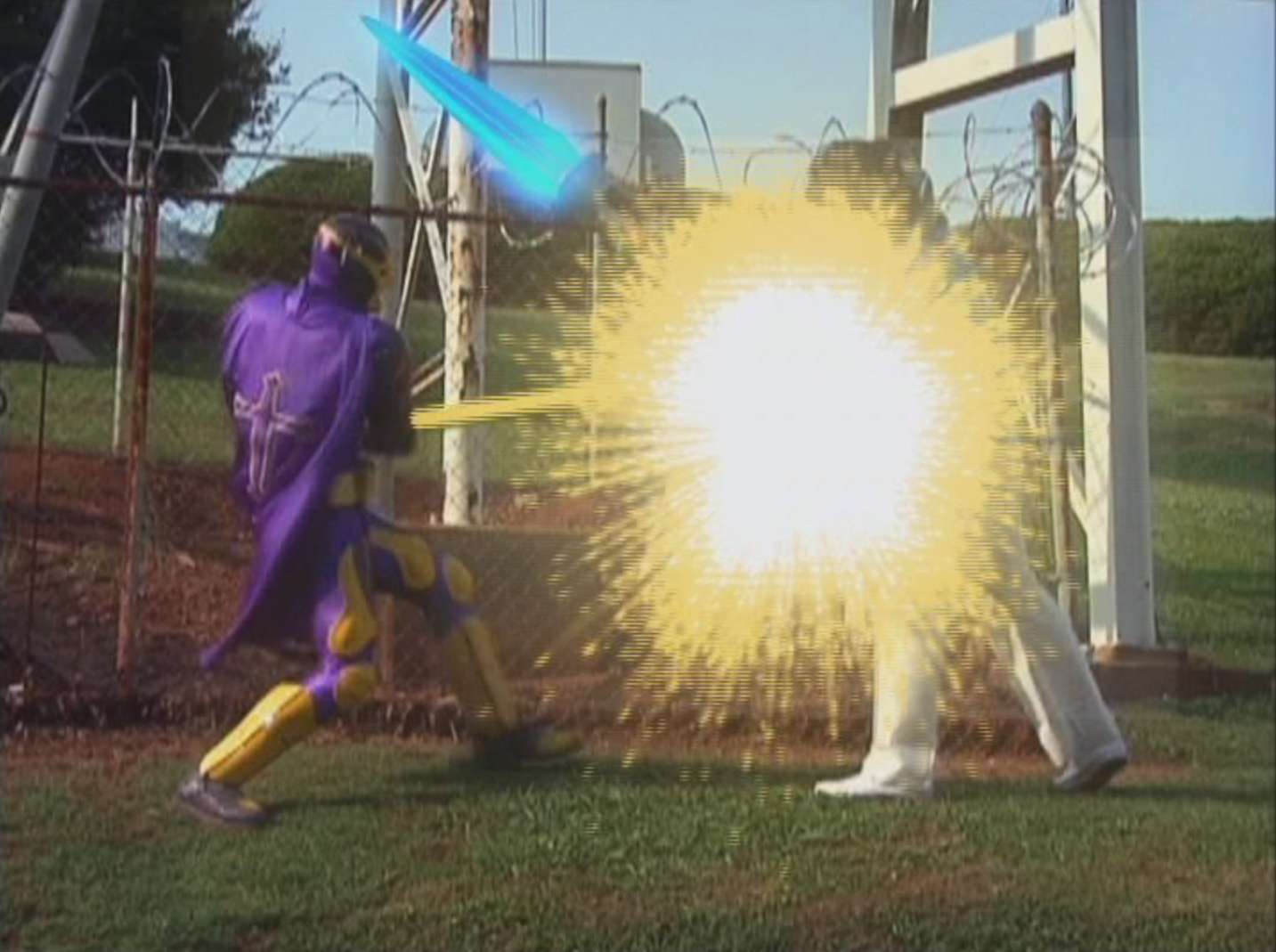
The Commandant of Confusion is, of course, struck down by the Bible Adventure Team at the conclusion of the episode. The Commandant winds up taking a slash from Bibleman’s laser sword, which leaves him thoroughly disintegrated, while Chaos manages to escape unharmed.

confusion5 confusion3 confusion4

“Combating the Commandant of Confusion” is incredibly half-assed in just about every way you can imagine. The villains are dull, the story is boring, the run-time is short and packed with filler, and they didn’t even bother to do a professional, studio version of the episode. This is corner-cutting and production laziness at its finest, and makes the episode absolutely skippable.

BibleMan: Blasting The Big Gamemaster Bully

Blasting The Big Gamemaster Bully

bully1

Today, I’m continuing my week-long marathon of the Bibleman franchise as part of Secular Students Week. If you make a donation to the Secular Student Alliance this week, and I’ll cover a movie of your choice.

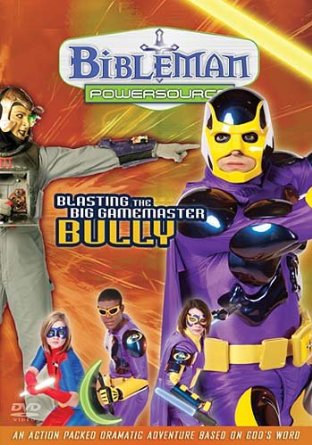
2009’s “Blasting the Big Gamemaster Bully” marks the fifth episode of the third and final incarnation of the Bibleman franchise: “Bibleman: Powersource.” Willie Aames’s replacement, Robert Schlipp, stars once again in the lead role of Bibleman.

“Blasting the Big Gamemaster Bully” is once again written by Michael Nolan (“Crushing the Conspiracy of The Cheater,” “Terminating the Toxic Tonic of Disrespect”) and directed/produced by series regular Steve Gilreath.

The primary villain of the episode is, of course, Gamemaster: a robot who previously popped up in a minor role in “Lambasting the Legions of Laziness,” in which he was notably stabbed to death by Bibleman. A secondary villain appears in the form of a pig-nosed militaristic creature named Baron Tantamount Von Braggart.

Bibleman is joined by his usual team of allies: his long-time sidekick Cypher, Biblegirl, and the relative newcomer, Melody.

The story of the episode follows Gamemaster, who has been reconstructed and upgraded since Bibleman destroyed him in “Lambasting the Legions of Laziness.” With the help of the evil computer L.U.C.I., he creates a video game called “Big Bad Bully,” which allows kids to pretend to be bullies in a factional realm. However, it apparently brainwashes the children into becoming violent and confrontational at the same time, which raises the attention of Bibleman’s team. Of course, they have to find a way to help the children, stop the video game, and find a way to stop the bullying epidemic in the local schools.

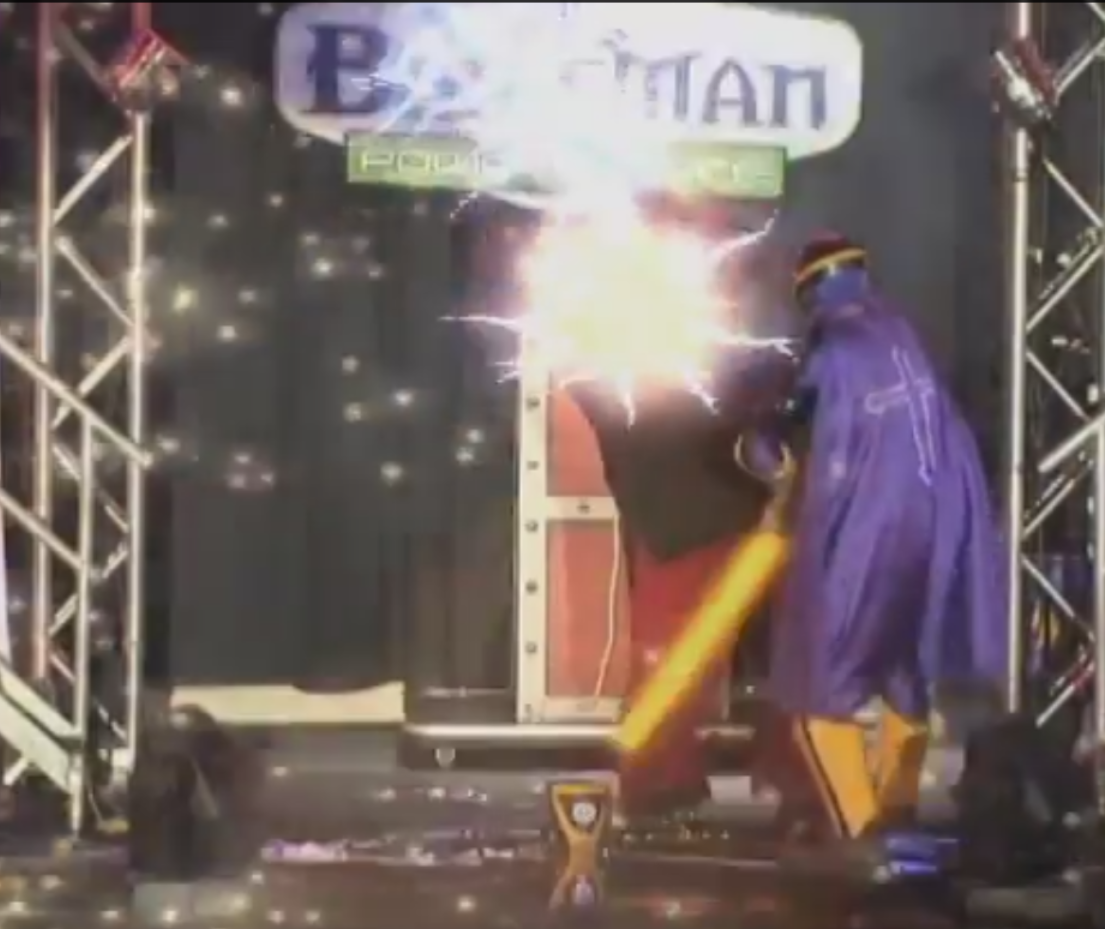
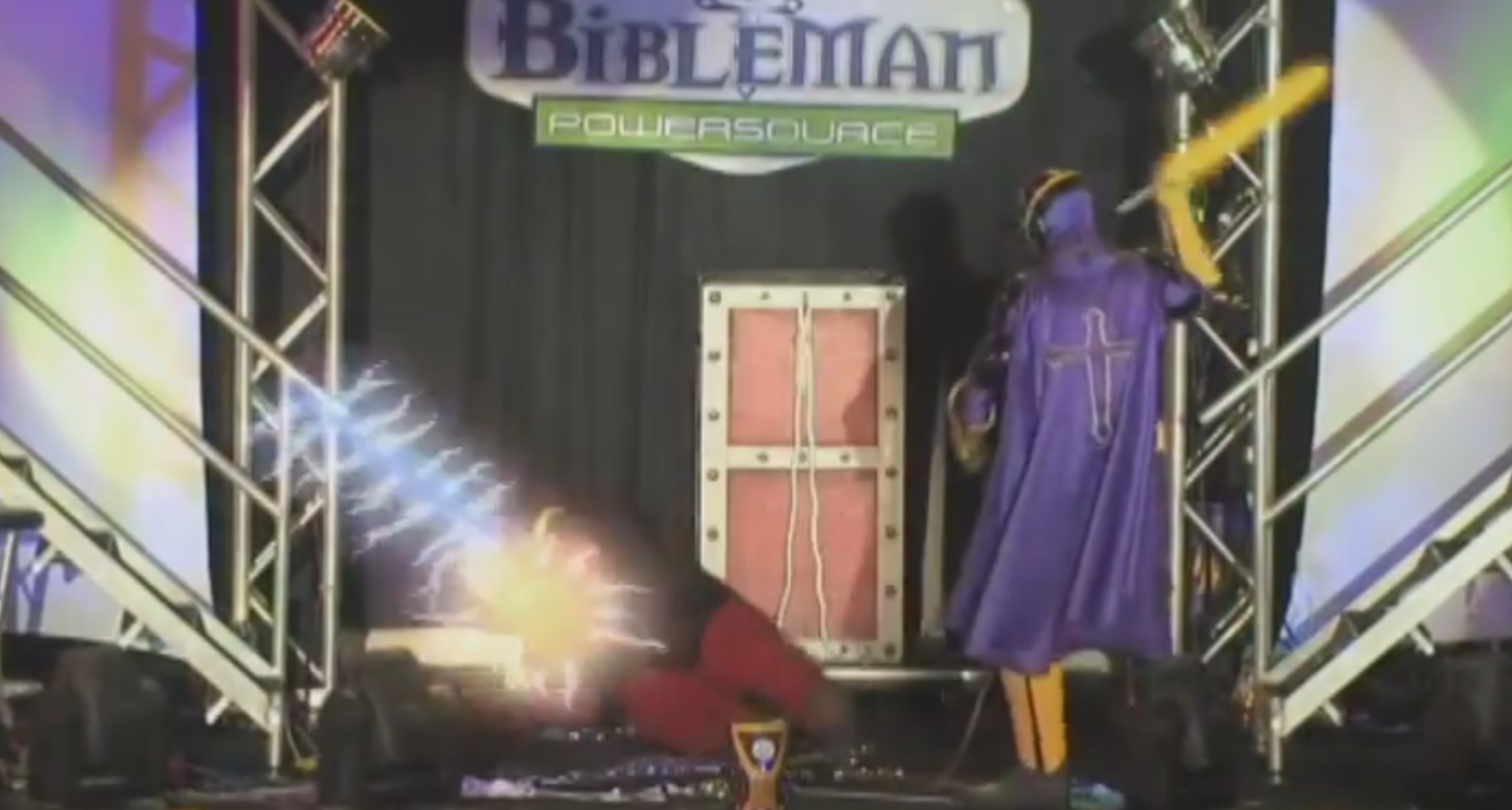
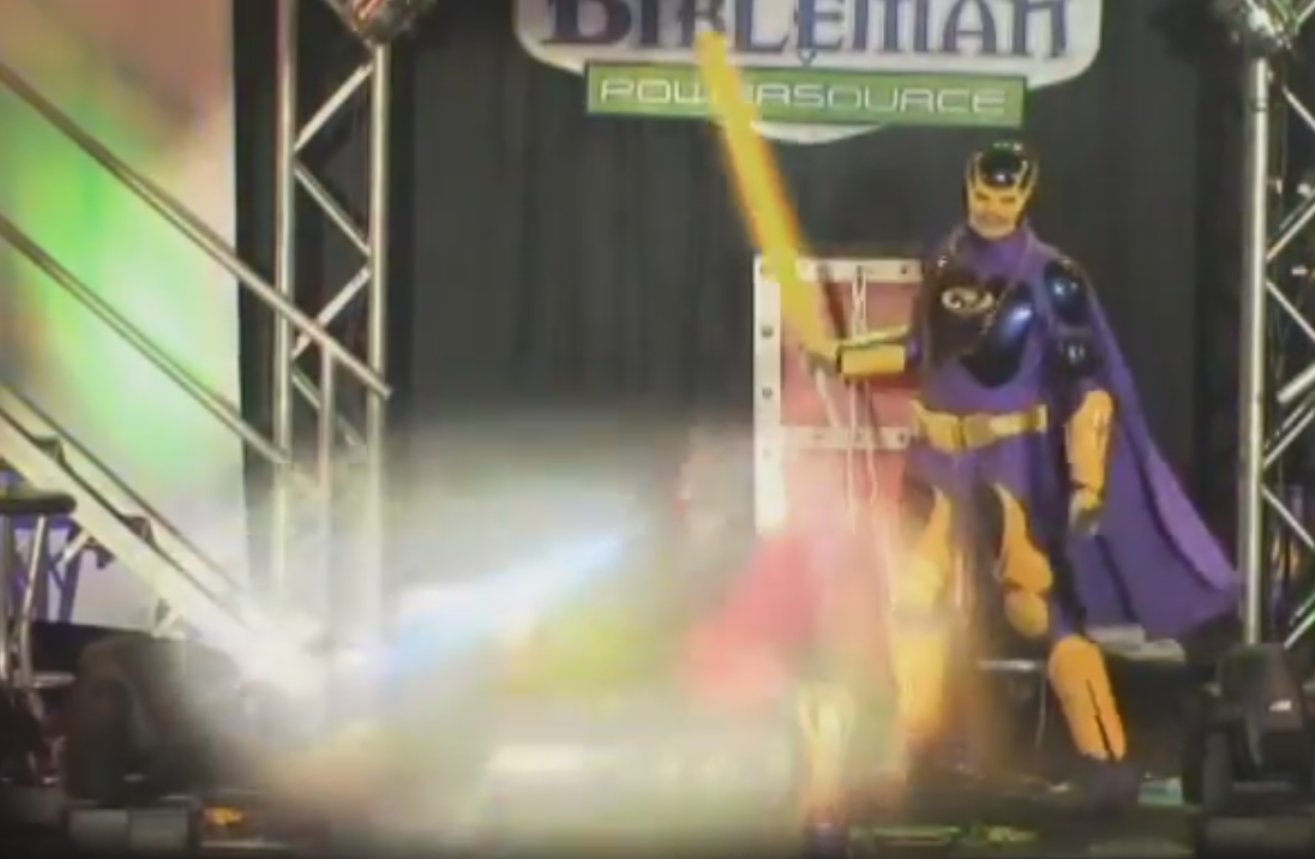
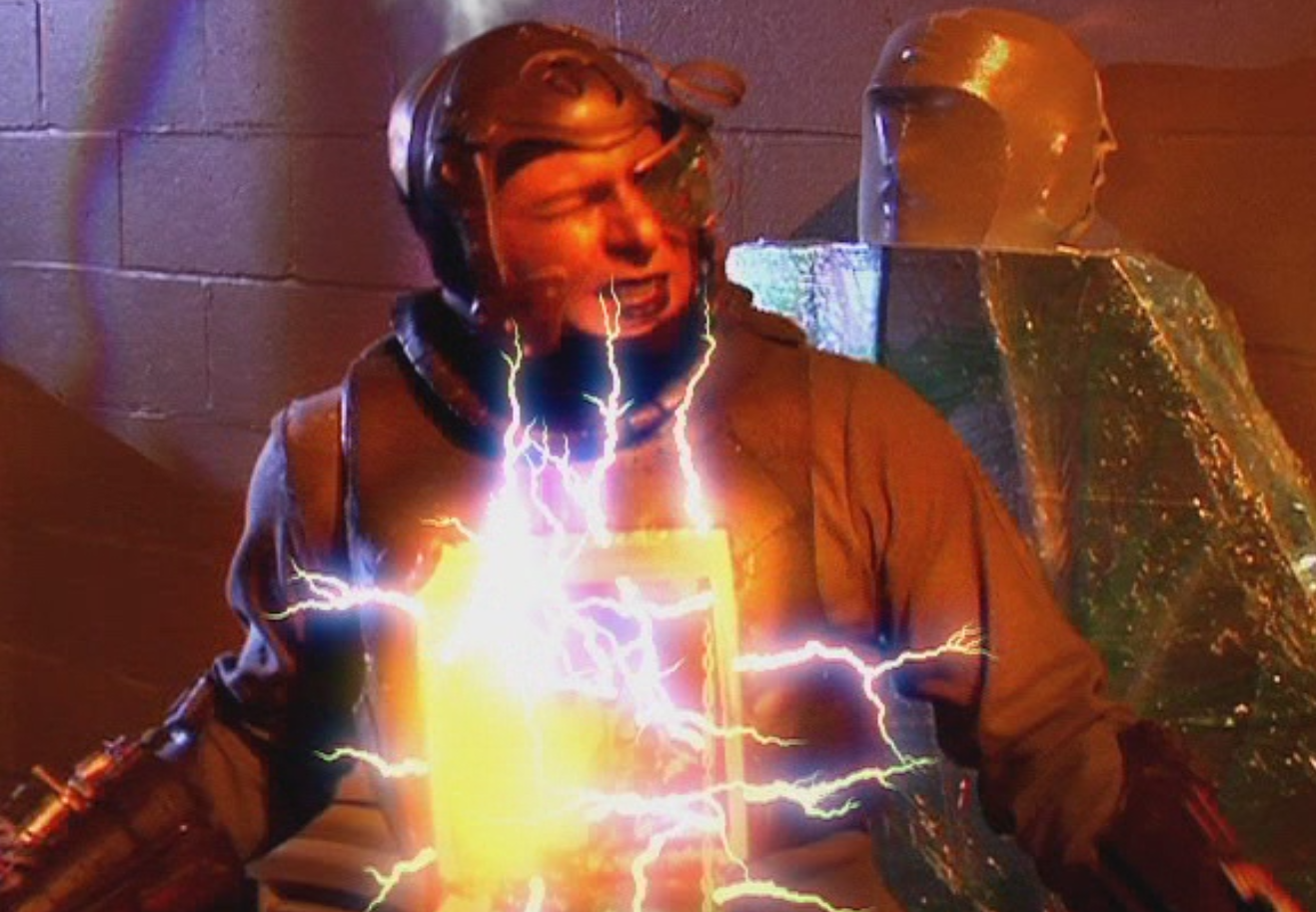
Von Braggart, in fitting with Bibleman tradition, dies brutally in the introductory sequence when his death laser somehow interacts negatively with his electric cane, leaving him a glowing, shocked mess. Surprisingly, Bibleman and team had nothing at all to do with this, and it actually seemed to be a genuine accident. I guess that is one of the hazards of keeping a death laser laying around.

bully2

Gamemaster is helped out by a legion of cheap-looking robot henchmen, which make his costume look comparatively advanced (and I previously compared him to ‘Sex Robot’). I honestly think they are made out of cardboard wrapped in cellophane, which is a combination that even makes classic Doctor Who episodes look impressive.

bully3

This episode actually shows a little bit of clever continuity from earlier in the series, which it deserves props for. In “Lambasting the Legions of Laziness,” Gamemaster sees Bibleman without his mask on, and manages to figure out his secret identity through searching a facial recognition database. He then uses information about Carpenter’s past to manipulate him, which is actually a pretty solid villain move.

Speaking of which, Gamemaster seems to be the only mostly-serious villain in the entire series, which actually serves to make him pretty forgettable among a colorful cast of villains. If I have a choice between watching The Cheater chew scenery or watching Gamemaster do actual villain things, I’m going to go with The Cheater every time. I don’t think anybody watches Bibleman for traditional bad guys, and having one at the center of an episode doesn’t do anyone any favors. To his credit, Gamemaster does seem to use a lot of puns, but his monotone doesn’t allow them to land very well.

bully4

Bibleman ultimately dispatches Gamemaster with the strategic use of a water balloon, which causes him to short circuit and burn out. I guess he deserves props for resourcefulness, but why the hell didn’t Gamemaster have any kind of waterproofing? What does he do when it rains? In any case, the bible team reaches a new level of cruelty with what they do to him after his defeat: instead of finishing him off, Cypher and Melody wipe his memory and force him to sing children’s bible songs indefinitely on loop. Honestly, couldn’t they just have stabbed him again? That’s just a weird thing to do to what I assume is at least a partly biological organism.

bully5

The episode’s plot is definitely based on the moral panic over violent video games, which was particularly heated in the 1990s and early 2000s. In fact, one of the most notorious video game companies, Rockstar, which creates the “Grand Theft Auto” series, actually did essentially create a bully-themed video game like the one featured in this episode, called, appropriately enough, “Bully.” It released roughly a year before this Bibleman episode, which means that it was likely an influence on the bully game featured in the plot.

I feel kind of mixed as to whether this episode gets a recommendation from me. Gamemaster is pretty boring, but it is kind of interesting to see an actual villain pop up for once. His henchman robots are hilariously cheap, but the story itself is way more forgettable than it might sound like. If you want to watch a video game episode of “Bibleman,” then “A Fight For Faith” was absolutely hilarious. This episode, outside of some minor details, is pretty forgettable.