The Last Dragon

The Last Dragon

lastdragon1

This post is based on a viewer request, which is being filled due to a donation to the Secular Student Alliance via my campaign during Secular Students Week (June 10-17, 2015). Thanks to all for your contributions!

Today’s feature is Berry Gordy’s The Last Dragon, a musical martial arts movie that has become a true cult classic.

The credited writer of The Last Dragon is  Louis Venosta, who only has a handful of other writing credits listed on IMDb. Outside of one short film, the only other things he has written are Bird On A Wire and a handful of episodes of the science fiction television show First Wave.

The Last Dragon was directed by Michael Schultz, was was also behind Car Wash and Sgt. Pepper’s Lonely Hearts Club Band. More recently, he has directed a handful of episodes of television shows like Arrow, Chuck, and Touched By An Angel.

The cinematography on The Last Dragon was provided by James A. Contner, who also shot Jaws 3-D, The Flamingo Kid, and Cruising. He has done a good deal of directing on television, including numerous episodes of Buffy The Vampire Slayer, Angel, 21 Jump Street, and Charmed.

Christopher Holmes served as the editor for The Last Dragon: an experienced cutter who has also worked on films like Five Easy Pieces, Sgt. Pepper’s Lonely Hearts Club Band, Car Wash, Donnie Brasco, Staying Alive, and Conan the Barbarian.

The special effects work on the film is credited to Gary Zeller, who also worked on Scanners, Dawn of the Dead, Vigilante, Visiting Hours, and Amityville II: The Possession. The makeup effects were  provided by Allen Weisinger, who has done effects work on such films as The Wiz, Wolfen, Tootsie, Goodfellas, The Silence of the Lambs, and Scent of a Woman.

The music for The Last Dragon was composed by Misha Segal, who has also provided scores to such movies as The Human Centipede III, Ninja III: The Domination, and The New Adventures of Pippi Longstocking.

The producers on The Last Dragon were Joseph M Caracciolo (Spider-Man 3, Charlie’s Angels, Biloxi Blues, 8MM), Rupert Hitzig (Jaws 3-D, Wolfen), and the famed record producer and songwriter Berry Gordy, the founder of Motown.

The Last Dragon was choreographed in part by Lester Wilson, who famously planned the choreography for movies like The Wiz, Saturday Night Fever, and Sister Act.

The cast of The Last Dragon features Taimak (No More Dirty Deals), Vanity (Never Too Young To Die, Deadly Illusion, Action Jackson), Christopher Murney (Barton Fink), Julius Carry (Disco Godfather), Faith Prince (Huff, Spin City), Mike Starr (Ed Wood, On Deadly Ground, Anne B. Real, Snake Eyes, Black Dynamite, The Ice Harvest), Jim Moody (Personal Best, Lean On Me, Fame), Ernie Reyes, Jr. (Red Sonja, Surf Ninjas, Paper Dragons, Rush Hour 2, Teenage Mutant Ninja Turtles II: The Secret of the Ooze), and future notable actors William H. Macy (Cellular, Evolver, Fargo, Edmond) and Chazz Palminteri (A Bronx Tale, In The Mix, The Usual Suspects) in small, early roles.

lastdragon2

The plot of The Last Dragon  follows a young martial artist living in Harlem, who winds up on the wrong side of a local martial arts obsessed crime boss, while also also getting involved in a feud between a violent music promoter and a famous singer/television show host. He has to face all of these challenges while simultaneously working to attain the final level of martial arts mastery, known as “The Glow.”

The soundtrack for The Last Dragon earned two Razzie nominations for Worst Original Song: the title theme song, and Vanity’s “7th Heaven.”

The famous martial arts movie Enter the Dragon, starring Bruce Lee,  appears during a theater sequence towards the beginning of The Last Dragon, which was clearly a major inspiration for this film. Likewise, clips of Fists of Fury and The Chinese Connection pop up later in the film, as well as some explicit dialogue about the influence of Bruce Lee on the lead character.

The hit song “Rhythm of the Night” by DeBarge was released as part of the soundtrack for The Last Dragon, and ultimately got as high as #3 on the US Billboard Hot 100.

The band LMFAO, which was made up of two descendants of The Last Dragon producer Berry Gordy, references the film in their hit single “Sexy and I Know It,” with the lyric “like Bruce Leroy I got The Glow.”

The Last Dragon currently has a score of 6.8 on IMDb, along with Rotten Tomatoes ratings of 20% (critics) and 86% (audience). It is worth noting what accounts for that huge gulf: the Rotten Tomatoes critics score comes almost entirely from reviews that were written at the time of the film’s release, whereas the IMDb rating and Rotten Tomatoes audience score are continually updated with new submissions and input. The huge gulf between the reception it received from critics at the time and the reputation it has in the minds of moviegoers now is quite notable, and reflects its status as a cult classic in the opinions of many.

While it was a critical failure at the time, The Last Dragon managed to gross an impressive $25.7 million at the domestic box office, making it a financial success on a reported budget of $10 million.

Some of the songs featured in The Last Dragon are unfathomably awful, like Vanity’s “7th Heaven.” I don’t know what exactly went wrong there, but it just sounds awkward and really unpleasant, which is surprising for a movie that is supposed to be powered by the musical numbers.

Speaking of the songs, the one really successful entry into the soundtrack is “Rhythm of the Night,” which I mentioned previously. However, it winds up getting obviously shoehorned into the movie, which grinds the plot to a halt for the duration that it plays. Theoretically, the soundtrack is suppose to accentuate the movie, and not deliberately distract from it, which is how the song winds up functioning here.

The villain of the film, Sho ‘Nuff, is a fantastically hammy adversary for the stoic hero, ‘Bruce’ LeRoy Green, and his portrayal is probably the most memorable aspect of the movie. Personally, I wish he featured more prominently in the film, as he seems to disappear for a while in the middle of the story. On the flip side, Taimak clearly isn’t much of an actor (which is particularly clear when anything emotional is required of him), though he seems more than competent with the stunts and fighting.
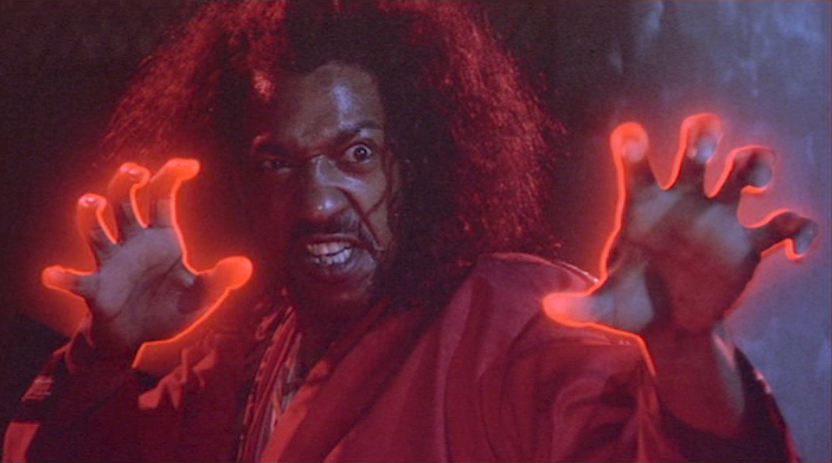
lastdragon4

The Last Dragon has a generally flashy design to it all the way from the costumes to the sets, which is justifiably over-the-top given the tone and style of the movie. I could see how it could turn some people off, but I thought it all worked pretty well.
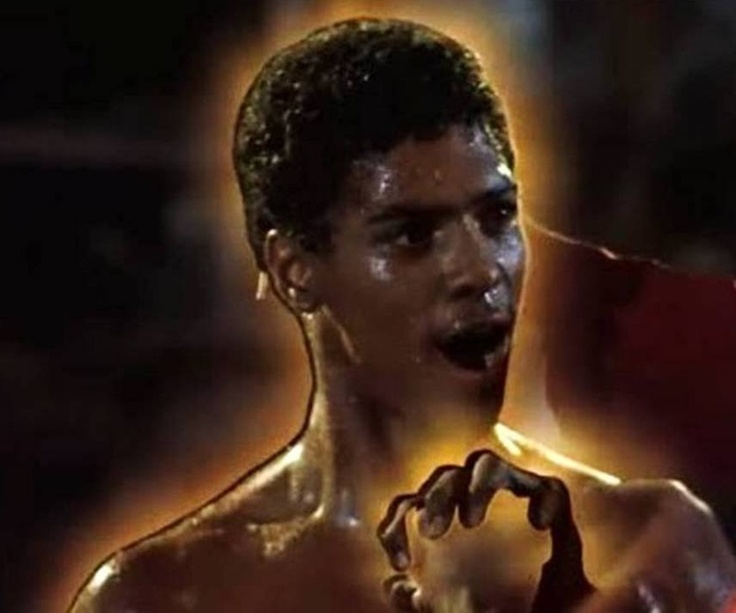
lastdragon3

The fight sequences that pop up in The Last Dragon could be shot better to emphasize the action, but they certainly aren’t awful by any means. For the most part, the crew’s experience wasn’t with martial arts movies, so it is understandable that they weren’t experts at pulling that aspect of the film off. And, to their credit, it is for the most part good enough.

The Last Dragon rightfully doesn’t take itself too seriously, and audiences certainly shouldn’t either. This is a film that is, above all else, fun and entertaining. It isn’t meant to be any deeper than its surface value, and there’s not necessarily anything wrong with that. I mean, ‘Bruce’ LeRoy? We aren’t dealing with subtlety here. But honestly, who is complaining? The movie knows exactly what it is, and leans into that identity.

Speaking of which, naming the central character ‘Bruce’ LeRoy was a nice homage to the countless Bruce Lee clone movies that flooded the video market after Enter the Dragon, which all seemed to use a permutation of the name ‘Bruce Lee’ for their lead.

Overall, The Last Dragon is a pretty entertaining flick that merges two distinct styles, though it certainly has a whole lot of flaws. However, most of them just contribute to the charm of the flick, and help build the ambiance of the movie being an honest Bruce Lee knockoff film. The Last Dragon is a fun ride that is worth checking out for bad movie fans, though it drifts into being too self-aware at moments to appreciate as an earnest good-bad feature. Regardless, it is plenty of fun.

Life of Brian

Life of Brian

lifeofbrian3

This post is based on a viewer request, which is being filled due to a donation to the Secular Student Alliance via during Secular Students Week (June 10-17, 2015). Thanks to all for your contributions!

Today’s feature is the blasphemous cult classic Monty Python flick, Life of Brian.

Life of Brian was written by and starred the entire Monty Python team: John Cleese, Graham Chapman, Terry Jones, Eric Idle, Terry Gilliam, and Michael Palin. The six members of Monty Python astoundingly combined to play a total of 40 different characters on screen over the course of Life of Brian.

Life of Brian was directed solely by Terry Jones, who previously co-directed Monty Python and The Holy Grail with fellow Python (and acclaimed director) Terry Gilliam, and later co-directed with him again on The Meaning of Life.

The cinematographer for Life of Brian was Peter Biziou, who also shot The Truman Show, Time Bandits, Mississippi Burning, Rosencrantz & Guildenstern Are Dead, and Pink Floyd The Wall.

Life of Brian was edited by Julian Doyle, who later cut films like Brazil, Time Bandits, and The Meaning of Life.

The Life of Brian team of producers included famed member of The Beatles George Harrison, Tarak Ben Ammar (Hannibal Rising), John Goldstone (Shock Treatment, The Rocky Horror Picture Show), Tim Hampton (Legend, Lost in Space), and Denis O’Brien (Withnail & I, Time Bandits).

The Life of Brian visual effects team included common elements with such films as Time Bandits, The Meaning of Life, Judge Dredd, Willow, The Dark Crystal, Brazil, The Brothers Grimm, Who Framed Roger Rabbit?, and Labyrinth, among others.

The makeup effects team for Life of Brian was made up primarily by Maggie Weston (Brazil), Ken Lintott (Henry V, Time Bandits), Sue Ignatius (X-Men: First Class, The Phantom of The Opera), and Elaine Carew (Brazil, Time Bandits).

The plot of Life of Brian follows a young man born on the same day as Jesus of Nazareth through the entirety of his strange life. He lives a parallel existence to the religious figure, up to and including the formation of a cult-like following that surrounds and worships him (though not of his choosing) and an ultimate crucifixion.

The production and release of Life of Brian sparked a massive blasphemy controversy the world over, and it was ultimately banned in many countries like Ireland and Norway. The initial production company that signed on to finance the movie backed out, after which George Harrison stepped up to save the film. John Cleese, in regards to the near-universal Christian backlash to the film, once said “we’ve brought them all together for the first time in 2000 years!”

George Harrison, who stepped in after the initial production company bailed on the film, mortgaged both his home and his office building to help fund the movie, apparently just because he really wanted to see it, and feared that it might be the last chance to see a Monty Python film. Eric Idle has referred to Harrison’s actions as “the highest price ever paid for a cinema ticket.”

lifeofbrian2The screenplay to Life of Brian was dedicated to legendary drummer and founding member of The Who Keith Moon, who was supposed to play a small role in the film, but tragically died before he could film it.

The now-famous song “Always Look On The Bright Side of Life” was created as part of the soundtrack to Life of Brian. It has re-gained a significant amount of popularity in recent years due to it becoming the centerpiece of the Monty Python Broadway musical “Spamalot,” based on Monty Python and The Holy Grail.

During Graham Chapman’s full-frontal nude shot, a rubber band was used to give the illusion of Graham Chapman being circumcised, as his character is Jewish.

The idea for Life of Brian came from a joke title that Eric Idle used to give to reporters when they inquired about what the team’s next film project would be: Jesus Christ’s Lust For Glory.  The Python’s not only found that this got the reporters to stop hounding them, but it gave them the idea to set a comedy in the first century, somehow intersecting with the life of Jesus.

The Venice Film Festival had a special award sponsored by the Italian Union of Rationalist Atheists and Agnostics named in honor of the movie, the Premio Brian. It was given out from 2006 – 2013 to the film in the festival that best “highlights and enhances the values of rationality, respect for human rights, democracy, pluralism, promotion of individuality, freedom of conscience, expression and research, the principle of equal opportunities in public institutions for all citizens.”

Life of Brian had a reported budget of $4 million, and grossed a domestic total of over $20 million in its lifetime theatrical run.
The reception to Life of Brian was overwhelmingly positive, despite the controversy surrounding it. The film currently holds an IMDb rating of 8.2, putting it in the top 250 movies on the site. It also holds Rotten Tomatoes scores of 96% (critics) and 93% (audience), and is widely regarded as both a cult classic and one of the funniest comedy movies of all time.

In my opinion, Life of Brian Takes the funny banter of Holy Grail and elevates it to an entirely new level, and is almost certainly Monty Python firing on all cylinders. Much like Holy Grail skewers Arthurian lore, Life of Brian relishes in crucifying both Christianity and first century life in general. Jokes about aqueducts and the sexual innuendo in the Roman names don’t have anything to do specifically with Christianity, for instance.

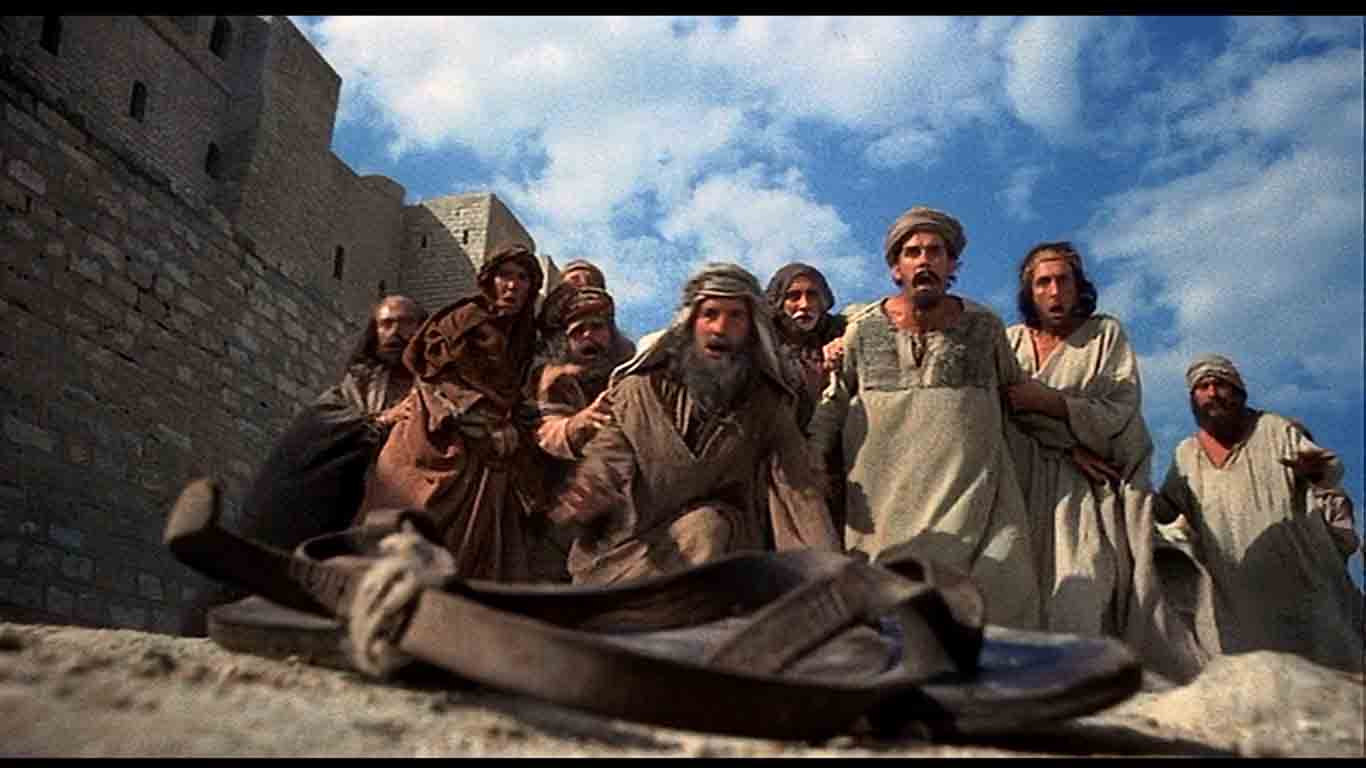
lifeofbrian1All of that said, this movie is memorable specifically for how aggressively and brashly it takes on Christianity. The entire ‘shoe vs gourd’ sequence is one of the sharpest critiques at how minor religious difference have historically created massive schisms in religions, and the dialogue constantly throws punches at the concept of blind worship.

In my opinion, the fantastic ending of Life of Brian is what sets it apart and above Holy Grail, and makes it the finest work from the group. Grail literally falls apart in the conclusion, which is funny in its own way, but the wry crucifixion of Brian capped by the memorable tune “Always Look On The Bright Side Of Life” is a brutally hilarious arrow in the audience’s chest, and drives home the inevitability of death with a smirk, which isn’t something that is easy to pull off.

Overall, this a fantastic comedy movie, and is easily one of the finest religious satires ever put to film. If you haven’t seen it, you should, and the same goes from all of Monty Python’s works. I adore Flying Circus and Holy Grail, and plan on giving Meaning of Life another spin soon, because I have always seen that as a weakest entry from the troupe (and it is still legendarily funny).

The Dentist 2

The Dentist 2

dentisttwo2

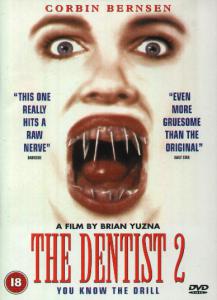
Today’s flick is Brian Yuzna’s unwarranted 1998 sequel to The Dentist, The Dentist 2.

The Dentist 2 is, of course, a sequel to 1996’s The Dentist, which was written by the duo of Stuart Gordon and Dennis Paoli (Dagon, Castle Freak, Re-Animator, From Beyond), and then extensively re-written by Charles Finch, one of the producers of Fat Slags.  While Dentist 2 gives character credits to all three of those writers, the screenplay was written by one Richard Dana Smith, who had no previous credits at the time. He would go on to write a handful of TV movies, such as The Perfect Neighbor and The Stepdaughter, but not much else.

The Dentist 2 was directed by Brian Yuzna, who also directed The Dentist, Bride of Re-Animator, and Beyond Re-Animator. He is also a long-time producer and collaborator with Stuart Gordon on such movies as Dagon, From Beyond, Dolls, and Re-Animator.

The cinematographer for The Dentist 2 was Jurgen Baum, who also shot such films as Sorority House Massacre II and Jim Wynorski’s Hard To Die.

The editor for the film was Christopher Roth, who also cut such films as The Dentist, Leprechaun, Killer Klowns From Outer Space, Raptor Island, Hatchet, and Axe Giant: The Wrath of Paul Bunyan.
The producers on The Dentist 2 included Mark Amin (Evolver, Leprechaun, Leprechaun 3, The Dentist, Chairman of the Board), Noel Zanitsch (Wishmaster, The Dentist), Robert Lansing Parker (The Running Man, The Dentist, Night Shift), Bruce David Eisen (Evolver, Trucks, Leprechaun 3, Leprechaun In The Hood), Pierre David (Videodrome, Scanners), and the film’s star, Corbin Bernsen.
The visual effects crew for The Dentist 2 was made up of Michele Pruden (Soccer Dog), Rita Schrag (King of the Ants, Poolhall Junkies, Puppet Master 4), and Jim Stewart (Beeper, Scorcher, Dr. Alien, Chopping Mall, School Spirit).

The makeup and special effects team for The Dentist 2 included Anthony Ferrante (who later directed the Sharknado franchise), Sam Greenmun (Evil Eyes, The Dentist, Virtuosity, Mystery Men), A.J. Venuto (Blade, Transformers, AI), Ralis Kahn (Pledge This!, Kiss Kiss Bang Bang, Dogma), and J.M. Logan (Texas Chainsaw Massacre: The Next Generation, Halloweentown, Virus, G-Men From Hell).

The music for The Dentist 2 was provided by Alan Howarth, an experienced composer and sound editor with credits on such movies as The Omega Code, They Live, Escape From New York, The Dentist, Halloween III, Battle Beyond The Stars, Poltergeist, Fortress, The Running Man, Class of 1999, Total Recall, Cool as Ice, and Tank Girl.

The cast for The Dentist 2 is once again led by Corbin Bernsen (The Dentist, Judgment, Psych), with accessory roles filled out by Clint Howard (Blubberella, House of the Dead, Santa With Muscles, Ice Cream Man, Night Shift), Jeff Doucette (The Mangler 2, Newhart, Splash), Jim Antonio (Catch Me If You Can, Crazy In Alabama), Wendy Robie (Twin Peaks, The Glimmer Man), and Susanne Wright (The Brothers Solomon), among many others.

dentisttwo3The plot of The Dentist 2 takes place after the events of The Dentist, where Dr. Feinstone finds a way out of his mental hospital and goes on the run. He takes up in a new town under a new name, and is looking to start another practice. However, he has tried to overcome his dark past, and has to wrestle with his inner demons and compulsions while also evading the authorities who continue to hunt him down.

The full title was originally The Dentist 2: Brace Yourself, a title that is still used on some of the home video box covers. However, the movie is typically just known as The Dentist 2.

dentisttwo1Reportedly, a third installment in the series was planned (and even greenlit), but Brian Yuzna wasn’t able to find the time to make it before Trimark merged with Lionsgate in 2000, which likely means there will be no more Dentist movies in the future.

The reception to The Dentist 2 was overwhelmingly negative. It currently holds a rating of 4.2 on IMDb, along with Rotten Tomatoes scores of 0% (critics) and 24% (audience).

The film had an estimated budget of $1.8 million, but never had a chance to earn any of that back in theaters, ultimately going straight to video.

Corbin Bernsen is as hammy as ever in this film, and is an absolute delight to watch. However, not a whole lot happens in this movie, making it a pretty disappointing sequel to an astoundingly cheesy movie. A lot of the conflict is internal for Feinstone, and once he does give in to his impulses, he isn’t quite as theatrical as he was in the previous movie, as he doesn’t really have the same motivations for his actions. There also isn’t nearly as colorful of a cast of character behind him, like Ken Foree’s cop from the first film.

dentisttwo4Overall, there is still some stuff to enjoy in this film for fans of the first movie, particularly in regards to Bernsen’s acting, the nauseating cinematography, and the score. However, there isn’t nearly as much action or tension in this sequel to keep the plot interesting, which makes the movie feel anchored down. Fans of the first should check it out, but it hardly compares to the ridiculous glory of The Dentist.

Troll

Troll

trollone1

Today’s movie is a little flick called Troll, starring Michael Moriarty and Sonny Bono.

The writer for Troll was Ed Naha, who also wrote the screenplays for films like Dolls, Dollman, Omega Doom, and C.H.U.D. II: Bud the CHUD.

Troll was directed by John Carl Buechler, who was also behind such films as Ghoulies Go To College, The Eden Formula, and Friday the 13th Part VII. He has also worked extensively as an effects artist on low budget films like Piranha, Robot Jox, Dolls, From Beyond, Carnosaur, and The Gingerdead Man.

The cinematographer on Troll was Romano Albani, who most notably shot the film TerrorVision, as well as Dario Argento’s Inferno.

The editor for Troll was Lee Percy, who has cut such films as The Ice Harvest, Boys Don’t Cry, The Believer, Dolls, From Beyond, and Re-Animator over his career.

The producers for Troll were Albert Band, Charles Band, and Debra Dion, who were all heavily involved with the production company, Empire Pictures. Empire was Charles Band’s initial independent company that existed throughout the 1980s, prior to the creation of the more recognizable Full Moon Entertainment. The outfit also produced films like Trancers, Re-Animator, From Beyond, Dolls, and Robot Jox, and laid the foundations for a number of Full Moon franchises.

The makeup effects supervisor on Troll was John Vulich, an eventual Emmy winning effects artist who would work on acclaimed television series like Babylon 5, The X-Files, and Buffy the Vampire Slayer.

The creature creation for Troll was done by the director himself, John Carl Beuchler. The rest of the team included Brent Armstrong (Hollow Man, It’s Alive 3, Starship Troopers, In The Mouth of Madness), Howard Berger (Evil Dead 2, Maniac Cop 3, Scream, The Faculty, Kill Bill), R. Christopher Biggs (Super Mario Bros., Hudson Hawk, Teen Wolf), Everett Burrell (Aliens, DeepStar Six, Castle Freak), Gino Crognale (The Spirit, From Beyond, 976-EVIL, Django Unchained), and Mitch Devane (Dolls, From Beyond, Captain America).

trollone6The visual effects team for Troll was made up of Jim Aupperle (Evil Dead 2, Beetlejuice, RoboCop 3, Dollman, Son of the Mask), James Belohovek (Robot Jox, Leviathan, Evolver, RoboCop 3, Dollman), Steve Burg (Robot Jox, Leviathan, Chopping Mall, Waterworld, Interstellar), Linda Drake (From Beyond, Dr. Alien, The Smurfs 2, Chopping Mall), Kevin Kutchaver (Robot Jox, RoboCop 3, Last Action Hero, Blade, League of Extraordinary Gentlemen, Shoot Em Up), Len Morganti (School Spirit, Argo, Robot Jox, RoboCop 3, Blind Fury, True Believer), and Martine Tomczyk (Super Mario Bros., Apollo 13, The Last Dragon), as well as a handful of others.

The musical score for Troll was done by Richard Band, Charles Band’s brother. He has famously provided music to movies like Re-Animator, Castle Freak, The Pit and The Pendulum, and Laserblast.

The cast for Troll features a number of recognizable faces, including Michael Moriarty (It’s Alive 3, The Stuff, Q, Law & Order), Sonny Bono (The Sonny and Cher Show, Hairspray), Noah Hathaway (The NeverEnding Story), Shelley Hack (Charlie’s Angels), Julia Louis-Dreyfuss (Seinfeld), and June Lockhart (Lost in Space, Lassie).

trollone2The plot of Troll centers around a young family who is moving into a new home in a San Francisco apartment complex. Unbeknownst to them, however, an evil, magical troll also calls the complex home, and has sinister plans for the new tenants. The young Harry Potter, Jr. teams up with a friendly local witch in an attempt to save his sister, who is captured by the troll as the family is moving in.

Troll has received increased attention in recent years thanks to the cult popularity of the pseudo-sequel, Troll 2, directed by Claudio Fragasso. Troll 2 is widely considered one of the elite good-bad movies of all time, and even inspired a documentary about it called Best Worst Movie. However, despite some debate on the point, Troll 2 doesn’t have any direct official connection to Troll, nor does it actually feature trolls at all in the film.

troll22Two of the central characters in Troll bear the name Harry Potter, which is of course now the title of a phenomenally popular book and movie franchise. However, the books wouldn’t be written for another handful of years, leading some to wonder if J.K. Rowling took the name from this movie.

The reception to Troll was overwhelmingly poor. It currently has a 4.2 score on IMDb, along with ratings of 29% (critics) and 28% (audience) on Rotten Tomatoes.

Troll had an estimated production budget of just over $1 million. It managed to gross roughly $5.5 million domestically in its theatrical run, making it a profitable low-budget feature in spite of the poor reception.

Troll features, without any doubt, one of the most aggravatingly annoying child actors I have ever seen in a movie. For most of the movie, the little girl character is possessed by the troll, so she has to act like an evil character in disguise. Frankly, it is unbearable whenever she starts growling or trying to be scary.

trollone4Michael Moriarty, as always, is delightfully eccentric and goofy in Troll. He isn’t quite as memorable as he was in Q: The Winged Serpent or The Stuff, but he has some solid moments in here despite not having a whole lot of screen time. Likewise, Sonny Bono plays a great scummy neighbor during his brief presence in the film, before he turns into a weird plant-thing.

trollone3There were far more pop culture references than I expected in this movie, to such name brand products as Star Trek and Godzilla. I assume this was an intentional touch by Ed Naha, who seems to enjoy inserting humor and self-awareness into his movie scripts. Speaking of which, there are some genuinely funny moments in this movie: I am particularly fond of the fake movie clips that show up in the background.

trollone7“That may look like your canary, Tweety, my dear… It may sing like Tweety, it may molt like Tweety…but your canary is a pod person from the planet Mars.”

The climax of the movie features some really dated lightning effects that are impossible not to remark on. I am sure it looked at least ok at the time, but it is pretty hilarious to watch these outdated visual effects now.

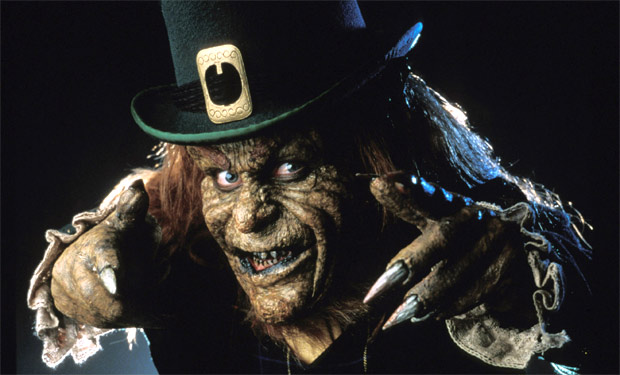
trollone8The troll itself isn’t particularly menacing, and something about the costume just seems unwieldy and awkward. It honestly makes Warwick Davis in the Leprechaun franchise look genuinely frightening by comparison. Even worse is that the smaller troll creatures look vastly different, and amazingly look even cheaper than the central troll.

trollone5Overall, Troll isn’t an elite bad movie, particularly when compared to its pseudo-sequel. However, there is plenty to enjoy here between the bad effects, hammy acting, ludicrous plot, and troll-singing. It would be worth a recommendation based on Sonny Bono’s death scene and Michael Moriarty’s presence on their own, let alone all of the other nonsense going on in this film. For bad movie aficionados, this is a must-see.

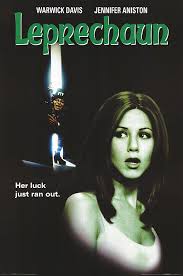
Leprechaun

Leprechaun

leprechaunone1

Today, we’re going to take a look at the catalyst to one of the most notoriously silly horror franchises of all time: Leprechaun.

Leprechaun was written and directed by Mark Jones, who doesn’t have a ton of interesting credits to his name, outside of writing a few episodes of The A-Team. He has directed a few other movies over the years (Scorned, Rumpelstiltskin, Quiet Kill), but none have had the same kind of lasting impact as Leprechaun.

The cinematographer for Leprechaun was Levie Isaacks, who also shot The Dentist and Children of the Corn II: The Final Sacrifice.

The film’s editor was Christopher Roth , who cut such films as The Dentist, The Dentist 2, and Killer Klowns From Outer Space over the course of his career.

The producers for Leprechaun included Mark Amin (The Dentist, The Dentist 2, Trucks, Chairman of the Board, Leprechaun 3, Evolver), Barry Barnholtz (The Dog Who Saved Christmas, The Mangler 2), and William Sachs (The Incredible Melting Man, Galaxina, Exterminator 2).

The Leprechaun effects team included Larry Arpin (The Dentist, Highlander II, Maniac Cop 3, Maniac Cop 2, Maniac Cop, Blood Diner, The Ambulance), Ken Herbster (Superman IV, Ghoulies IV), Leon Stankevich (The Blob, The Secret Agent Club), David Kindlon (Wolf, Hell Comes to Frogtown, From Beyond), Joel Harlow (Battlefield Earth, The Langoliers, Suburban Commando, Blues Brothers 2000), John Deall (It, Virus, Critters 4), Gabriel Bartalos (Dolls, From Beyond, Texas Chainsaw Massacre 2, Leprechaun 3), and numerous others.

leprechaunone3

The music for Leprechaun was provided by the duo of Kevin Kiner (Hell on Wheels, Nick Fury: Agent of SHIELD) and Robert J. Walsh (Zombie Nation, Revenge of the Ninja, Jem, The Transformers, G.I. Joe), both of whom have extensive composition credits for numerous television shows.

The cast of Leprechaun is led by Warwick Davis (Willow, Return of the Jedi, Labyrinth, Leprechaun 3), Jennifer Anniston (Friends, Bruce Almighty), Ken Olandt (April Fool’s Day), and Mark Holton (Teen Wolf), and is filled out by a handful of less recognizable faces.

leprechaunone4

The story of Leprechaun kicks off when a family moves into a new house that was abandoned after a mysterious incident incapacitated the previous owner. Through their explorations in the home, an evil leprechaun (that the previous owner captured) is accidentally released and reawakened, and immediately goes on a killing spree through the local town in search for his stolen gold. The family has to learn the monster’s weaknesses in order to prevent it from eliminating all of the local townsfolk.

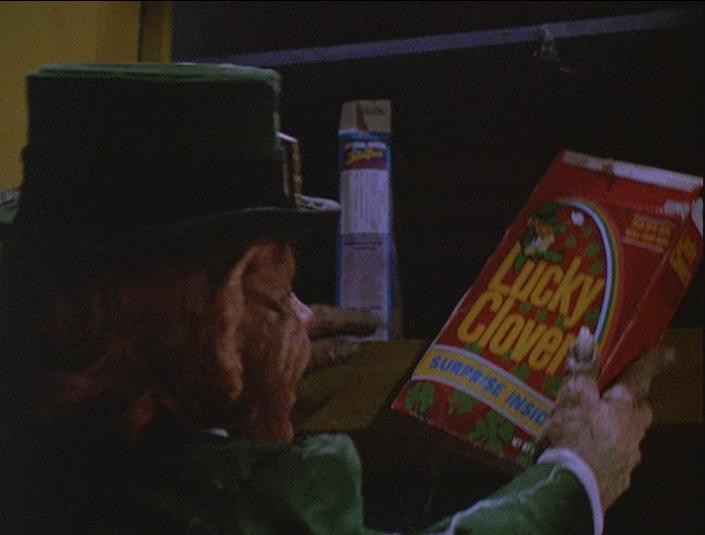
Initially, there was going to be product placement in the film by Lucky Charms, but they pulled out after seeing the final product, leading to a costly re-shoot. I’m curious what the hell they expected from a leprechaun-themed horror movie, other than what is present here?

leprechaunone5

Interestingly, Leprechaun was apparently initially planned as a scary kid’s movie, but inserts were added to make it more traditional horror when producers worried that it wouldn’t resonate with adult horror audiences.

The film was later re-marketed for home video release to emphasize Jennifer Anniston, who eventually took off as a celebrity over the run of the hit show Friends.

leprechaunone2

Leprechaun spawned one of the most notoriously goofy horror franchises, which is currently up to 7 installments. The franchise is best known for outlandish location gimmicks, taking the sinister creature to space, Las Vegas, and the ghetto (twice). The most recent film was a rebooted take on the story made in 2014, called Leprechaun: Origins.

The reception to Leprechaun was generally negative, and it currently holds a 4.6 rating on IMDb alongside Rotten Tomatoes scores of 25% (critics) and 32% (audience). However, the entire franchise has a dedicated cult following that has allowed it to survive through the years.

Leprechaun was made on a reported production budget of $900,000, and grossed just over $8.5 million in its domestic theatrical run, making it a profitable little movie.

Leprechaun is, of course, packed with silly rhymes and one liners. However, that is what the movie is all about when it comes down to it: Freddy Krueger without any element of menace, and a penchant for verse. It is a licorice type of movie: you will love it or you will hate it, and there isn’t much room for middle ground in between.

Over the top deaths might be a signature of the Leprechaun series, but there are not as many as you would expect in this first film. I think, all told, only four people wind up dead, and at least half are mundane deaths. That said, it doesn’t get much better than the pogo stick death in this movie.

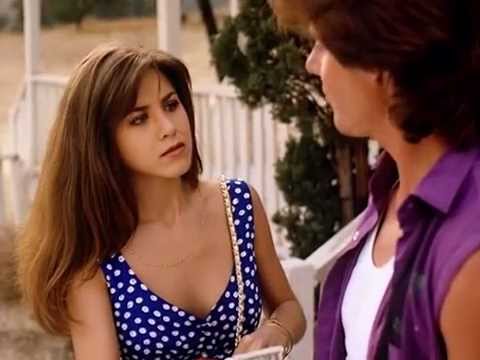
Leprechaun contains some truly dreadful acting, particularly from the comic relief painters. However, Anniston is also pretty terrible, making it a wonder that she has gone on to have the career that she has had.

Jennifer Anniston’s character in this movie is unbearably bratty as the story begins, and can somehow afford to constantly drop money on things, despite the fact that it is never really established that the family is super-wealthy. She theoretically softens as the film goes along, but she is overall less likable than the Leprechaun himself.

Leprechaun rides the border of being a horror movie at all, and just being a failed comedy. Nothing is particularly scary about it, and from what I have read, that is how it was initially designed. If you think of it as a movie-length Are You Afraid Of The Dark?, the style makes a lot more sense, specifically in regards to the acting and the humor.

One of the key motivations for a couple of characters chasing down the Leprechaun’s gold in this movie is to be able to afford an operation that can supposedly make a mentally handicapped person ‘smart’. The way it is explained in the story initially made me wonder if the kid character who proposes this is just deluded/misinformed, or if the writer actually thought that this sort of operation actually exists. However, the kid acknowledges towards the end that such an operation towards the end, bringing up even more questions about what he was supposed to do with the gold, and why he bothered lying about the operation in the first place.

Overall, Leprechaun is a weird little movie that doesn’t quite know what it should be, and that is painfully obvious from watching it. As far as a bad movie watch goes, some of the sequels are way more fun, but it is worth watching this one to have a foundation. Warwick Davis also definitely has his entertaining moments here and there that make it worth watching. Personally, I found it a little easier to sit through after finding out it was supposed to be for kids initially, which gave me a different outlook on it. As I mentioned earlier, the best way to watch this movie is to think of it as a really long episode of Are You Afraid of The Dark? or Goosebumps.

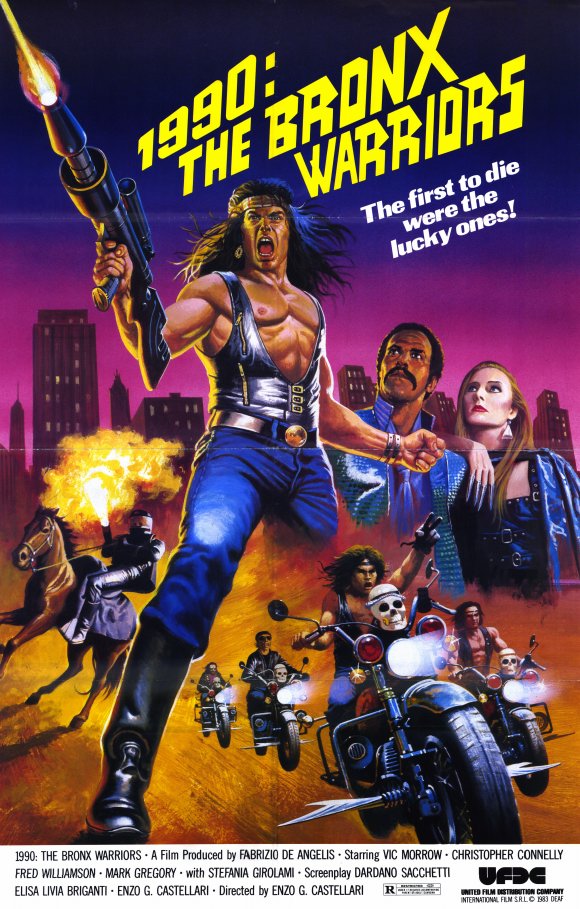
1990: The Bronx Warriors

1990: The Bronx Warriors

1990bronx1

Today’s feature is an infamous Italian knock-off of The Warriors: 1990: The Bronx Warriors, starring Vic Morrow and Fred Williamson.

1990 :The Bronx Warriors was co-written and directed by Enzo Castellari, who also created The Shark Hunter, Keoma, and the original Inglorious Bastards. His co-writers were Elisa Briganti (Hands of Steel, Zombie, The House By The Cemetery) and Dardano Sacchetti (The Beyond, Devil Fish, The Demons, Amityville II, A Bay of Blood).

The cinematographer for The Bronx Warriors was Sergio Salvati, yet another member of the crew who was a frequent cohort and collaborator of Lucio Fulci’s: he shot his films City of The Living Dead, They Died With Their Boots On, Four of the Apocalypse, Zombie, and The Beyond. Later on, he worked on a handful of other memorable horror movies, such as Ghoulies II and Puppetmaster.

The editor for the movie was Gianfranco Amicucci, who also cut a number of Castellari’s other films, including Keoma, The Inglorious Bastards, and The Shark Hunter. He also went on to edit a number of Ruggero Deodato (Cannibal Holocaust) movies, including The Washing Machine and Mom I Can Do It.

The producer of the film was Fabrizio De Angelis, who also produced a handful of memorable Italian films like Lucio Fulci’s Zombie, Manhattan Baby, and The Beyond. He also directed and produced the entire Karate Warrior franchise, as well as a number of other low budget films.

The makeup effects team for The Bronx Warriors was made up of Antonio Maltempo (The Godfather Part III, The English Patient, Manhattan Baby) and Maurizio Trani (Zombie, Piranha II, Troll 2, Ator 4),

The musical score for 1990: The Bronx Warriors was done by Walter Rizzati, who also has composing credits on such films as The House By The Cemetery, Deadly Impact, and something called Flying Sex, which IMDb doesn’t have a description for. Just let your imagination decide on that one.

The cast of 1990: The Bronx Warriors includes Vic Morrow (The Bad News Bears, Twilight Zone: The Movie, Humanoids From The Deep), Fred Williamson (Black Caesar, Hell Up In Harlem, From Dusk Til Dawn, MASH, The Inglorious Bastards), Marco De Gregorio (Thunder, Escape From The Bronx), Christopher Connelly (Manhattan Baby, Django 2), Joshua Sinclair (Keoma), George Eastman (Hands of Steel, Porno Holocaust, Anthropophagus, Django Kills Softly), Stefania Girolami (Sinbad of the Seven Seas, The Last Shark) and Angelo Ragusa (The Pumaman, Double Team).

1990bronx5

The plot of 1990: The Bronx Warriors takes place in the futuristic wasteland that is New York City in 1990. The city is ruled by rival gangs, and is considered essentially lawless. After a wealthy heiress runs away from home into the city, a mercenary is sent into the warzone to insure her safe return. What results is a convergence of warlords and cut-throat baddies into an all-out battle for the city.

Marco De Gregorio was cast as the lead role of Trash in the movie based on his appearance alone. Apparently, the director just ran into him at a gym, and made the casting decision based on his looks and the physical impression he made. He had only previously appeared in a television movie in an unnamed role according to IMDb.

Unfortunately, this film marked Vic Morrow’s last completed movie role, as he died tragically and horrifically due to an on-set stunt accident while filming Twilight Zone: The Movie the next year, which also killed two young children. The accident resulted in a number of lawsuits, and is one of the most infamous on-set accidents in movie history.

1990: The Bronx Warriors ultimately spawned a sequel: Escape From The Bronx, which focuses more on ripping off Escape From New York than The Warriors.

1990bronx3

1990: The Bronx Warriors was partially filmed on location in the Bronx, but also features a significant amount of sound stage footage that was shot in Italy, apparently due to an attempt to exploit some filming loophole for domestic Italian features.

Reportedly, actual members of The Hell’s Angels were used during filming to depict the extra members of The Riders throughout the film, which gives the movie an unexpected element of realism at times.

Vic Morrow’s character’s name in this film is The Hammer, which is also the real life nickname of his co-star, Fred ‘The Hammer’ Williamson. I’m curious if that ever got confusing on the set.

1990bronx2

The reception for 1990: The Bronx Warriors has been generally negative, though it certainly has a cult following as a classic bad movie. It currently holds an IMDb rating of 5.2, along with a 37% audience score on Rotten Tomatoes.

The acting is overall pretty awful in this flick, particularly on the part of “Trash,” who is way too inexperienced for what they wanted from the role. Speaking of which, that’s a pretty uninspiring nickname for a powerful gang leader. It is supposed to evoke a low-class impression, but why not something like “Gutter” or “Sludge?” Everyone else has names like “Hammer,” “Hot Dog,” “Ogre,” “Blade,” and “Ice,” so “Trash” is definitely the odd one out of the group as far as cool names go.

Fred Williamson is always awesome, and is one of my favorite b-movie actors for a reason. He notably has an outstanding death scene in this movie, wherein he is torched to death by flamethrowers while smoking one last cigarette. It is…so awesome.

1990bronx6

There are a lot of moving parts to the story of The Bronx Warriors, but it irons itself out as it goes along. There are arguably a few too many character names and affiliations that aren’t adequately explained, but you pick up the essential stuff as the story goes along, to the point that everything is clear by the climax. That said, there are definitely a few elements that never quite make sense.

In the spirit of The Warriors, there are plenty of ridiculous costumes throughout this movie, as you would expect. Plenty of roller blades, motorcycles, leather, and fancy suits make their way into combat at one point or another, and it is just delightful.

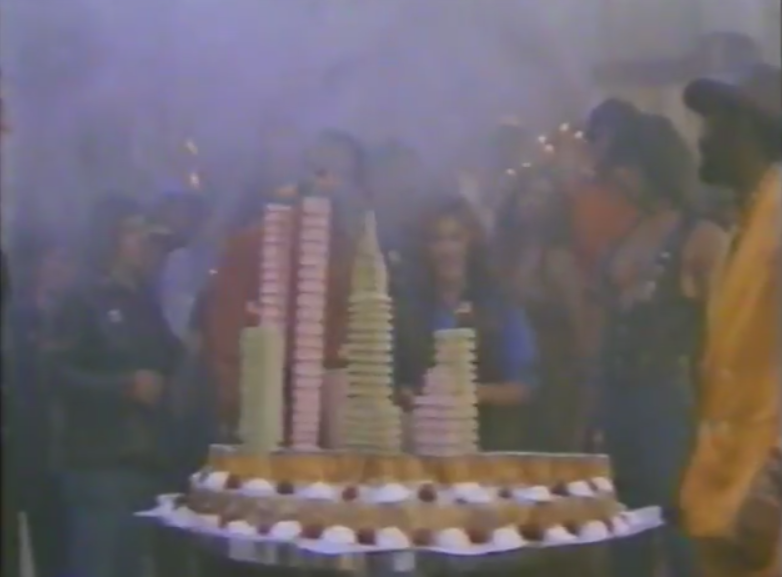
This movie has one hell of an explosive ending, with just about every character dead and/or on fire. The movie finishes on a freeze frame of Hammer’s corpse being drug behind a motorcycle, impaled on a harpoon. I mean, wow. This especially potent because it takes place after a fake-out happy ending, complete with a damn cake.

1990bronx7
A cake shaped like NYC, that was catered in a war zone. Can you imagine the cost?

The central crux of the movie’s plot doesn’t make a whole lot of sense to me. The heiress is apparently about to come of age, and she is afraid of her responsibilities as the head of a massive military corporation, and more specifically worried about being manipulated and used as a puppet. Of course, the current operators need her to be just that, so they a sink a ton of money into mercenaries to track her down and bring her back. However, in the conclusion, Hammer just decides to basically burn everything down, including the heiress. What was the point of all of that, then? This may have just been Hammer being bloodthirsty and angry, but he seemed to be using the military company’s men, so there is no way that the head honchos didn’t know that this was an extermination mission. In any case, pretty much everybody loses at the end of this thing, as I mentioned previously. It is a real nasty bloodbath filled with sadness and tragedy.

This movie is so much fun that it is easy to overlook a lot of the flaws in it. It certainly helps that a lot of those flaws, like the poor production values and nonsense story, totally add to the charm. It is evident from the start that this is a cheap knock-off, but if you enjoyed The Warriors or Escape From New York, this is genuinely more of the same, and that isn’t a bad thing.

Seriously, bad movie lovers have to check this one out. It is kind of surreal to see a bunch of Lucio Fulci’s Italian cohorts take on a quasi-remake of The Warriors, but it totally works.

American Chinatown

American Chinatown

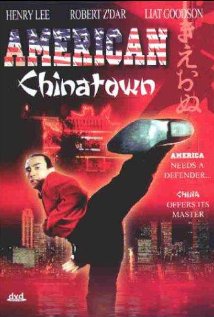
americanchinatown1

Today’s feature is an obscure flick called American Chinatown, from the writer and director of the ludicrous cult classic film, Miami Connection.

American Chinatown was written, directed, and produced by Woo-sang Park, who regularly credits himself under the pseudonym of Richard Park. His best known film by far is Miami Connection, but he made a handful of other low-budget movies from the 1970s through the 1990s, including  L.A. Streetfighters, Gang Justice, and Shaolin: The Blood Mission.

One of the cinematographers on American Chinatown was Maximo Munzi, who also shot Miami Connection for Woo-sang Park.

The team of producers for American Chinatown included Larry Larson (City Dragon), star Tae-joon Lee (Ninja Terminator), Simon Bibiyan (City Dragon, The Malibu Beach Vampires), and Moshe Bibiyan (Warrior of Justice, City Dragon).

The musical score and editing for American Chinatown was done by Ron Adler, who worked on a handful of other small movies like Invisible Temptation, The Secret Force, and City Dragon.

The American Chinatown cast is headlined by the late Robert Z’dar (Maniac Cop, Tango & Cash, Soultaker, Maniac Cop 2, Maniac Cop 3, Samurai Cop), and also features Tae-joon Lee (Ninja Terminator), Bobby Kim (Black Belt Angels, Deadly Kick, Mark of the Black Dragon), and Liat Goodson (Vice Girls, The Prince), along with a number of inexperienced and non-actors to fill out the cast.

The plot of American Chinatown centers around a gang war, during which a top enforcer unknowingly falls for his boss’s adopted sister. He has to figure out a way to reconcile his feelings for the woman with his loyalty to the gang, all while leading the charge in an ever-heating conflict with the cross-town rival criminal organization.

American Chinatown is also known as Chinatown 2, which is not to be confused with the actual sequel to Roman Polanski’s Chinatown (The Two Jakes), which released in 1990.

The reception to American Chinatown has been generally negative, though very few people have actually heard of it or seen it. It currently has an IMDb rating of 4.2, and has a Rotten Tomatoes average audience score of .5/5. However, less than 90 ratings of the movie have been recorded on the two sites combined.

Right out of the gate, American Chinatown starts with an attempted rape, followed up by some completely inaudible and indecipherable dialogue, which is about as bad of a start as you can possibly have for a movie. On top of that, the editing and cinematography for the sequence is also astoundingly terrible, to the point where is honestly difficult to tell what is actually happening. Eventually, a mysterious man stops the assault, kicks the would-be rapists a bunch, steals their wallets and clothes, and then lets them go on their way. I guess this is supposed to set up this fellow as a badass, but the whole thing plays out really strangely, and I don’t understand why he just let them meander on their merry way.

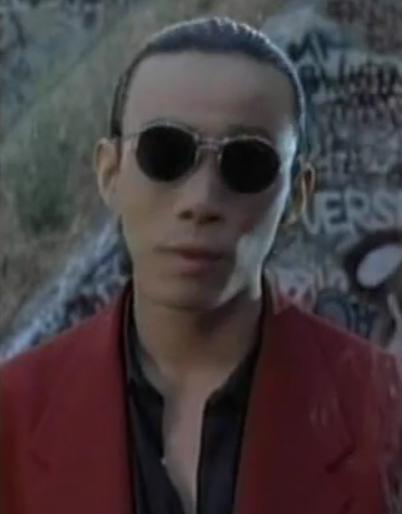
americanchinatown2
The hero?

The acting in this movie is, across the board, just dreadful. Most movies at least have a bright spot somewhere in the cast, but that just isn’t the case here. I don’t know how this film was cast, but Robert Z’Dar is the only person who seems to know what acting even is, and that is a sad state of affairs for any film. The lead character’s love interest also has one of the most perplexing fake accents that I have ever heard in a movie, and I still can’t figure out exactly what it is supposed to be.

There are a couple of cool fight sequences spread throughout the movie, but they are all shot really poorly, so the talent of the stunt people is mostly wasted. Still, they are entertaining as the movie ever gets.

The music for American Chinatown, when it does bother to pop up, is ridiculous in the best way you could possibly hope for. It is always heavy on the synthesizers and funky beats, but suffers immensely from constantly disappearing for long periods of time, which is a damn shame.

One big problem with this film is the unlikability of the hero, who is frankly a complete asshat. I already covered how he allowed attempted rapists to wander away in the opening sequence (he does that again, by the way), but the rest of his interactions with his love interest for a good portion of the movie primarily consist of him berating her and trying to force her to leave him alone. I understand that the point is that he doesn’t want her to get wrapped up in the criminal world he lives in, but he really is a complete shit about it, though.

The whole movie has a disappointing lack of Robert Z’Dar in it, which I wasn’t exactly surprised about. He only pops up in a handful of scenes, and overall doesn’t get much time on screen when all is said and done. He does get the shit beaten out of him way more than I expected, though, particularly towards the end of the flick.

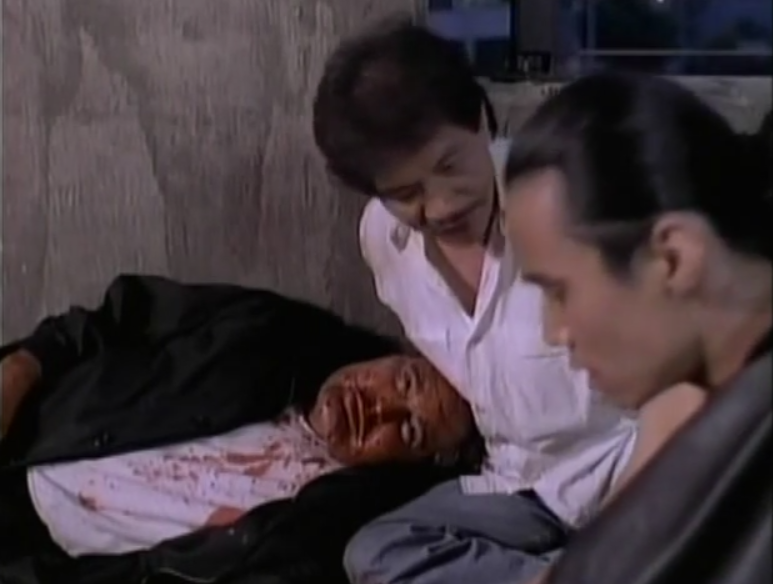
americanchinatown3

The ending to American Chinatown feels like they didn’t quite finish the move. Basically, a fight sequence ends with a freeze frame and a fade to black, without any visual resolution for the story. Then again, maybe something was covered in the inaudible dialogue that I couldn’t make heads or tails of. In any case, it is both jarring and unsatisfying as a conclusion.

Overall, American Chinatown isn’t nearly as memorable or entertaining as similar films like Miami Connection or either Lethal Ninja, but it has a few bright moments here and there. Unfortunately, they are very spread out, and the awful acting, sound editing, and cinematography makes for a trying experience to sit through, which isn’t going to be worth most people’s time.

Marmaduke

Marmaduke

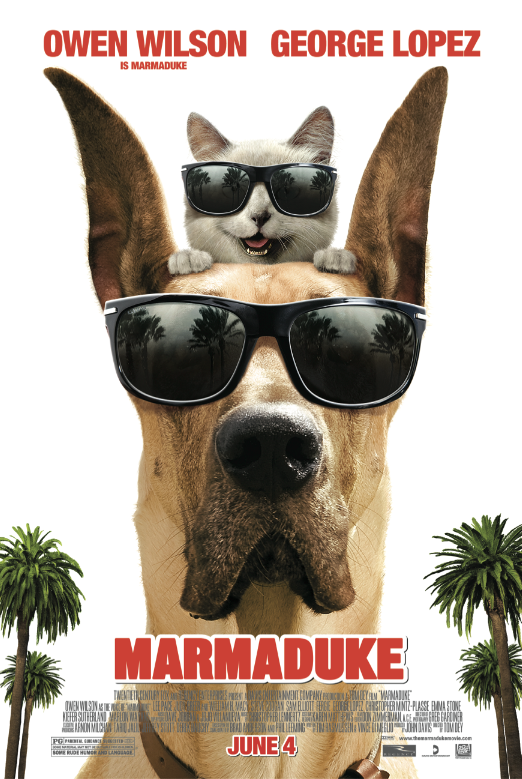
marmaduke1

Today’s feature is a 2010 comic strip movie adaptation that literally no one wanted or asked for: Marmaduke.

Marmaduke is loosely based on the comic strip created by Brad Anderson and Phil Leeming. The screenplay for the movie was written by Tim Rasmussen (License to Wed) and Vince Di Meglio, the latter of which worked as a visual effects artist on films like Miss Congeniality and Daredevil.

The director for Marmaduke was Tom Dey, who has also been behind such Hollywood comedy films as Shanghai Noon and Failure to Launch. The cinematographer was Greg Gardiner, who previously shot Son of the Mask and Elf, among many others. Don Zimmerman, who has had a long career as an editor in Hollywood with such movies as Rush Hour 3, Over The Top, Rocky IV, Patch Adams, Galaxy Quest, Being There, and Coming Home, did the cutting for Marmaduke.

The musical score for the film was provided by Christopher Lennertz, who has worked extensively on the television show Supernatural, as well as films like Soul Plane, Disaster Movie, and Horrible Bosses.

The special makeup effects on Marmaduke were provided by a team including Bill Terezakis (Taken 2, House of the Dead, Snow Dogs, Friday the 13th Part VIII), Frida Norrman (TRON: Legacy, Rise of the Planet of the Apes), Todd McIntosh (Masters of the Universe, Torchwood), and Celine Godeau (American Mary, Slither, Dreamcatcher).

The Marmaduke special effects team was made up of Gary Heidrick (Scary Movie 3, Catwoman), Hike Hyrman (Van Helsing, Brothers Grimm, League of Extraordinary Gentlemen, The Black Cat), Wayne Syzbunka (Lake Placid, The Black Cat, Pick Me Up, Dreams in the Witch House, Blade: Trinity), James Lorimer (Cellular, Van Helsing, Tank Girl, Drive, Flubber, Garfield), Steve Davis (Scary Movie, Snow Buddies, Friday the 13th Part VIII), Richard Darwin (Lost in Space, Dungeons & Dragons, The Flintstones, Babe), and Cara E. Anderson (Trucks, The Mangler 2, The Core, Superbabies: Baby Geniuses 2).

The massive visual effects team for Marmaduke included work by a number of effects companies, including Cinesite, Rhythm and Hues, and Image Engine, and in total included elements that worked on such diverse movies as Iron Man, Frozen, Big Hero 6, Life of Pi, The Golden Compass, Skyfall, Live Free or Die Hard, The Ugly Truth, Piranha 3D, Cloud Atlas, Pacific Rim, The Frighteners, The Brothers Grimm, Guardians of the Galaxy, Alvin and the Chipmunks47 Ronin and Yogi Bear.

The team of producers for Marmaduke included Derek Dauchy (xXx, Master of Disguise, Mr Popper’s Penguins), Arnon Milchan (Epic Movie, Daredevil, Fight Club, Heat, LA Confidential, King of Comedy, 12 Years A Slave, Gone Girl, Birdman), Jeffrey Stott (Drive, Nightcrawler, Whiplash, The Adventures of Pluto Nash, North), and John Davis (Waterworld, Eragon, Fortress, Predator 2).

The deep cast for Marmaduke includes Lee Pace (Guardians of the Galaxy), William H. Macy (Evolver, Cellular, Edmond, Fargo) Owen Wilson (Anaconda, Inherent Vice, The Life Aquatic, Wedding Crashers), Emma Stone (Birdman, Paper Man, Gangster Squad, The Amazing Spider Man), Keifer Sutherland (The Lost Boys, Phone Booth, Stand By Me, Pompeii) George Lopez, Steve Coogan (Tropic Thunder, Hamlet 2), Fergie, Sam Elliott (The Big Lebowski, Frogs, Road House), Marlon Wayans (The Ladykillers), Damon Wayans (Major Payne), and Judy Greer (Archer, Arrested Development).

marmaduke3

Ron Perlman was apparently at one point attached to the movie in the role that ultimately went to Sam Elliott, but left the production for unknown reasons.

According to the IMDb trivia section for the movie, Marmaduke contains:

two dog farts, three urine gags, two hits to the groin, one animal belch, two record scratch moments and two uses of the phrase “Who let the dogs out?”

The reception to Marmaduke was very negative, and it currently holds an IMDb rating of 4.1 alongside Rotten Tomatoes scores of 9% (critics) and 42% (audience). Regardless of the negative reception, Marmaduke wound up being profitable in overseas markets, in total grossing almost $84 million on a $50 million budget. Despite being in the black at the end of its run, the film certainly didn’t meet expectations, particularly in the domestic sphere.

The first and most distracting aspect of the movie I have to mention is the dog mouths, which are computer manipulated to move with speech patterns. While the result looks better than similar children’s movies that have tried the same thing, it actually winds up stuck in the uncanny valley, creating a sort of hypnotic and unsettling effect.

Speaking of the effects, the movie goes beyond overboard in a number of sequences. The scenes that feature Marmaduke dancing or surfing, both of which happen more than you might expect in the film, look absolutely awful, particularly the Bollywood-style dance scene at the end of the film. If the film had kept the effects a little more subtle, they might have gotten away with a watchable product. However, it definitely goes the way of Son of the Mask and Cats & Dogs in the excessive effects use.

marmaduke2

The story of Marmaduke is a lot deeper than it has any right to be, considering how much of the humor is related to farting or peeing. At the same time, however, it is all painfully cliche and predictable. Most of the plot centers around an oppressive racist/classist system that operates at a local dog park, which grants pure breed dogs privileges not afforded to mutts. Marmaduke, a newcomer to the area, spends most of the movie trying to ingratiate himself with the ruling class, before learning a valuable lesson about friendship, turning his back on it, and throwing a wrench into the system. Keep in mind, this is theoretically based on a comic strip that not only does not address classism or systemic oppression in any form, but rarely even features actual humor.

Speaking of which, why bother with trying to make a movie out of this source material? I have a hunch that this was at some point a speculative script for a generic talking dog movie, and that the Marmaduke brand was pretty much tossed onto it as a promotional plan. Because, really, there is just no content in the source material to create a plot out of, so why not just use whatever is laying around? It is true that Marmaduke doesn’t have a whole lot of die hard fans, but it is at least a recognizable name that could be marketed based on that recognition, giving it some value.

I’m not going to bother digging into the laziness of the humor in this movie, because there is just no point to it. However, there are a number of things about the story that bother me. Theoretically, the plot is your typical fish out of water setup, but the audience has no frame of reference of what Marmaduke’s usual surroundings are like, which undermines the whole premise. What was Kansas like for this giant dog, anyway? How is this new situation in California different for him? Aside from the audience being told that things are different, nothing is ever shown to drive home the contrast between the two locations.

Overall, Marmaduke is your typical children’s movie trash, bowing to base humor, bad effects, and tired plots. While the cast is really impressive, it is totally wasted on this movie. There isn’t really anything to recommend about the movie, outside of the fact that it is a near-perfect example of what is wrong with children’s and family films today. Unless you are just deathly curious, you should avoid this wreck. Or, better yet, check out The Flop House Podcast for another perspective on the film (with the same conclusion).

Wild Wild West

Wild Wild West

wildwest1

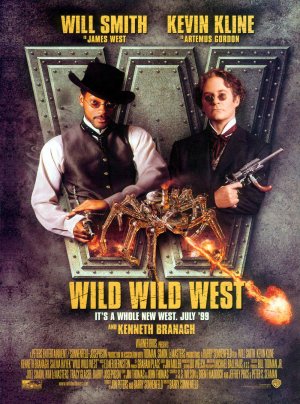
Today’s feature is Wild Wild West, one of the strangest alternate history movies ever to come out of mainstream Hollywood.

Wild Wild West is loosely based on a television show of the same name that ran from 1965-1969 on CBS, which featured characters of the same names and a similar focus on ridiculous gadgets.

The screenplay credit for Wild Wild West is given to two writing duos: Brent Maddock and S.S. Wilson (Tremors, Ghost Dad, Short Circuit), and Jeffrey Price and Peter Seaman (Who Framed Roger Rabbit?, How The Grinch Stole Christmas). The story credit, however, is given to another duo: Jim Thomas and John Thomas, who have been behind such movies as Predator, Predator 2, and Mission to Mars.

The director/producer for Wild Wild West was Barry Sonnenfeld, who also directed Men in Black, Get Shorty, RV, and The Addams Family, and was previously a cinematographer under the Coen brothers for Blood Simple, Raising Arizona, and Miller’s Crossing.

The cinematographer on Wild Wild West was Michael Ballhaus, a frequent Martin Scorcese collaborator who has shot such acclaimed films as The Departed, Gangs of New York, Sleepers, After Hours, Quiz Show, and Goodfellas.

The editor for the film was Jim Miller, who frequently cut movies for Barry Sonnenfeld, including Get Shorty, Men in Black, and The Addams Family. He also edited another movie I particularly like: Michael Mann’s Collateral, starring Tom Cruise and Jamie Foxx.

The team of producers for Wild Wild West included Jon Peters (Batman, Caddyshack II, Man of Steel, Tango & Cash, An American Werewolf in London), Tracey Barone (Money Train), Barry Josephson (The Last Boy Scout, The Ladykillers), Graham Place (The Hudsucker Proxy, Barton Fink), Joel Simon (Steel), Chris Soldo (Sgt. Pepper’s Lonely Hearts Club Band, 1941, Snake Eyes), and Neri Tannenbaum (Orange is the New Black).

The visual effects team for Wild Wild West included a number of workers from Industrial Light and Magic, one of the most acclaimed effects companies in the business. The company was founded by George Lucas for the purpose of providing visual effects for the Star Wars films, and has since worked on films like Howard the Duck, Cocoon, E.T., Raiders of the Lost Ark, Back to The Future, Jurassic Park, Hudson Hawk, Deep Blue Sea, Small Soldiers, and Congo.

The special effects makeup on Wild Wild West included work by Rick Baker (Black Caesar, It’s Alive, It Lives Again, Videodrome), a 7-time Academy Award winner who is easily one of the most acclaimed individuals in special effects and makeup today. He won one of his Academy Awards in the previous year for work on the Barry Sonnenfeld film Men in Black, which goes a long way towards explaining his involvement here.

The music for Wild Wild West was provided by Elmer Bernstein, a legendary film composer who worked on scores for such films as Bringing Out The Dead, My Left Foot, Slipstream, Leonard Part 6, Airplane!, To Kill A Mockingbird, The Great Escape, Robot Monster, and The Magnificent Seven, among countless others.

The cast of Wild Wild West is primarily comprised of Will Smith (After Earth, Hancock, Bad Boys, Winter’s Tale), Kenneth Branagh (Hamlet, Henry V, Valkyrie), Kevin Kline (A Fish Called Wanda, The Big Chill), Ted Levine (Silence of the Lambs, The Mangler), and Salma Hayek (From Dusk Til Dawn, Dogma, Desperado),

Wild WIld West follows two special government agents in the Reconstruction era, who are charged with tracking down a notable Confederate sympathizer with significant financial capacity who has reportedly been kidnapping expert scientists.  The further they dig into the matter, the more the eccentric duo discover a plot to kick-start a second Civil War through the use of advanced technology, which they have to figure out a way to stop.

Writer/director Kevin Smith (Tusk, Red State, Clerks, Chasing Amy) has a famous story about Wild Wild West producer Jon Peters from when they briefly worked together on the abandoned project to remake Superman in the 1990s, which theoretically explains the mechanical spider / spider motif that appears throughout Wild Wild West. If you haven’t heard the story before, I highly recommend checking it out.

Will Smith reportedly turned down the lead role in The Matrix to do this movie, which he has since said was the worst decision of his career.

Robert Conrad, star of the Wild Wild West television show, spoke out against this film adaptation, harshly criticizing it publicly. Apparently, Will Smith himself apologized to Conrad years later for the poor quality of the film.

Plans apparently existed to make a film version of Wild Wild West since at least the early 1990s, and at one point Mel Gibson was attached to star, and Richard Donner was going to direct.

The reception to Wild Wild West was overwhelmingly poor, and the film currently holds an IMDb rating of 4.8, along with Rotten Tomatoes scores of 17% (critics) and 28% (audience).

wildwest2

Wild Wild West had a worldwide theatrical gross of just over $222 million, on a reported production budget of $170 million. While it was profitable based on those numbers, it didn’t come anywhere near the lofty Hollywood expectations for it, particularly given the price tag, and is publicly remembered as a failure.

Wild Wild West features some hammy acting from Kline and Branagh, with the two chewing scenery all over the movie. However, I thought Kline was actually a pretty solid U.S. Grant that is totally wasted on this movie. Will Smith does his charismatic shtick, which isn’t particularly remarkable or horrible here.

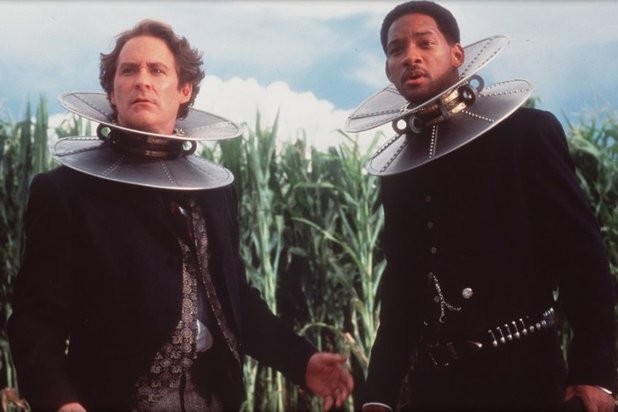
The movie features a lot of over the top technology, which is a fair homage to the show, at least to an extent. I can understand the thinking here: people liked the eccentric gadgets in James Bond movies and Men in Black, so I can see why the team thought the steam-punk inventions would resonate with people. However, it all goes a few steps too far into the ridiculous, with killer disks, head projectors, and giant mechanical death spiders.

wildwest3
And mechanical collars?

Wild Wild West was pitched to audiences as a buddy cop action comedy, but the comedy just doesn’t work throughout the film, and Kline and Smith never particularly click. It turns out that a lot of the comedic elements in the movie were added through reshoots that were done after poor test screenings, which gives the whole movie an unbalanced feel. Comedy isn’t something that can be added haphazardly after the fact: if it is going to work, it needs to either be specifically directed, or ingrained in the screenplay from the beginning.

The length of Wild Wild West is a bit too long for what it is, and the movie already feels stretched out due to the meandering plot structure and interspersed moments of bad comedy. Really, there is no reason for this movie to stretch anywhere near a two hour run-time, given it isn’t particularly complicated or epic.

Overall, Wild Wild West isn’t a totally un-entertaining movie, but it was definitely poorly conceived and executed. The effects and production design are specifically pretty cool, and it still has a bit of a cult following for that aspect alone. However, the humor is pretty bad, which drags the whole thing down. It is still worth checking out thanks to the ridiculous performances from Kline and Branaugh (and to a lesser extent Levine), though, and there is plenty of nostalgia tied into the film for a lot of people.

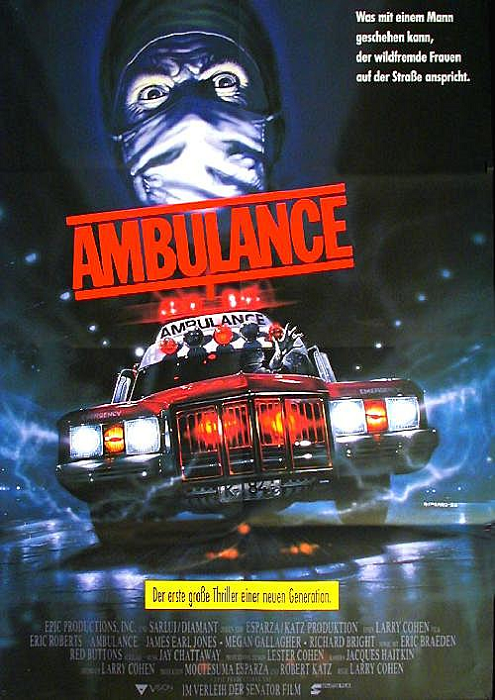
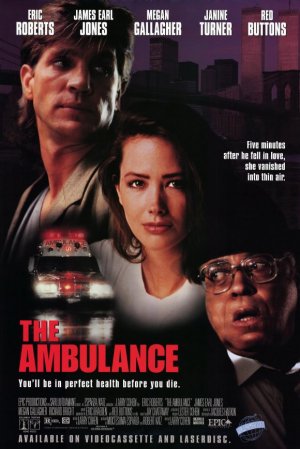
Larry Cohen Collection: “The Ambulance”

The Ambulance

ambulance1

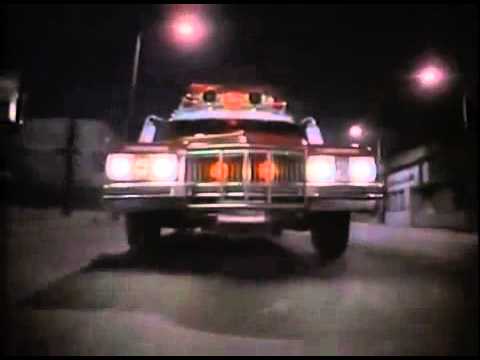
Today’s feature is Larry Cohen’s paramedic terror: 1990’s “The Ambulance.”

“The Ambulance” was both written and directed by Larry Cohen, marking his 17th theatrical directorial feature. However, it is also one of only two feature films he directed throughout the 1990s.

The cinematographer for “The Ambulance” was Jacques Haitkin, who also famously shot such films as “A Nightmare on Elm Street,” “Wishmaster,” “Shocker,” and “Maniac Cop 3.”

The musical score was provided by Jay Chattaway, who additionally worked on the William Lustig flicks “Maniac Cop,” “Maniac Cop 2,” and “Maniac.”

ambulance2“The Ambulance” ultimately featured two editors: Armond Lebowitz, a frequent Larry Cohen collaborator who cut “Special Effects,” “Q,” “The Stuff,” and “Full Moon High,” and Claudia Finkle, who did the editing for “Howling IV” and “Howling V.”

The effects team for “The Ambulance” included Theo Mayes (“Boogie Nights,” “Maniac Cop 2”), Jennifer Aspinall (“The Toxic Avenger”), Larry Arpin (“The Dentist,” “Highlander II,” “Maniac Cop,” “Leprechaun”), Rob Benevides (“Strangers With Candy”), Kevin McCarthy (“Hobgoblins,” “Demonic Toys”), and Ron Petruccione (“Serenity,” “Con Air,” “Dante’s Peak”).

The producers for “The Ambulance” were Barbara Zitwer (“It’s Alive III,” “Vampire’s Kiss”), Robert Katz (“It’s Alive”), and Moctesuma Esparza (“Gettysburg,” “Selena”), the latter two of which have worked together extensively for Maya Entertainment and Esparza/Katz Productions.

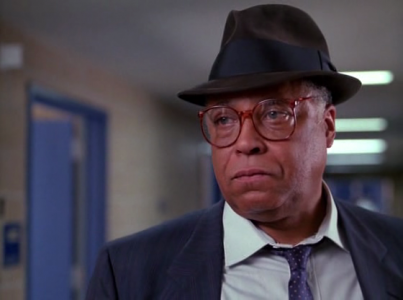
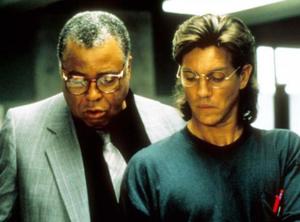
The cast of “The Ambulance” includes Eric Roberts (“Inherent Vice,” “Miss Castaway,” “Wolves of Wall Street,” “Best of the Best”), James Earl Jones (“Field of Dreams,” “Exorcist II,” “Conan the Barbarian”), Eric Braeden (“Titanic,” “The Rat Patrol”), Red Buttons (“The Poseidon Adventure,” “The Longest Day”), Megan Gallagher (“Hill Street Blues,” “The Larry Sanders Show”), Janine Turner (“Northern Exposure,” “Cliffhanger”), Nick Chinlund (“Con Air,” “Lethal Weapon 3”), Laurene Landon (“Maniac Cop,” “Maniac Cop 2,” “Pick Me Up”), and Jill Gatsby (“Class of 1999,” “Maniac Cop,” “Vampire’s Kiss”).

ambulance5The story of “The Ambulance” follows an amateur investigation into a series of mysterious disappearances after the victims were taken away by what appeared to be an ambulance crew. As the comic artist turned vigilante digs deeper, he begins to uncover a conspiracy, putting his life and sanity in danger.

A while back, I attended the premiere of horror flick called “Old 37,” which features a number of similarities to “The Ambulance.” The Kane Hodder vehicle also centers around killers utilizing an ambulance to kidnap people, though it lacks a lot of the more interesting story aspects of “The Ambulance.” That said, it isn’t all too bad, particularly for a film directed by “Alan Smithee.”

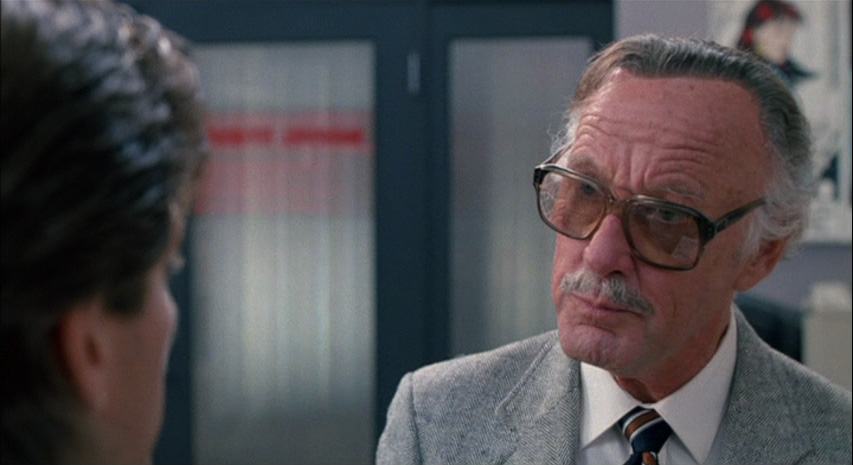
The legendary superhero creator Stan Lee has a quick cameo in “The Ambulance,” which is something he has become famous for with the recent boom of Marvel superhero films over the last decade and a half.

ambulance6Larry Cohen’s entry into the television series “Masters of Horror,” titled “Pick Me Up,” features an homage to “The Ambulance” with it’s twist ending, featuring two killers who have commandeered an ambulance for nefarious purposes.

I wasn’t able to dig up any budget or gross information on “The Ambulance,” but it is fair to say that it was a low-budget affair. The reception to the film was mixed: it currently has a 5.8 rating on IMDb, and Rotten Tomatoes scores of 75% (critics) and 55% (audience). For the most part, the film has been forgotten outside of die hard horror circles, though the film has certainly influenced a handful of other works.

ambulance4I found James Earl Jones to be a bit too cartoon-y with his portrayal of the obsessive, bubble gum chewing, eccentric detective here. Eric Roberts, on the other hand, is surprisingly solid in the lead role. I always associate him with lower-tier roles, which is where he usually seems to thrive, but he manages to pull his weight here with the spotlight. However, his hair is every kind of ridiculous in this movie, which is at least mildly distracting.

Eric Roberts’s character, however, is written like an absolute creep. The entire instigation for the film is because he was essentially harassing a woman on the street, and refused to leave her alone. It was clearly supposed to come off as charming and eccentric, but the whole exchange is skin-crawling. The woman does her damnedest to get him to go away, and has a couple of solid lines over the course of the interaction, the highlight of which is this:

“I have met creepier guys than you, but I don’t recall when”

“The Ambulance” curiously plays more like a conspiracy movie than I expected, and is less of a horror film than it is a thriller, and has some action and comedy elements as well. It sits on the boundary between a lot of different genres, but doesn’t balance it as well as some other films do.

The plot is interesting, and ties into people’s anxieties about the monolithic medical industry and the cruelty of product testing. There is also certainly a fear associated with the prone state of being in an ambulance on a stretcher, as well as being helpless in the face of corporate bureaucracy. On the surface “The Ambulance” isn’t much, but there is more to it than there appears to be at first glance.

ambulance3The soundtrack to “The Ambulance” notably has an awful lot of synthesizer and saxophone, which is a mixture that I am always on board for in these 1980s / 1990s flicks.

Eric Roberts’s job as a Marvel comics artist allows for a quick Stan Lee, but apart from that, it isn’t particularly important to the story. He winds up spending the entire film investigating and chasing down leads, so why not just make him a private investigator or a journalist? I can understand not making him a cop because of the progression of the story, but the skills he winds up using don’t make much sense for a comics illustrator.

Last but not least, Eric Braeden’s evil Doctor is chillingly creepy as the villain, and is the highlight of the whole flick. However, the parlor scene he has early on explains a little too much too quickly in my opinion. It also doesn’t make much sense for him to divulge the information he does to the forced patient, apart from to inform the audience of what is actually happening. I’m a little curious if this sequence was added in at some point, or if it was initially placed somewhere else in the script.

Overall, “The Ambulance” is in the lower tier of Larry Cohen’s filmography, but had the potential to be much better. It feels like it wasn’t given time to percolate properly, and the result is something rushed and of lower quality than it should be. I love the premise and the story, but the details are really lackluster, and the pacing isn’t great. Also, some of the performances are pretty weak, like Red Buttons, who seems totally out of place here. For Larry Cohen fans, it is worth checking out. However, it really could have been much better given the originality of the concept.