Tag Archives: worst movies

Over The Top

Over The Top

overthetop1

Today’s feature is a 1987 Sylvester Stallone vehicle with an immensely appropriate title: Over The Top.

The screenplay for Over The Top was penned by lead actor Sylvester Stallone and Stirling Silliphant (Village of the Damned, The Towering Inferno, The Poseidon Adventure), with story credit going to Gary Conway (American Ninja 3, American Ninja 2) and David Engelbach (America 3000, Death Wish II).

Over The Top was directed and produced by Menahem Golan of The Cannon Group, who worked extensively with his co-producer cousin, Yoram Globus, to bring the world such movies as Enter The Ninja, Revenge of the Ninja, Ninja III: The Domination, Breakin’, Breakin’ 2: Electric Boogaloo, The Delta Force, The Apple, Bolero, and American Ninja, among many others.

The cinematographer on Over the Top was David Gurfinkel, who also shot the movies American Samurai, Teenage Mutant Ninja Turtles III, America 3000, The Delta Force, Enter The Ninja, and The Apple.

Over the Top featured two primary editors: Don Zimmerman (Marmaduke, Galaxy Quest, Cobra, Rocky IV, Staying Alive) and James Symons (Tank Girl, Fortress 2, Rambo III, Teenage Mutant Ninja Turtles).

Outside of the dynamic duo of Golan and Globus, the other producers on Over The Top were Tony Munafo (Judge Dredd, Tango & Cash, Cobra, Demolition Man) and James D. Brubaker (The Nutty Professor, The Nutty Professor II, Rhinestone, The Right Stuff, Bruce Almighty).

The musical score for Over The Top was provided by Giorgio Moroder, who also composed music for movies like Scarface, Flashdance, American Gigolo, Midnight Express, and the 1984 remake of Cat People.

The effects team for Over The Top included Bob Mills (Jackie Brown, Batman Returns, Nine Months), Christina Smith (Slipstream (2007), Small Soldiers, Congo, Jurassic Park), Rocky Gehr (Sgt. Pepper’s Lonely Hearts Club Band, Real Genius, The Monster Squad, Speed, Waterworld), Dennis Petersen (Wild Wild West, Breaking Bad, Lethal Weapon 4, Jingle All The Way), and Richard Hill (Jonah Hex, Hollow Man, Jaws 3-D, Demolition Man, Short Circuit).

The cast of Over the Top is made up of Sylvester Stallone (Judge Dredd, Rocky IV, Rhinestone, Tango & Cash, Demolition Man, The Expendables, Death Race 2000), Robert Loggia (Big, Scarface, Holy Man), Susan Blakely (Concorde: Airport ’79, The Towering Inferno), and Rick Zumwalt (Batman Returns).
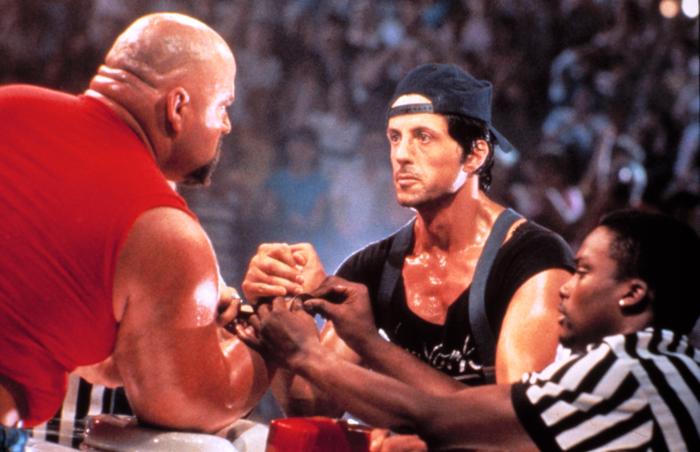
MSDOVTH EC007The plot of Over The Top is summarized on IMDb as follows:

Lincoln Hawk (Stallone) is a struggling trucker who arm wrestles on the side to make extra cash while trying to rebuild his life. After the death of his wife, he tries to make amends with his son who he left behind 10 years earlier. Upon their first meeting, his son does not think too highly of him until he enters the World Arm Wrestling Championships in Las Vegas. His hope is to receive the grand prize of $100,000 and an expensive current custom semi-truck and thus start his own trucking company.

Sylvester Stallone has reportedly claimed that he agreed to do the movie based on the pay alone, and is generally unhappy with the way that the film ultimately panned out.
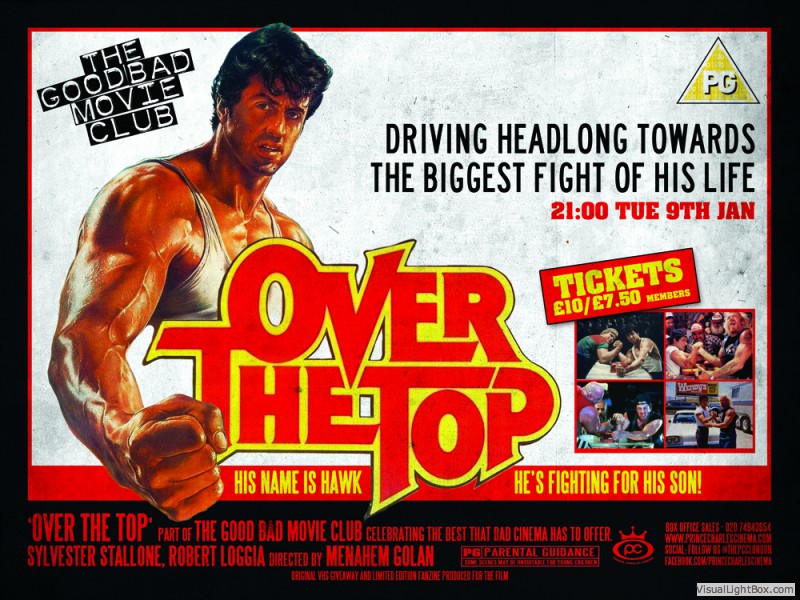
overthetop2Over the Top was made on a production budget of $25 million, on which it grossed only $16 million in its domestic theatrical release, making it a significant financial failure.  The film didn’t fare any better with critics or audiences: it currently holds an IMDb rating of 5.6, alongside Rotten Tomatoes aggregate scores of 36% from critics and 49% from audiences.

As you would expect of just about any Cannon release from the era, Over The Top is a completely ridiculous movie, and a whole lot of fun at the same time. To say the least, it lives up to its name: the arm wrestling sequences in particular can only be described as “over the top,” in just about any way you can imagine: they are a chorus of lights, grunts, music, facial expressions, and large, angry truckers.

Typically, I am not a big fan of prominent child acting in movies. When it comes down to it, most child actors aren’t well-suited for significant roles. That said, David Mendenhall is shockingly watchable in Over The Top. I’m sure this is sort of helped by the fact that his character is written in a peculiar way that generally doesn’t leave him to his own devices to be aimlessly precocious, like many directors seem to do with child actors. He still definitely has bad moments, but his performance was far less painful than a movie like this would typically turn out.

The music in Over The Top is terrifically iconic for the late 1980s, integrating synth, rock, country, and blues into a fantastic backdrop for this odd psuedo-action movie, sounding like what I assume a dingy truck stop in the 1980s would have.

Part of the central plot of Over The Top is a “slobs vs. snobs” scenario that is fought out internally in the mind of Mendenhall’s character, Mike Hawk (heh). Throughout the movie, he is caught in the crossfire between the high-class influence of his wealthy grandfather and the blue-collar style of his long-absentee father (Stallone), and visibly transitions between the two throughout the story. While the “slobs vs. snobs” conflict is hardly unique, it plays out interestingly to have the battle waged inside the psyche of a kid.

Overall, Over The Top is a delightfully cheesy movie that delivers everything you could really want from it. There’s a sports movie component with the arm wrestling, an overly sentimental family bonding plot, some vehicular stunts, and Stallone doing his usual Stallone shtick. Personally, I see this as a must-watch for bad movie fans, up there with Stallone cheese classics like Rocky IV and Tango & Cash.

For more thoughts on Sylvester Stallone’s dip into cinematic arm-wrestling, I recommend checking out Janet Maslin’s review in The New York Times and Paul Attanasio’s brief coverage in The Washington Post. Also, the good folks at BMFcast covered it in a double feature with Hulk Hogan’s No Holds Barred, which I’ll be getting around to as well one of these days.

Driven

Driven

driven1

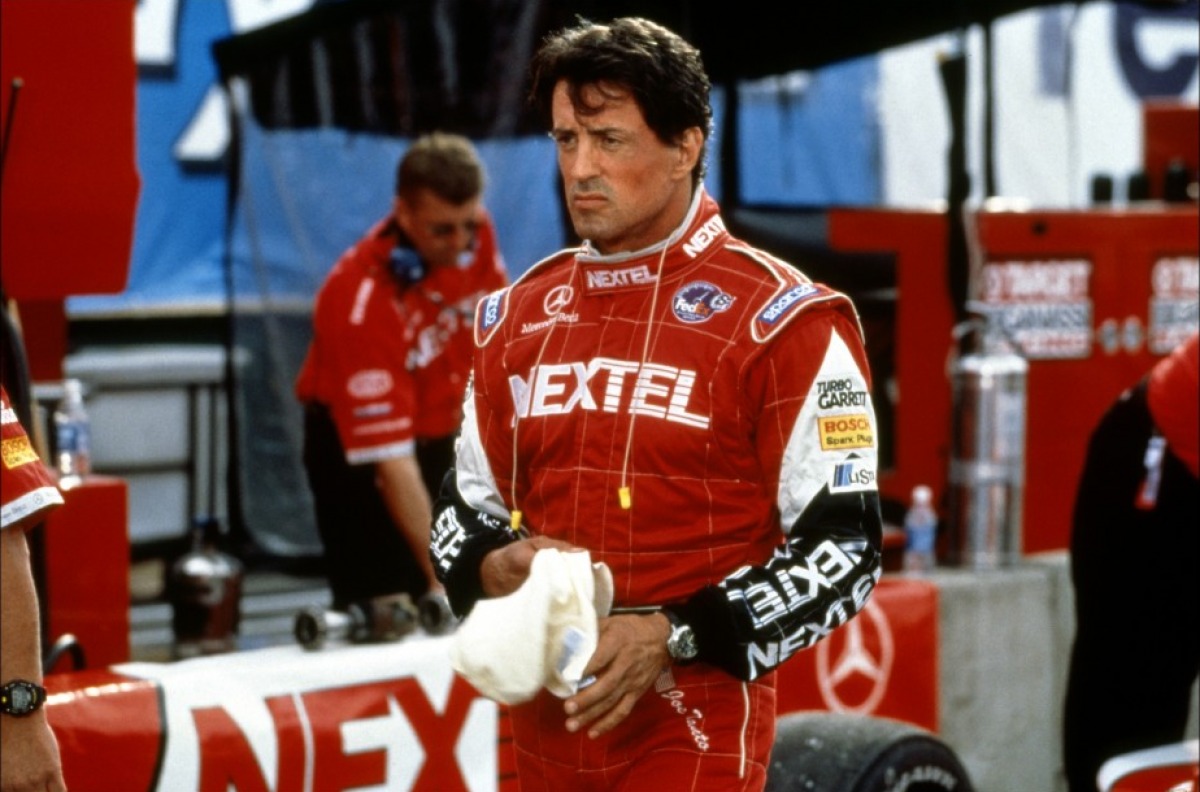
Today’s feature is a 2001 Sylvester Stallone vehicle directed by Renny Harlin: Driven.

The screenplay for Driven was written by Sylvester Stallone himself, who many forget is a veteran screenwriter, with writing credits including Rocky, Staying Alive, First Blood, Rhinestone, Over The Top, and many others. Story credit for Driven was given to the duo of Jan Skrentny and Neal Tabachnick, who don’t have any other credits of note.

Driven was directed and produced by Renny Harlin, the action movie director responsible for such films as Cliffhanger, Die Hard 2, The Adventures of Ford Fairlane, The Long Kiss Goodnight, A Nightmare On Elm Street 4, Cutthroat Island, Deep Blue Sea, Mindhunters, and 12 Rounds.

Driven had two primary editors: Stuart Levy, who cut Red Eye, Foxcatcher, and Insurgent, and Steve Gilson, whose work has primarily been on television shows like Pawn Stars and Ice Road Truckers.

The cinematographer for Driven was Mauro Fiore, an Academy Award winner with credits including Avatar, Southpaw, Smokin’ Aces, Training Day, and The Equalizer.

Outside of Renny Harlin and Sylvester Stallone, the team of producers on Driven included Don Carmody (Goon, Silent Hill, Weekend at Bernie’s II, Lucky Number Slevin), Mike Drake (The Number 23, The Whole Nine Yards), Raul Guterres (Turistas), Tom Karnowski (Captain America, Alien From L.A., Double Dragon), Jefferson Richard (Maniac Cop, 3000 Miles To Graceland), Elie Samaha (Battlefield Earth, The Boondock Saints), Rebecca Spikings (Deep Blue Sea, Mindhunters), and Tracee Stanley (Battlefield Earth, The Whole Nine Yards).

driven2The makeup effects on Driven were provided by Brian McManus (Cop And A Half, Striptease), Suzi Ostos (Source Code, High Fidelity), Christopher Pizzarelli (Jason X, The Love Guru), Sean Sansom (In The Mouth of Madness, Dracula 2000), and Tricia Sawyer (Casino, Sphere).

The Driven special effects work was done in part by Sam Barkan (Home Alone, 8 Mile), Colin Chilvers (Superman III, Tommy), Kaz Kobielski (Blues Brothers 2000), Don Riozz McNichols (Primal Fear), Troy Rundle (Jason X), Yvon Charbonneau (300, The Aviator), and Denis Lavigne (The Fountain).

The visual effects team on Driven included Jeremy Burns (Argo, Van Helsing), Marc Cote (300, Timeline, Battlefield Earth), Mark S. Driscoll (Monkeybone, Boat Trip), Henrik Fett (Gone Baby Gone, Black Swan), John Follmer (Children of the Corn II, Mortal Kombat, McHale’s Navy, Red Planet, League of Extraordinary Gentlemen), Mark Freund (Torque, Van Helsing, Be Cool), Benoit Girard (Epic Movie, Cellular, Torque), Anthony Ivins (Volcano, The Spirit), Phillip Palousek (Donnie Darko, Swordfish), Brian Jennings (Lawnmower Man 2, The Faculty), and Matt Hullum of Rooster Teeth.

The stunts on Driven were coordinated by Steve Lucescu (In The Mouth of Madness, Johnny Mnemonic, Darkman II, Darkman III, Mimic, Jason X, Battlefield Earth), Steve Kelso (The Abyss, Maniac Cop 2, Mississippi Burning, Moonwalker, On Deadly Ground, Breakfast of Champions, State of Play), and Andy Gill (Cannonball Run II, Never Too Young To Die, Maniac Cop, Dead Heat, The Ambulance, Highlander II, Maniac Cop 2, Congo, Double Team).

Kit-7 (L to r) SYLVESTER STALLONE and BURT REYNOLDS in Franchise PicturesÕ high-tech drama, ÒDriven,Ó distributed by Warner Bros. Pictures.The musical score for Driven was composed by electronica artist Brain Transeau (BT), who also provided music for such movies as Go, Stealth, and The Fast and The Furious.

The cast for the movie includes writer/producer Sylvester Stallone (Over The Top, Rocky IV, Rhinestone, Tango & Cash, The Expendables, Cobra, Judge Dredd), Burt Reynolds (Cop And A Half, Boogie Nights, Smoky & The Bandit, Shark, Deliverance, Fuzz), Kip Pardue (Remember The Titans), Stacy Edwards (Superbad), Til Schweiger (Far Cry, Inglorious Basterds), Gina Gershon (Face/Off), Estella Warren (The Cooler, Kangaroo Jack), Brent Briscoe (The Green Mile), and Robert Sean Leonard (Dead Poet’s Society, House, M.D.).

The plot of Driven is summarized on IMDb as follows:

A young hot shot driver is in the middle of a championship season and is coming apart at the seams. A former CART champion is called in to give him guidance.

Driven was made on an astoundingly high $94 million production budget, on which it only managed to gross just under $55 million in its worldwide theatrical release, making it a huge financial failure. Critically, the movie bombed almost as hard: it currently holds a 4.5 rating on IMDb, alongside Rotten Tomatoes aggregate scores of 14% from critics and 33% from audiences.

The first thing that I noticed when watching Driven is that the music absolutely does not work in the movie: it doesn’t seem to sync up with what is going on in the story, and seems like it is more there to fill in space than serve a purpose. It is kind of like if the rhythm section in a rock band is trying to drown out the lead guitar: it just doesn’t work, and throws the whole situation off balance.

The way that Driven is shot and edited could best be described as “frenetic”: it is filled with rapid cutting, changes in angles, and handheld shots that never seem to let the frame stay still, even during non-action scenes dedicated to exposition or character building. It comes off as uneasy and off-balance, which is good in some situations, but not in this sort of movie.

Burt Reynolds is one of those guys who is hard not to like whenever he chooses to show up in a movie, and I usually get a kick out of seeing him in things. However, he really truck me as phoning it in in Driven, which is kind of a bummer. It doesn’t help that his character isn’t really a Burt Reynolds type: he isn’t a charmer or a smooth talker or a joker, he is more like a big business antagonist for the plot in a lot of ways, which just doesn’t suit him.

Then again, the poor performance from Reynolds in this movie is hardly unique: Stallone is undeniably wooden as well, and the younger actors visibly struggle with the respective burdens of their various roles. The only solid performance in the whole thing in my opinion was Robert Sean Leonard, who also plays against type as a sleazy agent/manager, which is a fairly small part in the grand scheme of the movie.

The plot of the movie is also a bit of a problem for me: it kicks off with the young racer already having won a number of races on his own, and hitting a backslide over the course of an opening montage. Stallone is brought in to reinvigorate him to make a final push in the season. The combination of a green rookie and a washed-up veteran is a good combination, but the fact that the kid is already an established winner when the story begins takes away from some of their potential dynamic. The kid already knows how to win: he isn’t totally wet behind the ears and in need of mentorship, he’s a professional in a slump who needs someone to pump his tires. This just isn’t as compelling of a scenario to work with. For instance, a movie where Stallone discovers a young racer while enjoying his retirement would be far more interesting, because there would be a deeper dynamic between them and a clearer end goal for the story.

Overall, Driven is a platonic ideal of a poorly conceived box office bomb. The actors are a mix of past-their-prime veterans and unbankable rookies, the story is based on a sport that isn’t particularly popular in the United States, and the production budget ballooned out of control in a way that almost doomed it out of the gate. Driven just about destroyed Stallone’s career, which was only salvaged in the end by the reboots Rocky Balboa and Rambo a number of years later, which paved his return to action with The Expendables franchise.

For fans of Sylvester Stallone’s filmography, Driven is an essential low point that is sort of an essential to catch. It isn’t a good movie by any means, but it was such a public failure and had such a negative impact on his career that it isn’t exactly avoidable for a completest or an aficionado. Likewise, bad movie fans should give this one a shot, even though it isn’t the most entertaining movie out there. The presence of both Reynolds and Stallone, even if they aren’t on point, is good enough to justify giving this one a glance.

For more thoughts on Driven, I recommend checking out Film Brain’s Bad Movie Beatdown video on the flick, as well as Roger Ebert’s surprising 2 1/2 star review of the film.

Killdozer

Killdozer

killdozer2

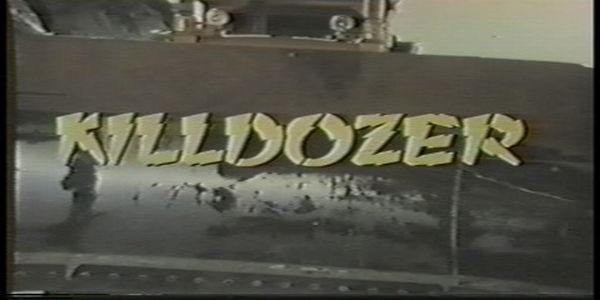
Today’s feature is Killdozer, a 1974 film about a murderous possessed bulldozer.

Killdozer is based on a novella by noted science fiction and horror author Theodore Sturgeon, who also co-wrote the teleplay for the movie. The credit for the adaptation, however, is given to Herbert F. Solow, who was a production manager on Star Trek and Mission: Impossible, and also acted as the sole producer on the film.

The director on Killdozer was Jerry London, who worked on a variety of television shows, including The Brady Bunch, The Partridge Family, and Hogan’s Heroes.

The cinematographer for the film was Terry K. Meade, who worked as a camera operator on Rio Bravo and The Last Picture Show, and shot a significant number of television movies throughout the 1970s and 1980s.

Killdozer featured two primary editors: Fabien D. Tordjmann (Scream Blacula Scream, Star Trek, The Six Million Dollar Man) and Bud Hoffman (The Hellcats, Bigfoot, Night Gallery).

killdozer1The musical score for Killdozer was provided by Gil Melle, who also provided scores for movies like The Andromeda Strain, The Sentinel, and Larry Cohen’s Bone.

The effects work on Killdozer is credited to Albert Whitlock, who has a long list of film credits that spans back to the 1950s, and includes flicks like The Birds, Catch-22, Marnie, The Andromeda Strain, Willy Wonka & The Chocolate Factory, Diamonds Are Forever, Slaughterhouse-Five, The Sting, Exorcist II: The Heretic, High Anxiety, The Wiz, The Blues Brothers, The Thing, Dune, and Gremlins 2: The New Batch.

The cast for Killdozer includes Clint Walker (Small Soldiers, The Dirty Dozen), Carl Betz (Stalag 17, Birdman of Alcatraz), Robert Urich (Magnum Force, S.W.A.T.), James A. Watson, Jr. (Airplane II, The Organization), James Wainwright (Battletruck, The Survivors).

The plot to Killdozer is summarized on IMDb as follows:

A small construction crew on an island is terrorized when some strange spirit-like being takes over a large bulldozer, and goes on a killing rampage.

In 2004, a man named Marvin Heemeyer went on a rampage in Ganby, Colorado, in which he demolished a number of local buildings with an armored bulldozer. Since the footage of the incident hit the internet, both the bulldozer and the rampage have earned the nickname of “Killdozer.”

Late night talk show host Conan O’Brien mentioned his adoration for Killdozer during an interview with comedian Patton Oswalt, which exposed the movie to a new generation and audience.

Killdozer currently holds a 5.1 user rating on IMDb, along with a 34% audience score on the review aggregator Rotten Tomatoes.

Killdozer is, above all, a strange little movie. For a film with such a strange plot, you would assume that it wouldn’t take itself too seriously. However, there isn’t even a hint of self-awareness or comedy in this screenplay. Basically, this is a blue collar drama about a hazardous workplace, but with the twist that the hazard is a possessed bulldozer.

killdozer3

The eponymous “Killdozer” isn’t particularly intimidating: it is just a heavy piece of machinery that slowly moves of its own accord. In an attempt to make the machine a little more menacing, someone made the decision to overlay all of its appearances with discordant synthesizer music, which is one of the most annoying sounds you can imagine. I can understand the logic behind giving the “monster” of the film an audio cue, but boy was this an annoying way to pull that off.

Killdozer isn’t a movie you are just randomly going to bump into: you are only going to find it if you seek it out. So, is it worth the hunt to find it? Not really, if you ask me. Maximum Overdrive, which I covered some time ago, takes the concept of large machinery running amok and turns it into b-movie gold, with the help of Stephen King’s notorious cocaine habit of the 1980s. Killdozer feels like it has the nugget of a great b-movie, but tries a little too hard to pretend that it isn’t that. It is still entertaining, but not enough to go out of your way to dig up. Most of the amusement I got out of the flick came from the juxtaposition of the seriously-played drama and the ludicrous premise, which runs its course before too long. I will say that the sudden ending, in which the bulldozer just sort of stops operating (after many attempts to “kill” it) and the survivors leave on a freeze-frame, gave me a solid laugh. If you are a bad movie fan looking for a deep cut, give this one a shot. Otherwise, this one isn’t worth dirtying your hands or expending much time trying to get a hold of.

Be Cool

Be Cool

becool1

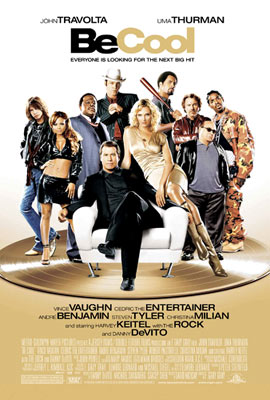
Today’s flick is the 2005 sequel to Get Shorty, starring John Travolta: Be Cool.

The screenplay writer for Be Cool was Steven Steinfeld, who also penned the films 21, Drowning Mona, and Analyze That.

Be Cool was directed and produced by F. Gary Gray, who is currently slated to helm the assured blockbuster Furious 8, and has previous directing credits on the 2003 remake of The Italian Job, A Man Apart, Friday, and The Negotiator.

The cinematographer for the film was Jeffrey L. Kimball, whose other credits include Top Gun, True Romance, Jacob’s Ladder, and Paycheck.

The editor for Be Cool was Sheldon Kahn, who also cut the movies Space Jam, Junior, Twins, and One Flew Over The Cuckoo’s Nest.

becool4The musical score for Be Cool was provided by John Powell, who has composed music for movies like Face/Off, The Lorax, Antz, Shrek, Rat Race, Gigli, and Kung Fu Panda, among many others.

Outside of director F. Gary Gray, the team of producers for Be Cool included co-star Danny DeVito, Michael Siegel (Charlie and the Chocolate Factory), Stacey Sher (Gattaca, Pulp Fiction), Michael Shamberg (Matilda, Garden State), David Nicksay (Flubber, Stay Tuned, Freejack), Linda Favila (Swordfish, Battlefield Earth), and Anson Downes (Wild Hogs, Old Dogs).

The makeup effects for the movie were provided by Michelle Bühler (Swordfish, Face/Off, The People Under The Stairs), Jeff Dawn (Deep Blue Sea, Jingle All The Way), Autumn Moultrie (Boston Legal), Kyra Panchenko (Glitter), and Laini Thompson (Demolition Man, Black Dynamite).

The special effects team for Be Cool included David Greene (Hollow Man, Red Dragon), James Lorimer (Van Helsing, Cellular, Marmaduke), Steve Austin (Nightcrawler, Interstellar, Paul Blart: Mall Cop 2), Ronald W. Mathews (Blade, Serenity), Ken Pepiot (Small Soldiers, Predator 2), Elia P. Popov (Top Gear, The Fifth Element), Gintar Repecka (The Golden Child, Inspector Gadget), and Ken Rudell (State of Play).

The visual effects for the movie were provided in part by Adam Avery (Kiss Kiss Bang Bang), Tyler Foell (Daredevil, Torque, Epic Movie, 12 Rounds), Mark Freund (Rollerball, Van Helsing), Bonnie Kanner (League of Extraordinary Gentlemen, Green Lantern), Ray McIntyre Jr. (Red Planet, 12 Rounds), Liz Radley (Gigli, Death to Smoochy, Small Soldiers, On Deadly Ground), and Bob Wiatr (Wishmaster, Mystery Men).

The cast of Be Cool is made up of Uma Thurman (Kill Bill, Pulp Fiction), John Travolta (Swordfish, Face/Off, Battlefield Earth), Danny DeVito (Death to Smoochy, Throw Momma From The Train, War of the Roses), Harvey Keitel (Bad Lieutenant, Beeper, Pulp Fiction), Vince Vaughn (Swingers, Wedding Crashers, The Cell), Debi Mazar (Space Truckers), Steven Tyler (Sgt. Pepper’s Lonely Hearts Club Band), Dwayne “The Rock” Johnson (Walking Tall, Furious 7, Doom), James Woods (Casino, Best Seller, Vampires, Cat’s Eye, Videodrome), Robert Pastorelli (Eraser, Sister Act 2, Dances With Wolves), Christina Milian (Pulse, Torque), Paul Adelstein (Private Practice, Prison Break), Gregory Alan Williams (Baywatch, The West Wing), Cedric The Entertainer (The Steve Harvey Show, The Honeymooners), and André Benjamin (Four Brothers, Revolver).

becool3The plot for Be Cool is summarized on IMDb as follows:

Disenchanted with the movie industry, Chili Palmer tries the music industry, meeting and romancing a widow of a music executive on the way.

Elmore Leonard wrote the novel of the same name on which Be Cool is adapted from, and gets a writing and producing credit for the story and concept as a result. Other works of his have been turned into films and television shows like Get Shorty, 3:10 To Yuma, Jackie Brown, and Justified.

Uma Thurman was apparently cast based on John Travolta’s recommendation. A number of other actresses were considered for the part, including Travolta’s Swordfish co-star Halle Berry, Charlize Theron, Naomi Watts, and Jennifer Connolly.

Barry Sonnenfeld, who directed Get Shorty, had every intention of directing this sequel, but had to back out due to scheduling conflicts caused by production delays. Once he left, apparently Brett Ratner was approached before F. Gary Gray was ultimately given the job.

Be Cool unfortunately proved to be actor Robert Pastorelli’s last film, as he died of an accidental drug overdose before the movie hit theaters.

Be Cool features cameos from the music and film industries anywhere they could cram them in. People that receive screen-time include Gene Simmons, Anna Nicole Smith, The Black Eyed Peas, the RZA, Aerosmith, Fred Durst, Wyclef Jean, and Sergio Mendes.

Be Cool was far from a critical success: currently, it holds a 5.6 rating on IMDb, alongside Rotten Tomatoes aggregate scores of 30% from critics and 42% from audiences. Financially, however, it proved profitable: on a production budget of $53 million, it grossed just over $95 million in its worldwide theatrical release.

One of Be Cool‘s biggest weaknesses is that it lacks some of the charm of Get Shorty, because Travolta’s character isn’t really a fish out of water anymore, which was the core of the premise of the preceding film. Also, somewhat ironically, the movie suffers a bit from being too “cool”: the dialogue is executed with a little too much flow and suave, to the point that the characters don’t seem like human beings anymore.

Speaking of which, Be Cool is heavily weighed down by the sheer size of the cast: it is packed not only with characters, but also with a constant stream of cameos. On the surface this isn’t too much of a problem, but the issue comes when none of the characters get enough time to feel realistic, which is compounded by the dialogue issues mentioned previously. Vince Vaughn and Dwayne Johnson, for example, are one-dimensional caricatures more than they are characters, which means most of the humor winds up coming from their wackiness, which is lazy and low for a film that should really be wittier.

becool2

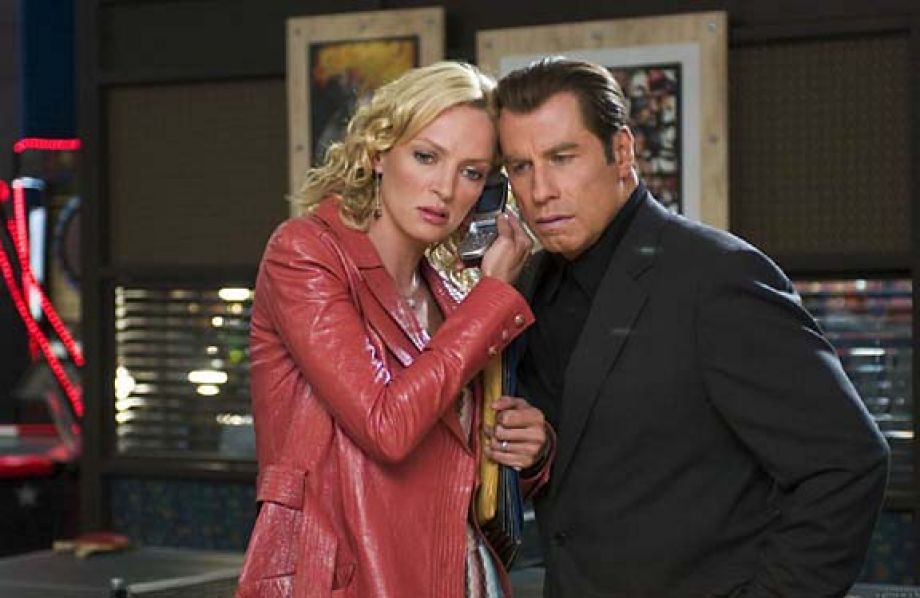
The combination of Uma Thurman and John Travolta, which electrified audiences when they were working with Quentin Tarantino’s dialogue, is absolutely flat in Be Cool, which is almost surreal to see. The difference between their performances in Be Cool and Pulp Fiction certainly speaks volumes for how important dialogue writing is for actors to put in effective performances. If the foundation is shaky, the house isn’t going to be hold.

Overall, Be Cool is a shallow celebrity showcase that cashes in more on association with other movies than it creates anything unique or entertaining in its own right. It is totally watchable, but not terribly entertaining, as many Hollywood comedies wind up being. For people who really liked Get Shorty, it is worth seeing for the novelty of it. For everyone else, this is sort of a toss-up as to whether it is worth your time to sit through.

Skyscraper

Skyscraper

skyscraper1

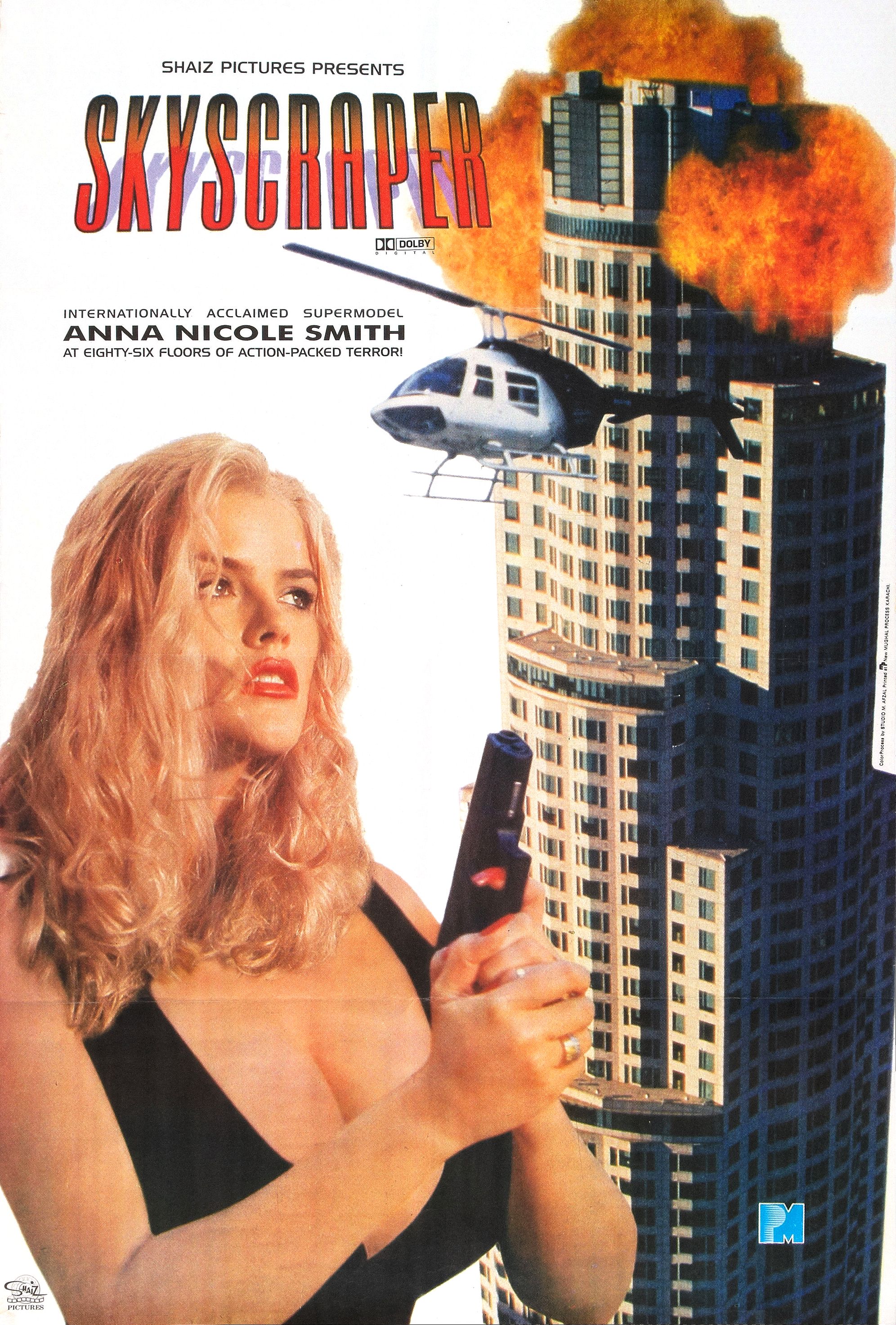
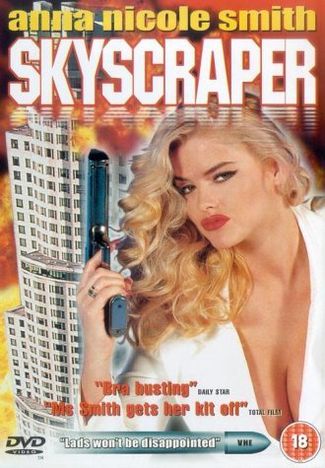
Today’s feature is a Die Hard knockoff starring Anna Nicole Smith: 1996’s Skyscraper.

The writers for Skyscraper were William Applegate Jr. and Joseph Barmettler, who worked together on The Silencers, L.A. Heat, and Alien Secrets.

The director on Skyscraper was Raymond Martino, whose credits are primarily obscure, law-budget affairs like American Born, Dumb Luck In Vegas, and Da Vinci’s War, as well as another Anna Nicole Smith movie, To the Limit.

The cinematographer for the film was Frank Harris, who shot a number of low budget action movies, including the Cynthia Rothrock vehicle 24 Hours To Midnight and Killpoint, starring Richard Roundtree of Shaft fame.

skyscraper2The editor for the film was Kevin Mock, who has worked extensively on television shows like Teen Wolf, Chuck, and America’s Next Top Model.

The musical score for the movie was provided by Jim Halfpenny, whose credits include low-budget features like Magic Kid, Magic Kid II, and Little Bigfoot 2.

The producers on Skyscraper included star Anna Nicole Smith, Richard Pepin (Night of the Wilding, Cyber Tracker), and Joseph Merhi (Columbus Day, The Whole Ten Yards, Little Bigfoot).

The effects team on Skyscraper included Richard Cole (Volcano, Dante’s Peak), Jay Combs (Tremors 3), Rela Martine (CSI:NY, That 70s Show), Larry Roberts (Masters of the Universe, Trick or Treat), and Jori Jenae McGuire (Boston Legal, Entourage).

The cast for Skyscraper is made up of Anna Nicole Smith (Naked Gun 33 1/3), Jonathan Fuller (Castle Freak), Richard Steinmetz (The One), Calvin Levels (Adventures in Babysitting), Lee de Broux (RoboCop), and producer Branimir Cikatiæ, who appears in his only credited acting role.

skyscraper3The plot of Skyscraper is summarized on IMDb as follows:

A helicopter charter soon turns deadly when the female pilot finds that she is on a building held by terrorists. It is up to her and her husband to save the hostages.

Currently, Skyscraper holds an astoundingly low 2.5 rating on IMDb, alongside a 26% audience aggregate score Rotten Tomatoes.

The first thing that is impossible not to notice when watching Skyscraper is that Anna Nicole Smith, the film’s inexplicable lead, can’t act worth a damn. While none of the acting in the movie is stellar, she particularly stands out from the pack as being particularly ill-equipped for the task. On the flip side, the lead villain of the movie is clearly trying way too hard, and is hilarious to watch as a result.

skyscraper4Skyscraper, from the start, is immensely sleazy. The movie is very transparent about what it is: an exploitation film wrapped in a Die Hard plot. Those two elements don’t exactly gel well with each other to start with, which makes for a formula set up to fail. The sexual situations primarily come in the form of flashbacks or attempted sexual assaults by goons, both of which grind the movie to an absolute halt, and neither of which are necessary in the slightest.

While there are some entertainingly cheesy action elements in Skyscraper, and a handful of entertaining performances from the villains, the movie is mostly a chore to sit through. The novelty of watching Anna Nicole Smith trying to act wears off very quickly, and unless you are someone who can sit through a movie for the presence of boobs alone, making it through the run time is an arduous ordeal. I don’t think this movie is as incompetent as many of the lower-tier entries in the IMDb Bottom 100 I covered, but it is deserving of the terrible reviews it has accrued.

Iron Eagle

Iron Eagle

ironeagle1

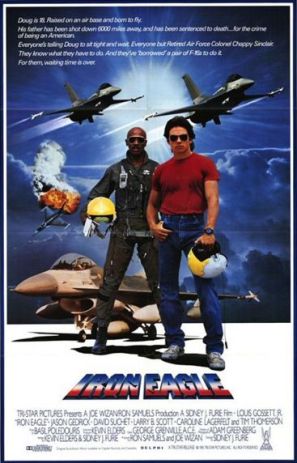
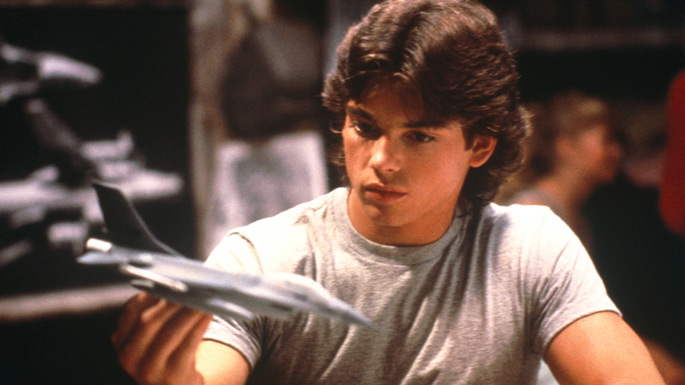
Today’s feature is a 1986 aerial combat flick that isn’t Top Gun: the oft-forgotten Iron Eagle.

Iron Eagle was co-written and directed by Sidney J. Furie, whose other credits include Superman IV: The Quest For Peace, Iron Eagle II, Iron Eagle IV, and Ladybugs.  His co-writer on the film was executive producer Kevin Alyn Elders, who also wrote Aces: Iron Eagle III and Echelon Conspiracy.

The cinematographer on Iron Eagle was Adam Greenberg, who also shot Rush Hour, Ghost, Sphere, Junior, North, Toys, 3 Men and a Baby, The Terminator, and The Big Red One, among others.

The editor for the film was George Grenville, who cut the movies Billy Jack Goes To Washington, The Trial of Billy Jack, Wrong is Right, Bite the Bullet, and Looking For Mr. Goodbar.

The musical score for Iron Eagle was composed by Basil Poledouris, who is known for composing music for such movies as RoboCop, Conan The Barbarian, Red Dawn, Wired, RoboCop 3, On Deadly Ground, The Hunt For Red October, Hot Shots! Part Deux, and Starship Troopers.

The effects team for the film included Karen Kubeck (Battle Beyond The Stars, Trancers, Coneheads, Back to the Future Part II), Zivit Yakir (American Samurai, The Delta Force), Bernardo Munoz (Super Mario Bros., A Nightmare On Elm Street 3), Pini Klavir (The Expendables 2, The Order), Jarn Heil (House II, Critters 2, Critters 3, Critters 4), Bruce Hayes (Hancock, Stealth, The Rock, Congo), and Sandra Stewart (Waterworld, The People Under The Stairs, K-9).

The cast of Iron Eagle includes Louis Gossett Jr. (Enemy Mine, Jaws 3-D, The Punisher), Jason Gedrick (Summer Catch, Backdraft), David Suchet (Poirot, A Perfect Murder), Larry B. Scott (SpaceCamp, Revenge of the Nerds, The Karate Kid), Caroline Lagerfelt (Minority Report), Jerry Levine (Teen Wolf, K-9), Robert Jayne (Tremors, Tremors 3), and Shawnee Smith (Saw).

ironeagle2The plot of Iron Eagle is summarized on IMDb as follows:

When Doug’s father, an Air Force Pilot, is shot down by MiGs belonging to a radical Middle Eastern state, no one seems able to get him out. Doug finds Chappy, an Air Force Colonel who is intrigued by the idea of sending in two fighters piloted by himself and Doug to rescue Doug’s father after bombing the MiG base. Their only problems: Borrowing two fighters, getting them from California to the Mediterranean without anyone noticing, and Doug’s inability to hit anything unless he has music playing. Then come the minor problems of the state’s air defenses.

Iron Eagle bears a number of similarities to another 1986 film: Top Gun. Many regard their similar styles, concepts, and near-concurrent releases as akin to the deep sea movie craze of 1989 (Leviathan, DeepStar Six, The Abyss), the twin 1998 asteroid disaster blockbusters (Armageddon, Deep Impact), or 2000’s pair of Mars-based films (Mission to Mars, Red Planet). The production team was clearly aware of the similarities, as Iron Eagle‘s theatrical release date was altered in order to avoid competition in the summer with Top Gun. Both films would also be equally skewered in the parody films Hot Shots! and Hot Shots! Part Deux by Jim Abrahams.

Iron Eagle ultimately spawned multiple sequels: Iron Eagle II in 1988, Aces: Iron Eagle III in 1992, and Iron Eagle IV in 1995.

The fighter planes featured throughout the movie are all Israeli, and are thoroughly mocked up to look either American or vaguely foreign. The USAF was reportedly going to provide technical advising for the movie at one point, but decided to back out given how the plot reflects on the institution.

Iron Eagle was made on a production budget of $18 million, on which it grossed over $24 million domestically, making it a profitable feature. The reception, however, wasn’t terribly enthusiastic. The film currently holds a 5.2 rating on IMDb, alongside a Rotten Tomatoes audience score of 57%. Ultimately, the movie was buried in the shadow of Top Gun in the public consciousness, despite its run of sequels.

The dialogue in Iron Eagle is absolutely terrible out of just about everyone in the film who isn’t Louis Gossett Jr. In particular, every word that comes out of a child actor is aggravatingly awful, which is  exemplified in a sequence where the then-president is referred to as “Ronnie Ray-Gun.” On the flip side, Louis Gossett Jr.’s character is really memorable, and might be the only reason that the movie is remembered at all.

Speaking of child actors, I’m not entirely clear on why there needed to be so many of them in this movie. The lead character is a pending high school graduate, so why does he pal around with so many young kids? Would the plot not have worked with teens taking on the various sneaky tasks and manipulations? Then at least the relationships would have made more sense.

Something that really stands out now for me about the film is the transparent messaging, particularly in support of aggressive, militaristic foreign policy. The story is anything but subtle about the point, going so far as to have characters berate the military brass for not invading foreign countries on a whim, and directing speaking poorly of Jimmy Carter’s handling of the Iran hostage situation.

Getting back to the plot of the movie, the very concept behind this film is utterly preposterous. As far as realism goes, this movie gives SpaceCamp a run for its money in how detached it is. Iron Eagle supposes that children of American military officers could plot and execute a paramilitary operation using US military resources without anyone noticing. At the end of the film, it is even revealed that there are no repercussions for attacking a foreign nation with the unsanctioned use of military resources and personnel. There are so many problems and impossibilities with the scenario that there is just no way to suspend disbelief while watching the movie: the only response to any of this has to be laughter.

Overall, this is (and always was) a cheesy movie, and it certainly hasn’t aged gracefully. I had an absolute blast watching it, and will probably be digging up the sequels in the near future. The writing and acting are awful, and the tone is so excessively dramatic and self-important that it almost comes off as self-parody. I’m astounded that anyone was able to take this movie seriously in the 1980s, but I suppose that was a very different world. If you ask me, anyone into 80s nostalgia, bad movies, or the Hot Shots! films owes it to themselves to check out Iron Eagle at least once.

Tammy and the T-Rex

Tammy and the T-Rex

tammytrex1

Today’s movie is a romantic tale involving reanimation, body-swapping, and a carnivorous dinosaur: Tammy and the T-Rex.

Tammy and the T-Rex was written and directed by Stewart Raffill, who was also behind such flicks as Mac And Me, Mannequin: On The Move, and The Philadelphia Experiment. His co-writer was producer Gary Brockette, who has no other writing credits, but eventually become a second unit director for a number of b-movies in the early 2000s.

The cinematographer on Tammy and the T-Rex was Roger Olkowski, who worked exclusively on low-budget productions over his career. His credits include shooting flicks like Sex Files: Pleasureville, Crystal Force, Stripshow, Deadly Ransom, and numerous other movies no one has ever heard of.

The editor for the film was Terry Kelley, who did significant cutting on television shows like Homeland, Rubicon, V.R. Troopers, and Mighty Morphin Power Rangers, and also worked on horror films like Jack Frost and Puppet Master vs. Demonic Toys.

tammytrex4The other producers on Tammy and the T-Rex included Diane Kirman (Survival Island), Laura Tateishi (Rocky V, Ghost), and stunt coordinator Fernando Celis (.com For Murder, McHale’s Navy, Mac And Me).

Three different people are credited with providing the music on Tammy and the T-Rex: Tyler Bates (John Wick, Guardians of the Galaxy, Killer Joe, Super, Slither, Californication, Sucker Punch), Jack Conrad (Loverboy), and Anthony Riparetti (Alien From L.A., Kickboxer 2, Dollman, Dollman vs. Demonic Toys).

The effects team for Tammy and the T-Rex included Scott Wolf (Tales From The Crypt, Broken Arrow), Bruce Nazarian (The Dentist), Dennis Dion (Invasion U.S.A., Crank: High Voltage, Breaking Wind), John Carl Buechler (Troll, From Beyond, Dolls, The Garbage Pail Kids Movie, Friday the 13th Part VII, Arena, Demonic Toys, Carnosaur), and Max W. Anderson (Children of the Corn, Wolfen).

The cast of Tammy and the T-Rex is made up of Paul Walker (The Skulls, She’s All That, The Fast and The Furious), Denise Richards (Starship Troopers, The World Is Not Enough), Ellen Dubin (Napoleon Dynamite), Terry Kiser (Friday the 13th Part VII, Weekend at Bernie’s, Weekend at Bernie’s 2), Buck Flower (Maniac Cop, They Live, Pumpkinhead, They Live, The Fog), Sean Whalen (The People Under The Stairs, Idle Hands, Waterworld, Twister).tammytrex2The plot of Tammy and the T-Rex is summarized on IMDb as follows:

An evil scientist implants the brain of Michael, a murdered high school student, into an Tyrannosaurus. He escapes, wreaks vengeance on his high school tormentors and is reunited with his sweetheart Tammy.

Apparently, there is alternate cut of Tammy and the T-Rex that was released in Italy, which features enough violence and gore that it would have received an R-rating from the MPAA. In total, this cut is less than 10 minutes longer, but has never been released in English. However, it is available on YouTube in Italian.

Tammy and the T-Rex is certainly not a beloved film, but the ludicrousness of its plot has made it a bit of a cult classic that has endured through the years. Currently, it holds an IMDb rating of 3.3, along with a 39% audience aggregate score on Rotten Tomatoes.

Tammy and the T-Rex is a movie that was obviously made without a clear audience in mind, which is almost always a recipe for disaster. The romantic story is goofy and seems to be aimed at teens, but the dinosaur-related violence doesn’t fit in with that tone in the slightest. From watching the unedited European cut, apparently the movie was initially intended to be even more violent, which is immensely confusing. A goofy teen romance doesn’t mesh well with killing sprees by a lead character, much less brutal decapitations.

tammytrex3

At the same time, the bizarre tone, the inexplicable violence, the laughable effects work (the T-Rex arms, particularly), the ridiculous characters, and the massive plot holes combine to make a truly unique movie experience that defies any kind of conventional classification. This is a rare sort of thoroughly baffling film that is impossible to forget, and is an absolute must-watch for bad movie fans.

For more thoughts on Tammy and the T-Rex, I recommend checking out the episode of Red Letter Media’s Best of the Worst that spotlighted it alongside Carnosaur and Theodore Rex, as well as the feature on JoBlo.com’s Awfully Good Movies.

The Giant Claw

The Giant Claw

giantclaw2

Today’s feature is a monster movie cult classic: 1957’s The Giant Claw.

The Giant Claw was written by the duo of Samuel Newman and Paul Gangelin, who wrote on a handful of television shows throughout the 1950s and 1960s, including The Gene Autry Show, Annie Oakley, The Adventures of Rin Tin Tin, and Perry Mason.

The Giant Claw was directed by Fred F. Sears, a proficient low-budget director of the 1950s who amassed credits like Earth vs. The Flying Saucers, The Werewolf, and numerous episodes of Ford Television Theater.

The cinematographer for The Giant Claw was Benjamin Kline, an accomplished director of photography who worked on countless television shows, including Wagon Train, The Virginian, Dragnet 1967, Ironside, McHale’s Navy, The Alfred Hitchcock Hour, and The Amos ‘n Andy Show.

The Giant Claw had two credited editors: Anthony DiMarco, best known for cutting Hell Night and a number of episodes of The Outer Limits, as well as working in a supervisory capacity on Purple Rain and the television show The Rat Patrol, and Saul Goodkind, of the Sherlock Holmes films Terror By Night, Dressed To Kill, and The House of Fear, as well as the 1936 serial movie Flash Gordon.

The lone credited producer on The Giant Claw was Sam Katzman, a frequent collaborator of Fred F. Sears whose credits include Hot Rods To Hell, It Came From Beneath The Sea, and Creature With The Atom Brain, among many others.

The musical score and orchestration for the film was provided by Mischa Bakaleinikoff, a Russian expatriate who composed and orchestrated music for Columbia Pictures for decades, and has credits that include 20 Million Miles To Earth, The Big Heat, and Lady For A Day.

The effects team for The Giant Claw included Ralph Hammeras (The Giant Gila Monster, The Great Dictator, 20,000 Leagues Under The Sea, The Lost World), George Teague (He Walked By Night, Raw Deal, Hollow Triumph), and Lawrence Butler (Casablanca, The Caine Mutiny, Guess Who’s Coming To Dinner).

The cast of The Giant Claw includes Jeff Morrow (This Island Earth, Octaman, Kronos, The Creature Walks Among Us), Mara Corday (Tarantula, The Black Scorpion), Morris Ankrum (In A Lonely Place, Invaders From Mars), Robert Shayne (Indestructible Man, Neanderthal Man), and Louis Merrill (The Lady From Shanghai).

giantclaw1The plot of The Giant Claw is summarized on IMDb as follows:

Global panic ensues when it is revealed that a mysterious UFO is actually a giant bird that flies at supersonic speed and has no regard for life or architecture.

Reportedly, the cast and the majority of the crew on The Giant Claw had no idea what the monster looked like until the premiere of the movie, during which there was audible laughter every time it appeared on screen. Vic Morrow claimed to have walked out of the premiere screening out of embarrassment.

Shockingly, even the poster artists for the movie weren’t shown the monster, and were given only descriptions to work with. The result is that the monster that features in the posters only vaguely resembles the laughably hideous one in the film.

giantclaw3The Giant Claw now is remembered as one of the great good-bad monster movies of the 1950s: currently, it holds an IMDb user rating of 4.1, and a Rotten Tomatoes audience aggregate score of 34%.

I first came across The Giant Claw when I was a really young kid, and was given a VHS trailer compilation titled Fantastic Dinosaurs Of The Movies by my parents. The Giant Claw was one of the most hypnotically terrible movie monsters featured on the tape, and I was always hoping to stumble onto a copy of the movie. I ultimately didn’t see the film until I was in high school, and I can honestly say that watching the trailer is a lot more fun than sitting through the whole movie. While the stilted dialogue and pseudo-scientific babbling is mildly entertaining, there isn’t a whole lot more to see of the ridiculous monster itself that wasn’t already spotlighted in the trailer.

For fans of b-movie history, The Giant Claw is worth seeing for the experience. I would admit that it is an easier watch than any of the Coleman Francis movies, or pretty much anything that made the cut for MST3k. It has some definite highlight moments, but it is hard to recommend this flick to anyone outside of monster movie die-hards.

For more thoughts on The Giant Claw, I recommend checking out acclaimed director Joe Dante’s commentary on it over at Trailers From Hell, as well as the reviews on the film by Brandon Tenold and Dark Corners of This Sick World.


Hider In The House

Hider In The House

hider1

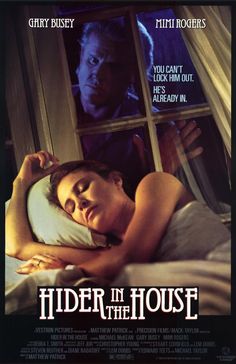
Today’s feature is about the nightmare scenario of Gary Busey secretly living in your attic: Hider In The House.

Hider In The House was written and produced by Lem Dobbs, who also penned screenplays for movies like The Hard Way, Kafka, The Limey, Haywire, The Score, and Dark City.

The director for the movie was a guy named Matthew Patrick, whose credits include a handful of television movies and shorts, but no other feature films.

The cinematographer on Hider In The House was Jeff Jur, who also shot the movies Joy Ride, My Big Fat Greek Wedding, How Stella Got Her Groove Back, Soul Man, It’s Pat, and numerous episodes of the television show Dexter.

hider2Outside of Dobbs, the team of producers for Hider In The House included Edward Teets (Under Fire, Three Men and A Baby), Michael Taylor (Phenomenon, Bottle Rocket), Steven Reuther (The Ugly Truth, Face/Off, Under Siege), Diane Nabatoff (Narc, Very Bad Things), and Stuart Cornfield (Mimic, Tropic Thunder).

The musical score for Hider In The House  was provided by Christopher Young, who has done the music for such films as Sinister, Priest, Drag Me To Hell, Spider-Man 3, Ghost Rider, Swordfish, The Core, Species, and Trick or Treat, among others.

The effects work for the movie was done by a small team that included Gary L. King (The Prophecy, Demolition Man, Volcano, Commando), Judee Guilmette (Silent Night, Deadly Night), and Susan Mills (Cool As Ice, Captain Ron).

The cast for Hider In The House included Gary Busey (Predator 2, Lethal Weapon, The Gingerdead Man, Under Siege), Mimi Rogers (Austin Powers, Ginger Snaps), Bruce Glover (Die Hard Dracula, Diamonds Are Forever), and Michael McKean (Clue, This Is Spinal Tap).

HIDER IN THE HOUSE, Gary Busey, 1989. ©VestronThe plot of Hider in the House is summarized on its IMDb page as follows:

A deranged man hides in the attic of a new house and becomes obsessed with the unsuspecting family that moves in.

Hider In The House is a mostly forgotten feature, though the reviews that do exist aren’t exactly positive: it currently holds an unenviable 5.8 rating from the IMDb user base.

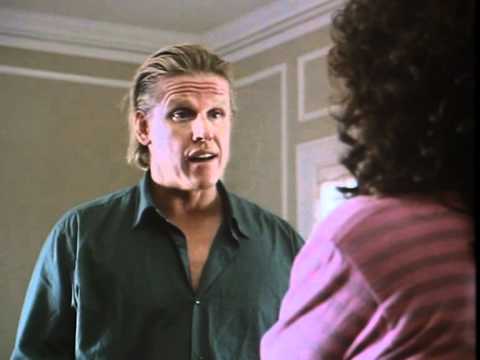
First off, Gary Busey is more than solid in the lead role of Hider in the House, and makes his character both off-putting and erratic, but still generally sympathetic. His character is like a cross between Lenny from Of Mice and Men and Michael Myers from Halloween, which is perfect for Busey and fascinating to watch.

Bruce Glover, a character actor of some note and the father of Crispin Glover, has a supporting role in Hider In The House as an equally off-putting and potentially menacing neighbor. Despite not being on screen much, his bit character makes a significant impression, like he is a rapist or murderer desperately trying to maintain a facade, and failing spectacularly.

The premise at the foundation of Hider In The House is beyond bizarre: the idea of someone living in a secret room inside of an occupied house sounds like something out of an Edgar Allan Poe story, which makes the modern setting for the tale kind of intriguing. That said, there is a lot of necessary suspension of disbelief which increases throughout the progression of the story in order for the premise to hold up.

At the same time, the atmosphere and tension is pretty solid, and I personally found myself simultaneously concerned for Busey getting discovered, and nervous about the danger he presented to the family. It isn’t a great movie by any means, but it does what it sought out to do, and is an entertaining experience on the whole.

Hider in the House is worth checking out based on Busey’s erratic performance alone. For bad movie fans, getting a glimpse of Busey in a lead role where he gets to show off his manic side is an absolute treat. The film is totally watchable on top of that, with both Bruce Glover and Mimi Rogers putting in occasional memorable moments on top of that.

For more thoughts on Hider In The House, I highly encourage checking out the We Hate Movies episode on the movie, which is regarded as one of their most memorable episodes among fans.

Tango & Cash

Tango & Cash

tangocash2

Today’s feature if one of the most notorious buddy-cop showcases of all time: Tango & Cash.

Tango & Cash was written by Randy Feldman, who also penned screenplays for the films Nowhere to Run, Metro, and Hell Night.

The final credited director for Tango & Cash was Andrei Konchalovsky (Runaway Train, Homer and Eddie, The Inner Circle), but he was actually replaced before filming was completed. Albert Magnoli (Purple Rain) took over the production, but doesn’t have an official credit on the movie. The circumstances of the director change apparently had to do with significant conflicts between Konchalovsky and producer Jon Peters over the tone of the movie, which eventually boiled over.

The initial cinematographer on Tango & Cash was Barry Sonnenfeld, who later directed movies like Wild Wild West, Get Shorty, and Men in Black. His shooting credits at the time included significant movies like Big, Throw Momma From The Train, Raising Arizona, and Blood Simple, but he was dismissed after only a brief stint on Tango & Cash because, reportedly, Stallone wanted his gone. His replacement was Donald E. Thorin, whose career credits include shooting Collision Course, The Golden Child, Purple Rain, Scent of a Woman, Undercover Blues, and Dudley Do-Right.

The film had two credited primary editors: Robert A Ferretti (Stuck, On Deadly Ground, Gymkata) and Hubert de La Bouillerie (Highlander II: The Quickening, Police Academy 5, Police Academy 6).  The film was re-edited on the orders of Warner Brothers by Stuart Baird (Superman, The Omen, Tommy), taking away control from the production team. This ultimate, studio-mandated edit by Baird and de La Bouillerie was only given partial credit, but is more responsible for the final product of the film that the scrapped Ferretti edit.

The team of producers for Tango & Cash included the infamous duo of Peter Guber and John Peters (Batman, Caddyshack II), Larry J. Franco (The Thing, Christine), Peter MacDonald (X-Men Origins: Wolverine), and Tony Munafo (Judge Dredd, Stop! Or My Mom Will Shoot).

The music for Tango & Cash was provided by Harold Faltermeyer, who is most famous for his iconic theme for Beverly Hills Cop. His other credits include Fletch, Top Gun, The Running Man, and Cop Out. He has also worked extensively beyond motion pictures, and has two Grammy awards for his work.

The effects work on Tango & Cash was done by a team that included Dennis Liddiard (Speed 2), Gary Liddiard (Exorcist II, TRON), Peter Anderson (Ishtar, COSMOS), Michael L. Fink (RoboCop 2, WarGames), Peter Kuran (Piranha, Q: The Winged Serpent, RoboCop 3, Lake Placid, The League of Extraordinary Gentlemen), Jon Belyeu (Halloween III), Tom Del Genio (Jaws 3-D, Friday the 13th: A New Beginning), Larry L. Fuentes (Time After Time), and Jim Schwalm (Falling Down, Cobra).

The cast of Tango & Cash is made up of Kurt Russell (The Thing, Escape From New York, Big Trouble In Little China), Sylvester Stallone (Cobra, Rhinestone, Judge Dredd, Over The Top, Demolition Man), Robert Z’dar (Samurai Cop, Maniac Cop, Maniac Cop 2, Maniac Cop 3, Soultaker), Clint Howard (Evilspeak, House of the Dead, The Dentist 2, Blubberella, Carnosaur, Night Shift), Jack Palance (Batman), Teri Hatcher (Desperate Housewives), James Hong (Blade Runner), Brion James (The Fifth Element), Eddie Bunker (Reservoir Dogs), Lewis Arquette (Scream 2), Michael J. Pollard (Bonnie & Clyde, Scrooged), and Marc Alaimo (Total Recall).

The plot of Tango & Cash is summarized on wikipedia as follows:

The film describes the struggle of Raymond Tango and Gabriel Cash, two rival LAPD narcotics detectives, who are forced to work together after the criminal mastermind Yves Perret frames both of them for murder.

tangocash1Patrick Swayze was initially cast in the role of Gabriel Cash, but dropped out to star in his own cult classic, over-the-top action flick: Road House. Kurt Russell then took over the role, and the rest is history.

The glasses worn by Sylvester Stallone throughout the movie were his own prescribed spectacles. Typically, he wears contacts for his movie roles, but he decided to wear glasses as Ray Tango to make him seem more intelligent and distinguished.

The budget for Tango & Cash was estimated to have gotten as high as $55 million by the end of the production. It managed to make the money back on a gross total of $63.4 million, but the inflated budget and low profits led most people to regard it as a bust. Critics and audiences certainly didn’t receive it warmly at the time: the movie currently holds Rotten Tomatoes aggregated scores of 34% from critics and 52% from general audiences, but the more contemporaneous IMDb rating is notably higher at a 6.3. Particularly in the past few years, the movie has been hailed as a cult classic by many, epitomizing a certain style of action movie.

Tango & Cash is arguably the peak of fun, cheesy action movies. Kurt Russell is absolutely fantastic, as he always seems to be when he is in his action element. Seeing Stallone play against type as an intellectual adds a surreal element to the film, and the surprisingly deep cast of character actors makes it one hell of an entertaining showcase for movie buffs. The plot and action are both ludicrous enough that any bad movie lover should give it a chance, but I would even go so far as to recommend it to general movie-goers nowadays. This movie encapsulates an entire genre and time period that has recently started to be ‘cool’ again, and this hilarious over the top flick deserves another round of eyes on it.

For more thoughts on the dynamic duo of Tango & Cash, I recommend checking out the dedicated episode of The Flophouse Podcast on the flick, last year’s spotlight on Flavorwire, and the retrospective review from The Dissolve.