Tag Archives: worst movies

Evilspeak

Evilspeak

evilspeak1

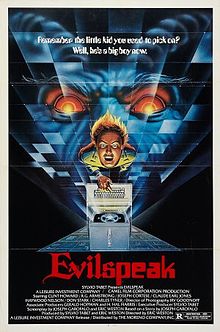
Today’s feature is a 1981 horror movie headlined by Clint Howard: Evilspeak.

Evilspeak was produced, co-written, and directed by Eric Weston, who has been behind a handful of low-budget flicks over his career, including Hitters, Cover Story, Pressure Point, To Protect And Serve, The Iron Triangle, and Marvin & Tige.

The cinematographer on Evilspeak was Irv Goodnoff, who also shot the movies Xtro 3, Shatterbrain, and The Van, among others.

The editor for the film was Charles Tetoni, who also cut the films Halloween 5 and One Dark Night, and was an associate editor on Capricorn One and The Star Chamber.

One of the producers for Evilspeak was Sylvio Tabet, whose other credits include The Cotton Club, Dead Ringers, The Beastmaster, Beastmaster II, and Beastmaster III.
evilspeak3The music for Evilspeak was provided by Roger Kellaway, who composed scores for 1976’s A Star Is Born, Satan’s Mistress, Jaws of Satan, The Dark, and The Silent Scream, and conducted for 1978’s Invasion of the Body Snatchers and Invictus.

The effects work for the movie was done by a team that included Peter Knowlton (Flipper, Cool as Ice, Beethoven, The Creature Wasn’t Nice), Allan Apone (Going Overboard, CHUD II: Bud the Chud, Deep Blue Sea), Robert Clark (Starship Troopers, Mimic, The People Under The Stairs, Fortress, The Pit and The Pendulum), Francisco X. Pérez (Hesher, Con Air, Waterworld), Douglas J. White (CHUD II: Bud the Chud, Merlin’s Shop of Mystical Wonders), John Carter (Maniac Cop 2), Harry Woolman (Laserblast, Dolemite), and Robert Bailey (Throw Momma From The Train, Killer Klowns From Outer Space).

The cast of Evilspeak includes Clint Howard (House of the Dead, Blubberella, Night Shift, Carnosaur, The Dentist 2), R. G. Armstrong (Children of the Corn, Predator), Joe Cortese (American History X), Don Stark (Santa With Muscles, That 70s Show), and Charles Tyner (Cool Hand Luke, Harold and Maude).

The plot of Evilspeak is summarized on IMDb as follows:

A military cadet who happens to be a social outcast taps into a way to summon demons and cast spells on his tormentors through his computer.
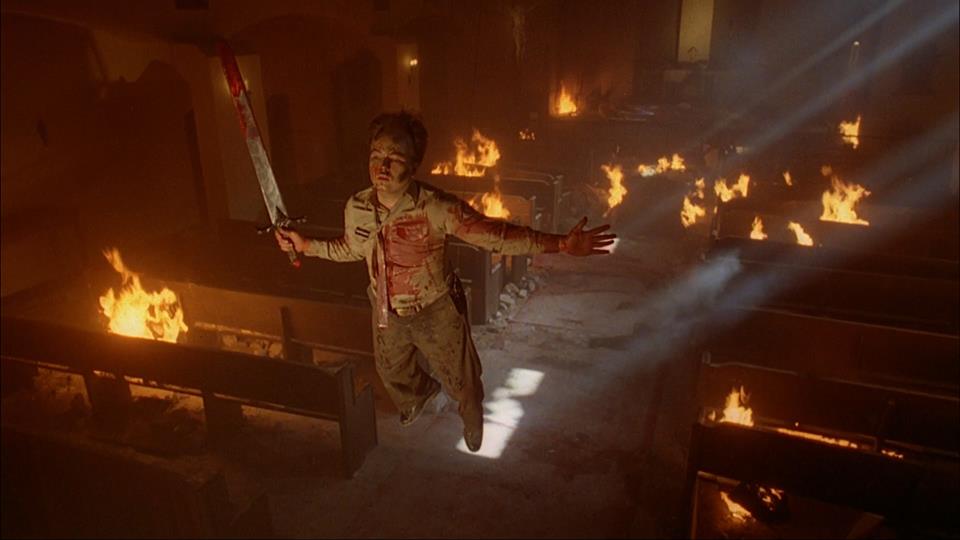
evilspeak5Evilspeak was one of many features to make the infamous “video nasty” list in the United Kingdom, meaning it was outright banned for many years due to its violent and Satanic content.

Anton LaVey, who was a noted author and the founder of the much-stigmatized Church of Satan, was apparently a fan of Evilspeak, and of how it portrayed Satan and Satanism.

The budget for Evilspeak was somewhere between $900,000 and $1 million. I wasn’t able to dig up any theatrical numbers, which were almost certainly affected by the controversial nature of the film’s plot. Regardless, it has become a cult favorite among die-hard horror fans. Currently, it holds an IMDb rating of 5.6, alongside Rotten Tomatoes aggregate scores of 46% from critics and 37% from audiences.

Personally, I think that Clint Howard is solid in his lead role in Evilspeak. He is certainly not someone who is often tapped for lead roles, but this particular character needed someone who could portray a pathetic loser and also garner sympathy, and he pretty much nails that with his performance. The other characters aren’t nearly as well done, and suffer a bit from being exaggeratedly evil, particularly the bullies and some of the school staff. A number of people point to this film as a Carrie ripoff, and I think these excessive portrayals of the “bad guys” is where that influence is most evident.
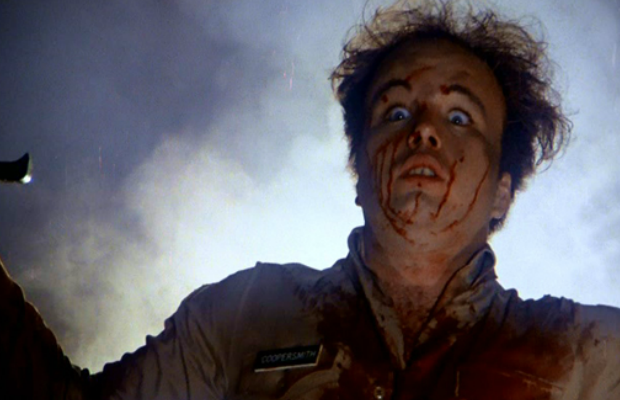
evilspeak4For being so low-budget, the effects in Evilspeak are at least pretty entertaining, and are nothing if not ambitious. There are a couple of decapitations, a murder via a pack of pigs, and a handful of other creative / gruesome deaths that don’t shy away from any kind of effects challenge.

If there is anything I really don’t like about Evilspeak, it is the conclusion. Essentially, it ends on a note that is at once an anti-climax and a pathetic sequel setup: after the murder spree is over, the movie just fades to black, and text comes up confirming that Clint Howard survived, and then teases his potential return. My problem with this is that he already got his revenge, and there wasn’t anything else particularly intimidating about the guy himself. The demon computer is a different case, but it doesn’t necessarily need Clint Howard’s survival to be a threat.
evilspeak2Overall, Evilspeak is a fun little piece of grind house horror history. It is certainly a low budget horror deep cut, though it is now available on blu ray after a Shout Factory release last year. Clint Howard is really interesting to see in a lead role before he turned to self-parody, the outdated technology at the center of the plot is hilarious, and the deaths are everything you could hope for from a movie like this. For horror movie fans, this is more than worth digging up. Likewise, bad movie aficionados are bound to get a kick out of this flick.

For more thoughts on the Satanic escapades of Clint Howard, I highly recommend checking out the We Hate Movies episode on the movie, Dread Central’s coverage of the recent blu-ray release, and the retrospective review from Daily Grindhouse.

Helen Keller vs. Nightwolves

Helen Keller vs. Nightwolves

helenkeller2

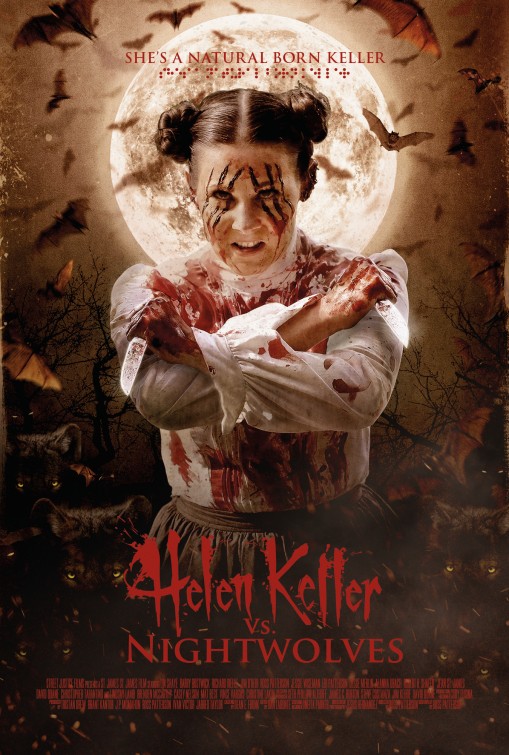
Helen Keller vs. Nightwolves is a 2015 historically-accurate drama designed in the noble effort of being intentionally bad.

Helen Keller vs. Nightwolves was written and directed by Ross Patterson, whose previous writing credits include FDR: American Badass and Poolboy: Drowning Out The FuryHeller Keller marks his first directorial effort, however.

The cast for the movie includes Jessie Wiseman (Bellflower), Lin Shaye (Pledge This, Ouija, Insidious, Surf School, Critters), Barry Bostwick (The Rocky Horror Picture Show, Spin City), Alanna Ubach (Hung, Waiting), Richard Riehle (Office Space), and writer/director Ross Patterson in his fictitious persona of filmmaker St. James St. James.

The plot of Helen Keller vs. Nightwolves, in case it isn’t completely self-evident, is summarized on IMDb as follows:

In yet another masterpiece by St. James St. James, this film explores the true story that government didn’t want you to know about how Helen Keller really lost her eyesight and hearing: Nightwolves.

The concept of making a good-bad movie on purpose isn’t something new, but it is something that has been difficult for anyone to pull off well. The constant stream of knockoff movies from The Asylum and similar studios are certainly self-aware, but they usually aren’t terribly entertaining. Other outfits like Troma are equally self-aware, but lose a lot of their potential charm in the pursuit of humor. On its surface, Helen Keller vs. Nightwolves looks like it could easily be just another one of these movies, in the vein of Mega Piranha, Sharknado, or, more aptly, Abraham Lincoln vs. Zombies. Basically, just an idea with the semblance of a movie attached.

Despite those appearances, Helen Keller vs. Nightwolves is crafted more like Robert Rodriguez’s Planet Terror or Scott Sanders’s Black Dynamite than like The Asylum’s Abraham Lincoln vs. Zombies. This is not just a self-aware movie like the droves you can find in your local bargain bins: it was clearly made with an affection for its genre, and in an honest attempt to replicate a very elusive aesthetic. It doesn’t always nail what it is aiming for, but it hits far more than it misses. Gags comes from the use of poor editing, ill-placed stock footage, low budget monster effects, sound gaffes, and laughable mismatched voice-over work: all staples of bad horror movies.

The movie does resort to some low humor that wouldn’t be out of place in a Scary Movie film, but these broad stereotypes and vulgarities stuck me as more attempts to mock the genre than honest gags to be played for straight laughs. Still, whenever the movie stoops to actually delivering Helen Keller jokes or playing off of the flamboyantly gay character, it grinds to a halt, regardless of whether it was done ironically or earnestly.

All of that said, I found this to be an immensely enjoyable experience to sit through as a bad movie fan. It is very easy for this kind of project to drift into excessive parody and lose its charm, but this movie manages to toe that line effectively. Bad movie aficionados should at least give it a shot, even if they are sticklers for the earnest and honest classics.

I was lucky enough to attend an in-person screening of Helen Keller vs. Nightwolves, which included a meet-and-greet with star Jessie Wiseman and writer/director Ross Patterson, at my local independent theater, the Gateway Film Center. Along with some great conversation and an amusingly raucous crowd, I managed to come home with a decapitated Helen Keller head signed by both the star and the auteur.

helenkeller1

Hail Caesar

Hail Caesar

hailcaesar1

Today feature is not the latest, highly-anticipated release from Joel and Ethan Coen: it is 1994’s Hail Caesar, an Anthony Michael Hall passion project.

Hail Caesar was written by Robert Mittenthal, a producer and writer of kids’ television programming like 100 Deeds For Eddie McDowd, Double Dare, KaBlam!, and The Adventures of Pete & Pete.

Hail Caesar was directed by actor Anthony Michael Hall (The Breakfast Club, The Dead Zone), who also starred in the picture. Currently, this stands as his only directorial feature.

The cinematographer for the movie was Adam Kane, who shot films like The Boondock Saints, The Man, and Resurrecting The Champ.

HAIL CAESAR, Robert Downey Jr., 1994The editor for Hail Caesar was Jack Tucker, who also cut A Nightmare On Elm Street 4, Sherlock: Undercover Dog, and Shogun.

The team of producers for Hail Caesar included Steven Paul (Baby Geniuses, Baby Geniuses 2, Bratz), Barbara Javitz (Jack Frost), Barry Collier (Galaxis), Eric M. Breiman (Bratz, Baby Geniuses 2), and Gary Binkow (V/H/S, Plump Fiction).

Outside of Anthony Michael Hall, the cast of Hail Caesar included Robert Downey Jr. (The Singing Detective, Kiss Kiss, Bang Bang), Samuel L. Jackson (Deep Blue Sea, The Spirit, Unbreakable), Frank Gorshin (12 Monkeys), Grant Cramer (Killer Klowns From Outer Space), and Bobbie Phillips (Showgirls).

hailcaesar2The plot of Hail Caesar is summarized on Wikipedia as follows:

Caesar is having a hard time dividing his time between his band and his rich girlfriend, Buffer, whose father hates him. Buffer’s father calls Caesar in to make a bet: If Caesar makes $100,000 within six months, he can have Buffer; if he does not, he is banished from her life.

Hail Caesar is one of only two films where Robert Downey Sr. and Robert Downey Jr. both appear on screen, the other being Johnny Be Good.

The acclaimed filmmakers Joel and Ethan Coen are scheduled to release a similarly-titled movie, Hail, Caesar!, in 2016. The star-studded cast (George Clooney, Ralph Fiennes, Josh Brolin, Channing Tatum, Tilda Swinton, Scarlett Johansson, Dolph Lundgren, Christopher Lambert, Frances McDormand) already has the film highly anticipated, and the trailer has circulated widely.

The reception to Hail Caesar was generally negative: it currently holds an IMDb rating of 3.2, along with a 14% audience aggregate score on Rotten Tomatoes.

The premise of Hail Caesar makes it seem like it should be music-heavy: after all, it centers around the lead of a rock band who is trying to hit it big. However, the band takes a back seat for almost the entire film, and there aren’t any notable musical number or performances that stand out. As far as expectations going into the movie go, that was kind of a letdown. At the same time, what the movie does showcase of the eponymous band isn’t exactly good, so it might have been a blessing in disguise.

One of the most bizarre aspects of the movie are the credits themselves: the movie heavily markets the involvement of actors like Samuel L. Jackson, Robert Downey, Jr., and Judd Nelson, who all only appear in very minor roles in the film. Regardless, nearly every poster or video cover you will find of the movie will feature all three of them, given how recognizable they are. The reality, however, is that this is 100% an Anthony Michael Hall spotlight, which isn’t much to sell a movie on.

Anthony Michael Hall’s character, Julius Caesar, is a very odd sort of lead. He is at once a massive ego case who is full of himself, but is also very obviously a complete loser. Hall has always been able to pull off a nerdy social outcast well in his assortment of teen comedies, but the “cool guy” aspect of his character isn’t pulled off particularly well. Hall has managed to grow into himself over the years, and has made for a convincing lead in the television show The Dead Zone. This particular movie, however, exists in a limbo period of his career between his youthful nerdiness and his adult form, and the role tries to balance between both identities. Ultimately, it just doesn’t work.

Overall, this isn’t an easy movie to recommend. The humor is a little too mad-cap, and is never quite executed well. The characters and plot exist in an exaggerated reality that also isn’t pulled off particularly well: it never really hooks you in to being invested in it, which is a big problem for a movie with a bet in the center of the plot. Compare it with a oddly similar comedy: Billy Madison has almost the same structure as Hail Caesar, but the stakes of the central bet at the center of the plot are clearer, and are easier to get invested in. The fact that I can use an Adam Sandler movie as a positive example next to Hail Caesar speaks volumes about my opinion of this flick.

To this movie’s credit, it does have a distinct visual style that is worthy of a quick nostalgia trip. Outside of that, there isn’t much to recommend about this movie.

For some more thoughts on this all-but-forgotten feature, I recommend checking out the episode of We Hate Movies on Hail Caesar. Spoilers: they don’t like it either.

The Avengers

The Avengers

avengers1

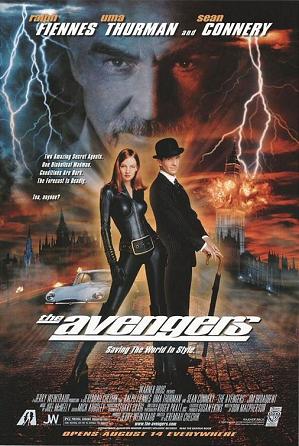
Today’s feature is not the pinnacle of the Marvel Cinematic Universe: it is 1998’s mostly forgotten The Avengers.

The screenplay for The Avengers was written by Don MacPherson (The Gunman, Absolute Beginners), based on the classic television series created by Sydney Newman.

The director for the film was Jeremiah S. Chechik, who was also behind National Lampoon’s Christmas Vacation, Benny & Joon, and Diabolique, among others.

The cinematographer on The Avengers was Roger Pratt, who has shot such movies as Troy, 12 Monkeys, Batman, The Fisher King, and Brazil.

The editor for the film was Mick Audsley, who also cut High Fidelity, 12 Monkeys, and Interview With The Vampire, among others.

The music for The Avengers was composed by Joel McNeely, who also worked on I Know Who Killed Me, A Million Ways To Die In The West, Virus, and Vegas Vacation.

The two primary producers for The Avengers were Susan Ekins (Ocean’s Eleven, Vegas Vacation) and Jerry Weintraub (The Karate Kid, Nashville).

The special effects team for the movie included Jonathan Angell (Supergirl), John Brown (Willow), Michael Dawson (Judge Dredd, Mortal Kombat), Joss Williams (Hellboy 2, Aliens), Kevin Draycott (The League of Extraordinary Gentlemen, Batman), Rodney Fuller (Hudson Hawk), Kevin Mathews (The Brothers Grimm, Labyrinth), Brian Morrison (Return To Oz, Who Framed Roger Rabbit), and Roger Nichols (Slipstream, Batman Begins).

The visual effects crew was made up of Ian Biggs (Supergirl, Wanted), Angus Cameron (Pitch Black, Ghost Ship), Nick Davis (The Adventures of Pluto Nash, Under Siege), Catherine Duncan (Eragon, Event Horizon), Dan Glass (Spice World, Muppet Treasure Island), José Granell (Hudson Hawk, Batman), Antony Hunt (Hackers), Sharon Lark (White Noise), and Nigel Stone (Supergirl, Little Shop Of Horrors).

The cast of The Avengers was composed of Sean Connery (Highlander II, The League Of Extraordinary Gentlemen), Ralph Fiennes (Schindler’s List, The Grand Budapest Hotel), Uma Thurman (Pulp Fiction, Kill Bill), Patrick Macnee (The Howling), Jim Broadbent (Gangs of New York, Brazil), Fiona Shaw (My Left Foot, Super Mario Bros.), Eddie Izzard (Mystery Men, Across The Universe), Eileen Atkins (Wolf, Cold Mountain, Gosford Park), and Carmen Ejogo (Alex Cross, Selma).

avengers3The plot of The Avengers, according to IMDb, is as follows:

Two British agents (John Steed and Emma Peel) team up to stop Sir August De Wynter from destroying the world with a weather changing machine.

The Avengers was apparently significantly cut and re-shot by the studio after a disastrous test screening, but popular opinion is that these alterations hurt the feature dramatically, due to the sacrifice of plot coherence. The cut footage seems to have been lost, making a restored edit unlikely to ever receive a release.

The production history of The Avengers features a number of alternate casting near-misses and rumors: reportedly, David Fincher was interested in directing at one point with Charles Dance in the lead, Nicole Kidman backed out after briefly being attached to the film, Gwyneth Paltrow declined the lead role of Peel, and Mel Gibson was inexplicably considered early on in the film’s planning.

The Avengers was made on a production budget of $60 million, on which it grossed less than $24 million domestically. This made it a significant financial failure, but even that failed in comparison to how poorly it was received critically. When all was said and done, the film was reamed in the press and through word of mouth, starting with the studio’s decision to to preview the movie for the press. It currently holds a 3.7 rating on IMDb, which looks good next to the Rotten Tomatoes aggregate scores of 5% from critics and 15% from audiences. Ultimately, the movie was up for a total of 9 Golden Raspberry awards at the end of the year, including Worst Picture, which it lost to An Alan Smithee Film: Burn Hollywood Burn.

avengers2The studio-mandated cuts obviously really hurt the film, in the sense that the movie is paced weirdly and doesn’t quite make sense given the omissions. However, I doubt that it would have been good if it were left in tact, because the problems with the film go much deeper than minor plot issues and pacing. That said, it would have been better without the cut, but at this point it is unlikely that we will ever see the original theatrical cut again.

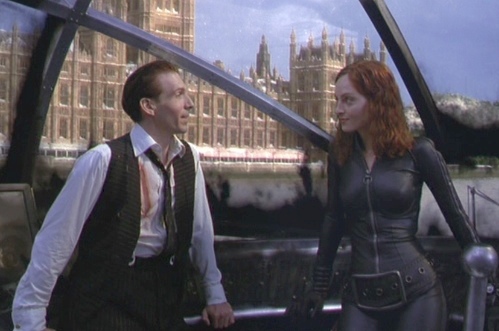
Personally, I don’t think that the performances are necessarily awful in The Avengers. Fiennes and Thurman do the best that they can with the banter as it is written. The problem is that the dialogue is written in a way that is too prim and wooden to be realistic or entertaining, particularly for an American audience. It doesn’t feel wrong for the way that the movie is set up, but the entire foundation of the movie is way off the mark. When it comes down to it, the movie just isn’t very fun, though it is clearly trying to be. The only thing the movie has going for it is the banter, and that horse was weak to start with, and is ultimately ridden to the point of exhaustion. The off-the-wall attempts at humor peppered throughout also just come off as weird as opposed to funny, like the infamous teddy bear suits.

Overall, this banter-filled movie is a steady crescendo of aggravation. At first it is watchable, but the persistent banter has the steady erosive effect of a tide, which really got to grating on me by the halfway point of the movie. It is easy to claim that the film was butchered by the studio, but the biggest issue with this flick is the writing, and the only possible solution would have been a full re-write of the screenplay. Unfortunately, that didn’t happen, and the result is a would-be blockbuster built on a foundation of sand.

avengers4This is one of those highly public failures that might be worth watching for the fact that it failed so visibly. This isn’t a movie that quietly flopped: it was a contributing factor to the end Sean Connery’s career, and was a massive financial failure that drew plenty of negative attention. Despite it being so boring, I think the movie is worth seeing at least once for bad movie fans, just for the sake of knowledge and awareness.

Suing The Devil

Suing The Devil

suingdevil3

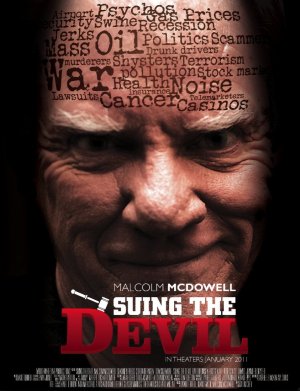
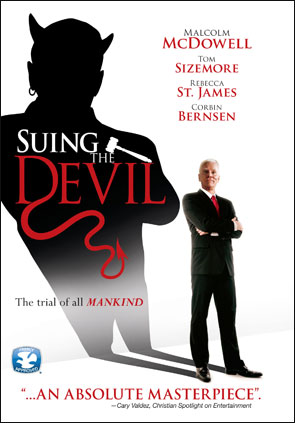
Today’s feature is a Christian courtroom thriller/drama that is as self-explanatory as possible: Suing The Devil.

Suing The Devil was written, directed, and produced by Timothy A. Chey, who has worked on a number of Christian movies that are designed to be inconspicuous, including The Genius Club, Live Fast, Die Young, and Gone.

The cinematographer for the film was Tom Gleeson, who has done some camera work on films like Happy Feet.

The effects for the movie were done by a team that included Ricardo Echevarria (Eight Crazy Nights, The Iron Giant), Ross Newton (Argo, Ant-Man), and Stacy Lande (The Prophecy).

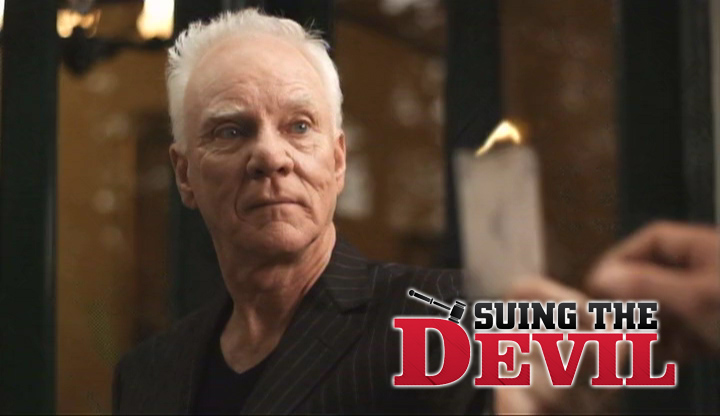
The cast of Suing The Devil includes Corbin Bernsen (The Dentist, The Dentist 2), Tom Sizemore (True Romance, Natural Born Killers), and Malcolm McDowell (A Clockwork Orange, Caligula), who also served as a producer. A number of the lead roles, however, are filled in by unknowns, like Shannen Fields and Bart Bronson.

The plot of Suing The Devil is described on its IMDb page as follows:

A down-and-out law student sues Satan for $8 trillion dollars. Satan appears to defend himself and the trial of the century takes place.

As with many Christian films, the reviews for Suing The Devil from both critics and audiences were dramatically polarized. It currently holds a 4.8 rating on IMDb and a 39% audience score on Rotten Tomatoes, but both user-submitted review sites feature a whole lot of 1-star and 5-star reviews, with very little in between.

suingdevil2As you would expect, the message of Suing The Devil is beaten over the audience’s head constantly: everything bad is Satan’s fault, Satan is real, etc. This is a consistent aspect of many Christian movies I have watched: they get so wrapped up in their message that they forget to do literally anything else, which ultimately (and, I suppose, ironically) weakens the message as a result, by not providing it any realistic foundation.

As far as specific problems with this movie go, the first and biggest one is with the premise itself, and the movie’s abysmal writing. The biggest question in the plot, obviously, is: “How do we know Malcolm McDowell is Satan?” If he isn’t proved to be Satan somehow, then the trial at the center of the movie has no foundation. This is brought up early on by the judge, but totally dropped after she is distracted by the room getting uncomfortably hot. This is the equivalent of a Looney Toons misdirection gag, and the result is that McDowell is not proven to be Satan, but the trial goes on anyway. Eventually this issue of identity comes back up late in the movie, but the idea proceedings would have gone anywhere without proof of identity is beyond absurd. Going further than that, that premise that Satan exists at all (regardless of whether it has a physical form, let alone a Malcolm McDowell form) is completely brushed over, as it is assumed in the courtroom that the Bible is literal fact. The ultimate “resolution” to these issues comes late in the trial, when McDowell is prompted to vomit computer-generated fire after he has a bible passage read to him, because only evil supernatural beings are capable of pulling off such shoddy effects.

The characters that fill out the background of Suing the Devil are a bizarre lot. Satan’s assumed supporters include three distinct groups of people, who apparently make up most of the world’s population in this Christian persecution fantasy-land: Satan-worshipers, theists who dislike God (Satan’s entire defense team), and atheists, who really shouldn’t have a dog in the fight, but apparently are universally evil and operate oil companies. Speaking of folks who have no investment in this religious trial, it is casually mentioned that countries like Pakistan and North Korea are live-streaming the court case. I think the writers meant this to represent that evil countries were pulling for Satan, but that makes no sense whatsoever, and reveals quite a bit about their limited knowledge of religion and world affairs.

Suing the Devil has one of the most distinct gulfs of on-screen talent that I have ever seen in a movie. On the positive end is Malcolm McDowell, who, even though he is clearly only present to receive his paycheck, has some solid moments as Satan. Honorable mentions also go to Tom Sizemore, who briefly hams up a performance in his handful of appearances, and Corbin Bernsen, who apparently loves showing up in this schlock Christian movies. However, the lion’s share of the primary roles go to actors who sound like they wouldn’t make the cut for a community theater production. The lead, for instance, has some of the worst deliveries I have seen in a very long time, and he spends most of the movie in frame. At the very least, I would say it is a little surreal to see sub-amateur performances interspersed with decent Hollywood actors slumming it for a paycheck.

suingdevil1I would love to be able to recommend this movie based on the premise and Malcolm McDowell alone, but this film is one of the most boring and inane things I have ever sat through. The bafflingly terrible performances are only entertaining for so long, and the writing has no sense of pacing, style, or subtlety. That makes the movie as a whole about as interesting to watch and listen to as a sermon without any charisma. If there was a super-cut of the movie (which clocks in at an agonizing 2 hours long) of just the Malcolm McDowell sequences, I would recommend watching that for the humor factor of the bad writing and performances. The whole thing, however, is not worth sitting through.

Face/Off

Face/Off

faceoff1

Today’s feature is John Woo’s 1997 hammy acting showdown, Face/Off.

Face/Off was written and produced by the duo of Mike Werb (The Mask, Darkman III, Lara Croft: Tomb Raider) and Michael Colleary (Death Wish V, Firehouse Dog).

The director for the film was action movie icon John Woo, who has been behind films like Red Cliff, Paycheck, Mission Impossible II, Hard Target, and Broken Arrow over his career.

The cinematographer on Face/Off was Oliver Wood, who shot such movies as Die Hard 2, The Other Guys, Neon Maniacs, The Adventures of Ford Fairlane, U-571, The Adventures of Pluto Nash, and Rudy.

Face/Off featured two editors: Steven Kemper (Legion, Timecop, Showdown in Little Tokyo, Aspen Extreme) and Christian Wagner (True Romance, Bad Boys, Furious 7, The Island).

The other producers for the movie included actor Michael Douglas (Ant-Man, The Game, Falling Down), Jonathan D. Krane (Swordfish, Battlefield Earth, CHUD II: Bud the Chud), Steven Reuther (Hider In The House, Under Siege), Terence Chang (Paycheck, Windtalkers), David Permut (Captain Ron, Farce of the Penguins), Jeff Levine (Slither, 8MM), and Barrie M. Osborne (The Matrix, Cotton Club).

faceoff5The music for the film was provided by John Powell, and was his future-length film credit. He has since provided scores for movies like Antz, The Road To El Dorado, Shrek, Rat Race, The Bourne Identity, Gigli, Happy Feet, The Adventures of Pluto Nash, and How To Train Your Dragon, among others.

The special effects unit included such workers as Bryan Sides (Mimic, Species II), Robert DeVine (Wild Wild West, RoboCop 3), Tony Acosta (Bordello of Blood, Volcano), Joseph Mercurio (Mommie Dearest, 8MM), Henry Millar, Jr. (Young Frankenstein, Capricorn One), David A. Poole (Gigli, Waterworld), Anthony Simonaitis (Torque, Swordfish), R. Bruce Steinheimer (John Wick, Argo, The Running Man), and Richard Zarro (Class of 1999, Predator 2).

faceoff4The visual effects team for the movie included Allen Blaisdell (Red Planet, Dracula 2000, Theodore Rex, Shocker), Derry Frost (Epic Movie, Swordfish, Torque), Douglas Harsch (Dracula 2000, The League of Extraordinary Gentlemen), Richard E. Hollander (Winter’s Tale, Daredevil, Timecop), Mark Tait Lewis (Red Planet, Deep Blue Sea), and Scott Schneider (On Deadly Ground).

The makeup effects in Face/Off were provided by a team that included David Atherton (Shocker), Ken Brilliant (Congo), Michelle Bühler (Swordfish, The People Under The Stairs), Grady Holder (Pick Me Up, Lake Placid, Small Soldiers, The Island of Doctor Moreau, Children of the Corn III, Waterworld), Nina Kraft (Con Air, The Rock), Mike Measimer (Stuck, Space Truckers, Castle Freak), Gilbert Mosko (Bratz, Star Trek: First Contact), Brian Penikas (Trick or Treat, Leviathan), Shaun Smith (Captain America, Children of the Corn III), Mario Torres Jr. (Hollow Man, Starship Troopers), Kevin Yagher (The Dentist, 976-EVIL, Trick or Treat, A Nightmare On Elm Street 2), and Mark Yagher (Starship Troopers, Sleepy Hollow).

The cast for Face/Off includes Nicolas Cage (Vampire’s Kiss, Con Air), John Travolta (Battlefield Earth, Swordfish), Joan Allen (Pleasantville), Alessandro Nivola (Jurassic Park III), Gina Gershon (The Insider, Showgirls), Nick Cassavetes (Blind Fury, Class of 1999 II), and Thomas Jane (Deep Blue Sea, The Punisher).

faceoff6The plot of Face/Off follows an obsessive cop (Travolta) and his criminal arch-nemesis (Cage), who is captured after an intense sting. However, it is decided after the raid that Travolta must go undercover to foil a pending plot by Cage’s organization. In order to do this, he must pose as Cage, who has fallen into a coma with severe injuries. He goes through an experimental surgery to graft Cage’s face onto his own, and begins the operation completely off the books. Cage unexpectedly revives in police custody (sans face), and easily steals Travolta’s identity, thus turning the undercover plot upside down. What follows is an epic duel of mistaken identities and deception.

Reportedly, John Woo insisted on leaving the slash in the title of Face/Off (in defiance of the studio) to ensure that people would not think that the film was about hockey.

faceoff7The original screenplay for the movie had the plot taking place in the distant future, which helps to explain some of the futuristic  technologies showcased in the prion and the surgeries. John Woo is said to have specifically changed the setting to the present day to make the conflict more identifiable and dramatic.

Mark Wahlberg apparently turned down the role of Pollox Troy, Nicolas Cage’s brother and right hand man in Face/Off. Other potential alternate castings had Stallone and Schwarzenegger in the lead roles, Patrick Swayze, Alec Baldwin, Bruce Willis, Steven Seagal, or Jean Claude Van Damme involved in some capacity, the Heat combo of Pacino and De Niro taking the leads, or the far more unlikely duo of Harrison Ford and producer Michael Douglas headlining.

The high-tech magnetic boots worn in the prison sequences were reused props the featured prominently in Super Mario Bros., which released four years earlier.

faceoff3 faceoff2Face/Off was made on a significant budget of $80 million, on which it managed to gross over $245 million in its lifetime theatrical run. Critics and audience both generally liked it, and it is fondly remembered as one of the most bizarre action movies of the era. Currently, it holds Rotten Tomatoes aggregate scores of 92% from critics and 83% from audiences, alongside an IMDb score of 7.3.

What is there to say about the joy that is Face/Off? This is a showcase of two of the hammiest showboats in the business, and they both fire on all cylinders here. The action and plot is fun (if not particularly smart), and there are plenty of highlights throughout the film. The only criticism I really have is that Travolta and Cage eclipse anyone else who dares to appear on screen, so the accessory cast is mostly just there to fill in empty space. That said: who cares? People went to this movie to see Cage and Travolta try to out-act each other, and that is exactly what is delivered with Face/Off.

If you haven’t seen Face/Off, this is absolutely an essential of the action genre. I feel like this should go on a high shelf of honor next to Tango & Cash as one of the most ridiculously fun, silly action movies of all time. If my word isn’t good enough for you, check out The Nostalgia Critic, How Did This Get Made?, and Gene Siskel and Roger Ebert, who all have plenty to say about the film.

Halloween III: Season Of The Witch

Halloween III: Season Of The Witch

halloweeniii3

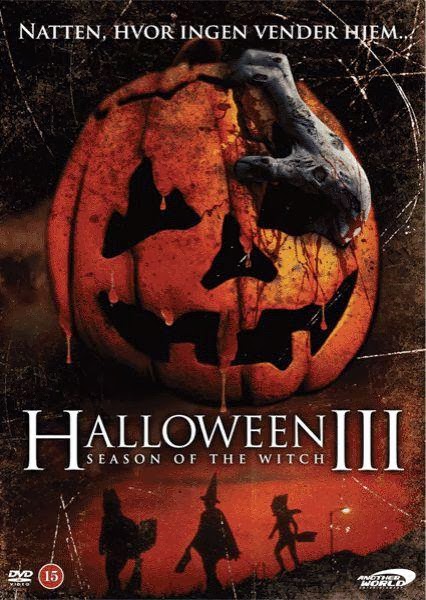
Today’s feature is the seasonal cult classic bad movie, Halloween III: Season Of The Witch.

Halloween III was written and directed by Tommy Lee Wallace, who has been behind flicks like It, Fright Night Part II, Amityville II: The Possession, and acted as an editor on the John Carpenter classics The Fog and Halloween. Uncredited screenplay work was also done by John Carpenter and Nigel Kneale (Five Million Years To Earth, Enemy From Space) over the course of a number of re-writes.

The cinematographer for the film was Dean Cundey, who shot such flicks as Escape From New York, The Fog, Halloween, Flubber, Big Trouble In Little China, Back To The Future, Road House, Hook, and Jurassic Park.

The editor for Halloween III was Millie Moore, who spent most of her career working on television movies, with the exception of 1971’s Johnny Got His Gun, which was written and directed by Dalton Trumbo.

The music for the film was provided by the duo of John Carpenter (Halloween, The Fog, Vampires, Assault on Precinct 13)  and Alan Howarth (The Omega Code, The Dentist, The Dentist 2, They Live, Escape From New York).

The team of producers for Halloween III included original Halloween creator John Carpenter, Debra Hill (Crazy In Alabama, The Dead Zone), Joseph Wolf (A Nightmare On Elm Street), Irwin Yablans (Arena, Men At Work), and Barry Bernardi (Pixels, Cabin Boy, Paul Blart: Mall Cop, The Devil’s Advocate).

The group of effects workers on the movie included Thomas R. Burman (Frogs, Howard The Duck, Hudson Hawk, Suspect Zero), John Wash (Timecop, Demolition Man), Sam Nicholson (Highlander II, The Running Man), Jon Belyeu (The Dead Zone, Jingle All The Way, Tango & Cash), William Aldridge (Class of 1999, Die Hard, Road House, Showgirls), and Ron Walters (The Breakfast Club, Police Squad!).

halloweeniii2The cast of Halloween III includes Tom Atkins (The Fog, Maniac Cop, Lethal Weapon, Night of the Creeps), Stacey Nelkin (Bullets Over Broadway), Dan O’Herlihy (RoboCop, Twin Peaks), Michael Currie (Sudden Impact, The Dead Pool), and Ralph Strait (The Beastmaster).

The plot of Halloween III follows an impromptu investigation into the brutal murder of an old man, which leads his daughter and a local doctor into a rabbit’s hole of mysticism and evil. Eventually, their efforts unveil a sacrificial plot that could threaten countless lives.

Halloween III is best remembered as the only entry in the franchise to not feature the iconic masked killer, Michael Myers. The plan was initially to turn Halloween into an anthology series, with few (if any) recurring characters between the films. This idea was axed after the negative response to Michael Myers’s absence from Halloween III, and Halloween IV was thus subtitled The Return of Michael Myers.

halloweeniii1The children’s masks that feature prominently in the plot of Halloween III were actually produced and distributed as part of the marketing of the film, and can be still found with a little bit of hunting online.

The infamous jingle that recurs throughout Halloween III uses the tune of “London Bridge Is Falling Down”, specifically because it was both catchy and available in the public domain.

Joe Dante, who is best known for movies like Gremlins, Small Soldiers, and The Howling, was at one point attached to direct Halloween III, but ultimately moved on to a different project before filming began.

Halloween III was made on a  production budget of $2.5 million, on which it grossed $14.4 million in its lifetime theatrical run. While this was ultimately profitable, it failed to come anywhere near the lofty expectations of the franchise, and is popularly regarded as a failure.

The reception to Halloween III at the time was overwhelmingly negative, primarily due to the absence of iconic franchise face Michael Myers. Currently, it holds a 4.5 rating on IMDb, along with Rotten Tomatoes scores of 33% from critics and 24% from audiences. However, the movie has grown a significant cult following over the years as a good-bad movie, and is fondly regarded by a vocal subsection of horror fans.

halloweeniii4For all of the criticisms that have been leveled at Halloween III, the movie definitely deserves full points for originality. This film is not a cut and paste slasher movie by any stretch of the imagination, which is more than can be said for most of the other Halloween sequels. The plot is beyond outlandish, but there are certainly no other movies like it.

More important than sheer originality, Halloween III is as entertaining as it is bizarre, particularly as the film comes to a close. Even though the plan doesn’t make much sense when you scrutinize it, the plot is certainly fun to watch unfold. After all, this movie has the rare distinction of not only allowing the bad guys to (more or less) win, but it also implies the mass deaths of countless children, which is nothing if not bold.

Overall, I consider Halloween III to be a prime example of a good-bad movie. The plot is unparalleled, the acting (particularly from Atkins) is delightful, the deaths are both brutal and excessively campy, and the music makes you want your head to explode in the best possible way. If you haven’t seen this film yet, it is a necessity of the season for both horror fans and bad movie fans alike.

As an added bonus, I highly recommend the coverage of the film by both We Hate Movies and The Cinema Snob if you are looking for additional opinions on the movie.

Children of the Corn III: Urban Harvest

Children of the Corn III: Urban Harvest

childrencorniii1

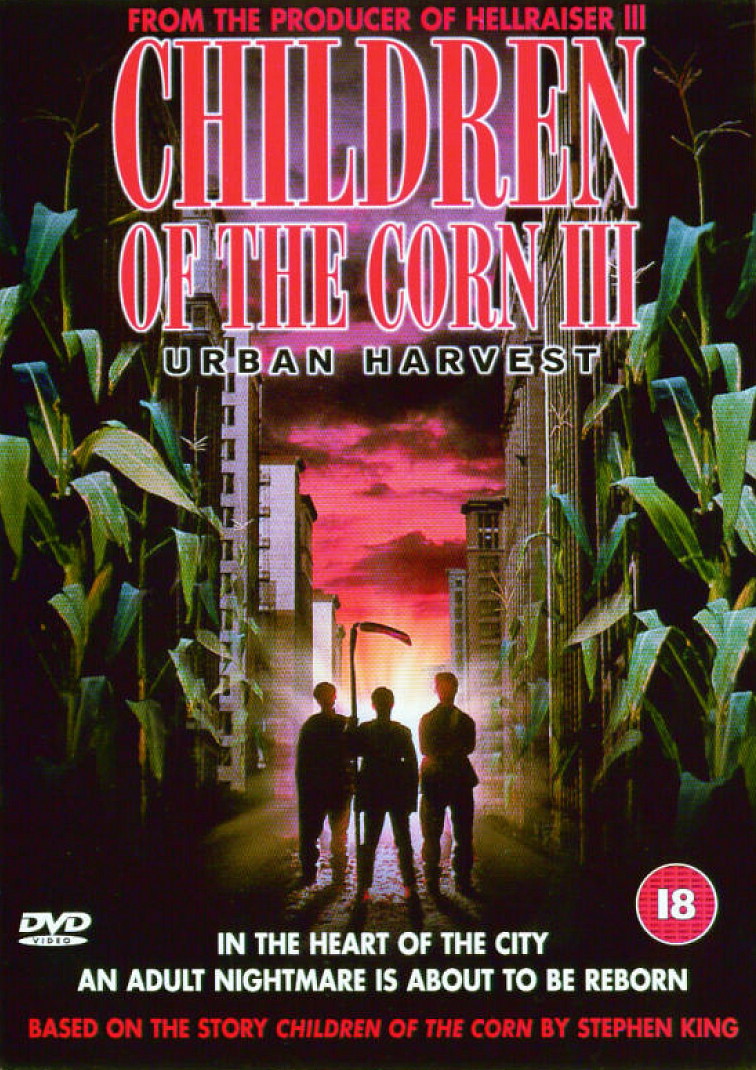
Today’s bad movie feature is 1995’s Children of the Corn III: Urban Harvest.

The primary writer on Children of the Corn III: Urban Harvest was Dode Levenson, who also did some work on the television show Tripping the Rift and the romantic comedy One Small Hitch. Uncredited work on the screenplay was apparently done by Matt Greenberg, who has done writing on movies like 1408, Reign of Fire, The Prophecy II, and Seventh Son.

The director for Children of the Corn III was James D.R. Hickox, whose other credits include the b-movies Blood Surf and Sabretooth.

The cinematographer for the film was Gerry Lively, who worked on movies like Friday, Future Shock, Project Eliminator, Hellraiser III, and Hellraiser: Bloodline.

The editor on Urban Harvest was Chris Peppe, whose other cutting credits include Suicide Kings, Boiler Room, They, and The Dangerous Lives of Altar Boys.

The musical score for Urban Harvest was provided by Daniel Licht, who also provided music for Thinner, Children of the Corn II, Soul Survivors, and the hit television show, Dexter.

The producers for the movie included Brad Southwick (Legion, Ghost Shark), Anthony Hickox (Hellraiser III, Waxwork, Waxwork II), Gary DePew (2001: A Space Travesty), and Jim Begg (Leprechaun).

childrencorniii2The makeup effects team for Urban Harvest was made up of Screaming Mad George (Space Truckers, The Dentist 2, Arena), Karin Hanson (Wolf, The Garbage Pail Kids Movie), Gil Liberto (Son Of The Mask, Black Mass), Erik Schaper (Vampire’s Kiss, Child’s Play 2), Shaun Smith (Captain America, Tremors), David Stinnett (Child’s Play 3), N. Brock Winkless IV (Congo, Alien 3), Kevin Yagher (The Dentist, Trick or Treat, A Nightmare On Elm Street 2), Mark Garbarino (Leviathan, Ice Cream Man), Mitchell J. Coughlin (The Dentist, Face/Off), and Bryan Blair (Hollow Man, The 6th Day).

The special effects work for the movie was done by Wayne Beauchamp (Hell Comes To Frogtown, Maniac Cop 2), Adam Campbell (Blade, New Nightmare), John Crawford (Space Truckers, Carnosaur), Robert Freitas (Mimic 2, Dreams in the Witch House), Grady Holder (Lake Placid, Small Soldiers, The Island of Dr. Moreau), Hiroshi Katagiri (Castle Freak, League of Extraordinary Gentlemen), Darren Perks (Spawn, Leprechaun 4, Theodore Rex), and Douglas J. Stewart (Daredevil, Torque).

The cast of Children of the Corn III included Ron Melendez (The Legacy), Jim Metzler (976-EVIL, Hot To Trot), Nancy Lee Grahn (General Hospital), Daniel Cerny (Demonic Toys), and Mari Morrow (Virtuosity).

childrencorniii4Much like Children of the Corn II, the plot of Urban Harvest kicks off with two surviving children from the town from the first Children of the Corn getting adopted. However, this time they are taken in by a couple in a nearby city, leading to a new series of hijinks and corn-related shenanigans. The two cultist kids are forced to adapt to their new surroundings, either by making new friends or by creating a new cornfield and murdering people.

Charlize Theron (Mad Max: Fury Road, Monster) appears uncredited in Children of the Corn III as one of the children under the spell of the cult, marking her first time on screen.

I wasn’t able to dig up any budget or gross information on the feature, but apparently it did make it into a handful of theaters. That said, it was far from well liked, and didn’t last long: it currently holds a rating of 4.0 on IMDb, along with a 27% audience score on Rotten Tomatoes.

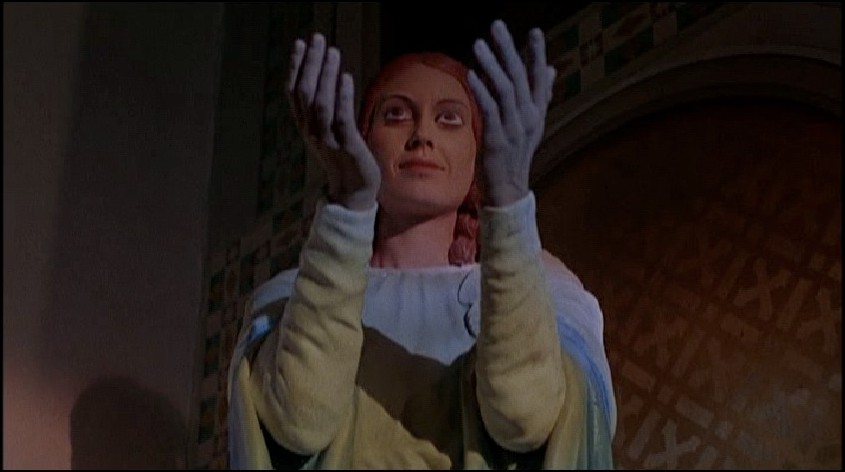
If there is anything positive to say about Children of the Corn III, it is that the movie tries to take the franchise in a new direction. Moving the setting to a urbanized area isn’t in itself a bad idea, but it is pretty clear from watching the movie that there wasn’t much thought into where to take the story from there. Putting two of the cultist children into catholic school doesn’t exactly make for the most compelling watch if you ask me.

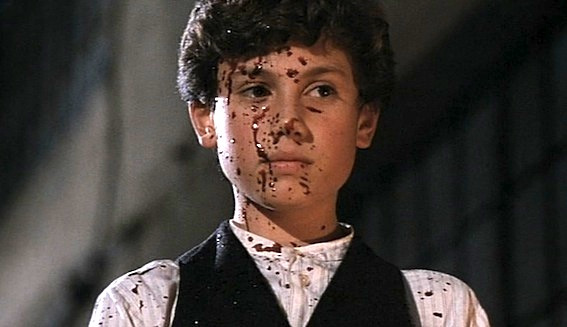
childrencorniii3Once again, the child actors themselves aren’t awful in this movie. I recognized the central kid from his role in Demonic Toys, where he is weirdly dubbed over throughout the entire movie by an adult. Luckily that isn’t the case here, and he pulls off his creepy role well enough.

While the main kid is creepy, and the subplot about monetizing the evil corn is hilariously outlandish, there isn’t quite enough going on here to make it worth the time spent watching it. Overall, there isn’t a whole lot to recommend with this movie outside of a few highlights (a memorable corn-based decapitation and the appearance of a giant corn monster, for instance). It generally lacks the entertainment value of Children of the Corn II if you ask me, and is ultimately just an odd idea that never really came to fruition.


Children of the Corn II: The Final Sacrifice

Children of the Corn II: The Final Sacrifice

childrencornii1

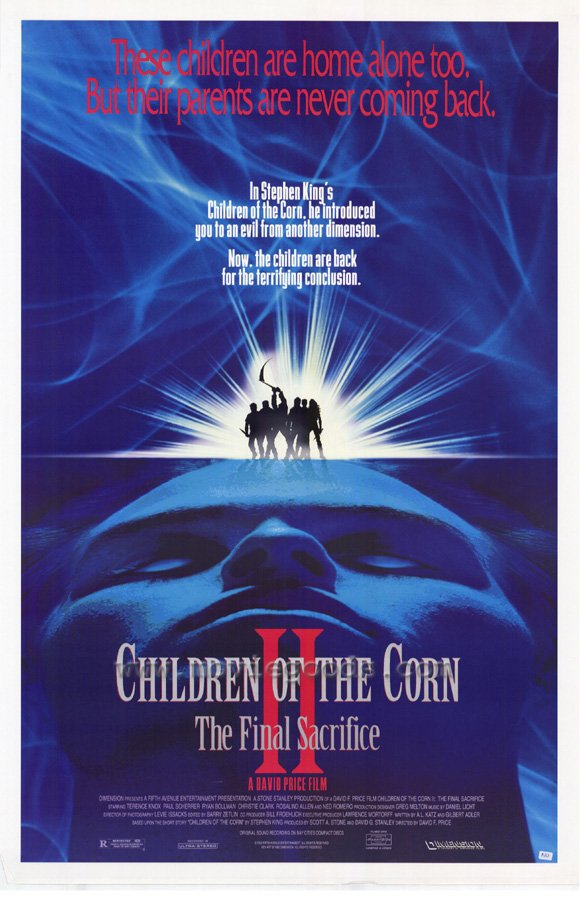
Today’s feature is yet another much-maligned horror movie sequel: 1993’s Children of the Corn II: The Final Sacrifice.

Children of the Corn II was written by A L Katz and Gilbert Adler, a duo that also worked on the cult horror television shows Freddy’s Nightmares and Tales From The Crypt, and would later do the screenplay for the vampire comedy Bordello of Blood.

The director for the movie was David Price, who only has two other feature credits on IMDb: Son of Darkness: To Die For II from 1991 and Dr. Jekyll and Ms. Hyde from 1995. Outside of directing, Price served as a producer on Leprechaun, and is connected to an upcoming reboot of the Knight Rider television series.

The cinematographer for Children of the Corn II was Levie Isaacks, who also shot Leprechaun, Texas Chainsaw Massacre: The Next Generation, The Dentist, Tooth Fairy 2, and numerous episodes of shows like Tales From The Crypt, CSI: NY, Malcolm In The Middle, and Dawson’s Creek.

childrencornii4The editor for the movie was Barry Zetlin, who but numerous other b-movies, including Cyborg 3, Ghoulies II, Friday the 13th Part VII, Breeders, Galaxy of Terror, and Breakin’ 2: Electric Boogaloo.

The musical score for Children of the Corn II was provided by Daniel Licht, whose other credits include the television series Dexter, Thinner, Children of the Corn III, and Soul Survivors.

The team of producers behind the movie included Gilbert Adler (Ghost Ship, Constantine, Valkyrie, Superman Returns), Lawrence Mortorff (The Omega Code, Hellraiser III, The Omega Code 2), David Stanley (Legends of the Hidden Temple), and Scott A. Stone (The Man Show, Freddy’s Nightmares).

The makeup effects for Children of the Corn II were done by a group that included Martin Astles (Event Horizon, Van Helsing, Son of the Mask), Shaune Harrison (Jupiter Ascending, Nightbreed), Herita Jones (Super Mario Bros, Hellraiser III), Dave Keen (Candyman, Hardware, Aliens), and Steve Painter (Alexander, From Hell).

childrencornii3The special effects team for the movie included Ray Bivins (Mr. Destiny, Paul Blart Mall Cop), Bob Keen (Highlander, Event Horizon, The Dark Crystal, Krull), and Gary J. Tunnicliffe (Wishmaster, Blade), and the visual effects crew was made up of Rob Burton (Con Air, The Rock, Howard the Duck), Chris Casady (Brainscan, My Science Project), John Follmer (Mortal Kombat, McHale’s Navy, Red Planet, The League of Extraordinary Gentlemen), and Barb Meier (True Lies, Double Dragon).

The cast of Children of the Corn II included Christie Clark (A Nightmare On Elm Street 2), Rosalind Allen (Pinocchio’s Revenge), Ed Grady (Children of the Corn III), Wallace Merck (Super Mario Bros), Terence Knox (St. Elsewhere), and Ryan Bollman (Only The Strong).

The plot of Children of the Corn II picks up after the end of the original Children of the Corn, where the surviving children of the devastated town of Gatlin are taken in by various locals in the nearby town of Hemingford. Unfortunately, the children are under the influence of a cult leader, and soon the killings begin again.

Children of the Corn II was made on a reported production budget of $900,000, on which it grossed just under $7 million in its domestic theatrical run. While this was profitable, the movie was not well-regarded: it currently holds an IMDb rating of 4.1, alongside Rotten Tomatoes scores of 22% from critics and 20% from audiences.

childrencornii2Personally, I am a big fan of well-portrayed creepy children characters. However, it is really easy to have them go wrong, given there is a significant scarcity of child actors out there with any kind of talent. Children of the Corn II is a rare flick that manages to hit straight down the middle in regards to the significant cast of child actors: they aren’t terrible or remarkable, which is in itself a feat. The first Children of the Corn has a couple of memorably creepy kids, so this sequel is a downgrade in that regard.

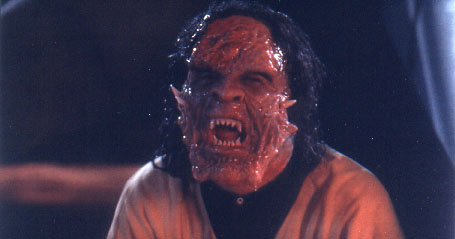
That said, Children of the Corn II is actually pretty fun as a bad movie. There are a number of ridiculously over the top deaths, an outlandish plot, some cheesy makeup effects, and just enough nonsense dialogue to make it oddly endearing.

If you ask me, Children of the Corn II isn’t a top tier good bad movie, but there is definitely entertainment value to be had with it. The original movie is no masterpiece, so there shouldn’t have been any high expectations for this flick to start with. That said, I am amazed that the franchise has kept chugging along for as long as it has, given how poorly received they all seem to be.

For more on Children of the Corn II: The Final Sacrifice, check out Stephen Holden’s review in The New York Times, and Richard Harrington’s coverage in The Washington Post. For some less formal overviews, GoodBadFlicks has a video about the film on YouTube, and Werewolves On The Moon has a comparatively positive spin on it.

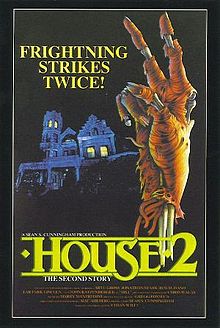
House II: The Second Story

House II: The Second Story

houseii3

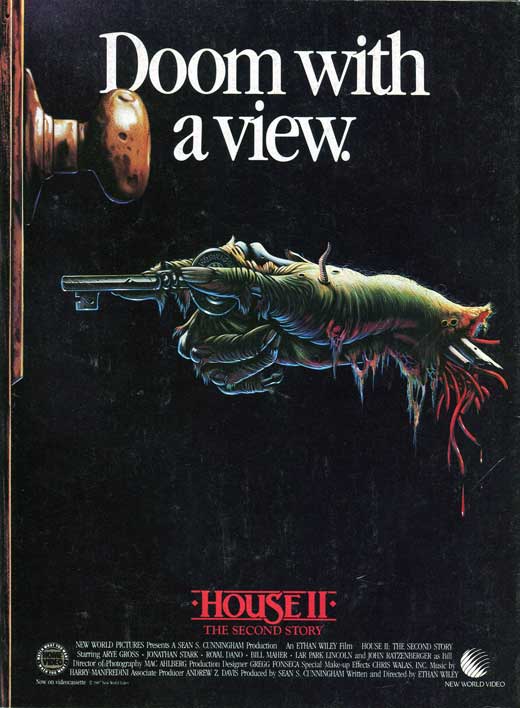
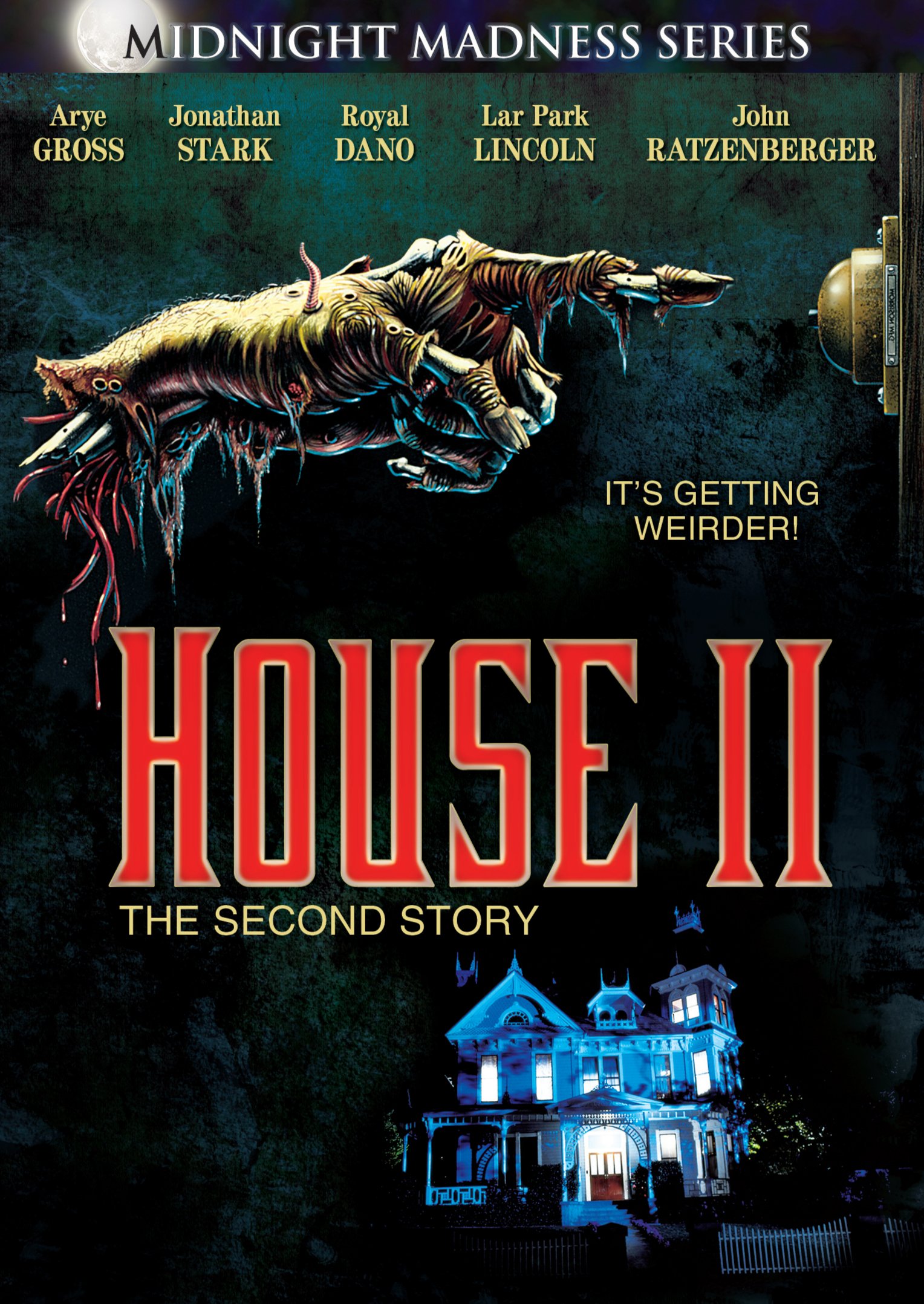
Today’s feature is 1987’s House II: The Second Story.

House II was written and directed by Ethan Wiley, who provided the screenplay for the original House and directed Children of the Corn V: Fields of Terror. Some credit was still awarded to Fred Dekker (RoboCop 3, The Monster Squad, Night of the Creeps) as a writer, due to him coming up with the original story concept for House.
The cinematographer on House II was the veteran horror director of photography Mac Ahlberg, a frequent Stuart Gordon collaborator who shot such films as King of the Ants, The Wonderful Ice Cream Suit, Space Truckers, Robot Jox, Arena, DeepStar Six, House, Re-Animator, Dolls, From Beyond, Ghoulies, and Trancers, among many others.

The editor for the film was Martin Nicholson, who has cut films like Halloweentown, Forbidden Zone, The Big Picture, and worked on handful of episodes of Game of Thrones.

The two credited producers for House II were Sean Cunningham (Friday the 13th, Jason X, The Last House On The Left, DeepStar Six, House) and Andrew Z. Davis (Volcano, Red Dragon, Rush Hour 3, Your Highness).

houseii2The musical score for House II was provided by Harry Manfredinim who is best known for his work on the Friday the 13th franchise, as well as movies like House, Slaughter High, DeepStar Six, Wishmaster, The Omega Code, Wolves of Wall Street, and A Talking Cat!?!.

The special effects team for House II included Mark Walas (Signs, Gremlins), Chris Walas (Humanoids From The Deep, Piranha, DeepStar Six, Scanners), Peter Chesney (The Ladykillers, Waterworld), Mike Smithson (Battlefield Earth, Dollman, Brainscan, Suburban Commando, The Island of Doctor Moreau), Gregg Olsson (RoboCop 2, Gremlins), Kelly Lepkowsky (Hot to Trot, Arachnophobia), Jarn Heil (Iron Eagle), and James Isaac (Jason X, DeepStar Six).

The visual effects for the film were done in part by Eric Brevig (Wolf, Wild Wild West), Phil Tippett (RoboCop 3, Howard the Duck), Mark Sullivan (The Stuff, Ishtar, Demolition Man, League of Extraordinary Gentlemen), Craig Newman (Speed, TRON), Randy Dutra (The Golden Child, Willow), Scott Beattie (Con Air, Freejack), Jon Berg (Laserblast, The Crater Lake Monster, Piranha).

The cast of House II includes Arye Gross (Castle), Jonathan Stark (Fright Night), Royal Dano (Ghoulies II, Killer Klowns From Outer Space), Bill Maher (Real Time with Bill Maher), John Ratzenberger (Cheers), Lar Park Lincoln (Friday the 13th Part VII), Amy Yasbeck (The Mask, Wings)

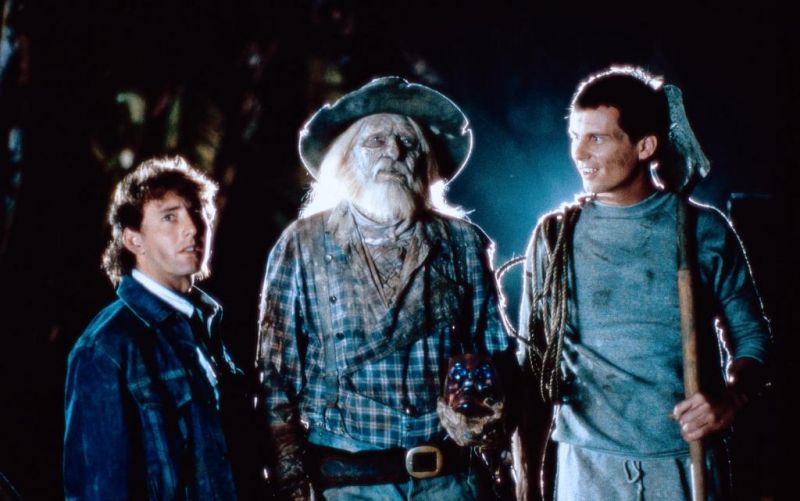
houseii4The plot of House II starts off with a man inheriting a house from his deceased parents. While going through the belongings, he discovers that a family heirloom is missing: a mystical crystal skull, which was apparently lost some generations before. On a hunch, he believes the skull may be buried alongside his great great great great grandfather, and convinces a friend to help dig him up. To their shock, not only do they find the skull, but also the living corpse of the impossibly old ancestor, However, instead of being a brain-hungy zombie, “Gramps” turns out to be a pretty cool guy, and leads the two friends into a series of misadventures as they protect the crystal skull from evil.

On paper, House II is a sequel to the cult classic horror-comedy House, which came out in 1986. However, it only bears slight thematic similarities with its predecessor, and is arguably an entirely different genre. It was followed up with the perplexingly titled House IV, which was came out in 1992. House III technically never existed, though the unconnected 1989 movie The Horror Show was labeled as such in foreign markets, necessitating the bizarre title of the franchise’s third installment.

I wasn’t able to dig up an estimate for the production budget, but House II did manage to rake in 7.8 million in its lifetime theatrical run. The reception, however, was not warm: it currently holds a 0% aggregate score from critics on Rotten Tomatoes, alongside a 40% audience score and an IMDb rating of 5.3.

houseii1This movie is, above all else, weird. House is a surreal and at times humorous horror adventure into the depths of a possessed house, and is kind of like The Burbs crossed with The Amityville Horror. House II, on the other hand, jettisons a lot of the body horror and otherwise disturbing elements of the first film, and focuses more on the idea of an adventure through alternate dimensions within the confines of a home. I definitely understand why fans of the 1986 House were disappointed in this follow-up, because it is definitely a different kind of movie. That said, I don’t think it is nearly as bad as its reputation would have you believe.

I feel about the same way about House II as I do about Halloween III: if you can divorce the film from its fan expectations, it is actually a pretty fun ride. Just like with Halloween III, House II makes little to no sense, bouncing from one bizarre reality to the next. Magical crystal skulls, giant dog-worms, pterodactyls, and zombies from the old west all play important parts, and none of that makes any more sense in the context of the film. That said, I found it to be generally fun, if not entirely coherent. I might go so far as to say that House II is like John Dies At The End without the edge or the cynicism.

In general, I think this weird, weird movie deserves a second look from a new generation. This comedic ride into complete nonsense is a blast: perhaps not a Troll 2 or The Room, but it definitely deserves more recognition as an entertainingly bad movie. Who doesn’t love a story of bonding between a man and his great great great great grandfather?