Tag Archives: movies

Star Knight

Star Knight

starknight1

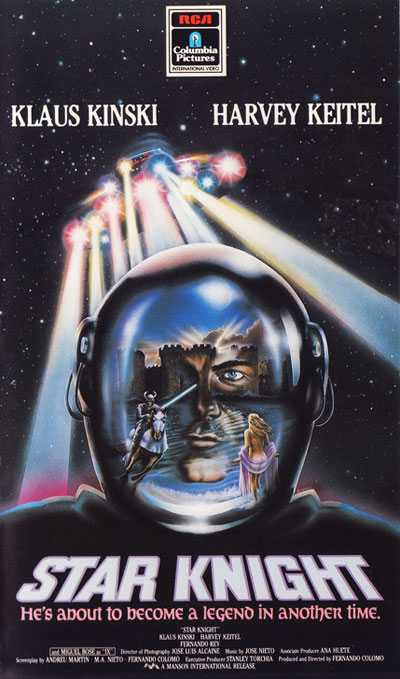
Today’s feature is 1985’s Star Knight, starring Klaus Kinski and Harvey Keitel.

Star Knight (originally El Caballero del Dragon) was co-written, produced, and directed by Fernando Colomo, with fellow Spanish co-writers Andreu Martin and Miguel Angel Nieto.

The cinematographer on Star Knight was Jose Luis Alcaine, whose credits include a number of acclaimed Spanish films like Volver, Bad Education, and The Skin I Live In.

starknight2The special and makeup effects for the movie were provided by Jose Antonio Sanchez (Firestarter, Conan The Barbarian, The Golden Voyage of Sinbad, Solarbabies) and Reyes Abades (Pan’s Labyrinth, Sexy Beast, The Devil’s Backbone).

The musical score of Star Knight was composed by José Nieto, who also provided music for movies like Mad Love, Carmen, Lovers: A True Story, and Dias Contados.

The cast of Star Knight primarily consists of Klaus Kinski (Fitzcarraldo, Aguirre, Woyzeck), Harvey Keitel (Beeper, From Dusk Till Dawn, Taxi Driver, Pulp Fiction, Reservoir Dogs, The Two Jakes, Saturn 3, Bad Lieutenant), and Fernando Rey (The French Connection, French Connection II, Voyage of the Damned, 1492: Conquest of Paradise).

The plot of Star Knight is summarized on IMDb as follows:

When a dazzling craft illuminates the sky above a medieval European village, the townspeople fear mayhem while the ruling party prepares for battle with the mysterious “dragon in the sky.” After Princess Alba is discovered missing, the quest for power and the young girl’s affections drive Klever to free her from the strange cosmic knight. But is that her desire? Worldly boundaries are crossed in this gothic sci-fi tale of power, greed and the universal language of love.
starknight4Currently, Star Knight is in the public domain, meaning that the lack of rights-holders makes it readily available through a number of different mediums for minimal or no costs.

Star Knight currently holds a 3.9 user rating on IMDb, along with a 24% Rotten Tomatoes audience score. However, the movie is certainly quite obscure, with less than 1000 reviews counted between both popular review sites.

If there is anything to say for Star Knight, it is that the concept is certainly imaginative. The idea of combining medieval fantasy with science fiction is something that I am sure has been done before, but it certainly isn’t an idea that you see very often executed on screen.

Klaus Kinski and Harvey Keitel are two fantastic actors with enviable careers, but in 1985, they were both far from the heights of their powers. Harvey Keitel would ultimately be the first (but not last) career resurrection for Quentin Tarantino with his memorable performance in 1992’s Reservoir Dogs, but before that, he had long been relegated to supporting roles in movies like Off Beat and Wise Guys throughout the 1980s. Kinski, on the other hand, spent most of the 1980s after Fitzcarraldo popping up in European b-movies like Creature, Android, and Vampire In Venice, though he did collaborate once more with Herzog (Cobra Verde) in 1987, and closed his career with a passion project (Paganini) in 1989.

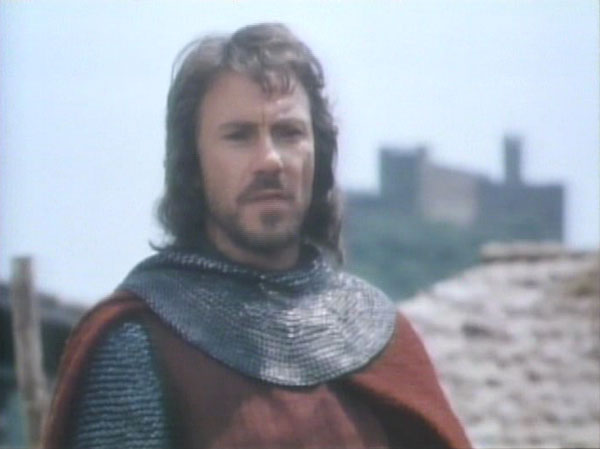
starknight3Keitel didn’t strike me as very comfortable in the role of a knight in this movie. Harvey Keitel is very good at playing roles like cops, robbers, tough guys, and gangsters, but a medieval knight is a little outside of his typical purview, and it shows. I feel like this movie might have been cast on a “first available” basis when it came to recognizable names, and Keitel happened to have the necessary low standards and high recognizability to make the cut, in spite of how poorly he fit the role.

Kinski, on the other hand, really fits his role well: he plays a Merlin-esque mystic character, who believes the alien character (played really interestingly by Miguel Bose) is an angel sent to save the land.  For what it is worth, he also didn’t strike me as phoning in his performances: he puts in some genuine effort, in spite of the film’s outlandish concept and low budget.

Overall, I had a lot of flashbacks to Slipstream (1989) while watching Star Knight: there are some really cool ideas in this movie, the cast is pretty compelling, and the performances aren’t totally awful (the miscasting of Keitel is the exception). The effects leave a bit to be desired, but the movie looks pretty good from a design standpoint, and is shot with a decent eye. However, it is really the pace of the movie that damns it at the end of the day, and that is all it takes for a potentially good movie to go bad. There are few too many minutes of downtime, and some some odd fumbling attempts at humor that throw the tone off. Worse yet, there isn’t much capitalization on the atmosphere of the movie: the final duel between the knight and the “dragon” is pretty anticlimactic if you ask me.

As far as a recommendation goes, there is enough vision here to make the movie a curiosity to watch for film buffs. There isn’t a ton of pure entertainment value to it, however, outside of Harvey Keitel hilariously trying to fight a spaceship with a lance and a mace. That, at the very least, was the saving grace for me.
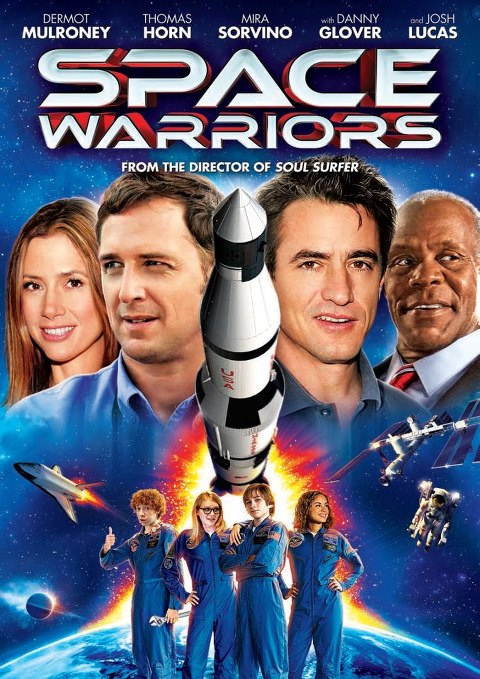
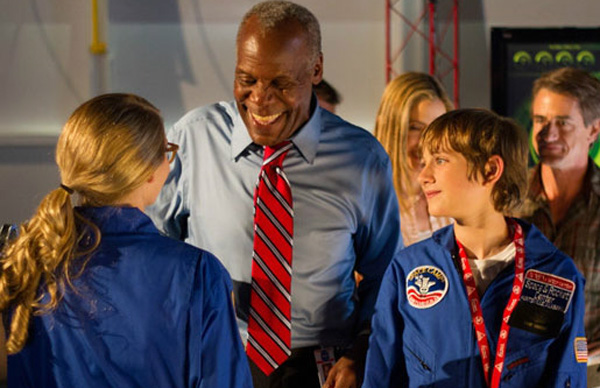
Space Warriors

Space Warriors

spacewarriors1

Today’s feature is the pseudo-remake of the 1986 flop, SpaceCamp: 2013’s Space Warriors.

Space Warriors was directed, produced, and co-written by Sean McNamara (Bratz: The Movie, 3 Ninjas: High Noon At Mega Mountain), with co-writers Jim Strain (Jumanji), Stan Chervin (Moneyball), and Ronald Bass (Rain Man, What Dreams May Come, Entrapment).

The cinematographer for Space Warriors was Robert Hayes, who shot two of the lesser sequels to Baby Geniuses: Baby Geniuses and The Space Baby and Baby Geniuses and The Mystery of the Crown Jewels.

The editor on the film was Jeff Canavan, who has worked on features like Bratz, Save The Last Dance, Lawnmower Man 2, Homeward Bound II, Star Trek: Insurrection, Garfield, and The Shawshank Redemption.

The musical score for Space Warriors was composed by Larry Brown, who provided music for the infamous Joe Don Baker movie Mitchell and the television series The Real Adventures of Johnny Quest.

The visual effects team for Space Warriors included Evan Ricks (Mortal Kombat: Annihilation), Josh Prikryl (Babylon 5), David Liu (The Midnight Meat Train), Laurel Klick (From Dusk Till Dawn 3, From Dusk Till Dawn 2, Mortal Kombat), Ryan Spike Dauner (Red Planet), and Des Carey (The Stepford Wives, The Legend of Hercules).

The cast of Space Warriors includes Danny Glover (Saw, Predator 2, Lethal Weapon), Mira Sorvino (Mimic, Quiz Show, Reservation Road), Dermot Mulroney (Young Guns, Zodiac, Copycat), Ryan Simpkins (Twixt, A Single Man, Revolutionary Road), Thomas Horn (Extremely Loud and Incredibly Close), Josh Lucas (Stealth, American Psycho, Poseidon), and Grayson Russell (Talladega Nights, Diary of A Wimpy Kid).

spacewarriors2The plot of Space Warriors is summarized on IMDb as follows:

A group of kid space cadets must help in the rescue of three astronauts whose ship got stranded in space.

Space Warriors was filmed at the U.S. Space and Rocket Center in Huntsville, AL, which is home to the original location of Space Camp, and was also the primary filming location for 1986’s SpaceCamp.

Space Warriors currently has a 4.4 user rating on IMDb, along with a 34% audience score on Rotten Tomatoes.

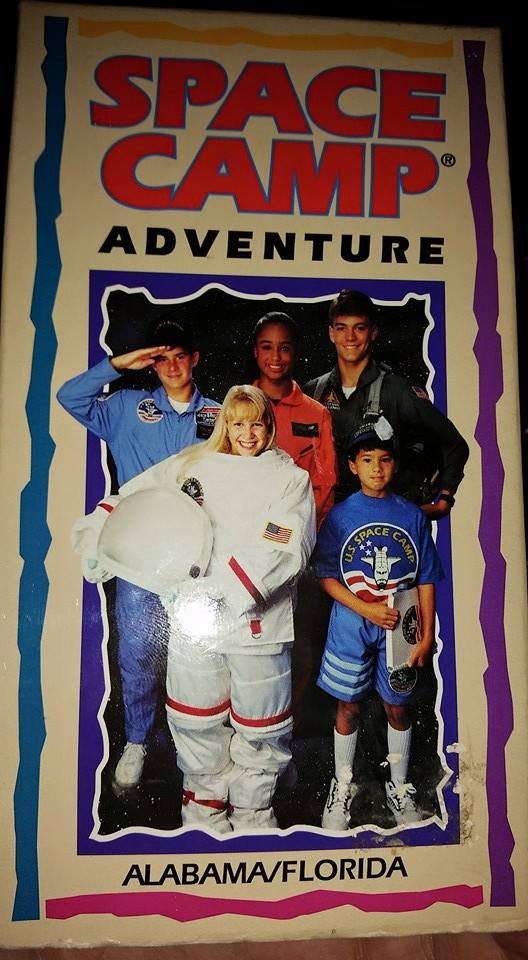
It is impossible not to compare Space Warriors to 1986’s SpaceCamp: though it isn’t technically an official sequel or remake, there are undeniable similarities between the two features. The biggest changes for Space Warriors are all actually pretty sensible: the child actors are all the same age, instead of a mix of teenagers and children, they aren’t shot into space, and the hyper-intelligent robot sidekick plot is totally nixed. Unfortunately, the lack of any of these peculiar elements of the first movie leads to a far less charming end product. The fact of the matter is, real Space Camp isn’t all that flashy or glorious, and that is (at least partially) reflected in this movie.

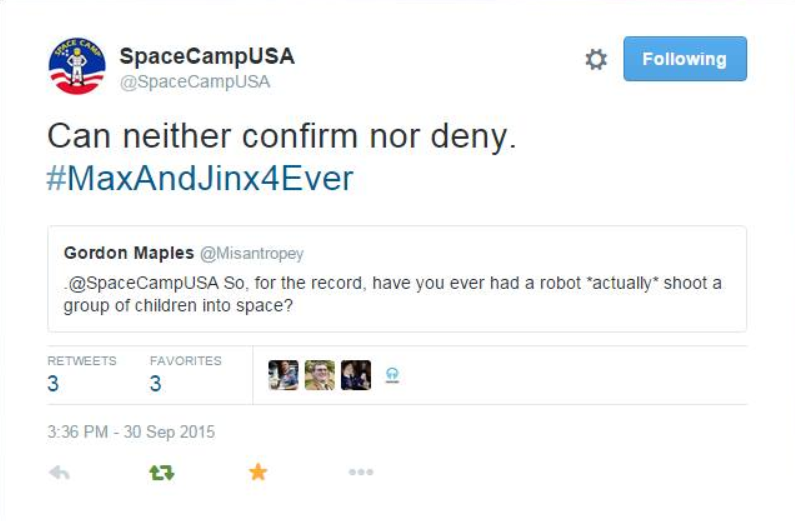
The other big drawback for Space Warriors is that the primary cast is made up of a lot of children, which is a recipe for disaster. Child actors with any modicum of talent are rare, and the odds of finding multiple ones for the same production are astronomical. Even Joaquin Phoenix, who grew into a fine actor with age, was not particularly good in SpaceCamp. In Space Warriors, the child actors are awful. Just awful. Even worse, all of the action of the movie surrounds them. At least in SpaceCamp, Tom Skerritt and Kate Capshaw offered some slight respite from the childish shenanigans of Max & Jinx. No such luck is to be had in Space Warriors: it is (with little exception) all kids, all the time.

One of my favorite things about Space Warriors is the recruitment montage at the beginning, which features Josh Lucas wandering around the world with an inflatable astronaut companion, hunting down brilliant children to bring them to Space Camp. Honestly, I would watch an entire movie that focuses just on the road trip shenanigans of Josh Lucas and his inflatable astronaut buddy. That would undoubtedly be more interesting than Space Warriors if you ask me.

width="300"I mentioned in my review of 12 Rounds that the movie comes off like a tourism advertisement for the city of New Orleans. Likewise, Space Warriors is packed with shots of both the U.S. Space and Rocket Center and Huntsville, AL. It might not be excessively noticeable for someone not from the area, but for me, the constant shoehorning feels downright oppressive. Likewise, Space Warriors gives off the slightest whiff of desperation: there was clearly an intention  here to re-inspire a rising generation to care more about exploration and space travel, in an era where the interest seems to be at an all-time low. However, I don’t think Space Warriors is going to ignite any flames of inspiration like The Martian or Interstellar, given it is pretty much a pile of garbage. Then again, I’m not ten years old. Maybe kids love this shit.

Space Warriors isn’t a movie that was aimed for general audiences like SpaceCamp was: it is unapologetically a kids movie. As is the seeming standard for children’s entertainment, the humor is low-brow, the acting is bad, and the whole thing looks and sounds like garbage to anyone who is older than 12. However, I have trouble blaming that entirely on the movie, as much as it is a plague of the genre in general.

I’ve never understood why children’s entertainment isn’t held to a higher standard: it seems like there is essential no quality test for anything in the genre. Children’s movies should be aimed to inspire and educate while also entertaining, like Wishbone. It doesn’t need to be a compilation of loud noises, farts, and pratfalls like The Garbage Pail Kids: that’s actually the worst possible thing that we as a society could be forcing children to consume. That how you wind up with a generation of Adam Sandler fans if you ask me. To Space Warriors‘s credit, its heart is certainly in the right place in this regard, in spite of some lapses here and there. I don’t want to be excessively hard on it, but I’m also certainly not going to recommend it to anyone. Unless you are a big fan of SpaceCamp and are curious about this re-imagining, then skip it.

SpaceCamp

SpaceCamp

spacecamp4

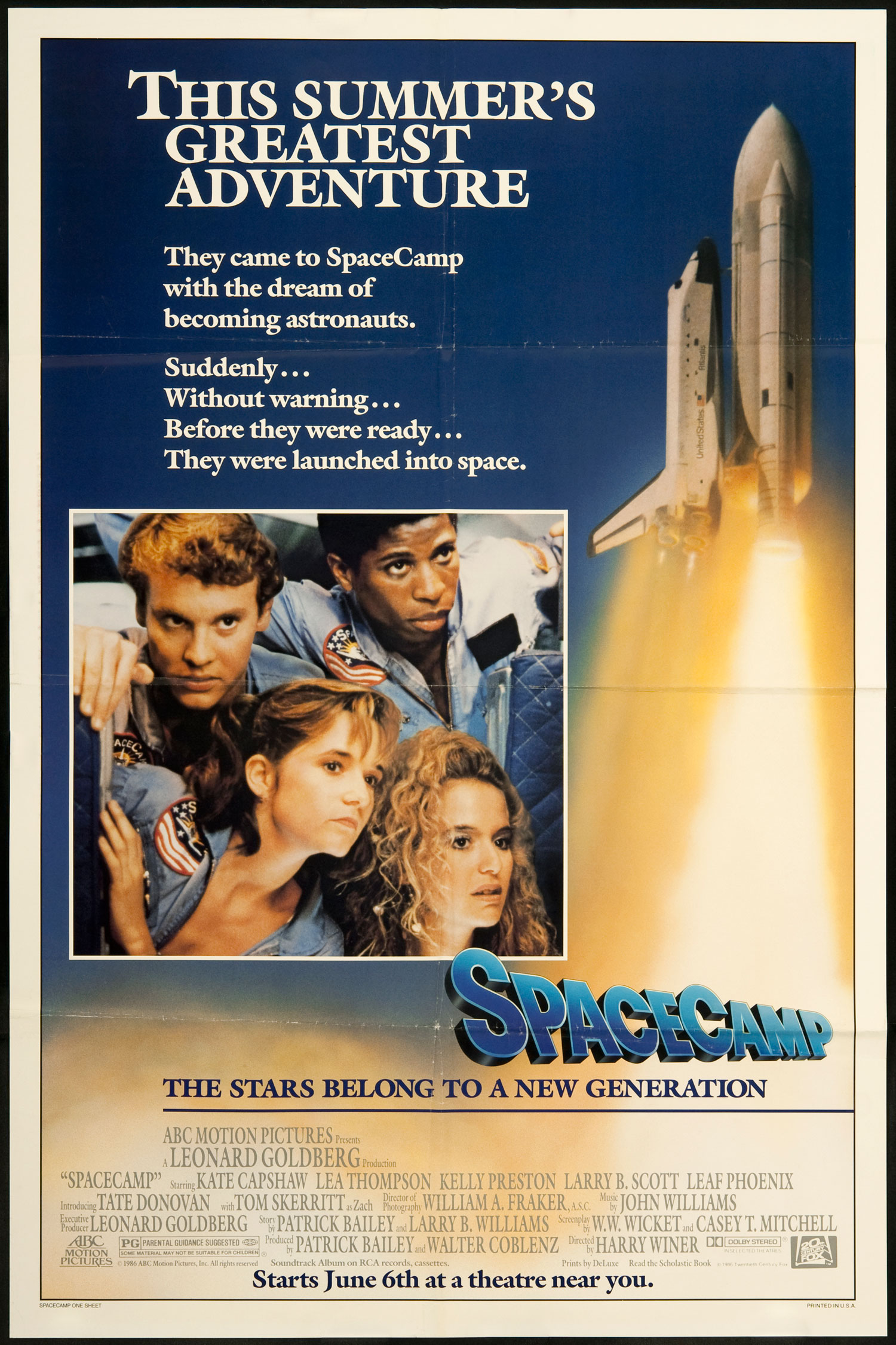
Today’s feature is the most famous bad movie to come out of my home town of Huntsville, AL: 1986’s SpaceCamp.

The credited writers for SpaceCamp include producer Patrick Bailey, Larry B. Williams (Friday’s Curse), Clifford Green (The Seventh Sign, Bless The Child), and someone named Casey T. Mitchell, who has very few other credits.

SpaceCamp was directed by Harry Winer, whose credits include a handful of Veronica Mars episodes, a documentary called The Legend of Bigfoot, and House Arrest.

The cinematographer for the film was William A. Fraker, who has shot such movies as The Island of Doctor Moreau, Street Fighter, 1941, The Exorcist II, Rosemary’s Baby, Bullitt, and Gator.

SpaceCamp had two credited editors: John Wheeler (Rocky IV, Star Trek: First Contact, Rhinestone) and Tim Board (Ladybugs).

The music for SpaceCamp was provided by the one and only John Williams, who is perhaps the most recognizable film scorer in the history of the medium. On top of his astounding five Academy Award wins, he has countless Academy Award nominations spanning from 1968 to 2014.

The special and makeup effects team for SpaceCamp was made up of Zoltan Elek (Timecop, Double Team, Street Fighter, Leviathan), Katalin Elek (Double Team, Rocky V, Legend, Leviathan), and Chuck Gaspar (Waterworld, Mitchell, The Exorcist II).

spacecamp8The visual effects work for the movie was provided by a massive team that included Tom Anderson (Dune, Philadelphia Experiment II), Jeff Burks (Trick or Treat, The Abyss), Charles L. Finance (Battlefield Earth, Leviathan, Dune), Jammie Friday (Robot Jox, Apollo 13), Rocky Gehr (Face/Off, Over The Top, Sgt. Pepper’s Lonely Hearts Club Band, Jingle All The Way), Robert L. Johnston (1941, Die Hard), David S. Williams Jr. (Leviathan), Christopher Nibley (Predator 2), Mark Stetson (Leonard Part 6, On Deadly Ground), Richard Malzahn (Trick or Treat, Leviathan, Suburban Commando), Peter Montgomery (Mortal Kombat), Barry Nolan (Leviathan, Maximum Overdrive), and Doyle Smiley (DeepStar Six),

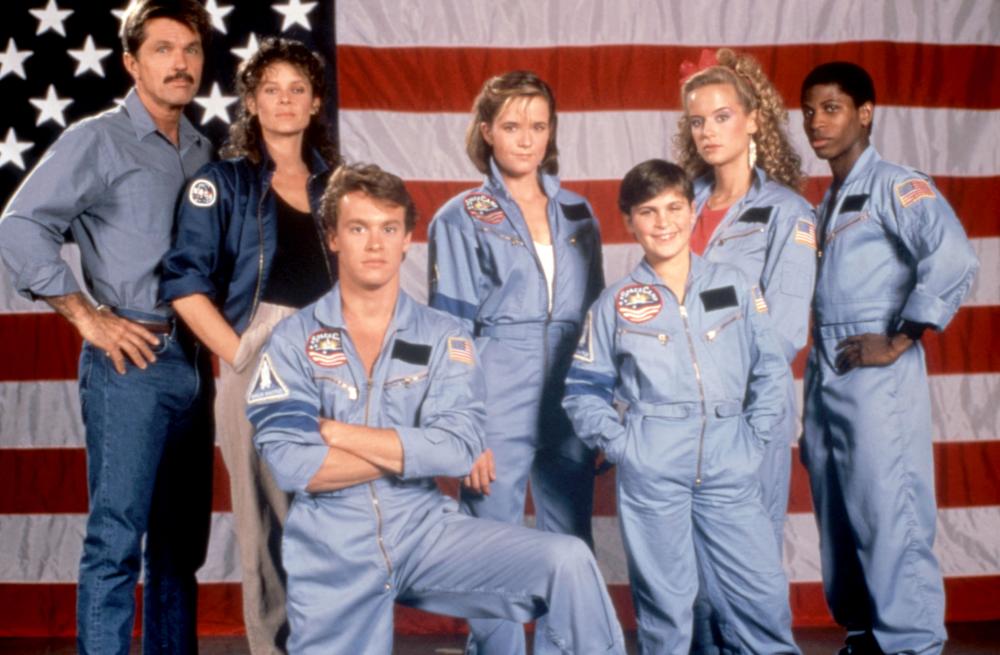
The cast of SpaceCamp includes Kate Capshaw (Indiana Jones and The Temple of Doom), Tom Skerritt (Alien, Top Gun, Poison Ivy), Terry O’Quinn (Lost, Primal Fear, Tombstone), Lea Thompson (Howard the Duck, Back To The Future, Jaws 3-D, Left Behind), Kelly Preston (Jerry Maguire), Larry B. Scott (Iron Eagle), and Joaquin Phoenix (Gladiator, 8MM, Inherent Vice, The Master, Walk The Line, Her), credited under his childhood name of “Leaf.”

SPACECAMP, Tom Skerritt, Kate Capshaw, Tate Donovan, Lea Thompson, Joaquin Phoenix, Kelly Preston, Larry B. Scott, 1986, TM and Copyright (c)20th Century Fox Film Corp. All rights reserved.The plot of SpaceCamp is summarized on IMDb as follows:

The young attendees of a space camp find themselves in space for real when their shuttle is accidentally launched into orbit.

On January 28, 1986, the space shuttle Challenger tragically broke apart barely a minute into its flight, killing the entire crew aboard. At the time, SpaceCamp, which prominently features the looming threat of a shuttle disaster, was scheduled to release within weeks. Wisely, the studio chose to delay the film’s release to the summer, but it flopped at the box office none-the-less.

In early drafts of the story, SpaceCamp was to have a Rocky IV-style ending, in which a Russian shuttle (piloted by children) is dispatched to rescue the American kids stranded in space, signifying a new, post-Cold War era of peace and harmony.

spacecamp2SpaceCamp was the feature film debut of Joaquin Phoenix, whose older brother, River, broke out due to his role in Stand By Me, which also released in 1986. Joaquin is credited under the name “Leaf,” which he took on early in his childhood, but shed in his teens.

The budget for SpaceCamp has been estimated to have been between 18 and 25 million dollars, on which it only took in less than 10 million dollars on its lifetime theatrical run. The reception to the film was less than glowing: it currently holds an IMDb user rating of 5.6, along with Rotten Tomatoes scores of 40% from critics and 50% from audiences. In spite of the poor returns and reviews, SpaceCamp received a spiritual remake in 2013 in the form of Space Warriors.

The Huntsville, AL location of Space Camp (The US Space and Rocket Center) that features in the film doesn’t have an actual space shuttle or a launch pad: it only has a mock up (Pathfinder) that was used for basic testing purposes. Even then, it wasn’t on display at the Space and Rocket Center until 1988: two years after this movie’s release. This makes the entire premise of the plot of SpaceCamp even more impossible that it was to start with.

spacecamp7Obviously, the plot of SpaceCamp is beyond preposterous. NASA didn’t have any hyper-intelligent robot friends in 1986, Space Camp attendees aren’t the same thing as astronaut trainees (and go nowhere near functioning shuttles), and, in spite of a mixed track record, we’ve never accidentally shot a shuttle into space. All of that said, SpaceCamp seems to relish in its obliviousness, and seems shocking uninterested in the fantastic reality of space flight, choosing to substitute in a bizarre, fictitious world in its stead. I can only imagine how disappointed an entire generation of kids were when they discovered that Space Camp doesn’t turn children into astronauts, and no adorable robot companions were included in the program.

spacecampvid
They certainly don’t do much to dispel those misunderstandings, though.

Thanks to the utter ludicrousness of the screenplay, SpaceCamp holds up as a charmingly inept love letter to a scientific pursuit that was far beyond the writers’ comprehensions. I would pay good money to watch this movie with a panel of physicists and astronomers (cc: Phil Plait), because I can only imagine the mix of guffaws and exasperated head-shaking this screenplay would incite from them.

SpaceCamp is an under-appreciated bad movie classic if you ask me. You don’t see it covered very often by the big b-movie reviewers, but this flick is the perfect mix of a financial failure, a recognizable cast, an utterly inept screenplay, a high dose of nostalgia, and maybe the worst cultural timing of any movie release in history. I might be a little biased given it is a hometown feature for me, but I implore any detractors out there to give this movie another look. Watch this film today, and try not to laugh at it. I dare you.

Battle Beyond The Stars

Battle Beyond The Stars

battlebeyond1

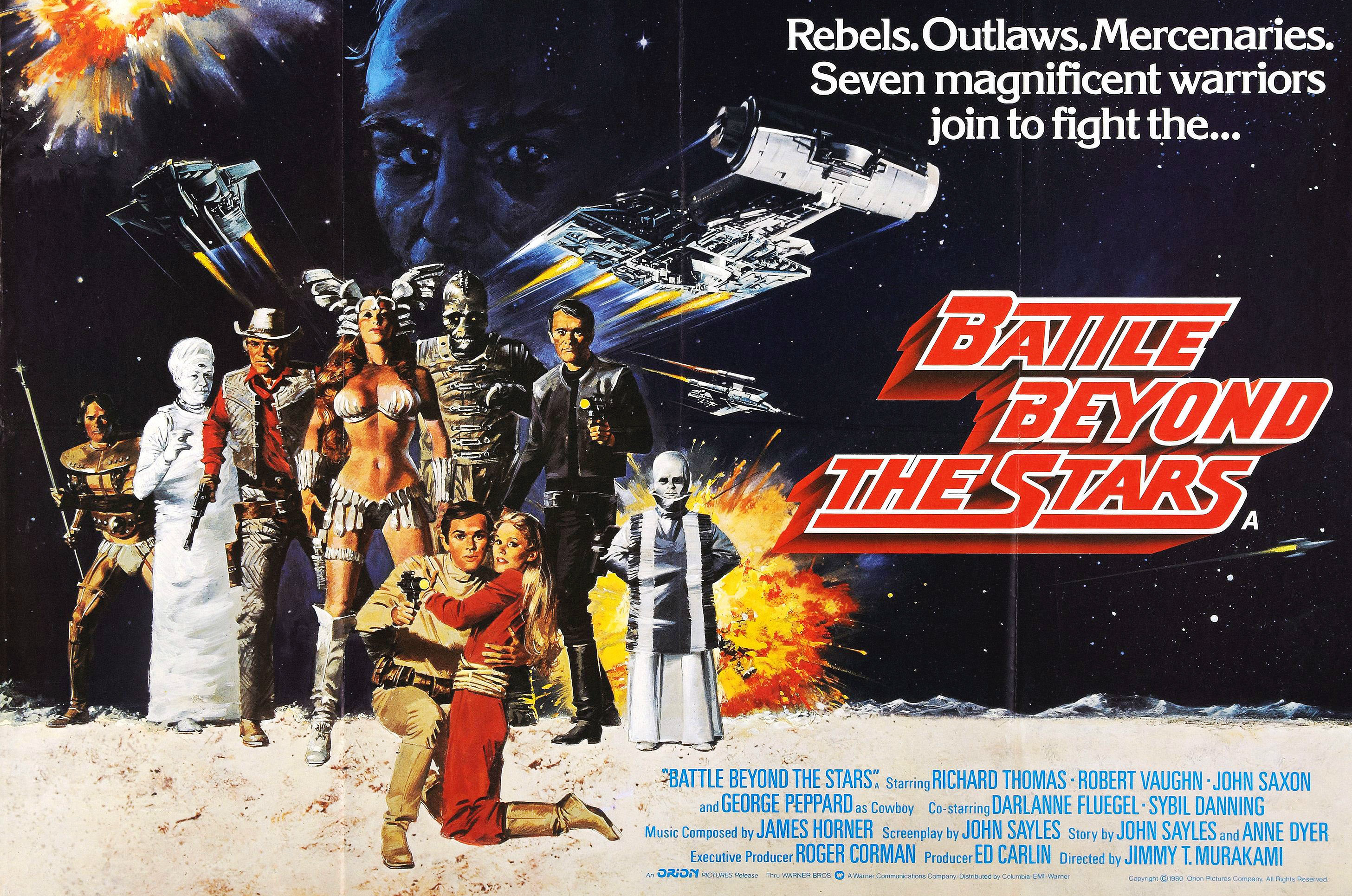
Today’s feature is the b-movie space epic, Battle Beyond the Stars.

The screenplay for Battle Beyond The Stars was written by writer/director John Sayles, whose credits include Piranha, Alligator, The Howling, The Brother From Another Planet, and Lone Star, among others.

Battle Beyond The Stars was directed by Jimmy Murakami (Humanoids From The Deep, The Snowman), with some uncredited ghost direction by the b-movie master, Roger Corman, who acted as the film’s executive producer.

The cinematographer for the film was Daniel Lacambre, who also shot the b-movies Saturday the 14th, Humanoids From The Deep, and The Wild Racers.

Battle Beyond The Stars featured two credited editors: Allan Holzman, who cut Jonathan Demme’s Crazy Mama, the Alien knock-off Forbidden World, and even won an Emmy for his work on the documentary Survivors of the Holocaust, and R.J. Kizer, who cut Hell Comes To Frogtown and Galaxy of Terror.

The music for Battle Beyond The Stars was composed by James Horner, who would go on to a long and lauded career that would earn him 2 Academy Awards. Films featuring his music include Humanoids From The Deep, Star Trek II: The Wrath of Khan, Krull, Aliens, Cocoon, Willow, Field Of Dreams, 48 Hours, Braveheart, Apollo 13, Titanic, A Beautiful Mind, and Avatar.

The makeup and special effects team for Battle Beyond The Stars included Frank DeMarco (The Beastmaster, The Terminator), Roger George (Chopping Mall, Ghoulies, Humanoids From The Deep), Sue Dolph (Galaxy of Terror, Alligator), Ken Horn (Swamp Thing, Halloween 4), Karen Kubeck (Iron Eagle, The Sword and The Sorcerer), Rick Stratton (The Stuff, Wild Wild West), and Steve Neill (Laserblast, The Stuff, Q: The Winged Serpent, It’s Alive III, Full Moon High, The Crater Lake Monster, God Told Me To).

The significant visual effects unit for the movie included Barry Zetlin (Children of the Corn II, Friday The 13th Part VII), Robert Skotak (Tank Girl, Darkman), David Riley (Starship Troopers), Tony Randel (Escape From New York), Eric Peterson (The Mangler, Ghost Dad, Masters of the Universe), John Muto (Night of the Comet), Kenneth Jones (The Core, Contact, Moontrap), Alec Gillis (Mortal Kombat, Wolf, Trick or Treat), Deborah Gaydos (Masters of the Universe, Saturday the 14th), Jonas Thaler (Mortal Kombat: Annihilation), Randall Frakes (Hell Comes To Frogtown), Michele Ferrone (Son of the Mask, RoboCop 3), Steve Caldwell (Daredevil, Phone Booth), Chris Brightman (Piranha), Larry Albright (1941), Chuck Comisky (Mortal Kombat: Annihilation), and Pat Sweeney (Howard The Duck).

The cast of Battle Beyond The Stars includes John Saxon (A Nightmare On Elm Street, Hands of Steel, The Last Samurai), Robert Vaughn (The Magnificent Seven, Pootie Tang, Buried Alive, BASEketball), Richard Thomas (The Waltons), George Peppard (The A-Team), Morgan Woodward (Cool Hand Luke), Sam Jaffe (Ben-Hur), Sybil Danning (Hercules), and Darlanne Fluegel (Once Upon A Time In America, Lock Up).

The plot of Battle Beyond The Stars is summed up on IMDb as follows:

A young farmer sets out to recruit mercenaries to defend his peaceful planet, which is under threat of invasion by the evil tyrant Sador and his armada of aggressors.

James Cameron, who is now one of the most lauded filmmakers working today, got his start in feature films on Battle Beyond The Stars, on which he provided art direction and visual effects work.

Battle Beyond The Stars was intended as a space odyssey adaptation of the popular western, The Magnificent Seven. Interestingly, The Magnificent Seven itself was heavily based on Akira Kurosawa’s epic, Seven Samurai, making Battle Beyond The Stars a re-imagining of a re-imagining.

Roger Corman reportedly made Battle Beyond the Stars after noting the success of Luigi Cozzi’s Star Wars knock-off, Starcrash, which proved that a space epic could be made on a b-movie budget.

Battle Beyond The Stars currently holds a 5.4 user rating on IMDb, along with Rotten Tomatoes aggregate scores of 45% from critics and 42% from audiences.

At the time, Battle Beyond The Stars was the highest-budget movie in Roger Corman’s lengthy filmography, coming in at roughly $2 million. Ultimately, it proved profitable, raking in a reported $7.5 million in theatrical grosses.

battlebeyond2Much like Starcrash, I absolutely adore Battle Beyond The Stars. However, I actually think it borders on being a legitimately good movie, rather than a good-bad movie. There are certainly some entertainingly cheesy performances, but on the whole, this is a genuinely enthralling space epic, and an interesting and imaginative retelling of Seven Samurai. Some would argue, and I might agree, that Battle Beyond The Stars was the pinnacle of Roger Corman’s film making career. Seeing how many talented unknowns were assembled to create the film really makes it the perfect encapsulation of Roger Corman’s method: spot talent, give them a hard budget, and give them a shot.

Given how low the budget was, it is downright amazing how good this movie come out, and how solidly it generally holds up today. For comparison’s sake, the budget for The Empire Strikes Back, which also came out in 1980, was estimated at between 20 and 30 million dollars: 10 to 15 times more than the budget of Battle Beyond The Stars. Honestly, does Empire look 10 to 15 times better than Battle Beyond The Stars thanks to those funds? I don’t think so.

battlebeyond3
…maybe the ship designs weren’t so great.

Battle Beyond The Stars gets an enthusiastic recommendation from me for just about anyone: Star Wars fans, bad movie fans, sci-fi enthusiasts, film buffs: there is a lot of enjoy with this movie. The cast is pretty impressive, the design is great, the story is interesting, and the whole thing is paced far better than your typical b-movie. As much as I love Starcrash, a lot of its flaws are overcome in Battle Beyond the Stars, and the result is a far more watchable movie. It is probably a controversial opinion, but Battle Beyond The Stars is, in my opinion, a paragon of its genre and era: it may be the best representative of late 70s / early 80s b-movies you’ll find.

Fortress 2

Fortress 2

fortresstwo1

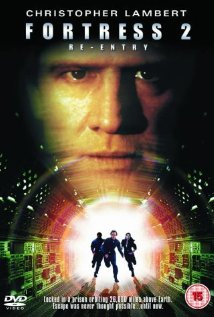
Today’s feature is Fortress 2: an arguably unnecessary follow-up to 1992’s sci-fi prison break movie, Fortress.

The screenplay for Fortress 2 was written by producer John Flock in association with Peter Doyle (Leningrad), with story credit going to original Fortress writers Troy Neighbors and Steven Feinberg.

The director for Fortress 2 was Geoff Murphy, who was also behind such movies as Freejack, Young Guns II, and Under Siege 2: Dark Territory.

The cinematographer for the movie was Hiro Narita, who shot flicks like Hocus Pocus, Star Trek VI: The Undiscovered Country, Honey, I Shrunk The Kids, and James and the Giant Peach.

The editor for Fortress 2 was James R. Symons, who additionally cut the films Rambo III, Teenage Mutant Ninja Turtles, Tank Girl, Over The Top, Cobra, and Teenage Mutant Ninja Turtles III.

The producers for the film included Romain Schroeder (Dog Soldiers, Feardotcom), Tom Reeve (Wing Commander), and John Flock (The Good Shepherd).

The music for Fortress 2 was composed by Christopher Franke, who has also scored shows and movies like McBain, Babylon 5, Universal Soldier, and Green Street Hooligans.

The effects work for Fortress 2 was done by a team that included Mark Pompian (Species, Stargate, Last Action Hero), Ralph Maiers (Monkeybone, The Omega Code, Mortal Kombat: Annihilation), Steve Cummings (Air Force One, Deja Vu), Terry Whitehouse (Charlie And The Chocolate Factory), Seth Tamrowski (Baby Geniuses), Erik Strauss (Hancock, Beowulf), Ghislaine Soisson (Wing Commander), Lesley Lamont-Fisher (Alien vs. Predator), and David Pride (Dark City, The Matrix), among many others.

The cast of Fortress 2 is headlined by the primary star of the previous  movie, Christopher Lambert (Mortal Kombat, Highlander II, Druids, Fortress), as well as Beth Toussaint (Scream 3, Red Eye, Dead Heat), Pam Grier (Class of 1999, Jackie Brown), and a handful of bit players and character actors.

fortresstwo2The plot of Fortress 2 is summarized on IMDb as follows:

7 years after the original Fortress movie, Brennick and his family are still on the run from the Men-tel corporation. A group of rebels attempt to gain his support but he refuses, wanting to focus on his family. A raid follows and Brennick along with the rebels are captured and sent to a new, more sophisticated fortress prison in outer space. But Brennick’s not a man to give in easily, and with a 10 year old son waiting for him back on earth, he’s going to pack some serious assault on the evil corporation.

Fortress 2 was absolutely blasted by critics and audiences alike: it currently holds a 4.4 user rating on IMDb, along with Rotten Tomatoes ratings of 0% from critics and 21% from audiences. I wasn’t able to dig up any gross information, but it almost certainly came up far short of its estimated $11 million budget.

The original Fortress, if you ask me, is a pretty fun b-movie with plenty of upsides. I am a little surprised that it wound up with a sequel though, as it was hardly a big movie. Fortress 2 is, as with many sequels, a very similar movie to its predecessor, with only some slight twists on the formula. The idea of setting the second ‘prison’ (actually a forced labor facility) in space was a pretty good concept in my opinion, and it fits well with the futuristic design of the first movie. The biggest drawback of this sequel is a weaker supporting cast than the original, which boasted the likes of Jeffrey Combs and Kurtwood Smith in memorable roles. The biggest addition for the sequel is Pam Grier, who does ham it up pretty well in her limited villain role.

Overall, Fortress 2 is a pretty long way from good, but it is generally fun and entertaining. The design of the movie looks decent, in spite of some less-than-ideal low budget effects. It isn’t nearly as memorable as its predecessor, but it is perfectly serviceable for what it is. For fans of Fortress (and b-level sci-fi in general), it is more than worth checking out.

The Adventures of Pluto Nash

The Adventures of Pluto Nash

plutonash1

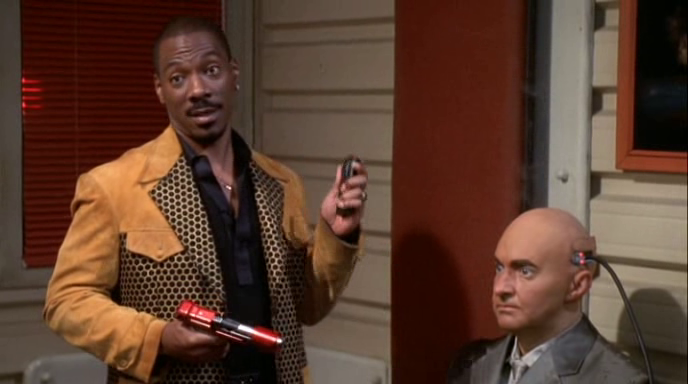
Today’s feature is one of the most widely-maligned Eddie Murphy features: The Adventures of Pluto Nash.

The screenplay for Pluto Nash was written by Neil Cuthbert, who also penned the beloved Halloween classic Hocus Pocus, the superhero flub Mystery Men, and The Return of Swamp Thing.

The director for The Adventures of Pluto Nash was Ron Underwood, whose other directorial credits include Tremors, In The Mix, Mighty Joe Young, Stealing Sinatra, Speechless, City Slickers, and Heart and Souls. However, following a string of failures (not the least of which was Pluto Nash), he has been relegated to doing a whole lot of assorted television work over the past ten years, including stints on shows like Ugly Betty, Heroes, Burn Notice, Castle, and Agents of S.H.I.E.L.D..

The cinematographer for the film was Oliver Wood, who has historically specialized in shooting action movies and comedies. His credits include Die Hard 2, Bill & Ted’s Bogus Journey, The Adventures of Ford Fairlane, Face/Off, Sister Act 2, The Bourne Identity, Anchorman 2, and U-571, among many others.

Pluto Nash had two credited editors: Alan Heim (American History X, Copycat, Bless The Child, Network, The Twelve Chairs) and Paul Hirsch (Lake Placid, Falling Down, Footloose, Carrie, Star Wars Episode V: The Empire Strikes Back, Star Wars Episode IV: A New Hope).

The team of producers for Pluto Nash included Bruce Berman (Deep Blue Sea, Red Planet, Swordfish, Torque), Martin Bregman (Dog Day Afternoon, Serpico, Matilda), Frank Capra III (Eraser, Bulworth, Drive), and Louis A. Stroller (Scarface, Carrie, Snake Eyes)

The musical score for the movie was composed by John Powell, who has provided music for such films as Be Cool, Face/Off, Shrek, Antz, Rat Race, Gigli, Happy Feet, Paycheck, and the recent 2015 flop, Pan.

The makeup effects work for Pluto Nash was done by a team that included Jocelyn Bellemare (300, The Fountain), Annik Boivin (Battlefield Earth, The Aviator), Vera Steimberg Moder (The Haunted Mansion, Norbit), and Sylvania Yau (Taking Lives, Timeline).

The experienced special effects unit for the film included common elements with productions like The Sixth Sense, Van Helsing, Ghost Dad, They Live, The Running Man, The Thing, Cellular, Wild Wild West, Congo, Last Action Hero, Rhinestone, Jurassic Park, Spider-Man, The Golden Child, Driven, Jingle All The Way, Death To Smoochy, and Jason X, among many others.

The Adventures of Pluto Nash required an immense amount of visual effects work, which was provided by a number of different companies. These included Flash Film Works (Death To Smoochy, Red Planet, Deep Blue Sea), and Cinesite (Edge of Tomorrow, World War Z), as well as a handful of other post-production companies.

The cast of Pluto Nash includes Eddie Murphy (Vampire In Brooklyn, Beverly Hills Cop, The Nutty Professor, Saturday Night Live), Rosario Dawson (Clerks II, Death Proof), Randy Quaid (Kingpin, Christmas Vacation 2, The Last Detail), Alec Baldwin (The Cooler, The Departed, Beetlejuice), Jay Mohr (Suicide Kings, Small Soldiers), Joe Pantoliano (The Matrix, Memento), Luis Guzman (Boogie Nights), James Rebhorn (Cat’s Eye, The Game, Independence Day), Pam Grier (Class of 1999, Jackie Brown), John Cleese (Monty Python’s Flying Circus), Burt Young (Rocky, Going Overboard), and Peter Boyle (The Dream Team, Red Heat, Young Frankenstein).

plutonash2The plot of The Adventures of Pluto Nash is summarized on IMDb as follows:

In the future, a man struggles to keep his lunar nightclub out of the hands of the mafia.

Reportedly, the screenplay for Pluto Nash went through countless rewrites over the course of its production, though Neil Cuthbert ultimately had the unfortunate privilege of receiving sole credit for writing the movie.

Alec Baldwin, who plays a not-insignificant role in the movie, hated the ultimate product so intensely that he managed to have his name entirely taken out of the movie’s credits.

The Adult Swim comedy show Robot Chicken had a popular sketch that played off of the disastrous reception to Pluto Nash, in which numerous scenes of carnage and violence are shown breaking out following the opening of the movie, causing the government to officially declare “Pluto Nash Day” to remember the dead.

The Adventures of Pluto Nash is widely remembered in the public consciousness as one of the greatest financial failures in movie history. In total, it lost a shocking $95 million dollars, grossing less than $5 million in its theatrical run on a $100 million budget. As you might expect, the public reception wasn’t any better: it currently holds an IMDb user rating of 3.7, along with Rotten Tomatoes scores of 5% from critics and 17% from audiences.

There are certainly a lot of issues with The Adventures of Pluto Nash, but the biggest one is probably the lack of humor in the script. On paper, this movie should be an action-comedy, but somehow none of the comedy wound up getting through. Outside of some quirky set design and an oddball soundtrack, there’s nothing about the movie that resembles even an attempt at comedy. Eddie Murphy, who is usually the comedic center of his movies, plays a too-cool-for-school straight man, which isn’t something he does well. The closest thing he has in the movie to a comedic foil is Jay Mohr, who is also playing against type as an incompetent buffoon. The result is a theoretically comedic movie with hardly any laughs.

It is hard to imagine that anyone involved with Pluto Nash expected it to be a hit after seeing the final product. However, I don’t think anyone anticipated that it would fail as spectacularly as it did: I’m sure a loss was expected, but usually a movie with a significant budget is guaranteed some minimum gross from advertising. Somehow, that went totally awry for Pluto Nash, in spite of a lack of serious competition in the field of new releases.

Outside of watching this movie for the sake of the experience and cultural knowledge, there’s nothing particularly entertaining about it. Eddie Murphy, who is capable of bringing comedy to movies devoid of laughs (The Golden Child), totally fails to deliver in Pluto Nash. He seems too wrapped up in appearing cool that he forgot to provide any of his comedic talents to the movie.

12 Rounds

12 Rounds

12rounds1

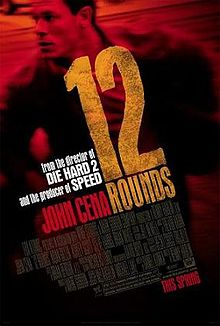
Today’s flick is 12 Rounds, an action feature starring professional wresting icon John Cena.

12 Rounds was written by one Daniel Kunka, who has no other listed credits on IMDb to his name. The film was directed by Renny Harlin, and action-oriented filmmaker who has been behind films like Driven, Deep Blue Sea, Mindhunters, Cliffhanger, Die Hard 2, Cutthroat Island, The Adventures of Ford Fairlane, and The Legend of Hercules.

The cinematographer for 12 Rounds was David Boyd, who has spent most of his career directing and shooting acclaimed television shows like The Walking Dead, Agents of S.H.I.E.L.D., Deadwood, Firefly, and Friday Night Lights.

The editor for the movie was Brian Berdan, who also cut the action movies Crank, Grosse Pointe Blank, Natural Born Killers, and the supernatural thriller The Mothman Prophecies.

The producers on 12 Rounds were Becki Cross Trujillo (Daredevil, UHF), Mark Gordon (Speed, Speed 2, A Simple Plan), and Michael Lake (Fortress).

The musical score for 12 Rounds was composed by Trevor Rabin, who has provided music for movies like Con Air, The 6th Day, Jack Frost, Enemy of the State, Deep Blue Sea, Armageddon, Kangaroo Jack, Torque, and National Treasure.

The makeup effects for 12 Rounds were provided by a team made up of Nikki Brown (Looper, Jonah Hex), Samantha M. Capps (Pitch Perfect), Betty Hamnac (The Mist, Ray), Stacy Kelly (Dracula 2000), Donita Miller (American Horror Story), Paige Reeves (Jurassic World, Trumbo), and Donna Spahn (Hard Target, Dracula 2000).

The special effects unit for the movie included Conrad V. Brink Jr. (Oz, The Sopranos), Jeff Brink (Winter’s Tale, Cop Out, Men In Black II), Charlie Simunik (Men In Black 3, I Am Legend), Durk Tyndall (Transporter 2, Dante’s Peak), Mitch Toles (Pirates of the Caribbean), Neil Stockstill (The Mist), Edward Joubert (Jonah Hex, Killer Joe), Shane Gross (W., Men In Black 3), Joe Catalanotto (Green Lantern), and Phillip Beck (Bored To Death, 30 Rock).

The visual effects work for 12 Rounds was done by the companies Pixel Magic (21 Jump Street, After Earth, Torque, Daredevil) and Frantic Films (Across The Universe, The Core, Swordfish, The Italian Job).

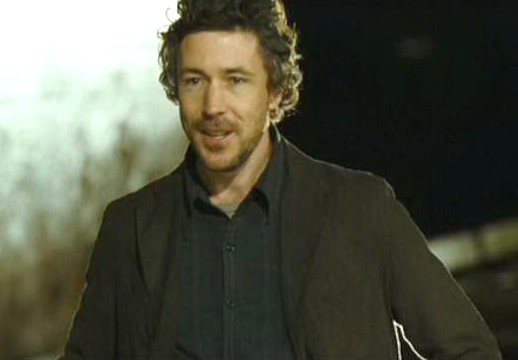
The cast of 12 Rounds includes John Cena (The Marine), Aiden Gillen (Game of Thrones, The Dark Knight Rises, The Wire), Ashley Scott (Walking Tall), Steve Harris (Minority Report), and Brian White (The Cabin In The Woods).

The plot of 12 Rounds is summarized on IMDb as follows:

Detective Danny Fisher discovers his girlfriend has been kidnapped by a ex-con tied to Fisher’s past, and he’ll have to successfully complete 12 challenges in order to secure her safe release.

12rounds2John Cena performed all of his own driving stunts for the movie, which he learned how to do while preparing for his role by shadowing officers with the New Orleans Police Department.

One of the things that sticks out most about 12 rounds is the colorful setting of New Orleans, LA. In fact, the movie almost feels like a tourism advertisement with intermittent explosions. Interestingly, Renny Harlin actually altered the original screenplay in order to move the setting to New Orleans from the original backdrop of Chicago.

The production budget for 12 Rounds was $22 million, on which it grossed just over $18 million in its theatrical release, meaning that it lost a good deal of money. It didn’t fare much better with reviews:12 Rounds currently holds a 5.6 user rating on IMDb, alongside Rotten Tomatoes aggregate scores of 29% from critics and 45% from audiences. In spite of all of this, 12 Rounds has spawned two sequels: 2013’s 12 Rounds 2: Reloaded and 2015’s 12 Rounds 3: Lockdown.

First off, John Cena is surprisingly far from the worst actor out there: he’s pretty decent in his role here if you ask me, given he mostly just needs to be a tough guy cop. However, I absolutely love Aiden Gillen, who was then just popping onto people’s radars for his memorable stint on the back half of The Wire. Now, he’s mostly known for Game of Thrones and his brief appearance in The Dark Knight Rises, which both have him in antagonist or criminal roles. It might be silly to say, but I think 12 Rounds solidified him as a legitimate option for a villain, and he is definitely the stand-out performance in the movie.

12rounds3

Director Renny Harlin has a bit of a mixed track record when it comes to his filmography. Personally, I enjoy “guilty pleasure” movies like Deep Blue Sea, Mindhunters, and Cliffhanger, but he’s also capable of some real clunkers, like Cutthroat Island and the unbearable Andrew Dice Clay vehicle, The Adventures of Ford Fairlane. Luckily, 12 Rounds very much falls into the first category: a fun, absent-minded action movie that makes up for a lack of sophistication with a plethora of explosions.

In general, I think 12 Rounds is an entertaining b-rate action movie: it certainly isn’t a Hollywood spectacular, which I found made it a little more charming. The preposterous scenario that drives the plot keeps the pace moving steadily, and allows for the instigation of some top-flight action movie shenanigans. If you ask me, it is totally worth checking out for bad movie fans, and for action movie fans in general.

For more thoughts on 12 Rounds, I highly recommend checking out The Flop House Podcast, whose coverage of the movie is one of their best episodes to date.

Kingdom of the Spiders

Kingdom of the Spiders

kingdomspiders1

Today’s feature is Kingdom of the Spiders, a sci-fi b-movie classic starring William Shatner.

The screenplay for Kingdom of the Spiders was written by Alan Caillou (The Man From U.N.C.L.E., Evel Knievel) and Richard Robinson (Piranha), with story credit going to producer Jeffrey Sneller and costumer Stephen Lodge.

Kingdom of the Spiders was directed by John Cardos, whose other credits include similar b-movies like The Day Time Ended, Night Shadows, Act of Piracy, and Gor II.

The cinematographer for the film was John Arthur Morrill, who shot the post-apocalyptic cult classic A Boy And His Dog and John Cardos’s later film, The Day Time Ended.

Kingdom of the Spiders had two credited editors: Steven Zaillian, who later found success writing movies like American Gangster, Gangs of New York, Moneyball, and Schindler’s List, and Igo Kantor, who was a music editor on The Monkees, Faster Pussycat, Kill! Kill!, Beyond The Valley of the Dolls, and The Kentucky Fried Movie.

kingdomspiders2The effects work for Kingdom of the Spiders was done by a team that included Kathy Agron (Dallas), Ve Neill (Death to Smoochy, Laserblast), Greg Auer (Carrie, The Hills Have Eyes), and Cy Didjurgis (Close Encounters of the Third Kind, Star Trek: The Motion Picture).

The cast of the movie is led by William Shatner (American Psycho 2, Visiting Hours, Star Trek), along with his then wife and frequent co-star, Marcy Lafferty, along with bit players like Hoke Howell (Grand Theft Auto, Humanoids From The Deep) and Woody Strode (Spartacus, The Quick And The Dead).

kingdomspiders3The plot of Kingdom of the Spiders is summarized on IMDb as follows:

Investigating the mysterious deaths of a number of farm animals, vet Rack Hansen discovers that his town lies in the path of hoards of migrating tarantulas. Before he can take action, the streets are overrun by killer spiders, trapping a small group of towns folk in a remote hotel.

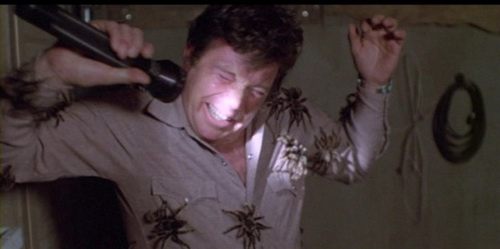
Reportedly, the production budget allotted $50,000 to the acquisition of live spiders, which were bought at $10 each. In addition to these actual spiders, optical illusions were used to give the impression of there being even more of them on screen during some sequences, including the crew painting spiders directly onto walls of local buildings.

The spiders themselves proved to be huge problems for the production: not only did they not cooperate easily on screen (preferring to run and hide from the actors than feign attacks), but it took significant maintenance just to keep the animals alive throughout filming. Unfortunately, many of the spiders didn’t survive, due to the fluctuating environmental conditions of the filming location. More controversially, however, is that a number of sequences that made it into the final cut of the movie included the outright killing the animals, as opposed to the use of mock-ups.

The budget for Kingdom of the Spiders was so low that the score had to be made up almost entirely of previously recorded stock music, mostly picked up from television series like The Twilight Zone and The Fugitive.

Kingdom of the Spiders currently holds a 5.9 user rating on IMDb, along with Rotten Tomatoes scores of  44% from critics and 38% from audiences. Regardless of the negative reception, the movie made a significant profit on its low budget: roughly $17 million in grosses on a budget of $1 million.

Reports of a planned sequel to Kingdom of the Spiders have swirled since the late 1980s, when William Shatner himself announced that the b-movie outfit Cannon Films would produce Kingdom of the Spiders 2 with him in the director’s role. However, the fall of Cannon in the early 1990s put an end to this attempt.

The fact that many people are terrified of spiders means that Kingdom of the Spiders didn’t have to do a whole lot of work to scare a significant number of audience members. Personally, though, I found the tarantulas in the movie kind of cute, and incredibly far from menacing. It just seemed clear to me that the production was trying really hard to make these tiny fluff-balls intimidating, and the result is way more like Frogs or Night of the Lepus than Jaws or Willard. Beyond the obvious ethical issues of using actual spiders for this movie, I also think it was a bad decision for exactly the reason mentioned above: tarantulas are way more terrifying in people’s heads than they are in reality. If the movie could have put together some sort of Ed Wood-style spider costume or some goofy looking puppets (a la The Killer Shrews), the result wouldn’t have been great, but the larger-than-life effect would almost certainly been better than the fluffy reality of tarantulas.

William Shatner, who is often subject to criticism for his acting style, is in top form in Kingdom of the Spiders if you ask me. He seems to be in his element as a pseudo-cowboy, where he relies on his natural charm to enhance his dialogue and interact with the other cast members. I’m sure there are plenty who would disagree, but I think he is the sole saving grace of this movie, and makes it watchable through his powers alone, for better or worse.

Kingdom of the Spiders is a solid creature feature b-movie, and is far from the worst of the bunch out there. The behind the scenes trivia and the presence of Shatner make it more notable than it might have been otherwise. However, the screenplay is far more dramatic than other films like this, focusing a lot on tense inter-personal relationships, so it may just have stood out in the genre no matter what.

For bad movie fans, Kingdom of the Spider is worth your time to check out. It isn’t quite hilariously terrible, but it is a solid little b-movie with enough up-sides to enjoy.

Leprechaun 4: In Space

Leprechaun 4: In Space

leprechaunspace1

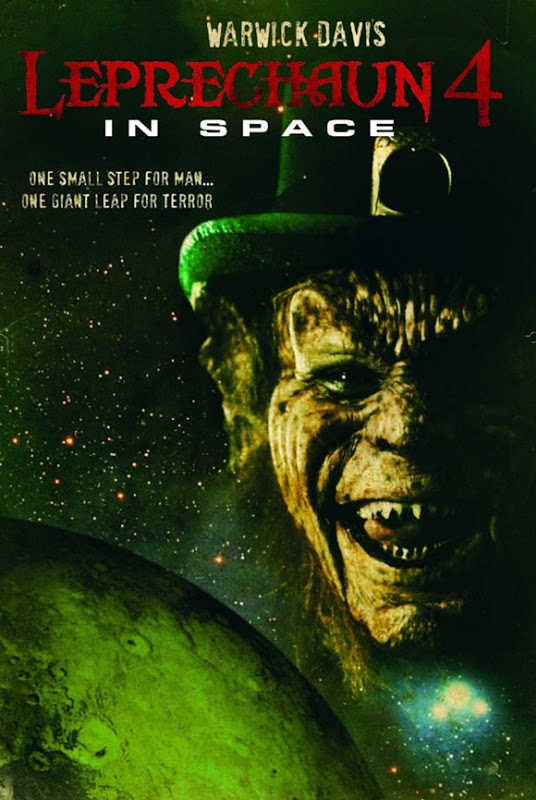
Today’s feature is yet another entry into the infamously goofy Leprechaun franchise: Leprechaun 4: In Space.

The screenplay for Leprechaun 4 was written by Dennis A. Pratt, who most notably also penned the screenplay for Kickboxer 3.

The director on Leprechaun 4 was Brian Trenchard-Smith, whose other movies include The Omega Code 2, Night of the Demons 2, BMX Bandits, and the previous entry into the franchise, Leprechaun 3.

The cinematographer on the film was David Lewis, who also shot UHF, The Hills Have Eyes Part II, Night of the Demons, Leprechaun 3, Chairman of the Board, and numerous episodes of Pee-Wee’s Playhouse.

The editor for Leprechaun 4 was Daniel Duncan, whose horror movies include Witchboard, Leprechaun 3, Night of the Demons, Poseidon Rex, and the remake of I Spit On Your Grave.

The team of producers for the film included Mark Amin (Evolver, Leprechaun, The Dentist, Leprechaun 3, Leprechaun 2, Chairman of the Board, The Dentist 2), David Robert Cobb (Rover Dangerfield), Jeff Geoffray (Night of the Demons, Wishmaster 3, Leprechaun 3), Andrew Hersh (Return of the Living Dead III, Philadelphia Experiment II), Walter Josten (Wishmaster 4, Leprechaun 3), and Jonathon Komack Martin (R.I.P.D.).

The makeup effects for Leprechaun 4 were done by a team made up of Damon Charles (Striptease, Hellraiser: Bloodline), Clayton Martinez (Wild Wild West, Leprechaun 3), Darren Perks (Die Hard Dracula, Theodore Rex, Children of the Corn III, Spawn, Kull The Conqueror), and Marlene Stoller (Wishmaster, Leprechaun 3).

The special effects unit for the film included the likes of Roger Winiger (Invasion U.S.A.), Hal Miles (Leviathan, 976-EVIL, Howard The Duck, The Garbage Pail Kids Movie), Al Magliochetti (Waterworld, RoboCop 3, Larry the Cable Guy: Health Inspector), Dana Klaren (The Island of Doctor Moreau), Marilyn Dozer-Chaney (Congo), Charles Cooley (Iron Man, DinoCroc), Frank Ceglia (Critters, The Lawnmower Man, Leprechaun 3, Surf Ninjas), and Gabe Bartalos (Dolls, From Beyond, Texas Chainsaw Massacre 2, Leprechaun, Leprechaun In The Hood, Frankenhooker).

The visual effects on the movie were done by Giac Belli (Candyman 3), Nadja Bonacina (Bee Movie, Frozen), Brian Jennings (The Faculty, Lawnmower Man 2, Super Mario Bros., Mortal Kombat), Paul Kulikowski (The Core, Con Air), Daniel Miller (Sucker Punch, Mortal Kombat), George Oliver (Eragon, Spawn), and Craig Seitz (Mortal Kombat, Lawnmower Man 2).

The musical score for Leprechaun 4 was provided by Dennis Michael Tenney, who also did the music for Night of the Demons, Pinocchio’s Revenge, Witchboard, Night of the Demons III, and Leprechaun 3, among many others.

The plot of Leprechaun 4: In Space unsurprisingly follows the eponymous Leprechaun on a journey into space. It is summarized on IMDb as follows:

Our deadly leprechaun is in space to woo a beautiful princess who is impressed with his gold and desires to separate him from it.

Leprechaun  4, in spite of having much of the same crew of Leprechaun 3, is a bit of an outlier in the franchise on the whole. The Leprechaun essentially takes on the role of a generic alien menace, and behaves somewhat differently than he does in other entries in the franchise. For instance, his dialogue includes no forced rhyming, which is considered a staple of the character. The setting is also much more focused on science fiction, which is a big change from the standard slasher setup of the other movies.

Leprechaun 4: In Space went straight to video on a budget of just over $1.5 million. In spite of this limited distribution, it has gained quite the reputation as one of the worst horror sequels of all time, and its concept is often mocked. Currently, the movie holds a 3.3 user rating on IMDb, along with Rotten Tomatoes scores of 0% from critics and 21% from audiences.

leprechaunspace2The Leprechaun franchise isn’t one particularly known for quality, to say the least. It has never been a serious horror series, and was always quick to jump the shark into outlandish situations. While Leprechaun 3 is certainly the gateway into that realm with the introduction of a were-leprechaun and the exotic setting location of Las Vegas, Leprechaun 4 is where the series famously went off the rails, never to return. Personally, I would rather deal with a horror series taking a risk with the setting than deal with one that just repeats the exact same movie from sequel to sequel. While this is a gimmicky way to keep a franchise from getting stale, and almost always results in something campy, at least the results are rarely boring.

Leprechaun 4 is, at its heart, essentially a television sci-fi movie with the Leprechaun thrown in, as opposed to a Leprechaun movie with sci-fi elements added, which I found kind of interesting. It doesn’t look or feel like the previous Leprechaun movies, and if it weren’t for Warwick Davis’s banter, I would have tagged this as something like Dracula 3000 or a Starship Troopers sequel as opposed to a Leprechaun sequel.

Unfortunately, that is just about the only positive thing to say about Leprechaun 4. This might be the most cartoon-y entry into the entire franchise, which is saying quite a lot, given Leprechaun 5 has a Leprechaun rap number. The characters are a little too shallow and unrealistic, which might have been done in a jab at the tropes of the genre, but is annoying to watch regardless of the intention. There are also some really terrible effects, like when the Leprechaun is hit with a magic growing ray that causes him to inflate to a monstrous size. The writing is also as lazy and crass as ever, with jokes that include mocking a soldier for cross-dressing and the Leprechaun somehow enchanting a condom to kill a man. There is even the groan-inducing inclusion of nudity, with the half-assed plot excuse being that in this future society, women showing their breasts condemns the viewers to death. It isn’t exactly feminist cinema, I guess you could say.

Personally, I’m not a huge fan of Leprechaun 4. I think Leprechaun 3 is the most fun entry in the franchise, and Leprechaun 5 is far more of an outlandish and bafflingly terrible viewing experience. Leprechaun 4 is kind of just the bridge between them, and is mostly memorable for the concept alone. It is still far better than the absolute garbage pile that is Leprechaun 2, but I’ll leave that open for another day.

If you like crass sex comedy in your bad movie watching, then I think you are far more likely to enjoy Leprechaun 4, which has plenty of it to go around. Even if you don’t, I think Leprechaun 4 is worth checking out once for bad movie fans, just because it is sort of a staple of the pseudo-genre.

Starcrash

Starcrash

starcrash3

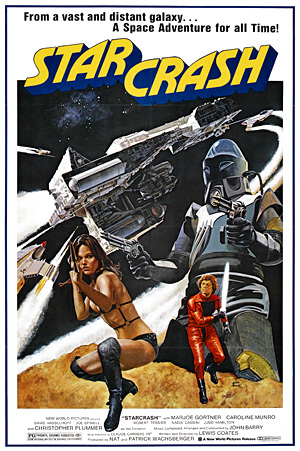
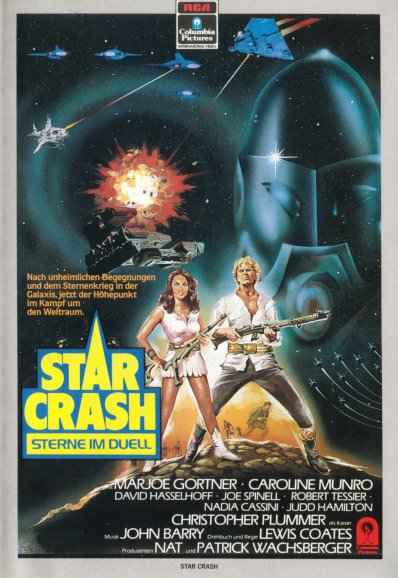
Today’s feature is one of the most infamous among the multitude of Star Wars knockoffs: 1978’s Starcrash.

Starcrash was co-written and directed by Luigi Cozzi, who is most famous for his b-level Hercules films starring Lou Ferrigno, as well as his bizarre 1977 colorized, re-imagined version of Godzilla. His co-writers for Starcrash were producer Nat Wachsberger and one R.A. Dillon, who has no other listed IMDb credits.

Starcrash interestingly had two credited cinematographers: Paul Beeson, who worked as a second unit director of photography on movies like Willow, Who Framed Roger Rabbit, Raiders of the Lost Ark, Never Say Never Again, Ishtar, Indiana Jones and the Temple of Doom, and Indiana Jones and the Last Crusade, and Roberto D’Ettorre Piazzoli, who shot Tentacles and Piranha Part Two: The Spawning.

The editor for the film was Sergio Montanari, who most notably cut the spaghetti western classic Django and Luigi Cozzi’s later films Hercules and The Adventures of Hercules II.

starcrash2The musical score for Starcrash was composed by John Barry, a five-time Academy Award winner (and one-time Golden Raspberry winner) whose credits included Howard The Duck, The Living Daylights, Out Of Africa, Dances With Wolves, A View To A Kill, Octopussy, Thunderball, Goldfinger, Game of Death, Diamonds Are Forever, and many others.

The effects team for the movie included Giancarlo De Leonardis (The Last Shark, Troll) Armando Valcauda (Hercules, The Adventures of Hercules II), Germano Natali (The Gaul, Devil Fish, Suspiria), and Ron Hays (Can’t Stop The Music, Demon Seed, Grease).

The cast of Starcrash is made up of David Hasselhoff (Kung Fury, Knight Rider, Baywatch, Baywatch Nights), Marjoe Gortner (American Ninja 3, Earthquake, The Food of the Gods), Caroline Munro (Maniac, Slaughter High, Dracula A.D. 1972), Christopher Plummer (Dracula 2000, Alexander, Wolf, 12 Monkeys, The Sound of Music), Robert Tessier (The Deep, The Sword And The Sorcerer), and Joe Spinell (Rocky, Rocky II, Sorcerer, Night Shift, Vigilante, Maniac, Cruising).

starcrash1The plot of Starcrash is summarized on IMDb as follows:

An outlaw smuggler and her alien companion are recruited by the Emperor of the Galaxy to rescue his son and destroy a secret weapon by the evil Count Zarth Arn.

Almost all of the actors had their dialogue dubbed over for the English-language release by different people, due to the production not being able to afford to fly the whole cast out to record their lines.

A number of sequences in the movie feature David Hasselhoff’s character donning a mask: apparently, this is because he wasn’t able to film that day, and a production assistant was standing in for him.

Famed and prolific Italian composer Ennio Morricone reportedly turned down an offer to score Starcrash, which led to John Barry taking the job.

Christopher Plummer went on record about his experience shooting on Starcrash (which reportedly only took him a single day) with The A.V. Club:

Starcrash. Oh, my God…I mean, how can you play the Emperor Of The Universe? What a wonderful part to play. [Laughs.] It puts God in a very dicey moment, doesn’t it? He’s very insecure, God, when the Emperor’s around.

Starcrash has a pseudo-sequel in the form of 1981’s Escape from Galaxy III, which, in true Italian fashion, re-uses numerous effects shots from Starcrash, and was occasionally marketed as Starcrash II.

Starcrash currently holds an IMDb user rating of 4.0, along with Rotten Tomatoes aggregate scores of 33% from critics and 40% from audiences. I wasn’t able to dig up solid gross or budget numbers, but it was clearly crafted in an attempt to mimic Star Wars on as thing a budget as possible. This technique wound up paving the path for the later b-movie Battle Beyond The Stars, which hybridized The Magnificent Seven/Seven Samurai and Star Wars on a Starcrash budget.

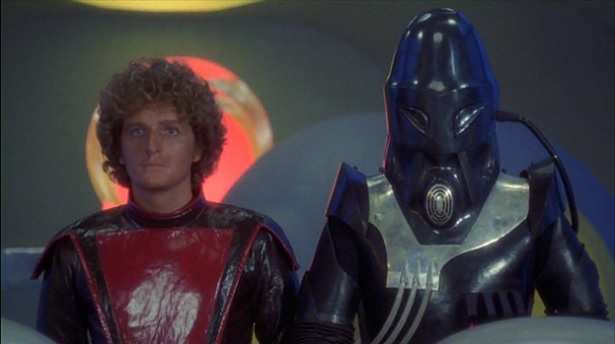
starcrash4Starcrash, honestly, is one of my favorite b-movies of all time. It is easy to write off as just a Star Wars knock-off, but there is a peculiar charm to this movie that is missing from a lot of similar productions. The effects and sets, while cheap, are pretty decent for what the team was working with budget-wise, and the use of stop-motion adversaries is a great throwback to earlier adventure movies. The performances are also memorable, like Marjoe’s pseudo-Jedi, the southern-fried Robot Cop, and Christopher Plummer’s Emperor of the Universe, equipped with the ultimate deux ex power to “halt the flow of time.”

Starcrash could easily have been a sleazy and soulless attempt to leech off of the success of a Hollywood franchise.  Instead, this movie is a charming, honestly-crafted, and even imaginativly frugal take on a 1970s space opera. What it lacks in sensible writing, fight choreography, and coherence, it makes up for in gumption, overacting, and pure fun. Having watched a fair share of Italian knock-offs, I can confidently say that Starcrash didn’t need to try as hard as it did, and it stands out from the pack of its peers because of it. For example, I would watch this countless times before going back to Devil Fish or The Last Shark again.

For bad movie fans, Starcrash might as well be mandatory viewing, and I would go so far as to say the same to any dedicated Star Wars fans out there as well. Starcrash actually holds an interesting place in the history of Star Wars, as one of the few stop-gaps between A New Hope in 1977 and The Empire Strikes Back in 1980. As fans enter the waiting game once again for a new Star Wars feature, Starcrash is on the menu once again, and is deserving of a watch.

For more thoughts on Starcrash, you can check out just about any bad movie guru out there. Personally, I advise checking out R. L. Shaffer’s review on IGN, the video reviews by Brandon Tenold, Kyle Anderson, and Diamanda Hagan, and the podcast episode from the Bad Movie Fiends.